The Global Elite is Insane Revisited

By Robert J. Burrowes

In 2014 I wrote an article titled ‘The Global Elite is Insane’. I want to elaborate what I explained in the earlier article so that people have a clearer sense of what we are up against in our struggle to create a world of peace, justice and ecological sustainability.

Of course, as I explained previously, it is not just the global elite that is insane. All those individuals – politicians, businesspeople, academics, corporate media editors and journalists, judges and lawyers, bureaucrats…. – who serve the elite, including by not exposing and resisting it, are also insane. And it is important to understand this if we are to develop and implement effective strategies to resist elite violence, exploitation and destruction but also avert the now-imminent human extinction driven by their insane desire for endless personal privilege, corporate profit and political control whatever the cost to Earth’s biosphere and lifeforms (human and non-human alike).

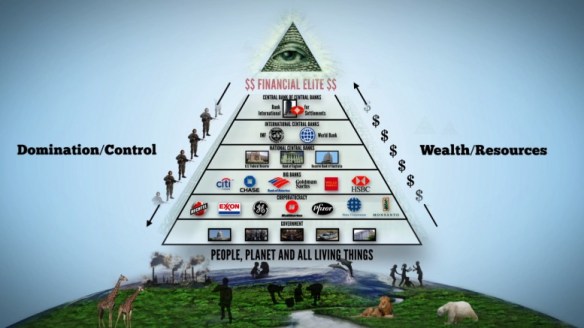
But first, who constitutes the global elite? Essentially, it is those extremely wealthy individuals – notably including the Rothschild family, Jeff Bezos, Bill Gates, Warren Buffett, Amancio Ortega, Mark Zuckerberg, Carlos Slim, the Walton family and the Koch brothers – as well as the world’s other billionaires and millionaires. See ‘Bloomberg Billionaires Index’.

Testament to their secretly and long-accumulated wealth and power, a 2012 investigation concluded that rich individuals and their families have as much as $32 trillion of hidden financial assets – which excludes non-financial assets such as real estate, gold, yachts and racehorses – in offshore tax havens. See the Tax Justice Network.

If this sum was devoted to programs of social uplift then starvation, poverty, homelessness and other privations would vanish immediately and environmental restoration projects as well as research, development and implementation of visionary sustainability initiatives would flourish instantly. The idea of an ‘underdeveloped’ or ‘developing’ national economy would vanish from the literature on Africa, Asia and Central/South America.

In addition to these individuals, however, the global elite includes the major multinational corporations, particularly including the following – although, it should be noted, this list simplifies the picture considerably by ignoring the conglomerate nature of many of these corporations and not including many of the (more difficult to identify) private corporations that should be listed in any comprehensive presentation:

* the major weapons manufacturers (such as Lockheed Martin, Boeing, BAE Systems, Raytheon, Northrop Grumman and General Dynamics)

* the major banks (including Industrial & Commercial Bank of China, China Construction Bank, HSBC Holdings, JPMorgan Chase, Mitsubishi UFJ Financial Group and Bank of America) and their ‘industry groups’ like the International Monetary Conference

* the major investment companies (including BlackRock, Capital Group Companies, FMR, AXA, and JP Morgan Chase)

* the major financial services companies (including Berkshire Hathaway, AXA, Allianz and BNP Paribas)

* the major energy corporations including coal companies (such as Coal India, Adani Enterprises, China Shenhua Energy, China Coal Energy, Mechel, Exxaro Resources, Public Power, Glencore and Peabody Energy) as well as the oil and gas corporations (such as Saudi Aramco, Gazprom, Rosneft, PetroChina, ExxonMobil, Lukoil, BP, Royal Dutch Shell, Petrobras, Chevron, Novatek, Total S.A. and Eni)

* the major media corporations (including Alphabet [Google owner], Comcast, Disney, AT&T, News Corporation, Time Warner, Fox, Facebook, Bertelsmann and Baidu)

* the major marketing and public relations corporations (including Edelman, W2O Group, APCO Worldwide, Deksia, BrandTuitive, Fearless Media, and Citizen Group)

* the major agrochemical (pesticides, seeds, fertilizers) giants (including Bayer, Syngenta, Dow, Monsanto and DuPont)

* the major pharmaceutical corporations (including Johnson & Johnson, Roche, Pfizer, Novartis, Sanofi and GlaxoSmithKline)

* the major biotechnology (genetic mutilation) corporations (again including Johnson & Johnson, Roche, Pfizer and Novartis)

* the major mining corporations (including Glencore Xtrata, BHP Billiton, Rio Tinto, Vale, Anglo American, China Shenhua Energy, Freeport McMoRan Copper & Gold, and Barrick Gold)

* the major nuclear power corporations (including Areva, Rosatom, General Electric/Hitachi, Kepco, Mitsubishi, Babcock & Wilcox, BNFL, Duke Energy, McDermott International, Southern, NextEra Energy, American Electric Power, and Westinghouse)

* the major food multinationals (including Cargill, Archer Daniels Midland Company [ADM], Nestlé, PepsiCo, Coca-Cola, Unilever, Danone, General Mills, Kellogg’s, Mars, Associated British Foods and Mondelez)

* the major water corporations (including Veolia, Suez Environnement, ITT Corporation, United Utilities, Severn Trent, Thames Water, American Water Works).

Of course, the global elite also includes elite fora where various combinations of elite individuals from the corporate, political, media and academic worlds gather to plan their continuing violence against, and exploitation of, the Earth and its inhabitants. This is intended to consolidate and extend t heir control over populations, markets and resources to maximize their privilege, profit and power at the expense of the rest of us and life generally. Among intergovernmental organizations, it includes the United Nations, the World Bank and the International Monetary Fund.

A quick perusal of the agenda of such elite gatherings – including the World Economic Forum, the Bilderberg Group and the Trilateral Commission – reveals a comprehensive lack of interest, despite rhetoric and the occasional token mention, of pressing issues ranging from the threat of nuclear war and the climate catastrophe to the many ongoing wars, deepening exploitation within the global economy, extensive range of environmental threats and the refugee crisis, each of which they generated and now continue to deliberately exacerbate. See, for example, the agenda of the recent WEF meeting in Davos.

Primary servants of the global elite include political leaders in major industrialized countries (who legislate to progressively expand elite power, profit and privilege, such as Donald Trump’s recent tax cuts for the wealthy at the expense of social programs), the judges and lawyers (who defend elite power using the elite-designed and manipulated legal system: ever heard of a wealthy individual convicted in court and given any serious punishment or of any major corporation genuinely held to legal account for its exploitation of indigenous peoples or destruction of the natural environment?), as well as corporate media editors and journalists, entertainment industry personnel, academics, industry organizations (such as the European Round Table of Industrialists) that represent the interests of major corporations, so-called ‘think tanks’ (such as the Council on Foreign Relations and the Brookings Institution) and ‘philanthropic trusts’ (such as the Rockefeller, Carnegie and Ford foundations) all of which justify, ignore or divert attention from elite violence and exploitation.

Importantly too, primary servants of the global elite include those who work within elite-directed agencies, notably including those in the so-called ‘intelligence community’ (such as the US CIA, British MI6, Russian SVR RF, Chinese Ministry for State Security and Israeli Mossad), who perform elite functions in relation to spying, surveillance and secret assassinations (particularly of grassroots activists), ostensibly under the direction of national governments. But it also includes many lower-level servants such as those who work as political lobbyists or in the bureaucracy as well as the education, police and prison systems.

So why do I claim that the elite and those who serve them are insane?

Any dictionary will offer a simple definition of ‘sanity’ along the lines of ‘soundness of judgment or reason’ and ‘the ability to think and speak in a reasonable way and to behave normally’.

But if we use this definition of sanity then, obviously, ‘sanity’ must be interpreted to mean that it is ‘sound judgment, reasonable and normal’ to further perpetrate the violence and exploitation that are overwhelmingly characteristic of our world. After all, most people powerlessly accept this incredibly violent state of affairs and, if they discuss it, do so in terms of its merits, politically, economically, morally or otherwise. Few people argue, simply, that violence is just insane.

So I would like to propose a more rigorous definition of sanity: Sanity is the capacity to consider a set of circumstances, to carefully analyze the evidence pertaining to those circumstances, to identify the cause of any conflict or problem, and to respond appropriately, both emotionally and intellectually, to that conflict or problem with the intention of resolving it, preferably at a higher level of need satisfaction for all parties (including those of the Earth and all of its living creatures).

Clearly, my proposed definition of sanity is designed to imply that any conceptions we have of ‘sound judgment’, ‘reasonable’ and ‘normal’ mean that they are qualities we associate with individuals who possess the desirable capacity to improve the overall state of human affairs, whether an interpersonal relationship or geopolitically. This means, as an absolute minimum, the capacity to reduce violence or exploitation in one context or another.

You might, of course, accuse me of writing a definition of ‘sanity’ that serves my agenda to dramatically improve world order in the direction of peace, justice and sustainability. And you are right! But whose interest does it serve to have sanity defined as behavior that involves ‘sound judgment’ and is considered ‘reasonable and normal’ in the context of perpetuating extraordinary violence?

Alternatively, you might argue that my definition of insanity is too broad. Surely, you might say, we can account for many of the behaviors outlined above in terms of different belief systems, ideologies and religions. Doesn’t a person who believes in killing people to win wars (or for other reasons) just have a worldview different from those who believe that people should resolve conflict nonviolently? Doesn’t a capitalist just have a worldview different from those who believe that people should share resources equally? Doesn’t a person who believes in the unlimited accumulation of wealth just have a worldview different from those who believe in ecological sustainability?

But there is a more fundamental issue here. As I explained in my original article, cited at the beginning of this one: Do you really believe that someone who is capable of perpetrating extraordinary violence, inequity and biosphere-threatening behavior – and thus clearly incapable of experiencing and expressing the love, compassion, empathy and sympathy that would drive a nonviolent approach to the world – is sane? Given that emotional qualities such as love, compassion, empathy and sympathy are an evolutionary gift to those not seriously damaged during childhood, what happened to those individuals who do not possess them? See Why Violence?’ and Fearless Psychology and Fearful Psychology: Principles and Practice.

Or, to explain it based on my longer definition of sanity highlighted above: Casual observation of the state of our world, including the primary threat of near-term human extinction through climate catastrophe or nuclear war – see ‘On Track for Extinction: Can Humanity Survive?’ – clearly reveals that none of the elite is paying considered attention to the perilous state of our world, analyzing the evidence in relation to it, identifying the cause(s) driving it or responding powerfully to end it. Why is this?

In essence, it is because one manifestation of their insanity drives them to deny reality to make huge profits from weapons production used to kill people, the burning of climate-destroying fossil fuels, environmental destruction (through, for example, mining and rainforest logging), commercial farming based on the poisoning and genetic mutilation of foods, the mass production and sale of poisoned, processed and nutritionally-depleted foods, the consumption of health-destroying and dependency-creating drugs, and control over the sale of water, once considered a human right. Moreover, insanity makes the elite do everything in its power to maintain this highly profitable state of affairs. See ‘Profit Maximization is Easy: Invest in Violence’.

Moreover, of course, there is no evidence of committed elite engagement in efforts to end the many local wars (from which they make huge profits), end corporate exploitation of human beings (which kills, through starvation alone, 100,000 people every day but from which they make huge profits) and nonhuman beings (which drives 200 species of life to extinction daily but from which they make huge profits) or end local environmental destruction in a myriad ways (from which they make huge profits).

So, in summary, given our ongoing rush to extinction, it is clear that those who exacerbate this threat through failure to consider and act with awareness (as well as encourage aware action by others) fail to satisfy the definition of sanity that I offered above. In short: Gambling on the future of humanity is not sane.

As an aside, it should be noted: Often enough too, the elite can rely on a largely insane population to mindlessly consume the latest consumer product, no matter how unnecessary, or they can rely on their marketing and advertising agents to persuade those of us who show the slightest reluctance to buy the latest inanity.

So with an insane global elite and its many insane servants as well as a largely insane consumer population, what can those of us who have the sanity to respond powerfully to the many threats to our survival do?

Well, if you want a child who is emotionally and intellectually engaged with the world and therefore capable of responding powerfully to their circumstances (which includes being able to resist the lure of serving the elite and being suckered by its marketing), then terrorizing the child into obedience is not the way to go about it. So, you might like to consider making ‘My Promise to Children’.

If you are sane enough to investigate the evidence and to act intelligently and powerfully in response to it, I encourage you to do so. One option you have if you find the evidence in relation to one or more of the threats mentioned above compelling, is to join those participating in ‘The Flame Tree Project to Save Life on Earth’.

If you are self-aware enough to know that you are inclined to avoid ‘difficult issues’ and to take the action that these require, then perhaps you could tackle this problem at its source by ‘Putting Feelings First’. Unfortunately, as mentioned above, few of us had a childhood that nurtured our sanity.

If you want to mobilize people to campaign effectively on the climate, war, rainforest destruction or any other elite-driven violence that threatens our future, consider developing a comprehensive nonviolent strategy to do so. See Nonviolent Campaign Strategy.

And if you want to participate in the worldwide effort to end the insanity we call violence in all of its manifestations, you are welcome to consider signing the online pledge of The Peoples Charter to Create a Nonviolent World.

Elite insanity, if not stopped, will drive us out of existence. If you believe that the elite and their servants will ‘see the light’ before it is too late, I invite you to seek out the evidence to justify your belief. I have found none.

I also see no evidence that individual members of the elite will do the emotional healing necessary to be able to act sanely in response to the extinction-threatening crisis it has generated.

So it is up to those of us who can think and act sanely to stop the rush to extinction before it is too late.

Are you one of those people?


Biodata: Robert J. Burrowes has a lifetime commitment to understanding and ending human violence. He has done extensive research since 1966 in an effort to understand why human beings are violent and has been a nonviolent activist since 1981. He is the author of Why Violence? His email address is flametree@riseup.net and his website is here.

Robert J. Burrowes
P.O. Box 68
Daylesford, Victoria 3460
Australia

Email: flametree@riseup.net

Websites:
Nonviolence Charter
Flame Tree Project to Save Life on Earth
‘Why Violence?’
Feelings First
Nonviolent Campaign Strategy
Nonviolent Defense/Liberation Strategy
Anita: Songs of Nonviolence
Robert Burrowes
Global Nonviolence Network
Spies, Lies and War Propaganda: The Making of Another Conspiracy Theory

By Timothy Alexander Guzman

Source: Silent Crow News

What is insane is how Western governments and the mainstream media (MSM) is that they can tell you that they have the proof that their enemies committed an act of war, or how they interfere in the affairs of other countries but cannot release the evidence due to national security issues or they just outright know in their gut instincts that their enemies did whatever it is that they did, and then they expect us to believe them. While we in the alternative media can show you mountains of evidence including government documents, photos, quotes from world leaders, reports and analysis from respected journalists and researchers from all over the world who represent the facts, yet we are called conspiracy theorists by the same Western governments and the MSM.

Russia is now accused of poisoning another former Russian spy, this time it’s Sergei Skripal (the late Alexander Litvinenko was the last victim) and his daughter Yulia who was living in the Salisbury section of the UK with a military-grade nerve agent produced by..drum roll, please… Russia! How convenient, especially during a time when the U.S. and its allies accuse the Syrian government of launching chemical attacks on civilians, but in reality (which has been proven time and time again) it was the US-backed terrorists or who they call the “rebel forces” who launched the chemical attacks. It’s amazing how Western governments and the MSM constantly link their adversaries to Weapons of Mass Destruction (WMDs). For example, The New York Times published an article on February 27th titled ‘U.N. Links North Korea to Syria’s Chemical Weapons Program’ suggesting that North Korea shipped supplies to Syria to produce chemical weapons due to an investigation by United Nations:

North Korea has been shipping supplies to the Syrian government that could be used in the production of chemical weapons, United Nations experts contend.

The evidence of a North Korean connection comes as the United States and other countries have accused the Syrian government of using chemical weapons on civilians, including recent attacks on civilians in the Damascus suburb of eastern Ghouta using what appears to have been chlorine gas.

The supplies from North Korea include acid-resistant tiles, valves and thermometers, according to a report by United Nations investigators. North Korean missile technicians have also been spotted working at known chemical weapons and missile facilities inside Syria, according to the report, which was written by a panel of experts who looked at North Korea’s compliance with United Nations sanctions

O.K. So now North Korea is shipping supplies to help the Syrian government of Bashar al-Assad to produce chemical weapons? What is interesting about the accusation is that The New York Times reviewed the report, but would not release it themselves. The authors and other members of the UN security council would also not comment on the report:

The possible chemical weapons components were part of at least 40 previously unreported shipments by North Korea to Syria between 2012 and 2017 of prohibited ballistic missile parts and materials that could be used for both military and civilian purposes, according to the report, which has not been publicly released but which was reviewed by The New York Times.

Neither the report’s authors nor members of the United Nations Security Council who have seen it would comment, and neither would the United States’ mission to the international agency. It is unclear when, or even whether, the report will be released

Of course they are not even sure if they would release the report to the public because it would most likely be criticized by the alternative media who would view it as a propaganda plot to demonize Kim Jung-Un. We can call The New York Times article for what it really is, and that is fake news. North Korea would not get involved in a Middle East conflict because it would not be in their interest, politically or economically. It would give the US and South Korean governments more reasons to threaten North Korea with a military strike if something like that was true, but it’s not. Kim Jung -Un does not have a relationship with ISIS and other terrorist groups who have been launching chemical attacks throughout Syria since the start of the conflict, the U.S. and its allies do. So it’s ludicrous accusation.

On March 12th, British Prime Minister Theresa May spoke at the House of Commons about the Skripal incident in Salisbury, UK:

It is now clear that Mr Skripal and his daughter were poisoned with a military-grade nerve agent of a type developed by Russia. This is part of a group of nerve agents known as ‘Novichok’.

Based on the positive identification of this chemical agent by world-leading experts at the Defence Science and Technology Laboratory at Porton Down; our knowledge that Russia has previously produced this agent and would still be capable of doing so; Russia’s record of conducting state-sponsored assassinations; and our assessment that Russia views some defectors as legitimate targets for assassinations; the Government has concluded that it is highly likely that Russia was responsible for the act against Sergei and Yulia Skripal

The case of Sergei Skripal is becoming another farfetched conspiracy theory just like the Alexander Litvinenko case. If you remember Alexander Litvinenko who allegedly drank a cup tea at a business meeting with two other Russians (who were charged with his murder) which contained a fatal dose of Polonium-210. The editorial director of Antiwar.com, Justin Raimondo wrote an article on the assassination of Alexander Litvinenko titled ‘The Craziest Conspiracy Theory of Them All: The British government’s report on the death of Alexander Litvinenko reads like a bad thriller’:

To those of us who grew up during the cold war years, it’s just like old times again: Russian plots to subvert the West and poison our precious bodily fluids are apparently everywhere. Speaking of poisoning plots: the latest Russkie conspiracy – and the most imaginative by far – was the alleged assassination by poisoning of Alexander Litvinenko , a former agent of the Russian intelligence services who fled to the West to become a professional anti-Russian propagandist and conspiracy theorist with a talent for the improbable. According to his fantastic worldview, the many terrorist attacks that have occurred in Russia have all been committed by … Vladimir Putin. Aside from championing the Chechen Islamo-terrorists who actually committed these crimes, Litvinenko’s stock-in-trade was an elaborate conspiracy theory in which he regularly accused Putin of blowing up Russian apartment buildings and murdering schoolchildren and then diverting attention from his own nefarious plots by blaming those lovable Chechens. Not very believable – unless one is predisposed to believe anything, so long as it casts discredit on those satanic Russians.

The conspiracy theory promulgated by the British government – and now memorialized in this official report – surpasses anything the deceased fantasist might have come up with. According to the Brits, Litvinenko was poisoned on British soil whilst imbibing a cup of tea spiked with a massive dose of radioactive polonium-210 – and, since Russia is a prime source of this rare substance, and since the Russians were supposedly out to get Litvinenko, the FSB – successor to the KGB – is named as the “probable” culprit.

Looking at the report, one has to conclude that they don’t make propaganda the way they used to: the certitude of, say, a J. Edgar Hoover or a Robert Welch has given way to the tepid ambiguity of Lord Robert Owen, the author of this report, whose verdict of “probably” merely underscores the paucity of what passes for evidence in this case

Raimondo made his case with a common-sense approach to the conspiracy theory:

To begin with, if the Russians wanted to off Litvinenko, why would they poison him with a substance that left a radioactive trail traceable from Germany to Heathrow airport – and, in the process, contaminating scores of hotel rooms, offices, planes, restaurants, and homes? Why not just put a bullet through his head? It makes no sense.

But then conspiracy theories don’t have to make sense: they just have to take certain assumptions all the way to their implausible conclusions. If one starts with the premise that Putin and the Russians are a Satanic force capable of anything, and incompetent to boot, then it’s all perfectly “logical” – in the Bizarro World, at any rate.

The idea that Litvinenko was a dangerous opponent of the Russian government who had to be killed because he posed a credible threat to the existence of the regime is laughable: practically no one inside Russia knew anything about him, and as for his crackpot “truther” theories about how Putin was behind every terrorist attack ever carried out within Russia’s borders – to assert that they had any credence outside of the Western media echo chamber is a joke. So there was no real motive for the FSB to assassinate him, just as there is none for the FBI to go after David Ray Griffin

To assassinate Litvinenko with a dose of radioactive polonium-210 in his cup of tea is an incredibly ridiculous allegation by both the British and American establishment. Another anti-Putin crusader is the Hudson Institute’s own senior fellow, David Satter who wrote ‘The Russian State of Murder Under Putin’ in 2016 and said:

It is now imperative not only for the West but for the future of Russia that the Litvinenko inquiry set a precedent for the objective international review of the cases of political terrorism in Russia. These include the bloody sieges at Moscow’s Dubrovka theater in 2002 and at a school in Beslan in 2004, the assassinations of journalists and opposition leaders and, above all, the deadly 1999 apartment bombings that helped bring Mr. Putin to power.

In the Litvinenko case, the alleged assassins, Andrei Lugovoi and Dmitry Kovtun, were accused by the British inquiry of slipping polonium-210 into Litvinenko’s tea. A radioactive trail was left all over London. Traces of polonium were found in Mr. Lugovoi’s hotel room, at a sushi restaurant where Litvinenko dined with the two men, and on the seat occupied by Mr. Lugovoi on a British Airlines flight from Moscow to London

Satter’s view concerning Putin’s killing machine apparatus that uses chemical weapons to silence its opposition is pure nonsense. There are many ways to murder an individual if they really wanted to, so why would they use ‘Novichok’ a nerve agent that can be traced back to Russia? Novichok was produced in the former Soviet Union and then in Russia until 1993.

So who would benefit from such an attack? Putin himself? not really, it would somehow benefit the Anglo-American establishment by continuing the demonization of the Russian government. Sergei Skripal, was a former Russian military intelligence colonel who was found guilty of passing state secrets to the U.K. and was sentenced to 13 years in prison back in 2006. If Putin really wanted Skripal dead, he would have had him executed while in custody. The Western powers including the U.S., the U.K., Germany and France want to maintain their “International Order” as Prime Minister May had mentioned in a statement she gave last Monday:

“The UK does not stand alone in confronting Russian aggression. In the last 24 hours I have spoken to President (Donald) Trump, Chancellor (Angela) Merkel and President (Emmanuel) Macron. We have agreed to cooperate closely in responding to this barbaric act and to co-ordinate our efforts to stand up for the rules based international order which Russia seeks to undermine”

So Who Could Have Possibly Poisoned Sergei Skripal and his Daughter?

On March 4th, 2018 Sergei Skripal and his daughter Yulia were found unconscious on a public bench by a shopping centre in Salisbury by a doctor and nurse who happened to be passing by (what are the chances that happening?). It was soon discovered by a medical staff at the Salisbury District Hospital that Sergei Skripal and his daughter were poisoned with a nerve agent. They both remain in critical condition. Three police officers investigating the scene were also hospitalized. The poison discovered on the Skripal family was apparently ‘Novichok.’ According to a New York Times report titled ‘In Poisoning of Sergei Skripal, Russian Ex-Spy, U.K. Sees Cold War Echoes’ basically says Russia is the culprit:

With its echoes of stranger-than-fiction plots from the Cold War and earlier episodes from the Putin era, the case threatens to worsen the already tense relations between the West and a Russian government that has annexed Crimea, destabilized eastern Ukraine and propped up the government of Bashar al-Assad in Syria, all while being accused of disrupting elections and sowing discord within Western democracies.

“This is a form of soft war that Russia is now waging against the West,” said Tom Tugendhat, chairman of the Foreign Affairs Committee in the British Parliament. British officials have accused the Kremlin of only one assassination on British soil in recent years, but the Russian government has been suspected of being behind numerous other mysterious deaths in Britain and elsewhere.

In Mr. Litvinenko’s case, the weapon is believed to have been a poisoned teapot later found to contain polonium 210, a radioactive isotope; his death was slow and agonizing

Russia along with several other nations are not following the globalist’s blueprint because they want their sovereignty respected and therefore it is seen by the West as a threat to its World Order. If the Russian agents did poison Sergei Skripal (which is obviously, a false accusation) with a deadly military-grade nerve agent that can spread throughout the Salisbury community and traced back to Russia, then they must be the most idiotic and most incompetent intelligence agency on planet earth. There is no evidence of the Russian government being involved in Mr. Skripal’s poisoning, in fact, it sounds like a false-flag attack by using Mr. Skripal to blame Russia. Any of the Western intelligence agencies including MI6 or the CIA could have obtained the nerve agent or something close to it in order to poison Skripal. It is also most likely that we would never find out who actually committed the crimes against Skripal and Litvinenko, but according to the West, its Russia. The Alexander Litvinenko story told by the British government and the MSM (in this case, BBC News) is like a bad thriller and so does the Sergei Skripal case. Both cases will most likely make it to the big screen in the future since many of films produced by Hollywood is based on propaganda against America’s enemies including Russia (many Hollywood films, especially since the Cold War usually portray Russia as the enemy) and recently, North Korea made it to the big screen with the 2013 film, ‘Olympus Has Fallen’ about a North Korean terrorist organization who takes over the White House (yes, another really bad thriller). Rest assured, the Sergey Skripal case as well as the murder of Alexander Litvinenko will most likely make its way to the big screen someday.

The UK government along with its Western partners are spreading far-fetched conspiracy theories, but the MSM will cover their lies and deceit and tell you that it is the alternative media who needs to be censored because we are the ones who are spreading conspiracy theories and fake news. The American and the British governments accused Saddam Hussein of having “weapons of mass destruction” which as we all know, was not only a lie, but a lie that destroyed Iraq. Sooner or later, the facts of the Sergei Skripal case will show the world who are the liars and the conspiracy theorists really are, and once again, the Anglo-American establishment and its MSM representatives would lose even more credibility. In my opinion, they lost all of their credibility a very long time ago.

“An Enthusiastic Corporate Citizen”: David Cronenberg and the Dawn of Neoliberalism

(Editor’s note: In commemoration of director David Cronenberg’s 75th birthday we present this compelling and socially relevant analysis of his filmography.)

By Michael Grasso

Source: We Are the Mutants

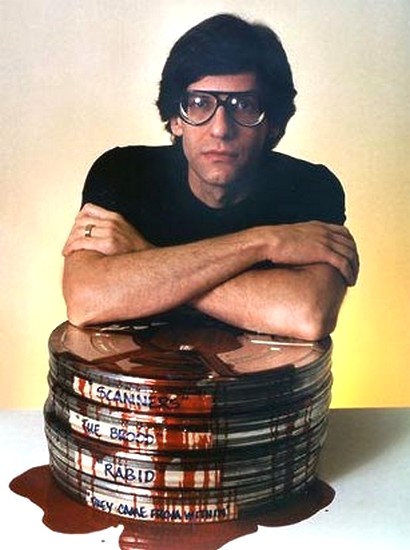
The cinematic corpus of David Cronenberg is probably best known for its expertly uncanny use of body horror, but looming almost as large in the writer-director’s various universes is the presence of faceless, all-powerful organizations. Like his rough contemporary Thomas Pynchon and the conspiracies that litter Pynchon’s early works—V. (1963), The Crying of Lot 49 (1966), and Gravity’s Rainbow (1973)—Cronenberg’s shadowy organizations offer fodder for paranoid conspiracy. These conspiracies operate under the cloak of beneficent academic institutes and, in his later work, corporations. The transition from institutes to corporations occurred during Cronenberg’s late ’70s and early ’80s output, specifically the trio of films The Brood (1979), Scanners (1981), and Videodrome (1983).

It is no coincidence that, at this particular time, international finance and prevailing political winds helped put the corporation in society’s driver’s seat. In Adam Curtis’s recent documentary film HyperNormalisation (2016), he notes how the default of the city of New York in 1975 opened the door for private investment and the finance industry to get their hands on municipal governance on a large scale for the first time, and how this creaked open the door for the Thatcher-Reagan privatization wave in the ’80s. These last few “hinge” years of the 1970s offered the last chance for a real alternative to the coming neoliberal revolution. Soon, all alternatives for governance in the name of the public good were destroyed. Corporatism tightened its grip on the Western polity.

Cronenberg’s early eerie organizations—the “Canadian Academy of Erotic Enquiry” from Stereo (1969) and the panoply of gruesome academic and cosmetic conspiracies in his Crimes of the Future (1970)—eventually yielded to corporations like Scanners‘ ConSec and Videodrome‘s Spectacular Optical. In these early works, Cronenberg’s mysterious organizations are headed by visionary (mad) geniuses. In 1975’s Shivers, experiments by a lone mad scientist infect an entire apartment building with parasites, which awaken dark impulses in the building’s residents and spread themselves through sexual violence. But as the decade went on, Cronenberg slowly backed away from utilizing the character of a singular scientific genius harboring a twisted vision of the future. Now, organizations sought to pull the strings from the shadows. The key transitional work in this chronology is the sometimes-underlooked The Brood from 1979.

In the film, Oliver Reed plays esteemed psychologist Dr. Hal Raglan, who has developed a method of exorcising deep-seated psychological issues using a technique called “psychoplasmics.” In intense one-on-one sessions reminiscent of psychodrama, Raglan is able to physically remove trauma from the human body in the form of ulcers, rashes, and, we eventually discover, cancer. In the ultimate reveal, it’s shown that Raglan has helped traumatized patient Nola Carveth (Samantha Eggar) to birth violent, deformed homunculi who go out into the world, psychically connected to her, in order to resolve her childhood abandonment issues and abuse with bloody murder. Raglan’s foundation, the Somafree Institute of Psychoplasmics (its name simultaneously evocative of Aldous Huxley’s perfect drug soma, and reminiscent of fringe psychological research like Wilhelm Reich’s orgone theory) inhabits a modernist chalet far outside the city of Toronto. Non-resident patients have to be bussed in. Raglan’s public reputation is that of an eccentric, but effective, therapist. At several points in the film we see the covers of Raglan’s presumably best-selling The Shape of Rage. (Curiously, a decade later, in 1990, a documentary titled Child of Rage would be released covering the controversial use of “attachment therapy.”)

As depicted in the film, Somafree is not a corporation. But the thematic threads surrounding Raglan and his Institute are based on real-life trends in the 1970s. In its practices and in the person of Raglan, Somafree resembles psycho-intensive institutes like Esalen, self-improvement organizations like Lifespring, and personalities like Werner Erhard. Erhard’s est movement used primal abuse to ostensibly create psychological breakthroughs, helping the “patient” become more assertive, more powerful, less prone to obeying impulses caused by their early traumas. There is also the real-life analogue to the psychological method that Raglan employs: psychodrama. In the 1970s, new methods of conflict resolution pioneered in places like Esalen were beginning to seep into the mainstream of North American society. These methods soon spread into the corporate world as a purported means of defusing tensions at work and making an office more productive. The “encounter group” soon became a punchline, but the principles behind the Age of Aquarius’s more touchy-feely psychodynamic methods soon became part of the warp and weft of corporate culture in the ’80s and well beyond.

Nola’s estranged husband Frank interviews a former Raglan patient, Jan Hartog, in an attempt to discredit Somafree so Frank can regain custody of his daughter. This patient bears the scars of Raglan’s work on him: a lymphatic cancer sprouting from his neck (an eerie foreshadowing of the coming of another mysterious lymphatic disorder that would soon break out all over North America). Hartog plans to sue; not to achieve victory in a courtroom, but to destroy Raglan’s reputation. It doesn’t matter if they win, Hartog says, because “They’ll just remember the slogan. Psychoplasmics can cause cancer.” The 1970s was full of an increased awareness of the carcinogens that surrounded us in the late-industrial West—cigarettes, sweeteners, food dyes, and pesticides—thanks in large part to the nascent environmental and consumer rights movements, which faced off against corporations using  weapons of negative publicity.

By the time we get to Scanners in 1981, we are fully invested in a world of shadowy corporate overlords. A huge multinational security firm, ConSec, tries to shepherd psychics called “scanners,” ostensibly to help them control their powers, but also to utilize and exploit their paranormal abilities. Protagonist Cameron Vale (Steven Lack) is apprehended off the streets, where, due to his psychic pain, he’s living as a derelict. We learn that scanners don’t “fit in” with society. When Vale is given the inhibitive drug ephemerol by ConSec’s head of scanner research, Dr. Paul Ruth (Patrick McGoohan), he is able to get himself together and is even given a new proto-yuppie wardrobe and mission by ConSec: eliminate rogue scanner Darryl Revok (Michael Ironside). But as Vale accepts his mission and new identity, he finds himself enlisted in ConSec’s private war against renegade scanners. When he runs into an emerging cell of scanners who are forming a powerful “group mind” in a New Age-like encounter session, assassins controlled by Revok murder most of the cell. “Everywhere you go, somebody dies,” one of the hive mind tells Vale, who is complicit with ConSec’s need to exert corporate control over scanners, including the use of violence as part of the corporate mission. Meanwhile, ConSec itself is riddled with moles working with Revok. Indeed, a chemical and pharmaceutical company called “Biocarbon Amalgamate,” founded by Dr. Ruth but now infiltrated by Revok, manufactures ephemerol in massive quantities. Scanners recontexualizes the Cold War espionage “wilderness of mirrors” in terms of corporate espionage for a new age of corporate domination. (It’s no coincidence that Cronenberg cast McGoohan, one of the Cold War’s most famous fictional spies, in the role of Dr. Ruth.)

ConSec’s corporate mission is revealed in a board meeting when the new head of security says, “We’re in the business of international security. We deal in weaponry and private armories.” This head of security also tells Dr. Ruth, “Let us leave the development of dolphins and freaks as weapons of espionage to others.” To the new breed of ConSec executive, fringe ’70s research is a thing of the past, despite its obvious power and relevance. The future is in fighting proxy wars, ensuring private security for the wealthy, and providing mercenary security forces. ConSec in this way is like many other private security firms that first emerged in the 1970s and ’80s. Begun as an outgrowth of post-colonial British military adventurism, the private military company soon became a way for ex-military officers to assure themselves a handsome post-service sinecure in a new era where hot wars were a thing of the past. “Brushfire wars” would continue to ensue, ensuring these companies an expanding portfolio, both in the waning years of the Cold War and in the 1990s and beyond. In fact, it’s interesting to note that many of the real-world military’s supposed psychic assets themselves got into private security after the U.S. Army shut down fringe science projects like Project STARGATE. Art imitates life imitates art.

Videodrome expands Cronenberg’s conspiratorial corporate, military, and espionage worldview into the rapidly exploding world of the media in the early ’80s. Leaps forward in technology, all of which are explicitly called out in Videodrome, litter the film’s visual landscape. Cable television, satellite transmissions (and the attendant hacking thereof), video cassette recorders, the rise of video pornography, virtual reality, postmodern media theory, and violence in entertainment all play essential roles in the film. Max Renn’s (James Woods) tiny Civic TV/Channel 83 (itself based on groundbreaking independent Toronto television station CityTV) is trying to survive as best it can in a world of massive international media players. Ever seeking the latest hit that will tap into the public’s unending hunger for sex and violence, his on-staff “satellite pirate” Harlan delivers the mysterious Videodrome transmission. Harlan is later revealed to be working with the Videodrome conspiracy, having intentionally exposed Max to the signal. In a memorable speech, Harlan nails Max’s amoral desire to sell sex and violence to his viewers: “This cesspool you call a television station, and your people who wallow around in it, and your viewers who watch you do it; you’re rotting us away from the inside.” When Renn is deep into his Videodrome-triggered hallucinations, he is offered corporate “help” much as Cameron Vale was. This time, his “savior” is Barry Convex, a representative of Spectacular Optical. In his video message to Max, he, like the ConSec executive before him, lays out Spectacular Optical’s corporate mission:

I’d like to invite you into the world of Spectacular Optical, an enthusiastic global corporate citizen. We make inexpensive glasses for the Third World… and missile guidance systems for NATO. We also make Videodrome, Max.

The final form of the military-industrial-entertainment complex is laid bare. Videodrome’s intent is to harden and make psychotic a North American television audience who’ve “become soft,” as Harlan puts it. Renn’s hallucinations are recorded, he is literally “reprogrammed” to kill Civic TV’s board (thanks to the memorable hallucinatory image of Convex sticking a VHS tape into Renn’s gut). Renn is then reprogrammed to retaliate and assassinate Convex by the much more ’70s-cult Cathode Ray Mission of “media prophet” Brian O’Blivion, whose postmodern, expressly McLuhanesque view of television’s place in the world allowed Videodrome to come into existence in the first place: “I had a brain tumor and I had visions. I believe the visions caused the tumor and not the reverse… when they removed the tumor, it was called Videodrome.” It’s also worth noting that O’Blivion tells us that Videodrome made him its first victim; postmodern criticism of the medium of television is no match for its violent, cancerous growth.

The deregulation of media in the U.S. in the Reagan years is common knowledge; rules around children’s television were especially eviscerated, which allowed for an explosion in violent, warlike cartoons based on popular toy lines, training a new generation for a lifetime of endless war. Combined with the aforementioned explosion of video technology, the laissez-faire environment shepherded by Reagan’s FCC allowed a new breed of cable television magnates to get rich and created a television and media landscape with a relatively friction-free relationship to government. By the time the first Gulf War broke out in 1991, war provided the cable news networks with surefire ratings and cable news provided the propaganda platform for the war effort, a mutually beneficial (and Cronenberg-esque) symbiosis that’s continued to metastasize through multiple subsequent wars in the Middle East. The world of Videodrome, the one Harlan evokes where America will no longer be soft in a world full of tough hombres, has finally come to fruition thanks in part to all of our enmeshment in the video arena—the video drome.

After Videodrome—in The Fly (1986), Dead Ringers (1988), and Crash (1996)—Cronenberg focuses less on sinister organizations and more on monomaniacal researchers, doctors, and fetishists who pursue their individual idiosyncratic agendas through the director’s trademark twisting mindscapes (and bodyscapes). With the exception of eXistenZ (1999), Cronenberg’s meditation on computer technology and gaming released amidst the first dot-com bubble, and his Occupy-influenced adaptation of Don DeLillo’s 2003 novel Cosmopolis (2012), he has retreated from a more overt suspicion of corporations and shadowy conspiracies. His warning about these invisible masters pulling the strings of society came during the time period when something could have been done about corporate hegemony. But now, the conspiracy operates in the open. We are now all of us the dumb, trusting Cronenberg protagonist, lulled into a false sense of security by a series of “enthusiastic corporate citizens.” Long live the new flesh.

According to the Father of Propaganda an Invisible Government Controls Our Minds with a Thought Prison

By Sigmund Fraud

Source: Waking Times

“Who are the men who without our realizing it, give us our ideas, tell us whom to admire and whom to despise, what to believe about the ownership of public utilities, about the tariff, about the price of rubber, about the Dawes Plan, about immigration; who tell us how our houses should be designed, what furniture we should put in them, what menus we should serve on our table, what kind of shirts we must wear, what sports we should indulge in, what plays we should see, what charities we should support, what pictures we should admire, what slang we should affect, what jokes we should laugh at?” ~ Edward Bernays [b.11/22/1891, d. 3/9/1995]  Propaganda

Authored by Edward Bernays and published in 1928, the book Propaganda still holds its position as the gold standard for influencing and manipulating public behavior. Drawing on his expertise in psychology while using the language of manipulation, Bernays pioneered social engineering via mass media, and his work lives on in the distorted, statist, consumer world we have today.

But who are the ones behind the curtain telling us what to think by directing our attention onto the things which serve interests?

Interestingly, chapter III of Propaganda is titled, ‘The New Propagandists, and is devoted to explaining why the controls for mass manipulation are so closely guarded by a relatively tiny elite who sit in the shadows, out of the public eye, choosing what we are to see and to think, even controlling the politicians we elect to represent us.

If we set out to make a list of the men and women who, because of their position in public life, might fairly be called the molders of public opinion we could quickly arrive at an extended list of persons mentioned in “Who’s Who…”

Such a list would comprise several thousand persons. But it is well known that many of these leaders are themselves led, sometimes by persons whose names are known to few.

Such persons typify in the public mind the type of ruler associated with the phrase invisible government.

An invisible government of corporate titans and behind the scenes influencers who’s mark on culture cannot be understated today. Bernays continues:

The invisible government tends to be concentrated in the hands of the few because of the expense of manipulating the social machinery which controls the opinions and habits of the masses.

The public relations counsel, then, is the agent who, working with modern media communication and the group formation of society, brings an idea to the consciousness of the public. But he is a great deal more than that. He is concerned with courses of action, doctrines, systems and opinions, and the securing of public support for them.

Ultimately, the goal of this type of mass-produced, pop-culture propaganda is to weaken the individual’s ability to think critically, thereby creating an environment where many people look to one another for approval, always second-guessing their own faculties. When this happens, the strength of the collective group begins to take form and multiply, and ideas can be implanted into the popular culture, taking root in the form of widespread conformist behavior.

Thinking critically means making reasoned judgments that are logical and well thought out. It is a way of thinking in which one doesn’t simply accept all arguments and conclusions to which one is exposed without questioning the arguments and conclusions. It requires curiosity, skepticism and humility. People who use critical thinking are the ones who say things such as, “How do you know that?” “Is this conclusion based on evidence or gut feelings?” and “Are there alternative possibilities when given new pieces of information?””  [Source]

Final Thoughts

The takeaway here is that not much has changed in 100 years of corporate/statist American culture, other than the technical capacity to scale this ever upward. Our lives are still heavily influenced by the likes of the described by Bernays. There is one advantage we do have now, however, as technology has given us greater access to the truth and we are now free to split from the matrix psychologically by understanding what it is and how it influences our lives. If we choose to do so, that is, if we choose to take the red pill.

In order to understand your life and your mission here on earth in the short time you have, it is imperative to learn to see the thought prison that has been built around you, and to actively circumnavigate it. Free-thinking is being stamped out by the propagandists, but our human tendency is to crave freedom, and with the aid of truth, we are more powerful than the control matrix and the invisible government.

The Simulacra Democracy

By John Steppling

Source: CounterPunch

… a nation in which 87 percent of eighteen- to twenty-four year olds (according to a 2002 National Geographic Society/Roper Poll survey) cannot locate Iran or Iraq on a world map and 11 percent cannot locate the United States (!) is not merely “intellectually sluggish.” It would be more accurate to call it moronic, capable of being fooled into believing anything …”

— Morris Berman

I cannot remember U.S. culture ever being quite so compromised by ruling class control. Hollywood turns out one jingoistic and militaristic and racist film and TV show after another. Corporate news is completely controlled by the same forces that run Hollywood. It is the complete capitulation of the liberal class to the interests of the increasingly fascistic U.S. elite. And this didn’t start with Donald Trump. Certainly in its current incarnation it goes back at least to Bill Clinton, and really it goes back to the end of World War Two. The ideological trajectory was formed under the Dulles brothers and military industrial complex — representing U.S. business interests and exhibiting a demand for global hegemony. But once the Soviet Union collapsed, the project was accelerated and intensified.

Another starting point might well be the 1960 Bay of Pigs fiasco, or the 1961 CIA (and MI6) assassination of Patrice Lumumba. Or Kennedy’s 1962 speech at American University calling for the end of Pax Americana. We know what happened to Kennedy soon after that. Pick any of these incidents. But it was the fall of the U.S.S.R. that signaled to the governing class, the proprietor class, that the last real obstacle to global domination had been removed. In the interim, one finds the Iran/Contra affair, and the invasion of Iraq. The real and the symbolic meaning of the Soviet Union is forgotten today, I think. Its meaning for the developing world, especially.

The next conscious trial balloon was Clinton’s attack on the former Yugoslavia. A test run for expanding NATO. And it worked. The propaganda machine has never been as successful as it was when it demonized the Serbs and Milosevic. Then came 9/11. And the well honed PR machine spewed an endless barrage of hyper-patriotic rhetoric and disinformation. American exceptionalism was given full credibility. And remember Colin Powell and his cartoon visual teaching aids at the UN? Nobody was going to argue. Certainly not the white liberal class. And Hollywood upped its game in churning out military fantasies. And in just churning out fantasies. A genre that lent itself to obvious neo-colonial messages. By 2007, when Barack Obama announces he will run for President, the master narrative for America was firmly entrenched. The biggest hit from Hollywood in this period is Avatar (2009), a neo-colonial fable that fit seamlessly with Obama’s reconquest of Africa.

Dan Glazebrook recently wrote:

The year 2009, two years before Gaddafi’s murder, was a pivotal one for US-African relations. First, because China surpassed the US as the continent’s largest trading partner; and second, because Gaddafi was elected President of the African Union. The significance of both for the decline of US influence on the continent could not be clearer. Whilst Gaddafi was spearheading attempts to unite Africa politically, committing serious amounts of Libyan oil wealth to make this dream a reality, China was quietly smashing the West’s monopoly over export markets and investment finance. Africa no longer had to go cap-in-hand to the IMF for loans, agreeing to whatever self-defeating terms were on offer, but could turn to China – or indeed Libya – for investment. And if the US threatened to cut them off from their markets, China would happily buy up whatever was on offer. Western economic domination of Africa was under threat as never before.

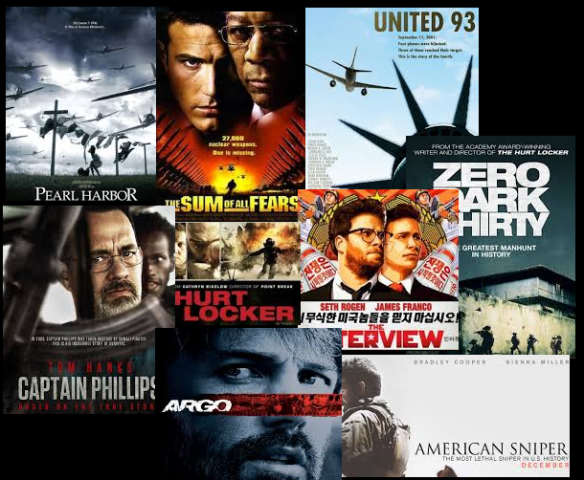
The US response was to increase base building, upgrade AFRICOM, and then murder Gadaffi. Hollywood hits from this period include The Hurt Locker and The Dark Knight. Meanwhile domestically Obama was giving the OK for militarizing of police departments across the country. On another front….Danny Haiphong wrote…

What isn’t discussed often enough is how Obama has worked tirelessly to protect and fulfill the interests of the corporate healthcare system. In 2009, he collaborated with the monopoly health insurance industry and its pharmaceutical counterparts to repress the demand for single payer healthcare. The conditions at the time appeared ripe for a single payer system. Popular discontent with Republican Party rule was at its highest point. A relatively organized movement for single payer care was represented by organizations such as Healthcare Now. The Democratic Party possessed a majority in both the House and Senate.

Obama came to power as Wall Street went into meltdown, 2008. But instead of hope and change we got almost 5 trillion dollars moving to the top 1% of the financial elite. Poverty increased every year under Obama, as did inequality. Social Network came out in 2010 and Wolf of Wall Street in 2013. Both were big hits. The message from Hollywood never changed. And part of that message is that wealth is its own justification and a symbol of virtue. Hollywood, and U.S. liberals just naturally gravitate toward the rich.

Obama attacked Afghanistan, Iraq, Syria, Libya, Sudan, Somalia, and Yemen. And it is perhaps that last venture that will prove to be his most significant. Arming, training, and coordinating the Saudi aggression (and now that has escalated to boots on the ground) against the helpless Yemen has resulted in the largest humanitarian catastrophe in five decades.

The U.S. now has all but formally criminalized dissent, especially if that dissent is aimed at Israel.

None of this is to create exact corollaries between political action and studio product. But rather that the overriding message of Hollywood in both film and TV is to validate U.S. exceptionalism. And to hedge criticism with faint token protest. But its not just Hollywood, its theatre and fiction and all the rest of the arts. The erasure of the working class is the most pronounced truth in American culture today. There are no Clifford Odets (a high school drop out) anymore; they have been replaced by a steady stream of well groomed compliant MFA grads. Mostly from elite and expensive schools. Hemingway and James Baldwin were not college grads, nor was Tennessee Williams, the son of a traveling shoe salesman. Even more recent authors such as Thomas Pynchon were college drop outs (to join the Navy), but the point is that today mass culture is carefully controlled. Dreiser was a college drop out, and Twain was a typesetters apprentice. Others like Faulkner, went to University, but also worked. In Faulkner’s case as a postman. Same profession as Henry Miller and Charles Bukowski. Stephen Crane and Hemingway worked as journalists, when that was an honorable profession.

The decision makers in mass culture are mostly firmly entrenched in the Democratic Party ethos (witness stuff like House of Cards, Madame Secretary, or Veep). If one only gets one’s news from MSNBC or FOX or CNN then one will take away mostly pure propaganda. Rachel Maddow has a career based on craven parroting of DNC approved talking points and conclusions. Bill Maher, whose show is on HBO, is of late pimping for war. Sunday news talk shows do not invite radical voices, not ever. Michael Parenti isn’t on those shows, nor  are Ajamu Baraka or Glen Ford Mike Whitney or Ed Curtin or Dan Glazebrook or Stephen Gowans. No, but there are plenty of retired generals and politicians. This is a media that exerts absolute control of message.

The loss of the working class, of class diversity, has been a far bigger blow to the health of the culture than anything else. One might argue that culture has always been, in the modern era, a province of the bourgeoisie, and that’s true. But there is still a rather pronounced change that has taken place. But Americans are discouraged from thinking in terms of class. They see individualism and identity. Get me more women directors they cry….which would give us more versions of Zero Dark Thirty, I guess. Gender equality matters, something every single socialist country in history has emphasized. Something Chavez saw fit to write into the Bolivarian constitution on day one. Chavez, who liberal avatar Bernie Sanders dismissed as a “dead communist dictator”. Chavez, who feminist avatar Hillary Clinton worked overtime to oust from power.

People are shocked…shocked I say…that US soldiers are killed in Niger. Darn that Donald Trump. When it is pointed out that it was Obama who sent troops there in his pivot to Africa, one is met with blank stares. The concern over U.S. soldiers dying is simply mind numbing in its hypocrisy and blinkered exceptionalism. I mean just count the numbers of dead civilians due to U.S. drone strikes from just one year. Pick any year you like.

Under Obama, the US African Command (AFRICOM) has penetrated every African country but Zimbabwe and Eritrea. AFRICOM has locked African nations into military subservience. In 2014, the US conducted 674 military operations in Africa . According to a recent Freedom of Information Act request by Intercept, the US currently has Special Forces deployed in more than twenty African nations.

Danny Haiphong

People are terrified today lest they be called conspiracy theorists. No single pejorative term has exercised such disproportionate power. There is a subterranean subject position associated with this, too. A masculine identity that connects with the presentation of those accepting of the official version of things. It is ‘no nonsense, mature, and sort of tough guy’ pose. Only weak and muddled (feminine you see!) would bother to question official narratives of…well, anything. It is staggering, really, why so few ask why is it OK to assassinate people without due process? Why is it whistleblowers, truth tellers, are being locked away and shunned? Why are there 900 plus US military bases around the world. Why, given the growing poverty in the U.S. do we need an updated nuclear arsenal that will cost trillions? In fact why is the defense budget over 4 billion a day? The liberal educated class seem not to ask such questions. Let alone ask is the U.S. arming takfiri jihadists in Syria? Most of what people call conspiracy is just perfectly reasonable skepticism. Given a history that includes COINTELPRO, Operation Northwoods, Gladio, MKUltra, and Operation AJAX. This is also relevant in terms of the coming war on *fake news*. An idea put forward by Obama and now in enthusiastic Orwellian operation by Facebook, YouTube, and Google. In the U.K. Theresa May proudly announces the government SHOULD control what one can see on the internet. Censorship is pitched as protection.

And then we come to NATO and Europe. Why does NATO even exist one might ask? I mean the USSR doesn’t exist anymore. Well, the answer has been under construction for a few years now, and that answer is the extraordinary anti Putin propaganda of the U.S. The “Russian Threat” is now an accepted trope in public discourse. Or the anti Iranian disinformation. In fact Iran is far more democratic and less a global threat (actually its NO global threat) than U.S. boon allies Israel and Saudi Arabia. Which brings us back to Yemen. The utter destruction of Yemen, poorest Arab country in the world, and now one with the largest Cholera outbreak in history, posed no threat to ANYONE. Certainly not to the United States. Are we to believe the House of Saud is worth supporting? They behead homosexuals and witches in Saudi Arabia. The leader of KSA is a 32 year old psychopath named Mohammed Bin Salman. Someone please explain the U.S. support for this country?

Or Venezuela. The U.S. has waged various campaigns against this sovereign nation for over a decade now. A democracy. But a disobedient one. Where is the outcry? When people are going on about Harvey Weinstein, a troglodyte movie producer that literally everyone knew was a serial abuser, I wonder that the women of Venezuela seem not to count. Or of Libya, or Haiti, or Puerto Rico, or hell, the women of Houston right now. Poor women. Ah, but that is class again. Now perhaps the Weinstein affair will yield good results and some form of collective protection and maybe even unionizing will take place to limit the power of rich white men. I doubt it, but maybe. Still, given that the liberal class today applaud the idea of making it OK for women to bomb defenseless villages in Afghanistan or Iraq or Yemen, just like men, and given that most of these horrified by Weinstein were and are solidly behind Hillary Clinton and the DNC, and laud adulation on figures like Maddie Albright, it seems hard to imagine.

David Rosen:

Sexual abuse and violence in the U.S. is as old as the country. America’s patriarchal culture long legitimized sexual abuse and violence toward women — and children — whether conducted at the workplace, at home, a nightclub or on a deserted street. During the nation’s earliest days, the custom of sexual abuse and violence was legitimized through the notion of “chastisement.” This was a feature of Anglo-American common law that recognized the husband as master of “his” household and, thus, permitted him to subject “his” wife to corporal punishment, including rape, so long as he did not inflict permanent injury upon her. Sexual abuse was institutionalized in the rape of African and later African-American female slaves. As the legal scholar Adrienne Davis notes, “U.S. slavery compelled enslaved black women to labor in three markets – productive, reproductive, and slavery – crucial to the political economy.”

One need only note the sexual violence that takes place in the U.S. military (See Kirby Dick’s The Invisible War). But that is not the military you see in this season’s TV shows such as SEAL Team or Valor or The Brave. The current Tom Cruise film American Made is a sort of comedy about Barry Seal who worked as a pilot for the CIA, and with various cartels in South America. Yeah, nothing funnier than squashing a socialist government like in Nicaragua. There is not a single Spanish speaking character who is not either a drunk, a sadist, or just incompetent. This stunningly racist revisionism was called “jaunty and bouncy” by the Hollywood Reporter.

The liberal class will always side with the status quo. Always. They do not care if the status quo is fascist. And its suits them much more to lay out bromides about male abuse of women, as long as this doesn’t mean having to untangle the complexity of women in unfamiliar non tourist visited nations like Yemen or Libya or Honduras. Just like the fact that U.S. domestic police departments murdered over a thousand black men in 2015. And continue to do so, along with increasing numbers of black women. That’s just not a jaunty bouncy story, I guess. Obama has never been comfortable talking about or to black people. He did manage to scold Colin Kaepernick recently though, about the pain he, Kaepernick, might be causing. The pain of white billionaire sports team owners I guess. The Uncle Tomism of what Glen Ford called black misleadership has never been greater. And that’s another crime we can lay, largely, at the feet of Barack Obama.

The U.S. House voted unanimously to sanction Iran and North Korea, an absurdity and a crime, and yet one that barely registered on the media Richter scale. What has Iran or North Korea ever done to hurt anyone in the United States? It is Saudi Arabia and Israel that fear a democratic nation like Iran and the influence they wield in the region. Iran is accused of fomenting instability but evidence is never given. Russia is said to control U.S. public opinion, but evidence is never given. The U.S. doesn’t even bother to really try and make claims about Venzeuela, because its just part of inherited wisdom that they are *bad*. Like Castro was bad, like Gadaffi, like Aristide, like anyone exhibiting independence. The world according to media entertainment is made up of bad guys and good guys. Mike Pompeo, head of the CIA, recently stated that his agency would become a “much more vicious agency” in fighting its enemies. Its actually hard to imagine what that might look like given CIA history. More vicious than rendition, drone killing and black site torture? Remember it was the U.S. and its School of the Americas that trained those death squads in Central America. Hollywood makes comedies about this.

In any event nobody in Hollywood complains. Just as none of the actresses assaulted by Weinstein (and countless others) said anything lest they lose career opportunities. Just as nobody complains about the racism and demonizing of Muslims or Serbs or North Koreans or Russians lest they not get the job. Coercion is silent and a given. It is also absolute. Most actors and directors simply don’t think about it, and most know little beyond what they hear on corporate news or read in the NYTimes. But I understand. People have to eat, have to feed their families. The real problem is that power is ever more consolidated. Distribution of films is monopolized. And for most Americans, foreign policy remains a giant black hole about which they know very little. Tell someone Milosovic was actually a good guy and they will laugh at you (this still happens on the left, too, rather depressingly). Tell them Russia is not threatening the U.S. or Europe, and they will laugh at you. Try to explain what Imperialism is and means, and you get that bored look of irritation. A good rule of thumb is if the U.S. targets a country or leader, then its worth questioning the western generated propagated propaganda in mainstream media about said country or leader (think Syria, Gadaffi, Aristide, Milosovic, Iran, North Korea). The U.S. does not go after countries who welcome western capital.

One of the things I’ve noticed about Hollywood film is the extraordinary amount of self pity from most characters. Self pity, entitlement, and sarcasm. The people who produce and make film and TV today, by and large, tacitly censor themselves. Some don’t have to, of course. But there is a general group think at work. And it extends to the way characters are written. The problems of affluent white people is the template here. Few examine the wider world, and mostly when they do it is seen as a world of threat and menace. An uncivilized place in need of guidance from the civilized white West (The Lost City of Z comes to mind, which made all the approved anti colonial notes while still creating a colonial narrative anyway.). But it is even more narrow than that. Everything resembles a studio; political discussions, even if they take place in outer space, resemble studio executives discussing opening weekend profits, or Neilson ratings. And since Hollywood itself ever more resembles Wall Street, or some corporate headquarters, that is increasingly what the world looks like. It is a profound loss of imagination. Westerns look and sound the same as melodramas set in Santa Monica or New York. Fantasy worlds resemble corporate headquarters or corporate motivational weekends. It is a world created by writers under thirty, largely, and certainly under forty. These are worlds created by people who themselves know very little of the world. They know even less about having to work for a living. The entire universe of film is absent any class awareness. History is simplified the better to appeal to a wider audience. Everything feels and sounds the same. And it is stultifying. There are films and TV from Europe, even from the U.K. that have merit, have heterogeneous sensibilities, but not from Hollywood. Like White House press conferences, the idea is to stay on message. Black characters sound white (or are given caricature *black* dialect and dialogue), brown characters sound white (or are given caricature barrio dialects), and Muslims sound dangerous and devious. Asians seem lifted from Fu Manchu serials or Charlie Chan. Strange when I hear people make fun of ethnic cliches from the 1940s, because it is really no different today (and check the recent TV incarnation of the venerable Star Trek franchise where the Klingon villains are very dark, live in dark spaceships and utter a guttural invented language all of which suggests something oddly racist and like nothing so much as colonial portraits of savages from darkest Africa).

Fixation on Trump’s crimes distracts from a system in which crime is a built-in factor. Clinton, Bush, Obama, and Trump. They are only the figureheads that carry water for the system. And the system is the property of the ruling class. People vote as if it crucially matters, and they vote for who they like. Not for policy because mostly they have no idea of policy. Trump is an obvious target, but that’s the problem in a sense. America didn’t become racist and violent overnight. The forces of social unrest have been building for decades. Trump was inevitable. His lack of basic literacy mirrors the nation he nominally heads, and his vulgarity mirrors the vulgarity of America, as does his misogyny and racism. The same advisors are in place and if Hillary had won, those openly fascist thugs applauding Trump would still be committing hate crimes. Has Trump empowered them? To a degree, yes. But an HRC win would likely have provided motivation of a different sort and the same violence would be taking place. You cannot sustain, as a country, this level of inequality. And as more super hurricanes descend on us, as the bio-sphere collapses, none of this may end up mattering. There is something disturbing, actually, about the relentless attacks on Trump. Its like beating up a special needs kid. Where was this hatred and outrage before? I mean Trump’s America, a term I hear a lot, is just America. We have over 2 million people in prison in the U.S. Far and away leaders in the world. Infant mortality however puts the U.S. between 26th and 51st, depending on who is counting. There is no Universal Heath Care, no union protection for workers, no maternity leave, no free education. What is there to feel so special about, exactly? Trump was very popular on his moronic reality TV show. I’m guessing more than few now outraged by this buffoonish reactionary watched that show. I mean it did last fifteen years I believe. Who did they think he was? There is nothing wrong with identifying the crimes of Trump’s administration. But there is something deeply wrong in not recognizing it as a continuation of prevailing policy. Yes, it is worse in many areas. The environment for one. But then again, 47% of the world’s pollution is caused by the military. And the U.S. has a military bigger than the next ten largest militaries in the world. And every president since the first  Bush has increased the military budget. The nightmare did not begin with the swearing in of Donald Trump. But nobody likes him. They liked Obama. And that is why he was able to do so much harm. Trump is dangerous not because of what he thinks (he mostly doesn’t) but because of his ignorance and weakness (and fear). And that weakness generated his welcoming hand to the Pentagon. Foreign policy is really in the hands of a man nicknamed ‘Mad Dog’. One cannot blame this catastrophic situation on one man. This is the creation of American history.

Philip K. Dick and the Fake Humans

(Editor’s note: on this 36th anniversary of the passing of Philip K. Dick, it seems an appropriate time to note the relevance of his work to our current dystopia as Henry Farrell does in the following essay. Unfortunately the author is less astute regarding the ways in which the dystopias of Orwell and Huxley are equally relevant to our current milieu.)

By Henry Farrell

Source: Boston Review

This is not the dystopia we were promised. We are not learning to love Big Brother, who lives, if he lives at all, on a cluster of server farms, cooled by environmentally friendly technologies. Nor have we been lulled by Soma and subliminal brain programming into a hazy acquiescence to pervasive social hierarchies.

Dystopias tend toward fantasies of absolute control, in which the system sees all, knows all, and controls all. And our world is indeed one of ubiquitous surveillance. Phones and household devices produce trails of data, like particles in a cloud chamber, indicating our wants and behaviors to companies such as Facebook, Amazon, and Google. Yet the information thus produced is imperfect and classified by machine-learning algorithms that themselves make mistakes. The efforts of these businesses to manipulate our wants leads to further complexity. It is becoming ever harder for companies to distinguish the behavior which they want to analyze from their own and others’ manipulations.

This does not look like totalitarianism unless you squint very hard indeed. As the sociologist Kieran Healy has suggested, sweeping political critiques of new technology often bear a strong family resemblance to the arguments of Silicon Valley boosters. Both assume that the technology works as advertised, which is not necessarily true at all.

Standard utopias and standard dystopias are each perfect after their own particular fashion. We live somewhere queasier—a world in which technology is developing in ways that make it increasingly hard to distinguish human beings from artificial things. The world that the Internet and social media have created is less a system than an ecology, a proliferation of unexpected niches, and entities created and adapted to exploit them in deceptive ways. Vast commercial architectures are being colonized by quasi-autonomous parasites. Scammers have built algorithms to write fake books from scratch to sell on Amazon, compiling and modifying text from other books and online sources such as Wikipedia, to fool buyers or to take advantage of loopholes in Amazon’s compensation structure. Much of the world’s financial system is made out of bots—automated systems designed to continually probe markets for fleeting arbitrage opportunities. Less sophisticated programs plague online commerce systems such as eBay and Amazon, occasionally with extraordinary consequences, as when two warring bots bid the price of a biology book up to $23,698,655.93 (plus $3.99 shipping).

In other words, we live in Philip K. Dick’s future, not George Orwell’s or Aldous Huxley’s. Dick was no better a prophet of technology than any science fiction writer, and was arguably worse than most. His imagined worlds jam together odd bits of fifties’ and sixties’ California with rocket ships, drugs, and social speculation. Dick usually wrote in a hurry and for money, and sometimes under the influence of drugs or a recent and urgent personal religious revelation.

Still, what he captured with genius was the ontological unease of a world in which the human and the abhuman, the real and the fake, blur together. As Dick described his work (in the opening essay to his 1985 collection, I Hope I Shall Arrive Soon):

The two basic topics which fascinate me are “What is reality?” and “What constitutes the authentic human being?” Over the twenty-seven years in which I have published novels and stories I have investigated these two interrelated topics over and over again.

These obsessions had some of their roots in Dick’s complex and ever-evolving personal mythology (in which it was perfectly plausible that the “real” world was a fake, and that we were all living in Palestine sometime in the first century AD). Yet they were also based on a keen interest in the processes through which reality is socially constructed. Dick believed that we all live in a world where “spurious realities are manufactured by the media, by governments, by big corporations, by religious groups, political groups—and the electronic hardware exists by which to deliver these pseudo-worlds right into heads of the reader.” He argued:

the bombardment of pseudo-realities begins to produce inauthentic humans very quickly, spurious humans—as fake as the data pressing at them from all sides. My two topics are really one topic; they unite at this point. Fake realities will create fake humans. Or, fake humans will generate fake realities and then sell them to other humans, turning them, eventually, into forgeries of themselves. So we wind up with fake humans inventing fake realities and then peddling them to other fake humans.

In Dick’s books, the real and the unreal infect each other, so that it becomes increasingly impossible to tell the difference between them. The worlds of the dead and the living merge in Ubik (1969), the experiences of a disturbed child infect the world around him in Martian Time-Slip (1964), and consensual drug-based hallucinations become the vector for an invasive alien intelligence in The Three Stigmata of Palmer Eldritch (1965). Humans are impersonated by malign androids in Do Androids Dream of Electric Sheep? (1968) and “Second Variety” (1953); by aliens in “The Hanging Stranger” (1953) and “The Father-Thing” (1954); and by mutants in “The Golden Man” (1954).

This concern with unreal worlds and unreal people led to a consequent worry about an increasing difficulty of distinguishing between them. Factories pump out fake Americana in The Man in the High Castle (1962), mirroring the problem of living in a world that is not, in fact, the real one. Entrepreneurs build increasingly human-like androids in Do Androids Dream of Electric Sheep?, reasoning that if they do not, then their competitors will. Figuring out what is real and what is not is not easy. Scientific tools such as the famous Voight-Kampff test in Do Androids Dream of Electric Sheep? (and Blade Runner, Ridley Scott’s 1982 movie based loosely on it) do not work very well, leaving us with little more than hope in some mystical force—the I Ching, God in a spray can, a Martian water-witch—to guide us back toward the real.

We live in Dick’s world—but with little hope of divine intervention or invasion. The world where we communicate and interact at a distance is increasingly filled with algorithms that appear human, but are not—fake people generated by fake realities. When Ashley Madison, a dating site for people who want to cheat on their spouses, was hacked, it turned out that tens of thousands of the women on the site were fake “fembots” programmed to send millions of chatty messages to male customers, so as to delude them into thinking that they were surrounded by vast numbers of potential sexual partners.

These problems are only likely to get worse as the physical world and the world of information become increasingly interpenetrated in an Internet of (badly functioning) Things. Many of the aspects of Joe Chip’s future world in Ubik look horrendously dated to modern eyes: the archaic role of women, the assumption that nearly everyone smokes. Yet the door to Joe’s apartment—which argues with him and refuses to open because he has not paid it the obligatory tip—sounds ominously plausible. Someone, somewhere, is pitching this as a viable business plan to Y Combinator or the venture capitalists in Menlo Park.

This invasion of the real by the unreal has had consequences for politics. The hallucinatory realities in Dick’s worlds—the empathetic religion of Do Androids Dream of Electric Sheep?, the drug-produced worlds of The Three Stigmata of Palmer Eldritch, the quasi–Tibetan Buddhist death realm of Ubik—are usually experienced by many people, like the television shows of Dick’s America. But as network television has given way to the Internet, it has become easy for people to create their own idiosyncratic mix of sources. The imposed media consensus that Dick detested has shattered into a myriad of different realities, each with its own partially shared assumptions and facts. Sometimes this creates tragedy or near-tragedy. The deluded gunman who stormed into Washington, D.C.’s Comet Ping Pong pizzeria had been convinced by online conspiracy sites that it was the coordinating center for Hillary Clinton’s child–sex trafficking ring [likewise, the masses may have been convinced by mainstream media that a real child-sex trafficking ring never existed].

Such fractured worlds are more vulnerable to invasion by the non-human. Many Twitter accounts are bots, often with the names and stolen photographs of implausibly beautiful young women, looking to pitch this or that product (one recent academic study found that between 9 and 15 percent of all Twitter accounts are likely fake). Twitterbots vary in sophistication from automated accounts that do no more than retweet what other bots have said, to sophisticated algorithms deploying so-called “Sybil attacks,” creating fake identities in peer-to-peer networks to invade specific organizations or degrade particular kinds of conversation.

Twitter has failed to become a true mass medium, but remains extraordinarily important to politics, since it is where many politicians, journalists, and other elites turn to get their news. One research project suggests that around 20 percent of the measurable political discussion around the last presidential election came from bots. Humans appear to be no better at detecting bots than we are, in Dick’s novel, at detecting replicant androids: people are about as likely to retweet a bot’s message as the message of another human being. Most notoriously, the current U.S. president recently retweeted a flattering message that appears to have come from a bot densely connected to a network of other bots, which some believe to be controlled by the Russian government and used for propaganda purposes.

In his novels Dick was interested in seeing how people react when their reality starts to break down. A world in which the real commingles with the fake, so that no one can tell where the one ends and the other begins, is ripe for paranoia. The most toxic consequence of social media manipulation, whether by the Russian government or others, may have nothing to do with its success as propaganda. Instead, it is that it sows an existential distrust. People simply do not know what or who to believe anymore. Rumors that are spread by Twitterbots merge into other rumors about the ubiquity of Twitterbots, and whether this or that trend is being driven by malign algorithms rather than real human beings.

Such widespread falsehood is especially explosive when combined with our fragmented politics. Liberals’ favorite term for the right-wing propaganda machine, “fake news,” has been turned back on them by conservatives, who treat conventional news as propaganda, and hence ignore it. On the obverse, it may be easier for many people on the liberal left to blame Russian propaganda for the last presidential election than to accept that many voters had a very different understanding of America than they do.

Dick had other obsessions—most notably the politics of Richard Nixon and the Cold War. It is not hard to imagine him writing a novel combining an immature and predatory tycoon (half Arnie Kott, half Jory Miller) who becomes the president of the United States, secret Russian political manipulation, an invasion of empathy-free robotic intelligences masquerading as human beings, and a breakdown in our shared understanding of what is real and what is fake.

These different elements probably would not cohere particularly well, but as in Dick’s best novels, the whole might still work, somehow. Indeed, it is in the incongruities of Dick’s novels that salvation is to be found (even at his battiest, he retains a sense of humor). Obviously, it is less easy to see the joke when one is living through it. Dystopias may sometimes be grimly funny—but rarely from the inside.

Mueller’s Fraudulent Indictment

(Rex Features via AP Images)

The Internet Research Agency: clickbait farm or KGB plot?

By Justin Raimondo

Source: Antiwar.com

The indictment handed down by Robert Mueller against 13 Russians connected to the Internet Research Agency, a Russian-owned- and- operated clickbait farm, is the capstone of my case that we have indeed entered Bizarro World, an alternate universe where up is down, black is white and truth is a ridiculous falsehood.

Yes, I said clickbait farm – because that’s precisely what the Internet Research Agency (IRA) is: founded by Yevgeny Prigozhin, a former Russian chef who wanted to figure out a new way to make money, the IRA, as pointed out here, is a money-making operation. Mueller seems to acknowledge this when, in his laughable “indictment,” we read this:

“Defendants and their co-conspirators also used the accounts to receive money from real U.S. persons in exchange for posting promotions and advertisements on the ORGANIZATION-controlled social media pages. Defendants and their coconspirators typically charged certain US merchants and US social media sites between 25 and 50 US dollars per post for promotional content on their popular false US persona accounts, including Being Patriotic, Defend the 2nd, and Blacktivist.”

What kind of a propaganda/spy operation charges its coconspirators a fee?

The total Russian/IRA buy was $100,000, including $300 in Pennsylvania, $832 in Michigan, and $1979 in Wisconsin (mostly before the primary). Most of the “Russian” ads ran after the election, and they didn’t support any candidates: instead, they focused on “hot button” issues – precisely the sort of thing intended to attract visits and make money for the creators via ads.

This business model has been widely utilized by enterprising Macedonian teenagers and others out to make a quick buck, and it works quite effectively if you know what you’re doing. The IRA, like other clickbait operations, isn’t really about politics, although it deals with political subjects: it’s about making money for it owners. Period. As the Moon of Alabama blogger points out:

“There were, according to the indictment, eighty people working on the “translator project”. These controlled “hundreds” of sock-puppets online accounts each with a distinct “political” personality. Each of these sock-puppets had a large number of followers – in total several hundred-thousands. Now let’s assume that one to five promotional posts can be sold per day on each of the sock-puppets content stream. The scheme generates several thousand dollars per day ($25 per promo, hundreds of sock-puppets, 1-5 promos per day per sock-puppet). The costs for this were limited to the wages of up to eighty persons in Moscow, many of them temps, of which the highest paid received some $1,000 per month.”

All in all, a fairly profitable business – not a state-run “disinformation” project, but rather good old free enterprise.

Yes, I know that some of the IRA’s employees traveled to America for a week or two to do “research.” But what, exactly, does this mean? Does anybody have a record of where they stayed, or whom they associated with? There’s nothing about that in the indictment. In short, they could have come to America for the same reasons tens of thousands do every day of the week: to enjoy themselves as tourists. After all, what could they possibly learn in a week-long stay that could … sway a presidential election? I mean, what are we talking about here?

The weird-stupid aura hanging over this whole affair was underscored when CNN actually knocked on the door of some woman whom they accused of running a “Russian-sponsored” pro-Trump rally in Florida: the woman laughed in the “reporter’s” face and said she’d never spoken to a single Russian in her entire life. So how many Trump supporters will be visited not just by CNN but by the FBI in order to intimidate them in a similar manner?

What I want to know is this: what in the name of all that’s holy does Robert Mueller think he’s doing? Is he just plain ignorant of the internet and how it works – or is he mocking us? His “indictment” is nothing but a joke. And as for the hysterics proclaiming it shows that the Russians have launched the equivalent of the attack on Pearl Harbor – these people need to be heavily sedated. Three-thousand people died at Pearl Harbor: how many were killed by Prigozhin’s clickbait farm?

My recent cancer diagnosis has really focused my attention on an issue I had hardly considered before: spending time refuting nonsense is essentially a waste of my time. And at this point, it’s the kind of luxury I can no longer afford. If these are truly my last days on earth, I’d rather be writing about something substantial, and meaningful, thank you very much.

So I’ll just end with this: anyone who says they believe the Mueller narrative outlined in his laughable indictment is either clueless or is a cynic who will say anything. The “charges” detailed in this “indictment” – “Conspiracy to Defraud the United States” – are precisely what the authors of this disgraceful document are guilty of themselves.

Russia-gate is a hoax – I’ve told my readers that from the very beginning. This “indictment” underscores the extent of the hoax – and the contempt that the government officials and their journalist collaborators who thought this would bring down a President have for the American people. They expect us to swallow this fraud whole. Well, guess what – it’s not happening, folks. A child could see through this nonsense.

It’s high time to shut this fraud on the country down, and return Mueller to private life (where he can contemplate how badly he messed up not only this but also the anthrax investigation).

The Nunes Memo Only Partially “Vindicates” Trump, But it Fully Indicts the FBI and the FISA Court

By Thomas L. Knapp

Source: The Fifth Column

On February 2, US president Donald Trump approved public release of a memo from the US House Intelligence Committee concerning FBI malfeasance in its applications for warrants to surveil Carter Page, a former member of his campaign team.

The following day, Trump triumphantly tweeted that the memo “totally vindicates” him in the ongoing “Russiagate” probe. It doesn’t really do that — proving a negative is always difficult — but it does add a great deal of credibility to his charge that the probe is a politically driven witch hunt rather than a serious criminal investigation.

According to the memo, the FBI based the probable cause claim in its multiple surveillance applications to Foreign Intelligence Surveillance Court judge on two pieces of “evidence”:

1) A “minimally corroborated” (the FBI’s own words) dossier of political opposition research on Donald Trump, compiled by a British former spy in the pay of Trump’s political opponents; and

2) A Yahoo! News article based — although the FBI denied it — on leaks from that same foreign operative.

The memo also claims that at no point did the FBI apprise the judge of the political origins or “minimal corroboration” of the memo.

If these claims are true, then what happened was the equivalent of crazy Uncle J. Edgar going before a judge and using a picture of me with a Frisbee [TM] in the air behind me, taken by my angry ex-wife, as probable cause to believe that I’m from Mars, then asking for a warrant to search my garage for flying saucers.

As you may recall, this is the same FBI which (and the same FBI director who) amassed mountains of evidence that Trump’s opponent in the 2016 presidential election had committed multiple felonies in her grossly negligent handling of classified information as Secretary of State, yet recommended against prosecuting her because, well, she’s Hillary Clinton.

And as you may also recall, this is the same FISA court that, between 1979 and 2013 approved 35,434 warrant requests and denied 12.

How many of those 35,434 requests were backed by evidence no more substantial than that described in the Nunes memo?

How much more dumb and evidenceless did those 12 denied requests have to be to not get a pass?

And why did the same Republican Congress which just released this memo recently vote to renew Section 702 of the Foreign Intelligence Surveillance Act, giving even more expansive powers to organizations which have clearly used those powers abusively and without regard to even minimal standards of evidence?

Inquiring minds want to know.

Did Trump and/or his campaign team “collude” with the Russian government to manipulate the 2016 presidential election? I don’t know. But I do know that disguising a circus as an investigation isn’t likely  to shed real light on the matter.


Thomas L. Knapp (Twitter: @thomaslknapp) is director and senior news analyst at the William Lloyd Garrison Center for Libertarian Advocacy Journalism (thegarrisoncenter.org). He lives and works in north central Florida.