Saturday Matinee: The Projectionist

The Projectionist Is a Biography as a Mirror Reflecting a City’s Change

Abel Ferrara’s documentary excels as kind of cultural microcosm, rich in its broader implications.

By Sam C. Mac

Source: Slant

One difference between The Projectionist and Abel Ferrara’s earlier documentaries is the point of focus: Instead of being specifically anchored to the exploration of a particular geography, Ferrara traces an immigrant’s experience of both the culture he comes from and the one that he adopted as his own. Nicolas Nicolaou, who came to the U.S. as a boy and has been working in New York City movie theaters since the 1970s, retains deep ties to his home in Cyprus, where his wife is still living—and where the film begins.

Ferrara uses his typical mosaic approach of rendering an environment to gently cut against Nicolaou’s straightforward narration, in which he chronicles his youth and the social conditions of his hometown, in between casual banter with Ferrara. “It’s a lot of work, Abel,” Nicolaou mutters, while displaying one of the old fishing nets that his father used to use. “And those years, you couldn’t sell fish.” But The Projectionist soon uproots itself, just as Nicolaou’s father once did, and relocates to New York City, where it becomes clear that, in actuality, Ferrara’s latest documentary isn’t all that different from his previous ones.

Though the film is framed as a biography, Ferrara is much more interested in the monumental transformation of space that’s taken place around his subject’s life. In particular, The Projectionist is about the decades of social and political change that have shaped New York through the representative example of the city’s relationship to cinema—both the way it’s been depicted in the movies themselves and as an industry that’s been subjected to various efforts of reformation. Nicolaou’s subjectivity serves essentially the same purpose as Ferrara’s own did in 2010’s Mulberry St., a tribute to the Little Italy neighborhood that he used to call home. But in its mapping of a culture that’s experienced rapid diversification of its population, and the backlash to that progression, The Projectionist also connects to 2017’s Piazza Vittorio.

Nicolaou’s career spans the heyday of the adult movie theater business—which, as Ferrara emphasizes, coincides with the most popular period for arthouse films in New York’s history—through the Giuliani years, and that administration’s clean-up of the city, to a contemporary culture of big corporation’s “colluding” to monopolize, and to put privately owned theaters, like those that Nicolaou runs, out of business. Ferrara clearly has affection for Nicolaou as a kind of mirror image of himself: Both began their careers in New York around the same time, albeit on almost opposite sides of the industry, and both have survived mainly by adapting to the times and trusting their intuition. But there’s also something bittersweet implicit in that comparison: Nicolaou has built a stable, family-run business around his passions (one that his wife manages remotely from Cypus), whereas Ferrara’s path hasn’t been so profitable.

For a lesser filmmaker, the schism between artist and businessman that exists between these two men might evince contempt. But Ferrara’s approach to documentary has always been much less about his personal feelings, or polemical intents, than an intense sense of fascination. The only problem with that driving interest is that, especially when combined with a subject so close to Ferrara’s passion, it can lapse into sentimentality. Indeed, there are too many scenes here of Nicolaou voicing his abiding love and belief in the power of cinema, and without being questioned by Ferrara, most prominently when the former shows off the fancy interior of the Vynl nightclub that he owns and operates out of a building that, prior to its conversation, had been a theater of one kind or another dating back to the 19th century.

Where The Projectionist ultimately excels, however, is as the kind of cultural microcosm that makes Ferrara’s other documentaries feel at once urgent and incredibly rich in their broader implications. In Mulberry St., the transformation of one urban neighborhood becomes a representation of generational changes in modern Italian-American culture writ large, and in Piazza Vittorio, the transactionally motivated societal values of an immigrant-run marketplace in Rome are treated as a metaphor for the social conditions in contemporary Europe. Though painting with a bigger canvas this time—and exercising slightly less precision—Ferrara is able to frame Nicolaou’s experience of the New York movie theater business over the last several decades as one that parallels the director’s struggles in the film industry, and as illustrative of a major city’s radical reshaping of itself.


Watch The Projectionist on hoopla here: https://www.hoopladigital.com/movie/the-projectionist-abel-ferrara/19645989

Saturday Matinee: Recorder: The Marion Stokes Project

By Sheila O’Malley

Source: RogerEbert.com

“The world is too much with us late and soon.” This was true when William Wordsworth wrote it in the early 1800s, and it’s even more true now. There is too much of “the world” to absorb. Opting out is increasingly impossible. Some gas stations have little television screens above the pumps, blasting CNN at you, because apparently the 45 seconds it takes to pump your gas is way too long for any human to be unplugged from the news dump. You sit in waiting rooms, at airport gates, and the television is on, and it’s always news, the nonstop flow of information, propaganda, noise. Is the human brain built to absorb so much of “the world”? How do we filter anything? Matt Wolf’s new documentary, “Recorder: The Marion Stokes Project,” is an interesting meditation on these ideas, as well as a character study of a fascinating news-junkie with a mission.

When Stokes, who started out as a librarian, died in 2012, she left behind a massive archive of video tapes (70,000 in total) of all of the television shows she had recorded over a 35-year period. To create such an archive, she spent all day every day watching television, multiple screens going at any given time, popping tapes in and out. She couldn’t keep up with labeling, so she’d stick a Post-It note on each tape, detailing what was on it. Keeping up with the archive of news was a driving obsession, a compulsion, and she was aided in this by new technology like the VCR.

“Recorder” is a compelling look at one very specific eccentric woman, who lived in the era when news went from local to national, from one time-slot to all day long, and who sensed in this shift something alarming, something new, and who responded by trying to capture all of it, catalog and save. Who was Marion Stokes? She was heavily involved in left-wing politics with her first husband, so much so that she was being groomed for a leadership position in the Communist Party, and she also wanted to emigrate to Cuba. After the marriage fell apart, she became a co-host of “Input,” a Sunday morning talk show on a CBS affiliate in Philadelphia. Her co-host was John Stokes, a wealthy local man: the two of them wanted to create a space where people with different viewpoints could discuss the hot topics of the day. Marion and John fell in love, and got married. (The footage from “Input” shows their chemistry, a chemistry of listening and care with one another’s viewpoints.) Their connection was so intense it shut everyone else out, including their children. Eventually, Marion and John lived as hermits, for decades, devoted to maintaining her ongoing video-taping project, to the exclusion of all else.

Wolf’s approach with this beguiling material is to utilize much of Stokes’ archive, which ends up being an historical survey of the latter half of the 20th century into the first years of the 21st. The Iranian hostage crisis in 1979 started it all. Stokes became aware of how the news was being shaped and molded, with wall-to-wall coverage of the crisis (Mark Bowden describes the media phenomenon in his book about the hostage crisis, Guests of the Ayatollah). She started recording news programs, like the brand-new “Nightline,” and when CNN launched in 1980, her project expanded overnight.

The montage from her tapes, culled from a daunting archive, is a record of an entire era, from news of worldwide importance, like the hostages in Iran, to the story of “Jessica McClure,” the baby trapped in a well who captivated American audiences for days on end. There’s footage of the Elian Gonzalez case, the Challenger explosion, or local news stories like a woman who chose to be buried with her Cadillac. Stokes did not select: she recorded it all. She noticed how small local stories were now blown up to national stories, mainly to keep the 24/7 news business going. Her final tape before she died was of the Sandy Hook massacre.

“Recorder” works on multiple levels. The Marion and John’s apartment—lined with video tapes—looks like an episode of “Hoarders.” Hoarding comes out of anxiety and a desire to control. Any collector understands this. The issue of “hoarding” and “collecting” has deeper elements, though, and it is in this realm that “Recorder” really resonates, especially when it addresses the importance of preservation and archiving. The fantasy is that with the internet, everything can be saved and found, everything is available. This is so far from the truth it’s outrageous that people still seem to believe it. We see the fantasy that “streaming” platforms are going to be this great thing, and of course they are, but the fantasy that everything will be available is just that: a fantasy. With every advance of technology—from VHS to DVD to Blu-ray to streaming—movies have been “lost” in the process, not making the transfer. I will continue to buy physical media, since I do not trust the “landlords.” 

In terms of news programming, what has happened is that if it’s not on the internet, it might as well not exist at all. And so history, context, nuance, even the ability to analyze and compare and contrast, is lost. Local news stations don’t have the capability to save every single segment, and in so many cases, Stokes’ tapes may be the only copy. Some of these programs have never been seen since their first airing.

She kept up this pace for 35 years. Her relationships suffered. She stopped being able to go out. Why did she do this? Was she just an obsessive? Who was this gigantic archive even for? One of her assistants, interviewed in “Recorder,” says he believed she did it “for the betterment of mankind.” Exaggeration? I’m not so sure. Knowledge really is power and Stokes understood that. But let’s not forget the most important detail: Stokes may have stopped working as a librarian early on, but once a librarian, always a librarian. This is what librarians do. They want people to be able to find information, they try to clear the way so people can find what they need. As the daughter of a librarian, the daughter, too, of a collector, I understood Stokes’ drive to save, collate, organize, keep. My father passed down his obsessions to me. Stokes’ work is an urgent reminder of the importance of archives, the importance of preserving those archives so that they can be made available, open to all.


Saturday Matinee: Sew Torn

By Max Borg

Source: The Film Verdict

In 2019, Freddy Macdonald gained attention with a short film (freely viewable on Searchlight Pictures’ YouTube channel) that helped him get admitted to the American Film Institute. On the advice of Joel Coen, the young director, aided by his father as producer and co-writer, turned the concept into his first feature-length project: Sew Torn, which premiered at SXSW and chose Locarno’s Piazza Grande to inaugurate its international life with a late night slot. It should continue to play well on the festival circuit, particularly at events with genre/midnight strands, and will appeal to fans of crime movies that have a little something extra.

Set in a nondescript Alpine location in Switzerland (Macdonald is Swiss on his mother’s side), the film revolves around Barbara Duggen (Eve Connolly), a seamstress who is struggling to keep her late mother’s fabric shop alive. One assignment in particular causes her to leave the village, and while driving she stumbles upon a drug deal gone bad: two motorcyclists on the road with their guns and a briefcase. Barbara has three choices: commit the perfect crime, call 911, or just leave and pretend nothing ever happened.

The movie explores the outcome of all three scenarios, a sort of Run Lola Run by way of No Country For Old Men (the latter being the declared inspiration for the original Sew Torn short). And while the compellingly eerie mood is present from the beginning, the film really comes alive with its heightened sense of reality (or realities) the minute that fork in the road presents itself: Macdonald takes full advantage of the hypnotic blend of a typically American premise transposed to a Swiss-German village (the movie was shot entirely in the Sarganserland region of the canton of St. Gallen, in the north-east of Switzerland), with the mountains and forests adding to the increasingly surreal flavor of proceedings.

Much of the dramatic tension rests on the shoulders of Eve Connolly, whose innocent facial features are the ideal conduit for the moral doubts that populate the premise and give each segment a distinct feel while still retaining the sense of everything being part of a neatly constructed whole (fittingly, the main title card is literally sewn into existence). She receives solid support from a group of screen veterans whose ranks include fellow Irish performer John Lynch in a brief but indelible role and British/Australian actress Caroline Goodall as the posh client whose demands lead to the multiple-choice incident.

The other star player is, of course, Macdonald himself, who in addition to writing and directing also serves as the picture’s editor, effectively taking on a role similar to Barbara’s, as he has to create a coherent, visually appealing pattern from the fragments assembled during principal photography. Be it literally or metaphorically, on screen and off, it all hangs by a thread, and the protagonist and her creator prove equally skilled at obtaining impressive results from the smallest of starting points. The shop may be nearing the chopping block, but everything that led to us seeing it on the screen suggests that the new Swiss-American talent behind the camera is here to stay, beyond the 95-minute confine of this carefully plotted, energetic feature debut.


Watch Sew Torn on Hoopla here: https://www.hoopladigital.com/movie/sew-torn-calum-worthy/18802877

Saturday Matinee: The Girl Who Leapt Through Time

By Toshiro Inaba

Source: RealTokyo

What the path of fantasy is telling us

Director Nobuhiko Obayashi passed away right after finishing his last film. In fact, the day of his death – April 10, 2020 – was also the planned premier date for his swansong, titled Labyrinth of Cinema. Its release was delayed on March 31 due to the Covid-19 coronavirus outbreak, and Obayashi left this world only days later. What did the director, who had dedicated his life to the gods of cinema, spend a lifetime trying to tell us through his medium? I had a vague feeling that there’s something we need to take away from Obayashi’s movies in these trying times.

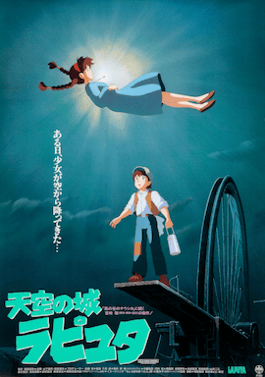
I decided to re-watch The Girl Who Leapt Through Time (1983). Leaving all my prejudices at the door, I faced this film with fresh eyes. It’s a story of a girl in the first year of high school who “leaps” back through time. After smelling the scent of lavender, she is cast into a world where time is distorted. The same day repeats itself over and over, and yesterday becomes today once more. As past and present blend together, so do life and death. In this strange timeline, a certain encounter and experience strongly convince the girl to return to normal life again. All of a sudden, time is distorted no longer. It’s as if the protagonist is back in the world she came from. But having returned by passing through a different domain, the girl can now see into a world entirely her own: the world of the soul. She takes that world to heart and protects it as if it were her child, becoming her own woman in the process.

Adolescence is a time when a child’s entire, painstakingly crafted view of his- or herself is turned completely on its head. It is a necessary step if one is to enter the uncharted world of adulthood, but it is also something that takes place deep down in one’s inner self, and an entirely inexplicable experience. Because these changes are difficult to put into words with a child’s vocabulary, they sometimes surface in the form of problematic behavior. Most adults, having forgotten what it’s like to be a child, are unable to properly pick up on these signals. Children are sensitive to the world of the soul; it can be said that children’s eyes are those that truly see into this world. When we grow up to become adults, our inner eye gradually closes to the world of the soul. Are adults, then, unable to see into this world for good, or can the connection be restored? I think we can impart a bit of the soul by talking about fantasy. This can take the form of movies, art, or music. In other words, the soul uses the path we call “fantasy” to tell us something. (Perhaps this is the period called “the autumn of our lives.”) [Note: as opposed to the “spring” of adolescence.] The Girl Who Leapt Through Time rides this pathway of fantasy, traveling through time to knock on the door of our adolescence, as if waking a small animal from its sleep. It asks us: “What is your soul looking at now?”

Obayashi was known for his unorthodox staging methods. He prohibited his cast from acting as if they were machines following the “orders” of the script. He demanded they “live” their roles instead of merely acting them. The director would only present a philosophy, not give any specific acting answers. The set was a place of constant change, and Obayashi told his cast and crew to adapt – even the script itself was subject to change. Actors and crew members unfamiliar with this method would reportedly get quite upset. Obayashi’s films, however, catapulted many actors – including Tomoyo Harada and Tadanobu Asano – to stardom.
I think Obayashi’s message was that the creative process of making a movie requires everyone’s participation and input. Besides the cast, this includes the cinematographers, the audio crew, the assistants; Obayashi wanted everyone to put their heads together and move each other’s feelings.
I feel like Obayashi’s testament to our time, what he wanted to tell us, is something similar to what I just described. In other words, his message is that in society as well as in the medical profession, we need to emphasize the sharing of philosophies, get everyone in this world to share their concerns as creative participants, and think together. The economy is stalling, people are losing their jobs, the medical infrastructure is being overwhelmed – problems abound around us. For that very reason, you need to think; there’s no one right answer; that’s why you need to keep thinking. And the philosophy to adhere to? It’s life itself, isn’t it?
It is said that Obayashi was, throughout his life, deeply affected by something Akira Kurosawa told him in his youth. This was the idea that people who have experienced war should speak up about its horrors and lack of meaning. Feeling that his earlier films had not faced that issue directly, Obayashi said that his last few works –Hanagatami (2017) and Labyrinth of Cinema (2020) – were intended to address this concern.

Sure, The Girl Who Leapt Through Time can, at a glance, be called a teen movie, a sci-fi flick, or a fantasy story. But watching it again made me think of it also as a requiem for the dead. It’s a story told eloquently with silence. Obayashi’s “soul,” walking the path of fantasy, “leaps through time” to speak directly to our chaotic age. Whether we choose to listen is up to us.

Translated by Ili Saarinen


Watch The Girl Who Leapt Through Time on Kanopy here: https://www.kanopy.com/en/kcls/video/16044739