Saturday Matinee: The World’s End

By Matt Zoller Seitz

Source: RogerEbert.com

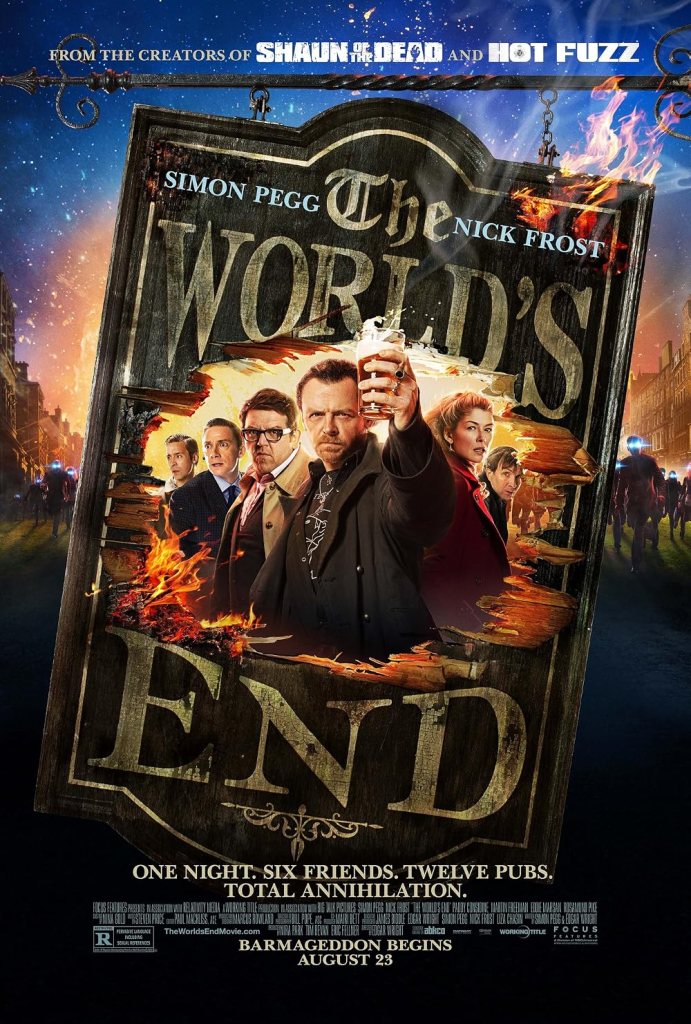
You might not expect a slapstick comedy about middle-aged pubcrawlers brawling with superhuman extraterrestrial invaders to have brains, heart and wisdom, but that’s “The World’s End,” a rare film that’s as much fun as you’ve heard.

Directed by Edgar Wright from a script by him and his regular leading man, Simon Pegg, the film is refreshingly intimate, despite the chasing and stalking and beheading and exploding and gallons of blue goop spraying all over everything. The special effects are special, but they always serve the story and characters. And even when Wright is paying homage to his filmmaking heroes (John Carpenter especially) or staging some of the most cleverly choreographed fights this side of an early ’90s Jackie Chan film, you never get the sense that it’s bored with itself when the characters are sitting around talking about their shared history over a pint. In fact, they often talk about their shared histories while they’re whaling on the invaders—and then they have a pint. Sometimes they have a pint during the fight. It’s that kind of movie.

Pegg’s character, Gary King, wants people to call him The King and considers himself a prince among men, but he’s the sort of guy you’d tire of quickly. His friends had enough of him long ago. They tell themselves they’ve grown up; Gary thinks they’ve sold out and become tediously conventional. To the film’s credit, neither of these points-of-view are presented as entirely wrong.

Oliver (Martin Freeman) is a fussy killjoy of a real estate agent with a Bluetooth receiver jammed in his ear at all times. Steven (Paddy Considine), an architect who was once Gary’s rival for the affections of Oliver’s sister Sam (Rosamund Pike), is recently divorced and sleeping with a young fitness instructor; he brags about that last bit to everyone who’ll listen, which is how you know he’s miserable about the rest of his life. Peter (Eddie Marsan) who was horribly bullied as a child, was always the tagalong nerd of the old group; now he sells cars for his dad. Andrew (Nick Frost) is a lawyer who refuses to speak to—or of—Gary. Gary says it’s because he still owes Andrew six hundred pounds from long ago, but we deduce that the real reason for the split is much deeper. It is. In fact it’s a doozy.

The first part of the movie consists of Gary “getting the old band back together,” as he puts it, to re-enact their great thwarted pub odyssey from 1990, when they resolved to hit all twelve nightspots in their old hometown of Newton Haven. The quiet little town is home to bars with mythologically and otherwise suggestively loaded names: The Two-Headed Dog, The Famous Cock, The Trusty Servant, The World’s End. That the pals didn’t finish their quest has always gnawed at Gary. He’s obsessed with pinning a triumphant end on a long-unfinished story.

Running beneath the lively banter and knockabout slapstick is a sense of melancholy, at times despair, over lost youth and missed opportunities. Gary is an alcoholic and drug user and chronic screwup, the sort of guy who lures other lads into joining adventures that tend to end in humiliation or disaster. He’s first seen in a rehab facility, but judging from his appearance and behavior he hasn’t been there long. Pegg looks like he just crawled out of bed—a bed at the bottom of a mine shaft, most likely—and even his most jocular pronouncements have an undertone of manic desperation. “Why should getting older affect something as important as friendship?” he demands, a question thick with unexamined assumptions. 

If “The World’s End” were only a picture about childhood buddies on a bittersweet pub crawl, it might have still been some sort of minor classic, so sharply observed is every shot, cut, music cue, line and close-up. When the film takes a right turn into science fiction conspiracy thriller territory—invoking “Invasion of the Body Snatchers” as well as such Carpenter films as “The Fog” and “Prince of Darkness“—you might worry that it’s about to succumb to Gary’s biggest fear, and trade spiky if heedless individuality for a tiresome grab at commercial formula. (This is the third Wright film in which a dull community proves a hotbed of slowly-creeping and highly secretive horror.) No worries: the sci-fi elements—which were hinted at in trailers, but which I’ll write around in this review and maybe revisit later in a spoiler-warning-bedecked blog post—are audaciously funny and inventively designed, and they’re always tied to the film’s concerns. Nothing, no matter how extravagant or surreal, is superfluous.

Fears of assimilation and domestication and the loss of youthful fire are never far from the movie’s mind; neither is the altogether wise and reasonable sense that, while we should strive to be better, kinder, more mature people, we still are who we are, and if we cannot tolerate one another’s frailties and treat each other decently, there’s no hope for the species. The film has great fun painting modern life itself as a prolonged and largely invisible conspiracy to rob people and their world of all personality. Every old pub the boys revisit has been Starbucked, as they put it, and later we get the sense that the very same digitally connected world that lets you read this review on a tiny handheld computer-phone is a means of social control as well. Odd as it might sound, the unexpectedly laid back climax echoes “A Clockwork Orange.” It conveys a sense that, while a totally safe and placid and perfect world might be attainable, it’s not desirable, and might in fact be a greater sin than any act that any individual might commit. 

Wright is a brilliant director of turbocharged exposition, elegant but bruising action sequences, and graphically bold comedic overkill. As in “Shaun of the Dead,” “Hot Fuzz” and “Scott Pilgrim vs. The World,” even functional closeups of beer being poured or ignition keys being turned are shot as if they were events on par with the Big Bang or the release of a new Kanye West album. Wright is a pop artist who’s not inclined to relax; at times his movies play as if he’d decided to turn the first five minutes of “Trainspotting” into a career. There are times when I wished the “The World’s End” had the confidence to linger more on the characters’ conversations and nonverbal interactions. The group’s chemistry evokes the best sad-sack male bonding tales of Barry Levinson (“Diner,” “Tin Men“), and the performances are all superb, particularly Frost, who steals the film with an explosive physicality that’s John Goodmanesque.

But in an era in which mainstream movies not only lack rhythm but seem to have forgotten how to dance, this one’s briskness is inspiring. Its judgment is nearly unerring, and it has a sense of joy that’s rare. Like most genre films, “The World’s End” is working things through in an extremely broad way and having a grand time doing it, and its self-deprecating wit inoculates it against self-importance. The movie wears its themes on its sleeve and pins its symbols to its puffed-out rooster’s chest, swaggers about with a proud grin jabbing thumbs at itself, then walks into an open manhole. It’s magnificent.

Saturday Matinee: In Search of Mœbius

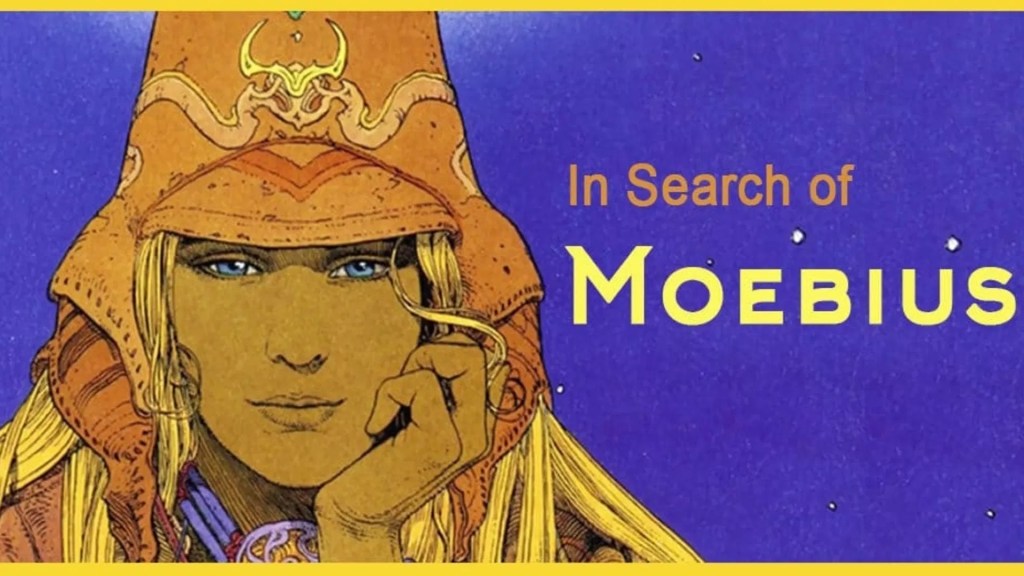
In Search of Mœbius: A Documentary Introduction to the Inscrutable Imagination of the Late Comic Artist Mœbius

By Colin Marshall

Source: Open Culture

“I’ll die in some truly banal manner, the way I live,” says the subject of BBC Four’s In Search of Mœbius. I don’t know what would constitute a non-banal manner of death — or, for that matter, a banal one — but nobody familiar with modern comic art could believe that Jean Giraud, also known as Mœbius, could possibly have lived a banal life. If you haven’t read a comic since your childhood Sunday funnies, you need only watch this program to understand why the artist’s passing on Saturday brought forth so many breathless tributes. You’ll also catch a glimpse of the vast possibilities offered by comic art as a form. The inscrutable workings of Mœbius’ peculiar imagination drove him far into this territory, and many creators (in comics and elsewhere) still struggle to follow him.

Aside from Mœbius himself, the program interviews the coterie from his early years in France at Métal Hurlant, the magazine that would open the space for his distinctively subconscious-fueled, near-psychedelic yet richly textural science-fiction sensibility. It goes on to talk with well-known admirers who, feeling the resonance of those particular (and particularly difficult to describe) qualities of Mœbius’ vision that cross so many national and artistic boundaries, found ways to work with him.

These high-profile collaborators range from Marvel Comics founder Stan Lee, who enlisted Mœbius to take Silver Surfer in new aesthetic and intellectual directions, to screenwriter Dan O’Bannon, biomechanical surrealist H.R. Giger, and filmmaker/mystic Alejandro Jodorowsky, who worked with him on an unrealized (but still tantalizing) film adaptation of Dune.

In Search of Mœbius also explores the real landscapes that must have worked their way into Mœbius’ imagination, contributing to the strikingly unreal landscapes that worked their way out of it. We see the deserts of Mexico, traces of which appear in his Western series Blueberry, where he visited his mother in the 1950s. We see the Los Angeles he considered “really an amazing city,” where his work on Silver Surfer took him. We even see him in his native land, standing before the harshly iconic Bibliothèque nationale de France. Mœbius may be gone, but the world inside his head remains forever open for us on the page to exploreH/T @EscapeIntoLife

Colin Marshall hosts and produces Notebook on Cities and Culture. Follow him on Twitter at @colinmarshall.

Saturday Matinee: Anti-Clock

By Triskel Christchurch

Source: The Journal of Music

A complex and fascinating experimental exploration of time and identity, ANTI-CLOCK is a film of authentic, startling originality. Brilliantly mixing film and video techniques, Arden and Bond’s paranoid, psychological surveillance study of a career gambler turned clairvoyant unstuck in time captures onscreen the anxieties that have infiltrated the consciousness of so many in Western society.

Jane Arden was a leading figure in experimental British theatre and cinema, and an important radical feminist voice of the 1960s and ‘70s. With her work increasingly informed by her politics, the beginning of a personal and professional relationship with director Jack Bond facilitated the move to cinema, and the creation of a small but remarkable body of film work which is becoming increasingly celebrated. Following her tragic and sudden death in 1982, Bond withdrew these often strongly autobiographical films from circulation, only relenting decades later. Arden’s work is raw, perceptive, disturbing, vital, and beautiful.


Watch Anti-Clock on tubi here: https://tubitv.com/movies/100029255/anti-clock

Saturday Matinee: The Penultimate Truth About Philip K. Dick

The Penultimate Truth About Philip K. Dick: Documentary Explores the Mysterious Universe of PKD

By Colin Marshall

Source: Open Culture

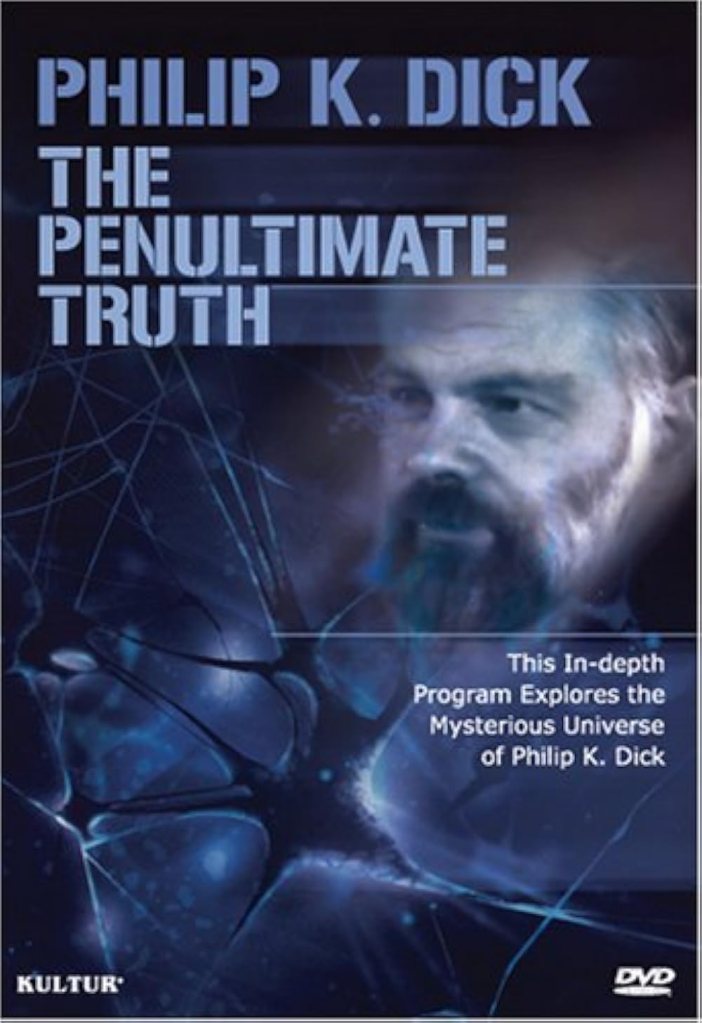
Even readers not particularly well versed in science fiction know Philip K. Dick as the author of the stories that would become such cinematic visions of a troubled future as Blade RunnerTotal RecallMinority Reportand A Scanner Darkly. Dick’s fans know him better through his 44 novels, 121 short stories, and other writings not quite categorizable as one thing or the other. All came as the products of a creatively hyperactive mind, and one subject to more than its fair share of disturbances from amphetamines, hallucinogens, unconventional beliefs, and what those who write about Dick’s work tend to call paranoia (either justified or unjustified, depending on whom you ask). But Dick, who passed in 1982, channeled this constant churn of visions, theories, convictions, and fears into books like The Man in the High CastleDo Androids Dream of Electric Sheep?Ubik, and VALIS, some of the most unusual works of literature ever to carry the label of science fiction — works that, indeed, transcend the whole genre.

But what must it have felt like to live with the guy? The Penultimate Truth About Philip K. Dick (named after his 1964 novel of humanity tricked into living in underground warrens) seeks out the writer’s friends, colleagues, collaborators, stepdaughter, therapist, and wives (three of them, anyway), assembling a portrait of the man who could create so many textual worlds at once so off-kilter and so tapped into our real worries and obsessions. Each of these interviewees regards differently Dick’s dedication to the pursuits of both literary achievement and psychonautical adventure, his complicated conception of the true nature of reality, his at times unpredictable behavior, and his penchant for encounters with the divine. Director Emeliano Larre and writer Patricio Vega’s 2007 documentary reveals one of the most fascinating personalities in late 20th-century letters, though, as any professor of literature will tell you, we ultimately have to return to the work itself. Fortunately, Dick’s personality ensured that we have a great deal of it, all of it unsettling but greatly entertaining. Readers taken note. You can Download 14 Great Sci-Fi Stories by Philip K. Dick as Free Audio Books and Free eBooks.

Related Content:

Robert Crumb Illustrates Philip K. Dick’s Infamous, Hallucinatory Meeting with God (1974)

Philip K. Dick Previews Blade Runner: “The Impact of the Film is Going to be Overwhelming” (1981)

Colin Marshall hosts and produces Notebook on Cities and Culture and writes essays on literature, film, cities, Asia, and aesthetics. He’s at work on a book about Los AngelesA Los Angeles Primer. Follow him on Twitter at @colinmarshall.

Saturday Matinee: Brainstorm

By Moe

Source: Cup of Moe

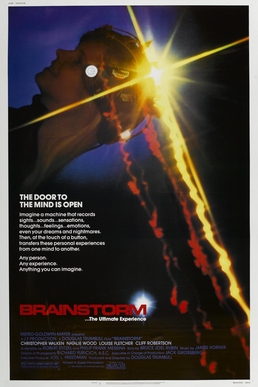
The 1983 sci-fi thriller “Brainstorm” stars Christopher Walken and Natalie Wood. This forward-thinking science fiction romp presents virtual reality (VR) in its early stages and evolution. Although the Douglas Trumbull-directed film isn’t perfect, it’s a neat look at VR with superb acting, a magnificent score, and excellent effects.

A scientific group led by Michael Brace (Walken) and his estranged wife Karen (Natalie Wood), along with Michael’s colleague Lillian (Louise Fletcher) invents the computer and brain interfacing device. Their creation not only allows for virtual reality experiences but allows feelings and sensations to be recorded on tape. In this way, others may experience those as well.

After their initial success, CEO Alex Terson (Cliff Robertson) instructs Brace et al to offer a demo of their device with the intent to secure financial backing. It’s during this exhibition that the group realizes the true power of their device: its ability to record human emotions. Michael uses the device to record memories with emotions, and thereby influence the real world. But whereas Michael employs this as the utility to reconnect with his estranged wife, previous colleague Landan Marks (Donald Hotton) aspires to use it for military applications.

When Lillian suffers a heart attack, she puts on the headset and records her death. Michael later discovers her recorded memories. Eventually, Michael realizes the insidious intent to use his creation for warfare when he uncovers “Project Brainstorm.” As such, Michael and Karen team up to thwart efforts to use their technology to perpetuate the military industrial complex.

Brainstorm” offers an intriguing and groundbreaking look at VR. There’s an exploration of not only virtual reality experiences but the effects on the user. This manifests in the ability to record emotions as well as memories. I like the way “Brainstorm” touches on humanity’s influence of tech, and the means through which tech shapes humanity. Moreover, “Brainstorm” presents an accurate portrayal of tech advancement. Early in the film, Terson instructs his team to make a smaller version of their helmet. Similarly, a trend in real-world technology is constant innovation in creating smaller devices.

I quite enjoy the helmet design and the effects are top-notch. The 1983 movie has aged pretty well with its fish-eye lens shots and well-crafted animation sequences.Trumbull worked on effects for films such as “2001: A Space Odyssey,” “Silent Running,” and “Blade Runner.” It’s evident that Trumbull understood the genre and he infuses mesmerizing special effects, particularly at the end.

Cinematography is fantastic. The film is set in North Carolina and uses several NC scenes as prominent backdrops. Notably, the Wright Brothers National Memorial plays an important role. Plus, there’s a neat shot of Duke Chapel. Locations even appear futuristic. The Burroughs Wellcome building offers its then high-tech looks as the main office for Michael, Karen, and Lillian. A gorgeous Chapel Hill, NC home with its parallelogram angles and solar panels was used as well.

Acting is phenomenal. Walken lends an inspired performance, and Natalie Wood is captivating in her final cinematic appearance. But it’s Louise Fletcher as Lillian who completely steals the show with a tour de force acting job.

It would be remiss to discuss “Brainstorm” without touching on its superb score. Renowned composer James Horner provides the musical backing which is replete with the timpani Horner became best known for. Horner’s “Brainstorm” soundtrack features elements from his “Wolfen” score. Later, in the 1986 sci-fi hit “Aliens,” Horner continued this trend. But it’s a formula that works.

Unfortunately, “Brainstorm” doesn’t quite end as well as it starts. The finale is admittedly a muddled moment which will leave you wondering “what?” as the credits roll. Michael plays back Lillian’s tape and watches the afterlife playing out, even glimpsing hell for a moment. Departed souls in the form of bioluminescent butterflies flow peacefully into heaven. Though the effects hold up fine, this sequence falls flat in lacking the poetry of similar scenes like the end of “2001: A Space Odyssey.”

Still, it’s tough to hold the abrupt and admittedly cheesy, ending against the movie. Wood’s tragic and mysterious death led production to halt. Eventually, Trumbull rewrote the script and used Wood’s younger sister as a stand-in for her remaining shots.

I especially enjoy how “Brainstorm” probes the relationship between tech and humanity, presenting complex concepts like computer-brain transference. “Brainstorm” may not carry the legacy of sci-fi flicks like “Blade Runner,” “Alien,” and “The Matrix.” However, its stellar cinematography, acting, score, and effects plus forward-thinking portrayal of tech make this 1983 movie a smart, lasting thriller.


Saturday Matinee: Downsizing

Let’s Get Small: Reckoning with “Downsizing”

“Look, you don’t understand. There was shrinkage!”

By Noah Gittell

Source: Good Eye

In his book Sex, Drugs, and Cocoa Puffs, essayist Chuck Klosterman wrote an essay defending the 2001 Cameron Crowe film Vanilla Sky from its reputation as a creative failure. Specifically, he honed in on critic Owen Gleiberman’s D+ review in Entertainment Weekly that accused the film of being little more than “a cracked hall of mirrors taped together by a What is reality? cryogenics plot.” Nonplussed, Klosterman pointed out that all the best films of this era—from The Matrix and Fight Club to eXistenZ and Mulholland Drive asked that same question about the nature of our reality. Klosterman argued that it was “the only relevant question for contemporary filmmakers.”

I bring this up to defend Downsizing, which is not a great film but deserves kudos for doing what Vanilla Sky did in the early ‘00s. Downsizing asks the only relevant question for filmmakers of its era: What should we do now that the world is ending? It asks this question all the way through, although its beginnings—the first third, basically—feels more like a broad comedy, which may have thrown some viewers. The film’s shifts in tone reminds me a bit of Zero Effect, one of my all-time favorites, which also presented itself as a wacky comedy before slowly transforming into something more profound. I have a theory that people—maybe critics in particular—don’t like movies that sell themselves as one thing and then become something else. It makes them feel manipulated or something. 

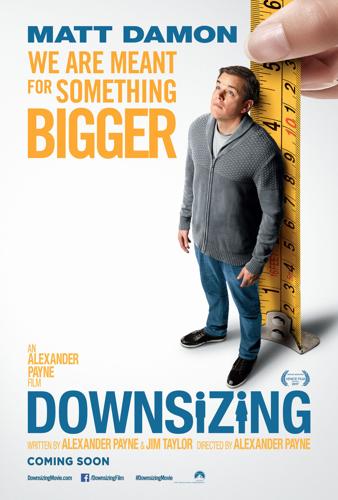
I was up for it with Downsizing because if you look closely, it’s about the end of the world from the beginning. The film stars Matt Damon as Paul Safranek, an occupational therapist struggling to get his head above financial water. He and his wife (Kristen Wiig) accept a radical new solution: they will shrink themselves and head off to live in Leisureland, a community for the small where their scant savings will allow them to live like millionaires for the rest of their lives. 

It turns out to be a real bait-and-switch, for Paul and for us. His wife leaves him just before the procedure, leaving Paul small and alone. After fighting depression for a year or so, he eventually gets caught up in the life of Ngoc Lan Tran (Hong Chau), a Vietnamese dissident who was a brief cause celebre after shrinking herself to escape political persecution and is now cleaning tiny houses for a living in Leisureland. 

Despite the economic framing, Downsizing is pretty goofy up until this point, with a lot of sight gags built around objects that are not the size we’re used to seeing them. Still, there are hints of the thoughtfulness to come. The shrinking process is initially sold as a way to cut down on human consumption and save humanity from the ravages of climate change, but director Alexander Payne slips in some well-meaning commentary on how environmentalism is co-opted.  Most people shrink themselves out of self-interest, using their duty to the planet as cover. When Paul reconnects with an old friend who has gotten small and asks him if it feels good to save the environment, the friend replies, “Downsizing is about saving yourself.”

It’s a neat summary of the problems of the film, which is ostensibly about saving the planet but is ultimately more committed to the journey of its average, White middle-class protagonist. When Paul meets Ngoc Lan, he discovers the dark underbelly of Leisureland: the projects on the wrong side of the tracks (okay, in this case, a tunnel), where she and an entire class of unseen, underrepresented workers live. Paul is horrified by their living conditions, and finds himself compelled to help her feed, bandage, and generally care for them out of the goodness of his heart. When he learns of an opportunity to visit the original small colony in Norway—and be included in their plan to start a new colony underground while waiting out the impacts of climate change—he must decide between being part of the privileged future or staying behind to help those afflicted in the present.

I’ve noticed that most people who have seen Downsizing seem to get fed up in this final third. Paul and Ngoc Lan travel to Norway with his debauched neighbors (a perfectly cast Christoph Waltz and Udo Kier), where the film completes its transition from broad comedy to meditation on the morality of Armageddon. Paul justifies his choice to be part of the future in selfish terms: ”Why didn’t I become a doctor? Why did I downsize? Why did my wife abandon me? So I could wind up here at exactly the time to go into that tunnel! I finally have the chance to do something that matters.” In the end—SPOILER ALERT—he stays on the surface, marries Ngoc Lan, and spends his downsized downtime helping the indigent.

I have no issue with the film’s transformation, and I admire its willingness to ask, as Klosterman puts it, the only relevant question of our time. It reminds me of the best moment in the political career of Andrew Yang, who, when asked at a Democratic presidential debate for his approach to climate change, gave a startlingly clear-eyed answer. Other candidates talked about the need to listen to climate scientists, transitioning to green energy, and, if they were feeling bold that day, a carbon tax. Yang looked right at the camera, and said something like (I’m paraphrasing), “I would allocate $40 billion to move every American family to high ground.” His honesty hit me like a load of bricks, and for a minute there, I thought we finally had a politician who would tell the truth. The bloom came off his rose pretty soon after that, but at least he didn’t deny reality, and neither does Downsizing. It should be commended for that.

It just chooses a poor lens through which to explore the issue.  The film’s problems run along two intertwining tracks: creative and political. First, there’s something unseemly about Payne exploring these themes through a middle-class White protagonist. Watching Downsizing, you can’t help but wish Ngoc Lan were the main character, and Paul was just a sweet White guy she picked up along the way. Hong Chau gives a miraculous performance as the resolute activist. Yes, she uses a comically exaggerated Vietnamese accent that threatens to offend sensitive viewers, but her increasingly soulful performance overwhelms the stereotype. Was all this on purpose—the offense and the redemption? I tend to think so. Payne is telling this story for privileged White viewers, and he hopes that her transformation from, um, housecleaner into fully-formed human being will transform them into caring about those they would otherwise ignore.

Maybe it will, but I can’t help but feel he’d have a better shot at doing that if his main character weren’t the most boring person on the planet. I get the appeal of an Everyman in this type of story, but Paul Safranek does not need to be this bland. His backstory is compelling enough: He was going to be a doctor, but his mom got sick, so he moved back to his hometown to take care of her and became an occupational therapist instead. His mom died, and he married a seemingly sweet lady who inexplicably left him in the lurch. This series of events would produce an interesting person, or at least a recognizable personality, certainly more than the human blob that Payne, his co-writer Jim Taylor, and Matt Damon come up with here. On the page, Paul is torn between altruism and self-interest, but that conflict never comes to life on the screen. There’s no self-deprecation, black humor, frustration, or anger. It’s a bland performance by an actor who is capable of much more.

Downsizing still gets points for trying. Damon could have given a better performance, but the broader problem of centering a boring White man in this story was not really fixable. An FX-driven moral parable about the end of humanity would never be made without a movie star at its center, and certainly not for its reported $68 million budget—it’s kind of a miracle it got made even with one. And outside of Denzel Washington and Will Smith, there were no non-White movie stars at this time who guaranteed a  certain box-office haul. Put simply, it always had to be Damon or someone like him, which means that Downsizing probably did the best it could under the circumstances. If you want to make a movie that reckons seriously with Armageddon, you’re gonna have to work with the devil to do it.

——————–

Watch Downsizing on Kanopy here:https://www.kanopy.com/en/kcls/video/13159250

Saturday Matinee: Visitors from the Arkana Galaxy

By Matt

Source: Review All Monsters

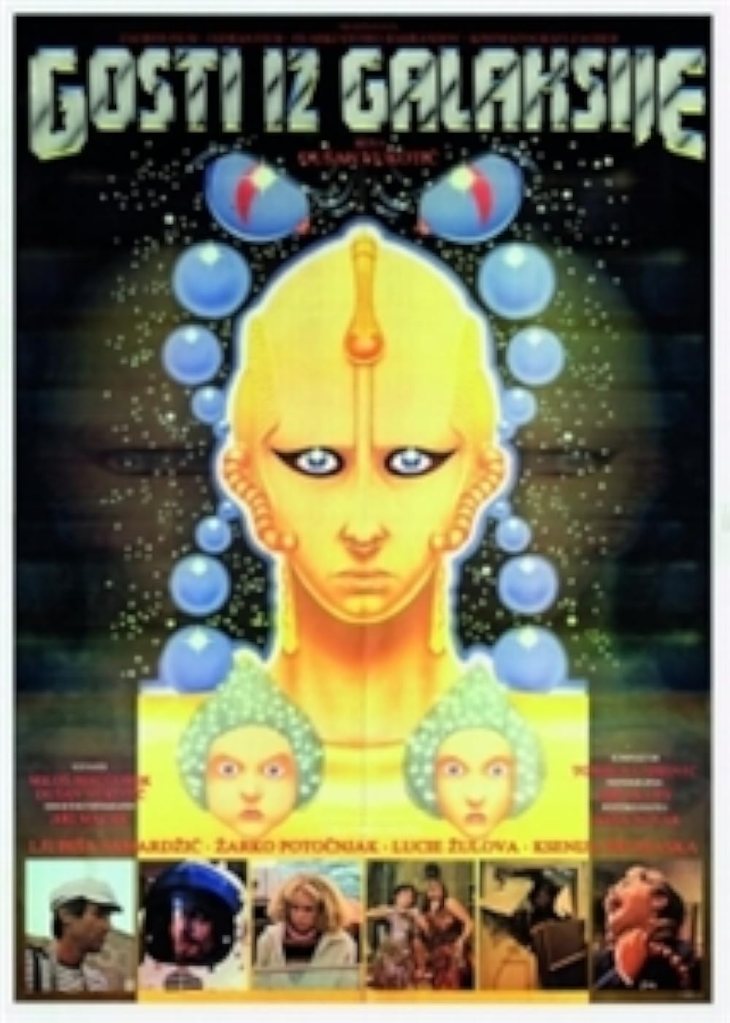
Stumbling into something new while seeking out material for this site is always an exciting experience—and nothing demands my attention like the phrase “weird Yugoslav-Czechoslovak Science Fiction movie from the early eighties.” Visitors From the Arkana Galaxy (sometimes referred to by the more nondescript title Visitors from the Galaxy) is definitely a weird one, and has only found wide distribution in English-speaking countries in the last year thanks to Deaf Crocodile Films—its combination of unvarnished eighties European settings and borderline surrealist storytelling makes for the kind of cult-ready object that modern boutique film distributors regularly gift to us. Shifting between exaggerated reality and extreme fantasy, Visitors has something of a satirical edge, and combined with its bizarre visuals, you can really tell that director Dušan Vukotić comes from an animation background (the movie was partially produced by prominent Croatian animation studio Zagreb Film.) To further invite attention—my attention in particular—there is a prominent monster element that was designed and partially animated by stop motion animation master Jan Svankmajer before he gave us such classics as Alice and Little Otik.

Opening with a blur of space age imagery and an enrapturing wash of seventies Sci-Fi synth by Tomislav Simović, the kind of music that embodies the style’s simultaneously unnerving and soothing qualities, the dreamy sensory experience shifts to the earthbound, where we meet aspiring Sci-Fi writer Robert Novak (Žarko Potočnjak), who can evidently only begin to craft his literary opus by putting on a space helmet and speaking passages into his voice recorder. In what turns out to be a story about the struggle of seeking one’s artistic dreams, Robert’s writing is interrupted by his neighbours—which includes a fellow artist, the aspiring journalistic photographer Toni (Ljubiša Samardžić), and his mother—and his girlfriend Biba (Lucié Žulova), who thinks he’s spending too much time with his fictional characters and not enough with the real people in his vicinity. There’s a bit of nuance to this depiction of an artist’s life: Robert’s need for escape is established not just through the people hectoring him while he writes (although he’s clearly also suffering from writer’s block as well), but from the scenes where we see his unfulfilling job at the front desk of a hotel, badgered by his boss and swarmed by the tourists that flock to his city. At the same time, Biba does have a point about his growing disconnect, and she is also shown to have her own issues (living in an apartment with her own set of annoying neighbours and an overprotective older sister), providing enough depth of detail to prevent her from just being a hectoring girlfriend. I do think she is allowed some hectoring, though, when his android creations from the planet Tugador in the Arkana galaxy—Andra (Ksenija Prohaska) and the child-like Ulu (Jasminka Alic) and Targo (Rene Bitorajac)—appear in the real world and, among other things, briefly transform her into a small cube.

Robert’s creations first contact him through his recorder, bringing him to a small island off the coast near his hotel job to find them. That first encounter is so disturbing to him that afterwards he visits a psychiatrist, and in conversation reveals that he possibly possesses the mental power of tellurgy, creating physical objects with his mind. This explanation ends up being as weird as the aliens: Robert tells a story of how, as an infant, he materialized working breasts on his single father in order to be fed. That establishes the way in which the aliens could become real, and soon Robert returns to the island with Biba just to have proof that he is not going insane, and both witness Andra experimenting on the island’s lone security guard by removing his heart, followed by all the business with the cube.

You can probably tell that there would need to be a very careful handling of tone to keep this series of baffling events from going off the rails, and to its benefit, Visitors finds that balance, mostly by varying the comedy. Sometimes, the humour comes from normal people somewhat realistically reacting to unbelievable events, while other times both the “normal” people and the Sci-Fi elements are equally absurd. The latter is frequently deployed with every human character other than Robert and Biba, who are regularly portrayed as cartoonish buffoons who react to the alien presence with numerous bizarre assumptions—for example, when all the tourists at the hotel decide to track down the extraterrestrial trio on the island, one woman convinces the rest that only way to show the aliens that they “have nothing to hide” is to take off their clothes, leading to moments of very European comedy where it’s just a crowd of stark naked people walking around a cave.

For the most part, Andra just wants to hang around with Robert in order to learn about human emotions—eventually she shows up in his apartment and begins vacuuming the floor with her arm (one of the more whimsical moments of Svankmajer stop motion)—and that inevitably causes problems for Biba, especially after she walks in on them touching each other, making the background erupt into orgasmic green static. From the beginning, it’s not hard to figure out why Robert thought up Andra in the first place, and any concern he has with his creations mucking up his real life is pretty quickly put aside when the benefits make themselves clear. Robert and Biba fight over this, but neither is truly made out to be totally in the wrong.

If anyone comes close to being an antagonist in this story, it’s Targo, an aryan-looking little cretin who apparently took exception to Robert’s decision earlier in the movie to remove him from his novel and replace him with a monster named Mumu, at the behest of his book seller friend who tells him that readers want scary stuff (the author they keep bringing up as a point of comparison has the amusing name “Hover Decklerd”, who I don’t think is real?) So, for the rest of the movie, when he isn’t chasing after people in his spherical blue space vehicle, Targo is finding opportunities to summon his monstrous replacement to terrorize people—it starts out in the form of a small toy, because Robert had the idea that the monster should be “some insane toy” (an idea dismissed by his friend for being too cutesy I guess), and then grows into a person wearing perhaps the most indescribable monster costume you’ll likely see. It is abstract art come to life, like a fusion of HR Giger and the expressionist movie posters from Europe that you see posted online from time to time, unique and disgusting in such a way that the fact that it’s an old school person in a monster costume simply doesn’t register. While this obviously means that Mumu is not purely a creature of Svankmajer’s nightmarish animation like Little Otik, he does provide suitably horrific flourishes for certain shots, like a pair of eyeballs that pop out of its pectorals. For something that is obviously not a big budget affair, its combination of somewhat tongue-in-cheek cheesy Sci-Fi visual effects and genuinely imaginative ones matches the tone of the movie, and can even be held up as something that feels genuinely otherworldly at times.

The monster makes only fleeting appearances throughout the movie, giving us a chance to look at its bizarre design but never long enough to see it actually do anything, but it gets to be front-and-centre in the climax, where Targo’s machinations lead it to break into a wedding party in Biba’s apartment. This is a very long sequence of escalating destruction and borderline horror moments that are intentionally undercut with gags—a man has his head torn off, and another’s head is flattened into a rubber dummy, but both treat it more like an inconvenience. The implication throughout this extended monster rampage sequence is that Mumu is not actually violent in nature—at first, it seems more interested in using its fleshy proboscis to sniff flowers—and that is probably the way Robert himself imagined it. However, as it is attacked by the terrified onlookers, it either defensively or even accidentally maims and kills them in response, the result of its strange alien anatomy (it burns down a room with flamethrower breath just so it can dislodge a fork in its throat.) The guests at the party argue over whether to shoot the creature or try to make peaceful contact with it, neither approach getting them anywhere—in attempting to make friendly gesture, the psychiatrist from earlier in the movie has his hand chomped off by a toothy stomach-mouth in a moment that presages a certain famous horror effect in John Carpenter’s The Thing, released not long after this. The whole sequence, while offering the exact kind of violence and thrills that Robert was encouraged to put into his novel, is actually more a comedy of errors.

The shifting, borderline contradictory nature of those moments brings us back to the way this movie handles Robert’s creativity. What little we hear of his novel seems mightily cliched—aliens coming to Earth to learn deeper truths from our primitive civilization (that beings like Targo view with disdain) is certainly not award-winning material, and even the idea that a man disappointed by life would imagine a beautiful robot woman that dutifully loves him shows Robert to be pretty basic. But even though he willingly tries to change his story to match the tastes of mainstream readers, there’s a naive purity to his imagination, a desire to explore a universe full of interesting and well-meaning beings. In his vision of reality, it makes sense that the monster would not be as nasty as it appears, and that there would be hyper-convenient time-rewinding power that allows them to undo all the horrific damage his tellurgy might have accidentally caused. Robert is someone who uses his imagination to make something that is nicer than what he has, and it’s no surprise that the movie ends with him going back to the Arkana galaxy with his alien creations—giving halfhearted promises to Biba that he might come back at some point—finally finding a place where he can live out the fantasies he’s been crafting. Abandoning everything and everyone to live out his fantasy is not a choice that necessarily reflects well on him, but in that way it accurately reflects both the positive and negative aspects of spending so much time in your own head.

Watch Visitors From the Arkana Galaxy on Kanopy here: https://www.kanopy.com/en/kcls/video/13957909

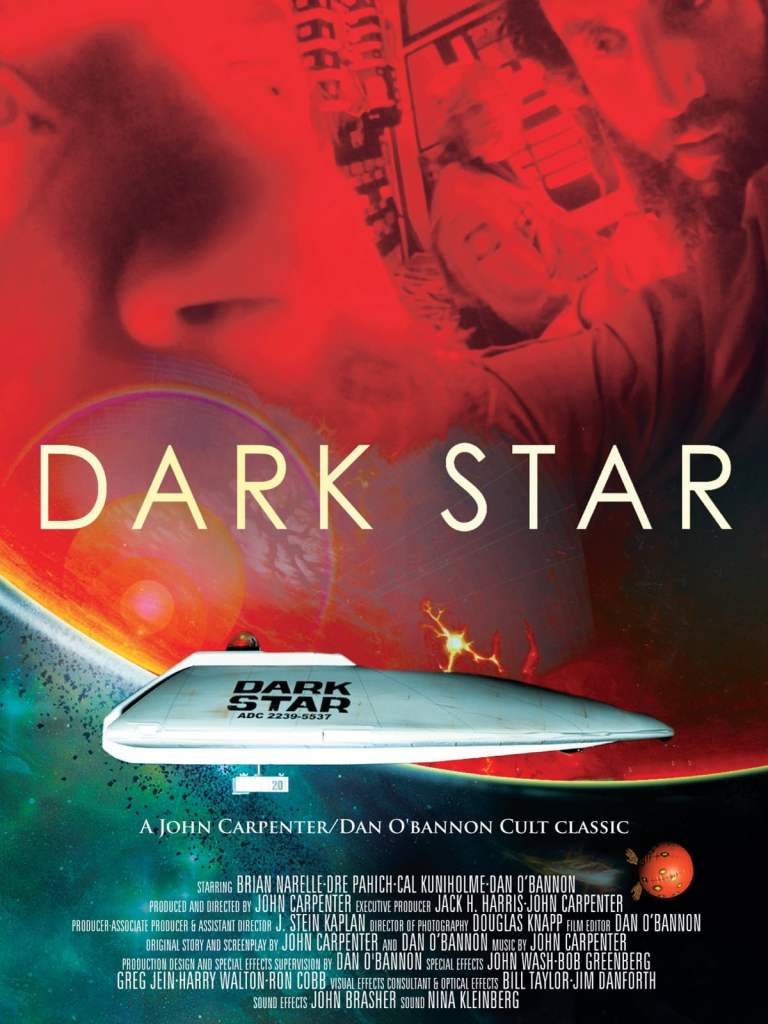
Saturday Matinee: Dark Star

By Roger Ebert

Source: RogerEbert.com

“Dark Star” is one of the damnedest science fiction movies I’ve ever seen, a berserk combination of space opera, intelligent bombs, and beach balls from other worlds. It has a checkered history. It began as a student project by John Carpenter (later to direct “Halloween“) and Dan O’Bannon (later to write “Alien“), and grew over a period of time and expanding budgets into a full-length film.

It was finished some four years ago, before “Star Wars,” and might have had a big success as a cult film if its original distributor hadn’t been so chicken-hearted that he dumped it in a string of Southern California drive-ins and then pulled it out of commercial release. As it is, “Dark Star” has found audiences on the campus and revival circuits, has been a hit here at Facets Multimedia, and, at last, is having its first commercial run at the Three Penny Cinema.

It was finished some four years ago, before “Star Wars,” and might have had a big success as a cult film if its original distributor hadn’t been so chicken-hearted that he dumped it in a string of Southern California drive-ins and then pulled it out of commercial release. As it is, “Dark Star” has found audiences on the campus and revival circuits, has been a hit here at Facets Multimedia, and, at last, is having its first commercial run at the Three Penny Cinema.

The movie’s best sequence centers around the care and feeding of the pet alien they’ve taken on board (a sequence that O’Bannon may have drawn on for the original screenplay of “Alien”). The “Dark Star’s” onboard alien looks like a plastic beach ball with claws, and has a nasty way of sneaking out of sight; a crew member chases it into an elevator shaft and gets himself into a very tight spot. (The elevator sequence looks suspiciously as if it were filmed on the floor of a horizontal hallway photographed to look like a vertical shaft.)

Otherwise, life just sorta drifts past, until a chain of accidents leads to a situation where a bomb does not detach from the ship as planned, and will explode in 24 minutes, blowing the “Dark Star” to smithereens. The bomb cannot be disarmed because, intelligent little devil that it is, it’s convinced that it has a mission to self-destruct.

The movie’s best sequence centers around the care and feeding of the pet alien they’ve taken on board (a sequence that O’Bannon may have drawn on for the original screenplay of “Alien”). The “Dark Star’s” onboard alien looks like a plastic beach ball with claws, and has a nasty way of sneaking out of sight; a crew member chases it into an elevator shaft and gets himself into a very tight spot. (The elevator sequence looks suspiciously as if it were filmed on the floor of a horizontal hallway photographed to look like a vertical shaft.)

Otherwise, life just sorta drifts past, until a chain of accidents leads to a situation where a bomb does not detach from the ship as planned, and will explode in 24 minutes, blowing the “Dark Star” to smithereens. The bomb cannot be disarmed because, intelligent little devil that it is, it’s convinced that it has a mission to self-destruct.

And so, in an incredible and hilarious scene, a crew member floats out into space, confronts the stubborn thinking bomb, and uses pure logic in an attempt to reason it out of exploding. The strategy: If the bomb can be convinced it has no evidence that the universe really exists, then how can its instructions be valid?

This is a fun movie, and a bright and intelligent one. It bears few signs of having been made on a low budget, and the special effects are reasonably slick. And it has a mercifully low-key comic approach; many satiric comedies by young filmmakers are frantic and overwrought, but this one is wry, laid back and fond of its situations. And on the same program is “Hardware Wars,” a short subject starring steam irons, pop-up toasters and other kitchen appliances in outer space.