The U.S. is ruled by the worst among us

By Carla Binion

Source: Intrepid Report

Is it possible for the human race to evolve beyond war, extreme income inequality, corporate money’s control of political systems, and other anti-democratic trends? Some people say even hoping for such evolution is too idealistic, even impossible. Others have said if humanity doesn’t evolve it will soon self-destruct. Martin Luther King once said society has to begin to either “love or perish.”

The U.S. today is rapidly becoming more an oligarchy than a democratic republic, and this oligarchy is polluting the environment, siphoning money from the poor and middle class, and dismantling civil liberties and democracy at an ever-accelerating pace. This trend won’t end well.

As our politicians hurtle downhill, the U.S. will experience many disasters and an eventual fatal crash. Many citizens feel their corrupt politicians of both major parties have taken so much power that the people can’t possibly play a significant role in improving the U.S. political system today.

Ordinary Americans often say we oppose our government’s perpetual wars, regressive tax system, extreme income inequality and other ills, but many say it would be impossible to reform the present system. I think meaningful change is possible based on what history has shown us.

The world has always included people who think it’s possible for the human race to evolve and others who say fundamental change isn’t possible. We’ve always had war and greedy politicians. Still, in some parts of the world at given moments in time, human beings have taken sudden leaps and left behind certain inhumane practices. If that weren’t true, we’d still have rampant blood sacrifices, witch burning and the same widespread use of slavery in the same areas of the world where they once existed.

Today some populations still practice those things, but many have evolved beyond them. The changes that happened started with a sort of “tipping point” where enough people acknowledged that a social ill such as slavery should end.

The more enlightened views, anti-slavery, anti witch-burning, etc., picked up speed, and the public took action to move beyond the old way. In a sense, the condoning of slavery, etc., became obsolete and unthinkably cruel. There is no reason to cling to the belief that the U.S. today can’t make perpetual illegal war and other egregious political abuses obsolete.

During the 1860s in the U.S. more and more people began to acknowledge slavery was unacceptable and started to challenge the power structure. Once the public conscience was awakened, people organized abolitionist groups, created the Underground Railroad, and spoke out publicly. Influential writers such as Ralph Waldo Emerson and Henry David Thoreau spoke out often against slavery. A slave, Frederick Douglass, wrote prolifically and gave passionate speeches.

If those abolitionists and writers had not believed a big leap in human evolution was possible, they would never have made the effort to organize or speak out. Their action started with their confidence that abolishing slavery was possible, and it’s not that they didn’t know what they were up against.

In his May 11, 1847, speech before the American Anti-Slavery Society, “The Right to Criticize American Institutions,” Frederick Douglass talked about the country’s entrenched pro-slavery power structure. He acknowledged that the U.S. government was then so committed to maintaining the atrocities of slavery for financial reasons that he would need to appeal to authorities outside the government to help end slavery.

There are relevant parallels in America today. People who want to help end our country’s continual illegal wars and corporate money’s control of our political system are in a position similar to the one Douglass described.

Douglass said, “Where, pray, can we go to find moral power in this nation, sufficient to overthrow Slavery? To what institution, to what party shall we apply for aid? . . . [Slavery] is such a giant crime, so darkening to the soul, so blinding in its moral influence, so well calculated to blast and corrupt all the human principles of our nature . . . that the people among whom it exists have not the moral power to abolish it. Shall we go to the Church for this influence? We have heard its character described. Shall we go to politicians or political parties.”

He added that instead of helping end slavery, the church, politicians, press and political parties were “voting supplies for Slavery—voting supplies for the extension, the stability, the perpetuation of slavery in this land.”

Today, U.S. politicians, press, political parties and most spiritual leaders keep voting for (by supporting or passively tolerating) perpetual war, income inequality and other injustices. Average citizens who see we need to evolve beyond these maladies feel they have nowhere to turn, just as Douglass did.

However, in the same speech, Douglass also said that although the pro-slavery government was very powerful, there was one thing it couldn’t resist. He said, “Americans may tell of their ability, and I have no doubt they have it, to keep back the invader’s hosts . . . of its capacity to build its ramparts so high that no foe can hope to scale them . . . but, sir, there is one thing it cannot resist, come from what quarter it may. It cannot resist truth. You cannot build your forts so strong, nor your ramparts so high, nor arm yourself so powerfully, as to be able to withstand the overwhelming moral sentiment against slavery now flowing into this land.”

It turns out he was right. It wasn’t that public opinion alone ended slavery, but it was a game-changing factor, just as strong public sentiment against the Vietnam War played an important role in its resolution.

At various points in history, when the people reached a tipping point and became fed up with given injustices, they started to be vocal and organize to move humanity in a healthier direction. Their collective efforts did change things for the better. Humanity evolved.

Even though U.S. politicians have unprecedented power to do evil and squelch dissent, the public can step up its efforts to speak, write and organize to help us evolve beyond perpetual war, devastating income disparity, and the country’s anti-democratic drift. Writers and other public figures can help by clarifying what is going on and urging the few politicians with conscience to join us in finding solutions.

Throughout history the big evolutionary leaps, including moves away from slavery in certain parts of the world, started with the widespread public attitude that change was both imperative and possible. It is imperative and possible for the U.S. to change its war-for-profit paradigm and its condoning and allowing the other government corruption covered here.

A fitting excerpt from the Declaration of Independence says: “Mankind are more disposed to suffer, while evils are sufferable than to right themselves by abolishing the forms to which they are accustomed.” People will put up with a large amount of abuse from their government before they make any effort to change it for the better.

It could be the U.S. public hasn’t yet reached a tipping point and will give in to a feeling of powerlessness. There is never a shortage of “can’t do” dialogue, and the pessimists have a point. We’re faced with daunting challenges.

However, as one of my favorite “lefties,” the late historian Howard Zinn once said, “To be hopeful in bad times is not being foolishly romantic. It is based on the fact that human history is a history not only of competition and cruelty but also of compassion, sacrifice, courage, kindness.

“What we choose to emphasize in this complex history will determine our lives. If we see only the worst, it destroys our capacity to do something. If we remember those times and places—and there are so many—where people have behaved magnificently, it energizes us to act, and raises at least the possibility of sending this spinning top of a world in a different direction. And if we do act, in however small a way, we don’t have to wait for some grand Utopian future. The future is an infinite succession of presents, and to live now as we think human beings should live, in defiance of all that is bad around us, is itself a marvelous victory.”

Can humanity evolve beyond continual war and rule by the worst among us? Yes and no. We can do it if enough of us begin to see we need this evolution in order for our species to survive, and if we start to believe change is doable and take action. We can’t evolve, and probably won’t survive, if most of us stay in denial about the need for change, give in to a sense of powerlessness and do nothing. Frederick Douglass’s idea that powerful evil political forces can be overcome via the truth and public moral sentiment, and Martin Luther King’s view that humanity must ultimately either love or perish, are keys to sorting out which path we should take.


Loneliness

By Yogi Prateado

Source: Adbusters

The Silicon Valley in which I live, a culture infused with the cocaine high of technological breakthroughs, grates against my earthly sensibilities.

Riding on the crest of adrenalin, discovery, and money, what many in the fair Bay Area know, is not in fact what is. This temporary party atmosphere, around until catastrophe hits, is the last hurrah of capitalism. Whether technology will trap us in a surveillance state, or liberate us from mediating political, economic, and social predators, dangles in the hands of deliberate planning and meta-organizing on the part of those developers.

As users and citizens, we are all developers.

Not knowing the implications of one’s discoveries is very different from saying that there aren’t any. The neoteny of tech bros and gals is part of the enforced juvenilization of tech “campuses” and a society that values brain plasticity over wisdom.

After all, wisdom doesn’t sell. You can’t fake wisdom; there’s no wise way to put lipstick on a pig’s face, but there is money to be made from exploiting our mammalian dispositions.

Thus, tech people are predisposed to think, act, and do as children do. They are rewarded for doing so. But this has consequences for where we are going as a culture, and as a planet.

Enforced childhood and adolescence—having other people clean your clothes, make your food, and take you to work—creates “first world problems”, obsessions with gourmet food, and infantile competition. By disconnecting life from work and work from life, millenials are entranced by expensive eating out, Instagramming meals, and living off rich meat, sugar, and dairy (internal parasite-cultivating, climate change-causing) indulgences. Meanwhile, the products you make hand the keys of ultimate social control over to the highest bidder.

Thus, to work in the tech industry becomes a self-fulfilling prophecy. Young minds are inculcated into believing what they are doing is indeed a good thing, a helpful thing for society, rewarded by their superiors with a glamorous job which treats them like a kid, pays well, and provides a roulette wheel of opportunity.

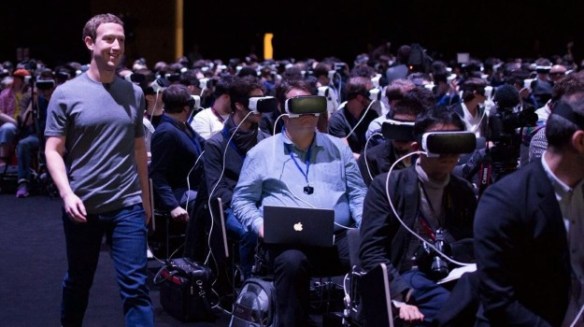
At the same time, those highest on the food chain realize their techno optimism must be tempered with social intelligence. Zuckerberg’s Harvard Address talks about the need for universal health care (duh) and Universal Basic Income, simple solutions needed before we can begin to talk about truth, fairness, justice, diversity, or intelligence. Here, the boy billionaire unfortunately does have a point, one he’s cynically selling to the masses as he consolidates money and power.

It’s now a given that there are multiple intelligences, but in the West (particularly the self-interested, individualistic US), this is still some sort of revelation. It has yet to be integrated into schools, politics, commerce, or tech, let alone science, as many conveniently believe in one scale of intelligence (usually the one they excel at).

As Maslow knew, until we have basic welfare (food, water, shelter), the people have no hope of participating in democracy. Since 1970, Rawls and every reasonable political theorist agreed with this theory, yet we still expect a polity without a society. “Society” is fragmented, violent, scared, and unequal; millionaire 20-year-olds dodging and ignoring homeless 60-year-olds in the street.

The illusion of progress is one of the most pernicious veils currently enthralling our eyes.

The high of “being part of the solution” or “doing well while doing good,” is a strong opiate indeed. Since Marx, drug metaphors have been used to compare capitalism’s co-opting and metabolizing any opposition, novelty, or expression of freedom. Like an out-of-control nanobot army, capitalism turns color into grey goo, turns freedom into products, and commodifies all authentic expression. To quote Wright, we are in a technology trap, where every problem demands a technofix.

But the will-to-power techno-optimism concept doesn’t pan out. What cosmology could support the absurd conclusion that a problem’s old template can be used to “innovate” a new solution? The notion that there is a template—the homogenization of the mind globally through damaging the climate, spreading uniform media, and the colonialism of language and culture—is the problem.

We’re talking out of both sides of our mouths, saying we value diversity then quenching it, saying we’re open to difference then suppressing it. When it does pop up, diversity is first a novelty then a perversion, objectified and commodified as it fights to exist in a white capitalist heteropatriarchy. As Erica Wohldmann says, “Complete control is merely an illusion so we might as well be comfortable.” Comfort requires being pushed back, eating and being eaten, giving and taking. Symbiosis—sharing.

We have been stingy with sharing, forgetting our knowledge is limited.
It’s time to come home to fallibility, responsibility, and the truth about our poor state of affairs. Delaying the operation makes the sickness worse and decreases the chance for a resilient recovery.

Our ancestors only owned as much as they could carry. Live simply so that others may simply live. But what of this simplicity at the societal, political, legal, medical, global level?

Decentralization is the first priority; no more anonymous policy-making. If a decision doesn’t directly affect you, you have no right to legislate over it. No more long arms of the government, no more far-reaching corporations preying on the people thousands of miles from their headquarters.

How does the internet and digital technology play into this? Well, we need a localized technology. Can we still have global epistemic cultures with a non-commercial and non-domination clause?

A moratorium on new technologies will allow us room to assess, democratize, and redistribute the existing technologies. We need to remove oil drilling and gas mining from our technological arsenal. Prioritize technologies that clean up social, economic, racial, and gender-centred wounds. The precious resources—human and natural—that we command should be distributed to the most urgent problems with an interdisciplinary, cross-cultural plan of attack, not one made to make money. Then we collectively apply solutions, not with the bull-in-a-China-shop attitude of big tech, but with care and empathy.

We need to shut the 10,000 Pandora’s boxes opened by technology, and doing that will require technologies. But those technologies must be different form the single, aggressive one we have. An indigenous science, a feminist science, a postcolonial science—all are needed for any hope of change.

We need to go where scares us to know our courage. May we be humbled by the sublime, overwhelmed before the creations which created us. May we work in inner and outer service only towards the true liberation of all beings.

Share more, use less.
Evolve ourselves.

In A Corporatist System Of Government, Corporate Censorship Is State Censorship

By Caitlin Johnstone

Source: CaitlinJohnstone.com

Last year, representatives of Facebook, Twitter, and Google were instructed on the US Senate floor that it is their responsibility to “quell information rebellions” and adopt a “mission statement” expressing their commitment to “prevent the fomenting of discord.”

“Civil wars don’t start with gunshots, they start with words,” the representatives were told. “America’s war with itself has already begun. We all must act now on the social media battlefield to quell information rebellions that can quickly lead to violent confrontations and easily transform us into the Divided States of America.”

Yes, this really happened.

Today [8/7] Twitter has silenced three important anti-war voices on its platform: it has suspended Daniel McAdams, the executive director of the Ron Paul Institute, suspended Scott Horton of the Scott Horton Show, and completely removed the account of prominent Antiwar.com writer Peter Van Buren.

I’m about to talk about the censorship of Alex Jones and Infowars now, so let me get the “blah blah I don’t like Alex Jones” thing out of the way so that my social media notifications aren’t inundated with people saying “Caitlin didn’t say the ‘blah blah I don’t like Alex Jones’ thing!” I shouldn’t have to, because this isn’t actually about Alex Jones, but here it is:

I don’t like Alex Jones. He’s made millions saying the things disgruntled right-wingers want to hear instead of telling the truth; he throws in disinfo with his info, which is the same as lying all the time. He’s made countless false predictions and his sudden sycophantic support for a US president has helped lull the populist right into complacency when they should be holding Trump to his non-interventionist campaign pledges, making him even more worthless than he was prior to 2016.

But this isn’t about defending Alex Jones. He just happens to be the thinnest edge of the wedge.

As of this writing, Infowars has been censored from Facebook, Youtube (which is part of Google), Apple, Spotify, and now even Pinterest, all within hours of each other. This happens to have occurred at the same time Infowars was circulating a petition with tens of thousands of signatures calling on President Trump to pardon WikiLeaks editor-in-chief Julian Assange, who poses a much greater threat to establishment narratives than Alex Jones ever has. Assange’s mother also reports that this mass removal of Infowars’ audience occurred less than 48 hours after she was approached to do an interview by an Infowars producer.

In a corporatist system of government, wherein there is no meaningful separation between corporate power and state power, corporate censorship is state censorship. Because legalized bribery in the form of corporate lobbying and campaign donations has given wealthy Americans the ability to control the US government’s policy and behavior while ordinary Americans have no effective influence whatsoever, the US unquestionably has a corporatist system of government. Large, influential corporations are inseparable from the state, so their use of censorship is inseparable from state censorship.

This is especially true of the vast megacorporations of Silicon Valley, whose extensive ties to US intelligence agencies are well-documented. Once you’re assisting with the construction of the US military’s drone program, receiving grants from the CIA and NSA for mass surveillance, or having your site’s content regulated by NATO’s propaganda arm, you don’t get to pretend you’re a private, independent corporation that is separate from government power. It is possible in the current system to have a normal business worth a few million dollars, but if you want to get to billions of dollars in wealth control in a system where money translates directly to political power, you need to work with existing power structures like the CIA and the Pentagon, or else they’ll work with your competitors instead of you.

And yet every time I point to the dangers of a few Silicon Valley plutocrats controlling all new media political discourse with an iron fist, Democratic Party loyalists all turn into a bunch of hardline free market Ayn Rands. “It’s not censorship!” they exclaim. “It’s a private company and can do whatever it wants with its property!”

They do this because they know their mainstream, plutocrat-friendly “centrist” views will never be censored. Everyone else is on the chopping block, however. Leftist sites have already had their views slashed by a manipulation of Google’s algorithms, and it won’t be long before movements like BDS and Antifa and skeptics of the establishment Syria and Russia narratives can be made to face mass de-platforming on the same exact pretext as Infowars.

This is a setup. Hit the soft target so your oligarch-friendly censorship doesn’t look like what it is, then once you’ve manufactured consent, go on to shut down the rest of dissenting media bit by bit.

Don’t believe that’s the plan? Let’s ask sitting US Senator Chris Murphy:

“Infowars is the tip of a giant iceberg of hate and lies that uses sites like Facebook and YouTube to tear our nation apart,” Murphy tweeted in response to the news. “These companies must do more than take down one website. The survival of our democracy depends on it.”

That sure sounds an awful lot like the warnings issued to the Silicon Valley representatives on the Senate floor at the beginning of this article, no? This is headed somewhere dark.

We’re going to have to find a way to keep the oligarchs from having their cake and eating it too. Either (A) corporations are indeed private organizations separate from the government, in which case the people need to get money out of politics and government agencies out of Silicon Valley so they can start acting like it, and insist that their owners can’t be dragged out on to the Senate floor and instructed on what they can and can’t do with their business, or (B) these new media platforms get treated like the government agencies they function as, and the people get all the First Amendment protection that comes with it. Right now the social engineers are double-dipping in a way that will eventually give the alliance of corporate plutocrats and secretive government agencies the ability to fully control the public’s access to ideas and information.

If they accomplish that, it’s game over for humanity. Any hope of the public empowering itself over the will of a few sociopathic, ecocidal, omnicidal oligarchs will have been successfully quashed. We are playing for all the chips right now. We have to fight this. We have no choice.

The Bizarre Facebook Path to Corporate Fascism

By Glen Ford

Source: Black Agenda Report

“The Facebook intervention is a qualitative escalation of the McCarthyite offensive.”

Facebook has assumed additional political police powers, disrupting a planned counter-demonstration against white supremacists, set for August 12th in Washington, on the grounds that it was initiated and inspired by “Russians” as part of a Kremlin campaign to “sow dissention” in the U.S. The Facebook intervention is a qualitative escalation of the McCarthyite offensive launched by the Democrat Party and elements of the national security state, and backed by most of the corporate media, initially to blame Hillary Clinton’s 2016 defeat on “collusion” between Wikileaks, “the Russians” and the Trump campaign to steal and publicize embarrassing Clinton campaign emails.

After failing to produce one shred of hard evidence to support their conspiracy theory, the anti-Russia hysteria mongers switched gears, focusing on the alleged purchase of about $100,000 in Facebook ads by the Internet Research Agency (IRA), a St. Petersburg-based Russian company, over a multi-year period. The problem was, most of the ads had no direct connection to the presidential contest, or were posted after the election was over, and many had no political content, at all. The messages were all over the place, politically, with the alleged Russian operatives posing as Christian activists, pro- and anti-immigration activists, and supporters of the Black Lives Matter Movement. Special prosecutor Robert Mueller was forced to flip the scriptindicting 13 Russians for promoting general “discord” and undermining “public confidence in democracy” in the United States – thus creating a political crime that has not previously been codified in the United States.

In doubling down on an unraveling conspiracy tale, the Mueller probe empowered itself to tar and feather all controversial speech that can be associated with utterances by “Russians,” even if the alleged “Russians” are, in fact, mimicking the normal speech of left- or right-wing Americans — a descent, not into Orwell’s world, but that of Kafka (Beyond the Law) and Heller (Catch-22).

Facebook this week announced that it had taken down 32 pages and accounts that had engaged in “coordinated and inauthentic behavior” in promoting the August 12 counter-demonstration against the same white supremacists that staged the fatal “Unite the Right” demonstrations in Charlottesville, Virginia, a year ago. Hundreds of anti-racists had indicated their intention to rally against “Unite the Right 2.0” under the banner of Shut It Down DC, which includes D.C. Antifascist Collective, Black Lives Matter D.C., Hoods4Justice, Resist This, and other local groups.

Facebook did not contend that these anti-racists’ behavior was “inauthentic,” but that the first ad for the event was purchased by a group calling itself “Resisters” that Facebook believes were behaving much like the Internet Research Agency. “At this point in our investigation, we do not have enough technical evidence to state definitively who is behind it,” said Nathaniel Gleicher, Facebook’s head of cybersecurity policy . “But we can say that these accounts engaged in some similar activity and have connected with known I.R.A accounts.”

Chelsea Manning, whose prison sentence for sending secret documents to Wikileaks was commuted by President Obama, said the counter-protest was “organic and authentic”and that activists had begun organizing several months ago. “Folks from D.C. and Charlottesville have been talking about this since at least February,” Manning told The New York Times.

“This was a legitimate Facebook event that was being organized by Washington, D.C. locals,” says Dylan Petrohilos, of Resist This. Petrohilos was one of the defendants in the Trump inauguration “riot” prosecutions. He protested Facebook’s disruption of legitimate free speech and assembly. “DC organizers had controlled the messaging on the no UTR fb page and now FB made it harder for grassroots people to organize,” he tweeted. The organizers insist the August 12 counter-demonstration — “No Unite the Right 2 – DC” — is still a go, as is the white supremacist rally.

Whoever was first to buy a Facebook ad — the suspected Russian “Resisters,” or Workers Against Racism, who told the Daily Beast they decided to host their own anti-“Unite the Right 2.0” event because they thought “Resisters” was an “inexperienced liberal organizer” – there was no doubt whatsoever that the white supremacists would be confronted by much larger numbers of counter-demonstrators, in Washington. Nobody in Russia needed to tell U.S. anti-racists to shut the white supremacists down, or vice versa. The Russians didn’t invent American white supremacy, or the native opposition to it. Even if Mueller, Facebook, the Democratic Party and the howling corporate media mob are to be believed, the “Russians” are simply mimicking U.S. political rhetoric and sloganeeriing – and weakly, at that. The Workers Against Racism thought the “Resisters” weren’t worth partnering with, but that the racist rally must be countered. The Shut It Down DC coalition didn’t need the “Resisters” to crystallize their thinking on white supremacism.

The Democratic Party and corporate media, speaking for most of the U.S. ruling class — and actually bullying one of its top oligarchs, Mark Zuckerberg — is on its own bizarre and twisted road to fascism. (Donald Trump’s proto-fascism is the old fashioned, all-American type that the white supremacists want to celebrate on August 12.) With former FBI Director Robert Mueller at the head of the pack, they have created a pseudo legal doctrine whereby “Russians” (or U.S. spooks pretending to be Russians) can be indicted for launching a #MeToo campaign of mimicry, echoing the rhetoric and memes indigenous to U.S. political struggles, while the genuine, “authentic” American political voices — the people who are being mimicked — are labeled co-conspirators in a foreign-based “plot,” and their rights to speech and assembly are trashed.

That’s truly crazy, but devilishly clever, too. If “Russian” mimics (or cloaked spooks) can reproduce the vocabulary and political program of U.S. dissent, then all of us actual U.S. lefties can be dismissed as “dupes of the Russians” or “co-conspirators” in the speech crimes of our mimics — for sounding like ourselves.


BAR executive editor Glen Ford can be contacted at Glen.Ford@BlackAgendaReport.com.

Strategy and Conscience: Subverting Elite Power So We End Human Violence

Fragment of “Butcher to the World” by Sue Coe.

By Robert J. Burrowes

Given the overwhelming evidence that activist efforts are failing to halt the accelerating rush to extinction precipitated and maintained by dysfunctional human behavior, it is worth reflecting on why this is happening.

Of course, you might say that the rush to extinction is being slowed. But is it? Even according to BP’s chief economist: ‘despite the extraordinary growth in renewables in recent years, and the huge policy efforts to encourage a shift away from coal into cleaner, lower carbon fuels, there has been almost no improvement in the power sector fuel mix over the past 20 years. The share of coal in the power sector in 1998 was 38% – exactly the same as in 2017…. this is one area where at the global level we haven’t even taken one step forward, we have stood still: perfectly still for the past 20 years.’ See Analysis – Spencer Dale, group chief economist.

And, to choose another measure that highlights our lack of ‘progress’: species extinctions proceed at a rate of 200 each day, which is vastly greater than the long-term background rate, with another 26,000 species already identified as ‘under threat’. See Red list research finds 26,000 global species under extinction threat.

But it wouldn’t matter what measure you analyzed – efforts to prevent cataclysmic nuclear war, to halt the many ongoing wars, to contain and reverse the prevalent and grotesque economic exploitation, to end slavery or the sex trafficking of women and children, to halt or even slow the rampant destruction of the biosphere, including the rainforests and oceans – we are rapidly losing ground (and often despite some apparent gains such as adoption of the ‘Treaty on the Prohibition of Nuclear Weapons’ by many non-nuclear states on 7 July 2017).

Not only are we destroying the rainforests – currently at the rate of 80,000 acres each day: see ‘Measuring the Daily Destruction of the World’s Rainforests’ – and oceans – see The state of our oceans in 2018 (It’s not looking good!)’ – as a fellow long-standing nonviolent activist, Kelvin Davies, recently observed to me: the oceans and remaining rainforests are ‘being emptied of life’ as impoverished people, forced to the economic margin, hunt remaining wildlife, including tropical fish, for food and/or trafficking.

Before we blame impoverished people for their destruction however, it is the consumption by those of us in industrialized countries that is generating the adverse circumstances in which they are forced to survive. For one simple example of this, related to our diet alone, see ‘Emissions impossible: How big meat and dairy are heating up the planet’.

Of course, you might object that it is not activist efforts that are responsible for the failure to halt elite violence and our complicity in it. It is the failure of corporatized society to seriously consider and respond intelligently to the scientific and other evidence in relation to all of the violence in its many manifestations. However, any explanation of this nature fails to understand and appreciate why progressive change has always occurred in the past.

Social progress is the result of people of conscience strategically challenging elite power in such a way that new norms become so widely accepted that elites are compelled to work within them. This has always been essential for the simple reason that elites are insane and have never acted sensibly, whatever the issue. Elites have only ever orchestrated events to maximize their own power, profit and privilege whatever the cost to the rest of us and the Earth itself. Hence, violence, war, grotesque economic exploitation and ecological destruction are rampant across the planet; that is the way elites want it; that is what maximizes elite power, profit and privilege. See ‘The Global Elite is Insane Revisited’.

As an aside: if you aren’t convinced that the global elite is insane, then perhaps you might ponder the possible implications of the recent call by US President Donald Trump, for the creation of a new Space Force as a sixth branch of the U.S. military – ‘We must have American dominance in space’ – in violation of the Outer Space Treaty of 1967. See ‘Trump Orders Establishment of Space Force as Sixth Military Branch’.

While this enterprise, if it gets Congressional approval, would be staggeringly profitable to the global elite while further gutting social and environmental programs to pay for it, the proposal also raises the possibility, as Professor Karl Grossman graphically expressed it (given that there is no way to have the envisaged weapons in space without nuclear power) that ‘the heavens are going to be littered with radioactive debris’ for millennia (but in substantially greater amounts than is already there). See ‘Trump’s Space Force: Military Profiteering’s Final Frontier’ and ‘Star Wars Redux: Trump’s Space Force’.

Of course, if you want even more evidence of elite insanity, then look no further than the current hysteria generated by Donald Trump’s supposed ‘treason’ for having a meeting with Russian president Vladimir Putin in Helsinki with the intention of improving mutual understanding and the prospects of peace between the two countries. For a sample of the literature that discusses this summit intelligently, which you won’t find in the corporate media, see US Media is Losing Its Mind Over Trump-Putin Press Conference, ‘Is President Trump A Traitor Because He Wants Peace With Russia?’, ‘Helsinki Talks – How Trump Tries To Rebalance The Global Triangle’ and Trump, The Manchurian Candidate: “Conspiracy” to Destabilize the Trump Presidency.

Some informed and thoughtful analysts believe this could lead to an elite coup to remove Trump from the US presidency. See Coming Coup Against Trump and The Coming Coup to Overthrow President Trump: Sedition at the Highest Levels.

So, to consolidate the information presented above, let me encapsulate the nature of geopolitics in one paragraph:

The military forces of the United States are not intended to defend the United States against military attack. The military forces of the countries in NATO are not intended to defend the respective member countries against military attack. The military forces of the United States and NATO are controlled by the global elite and used by the global elite to aggressively attack, in violation of all relevant national and international laws, any country that seeks independent control and development of its resources, particularly fossil fuels, strategic minerals and water. The global elite, which is in total control of the global economy and world affairs generally, does this in order to expand its own power, profit and privilege. It does this no matter what the cost to any individual (outside the elite), people, country and the biosphere. Why does the global elite do all of this? The global elite does this because it is completely insane.

Hence, to return to my point about the driver of social progress historically: Did the trans-Atlantic slave trade end because elites decided to halt the practice? Did gains for some women during the 21st century occur because elites committed themselves to ending patriarchal privilege? Did the British walk out of their colony in India because the British elite suddenly perceived the injustice of their violence and exploitation?

Despite the successes of activists of earlier generations, however, those of us who identify as activists of this generation are failing, quite comprehensively, to respond intelligently, powerfully and strategically to the vast challenges posed by an elite that has expanded its capacity to intimidate, outflank and overwhelm us (which is why, incidentally, slavery is now far more widespread than during any earlier period in human history, violence against women still manifests in a grotesque variety of forms all over the planet and even India has strayed monstrously from Gandhi’s vision).

In essence, strategic lessons learned by earlier generations of activists are forgotten or ignored as we stumble powerlessly to the extinction that is shortly to claim us all.

While I could write at some length about our shortcomings as activists in the era of perpetual violence and war, grotesque economic exploitation and pervasive climate and environmental destruction, I would like to focus on what I regard as the two key issues: strategy and conscience.

The global elite is deeply entrenched and manages world affairs, particularly through its capitalist economy. The global elite has developed over hundreds of years during which time it has fully and deeply penetrated all of the major power structures in world society, most of which it created (or moulded during their creation), so that the primary levers of power in the modern world – key financial institutions such as central banks, the major asset management corporations and the giant corporations in key industries (such as, but not limited to, the banking and weapons industries) – as well as the instruments through which its policies are implemented – including governments, military forces (both national and as ‘military contractors’ or mercenaries), key ‘intelligence’ agencies, legal systems and police forces, key nongovernment organizations such as the Vatican, and the academic, educational, media, medical, psychiatric and pharmaceutical industries – are all fully responsive to elite control.

More precisely than this, as explained in his forthcoming book ‘Giants: The Global Power Elite’, Professor Peter Phillips identifies the world’s top seventeen asset management firms, each with more than one trillion dollars of investment capital under management, as the giants of world capitalism. The total capital under management on behalf of all seventeen corporations is in excess of $US41.1 trillion; it represents the wealth invested for profit by thousands of millionaires, billionaires and corporations. These seventeen giants operate in nearly every country in the world and are ‘the central institutions of the financial capital that powers the global economic system’. They invest in anything considered profitable, ranging from ‘agricultural lands on which indigenous farmers are replaced by power elite investors’ to public assets to war.

Phillips goes on to note that the global elite develops and coordinates its policies through a variety of private planning fora such as the Group of Thirty, the Trilateral Commission and the Atlantic Council which determine the policies and issue the instructions for their implementation by transnational governmental institutions like the G7, G20, International Monetary Fund, World Trade Organization and the World Bank. Elite policies are also implemented following instruction of the relevant agent, including governments, in the context. These agents then do as they are instructed.

Or, if they do not, they are overthrown. Just ask any independently-minded government over the past century. For a list of governments overthrown by the global elite using its military and ‘intelligence’ agencies since World War II, see William Blum’s book ‘Killing Hope: U.S. Military and CIA Interventions Since World War II’ or, for just the list, see ‘Overthrowing other people’s governments: The Master List’.

As a result of coordination through the above elite fora, for example, gigantic media, public relations and entertainment corporations are used to reinforce elite dogma promulgated through national educational institutions so that most western humans become powerless consumers of elite product, informational and material, as the elite pursues ever-increasing profit, power and privilege. Oblivious to the way in which they are caught up in the elite drive to make us consume, even most western activists are major consumers, failing to limit their consumption in line with some appreciation of the per capita ecological carrying capacity of the Earth.

Hence, as should be obvious by now, with a deeply entrenched global elite in total control of major economic/financial, political, military, legal and social (including educational and media) power structures, only a comprehensive and sophisticated strategy has any prospect of succeeding, whatever the issue, and certainly the fundamental one: elite power.

In other words, if we want to end war (or even just one war), halt exacerbation of the climate catastrophe (in a region, country or the world), end environmental destruction on a vast range of fronts, terminate economic exploitation including (modern) slavery, end the sex trafficking of women and children, end the military occupation of Palestine, Tibet, West Papua… then we are going to have to think, plan and act strategically, which includes engaging and mobilizing, in a focused way, a significant proportion of the human population. Simply ‘campaigning’ on the basis of a few ideas and tactics that we think worked in the past, is not enough. Campaigning without strategy – and all that strategic thinking, including a penetrating analysis of the very nature of society and its power structure, entails – is a waste of time.

This is why most work of virtually all ‘activist’ NGOs is useless. They work within the elite-designed and managed global power structure, fearfully self-limiting their actions in accordance with elite-approved processes, such as those ‘within the law’ and lobbying elite-controlled governments and institutions, as well as international organizations such as the UN. By participating in elite-controlled processes, our dissent is absorbed and dissipated, as the elite intend.

This is the great achievement, from an elite perspective, of ‘democracy’: to the extent that people can be persuaded to participate in the delusion that democracy exists (anywhere on Earth) and that voting and lobbying changes anything important, they are unwitting victims of elite-manipulated processes and propaganda.

This also explains why virtually all NGOs invariably end up promoting elite-sponsored delusions such as, for example, those in relation to the climate catastrophe which talk of an ‘end of century’ timeframe (about 70 years more than we actually have), staying within 2 (or 3 or 1.5) degrees Celsius above the pre-industrial level (rather than the .5 degrees that is actually necessary) and, the most fundamental delusion of all, that we must substitute renewable energy for fossil fuels (which is certainly necessary), rather than (in addition) profoundly reduce – by at least 80% – consumption generally, involving both energy and resources of every kind – water, household energy, transport fuels, metals, meat, paper and plastic – while dramatically expanding our individual and community self-reliance if all environmental concerns are to be effectively addressed.

But elite-sponsored delusions are widely promulgated by its corporate media on a vast range of issues with only the rarest ‘activist’ NGO, concerned to focus on what it defines as its primary mission, taking a stand on these apparently ‘separate’ issues. So, for example, elite-sponsored delusions that are widely promulgated by its corporate media convince huge numbers of people that US-NATO wars against impoverished and militarily-primitive countries are in ‘self defense’ and that terrorists are a genuine threat to ‘national security’. At a more mundane level, elite-sponsored delusions propagated through its corporate media promote everything from genetically-mutilated, poisoned and junk food to psychiatric drugs. See ‘Defeating the Violence of Psychiatry’. These products are also highly profitable but because their insanity includes lacking any sense of morality, elites are unconcerned about the damage they inflict on us in these regards just as in all others.

Some grassroots activist groups are more politically savvy than NGOs but usually still lack comprehensive and sophisticated strategies. On rare occasions, it should be noted, one of these campaigns or national liberation struggles succeeds, because of such factors as the raw power of nonviolent action (even without strategy) or because they could rely on the NIMBY (Not In My Back Yard) effect to facilitate mobilization of significant numbers of people in a local area.

However, the global elite is unconcerned about the occasional local ‘setback’ which does not adversely impact its global agenda and where minor gains by grassroots activists can, if necessary, be subsequently reversed (including by simply violating the law, as the elite routinely does with impunity). Consider again, the above example of Trump’s call to violate the 1967 Outer Space Treaty or routine violation of legally-declared (and sometimes World Heritage-listed) national parks in Africa, Asia and Central/South America as major corporations seek to exploit oil and mineral wealth. The law is designed to intimidate and impede us; it is rarely used in an attempt to hold elites accountable and has little, if any, impact when it does: a corporation may, occasionally, be fined (an expense against generating monstrous profit). Fundamentally, elites are above the law: they draft it to defend their interests against the rest of us.

But to reiterate the main point: given the sheer number of (sometimes even large-scale) mobilizations on one issue after another around the world that achieve nothing of substance in relation to the issue itself (consider the demonstrations against the imminent war on Iraq, held in over 600 cities around the world and involving as many as 30 million people, on 15 February 2003), it is painfully clear that most grassroots activists have no conception of strategy either, including the appropriate strategic focus for their tactics.

And this applies equally to those national liberation activists in occupied countries such as Palestine, Tibet and West Papua, as well as those activists living in the many countries, such as Cambodia and the Democratic Republic of the Congo, run by dictatorships or where the elected government, such as that of Brazil, has been removed in a coup.

As touched on above, however, lack of sound strategy (including the structural analysis on which it must be based) is not the only shortcoming in our efforts to halt elite (or even our own) violence.

In the past, a primary motivator of activists, and particularly the great ones such as Mohandas K. Gandhi, was their conscience: The ‘inner voice’ that called them to action on both the personal and political levels.

But there is more to conscience than being called to action. So what is so important about conscience? Conscience is the mind function that asks the deeper questions such as ‘What is the right way to go about this?’, ‘How must I behave if I am to model what I ask of others?’ and ‘How will we design this campaign so that its conduct helps to create the world we envision?’ (rather than the simpler question ‘How will we win this campaign?’).

Moreover, living by one’s conscience requires courage: This includes making strategic choices to take significant or, occasionally, even great risks when elite violence threatens to intimidate a struggle into submission and silence.

It was his unyielding conscience, deeply guiding his personal and political behaviour (including his commitment to nonviolence and his extraordinarily austere lifestyle), and his superlative understanding of strategy that made Gandhi the great activist that he was. Why?

Because Gandhi’s nonviolence was based on certain premises derived from his conscience – including the importance of the truth, the sanctity and unity of all life, and the unity of means and end – his strategy was always conducted within the framework of his desired political, social, economic and ecological vision for society as a whole and not limited to the purpose of any immediate campaign.

It is for this reason that Gandhi’s approach to strategy is so important. He is always taking into account the ultimate end of all nonviolent struggle – a just, peaceful and ecologically sustainable society of self-realized human beings – not just the outcome of this campaign. He wants each campaign to contribute to the ultimate aim, not undermine vital elements of the long-term and overarching struggle to create a world without violence.

So what do we do?

If you would like to better understand why so many human beings, including those within the elite, are devoid of anything resembling a conscience, you can do so by reading what happened to them as a child in Why Violence? and Fearless Psychology and Fearful Psychology: Principles and Practice.

If you are interested in acting in ways that maximize the chance that elite opponents and their agents will reflect, deeply, on what they are doing, while fundamentally changing the power relationship between you and your opponents, then you are welcome to consider acting strategically in the way that Gandhi did. Whether you are engaged in a peace, climate, environment or social justice campaign or a national liberation struggle, the 12-point strategic framework and principles are the same. See Nonviolent Campaign Strategy and Nonviolent Defense/Liberation Strategy.

The strategic aims and a core list of strategic goals to end war and to end the climate catastrophe, for example, are identified in Campaign Strategic Aims’ and the strategic aims and a core list of strategic goals to defeat a political or military coup, remove a military occupation, remove a dictatorship or defeat a genocidal assault are identified here: Liberation Strategic Aims’.

If you would like a straightforward explanation of ‘Nonviolent Action: Why and How it Works’ and an introduction to what it means to think strategically, try reading about the difference between ‘The Political Objective and Strategic Goal of Nonviolent Actions’.

If you anticipate violent repression by a ruthless opponent, make sure that you plan and implement any nonviolent action as history has taught us: ‘Nonviolent Action: Minimizing the Risk of Violent Repression’.

If you are interested in nurturing children to live by their conscience and to gain the courage necessary to resist elite violence fearlessly, while living sustainably despite the entreaties of capitalism to over-consume, then you are welcome to make ‘My Promise to Children’. After all, capitalism and other dysfunctional political, economic and social structures only thrive because of our dysfunctional parenting which robs children of their conscience and courage, among many other qualities, while actively teaching them to over-consume as compensation for having vital emotional needs denied. See ‘Love Denied: The Psychology of Materialism, Violence and War’.

Why this emphasis on children you might ask? For good reason. It is dysfunctional human behavior that got us into this civilizational mess and allowed the emergence of exploitative social, political and economic structures. So if we do not emphasize the importance of profoundly changing the way in which we nurture children so that they behave functionally in context, everything else we do to preserve humanity and the biosphere must ultimately fail. The onslaught of our dysfunctional species will simply overwhelm the biosphere, sooner or later, whether it is this generation or the next.

But we don’t have to settle for improving our parenting. We can improve our own functionality and access our conscience and courage too. How? See ‘Putting Feelings First’.

If you are already guided by your conscience to act powerfully in response to elite violence, you might also consider joining those participating in The Flame Tree Project to Save Life on Earth, which outlines a simple plan for people to systematically reduce their consumption while progressively increasing their self-reliance, and consider signing the online pledge of ‘The People’s Charter to Create a Nonviolent World’.

You may believe that you can halt elite violence without engaging your conscience (and the deep internal search that this requires) and without using Gandhian nonviolent strategy. Even if you are right, the key question is then this: Is the world you will get any better than this one?

And don’t forget the timeframe. Major historical struggles, including those noted above, took decades (whatever the merits and shortcomings of their strategies) or, as in most cases, are ongoing. How long do you want to wait before you invest time in learning how to think, plan and act strategically when the future of humanity and the biosphere is now at stake?

So, to conclude: The global elite controls all significant human affairs and even exercises almost total control over the individual lives of human beings. Because the global elite is insane and its psychological (and hence behavioral) dysfunctionality is of a particular kind, it cannot pull back from its existing regime of violence and exploitation, even in response to imperatives from the biosphere.

In this circumstance our choice is simple: near-term human extinction based on our unwitting complicity in elite violence or a conscientious, courageous and strategic response that fundamentally undermines elite power.

This will require a significant number of interrelated nonviolent strategies that each tackle elite violence in one context or another.

You are welcome to consider the options presented just above for your own involvement.


Biodata: Robert J. Burrowes has a lifetime commitment to understanding and ending human violence. He has done extensive research since 1966 in an effort to understand why human beings are violent and has been a nonviolent activist since 1981. He is the author of ‘Why Violence?’ http://tinyurl.com/whyviolence His email address is flametree@riseup.net and his website is here. http://robertjburrowes.wordpress.com

Robert J. Burrowes
P.O. Box 68
Daylesford, Victoria 3460
Australia

Email: flametree@riseup.net

Websites:
Nonviolence Charter
Flame Tree Project to Save Life on Earth
‘Why Violence?’
Feelings First
Nonviolent Campaign Strategy
Nonviolent Defense/Liberation Strategy
Anita: Songs of Nonviolence
Robert Burrowes
Global Nonviolence Network

Climb Down From the Summit of Hostile Propaganda

Public reactions to an open letter from academics, journalists and politicians asking for co-existence with Russia show many Americans don’t buy the media’s bellicose spin, as Norman Solomon explains.

By Norman Solomon

Source: Consortium News

Throughout the day before the summit in Helsinki, the lead story on the New York Times home page stayed the same: “Just by Meeting With Trump, Putin Comes Out Ahead.” The Sunday headline was in harmony with the tone of U.S. news coverage overall. As for media commentary, the Washington Post was in the dominant groove as it editorialized that Russia’s President Vladimir Putin is “an implacably hostile foreign adversary.”

Contempt for diplomacy with Russia is now extreme. Mainline U.S. journalists and top Democrats often bait President Trump in zero-sum terms. No doubt Hillary Clinton thought she was sending out an applause line in her tweet Sunday night: “Question for President Trump as he meets Putin: Do you know which team you play for?”

A bellicose stance toward Russia has become so routine and widespread that we might not give it a second thought — and that makes it all the more hazardous. After President George W. Bush declared “You’re either with us or against us,” many Americans gradually realized what was wrong with a Manichean view of the world. Such an outlook is even more dangerous today.

Since early 2017, the U.S. mass media have laid it on thick with the rough political equivalent of a painting technique known as chiaroscuro — “the use of strong contrasts between light and dark, usually bold contrasts affecting a whole composition,” in the words of Wikipedia. The Russiagate frenzy is largely about punching up contrasts between the United States (angelic and victimized) and Russia (sinister and victimizer).

Countless stories with selective facts are being told that way. But other selectively fact-based stories could also be told to portray the United States as a sinister victimizer and Russia as an angelic victim. Those governments and their conformist media outlets are relentless in telling it either way. As the great journalist I.F. Stone observed long ago, “All governments lie, and nothing they say should be believed.” In other words: don’t trust, verify.

Often the biggest lies involve what remains unsaid. For instance, U.S. media rarely mention such key matters as the promise-breaking huge expansion of NATO to Russia’s borders since the fall of the Berlin Wall, or the brazen U.S. intervention in Russia’s pivotal 1996 presidential election, or the U.S. government’s 2002 withdrawal from the Anti-Ballistic Missile Treaty, or the more than 800 U.S. military bases overseas — in contrast to Russia’s nine.

An Open Letter for Sanity

For human survival on this planet, an overarching truth appears in an open letter published last week by The Nation magazine: “No political advantage, real or imagined, could possibly compensate for the consequences if even a fraction of U.S. and Russian arsenals were to be utilized in a thermonuclear exchange. The tacit pretense that the worsening of U.S.-Russian relations does not worsen the odds of survival for the next generations is profoundly false.”

The initial 26 signers of the open letter — “Common Ground: For Secure Elections and True National Security” — included Pentagon Papers whistleblower Daniel Ellsberg, writer and feminist organizer Gloria Steinem, former UN ambassador Gov. Bill Richardson, political analyst Noam Chomsky, former covert CIA operations officer Valerie Plame, activist leader Rev. Dr. William Barber II, filmmaker Michael Moore, former Nixon White House counsel John Dean, Russia scholar Stephen F. Cohen, former U.S. ambassador to the USSR Jack F. Matlock Jr., Pulitzer Prize-winning writers Alice Walker and Viet Thanh Nguyen, The Nation editor Katrina vanden Heuvel, former senator Adlai Stevenson III, and former longtime House Armed Services Committee member Patricia Schroeder. (I was also one of the initial signers.)

Since its release five days ago, the open letter has gained support from a petition already signed by 30,000 people. The petition campaign aims to amplify the call for protecting the digital infrastructure of the electoral process that is now “vulnerable to would-be hackers based anywhere” — and for taking “concrete steps… to ease tensions between the nuclear superpowers.”

We need a major shift in the U.S. approach toward Russia. Clearly the needed shift won’t be initiated by the Republican or Democratic leaders in Congress; it must come from Americans who make their voices heard. The lives — and even existence — of future generations are at stake in the relationship between Washington and Moscow.

Many of the petition’s grassroots signers have posted comments along with their names. Here are a few of my favorites:

*  From Nevada: “We all share the same planet! We better learn how to do it safely or face the consequences of blowing ourselves up!”

*  From New Mexico: “The earth will not survive a nuclear war. The weapons we have today are able to cause much more destruction than those of previous eras. We must find a way to common ground.”

*  From Massachusetts: “It is imperative that we take steps to protect the sanctity of our elections and to prevent nuclear war anywhere on the earth.”

*  From Kentucky: “Secure elections are a fundamental part of a democratic system. But this could become meaningless in the event of thermonuclear war.”

*  From California: “There is only madness and hubris in talk of belligerence toward others, especially when we have such dangerous weapons and human error has almost led to our annihilation already more than once in the past half-century.”

Yet a wide array of media outlets, notably the “Russiagate”-obsessed network MSNBC, keeps egging on progressives to climb toward peaks of anti-Russian jingoism. The line of march is often in virtual lockstep with GOP hyper-hawks like Senators John McCain and Lindsey Graham. The incessant drumbeat is in sync with what Martin Luther King Jr. called “the madness of militarism.”

Meanwhile, as Dr. King said, “We still have a choice today: nonviolent co-existence or violent co-annihilation.


Norman Solomon is the coordinator of the online activist group RootsAction.org and the executive director of the Institute for Public Accuracy. He is the author of a dozen books including “War Made Easy: How Presidents and Pundits Keep Spinning Us to Death.”

Starving and Bombed Children of Yemen Seek Entrapment in Flooded Thai Cave

By Robert J. Burrowes

While the world watched and waited with bated breath for the outcome of the substantial global effort – involving over 100 cave divers from various countries, 1,000 members of the Thai Army and 10,000 others in various roles – to rescue a team of 12 young football players and their coach, who were trapped inside a flooded cave in Thailand for 17 days, 850,000 children were killed by human adults in other parts of the world, many of them simply starved to death in Yemen or other parts of Africa, Asia and Central/South America.

But other children were killed in ritual sacrifice, many children were killed after being sexually trafficked, raped and tortured, many were killed in wars (including in Yemen), many were killed while living under military occupation, many died as child soldiers or while working as slave laborers, and vast numbers of other children suffered violence in a myriad other forms ranging from violence (including sexual violation) inflicted in the family home to lives of poverty, homelessness and misery in wealthy industrialized countries or as refugees fleeing conflict zones. See ‘Humanity’s “Dirty Little Secret”: Starving, Enslaving, Raping, Torturing and Killing our Children’.

Why did the world’s corporate media highlight the flooded Thai cave story so graphically and why do so many ordinary people respond with such interest – meaning genuine emotional engagement – in this story? But not the others just mentioned?

And what does this tell us about human psychology and geopolitics?

Needless to say, a great deal.

During the Thai cave drama, major corporate media outlets, such as the Washington Post and the BBC, were routinely releasing ‘breaking news’ updates on the status of the rescue effort. At high points in the drama, reports on this issue were overshadowing major political and other stories of the day. At the same time, there were no ‘breaking news’ stories on any of the many myriad forms of violence against children, which were (and are still) killing 50,000 children each day.

So why the corporate media interest in this essentially local (Thai) story about a group of 12 children trapped in a cave? And why did it attract so much support, including foreign cave divers, engineers and medics as well as technology billionaire Elon Musk, who flew in to investigate rescue options and assist with the rescue effort. They and their equivalents are certainly not flying in to rescue children in a vast number of other contexts, including where the provision of simple, nourishing meals and clean water would do wonders.

Well, in essence, the story was a great one for the corporate media, simply because it reported on something of little consequence to those not immediately impacted and enabled the media to garner attention for itself and other (western) ‘heroes’ drawn into the story while engaging in its usual practice of distracting us from what really matters. And it was an easy story to sell simply because the media could use a wide range of safe emotional triggers to draw people into the dramatized story without simultaneously raising difficult questions about the (appalling) state of the world and responsibility for it.

In simple language: like sports events and other forms of entertainment, the cave rescue provided a safely contained time and space for people to feel emotionally engaged in (this case) a real-life drama (with feelings like fear and relief allowed an outlet) while carefully reinforcing their unconscious feeling of powerlessness to do anything about it and their acceptance of this. This is why it was so important that expert rescue efforts were highlighted: the key media message was that ‘there is nothing you can do’.

Of course, in this context, this was largely true. The problem is that the corporate media coverage wasn’t aimed at this context. It was aimed at all those other contexts which it wasn’t even discussing, let alone highlighting: the vast range of issues – including the many ongoing wars and endless military violence, the threat of nuclear war, the climate catastrophe and innumerable threats to our biosphere posed by such activities as rainforest destruction, the refugee crisis, military occupations, as well as the ongoing violence against children in so many contexts as touched on above – that need a great deal of our attention but for which the elite uses its corporate media to distract us and reinforce our sense of powerlessness.

Another aspect of the story was the way in which it highlighted the ‘accidental’ nature of the incident: no one was really responsible, even the hapless coach who was just trying to give his young players an interesting excursion and whom, according to reports, none of the parents blamed.

By focusing on the logistical details of the story (the distance into the cave, the narrowness of certain passages, rescue possibilities, equipment, the threat of monsoon rains…), without attributing blame, the media could reinforce its endless message that ‘no-one’ is responsible for the state of the world. Hence, no individual and no organization is responsible for doing anything either. Again, this message is designed to deepen a sense of powerlessness and to make people disinclined to act: to make them powerless observers rather than active participants in their own fate.

As an aside, of course, it should be noted that in those contexts where it serves elite interests to attribute blame, it certainly does so. Hence, elites might contrive to blame Muslims, Russians, Palestinians or the other latest target (depending on the context) for some problem. However, in these contexts, the story of ‘blame’ is framed to ensure that elites have maximum opportunity to act as they wish (often militarily) while (again) engendering a sense of powerlessness among the rest of us.

The tragedy of the Thai cave incident is that one man died and many boys spent 17 days in a situation in which they were no doubt terrified and suffering genuine physical privation. But elite media cynically used the event to distract us from vitally important issues, including ongoing grotesque violence against children in a large number of contexts, and to reinforce ‘The Delusion “I Am Not Responsible”’.

In short, while the 12 boys and their coach were rescued after 17 days trapped in a flooded cave in Thailand which required a sophisticated and expensive international effort, during the same period around the world, 850,000 children were killed by human adults. Even in Thailand during this 17-day period, apart from those children violated and killed as a result of sex trafficking and other violence, 119 children drowned (at the rate of seven each day). See ‘Swim Safe: Preventing Child Drowning’. Obviously, these children were ignored because there was no profit in reporting their plight and helping to mobilize an international effort to save them.

So what can we do?

Well, for a start, we can boycott the corporate media and certainly not spend any money on it. What little truth it contains is usually of even less value (and probably gets barely beyond a good sports report). Instead, invest any money you previously spent on the corporate media by supporting progressive news outlets. They might not have reported events in relation to the Thai cave rescue but they do report on the ongoing violence inflicted on children in more grotesque circumstances such as the war in Yemen. They will also report and analyze important global events from a truthful and life-enhancing perspective and will often offer strategies for your engaged involvement.

If you want to understand why most people are suckered by the corporate media, whose primary function is to distract and disempower us, you will get a clear sense from reading how adults distract and disempower children in the name of ‘socialization’. See ‘Why Violence?’ and ‘Fearless Psychology and Fearful Psychology: Principles and Practice’.

If you want to nurture children to be powerful agents of change who will have no trouble resisting attempts (whether by the corporate media or any other elite agent) to distract and disempower them, you are welcome to consider making ‘My Promise to Children’.

If you are easily conned yourself, you will vastly enhance your capacity to discriminate and focus on what matters by ‘Putting Feelings First’ which will, among other things, restore your conscience, intuition and ‘truth register’, vital mental functions suppressed in most people.

You are also welcome to consider participating in ‘The Flame Tree Project to Save Life on Earth’ which maps out a fifteen-year strategy for creating a peaceful, just and sustainable world community so that all children (and everyone else) has an ecologically viable planet on which to live.

And for the vast range of other manifestations of violence against children touched on above, you might consider using Gandhian nonviolent strategy in any context of particular concern to you. See Nonviolent Campaign Strategy or Nonviolent Defense/Liberation Strategy.

You might also consider signing the online pledge of ‘The People’s Charter to Create a Nonviolent World’ which explicitly identifies the role of the corporate media, among many other elite agencies, in promoting violence.

Am I pleased that the 12 children and their coach in Thailand were rescued? Of course I am. I just wish that an equivalent effort was being made to rescue each of the 50,000 children we will kill today, tomorrow, the next day and the day after that….


Biodata: Robert J. Burrowes has a lifetime commitment to understanding and ending human violence. He has done extensive research since 1966 in an effort to understand why human beings are violent and has been a nonviolent activist since 1981. He is the author of ‘Why Violence?’ His email address is flametree@riseup.net and his website is here.

Robert J. Burrowes
P.O. Box 68
Daylesford, Victoria 3460
Australia

Email: flametree@riseup.net

Websites:
Nonviolence Charter
Flame Tree Project to Save Life on Earth
‘Why Violence?’
Feelings First
Nonviolent Campaign Strategy
Nonviolent Defense/Liberation Strategy
Anita: Songs of Nonviolence
Robert Burrowes
Global Nonviolence Network

Slow suicide and the abandonment of the world

By Edward Curtin

Source: Intrepid Report

“The condition of alienation, of being asleep, of being unconscious, of being out of one’s mind, is the condition of the normal man. Society highly values its normal man. It educates children to lose themselves and to become absurd, and thus to be normal. Normal men have killed perhaps 100,000,000 of their fellow normal men in the last fifty years. Our behavior is a function of our experience. We act the way we see things. If our experience is destroyed, our behavior will be destructive. If our experience is destroyed, we have lost our own selves.”—R.D. Laing, The Politics of Experience, 1967

“The artist is the man who refuses initiation through education into the existing order, remains faithful to his own childhood being, and thus becomes ‘a human being in the spirit of all times, an artist.’”—Norman O. Brown, Life Against Death

Most suicides die of natural causes, slowly and in silence.

But we hear a lot about the small number of suicides, by comparison, who kill themselves quickly by their own hands. Of course their sudden deaths elicit shock and sadness since their deaths, usually so unexpected even when not a surprise, allow for no return. Such sudden once-and-for-all endings are even more jarring in a high-tech world where people are subconsciously habituated to thinking that everything can be played back, repeated, and rewound, even lives.

If the suicides are celebrities, the mass media can obsess over why they did it. How shocking! Wasn’t she at the peak of her career? Didn’t he finally seem happy? And then the speculative stories will appear about the reasons for the rise or fall of suicide rates, only to disappear as quickly as the celebrities are dropped by the media and forgotten by the public.

The suicides of ordinary people will be mourned privately by their loved ones in their individual ways and in the silent recesses of their hearts. A hush will fall over their departures that will often be viewed as accidental.

And the world will roll on as the earth absorbs the bodies and the blood. “Where’s it all going all this spilled blood,” writes the poet Jacques Prévert. “Murder’s blood . . . war’s blood . . . blood of suicides . . . the earth that turns and turns with its great streams of blood.”

Of such suicides Albert Camus said, “Dying voluntarily implies you have recognized, even instinctively, the ridiculous character of that habit [of living], the absence of any profound reason for living, the insane character of that daily agitation, and the uselessness of suffering.” He called this feeling the absurd, and said it was widespread and involved the feeling of being an alien or stranger in a world that couldn’t be explained and didn’t make sense. Assuming this experience of the absurd, Camus wished to explore whether suicide was a solution to it. He concluded that it wasn’t.

Like Camus, I am interested in asking what is the meaning of life. “How to answer it?” he asked in The Myth of Sisyphus. He added that “the meaning of life is the most urgent of questions.” But I don’t want to explore his line of reasoning to his conclusions, whether to agree or disagree. I wish, rather, to explore the reasons why so many people choose to commit slow suicide by immersing themselves in the herd mentality and following a way of life that leads to inauthenticity and despair; why so many people so easily and early give up their dreams of a life of freedom for a proverbial mess of pottage, which these days can be translated to mean a consumer’s life, one focused on staying safe by embracing conventional bromides and making sure to never openly question a system based on systemic violence in all its forms; why, despite all evidence to the contrary, so many people embrace getting and spending and the accumulation of wealth in the pursuit of a chimerical “happiness” that leaves them depressed and conscience dead. Why so many people do not rebel but wish to take their places on this ship of fools.

So what can we say about the vast numbers of people who commit slow suicide by a series of acts and inactions that last a long lifetime and render them the living dead, those whom Thoreau so famously said were the mass of people who “lead lives of quiet desperation”? Is the meaning of life for them simply the habit of living they fell into at the start of life before they thought or wondered what’s it all about? Or is it the habit they embraced after shrinking back in fear from the disturbing revelations thinking once brought them? Or did they ever seriously question their place in the lethal fraud that is organized society, what Tolstoy called the Social Lie? Why do so many people kill their authentic selves and their consciences that could awaken them to break through the social habits of thought, speech, and action that lead them to live “jiffy lube” lives, periodically oiled and greased to smoothly roll down the conventional highway of getting and spending and refusing to resist the murderous actions of their government?

An unconscious despair rumbles beneath the frenetic surface of American society today. An unspoken nothingness. I think the Italian writer Robert Calasso says it well: “The new society is an agnostic theocracy based on nihilism.” It’s as though we are floating on nothing, sustained by nothing, in love with nothing—all the while embracing any thing that a materialistic, capitalist consumer culture can throw at us. We are living in an empire of illusions, propagandized and self-deluded. Most people will tell you they are stressed and depressed, but will often add—“who wouldn’t be with the state of the world”—ignoring their complicity through the way they have chosen compromised, conventional lives devoid of the spirit of rebellion.

I keep meeting people who, when I ask them how they are, will respond by saying, “I’m hanging in there.”

Don’t common sayings intimate unconscious truths? Hang—among its possible derivatives is the word “habit” and the meaning of “coming to a standstill.” Stuck in one’s habits, dangling over nothing, up in the air, going nowhere, hanging by a string. Slow suicides. The Beatles’ sang it melodically: “He’s a real nowhere man/Sitting in his nowhere land/Making all his nowhere plans for nobody/Doesn’t have a point of view/Knows not where he’s going to/Isn’t he a bit like you and me.” It’s a far cry from having “the world on a string,” as Harold Arlen wrote many years before.

Maybe if we listen to how people talk or what popular culture throws up, we will learn more through creative associations than through all the theories the experts have to offer.

There have been many learned tomes over the years trying to explain the act of suicide, an early and very famous one being Emile Durkheim’s groundbreaking sociological analysis Suicide (1897). In thousands of books and articles other thinkers have approached the subject from various perspectives—psychological, philosophical, biological, etc. They contain much truth and a vast amount of data that appeal to the rational mind seeking general explanations. But in the end, general explanations are exactly that—general—while a mystery usually haunts the living whose loved ones have killed themselves.

But what about the slow suicides, those D. H. Lawrence called the living dead (don’t let “the living dead eat you up”), those who have departed the real world for a conscienceless complacency from which they can cast aspersions on those whose rebellious spirits give them little rest. Where are the expert disquisitions about them?

We’ve had more than a century of pseudo-scientific studies of suicide and the world has gotten much worse. More than a century of psychotherapy and people have grown progressively more depressed. Large and increasing numbers are drugged to the teeth with pharmaceutical drugs and television and the Internet and cell phones and shopping and endless talk about food and diets and sports and nothing. Talk to talk, surface to surface. Pundits pontificate daily in streams of endless bullshit for which they are paid enormous sums as they smile with their fake whiter-than-white teeth flashing from their makeup masks. People actually listen to these fools to “inform” themselves. They even watch television news and think they know what is happening in the world. We are drowning in a “universe of disembodied data,” as playwright John Steppling has so aptly phrased it. People obsessively hover over their cell phones, searching for the key that will unlock the cells they have locked themselves in. Postliteracy, mediated reality, and digital dementia have become the norm. Minds are packaged and commodified. Perhaps you think I exaggerate, but I feel that madness is much more the norm today than when Laing penned his epigraphic comment.

Not stark raving screaming madness, just a slow, whimpering acceptance of an insane society whose very fabric is toxic and which continues its God-ordained mission of spreading death and destruction around the world in the name of freedom and democracy, while so many of its walking dead citizens measure out their lives with coffee spoons. A nice madness, you could say, a pleasant, depressed and repressed madness. A madness in which people might say with T. S. Eliot’s J. Alfred Prufrock (if they still read or could remember): “I have measured out my life with coffee spoons . . . And I have seen the eternal Footman hold my coat, / and snicker, / And in short, I was afraid.”

But why are so many so afraid? Everyone has fears, but so many normal people seem extremely fearful, so fearful they choose to blend into the social woodwork so they don’t stand out as dissenters or oddballs. They kill their authentic selves; become conscience-less. And they do this in a society where their leaders are hell-bent on destroying the world and who justify their nuclear madness at every turn. I think Laing was right that this goes back to our experience. When genuine experience is denied or mystified (it’s now disappeared into digital reality), real people disappear. Laing wrote:

In order to rationalize our industrial-military complex, we have to destroy our capacity to see clearly any more what is in front of, and to imagine what is beyond, our noses. Long before a thermonuclear war can come about, we have had to lay waste our sanity. We begin with the children. It is imperative to catch them in time. Without the most thorough and rapid brainwashing their dirty minds would see through our dirty tricks. Children are not yet fools, but we shall turn them into imbeciles like ourselves, with high I. Q.s if possible. From the moment of birth, when these forces of violence, called love, as its mother and father, as their parents and their parents before them, have been. These forces are mainly concerned with destroying most of it potentialities, and on the whole this enterprise is successful. By the time the new human is fifteen or so, we are left with a being like ourselves, a half-crazed creature more or less adjusted to a mad world. This is normality in our present age. Love and violence, properly speaking, are polar opposites. Love lets the other be, but with affection and concern. Violence attempts to constrain the other’s freedom, to force him to act in the way we desire, but with ultimate lack of concern, with indifference to the other’s own existence or destiny. We are effectively destroying ourselves by violence masquerading as love . . . We live equally out of our bodies and out of our minds.

So yes, I do think most people are victims. No one chooses their parents, or to be born into poverty, or to be discriminated against for one’s race, etc. No one chooses to have their genuine experience poisoned from childhood. No one chooses to be born into a mad society. This is all true. Some are luckier than others. Suicides, fast and slow, are victims. But not just victims. This is not about blame, but understanding. For those who commit to lives of slow suicide, to the squelching of their true selves and their consciences in the face of a rapacious and murderous society, there is always the chance they can break with the norm and go sane. Redemption is always possible. But it primarily involves overcoming the fear of death, a fear that manifests itself in the extreme need to preserve one’s life, so-called social identity, and sense of self by embracing social conventions, no matter how insane they may be or whether or not they bring satisfaction or fulfillment. Whether or not they give life a meaning that goes deep.

But for those who have taken their lives and are no longer among us, hope is gone. But we can learn from their tragedies if we are truthful. For them the fear of life was primary, and death seemed like an escape from that fear. Life was too much for them. Why? We must ask. So they chose a life-in-death approach through fast suicide. Everyone is joined to them in that fear, just as everyone is joined by the fear of death. It is a question of which dominates, and when, and how much courage we can muster to live daringly. The fear of death leads one to constrict one’s life in the safe surround of conventional society in the illusion that such false security will save one in the end. Death is too much for them. So they accept a death-in-life approach that I call slow suicide.

But in the end as in the beginning and throughout our lives, there is really no escape. The more alive we are, the closer death feels because really living involves risks and living outside the cocoon of the social lie. Mr. Pumpkin Head might seize you, whether he is conceived as your boss, an accident, disease, social ostracism, or some government assassin. But the deader we feel, the further away death seems because we feel safe. Pick your poison.

But better yet, perhaps there is no need to choose if we can regain our genuine experience that parents and society, for different reasons, conspire to deny us. Could the meaning of our lives be found, not in statements or beliefs, but in true experience? Most people think of experience as inner or outer. This is not true. It is a form of conventional brainwashing that makes us schizoid. It is the essence of the neuro-biological materialism that reduces humans to unfree automatons. Proffered as the wisdom of the super intelligent, it is sheer stupidity.

All experience is in-between, not the most eloquent of phrasing, I admit, but accurate. Laing, a psychiatrist, puts it in the same way as do the mystics and those who embrace the Tao. He says, “The relation of my experience to behavior is not that of inner to outer. My experience is not inside my head. My experience of this room is outside in this room. To say that my experience is intrapsychic is to presuppose that there is a psyche that my experience is in. My psyche is my experience, my experience is my psyche.” Reverie, imagination, prayer, dream, etc., are as much outer as inner, they are modalities of experience that exist in-between. We live in-between, and if we could experience that, we would realize the meaning of life and our connection to all living beings, including those our government massacres daily, and we would awaken our consciences to our complicity in the killing. We would realize that the victims of the American killing machine are human beings like us; are us, and we, them. We would rebel.

Thoreau said a life without principle was not worth living. Yet for so many of the slow suicides the only principals they ever had were those they had in high school. Such word confusion is understandable when illiteracy is the order of the day and spelling passé. Has anyone when in high school ever had Thoreau’s admonition drummed into his head: “The ways by which you may get money almost without exception lead downward. To have done anything by which you earned money merely is to have been truly idle or worse.” Of course not, since getting a “good” living is never thought to involve living in an honest, inviting, and honorable way. It is considered a means to an end, the end being a consumer’s paradise. “As for the means of living,” Thoreau added, “it is wonderful how indifferent men of all classes are about it, even reformers, so called—whether they inherit, or earn, or steal it.” Is it any wonder so many people end up committing slow suicide? “Is it that men are too much disgusted with their own experience to speak of it?”

What the hell–TGIH!

I believe the story has it that when he was in jail for refusing the poll tax that supported slavery and the Mexican-American war, Thoreau was visited by his friend Ralph Waldo Emerson, who asked him, “Henry, what are you doing in there?” To which Thoreau responded, “Ralph, what are you doing out there?” Today, however, most folks don’t realize that being outside their cells is being in them, and such imprisonment is far from principled. That’s not a text message they’re likely to receive.

I recently met a woman, where or when I can’t recall. It might have been when walking on the open road or falling in a dreaming hole. She told me “if you look through a window, you can see the world outside. If you look in a mirror, you can see yourself outside. If you look into the outside world, you can see everyone inside out. When the inside is seen outside and the outside is seen inside, you will know what you face. Everything becomes simple then,” as she looked straight through me and my face fell off.