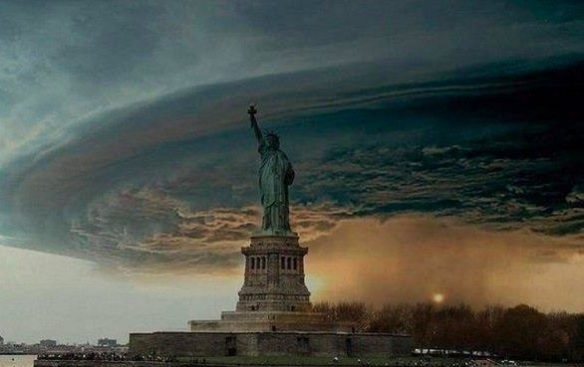
Loneliness

By Yogi Prateado

Source: Adbusters

The Silicon Valley in which I live, a culture infused with the cocaine high of technological breakthroughs, grates against my earthly sensibilities.

Riding on the crest of adrenalin, discovery, and money, what many in the fair Bay Area know, is not in fact what is. This temporary party atmosphere, around until catastrophe hits, is the last hurrah of capitalism. Whether technology will trap us in a surveillance state, or liberate us from mediating political, economic, and social predators, dangles in the hands of deliberate planning and meta-organizing on the part of those developers.

As users and citizens, we are all developers.

Not knowing the implications of one’s discoveries is very different from saying that there aren’t any. The neoteny of tech bros and gals is part of the enforced juvenilization of tech “campuses” and a society that values brain plasticity over wisdom.

After all, wisdom doesn’t sell. You can’t fake wisdom; there’s no wise way to put lipstick on a pig’s face, but there is money to be made from exploiting our mammalian dispositions.

Thus, tech people are predisposed to think, act, and do as children do. They are rewarded for doing so. But this has consequences for where we are going as a culture, and as a planet.

Enforced childhood and adolescence—having other people clean your clothes, make your food, and take you to work—creates “first world problems”, obsessions with gourmet food, and infantile competition. By disconnecting life from work and work from life, millenials are entranced by expensive eating out, Instagramming meals, and living off rich meat, sugar, and dairy (internal parasite-cultivating, climate change-causing) indulgences. Meanwhile, the products you make hand the keys of ultimate social control over to the highest bidder.

Thus, to work in the tech industry becomes a self-fulfilling prophecy. Young minds are inculcated into believing what they are doing is indeed a good thing, a helpful thing for society, rewarded by their superiors with a glamorous job which treats them like a kid, pays well, and provides a roulette wheel of opportunity.

At the same time, those highest on the food chain realize their techno optimism must be tempered with social intelligence. Zuckerberg’s Harvard Address talks about the need for universal health care (duh) and Universal Basic Income, simple solutions needed before we can begin to talk about truth, fairness, justice, diversity, or intelligence. Here, the boy billionaire unfortunately does have a point, one he’s cynically selling to the masses as he consolidates money and power.

It’s now a given that there are multiple intelligences, but in the West (particularly the self-interested, individualistic US), this is still some sort of revelation. It has yet to be integrated into schools, politics, commerce, or tech, let alone science, as many conveniently believe in one scale of intelligence (usually the one they excel at).

As Maslow knew, until we have basic welfare (food, water, shelter), the people have no hope of participating in democracy. Since 1970, Rawls and every reasonable political theorist agreed with this theory, yet we still expect a polity without a society. “Society” is fragmented, violent, scared, and unequal; millionaire 20-year-olds dodging and ignoring homeless 60-year-olds in the street.

The illusion of progress is one of the most pernicious veils currently enthralling our eyes.

The high of “being part of the solution” or “doing well while doing good,” is a strong opiate indeed. Since Marx, drug metaphors have been used to compare capitalism’s co-opting and metabolizing any opposition, novelty, or expression of freedom. Like an out-of-control nanobot army, capitalism turns color into grey goo, turns freedom into products, and commodifies all authentic expression. To quote Wright, we are in a technology trap, where every problem demands a technofix.

But the will-to-power techno-optimism concept doesn’t pan out. What cosmology could support the absurd conclusion that a problem’s old template can be used to “innovate” a new solution? The notion that there is a template—the homogenization of the mind globally through damaging the climate, spreading uniform media, and the colonialism of language and culture—is the problem.

We’re talking out of both sides of our mouths, saying we value diversity then quenching it, saying we’re open to difference then suppressing it. When it does pop up, diversity is first a novelty then a perversion, objectified and commodified as it fights to exist in a white capitalist heteropatriarchy. As Erica Wohldmann says, “Complete control is merely an illusion so we might as well be comfortable.” Comfort requires being pushed back, eating and being eaten, giving and taking. Symbiosis—sharing.

We have been stingy with sharing, forgetting our knowledge is limited.
It’s time to come home to fallibility, responsibility, and the truth about our poor state of affairs. Delaying the operation makes the sickness worse and decreases the chance for a resilient recovery.

Our ancestors only owned as much as they could carry. Live simply so that others may simply live. But what of this simplicity at the societal, political, legal, medical, global level?

Decentralization is the first priority; no more anonymous policy-making. If a decision doesn’t directly affect you, you have no right to legislate over it. No more long arms of the government, no more far-reaching corporations preying on the people thousands of miles from their headquarters.

How does the internet and digital technology play into this? Well, we need a localized technology. Can we still have global epistemic cultures with a non-commercial and non-domination clause?

A moratorium on new technologies will allow us room to assess, democratize, and redistribute the existing technologies. We need to remove oil drilling and gas mining from our technological arsenal. Prioritize technologies that clean up social, economic, racial, and gender-centred wounds. The precious resources—human and natural—that we command should be distributed to the most urgent problems with an interdisciplinary, cross-cultural plan of attack, not one made to make money. Then we collectively apply solutions, not with the bull-in-a-China-shop attitude of big tech, but with care and empathy.

We need to shut the 10,000 Pandora’s boxes opened by technology, and doing that will require technologies. But those technologies must be different form the single, aggressive one we have. An indigenous science, a feminist science, a postcolonial science—all are needed for any hope of change.

We need to go where scares us to know our courage. May we be humbled by the sublime, overwhelmed before the creations which created us. May we work in inner and outer service only towards the true liberation of all beings.

Share more, use less.
Evolve ourselves.

Human Extinction by 2026? A Last Ditch Strategy to Fight for Human Survival

By Robert J. Burrowes

There is almost unanimous agreement among climate scientists and organizations – that is, 97% of over 10,000 climate scientists and the various scientific organizations engaged in climate science research – that human beings have caused a dramatic increase in the amount of carbon dioxide, methane and nitrous oxide released into Earth’s atmosphere since the pre-industrial era and that this is driving the climate catastrophe that continues to unfold. For the documentary evidence on this point see, for example, ‘Quantifying the consensus on anthropogenic global warming in the scientific literature’, ‘Consensus on consensus: a synthesis of consensus estimates on human-caused global warming’ and ‘Scientists Agree: Global Warming is Happening and Humans are the Primary Cause’.

However, there is no consensus regarding the timeframe in which this climate catastrophe will cause human extinction. This lack of consensus is primarily due to the global elite controlling the public perception of this timeframe with frequent talk of ‘the end of the century’ designed to allow ongoing profit maximization through ‘business as usual’ for as long as possible. Why has this happened?

When evidence of the climate catastrophe (including the pivotal role of burning fossil fuels) became incontrovertible, which meant that the fossil fuel industry’s long-standing efforts to prevent action on the climate catastrophe had finally ended, the industry shifted its focus to arguing that the timeframe, which it presented as ‘end of the century’, meant that we could defer action (and thus profit-maximization through business as usual could continue indefinitely). Consequently, like the tobacco, sugar and junk food industries, the fossil fuel industry has employed a range of tactics to deflect attention from their primary responsibility for a problem and to delay action on it.

These well-worn tactics include suggesting that the research is incomplete and more research needs to be done, funding ‘research’ to come up with ‘evidence’ to counter the climate science, employing scholars to present this ‘research’, discrediting honest climate scientists, infiltrating regulatory bodies to water down (or reverse) decisions and recommendations that would adversely impact profits, setting up ‘concerned’ groups to act as ‘fronts’ for the industry, making generous political donations to individuals and political parties as well as employing lobbyists.

As a result of its enormous power too, the global elite has been able to control much of the funding available for climate science research and a great deal of the information about it that is made widely available to the public, particularly through its corporate media. For this reason, the elite wields enormous power to shape the dialogue in relation to both the climate science and the timeframe.

Therefore, and despite the overwhelming consensus noted above, many climate scientists are reluctant to be fully truthful about the state of the world’s climate or they are just conservative in their assessments of the climate catastrophe. For example, eminent climate scientist Professor James Hansen referred to ‘scientific reticence’ in his article ‘Scientific reticence and sea level rise’, scientists might be conservative in their research – for example, dependence upon historical records leads to missing about one-fifth of global warming since the 1860s as explained in ‘Reconciled climate response estimates from climate models and the energy budget of Earth’ – and, in some cases, governments muzzle scientists outright. See ‘Scientist silencing continues for federally-funded research’. But many of the forces working against full exposure of the truth are explained in Professor Guy McPherson’s article ‘Climate-Change Summary and Update’.

However, in contrast to the elite-managed mainstream narrative regarding the climate timeframe, there is a group of courageous and prominent climate scientists who offer compelling climate science evidence that human beings, along with millions of other species, will be extinct by 2026 (and perhaps as early as 2021) in response to a projected 10 degree celsius increase in global temperatures above the pre-industrial level by that date. See ‘Will humans be extinct by 2026?’

Before outlining the essence of this article, it is worth noting that the website on which it is posted is ‘Arctic News’ and the editors of this site post vital articles on the world’s climate by highly prominent climate scientists, such as Professor Peter Wadhams (Emeritus Professor of Polar Ocean Physics at Cambridge University and author of A Farewell to Ice: A Report from the Arctic), Dr Andrew Glikson (an Earth and paleoclimate scientist who is a visiting fellow at the Australian National University), Professor Guy McPherson who has written extensively and lectures all over the world on the subject, and ‘Sam Carana’, the pseudonym used by a group of climate scientists concerned to avoid too many adverse impacts on their research, careers and funding by declaring themselves publicly but nevertheless committed to making the truth available for those who seek it.

So, in a few brief points, let me summarize the evidence and argument outlined in the article ‘Will humans be extinct by 2026?’


The Climate Science of Destruction of the Biosphere

In the Arctic, there is a vast amount of carbon stored in soils that are now still largely frozen; this frozen soil is called permafrost. But as Arctic temperatures continue to rise and the permafrost thaws, in response to the warming that has occurred already (and is ongoing) by burning fossil fuels and farming animals for human consumption, much of this carbon will be converted into carbon dioxide or methane and released into the atmosphere. There is also a vast amount of methane – in the form of methane hydrates and free gas – stored in sediments under the Arctic Ocean seafloor. As temperatures rise, these sediments are being destabilized and will soon result in massive eruptions of methane from the ocean floor. ‘Due to the abrupt character of such releases and the fact that many seas in the Arctic Ocean are shallow, much of the methane will then enter the atmosphere without getting broken down in the water.’

Adversely impacting this circumstance is that the sea ice continues to retreat as the polar ice cap melts in response to the ongoing temperature increases. Because sea ice reflects sunlight back into Space, as the ice retreats more sunlight hits the (dark-colored) ocean (which absorbs the sunlight) and warms the ocean even more. This causes even more ice melt in what becomes an ongoing self-reinforcing feedback loop that ultimately impacts worldwide, such as triggering huge firestorms in forests and peatlands in North America and Russia.

More importantly, however, without sea ice, storms develop more easily and because they mix warm surface waters with the colder water at the bottom of shallow seas, reaching cracks in sediments filled with ice which acts as a glue holding the sediment together, the ice melt destabilizes the sediments, which are vulnerable to even small differences in temperature and pressure that are triggered by earthquakes, undersea landslides or changes in ocean currents.

As a result, huge amounts of methane can erupt from the seafloor of the Arctic Ocean and once this occurs, it will further raise temperatures, especially over the Arctic, thus acting as another self-reinforcing feedback loop that again makes the situation even worse in the Arctic, with higher temperatures causing even further methane releases, contributing to the vicious cycle that precipitates ‘runaway global warming’.

‘These developments can take place at such a speed that adaptation will be futile. More extreme weather events can hit the same area with a succession of droughts, cold snaps, floods, heat waves and wildfires that follow each other up rapidly. Within just one decade [from 2016], the combined impact of extreme weather, falls in soil quality and air quality, habitat loss and shortages of food, water, shelter and just about all the basic things needed to sustain life can threaten most, if not all life on Earth with extinction.’

The article goes on to outline how the 10 degree increase (above the pre-industrial level) by 2026 is likely to occur. It will involve further carbon dioxide and methane releases from human activity (particularly driving cars and other vehicles, flying in aircraft and eating animal products, as well as military violence), ongoing reduction of snow and ice cover around the world (thus reflecting less sunlight back into Space), an increase in the amount of water vapor (a greenhouse gas) in the atmosphere, a falling away of ‘aerosol masking’ (which has helped reduce the impact of emissions so far) as emissions decline, as well as methane eruptions from the ocean floor. If you would like to read more about this and see the graphs and substantial documentation, you can do so in the article cited above: ‘Will humans be extinct by 2026?’


The Ecology of Destruction of the Biosphere

Not that these scientists, who focus on the climate, discuss it but there are other human activities adversely impacting Earth’s biosphere which also threaten near-term extinction for humans, particularly given their synergistic impacts.

For example, recent research has drawn attention to the fact that the ‘alarming loss of insects will likely take down humanity before global warming hits maximum velocity…. The worldwide loss of insects is simply staggering with some reports of 75% up to 90%, happening much faster than the paleoclimate record rate of the past five major extinction events’. Without insects ‘burrowing, forming new soil, aerating soil, pollinating food crops…’ and providing food for many bird species, the biosphere simply collapses. See ‘Insect Decimation Upstages Global Warming’.

Moreover, apart from ongoing destruction of other vital components of Earth’s life support system such as the rainforests – currently being destroyed at the rate of 80,000 acres each day: see ‘Measuring the Daily Destruction of the World’s Rainforests’ – and oceans – see ‘The state of our oceans in 2018 (It’s not looking good!)’ – which is generating an extinction rate of 200 species (plants, birds, animals, fish, amphibians, insects and reptiles) each day with another 26,000 species already identified as ‘under threat’ – see ‘Red list research finds 26,000 global species under extinction threat’ – some prominent scholars have explained how even these figures mask a vital component of the rapidly accelerating catastrophe of species extinctions: the demise of local populations of a species. See ‘Biological annihilation via the ongoing sixth mass extinction signaled by vertebrate population losses and declines’.

In addition, relying on our ignorance and our complicity, elites kill vast areas of Earth’s biosphere through war and other military violence – see, for example, the Toxic Remnants of War Project and the film ‘Scarred Lands & Wounded Lives’ – subject it to uncontrolled releases of radioactive contamination – see Fukushima Radiation Has Contaminated The Entire Pacific Ocean And It’s Going To Get Worse’ – and use geoengineering to wage war on Earth’s climate, environment and ultimately ourselves. See, for example, ‘Engineered Climate Cataclysm: Hurricane Harvey’ and ‘The Ultimate Weapon of Mass Destruction: “Owning the Weather” for Military Use’.

Separately from all of this, we live under the unending threat of nuclear war.

This is because insane political and corporate elites are still authorizing and manufacturing more of these highly profitable weapons rather than dismantling them all (as well as conventional weapons) and redirecting the vast resources devoted to ongoing military killing (US$1.7 trillion annually: see ‘Global military spending remains high at $1.7 trillion’) to environmental restoration and programs of social uplift.

By the way, if you think the risk of nuclear war can be ignored, you might find this recent observation sobering. In a review of (former US nuclear war planner) Daniel Ellsberg’s recent book The Doomsday Machine: Confessions of a Nuclear War Planner, Earth and paleoclimate scientist Dr Andrew Glikson summarized the book as follows: ‘This, then, is the doomsday machine. Not simply the existence of fission weapons or unspeakably destructive hydrogen bombs, but the whole network rigged together: thousands of them on hair-trigger alert, command and control equipment built in the 1970s and ’80s, millions of lines of antique code sitting on reels of magnetic tape or shuffled around on floppy discs even now. An architecture tended by fallible and deeply institutionalized human beings.’ See ‘Two Minutes To Mid-Night: The Global Nuclear Suicide Machine’.

So, irrespective of whether elites or their agents or even we acknowledge it, Earth’s biosphere is under siege on many fronts and, very soon now, Earth will not support life. Any honest news source routinely reports one or another aspect of the way in which humans are destroying the Earth and perhaps suggests courses of action to respond powerfully to it. This, of course, does not include the insane global elite’s corporate media, which functions to distract us from any semblance of the truth.


How did all this happen?

How did human beings end up in a situation that human extinction is likely to occur within eight years (even assuming we can avert nuclear war)? And is there any prospect of doing enough about it now to avert this extinction?

To answer the first question briefly: We arrived at this juncture in our history because of a long sequence of decisions, essentially made by elites to expand their profit, power and privilege, and which they then imposed on us and which we did not resist powerfully enough. For a fuller explanation, see ‘Strategy and Conscience: Subverting Elite Power So We End Human Violence’.

In any case, the key questions now are simply these: Is it too late to avert our own extinction? And, if not, what must we do?

Well, I am not going to dwell on it but some scientists believe it is too late: we have already passed the point of no return. Professor Guy McPherson is one of these scientists, with a comprehensive explanation and a great deal of evidence to support it in his long and heavily documented article ‘Climate-Change Summary and Update’.

So, the fundamental question is this: If we assume (highly problematically I acknowledge) that it is possible to avert our own extinction by 2026, what must we do?

Because we need to address, in a strategic manner, the interrelated underlying causes that are driving the rush to extinction, let me first identify one important symptom of these underlying causes and then the underlying structural and behavioral causes themselves. Finally, let me invite your participation in (one or more aspects of) a comprehensive strategy designed to address all of this.

As in the past, at least initially, the vast bulk of the human population is not going to respond to this crisis in any way. We need to be aware of this but not let it get in our way. There is a straightforward explanation for it.

Fear or, far more accurately, unconscious terror will ensure that the bulk of the human population will not investigate or seriously consider the scientific evidence in relation to the ongoing climate catastrophe, despite its implications for them personally and humanity generally (not to mention other species and the biosphere). Moreover, given that climate science is not an easy subject with which to grapple, elite control of most media in relation to it (including, most of the time, by simply excluding mention of key learning from the climate scientists) ensures that public awareness, while reasonably high, is not matched by knowledge, which is negligible.

As a result, most people will fearfully, unintelligently and powerlessly accept the delusions, distractions and denial that are promulgated by the insane global elite through its various propaganda channels including the corporate media, public relations and entertainment industries, as well as educational institutions. This propaganda always includes the implicit message that people can’t (and shouldn’t) do anything in response to the climate catastrophe (invariably and inaccurately, benignly described as ‘climate change’).

A primary way in which the corporate media reports the issue but frames it for a powerless response is to simply distribute ‘news’ about each climate-related event without connecting it either with other climate-related events or even mentioning it as yet another symptom of the climate catastrophe. Even if they do mention these connections, they reliably mention distant dates for phenomena like ‘heatwaves’ repeating themselves and an overall ‘end of century’ timeframe to preclude the likelihood that any sense of urgency will arise.

The net outcome of all this, as I stated above, is that the bulk of the human population will not respond to the crisis in the short term (as it hasn’t so far) with most of what limited response there is confined to powerlessly lobbying elite-controlled governments.

However, as long as you consider responding – and by responding, I mean responding strategically – and then do respond, you become a powerful agent of change, including by recruiting others through your example.

But before I present the strategy, let me identify the major structural and behavioral causes that are driving the climate catastrophe and destruction of the biosphere, and explain why some key elements of this strategy are focused on tackling these underlying causes.


The Political Economy of Destruction of the Biosphere

The global elite ensures that it has political control of the biosphere as well as Space by using various systems, structures and processes that it largely created (over the past few centuries) and now controls, including the major institutions of governance in the world such as national governments and key international organizations like the United Nations. For further information, see ‘Strategy and Conscience: Subverting Elite Power So We End Human Violence’.

It does this, for example, so that it can economically utilize, via the exploitative mechanisms of capitalism and its corporations (which the elite also created), domains of the biosphere rich in resources, particularly fossil fuels, strategic minerals and fresh water. The elite will use any means – including psychological manipulation, propaganda issued by its corporate media, national educational institutions, legal systems and extraordinary military violence – to achieve this outcome whatever the cost to life on Earth. See ‘Profit Maximization Is Easy: Invest In Violence’.

In short, the global elite is so insane that its members believe that killing and exploiting fellow human beings and destroying the biosphere are simply good ways to make a profit. Of course, they do not perceive us as fellow human beings; they perceive and treat us as a great deal less. This is why, for example, the elite routinely uses its military forces to attack impoverished and militarily primitive countries so that they can steal their resources. See ‘The Global Elite is Insane Revisited’.

But they are happy to steal from those of us living in western economies too, with Professor Barbara G. Ellis issuing the latest warning about yet another way this could easily happen. See Depositors – Not Taxpayers – Will Take the Hit for the Next “2008” Crash Because Major Banks May Use the “Bail-In” System’.

Anyway, because of elite control of governments, it is a waste of time lobbying politicians if we want action on virtually all issues that concern us, particularly the ‘big issues’ that threaten extinction, such as the climate catastrophe, environmental destruction and war (especially the threat of nuclear war). While in very limited (and usually social) contexts (such as issues in relation to the right of women to abortions or rights for the LGBTQIA communities), when it doesn’t significantly adversely impact elite priorities, gains are sometimes made (at least temporarily) by mobilizing sufficient people to pressure politicians. This has two beneficial outcomes for elites: it keeps many people busy on ‘secondary issues’ (from the elite perspective) that do not impact elite profit, power and privilege; and it reinforces the delusion that democracy ‘works’.

However, in the contexts that directly impact elite concerns (such as their unbridled exploitation of the biosphere for profit), politicians serve their elite masters, even to the extent that any laws that might appear to have been designed to impede elite excesses (such as pollution generated by their activities) are readily ignored if necessary, with legal penalties too insignificant to deter phenomenally wealthy corporations. See ‘The Rule of Law: Unjust and Violent’.

Of course, if any government does not obey elite directives, it is overthrown. Just ask any independently-minded government over the past century. For a list of governments overthrown by the global elite using its military and ‘intelligence’ agencies since World War II, see William Blum’s book Killing Hope: U.S. Military and CIA Interventions Since World War II or, for just the list, see ‘Overthrowing other people’s governments: The Master List’.

How does the elite maintain this control over political, economic, military, legal and social structures and processes?


The Sociology of Destruction of the Biosphere

As explained in the literature on the sociology of knowledge, reality is socially constructed. See the classic work The Social Construction of Reality: A Treatise in the Sociology of Knowledge. That is, if an individual is born or introduced into a society in which particular institutions are in control and behaviors such as chronic over-consumption, unlimited profit-making, rampant exploitation of the environment and grotesque violence against (at least some) people are practiced, then the typical individual will accept the existence of these institutions and adopt the behaviors of the people around them even though the institutions and behaviors are dysfunctional and violent.

But while the sociology of knowledge literature recognizes that children ‘must be “taught to behave” and, once taught, must be “kept in line”’ to maintain the institutional order, this literature clearly has no understanding of the nature and extent of the violence to which each child is actually subjected in order to achieve the desired ‘socialization’. This terrorization, as I label it, is so comprehensive that the typical child quickly becomes incapable of using their own intellectual and emotional capacities, including conscience and courage, to actually evaluate any institution or behavior before accepting/adopting it themselves. Obviously then, they quickly become too terrified to overtly challenge dysfunctional institutions and behaviors as well.

Moreover, as a result of this ongoing terrorization, inflicted by the significant adults (and particularly the parents) in the child’s life, the child soon becomes too (unconsciously) afraid to resist the behavioral violence that is inflicted on them personally in many forms, as outlined briefly in the next section, so that they are ‘taught to behave’ and are ‘kept in line’.

In response to elite-driven imperatives then, such as ‘you are what you own’ to encourage very profitable over-consumption, most people are delusionarily ‘happy’ while utterly trapped behaving exactly as elites manipulate them – they are devoid of the psychological capacity to critique and resist – and the elite-preferred behavior quickly acquires the status of being ‘the only and the right way to behave’, irrespective of its dysfunctionality.

In essence: virtually all humans fearfully adopt dysfunctional social behaviors such as over-consumption and profit-making at the expense of the biosphere, rather than intelligently, conscientiously and courageously analyzing the total situation (including the moral and ecological dimensions of it) and behaving appropriately in the context.

Given the pervasiveness and power of elite institutions, ranging from those mentioned above to the corporate media and psychiatry – see ‘Defeating the Violence of Psychiatry’ – resistance to violent socialization (of both children and adults) requires considerable awareness, not to mention courage.

And so our fear makes virtually all of us succumb to the socialization pressure (that is, violence) to accept existing institutions and participate in widespread social behaviors (such as over-consumption) that are dysfunctional and violent.


The Psychology of Destruction of the Biosphere

This happens because each child, from birth, is terrorized (again: what we like to call ‘socialized’) until they become a slave willing to work and, in industrialized countries at least, to over-consume as directed.

Under an unrelenting regime of ‘visible’, ‘invisible’ and ‘utterly invisible’ violence, each child unconsciously surrenders their search in pursuit of their own unique and powerful destiny and succumbs to the obedience that every adult demands. Why do adults demand this? Because the idea of a powerful child who courageously follows their own Self-will terrifies adults. So how does this happen?

Unfortunately, far too easily and, strange though it may seem, it is not just the ‘visible’ violence (such as hitting, screaming at and sexually abusing) that we normally label ‘violence’ that causes the main damage, although this is extremely damaging. The largest component of damage arises from the ‘invisible’ and ‘utterly invisible’ violence that we adults unconsciously inflict on children during the ordinary course of the day. Tragically, the bulk of this violence occurs in the family home and at school. See ‘Why Violence?’ and Fearless Psychology and Fearful Psychology: Principles and Practice.

So what is ‘invisible’ violence? It is the ‘little things’ we do every day, partly because we are just ‘too busy’. For example, when we do not allow time to listen to, and value, a child’s thoughts and feelings, the child learns to not listen to themSelf thus destroying their internal communication system. When we do not let a child say what they want (or ignore them when they do), the child develops communication and behavioral dysfunctionalities as they keep trying to meet their own needs (which, as a basic survival strategy, they are genetically programmed to do).

When we blame, condemn, insult, mock, embarrass, shame, humiliate, taunt, goad, guilt-trip, deceive, lie to, bribe, blackmail, moralize with and/or judge a child, we both undermine their sense of Self-worth and teach them to blame, condemn, insult, mock, embarrass, shame, humiliate, taunt, goad, guilt-trip, deceive, lie, bribe, blackmail, moralize and/or judge.

The fundamental outcome of being bombarded throughout their childhood by this ‘invisible’ violence is that the child is utterly overwhelmed by feelings of fear, pain, anger and sadness (among many others). However, mothers, fathers, teachers, religious figures and other adults also actively interfere with the expression of these feelings and the behavioral responses that are naturally generated by them and it is this ‘utterly invisible’ violence that explains why the dysfunctional behavioral outcomes actually occur.

For example, by ignoring a child when they express their feelings, by comforting, reassuring or distracting a child when they express their feelings, by laughing at or ridiculing their feelings, by terrorizing a child into not expressing their feelings (for instance, by screaming at them when they cry or get angry), and/or by violently controlling a behavior that is generated by their feelings (for example, by hitting them, restraining them or locking them into a room), the child has no choice but to unconsciously suppress their awareness of these feelings.

However, once a child has been terrorized into suppressing their awareness of their feelings (rather than being allowed to have their feelings and to act on them) the child has also unconsciously suppressed their awareness of the reality that caused these feelings. This has many outcomes that are disastrous for the individual, for society and for the biosphere because the individual will now easily suppress their awareness of the feelings that would tell them how to act most functionally in any given circumstance and they will progressively acquire a phenomenal variety of dysfunctional behaviors, including some that are violent towards themself, others and/or the Earth.

Moreover, terrorizing the child has many flow-on effects. For example, once you terrorise a child into accepting certain information about themself, other people or the state of the world, the child becomes unconsciously fearful of dealing with new information, especially if this information is contradictory to what they have been terrorized into believing. As a result, the child will unconsciously dismiss new information out of hand.

In short, the child has been terrorized in such a way that they are no longer capable of learning (or their learning capacity is seriously diminished by excluding any information that is not a simple extension of what they already ‘know’). This is one important explanation why some people are ‘climate deniers’ and most others do nothing in response to the climate catastrophe. See ‘The Psychology of Denial’.

Consequently, under this onslaught of terror and violence, the child surrenders their own unique Self and takes on their socially constructed delusional identity which gives them relief from being terrorized while securing the approval they crave to survive.

So if we want to end violence against the biosphere, we must tackle this fundamental cause. Primarily, this means giving everyone, child and adult alike, all of the space they need to feel, deeply, what they want to do, and to then let them do it (or to have the emotional responses they naturally have if they are prevented from doing so).

For some insight into the critical role that school plays in reducing virtually all children to wage slaves for employment in some menial or ‘professional’ role or as ‘cannon fodder’ for the military, while stripping them of the capacity to ask penetrating questions about the very nature of society and their own role in it, see ‘Do We Want School or Education?’

In summary, given that human society is so dysfunctional, beginning with the fact that human beings do not know how to parent or educate their children to nurture their unique and extraordinary potential, humans face a monumental challenge, in an incredibly short timeframe, to have any chance of survival.

And we are going to have to fix a lot more things than just our destruction of the biosphere if we are to succeed, given that ecologically destructive behavior and institutions have their origin in dysfunctional psychology, societies and political economy.

To reiterate however, it is our (often unconscious) fear that underpins every problem. Whether it is the fear getting in the way of our capacity to intelligently analyze the various structures and behaviors that generate the interrelated crises in which we now find ourselves or the fear undermining our courage to act powerfully in response to these crises, acknowledging and dealing with our fear is the core of any strategy for survival.


So what’s the plan?

Let’s start with you. If you consider the evidence in relation to destruction of our biosphere, essentially one of two things will happen. Either you will be powerful enough, both emotionally and intellectually, to grapple with this evidence and you will take strategic action that has ongoing positive impact on the crisis or your (unconscious) fear will simply use one of its lifelong mechanisms to remove awareness of what you have just read from your mind or otherwise delude you, such as by making you believe you are powerless to act differently or that you are ‘doing enough already’. This immobilizing fear, whether or not you experience it consciously, is a primary outcome of the terrorization to which you were subjected as a child.

So, if you sense that improving your own functionality – so that you can fully access your emotional responses, conscience and courage – is a priority, try ‘Putting Feelings First’.

If you already feel able to act powerfully in response to this multi-faceted crisis, in a way that will have strategic impact, you are invited to consider joining those participating in The Flame Tree Project to Save Life on Earth, which outlines a simple plan for people to systematically reduce their consumption, by at least 80%, involving both energy and resources of every kind – water, household energy, transport fuels, metals, meat, paper and plastic – while dramatically expanding their individual and community self-reliance in 16 areas, so that all environmental concerns are effectively addressed. You might also consider signing the online pledge of ‘The People’s Charter to Create a Nonviolent World’.

If you are interested in nurturing children to live by their conscience and to gain the courage necessary to resist elite violence fearlessly, while living sustainably despite the entreaties of capitalism to over-consume, then you are welcome to make ‘My Promise to Children’. To reiterate: capitalism and other dysfunctional political, economic, military, legal and social structures only thrive because our dysfunctional parenting robs children of their conscience and courage, among many other qualities, while actively teaching them to over-consume as compensation for having vital emotional needs denied. See ‘Love Denied: The Psychology of Materialism, Violence and War’.

If you are interested in conducting or participating in a campaign to halt our destruction of the biosphere (or any other manifestation of violence for that matter) you are welcome to consider acting strategically in the way that the extraordinary activist Mohandas K. Gandhi did. Whether you are engaged in a peace, climate, environment or social justice campaign, the 12-point strategic framework and principles are the same. See Nonviolent Campaign Strategy.

The two strategic aims and a core list of strategic goals to end war and to end the climate catastrophe, for example, are identified in Campaign Strategic Aims’ and, using these examples, it is a straightforward task to identify an appropriate set of strategic goals for your local environment campaign. As an aside, the strategic framework to defend against a foreign invading power or a political/military coup, to liberate your country from a dictatorship or a foreign occupation, or to defeat a genocidal assault is explained in Nonviolent Defense/Liberation Strategy.

If you would like a straightforward explanation of ‘Nonviolent Action: Why and How it Works’ and an introduction to what it means to think strategically, try reading about the difference between ‘The Political Objective and Strategic Goal of Nonviolent Actions’.

If you anticipate violent repression by a ruthless opponent, consider planning and implementing any nonviolent action according to the explanation in ‘Nonviolent Action: Minimizing the Risk of Violent Repression’.

Finally, if you are going to do nothing in response to this crisis, make it a conscious decision to do nothing. This is far preferable to unconsciously and powerlessly doing nothing by never even considering the evidence or by simply deluding yourself. It also allows you to consciously revise your decision at some point in future if you so wish.


Conclusion

The evidence in relation to destruction of the Earth’s biosphere, leading to ongoing and rapid degradation of all ecosystems and their services, is readily available and overwhelming. The many and varied forms of destruction are having synergistic impact. An insignificant amount of the vast evidence in relation to this destruction is sampled above.

There is a notable group of prominent climate scientists who present compelling evidence that human extinction will occur by 2026 as a result of a projected 10 degree celsius increase in global temperatures above the pre-industrial level by this date. The primary document for this is noted above and this document, together with the evidence it cites, is readily available to be read and analyzed by anyone.

Largely separately from the climate catastrophe (although now increasingly complicated by it), Earth’s sixth mass extinction is already advancing rapidly as we destroy habitat and, on our current trajectory, all species will soon enter the fossil record.

Why? Because we live in a world in which the political, economic, military, legal and social structures and processes of human society are utterly incapable of producing either functional human beings or governance mechanisms that take into account, and respect, the ecological realities of Earth’s biosphere.

So, to reiterate: We are on the fast-track to extinction. On the current trajectory, assuming we can avert nuclear war, some time between 2021 and 2026 the last human will take their final breath.

Our only prospect of survival, and it still has only a remote chance of succeeding, is that a great number of us respond powerfully now and keep mobilizing more people to do so.

If you do absolutely nothing else, consider rearranging your life to exclude all meat from your diet, stop traveling by car and aircraft, substantially reduce your water consumption by scaling down your ownership of electronic devices (which require massive amounts of water to manufacture), and only eat biodynamically or organically grown whole food.

And tell people why you are doing so.

This might give those of us who fight strategically, which can include you if you so choose, a little more time to overturn the structural and remaining behavioral drivers of extinction which will require a profound change in the very nature of human society, including all of its major political, economic, military, legal and social institutions and processes (most of which will need to be abolished).

If this sounds ‘radical’, remember that they are about to vanish anyway. Our strategy must be to replace them with functional equivalents, all of which are readily available (with some briefly outlined in the various documents mentioned in the plan above).

‘It won’t happen’, you might say? And, to be candid, I sincerely believe that you are highly probably right. I have spent a lifetime observing, analyzing, writing about and acting to heal dysfunctional and violent human behavior and, for that reason, I am not going to delude myself that anything less than what I have outlined above will achieve the outcome that I seek: to avert human extinction. But I am realistic.

The insane individuals who control the institutions that are driving extinction will never act to avert it. If they were sane enough to do so, they would have been directing and coordinating these institutions in taking action for the past 40 years. This is why we must resist them strategically. Moreover, I am only too well aware that the bulk of the human population has been terrorized into powerlessness and won’t even act. But our best chance lies in offering them our personal example, and giving them simple and various options for responding effectively.

It is going to be a tough fight for human survival, particularly this late in the ‘game’. Nevertheless, I intend to fight until my last breath. I hope that you will too.


Biodata: Robert J. Burrowes has a lifetime commitment to understanding and ending human violence. He has done extensive research since 1966 in an effort to understand why human beings are violent and has been a nonviolent activist since 1981. He is the author of ‘Why Violence?’ http://tinyurl.com/whyviolence His email address is flametree@riseup.net and his website is here. http://robertjburrowes.wordpress.com

Robert J. Burrowes
P.O. Box 68
Daylesford, Victoria 3460
Australia

Email: flametree@riseup.net

Websites:
Nonviolence Charter
Flame Tree Project to Save Life on Earth
‘Why Violence?’
Feelings First
Nonviolent Campaign Strategy
Nonviolent Defense/Liberation Strategy
Anita: Songs of Nonviolence
Robert Burrowes
Global Nonviolence Network

Strategy and Conscience: Subverting Elite Power So We End Human Violence

Fragment of “Butcher to the World” by Sue Coe.

By Robert J. Burrowes

Given the overwhelming evidence that activist efforts are failing to halt the accelerating rush to extinction precipitated and maintained by dysfunctional human behavior, it is worth reflecting on why this is happening.

Of course, you might say that the rush to extinction is being slowed. But is it? Even according to BP’s chief economist: ‘despite the extraordinary growth in renewables in recent years, and the huge policy efforts to encourage a shift away from coal into cleaner, lower carbon fuels, there has been almost no improvement in the power sector fuel mix over the past 20 years. The share of coal in the power sector in 1998 was 38% – exactly the same as in 2017…. this is one area where at the global level we haven’t even taken one step forward, we have stood still: perfectly still for the past 20 years.’ See Analysis – Spencer Dale, group chief economist.

And, to choose another measure that highlights our lack of ‘progress’: species extinctions proceed at a rate of 200 each day, which is vastly greater than the long-term background rate, with another 26,000 species already identified as ‘under threat’. See Red list research finds 26,000 global species under extinction threat.

But it wouldn’t matter what measure you analyzed – efforts to prevent cataclysmic nuclear war, to halt the many ongoing wars, to contain and reverse the prevalent and grotesque economic exploitation, to end slavery or the sex trafficking of women and children, to halt or even slow the rampant destruction of the biosphere, including the rainforests and oceans – we are rapidly losing ground (and often despite some apparent gains such as adoption of the ‘Treaty on the Prohibition of Nuclear Weapons’ by many non-nuclear states on 7 July 2017).

Not only are we destroying the rainforests – currently at the rate of 80,000 acres each day: see ‘Measuring the Daily Destruction of the World’s Rainforests’ – and oceans – see The state of our oceans in 2018 (It’s not looking good!)’ – as a fellow long-standing nonviolent activist, Kelvin Davies, recently observed to me: the oceans and remaining rainforests are ‘being emptied of life’ as impoverished people, forced to the economic margin, hunt remaining wildlife, including tropical fish, for food and/or trafficking.

Before we blame impoverished people for their destruction however, it is the consumption by those of us in industrialized countries that is generating the adverse circumstances in which they are forced to survive. For one simple example of this, related to our diet alone, see ‘Emissions impossible: How big meat and dairy are heating up the planet’.

Of course, you might object that it is not activist efforts that are responsible for the failure to halt elite violence and our complicity in it. It is the failure of corporatized society to seriously consider and respond intelligently to the scientific and other evidence in relation to all of the violence in its many manifestations. However, any explanation of this nature fails to understand and appreciate why progressive change has always occurred in the past.

Social progress is the result of people of conscience strategically challenging elite power in such a way that new norms become so widely accepted that elites are compelled to work within them. This has always been essential for the simple reason that elites are insane and have never acted sensibly, whatever the issue. Elites have only ever orchestrated events to maximize their own power, profit and privilege whatever the cost to the rest of us and the Earth itself. Hence, violence, war, grotesque economic exploitation and ecological destruction are rampant across the planet; that is the way elites want it; that is what maximizes elite power, profit and privilege. See ‘The Global Elite is Insane Revisited’.

As an aside: if you aren’t convinced that the global elite is insane, then perhaps you might ponder the possible implications of the recent call by US President Donald Trump, for the creation of a new Space Force as a sixth branch of the U.S. military – ‘We must have American dominance in space’ – in violation of the Outer Space Treaty of 1967. See ‘Trump Orders Establishment of Space Force as Sixth Military Branch’.

While this enterprise, if it gets Congressional approval, would be staggeringly profitable to the global elite while further gutting social and environmental programs to pay for it, the proposal also raises the possibility, as Professor Karl Grossman graphically expressed it (given that there is no way to have the envisaged weapons in space without nuclear power) that ‘the heavens are going to be littered with radioactive debris’ for millennia (but in substantially greater amounts than is already there). See ‘Trump’s Space Force: Military Profiteering’s Final Frontier’ and ‘Star Wars Redux: Trump’s Space Force’.

Of course, if you want even more evidence of elite insanity, then look no further than the current hysteria generated by Donald Trump’s supposed ‘treason’ for having a meeting with Russian president Vladimir Putin in Helsinki with the intention of improving mutual understanding and the prospects of peace between the two countries. For a sample of the literature that discusses this summit intelligently, which you won’t find in the corporate media, see US Media is Losing Its Mind Over Trump-Putin Press Conference, ‘Is President Trump A Traitor Because He Wants Peace With Russia?’, ‘Helsinki Talks – How Trump Tries To Rebalance The Global Triangle’ and Trump, The Manchurian Candidate: “Conspiracy” to Destabilize the Trump Presidency.

Some informed and thoughtful analysts believe this could lead to an elite coup to remove Trump from the US presidency. See Coming Coup Against Trump and The Coming Coup to Overthrow President Trump: Sedition at the Highest Levels.

So, to consolidate the information presented above, let me encapsulate the nature of geopolitics in one paragraph:

The military forces of the United States are not intended to defend the United States against military attack. The military forces of the countries in NATO are not intended to defend the respective member countries against military attack. The military forces of the United States and NATO are controlled by the global elite and used by the global elite to aggressively attack, in violation of all relevant national and international laws, any country that seeks independent control and development of its resources, particularly fossil fuels, strategic minerals and water. The global elite, which is in total control of the global economy and world affairs generally, does this in order to expand its own power, profit and privilege. It does this no matter what the cost to any individual (outside the elite), people, country and the biosphere. Why does the global elite do all of this? The global elite does this because it is completely insane.

Hence, to return to my point about the driver of social progress historically: Did the trans-Atlantic slave trade end because elites decided to halt the practice? Did gains for some women during the 21st century occur because elites committed themselves to ending patriarchal privilege? Did the British walk out of their colony in India because the British elite suddenly perceived the injustice of their violence and exploitation?

Despite the successes of activists of earlier generations, however, those of us who identify as activists of this generation are failing, quite comprehensively, to respond intelligently, powerfully and strategically to the vast challenges posed by an elite that has expanded its capacity to intimidate, outflank and overwhelm us (which is why, incidentally, slavery is now far more widespread than during any earlier period in human history, violence against women still manifests in a grotesque variety of forms all over the planet and even India has strayed monstrously from Gandhi’s vision).

In essence, strategic lessons learned by earlier generations of activists are forgotten or ignored as we stumble powerlessly to the extinction that is shortly to claim us all.

While I could write at some length about our shortcomings as activists in the era of perpetual violence and war, grotesque economic exploitation and pervasive climate and environmental destruction, I would like to focus on what I regard as the two key issues: strategy and conscience.

The global elite is deeply entrenched and manages world affairs, particularly through its capitalist economy. The global elite has developed over hundreds of years during which time it has fully and deeply penetrated all of the major power structures in world society, most of which it created (or moulded during their creation), so that the primary levers of power in the modern world – key financial institutions such as central banks, the major asset management corporations and the giant corporations in key industries (such as, but not limited to, the banking and weapons industries) – as well as the instruments through which its policies are implemented – including governments, military forces (both national and as ‘military contractors’ or mercenaries), key ‘intelligence’ agencies, legal systems and police forces, key nongovernment organizations such as the Vatican, and the academic, educational, media, medical, psychiatric and pharmaceutical industries – are all fully responsive to elite control.

More precisely than this, as explained in his forthcoming book ‘Giants: The Global Power Elite’, Professor Peter Phillips identifies the world’s top seventeen asset management firms, each with more than one trillion dollars of investment capital under management, as the giants of world capitalism. The total capital under management on behalf of all seventeen corporations is in excess of $US41.1 trillion; it represents the wealth invested for profit by thousands of millionaires, billionaires and corporations. These seventeen giants operate in nearly every country in the world and are ‘the central institutions of the financial capital that powers the global economic system’. They invest in anything considered profitable, ranging from ‘agricultural lands on which indigenous farmers are replaced by power elite investors’ to public assets to war.

Phillips goes on to note that the global elite develops and coordinates its policies through a variety of private planning fora such as the Group of Thirty, the Trilateral Commission and the Atlantic Council which determine the policies and issue the instructions for their implementation by transnational governmental institutions like the G7, G20, International Monetary Fund, World Trade Organization and the World Bank. Elite policies are also implemented following instruction of the relevant agent, including governments, in the context. These agents then do as they are instructed.

Or, if they do not, they are overthrown. Just ask any independently-minded government over the past century. For a list of governments overthrown by the global elite using its military and ‘intelligence’ agencies since World War II, see William Blum’s book ‘Killing Hope: U.S. Military and CIA Interventions Since World War II’ or, for just the list, see ‘Overthrowing other people’s governments: The Master List’.

As a result of coordination through the above elite fora, for example, gigantic media, public relations and entertainment corporations are used to reinforce elite dogma promulgated through national educational institutions so that most western humans become powerless consumers of elite product, informational and material, as the elite pursues ever-increasing profit, power and privilege. Oblivious to the way in which they are caught up in the elite drive to make us consume, even most western activists are major consumers, failing to limit their consumption in line with some appreciation of the per capita ecological carrying capacity of the Earth.

Hence, as should be obvious by now, with a deeply entrenched global elite in total control of major economic/financial, political, military, legal and social (including educational and media) power structures, only a comprehensive and sophisticated strategy has any prospect of succeeding, whatever the issue, and certainly the fundamental one: elite power.

In other words, if we want to end war (or even just one war), halt exacerbation of the climate catastrophe (in a region, country or the world), end environmental destruction on a vast range of fronts, terminate economic exploitation including (modern) slavery, end the sex trafficking of women and children, end the military occupation of Palestine, Tibet, West Papua… then we are going to have to think, plan and act strategically, which includes engaging and mobilizing, in a focused way, a significant proportion of the human population. Simply ‘campaigning’ on the basis of a few ideas and tactics that we think worked in the past, is not enough. Campaigning without strategy – and all that strategic thinking, including a penetrating analysis of the very nature of society and its power structure, entails – is a waste of time.

This is why most work of virtually all ‘activist’ NGOs is useless. They work within the elite-designed and managed global power structure, fearfully self-limiting their actions in accordance with elite-approved processes, such as those ‘within the law’ and lobbying elite-controlled governments and institutions, as well as international organizations such as the UN. By participating in elite-controlled processes, our dissent is absorbed and dissipated, as the elite intend.

This is the great achievement, from an elite perspective, of ‘democracy’: to the extent that people can be persuaded to participate in the delusion that democracy exists (anywhere on Earth) and that voting and lobbying changes anything important, they are unwitting victims of elite-manipulated processes and propaganda.

This also explains why virtually all NGOs invariably end up promoting elite-sponsored delusions such as, for example, those in relation to the climate catastrophe which talk of an ‘end of century’ timeframe (about 70 years more than we actually have), staying within 2 (or 3 or 1.5) degrees Celsius above the pre-industrial level (rather than the .5 degrees that is actually necessary) and, the most fundamental delusion of all, that we must substitute renewable energy for fossil fuels (which is certainly necessary), rather than (in addition) profoundly reduce – by at least 80% – consumption generally, involving both energy and resources of every kind – water, household energy, transport fuels, metals, meat, paper and plastic – while dramatically expanding our individual and community self-reliance if all environmental concerns are to be effectively addressed.

But elite-sponsored delusions are widely promulgated by its corporate media on a vast range of issues with only the rarest ‘activist’ NGO, concerned to focus on what it defines as its primary mission, taking a stand on these apparently ‘separate’ issues. So, for example, elite-sponsored delusions that are widely promulgated by its corporate media convince huge numbers of people that US-NATO wars against impoverished and militarily-primitive countries are in ‘self defense’ and that terrorists are a genuine threat to ‘national security’. At a more mundane level, elite-sponsored delusions propagated through its corporate media promote everything from genetically-mutilated, poisoned and junk food to psychiatric drugs. See ‘Defeating the Violence of Psychiatry’. These products are also highly profitable but because their insanity includes lacking any sense of morality, elites are unconcerned about the damage they inflict on us in these regards just as in all others.

Some grassroots activist groups are more politically savvy than NGOs but usually still lack comprehensive and sophisticated strategies. On rare occasions, it should be noted, one of these campaigns or national liberation struggles succeeds, because of such factors as the raw power of nonviolent action (even without strategy) or because they could rely on the NIMBY (Not In My Back Yard) effect to facilitate mobilization of significant numbers of people in a local area.

However, the global elite is unconcerned about the occasional local ‘setback’ which does not adversely impact its global agenda and where minor gains by grassroots activists can, if necessary, be subsequently reversed (including by simply violating the law, as the elite routinely does with impunity). Consider again, the above example of Trump’s call to violate the 1967 Outer Space Treaty or routine violation of legally-declared (and sometimes World Heritage-listed) national parks in Africa, Asia and Central/South America as major corporations seek to exploit oil and mineral wealth. The law is designed to intimidate and impede us; it is rarely used in an attempt to hold elites accountable and has little, if any, impact when it does: a corporation may, occasionally, be fined (an expense against generating monstrous profit). Fundamentally, elites are above the law: they draft it to defend their interests against the rest of us.

But to reiterate the main point: given the sheer number of (sometimes even large-scale) mobilizations on one issue after another around the world that achieve nothing of substance in relation to the issue itself (consider the demonstrations against the imminent war on Iraq, held in over 600 cities around the world and involving as many as 30 million people, on 15 February 2003), it is painfully clear that most grassroots activists have no conception of strategy either, including the appropriate strategic focus for their tactics.

And this applies equally to those national liberation activists in occupied countries such as Palestine, Tibet and West Papua, as well as those activists living in the many countries, such as Cambodia and the Democratic Republic of the Congo, run by dictatorships or where the elected government, such as that of Brazil, has been removed in a coup.

As touched on above, however, lack of sound strategy (including the structural analysis on which it must be based) is not the only shortcoming in our efforts to halt elite (or even our own) violence.

In the past, a primary motivator of activists, and particularly the great ones such as Mohandas K. Gandhi, was their conscience: The ‘inner voice’ that called them to action on both the personal and political levels.

But there is more to conscience than being called to action. So what is so important about conscience? Conscience is the mind function that asks the deeper questions such as ‘What is the right way to go about this?’, ‘How must I behave if I am to model what I ask of others?’ and ‘How will we design this campaign so that its conduct helps to create the world we envision?’ (rather than the simpler question ‘How will we win this campaign?’).

Moreover, living by one’s conscience requires courage: This includes making strategic choices to take significant or, occasionally, even great risks when elite violence threatens to intimidate a struggle into submission and silence.

It was his unyielding conscience, deeply guiding his personal and political behaviour (including his commitment to nonviolence and his extraordinarily austere lifestyle), and his superlative understanding of strategy that made Gandhi the great activist that he was. Why?

Because Gandhi’s nonviolence was based on certain premises derived from his conscience – including the importance of the truth, the sanctity and unity of all life, and the unity of means and end – his strategy was always conducted within the framework of his desired political, social, economic and ecological vision for society as a whole and not limited to the purpose of any immediate campaign.

It is for this reason that Gandhi’s approach to strategy is so important. He is always taking into account the ultimate end of all nonviolent struggle – a just, peaceful and ecologically sustainable society of self-realized human beings – not just the outcome of this campaign. He wants each campaign to contribute to the ultimate aim, not undermine vital elements of the long-term and overarching struggle to create a world without violence.

So what do we do?

If you would like to better understand why so many human beings, including those within the elite, are devoid of anything resembling a conscience, you can do so by reading what happened to them as a child in Why Violence? and Fearless Psychology and Fearful Psychology: Principles and Practice.

If you are interested in acting in ways that maximize the chance that elite opponents and their agents will reflect, deeply, on what they are doing, while fundamentally changing the power relationship between you and your opponents, then you are welcome to consider acting strategically in the way that Gandhi did. Whether you are engaged in a peace, climate, environment or social justice campaign or a national liberation struggle, the 12-point strategic framework and principles are the same. See Nonviolent Campaign Strategy and Nonviolent Defense/Liberation Strategy.

The strategic aims and a core list of strategic goals to end war and to end the climate catastrophe, for example, are identified in Campaign Strategic Aims’ and the strategic aims and a core list of strategic goals to defeat a political or military coup, remove a military occupation, remove a dictatorship or defeat a genocidal assault are identified here: Liberation Strategic Aims’.

If you would like a straightforward explanation of ‘Nonviolent Action: Why and How it Works’ and an introduction to what it means to think strategically, try reading about the difference between ‘The Political Objective and Strategic Goal of Nonviolent Actions’.

If you anticipate violent repression by a ruthless opponent, make sure that you plan and implement any nonviolent action as history has taught us: ‘Nonviolent Action: Minimizing the Risk of Violent Repression’.

If you are interested in nurturing children to live by their conscience and to gain the courage necessary to resist elite violence fearlessly, while living sustainably despite the entreaties of capitalism to over-consume, then you are welcome to make ‘My Promise to Children’. After all, capitalism and other dysfunctional political, economic and social structures only thrive because of our dysfunctional parenting which robs children of their conscience and courage, among many other qualities, while actively teaching them to over-consume as compensation for having vital emotional needs denied. See ‘Love Denied: The Psychology of Materialism, Violence and War’.

Why this emphasis on children you might ask? For good reason. It is dysfunctional human behavior that got us into this civilizational mess and allowed the emergence of exploitative social, political and economic structures. So if we do not emphasize the importance of profoundly changing the way in which we nurture children so that they behave functionally in context, everything else we do to preserve humanity and the biosphere must ultimately fail. The onslaught of our dysfunctional species will simply overwhelm the biosphere, sooner or later, whether it is this generation or the next.

But we don’t have to settle for improving our parenting. We can improve our own functionality and access our conscience and courage too. How? See ‘Putting Feelings First’.

If you are already guided by your conscience to act powerfully in response to elite violence, you might also consider joining those participating in The Flame Tree Project to Save Life on Earth, which outlines a simple plan for people to systematically reduce their consumption while progressively increasing their self-reliance, and consider signing the online pledge of ‘The People’s Charter to Create a Nonviolent World’.

You may believe that you can halt elite violence without engaging your conscience (and the deep internal search that this requires) and without using Gandhian nonviolent strategy. Even if you are right, the key question is then this: Is the world you will get any better than this one?

And don’t forget the timeframe. Major historical struggles, including those noted above, took decades (whatever the merits and shortcomings of their strategies) or, as in most cases, are ongoing. How long do you want to wait before you invest time in learning how to think, plan and act strategically when the future of humanity and the biosphere is now at stake?

So, to conclude: The global elite controls all significant human affairs and even exercises almost total control over the individual lives of human beings. Because the global elite is insane and its psychological (and hence behavioral) dysfunctionality is of a particular kind, it cannot pull back from its existing regime of violence and exploitation, even in response to imperatives from the biosphere.

In this circumstance our choice is simple: near-term human extinction based on our unwitting complicity in elite violence or a conscientious, courageous and strategic response that fundamentally undermines elite power.

This will require a significant number of interrelated nonviolent strategies that each tackle elite violence in one context or another.

You are welcome to consider the options presented just above for your own involvement.


Biodata: Robert J. Burrowes has a lifetime commitment to understanding and ending human violence. He has done extensive research since 1966 in an effort to understand why human beings are violent and has been a nonviolent activist since 1981. He is the author of ‘Why Violence?’ http://tinyurl.com/whyviolence His email address is flametree@riseup.net and his website is here. http://robertjburrowes.wordpress.com

Robert J. Burrowes
P.O. Box 68
Daylesford, Victoria 3460
Australia

Email: flametree@riseup.net

Websites:
Nonviolence Charter
Flame Tree Project to Save Life on Earth
‘Why Violence?’
Feelings First
Nonviolent Campaign Strategy
Nonviolent Defense/Liberation Strategy
Anita: Songs of Nonviolence
Robert Burrowes
Global Nonviolence Network

Unsouling From the Wilderness

By Kingsley L. Dennis

Source: Waking Times

“Crazy Horse dreamed and went into the world where there is nothing but the spirits of all things. That is the real world that is behind this one, and everything we see here is something like a shadow from that one.” ~Black Elk, Black Elk Speaks

“Modern man, I dutifully noted, is in search of a soul, and the age is an age of longing.” ~Theodore Roszak, Where the Wasteland Ends

Perhaps the reason some of us are feeling a sense of loss and longing is that we are, as Black Elk informs us, living in the shadow world. Our reality on this side may only be the fleeting ghosts of a place that is more real somewhere else. On this side we have broken our commitment to the earth and have unsouled ourselves from the wilderness. By the first century CE, the essayist Plutarch was asking, “Why is it that the gods are no longer speaking to us?”

For a long time now, we have been trying to create a new and different image of ourselves. It is an image where modern humanity is placed at the center of its own universe. We learn by observing, probing, experimenting, and finally dissecting and destroying the dynamic world we live within. From this, the modern mind started to develop a new reality for itself.

The collective reality in which we now reside does not take kindly to opposing perspectives. We have inherited an alienated consciousness that views the world as an outside entity – a world of objects that move in mechanical motion. This alienated consciousness has substituted the enchantment and mystery of living within a dynamic and animated world with a dream of the artificial, and ultimately the unreal. The modern landscape is now more scattered with administration than adventure. The central image of our modern age has been that of consumerism: the ability of the average person to buy the material goods they require in order to have a decent standard of living. A standard of living albeit promoted to us through our mainstream media and glamorous propaganda.

Only recently have some of us come to realize that consumerism has now become a contemporary form of crash therapy for unsatisfied people wanting to buy their way into happiness to escape from the very system they are simultaneously supporting. The easy acquisition of things has become more about trying to cover up anxiety as a substitute for contentment. Modern life, especially in the highly-developed West, is now rife with people parading their false selves in place of authenticity.

The modern history of the West has been about the removal of mystery, mind, and magic from the world around us. In the past there were realms of wilderness that existed outside of the social order, and each culture had these ‘wild zones’ where people danced with the little folk in the woods, undertook initiations in caves, circles, and hard-to-find corners. There were pagan rituals, crazy ecstasies, and unknown zones where primal energies were released. These were the places of wilderness, where dreamtime reigned, and clock-time was banned. And now these wild places are fewer and fewer as a new ‘reality order’ becomes the manifesto of the day. Now it is many of us who are feeling haunted. We have lost the presence of the ‘transcendent’ within our modern societies.

We must now recognize that something has happened – a break, a mutation, has occurred that has placed us in an ‘intermediate’ stage between eras. Modern life is being not so much rewritten as reconfigured. We are seeing odd things occurring in relation to time, speed, and distance. It’s as if right now the clock, and our sense of timing, is malfunctioning. This ahistorical period is out of time, until it resets itself. And here, the possibility of transcendence lingers like a phantasma.

We are in a time of carnivalesque distortion where ‘fast food’ is a parody of our normal food preparation and consumption; mediatized sport is a spectacle of its original form; and the music industry is one huge commercial carnival that mocks genuine creativity. In the pop music industry, the spectacle, the live show – the ‘carnival performance’ – is often more important than the actual merit of the song (even when the performer mimes, as they often do). We are in a different world right now – or at least a seemingly different reality.

In this new world of different relations, symbols, and meanings we have become unmoored from our harbors. We are talking about the fractal, the quantum, the molecular, the nano, the bots, artificial intelligence, and the singularity – yet we find we have no soulful connection with any of these terms or their significances. Perhaps we have entered a void-time.

The Sense of the Void

With human life having lost its reference to transcendence and the notion of the sacred, there is the ever-present danger that we may descend to a form of human morality that lacks any real meaning or higher principles. It is not hard to believe that a degree of inertia has crept into our modern societies. The result is that many of us may now be finding ourselves with a hollow space inside. This space becomes the perfect seedbed for the consuming desires, distractions, and attractions of modernity’s excesses. Within such an environment we wonder whether we may find ourselves waking up to a world where the dream is still dreaming itself and we can no longer distinguish what is real.

An age of the quantifiable has been ushered in and everyone, and everything, gets given a mark or a measurement. Ever since the industrial age brought in the points system – the marking scores – into mass education we’ve been carrying numbers around with us. Before then, students were known as apprentices and they spent time embedded in their discipline learning its skills. They either learnt great skills or they didn’t; now they get an 85, a 78, a 66, or a 45. Now all modern institutions think in numbers and our social status is quantified by such numbers, or grades, that allow us into other specialized zones – such as the members clubs, the elite institutions, or even into the ‘good credit’ rating books. The organic nature and capacity of a person has been stripped down to the quantifiable, and this measures the worth of an individual according to such grades. These associated numbers then follow the person around for the rest of their lives, influencing their careers, associations, and social freedoms. Society is now painting-by-numbers.

The mesmerizing void that is modern life tries to appease us with simulated pleasures. Through our unsouling from the greater transcendent wilderness we have become all too easily appeased by seeking inadequate answers to life’s meaning. By not seeking for the essential, we cannot hope to be anything other than temporary. Within the past century millions of people in developed parts of the world have distanced and divorced themselves from nature. We are negotiating how to adapt to a world structured within an increasingly artificial environment. The mutational shift is well underway, and new arrangements will need to be sought.

A potential lack of understanding can disconnect us from a world that is at the same time becoming increasingly connected. For thousands of years our ancestors lived alongside natural forces, learning from environmental cycles, and reading the world around them. This uncoupling from the wilderness is not only in favor of urban settings but eventually artificially constructed settings that will soon be made ‘smart.’ The profusion of what are called ‘mega-cities’ are set to implement ‘smart’ technologies which will be a combination of connected information and communication infrastructures.

A Moment of Reflection

We are, it is said, the most highly-developed and articulate species on planet Earth, and yet we live in a world of reflections. We are doomed never to be able to see directly our own faces. Our face, as well as our ‘true face’ as they say, is non-visible to us; and so we are guided by reflections and their appearances.

There is a short-story from Argentinean writer Jorge Luis Borges entitled ‘Fauna of Mirrors’ that tells of a time during the reign of the Yellow Emperor when the world of mirrors and the world of men were not, like today, cut off from one another.[i] Both kingdoms lived in harmony and each could come and go through the mirrors. Yet one night the mirror people invaded the earth and a mighty battle ensued until finally the magic arts of the Yellow Emperor prevailed. The mirror people were pushed back and imprisoned into their mirrors, and punished by being forced to repeat, as if in a dream, all the actions of the world of men. They were stripped of their power and their forms and reduced to mere reflections. A day will come, however, when the magic spell will be broken and little by little these reflections will awaken and will slowly differ from us. Then they will stop imitating the world of humans and eventually they will break through the glass once again to enter the earth.

They say that life imitates art far more than art imitates life. Upon reflection, every culture and society claim a portion of our private psyche as its own. With the narrowing of our sensibilities comes not only a much-diminished reality but also a contracted perspective whereby this condensed form of perception and visibility becomes as hyperreality to us. If it’s true that modern life has muffled the call of transcendental mystery, then it is equally true that it has made transcendence both a more needed and yet more difficult promise. The cry for the ‘death of the soul’ and the unsouling from the wilderness has helped to pave the slippery path toward a simplified hyperreality that is now stealing the show. Fasten seatbelts…

A Bardo Chat with: Aranyani, Hindu Goddess of the Forests 

Author (A): Hello Aranyani. Are you there?

Aranyani (Ai): (short pause) Hello…hello!

A: Hello Aranyani. How are you today?

Ai: Today? Why today? I don’t have days like you do.

A: Ah yes, sorry. I was thinking in my own terms of time. It’s a frequent trap!

Ai: That’s okay, we understand. Traps are there to break out of. I am good, thank you. I am well.

A: That is good to hear. I am glad to know you are well amidst all this disconnection going on right now.

Ai: Disconnection? I am gently strolling through my forests. There is no disconnection (another short pause). All is well here.

A: Sorry, I should have been more specific. I meant disconnection between us, humans, and the natural world. It seems that we’ve done a terrible job of respecting Nature and our environment.

Ai: Mmm, yes, that is so. I am not fond of strolling too near to your civilizations. But why do you call it a job? You see, already you show a wrong way to look at things. Your way of words shows how your mind thinks. Looking after the natural world, as you put it, is not a ‘job.’ It is a recognition of respect, or mutual interdependence, and of compassion and love.

A: Sorry again. I know that I use my words too loosely. It is the way we use phrases here.

Ai: Yes, I know how your species is. For one thing, you don’t listen at all very well. You consider yourselves as a separate species. My dear, nothing is separate. You see space between bodies and you label this as separation. You think and behave like children, and Nature is your forgiving mother.

A: I know, we’ve got a lot of things back-to-front. Would you care to explain more on this relationship?

Ai: (a soft sigh) Maybe a little. Everything communicates here, it always has. You don’t necessarily need a mouth or words or letters to communicate. It all communicates energetically, and you humans are also attuned to this. Every part was supposed to work together. You are strange in that you forgot how to properly listen. And now you build devices outside of yourselves to wrap around the earth – but you don’t need them. And there will be a time when you shall know this, and learn to communicate correctly, as you were always meant to – and not with your machine things. All of nature is alive, don’t you know that?

A: Yes, some of us do; but not enough, unfortunately.

Ai: You knew better before, a long time ago.

A: Yes, I have a feeling we did. Yet we now need to learn how to know in a different way.

Ai: Well….. (long pause)

A: Hello, are you there Aranyani?

Ai: Oh yes, sorry, I was dancing. I have a tune in my head. It’s been given to me from the trees.

A: Wonderful! I was saying that we need to learn how to know in a different way.

Ai: That’s not really how it is. Learning, knowing, and all these things – it’s all head stuff. You live too much in your heads. You always think you need to grab onto something – to know better, and the like. I would say you have to open up more, and to remember everything that was placed inside you. You are coming to a different place now…

A: Yes, thank you. And what do you mean by ‘coming to a different place’?

Ai: I mean you are not in your little tribal units anymore. You are now all over the earth. You grew and connected as you should, and now you are coming to a time when you can really be of help to the earth.

A: You mean as a global species?

Ai: (laughs) You and your fancy words. Yes, you are connecting more strongly with the body of Gaia now. Soon you will find your minds being changed for you. That should be fun!

A: Ah, and what do you mean by that?

Ai: (hums to herself) I don’t feel I should reveal too much just now. Not too many of you have realized that your minds are attuned to Gaia, your planet consciousness. Consciousness is not only those thoughts in your head, silly! (laughs). This is the true language, the natural language, and it is everywhere. This language flows through the trees, the plants, the animals, and through all of Gaia. There is a language that connects, and the humans are disconnected from this. Yes, that is the true disconnection. You talk about disconnect from Nature, but really it is disconnection from your shared language. You speak in tongues but only babble silly words.

A: Yes, true – we do babble a lot.

Ai: Babble, babble, yes you do! Like that story you tell yourselves. You call it the Tower of Babel, right?

A: Yes, that’s true. And it’s a perfect analogy. We tried to build a tower to our Creator and we ended up being divided in languages through our ignorance.

Ai: Yes, that’s it right there. You were disconnected through your ignorance.

A: Mm…yes (sighs)

Ai: Don’t worry, dear. You still have it all inside of you. Your connection to Origin and the universal language is still there. And you are not disconnected from us either. You are always with us, and you always have been.

A: Okay, sure. And thanks. But by being with you always are we not making the balance of Nature worse?

Ai: Oh, dear ones – it’s always about you, isn’t it!? Let me tell you that Nature is far more capable of taking care of herself than you are. Things change, yes. And you are making a mess and not clearing up your mess, like children. This is true too. Yet so many more things come to pass that are not in your hands – that is Nature. She is so far beyond your comprehension of her. You think of these separate things within Nature, like the trees and the forests, and the rivers. But you cannot yet see them as being all together as a wondrous Being. She is a Being far beyond your little minds. And she cares for you. Little children, wake up!

A: Yes, yes.

Ai: Be more joyful and love the things you have, and which surround you. The disconnection you speak of is less from Nature and more from yourselves (starts to sing)

A: That is so true – thank you.

Ai: I have to go now…byeee (voice fades into distance)

A: Yes, thank you Aranyani – bye!


About the Author

Kingsley L. Dennis is the author of The Phoenix Generation: A New Era of Connection, Compassion, and Consciousnessand The Sacred Revival: Magic, Mind & Meaning in a Technological Age, available at Amazon. Visit him on the web at http://www.kingsleydennis.com/.

References:

[i] See his short-story collection The Book of Imaginary Beings.

Slow suicide and the abandonment of the world

By Edward Curtin

Source: Intrepid Report

“The condition of alienation, of being asleep, of being unconscious, of being out of one’s mind, is the condition of the normal man. Society highly values its normal man. It educates children to lose themselves and to become absurd, and thus to be normal. Normal men have killed perhaps 100,000,000 of their fellow normal men in the last fifty years. Our behavior is a function of our experience. We act the way we see things. If our experience is destroyed, our behavior will be destructive. If our experience is destroyed, we have lost our own selves.”—R.D. Laing, The Politics of Experience, 1967

“The artist is the man who refuses initiation through education into the existing order, remains faithful to his own childhood being, and thus becomes ‘a human being in the spirit of all times, an artist.’”—Norman O. Brown, Life Against Death

Most suicides die of natural causes, slowly and in silence.

But we hear a lot about the small number of suicides, by comparison, who kill themselves quickly by their own hands. Of course their sudden deaths elicit shock and sadness since their deaths, usually so unexpected even when not a surprise, allow for no return. Such sudden once-and-for-all endings are even more jarring in a high-tech world where people are subconsciously habituated to thinking that everything can be played back, repeated, and rewound, even lives.

If the suicides are celebrities, the mass media can obsess over why they did it. How shocking! Wasn’t she at the peak of her career? Didn’t he finally seem happy? And then the speculative stories will appear about the reasons for the rise or fall of suicide rates, only to disappear as quickly as the celebrities are dropped by the media and forgotten by the public.

The suicides of ordinary people will be mourned privately by their loved ones in their individual ways and in the silent recesses of their hearts. A hush will fall over their departures that will often be viewed as accidental.

And the world will roll on as the earth absorbs the bodies and the blood. “Where’s it all going all this spilled blood,” writes the poet Jacques Prévert. “Murder’s blood . . . war’s blood . . . blood of suicides . . . the earth that turns and turns with its great streams of blood.”

Of such suicides Albert Camus said, “Dying voluntarily implies you have recognized, even instinctively, the ridiculous character of that habit [of living], the absence of any profound reason for living, the insane character of that daily agitation, and the uselessness of suffering.” He called this feeling the absurd, and said it was widespread and involved the feeling of being an alien or stranger in a world that couldn’t be explained and didn’t make sense. Assuming this experience of the absurd, Camus wished to explore whether suicide was a solution to it. He concluded that it wasn’t.

Like Camus, I am interested in asking what is the meaning of life. “How to answer it?” he asked in The Myth of Sisyphus. He added that “the meaning of life is the most urgent of questions.” But I don’t want to explore his line of reasoning to his conclusions, whether to agree or disagree. I wish, rather, to explore the reasons why so many people choose to commit slow suicide by immersing themselves in the herd mentality and following a way of life that leads to inauthenticity and despair; why so many people so easily and early give up their dreams of a life of freedom for a proverbial mess of pottage, which these days can be translated to mean a consumer’s life, one focused on staying safe by embracing conventional bromides and making sure to never openly question a system based on systemic violence in all its forms; why, despite all evidence to the contrary, so many people embrace getting and spending and the accumulation of wealth in the pursuit of a chimerical “happiness” that leaves them depressed and conscience dead. Why so many people do not rebel but wish to take their places on this ship of fools.

So what can we say about the vast numbers of people who commit slow suicide by a series of acts and inactions that last a long lifetime and render them the living dead, those whom Thoreau so famously said were the mass of people who “lead lives of quiet desperation”? Is the meaning of life for them simply the habit of living they fell into at the start of life before they thought or wondered what’s it all about? Or is it the habit they embraced after shrinking back in fear from the disturbing revelations thinking once brought them? Or did they ever seriously question their place in the lethal fraud that is organized society, what Tolstoy called the Social Lie? Why do so many people kill their authentic selves and their consciences that could awaken them to break through the social habits of thought, speech, and action that lead them to live “jiffy lube” lives, periodically oiled and greased to smoothly roll down the conventional highway of getting and spending and refusing to resist the murderous actions of their government?

An unconscious despair rumbles beneath the frenetic surface of American society today. An unspoken nothingness. I think the Italian writer Robert Calasso says it well: “The new society is an agnostic theocracy based on nihilism.” It’s as though we are floating on nothing, sustained by nothing, in love with nothing—all the while embracing any thing that a materialistic, capitalist consumer culture can throw at us. We are living in an empire of illusions, propagandized and self-deluded. Most people will tell you they are stressed and depressed, but will often add—“who wouldn’t be with the state of the world”—ignoring their complicity through the way they have chosen compromised, conventional lives devoid of the spirit of rebellion.

I keep meeting people who, when I ask them how they are, will respond by saying, “I’m hanging in there.”

Don’t common sayings intimate unconscious truths? Hang—among its possible derivatives is the word “habit” and the meaning of “coming to a standstill.” Stuck in one’s habits, dangling over nothing, up in the air, going nowhere, hanging by a string. Slow suicides. The Beatles’ sang it melodically: “He’s a real nowhere man/Sitting in his nowhere land/Making all his nowhere plans for nobody/Doesn’t have a point of view/Knows not where he’s going to/Isn’t he a bit like you and me.” It’s a far cry from having “the world on a string,” as Harold Arlen wrote many years before.

Maybe if we listen to how people talk or what popular culture throws up, we will learn more through creative associations than through all the theories the experts have to offer.

There have been many learned tomes over the years trying to explain the act of suicide, an early and very famous one being Emile Durkheim’s groundbreaking sociological analysis Suicide (1897). In thousands of books and articles other thinkers have approached the subject from various perspectives—psychological, philosophical, biological, etc. They contain much truth and a vast amount of data that appeal to the rational mind seeking general explanations. But in the end, general explanations are exactly that—general—while a mystery usually haunts the living whose loved ones have killed themselves.

But what about the slow suicides, those D. H. Lawrence called the living dead (don’t let “the living dead eat you up”), those who have departed the real world for a conscienceless complacency from which they can cast aspersions on those whose rebellious spirits give them little rest. Where are the expert disquisitions about them?

We’ve had more than a century of pseudo-scientific studies of suicide and the world has gotten much worse. More than a century of psychotherapy and people have grown progressively more depressed. Large and increasing numbers are drugged to the teeth with pharmaceutical drugs and television and the Internet and cell phones and shopping and endless talk about food and diets and sports and nothing. Talk to talk, surface to surface. Pundits pontificate daily in streams of endless bullshit for which they are paid enormous sums as they smile with their fake whiter-than-white teeth flashing from their makeup masks. People actually listen to these fools to “inform” themselves. They even watch television news and think they know what is happening in the world. We are drowning in a “universe of disembodied data,” as playwright John Steppling has so aptly phrased it. People obsessively hover over their cell phones, searching for the key that will unlock the cells they have locked themselves in. Postliteracy, mediated reality, and digital dementia have become the norm. Minds are packaged and commodified. Perhaps you think I exaggerate, but I feel that madness is much more the norm today than when Laing penned his epigraphic comment.

Not stark raving screaming madness, just a slow, whimpering acceptance of an insane society whose very fabric is toxic and which continues its God-ordained mission of spreading death and destruction around the world in the name of freedom and democracy, while so many of its walking dead citizens measure out their lives with coffee spoons. A nice madness, you could say, a pleasant, depressed and repressed madness. A madness in which people might say with T. S. Eliot’s J. Alfred Prufrock (if they still read or could remember): “I have measured out my life with coffee spoons . . . And I have seen the eternal Footman hold my coat, / and snicker, / And in short, I was afraid.”

But why are so many so afraid? Everyone has fears, but so many normal people seem extremely fearful, so fearful they choose to blend into the social woodwork so they don’t stand out as dissenters or oddballs. They kill their authentic selves; become conscience-less. And they do this in a society where their leaders are hell-bent on destroying the world and who justify their nuclear madness at every turn. I think Laing was right that this goes back to our experience. When genuine experience is denied or mystified (it’s now disappeared into digital reality), real people disappear. Laing wrote:

In order to rationalize our industrial-military complex, we have to destroy our capacity to see clearly any more what is in front of, and to imagine what is beyond, our noses. Long before a thermonuclear war can come about, we have had to lay waste our sanity. We begin with the children. It is imperative to catch them in time. Without the most thorough and rapid brainwashing their dirty minds would see through our dirty tricks. Children are not yet fools, but we shall turn them into imbeciles like ourselves, with high I. Q.s if possible. From the moment of birth, when these forces of violence, called love, as its mother and father, as their parents and their parents before them, have been. These forces are mainly concerned with destroying most of it potentialities, and on the whole this enterprise is successful. By the time the new human is fifteen or so, we are left with a being like ourselves, a half-crazed creature more or less adjusted to a mad world. This is normality in our present age. Love and violence, properly speaking, are polar opposites. Love lets the other be, but with affection and concern. Violence attempts to constrain the other’s freedom, to force him to act in the way we desire, but with ultimate lack of concern, with indifference to the other’s own existence or destiny. We are effectively destroying ourselves by violence masquerading as love . . . We live equally out of our bodies and out of our minds.

So yes, I do think most people are victims. No one chooses their parents, or to be born into poverty, or to be discriminated against for one’s race, etc. No one chooses to have their genuine experience poisoned from childhood. No one chooses to be born into a mad society. This is all true. Some are luckier than others. Suicides, fast and slow, are victims. But not just victims. This is not about blame, but understanding. For those who commit to lives of slow suicide, to the squelching of their true selves and their consciences in the face of a rapacious and murderous society, there is always the chance they can break with the norm and go sane. Redemption is always possible. But it primarily involves overcoming the fear of death, a fear that manifests itself in the extreme need to preserve one’s life, so-called social identity, and sense of self by embracing social conventions, no matter how insane they may be or whether or not they bring satisfaction or fulfillment. Whether or not they give life a meaning that goes deep.

But for those who have taken their lives and are no longer among us, hope is gone. But we can learn from their tragedies if we are truthful. For them the fear of life was primary, and death seemed like an escape from that fear. Life was too much for them. Why? We must ask. So they chose a life-in-death approach through fast suicide. Everyone is joined to them in that fear, just as everyone is joined by the fear of death. It is a question of which dominates, and when, and how much courage we can muster to live daringly. The fear of death leads one to constrict one’s life in the safe surround of conventional society in the illusion that such false security will save one in the end. Death is too much for them. So they accept a death-in-life approach that I call slow suicide.

But in the end as in the beginning and throughout our lives, there is really no escape. The more alive we are, the closer death feels because really living involves risks and living outside the cocoon of the social lie. Mr. Pumpkin Head might seize you, whether he is conceived as your boss, an accident, disease, social ostracism, or some government assassin. But the deader we feel, the further away death seems because we feel safe. Pick your poison.

But better yet, perhaps there is no need to choose if we can regain our genuine experience that parents and society, for different reasons, conspire to deny us. Could the meaning of our lives be found, not in statements or beliefs, but in true experience? Most people think of experience as inner or outer. This is not true. It is a form of conventional brainwashing that makes us schizoid. It is the essence of the neuro-biological materialism that reduces humans to unfree automatons. Proffered as the wisdom of the super intelligent, it is sheer stupidity.

All experience is in-between, not the most eloquent of phrasing, I admit, but accurate. Laing, a psychiatrist, puts it in the same way as do the mystics and those who embrace the Tao. He says, “The relation of my experience to behavior is not that of inner to outer. My experience is not inside my head. My experience of this room is outside in this room. To say that my experience is intrapsychic is to presuppose that there is a psyche that my experience is in. My psyche is my experience, my experience is my psyche.” Reverie, imagination, prayer, dream, etc., are as much outer as inner, they are modalities of experience that exist in-between. We live in-between, and if we could experience that, we would realize the meaning of life and our connection to all living beings, including those our government massacres daily, and we would awaken our consciences to our complicity in the killing. We would realize that the victims of the American killing machine are human beings like us; are us, and we, them. We would rebel.

Thoreau said a life without principle was not worth living. Yet for so many of the slow suicides the only principals they ever had were those they had in high school. Such word confusion is understandable when illiteracy is the order of the day and spelling passé. Has anyone when in high school ever had Thoreau’s admonition drummed into his head: “The ways by which you may get money almost without exception lead downward. To have done anything by which you earned money merely is to have been truly idle or worse.” Of course not, since getting a “good” living is never thought to involve living in an honest, inviting, and honorable way. It is considered a means to an end, the end being a consumer’s paradise. “As for the means of living,” Thoreau added, “it is wonderful how indifferent men of all classes are about it, even reformers, so called—whether they inherit, or earn, or steal it.” Is it any wonder so many people end up committing slow suicide? “Is it that men are too much disgusted with their own experience to speak of it?”

What the hell–TGIH!

I believe the story has it that when he was in jail for refusing the poll tax that supported slavery and the Mexican-American war, Thoreau was visited by his friend Ralph Waldo Emerson, who asked him, “Henry, what are you doing in there?” To which Thoreau responded, “Ralph, what are you doing out there?” Today, however, most folks don’t realize that being outside their cells is being in them, and such imprisonment is far from principled. That’s not a text message they’re likely to receive.

I recently met a woman, where or when I can’t recall. It might have been when walking on the open road or falling in a dreaming hole. She told me “if you look through a window, you can see the world outside. If you look in a mirror, you can see yourself outside. If you look into the outside world, you can see everyone inside out. When the inside is seen outside and the outside is seen inside, you will know what you face. Everything becomes simple then,” as she looked straight through me and my face fell off.

The Coming Collapse

By Chris Hedges

Source: Occupy.com

The Trump administration did not rise, prima facie, like Venus on a half shell from the sea. Donald Trump is the result of a long process of political, cultural and social decay. He is a product of our failed democracy. The longer we perpetuate the fiction that we live in a functioning democracy, that Trump and the political mutations around him are somehow an aberrant deviation that can be vanquished in the next election, the more we will hurtle toward tyranny. The problem is not Trump. It is a political system, dominated by corporate power and the mandarins of the two major political parties, in which we don’t count. We will wrest back political control by dismantling the corporate state, and this means massive and sustained civil disobedience, like that demonstrated by teachers around the country this year. If we do not stand up we will enter a new dark age.

The Democratic Party, which helped build our system of inverted totalitarianism, is once again held up by many on the left as the savior. Yet the party steadfastly refuses to address the social inequality that led to the election of Trump and the insurgency by Bernie Sanders. It is deaf, dumb and blind to the very real economic suffering that plagues over half the country. It will not fight to pay workers a living wage. It will not defy the pharmaceutical and insurance industries to provide Medicare for all. It will not curb the voracious appetite of the military that is disemboweling the country and promoting the prosecution of futile and costly foreign wars.

It will not restore our lost civil liberties, including the right to privacy, freedom from government surveillance, and due process. It will not get corporate and dark money out of politics. It will not demilitarize our police and reform a prison system that has 25 percent of the world’s prisoners although the United States has only 5 percent of the world’s population. It plays to the margins, especially in election seasons, refusing to address substantive political and social problems and instead focusing on narrow cultural issues like gay rights, abortion and gun control in our peculiar species of anti-politics.

This is a doomed tactic, but one that is understandable. The leadership of the party, the Clintons, Nancy Pelosi, Chuck Schumer, Tom Perez, are creations of corporate America. In an open and democratic political process, one not dominated by party elites and corporate money, these people would not hold political power. They know this. They would rather implode the entire system than give up their positions of privilege. And that, I fear, is what will happen. The idea that the Democratic Party is in any way a bulwark against despotism defies the last three decades of its political activity. It is the guarantor of despotism.

Trump has tapped into the hatred that huge segments of the American public have for a political and economic system that has betrayed them. He may be inept, degenerate, dishonest and a narcissist, but he adeptly ridicules the system they despise. His cruel and demeaning taunts directed at government agencies, laws and the established elites resonate with people for whom these agencies, laws and elites have become hostile forces. And for many who see no shift in the political landscape to alleviate their suffering, Trump’s cruelty and invective are at least cathartic.

Trump, like all despots, has no ethical core. He chooses his allies and appointees based on their personal loyalty and fawning obsequiousness to him. He will sell anyone out. He is corrupt, amassing money for himself—he made $40 million from his Washington, D.C., hotel alone last year—and his corporate allies. He is dismantling government institutions that once provided some regulation and oversight. He is an enemy of the open society. This makes him dangerous. His turbocharged assault on the last vestiges of democratic institutions and norms means there will soon be nothing, even in name, to protect us from corporate totalitarianism.

But the warnings from the architects of our failed democracy against creeping fascism, Madeleine Albright among them, are risible. They show how disconnected the elites have become from the zeitgeist. None of these elites have credibility. They built the edifice of lies, deceit and corporate pillage that made Trump possible. And the more Trump demeans these elites, and the more they cry out like Cassandras, the more he salvages his disastrous presidency and enables the kleptocrats pillaging the country as it swiftly disintegrates.

The press is one of the principal pillars of Trump’s despotism. It chatters endlessly like 18th-century courtiers at the court of Versailles about the foibles of the monarch while the peasants lack bread. It drones on and on and on about empty topics such as Russian meddling and a payoff to a porn actress that have nothing to do with the daily hell that, for many, defines life in America. It refuses to critique or investigate the abuses by corporate power, which has destroyed our democracy and economy and orchestrated the largest transfer of wealth upward in American history.

The corporate press is a decayed relic that, in exchange for money and access, committed cultural suicide. And when Trump attacks it over “fake news,” he expresses, once again, the deep hatred of all those the press ignores. The press worships the idol of Mammon as slavishly as Trump does. It loves the reality-show presidency. The press, especially the cable news shows, keeps the lights on and the cameras rolling so viewers will be glued to a 21st-century version of “The Cabinet of Dr. Caligari.” It is good for ratings. It is good for profits. But it accelerates the decline.

All this will soon be compounded by financial collapse. Wall Street banks have been handed $16 trillion in bailouts and other subsidies by the Federal Reserve and Congress at nearly zero percent interest since the 2008 financial collapse. They have used this money, as well as the money saved through the huge tax cuts imposed last year, to buy back their own stock, raising the compensation and bonuses of their managers and thrusting the society deeper into untenable debt peonage. Sheldon Adelson’s casino operations alone got a $670 million tax break under the 2017 legislation. The ratio of CEO to worker pay now averages 339 to 1, with the highest gap approaching 5,000 to 1.

This circular use of money to make and hoard money is what Karl Marx called “fictitious capital.” The steady increase in public debt, corporate debt, credit card debt and student loan debt will ultimately lead, as Nomi Prins writes, to “a tipping point—when money coming in to furnish that debt, or available to borrow, simply won’t cover the interest payments. Then debt bubbles will pop, beginning with higher yielding bonds.”

An economy reliant on debt for its growth causes our interest rate to jump to 28 percent when we are late on a credit card payment. It is why our wages are stagnant or have declined in real terms—if we earned a sustainable income we would not have to borrow money to survive. It is why a university education, houses, medical bills and utilities cost so much. The system is designed so we can never free ourselves from debt.

However, the next financial crash, as Prins points out in her book “Collusion: How Central Bankers Rigged the World,” won’t be like the last one. This is because, as she says, “there is no Plan B.” Interest rates can’t go any lower. There has been no growth in the real economy. The next time, there will be no way out. Once the economy crashes and the rage across the country explodes into a firestorm, the political freaks will appear, ones that will make Trump look sagacious and benign.

And so, to quote Vladimir Lenin, what must be done?

We must invest our energy in building parallel, popular institutions to protect ourselves and to pit power against power. These parallel institutions, including unions, community development organizations, local currencies, alternative political parties and food cooperatives, will have to be constructed town by town. The elites in a time of distress will retreat to their gated compounds and leave us to fend for ourselves. Basic services, from garbage collection to public transportation, food distribution and health care, will collapse. Massive unemployment and underemployment, triggering social unrest, will be dealt with not through government job creation but the brutality of militarized police and a complete suspension of civil liberties.

Critics of the system, already pushed to the margins, will be silenced and attacked as enemies of the state. The last vestiges of labor unions will be targeted for abolition, a process that will soon be accelerated given the expected ruling in a case before the Supreme Court that will cripple the ability of public-sector unions to represent workers. The dollar will stop being the world’s reserve currency, causing a steep devaluation. Banks will close. Global warming will extract heavier and heavier costs, especially on the coastal populations, farming and the infrastructure, costs that the depleted state will be unable to address. The corporate press, like the ruling elites, will go from burlesque to absurdism, its rhetoric so patently fictitious it will, as in all totalitarian states, be unmoored from reality. The media outlets will all sound as fatuous as Trump. And, to quote W.H. Auden, “the little children will die in the streets.”

As a foreign correspondent I covered collapsed societies, including the former Yugoslavia. It is impossible for any doomed population to grasp how fragile the decayed financial, social and political system is on the eve of implosion. All the harbingers of collapse are visible: crumbling infrastructure; chronic underemployment and unemployment; the indiscriminate use of lethal force by police; political paralysis and stagnation; an economy built on the scaffolding of debt; nihilistic mass shootings in schools, universities, workplaces, malls, concert venues and movie theaters; opioid overdoses that kill some 64,000 people a year; an epidemic of suicides; unsustainable military expansion; gambling as a desperate tool of economic development and government revenue; the capture of power by a tiny, corrupt clique; censorship; the physical diminishing of public institutions ranging from schools and libraries to courts and medical facilities; the incessant bombardment by electronic hallucinations to divert us from the depressing sight that has become America and keep us trapped in illusions. We suffer the usual pathologies of impending death. I would be happy to be wrong. But I have seen this before. I know the warning signs. All I can say is get ready.

Superpowers and Concrete Towers: Katsuhiro Otomo’s ‘Domu: A Child’s Dream’

By Patrick Haddad

Source: We Are the Mutants

In 1989, almost a year after it was released in Japan, the Western world was given its first cinematic taste of anime with the sci-fi epic Akira. Acclaimed writer Katsuhiro Otomo’s vision of a post-apocalyptic Neo-Tokyo, a sea of concrete edifices laid waste by war, was adapted from the manga of the same name, serialized in Japan from 1982 to 1990. Religious fanatics, biker gangs, and shadowy government figures all vie for control of children with superhuman powers, while the truth behind World War III teases just out of reach. But before Akira, Otomo penned and illustrated a shorter piece of raw, dystopian horror: Domu: A Child’s Dream. Set in a government housing complex where a series of inexplicable deaths are taking place, Domu (serialized between 1980-1981) is resolved through a conflict between an old man and a young girl, both of whom secretly possess extrasensory powers.

While Domu foreshadowed Akira in many ways, it is a much more intimate story with fewer characters and just one location, the Tsutsumi Housing Complex. The residents of Tsutsumi are a forgotten, surplus community. Dreams left unfulfilled, private sufferings gone unchecked, and the struggle for identity in the monotonous wash of concrete go some way to explain the rash of suicides plaguing the complex, yet the police are at a loss to explain exactly how many of these deaths occurred. From the beginning, Otomo sets out to introduce the overwhelming, modernist structure as a character in and of itself. Full panel shots of the building in high detail and high contrast are found throughout, and are often employed as bookends to each chapter. Its circular layout insists upon dreary introspection for half of the residents it houses: there is no looking out to the city, to a potentially brighter future. Many prisons, schools, and hospitals also follow a similar template. The circular design—reminiscent of the Panopticon—allows for both greater visibility and fewer places to hide, and is often accompanied by a raised central observation point. Tsutsumi is monotonous in its aspect as well as its makeup: hard concrete, hard lines; no facade, no flair. Behind this impassive exterior lie grimy, cramped apartments hidden among a labyrinth of iron and concrete hallways. It isn’t much of a stretch to imagine Tsutsumi as the backdrop to one of Freddy Krueger’s nightmarish rampages, and Otomo almost certainly drew upon similar feelings of unease regarding the homogeneous modernization of postwar Japan as did Shinya Tsukamoto, who created the shocking cult horror film Tetsuo: The Iron Man (1989).

As the story progresses, it becomes clear—to the reader at least—that the mysterious deaths can be traced back to Old Cho, an apparently senile old man who is in fact using his telekinetic powers to cause fatal accidents or, as in the iconic scene featuring a depressed young man with a craft knife, forcing residents to commit suicide. Old Cho frequently kills from the background, unseen by his victims, his twisted revelry seeming to come from the building itself. Old Cho is not the only resident with special gifts. He finds an adversary in the form of a young girl called Etsuko. They clash the very moment Etsuko and her family move into the tower block, when she uses her abilities to catch the plummeting baby Cho, using his psychic powers, had snatched and dropped from the balcony.

As the story progresses, Cho’s and Etsuko’s confrontations escalate, as the tally of innocent victims climbs. The final act of Domu marks a stark departure from earlier passages, as the static panels showing the impassive monolith and its cowed inhabitants are replaced by dynamic and violent scenes, splashed with blood and fueled by emotion. By the end of the book, it is hard to tell who really won or what a victory would even mean, but it is clear that most of the violence was down to random malice, or misguided fear and rage. It is ironic, then, that the reduction of human beings to just pure function results in senseless, unproductive violence.

Many modernist, and particularly Brutalist, social housing structures were built after World War II in order to show that “A dwelling can be standardized to meet the needs of men whose lives are standardized,” according to urban design pioneer Le Corbusier. Projects such as Les Damiers in Paris, Robin Hood Gardens in London, Habitat 67 in Montreal, and the Unité d’habitation in Berlin are iconic examples of an architectural style that would dominate social housing well into the 1970s. However, the utopian vision set out by modernist architects—to create socially progressive and egalitarian housing—became twisted by time and by the reality of the project’s application. Affordable social housing turned into isolated ghettos, while the idea of social progress became just a gear, an empty promise, in the great Soviet machine. The modular, repetitive nature allowed for quick and cheap rebuilding, but, perhaps in part due to its success, it also aided in the dissolution of identity. Each building, each home, was just a copy of the last, with nothing substantial to distinguish each from each: an existence stripped of form, each building nothing but raw function. And so too its occupants.

In contrast to the urbanization implied by modernist housing, America saw large numbers of people, many of them returning veterans, flee the cities after World War II in favor of suburban living. Combining the power of assembly-line mass production with the G.I. Bill’s loan assistance saw entire communities of cookie-cutter homes spring up in a remarkably short space of time. Spreading out in a grid, rather than towering above, suburbia very often entailed a similar rationalization of living spaces. The mass produced sprawl, built to the same specifications and filled with the same stylish appliances, fits nicely into Le Corbusier’s definition of homes as “machines for living in.”

Things were much grimmer in Japan, of course. Suffering atomic bomb strikes that wiped two of its cities clean off the map, as well as the death of an Empire, caused a national crisis of identity. The country was then occupied by and rebuilt in the image of its conquerors: centuries of culture burned to the ground or consumed by industry and replaced with bloodless, uniform architecture. Tower blocks went up where pagodas once stood, no longer hewn from stone and wood but erected with concrete and rebar. British author Theodore Dalrymple describes modernist architecture as “inherently totalitarian… [it] delights to overwhelm and humiliate what went before it by its size and prepotency.” The seeds of modernism in Japan were planted before their defeat during World War II, however. Le Corbusier worked with two prominent Japanese architects during the 1930s, Kunio Maekawa and Junzo Sakakura. During this time, a synergy was found between Le Corbusier’s visions for flexible, open plan buildings filled with natural light and the traditional Japanese house, called Sukiya-zukuri. This synergy would be expanded upon in the later Metabolism movement, which sought to bring inspiration from organic, biological structures to modernist architecture during the 1960s.

In Domu, we find a manifestation of this dehumanizing monolith in the form of the Tsutsumi Housing Complex and it’s magpie avatar, Old Cho. For each of his victims, Cho claims a glittering prize, a personal token: a badge, a hat, a gun. Before being forced over the precipice of their hopelessness, literally and figuratively, a piece of their identity is stolen before being secreted away somewhere in the bowels of the building.

While it is unlikely that Otomo wrote Domu as an explicit attack on modernism in Japan, the influence of the displacement and anxiety it caused is clear in his work. In Domu, we see Otomo start to develop two of the principle themes that went on to make Akira a timeless classic: young people with exceptional, inherent power, and a dystopian vision of Neo-Tokyo as a failed totalitarianism, an endless landscape of monstrous and towering concrete. These themes went on to define an era of storytelling in manga and anime characterized by pervasively bleak visions of the future.

The loss of privacy and individualism caused by massive modernist social housing estates is also explored in J.G. Ballard’s High Rise (1975), in which tenants of a self-contained tower block in London degenerate into primal tribes, warring over territory and resources while normal city life continues outside. In High Rise, the dehumanizing power of Brutalism leads people to lose their “civilized” behavior and let base urges drive their lives, while in Domu we get a greater sense of the despondency that comes from being a lifeless industrial worker in a lifeless industrial landscape. It is as though living in this monochromatic, function-centric environment leaves us with only two potential identities: the animal, or the machine.

Regardless of whether you read Domu for its gripping and pioneering storytelling, for what it tells us about the role played by modernist architecture in postwar Japan, or purely for its wonderful aesthetic, it is a work that easily stands on its own two legs, despite often being overlooked as some sort of practice run for the Akira epic. Rather than the abstract, existentialist sprawl that is the latter, in Domu we have a more concise and personal tale, with a sense of looming oppression that bleeds from every page. The bare honesty found in some of Cho’s victims shines a light on the real lives lived quietly the world over, their deep fatigue resonating in profound echoes. The next time your morning commute takes you past some austere, concrete tower block, remember: somewhere inside may be a young girl who blows things up with her mind.


Read Domu for free here.

Suicide? American Society is Murdering Us

By Ted Rall

Source: CounterPunch

They say that 10 million Americans seriously consider committing suicide every year. In 1984, when I was 20, I was one of them.

Most people who kill themselves feel hopeless. They are miserable and distraught and can’t imagine how or if their lives will ever improve. That’s how I felt. Within a few months I got expelled from college, dumped by a girlfriend I foolishly believed I would marry, fired from my job and evicted from my apartment. I was homeless, bereft, broke. I didn’t have enough money for more than a day of cheap food. And I had no prospects.

I tried in vain to summon up the guts to jump off the roof of my dorm. I went down to the subway but couldn’t make myself jump in front of a train. I wanted to. But I couldn’t.

Obviously things got better. I’m writing this.

Things got better because my luck changed. But — why did it have to? Isn’t there something wrong with a society in which life or death turns on luck?

I wish I could tell my 20-year-old self that suicide isn’t necessary, that there is another way, that there will be plenty of time to be dead in the end. I’ve seen those other ways when I’ve traveled overseas.

In Thailand and Central Asia and the Caribbean and all over the world you will find Americans whose American lives ran hard against the shoals of bankruptcy, lost love, addiction or social shame. Rather than off themselves, they gathered their last dollars and headed to the airport and went somewhere else to start over. They showed up at some dusty ex-pat bar in the middle of nowhere with few skills other than speaking English and asked if they could crash in the back room in between washing dishes. Eventually they scraped together enough money to conduct tours for Western tourists, maybe working as a divemaster or taking rich vacationers deep-sea fishing. They weren’t rich themselves; they were OK and that was more than enough.

You really can start over. But maybe not in this uptight, stuck-up, class-stratified country.

I remembered that in 2015 when I suffered another setback. Unbeknownst to me, the Los Angeles Times — where I had worked as a cartoonist since 2009 – had gotten itself into a corrupt business deal with the LAPD, which I routinely criticized in my cartoons. A piece-of-work police chief leveraged his department’s financial influence on the newspaper by demanding that the idiot ingénue publisher, his political ally, fire me as a favor. But mere firing wasn’t enough for these two goons. They published not one, but two articles, lying about me in an outrageous attempt to destroy my journalistic credibility. I’m suing but the court system is slower than molasses in the pre-climate change Arctic.

Suicide crossed my mind many times during those dark weeks and months. Although I had done nothing wrong the Times’ smears made me feel ashamed. I was angry: at the Times editors who should have quit rather than carry out such shameful orders, at the media outlets who refused to cover my story, at the friends and colleagues who didn’t support me. Though many people stood by me, I felt alone. I couldn’t imagine salvaging my reputation — as a journalist, your reputation for truthtelling and integrity are your most valuable asset and essential to do your job and to get new ones.

As my LA Times nightmare unfolded, however, I remembered the Texas-born bartender who had reinvented himself in Belize after his wife left him and a family court judge ordered him to pay 90% of his salary in alimony. I thought about the divemaster in Cozumel running away from legal trouble back in the States that he refused to describe. If my career were to crumble away, I could split.

You can opt out of BS without having to opt out of life.

Up 30% since 1999, suicide has become an accelerating national epidemic — 1.4 million Americans tried to kill themselves in a single year, 2015 — but the only times the media focuses on suicide is when it claims the lives of celebrities like Kate Spade and Anthony Bourdain. While the media has made inroads by trying to cover high-profile suicides discreetly so as to minimize suicidal ideation and inspiring others to follow their example, it’s frustrating that no one seems to want to identify societal and political factors so that this trend might be reversed.

Experts believe that roughly half of men who commit suicide suffer from undiagnosed mental illness such as a severe personality disorder or clinical depression. Men commit suicide in substantially higher numbers than women. The healthcare insurance business isn’t much help. One in five Americans is mentally ill but 60% get no treatment at all.

Then there’s stress. Journalistic outlets and politicians don’t target the issue of stress in any meaningful way other than to foolishly, insipidly advise people to avoid it. If you subject millions of people to inordinate stress, some of them, the fragile ones, will take their own lives. We should be working to create a society that minimizes rather than increases stress.

It doesn’t require a lot of heavy lifting to come up with major sources of stress in American society. People are working longer hours but earning lower pay. Even people with jobs are terrified of getting laid off without a second’s notice. The American healthcare system, designed to fatten for-profit healthcare corporations, is a sick joke. When you lose your job or get sick, that shouldn’t be your problem alone. We’re social creatures. We must help each other personally, locally and through strong safety-net social programs.

Loneliness and isolation are likely leading causes of suicide; technology is alienating us from one another even from those who live in our own homes. This is a national emergency. We have to discuss it, then act.

Life in the United States has become vicious and brutal, too much to take even for this nation founded upon the individualistic principles of rugged libertarian pioneers. Children are pressured to exhibit fake joy and success on social media. Young adults are burdened with gigantic student loans they strongly suspect they will never be able to repay. The middle-aged are divorced, outsourced, downsized and repeatedly told they are no longer relevant. And the elderly are thrown away or warehoused, discarded and forgotten by the children they raised.

We don’t have to live this way. It’s a choice. Like the American ex-pats I run into overseas, American society can opt out of crazy-making capitalism without having to opt out.