Chris Hedges gave this talk Tuesday, June 11, at an event held in London in support of Julian Assange.
Ask the Iraqi parents of Sabiha Hamed Salih, aged 15, and Ashwaq Hamed Salih, aged 16, who were killed by shrapnel in Baghdad on July 31, 2004, what they think of Julian Assange.
Ask the man and his two young daughters who saw their wife and mother shot to death and were themselves wounded in a car fired upon by U.S. Marines in Fallujah on July 22, 2005, what they think of Julian Assange.
Ask the parents of Huda Haleem, an 18-year-old girl, and Raghad Muhamad Haleem, a 5-year-old boy, shot dead by U.S. soldiers on June 2, 2006, in Iraq’s Diyala province what they think of Julian Assange.
Ask the parents of the 15-year-old boy choked with a wire and then shot to death by U.S. Marines in Ramadi on Aug. 10, 2006, what they think of Julian Assange.
Ask the relatives of Ahmed Salam Mohammad, who was shot dead on Nov. 27, 2006, when U.S. troops attacked a wedding party near Mosul, an attack that also left four wounded, what they think of Julian Assange.
Ask the families of the over one dozen people shot to death with .50-caliber machine guns by bantering U.S. Apache helicopter crews in east Baghdad in July 2007—the crew members can be heard laughing at the “dead bastards” and saying “light ’em up” and “keep shooting, keep shooting”—a massacre that included two journalists for Reuters—Namir Noor-Eldeen and Saeed Chmagh—what they think of Julian Assange. Ask the then 10-year-old Sajad Mutashar and his 5-year-old sister, Doaha, both wounded, whose 43-year-old father, Saleh, was shot to death from the air as he attempted to assist one of the wounded men in the Baghdad street what they think of Julian Assange.
There is nothing like the boot of the oppressor on your neck to give you moral clarity.
None of these war crimes, and hundreds more reported to the U.S. military but never investigated, would have been made public without Julian, Chelsea Manning and WikiLeaks. That is the role of journalists—to give a voice to those who without us would have no voice, to hold the powerful to account, to give the forgotten and the demonized justice, to speak the truth.
We have watched over the last decade as freedom of the press and legal protection for those who expose government abuses and lies have been obliterated by wholesale government surveillance and the criminalizing of the leaking and, with Julian’s persecution, publication of these secrets. The press has been largely emasculated in the United States. The repeated use of the Espionage Act, especially under the Obama administration, to charge and sentence whistleblowers has shut down our ability to shine a light into the inner workings of power and empire. Governmental officials with a conscience, knowing all of their communications are monitored, captured and stored by intelligence agencies, are too frightened to reach out to reporters. The last line of defense lies with those with the skills that allow them to burrow into the records of the security and surveillance state and with the courage to make them public, such as Edward Snowden, Chelsea Manning and Jeremy Hammond, now serving a 10-year prison term in the United States for hacking into the Texas-based private security firm Strategic Forecasting Inc., or Stratfor. The price of resistance is high not only for them, but for those such as Julian willing to publish this information. As Sarah Harrison has pointed out: “This is our data, our information, our history. We must fight to own it.”
Even if Julian were odious, which he is not, even if he carried out a sexual offense, which he did not, even if he was a poor houseguest—a bizarre term for a man trapped in a small room for nearly seven years under house arrest—which he was not, it would make no difference. Julian is not being persecuted for his vices. He is being persecuted for his virtues.
His arrest eviscerates all pretense of the rule of law and the rights of a free press. The illegalities carried by the Ecuadorian, British and U.S. governments in the seizure of Julian two months ago from the Ecuadorian Embassy in London are ominous. They presage a world where the internal workings, abuses, corruption, lies and crimes, especially war crimes, carried out by the global ruling elite will be masked from the public. They presage a world where those with the courage and integrity to expose the misuse of power, no matter what their nationality, will be hunted down around the globe and seized, tortured, subjected to sham trials and given lifetime prison terms. They presage an Orwellian dystopia where journalism is outlawed and replaced with propaganda, trivia, entertainment and indoctrination to make us hate those demonized by the state as our enemies.
The arrest of Julian marks the official beginning of the corporate totalitarianism and constant state surveillance, now far advanced in China, that will soon define our lives. The destruction of all protection of the rule of law, which is what we are witnessing, is essential to establishing an authoritarian or totalitarian state.
The BBC China correspondent Stephen McDonell was locked out of WeChatin China a few days ago after posting photos of the candlelight vigil in Hong Kong marking 30 years since student protesters in Beijing’s Tiananmen Square were gunned down by Chinese soldiers in June 1989.
“Chinese friends started asking on WeChat what the event was?” he wrote. “Why were people gathering? Where was it? That such questions were coming from young professionals here shows the extent to which knowledge of Tiananmen 1989 has been made to disappear in China. I answered a few of them, rather cryptically, then suddenly I was locked out of WeChat.”
In order to get back on WeChat he had to agree that he was responsible for spreading “malicious rumors” and provide what is called a faceprint.
“I was instructed to hold my phone up—to ‘face front camera straight on’—looking directly at the image of a human head. Then told to ‘Read numbers aloud in Mandarin Chinese.’ My voice was captured by the App at the same time it scanned my face.”
Governmental abuse of WeChat, he wrote, “could deliver to the Communist Party a life map of pretty much everybody in this country, citizens and foreigners alike. Capturing the face and voice image of everyone who was suspended for mentioning the Tiananmen crackdown anniversary in recent days would be considered very useful for those who want to monitor anyone who might potentially cause problems.”
This is almost certainly our future, and it is a future that Julian has fought courageously to prevent.
In another sign the noose is tightening, the offices of the Australian Broadcasting Corp., the country’s national broadcaster, were raided by federal police last Wednesday. The raid was carried out because the broadcaster had disclosed detailed accounts of Australian special forces in Afghanistan killing unarmed people, including children. That story was generated, in part, by a leak of hundreds of classified military documents. The police raid and search through raw footage and thousands of files, emails and internal documents appear to be part of a hunt for the source, who will, no doubt, be arrested and imprisoned.
Under what law did Ecuadorian President Lenín Moreno capriciously terminate Julian’s rights of asylum as a political refugee? Under what law did Moreno authorize British police to enter the Ecuadorian Embassy—diplomatically sanctioned sovereign territory—to arrest a nationalized citizen of Ecuador? Under what law did Prime Minister Theresa May order the British police to grab Julian, who has never committed a crime? Under what law did Donald Trump demand the extradition of Julian, who is not a U.S. citizen and whose news organization is not based in the United States?
The psychological torture of Julian—documented by the United Nations special rapporteur on torture and ill treatment, Nils Melzer—mirrors the breaking of the dissident Winston Smith at the end of the novel “1984.” It is said the Gestapo broke bones and the East German Stasi secret police broke souls. Today, we too have refined the cruder forms of torture of the Gestapo. We break souls as well as bodies. It is more effective. This is why Julian, his physical and psychological health in serious decline, has been moved to a prison hospital. We can all be taken to George Orwell’s dreaded Room 101 to be made compliant and harmless. These “special administrative measures”—and you can be sure there are American intelligence operatives here assisting the British in the psychological torture of Julian—have destroyed thousands of detainees in black sites around the globe. These techniques, including prolonged solitary confinement, are the staple form of control in maximum-security prisons in the United States, where the corporate state makes war on its most oppressed and politically astute underclass—African Americans.
There has been a coordinated smear campaign against Julian by our Thought Police, one that is amplified by the very media organizations that published WikiLeaks material. The campaign was detailed in a leaked Pentagon document prepared by the Cyber Counterintelligence Assessments Branch and dated March 8, 2008. The document called for eradicating the “feeling of trust” that is WikiLeaks’ “center of gravity” and destroying Julian’s reputation.
This character assassination was championed by the Democratic Party establishment after WikiLeaks published 70,000 hacked emails copied from the accounts of John Podesta, Hillary Clinton’s campaign chairman. The Podesta emails exposed the donation of millions of dollars from Saudi Arabia and Qatar, two of the major funders of Islamic State, to the Clinton Foundation. It exposed the $657,000 that Goldman Sachs paid to Hillary Clinton to give talks, a sum so large it can only be considered a bribe. It exposed Clinton’s repeated mendacity. She was caught in the emails, for example, telling the financial elites that she wanted “open trade and open borders” and believed Wall Street executives were best positioned to manage the economy, a statement that contradicted her campaign statements. It exposed the Clinton campaign’s efforts to influence the Republican primaries to ensure that Trump was the Republican nominee. It exposed Clinton’s advance knowledge of questions in a primary debate. It exposed Clinton as the principal architect of the war in Libya, a war she believed would burnish her credentials as a presidential candidate. Journalists can argue that this information, like the war logs provided to WikiLeaks by Chelsea Manning, should have remained hidden, that the public did not have a right to know, but they can’t then call themselves journalists.
WikiLeaks has done more to expose the abuses of power and crimes of the American Empire than any other news organization. In addition to the war logs and the Podesta emails, it made public the hacking tools used by the CIA and the National Security Agency and their interference in foreign elections, including in the French elections. It disclosed the internal conspiracy against British Labour Party leader Jeremy Corbyn by Labour members of Parliament. It intervened to save Snowden from extradition to the United States by helping him flee from Hong Kong to Moscow after he made public the wholesale surveillance of the American public by our intelligence agencies. The Snowden leaks also revealed that Julian was on a U.S. “manhunt target list.”
We must build popular movements to force the British government to halt the extradition and judicial lynching of Julian. We must build popular movements to force the Australian government to intervene on behalf of Julian. We must build popular movements to reclaim democracy and the rule of law. If Julian is extradited and tried, it will create a legal precedent that will terminate the ability of the press, which Donald Trump has attacked as “the enemy of the people,” to hold power accountable. The crimes of war and finance, the persecution of dissidents, minorities and immigrants, the pillaging of the ecosystem and the ruthless impoverishment of working men and women to swell the profits of corporations and consolidate the global oligarchs’ total grip on power will no longer be part of public debate. First Julian. Then us.
A new article by Forbes reports that the CEO of Crowdstrike, the extremely shady cybersecurity corporation which was foundational in the construction of the official CIA/CNN Russian hacking narrative, is now a billionaire.
George Kurtz ascended to the billionaire rankings on the back of soaring stocks immediately after the company went public, carried no doubt on the winds of the international fame it gained from its central protagonistic role in the most well-known hacking news story of all time. A loyal servant of empire well-rewarded.
Never mind that to this day the DNC servers have not been examined by the FBI, nor indeed were they examined by the Special Counsel of Robert “Iraq has WMD” Mueller, preferring instead to go with the analyses of this extremely shady outfit with extensive and well-documented ties with the oligarchic leaders of the US-centralized empire. Also never mind that the Crowdstrike analyst who led forensics on those DNC servers had in fact worked for and was promoted by Robert Mueller while the two were in the FBI.
The CEO of the Atlantic Council-tied Crowdstrike, which formed the foundation of the official CIA/CNN Russian hacking narrative, is now a billionaire. I'm telling you, the real underlying currency of this world is narrative and the ability to control it.https://t.co/XsBCvkIDzJ
As I never tire of saying, the real underlying currency in our world is not gold, nor bureaucratic fiat, nor even raw military might. The real underlying currency of our world is narrative, and the ability to control it.
As soon as you really grok this dynamic, you start noticing it everywhere. George Kurtz is one clear example today of narrative control’s central role in the maintenance and expansion of existing power structures, as well as an illustration of how the empire is wired to reward those who advance pro-empire narratives and punish those who damage them; just compare how he’s doing to how Julian Assange is doing, for example.
But you see examples pop up every day:
The US State Department just got busted using a $1.5 million troll farm to manipulate public discourse on social media about Iran.
Video footage has just surfaced of the OPCW Director General admitting that the OPCW did indeed deliberately omit any mention in its official findings of a report from its own investigation which contradicts the establishment narrative about a chemical strike in Douma, Syria, an admission which answers controversial questions asked by critics of western imperialism like myself, and which the mainstream media have not so much as touched.
Mintpress Newsbroke a story the other day about a new narrative management operation known as “The Trust Project”, a coordinated campaign by establishment-friendly mass media outlets for “gaming search-engine and social-media algorithms in collusion with major tech companies like Google and Twitter.”
In a new interview with The Canary, UN Special Rapporteur on torture Nils Melzer explicitly named the mass media as largely responsible for Assange’s psychological torture, excoriating them for the way that they “have shown a remarkable lack of critical independence and have contributed significantly to spreading abusive and deliberately distorted narratives about Mr Assange.”
In a new essay called “Freeing Julian Assange“, journalist Suzie Dawson reports that “Countless articles appear to have been obliterated from the internet” about Assange and WikiLeaks, amounting to some 90 percent of the links Dawson examined which were shared in tweets by or about WikiLeaks and Assange since 2010.
I just finished reading this excellent Swiss Propaganda Research essay about the little-known fact that “most of the international news coverage in Western media is provided by only three global news agencies based in New York, London and Paris.”
Any one of these could have a full-length Caitlin Johnstone essay written about it. I write about this stuff for a living, and even I don’t have the time or energy to write full articles about every single narrative control tool that the US-centralized empire has been implementing into its arsenal. There are too damn many of them emerging too damn fast, because they’re just that damn crucial for maintaining existing power structures.
Because whoever controls the narrative controls the world.
Power used to be much easier to identify in our society: just look for the fellow with the sparkly hat made of gold sitting in a really big chair and bossing everyone around. As our society advanced philosophically, however, people began to tire of having every aspect of their society determined by some schmuck in a golden hat, and started fighting for ideals called “freedom” and “democracy” in their respective nations. And, as far as our parents and teachers have taught us, freedom and democracy are exactly what we have now.
Except that’s all crap. Freedom and democracy only exist within the western empire to the extent that it keeps up appearances. Because the trouble with democracy, it turns out, is that human minds are very hackable, as long as you’ve got the resources. Wealthy and powerful people do have the resources, which means that it’s very possible for wealthy and powerful people to manipulate the masses into voting in a way that consistently benefits the wealthy and powerful. This is why billionaires and narrative control consistently go hand-in-hand.
This dynamic has allowed for western power structures to operate in a way that western democracy was explicitly designed to prevent: for the benefit of the powerful instead of for the benefit of the voting populace. So now we’ve got people in so-called liberal democracies voting to maintain governments which advance wars which don’t benefit them, to advance intrusive surveillance and police state policies which oppress them, to advance austerity policies which harm them, to advance labor policies which exploit them, and to maintain ecocidal environmental policies which threaten the very survival of our species. All because the wealthy and powerful are able to use their wealth and power to manipulate the way people think and vote.
I remember in the run-up to the Iraq War a friend I had known all my life suddenly said to me, ‘We must do something about this monster in Iraq.’ I said, ‘When did you first think that?’ He answered honestly, ‘A month ago’. #Propaganda@medialens
This is why I pay far more attention in my work to narrative control than to politics. Politics is downstream from narrative control, which is why the 2020 US presidential race is already a contest to see what level of Democratic corporatist warmonger will be running against the incumbent Republican corporatist warmonger. The narrative-controlling class does its level best to hide the fact that anything’s fundamentally wrong with the system, then when people notice it’s deeply broken they encourage them to use completely impotent tools to fix it. “Don’t like how things are run? Here, vote for our other puppet!”
The root of all our problems right now is the fact that human minds are very hackable with enough resources, combined with the fact that war, oppression, exploitation and ecocide are highly profitable. This dynamic has caused human collective consciousness to generally dead-end into a kind of propagandized, zombified state in which all our knowledge and all our thinking moves in alignment with the agendas of existing power structures. It’s much easier to continue believing the official narratives than to sort through everything you’ve been told about your society, your nation and your world since grade school and work out what’s true and what’s false. Many don’t have the time. Many more don’t have the courage.
We will remain in this collective dead-end, hurtling toward either Orwellian dystopia or extinction via climate collapse or nuclear armageddon, until we find a way out of it. It won’t come from the tools our rulers have given us, and it won’t come from repeating any of the old patterns which got us here. In order to escape from the increasingly adept narrative control matrix that is being built around our collective mind by the powerful, we’re going to have to change our relationship with narrative altogether. We will either pass this great test or we will fail it, and we absolutely have the freedom to go either way.
After WikiLeaks documents provided irrefutable evidence that the Democratic National Committee had violated its charter by rigging its primary for Hillary Clinton against Bernie Sanders, what should have happened is this:
The DNC apologizing profusely to the public for violating the promises it had made to the electorate.
Massive, sweeping changes to bring transparency and public accountability to the DNC’s inner workings, including a complete overhaul of staff and leadership.
If at all possible, a complete do-over of the primary vote.
A dedication to attacking Trump’s right-wing policies from the left, showing the public that a progressive approach works better than a conservative one.
If this had happened Americans would not only be living in a vastly saner political landscape, but Trump probably would not have won in 2016. If the Democratic establishment had shown clearly and unequivocally that it was remorseful for its malfeasance and made an immediate overhaul that people could see for themselves, they wouldn’t have alienated nearly as many voters.
Instead, what happened was the DNC changing absolutely nothing, Nanci Pelosi saying she doesn’t see anything wrong with primary rigging, and the Democratic Party shrieking about Russia for more than two years.
Bernie was the one Democrat not to vote to keep sanctions on Deripaska (he also voted against Russia sanctions and Magnitsky). @SenSanders won’t stand up to billionaires in Russia and he wants you to to believe he’ll stand up to them in America. #fraudhttps://t.co/oNLK0tbf83
Watching the establishment Russia narrative take hold of public consciousness was like watching a zombie outbreak. First it infected the slow ones, the virulent Clintonites who never had any natural defense against CIA/CNN narratives, which was disturbing and distressing but not at all surprising. Then, bit-by-bit, the Russia hysteria began to creep leftward. Progressives I’d been fighting alongside in 2016 began succumbing to the Russiagate mind virus in 2017, folding under peer pressure and aggressive mass media manipulation. Some of them held strong for a few months, then when one of the hollow but oh-so-confident-sounding “bombshell” Russiagate reports struck them in the right way at the right time they made public social media posts saying they were now convinced.
I watched them drop like flies. To this very day I still see Russia hysteria on my social media feeds from progressive Berniecrats I’d followed early on who transformed into McCarthyite cold war hawks at some point in the interim. When I post something skeptical of the establishment Russia narrative on Twitter I see accounts with red roses next to their name, a sign of support for the Democratic Socialists of America, arguing with me and accusing me of sympathizing with Trump and Putin.
Writers like Max Blumenthal and Glenn Greenwald have been warning since the outbreak of this pernicious mass manipulation that it would be used to target the left, but their warnings went unheeded as more and more progressive minds were funneled into the belief that the best way to fight Trump was to get behind the Russia hysteria bandwagon and push with all your might. And now, even as America’s 2020 presidential race is barely in its infancy, we are already beginning to see Russiagate used to smear anyone to the left of Hillary Clinton as Russian dupes.
I’d like to draw attention to a few recent social media posts which have gained a lot of traction in the last few days, not for the impact those posts have but for what they portend for the rest of the 2020 race. The first is from the Twitter account for the Russiagate documentary Active Measures, and it received thousands of shares:
“Bernie was the one Democrat not to vote to keep sanctions on Deripaska (he also voted against Russia sanctions and Magnitsky),” the post reads. “@SenSanders won’t stand up to billionaires in Russia and he wants you to to believe he’ll stand up to them in America. #fraud”
The second comes from professional linguist and engineer John Rehling, who has over 50 thousand Twitter followers, and it received hundreds of shares:
“Kamala Harris is immediately the front runner for the Democratic nomination, and if Russia is predictable, they will create armies of bots attacking her from the *left*,” reads Rehling’s (now deleted) tweet. “If you’re left of Kamala Harris, I’m sure you are honestly, but you’ll be doing Putin’s work, like it or not.”
The third comes from Shareblue manipulator Caroline Orr, just one of many similar posts that she has made in recent days. Orr has also launched a GoFundMe to investigate Tulsi Gabbard’s imaginary Putin-Assad ties/score a free vacation to Hawaii, and is also circulating the baseless rumor that “Russian-linked accounts” are pushing for a Bernie-Tulsi 2020 ticket. Note the URL Orr highlighted in the tweet below featuring her allegation that Gabbard is “pro-Putin” and “pro-Assad”.
In each case, posts punching left with accusations of Kremlin servitude gained traction with their followers, which means there is already an audience for this schtick. And, again, the presidential race has barely even begun. Things are likely to get a whole lot uglier between now and November 2020.
This is your life for the next two years, progressives. This is what those of you who drank the Russiagate Kool-Aid have helped buy for what passes for America’s political left today. You can expect such accusations to get far more common and far more aggressive as this thing drags on. The left can either play along with this and let centrist cold war rhetoric suck all the oxygen out of the room for the advancement of progressive policies, or they can fight back against this moronic facilitation of longstanding intelligence community agendas.
This use of Russiagate to herd the political left toward supporting America’s “center” (so-called only because it is the mainstream view, which in turn is only due to plutocratic narrative control) will actively move things further into corporatist dystopia. Supporting a “moderate” Democratic Party while the Republican Party always pushes as far to the right as it possibly can is guaranteeing a continuous overall movement to the right, which is why the gains made by the left in the early 20th century are almost gone now. If you have one person half-pulling westward on one end of a rope and another person tugging eastward with all their might, they’re going to move steadily east.
The slow, incremental changes advocated by the political “center” are code for no change whatsoever; they’re just buying time so that their corporate sponsors, who themselves never slow down, can finish shoring up control before the public forces them to scale back. If progressives don’t start attacking this “Move right or you’re a Russian agent” schtick directly and with full force, it will snuff them out completely.
“He who controls the past, controls the future; and he who controls the present, controls the past.”–George Orwell
“The mistake of judging the men of other periods by the morality of our own day has its parallel in the mistake of supposing that every wheel and bolt in the modern social machine had its counterpart in more rudimentary societies…”–H.S. Maine
“The past is a foreign country; they do things differently there.” –L.P. Hartley
I’ve often referred to the “Flintstonization of history”—a concept I borrowed from the book Sex at Dawn. It’s the tendency to project our present-day circumstances onto the past, assuming that people basically thought and acted much as we do. But when we do that, we bring our “modern” sensibilities and worldview along with us. And those have been decisively shaped by the time and culture in which we live.
Today I’d like to introduce a related concept–the retconning of history.
Looking back, that’s been the theme of a lot of my writing over the past year. I’ve looked at a lot of history which challenges and overturns the conventional narrative that our present-day circumstances and social organization are basically the same as past societies, except with better technology and a few more creature comforts (i.e. the past, but with cell phones). Or that they are the way things have always been, and that there are no alternatives.
Now, most of you probably know what retconning is. It is short for the phrase “retroactive continuity”. In order to make a narrative coherent, the authors “rewrite” (or simply ignore) what has occurred in previous episodes or iterations of a long-running franchise in order to maintain continuity with the ongoing “new” narrative arc and characters. The phrase originated with comic books, and is typically used in reference to films, television shows, books, video games, etc.
From there, the word has passed into common parlance. Normally, retcon is still used in the context of a work of fiction. However, I’ve seen the word spread beyond just talking about movies and TV shows to the world in general. When people say retcon now, they are usually referring to an attempt to “rewrite” past events by deliberately distorting them or altering the record after the fact. That is, “[people] tell themselves a different story about what happened in prior events in order to maintain consistency with their current circumstances.” That story may include a blatant distortion of facts and a general disregard for reality. Much of this is derived from our current political situation. A politician may suddenly reverse their position, and then declare that what came before didn’t happen (“fake news”), or simply ignore it altogether if it doesn’t fit with the narrative “spin” of the political parties.
At it’s heart, it is an attempt to “erase” or “rewrite” the past for the sake of present circumstances. As one of it’s earliest descriptions had it, “retroactive continuity ultimately means that history flows fundamentally from the future into the past.”
What’s any of this got to do with history? It strikes me that much of what we learn about history are attempts to “retcon” the past.
What do I mean by this? It seems that history often adopts a “modern” point of view to explain past events. In this narrative, we were always heading to exactly where we are: globalized free-market corporate monopoly capitalism.This is done to depict our present circumstances not as deliberately engineered, or contingent on any historical circumstances, or political choices, but rather as something “natural” and just an expression of unchanging human nature. With this retconning, we are unable to think of different ways of organizing things, because those ways—even in the very recent past—have been retconned out of history. Even things in recent living memory—such as not going into debt for an education, or being able to afford a single family house on 25 percent of your income—are retconned to make it so that they never happened.
Here are just a few of the major retcons I have discovered over the past year or so:
1. Economists tend to depict all of human history as heading towards “free and open” markets, if only government would only just “get out of the way” and drop all restrictions and regulations on merchant princes and wealthy oligarchs. That is, globalized corporate free trade is “natural” (as is currency), and collective governance is “artificial” and unnecessary. Our “natural instinct” is to “truck, barter and exchange” declared Adam Smith. John Locke argued that the reason governments came to exist was to protect and secure private property, and that they should do little else besides this.
Of course, all of this is false. For example, an attempt at retconning history was engaged in by economists Santhi Hejeebu and Deirdre McCloskey (of ‘bourgois virtues’fame) attempting to refute some of Karl Polanyi’s book The Great Transformation. As political economist Mark Blyth countered, citing the works of Polanyi and Albert Hirschmann:
“While gain-seeking has indeed existed throughout history…the historical oddity was that gain-seeking became equated with market transactions only relatively recently. This was a qualitative and not a quantitative change; otherwise Incas, Mayans, Romans, and contemporary Britons were/are all living in societies that were more or less similar in their economic structure, despite the differences in, for example, the presence of slaves.”
“Painting the history of all hitherto existing societies as the history of capitalism in vitro probably obscures more economic history than it illuminates…capitalism did not simply evolve, it was argued for. It was propagandized by Scottish enlightenment intellectuals, English liberals, and French physiocrats long “before its triumph”. And it was as much a project of governance; limiting the state; constructing the commodified individual; building a singular notion of economically based self-interest, as much as it was one of creating wealth…”
“Capitalism was created, it did not just ‘happen’, and labeling all hitherto existing societies as ‘almost capitalism’ hardly erases the distinctions between historical periods and economic systems. The fact the ‘we’ today accept Smith far more readily than ‘we’ accept Polanyi speaks directly to the power of ideas rather than the discovery of facts…”
As Polanyi himself summed it up: “Laissez-faire was planned, planning was not”. From The Great Transformation:
Indeed, on the evidence available it would be rash to assert that local markets ever developed from individual acts of barter.
Obscure as the beginnings of local markets are, this much can be asserted: that from the start this institution was surrounded by a number of safeguards designed to protect the prevailing economic organization of society from interference on the part of market practices. The peace of the market was secured at the price of rituals and ceremonies which restricted its scope while ensuring its ability to function within the given narrow limits. The most significant result of markets—the birth of towns and urban civilization—was, in effect, the outcome of a paradoxical development. Towns, insofar as they sprang from markets, were not only the protectors of those markets, but also the means of preventing them from expanding into the countryside and thus encroaching on the prevailing economic organization of society…
Such a permanent severance of local trade and long-distance trade within the organization of the town must come as another shock to the evolutionist, with whom things always seem so easily to grow into one another. And yet this peculiar fact forms the key to the social history of urban life in Western Europe…Internal trade in Western Europe was actually created by the intervention of the state.
Right up to the time of the Commercial Revolution what may appear to us as national trade was not national, but municipal…The trade map of Europe in this period should rightly show only towns, and leave blank the countryside—it might as well have not existed as far as organized trade was concerned. So-called nations were merely political units, and very loose ones at that, consisting economically of innumerable smaller and bigger self sufficing households and insignificant local markets in the villages. Trade was limited to organized townships which carried it on either locally, as neighborhood trade, or as long-distance trade—the two were strictly separated, and neither was allowed to infiltrate into the countryside indiscriminately…neither long-distance trade nor local trade was the parent of the internal trade of modern times—thus apparently leaving no alternative but to turn for an explanation to the deus ex machina of state intervention…
This retconning has been particularly egregious by the debunked “Austrian economic school” which was expressly created to overturn history and rewrite it for the benefit of capitalists and the wealthy. Michael Hudson, an economist who probably knows more about ancient economic organization than anyone since Polanyi, writes:
…Karl Polanyi[‘s] doctrine was designed to rescue economics from [the Austrian] school, which makes up a fake history of how economics and civilization originated.
One of the first Austrian’s [sic] was Carl Menger in the 1870s. His “individualistic” theory about the origins of money – without any role played by temples, palaces or other public institutions – still governs Austrian economics. Just as Margaret Thatcher said, “There’s no such thing as society,” the Austrians developed a picture of the economy without any positive role for government. It was as if money were created by producers and merchants bartering their output. This is a travesty of history.
All ancient money was issued by temples or public mints so as to guarantee standards of purity and weight. You can read Biblical and Babylonian denunciation of merchants using false weights and measures so see why money had to be public. The major trading areas were agora spaces in front of temples, which kept the official weights and measures. And much exchange was between the community’s families and the public institutions.
Most important, money was brought into being not for trade (which was conducted mainly on credit), but for paying debts. And most debts were owed to the temples and palaces for pubic services or tribute. But to the Austrians, the idea was that anything the government does to protect labor, consumers and society from rentiers and grabbers is deadweight overhead.
Above all, they opposed governments creating their own money, e.g. as the United States did with its greenbacks in the Civil War. They wanted to privatize money creation in the hands of commercial banks, so that they could receive interest on their privilege of credit creation and also to determine the allocation of resources.
So we see that in this case that there is a very specific political agenda behind the retconning of history. It’s pressed in economic textbooks and expressly designed to promote a libertarian point of view. Much of retconning history does serve a political agenda that benefits a select group of people.
Trying to analyze all premodern economies as though they were just proto-capitalists lead to all sorts of errors, as Branko Milanovich points out in a recent post:
“The equilibrium (normal) price in a feudal economy, or in a guild system where capital is not allowed to move between the branches will be different from equilibrium prices in a capitalist economy with the free movement of capital. To many economists this is still not obvious. They use today’s capitalist categories for the Roman Empire where wage labor was (to quote Moses Finley) ‘spasmodic, casual and marginal’.”
2. The individual has always been the basic unit of social organization. People have always thought of themselves primarily as citizens of territorial nation-states (British, German, French, Canadian, etc.) with well-defined borders. The neolocal monogamous nuclear family is the only natural and logical form of human social organization.
None of these statements are true, of course. Such arrangements are very contingent upon time and place and culture, and often very recent. For most of human history, the nation-state did not exist. There is nothing “natural” about it–it was created from above by oligarchic elites, just like the One Big Market. They are artificial creations.
And while families are, indeed, “natural,” the form they take varies widely. Most families were extended, and consisted of many generations living either on the same land or under the same roof, together with agnatic relations. Who was or was not considered a part of the family had to do with kinship structures, typically encoded into the language and culture.
Extended kinship networks were the primordial form of human social organization (as Lewis Henry Moran discovered). Religion, too, played a significant role, especially ancestor worship, collective rituals, and food-sharing meals and feasts (even bonobos do it).
This was the conclusion made by Henry Sumner Maine by studying ancient legal structures and comparing to them to surviving village communities in India, Java, North America, and elsewhere. He writes, “We have the strongest reason for thinking that property once belonged not to individuals nor even to isolated families, but to larger societies composed on the patriarchal model.” Concerning private property, he concludes,
“…[P]rivate property, in the shape in which we know it, was chiefly formed by the gradual disentanglement of the separate rights of individuals from the blended rights of a community. Our studies…seemed to show us the Family expanding into the Agnatic group of kinsmen, then the Agnatic group dissolving into separate households; lastly the household supplanted by the individual; and it is now suggested that each step in the change corresponds to an analogous alteration in the nature of Ownership.”
“…if it be true that far the most important passage in the history of Private Property is its gradual elimination from the co-ownership of kinsmen, then the great point of inquiry…what were the motives which originally prompted men to hold together in the family union? To such a question, Jurisprudence, unassisted by other sciences, is not competent to give a reply. The fact can only be noted.” (p. 159)
This is why Marxists argued that “primitive communism” was the original form of property ownership, i.e. socialism. Historically, this is correct. The problem was that this was predicated upon extended kinship networks and not large, industrial, nation states, composed of strangers. That is, primitive communism does not scale, which is why market economies came to supplant them over time.
Regarding the “lone individual” posited by Classical Liberals as the primordial atomic unit of society, this, too, is ahistorical. Like the primitive barter economy, anthropology has failed to turn it up anywhere it has looked for it:
It is here that archaic law renders us one of the greatest of its services, and fills up a gap which otherwise could have only been bridged by conjecture. It is full, in all its provinces, of the clearest indications that society in primitive times was not what it is assumed to be at present, a collection of *individuals*. In fact, and in the view of the men who composed it, it was an *aggregation of families*. The contrast may be most forcibly expressed by saying that the *unit* of an ancient society was the Family, or a modern society the individual. We must be prepared to find in ancient law all the consequences of this difference.
[Archaic Law] is so framed as to be adjusted to a system of small independent corporations. It is therefore scanty, because it is supplemented by the despotic commands of the heads of households. It is ceremonious, because the transactions to which it pays regard resemble international concerns much more than the quick play of intercourse between individuals.
Above all…it takes a view of *life* wholly unlike any which appears in developed jurisprudence. Corporations never die, and accordingly primitive law considers the entities with which it deals, i.e. the patriarchal or family groups, as perpetual and inditinguishable…
Ancient Law pp. 134-135
Surveying continental Europe and much of the colonial world, French scholar Emile de Lavaleye came to the same conclusion:
Originally the clan, or village, is the collective body owning the soil ; later on, it is the family, which has all the characteristics of a perpetual corporation. The father of the family is merely the administrator of the patrimony: when he dies, he is replaced by another administrator. There is no place for the testament, nor even for individual succession…Such was also the law everywhere where these communities have existed; and, probably, every nation has passed through the system.
The point of all this, of course, is not to advocate a rewind to the past. Rather, it is to show us that social forms change over time; and what may adaptive in one context (say, Fordism), will not work in another (say, an information economy). Lavaleye points this out himself:
“…the object of this book is not to advocate a return to the primitive agrarian community; but to establish historically the natural right of property as proclaimed by philosophers, as well as to show that ownership has assumed very various forms, and is consequently susceptible of progressive reform.”
3. Everyone before the Industrial Revolution was miserable, sick, and hungry all the time, irrespective of time and place. Life was, as Hobbes argued, “nasty, brutish and short” throughout prehistory before the last hundred years or so. We’ve doubled the human lifespan—a thirty year-old man was considered “old” just a few generations ago.
I’ve written so much disproving this idea that it’s not worth reiterating here. But here is yet another item that shows us that life in the past was not as horrible as it is commonly depicted by the evangelists of the Progress Gospel:
According to my history professor at Dalhousie University, Cynthia Neville (one of the top scholars in early medieval Scottish history), the Scots in medieval times had an incredibly healthy diet compared to many other parts of Europe at the time.
Wheat doesn’t grow well so far north, but hardier grains like oats and barley do quite well, and provide much better staple foodstock, along with many native vegetable varieties. Also, because cows weren’t as viable (except for the wealthiest lowland nobles), they lived on sheep’s milk and goat milk, which are much easier on the human digestive system. Much of their proteins came from seafood, which, as we know today, are loaded with omega fatty acids and essential vitamins.
There was a bit more to it, but that’s about all I can recall off the top of my head from her classes. This is one of the reasons why the Scots had a reputation for being taller and stronger, because their diets and hardy lifestyles kept them fit and healthy.
And:
When the Romans invaded Gaul, they noticed the Gauls were more than a foot taller, on average, than the Romans. This was due to better nutrition. Many prehistoric people’s had great nutrition. They were defeated by “civilized” people’s who had the advantages of greater numbers and organization. The same was true of the Indians of Massachusetts, when the Pilgrims arrived.
Not all prehistoric people had good nutrition, and not so people’s proliferate societies had bad nutrition. The Norse (Vikings) were dairy farmers and fishermen, and had excellent nutrition, like the Scotch, in medieval times.
4. People need “jobs” in order to feel valuable, or else they will go crazy. That is, we need to find a willing buyer for our labor, or we will feel like a useless burden on society. Furthermore, working forty hours a week is something we’ve just always done since forever. We would all be bored otherwise.
Of course, “jobs” are very recent invention. Most people in the past did not have formalized “jobs”—wage-labor was actually seen as a kind of slavery for much of ancient history. Yet today we’re told that jobs are an absolute necessity to feel “meaningful” and to have any kind of social outlet in today’s society.
Moreover, even when wages were paid, it was for a specific task and a specific duration (say, bringing in the harvest), not selling precisely 40 hours a week of your time to the highest bidder. Modern jobs are more of a babysitting operation than anything else. Of course people in earlier times had occupations and professions—farmers, craftsmen, warriors, artisans, clerks, priests, and so on. One of the biggest challenges capitalism faced was overcoming the previous work/leisure patterns and “disciplining” workers. Ryan Cooper sums up the very novelty of these ‘eternal’ notions:
The idea that work is a bedrock of society, that absolutely everyone who is not too old, too young, or disabled must have a job, was not handed down on tablets from Mount Sinai. It is the result of a historical development, one which may not continue forever. On the contrary, based on current trends, it is already breaking down.
The history of nearly universal labor participation is only about a century and a half old. Back in the early days of capitalism, demand for labor was so strong that all the ancient arrangements of society and family were shredded to accommodate it. Marx’s Capital famously described how women and very young children were press-ganged into the textile mills and coal mines, how the nighttime was colonized for additional shifts, and how capitalists fought to extend the working day to the very limits of human endurance (and often beyond).
The resulting misery, abuse, and wretchedness were so staggering, and the resulting class conflicts so intense, that various hard-won reforms were instituted: the eight-hour day, the weekend, the abolition of child labor, and so forth.
But this process of drawing more people into the labor force peaked in the late 1990s, when women finally finished joining the labor force (after having been forced out to make room for returning veterans after World War II). The valorization of work as the source of all that is good in life is to a great degree the result of the need to legitimate capital’s voracious demand for labor.
And here’s investigative journalist Yasha Levine recounting part of capitalism that have been retconned out of existence, citing the underappreciated work of economist Michael Perelman:
One thing that the historical record makes obviously clear is that Adam Smith and his laissez-faire buddies were a bunch of closet-case statists, who needed brutal government policies to whip the English peasantry into a good capitalistic workforce willing to accept wage slavery.
Francis Hutcheson, from whom Adam Smith learned all about the virtue of natural liberty, wrote: ”it is the one great design of civil laws to strengthen by political sanctions the several laws of nature. … The populace needs to be taught, and engaged by laws, into the best methods of managing their own affairs and exercising mechanic art.”
Yep, despite what you might have learned, the transition to a capitalistic society did not happen naturally or smoothly. See, English peasants didn’t want to give up their rural communal lifestyle, leave their land and go work for below-subsistence wages in shitty, dangerous factories being set up by a new, rich class of landowning capitalists. And for good reason, too. Using Adam Smith’s own estimates of factory wages being paid at the time in Scotland, a factory-peasant would have to toil for more than three days to buy a pair of commercially produced shoes. Or they could make their own traditional brogues using their own leather in a matter of hours, and spend the rest of the time getting wasted on ale. It’s really not much of a choice, is it?
But in order for capitalism to work, capitalists needed a pool of cheap, surplus labor. So what to do? Call in the National Guard!
Faced with a peasantry that didn’t feel like playing the role of slave, philosophers, economists, politicians, moralists and leading business figures began advocating for government action. Over time, they enacted a series of laws and measures designed to push peasants out of the old and into the new by destroying their traditional means of self-support.
“The brutal acts associated with the process of stripping the majority of the people of the means of producing for themselves might seem far removed from the laissez-faire reputation of classical political economy,” writes Perelman. “In reality, the dispossession of the majority of small-scale producers and the construction of laissez-faire are closely connected, so much so that Marx, or at least his translators, labeled this expropriation of the masses as “primitive accumulation.”
Indeed, average non-agricultural workers had much more autonomy and leisure time in the past, according to Perelman:
A medieval peasant had plenty of things to worry about, but the year-round control of daily life was not one of them. Perelman points out that in pre-capitalist societies, people toiled relatively few hours over the course of a year compared to what Americans work now. They labored like dogs during the harvest, but there was ample free time during the off-seasons. Holidays were abundant – as many as 200 per year. It was Karl Marx, in his Theory of Alienation, who saw that modern industrial production under capitalist conditions would rob workers of control of their lives as they lost control of their work. Unlike the blacksmith or the shoemaker who owned his shop, decided on his own working conditions, shaped his product, and had a say in how his goods were bartered or sold, the modern worker would have little autonomy. His relationships with the people at work would become impersonal and hollow.
Clearly, the technological wonders of our capitalist system have not released human beings from the burden of work. They have brought us more work. They have not brought most of us more freedom, but less.
Yet now we’re told that we need “jobs” to have any sort of meaning? Really?? WTF??? The vast majority of human existence has occurred outside of formalized wage work, as anthropologist James Suzman points out. Yet society will fall apart if we don’t submit ourselves to worker ‘discipline’ and scientific management? I don’t buy it. Whom does this narrative benefit, anyway?
In addition, laborers who recalled the previous autonomous lifeways–as late as the eighteenth century–were much more resistant to the constraints and insults of corporate capitalism. Now that the past has been retconned, we no longer even remember those past ways of being. Why is there no longer any resistance to the crushing or workers? Why do we not resist, even celebrate, the fortunes of today’s robber barons, unlike our forefathers? American resistance to our ruling elites has vanished. A lot of it has to do with the retconning of history, as this review of the Steve Fraser’s excellent book The Age of Acquiescence makes clear:
The fight against slavery had loosened the tongues of capitalism’s critics, forging a radical critique of the market’s capacity for barbarism. With bonded labor now illegal, the target pivoted to factory “wage slavery.” This comparison sounds strange to contemporary ears, but as Fraser reminds us, for European peasants and artisans, as well as American homesteaders, the idea of selling one’s labor for money was profoundly alien.
This is key to Fraser’s thesis. What fueled the resistance to the first Gilded Age, he argues, was the fact that many Americans had a recent memory of a different kind of economic system, whether in America or back in Europe. Many at the forefront of the resistance were actively fighting to protect a way of life, whether it was the family farm that was being lost to predatory creditors or small-scale artisanal businesses being wiped out by industrial capitalism. Having known something different from their grim present, they were capable of imagining — and fighting for — a radically better future.
It is this imaginative capacity that is missing from our second Gilded Age, a theme to which Fraser returns again and again in the latter half of the book. The latest inequality chasm has opened up at a time when there is no popular memory — in the United States, at least — of another kind of economic system. Whereas the activists and agitators of the first Gilded Age straddled two worlds, we find ourselves fully within capitalism’s matrix. So while we can demand slight improvements to our current conditions, we have a great deal of trouble believing in something else entirely.
A similar point is made in this review of the book in the London Review of Books:
Resistance to capitalism, it appeared, could look back as well as forwards; it was rooted not only in utopian visions of the future but also in concrete experience of the present and past, in older ways of being in the world, depending on family, craft, community, faith – all of which were threatened with dissolution (as Marx and Engels said) in ‘the icy waters of egotistical calculation’. Radical critiques of capitalism might well arise from conservative commitment to pre-capitalist ways of life, or memories of that life.
This wasn’t only an American pattern. E.P. Thompson, in The Making of the English Working Class (1963), rescued the Luddites and other artisans from ‘the enormous condescension of posterity’ by showing that their apparently reactionary attachments to custom and tradition created the leading edge of working-class consciousness. Soon American historians were making similar discoveries.
The Thompsonian history of the working class revealed a common pattern on both sides of the Atlantic: as workers became less grounded in traditional ways, their critique of capitalism tended to soften.
5. New technology and innovation increases leisure time.The Industrial Revolution was accomplished purely by technological advances with no dislocation or bloodshed, and it made everyone better off with no government intervention whatsoever.
If there’s one consistent trend in technology, it’s this – new technology increases the amount of work! Greater leisure has only and ever been delivered due to worker insurrection and deliberate organization, and not by the “invisible hand” of the Market. Furthermore, entire generations were sacrificed and written out of the historical narrative to make the Industrial Revolution seem like a harmless win-win. As this commenter to Slashdot writes:
“Luddites weren’t just angry conservatives (literal, not political) trying to maintain some mythical “way of life”, it was a movement stated due to massive unemployment brought on by innovation in the textile industry. It became a generic insult because we’re so far removed from their (very real) suffering.”
“There was [sic] close to 80 years of unemployment following the industrial revolution that is seldom talked about (if you took history in high school or college you got maybe a paragraph at best). This is because text book historians like to keep an upbeat tone and because school boards are often staffed by economically conservative (political now) who don’t want anyone speaking ill of capitalism. Go find a book called “A People’s History of the United States” if you want a sense for how screwed up American history actually is.”
5. Ancient people were uniformly ruled over by evil despots (i.e. ‘Oriental Despotism’). The “West” was all about freedom, justice, and democracy compared to the yoke of despotism the rest of the world lived under in primitive places such as Asia, Africa and the Americas.
As we’ve seen, Classical civilization–from the ancient Greeks to the Romans–was the most slave-driven economy in history to that point (only to be surpassed in the ‘Western’ colonial Americas). While that slavery decayed due to the dissolution of the Roman Empire, subsequent serfdom could hardly be considered freedom. By contrast, not all “primitive” societies were anywhere near as despotic as Western Europe and Imperial China were. That was a retconning of history to depict Western European civilization as “enlightened” in opposition to the ignorant “heathens.” For example, here is an excerpt from the book The Story of Manual Labor:
At no time in the history of ancient Mexico do we find that heartless oppression of the poor by the rich, that lack of humanity toward the wage-worker, that blackens the annals of so many European peoples. Luxury existed in the court of the Montezumas, it is true, but to support that luxury the poorer classes were not plunged into poverty and degradation. They were a simple people, and their needs were small and easily satisfied. Living in a tropical climate, upon a soil that repaid a thousandfold the slightest effort of the farmer; surrounded by forests full of game and rivers teeming with edible fish, the Mexican lived a life of comfort that to the Saxon churl or French bourgeoise of the same day would have seemed idyllic.
There are countless other examples, from long car commutes, to 20+ years of formalized schooling and expensive post-graduate degrees required for a job (or any formalized education at all), but I think you get the point.
As Chris Hedges poignantly writes in his latest book, America: the Farewell Tour:
If we do not know our history and our culture, if we accept the history and culture manufactured for us by the elites, we will never free ourselves from the forces of oppression. The recovery of memory and culture in the 1960s by radical movements terrified the elites. It gave people an understanding of their own power and agency. It articulated and celebrated the struggles of working men and women and the oppressed rather than the mythical beneficence of the powerful. It exposed the exploitation and mendacity of the ruling class. And that is why corporatists spent billions to crush and marginalize these movements and their histories in schools, culture, the press, and in our systems of entertainment.
Not only does the people have no precise consciousness of its own historical identity,” Gramsci lamented under fascism, “it is not even conscious of the historical identity or the exact limits of its adversary.
If we do not know our history we have no point of comparison. We cannot name the forces that control us or see the long continuity of capitalist oppression and resistance… p. 17
Anyway, here’s to a happy (or at least, tolerable) 2019, and I hope you all stick around and continue reading and commenting. Thanks!
The concept of using the economy as a weapon is not an alien one to most people. Generally, we understand the nature of feudalism and how various groups can be herded onto centralized plantations to be exploited for their labor. Some people see this as a consequence of “capitalism,” and others see it as an extension of socialism/communism. Sadly, many people wrongly assume that one is a solution to the other — meaning they think that crony capitalism is a solution to communist centralization or that communism is a solution to the corruption of crony capitalism. The reality is that this is just another false paradigm.
What is most disturbing is that the majority of the public have no grasp whatsoever of the true solution to the problem of corrupt or totalitarian economies: free markets.
Free markets have not existed within the global economy on a large scale for at least the past 100 years. The rise of central banking has eroded all vestiges of freedom in production and trade. Crony capitalism with its focus on corporate power and monopoly has nothing to do with free markets, despite the arguments of rather naive socialists who blame “free markets” for the problems of the world. If you ever hear anyone making this claim, I suggest you remind them that corporations and their advantages are a creation of governments.
The protections of corporate personhood, limited liability, unfair taxation of small business competition and legislation shielding corporations from civil lawsuits are all generated by government. Therefore, corporations and crony capitalism are much more a product of socialist-style systems, not free markets. In a true free market devoid of constant government interference and favoritism, corporations could not exist and would be obliterated over time by the competitive environment. And without limited liability, business moguls that violate the rule of law and harm others would be subject to personal prosecution and jail time instead of simply paying a fine. The cost/benefit ratio for corrupt business would disappear and thus corrupt businesses would flounder.
At the very core of the combination of corporate power and government protection (what some might say is the classical definition of fascism), rest the central banks, globalist institutions and the banking elites behind them. Central banks are the stewards of the various plantations (nations) and oversee the exploitation of these societies and their labor. Major globalist constructs like the IMF or the Bank for International Settlements are the policy makers for the national central banks. They hand down the strategy, and the central banks implement that strategy in concert. At the top of the pyramid sit the round table groups and the international bankers themselves, reaping the rewards of the cycle of theft.
As noted scholar, globalist insider and mentor to Bill Clinton, Carroll Quigley wrote in his book Tragedy And Hope:
“The powers of financial capitalism had another far-reaching aim, nothing less than to create a world system of financial control in private hands able to dominate the political system of each country and the economy of the world as a whole. This system was to be controlled in a feudalist fashion by the central banks of the world acting in concert, by secret agreements arrived at in frequent private meetings and conferences. The apex of the system was to be the Bank for International Settlements in Basel, Switzerland, a private bank owned and controlled by the world’s central banks which were themselves private corporations. Each central bank … sought to dominate its government by its ability to control Treasury loans, to manipulate foreign exchanges, to influence the level of economic activity in the country, and to influence cooperative politicians by subsequent economic rewards in the business world.”
This is an easy notion to understand, I think. That is to say, the idea of oligarchs, the 1% if you will, controlling the other 99% through economic leverage is something that most people can agree exists, whether they identify with the political Right or the political Left. They may only have a vague notion of the facts behind this conspiracy, but they have seen it in action in their daily lives and they know it is real. Here is where most of them start to lose sight of the bigger picture, though…
Many see the conspiracy as merely a product of profit motive. That is to say, they don’t see it as a conscious and organized effort so much as unconsciously motivated greed. This reminds me of the most famous line from the movie The Usual Suspects:
“The greatest trick the devil ever pulled was to convince the world he didn’t exist.”
All the evidence overwhelmingly assures us that the conspiracy is fully conscious, organized and deliberate. It is not an ugly or random byproduct of “profit motive.” This is absurd when you consider the amount of coordination that is required or the number of think tanks and secretive conferences that occur yearly, from the Council on Foreign Relations, to Tavistock, to the Trilateral Commission, to the Brookings Institute, to Davos, to Bilderberg and to even weirder circles like Bohemian Grove. These are very real centers of power that can have far reaching influence in our daily lives.
To ignore this and reduce it all down to a “natural” extension of greed is to stupidly rest one’s soft spongy head in the jaws of organized evil while pretending you can’t smell the stench of its gingivitis.
The control mechanisms of the globalists are far more complex though than simply exploiting the flow of money or the accumulation of debt. Numerous liberty activists that have accepted the reality of institutionalized control of the economy still refuse to acknowledge another very real control mechanism — the use of economic collapse. I’m not sure why this idea is taken as farfetched by people who are already versed in the facts behind globalism. Their biases just won’t allow them to look at the environment objectively and see the usefulness of collapse as a tactic to gain more leverage and influence.
I believe the key to understanding economics and the world at large is to embrace the truth that almost everything that is done in the world of politics and finance is done to manipulate public psychology toward certain ends. That is to say, the true battlefield is the human mind; everything else is secondary.
But what ends am I referring to? To be more specific, the masses are constantly being pressured into more dependency, more fear, less self-sufficiency and less awareness of the grand scheme. We are encouraged to box with our own shadows, to produce for the system but not for ourselves, to struggle for minimal gains spent haphazardly on meaningless objectives, to fight with each other for scraps while remaining blind to the enormous parasites attached to our backs, to affiliate with pointless causes led by puppet politicians and controlled opposition, to never build anything ourselves, always waiting for some hero on a white horse to come and save us.
In essence, we are consistently being distracted or admonished from our natural inclination to establish free markets – free markets in thought, in trade, in information, in government, etc. The globalists are even willing to collapse entire economic systems to prevent this outcome and to keep us trapped in centralization. This prison is a mental one, for the most part. At any time, we could walk away from the totalitarian model and build our own free market systems. Getting to this point psychologically, getting people to take the first steps, is the hard part, however.
Economics as the globalists implement it is not about profit. It is sometimes about milking the population for labor or hard assets, but this is a side benefit. What economics is really about is molding minds; it is about changing the psychology of millions of people. It is about erasing inborn conscience and moral compass. It is about destroying long held societal principles and heritage. And sometimes, it is about erasing history altogether, killing most of a generation, and then writing a new history that is more suitable to the globalist ideal, which is much easier when there are so few people who remember the truth left to argue about it.
Globalists exhibit most, if not all, the traits of narcissistic sociopaths, who sometimes organize into cooperative groups as long as there is a promise of mutual gain and a structure of top down dominance. Narcissistic sociopaths are notorious for using crisis as a means to keep the people around them off balance and serving their interests. Their ultimate goal is rarely profit. Instead, they seek power; power over every aspect of every life of every person around them. A modicum of power is not enough. They want total control, and they will use any means to get it, including engineering threats and disasters to elicit compliance or to paint themselves as a necessary hero or “protector.”
A sociopath is not content to control people through fear or violence alone. They want their victims to love them; to view them as saviors instead of tyrants.
To reiterate, the goal of economic subversion is to break down the human mind and change it into something else; something less human or, at the very least, something less rebellious. One can only control people through debt and false rewards for so long before they start to recoil and revolt. Economic collapse, on the other hand, can change people fundamentally through persistent terror and through tragedy. Through trauma, the globalists hope to make men into monsters or robots.
The current system was never built to last. Our economy is designed to fail, yet few people seem to question why that is? They tell themselves that this is because greed has led the money elite to self-sabotage, but this is a fantasy. It is not just that the system is designed to fail, but that it is designed to fail according to an organized timetable.
The globalist magazineThe Economistannounced in 1988 the coming of a one-world currency system, one that would be launched in 2018 and that would require the decline of the U.S. economy and the dollar to open the door to the reset. It is no coincidence that we are now witnessing the beginning of a major financial crash in the last quarter of 2018. This crash was engineered starting in 2008 by central banks first through the inflation of a historic bubble encompassing almost all asset classes using stimulus measures and near zero interest rates, and it is being imploded today by the same central banks using tightening measures into economic weakness.
It is also no coincidence that the globalists have announced in 2018 that their intention is to adapt to a digital monetary system using blockchain technology and cryptocurrency. That is to say, the one world currency system predicted in The Economist is already here. They are only waiting for a crisis large enough to pressure society to accept total global centralization as a solution.
Forcing the public to embrace worldwide centralization would require several measures. First, the current system, which as stated is designed to fail, would have to be allowed to crash. Second, the crash would have to be blamed on someone other than the globalists and their ideology of globalism. Third, philosophical opponents of globalism (i.e., conservatives, nationalists and decentralization activists) would have to be demonized or eliminated so that the globalists can build their new world order without opposition. Fourth, the population would need to be sufficiently traumatized to the point of psychological submission and desperation, so that when the new system is introduced, they will be grateful for it, thus preventing future rebellion by making the public a willing cooperator in their own enslavement.
The success of such a plan is not guaranteed. In fact, I believe the globalists will ultimately fail in their endeavor as I have outlined in past articles. This does not mean though that they aren’t going to try. Liberty activists must accept the fact that the plan of the globalists involves the deliberate destruction of our current economy. Those who refuse will find themselves bewildered by the outcome of future financial developments, instead of being prepared. They will find themselves easily subdued, instead of ready to rebel. And they will wonder after it’s all over why they didn’t see it coming when the end game was so obvious.
At the age of 10 I was sent as a scholarship student to a boarding school for the uber-rich in Massachusetts. I lived among the wealthiest Americans for the next eight years. I listened to their prejudices and saw their cloying sense of entitlement. They insisted they were privileged and wealthy because they were smarter and more talented. They had a sneering disdain for those ranked below them in material and social status, even the merely rich. Most of the uber-rich lacked the capacity for empathy and compassion. They formed elite cliques that hazed, bullied and taunted any nonconformist who defied or did not fit into their self-adulatory universe.
It was impossible to build a friendship with most of the sons of the uber-rich. Friendship for them was defined by “what’s in it for me?” They were surrounded from the moment they came out of the womb by people catering to their desires and needs. They were incapable of reaching out to others in distress—whatever petty whim or problem they had at the moment dominated their universe and took precedence over the suffering of others, even those within their own families. They knew only how to take. They could not give. They were deformed and deeply unhappy people in the grip of an unquenchable narcissism.
It is essential to understand the pathologies of the uber-rich. They have seized total political power. These pathologies inform Donald Trump, his children, the Brett Kavanaughs, and the billionaires who run his administration. The uber-rich cannot see the world from anyone’s perspective but their own. People around them, including the women whom entitled men prey upon, are objects designed to gratify momentary lusts or be manipulated. The uber-rich are almost always amoral. Right. Wrong. Truth. Lies. Justice. Injustice. These concepts are beyond them. Whatever benefits or pleases them is good. What does not must be destroyed.
The pathology of the uber-rich is what permits Trump and his callow son-in-law, Jared Kushner, to conspire with de facto Saudi ruler Mohammed bin Salman, another product of unrestrained entitlement and nepotism, to cover up the murder of the journalist Jamal Khashoggi, whom I worked with in the Middle East. The uber-rich spend their lives protected by their inherited wealth, the power it wields and an army of enablers, including other members of the fraternity of the uber-rich, along with their lawyers and publicists. There are almost never any consequences for their failures, abuses, mistreatment of others and crimes. This is why the Saudi crown prince and Kushner have bonded. They are the homunculi the uber-rich routinely spawn.
The rule of the uber-rich, for this reason, is terrifying. They know no limits. They have never abided by the norms of society and never will. We pay taxes—they don’t. We work hard to get into an elite university or get a job—they don’t. We have to pay for our failures—they don’t. We are prosecuted for our crimes—they are not.
The uber-rich live in an artificial bubble, a land called Richistan, a place of Frankenmansions and private jets, cut off from our reality. Wealth, I saw, not only perpetuates itself but is used to monopolize the new opportunities for wealth creation. Social mobility for the poor and the working class is largely a myth. The uber-rich practice the ultimate form of affirmative action, catapulting white, male mediocrities like Trump, Kushner and George W. Bush into elite schools that groom the plutocracy for positions of power. The uber-rich are never forced to grow up. They are often infantilized for life, squalling for what they want and almost always getting it. And this makes them very, very dangerous.
Political theorists, from Aristotle and Karl Marx to Sheldon Wolin, have warned against the rule of the uber-rich. Once the uber-rich take over, Aristotle writes, the only options are tyranny and revolution. They do not know how to nurture or build. They know only how to feed their bottomless greed. It’s a funny thing about the uber-rich: No matter how many billions they possess, they never have enough. They are the Hungry Ghosts of Buddhism. They seek, through the accumulation of power, money and objects, an unachievable happiness. This life of endless desire often ends badly, with the uber-rich estranged from their spouses and children, bereft of genuine friends. And when they are gone, as Charles Dickens wrote in “A Christmas Carol,” most people are glad to be rid of them.
C. Wright Mills in “The Power Elite,” one of the finest studies of the pathologies of the uber-rich, wrote:
They exploited national resources, waged economic wars among themselves, entered into combinations, made private capital out of the public domain, and used any and every method to achieve their ends. They made agreements with railroads for rebates; they purchased newspapers and bought editors; they killed off competing and independent businesses and employed lawyers of skill and statesmen of repute to sustain their rights and secure their privileges. There is something demonic about these lords of creation; it is not merely rhetoric to call them robber barons.
Corporate capitalism, which has destroyed our democracy, has given unchecked power to the uber-rich. And once we understand the pathologies of these oligarchic elites, it is easy to chart our future. The state apparatus the uber-rich controls now exclusively serves their interests. They are deaf to the cries of the dispossessed. They empower those institutions that keep us oppressed—the security and surveillance systems of domestic control, militarized police, Homeland Security and the military—and gut or degrade those institutions or programs that blunt social, economic and political inequality, among them public education, health care, welfare, Social Security, an equitable tax system, food stamps, public transportation and infrastructure, and the courts. The uber-rich extract greater and greater sums of money from those they steadily impoverish. And when citizens object or resist, they crush or kill them.
The uber-rich care inordinately about their image. They are obsessed with looking at themselves. They are the center of their own universe. They go to great lengths and expense to create fictional personas replete with nonexistent virtues and attributes. This is why the uber-rich carry out acts of well-publicized philanthropy. Philanthropy allows the uber-rich to engage in moral fragmentation. They ignore the moral squalor of their lives, often defined by the kind of degeneracy and debauchery the uber-rich insist is the curse of the poor, to present themselves through small acts of charity as caring and beneficent. Those who puncture this image, as Khashoggi did with Salman, are especially despised. And this is why Trump, like all the uber-rich, sees a critical press as the enemy. It is why Trump’s and Kushner’s eagerness to conspire to help cover up Khashoggi’s murder is ominous. Trump’s incitements to his supporters, who see in him the omnipotence they lack and yearn to achieve, to carry out acts of violence against his critics are only a few steps removed from the crown prince’s thugs dismembering Khashoggi with a bone saw. And if you think Trump is joking when he suggests the press should be dealt with violently you understand nothing about the uber-rich. He will do what he can get away with, even murder. He, like most of the uber-rich, is devoid of a conscience.
The more enlightened uber-rich, the East Hamptons and Upper East Side uber-rich, a realm in which Ivanka and Jared once cavorted, look at the president as gauche and vulgar. But this distinction is one of style, not substance. Donald Trump may be an embarrassment to the well-heeled Harvard and Princeton graduates at Goldman Sachs, but he serves the uber-rich as assiduously as Barack Obama and the Democratic Party do. This is why the Obamas, like the Clintons, have been inducted into the pantheon of the uber-rich. It is why Chelsea Clinton and Ivanka Trump were close friends. They come from the same caste.
There is no force within ruling institutions that will halt the pillage by the uber-rich of the nation and the ecosystem. The uber-rich have nothing to fear from the corporate-controlled media, the elected officials they bankroll or the judicial system they have seized. The universities are pathetic corporation appendages. They silence or banish intellectual critics who upset major donors by challenging the reigning ideology of neoliberalism, which was formulated by the uber-rich to restore class power. The uber-rich have destroyed popular movements, including labor unions, along with democratic mechanisms for reform that once allowed working people to pit power against power. The world is now their playground.
In “The Postmodern Condition” the philosopher Jean-François Lyotard painted a picture of the future neoliberal order as one in which “the temporary contract” supplants “permanent institutions in the professional, emotional, sexual, cultural, family and international domains, as well as in political affairs.” This temporal relationship to people, things, institutions and the natural world ensures collective self-annihilation. Nothing for the uber-rich has an intrinsic value. Human beings, social institutions and the natural world are commodities to exploit for personal gain until exhaustion or collapse. The common good, like the consent of the governed, is a dead concept. This temporal relationship embodies the fundamental pathology of the uber-rich.
The uber-rich, as Karl Polanyi wrote, celebrate the worst kind of freedom—the freedom “to exploit one’s fellows, or the freedom to make inordinate gains without commensurable service to the community, the freedom to keep technological inventions from being used for public benefit, or the freedom to profit from public calamities secretly engineered for private advantage.” At the same time, as Polanyi noted, the uber-rich make war on the “freedom of conscience, freedom of speech, freedom of meeting, freedom of association, freedom to choose one’s own job.”
The dark pathologies of the uber-rich, lionized by mass culture and mass media, have become our own. We have ingested their poison. We have been taught by the uber-rich to celebrate the bad freedoms and denigrate the good ones. Look at any Trump rally. Watch any reality television show. Examine the state of our planet. We will repudiate these pathologies and organize to force the uber-rich from power or they will transform us into what they already consider us to be—the help.
A radical change in human behavior away from its patterns of oppression, exploitation, war and ecocide will necessarily involve a drastic transformation in humanity’s relationship with thought. I’ve been saying this over and over again in different ways for a long time now, and yet I still get criticisms saying that I have useful insights but I don’t provide any plan of action.
The transformation in human consciousness is the plan of action. I really don’t know how to say it any clearer than that. And I will go so far as to say that that it is the only plan of action which will pull us out of our destructive patterns and into a healthy state of collaboration with each other and with our ecosystem. Unless we radically change the way we function above the neck, we will keep killing, consuming and destroying like a bunch of mindless automatons until everything is dead. I really don’t see any other way out of this.
I understand the criticism, though. When people read about the problem of capitalist ecocide and oligarchic strangulation, they don’t want to hear a bunch of stuff about mass ego death and spiritual enlightenment, they want to hear about nationwide demonstrations or organizing the working class or forming a new political party or cryptocurrencies or ending the Federal Reserve, or something along those lines depending on where they believe the problem is localized. In general, they want a fairy tale about people coming together to effect drastic, sweeping changes and turn the status quo on its head, which they will do because something something reasons, cough cough.
Seriously, why do people think revolution happens? Why do they believe their ideas have a chance of winning out over the existing paradigm? There are many who espouse dissident opinions more as a sort of ideological fashion statement than because they actually want to change the world, but presumably a lot of the people promoting Marxism, libertarianism, anarchism etc are doing so because they genuinely would like to see a world in which the status quo is overturned and replaced with something more wholesome. But why would that happen? Why would millions or billions of people overturn existing power structures and replace the current system with something drastically different in a world where plutocrats buy up massive amounts of media influence to convince everyone to keep everything the same?
It doesn’t seem like many proponents of revolution and change have really thought about this very much. They have a good idea, and they can envision a world in which that idea is implemented, but getting from the idea to its manifestation seems like it’s often a jumbled mess in a lot of dissidents’ minds, not unlike the “Phase 1: Collect underpants / Phase 2: ??? / Phase 3: Profit” model of the Underpants Gnomes from South Park. Most dissident voices I see are primarily interested in Phase 1, and to a much lesser extent in Phase 3. Phase 2 is what I’m interested in, and in my opinion it necessarily involves a drastic shift in human consciousness.
People are not going to deviate from their patterns and suddenly begin shrugging off ruling power structures for no reason. Revolutions historically happen for one of two reasons: (1) things get sufficiently bad to make people lash out against their government out of sheer desperation, and/or (2) people are manipulated into revolting by other powerful forces. Historically neither of these things ever lead to the creation of a stable, beneficent government that takes good care of its citizens or the world, so neither will be sufficient for creating a world in which humanity takes good care of itself and its environment, and even if that were not the case it’s unlikely that either will ever be allowed to occur by an establishment so powerful and skillful at manipulation as the US-centralized empire.
So if there is to be a people’s revolution which is effective in both (A) removing our oligarchic oppressors from power and (B) leading to the creation of a healthy, harmonious new paradigm, it will necessarily come from a place that is historically unprecedented. It will involve people rising up against existing power structures not because things got so bad they had no choice, nor because they were manipulated into it by other rival power structures, but because people realized collectively that it is in their best interests to do so.
This would require a level of wisdom and insight that the majority of human beings simply do not possess right now. Right now, most people are very easily manipulated into advancing establishment interests by plutocrat-controlled media, and until that changes there will never be an effective and beneficial revolution. For that to change, humanity is going to have to shed its ubiquitous habit of creating mental egoic patterns which make us susceptible to manipulation via fear, greed, and herd mentality.
This doesn’t mean that the existing systems of capitalism and government aren’t going to have to change; of course they’ll have to change. But they’re not going to change unless we find a way to wake up from the deeply conditioned egoic patterns which are the norm in the world we were born into. We’ll keep repeating and repeating the same old patterns in whatever way we’ve been conditioned to until we either go the way of the dinosaur or find a way to transcend our conditioning.
So yes, true revolution means abandoning the insane strategy of endless economic expansion in a world made up of finite space and resources, but it also means seeing through the illusory nature of our sense of self and ceasing to believe the babbling mental narratives which are premised upon it. Yes, true revolution means ceasing the worldwide frantic, futile scramble to do what ever it takes in order to get the right kind of numbers in our bank account so we don’t starve to death in an arbitrary economic system based on imaginary bureaucratic fiat, but it also means bringing our unconscious coping mechanisms into consciousness and healing our childhood traumas. Yes, true revolution means organizing and engaging in politics and creating new systems together, but it also means learning to really love the most tender, guarded parts of ourselves which we used to leave unattended running on autopilot in our subconscious mental processes.
I firmly believe that we are capable of such a collective awakening, and there are experts in the field of inner transformation who claim to have observed signs that such an awakening may be underway. Teachers like Eckhart Tolle, Adyashanti and Jac O’Keefe all say something is very different in their field of work, and individuals are now having an easier time awakening from egoic consciousness than they used to. Spontaneous shifts are becoming commonplace to the point where teachers like Tony Parsons now center their entire body of teaching around the possibility of snapping out of one’s old perceptual frame of reference without engaging in any spiritual practices at all.
How To Wake Up
"I’ve been putting off writing this article all year, but readers keep asking for it, and since I’ve been writing about mass enlightenment a lot lately I figure I might as well slip it in now."#enlightenment#spiritualityhttps://t.co/gmxHh267LX
“I see signs that it is already happening. For the first time there is a large scale awakening on our planet. Why now? Because if there is no change in human consciousness now, we will destroy ourselves and perhaps the planet. The insanity of the collective egoic mind, amplified by science and technology, is rapidly taking our species to the brink of disaster. Evolve or die: that is our only choice now. Without considering the Eastern world, my estimate is that at this time about ten percent of people in North America are already awakening. That makes thirty million Americans alone, and in addition to those people in other North American countries, about ten percent of the population of Western European countries are also awakening. This is probably enough of a critical mass to bring about a new earth. So the transformation of consciousness is truly happening even though they won’t be reporting it on tonight’s news. Is it happening fast enough? I am hopeful about humanity’s future, much more so now than when I wrote The Power of Now. In fact that is why I wrote that book. I really wasn’t sure that humanity was going to survive. Now I feel differently. I see many reasons to be hopeful.”
There aren’t many people who’d be in a position to say if human consciousness has been making a marked shift over the last few years, but Tolle, who interfaces with that information constantly as an essential part of his work as a spiritual teacher, is certainly one of them.
So there are reasons to believe it is possible for us to pull up from our omnicidal, ecocidal, exploitative trajectory and create something new together. We may pass this test yet. But even if I’m wrong about that, what the hell else are we going to do? What better chance do we have, and what more productive way is there to spend one’s time on this earth than coming to a deep and abiding insight into your true nature? From my point of view, the front lines of the revolution are in our own consciousness here and now, not as some intriguing marginal facet of the battle for humanity, but as its source, its heart, and its apex.
Know thyself, oh rebel. Know thyself and save the world.
Society should not do the wrong thing for the right reason, even though it frequently does the right thing for the wrong reason.
History has shown us what happens when you try to make society too civilized, or do too good a job of eliminating undesirable elements. It also shows the tragic fallacy in the belief that the destruction of democratic institutions will cause better ones to arise in their place.
An obscure Texas political consultant named Bill Miller once said “politics is show business for ugly people”. It’s true for the most part, aside from the consequences. This is because the theatrics of politicians result in policies that affect the lives of others; often against the will of the governed. In books and movies, however, the characters are much ado about nothing. Until, that is, life imitates art.
So it is with the futuristic dystopian story of “A Clockwork Orange”. Both the book, by the author Anthony Burgess, and the film by director Stanley Kubrick, serve as moral dilemmas and cautionary tales plumbing such considerations as free will, the duality of mankind, societal anarchy, and the ascendancy of an all-powerful state.
A 1973 review written in Sight and Sound Magazine, stated: “Kubrick has appropriated theme, character, narrative and dialogue from Anthony Burgess’ novel, but the film is more than a literal translation of a construct of language into dramatic-visual form”. Therefore, for that reason, and for others described later, the film will remain this article’s primary focus.
As any perfunctory internet research will show, Stanley Kubrick is known as a visionary artist and director, but also as the subject of multiple conspiracies. In addition to A Clockwork Orange, Kubrick’s oeuvre includes avant-garde films such as Dr. Strangelove, The Shining, 2001 A Space Odyssey, and Eyes Wide Shut; to name a few. Just as these movies demonstrate the inner workings of mankind operating through the disparate threads which bind reality, so do some claim that a larger picture is presented as well. The big picture, of course, is said to include conspiratorial clues and undertones in Kubrick’s films ranging from Freemasonry, to America’s alleged faked moon landing, to an occultist global financial elite, and the terrorist attacks of 911 being planned as a world transformational event.
There exist multiple published writings, both online and in print, describing the secret meanings hidden in Kubrick’s movies. Furthermore, it has been argued that Kubrick’s “somewhat surreal films” appeal to the viewer’s subconscious and, therefore, “lend themselves to this sort of interpretation”.
That is another reason why Kubrick’s film will remain the focus of this essay, as opposed to the novel: Either these alleged conspiracies are imagined in the minds of the viewers, or Kubrick deliberately inserted these elements into his creations. Given Kubrick’s reputation for perfectionism, one can only conclude the symbolism was specifically placed and for exact reasons.
In his other films, like 2001 A Space Odyssey, it has been argued the strategic placement of the sun, or other circular lights, were utilized by Kubrick as symbolic movie projectors of sorts, whereby time and events unwind before the audience like a clock. Additionally, even in movies not directed by Kubrick, there are those who say mirrors are used to demonstrate mind control. It is a fact both of these visualizations are present in A Clockwork Orange.
Once again, and for all of the reasons delineated heretofore, the following presentation will analyze Kubrick’s film as opposed to the novel from which it derived. The story, and Kubrick’s alchemy, will then be analyzed through the lens of three separate realities followed by some concluding comments at the very end.
THE UNWINDING
In Kubrick’s A Clockwork Orange, the viewers witness the tragic life and circumstances of a teenager named Alex DeLarge navigating a decadent post-modern world. In the film, Alex is played by the actor Malcolm McDowell. The story unfolds against the backdrop of a futuristic dystopian society that has descended into anarchy and violence; especially within the younger generation.
The very first scene focuses on the evil-eyed Alex adorned with a black fedora and sunray eyeliner beneath his right eye. As the camera pulls back, the boy is shown with three of his young friends identified in the narrative as “droogs”. The youths are shown sitting in the Korova Milk Bar where they imbibe “Milk Plus”; or milk laced with recreational drugs of various types.
Upon leaving the bar, the boys come across a drunk lying in an alley and singing what Alex calls the songs of the drunk man’s “fathers”. This implies a line of separation between the previous time and the new; between the old and the young. This separation of time is actually confirmed when the drunk tells the young hooligans he no longer wants to live in this “stinking world” because there’s “no law and order anymore”, where the young “get onto the old”, and “it’s no world for an old man any longer”.
The boys commence to beat the old boozer senseless.
In the next scene, Alex and his droogs come across a group of five other boys who, on an abandoned theatrical stage, are attempting to rape a young woman. Seemingly, the stage implies the violence unfolding as melodrama, causing this viewer to question if the descent into societal violence was staged as well? The boys assaulting the woman were wearing military-style camo clothing and adorned with Nazi accoutrements. Alex taunted them in a near Shakespearean manner, and the rival gangs went to war. The battle also appeared as theatrically choreographed and was set in sync to Giaochino Rossini’s La Gazza Ladra overture.
In the next scene, we see Alex and his gang fleeing to the countryside in a red sports car, looking very much like four demons racing towards hell.
Chaos ensued until Alex eventually ended up in prison and, thus, in possession of the state.
In prison, Alex sat before an open Bible and fantasized he was a Roman soldier whipping the back of Jesus Christ. His voiceover narration said he didn’t like the New Testament’s “preachy talking” as much as the Old Testament’s violence and sex. He furthermore envisioned slicing open the throats of ancient enemies and later eating grapes fed to him by the naked wives and handmaidens of his vanquished foes.
In the privacy of the facility’s library, Alex petitioned the prison chaplain regarding a new treatment that could help him secure his freedom. The chaplain informed Alex the new treatment was called the Ludovico Technique and that it was dangerous. The boy then tells the priest that in spite of any potential danger, he wanted “for the rest of his life to be one act of goodness”.
In response, the chaplain tells Alex that “goodness is chosen” and “when a man cannot choose, he ceases to be a man”.
The next scenes showed a group of prisoners walking outside around a circle on the ground. Before the men are lined up for inspection, a cadre of dignitaries exit from a long hallway, and walk before the prisoners. In so doing, one man tells the others that, soon, the “prisons will be full of political prisoners” and that the “petty criminals need faster reconditioning”. Standing in line, Alex speaks up and the man selects Alex from the group. The viewer later discovers the man was actually the new Minister of the Interior who was visiting the prison that day.
Soon, Alex is admitted into the Ludovico Treatment Center and begins his reconditioning. He is strapped to a chair with brackets forcing both of his eyes open so they can’t be closed. He then watches violent videos of which he greatly enjoys at first. When a man begins to bleed on screen, Alex’s bloodlust is quenched, and speaking in the Nadsat lingo (a combination of Cockney English and Russian), he says: “It’s funny how the colors of the real world only seem really real when you viddy them on a screen”.
After the first video, another film is shown where a woman in a red wig is being gang-raped. Due to the drugs being injected into Alex’s bloodstream, he begins to feel ill, but he can’t avert his gaze due to the brackets on his eyes. Even trying to move his eyes away, he says: “I still could not get out of the line of fire of this picture”.
In another scene, Alex views another session which consists of Nazis marching, paratroopers jumping, bombs falling, and all to the light and airy melody of Beethoven’s “Ninth Symphony, Fourth Movement”. When Alex realizes the soundtrack is Beethoven, he begins to scream pitifully, begging the doctors to stop the treatment; because he once enjoyed that music as a free man.
Certainly one of the most challenging and difficult social problems we face today is, how can the State maintain the necessary degree of control over society without becoming repressive, and how can it achieve this in the face of an increasingly impatient electorate who are beginning to regard legal and political solutions as too slow? The State sees the spectre looming ahead of terrorism and anarchy, and this increases the risk of its over-reaction and a reduction in our freedom. As with everything else in life, it is a matter of groping for the right balance, and a certain amount of luck.
His treatment complete, Alex is then presented to a group of onlookers as the Ministry of Interior addresses the audience. The man tells them his political party promised Law and Order and “to make the streets safe for ordinary peace-loving citizens“.
In a demonstration that ensues on a raised dais, or stage, in front of the group, Alex is verbally and physically bullied while remaining unable to fight back. As the bully exits the stage, an overhead spotlight, appearing very much like a film projector, or the sun, follows the man as he bows and waves to the audience.
Next, Alex was presented with a gorgeous, nicely tanned, platinum blonde who stands topless before him wearing only a pair of cotton panties. As Alex, on his knees, reaches upward to touch her breasts, he becomes sick once again. The blonde then exits the stage similar to the bully, waving and bowing in dramatic fashion.
As the minister touts the new and improved Alex, the boy’s old prison chaplain rises up to challenge him, claiming Alex had been deprived of choice, and that his “reformation is insincere” because his conditioning requires “self-interest merely to avoid pain”. The chaplain then says: “He ceases to be a wrongdoer, he ceases also to be a creature capable of moral choice”.
In response, the Minister exclaims: “We’re not concerned with motives, with the higher ethics; we are concerned only with cutting down on crime and with relieving the ghastly congestions within our prisons”. He then added:
“He will be your true Christian, ready to turn the other cheek. Ready to be crucified rather than crucify. Sick to the very heart at the thought of even killing a fly. Reclamation. Joy before the angels of God! The point is that it works!”
The State had set Alex free. Literally. More chaos ensued; but, this time, it is all directed against the boy. As Alex eventually returns to his old self, and the State even apologizes for not knowing any better, it remains clear the government still views Alex as a political pawn to be played in its next theatrical production.
The viewer is left with the impression of the cycle continuing; or merely more of the same as the sun rises and sets over the spinning world.
Alex is characterised not only by his actions against society, but in the actions of the State against Alex. The two are equated in the film, his charm reproduced in its durance, the principal difference – a perhaps considerable one – in the State’s coarsely institutional and indiscriminately committed immoralities that Alex can only practise on a restricted scale.
[A clockwork orange is] an organic entity, full of juice and sweetness and agreeable odor, being turned into an automaton.
– Burgess, Anthony. 1987 prefatory note to “A Clockwork Orange: A Play With Music”
…the attempt to impose upon man, a creature of growth and capable of sweetness, to ooze juicily at the last round the bearded lips of God, to attempt to impose, I say, laws and conditions appropriate to a mechanical creation, against this, I raise my swordpen–”
– Burgess, Anthony. The character F. Alexander, “A Clockwork Orange”, p. 25
Through the Lens of Psychology and Violence, Chemically Enhanced
When I was a young man at college more than three decades ago, I asked one of my friends what he thought of the film A Clockwork Orange. Now, this guy had a high IQ. When younger, he was identified as a gifted child who then became member of Mensa, and later the dean of the psychology department at a large American university. I’ve never forgotten his answer. He said: “The future is sex and violence”.
Obviously, both he and Kubrick were proven correct.
Over the past four decades, global academia has made ignorant the youth in Western Societies. Whereas emphasis was once placed on critical thinking, logic, classic literature, science, and math, today’s schools now prioritize identity politics while the youth, especially boys, fall through society’s cracks mesmerized by television, violent video games, and drugs; prescribed or otherwise.
In A Clockwork Orange, Alex and his gang of droogs demonstrated awareness and cleverness, but simultaneously lacked compassion and empathy in ways that were near reptilian. Moreover, Alex’s parents were goofy enablers; the mother in particular, who had purple hair and seemed blind to her son’s evil. They were, in fact, perfect representations of the modern real-world parents who go on television, after their child murders and maims, to say: “He seemed like such a nice boy. We never saw it coming”.
This has remained true since the Columbine shooters through the most current of events in even the bucolic U.S. Midwestern state of Iowa, where two separate girls were recently brutally assaulted and murdered in as many months. Both the killers of Mollie Tibbets and Celia Barquin Arozamena were young men in their early twenties. In the latter case, the murderer, Collin Daniel Richards, admitted he had “an urge to rape and kill a woman” and the meme for his Facebook cover page said: “Let’s go commit a murder”.
Obviously, we no longer live in a Norman Rockwell world. Even so, we can’t say we weren’t warned by Kubrick in A Clockwork Orange.
The famous psychologist, Sigmund Freud, presented the idea that humans operate by means of a trinity of cognitive processes as follows: The Id (instincts), Ego (reality) and Superego (morality). Freud furthermore speculated these three systems (i.e. tripartite) developed at different stages of life.
In the case of Alex in Kubrick’s film, he was representative of the Id, acting out of his desire for childish satisfaction. It is therefore possible the Ego in the film was represented by the modifying presence of the prison chaplain, and with the State acting as the Superego taming Alex’s Id by means of chemically conditioned censorshipof action.
The Id, Ego, and Superego could also be perceived as manifested in the body (impulse), mind/soul (cognitive) and spirit (conscious /law).
As both the film, A Clockwork Orange, and present reality indicate: When balance is lacking, chaos follows in the form of hell on earth. But, on the other hand, if proper balance can be restored, then both individuals and society are better off.
But what is the proper balance and who decides? The State? Or, is there another way to unify mankind into peace and harmony?
By definition, a human being is endowed with free will. He can use this to choose between good and evil. If he can only perform good or only perform evil, then he is a clockwork orange–meaning he has the appearance of an organism lovely with colour and juice but is in fact only a clockwork toy to be wound up by God or the Devil or (since this is increasingly replacing both) the Almighty State. It is as inhumane to be totally good as it is to be totally evil. The important thing is moral choice. Evil has to exist along with good, in order that moral choice may operate. Life is sustained by the grinding opposition of moral entities.
– Burgess, Anthony. 1986 introduction to “A Clockwork Orange”
I think this suggests the failure of culture to have any morally refining effect on society. Hitler loved good music and many top Nazis were cultured and sophisticated men but it didn’t do them, or anyone else, much good.
Through the Lens of the Occult, Sun Worship, and Ancient Knowledge
Again, a simple internet search of “Stanley Kubrick occult” will yield a number of online links and even a book on the topic entitled “Kubrick’s Code: An Examination of Illuminati & Occult Symbolism in Stanley Kubrick’s Films”. In A Clockwork Orange, specifically, there are those who contend “subliminals”are present therein, including references to MK Ultra/mind control, Freemasonry, Sun/Solar worship, Templar/Iron Cross, Black Sun, the Eye of Horus, and more.
Having personally seen the movie, and recently, I will say these elements are definitely incorporated into the film. I was intrigued by the “Clockwork Orange as Sun” angle but, upon viewing the movie again, it appeared to me the solar aspect was presented (similar to Kubrick’s other films) as more of a film projector of sorts; whereby the viewers could nearly perceive themselves as projections in the screen, along with the fictional characters, as the story unwound.
A Clockwork Orange. Mechanical. Circles. Time.
It is also said the sun can affect people’s moods; as does film.
In the earliest written creation epic, the “Enuma Elish”, claimed by some scholars to have influenced the Bible’s Book of Genesis, Marduk is the Babylonian god who defeats the female water god, Tiamat. Marduk is then awarded fifty other names. In Mesopotamia and Sumeria, Marduk is known as the sun gods Shamash and Anu (Utu), respectively. In Egypt he was worshipped as Ra.
In the scriptures of Judaism and Christianity, Marduk and Tiamat were first identified as the humans Nimrod (In Genesis, chapter 10, called “a mighty hunter before the Lord”) and his wife Semiramis (later known as the mythological Queen of Heaven).
There are those who say it was Nimrod who established the first state religion by unifying mankind and building a tower in the Tigris/Euphrates region of antiquity. However, after he incorporated, and then diversified, he went public:
Did it all start on the plains of Shinar after a great flood, when the malesun overcame femalewater?
In A Clockwork Orange, Alex and his droogs were certainly warlike and sought to ravage the females in their paths. Moreover, perhaps as another clue, one of the songs on the film’s soundtrack is titled “Overture to the Sun”.
In the scene previously described, when the rival gang was in the act of melodramatically wrestling a woman in order to rape her on a stage, it did appear Kubrick incorporated elements of the “Enuma Elish” into his film: namely the expanse of sky above and a winged sun god overlooking acts of sex and violence (Chaos) below.
Within the occult, there are those identifying the Sun as being a symbol of Lucifer the Light Bringer and with the accompanying “illuminating rays of knowledge”; all supposedly essential to the ancient sun worship cult called “The Illuminati”.
Furthermore, others have connected both Freemasonry and the Illuminati as having originated in ancient Egypt:
Popular history texts and encyclopedias generally paint the Illuminati as having its origins in 1776 Bavaria. However, the origins go back much further. The Illuminati are tied directly through masonry to the sun and Isis cults of ancient Egypt.
In truth, Kubrick’s A Clockwork Orange has more occult symbols than even a U.S. dollar bill; along with specific parallels to Freemasonry. All of these visuals, like the Eye of Horus right on the money, are hidden in plain sight:
The checkered pattern is found in Freemason lodges and is known as “Moses Pavement” which symbolizes the duality of man. Of course, the Eye of Horus, snakes, and phalluses, are all symbols of the occult as well.
Why would Kubrick have included these in A Clockwork Orange and, also, in his other films?
Coincidence? Art? Conspiracy?
Let the readers, and viewers, decide.
Additionally, as addressed before, Kubrick’s film does include some peculiar references to Christianity. Complementing Alex’s aforementioned prison fantasy of being a Roman soldier in the act of whipping Christ, there was an earlier scene in his room where he fondles his pet snake before the snake appeared to act as a phallus between the legs of a naked woman pictured on his wall. The buttocks of the woman looked to have been held up by the raised arms of four naked Jesus Christ figurines; complete with crowns of thorns. Then, as a rapturous Alex enjoyed the music of Beethoven in a near masturbatory manner, he envisioned himself a vampire and saw a woman in a white (wedding?) dress being hung by rope, along with fiery explosions and men being crushed by rocks.
These examples, along with the symbols of Alex’s pet snake and the Eye of Horus on his right sleeve and right eye, leave the viewer with the impression the boy’s worldview was nothing short of Luciferian.
Moreover, just as western holidays like Christmas (Sol) and Easter (Ishtar) have their originations in ancient sun worship and female pagan fertility deities, so too, it seems, does A Clockwork Orange. In another example, one of the droogs in the Korova Milk Bar, with sun/projector overhead, drew milk from the breasts of a replica nymph that he called “Lucy”.
Are all of these occult references designed to point the viewer’s attention towards Lucifer? Was Kubrick trying to warn his audience that the future for both individual and state belonged to Satan? Or, is it possible the director was actually advocating for such?
Through the Lens of the Established State, Modern Politics , Time, and the Circular Cycles of Man
There are those who have tied Donald Trump to Kubrick’s A Clockwork Orange:
And, paradoxically, it now appears the Satanists are even threatened by The Orange Jesus as they seek to convert the younger generation.
Founded in 2012, The Satanic Temple (not to be confused with the Church of Satan) is a non-theistic organization that has gained prominence since President Trump’s election. The group reported it gained “thousands of new members” after Trump won the presidential race.
…Since the election, The Satanic Temple has launched multiple campaigns aimed at challenging Christian influence in the political sphere. One example is their After School Satan Clubs.
Obviously those on the Political Left, and some in the middle, view Trump as similar to the right-wing, authoritarian (law and order) party in Kubrick’s film; who brainwashed naive dupes into supporting misguided policies. Yet, to the other half of the audience watching the political theater on their screens, it appears that Trump is more comparable to Alex; who, after creating carnage in the proverbial political swamp, is now undergoing reeducation by the Established State right before their very eyes.
Could Kubrick have foreseen the inevitability of time’s passage delivering an Orange Reality TV Star to the world stage? It’s doubtful, because he didn’t write the book. Even so, is it still possible that Trump is a clockwork man, arriving right on schedule?
Since the times of the first songs, the elite have cynically oppressed the proles while telling them it’s for their own good; for their safety, or for the good of Mankind overall. That is the commonality of gangsters, thugs, neocons, corrupt politicians, fascists, and tyrannical collectivists. They abrogate timeless moral principles for their own benefit and tell us it’s for ours.
In the narrative of A Clockwork Orange, there is a contrarian to the current government, an author, who played dual roles in the film’s plot. Towards the end, he argues on the telephone with an unseen coconspirator that “the common people must not sell liberty for a quieter life”.
Yet, isn’t that what we’ve done today in the once free nations of the western world?
In many ways, A Clockwork Orange is a mirrored representation of modern America. In the movie, a right-wing party is the established power suppressing the rights of commoners in order to sustain its continuity of control; and the media, and opposition party, were fighting on the side of liberty.
Paradoxically, in the real world currently, the media, the Political Left, and lukewarm conservatives, are in singularity with the Established State; as Trump and his Deplorables wreak havoc before the global towers of power.
Based upon raw intuition, instinct, and Tweets, Trump is the political manifestation of Freud’s Id. Therefore, he and his gang of supporters must be reformed via electronic programming and conditioning (punishment and reward) by the state as it seeks to secure its everlasting continuity.
Play ball and society will experience harmony, but only on the state’s terms. Disobey at your own peril. This is one of the themes in A Clockwork Orange. Other undertones of the film speak to secrecy, smoke, mirrors, and mind control, where the state vanquishes the violent urges of its citizens by creating a new reality via cyclical, or looped, feedback. Consensus will be manufactured and contrarian views need not apply. Not acceptable? No problem. The state has a pill for that.
As humans, we have free will, and that is a right that cannot be denied to us. The Ludovico Technique represents the government’s, or any authority figure’s, interference with our personal liberties, and the dangers of these interferences. The battle of good versus evil is presented an innumerable amount of times in literature and cinema–but A Clockwork Orange puts a twist on this common theme. Which is worse, chosen evil or forced good? According to A Clockwork Orange, chosen evil is the lesser evil, because it demonstrates it allows us a choice. If humans lose moral choice, they become machines. Free will to choose between good and evil is the central theme and message in A Clockwork Orange.
Whether or not Trump is real or just an actor, like in Kubrick’s films, he has revealed certainrealities. The fact remains the state does not now endorse free will and it has, instead, resorted to electronic conditioning to form its new reality.
This will work until it doesn’t. Then the process begins again, just has it always has throughout history; as predictable as seasons, or the sun crossing the sky.
Conclusion
In researching this article, and Stanley Kubrick’s life’s work, I discovered many websites that were a strange combination of profoundly perceptive insights, unique observations, and batshit craziness. But one interesting theme presented in Kubrick’s storytelling is the idea of mankind’s Odyssey: Seeking meaning through faith, action, and fortune, upon the world stage; overcoming base instincts, then rising on a tide of reason and rationality, before the cycle rounds another bend and mankind falls again.
When watching A Clockwork Orange, the viewer is forced to consider the ironies of individual and state. In turn, this blogger now questions if both entities are not merely two parallel paths to hell on earth.
The sun rises and sets on individuals and nations alike. Yet, throughout history, Man’s Id was successfully moderated at times by his Ego and Superego thus allowing, for the most part, periods of equilibrium and justice; even if only for a season.
Fate or free will? That is the question. Given the cycles of history, where does hope now reside? Why would anyone have optimism at all?
In A Clockwork Orange, the Ludovico Technique was meant to fix dystopia’s problems. Today, in the real world, it is media narratives that are meant to address what ails us. Unfortunately, however, these are twin movies unspooling separately and all at once. In turn, it means certain worldviews must be reprogrammed, as it were.
This explains why social media companies are purging “incorrect thinkers” on their respective platforms. They are viewed as subversive moles, and petty criminals, damaging the fertile ground of the new world order.
It’s also why a bogus Russian dossier was utilized to derail the Orange Criminal. One wonders if he was wound up as part of a plan to place asunder the old ways; like the tide rolling out before the dawn of a new day.
The lesson learned from A Clockwork Orange is to beware the algorithmic hammers of conformity; always watching, ever ready, and waiting to shine down from on high; ceaselessly smiling, shaking hands, and kissing babies on the way.
Before new experiments and orthodoxies can be tried, there must be good reasons to do so. For out of chaos comes creation. The circle runs like clockwork and always on time.
The Id of Man will be tempered by a new religion; or perhaps an old one by another name.



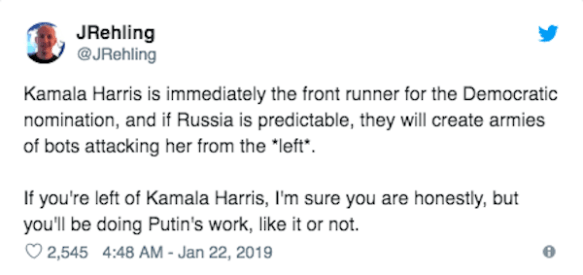





 After the Crash
