There is not an industrial company on earth, not an institution of any kind – not mine, not yours, not anyone’s – that is sustainable. I stand convicted by me, myself alone, not by anyone else, as a plunderer of the earth. But not by our civilization’s definition. By our civilization’s definition, I’m a captain of industry and in the eyes of many, a kind of modern-day hero.
— Ray Anderson, (1934-2011) CEO of Interface, Inc.
We are living a collective illusion known as the civilized world. We feign concern for our horrendous conditions of poverty, socioeconomic inequality, deteriorating public health, and severe environmental degradation (to which climate change is merely one factor), but everything we do belies that distress. These issues comprise the largest risks to the survival of the human species, as well as the most significant amoral atrocities on the planet. Both individually and as a species, our health, safety, and ability the live a decent, dignified life have always been imperiled by these predicaments. Yet, we continue along with complete cognitive dissonance in that the crux of our lives – our jobs, our consumer culture – all contribute to, perpetuate, and exacerbate the unsustainable and morally reprehensible conditions of our existence. But while we are all marginally responsible for the multitude of calamities befalling us, the one group who bears the brunt of the blame for our social and ecological decay is the wealthy.
Have you looked around and seen just what humanity has done to our stunning Earth? We’ve bulldozed the beauty for bucks. Far too much of what was once a glorious paradise is now a complete disaster of unfathomable proportions. A disaster wholly of our own making. In America, and in most places around the world, from the moment we are born we are preparing for a future career, and more specifically, for the lifelong goal of making money. But on the whole, most of the jobs we do end up being more detrimental than beneficial to society and the environment. We characterize work through measures of productivity, but producing more and more unnecessary, meaningless, and often useless products compromises our physical environment, which in turn, compromises the health of humans, other beings, and our entire planetary ecosystem.
So many of the things that form the basis of our civilization should not, and perhaps cannot, exist in a just and sustainable world. Items like arms and artillery, synthetic chemicals, concentrated animal feeding operations, plastic, smartphones and other electronic gadgetrydo not feed a sustainable and equitable world but create more needless havoc. The irony, though, is that the very people who run the systems that incessantly construct and promulgate these harmful, redundant, or unnecessary products are the richest and most successful people on earth.
We define success in our society almost exclusively in terms of wealth, with its attendant power and sometimes, fame. Rich people are the recipients of adulation and reverence for nothing more than their accumulation of wealth and material products. We like to think that riches come by way of great intellect, talent, skill, and a strong work ethic, but in reality, monetary success is more a matter of inherited socioeconomic status, ambition, and determination, rather than ability and aptitude. Most of all, to achieve wealth means to have a myopic resolve, not only to look away from how the sausage is made, but to not care how the sausage is made.
The wealthy in our society then become the people with the most power and influence. While ironically, they are the people least deserving of our respect. They are the exact people whom we should look upon with the utmost skepticism and even disdain. They should not be in the position to make decisions about our collective lives and the workings of our society, because their financial success is completely antithetical to societal justice and sustainability.
It doesn’t take great acumen or diligence to make a lot of money; it takes a narrow-minded, insular, immoral, sometimes psychopathic view of life, in which personal pleasure and profit are the primary variables. It’s quite easy to do well financially and find personal satisfaction if the exploitation of humans, other animals, and the entire biosphere is left outside of the realm of your career consciousness. As Ray Anderson, CEO of Interface Carpet admitted,“For 21 yearsI never gave a thought to what we were taking from the earth or doing to the earth in the making of our products.” He built his fortune without consideration to the effects of his enterprise until someone brought the deleterious consequences to his attention.
We like to believe the cream rises to the top, but the truth is that the top is actually full of scum. We have seen in recent weeks, if we did not know already, that entertainment, politics, and indeed, all of the wealthiest industries are cesspools of moral depravity, especially at the apex.
There may be some exceptions, but scum is the rule. Some might call these people ambitious, some might call them razor-focused, others would call them sociopathic. It takes a careful regimen of willful ignorance and/or denial to not consider all the harms that directly and indirectly result from avenues toward career achievements in the process of our normal lives – harms such as exploitation of labor, torture of animals, and toxic contamination and of food, water, and natural resources.
Material success requires rape and pillage, figuratively and literally. Donald Trump bragged that when you have the kind of wealth he has, you can treat women as objects and just “grab ’em by the pussy.” You can also exploit resources, exploit labor, befoul the environment, and endanger public health with few or no consequences. On a purely moral basis, only scum could have the hubris to consider others as mere playthings for their own enjoyment, to feel superior enough to warrant their extreme wealth which they did not earn but stole from the commons, and to believe that they deserve obscene riches when the majority of others do not even have basic life necessities.
How often have you heard the phrases “not that there is anything wrong with being rich,” or “I don’t begrudge him his wealth”? Wealth should be considered reprehensible. Wealth has always been in the hands of the few to the detriment of the many, and one’s access to it has always been almost wholly correlated with one’s socioeconomic status at birth. Yet we rationalize this immoral situation and pretend that the proverbial “pie,” of which we all need a slice, is infinite in size and that wealth is accessible to anyone. We assume that being rich is not only acceptable but aspirational. It is neither in a just and sustainable world.
On a finite planet every excess dollar, every excess material good, every extra home, car, garment, trinket, piece of food, or beverage that one person possesses essentially correlates to an item that another person does not have. When we normalize one person having more than he/she needs in a world where billions have far less than the bare minimum required to meet their basic needs, then we are obliged to rethink our morality. When a simple handbag can cost between $12K and $300K and we as a society see nothing wrong with that kind of excess in the face of poverty, hunger, homelessness, and disease, we are not only completely socially corrupt, we are spelling our own doom. Poverty only exists because excessive wealth exists and neither is compatible with a sustainable and humane civilization.
To achieve a sustainable world, we must relinquish our use of non-renewable resources, we must utilize renewable resources at a level in which they have the time and ability to replenish, and we must leave no waste that is not regenerative. To achieve an equitable world, we must relinquish our greed and desire for opulence, excess, and disproportionate influence. In fact, sustainability is also a function of equity. However, our current society is predicated on the antithesis of all such requirements.
Wealthy people gain their successes because they have tunnel vision. They are singularly focused on themselves, their careers, and/or on money. They do not take into consideration the externalities involved in their actions. They pay little mind to the exploitation involved in their pursuits. Ethics never supersedes ambition. Therefore, these are the exact people who should not be in charge of making policies for the benefit of society and should not be in charge of civic ventures. To be able to be so wealthy without shame, guilt, or acknowledgement that your own wealth impedes the lives of others is to be either ignorant or indifferent. We are facing global ecological and economic collapse. Who made this happen? The wealthiest people of the world. If you are rich you do not have the solution. You are the problem.
The world is run on slave labor, indentured servitude, animal and natural resource exploitation, and endless generation of waste and contamination. Material success comes with adopting a shortsighted view of the world – closing yourself off to your own connection to global anthropogenic climate change, toxification, and inequality.
So many of the wealthy who consider themselves socially and environmentally aware perceive no connection between their own wealth accumulation and the causes they claim to champion. Instead of curtailing their materialism, they rationalize it. Instead of acknowledging that their consumerism intensifies global resource extraction, they produce more products (often erroneously labeled “green”) to sustain their riches. When the wealthy are not hawking products for their for-profit activities, they have the audacity to solicit for charitable organizations that are only necessitated by the economic system that produces poverty and environmental devastation in the wake of their extravagant wealth. They ask donations from the majority of citizens who are barely making ends meet, when they themselves could surrender probably 90% of their accumulated wealth and not notice a marked change in their material status whatsoever. The elites who are not in denial about the problems we face want scientific and technological solutions – solutions that they can throw their money at and have others solve so they do not have to think about their own contribution to the problems.
But there are no silver bullets to end inequality and environmental destruction, while continuing with business as usual in civilized society. Science cannot save us. Scientific research itself relies on the same unsustainable production, consumption, use of resources, and waste as every other industry.
Technology mavens always tout the great social or biological service that their new technology will provide. Their innovations comes under the guise of helping the world, but the majority of the time, their creations are frivolous and do not do much more than use natural resources, create waste, and earn them exorbitant profit. At the university where I earned my doctoral degree there is a masters program in biotechnology and there’s a reason why their curriculum extends beyond just science, containing at least two required business courses. Of course, business is fundamental to their instruction because the principle purpose of our education, of our careers, is profit.
All of the harmful products and practices in our civilization – military arms, sweatshops, low wages, pesticides, plastics, throw-away items, excess of products, animal cruelty, overuse of medicine and surgery – only exist to increase revenue for the rich. None are fair or just or equitable or sustainable. Our societal justification of the above items just marks our collective delusion. These products and practices persist in the name of profit, and we rationalize their continuation just as we rationalize extravagant wealth.
When Senator Bernie Sanders was on TV decrying President Barack Obama’s half-million dollar speaking engagements on Wall Street, the anchors of the program said to him, “Wouldn’t you do it if you could?” Bernie replied, “I wouldn’t be asked.” Rather, he should have explained that anyone with integrity would not accept money they do not need for some sort of quid pro quo from a destructive and corrupt institution. The hosts of the show surmised that everyone would jump at the opportunity to earn money if they had the chance. It is precisely that sort of mindset that enables these broadcasters to inhabit their influential positions on a national television program and to earn millions of dollars. They demonstrate what unethical opportunists they, and most of the rich, actually are. Their lack of ethics is internalized and taken for granted by not only them, but most of the rest of our society. They are more than willing to be bought at whatever price for whatever service. “Just doing my job” does not serve as an excuse for immorality.
Nevertheless, there are people who have chosen lives based on conviction rather than money. Former Uruguayan President Jose Mujica and Seattle City Council member Kashama Sawant chose to earn the local average income for their official positions and donate the remainder of their salaries toward social justice work. Biologist and writer Sandra Steingraber donated a portion of her $100K Heinz Award prize toward the fight against hydraulic fracturing (fracking) rather than spend it on personal treats. Likewise, teacher Jesse Hagopian donated his $100K settlement for being unjustly attacked with pepper-spray by Seattle police toward social justice action. Not everyone is looking to cash in, and not everyone is seeking the next, biggest profit-making endeavor.
Living with integrity and simplicity is difficult. People do not choose to live this way because their personal sacrifice will change the world. They do so because it is the right thing to do. They do so because having too much means others don’t have enough. They do so because living by example allows others who care to see that a life of wealth and consumerism augments inequality and unsustainability; it is not the only way to live and need not be. They live this way because only by walking the walk rather than talking the talk will we ever start to achieve justice and sustainability to help preserve the future of our species.
In recent years there have been waves and wave of protests throughout the country and the world in response to myriad societal maladies. The best protest we can do in America now is to reject the bourgeois life – reject excessive wealth and the material components that come with it, reject profligate consumption, reject consumerism, reject wasteful holidays, reject wasteful trinkets, reject all that is incompatible with what we purport to champion. For example, retired talk-show host David Letterman appears sincere in his dedication toward helping combat climate change, while at the same time, he remains co-owner of an auto racing team. In the world in which we currently live, auto racing is completely incongruent with climate change mitigation. We can’t pretend to value matters like justice and sustainability unless the way we live upholds those values. We can’t decouple our livelihoods from our lives.
The rich tend to ensconce themselves in their well-manicured communities, shop with abandon, and disregard the abject poverty, environmental degradation, and injustices all around them. They are in the process of spending small portions of their vast fortunes building survival bunkers to withstand either the revolutionary upheaval that may soon come as a result of immeasurable socioeconomic inequality, or the catastrophic ecological collapse that may result from reckless resource extraction and expenditure. How misguided or cynical are they to not realize that by renouncing their extreme wealth, they would need no such provisions and could play a large part in salvaging our civilization?
Need I even explain how the current tax scam pending on Capitol Hill will serve to enhance all of the socioeconomic, environmental, and public health calamities that are arising ever more rapidly and in quick succession? Need I elaborate on how our escalating climate-related weather catastrophes only reach the cataclysmic proportions they do because of the wealth disparities involved and because of the high-risk industrial components therein, that exist mainly to enrich the elite? Would these natural disasters be so disastrous if more people had the economic resilience that they deserve and if society took more precaution against the hazards of multibillion-dollar industries that manufacture products of questionable value while generating tremendous wealth to a select few?
We live n a time of unprecedented social disarray, ecological disrepair, public health decay, and moral depravity. Nearly every aspect of the way we live in modern industrial societies is completely unsustainable. Even if we were to transition to 100% solar energy tomorrow throughout the planet, the worst effects of climate change might be averted, but the plastic pollution that permeates the most far-reaching depths of the oceans would still remain, the persistent organic pollutants (POPs) and endocrine disrupting compounds (EDCs) that harm our own health and the health of the entire global ecosystem remain. Not only do they remain, but they continue to be produced, not out of necessity, but for the financial profit of the privileged few. The production of, consumption of, and waste stream from our global industrial society continues unabated. This is the system that forms the foundation of all of our lives in the civilized world, and this is the system that bestows excessive wealth to some while leaving others fighting for survival.
While it is indeed the system of capitalism that generates and sustains our societal injustice and ecological degradation, the system is comprised of people – people who could abdicate their fictional obligation to happiness via indefinitely-increasing earnings, people who can choose better, Without a preponderance of such people, no countervailing just and sustainable system can ever compete.
In 1964, Uruguayan journalist Eduardo Galeano interviewed the famous Argentinean hero of the Cuban revolution Ernesto “Che” Guevara. In the midst of a comprehensive conversation, Che stated to Galeano, ” I don’t want every Cuban to wish he were a Rockefeller.” To be sure, if we are remotely interested in a sustainable and equitable world, the attainment of wealth must be transformed from admirable to contemptible. With regard to the multitude of obstacles we face, Ralph Nader once wrote “only the super-rich can save us.” He’s right. They can save us by not existing.
Several years ago in Cameroon, a country in West Africa, a Western Black Rhinoceros was killed. It was the last of its kind on Earth.
Hence, the Western Black Rhinoceros, the largest subspecies of rhinoceros which had lived for millions of years and was the second largest land mammal on Earth, no longer exists.
But while you have probably heard of the Western Black Rhinoceros, and may even have known of its extinction, did you know that on the same day that it became extinct, another 200 species of life on Earth also became extinct?
This is because the sixth mass extinction event in Earth’s history is now accelerating at an unprecedented rate with 200 species of plants, birds, animals, fish, amphibians, insects and reptiles being driven to extinction on a daily basis. And the odds are high that you have never even heard of any of them. For example, have you heard of the Christmas Island Pipistrelle, recently declared extinct? See ‘Christmas Island Pipistrelle declared extinct by IUCN’.
Is anything being done to end this omnicide (the destruction of all life)?
Not really, although there is plenty of rhetoric and limited action in some contexts as all bar a few committed individuals and organizations ignore this onslaught while even fewer take action that addresses the underlying cause and/or fundamental drivers of this killing. Unfortunately, most effort is still wasted on lobbying elites.
Of course, all of this is done at immediate cost to human beings, particularly indigenous peoples – see, for example, ‘Five ways climate change harms indigenous people’ – and those who are in the worst position to resist – see ‘Global Poverty: How the Rich Eat the Poor and the World: The Big Lies’ – but elites know they can ignore our lobbying and occasional, tokenistic and disorganized protests while relying on the fear and powerlessness of most of us to ensure that we do nothing strategic to fight back.
And given the unrelenting criminal onslaught of the insane global elite – see ‘The Global Elite is Insane’ – directed against Earth’s biosphere, together with the elite’s many sycophantic academic, bureaucratic, business, legal, media, military, political and scientific servants who deny science and threaten human survival in the interests of short-term personal privilege, corporate profit and social control, it is long past time when those of us who are genuinely concerned should be developing and implementing a strategy that recognises the elite and its many agents as opponents to be resisted with a careful and powerful strategy.
So, in essence, the problem is this: Human beings are destroying the biosphere and driving countless lifeforms, including ourselves, to extinction. And there is little strategic resistance to this onslaught.
There is, of course, an explanation for this and this explanation needs to be understood if we are to implement a strategy to successfully halt our omnicidal assault on Earth’s biosphere in time to save ourselves and as many other species as possible in a viable ecological setting.
This is because if you want to solve a problem or resolve a conflict, then it is imperative to know and act on the truth. Otherwise you are simply acting on a delusion and whatever you do can have no desirable outcome for yourself, others, the Earth or its multitude of creatures. Of course, most people are content to live in delusion: it averts the need to courageously, intelligently and conscientiously analyse what is truly happening and respond to it powerfully. In short: it makes life ‘easier’ (that is, less frightening) even if problems keep recurring and conflicts are suppressed, to flare up periodically, rather than resolved.
And, of course, this is how elites want it. They do not want powerful individuals or organizations interfering with their scheme to (now rapidly) consolidate their militarized control over the world’s populations and resources.
This is why, for example, elites love ‘democracy’: it ensures disempowerment of the population. How so? you might ask. The fundamental flaw of democracy is that people have been deceived into surrendering their personal power to act responsibly – in relation to the important social, political, economic, environment and climate issues of the day – to elected ‘representatives’ in government who then fearfully represent the elites who actually control them (whether through financial incentives, electoral support or other means), assuming they aren’t members of the elite themselves and simply represent elite priorities out of shared interest (as does Donald Trump).
And because we delegate responsibility to those powerless politicians who fearfully (or out of shared interest) act in response to elite bidding, the best scientific information in relation to the state of the Earth is simply ignored or rejected while conservative ‘scientific warnings’ advocating ‘strategies’ that must fail are widely circulated. See, for example, ‘World Scientists’ Warning to Humanity: A Second Notice’.
So this widespread failure to respond thoughtfully and powerfully is a fundamental reason that we are killing the biosphere and destroying life on Earth. Too few humans are willing to accept personal responsibility to understand why the violence is occurring and to participate in a carefully designed strategy to avert our own extinction, let alone save countless other species from premature entry into the fossil record. It is easier to leave responsibility to others. See ‘The Delusion “I Am Not Responsible”’.
And, clearly, time is running out, unless you are gullible enough to believe the elite-sponsored delusion that promotes inaction, and maximizes corporate profits in the meantime, because we are supposed to have until ‘the end of the century’. Far from it, however. As some courageous scientists, invariably denied access to mainstream news outlets, explain it: near-term human extinction is now the most likely outcome.
One of these scientists is Professor Guy McPherson who offers compelling evidence that human beings will be extinct by 2030. For a summary of the evidence of this, which emphasizes the usually neglected synergistic impacts of many of these destructive trends (some of which are noted above) and cites many references, listen to the lecture by Professor McPherson on ‘Climate Collapse and Near Term Human Extinction’.
Why 2030? Because, according to McPherson, the ‘perfect storm’ of environmental assaults that we are now inflicting on the Earth, including the 28 self-reinforcing climate feedback loops that have already been triggered, is so far beyond the Earth’s capacity to absorb, that there will be an ongoing succession of terminal breakdowns of key ecological systems and processes – that is, habitat loss – over the next decade that it will precipitate the demise of homo sapiens sapiens.
In relation to the climate alone, another scientist, Professor Kevin Anderson, who is Deputy Director of the UK’s premier climate modelling institution, the Tyndall Centre for Climate Change Research, has warned that emissions are now out of control and we are heading for a world that is 6 degrees hotter; he pointed out that even the International Energy Agency, and conservative organisations like it, are warning that we are on track for a 4 degree increase (on the pre-industrial level) by 2040. He also accused too many climate scientists of keeping quiet about the unrealistic assessments put out by governments. See ‘What They Won’t Tell You About Climate Catastrophe’.
So be wary of putting any credence on ‘official’ explanations, targets and ‘action-plans’ in relation to the climate that are approved by large gatherings, whether governmental or scientific. Few people have the courage to tell the truth when it guarantees unpopularity and can readily manifest as career-extinction and social and scientific marginalization.
As an aside, it is perhaps worth mentioning that most people have long forgotten that a decade ago (when the global temperature was .8 degrees above the pre-industrial level) it had been suggested that a decrease in global temperature to not more than .5 degrees above the pre-industrial level was actually necessary to achieve a safe climate, with the Arctic intact (although there was no clear feasible method for humans to reduce the global temperature to this level with any speed). Sadly we have made little progress in the past decade apart from to keep raising the ‘acceptable’ limit (whether to 2 degrees or ‘only’ 1.5). Most humans love to delude themselves to avoid dealing with the truth.
Hence, for those of us committed to responding powerfully to this crisis, the fundamental question is this: Why, precisely, are human beings destroying life on Earth? Without an accurate answer to this question, any strategy to address this crisis must be based on either guesswork or ideology.
So let us briefly consider some possible answers to this question.
Some people argue that it is genetic: human beings are innately violent and, hence, destructive behaviors towards themselves, others and the Earth are ‘built-in’ to the human organism; for that reason, violence cannot be prevented or controlled and humans must endlessly destroy.
However, any argument that human beings are genetically-predisposed to inflict violence is easily refuted by the overwhelming evidence of human cooperation throughout the millennia and there are endless examples, ranging from the interpersonal to the international, of humans cooperating to resolve conflict without violence, even when these conflicts involve complex issues and powerful vested interests. There are also plentiful examples of humans, particularly indigenous communities, living in harmony with, rather than destroying, nature.
Other analysts argue that human violence and destructiveness are manifestations of political, economic and/or social structures – such as patriarchy, capitalism and the state, depending on the perspective – and while I agree that (massive) structural violence actually occurs, I do not believe that these structures, by themselves, constitute an adequate explanation of the cause of violence.
This is simply because any structural explanation cannot account for violence in all contexts (including the violence that led to creation of the structure in the first place) or explain why it doesn’t happen in some contexts where a particular perspective indicates that it should.
So is there another plausible explanation for human violence? And can we do anything about it? Let me offer an explanation and a way forward that also takes advantage of the insights of those traditions that have critiqued structural violence in its many forms.
I have been researching why human beings are violent since 1966 and the evidence has convinced me that the origin of all human violence is the violence inflicted by adults on children under the guise of what sociologists call ‘socialization’. This violence takes many forms – what I call ‘visible’, ‘invisible’ and ‘utterly invisible’ violence – and it creates enormously damaged individuals who then personally inflict violence on themselves, those around them (including their own children) and the Earth, while creating, participating in, defending and/or benefiting from structures of violence and exploitation. For a full explanation of this point, see ‘Why Violence?’ and ‘Fearless Psychology and Fearful Psychology: Principles and Practice’.
Hence, in my view, the evidence is overwhelming that if we want to end human violence, whether inflicted on ourselves, others or the Earth, then the central feature of our strategy must be to end adult violence against children. See ‘My Promise to Children’. I claim that this must be ‘the central feature of our strategy’ for the simple reason that each damaged child grows up to become a willing and active perpetrator of violence when, if they were not so damaged, they would be powerful agents of peace, justice and sustainability committed to resisting violence and exploitation in all contexts until it is eliminated.
This profound evolutionary inheritance – to be an individual of integrity who consciously chooses and lives out their own unique, powerful and nonviolent life path – has been denied to virtually all of us because humans endlessly terrorize their children into mindless obedience and social conformity, leaving them powerless to access and live out their conscience.
And this makes it very easy for elites: By then using a combination of our existing fear, indoctrination (via the education system, corporate media and religion) and intimidation (via the police, legal and prison systems), sometimes sweetened with a few toys and trinkets, national elites maintain social control and maximize corporate profits by coercing the rest of us to waste our lives doing meaningless work, in denial of our Selfhood, in the corporate-controlled economy.
As I implied above, however, we need not be content with just working to end violence against children. We can also work to end all other manifestations of violence – including violence against women, indigenous peoples, people of color, Islamic and working class people, and violence against the Earth – but recognize that if we tackle this violence without simultaneously tackling violence at its source, we fundamentally undermine our effort to tackle these other manifestations of violence too.
Moreover, tackling structural violence (such as capitalism) by using direct violence cannot work either. Because violence always feeds off fear it will always proliferate and remanifest, whether as direct, structural, cultural or ecological violence, however beneficial any short-term outcome may appear.
Importantly then, apart from understanding and addressing the fundamental cause of this crisis, we must implement a comprehensive strategy that takes into account and addresses each and every component of it. There is no point working to achieve a single objective that might address one problem no matter how important that particular problem might be. The crisis is too far advanced to settle for piecemeal action.
And if you would like to publicly commit yourself to participate in the effort to end all human violence, you can do so by signing the online pledge of ‘The People’s Charter to Create a Nonviolent World’.
Killing the biosphere is the most effective way to destroy life on Earth because it destroys the ecological foundation – the vast array of incredibly diverse and interrelated habitats – on which organisms depend for their survival. And we are now very good at this killing which is why averting human extinction is already going to be extraordinarily difficult.
Hence, unless and until you make a conscious personal decision to participate strategically in the struggle to save life on Earth, you will be one of those individuals who kills the biosphere as a byproduct of living without awareness and commitment: A person who simply over-consumes their way to extinction.
So next time you ponder the fate of humanity, which is inextricably tied to the fate of the Earth, it might be worth considering the unparalleled beauty of what Earth has generated. See, for example, ‘Two White Giraffes Seen in Kenyan Conservation Area’.
And as you do this, ask yourself how hard you are willing to fight to save life on Earth.
Biodata: Robert J. Burrowes has a lifetime commitment to understanding and ending human violence. He has done extensive research since 1966 in an effort to understand why human beings are violent and has been a nonviolent activist since 1981. He is the author of ‘Why Violence?’ His email address is flametree@riseup.net and his website is here.
—
Robert J. Burrowes
P.O. Box 68
Daylesford
Victoria 3460
Australia
My family moved to the United States from Okinawa when I was 7. But Okinawa is still home — and I’m hurt and angered at how the United States and Japan continue to treat Okinawa as little more than a colonial outpost. As a teacher, I’m even more dismayed at how the conventional school curriculum keeps young people in this country ignorant about the abuse, but also about the resistance, in my home islands.
“They are burying our beautiful ocean,” read the recent message from my mother in Okinawa, as though she was grieving the loss of a loved one. After decades of protest by Okinawan people to completely get rid of all U.S. military bases that occupy a fifth of the Ryukyu Island chain, the United States and Japan signed a treaty to evacuate one of the most contested bases located in the center of the main island, Futenma Marine Corps (MCAS) base. In exchange for the removal, both governments announced that they would construct a floating military base off the northeast coast of Henoko. Okinawans expressed vehement opposition, with a majority voting in a referendum for the complete removal of all bases. Still the construction continued and the people persisted in protest — marching for miles down main streets, creating human chains for peace, linking arms around military bases, elders repeatedly lying down in front of bulldozers. Governor Takeshi Onaga demanded the Japanese government terminate the heliport construction and city mayors prevented access of U.S. military construction vehicles through their districts — later overturned by federal court order last December sought by the Japanese federal government.
Today, the concrete seawalls are finished, and soon, rocks will be crushed and sand will pile high, burying the tropical, clear waters. The Japanese government and U.S. military continue to pursue the construction of the runway, despite community complaints of environmental damage and pollution, endangerment to sea life, harm to the fishing and tourism industry, as well as the ongoing threat to cultural survival and island sovereignty. On July 6th the Ryukyu Shimpo announced that the Japanese government would not return the land occupied by MCAS Futenma to the Okinawan people. The U.S. and Japan added a condition to the promise for Futenma’s removal: The Naha International Airport must be made available for the U.S. military any time they declare an emergency. When Governor Onaga rejected this demand, the U.S. military withdrew its promise to remove Futenma. Japanese Defense Minister Tomomi Inada stated, “If the requisite conditions for the return of Futenma are not met, it will not be returned.” In a surge of anger, pain and frustration, word spread quickly in Okinawa across social media.
Devastated at the sacrifice of my home, I turned to the news here in the United States, and there was not one story about Okinawa on any major network. Frustrated, I recalled my conversation with an elderly grandmother I met at a peace rally in my neighborhood when I went home last summer. When I told her I was a teacher in the United States, she told me that the best thing we as teachers can do is to teach kids about what’s happening in Okinawa and how we want a world without war. She said, “They need to know our story so they can stand up with us.”
But when I turn to a typical U.S. textbook, I see how students are ill-equipped to understand what’s happening in Okinawa. For example, in Holt McDougal’s widely used The Americans, there are a mere three paragraphs about Okinawa under the section, “The Atomic Bomb Ends the War.”
Discussion of Okinawa begins and ends with a skewed description of the Battle of Okinawa during WWII: “In April 1945, U.S. Marines invaded Okinawa,” it begins. “By the time the fighting ended on June 21, 1945, more than 7,600 Americans had died. But the Japanese paid an even greater price — 110,000 lives — in defending Okinawa.” Okinawans are completely invisible in this account of the war, the bloodiest battle in the history of the Pacific, where our islands were used as a battleground between the United States and Japan. The highest cost was in Okinawan lives, where more than a third of the population was killed within three months — almost 150,000 — and more than 92 percent were left homeless. The majority of today’s families — including mine — have experienced grief and loss of loved ones.What The Americans does not teach is that Okinawa was once an independent kingdom, was colonized by Japan, then controlled by the United States for 27 years, and finally became a Japanese prefecture. At the end of the war, the U.S. military stripped Japan of its constitution and replaced it with one that took away Japan’s right to have an offensive military. Henceforth, the United States would “protect” Japan, and create bases throughout Japanese territory. However, three-quarters of all U.S. bases on Japanese territory are on Okinawa, even though Okinawa makes up only .6 percent of Japan’s total landmass. Okinawa’s main island is just 62 miles long; and its width averages one mile.
MCAS Futenma was constructed in the middle of our skinny island — creating environmental destruction, air pollution and noise pollution, blocking direct access to roads in a densely populated community, and exposing survivors and families to the sights and sounds of war. Frequent violent crimes against women and children continue to bring hundreds of thousands of protesters together demanding justice and humanity — and the complete removal of U.S. military bases.
Not only do commercial textbooks fail to equip students to understand what’s happening in Okinawa, the mainstream school curriculum does not help students understand issues affecting island people more broadly. I have seen time and time again the shock when my high school students in Portland, Oregon, learn about the U.S. military’s long-standing nuclear testing in the Marshall Islands, the environmental damage to Vieques in Puerto Rico, or the history of U.S. military trainings on indigenous Hawaiian soil. Many of my students are confused when they learn that Guam is a “U.S. territory,” has the highest per capita U.S. military enlistment, has a huge U.S. base presence, but its people have no right to vote in U.S. elections. When I talk about the International Women’s Network Against Militarism, students wonder why women from places with high U.S. military presence — the Philippines, South Korea, Hawai’i, Puerto Rico, Guam and Okinawa — gather regularly to talk and organize.
When people say to me, “Why are Okinawans complaining? We’re there to protect you,” I want them to learn our whole history and to know our colonized story. When people ask, “Why don’t Okinawans complain to the Japanese government?” I want them to know about the history of our people’s movements to demand our rights. When people say, “So what? It’s just one little island,” I want them to know this is my home; it’s sacred — these are my loved ones. What’s more, our story of struggle today represents issues affecting so many island people.
The elderly grandmother from the peace rally told me that we must teach the children “that we have been fighting because we have always wanted peace but now we need the world to fight with us. Go back and tell our story.” Our story though, is much more than three short paragraphs in a textbook. It is a story about a people’s determination for sovereignty in the face of imperialism, resilience in midst of colonization, and perseverance for peace as survivors of war. Our story is urgent and it is a call for global action in the name of peace and justice. The history of Okinawa is a story of resistance but also a call to the world.
What does the ecological crisis have in common with global poverty? How does politics relate to economics? The study of history? The changing landscape of technology, arts, and culture? Why is there not a coherent School of Social Sciences that brings themes like these together in one place? Answers can only be found by synthesizing two of the most important areas of scientific work in the last 150 years — in the fields of evolutionary studies and complexity science.
All of the most interesting and important topics of concern in the world today (How does consciousness work? What is the human mind? Is it possible to restore health to deteriorated ecosystems? Can we create political systems that promote widespread health and well-being?) involve vast networks of relationships interacting with each other — what are called complex adaptive systems in the lingo of complexity science.
Familiar examples include things like the weather with its inherent unpredictability or a market economy that has no central locus of control. The thing that makes a system “complex” is that patterns arise through the interactions that are not reducible to its constituent parts. You cannot explain the weather simply by describing what water molecules or solar radiation on their own are capable of doing. Neither can you explain an economy by describing how individuals engage in barter or exchange if they happen to be in a market-based society.
Importantly, complex adaptive systems are always far from equilibrium. They are not static. And the only way to make sense of their behavior is to computationally model how the various parts interact with each other dynamically — which leads to the importance of evolution. Emphasis on the word adaptive in complex adaptive systems gives an inkling of Charles Darwin’s Theory of Natural Selection, where the biological traits of an organism that happen to be adaptive in its environment tend to occur more frequently than traits that are not adaptive.
Over time (since living systems are also dynamic), the evolutionary pathway for biology is traced by the intersections of adaptive fitness in environments that might be changing quickly or slowly. All biological systems are complex (they have many interacting parts with emergent phenomena that are not reducible) and they are adaptive (as natural selection plays out in changing environments).
So what does this say about cultural evolution? How can we apply this basic finding from biology to the study of history and economics, politics, and environmental management? Well it turns out that researchers who study cultural evolution — and there are now nearly 2,000 of them in the newly formed Cultural Evolution Society that I was tasked to help create — have brought the mathematical toolkit used in complexity science to the study of cultural change in human and non-human species.
The earliest inklings of this synthesis go back to a debate a century ago when foundations were being laid for the study of population genetics. At that time, statisticians were actively grappling with questions about how to account for genetic variation in biological organisms without the use of digital computers. They developed accounting systems for biological traits that matured continuously through the early-to-mid 20th Century.
In the late 1970’s and early 80’s, there was a group of cultural evolution researchers who translated these statistical tools for the distinct mechanisms of “selection” that play out for behavioral repertoires and other cultural phenomena in human and non-human cultures. Among them were Luigi Cavalli-Sforza and Marcus Feldman at Stanford, Peter J. Richerson at UC-Davis, and Robert Boyd of Arizona State University. These efforts culminated in the publishing of Cultural Transmission and Evolution: A Quantitative Approach in 1981 and Culture and the Evolutionary Process in 1988.
It was during this same time period that the field of complexity research was getting underway — with the multidisciplinary Santa Fe Institute being established in 1984 to explore the mathematical patterns of complex adaptive systems across many domains of study. They organized workshops and symposia on economics, ecology, urban studies, epidemiology, and more to discover how complex systems evolve and change using the mathematical tools of fractal geometry, network science, differential equations, and computational methods.
As I have written elsewhere, the time is urgently upon us to synthesize and apply what is known about complexity and evolution. The fate of humanity literally depends on our ability to do this. In a time of unprecedented exponential change, we must learn to manage complex systems as they evolve in real time.
We need to firstly understand that cultural systems evolve according to Darwinian principles. The interested reader can find many books explaining why this is the case. Here are a few to get you started:
This is a mere sampling — there are now hundreds of books on cultural evolutionary studies that one can dive into. Important for this article is to note that (i) the field of cultural evolution is quite mature at this point in time; (ii) it has advanced rapidly since incorporating mathematical tools used in the study of complexity; and (iii)the world is in flux with tremendous need for this body of knowledge to be brought to bear on our global challenges in the 21st Century.
The most pressing challenges in the world have foundational cultural components. Global warming arose from the false illusions of human separation from nature and the perception of endless bounty for natural resources at the beginning of the industrial era. Terrorism is cultivated in landscapes where people feel deep-seated anxiety and economic desperation — which arise from particular models of colonial (or post-colonial) exploitation that have unique cultural histories.
Similarly, the spread of rugged individualism as a cultural construct treats human beings as if they are separate from their communities, inherently selfish, and venerable for engaging in psychopathic behaviors like wealth hoarding. In each case, the real state of power is culture and the only viable solutions involve the intentional management of cultural evolutionary change.
But we cannot even start to think this way if we don’t recognize how human cultures operate as complex systems. Only by learning to see that emergent patterns arise through the interactions of constituent parts will we begin to discern how evolutionary change is taking us closer to planetary-scale collapse — and that design practices will be needed that make use of what is now known from cultural evolutionary studies.
For those of us committed to systematically reducing and, one day, ending human violence, it is vital to understand what is causing and driving it so that effective strategies can be developed for dealing with violence in its myriad contexts. For an understanding of the fundamental cause of violence, see ‘Why Violence?’
However, while we can tackle violence at its source by each of us making and implementing ‘My Promise to Children’, the widespread violence in our world is driven by just one factor: fear or, more accurately, terror. And I am not talking about jihadist terror or even the terror caused by US warmaking. Let me explain, starting from the beginning.
The person who is fearless has no use for violence and has no trouble achieving their goals, including their own defence, without it. But fearlessness is a state that few humans would claim. Hence violence is rampant.
Moreover, once someone is afraid, they will be less likely to perceive the truth behind the delusions with which they are presented. They will also be less able to access and rely on other mental functions, such as conscience and intelligence, to decide their course of action in any context. Worse still, the range of their possible responses to perceived threats will be extremely limited. And they will be more easily mobilised to support or even participate in violence, in the delusional belief that this will make them safe.
For reasons such as these, it is useful for political and corporate elites to keep us in a state of fear: social control is much easier in this context. But so is profit maximization. And the most profitable enterprise on the planet is violence. In essence then: more violence leads to more fear making it easier to gain greater social control to inflict more violence…. And starting early, by terrorizing children, is the most efficient way to initiate and maintain this cycle. See ‘Why Violence?’ and ‘Fearless Psychology and Fearful Psychology: Principles and Practice’.
So, for example, if you think the massive number of police killings of innocent civilians in the United States – see ‘Killed by Police’ and ‘The Counted: People killed by police in the US’ – is a problem, you are not considering it from the perspective of maintaining elite social control and maximizing corporate profit. Police killings of innocent civilians is just one (necessary) part of the formula for maintaining control and maximising profit.
This is because if you want to make a lot of money in this world, then killing or exploiting fellow human beings and destroying the natural world are the three most lucrative business enterprises on the planet. And we are now very good at it, as the record shows, with the planetary death toll from violence and exploitation now well over 100,000 human beings each day, 200 species driven to extinction each day and ecological destruction so advanced that the end of all life (not just human life) on Earth is postulated to occur within decades, if not sooner, depending on the scenario. See, for example, ‘The End of Being: Abrupt Climate Change One of Many Ecological Crises Threatening to Collapse the Biosphere’.
So what forms does this violence take? Here is a daily accounting.
Corporate capitalist control of national economies, held in place by military violence, kills vast numbers of people (nearly one million each week) by starving them to death in Africa, Asia and Central/South America. This is because this ‘economic’ system is designed and managed to allocate resources for military weapons and corporate profits for the wealthy, instead of resources for living.
Wars kill, wound and incapacitate a substantial number of civilians, mostly women and children, as do genocidal assaults, on a daily basis, in countries all over the planet. Wars also kill some soldiers and mercenaries.
Apart from those people we kill every day, we sell many women and children into sexual slavery, we kidnap children to terrorise them into becoming child soldiers and force men, women and children to work as slave labourers, in horrific conditions, in fields and factories (and buy the cheap products of their exploited labour as our latest ‘bargain’).
We condemn millions of people to live in poverty, homelessness and misery, even in industrialized countries where the refugees of western-instigated wars and climate-destroying policies are often treated with contempt. We cause many children to be born with grotesque genetic deformities because we use horrific weapons, like those with depleted uranium, on their parents. We also inflict violence on women and children in many other forms, ranging from ‘ordinary’ domestic violence to genital mutilation.
We ensnare and imprison vast numbers of people in the police-legal-prison complex. See ‘The Rule of Law: Unjust and Violent’. We pay the pharmaceutical industry and its handmaiden, psychiatry, to destroy our minds with drugs and electro-shocking. See ‘Defeating the Violence of Psychiatry’. We imprison vast numbers of children in school in the delusional belief that this is good for them. See ‘Do We Want School or Education?’ And we kill or otherwise exploit animals, mostly for human consumption, in numbers so vast the death toll is probably beyond calculation.
We also engage in an endless assault on the Earth’s biosphere. Apart from the phenomenal damage done to the environment and climate by military violence: we emit gases and pollutants to heat and destroy the atmosphere and destroy its oxygen content. We cut down and burn rainforests. We cut down mangroves and woodlands and pave grasslands. We poison the soil with herbicides and pesticides. We pollute the waterways and oceans with everything from carbon and nitrogenous fertilizers to plastic, as well as the radioactive contamination from Fukushima. And delude ourselves that our token gestures to remedy this destruction constitutes ‘conservation’.
So if you are seeking work, whether as a recent graduate or long-term unemployed person, then the most readily available form of work, where you will undoubtedly be exploited as well, is a government bureaucracy or large corporation that inflicts violence on life itself. Whether it is the military, the police, legal or prison system, a weapons, fossil fuel, banking, pharmaceutical, media, mining, agricultural, logging, food or water corporation, a farm that exploits animals or even a retail outlet that sells poisonous, processed and often genetically-mutilated substances under the label ‘food’ – see ‘Defeating the Violence in Our Food and Medicine’ – you will have many options to help add to the profits of those corporations and government ‘services’ that exist to inflict violence on you, your family and every other living being that shares this biosphere.
Tragically, genuinely ethical employment is a rarity because most industries, even those that seem benign like the education, finance, information technology and electronics industries, usually end up providing skilled personnel, finance, services or components that are used to inflict violence. And other industries such as those in insurance and superannuation, like the corporate banks, usually invest in violence (such as the military and fossil fuel industries): it is the most profitable.
So while many government bureaucracies and corporate industries exist to inflict violence, in one form or another, they can only do so because we are too scared to insist on seeking out ethical employment. In the end, we will take a job as a teacher, corporate journalist or pharmaceutical drug pusher, serve junk food, work in a bank, join the police or military, work in the legal system, assemble a weapons component… rather than ask ourselves the frightening questions ‘Is this nonviolent? Is this ethical? Does it enhance life?’
And yes, I know about structural violence and the way it limits options and opportunities for those of particular classes, races, genders…. But if ordinary people like us don’t consider moral issues and make moral choices, why should governments and corporations?
Moral choices? you might ask in confusion. In this day and age? Well, it might seem old-fashioned but, in fact, while most of us have been drawn along by the events in our life to make choices based on such considerations as self-interest, personal gain and ‘financial security’, there is a deeper path. Remember Gandhi? ‘True morality consists not in following the beaten track, but in finding the true path for ourselves, and fearlessly following it.’
Strange words they no doubt sound in this world where our attention is endlessly taken by all of those high-tech devices. But Gandhi’s words remind us that there is something deeper in life that the violence we have suffered throughout our lives has taken from us. The courage to be ourselves and to seek our own unique destiny.
Do you have this courage? To be yourself, rather than a cog in someone else’s machine? To refuse to submit to the violence that surrounds and overwhelms us on a daily basis?
If you are inclined to ponder these questions, you might also consider making moral choices that work systematically to end the violence in our world: consider participating in ‘The Flame Tree Project to Save Life on Earth’, signing the online pledge of ‘The People’s Charter to Create a Nonviolent World’ and/or helping to develop and implement an effective strategy to resist one or the other of the many threats to our survival using the strategic framework explained in Nonviolent Campaign Strategy.
Of course, these choices aren’t for everyone. As Gandhi observed: ‘Cowards can never be moral.’
Biodata: Robert J. Burrowes has a lifetime commitment to understanding and ending human violence. He has done extensive research since 1966 in an effort to understand why human beings are violent and has been a nonviolent activist since 1981. He is the author of ‘Why Violence?’ His email address is flametree@riseup.net and his website is here.
Robert J. Burrowes P.O. Box 68 Daylesford Victoria 3460 Australia
The end of the world is a growth industry. You can almost feel Armageddon in the air: from survivalist and ‘prepper’ websites (survivopedia.com, doomandbloom.net, prepforshtf.com) to new academic disciplines (‘disaster studies’, ‘Anthropocene studies’, ‘extinction studies’), human vulnerability is in vogue.
The panic isn’t merely about civilisational threats, but existential ones. Beyond doomsday proclamations about mass extinction, climate change, viral pandemics, global systemic collapse and resource depletion, we seem to be seized by an anxiety about losing the qualities that make us human. Social media, we’re told, threatens our capacity for empathy and genuine connection. Then there’s the disaster porn and apocalyptic cinema, in which zombies, vampires, genetic mutants, artificial intelligence and alien invaders are oh-so-nearly human that they cast doubt on the value and essence of the category itself.
How did we arrive at this moment in history, in which humanity is more technologically powerful than ever before, and yet we feel ourselves to be increasingly fragile? The answer lies in the long history of how we’ve understood the quintessence of ‘the human’, and the way this category has fortified itself by feeding on the fantasy of its own collapse. Fears about the frailty of human wisdom go back at least as far as Ancient Greece and the fable of Plato’s cave, in which humans are held captive and can only glimpse the shadows of true forms flickering on the stone walls. We prisoners struggle to turn towards the light and see the source (or truth) of images, and we resist doing so. In another Platonic dialogue, the Phaedrus, Socrates worries that the very medium of knowledge – writing – might discourage us from memorising and thinking for ourselves. It’s as though the faculty of reason that defines us is also something we’re constantly in danger of losing, and even tend to avoid.
This paradoxical logic of loss – in which we value that which we’re at the greatest risk of forsaking – is at work in how we’re dealing with our current predicament. It’s only by confronting how close we are to destruction that we might finally do something; it’s only by embracing the vulnerability of humanity itself that we have any hope of establishing a just future. Or so say the sages of pop culture, political theory and contemporary philosophy. Ecological destruction is what will finally force us to act on the violence of capitalism, according to Naomi Klein in This Changes Everything: Capitalism vs the Climate (2014). The philosopher Martha Nussbaum has long argued that an attempt to secure humans from fragility and vulnerability explains the origins of political hierarchies from Plato to the present; it is only if we appreciate our own precarious bodily life, and the emotions and fears that attach to being human animals, that we can understand and overcome racism, sexism and other irrational hatreds. Disorder and potential destruction are actually opportunities to become more robust, argues Nassim Nicholas Taleb in Antifragile (2012) – and in Thank You for Being Late (2016), the New York Times’ columnist Thomas Friedman claims that the current, overwhelming ‘age of accelerations’ is an opportunity to take a pause. Meanwhile, Oxford University’s Future of Humanity Institute pursues research focused on avoiding existential catastrophes, at the same time as working on technological maturity and ‘superintelligence’.
It’s here that one can discern a tight knit between fragility and virility. ‘Humanity’ is a hardened concept, but a brittle one. History suggests that the more we define ‘the human’ as a subject of intellect, mastery and progress – the more ‘we’ insist on global unity under the umbrella of a supposedly universal kinship – the less possible it becomes to imagine any other mode of existence as human. The apocalypse is typically depicted as humanity reduced to mere life, fragile, exposed to all forms of exploitation and the arbitrary exercise of power. But these dystopian future scenarios are nothing worse than the conditions in which most humans live as their day-to-day reality. By ‘end of the world’, we usually mean the end of our world. What we don’t tend to ask is who gets included in the ‘we’, what it cost to attain our world, and whether we were entitled to such a world in the first place.
Stories about the end of time have a long history, from biblical eschatology to medieval plague narratives. But our fear of a peculiarly ‘human’ apocalypse really begins with the 18th-century Enlightenment. This was the intellectual birthplace of the modern notion of ‘humanity’, a community of fellow beings united by shared endowments of reason and rights. This humanist ideal continues to inform progressive activism and democratic discourse to this day. However, it’s worth taking a moment to go back to René Descartes’s earlier declaration of ‘I think, therefore I am’, and ask how it was possible for an isolated self to detach their person from the world, and devote writing, reading and persuasion to the task of defending an isolated and pure ego. Or fast-forward a few centuries to 1792, and consider how Mary Wollstonecraft had the time to read about the rights of man, and then demand the rights of woman.
The novelist Amitav Ghosh provides a compelling answer in his study of global warming, The Great Derangement (2017). Colonisation, empire and climate change are inextricably intertwined as practices, he says. The resources of what would become the Third World were crucial in creating the comfortable middle-class existences of the modern era, but those resources could not be made available to all: ‘the patterns of life that modernity engenders can only be practised by a small minority … Every family in the world cannot have two cars, a washing machine and a refrigerator – not because of technical or economic limitations but because humanity would asphyxiate in the process.’
Ghosh disputes one crucial aspect of the story of humanity: that it should involve increasing progress and inclusion until we all reap the benefits. But I’d add a further strand to this dissenting narrative: the Enlightenment conception of rights, freedom and the pursuit of happiness simply wouldn’t have been imaginable if the West had not enjoyed a leisured ease and technological sophistication that allowed for an increasingly liberal middle class. The affirmation of basic human freedoms could become widespread moral concerns only because modern humans were increasingly comfortable at a material level – in large part thanks to the economic benefits afforded by the conquest, colonisation and enslavement of others. So it wasn’t possible to be against slavery and servitude (in the literal and immediate sense) until large portions of the globe had been subjected to the industries of energy-extraction. The rights due to ‘us all’, then, relied on ignoring the fact that these favourable conditions had been purchased at the expense of the lives of other humans and non-humans. A truly universal entitlement to security, dignity and rights came about only because the beneficiaries of ‘humanity’ had secured their own comfort and status by rendering those they deemed less than human even more fragile.
What’s interesting about the emergence of this 18th-century humanism isn’t only that it required a prior history of the abjection it later rejected. It’s also that the idea of ‘humanity’ continued to have an ongoing relation to that same abjection. After living off the wealth extracted from the bodies and territories of ‘others’, Western thought began to extend the category of ‘humanity’ to capture more and more of these once-excluded individuals, via abolitionism, women’s suffrage and movements to expand the franchise. In a strange way these shifts resemble the pronouncements of today’s tech billionaires, who, having extracted unimaginable amounts of value from the mechanics of global capitalism, are now calling for Universal Basic Income to offset the impacts of automation and artificial intelligence. Mastery can afford to correct itself only from a position of leisured ease, after all.
But there’s a twist. While everyone’s ‘humanity’ had become inherent and unalienable, certain people still got to be more fully ‘realised’ as humans than others. As the circle of humanity grew to capture the vulnerable, the risk that ‘we’ would slip back into a semi-human or non-human state seemed more present than before – and so justified demands for an ever more elevated and robust conception of ‘the human’.
One can see this dynamic at work in the 18th-century discussions about slavery. By then the practice itself had become morally repugnant, not only because it dehumanised slaves, but because the very possibility of enslavement – of some humans not realising their potential as rational subjects – was considered pernicious for humanity as a whole. In AVindication of the Rights of Woman (1792), for example, Wollstonecraft compared women to slaves, but insisted that slavery would allow no one to be a true master. ‘We’ are all rendered more brutal and base by enslaving others, she said. ‘[Women] may be convenient slaves,’ Wollstonecraft wrote, ‘but slavery will have its constant effect, degrading the master and the abject dependent.’
These statements assumed that an entitlement to freedom was the natural condition of the ‘human’, and that real slavery and servitude were no longer genuine threats to ‘us’. When Jean-Jacques Rousseau argued in The Social Contract (1762) that ‘man is born free, and everywhere he is in chains’, he was certainly not most concerned about those who were literally in chains; likewise William Blake’s notion of ‘mind-forg’d manacles’ implies that the true horror is not physical entrapment but a capacity to enslave oneself by failing to think. It’s thus at the very moment of abolition, when slavery is reduced to a mere symbol of fragility, that it becomes a condition that imperils the potency of humanity from within.
I’m certainly not suggesting that there is something natural or inevitable about slavery. What I’m arguing is that the very writers who argued against slavery, who argued that slavery was not fitting for humans in their very nature, nevertheless saw the unnatural and monstrous potential for slavery as far too proximate to humans in their proper state. Yet rather than adopt a benevolence towards the world in light of this vulnerability in oneself, the opposite has tended to be the case. It is because humans can fail to reach their rational potential and be ‘everywhere in chains’ that they must ever more vigilantly secure their future. ‘Humanity’ was to be cherished and protected precisely because it was so precariously elevated above mere life. The risk of debasement to ‘the human’ turned into a force that solidified and extended the category itself. And so slavery was not conceived as a historical condition for some humans, subjected by ruthless, inhuman and overpowering others; it was an ongoing insider threat, a spectre of fragility that has justified the drive for power.
How different are the stories we tell ourselves today? Movies are an interesting barometer of the cultural mood. In the 1970s, cinematic disaster tales routinely featured parochial horrors such as shipwrecks (ThePoseidon Adventure, 1972), burning skyscrapers (The Towering Inferno, 1974), and man-eating sharks (Jaws, 1975). Now, they concern the whole of humanity. What threatens us today are not localised incidents, but humans. The wasteland of Interstellar (2014) is one of resource depletion following human over-consumption; the world reduced to enslaved existence in Elysium (2013) is a result of species-bifurcation, as some humans seize the only resources left, while those left on Earth enjoy a life of indentured labour. That the world will end (soon) seems to be so much a part of the cultural imagination that we entertain ourselves by imagining how, not whether, it will play out.
But if you look closely, you’ll see that most ‘end of the world’ narratives end up becoming ‘save the world’ narratives. Popular culture might heighten the scale and intensity of catastrophe, but it does so with the payoff of a more robust and final triumph. Interstellar pits the frontier spirit of space exploration over a miserly and merely survivalist bureaucracy, culminating with a retired astronaut risking it all to save the world. Even the desolate cinematic version (2009) of Cormac McCarthy’s novel The Road (2006) concludes with a young boy joining a family. The most reduced, enslaved, depleted and lifeless terrains are still opportunities for ‘humanity’ to confront the possibility of non-existence in order to achieve a more resilient future.
Such films hint at a desire for new ways of being. In Avatar (2009), a militaristic and plundering West invades the moon Pandora in order to mine ‘unobtanium’; they are ultimately thwarted by the indigenous Na’vi, whose attitude to nature is not one of acquisition but of symbiotic harmony. Native ecological wisdom and attunement is what ultimately leads to victory over the instrumental reason of the self-interested invaders. In Mad Max: Fury Road (2015), a resource-depleted future world is controlled by a rapacious, parasitic, and wasteful elite. But salvation comes from the revolutionary return of a group of ecologically attuned and other-directed women, all blessed with a mythic wisdom that enables ultimate triumph over the violent self-interest of the literally blood-sucking tyrant family. These stories rely on quasi-indigenous and feminist images of community to offer alternatives to Western hyper-extraction; both resolve their disaster narratives with the triumph of intuitive and holistic modes of existence over imperialism and militarism. They not only depict the post-post-apocalyptic future in joyous terms, but do so by appealing to a more benevolent and ecologically attuned humanity.
These films whisper: take a second glance at the present, and what looks like a desperate situation might actually be an occasion for enhancement. The very world that appears to be at the brink of destruction is really a world of opportunity. Once again, the self-declared universal humanity of the Enlightenment – that same humanity that enslaved and colonised on the grounds that ‘we’ would all benefit from the march of reason and progress – has started to appear as both fragile and capable of ethical redemption. It’s our own weakness, we seem to say, that endows humanity with a right to ultimate mastery.
What contemporary post-apocalyptic culture fears isn’t the end of ‘the world’ so much as the end of ‘a world’ – the rich, white, leisured, affluent one. Western lifestyles are reliant on what the French philosopher Bruno Latour has referred to as a ‘slowly built set of irreversibilities’, requiring the rest of the world to live in conditions that ‘humanity’ regards as unliveable. And nothing could be more precarious than a species that contracts itself to a small portion of the Earth, draws its resources from elsewhere, transfers its waste and violence, and then declares that its mode of existence is humanity as such.
To define humanity as such by this specific form of humanity is to see the end of that humanity as the end of the world. If everything that defines ‘us’ relies upon such a complex, exploitative and appropriative mode of existence, then of course any diminution of this hyper-humanity is deemed to be an apocalyptic event. ‘We’ have lost our world of security, we seem to be telling ourselves, and will soon be living like all those peoples on whom we have relied to bear the true cost of what it means for ‘us’ to be ‘human’.
The lesson that I take from this analysis is that the ethical direction of fragility must be reversed. The more invulnerable and resilient humanity insists on trying to become, the more vulnerable it must necessarily be. But rather than looking at the apocalypse as an inhuman horror show that might befall ‘us’, we should recognise that what presents itself as ‘humanity’ has always outsourced its fragility to others. ‘We’ have experienced an epoch of universal ‘human’ benevolence, a globe of justice and security as an aspiration for all, only by intensifying and generating utterly fragile modes of life for other humans. So the supposedly galvanising catastrophes that should prompt ‘us’ to secure our stability are not only things that many humans have already lived through, but perhaps shouldn’t be excluded from how we imagine our own future.
This is why contemporary disaster scenarios still depict a world and humans, but this world is not ‘the world’, and the humans who are left are not ‘humanity’. The ‘we’ of humanity, the ‘we’ that imagines itself to be blessed with favourable conditions that ought to extend to all, is actually the most fragile of historical events. If today ‘humanity’ has started to express a sense of unprecedented fragility, this is not because a life of precarious, exposed and vulnerable existence has suddenly and accidentally interrupted a history of stability. Rather, it reveals that the thing calling itself ‘humanity’ is better seen as a hiatus and an intensification of an essential and transcendental fragility.
Last time we looked at the differences between the “Left” as manifested in the mainstream political discourse and those of a number of authors, blogger and thinkers that I’ve (somewhat arbitrarily) lumped under the umbrella of the Alt-Left. We listed a lot of their views, but what lies at the heart of the Alt-Left’s critique?
The article describes the ideas of a thinker named Rajani Kanth. Like some on the Alt-Right, Kanth is highly critical of many of the ideas which came out of the European Enlightenment. Kanth’s critique, thought, centers around what he calls Eurocentric Modernism, which he feels had come to define the current world order, pushing out any alternatives:
We’re taught to think of the Enlightenment as the blessed end to the Dark Ages, a splendid blossoming of human reason. But what if instead of bringing us to a better world, some of this period’s key ideas ended up producing something even darker?
In [author Rajani Kanth’s] view, what’s throwing most of us off kilter…was…a set of assumptions, a particular way of looking at the world that pushed out previous modes of existence, many quite ancient and time-tested, and eventually rose to dominate the world in its Anglo-American form…Kanth argues that this framework, which he calls Eurocentric modernism, is collapsing….
Many of the authors previously mentioned are critical of Eurocentric Modernism, even if they are not familiar with that concept. What is Eurocentric Modernism?
The Eurocentric modernist program, according to Kanth, has four planks: a blind faith in science; a self-serving belief in progress; rampant materialism; and a penchant for using state violence to achieve its ends. In a nutshell, it’s a habit of placing individual self-interest above the welfare of community and society.
Eurocentric Modernism is also intrinsically tied up with the concept of the One Big Global Market put into place by European economic liberals using strong centralized states and top-down state violence. The Market itself is the greatest “social engineering” project ever conceived, and is currently showing signs of fraying around the edges (or even collapsing outright):
Eurocentric modernism…delivered a society which is essentially asocial — one in which everybody sees everybody else as a means to their own private ends…[and] consigned us to an endless and exhausting Hobbesian competition. For every expansion of the market, we found our social space shrunk and our natural environment spoiled. For every benefit we received, there came a new way to pit us against each other…[P]eople are not at all like Adam Smith’s homo economicus, a narrowly self-interested agent trucking and bartering through life. Smith…turned the human race — a species capable of wondrous caring, creativity, and conviviality — into a nasty horde of instinctive materialists: a society of hustlers.
In fact, economics has been called the “crown jewel” of the Eurocentric Modernist project. Rather than any sort of actual “science,” it is a code of ethics and philosophical justification for the world as it is under Eurocentric Modernism. It prevents any challenge to it, depicting the current order as “scientific,” “natural” and “inevitable.” (i.e. “There is no alternative”). According to its adherents, any criticism of it is contrary to “human nature.” Every day, millions of people in every corner of the globe are indoctrinated in its tenets, like a modern-day religion. You can’t understand the political regime of Eurocentric Modernism without its philosophical handmaiden—Economics.
Modern orthodox economists frequently theorize and propose their models wrapped in algebraic expressions and econometrics symbols that make their theories incomprehensible to anyone without a significant training in mathematics. These complicated mathematical models rely on sets of assumptions about human behavior, institutional frameworks, and the way society works as whole; i.e. theoretical underpinnings developed through history. Yet, more frequently than not, their assumptions go to such great lengths that the models turn out utterly detached from reality.
This approach was promoted during the 1870s, in an effort to emulate the success of the natural sciences in explaining the world around us, and so transform Political Economy into the “exact” science of Economics. The new discipline, born with a scientific aura, would provide a legitimate doctrine to rationalize the existing system and state of affairs as universal, natural, and harmonious.
It is understandable that economists wanted their field to be more like the natural sciences. At the time, great advances in physics, biology, chemistry, and astronomy had unraveled many mysteries of the universe. Those discoveries had yielded rapid development around the world. The Second Industrial Revolution was well underway, causing a transition from rudimentary techniques of production to the extensive uses of machines. Physics and mathematics were validated to a great extent with the construction of large bridges, transcontinental railroads, and the telephone. There exists extensive evidence to establish that this success of the natural sciences and the scientific method had a big influence on the mathematization of what had been the field of Political Economy. Early neoclassical theorists misappropriated the mathematical formalism of physics, boldly copied their models, and mostly admitted so. Particularly guilty of this method were W.S. Jevons and Léon Walras; credited with having arrived at the principle of marginal utility independently…
Not only did it borrow the language of science, at around the same time it eliminated all class/institutional power relations from consideration, instead depicting us all as “equals” making mutually beneficial voluntary exchanges.
…Power was originally recognised as important by the Classical economists like Adam Smith. However this changed with the rise of socialism. Wealthy industrialists and rulers feared this threat and sought to find an economic theory that would debunk socialism and protect themselves. It was for this reason that economics began to downplay issues like inequality and poverty. It also de-emphasised production and therefore any resulting questions about social relations. Instead economics switched to discussing marginal utility of hypothetical individuals where none had power over the other. There was no boss or servant, but rather groups of individuals voluntarily interacting in mutually beneficial arrangements.
Crucially, economics became depersonalised and it was no longer possible to make value judgements. A dollar spent by a rich person on a loaf of bread was the same as a dollar spent by a poor person on the same loaf. It was no longer argued that one person may need the dollar more or that the starving may need the loaf more than the fat. Economics abandoned the idea that people have needs and assumed we only have desires. This change in focus did not happen by chance or due to superior argument but due to the politics of the time…
Rather than the pseudoscience of Economics, Kanth suggests we take our social inspiration from a different source—human anthropology:
Utopian dreamers have often longed for a more hospitable way of living. But Kanth believes that when they look to politics, economics or philosophy for answers, they are missing the best inspiration: human anthropology…without which our forays into economics, psychology, sociology, and pretty much everything are hopelessly skewed…the Eurocentric modernist tradition, influenced by the Judeo-Christian idea that we are distinct from the world of nature, seeks to separate us from the animal world. We are supposed to be above it, immortal, transcending our bodies and the Earth…
As Kanth sees it, most of our utopian visions carry on the errors and limitations born of a misguided view of human nature. That’s why communism, as it was practiced in the Soviet Union and elsewhere, projected a materialist perspective on progress while ignoring the natural human instinct for autonomy— the ability to decide for ourselves where to go and what to say and create. On flip side, capitalism runs against our instinct to trust and take care of each other.
[D]idn’t Eurocentric modernism…give us our great democratic ideals of equality and liberty to elevate and protect us?…Kanth…notes that when we replace the vital ties of kinship and community with abstract contractual relations, or when we find that the only sanctioned paths in life are that of consumer or producer, we become alienated and depressed in spirit. Abstract rights like liberty and equality turn out to be rather cold comfort. These ideas, however lofty, may not get at the most basic human wants and needs.
The key is not to project ourselves into the future, but to learn from the practical, beneficial ways humans have lived in the past and still do, in some cases, in the present…
Now let’s introduce a related concept here called High Modernism. This concept was developed by James Scott in his book Seeing Like A State. It has some similarities and overlaps with Eurocentric Modernism, but is distinct from it.
High Modernism is associated with the project of state-building. To this end, it is intrinsically tied up with many elements of the mainstream Left/Right view–democracy, meritocracy, top-down technocratic management, rationalism, materialism, educational attainment, laissez-faire capitalist markets, centralized power, standardization, multiculturalism and globalism.
High Modernism is the attempt to standardize and regularize the world so as to make it legible for rational management and top-down planning by centralized bureaucracies. It places a premium on maximizing “efficiency.” The ultimate purpose is taxation–the funneling of resources from a periphery to a core. In Scott’s view, this process defines the creation of what we normally term “the State.” However, this process often has unforeseen consequences.
[James] Scott defines [High Modernism] as[:]
“A strong, one might even say muscle-bound, version of the self-confidence about scientific and technical progress, the expansion of production, the growing satisfaction of human needs, the mastery of nature (including human nature), and above all, the rational design of social order commensurate with the scientific understanding of natural laws.”
…which is just a bit academic-ese for me. An extensional definition might work better: standardization, Henry Ford, the factory as metaphor for the best way to run everything, conquest of nature, New Soviet Man, people with college degrees knowing better than you, wiping away the foolish irrational traditions of the past, Brave New World, everyone living in dormitories and eating exactly 2000 calories of Standardized Food Product (TM) per day, anything that is For Your Own Good, gleaming modernist skyscrapers, The X Of The Future, complaints that the unenlightened masses are resisting The X Of The Future, demands that if the unenlightened masses reject The X Of The Future they must be re-educated For Their Own Good, and (of course) evenly-spaced rectangular grids (maybe the best definition would be “everything G. K. Chesterton didn’t like.”).
Clearly both the Mainstream Left and Right are adherents of High Modernism. But more importantly, even the major so-called “Leftist” or “collectivist” movements of the Twentieth Century, such as Soviet Communism, were just as wedded to ideas of “progress” and High Modernism as was Western “libertarian” capitalism. The distinction between Left and Right breaks down here.
Many adherents of Communism were moved by Marx’s descriptions of Capitalism’s flaws and shortcomings, but they attempted to construct a “new and improved” top-down hierarchical system in its place which was just as much based on a flawed conception of human nature (the Soviet “new man;” a “classless society”). To keep this utopian project going also required state violence and oppression. Yet we forget that our Capitalist Systems rely just as much on state violence and social control. Note that the “free” societies of the West have now become just as much carceral/surveillance states as the fallen regimes of Eastern Europe, if not more so. As John Gray commented, “The Cold War was a family quarrel among Western ideologies. “
Both ostensibly “Left” and “Right” movements were obsessed with an idea of “progress” that left millions of dead bodies in its wake. As I’ve written before, we are taught to believe that One Big Capitalist Market came about organically through the “scaling up” of primordial farmer’s markets due to our “natural” instincts to “truck barter and exchange.” Yet this is horribly wrong. It’s another part of economics indoctrination.
As Karl Polanyi demonstrated, the One Big Global Market was an artificially constructed by aggressive top-down state violence. The Enclosure Movement, the Highland Clearances, the Poor Laws, Speenhamland, Work Houses, Debtor’s Prisons, the Luddite Revolts, the Corn Laws, Game Laws, Colonialism, the Gold Standard, state-granted corporate charters (e.g. the East India Companies), national banks (the Bank of England), and many other historical changes brought it about.
Millions of people perished in the construction of the Market, from Native Americans, to English peasants, to Irish subsistence farmers, to Indian and African villagers (to the unemployed coal miners overdosing in rural Appalachia today). Many institutions we take for granted in the modern world are band-aids put into place as a result of popular demands for some sort of protection from the destructiveness of this project (e.g. popular democracy, the Welfare State, unemployment insurance, child labor laws, environmental protections, etc.). These people were victims of Modernism just as much as the victims of the Holdomor, yet they have been erased from history. The top-down creation of the Market by central governments is what allowed Capitalism to form in Northern Europe and to project itself around the world.
It may be hard to believe given how much we’ve become inured to it, but the social dysfunction we take for granted today, with its rampant homelessness, mental illness, unemployment, abused children and elderly, beggars on the street, and so forth, would have been unthinkable to traditional societies. What was once shocking has become normal.
Scott describes in detail the processes by which local knowledge is supplanted by regularized systems. Some examples he gives are: the replacement of small-plot peasant agriculture with large-scale, “efficient” mechanized farms of monocrops, assigning people permanent last names (and later ID numbers), bulldozing neighborhoods of crooked streets and replacing them with planned, rectangular grids of wide-open streets, replacing vernacular architecture with cookie-cutter high-rise housing projects, the supplanting of regional dialects with a single “national” language, universal childhood education, and the standardization of money, weights and measures. For example:
…Enlightenment rationalists noticed that peasants [in 18th century Prussia] were just cutting down whatever trees happened to grow in the forests, like a chump. They came up with a better idea: clear all the forests and replace them by planting identical copies of Norway spruce (the highest-lumber-yield-per-unit-time tree) in an evenly-spaced rectangular grid. Then you could just walk in with an axe one day and chop down like a zillion trees an hour and have more timber than you could possibly ever want.
This went poorly. The impoverished ecosystem couldn’t support the game animals and medicinal herbs that sustained the surrounding peasant villages, and they suffered an economic collapse. The endless rows of identical trees were a perfect breeding ground for plant diseases and forest fires. And the complex ecological processes that sustained the soil stopped working, so after a generation the Norway spruces grew stunted and malnourished. Yet for some reason, everyone involved got promoted, and “scientific forestry” spread across Europe and the world.
And this pattern repeats with suspicious regularity across history, not just in biological systems but also in social ones…
With the advent of globalism, the High Modernist concept now has the entire world in its grip, and is driving us off a cliff. From the countless environmental catastrophes, to the breakdown of entire nations like Syria and Afghanistan, to the ultimate High Modernist project of China, it seems like this project has run its course and is leaving us with a destabilized climate and social situation.
Unemployment, violent crime, war, violence, depression, obesity, environmental catastrophe, social chaos, extreme inequality, mass incarceration–all are getting worse, and our leaders have no answers besides enriching themselves! No wonder we’re desperately searching for alternatives.
I see a lot of the criticism of the Alt-left stemming from a critical view of both Eurocentric modernism and High Modernism. The similarities between them are that both are fundamentally a Procrustean bed for humans, as opposed to the anthropology-centered approach advocated by Kanth.
Nassim Nicholas Taleb argues that we, the human beings inhabiting this planet, try to solve problems of great significance and complexity with the…Procrustean method. Instead of making the bed fit the travelers, we stretch and cut off limbs to do the inverse.
One example Taleb points out are schoolchildren who we pump full of medication so that they adapt to the unbelievably flawed education system, instead of altering the curriculum to suit the children. It couldn’t be that the 10-year-old boy is not meant to sit in the same chair inside the dull classroom for hours on end every day, and when he starts to fidget he’s diagnosed with ADHD, considered hyperactive and has a learning disability, which of course needs to be corrected by tinkering with his brain chemistry.
Situations like this are everywhere around us and they often bear grave consequences…[The Bed of Procrustes] represents Taleb’s view of modern civilization’s hubristic side effects:
Modifying humans to satisfy technology
Blaming reality for not fitting economic models
Inventing diseases to sell drugs
Defining intelligence as what can be tested in a classroom
Convincing people that employment is not slavery
Philosopher John Gray writes in Straw Dogs:
The chief effect of the Industrial Revolution was to engender the working class. It did this not so much by forcing a shift from the country to towns as by enabling a massive growth in population. At the beginning of the twenty-first century, a new phase of the Industrial Revolution is under way that promises to make much of that population superfluous.
Today the Industrial Revolution that began in the towns of northern England has become worldwide. The result is the global expansion in population we are presently witnessing. At the same time, new technologies are steadily stripping away the functions of the labour force that the Industrial Revolution has created.
An economy whose core tasks are done by machines will value human labour only in so far as it cannot be replaced. [Hans] Moravec writes: ‘Many trends in industrialized societies lead to a future where humans are supported by machines, as our ancestors were by wildlife.’ That, according to Jeremy Rifkin, does not mean mass unemployment. Rather, we are approaching a time when, in Moravec’s words, ‘almost all humans work to amuse other humans’.
In rich countries, that time has already arrived. The old industries have been exported to the developing world. At home, new occupations have evolved, replacing those of the industrial era. Many of them satisfy needs that in the past were repressed or disguised. A thriving economy of psychotherapists, designer religions and spiritual boutiques has sprung up. Beyond that, there is an enormous grey economy of illegal industries supplying drugs and sex. The function of this new economy, legal and illegal, is to entertain and distract a population which – though it is busier than ever before secretly suspects that it is useless.
Industrialisation created the working class. Now it has made the working class obsolete. Unless it is cut short by ecological collapse, it will eventually do the same to nearly everyone. ..Bourgeois life was based on the institution of the career – a lifelong pathway through working life. Today professions and occupations are disappearing. Soon they will be as remote and archaic as the ranks and estates of medieval times.
Our only real religion is a shallow faith in the future; and yet we have no idea what the future will bring. None but the incorrigibly feckless any longer believe in taking the long view. Saving is gambling, careers and pensions are high-level punts. The few who are seriously rich hedge their bets. The proles – the rest of us – live from day to day.
In Europe and Japan, bourgeois life lingers on. In Britain and America it has become the stuff of theme parks. The middle class is a luxury capitalism can no longer afford.
What is Kanth’s alternative?
Kanth thinks what we’d much prefer is to live in what he calls a “social economy of affections,” or, put more simply, a moral economy. He points out that the simple societies Europeans were so moved by when they first began to study them, conjuring images of the “noble savage,” tended toward cooperation, not competition. They emphasized feeling and mutual affection. Karl Marx got his idea of communism from looking at the early anthropological studies of simple societies, where he was inspired by the way humans tended to relate to each other.
“Today we are taught to believe that society doesn’t owe us a living,” says Kanth. “Well, in simple societies they felt the exact opposite. Everybody owed everybody else. There were mutual ties. People didn’t rely on a social contract that you can break. Instead, they had a social compact. You can’t break it. You’re born with it, and you’re delighted to be part of it because it nurtures you. That’s very different from a Hobbesian notion that we’re all out to zap each other.”
Note that this is very different from the Alt-Right, who celebrate capitalist Markets as Social Darwinist winnowing mechanisms eliminating the “weak” and “unfit” and argue that one’s intrinsic value as human being is solely a function of one’s Intelligence Quotient (IQ) and money-earning power. They celebrate a society of constant, unremitting conflict, where all one is entitled to is what he or she can claw free from the impersonal market, nothing more and nothing less.
The Alt-Right is, as one commenter observed, obsessed with the idea of inequality–between people, nations, and various “races.” They believe that the strong are entitled to rule, and that the weak must yield. They believe in a society where the “best” climb to the top, and anything that retards this, like “democracy” or “collectivism” is bad and leads to dysgenics or some sort of ill-defined cultural rot. The Alt-Right wants an “every man for himself” predatory world of relentless individualism, where society owes you nothing and you owe nothing to society, and the strong are free to prey upon the weak at every turn (“There is no such thing as society…there are individuals, and there are families…”).
In my view, one of the major mistakes of the Alt-Right is their refusal to accept that modern globalized libertarian capitalism is a project of the High Modernism of the Enlightenment, rather than a permanent feature of the human condition stemming from our “natural instincts” to “exchange value.” Note that “exchanging value” is not the same thing as maximizing profits. Most ancient thinkers saw profiting at the expense of others as unnatural, since by definition it implies an unequal exchange of value (which it must be). Furthermore, they made no distinction between “the economy” and the rest of society. This was a creation of economic liberals of eighteenth century Britain.
While there’s always been an elite with a lust for power, the desire to hoard and accumulate possessions was not a major factor until fairly recently. Neither was acquiring large amounts of money. The Alt-Right accepts the economics creed as gospel—that markets are “natural”, that we are instinctively inclined to maximize our own self-interest, and that anything that restricts this behavior is an affront to “freedom.” However, most societies before the present day recognized that runaway greed and self-interest would tear society apart and lead to collapse, not to “higher” states of civilization. They put certain limits on self-seeking behavior. It was the centuries-long process of breaking down communitarian values and privatizing the commons that led to market-based capitalism (along with mechanization). Capitalism is simply impossible without strong centralized states (meaning that “anarcho-capitalism” is an oxymoron).
The Alt-Right looks to the Victorian Era (and perhaps the Roman Empire) as their ideal society. Men rule, and women’s sexual behavior is extremely regulated. Constraints on social behavior are strictly enforced by restrictive social norms. Political control is restricted to the “best” people (the wealthy and property-holders) rather than the “rabble.” Monarchy is still a valid system of government, and power is often hereditary. The gap between rich and poor is extreme, and there is no “welfare state” to support the useless eaters. In this Dickensian economy, people are forced to struggle just to survive, and this breeds “achievement culture.” The winners (usually white males) are rewarded with higher reproductive success, driving Darwinian evolution to “superior” lifeforms. Without being able to satisfy their carnal urges, people instead channel their efforts into work and duty to empire. Europe is not on its back foot, but ruling over much of the globe (including Africans and Muslims) with no apologies, as it should be. The Market dominates the globe without all the pesky rules and regulations imposed by nanny states to protect the weak and unfit. Large-scale heroic engineering projects are launched on a weekly basis, from bridges to canals to railroads. Anything that departs from this ideal society is “decline”–an obsession with the alt-right.
Personally, I don’t think that most people want to live this way.
We may be able to perform dazzling technical feats, like putting a colony on Mars, but we will pay for it by working even harder and longer hours so that a few may get the benefit. A whole lot of lost time and suffering, and for what? Kanth points out that the Bushmen do not have a Mars rocket, but they do have a two-and-a-half-day workweek — something that most modern humans can only dream of. What’s more significant to the lives of most of us?
“We have become unhinged from our own human nature as heat-seeking mammals,” says Kanth. “What we really crave is warmth, security, and care — the kinds of things we get at home and in close social units.” Our greatest human need, he says, is something far more humble than launching rockets: we want to huddle.
The Alt-Left, from what I can tell, is much more focused on creating a well-functioning society where the rapacity of the elites is held in check. They believe in communitarian values–things like common ownership and worker self-determination. To this end, they oppose authoritarianism, institutionalized hierarchy, slavery, gender inequality, racism, bigotry, and conflict. They advocate that the needs of business and the market be subordinated to the needs of a healthy society, rather than society arranging itself according to the requirements of the global marketplace. They advocate environmental stewardship and living in harmony with the natural world (e.g. Permaculture in place of the industrial food system).
If there’s once commonality I see in many of the Alt-Left’s arguments, it is the replacement of large-scale, depersonalized, centralized, high-tech, authoritarian systems with communal, locally-based, more informal ones based in face-to-face relationships and intrinsic social ties such as family, friendship and community. This does not advocate isolationism; only that one’s local community is intact and more important than abstract notions of globalism. It is a vision of a convivial society. There is often more than a hint of nostalgia in their writings.
Thus, for example, James Howard Kunstler argues that we need to downsize and downscale, abandon suburban sprawl, move back to small and medium-sized towns, grow our own food in local farms and gardens, get the old train system up and running again (NOT build new high-speed rail) and reactivate downtown main streets in place of Wal mart. He sees much ill in the alienating suburban infrastructure America has built around automobiles (“Happy Motoring”) and big-box consumerism.
His fictional World Made by Hand series of books depicts a future America where we live essentially like modern-day Amish–with pre-Civil war technology in small towns connected by horses, canals and railroads, growing food locally and living in line with the seasons. Computer scientists, business executives and telemarketers have been replaced by dirt farmers, carpenters and blacksmiths. But the key is, he depicts this way of life, harsh as it is–as far more meaningful and emotionally satisfying than life in modern-day America, which is increasingly resembling the hellish dystopias envisioned by cyberpunk authors in the 1980’s.
When I go around the country, there’s a great clamor for ‘solutions.’ Whenever I hear that world solutions, it’s always invariably in connection with the wish to keep all our stuff running. The amount of delusional thinking that’s being generated by this set of very vexing problems is staggering. There’s understandably a wish to keep all the stuff running that we’ve got up running. That’s the psychology of previous investment. The only conversation they want to have at the Aspen Environmental Institute is all the nifty new ways we’re going to run our cars.
The most impressive part of the situation at the moment is our failure to construct a coherent consensus about what’s happening to us, and what we’re going to do about it…I think the young people especially are going to have to discover that hope is not something that is given to them by a politician or a corporation or by anybody else. Hope is something that you generate inside yourself by demonstrating to yourself that you’re competent–that you understand the signals that are coming to you from the universe…Life is tragic, and history doesn’t care if we pound our civilization down a rathole…
John Michael Greer advises us to “collapse now and avoid the rush.” He argues that we will increasingly be unable to sustain our extravagant ways of life due to decreasing net energy available to industrial civilization. This means that more and more people will inevitably be thrown into what is considered poverty by modern American standards, and we had best learn to live with it. He looks to the past to find inspiration about different and less resource-intense ways to live. He is highly skeptical of new technology, seeing them as “solutions in search of problems.”
His recent fiction work imagines a world where modern cutting-edge high technology has been replaced with older, simpler, more resilient technologies (Retropia). The imaginary country has “fallen back” to earlier levels of development, but these are far more stable and politically functional that the world depicted “outside” where the status-quo is failing and a slavish devotion to technology and “innovation” is increasingly becoming a burden for most people rather than a blessing.
First, industrial society was only possible because our species briefly had access to an immense supply of cheap, highly concentrated fuel with a very high net energy—that is, the amount of energy needed to extract the fuel was only a very small fraction of the energy the fuel itself provided…Second, while it’s easy to suggest that we can simply replace fossil fuels with some other energy source and keep industrial civilization running along its present course, putting that comfortable notion into practice has turned out to be effectively impossible. No other energy source available to our species combines the high net energy, high concentration, and great abundance that a replacement for fossil fuel would need…Third, these problems leave only one viable alternative, which is to decrease our energy use, per capita and absolutely, to get our energy needs down to levels that could be maintained over the long term on renewable sources. The first steps in this process were begun in the 1970s, with good results, and might have made it possible to descend from the extravagant heights of industrialism in a gradual way, keeping a great many of the benefits of the industrial age intact as a gift for the future. Politics closed off that option in the decade that followed, however, and the world’s industrial nations went hurtling down a different path, burning through the earth’s remaining fossil fuel reserves at an accelerating pace and trusting that economic abstractions such as the free market would suspend the laws of physics and geology for their benefit…
Fourth, while it’s fashionable these days to imagine that this process will take the form of a sudden cataclysm that will obliterate today’s world overnight, all the testimony of history and a great many lines of evidence from other sources suggests that this is the least likely outcome of our predicament. Across a wide range of geographical scales and technological levels, civilizations take an average of one to three centuries to complete the process of decline and fall, and there is no valid reason to assume that ours will be any exception…Fifth, individuals, families, and communities faced with this predicament still have choices left. The most important of those choices parallels the one faced, or more precisely not faced, at the end of the 1970s: to make the descent in a controlled way, beginning now, or to cling to their current lifestyles until the system that currently supports those lifestyles falls away from beneath their feet…
Dmitry Orlov advises us to disengage from the money economy and formal work arrangements, and instead develop informal, face-to-face relationships based on shared commonalities. He advises “investing” in practical skills and land rather than opaque financial instruments. He himself lives a peripatetic life based on sailing.
His book “Communities that Abide” looks at what are considered minority “out-group” cultures that nonetheless have managed to sustain themselves even as big, top-down hierarchical political systems have collapsed around them (like the Soviet Union, the original focus of his writings). These groups all have durable, time-tested ways of living that have largely resisted Scott’s “High Modernism” and retained earlier lifeways, for example, the Roma (Gypsies), The Old Order Mennonites (Amish), the Pashtun tribes of Afghanistan, and others. His latest book, “Shrinking the Technosphere” describes how our dependence on centralized high technology is increasingly antagonistic to genuine freedom and autonomy, and describes ways to minimize dependence on such technologies in our daily lives.
He cynically believes that large-scale institutions, including state, national, and local governments, are irreformable, and that any attempts to “fix” them are doomed to fail. Politics is nothing more than show business. Instead, he argues, we should actively disengage from them to the greatest extent possible, refuse to participate, and tend to our own business by forming ways to attend to our daily needs which do not rely on the existence of any large-scale institutions, whether public or private.
I would argue that all of the above authors are all “Small-C” conservatives, in the true sense of the word. They are highly suspicious of anarchic capitalist markets and banks and skeptical of all the new technology being foisted upon us. They see “innovation” as more often than not a dirty word. They all advocate less dependence on top-down hierarchical systems, an emphasis on local community, self-reliance for one’s daily needs, and a slower/simpler way of living.
According to Ran Prieur:
If I defined an alt-left, it would explicitly take no position on race, or on racially charged subjects like immigration. The core of my alt-left definition would be economics. Libertarians want a “level playing field” but I want a playing field slanted so hard that trying to turn a lot of money into more money would be like climbing a mountain, and being content with just enough money for basic dignity and comfort would be like coasting downhill on a bicycle.
Rather than the Victorian Era, the Alt-Left looks back much farther—to the hunter-gatherer past—in search of answers. It was a world of equality, sexual openness, freedom, spontaneity, abundance, and leisure. They are likely to see our decline as starting with the transition to sedentary agriculture where elites gained control of the political system, women’s reproductive behavior began to be strictly regulated, war became endemic, slavery was established, yawning gaps between rich and poor emerged, we destroyed our natural habitats, population exploded, people got sicker had to work far longer and harder to support the ruling class.
Or, perhaps they might look for inspiration to the European High Middle Ages, with the dissolution of the centralized Roman State and the re-emphasis on small-scale local economies. While the mainstream Left sees this as a time of backwardness caused by adherence to religion, the Alt-Left sees much to admire in societies not based on acquisition and overproduction, but instead focused on humanism and spiritual values (even if the behavior of the Catholic Church was less then admirable):
The Alt-Left has many antecedents, what Morris Berman calls the “alternative tradition.” This ranges from the old-school communist/anarchist thinkers such as Marx, Proudhon, Kropotkin, Owen, and others, to the American Transcendentalists like Thoreau, Whitman and Emerson, to voices from the 1960’s–Lewis Mumford, E.F. Schumacher, Richard Theobald, Kenneth Boulding, Jane Jacobs, Barry Commoner, and others. These views have always been suppressed by the dominant culture, which is dedicated to the religion of progress.
However, the religion of progress seems to be breaking down. It’s telling that many of the above writers are put in the “collapse” camp. Perhaps when Eurocentric Modernism has run its course and consigned to the dustbin of history, we can rebuild something more healthy and durable. Assuming there are any of us left, that is.
Kanth…senses that a global financial crisis, or some other equivalent catastrophe, like war or natural disaster, may soon produce painful and seismic economic and political disruptions. Perhaps only then will human nature reassert itself as we come to rediscover the crucial nexus of reciprocities that is our real heritage. That’s what will enable us to survive.
Hopefully it won’t come to that, but right now, we can learn to “step out and breathe again,” says Kanth. We can “reclaim our natural social heritage, which is our instincts for care, consideration, and conviviality.” Even in large cities, he observes, we naturally tend to function within small groups of reference even though we are forced into larger entities in the workplace and other arenas. There, we can build and enrich our social ties, and seek to act according to our moral instincts. We can also resist and defy the institutions that deny our real humanity. Rather than violence or revolution, we can engage in “evasion and disobedience and exile.”
We had better get to it, he warns. To put it bluntly, Eurocentric modernism is not compatible with human civilization. One of them has got to go.
Human beings are now waging war against life itself as we continue to destroy not just individual lives, local populations and entire species in vast numbers but also destroy the ecological systems that make life on Earth possible.
By doing this we are now accelerating the sixth mass extinction event in Earth’s history and virtually eliminating any prospect of human survival.
‘Earth’s sixth mass extinction is more severe than perceived when looking exclusively at species extinctions…. That conclusion is based on analyses of the numbers and degrees of range contraction … using a sample of 27,600 vertebrate species, and on a more detailed analysis documenting the population extinctions between 1900 and 2015 in 177 mammal species.’ Their research found that the rate of population loss in terrestrial vertebrates is ‘extremely high’ – even in ‘species of low concern’.
In their sample, comprising nearly half of known vertebrate species, 32% (8,851 out of 27,600) are decreasing; that is, they have decreased in population size and range. In the 177 mammals for which they had detailed data, all had lost 30% or more of their geographic ranges and more than 40% of the species had experienced severe population declines. Their data revealed that ‘beyond global species extinctions Earth is experiencing a huge episode of population declines and extirpations, which will have negative cascading consequences on ecosystem functioning and services vital to sustaining civilization. We describe this as a “biological annihilation” to highlight the current magnitude of Earth’s ongoing sixth major extinction event.’
Illustrating the damage done by dramatically reducing the historic geographic range of a species, consider the lion. Panthera leo ‘was historically distributed over most of Africa, southern Europe, and the Middle East, all the way to northwestern India. It is now confined to scattered populations in sub-Saharan Africa and a remnant population in the Gir forest of India. The vast majority of lion populations are gone.’
Why is this happening? Ceballos, Ehrlich and Dirzo tell us: ‘In the last few decades, habitat loss, overexploitation, invasive organisms, pollution, toxification, and more recently climate disruption, as well as the interactions among these factors, have led to the catastrophic declines in both the numbers and sizes of populations of both common and rare vertebrate species.’
Further, however, the authors warn ‘But the true extent of this mass extinction has been underestimated, because of the emphasis on species extinction.’ This underestimate can be traced to overlooking the accelerating extinction of local populations of a species.
‘Population extinctions today are orders of magnitude more frequent than species extinctions. Population extinctions, however, are a prelude to species extinctions, so Earth’s sixth mass extinction episode has proceeded further than most assume.’ Moreover, and importantly from a narrow human perspective, the massive loss of local populations is already damaging the services ecosystems provide to civilization (which, of course, are given no value by government and corporate economists).
As Ceballos, Ehrlich and Dirzo remind us: ‘When considering this frightening assault on the foundations of human civilization, one must never forget that Earth’s capacity to support life, including human life, has been shaped by life itself.’ When public mention is made of the extinction crisis, it usually focuses on a few (probably iconic) animal species known to have gone extinct, while projecting many more in future. However, a glance at their maps presents a much more realistic picture: as much as 50% of the number of animal individuals that once shared Earth with us are already gone, as are billions of populations.
Furthermore, they claim that their analysis is conservative given the increasing trajectories of those factors that drive extinction together with their synergistic impacts. ‘Future losses easily may amount to a further rapid defaunation of the globe and comparable losses in the diversity of plants, including the local (and eventually global) defaunation-driven coextinction of plants.’
They conclude with the chilling observation: ‘Thus, we emphasize that the sixth mass extinction is already here and the window for effective action is very short.’
Of course, it is too late for those species of plants, birds, animals, fish, amphibians, insects and reptiles that humans have already driven to extinction or will yet drive to extinction in the future. 200 species yesterday. 200 species today. 200 species tomorrow. 200 species the day after…. And, as Ceballos, Ehrlich and Dirzo emphasize, the ongoing daily extinctions of a myriad local populations.
If you think that the above information is bad enough in assessing the prospects for human survival, you will not be encouraged by awareness or deeper consideration of even some of the many variables adversely impacting our prospects that were beyond the scope of the above study.
While Ceballos, Ehrlich and Dirzo, in addition to the problems they noted which are cited above, also identified the problems of human overpopulation and continued population growth, as well as overconsumption (based on ‘the fiction that perpetual growth can occur on a finite planet’) and even the risks posed by nuclear war, there were many variables that were beyond the scope of their research.
For example, in a recent discussion of that branch of ecological science known as ‘Planetary Boundary Science’, Dr Glen Barry identified ‘at least ten global ecological catastrophes which threaten to destroy the global ecological system and portend an end to human beings, and perhaps all life. Ranging from nitrogen deposition to ocean acidification, and including such basics as soil, water, and air; virtually every ecological system upon which life depends is failing’. See ‘The End of Being: Abrupt Climate Change One of Many Ecological Crises Threatening to Collapse the Biosphere‘.
Apart from the above, there is a host of other critical issues – such as destruction of the Earth’s rainforests, destruction of waterways and the ocean habitat and the devastating impact of animal agriculture for meat consumption – that international governmental organizations such as the UN, national governments and multinational corporations will continue to refuse to decisively act upon because they are controlled by the insane global elite. See ‘The Global Elite is Insane‘ with more fully elaborated explanations in ‘Why Violence?‘ and ‘Fearless Psychology and Fearful Psychology: Principles and Practice‘.
So time may be short, the number of issues utterly daunting and the prospects for life grim. But if, like me, you are inclined to fight to the last breath, I invite you to consider making a deliberate choice to take powerful personal action in the fight for our survival.
If you do nothing else, consider participating in the fifteen-year strategy of ‘The Flame Tree Project to Save Life on Earth‘. You can do this as an individual, with family and friends or as a neighbourhood.
If you are involved in (or considering becoming involved in) a local campaign to address a climate issue, end some manifestation of war (or even all war), or to halt any other threat to our environment, I encourage you to consider doing this on a strategic basis. See Nonviolent Campaign Strategy.
And if you would like to join the worldwide movement to end violence in all of its forms, environmental and otherwise, you are also welcome to consider signing the online pledge of ‘The People’s Charter to Create a Nonviolent World‘.
We might be annihilating life on Earth but this is not something about which we have no choice.
In fact, each and every one of us has a choice: we can choose to do nothing, we can wait for (or even lobby) others to act, or we can take powerful action ourselves. But unless you search your heart and make a conscious and deliberate choice to commit yourself to act powerfully, your unconscious choice will effectively be the first one (including that you might take some token measures and delude yourself that these make a difference). And the annihilation of life on Earth will continue, with your complicity.
Extinction beckons. Will you choose powerfully?
Biodata: Robert J. Burrowes has a lifetime commitment to understanding and ending human violence. He has done extensive research since 1966 in an effort to understand why human beings are violent and has been a nonviolent activist since 1981. He is the author of ‘Why Violence?‘ His email address is flametree@riseup.net and his website is at http://robertjburrowes.wordpress.com
— Robert J. Burrowes P.O. Box 68 Daylesford Victoria 3460 Australia Email: flametree@riseup.net



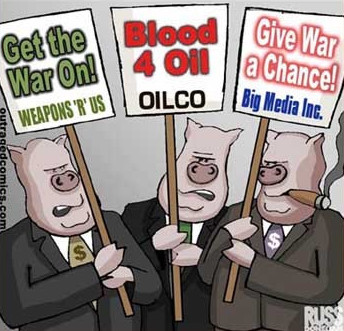
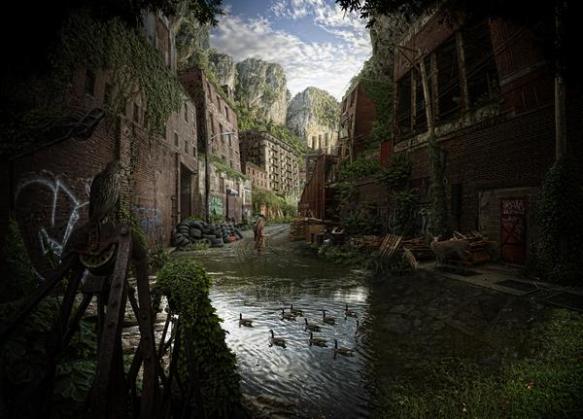


 After the Crash