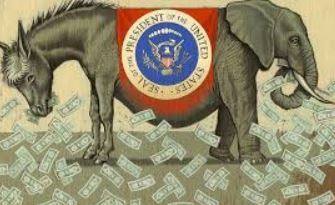
Billionaires Want Poor Children’s Brains to Work Better

By Gerald Coles

Source: CounterPunch

Why are many poor children not learning and succeeding in school? For billionaire Bill Gates, who funded the start-up of the failed Common Core Curriculum Standards, and has been bankrolling the failing charter schools movement, and Facebook’s Mark Zuckerberg, it’s time to look for another answer, this one at the neurological level. Poor children’s malfunctioning brains, particularly their brains’ “executive functioning”–that is, the brain’s working memory, cognitive flexibility, and inhibitory control–must be the reason why their academic performance isn’t better.

Proposing to fund research on the issue, the billionaires reason that not only can executive malfunctioning cause substantial classroom learning problems and school failure, it also can adversely affect socio-economic status, physical health, drug problems, and criminal convictions in adulthood. Consequently, if teachers of poor students know how to improve executive function, their students will do well academically and reap future “real-world benefits.” For Gates, who is always looking for “the next big thing,” this can be it in education.

Most people looking at this reasoning would likely think, “If executive functioning is poorer in poor children, why not eliminate the apparent cause of the deficiency, i.e., poverty?” Not so for the billionaires. For them, the “adverse life situations” of poor students are the can’t-be-changed-givens. Neither can instructional conditions that cost more money provide an answer. For example, considerable research on small class size teaching has demonstrated its substantially positive academic benefits, especially for poor children, from grammar school through high school and college. Gates claims to know about this instructional reform, but money-minded as he is, he insists these findings amount to nothing more than a “belief” whose worst impact has been to drive “school budget increases for more than 50 years.”

Cash–rather, the lack of it–that’s the issue: “You can’t fund reforms without money and there is no more money,” he insists. Of course, nowhere in Gates’ rebuke of excessive school spending does he mention corporate tax dodging of state income taxes, which robs schools of billions of dollars. Microsoft, for example, in which Gates continues to play a prominent role as “founder and technology advisor” on the company’s Board of Directors would provide almost $29.6 billion in taxes that could fund schools were its billions stashed offshore repatriated.

In a detailed example of Microsoft’s calculated tax scheming and dodging that would provide material for a good classroom geography lesson, Seattle Times reporter, Matt Day, outlined one of the transcontinental routes taken by a dollar spent for a Microsoft product in Seattle. Immediately after the purchase, the dollar takes a short trip to Microsoft’s company headquarters in nearby Redmond, Washington, after which it moves to a Microsoft sales subsidiary in Nevada. Following a brief rest, the dollar breathlessly zigzags from one offshore tax haven to another, finally arriving in sunny Bermuda where it joins $108 billion of Microsoft’s other dollars. Zuckerberg’s Facebook has similarly kept its earnings away from U.S. school budgets.

By blaming poor children’s school learning failure on their brains, the billionaires are continuing a long pseudoscientific charade extending back to 19th century “craniology,” which used head shape-and-size to explain the intellectual inferiority of “lesser” groups, such as southern Europeans and blacks. When craniology finally was debunked in the early 20thcentury, psychologists devised the IQ test, which sustained the mental classification business. Purportedly a more scientific instrument, it was heavily used not only to continue craniology’s identification of intellectually inferior ethnic and racial groups, but also to “explain” the educational underachievement of black and poor-white students.

After decades of use, IQ tests were substantially debunked from the 1960s onward, but new, more neurologically complex, so-called brain-based explanations emerged for differing educational outcomes. These explanations conceived of the overall brain as normal, but contended that brain glitches impeded school learning and success. Thus entered “learning disabilities,” “dyslexia,”and “attention deficit hyperactivity disorder (ADHD)” as major neuropsychological concepts to (1) explain school failure, particularly for poor children, although the labels also extended to many middle-class students; and (2) serve as “scientific” justification for scripted, narrow, pedagogy in which teachers seemingly reigned in the classroom, but in fact, were themselves controlled by the prefabricated curricula.

In the forefront of this pedagogy was the No Child Left Behind legislation (NCLB), with its lock-step instruction, created under George W. Bush and continued by Barack Obama. Supposedly “scientifically-based,” federal funds supported research on “brain-based” teaching that would be in tune with the mental make-up of poor children, thereby serving to substitute for policy that would address poverty’s influence on educational outcomes. My review of the initial evidence supposedly justifying the launching of this diversionary pedagogy revealed it had no empirical support. However, for the students this instruction targeted, a decade had to pass before national test results confirmed its failure.

The history of “scientific brain-based” pedagogy for poor children has invariably been a dodge from addressing obvious social-class influences. In its newest iteration– improve poor children’s  executive functioning–billionaires Gates and Zuckerberg will gladly put some cash into promoting a new neurological fix for poor children, thereby helping (and hoping) to divert the thinking of education policy-makers, teachers and parents. Never mind that over three years ago, a review of research on executive functioning and academic achievement failed to find “compelling evidence that a causal association between the two exists.” What’s critical for these billionaires and the class they represent is that the nation continues to concoct policy that does not deplete the wealth of the rich and helps explain away continued poverty. Just because research on improving executive functioning in poor children has not been found to be a solution for their educational underachievement, doesn’t mean it can’t be!

Now that’s slick executive functioning!


Gerald Coles is an educational psychologist who has written extensively on the psychology, policy and politics of education. He is the author of Miseducating for the Global Economy: How Corporate Power Damages Education and Subverts Students’ Futures (Monthly Review Press).

Conflict Theory and Biosphere Annihilation

By Robert J. Burrowes

In a recent article titled Challenges for Resolving Complex Conflicts’, I pointed out that existing conflict theory pays little attention to the extinction-causing conflict being ongoingly generated by human over-consumption in the finite planetary biosphere (and, among other outcomes, currently resulting in 200 species extinctions daily). I also mentioned that this conflict is sometimes inadequately identified as a conflict caused by capitalism’s drive for unending economic growth in a finite environment.

I would like to explain the psychological origin of this biosphere-annihilating conflict and how this origin has nurtured the incredibly destructive aspects of capitalism (and socialism, for that matter) from the beginning. I would also like to explain what we can do about it.

Before I do, however, let me briefly illustrate why this particular conflict configuration is so important by offering you a taste of the most recent research evidence in relation to the climate catastrophe and biosphere annihilation and why the time to resolve this conflict is rapidly running out (assuming, problematically, that we can avert nuclear war in the meantime).

In an article reporting a recent speech by Professor James G. Anderson of Harvard University, whose research led to the Montreal Protocol in 1987 to mitigate CFC damage to the Ozone Layer, environmental journalist Robert Hunizker summarizes Anderson’s position as follows: ‘the chance of permanent ice remaining in the Arctic after 2022 is zero. Already, 80% is gone. The problem: Without an ice shield to protect frozen methane hydrates in place for millennia, the Arctic turns into a methane nightmare.’ See ‘There Is No Time Left’.

But if you think that sounds drastic, other recent research has drawn attention to the fact that the ‘alarming loss of insects will likely take down humanity before global warming hits maximum velocity…. The worldwide loss of insects is simply staggering with some reports of 75% up to 90%, happening much faster than the paleoclimate record rate of the past five major extinction events’. Without insects ‘burrowing, forming new soil, aerating soil, pollinating food crops…’ and providing food for many bird species, the biosphere simply collapses. See Insect Decimation Upstages Global Warming’.

So, if we are in the process of annihilating Earth’s biosphere, which will precipitate human extinction in the near term, why aren’t we paying much more attention to the origin of this fundamental conflict? And then developing a precisely focused strategy for transcending it?

The answer to these two questions is simply this: the origin of this conflict is particularly unpalatable and, from my careful observation, most people, including conflict theorists, aren’t anxious to focus on it.

So why are human beings over-consuming in the finite planetary biosphere? Or more accurately, why are human beings who have the opportunity to do so (which doesn’t include those impoverished people living in Africa, Asia, Central/South America or anywhere else) over-consuming in the finite planetary biosphere?

They are doing so because they were terrorized into unconsciously equating consumption with a meaningful life by parents and other adults who had already internalized this same ‘learning’.

Let me explain how this happens.

At the moment of birth, a baby is genetically programmed to feel and express their feelings in response to the stimuli, both internal and external, that the baby registers. For example, as soon after birth as a baby feels hungry, they will signal that need, usually by crying or screaming. An attentive parent (or other suitable adult) will usually respond to this need by feeding the baby and the baby will express their satisfaction with this outcome, perhaps with a facial expression, in a way that most aware parents and adults will have no difficulty identifying. Similarly, if the baby is cold, in pain or experiencing any other stimulus, the baby will express their need, probably by making a loud noise. Given that babies cannot immediately use a cultural language, they use the language that was given to them by evolution: particularly audibly expressed noise of various types that an aware adult will quickly learn to interpret.

Of course, from the initial moments after birth and throughout the next few months, a baby will experience an increasing range of stimuli – including internal stimuli such as the needs for listening, understanding and love, as well as external stimuli ranging from a wet nappy to a diverse set of parental, social, climate and environmental stimuli – and will develop a diverse and expanding range of ways, now including a wider range of emotional expression but eventually starting to include spoken language, of expressing their responses, including satisfaction and enjoyment if appropriate, to these stimuli.

At some vital point, however, and certainly within the child’s first eighteen months, the child’s parents and the other significant adults in the child’s life, will start to routinely and actively interfere with the child’s emotional expression (and thus deny them satisfaction of the unique needs being expressed in each case) in order to compel the child to do as the parent/adult wishes. Of course, this is essential if you want the child to be obedient – a socially compliant slave – rather than to follow their own Self-will.

One of the critically important ways in which this denial of emotional expression occurs seems benign enough: Children who are crying, angry or frightened are scared into not expressing their feelings and offered material items – such as food or a toy – to distract them instead. Unfortunately, the distractive items become addictive drugs. Unable to have their emotional needs met, the child learns to seek relief by acquiring the material substitutes offered by the parent. But as this emotional deprivation endlessly expands because the child has been denied the listening, understanding and love to develop the capacity to listen to, love and understand themself, so too does the ‘need’ for material acquisition endlessly expand.

As an aside, this explains why most violence is overtly directed at gaining control of material, rather than emotional, resources. The material resource becomes a dysfunctional and quite inadequate replacement for satisfaction of the emotional need. And, because the material resource cannot ‘work’ to meet an emotional need, the individual is most likely to keep using direct and/or structural violence to gain control of more material resources in an unconscious and utterly futile attempt to meet unidentified emotional needs. In essence, no amount of money and other assets can replace the love denied a child that would allow them to feel and act on their feelings.

Of course, the individual who consumes more than they need and uses direct violence, or simply takes advantage of structural violence, to do so is never aware of their deeply suppressed emotional needs and of the functional ways of having these needs met. Although, I admit, this is not easy to do given that listening, understanding and love are not readily available from others who have themselves been denied these needs. Consequently, with their emotional needs now unconsciously ‘hidden’ from the individual, they will endlessly project that the needs they want met are, in fact, material.

This is the reason why members of the Rothschild family, Jeff Bezos, Bill Gates, Warren Buffett, Amancio Ortega, Mark Zuckerberg, Carlos Slim, the Walton family and the Koch brothers, as well as the world’s other billionaires and millionaires, seek material wealth and are willing to do so by taking advantage of structures of exploitation held in place by the US military. They are certainly wealthy in the material sense; unfortunately, they are emotional voids who were never loved and do not know how to love themself or others now.

Tragically, however, this fate is not exclusive to the world’s wealthy even if they illustrate the point most graphically. As indicated above, virtually all people who live in material cultures have suffered this fate and this is readily illustrated by their ongoing excessive consumption – especially their meat-eating, fossil-fueled travel and acquisition of an endless stream of assets – in a planetary biosphere that has long been signaling ‘Enough!’

As an aside, governments that use military violence to gain control of material resources are simply governments composed of many individuals with this dysfunctionality, which is very common in industrialized countries that promote materialism. Thus, cultures that unconsciously allow and encourage this dysfunctional projection (that an emotional need is met by material acquisition) are the most violent both domestically and internationally. This also explains why industrialized (material) countries use military violence to maintain political and economic structures that allow ongoing exploitation of non-industrialized countries in Africa, Asia and Central/South America.

In summary, the individual who has all of their emotional needs met requires only the intellectual and few material resources necessary to maintain this fulfilling life: anything beyond this is not only useless, it is a burden.

If you want to read (a great deal) more detail of the explanation presented above, you will find it in Why Violence?’ and Fearless Psychology and Fearful Psychology: Principles and Practice.

So what can we do?

Well, I would start by profoundly changing our conception of sound parenting by emphasizing the importance of nisteling to children – see Nisteling: The Art of Deep Listening’ – and making ‘My Promise to Children’.

For those adults who feel incapable of nisteling or living out such a promise, I encourage you to consider doing the emotional healing necessary by ‘Putting Feelings First’.

If you already feel capable of responding powerfully to this extinction-threatening conflict between human consumption and the Earth’s biosphere, you are welcome to consider joining those who are participating in the fifteen-year strategy to reduce consumption and achieve self-reliance explained in ‘The Flame Tree Project to Save Life on Earth’ and/or to consider using sound nonviolent strategy to conduct your climate or environment campaign. See Nonviolent Campaign Strategy.

You are also welcome to consider signing the online pledge of The Peoples Charter to Create a Nonviolent World.

As the material simplicity of Mohandas K. Gandhi demonstrated: Consumption is not life.

If you are not able to emulate Gandhi (at least ‘in spirit’) by living modestly, it is your own emotional dysfunctionality – particularly unconscious fear – that is the problem that needs to be addressed.

Biodata: Robert J. Burrowes has a lifetime commitment to understanding and ending human violence. He has done extensive research since 1966 in an effort to understand why human beings are violent and has been a nonviolent activist since 1981. He is the author of ‘Why Violence?’ http://tinyurl.com/whyviolence His email address is flametree@riseup.net and his website is here. http://robertjburrowes.wordpress.com

Robert J. Burrowes
P.O. Box 68
Daylesford, Victoria 3460
Australia

Email: flametree@riseup.net

Websites:
Nonviolence Charter
Flame Tree Project to Save Life on Earth
‘Why Violence?’
Feelings First
Nonviolent Campaign Strategy
Nonviolent Defense/Liberation Strategy
Anita: Songs of Nonviolence
Robert Burrowes
Global Nonviolence Network

Colonizing the Western Mind

By Jason Hirthler

Source: CounterPunch

In Christopher Nolan’s captivating and visually dazzling film Inception, a practitioner of psychic corporate espionage must plant and idea inside a CEO’s head. The process is called inception, and it represents the frontier of corporate influence, in which mind spies no longer just “extract” ideas from the dreams of others, but seed useful ideas in a target’s subconscious. Inception is a well-crafted piece of futuristic sci-fi drama, but some of the ideas it imparts are already deeply embedded in the American subconscious. The notion of inception, of hatching an idea in the mind of a man or woman without his or her knowledge, is the kernel of propaganda, a black art practiced in the States since the First World War. Today we live beneath an invisible cultural hegemony, a set of ideas implanted in the mass mind by the U.S. state and its corporate media over decades. Invisibility seems to happen when something is either obscure or ubiquitous. In a propaganda system, an overarching objective is to render the messaging invisible by universalizing it within the culture. Difference is known by contrast. If there are no contrasting views in your field of vision, it’s easier to accept the ubiquitous explanation. The good news is that the ideology is well-known to some who have, for one lucky reason or another, found themselves outside the hegemonic field and are thus able to contrast the dominant worldview with alternative opinions. On the left, the ruling ideology might be described as neoliberalism, a particularly vicious form of imperial capitalism that, as would be expected, is camouflaged in the lineaments of humanitarian aid and succor.

Inception 1971

In a short span of time in the 1970s, dozens of think tanks were established across the western world and billions of dollars were spent proselytizing the tenets of the Powell Memo in 1971, which galvanized a counter-revolution to the liberal upswing of the Sixties. The neoliberal economic model of deregulation, downsizing, and privatization was preached by the Reagan-Thatcher junta, liberalized by the Clinton regime, temporarily given a bad name by the unhinged Bush administration, and saved by telegenic restoration of the Obama years. The ideology that underlay the model saturated academia, notably at the University of Chicago, and the mainstream media, principally at The New York Times. Since then it has trickled down to the general populace, to whom it now feels second nature. Today think tanks like the Heritage Foundation, the Brookings Institute, Stratfor, Cato Institute, American Enterprise Institute, Council on Foreign Relations, Carnegie Endowment, the Open Society Foundation, and the Atlantic Council, among many others, funnel millions of dollars in donations into cementing neoliberal attitudes in the American mind.

The ideological assumptions, which serve to justify what you could call neocolonial tactics, are relatively clear: the rights of the individual to be free of overreach from monolithic institutions like the state. Activist governments are inherently inefficient and lead directly to totalitarianism. Markets must be free and individuals must be free to act in those markets. People must be free to choose, both politically and commercially, in the voting booth and at the cash register. This conception of markets and individuals is most often formulated as “free-market democracy,” a misleading conceit that conflates individual freedom with the economic freedom of capital to exploit labor. So when it comes to foreign relations, American and western aid would only be given on the condition that the borrowers accepted the tenets of an (highly manipulable) electoral system and vowed to establish the institutions and legal structures required to fully realize a western market economy. These demands were supplemented with notions of the individual right to be free of oppression, some fine rhetoric about women and minorities, and somewhat more quietly, a judicial understanding that corporations were people, too. Together, an unshackled economy and an unfettered populace, newly equipped with individual rights, would produce the same flourishing and nourishing demos of mid-century America that had been the envy of humanity.

A False Promise

This ‘Washington Consensus’ is the false promise promoted by the West. The reality is quite different. The crux of neoliberalism is to eliminate democratic government by downsizing, privatizing, and deregulating it. Proponents of neoliberalism recognize that the state is the last bulwark of protection for the common people against the predations of capital. Remove the state and they’ll be left defenseless. Think about it. Deregulation eliminates the laws. Downsizing eliminates departments and their funding. Privatizing eliminates the very purpose of the state by having the private sector take over its traditional responsibilities. Ultimately, nation-states would dissolve except perhaps for armies and tax systems. A large, open-border global free market would be left, not subject to popular control but managed by a globally dispersed, transnational one percent. And the whole process of making this happen would be camouflaged beneath the altruistic stylings of a benign humanitarianism.

Globalists, as neoliberal capitalists are often called, also understood that democracy, defined by a smattering of individual rights and a voting booth, was the ideal vehicle to usher neoliberalism into the emerging world. Namely because democracy, as commonly practiced, makes no demands in the economic sphere. Socialism does. Communism does. These models directly address ownership of the means of production. Not so democratic capitalism. This permits the globalists to continue to own the means of production while proclaiming human rights triumphant in nations where interventions are staged. The enduring lie is that there is no democracy without economic democracy.

What matters to the one percent and the media conglomerates that disseminate their worldview is that the official definitions are accepted by the masses. The real effects need never be known. The neoliberal ideology (theory) thus conceals the neoliberal reality (practice). And for the masses to accept it, it must be mass produced. Then it becomes more or less invisible by virtue of its universality.

A Pretext for Pillage

Thanks to this artful disguise, the West can stage interventions in nations reluctant to adopt its platform of exploitation, knowing that on top of the depredations of an exploitative economic model, they will be asked to call it progress and celebrate it.

Washington, the metropolitan heart of neoliberal hegemony, has numerous methods of convincing reluctant developing nations to accept its neighborly advice. To be sure, the goal of modern colonialism is to find a pretext to intervene in a country, to restore by other means the extractive relations that first brought wealth to the colonial north. The most common pretexts for intervention depict the target nation in three distinct fashions.

First, as an economic basket case, a condition often engineered by the West in what is sometimes called, “creating facts on the ground.” By sanctioning the target economy, Washington can “make the economy scream,” to using war criminal Henry Kissinger’s elegant phrasing. Iran, Syria, and Venezuela are relevant examples here. Second, the West funds violent opposition to the government, producing unrest, often violent riots of the kind witnessed in Dara, Kiev, and Caracas. The goal is either to capsize a tottering administration or provoke a violent crackdown, at which point western embassies and institutions will send up simultaneously cries of tyranny and brutality and insist the leader step aside. Libya, Syria, and Venezuela are instructive in this regard. Third, the country will be pressured to accept some sort of military fettering thanks to either a false flag or manufactured hysteria over some domestic program, such as the WMD restrictions on Iraq, chemical weapons restrictions on Syria, or the civilian nuclear energy restrictions on Iran. Given that the U.S. traffics in WMDs, bioweapons, and nuclear energy itself, insisting others forsake all of these is perhaps little more than racially motivated despotry. But significant fear mongering in the international media will provide sufficient moral momentum to ram through sanctions, resolutions, and inspection regimes with little fanfare.

Schooling the Savages

Once the pretext is established, the appropriate intervention is made. There’s no lack of latent racism embedded in each intervention. Something of Edward Said’s Orientalism is surely at play here; the West is often responding to a crude caricature rather than a living people. One writer, Robert Dale Parker, described western views of Asia as little more than, “a sink of despotism on the margins of the world.” Iran is incessantly lensed through a fearful distrust of the ‘other’, those abyssal Persians. Likewise, North Korea is mythologized as a kingdom of miniature madmen, possessed of a curious psychosis that surely bears no relation to the genocidal cleansing of 20 percent of its population in the Fifties, itself an imperial coda to the madness of Hiroshima.

The interventions, then, are little different than the missionary work of early colonizers, who sought to entrap the minds of men in order to ensnare the soul. Salvation is the order of the day. The mission worker felt the same sense of superiority and exceptionalism that inhabits the mind of the neoliberal. Two zealots of the age peddling different editions of a common book. One must carry the gospel of the invisible hand to the unlettered minions. But the gifts of the enlightened interloper are consistently dubious.

It might be the loan package that effectively transfers economic control out of the hands of political officials and into the hands of loan officers, those mealy-mouthed creditors referred to earlier. It may be the sanctions that prevent the country from engaging in dollar transactions and trade with numberless nations on which it depends for goods and services. Or it might be that controversial UNSC resolution that leads to a comprehensive agreement to ban certain weapons from a country. Stipulations of the agreement will often include a byzantine inspections regime full of consciously-inserted trip wires designed to catch the country out of compliance and leverage that miscue to intensify confrontational rhetoric and implement even more far-reaching inspections.

Cracking the Shell

The benign-sounding structural adjustments of the West have fairly predictable results: cultural and economic chaos, rapid impoverishment, resource extraction with its attendant ecological ruin, transfer of ownership from local hands to foreign entities, and death from a thousand causes. We are currently sanctioning around 30 nations in some fashion; dozens of countries have fallen into ‘protracted arrears’ with western creditors; and entire continents are witnessing huge outflows of capital–on the order of $100B annually–to the global north as debt service. The profiteering colonialists of the West make out like bandits. The usual suspects include Washington and its loyal lapdogs, the IMF, World Bank, EU, NATO, and other international institutions, and the energy and defense multinationals whose shareholders and executive class effectively run the show.

So why aren’t Americans more aware of this complicated web of neocolonial domination? Italian communist Antonio Gramsci, who pioneered the concept of cultural hegemony, suggested that the ruling ideologies of the bourgeoisie were so deeply embedded in popular consciousness that the working classes often supported leaders and ideas that were antithetical to their own interests. Today, that cultural hegemony is neoliberalism. Few can slip its grasp long enough to see the world from an uncolored vantage point. You’ll very rarely encounter arguments like this leafing through the Times or related broadsheets. They don’t fit the ruling dogma, the Weltanschauung (worldview) that keeps the public mind in its sleepy repose.

But French-Algerian philosopher Louis Althusser, following Gramsci, believed that, unlike the militarized state, the ideologies of the ruling class were penetrable. He felt that the comparatively fluid zones of Ideological State Apparatuses (ISAs) were contexts of class struggle. Within them, groups might attain a kind of ‘relative autonomy’, by which they could step outside of the monolithic cultural ideology. The scales would fall. Then, equipped with new knowledge, people might stage an inception of their own, cracking open the cultural hegemony and reshaping its mythos in a more humane direction. This seems like an imperative for modern American culture, buried as it is beneath the hegemonic heft of the neoliberal credo. These articles of false faith, this ideology of deceit, ought to be replaced with new declarations of independence, of the mind if not the mainstream.


Jason Hirthler is a veteran of the communications industry and author of The Sins of Empire: Unmasking American Imperialism. He lives in New York City and can be reached at jasonhirthler@gmail.com.

THE MONOPOLIZATION OF AMERICA: The biggest economic problem you’re hearing almost nothing about

By Robert Reich

Source: Nation of Change

Not long ago I visited some farmers in Missouri whose profits are disappearing. Why? Monsanto alone owns the key genetic traits to more than 90 percent of the soybeans planted by farmers in the United States, and 80 percent of the corn. Which means Monsanto can charge farmers much higher prices.

Farmers are getting squeezed from the other side, too, because the food processors they sell their produce to are also consolidating into mega companies that have so much market power they can cut the prices they pay to farmers.

This doesn’t mean lower food prices to you. It means more profits to the monopolists.

Monopolies all around

America used to have antitrust laws that stopped corporations from monopolizing markets, and often broke up the biggest culprits. No longer. It’s a hidden upward redistribution of money and power from the majority of Americans to corporate executives and wealthy shareholders.

You may think you have lots of choices, but take a closer look:

1. The four largest food companies control 82 percent of beef packing, 85 percent of soybean processing, 63 percent of pork packing, and 53 percent of chicken processing.

2. There are many brands of toothpaste, but 70 percent of all of it comes from just two companies.

3. You may think you have your choice of sunglasses, but they’re almost all from one company: Luxottica – which also owns nearly all the eyeglass retail outlets.

4. Practically every plastic hanger in America is now made by one company, Mainetti.

5. What brand of cat food should you buy? Looks like lots of brands but behind them are basically just two companies.

6. What about your pharmaceuticals? Yes, you can get low-cost generic versions. But drug companies are in effect paying the makers of generic drugs to delay cheaper versions. Such “pay for delay” agreements are illegal in other advanced economies, but antitrust enforcement hasn’t laid a finger on them in America. They cost you and me an estimated $3.5 billion a year.

7. You think your health insurance will cover the costs? Health insurers are consolidating, too. Which is one reason your health insurance premiums, copayments, and deductibles are soaring.

8. You think you have a lot of options for booking discount airline tickets and hotels online? Think again. You have only two. Expedia merged with Orbitz, so that’s one company. And then there’s Priceline.

9. How about your cable and Internet service? Basically just four companies (and two of them just announced they’re going to merge).

Why the monopolization of America is a huge problem

The problem with all this consolidation into a handful of giant firms is they don’t have to compete. Which means they can – and do – jack up your prices.

Such consolidation keeps down wages. Workers with less choice of whom to work for have a harder time getting a raise. When local labor markets are dominated by one major big box retailer, or one grocery chain, for example, those firms essentially set wage rates for the area.

These massive corporations also have a lot of political clout. That’s one reason they’re consolidating: Power.

Antitrust laws were supposed to stop what’s been going on. But today, they’re almost a dead letter. This hurts you.

We’ve forgotten history

The first antitrust law came in 1890 when Senator John Sherman responded to public anger about the economic and political power of the huge railroad, steel, telegraph, and oil cartels – then called “trusts” – that were essentially running America.

A handful of corporate chieftains known as “robber barons” presided over all this – collecting great riches at the expense of workers who toiled long hours often in dangerous conditions for little pay. Corporations gouged consumers and corrupted politics.

Then in 1901, progressive reformer Teddy Roosevelt became president. By this time, the American public was demanding action.

In his first message to Congress in December 1901, only two months after assuming the presidency, Roosevelt warned, “There is a widespread conviction in the minds of the American people that the great corporations known as the trusts are in certain of their features and tendencies hurtful to the general welfare.”

Roosevelt used the Sherman Antitrust Act to go after the Northern Securities Company, a giant railroad trust run by J. P. Morgan, the nation’s most powerful businessman. The U.S. Supreme Court backed Roosevelt and ordered the company dismantled.

In 1911, John D. Rockefeller’s Standard Oil Trust was broken up, too. But in its decision, the Supreme Court effectively altered the Sherman Act, saying that monopolistic restraints of trade were objectionable if they were “unreasonable” – and that determination was to be made by the courts. What was an unreasonable restraint of trade?

In the presidential election of 1912, Roosevelt, running again for president but this time as a third party candidate, said he would allow some concentration of industries where there were economic efficiencies due to large scale. He’d then he’d have experts regulate these large corporations for the public benefit.

Woodrow Wilson, who ended up winning the election, and his adviser Louis Brandeis, took a different view. They didn’t think regulation would work, and thought all monopolies should be broken up.

For the next 65 years, both views dominated. We had strong antitrust enforcement along with regulations that held big corporations in check.

Most big mergers were prohibited. Even large size was thought to be a problem. In 1945, in the case of United States v. Alcoa (1945), the Supreme Court ruled that even though Alcoa hadn’t pursued a monopoly, it had become one by becoming so large that it was guilty of violating the Sherman Act.

What happened to antitrust?

All this changed in the 1980s, after Robert Bork – who, incidentally, I studied antitrust law with at Yale Law School, and then worked for when he became Solicitor General under President Ford – wrote an influential book called The Antitrust Paradox, which argued that the sole purpose of the Sherman Act is consumer welfare.

Bork argued that mergers and large size almost always create efficiencies that bring down prices, and therefore should be legal. Bork’s ideas were consistent with the conservative Chicago School of Economics, and found a ready audience in the Reagan White House.

Bork was wrong. But since then, even under Democratic administrations, antitrust has all but disappeared.

The monopolization of high tech

We’re seeing declining competition even in cutting-edge, high-tech industries.

In the new economy, information and ideas are the most valuable forms of property. This is where the money is.

We haven’t seen concentration on this scale ever before.

Google and Facebook are now the first stops for many Americans seeking news. Meanwhile, Amazon is now the first stop for more than a half of American consumers seeking to buy anything. Talk about power.

Contrary to the conventional view of an American economy bubbling with innovative small companies, the reality is quite different. The rate at which new businesses have formed in the United States has slowed markedly since the late 1970s.

Big Tech’s sweeping patents, standard platforms, fleets of lawyers to litigate against potential rivals, and armies of lobbyists have created formidable barriers to new entrants. Google’s search engine is so dominant, “Google” has become a verb.

The European Union filed formal antitrust charges against Google, accusing it of forcing search engine users into its own shopping platforms. And last June, it fined Google a record $2.7 billion.

But not in America.

It’s time to revive antitrust

Economic and political power cannot be separated because dominant corporations gain political influence over how markets are organized, maintained, and enforced – which enlarges their economic power further.

One of the original goals of the antitrust laws was to prevent this.

Big Tech – along with the drug, insurance, agriculture, and financial giants – is coming to dominate both our economy and our politics.

There’s only one answer: It is time to revive antitrust.

America is Disneyland

By Chris Kanthan

Source: Activist Post

Disneyland is the Happiest Place on Earth! Millions of families visit the theme park every year to enjoy the magical place of rides, spectacular shows and cheerful cartoon figures. Everything is clean, perfect and joyful. Unless … you realize that Cinderella might actually be homeless. That’s right, 10% of Disneyland’s employees are actually homeless, many more are on food stamps, and 75% struggle to make ends meet.

Does this ring familiar? Think of America. Behind the façade of being the greatest country on Earth with the largest GDP and the wealthiest billionaires, there are tens of millions of Americans who are left behind just like Disney’s employees.

This neo-feudalistic model isn’t isolated to Disney or Walmart, it’s systemic. For example, the bus driver at Apple – which has $280 billion in cash – is forced to sleep in a van because he can’t afford the Silicon Valley rent; Facebook’s cafeteria workers live in a garage; and thousands of American Airlines’ employees are forced to depend on food stamps.

America is being eaten alive by corporate greed; and Disneyland has been taken over by Scrooge.

Let’s look at some Disney Inc. statistics.

Total profit per year: $9 billion

Total employees: 200,000

Notice that the profit reflects what’s left after all the expenses, including the salaries, have been paid. So, in a utopian world, the Disney management will do the math ($9 billion / 200,000 = $45,000) and send a check for $45K to every employee, Mickey included. That kind of profit-sharing would really make Disneyland the happiest place on Earth. Does that happen? No way!

Does Cinderella get a check for perhaps $20K, $10K, $5K or even $1K? Nope, nope, nope, nope. Cinderella gets nada, zero, zilch. She should be content with the $12/hour salary and must smile happily for the kids.

In Disneyland, Cinderella never gets to meet her prince.

Disney’s CEO gets paid $46 million a year, which translates to $23,000 an hour. Imagine Disney’s CEO coming to work on Jan 2nd. He wishes a few people “happy new year,” orders coffee, sits on his desk, makes a few phone calls … and he has already made more money than what Ariel would make during the rest of the year.

Of course, the CEO should get paid more, but does he deserve a salary that’s equivalent to 2,000 Disney employees? If the CEO doesn’t show up for work for a day, Disneyland will continue running. If 2,000 employees take a day off, the park would be shut down.

In the 1960s, the CEO-to-worker salary ratio was 25. Today it’s often 600 or more, sometimes even more than 1000 (for example, at Walmart). Much of the executive compensation comes in the form of stock options and bonuses based on stock performance. In a rational and unrigged world, the CEOs would increase their revenues and profits to get bonuses. Not anymore.

Now, the CEOs simply use a no-brainer solution to boost the stock prices – it’s called stock buybacks or share repurchases. This involves a firm using corporate profits (or even borrowed money) to buy its own stocks. BTW, this used to be illegal until the 1980s.

Since 2007, US corporations have spent trillions of dollars on stock buybacks. In 2018 alone, they will spend $800 billion on this financial engineering tool (which has also led to a massive stock market bubble). They won’t use the billions to hire Americans, boost wages or innovate new products. Instead, the CEOs will buy yachts and tell you that Chinese or Mexicans stole your jobs.

Do the low-wage employees of Disneyland get any shares or stock options? A silly question, indeed.

Thus we have a situation where American employers ruthlessly exploit American workers. This isn’t a good model for a country. China and Mexico don’t make us poor; predatory capitalism does.

Paying good wages to hardworking employees is not socialism or communism. Henry Ford understood this when he more than doubled the wages of his workers in 1914.

However, hundred years later, maximizing profit has become a fundamentalist dogma. You can imagine a conversation among the factory-farming executives:

Guy #1: Why the heck are these chickens roaming out in the farms? We would save so much money if we lock them up in cages.

Guy #2: Brilliant idea! Let’s lock up five chickens in a cage. We will save more. More is always better.

Guy #3: I really don’t understand why we feed them expensive salads and healthy stuff. Let’s feed them cheap GMO corn and GMO soy from my friends at Monsanto.

Guy #4: Experts tell me that if we give them caffeine and anti-depressants, the chickens will stay awake longer, eat more, and get fatter.

Guy #5: And when they get sick, load them up with antibiotics and steroids.

Guy #5: These stupid chickens are also so small. Let’s drug them with some growth hormones. I am getting a lot of pressure from the private equity funds about profits per chicken.

Apart from being inhumane and psychopathic, this system forgets or ignores the fact that we have to eat these chickens. Sick chicken = sick people. Call it Karma or “revenge of the chickens.”

Similarly, poor workers = poor country. And you can imagine a similar conversation among corporate executives regarding workers – “cut their wages and benefits”, “make them work overtime”, “hire part-time employees rather than full-time” and so on.

You can’t grow the economy if American workers don’t get paid enough, especially by profitable multi-billion dollar corporations. 2/3rd of our GDP is based on consumer spending. It’s no wonder that in the last ten years, the US economy cumulatively grew only by a dismal 35%. Compare that to China, which grew by an astounding 200% during that same period.

And it’s not a coincidence that China’s average wages have more than doubled in the same period:

The solution for low wages primarily lies in the hands of corporate elites. Labor unions are almost non-existent in the private sector these days; and the government doesn’t have much control over corporate America – in fact, corporations control the U.S. political system. Free market doesn’t have to translate to cancerous greed and extreme exploitation. Free market also means that corporations are free to share their profits with their employees. Finally, free market can and must also incorporate patriotism, responsibility to the society and strategies for sustainable prosperity.


Chris Kanthan is the author of a new book, Deconstructing the Syrian War. Chris lives in the San Francisco Bay Area, has traveled to 35 countries, and writes about world affairs, politics, economy and health. His other book is Deconstructing Monsanto. Follow him on Twitter: @GMOChannel


The ‘Values,’ ‘Vision,’ and ‘Democracy’ of an Inauthentic Opposition

Average Americans, whose economic survival is threatened, have no political party to represent them, including deceptive Democrats who claim to be their champions and blame others when their deception fails, says Paul Street.

By Paul Street

Source: Consortium News

Never underestimate the capacity of the United States’ Inauthentic Opposition Party, the corporate Democrats, for self-congratulatory delusion and the externalization of blame.

Look, for example, at the Democratic National Committee’s (DNC) recently filed 66-page lawsuit against Russia, WikiLeaks, and the 2016 Donald Trump campaign. The document accuses Russia of “mount[ing] a brazen attack on the American democracy,” “destabilize[ing] the U.S. political environment” on Trump’s (and Russia’s) behalf, and “interfering with our democracy….”

“The [RussiaGate] conspiracy,” the DNC Complaint says, “undermined and distorted the DNC’s ability to communicate the [Democratic] party’s values and vision to the American electorate” and “sowed discord within the Democratic Party at a time when party unity was essential…”

Yes, Russia, like numerous other nations living under the global shadow of the American Superpower, may well have tried to have some surreptitious say in 2016 U.S. presidential election. (Why wouldn’t the Kremlin have done that, given the very real and grave threats Washington and its Western NATO allies have posed for many years to post-Soviet-era Russian security and peace in Eastern Europe?)

Still, charging Russia with interfering with US-“American democracy” is like me accusing the Washington Capital’s star left winger Alex Ovechkin of interfering with my potential career as a National Hockey League player (I’m middle aged and can’t skate backwards). The U.S. doesn’t have a functioning democracy to undermine, as numerous careful studies (see this,this,this,this,this,this,this,this, and this) have shown.

We have, rather, a corporate and financial oligarchy, an open plutocracy. U.S.-Americans get to vote, yes, but the nation’s “unelected dictatorship of money” reigns nonetheless in the United States, where, as leading liberal political scientists Benjamin Page (Northwestern) and Marin Gilens (Princeton) find, “government policy…reflects the wishes of those with money, not the wishes of the millions of ordinary citizens who turn out every two years to choose among the preapproved, money-vetted candidates for federal office.”

Our Own Oligarchs

Russia and WikiLeaks “destabilized the U.S. political environment”? Gee, how about the 20 top oligarchic U.S. mega-donors who invested more than $500 million combined in disclosed campaign contributions (we can only guess at how much “dark,” that is undisclosed, money they gave) to candidates and political organizations in the 2016 election cycle? The 20 largest organizational donors also gave a total of more than $500 million. The foremost plutocratic election investors included hard right-wing billionaires like casino owner Sheldon Adelson ($83 million disclosed to Republicans and right-wing groups), hedge-fund manager Paul Singer ($26 million to Republicans and the right), hedge fund manager Robert Mercer ($26 million) and packaging mogul Richard Uihlein ($24 million).

How about the multi-billionaire Trump’s own real estate fortune, which combined with the remarkable free attention the corporate media oligopoly granted him to help catapult the orange-tinted fake-populist beast past his more traditional Republican primary opponents? And what about the savagely unequal distribution of wealth and income in Barack Obama’s America, so extreme in the wake of the Great Recession that Hillary’s primary campaign rival Bernie Sanders could credibly report that the top tenth of the upper U.S.1% possessed nearly as much wealth as the nation’s bottom 90%? Such extreme disparity helped doom establishment, Wall Street- and Goldman Sachs-embroiled candidates like Jeb Bush, Marco Rubio, and Mrs. Clinton in 2016. Russia and WikiLeaks did not create that deep, politically- and neoliberal-policy-generated socioeconomic imbalance.

Double Vision

And just what were the Democratic Party “values and vision” that Russia, Trump, and WikiLeaks supposedly prevented the DNC and the Clinton team from articulating in 2016? As the distinguished political scientist and money-politics expert Thomas Ferguson and his colleagues Paul Jorgensen and Jie Chen noted in an important study released three months ago, the Clinton campaign “emphasized candidate and personal issues and avoided policy discussions to a degree without precedent in any previous election for which measurements exist….it deliberately deemphasized issues in favor of concentrating on what the campaign regarded as [Donald] Trump’s obvious personal weaknesses as a candidate.” Strangely enough, the Twitter-addicted reality television star Trump had a lot more to say about policy than the former First Lady, U.S. Senator, and Secretary of State Hillary Clinton, a wonkish Yale Law graduate.

The Democrats “values and vision” in 2016 amounted pretty much to the accurate but hardly inspiring or mass-mobilizing notion that Donald Trump was an awful person who was unqualified for the White House. Clinton ran almost completely on candidate character and quality. This was a blunder of historic proportions, given Clinton’s own highly problematic character brand. Any campaign needs a reasonably strong policy platform to stand on in case of candidate difficulties.

By Ferguson, Jorgenson, and Chen’s account, Hillary’s peculiar policy silence was about U.S. oligarchs’ campaign money. Thanks to candidate Trump’s bizarre nature and his declared isolationism and nationalism, Clinton achieved remarkable campaign finance success with normally Republican-affiliated capitalist sectors less disposed to abide the standard, progressive-sounding policy rhetoric of Democratic Party candidates than their more liberal counterparts.

One ironic but “fateful consequence” of her curious connection to conservative business interests was her “strategic silence about most important matters of public policy. … Misgivings of major contributors who worried that the Clinton campaign message lacked real attractions for ordinary Americans were rebuffed. The campaign,” Ferguson, Jorgenson, and Chen wrote, “sought to capitalize on the angst within business by vigorously courting the doubtful and undecideds there, not in the electorate.”

Other Clinton mistakes included failing to purchase television ads in Michigan, failing to set foot in Wisconsin after the Democratic National Convention, and getting caught telling wealthy New York City campaign donors that Trump’s white supporters were “a basket of” racist, sexist, nativist, and homophobic “deplorables.” This last misstep was a Freudian slip of the neoliberal variety. It reflected and advanced the corporate Democrats’ longstanding alienation of and from the nation’s rural and industrial and ex-industrial “heartland.”

Fake Progressives

As left historian Nancy Fraser noted after Trump was elected, the Democrats, since at least the Bill Clinton administration, had joined outwardly progressive forces like feminism, antiracism, multiculturalism, and LGBTQ rights to “financial capitalism.” This imparted liberal “charisma” and “gloss” to “policies that …devastated…what were once middle-class lives” by wiping out manufacturing, weakening unions, slashing wages, and increasing the “precarity of work.”

To make matters worse, Fraser rightly added, the “progressive neoliberal” blue-and digital-zone Democrats “compounded” the “injury of deindustrialization” with “the insult of progressive moralism,” which rips red-and analog-zone whites as culturally retrograde (recall candidate Obama’s problematic 2008 reflection on how rural and small-town whites “cling to religion and guns”) and yet privileged by the simple color of their skin.

Such insults from elite, uber-professional class neo-liberals like Obama (Harvard Law) and the Clintons (Yale Law) would sting less in the nation’s “flyover zones” if the those uttering them had not spent their sixteen years in the White House governing blatantly in accord with the wishes of Wall Street, Silicon Valley, and the leading multinational corporations. Like Bill Clinton’s two terms, the Obama years were richly consistent with Sheldon Wolin’s early 2008 description of the Democrats as an “inauthentic opposition” whose dutiful embrace of “centrist precepts” meant they would do nothing to “substantially revers[e] the drift rightwards” or “significantly alter the direction of society.”

The fake-“progressive” Obama presidency opened with the expansion of Washington’s epic bailout of the very parasitic financial elites who recklessly sparked the Great Recession (this with no remotely concomitant expansion of federal assistance to the majority middle- and working-class victims), the abandonment of campaign pledges to restore workers’ right to organize (through the immediately forgotten Employee Free Choice Act), and the kicking of Single Payer health care advocates to the curb as Obama worked with the big drug and insurance syndicates to craft a corporatist, profit-friendly health insurance reform. Obama’s second term ended with him doggedly (if unsuccessfully) championing the arch-authoritarian global-corporatist Trans Pacific Partnership.

This Goldman Sachs and Citigroup-directed policy record was no small part of what demobilized the Democrats’ mass electoral base in ways that “destabilized the U.S. political environment” to the benefit of the reactionary populist Trump, whose Mercer family-backed proto-fascistic strategist and Svengali Steve Bannon was smartly attuned to the Democrats’ elitist class problem.

There was a major 2016 presidential candidate who ran with genuinely progressive “values and vision” – Bernie Sanders. The most remarkable finding in Ferguson, Jorgenson, and Chen’s study is that the self-declared “democratic socialist” Sanders came tantalizingly close to winning the Democratic presidential nomination with no support from Big Business. The small-donor Sanders campaign was “without precedent in American politics not just since the New Deal, but across virtually the whole of American history … a major presidential candidate waging a strong, highly competitive campaign whose support from big business was essentially zero.”

Sanders was foiled by the big-money candidate Clinton’s advance control of the Democratic National Committee and convention delegates. Under a formal funding arrangement it worked up with the Democratic National Committee (DNC) in late September of 2015, the depressing “lying neoliberal warmonger” Hillary’s campaign was granted advance control of all the DNC’s “strategic decisions.” The Democratic Party’s presidential caucuses and primaries were rigged against Sanders in ugly ways that provoked a different lawsuit last year – a class-action suit against the DNC on behalf of Sanders’ supporters. The complaint was dismissed by a federal judge who ruled on the side of DNC lawyers by agreeing that the DNC was within its rights to violate their party’s charter and bylaws by selecting its candidate in advance of the primaries.

How was that for the noble “values and vision” that “American democracy” inspires atop the not-so leftmost of the nation’s two major and electorally viable political parties?

Under Cover of Russia-gate

That’s what “sowed discord within the Democratic Party at a time when party unity was essential…” Russia didn’t do it. Neither did WikiLeaks or the Trump campaign. The Clinton campaign and the Democratic Party establishment – themselves funded by major U.S. oligarchs like San Francisco hedge-fund billionaire Tom Steyer– did that on their own.

Could Sanders – the most popular politician in the U.S. (something rarely reported in a “mainstream” corporate media that could barely cover his giant campaign rallies even as it obsessed over Trump’s every bizarre Tweet) – have defeated the orange-tinted beast in the general election? Perhaps, though much of the oligarchic funding Hillary got would have gone to Trump if “socialist” Bernie had been the Democratic nominee. It is unlikely that Sanders could have accomplished much as president in a nation long controlled by the capitalist oligarchy in numerous ways that go far beyond campaign finance alone.

Meanwhile, under the cover of RussiaGate, the still-dismal and dollar-drenched corporate-imperial Democrats seem content to continue tilting to the center-right, purging Sanders-style progressives from the party’s leadership and citing the party’s special election victories (Doug Jones and Conor Lamb) against deeply flawed and Trump-backed Republicans in two bright-red voting districts (the state of Alabama and a fading Pennsylvania canton) as proof that tepid neoliberal centrism is still (even after Hillary’s stunning defeat) the way to go.

Along the way, the Inauthentic Opposition’s candidate roster for the upcoming Congressional mid-term election is loaded with an extraordinary number of contenders with U.S. military and intelligence backgrounds, consistent with Congressional Democrats repeated votes to give massive military and surveillance-state funds and power to a president they consider (accurately enough) unbalanced and dangerous.

The trick, the neoliberal “CIA Democrats” think, is to run conservative, Wall Street-backed imperial and National Security State veterans who pretend (see Eric Draitser’s recent piece on “How Clintonites Are Manufacturing Faux Progressive Congressional Campaigns”) to be aligned with majority-progressive left-of-center policy sentiments and values. It’s still very much their party.

Whatever happens during the next biennial electoral extravaganza, “the crucial fact” remains, in Wolin’s words nine years ago, “that for the poor, minorities, the working class and anti-corporatists there is no opposition party working on their behalf” in the United States – the self-declared homeland and headquarters of global democracy.


Paul Street is an independent radical-democratic policy researcher, journalist, historian, author and speaker based in Iowa City, Iowa, and Chicago, Illinois.  He is the author of seven books. His latest is They Rule: The 1% v. Democracy (Paradigm, 2014)

Big Pharma, Big Oil and Big Banks Meet the Definition of Terrorists

Common threads persist throughout definitions of terrorism: violence, injury or death, intimidation, intentionality, multiple targets and political motivation. Big pharma, big oil and big banks meet them all.

By Paul Buchheit

Source: Mint Press News

Various definitions of terrorism have been proposed in recent years, by organizations such as the FBI, the State DepartmentHomeland Security, and the ACLU. Some common threads persist throughout the definitions: violence, injury or death, intimidation, intentionality, multiple targets, political motivation. All the criteria are met by pharmaceutical and oil and financial companies. They have all injured and intimidated the American public, and caused people to die, with intentionality shown by their refusal to acknowledge evidence of their misdeeds, and political motives clear in their lobbying efforts, where among all U.S. industries Big Pharma is #1, Big Oil is #5, and Securities/Investment #8.

The terror inflicted on Americans is real, and is documented by the facts to follow.

Big Pharma: Qualifying for Trump’s Call for Capital Punishment for Drug Dealers

In a Time Magazine article a young man named Chad Colwell says “I got prescribed painkillers, Percocet and Oxycontin, and then it just kind of took off from there.” Time adds: “Prescriptions gave way to cheaper, stronger alternatives. Why scrounge for a $50 pill of Percocet when a tab of heroin can be had for $5?” About 75% of heroin addicts used prescription opioids before turning to heroin.

Any questions about Big Pharma’s role in violence and death in America have been answered by the Centers for Disease Control and the American Journal of Public Health. Any doubts about Big Pharma’s intentions to intimidate the public have been put to rest by the many occasions of outrageous price gouging. And any uncertainty about political pressure is removed by its #1 lobbying ranking.

As for malicious intentions, Bernie Sanders noted, “We know that pharmaceutical companies lied about the addictive impacts of opioids they manufactured.” Purdue Pharma knew all about the devastating addictive effects of its painkiller Oxycontin, and even pleaded guilty in 2007 to misleading regulators, doctors, and patients about the drug’s risk. Now Purdue and other drug companies are facing a lawsuitfor “deceptively marketing opioids” and ignoring the misuse of their drugs.

No jail for the opioid pushers, though, just slap-on-the-wrist fines that can be made up with a few price increases. But partly as a result of Pharma-related violence, Americans are suffering “deaths of despair”— death by drugs, alcohol and suicide. Suicide is at its highest level in 30 years.

Big Oil: Decades of Terror

Any doubts about the ecological terror caused by fossil fuel companies have been dispelled by the World Health Organization, the American Lung Association, the United Nations, the Pentagon, cooperating governments, and independent research groups, all of whom agree that human-induced climate change is killing people.

The oil industry’s intentionality and political motives have been demonstrated by their refusal to admit the known truth, starting with Exxon, which has covered up its own climate research for 40 years, and continuing through multi-million dollar lobbying efforts by Amoco, the US Chamber of Commerce, General Motors, Koch Industries, and other corporations in their effort to dismantle the Kyoto Protocol against global warming.

Big Banks: Leaving Suicidal Former Homeowners Behind

Any doubts about the violence stemming from the 2008 mortgage crisis have been resolved by studies of recession-caused suicides. Both the British Journal of Psychiatry and the National Institutes of Healthfound definite links between the recession and the rate of suicides.

As with Big Pharma and Big Oil, intentionality and political motives are evident in the banking industry’s lobbying efforts on behalf of deregulation — leading to the same conditions that threatened American homeowners in 2008. There has also been a surge in the number of non-bank lenders, who are less subject to regulation.

Making it all worse are private developers, who make most of their profits by building fancy homes for the rich. And by avoiding affordable housing. Since the recession, Blackstone and other private equity firms — with government subsidies — have been buying up foreclosed houses, holding them till prices appreciate, and in the interim renting them back at exorbitant prices.

This is leaving more and more Americans out in the cold — literally. A head of household in the U.S. needs to make $21.21 an hour to afford a two-bedroom apartment at HUD standards, much more than the $16.38 they actually earn. Since the recession, the situation has continually worsened. From 2010 to 2016 the number of housing units priced for very low-income families plummeted 60 percent.

Here’s the big picture: Since the 1980s there’s been a massive redistribution of wealth from middle-class housing to the investment portfolios of people with an average net worth of $75 million. It’s not hard to understand the “deaths of despair” caused by the terror inflicted on people losing their homes.


Why America’s Major News-Media Must Change Their Thinking

By Eric Zuesse

Source: Strategic Culture Foundation

America’s ‘news’-media possess the mentality that characterizes a dictatorship, not a democracy. This will be documented in the linked-to empirical data which will be subsequently discussed. But, first, here is what will be documented by those data, and which will make sense of these data:

In a democracy, the public perceive their country to be improving, in accord with that nation’s values and priorities. Consequently, they trust their government, and especially they approve of the job-performance of their nation’s leader. In a dictatorship, they don’t. In a dictatorship, the government doesn’t really represent them, at all. It represents the rulers, typically a national oligarchy, an aristocracy of the richest 0.1% or even of only the richest 0.01%. No matter how much the government ‘represents’ the public in law (or “on paper”), it’s not representing them in reality; and, so, the public don’t trust their government, and the public’s job-rating of their national leader, the head-of-state, is poor, perhaps even more disapproval than approval. So, whereas in a democracy, the public widely approve of both the government and the head-of-state; in a dictatorship, they don’t.

In a dictatorship, the ‘news’-media hide reality from the public, in order to serve the government — not the public. But the quality of government that the regime delivers to its public cannot be hidden as the lies continually pile up, and as the promises remain unfulfilled, and as the public find that despite all of the rosy promises, things are no better than before, or are even becoming worse. Trust in such a government falls, no matter how much the government lies and its media hide the fact that it has been lying. Though a ‘democratic’ election might not retain in power the same leaders, it retains in power the same regime (be it the richest 0.1%, or the richest 0.01%, or The Party, or whatever the dictatorship happens to be). That’s because it’s a dictatorship: it represents the same elite of power-holding insiders, no matter what. It does not represent the public. That elite — whatever it is — is referred to as the “Deep State,” and the same Deep State can control more than one country, in which case there is an empire, which nominally is headed by the head-of-state of its leading country (this used to be called an “Emperor”), but which actually consists of an alliance between the aristocracies within all these countries; and, sometimes, the nominal leading country is actually being led, in its foreign policies, by wealthier aristocrats in the supposedly vassal nations. But no empire can be a democracy, because the residents in no country want to be governed by any foreign power: the public, in every land, want their nation to be free — they want democracy, no dictatorship at all, especially no dictatorship from abroad.

In order for the elite to change, a revolution is required, even if it’s only to a different elite, instead of to a democracy. So, if there is no revolution, then certainly it’s the same dictatorship as before. The elite has changed (and this happens at least as often as generations change), but the dictatorship has not. And in order to change from a dictatorship to a democracy, a revolution also is required, but it will have to be a revolution that totally removes from power the elite (and all their agents) who had been ruling. If this elite had been the nation’s billionaires and its centi-millionaires who had also been billionaire-class donors to political campaigns (such as has been proven to be the case in the United States), then those people, who until the revolution had been behind the scenes producing the bad government, need to be dispossessed of their assets, because their assets were being used as their weapons against the public, and those weapons need (if there is to be a democracy) to be transferred to the public as represented by the new and authentically democratic government. If instead the elite had been a party, then all of those individuals need to be banned from every sort of political activity in the future. But, in either case, there will need to be a new constitution, and a consequent new body of laws, because the old order (the dictatorship) no longer reigns — it’s no longer in force after a revolution. That’s what “revolution” means. It doesn’t necessarily mean “democratic,” but sometimes it does produce a democracy where there wasn’t one before. The idea that every revolution is democratic is ridiculous, though it’s often assumed in ‘news’-reports. In fact, coups (which the U.S. Government specializes in like no other) often are a revolution that replaces a democracy by a dictatorship (such as the U.S. Government did to Ukraine in 2014, for example, and most famously before that, did to Iran in 1953). (Any country that perpetrates a coup anywhere is a dictatorship over the residents there, just the same as is the case when any invasion and occupation of a country are perpetrated upon a country. The imposed stooges are stooges, just the same. No country that imposes coups and/or invasions/occupations upon any government that has not posed an existential threat against the residents of that perpetrating country, supports democracy; to the exact contrary, that country unjustifiably imposes dictatorships; it spreads its own dictatorship, which is of the imperialistic type, and any government that spreads its dictatorship is evil and needs to be replaced — revolution is certainly justified there.)

This is how to identify which countries are democracies, and which ones are not: In a democracy, the public are served by the government, and thus are experiencing improvement in their lives and consequently approve of the job-performance of their head-of-state, and they trust the government. But in a dictatorship, none of these things is true.

In 2014, a Japanese international marketing-research firm polled citizens in each of ten countries asking whether they approve or disapprove of the job-performance of their nation’s head-of-state, and Harvard then provided an English-translated version online for a few years, then eliminated that translation from its website; but, fortunately, the translation had been web-archived and so is permanent here (with no information however regarding methodology or sampling); and it shows the following percentages who approved of the job-performance of their President or other head-of-state in each of the given countries, at that time:

China (Xi)          90%

Russia (Putin)      87%

India (Modi)        86%

South Africa (Zuma) 70%

Germany (Merkel)    67%

Brazil (Roussef)    63%

U.S. (Obama)        62%

Japan (Abe)         60%

UK (Cameron)        55%

France (Hollande)   48%

In January 2018, the global PR firm Edelman came out with the latest in their annual series of scientifically polled surveys in more than two dozen countries throughout the world, tapping into, actually, some of the major criteria within each nation indicating whether or not the given nation is more toward the dictatorship model, or more toward the democracy model. The 2018 Edelman Trust Barometer survey showed that “Trust in Government” (scored and ranked on page 39) was 44% in Russia, and is only 33% in the United States. Trust in Government is the highest in China: 84%. The U.S. and Russia are the nuclear super-powers; and the U.S. and China are the two economic super-powers; so, these are the world’s three leading powers; and, on that single measure of whether or not a country is democratic, China is the global leader (#1 of 28), Russia is in the middle (#13 of 28), and U.S. ranks at the bottom of the three, and near the bottom of the entire lot (#21 of 28). (#28 of 28 is South Africa, which, thus — clearly in retrospect — had a failed revolution when it transitioned out of its apartheid dictatorship. That’s just a fact, which cannot reasonably be denied, given this extreme finding. Though the nation’s leader, Zuma, was, according to the 2014 Japanese study, widely approved by South Africans, his Government was overwhelmingly distrusted. This distrust indicates that the public don’t believe that the head-of-state actually represents the Government. If the head-of-state doesn’t represent the Government, the country cannot possibly be a democracy: the leader might represent the people, but the Government doesn’t.)

When the government is trusted but the head-of-state is not, or vice-versa, there cannot be a functioning democracy. In other words: if either the head-of-state, or the Government, is widely distrusted, there’s a dictatorship at that time, and the only real question regarding it, is: What type of dictatorship is this?

These figures — the numbers reported here — contradict the ordinary propaganda; and, so, Edelman’s trust-barometer on each nation’s ‘news’-media (which are scored and ranked on page 40) might also be considered, because the natural question now is whether unreliable news-media might have caused this counter-intuitive (in Western countries) rank-order. However, a major reason why this media-trust-question is actually of only dubious relevance to whether or not the given nation is a democracy, is that to assume that it is, presumes that trust in the government can be that easily manipulated — it actually can’t. Media and PR can’t do that; they can’t achieve it. Here is a widespread misconception: Trust in government results not from the media but from a government’s having fulfilled its promises, and from the public’s experiencing and seeing all around themselves that they clearly have been fulfilled; and lying ‘news’-media can’t cover-up that reality, which is constantly and directly being experienced by the public.

However, even if trust in the ‘news’-media isn’t really such a thing as might be commonly hypothesized regarding trust in the government, here are those Edelman findings regarding the media, for whatever they’re worth regarding the question of democracy-versus-dictatorship: Trust in Media is the highest, #1, in China, 71%; and is 42% in #15 U.S.; and is 35% in #20 Russia. (A July 2017 Marist poll however found that only 30% of Americans trust the media. That’s a stunning 12% lower than the Edelman survey found.) In other words: Chinese people experience that what they encounter in their news-media becomes borne-out in retrospect as having been true, but only half of that percentage of Russians experience this; and U.S. scores nearer to Russia than to China on this matter. (Interestingly, Turkey, which scores #7 on trust-in-government, scores #28 on trust-in-media. Evidently, Turks find that their government delivers well on its promises, but that their ‘news’-media often deceive them. A contrast this extreme within the Edelman findings is unique. Turkey is a special case, regarding this.)

I have elsewhere reported regarding other key findings in that 2018 Edelman study.

According to all of these empirical findings, the United States is clearly not more of a democracy than it is a dictatorship. This particular finding from these studies has already been overwhelmingly (and even more so) confirmed in the world’s only in-depth empirical scientific study of whether or not a given country is or is not a “democracy”: This study (the classic Gilens and Page study) found, incontrovertibly, that the U.S. is a dictatorship — specifically an aristocracy, otherwise commonly called an “oligarchy,” and that it’s specifically a dictatorship by the richest, against the public.

Consequently, whenever the U.S. Government argues that it intends to “spread democracy” (such as it claims in regards to Syria, and to Ukraine), it is most-flagrantly lying — and any ‘news’-medium that reports such a claim without documenting (such as by linking to this article) its clear and already-proven falsehood (which is more fully documented here than has yet been done anywhere, since the Gilens and Page study is here being further proven by these international data), is no real ‘news’-medium at all, but is, instead, a propaganda-vehicle for the U.S. Government, a propaganda-arm of a dictatorship — a nation that has been overwhelmingly proven to be a dictatorship, not a democracy.