4 Theses on Depression and Radical Praxis

wip-draft-of-the-prison-of-the-mind-by-blacksmiley

By Sophie Monk and Joni Cohen

Source: The Fifth Column

Depression is political. As mental health service funding is steadily cut and suicide and substance abuse statistics rise, it is becoming increasingly obvious that depression is a condition of the political situation under which we live. In a UK context, austerity has mobilised a technique of responsibilisation functioning at every level of society to justify the catastrophic fallout of the regime, from healthcare to unemployment. Mark Fisher has written resonantly in his essay Good for Nothing about how as a generation we suffer from a kind of collective imposter syndrome, convinced simultaneously of our complete lack of worth and that any recognition of our worth is mistakenly given. And yet the message constantly reinforced by the ruling classes is that the class system our parents were born into and lived through has dissolved, making way for a world of frictionless social mobility, where the only blockages to success are from within ourselves. We are stuck in a tragic cycle of unfulfillable desires produced by capital; we are “a population that has all its life been sent the message that it is good for nothing [and] is simultaneously told that it can do anything it wants to do.”

And so we find ourselves in a situation where a huge majority of the people we know and love are engaged in fraught attempts to cope with chronic and severe depression. This community to which we refer also tends to understand itself as engaged in an antagonistic relationship with capital, the state, and other forms of social power. Taking Fisher’s key propositions on both how it feels to be depressed and where depression comes from as our reference points, we want to formulate an understanding of the relationship between depression and radical praxis that can be directly applied within our organising communities.

1. Depression can and does affect our capacities to give to struggle and each other.

For those of us who suffer from depression, organising can be hard. It is also inevitable that once struggle reaches a certain fever pitch, violence and traumatic backlash follows, and we become painfully aware of the manifold ways in which we are policed, surveilled and disciplined. At this point, continuing to fulfil one’s action points, attend regular meetings, and put oneself through further confrontations with the state can feel as impossible as going to the job centre, or turning up at your 9 to 5. It’s a basic point, but the important thing to acknowledge here is that depression is incapacitating, and that we must learn to live within our capacities or risk worsening our conditions.

2. Medication has the potential to both pacify and galvanise us.

According to a report by the Health and Social Care Information Centre, the number of anti-depressants prescribed to people in England doubled between 2006 and 2016. While so many of us share this experience of medicating with prescription drugs, it is astonishing how little we actually talk about the ways in which this chemical intervention affects our bodies, emotions, and even our struggle.

There exists a dogma on the left that anti-depressants form part of a technique of politico-pharmacological control invested in the mass suppression of the negative and antagonistic affect necessary for struggle or revolution. In other words, psychiatry is thought to play a role in pacifying the masses, chemically inducing consent and tolerance of our conditions.

We believe this approach fundamentally ignores many important aspects of being on anti-depressant medication, and also misinterprets the affects required by anti-capitalist struggle. Certainly, the experiences of chronic fatigue and a general restricting of the range and intensity of emotional experience can lead us to invest less of ourselves in revolutionary politics. But the demand for radicals to always be immediately and fully emotionally present in anti-capitalist struggle is strangely purist and misses the key point that, at times, a reprieve from the highs and lows of depression can actually provide us with the emotional distance required to participate at all. To share from our own personal experiences: while physical confrontation with the police has in the past quickly become unbearably traumatic and overwhelming, the dulling of the senses by SSRIs has in actual fact proved advantageous to dealing strategically with situations as they escalate. This represents a possibility of a weaponisation of the collective depression that we suffer; using the medication that we require because of our conditions, to in fact enable us to struggle against those conditions. We should develop a more nuanced thinking of pharmaceuticals and resist conflating them entirely with the grimy fingers of corporate power.

3. Mental illness is a relation between individual pathology and social conditions.

This article is first and foremost a set of propositions for how to approach radical anti-capitalist praxis in an age of mass depression. And yet, these notes are not the first of their kind, but emerge from and in response to a long melancholic tradition of understanding mental illness. This Adornoian approach, which Rosi Braidotti has attributed to the “melancholy brigade”, forecloses the possibility of joy in struggle, arguing instead for the nobility of depression, figuring depression as a state of enlightenment akin to accessing the radical truth of one’s lived conditions, rather than a state that is induced by them, with the possibility of amelioration.

We want to move away from this anti-psychiatric position and instead embrace a paradigm of mental illness that acknowledges the relation between individual pathology and social conditions. Depression often feels like a terrible, unmoveable weight, pushing down, crushing the air out of us – a literally depressing sensation. But this is not to say that there are not different techniques for coping and managing its effects, nor that we shouldn’t endeavour to find them. To take this point a step further, we want to argue that it is the responsibility of radical communities to foster ecologies of care in which both the dictates of formal psychiatry and the anti-psychiatric melancholy brigade are circumvented. In practice this may look like the setting up of medication cooperatives and voluntary crisis teams, as well as collectively enjoying social activities and downtime, which is fundamental to the reproduction of our struggle.

4. We need to re-structure our organising practices to not only accommodate but deal therapeutically with mental illness.

Mental illness accessibility strategies in political organising, insofar as they are implemented at all, follow a logic of an add-on, as opposed to a fundamental restructuring of the way we organise. We drop out of organising for periods of time, take breaks to heal, and this is finally being accepted as valid and needed. But nonetheless it is expected that the activism machine will keep on ticking along without us and its progress must remain unhindered by the mental illness that its participants suffer. This logic fundamentally misunderstands the role that depression can and should play in our radical praxis. We need to recognise that mental illness is not simply the state that prevents us from struggling effectively, but rather is the position and condition from which we collectively struggle. Struggle doesn’t happen in a stratum of health that we intermittently drop out of into a nether world and eventually (hopefully) return to, but struggle must be located within the realm of illness. We must transform our organising to be such that it aims at therapeutic goals simultaneous to and embedded in its more traditionally political goals. Organising must be self-sustaining and as such must be a life-producing and therapeutic praxis that incorporates depression rather than abjecting it.

Nonviolent Action: Why and How it Works

marcha_sal3

Nonviolent action is extremely powerful.

Unfortunately, however, activists do not always understand why
nonviolence is so powerful and they design ‘direct actions’ that are
virtually powerless.

I would like to start by posing two questions. Why is nonviolent action
so powerful? And why is using it strategically so transformative?

When an activist group is working on an issue – such as a national
liberation struggle, war, the climate catastrophe, violence against
women and/or children, nuclear weapons, drone killings, rainforest
destruction, encroachments on indigenous land – they will often plan an
action that is intended to physically halt an activity, such as the
activities of a military base, the loading of a coal ship, the work of a
bulldozer, the building of an oil pipeline. Their plan might also
include using one or more of a variety of techniques such as locking
themselves to a piece of equipment (‘locking-on’) to prevent it from
being used. Separately or in addition, they might use secrecy both in
their planning and execution so that they are able to carry out the
action before police or military personnel prevent them from doing so.

Unfortunately, the focus on physical outcomes (including actions such as
‘locking-on’ and its many equivalents), and the secrecy necessary to
carry out their plan, all functionally undermine the power of their
action. Why is this? Let me explain how and why nonviolent action works
so that it is clear why any nonviolent activist who understands the
dynamics of nonviolent action is unconcerned about the immediate
physical outcome of their action (and what is necessary to achieve
that).

If you think of your nonviolent action as a physical act, then you will
tend to focus your attention on securing a physical outcome from your
planned action: to prevent the military from occupying a location, to
stop a bulldozer from knocking down trees, to halt the work at an oil
terminal or nuclear power station, to prevent construction equipment
being moved on site. Of course, it is simple enough to plan a nonviolent
action that will do any of these things for a period of time and there
are many possible actions that might achieve it.

But if you pause to consider how your nonviolent action might have
psychological and political impact that leads to lasting or even
permanent change on the issue in question but also society as a whole,
then your conception of what you might do will be both expanded and
deepened. And you will be starting to think strategically about what it
means to mobilise large numbers of people to think and behave
differently.

After all, whatever the immediate focus of your action, it is only ever
one step in the direction of more profound change. And this profound
change must include a lasting change in prevailing ideas and a lasting
change in ‘normal’ behaviour by substantial (and perhaps even vast)
numbers of people. Or you will be back tomorrow, the day after and so on
until you get tired of doing something without result, as routinely
happens in campaigns that ‘go nowhere’ (as so many do).

So why does nonviolent action work?

Fundamentally, nonviolent action works because of its capacity to create
a favourable political atmosphere (because of, for example, the way in
which activist honesty builds trust), its capacity to create a
non-threatening physical environment (because of the nonviolent
discipline of the activists), and its capacity to alter the human
psychological conditions (both innate and learned) that make people
resist new ideas in the first place. This includes its capacity to
reduce or eliminate fear and its capacity to ‘humanise’ activists in the
eyes of more conservative sections of the community. In essence,
nonviolent activists precipitate change because people are inspired by
the honesty, discipline, integrity, courage and determination of the
activists – despite arrests, beatings or imprisonment – and are thus
inclined to identify with them. Moreover, as an extension of this, they
are inclined to change their behaviour to act in solidarity.

It is for this reason too that a nonviolent action should always make
explicit what behavioural change it is asking of people. Whether
communicated in news conferences or via the various media, painted on
banners or in other ways, a nonviolent action group should clearly
communicate powerful actions that individuals can take. For example, a
climate action group should consistently convey the messages to ‘Save
the Climate: Become a Vegan/Vegetarian’, ‘Save the Climate: Boycott
Cars’ and, like a rainforest action group, ‘Don’t Buy Rainforest
Timber’. A peace group should consistently convey such messages as
‘Don’t Pay Taxes for War’ and ‘Divest from the Weapons Industry’ (among
many other possibilities). Groups resisting the nuclear fuel cycle and
fossil fuel industry in their many manifestations should consistently
convey brief messages that encourage reduced consumption and a shift to
more self-reliant renewable energies. See, for example, ‘The Flame Tree
Project to Save Life on Earth’. Groups struggling to defend or reinstate indigenous sovereignty should convey compelling messages that explain what people can do in their particular context.

It is important that these messages require powerful personal action,
not token responses. And it is important that these actions should not
be directed at elites or lobbying elites. Elites will fall into line
when we have mobilized enough people so that they are compelled to do as
we wish. And not before. At the end of the Salt March in 1930 Gandhi
picked up a handful of salt on the beach at Dandi. This was the signal
for Indians everywhere to start collecting their own salt in violation
of British law. In subsequent campaigns Gandhi called for Indians to
boycott British cloth and make their own khadi (handwoven cloth). These
actions were strategically focused because they undermined the
profitability of British colonialism in India and nurtured Indian
self-reliance.

A key reason why Mohandas K. Gandhi was that rarest of combinations – a
master nonviolent strategist and a master nonviolent tactician – was
because he understood the psychology of nonviolence and how to make it
have political impact. Let me illustrate this point by using the
nonviolent raid on the Dharasana salt works, the nonviolent action he
planned as a sequel to the more famous Salt March in 1930.

On 4 May 1930 Gandhi wrote to Lord Irwin, Viceroy of India, advising his
intention to lead a party of nonviolent activists to raid the Dharasana
Salt Works to collect salt and thus intervene against the law
prohibiting Indians from collecting their own salt. Gandhi was
immediately arrested, as were many other prominent nationalist leaders
such as Jawaharlal Nehru and Vallabhbhai Patel.

Nevertheless, having planned for this contingency, under a succession of
leaders (who were also progressively arrested) the raid went ahead as
planned with hundreds of Indian satyagrahis (nonviolent activists)
attempting to nonviolently invade the salt works. However, despite
repeated attempts by these activists to walk into the salt works during
a three week period, not one activist got a pinch of salt! Moreover,
hundreds of satyagrahis were injured, many receiving fractured skulls or
shoulders, and two were killed.

But an account of the activists’ nonviolent discipline, commitment and
courage – under the steel-tipped lathi (baton) blows of the police – was
reported in 1,350 newspapers around the world. As a result, this
nonviolent action – which ‘failed’ to achieve the stated physical
objective of seizing salt – functionally undermined support for British
imperialism in India. For an account of the salt raids at Dharasana, see
Thomas Weber. ‘”The Marchers Simply Walked Forward Until Struck Down”:
Nonviolent Suffering and Conversion’

If the activists had been preoccupied with the physical seizure of salt
and, perhaps, resorted to the use of secrecy to get it, there would have
been no chance to demonstrate their honesty, integrity, courage and
determination – and to thus inspire empathy for their cause – although
they might have got some salt! (Of course, if salt had been removed
secretly, the British government could, if they had chosen, ignored it:
after all, who would have known or cared? However, they could not afford
to let the satyagrahis take salt openly because salt removal was illegal
and failure to react would have shown the salt law – a law that
represented the antithesis of Indian independence – to be ineffective.)

In summary, nonviolent activists who think strategically understand that
strategic effectiveness is unrelated to whether or not the action is
physically successful (provided it is strategically selected,
well-designed so that it elicits one or other of the intended responses,
and sincerely attempted). Psychological, and hence political, impact is
gained by demonstrating qualities that inspire others and move them to
act personally too. For this reason, among several others, secrecy (and
the fear that drives it) is counterproductive if strategic impact is
your intention.

If you are interested in planning effective nonviolent actions, a
related article also explains the vital distinction between ‘The
Political Objective and Strategic Goal of Nonviolent Actions’.

And if you are concerned about violent military or police responses,
have a look at ‘Nonviolent Action: Minimizing the Risk of Violent
Repression’.

For those of you who are interested in planning and acting strategically
in your nonviolent struggle, whatever its focus, you might be interested
in one or the other of these two websites: Nonviolent Campaign Strategy and Nonviolent Defense/Liberation Strategy.

And if you are interested in being part of the worldwide movement to end
all violence, you are welcome to sign the online pledge of ‘The People’s
Charter to Create a Nonviolent World’.

Struggles for peace, justice, sustainability and liberation often fail.
Almost invariably, this is due to the failure to understand the
psychology, politics and strategy of nonviolence. It is not complicated
but it requires a little time to learn.


Biodata: Robert J. Burrowes has a lifetime commitment to understanding and ending human violence. He has done extensive research since 1966 in an effort to understand why human beings are violent and has been a nonviolent activist since 1981. He is the author of ‘Why Violence?‘ His email address is flametree@riseup.netand his website is at http://robertjburrowes.wordpress.com

Robert J. Burrowes
P.O. Box 68
Daylesford
Victoria 3460
Australia
Email: flametree@riseup.net

Websites:
Nonviolence Charter
Flame Tree Project to Save Life on Earth
‘Why Violence?’
Nonviolent Campaign Strategy
Nonviolent Defense/Liberation Strategy
Anita: Songs of Nonviolence
Robert Burrowes
Global Nonviolence Network

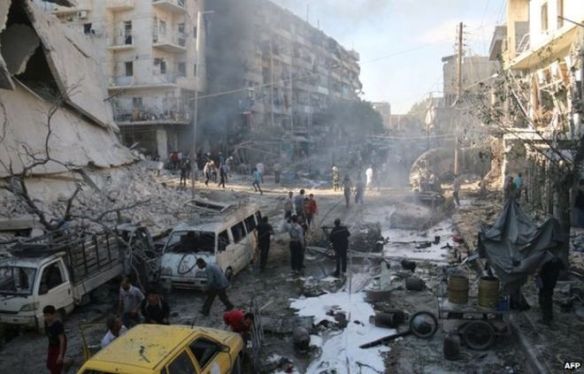
A Nonviolent Strategy to Liberate Syria

_74590478_00e0aa73-8303-4224-89de-0029b5e5eae1

Editor’s note: While we do not completely agree with the author’s analysis of factors leading to the strife in Syria, we share his desire for greater peace, freedom and stability in the region.

By Robert J. Burrowes

In early 2011, as the Arab Spring was moving across North Africa and the
Middle East, small groups of nonviolent activists in Syria, which has
been under martial law since 1963, started protesting against the brutal
dictatorship of Bashar al-Assad and demanding democratic reforms, the
release of political prisoners, an increase in freedoms, abolition of
the emergency law and an end to corruption.

By mid-March these protests, particularly in cities such as Damascus,
Aleppo and Daraa, had escalated and the ‘Day of Rage’ protest on 15
March 2011 is considered by many to mark the start of the nationwide
uprising against the Assad dictatorship. The dictatorship’s reaction to
the protests became violent on 16 March and on 18 March, after Friday
prayers, activists gathered at the al-Omari Mosque in Daraa were
attacked by security forces with water cannons and tear gas, followed by
live fire; four nonviolent activists were killed.

Within months, as the nonviolent protests expanded and spread, the
regime had killed hundreds of activists and arbitrarily arrested
thousands, subjecting many of them to brutal torture in detention. This
pattern has continued unchecked. For the earliest of a succession of
reports that document this regime violence against nonviolent activists,
see the Human Rights Watch report ‘”We’ve Never Seen Such Horror” Crimes
against Humanity by Syrian Security Forces‘.

For the most recent report, see the UN Human Rights Council report ‘Out
of Sight, Out of Mind: Deaths in Detention in the Syrian Arab Republic‘.

In recent commentaries on the war in Syria, both long-time solidarity
activist Terry Burke – see ‘U.S. Peace Activists Should Start Listening
to Progressive Syrian Voices
– and long-term Middle East scholar Professor Stephen Zunes have
encouraged the anti-war movement to listen to Syrian voices in framing
their response, particularly given the tendency within some sections of
it to support ‘the extraordinarily brutal Assad regime – a family
dictatorship rooted in the anti-leftist military wing of the Baath
Party’. See ‘Anti-war movement must listen to voices within Syria’s
civil war’.

One such Syrian voice is that of scholar and nonviolent activist
Professor Mohja Kahf. In her account of the Syrian uprising against the
Assad dictatorship – see ‘Then and Now: The Syrian Revolution to Date. A
young nonviolent resistance and the ensuing armed struggle
– Professor Kahf offers the following introductory paragraphs:

‘The Syrian uprising sprang from the country’s grassroots, especially
from youth in their teens, and adults in their twenties and thirties.
They, not seasoned oppositionists, began the uprising, and are its core
population. They share, rather than a particular ideology, a
generational experience of disenfranchisement and brutalization by a
corrupt, repressive, and massively armed ruling elite in Syria.

‘The uprising began nonviolently and the vast majority of its populace
maintained nonviolence as its path to pursue regime change and a
democratic Syria, until an armed flank emerged in August 2011.

‘The Syrian Revolution has morphed. From midsummer to autumn 2011, armed
resistance developed, political bodies formed to represent the
revolution outside Syria, and political Islamists of various sorts
entered the uprising scene. Since then, armed resistance has
overshadowed nonviolent resistance in Syria.

‘…political bodies and support groups for the revolution’s militarized
wing, have become venues for internal power struggles among opposition
factions and individuals, and entry-points for foreign powers attempting
to push their own agendas into a revolution sprung from Syrian
grievances, grown from the spilling of Syrian blood on Syrian soil.

‘Many in the global peace community can no longer discern the Syrian
uprising’s grassroots population through the smoke of armed conflict and
the troubling new actors on the scene. Further, some in the global left
or anti-imperialist camp understand the Syrian revolution only through
the endgame of geopolitics. In such a narrative, the uprising population
is nothing but the proxy of U.S. imperialism.

‘Such critics may acknowledge that the Assad regime is brutal, but
maintain from their armchairs that Syrians must bear this cost, because
this regime has its finger in the dike of U.S. imperialism, Zionism, and
Islamism. Or, perhaps they agree that a revolution against a brutal
dictator is not a bad idea, but wish for a nicer revolution, with better
players. Eyes riveted to their pencils and rulers and idées fixés, such
critics abandon a grassroots population of disenfranchised human beings
demanding basic human freedoms in Syria. This is a stunning and cruel
failure of vision.

‘The voices of the original grassroots revolution of Syria are
nonviolent, nonsectarian, noninterventionist, for the fall of the Assad
regime, and for the rise of a democratic, human rights upholding Syria
that is bound by the rule of law. They are still present in this
revolution. Who will hear them now, after so much dear blood has been
spilled, so much tender flesh crushed under blasted blocks of cement, so
much rightful anger unleashed?’

Other Syrian voices offer a similar account. See, for example, the
recent book by Robin Yassin-Kassab and Leila al-Shami titled ‘Burning
Country: Syrians in Revolution and War’
reviewed in ‘Book Review: Burning Country‘.

If Syrians and their solidarity allies are to develop and implement a
successful nonviolent grassroots strategy to end the war in/on Syria and
remove the Assad dictatorship, then we need a sound strategic framework
that guides the comprehensive planning of our strategy. Obviously, there
is no point designing a strategy that is incomplete or cannot be
successful.

A sound strategic framework simply enables us to think and plan
strategically so that once our strategy has been elaborated, it can be
widely shared and clearly understood by everyone involved. It also means
that nonviolent actions can then be implemented because they are known
to have strategic utility and that precise utility is understood in
advance. There is little point taking action at random, especially if
our opponent is powerful and committed (even if that ‘commitment’ is
insane, which is frequently the case).

There is a simple diagram presenting a 12-point strategic framework
illustrated here in the form of the ‘Nonviolent Strategy Wheel‘.

In order to think strategically about nonviolently resolving a violent
conflict, a clearly defined political purpose is needed; that is, a
simple summary statement of ‘what you want’. However, given the
complexity of the multifaceted conflict in the case of Syria, it is
strategically simpler to identify two political purposes. These might be
stated thus: 1. To end the war in/on Syria, and 2. To establish a
democratic form of government in Syria (which, obviously, requires
removal of the dictatorship).

Once the political purpose has been defined, the two strategic aims
(‘how you get what you want’) of the strategy acquire their meaning.
These two strategic aims (which are always the same whatever the
political purpose) are as follows: 1. To increase support for your
campaign by developing a network of groups who can assist you. 2. To
alter the will and undermine the power of those groups who support the
war/dictatorship.

While the two strategic aims are always the same, they are achieved via
a series of intermediate strategic goals which are always specific to
each struggle. To keep this article reasonably straightforward, I have
only identified a set of strategic goals that would be appropriate in
the context of ending the war in/on Syria below. For a basic set of
strategic goals appropriate for ending the dictatorship, see ‘Strategic
Aims‘.

Before listing the strategic goals for ending the war, I wish to
emphasize that I have only briefly discussed two aspects of a
comprehensive strategy to end the war in/on Syria: its political purpose
and its two strategic aims (with its many subsidiary strategic goals).
For the strategy to be effective, all twelve components of the strategic
framework should be planned (and then implemented). See Nonviolent
Defense/Liberation Strategy.
This will require, for example, that tactics that will achieve the
strategic goals must be carefully chosen and implemented bearing in mind
the vital distinction between the political objective and strategic goal
of any such tactic. See ‘The Political Objective and Strategic Goal of
Nonviolent Actions‘.

Strategic goals to end the war in/on Syria

I have outlined a basic list of strategic goals below although, it
should be noted, the list would be considerably longer as individual
organizations should be specified separately.

Many of these strategic goals would usually be tackled by action groups
working in solidarity with Syria campaigning within their own country.
Ideally they would be undertaken by activist groups with existing
expertise in the relevant area (for example, experience in campaigning
against a weapons corporation) but this is not essential.

Of course, individual activist groups would usually accept
responsibility for focusing their work on achieving just one or a few of
the strategic goals (which is why any single campaign within the overall
strategy is readily manageable).

It is the responsibility of the struggle’s strategic leadership to
ensure that each of the strategic goals, which should be identified and
prioritized according to their precise understanding of the
circumstances in Syria, (so, not necessarily precisely as identified
below) is being addressed (or to prioritize if resource limitations
require this).

So here is a set of strategic goals to end the war in/on Syria:

(1) To cause the women in [women’s organizations WO1, WO2, WO…] in Syria
to join the liberation strategy by participating in [your nominated
nonviolent action(s)/campaign(s) and/or constructive program
activities]. For example, simple nonviolent actions would be to wear a
national symbol (such as a badge of the Syrian revolutionary flag and/or
ribbons in the national colors) and/or to boycott all media outlets
supporting the war. For this item and many items hereafter, see the list
of possible actions that can be taken here: ‘198 Tactics of Nonviolent Action‘.

(2) To cause the workers in [trade unions T1, T2, T…] in Syria to join
the liberation strategy by participating in [your nominated nonviolent
action(s)/campaign(s) and/or constructive program activities]. For
example, this might include withdrawing their labor from occupations
that support the Syrian military forces.

(3) To cause young people in Syria to resist conscription into the
Syrian military forces.

(4) To cause young people in Syria to refuse recruitment into the Free
Syrian Army, al-Qaeda and its affiliates/allies, the Islamic State
(Daesh) and its allies.

(5) To cause the members of [religious denominations R1, R2, R…] in
Syria to join the liberation strategy by participating in [your
nominated nonviolent action(s)/campaign(s) and/or constructive program
activities].

(6) To cause the members of [ethnic communities EC1, EC2, EC…] in Syria
to join the liberation strategy by participating in [your nominated
nonviolent action(s)/campaign(s) and/or constructive program
activities].

(7) To cause the activists, artists, musicians, intellectuals and other
key social groups in [organizations O1, O2, O…] in Syria to join the
liberation strategy by participating in [your nominated nonviolent
action(s)/campaign(s) and/or constructive program activities].

(8) To cause the students in [student organizations S1, S2, S…] in Syria
to join the liberation strategy by participating in [your nominated
nonviolent action(s)/campaign(s) and/or constructive program
activities].

(9) To cause the soldiers in [military units M1, M2, M…] to refuse to
obey orders from the dictatorship to arrest, assault, torture and shoot
nonviolent activists and the other citizens of Syria.

(10) To cause the police in [police units P1, P2, P…] to refuse to obey
orders from the dictatorship to arrest, assault, torture and shoot
nonviolent activists and the other citizens of Syria.

(11) To cause young people in [the US, NATO countries, Russia and other
countries fighting in Syria] to refuse recruitment into their respective
military forces.

(12) To cause conscripts into the military forces of [NATO countries,
Russia and other countries fighting in Syria] that still use
conscription to conscientiously refuse to perform military duties.

(13) To cause military personnel in the military forces of [the US, NATO
countries, Russia and other countries fighting in Syria] to refuse
deployment to the war in/on Syria.

(14) To cause young people in [your country] to refuse recruitment into
the Free Syrian Army, al-Qaeda and its affiliates/allies, the Islamic
State (Daesh) and its allies.

(15) To cause former soldiers in [your country] to refuse recruitment as
mercenaries by corporations that supply ‘military contractors’ to fight
in Syria.

(16) To cause the activists in [peace groups P1, P2, P…] in [your
town/city/country] to resist the war on Syria by encouraging their
members to boycott [all/specified nonmilitary products] of [weapons
corporations W1, W2, W…]. For example, this might include boycotting all
commercial flights that use Boeing and Airbus passenger aircraft given
the heavy involvement of these corporations in the production of
military aircraft.

(17) To cause the activists in [environment groups E1, E2, E…] in [your
town/city/country] to resist the war on Syria by encouraging their
members to boycott [all/specified nonmilitary products] of [weapons
corporations W1, W2, W…]. For example, this might including boycotting
all commercial products of General Electric given the heavy involvement
of this corporation in the production of military engines, systems and
services.

(18) To cause the workers in [trade unions or labor organizations T1,
T2, T….] in [your town/city/country] to resist the war on Syria by
encouraging their members to boycott [all/specified nonmilitary
products] of [weapons corporations W1, W2, W…].

(19) To cause the women in [women’s organizations WO1, WO2, WO…] in
[your town/city/country] to resist the war on Syria by encouraging their
members to boycott [all/specified nonmilitary products] of [weapons
corporations W1, W2, W…].

(20) To cause the members of [religious denominations R1, R2, R…] in
[your town/city/country] to resist the war on Syria by encouraging their
members to boycott [all/specified nonmilitary products] of [weapons
corporations W1, W2, W…].

(21) To cause the members of [ethnic communities EC4, EC5, EC…] in [your
town/city/country] to resist the war on Syria by encouraging their
members to boycott [all/specified nonmilitary products] of [weapons
corporations W1, W2, W…].

(22) To cause the artists, musicians, intellectuals and other key social
groups in [organizations O4, O5, O…] in [your town/city/country] to
resist the war on Syria by encouraging their members to boycott
[all/specified nonmilitary products] of [weapons corporations W1, W2,
W…].

(23) To cause the students in [student organizations S1, S2, S…] in
[your town/city/country] to resist the war on Syria by encouraging their
members to boycott [all/specified nonmilitary products] of [weapons
corporations W1, W2, W…].

(24) To cause the consumers in [your town/city/country] to resist the
war on Syria by boycotting [all/specified nonmilitary products] of
[weapons corporations W1, W2, W…].

(25) To cause more individuals in [your town/city/country] to resist the
war on Syria by conscientiously resisting paying [part/all] of their
taxes for war.

(26) To cause more organizations in [your town/city/country] to resist
the war on Syria by conscientiously resisting paying [part/all] of their
taxes for war.

(27) To cause [weapons corporations W4, W5, W…] to convert from the
manufacture of military weapons to [the specified/negotiated
socially/environmentally beneficial products].

(28) To cause [banks B1, B2, B…] to cease financing the weapons
industry.

(29) To cause bank customers to shift their deposits to ethical banks
and credit unions that do not finance (or are otherwise involved in) the
weapons industry.

(30) To cause [religious organizations R4, R5, R…] to divest from the
weapons industry.

(31) To cause [superannuation funds S1, S2, S…] to divest from the
weapons industry.

(32) To cause superannuation fund customers to shift their money to
ethical funds that do not finance (or are otherwise involved in) the
weapons industry.

(33) To cause [insurance companies I1, I2, I…] to divest from the
weapons industry.

(34) To cause insurance customers to shift their policies to ethical
insurance companies that do not finance (or are otherwise involved in)
the weapons industry.

(35) To cause [corporations C1, C2, C…] that provide
[services/components] for [weapons corporations W1, W2, W…] to cease
doing so.

(36) To cause the workers in [trade unions or labor organizations T4,
T5, T…] to withdraw their labor from [weapons corporations W1, W2, W…]
[partially/wholly], [temporarily/permanently].

(37) To cause the workers in [trade unions or labor organizations T7,
T8, T…] to withdraw their labor from [corporations C1, C2, C…]
[partially/wholly], [temporarily/permanently].

(38) To cause [corporations C4, C5, C…] that provides
[services/supplies] to [military bases MB1, MB2, MB…] to cease doing so.

(39) To cause the workers in [trade unions or labor organizations T10,
T11, T…] who work in/supply [military bases MB1, MB2, MB…] to withdraw
their labor [partially/wholly], [temporarily/permanently].

(40) To cause the workers in [trade unions or labor organizations T13,
T14, T…] to withdraw their labor from [corporations C4, C5, C…]
[partially/wholly], [temporarily/permanently].

(41) To cause [corporations C7, C8, C…] that manufacture and supply spy
satellites for military purposes to cease doing so.

(42) To cause the workers in [trade unions or labor organizations T16,
T17, T…] to withdraw their labor from [corporations C7, C8, C…]
[partially/wholly], [temporarily/permanently].

(43) To cause [corporations C10, C11, C…] that provide
[services/components] for the militarization of space to cease doing so.

(44) To cause the workers in [trade unions or labor organizations T19,
T20, T…] to withdraw their labor from [corporations C10, C11, C…]
[partially/wholly], [temporarily/permanently].

(45) To cause [corporations C13, C14, C…] that provide private military
contractors (mercenaries) to fight in wars to cease doing so.

(46) To cause the private military contractors (mercenaries) who fight
in wars to withdraw their labor from [corporations C13, C14, C…].

(47) To cause the soldiers in [military units M1, M2, M…] in [your
town/city/country] to refuse to obey orders to [arrest, assault, torture
and shoot, depending on your local circumstances] nonviolent activists
campaigning against the war.

(48) To cause the police in [police units P1, P2, P…] in [your
town/city/country] to refuse to obey orders to [arrest, assault, torture
and shoot, depending on your local circumstances] nonviolent activists
campaigning against the war.

(49) To cause individual members of the military forces at [Military
Base MB1/Drone Base DB1/Navy Ship NS1/Air Force Base AFB1/Army unit
AU1/Marines unit MU1] in [your town/city/country] to resign.

(50) To cause individual members of those corporations that
employ/supply private military contractors (mercenaries) to resign.

As you can see, the two strategic aims are achieved via a series of
intermediate strategic goals.

Not all of the strategic goals will need to be achieved for the strategy
to be successful but each goal is focused in such a way that its
achievement functionally undermines the power of those conducting the
war.

The difference between success and failure in any struggle is the
soundness of the strategy.


Biodata: Robert J. Burrowes has a lifetime commitment to understanding and ending human violence. He has done extensive research since 1966 in an effort to understand why human beings are violent and has been a nonviolent activist since 1981. He is the author of ‘Why Violence?‘ His email address is flametree@riseup.netand his website is at http://robertjburrowes.wordpress.com

Robert J. Burrowes
P.O. Box 68
Daylesford
Victoria 3460
Australia
Email: flametree@riseup.net

Websites:
Nonviolence Charter
Flame Tree Project to Save Life on Earth
‘Why Violence?’
Nonviolent Campaign Strategy
Nonviolent Defense/Liberation Strategy
Anita: Songs of Nonviolence
Robert Burrowes
Global Nonviolence Network

Resistance is Fertile: The Art of Having No Masters

518d2cb7d767433a327846150d5be280

By Gary ‘Z’ McGee

Source: Waking Times

“You don’t become completely free by just avoiding being a slave; you also need to avoid becoming a master.” ~Naseem Nicholas Taleb

In the midst of a hyper-violent culture blinded by the statist agenda of control, militarized cops brainwashed by the statist notion of law and order, and a bloated military with the monopoly on power through tyranny, it’s difficult for the would-be-resister to live with any confidence that their freedom will not be compromised by the violent thugs in power or by the indoctrinated statists that represent the majority.

Difficult time to be free. Made even more difficult because of the level of psychosocial statist programming causing the majority to believe that everything is okay as long as they keep voting. Caught up in their hyper-realities, going through the motions of being an abstraction of an abstraction, the ignorant statists are convinced that everything is just fine, that the authority of the state is necessary, that the militarization of the police will help keep them protected, that an obese, money-sucking, terrorist-generating military will somehow make them more secure. What is this, 1984? What’s next? War is peace? Freedom is slavery? Ignorance is strength? Sadly, in some ways, we’re already there.

The problem with statism is that everything seems okay inside the bubble, but the bubble is always about to burst. Statism is slavery by consent. It hoodwinks people into enjoying their servitude. It (brain)washes out logic and reasoning through nationalism and patriotism, thus scrambling the ignorant statist’s brain into exploitable soup. Bombarded by state-engineered symbols that the statist marries their fragile ego to, statism is by far the most dangerous religion. Made all the more dangerous because people are born and bred into being statists and cannot even imagine thinking outside its box.

But resistance is not futile. It only seems that way because we are surrounded by the Goliath that is the state. No, on a long enough timeline, resistance is fruitful. Resistance always has, and always will, lead to human flourishing. It might not always be pretty, but resistance to any and all standing orders (manmade laws), is the key to a healthy, sustainable, and progressive evolution for our species.

The art of having no masters is perfecting the science of resistance. But resistance isn’t fairytale romantic. It’s not pretend confliction. It takes effort. It takes perseverance. It takes counterintuitive ruthless compassion, usually in the face of those you care about. Definitely not for the faint of heart. But, then again, having a faint heart is for statists who imagine they need a master, not for anarchists who know they need only master themselves. Yes, resistance is fertile but, more than anything, it’s courageous, uncomfortable, and dangerous.

Let’s break it down…

Resistance is Courageous

“I’d rather attempt to do something great and fail than to attempt to do nothing and succeed.” ~Robert H. Schuller

The art of having no masters cannot be rationalized until one has the audacity to question things as they are. As Chomsky famously stated, “The general population doesn’t even know what’s happening, and it doesn’t even know that it doesn’t know.” Indeed. Until the individual stands up and dares to jut his/her head above the sea of status quo conformity, they will continue to be ruled. But being ruled, or not, is always a state of mind. Until the individual has the audacity to change their state of mind to self-rule despite those who seek to rule them, their “soft slavery” will continue.

Statism is the epitome of soft slavery. Statists are like house slaves. There just happen to be a lot more of them, and the “house” is the state. As long as the house slave (statist) doesn’t disobey the house master (the state), they live relatively comfortable and secure lives. All their needs are met. Except, of course, the need for freedom and self-ownership.

Thus, it takes a particular flavor of courage to rise above the comfort and security in order to actualize self-mastery. The statist who merely goes along with the state’s agenda, attempts nothing great, and succeeds. The anarchist who rises above the washed-out conformity of it all, attempts something great and, though he may fail, he at least gains self-authority and takes his first steps toward self-mastery and perfecting the art of having no masters.

Resistance is Uncomfortable

“To live by the dice or accept death with confidence requires a consummate self-possession, which is the essence of character. No one becomes a hero staying at home, going to the office, or attending church.” ~Michael Dirda

The art of having no masters is not a pleasant art. It is in all ways disruptive. It is completely unsettling. Much cognitive dissonance must be successfully navigated. And there are always setbacks. Because the art of having no masters means having the courage to (at least attempt to) master the individual self, despite those who seek to rule the individual’s self, it is never comfortable. Though one can glean much comfort out of owning oneself, it’s never easy. Especially in a world that thinks everything should be owned.

One is constantly outnumbered. Whether it’s the giant goliath of the state itself or the tiny goliath of the inured statist, it can be painfully and awkwardly uncomfortable. But resisting those who would rule you was never meant to be comfortable. As Brene’ Brown stated, “You can have courage or you can have comfort, but you can’t have both.”

Indeed. Those seeking to perfect the art of having no masters must embrace the discomfort that comes with rocking the boat. It’s a double-edged sword, for sure. On the one side is sweet freedom, but on the other side is taking the painful responsibility for that freedom. But the genuinely autonomous, the authentic seekers of freedom, the true anarchists, will always choose to stab themselves with that double-edged sword, no matter how uncomfortable or painful it might be. Thereby taking the next step toward self-mastery and further perfecting the art of having no masters.

Resistance is Dangerous

“The Matrix is a system, Neo. That system is our enemy. But when you’re inside, you look around, what do you see? Businessmen, teachers, lawyers, and carpenters; the very minds of the people we are trying to save. You have to understand, most of these people are not ready to be unplugged. And many of them are so inured, so hopelessly dependent upon the system, they will fight to protect it.” ~Morpheus, The Matrix

If resistance is dangerous, then the art of having no masters is doubly dangerous. Especially in a world where the majority of the people are dead-set on having masters. In a world where the majority are convinced they need a queen, or a king, or a president, it makes it problematic for those who are seeking to take responsibility for their own power and who are teaching self-leadership. It’s dangerous because people are afraid of what they don’t understand. And the majority of people simply cannot understand a world without rulers and masters. Talk about not being able to think outside the box, let alone the Matrix.

Everyone wants to give their power to an authority, never stopping to think that authority should be themselves. Everyone wants to be Neo, but nobody wants to take responsibility for their own power. Sure, give credit where credit is due (as Neo did with Morpheus), for true leadership is an honorable thing indeed, but not to the extent that your freedom is discredited and your power is taken away. Self-empowerment is the key to unlocking the door of having no masters. And it leads to authentic leadership.

With all these people giving up their power, in Stockholm-syndrome-esque proportions, it makes it difficult for the would-be self-master to work on his/her self-mastery. But work on it they should. We need more leaders who are able to resist. We need more courageous individuals who are not afraid of getting uncomfortable or facing the danger of being right when the majority of people are wrong. We need more self-empowered individuals seeking to empower others, despite a world that’s attempting to take that power away. We need more trailblazers who are not afraid to spearhead self-authority straight through the heart of state-authority. We need leaders who have the audacity to teach self-leadership and self-rule through self-empowerment, despite the state which only seeks to rule by the illusion of authority through the overreach of violent power.

In short: we need more people who care about life to resist those who do not, because life is freedom and freedom is life. That is the heart and soul of the art of having no masters. As Derrick Jensen said, “We are the governors as well as the governed. This means that all of us who care about life need to force accountability onto those who do not.”

Gandhi: ‘My life is my message’

mahatma-gandhi


Robert J. Burrowes

As most of the world ignores or hypocritically celebrates the 147th birthday of Mohandas Karamchand Gandhi on the International Day of Nonviolence on 2 October, some of us will quietly acknowledge his life by continuing to build the world that he envisioned. When asked for his message for the world, Gandhi responded with the now famous line ‘My life is my message’ reflecting his lifelong struggle against violence.

Gandhi’s life was dotted with many memorable quotes but one that is less well known is this: ‘You may never know what results come of your actions but if you do nothing there will be no results’.

Fortunately, there are many committed people who have identified the importance of taking action to end the violence in our world – whether it occurs in the home or on the street, in wars, as a result of economic exploitation or ecological destruction – and this includes the courageous people below. These people have identified themselves as part of the worldwide network, now with participants in 96 countries, committed to ending violence in all of its forms. I would like to share their inspirational stories and invite you to join them.

Christophe Nyambatsi Mutaka is the key figure at the Groupe Martin Luther King which promotes active nonviolence, human rights and peace. The group is based in Goma in the eastern Democratic Republic of the Congo (DRC) in central Africa. They particularly work on reducing sexual and other violence against women.

Also based in Goma, the Association de Jeunes Visionnaires pour le Développement du Congo headed by Leon Simweragi is a youth peace group that works to rehabilitate child soldiers as well as offer meaningful opportunities for the sustainable involvement of young people in matters that affect their lives and those of their community.

Given the phenomenal suffering in the DRC, which has experienced the loss of six million lives and the displacement of eight million people due to the long war driven by Western corporations keen to exploit the country’s mineral wealth, Christophe, Leon and their colleagues are testimony to the fact that committed people strive in the most adverse of circumstances.

Tess Burrows in the UK is an adventurer (including parachutist, mountaineer, cyclist and marathon runner), peace activist, author, speaker, healer, and ‘most importantly a mother and grandmother’. In her words: ‘I am dedicated to the pursuit of World Peace and the healing of the Earth.’ Tess has written several books and, if you are looking for inspiration, I suggest you try these: ‘Cry from the Highest Mountain’ (describing a climb to the point furthest from the centre of the Earth), ‘Cold Hands, Warm Heart’ (describing a trek across the coldest, driest, windiest place on Earth: the Geographic South Pole), ‘Touch the Sky’ (describing her climb of Mt Kilimanjaro, in Africa’s heartland, pulling a car tyre which included peace messages from every nation on Earth and embodying their desire for everyone to pull together to promote peace) and her latest book ‘Soft Courage’. Her video ‘Climb For Tibet’ won’t bore you either! The funds raised from sales of the books and donations have, among other things, built six schools in Tibet and supported a Maasai community tree-planting project in Africa. Tess collects messages of peace from individuals and speaks them out from ‘far high places’. So far, this has included the North and South Poles, the Himalayas, Andes, Pacific and Africa. You can be part of her next Peace Climb in Australasia by writing your personal message on her website where you can also check out her books. Be warned however, this website will exhaust you!

Recently, on the International Day of Peace, the Afghan Peace Volunteers and Borderfree Street Kids in Kabul, mentored by Dr Teck Young Wee (Hakim), reached out to the visually impaired and blind students at Rayaab (Rehabilitation Services for the Blind Afghanistan). They brought MP3 players as gifts to 50 visually impaired students. The students will use the MP3 players to listen to recorded school lessons and educational programs. Rayaab is an Afghan non-governmental organization run by Mahdi Salami and his wife Banafsha, who are themselves visually impaired. If you want to see photos from this day, and to watch an extraordinary three minute video, you can do so at ‘To Touch a Colourful Afghanistan‘.

Kristin Christman in the USA continues her tireless efforts to make our world more peaceful by seeking to understand the deeper drivers of conflict while offering practical steps forward. She is currently working on a book based on her monumental ‘Taxonomy of Peace: A Comprehensive Classification of the Roots and Escalators of Violence and 650 Solutions for Peace‘. A recent rather personal article offers insight into her approach: ‘Make serving in war an option, not an order‘ and illustrates how violence is ‘built-into’ society.

Ghanaian Gifty A. Korankye has just developed a new website titled ‘Daughters of Africa‘. Explaining why, she writes: ‘Over the years I watched women go through unbearable pain …. Our daughters go through FGM in their puberty…. The humiliation we face when we lose our spouse, all in the name of customs and tradition.’ Determined to help address the issues that plague many African women she wants to give them the chance to be ‘a useful voice to our communities’, to share the success stories of African women and African-American women in business administration, the entertainment industry and elsewhere in order to share learning from their journeys and to ‘help mentor our young generation’. She invites African women to write to share their stories and work together to find solutions. ‘We
can do it because we are daughters of Africa.’

So what about you? Do you believe that ending human violence is possible? Even if you believe that it is not, do you believe that it is worth trying? As Gandhi noted: ‘The future depends on what we do in the present.’ What will you do?

In essence, working to end human violence and to create a world of peace, justice and ecological sustainability for all life on Earth might not be what gets you out of bed in the morning. But if it is or you would like it to be, you are welcome to join those of us who are committed to striving for this outcome by signing the online pledge of ‘The People’s Charter to Create a Nonviolent World’.

And if you subscribe to Gandhi’s belief that ‘Earth provides enough to satisfy every [person’s] needs, but not every [person’s] greed’, then you might consider participating in ‘The Flame Tree Project to Save Life on Earth‘ which he inspired as well.

Each of us has a choice. We can stand aside in the great fight for survival in which humanity is now engaged. Or we can be involved. What is your choice?

The bottom line is this: What will be the message of your life?


Biodata: Robert J. Burrowes has a lifetime commitment to understanding and ending human violence. He has done extensive research since 1966 in an effort to understand why human beings are violent and has been a nonviolent activist since 1981. He is the author of ‘Why Violence?‘.
His email address is flametree@riseup.net
and his website is at http://robertjburrowes.wordpress.com


Robert J. Burrowes
P.O. Box 68
Daylesford
Victoria 3460
Australia
Email: flametree@riseup.net

Websites:
Nonviolence Charter
Flame Tree Project to Save Life on Earth
‘Why Violence?’
Nonviolent Campaign Strategy
Nonviolent Defense/Liberation Strategy
Anita: Songs of Nonviolence
Robert Burrowes
Global Nonviolence Network

An Open Letter to the People of Brazil

dilma-jpg_1718483346

By Robert J. Burrowes

As I read of the latest coup in Brazil, once again removing a democratically elected leader from power, my anger surged. Not again! However, as I see and read about the ongoing massive protests, as well as calls by prominent community leaders to mobilize in defense of your country’s democracy, I feel great hope for Brazil. Having been a nonviolent activist for many years, I would like to support Brazilian activists to develop a nonviolent strategy that will increase your chances of success.

On 31 August 2016, the Brazilian elite executed a political coup to remove your democratically elected president Dilma Rousseff from office in a desperate attempt to halt corruption investigations in which they are clearly implicated. See ‘Democracy Is Dead in Brazil‘ and ‘The Real Reason Brazil’s Democratically Elected Dilma Rousseff Was Impeached‘.

Behind the scenes, of course, the United States elite was heavily involved. With vast quantities of highly profitable fossil fuels, mineral and forest resources, as well as fresh water at stake, the US elite (and its allied elites) is not going to stand aside while Brazil
and BRICS endeavour to create a more just world for at least some of its human inhabitants. See ‘Impeachment of Dilma Rousseff: Brazil’s Parliamentary Coup and the “Progressive Media”‘.

Despite what has happened and as your ongoing street protests demonstrate, you know that you do not have to accept this outcome. You also know that you do not have to wait until the 2018 election to register your disapproval of this coup.

In fact, you can reverse this coup and restore the president you first elected in 2010 to finish her current term so that her party can face your judgment in 2018. And this is what Joao Pedro Stedile, a founder and leader of the Landless Workers’ Movement in Brazil has called on you to do. See ‘MST: Social Movements Must Rise up Against Coup Govt in Brazil‘.

If you do this, you will also have widespread support among your solidarity allies around the world as indicated in this letter: ‘Noam Chomsky, Oliver Stone Sign Letter Against Brazil’s Coup‘.

Given my own support for your right to elect any president of your choice (and to remove them if necessary at a subsequent election), I invite you to consider planning and implementing a nonviolent strategy to remove the coupmakers in your country and restore the president that you elected.

If you are interested in doing so, I have outlined a strategy for removing coupmakers on the website Nonviolent Defense/Liberation Strategy which is a straightforward presentation of the more detailed explanation offered in the book ‘The Strategy of Nonviolent Defense: A Gandhian Approach‘.

If you want an idea of the twelve components of strategy that you will need to plan, you can see them on the Nonviolent Strategy Wheel. If you want a taste of how this strategy works (at the tactical level), you will get it by reading ‘The Political Objective and Strategic Goal of Nonviolent Actions‘.

Vitally, the strategic goals need to include mobilizing people in strategically focused ways and causing the police and military to withdraw their support for the coupmakers. It will usefully include causing key local and foreign corporations to withdraw their support too. This would usually include corporations involved in the weapons industry, the mainstream media, banks and the resource extraction of fossil fuels, strategic minerals, forest products and fresh water. To make it clear, I have listed a provisional set of strategic goals that you might consider modifying as appropriate below.

Of course, as suggested above, you will need a comprehensive strategy and it might take some time to plan and then fully implement.

However, if you do plan and implement a comprehensive strategy, you have every chance of reversing this coup with minimal loss of life. For example, the article ‘Nonviolent Action: Minimizing the Risk of Violent Repression‘ identifies 20 things that you can do to minimize the risk that your mobilizations will be violently repressed. This article was written after a careful study, throughout history, of nonviolent mobilizations that were met with extreme violence.

Suggested Strategic Goals in a Nonviolent Strategy to Liberate Brazil

Strategic goals that would usually be appropriate for resisting a political or military coup include those listed below although, it should be noted, the list would be considerably longer as individual organizations should be specified separately.

Of course, individual groups resisting the coup would usually accept responsibility for focusing their work on achieving just one or two of the strategic goals. It is the responsibility of the struggle’s strategic leadership to ensure that each of the strategic goals, which should be identified and prioritized according to your precise understanding of the circumstances in Brazil, is being addressed.

(1) To cause the women in [women’s organizations WO1, WO2, WO…] in
Brazil to join the liberation strategy by participating in [your
nominated nonviolent action(s)/campaign(s) and/or constructive program
activities]. For example, simple nonviolent actions would be to wear a
national symbol (such as a badge of your national flag or ribbons in the
national colors), to boycott all corporate media outlets supporting the
coup and/or to withdraw all funds from banks supporting the coup. For
this item and many items hereafter, see the list of possible actions you
can take here: ‘198 Tactics of Nonviolent Action’.
https://nonviolentliberationstrategy.wordpress.com/strategywheel/tactics-and-peacekeeping/198-tactics-of-nonviolent-action/

(2) To cause the workers in [trade unions or labor organizations T1, T2,
T…] in Brazil to join the liberation strategy by participating in [your
nominated nonviolent action(s)/campaign(s) and/or constructive program
activities]. For example, this might include withdrawing their labor
from an elite-controlled or foreign-owned bank/corporation operating in
Brazil.

(3) To cause the small farmers and farmworkers in [organizations F1, F2,
F…] in Brazil to join the liberation strategy by participating in
[your nominated nonviolent action(s)/campaign(s) and/or constructive
program activities].

(4) To cause the members of [religious denominations R1, R2, R…] in
Brazil to join the liberation strategy by participating in [your
nominated nonviolent action(s)/campaign(s) and/or constructive program
activities].

(5) To cause the members of [ethnic communities EC1, EC2, EC…] in Brazil
to join the liberation strategy by participating in [your nominated
nonviolent action(s)/campaign(s) and/or constructive program
activities].

(6) To cause the activists, artists, musicians, intellectuals and other
key social groups in [organizations O1, O2, O…] in Brazil to join the
liberation strategy by participating in [your nominated nonviolent
action(s)/campaign(s) and/or constructive program activities].

(7) To cause the students in [student organizations S1, S2, S…] in
Brazil to join the liberation strategy by participating in [your
nominated nonviolent action(s)/campaign(s) and/or constructive program
activities].

(8) To cause the soldiers in [military units M1, M2, M…] to refuse to
obey orders from the coupmakers to arrest, assault, torture and shoot
nonviolent activists and the other citizens of Brazil.

(9) To cause the police in [police units P1, P2, P…] to refuse to obey
orders from the coupmakers to arrest, assault, torture and shoot
nonviolent activists and the other citizens of Brazil.

(10) To cause businesspeople who conduct small businesses in
[organizations SB1, SB2, SB…] in Brazil to refuse to cooperate with the
coupmakers by participating in [your nominated nonviolent
action(s)/campaign(s) and/or constructive program activities].

(11) To cause businesspeople who operate multinational franchises in
[organizations MF1, MF2, MF…] in Brazil to refuse to cooperate with the
coupmakers by participating in [your nominated nonviolent
action(s)/campaign(s) and/or constructive program activities].

(12) To cause businesspeople who manage local branches of large
multinational corporations in [organizations MNC1, MNC2, MNC…] in Brazil
to refuse to cooperate with the coupmakers by participating in [your
nominated nonviolent action(s)/campaign(s) and/or constructive program
activities].

(13) To cause large farmers and ranchers in [organizations FO1, FO2,
FO…] in Brazil to refuse to cooperate with the coupmakers by
participating in [your nominated nonviolent action(s)/campaign(s) and/or
constructive program activities].

(14) To cause the foreign managers and technical workers [working for
resource extraction corporations X1, X2, X…] who are from [the United
States and other relevant countries where the elite supports the
coupmakers in Brazil] to withdraw from Brazil.

(15) To cause the workers [in trade union or labor organizations T4, T5,
T…] in [the United States and other relevant countries where the elite
supports the coupmakers in Brazil] to interrupt the supply of military
weapons to Brazil.

(16) To cause the workers in [trade unions or labor organizations T7,
T8, T…] in [the United States and other relevant countries where the
elite supports the coupmakers in Brazil] to interrupt the transport of
[military personnel/military weapons] to Brazil.

(17) To cause the workers in [trade unions or labor organizations T10,
T11, T…] in [the United States and other relevant countries where the
elite supports the coupmakers in Brazil] to support your liberation
struggle by refusing to handle [a particular resource] extracted and
exported from Brazil.

(18) To cause the workers [in trade unions or labor organizations T13,
T14, T…] working in [the United States and other relevant countries
where the elite supports the coupmakers in Brazil] to support your
liberation struggle by participating in [your nominated nonviolent
action(s)/campaign(s) and/or constructive program activities].

(19) To cause the women in [women’s organizations WO4, WO5, WO…] in [the
United States and other relevant countries where the elite supports the
coupmakers in Brazil] to support your liberation struggle by
participating in [your nominated nonviolent action(s)/campaign(s) and/or
constructive program activities].

(20) To cause the members of [religious denominations R4,R5, R…] in [the
United States and other relevant countries where the elite supports the
coupmakers in Brazil] to support your liberation struggle by
participating in [your nominated nonviolent action(s)/campaign(s) and/or
constructive program activities].

(21) To cause the solidarity activists in [activist organizations A1,
A2, A…] in [the United States and other relevant countries where the
elite supports the coupmakers in Brazil] to support your liberation
struggle by participating in [your nominated nonviolent
action(s)/campaign(s) and/or constructive program activities].

(22) To cause the members of [your exile communities E1, E2, E…] in [the
United States and other relevant countries where the elite supports the
coupmakers in Brazil] to support your liberation struggle by
participating in [your nominated nonviolent action(s)/campaign(s) and/or
constructive program activities].

(23) To cause the students in [students organizations S4, S5, S…] in
[the United States and other relevant countries where the elite supports
the coupmakers in Brazil] to support your liberation struggle by
participating in [your nominated nonviolent action(s)/campaign(s) and/or
constructive program activities].

In the struggle to make this world the place of peace, justice and environmental sustainability that it could be, the people of Brazil have been playing an inspirational role. You do not need to let this coup be more than a temporary setback. You also have solidarity allies around the world and many of us are willing to assist you, if you decide to let us play a role too.

For the liberation of Brazil,

Robert

Biodata: Robert J. Burrowes has a lifetime commitment to understanding
and ending human violence. He has done extensive research since 1966 in
an effort to understand why human beings are violent and has been a
nonviolent activist since 1981. He is the author of ‘Why Violence?‘ His email address is flametree@riseup.net and his website is here.

Websites:
http://thepeoplesnonviolencecharter.wordpress.com (Nonviolence Charter)
http://tinyurl.com/flametree (Flame Tree Project to Save Life on Earth)
http://tinyurl.com/whyviolence (‘Why Violence?’)
https://nonviolentstrategy.wordpress.com/ (Nonviolent Campaign Strategy)
https://nonviolentliberationstrategy.wordpress.com/ (Nonviolent Defense/Liberation Strategy)
http://anitamckone.wordpress.com (Anita: Songs of Nonviolence)
http://robertjburrowes.wordpress.com (Robert)
https://globalnonviolencenetwork.wordpress.com/ (Global Nonviolence Network)

Lament for Humanity: A 50 Year Reflection

Beryl & James Burrowes 1942 & 2016

Beryl & James Burrowes 1942 & 2016

By Robert J. Burrowes

Source: RINF

Deeply affected by the death of my two uncles in World War II, on 1 July 1966, the 24th anniversary of the USS Sturgeon sinking of the Japanese prisoner-of-war ship Montevideo Maru which killed the man after whom I am named, I decided that I would devote my life to working out why human beings are violent and then developing a strategy to end it.

The good news about this commitment was that it was made when I was nearly 14 so, it seemed, anything was possible. Now I am not so sure.

Here is my report on 50 years of concerted effort to understand and end human violence.

In 1966 one of my immediate preoccupations was war. The US genocidal war on Vietnam was raging and, as a sycophantic ally of the United States, Australia had been drawn into it some years previously. Trying to understand what this war was really about was challenging, particularly given the limited (mainstream) sources of information available to me at the time.

But I was deeply troubled by another problem too. I had seen a photo of a starving African child in the newspaper when I was ten and I found this most disturbing. Why did adults let children starve? I wondered. And trying to make sense of this by reading newspaper reports or asking those around me was utterly unenlightening.

By the early 1970s the environmental crisis was starting to impact on my awareness too, including through environmental campaigns I heard about and the ‘limits to growth’ literature published by the Club of Rome, which I read at University.

So where are we today?

Well, the most casual perusal of the state of our world reveals the ongoing (and recently heightened) threat of nuclear war and obliteration (on top of the ongoing and rapidly spreading radioactive contamination generated by Fukushima and the use of Depleted Uranium weapons), ongoing phenomenal levels of military spending and the endless push from corporate and other elite interests for more wars. Hence, we are witness to and, through our taxes, active supporters of an endless sequence of wars, military invasions, occupations and coups, virtually all of them instigated by the US elite and its allies, as well as a sequence of ‘local’ wars, also instigated by western elites and supplied with weapons by western corporations.

The global economy teeters on the brink of collapse and, of course, from the viewpoint of those 100,000 people in Africa, Asia and Central/South America who starve to death each day or those one billion people who live in a state of semi-starvation and abject poverty in many parts of the world, it has already ‘collapsed’. This all happens at the instigation of insane elites who continue to accumulate and hoard their wealth, much of it in illegal offshore tax havens. Given the enormous psychological damage that individual members of the elite have suffered, millions or even billions can never be enough.

And the environmental crisis has only become vastly worse with the synergistic impact of our combined assaults on the environment causing human extinction-threatening strain on the biosphere. These devastating assaults include those inflicted by military violence (often leaving vast areas uninhabitable), the emission of vast quantities of carbon dioxide, methane and nitrous oxide into the atmosphere, rainforest destruction, industrial farming, mining, commercial fishing and spreading radioactive contamination.

We are also systematically destroying the limited supply of fresh water on the planet and inducing the collapse of hydrological systems. Human activity drives 200 species of life (birds, animals, fish, insects, reptiles, amphibians, plants) to extinction each day and 80% of the world’s forests and over 90% of the large fish in the ocean are already gone.

Despite this readily available information, governments continue to prioritize spending $US2,000,000,000 each day on military violence, the sole purpose of which is to terrorize and kill fellow human beings, now or in the future.

In addition, you might have noticed the ongoing attacks on everything from our civil liberties and right to privacy to our right to eat healthy food that has not been poisoned and/or genetically mutilated.

So why does all of this happen? Well, 50 years of research and decades of nonviolent activism have had some rewards and particularly the research that Anita McKone and I conducted during our 14 years in seclusion (1996-2010) which fully explained why human beings are violent. In essence, it is an outcome of the visible, ‘invisible’ and ‘utterly invisible’ violence inflicted by adults on children. See ‘Why Violence?’ and ‘Fearless Psychology and Fearful Psychology: Principles and Practice’.

Moreover, this research also gave us enormous insight into the insanity of the global elite and those who serve them in order to maintain this worldwide system of violence and exploitation that is killing us all while destroying the biosphere. Whether it be the politicians who implement elite policies, the academics who ‘justify’ or remain silent about this violence and exploitation, the business people who manage it, the judges, magistrates, lawyers and prosecutors who defend and ultimately enforce it, the teachers and media personnel who teach and promote (or distract us from) it, or the soldiers, private military contractors, police and prison officers who inflict its most direct violence, the global elite is served by a ready stream of witting or unwitting people, many of whom are paid by your taxes to do its bidding. See ‘The Global Elite is Insane’.

And just to ensure that you are endlessly frightened into accepting this worldwide system of violence and exploitation, and to support its further encroachment into your life, the global elite conducts an ongoing terrorist campaign against you. See ‘Terrorism: Ultimate Weapon of the Global Elite’ and ‘Why Elites Love Drones’.

But there is another huge problem too: Lack of solidarity.

Elites know that they can divide us and that enables them to conquer us. Despite our efforts to build solidarity over recent decades, elites keep finding new ways to emphasize our ‘differences’. We need to start thinking of our selves as ‘We are all each other’. Does it matter if the ‘big’ difference between us is our gender, our race, our class, our religion, our nationality or something else (or even all of these)?

While elites can easily manipulate us, especially via education systems and the corporate media, into projecting our fear and self-hatred onto others who are ‘different’ and then inflicting violence on, or even killing, each other because, in effect, ‘I am an adult and you are a child’, ‘I am a man and you are a woman’, ‘I am non-indigenous and you are indigenous’, ‘I am a Christian/Jew/Hindu/Buddhist and you are a Muslim’, ‘I am working class and you are middle class’, ‘I am white and you are not’, ‘I am straight and you are LGBTQIA’, ‘I am one nationality and you are another’, ‘I am a feminist and you are a socialist’, or even ‘I am human and you are a bird/animal/fish/insect/reptile/amphibian/plant’ then we haven’t even begun to realize that the real issue is that we are all living beings and this insane elite is willing to do anything they can to exploit and, if necessary, kill us all.

Isn’t it time we started to see what makes us the same – victims of violence and exploitation – rather than focusing on what, after all, are the rather less significant differences in our bodily characteristics, in our beliefs or even the causes of our exploitation (which is not meant to diminish the significance of the outcomes of direct and structural violence which undoubtedly have variable impact)? Fear divides us.

One interesting personal outcome of this lifetime of effort, apart from the many arrests, terms of imprisonment (including once in a psychiatric ward where I was forcibly injected with ‘antipsychotic’ drugs), bankruptcy and seizure of my passport that have been direct results of my nonviolent activism, is that Anita and I have been homeless since 1999: conscience has its costs. Moreover, a worldwide search has failed to identify more than a handful of individuals (but pre-eminently my parents, James and Beryl, both veterans of World War II and now 93) or an organization of any kind that is willing to fund our research or our work to end human violence. Of course, there is a psychological explanation for this as well. See ‘Why Don’t We Try to Understand and End Human Violence?’

So what of human prospects? Not good. With an insane elite controlling the US (and other) military/nuclear arsenals and the highly exploitative global economy (with the secret corporate governance deals, such as the Trans-Pacific Partnership and the Transatlantic Trade and Investment Partnership, designed to further consolidate corporate control of our world), as well as the dominant discourse via the education systems and corporate media, very few people have the emotional and intellectual capacities to critique this world order and then strategically and nonviolently resist the rush to extinction in which we now find ourselves. In short, most human beings are utterly (unconsciously) terrified and remain politically inert despite time and opportunities slipping rapidly away.

And those who do courageously resist this violent world order face a phalanx of violent institutions, ranging from psychiatry – see ‘Defeating the Violence of Psychiatry’ – and the pharmaceutical – see ‘Bad Pharma: How Drug Companies Mislead Doctors and Harm Patients’ – and agribusiness – see ‘Monsanto, America’s Monster’ – industries to the corporate media – see ‘Propaganda & Engineering Consent for Empire’ – and the police, legal and prison systems – see ‘The Rule of Law: Unjust and Violent’ – designed to neutralize or stop us, one way or another.

So what do I suggest? Well, with the scientific evidence now indicating that near term human extinction is the most likely outcome – see ‘Why is Near Term Human Extinction Inevitable?’ – it is increasingly clear that if we are to end human violence in all of its many and complex manifestations, and prevent human extinction, then we need an integrated and comprehensive strategy for doing so that also provides many meaningful avenues for involvement by individuals and organizations who wish to respond powerfully: token gestures have no value. Over many years I have endeavoured to create this overarching strategy and I invite you to participate in it by doing one or more of the following.

If you are an adult, you might consider dramatically modifying your treatment of children in accordance with ‘My Promise to Children’. You might also find this article useful in better understanding how to do so: ‘Nisteling: The Art of Deep Listening’.

If these suggestions seem beyond you, then perhaps your own emotional healing should be your priority. Despite its title, this article explains what you need to do: ‘An Open Letter to Soldiers with “Mental Health” Issues’. And remember this: if you don’t believe that you are ‘important’ enough to spend time learning to know yourself more deeply, I disagree. You are important.

Separately from the above, you might like to join those participating in ‘The Flame Tree Project to Save Life on Earth’. You might also consider signing the online pledge of ‘The People’s Charter to Create a Nonviolent World’.

And if you would like to learn how to make your nonviolent action campaign for a peace, environmental or social justice outcome more strategically effective, you can do so here: ‘Nonviolent Campaign Strategy’. To nonviolently defend against coups and invasions, remove a dictatorship or conduct a liberation struggle, check out ‘Nonviolent Defense/Liberation Strategy’.

I am not going to get another 50 years to try to create the world of peace, justice and sustainability for which many of us strive but I am going to use every single moment of the time I have left.

Why? Because I love the Earth and everything on it. And you?


Robert J. Burrowes has a lifetime commitment to understanding and ending human violence. He has done extensive research since 1966 in an effort to understand why human beings are violent and has been a nonviolent activist since 1981. He is the author of ‘Why Violence?’ His email address is flametree@riseup.net and his website is here.


Why Ajamu Baraka? Why Vice President? And Why the Green Party?

Ajamu-Baraka-final

What does the Green Party nomination of longtime Black Agenda Report contributing editor Ajamu Baraka for Vice President mean for the Green Party and the 2016 presidential election?  Is he just a black face on the ticket, or is it really time to begin organizing in black and brown communities outside the matrix of the bankrupt black and brown misleadership class?

By Bruce A. Dixon

Source: Black Agenda Report

In Houston on the first Saturday of August, the Green Party nominated Jill Stein, a Massachusetts physician, and Ajamu Baraka, a longtime human rights activists as its presidential and vice presidential candidates for 2016.  Stein’s nomination was a foregone conclusion, having been the Green candidate in 2012 and the only one of several aspirants to raise money, hire staff and campaign across the country full time for more than a year.

Ajamu Baraka followed a different road to the nomination, having been an interested observer but with no organizational connection to the Green Party till now.  Ajamu Baraka was the founding executive director of the US Human Rights Network, which still seeks to have the framework of internationally recognized human rights law applied to the victims of social and economic injustice in the US.  This is a truly radical concept because the supreme law in the US is the Constitution, which chiefly guarantees property rights and the rights of corporations but not necessarily the rights of human beings to a quality education, the vote, decent housing, health care, renumerative jobs and the right to organize, or to a safe and clean environment, none of which are mentioned.
Ajamu Baraka was among the first to demand, in the wake of the Katrina disaster, that the 300,000 or so persons uprooted, the majority of them African American, be classified as “internally displaced” under international law, a status which would have guaranteed them the right to return to the cities and towns from which they were displaced and dispersed to the four corners of the US.  Since the 1980s Baraka has been a consistent and principled critic of imperial US foreign policy over the years in Africa, Asia, Central and South America and the Middle East.  He’s served in and led fact-finding delegations to Central America, Cuba, Israel-Palestine, Colombia and other places.  In the wake of the 2010 hunger strike waged by Georgia prisoners, Baraka led an unprecedented civilian inspection team into two state prisons where they were able to interview staff and prisoners alike.

I should say here that I count both Jill and Ajamu as comrades and personal friends, that I was on Jill’s campaign staff for several months and that Ajamu Baraka has more than 50 articles published at Black Agenda Report.
So why Ajamu Baraka?

It’s not a simple matter of putting a black face on the ticket.  Greens have run black candidates in local and national races before without managing to make a significant dent in traditional black allegiances to the Democratic party.

Stein chose Baraka because one of her campaign’s objectives is to strengthen state and local Green parties.  As a result of his more than four decades of work in the movement, Baraka has longstanding personal ties with and has been mentor to many of the activists involved in the Black Lives Matter movement around the country.  If anyone can carry the message to these forces that now is the time for organizing alternative centers of struggle for political power, centers of struggle outside the two capitalist parties and outside the nonprofit industrial complex, that someone is Ajamu Baraka.

African American voters have long been the rock upon which the Democratic party’s voting coalition rests.  But since blacks vote Democratic mainly out of fear of the Republicans, they are a captive constituency whose votes are counted but whose demands are ignored.  Jill and the Greens know it will take more than running good black or brown candidates to make its black, Latin and working class captive constituencies climb out of the Democrats’ trunk.  Realistically that won’t much happen this election.  The candidacies of Greens like Joshua Harris in Baltimore and Ashley Flash Gordon in Travis County TX are signs that something new and unprecedented is peeking over the horizon, something that will challenge the vacuity and lack of vision of the black political class.  It’s not a challenge mature enough to accomplish a string of local electoral victories across the country.  But it’s real, it’s gaining ground, building experience and it’s not going away.

The present black political class and the leadership model that supports it have been in place pretty much since the days of Booker T. Washington twelve decades ago.  They won’t be displaced this election cycle, but their political bankruptcy is every bit as real and obvious as that of their white counterparts.

Why Vice President?

A frequently asked question is why Greens run candidates for president every year, but haven’t elected or even run candidates in many states for state reps and state senators, for county commissioners and members of congress.  The answer is really simple.

The two capitalist parties protect themselves against competitors with a briar patch, a minefield of provisions and conditions expressly designed to make it all but impossible for parties not financed by the one percent to appear on the ballot.  In many states, candidates who are not Democrats or Republicans are prohibited from appearing on the ballot until after their parties have scored one percent, two percent or five percent, depending on the state, in a statewide election.

This legal requirement in states like Georgia that Greens must score tens or hundreds of thousands of votes in statewide races before being allowed to run in local races is one more of the deliberate obstacles Democrats and Republicans have erected to competition from third parties at the ballot box.  And it’s why Ajamu Baraka is running for vice president and Jill Stein for president much of the country were Greens are not allowed to run for local office.

Why the Green Party?

For the last fifty years, Republicans have deliberately made themselves the party of white racists and nativists.  There’s simply in the Republican party or African Americans except a shorter line.  Democrats talk a different game, but are responsible to the same one percenters who fund Republicans, so once in office, Democrats govern pretty much like Republicans.  In fact Democratic presidents and governors frequently enact the oppressive policies we won’t allow Republicans to enact.

NAFTA came up twice during the first Bush presidency and failed.  It took a Democrat, a President Clinton to rally enough right wing Democrats to ally with Republicans to get it into law.  Ending public aid was also something no Republican could do, but Democrats only need  the support of the black and poor when they’re candidates, not so much when they’re governing.  The 2008 Bush bailout went before a Democratic Congress and it failed.  Barack Obama had to suspend his campaign for a week and come to DC and work the phones to flip the Congressional Black Caucus and enough other Democrats to pass the Bush bailout, which he quadrupled down on once in the White House.  Again it was a blow no Republican could have struck, though many wanted to.

Barack Obama used stimulus money to fund what he called “Race To The Top”, a drive to privatize public education that resulted in the closing and privatization of thousands of public schools, and pushed hundreds of thousands of qualified experienced public school educators out of the classroom.  This too was something no Republican could have accomplished, much as they wanted to.  There are many, many similar examples of Democrats accomplishing the right wing goals Republicans can only talk about on the state and local levels.
Republicans like Donald Trump talk about how they’d like to do mass deportations.  But our First Black President has deported two million people, more than any other three presidents combined, after promising Latino voters “a road to citizenship” in both his campaigns.

The only reason to vote for Democrats is our fear of Republicans, and as Jill Stein says, this politics of fear has delivered to us everything we were afraid of.  People voted Democratic to end the war in Iraq but we got more war in the Middle East and Africa.  People voted Democrat to raise the minimum wage and see millions of new jobs created.  But the minimum wage has barely risen and the only reason official unemployment figures are down is that his policies have pushed millions of people out of the formal workforce into increasingly precarious economic situations.

At the end of the reign of our first black president, a Democrat when blacks have been the rock and mainstay of Democratic voting coalitions for two generations, forty percent of black children are growing up in poverty.  Isn’t it time for some new questions?

Why must “progressives” ride to Hillary’s rescue if we don’t get progress?

Trump is a bumbling clown and a bogeyman.  He’s raising a fraction of the money Romney raised, four years ago.  Hillary Clinton has a billion dollars to campaign with and most of the corporate media. If she can’t beat this fool with all the resources available to her, why is it up to us?  Why?  Hillary ought to be, and ought to have been helping us, not the other way around.

I don’t expect the Greens to win the presidential election.  But the US system is almost 250 years old, one of the most elderly on the planet.  Its creaks and cracks are highly visible and aren’t going away.  Isn’t it time to start imagining and building what comes next, what comes after capitalism, what comes after genocide and ecocide, what comes after patriarchy and white supremacy?

Isn’t it time to start being the change we want to see?

That won’t happen inside the Democratic party.  It’s been tried again and again.  It’s time to build something different.  So why not the Green Party?
Bruce A. Dixon is managing editor at Black Agenda Report and a member of the state committee of the Georgia Green Party.  He lives and works near Marietta GA and can be reached via email at bruce.dixon(at)blackagendareport.com.