It’s Just An Illusion – The Management of Perception

By Kingsley L. Dennis

Inside the Submissive Void

Propaganda, Censorship, Power, & Control

By Greg Maybury

Source: OffGuardian

Nothing appears more surprising to those who consider human affairs with a philosophical eye, than the easiness with which the many are governed by the few; and the implicit submission, with which men resign their own sentiments and passions to those of their rulers.
David Hume, “Of the First Principles of Government”, 1768

The use of propaganda and censorship is more frequently associated with totalitarian, corrupt and/or despotic regimes, not our purported democracies in the West. Yet the history of how western governments and their ever-vigilant overlords in the media, financial and business spheres have controlled the political narrative of the time via these means is a long, storied and ruinous one, going back well before 1914.

Along with serving the contemporaneous political objectives of its perpetrators as contrived, such activities often continue to inform our understanding, and cement our interpretation, of history.

If as the saying goes, “history repeats itself”, we need look no further as to the main reason why. In this wide ranging ‘safari’ into the disinformation, myth-making, fake news wilderness—aka The Big Shill—Greg Maybury concludes that “It’s the narrative, stupid!”

Controlling the Proles

The following yarn may be apocryphal, but either way the ‘moral of the fable’ should serve our narrative well. The story goes like this: sometime during the height of the Cold War a group of American journalists were hosting a visit to the U.S. of some of their Soviet counterparts.

After allowing their visitors some time to soak up the media zeitgeist stateside, most of the Americans expected their guests to express unbridled envy at the professional liberties they enjoyed in the Land of the Free Press.

One of the Russian scribes was indeed compelled to express his unabashed ‘admiration’ to his hosts…in particular, for the “far superior quality” of American “propaganda”. Now it’s fair to say his hosts were taken aback by what was at best a backhanded compliment.

After some collegial ‘piss-taking’ about the stereotypes associated with Western “press freedom” versus those of the controlled media in the Soviet system, one of the Americans called on their Russian colleague to explain what he meant. In fractured English, he replied with the following:

It’s very simple. In Soviet Union, we don’t believe our propaganda. In America, you actually believe yours!”

As highly amusing as this anecdote is, it masks a disturbing reality — the Russian journo’s jibe doesn’t simply remain true now; that ‘belief’ has become even more delusional, farcical, and above all, dangerous.

One suspects that Russian journos today would think much the same.

And in few cases has the “delusional”, “farcical”, and “dangerous” nature of this conviction been more evident than with the West’s continued provocations of Russia, with “Skripalgate” in Old Blighty (see here, and here), and “Russia-Gate” stateside (see here, here, and here) being prime, though far from the only, exemplars we might point to.

Of course just recently we were all subjected to the ludicrous dog n’ pony show that was the much-touted London “media freedom” conference, organised under the auspices of the so-called Media Freedom Coalition (MFC), a UK/Canadian ‘initiative’.

As the name suggested, this was the establishment’s lip-service effort to be seen to be supporting or ‘defending’ media freedom, and initiating strategies and frameworks for the ‘protection’ of journalists. Lofty stuff to be sure. For my part I can’t recall another recent event that so unabashedly embraced the Orwellian playbook, absent any hint of irony or embarrassment from the parties involved.

To illustrate, after noting that ‘the world is becoming a more hostile place’ for journalists, the MFC website then righteously intones: [they] face dangers beyond warzones and extremism, including increasing intolerance to independent reporting, populism, rampant corruption, crime, and the breakdown of law and order…’

The cynic might be tempted to add: ‘And that’s just in our Western democracies!’

And who can forget the fatuous “integrity initiative” that preceded it, whose lofty ambitions aimed to ‘defend democracy against disinformation’? This is elite code for limiting free speech, already happening at a rate of knots, with the powers that be ‘setting up new perimeters’ online and offline.

The prevailing efforts by a range of people to make it a crime to criticise Israel or boycott the country is arguably the most insidious, egregious example. As well, the attempts by the MSM to designate genuine, independent analysis by alternative media as “fake news” is another one.

Such is the sophistication and ubiquity of the narrative control techniques used today—afforded increasingly by ‘computational propaganda’ via automated scripts, hacking, botnets, troll farms, and algorithms and the like, along with the barely veiled censorship and information gatekeeping practised by Google and Facebook and other tech behemoths — it’s become one of the most troubling aspects of the technological/social media revolution. (See also here, here, here, and here.)

Notably, the MFC conference came and went after organisers saw fit to exclude legitimate Russian news outlets RT and Sputnik, an ideological ‘fashion statement’ thoroughly at odds with the purported premise upon which it was instigated.

Moreover, there was little mention of the ‘elephant in the room’ Julian Assange—the person who embodies foremost the disconnect between the practice and the preaching of Western media freedom, to say little of underscoring the irony, self-serving opportunism, and double standards that frequently attend any mainstream debate about what it actually means.

Put bluntly, “media freedom” in the West is, increasingly, ‘more honoured in the breach than in the observance’, with the London confab all about keeping up appearances to the contrary. This was an event conceived of by soulless, demented, establishment shills, ‘…full of sound and fury, signifying nothing’.

The surreal spectacle though must have induced cognitive dissonance even amongst the pundits, and many head-shaking moments for Assange supporters and genuine truth-seekers alike.

As for Wikileaks and Assange himself, it’s worth noting the attitude of the national security state toward him. After accusing Assange of being a “narcissist”, “fraud”, and “a coward”, and labelling WikiLeaks a “hostile intelligence service”, Secretary of State Mike Pompeo declared he [Assange] was “>eager to do the bidding of Russia and other American adversaries.”

Either way, his comments can be taken as more or less representative of Beltway and broader Western opinion, including in my own country Australia. Along with noting that official Washington’s hatred of Assange ‘borders on rabid’, Ted Carpenter offered the following:

[Assange] symbolises a crucial fight over freedom of the press and the ability of journalists to expose government misconduct without fear of prosecution. Unfortunately, a disturbing number of “establishment” journalists in the United States seem willing—indeed, eager—to throw him to the government wolves.’

Lapdogs for the Government

Here was, of course, another surreal spectacle, this time courtesy of one of the Deep State’s most dangerous, reviled, and divisive figures, a notable protagonist in the Russia-Gate conspiracy, and America’s most senior diplomat no less.

Not only is it difficult to accept that the former CIA Director actually believes what he is saying, well might we ask, “Who can believe Mike Pompeo?”

And here’s also someone whose manifest cynicism, hypocrisy, and chutzpah would embarrass the much-derided scribes and Pharisees of Biblical days.

We have Pompeo on record recently in a rare moment of honesty admitting – whilst laughing his ample ass off, as if recalling some “Boy’s Own Adventure” from his misspent youth with a bunch of his mates down at the local pub – that under his watch as CIA Director:

…We lied, cheated, we stole…we had entire training courses.’

It may have been one of the few times in his wretched existence that Pompeo didn’t speak with a forked tongue.

At all events, his candour aside, we can assume safely that this reactionary, monomaniacal, Christian Zionist ‘end-timer’ passed all the Company’s “training courses” with flying colours.

According to Matthew Rosenberg of the New York Times, all this did not stop Pompeo however from name-checking Wikileaks when it served his own interests. Back in 2016 at the height of the election campaign, he had ‘no compunction…about pointing people toward emails stolen* by Russian hackers from the Democratic National Committee and then posted by WikiLeaks.”

[NOTE: Rosenberg’s omission of the word “allegedly”—as in “emails allegedly stolen”—is a dead giveaway of bias on his part (a journalistic Freudian slip perhaps?), with his employer being one of those MSM marques leading the charge with the “Russian Collusion” ‘story’. For a more insightful view of the source of these emails and the skullduggery and thuggery that attended Russia-Gate, readers are encouraged to check this out.]

And this is of course The Company we’re talking about, whose past and present relationship with the media might be summed up in two words: Operation Mockingbird (OpMock). Anyone vaguely familiar with the well-documented Grand Deception that was OpMock, arguably the CIA’s most enduring, insidious, and successful psy-ops gambit, will know what we’re talking about. (See here, here, here, and here.) At its most basic, this operation was all about propaganda and censorship, usually operating in tandem to ensure all the bases are covered.

After opining that the MSM is ‘totally infiltrated’ by the CIA and various other agencies, for his part former NSA whistleblower William Binney recently added, ‘When it comes to national security, the media only talk about what the administration wants you to hear, and basically suppress any other statements about what’s going on that the administration does not want get public. The media is basically the lapdogs for the government.’

Even the redoubtable William Casey, Ronald Reagan’s CIA Director back in the day was reported to have said something along the following lines:

We know our disinformation program is complete when almost everything the American public believes is false.’

In order to provide a broader and deeper perspective, we should now consider the views of a few others on the subjects at hand, along with some history. In a 2013 piece musing on the modern significance of the practice, my compatriot John Pilger ecalled a time when he met Leni Riefenstahl back in 70s and asked her about her films that ‘glorified the Nazis’.

Using groundbreaking camera and lighting techniques, Riefenstahl produced a documentary that mesmerized Germans; as Pilger noted, her Triumph of the Will ‘cast Adolf Hitler’s spell’. She told the veteran Aussie journalist the “messages” of her films were dependent not on “orders from above”, but on the “submissive void” of the public.

All in all, Riefenstahl produced arguably for the rest of the world the most compelling historical footage of mass hysteria, blind obedience, nationalistic fervour, and existential menace, all key ingredients in anyone’s totalitarian nightmare. That it also impressed a lot of very powerful, high profile people in the West on both sides of the pond is also axiomatic: These included bankers, financiers, industrialists, and sundry business elites without whose support Hitler might’ve at best ended up a footnote in the historical record after the ill-fated beer-hall putsch. (See here, and here.)

Triumph” apparently still resonates today. To the surprise of few one imagines, such was the impact of the filmas casually revealed in the excellent 2018 Alexis Bloom documentary Divide and Conquer: The Story of Roger Ailesit elicited no small amount of admiration from arguably the single most influential propagandist of recent times.

[Readers might wish to check out Russell Crowe’s recent portrayal of Ailes in Stan’s mini-series The Loudest Voice, in my view one the best performances of the man’s career.]

In a recent piece unambiguously titled “Propaganda Is The Root Of All Our Problems”, my other compatriot Caitlin Johnstone also had a few things to say about the subject, echoing Orwell when she observed it was all about “controlling the narrative”.

Though I’d suggest the greater “root” problem is our easy propensity to ignore this reality, pretend it doesn’t or won’t affect us, or reject it as conspiratorial nonsense, in this, of course, she’s correct. As she cogently observes,

I write about this stuff for a living, and even I don’t have the time or energy to write…about every single narrative control tool that the US-centralised empire has been implementing into its arsenal. There are too damn many of them emerging too damn fast, because they’re just that damn crucial for maintaining existing power structures.’

The Discreet Use of Censorship and Uniformed Men

It is hardly surprising that those who hold power should seek to control the words and language people use’ said Canadian author John Ralston Saul in his 1993 book Voltaire’s Bastards–the Dictatorship of Reason in the West.

Fittingly, in a discussion encompassing amongst other things history, language, power, and dissent, he opined, ‘Determining how individuals communicate is’…an objective which represents for the power elites ‘the best chance’ [they] have to control what people think. This translates as: The more control ‘we’ have over what the proles think, the more ‘we’ can reduce the inherent risk for elites in democracy.

Clumsy men’, Saul went on to say, ‘try to do this through power and fear. Heavy-handed men running heavy-handed systems attempt the same thing through police-enforced censorship. The more sophisticated the elites, the more they concentrate on creating intellectual systems which control expression through the communications structures. These systems require only the discreet use of censorship and uniformed men.’

In other words, along with assuming it is their right to take it in the first place, ‘those who take power will always try to change the established language’, presumably to better facilitate their hold on it and/or legitimise their claim to it.

For Oliver Boyd-Barrett, democratic theory presupposes a public communications infrastructure that facilitates the free and open exchange of ideas.’ Yet for the author of the recently published RussiaGate and Propaganda: Disinformation in the Age of Social Media, ‘No such infrastructure exists.’

The mainstream media he says, is ‘owned and controlled by a small number of large, multi-media and multi-industrial conglomerates’ that lie at the very heart of US oligopoly capitalism and much of whose advertising revenue and content is furnished from other conglomerates:

The inability of mainstream media to sustain an information environment that can encompass histories, perspectives and vocabularies that are free of the shackles of US plutocratic self-regard is also well documented.’

Of course the word “inability” suggests the MSM view themselves as having some responsibility for maintaining such an egalitarian news and information environment. They don’t of course, and in truth, probably never really have! A better word would be “unwilling”, or even “refusal”. The corporate media all but epitomise the “plutocratic self-regard” that is characteristic of “oligopoly capitalism”.

Indeed, the MSM collectively functions as advertising, public relations/lobbying entities for Big Corp, in addition to acting as its Praetorian bodyguard, protecting their secrets, crimes, and lies from exposure. Like all other companies they are beholden to their shareholders (profits before truth and people), most of whom it can safely be assumed are no strangers to “self-regard”, and could care less about “histories, perspectives and vocabularies” that run counter to their own interests.

It was Aussie social scientist Alex Carey who pioneered the study of nationalism, corporatism, and moreso for our purposes herein, the management (read: manipulation) of public opinion, though all three have important links (a story for another time). For Carey, the following conclusion was inescapable: ‘It is arguable that the success of business propaganda in persuading us, for so long, that we are free from propaganda is one of the most significant propaganda achievements of the twentieth century.’ This former farmer from Western Australia became one of the world’s acknowledged experts on propaganda and the manipulation of the truth.

Prior to embarking on his academic career, Carey was a successful sheep grazier. By all accounts, he was a first-class judge of the animal from which he made his early living, leaving one to ponder if this expertise gave him a unique insight into his main area of research!

In any event, Carey in time sold the farm and travelled to the U.K. to study psychology, apparently a long-time ambition. From the late fifties until his death in 1988, he was a senior lecturer in psychology and industrial relations at the Sydney-based University of New South Wales, with his research being lauded by such luminaries as Noam Chomsky and John Pilger, both of whom have had a thing or three to say over the years about The Big Shill. In fact such was his admiration, Pilger described him as “a second Orwell”, which in anyone’s lingo is a big call.

Carey unfortunately died in 1988, interestingly the year that his more famous contemporaries Edward Herman and Chomsky’s book Manufacturing Consent: The Political Economy of the Mass Media was published, the authors notably dedicating their book to him.

Though much of his work remained unpublished at the time of his death, a book of Carey’s essays – Taking the Risk Out of Democracy: Corporate Propaganda Versus Freedom and Liberty — was published posthumously in 1997. It remains a seminal work.

In fact, for anyone with an interest in how public opinion is moulded and our perceptions are managed and manipulated, in whose interests they are done so and to what end, it is as essential reading as any of the work of other more famous names. This tome came complete with a foreword by Chomsky, so enamoured was the latter of Carey’s work.

For Carey, the three “most significant developments” in the political economy of the twentieth century were:

  1. the growth of democracy
  2. the growth of corporate power; and
  3. the growth of propaganda as a means of protecting corporate power against democracy.

Carey’s main focus was on the following:

  1. advertising and publicity devoted to the creation of artificial wants;
  2. the public relations and propaganda industry whose principal goal is the diversion to meaningless pursuits and control of the public mind; and
  3. the degree to which academia and the professions are under assault from private power determined to narrow the spectrum of thinkable (sic) thought.

For Carey, it is an axiom of conventional wisdom that the use of propaganda as a means of social and ideological control is ‘distinctive’ of totalitarian regimes. Yet as he stresses: the most minimal exercise of common sense would suggest a different view: that propaganda is likely to play at least as important a part in democratic societies (where the existing distribution of power and privilege is vulnerable to quite limited changes in popular opinion) as in authoritarian societies (where it is not).’ In this context, ‘conventional wisdom” becomes conventional ignorance; as for “common sense”, maybe not so much.

The purpose of this propaganda barrage, as Sharon Bader has noted, has been to convince as many people as possible that it is in their interests to relinquish their own power as workers, consumers, and citizens, and forego their democratic right to restrain and regulate business activity. As a result the political agenda is now…confined to policies aimed at furthering business interests.’ 

An extreme example of this view playing itself right under our noses and over decades was the cruel fiction of the “trickle down effect” (TDE)—aka the ‘rising tide that would lift all yachts’—of Reaganomics. One of several mantras that defined Reagan’s overarching political shtick, the TDE was by any measure, decidedly more a torrent than a trickle, and said “torrent” was going up not down. This reality as we now know was not in Reagan’s glossy economic brochure to be sure, and it may have been because the Gipper confused his prepositions and verbs.

Yet as the GFC of 2008 amply demonstrated, it culminated in a free-for all, dog eat dog, anything goes, everyman for himself form of cannibal (or anarcho) capitalism — an updated, much improved version of the no-holds-barred mercenary mercantilism much reminiscent of the Gilded Age and the Robber Barons who ‘infested’ it, only one that doesn’t just eat its young, it eats itself!

Making the World Safe for Plutocracy

In the increasingly dysfunctional, one-sided political economy we inhabit then, whether it’s widgets or wars or anything in between, few people realise the degree to which our opinions, perceptions, emotions, and views are shaped and manipulated by propaganda (and its similarly ‘evil twin’ censorship,) its most adept practitioners, and those elite, institutional, political, and corporate entities that seek out their expertise.

It is now just over a hundred years since the practice of propaganda took a giant leap forward, then in the service of persuading palpably reluctant Americans that the war raging in Europe at the time was their war as well.

This was at a time when Americans had just voted their then-president Woodrow Wilson back into office for a second term, a victory largely achieved on the back of the promise he’d “keep us out of the War.” Americans were very much in what was one of their most isolationist phases, and so Wilson’s promise resonated with them.

But over time they were convinced of the need to become involved by a distinctly different appeal to their political sensibilities. This “appeal” also dampened the isolationist mood, one which it has to be said was not embraced by most of the political, banking, and business elites of the time, most of whom stood to lose big-time if the Germans won, and/or who were already profiting or benefitting from the business of war.

For a president who “kept us out of the war”, this wasn’t going to be an easy ‘pitch’. In order to sell the war the president established the Committee on Public Information (aka the Creel Committee) for the purposes of publicising the rationale for the war and from there, garnering support for it from the general public.

Enter Edward Bernays, the nephew of Sigmund Freud, who’s generally considered to be the father of modern public relations. In his film Rule from the Shadows: The Psychology of Power, Aaron Hawkins says Bernays was influenced by people such as Gustave le Bon, Walter Lippman, and Wilfred Trotter, as much, if not moreso, than his famous uncle.

Either way, Bernays ‘combined their perspectives and synthesised them into an applied science’, which he then ‘branded’ “public relations”.

For its part the Creel committee struggled with its brief from the off; but Bernays worked with them to persuade Americans their involvement in the war was justified—indeed necessary—and to that end he devised the brilliantly inane slogan, “making the world safe for democracy”.

Thus was born arguably the first great propaganda catch-phrases of the modern era, and certainly one of the most portentous. The following sums up Bernays’s unabashed mindset:

The conscious, intelligent manipulation of the organised habits and opinions of the masses is an important element in democratic society. Those who manipulate this unseen mechanism of society constitute an invisible government which is the true ruling power of our country.’

The rest is history (sort of), with Americans becoming more willing to not just support the war effort but encouraged to view the Germans and their allies as evil brutes threatening democracy and freedom and the ‘American way of life’, however that might’ve been viewed then. From a geopolitical and historical perspective, it was an asinine premise of course, but nonetheless an extraordinary example of how a few well chosen words tapped into the collective psyche of a country that was decidedly opposed to any U.S involvement in the war and turned that mindset completely on its head.

[S]aving the world for democracy’ (or some ‘cover version’ thereof) has since become America’s positioning statement, ‘patriotic’ rallying cry, and the “Get-out-of-Jail Free” card for its war and its white collar criminal clique.

At all events it was by any measure, a stroke of genius on Bernays’s part; by appealing to people’s basic fears and desires, he could engineer consent on a mass scale. It goes without saying it changed the course of history in more ways than one. That the U.S. is to this day still using a not dissimilar meme to justify its “foreign entanglements” is testament to both its utility and durability.

The reality as we now know was markedly different of course. They have almost always been about power, empire, control, hegemony, resources, wealth, opportunity, profit, dispossession, keeping existing capitalist structures intact and well-defended, and crushing dissent and opposition.

The Bewildered Herd

It is instructive to note that the template for ‘manufacturing consent’ for war had already been forged by the British. And the Europeans did not ‘sleepwalk’ like some “bewildered herd’ into this conflagration.

For twenty years prior to the outbreak of the war in 1914, the then stewards of the British Empire had been diligently preparing the ground for what they viewed as a preordained clash with their rivals for empire the Germans.

To begin with, contrary to the opinion of the general populace over one hundred years later, it was not the much touted German aggression and militarism, nor their undoubted imperial ambitions, which precipitated its outbreak. The stewards of the British Empire were not about to let the Teutonic upstarts chow down on their imperial lunch as it were, and set about unilaterally and preemptively crushing Germany and with it any ambitions it had for creating its own imperial domain in competition with the Empire upon which Ol’ Sol never set.

The “Great War” is worth noting here for other reasons. As documented so by Jim Macgregor and Gerry Docherty in their two books covering the period from 1890-1920, we learn much about propaganda, which attest to its extraordinary power, in particular its power to distort reality en masse in enduring and subversive ways.

In reality, the only thing “great” about World War One was the degree to which the masses fighting for Britain were conned via propaganda and censorship into believing this war was necessary, and the way the official narrative of the war was sustained for posterity via the very same means.  “Great” maybe, but not in a good way!

In these seminal tomes—World War One Hidden History: The Secret Origins of the First World War and its follow-up Prolonging the Agony: How the Anglo-American Establishment Deliberately Extended WWI by Three-And-A-Half YearsMacgregor and Docherty provide a masterclass for us all of the power of propaganda in the service of firstly inciting, then deliberately sustaining a major war.

The horrendous carnage and destruction that resulted from it was of course unprecedented, the global effects of which linger on now well over one hundred years later.

Such was the enduring power of the propaganda that today most folks would have great difficulty in accepting the following; this is a short summary of historical realities revealed by Macgregor and Docherty that are at complete odds with the official narrative, the political discourse, and the school textbooks:

  1. It was Great Britain (supported by France and Russia) and not Germany who was the principal aggressor in the events and actions that let to the outbreak of war;
  2. The British had for twenty years prior to 1914 viewed Germany as its most dangerous economic and imperial rival, and fully anticipated that a war was inevitable;
  3. In the U.K. and the U.S., various factions worked feverishly to ensure the war went on for as long as possible, and scuttled peacemaking efforts from the off;
  4. key truths about this most consequential of geopolitical conflicts have been concealed for well over one hundred years, with no sign the official record will change;
  5. very powerful forces (incl. a future US president) amongst U.S. political, media, and economic elites conspired to eventually convince an otherwise unwilling populace in America that U.S. entry onto the war was necessary;
  6. those same forces and many similar groups in the U.K. and Europe engaged in everything from war profiteering, destruction/forging of war records, false-flag ops, treason, conspiracy to wage aggressive war, and direct efforts to prolong the war by any means necessary, many of which will rock folks to their very core.

But peace was not on the agenda. When, by 1916, the military failures were so embarrassing and costly, some key players in the British government were willing to talk about peace. This could not be tolerated. The potential peacemakers had to be thrown under the bus. The unelected European leaders had one common bond: They would fight Germany until she was crushed.

Prolonging the Agony details how this secret cabal organised to this end the change of government without a single vote being cast. David Lloyd George was promoted to prime minister in Britain and Georges Clemenceau made prime minister in France. A new government, an inner-elite war cabinet thrust the Secret Elite leader, Lord Alfred Milner into power at the very inner-core of the decision-makers in British politics.

Democracy? They had no truck with democracy. The voting public had no say. The men entrusted with the task would keep going till the end and their place-men were backed by the media and the money-power, in Britain, France and America.

Propaganda Always Wins

But just as the pioneering adherents of propaganda back in the day might never have dreamt how sophisticated and all-encompassing the practice would become, nor would the citizenry at large have anticipated the extent to which the industry has facilitated an entrenched, rapacious plutocracy at the expense of our economic opportunity, our financial and material security, our physical, social and cultural environment, our values and attitudes, and increasingly, our basic democratic rights and freedoms.

We now live in the Age of the Big Shill—cocooned in a submissive void no less—an era where nothing can be taken on face value yet where time and attention constraints (to name just a few) force us to do so; [where] few people in public life can be taken at their word; where unchallenged perceptions become accepted reality; where ‘open-book’ history is now incontrovertible not-negotiable, upon pain of imprisonment fact; where education is about uniformity, function, form and conformity, all in the service of imposed neo-liberal ideologies embracing then prioritising individual—albeit dubious—freedoms.

More broadly, it’s the “Roger Ailes” of this world—acting on behalf of the power elites who after all are their paymasters—who create the intellectual systems which control expression through the communications structures, whilst ensuring…these systems require only ‘the discreet use of censorship and uniformed men.’

They are the shapers and moulders of the discourse that passes for the accepted lingua franca of the increasingly globalised, interconnected, corporatised political economy of the planet. Throughout this process they ‘will always try to change the established language.’

And we can no longer rely on our elected representatives to honestly represent us and our interests. Whether this decision making is taking place inside or outside the legislative process, these processes are well and truly in the grip of the banks and financial institutions and transnational organisations. In whose interests are they going to be more concerned with?

We saw this all just after the Global Financial Crisis (GFC) when the very people who brought the system to the brink, made billions off the dodge for their banks and millions for themselves, bankrupted hundreds of thousands of American families, were called upon by the U.S. government to fix up the mess, and to all intents given a blank cheque to so do.

That the U.S. is at even greater risk now of economic implosion is something few serious pundits would dispute, and a testament to the effectiveness of the snow-job perpetrated upon Americans regarding the causes, the impact, and the implications of the 2008 meltdown going forward.

In most cases, one accepts almost by definition such disconnects (read: hidden agendas) are the rule rather than the exception, hence the multi-billion foundation—and global reach and impact—of the propaganda business. This in itself is a key indicator as to why organisations place so much importance on this aspect of managing their affairs.

At the very least, once corporations saw how the psychology of persuasion could be leveraged to manipulate consumers and politicians saw the same with the citizenry and even its own workers, the growth of the industry was assured.

As Riefenstahl noted during her chinwag with Pilger after he asked if those embracing the “submissive void” included the liberal, educated bourgeoisie? “Everyone,” she said.

By way of underscoring her point, she added enigmatically: ‘Propaganda always wins…if you allow it’.

Wealth Identity Politics: Billionaires Acting Like A Persecuted Minority Is Peak Capitalism

By Caitlin Johnstone

Source: CaitlinJohnstone.com

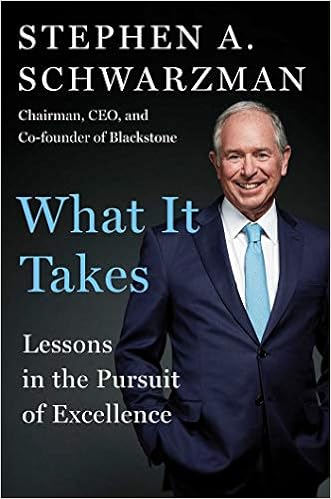
“I guess maybe Bernie Sanders shouldn’t exist,” said billionaire Steve Schwarzman while seated in a library building named after billionaire Steve Schwarzman and promoting a book with billionaire Steve Schwarzman’s face on it.

According to Bloomberg this humble response from the always modest billionaire Steve Schwarzman came in response to a question posed by an audience member about a Sanders tweet in which the Vermont Senator said that billionaires should not exist. The comment was reportedly met with enthusiastic applause.

Blackstone CEO Schwarzman, who has previously compared tax increases on the wealthy to the Nazi invasion of Poland, is an oligarch by any reasonable definition. As one of America’s top individual campaign donors he is immensely influential; his plutocratic power is so deeply interwoven with the highest levels of government that his book’s 14 pages of acknowledgements describe cuddly relationships with a who’s-who of top US officials, including the last five presidents. According to a recent report by The Intercept, two Brazilian firms owned by Schwarzman “are significantly responsible for the ongoing destruction of the Amazon rainforest, carnage that has developed into raging fires that have captivated global attention.”

It is very telling that this oligarch sees an equivalence between (A) saying that an elite class should not control such vast amounts of wealth and (B) saying actual people should not exist. What this tells us is that Schwarzman sees being a billionaire as a fundamental part of his identity, making the idea that he shouldn’t control billions of dollars indistinguishable from saying that he himself should not exist. From his point of view he’s just doing the same thing that Sanders is doing: Bernie’s saying the thing that Schwarzman is shouldn’t exist, and Schwarzman is saying that Bernie himself shouldn’t exist. To him they’re the same.

This statement gives us a bit of insight into the way billionaires see themselves as fundamentally different than the rest of us, forming an egoic identity construct out of being a billionaire in the same way a medieval king would form an egoic identity construct out of that position. This anti-billionaire rhetoric is perceived as an attack on their very identity, which is why they are spinning it as though Sanders is calling for the elimination of actual people.

Predictably, Fox News is now trotting out billionaires to defend themselves from this outrageous billionairephobic bigotry, with Home Depot founder and major Republican Party donor Ken Langone receiving a warmly sycophantic reception from Fox’s Mornings with Maria.

“What the hell has he done for the little people?” Langone asked his host Maria Bartiromo. “What jobs has he created?”

Langone went on to detail all the many jobs he’s “created” (read: how many people he’s needed to hire to help him reap lucrative profits from an already existing demand) without bothering to explain what hoarding billions of dollars in offshore accounts has to do with job creation. Exponents of the “billionaires create jobs” argument always avoid this glaring plot hole like the plague.

Again, we see in Langone’s emotional response two things: that he sees ordinary citizens as “the little people” innately different from himself, and that he perceives the push toward greater economic equality as an existential threat.

“If you go back to 1933, with different words, this is what Hitler was saying in Germany,” Langone has said of the rising pushback against wealth and income inequality. “You don’t survive as a society if you encourage and thrive on envy or jealousy.”

These outbursts are reminiscent of one we saw a couple of years ago on an MSNBC interview with resort tycoon Stephen Cloobeck, who expressed outrage at the way progressives are using “the millionaire or billionaire word” to discuss issues with class and economic justice, saying he’d instructed Democratic Party leaders to bring a stop to this rhetoric or lose plutocratic funding.

“It is very, very disturbing when I hear the millionaire or billionaire word,” Cloobeck said, as though he was uttering an ethnic slur for an oppressed minority and not a conventional label for a class that effectively owns the US government. “And I’ve told them to stop it. Knock it off.”

We’re seeing this hilarious conflation of economic justice with the persecution of minorities and the elimination of actual human beings more and more often, so we should probably come up with a name for it. I’d like to propose that we label this phenomenon “wealth identity politics”, and it is capitalism’s dumbest turn yet.

It’s especially dumb because the billionaire class has already proven with its actions that it cannot exist without actively working to manipulate governments in a way that undeniably subverts democracy and the will of the people. The debate over whether or not billionaires should exist is long settled. They should not.

A few million dollars will buy you a nice car, a nice house and some nice clothes. A few billion dollars will buy you the ability to control public narratives using media ownership, lobbyists and think tanks, thereby manipulating entire governments and international affairs. Believing that it makes sense to have an elite class which controls this much wealth and power is exactly as stupid as believing it makes sense to have a total monarchy.

Billionaires should not exist, for the same reason that kings and pharaohs should not exist. The leadership of our world should not belong to a class of highly mediocre people who have nothing noteworthy between their ears apart from a knack for accumulating dollars. The ability to amass wealth is not a valid basis upon which to determine who leads us. Our fate as a species should be in all our hands.

US Seeks to Become World Political Schemers

By Valery Kulikov

Source: New Eastern Outlook

On an practically daily basis, representatives of the present political élite of Washington and US media voice accusations of Russia, China and some other countries which allegedly try “to interfere” with the internal affairs of the US. At the same time, Washington does not mention that the budget-financed US National Endowment for Democracy (NED) has been officially operating for 35 years already, as well as other organisations of the kind, whose objective is to influence the policy of other countries. One of the NED founders, Allen Weinstein, said: “Much of what we are doing today used to be done in secret by the CIA 25 years ago.”

Over the recent decades, against the backdrop of the comprehensive propaganda campaign conducted by Washington within the country and abroad about the alleged “advantages of the American democracy,” the American élites adopted the idea of a certain special role of the US, a sort of American Messianism, of its right to interfere in any matters and countries worldwide with impunity.

According to the research of the American Carnegie Mellon University, from the end of World War II to 2000, the US interfered with elections in 45 countries of the world at least 80 times, which does not include the organisation of military coups and color revolutions.

The American website AlterNet, found at least 80 cases of local and regional conflicts (since 1953) in which Washington participated. AlterNet also notes that, historically, about a half of all revolutions organized with the US failed, and success was never a sure-fire thing.

In the modern history, the majority of instances of US intervention in the politics of other states fell on the Cold War period. Back then, Washington actively sought to strengthen its geopolitical positions on the international scene, regularly trying to secure a pro-American government in this or that country. Since, in the wake of World War II, the list of European players was generally finalized, the states of Asia, Africa and South America became the usual arena of the US activities.

At the same time, the political activities of the US Administration often closely intertwined with the US economic interests, a desire to receive control over transport corridors, natural minerals, first of all oil and gas. Washington always sought to disguise its true purposes by the propaganda trends relevant at the time, like prevention of “a spread of communist ideas in Asia and Latin America,” or “Islamic radicalization of the Middle Eastern states.”

The containment mechanisms of the UN or international condemnation did not always prove an effective barrier to the attempts of the White House to change the political map of the world. And a considerable number of the countries, in pursuit of “the American benefits” in the form of military, economic or other aid, very quickly oriented their political course following the US lead, becoming de facto silent puppets in the expansionist world game of the US.

The actions of Washington are not only tolerated by certain European countries, but also the European Union as a whole, whose political leadership lost independence from the actions of Washington a long time ago. “The agreements and doctrines which are the cornerstone of the EU and the NATO, oblige Europeans to participate in all military enterprises of the US,” the Austrian Contra Magazin reports.

Showing utter defiance to the independent policy of other states, representatives of the current US political élite of the USA actively seek to interfere with the internal affairs of many countries of the world.

In response to Donald Trump’s tweets about the anti-government protests in France in December 2018, the French Minister of Europe and Foreign Affairs Jean-Yves Le Drian was forced to officially urge the US President not to interfere with the domestic policy of France.

It is known that the former president of Ukraine Petro Poroshenko resorted to the help of the US lobbyist organisations more than once, trying to get the favor of Washington. Now it turned out that his successor Volodymyr Zelensky used this experience as well. It became known after the US lobbyist company Signal Group Consulting LLC published a report on the work in favor of the president of Ukraine Volodymyr Zelensky, which was revealed by the Ukrainian office of Voice of America, referring to a number of documents.

On a practically regular basis, international media publishes statements about the instances of open intervention, which is unseemly for US Ambassadors, in the affairs of other sovereign states.

Thus, in November 2018, Poland saw a political demarche of the US Ambassador in Warsaw Georgette Mosbacher for her criticism of the freedom of media after she sent a letter to the Prime Minister of Poland Mateusz Morawiecki in which she explained what is and what is not appropriate for the ministers of the Polish government to say to the Polish TV channel TVN.

In February, the US Ambassador to Moldova Dereck J. Hogan actively participated in the internal political process in the country, which clearly showed attempts to interfere with the pre-election situation in this country.

In June, the representative of the Georgian Orthodox Church (GOC), archpriest David Isakadze accused the acting US Ambassador to Georgia Elizabeth Rood of attempts to aggravate the situation in Georgia.

Everybody knows about the scandalous activities of the US Ambassador in Berlin Richard Grenell who, as of January this year, began to send threats to the representatives of the German business community because of their actions in cooperation with Russia. In March, he criticized the policy of the German Ministry of Finance. And, on August 1, in his speech, he dared criticize the government of the Chancellor Angela Merkel for their unwillingness to join the naval mission in the Strait of Hormuz. Such behavior, inadmissible for a diplomatic representative and concerning the state institutions and the policy of Germany as though it were not the leading European state, but a vassal territory of the US, was met with indignation in the German political business community. It also forced the Vice Chairman of the Free Democratic Party of Germany (FDP) Wolfgang Kubicki to urge the Foreign Minister Heiko Maas to banish the US Ambassador R. Grenell from the country.

The former US Ambassador in Moscow Michael McFaul admitted in the memoirs that the US had wanted a change of the power in Moscow and tried to depose Vladimir Putin. According to Der Spiegel, Americans trained activists of the liberal opposition and paid millions to the civil organisations which, in McFaul’s own words, could not be politically neutral.

Today, Washington continues to use the same methods seeking to influence the domestic policy of Russia by publishing on the Twitter webpage of the US Department of State Bureau of Consular Affairs on August 2 detailed information on the places, meeting time and route of an unauthorized rally in Moscow. The head of the Russian MFA Department for Information Issues Ilya Timokhov directly specified the other day that such call relaying was the most relevant and scandalous example of the US Department of State’s intervention in the internal affairs of Russia: “… it is nothing other than propaganda of the rally organizers since it keeps the Russian language text with an appeal to rally.”

Here, only a small number of examples of outright intervention of the US authorities and institutions in the internal affairs of Russia and other states were given. Certainly, one could give a great many examples of the sort, as well as the informal tools used by Washington in order to influence other states in a way that would be favorable for the US by imposing American style democracy on other countries. In particular, such tools include not only the US intelligence agencies, which are aimed specifically at these objectives, but also numerous western non-profit organisations and religious sects. You will learn more about those in the future materials of the NEO.

Twitter Suspends Accounts For Propaganda, Has Literal Propagandist As High-Level Executive

By Caitlin Johnstone

Source: CaitlinJohnstone.com

Middle East Eye‘s Ian Cobain has published an exclusive titled “Twitter executive for Middle East is British Army ‘psyops’ soldier”, exposing the fact that Twitter’s senior editorial executive for Europe, the Middle East and Africa also works for an actual, literal propaganda unit in the British military called the 77th Brigade. Which is mighty interesting, considering the fact that Twitter constantly suspends accounts from non-empire-aligned nations based on the allegation that they are engaging in propaganda.

“The senior Twitter executive with editorial responsibility for the Middle East is also a part-time officer in the British Army’s psychological warfare unit,” Cobain writes. “Gordon MacMillan, who joined the social media company’s UK office six years ago, has for several years also served with the 77th Brigade, a unit formed in 2015 in order to develop ‘non-lethal’ ways of waging war. The 77th Brigade uses social media platforms such as Twitter, Instagram and Facebook, as well as podcasts, data analysis and audience research to wage what the head of the UK military, General Nick Carter, describes as ‘information warfare’.”

https://twitter.com/IanCobain/status/1178590025128251392

MacMillan’s presence in a government psyops unit was not a secret; until Middle East Eye began raising questions on the matter, it was right there on his LinkedIn profile. This is not something that anyone considering him for promotion was likely to have been unaware of. According to his (now-edited) LinkedIn page, MacMillan has been in his current position as Head of Editorial EMEA since July 2016. According to Middle East Eye, MacMillan was already a captain in the 77th Brigade by the end of 2016. His current rank there is being hidden behind a wall of government secrecy.

When questioned by Middle East Eye about MacMillan’s work in the British Army’s online propaganda program, Twitter hilariously responded, “Twitter is an open, neutral and rigorously independent platform. We actively encourage all our employees to pursue external interests in line with our commitment to healthy corporate social responsibility, and we will continue to do so.”

That’s very nice of Twitter, isn’t it? They encourage their employees to pursue wholesome external interests, whether that be tennis, volunteering at a soup kitchen, or moonlighting at a military program explicitly devoted to online psychological warfare. You know, just everyday socially responsible pastime stuff.

The fact that Twitter not only employs known propagandists but actively promotes them to executive positions is a very large and inconvenient plot hole in their “open, neutral and rigorously independent platform” story. Especially since, as I documented recently, the mass purges of foreign Twitter accounts we’ve been seeing more and more of lately always exclusively target governments and groups which are not in alignment with the interests of the US-centralized power alliance of which the UK is a part. We’ve seen mass suspensions of accounts from Cuba, China, Russia, Iran, Venezuela, and the Catalan independence movement on allegations of “coordinated influence operations” and “covert, manipulative behaviors”, yet Twitter currently employs a high-level executive for whom coordinated influence operations and covert, manipulative behaviors on behalf of the British government are a known vocation.

“On September 20 Twitter deleted a large number of accounts, including in MacMillan’s area of responsibility. How many of those were designated by the British state?” asks Moon of Alabama of this new report.

How many indeed?

This is just one more item on the ever-growing mountain of evidence that these giant, immensely influential social media platforms we’ve all been herded into are nothing other than state propaganda for the digital age. True, they operate in a way which disregards the official lines that are drawn between government power and corporate power and the lines that are drawn between nations, but then, so do our rulers. We are living in a globe-spanning corporate oligarchic empire, and these government-aligned Silicon Valley giants are a major part of that empire’s propaganda engine.

The real power of that empire and that oligarchy lies in their invisibile and unacknowledged nature. Officially we all live in separate, sovereign nations run by democratically elected officials; unofficially we live in a massive transnational empire ruled by a loose alliance of plutocrats and opaque government agencies where military propagandists are employed by social media monopolies to manipulate public narratives. The official mask exists only on the level of narrative, while the unofficial reality is what’s actually happening. Yet whenever you try to publicly discuss the threat that is being posed by oligarchic narrative control online, you get told by establishment loyalists and libertarians that Twitter is just a simple private business running things in a way that is entirely separate from government censorship and state propaganda.

All we clear-eyed rebels can do is keep documenting the evidence of what’s going on and pointing to it as loudly as we can. So once again for the people in the back: Twitter employs literal government propagandists as high-level executives while purging accounts from unabsorbed governments for circulating unauthorized narratives. This is a fact. Remember it.

Let us now stop praising famous men (and women)

By David V. Johnson

Source: aeon.com

After the Notre-Dame Cathedral in Paris nearly burned down in April, the French luxury-goods magnate François-Henri Pinault was celebrated for committing €100 million to reconstruct what he called ‘this jewel of our heritage’ and ushering in a flood of donations from other benefactors and companies. Though an impressive figure in the abstract, Pinault’s commitment reflected only 0.3 per cent of his family fortune. If he instead had the average net wealth for a French household and donated 0.3 per cent of his fortune, his commitment would total about €840. Not an insignificant sum for an average Frenchman, but who would refuse to give that sum if it garnered the praise and notoriety that followed Pinault’s donation?

We live in an age of excessive praise for the wealthy and powerful. The upper echelons of society bathe in a sea of honours, awards and celebrity. We see it in the glossy magazines and at the so-called ideas festivals, where billionaires are fawned over for their bons mots. We applaud philanthropists for their largesse, even if their charity will do little ultimate good for society, and even if their conduct in acquiring their fortune was reprehensible. We commend them for dabbling in politics or pushing school reform, before we see any results, and even if we have reason to doubt the good that they will do.

To criticise our praise for the wealthy and powerful as excessive inevitably raises the question of meritocracy. To what extent do we live in a meritocracy, and is that a good or a bad thing? Meritocracy is a form of social organisation that is founded on praise and blame. People signal who deserves power and status by praising them for their character, their talent, their productivity and their actions, and who merits demotion in status and power by blaming them for their vices, their ineptitude and their failings. Insofar as people’s assessments of praise and blame are accurate, they will promote those deemed better up in the hierarchy of power and status, and demote those deemed worse down. Better people will do better things with their superior power and status. When the system works, we have an aristocracy – rule by the finest people. Or so thinkers from Aristotle onward have thought.

This system doesn’t work and can’t work on its own terms. Assessments of praise and blame tend to reflect existing hierarchies of power and status, thereby reifying them. This is because praise and blame have as much to do with the person judging as the person being judged. If everyone in a meritocracy wants to get ahead, assessments of praise and blame will be influenced by whatever helps people to get ahead – namely heaping praise on the powerful and respected, and castigating those without power and status. This is obviously true with meritocracies that most people explicitly reject, such as white supremacy and patriarchy – hierarchies drawn along racial and gender lines. These systems have persisted despite the baseless moral judgments on which they are grounded, because those living within the system are incentivised to see such judgments as legitimate. Meritocracies in general convince those within the system to echo the moral assessments on which they are based as objective and justified, when in fact they are shaped not by objective criteria but by the qualities of the powerful. Praise and blame are ideological blinders that uphold the legitimacy of the meritocratic hierarchy. If we take a more critical look at ourselves and our moral assessments, we will be better able to remove those blinders.

The smog of praise that permeates the upper echelons of society is a product of perverse incentives. As individuals, we tend to praise others and to court praise, because we want to win good will from others and receive confirmation of others’ good will. What’s more, we have an even stronger incentive to praise people who are wealthy and powerful, because winning their goodwill secures their premium support, and the wealthy and powerful are, in turn, more readily able to court praise from others. The more elite someone is, the more likely he is to crowd-surf on the praise of the many lesser folks seeking his favour. And insofar as our age of massive inequality creates people who are wealthier and more powerful, to that extent will the wave of excessive praise swell. We can even anticipate this tendency generating a negative feedback loop: praise of the wealthy and powerful affirms that they are good people deserving their fortune, which can, in turn, augment their wealth and influence, which thereby attracts even more praise.

The effects of excessive praise on conduct are also worth concern. Praising people, even those who deserve praise, can actually have a negative effect on their behaviour. There are many psychological studies demonstrating that people are susceptible to moral compensation. That is, when people feel that they have engaged in good behaviour, they also feel that it gives them licence to act badly in the future. The converse also holds: when people feel that they have engaged in bad behaviour, they also feel that they should make up for it by acting better in the future. If these studies hold up, they appear to upend the social consequences of praise and blame: praising people excessively can lead them to act badly, while blame puts them on notice and reinforces good behaviour. And insofar as this effect is more likely to influence wealthy and powerful people – those who can, thanks to their resources and influence, do more – it magnifies the harm of their bad conduct.

Meritocracies try to establish objective criteria to justify social hierarchies. Nowadays, entry into the elite often has to do with having the right résumé: Oxbridge or Ivy League degrees, a stint at the best consulting firm or investment bank, service in politics or government, writing a book or giving a TED talk about your work. These résumé items are supposed to establish the talent, judgment and character of the people in question. People with such résumés receive respect and esteem – even though their accomplishments are the predictable consequences of being born into the right family, knowing the right people, and swimming with the current. For the ambitious – and meritocracies feed ambition – these résumé items are primarily credentials for acquiring greater power and status. There is no reason for the public to accept such credentials as being an objectively valid base for praise.

If we want to foster a truly democratic society – a society in which we treat each other as equals – we must rein in such excessive praise and the perverse incentives that encourage it. We should aim for the opposite extreme, toward withholding praise and being more circumspect about the wealthy and powerful, to restore balance. As Justice Louis Brandeis, who witnessed our previous Gilded Age, might have said: ‘We may have democracy, or we may have praise showered on the heads of a few, but we can’t have both.’

The Incredible Belief That Corporate Ownership Does Not Influence Media Content

By Alison Rose Levy

Source: FAIR.org

As Sen. Bernie Sanders (CJR8/26/19) has recently noted, corporate ownership of media interferes with the core societal function of the press: reporting and investigating key issues at the intersection of public need and governance. And nowhere is that more critical than when it comes to climate. Due to their corporate conflicts of interest, trusted news authorities have diverted us from our primary responsibility—assuring a viable habitat for our children and grandchildren.

As a journalist who has worked both inside and outside of establishment media, I see influence as embedded in a corporate media culture rather than in isolated cases of CEO dictates. It happens in little ways, such as how an interviewer frames a question, and in big ways, like the decision to exclude a topic, a person or a group of people from the airwaves.

Like most US companies, news organizations are hierarchies, which people who have worked in corporate offices can readily understand. Given that “90% of the United States’ media is controlled by five media conglomerates,” the top executive at many news outfits is likely the CEO of a multinational corporation. The word comes down from the business execs to the company’s division chiefs, as seen in countless movies (like the 1976 classic Network). This was how it was when I worked on primetime national news at CBS in the 1990s.

On the inside, it wasn’t easy to see organizational bias, when job security and team work required overlooking it. The response to the heavily promoted primetime news pairing of two well-known anchors exemplified how news personnel learn to toe the line. The two anchors had zero chemistry, but no one mentioned it, as if an unwritten code had been instantly internalized. This dragged on for two years, pulling down the network’s ratings.

Higher-ups would never offer editorial staff direct input on content. That’s what the executive and middle management were for. Would these managers confide to their staff that the big guns gave them a certain direction? No. Whatever it was, they would present it as their own, and it would be adopted.

Within this culture, controlling the content goes on in whispers, frowns, headshakes and decisions made behind closed doors. If anyone strays into a verboten zone, as I did when I proposed a feature about Native Americans, those in the know privately communicate the ethos that is expected and allowed. “We never put American Indians on air because they talk too slow,” a producer explained.

Despite such experiences, when I left CBS, I respected the many producers with whom I’d worked, many of whom are still employed at the various networks. That work experience honed editorial judgment in ways impossible to measure, for which I am infinitely grateful. It also showed me that organizational agendas and values can trump claims to objectivity.

Reporting from Independent Media

Yet over a decade later, working in progressive online media, I was still astonished that several major stories I covered, were anywhere from underplayed to entirely absent from establishment news.

When I began to cover fracking in New York state in 2009, at first both 60 Minutes (11/14/10) and the New York Times (11/27/0910/29/11) covered it as a Hatfield/McCoy feud between upstate rural neighbors, rather than as an invasive industrial activity with a host of health and environmental repercussions.

During the critical years of the major fracking buildout from 2005 to 2016, the  New York Times gave a prominent environmental platform to self-declared “climate champion” Andrew Revkin, whose reporting FAIR (Extra!2/10) called “a source of some comfort—and crowing—for the climate change denial crowd.” His pro-industry stance on fracking and naysaying on methane impacts condoned an industrial expansion that has produced far-reaching environmental damage.

The Times’ Ian Urbina (6/25/11)  did invaluable reporting on fracking’s faulty economic model. But in 2013, the paper of record closed its environmental desk, even as   Inside Climate News (1/11/13) was reporting that “worldwide coverage of climate change continued a three-year slide.”

MSNBC show hosts like Rachel Maddow and Chris Hayes rarely covered fracking, instead letting gas and oil industry ads reassert claims of safety. Nonprofit environmental groups, leading activists, along with a growing body of independent journalists filled the media void, including my own reporting at Huffington PostAlterNet and EcoWatch.

The TTP

In 2014, I began to report on the Transpacific Partnership (TTP) and other concurrent global trade agreements, which are often characterized as core to President Barack Obama’s “legacy” (e.g., New York Times6/14/15Washington Post6/24/15). The agreement’s full provisions were never revealed to the public prior to the June 2015 vote granting absolute trade authority to Obama—authority that would have passed to Trump if the agreement had been ratified in late 2016, as Obama hoped.

In conducting multiple interviews with trade analysts, as well as following the protests in Europe and the resulting leaks of the contents, I learned from  trade analyst William Waren (Connect the Dots,  1/28/15) that even prior to the TPP’s  passage and ratification, plans were underway for the buildout of  fracking, gas and oil, and coal trade and global export freed by its anticipated passage.

Nothing within the unenforceable Paris Agreement would have prevented it. In fact, the Paris Agreement provisions were nonbinding, while the trade agreements that were being secretly negotiated concurrently, including the Trade in Services Agreement(TiSA), were designed to be binding, to “effectively trump whatever commitment is made in Paris,” Waren revealed on Connect the Dots (12/9/15).

Further, the TPP’s planned instatement of an international corporate tribunal with international legal authority over all nations would have mortally injured global democracies. In 2016, Mark Ruffalo summed up what was at stake in the fight: Expanding the Investor-State Dispute Settlement (ISDS) provisions in NAFTA via TPP

would block worldwide environmental and social progress while empowering corporations to undermine existing climate and environmental policies.

As we witness the Trump administration’s deconstruction of US environmental regulatory infrastructure—appointment by appointment, policy by policy—let’s appreciate that in defeating TPP and associated trade deals (thanks to the work of grassroots organizers and independent media), Americans dodged a bullet.

If the US had passed the TPP as planned during the 2016 lame duck session of Congress, both the US and all co-signers (a total of 12 countries) would have been contractually bound to a wholesale takedown of environmental regulations and economic barriers to fossil fuel development—as well as the loss of any right to challenge corporate rule or prevent health and environmental impacts. The climate impacts of the intended gas and oil buildout would likely have been devastating and decisive.

Nevertheless, the forward drive to pass the TPP occurred in a near void of corporate coverage. What had been negotiated behind closed doors with multinational corporations remained their business secrets. Prior to its authorization in June 2015, no mainstream outlet thoroughly investigated and disclosed the TPP’s provisions. Obama’s most memorable pro-TPP television appearance was singing about it with Jimmy Fallon.  FAIR (6/11/16) called the enthused Vox coverage (6/10/16) of Obama’s performance

a borderline parody of everything wrong with corporate-owned “new media”: What we have here is a Comcast-funded website plugging a Comcast-owned TV show to promote a trade deal aggressively lobbied for by Comcast.

Both the New York Times and its liberal economist columnist, Paul Krugman, covered the TPP infrequently. Krugman (10/6/15) professed he was a “lukewarm opponent” of it, and minimized its importance. “We’re not talking about a world-shaking deal here,” he wrote (3/11/15) three months before the Senate granted Obama the authority to sign the final agreement without further consultation or deliberation.

Prior to the vote, a college friend of the MSNBC host Chris Hayes assured me that Hayes, a former environmental reporter for The Nationwould be deeply concerned about these trade deals. I was dubious, but she was insistent. With the contact she provided, I sent all of my TPP research and sources on to Hayes. I received no response.

Rather than cover the TPP, MSNBC went on to fire Ed Schultz, the sole show host who covered trade agreements. (Sadly, the 64-year-old Schultz died in 2018.) In surveying TPP coverage, Media Matters(2/4/15) found that Schultz was the exception in a near-total blackout by all three major networks. Week after week, Hayes and other MSNBC hosts devoted airtime to meticulously dissecting far more minor concerns.

As in any large organization, the firing and hiring of staff speaks volumes to surviving staff members about the owners’ priorities. The unseen casualties among reporters of integrity, and the disservice to journalism, cannot be overestimated. Those working in corporate media get the message without anyone having to tell them, and highly paid show hosts have the most to lose.

The press’ mission is to inform the citizenry and flag abuses to power, not promote special interests. When citizens blind themselves to a news organization’s corporate entanglements, and trust the outlet to be truthful anyway, it is, to put it mildly, extraordinarily naïve.

It’s not about whether or not the public has access to a private conversation or confidential memo sent to editorial with a corporate dictate. The evidence is what’s given airtime and what isn’t over many years.

Was it just happenstance that MSNBC, for example, failed to cover the TPP after firing Ed Schultz? Comcast, the owner of MSNBC, sat at the table behind closed doors during the five-year long negotiations of the TPP’s specific trade provisions.

Have MSNBC or any of its competitors uncovered Comcast’s agenda for the trade agreements? What if concerns over intellectual property rights, for example, made it a corporate mission to pass a deal that also happened to radically hasten the climate tipping point? Should any company have that much power?

No business, no matter how sizeable, should have the right to subvert the actions and political choices necessary to address climate, as well as the activated movement capable of assuring that at long last we do what needs to be done. The only sane response is to support the movement, and the independent media outlets that provide a platform for ideas, facts, studies, polls, policy initiatives and disclosures outside the corporate media frame—and to overhaul the media to address this unfair use of public airwaves for gain and compromise as the world burns.

If the Facts Come Out, it Could Spell the End for Joe Biden

By Ray McGovern

Source: Consortium News

The Joe Biden-friendly Establishment media has mounted a full-court press to “prove” that Biden is, well, not a crook.

The stakes are extremely high, Biden is vulnerable, and media players are using to a faretheewell the old adage about the best defense being a good offense.  The New York Times, The Washington Post, and The Wall Street Journal are desperately trying to steal the ball and get ahead in the publicity game.  But time is about to run out, and pre-emptive propaganda is unlikely to snatch victory out of the jaws of defeat. IF the facts do come out and IF they are reported, Biden’s presidential hopes may suffer a mortal blow.

When the corruption in which the former Vice President and his son Hunter were involved in Ukraine becomes more widely known, the press wants to be in position to “show” that it’s all the fault of President Donald Trump and his lawyers for trying to derail Biden’s candidacy by exposing him.  If past is precedent, the media will largely succeed.  The question is whether enough people will, nevertheless, be able to see through this all-too-familiar charade.

In an interview with The National Interest, Joe Lauria put this episode in context:

“’It was in February [2014] when Yanukovych was overthrown, and just a few months later (in May), Joe Biden’s son and a close friend of John Kerry’s stepson, they both join the board of this Ukrainian gas company. And the name of that was Burisma Holdings,’” said Joe Lauria, editor of Consortium News and a former correspondent for the Wall Street Journal. “’So just after an American-backed coup, you have Joe Biden’s son Hunter Biden and this John Kerry family friend joining the board of probably the largest private gas producer in Ukraine. They installed the new government, and as the bounty of this coup, Joe Biden’s son personally profited. He would not have gotten that job if Yanukovych was still in power,’” Lauria told The National Interest.”

Will U.S. voters have any way of putting these dots together, and also in discerning, for example, how much truth there may be in charges that Vice President Biden pressed hard for the ouster of Ukraine’s Prosecutor General, Viktor Shokin, who was canned after investigating corruption at Burisma Holdings Ukrainian gas company of which Hunter Biden was a board member?

In this video Biden admits on the record to essentially using a billion dollar line of credit as a bribe to get the prosecutor fired.

If the truth does come out, no one will have to rely on remarks from the likes of Rudy Giuliani, one of Trump’s lawyers, who has called the episode “an astounding scandal of major proportions.”  That may be hyperbole but, still, the damage to Biden could be fatal.

And so, damage control is in full swing today at the Times, the Post, the Journal and other “usual suspects,” with the  Times winning the laurels with its Editorial Board, no less, weighing in with “What did Trump tell Ukraine’s president?” There have also been op-eds by Max Boot, Jennifer Rubin, Anne Applebaum, Greg Sargent and (my favorite), George T. Conway III and Neal Katyal at the Post, whose headline is: “Trump has done plenty to warrant impeachment. But the Ukraine allegations are over the top.”

That title is correct.