Big Pharma, Big Oil and Big Banks Meet the Definition of Terrorists

Common threads persist throughout definitions of terrorism: violence, injury or death, intimidation, intentionality, multiple targets and political motivation. Big pharma, big oil and big banks meet them all.

By Paul Buchheit

Source: Mint Press News

Various definitions of terrorism have been proposed in recent years, by organizations such as the FBI, the State DepartmentHomeland Security, and the ACLU. Some common threads persist throughout the definitions: violence, injury or death, intimidation, intentionality, multiple targets, political motivation. All the criteria are met by pharmaceutical and oil and financial companies. They have all injured and intimidated the American public, and caused people to die, with intentionality shown by their refusal to acknowledge evidence of their misdeeds, and political motives clear in their lobbying efforts, where among all U.S. industries Big Pharma is #1, Big Oil is #5, and Securities/Investment #8.

The terror inflicted on Americans is real, and is documented by the facts to follow.

Big Pharma: Qualifying for Trump’s Call for Capital Punishment for Drug Dealers

In a Time Magazine article a young man named Chad Colwell says “I got prescribed painkillers, Percocet and Oxycontin, and then it just kind of took off from there.” Time adds: “Prescriptions gave way to cheaper, stronger alternatives. Why scrounge for a $50 pill of Percocet when a tab of heroin can be had for $5?” About 75% of heroin addicts used prescription opioids before turning to heroin.

Any questions about Big Pharma’s role in violence and death in America have been answered by the Centers for Disease Control and the American Journal of Public Health. Any doubts about Big Pharma’s intentions to intimidate the public have been put to rest by the many occasions of outrageous price gouging. And any uncertainty about political pressure is removed by its #1 lobbying ranking.

As for malicious intentions, Bernie Sanders noted, “We know that pharmaceutical companies lied about the addictive impacts of opioids they manufactured.” Purdue Pharma knew all about the devastating addictive effects of its painkiller Oxycontin, and even pleaded guilty in 2007 to misleading regulators, doctors, and patients about the drug’s risk. Now Purdue and other drug companies are facing a lawsuitfor “deceptively marketing opioids” and ignoring the misuse of their drugs.

No jail for the opioid pushers, though, just slap-on-the-wrist fines that can be made up with a few price increases. But partly as a result of Pharma-related violence, Americans are suffering “deaths of despair”— death by drugs, alcohol and suicide. Suicide is at its highest level in 30 years.

Big Oil: Decades of Terror

Any doubts about the ecological terror caused by fossil fuel companies have been dispelled by the World Health Organization, the American Lung Association, the United Nations, the Pentagon, cooperating governments, and independent research groups, all of whom agree that human-induced climate change is killing people.

The oil industry’s intentionality and political motives have been demonstrated by their refusal to admit the known truth, starting with Exxon, which has covered up its own climate research for 40 years, and continuing through multi-million dollar lobbying efforts by Amoco, the US Chamber of Commerce, General Motors, Koch Industries, and other corporations in their effort to dismantle the Kyoto Protocol against global warming.

Big Banks: Leaving Suicidal Former Homeowners Behind

Any doubts about the violence stemming from the 2008 mortgage crisis have been resolved by studies of recession-caused suicides. Both the British Journal of Psychiatry and the National Institutes of Healthfound definite links between the recession and the rate of suicides.

As with Big Pharma and Big Oil, intentionality and political motives are evident in the banking industry’s lobbying efforts on behalf of deregulation — leading to the same conditions that threatened American homeowners in 2008. There has also been a surge in the number of non-bank lenders, who are less subject to regulation.

Making it all worse are private developers, who make most of their profits by building fancy homes for the rich. And by avoiding affordable housing. Since the recession, Blackstone and other private equity firms — with government subsidies — have been buying up foreclosed houses, holding them till prices appreciate, and in the interim renting them back at exorbitant prices.

This is leaving more and more Americans out in the cold — literally. A head of household in the U.S. needs to make $21.21 an hour to afford a two-bedroom apartment at HUD standards, much more than the $16.38 they actually earn. Since the recession, the situation has continually worsened. From 2010 to 2016 the number of housing units priced for very low-income families plummeted 60 percent.

Here’s the big picture: Since the 1980s there’s been a massive redistribution of wealth from middle-class housing to the investment portfolios of people with an average net worth of $75 million. It’s not hard to understand the “deaths of despair” caused by the terror inflicted on people losing their homes.


What Lies Beyond Capitalism and Socialism?

By Charles Hugh Smith

Source: Of Two Minds

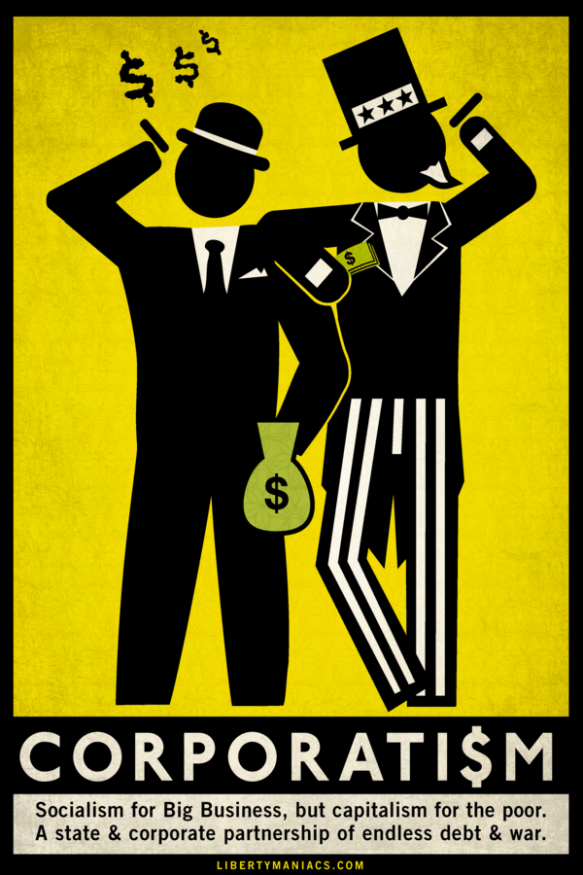
The status quo, in all its various forms, is dominated by incentives that strengthen the centralization of wealth and power.

As longtime readers know, my work aims to 1) explain why the status quo — the socio-economic-political system we inhabit — is unsustainable, divisive, and doomed to collapse under its own weight and 2) sketch out an alternative Mode of Production/way of living that is sustainable, consumes far less resources while providing for the needs of the human populace — not just for our material daily bread but for positive social roles, purpose, hope, meaning and opportunity, needs that are by and large ignored or marginalized in the current system.

One cognitive/emotional roadblock I encounter is the nearly universal assumption that there are only two systems: the State (government) or the Market (free trade/ free enterprise). This divide plays out politically as the Right (capitalism, favoring markets) and the Left (socialism, favoring the state). Everything from Communism to Libertarianism can be placed on this spectrum.

But what if the State and the Market are the sources of our unsustainability? What if they are intrinsically incapable of fixing what’s broken?

The roadblock here is adherents to one camp or the other are emotionally attached to their ideological choice, to the point that these ideological attachments have a quasi-religious character.

Believers in the market as the solution to virtually any problem refuse to accept any limits on the market’s efficacy, and believers in greater state power/control refuse to accept any limits on the state’s efficacy.

I often feel like I’ve been transported back to the 30 Years War between Catholics and Protestants in the 1600s.

I’ve written numerous books that (in part) cover the inherent limits of markets and the state, so I’ll keep this brief. Markets are based on two premises: 1) profits are the key motivator of human activity and 2) whatever is scarce can be replaced by something that is abundant (for example, when we’ve wiped out all the wild Bluefin tuna, we can substitute farmed catfish.)

But what about work that creates value but isn’t profitable? This simply doesn’t compute in the market mentality. Neither does the fact that wiping out the wild fisheries disrupts an ecosystem that is essentially impossible to value in terms that markets understand: in a market, the supply and the demand in this moment set the price and thus the value of everything.

But ecosystems simply cannot be valued by the price set in the moment by current supply and demand.

As for the state, its ontological imperative is to concentrate power, and since wealth is power, this means concentrating political and financial power. Once bureaucracies have concentrated power, insiders focus on securing budgets and benefits, and limiting transparency and accountability, as these endanger the insiders’ power, security and perquisites.

Both of these systems share a single quasi-religious ideology: a belief that endless economic growth is an intrinsic good, for it is the ultimate foundation of all human prosperity. In other words, we can only prosper and become more secure if we’re consuming more of everything: resources, credit, energy, and so on.

The second shared ideological faith is that centralizing wealth and power are not just inevitable but good. In other words, Left and Right share a single quasi-religious belief that centralization is not just inevitable but positive; the only difference is in who should hold the concentrated wealth/power, private owners or the state.

This ideology assumes a winner take most structure of winners and losers, with the winnings being concentrated in the hands of a few at the top of the Winners. Thus rising inequality and divisiveness are assumed to be the natural state of any economy.

This ideology underpins the entire status quo spectrum. The “growth at any cost is good” part of the single ideology underpinning the status quo is captured by the 1960 Soviet-era film Letter Never Sent; in its haunting, surreal final scene, a character envisions a grand wilderness untouched by human hands transformed into an industrial wasteland of belching chimneys and sprawling factories. This was not a nightmare–this was the Soviet dream, and indeed, the dream of the “growth at any cost is good” West.

Simply put, the status quo of markets and states is incapable of DeGrowth, i.e. consuming less of everything, including credit, “money”, profits, taxes—everything that fuels both the state and the market. As I have taken pains to explain, it doesn’t matter if a factory is owned by private owners or the state: the mandate of capital is to grow. If capital doesn’t grow, the resulting losses will sink the enterprise—including the state itself.

What lies beyond “growth at any cost” capitalism and socialism? My answer is the self-funded community economy, a system that is self-funded (i.e. no need for a central bank or Treasury) with a digital currency that is created and distributed for the sole purpose of funding work that addresses scarcities in local communities.

I outline this system in my book A Radiocally Beneficial World: Automation, Technology and Creating Jobs for All.

Rather than concentrate power in the hands of state insiders, this system distributes power to communities are participants. Rather than concentrate the power to create currency for the benefit of banks and the state, this system distributes the power to create currency for the sole benefit of those working on behalf of the community, on projects prioritized by the community.

This community economy recognizes that some work is valuable but not profitable. The profit-driven market will never do this work, and the central state is (to use Peter Drucker’s term) the wrong unit size to ascertain each community’s needs and scarcities.

Clearly, we need a socio-economic-political system that has the structure to not just grasp the necessity of DeGrowth and positive social roles (work benefiting the greater community) but to embrace these goals as its raison d’etre (reason to exist).

Human activity is largely guided by incentives, both chemical incentives in our brains and incentives presented by the society/economy we inhabit. In the current system, concentrating power and wealth in the hands of the few at the expense of the many and wasting resources / destroying ecosystems are incentivized if the activity is profitable to some enterprise or deemed necessary by the state.

In the current system, the state incentivizes protecting its wealth and power and the security/benefits of its insiders, and markets incentivize maximizing profits by any means available.

As I have explained many times in the blog and my books, we inhabit a state-cartel economy: the most profitable form of enterprise is the quasi-monopoly or cartel that limits supply and competition in order to extract the maximum profit from its customers.

Monopolies (or quasi-monopolies such as Google, which holds a majority share of global search revenues, excluding China) and cartels quickly amass profits which they then use to secure protection of their cartel from the state via lobbying, campaign contributions, etc. The elites controlling the state benefit from this arrangement, and so the system inevitably becomes a state-cartel system dominated by the state and private sector cartels and incentives that benefit the wealth and power of these institutions.

Once we understand the inevitability of this marriage of state and cartel, we understand socialism and capitalism–the State and Markets–are the yin and yang of one system. Reformers may recognize some of the inherent limits of the state and the market, but they believe these problems can be solved by tweaking policies–in systems-speak, modifying the parameters of the existing subsystems of lawmaking, the judiciary, regulatory agencies, and so on.

But as Donella Meadows explained in her classic paper, Leverage Points: Places to Intervene in a System tweaking the parameters doesn’t actually change the system. For that, we must add a new feedback loop.

The status quo, in all its various forms, is dominated by incentives that strengthen the centralization of wealth and power, increase inequality and divisiveness and the permanent expansion of consumption and credit. That this path leads to implosion / collapse does not compute because the status quo is constructed on the fundamental assumption that permanent growth/expansion of consumption, credit, wealth and state power is not just possible but necessary.

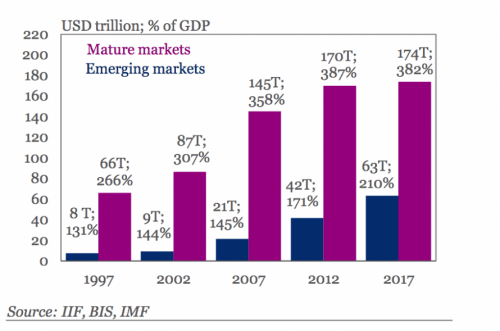
As many of us have labored to show, the financial system has been pushed to unprecedented extremes to maintain the illusion that rapid growth of consumption and credit can be maintained essentially forever.

We need an alternative system that’s built on sustainable incentives and feedback loops so we have a new blueprint to follow as the current arrangement unravels in the next decade or two.

Security and prosperity are worthy goals, but the means to achieve them, as well as the definition of security / prosperity, must be reworked from the ground up. We need to include positive social roles and meaningful work as essential components of security/prosperity.

My conception of a Third / Community Economy does not replace either the state or the free-enterprise market; rather, it does what neither of the existing structures can do. It adds opportunity, purpose, positive social roles and earned income for those left out of the state/cartel/market economy.

Why America’s Major News-Media Must Change Their Thinking

By Eric Zuesse

Source: Strategic Culture Foundation

America’s ‘news’-media possess the mentality that characterizes a dictatorship, not a democracy. This will be documented in the linked-to empirical data which will be subsequently discussed. But, first, here is what will be documented by those data, and which will make sense of these data:

In a democracy, the public perceive their country to be improving, in accord with that nation’s values and priorities. Consequently, they trust their government, and especially they approve of the job-performance of their nation’s leader. In a dictatorship, they don’t. In a dictatorship, the government doesn’t really represent them, at all. It represents the rulers, typically a national oligarchy, an aristocracy of the richest 0.1% or even of only the richest 0.01%. No matter how much the government ‘represents’ the public in law (or “on paper”), it’s not representing them in reality; and, so, the public don’t trust their government, and the public’s job-rating of their national leader, the head-of-state, is poor, perhaps even more disapproval than approval. So, whereas in a democracy, the public widely approve of both the government and the head-of-state; in a dictatorship, they don’t.

In a dictatorship, the ‘news’-media hide reality from the public, in order to serve the government — not the public. But the quality of government that the regime delivers to its public cannot be hidden as the lies continually pile up, and as the promises remain unfulfilled, and as the public find that despite all of the rosy promises, things are no better than before, or are even becoming worse. Trust in such a government falls, no matter how much the government lies and its media hide the fact that it has been lying. Though a ‘democratic’ election might not retain in power the same leaders, it retains in power the same regime (be it the richest 0.1%, or the richest 0.01%, or The Party, or whatever the dictatorship happens to be). That’s because it’s a dictatorship: it represents the same elite of power-holding insiders, no matter what. It does not represent the public. That elite — whatever it is — is referred to as the “Deep State,” and the same Deep State can control more than one country, in which case there is an empire, which nominally is headed by the head-of-state of its leading country (this used to be called an “Emperor”), but which actually consists of an alliance between the aristocracies within all these countries; and, sometimes, the nominal leading country is actually being led, in its foreign policies, by wealthier aristocrats in the supposedly vassal nations. But no empire can be a democracy, because the residents in no country want to be governed by any foreign power: the public, in every land, want their nation to be free — they want democracy, no dictatorship at all, especially no dictatorship from abroad.

In order for the elite to change, a revolution is required, even if it’s only to a different elite, instead of to a democracy. So, if there is no revolution, then certainly it’s the same dictatorship as before. The elite has changed (and this happens at least as often as generations change), but the dictatorship has not. And in order to change from a dictatorship to a democracy, a revolution also is required, but it will have to be a revolution that totally removes from power the elite (and all their agents) who had been ruling. If this elite had been the nation’s billionaires and its centi-millionaires who had also been billionaire-class donors to political campaigns (such as has been proven to be the case in the United States), then those people, who until the revolution had been behind the scenes producing the bad government, need to be dispossessed of their assets, because their assets were being used as their weapons against the public, and those weapons need (if there is to be a democracy) to be transferred to the public as represented by the new and authentically democratic government. If instead the elite had been a party, then all of those individuals need to be banned from every sort of political activity in the future. But, in either case, there will need to be a new constitution, and a consequent new body of laws, because the old order (the dictatorship) no longer reigns — it’s no longer in force after a revolution. That’s what “revolution” means. It doesn’t necessarily mean “democratic,” but sometimes it does produce a democracy where there wasn’t one before. The idea that every revolution is democratic is ridiculous, though it’s often assumed in ‘news’-reports. In fact, coups (which the U.S. Government specializes in like no other) often are a revolution that replaces a democracy by a dictatorship (such as the U.S. Government did to Ukraine in 2014, for example, and most famously before that, did to Iran in 1953). (Any country that perpetrates a coup anywhere is a dictatorship over the residents there, just the same as is the case when any invasion and occupation of a country are perpetrated upon a country. The imposed stooges are stooges, just the same. No country that imposes coups and/or invasions/occupations upon any government that has not posed an existential threat against the residents of that perpetrating country, supports democracy; to the exact contrary, that country unjustifiably imposes dictatorships; it spreads its own dictatorship, which is of the imperialistic type, and any government that spreads its dictatorship is evil and needs to be replaced — revolution is certainly justified there.)

This is how to identify which countries are democracies, and which ones are not: In a democracy, the public are served by the government, and thus are experiencing improvement in their lives and consequently approve of the job-performance of their head-of-state, and they trust the government. But in a dictatorship, none of these things is true.

In 2014, a Japanese international marketing-research firm polled citizens in each of ten countries asking whether they approve or disapprove of the job-performance of their nation’s head-of-state, and Harvard then provided an English-translated version online for a few years, then eliminated that translation from its website; but, fortunately, the translation had been web-archived and so is permanent here (with no information however regarding methodology or sampling); and it shows the following percentages who approved of the job-performance of their President or other head-of-state in each of the given countries, at that time:

China (Xi)          90%

Russia (Putin)      87%

India (Modi)        86%

South Africa (Zuma) 70%

Germany (Merkel)    67%

Brazil (Roussef)    63%

U.S. (Obama)        62%

Japan (Abe)         60%

UK (Cameron)        55%

France (Hollande)   48%

In January 2018, the global PR firm Edelman came out with the latest in their annual series of scientifically polled surveys in more than two dozen countries throughout the world, tapping into, actually, some of the major criteria within each nation indicating whether or not the given nation is more toward the dictatorship model, or more toward the democracy model. The 2018 Edelman Trust Barometer survey showed that “Trust in Government” (scored and ranked on page 39) was 44% in Russia, and is only 33% in the United States. Trust in Government is the highest in China: 84%. The U.S. and Russia are the nuclear super-powers; and the U.S. and China are the two economic super-powers; so, these are the world’s three leading powers; and, on that single measure of whether or not a country is democratic, China is the global leader (#1 of 28), Russia is in the middle (#13 of 28), and U.S. ranks at the bottom of the three, and near the bottom of the entire lot (#21 of 28). (#28 of 28 is South Africa, which, thus — clearly in retrospect — had a failed revolution when it transitioned out of its apartheid dictatorship. That’s just a fact, which cannot reasonably be denied, given this extreme finding. Though the nation’s leader, Zuma, was, according to the 2014 Japanese study, widely approved by South Africans, his Government was overwhelmingly distrusted. This distrust indicates that the public don’t believe that the head-of-state actually represents the Government. If the head-of-state doesn’t represent the Government, the country cannot possibly be a democracy: the leader might represent the people, but the Government doesn’t.)

When the government is trusted but the head-of-state is not, or vice-versa, there cannot be a functioning democracy. In other words: if either the head-of-state, or the Government, is widely distrusted, there’s a dictatorship at that time, and the only real question regarding it, is: What type of dictatorship is this?

These figures — the numbers reported here — contradict the ordinary propaganda; and, so, Edelman’s trust-barometer on each nation’s ‘news’-media (which are scored and ranked on page 40) might also be considered, because the natural question now is whether unreliable news-media might have caused this counter-intuitive (in Western countries) rank-order. However, a major reason why this media-trust-question is actually of only dubious relevance to whether or not the given nation is a democracy, is that to assume that it is, presumes that trust in the government can be that easily manipulated — it actually can’t. Media and PR can’t do that; they can’t achieve it. Here is a widespread misconception: Trust in government results not from the media but from a government’s having fulfilled its promises, and from the public’s experiencing and seeing all around themselves that they clearly have been fulfilled; and lying ‘news’-media can’t cover-up that reality, which is constantly and directly being experienced by the public.

However, even if trust in the ‘news’-media isn’t really such a thing as might be commonly hypothesized regarding trust in the government, here are those Edelman findings regarding the media, for whatever they’re worth regarding the question of democracy-versus-dictatorship: Trust in Media is the highest, #1, in China, 71%; and is 42% in #15 U.S.; and is 35% in #20 Russia. (A July 2017 Marist poll however found that only 30% of Americans trust the media. That’s a stunning 12% lower than the Edelman survey found.) In other words: Chinese people experience that what they encounter in their news-media becomes borne-out in retrospect as having been true, but only half of that percentage of Russians experience this; and U.S. scores nearer to Russia than to China on this matter. (Interestingly, Turkey, which scores #7 on trust-in-government, scores #28 on trust-in-media. Evidently, Turks find that their government delivers well on its promises, but that their ‘news’-media often deceive them. A contrast this extreme within the Edelman findings is unique. Turkey is a special case, regarding this.)

I have elsewhere reported regarding other key findings in that 2018 Edelman study.

According to all of these empirical findings, the United States is clearly not more of a democracy than it is a dictatorship. This particular finding from these studies has already been overwhelmingly (and even more so) confirmed in the world’s only in-depth empirical scientific study of whether or not a given country is or is not a “democracy”: This study (the classic Gilens and Page study) found, incontrovertibly, that the U.S. is a dictatorship — specifically an aristocracy, otherwise commonly called an “oligarchy,” and that it’s specifically a dictatorship by the richest, against the public.

Consequently, whenever the U.S. Government argues that it intends to “spread democracy” (such as it claims in regards to Syria, and to Ukraine), it is most-flagrantly lying — and any ‘news’-medium that reports such a claim without documenting (such as by linking to this article) its clear and already-proven falsehood (which is more fully documented here than has yet been done anywhere, since the Gilens and Page study is here being further proven by these international data), is no real ‘news’-medium at all, but is, instead, a propaganda-vehicle for the U.S. Government, a propaganda-arm of a dictatorship — a nation that has been overwhelmingly proven to be a dictatorship, not a democracy.

A 2% Financial Wealth Tax Would Provide A $12,000 Annual Stipend To Every American Household

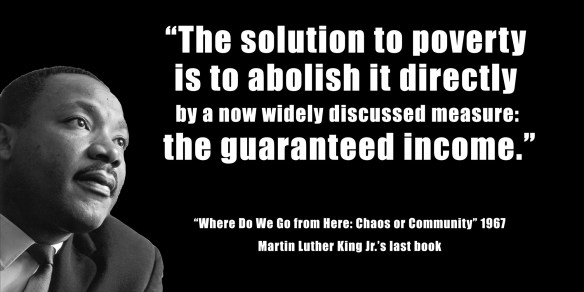
Careful analysis reveals a number of excellent arguments for the implementation of a Universal Basic Income.

By Paul Buchheit

Source: Nation of Change

It’s not hard to envision the benefits in work opportunities, stress reduction, child care, entrepreneurial activity, and artistic pursuits for American households with an extra $1,000 per month. It’s also very easy to justify a financial wealth tax, given that the dramatic stock market surge in recent years is largely due to an unprecedented degree of technological and financial productivity that derives from the work efforts and taxes of ALL Americans. A 2% annual tax on financial wealth is a small price to pay for the great fortunes bestowed on the most fortunate Americans.

The REASONS? Careful analysis reveals a number of excellent arguments for the implementation of a Universal Basic Income (UBI).

(1) Our Jobs are Disappearing

A 2013 Oxford study determined that nearly HALF of American jobs are at risk of being replaced by computers, AI, and robots. Society simply can’t keep up with technology. As for the skeptics who cite the Industrial Revolution and its job-enhancing aftermath (which actually took 60 years to develop), the McKinsey Global Institute says that society is being transformed at a pace “ten times faster and at 300 times the scale” of the radical changes of two hundred years ago.

(2) Half of America is Stressed Out or Sick

Half of Americans are in or near poverty, unable to meet emergency expenses, living from paycheck to paycheck, and getting physically and emotionally ill because of it. Numerous UBI experiments have led to increased well-being for their participants. A guaranteed income reduces the debilitating effects of inequality. As one recipient put it, “It takes me out of depression…I feel more sociable.”

(3) Children Need Our Help

This could be the best reason for monthly household stipends. Parents, especially mothers, are unable to work outside the home because of the all-important need to care for their children. Because we currently lack a UBI, more and more children are facing hunger and health problems and educational disadvantages.

(4) We Need More Entrepreneurs

A sudden influx of $12,000 per year for 126 million households will greatly stimulate the economy, potentially allowing millions of Americans to TAKE RISKS that could lead to new forms of innovation and productivity.

Perhaps most significantly, a guaranteed income could relieve some of the pressure on our newest generation of young adults, who are deep in debt, underemployed, increasingly unable to live on their own, and ill-positioned to take the entrepreneurial chances that are needed to spur innovative business growth. No other group of Americans could make more productive use of an immediate boost in income.

(5) We Need the Arts & Sciences

A recent Gallup poll found that nearly 70% of workers don’t feel ‘engaged’ (enthusiastic and committed) in their jobs. The work chosen by UBI recipients could unleash artistic talents and creative impulses that have been suppressed by personal financial concerns, leading, very possibly, to a repeat of the 1930s, when the Works Progress Administration hired thousands of artists and actors and musicians to help sustain the cultural needs of the nation.

Arguments against

The usual uninformed and condescending opposing argument is that UBI recipients will waste the money, spending it on alcohol and drugs and other ‘temptation’ goods. Not true. Studies from the World Bank and the Brooks World Poverty Institute found that money going to poor families is used primarily for essential needs, and that the recipients experience greater physical and mental well-being as a result of their increased incomes. Other arguments against the workability of the UBI are countered by the many successful experiments conducted in the present and recent past: FinlandCanada, Netherlands, Kenya, IndiaGreat Britain, Uganda, Namibia, and in the U.S. in Alaska and California.

How to pay for it

Largely because of the stock market, U.S. financial wealth has surged to $77 trillion, with the richest 10% owning over three-quarters of it. Just a 2 percent tax on total financial wealth would generate enough revenue to provide a $12,000 annual stipend to every American household (including those of the richest families).

It’s easy to justify a wealth tax. Over half of all basic research is paid for by our tax dollars. All the technology in our phones and computers started with government research and funding. Pharmaceutical companies wouldn’t exist without decades of support from the National Institutes of Health. Yet the tech and pharmaceutical companies claim patents on the products paid for and developed by the American people.

The collection of a wealth tax would not be simple, since only about half of U.S. financial wealth is held directly in equities and liquid assets (Table 5-2). But it’s doable. As Thomas Piketty notes, “A progressive tax on net wealth is better than a progressive tax on consumption because first, net wealth is better defined for very wealthy individuals..”

And certainly a financial industry that knows how to package worthless loans into A-rated mortgage-backed securities should be able to figure out how to tax the investment companies that manage the rest of our ever-increasing national wealth.


US Technological Transformations and the Narcotic-Fueled Genocide of American Workers

By James Petras

Source: The Unz Review

Introduction

During his recent visit to New Hampshire on 3/20/18, President Trump declared once again that the US is facing a ‘drug epidemic’. This time he advocated the death penalty for criminal drug dealers as the solution to a national crisis that has killed over 1 million Americans since the 1990’s (when the blockbuster prescription opiate Oxycontin was first released on the market). Trump promised that the Justice Department would develop the most severe penalties for criminal drug traffickers, by which he meant foreigners. He argued that his proposed “Wall” (between the Mexican- US border) would cut the flow of drugs responsible for the ongoing addiction of millions of US citizens – as though the prescription opiate addiction epidemic resulted from a foreign invasion, and not corporate decisions from Big Pharma.

President Trump’s claim that 116 ‘drug deaths’ occur every day (42,000 a year) is a major underestimate. In 2017, alone over 64,000 drug overdose deaths were reported in official statistics (with many unreported cases signed off as natural or undetermined, especially in counties too poor to afford autopsies and expensive forensic toxicology). Another 4 million Americans, at least, are currently addicted to opioids and at risk for overdose.

In comparative terms, more American workers have been killed or devastated by narcotics (mostly via prescription) in 2017 alone, than in the entire decade of the Vietnam War with its 58,000 dead and 500,000 wounded. In 2017, 40,000 Americans died in motor vehicle accidents and another 39,000 by gun violence – and these statistics are not broken down to include vehicular accidents due to drug intoxication or gun violence over drugs. Prescription or illegal opiates, alone or mixed with other sedative drugs, like Valium, or alcohol, are the most prominent and preventable cause of premature death in the United States today.

This pattern is unique to the United States, where the irresponsible medical prescription of highly addicting narcotics has been the primary portal of entry into the degrading life of addiction for millions. Despite President Trump’s claims, the addiction crisis is not a product of urban Afro-American street dealers or Mexican narco-traffickers: This uniquely American crisis has been created and fueled by billionaire-owned US pharmaceutical corporations, which produced, distributed and wildly profited from legal narcotics. They were aided by the irresponsible prescription practice of tens of thousands of doctors and other ‘providers’ who introduced millions of vulnerable patients to the world of narcotic dependency – including youngsters with sports injuries and workers with job-related pain. These are physicians and medical providers who rarely stopped to examine their own responsibility, even when their otherwise healthy patients overdosed or were destroyed by addiction. It is especially outrageous that doctors and ‘Big Pharma’ worked hand in hand for over 20 years to create this epidemic, enjoying wild profits and almost total legal immunity. Few have dared to openly question their irresponsibility and greed. In the poorest and most vulnerable areas of this country, the most irresponsible and unaccountable incompetence has replaced real medical care and created a health care apartheid.

The Federal Drug Enforcement Agency (FDA) and the Drug Enforcement Agency (DEA) have protected the corporate drug traffickers and ensured the manicured and cultured narco-bosses the highest rates of return on their products. These polished pushers have their names engraved on the walls of museums and opera houses around the country.

The majority of Presidential, Federal, State and municipal candidates from both major parties have received millions of dollars in electoral campaign funds from these huge legal narcotic manufacturers and distributors, as well as from physicians and other representative of the ‘pain-treatment industry’. Over the past decades, politicians have openly or secretly opposed or weakened legislation designed to address this crisis.

Why not just ask President Trump to direct his Justice Department to impose the death penalty on the board of directors of the big corporate narcotic manufacturers or distributors or on the CEOs of major ‘pain clinics’ or on the owners of local rural ‘health centers’ that drove the villagers of West Virginia into their life-destroying downward spirals?

When will the DEA finally storm the medical centers to arrest the over-prescribing ‘providers’ of narcotics and benzodiazepine tranquilizers (a very common deadly combination)?

When will the SWAT teams seize the vacation homes of the CEOs of major US hospitals where the convenient and fake ideology of promising a ‘pain-free’ experience (‘make it Zero on the Pain Scale’) led to the generalized promotion of highly addicting narcotics for minor injuries, arthritic pain, or chronic back discomfort due to work or obesity? Responsible alternatives existed and were used in the rest of the world – largely untouched by this prescription-fueled crisis.

No doubt what President Trump has in mind is something else: the expulsion of Latin American workers under the pretext of going after the drug dealers and the even more massive incarceration of petty street dealers in the African American community.

Trump will then turn to further monitoring and arresting small-scale American marijuana farmers, who earn a basic income from growing a product that many believe is safe, non-addicting, and significantly reduces demand for dangerous narcotics.

As ugly as this all seems, the complicity of the political, economic and the medical elite in exponentially spreading deadly narcotics among the poor, working class and downwardly mobile middle class, points to a deeper and more sinister policy goal: the systematic elimination of millions of American workers made redundant in the new economy. This is a ‘gentler genocide’, where millions of workers die prematurely seeking an escape from pain as they have been replaced by a new technology and a new ideology: Robots, artificial intelligence and digitalization have rendered them disposable, while the out-sourcing of work to low paid overseas laborers and immigrants have guaranteed unimaginable profits for the elite decision makers.

This highly profitable process, benefiting the political, pharmaceutical, financial, police and judicial elites, conveniently blames the victims, a significant proportion of whom come from the poor and working class in this country, including white rural and small town addicts, especially youth, stuck at minimum wage jobs with no prospects of a decent future – injured construction workers, 15% of whom abuse prescription narcotics for work-related injuries, as well as the marginalized petty drug dealers from the urban slums and desperate Latino immigrants forced to accommodate the cartels. These people have little rights and are easily monitored, incarcerated, expelled and just written-off in one-line obituaries.

The narcotic-fueled genocide had grown out of a calculated corporate strategy meant to cull and subdue a huge population of potentially restive marginalized workers and their families, blaming the overdosing victims for their own ‘irresponsible’ choices, their reliance on prescription opiates, their lack of access to competent medical care, and their untimely deaths as though this were all a collective suicide as the great nation marches forward.

The higher the death toll among marginalized Americans, the greater the reliance on political distractions and racist deceptions. President Trump loudly blames street-level retail distributors, while ignoring the links between tax-exempt mega-billionaires who have profited from the shortened life-expectancies of addicted workers (scores of billions of dollars already saved in future pension and health care expenses) and the millions fired for addiction and denied jobless benefits and treatment. Trump has yet to even mention the actions of the legal pharma-medical industry that set this in motion.

Meanwhile, the Democratic Party leaders denounce the worker-victims of addiction and their communities as ‘irresponsible and racist’, for having believed the populist rhetoric of candidate Trump. Trump’s most intense rural areas of support coincided with areas of the worst opioid addiction and suicide rates. Trump’s rival, Hillary Clinton wrote off scores of millions of vulnerable Americans as ‘deplorables’ and never once addressed the addiction crisis that grew exponentially during her husband’s administration.

Since the implementation of NAFTA during the 1990’s, scores of millions of American workers have been relegated to unstable, low paid jobs, deprived of health benefits and subject to grueling work, prone to physical and mental injuries. Workplace injuries set the stage for the prescription narcotic crisis. Even worse, today workers are constantly distracted by electronic gadgets at the workplace, with their orders from above arriving digitally. These highly profitable gadgets have created enormous distractions and contributed to workplace death and injuries. The plaything of choice for the masses, the I-phone, has added to the addiction crisis, by increasing the rate of injury. This mind-numbing distraction, produced abroad at incredible profit, has played an unexplored role in the increase in premature death in the US.

The corporate narcotic elites, like the ultra-cultured Sackler clan owners of Perdue Pharmaceuticals, and their allies in the finance sector, support the diverse ideological distractions fashioned by their politician pawns: Eager to please her donor-owners, Hillary Clinton and the Democrats blame the working class for their backwardness and genetic propensity to addiction and degradation. Meanwhile, President Trump and the Republicans blame ‘outside’ suppliers and distributors including Mexican narco-cartels, illegal immigrant traffickers, black urban street dealers and now point to overseas Chinese fentanyl labs – as though the entire crisis came from the outside. Trump’s approach flies in the face of the unquestionable source of most narcotic addiction in the US: Irresponsible prescribing of highly addicting legal narcotics.

No other industrialized country is experiencing this scale of addiction and pre-mature death. No other industrialized country relies on a private, for-profit, unregulated system of delivering medical care to its citizens. Only the US.

Both elite political parties avoid the basic issue of the long-term, large-scale structural imperatives underlying the transformation of the US work places. They refuse to address the marginalization of tens of millions of American workers and their families, made disposable by corporate economic and political decisions.

The US corporate elite are completely incapable of developing, let alone favoring, any policy that addresses the needs of millions of surplus office and factory workers and their family members replaced by new technology and ‘global’ economic policies. The American financial and political elite is not about to support an economic, political and cultural ‘GI’ bill to save the scores of millions shoved to the wayside in their rush to obscene wealth and power.

The unstated, but clearly implemented, ‘final solution’ is a Social Darwinian policy of active and passive neglect, the unleashing of profitable prescription narcotics into the population of vulnerable disposable workers, offering them a convenient, painless way out – the opioid solution to the over-population problem of redundant rural and small town ‘Helots’. The political elite’s willing complicity with Big Pharma, the medical profession, the financial oligarchs and the prison-industrial complex has transformed the country in many ways. Shortened lives and depopulation of rural and small town communities translates into lower demand for public services, such as schools, health care, pensions and housing. This is guaranteeing a greater concentration of national wealth in the hands of a tiny elite. The financial press has openly celebrated the projected decrease in pension liabilities as a result of the drop in worker life expectancy.

The ongoing mass genocide by opioids may have started to arouse popular discontent among working people who do not want to continue dying young and miserable! Social services and child protective services for the millions of orphaned or abandoned children of this crisis have been demanding real policies. Unfortunately, the usual platitudes and failed policies prevail. Drug education and ‘opioid addiction treatment’ programs (currently among the largest expense in some union health plans) are pointless Band-Aids when confronted by the larger policy decisions fuelling this crisis. Nevertheless, thousands of health care professionals are beginning to resist corporate pressure to prescribe cheap opioids – and fight for more expensive, but less dangerous, alternative for addressing their patients’ pain. Even if all medical providers stopped over-prescribing narcotics today, there are still millions of addicts already created by past practice, who seek the most deadly street drugs, like fentanyl, to feed their addiction.

Politicians now publicly denounce ‘Big Pharma’, while privately winking at the lobbyists and accepting millions from their ‘donor-owners’.

Public critics in the corporate media are quick to condemn the workers’ susceptibility to narcotic addiction but not the underlying causative imperatives of global capitalism.

Mainstream academics celebrate corporate technological advances with occasional neo-Malthusian warnings about the dangers of millions of redundant workers, while ignoring the profit-driven role of narcotics in reducing the social threat of excess workers!

Finally the role of an elite and respected profession must be re-evaluated in a historic context: In the 1930’s German doctors helped develop an ideology of ‘racial hygiene’ and a technology to demonize and eliminate millions of human beings deemed redundant and inferior, through overwork in slave camps, starvation and active genocide – serving the ambitions of Nazi expansionism and deriving significant profit for select individuals and corporations. US physicians and the broader medical community have less consciously assisted in the ongoing ‘culling of the herd’ of American laborers and rural residents rendered superfluous and undesirable by the decisions of a global oligarchy increasingly unwilling to share public wealth with its masses. There are similarities.

Once prosperous, industrial cities and towns, as well as rural villages, in the US have seen marked declines in populations and a premature death crisis among those who remain.

This must be reversed.


On the Criminal Referral of Comey, Clinton et al: Will the Constitution Hold and the Media Continue to Suppress the Story?

Ray McGovern reports on a major development in the Russia-gate story that has been ignored by corporate media: a criminal referral to the DOJ against Hillary Clinton, James Comey and others, exposing yet again how established media suppresses news it doesn’t like–about as egregious an example of unethical journalism as there is. 

By Ray McGovern

Source: Consortium News

Wednesday’s criminal referral by 11 House Republicans of former Secretary of State Hillary Clinton as well as several former and serving top FBI and Department of Justice (DOJ) officials is a giant step toward a Constitutional crisis.

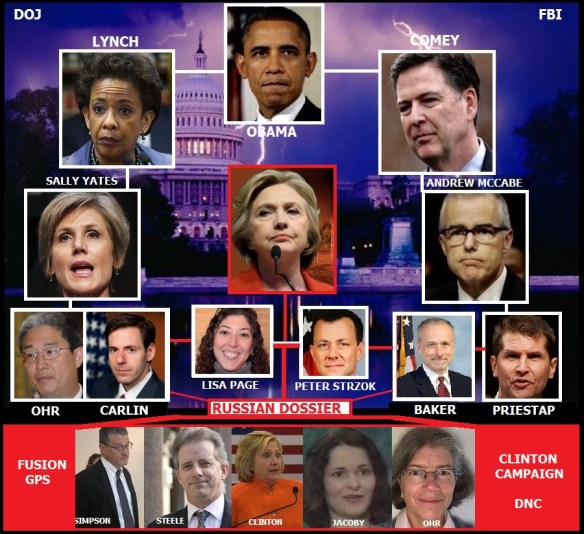
Named in the referral to the DOJ for possible violations of federal law are: Clinton, former FBI Director James Comey; former Attorney General Loretta Lynch; former Acting FBI Director Andrew McCabe; FBI Agent Peter Strzok; FBI Counsel Lisa Page; and those DOJ and FBI personnel “connected to” work on the “Steele Dossier,” including former Acting Attorney General Sally Yates and former Acting Deputy Attorney General Dana Boente.

With no attention from corporate media, the referral was sent to Attorney General Jeff Sessions, FBI Director Christopher Wray, and U.S. Attorney for the District of Utah John Huber.  Sessions appointed Huber months ago to assist DOJ Inspector General (IG) Michael Horowitz.  By most accounts, Horowitz is doing a thoroughly professional job.  As IG, however, Horowitz lacks the authority to prosecute; he needs a U.S. Attorney for that.  And this has to be disturbing to the alleged perps.

This is no law-school case-study exercise, no arcane disputation over the fine points of this or that law. Rather, as we say in the inner-city, “It has now hit the fan.”  Criminal referrals can lead to serious jail time.  Granted, the upper-crust luminaries criminally “referred” enjoy very powerful support.  And that will come especially from the mainstream media, which will find it hard to retool and switch from Russia-gate to the much more delicate and much less welcome “FBI-gate.”

As of this writing, a full day has gone by since the letter/referral was reported, with total silence so far from The New York Times and The Washington Post and other big media as they grapple with how to spin this major development. News of the criminal referral also slipped by Amy Goodman’s non-mainstream DemocracyNow!, as well as many alternative websites.

The 11 House members chose to include the following egalitarian observation in the first paragraph of the letter conveying the criminal referral: “Because we believe that those in positions of high authority should be treated the same as every other American, we want to be sure that the potential violations of law outlined below are vetted appropriately.” If this uncommon attitude is allowed to prevail at DOJ, it would, in effect, revoke the de facto “David Petraeus exemption” for the be-riboned, be-medaled, and well-heeled.

Stonewalling

Meanwhile, the patience of the chairmen of House committees investigating abuses at DOJ and the FBI is wearing thin at the slow-rolling they are encountering in response to requests for key documents from the FBI.  This in-your-face intransigence is all the more odd, since several committee members have already had access to the documents in question, and are hardly likely to forget the content of those they know about.  (Moreover, there seems to be a good chance that a patriotic whistleblower or two will tip them off to key documents being withheld.)

The DOJ IG, whose purview includes the FBI, has been cooperative in responding to committee requests for information, but those requests can hardly include documents of which the committees are unaware.

Putting aside his partisan motivations, House Intelligence Committee Chair Devin Nunes (R-CA) was unusually blunt two months ago in warning of legal consequences for officials who misled the Foreign Intelligence Surveillance Court in order to enable surveillance on Trump and his associates. Nunes’s words are likely to have sent chills down the spine of those with lots to hide: “If they need to be put on trial, we will put them on trial,” he said.”The reason Congress exists is to oversee these agencies that we created.”

Whether the House will succeed in overcoming the resistance of those criminally referred and their many accomplices and will prove able to exercise its Constitutional prerogative of oversight is, of course, another matter — a matter that matters.

And Nothing Matters More Than the Media

The media will be key to whether this Constitutional issue is resolved.  Largely because of Trump’s own well earned reputation for lying, most Americans are susceptible to slanted headlines like this recent one — “Trump escalates attacks on FBI …” — from an article in The Washington Post, commiserating with the treatment accorded fired-before-retired prevaricator McCabe and the FBI he (dis)served.

Nor is the Post above issuing transparently clever warnings — like this one in a lead article on March 17: “Some Trump allies say they worry he is playing with fire by taunting the FBI. ‘This is open, all-out war. And guess what? The FBI’s going to win,’ said one ally, who spoke on the condition of anonymity to be candid. ‘You can’t fight the FBI. They’re going to torch him.’” [sic]

Mind-Boggling Criminal Activity

What motivated the characters now criminally “referred” is clear enough from a wide variety of sources, including the text messages exchange between Strzok and Page.  Many, however, have been unable to understand how these law enforcement officials thought they could get away with taking such major liberties with the law.

None of the leaking, unmasking, surveillance, “opposition research,” or other activities directed against the Trump campaign can be properly understood, if one does not bear in mind that it was considered a sure thing that Secretary Clinton would become President, at which point illegal and extralegal activities undertaken to help her win would garner praise, not prison.  The activities were hardly considered high-risk, because candidate Clinton was sure to win.

But she lost.

Comey himself gives this away in the embarrassingly puerile book he has been hawking, “A Higher Loyalty” — which amounts to a pre-emptive move motivated mostly by loyalty-to-self, in order to obtain a Stay-Out-of-Jail card.  Hat tip to Matt Taibbi of Rolling Stone for a key observation, in his recent article, “James Comey, the Would-Be J. Edgar Hoover,” about what Taibbi deems the book’s most damning passage, where Comey discusses his decision to make public the re-opening of the Hillary Clinton email investigation.

Comey admits, “It is entirely possible that, because I was making decisions in an environment where Hillary Clinton was sure to be the next president, my concern about making her an illegitimate president by concealing the re-started investigation bore greater weight than it would have if the election appeared closer or if Donald Trump were ahead in the polls.”

The key point is not Comey’s tortured reasoning, but rather that Clinton was “sure to be the next president.”  This would, of course, confer automatic immunity on those now criminally referred to the Department of Justice.  Ah, the best laid plans of mice and men — even very tall men.  One wag claimed that the “Higher” in “A Higher Loyalty” refers simply to the very tall body that houses an outsized ego.

I think it can be said that readers of Consortiumnews.com may be unusually well equipped to understand the anatomy of FBI-gate as well as Russia-gate.  Listed below chronologically are several links that might be viewed as a kind of “whiteboard” to refresh memories.  You may wish to refer them to any friends who may still be confused.

2017

Russia-gate’s Mythical ‘Heroes’ June 6, 2017

The Democratic Money Behind Russia-gate Oct. 29, 2017

The Foundering Russia-gate ‘Scandal’ Dec. 13, 2017 

What Did Hillary Clinton Know? Dec. 25, 2017

2018

The FBI Hand Behind Russia-gate Jan. 11, 2018

Will Congress Face Down the Deep State? Jan. 30, 2018

Nunes Memo Reports Crimes at Top of FBI and DOJ Feb. 2, 2018

‘This is Nuts’: Liberals Launch ‘Largest Mobilization in History’ in Defense of Russiagate Probe Feb. 9, 2018

Nunes: FBI and DOJ Perps Could Be Put on Trial Feb. 19, 2018

‘Progressive’ Journalists Jump the Shark on Russia-gate March 7, 2018

Intel Committee Rejects Basic Underpinning of Russiagate March 14, 2018

McCabe: A War on (or in) the FBI? March 18, 2018

Former CIA Chief Brennan Running Scared March 19, 2018


Challenges for Resolving Complex Conflicts

By Robert J. Burrowes

While conflict theories and resolution processes advanced dramatically during the second half of the 20th century, particularly thanks to the important work of several key scholars such as Professor Johan Galtung – see ‘Conflict Transformation by Peaceful Means (the Transcend Method)’ – significant gaps remain in the conflict literature on how to deal with particular conflict configurations. Notably, these include the following four.

First, existing conflict theory does not adequately explain, emphasize and teach how to respond in those circumstances in which parties cannot be brought to the table to deeply consider a conflict and the measures necessary to resolve it. This particularly applies in cases where one or more parties is violently defending (often using a combination of direct and structural violence) substantial interrelated (material and non-material) interests. The conflict between China and Tibet over the Chinese-occupied Tibetan plateau, the many conflicts between western corporations and indigenous peoples over exploitation of the natural environment, and the conflict between the global elite and ‘ordinary’ people over resource allocation in the global economy are obvious examples of a vast number of conflicts in this category. As one of the rare conflict theorists who addresses this question, Galtung notes that structural violence ‘is not only evil, it is obstinate and must be fought’, and his preferred strategy is nonviolent revolution. See The True Worlds: A Transnational Perspective p. 140. But how?

Second, existing conflict theory does not explain how to respond in those circumstances in which one or more parties to the conflict are insane. The conflict between Israel and Palestine over Israeli-occupied Palestine classically illustrates this problem, particularly notable in the insanity of Israeli Prime Minister Binjamin Netanyahu, Defense Minister Avigdor Lieberman and Justice Minister Ayelet Shaked. But it is also readily illustrated by the insanity of the current political/military leadership in the USA and the insanity of the political, military and Buddhist leaders in Myanmar engaged in a genocidal assault on the Rohingya. For a brief discussion of the meaning and cause of this insanity see ‘The Global Elite is Insane Revisited’.

As an aside, there is little point deluding ourselves that insanity is not a problem or even ‘diplomatically’ not mentioning the insanity (if this is indeed the case) of certain parties in particular conflicts. The truth enables us to fully understand a conflict so that we can develop and implement a strategy to deal with all aspects of that truth. Any conflict strategy that fails to accurately identify and address all key aspects of the conflict, including the insanity of any of the parties, will virtually certainly fail.

Third, and more fundamentally, existing conflict theory does not take adequate account of the critical role that several unconscious emotions play in driving conflict in virtually all contexts, often preventing its resolution. This particularly applies in the case of (but is not limited to) suppressed terror, self-hatred and anger which are often unconsciously projected as fear of, hatred for and anger at an opponent or even an innocent third-party (essentially because this individual/group feels ‘safe’ to the person who is projecting). See ‘The Psychology of Projection in Conflict’.

While any significant ongoing conflict would illustrate this point adequately, the incredibly complex and interrelated conflicts being conducted in the Middle East, the prevalent Islamophobia in some western countries, and the conflicts over governance and exploitation of resources in the Democratic Republic of Congo are superlative examples. Ignoring suppressed (and projected) emotions can stymie conflict resolution in any context, interpersonally and geopolitically, and it does so frequently.

Fourth, existing conflict theory pays little attention to the extinction-causing conflict being ongoingly generated by human over-consumption in the finite planetary biosphere (and currently resulting in 200 species extinctions daily) which is sometimes inadequately identified as a conflict caused by capitalism’s drive for unending economic growth in a finite environment.

So what can we do?

Well, to begin, in all four categories of cases mentioned above, I would use Gandhian nonviolent strategy to compel violent opponents to participate in a conflict transformation process such as Galtung’s. Why nonviolent and why Gandhian? Nonviolent because our intention is to process the conflict to achieve a higher level of need satisfaction for all parties and violence against any or all participants is inconsistent with that intention. But Gandhian nonviolence because only Gandhi’s version of nonviolence has this conflict intention built into it. See ‘Conception of Nonviolence’.

‘But isn’t this nonviolent strategy simply coercion by another name?’ you might ask. Well, according to the Norwegian philosopher, Professor Arne Naess, it is not. In his view, if a change of will follows the scrutiny of norms in the context of new information while one is ‘in a state of full mental and bodily powers’, this is an act of personal freedom under optimal conditions. Naess highlights this point with the following example: Suppose that one person carries another against their will into the streets where there is a riot and, as a result of what they see, the carried person changes some of their attitudes and opinions. Was the change coerced? According to Naess, while the person was coerced into seeing something that caused the change, the change itself was not coerced. The distinction is important, Naess argues, because satyagraha (Gandhian nonviolent struggle) is incompatible with changes of attitudes or opinions that are coerced. See Gandhi and Group Conflict: An Exploration of Satyagraha pp. 91-92.

To elaborate this point: Unlike other conceptions of nonviolence, Gandhi’s nonviolence is based on certain premises, including the importance of the truth, the sanctity and unity of all life, and the unity of means and end, so his strategy is always conducted within the framework of his desired political, social, economic and ecological vision for society as a whole and not limited to the purpose of any immediate campaign. It is for this reason that Gandhi’s approach to strategy is so important. He is always taking into account the ultimate end of all nonviolent struggle – a just, peaceful and ecologically sustainable society of self-realized human beings – not just the outcome of this campaign. He wants each campaign to contribute to the ultimate aim, not undermine vital elements of the long-term and overarching struggle to create a world without violence.

Consequently, given his conception of nonviolence, Gandhi’s intention is to reach a conflict outcome that recognizes the sanctity and unity of all life which, obviously, includes the lives (but also the physical and emotional well-being) of his opponents. His nonviolent strategy is designed to compel participation in a conflict process but not to impose his preferred outcome unilaterally. See Nonviolent Campaign Strategy and Nonviolent Defense/Liberation Strategy.

This can apply in the geopolitical context or in relation to ordinary individuals ‘merely’ participating in the violence of overconsumption. Using nonviolent strategy to campaign on the climate catastrophe or other environmental issues can include mobilizing individuals and communities to emulate Gandhi’s asceticism in a modest way by participating in the fifteen-year strategy outlined in The Flame Tree Project to Save Life on Earth which he inspired.

But even if we can use nonviolent strategy effectively to get the conflicting parties together, the reality is that suppressed and projected emotions – particularly fear, self-hatred and anger as mentioned above – or even outright insanity on the part of one or more parties may still make efforts to effectively transform the conflict impossible. So for conflict resolution to occur, we need individuals who are willing and able to participate with at least minimal goodwill in designing a superior conflict outcome beneficial to everyone concerned.

Hence, I would do one more thing in connection with this process. Prior to, and then also in parallel with, the ‘formal’ conflict process, I would provide opportunities for all individuals engaged in the process (or otherwise critical to it because of their ‘background’ role, perhaps as a leader not personally present at the formal conflict process) to explore in a private setting with a skilled ‘nisteler’ (who is outside the conflict process), the unconscious emotions that are driving their particular approach to the conflict. See ‘Nisteling: The Art of Deep Listening’. The purpose of this nisteling is to allow each participant in the conflict process to bring a higher level of self-awareness to it. See ‘Human Intelligence or Human Awareness?’

I am not going to pretend that this would necessarily be possible, quick, easy or even work in every context. Insane individuals are obviously the last to know they have a psychological problem and the least likely to participate in a process designed to uncover and remove the roots of their insanity. However, those who are trapped in a dysfunctional psychological state short of insanity may be willing to avail themselves of the opportunity. In time, the value of this aspect of the conflict resolution process should become apparent, particularly because delusions and projections are exposed by the person themself (as an outcome of the expertise of the person nisteling).

Obviously, I am emphasizing the psychological aspects of the conflict process because my own considerable experience as a nonviolent activist together with my research convinces me that understanding violence requires an understanding of the psychology that drives it. If you are interested, you can read about the psychology of violence, including the 23 psychological characteristics in the emotional profile of archetype perpetrators of violence, in the documents Why Violence? and Fearless Psychology and Fearful Psychology: Principles and Practice.

Ideally, I would like to see the concept of nistelers operating prior to, and then parallel with, focused attention on the conflict itself normalized as an inherent part of the conflict resolution process. Clearly, we need teams of people equipped to perform this service, a challenge in itself in the short-term.

If, however, conflicting parties cannot be convinced to participate in this process with reasonable goodwill, we can always revert to using nonviolent strategy to compel them to do so. And, if all attempts to conduct a reasonable conflict process fail (particularly in a circumstance in which insanity is the cause of this failure), to impose a nonviolent solution which nevertheless takes account of the insane’s party’s legitimate needs. (Yes, on just that one detail, I diverge from Gandhi.)

Having stated that, however, I acknowledge that only a rare individual has the capacity to think, plan and act strategically in tackling a violent conflict nonviolently, so considerable education in nonviolent strategy will be necessary and is a priority.

Given what is at stake, however – a superior strategy for tackling and resolving violent geopolitical conflicts including those (such as the threat of nuclear war, the climate catastrophe and decimation of the biosphere) that threaten human extinction – any resources devoted to improving our capacity to deliver this outcome would be well spent.

Provided, of course, that reducing (and ultimately eliminating) violence and resolving conflict is your aim.

In addition to the above, I would do something else more generally (that is, outside the conflict process).

Given that dysfunctional parenting is ultimately responsible for the behaviour of those individuals who generate and perpetuate violent conflicts, I would encourage all parents to consider making ‘My Promise to Children’ so that we start to produce a higher proportion of functional individuals who know how to powerfully resolve conflicts in their lives without resort to violence. If any parent feels unable to make this promise, then they have the option of tackling this problem at its source by ‘Putting Feelings First’.

If we do not dramatically and quickly improve our individual and collective capacity to resolve conflicts nonviolently, including when we are dealing with individuals who are insane, then one day relatively soon we will share the fate of those 200 species of life we drove to extinction today.


Biodata: Robert J. Burrowes has a lifetime commitment to understanding and ending human violence. He has done extensive research since 1966 in an effort to understand why human beings are violent and has been a nonviolent activist since 1981. He is the author of Why Violence? His email address is flametree@riseup.net and his website is here.

Robert J. Burrowes
P.O. Box 68
Daylesford, Victoria 3460
Australia

Email: flametree@riseup.net

Websites:
Nonviolence Charter
Flame Tree Project to Save Life on Earth
‘Why Violence?’
Feelings First
Nonviolent Campaign Strategy
Nonviolent Defense/Liberation Strategy
Anita: Songs of Nonviolence
Robert Burrowes
Global Nonviolence Network

Why the West cannot stomach Russians

By Andre Vltchek

Source: New Eastern Outlook

When it comes to Russia or the Soviet Union, reports and historical accounts do get blurry; in the West they do, and consequently in all of its ‘client states’.

Fairy tales get intermingled with reality, while fabrications are masterfully injected into the subconsciousness of billions of people worldwide. Russia is an enormous country, in fact, the largest country on Earth in terms of territory. It is scarcely inhabited. It is deep, and as a classic once wrote: “It is impossible to understand Russia with one’s brain. One could only believe in it.”

The Western mind generally doesn’t like things unknown, spiritual and complex. Since the ‘old days’, especially since the crusades and monstrous colonialist expeditions to all corners of the world, the Westerners were told fables about their own “noble deeds” performed in the plundered lands. Everything had to be clear and simple: “Virtuous Europeans were civilizing savages and spreading Christianity, therefore, in fact, saving those dark poor primitive souls.”

Of course, tens of millions were dying in the process, while further tens of millions were shackled and brought to the “New Worlds” as slaves. Gold, silver, and other loot, as well as slave labor had been (and still are) paying for all those European palaces, railroads, universities and theatres, but that did not matter, as the bloodshed was most of the time something abstract and far away from those over-sensitive eyes of the Western public.

Westerners like simplicity, particularly when it comes to moral definitions of “good and evil”. It matters nothing if the truth gets systematically ‘massaged’, or even if the reality is fully fabricated. What matters is that there is no deep guilt and no soul-searching. Western rulers and their opinion makers know their people – their ‘subjects’ – perfectly well, and most of the time, they give them what they are asking for. The rulers and the reigned are generally living in symbiosis. They keep bitching about each other, but mostly they have similar goals: to live well, to live extremely well, as long as the others are forced to pay for it; with their riches, with their labor and often with their blood.

Culturally, most of the citizens of Europe and North America hate to pay the bill for their high life; they even detest to admit that their life is extremely ‘high’. They like to feel like victims. They like to feel that they are ‘used’. They like to imagine that they are sacrificing themselves for the rest of the world.

And, above all, they hate real victims: those they have been murdering, raping, plundering and insulting, for decades and centuries.

Recent ‘refugee crises’ showed the spite Europeans feel for their prey. People who made them rich and who lost everything in the process are humiliated, despised and insulted. Be they Afghans or Africans, the Middle Easterners or South Asians. Or Russians, although Russians are falling to its own, unique category.

*****

Many Russians look white. Most of them eat with knife and fork, they drink alcohol, excel at Western classical music, poetry, literature, science and philosophy.

To Western eyes they look ‘normal’, but actually, they are not.

Russians always want ‘something else’; they refuse to play by Western rules.

They are stubbornly demanding to remain different, and to be left alone.

When confronted, when attacked, they fight.

They rarely strike first, almost never invade.

But when threatened, when assaulted, they fight with tremendous determination and force, and they never lose. Villages and cities get converted into invader’s graves. Millions die while defending their Motherland, but the country survives. And it happens again and again and again, as the Western hordes have been, for centuries, assaulting and burning Russian lands, never learning the lesson and never giving up on their sinister dream of conquering and controlling that proud and determined colossus.

In the West, they don’t like those who defend themselves, who fight against them, and especially those who win.

*****

It gets much worse than that.

Russia has this terrible habit… not only does it defend itself and its people, but it also fights for the others, protecting colonized and pillaged nations, as well as those that are unjustly assaulted.

It saved the world from Nazism. It did it at a horrific price of 25 million men, women and children, but it did it; courageously, proudly and altruistically. The West never forgave the Soviet Union for this epic victory either, because all that is unselfish and self-sacrificing, is always in direct conflict with its own principles, and therefore ‘extremely dangerous’.

The Russian people had risen; had fought and won in the 1917 Revolution; an event which terrified the West more than anything else in history, as it had attempted to create a fully egalitarian, classless and racially color-blind society. It also gave birth to Internationalism, an occurrence that I recently described in my book The Great October Socialist Revolution: Impact on the World and the Birth of Internationalism.

Soviet Internationalism, right after the victory in WWII, helped greatly, directly and indirectly, dozens of countries on all continents, to stand up and to confront the European colonialism and the North American imperialism. The West, and especially Europe, never forgave the Soviet people in general and Russians in particular, for helping to liberate its slaves.

That is when the greatest wave of propaganda in human history really began to roll. From London to New York, from Paris to Toronto, an elaborate web of anti-Soviet and covertly anti-Russian hysteria was unleashed with monstrously destructive force. Tens of thousands of ‘journalists’, intelligence officers, psychologists, historians, as well as academics, were employed. Nothing Soviet, nothing Russian (except those glorified and often ‘manufactured’ Russian dissidents) was spared.

The excesses of the Great October Socialist Revolution and the pre-WWII era were systematically fabricated, exaggerated, and then engraved into the Western history textbooks and mass media narrative. In those tales, there was nothing about the vicious invasions and attacks coming from the West, aimed at destroying the young Bolshevik state. Naturally, there was no space for mentioning the British, French, U.S., Czech, Polish, Japanese, German and others’ monstrous cruelties.

Soviet and Russian views were hardly ever allowed to penetrate the monolithic and one-sided Western propaganda narrative.

Like obedient sheep, the Western public accepted the disinformation it was fed with. Eventually, many people living in the Western colonies and ‘client states’, did the same. A great number of colonized people were taught how to blame themselves for their misery.

The most absurd but somehow logical occurrence then took place: many men, women and even children living in the USSR, succumbed to Western propaganda. Instead of trying to reform their imperfect but still greatly progressive country, they gave up, became cynical, aggressively ‘disillusioned’, corrupt and naively but staunchly pro-Western.

*****

It was the first and most likely the last time in the history, Russia got defeated by the West. It happened through deceit, through shameless lies, through Western propaganda.

What followed could be easily described as genocide.

The Soviet Union was first lulled into Afghanistan, then it was mortally injured by the war there, by an arms race with the United States, and by the final stage of propaganda that was literally flowing like lava from various hostile Western state-sponsored radio stations. Of course, local ‘dissidents’ also played an important role.

Under Gorbachev, a ‘useful idiot’ of the West, things got extremely bizarre. I don’t believe that he was paid to ruin his own country, but he did almost everything to run it into the ground; precisely what Washington wanted him to do. Then, in front of the entire world, a mighty and proud Union of the Soviet Socialist Republics suddenly shook in agony, then uttered a loud cry, and collapsed; died painfully but swiftly.

A new turbo-capitalist, bandit, pro-oligarch and confusedly pro-Western Russia was born. Russia which was governed by an alcoholic Boris Yeltsin; a man loved and supported by Washington, London and other Western centers of power.

It was a totally unnatural, sick Russia – cynical and compassionless, built with someone else’s ideas – Russia of Radio Liberty and Voice of America, of the BBC, of black marketers, of oligarchs and multi-national corporations.

Is the West now daring to say that Russians are ‘interfering’ in something in Washington? Are they out of their minds?

Washington and other Western capitals did not only ‘interfere’, they openly broke the Soviet Union into pieces and then they began kicking Russia which was at that point half-alive. Is it all forgotten, or is Western public again fully ‘unaware’ of what took place during those dark days?

The West kept spitting at the impoverished and injured country, refused to honor international agreements and treaties. It offered no help. Multi-nationals were unleashed, and began ‘privatizing’ Russian state companies, basically stealing what was built by the sweat and blood of Soviet workers, during long decades.

Interference? Let me repeat: it was direct intervention, invasion, a grab of resources, shameless theft! I want to read and write about it, but we don’t hear much about it, anymore, do we?

Now we are told that Russia is paranoid, that its President is paranoid! With straight face, the West is lying; pretending that it has not been trying to murder Russia.

Those years… Those pro-Western years when Russia became a semi-client state of the West, or call it a semi-colony! There was no mercy, no compassion coming from abroad. Many of those idiots – kitchen intellectuals from Moscow and provinces – suddenly woke up but it was too late. Many of them had suddenly nothing to eat. They got what they were told to ask for: their Western ‘freedom and democracy’, and Western-style capitalism or in summary: total collapse.

I remember well how it was ‘then’. I began returning to Russia, horrified, working in Moscow, Tomsk, Novosibirsk, Leningrad. Academics from Akadem Gorodok outside Novosibirsk were selling their libraries in the bitter cold, in dark metro underpasses of Novosibirsk… Runs on the banks… Old retired people dying from hunger and cold behind massive doors of concrete blocks… unpaid salaries and starving miners, teachers…

Russia under the deadly embrace of the West, for the first and hopefully last time! Russia whose life expectancy suddenly dropped to African Sub-Saharan levels. Russia humiliated, wild, in terrible pain.

*****

But that nightmare did not last long.

And what happened – those short but horrible years under both Gorbachev and Yeltsin, but above all under the Western diktat – will never be forgotten, not forgiven.

Russians know perfectly well what they do not want, anymore!

Russia stood up again. Huge, indignant and determined to live its own life, its own way. From an impoverished, humiliated and robbed nation, subservient to the West, the country evolved and within a few years, the free and independent Russia once again joined ranks of the most developed and powerful countries on Earth.

And as before Gorbachev, Russia is once again able to help those nations which are under unjust and vicious attacks of the Western empire.

A man who is leading this renaissance, President Vladimir Putin, is tough, but Russia is under great threat and so is the world – this is no time for weaklings.

President Putin is not perfect (who is, really?), but he is a true patriot, and I dare say, an internationalist.

Now the West, once again, hates both Russia and its leader. No wonder; undefeated, strong and free Russia is the worst imaginable foe of Washington and its lieutenants.

That’s how the West feels, not Russia. Despite all that was done to it, despite tens of millions of lost and ruined lives, Russia has always been ready to compromise, even to forgive, if not forget.

*****

There is something deeply pathological in the psyche of the West. It cannot accept anything less than full and unconditional submission. It has to control, to be in charge, and on top of everything; it has to feel exceptional. Even when it murders and ruins the entire Planet, it insists on feeling superior to the rest of the world.

This faith in exceptionalism is the true Western religion, much more than even Christianity, which for decades has not really played any important role there. Exceptionalism is fanatical, it is fundamentalist and unquestionable.

It also insists that its narrative is the only one available anywhere in the World. That the West is seen as a moral leader, as a beacon of progress, as the only competent judge and guru.

Lies are piling on top of lies. As in all religions, the more absurd the pseudo-reality is, the more brutal and extreme are the methods used to uphold it. The more laughable the fabrications are, the more powerful the techniques used to suppress the truth are.

Today, hundreds of thousands of ‘academics’, teachers, journalists, artists, psychologists and other highly paid professionals, in all parts of the world, are employed by the Empire, for two goals only – to glorify the Western narrative and to discredit all that is standing in its way; daring to challenge it.

Russia is the most hated adversary of the West, with China, Russia’s close ally being near second.

The propaganda war unleashed by the West is so insane, so intense, that even some of the European and North American citizens are beginning to question tales coming from Washington, London and elsewhere.

Wherever one turns, there is a tremendous medley of lies, of semi-lies, half-truths; a complex and unnavigable swamp of conspiracy theories. Russia is being attacked for interfering in U.S. domestic affairs, for defending Syria, for standing by defenseless and intimidated nations, for having its own powerful media, for doping its athletes, for still being Communist, for not being socialist anymore; in brief: for everything imaginable and unimaginable.

Criticism of the country is so thorough and ludicrous, that one begins to ask very legitimate questions: “what about the past? What about the Western narrative regarding the Soviet past, particularly the post-Revolutionary period, and the period between two world wars?”

The more I analyze this present-day Western anti-Russian and anti-Chinese propaganda, the more determined I am to study and write about the Western narrative regarding Soviet history. I’m definitely planning to investigate these matters in the future, together with my friends – Russian and Ukrainian historians.

*****

In the eyes of the West, Russians are ‘traitors’.

Instead of joining the looters, they have been standing by the ‘wretched of the world’, in the past, as well as now. They refused to sell their Motherland, and to enslave their own people. Their government is doing all it can to make Russia self-sufficient, fully independent, prosperous, proud and free.

Remember that ‘freedom’, ‘democracy’ and many other terms, mean totally different things in distinctive parts of the world. What is happening in the West could never be described as ‘freedom’ in Russia or in China, and vice versa.

Frustrated, collapsing, atomized and egotistic societies of Europe and North America do not inspire even their own people anymore. They are escaping by millions annually, to Asia, Latin America, and even to Africa. Escaping from emptiness, meaninglessness and emotional cold. But it is not Russia’s or China’s business to tell them how to live or not to live!

In the meantime, great cultures like Russia and China do not need, and do not want, to be told by the Westerners, what freedom is, and what democracy is.

They do not attack the West, and expect the same in return.

It is truly embarrassing that the countries responsible for hundreds of genocides, for hundreds of millions of murdered people on all continents, still dare to lecture others.

Many victims are too scared to speak.

Russia is not.

It is composed, gracious, but fully determined to defend itself if necessary; itself as well as many other human beings living on this beautiful but deeply scarred Planet.

Russian culture is enormous: from poetry and literature, to music, ballet, philosophy… Russian hearts are soft, they easily melt when approached with love and kindness. But when millions of lives of innocent people are threatened, both the hearts and muscles of Russians quickly turn to stone and steel. During such moments, when only victory could save the world, Russian fists are hard, and the same is true about the Russian armor.

There is no match to Russian courage in the sadistic but cowardly West.

Irreversibly, both hope and future are moving towards the east.

And that is why Russia is desperately hated by the West.