There are obviously some serious linguistic issues and disagreements between the West and the rest of the world. Essential terms like “freedom”, “democracy”, “liberation”, even “terrorism”, are all mixed up and confused; they mean something absolutely different in New York, London, Berlin, and in the rest of the world.
Before we begin analyzing, let us recall that countries such as the United Kingdom, France, Germany and the United States, as well as other Western nations, have been spreading colonialist terror to basically all corners of the world.
And in the process, they developed effective terminology and propaganda, which has been justifying, even glorifying acts such as looting, torture, rape and genocides. Basically, first Europe, and later North America literally “got away with everything, including mass murder”.
The native people of Americas, Africa and Asia have been massacred, their voices silenced. Slaves were imported from Africa. Great Asian nations, such as China, what is now “India” and Indonesia, got occupied, divided and thoroughly plundered.
And all was done in the name of spreading religion, “liberating” people from themselves, as well as “civilizing them”.
Nothing has really changed.
To date, people of great nations with thousands of years of culture, are treated like infants; humiliated, and as if they were still in kindergarten, told how to behave, and how to think.
Sometimes if they “misbehave”, they get slapped. Periodically they get slapped so hard, that it takes them decades, even centuries, to get back to their feet. It took China decades to recover from the period of “humiliation”. India and Indonesia are presently trying to recuperate, from the colonial barbarity, and from, in the case of Indonesia, the 1965 U.S.-administered fascist coup.
But if you go back to the archives in London, Brussels or Berlin, all the monstrous acts of colonialism, are justified by lofty terms. Western powers are always “fighting for justice”; they are “enlightening” and “liberating”. No regrets, no shame and no second thoughts. They are always correct!
Like now; precisely as it is these days.
Presently, the West is trying to overthrow governments in several independent countries, on different continents. From Bolivia (the country has been already destroyed) to Venezuela, from Iraq to Iran, to China and Russia. The more successful these countries get, the better they serve their people, the more vicious the attacks from abroad are, the tougher the embargos and sanctions imposed on them are. The happier the citizens are, the more grotesque the propaganda disseminated from the West gets.
In Hong Kong, some young people, out of financial interest, or out of ignorance, keep shouting: “President Trump, Please Liberate Us!” Or similar, but equally treasonous slogans. They are waving U.S., U.K. and German flags. They beat up people who try to argue with them, including their own Police Force.
So, let us see, how the United States really “liberates” countries, in various pockets of the world.
Let us visit Iran, a country which (you’d never guess it if consuming only Western mass media) is, despite the vicious embargos and sanctions, on the verge of the “highest human development index bracket” (UNDP). How is it possible? Simple. Because Iran is a socialist country (socialism with the Iranian characteristics). It is also an internationalist nation which is fighting against Western imperialism. It helps many occupied and attacked states on our planet, including Venezuela, Cuba, Bolivia (before), Syria, Yemen, Palestine, Lebanon, Afghanistan and Iraq, to name just a few.
So, what is the West doing? It is trying to ruin it, by all means; ruin all good will and progress. It is starving Iran through sanctions, it finances and encourages its “opposition”, as it does in China, Russia and Latin America. It is trying to destroy it.
Then, it just bombs their convoy in neighboring Iraq, killing its brave commander, General Soleimani. And, as if it was not horrid enough, it turns the tables around, and starts threatening Teheran with more sanctions, more attacks, and even with the destruction of its cultural sites.
Iran, under attack, confused, shot down, by mistake, a Ukrainian passenger jet. It immediately apologized, in horror, offering compensation. The U.S. straightway began digging into the wound. It started to provoke (like in Hong Kong) young people. The British ambassador, too, got involved!
As if Iran and the rest of the world should suddenly forget that during its attack on Iraq, more than 3 decades ago, Washington actually shot down an Iranian wide-body passenger plane (Iran Air flight 655, an Airbus-300), on a routine flight from Bandar Abbas to Dubai. In an “accident”, 290 people, among them 66 children, lost their lives. That was considered “war collateral”.
Iranian leaders then did not demand “regime change” in Washington. They were not paying for riots in New York or Chicago.
As China is not doing anything of that nature, now.
The “Liberation” of Iraq (in fact, brutal sanctions, bombing, invasion and occupation) took more than a million Iraqi lives, most of them, those of women and children. Presently, Iraq has been plundered, broken into pieces, and on its knees.
Is this the kind of “liberation” that some of the Hong Kong youngsters really want?
No? But if not, is there any other performed by the West, in modern history?
Washington is getting more and more aggressive, in all parts of the world.
It also pays more and more for collaboration.
And it is not shy to inject terrorist tactics into allied troops, organizations and non-governmental organizations. Hong Kong is no exception.
Iran, Iraq, Syria, Russia, China, Venezuela, but also many other countries, should be carefully watching and analyzing each and every move made by the United States. The West is perfecting tactics on how to liquidate all opposition to its dictates.
It is not called a “war”, yet. But it is. People are dying. The lives of millions are being ruined.
The Pacific Gas and Electric Company (PG&E) has diverted over $100 million from safety and maintenance programs to executive compensation at the same time it has caused an average of more than one fire a day for the past six years killing over 100 people.
PG&E is the largest privately held public utility in the United States. A new research report shows that 91% of PG&E stocks are held by huge international investment management firms, including BlackRock and Vanguard Group. PG&E is an ideal investment for global capital management firms with monopoly control over five million households paying $16 billion for gas and electric in California. The California Public Utility Commission (PUC) has allowed an annual return up to 11%.
Between 2006 and the end of 2017, PG&E made $13.5 billion in net profits. Over those years, they paid nearly $10 billion in dividends to shareholders, but found little money to maintain safety on their electricity lines. Drought turned PG&E’s service area into a tinderbox at the same time money was diverted from maintenance to investor profits.
A 2013 Liberty Consulting report showed that 60% of PG&E’s power lines were at risk of failure due to obsolete equipment and 75% of the lines lacked in-line grounding. Between 2008 and 2015, the CPUC found PG&E late on thousands of repair violations. A 2012 report further revealed that PG&E illegally diverted $100 million from safety to executive compensation and bonuses over a 15-year period.
PG&E has caused over 1,500 fires in the past six years. PG&E electrical equipment has sparked more than a fire a day on average since 2014—more than 400 in 2018—including wildfires that killed more than 100 people.
In October 2017, multiple PG&E linked fires (Tubbs, Nuns, Adobe fires and more) in Northern California scorched more than 245,000 acres, destroyed or damaged more than 8,900 homes, displaced 100,000 people and killed at least 44.
In November, 2018, the PG&E caused Camp fire burned 153,336 acres, killing 86 people, and destroying 18,804 homes, business, and structures. The towns of Paradise and Concow were mostly obliterated. Overall damage was estimated at $16.5 billion.
PG&E has caused some $50 billion in damages from massive fires started by their failed power lines. They filed bankruptcy in January 2019 to try to shelter their assets. PG&E’s 529 million shares went from a high of $70 per share in in 2017 to a low of $3.55 in 2019. Shares are currently trading at $10.55 with zero returns.At this point PG&E actually owes more in damages then the net worth of the company.
All but two members of the board of director resigned in early 2019, and the CEO was replaced. A new board of directors was elected by an annual stockholders meeting in June of 2019. PG&E now has a board of directors whose primary interest in 2020 is returning PG&E stock values to $50-70 range and returning to annual dividend payments in the 8-11% rate.
The new PG&E management took widespread aggressive action during the fire-season of 2019 shutting down electric power to over 2.5 million people statewide. Nonetheless, a high voltage power line malfunctioned in Sonoma county lead to the Kincade fire that burned 77,758 acres destroying 374 structures, and forced the evacuation 190,000 Sonoma county residents. Estimated damages from this fire are $10.6 billion.
The fourteen new PG&E directors were essentially hand-picked by PG&E’s major stockholder firms like Vanguard Holdings 2019 (47.5 million shares 9.1%) and BlackRock (44.2 million shares 8.5%). A new PG&E Director, Meridee Moore, SF area founder & CEO of $2 billion Watershed Asset Management, is also a board member of BlackRock.
Only three of the new fourteen directors live in PG&E’s service area (four if we count the newly appointed CEO from Tennessee). One board member lives the LA area. The remainder of the board live outside California, including three from Texas, two from the mid-west and the remaining four from New York or east coast states. Pending PG&E Bankruptcy court approval, new directors are slated to receive $400,000 each in annual compensation.
Ten of the new 2020 directors have direct current links with capital investment management firms. The remainder have shown proven loyalty experience on behalf of capital utility investors making the entire PG&E board a solid united group of capital investment protectors, whose primary objective is to return PG&E stock values to pre-2017 highs with a 11% return on investment. They claim that wide-spread blackouts will be needed for up to ten years.
All fourteen PG&E board members are in the upper levels of the 1% richest in the world. As millionaires with elite university educations, the PG&E board holds little empathy for the millions of Californians living paycheck to paycheck burdened with some of the highest utility bills in the country. PG&E shuts off gas and electric to over 250,000 families annually for late payments.
The PG&E 2020 board is in service to transnational investment capital. This creates a perfect storm for the continuing transfer of capital from the 99% to the richest 1% in the world, all with uncertainblackouts, serious environmental damage, widespread fires, with multiple deaths and injuries.
We need to liquidate PG&E for the criminal damages it has afflicted on California. The “PG&E solution” is to manage PG&E democratically on the basis of human need, rather than private profit. It is time to take a stand for a publicly owned California Gas and Electric Company as the way to reverse the transfer of wealth to the global 1% and provide Californians with safe, low-cost and more renewable energy. All power to the people!
Peter Phillips, Political Sociologist at Sonoma State University; author Giants: The Global Power Elite, (New York: Seven Stories Press, 2018); past director of Project Censored; co-author/editor of fourteen Censored yearbooks, 1997 to 2011; co-author of Impeach the President, (New York: Seven Stories Press, 2007); and winner of the Dallas Smythe Award from the Union for Democratic Communications.
Tim Ogburn, 20-year manager for the California EPA; founder and co-chair of the Environmental Industry Coalition of the United States in Washington, D.C.; published in numerous technical and trade journals regarding public/private partnerships; International Environmental Technology consultant in India, Philippines, Malaysia, Thailand, Egypt, and Israel; Consultant to USAID, US Department of Commerce, U.S. State Department; and has given Congressional Presentations on the environmental technology industry before Congress.
Related Podcast:
Project Censored – 02.04.20
As Northern California communities tally the toll of disastrous fires and repeated power shutoffs,Peter Phillips and Tim Ogburn say it’s time to replace the investor-owned Pacific Gas & Electric Co.with a public power authority. They say the recent installation of a new board of directors at PG&Ewon’t solve the problems, because the new directors, like their predecessors, represent the global one-percent,not the utility’s customers.
FILE – In this May 6, 2019, file photo Microsoft CEO Satya Nadella delivers the keynote address at Build, the company’s annual conference for software developers in Seattle. Microsoft says it has detected more than 740 infiltration attempts by nation-state actors in the past year targeting U.S.-based political parties, campaigns and other democracy-focused organizations including think tanks and other non-profits. (AP Photo/Elaine Thompson, File)
Russia, China and Iran are already being blamed for using tech to undermine the 2020 election. Yet, the very technologies they are allegedly using were created by a web of companies with deep ties to Israeli intelligence.
As World War II drew to a close in Europe, British philosopher Bertrand Russell wrote that “neither a man nor a crowd nor a nation can be trusted to act humanely or to think sanely under the influence of a great fear.”
Though numerous examples in the post-World War II era have proven Russell’s point, perhaps one of the best examples was the U.S. public’s willingness to swallow lie after lie about Saddam Hussein’s Iraq due to the climate of fear that followed the September 11 attacks. Those lies, propagated by dubious intelligence, government officials and a compliant media, resulted in catastrophes – large and small, both abroad and at home.
Today, an analogous narrative is being crafted by many of the same players – both in media and government – yet it has avoided scrutiny, even from independent media.
Over the past several months and with a renewed zeal in just the last few weeks, anonymous intelligence officials, dubious “experts” and establishment media outlets have crafted a narrative about the coming “chaos” of the 2020 election, months before it takes place. Per that narrative, certain state actors will use specific technologies to target the “American mind” in order to undermine the coming presidential election. The narrative holds that those efforts will be so successful that the U.S. will never recover as a democracy.
Though these anonymous government sources and their stenographers have already named the countries who will be responsible and the technologies they will use, they also admit that no evidence yet exists to back up these claims, meaning they are — at best — pure speculation.
Historically, the goal of such fear-inducing narratives has been the trading of civil liberties for increased security, or rather, the appearance of increased security. Yet, when the need for security is felt due to a fear that is based on government-driven speculation and not on evidence, the goal of that narrative is not about protecting the public from a real, tangible threat but instead about the consolidation of power by the very groups responsible for crafting it — in this case, the intelligence community and other key players in the national security state.
However, what is particularly odd about this narrative surrounding imminent “chaos” and meddling in the upcoming 2020 election is the fact that, not only have the instruments of said meddling been named and described in detail, but their use in the election was recently simulated by a company with deep ties to both U.S. and Israeli intelligence. That simulation, organized and run by the Israeli-American company Cybereason, ended with scores of Americans dead, the cancellation of the 2020 election, the imposition of martial law and a spike in fear among the American populace.
Many of the technologies used to create that chaotic and horrific scenario in the Cybereason simulation are the very same technologies that U.S. federal officials and corporate media outlets have promoted as the core of the very toolkit that they claim will be used to undermine the coming election, such as deep fakes and hacks of critical infrastructure, consumer devices and even vehicles.
While the narrative in place has already laid the blame at the feet of U.S. rival states China, Russia and Iran, these very technologies are instead dominated by companies that are tied to the very same intelligence agencies as Cybereason, specifically Israeli military intelligence.
With intelligence agencies in the U.S. and Israel not only crafting the narrative about 2020 foreign meddling, but also dominating these technologies and simulating their use to upend the coming election, it becomes crucial to consider the motivations behind this narrative and if these intelligence agencies have ulterior motives in promoting and simulating such outcomes that would effectively end American democracy and hand almost total power to the national security state.
Media, intelligence foreshadow tech-powered doom for 2020
Even though the 2020 U.S. election is still months away, a plethora of media reports over the past six months (and even before then) have been raising concern after concern about how the U.S. election is still so vulnerable to foreign meddling that such meddling is essentially an inevitability.
Part of the reason for the recent pick-up in fear mongering appears to have been the release of a joint statement issued by key members of the Trump administration last November. That statement, authored by Attorney General Bill Barr, Defense Secretary Mark Esper, acting DHS Secretary Kevin McAleenan, acting Director of National Intelligence Joseph Maguire, FBI Director Christopher Wray, NSA Director Gen. Paul Nakasone, and Cybersecurity and Infrastructure Security Agency (CISA) Director Christopher Krebs, claimed that foreign interference in 2020 was imminent despite admitting that there is no evidence of interference having taken place:
Our adversaries want to undermine our democratic institutions, influence public sentiment and affect government policies. Russia, China, Iran, and other foreign malicious actorsall will seek to interfere in the voting process or influence voter perceptions. Adversaries may try to accomplish their goals through a variety of means, including social media campaigns, directing disinformation operations or conducting disruptive or destructive cyber-attacks on state and local infrastructure.
While at this time we have no evidence of a compromise or disruption to election infrastructure that would enable adversaries to prevent voting, change vote counts or disrupt the ability to tally votes, we continue to vigilantly monitor any threats to U.S. elections (emphasis added).”
Despite the key caveat of there being no evidence at the time the statement was issued, media reports used the statement to claim that foreign interference in 2020 was imminent, such as in these reports fromBuzzFeed, ABC News, and Newsweek.
In addition to the reports that have cast the involvement of state actors — namely Russia, Iran and China — as assured despite no evidence, other reports have made the claim that this allegedly imminent interference will inevitably be successful, largely due to claims that the tactics used will rely heavily on technology that the U.S. can’t hope to successfully counter. CSO Online, an online news outlets that provides news, analysis and research on security and risk management, recently warned that “fixing America’s voting and election infrastructure problems is a long-term proposition, one that won’t be fixed in time for the election in November” while the New York Times warned of imminent chaos and that “stealthier” malevolent foreign actors had already created the foundation for “an ugly campaign season marred by hacking and disinformation.” Wired claimed last year that U.S. election security “is still hurting at every level.”
In another example, Rolling Stone published an article earlier this month with the headline “Hackers Are Coming for the 2020 Election — And We’re Not Ready,” which claims that “the reality is that: “We’ve made progress since the last election — but we’re much less secure than we should be.” The article goes on to say that claim that the goal isn’t necessarily to hack voting machines or change results, but “to merely create the impression of an attack as a way to undermine our faith in the electoral process.”
It continues:
The target is the minds of the American people,” says Joshua Geltzer, a former counterterrorism director on the National Security Council. “In some ways, we’re less vulnerable than we were in 2016. In other ways, it’s more.” Nearly every expert agrees on this: The worst-case scenario, the one we need to prepare for, is a situation that causes Americans to question the bedrock of our democracy — free and fair elections.”
Well before this type of rhetoric made its way into the U.S. media, Israeli intelligence-linked tech firm Cybereason claiming in a release on its website that “messing with a voter’s mind” would have a bigger impact than changing vote totals, even before the 2016 election. That release, published by Cybereason prior to the last presidential election, was authored by the company’s CEO, Lior Div, who used to lead offensive hacking operations against nation-states for Israeli military intelligence.
Notably, of all of these media reports, there is a clear consensus that one of the main tactics that will soon be used to meddle in the coming U.S. election will be the use of so-called “deep fakes.” Deriving its name from a combination of “deep learning” and “fake,” deep fakes involve video and audio that has been manipulated using artificial intelligence (AI) to create media that appears to be authentic, but is not. Concern about its use in the upcoming election has spurred not only a wealth of media reports on the matter but has prompted both the U.S. military and Congress to take action to limit its potential misuse.
One thing that stands out about the media narrative regarding election meddling and deep fakes is that several news organizations have published articles that state that deep fakes will be used to undermine the 2020 election, as opposed to stating that they could be used or that they are a phenomenon worthy of attention (though some reportshave taken this more measured approach).
The reason for this level of confidence may owe to statements made by prominent U.S. intelligence officials last year, including those made by Dan Coats, the former Director of National Intelligence (DNI), who claimed in the 2019 Worldwide Threat Assessment for the U.S. Intelligence Community that deep fakes and other hi-tech forms of fake media would be used to disrupt the 2020 election. Coats specifically stated:
Adversaries and strategic competitors probably will attempt to use deep fakes or similar machine-learning technologies to create convincing—but false—image, audio, and video files to augment influence campaigns directed against the United States and our allies and partners.”
Since Coats made the warning, numerous media reports have promoted the concern with little scrutiny, representing just one of the numerous times in U.S. history where narratives first authored by U.S. intelligence are subsequently promoted heavily by U.S. media, even when the claim made by intelligence officials is speculative, as it is in this case. Indeed, the narratives being promoted with respect to the 2020 election involve many of the same intelligence agencies (American and Israeli) and media outlets who promoted claims that were later proven false about “weapons of mass destruction” in Iraq prior to the 2003 invasion, among other pertinent examples.
Notably, deep fakes figured prominently and was the tool most used by malevolent hackers in Cybereason’s 2020 election simulation, which saw both video and audio-only deep fakes used to spread misinformation on national and local TV channels in order to impersonate police officers and election officials and to create fake bomb threats by posing as the terror group Daesh (ISIS). Cybereason also happens to be a partner of the organization funding the most well-known creator and producer of deep fakes in the world, an organization that — much like Cybereason itself — is openly tied to Israeli intelligence.
Aside from deep fakes, other technologies weaponized in Cybereason’s election simulation have also been the subject of several media reports, such as the hacking of Internet of Things (IoT) devices and appliances and even the hacking of vehicles that have some form of internet connectivity. In the Cybereason simulation, IoT hacks were used to cut power to polling stations and disseminate disinformation while vehicles were hacked to conduct terror attacks against civilians waiting in line to vote, killing several and injuring hundreds.
Most media reports have claimed that these technologies will be part of the coming “explosion” in cyber warfare in 2020 and do not specifically link them to imminent election meddling. Others, however, have made the link to the election explicit.
Naming the culprits in advance
In addition to the apparent consensus on how foreign meddling will occur during the 2020 election, there is also agreement regarding which countries will be responsible. Again, this is largely based on statements made by U.S. national security officials. For instance, the joint statement issued last November by the DOJ, DOD, DHS, DNI, FBI, NSA, and CISA regarding 2020 election security, states that “Russia, China, Iran, and other foreign malicious actors all will seek to interfere in the voting process or influence voter perceptions” before adding “at this time we have no evidence.”
Similarly, the 2019 Worldwide Threat Assessment for the U.S. Intelligence Community, written by then-Director of National Intelligence Dan Coats, names these same three countries in relation to imminent 2020 election interference and states that their interference in the 2020 election is “almost certain.” The assessment adds the following about each nation:
Russia: “Russia’s social media efforts will continue to focus on aggravating social and racial tensions, undermining trust in authorities, and criticizing perceived anti-Russia politicians.”
China: “China will continue to use legal, political, and economic levers—such as the lure of Chinese markets—to shape the information environment. It is also capable of using cyber attacks against systems in the United States to censor or suppress viewpoints it deems politically sensitive.”
Iran: “Iran, which has used social media campaigns to target audiences in both the United States and allied nations with messages aligned with Iranian interests, will continue to use online influence operations to try to advance its interests.”
The vast majority of warnings regarding future election interference have come from U.S. intelligence officials with a dubious record of trustworthiness and a history of using the media to spread propaganda and disinformation, most famously through Operation Mockingbird. Most — if not all — of the recent and numerous articles on imminent interference rely heavily on claims made by the two aforementioned government documents, documents crafted by U.S. intelligence agencies for public consumption, as well as claims made by anonymous U.S. officials.
A recent New York Times article, for example, titled “Chaos Is the Point’: Russian Hackers and Trolls Grow Stealthier in 2020,” is based almost entirely on “interviews with dozens of officials and experts,” though the only government official named in the article is Shelby Pierson, the intelligence community’s election threats executive. The most quoted experts named in the article are Ben Nimmo, formerly of the hawkish, NATO-funded Atlantic Council and now with Graphika, and Laura Rosenberger, director of the neoconservative-created Alliance for Securing Democracy. The article nonetheless cites “American officials” and “current and former officials” several times to make claims about imminent election interference that paint a bleak picture of the current election season.
A recent article from The Hill relies on the acting head of DHS, Chad Wolf, as its only source, citing Wolf’s claim that “we fully expect Russia to attempt to interfere in the 2020 elections to sow public discord and undermine our democratic institutions” amid other warnings that Wolf gave about Chinese and Iranian cyber threats to U.S. elections. Other articles, including one titled “Russia, China plan to adjust their tactics to hack, influence 2020 elections” cite only Shelby Pierson of the U.S. intelligence community as its source for that headline’s claim. Another titled “Russia isn’t the only threat to 2020 elections, says U.S. intel” cites only anonymous U.S. intelligence officials, as the headline suggests.
Though Russia and China have consistently been named as the most likely election meddlers, reports have also been drumming up the likelihood that Iran will emerge as 2020’s foreign meddler of choice, especially in the months prior to and weeks after the killing of Iranian General Qassem Soleimani by the Trump administration. A recent “informal poll” conducted by the Washington Post asked hawkish think tank fellows, employees at companies like Raytheon and current and former federal officials if Iran would likely retaliate against the U.S. via cyberattack. The Post ran the results of the poll under the headline “Get ready for serious cyberattacks from Iran, experts say.”
Despite the media’s numerous warnings of imminent and “serious” cyber-retaliation from Iran, the only cyberattack attributed to the country after Soleimani’s death was the vandalism of the Federal Depository Library Program website, a rather benign act that was nevertheless blasted across headlines such as “US government website hacked with pro-Iranian messages, image of bloodied Trump.” The U.S. government is quoted in that article as saying that “At this time, there is no confirmation that this was the action of Iranian state-sponsored actors.”
Also notably absent from media reports is the fact that WikiLeaks revealed in 2017 that the CIA had stockpiled a library of “stolen” cyberattack techniques produced in other nations, including Russia and Iran. Those revelations, part of the Vault 7 release, revealed that the CIA’s UMBRAGE group was capable of “misdirect[ing] attribution [for cyberattacks actually done by the CIA] by leaving behind the ‘fingerprints’ of the groups that the attack techniques were stolen from.” In other words, the CIA was more than capable of conducting “false flag” cyber attacks and blaming them on foreign actors.
Conflict of interest-ridden Microsoft “defends democracy”
Last year saw the tech behemoth Microsoft join the effort to blame foreign state actors, specifically Iran, for cyberattacks against the U.S. This helped to bolster assertions that had largely originated with a handful of U.S. intelligence officials and hawkish, neoconservative-aligned think tanks as media reports on Microsoft’s related claims treated the company as an independent private sector observer.
Yet, as MintPress investigations have revealed, Microsoft has clear conflicts of interest with respect to election interference. Its “Defending Democracy” program has spawned tools like “NewsGuard” and “ElectionGuard” that it claims will help protect U.S. democracy, but — upon closer examination — instead have the opposite effect.
Last January, MintPress exposed NewsGuard’s neoconservative backers and how special interest groups were backing the program in an effort to censor independent journalism under the guise of the fight against “fake news.” Subsequent investigations revealed the risk that Microsoft’s ElectionGuard poses to U.S. voting machines, which it claims to make more secure and how the platform was developed by companies closely tied to the Pentagon’s infamous research branch DARPA and Israeli military intelligence Unit 8200.
ElecionGuard software has since been adopted by numerous voting machine manufacturers and is slated to be used in some Democratic Primary votes. Notably, the push for the adoption of ElectionGuard software has been spearheaded by the recently created Cybersecurity and Infrastructure Security Agency (CISA), which is the federal agency tasked with overseeing election security and is headed by Christopher Krebs, a former high level Microsoft executive.
In recent months, Microsoft has also been at the center of claims that Iran attempted to hack U.S. presidential campaigns ahead of 2020 as well as claims that Iran plans to target the U.S. power grid and other critical infrastructure with cyberattacks.
Last October, Microsoft penned a blog post discussing a “threat group” it named Phosphorus that they “believe originates from Iran and is linked to the Iranian government.” The post went on to claim that Phosphorus attempted to target a U.S. presidential campaign, which later media reports claimed was President Trump’s re-election campaign. Microsoft concluded that the attempt was “not technically sophisticated” and ultimately unsuccessful, but felt compelled to disclose it and link it to Iran’s government.
Media reports also left out the fact that Microsoft is a major government contractor for the U.S. intelligence community and the Pentagon. Notably, the Trump campaign, which Microsoft said was the target of this attack, was later identified as the only major presidential campaign using Microsoft’s “AccountGuard” software, part of its dubious “Defending Democracy” program that also spawned NewsGuard and ElectionGuard. AccountGuard claims to protect campaign-linked emails and data from hackers.
Microsoft surfaced not long after, again claiming that Iran was maliciously targeting the United States’ civilian infrastructure. This subsequent claim was first published by Wired and later covered by other outlets. Those reports cite a single person, Microsoft security researcher Ned Moran, who claimed that an Iran-backed hacking group called APT33 was targeting the U.S. “physical control systems used in electric utilities, manufacturing, and oil refineries.”
“They’re trying to deliver messages to their adversaries and trying to compel and change their adversaries’ behavior,” Moran told Wired. Moran also stated that “Microsoft hasn’t seen direct evidence of APT33 carrying out a disruptive cyberattack rather than mere espionage or reconnaissance, it’s seen incidents where the group has at least laid the groundwork for those attacks (emphasis added).”
Cybereason helps craft the narrative
While U.S. intelligence officials and media outlets alike have been largely responsible for setting the narrative that imminent meddling will be conducted by Russia, China and Iran, key components of that narrative, particularly with respect to China and Iran, have been laid by Cybereason, a company that recently ran 2020 doomsday election simulations and that has close ties to the intelligence communities of both the U.S. and Israel.
We’re three days into 2020, and the world is already on high alert from last night’s airstrike in #Baghdad. Read our latest blog to learn more about their history of #cyber retaliation and what could be in store. https://t.co/GktqUa4iaf
Shortly after the killing of Iranian General Qassem Soleimani earlier this month, an operation conducted in concert with Israeli intelligence, Cybereason warned that Iran could imminently retaliate with a cyber threat and quoted its own employees who explained what and how Iran would likely target in retaliation. Cybereason’s CSO Sam Curry, who actively participated in the firm’s 2020 doomsday election simulations, stated:
This means that Iran’s “forceful revenge” response is likely to be less about the flash and all about the bang. If you have connected systems that are responsible for kinetic world effects, like ICS systems and critical infrastructure around water, energy or vital services, it’s time to pay attention. Iran and the US are engaged in Cyber brinksmanship, which means that the gloves are off as Iran picks it’s targets (emphasis added).”
Cybereason also quoted visiting fellow for the National Security Institute and former advisor to the U.S. Secret Service (which participated in Cyberaeson’s election simulations), Anne Marie Zettlemoyer, who claimed that Iran could soon target Wall Street and critical U.S. infrastructure like the power grid:
An attack against the financial systems can be devastating economically and weaken the confidence and viability of markets. However, we cannot ignore the physical consequences and manifestations that can come from a cyberattack, particularly against critical infrastructure like energy and industry control systems.”
Cybereason’s claims regarding Iran’s interest in “critical infrastructure” systems likely originated with Microsoft, the claims were then parroted by the media in several reports, many of which quoted Cybereason’s Sam Curry. Curry is also a contributor to major news outlets like Forbes where he writes about Iran’s cyber warfare capabilities.
The Iranian hacking group, APT33, has been targeting industrial control systems used by power grids, manufacturing and oil refineries. Read CSO, @samjcurry's take on the group's focus in @ForbesTech. https://t.co/gAl3abUvlg
Notably, in Cybereason’s recent allegations against Iran, it states that “it’s clear that Iran has been preparing for future geopolitical conflict by gaining access to critical infrastructure and other important operations in the United States.” It backs these claims by citing an article authored by Curry for Forbes. Following Soleimani’s death, numerous media reports, including in the UK’s The Independent and ABC News, have cited Curry as an “expert” source in claiming that Iran would retaliate with cyberattacks.
Microsoft’s claims about foreign hackers and meddling — the evidence for which have never been made public but has been parroted as fact nonetheless — are frequently supported by Cybereason.
Last August, Microsoft claimed to have foiled Russian attempts at hacking two Republican-affiliated think tanks and, despite providing no evidence, Cybereason’s then-senior director of intelligence services Ross Rustici was quoted as an expert in several media reports as saying that such behavior was to be expected from Russia. In one such report, Rustici stated:
We’re very good at fighting the last war, but the Russians are very good at evolving their game. I suspect if they’re going to do a psychological operation around the elections, the way they do it will be different than what they did in 2016. How effective the defenses we’ve built for what they did in 2016 will be for those attacks is yet to be seen.”
None of the media reports quoting Rustici mentioned Cybereason’s ties to Israeli intelligence, referring to tech firms only a “Boston-based cybersecurity company” and similar variants. Cybereason’s Intelligence Group is stuffed with former and active members of U.S. and Israeli intelligence services and has released several reports about nation-state hacking with a focus on Russia and China.
Cybereason has also been at the forefront of claims that China has been engaged in aggressive cyberattacks against multinational companies that have also seen widespread coverage in U.S. media, despite the untransparent nature of the evidence for Cybereason’s claims.
In a story that received major coverage from outlets such as Fox News, Reuters, CNBC and others, Cybereason unveiled what it called “Operation Soft Cell,” an operation that stole mass troves of data from several global telecommunications companies. In each story, Cybereason is the sole source of the claim and declined to provide the name or location of any of the affected companies. The firm also claimed to have determined that the attack was likely perpetrated by someone “backed by a nation state, and is affiliated with China.” It further claimed to have debriefed and coordinated responses with U.S. intelligence.
In an article for Reuters, Cybereason stated that “this time as opposed to in the past we are sure enough to say that the attack originated in China” while Cybereason separately told CyberScoop that it had “found hacking tools such as a modified web shell and a remote access trojan that are commonly associated with, but not unique to, Chinese hackers.” Despite the incongruity, media reports laid the blame squarely on China, as seen in headlines such as “Chinese spies have been sucking up call records at multinational telecoms, researchers say.”
Prior to uncovering Operation Soft Cell, Cybereason had warned on its blogs in the months and years prior that China would imminently targetU.S. companies. The revelation of Operation Soft Cell — which originated exclusively with Cybereason — has been used to build the case that China is openly engaged in cyberwarfare against its rival states, like the United States, and targeting “democracy itself.”
Best Known Deep Fake Creator is Funded by Israeli Intelligence
While the media, and even Cybereason itself, have helped lay the foundation to blame specific state actors for 2020 election meddling well ahead of the fact, it is worth revisiting Cybereason’s “Operation Blackout” election simulation and the tactics used by the “bad actors” in that scenario.
That simulation, discussed in detail in the first installment of this series, saw the weaponization of specific technologies, namely deep fakes, hacks of Internet of Things (IoT) devices and hacks of vehicles, in order to target the 2020 U.S. election, resulting in the cancellation of the election and the imposition of martial law.
Given the current narrative regarding what state actors are likely to meddle in the 2020 election — namely Russia, China and Iran — and the tactics they will allegedly use, it is important to explore the sources of the technologies weaponized per that narrative as well as in “Operation Blackout.”
Indeed, if there is any clear overlap between the creators of those technologies and the state actors being blamed in advance for their imminent use, it would certainly lend credibility to the claims promoted by U.S. intelligence, the media and companies like Microsoft and Cybereason.
Yet, upon closer examination, it becomes clear that the companies and state actors most involved in developing these technologies are the very ones claiming that Russia, China and Iran will use them to undermine the 2020 election.
Take for instance the use of deep fakes. Not only have numerous media reports focused on how deep fakeswill be used to meddle in the 2020 elections, but Cybereason’s doomsday election simulation saw “bad actors” rely heavily on their use to spread disinformation and even make fake bomb threats. While much has been said of the coming election and deep fakes, remarkably few reports have bothered to look at the company best known for creating viral deep fakes.
Canny AI has garnered considerable media attention over the past few years for its persuasive deep fake videos that have frequently gone viral. In the last year alone, the tech firm’s viral deep fakes have included a controversial video of Mark Zuckerberg where the Facebook co-founder appears to be saying “Imagine this for a second: One man, with total control of billions of people’s stolen data, all their secrets, their lives, their futures,” as well as a video showing Richard Nixon giving a speech he never actually gave. More recently, Canny AI was behind the viral videos immediately prior to the 2019 U.K. general election that appeared to show Jeremy Corbyn and his rival Boris Johnson endorsing each other and another video that showed world leaders singing John Lennon’s “Imagine”:
Oddly, many of the media reports that discuss these viral videos fail to mention the role of Canny AI in creating these viral deep fakes and instead only mention the organization or artists with whom Canny AI partnered to create them. For instance, the Corbyn-Johnson videos were reported to have been producedby the group Future Advocacy and artist Bill Posters, but it was actually Canny AI that created those videos for that group. Similarly, the Nixon Speech deep fake was reported by several outlets as having been solely created by MIT’s Center for Advanced Virtuality. However, the Boston Globe noted that “the [MIT] team worked with Canny AI, an Israeli company that does Video Dialogue Replacement, and Respeecher, a Ukrainian startup specializing in speech-to-speech synthetic voice production” to create the video.
The Zuckerberg deep fake that Canny AI created led to lots of positive press for the company, with several media reports dubbing them as the company using “deep fakes for good” and that uses the controversial technology “responsibly.” The Zuckerberg deep fake has been cited as one of the main drivers behind Facebook’s new “deep fake” policy, which only bans some deep fake videos and has been criticized by U.S. lawmakers as insufficient. Notably, neither Facebook nor Facebook-owned Instagram ever took down Canny AI’s deep fake of Zuckerburg.
Given the concern over deep fakes in relation to the coming election and Canny AI standing out as the main producer of deep fakes that have gone viral over the past year, it is important to point out that Canny AI has ties to a state actor with a history of election meddling: the state of Israel.
Indeed, Canny AI is 100 percent funded by an Israeli start-up accelerator called Xcelerator, a joint venture between Tel Aviv University and Israeli intelligence agency Shin Bet (sometimes called Shabak). According to Start Up Nation Central, the Paul Singer-created organization that promotes Israeli technology start ups, Xcelerator-funded “start-ups participating in the program benefit from close mentoring from content and technology experts from the Shabak, experts from Tel Aviv University, and industry leaders. The connection to the Shabak also provides the entrepreneurs with ways to test the capabilities of their technologies and cooperation opportunities (emphasis added).”
It is also worth noting that Xcelerator also backs an “anti-fake news” start-up called Cyabra, which has direct ties to Israel’s Mossad and offers its AI-driven “disinformation protection” to government agencies as well as politicians, particularly during election seasons. Two of Cyabra’s co-founders previously co-founded Psy-Group, which attempted to interfere in the 2016 U.S. election by weaponizing “fake news” and social media and later closed down its operations after U.S. government scrutiny into its activities began as part of the Mueller investigation.
Psy-Group also engaged in doxxing campaigns targeting Palesintian rights activists in the U.S. which were planned in conjunction with Ram Ben-Barak, the former deputy director of the Mossad who now advises Cyabra. Given that much of the concern ahead of the next election is related not only to deep fakes but also “fake news,” Cyabra’s rise and its clear ties to Mossad and the now defunct Psy-Group are important to note.
Furthermore, in examining the other technologies weaponized during Cybereason’s 2020 election simulation and cited in the aforementioned media narrative regarding 2020 meddling, a pattern similar to that of Canny AI emerges.
Indeed, the other technologies linked to these “bad actors” and foreign meddlers — namely hacking IoT devices and hacking vehicles — are also pioneered by companies with deep ties to Israeli military intelligence, specifically Unit 8200, and Israeli tech companies that have aggressively spied on U.S. government institutions in collusion with Israeli intelligence in the past, namely Comverse (now Verint) and Amdocs.
Hacking the Internet of Things
In Cybereason’s doomsday election simulation, another of the tactics used was the hacking of devices and appliances connected to the internet, often referred to as the Internet of Things (IoT) and which includes everything from smartphones to power grid infrastructure to city traffic lights.
While most reports on IoT hacks to date have focused on “lone wolf” or non-state-aligned actors, one company has stood out for its efforts to create a tool that would allow governments and intelligence agencies to hack these devices with ease. That company, called Toka, announced in 2018 that it planned to offer “a one-stop hacking shop for governments that require extra capability to fight terrorists and other threats to national security in the digital domain,” with “a special focus on [hacking] the so-called Internet of Things (IoT), covering tech like Amazon Echo, Nest connected home products, as well as connected fridges, thermostats and alarms.”
The Israel-based company, which raised $12.5 million within months of launching, has since been busy marketing its services to governments around the world, most recently France where it described its product portfolio as “empower[ing] governments, Intelligence, and law enforcement agencies to enhance Homeland Security with groundbreaking cyber-intelligence and operational capabilities” during an exposition in Paris last November.
Even though Toka openly markets the ability to hack private consumer devices to governments and law enforcement agencies around the world, the clear threat to privacy has gone ignored by media outlets as the company has garnered nearly no media attention since it launched nearly two years ago.
Yet, Toka is not only notable for what it offers but also for its founders and investors. Indeed, the co-founders of Toka have been described as an “all-star” team, largely because of the role of former Israeli Prime Minister and former head of Israeli military intelligence, Ehud Barak. Barak, in addition to co-founding the company, serves as its director and is also the chairman of the board of the controversial Israeli company Carbyne911, which markets software to emergency call centers in the United States. Interestingly, Cybereason’s 2020 doomsday election simulation also dealt with the hacking and weaponization of 911 call centers. Also of note is the fact that another of Carbyne911’s leadership team, former Unit 8200 commander Pinchas Buchris, is an adviser to Cybereason.
Toka’s top brass is a who’s who of former Israeli military and intelligence officials
In addition to Barak, Toka was co-founded by retired Brigadier General Yaron Rosen, former Chief of the IDF’s cyber staff, where he was “the lead architect of all [IDF] cyber activities” including those executed by Israeli military intelligence Unit 8200. Rosen, who now serves as Toka’s CEO, has stated that Toka’s technology will only be sold to countries allied with the U.S. and Israel, telling Forbes that “Russia, China and ‘other enemy countries’ would never be customers.”
Toka’s leadership and software architects are similarly tied into Israel’s national security state. Several — including the “architect” of its hacking software — previously worked for Israel’s Prime Minister’s Office and developed “offensive technologies” for Israel’s head of state and other top Toka employees and executives share numerous connections to Unit 8200, other divisions of Israeli military intelligence and Unit 8200-connected tech companies like Check Point Technologies.
Though Toka’s leadership team makes its ties to Israeli military intelligence abundantly clear, important connections also appear in examining Toka’s investors. One of the major investors in Toka is Dell technologies, one of the world’s largest technology companies that was founded by Michael Dell, a well-known pro-Israel partisan who has donated millions of dollars to the Friends of the IDF and one of the top supporters of the so-called “anti-BDS” bills that prevent publicly employed individuals or public institutions from supporting non-violent boycotts of Israel, even on humanitarian grounds. It goes without saying that a major technology company investing in a company that markets the hacking of that very technology (computers, IoT, smartphones, etc.) should be a red flag.
With a major foot in the door through its connections to Dell, whose products are used by the private and public sectors around the world, other investors in Toka again reveal its ties to Israel’s military intelligence and the same controversial Israeli tech companies that have aggressively spied on the U.S. government in the past — Amdocs and Comverse. For instance, Entrèe Capital, a venture capital fund that is one of Toka’s main investors, is managed by Aviad Eyal and Ran Achituv. The latter, who manages Entrée’s investment in Toka and sits on Toka’s board of directors, is the founder of the IDF’s satellite-based signals intelligence unit and also a former senior Vice President at both Amdocs and Comverse Infosys (Verint).
Another notable investor in Toka is the venture capital firm Andreesen Horowitz, which is advised by former Secretary of the Treasury Larry Summers, a close friend of the infamous pedophile Jeffery Epstein, whose own ties to Israeli military intelligence have been discussed in several MintPress reports. Epstein was also a close friend of Ehud Barak, co-founder and director of Toka, and invested at least $1 million in another company with close ties to Barak, Carbyne911. The remaining investors in Toka are Launch Capital, which is deeply tied to the Pritzker family — one of the wealthiest families in the U.S. with close ties to the Clintons and Obamas as well as the U.S.’ pro-Israel lobby, and Ray Rothrock, a venture capitalist who spent nearly three decades at VenRock, the Rockefeller family venture capital fund.
Unit 8200 – From Hacking Cars to Protecting Them?
Arguably the most disturbing aspect of Cybereason’s “Operation Blackout” election simulation was the hacking of vehicles that were then rammed into civilians waiting in line to vote at polling stations. In the simulation, this led to scores of dead Americans and hundreds of injuries.
As was the case with other technologies used to undermine the 2020 election in the simulation, this technology — the hacking of vehicles — is the bread and butter of an Israeli cybersecurity firm called Upstream Security that specializes in automobiles and boasts deep ties to the country’s military intelligence service.
Though vehicle hacking seemed out of left field when the 2020 election simulation took place last November, media reports about the imminent dangers of “car hacking” began to emerge just a month after the exercise took place, most of which cited a December 2019 report created by Upstream. Some of those reports have warned that car hacking could be used to undermine the coming U.S. election.
One report titled “Car Hacking Hits the Streets,” cites only Upstream’s report to claim that “In 2020, the connected-car market will reach a tipping point, with the majority of vehicles already connected to the Internet when sold in the United States, representing a large base of potential targets for attacks.” Another report, titled “New study shows just how bad vehicle hacking has gotten,” uses Upstream’s report (i.e. study) to claim that hacks of regular vehicles have exploded since 2016 and that most of the cars on U.S. roads today are vulnerable to hackers and that over 80 percent of those hacks occur remotely.
Neither report noted Upstream’s ties to Israeli military intelligence. Equally notable is the fact that both reports that covered the Upstream-written study say that only manufacturers can address the problem by partnering with a company like Upstream.
Lucky for Upstream, they have already partnered with a slew of auto manufacturers, including Hyundai, Volvo, Renault and even U.S. auto insurance giants like Nationwide, who now number among Upstream’s most important investors. The company’s original investors are Charles River Ventures, one of Cybereason’s first investors, and Israeli venture capital firm Glilot Capital.
Glilot Capital’s interest in Upstream is telling given the firm’s deep ties to Israel’s Unit 8200. Glilot was founded by two former Israeli military intelligence officers and has “a heavy focus on the cyber sector and the entrepreneurs who emerge from the elite Unit 8200,” according to the Jerusalem Post. Even the name of the firm is an homage to Unit 8200, as the unit’s main base is located in Glilot, near Herzliya.
“It’s as if Americans called a VC Fort Meade Capital [the US Army base in Maryland where the National Security Agency and the United States Cyber Command are headquartered], some VC names are meant to be symbolic, as in our case. Glilot is the home of several of the best intelligence and technology units in the IDF, it’s where we came from and it is where we find our best entrepreneurs,” Glilot Capital co-founder Arik Kleinstein told the Jerusalem Post in 2016.
Upstream is certainly the type of company that Glilot Capital is used to investing in. It was founded by two Israelis who both served in the IDF, with one of them serving in an elite intelligence unit. Upstream’s co-founders, Yoav Levy and Yonathan Appel, met while working at Check Point Technologies, the Unit 8200 alumni-founded company with deep ties to Israel’s military intelligence and military-industrial complex as well as the IoT hacking company Toka. Notably, Upstream recently partnered with the Japanese company Fujitsu, a longtime partnerwith Softbank — Cybereason’s main investor.
Softbank has also invested heavily in another Unit 8200-founded vehicle security start-up called Argus Cyber Security, a firm known for its numerous demonstrations showing how easy it is to hack vehicles. Argus is also backed by Nadav Zafrir, the former Unit 8200 commander who now runs Team8. Argus’ CEO Ofer Ben-Noon, a former captain in Unit 8200, told Forbes in 2014 that “Everything will be hacked in every single [car] brand. It will take time, it might be weeks, months, or a couple of years, but eventually it will happen.”
Since then, Unit 8200 alumni from Argus, Upstream and other Israeli automobile cybersecurity firms have shown media outlets around the world how much easier hacking vehicles has become in the years since Ben-Noon first made the claim. One such report from VICE includes a vehicle hacking demonstration, courtesy of a Unit 8200 alumni, and notes that “most cars today are susceptible to hacker attacks.”
Of course, Unit 8200 isn’t the only intelligence agency known to be experts at hacking vehicles. Indeed, in 2017, WikiLeaks revealed that the CIA was capable of hacking vehicles and exploring their use in committing “undetectable assassinations.”
“Bring down nations to their knees”
At the Tel Aviv Cybertech Conference in 2017, Israeli Prime Minister Benjamin Netanyahu stated the following:
Today warfare has changed dramatically…With a click of a button, you can bring down nations to their knees very rapidly if you so desire and if you’re willing to take the risks, because every system can be hacked. Our hospitals, our airplanes, our cars, our banks. The most important word here is our data banks, they can be hacked.”
Media reports and even members of the Israeli public and private sector have openly acknowledged that Israel’s intelligence apparatus — from Unit 8200 to the Mossad — remains directly linked to many of the private technology companies founded by its former members, especially in the field of cybersecurity. Though reports on the matter often praise this merging of Israel’s public and private spheres, they rarely acknowledge the documented corruption within Unit 8200, the unit’s dark past in recruiting felons and even pedophiles to join its ranks, or the danger posed by having companies directly linked to foreign intelligence being given access to the U.S. government’s most classified and sensitive systems and data.
As was mentioned in the first installment of this series, Cybereason’s CEO Lior Div offers a clear example of this worrisome bridge between Israel’s public and private sector, as Div has openly stated that he views his work at Cybereason as a “continuation” of his service to Israeli military intelligence, where he led offensive cyberattacks against other nations.
Given Div’s past statements and his company’s clear ties to both Israeli and U.S. intelligence, Cybereason’s simulation of the 2020 U.S. election — which involved terrorist attacks and led to the election’s cancellation and the imposition of martial law — is highly concerning. This is particularly so considering that Cybereason’s investors have direct ties to individuals who would benefit from the election’s cancellation and also considering the clear narrative that has emerged in recent months regarding how the coming election will inevitably fall victim to tech-driven “chaos” in coming months.
The clear overlap between Cybereason’s simulation and the intelligence-driven media narrative is clear cause for concern, especially considering that the technologies that they highlight as ultimately upending the election are dominated by the very same intelligence agencies simulating and crafting that narrative.
The keyword that has been used to describe the end result of both Cybereason’s simulation and the prevailing media narrative regarding the 2020 election is “chaos,” chaos so imminent, widespread and unruly that it will shake American democracy to its core.
What has been left unsaid, however, is that a government’s solution to “chaos” is always the imposition of “order.” This means that — whatever “chaos” ultimately ensues prior to or on election day — will result in a government response that will do much more to crush freedom and undermine democracy than any act of foreign meddling has, be it real or imagined.
‘The real tragedy of our time lies not so much in the unprecedented external events themselves as in the unprecedented ethical destitution and spiritual infirmity which they glaringly reveal.’
Paul Brunton
There is little doubt that we are living in an age of extreme contradictions where opposing trends appear to exist side by side. It is a time when individuals take greater care of their bodies and are obsessed by diet and health fads, while obesity is an epidemic. We live amidst a paradoxical combination of playfulness and fear, of fun and anxiety, of euphoria and unease. It has been said that ‘When a materialistic civilization becomes outwardly impressive but remains inwardly impoverished, when political relations become an elaborate façade for hiding the spiritually empty rooms behind them, menacing problems are sure to appear on every side.’1 This quote adequately describes our current situation and yet the author, Paul Brunton, published this in 1952. However, it remains as starkly correct in its analysis for today as it was for his own time.
The current situation is that ‘menacing problems’ are indeed appearing on every side: political corruption and ineptitude; economic manipulations; national aggression and politically-motivated warfare; refugee crises; human torture and suffering; capitalist greed; corporate corruption; aggravated social unrest; religious and moral intolerance; increased displays of psychopathic behaviour (private individuals and authority figures); blatant propaganda; environmental degradation; ecological ignorance; spiritual destitution, and the rest.
The result is that many people have become ‘spiritually numbed’ by what they see occurring in the world, and feel that only a similar harsh, physical response can be effective. The words ‘mystical’ and ‘spiritual’ remain vague and ethereal. People have always depended on language to bring guidance and nourishment. Yet in this mental environment, words are but skeletal traces of the real flesh. The crisis of our times has clarified little and succeeds in confusing almost everything for the rest of us. There is nowhere to turn in public for finding the truth – seemingly little to believe in for the present and too much uncertainty for the future. The result of this is that many people have doubts that they don’t know how to deal with, and these are building up within their minds like a pathological infection.
An Absence of Meaning
In these current times there is a sense, a feeling, of something lacking or missing within many people’s lives. Unfortunately, this need has been met by the consumerist marketplace. There is a great deal of compensation for this lack through ‘quick fix’ guruism; that is, costly paid retreats, so-called spiritual counselling, and ‘life coaching’ mentorship. Yet these are like fast-food remedies for a deeper hunger. The real struggle today is rather between the material perspective on life and that of the inner, developmental state. Many of the events occurring in the world are manifestations of issues existing within ourselves. The anger and negativity we see so much of in the world is a projection from the collective interior state of humanity. We can manifest both the dream or the nightmare, and we share in its waking state. Being physically mature is not enough; we also need to be emotionally, intellectually, and inwardly mature.
Our cultures and societies are in disequilibrium because they seek to be governed by artificial laws that ignore the timeless wisdom that corresponds to human development. It is a dominant mentality that promotes a short-sighted, myopic worldview that is largely concerned only with physical gains and material power. It is a mentality that promotes fear, defence and attack – rather than a welcoming, embracing vision.
Our societies do not consider human purpose and the deeper meaning of human existence. They drive us to live by working; to enjoy through distractions; and to eventually die with debt and taxes. The world is governed not by fairness or equity, but by a lopsided arrangement of elite power. Conferences of peace are based on compromise and not compassion. Trade is based on strength rather than collaboration. Power and politics are at war with the world and do so beyond the reach of accountability. There is a resurgence of the illegitimate, surging through black markets, offshores, and dark networks. Dark pathways will always emerge and grow in the places where the light is flickering without focus or intent.
Today’s so-called modern cultures are increasingly fragmented, or like liquid streams, that can no longer be accurately identified or navigated by the old signs, symbols, and meanings. Modern life has, to some degree, started to dissolve in order to re-assemble. This may indeed be a part of the needed cathartic process that humanity has to pass through before circumstances will improve. A feature of the current times is that new ways of thinking and behaviour have not yet fully materialized into the present order of things. That which now constitutes ‘daily life’ is void of the questions of metaphysical meaning. Any notion of the developmental, or the metaphysical, is deemed outside of daily life, and people are continually programmed against such deeper truths. In other words, we should not let anything that is ‘other’ – otherworldly or transcendental – replace the responsibility of our social daily grind.
Human societies often make political declarations to promote what they decide to be ‘social happiness.’ Yet political institutions have no genuine models for this, for the dominant political mindset is overruled by a form of psychosis. Social ‘happiness’ is whatever fits into the particular dominant belief system of the age. And as can be seen, this dominant belief, or narrative, has been hijacked by a collective psychosis that I have termed the wounded mind. It appears that as a collective society we have no lasting image of happiness. As a consequence, personal lives are in danger of becoming now less about actual experience and more about the data trails left behind. We have entered another struggle – another social fray – where the battle is between the transparency of our private, inner lives and our public identity.
Identity & Self
These days people are being encouraged to expose their inner demons onto the public stage, especially online. The human shadow is wanting to come out and be revealed. According to Jung, the psychological ‘shadow’ is the underdeveloped and undesirable aspects of ourselves that we try to keep hidden away. And yet there are times when we are unable to hold it at bay, or unconsciously wish for it to manifest. Humanity possesses a tremendous imagination for doing good as well as evil, and this can be a finer line than is realized. As the aphorism states, the road to hell is paved with good intentions. Each person needs to exercise the capacity to detect and acknowledge those unconscious desires, feelings, and thoughts that exist within. American psychologist Rollo May once wrote – ‘Our age is one of transition, in which the normal channels for utilizing the daemonic are denied; and such ages tend to be times when the daemonic is expressed in its most destructive form’2
In short, we need to be extremely mindful in these times about what’s inside of us. Our minds – our thinking and consciousness – is a target and has been for a long time. In the last century this has become more evident, more public. We have become increasingly stuck in modern times within our stories around psychological need and a ‘loss of self.’ Perhaps what is needed is to acknowledge that some people are suffering from what is termed as ‘soul loss.’
People who experience ‘soul loss’ frequently have the feeling of being fragmented, not whole or completely ‘in’ themselves. They feel as if an essential part of them is missing. They may clinically be diagnosed as ‘dissociated.’ Depression is another symptom of soul loss. Soul loss can be associated with the traumas of modern life – fear, terror (warfare), incest or rape, domestic abuse. These are all the external stresses that modern life creates. Counselor and educator John Bradshaw uses the term toxic shame which he sees as a form of alienation from the self, causing it to be ‘otherated.’ In response, people may turn to external sources to fill this internal void.
Carl Jung also made a reference to soul loss in his psychological work. According to psychotherapist Robert Francis Johnson,
‘This loss of soul Jung speaks of is manifested in our culture by the crises we are all facing (increased drug use, violence, moral and emotional numbness) and our attempt to solve moral and spiritual questions by electing wounded leaders who promise economic answers.’3
It is interesting that Johnson refers to ‘wounded leaders’ here who seek our compliance through the language of greed (‘economic answers’). Similarly, prominent Jungian analyst Marie von Franz writes that
‘Soul loss can be observed today as a psychological phenomenon in the everyday lives of the human beings around us. Loss of soul appears in the form of a sudden onset of apathy and listlessness; the joy has gone out of life, initiative is crippled, one feels empty, everything seems pointless.’4
Is this not a description of what faces many people today? Apathy, listlessness, a feeling of a pointless, joyless life? There is clearly a toxic social problem, and we are clearly in need of a metaphysical response.
Where is the Metaphysical?
Any society or civilization that does not recognize the human as a developmental being will fall short in its accomplishments. We simply cannot allow ourselves to fall short – not in the long run, at least. Yet recognition of the human as a developmental being will not come from the world first; and definitely not from social-cultural-political institutions. It will first only come from the individual. And it is from here that genuine change must be nurtured. Now is a crucial time for managing our psychological, emotional, and physical states. We may be uncertain about the future, yet we have the technologies to radically transform our age into something unprecedented. We have both external technologies as well as what may be called ‘technologies of the soul.’ What we are, we transmit to others. We are compelled not only to be mindful, but crucially to be both sensible and soul-ful.
On a practical level, the number of people around the world who have been awoken by the current crises to seek greater inner development is not in the majority. It can be said that at present there exists a metaphysical malaise. Those people who aspire for inner self-development are still all too few. However, a majority was never needed. There is enough.
Humanity is now engaged in a profound moment along its species path. Whether it is recognized or not, we are each living and participating in a reality that exists upon profound metaphysical principles. That’s the bottom line. We can choose to participate in this metaphysical reality, consciously and willingly, or to drift through our lives unbeknown to the forces that impel us. Right now, it is about recognizing this choice, and whether to act upon it. It will not be easy, for all the obstacles that the psychosis-ridden governing systems will throw at us. And yet it must be a force of unwavering inner commitment and genuine self-trust. Each person must choose their freedom from within. The real site of freedom can only be within the inner self – and it is to this we must place our trust.
“Many Democrats fear that Trump may be laying an impeachment trap,” Stephen Collins wrote for CNN last May. “It’s possible that the wider political divides get, the more Trump benefits. The spectacle would help him charge up the political base he needs to turn out in droves in 2020 with claims their 2016 votes were being stolen by political elites.”
Give that man whatever passes for a cigar in this smokeless age.
Any number of metaphors serves to illustrate the unintended effect that the hapless failed impeachment of Donald Trump is having on his base of support. What doesn’t kill you makes you stronger; the Democrats did just that with an attack that didn’t stand a chance of felling its target.
If you’re thinking about taking a swing at a bully at a bar, be sure you can deliver a roundhouse punch that’s going to lay the bastard out flat on the floor. But if you don’t have what it takes to bring him down with the first blow, sneak out to the parking lot.
The coronavirus outbreak has me thinking about disease. There’s a medical metaphor that I like best: when fighting off an infection it’s better not to use any medication than to take a weak antibiotic and risk strengthening what ails you.
No matter the analogy, President Trump emerges from his Senate impeachment trial as a more formidable adversary than he was before. While his overall popularity remains at about 46%, the number of voters who “strongly” support him just hit a three-year high, indicating that he is better off than before impeachment. This should come to the surprise of no one who remembers the humiliation of Bill Clinton. Republican overreach over Clinton’s affair with Monica Lewinsky led to the Democrat leaving office in 2000 with soaring popularity.
Probably the biggest movement in favor of Trump has been with formerly “anti-Trump Republicans” who now see the truth of the President’s supporters’ claims that Democrats would do and say anything in order to get rid of a sitting Republican president. The ranks of Never Trumpers are shrinking, throwing a wrench into the strategy of centrist candidates like Biden and Buttigieg.
Polls in key swing states show disproportionately high disapproval for impeachment. Voters in these places tend to prefer antiestablishment candidates. Impeachment allows Trump to frame himself as the rebel getting picked on by the in-crowd, Congressional Democrats.
Impeachment — more specifically, this very lame, rushed, pro forma impeachment — also dispirits Democratic voters who see, once again, that the Democratic Party only seems to wage wars it knows it can’t win. What’s the point of voting for these clowns?
One thing is for sure: no matter what perfidy is discovered or comes to light in the future, it’s going to be all but impossible to take a second stab at impeachment. Now Trump really could shoot someone on Fifth Avenue and get away with it. Impeaching the same President twice is all but inconceivable.
How did this happen? Democrats made one mistake after another.
First and foremost was the lousy choice of impeachment counts. Pressuring Ukraine to investigate the Bidens looked and felt too much like political business as usual, not a breach of normality so outrageous as to justify removal from office. Shades of Rob Blagojevich, former governor of Illinois.
The Ukraine line of inquiry prompted as many questions as it tried to ask. If Trump is corrupt, what about the Bidens? Why were we giving aid to Ukraine in the first place when millions of Americans are homeless or poor? Why should Americans care about Ukraine? The country certainly isn’t, as Democrats alleged, important to American national security.
A slim majority thought the Ukraine call was wrong. But they didn’t care enough to impeach him over it.
Americans did care about emoluments and the president using his office to enrich himself. They did care about his wacko temperament and erratic behavior. They did care about separating children from their parents at the U.S.-Mexico border. Inexplicably, the Democrats let the good bad stuff go.
Democrats screwed up badly with timing. You don’t have to be James Carville to know that it’s foolish to start an impeachment trial at the beginning of a presidential election campaign. You certainly don’t do it when many of your big-name candidates are senators who can’t campaign because they are stuck in Washington. Yet that’s exactly what Nancy Pelosi and Adam Schiff did.
Starting the impeachment process so late in Trump’s first term forced Democrats into a rushed pro-forma process. Because Trump Administration officials broadcasted their intention to resist congressional subpoenas and the courts might have taken months to compel them to testify, Democratic prosecutors didn’t bother to subpoena key Republican witnesses or documents. (GOP obstruction became the basis for a dubious second count, “contempt of Congress.”)
None of this would have been a problem had the “resistance” started working on impeachment in 2017. If they were worried about the politicizing effort of impeachment on the midterm elections, they could have begun impeachment in December 2018, which would have given them enough time to work through the court system last year.
No serious student of politics thought there was a real chance that this process, rushed over a relatively inconsequential issue, could convince 17 Republican Senators to vote to remove a president for the first time in American history. Nevertheless, Democrats started a fight they knew they couldn’t win.
Now liberals are dispirited. The president goes into his reelection campaign stronger than ever. A second term looks likelier than ever. Heckuva job, Nancy and Adam.
After a 2016 presidential primary race riddled with scandals, all of which worked against Bernie Sanders to the advantage of anointed establishment favorite Hillary Clinton, the 2020 Democratic presidential primary elections officially began with a massive scandal working against Bernie Sanders to the advantage of an establishment favorite.
The 2020 Iowa caucuses turned out to have been designed to depend on the use of a new, untested app with extensive ties to establishment insiders and to the Pete Buttigeig campaign, and because of problems using this app as of this writing we are still waiting on the full results of the election. The Iowa Democratic Party has bizarrely released a partial result with 62 percent of 99 counties reporting, which just so happens to have favored the campaign of a Mr Peter Buttigeig, who in the sample came out on top in delegates despite coming in second in votes.
A popular “gold standard” poll by the Des Moines Register that is normally released shortly before the Iowa caucuses had Sanders comfortably in first place. The results of the poll were instead left unpublished this time until after elections were underway due to a complaint by the campaign of, you guessed it, Pete Buttigeig. This would be the same Pete Buttigeig who attended the infamous “Stop Sanders” meetings with Democratic Party insiders last year, by the way.
According to an Iowa precinct chair, the problems using the app (developed by the aptly named Shadow, Inc) included literally switching the numbers entered into it on the final step of reporting results.
“A precinct chair in Iowa said the app got stuck on the last step when reporting results,” CNN reports. “It was uploading a picture of the precinct’s results. The chair said they were finally able to upload, so they took a screenshot. The app then showed different numbers than what they had submitted as captured in their screenshot.”
It doesn’t actually matter anymore who really won Iowa at this point; the damage is already done. Iowa is a sparsely populated state with an insignificant number of delegates; nobody campaigns there for the delegates, they campaign to make headlines and generate excitement and favorable press for themselves in the first electoral contest of the presidential primary race. This has already happened, and with Buttigeig first declaring victory before any results were in, followed by his delegate count lead announced hours later, the favorable press has predominantly gone his way.
Even if Sanders turns out to have won the delegate count as well, this will already have happened. He will have already lost the opportunity to start off the primary contest with a win and a rousing victory speech. In every way that matters, he has already been robbed, by extremely shady establishment dealings, in the very first electoral contest of the race.
The very first. Berners are already as outraged as they were at the height of the 2016 DNC scandal, which was still months out from this point in the race. They’re already getting screwed over, and it’s just getting started.
I see many people blaming this on incompetence, some in bad faith and some in good, but in either case there is no legitimate reason to do that anymore. It has been my experience that if someone seems to be totally incompetent but every “oopsie” they make just happens to end up benefiting them, it’s manipulation you’re dealing with, not incompetence. Some people are happy to look dumb if they can get what they want. If you watch their actions and ignore their words, a very revealing pattern shows up immediately.
This is all extremely blatant, and the feelings it brings up in people are completely legitimate. Yet narrative managers like Neera Tanden and Shannon Watts are telling everyone they’re just like Trump if they suspect the Democratic establishment is again doing the thing it did just four years ago.
Folks who are claiming anything may be rigged sound like Trump. Exactly like him. It’s pathetic.
If such extremely shady shenanigans had occurred in Russia or Venezuela, within minutes Mike Pompeo would have been holding a press conference demanding a new election under UN supervision and an international coalition of sanctions. It’s hilarious how America is constantly staging coups, implementing sanctions and arming violent militias on the basis that their government has an illegitimate democratic process, yet its own most important electoral proceedings would make any third world tin pot dictator blush.
And don’t give me that crap about how Democratic Party primaries are separate from the US electoral system and therefore don’t undermine American democracy; of course they do. If your country has a rigidly enforced two-party system and one of those parties has bogus internal elections, then you do not have any degree of democracy in your country. Saying “Well if you don’t like our rigged primary process you can vote for the other corrupt warmongering pro-establishment party” is not democracy.
The difference between a true totalitarian dictatorship and America is that the totalitarian dictatorship enforces one political belief system which supports the status quo, whereas in America you get the freedom of choice between two political belief systems which support the status quo. The entire system is stacked to ensure the continued rule of the oligarchs, spooks and warmongers who really run things behind the two-handed sock puppet show of the official elected government. The US doesn’t attack and undermine nations when they lack “freedom” or “democracy”, they attack and undermine them when they refuse to bow to the demands of the power establishment which controls the US government and its allies.
The sooner people wake up to this, the better. In Iowa, things couldn’t have gone worse for those responsible for keeping people asleep.
Behind the app that delayed Iowa’s voting results is a dark money operation funded by anti-Sanders billionaires. Its top donor, Seth Klarman, is a Buttigieg backer who has dumped money into pro-settler Israel lobby groups.
At the time of publication, twelve hours after voting in the Democratic Party’s Iowa caucuses ended, the results have not been announced. The delay in reporting is the result of a failed app developed by a company appropriately named Shadow Inc.
This firm was staffed by Hillary Clinton and Barack Obama campaign veterans and created by a Democratic dark money nonprofit backed by hedge fund billionaires including Seth Klarman. A prolific funder of pro-settler Israel lobby organizations, Klarman has also contributed directly to Pete Buttigieg’s campaign.
The delay in the vote reporting denied a victory speech to Sen. Bernie Sanders, the presumptive winner of the opening contest in the Democratic presidential primary. Though not one exit poll indicated that Buttigieg would have won, the South Bend, Indiana mayor took to Twitter to confidently proclaim himself the victor.
Iowa, you have shocked the nation.
By all indications, we are going on to New Hampshire victorious. #IowaCaucuses
Though a dark money Democratic operation turned out to be the source of the disastrous app, suspicion initially centered on former Hillary Clinton campaign manager Robby Mook and his Russiagate-related elections integrity initiative.
Leveraging Russia hysteria into lucrative election opportunities
While Iowa Democratic Party Chairman Troy Price refused to say who was behind the failed app, he told NPR that he “worked with the national party’s cybersecurity team and Harvard University’s Defending Digital Democracy project…” Price did not offer details on his collaboration with the Harvard group, however.
The New York Times reported that this same outfit had teamed up with Iowa Democrats to run a “drill of worst-case scenarios” and possible foreign threats, but was also vague on details.
Robby Mook, the former campaign manager for Hillary Clinton’s failed 2016 presidential campaign, was the co-founder of Defending Digital Democracy. His initiative arose out of the national freakout over Russian meddling that he and his former boss helped stir when they blamed their loss on Russian interference. Mook’s new outfit pledged to “protect from hackers and propaganda attacks.”
He founded the organization with help from Matt Rhoades, a former campaign manager for Republican Mitt Romney whose public relations company was sued by a Silicon Valley investor after it branded him “an agent of the Russian government” and “a friend of Russian President, Vladimir Putin.” Rhoades’ firm had been contracted by a business rival to destroy the investor’s reputation.
As outrage grew over the delay in Iowa caucus results, Mook publicly denied any role in designing the notorious app.
.@RobbyMook, you may not have built the app, but the @nytimes is reporting that you were involved in stress testing it.
Hours later, journalist Lee Fang reported that a previously unknown tech outfit called Shadow Inc. had contracted with the Iowa Democratic Party to create the failed technology. The firm was comprised of former staffers for Obama, Clinton and the tech industry, and had been paid for services by the Buttigieg campaign.
FEC filings show the Iowa Democratic party and Buttigieg campaign paid Shadow Inc.
An Israel lobby moneyman’s path to Mayor Pete’s wine cave
Shadow Inc. was launched by a major Democratic dark money nonprofit called Acronym, which also gave birth to a $7.7 million Super PAC known as Pacronym.
According to Sludge, Pacronym’s largest donor is Seth Klarman. A billionaire hedge funder, Klarman also happens to be a top donor to Buttigieg and Amy Klobuchar.
Though he has attracted some attention for his role in the campaign, Klarman’s prolific funding of the pro-settler Israel lobby and Islamophobic initiatives has gone almost entirely unmentioned.
Seth Klarman is the founder of the Boston-based Baupost Group hedge fund and a longtime donor to corporate Republican candidates. After Donald Trump called for forgiving Puerto Rico’s debt, Klarman – the owner of $911 million of the island’s bonds – flipped and began funding Trump’s opponents.
The billionaire’s crusade against Trump ultimately led him to Mayor Pete’s wine cave.
By the end of 2019, Klarman had donated $5600 to Buttigieg and pumped money into the campaigns of Amy Klobuchar, Cory Booker and Kamala Harris as well.
The billionaire’s support centrist candidates appears to be not only by his own financial interests, but by his deep and abiding ideological commitment to Israel and its expansionist project.
As I reported for Mondoweiss, Klarman has been a top funder for major Israel lobby outfits, including those that support the expansion of illegal settlements and Islamophobic initiatives.
Klarman was the principal funder of The Israel Project, the recently disbanded Israeli government-linked propaganda organization that lobbied against the Iran nuclear deal and backed the Israeli settlement enterprise.
Klarman has heaped hundreds of thousands of dollars on the Middle East Media Research Institute (MEMRI) and the American Jewish Committee. And he funded The David Project, which was established to suppress Palestine solidarity organizing on campuses across the US and battled to block the establishment of a Muslim community center in Boston.
Through his support for the Friends of Ir David Inc, Klarman directly involved himself in the Israeli settlement enterprise, assisting the US-based tax exempt arm of the organization that oversaw a wave of Palestinian expulsions in the occupied East Jerusalem neighborhood of Silwan.
Other pro-Israel groups reaping the benefits of Klarman’s generosity include Birthright Israel, the AIPAC-founded Washington Institute for Near East Policy, and the Foundation for the Defense of Democracies (FDD), a neoconservative think tank that helped devise Trump’s “maximum pressure” campaign of economic warfare on Iran.
Klarman is the owner of the Times of Israel, an Israeli media outlet that once published a call for Palestinian genocide. (The op-ed was ultimately removed following public backlash).
In recent weeks, Buttigieg has sought to distinguish himself from Sanders on the issue of Israel-Palestine. During a testy exchange this January with a self-proclaimed Jewish supporter of Palestinian human rights, the South Bend mayor backtracked on a previous pledge to withhold military aid to Israel if it annexed parts of the West Bank.
NEW: The day after Trump unveiled his plan green-lighting Israeli annexation and Netanyahu’s announcement of a cabinet vote on annexation this Tuesday, @PeteButtigieg backtracked on his repeated promise that the "U.S. will not foot the bill for annexation." #StopFundingOccupationpic.twitter.com/dldyRnI5lo
Battling Bernie with hedge fund money and sexism claims
Like Klarman, Donald Sussman is a hedge funder who has channeled his fortune into Pacronym. He has given $1 million to the Super PAC and was also top donor to Clinton in 2016.
His daughter, Democratic operative Emily Tisch Sussman, declared on MSNBC in September that “if you still support Sanders over Warren, it’s kind of showing your sexism.”
As Democratic elites like the Sussmans braced for a Bernie Sanders triumph in Iowa, a mysterious piece of technology spun out by a group they supported delayed the vote results, preventing Sanders from delivering a victory speech. And the politician many of them supported, Pete Buttigieg, exploited the moment to declare himself the winner. In such a strange scenario, the conspiracy theories write themselves.
Badges without Borders: How Global Counterinsurgency Transformed American Policing by Stuart Schrader. University of California Press, 416 pages.
Always beware what everyone is saying but no one is talking about. It is often in these spaces of euphemism that the black magic of ideology casts its spell. George Orwell famously warned of how such language, what he called “question-begging” and “sheer cloudy vagueness,” becomes necessary “if one wants to name things without calling up mental pictures of them.” Every now or then a cliché bears some real wisdom and staying power, and Orwell’s counsel happens to be one. Take, for example, what has been said by various Democrats in the wake of the Trump administration’s assassination of Qassim Soleimani. Much of it has been encouraging for anyone interested in avoiding another full-scale bloodbath, but much has also begged additional questions or further clouded the semiotic landscape.
Consider the words of Senator Tammy Duckworth, who told MSNBC’s Andrea Mitchell that the fallout from the assassination is “what the Iranians wanted. They want this. They want Americans pushed out of Iraq. They want greater influence in the Middle East. And they got exactly what they wanted.” The interview began with Duckworth insisting that the American people are not safer now—that, in fact, we’re in more danger. The senator would go on to plead an identical case on The Rachel Maddow Show, and her Democratic colleagues hit similar notes about the cost of “security” and “stability” elsewhere.
I would be the last to deny that the assassination has encouraged more needless violence and tragedy, as we’ve already seen with the accidental downing of a Ukrainian airliner carrying 176 people, or the fatal stampeding of at least fifty people at Soleimani’s funeral. But it is worth asking what U.S. involvement in Iraq Duckworth and her fellows are implicitly supporting, never mind what broader vision of U.S. influence in the region they’re defending. What mental pictures are being obscured by their language?
A short answer to these questions can be found in a January 9 posting on Foreign Policy’s website, co-written by two senior fellows at the Middle East Institute, a reputable think tank known for producing bien pensant foreign policy opinion on the Chevron or United Arab Emirates dime, among others. The authors urge more “defense institution-building,” specifically a 60 percent increase in funding for programs like the Ministry of Defense Advisors and Defense Institute of International Legal Studies, venues where U.S. troops would continue to “actively mentor, advise, and train” Iraqi soldiers. The article focuses on military support, but it is likely these upgrades would be accompanied by a U.S. civilian police presence. Advisors to the bipartisan Task Force on Extremism in Fragile States have long pushed for increased police mentorship in countries like Iraq or Afghanistan, including the repeal of Section 660, an obscure law that constricts the ability of the U.S. government to train police forces abroad.
Section 660, as it happens, was introduced in 1975, and was designed to prevent the kinds of human rights abuses that plagued mentorship programs in Latin America throughout the Cold War. This brings us to the longer answer to the question about what mental pictures are hidden by Duckworth’s verbiage. It is an answer that Stuart Schrader explores in his recent work of scholarship, Badges Without Borders: How Global Counterinsurgency Transformed American Policing.
Badges Without Borders tells the story of America’s post-WWII “global transit of police ideas and personnel.” Its critical framework is indebted to a rich legacy of thought centering on the racist underbelly of the international economic order, what Cedric Robinson called “racial capitalism.” It’s a legacy that can be traced from the oratory and writings of the Black Panther Party to the contemporary investigations of social theorists like abolitionist Ruth Wilson Gilmore—one that continues to expose the connections between the military-industrial complex and the carceral state.
Throughout Badges Without Borders, Schrader seeks to combine this critical tradition with concrete, bureaucratic, fact. Joining a small but formidable band of painstaking researchers like Naomi Murakawa and Elizabeth Hinton, Schrader has dug up or parsed an imposing sum of transcripts, recordings, videos, correspondences, and other ephemera on modern policing within and without the United States. His chief task has been untangling a congeries of alphabet-soup agencies invested in the surveillance, disciplining, and all-too-frequent termination of nonwhite subversives, guerillas, or “criminals” across national borders, the most central being the Office of Public Safety (OPS). Along the way, a crucial leitmotif comes to the fore.
In the course of demonstrating why postwar anticommunist counterinsurgency efforts against postcolonial populations in the global South coincided with the suppression of black and brown communities and protestors across the United States, Schrader advances a theory of an “imperialism without imperialists” and a “racism without racists.” It is not that Bull “Look at ‘em run” Connors or Donald “We’re keeping the oil” Trumps haven’t existed. It’s that, until recently, they’ve been demoted to junior partners in a still shared (if publicly disavowed) project of maintaining fundamental—and fundamentally racialized—power relations across the globe. Their more refined associates, adept at communicating in the tongue of a race-blind, value-neutral social science, a procedural legalism, or even a soft but shallow humanitarianism and anti-racism, have taken the reins of the imperialist enterprise. It is the story of these more outwardly sympathetic but insidious figures, these good cops, that distinguishes Badges Without Borders.
Understanding the rise of the “good cops” requires understanding their origins. The “grandfather” of police professionalization in the United States, August Vollmer, served as a soldier in the Philippine-American war at the turn of the century. The notion that anything worthwhile about law enforcement could be learned from a brutal war of occupation that claimed hundreds of thousands of indigenous lives is itself dark foreshadowing. But what’s notable about Vollmer is his liberal pretensions: he envisioned a modern police officer who functioned as a key agent in the social uplift and economic development of downtrodden communities. Police would be responsible for keeping the peace, of course, but much of that chore could be achieved by introducing newfangled accessories like the bicycle-based patrol or the teletype. That these seemingly benign novelties were intended to ensure an environment compatible with the most stringent of regimes—Vollmer advised the Cuban dictator Gerardo Machado y Morales, for example—came as an afterthought.
Vollmer’s most influential protégé, Orlando W. Wilson, spent more time emphasizing this latter part of his policing theory. As police chief of Wichita, Kansas and Fullerton, California and, later, police commissioner of Chicago, Wilson pushed for a militarized chain of command, code of conduct, division of labor, and demeanor, attributes he saw as solutions to the corruption and ethnic patronage of local precincts. Like Vollmer, he supported technical innovations such as the police car patrol, two-way radio, and crime laboratory. It was a commitment to scaling up his model of policing to the international arena, however, that would leave its most lasting mark. “It looks like the name of Wilson will go down in Arabic annals with the name of Lawrence,” his fellow reformer Theo E. Hall quipped after an Arabic translation of Wilson’s textbook, Police Administration, was disseminated in Iraq and Saudi Arabia.
But if there was one man most responsible for globalizing American policing, it was Kansas City wunderkind and architect of President Kennedy’s Office of Public Safety, Byron Engle. Vollmer was no doubt inspired by his grunt work in the occupied Philippines, and the same could be said for Wilson’s military stint in occupied Germany, but it was Engle, a veteran of occupied Japan, who thought the hardest about forging a world occupied by U.S.-minted police. If Vollmer saw the occupation of the Philippines as a humane improvement on the brutishness of the Spanish empire, and Wilson saw the occupation of Germany as a vindication of liberal governance over illiberal tyranny, Engle saw the occupation of Japan as a blueprint for an internationally integrated future—one defined by a combination of centralized, Washington-derived funding and training, and decentralized discretion.
Schrader describes Engle’s program as “locally grounded, because police had to patrol a beat.” But it was also
forever expansionary, ever seeking the next nation in need of development and modernization, the next imperiled by radicalism. It sought the nooks and crannies of villages or growing metropolises where subversion and crime, or some novel configuration in combination of the two rooted, germinated, and blossomed.
As Schrader reminds his reader, this project ignored the hellscapes lurking behind this kind of “development” and “modernization,” which guaranteed not only a chronically unemployed or underemployed criminal class but a constant stream of radical reactions. Engle, a Democrat for most of his career (he rounded out his life an NRA-affiliated Republican) whose worldview was nevertheless shaped by a slew of affiliations with the FBI and CIA, could never bring himself to consider, in Schrader’s words, “the decentralized despotism of policing that for African Americans in particular amounted to thousands of everyday micro-fascisms.”
Lest one think the phrase “everyday micro-fascisms” is overblown, consider that numerous ex-Nazi policeman and soldiers became not only intelligence assets for the United States, but public safety trainers in places like South Vietnam and Nicaragua. Prior collaborators with the Japanese empire remained in the U.S.-administered Korean police force, while the Korean police were encouraged to retain the same anti-left posture they had assumed under the Japanese. This posture was encouraged worldwide, and not just by supposedly forward-minded, post-racial, police-intellectuals. Many liberal Cold Warriors tolerated right-wing authoritarians while opposing their leftist oppositions, whom they saw as a graver threat to liberal capitalist stability. This Faustian bargain helped lay the ideological and material groundwork for the mass disappearances and murders of leftists throughout Latin America, specifically in Guatemala, where Engle’s OPS was directly implicated. It was this very implication that led, after considerable leftist agitation at home, to Section 660 in 1975.
Whether WASPy mavericks like Vollmer, Wilson, and Engle, or progressive Jewish outsiders like Robert Komer—the man behind the pacification campaign in Vietnam—or Arnold Sagalyn—the counterinsurgency expert who established the blueprint for Lyndon Johnson’s War on Crime—the personalities chronicled in Badges Without Borders appear sincere in their devotion to what they saw as a post-racial politics of universal freedom and prosperity. This devotion manifested itself in myriad ways, from the promotion of “nonlethal weapons” to the championing of Title IX of the Foreign Assistance Act, the stipulation that demands democratic participation in the development and poverty reduction of all assisted nations. But given the men’s refusal to see that the institutions to which they had pledged their allegiance were responsible for perpetuating systemic modes of domination, they couldn’t predict where their favored reforms would lead—that CS (or CN and CR) gas, for instance, embraced by Lyndon Johnson in case “the Negroes started moving in [on] the White House,” would mark a mere addition to the extant repertoire of racist violence. The excessive use of such gas against peaceful protestors drove dissidents underground, only exacerbating racial turmoil. Police ended up killing more civilians after gas was introduced on American streets, since rather than using gas as replacement for violence, they deployed it as a supplement, mimicking tactics used in Vietnam.
The pattern moved in both directions. The first major implementation of CS in South Vietnam happened in 1966, and in a deliberate nod to anti-black subjugation, its perpetrators named it Operation Birmingham. As Schrader recounts, by 1969,
13,736,000 pounds of CS had been dropped on South Vietnam, an amount equivalent to a blanketing layer 80,000 square miles in size: 14,000 square miles more than the country’s total territory. Additionally, CS would have been used repeatedly in some areas and combined with defoliants. It leached into soil and ground water. The United States effectively tear-gassed the entire country, and then some.
As for Title IX, its developmentalist fruits were often consumed by the very national security state intended to protect them. The U.S. Agency for International Development (USAID), for example, trained local Guatemalans, many of them schoolteachers, in leadership programs. According to a study of this period, up to two-thirds of its trainees were murdered by the Guatemalan security apparatus. “They were killed because they were agitators in terms of the powers that be,” the study concluded. “In terms of development, they were the ideal change agent . . . but that was the kiss of death for them.”
Mission creep, threat inflation, profit incentives, preexisting cultures of bigotry and cruelty, and the perceived need to manage the increasingly tumultuous blowback produced by decades of capitalist exploitation and neo-colonialist dispossession—all of these factors have conspired to build the monstrous infrastructures of surveillance and social control the United States exports across the world today. But so has modern liberalism’s failure to anticipate the natural trajectory of its own initiatives—that is to say, its failure to acknowledge the all-encompassing power relations of racial capital in which it has always been embedded. As Schrader writes, the “order police on American streets have created, the order OPS would propagate by proxy abroad, the order the War on Crime facilitated is the order of capital, the order of white supremacy, the order of empire.”
It is also, by its nature, an escalatory order. In the past twenty years alone, America’s wars in the Greater Middle East have claimed 800,000 lives or more directly through violence, and several times that number (at least another 1.6 million) indirectly, through disease, homelessness, forced migration, and the countless other fates borne from armed conflict. Those who have survived in the half-dozen or so countries reshaped by imperial American war, countries like Somalia, Pakistan, Yemen, and Syria, now trudge on inside transnational police states, amid killer robots buzzing from above, paid skeins of unaccountable mercenaries, secret prisons and detention camps, onerous and hazardous checkpoints, and other mundane but vicious routines. In Afghanistan, many must also count their blessings against CIA-trained death squads, a confirmed reality only a handful of journalists and politicians in the United States seem at all concerned about.
In Badges Without Borders, Schrader limns how this nightmare grew up alongside a parallel despotism stateside, one that has disproportionately targeted a not unrelated population of nonwhite disposables. He also shows how this ruthlessness within and without U.S. borders has been propelled forward by a need to oversee the expansion of U.S.-led capitalism while containing the unwanted secondary effects of its exploitation and violence. To be sure, the governments of countries like Russia, China, and yes, Iran, have oppressive workings of their own that are an affront to anyone dedicated to social justice and peace, and public officials like Senator Duckworth are right to be suspicious of their machinations. But to accept U.S. “influence” in the Middle East, or anywhere else for that matter, as a benign or preferable given, is to repeat the same fateful errors of the good cops profiled in Badges Without Borders.
Now, those good cops seem to be everywhere. Democrats have been fond of elevating prosecutors and district attorneys for some time now, and especially fond of rallying behind FBI and CIA figures in recent years. Many of the lawyers in Obama’s administration responsible for providing a thin legal or ethical veneer to its ugliest features, from the drone war to the surveillance leviathan, are now happy household names, former U.S. Attorney General Eric Holder foremost among them. (Holder, it should be noted, oversaw the implementation of “Operation Ceasefire” in the 1990s, which has been described as “basically stop-and-frisk of cars.”) Otherwise excellent broadcast journalists like Chris Hayes still feel a need to conduct softball interviews with unrepentant boosters of America’s imperialist footprint, like former soldier and Congressman Max Rose or Samantha Power, the latter of whom has barely been held to account for helping to turn Libya into a latter-day slave market.
On the other hand, there’s the launch of the well-funded anti-militarist think tank Quincy Institute, with one of the most eloquent critics of Pax Americana, Andrew Bacevich, at its helm. There’s Bernie Sanders and his millions of enthusiastic, anti-war supporters, many of whom are eager to start fighting for a more democratically organized world. There’s the Movement for Black Lives, which has not only widely publicized evils of police brutality and mass incarceration but connected these evils to America’s encroachments across the planet. And there’s the reemergence, in recent public discourse, of Congresswoman Barbara Lee, the only Congressperson to vote against the original Authorization for Use of Military Force Against Terrorists (AUMF) in 2001. These are all promising signs of an incipient anti-imperialist awakening, but as with the coming climate crisis, we are running out of time.



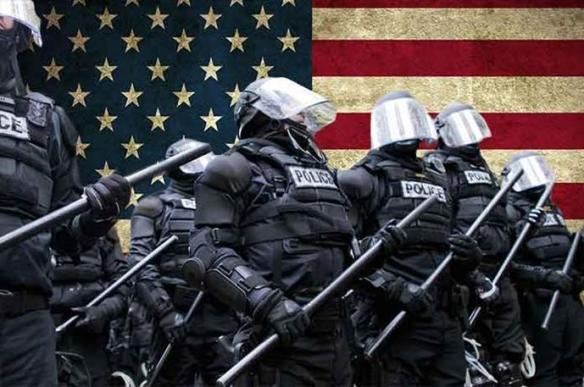
 After the Crash