False Spirituality Is The Friend Of Corrupt Power. True Spirituality Is Its Enemy.

Everything 90's — Sinead O'Connor Rips A Picture Of The Pope On SNL...

By Caitlin Johnstone

Source: CaitlinJohnstone.com

“Leveraging Mindful Practices To Maximize Productivity”, reads a Forbes headline from last week.

“Using mindfulness to overcome financial stress”, reads another headline published a few days ago by Financy.

“The impact of mindfulness on businesses in the work from home era”, reads another by Business Review from last week.

Over the last few years we’ve seen a surge in the forceful mainstreaming of so-called mindfulness practices, a westernized iteration of various eastern meditative traditions emphasizing non-judgemental present-moment awareness which can, as a side effect, reduce stress levels. If you look at the headlines above, it’s not hard to see toward what end these practices are being promoted.

The way mindfulness is being so aggressively prescribed as a means to relieve the soul-crushing stress of meaningless labor under a meaningless system has been discussed at length in Ronald Purser’s 2019 book “McMindfulness“, which critiques the way “mindfulness has become a banal form of capitalist spirituality that mindlessly avoids social and political transformation, reinforcing the neoliberal status quo.” Are you experiencing financial stress from being ruthlessly exploited by your unfathomably wealthy employer? Mindfulness it away! Are you having trouble coping with the demands of empty gear-turning in an amoral corporate machine which benefits humanity in no discernible way? McMindfulness, baby!

The sticking point here is that mindfulness, like literally every other spiritual practice that has ever existed, can be used to psychologically compartmentalize away from certain aspects of reality. Bringing awareness to the present moment can indeed take mental energy away from stress-inducing impotent thought patterns, but it can also take attention away from real problems which should in fact be dealt with at some point: the fact that you are in an abusive marriage. The fact that you are in an abusive workplace. The fact that the working class is in an abusive relationship with the ruling class.

Hang out in spiritual circles long enough and you’ll realize that most of the people who frequent them are using spirituality to run away from themselves. Using spirituality as stress management instead of addressing the inherently stressful living situation they’ve found themselves in. Using spirituality to give themselves a few nice feelings here and there to escape from the unpleasant reality that all their close interpersonal relationships since birth have been with malignant narcissists. Using spirituality to give themselves a nice story about going to Heaven when they die to comfort themselves through the suffering caused by early childhood trauma.

This is false spirituality, and it comprises the overwhelming majority of what’s out there, whether you’re talking about personal spirituality, New Age/spiritual-but-not-religious spirituality, or organized religion. Probably ninety-nine percent of spirituality as it actually exists in our world is just glorified escapism. Nice stories, feel-good conceptual re-frames, practices to help you bliss out on the surface instead of addressing the deep sources of profound suffering underneath. Devices for reality avoidance, no different from drugs, overeating, compulsive sexual behavior, video games or Netflix binging.

False spirituality serves corrupt power. It always has: from the minute the local strongman discovered he can manipulate his subjects with fairy tales about invisible deities who only speak to him, to the Roman empire promoting a religion which promotes meekness, poverty, obedience and “render unto Caesar what is Caesar’s”, all the way to mindfulness practices being promoted at the World Economic Forum in Davos.

False spirituality serves corrupt power because it draws awareness away from a clear perception of reality, and therefore away from a clear perception of corrupt power. True spirituality does the exact opposite.

True spirituality means expanding consciousness of what’s true and real, both within and without. It means bringing consciousness to the subconscious dynamics within us which generate our suffering, rather than using feel-good spiritual practices or religious narratives to sedate ourselves through that suffering. It means becoming conscious of our true nature, of the way self, experience and perception are really happening as opposed to how the mind tells us they are happening. It means bringing consciousness to the unconscious aspects of our lives, our community, our society, and our species. It means shining the light of truth on all the injustice and depravity the powerful work so hard to keep anyone from looking at.

True spirituality isn’t pretty. It isn’t cutesy. It isn’t comfortable for the ego. It means getting absolutely, uncompromisingly real with yourself and calling the truth out into the light, regardless of how ugly or embarrassing it might be to realize. It means getting absolutely, uncompromisingly real about the contradictions and sources of dissonance in your personal life, no matter how inconvenient or downright terrifying it can be when you have to eliminate them. It means getting absolutely, uncompromisingly real about what’s going on in the world, even if it means flushing your old worldview and the psychological comfort it gave you right down the toilet.

Corrupt power relies on keeping things hidden and endarkened. That’s why government secrecy is a thing. That’s why mass media propaganda is a thing. That’s why the persecution of Julian Assange is a thing. That’s why internet censorship is a thing. Corrupt power structures cannot thrive in the light, because if people could see clearly how badly they’re being robbed and exploited and by whom they would immediately use the their vast numbers to overhaul that system. Corrupt power and false spirituality have therefore always had a symbiotic relationship, while corrupt power and true spirituality have always been natural enemies.

For this reason, it’s unsurprising that so much of what passes for spirituality in our world today is false. No matter what the age and no matter where the location, those with the ability to dominate culture the most successfully have been those with the most power. Healthy impulses to shed the light of truth in all directions would at best receive no platform and at worst get people burned at the stake, while unhealthy power-serving belief systems would be widely promoted by the powerful.

This remains as true as ever today. Colonialism, capitalism, consumerism and imperialism have left us so disconnected from ourselves, from our roots, from the land we live on and from any sense of depth that the majority of us end up turning in desperation to power-serving belief systems, not realizing what they are. We let old power-serving religions give us our spirituality. We let the news man tell us what’s good and what’s true. We let Hollywood tell us what’s meaningful, what’s worth living for, what’s worth dying for.

And it never satisfies. It never can. Trying to fill that hole we’re trying to fill with what mainstream culture offers us is like trying to quench your thirst with seawater.

Only truth can satiate us. Only by shining the light of truth inwardly and bringing our endarkened aspects into consciousness can we extend our roots downward in the way our spirit craves. Only by shining the light of truth outward to the reality of our current circumstances in this world can our branches extend upward and let our spirit soar.

The one advantage true spirituality has going for it that it didn’t have in ages past, if you can call it an advantage, is the fact that we as a species appear to have trolled ourselves into an evolve-or-die predicament, leaving ourselves in check on the chessboard where the only way to escape the checkmate of extinction via climate collapse or nuclear war is to collectively awaken to reality.

Humanity will not survive if we don’t all start getting very, very real with ourselves very, very soon, both inwardly and outwardly. We survive by purging ourselves of inner falseness and outer falseness, thereby reaching the level of maturity needed to shift to a collaboration-based planetary civilization where we work in harmony with each other and with our ecosystem for the common good.

We will either make the jump or we will not. Whether we do or don’t will have a lot to do with how courageous we are; whether we are brave enough to desire the truth come what may, or whether we succumb to the inertia of fear and fail.

The good news is we can all help building momentum for that jump right now, by doing everything we can to expand human consciousness both inwardly within ourselves and outwardly in the world. Sing the truth loudly, wake up as many people as you can to as much truth as you can, and wake yourself up to as much truth as possible by bringing consciousness to your inner dynamics.

Shine bright, and shine in all directions, and we just might win this thing.

Saturday Matinee: Harold and Maude

Review by Brian Eggert

Source: Deep Focus Review

Harold and Maude is the most positive expression of counter-culturalism to come out of Hal Ashby’s career. Unlike Ashby’s other pictures released during his zenith in the 1970s, it does not concentrate its message against flawed American institutions or oppositional forces such as the military, government power, the Vietnam War, or institutional racism. Instead, the film builds up an audience of outsiders, misfits, disaffected youths, and even senior citizens who grew up on the margins, stifled by a world built on the establishments and conventions of a dominant culture. Through its unorthodox romance between the death-obsessed youth, Harold, and the vivacious, indomitable Maude, who, approaching eighty, preaches the gospel of living life to the fullest, it blithely celebrates nonconformity and independence. “If you want to be free, be free,” sings Maude, quoting the film’s essential songs by Cat Stevens, marking herself as an aged symbol of the how the counterculture movement of the 1960s had, in many ways, grown old by the film’s release in 1971. Nevertheless, Harold and Maude resists becoming an adversarial political statement or dialectical argument designed to reignite a movement. Its strength resides in a philosophy rooted in self-exploration through personal fulfillment, bodily acceptance and exploration, artistic creation, and spontaneity, endearingly represented through its eccentric humor and a love affair for the ages. 

Ashby had one of the best careers of any filmmaker in the 1970s. However, everything after Harold and Maude, his second film, became more cynical and confronting, even his comedies. The Last Detail (1973) exposed the senselessness of the Vietnam War and inhumanity of military law, offering a portrait of male bonding and innocence lost. The downfall of Warren Beatty’s womanizing hairdresser in Shampoo takes place against the backdrop of Richard Nixon’s presidential election in 1968, a parallel no viewer of the 1975 film could miss after Nixon’s resignation. Bound for Glory, the director’s Woody Guthrie biopic from 1976, explored the folk musician’s life singing about freedom and humanism in the Dust Bowl, while protesting the exploitation of workers. Ashby’s searing drama Coming Home (1978) considered once more the soul-crushing effect of the military and the human toll of Vietnam, concentrating this time on a paraplegic veteran and the moral awakening of an army wife. His last great film, Being There(1979), condemned American politics, mass media, white elitists, and one-percenters in what might be Ashby’s most outraged and funniest work. And whereas these other films adopt a confrontational and polemical perspective against a well-defined mainstream system, which usually overcomes the individual and remains at odds with the sympathetic view, Harold and Maude offers a rare glimmer of hope and happiness from Ashby. 

The pale-faced Harold (Bud Cort), lives in an elaborate estate with his grating, English-accented, conservative mother (Vivian Pickles). They have an unspoken agreement: She ignores him and almost willfully refuses to see him as a person, and he responds in a series of faked, symbolic suicides that seem to say, “You’re killing me.” The film opens as Harold prepares to hang himself, a scene played as tragic until his mother enters the room and, rather than call 911, she arranges her evening’s dinner party. Suspended there on a rope, presumably tied around his torso, Harold’s mouth spews drool and his eyes fill with pressure tears. His mother pays him no mind, leaving her son’s behavior for the psychiatrist (George Wood) to figure out. Harold, who drives a hearse, also attends funerals just for fun, and that’s where he sees Maude (Ruth Gordon), a woman approaching eighty with a vibrant attitude toward life. But she’s also the resident Earth Mother who teaches Harold life’s many joys: she compels him to create music, disobey pointless rules, enjoy olfactory sensations, not feel reserved in his own body, and even steal the occasional car. Maude practices what she preaches—she poses nude for an ice sculpture and lives in an old train car, transitory symbols of impermanence and movement that capture her way of looking at life. And as Harold and Maude spend time together, color seems to return to Harold’s face. 

Harold’s mother, who knows nothing about the budding romance between the two, fills out computer-dating forms for her son, though she answers the questions as she would respond. “‘Do you think the sexual revolution has gone too far?’” she reads aloud from the questionnaire. “It certainly seems to have,” she responds to herself. A few feet away, Harold loads a gun and, after pointing it at his mother, he turns it on himself until—BAM!—he’s dead. Except, Harold is some kind of magician, capable of faking his death with a series of tricks, usually accomplished between cuts. His fake suicides are less cries for help than a plea for someone to meet him on his terms. They’re also among the funniest moments in the film, a detail that sets Harold and Maude’s sense of humor on another plane from other, more mainstream films. After he seemingly sets himself ablaze to bring an abrupt end to a date his mother has arranged, Harold turns to the camera and smiles—but not a perceptible grin, just a hint at something comically sinister that the knowing audience will recognize. It’s a playful touch, like a secret between the audience and Harold that demands we take his side. In any case, Harold’s mother’s efforts to marry her son are pointless. From the moment Maude invited Harold to “stroke, caress, explore” the curvy wooden sculpture in her traincar, which looks like a deconstructed vagina, he lusts after her. Before long, their love for one another is consummated. Harold goes from staging his own death to somersaults and singing. Then Maude turns eighty, marking a self-imposed end date that she has been hinting at all along. But the film acknowledges that, despite death’s inevitability, life persists if we embrace it. 

Although far warmer and less defeated than Ashby’s other films, Harold and Maude does not aim itself at a particular target; however, its portraits of authority figures such as Harold’s mother have a mocking, sardonic quality to them. Contenting herself with Liberace records and social gatherings, Harold’s mother believes he will find adulthood after she thrusts him into a marriage; to that end, she values the computer dating service for screening out “fat and ugly” candidates, and she gives her son a Jaguar sports car to attract women and replace his less appealing hearse. Elsewhere, Harold’s military-devoted Uncle Victor (Charles Tyner), once the “right-hand man” to General MacArthur, has no right hand—but he has a picture of Nixon hung on the wall behind his desk and remains able to salute the flag thanks to a ridiculous pull string solution. Harold’s mother plans to have him enlisted with the help of Uncle Victor, but Harold and Maude finds humor in a sequence where Harold fakes psychopathy and murder to escape military service. Also, the traffic cop (an uncredited Tom Skerritt) who stops Harold and Maude for speeding is shown to be powerless, while the local priest (Eric Christmas) is bedeviled by notions of sexual idealism. Still, these counter-culture jabs feel more in service of a positive story about nonconformity, anti-establishment, and free-spiritedness—all terms that could be used to describe the soul-searching quality of a director known as “Hashby” for his omnipresent marijuana use. Indeed, Ashby wrote friend Sue Mengers that he had spent “the better part of my life just wondering where I am, or even if I am.” Harold and Maude is a searching film by a searching director.

Perhaps it’s surprising, then, that Ashby was initially uncertain about whether Harold and Maude should be his second feature. He had just released his debut, The Landlord from 1970, starring Beau Bridges as a privileged white man who takes over a tenement building in a predominantly African American neighborhood. Its representation of the culture clash between races aligned with the types of films that interested Ashby at the time. He had spent more than a decade editing pictures in Hollywood for some of the finest directors of the 1950s and 1960s—William Wyler, Franklin J. Schaffner, George Stevens—learning the craft of filmmaking from a dark editing room. But his friend, mentor, and closest collaborator during this period was Norman Jewison, the socially conscious director of In the Heat of the Night (1967), who made civil rights either an outward theme or an undercurrent in his films. Ashby had earned an Oscar for Best Editing on In the Heat of the Night, after which he voiced a desire to direct. Jewison, who was originally slated to direct The Landlord but passed to make Fiddler on the Roof (1971), agreed to produce Ashby’s first feature as a director. The film’s notoriously bad marketing campaign, with its poster of a finger about to ring two doorbells that resemble breasts, confused audiences, resulting in a box-office disappointment. Still, those who saw The Landlord were impressed. 

Ashby had started to receive scripts for his next project, and among them was Harold and Maude, which Paramount executive Peter Bart thought would be perfect for the budding director. The material originated as a screenplay by Colin Higgins, written as his Master’s thesis for UCLA that, in 1971, he published as a book. Higgins worked as a pool boy for a producer at Paramount, who got the script in front of Bart and studio head Robert Evans. They had bought the script after agreeing to allow the writer to direct his screenplay, but Higgins’ test footage demonstrated he wasn’t ready to helm a major motion picture. Ashby then read the script and enjoyed it, but he was concerned about whether its laughs would translate to the screen. He also worried about resentment from Higgins, so he asked Paramount to give the screenwriter a shot. Paramount refused, saying it would be Ashby or someone else, but not Higgins. Ashby agreed to direct and overcame the Higgins hurdle by making him a producer, which would allow Higgins to observe and learn. Higgins would eventually get his chance at the director’s chair. After some additional work as a screenwriter on Silver Streak (1976), which proved he could write a hit, Higgins directed the comedies Foul Play (1978), 9 to 5 (1980), and The Best Little Whorehouse in Texas (1982).

Casting Harold and Maude presented a particular challenge for Ashby, given the nature of the story and the images it projected. An offbeat romance between a twentysomething, suicide-obsessed boy who befriends an energetic, uncontainable woman about to turn eighty, certainly would not appeal to marquee names, regardless of its message about the value of unrestrained and unconventional lifestyles. Paramount’s modest budget also prevented any major stars from joining the cast. For Maude, Ashby had a long list of mostly British performers in mind, and he planned a trip to London to meet many of them, even though Paramount pushed for the 75-year-old New York native Ruth Gordon, who had just earned an Oscar for Best Supporting Actress in the studio’s 1968 hit, Rosemary’s Baby. Gordon was the obvious choice, and many of the actors he interviewed suggested Gordon over themselves. But Ashby was notorious for floundering around big decisions and met them with anxiety and self-doubt. He described the decision of casting Maude as “one of the most taxing in my lifetime.” To be sure, Ashby had a tendency to dramatize the stress he felt during the preproduction process. When he couldn’t secure cinematographer Gordon Willis, who had shot The Landlord for him, Ashby wrote Evans and Paramount and threatened to pull out of the production, claiming, “I feel I could make this film about as funny as the Viet Nam war.” Then again, Ashby biographer Nick Dawson suggests that Ashby’s letter was designed to give the director some wiggle room, as Evans convinced him to remain on the picture by increasing the budget from $800,000 to $1.25 million.

For Harold, Higgins had written the part for little-known actor John Rubenstein, but Ashby wanted then-unknowns such as Bob Balaban, Richard Dreyfuss, and John Savage. Bud Cort, who had just appeared in Robert Altman’s Brewster McCloud and MASH, both in 1970, was another option. After casting Gordon, Ashby shot screen tests of his various Harolds, and the baby-faced Cort was the choice. A former stand-up comedian, the young actor had an improvisational style that suited him on the free-wheeling Altman sets, but it clashed with Gordon’s commitment to the screenplay. Gordon was a Hollywood veteran, a “careerist” as she told The New York Times. She had been in the business since the age of four, posing in advertisements before graduating to small roles in silent films and a few supporting roles throughout the 1940s. Much of her career was spent alongside her husband, Garson Kanin, as part of the writing duo responsible for A Double Life (1947), Adam’s Rib (1947), and Pat and Mike (1952)—all of which earned Gordon and Kanin Oscar nominations for Best Screenplay. And so when Cort attempted to improvise on Higgins’ script during the Harold and Maude shoot, Ashby had to support both acting styles while preserving the peace. Cort spoke at Ashby’s memorial service and remembered the experience: “Hal was so sympathetic, so understanding. And I think back on it now, I must have driven him crazy, but he never ever complained.” 

Whatever anxieties Ashby had during the preproduction phase usually dissolved by the time cameras were rolling. Harold and Maude shot in a perpetually overcast Northern California over two months, using locations in San Mateo County such as the Rosecourt Mansion, the sprawling mansion that served as Harold’s home. Much to the relief of Ashby, the location shooting meant his crew of hippies and introverts would be left to their creative devices, as their director wanted nothing more than autonomy from Paramount’s executives (Ashby’s brief appearance in the film shows the director at his shaggiest). However, after a month into production, Ashby was behind schedule and had to contend with Bart arriving on set with a ticket back to Los Angeles, along with a warning that he would be replaced if the production was not back on schedule. Despite a few delays due to weather and a motorcycle accident involving a stuntman, Harold and Maude proceeded smoothly, even if Cort occasionally caused a row among the crew for his performative commitment to the role. The young actor wanted to fool the crew with his character’s fake suicides and nearly strangled himself in the process. He also told Leticia Kent of The New York Times that he planned to have actual sex with Gordon—a remark believed to be a stunt until he told Ashby the same thing. Reportedly, Cort and Gordon did not have sex for the film. 

Ashby originally wanted Elton John to write the music for Harold and Maude; in fact, the pop star was one of the director’s first choices to play Harold. John couldn’t commit to either, but he recommended Cat Stevens for the music. The director didn’t reach out to Stevens straightaway; instead, he began playing Stevens’ songs over the dailies for the first several weeks of the shoot, using songs from the albums Mona Bone Jakon and Tea for the Tillerman, both released in 1970. Ashby eventually reached out to Stevens and made a deal to use the performer’s music in the film. But after the production had wrapped and Ashby entered the editing phase, Stevens claimed he was too busy to be involved or write any additional songs. Ashby, whose controlling tendencies and experience as an editor led to his taking over control from the editing team of Bill Sawyer and Edward Warschilka, had already shot and had been cutting Harold and Maude to the tempo and tenor of Stevens’ songs. Without Stevens, the film simply wouldn’t work. He resolved to fly to Paris to convince Stevens to use existing songs and write additional music for the film. Stevens eventually agreed to allow the production to use existing music from his albums, including two additional songs, “Don’t Be Shy” and “If You Want to Sing Out, Sing Out”—which have the most imperative lyrics to the film’s themes. Anyone who has seen Harold and Maude knows it is inextricably linked to Stevens’ music, as his solo acoustic performances echo its gentle optimism with an air of solitude that accompanies both of the film’s main characters.  

By the time Ashby had prepared Harold and Maude for preview screenings, it had become a stabilizing project in his life. During the production, he had divorced his wife, and his brother died, making Ashby particularly sensitive to the success or failure of his endearing romance. Fortunately, the preview screenings were wildly positive, complete with standing ovations and enthusiastic crowds of youngsters. Everyone was sure they had a hit, and Paramount resolved to release the film around Christmastime. Then the reviews came in. Amid a few positive notices were scathing indictments of the film’s theme and subject matter. In the infamous Variety review, the critic wrote, “Harold and Maude has all the fun and gaiety of a burning orphanage,” then continued to spurn Maude as “an offensive eccentric” who engages in “specious philosophizing.” In his review for The New York Times, Vincent Canby called the characters “creepy and off-putting,” while Roger Ebert compared the experience to attending a funeral: “all the movie lacks is a lot of day-old gardenias and lilies and roses in the lobby.” Harold and Maude opened not long after The French Connection and Fiddler on the Roof, in the same month as A Clockwork Orange, Dirty Harry, The Last Picture Show, and Diamonds Are Forever, and was almost destined to be ignored and misunderstood.

Unlike most critics, Ashby found the single sex scene between Harold and Maude to be a beautiful testament to flesh, both regardless of age and in the juxtaposition between the young and old—something his crowd, the hippies, counterculture groups, and liberal-minded types, would appreciate. Paramount’s executives didn’t agree. Ally MacGraw, then married to Robert Evans, complained after a preview screening that the scene was disgusting and should be cut. Evans backed his wife and demanded that the scene be removed. Ashby got around this by sneakily inserting some of the footage into the film’s original trailer. This was long before the contemporary norm of trailers containing footage, from alternate takes to entire scenes, that never make it into the final film. If the footage was in Harold and Maude’s trailer, it had to be in the film, and so it was—albeit in truncated form. Whereas Ashby shot scenes of Cort and Gordon kissing, the studio demanded that Ashby cut around the actual lovemaking, revealing only a shot of the lovers in bed together the next morning. Paramount’s marketing department also downplayed the nature of the relationship between Harold and Maude after the negative press. The studio released a new poster that gave no allusions to Harold’s penchant for faking suicides or the fact that Harold’s so-called girlfriend was a much older woman. Rather, the new poster was entirely white and comprised only of text, black for the credits, while “Harold” and “Bud Cort” appeared in purple and “Maude” and “Ruth Gordon” appeared in a burgundy. No images, taglines, or accompanying critical praises donned the poster, just the facts, which was guaranteed to generate little interest. 

Despite a slowly growing crowd of enthusiasts, Harold and Maude was out of most theaters in a few weeks. The right people had seen it, though, and they assured its future. It started to appear at film societies, midnight screenings, and repertory theaters around the country. Paramount had seen so many rentals of existing prints that they resolved to re-release the film into theaters in 1974 and again 1978, this time with posters that played up the morbid angles of the film. “His hangups are Hilarious,” proclaimed one poster, featuring a cartoon of Bud Cort yanking at his neck with a tie. Higgins grasped onto the phenomenon by adapting his screenplay for the stage in a short-lived Broadway production in 1980; it closed after four performances, but the play has since been revived by many community theaters around the country. As the years continued to pass, the film became a cult object to be monumentalized in underground circles before finally being accepted by both audiences and the film community as a cherished work. In the early 2000s, Harold and Maude appeared on several of the American Film Institute’s “100 Years…” lists, such as its “Laughs,” “Cheers,” and “Passions” lists. Whether people had gotten over the hangups that prevented them from embracing the film in 1971, however, remains in question. 

If Paramount executives and the film’s harshest critics took issue with Harold and Maude’s portrait of a May-December romance separated by over fifty years, general sentiments about such relationships and the issues of bodily acceptance they raise have not been resolved since the film’s release. One might argue that the film has become accepted because it feels somewhat anachronistic, a product of a bygone era that seems distant from today’s pressing sociopolitical and cultural imperatives. It has been all but remade with younger, more attractive stars, such as the comparatively tame Anton Yelchin and Kat Dennings vehicle Charlie Bartlett (2008). It has also inspired other romances, as in 1999’s Fight Club, which riffs on the meet-cute of Harold and Maude attending funerals for fun when two interlopers find each other at a testicular cancer group. And it’s worth investigating whether the film’s idiosyncrasies have become just that—something watched as a lark, as opposed to a series of lessons in support of a worldview. Certainly, in American culture and Hollywood cinema, the nude elderly body remains stigmatized and unseen on film outside of grotesque situations, whereas the few exceptions, such as Kathy Bates’ disrobing in About Schmidt (2002), have been a source of laughter and derision. Harold and Maude treats its subject with humor but does not deny its characters humanity in their sexual relationship, which, by the final scenes after Maude has taken the pills that mean her death (“I should be gone by midnight,” she explains with relief, much to Harold’s terror), has emotional consequence for the viewer. 

Rather, Harold and Maude forces the viewer to consider the inevitabilities of time’s influence on the body and, ultimately, the body’s death. Instead of feeling revulsion and fear about these points, it views the commonplace attitude toward death as morbid. For all the film’s glimpses at Gordon’s body or hints at the amazing sex had by Harold and Maude, there’s nothing more revolting than the brief sight of a coffin branded “Permaseal”—a sign of our culture’s desperate attempts to prevent natural changes, the withering and decomposition of the body, even after death. Maude considers herself “a general reminder” of how people are “here today and gone tomorrow.” It’s why she steals any car she wants, even the priest’s Volkswagen Beetle, and drives like a bat out of hell, ignoring road signs or toll booths. “What sense in borders and nations and patriotism,” she wonders. Maude has accepted that her time on earn is limited, and much of human culture is comprised of meaningless social constructs. From a critical and analytical perspective, it might be redundant to observe that Maude is a symbol of life, Harold is a symbol of death, and together they represent the circle of life—and moreover, an appreciation of the entire experience within the circle, even if that experience is death. 

These are grand and life-affirming ideas, but they come from a film that does not sacrifice its sense of character in the broadcasting of its worldview. Harold and Maude catches the viewer off-guard more than once in its intimate scenes between the two lovers. The source of Harold’s preoccupation with death, for example, could be just another cliché of an angst-ridden young adult, except the origin of his penchant for faking suicides stems from his mother’s shallow reaction when she thought Harold had genuinely died in a chemistry accident. Gordon’s dialogue only slows from its cheery, fast-paced delivery when she gives vague allusions to Maude’s past in moments touched with melancholy and remembrance. Maude hints at her political activism and her attendance at a royal party for a king in Vienna, but then there’s also Maude’s tattoo, a number stenciled on her inner forearm at a concentration camp. All at once, the image, onscreen for just a flash, shows us what must be the source of Maude’s intrepid spirit and urgent reverence of life itself. In some way, only Maude’s philosophy toward life matters; in another way, her background enriches her perspective and boundless humanism. During subsequent viewings, after our imagination has filled in the blank spots of Maude’s past, her consideration of human dimension, regardless of appearances, feels even more meaningful. On a picnic, she observes daisies as she might faces in a crowd: “Some are smaller, some are fatter, some grow to the left, some to the right, some even have lost some petals. All kinds of observable differences.” 

Harold and Maude contains a sophistication in its simple ideas about love for one’s fellow human beings. “I feel that much of the world’s sorrow comes from people who are this,” says Maude, pointing to a single daisy, “yet let themselves be treated like that,” gesturing toward a field of dailies. Doubtless, it’s a way of thinking ingrained by Maude’s treatment as subhuman during the Holocaust, and it’s a lesson that she hopes to spread, in her way, to prevent such atrocity from ever happening again. Ashby’s films, which can feel delightful and accessible even when they take aim at a particular target or mourn the cruel realities of our systems, never contain the same quality of Harold and Maude’s tribute to life’s beauty. In his personal life and career in Hollywood, Ashby had found oppositions everywhere, even those of his own making, and he rallied against them in his 1970s output. Harold and Maude was the only film to articulate its message through positive means, whereas most other examples of Ashby’s work lean toward an antithetical mentality that captures the essence of counterculturalism. Maude’s ultimate and most hopeful lesson asks that Harold continue onward and ignore the illusory conflicts, a notion punctuated by her enduring last words: “Go and love som’more.”

Watch Harold and Maude on Pluto TV here: https://pluto.tv/on-demand/movies/harold-and-maude-1971-1-1
West’s Information War Continues

By Gunnar Ulson

Source: Land Destroyer

YouTube has recently deleted the latest channel used by Iranian state media’s PressTV. The move follows attacks on the Iranian media outlet by US-based social media giant Facebook earlier this year. 

PressTV’s own take on the deletion in its article, “Google renews attack on YouTube account of Iran’s Press TV,” would note: 

Google has for the seventh time targeted Iranian broadcaster Press TV, blocking the English-language news network’s access to its official YouTube account without any prior notice.

The US tech giant shut YouTube accounts of Press TV late on Tuesday, citing “violations of community guidelines.”

Iranian state media is only the most recent target of US censorship and information warfare, with YouTube, Facebook and Twitter having also recently de-platformed government accounts in Myanmar as well as a concerted effort by these same networks to either de-platform or undermine the credibility of Russian and Chinese state media.  

The use of ambiguous justifications like “violations of community guidelines” which themselves can be ambiguous and open to interpretation, helps demonstrate the political nature of what is clearly a campaign of censorship. 

YouTube and other US-based social media platforms, still dominating the global social media industry, attempt to portray targets of what is clearly politically-motivated censorship as “fake news” or somehow engaged in dangerous “disinformation,” while the accounts of Western-based media organizations actually involved in very real disinformation, often times in promotion of sanctions and warfare having a direct impact on millions of lives, remain online and in good standing. 

Western Monopoly Challenged 

Beyond social media, the UK had recently ousted Chinese state media, CGTN, which was met by Beijing in turn shutting down BBC broadcasts in China. 

More recently, China-based BBC reporter John Sudworth would flee to Taiwan, fearing legal actions for his outrageous, one-sided propaganda regarding Xinjiang.

The BBC’s own article, “BBC China correspondent John Sudworth moves to Taiwan after threats,” deliberately attempts to portray Sudworth as a victim of “threats” rather than a foreign agent involved in political interference under the guise of journalism finally facing legitimate legal actions. The BBC article laments: 

The number of international media organisations reporting from China is shrinking. Last year China expelled correspondents for the New York Times, the Washington Post and the Wall Street Journal, among others.

And in September 2020, the last two reporters working in China for Australian media flew home after a five-day diplomatic standoff.

The Foreign Correspondents’ Club (FCC) of China says foreign journalists are “being caught up in diplomatic rows out of their control”.

In reality, these foreign “journalists” aren’t being “caught up in diplomatic rows,” they are the primary actors helping drive these rows. 

It’s worth mentioning leaked documents revealing the BBC, among others including Reuters, signing secret contracts with the British Foreign Office to carry out influence operations both inside Russia and along Russia’s peripheries in Eastern Europe. 

It is without doubt that the BBC engages in similar activities inside and along China’s borders as well, with Sudworth’s own work clearly aimed at advancing Western foreign policy, not investigating or reporting actual news. 

Years ago, the notion of Western nations fearing alternative media enough to engage in sweeping, transparent censorship against outlets like PressTV or CGTN, or the Western media fleeing or backpedalling in countries they’ve maintained offices in for years, would seem unthinkable. 

The information war waged by Western nations is indeed heating up, but it is not the one-sided exercise of monopoly it used to be. 

Today, alternative media, both state-sponsored and independent, poses a serious challenge to the West’s monopoly over the creation and flow of global information. Only through the West’s control over a relatively new form of media, social media, is the West’s edge maintained. 

For Iranian, Chinese, Russian and the media of many other nations seeking to introduce balance to the global conversation, the West’s hitherto control over social media remains a serious hurdle. 

US-based social media networks have been key to advancing Western foreign policy objectives, and perhaps especially in the realm of promoting and executing so-called “color revolutions.” 

Russia and China’s recent pledge to work closer together to counter Western-sponsored “color revolution” and “disinformation” might benefit from a multipolar alternative to US-based social media platforms like Facebook, Twitter and YouTube. 

While Russia and China both have their own domestic alternatives which have proved an effective measure to protect their own respective information space, the creation of a wider-appealing platform for nations along their peripheries, targeted by Western disinformation, could help give state-sponsored and independent alternative media the space it needs to finally balance out the lopsided advantage the West artificially maintains through censorship across its own networks.

The creation of both sovereign information space within nations and shared space between nations but outside of the control of Western censorship would be infinitely useful. When long-standing media organizations like PressTV struggle to reach audiences for a lack of alternatives to Facebook, Twitter and YouTube, the utility of such space becomes clearer still. 

The Number Of Billionaires In America Has Absolutely Exploded During The Pandemic

By Michael Snyder

Source: Investment Watch Blog

For the wealthy and the ultra-wealthy, happy days are here again.  Even though we have just been through one of the most difficult 12 months in our history, the number of billionaires has increased dramatically during this pandemic.  That seems rather odd, but there is no denying that the rich have gotten even richer during this crisis.  In fact, Forbes revealed this week that the number of billionaires has risen by about 30 percent over the past year…

The number of newly minted and reissued billionaires soared last year, Forbes reported Tuesday in its annual ranking, a staggering accumulation of personal wealth that stands in sharp contrast with the widespread economic struggles unleashed by the coronavirus pandemic.

The number of billionaires on Forbes’ 35th annual ranking swelled by 660 to 2,755 — a roughly 30 percent jump from a year ago — and 493 of them are first-timers. Seven of eight are richer than they were before the pandemic. Forbes calculates net worth by using stock prices and exchange rates from March 5.

Of course thanks to the reckless policies of our leaders, a billion dollars does not go nearly as far as it once did.

But still, a billion dollars is a whole lot of money.

Needless to say, the biggest reason why the number of billionaires has exploded is because we have been witnessing one of the greatest stock market rallies in history.

A year ago, the Dow Jones Industrial Average was sitting at about 23,000.

Today, it is above 33,000, and some analysts expect it to shoot quite a bit higher throughout the rest of 2021.

Stock prices have never been more detached from economic reality as they have been over the past 12 months, and they have only risen so high because of unprecedented intervention by the Federal Reserve and because of extremely wild spending by the federal government.

Many have warned that the party will inevitably come to a crashing end at some point, but it hasn’t happened yet.

So for now, the market optimists look like champions.

And now that Joe Biden is in the White House, the corporate media is telling us that we are on the verge of a grand new era of American prosperity.  The corporate media insists that the pandemic will soon be behind us thanks to the vaccines, and the talking heads on television envision a return to the good old days very quickly.

In fact, Barron’s is already declaring that the “U.S. economy might be stronger than it’s ever been”.

And CNN is trying to convince us that “America’s economy could be heading for a golden era of growth”.

Really?

If the U.S. economy is actually improving, then why are new claims for unemployment benefits going up?…

The number of Americans filing first-time unemployment benefits unexpectedly rose last week, according to the Labor Department.

Data released Thursday showed 744,000 Americans filed first-time jobless claims in the week ended April 3. Analysts surveyed by Refinitiv were expecting 680,000 filings. The previous week’s total was revised higher by 9,000 to 728,000.

If economic conditions were getting better, that number should be going the other way.

Even I didn’t expect a number this bad.

Prior to 2020, the all-time record high for new unemployment claims in a single week was 695,000.  That record was established in October 1982, and it stood all the way until the COVID pandemic hit the U.S. early last year.

Sadly, we have been above 695,000 almost every single week since then.

The numbers compiled by the states tell us that nearly three-quarters of a million Americans filed new claims for unemployment benefits last week.  That is an absolutely catastrophic number.  Nobody should be talking about a “golden era of growth” or claiming that the “economy might be stronger than it’s ever been” until we get that number back down to pre-pandemic levels.

And right now, we are at a level that is about three times as high as pre-pandemic levels.

Look, the truth is that anyone that tells you that unemployment is low in the United States is lying to you.

According to John Williams of shadowstats.com, if honest numbers were being used the unemployment rate in the United States would be 25.7 percent right now.

That is the sort of number that we would expect to see during an economic depression, and the truth is that we are in an economic depression.

Over the past year, more than 70 million new claims for unemployment benefits have been filed, and approximately 4 million U.S. businesses have gone out of existence permanently.

But don’t worry, the stock market is hovering near all-time record highs and the corporate media is telling you that everything is going to be wonderful now that Joe Biden is in control.

Come on man!

You can’t really believe that stuff that they are shoveling.

With each passing day, more Americans are losing their jobs, more Americans are falling out of the middle class, and the cost of living just keeps going up even higher.

In fact, we just learned that global food prices have now gone up for 10 months in a row…

The global food-price rally that’s stoking inflation worries and hitting consumers around the world shows little sign of slowing.

Even with grain prices taking a breather on good crop prospects, a United Nations gauge of global food costs rose for a 10th month in March to the highest since 2014. Last month’s advance was driven by a surge in vegetable oils amid stronger demand and tight inventories, according to Abdolreza Abbassian, a senior economist at the UN’s Food and Agriculture Organization.

I am going to continue to watch global food prices very carefully, because I believe that it will be a very important trend in the months and years ahead.

But for now, the good news is that at least economic conditions are relatively stable.

Yes, things are not nearly as good as they were before the pandemic, but at least they are not getting a whole lot worse.

So even though things are not great, we should enjoy this period of relative stability while we still can, because it definitely will not last.

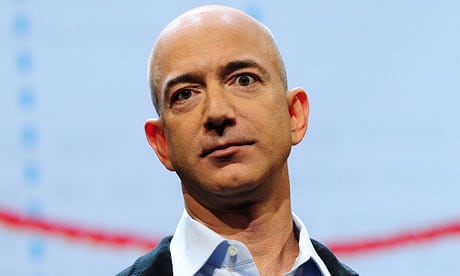
Jeff Bezos Embodies the Cruel Autocracy of Neoliberal Capitalism

Amazon CEO and richest-man-in-the-world Jeff Bezos wants you to work as much as he does—for one millionth of the pay

By Branko Marcetic

Source: In These Times

“Is Jeff Bezos a horrible boss and is that good?” That was the question posed by Forbes magazine in 2013, a sentiment that helps explain why Amazon’s founder and CEO is detested by the Left for his oligarchic ambitions, while simultaneously admired by America’s capitalist class for his business success. Ironically, Bezos is also loathed by former President Donald Trump, while celebrated by many liberals for so-called resistance.

But with Bezos and his $115 billion fortune laying claim to the title of richest man on Earth, and with Amazon playing an increasingly influential role in public life, it is worth asking: What does Jeff Bezos stand for?

A gifted child born to a teen mom, Bezos grew up not knowing his biological father, who was once one of the top-rated unicyclists in Albuquerque, N.M. Instead, Bezos was raised by the man his mother soon married: Miguel Bezos, who had fled Cuba and the Communist revolution, which had shuttered the elite private Jesuit school he attended, as well as his family’s lumberyard.

Journalists have speculated whether Bezos’ near-pathological competitiveness is a product of his early abandonment, similar to that of fellow tech overlord Steve Jobs. No doubt equally formative was Bezos’ adoptive father, who told Brad Stone, author of The Everything Store: Jeff Bezos and the Age of Amazon, that their home life was ​“permeated” by complaints about totalitarian governments of both the Right and the Left.

Bezos envisioned the concept of an ​“everything store” while working for a Wall Street hedge fund in the 1990s. He opened Amazon in 1994 as an online bookshop, a pragmatic starting point. Bezos gave the company his own $10,000 cash injection, took out interest-free loans, and received $245,000 from his parents and family trust.

Many of Amazon’s controversial labor practices can be traced to these early years as a plucky start-up. Amazon’s small team ran on tireless ambition to live up to the company’s customer-focused promise — key to its eventual market domination. Stone reports that, to meet Bezos’ ​“get big fast” directive, employees devoted themselves completely, working long, unusual, frenzied hours. One early warehouse worker who biked to work simply forgot about his improperly parked car, eventually discovering it had been ticketed, towed and sold at auction.

Such a relentless pace is one thing for a small group of true believers but is quite another when applied to low-wage workers just making ends meet. By 2011, Amazon’s workplace culture became known through a series of headline-grabbing reports that have come to define its public image: badly paid, ceaselessly surveilled, overworked workers, struggling to maintain a breakneck pace.

Bezos created a culture in which everyone from the lowest peon to the highest-ranking executive is expected to match his own devotion, an approach that resulted in spectacular levels of staff turnover by the early 2000s. A declared enemy of ​“social cohesion,” Bezos pushed his underlings to reject compromise and instead fiercely debate and criticize colleagues when they disagreed. One former employee described it as ​“purposeful Darwinism.” Known for withering put-downs — ​“Are you lazy or just incompetent?” ​“Did I take my stupid pills today?”—Bezos also isn’t above pulling out his phone or, in some cases, simply leaving the room when an employee fails to impress.

The flipside of Bezos’ intellect is a cold, clinical approach to human relations. Bezos described himself as a ​“professional dater” during his Wall Street days, trying to improve what he called his ​“women flow” — a riff on the Wall Street term ​“deal flow.”

“He was not warm,” one person who knew Bezos during his Wall Street days told the East Bay Express in 2014. ​“It was like he could be a Martian for all I knew.”

Bezos’ pitiless leadership style bled out beyond the Amazon boardroom as he used the company’s growing market share to bully book publishers into his terms. The company launched the ​“Gazelle Project”—as in, go after publishers ​“the way a cheetah would pursue a sickly gazelle” — allowing Amazon to undercut its competition at the cost of little to no profit for smaller publishers.

As Amazon inched closer to Bezos’ original vision, it began lobbying efforts in 2000 and became more transparently political by 2011, spending millions to defeat an internet sales tax and playing hardball with state governments, threatening to shutter Amazon facilities if its wishes went unfulfilled. In 2013, Amazon began lobbying Congress to cut corporate taxes.

The same year, Bezos bought the Washington Post, invested in Business Insider and donated to the publisher of the libertarian magazine Reason. Though Bezos argues his purchase of the Post was motivated by ​“a love affair [with] the printed word” and a desire to support American democracy, others suspect Bezos’ interest in media is related to bad press following a scathing Lehman Brothers report in 2000, which sent Amazon’s stock price tumbling.

Leading up to the Post purchase, Bezos was increasingly displaying what early Amazon investor Nick Hanauer called his ​“libertarian politics.” In addition to spending $100,000 in 2010 on a campaign to defeat a proposed Washington state tax on high-income earners, Bezos put hundreds of thousands of dollars toward boosting charter schools and other neoliberal education reforms.

Bezos’ political involvement reached a new apogee in 2019 during the re-election bid of Seattle’s socialist city councilwoman, Kshama Sawant, who called Bezos ​“our enemy” and tried to pass a head tax to fund housing for those displaced by Amazon’s Seattle footprint. Amazon spent $1.5 million against Sawant and other progressive candidates, a record at the local level, with more than a dozen of the company’s executives contributing to Sawant’s opponent. (Sawant won re-election anyway.)

As for Bezos’ endgame? A Trekkie since childhood, he has long dreamed of funding space exploration, a mission pursued by other superrich moguls (such as Elon Musk) in the face of the climate emergency. Opening the doors of his secretive Blue Origin aerospace company to journalists for the first time in 2016, Bezos told the New York Times he envisioned a future of ​“millions of people living and working in space,” exploiting the natural resources of surrounding planets and rezoning Earth ​“as light industrial and residential.”

Ironically, as Bezos pours the wealth he wrung out of exhausted, low-wage Amazon workers into space exploration, Amazon is busy hastening the very planetary collapse Bezos claims he’s trying to prevent — by silencing workers who speak out against Amazon’s assistance to oil and gas companies.

Let’s imagine, however, that Bezos, who accumulates $9 million an hour, lived in a world with Bernie Sanders’ 8% wealth tax (just on fortunes over $10 billion). A single year would see $9 billion flow from Bezos’ treasure trove into government coffers, more than enough to cover the 10-year cost of Elizabeth Warren’s universal child care plan ($1.7 billion) and maintain safe drinking water under Sanders’ plan ($6 billion).

Bezos’ career is a testament to the cruel autocracy and senseless misallocation of resources that our neoliberal capitalist system enables. But his opulence also reveals that the wealth exists to build a fairer and more equitable society — if redistributed. Bezos may loathe social cohesion, but in a world organized around democracy rather than the whims of space-billionaires, it’s something we may well be able to achieve.

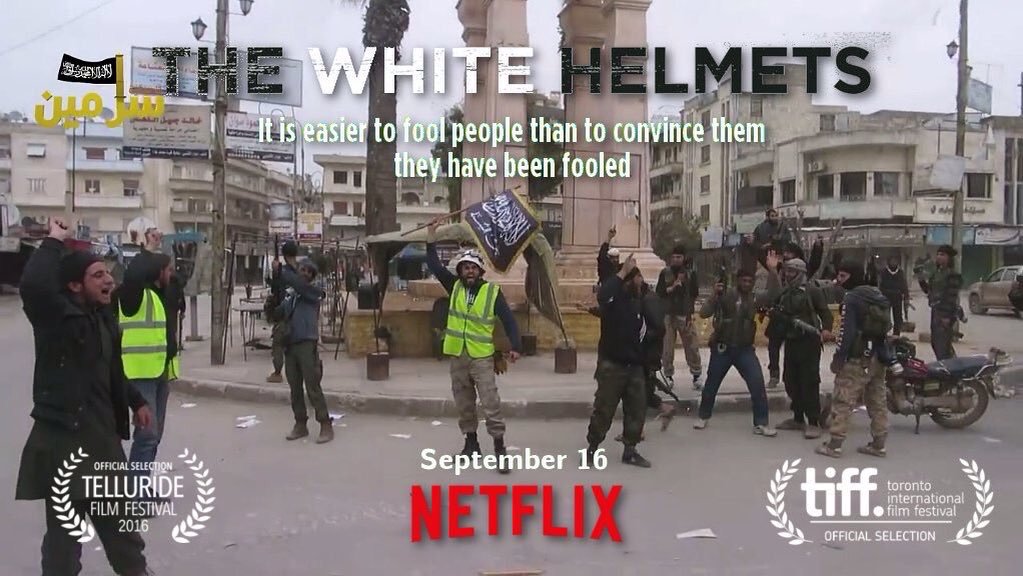
Even as a White Helmets boss admits ‘former’ militant links, Canadian national media talks ‘Russian disinfo’

By Eva K Bartlett

Source: In Gaza

Even when a high-ranking White Helmet admits that some of the ‘rescuers’ came from the ranks of Syrian militants, all he gets from Canada’s national broadcaster is unquestioning praise and concern about “Russian disinformation.”

On March 30, Carol Off, the host of As it Happens on Canada’s government-funded CBC, interviewed Montreal-based Farouq Habib, deputy general manager of the White Helmets, about the organization’s operatives and their family members evacuated to Jordan (via Israel, with Canada’s help) nearly three years ago.

At the time, Canada pledged to take in 50 White Helmets and 200 family members. Off’s focus was on 43 evacuees who still haven’t arrived in Canada.

So she asked Habib: “There are some suggestions that the Canadian security believes that these remaining White Helmet people have a connection to the insurgency, that they were militants in some way. Is there evidence of that?”

Habib replied to the positive, “Regarding this particular issue, we don’t deny it at all. It’s declared and we are proud that many of the former fighters who were involved in the beginning in the war…They lay down their arms and they joined the rescue teams to rescue others...”

Militant-linked propaganda operation

The Western-funded White Helmets describe themselves as volunteer rescuers, and claim to have “saved more than 100,000 lives.” To prove – or rather, propagandize – their heroism, the group uses professionally-produced videos and social media content about their operations.

Western corporate media has been unblinkingly regurgitating their claims and content, while at the same time smearing journalists who actually went to Syria and interviewed civilians on the White Helmets. From far outside of Syria, it has instead been whitewashing the controversial, militant-linked group.

The White Helmets are not just propaganda, though. I wrote previously about their ties to terrorist and extremist groups. They have been filmed holding weapons alongside terrorists. They were seen at scenes of executions, standing over dead Syrian soldiers, and reportedly cleaning up after an execution in Daraa Governorate.

Journalists have taken testimonies of civilians who had lived under the rule of terrorists, who spoke of how the White Helmets worked alongside terrorists, numbered among them, and denied medical treatment to the people they were supposedly saving.

The White Helmets purport neutrality, but evidence – summarily dismissed by mainstream media as Russian and Syrian “disinformation” – shows they are in fact very partial – partial to militant factions.

Canada backs the White Helmets, giving at least $7.5 million and unquestioning media support.

Hence, CBC has a vested interest in reading the “hero” script on the White Helmets, instead of actually doing journalism.

No questions asked

With the above in mind, it shouldn’t surprise anyone that Carol Off never veered from her script to at least doubt Habib’s claims that all of the militant-linked White Helmets have really “laid down” their weapons. Not to mention the numerous other questions a responsible journalist could have asked, like:

-How many White Helmets members formerly (cough) fought in armed groups?

-Which factions were they members of?

-Do any have blood on their hands?

-Do any currently carry weapons?

-How can you ensure that they have dropped their extremist ways and now are truly impartial and dedicated to helping all Syrian civilians?

Off could have asked any of these questions, or all of them. Instead, she went on:

“Let’s remind people, the White Helmets are believed to have saved tens of thousands of lives. They were nominated for a Nobel Peace Prize. But at the same time, we know that Russian and and Syrian agents have conducted a disinformation smear campaign against the White Helmets. There’s been a lot of propaganda suggesting that they’re not real saviours, that they’re militants. Do you think that the Canadian officials might have been exposed to that propaganda?”

…as if she never heard the part where, just a moment earlier, Habib explicitly bragged that there are “former” militants among the White Helmets – a fact that, at the very least, should arouse suspicion with those responsible for letting them cross Canada’s border.

And just like that, no hard questions asked, the interviewer went on to trumpeting the White Helmets using their own propaganda about the “Russian/Syrian disinformation campaign.”

‘A few’ bad apples?

As for Off’s guest, just how neutral is Farouq al-Habib?

He was a leader of the Homs uprising against the Syrian government and a founder member of the ‘Homs Revolutionary Council.’ When jihadist commander and footballer Abdul Baset al-Sarout died in June 2019, Habib mourned his passing, lamenting his “heroism” and “honour.” Sarout not only held extremist and sectarian views, but was in a terrorist faction and pledged allegiance to ISIS.

It’s not surprising that Off chose not to probe into Habib’s history, just as she chose to ignore his admission of White Helmets’ supposedly-former militant affiliations.

As my own and other journalists’ research on the ground in Syria indicates, many White Helmets members are partial to militant or terrorist factions. They even cheered alongside and for al-Qaeda in Syria. In the rare cases of acknowledging that, media have played it down as just “a few bad apples.”

That’s not the case. Most of the apples are fully rotten. And so is the mainstream reporting.

What’s Changed and What Hasn’t in a Tumultuous Year

By Charles Hugh Smith

Source: Of Two Minds

Inequality is America’s Monster Id, and we’re continuing to fuel its future rampage daily.

What’s changed and what hasn’t in the past year? What hasn’t changed is easy:

1. Wealth / income inequality is still increasing. (see chart #1 below)

2. Wages / labor’s share of the economy is still plummeting as financial speculation’s share has soared. (see chart #2 below)

What’s changed is also obvious:

1. Money velocity has cratered. (see chart #3 below)

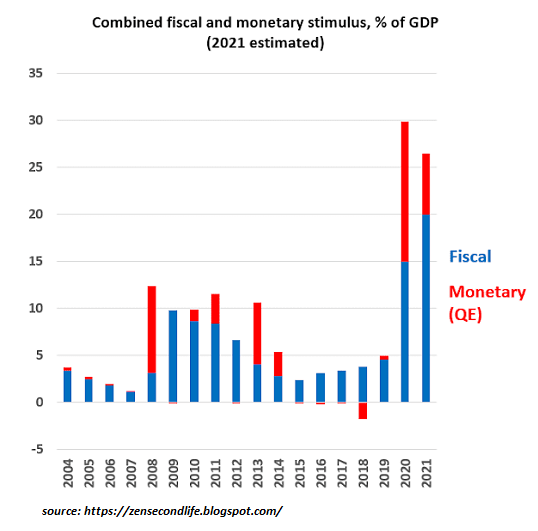
2. Federal borrowing / spending has skyrocketed, pushing federal debt to unprecedented levels. (see chart #4 below)

3. Speculation has reached the society-wide mania level. This is evidenced by record margin debt levels, record levels of financial assets compared to GDP and many other indicators. (see chart #5 below)

Interestingly, every one of historian Peter Turchin’s 3-point Political Stress Index is now checked. Recall that these are core drivers of consequential social disorder, the kind that leads to empires collapsing, the overthrow of ruling elites, social revolutions, etc.

1. Stagnating real wages (i.e. adjusted for real-world inflation): check

2. Overproduction of parasitic elites: double-triple check

3. Deterioration of central state finances: check

But what about social changes? This is an interesting topic because social changes are less easily tracked (few even ask relevant questions and compile the data). Social trends are often more difficult to discern, as surveys may not track actual changes in behavior: people may give answers they reckon are expected or acceptable.

Here are four long-term trends that may have been accelerated by the pandemic:

1. The residents of overcrowded tourist destinations are sick of tourists and are demanding limits that protect increasingly fragile environments and resident quality of life.

Here’s a typical observation of a resident in Hawaii now that tourists are coming back:

Sunday I saw a group of 30 spring break tourists littering the beach with red cups and bottles of alcohol and trash. They had a table full of booze on the beach and were happily leaving their trash everywhere. No masks and no cares for Hawaii. When they left, instead of using the beach access they all climbed over the fence into someone’s yard because it saved them a minute of walking.

No I don’t miss tourists.

This is a global phenomenon. The absence of tourists has awakened a powerful sense that the profits (which flow into elite hands, not local economies) have taken precedence over the protection of what makes the destination worth visiting.

2. Work from home is here to stay. The benefits are too personal and powerful. Corporations demanding a return to long commutes and central offices will find their most productive employees are giving them “take this job and shove it” notices as they find positions with companies that understand that you can’t turn back the clock or ignore the benefits of flexible schedules.

3. Consumer behaviors have changed and are continuing to change. This is not just an expansion of home delivery; it’s a re-appraisal of big-ticket spending on concerts, entertainment, sports events and many other sectors that depend solely on free-spending consumers who ignore the recent doubling or tripling of prices.

4. Perceptions of the wealthy are changing. I touched on this topic in The Coming War on Wealth and the Wealthy (1/5/21) and The Coming Revolt of the Middle Class (1/27/21). Inequality is America’s Monster Id, and we’re continuing to fuel its future rampage daily.