The War to End War 100 Years On: An Evaluation and Reorientation of our Resistance to War


By Robert J. Burrowes

British author and social commentator H.G. Wells may have coined the expression that originally popularized World War I as The War that Will End War, as his book, based on articles written during that vast military conflict, was titled. In any case, in one version or another, the expression was one of the most common catchphrases of the Great War of 1914-1918 and has survived as an expression, often used with a grimace of sarcasm, ever since.

As we commemorate the passing of the 100th anniversary of the armistice ending ‘the war to end war’, one can only marvel at how wrong humans can be sometimes. Not content with the violence inflicted during World War I, humans used the twentieth century to systematically decimate human and other life as violence and war raged across the planet with an increasingly massive and sophisticated armory. In fact, by mid-century, in a tribute to their technological ingenuity and psychological dysfunctionality, humans had invented a weapon that could destroy life on Earth.

And by the beginning of the 21st century, humans were living in the era of perpetual war against life – see ‘Humanity has wiped out 60% of animal populations since 1970, report finds’ and Living Planet Report 2018: Aiming Higher’ – with war also the largest contributor to the climate catastrophe: ‘Not only is the Pentagon the single largest industrial consumer of fossil fuels, but fighter jets, destroyers, tanks and other weapons systems emit highly toxic, carbon-intensive emissions, not to mention the greenhouse gases that are released from the detonation of bombs. How quickly the world forgot the toxic legacy of Saddam Hussein’s oil fires!’ See War and Climate Change: Time to Connect the Dots’.

So advanced is our war against life that human extinction is now imminent. See ‘Human Extinction by 2026? A Last Ditch Strategy to Fight for Human Survival’.


Resisting war historically

Of course, the failure to end war has not been the outcome of lack of effort. And while there have been many efforts focused on ending a particular war, efforts directed at ending a particular aspect of war (such as the use of a type of weapon), and efforts aimed at preventing a type of war (such as ‘aggressive war’ or nuclear war), there have also been ongoing efforts to achieve ‘the holy grail’: to end war itself.

These attempts have included ongoing grassroots mobilization by anti-war organizations spawned by World War I (such as the Women’s International League for Peace and Freedom founded in 1915 and War Resisters’ International founded in 1921) and many equivalents since that time, official attempts to outlaw war such as the Kellogg-Briand Pact that outlawed war in 1928 but has been ignored ever since – see League of Nations ‘Treaty Series’ vol. XCIV, 1929, p. 63 – and institutional efforts to prevent it, particularly by establishment of the League of Nations in 1920 and its successor the United Nations in 1945, both also readily ignored or manipulated.

Separately from the above, however, there has been a long history of nonviolent activism to end wars and this has been conducted by individuals and groups all over the world. Undoubtedly the most effective anti-war movement in history was that undertaken in response to the US war against Vietnam, Cambodia and Laos. Inspired and supported by the nonviolent resistance of the civilian population, and building on the long history of resistance to war within the military – see, for example, The Soldiers’ Strikes of 1919 – there was widespread nonviolent resistance undertaken by US troops and conscripts to end the US war against Vietnam, Cambodia and Laos from 1968 until it ended in 1975.

If you like, you can read detailed descriptions of the systematic and ongoing resistance (nonviolent and otherwise) within the US military, in many forms, which progressively incapacitated the US Army, Marine Corps, Navy and Air Force during the last years of the war, forcing the US out of Vietnam, Cambodia and Laos. See Soldiers in Revolt: GI Resistance During the Vietnam War and Self-Destruction: The Disintegration and Decay of the United States Army during the Vietnam Era with a summary of the first book in ‘Antiwar Resistance Within the Military During the Vietnam War’ and a review of it in ‘The soldiers’ revolt in Vietnam: Rebellion in the ranks’.

For a documentary account of the conscientious objection by more than half a million US conscripts to military service in South East Asia during this period, which overwhelmed the legal system making prosecutions beyond a token few impossible and, combined with soldier resistance and civilian efforts, forced Presidents Johnson and Nixon to curtail plans to escalate the war and make plans to end it, see the forthcoming film The Boys Who Said NO!


Reanalysing the Cause of War to Reorient our Resistance

So, if we are to use this 100th anniversary to renew our struggle to end war and to work effectively to achieve that purpose, then clearly we need to reassess our analysis of the cause(s) of war so that we understand the problem more precisely, and then use this revised analysis to guide the development and implementation of a strategy that addresses the cause(s). Of course, I am not suggesting that ending war will be easy, even with a sound analysis and a comprehensive strategy. But at least it will be feasible.

Before proceeding, I would like to record my own passion for this subject. I lost two great uncles to World War I: Tom Farrell was killed in action at Gallipoli and Les Burrowes was a victim of ‘shell shock’ – later labeled post-traumatic stress disorder – after being wounded in action three times at Gallipoli and then dying prematurely some years after the war.

My father served in World War II as a coastwatcher and both of his brothers, including his twin, were killed. I am named after my father’s older brother. Bob died when the Japanese POW ship Montevideo Maru was torpedoed by the USS Sturgeon on 1 July 1942. 1,053 Australian POWs died that night. And my father’s twin, Tom, died when his Beaufort Bomber was shot down on 14 December 1943 killing the entire crew.

So my childhood is dotted with memories of occasional commemorations of war which, for me, always ended with the same question: Why? But not just ‘why war?’ Given other manifestations of violence I observed around the world during my childhood, including exploitation of peoples in Africa, Asia and Central/South America as well as destruction of the environment, the deeper question was always my focus: ‘Why violence?’

Well, despite considerable research over three decades, I was never content with any version of the answer to this question that I found. Consequently, 14 years in seclusion with Anita McKone ‘taking our own minds apart’ finally gave me the answer I wanted. In ugly detail. If you would like to read this answer, which explains the unrelenting ‘visible’, ‘invisible’ and ‘utterly invisible’ violence that adults inflict on children and the enormous lifetime damage (including the legacy of unconscious fear, self hatred and powerlessness) that this causes, you can do so in Why Violence?’ with our process described in Fearless Psychology and Fearful Psychology: Principles and Practice.

Needless to say, understanding a problem makes developing a strategy to address it far easier (which does not mean that the problem is easy to resolve). However, it is also the case that violence has many manifestations – notably including war, violence against huge sectors of the human population in various contexts (ranging from violence against women and indigenous peoples to military occupations and dictatorships), economic exploitation and destruction of the biosphere – and tackling each of these effectively requires its own sophisticated nonviolent strategy.

This is partly because certain manifestations of violence are structural – see ‘Violence, Peace, and Peace Research’ – or cultural – see ‘Cultural Violence’ – as Professor Johan Galtung describes these terms, and they originated long ago and have been recreated and ‘built-in’ over successive centuries.

However, it is important to understand that the nature of any given structure or cultural symbol/process reflects the psychology of those who create and/or maintain it. That is, it is dysfunctionalized human beings who create and maintain dysfunctional (that is, violent and/or exploitative) structures and cultures.

So, for example, while the origin of capitalism can be explained in terms of the development of economic structures and processes that took place over preceding centuries (in a particular socio-political-legal setting), fundamentally the exploitative nature of capitalism is a direct outcome of the badly damaged psychology of those men who progressively created it and now those men (and some women) who maintain it, expand it and primarily benefit from the manner in which it exploits most others.

And if those men and women were not psychologically damaged by the violence they suffered during childhood, then they would devote their efforts to creating egalitarian economic structures and processes that benefited everyone equally and nurtured the biosphere. In short, a human being who is psychologically whole regards the idea of killing or exploiting a fellow human being as deplorable. This is not a moral stance. It is a psychological outcome for the child who is parented lovingly: such parenting produces compassionate identification with others (and, in fact, everything that lives and the biosphere as a whole).

The same reasoning applies to the institution of war particularly as it has evolved and is now conducted by western nations, led by the US, and their allies such as Israel. War is a method of conducting conflict. It has a great many components including elites who promote war-for-profit by using various channels such as ‘think tanks’, the corporate media, government propaganda and education systems to call for and ‘justify’ it, political processes to order it, legal processes to defend it (including against those who take nonviolent action against it), military command, control and communication structures to plan and implement it, corporations employing a labor force to manufacture weapons and other hardware to be used in it, military personnel to deploy and fire the weapons, and citizens willing to pay taxes (or too scared to resist doing so) to finance it.

But at every level of the institution of war, and despite vast advances in peace, conflict and nonviolence theory and practice during the past 60 years, it requires individuals who were terrorized during their childhood into believing that killing fellow human beings is an appropriate way to deal with conflict (or, a variation, that killing human beings is a reasonable way to earn a wage or make a profit). And because they are so psychologically damaged and now deeply embedded within the institution of war, consideration of alternatives to violence is only tokenistically contemplated, if at all (with occasional exceptions by those whose conscience survived the childhood violence they suffered). If you like, you can read a little more about how childhood violence creates insane individuals who perpetuate violence and war in articles such as ‘The Global Elite is Insane Revisited’ but there is plenty more on that website.

In essence, if most human beings were not so psychologically damaged by the violence inflicted on them during childhood (leaving them unconsciously terrified, self-hating and powerless), there would be a mass uprising against the barbarity of war: the large-scale industrial slaughter of people like you.


So what are we to do?

Well, if we consider war as an outcome not of political and economic differences manifesting as military violence but, fundamentally, as an outcome of psychological dysfunctionality preventing intelligent resolution of conflict, then our strategy for ending war can acquire a sophistication it must otherwise lack. Put simply, by understanding the psychological roots of violence we can develop and implement a strategy that intelligently addresses these, both in the short and medium terms.

So how do we tackle, strategically, the interrelated set of problems that constitute the institution of war?

If your primary interest is focusing on war itself, check out the Nonviolent Strategy Wheel which simply illustrates the 12-point strategic framework necessary to conduct an effective nonviolent campaign and then consider the basic list of 35 strategic goals necessary to end war. Choose one or a few goals appropriate to your circumstances and conduct a strategically-oriented nonviolent campaign, as explained on the same website, to achieve those goals.

If you are concerned that you need some form of military defense against those who might attack your country, it is actually strategically superior to use a strategy of nonviolent defense, which is explained in detail in The Strategy of Nonviolent Defense: A Gandhian Approach and presented more simply in Nonviolent Defense/Liberation Strategy. In fact, this strategic framework can be used to plan and implement a nonviolent strategy to defend against a foreign invading power or a political/military coup, to liberate your country from a dictatorship or a foreign occupation, or to defeat a genocidal assault.

As an aside, if your preferred focus is the climate catastrophe, some other assault on the biosphere or a social justice campaign of any kind, the Nonviolent Strategy website will assist you to develop a comprehensive and focused strategy.

When conducting any campaign, keep in mind a clear understanding of ‘Nonviolent Action: Why and How it Works’ and remember the distinction between The Political Objective and Strategic Goal of Nonviolent Actions’. By keeping these points in mind, your campaign (including each of your tactics) will be focused for strategic impact.

If your interest in ending war is more focused on undermining it at its source, consider making ‘My Promise to Children’ and nisteling, whenever appropriate, to children too. See ‘Nisteling: The Art of Deep Listening’.

This will mean that any children in your life are supported, at least by you, to become self-loving and powerful individuals who are immune to the seductions and indoctrination of those who advocate and make war while developing the capacity to pursue life-enhancing behavioral options when dealing with conflict.

If parenting children in this manner feels beyond you, consider allowing yourself the time to heal from the violence that you have suffered throughout your life. See Putting Feelings First’.

And don’t forget: while depending on our psychological dysfunctionality to accept, finance and conduct war as a means of dealing with conflict, at its most mundane level, war is a conflict over resources, particularly fossil fuels, strategic minerals and fresh water, and it is our consumption of these, in all of those products (such as meat and cars) and services (like airline flights) that we buy, that fuels the wars conducted in our name while also destroying the biosphere in various other ways. (If you want to understand the psychological origin of this obsession with material goods, see ‘Love Denied: The Psychology of Materialism, Violence and War’.) In short, there is no point deluding ourselves that we can subvert this violent world order without substantially reducing our consumption on all fronts.

So another way you can have strategic impact in undermining the institution of war (and capitalism), while slowing destruction of the biosphere, is to join those participating in ‘The Flame Tree Project to Save Life on Earth’. The Flame Tree Project outlines a simple plan for people to progressively reduce their consumption, by at least 80%, involving both energy and resources of every kind – water, household energy, transport fuels, metals, meat, paper and plastic – while dramatically expanding their individual and community self-reliance in 16 areas.

You might also be interested in signing the online pledge of ‘The People’s Charter to Create a Nonviolent World’ where the names of many people who are working to end war (and other violence) are already listed.

Ending war is not impossible. Far from it, in fact. But it is going to take a phenomenal amount of intelligent strategic effort, courage and commitment.


Biodata: Robert J. Burrowes has a lifetime commitment to understanding and ending human violence. He has done extensive research since 1966 in an effort to understand why human beings are violent and has been a nonviolent activist since 1981. He is the author of ‘Why Violence?’ http://tinyurl.com/whyviolence His email address is flametree@riseup.net and his website is here. http://robertjburrowes.wordpress.com

Robert J. Burrowes
P.O. Box 68
Daylesford, Victoria 3460
Australia

Email: flametree@riseup.net

Websites:
Nonviolence Charter
Flame Tree Project to Save Life on Earth
‘Why Violence?’
Feelings First
Nonviolent Campaign Strategy
Nonviolent Defense/Liberation Strategy
Anita: Songs of Nonviolence
Robert Burrowes
Global Nonviolence Network
Whither Russiagate?

By Philip Giraldi

Source: OffGuardian

Two years have passed since the 2016 presidential election. Allegations that foreign interference had influenced the result, perhaps decisively, began to surface even as the last ballots were being counted. Against all odds underdog Donald J. Trump had been elected president and the Establishment, which denigrated him throughout the campaign, had to find a scapegoat to explain their failure to elect the preferred candidate. The scapegoat turned out to be Russia.

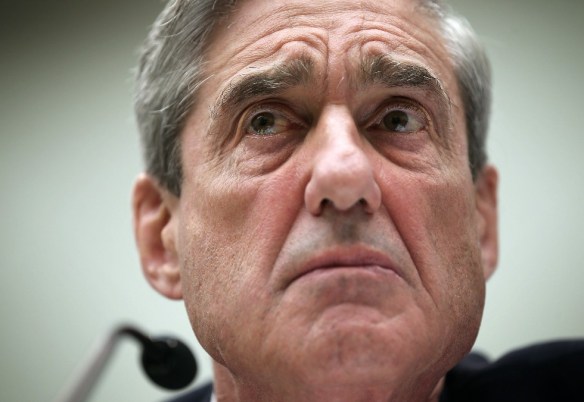
The Robert Mueller led inquiry into the election has been running since May 2017. It has been tasked with determining whether the Trump campaign colluded corruptly with the Russian government to influence the outcome of the election. It has worked hard to delegitimize the president without that being its stated objective and has had a certain measure of success in doing just that.

But apart from a couple of low-level convictions for perjury, Mueller has come up with nothing that convincingly demonstrates that Moscow had some kind of plan to disrupt the elections and thereby damage American democracy. There was, to be sure, some Russian government sponsored probing and what might be described as attempted influencing, but that is what intelligence agencies do to justify their existence. The worst culprit when it comes to election interference worldwide is undoubtedly America’s own Central Intelligence Agency, which has been doing just that since 1947. But apart from some low-level activity, there has been nothing to suggest some kind of grand design orchestrated by Russian President Vladimir Putin to overthrow or cast into confusion the American government.

No one should ever let a good story line go to waste, so the U.S. mainstream media has bought into the proposition that Russia did both interfere in and influence the result of the election based on the assumption that where there is smoke there must be fire with little in the way of evidence being provided. Some media outlets have maintained that the margin of victory for Trump was actually “made in Russia,” meaning that he is ipso facto Moscow’s puppet. It should be noted that this is the same media that embraced Saddam Hussein’s weapons of mass destruction and transatlantic gliders back in 2002 and the Syrian use of chemical weapons more recently, suggesting that the relationship between demonstrated facts and what comes out in the reporting is very tenuous.

To keep the story fresh, both government and the media have now been suggesting that there has already been an attempt by Russia to interfere in the 2018 midterm election which will take place on Tuesday. The New York Times describes an “elaborate campaign of ‘information warfare’ to interfere.” On October 19th, federal prosecutors charged Elena Alekseevna Khusyaynova of St. Petersburg Russia, a woman whom they labeled the project’s “chief accountant.” She allegedly managed a budget to “sow division and discord” in the lead-up to the voting. The Times goes on to describe how “She bought internet domain names and Facebook and Instagram ads and spent money on building out Twitter accounts and paying to promote divisive posts on social media.”

And the list of culprits has also been expanded to include China and Iran, if one goes by PBS’s coverage of the story. One would not be surprised to see North Korea added to the list, as it is convenient to keep all of one’s enemies in one place, all on the march to destroy American democracy and its political institutions before the GOP and Democrats finally get around to doing it.

One might easily regard the never ending Russiagate saga as a bit of an amusement, but there are actually real-life consequences to corrupting the popular sentiment in a large and powerful nuclear armed nation like the United States by constantly discovering new enemies to stimulate the selling of newspapers and television ad time. At a minimum, phony threat accusations create paranoia and also mistrust in the institutions that are supposed to be protecting the country.

And there are also other less tangible consequences, namely that the constant crying wolf over the Russians and Chinese corrupting America’s political system actually does tell the voters that their vote does not matter as outside forces beyond their control will determine the result anyway.

Stephen Cohen, professor of Russian studies at Princeton University, has been arguing for some time that the pursuit of Russiagate and the various delusions that have become attached to it is doing grave damage not only to the bilateral relationship between Moscow and Washington but also to perceptions of the state of the U.S. political system. His latest article in The Nation entitled Who is really undermining American democracy? has as a sub-heading “Allegations that Russia is still ‘attacking’ US elections, now again in November, could delegitimize our democratic institutions.”

Cohen argues plausibly how the “undermine American democracy” meme may itself erode confidence in U.S. political institutions because if the trick of claiming outside interference can to be used successfully once it will be used again even after Trump is gone. If there are claims by losing candidates that Russia or some other foreign power interfered in the midterm this week it will inevitably jumpstart a witch hunt to find those congressmen who were “helped.” The legitimacy of congress itself will be in question.

Cohen also argues that “Russiagate has revealed the low esteem that many U.S. political-media elites have for American voters—for their ability to make discerning, rational electoral decisions, which is the bedrock assumption of representative democracy… Presumably this is a factor behind the current proliferation of programs—official, corporate, and private—to introduce elements of censorship in the nation’s ‘media space’ in order to filter out ‘Kremlin propaganda.’ Here, it also seems, elites will decide what constitutes such ‘propaganda.’”

It is the ultimate irony that the most powerful and least threatened country in the world – the United States of America-runs on fear. The obsession with possible foreign interference in U.S. elections reflects the fundamental insecurity of the elites that actually manipulate the system to benefit themselves and their constituencies. If the midterm results do not satisfy the Establishment and the “foreign menace” again is surfaced as causative it will, in truth, be the beginning of the end for American democracy as mistrust of the integrity of the government institutions will continued to be eroded. The alternative? Tell Robert Mueller to put his cards on the table and prove what is being generally accepted as true regarding Russia or fold up his tent and go home because he is no longer need.

Lost in the Theatre of Data, Dada, and Emotional Manipulation

By Edward Curtin

Source: OpEdNews.com

“It is not only information that they need — in this Age of Fact, information often dominates their attention and overwhelms their capacities to assimilate it”What they need, and what they feel they need, is a quality of mind that will help them to use information and to develop reason in order to achieve lucid summations of what is going on in the world and of what may be happening within themselves”what may be called the sociological imagination.”

— C. Wright Mills, The Sociological Imagination, 1959

“‘Our own death is indeed, unimaginable,’ Freud said in 1915, ‘and whenever we make the attempt to imagine it we can perceive that we really survive as spectators.’ It is thus the very habit of military situations that turn them theatrical. And it is their utter unthinkableness: it is impossible for a participant to believe that he is taking part in such murderous proceedings in his own character. The whole thing is too grossly farcical, perverse, cruel, and absurd to be credited as a form of ‘real life.’ Seeing warfare as theatre provides a psychic escape for the participant: with a sufficient sense of theatre, he can perform his duties without implicating his ‘real’ self and without impairing his innermost conviction that the world is still a rational place. Just before the attack on Loos, Major Pilditch testifies to ‘a queer new feeling these last few days, intensified last night. A sort of feeling of unreality as if I were acting on a stage”.'”

— Paul Fussell, The Great War and Modern Memory

“The society whose modernisation has reached the stage of integrated spectacle
is characterised by the combined effect of five principal factors: incessant technological renewal, integration of state and economy, generalised secrecy, unanswerable lies, and eternal present . . . .”

— Guy Debord, The Society of the Spectacle

“Hi-diddle-dee-dee

An actor’s life for me..

Hi-diddle-dee-dum

An actor’s life is fun”

— Walt Disney, “Pinocchio”

It was 100 years ago this November 11th when World War I ended. This “War to End All Wars,” resulted in the death of approximately 9 million soldiers and 9 million civilians. The brilliant leaders who waged this war — the crème de la crème — men who, in their own warped minds, possessed impeccable logic and rigorous reasoning, expected the war to be over in a few months. It lasted four years. Like their more current American counterparts before they launched the war against Iraq in 2003, they expected a “cakewalk” or a “slam-dunk” (the former term is racist and the latter a sports term, perfect unconscious verbiage for the slaughter of “lesser” humans). All these principals were data demented, they had lined up their little toy ducks in a row and expected a neat and logical outcome. Or so they said. The new weapons would make quick mincemeat of the enemy. Technology would expeditiously destroy to expeditiously save. Nothing has changed in one hundred years

Such instrumental logic and its positivistic data reductionism has now deeply infected the popular mind, as common sense has been destroyed by government and mass media propaganda so blatantly ridiculous that only a hypnotized person could believe it. But so many have been hypnotized and follow the repetitious and overwhelming streaming of each day’s markedly ad hoc “news,” following the Pied Piper to their doom via the wizardry of digital technology. Raptly attentive to the “politainment” that passes for journalism, they pin ball between alleged assertions of fact cobbled together with tendentious and faulty logic and theatrical displays of emotion meant to manipulate an audience of spectators in the national theatre of absurdity. It is all show and tell in which the audience is expected to react emotionally rather than think, with images and feelings having replaced concentrated reflection, and facts and evidence having disappeared like a coin from a magician’s hand.

This technological surround-sound theatre has reduced everything to play-acting, with audiences and their puppeteers playing reciprocal parts. Theodor Adorno analogizes thus:

“Real life is becoming indistinguishable from the movies. The sound film, far surpassing the theatre of illusion, leaves no room for imagination or reflection on the part of the audience, who is unable to respond within the structure of the film, yet deviate from its precise detail without losing the thread of the story; hence the film forces its victims to equate it directly with reality. The stunting of the mass-media consumer’s powers of imagination and spontaneity does not have to be traced back to any psychological mechanisms; he must ascribe the loss of those attributes to the objective nature of the products themselves, especially to the most characteristic of them, the sound film. They are so designed that quickness, powers of observation, and experience are undeniably needed to apprehend them at all; yet sustained thought is out of the question if the spectator is not to miss the relentless rush of facts.”

Meanwhile, the real business of murder, mayhem, and economic exploitation continues apace. As one “small” example of a fact relegated to oblivion by our mainstream media, in Gaza this past week, Israeli occupation forces killed Nasser Azim Musabeh (12), Mohammed Nayef Ai (14), Mohammed Ali Mohasmmed Anshasi, (18), Iyar Khalil Al-Sha’er (18), Mohasmmed Bassam Mohammed (24), Mohammed Walid Haniyeh (23), and Mohammed Ashraf Awawdeh (23). But such facts don’t matter since these dead young people were already reduced to invisible people not worthy of a mention.

Rather, pseudo-debates and pseudo-events are created by media and political magicians whose goal is to confuse the audience through information (data) and emotional overload into thinking that they are “freely” choosing what is always the same, to paraphrase Theodor Adorno. It is a conjurer’s act of mind manipulation in support of a repressive political and economic ideology built on false dichotomies. The political/media empire creates its own “reality” that the captivated audience takes as reality, as their emotions swing from outrage to laughter and their electronic clickers jump them from show to show, from CNN or Fox or the New York Times to Saturday Night Live in the land where there is no business but show business. “Amusing ourselves to death,” as Neal Postman so aptly put it. To which I would add: As we put others to death outside the show.

The other day I was in a library and was looking through a large book of World War I photographs from the Imperial War Museum that I found lying on a table. They were arranged chronologically from the start of the war in 1914 to its end in 1918. Fascinating photos, I thought. I went through the book page by page, examining the photos one by one, beginning with the assassination of Archduke Ferdinand by a young guy, on through the photos of stiff British war-hawk leaders in double-breasted suits, through photos of the trenches and the new weapons until I reached photos of the treaty to “end” it. By the conclusion, I felt exhausted and knew nothing new. Photos as data. Click, click, click: How many are enough? It was like spending an hour with the mainstream corporate media, and much of the alternative press. It was like a black and white movie in no motion. Same old, same old, as a young man I know often says when I ask him what’s new. Same old data via photographs. War is hell. Ditto. Bodies get blown to bits and decompose in mud. Ditto. Heads get separated from necks and blood pours forth. Ditto. War is hell. Ditto. Great leaders meet and end the carnage. Ditto.

Ditto Data Dada. I had to imagine the subsequent pages and years as these great leaders, so disgusted by war, prepared for the next one, and the one following, etc. Ditto, data, dada.

I understood then why the first famous Dadaist piece of art that emerged from absolute disgust with the data driven crazies who started and waged WW I was Marcel Duchamp’s 1917 “Fountain,” a porcelain urinal signed by R. Mutt, a message to tell the “great” leaders to piss off.

But Dadaist art, like all avant-garde art, gets quickly sucked into the maw of the entertainment complex, which is another name for the propaganda complex. As the word media means etymologically — magicians — these sorcerer’s have developed and use every bit of black magic to engineer the consent of the bewildered herd, to blend the words of two of America’s key propagandists from the past: Edward Bernays, Freud’s American nephew and President Woodrow Wilson’s master propagandist for WW I, and the famous journalist Walter Lippman. Bernays put it straight and succinctly:

It is impossible to overestimate the importance of engineering of consent. The engineering of consent is the very essence of the democratic process. It affects almost every aspect of our daily lives.

Last week I attended a production of the play Annie in a community theatre in a liberal town in the northeast. The show was sold out, and I was there because my lovely granddaughter was performing in the play, one whose story and music I was very familiar with. The show was delightful and the audience was enraptured by the performances and the wonderful music. If you are not familiar with the story, it is about an 11 year old orphan named Annie who, in 1933 when FDR has assumed the presidency, is in search of her biological parents. Together with other orphans in a NYC orphanage, she is treated miserably by a character named Miss Hannigan. By the play’s end, Annie is adopted by a wealthy man to presumably live happily ever after. At one point in the play, this wealthy man brings Annie to Washington D. C. to meet his friend, President Roosevelt. He says to FDR, Franklin, you need to do something and get my factories humming again. In this scene, Roosevelt and his cabinet, the wealthy man, and Annie sing the very upbeat song — “Tomorrow” — which Roosevelt loves since it offers hope in the dark time of the great depression. Everyone sings the stirring song, many in the audience silently singing along and the mood in the theater elevates. By the play’s end Annie is adopted by the wealthy man, whose name is Daddy Warbucks. This super-capitalist billionaire with a mansion on Fifth Avenue and a heart of gold has made his riches making weapons for WW I, though this is not spelled out in the show. I kept wondering what the audience of liberal-minded people were thinking, or if they were, about the strange fact the hero of the show was a man with a war-monger’s name whose factories had produced armaments that had created tens of thousands of war orphans and who was urging the liberal Roosevelt to get his munitions factories up and running again in 1933. I suspected they weren’t thinking about this at all and that the work of subtle propaganda was being magically induced at an unconscious level. For how could such a nice, caring guy, who adopts the cute Annie and who sings such tuneful songs, be a killer?

I guiltily thought: I shouldn’t be thinking such thoughts, as I also thought how can I not think them. Emotionally I felt one thing, and intellectually another. This was the classic double-bind.

Upon further reflection, I realized that this is how the finest propaganda works. It splits people in two and works subtly. Emotionally you are pulled one way, and intellectually another, if you are thinking at all. There are certain connections you are not supposed to make or verbalize, when to oppose the powerful sway of the media’s emotional appeals is considered a betrayal of your humanity and certain victims, such as a cute orphan or acceptable victims, even when that doesn’t follow logically.

But in the Magic Theatre that is American life, false choices are the essence of the show. Democrats vs. Republicans, Clinton vs. Bush, Bush vs. Obama, Obama vs. Trump, liberals vs. conservatives, and on and on endlessly. It’s Dada, my friends, all theater. The next election will change everything, right? “The sun’ll come out/Tomorrow, So ya gotta hang on/’Till tomorrow/ Come what may.”

Only when we leave the theatre can we see the real play. But that’s a bold act for which no Oscars, Tonys, or Emmys are handed out. And outside the theater’s warm embrace, it’s cold, and you feel like an orphan looking for a home, no matter how much blood-money purchased it. But don’t go in; it’s a trap.


Democrats rally to defend fired Attorney General Sessions, Special Counsel Mueller

By Tom Eley

Source: WSWS.org

The Democrats and their fake “left” allies held war-mongering demonstrations in a number of cities on Thursday in defense of the fired far-right attorney general, Jeff Sessions, and the anti-Russia investigation being conducted by Special Counsel Robert Mueller.

Wednesday’s ouster of Sessions and his replacement by Trump ally Matthew G. Whitaker has brought forth a wave of condemnation from Democratic Party figures and their media allies, including the New York Times and Washington Post, asserting that the move is the prelude to Trump’s closing down of the Justice Department probe into allegations of Russian “meddling” in the 2016 elections and possible collusion by the Trump campaign.

Trump had repeatedly denounced Sessions for having recused himself from the Russia investigation in March of 2017, leaving Deputy Attorney General Rod Rosenstein, a defender of the investigation, in overall charge of its conduct. Whitaker, a former US attorney and now acting attorney general and therefore responsible for overseeing the Mueller probe, is on record criticizing Mueller and suggesting that the Justice Department could cut off funding for his office.

Mueller’s investigation has been at the center of a McCarthyite-style campaign against Russia spearheaded by the intelligence agencies and the Democratic Party, based on fabricated claims that Russian President Vladimir Putin interfered in the presidential election to undermine the candidacy of Democrat Hillary Clinton and boost Trump. It has been used as a weapon in the drive by the Democrats and sections of the military/intelligence establishment to force Trump to adopt a more aggressive posture against Moscow and in the war for regime-change in Syria.

To the extent that the Democrats oppose the right-wing Trump administration, it is on this entirely reactionary basis. In the lead-up to Tuesday’s midterm elections, they not only called no demonstrations, they were entirely silent on Trump’s fascistic attacks on immigrants, his deployment of troops to the border against the caravan of Central American asylum seekers, and his pledge to overturn the 14th Amendment guarantee of birthright citizenship—a cornerstone of the Bill of Rights.

Following the election, in which the Democrats won control of the House of Representatives, the party leadership called repeatedly for bipartisan unity and collaboration with Trump, underscoring their essential agreement with his policies of war, austerity and repression. It was only when Trump fired Sessions, a right-wing anti-immigrant zealot, that they swung into action, reviving their denunciations of Trump as a stooge of Putin.

The aim of shifting the Trump administration to a war footing against Russia has been achieved to the extent that there is now a substantial risk of nuclear conflict between the US and the second-leading nuclear power. War could quickly erupt in a number of flash points, especially Syria, where Russian soldiers, sailors and airmen carry out combat operations within miles of their American counterparts, as well as US-allied Islamist proxies armed by Saudi Arabia.

Though promoted in the media and sponsored by over 50 Democratic Party-linked organizations, including MoveOn.org, the rallies on Tuesday were small, reflecting the lack of support in the general population for the anti-Russia crusade. The protests were notable primarily for their unvarnished right-wing and neo-McCarthyite character.

Two of the largest were in Washington DC and New York City, which each drew roughly 1,000 demonstrators, many of whom held hammer and cycle posters with Putin’s image. Sessions began his career as a segregationist in Jim Crow Alabama and went on to become a right-wing Republican senator from the state. Mueller, for his part, was director of the FBI from 2001 to 2013, during which time he helped institute mass domestic surveillance and other sweeping attacks on democratic rights linked to the so-called “war on terror.”

At the Washington demonstration, Democratic Congressman Jamie Raskin led those in attendance in a round of applause for Sessions. Randi Weingarten, president of the American Federation of Teachers, appealed to the military against Trump, declaring, “You are the defenders of our democracy,” and led a chant of “protect Mueller.”

In defending Sessions, the Democrats and their allies are rallying around the most rightwing attorney general in American history, who, prior to joining the Trump cabinet, had won a well-earned reputation as a bitter opponent of civil rights. As attorney general, Sessions will primarily be remembered for the persecution of immigrants, most notably the separation of immigrant children from their parents and their imprisonment in detention camps built in the desert.

The task of spearheading the attack on immigrants and democratic rights will now fall, pending the installation of a permanent attorney general, to Whitaker, who has boasted that he interprets the Constitution from a biblical standpoint. His very first act as head of the Department of Justice was to issue, in conjunction with the Department of Homeland Security, a directive stripping the right to asylum from anyone who enters the US over the Mexican border and has not first gained legal status—a move that is tantamount to abolishing the right to asylum, which is guaranteed under international and US law.

This move, a new landmark in the attack on immigrants, due process and basic democratic rights, has been virtually ignored by the media and the Democratic Party. It was not mentioned in the press release calling Thursday’s demonstration, nor by speakers at the demonstrations in Washington and New York.

Digital Book Burners

By Kurt Nimmo

Source: Another Day in the Empire

Jamie Fly, a former high-ranking Bush era neocon, believes you shouldn’t have the right to post on social media.

“Fly went on to complain that ‘all you need is an email’ to set up a Facebook or Twitter account, lamenting the sites’ accessibility to members of the general public. He predicted a long struggle on a global scale to fix the situation, and pointed out that to do so would require constant vigilance,” write  Jeb Sprague and Max Blumenthal. 

This attitude shouldn’t come as a surprise. Neocons believe they are a special breed, the chosen few of an intellectual crème de la crème, and the rest of us are merely bread and circus spectators on the sidelines as they forge our collective history (and increasingly possible ruin). 

Fly is a research associate at the Council on Foreign Relations. He “served” in the National Security Council and the Defense Department during the Bush presidency. He also worked at the Claremont Institute and the American Enterprise Institute. Fly tutored presumptive presidential candidate Marco Rubio on foreign policy and he is the former director of the Foreign Policy Initiative, a staunch neocon advocacy group founded by arch neocons William Kristol, Robert Kagan, and Dan Senor. 

He is now a senior fellow and director of the Asia program at the German Marshall Fund, an organization funded by the US government and NATO. The German Marshall Fund organized the Alliance for Securing Democracy and its Hamilton 68 effort to destroy alternative media under the false (and largely debunked) claim it is a cutout for Russia and Vladimir Putin who are, we are reminded daily, dedicated to destroying democracy and taking down the exceptional and indispensable nation. 

Jamie Fly and his coconspirators Laura Rosenberger and J.M. Berger know the Russians aren’t responsible for thousands of alternate media websites and social media accounts. They know this phenomenon, which began with the birth of the World Wide Web in the mid-1990s, is homespun and has absolutely nothing to do with Russia. It is their mission to make sure the establishment is free to promulgate its lies and war propaganda without counterbalance and the interruption of truth. 

These folks are digital book burners on par with Nazis who burned books in Berlin on the Opernplatz in May of 1933. Like the Nazis, they want to silence those who counter the narrative. For the Nazis, the targets were communists, socialists, anarchists, and all who opposed fascism, while our new book burners—liquidators of heresy against the ruling elite—are focused on groups and individuals challenging the lies and half-truths of the state regardless of ideology.

For the elite, populism and nationalism represent a twin threat to the emerging globalist scheme of a one-world government and currency directed by a cadre of unelected bureaucrats and ideologues. 

Donald Trump portrayed himself as a patriot and nationalist—Make America Great Again—however after the election the same old crowd of CFR operatives, Goldman Sachs alumni, and hardcore neocons staffed his administration, thus making the realization of his campaign promises virtually impossible. 

The ruling elite, their functionaries and proxies have declared war on “alternative facts,” that is to say information contrary and even hostile to the narrative. While it is true the corporate media has lost some influence, it still projects a powerful influence on public opinion, especially in the current highly polarized political climate.

For instance, it is now assumed a Trump supporter send bombs to Democrats, and this has become a trending topic on social media. There is zero evidence a Trump supporter had anything to do with this incident, and yet the hashtag “MAGABomber” has gone viral on social media, demonstrating how easily it is to sell lies and fabrications to a polarized public. 

Fly and his digital book burning associates will not stop until the last vestiges of the alternative media are wiped out. This process is underway now with a number of popular alternative media websites losing significant traffic following removal from social media. 

As Mr. Fly says, this is only the beginning. They will not stop until the challenge is defeated and the digital information landscape is once again completely in control of the psychopaths at the top and their well-paid minions pushing the idiotic lie that Putin and the Russians are responsible. 

Facebook Censorship of Alternative Media “Just the Beginning,” Says Top Neocon Insider

At a Berlin security conference, hardline neocon Jamie Fly appeared to claim some credit for the recent coordinated purge of alternative media.

By Max Blumenthal and Jeb Sprague

Source: Gray Zone

This month, Facebook and Twitter deleted the accounts of hundreds of users, including many alternative media outlets maintained by American users. Among those wiped out in the coordinated purge were popular sites that scrutinized police brutality and U.S. interventionism like The Free Thought Project, Anti-Media, Cop Block and journalists like Rachel Blevins.

Facebook claimed that these sites had “broken our rules against spam and coordinated inauthentic behavior.” However, sites like The Free Thought Project were verified by Facebook and widely recognized as legitimate sources of news and opinion. John Vibes, an independent reporter who contributed to Free Thought, accused Facebook of “favoring mainstream sources and silencing alternative voices.”

In comments published here for the first time, a neoconservative Washington insider has apparently claimed a degree of credit for the recent purge and promised more takedowns in the near future.

“Russia, China, and other foreign states take advantage of our open political system,” remarked Jamie Fly, a senior fellow and director of the Asia program at the German Marshall Fund. “They can invent stories that get repeated and spread through different sites. So we are just starting to push back. Just this last week Facebook began starting to take down sites. So this is just the beginning.”

Fly went on to complain that “all you need is an email” to set up a Facebook or Twitter account, lamenting the sites’ accessibility to members of the general public. He predicted a long struggle on a global scale to fix the situation, and pointed out that to do so would require constant vigilance.

Fly made these stunning comments to Jeb Sprague, who is a visiting faculty in sociology at the University of California-Santa Barbara and co-author of this article. The two spoke during a lunch break at a conference on Asian security organized by the Stiftung Wissenschaft und Politik in Berlin, Germany.

In the tweet below, Fly is the third person from the left who appears seated at the table.

The remarks by Fly — “we are just starting to push back” — seemed to confirm the worst fears of the alternative online media community. If he was to be believed, the latest purge was motivated by politics, not spam prevention, and was driven by powerful interests hostile to dissident views, particularly where American state violence is concerned.

Rise of a neocon cadre

Jamie Fly is an influential foreign policy hardliner who has spent the last year lobbying for the censorship of “fringe views” on social media. Over the years, he has advocated for a military assault on Iran, a regime change war on Syria, and hiking military spending to unprecedented levels. He is the embodiment of a neoconservative cadre.

Like so many second generation neocons, Fly entered government by burrowing into mid-level positions in George W. Bush’s National Security Council and Department of Defense.

In 2009, he was appointed director of the Foreign Policy Initiative (FPI), a rebranded version of Bill Kristol’s Project for a New American Century, or PNAC. The latter outfit was an umbrella group of neoconservative activists that first made the case for an invasion of Iraq as part of a wider project of regime change in countries that resisted Washington’s sphere of influence.

By 2011, Fly was advancing the next phase in PNAC’s blueprint by clamoring for military strikes on Iran. “More diplomacy is not an adequate response,” he argued. A year later, Fly urged the US to “expand its list of targets beyond the [Iranian] nuclear program to key command and control elements of the Republican Guard and the intelligence ministry, and facilities associated with other key government officials.”

Fly soon found his way into the senate office of Marco Rubio, a neoconservative pet project, assuming a role as his top foreign policy advisor. Amongst other interventionist initiatives, Rubio has taken the lead in promoting harsh economic sanctions targeting Venezuela, even advocating for a U.S. military assault on the country. When Rubio’s 2016 presidential campaign floundered amid a mass revolt of the Republican Party’s middle American base against the party establishment, Fly was forced to cast about for new opportunities.

He found them in the paranoid atmosphere of Russiagate that formed soon after Donald Trump’s shock election victory.

PropOrNot sparks the alternative media panic

A journalistic insider’s account of the Hillary Clinton presidential campaign, Shattered, revealed that “in the days after the election, Hillary declined to take responsibility for her own loss.” Her top advisers were summoned the following day, according to the book, “to engineer the case that the election wasn’t entirely on the up-and-up … Already, Russian hacking was the centerpiece of the argument.”

Less than three weeks after Clinton’s defeat, the Washington Post’s Craig Timberg published a dubiously sourced report headlined, “Russian propaganda effort helped spread ‘fake news.’” The article hyped up a McCarthyite effort by a shadowy, anonymously run organization called PropOrNot to blacklist some 200 American media outlets as Russian “online propaganda.”

The alternative media outfits on the PropOrNot blacklist included some of those recently purged by Facebook and Twitter, such as The Free Thought Project and Anti-Media. Among the criteria PropOrNot identified as signs of Russian propaganda were, “Support for policies like Brexit, and the breakup of the EU and Eurozone” and, “Opposition to Ukrainian resistance to Russia and Syrian resistance to Assad.” PropOrNot called for “formal investigations by the U.S. government” into the outlets it had blacklisted.

According to Craig Timberg, the Washington Post correspondent who uncritically promoted the media suppression initiative, Propornot was established by “a nonpartisan collection of researchers with foreign policy, military and technology backgrounds.” Timberg quoted a figure associated with the George Washington University Center for Cyber and Homeland Security, Andrew Weisburd, and cited a report he wrote with his colleague, Clint Watts, on Russian meddling.

Timberg’s piece on was PropOrNot was promoted widely by former top Clinton staffers and celebrated by ex-Obama White House aide Dan Pfeiffer as “the biggest story in the world.” But after a wave of stinging criticism, including in the pages of the New Yorker, the article was amended with an editor’s note stating, “The [Washington] Post… does not itself vouch for the validity of PropOrNot’s findings regarding any individual media outlet.”

PropOrNot had been seemingly exposed as a McCarthyite sham, but the concept behind it — exposing online American media outlets as vehicles for Kremlin “active measures” — continued to flourish.

The birth of the Russian bot tracker

By August, a new, and seemingly related initiative appeared out of the blue, this time with backing from a bipartisan coalition of Democratic foreign policy hands and neocon Never Trumpers in Washington. Called the Alliance for Securing Democracy (ASD), the outfit aimed to expose how supposed Russian Twitter bots were infecting American political discourse with divisive narratives. It featured a daily “Hamilton 68” online dashboard that highlighted the supposed bot activity with easily digestible charts. Conveniently, the site avoided naming any of the digital Kremlin influence accounts it claimed to be tracking.

The initiative was immediately endorsed by John Podesta, the founder of the Democratic Party think tank, Center for American Progress, and former chief of staff of Hillary Clinton’s 2016 presidential campaign. Julia Ioffe, the Atlantic’s chief Russiagate correspondent, promoted the bot tracker as “a very cool tool.”

Unlike PropOrNot, the ASD was sponsored by one of the most respected think tanks in Washington, the German Marshall Fund, which had been founded in 1972 to nurture the special relationship between the US and what was then West Germany.

Though the German Marshall Fund did not name the donors that sponsored the initiative, it hosted a who’s who of bipartisan national security hardliners on the ASD’s advisory council, providing the endeavor with the patina of credibility. They ranged from neocon movement icon Bill Kristol to former Clinton foreign policy advisor Jake Sullivan to ex-CIA director Michael Morrell.

Jamie Fly, a German Marshall Fund fellow and Asia specialist, emerged as one of the most prolific promoters of the new Russian bot tracker in the media. Together with Laura Rosenberger, a former foreign policy aide to Hillary Clinton’s 2016 campaign, Fly appeared in a series of interviews and co-authored several op-eds emphasizing the need for a massive social media crackdown.

During a March 2018 interview on C-Span, Fly complained that “Russian accounts” were “trying to promote certain messages, amplify certain content, raise fringe views, pit Americans against each other, and we need to deal with this ongoing problem and find ways through the government, through tech companies, through broader society to tackle this issue.”

Yet few of the sites on PropOrNot’s blacklist, and none of the alternative sites that were erased in the recent Facebook purge that Fly and his colleagues take apparent credit for, were Russian accounts. Perhaps the only infraction they could have been accused of was publishing views that Fly and his cohorts saw as “fringe.”

What’s more, the ASD has been forced to admit that the mass of Twitter accounts it initially identified as “Russian bots” were not necessarily bots — and may not have been Russian either.

“I’m not convinced on this bot thing”

A November 2017 investigation by Max Blumenthal, a co-author of this article, found that the ASD’s Hamilton 68 dashboard was the creation of “a collection of cranks, counterterror retreads, online harassers and paranoiacs operating with support from some of the most prominent figures operating within the American national security apparatus.”

These figures included the same George Washington University Center for Cyber and Homeland Security fellows — Andrew Weisburd and Clint Watts — that were cited as experts in the Washington Post’s article promoting PropOrNot.

Weisburd, who has been described as one of the brains behind the Hamilton 68 dashboard, once maintained a one-man, anti-Palestinian web monitoring initiative that specialized in doxxing left-wing activists, Muslims and anyone he considered “anti-American.” More recently, he has taken to Twitter to spout off murderous and homophobic fantasies about Glenn Greenwald, the editor of the Intercept — a publication the ASD flagged without explanation as a vehicle for Russian influence operations.

Watts, for his part, has testified before Congress on several occasions to call on the government to “quell information rebellions” with censorious measures including “nutritional labels” for online media. He has received fawning publicity from corporate media and been rewarded with a contributor role for NBC on the basis of his supposed expertise in ferreting out Russian disinformation.

Clint Watts has urged Congress to “quell information rebellions”

However, under questioning during a public event by Grayzone contributor Ilias Stathatos, Watts admitted that substantial parts of his testimony were false, and refused to provide evidence to support some of his most colorful claims about malicious Russian bot activity.

In a separate interview with Buzzfeed, Watts appeared to completely disown the Hamilton 68 bot tracker as a legitimate tool. “I’m not convinced on this bot thing,” Watts confessed. He even called the narrative that he helped manufacture “overdone,” and admitted that the accounts Hamilton 68 tracked were not necessarily directed by Russian intelligence actors.

“We don’t even think they’re all commanded in Russia — at all. We think some of them are legitimately passionate people that are just really into promoting Russia,” Watts conceded.

But these stunning admissions did little to slow the momentum of the coming purge.

Enter the Atlantic Council

In his conversation with Sprague, the German Marshall Fund’s Fly stated that he was working with the Atlantic Council in the campaign to purge alternative media from social media platforms like Facebook.

The Atlantic Council is another Washington-based think tank that serves as a gathering point for neoconservatives and liberal interventionists pushing military aggression around the globe. It is funded by NATO and repressive, US-allied governments including Saudi Arabia, Bahrain and Turkey, as well as by Ukrainian oligarchs like Victor Pynchuk.

This May, Facebook announced a partnership with the Atlantic Council’s Digital Forensic Research Lab (DFRLab) to “identify, expose, and explain disinformation during elections around the world.”

The Atlantic Council’s DFRLab is notorious for its zealous conflation of legitimate online dissent with illicit Russian activity, embracing the same tactics as PropOrNot and the ASD.

Ben Nimmo, a DFRLab fellow who has built his reputation on flushing out online Kremlin influence networks, embarked on an embarrassing witch hunt this year that saw him misidentify several living, breathing individuals as Russian bots or Kremlin “influence accounts.” Nimmo’s victims included Mariam Susli, a well-known Syrian-Australian social media personality, the famed Ukrainian concert pianist Valentina Lisitsa, and a British pensioner named Ian Shilling.

In an interview with Sky News, Shilling delivered a memorable tirade against his accusers. “I have no Kremlin contacts whatsoever; I do not know any Russians, I have no contact with the Russian government or anything to do with them,” he exclaimed. “I am an ordinary British citizen who happens to do research on the current neocon wars which are going on in Syria at this very moment.”

With the latest Facebook and Twitter purges, ordinary citizens like Shilling are being targeted in the open, and without apology. The mass deletions of alternative media accounts illustrate how national security hardliners from the German Marshall Fund and Atlantic Council (and whoever was behind PropOrNot) have instrumentalized the manufactured panic around Russian interference to generate public support for a wider campaign of media censorship.

In his conversation in Berlin with Sprague, Fly noted with apparent approval that, “Trump is now pointing to Chinese interference in the 2018 election.” As the mantra of foreign interference expands to a new adversarial power, the clampdown on voices of dissent in online media is almost certain to intensify.

As Fly promised, “This is just the beginning.”

A Clockwork Orange: Waiting for the Sun

By Doug “Uncola” Lynn

Source: The Burning Platform

Society should not do the wrong thing for the right reason, even though it frequently does the right thing for the wrong reason.

 History has shown us what happens when you try to make society too civilized, or do too good a job of eliminating undesirable elements. It also shows the tragic fallacy in the belief that the destruction of democratic institutions will cause better ones to arise in their place.

Stanley Kubrick on “A Clockwork Orange”, an interview with film critic Michel Ciment

An obscure Texas political consultant named Bill Miller once said “politics is show business for ugly people”.  It’s true for the most part, aside from the consequences.  This is because the theatrics of politicians result in policies that affect the lives of others; often against the will of the governed. In books and movies, however, the characters are much ado about nothing. Until, that is, life imitates art.

So it is with the futuristic dystopian story of “A Clockwork Orange”.  Both the book, by the author Anthony Burgess, and the film by director Stanley Kubrick, serve as moral dilemmas and cautionary tales plumbing such considerations as free will, the duality of mankind, societal anarchy, and the ascendancy of an all-powerful state.

A 1973 review written in Sight and Sound Magazine, stated: “Kubrick has appropriated theme, character, narrative and dialogue from Anthony Burgess’ novel, but the film is more than a literal translation of a construct of language into dramatic-visual form”. Therefore, for that reason, and for others described later, the film will remain this article’s primary focus.

As any perfunctory internet research will show, Stanley Kubrick is known as a visionary artist and director, but also as the subject of multiple conspiracies. In addition to A Clockwork Orange, Kubrick’s oeuvre includes avant-garde films such as Dr. Strangelove, The Shining, 2001 A Space Odyssey, and Eyes Wide Shut; to name a few.  Just as these movies demonstrate the inner workings of mankind operating through the disparate threads which bind reality, so do some claim that a larger picture is presented as well.  The big picture, of course, is said to include conspiratorial clues and undertones in Kubrick’s films ranging from Freemasonry, to America’s alleged faked moon landing, to an occultist global financial elite, and the terrorist attacks of 911 being planned as a world transformational event.

There exist multiple published writings, both online and in print, describing the secret meanings hidden in Kubrick’s movies.  Furthermore, it has been argued that Kubrick’s “somewhat surreal films” appeal to the viewer’s subconscious and, therefore, “lend themselves to this sort of interpretation”.

That is another reason why Kubrick’s film will remain the focus of this essay, as opposed to the novel: Either these alleged conspiracies are imagined in the minds of the viewers, or Kubrick deliberately inserted these elements into his creations.  Given Kubrick’s reputation for perfectionism, one can only conclude the symbolism was specifically placed and for exact reasons.

For example, in Kubrick’s The Shining, there are those who contend it is “laden with symbolism, hidden messages”, and “conspiracy theories”.   In Eyes Wide Shut, some contend it was meant to reveal secret societies and sex-magic by means of “evidence” which includes occult symbolism and references to Ishtar, the ancient Babylonian goddess of fertility, love, war and sex.

In his other films, like 2001 A Space Odyssey, it has been argued the strategic placement of the sun, or other circular lights, were utilized by Kubrick as symbolic movie projectors of sorts, whereby time and events unwind before the audience like a clock.  Additionally, even in movies not directed by Kubrick, there are those who say mirrors are used to demonstrate mind control.  It is a fact both of these visualizations are present in A Clockwork Orange.

Once again, and for all of the reasons delineated heretofore, the following presentation will analyze Kubrick’s film as opposed to the novel from which it derived.  The story, and Kubrick’s alchemy, will then be analyzed through the lens of three separate realities followed by some concluding comments at the very end.

THE UNWINDING

In Kubrick’s A Clockwork Orange, the viewers witness the tragic life and circumstances of a teenager named Alex DeLarge navigating a decadent post-modern world. In the film, Alex is played by the actor Malcolm McDowell.  The story unfolds against the backdrop of a futuristic dystopian society that has descended into anarchy and violence; especially within the younger generation.

The very first scene focuses on the evil-eyed Alex adorned with a black fedora and sunray eyeliner beneath his right eye. As the camera pulls back, the boy is shown with three of his young friends identified in the narrative as “droogs”. The youths are shown sitting in the Korova Milk Bar where they imbibe “Milk Plus”; or milk laced with recreational drugs of various types.

Upon leaving the bar, the boys come across a drunk lying in an alley and singing what Alex calls the songs of the drunk man’s “fathers”.  This implies a line of separation between the previous time and the new; between the old and the young.  This separation of time is actually confirmed when the drunk tells the young hooligans he no longer wants to live in this “stinking world” because there’s “no law and order anymore”, where the young “get onto the old”, and “it’s no world for an old man any longer”.

The boys commence to beat the old boozer senseless.

In the next scene, Alex and his droogs come across a group of five other boys who, on an abandoned theatrical stage, are attempting to rape a young woman.  Seemingly, the stage implies the violence unfolding as melodrama, causing this viewer to question if the descent into societal violence was staged as well?  The boys assaulting the woman were wearing military-style camo clothing and adorned with Nazi accoutrements. Alex taunted them in a near Shakespearean manner, and the rival gangs went to war.  The battle also appeared as theatrically choreographed and was set in sync to Giaochino Rossini’s La Gazza Ladra overture.

In the next scene, we see Alex and his gang fleeing to the countryside in a red sports car, looking very much like four demons racing towards hell.

Chaos ensued until Alex eventually ended up in prison and, thus, in possession of the state.

In prison, Alex sat before an open Bible and fantasized he was a Roman soldier whipping the back of Jesus Christ. His voiceover narration said he didn’t like the New Testament’s “preachy talking” as much as the Old Testament’s violence and sex. He furthermore envisioned slicing open the throats of ancient enemies and later eating grapes fed to him by the naked wives and handmaidens of his vanquished foes.

In the privacy of the facility’s library, Alex petitioned the prison chaplain regarding a new treatment that could help him secure his freedom.  The chaplain informed Alex the new treatment was called the Ludovico Technique and that it was dangerous.  The boy then tells the priest that in spite of any potential danger, he wanted “for the rest of his life to be one act of goodness”.

In response, the chaplain tells Alex that “goodness is chosen” and “when a man cannot choose, he ceases to be a man”.

The next scenes showed a group of prisoners walking outside around a circle on the ground.  Before the men are lined up for inspection, a cadre of dignitaries exit from a long hallway, and walk before the prisoners. In so doing, one man tells the others that, soon, the “prisons will be full of political prisoners” and that the “petty criminals need faster reconditioning”. Standing in line, Alex speaks up and the man selects Alex from the group. The viewer later discovers the man was actually the new Minister of the Interior who was visiting the prison that day.

Soon, Alex is admitted into the Ludovico Treatment Center and begins his reconditioning. He is strapped to a chair with brackets forcing both of his eyes open so they can’t be closed. He then watches violent videos of which he greatly enjoys at first. When a man begins to bleed on screen, Alex’s bloodlust is quenched, and speaking in the Nadsat lingo (a combination of Cockney English and Russian), he says: “It’s funny how the colors of the real world only seem really real when you viddy them on a screen”.

After the first video, another film is shown where a woman in a red wig is being gang-raped. Due to the drugs being injected into Alex’s bloodstream, he begins to feel ill, but he can’t avert his gaze due to the brackets on his eyes. Even trying to move his eyes away, he says: “I still could not get out of the line of fire of this picture”.

In another scene, Alex views another session which consists of Nazis marching, paratroopers jumping, bombs falling, and all to the light and airy melody of Beethoven’s “Ninth Symphony, Fourth Movement”.  When Alex realizes the soundtrack is Beethoven, he begins to scream pitifully, begging the doctors to stop the treatment; because he once enjoyed that music as a free man.

Certainly one of the most challenging and difficult social problems we face today is, how can the State maintain the necessary degree of control over society without becoming repressive, and how can it achieve this in the face of an increasingly impatient electorate who are beginning to regard legal and political solutions as too slow? The State sees the spectre looming ahead of terrorism and anarchy, and this increases the risk of its over-reaction and a reduction in our freedom. As with everything else in life, it is a matter of groping for the right balance, and a certain amount of luck.

Stanley Kubrick on “A Clockwork Orange”, an interview with film critic Michel Ciment

His treatment complete, Alex is then presented to a group of onlookers as the Ministry of Interior addresses the audience.  The man tells them his political party promised Law and Order and “to make the streets safe for ordinary peace-loving citizens“.

In a demonstration that ensues on a raised dais, or stage, in front of the group, Alex is verbally and physically bullied while remaining unable to fight back.  As the bully exits the stage, an overhead spotlight, appearing very much like a film projector, or the sun, follows the man as he bows and waves to the audience.

Next, Alex was presented with a gorgeous, nicely tanned, platinum blonde who stands topless before him wearing only a pair of cotton panties.  As Alex, on his knees, reaches upward to touch her breasts, he becomes sick once again. The blonde then exits the stage similar to the bully, waving and bowing in dramatic fashion.

As the minister touts the new and improved Alex, the boy’s old prison chaplain rises up to challenge him, claiming Alex had been deprived of choice, and that his “reformation is insincere” because his conditioning requires “self-interest merely to avoid pain”. The chaplain then says: “He ceases to be a wrongdoer, he ceases also to be a creature capable of moral choice”.

In response, the Minister exclaims: “We’re not concerned with motives, with the higher ethics; we are concerned only with cutting down on crime and with relieving the ghastly congestions within our prisons”.  He then added:

“He will be your true Christian, ready to turn the other cheek. Ready to be crucified rather than crucify. Sick to the very heart at the thought of even killing a fly. Reclamation. Joy before the angels of God! The point is that it works!”

The State had set Alex free. Literally.  More chaos ensued; but, this time, it is all directed against the boy.  As Alex eventually returns to his old self, and the State even apologizes for not knowing any better, it remains clear the government still views Alex as a political pawn to be played in its next theatrical production.

The viewer is left with the impression of the cycle continuing; or merely more of the same as the sun rises and sets over the spinning world.

Alex is characterised not only by his actions against society, but in the actions of the State against Alex. The two are equated in the film, his charm reproduced in its durance, the principal difference – a perhaps considerable one – in the State’s coarsely institutional and indiscriminately committed immoralities that Alex can only practise on a restricted scale.

  – Daniels, Don. “A Clockwork Orange”,  Sight & Sound, Winter 1973

[A clockwork orange is] an organic entity, full of juice and sweetness and agreeable odor, being turned into an automaton.

 – Burgess, Anthony. 1987 prefatory note to “A Clockwork Orange: A Play With Music”

…the attempt to impose upon man, a creature of growth and capable of sweetness, to ooze juicily at the last round the bearded lips of God, to attempt to impose, I say, laws and conditions appropriate to a mechanical creation, against this, I raise my swordpen–”

  – Burgess, Anthony.  The character F. Alexander, “A Clockwork Orange”, p. 25

Through the Lens of Psychology and Violence, Chemically Enhanced

When I was a young man at college more than three decades ago, I asked one of my friends what he thought of the film A Clockwork Orange.  Now, this guy had a high IQ. When younger, he was identified as a gifted child who then became member of Mensa, and later the dean of the psychology department at a large American university.  I’ve never forgotten his answer. He said: “The future is sex and violence”.

Obviously, both he and Kubrick were proven correct.

Over the past four decades, global academia has made ignorant the youth in Western Societies. Whereas emphasis was once placed on critical thinking, logic, classic literature, science, and math, today’s schools now prioritize identity politics while the youth, especially boys, fall through society’s cracks mesmerized by television, violent video games, and drugs; prescribed or otherwise.

In A Clockwork Orange, Alex and his gang of droogs demonstrated awareness and cleverness, but simultaneously lacked compassion and empathy in ways that were near reptilian. Moreover, Alex’s parents were goofy enablers; the mother in particular, who had purple hair and seemed blind to her son’s evil. They were, in fact, perfect representations of the modern real-world parents who go on television, after their child murders and maims, to say:  “He seemed like such a nice boy. We never saw it coming”.

This has remained true since the Columbine shooters through the most current of events in even the bucolic U.S. Midwestern state of Iowa, where two separate girls were recently brutally assaulted and murdered in as many months.  Both the killers of Mollie Tibbets and Celia Barquin Arozamena were young men in their early twenties.  In the latter case, the murderer, Collin Daniel Richards, admitted he had an urge to rape and kill a woman” and the meme for his Facebook cover page said:  “Let’s go commit a murder”.

Obviously, we no longer live in a Norman Rockwell world.  Even so, we can’t say we weren’t warned by Kubrick in A Clockwork Orange.

The famous psychologist, Sigmund Freud, presented the idea that humans operate by means of a trinity of cognitive processes as follows:  The Id (instincts), Ego (reality) and Superego (morality).  Freud furthermore speculated these three systems (i.e. tripartite) developed at different stages of life.

In the case of Alex in Kubrick’s film, he was representative of the Id, acting out of his desire for childish satisfaction.  It is therefore possible the Ego in the film was represented by the modifying presence of the prison chaplain, and with the State acting as the Superego taming Alex’s Id by means of chemically conditioned censorship of action.

The Id, Ego, and Superego could also be perceived as manifested in the body (impulse), mind/soul (cognitive) and spirit (conscious /law).

As both the film, A Clockwork Orange, and present reality indicate: When balance is lacking, chaos follows in the form of hell on earth.  But, on the other hand, if proper balance can be restored, then both individuals and society are better off.

But what is the proper balance and who decides?  The State?  Or, is there another way to unify mankind into peace and harmony?

By definition, a human being is endowed with free will.  He can use this to choose between good and evil.  If he can only perform good or only perform evil, then he is a clockwork orange–meaning he has the appearance of an organism lovely with colour and juice but is in fact only a clockwork toy to be wound up by God or the Devil or (since this is increasingly replacing both) the Almighty State.  It is as inhumane to be totally good as it is to be totally evil.  The important thing is moral choice.  Evil has to exist along with good, in order that moral choice may operate.  Life is sustained by the grinding opposition of moral entities.

 –  Burgess, Anthony. 1986 introduction to “A Clockwork Orange”

I think this suggests the failure of culture to have any morally refining effect on society. Hitler loved good music and many top Nazis were cultured and sophisticated men but it didn’t do them, or anyone else, much good.

Stanley Kubrick on “A Clockwork Orange”, an interview with film critic Michel Ciment

Through the Lens of the Occult, Sun Worship, and Ancient Knowledge

Again, a simple internet search of “Stanley Kubrick occult” will yield a number of online links and even a book on the topic entitled “Kubrick’s Code: An Examination of Illuminati & Occult Symbolism in Stanley Kubrick’s Films”.  In A Clockwork Orange, specifically, there are those who contend “subliminals” are present therein, including references to MK Ultra/mind control, Freemasonry, Sun/Solar worship, Templar/Iron Cross, Black Sun, the Eye of Horus, and more.

Having personally seen the movie, and recently, I will say these elements are definitely incorporated into the film.  I was intrigued by the “Clockwork Orange as Sun” angle but, upon viewing the movie again, it appeared to me the solar aspect was presented (similar to Kubrick’s other films) as more of a film projector of sorts; whereby the viewers could nearly perceive themselves as projections in the screen, along with the fictional characters, as the story unwound.

A Clockwork Orange.  Mechanical. Circles. Time.

It is also said the sun can affect people’s moods; as does film.

In the earliest written creation epic, the “Enuma Elish”, claimed by some scholars to have influenced the Bible’s Book of Genesis, Marduk is the Babylonian god who defeats the female water god, Tiamat. Marduk is then awarded fifty other names. In Mesopotamia and Sumeria, Marduk is known as the sun gods Shamash and Anu (Utu), respectively.  In Egypt he was worshipped as Ra.

According to ancient lore, Marduk’s act of creation marks the start of time. He was also worshipped as Bel Marduk the God of war.

In the scriptures of Judaism and Christianity, Marduk and Tiamat were first identified as the humans Nimrod (In Genesis, chapter 10, called “a mighty hunter before the Lord”) and his wife Semiramis (later known as the mythological Queen of Heaven).

There are those who say it was Nimrod who established the first state religion by unifying mankind and building a tower in the Tigris/Euphrates region of antiquity.  However, after he incorporated, and then diversified, he went public:

Source

Did it all start on the plains of Shinar after a great flood, when the male sun overcame female water?

In A Clockwork Orange, Alex and his droogs were certainly warlike and sought to ravage the females in their paths.  Moreover, perhaps as another clue, one of the songs on the film’s soundtrack is titled “Overture to the Sun”.

In the scene previously described, when the rival gang was in the act of melodramatically wrestling a woman in order to rape her on a stage, it did appear Kubrick incorporated elements of the “Enuma Elish” into his film: namely the expanse of sky above and a winged sun god overlooking acts of sex and violence (Chaos) below.

Within the occult, there are those identifying the Sun as being a symbol of Lucifer the Light Bringer and with the accompanying “illuminating rays of knowledge”; all supposedly essential to the ancient sun worship cult called “The Illuminati”.

Furthermore, others have connected both Freemasonry and the Illuminati as having originated in ancient Egypt:

Popular history texts and encyclopedias generally paint the Illuminati as having its origins in 1776 Bavaria. However, the origins go back much further. The Illuminati are tied directly through masonry to the sun and Isis cults of ancient Egypt.

Source

In truth, Kubrick’s A Clockwork Orange has more occult symbols than even a U.S. dollar bill; along with specific parallels to Freemasonry.  All of these visuals, like the Eye of Horus right on the money, are hidden in plain sight:

The checkered pattern is found in Freemason lodges and is known as “Moses Pavement” which symbolizes the duality of man.  Of course, the Eye of Horus, snakes, and phalluses, are all symbols of the occult as well.

Why would Kubrick have included these in A Clockwork Orange and, also, in his other films?

Coincidence? Art? Conspiracy?

Let the readers, and viewers, decide.

Additionally, as addressed before, Kubrick’s film does include some peculiar references to Christianity.  Complementing Alex’s aforementioned prison fantasy of being a Roman soldier in the act of whipping Christ, there was an earlier scene in his room where he fondles his pet snake before the snake appeared to act as a phallus between the legs of a naked woman pictured on his wall.  The buttocks of the woman looked to have been held up by the raised arms of four naked Jesus Christ figurines; complete with crowns of thorns.  Then, as a rapturous Alex enjoyed the music of Beethoven in a near masturbatory manner, he envisioned himself a vampire and saw a woman in a white (wedding?) dress being hung by rope, along with fiery explosions and men being crushed by rocks.

These examples, along with the symbols of Alex’s pet snake and the Eye of Horus on his right sleeve and right eye, leave the viewer with the impression the boy’s worldview was nothing short of Luciferian.

Moreover, just as western holidays like Christmas (Sol) and Easter (Ishtar) have their originations in ancient sun worship and female pagan fertility deities, so too, it seems, does A Clockwork Orange.  In another example, one of the droogs in the Korova Milk Bar, with sun/projector overhead, drew milk from the breasts of a replica nymph that he called “Lucy”.

Are all of these occult references designed to point the viewer’s attention towards Lucifer? Was Kubrick trying to warn his audience that the future for both individual and state belonged to Satan? Or, is it possible the director was actually advocating for such?

Either way, Kubrick’s futuristic vision may have been right, on many levels correct, and in more ways, than most people today realize.

Through the Lens of the Established State, Modern Politics , Time, and the Circular Cycles of Man

There are those who have tied Donald Trump to Kubrick’s A Clockwork Orange:

And, paradoxically, it now appears the Satanists are even threatened by The Orange Jesus as they seek to convert the younger generation.

Founded in 2012, The Satanic Temple (not to be confused with the Church of Satan) is a non-theistic organization that has gained prominence since President Trump’s election. The group reported it gained “thousands of new members” after Trump won the presidential race.

…Since the election, The Satanic Temple has launched multiple campaigns aimed at challenging Christian influence in the political sphere. One example is their After School Satan Clubs.

Obviously those on the Political Left, and some in the middle, view Trump as similar to the right-wing, authoritarian (law and order) party in Kubrick’s film; who brainwashed naive dupes into supporting misguided policies. Yet, to the other half of the audience watching the political theater on their screens, it appears that Trump is more comparable to Alex; who, after creating carnage in the proverbial political swamp, is now undergoing reeducation by the Established State right before their very eyes.

Could Kubrick have foreseen the inevitability of time’s passage delivering an Orange Reality TV Star to the world stage? It’s doubtful, because he didn’t write the book.  Even so, is it still possible that Trump is a clockwork man, arriving right on schedule?

Since the times of the first songs, the elite have cynically oppressed the proles while telling them it’s for their own good; for their safety, or for the good of Mankind overall.  That is the commonality of gangsters, thugs, neocons, corrupt politicians, fascists, and tyrannical collectivists. They abrogate timeless moral principles for their own benefit and tell us it’s for ours.

In the narrative of A Clockwork Orange, there is a contrarian to the current government, an author, who played dual roles in the film’s plot. Towards the end, he argues on the telephone with an unseen coconspirator that “the common people must not sell liberty for a quieter life”.

Yet, isn’t that what we’ve done today in the once free nations of the western world?

In many ways, A Clockwork Orange is a mirrored representation of modern America.  In the movie, a right-wing party is the established power suppressing the rights of commoners in order to sustain its continuity of control; and the media, and opposition party, were fighting on the side of liberty.

Paradoxically, in the real world currently, the media, the Political Left, and lukewarm conservatives, are in singularity with the Established State; as Trump and his Deplorables wreak havoc before the global towers of power.

Based upon raw intuition, instinct, and Tweets, Trump is the political manifestation of Freud’s Id.  Therefore, he and his gang of supporters must be reformed via electronic programming and conditioning (punishment and reward) by the state as it seeks to secure its everlasting continuity.

Play ball and society will experience harmony, but only on the state’s terms.  Disobey at your own peril. This is one of the themes in A Clockwork Orange.   Other undertones of the film speak to secrecy, smoke, mirrors, and mind control, where the state vanquishes the violent urges of its citizens by creating a new reality via cyclical, or looped, feedback.  Consensus will be manufactured and contrarian views need not apply.  Not acceptable? No problem. The state has a pill for that.

As humans, we have free will, and that is a right that cannot be denied to us.  The Ludovico Technique represents the government’s, or any authority figure’s, interference with our personal liberties, and the dangers of these interferences. The battle of good versus evil is presented an innumerable amount of times in literature and cinema–but A Clockwork Orange puts a twist on this common theme.  Which is worse, chosen evil or forced good?  According to A Clockwork Orange, chosen evil is the lesser evil, because it demonstrates it allows us a choice.  If humans lose moral choice, they become machines.  Free will to choose between good and evil is the central theme and message in A Clockwork Orange.

Source

Whether or not Trump is real or just an actor, like in Kubrick’s films, he has revealed certain realities. The fact remains the state does not now endorse free will and it has, instead, resorted to electronic conditioning to form its new reality.

This will work until it doesn’t. Then the process begins again, just has it always has throughout history; as predictable as seasons, or the sun crossing the sky.

Conclusion

In researching this article, and Stanley Kubrick’s life’s work, I discovered many websites that were a strange combination of profoundly perceptive insights, unique observations, and batshit craziness.  But one interesting theme presented in Kubrick’s storytelling is the idea of mankind’s Odyssey:  Seeking meaning through faith, action, and fortune, upon the world stage; overcoming base instincts, then rising on a tide of reason and rationality, before the cycle rounds another bend and mankind falls again.

When watching A Clockwork Orange, the viewer is forced to consider the ironies of individual and state. In turn, this blogger now questions if both entities are not merely two parallel paths to hell on earth.

The sun rises and sets on individuals and nations alike. Yet, throughout history, Man’s Id was successfully moderated at times by his Ego and Superego thus allowing, for the most part, periods of equilibrium and justice; even if only for a season.

Fate or free will? That is the question. Given the cycles of history, where does hope now reside?  Why would anyone have optimism at all?

In A Clockwork Orange, the Ludovico Technique was meant to fix dystopia’s problems.  Today, in the real world, it is media narratives that are meant to address what ails us. Unfortunately, however, these are twin movies unspooling separately and all at once. In turn, it means certain worldviews must be reprogrammed, as it were.

This explains why social media companies are purging “incorrect thinkers” on their respective platforms. They are viewed as subversive moles, and petty criminals, damaging the fertile ground of the new world order.

It’s also why a bogus Russian dossier was utilized to derail the Orange Criminal.  One wonders if he was wound up as part of a plan to place asunder the old ways; like the tide rolling out before the dawn of a new day.

The lesson learned from A Clockwork Orange is to beware the algorithmic hammers of conformity; always watching, ever ready, and waiting to shine down from on high; ceaselessly smiling, shaking hands, and kissing babies on the way.

Before new experiments and orthodoxies can be tried, there must be good reasons to do so.  For out of chaos comes creation.  The circle runs like clockwork and always on time.

The Id of Man will be tempered by a new religion; or perhaps an old one by another name.

Facebook is Not Your Friend

By Glen Ford

Source: Black Agenda Report

Facebook has become The Great Censor, ready to pull the pages of dissenters that seek to “stir up political debate” in ways that threaten the legitimacy of corporate rule.

Facebook is indispensable to maintaining the global corporate monopoly on truth — as is Google.”

Facebook has declared war on political dissent. In a rash of purges last week, the behemoth corporation banned 30 pages, with a total of 22 million fans, on the grounds that the accounts were “created to stir up political debate in the US, the Middle East, Russia and the UK.” At the top of the list were the anti-police lawlessness pages Cop Block, Filming Cops , The Free Thought Project and Police the Police, with a combined audience of 8.1 million. The other banned pages range across the non-establishment spectrum , from the reactionary Right Wing News, to Punk Rock Libertarians and the pro-marijuana page, Hemp.

These pages are “inauthentic,” Facebook claims , because they “use sensational political content” to “drive traffic to their websites.” Of course, the New York Times the Washington Post  and virtually every other organ of corporate media also maintain Facebook pages that are designed to “drive traffic to their websites.” The daily content of these imperial propagandists is filled with “sensational” stories that are designed to inflame the public, laying the groundwork for endless wars — most often on evidence that turns out to be fictitious. Yet Facebook has enlisted as “fact-checkers” the same corporate media that vouched for the presence of weapons of mass destruction in Iraq, spread lies about Viagra-fueled mass rape by Muammar Gaddafi’s soldiers in Libya, and continue to mask the U.S. alliance with al Qaida fighters in Syria. These same corporate “news” organs have treated allegations of Russian collusion with Trump during the 2016 elections as fact — without a shred of evidence — in order to whip up a new Cold War.

At the top of the list were the anti-police lawlessness pages Cop Block, Filming Cops, The Free Thought Project and Police the Police.”

Polls have long showed that the U.S. public — of all racial and political shades — no longer believes the corporate media version of reality, which almost routinely turns out to be false, and which Black people have always known to be false. This crisis of legitimacy for the ruling class and its media organs became acute in 2016, when the wildly unpredictable Donald Trump seemed to threaten the gentlemen’s agreement between the two corporate parties on regime change warfare and so-called free trade. Barely a week after Trump’s surprise victory at the polls, outgoing President Barack Obama, on a visit with German Chancellor Angela Merkel, called for the imposition of a standardized version of truth.

“Because in an age where there’s so much active misinformation and its packaged very well and it looks the same when you see it on a Facebook page or you turn on your television,” said Obama . “If everything seems to be the same and no distinctions are made, then we won’t know what to protect.” Or, as he put it later in an interview  with David Letterman: “One of the biggest challenges that we have to our democracy is the degree to which we do not share a common baseline of facts.”

Obama was calling for censorship of the Internet, and for corporate media to reassert its ideological supremacy in defense of the ruling order. The “danger” was not to democracy, but to the legitimacy of the corporate rule.

Barack Obama, on a visit with German Chancellor Angela Merkel, called for the imposition of a standardized version of truth.

A week after Obama’s remarks in Germany, the Washington Post published the first salvo in the censorship offensive, with an article titled, “Russian propaganda effort helped spread ‘fake news’ during election, experts say.” The “experts” were anonymous members of a shadowy organization called Prop-or-Not, whose identities the Post insisted on concealing. The Prop-or-Not list slandered 200 web sites, including many of the best left-wing addresses on the web, as “witting or unwitting” dupes of Russia. Black Agenda Report had the distinction of being the only Black-owned site on the list.

Facebook was dragooned into the censorship frenzy under relentless pressure from Democrats in Congress, who dutifully embraced the role of chief warmongers when Trump started making noises about improving relations with the Russians. Fully two-thirds of Americans are active monthly Facebook users who assumed that the service’s constant invitations to share what’s on their minds included political thought. Not any more. Mark Zuckerberg’s behemoth, that began as a student social networking service at Harvard 14 years ago, is now valued conservatively at $140 billion and claims to reach 2.23 billion monthly active worldwide users, 214 million in the United States. Facebook is indispensable to maintaining the global corporate monopoly on truth — as is Google, another mega-monopoly of the Internet. Both have joined the censorship project in defense of empire in decline.

“Google has rigged its algorithms to hide blacklisted sites during web searches, resulting in decreased visitation of up to 75 percent.”

An internal Google document assessed that: “In response to public outcries about the accessibility of unsavory and harmful content, tech firms have been adjusting their software to make it harder to stumble upon it.” The firm was talking about itself, and the “public” it is responding to is actually the capitalist ruling class, seeking to regain legitimacy through censorship. Google has rigged its algorithms to hide blacklisted sites during web searches, resulting in decreased visitation of up to 75 percent. They are strangling the Left, including Black Agenda Report.

Facebook has signed on to the new Cold War, under the ruse of protecting U.S. elections from Russian interference. “We’re excited to launch a new partnership with the Atlantic Council , which has a stellar reputation looking at innovative solutions to hard problems.” In the real world, the Council is the global public relations and think tank resource for NATO, the U.S.-led military alliance, funded by the whole constellation of war industries. Facebook has outsourced its censorship project to the Deep State.

Clearly, the Revolution will not be Friended by such people. Some Black folks may celebrate Facebook’s purges, glad that white supremacist Trump boosters and other overt racists are among the targets. But majorities of white people in the U.S. supported Trump, and there is no possibility that Facebook or any other corporation could effectively police — or even recognize — the racism of most of their users. But they do silence the cop-watchers. What Facebook is attempting to enforce is the absolute authority of the corporate media as the arbiter of Truth — a dictatorship of the white moneyed classes. And that can never be in Black folks’ interest.


BAR executive editor Glen Ford can be contacted at Glen.Ford@BlackAgendaReport.com