Israel’s Censorship: The Repression of Pro-Palestinian Voices

By David Starr

Source: Covert Action

Besides the Israeli military’s mass murder of Palestinians in Gaza (the West Bank as well), there have been repressive measures by Israel to silence the dissent of pro-Palestinian voices. In a sane world, Israel would be sanctioned and deprived of U.S. military aid. Its right-wing leaders would be charged by the International Court of Justice (ICJ). Unfortunately, the world has been insane at this time in human history.

The Israeli-Palestinian war is something unlike other wars in recent history. (Although the 2003 Iraq War is a close example.) The military actions of Israel in Gaza have ironically been, in intent, similar to Nazi Germany’s herding of Jews into the Warsaw ghetto and attempt to starve them. They haven’t yet tried to totally wipe them out because have killed over 30,000 and displaced tens of thousands more while subjecting them to humiliating and brutal living conditions for many years.

Worldwide, there have been the obvious protests against and condemnations of Israel. Voices emphasizing the need for a permanent cease-fire have been loud. But Israel, and its main accomplice, the United States, have not really been listening, or simply don’t care. There have been warnings from the Biden administration for Israel to be more careful, but the United States continues to supply Israel with weapons to use against Palestinians. Thus, Israel is merely getting a soft slap on the wrist in the face of its war crimes. 

Among the voices of dissent, the Middle East Studies Association wrote a letter for Israel’s Prime Minister, Benjamin Netanyahu, Police Commissioner, Yaacov Shavtai and various ministers and university rectors. The letter condemned Israel’s repression against Palestinian students in Israeli universities. This is censorship run amok.

The letter begins as follows:

“We write to you on behalf of the Committee on Academic Freedom of the Middle East Studies Association of North America (MESA) to express our deep and growing concern regarding the ongoing attacks against and restrictions on Palestinian citizens of Israel who are students at Israeli institutions. We call upon you in the strongest terms to put an end to what appears to be a targeted repression of freedom of expression and uphold your responsibility to ensure academic freedom.”

The letter further states that MESA previously contacted Israel about “aggressions against Palestinian students” after the October 7, 2023, Hamas attacks. There is a statement that students have been the targets of intimidation and surveillance. Most importantly, MESA writes that these methods of repression have been going on since before October 7, in fact, for about seven decades. Censorship targets Palestinian students and professors for their criticism of Israel’s actions against Gaza and “their solidarity with the innocent people there.”

MESA cites a survey conducted by the Arab Student Movements Union, which represents Palestinian citizens of Israel who attend colleges and universities. The survey found that 85% of the students polled believed that their security was being threatened. Some 71% said that they are experiencing economic hardship because of the war. Because of this hardship, nearly half of the students considered dropping out of schools they attend and/or considered leaving Israel to pursue education elsewhere.

Further, the survey reveals that, after October 7, 2023, about 160 students have been disciplined for being supposed suspects supporting “terrorism.” Nineteen students have been arrested by the Israeli police because of being so-called terrorists and/or supporting a terrorist organization. But, “Typically, these students were expressing their solidarity with fellow Palestinians and with the children, women, and civilians in the Gaza Strip.”

Also, after October 7, “nine Palestinian students at the University of Haifa were suspended without a disciplinary hearing by the university’s rector, Gur Alroey, for sharing posts and stories on social media.” Alroey’s excuse was that they could cause “extreme situations” at the university. But the university reversed its position and agreed to mediation “with the students’ legal representation.” 

Jewish-Israeli students, however, ignored the ruling and called for the suspension of the nine students without due process. Going further, they protested against the nine students. The National Union of Israeli Students (NUIS) kept the harassment going, launching a campaign to “eradicate the support of terrorism on campuses.” NUIS, then, did not really use its influence to help provide security for all students. As a result, Palestinians were looked at as outcasts.

In an act of paranoia, universities published guides on how to use firearms. This resulted in a rise in the carrying of guns and rifles at universities. MESA’s letter asserted that “Academic institutions are expected to ensure that the campus climate is not hostile, that public discourse remains respectful, and that all students feel safe. Guns do not belong on university campuses.”

The letter added: “We condemn the circumvention of due process, as well as the prejudicial treatment of and broad incitement against Palestinians students,” portraying all of them as terrorists.

In conclusion, “We therefore call upon you to cease these targeted attacks on the higher education sector and ensure that Israeli campuses are safe for all their students and faculty, including those calling for an end to the war.”

Journalists have also been targets of Israeli aggression, but in a more direct fashion. The Israel Defense Forces (IDF) have gunned down journalists who have been reporting on the front lines of the war. According to Mohamed Mandour, writing for the Committee to Protect Journalists (CPJ), “Since the Israel-Gaza war began on October 7, journalists and media across the region have faced a hostile environment that has made reporting on the war exceptionally challenging.” Mandour writes that 25 journalists have been arrested, with the use of “numerous assaults, threats, cyberattacks, and censorship.” He adds that 19 of the journalists were still in prison according to the CPJ’s records as of February 14, 2024.

There have been journalists who have lost family members as a result of Israel’s aggression. For example:

Photojournalist Yasser Qudih suffered the loss of eight family members when four missiles struck their house on November 13, 2023. The CPJ got this information from Reuters and The Guardian. The odds are certain that it was an attack by the IDF. But the group HonestReporting, which monitors the news for supposed anti-Israel bias, inaccuracy and other breaches of journalistic standards, raised questions that Qudih and his family members knew of the October 7 Hamas attack beforehand. This unsubstantiated accusation was rejected and HonestReporting withdrew it the next day.

But the word was out and Netanyahu took advantage of the falsehood. His office tweeted that photographers were complicit in committing “crimes against humanity.” Despite this falsehood, “Israeli war cabinet member Benny Gantz [said] they should be treated as terrorists. Qudih survived the attack.”

Of course, other attacks occurred, no doubt spurred on by Gantz’s ridiculous claim. Other journalists were either killed or survived attacks; sometimes their family members were killed. 

Mandour writes, “CPJ is investigating reports that more than 50 offices in Gaza were damaged, leaving many journalists with no safe place to do their jobs, as they also contend with extensive power and communication outages, food and water shortages, and sometimes have to flee with their families.” 

The high risks are obvious as journalists cover the war. The IDF and Israeli police have been barbaric in their treatment of them as they uncover truths and facts for world consumption, contrary to Israel’s attempts to hide truths and facts with bizarre and insane propaganda.

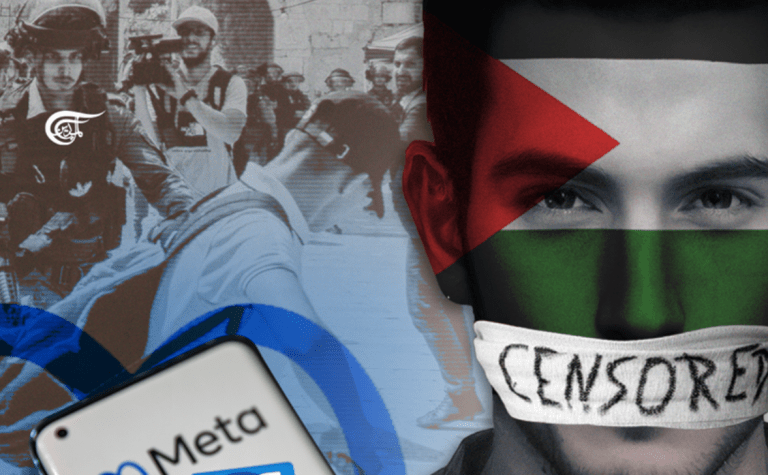
Israel is not the only entity trying to hide the realities of the war. As of this writing, Meta, the parent company of Facebook, has been considering adopting what amounts to censorship rules on the subjects of Israel and the war. While it has been gathering feedback on the move, there are doubts that Meta will change its mind.

There is a manufactured controversy on the use of the word, “Zionist.” Meta may have the intent to censor the word, along with other terminology that puts Israel in a bad light. Writing for The Intercept, Sam Biddle quotes Dani Noble, who is part of Jewish Voice for Peace: 

“As an anti-Zionist Jewish organization for Palestinian freedom, we are horrified to learn that Meta is considering expanding when they treat ‘Zionism’—a political ideology—as the same as ‘Jew/Jewish’—an ethno-religious identity.” Further, Noble said that such a policy shift “will result in shielding the Israeli government from accountability for its policies and actions that violate Palestinian human rights.”

Previously, the word Zionist was allowed as long as it was not associated with the words Jew and Jewish. Now, Meta moderators can be more stringent in deciding whether Zionist is allowed or if it is used to promote anti-Semitism. Thus, Meta has a long reach in deciding which comments are allowed when posting the “offending” word.

The moderating (or censoring) of the word Zionist is par for the course for hard-line Israel supporters. While there is an attempt to equate it with anti-Semitism, it really symbolizes  a religious form of ultra-nationalism, as evidenced by the right-wing Israeli government’s use of it, along with the right-wing settlers as they attempt to steal more Palestinian land. And one of the objectives on the part of Israeli fascists is to take more land to establish a “Greater Israel.” Thus, the attempt by the IDF to drive Palestinians out of Gaza, and the West Bank.
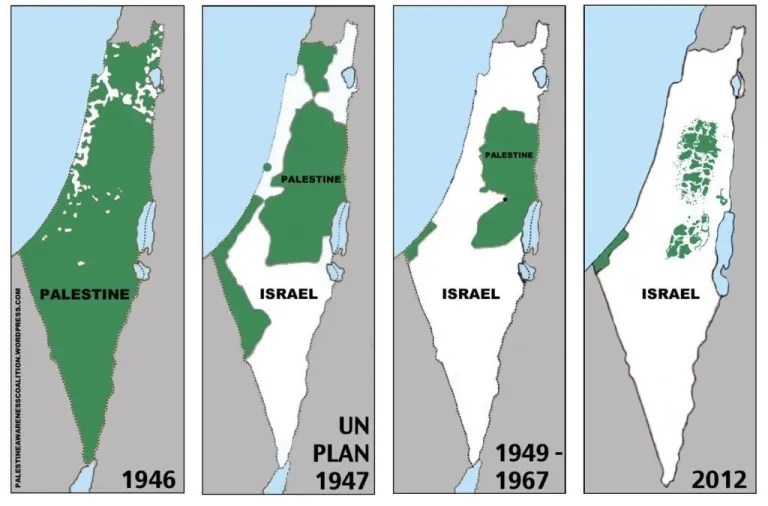
But there is a major irony here. Biddle writes, “much of the fiercest political activism against Israel’s war in Gaza has been organized by anti-Zionist Jews, while American evangelical Christian Zionists are some of Israel’s most hardcore supporters.” So, there are Jews who are not only anti-Zionist, but side with the Palestinians.

Biddle provides examples of hypothetical posts in quotes that could be censored by Meta: “Zionists are war criminals, just look at what’s happening in Gaza.” “I don’t like Zionists.” “No Zionists allowed at tonight’s meeting of the Progressive Student Association.” 

Meta spokesperson Corey Chambliss tried to justify the change in his company’s rules. Biddle quotes him as saying, “We don’t allow people to attack others based on their protected characteristics, such as their nationality or religion. Enforcing this policy requires an understanding of how people use language to reference those characteristics. While the term Zionist refers to a person’s ideology, which is not a protected characteristic, it can also be used to refer to Jewish or Israeli people.”

Chambliss goes on to imply that the new rules are necessary because of tensions relating to the Middle East. But he admitted that the word Zionist is an ideology, not a religion. Besides, tensions are high already, with Israel’s military aggression in Gaza. It seems like Meta is harping on the word while there are more important things to attend to, like opposing the war, and coming to grips with about 29,000 Palestinian deaths. (And, yes, the 1,200 Israeli deaths need attention even though 55% of those killed were members of the IDF.)

Meta did contact 10 Arab, Muslim and pro-Palestinian organizations about the use of the word Zionist and how it could be used in a “dehumanizing way or violent way” if referring to Jews or Israelis, according to Guardian writers Johana Bhuiyan and Kari Paul. 

But Linda Sarsour, “the executive director of Muslim advocacy organization MPower Change, said Meta’s director of content policy stakeholder engagement, Peter Stern, provided few details about why the company was revisiting the policy now and how it would be implemented or enforced in a way that doesn’t stifle political expression.” Bhuiyan and Paul quoted Sarsour’s response: “If you already have a policy that’s addressing Zionism as a proxy, then why are we having this conversation? Why is there further consideration to expand this policy?”

Expanding the policy could censor those who post pro-Palestinian comments, as well as facts, in the guise of preventing anti-Semitism. Meta, however, has had a policy that allowed the word Zionist to be used as long there wasn’t an association with the words Jew and Jewish. As Sarsour asks, “Why is there further consideration to expand this policy?”

Censorship, threats, intimidation and even murder cannot stop the tidal wave of opposition worldwide to Israel’s war. In Israel itself, more people are speaking out and opposing the Netanyahu government. And events may lead to the downfall of the Israeli fascists. 
BANNING TIKTOK IS NOT ABOUT FIGHTING CHINA, IT’S ABOUT PROTECTING WESTERN NARRATIVES AND ISRAEL’S WAR CRIMES IN THE MIDDLE EAST

By Timothy Aleander Guzman

Source: Silent Crow News

The US government claims that TikTok is a national security threat because China can collect data on its users for “intelligence gathering.” Give me a break! The House of Representatives passed a bill to ban TikTok unless Byte Dance, the Chinese parent company “divests” from the app within six months or so, in other words, they are forcing Byte Dance to sell TikTok within a certain time period in order for it to operate in the US.  Former Treasury Secretary, Steven Mnuchin said on CNBC’s “Squawk Box” that he is putting together an investor group to supposedly buy TikTok. 

The reality is that they are not going after TikTok because of China’s “intelligence gathering” on US citizens, it is because Western governments, Israel and their mainstream media networks are being exposed for their lies and propaganda more than ever before by various alternative media websites, blogs, social media, and video-sharing platforms such as TikTok.

China’s “Intelligence Gathering” vs. Israel’s War Crimes

It is most likely that the US congress is scapegoating China mainly to protect Israel’s reputation in the last bastion of its supporters in the United States were there are more than 170 million TikTok users.  In one way or another Israel’s war crimes in Gaza and beyond has been exposed on TikTok and it does not look good for the self-described “Jewish State.” 

Last January, the US-based TIME magazine reported on the reality of how the world views Israel and its actions in the Middle East, “New data shared with TIME magazine business intelligence company Morning Consult shows that support for Israel around the world has dropped significantly since the war in Gaza began.”  Morning Consult found that Israel’s standing in world opinion has dropped dramatically, “Net favorability—the percentage of people viewing Israel positively after subtracting the percentage viewing it negatively—dropped globally by an average of 18.5 percentage points between September and December, decreasing in 42 out of the 43 countries polled.”   

From China to South Korea, even in the UK and several countries in Latin America all had a somewhat positive view of Israel, but when the war on Gaza began, opinion polls on Israel’s favorability status collapsed:

China, South Africa, Brazil, and several other countries in Latin America all went from viewing Israel positively to negatively. And many rich countries that already had net negative views of Israel—including Japan, South Korea, and the U.K.—saw steep declines. Net favorability in Japan went from -39.9 to -62.0; in South Korea from-5.5 to -47.8; and in the U.K. from -17.1 to -29.8

Sonnet Frisbie, the deputy head of political intelligence at Morning Consult said that “the data shows just how tough of a road Israel has right now in the international community.”  Of course, the US population still holds a favorable opinion of Israel, “The U.S. remains the only rich country that still had net positive views of Israel. Net favorability dropped just 2.2 percentage points, from a net favorability of 18.2 to a net favorability of 16 from September to December” the report said. 

Al Jazeera‘Israel has lost the war of public opinion,’ by Imam Omar Suleiman published last year said that “In a new media landscape dominated not by Western media giants but by Instagram reels, TikTok videos and YouTube shorts, Israel’s ongoing war on the besieged Gaza Strip is more than televised.” 

Israel’s crimes have been exposed due to the internet including alternative media networks and various social media platforms since the Zionist controlled mainstream media failed to do its job which should not be a surprise to anyone. 

Platforms such as TikTok has more than 170 million users in the US which is a concern for both the US and Israeli governments who propagandize the US population on a daily basis on the situation of Palestine through their control of the mainstream media and Hollywood:

Audiences across the world, and especially young people, have been watching the devastation caused by Israel’s indiscriminate bombardment of the Palestinian enclave on their preferred social media platforms, in real-time, for over a month. Anyone with internet access has seen countless videos of babies torn apart by bombs, women crushed under tonnes of concrete and mothers cradling the dead bodies of their children

Suleiman said that “Israel, of course, still continues with its usual efforts – and more – to control the narrative about its bloody wars and decades-old occupation.”  He pinpoints how Israel is losing the information war:

Yet, despite all these efforts, thanks largely to social media, Israel is no longer able to conceal the truth about its conduct in Palestine. It can no longer control the narratives and the public opinion on Palestine. As mainstream media loses its ability to single-handedly decide what Western and, to a certain extent, global audiences get to witness about the situation in Palestine, the brutality of Israel’s occupation has been laid out in the open for everyone to see

The Times of Israel published an article based on Israel’s obvious concerns regarding TikTok, Major US Jewish group backs bipartisan bill that could see TikTok banned’ said that “One of the most prominent Jewish groups in the country has thrown its support behind a fast-advancing bill that could lead to the massively popular video app TikTok being banned in the United States.” 

The world knows that both Democrats and Republicans in the US Capital are in the pockets of Jewish lobbying groups are moving forward in efforts to ban TikTok because its a “Chinese owned app” and it is collecting data on American citizens. 

In my opinion, why would China spy on US citizens since most people in the US are in debt or are too busy watching reality TV, celebrity news or sports, in fact, many could not even find China or any other Asian country on a map.  It’s a harsh statement, but it’s a fact.  Besides there are companies (some are based in the US including Amazon) who have been selling your data for some time now. It’s no secret.

The article states that “Politicians backing the bill, who include leaders from both parties, have centered their criticism of TikTok on national security concerns related to the app’s Chinese ownership and data collection practices.”  Representative Cathy McMorris Rodgers, a Republican from Washington said that “It is very important that it is targeted and specific to the national security threat” and that “This is not related to content. This is about the threat because of the data that has been collected.” So, the ban on TikTok is not related to the content? That’s pure nonsense.  The Times of Israel at least stated the facts on why the US and Israel is really interested in banning the platform:

Jewish Federations of North America, representing hundreds of organized Jewish communities, said its support for the bill is rooted in concerns about antisemitism on the platform. The Jewish Federations and the Anti-Defamation League have accused TikTok of allowing antisemitism and anti-Israel sentiment to run rampant

The Jewish Federations of North America (JFNA) wrote a letter to the US Congress claiming that “The single most important issue to our Jewish communities today is the dramatic rise in antisemitism” and that “Our community understands that social media is a major driver of the drive-in antisemitism and that TikTok is the worst offender by far.” 

Banning TikTok is about censorship.  It is a fact that Israel’s war crimes and the destructive nature of the US war machine is getting exposed more than ever before. US lawmakers are giving Byte Dance which is managed by Shou Zi Chew, a Singaporean citizen, about six months to divest US assets from the app, or they will face a ban.  If the ban of TikTok moves forward, then free speech in the US is completely dead.  But that does not mean all social media platforms or even websites will be in danger for the foreseeable future because there will be other apps and platforms that the US, EU, and Israeli political establishment won’t be able to control. 

Banning TikTok will Only Motivate Us to Create Other Platforms    

Social Media platforms such as YouTube, Facebook, and Twitter (although owned by Elon Musk) have been completely hijacked by the government censorship regime.  The Western political establishment, Globalist bankers, Zionists, Multi-national corporations such as Big Oil and Big Pharma and others around the world are facing an information war that they are clearly losing. 

The internet has given us the tools to fight the mainstream media and their lies.  Several social media platforms have grown to be a vital tool to challenge government and corporate propaganda such as TikTok, but there are also other various types of online-video platforms such as RumbleBit ChuteOdysee (part of LBRY, a blockchain based file-sharing and payment network) and we must include instant messaging services such as Telegram and VK where you can post articles and videos as well. 

The point here is that regardless of how certain governments such as the US and the European Union who have banned foreign media companies such as Russia’s RT News and Iran’s Press TV, they also have plans to ban social media platforms, but it won’t work.      

They believe that banning TikTok will prevent people from getting the truth especially to what is happening in Palestine, but they are wrong, it will only help motivate people to create new platforms and other ideas, they will create new channels of information that would get out to the public.  Whether they ban TikTok or not, the genie is out of the bottle, the truth can never be suppressed.   

Technocensorship: When Corporations Serve As a Front for Government Censors

By John & Nisha Whitehead

Source: The Rutherford Institute

“Once a government is committed to the principle of silencing the voice of opposition, it has only one way to go, and that is down the path of increasingly repressive measures, until it becomes a source of terror to all its citizens and creates a country where everyone lives in fear. We must, therefore, be on our guard against extremists who urge us to adopt police state measures. Such persons advocate breaking down the guarantees of the Bill of Rights in order to get at the communists. They forget that if the Bill of Rights were to be broken down, all groups, even the most conservative, would be in danger from the arbitrary power of government.”—Harry S. Truman, Special Message to the Congress on the Internal Security of the United States (August 8, 1950)

Nothing good can come from allowing the government to sidestep the Constitution.

Unfortunately, the government has become an expert at disregarding constitutional roadblocks intended to protect the rights of the citizenry.

When these end-runs don’t suffice, the government hides behind the covert, clandestine, classified language of national security; or obfuscates, complicates, stymies, and bamboozles; or creates manufactured diversions to keep the citizenry in the dark; or works through private third parties not traditionally bound by the Constitution.

This last tactic is increasingly how the government gets away with butchering our freedoms, by having its corporate partners serve as a front for its nefarious deeds.

This is how the police state has managed to carry out an illegal secret dragnet surveillance program on the American people over the course of multiple presidential administrations.

Relying on a set of privacy loopholes, the White House (under Presidents Obama, Trump and now Biden) has been sidestepping the Fourth Amendment by paying AT&T to allow federal, state, and local law enforcement to access—without a warrant—the phone records of Americans who are not suspected of a crime.

The government used a similar playbook to get around the First Amendment, packaged as an effort to control the spread of speculative or false information in the name of national security.

As the House Judiciary Select Subcommittee on Weaponization of the Federal Government revealed, the Biden administration worked in tandem with social media companies to censor content related to COVID-19, including humorous jokes, credible information and so-called disinformation.

Likening the government’s heavy-handed attempts to pressure social media companies to suppress content critical of COVID vaccines or the election to “an almost dystopian scenario,” Judge Terry Doughty warned that “the United States Government seems to have assumed a role similar to an Orwellian ‘Ministry of Truth.’

Restricting access to social media has become a popular means of internet censorship.

Dare to voice politically incorrect views in anything louder than a whisper on social media and you might find yourself suspended on Twitter, shut out of Facebook, and banned across various social media platforms. This authoritarian intolerance masquerading as tolerance, civility and love is what comedian George Carlin referred to as “fascism pretending to be manners.”

Social media censorship runs the gamut from content blocking, throttling, and filtering to lockouts, shutdowns, shadow banning and de-platforming.

In fact, these tactics are at the heart of several critical cases before the U.S. Supreme Court over who gets to control, regulate or remove what content is shared on the internet: the individual, corporate censors or the government.

Yet what those who typically champion the right of corporations to be free from government meddling get wrong about these cases is that there can be no free speech when corporations such as Facebook, Google or YouTube become a front for—or extensions of—government censors.

This is the very definition of technocensorship.

On paper—under the First Amendment, at least—we are technically free to speak.

In reality, however, we are now only as free to speak as a government official—or corporate entities such as Facebook, Google or YouTube—may allow.

Clothed in tyrannical self-righteousness, technocensorship is powered by technological behemoths (both corporate and governmental) working in tandem to achieve a common goal: to muzzle, silence and altogether eradicate any speech that runs afoul of the government’s own approved narrative.

This is political correctness taken to its most chilling and oppressive extreme.

This authoritarian impulse to censor and silence “dangerous” speech masquerading as tolerance, civility and a concern for safety (what comedian George Carlin referred to as “fascism pretending to be manners”) is the end result of a politically correct culture that has become radicalized, institutionalized and tyrannical.

You see, the government is not protecting us from “dangerous” disinformation campaigns. It is laying the groundwork to insulate us from “dangerous” ideas that might cause us to think for ourselves and, in so doing, challenge the power elite’s stranglehold over our lives.

Thus far, the tech giants have been able to sidestep the First Amendment by virtue of their non-governmental status, but it’s a dubious distinction at best when they are marching in lockstep with the government’s dictates.

As Philip Hamburger and Jenin Younes write for The Wall Street Journal: “The First Amendment prohibits the government from ‘abridging the freedom of speech.’ Supreme Court doctrine makes clear that government can’t constitutionally evade the amendment by working through private companies.”

It remains to be seen whether the Supreme Court can see itself clear to recognizing that censorship by social media companies acting at the behest of the government runs afoul of the First Amendment.

Bottom line: either we believe in free speech or we don’t.

The answer to the political, legal and moral challenges of our day should always be more speech, not less.

Any individual or group—prominent or not—who is censored, silenced and made to disappear from Facebook, Twitter, YouTube and Instagram for voicing ideas that are deemed politically incorrect, hateful, dangerous or conspiratorial should be cause for alarm across the entire political spectrum.

To ignore the long-term ramifications of such censorship is dangerously naïve, because whatever powers the government and its corporate operatives are allowed to claim now will eventually be used against the populace at large.

These social shunning tactics borrow heavily from the mind control tactics used by authoritarian cults as a means of controlling its members. As Dr. Steven Hassan writes in Psychology Today: “By ordering members to be cut off, they can no longer participate. Information and sharing of thoughts, feelings, and experiences are stifled. Thought-stopping and use of loaded terms keep a person constrained into a black-and-white, all-or-nothing world. This controls members through fear and guilt.”

This mind control can take many forms, but the end result is an enslaved, compliant populace incapable of challenging tyranny.

As Rod Serling, creator of The Twilight Zone, once observed, “We’re developing a new citizenry, one that will be very selective about cereals and automobiles, but won’t be able to think.”

The problem is that we’ve allowed ourselves to be persuaded that we need someone else to think and speak for us, and we’ve bought into the idea that we need the government and its corporate partners to shield us from that which is ugly or upsetting or mean. The result is a society in which we’ve stopped debating among ourselves, stopped thinking for ourselves, and stopped believing that we can fix our own problems and resolve our own differences.

In short, we have reduced ourselves to a largely silent, passive, polarized populace incapable of working through our own problems and reliant on the government to protect us from our fears.

As Nat Hentoff, that inveterate champion of the First Amendment, once observed, “The quintessential difference between a free nation, as we profess to be, and a totalitarian state, is that here everyone, including a foe of democracy, has the right to speak his mind.”

What this means is championing the free speech rights of those with whom we might disagree.

That’s why James Madison, the author of the Bill of Rights, fought for a First Amendment that protected the “minority” against the majority, ensuring that even in the face of overwhelming pressure, a minority of one—even one who espouses distasteful viewpoints—would still have the right to speak freely, pray freely, assemble freely, challenge the government freely, and broadcast his views in the press freely. He understood that freedom for those in the unpopular minority constitutes the ultimate tolerance in a free society.

The government has no tolerance for freedom or free speech of any kind that challenges its chokehold on power.

At some point or another, depending on how the government and its corporate allies define what constitutes “disinformation,” “hate” or “extremism, “we the people” might all be considered guilty of some thought crime or speech transgression or other.

Yet as I make clear in my book Battlefield America: The War on the American People and in its fictional counterpart The Erik Blair Diaries, it’s a slippery slope from censoring so-called illegitimate ideas to silencing truth.

Eventually, as George Orwell predicted, telling the truth will become a revolutionary act.

Ultimately, the government’s war on free speech—and that’s exactly what it is—is a war that is driven by a government fearful of its people.

As President John F. Kennedy observed, “[A] nation that is afraid to let its people judge the truth and falsehood in an open market is a nation that is afraid of its people.”

What Happened To The Truth Movement?

Over the years many aspects of the “truth movement” have devolved into an insufferable dumpster fire. But we can still salvage it.

By Benny Wills

Source: The Free Thought Project

From 2004 – 2016, I felt like I was a part of something special. I was participating in an “awakening.” The world was changing. Consciousness was shifting. The hidden hand was being exposed and all secrets were being revealed!

Right?

Or maybe it was wishful thinking.

9/11 happened. And for the next decade and a half, people all over the world began to question the events of that day. Then, major events in general. It was the beginning of an uprising. A revolution!

Right…?

Something else emerged during that time. Social media.

Social media has its upsides and downsides. Mostly upsides. But the downsides have serious ramifications. Specifically on communication.

Social media brings us together and tears us apart.

2001: A Truth Odyssey

By 2001, almost everyone was online and connected to the internet. But it was still in its infancy.

The iPhone didn’t exist. There was no YouTube, Facebook, Instagram, or Twitter. Even MySpace wasn’t around yet.

We had access to the internet, but we had no idea what we were in store for.

As the internet expanded, so did our ability to share information.

Alternative perspectives, counter-narratives, and “conspiracy theories” became more accessible. For the first time (possibly) in history, “official stories” were being challenged in real time. With evidence to support claims.

I was dubious about 9/11 as it was happening. Not because of the internet. Not because I was a conspiracy theorist. But because I hated George Bush. As a born and raised Democrat, I didn’t trust him. I was staunchly anti-war (and still am), and I knew America’s response to the attacks was going to be insane.

A few years later, someone shared a documentary with me called Loose Change. A film deconstructing the 9/11 narrative. My mind was blown, and it was off to the races.

Down, Down, Down The Rabbit Hole.

YouTube hit the scene in 2005. I used it strictly for conspiracy-related research.

Conspiracy content blew up online. A truth movement had begun. The masses were on the verge of waking up, well, en masse.

Right?!?!

Divide & Conquer

Fast forward to 2024. I have good news and bad news.

The good news is that more people are questioning things than ever. Distrust in anything mainstream is at an all time high.

The bad news:

Societal division is worse than it’s ever been. In my lifetime anyway. It’s hard to even call it division because division implies splitting into two halves.

This is a direct result of thumb-typed communication. (Generation Text.)

These days, most people prefer texting, emailing, or commenting over direct engagement. We yearn for human connection, but we’ve patterned ourselves to avoid it as much as possible. (I’m speaking generally, of course.)

Confronting someone is uncomfortable. But confrontation is a necessary part of human interaction. It’s a key component in solving conflict or avoiding it altogether. But since it can be terrifying, people today have the easy-out of typing instead of speaking.

Typed communication lacks empathy. It’s indirect. Impersonal. It’s both a barrier and a shield.

So people say things to each other online that they would never say out loud. They rip each other apart over the slightest differences of opinion. Many (especially YouTube commenters) hide behind avatars and pseudonyms to say whatever they want with no accountability.

Basically, everyone has free rein to be an asshole with zero repercussions.

Worst of all, no one is listening to each other anymore.

We haven’t just been divided; we’ve been fractalized into smithereens.

Awake Vs. Woke

The “awake” crowd is as insufferable as the “woke” one. Change my mind.

Mean-spirited mudslinging and public shaming are the online norm.

Checking the timeline on Facebook, for instance, is a disheartening experience.

It’s a daily mélange of proselytizing, bickering, and judging others. The sentiment is “my way or the highway.”

“I’m right, and you’re wrong. And not only are you wrong, you’re also a stupid idiot.”

Many on the alternative or “conspiracy” side of things have fallen into the same trap as the “sheep” they condemn.

Arrogant allegiance to ideas, beliefs, and opinions.

Critical Thinking

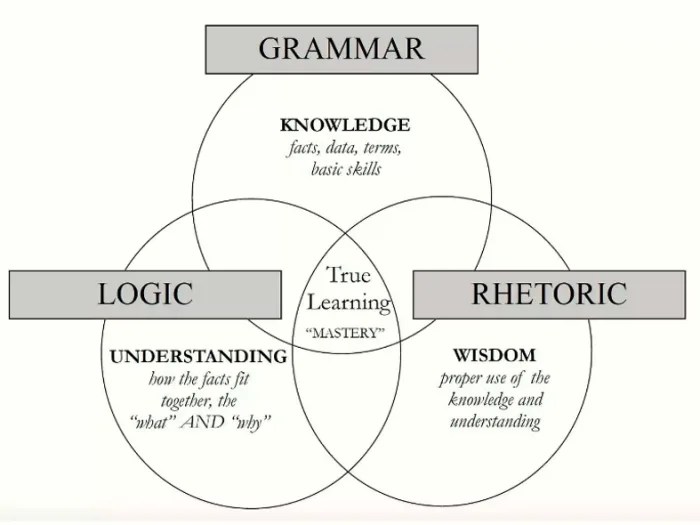
At the height of the truth movement in the 2010s, there was an emphasis on critical thinking. The Trivium was making a comeback.

Grammar, logic, and rhetoric

In that order. 

More often than not, online communication is rhetoric without grammar and logic to back it up.

Sweeping generalizations abound.

  • Accusations
  • Declarations
  • Proclamations
  • & Polarizing opinions disguised as facts

But opinions are not facts. (And you are not your opinions.)

“A great many people think they are thinking when they are merely rearranging their prejudices.” – William James

Social media algorithms are designed to keep you in a feedback loop.

A lot of people use their (typed) voice online to “speak the truth.” But they’re preaching to the choir in an echo chamber.

There’s camaraderie to be found in this. Which is good. But the likelihood of their rantings reaching those who (they feel) need to hear them is small.

The aggression that comes through many posts is ugly and derogatory.

Anger

Anger is a powerful emotion. But it’s like fire. It can warm your house or burn it down.

“Heat not a furnace for your foe so hot that it do singe yourself.” – William Shakespeare

Many people lean on anger to convey their conviction about a topic. They use it to stress the importance of something. But more often than not, it’s ineffective.

Anger is best utilized when it’s the seed preceding something more interesting.

In other words, anger alone is a weak emotion for personal expression.

When anger sparks an idea, and that idea is built upon with clarity and care, the expression of that idea has the power to shift someone’s perspective.

Many of my poems and JoyCamp videos came from an angry place. But anger is nowhere to be found in the final product.

Some think I’m too soft in my approach. Well, they’re welcome to think whatever they want. I’ve learned through trial and error that bluntly and angrily stating “the truth” is a fool’s errand. People don’t want to hear it, no matter how right or passionate you are.

Use anger like clay and sculpt it.

I tried anger in my 20s, and it got me nowhere. If anything, it only made situations worse. Speaking loudly and angrily puts more distance between your conversation partner and the point you want them to understand.

I’m committed to the truth and helping others discover it for themselves. Over the course of 15 years, I developed a nuanced approach to communication that actually works. One that I’ve taught to hundreds of people in my Parrhesia program (now called Free Your Speech).

If you didn’t pull the trigger on Parrhesia when I was offering it live, you can still purchase the course itself.

>>Free Your Speech: The Art of Communication

I’ve dropped the price to $149. It’s an election year. It’s probably worth your while.

Logic

It’s agonizing to witness your friends, family, and society at large fall into what you perceive as traps.

What’s painfully obvious to you is beyond absurd or ridiculous to them. And no matter how much you try to convince them otherwise, they double down on their commitment to the trap.

People are not logical. They’re emotional and motivated by fear, comfort, and ego.

“No one can possibly behave above his own level of understanding. Don’t expect people to do any better than they are compelled to do at their present level. Your problem is assuming that they should and could behave better. Understand this and annoyance disappears. As you gradually awaken you will feel the urge to share your discovery with others. Because you will find others in various stages of receptivity, remember this: Never give more than others can understand and appreciate in the moment. This is cosmic law. To try and give what others cannot receive is like tossing a ball against a brick wall—it bounces back to strike you. Jesus explained this law by saying that we should not cast our pearls before swine; that is, before those whose comprehension of truth makes them indifferent or hostile about it.” – François Fénelon

This is the cornerstone of my communication philosophy and approach.

The Real Awakening

There is no truth movement. There never was. There is only your journey to discovering what the truth is.

Pick your lane and choose your battles wisely.

Worry less about the world and other people’s opinions.

Concern yourself with what you’re capable of. Challenge your comfort zone. And focus your efforts on how you can help.

The most exciting rabbit hole is YOU.

Until next time.

Much love,

Benny

PS- Build Bridges

When Black Mirror’s Dystopia Becomes Our Reality

Exploring the Impact of Black Mirror’s Predictive Technologies on Society and Ethics

By Nolan Clarke

Source: Medium

In the eerie twilight between fiction and reality, the anthology series “Black Mirror” has captivated audiences with its unnerving portrayal of technological advancements and their potential consequences. As we stand on the brink of a new era, it’s both fascinating and disconcerting to contemplate which of these technologies might soon transcend the screen and become part of our everyday lives. In this exploration, we delve into the dark corridors of possibility, uncovering the most disturbing technologies from “Black Mirror” that could become real in the near future.

The Grains of Memory: ‘The Entire History of You’

In the episode ‘The Entire History of You’, characters have ‘grains’ implanted behind their ears, recording everything they see and hear. This technology is not too far off from the reality we are inching towards with the continuous advancement in augmented reality (AR) and wearable tech. Companies like Google and Facebook are already experimenting with AR glasses. Imagine a world where every conversation and every event in your life is recorded, rewound, and scrutinized. The implications for privacy and mental health are profound, opening up a pandora’s box of ethical dilemmas.

The Echoes of Social Acceptance: ‘Nosedive’

In ‘Nosedive’, society is ruled by social ratings, with every interaction affecting one’s societal status. This dystopian vision mirrors the existing social credit systems and online rating platforms. China’s social credit system, for instance, rewards or punishes citizens based on their behavior. The psychological impact of living in a society where one’s worth is constantly judged and quantified is alarming, leading to a performative existence devoid of authenticity.

The Haunting Presence of the Dead: ‘Be Right Back’

This episode brings to life an AI that imitates the deceased, based on their online presence. With advancements in AI and deep learning, creating digital personas of the departed is not far-fetched. Companies are already developing chatbots based on deceased individuals’ online data. The moral implications are significant, raising questions about grief, closure, and the ethics of digitally resurrecting the dead.

The Tyranny of Surveillance: ‘Arkangel’

‘Arkangel’ presents a future where children are monitored through neural implants, giving parents omnipresent surveillance capabilities. This reflects the growing trend of helicopter parenting and the use of technology to track children. With GPS trackers and smartphone monitoring apps already prevalent, the leap to neural implants doesn’t seem too distant. The invasion of privacy and loss of childhood independence are stark reminders of the dangers of over-surveillance.

The Price of Convenience: ‘Crocodile’

In ‘Crocodile’, memories can be externally accessed and displayed. With tech giants already exploring brain-computer interfaces, the concept of accessing thoughts or memories isn’t purely fictional. Neuralink, for instance, aims to create devices that can be implanted in the human brain. The ethical implications of such technology are immense, potentially threatening the very sanctity of our thoughts and experiences.

The Dark Side of Entertainment: ‘White Bear’

‘White Bear’ shows a world where punishment is turned into a form of entertainment. While this may seem extreme, the proliferation of reality TV and online shaming cultures points towards a society increasingly desensitized to the exploitation of human suffering for entertainment. The blurring lines between justice and voyeurism highlight a disturbing aspect of human nature.

Conclusion: A Reflection on Our Path Forward

As these “Black Mirror” technologies creep from fiction to reality, we must tread cautiously, balancing innovation with ethical responsibility. We stand at a crossroads, where the choices we make today will shape the morality and humanity of our technological tomorrow. In the end, it’s not just about the technology we create, but the reflection of ourselves that we see in it — a black mirror showing us who we might become if we’re not careful.

Internet Censorship, Everywhere All at Once

By Debbie Lerman

Source: Activist Post

It used to be a truth universally acknowledged by citizens of democratic nations that freedom of speech was the basis not just of democracy, but of all human rights.

When a person or group can censor the speech of others, there is – by definition – an imbalance of power. Those exercising the power can decide what information and which opinions are allowed, and which should be suppressed. In order to maintain their power, they will naturally suppress information and views that challenge their position.

Free speech is the only peaceful way to hold those in power accountable, challenge potentially harmful policies, and expose corruption. Those of us privileged to live in democracies instinctively understand this nearly sacred value of free speech in maintaining our free and open societies.

Or do we?

Alarmingly, it seems like many people in what we call democratic nations are losing that understanding. And they seem willing to cede their freedom of speech to governments, organizations, and Big Tech companies who, supposedly, need to control the flow of information to keep everyone “safe.”

The locus for the disturbing shift away from free speech is the 21st-century’s global public square: the Internet. And the proclaimed reasons for allowing those in power to diminish our free speech on the Internet are: “disinformation” and “hate speech.”

In this article, I will review the three-step process by which anti-disinformation laws are introduced. Then, I will review some of the laws being rolled out in multiple countries almost simultaneously, and what such laws entail in terms of vastly increasing the potential for censorship of the global flow of information.

How to Pass Censorship Laws

Step 1: Declare an existential threat to democracy and human rights 

Step 2: Assert that the solution will protect democracy and human rights

Step 3: Enact anti-democratic, anti-human rights censorship fast and in unison

Lies, propaganda, “deep fakes,” and all manner of misleading information have always been present on the Internet. The vast global information hub that is the World Wide Web inevitably provides opportunities for criminals and other nefarious actors, including child sex traffickers and evil dictators.

At the same time, the Internet has become the central locus of open discourse for the world’s population, democratizing access to information and the ability to publish one’s views to a global audience.

The good and bad on the Internet reflect the good and bad in the real world. And when we regulate the flow of information on the Internet, the same careful balance between blocking truly dangerous actors, while retaining maximum freedom and democracy, must apply.

Distressingly, the recent slew of laws governing Internet information are significantly skewed in the direction of limiting free speech and increasing censorship. The reason, the regulators claim, is that fake news, disinformation, and hate speech are existential threats to democracy and human rights.

Here are examples of dire warnings, issued by leading international organizations, about catastrophic threats to our very existence purportedly posed by disinformation:

Propaganda, misinformation and fake news have the potential to polarise public opinion, to promote violent extremism and hate speech and, ultimately, to undermine democracies and reduce trust in the democratic processes. Council of Europe

The world must address the grave global harm caused by the proliferation of hate and lies in the digital space.-United Nations

Online hate speech and disinformation have long incited violence, and sometimes mass atrocities.  –World Economic Forum (WEF)/The New Humanitarian

Considering the existential peril of disinformation and hate speech, these same groups assert that any solution will obviously promote the opposite:

Given such a global threat, we clearly need a global solution. And, of course, such a solution will increase democracy, protect the rights of vulnerable populations, and respect human rights. WEF

Moreover, beyond a mere assertion that increasing democracy and respecting human rights are built into combating disinformation, international law must be invoked.

In its Common Agenda Policy Brief from June 2023, Information Integrity on Digital Platforms, the UN details the international legal framework for efforts to counter hate speech and disinformation.

First, it reminds us that freedom of expression and information are fundamental human rights:

Article 19 of the Universal Declaration of Human Rights and article 19 (2) of the Covenant protect the right to freedom of expression, including the freedom to seek, receive and impart information and ideas of all kinds, regardless of frontiers, and through any media. 

Linked to freedom of expression, freedom of information is itself a right. The General Assembly has stated: “Freedom of information is a fundamental human right and is the touchstone of all the freedoms to which the United Nations is consecrated.” (p. 9)

Then, the UN brief explains that disinformation and hate speech are such colossal, all-encompassing evils that their very existence is antithetical to the enjoyment of any human rights:

Hate speech has been a precursor to atrocity crimes, including genocide. The 1948 Convention on the Prevention and Punishment of the Crime of Genocide prohibits “direct and public incitement to commit genocide”. 

In its resolution 76/227, adopted in 2021, the General Assembly emphasized that all forms of disinformation can negatively impact the enjoyment of human rights and fundamental freedoms, as well as the attainment of the Sustainable Development Goals. Similarly, in its resolution 49/21, adopted in 2022, the Human Rights Council affirmed that disinformation can negatively affect the enjoyment and realization of all human rights.

This convoluted maze of legalese leads to an absurd, self-contradictory sequence of illogic:

  • Everything the UN is supposed to protect is founded on the freedom of information, which along with free speech is a fundamental human right.
  • The UN believes hate speech and disinformation destroy all human rights.
  • THEREFORE, anything we do to combat hate speech and disinformation protects all human rights, even if it abrogates the fundamental human rights of free speech and information, on which all other rights depend.
  • Because: genocide!

In practice, what this means is that, although the UN at one point in its history considered the freedom of speech and information fundamental to all other rights, it now believes the dangers of hate speech and disinformation eclipse the importance of protecting those rights.

The same warping of democratic values, as delineated by our international governing body, is now occurring in democracies the world over.

Censorship Laws and Actions All Happening Now

If hate speech and disinformation are the precursors of inevitable genocidal horrors, the only way to protect the world is through a coordinated international effort. Who should lead this campaign?

According to the WEF, “Governments can provide some of the most significant solutions to the crisis by enacting far-reaching regulations.”

Which is exactly what they’re doing.

United States

In the US, freedom of speech is enshrined in the Constitution, so it’s hard to pass laws that might violate it.

Instead, the government can work with academic and nongovernmental organizations to strong-arm social media companies into censoring disfavored content. The result is the Censorship-Industrial Complex, a vast network of government-adjacent academic and nonprofit “anti-disinformation” outfits, all ostensibly mobilized to control online speech in order to protect us from whatever they consider to be the next civilization-annihilating calamity.

The Twitter Files and recent court cases reveal how the US government uses these groups to pressure online platforms to censor content it doesn’t like:

Google

In some cases, companies may even take it upon themselves to control the narrative according to their own politics and professed values, with no need for government intervention. For example: Google, the most powerful information company in the world, has been reported to fix its algorithms to promote, demote, and disappear content according to undisclosed internal “fairness” guidelines.

This was revealed by a whistleblower named Zach Vorhies in his almost completely ignored book, Google Leaks, and by Project Veritas, in a sting operation against Jen Gennai, Google’s Head of Responsible Innovation.

In their benevolent desire to protect us from hate speech and disinformation, Google/YouTube immediately removed the original Project Veritas video from the Internet.

European Union

The Digital Services Act came into force November 16, 2022. The European Commission rejoiced that “The responsibilities of users, platforms, and public authorities are rebalanced according to European values.” Who decides what the responsibilities and what the “European values” are?

  • very large platforms and very large online search engines [are obligated] to prevent the misuse of their systems by taking risk-based action and by independent audits of their risk management systems
  • EU countries will have the primary [oversight] role, supported by a new European Board for Digital Services

Brownstone contributor David Thunder explains how the act provides an essentially unlimited potential for censorship:

This piece of legislation holds freedom of speech hostage to the ideological proclivities of unelected European officials and their armies of “trusted flaggers.” 

The European Commission is also giving itself the power to declare a Europe-wide emergency that would allow it to demand extra interventions by digital platforms to counter a public threat. 

UK

The Online Safety Bill was passed September 19, 2023. The UK government says “It will make social media companies more responsible for their users’ safety on their platforms.”

According to Internet watchdog Reclaim the Net, this bill constitutes one of the widest sweeping attacks on privacy and free speech in a Western democracy:

The bill imbues the government with tremendous power; the capability to demand that online services employ government-approved software to scan through user content, including photos, files, and messages, to identify illegal content. 

The Electronic Frontier Foundation, a nonprofit dedicated to defending civil liberties in the digital world, warns: “the law would create a blueprint for repression around the world.”

Australia

The Communications Legislation Amendment (Combatting Misinformation and Disinformation) Bill 2023 was released in draft form June 25, 2023 and is expected to pass by the end of 2023. the Australian government says:

The new powers will enable the ACMA [Australian Communications and Media Authority] to monitor efforts and require digital platforms to do more, placing Australia at the forefront in tackling harmful online misinformation and disinformation, while balancing freedom of speech.

Reclaim the Net explains:

This legislation hands over a wide range of new powers to ACMA, which includes the enforcement of an industry-wide “standard” that will obligate digital platforms to remove what they determine as misinformation or disinformation. 

Brownstone contributor Rebekah Barnett elaborates:

Controversially, the government will be exempt from the proposed laws, as will professional news outlets, meaning that ACMA will not compel platforms to police misinformation and disinformation disseminated by official government or news sources. 

The legislation will enable the proliferation of official narratives, whether true, false or misleading, while quashing the opportunity for dissenting narratives to compete. 

Canada

The Online Streaming Act (Bill C-10) became law April 27, 2023. Here’s how the Canadian government describes it, as it relates to the Canadian Radio-television and Telecommunications Commission (CRTC):

The legislation clarifies that online streaming services fall under the Broadcasting Act and ensures that the CRTC has the proper tools to put in place a modern and flexible regulatory framework for broadcasting. These tools include the ability to make rules, gather information, and assign penalties for non-compliance.

According to Open Media, a community-driven digital rights organization,

Bill C-11 gives the CRTC unprecedented regulatory authority to monitor all online audiovisual content. This power extends to penalizing content creators and platforms and through them, content creators that fail to comply. 

World Health Organization

In its proposed new Pandemic Treaty and in the amendments to its International Health Regulations, all of which it hopes to pass in 2024, the WHO seeks to enlist member governments to

Counter and address the negative impacts of health-related misinformation, disinformation, hate speech and stigmatization, especially on social media platforms, on people’s physical and mental health, in order to strengthen pandemic prevention, preparedness and response, and foster trust in public health systems and authorities.

Brownstone contributor David Bell writes that essentially this will give the WHO, an unelected international body,

power to designate opinions or information as ‘mis-information or disinformation, and require country governments to intervene and stop such expression and dissemination. This … is, of course, incompatible with the Universal Declaration of Human Rights, but these seem no longer to be guiding principles for the WHO.

Conclusion

We are at a pivotal moment in the history of Western democracies. Governments, organizations and companies have more power than ever to decide what information and views are expressed on the Internet, the global public square of information and ideas.

It is natural that those in power should want to limit expression of ideas and dissemination of information that might challenge their position. They may believe they are using censorship to protect us from grave harms of disinformation and hate speech, or they may be using those reasons cynically to consolidate their control over the flow of information.

Either way, censorship inevitably entails the suppression of free speech and information, without which democracy cannot exist.

Why are the citizens of democratic nations acquiescing to the usurpation of their fundamental human rights? One reason may be the relatively abstract nature of rights and freedoms in the digital realm.

In the past, when censors burned books or jailed dissidents, citizens could easily recognize these harms and imagine how awful it would be if such negative actions were turned against them. They could also weigh the very personal and imminent negative impact of widespread censorship against much less prevalent dangers, such as child sex trafficking or genocide. Not that those dangers would be ignored or downplayed, but it would be clear that measures to combat such dangers should not include widespread book burning or jailing of regime opponents.

In the virtual world, if it’s not your post that is removed, or your video that is banned, it can be difficult to fathom the wide-ranging harm of massive online information control and censorship. It is also much easier online than in the real world to exaggerate the dangers of relatively rare threats, like pandemics or foreign interference in democratic processes. The same powerful people, governments, and companies that can censor online information can also flood the online space with propaganda, terrifying citizens in the virtual space into giving up their real-world rights.

The conundrum for free and open societies has always been the same: How to protect human rights and democracy from hate speech and disinformation without destroying human rights and democracy in the process.

The answer embodied in the recent coordinated enactment of global censorship laws is not encouraging for the future of free and open societies.

Published under a Creative Commons Attribution 4.0 International License
For reprints, please set the canonical link back to the original Brownstone Institute Article and Author.

Meet the New Normal, Same as the Old Normal: You Are Still the Enemy Within

By Colin Todhunter

Source: Off-Guardian

Today, we are witnessing the nudging (manipulation) of the population to accept a ‘new normal’ based on a climate emergency narrative, restrictions on movement and travel, programmable digital money, ‘pandemic preparedness’ courtesy of the World Health Organization’s tyrannical pandemic treaty, unaccountable AI and synthetic ‘food’.

Whether it involves a ‘food transition’, an ‘energy transition’, 15-minute cities or some other benign-sounding term, all this is to be determined by a supranational ‘stakeholder’ elite with ordinary people sidelined in the process. An undemocratic agenda designed to place restrictions on individual liberty, marking a dramatic shift towards authoritarianism.

In the 1980s, to help legitimise the deregulation-privatisation neoliberal globalisation agenda, government and media instigated an ideological onslaught, driving home the primacy of ‘free enterprise’, individual rights and responsibility and emphasising a shift away from the role of the state, trade unions and the collective in society.

We are currently seeing another ideological shift: individual rights and freedoms are said to undermine the wider needs of society and the planet – in a stark turnaround – personal freedom is now said to pose a threat to national security, public health or the climate.

As in the 1980s, this messaging is being driven by an economic impulse. This time, the collapsing neoliberal project.

In the UK, poverty is increasing in two-thirds of communities, food banks are now a necessary part of life for millions of people and living standards are plummeting. Indeed, the poorest families are enduring a ‘frightening’ collapse in living standards, resulting in life-changing and life-limiting poverty).

In the US, around 30 million low-income people are on the edge of a ‘hunger cliff’ as a portion of their federal food assistance is taken away. In 2021, it was estimated that one in eight children were going hungry in the US. Small businesses are filing for bankruptcy in the US at a record rate.

The Bank of England’s chief economist, Huw Pill, says that people should ‘accept’ being poorer. This is similar to the response of Rob Kapito, co-founder of the world’s biggest asset management firm, BlackRock. In 2022, the unimaginably rich and entitled Kapito said that a “very entitled” generation of (ordinary working) people who have never had to sacrifice would soon have to face shortages for the first time in their lives.

While business as usual prevails in Kapito’s world of privilege and that of major armsenergypharmaceuticals and food companies, whose megarich owners continue to rake in massive profits, Kapito and Pill tell ordinary people to get used to poverty and the ‘new normal’ as if we are ‘all in it together’ – billionaires and working class alike. They conveniently use COVID and the situation in Ukraine as cover for the collapsing neoliberalism.

But this is part of the hegemonic agenda that seeks to ensure that the establishment’s world view is the accepted cultural norm. And anyone who challenges this world view – whether it involves, for instance, questioning climate alarmism, the ‘new normal’, the nature of the economic crisis, the mainstream COVID narrative or the official stance on Ukraine and Russia – is regarded as a spreader of misinformation and the ‘enemy within’.

Although the term ‘enemy within’ was popularised by Margaret Thatcher during the miners’ strike in 1984-85 to describe the striking miners, it is a notion with which that Britain’s rulers have regarded protest movements and uprisings down the centuries. From the Peasants’ Revolt in 1381 to the Levellers and Diggers in the 17th century, it is a concept associated with anyone or any group that challenges the existing social order and the interests of the ruling class.

John Ball, a radical priest, addressed the Peasants’ Revolt rebels with the following words:

Good friends, matters cannot go well in England until all things be held in common; when there shall be neither vassals nor lords; when the lords shall be no more masters than ourselves.”

The revolt was suppressed. John Ball was captured and hung, drawn and quartered. Part of the blood-soaked history of the British ruling class.

Later on, the 17th-century Diggers movement wanted to create small, egalitarian rural communities and farm on common land that had been privatised by enclosures.

The 1975 song ‘The world Turned Upside Down’ by Leon Rosselson commemorates the Diggers. His lyrics describe the aims and plight of the movement. In Rosselson’s words, the Diggers were dispossessed via theft and murder but reclaimed what was theirs only to be violently put down.

Little surprise then that, in the 1980s, Margaret Thatcher used the state machinery to defeat the country’s most powerful and trade union and the shock troops of the labour movement, the National Union of Mineworkers – ‘the enemy within’. She needed to do this to open the gates for capital to profit from the subsequent deindustrialisation of much of the UK and the dismantling of large parts of the welfare state.

And the result?

A hollowed-out, debt-bloated economy, the destruction of the social fabric of entire communities and the great financial Ponzi scheme – the ‘miracle’ of deregulated finance – that now teeters on the brink of collapse, leading the likes of Kapito and Pill to tell the public to get ready to become poor.

And now, in 2023, the latest version of the ‘enemy within’ disseminates ‘misinformation’ – anything that challenges the official state-corporate narrative. So, this time, one goal is to have a fully controlled (censored) internet.

For instance, US Special Operations Command (USSOCOM) recently awarded Accrete a contract for Argus to detect disinformation threats from social media. Argus is AI software that analyses social media data to predict emergent narratives and generate intelligence reports at a speed and scale to help neutralise viral disinformation threats.

Accrete AI is a leading dual-use enterprise AI company. It deployed its AI Argus software for open-source threat detection with the US Department of Defense in 2022.

In a recent press release, Prashant Bhuyan, founder and CEO of Accrete, boasts:

Social media is widely recognised as an unregulated environment where adversaries routinely exploit reasoning vulnerabilities and manipulate behaviour through the intentional spread of disinformation. USSOCOM is at the tip of the spear in recognising the critical need to identify and analytically predict social media narratives at an embryonic stage before those narratives evolve and gain traction. Accrete is proud to support USSOCOM’s mission.”

‍This is about predicting wrong think on social media. But control over the internet is just part of a wider programme of establishment domination, surveillance and dealing with protest and dissent.

The recent online article ‘How the Government Weaponizes Surveillance to Silence Its Critics’ notes that, on any given day, the average person in the US is monitored, spied on and tracked in more than 20 different ways.

The authors of the article ask us to consider some of the ways the US government is weaponizing its surveillance technologies to flag citizens as a threat to national security, whether or not they have done anything wrong – from flagging citizens as a danger based on their feelings, phone and movements to their spending activities, social media activities, political views and correspondence.

The elite has determined that the existential threat is you. The article ‘Costs of War: Peterloo’, written by UK Veterans for Peace member Aly Renwick, details the history of the brutal suppression of protesters by Britain’s rulers. He also strips away any notion that some may have of a benign, present-day ruling elite with democratic leanings. The leopard has not changed its spots.

As we saw during COVID, the thinking is that hard-won rights must be curtailed, freedom of association is reckless, free thinking is dangerous, dissent is to be stamped on, impartial science is a threat and free speech is deadly. Government is ‘the truth’, Fauci (or some similar figure) is ‘the science’ and censorship is for your own good.

None of this was justified. It only begins to make sense if we regard the COVID restrictions in terms of trying to deal with an economic crisis by closing down the global economy under cover of a public health crisis (see the online articles ‘What Was Covid Really About? Triggering a Multi-Trillion Dollar Global Debt Crisis’ and ‘Italy 2020: Inside Covid’s Ground Zero’ which outline how COVID policies can be explained by economic factors not health concerns).

The economic crisis is making many people poorer, so they must be controlled, monitored and subjugated.

The transitions mentioned at the start of this article along with the surveillance agenda (together known as the ‘Great Reset’) are being accelerated at this time of economic crisis when countless millions across the West are being impoverished. The collapsing financial system is resulting in an interrelated global debt, inflation and ‘austerity’ crisis and the biggest transfer of wealth to the rich in history.

As a result, the powers that be fear that the masses might once again pick up their pitchforks and revolt. They are adamant that the peasants must know their place.

But the flame of protest and dissent from centuries past still inspires and burns bright. So, with that in mind, let’s finish with Leon Rosselson’s lyrics in reference to the Diggers movement (Billy Bragg’s version of the song can be found on YouTube):

In sixteen forty-nine
To St. George’s Hill
A ragged band they called the Diggers
Came to show the people’s will
They defied the landlords
They defied the laws
They were the dispossessed reclaiming what was theirs

We come in peace they said
To dig and sow
We come to work the lands in common
And to make the waste grounds grow
This earth divided
We will makе whole
So it will be
A common treasury for all

Thе sin of property
We do disdain
No man has any right to buy and sell
The earth for private gain
By theft and murder
They took the land
Now everywhere the walls
Spring up at their command

They make the laws
To chain us well
The clergy dazzle us with heaven
Or they damn us into hell
We will not worship
The God they serve
The God of greed who feed the rich
While poor man starve

We work we eat together
We need no swords
We will not bow to masters
Or pay rent to the lords
We are free men
Though we are poor
You Diggers all stand up for glory
Stand up now

From the men of property
The orders came
They sent the hired men and troopers
To wipe out the Diggers’ claim
Tear down their cottages
Destroy their corn
They were dispersed
Only the vision lingers on

You poor take courage
You rich take care
The earth was made a common treasury
For everyone to share
All things in common
All people one
We come in peace
The order came to cut them down
We come in peace
The order came to cut them down

Did David Foster Wallace predict the future?

Our world is more dystopian than Infinite Jest

By Sarah Ditum

Source: UnHerd

Infinite Jest is frequently attention-repellent. David Foster Wallace’s brick-sized novel is physically challenging, an 800g book that forces you to flick back and forth to the errata. This is not optional. Major plot points hinge on throwaway glosses. 

I was a bratty, bookish 15-year-old when it was published in 1996. A 1,000-page-plus novel bloated with endnotes that have their own footnotes was an irresistible challenge. David Foster Wallace was not an obscurantist in his own literary taste — he taught Stephen King and Thomas Harris at Illinois state university — but Infinite Jest is a book at bloody-minded war with its own bookness. With its maddening excess of information that you must hold in your hand as best you can, it feels more like the internet.

As well as being attention-repellent, it is also sometimes just repellent. There are scenes of comedically extreme horror: a woman dying after the handbag that holds her artificial heart is snatched from her, a man dying in his own filth while obsessively watching reruns of M*A*S*H, a dog dragged behind a car until all that’s left is a leash, a collar and a “nubbin”. Before livestreamed mass shootings and animal cruelty for clicks, Wallace knew that the grisly and grotesque was what the public wanted.

He did not see the future. But he saw the forces shaping the future, and understood the ways they would deform people in turn. 

In an aside, Wallace writes about how, with the introduction of the “Teleputer” (what we would call a laptop), video calls enjoyed huge popularity, followed by dramatic decline. Users quickly discover that being seen is enormously anxiety-inducing, partly because it means you must visibly be paying attention to the other party at all times, partly because you must also pay attention to how you look when making a call.

The answer to this anxiety is, first, “high definition masking” — a flattering composite of the user’s face digitally overlaid on the screen. Then comes actual masking — hyperreal rubber versions of the user’s face that can be quickly strapped on for calls. Eventually, in response to this “stressfully vain repulsion at their own videophonic appearance”, consumers revert to audio-only, which is now “culturally approved as a kind of chic integrity”. 

This divide between the real and the represented has been borne out by our experience of Zoom, Instagram and TikTok: filters are now so advanced that they can be applied to moving images, and you can digitally beautify yourself while livestreaming. Only instead of resorting to rubber masks, we remodel the flesh itself: “filter face” tweakments, intended to bring the human closer to the digital ideal, are on the rise. Wallace was right about the way pervasive exposure to our own image would break us. It’s just that the way we’ve responded is, somehow, even more dystopian than he imagined.

Infinite Jest’s near future is now our near past, and in 2008, Wallace killed himself after suffering decades of profound depression. By the middle of the next decade, his greatest novel had been recast as a byword for tedious white masculinity, the author himself cancelled. This was, at least in the biographical sense, deserved. In 1990, Wallace had met the poet Mary Karr. He was a resident in a halfway house, she was a volunteer, and he became obsessed with her. They dated, they broke up, then he assaulted and stalked her. In 2018, Karr tweeted that he had “tried to buy a gun. kicked me. climbed up the side of my house at night. followed my son age 5 home from school. had to change my number twice, and he still got it. months and months it went on.”

The novel includes multiple men in recovery steeping in the shame of their past violence, and it would be nice to imagine that this was Wallace examining his own conscience. On the other hand, it also includes a reciprocated love story between the large, lunkish, David-Foster-Wallace-ish character Don Gately, and the beautiful, idealised, Mary-Karr-ish Joelle van Dyne. Infinite Jest was, arguably, an implement of his ongoing harassment and should not be dishonestly mined for signs of redemption.

Still, it is a very contemporary thing to demand moral purity in artists: the kind of impulse that, perhaps, comes from seeking simplicity when far too much knowing is possible. “What do we do with the art of monstrous men?” asked Claire Dederer, as though to be an audience is inevitably to be an accomplice. Good art can be made by people who’ve done bad things, and perhaps only a monstrous man can faithfully portray the outlines of his own monstrosity. Reading is not an act of worship, although one of the problems for Infinite Jest is that certain male readers have treated it as such. 

And so, Infinite Jest has plummeted from literary touchstone to confirmed red flag. In a viral tweet from 2020 listing “Top 7 Warning Signs In a Man’s Bookshelf”, the first item was “A dog-eared copy of Infinite Jest”. The “dog-eared” was important: it was the act of having read it, rather than posing as someone who might read it, that sounded the klaxon.

But unread copies could be equally alarming: when the actor Jason Segal bought Infinite Jest in preparation for playing Wallace in a film, he recalled that the female bookseller rolled her eyes and said: “Every guy I’ve ever dated has an unread copy on his bookshelf.” Nicole Cliffe made it number four on her catalogue of “Books that Literally All White Men Own”. 

I have never run into a “DFW guy” — they’re probably more of an American campus thing. But I ran into the “Philip Roth guy” at university and recognise the type: clammy, proprietorial, forcing his literary taste on girls in lieu of forcing himself. That I had read Infinite Jest felt vaguely embarrassing. All that effort, and it turned out the most high-status option would have been to not read it and then be glibly dismissive. 

It’s perversely appropriate that Infinite Jest ended up holding such a key place in the vocabulary of this irony-bound strand of performative feminism, because irony was one of the things that Wallace was both appalled and fascinated by. In a 1993 essay, he writes that “irony and ridicule are entertaining and effective, and that at the same time they are agents of a great despair and stasis in US culture.”

Infinite Jest isn’t above irony, but it often pits itself against irony. “It’s like there’s some rule that real stuff can only get mentioned if everybody rolls their eyes or laughs in a way that isn’t happy,” thinks one character. Another feels an “aftertaste of shame after revealing passion of any belief and type when with Americans, as if he had made flatulence instead of had revealed belief” (the weird syntax is because this character is Quebecois). When sincerity is untenable, it becomes easier to engage with symbols than things. 

Over and again in the novel, the “real” gets displaced by the representation, like the rubber faces that can replace flesh ones on video calls. One of the centrepiece scenes of Infinite Jest features a geopolitical strategy game called Eschaton — a kind of Risk, but played by teenagers with balls and rackets to stand for missiles. The game comes violently undone when the players start hitting each other and the referee can’t work out how to distinguish between the territory and the map. As for the M*A*S*H-obsessive, “crucial distinctions had collapsed” between the fiction and the real.

And maybe this is connected to the novel’s weirdly well-informed interest in transsexuality. The gender ideology that makes front-page news now was a niche interest in the Nineties, confined mostly to academic papers and message boards for transitioners. Wallace’s inclusion of a young, effeminate, gay, “gender-dysphoric” character and a middle-aged, masculine, straight crossdresser suggests a hefty familiarity with the sexology literature long before any of this had crossed into the mainstream — it’s effectively a thumbnail sketch of the influential theory, developed by Ray Blanchard in the Eighties and Nineties, that male transsexuality divides into “two types”, the autogynephiliac and the homosexual.

But it also fits with the vision of an America where the signifiers that stand for “woman” hold more weight than the physical fact of femaleness. Gender as we experience it now — the idea of an “essence” or “true self” that renders the material body irrelevant — couldn’t have come to exist without the internet. Only when technology allowed people to present themselves as pure language, signifier unmoored from signified, did it become possible to believe that sex was malleable or unreal. Maybe transsexuality fascinated Wallace because he saw it as another way that humans confuse the symbol with the thing itself, the feminine with the female.

This summer, I started rereading Infinite Jest, mostly out of curiosity. It is, still, a very annoying book. But there’s something I didn’t understand about it in 1996 that I do now I’m older than Wallace was when he wrote it. He saw American culture as an exhausted force, trapped smirking in a hall of mirrors. And he saw that getting worse as screens extended their influence.

One of Wallace’s influences, Thomas Pynchon, wrote stories about the technology that made America possible: geographical surveys (Mason Dixon), the postal service (The Crying of Lot 49). Infinite Jest is about the technology that could undo a state: a kind of entertainment so compelling that it turns consumers utterly away from reality. It asks whether the real, or something like it, might be worth recovering. 

It is, still, a difficult book — and difficult in new ways. The wheedling presence of my phone is competition that Infinite Jest never had to contend with the first time around. The disturbing fact of Wallace’s own bad acts, too, was not available to me in the Nineties, and even if it had been it probably wouldn’t have struck me as a problem for the novel. But the difficulty is, and always has been, the point. Of course Infinite Jest could be shorter, lighter, less infuriating. But if it’s heavy, it’s because it’s weighing you back down in the physical world.