Phantom Performances – The Rise of the Spectacle

By Kingsley L. Dennis

Source: Waking Times

ˈspɛktək(ə)l/

noun

a visually striking performance or display

an event or scene regarded in terms of its visual impact

“Now the death of God combined with the perfection of the image has brought us to a whole new state of expectation. We are the image.” ~John Ralston Saul, Voltaire’s Bastards

“Magical thinking is the currency not only of celebrity culture, but also of totalitarian culture.” ~Chris Hedges, Empire of Illusion

Welcome to the spectacle. Or perhaps I should say the kind of spectacle that has become the face of entertainment that pervades our westernized cultures. The way that the spectacle succeeds is that it isn’t so much about fooling us into believing its lies as real, but rather that it is we who ask to be fooled. We seek to suspend our sense of reality, to pursue a space of escape. The spectacle pulls us in because we lend our willingness to its agenda. If we are honest, in this post-truth age, we will admit to living in an age of spectacle. And it is from this that many of us receive our interpretation of reality. Since the middle of the 20th century onwards the ‘western spectacle’ has been in the form of media advertisement and propaganda. We may think that we’ve only recently arrived at the age of the spectacle, where Disneylandification is becoming the norm, and Super Bowls are interspersed with scantily-clad singers, and TV programs appear in the slots between advertisers. Yet the whole spectacle show has been a form of function creep ever since telecommunications first emerged as a social phenomenon. The image has been with humanity since the first dawn of our arising; from cave paintings to hieroglyphics to cuneiform clay tablets. The major difference is that today the spectacle of the image has not only gone global, but it has also gotten inside of our heads.

Western cultures especially (and the US specifically) have now made the image, the spectacle, and hence the illusion so grand, so vivid, and so persuasively realistic that they are becoming our basis of reality. We swing from one illusion to the alternative, which is still yet another grand spectacle; just as we swing from the political left to the right, believing each side is distinctly different. Yet each is a part of the same bubble that customizes our lives – they form a part of our news, our heroes, our tragedies, and our dreams. We now serve a mosaic of ideals carefully crafted as a patchwork of phantom performances. Nothing is ever real anymore except the painful extremes that pervade our daily existence: the violence, the suffering, the deprivation, the inequality, the disease. Only these fragments that create great pain become the real, and from these many of us seek refuge in a plenitude of diversions, distractions, and triviality.

Western civilization has chosen to be played out upon a grand stage where the performance – of invented storylines and scripts – runs the show. We move through social realities that are an entanglement of signs, virtual connections, and social media status. It’s all about who is going to be the next ‘influencer’? We are encouraged to project back into the world our entertainment-mediatized fantasies. People begin to act out their imaginary landscapes, often in violent and distorted ways, as young students massacre their classmates before going to eat at McDonalds. This is the hyperreal that distorts a stable reality, making it harder to gain a grounded perspective on things. People are increasingly being guided by the false totems of media-militarized-entertainment.

The media spectacle gives us our modern guiding images. This is similar to how in the Middle Ages images depicted in stained glass windows and paintings of religious torment or salvation acted to control and influence the social behavior of our ancestors. For many of us the white-bearded god above is dead, so we have media depictions of heroes, adventurers, McGyvers, celebrity-cosmetic makeovers, beauty pageants, talk shows and reality television to be our social guides. An illusory sensate reality has been erected that runs on pseudo-lives and phantom performances. Such phantom performances mask our personal failures and conveniently hide them behind a curtain of the unreal. People prefer to watch the rich and famous on television rather than face the domestic unhappiness of their own lives. Why have ice when you can have bubblegum-flavored ice-cream?

Luckily for those of us who live in the west we inhabit a world of easy-correction where we can make ourselves better if we buy certain products, ingest certain foods, and hang-out in the right yoga gyms. For every situation there is seemingly a commercial solution. We have not been abandoned, after all. In the realm of hyperreality, our fantasies are no longer an impediment to success. On the contrary, our fantasies are the portals through which we enter. All we need is for the world of the media to give us our dream. Everybody has talent, as the reality shows tell us – ‘Britain’s Got Talent,’ ‘America’s Got Talent:’ in fact, we’ve all got talent! We are all of us hidden unique performers, and the world ‘out there’ is begging for our arrival. This is not to be confused with the manipulation by greedy commercial enterprises that are ready to discard you as soon as your ‘talent’ no longer sells.

Yet the truth of the matter is that the spectacle of celebrity culture seeks commodities, not real individuals or souls. It doesn’t want that we seek for any form of transcendence, illumination, or real growth. It is a world that seeks only those that feed the phantom and encourage others to do the same. It is the ‘real’ that gets pushed into a black hole – to become a figment of the imagination, whilst imaginary dreams take its place. Celebrity culture thrives from the very lack of inner reflection. There is no ‘going within’ unless it is a form of medication going down our throats. If we are brutally honest, the celebrity spectacle is an ugly specter that can be as cruel as it is superficial.

The Spectacle of Celebrity Culture

No one achieves celebrity status on their own. It is a stage performance that requires a hoard of cultural enablers; from media, marketers, promoters, agents, handlers, and a host of hungry and gullible people. It is a veritable stage of actors, with each person in it to gain something for themselves. They either seek attention, satisfaction, fame, wealth, or a combination of these. Celebrity culture has come to dominate how many of us define our sense of belonging. It has come to define how we relate to the world around us, and in this respect has disfigured our notions of social belonging and community. Celebrity culture funds and feeds our own movies inside our heads as we invent our roles and behavior. It is a culture in which very few participants are even real for a day.

We idolize celebrities and often project them as idealized forms of ourselves. And yet through this substitution we move further away from any real self-actualization. The transcendent – the Real – does not do substitutes. By throwing our fantasies onto others we are diminishing our own power. In the words of one serious journalist,

We are chained to the flickering shadows of celebrity culture, the spectacle of the arena and the airwaves, the lies of advertising, the endless personal dramas, many of them completely fictional, that have become the staple of news, celebrity gossip, New Age mysticism, and pop psychology …in contemporary culture the fabricated, the inauthentic, and the theatrical have displaced the natural, the genuine, and the spontaneous, until reality itself has been converted into stagecraft. 1

We are subtly pushed through the well-structured stagecraft whilst all the time thinking that it is real. Our contemporary ‘death of the gods’ has been replaced by a divine adoration of celebrities and celebrity culture. Celebrity items, like holy relics, are paraded, idolized, and sold for vast sums. People rush for autographs, only to sell them later on eBay to make an unhealthy profit. Celebrity personal possessions are sold off at prestigious auction houses for astronomical prices, so aging people can wear the clothes of their idols. The glitzy suit that Elvis wore before dying in a Las Vegas toilet; or the dress that Marilyn Monroe wore to show her knickers to the world above a subway vent. Everything is up for grabs – the profane is made sacred, and then sacrificed as celebrity talismans. It all engenders a performance of hysteria, leading sometimes to stalking, or what is nowadays referred to as ‘trolling,’ as celebrity private photos are hacked and shared online. It’s happened to Emma Watson, Jennifer Lawrence, Kate Upton, Jessica Alba, Kate Hudson, Scarlett Johansson…and the list goes on, and on, and on.

The world of celebrity culture thrusts us into a moral void. People are valued by their appearance and their skin-deep beauty rather than their humanity. Such a culture focuses upon onanistic desires and ways for self-gratification. The cult of self ‘has within it the classic traits of psychopaths: superficial charm, grandiosity, and self-importance; a need for constant stimulation, a penchant for lying, deception, and manipulation, and the inability to feel remorse or guilt.’2 The cult of self also promotes the right to get whatever we wish, and celebrity media plays into this, often at the cost of the celebrity who suffers from social media harassment and online trolling. Celebrity public life is not a sacred space; instead, it has become a theatre of performance that is open for all spectators. And those spectators who surround themselves with celebrity culture tend to live in the present, fed by an endless stream of packaged information. They live by credit promises, ignorant to the future prospect of unmanageable debt. They are hostage to a culture that keeps them enthralled, like a television commercial replete with pleasing jingles. They navigate their purchases through well-known brands, eyeing the famous logos as guides. It is an image-saturated reality, bright and tantalizing, offering comfort and satisfaction upon all levels – until the credit runs out. Then the person becomes an outlaw to the very system that fattened them up like foie gras ducks.

These are the trivial diversions that for many are necessary, and which exist in cultures that prize shallow entertainment above substance. We may wonder whether the consumerist celebrity culture is a compensation for the loss of our true freedom regarding the human spirit and our well-being. And celebrities too are often trapped within their own fairy-tale prisons. They are skillfully controlled by their handlers and pushed in front of the media – all this to compensate for the insatiable appetites of those thirsty spectators that swarm upon celebrity culture. We are tantalizingly shown that even us, the humble spectators, can triumph in fame through the lens of reality television. The celebrity machinery oils itself on the media-creation of third and fourth-rate celebrities that have their fifteen minutes of fame – crammed together on desert islands, stuffing insects into their mouths as they bad-mouth their once beloved ‘best-friend’ and vote them off the show. Reality survival, it seems, comes at a cost. And then when they finally emerge into the ‘real world’ of the hyperreal they throng and mingle with other reality-stars under the glare of media spotlight in the vain hope that together they can populate an illusory world of the celebrity.

The world of reality television is another limb on the body of phantom performance. In the last decade a multitude of reality shows have cropped up on our television screens; and they all have one thing in common – they involve being constantly watched. Popular shows such as Big Brother put strangers to live together with round-the-clock constant surveillance. These strangers are even videoed in their beds as they sleep or fondle and kiss with other contestants. Sex lives are ogled over alongside the tears and on-screen breakdowns. Then the television psychologists are wheeled out to offer ‘expert commentary’ on the contestant’s state for mass consumption. Yet underneath all this glamour and glitz is the subtle message that intrusive surveillance is a normal feature of contemporary societies. In fact, it even masquerades as something cool that can be shared online, and which can make us famous. However, the brute reality is that such reality shows normalize what would otherwise be blatant non-constitutional intervention. And yet such shows make surveillance not only routine but a potentially enjoyable part of our modern lives. We are being conditioned into monitoring and sharing our own lives for others to see. Our phantom performances can make any one of us into an enviable star.

Social media is now rife with home-grown videos where everyone from toddler to teenager to retiree is making their performances visible to the image-hungry collective. Selfies too are the new fashionable rage as we perform in front of ourselves. This trend has become so pervasive that each year the number of selfie-related deaths has been increasing. In 2015 more people died from taking selfies than from shark attacks.[i] A dedicated online Wikipedia page has been established to record some of the ongoing ‘selfie-deaths.’ Here are a few examples:

Two young men died in the Ural Mountains after they pulled the pin from a live hand grenade to take a selfie. The phone with the picture remained as evidence of the circumstance of their deaths. (Russia, January 2015)

An 18-year-old died when she attempted to take the “ultimate selfie”, posing with a friend on top of a train in the north-eastern Romanian city of Iași when her leg touched a live wire above which electrocuted her with 27,000 volts. (Romania, May 2015)

A 19-year-old from Houston died after trying to take an Instagram selfie while holding a loaded gun to his head. He accidentally fired the gun and shot himself in the throat. (USA, September 2015)

A 17-year-old student, Andrey Retrovsky from Vologda, Russia, fell to his death attempting to take a selfie while hanging from a rope from a nine-story building. The rope snapped. Retrovsky was known for taking ‘extreme’ selfies and posting them to his Instagram account. (Russia, September 2015)

Selfie deaths, it seems, are global – and not a rare occurrence. Our phantom performances come at a cost. In a world where the image is iconic, more and more people are losing themselves in a reality where a sense of achievement comes from catching the ‘ultimate selfie.’

The drive for inner fulfilment, transcendence, and growth has been wavered aside in favor of the pixilated image. We fear not being seen. We dread being anonymous. Even being a spectral ghost is preferable to being dead.

We Are the Image

The new perspective on the world is pixilated. We are awash with images without substance and which are routinely fetishized as iconic. Signs are lacking immanence; they are fleeting and transient like never before. That is why corporations spend millions trying to find an image logo that will stick around long enough to be implanted into our minds. Images are becoming signs to the disappearance of the real. Images are the new believable reality; now no one cares that the original behind the image has quietly slipped away. The world exists as if in a play of phantom appearances. The image has taken centerstage within the space of the new real. We are now the image.

Yet the danger here is that in being given the image with its glamour and glitz we are in return giving up our critical and intellectual tools that help us cope with a complex world. Where once we had the faculty of separating illusion from reality we now have a simplified hyperreal world where everything can be explained away by a platitude of post-truth phrases. Does it even matter anymore that Las Vegas with its illusion of France with the mock Eiffel Tower, or its pseudo-canals of Venice, are far from the reality of France or Venice? How many people care? Or that the fantasy worlds within the various Disney theme parks are merging with the entertainment-saturated lives outside? Would it truly matter if we were all living within a controlled environment as depicted within the film The Truman Show? Or maybe, just maybe, such films are actually trying to tell us something – to wake us up?

The danger now is that our cultural spectacles – our celebrity culture and spectral images – are making any other alternative seem dull to us. It may be that in an age of simplified gratification any complex reality is boring. What the ‘real’ presents us with may no longer be enough. In its place we are perhaps seeking a false magic.

We have lost touch with that essential something that can work like magic in our lives. As one thinker recently stated:

We live in changing times whereby humanity is undergoing a transformation…We need to understand phenomena at deeper levels, and not just accept what we are told, or what is fed to us through well-structured social institutions and channels. We must learn to accept that our thinking is a great tangible spiritual force for change. 2

The notion that our ideas, our vision, our projections onto the world can be a ‘great tangible spiritual force for change’ is eluding us. Never before has it been so important to trust in the power of the human spirit, and to put forth, with honesty and integrity, the innate human power. The alternative is that we slide into the slipstream of our own phantom performances – we become the image.


Extract from the book Bardo Times: hyperreality, high-velocity, simulation, automation, mutation – a hoax?

Endnotes 

Hedges, Chris. 2010. Empire of Illusion: The End of Literacy and the Triumph of Spectacle. New York: Nation Books, p15

 Gulbekian, S.E. 2004. In the Belly of the Beast: Holding Your Own in Mass Culture. Charlottesville, VA: Hampton Roads, p251

[i] See http://www.telegraph.co.uk/technology/11881900/More-people-have-died-by-taking-selfies-this-year-than-by-shark-attacks.html

Me, Me, Me – The Neurotic Satisfactions of the Selfie Generation

By Julian Rose

Source: Waking Times

We humans are rather curious creatures, I’ll admit. So many sides to our nature, so many colours to our emotions, so many journeys of our imaginations. But the question must arise, do we learn any more about these traits by making ourselves the perpetual object of our own fascination?

One would certainly assume so based upon the cult of the ‘selfie’ which rages around the world at this particular juncture of human evolution. I am tempted to say ‘devolution’, but going backwards would at least stand the chance of putting us in touch with something tangible, earthy even – whereas to live life as a virtual reality experience with one’s own photographic image as the central point of attraction – fails to provoke my sense of admiration for the human race.

The cult of the selfie has gone so far that reports are now emerging that addicts often put themselves in positions of real danger in order to get the perfect shot. A number have already died as a result of the dare-devil approach to getting the perfect selfie.

If I was to take a relaxed and laid-back view of all this, I might say, “OK, sure, we all need to get our kicks in some form or other, just let it be – let people have fun with their cameras on poles; apart from the excesses we hear about it’s pretty harmless fun isn’t it?”

It would be simple enough to go along with such a prognosis were it not for the fact that the whole thing is surely telling us something more than just what the crazy craze of the moment is. It is telling us something quite profound about an advanced preoccupation with superficiality per se. A kind of ego flattering sport whose popularity has presently reached the point of pandemic.

Is this just a kick-back against a sense of loneliness and sense of insignificance in a world that appears indifferent to the fate of the individual? Is it a wish to be noticed in an age of hyper inflated promotion of the engineered stars of stage, screen, video, social media et al? A range of elevated self-importance that runs from TV chef to porn star to political poser?

Whatever the cause, its ubiquitous nature is undeniable and has added yet more techno baggage to the 21st century tourist’s arsenal of seemingly indispensable smart gizmos. If one isn’t squinting into the illuminated screen of a smart phone while walking through a beautiful landscape, one is posing against the same background smiling cheesily for a selfie. While a discourse with nature herself, the source of all our deepest and most practical needs, is shunned. Left out of the picture, except to the extent that she forms the backdrop to the vanity inflated self.

Here lies a clue to this infliction. Modern day living has contrived to be a virtual reality form of existence, one which has alienated human beings from their roots. The ability to find a deep appreciation for beauty, quiet and the actual power of landscape has been smothered by an electro-smog of self satisfying surface pursuits; the sum total of which have formed a veritable barrier against true instincts, perceptions and genuinely life satisfying experiences.

This is a dangerous state of affairs, because we need these qualities to be at the forefront of our daily lives in order to gain/regain a true sense of equilibrium and balance. To find in ourselves that which gives us the courage and vision we need to negotiate and ultimately to vanquish the miasma of deceptions, twisted truths and outright lies legion at this time.

Those who feel the necessity to surround themselves with stimulants for the nourishment of their superficial selves cannot resist slavery to the controlling powers that be. Cannot resist becoming pawns to the carefully planned sales promotions that make such people feel they ‘must have’ the latest, most advance, most essential addition to the range. It is an addiction which includes uncritical acceptance of the disinformation that forms the great majority of what appears on mainstream television, newspapers, glossy journals and all channels of communication that maintain a wall of conscious-blocking visual and printed fake news and views 24/7.

It’s only a small step from here to open armed acceptance of life in a ‘Smart City’. A life where electromagnetic microwaves come with the very air you breathe. No choice. A place where ‘being monitored’ and ‘monitoring’ form a framework around the chief activities of the day – and no doubt night. A place designed and built for technology addicts, one might surmise. But actually a sinister prison camp for the imposition of a cyborgian programme of control.

It’s a place where no trees will be present because they interrupt the 5G signals which are the controlling motor of everything that happens in this arid world of concrete, glass and microwave radiation. Woe betide you if you should lose your personal chip which gives access to everything you need including your own self autonomous self driving car and the ability to unlock the front door of your home. In a smart city, should you lose or destroy your chip, permission will have to be sought from Big Brother to get back into your house, turn on the lights and open the refrigerator.

The ‘internet of everything’ which is to be the techno-hub of the 5G Smart City, ensures citizens cannot act outside the authority of the centralised computer master control.

Orwellian fantasy? No, already existing reality in its first stages.

But all this will, I presume be a source of frisson to those who willingly accept a fate controlled by anyone other than themselves. Who find such a techno-psychotic existence a direct extension of their fascination with all that comes under the word ‘superficial’. And that brings us full circle back to the exponents of narcissistic selfies, who roam the world camera triggered extension pods so as to photograph themselves against exotic backgrounds and famous works of architecture as though they were just empty cut-outs for a theatre set. After all, for selfie exponents, the only thing of real importance is themselves.

It is a remarkable seductive trait that leads to the entrapment of the spirit and soul of man. The master stroke in all this is that it all appears to be oh so normal – and those who do not conform are regarded with incredulity and relegated to the old pastures rare breeds museum for special research into their strange individualistic traits.

The rare breeds, however, turn out to have strong genes and resistant immune systems. They never abandoned nature in favour of the arid virtual 5G powered smartscape. Instead they organised resistance and were supported by energies that were not recognised or understood by adherents of the smartscape.

They kept alive the torch of justice and truth and they grew in number in spite of the dystopian landscape around them. They retained the collective name ‘humanity’ and the warm feelings that underpin that name – the state we call ‘human’. And in the course of time, they came to nurture back to health the planet that nourished them and to rescue those drowning in the narcissistic electro- magnetic soup of their naive choosing. They heeded the cries of desperation of these prisoners – to find a way back out of their oh so ordinary self-imposed toxic prison. It was only the irredeemable selfie who never made it back to real life. The rest experienced the flowering of a self they never knew existed. An unselfish self.

How successfully this unselfish self had been kept at bay by the distractions and fakery of the now defunct soulless smartscapes of yesteryear. As has been noted many times over the millennia, the only real learning is learning by experience.

Can the Progressive-“Conspiracy” Divide be Bridged?

By John Kirby

Source: Off Guardian

People from a variety of advocacy communities who tackle issues ranging from the assassinations of the 1960’s to vaccine safety are rightly upset by a recent NBC News.com op-ed authored by Lynn Parramore, a progressive journalist known for her insightful pieces for Alternet and other outlets.

In the article, Parramore argues that those who espouse “conspiracy theories” might be displaying “narcissistic personality traits,” suffer from “low self-esteem,” and share a “negative view of humanity.” Various studies are cited in support of this claim.

As a filmmaker acquainted both with the author of the op-ed as well as a number of people from the communities under fire, I hope it’s possible to dispel some of the misconceptions on all sides and even find some common ground.

At the outset, it should be acknowledged that Parramore’s piece is an uncharacteristically harsh ad hominem smear, taking its place in a long line of similar attacks on people who have dared question—sometimes at great personal cost—a whole range of suspect official narratives over many years.

But Parramore and many journalists like her are neither assets of an intelligence service nor unthinking tools of big media; she is fully conscious of the ways in which power and wealth can be used collusively (one might even say conspiratorially) to deceive and abuse the public.

So what accounts for a piece like this one?  Why does it rankle a progressive like Parramore so intensely when she hears someone mention that the U.S. military-industrial complex had the most to gain from the September 11th attacks, or that Big Pharma may be applying the same racketeering techniques to the ever-expanding vaccination schedule she discovered at play in the opioid crisis?

Those of us who have labored long to publicize state crimes against democracy have our own list of the psychological, political, and economic factors that may be preventing smart people from seeing evidence that we regard as overwhelming.

The primary difficulty may lie in just how smart and thoroughly educated many of these writers are: no one who has spent a lifetime looking into the way the world works wants to think they might have missed something big.

And as Noam Chomsky has pointed out, the more educated we are, the more we are a target for state-corporate propaganda. Even journalists outside the mainstream may internalize establishment values and prejudices.

Which brings us to Parramore’s embrace of the term “conspiracy theory.”   Once a neutral and little-used phrase, “conspiracy theory” was infamously weaponized in 1967 by a memo from the CIA to its station chiefs worldwide.

Troubled by growing mass disbelief in the “lone nut” theory of President Kennedy’s assassination, and concerned that “[c]onspiracy theories have frequently thrown suspicion on our organization,” the agency directed its officers to “discuss the publicity problem with friendly and elite contacts (especially politicians and editors)” and to “employ propaganda assets to answer and refute the attacks of the critics. Book reviews and feature articles are particularly appropriate for this purpose.”

As Kevin Ryan writes, and various analyses have shown:

In the 45 years before the CIA memo came out, the phrase ‘conspiracy theory’ appeared in the Washington Post and New York Times only 50 times, or about once per year. In the 45 years after the CIA memo, the phrase appeared 2,630 times, or about once per week.”

While it turns out that Parramore knows something about this hugely successful propaganda drive, she chose in her NBC piece to deploy the phrase as the government has come to define it, i.e., as “something that requires no consideration because it is obviously not true.”  This embeds a fallacy in her argument which only spreads as she goes on.

Likewise, the authors of the studies she cites, who attempt to connect belief in “conspiracy theories” to “narcissistic personality traits,” are not immune to efforts to manipulate the wider culture. Studies are only as good as the assumptions from which they proceed; in this case, the assumption was provided by an interested Federal agency.

And what of their suggested diagnosis?

The DSM-5’s criteria for narcissism include “a pervasive pattern of grandiosity…a need for admiration and lack of empathy.”  My experience in talking to writers and advocates who—to mention a few of the subjects Parramore cites—seek justice in the cases of the political murders of the Sixties, have profound concerns about vaccine safetyor reject the official conspiracy theory of 9/11, does not align with that characterization.

On the contrary, most of the people I know who hold these varied (and not always shared) views are deeply empathic, courageously humble, and resigned to a life on the margins of official discourse, even as they doggedly seek to publicize what they have learned.

A number of them have arrived at their views through painful, direct experience, like the loss of a friend or the illness of a child, but far from having a “negative view of humanity,” as Parramore writes, most hold a deep and abiding faith in the power of regular people to see injustice and peacefully oppose it.

In that regard, they share a great deal in common with writers like Parramore: ultimately, we all want what’s best for our children, and none of us want a world ruled by unaccountable political-economic interests.

If we want to achieve that world, then we should work together to promote speech that is free from personal attacks on all sides. Even more importantly, we should all be troubled by efforts to shut down content and discussions labeled “false and misleading” on major social media platforms.

Who will decide what is false and what is true?

In the case of vaccines, there is actually no scientific consensus that they are safe—only a state-media consensus, emanating from groups like the CDC, which act as sales agents for Big Pharma.

A terrible precedent is being set, and both unfettered scientific inquiry and free speech are suffering greatly. Today it is vaccines and “conspiracy theories” that are being banned and labeled “dangerous” by the FBI. What will we be prevented, scared, or shamed away from discussing tomorrow?

President Kennedy said:

a nation that is afraid to let its people judge the truth and falsehood in an open market is a nation that is afraid of its people.”

Perhaps we should take a closer look at ideas that so frighten the powers-that-be. Far from inviting our ridicule, the people who insist that we look in these forbidden places may one day deserve our thanks.


John Kirby is a documentary filmmaker. His latest project, Four Died Trying, examines what John Kennedy, Malcolm X, Martin Luther King and Robert Kennedy were doing in the last years of their lives which may have led to their deaths.

People Who Support Internet Censorship Are Infantile Narcissists

By Caitlin Johnstone

Source: CaitlinJohnstone.com

As of this writing, journalist Ford Fischer is still completely demonetized on YouTube as the result of a new set of rules that were put in place because of some doofy Twitter drama between some unfunny asshole named Steven Crowder and some infantile narcissist who thinks the world revolves around his opinions named Carlos Maza. It remains an unknown if Fischer will ever be restored to an important source of income around which he has built his livelihood.

Fischer often covers white supremacist rallies and counter-protests, and his channel was demonetized within minutes of YouTube’s new rules against hate speech going into effect because some of his content, as you’d expect, includes white supremacists saying and doing white supremacist things. Maza, a Vox reporter who launched a viral Twitter campaign to have Crowder removed from YouTube for making homophobic and bigoted comments about him on his channel, expressed concern over Fischer’s financial censorship.

“What’s happening to Ford is fucking awful,” Maza tweeted yesterday. “He’s a good journalist doing important work. I don’t understand how YouTube is still so bad at this. How can they not differentiate between white supremacist content and good faith reporting on white supremacy?”

https://twitter.com/gaywonk/status/1136425011970019329

I say that Maza is an infantile narcissist who thinks the world revolves around his opinions because it genuinely seems to have surprised him that good people would get harmed in the crossfire of his censorship campaign.

I mean, what did he think was going to happen? Did he think some soulless, multibillion-dollar Silicon Valley corporation was going to display company-wide wisdom and woke insightfulness while implementing his agenda to censor obnoxious voices? Did he imagine that YouTube executives were going to sit down with him over a cup of coffee and go down a list with him to get his personal opinion of who should and should not be censored?

Think about it. How narcissistic do you have to be to assume that a vast corporation is going to use your exact personal perceptual filters while determining who should and should not be censored for oafish behavior? How incapable of understanding the existence of other points of view must you be to believe it’s reasonable to expect that a giant, sweeping censorship campaign will exercise surgical precision which aligns perfectly with your own exact personal values system? How arrogant and self-centered must you be to demand pro-censorship reforms throughout an enormous Google-owned platform, then whine that they’re not implementing your censorship desires correctly?

This is the same staggering degree of cloistered, dim-eyed narcissism that leads people to support Julian Assange’s persecution on the grounds that he’s “not a journalist”. These egocentric dolts sincerely seem to believe that the US government is going to prosecute Assange for unauthorized publications about US war crimes, then when it comes time to imprison the next Assange the US Attorney General is going to show up on their doorstep to ask them for their opinion as to whether the next target is or is not a real journalist. Obviously the power-serving agenda that you are helping to manufacture consent for is not going to be guided by your personal set of opinions, you fucking moron.

The fact that other people aren’t going to see and interpret information the same way as you do is something Carlos Maza and the thousands of people who’ve supported his pro-censorship campaign should have learned as small children. Understanding that the world doesn’t revolve around you and your wants and desires is a basic stage in childhood development. People who believe Silicon Valley tech giants can implement censorship in a way that is wise and beneficent are still basically toddlers in this respect. One wonders if they still interrupt their mother’s important conversations with demands for attention and apple juice.

Ford Fischer was not the first good guy to get caught in the crossfire of internet censorship, and he will not be the last. In addition to the way unexpected interpretations of what constitutes hate speech can lead to important voices losing their platforms or being unable to make a living doing what they do, the new rules appear to contain a troubling new escalation that could see skeptics of legitimate military false flags completely censored.

“Finally, we will remove content denying that well-documented violent events, like the Holocaust or the shooting at Sandy Hook Elementary, took place,” reads a single sentence in the official YouTube blog about its new rules.

The sentence appears almost as an aside, without any elaboration or further information added, and at first glance it reads innocuously enough. No Holocaust deniers or Sandy Hook false flag videos? Okay, got it. I personally am not a denier of either of those events, so this couldn’t possibly affect me personally, right?

Wrong. YouTube does not say that it will just be censoring Holocaust deniers and Sandy Hook shooting deniers, it says it will “remove content denying that well-documented violent events, like the Holocaust or the shooting at Sandy Hook Elementary, took place.”

So what does this mean? Where exactly is the line drawn? If you are not an infantilized narcissist, you will not assume that YouTube intends to implement this guideline in the same way you would. It is very possible that it will include skeptics of violent events which the entire political/media class agrees were perpetrated by enemies of the US-centralized power alliance, which just so happen to manufacture support for increased aggressions against those nations.

Would the new rules end up forbidding, for example, this excellent YouTube video animation explaining how a leaked OPCW report disputes the official narrative about an alleged chemical attack in Douma, Syria last year? If you are not making the assumption that YouTube will be implementing its censorship using your own personal values system, there is no reason to assume it wouldn’t. After all, the official narrative that dozens of civilians were killed by the Assad government dropping chlorine cylinders through rooftops is the mainstream consensus narrative maintained by all respected US officials and “authoritative” news outlets.

This is a perfect example of a very real possibility that could be a disastrous consequence of increased internet censorship. It is a known fact that the US government has an extensive history of using false flags to manufacture consent for war, from the USS Liberty to the Gulf of Tonkin to the false Nayirah testimony about removing babies from incubators to the WMD narrative in Iraq. These new rules could easily serve as a narrative control device preventing critical discussions about suspicious acts of violence which have already happened, and which happen in the future.

Consider the fact that Google, which owns YouTube, has had ties to the CIA and the NSA from its very inception, is known to have a cozy relationship with the NSA, and has served US intelligence community narrative control agendas by tweaking its algorithms to deliberately hide dissenting alternative media outlets. Consider this, then ask yourself this question: do you trust this company to make wise and beneficent distinctions when it comes to censoring public conversations?

In a corporatist system of government which draws no meaningful distinction between corporate power and state power, corporate censorship is state censorship. Only someone who believes that giant Silicon Valley corporations would implement censorship according to their own personal values system could ever support giving these oligarchic establishments that kind of power. And if you believe that, it’s because you never really grew up.

The Rule of the Uber-Rich Means Tyranny or Revolution

By Chris Hedges

Source: TruthDig

At the age of 10 I was sent as a scholarship student to a boarding school for the uber-rich in Massachusetts. I lived among the wealthiest Americans for the next eight years. I listened to their prejudices and saw their cloying sense of entitlement. They insisted they were privileged and wealthy because they were smarter and more talented. They had a sneering disdain for those ranked below them in material and social status, even the merely rich. Most of the uber-rich lacked the capacity for empathy and compassion. They formed elite cliques that hazed, bullied and taunted any nonconformist who defied or did not fit into their self-adulatory universe.

It was impossible to build a friendship with most of the sons of the uber-rich. Friendship for them was defined by “what’s in it for me?” They were surrounded from the moment they came out of the womb by people catering to their desires and needs. They were incapable of reaching out to others in distress—whatever petty whim or problem they had at the moment dominated their universe and took precedence over the suffering of others, even those within their own families. They knew only how to take. They could not give. They were deformed and deeply unhappy people in the grip of an unquenchable narcissism.

It is essential to understand the pathologies of the uber-rich. They have seized total political power. These pathologies inform Donald Trump, his children, the Brett Kavanaughs, and the billionaires who run his administration. The uber-rich cannot see the world from anyone’s perspective but their own. People around them, including the women whom entitled men prey upon, are objects designed to gratify momentary lusts or be manipulated. The uber-rich are almost always amoral. Right. Wrong. Truth. Lies. Justice. Injustice. These concepts are beyond them. Whatever benefits or pleases them is good. What does not must be destroyed.

The pathology of the uber-rich is what permits Trump and his callow son-in-law, Jared Kushner, to conspire with de facto Saudi ruler Mohammed bin Salman, another product of unrestrained entitlement and nepotism, to cover up the murder of the journalist Jamal Khashoggi, whom I worked with in the Middle East. The uber-rich spend their lives protected by their inherited wealth, the power it wields and an army of enablers, including other members of the fraternity of the uber-rich, along with their lawyers and publicists. There are almost never any consequences for their failures, abuses, mistreatment of others and crimes. This is why the Saudi crown prince and Kushner have bonded. They are the homunculi the uber-rich routinely spawn.

The rule of the uber-rich, for this reason, is terrifying. They know no limits. They have never abided by the norms of society and never will. We pay taxes—they don’t. We work hard to get into an elite university or get a job—they don’t. We have to pay for our failures—they don’t. We are prosecuted for our crimes—they are not.

The uber-rich live in an artificial bubble, a land called Richistan, a place of Frankenmansions and private jets, cut off from our reality. Wealth, I saw, not only perpetuates itself but is used to monopolize the new opportunities for wealth creation. Social mobility for the poor and the working class is largely a myth. The uber-rich practice the ultimate form of affirmative action, catapulting white, male mediocrities like Trump, Kushner and George W. Bush into elite schools that groom the plutocracy for positions of power. The uber-rich are never forced to grow up. They are often infantilized for life, squalling for what they want and almost always getting it. And this makes them very, very dangerous.

Political theorists, from Aristotle and Karl Marx to Sheldon Wolin, have warned against the rule of the uber-rich. Once the uber-rich take over, Aristotle writes, the only options are tyranny and revolution. They do not know how to nurture or build. They know only how to feed their bottomless greed. It’s a funny thing about the uber-rich: No matter how many billions they possess, they never have enough. They are the Hungry Ghosts of Buddhism. They seek, through the accumulation of power, money and objects, an unachievable happiness. This life of endless desire often ends badly, with the uber-rich estranged from their spouses and children, bereft of genuine friends. And when they are gone, as Charles Dickens wrote in “A Christmas Carol,” most people are glad to be rid of them.

C. Wright Mills in “The Power Elite,” one of the finest studies of the pathologies of the uber-rich, wrote:

They exploited national resources, waged economic wars among themselves, entered into combinations, made private capital out of the public domain, and used any and every method to achieve their ends. They made agreements with railroads for rebates; they purchased newspapers and bought editors; they killed off competing and independent businesses and employed lawyers of skill and statesmen of repute to sustain their rights and secure their privileges. There is something demonic about these lords of creation; it is not merely rhetoric to call them robber barons.

Corporate capitalism, which has destroyed our democracy, has given unchecked power to the uber-rich. And once we understand the pathologies of these oligarchic elites, it is easy to chart our future. The state apparatus the uber-rich controls now exclusively serves their interests. They are deaf to the cries of the dispossessed. They empower those institutions that keep us oppressed—the security and surveillance systems of domestic control, militarized police, Homeland Security and the military—and gut or degrade those institutions or programs that blunt social, economic and political inequality, among them public education, health care, welfare, Social Security, an equitable tax system, food stamps, public transportation and infrastructure, and the courts. The uber-rich extract greater and greater sums of money from those they steadily impoverish. And when citizens object or resist, they crush or kill them.

The uber-rich care inordinately about their image. They are obsessed with looking at themselves. They are the center of their own universe. They go to great lengths and expense to create fictional personas replete with nonexistent virtues and attributes. This is why the uber-rich carry out acts of well-publicized philanthropy. Philanthropy allows the uber-rich to engage in moral fragmentation. They ignore the moral squalor of their lives, often defined by the kind of degeneracy and debauchery the uber-rich insist is the curse of the poor, to present themselves through small acts of charity as caring and beneficent. Those who puncture this image, as Khashoggi did with Salman, are especially despised. And this is why Trump, like all the uber-rich, sees a critical press as the enemy. It is why Trump’s and Kushner’s eagerness to conspire to help cover up Khashoggi’s murder is ominous. Trump’s incitements to his supporters, who see in him the omnipotence they lack and yearn to achieve, to carry out acts of violence against his critics are only a few steps removed from the crown prince’s thugs dismembering Khashoggi with a bone saw. And if you think Trump is joking when he suggests the press should be dealt with violently you understand nothing about the uber-rich. He will do what he can get away with, even murder. He, like most of the uber-rich, is devoid of a conscience.

The more enlightened uber-rich, the East Hamptons and Upper East Side uber-rich, a realm in which Ivanka and Jared once cavorted, look at the president as gauche and vulgar. But this distinction is one of style, not substance. Donald Trump may be an embarrassment to the well-heeled Harvard and Princeton graduates at Goldman Sachs, but he serves the uber-rich as assiduously as Barack Obama and the Democratic Party do. This is why the Obamas, like the Clintons, have been inducted into the pantheon of the uber-rich. It is why Chelsea Clinton and Ivanka Trump were close friends. They come from the same caste.

There is no force within ruling institutions that will halt the pillage by the uber-rich of the nation and the ecosystem. The uber-rich have nothing to fear from the corporate-controlled media, the elected officials they bankroll or the judicial system they have seized. The universities are pathetic corporation appendages. They silence or banish intellectual critics who upset major donors by challenging the reigning ideology of neoliberalism, which was formulated by the uber-rich to restore class power. The uber-rich have destroyed popular movements, including labor unions, along with democratic mechanisms for reform that once allowed working people to pit power against power. The world is now their playground.

In “The Postmodern Condition” the philosopher Jean-François Lyotard painted a picture of the future neoliberal order as one in which “the temporary contract” supplants “permanent institutions in the professional, emotional, sexual, cultural, family and international domains, as well as in political affairs.” This temporal relationship to people, things, institutions and the natural world ensures collective self-annihilation. Nothing for the uber-rich has an intrinsic value. Human beings, social institutions and the natural world are commodities to exploit for personal gain until exhaustion or collapse. The common good, like the consent of the governed, is a dead concept. This temporal relationship embodies the fundamental pathology of the uber-rich.

The uber-rich, as Karl Polanyi wrote, celebrate the worst kind of freedom—the freedom “to exploit one’s fellows, or the freedom to make inordinate gains without commensurable service to the community, the freedom to keep technological inventions from being used for public benefit, or the freedom to profit from public calamities secretly engineered for private advantage.” At the same time, as Polanyi noted, the uber-rich make war on the “freedom of conscience, freedom of speech, freedom of meeting, freedom of association, freedom to choose one’s own job.”

The dark pathologies of the uber-rich, lionized by mass culture and mass media, have become our own. We have ingested their poison. We have been taught by the uber-rich to celebrate the bad freedoms and denigrate the good ones. Look at any Trump rally. Watch any reality television show. Examine the state of our planet. We will repudiate these pathologies and organize to force the uber-rich from power or they will transform us into what they already consider us to be—the help.

Gaslighting: State Mind Control and Abusive Narcissism

By Vanessa Beeley

Source: 21st Century Wire

Exceptionalism: the condition of being different from the norm; also:  a theory expounding the exceptionalism especially of a nation or region.

There are many theories surrounding the origin of American exceptionalism. The most popular in US folklore, being that it describes America’s unique character as a “free” nation founded on democratic ideals and civil liberties. The Declaration of Independence from British colonial rule is the foundation of this theory and has persevered throughout the often violent history of the US since its birth as a free nation.

Over time, exceptionalism has come to represent superiority in the minds and hearts of Americans. Belief in their economic, military and ideological supremacy is what has motivated successive US governments to invest in shaping the world in their superior image with little or no regard for the destruction left in the wake of their exceptional hegemony.

In considering itself, exceptional, the US has extricated itself from any legal obligation to adhere to either International law or even the common moral laws that should govern Humanity.  The US has become exceptionally lawless and authoritarian particularly in its intolerant neo-colonialist foreign policy.  The colonized have become the colonialists, concealing their brutal savagery behind a veneer of missionary zeal that they are converting the world to their form of exceptionalist Utopia.

Such is the media & marketing apparatus that supports this superiority complex, the majority of US congress exist within its echo chamber and are willing victims of its indoctrination. The power of the propaganda vortex pulls them in and then radiates outwards, infecting all in its path.  Self-extraction from this oligarchical perspective is perceived as a revolutionary act that challenges the core of US security so exceptionalism becomes the modus vivendi.

Just as Israel considers itself ‘the chosen people’ from a religious perspective, the US considers itself the chosen nation to impose its version of Democratic reform and capitalist hegemony the world over. One can see why Israel and the US make such symbiotic bedfellows.

“The fatal war for humanity is the war with Russia and China toward which Washington is driving the US and Washington’s NATO and Asian puppet states.  The bigotry of the US power elite is rooted in its self-righteous doctrine that stipulates America as the “indispensable country” ~ Paul Craig Roberts: Washington Drives the World Towards War.

So why do the American people accept US criminal hegemony, domestic and foreign brutal tyranny & neo-colonialist blood-letting with scant protest? Why do the European vassal states not rise up against this authoritarian regime that flaunts international law and drags its NATO allies down the path to complete lawlessness and diplomatic ignominy?

What is Gaslighting?

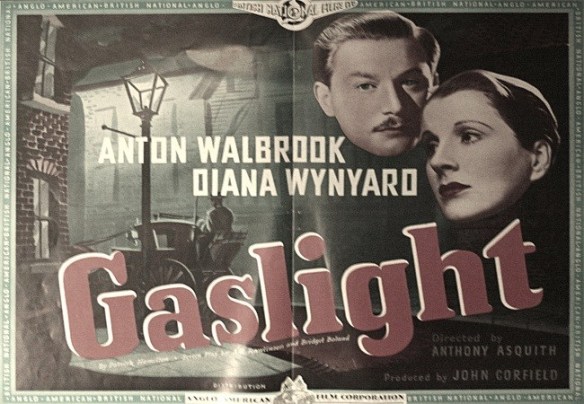
The psychological term “Gaslighting” comes from a 1944 Hollywood classic movie called Gaslight.  Gaslighting describes the abuse employed by a narcissist to instil in their victim’s mind, an extreme anxiety and confusion to the extent where they no longer have faith in their own powers of logic, reason and judgement. These gaslighting techniques were adopted by central intelligence agencies in the US and Europe as part of their psychological warfare methods, used primarily during torture or interrogation.

Gaslighting as an abuser’s modus operandi, involves, specifically, the withholding of factual information and its replacement with false or fictional information designed to confuse and disorientate. This subtle and Machiavellian process eventually undermines the mental stability of its victims reducing them to such a depth of insecurity and identity crisis that they become entirely dependent upon their abuser for their sense of reality and even identity.

Gaslighting involves a step by step psychological process to manipulate and destabilize its victim.  It is built up over time and consists of repetitive information feeds that enter the victim’s subconscious over a period of time, until it is fully registered on the subconscious “hard disk” and cannot be overridden by the conscious floppy disk.  Put more simply, it is brainwashing.

Overall, the main reason for gaslighting is to create a dynamic where the abuser has complete control over their victim so that they are so weak that they are very easy to manipulate.” ~ Alex Myles

Three Stages of Gaslighting: Stage One

The first stage depends upon trust in the integrity and unimpeachable intentions of the abuser, a state of reliance that has been engendered by the abuser’s artful self-promotion and ingratiating propaganda.  Once this trust is gained, the abuser will begin to subtly undermine it, creating situations and environments where the victim will begin to doubt their own judgement.  Eventually the victim will rely entirely upon the abuser to alleviate their uncertainty and to restore their sense of reality which is in fact that of the abuser.

Stage Two

The second stage, defence, is a process by which the abuser isolates the victim, not only from their own sense of identity but from the validation of their peers.  They are made to feel that their opinion is worthless, discredited, down-right weird.  In political circles they would be labelled a conspiracy theorist, a dissident, a terror apologist.  As a consequence, the victim will withdraw from society and cease to express themselves for fear of ridicule, judgement or punishment.

This stage can also be compared to Stockholm Syndrome where a hostage or captive is reduced,by psychological mind games, back to infantile dependency upon their captor.  Narcissistic abuse bonds the victim to the aggressor via trauma.  Stockholm Syndrome bonds the victim to the aggressor via regression to an infantile state where the abuser/aggressor becomes the “parent” who will rescue the victim from imminent annihilation.  Both methods tap into the victim’s survival mechanisms to gain and maintain control.

Stage Three

The final stage is depression.  A life under the tyrannical rule of a narcissist drives the victim into a state of extreme confusion.  They are stripped of dignity & self-reliance.  They, ultimately exist in an information vacuum which is only filled by that which the abuser deems suitable or relevant.  This can eventually invoke symptoms of PTSD [Post Traumatic Stress Disorder]. Flashbacks, constant apprehension, hyper vigilance, mind paralysis, rage and even violence.  The process is complete and the victim has been reduced to a willing accomplice in the abusers creation of a very distorted reality.

Exceptionalism or Narcissism?

We are currently seeing the transformation of US exceptionalism into an abusive Narcissism.

The gargantuan apparatus of mind bending and controlling is being put into hyper drive by the ruling elite.  We are inundated with propaganda that challenges our sense of reality but only after being “tenderized” by the fear factor.  Fear of “terror”, fear of war, fear of financial insecurity, fear of gun violence, fear of our own shadow.  Once we are suitably quaking in our boots, in comes the rendition of reality that relieves our anxiety.  If we challenge this version of events we are labelled a conspiracy theorist, a threat to security. We are hounded, discredited, slandered and ridiculed.  We are isolated and threatened.

Wars are started in the same way.  Despite the hindsight that should enable us to see it coming, the process swings into motion with resounding success. The ubiquitous dictator, the oligarch who threatens to destroy all that the US and her allies represent which of course is, freedom, equality & civil liberty all wrapped up in the Democracy shiny paper and tied with the exceptionalist ribbon.

Next the false flag to engender fear, terror and to foment sectarian strife. The support of a “legitimate” organic, indigenous “revolution” conveniently emerging in tandem with US ambitions for imposing their model of governance upon a target nation. The arming of “freedom fighters”, the securing of mercenary additions to these manufactured proxy forces.  All this is sold in the name of freedom and democracy to a public that is already in a state of anxiety and insecurity, lacking in judgement or insight into any other reality but that of their “abuser”.

The NGO Complex Deployment

Finally, the Humanitarians are deployed.  The forces for “good”, the vanguard of integrity and ethical intervention.  The power that offers all lost souls a stake-holding in the salvation of sovereign nations that have lost their way and need rescuing.  A balm for a damaged soul, to know they can leave their doubts and fears in such trustworthy hands as HRW, Amnesty International, they can assuage their deep sense of guilt at the suffering being endured by the people of far flung nations because they can depend upon the NGOs to provide absolution with minimal effort on their part.  They don’t realise that NGOs are an integral part of their abuser’s apparatus, operating on the leash of neo-colonialist financing and influence.  NGOs provide the optic through which the abuser will allow the victim to perceive their world and once absorbed into this flawed prism the victim’s own cognitive dissonance will ensure they do not attempt a jail break.

In this state of oppressed consciousness the victim accepts what they are told.  They accept that the US can sell cluster bombs to Saudi Arabia that obliterate human beings and lay waste to essential civilian infrastructure in Yemen.  They accept that the US financially, ideologically & militarily supports the illegal state of Israel and provides the arsenal of experimental weapons that maim and mutilate children and civilians on a scale that is unimaginable.  They accept that a crippling blockade of the already impoverished and starving nation of Yemen is “necessary” to resolve the issues of sectarian divisions that only exist in the minds of their Congressional abusers.

The majority of Americans accept mass murder under the pretext of the right to protect, because their ability to form rational and reasoned opinions has been engineered out of them.  This is now the definition of US exceptionalism.  It is their ability to manipulate the world into accepting their lawlessness and global hegemony agenda.  In seeking to impose its own image upon our world the US has drifted so far from its founding principles, one wonders how they will ever return to them.  They have employed a recognised form of torture to ensure capitulation to their mission of world domination which entails the mental, physical and spiritual torture of target civilian populations.

In conclusion, the US has indeed achieved exceptionalism.  The US has become an exceptional global executioner and persecutor of Humanity.  Imperialism is a euphemism for the depths of abuse the US is inflicting upon the people of this world.

Our only hope is to break the cycle of abuse with empathy for the victim and with appreciation for the years of brainwashing that precedes their agonizing passive-aggressive apathy towards crimes being committed in “their name”.

This was an email I received recently from one courageous young American girl whose epiphany is testament to the resilience and survival instinct of the human spirit.

My name is Caroline and I am a 22 year old US citizen. I only fairly recently discovered the truth about Empire/NATO’s activities in Syria and Libya and so many other countries (thanks to writers like Andre Vltchek, Cory Morningstar, Forrest Palmer). I am sickened when I remember that I signed some of those Avaaz petitions and I feel horrified at knowing that I have Syrian and Libyan blood on my hands. I want to believe that I’m not “really” guilty because I really thought (as I had been told) that I was not doing something bad at the time, but still, what I did contributed to the suffering of those people and I want to do something to atone in at least some small way, even though I probably can’t “make up” for what I did or erase my crime.

If it’s not too much trouble, could you please tell me what you think I should do, if there is anything?” 

She deserves an answer…


***

Author Vanessa Beeley is a contributor to 21WIRE, and since 2011, she has spent most of her time in the Middle East reporting on events there – as a independent researcher, writer, photographer and peace activist. She is also a member of the Steering Committee of the Syria Solidarity Movement, and a volunteer with the Global Campaign to Return to Palestine. See more of her work at her blog The Wall Will Fall.


Related Podcast:

Are We Humans Terminally Insane or Just Waking Up?

Brain waves

By Paul Levy

Source: Reality Sandwich

The following article was originally published on Awaken in the Dream


“The world today hangs by a thin thread, and that thread is the psyche of man.”
– C. G. Jung

How does anyone possibly express in words the state of collective madness that humanity has fallen into at this time in our history? As if in a hypnotic trance, our species is enacting a mass ritual suicide on a global scale, rushing as fast as we can towards our own self-destruction. We are destroying the biospheric life-support systems of the planet in so many different ways that it is as if we are determined to make this suicide attempt work—using a variety of methods as a perverse insurance policy, in case a couple of them don’t do the job. What modern-day humanity is confronted with, to quote the author and Trappist monk Thomas Merton, is “a crisis of sanity first of all.”

In trying to find a way to write about this state of affairs, I find myself going “off-planet,” imagining what it would look like if some enlightened aliens, in their travels throughout the universe, came upon our planet. Observing from a distance, they would naturally see all the various living beings who call planet earth home as related members of one larger organism—a single eco-system—who literally depend upon each other for survival. From this vantage point, I imagine, they would be utterly baffled at why human beings—the seemingly most intelligent species ever to appear on planet earth—are acting out their destructive impulses practically without restraint in every corner of the globe. Contemplating the state of humanity, I imagine these awakened beings wondering, “What in the world has gotten into them?”

I imagine these illumined aliens, in agreement with Merton, would quickly conclude that human beings had become afflicted with some sort of psychological illness, a disease of the mind and soul that has caused us to turn on ourselves in self-and-other destruction. Apparently in a “fallen state,” we have lost our way, become disoriented, and, in our confusion, become quite deranged. It is as if our collective madness is so overwhelming—and by now so familiar and so normalized—that most of us, its sufferers, have no idea how to even think about it, let alone how to deal with it. Not knowing what to do, many of us inwardly dissociate—which only exacerbates the collective madness—and in our fragmented and disempowered state go about our lives in a numbed-out, zombie-like trance, making the best of what seems to be a bad situation.

The question naturally arises: how would these enlightened beings conspire with us to help wake us up? We can only imagine. For our part, it seems essential that we ask questions such as: what is the nature of this madness, and how can it be consciously engaged so that humanity can get back on the right track?

Seen as an organism, there is a systemic psycho-spiritual disease that has infected the whole body politic of humanity. At present we are having an acute—and potentially deadly—inflammation of this illness. As with any disease, in order to cure the pathology that ails us we must come up with the right diagnosis. Under the present circumstances, it is a healthy response for us to have an appropriate level of alarm. If we aren’t “alarmed” at what is happening in our world, we are still sleeping.

Economy

It’s difficult to appreciate how our behavior might appear strange—let alone completely insane—to an impartial observer. But engaging in a “benign onlooker” thought experiment—in this case, through the imagined insights of enlightened aliens—affords us some much-needed perspective. Even from this vantage point, though, the collective madness that humanity is acting out is hard to fathom. It is truly as if the inmates are running the asylum.

The first thing these aliens might perceive is a single living organism in crisis. What makes life itself possible is that every cell and organ of a living organism plays a uniquely vital role to the life and health of the greater organism; each part works together as part of an integrated and interdependent whole system. Our planet and its biosphere is a seamlessly interconnected whole system that operates as a macro-organism, and yet its supposedly most intelligent species has set up a global system for managing its rich diversity of natural resources that would kill a living organism in no time if such a system were implemented within the individual bodies of any of its members. If the human body was organ-ized and operated in a similar way to the global economy—where certain parts of the system demand disproportionate and ever-increasing shares of the existing resources—the body would die in no time.

At the heart of this reality is the fact that the way the global economic system has been crafted primarily serves the interests of the very few. Machine-like, “the system” relentlessly, and increasingly, sucks, drains and redistributes wealth from the majority of the populace—who more and more become impoverished and practically enslaved—into the hands of the already unthinkably wealthy. The powers-that-be then use coercive power to not only deny people the means to make even a subsistence living, but even denies them the basic human right to life on massive scales. This system doesn’t just passively allow people to fall below the poverty line, it actively pushes them under, as if poor people are being intentionally “left behind.” The most powerful and successful financial institutions have taken on the form of parasitic enterprises that have attached themselves to governments and people around the world, upon which they shamelessly and ravenously engorge themselves. These illumined aliens, with their clairvoyant vision, would surely find it revealing that the ones who own the wealth are—like vampires—energetically “feeding” off of the ones who barely have enough to eat.

The evidence is overwhelming. The current global economic system has brought us to a point where an incredibly small minority of human beings own a grossly disproportionate percentage of the planet’s resources. According to recent figures, the 62 richest people on the planet have more wealth than the poorest half of the global population combined, and over time this imbalance is increasingly getting worse. This is globalization at work. Much of this rising inequality is a direct result of the fact that globalization is the process by which multinational corporations are taking over sovereign governments—of the 100 largest economies in the world, over half are corporations.

These challenging economic times we live in are simultaneously the times of the greatest profits in all of history for certain select corporate conglomerates. Those at the top of the economic pyramid then use this ever-increasing gap between the rich and the poor to further game the system—itself riddled with corruption—so as to protect their advantage even more. The United States government in particular, instead of being a “government of the people, by the people, for the people,” has instead become a plutocracy—a government “of the rich, by the rich, for the rich.” It should get our attention that such economic stratification into the have and have-nots historically plays a crucial role in the collapse of civilizations.

These aliens would recognize that earth’s current way of “doing business” is unsustainable. Instead of creating value and wealth for the good of all, the way business is done on planet earth is actually destroying the genuine wealth and health of the whole system, with people, communities and the environment considered to be nothing more than collateral damage—all for the benefit of a small minority. If humanity is viewed as a family, there is abuse of power being perpetrated within the family system for the simple reason that those in the positions of power can act with total impunity and, in a case of “moral insanity,” can—and do—literally get away with murder.

These benign aliens would find it revealing that such a large percentage of earth’s resources—including humanity’s intrinsic ingenuity—instead of being used to care for each other and enrich life, are being used to create more potent and deadly weapons of mass destruction. In other words, humanity’s divinely inspired genius is being channeled into ever-more efficient ways of murdering each other! We have become conditioned to accept this astonishing cruelty and destruction as normal. We spend trillions of dollars to sustain a state of endless war against God knows who, while at the same time innumerable of our fellow brothers and sisters are impoverished and dying of starvation every day. These spiritually awake beings would realize that the destruction that humanity is playing out in the world is an unmediated reflection of an imbalance deep within the collective human psyche.

From the meta-perspective of the enlightened aliens, the behind-the-scene financiers who on the surface are benefitting the most from this diabolical set-up are themselves merely puppets in the hands of some darker forces that are informing the whole enterprise. To use writer Matt Taibi’s infamous phrase, a “vampire squid” is running rampant and feasting on the living body of humanity. To quote eminent theologian David Ray Griffin, “It does seem that we are possessed by some demonic power that is leading us, trancelike, into self-destruction.” Similarly, the Bible points out that our fight is not against “flesh and blood” (i.e., human forces), bot rather, against “powers and principalities” (spiritual forces). These forces are not only acting themselves out in our world, but are simultaneously interfacing with and covertly operating through our own minds.

It is as if we have become possessed by a self-created Frankenstein monster that is running amok, wreaking untold havoc all over the planet. This Frankenstein monster has seemingly gained a quasi-life and autonomous will of its own, independent of its creator—us—who it holds in its thrall, as we are unable to escape from the out-of-control hell of our own making. In any case, it certainly seems as if there is a force that is hell-bent on stopping us—both individually and collectively as a species—from reaching our full creative potential.

We are at a severe “crisis” point in our world, which, medically speaking, always tells us that our sickness has reached a dangerous climax. Our species is suffering from what the great doctor of the soul C. G. Jung calls a “sickness of dissociation,” which is a state of fragmentation deep within the collective unconscious that has seemingly spilled outside of our skulls and is playing itself out en masse on the world stage. This primordial rupture, which is a form of trauma on a cosmic scale, has become the in-forming force behind human history itself, conditioning the experience of each individual, as well as our species as a whole. Seen as a whole person, it is as if the undivided wholeness of the universe has split into cosmic multiple sub-personalities who are dissociated from and seemingly separate from each other, desperately in need of recognizing their connection so as to come together and reintegrate. Our sickness of dissociation and the world crisis we are facing as a result can be seen, as Jung points out, as the labor pains of a new birth.

Wetiko

Author and environmental activist Derrick Jensen writes in his foreword to the classic book Columbus and Other Cannibals by Native American scholar Jack Forbes, that it is “the most important book ever written on one of the most important topics ever faced by human beings: why is the dominant culture so excruciatingly, relentlessly, insanely, genocidally, ecocidally, suicidally destructive?” Oftentimes, the most important point in finding a solution to a problem is asking the right question; Jensen’s question feels like the right question, a question literally demanding to be answered.

Forbes’ book beautifully elucidates the Native American idea of “wetiko psychosis,” which can be likened to a mind virus that has infected the human psyche.[1] Jung never tired of pointing out that the greatest danger which threatens humanity comes from the psyche. We are living with the very real possibility that millions—maybe even billions—of us can fall into our unconscious together, reinforcing each others’ madness in such a way that we become unwittingly complicit in our own self-destruction. An inner disease of the soul, wetiko flavors our perceptions by stealth and subterfuge so as to act itself out through us while simultaneously hiding itself from being seen. Being an illness that afflicts the psyche itself, wetiko—a term connoting the spirit of evil—is a psycho-spiritual disease of the soul, a disorder of consciousness existing deep within the collective unconscious of humanity that is playing out writ large on the world stage. Like a cannibal, those taken over by wetiko—also called “cannibal sickness”—consume the life force of others, both human and nonhuman, for private purpose or profit, and do so without giving back anything of real value from their own lives.

The idea of wetiko can be enormously helpful in creating a wider context that can assist us in getting a handle on the mass insanity that is playing out in our world today. Though using individuals as its instruments, wetiko—a “collective psychosis”—can’t replicate itself; it needs the unconscious masses for its genesis and proliferation on the world stage. Wetiko psychosis is highly contagious, spreading through the channel of our shared unconsciousness, rendering us oblivious to our own madness. This fluidly moving, nomadically wandering bug reciprocally reinforces and feeds off and into each of our unconscious blind spots, which is how it nonlocally propagates itself throughout the field. A psychic epidemic, wetiko is at the bottom, at the very root of the seemingly never-ending destruction we are wreaking upon ourselves, each other and the very biosphere we depend upon for our survival as a species.

Every wisdom tradition throughout history has been pointing at wetiko in its own unique way. The Gnostics (“the ones who know”), for example, were pointing at wetiko when they spoke of the “Archons,” who they thought of as “mind parasites” which had infiltrated the human mind. The Nag Hammadi text called The Apocryphon of John II describes these Archons, “They sought to overpower humanity in its psychological and perceptual functions…their triumph is in deception.” Wetiko/the Archons occlude us in such a way that our occlusion becomes self-perpetuating, the result being that we can’t even tell we are occluded. Wetiko bedazzles, bewitches, and bedevils consciousness so that we become blind to the underlying, assumed viewpoint through which we perceive, conjure up and give meaning to our experience of both the world and ourselves. An intrinsic challenge to our investigation of the wetiko virus, therefore, is that it is incarnating in and through the very psyche which itself is the means of our inquiry. In our encounter with wetiko, we find ourselves in a situation where we are confronted—practically face-to-face—with the unconscious.

As Jung has pointed out, when it is a question of mass psychosis, nothing but “new symbolic ideas,” i.e., novel, creative, redemptive, archetypal conceptions, brought up from the depths—which embrace, express and help to re-contextualize the emerging chaos and disorder—can save us from the impending catastrophe. This is to say that in light of our current world crisis, a new creative achievement has become a necessity. The concept of wetiko and all that it stands for is precisely such a “new symbolic idea.” What Plato calls “the eyes of the soul,” ideas have real power, as they are the means by which we see the world and creatively envision and give meaning to our lives.

Being a disease of the soul, we all potentially have wetiko, as it pervades and in-forms the underlying field of consciousness. Any one of us at any moment can fall into our unconscious and unwittingly become an instrument for the evil of wetiko to act itself out through us and incarnate in our world, which is a realization that cultivates humility while simultaneously serving as an inoculation against wetiko’s pernicious effects. If we see someone who seems to be taken over by wetiko and we think that they have the disease and we don’t, we have then fallen under the spell of the virus, as wetiko feeds on the inner, psychological process of shadow projection which underlies and informs our experience of separation, polarization and the paranoid fear—and terror—of “the other.”

Wetiko can be conceived of as a cancer of the psyche that slowly metastasizes, gradually subsuming all of the healthy parts of the psyche into itself to serve its sinister agenda. The personality then becomes one-sided, self-organizing an outer display of coherence around this pathogenic core, which masks the inner dysfunction, making it hard to recognize. In a psychic coup d’état, the wetiko bug can usurp and displace a person, who becomes its puppet and marionette. Like a parasite, the wetiko virus can take over and subvert the will of an animal more evolved than itself, enlisting that creature into serving its nefarious agenda. The psychological fact of being taken over by something “other” than ourselves finds expression in the belief in demons and their ability to possess humans, a belief found among all peoples from time immemorial.

Once the wetiko virus becomes sufficiently entrenched within the psyche, the prime directive coordinating a person’s behavior comes from the disease, as it is now the one in the driver’s seat. As it commandeers and colonizes the psyche—centralizing power and control in the process—wetiko eventually incorporates a seemingly autonomous regime within the greater body politic of the psyche. Once it gains a sufficient sovereignty, wetiko forms something like a totalitarian “shadow government” within the psyche which dictates to the ego. Being an archetypal, transpersonal and daemonic energy, wetiko can not only take over an individual, but also a group of people, a nation or even—potentially—an entire species.

Wetiko is especially unique, in that, though an inner disease of the soul, it is able to inform, give shape to and configure events in the outer world so as to synchronistically express—and reveal—itself. For example, as if the boundary has dissolved between the inner and the outer, the internal landscape of the wetikoized psyche is mirrored in the external world through the totalitarian-like “shadow government”—with its ever-increasing centralization of power and control—that has taken over our seeming democracy. Both within our psyche and in our alleged “democracy,” we are allowed our seeming freedom, but only so long as it doesn’t threaten the sovereignty and dominance of the “ruling” power (interestingly, the word “Archon,” a synonym for wetiko, means “ruler”).

Wetiko covertly works through the projective tendencies of the mind to distract us, keeping our attention directed outside of ourselves, thereby obstructing us from finding and utilizing the immense light of intrinsic awareness within, which would “kill” wetiko, rendering it impotent. The “Buddha” (which means one who has woken up to the dreamlike nature of reality) realized in his enlightenment that the solution to the human predicament could never be found externally, but had to be discovered within the very nature of one’s own mind. If we don’t realize that our current world crisis has its roots within, and is an expression of, the human psyche, we are doomed to unconsciously repeat it, continually re-creating endless destruction in more and more amplified form—as if we are having a recurring dream. Our nightmare will then be fated to continue with ever-alarming intensity until we receive its message.

Wetiko can easily trick and deceive us by materializing itself in, as, and through the medium of the outside world, which we then assume—as if entranced—is distinct from our psyche. Once the ever-increasing sociopolitical insanity plays itself out on the world stage, we have all the proof we need that the conflict is outside of ourselves. It then becomes nearly impossible to convince anyone that the source of the conflict is to be found within the psyche of every individual. The psyche has then become exteriorized, as an internal psychic conflict takes place by way of projection in the outside world in living (and dying) flesh and blood. The sponsor of the whole project(ion), the wetiko bug remains behind-the-scenes, invisible and unnoticed.

Wetiko subversively turns our “genius” for reality-creation against us in such a way that we literally become entranced by our God-given power to create our experience of both our world and ourselves so that it boomerangs against us, undermining our potential for individual and collective evolution. Strangely enough, people under the enchantment of wetiko become compulsively, even fanatically, attached to supporting a social or political agenda that oftentimes is diametrically opposed to serving their own best interests. This self-sabotaging behavior is an outer reflection of the inner state of being under the sway of —and unwittingly serving—the self-destructive wetiko parasite.

An aberration of the psyche, wetiko cannot be ultimately healed by merely bringing about external reforms (although such reforms are welcome and needed); it must be dealt with where it originates—within the human psyche of each individual. Wetiko can’t be “legislated” out of existence via political or social means, but can only be transformed within the individual, who, as Jung reminds us, is the real carrier of life.

To the extent we are unconsciously possessed by the spirit of wetiko, it is as if a psychic tapeworm or parasite has taken over our brain and tricked us, its host, into thinking we are feeding and empowering ourselves while we are actually nourishing the parasite. Wetiko is a virulent, psychic pathogen that insinuates thought-forms and beliefs into our mind which, when unconsciously enacted, feed it, and ultimately, like a fatal addiction, kill its host—us. Beyond informing our addictions, wetiko psychosis is itself the addictive process taking living form so as to take life.

Savaged by the ferocity of their unending hunger, people who are sufficiently infected by the wetiko virus, like the hungry ghosts of Buddhist cosmology, have become possessed by an insatiable craving that can never be filled. Not in possession of their true selves, they try to possess something outside of themselves to both escape from and fill the void within—the result is a futile and never-ending grasping. Attempting to secure a self that by its very nature is illusory and thus can never be secured, their appetites can never be quenched, just as an illusion can never be satisfied.

At the collective level, this perverse inner process is mirrored in the outer world by the consumer society in which we live, a culture that continually fans the flames of never-ending and mostly unnecessary desires, conditioning us to always want more. As if starving, we are in an endless feeding frenzy, trying to fill a bottomless spiritual void. In this regard, wetiko can be likened to a psychic eating disorder.

If the planet were seen as a single organism, and people seen as cells in the greater organism of the planet, it would be as if these cells had become cancerous or parasitic, and had turned on themselves, destroying the very organism of which they are a part. Wetiko can be compared to an autoimmune disease of the psyche that is getting collectively acted out, writ large on the world stage. In autoimmune deficiency syndrome, the immune system of the organism, in its attempt to protect itself against perceived attacks, attacks projected aspects of itself that falsely appear to be “other,” leading, ultimately, to its own self-destruction. Bewitched by its own projections—as if hypnotizing itself—the autoimmune system of the wetikoized psyche has fallen under its own self-created illusion and in its state of confusion and trauma, is tricked into creating the very problem it is trying to resolve. One glaring example of how this internal process is getting acted out in the external world: the way our nation is fighting terrorism is creating ever-more terrorists, as if in fighting a fire we are pouring fuel on it.

Once the wetiko virus takes root in our minds and incorporates itself in the world, it “manages our perception” by framing the terms of our inner and outer dialogue through determining the metaphors which dominate the accepted historical narrative, thus controlling the parameters of our conversation and debate. The consensually agreed-upon thought-forms and beliefs act as an intrinsic, built-in control system, defining the limits of what we imagine our possibilities are, as individuals, nations and a species. If we don’t consciously tap into and use the power of our creative imagination, others, particularly “the state,” will be more than happy to do so in our stead.

Just like vampires, full-blown wetikos have a thirst for the very thing they lack—the mystical essence of life—that is, the “blood” of our soul. Wetiko is a deceptive spirit that apes, mimes and imitates the real thing—called the Antimimon pneuma(literally, “counterfeiting spirit”) in the Apocryphon of John (Apoc. John III, 36:17). Impersonating us, if we identify with wetiko’s false version of ourselves, we have then identified with who we are not while simultaneously disconnecting from—and giving away—who we actually are. We then become a duplicate, a copy of ourselves, losing touch with the original.

Wetiko is an expert at imitation, but it has no creativity on its own. Once it “puts us on,” i.e., fooling us into buying into its version of who we are, it can then piggyback onto and plug into our intrinsic creativity, co-opting our creative imagination to serve its malevolent agenda. When we fall under wetiko’s spell, our life-force and God-given creativity become vampirically drained, as we are bled dry of what really counts.

This situation is a reflection of what happens when wetiko infects an organism (be it a person or species)—certain aspects within its bio-system become starved. In essence, when we are under the thrall of wetiko, the creative spirit within us, the very function which connects us to something beyond ourselves, becomes malnourished and impoverished. We then can’t even imagine things being any other way, let alone being able to actively imagine a way out of our dilemma. This points to the profound importance for each of us to intimately connect with the creative spirit living within us as a way of abolishing wetiko’s death sentence.

Many of the institutions in our world are embodiments of the formless wetiko virus taking on corporeal—and incorporated—form. The counterfeiting spirit of wetiko, a true imposter, imitates something but—in a process known as countermimicry—with the intention of making the copy, the fake version, serve a purpose counter to that of the original thing or idea. For example, the entity of the global economic system itself is a living symbol of wetiko disease “in business.” A “real” economy has to do with the production and distribution of goods and services—generating wealth in the process—while the virtual “bubble economy” that we living in is mainly an exercise in profiting from the manipulation of money—draining real wealth in the process. It is as if wetiko has managed to create a simulation of the real economy, replacing the real thing with a copycat version (what I call the “wetikonomy”) that has inverted its original purpose. This is a reflection in the outer world of the covert operations of wetiko within our minds.

Finding the Name

Our collective psychosis is invisible to us, manifesting itself both in the way we are looking at the world as well as the unspoken ways we have been conditioned—i.e., programmed—to not perceive. Wetiko has the power to induce—both individually and en masse—what writer Philip K. Dick calls a “negative hallucination,” i.e., instead of seeing what is not there, we cannot see what isthere. When we are afflicted with wetiko, we literally are unable to see what is right in front of our face. Wetiko is a form of psychic blindness that not only believes itself to be sighted, but believes it is more sighted than those who are actually clear-sighted. This looking away, this “conspiracy of denial” that is endemic to our culture is simultaneously both the cause and effect of wetiko.

Because wetiko is a psychic blindness, the cure for wetiko starts with seeing it—both seeing how it operates in the world and also tracking how it covertly operates within our own minds. In the medical model we describe the various pathogens that make us sick as cancers, bacilli, parasites, plagues, viruses, etc.. Due to the materialistic culture we live in, we are attached to the idea that for something to have “reality” it must be made of a material substance. The implication of this perspective is that if something is not physical it is not real, which disables our capacity to see wetiko. Though “immaterial,” wetiko is as real as we are.

We have to name something, however, before it can be seen, formally “discovered,” and brought into our shared collective cartography. To quote Jung, “For mankind it was always like a deliverance from a nightmare when the new name was found.” Mythologies and fairy tales the world over have been expressing this from time immemorial—finding the name of the offending demon takes away its power over us. This is why it is important to introduce the word “wetiko”—and the idea it represents—into our planetary dialogue.

Once we become more acquainted with the idea of wetiko and all that it entails, we can “spread the word”—creating a new meme in the process—thus conjuring up a living antigen to the heretofore unrecognized mind virus of wetiko. For nothing is more powerful than an idea whose time has come—wetiko is just such an idea, pregnant with new possibilities. Similar to how a vampire hates the light of day, however, the wetiko virus can’t stand to be illumined, for in seeing how wetiko covertly operates through our own consciousness or lack thereof, we not only take away its seeming autonomy and power over us, we empower ourselves.

Seeing the correlation between the inner and the outer—which is to say, seeing the dreamlike nature of reality—is the doorway through which we develop the requisite vision to see wetiko. In a dream, the inner psyche of the dreamer is expressed through, and is therefore not separate from, the outer forms of the dream. Similar to a dream at night, in the waking dream called life, events in the outer world symbolically—and synchronistically—express the inner psychological situation of the dreamer, which is all of us. We don’t have to try to create or fabricate this correlation between the inner and the outer; rather, we simply have to recognize it, for it is always already the case. Once we realize the dreamlike nature of our situation, we have started to develop the eyes to see wetiko, and hence, dispel its malevolent effects. We have then broken the seeming curse we have fallen under (please see my book Dispelling Wetiko: Breaking the Curse of Evil).

A Catalyst for Human Evolution

People taken over by wetiko—a word Jung never used, but in his writings he referred to the same idea by the phrase “totalitarian psychosis”—are often attracted to positions of power, where, as if compelled by forces beyond themselves, they can’t help but to create scorched earths as outer correlates to the inner ravaged landscape of their souls. Insanely enough, many of the people who are most taken over by wetiko are not in asylums, but are freely running around (and running) the world, oftentimes established in positions of great power to influence world events.

Fueled by the myopic vision that prioritizes the bottom line of corporate-driven profits above anything else, people motivated by the greed of the wetiko virus have little meta-awareness of the long-term and whole-system implications of their rapacious actions. All that the wetiko bug craves is to satisfy its narcissistic desires, experience orgasmic release, and glory in the seeming victory of short-term profits. Hiding behind the deceptive banner of “progress,” the Frankenstein monster of ever-enlarging empire, with its incessant, greed-driven need for endless growth, is like a runaway locomotive gaining speed, approaching the catastrophic event horizon of its inevitable crash. Meanwhile, this “progress” destroys people, families, communities and threatens our entire species, as we potentially trigger a “sixth mass-extinction event.”

At the heart of wetiko is our identification with and subsequent grasping onto an illusory “me,” a seemingly separate, independent self which doesn’t actually exist in the way we think it does. Clinging onto this false sense of self—a “lethal mirage” that becomes a self-perpetuating addictive process with a life of its own—our life-force then gets continually invested into protecting, defending and maintaining an illusion. Identifying with a self-constructed illusion whose originating conditions remain obscure is the stuff of which madness is made.

Reciprocally co-arising with the subjectively convincing and self-validating feeling of a separate “I” is the feeling of “mine,” the sense that this “I” can possess and own things. Modern humanity is, in Walt Whitman’s phrase, “demented with the mania of owning things.” We insanely devote so much of our time and energy—our precious human life—in trying to obtain material goods that we really don’t need and that bring no real benefit to us. Speaking of the white man, Chief Seattle said, “His appetite will devour the earth and leave behind only a desert.” Along similar lines, Sitting Bull said, “the love of possession is a disease with them.” This love of possessing things to fill a void that can never be filled is wetiko disease in a nutshell.

Wetiko is a collectively “dreamed up” phenomena in which we are all ultimately implicated. This means that—at least in theory if not in practice—we have the capacity to dream it differently. In other words, because we’ve created wetiko, we can “un-create” it. We don’t yet know how to do this, however, or we wouldn’t be continuing to create it in a way that is destroying us. Our unconscious process of dreaming up wetiko in all its full-blown destructiveness is the way we are teaching ourselves how to not destroy ourselves, which we evidently haven’t yet learned or we wouldn’t be destroying ourselves. The fact that we wouldn’t have realized how to not destroy ourselves without wetiko’s arrival on the scene is to say that the seeming curse of wetiko actually has a hidden blessing secretly encoded within it.

Wetiko is a quantum phenomenon, in that it contains superposed within it both the deepest darkest evil imaginable, while hidden within it is its own medicine. Encoded within wetiko’s pathology is not only its own cure but a precious gift, as it can—in true quantum style, “potentially”—introduce us to our own agency in calling forth our experience of both the world and ourselves. In other words, the wetiko epidemic is revealing to us our nature as empowered co-dreamers/creators of a universe that is more malleable, plastic and dreamlike than we have previously imagined.

Similar to how the unconscious compensates a one-sidedness in the psyche through the dreams it sends our way, the totalitarian psychosis/wetiko running rampant throughout the world today is the psyche’s way of revealing to us that we are forgetting the crucial role it plays in creating our experience. Marginalizing our own authorship and authority, we then dream up totalitarian forces to limit our freedom and create our experience for us. The “totalitarian psychosis” known as wetiko is, in Jung’s words, “forcing us to pay attention to the psyche and our abysmal unconsciousness of it. Never before has mankind as a whole experienced the numen of the psychological factor on so vast a scale.” Literally demanding that we pay attention to our own psyche, wetiko is thus the greatest catalyst for human evolution that our species has ever encountered.

Wetiko can literally destroy our species through wrenching poverty, endless war and catastrophic environmental destruction. Or, if confronted, named and understood, it can introduce us to the dreamlike nature of reality, which changes everything. Wetiko is a living revelation that only reveals its gifts to us, however, if we recognize what it is a reflection of within ourselves. How it manifests depends upon how we dream it. The choice is truly ours.

It is as if through the instrument of wetiko, a higher intelligence is revealing to us the wholeness of our totality through our darker side. This darkness is revealing light by contrast to itself. As we recognize that the evil we see playing out in the world is a reflection of our own darkness, we notice that, paradoxically, with our increase in consciousness the good and positive features within us come more to light too. As we more and more recognize the correlation between the outer world with what is going on deep within our soul, the enlightened aliens, who have been signaling to us the dreamlike nature of our situation by synchronistically arranging events in the world to reflect back what’s going on deep within us, hide behind the scenes, laughing.

Lifting the Veil of Psychopathic Intrusion in Everyday Life

what-people-think-psychopaths-are-streetdemocracy

By Nozomi Hayase

Source: Dissident Voice

In recent years, the conception of the psychopath has gained a new upsurge of interest. Popular culture’s sensational image of Hannibal Lecter in the movie Silence of the Lambs and notorious killers like Ted Bundy have long cultivated public fascination. Now, awareness is spreading beyond these portrayals of outlandish criminals. More people are beginning to recognize the existence of socialized psychopaths who are not so outwardly violent.

Psychopaths walk among us, quietly blending into society. They could be corporate CEOs who exploit their workers, politicians who lie to get elected or Don Juan-like womanizers who inspire love to play with others hearts. Roughly 1-2 % of individuals in overall society are estimated to have been affected by this pervasive personality disorder (Neumann & Hare, 2008), yet some suggest these numbers are conservative and that many go unnoticed (Kantor, 2006).

The difficulty of accurately identifying psychopaths partly lies in a significant ambiguity among mental health professionals. Psychopathy expert, Robert D. Hare (1996) described the pivotal shift that occurred in 1980 with the publication of the third edition of the American Psychiatric Association’s Diagnostic and Statistical Manual of Mental Disorders (DSM-3), concerning the diagnosis of psychopathy. He noted how in this standard classification of mental disorder that has become the clinician’s bible, psychopathy was renamed antisocial personality disorder (ASPD), and defined by “persistent violations of social norms, including lying, stealing, truancy, inconsistent work behavior and traffic arrests” (para. 5).

Hare (1996) explained how this change was made based on the reasoning that affective and interpersonal traits that play a primary role in understanding psychopathy were difficult to measure. As a result, this diagnostic criteria of ASPD that mainly refer to criminal and outwardly observable antisocial behaviors, stripped off personality traits that are critical factors inherent in psychopathy. The trend of omitting the traits unique to this pathology has not been overturned to this day in the latest version of diagnostic manual DSM-5.

Along with this blurring of diagnosis, the very nucleus of this psychiatric disorder seems to have contributed to creating this lack of clarity. In his seminal work The Mask of Sanity, first published in 1941, psychiatrist Hervey M. Cleckley articulated how, among other personality traits such as their superficial charm, emotional poverty and egocentricity, the essential characteristic of psychopathy lies in its deceitful nature; hiding their lack of internal structure in a façade of normalcy.

Without knowing what to look for, even for professionals it is extremely hard to detect the psychopathic individual. This is made even more difficult when the very characteristics involve deception. All this has unleashed this dangerous population with few restraints, bringing great risk to the public. Their ability to fake and hide makes their exploitation invisible to the public eye. Oftentimes, people do not recognize abuse in a relationship until much of the damage is done. There are even cases where those who suffered harm do not realize they are victims.

Now, with the Internet and social media, a new level of education is happening. Through YouTube channels and online forums, those who experienced significant pain inflicted by these deranged individuals are coming together to gain validation that is desperately needed, yet often lacking in formal therapy. They are spouses, friends and co-workers, whose life had been ruined financially, mentally or emotionally. Those who had close encounters with these unknown members of society have seen the true face of psychopathy. With this sharing of first hand experience and witnesses outside lab experiments, the mystery of psychopathy is slowly being unveiled.

Hollowness as Elusive Core

In Without Conscience, Hare (1993) describes a psychopath as “a self-centered, callous, and remorseless person profoundly lacking in empathy and the ability to form warm emotional relationships with others, a person who functions without the restraints of conscience” (p. 2). The elusive core of this pathology is an absence of empathy. This sets those affected apart from the rest. People equipped with the ability to put themselves into another’s shoes often take this attribute for granted and don’t recognize the crucial role this seemingly innate aspect of human nature plays in forming a sense of one’s own self.

Humans are social beings. We exist in relation and develop identity through making connections with others at an emotional level. For instance, mother’s validation and proper attuning to her baby’s needs is crucial for infants to cultivate their sense of reality.

Psychopaths do not bond in the same way most people do and have not secured healthy attachment to caregivers. Because of this lack of attachment, argued by Hare (1993) as being a symptom of psychopathy, they cannot develop their identity based upon concrete reality.

Empathy unlocks the door into the world of a larger humanity, allowing one to experience higher emotions of joy, love and compassion. As the foundation of their identity is divorced from an empathic ground, psychopaths are emotionally held down in a “pre-socialized world”, lacking the full range of emotions (Meloy, 1988).

There is nothing inside to hold their identity together. As described in a T.S. Eliot’s poem, they are “hollow men… stuffed men -leaning together, headpiece filled with straw” (1934/1951, p. 56). Out of this vacuousness at the center of their personality, a head grows with an intelligence that is cunning and clever and primarily serves narrow selfish interests.

The being personified in this entity is enslaved by an internal void. They are a nobody and are driven to fill an insatiable hunger at any cost. Hare (1993) describes how they are “social predators who charm, manipulate, and ruthlessly plow their way through life, leaving a broad trail of broken hearts, shattered expectations, and empty wallets” (p. xi). Like going out on a hunt, they trespass people’s boundaries, dragging those who enter their proximity into their dark hole of nothingness. Anyone can become a target and once trapped, they are often sucked dry if not completely destroyed.

Idealization, Prelude to Seduction

The psychopath’s predation follows certain destructive relationship patterns that they repeat throughout their life. Regardless of differences in background, the victims all share similar cycles of abuse. Claudia Moscovici (2010) on her blog Psychopathyawareness describes these patterns in three stages; idealization, devaluation and then discard.

The first stage of a psychopathic relationship is idealization. This is a powerful and seductive period when psychopaths allure their potential victims. With superficial charm, this cunning and manipulative population enchants their targets. They put their new love interest on a pedestal, saying whatever the person wants to hear, transfixing whoever has become the unfortunate prey. It could be a whirlwind romance or promising partnership. Showered with flattery and adulation, targets often feel they are finally getting the appreciation they deserve in life.

In Snakes in Suits: When Psychopaths Go to Work, Hare and leading organizational psychologist Paul Babiak (2006) described this period as an assessment phase, where psychopaths examine their targets’ value and utility. They outlined the four main messages that psychopaths convey to their targets to create an instant connection, which they call the “psychopathic bond”. These are: 1) “I like who you are”; 2) “I am just like you”; 3) “Your secrets are safe with me”; 4) “I am the perfect friend, lover, partner for you” (p. 74-78).

If you are chosen, you will be adored and made to feel special. In their idealizing gaze, you are a center of the universe and can do no wrong. This newly acquainted friend or lover taps into fears, insecurity and deep wishes and morphs themselves into becoming anything their victim wants them to be.

Their seemingly caring gestures appear very genuine and many mistake this as empathy. Later, targets would reflect back on that exciting beginning and feel that they had been fooled. Hare describes how, unlike other mental disorders, psychopaths are rational and that “their behavior is the result of choice, freely exercised” (1993, p. 22). Although it is true that some of the deviants are calculative and indeed plot all the way through, at the same time, as Hare suggests, it is often done more instinctively and is not necessarily planned out. Their love-bombing during this phase rather appears to be an effect of their pathology, caused by impaired emotional processing.

Narcissistic Mirror and Erosion of Identity

So, why do they idealize? The idealization is a part of their pathological makeup. Psychopaths are truly outsiders. Without being a part of the world informed by empathy, they live in isolation and develop a sense of self that is divergent from the majority of society. Researchers point to the psychopath as having a “narcissistic and grossly inflated view of their self-worth and importance” (Hare, 1993 p. 38), a “grandiose self-structure” and a “psychopathology of narcissism” (Meloy, 2001, p. 11).

Although psychopathy is different from the other severe personality dysfunction recognized in the psychiatric community as Narcissistic Personality Disorder (NPD), its core of empathy deficit encompasses some of the features exhibited by NPD. Like those who suffer from excessive narcissism, they are trapped in mirrors of self-absorption and can’t recognize others as having their own autonomous thoughts and feelings. Through not being grounded in a consensual reality, they lack objectivity in their assessment of their own selves. For them, reality is constructed not based on who they really are, but who they want and believe themselves to be.

Being cut off from emotional reality, they are dead inside and can’t harvest their own energy. So they become parasites and feed off others’ emotional reactions. When they idealize their partners, they are unconsciously wanting to establish a connection to a source of creativity, that which gives emotional sustenance. Through weaving a fantasy and duping the other into their web of deception, they extract the life forces of the victim.

For psychopaths, relationship is the stage on which they enact their grandiose fantasy. Others are seen as an extension of themselves, as props that can be used. Anyone who comes their way is screened for their ability to perform a role that serves their plot. Their chosen targets become an object of desire and are pursued with great passion. With beam-like attention, they turn the spotlight on the victims. Through mirroring the victims’ positive qualities, predators disarm their prey and bring them under the luminary light of their narcissistic mirror. In this, the victim’s identity is eroded, yet with constant flattery and attention, they feel pumped up and elated.

This internal casting process can be seen as the psychopath launching a parallel persona upon their targets’ identity and then using it as a mask to create a rapport with their target. Yet, this mirroring is not consciously carried out. It is an automatic reflex that happens when they see something they want in others. Also, in some cases, in others’ positive attributes, these self-absorbed individuals see an idealized image of themselves. Like the Greek myth of Narcissus who falls in love with his own reflection in the water and then pines away, this is the effect of psychopaths seeing themselves in another’s reflection that is created by victims favorably responding to idealization and then trying to claim that image for themselves.

This mirroring starts to fade after the psychopaths successfully attach themselves to their hosts and is then replaced with mind games. Without being able to feel genuine emotions, the psychopath from a young age studied human behavior and learned how to effectively create a favorable response. They will slowly start to use this acquired skill of clever manipulation to keep their victims inside their delusional bubble and maintain control.

Devaluation and the Broken Mirror

What comes next is devaluation, marked as a betrayal with broken promises. This is when psychopaths who had always seen their partners in a positive light will begin to criticize and withdraw their attention. They slowly tear down the pedestal they once put victims up on and engage in subtle ridicule and condescension. Confused, the targets often internalize these criticisms and start becoming convinced that they are not as perfect as the psychopaths initially made them feel and that they have faults just like everyone else.

So, why does this devaluation happen? Many who have been taken for a ride wonder why this person who once seemed to love them so much, changes all of sudden. After psychopaths absorb their targets’ good traits, they cannot truly make them their own. There is nothing that can fill their bottomless pit and soon the void starts to grow again. When the initial thrill and excitement of a new target wears off, they get bored. This is the point where those who have been taken in by the charm start to see the mask slipping.

While victims begin to have a glimpse of the hollow man behind the mask of the manufactured persona, in the eyes of the psychopath, the victim ceases to be the perfect mirror that reflects back their delusions of grandeur. This happens because those who were made to be reflections in their mirror are living human beings. When victims start to act autonomously, as every human being is meant to do, these malignantly narcissistic individuals experience their self-image fluctuating and their mirror of absorption beginning to shatter.

In a sense, psychopaths are like bullets that have been fired by a gun they themselves barely understand. Distortion in the mirror that occurs during this devaluation process is experienced by them as an attack on their very existence. When they start to realize their idealized partner is fallible, they experience injury and believe that what pulled the trigger is coming from outside them. The love of life that they once declared quickly becomes malformed or damaged goods and the victim can even be seen as an object of hatred and contempt. The idealized self-image projected onto their partners now disappears from the mirror and they have to look for it elsewhere. Thus, rinse and repeat. They start chasing a new object of ‘affection’ and begin the idealization phase all over again.

Discarded

Little does the victim know, but the person they had fallen for is now gone. The psychopath has already abandoned their masks. At this point, if the target remains useful to them, they would be kept around, but otherwise, the psychopath moves on, as if the previous victim never existed. The duration of each stage leading up to the final discard depends on how fast the targets catch on to their ploy or whether they cease to be useful.

After being cast aside, the victims might feel they were handled dishonestly. They realize that their partners were fraudulent and that what they thought was love or true friendship was an illusion. Those who were wronged ask themselves if their partners really cared about them at all. When the psychopath’s mask is finally blown off and one begins to glimpse the monster behind that mask, one is flooded with questions that may never be answered.

It is important not to forget that these are ‘hollow men’. They suffer from shallow emotions and don’t have the same capacity for feeling as most people do. Hare (1993) describes their apparent lack of emotional depth, noting how they “seem to know the dictionary meanings of words but fail to comprehend or appreciate their emotional value or significance” (p. 128). They are “like a color-blind person who sees the world in shades of gray but who has learned to function in a colored world” (p. 129). Without having vital emotional understanding, they mimic experiences they can’t really understand through simulating emotions and parroting words that others use.

Without this understanding, those with empathy assume the other has a similar orientation and they fill in the blanks by projecting good attributes and interpreting words of those who lack feeling for others according to how they themselves use language. As the relationship unfolds beyond the initial stage, the differences eventually begin to emerge and the shallow consciousness behind the beautiful words starts to unravel.

As they are not tied to others by empathy, psychopaths have little connection to their own history and are uprooted from the shared narrative of humanity. They live in the present moment and are driven by immediate needs and instinctual desires. Just like the hollowness of their soul, their words are empty, rarely matching actions. They promise eternal devotion and love to describe their transient and fleeting desires of the here and now. For them there is no future; there is no past. There is nothing lasting that deeply connects them with other human fellows. They try on one personality and then drop it when it becomes inconvenient and move on to the next as needed.

The Anesthetized Heart

Who are these empty souls, masquerading as friends, lovers and good Samaritans, whose self-gratifying deeds in the end always leave their victims bewildered? The beast inside this small minority of society seizes everything that moves. They conquer the other, turning constantly evolving images of their targets into frozen snapshots of abstraction, which they then possess. In extreme cases, this is seen in the example of serial killers cutting up victims’ dead bodies and sleeping with them. Although the degree might be different, this deadening force that works within is the same. Psychopaths try to wipe out victims’ identity, so to make them a clean slate that can more perfectly mirror their grandiose self. Through lies and re-framing events, they attack their target’s memory, making them doubt their own sense of self. What awaits one toward the end of the relationship, if one does not disentangle themselves in time, can even be a total annihilation of the self.

The horror displayed by psychopathy and this moral bankruptcy often provokes an image of evil. In People of the Lie: The Hope for Healing Human Evil, psychiatrist and author Scott Peck (1983) defined evil as a reversal of the word ‘live’, and portrayed it as something that crushes life. They have what psychologist James Hillman (1992) characterized as an “anesthetized heart, the heart that has no reaction to what it faces, thereby turning the variegated sensuous face of the world into monotony, sameness, oneness” (p. 64).

Empathy is the foundation of conscience. It is to think with the heart and to feel with others. As the psychopath is delinked from the heart; from that which ties all living beings together, they are in a kind of darkness, where the light of conscience cannot reach. They lack insight about the situations they are in. They can intellectually understand what they are doing, but they cannot be fully conscious of their own actions and their devastating effects.

This state of numbness blinds them to the beast within that is devouring their victims. It makes them become deaf to the cries of those who are slowly dying. After the initial honeymoon phase, when their partners don’t defer to the psychopath’s version of reality and question this pretend world, they rush out and punish the victims. When victims strike back, psychopaths often fail to see how those abused are trying to defend themselves and instead twist reality. They deflect, misconstrue conversations to fit a narrative where they are constantly aggrieved and injured, making the victims look like the perpetrators.

No amount of love is enough for them. In the effort to communicate with these disordered individuals, words bounce back off their hardened hearts and become echos that the psychopath cannot hear. They rationalize and make one feel what they can’t feel about themselves, transmitting these emotions like poison. Victims are called too sensitive, crazy or imagining things and are further dragged into the predator’s one-sided reality.

Recovery and Path Back to the Self

How can those who are captured in a toxic web escape this snare and stop the bleeding that has been feeding this beast? These hungry carnivores sink their claws into their prey through the innate human trait of empathy and exploit our trusting nature. Most people relate to others in dialogue, giving a space for another’s perspective to enter in the interaction. Psychopaths on the other hand, not abiding by empathy, live in solipsism and operate in a monologue. While victims are trying to understand their perspective, these emotional vampires move quickly to direct the narrative, giving no chance for their targets to participate in the unfolding story as a co-creator. Through being nitpicky and accusative, they make victims back off from asserting their needs and make them walk on eggshells.

In relationship with these deadly individuals, what remains unconscious, both the dark and bright parts of oneself become vulnerable for manipulation. During idealization, the psychopath, like a puppeteer, attaches invisible heartstrings to their targets. They promise to fill a void, play on one’s vanity, mirroring back desires and enamoring victims with their own reflected beauty. Victims would not know until much later how this idealization was conditioning them to act in a certain way. What happens is a transfer of authority, where without realizing it, victims slowly begin to seek for approval from this pretend friend or partner.

When the devaluation phase sets in, if victims begin to become aware of what is happening and try to fortify their boundaries, they are often so deep in the fantasy and the fog of confusion becomes so thick that they cannot even see the path from which they came. They often suppress their emotions and take the blame in confrontational situations, so as not to ruin this idealized image.

Master manipulators know their prey, their insecurities and desires and know very well which buttons to push to get what they want. Chosen targets become like rats in a maze that leads to a shadow of one’s former self. As long as one performs according to the master’s plot, they will be rewarded, yet when one derails from their story, they are punished. Many desperately try to mend the broken mirror that once reflected their idealized self and focus on fixing what they have been brainwashed to believe as their ‘issues’.

For those who have been abducted into psychopaths’ illusory world, the path back to the self lies within. Recovery from the terror of the anesthetized heart calls for fully reclaiming one’s own empathy. This first requires one to have empathy for oneself; to claim all that was disowned within. Through accepting one’s own emotions without judgment no matter what they are, one can make a more conscious relationship with them and recognize how these emotions have been used as a tool for control. One can then break this hypnotic spell and take back the power to define one’s own reality.

Larger Social Implications

The relationship with a psychopath is like nothing experienced before. Until it is lived on a personal level, it is difficult to understand the depth of its destruction. This is a kind of psychological warfare being quietly waged upon victims. Psychopaths build up their targets and then knock them down under the rug. In the aftermath, victims may come to realize that they have been in a battle for their own life and that what is at stake is something even larger. This psychopathic invasion into one’s life is an infiltration of our deeper humanity. So, what is the agenda behind this dark force and where is it taking us?

Those with imperiled empathy are haunted by an eternal emptiness. They are thirsty, yet they can’t drink from the water of life. All they see are frozen images on the surface. This internal vacuum can turn into a monstrous desire for power that boils below consciousness. Philosopher Friedrich Nietzsche (1920) once signified this force when he urged his readers to make themselves “superior to humanity in power, in loftiness of soul, —contempt” (p. 38). This fighter for human freedom revealed to us the fall of human nature in his call for the will to power. He asked:

What is good? —Whatever augments the feeling of power, the will to power, power itself, in man. What is evil? —Whatever that springs from weakness. What is happiness? —The feeling that power increases—that resistance is overcome. (p. 42-43)

In praise of independence, psychopaths condemn human emotions such as attachment and jealousy as weakness and deny attributes like compassion and cooperation. They hijack and pull the development of the individual into becoming a reflection of their dry and deserted soul.

The encounter with psychopaths brings forth the fundamental question of evil; how can humanity confront what has become so terrifying in the world? Austrian philosopher Rudolf Steiner (1943/1977) once elucidated how the role of evil is to educate us to freedom and love:

Love would be impossible for man and freedom would be impossible for man without the possibility of sailing down into the abyss. A man unable of his own free decision to choose good or evil, would be a being only led on a leading string to a good which must be attained of necessity and who had no power to choose the good of his own fully purified will, by the love which springs from freedom. (p. 206)

We are born into the cradle of nature and unconsciously carried by affects and desires that stem from deep obligation to one another. Governed by this internal law of empathy, emotions that arise from a communal ground such as the sense of guilt or shame or simply feelings for the other, naturally regulate self-interests and restrain actions in consideration of others’ needs.

Unless we are ripped away from this protective world of empathy, how will we become aware of it and understand its true value? Psychopaths make us fight against ourselves. Their assault on empathy awakens us to the force that denies and breaks the bond of brotherhood. It gives us an opportunity to find the strength within to resist this will to power. By being pushed to the edge, we are asked to uphold out of free will all that makes us human.

When one fights this battle consciously, one can see this ‘evil’ for what it truly is. Hare (1993) shared a view held by some investigators that “behind Cleckley’s ‘mask of sanity’ lies not insanity but a young child of nine or ten” (p. 169). Like poet Rainer Maria Rilke’s myth of dragons being transformed into princesses at the last moment, perhaps these frightening members of society are a part of our own humanity that is “waiting to see us just once being beautiful and courageous” (1992, P. 85).

When we find courage to turn to what has become so dark, we find ourselves anew in those who are forgotten or condemned –within the shadows of man. We become survivors and begin to understand the true meaning of this battle.

One day, a stranger knocked at the door and opened our eyes to a side of humanity that we didn’t know existed. Darkness had a gift. It let us see the light that shines from within. With this light, mankind may find its true path toward evolution, becoming a species that can truly love. This is our salvation, where lies the potential for redemption of ourselves and the world.


Nozomi Hayase, Ph.D., is a writer who has been covering issues of freedom of speech, transparency, and decentralized movements. Her work is featured in many publications. Find her on twitter @nozomimagine Read other articles by Nozomi.