THE ANTI-STATIST: A REBEL FOR OUR TIMES

By Gary Z McGee

Source: Waking Times

“One man who stopped lying could bring down a tyranny.” ~Aleksandr Solzhenitsyn

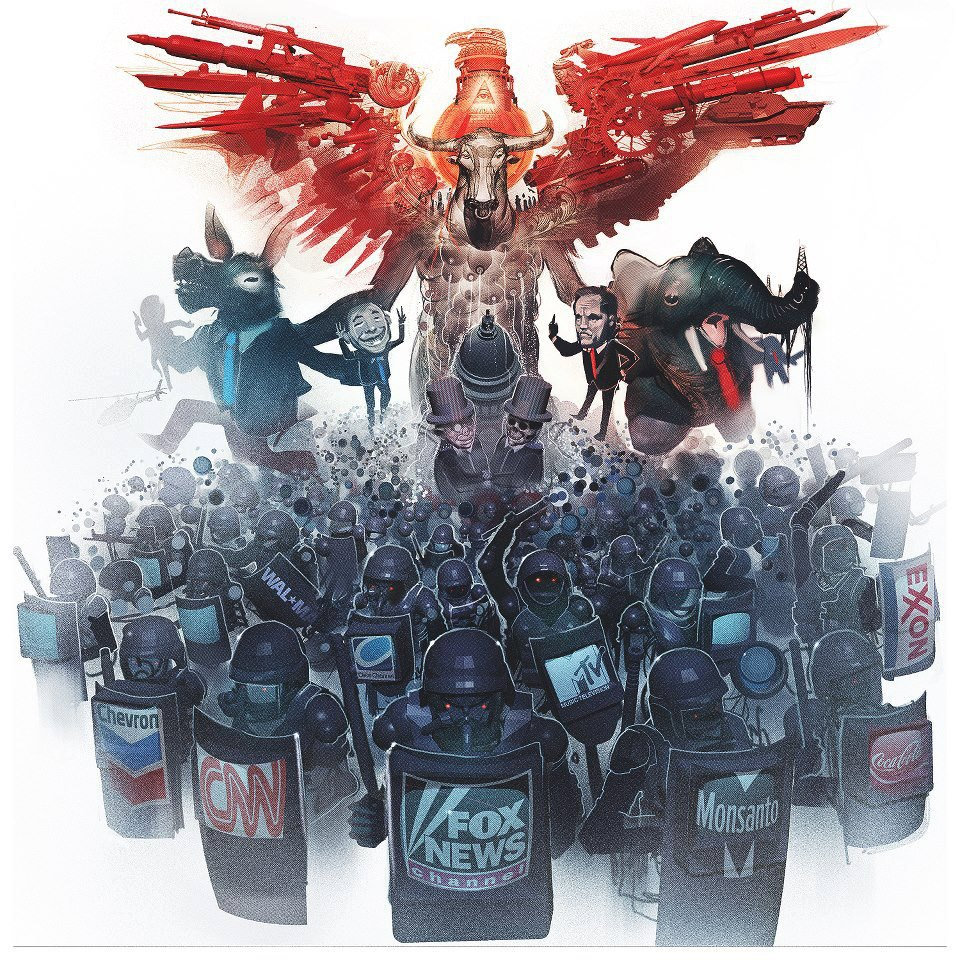
All flag worshipers have the same unhealthy religion: statism. Flag worship is a nationalist’s false idol. It doesn’t matter if you’re a sieg-heiling Nazi or a little kid singing the pledge of allegiance. It’s all parochial symbolism digging its tentacles into contemporary ideals. It leads to blind conformity, indoctrinated complacency, bloated pride, war, and people all too happy to choke on the blue pill of blind obedience to an outdated chain of command.

Flag worship is a psychosocial hang-up. It works because we are social creatures. But what begins as a symbol for unifying people becomes a symbol for dividing people when it is taken too seriously or too pridefully.

In a world of 195 nation states, all with their own flags, it behooves us to use the same reasoning that Aristotle used when he said, “It is the mark of an educated mind to be able to entertain a thought without accepting it,” and then apply it to the concept of flags. Better to entertain a flag without accepting its authority. That’s what anti-statists do. And so, anti-statists are free under all banners.

Statism keeps the world divided. Divided people are easier to control. As Maximilien Robespierre surmised, “The secret of freedom lies in educating people, whereas the secret in tyranny is in keeping them ignorant.” Anti-statists teach us how not to be ignorant statists. They teach us how to rise above our cultural conditioning and how to become well-informed free-range humans instead.

As Nietzsche famously explained, “State is the name of the coldest of all cold monsters. Coldly it lies; and this lie slips from its mouth: ‘I, the state, am the people.’” Anti-statists are here to remind us that we are NOT the state. We are free individuals who require others to be free so that we can remain free. It really is that simple. As Albert Camus said, “I rebel, therefore we exist.”

Statism only functions when unhealthy, divided individuals create an us-versus-them mentality. It cannot continue if people are healthy and connected. It cannot continue if people realize that freedom is paramount. In short: statism fails when enough people achieve a sense of freedom and wellbeing despite the state.

So how do you know if you’re a statist or not?

Here are seven tell-tale signs you may be a statist:

1.) You are a statist if you believe that you need a ruler to rule over you.

2.) You are a statist if you believe that you require permission to be free.

3.) You are a statist if you blindly worship a flag.

4.) You are a statist if you believe that violence is the solution to problems.

5.) You are a statist if you believe that people should be forced into doing things without their consent.

6.) You are a statist if you believe that an authority should make decisions for you.

7.) You are a statist if you believe in comfortable obedience over uncomfortable freedom.

Anti-statism is an alien concept in our world, even though statelessness can be extended to all living beings “in principle” and “in theory,” at its irreducible bedrock nature, it is exceptionally difficult to be sovereign and stateless. This is because the entire world is plagued with the disease of statism. Statism is so second-nature to our existence that we never question it.

We might as well be fish questioning water. But we are NOT fish. We are human beings with the ability for deep logic, higher reasoning, and basic common sense. As Alvaro Koplovich quipped, “A man without a government is like a fish without a bicycle.” Fish do not need bicycles. Just like mankind does not need government, though he is conditioned to think he does.

People are unlikely to question a system they’ve been indoctrinated into, even if that system goes against common sense, the golden rule, and the non-aggression principle. People are more likely to stick to what they’ve been conditioned to believe, whether that belief is judicial, political, religious or all three (statism).

Overcoming statism takes a particular flavor of courage that doesn’t readily exist in the average person. It’s a kind of courage that must be birthed through great psychological upheaval and the death of one’s cultural conditioning. It must be nursed and cultivated daily, lest it slip back into passivity or typical, ineffective, and outdated modes of courage. It must be guided by a unique and daring flavor of leadership: a radical leadership that checks and balances constructs of power and teaches others how to do the same. This is Anti-statism.

Freedom begins by overcoming false truths. A false truth is any belief that is deemed invalid according to universal laws. It’s our responsibility alone to figure this out. Nobody else can do it for us. It’s our responsibility alone to question what we’ve been taught.

What’s crucial to understand is that the concept of freedom is almost entirely psychological in nature. In today’s day and age, it is less about breaking free physically (from harsh overt slavery), and more about breaking free psychologically (from comfortable covert slavery). Breaking free psychologically is rising above the cultural conditioning and reconditioning our condition.

The anti-statist does this with pluck and aplomb, acting as both a beacon of light for those stuck in the dark (confused and disoriented) AND as a beacon of darkness for those blinded by the light (culturally conditioned).

Anti-statists force us to look into the cultural mirror. They teach us how to pour the statist Kool Aid down the sink. They teach us how and why to deny any authority that claims we need permission to be free. They teach us how to disobey inauthentic leadership and how to embrace authentic leadership instead. They teach us how to become leaders who teach others HOW to think rather than WHAT to think.

Where statism is comfortable slavery, anti-statism is uncomfortable freedom. The anti-statist is free and uses that freedom with the soul intent to free others. They escape tyranny by freeing others through the symbol of their own freedom. Thus, freedom begets more freedom.

As the folks at Academy of Ideas said, “Contrary to what statist propaganda teaches, freedom cannot be imposed on us from above, nor is it created or destroyed at the ballot box. Freedom emerges at a societal level when enough of us recognize its value and structure our lives accordingly.”

Freedom must find its limit in justice and justice must find its limit in freedom. Otherwise, we either find ourselves living in a free-for-all state of chaos where anybody can do anything without any consequences (like the movie The Purge), or we’re living in a violent authoritarian state with oppressive laws and the illusion of freedom (like statism). Ideally, freedom balanced with justice and justice balanced with freedom is the healthiest way.

Here are five anti-statist tactics to overcome statism:

1.) Don’t ask for permission to be free.

2.) Don’t pay for the guards to guard you.

3.) Learn self-defense and honor the nonaggression principle.

4.) Vote with your feet: Don’t vote in, vote out.

5.) Don’t rely on government; govern yourself.

(Further reading: The Best Way to Manage Slaves (and how to avoid becoming one.)

Though anti-statists are born into a profoundly sick society, they decide not to be a part of it. They decide to live in the “real” world, a world not tainted by the unhealthy culture that the false system has created. Although the unhealthy culture is something the anti-statist must deal with, it is not something they must be a part of unless they choose to.

The anti-statist takes up the mantle of freedom despite authority so that you, your mother, your daughters, and even your granddaughters can one day be free from the powers of false men. They feel it is their own responsibility, as truly free humans, to do something about the unhealthy state of affairs because nobody else will. Nobody else seems to have the capacity to do what the anti-statist can do.

A wise man once said, “All that is needed for the forces of evil to triumph is for good men and women to do nothing.” Thus, anti-statists refuse to do nothing. They don’t waste time talking about being good men. They ARE good men. They will not allow evil to triumph. Even if that means they must make the goody-two-shoes and snowflakes of the world uncomfortable. Even if that means they must be amoral in the face of shortsighted morality and blind immorality.

When the laws of a nation-state are moral and just, the anti-statist follows them. When they are immoral and unjust, the anti-statist breaks them. This is because the anti-statist has become a self-ruling, self-overcoming, amoral agent unto himself. He can see through the nationalism that blinds the statist and, for that reason, he is a forerunner regarding the healthy and progressive evolution of the species.

Where statists believe that you require permission to be free, anti-statists understand that you are required to be free. Where the statist believes that only the state can provide and protect one’s freedom, the anti-statist understands that it is the sole responsibility of each individual to provide and protect their own freedom and often it must be taken away from the state. As William Blake said, “I must create a system or be enslaved by another Man’s.”

At the end of the day, it comes down to taking personal responsibility. The anti-statist teaches us all that it is our sole responsibility to realize how we are caught up in the song and dance of an extremely dangerous religion known as statism. Statism is an avalanche of outdated cultural conditioning that has divided the world for too long. It is high time that we break the cascade of divisiveness.

If, as Voltaire warned, “No snowflake in an avalanche ever feels responsible,” then the anti-statist’s rebuttal is: if enough snowflakes take the responsibility to distance themselves from the avalanche, then there is no avalanche.

RESISTING TYRANNY DEPENDS ON THE COURAGE TO NOT CONFORM

By Barry Brownstein

Source: Waking Times

Social psychologist Roy Baumeister begins his book Evil: Inside Human Violence and Cruelty, with a proposition that will be counterintuitive to many: “Evil usually enters the world unrecognized by the people who open the door and let it in. Most people who perpetrate evil do not see what they are doing as evil.”

Dismissing evildoers as “insane” is an attempt to absolve both them and you of responsibility. Baumeister observes, “People do become extremely upset and abandon self-control, with violent results, but this is not insanity.” If only “insane” people commit “evil” acts, you might reason there is no need to strengthen spiritual and moral muscles. You might skip the reflection, study, and practice that builds spiritual and moral strength.

Would you, Baumeister asks, “obey orders to kill innocent civilians? Would you help torture someone? Would you stand by passively while the secret police hauled your neighbors off to concentration camps?” Baumeister writes, “Most people say no. But when such events actually happen, the reality is quite different.” Today, to the point, will you obey orders to fire upon people who refuse to comply with mandates?

In one of the most instructive books about Nazi Germany, Ordinary Men: Reserve Police Battalion 101 and the Final Solution in Poland, historian Christopher Browning explores why most people say yes and commit heinous acts even when given latitude to say no.

The men of Police Battalion 101 were not specially selected psychopathic killers. Initially, the Battalion was set up to enforce Nazi rule in occupied Poland. Eventually, their mission changed, bringing them to be the genocidal murderers of Jews they were charged with rounding up. Browning explains, “The bulk of the killers were not specially selected but drawn at random from a cross-section of German society, and they did not kill because they were coerced by the threat of dire punishment for refusing.” Mostly they were “middle-aged reserve policemen.” Battle had not driven these men to depravity, “they had not been fired on nor had they lost comrades.”

Browning explores one of their initial murderous actions, “shooting some 1,500 Jews in the Polish village of Józefów in the summer of 1942.” Major Wilhelm Trapp addressed his men before the shooting began: “Pale and nervous, with choking voice and tears in his eyes, Trapp visibly fought to control himself as he spoke. The Battalion, he said plaintively, had to perform a frightfully unpleasant task. This assignment was not to his liking; indeed, it was highly regrettable, but the orders came from the highest authorities.”

Trapp provided a “justification” for the coming slaughter—Jews were damaging Germany and threatening German troops—but then Trapp “made an extraordinary offer: if any of the older men among them did not feel up to the task that lay before him, he could step out.” The task, Trapp outlined, was the immediate killing of all women, children, and the elderly.

Only twelve of the approximately 500 in the Battalion initially took Trapp’s offer to “step out.” Browning estimated “10 to 20 percent of those actually assigned to the firing squads” extricated themselves “by less conspicuous methods or asked to be released from the firing squads once the shooting had begun.” Yet for most of the police, killing became second nature: “Many reserve policemen who were horrified in the woods outside Józefów… subsequently became casual volunteers for numerous firing squads and ‘Jew hunts.’”

Browning’s research provides insights into the mindsets that fueled obedience: “Who would have ‘dared,’ one policeman declared emphatically, to ‘lose face’ before the assembled troops.” Another said, “No one wants to be thought a coward.”

Not all who followed orders lacked moral consciousness: “Another policeman—more aware of what truly required courage—said quite simply, ‘I was cowardly.’”

Some rationalized their atrocities: “It was possible for me to shoot only children. My neighbor then shot the mother and I shot the child that belonged to her, because I reasoned with myself that after all without its mother the child could not live any longer.”

To escape moral culpability, others offered the excuse of what difference could they make: “Without me [shooting] the Jews were not going to escape their fate anyway.” How many managers are saying today, what difference can I make? If I don’t fire the unvaccinated, someone else will.

Browning explains, “The men’s concern for their standing in the eyes of their comrades was not matched by any sense of human ties with their victims. The Jews stood outside their circle of human obligation and responsibility.” Today, hospital administrators are firing workers with robust natural immunity who faithfully served during the pandemic and refuse the vaccine. Like the men in the Battalion, these administrators are just following orders.

What would have happened that terrible day in 1942 if more policemen recognized the humanity of the “other” and had the courage to not conform? Today, what would happen if more businesses, like In-N-Out Burger, refuse to obey government edicts? In October, Stephen Davis, a Florida fire battalion chief, “was fired for refusing to discipline department employees listed as unvaccinated.” What would happen if more managers had the courage of Chief Davis? Without obedience, tyranny fails.

During this time of Covid, we can learn lessons from Browning’s book about how we treat people who make choices different from our own. We can notice when we fail to see the humanity in others. We can become aware when we justify an us vs. them mindset. We can question our perceptions. To wait for Biden or Fauci to change first is to ignore our power of choice.

Lessons Learned

Browning reflects on the actions of the Battalion and asks, “If obedience to orders out of fear of dire punishment is not a valid explanation, what about ‘obedience to authority’ in the more general sense used by Stanley Milgram?”

Browning wonders if there is “a ’deeply ingrained behavior tendency’ to comply with the directives of those positioned hierarchically above, even to the point of performing repugnant actions in violation of ‘universally accepted’ moral norms.” Browning explains,

The notions of ‘loyalty, duty, discipline,’ requiring competent performance in the eyes of authority, become moral imperatives overriding any identification with the victim. Normal individuals enter an ‘agentic state’ in which they are the instrument of another’s will. In such a state, they no longer feel personally responsible for the content of their actions but only for how well they perform.

Browning recounts, “Milgram made direct reference to the similarities between human behavior in his experiments and under the Nazi regime. He concluded, ‘Men are led to kill with little difficulty.’”

Importantly, “Milgram himself notes that people far more frequently invoke authority than conformity to explain their behavior, for only the former seems to absolve them of personal responsibility.” Yet, in the Battalion case, “Many policemen admitted responding to the pressures of conformity—how would they be seen in the eyes of their comrades?—not authority.” Based on his research, Browning concludes, “Conformity assumes a more central role than authority at Józefów.”

The Covidocracy demands we all conform and shames those who make different choices. Browning explains the dangers of a culture of shame: “The shame culture, making conformity a prime virtue, impelled ordinary Germans in uniform to commit terrible crimes rather than suffer the stigma of cowardice and weakness and the ‘social death’ of isolation and alienation vis-à-vis their comrades.”

The segregation of Jews was an enabler of evil actions. Browning points to pervasive banishment of Jews from German society “and the resulting exclusion of the Jewish victims from any common ground with the perpetrators made it all the easier for the majority of the policemen to conform to the norms of their immediate community (the battalion) and their society at large (Nazi Germany).”

For some policemen who did not shoot, their commercial ties shaped their view of human beings. One said, “Through my business experience, especially because it extended abroad, I had gained a better overview of things. Moreover, through my earlier business activities I already knew many Jews.”

Harvard social psychologist Gordon Allport developed his famed contact hypothesis in the 1940s: “Increasing exposure to out-group members will improve attitudes toward that group and decrease prejudice and stereotyping.” Commercial ties bring people together.

Today, politicians work overtime demonizing, mocking, and punishing “out-group members” who won’t obey their dictates.

A Story of Nonconformity

Recently Tim, a reader and business owner from New Zealand, sent me his powerful testimony in an email:

Fifty odd years ago, as a young child I went to Ranui Primary School in suburban Auckland. There were two Māori boys in my class of 9-year-olds. Sometimes through the day they would make short comments to each other in Māori.

If the teacher heard them do it, he would keep our entire class in detention after school for 15 to 30 minutes. I always hated it because one of the boys was my friend, and a regular playmate of mine after school. The other one, used to walk home from school with me too, they were my friends.

But most of the class blamed these two Māori boys for us all being locked in after school. The majority of the kids disliked and bullied them in my class.

I couldn’t do it; I couldn’t dislike them because they were my friends. Perhaps even then as a boy I could see what our teacher was doing.

Our teacher was using the rest of the class as a weapon against those two young boys by encouraging the spiteful and discriminating attitudes towards them.

Tim’s choice to not conform to social pressure made all the difference to his Māori friends. Did Tim’s ability to see the humanity in others help him become a successful entrepreneur? After all, entrepreneurs succeed when they help serve the needs of others.

Tim continued his testimony:

Today, 50 years later, I am again feeling the same way as I did back in my Ranui Primary School class. The teacher is telling us all that we will continue to be locked in until 90% (or whatever) of the country is vaccinated. And further, we are told that it is the fault of the 20% (or so) that have so far chosen not to accept the two shots in the arm.

As a country, we are all encouraged to heap blame and hate towards anyone who has decided to not vaccinate.

Regardless of my own vaccination status, I have friends and family who I refuse to hate or blame.

I lay the blame exactly where it belongs. At the feet of my Primary School teacher for our detentions, not my two boyhood friends.

And at the feet of our Prime Minister for her lockdown rules, not my friends and family who have chosen to decline an injection that they don’t trust, rightly or wrongly.

Be like Tim. Be like the 10-20% of Battalion 101 who didn’t conform. Our scorn should be towards those who demand our obedience and split America into an in-group and an out-group. Become more aware when you allow your thinking to be hijacked by propaganda.

Many in the Battalion didn’t understand their crimes until decades after the war ended. Don’t wait to reflect until a future historian writes a book about how you supported tyranny by placing conformity above human rights.

Today Charles Eisenstein points out, “Many people trust the authorities and willingly comply with their rules. They face no dilemma, no initiatory moment, no self-defining world-creating choice point, not yet.”

Conforming, lacking courage, will not spare you from choices that life will demand of you. Eisenstein challenges us: “As the authorities’ narratives devolve into absurdity and their rules devolve into oppression, more and more of us face this choice: … To do what you know is right, or to cave in to the pressure, consoling yourself with words you don’t believe. ‘I had no choice.’”

We all have a personal responsibility for preserving freedom. The price of abdicating our responsibility is high. As Browning puts it, Germans paid a high price for “placing uncritical trust in the ‘firm leadership’ of seemingly well-intentioned political authority between 1933 and 1945.”

The Systemic Risk No One Sees

The unraveling of social cohesion has consequences. Once social cohesion unravels, the nation unravels.

By Charles Hugh Smith

Source: Of Two Minds

My recent posts have focused on the systemic financial risks created by Federal Reserve policies that have elevated moral hazard (risks can be taken without consequence) and speculation to levels so extreme that they threaten the stability of the entire financial system.

These risks are well known, though largely ignored in the current speculative frenzy.

But there is another systemic risk which few if any see: the collapse of social cohesion.

President Carter was prescient in his understanding that a nation’s greatest strength is its social cohesion, a cohesion that America’s unprecedented wealth / income / power inequalities has undermined. Consider this excerpt from his 1981 Farewell Address:

“Our common vision of a free and just society is our greatest source of cohesion at home and strength abroad, greater even than the bounty of our material blessings.”

In other words, a nation’s strength flows not just from its material wealth but from its social cohesion–a term for something that is intangible but very real, something that doesn’t lend itself to quantification or tidy definitions.

Here is my definition: Social cohesion is the glue binding the social order; it is the willingness of the citizenry to sacrifice individual gains for the common good.

Social cohesion is the result of the citizenry sharing a common purpose and identity and working toward the common good even at personal cost. Social cohesion arises from a national identity based on shared values and sacrifices.

To maintain social cohesion, opportunities to better their circumstances must be open to all (the social contract of social mobility) and sacrifices must be shared by the entire citizenry. If the privileged elites evade their share of sacrifice, social cohesion is lost and the entire social order unravels.

The glue binding the privileged elites to shared sacrifice is civic virtue, a moral code that demands elites devote a greater share of their own resources to the public good in exchange for their political and financial power.

Though no one dares confess this publicly, America is now a moral cesspool. As a result, the moral legitimacy of the nation’s leadership has been lost. Every nook and cranny of institutionalized America is dominated by self-interest, and much of the economy is controlled by profiteering monopolies and cartels which wield far more political power than the citizenry.

Civic virtue has been lost. What remains is elite self-interest masquerading as civic virtue.

In his Farewell Address, President Carter explained that “The national interest is not always the sum of all our single or special interests. We are all Americans together, and we must not forget that the common good is our common interest and our individual responsibility.”

Social cohesion, civic virtue and moral legitimacy are the foundation of every society, but they are especially important in composite states.

America is a composite state
, composed of individuals holding a wide range of regional, ethnic, religious and class-based identities. The national identity is only one ingredient in a bubbling stew of local, state and regional identities, ethnic, cultural and religious identities, educational/alumni, professional and tradecraft identities, and elusive but consequential class-based identities.

Composite states are intrinsically trickier to rule, as there is no ethnic or cultural identity that unifies the populace. Lacking a national identity that supersedes all other identities, composite states must tread carefully to avoid fracturing into competing regional, ethnic or cultural identities.

Composite states must establish a purpose-based identity that is understood to demand shared sacrifice, especially in crisis. In the U.S., the national purpose has been redefined by the needs of the era, but never straying too far from these core unifying goals: defending the civil liberties of the citizenry from state interference, defending the nation from external aggressors, and serving the common good by limiting the power of special interests and privileged elites.

We’ve failed to limit the power of privileged elites, failed to demand greater sacrifices of the wealthy in exchange for power, and so the moral legitimacy of the regime has been lost. And with the ascendance of self-interest and the elite’s abandonment of sacrifice, social cohesion has been lost.

This loss is reflected in the bitter partisanship, the increasingly Orwellian attempts to control the mainstream and social media narratives, the debauchery of “expertise” as dueling “experts” vie for control, the fraying of social discourse, the substitution of virtue-signaling for actual civic virtue, the institutionalization of white-collar crime (collusion, fraud, embezzlement, etc.), the increasing reliance on Bread and Circuses (stimulus, Universal Basic Income) as real opportunity dissipates, and the troubling rise in shootings, crime, random violence and plummeting marriage and birth rates.

The unraveling of social cohesion has consequences. Once social cohesion unravels, the nation unravels.

What’s the solution?
 At the national level, all that has been lost will have to be restored: civic virtue, moral legitimacy, the social contract of opportunity, shared sacrifice that falls most heavily on the wealthiest and most powerful, and a renewed national purpose centered on serving the common good.

Is such a restoration of moral legitimacy and shared purpose even possible? No one knows. If history is any guide, such a renewal is only possible after the empire of rampant self-interest implodes.

So what do we do in the meantime? Nurture our own social cohesion by living purposefully and sharing sacrifices and bounties with those we trust and admire–those in the lifeboat we chose to join.

Phantom Performances – The Rise of the Spectacle

By Kingsley L. Dennis

Source: Waking Times

ˈspɛktək(ə)l/

noun

a visually striking performance or display

an event or scene regarded in terms of its visual impact

“Now the death of God combined with the perfection of the image has brought us to a whole new state of expectation. We are the image.” ~John Ralston Saul, Voltaire’s Bastards

“Magical thinking is the currency not only of celebrity culture, but also of totalitarian culture.” ~Chris Hedges, Empire of Illusion

Welcome to the spectacle. Or perhaps I should say the kind of spectacle that has become the face of entertainment that pervades our westernized cultures. The way that the spectacle succeeds is that it isn’t so much about fooling us into believing its lies as real, but rather that it is we who ask to be fooled. We seek to suspend our sense of reality, to pursue a space of escape. The spectacle pulls us in because we lend our willingness to its agenda. If we are honest, in this post-truth age, we will admit to living in an age of spectacle. And it is from this that many of us receive our interpretation of reality. Since the middle of the 20th century onwards the ‘western spectacle’ has been in the form of media advertisement and propaganda. We may think that we’ve only recently arrived at the age of the spectacle, where Disneylandification is becoming the norm, and Super Bowls are interspersed with scantily-clad singers, and TV programs appear in the slots between advertisers. Yet the whole spectacle show has been a form of function creep ever since telecommunications first emerged as a social phenomenon. The image has been with humanity since the first dawn of our arising; from cave paintings to hieroglyphics to cuneiform clay tablets. The major difference is that today the spectacle of the image has not only gone global, but it has also gotten inside of our heads.

Western cultures especially (and the US specifically) have now made the image, the spectacle, and hence the illusion so grand, so vivid, and so persuasively realistic that they are becoming our basis of reality. We swing from one illusion to the alternative, which is still yet another grand spectacle; just as we swing from the political left to the right, believing each side is distinctly different. Yet each is a part of the same bubble that customizes our lives – they form a part of our news, our heroes, our tragedies, and our dreams. We now serve a mosaic of ideals carefully crafted as a patchwork of phantom performances. Nothing is ever real anymore except the painful extremes that pervade our daily existence: the violence, the suffering, the deprivation, the inequality, the disease. Only these fragments that create great pain become the real, and from these many of us seek refuge in a plenitude of diversions, distractions, and triviality.

Western civilization has chosen to be played out upon a grand stage where the performance – of invented storylines and scripts – runs the show. We move through social realities that are an entanglement of signs, virtual connections, and social media status. It’s all about who is going to be the next ‘influencer’? We are encouraged to project back into the world our entertainment-mediatized fantasies. People begin to act out their imaginary landscapes, often in violent and distorted ways, as young students massacre their classmates before going to eat at McDonalds. This is the hyperreal that distorts a stable reality, making it harder to gain a grounded perspective on things. People are increasingly being guided by the false totems of media-militarized-entertainment.

The media spectacle gives us our modern guiding images. This is similar to how in the Middle Ages images depicted in stained glass windows and paintings of religious torment or salvation acted to control and influence the social behavior of our ancestors. For many of us the white-bearded god above is dead, so we have media depictions of heroes, adventurers, McGyvers, celebrity-cosmetic makeovers, beauty pageants, talk shows and reality television to be our social guides. An illusory sensate reality has been erected that runs on pseudo-lives and phantom performances. Such phantom performances mask our personal failures and conveniently hide them behind a curtain of the unreal. People prefer to watch the rich and famous on television rather than face the domestic unhappiness of their own lives. Why have ice when you can have bubblegum-flavored ice-cream?

Luckily for those of us who live in the west we inhabit a world of easy-correction where we can make ourselves better if we buy certain products, ingest certain foods, and hang-out in the right yoga gyms. For every situation there is seemingly a commercial solution. We have not been abandoned, after all. In the realm of hyperreality, our fantasies are no longer an impediment to success. On the contrary, our fantasies are the portals through which we enter. All we need is for the world of the media to give us our dream. Everybody has talent, as the reality shows tell us – ‘Britain’s Got Talent,’ ‘America’s Got Talent:’ in fact, we’ve all got talent! We are all of us hidden unique performers, and the world ‘out there’ is begging for our arrival. This is not to be confused with the manipulation by greedy commercial enterprises that are ready to discard you as soon as your ‘talent’ no longer sells.

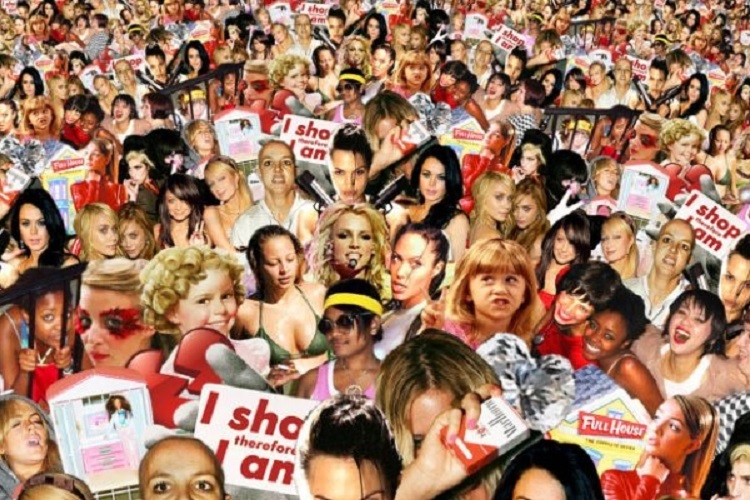
Yet the truth of the matter is that the spectacle of celebrity culture seeks commodities, not real individuals or souls. It doesn’t want that we seek for any form of transcendence, illumination, or real growth. It is a world that seeks only those that feed the phantom and encourage others to do the same. It is the ‘real’ that gets pushed into a black hole – to become a figment of the imagination, whilst imaginary dreams take its place. Celebrity culture thrives from the very lack of inner reflection. There is no ‘going within’ unless it is a form of medication going down our throats. If we are brutally honest, the celebrity spectacle is an ugly specter that can be as cruel as it is superficial.

The Spectacle of Celebrity Culture

No one achieves celebrity status on their own. It is a stage performance that requires a hoard of cultural enablers; from media, marketers, promoters, agents, handlers, and a host of hungry and gullible people. It is a veritable stage of actors, with each person in it to gain something for themselves. They either seek attention, satisfaction, fame, wealth, or a combination of these. Celebrity culture has come to dominate how many of us define our sense of belonging. It has come to define how we relate to the world around us, and in this respect has disfigured our notions of social belonging and community. Celebrity culture funds and feeds our own movies inside our heads as we invent our roles and behavior. It is a culture in which very few participants are even real for a day.

We idolize celebrities and often project them as idealized forms of ourselves. And yet through this substitution we move further away from any real self-actualization. The transcendent – the Real – does not do substitutes. By throwing our fantasies onto others we are diminishing our own power. In the words of one serious journalist,

We are chained to the flickering shadows of celebrity culture, the spectacle of the arena and the airwaves, the lies of advertising, the endless personal dramas, many of them completely fictional, that have become the staple of news, celebrity gossip, New Age mysticism, and pop psychology …in contemporary culture the fabricated, the inauthentic, and the theatrical have displaced the natural, the genuine, and the spontaneous, until reality itself has been converted into stagecraft. 1

We are subtly pushed through the well-structured stagecraft whilst all the time thinking that it is real. Our contemporary ‘death of the gods’ has been replaced by a divine adoration of celebrities and celebrity culture. Celebrity items, like holy relics, are paraded, idolized, and sold for vast sums. People rush for autographs, only to sell them later on eBay to make an unhealthy profit. Celebrity personal possessions are sold off at prestigious auction houses for astronomical prices, so aging people can wear the clothes of their idols. The glitzy suit that Elvis wore before dying in a Las Vegas toilet; or the dress that Marilyn Monroe wore to show her knickers to the world above a subway vent. Everything is up for grabs – the profane is made sacred, and then sacrificed as celebrity talismans. It all engenders a performance of hysteria, leading sometimes to stalking, or what is nowadays referred to as ‘trolling,’ as celebrity private photos are hacked and shared online. It’s happened to Emma Watson, Jennifer Lawrence, Kate Upton, Jessica Alba, Kate Hudson, Scarlett Johansson…and the list goes on, and on, and on.

The world of celebrity culture thrusts us into a moral void. People are valued by their appearance and their skin-deep beauty rather than their humanity. Such a culture focuses upon onanistic desires and ways for self-gratification. The cult of self ‘has within it the classic traits of psychopaths: superficial charm, grandiosity, and self-importance; a need for constant stimulation, a penchant for lying, deception, and manipulation, and the inability to feel remorse or guilt.’2 The cult of self also promotes the right to get whatever we wish, and celebrity media plays into this, often at the cost of the celebrity who suffers from social media harassment and online trolling. Celebrity public life is not a sacred space; instead, it has become a theatre of performance that is open for all spectators. And those spectators who surround themselves with celebrity culture tend to live in the present, fed by an endless stream of packaged information. They live by credit promises, ignorant to the future prospect of unmanageable debt. They are hostage to a culture that keeps them enthralled, like a television commercial replete with pleasing jingles. They navigate their purchases through well-known brands, eyeing the famous logos as guides. It is an image-saturated reality, bright and tantalizing, offering comfort and satisfaction upon all levels – until the credit runs out. Then the person becomes an outlaw to the very system that fattened them up like foie gras ducks.

These are the trivial diversions that for many are necessary, and which exist in cultures that prize shallow entertainment above substance. We may wonder whether the consumerist celebrity culture is a compensation for the loss of our true freedom regarding the human spirit and our well-being. And celebrities too are often trapped within their own fairy-tale prisons. They are skillfully controlled by their handlers and pushed in front of the media – all this to compensate for the insatiable appetites of those thirsty spectators that swarm upon celebrity culture. We are tantalizingly shown that even us, the humble spectators, can triumph in fame through the lens of reality television. The celebrity machinery oils itself on the media-creation of third and fourth-rate celebrities that have their fifteen minutes of fame – crammed together on desert islands, stuffing insects into their mouths as they bad-mouth their once beloved ‘best-friend’ and vote them off the show. Reality survival, it seems, comes at a cost. And then when they finally emerge into the ‘real world’ of the hyperreal they throng and mingle with other reality-stars under the glare of media spotlight in the vain hope that together they can populate an illusory world of the celebrity.

The world of reality television is another limb on the body of phantom performance. In the last decade a multitude of reality shows have cropped up on our television screens; and they all have one thing in common – they involve being constantly watched. Popular shows such as Big Brother put strangers to live together with round-the-clock constant surveillance. These strangers are even videoed in their beds as they sleep or fondle and kiss with other contestants. Sex lives are ogled over alongside the tears and on-screen breakdowns. Then the television psychologists are wheeled out to offer ‘expert commentary’ on the contestant’s state for mass consumption. Yet underneath all this glamour and glitz is the subtle message that intrusive surveillance is a normal feature of contemporary societies. In fact, it even masquerades as something cool that can be shared online, and which can make us famous. However, the brute reality is that such reality shows normalize what would otherwise be blatant non-constitutional intervention. And yet such shows make surveillance not only routine but a potentially enjoyable part of our modern lives. We are being conditioned into monitoring and sharing our own lives for others to see. Our phantom performances can make any one of us into an enviable star.

Social media is now rife with home-grown videos where everyone from toddler to teenager to retiree is making their performances visible to the image-hungry collective. Selfies too are the new fashionable rage as we perform in front of ourselves. This trend has become so pervasive that each year the number of selfie-related deaths has been increasing. In 2015 more people died from taking selfies than from shark attacks.[i] A dedicated online Wikipedia page has been established to record some of the ongoing ‘selfie-deaths.’ Here are a few examples:

Two young men died in the Ural Mountains after they pulled the pin from a live hand grenade to take a selfie. The phone with the picture remained as evidence of the circumstance of their deaths. (Russia, January 2015)

An 18-year-old died when she attempted to take the “ultimate selfie”, posing with a friend on top of a train in the north-eastern Romanian city of Iași when her leg touched a live wire above which electrocuted her with 27,000 volts. (Romania, May 2015)

A 19-year-old from Houston died after trying to take an Instagram selfie while holding a loaded gun to his head. He accidentally fired the gun and shot himself in the throat. (USA, September 2015)

A 17-year-old student, Andrey Retrovsky from Vologda, Russia, fell to his death attempting to take a selfie while hanging from a rope from a nine-story building. The rope snapped. Retrovsky was known for taking ‘extreme’ selfies and posting them to his Instagram account. (Russia, September 2015)

Selfie deaths, it seems, are global – and not a rare occurrence. Our phantom performances come at a cost. In a world where the image is iconic, more and more people are losing themselves in a reality where a sense of achievement comes from catching the ‘ultimate selfie.’

The drive for inner fulfilment, transcendence, and growth has been wavered aside in favor of the pixilated image. We fear not being seen. We dread being anonymous. Even being a spectral ghost is preferable to being dead.

We Are the Image

The new perspective on the world is pixilated. We are awash with images without substance and which are routinely fetishized as iconic. Signs are lacking immanence; they are fleeting and transient like never before. That is why corporations spend millions trying to find an image logo that will stick around long enough to be implanted into our minds. Images are becoming signs to the disappearance of the real. Images are the new believable reality; now no one cares that the original behind the image has quietly slipped away. The world exists as if in a play of phantom appearances. The image has taken centerstage within the space of the new real. We are now the image.

Yet the danger here is that in being given the image with its glamour and glitz we are in return giving up our critical and intellectual tools that help us cope with a complex world. Where once we had the faculty of separating illusion from reality we now have a simplified hyperreal world where everything can be explained away by a platitude of post-truth phrases. Does it even matter anymore that Las Vegas with its illusion of France with the mock Eiffel Tower, or its pseudo-canals of Venice, are far from the reality of France or Venice? How many people care? Or that the fantasy worlds within the various Disney theme parks are merging with the entertainment-saturated lives outside? Would it truly matter if we were all living within a controlled environment as depicted within the film The Truman Show? Or maybe, just maybe, such films are actually trying to tell us something – to wake us up?

The danger now is that our cultural spectacles – our celebrity culture and spectral images – are making any other alternative seem dull to us. It may be that in an age of simplified gratification any complex reality is boring. What the ‘real’ presents us with may no longer be enough. In its place we are perhaps seeking a false magic.

We have lost touch with that essential something that can work like magic in our lives. As one thinker recently stated:

We live in changing times whereby humanity is undergoing a transformation…We need to understand phenomena at deeper levels, and not just accept what we are told, or what is fed to us through well-structured social institutions and channels. We must learn to accept that our thinking is a great tangible spiritual force for change. 2

The notion that our ideas, our vision, our projections onto the world can be a ‘great tangible spiritual force for change’ is eluding us. Never before has it been so important to trust in the power of the human spirit, and to put forth, with honesty and integrity, the innate human power. The alternative is that we slide into the slipstream of our own phantom performances – we become the image.


Extract from the book Bardo Times: hyperreality, high-velocity, simulation, automation, mutation – a hoax?

Endnotes 

Hedges, Chris. 2010. Empire of Illusion: The End of Literacy and the Triumph of Spectacle. New York: Nation Books, p15

 Gulbekian, S.E. 2004. In the Belly of the Beast: Holding Your Own in Mass Culture. Charlottesville, VA: Hampton Roads, p251

[i] See http://www.telegraph.co.uk/technology/11881900/More-people-have-died-by-taking-selfies-this-year-than-by-shark-attacks.html

Wake From The Nightmare Or Eternal Sleep For Humanity

By Frank Scott

Source: Dissident Voice

The tradition of the dead generations weighs like a nightmare on the minds of the living.

— Karl Marx

Marx offered a thought for all seasons but one that might especially ring true during what is supposed to be a season of peace, joy and humanity. Contradicted by the ever more insanely harsh reality of marketing mass murder under the guise of creating freedom, much of our race, though still too few to radically transform the totality of our reality, has begun to rise in defense of all against a system that profits only a few. France’s recent experience was part of a hopeful trend in that segments of a public which has been bought, sold and rented into near poverty showed they are tired and demanded social justice over becoming what capital sees as a loss of its private profits. Their awakening from humanity’s nightmare, however brief it may seem, is inspiring as well as overdue. The actions of a predominately working class group of citizens demonstrating with enough fervor to force the French government to at least renege on some issues is in stark contrast to Americans trooping off to the polls to “resist” a personality while their system – the same one the French are up in arms about – disintegrates all around them. If we have anything to be happy about during the annual shopping frenzy of an alleged spiritual time for humanity, in a small way it’s a few changes in our congress, but in a greater way it’s the sign of awakening we see in France which will hopefully spread to more places in the New Year.

The social democratic salvation capital arranged after the depression of the twenties and thirties has collapsed and become a renewal of the worst forms of fascist capital that preceded and soon followed that brief cosmetic safety for some made possible only by the reduction to disfigured ugliness of others. The rise in status of a new middle class for millions in the western world was only possible with the misery of greater multitudes in what was called the third, or undeveloped world, but also the poverty class in that same west. There were people sleeping on the streets of America before, during, and after the last breakdown of capital given the brand name “the great depression”. This latest collapse that began in 2008 and is very possibly the last one that will wake up more than the French is only different in that it is worse and the numbers in the street have grown so much only the intellectually and morally blind cannot see them.

The wealth accumulation of the return to market fundamentalist roots was and continues to be shared by a shrinking minority while growing majorities have seen the facade of humanity brought about by social democratic capitalism dissolve in the reality of a take-no-prisoners brand of marketing. This Artificially Intelligent farce not only prides itself on the creation of poverty and warfare but dulls the sense of many of its innocent subjects by filling heads with propaganda that passes for news, entertainment to distract consciousness further, and the combination of the two that marketers call “infotainment”.

Thus we have a perverse form of capital therapy that herds us into near frenzied lynch mobs of genuinely frustrated and set upon souls directing energy at everything but the cause of most if not all the things that plague us. Rich individuals approaching deity status with economic powers beyond those of past royal despots are relatively invisible while some of their employees in government attract enough attention to be replaced by other of their employees who appeal to one or another interest or identity group affording pleasure to some, pain to most and continued ruling power to the incredibly rich minority at the top of the modern pyramid of capital.

Preposterous stories blaming Russia, China, Iran and possibly the Tooth Fairy for every sign of failure in what passes for a language perversion called the “free world” confuse and convince enough among the well fed and supposedly educated classes for the moment. When hardship eventually hits them in a material, rather than mental way, they will hopefully leave their identity groups and join the human race in the work necessary to transform global society.

Until the public good comes before private profit, things will get worse for all of us and any focus that continues separation of humans from potential majorities into smaller identity groups is simply the age old divide and conquer strategies always employed by minority rulers. This helps lead people with individual moral codes that find poverty and injustice intolerable to not only tolerate but to practice the most dreadful social policies imaginable. Privately, we Americans are as good, kind, compassionate, decent, and humane as any people on earth. Socially, however, we spend trillions on war, billions on pets, leave millions to live in poverty and hundreds of thousands to live on the street, and thus collectively become among the most degenerate moral perverts on the planet.

The skin tone, ethnicity, religion, sex or sexual preference of those serving capital while eating meals and flushing toilets at the white house or in slightly lesser roles in congress makes no difference to their victims reduced to cleaning the debris of death and destruction in the places where they oversee the bombing and looting. After their homes and nations are ruined we welcome some of them as migrants offering us cheap labor and a balm for our souls to maintain holiday spirit until the next slaughter we conduct. Food, clothing and shelter are basic human needs, not separate identity practices. They become so under private profit first economics that assure only some of the public will experience good, and that group is shrinking. The only way to assure a better life for all is for the ruling power to come from people who put the public good first, before any private gain is considered. Everyone has to be assured of food, clothing and shelter before anyone can aspire and work for even more by achieving private profit at the market. There is only one way to achieve that change and end society’s nightmare: the democratic forces of humanity must replace the market forces of capital. Happy New Year.

And So This Is Christmas

By David Swanson

Source: Let’s Try Democracy

Christmas Day. Very late on this day and into the morning of the 26th in 1776, George Washington led a surprise night crossing of the Delaware River and bloody pre-dawn attack on unarmed hung-over-from-Christmas troops still in their underwear — a founding act of violence for the new nation to proudly remember as the progenitor of either the crimes of its “special” forces all over the globe or of peace on earth, I can never recall which.

A more useful memory is certainly that of the 1914 Christmas truce, which was actually more than one truce that year and in the subsequent years of the Great War. This is a true story of people not just managing to speak to each other but actually becoming friends with not just people they had a disagreement with but people who a moment before and for a longtime running had been trying to murder them. It’s a story of war enemies figuring out that the actual enemy is not any people but war itself. And they did it on Christmas. Maybe we can do something good on Christmas too.

Better still is the memory of Jesus, whether fictional character or real man, stripped of all the magical powers, but understood as an innovative and courageous nonviolent activist, or — if you prefer — engager in active nonviolence. In the account Terrence Rynne gives in Choosing Peace: The Catholic Church Returns to Gospel Nonviolence, edited by Marie Dennis, Jesus lived in a violent time and place, the people around him full of rage at the Roman occupiers and their proxy tyrants. (Maybe I should just say a violent time, as the place is still violent and full of rage at distant occupiers and their proxy tyrants.) Jesus predicted catastrophe if the violence was escalated, and he was not heeded, and he was proved right. But his unheeded advice has often been put to use and can still be put to use.

If an occupying soldier smacks you, you can calmly and courageously and lovingly look him in the eye and offer your other cheek. If he takes your coat, you can expose his cruelty by offering your shirt too. If he forces you to carry his pack for a mile, you can make him see your humanity by offering to carry it a second mile. Those of us in the heart of the empire can block distant operations and ask that only the person who has never done anything wrong fire the first missile. We can confront fictional humanitarian justifications with the principled clarity of Jesus who preferred to be killed rather than condone the use of violence against the Romans. We can reject the morality that places politeness above saving the world from climate chaos or nuclear war, with the righteous loving anger of a nonviolent activist overturning the tables of the oligarchs.

A still better memory, though we don’t quite have it and need to create it, is the memory of the cultures displaced by the war-mad Western culture that adopted Christianity and turned it into a powerful argument for both war and sloppy thinking through just war theory. I’m reading right now a book called Kayanerenko:Wa The Great Law of Peace by Kayanesenh Paul Williams, about the law of peace created among the Mohawk, Oneida, Onondaga, Cayuga, and Seneca who became collectively the Haudenosaunee. There is as much to be learned from cultures that did not invent imperialism as from those that invented both it and ways to resist it.

There is the possibility of something being done for peace. President Donald Trump claims he will remove all U.S. troops from Syria. There is very little correlation between what he says and what he does, but if he does this, we need to be prepared to thank him, to celebrate such an action, and to insist that bombing cease as well, and that actual humanitarian aid and unarmed peace workers replace the military force, and that weapons sales and gifts to the region be ended. Trump needs to be shocked by the support for this act from unexpected places.

The U.S. Congress is making a lot of noise about possibly for the very first time using the 1973 War Powers Resolution to end a war, the war on Yemen. We need to make sure this happens and then celebrate it, while insisting that the law be complied with, that all loopholes in it be closed, and that weapons sales and gifts to the region be ended. Similar talk is beginning about also ending the war on Afghanistan. Our responsibility there is the same.

If any of these wars can be ended, we need to rapidly build on that success to end more wars, and more wars, and the funding of the preparations for wars. The United Nations says that $11 billion per year could end the lack of clean drinking water globally. The United States is building a single ugly boat for $13 billion that has no defensive purpose but is likely to start wars. It’s time to change course.

Three years ago, the Pope said this to the U.S. Congress which stood and cheered for it:

“Being at the service of dialogue and peace also means being truly determined to minimize and, in the long term, to end the many armed conflicts throughout our world. Here we have to ask ourselves: Why are deadly weapons being sold to those who plan to inflict untold suffering on individuals and society? Sadly, the answer, as we all know, is simply for money: money that is drenched in blood, often innocent blood. In the face of this shameful and culpable silence, it is our duty to confront the problem and to stop the arms trade.”

If anyone else had said that — I mean anyone else at all — he or she would have been denounced and mocked by members of Congress and by the corporate communications system in the United States. The Pope was cheered instead (and then ignored rather than heeded) not because he has established himself as a moral leader. It’s not that he hasn’t, so much as that we just don’t have those in U.S. corporate media; it isn’t done. The Pope was cheered and tolerated because he is understood to be speaking as a moral leader and is widely believed to be associated in some way with magical powers.

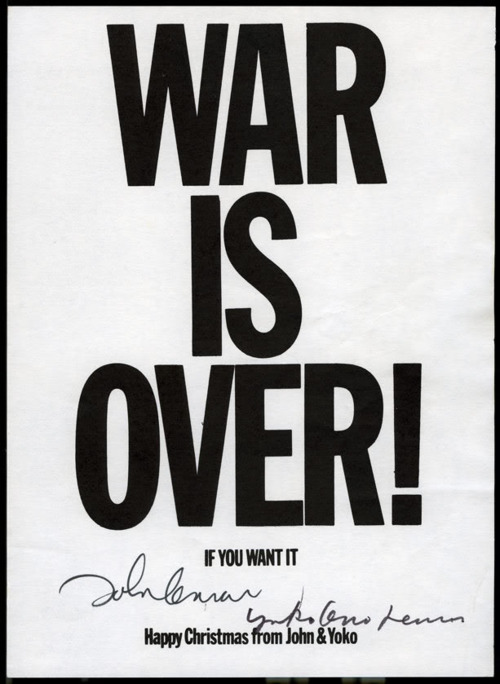
This makes the project that so many great Catholic peace activists are engaged in of trying to move the Catholic Church toward a complete rejection of war very valuable. It also makes it valuable for us all to use Christmas as an occasion to urge the consideration of morality in the question of war or peace, and to demand an end to weapons dealing and death dealing, base building and occupying, killing and maiming and destroying, and threatening fire and fury, in every corner of the world.

On Becoming Free – What Are We Really Freeing Ourselves For?

By Gary Z. McGee

Source: Waking Times

“I must create a system or be enslaved by another Man’s.” ~William Blake

Becoming free is creating your own virtuous system despite being outflanked by unvirtuous systems controlled by unvirtuous men. It is cultivating a healthy way of living despite the unhealthy ways of unhealthy men. It’s becoming so “absolutely free that your very existence is an act of rebellion” (Albert Camus). Then it’s building “a new model that makes the existing model obsolete” (Buckminster Fuller).

But first, we must ask ourselves what we are freeing ourselves for before asking ourselves what we are freeing ourselves from. The answer to that question, what are we freeing ourselves for, will be the foundation of our freedom, the cornerstone of our virtue, the building blocks of a healthier way of being human in the world.

Understand: we must be critical and highly skeptical of any “answer” that should arise from asking this most vital of questions. For if our “answer” is deemed invalid/unhealthy by the dictates of universal law (what’s healthy and what’s not), then it should be discarded as invalid/unhealthy for any humans who are attempting to be virtuous and healthy. Also, every “answer” should remain flexible and adaptable lest it become stagnant, rigid, dogmatic, tyrannical, or stuck in its ways.

A virtuous system follows the Golden Rule and the Nonaggression Principle:

“Beware of the good and the just! They like to crucify those who invent their own virtue for themselves.” ~Nietzsche

As human beings there is no way around the fact that we are social creatures. We need each other to survive in a hostile (entropic) universe. Therefore, the golden rule is paramount.

It is imperative that whatever we are freeing ourselves for does not overreach or impede the health and welfare of others. A truly virtuous system never forces its virtue onto others. The moment a so-called virtuous system forces its virtue or values onto others, it ceases to be virtuous. There’s no way around this absolute fact. Any attempt to “get around it” is a violation of the golden rule and therefore unvirtuous.

Likewise, it is vital that whatever we are freeing ourselves for does not violate the nonaggression principle (See caveat). A truly virtuous system is never directly violent. It is only ever violent in self-defense. The moment a so-called virtuous system becomes directly violent it ceases to be virtuous. The only moral exception to this fact is when violence is necessary to defend against direct violence –and, even then, only as a last resort. Any attempt to use violence to force others into compliance is a violation of the nonaggression principle and therefore unvirtuous.

Caveat: Being social animals in an environment with finite resources is highly complicated. To the extent that our virtuous system indirectly pollutes the environment it gets a pass for somewhat violating the nonaggression principle. The tragedy of the commons is a very real and sometimes unavoidable paradox. But, and here’s the rub, to the extent that our virtuous system directly pollutes the environment it is in direct violation of the nonaggression principle and therefore can no longer be considered virtuous.

A healthy system is sustainable, moral, and eco-conscious:

“A thing is right when it tends to preserve the integrity, stability, and beauty of the biotic community. It is wrong when it tends otherwise.” ~ Aldo Leopold

How do we know the current system (society) is unsustainable, immoral and even ecocidal, and thus unfit for healthy and virtuous people? It’s self-evident…

1.) Our society pollutes the air it needs to breathe.

2.) Our society pollutes the water it needs to drink.

3.) Our society pollutes the food it needs to eat.

4.) Our society creates unhealthy individuals it needs to evolve with.

Any system that forces its people to breathe polluted air, drink polluted water, eat polluted food and then continues to do all the things that causes that pollution is a profoundly sick society. Krishnamurti’s quote is a powerful reminder of this vital fact: “It’s no measure of health to be well-adjusted to a profoundly sick society.”

The solution is to create a system that is sustainable, moral, and eco-conscious; to create a healthy system that makes the unhealthy system obsolete.

The problem is that the unhealthy system overreaches. It overreaches with its pollution and it overreaches with its power. So almost any attempt at creating a healthier system will have to be covert and strategically defensive. Both in its attempt to create a healthy system and in its attempt to thwart the encroaching unhealthy system. It will have to be clandestine and stealthy on the one hand, and creative and daring on the other hand.

This will probably result in pockets of horizontal democracy on the group level: sustainable communes, ecovillages, and various types of anarchist groups. While on the individual level it will probably result in plenty of free-range humans, ninjaneers, eco-warriors, and various types of sustainable hermits.

The bottom line: Discovering a healthy and virtuous answer to the question ‘what are we freeing ourselves for?’ is no easy feat. It’s not for the faint of heart. It will take counterintuitive reasoning. It will require you to think outside of whatever box you’ve been conditioned to think inside of for most of your life. It will force you to unwash the brainwash. It will involve reprogramming your programming. It will demand that you question the profoundly sick society you were born into.

Most of all, it will require audacious courage in the face of comfortable cowardice. As Ralph Waldo Emerson said:

“A man is to carry himself in the presence of all opposition…I ought to go upright and vital and speak the rude truth in all ways…Your goodness must have some edge to it — else it is none.”

But, in the end, it will have been worth it. For you will have discovered moral virtue. You will have discovered provident health. You will have discovered authentic freedom. And your conscience will have finally been cleared.

The Psychology of Fascism

By Robert J. Burrowes

The continuing rise of fascism around the world is drawing increasing attention particularly as it takes firmer grip within national societies long seen to have rejected it.

Some recent studies have reminded us of the characteristics of fascist movements and individuals, particularly as they manifest among politically active fascists. For example, in his recent book How Fascism Works: The Politics of Us And Them Professor Jason Stanley has identified ten characteristics shared by fascists which have been simply presented in the article ‘Prof Sees Fascism Creeping In U.S.’

These characteristics, readily evident in the USA, Europe, Israel, Saudi Arabia, Myanmar and elsewhere today, include belief in a mythic (false) past, propaganda to divert attention and blame from the true source of corruption, anti-intellectualism and a belief in the ‘common man’ while deriding ‘women and racial and sexual minorities who seek basic equality as in fact seeking political and cultural domination’, promotion of elite dogma at the expense of any competing ideas (such as those in relation to freedom and equality), portrayal of the elite and its agents as victims, reliance on delusion rather than fact to justify their pursuit of power, the use of law and order ‘not to punish actual criminals, but to criminalize “out groups” like racial, ethnic, religious and sexual minorities’ which is why we are now ‘seeing criminality being written into immigration status’, and identification of “out groups” as lazy while attacking welfare systems and labor organizers, and promoting the idea that elites and their agents are hard working while exploited groups are lazy and a drain on the state.

In an earlier article ‘Fascism Anyone?’, published in the Spring 2003 issue of Free Inquiry Magazine, Professor Laurence W. Britt identified fourteen shared threads that link fascists. These include powerful and continuing expressions of nationalism, disdain for the importance of human rights, identification of enemies/scapegoats (such as communists, socialists, liberals, ethnic and racial minorities, traditional national enemies, members of other religions, secularists, homosexuals and ‘terrorists’) as a unifying cause, obsession with national security and avid identification with the military, sexism, a controlled/compliant mass media that promotes the elite agenda, a manufactured perception that opposing the power elite is tantamount to an attack on religion, corporate power protected by the political elite while the power of labor is suppressed or eliminated, disdain for intellectuals and the arts, expanded police power and prison populations in response to an obsession with the crime and punishment of ordinary citizens (while elite crimes are protected by a compliant judiciary), rampant cronyism and corruption, and fraudulent elections defended by a judiciary beholden to the power elite.

Offering a more straightforward characterization of fascism in the US context, which also highlights its violence more explicitly than the characterizations above, the eminent Norwegian peace research scholar Professor Johan Galtung explains it thus: ‘US Fascism? Yes, indeed; if by fascism we mean use of massive violence for political goals. US fascism takes three forms: global with bombing, droning and sniping all over; domestic with military weapons used across race and class faultlines; and then NSA-National Security Agency spying on everybody.’ See ‘The Fall of the US Empire – And Then What?’

Among other recent commentaries, one draws attention to a recent fascist gathering in the USA – see ‘Davos For Fascists’ – another to the ways in which fascism, under various names, is being effectively spread – see ‘How the new wave of far-right populists are using football to further their power’ – and another warns of focusing too narrowly on one issue and missing the wider threat that fascism poses. See ‘Fascism IS Here in USA’.

In any case, for those paying attention to what is happening in places like the United States, Europe, Israel, Saudi Arabia, Myanmar and elsewhere, it is easy to see that the rush to embrace fascism is accelerating.

But why? Surely, in this ‘enlightened’ age, notions such as freedom, democracy, human rights and equality are deeply embedded in our collective psyche, particularly in the West. We believe that elections should be, and are, ‘free and fair’ and not determined by corporate donations; we believe that the judiciary is independent of political and corporate influence. But are they?

Well, in fact, the evidence offered by the casual observation of events in the places mentioned above, as well as elsewhere around the world, tells us that none of this is any longer, if it ever was, the case. Let me explain why.

Fascism is a political label but, like any such label, it has a psychological foundation. That is, the political behavior of those who are fascists can be explained by understanding their psychology. Of course, all behavior can be explained by psychology but I will focus on the psychology of fascist behavior here.

There have been attempts to understand and explain the psychology of fascism, starting with the early work of Wilhelm Reich in The Mass Psychology of Fascism. So what is the psychology of individuals who are fascists?

You might not be surprised to read that the psychology of fascists is complex and is a direct outcome of the nature of the extraordinary violence to which they were subjected as children.

The Psychology of Fascists

Let me briefly identify the psychological profile of fascists and the specific violence (‘visible’, ‘invisible’ and ‘utterly invisible’) that generates a person with this psychology. For a thorough explanation and elaboration of this profile, and explanations of the terms ‘visible’, ‘invisible’ and ‘utterly invisible’ violence, see ‘Why Violence?’ and Fearless Psychology and Fearful Psychology: Principles and Practice.

First, fascists are terrified and they are particularly terrified of those individuals who perpetrated violence against them when they were a child although this terror remains unconscious to them. Second, this terror is so extreme that fascists are too terrified to consciously identify to themselves their own perpetrator (one or both parents and/or other significant adults who were supposed to love them) and to say that it is this individual or individuals who are violent and wrong.

Third, because they are terrified, they are unable to defend themselves against the original perpetrator(s) but also, as a result, they are unable to defend themselves against other perpetrators who attack them later in life. This lack of capacity to defend themselves leads to the fourth and fifth attributes – a deep sense of powerlessness and a deep sense of self-hatred. However, it is too terrifying and painful for the individual to be consciously aware of any of these feelings/attributes.

Sixth, because they are terrified of identifying that they are the victim of the violence of their own parents (and/or other significant adults from their childhood) and that this violence terrified them, fascists unconsciously delude themselves about the identity of their own perpetrator. They will unconsciously identify their ‘perpetrator’ as one or more individuals of whom they are not actually afraid from an existing ‘legitimized victim’ group such as children or people from a different gender, race, religion or class. This is also because their unconscious terror and self-hatred compels them to project onto people who are ‘controllable’ (because their original perpetrators never were). For this reason, their victims are (unconsciously) carefully chosen and are always relatively powerless by comparison.

This is easy to do because, seventh, children who become fascists have been terrorized into accepting a very narrow-minded and dogmatic belief set that excludes consideration of those in other social (including gender, racial, religious or class) groups. The idea that they might open-mindedly consider other beliefs, or the rights of those not in the ‘in-group’, is (unconsciously) terrifying to them. Moreover, because they have been terrorized into adopting their rigid belief set, fascists develop an intense fear of the truth; hence, fascists are both bigoted and self-righteous. In addition, the belief set of fascists includes a powerful and violently reinforced ‘lesson’: ‘good’ means obedient; it does not mean intrinsically good, loving and caring.

Eighth, and as a result of all of the above, fascists learn to unconsciously project their self-hatred, one outcome of their own victimhood, as hatred for those in the ‘out-groups’. This ‘justifies’ their (violent) behavior and obscures their unconscious motivation: to remain unaware of their own suppressed terror and self-hatred.

Ninth, fascists have a compulsion to be violent; that is, they are addicted to it. Why? Because the act of violence allows them to explosively release the suppressed feelings (usually some combination of fear, terror, pain, anger and powerlessness) so that they experience a brief sensation of delusional ‘relief’. Because the ‘relief’ is both brief and delusional, they are condemned to repeat their violence endlessly.

But the compulsion to be violent is reinforced by another element in their belief set, the tenth characteristic: fascists have a delusional belief in the effectiveness and morality of violence; they have no capacity to perceive its dysfunctionality and immorality.

And eleventh, the extreme social terrorization experience to which fascists have been subjected means that the feelings of love, compassion, empathy and sympathy, as well as the mental function of conscience, are prevented from developing. Devoid of conscience and these feelings, fascists can inflict violence on others, including their own children, without experiencing the feedback that conscience and these feelings would provide.

What Can We Do?

There is no simple formula for healing the badly damaged psychology of a fascist (or those who occupy a proximate ‘political space’ such as conservatives who advocate violence): it takes years of violent parental and adult treatment to create a fascist and so the path to heal one is long and painful, assuming the support for the individual to do so is available. Nevertheless, fascists can heal from the terror and self-hatred that underpin their psychology. See Putting Feelings First’. And they can be assisted to heal by someone who is skilled in the art of deep listening. See ‘Nisteling: The Art of Deep Listening’.

Unfortunately, given their cowardice, fascists are unlikely to have the courage to seek the appropriate emotional support to heal. In the meantime, those of us so inclined must resist their violence and, ideally, this should be done strategically, particularly if we want impact against fascist national leaders. See Nonviolent Campaign Strategy or Nonviolent Defense/Liberation Strategy.

The good news is that we can avoid creating fascists. If you want to nurture a child so that they become compassionate and caring, live by their conscience and act with morality and courage in all circumstances, including when resisting fascists, then consider making ‘My Promise to Children’.

You might also consider joining the worldwide movement to end all violence, fascist or otherwise, by signing the online pledge of ‘The People’s Charter to Create a Nonviolent World’.

In essence: Fascists are terrified, full of self-hatred and powerless. But, too scared to feel their own terror, self-hatred and powerlessness, they unconsciously project this as fear of, and hatred for, the people in one or more ‘legitimized victim’ groups, including their own children (thus creating the next generation of fascists). They then try to ‘feel powerful’ by seeking violent control over these people themselves or by seeking to have violent control exercised over these people by various ‘authorities’, ranging from school teachers and religious figures to the police, military and various corporate and government agencies.

No matter how much control they have over others, however, it is impossible to control their own terror, self-hatred and powerlessness. So they are unconsciously and endlessly driven to seek (delusional) ‘relief’ by violently controlling those in legitimized victim groups. It is because their own children are the most immediately available ‘uncontrollable’ target that fascism is readily perpetuated.


Biodata: Robert J. Burrowes has a lifetime commitment to understanding and ending human violence. He has done extensive research since 1966 in an effort to understand why human beings are violent and has been a nonviolent activist since 1981. He is the author of ‘Why Violence?’ http://tinyurl.com/whyviolence His email address is flametree@riseup.net and his website is here. http://robertjburrowes.wordpress.com

Robert J. Burrowes
P.O. Box 68
Daylesford, Victoria 3460
Australia

Email: flametree@riseup.net

Websites:
Nonviolence Charter
Flame Tree Project to Save Life on Earth
‘Why Violence?’
Feelings First
Nonviolent Campaign Strategy
Nonviolent Defense/Liberation Strategy
Anita: Songs of Nonviolence
Robert Burrowes
Global Nonviolence Network