“It is the function of mass agitation to exploit all the grievances, hopes, aspirations, prejudices, fears, and ideals of all the special groups that make up our society, social, religious, economic, racial, political. Stir them up. Set one against the other. Divide and conquer. That’s the way to soften up a democracy.”― J. Edgar Hoover, Masters of Deceit
The U.S. government has become a master of deceit.
It’s all documented, too.
This is a government that lies, cheats, steals, spies, kills, maims, enslaves, breaks the laws, overreaches its authority, and abuses its power at almost every turn; treats its citizens like faceless statistics and economic units to be bought, sold, bartered, traded, and tracked; and wages wars for profit, jails its own people for profit, and has no qualms about spreading its reign of terror abroad.
Worse, this is a government that has become almost indistinguishable from the evil it claims to be fighting, whether that evil takes the form of terrorism, torture, drug trafficking, sex trafficking, murder, violence, theft, pornography, scientific experimentations or some other diabolical means of inflicting pain, suffering and servitude on humanity.
With every passing day, it becomes painfully clear that this is not a government that can be trusted with your life, your loved ones, your livelihood or your freedoms.
Of the many weapons in the government’s vast arsenal, psychological warfare (or psy ops) can take many forms: mind control experiments, behavioral nudging, propaganda.
As Brianna Nofil explains, “MK-Ultra’s ‘mind control’ experiments generally centered around behavior modification via electro-shock therapy, hypnosis, polygraphs, radiation, and a variety of drugs, toxins, and chemicals.”
Similarly, the top-secret Montauk Project, the inspiration for the hit Netflix series Stranger Things, allegedly was working to develop mind-control techniques that would then be tested out on locals in a nearby village, triggering crime waves or causing teenagers to congregate.
As journalist Lorraine Boissoneault concludes, “Despite MK-ULTRA violating ethical norms for human experiments, the legacy of brainwashing experiments continued to live on in U.S. policy. The same methods that had once been used to train American soldiers ended up being used to extract information from terrorists in Abu Ghraib, Iraq and Guantanamo Bay.”
Fast forward to the present day, and it’s clear that the government—aided and abetted by technological advances and scientific experimentation—has updated its psy ops warfare for a new era. For instance, the government has been empowered to use its ever-expanding arsenal of weapons and technologies to influence behaviors en masse and control the populace.
Back in 2014, for example, a Fusion Center in Washington State (a Dept. of Homeland Security-linked data collection clearinghouse that shares information between state, local and federal agencies) inadvertently released records on remote mind control tactics (the use of “psycho-electronic” weapons to control people from a distance or subject them to varying degrees of pain).
This is how you persuade a populace to voluntarily march in lockstep with a police state and police themselves (and each other): by ratcheting up the fear-factor, meted out one carefully calibrated crisis at a time, and teaching them to distrust any who diverge from the norm.
This is not a new experiment in mind control.
Add the government’s inclination to monitor online activity and police so-called “disinformation,” and you have the makings of a restructuring of reality straight out of Orwell’s 1984, where the Ministry of Truth polices speech and ensures that facts conform to whatever version of reality the government propagandists embrace.
This “policing of the mind” is exactly the danger author Jim Keith warned about when he predicted that “information and communication sources are gradually being linked together into a single computerized network, providing an opportunity for unheralded control of what will be broadcast, what will be said, and ultimately what will be thought.”
We’ve already seen this play out on the state and federal level with hate crime legislation that cracks down on so-called “hateful” thoughts and expression, encourages self-censoring and reduces free debate on various subject matter.
The end goal of these mind-control campaigns—packaged in the guise of the greater good—is to see how far the American people will allow the government to go in re-shaping the country in the image of a totalitarian police state.
The government’s fear-mongering is yet another key element in its mind-control programming.
It’s a simple enough formula. National crises, global pandemics, reported terrorist attacks, and sporadic shootings leave us in a constant state of fear. The emotional panic that accompanies fear actually shuts down the prefrontal cortex or the rational thinking part of our brains. In other words, when we are consumed by fear, we stop thinking.
A populace that stops thinking for themselves is a populace that is easily led, easily manipulated and easily controlled whether through propaganda, brainwashing, mind control, or just plain fear-mongering.
Fear not only increases the power of government, but it also divides the people into factions, persuades them to see each other as the enemy and keeps them screaming at each other so that they drown out all other sounds. In this way, they will never reach consensus about anything and will be too distracted to notice the police state closing in on them until the final crushing curtain falls.
This Machiavellian scheme has so ensnared the nation that few Americans even realize they are being brainwashed—manipulated—into adopting an “us” against “them” mindset. All the while, those in power—bought and paid for by lobbyists and corporations—move their costly agendas forward.
It was almost 100 years ago when Bernays wrote his seminal work Propaganda:
“We are governed, our minds are molded, our tastes formed, our ideas suggested, largely by men we have never heard of… In almost every act of our daily lives, whether in the sphere of politics or business, in our social conduct or our ethical thinking, we are dominated by the relatively small number of persons…who understand the mental processes and social patterns of the masses. It is they who pull the wires which control the public mind.”
As I point out in my book Battlefield America: The War on the American People and in its fictional counterpart The Erik Blair Diaries, to this invisible government of rulers who operate behind the scenes—the architects of the Deep State—we are mere puppets on a string, to be brainwashed, manipulated and controlled.
For years now, the powers-that-be—those politicians and bureaucrats who think like tyrants and act like petty dictators regardless of what party they belong to—have attempted to brainwash us into believing that we have no rights: to think for ourselves, make decisions about our health, protect our homes and families and businesses, act in our best interests, demand accountability and transparency from government, or generally operate as if we are in control of our own lives.
Well, the government is wrong.
We have every right, and you know why? Because, as the Declaration of Independence states, we are endowed by our Creator with certain inalienable rights—to life, liberty, property and the pursuit of happiness—that no government can take away from us.
It’s time we started reminding the government that “we the people” are the ones in charge.
“ ‘Science?’….’Yes,’ Mustapha Mond was saying, ‘that’s another item in the cost of stability. It isn’t only art that’s incompatible with happiness; it’s also science. Science is dangerous; we have to keep it most carefully chained and muzzled…I’m interested in truth, I like science. But truth’s a menace, science is a public danger. As dangerous as it’s been beneficent. It has given us the stablest equilibrium in history…But we can’t allow science to undo its own good work. That’s why we so carefully limit the scope of its researchers…We don’t allow it to deal with any but the most immediate problems of the moment. All other enquiries are most sedulously discouraged…Our Ford himself did a great deal to shift the emphasis from truth and beauty to comfort and happiness…[but] People still went on talking about truth and beauty as though they were the sovereign goods. Right up to the time of the Nine Years’ War. That made them change their tune all right. What’s the point of truth or beauty or knowledge when the anthrax bombs are popping all around you? That was when science first began to be controlled – after the Nine Years’ War. People were ready to have even their appetites controlled then. Anything for a quiet life. We’ve gone on controlling ever since. It hasn’t been very good for truth, of course. But it’s been very good for happiness. One can’t have something for nothing. Happiness has got to be paid for. You’re paying for it, Mr. Watson – paying because you happen to be too much interested in beauty. I was too much interested in truth; I paid too.’ “ ~Aldous Huxley’s Brave New World
Where does one start in discussing the famed fiction novel of Huxley? Although most agree that there is a definite brilliance to the piece, most are also confused as to what was Huxley’s intention in writing the extremely influential dystopic vision. Was it meant to be taken as an exhortation? An inevitable prophecy? Or rather…was it meant as an Open Conspiracy?
What do I mean by an Open Conspiracy?
If we are going to talk about such things our story starts with H.G. Wells, whom Aldous acknowledged he was most certainly influenced by, particularly by Wells’ novels “A Modern Utopia,” “The Sleeper Awakes,” and “Men Like Gods,” when writing his “Brave New World.”
Although Aldous is quoted as referring to Wells as a “horrid, vulgar little man,” (Wells was indeed not a very likeable individual) it was not for reasons one might first assume. Aldous did share a Wellsian perspective in that society should be organised based on a caste system. Perhaps this was one of the reasons Aldous was so fascinated with learning about India’s Hindu religious beliefs and practices, which had coexisted for centuries with a deeply ingrained caste system to which India is still struggling to remove itself from to this day. This is not to say that one caused the other, or that Hinduism has not offered a plethora of great works and insights, but that it had become corrupted and thoroughly intertwined with upholding India’s caste system at some point one cannot deny; that it was used to justify a system of hierarchy from slave to the god-like state of a Brahmin and that British imperialists had always been greatly fascinated by this form of social organization one cannot deny.
Aldous was always interested in the subject of religion, but more so for its uses in behaviourism and mental conditioning achieved through such techniques as entering states of trance where an individual’s suggestibility could be manipulated. Hypnopædia was not just some quirky sci-fi concoction. It is also why Aldous was so interested in the work of Dr. William Sargant, whom Aldous repeatedly refers to in his writings and lectures and who was involved with the Tavistock Institute and MKUltra. More on this in Part two.
These spiritual/religious studies are what shaped the core thesis of Aldous’ book “Doors of Perception” which is considered the instruction manual for what started the counterculture movement. The title is influenced by the poet William Blake who wrote in 1790 in his book “The Marriage of Heaven and Hell,”:
“if the doors of perception were cleansed then everything would appear to man as it is, Infinite. For man has closed himself up, till he sees all things through narrow chinks of his cavern“
Another major influence for “Doors of Perception” was again H.G. Wells, from his book “The Door in the Wall,” which examines the contrast between aesthetics and science and the difficulty in choosing between them. The protagonist Lionel Wallace is unable to bridge the gap between his imagination and his rational, scientific side which leads to his death.
Aldous writes in his “Doors of Perception,”:
“That humanity at large will ever be able to dispense with Artificial Paradises seems very unlikely…Art and religion, carnivals and saturnalia [ancient Roman pagan festival], dancing and listening to oratory – all these have served, in H.G. Wells’s phrase, as Doors in the Wall…Under a more realistic, a less exclusively verbal system of education than ours, every Angel (in Blake’s sense of that word) would be permitted as a sabbatical treat, would be urged and even, if necessary, compelled to take an occasional trip through some chemical Door in the Wall into the world of transcendental experience. If it terrified him, it would be unfortunate but probably salutary. If it brought him a brief but timeless illumination, so much the better. In either case the Angel might lose a little of the confident insolence sprouting from systematic reasoning and the consciousness of having read all the books…But the man who comes back through the Door in the Wall will never be quite the same as the man who went out…”
Aldous was always chasing the perfect drug that would be minimal in its physically destructive effects but would allow an individual to tap into an almost consumer state of a religious/spiritual out-of-body experience, a transcendence that promised a connection with the Infinite, inner peace and enlightenment.
Enlightenment and inner peace in a pill, ready for whenever one needed a short holiday from the “illusion” of reality.
The name Soma, which Aldous used to name his fantasy ideal drug in “Brave New World,” was based off a plant whose juices were used to create the spiritual drink which was described in both the ancient religious practices of the Vedic tradition and Zoroastrianism, which called the plant and spiritual drink by the same name, Soma. Today, it is a mystery as to what plant they were referring to in these texts. Huxley no doubt chased after this dragon the entire latter half of his life, and indeed, psilocybin mushrooms are theorised as one of the potential candidates for what could have been named Soma centuries ago.
It is perhaps here that people are the most confused about the character of Huxley. After all, he was obviously walking the walk so to speak, thus didn’t he truly believe that psychedelics were the path to freedom through enlightenment?
Well, the argument has been made that Huxley’s approach to LSD [and other psychedelics] was essentially oligarchic, that it was to be regarded as a dangerous substance to be sampled only by such fine and visionary minds as his own. That is, those who had the mental strength, the mental stamina to reach enlightenment; those who were too weak to sustain such mental rigours would become the very opposite, and risked falling into the dark pit of complete madness, although this in of itself was perceived by many to be a form of clairvoyance. After all, what is it to be mad in a world that is sickeningly and inhumanely “normal”? This is most certainly how Ken Kesey thought when writing his “One Flew Over the Cuckoo’s Nest,” that madness itself was a form of liberation from the shackles of capitalist societal constraints.
Perhaps madness was the goal, it was after all, much more attainable that the promised enlightenment…
As William Sargant noted in his book “Battle for the Mind: A Physiology of Conversion and Brain-Washing” J.F.C. Hecker was studying the dancing mania phenomenon that occurred during the Black Death, which was a social phenomenon that arose in Europe between the 14th and 17th centuries. It involved groups of people who would begin to dance erratically during the Plague, sometimes thousands at a time until they would fall from exhaustion or from injuries. It was thought to have arisen in Aachen, Germany in 1374 and quickly spread throughout Europe with one of the last observations of it occurring in 1518 in Alsace, France.
Hecker observed in his research on the dancing mania that heightened suggestibility had the capability to cause a person to “embrace with equal force, reason and folly, good and evil, diminish the praise of virtue as well as the criminality of vice.”
Such a state of mind was likened to the first efforts of the infant mind, Sargant writes “this instinct of imitation when it exists in its highest degree, is also united a loss of all power over the will, which occurs as soon as the impression on the senses has become firmly established, producing a condition like that of small animals when they are fascinated by the look of a serpent.”
I wonder if Sargant imagined himself the serpent…
It is no wonder that the Tavistock Institute and the CIA became involved in looking at the effects of LSD and how to influence and control the mind. And perhaps it is no coincidence that Aldous Huxley was in close correspondence with William Sargant to which Sargant even refers to Aldous’ “insights” multiple times in his book “Battle for the Mind.”
Aldous is also quoted in a lecture he delivered to the Tavistock Group, California Medical School in 1961:
“There will be, in the next generation or so, a pharmacological method of making people love their servitude, and producing dictatorship without tears, so to speak, producing a kind of painless concentration camp for entire societies, so that people will in fact have their liberties taken away from them, but will rather enjoy it, because they will be distracted from any desire to rebel by propaganda or brainwashing, or brainwashing enhanced by pharmacological methods. And this seems to be the final revolution.”
Aldous goes on to state a year later in a lecture titled “The Ultimate Revolution” at UC Berkeley Language Center 1962:
“Today we are faced, I think, with the approach of what may be called the ultimate revolution, the final revolution, where man can act directly on the mind-body of his fellows…we are in process of developing a whole series of techniques which willenable the controlling oligarchy who have always existed and presumably will always exist to get people to love their servitude. This is the, it seems to me, the ultimate in malevolent revolutions shall we say, and this is a problem which has interested me many years and about which I wrote thirty years ago, a fable, Brave New World, which is an account of society making use of all the devices available and some of the devices which I imagined to be possible making use of them in order to, first of all, to standardize the population, to iron out inconvenient human differences, to create, to say, mass produced models of human beings arranged in some sort of scientific caste system.”
Yes, yes we get it. This is all to be taken as “warnings” to the public, a terrible necessity that will come about if over-population is not addressed (as he makes clear in his Brave New World Revisited). With over-population comes over-organization which in turn leads to the scientific advances in technology which we are told by Aldous can only lead to totalitarianism. Thus, population growth and advances in the sciences are the greatest threat to humankind. Wait, that sounds oddly very much like the reasonings of Mustapha Mond, have we come around full circle, what exactly does Aldous agree and disagree with here? Are we to have a scientific dictatorship in order to avoid a totalitarian system in the form of a scientific dictatorship?
In H.G. Wells’ “Open Conspiracy: Blueprints for a World Revolution,” he describes his vision for a Modern Religion:
‘…if religion is to develop unifying and directive power in the present confusion of human affairs it must adapt itself to this forward-looking, individuality-analyzing turn of mind; it must divest itself of its sacred histories…The desire for service, for subordination, for permanent effect, for an escape from the distressful pettiness and mortality of the individual life, is the undying element in every religious system.
The time has come to strip religion right down to that [service and subordination is all Wells wants to keep of the old relic of religion]…The explanation of why things are is an unnecessary effort…The essential fact…is the desire for religion and not how it came about…The first sentence in the modern creed must be, not “I believe,” but “I give myself.” ‘
Hmm, is this the same Revolution as Aldous is speaking about? After all, there is a lot of similarity between H.G. Wells’ description of his “Modern Religion” and what Aldous is preaching in his “Doors of Perception,” to which Wells is undoubtedly a large influence. The desire to escape from the distressful pettiness and mortality of the individual life, that the explanation for why one does something is not important, only to be motivated by the desire for release, for a complete catharsis that only the fervour of a “religious,” a “spiritual” experience can bring about.
It is the desire for, not the care for why. To believe is not even acceptable, because to believe pertains to thought, it is merely a matter of surrender, that you give yourself. It is not to act with reason but to be possessed by its very opposite; to be in a state of existence where there are no words, and thus there are no thoughts, just direct sensory feeling.
The ultimate achievement is to completely surrender oneself to the external world, perhaps to a dictatorship without tears…
The reader should be aware that Wells wrote a book titled “The New World Order” in 1940, and is the first that I am aware of to pioneer this now-infamous term. The reader should also be aware that Julian Huxley (Aldous Huxley’s brother) was a co-author of “The Science of Life,” a part of Wells’ trilogy “The Outline of History” (1919), “The Science of Life” (1929), and “The Work, Wealth, and Happiness of Mankind” (1932) to which Wells made no qualms should be regarded as the new Bible. Julian was also a prominent member of the British Eugenics Society, serving as its Vice-President from 1937-1944 and its President from 1959-1962. Interesting life choices from the authors of the “new Bible.”
In addition, Aldous’ grandfather Thomas Huxley (“Charles Darwin’s bulldog”) was the biology teacher of H.G. Wells and was one of the largest influences in Wells’ life, promoting the works of Charles Darwin and Thomas Malthus, for more on this refer to my paper. Although Thomas Huxley lived before the time of the “science” of Eugenics, he was a stout Malthusian and thus one can rather safely say would have been a eugenicist if offered the chance.
Thus, we should regard Aldous’ mention of the stylish ‘Malthusian belt’ in his “Brave New World,” under a more somber light perhaps…
And now we are ready to walk through the doors of perception on Aldous himself, the true Huxley behind the projected illusion. We may not find Infinity at the end of this excursion, but we will most certainly be better equipped to tell the difference between Huxley’s self and non-self, between what is real and what is false.
Psychedelics are political. Their use in the 1960s had a political impact that is still being felt today, and their widespread banning was driven by political motives. But how can a class of chemicals consistently impact our opinions of how we organize and relate to each other? Psychedelics can affect the brains of individuals in ways that produce consistent insights. These insights have direct relevance for our individual and collective wellbeing, and can point the way towards political change that would benefit us all.
The 1960s
The LSD-fuelled hippie movement was instrumental in the origins of the modern ecological awareness in politics that is so widespread today. It helped birth modern anti-war peace movements and the practice of living in sustainable, eco-friendly communes. What is it about the time we live in and the effects of psychedelic substances that result in their producing this kind of change in political thinking? To understand this, we have to not only consider how psychedelics act in the brain, but we also have to understand both the unusual situation humans have found themselves in since the advent of civilization and the psychology that gave rise to it.
The Human Animal
We live in an unusual time. For approximately 97% of human existence our species lived close to nature in small social groups. Like other animals, evolution programmed us with a survival instinct and fear of death. This fear incentivized us to control the world around us in order to make us feel safe. Unlike other animals, however, we succeeded in dominating nature. Thanks to our capacity for language and our dexterous hands that were freed up by our walking upright, it became possible for us to create culture and technology. The preservation of knowledge from generation to generation that comes with language allowed for greater and greater control of the world around us. Eventually we found ourselves in complex civilizations, a very long way from home.
The Price of Progress
This way of being that led to the relentless growth of civilizations is characterized by a particular kind of psychology, one that is governed by fear. Sacrificing one’s happiness today in order to prepare for tomorrow can often make sense, but being consistently emotionally hijacked by fear without realising it can lead to a lot of unnecessary suffering. This is true for individuals suffering with trauma and it’s true for our species as a whole. In such a situation, there is the loss of the ability to find peace and wellbeing in the present. We desperately look towards the future in the hope that if we just keep pushing forwards we will find a way out of our situation, not realizing that this way of being in itself is the problem. The result is that, while we may no longer be routinely at risk of being eaten by predators, we are suffering from an epidemic of disorders of alienation, such as addiction, anxiety and depression.
The Fear Trap
Why do we continue to do this? One reason is that we are naturally fearful creatures. It makes sense that we would have evolved to sacrifice our wellbeing today in order to ensure our survival tomorrow. Evolution is about staying alive, it’s not about being happy. Another reason is that evolution has endowed us with incredible coping mechanisms. We can be living in agony but, if we see now no other option, our capacity for language allows us to tell ourselves a story about why our situation is actually fine. It is by taking these stories to be more real than our felt conscious experiences that we manage to repress our anguish.
Civilization and Control
Beyond the individual, there are other dynamics that keep us trapped in the game of “progress” at the expense of our wellbeing. Once agriculture had been invented it became possible to generate surplus food, paving the way for a minority of individuals to hoard resources. This made it possible for wealthy individuals to coerce the majority into doing their bidding as they had something that they needed for their very survival. The ability of humans to live in stories has also been crucial in perpetuating this control. Our ability to rationalize and normalize our experiences made it possible for each generation to grow up believing that this situation was correct or right in some way, instead of seeing how they are being exploited.
Deep Ecology
It wasn’t always this way. Prior to the hierarchical arrangements of control that define civilization, humans throughout the world routinely explored their being part of the natural world through religious and spiritual practices. Psychedelic plant medicines were widely used in order to explore our interconnectedness with the natural world. The Norwegian philosopher Arne Næss coined the term “deep ecology” to refer to the non-hierarchical principles of interdependence and interconnectedness that are deeper than a superficial concern for the environment. Ecology in this sense can apply equally to the natural world, to social arrangements or even to the contents of your own mind.
Ecology vs. Hierarchy
While the systems of control that define “civilized” states typically separate and atomize people so they can be used to generate wealth for others, human communities centred around ecological and spiritual principles are based on collaboration and the valuing of individual and collective wellbeing. Psychedelics promote these ecological and spiritual perspectives, making them a threat to dominating systems of control.
Psychedelics and the Wisdom of Ecology
How do psychedelics promote ecological thinking? In the brain of the individual, psychedelics can temporarily topple the hierarchical, control-based modes of thought that usually dominate our minds. As is well attested to in Buddhist philosophy, it is these modes of thought that are responsible for the majority of our suffering. With these structures of control dissolved, what’s revealed is a sense of interconnection and a more harmonious way of being. This experience can produce insight into the wisdom of ecological principles such as openness, collaboration and naturalness as opposed to the controlling, atomizing and artificial arrangements that currently dominate society. As our well-being as social primates depends on the community as a whole, it only follows that their relevance of these insights would extend beyond the individual to those who have an impact on us in society.
Hippies, Peace, Communes and the Environment
LSD use in the 60s pushed the brains of a generation in the direction of ecological thinking. Many young people who might otherwise have unquestioningly fought in the Vietnam war suddenly saw their situation afresh, the propaganda of their home country replaced with a vision of a world of collective collaboration rather than one of conflict and domination. The suicidal logic of ecological destruction was also laid bare, the narrative of progress through the domination of nature seemingly nothing more than an excuse for the powerful to line their pockets, a project that would soon take the earth and all of us with it. A critical mass of young people came to similar conclusions and the hippie movement was born.
Science and Psychedelic Personality Change
Modern science is now mapping how psychedelics change people’s political opinions. A study published in 2017 found that the number of times people use a psychedelic and the strength of their most powerful ego-dissolving experience correlate with increased nature relatedness, openness and reduced authoritarian thinking [1]. These aspects of the personality all reflect this movement towards greater ecological thinking.
The Psychology of Control
Without the benefit of psychedelics to help us travel in the direction of ecological thinking and greater wellbeing, many get trapped in coping mechanisms of control. The traumatic nature of existence pushes some to move in the opposite direction, disowning their capacity for empathy and connection and reaffirming their sense of separation. This process can result in disorders of the ego such as narcissism, sociopathy and psychopathy, all characterized by a lack of empathy and a delusionally high opinion of oneself. We currently live in a system crafted to suit such personality types. The coping mechanisms emerge in response to severe trauma early in life, when the child is learning how to connect with the world around them. Investment in the ego and lack of concern for others is a pathology that can help such people cope with this powerful trauma. It also represents the psychological dynamic that keeps society sick and blocks collective healing through the widespread adoption of the ecological perspective.
The Key Roadblock to Change
Society only consists of individuals interacting. As a result, our political crises largely originate in the internal crises of individuals. The collective trauma carried by the human race is passed on generation after generation. A critical amount of narcissistic behaviour results in a society based around the separation and atomization of individuals, as well as around domination and control, of the environment and each other. The extent to which our fellow humans are unconsciously trapped in narcissistic coping mechanisms is the extent to which our species will be trapped in its current mode of domination, control and suffering.
Psychedelic Medicine and the Healing of Collective Trauma
Psychedelic medicine holds the promise of moving culture in the direction of trauma healing and deep ecological thinking that is necessary to save our species and the planet from ecological destruction. The main challenge will be how we engage with those at the other end of the spectrum, the narcissists and psychopaths so affected by trauma that they will defend their protective systems of domination at all costs. Psychedelic medicine may be able to reach some but perhaps the single greatest impact of psychedelics in years to come will be moving the public conversation toward a greater awareness of how the dynamics of trauma have deranged our world. The creation of a global ecological culture that centers around trauma healing, emotional wellbeing and an awareness of the psychology of narcissism is the only hope our species and planet has for survival, and psychedelics are perhaps the most powerful tool we have in making this culture a reality.
References:
Nour MM, Evans L, Carhart-Harris RL. Psychedelics, Personality and Political Perspectives. J Psychoactive Drugs. 2017;49(3):182-191. doi:10.1080/02791072.2017.1312643
A real-life Breaking Bad for the psychadellic set, The Sunshine Makers reveals the entertaining, untold story of Nicholas Sand and Tim Scully, the unlikely duo at the heart of 1960s American drug counterculture. United in a utopian mission to save the planet through the consciousness-raising power of LSD, Orange Sunshine, as they tried to stay one step ahead of the feds.
Buddhism and psychedelic use have been linked since at least the 1950s, when influential thinkers and writers such as Allen Ginsberg, Jack Kerouac, and Alan Watts experimented with both as avenues toward understanding the mind. The tacitly acknowledged connection took a leap forward in 2002 with the publication of Zig Zag Zen: Buddhism and Psychedelics, a collection of essays, interviews, articles edited by Allan Badiner, which examines the two realms and their similarities and differences. A new edition of Zig Zag Zen was published in 2015. Badiner, a contributing editor of Tricycle, is a longtime supporter of MAPS.—Jennifer Bleyer
How did you become involved in Buddhism?
I’d never had any interest or belief in any religion, but when I was in my early 30s, I spent a year traveling in India, and right before returning home I took some advice to enroll in a Buddhist meditation retreat in Sri Lanka. I hated it. My bones ached, the only food was stewed greens, the venue was overrun with bugs, and the bed was a blanket over wood boards. Suddenly, when the ten-day retreat was almost over, I felt free of any pain and almost ecstatic— and not just because I was leaving. The bugs were my relatives. I slept like a baby. I was overtaken by a subtle but persistent wave of ecstasy, and felt a diminished sense of separation from others.
And how were you exposed to psychedelics?
After that I trip I returned to California, and the meditative glow eventually faded. But I had been “bitten” by the Buddhist bug. I took classes with a senior Buddhist monk, studied Pali, the original language of the Buddha, and earned a Masters degree at the College of Buddhist Studies, a small Theraveda university in Los Angeles—all because I was trying to understand how to return to the blissful state I had experienced on the retreat. I was writing a column called “Mind and Spirit” for the LA Weekly while working on my Buddhist studies, and had a plan to interview Terence McKenna. He accused me of being an “armchair Buddhist” and challenged me to try sacred plants, such as psilocybin mushrooms. We became friends, and I visited him at his home in Hawaii where he treated me to yagé, or ayahuasca, the so-called vine of the soul. Sometime later, I experienced MDMA and got to know Alexander Shulgin. I regularly enjoyed Friday night dinners at the Shulgin home, where the Bay Area psychedelic community gathered. So, indeed, I became formally and viscerally connected to both Buddhism and psychedelics.
How do you describe the relationship between Buddhism and psychedelics?
Both share an interest in the primacy of mind and present moment awareness, and while they are very different in character, the 1950s Beat Generation and the 1960s cultural revolution were both heavily influenced by Eastern wisdom traditions, including Buddhism, as well as LSD, psilocybin, and peyote. I think their relationship manifests in the human pursuit of evolution. Many people seek the compassionate wisdom of the Buddhist philosophy, also known as the Dharma, as well as the psychic reset and transformational power that certain plant substances offer. A kind of practical magic results when the “Zig” zags into Zen—when a time-tested philosophy and ethical system meets plant-assisted changes in consciousness.
Your book identified the complementary natures of Buddhism and psychedelics as facilitators of the “liberation of the mind.” How has it been received in the Buddhist community?
It was fascinating to me that, with only one exception, every American Buddhist teacher I interviewed had personally experienced psychedelics prior to getting into Buddhism. One of the most revered and respected teachers, Jack Kornfield, went so far as to say that were it not for LSD, he would never have been able to grasp the Dharma. It should be noted that Zig Zag Zen also presents the thinking of teachers who are clearly not fans of psychedelics. I was secretly hoping for Zig Zag Zen to ruffle a lot of Buddhist feathers, envisioning that the controversy would drive sales. When the book was released, the Buddhist community in general was like, “Buddhism, psychedelics, ok…so?” The anti-Zig Zag Zen rallies and Buddhist book boycotts I was imagining never materialized. (laughs)
You said in a recent interview with Tricycle that “psychedelic use is an issue for many contemporary Buddhists.” Why is that?
Anyone who becomes seriously focused on spiritual development has to at least consider the issue of psychedelic use. Everyone knows someone who, after taking acid or magic mushrooms, or attending a peyote sweat lodge, experienced themselves as changed forever for the better. In the mid-20th century, famous Buddhist writers like Alan Watts and Ram Dass popularized psychedelics, even as Buddhist centers were filled with young people who had experienced psychedelics and were eager to find more practical and gentle routes to the same “destination.” Added to the question of psychedelic use is the realization that we live in a critical time ecologically. The sixth great extinction is underway. Who would have thought that we would live to see the extinction of elephants, or tigers, or orangutans? Coastal cities are experiencing unremitting flooding, and the end of ice caps is a planetary inevitability. Recognizing the interbeing of people and planet is the fundamental awakening of our time. Buddhists are enlightened by the extent of their compassion—for themselves, for other people, for all living beings, and for the planet itself.
Isn’t there a Buddhist rule about not using intoxicants?
Buddhist precepts are not hard rules or commandments but guiding principles meant to facilitate progress on the path. Buddhists refrain from killing, taking what is not given, sexual misconduct, and incorrect speech. According to Robert Thurman, the chair of Buddhist studies at Columbia University, the Buddhist fifth precept, which is interpreted by some as prohibiting all substance use, specifically refers to grain alcohol, which was a problem even in the Buddha’s day as it’s likely to lead to carelessness, and to the user violating the other four precepts. Obviously, one can misuse many substances to the point of intoxication, but it is not correct to say generally that psychedelics are intoxicants.
How did you get involved with MAPS?
I met Rick Doblin through mutual friends when he was a college student, and he had just attended a psychedelic conference at Esalen Institute, my neighbor in Big Sur. He was very excited about the emergence of a psychedelic culture consisting of scientists, physicians, caregivers, and psychiatrists. He had personally experienced the healing power of psychedelics and told me that he was dedicating his life to making these materials legal and respected for their helpful effects. I promptly told him he was hallucinating, so to speak, and that he should get a job, maybe in academia. These were the Reagan years. Attitudes about cannabis and psychedelics in the ’80s were harshly negative. It is a profound testament to the power of psychedelics and of Rick’s formidable persistence that now the government is approving clinical testing of psychedelic drugs for medical use. Rick’s dream is coming true. The physical, mental, and emotional healing possible with psychedelics makes this pursuit a moral imperative. Rick does not consider himself a Buddhist, but he is definitely in the business of relieving suffering—and that is the primary goal of Buddhism.
Why are you so passionate about MAPS’ work?
Well, having entered on the ground floor, I’ve watched MAPS grow from the moment Rick spoke about his vision in my driveway, to its emergence as an amazing organization making epic and sorely needed change. It is poised to open the first non-profit pharmaceutical company, turning psychedelics and cannabis into prescription medicines; educating therapists in to practice psychedelic-assisted therapy; building a network of clinics, and educating the public about the risks and benefits of these substances. As the psychologist, Ralph Metzner, a contributor to Zig Zag Zen, points out: “Two of the most beneficent potential areas for application of psychedelic technologies are in the treatment of addictions and in the psycho-spiritual preparation for the final transition.” I feel totally aligned with this vision.
Ultimately, what do you hope to achieve through your support of MAPS?
I hope to play a role in helping MAPS raise the funds required for the Phase 3 trials of MDMA as a treatment for PTSD—the critical step to becoming a prescription medicine. Like everyone, I see so many people suffering around me. I have confidence that psychedelics can be a serious medicine, as well as a powerful tool for personal self-development. The Anthropocene—the age of human-driven change to the Earth’s natural systems—has ushered in a new urgency for shamanic and psychedelic tools. The clock is ticking. We need all the help available to foment an evolution in our relationships with our neighbors, neighboring nations, and the planet.
(Editor’s note: This essay was originally published in G-Spot 14 Winter 1994 and later included in the anthology book Mind Invaders: A Reader in Psychic Warfare, Cultural Sabotage and Semiotic Terrorism [Home, 1997]. Though intended as speculative satire, aspects of it now seem eerily prophetic.)
In the nineteen-sixties a group of French radicals called the Situationists suggested that ‘freedom is the crime that contains all other crimes’. Things have changed a lot since then, although those at the top of the social heap still believe that the vast mass of humanity are simply cattle to be fattened and slaughtered. It sounds like a cliche, but it’s now ten years since 1984 and the hardware for our total electronic control not only exists, it is also completely obsolete.
The industrial economy based around railways, electricity and the car is a historical curiosity. Until recently, the technological innovations revolutionising society were centred on the generation, storage, processing and transmission of information. Today, we are witnessing the rise of a new technological revolution, a bioeconomy dependent upon genetic engineering, nanotechnology and neurocomputers. Obviously, the level of scientific, technological and cultural development within any given society dictates the types of crime that may be committed within it. Among nomadic tribes, the chief crimes are rape and murder. With the establishment of agriculture and the development of a class system, theft became the major concern of those who controlled the fast expanding, and increasingly bureaucratic, legal system.
A lot of would-be trendy magazines and tv programmes like to pretend they’re covering the cutting edge of crime by running features on computer hacking. Basically, what these people present as the future of crime is hi-tech theft, with cybernauts ripping off money from bank accounts and credit card facilities. When you think about it, this scenario isn’t so different from some farmer of three thousand years ago stealing his neighbour’s cow. A theft, is a theft, is a theft, despite the fact that the methodology of larceny is transformed by technological developments.
What isn’t being reported by the mainstream media is the way in which biotechnology, based on genetic engineering, is being used to boost the profits of multinational corporations as it simultaneously destroys the health of ordinary people. At its most simple, this consists of drugs like Thalidomide being prescribed to pregnant women in Brazil, despite the fact that Thalidomide is banned in Europe because it causes children to be born without limbs. Biotechnology gets even sicker when it’s combined with pre-existing forms of mind control based on psychiatric and electro-shock treatments.
While RoboCop and Terminator were presented to the public as futuristic scenarios, they portray a situation that already exists. The technology required to remake a man or woman, either psychologically or physically, has existed for years. This is where the future of crime really lies, because the police and intelligence services require criminal activity to keep them in a job. While biotechnology is being used to transform the bulk of the population into obedient slaves, the psychological aspect of such mass brainwashing works much more effectively when a minority of individuals are programmed to act as violent psychopaths. The passive majority already accept that the constant surveillance of both public places and cyberspace is fully justified to protect them from those maniacs who threaten the smooth functioning of a well ordered society.
A huge body of publicly available literature exists on CIA experiments such as MK-Ultra, which used LSD as a means of turning ordinary men and women into mind controlled zombies. A number of MK-Ultra test subjects were programmed to slaughter their fellow citizens. Everyone from Luc Jouret and Charles Manson, to Jim Jones and Mark Chapman, the bloke who murdered former Beatle John Lennon, is a victim of coercive psychiatry which transformed them from a regular guy into a murder maniac. During LSD sessions, these future killers were subjected to ‘psychic driving’, a torture technique which consists of revelations extracted under psychoanalysis being played back over and over again, via a helmet the victim can’t remove. In the future, virtually every piece of mayhem to gain widespread publicity will be the involuntary act of some helpless sap whose murderous antics were pre-programmed in a government institution.
Alongside increasingly sophisticated mass murder programmes sponsored by the security services and multinational corporations, there will be resistance from those groups who have already been criminalised for wanting the freedom to party. The Criminal Justice Act, now in force, makes raves illegal and worse is to follow. Fortunately there are still plenty of people about who want to defend themselves from this crackdown. In England, the resistance will be led by the London Psychogeographical Association, who will use games of three-sided football to free people from the shackles of dualistic thinking. Already, the state is preparing to outlaw football played on triangular pitches, with three goals, where a tally of the goals conceded reveals who has won. The shifting allegiances this game brings into play teaches people to break out of the dualistic system of thought that tricks them into becoming victims of the mind control techniques employed by the ruling class.
When three-side football is banned, which will certainly happen in the next two or three years, the London Psychogeographical Association will organise games in abandoned multi-storey car parks and the basements of deserted office blocks. Some games will be played for a full ninety minutes, while others will be broken up by the cops. Anyone arrested will have been told in advance to claim that they are Luther Blissett, a name which has been appearing mysteriously on buildings all over Bologna, Italy, in recent weeks. Some of those who are nicked during games of three-sided football will later reappear among their friends, and with great sadness they will be killed, to free them from the programming that’s destroyed their personality and will compulsively drive them to murder anyone who resists the state. This is the future of crime and it demonstrates that the Situationists were right. FREEDOM IS THE CRIME THAT CONTAINS ALL OTHER CRIMES.
Editor’s note: On this 87th anniversary of the birth of Philip K. Dick (December 16, 1928 – March 2, 1982), enjoy a deep dive into some of the more paranormal aspects of his life and how they relate to experiences of other visionaries.
This article will look at some of the similarities between the contact experiences of two American writers, Philip K Dick and Robert Anton Wilson. In the 1973-1974 time frame, both would have unusual experiences that they thought could be contact with an extraterrestrial civilization. Or some undefinable something that wanted them to think it was extraterrestrial. And as incredible as it sounds, some of their experiences are confirmed by other people, and include verified transmission of knowledge that it seems they could not have obtained from any human source. We will also look very briefly at some other possibly related contact experiences involving musician and cultural icon John Lennon, researcher into human-dolphin communication and consciousness Dr. John Lilly and the Swiss scientist and inventor of LSD Dr. Albert Hofmann.
NOTE: William Burroughs first told Robert Anton Wilson about the “23 Enigma”. Wilson and Kerry Thornley incorporated it into their ideas and created the related concept of the Discordian Law of Fives (2+3=5). The number 23 and the numbers 2 & 3 & 5 recur at multiple points in this article. In most cases I do not note them but the interested reader may wish to note how many times they recur and if it is more than expected by chance.
PHILIP K DICK
Philip K Dick was a science fiction writer with a prolific output from 1953 to 1981 of 121 short stories and 44 novels. Since his death in l982 he has become even better known. His stories have been made into major films like “Blade Runner”, “A Scanner Darkly,” and “Minority Report”. He has also been acknowledged as a major influence on other films, including “The Matrix”. The recent indie film “Radio Free Albemuth” is an excellent adaptation of Phil’s novel of the same name, dealing with Phil’s fictional version of the true events dealt with in this article.
PKD had themes that recur over and over again throughout his stories – What is real? What is human? How do we know that what we think of as reality is actually real? What defines humanity? Will humans be replaced by machines? PKD also had political themes and religious themes. Though he turned 40 in l968, he identified with the youth counterculture of the l960’s. He was against the Vietnam War and the Nixon administration. He refused to pay federal taxes in protest of the war, and his name appeared in published ads of writers and artists involved in the protest. The federal government confiscated his car for back taxes.
A typical PKD hero was a writer, small businessman, a TV repairman and/or a backyard inventor. He finds his life turned upside down when he discovers that reality is not what it seemed. He wages a fight against vast evil empires of heartless corporations, fascist governments, robots posing as humans, and alien invaders. He is often assisted by a beautiful and intelligent dark haired girl.
Starting in 1971, Phil was no longer just writing about government conspiracies, alternative realities, and struggles against an empire. He started living it. His home was broken in to. Things were damaged, papers were taken, but little of value was stolen. It did not seem like a traditional burglary. Strangely, part of Phil was actually relieved. He thought, “See! I’m not some crazy paranoid. They really are after me.” But he was also horrified and scared of what they would do next. It also validated him however. He must be getting through and having an impact if he was enough of a threat to have this done to him.
His wife Tessa confirms that in 1969 Phil got a phone call from a fan, Dr. Timothy Leary. She wonders if that call was wiretapped by Feds trailing Leary, and if Phil came on their radar screen then, if he had not before. When Leary escaped from Folsom prison, she wonders if Phil got attention because of the Leary connection. Phil claimed that he also talked to John Lennon as part of this same phone call. The connection was probably Rolling Stone writer Paul Williams, who knew PKD well and wrote about him in Rolling Stone magazine, and Williams was with Lennon and Leary in Canada.
President Nixon had called Leary “the most dangerous man in America”, a label he only used for one other person, Pentagon Papers leaker Daniel Ellsberg. Nixon had authorized a break in at Ellsberg’s psychiatrist’s office. The FBI, BNDD(DEA) and the CIA were involved in the hunt and recapture of Leary. Did one of those agencies do the break in looking for clues to where Leary was hiding? Nixon was also using the pretext of a marijuana conviction to try to get Lennon deported. The real reason was his anger over Lennon’s support of the anti-war movement, both lyrically and financially.
Aside from the Leary/Lennon connection, Phil had also attracted government attention on his own, as he had in the Ramparts magazine anti-war tax protest. He later found out that letters he had sent to Soviet scientists had been intercepted by the CIA. His books appeared on a list compiled by the government of works that promoted the drug culture. (This was ironic as Phil later became very anti-hard drugs, because he felt they robbed people of their humanity and led to tragic results). In between marriages, Phil opened his home to and hung out with drug users, small time criminals, political radicals, teenage runaways and street people. An Orange County cop told Phil “They don’t need crusaders here.” Phil says he was afraid to ask the cop who or what he thought he was crusading for.
Phil obsessed over who did the break in – the FBI? CIA? KGB? Local police? A right wing group like the Neo-Nazis? A criminal gang? But eventually something else even bigger would come along to obsess over.
In February and March of l974, Phil had amazing contact experiences that changed his life. He would spend the rest of his life trying to figure out what exactly happened, and who or what was responsible. His theories included mental illness at one end, to direct contact with God at the other end. In between were the theories of contact with an alien race, time travelers, an AI (Artificial Intelligence) computer from the future, a government agency or a secret society.
Eventually he came to call what contacted him VALIS, for Vast Active Living Intelligence System. Phil would have different ideas on what VALIS was – a satellite beaming information to him from an alien world or just a manifestation of God? He came to think VALIS was a satellite from advanced entities perhaps from the Sirius double star system. One of the missions of VALIS was to fight the Empire,(“The Empire never ended”) the continuation of the Roman Empire in the evil power elites in the East and West, who were secretly connected in their desire to keep their populations enslaved. The second mission of VALIS was to enlighten people with information and knowledge, to spark creativity, invention, art and innovation. This was also partially done through the true hidden and suppressed gospels of Jesus Christ which were revealed to the world in the Gnostic Gospels found at Nag Hammadi in 1945. This information is a living plasmate that comes alive in every person who reads the gospels or who reads about VALIS in the stories of Philip K Dick. The final mission of VALIS was to show Phil that this is a fake world, a “Black Iron Prison”, a “criminal virus” that occludes people from seeing that the world is alive. In fact the world that we see is fake, and we may be living in a computer simulation or a hologram. Now you can see why the creators of “The Matrix” acknowledge PKD as a major influence.
He would write what he called his Exegesis to investigate and explain what he came to call the “2-3-74” experience, meaning February and March of 1974. His Exegesis would grow to over 8,000 pages. Recently a 900 page version was published. Phil increasingly came to favor theological interpretations of VALIS, but at one point, after reading Arthur C. Clarke’s novel “Childhood’s End”, he expressed his experience in Clarke language and classic Sci-Fi terms:
(1)We are not only being watched; we are being controlled, but don’t know it; they remain beyond our threshold of vision.
(2) They work for a higher purpose, one we can’t understand but which fits our concepts of spiritual, moral purposes.
(3) We are instruments, therefore, of an invisible spiritual force which causes us to grow and develop in certain arranged directions.
(4) Some of us are either part of their race or can be elevated to their level, as they work through these individuals.
(5) The probable reason for their concealment is our evil qualities. We cannot be trusted, individually or collectively (man qua beast).
(6) A critical moment has approached or is approaching; this is a unique period in their work, therefore in our use-purpose.
(7) The extent of camouflage and delusion induced in us is extraordinary in amount and degree
Understand that the above formulation was not Phil’s favorite. As I stated he increasingly came to favor a more theological interpretation, bringing in elements from Buddha, Dionysus, and mysticism, but primarily Gnostic Christianity as revealed in the Nag Hammadi scriptures uncovered in 1945. But I like the formulation above because it is clear and concise and perhaps fits best with some of the other experiences we will look at later. Section #5 about concealment deals with a subject Phil talked a lot about, which was the fate of men like Socrates, Christ, Bruno, JFK , MLK and his friend Bishop Jim Pike. Given that history, VALIS must conceal itself most of the time, and rather than announce itself on the lawn of the White House, and be sent to federal prison or worse, it would reveal itself gradually in scattered trash, pulp magazines, rock music songs, comic books, B movies, episodes of “Star Trek”, sci-fi paperbacks and through an imperfect odd California science fiction writer.
In part of the 2-3-74 experience Phil saw a cartoon cat that appeared in the pink light of a rectangle that reflected the “Golden Ratio.” The Golden Ratio of 1.618 occurs throughout nature, and is seen in everything from galaxies to sea shells to flowers to the human face. Phil’s cat had just died and he said the cartoon cat came over to him and put his paw on his shoulder, as if to console him and tell him it will be all right.
In another part of the2- 3-74 experience, Phil said he experienced hundreds of abstract and expressionist art paintings. They were as vivid and colorful and real as anything he had ever seen in his life. He mentioned Kandinsky and Klee as the type of art that he saw.
Then throughout 1974 he experienced strange events, some seemingly “good”, and some seemingly “bad”. Strange synchronicities, “coincidences” that seemed to have underlying connections. If VALIS was a positive moral force aiding Phil and humanity, there were also other dark forces wanting to keep humanity enslaved and blind, and Phil feared these dark forces. He gave his son Christopher an improvised Christening with chocolate milk and a bit of hot dog bun, as a way to protect him from these dark forces.
Phil had multiple marriages and divorces and a documented history of mental illness; and of course, he had a vivid imagination, as seen in his stories. Add in that he had a reputation as a drug user, and it is tempting to write off these interesting but unverifiable experiences as hallucinations, insanity, and/or hoaxes.
It’s true that Phil had mental health issues, but they mostly revolved around depression. In this period, living with his wife Tessa and young son Christopher, he was happy most of the time. Phil did take legal uppers, and he experimented with LSD, but only twice. His reputation as a wild man drug user was exaggerated in the press. One time Phil was eating dinner at a sci-fi convention, and a fan snatched a pill beside his plate and swallowed it. “What’s going to happen to me?” the fan asked. Phil explained, “Well, if you have a sore throat it will feel better.”
First of all, it is doubtful that Phil would have been moved to devote the time and energy of an 8,000 page exegesis if all these events were just hoaxes or misperceptions. Secondly, a few key incidents have been verified either by outside facts and/or his wife at the time, Tessa.
Tessa B. Dick has written her own book called “Remembering Firebright: My Life with Philip K. Dick”. In a few instances she explains how she thinks Phil misconstrued ordinary facts into something fantastic. One senses she is honestly recounting things as best she can remember, and that like Phil, she has struggled over the years to understand these events. But on several key incidents, she largely confirms Phil’s account of events. She says that unusual and unexplainable things did happen.
One of these is the “Firebright” of the book’s title. Phil said this was a small baseball size sphere of blue light. He said he thought it facilitated communication between him and an alien satellite that was in orbit around the earth. This satellite explained mysteries of the universe to him, sometimes by historical figures he admired (or simulations thereof), like Francis Bacon and Thomas Aquinas. Tessa did not experience that aspect, but she states she did see Firebright, that she and Phil could see it together, and each correctly describe what it was doing. Was it a shared hallucination? Was it a shared reality?
Another incident described by Phil was when his radio kept playing, even after he turned it off and even after he unplugged it. He said the radio was saying messages attacking him. Tessa does confirm the radio kept playing even after being unplugged, and it was not the type that had batteries. She did not hear personal attacks on Phil, but normal pop songs. However, she can’t explain how or why it kept playing. She did note at the time that the neighbor’s apartment was mostly vacant, as if nobody actually lived there, but they had a lot of electronic equipment, so there may be a natural earth-bound explanation for the strange radio incident. She felt then and now that they were spying on someone, be it Phil or someone else. But that would not explain the mystery of “Firebirght”, nor would it explain the following mystery.
Sometime in the late summer of 1974, Phil reported drifting between sleep and waking while listening to the Beatles song “Strawberry Fields Forever,” sung by John Lennon. At the point in the song where it says “Living is easy with eyes closed,” Phil opened his eyes. He cried out to Tessa to “Call the doctor and tell him that Christopher has an inguinal hernia and he could die if it strangulated”. Tessa says Phil looked as if he were in a trance and she confirms what he said, and that he stated the medical terms correctly. She took their 14 month old son Christopher to a doctor, and the doctor confirmed Phil’s diagnosis, and the doctor scheduled and eventually did the potentially life-saving surgery as soon as Christopher was old enough, which was a couple of months later. In the meantime they were instructed to be careful not to let him cry for any prolonged period.
In subsequent conversations with the “normal” Phil, Tessa says he went back to not understanding the medical terms and was mispronouncing them. Who or what intervened and gave Phil the information that saved his son’s life? Was it VALIS?
I was able to recently ask Phil’s last wife Tessa about this incident. She again confirmed most of the elements of Phil’s story as correct. She said the doctor told her that if Christopher had been left to cry throughout the night for an extended period, the hernia could have strangulated and cut off blood flow, causing serious injury or even death. She does not remember the stereo being on, so unless Phil had the small radio on, she wondered if Phil heard “Strawberry Fields Forever” in his dream. I asked her how was Phil able to correctly diagnose the hernia? Was it VALIS, a religious miracle, just really good intuition or simply unexplainable? She stated:
“I have no earthly explanation for how Phil could have known that our son had a hernia. He did not change diapers, and he had little medical knowledge. I knew that something was wrong with our baby, but I had not yet discussed it with Phil.”
Phil felt that it was VALIS, and that it also intervened in his life in other positive ways. He says it prompted him to ask his agent for back royalties on books sold overseas, and he subsequently received substantial checks. He also had a sense of renewed creativity and in addition to the non-fiction Exegesis, the strange events in his life gave inspiration to several excellent novels, including “Radio Free Albemuth”, “VALIS”, “The Divine Invasion”, and others. His income from book sales greatly increased, and his novel “Do Androids Dream of Electric Sheep” was made into the movie “Blade Runner” (the title came from William Burroughs). He saw parts of the film before it was released and was greatly impressed. He told the makers of the film that it validated his entire career and even his life.
Tragically, he never got to see the entire film and the world got no more PKD stories. He had a series of strokes leading to a heart attack , which caused his death on March 2, 1982. Before he died and when he was in seemingly good health, he may have had a premonition about his death, as he told Tessa, whom he had divorced but was seeing again, “You will remember, and you will tell them”.
ROBERT ANTON WILSON
Robert Anton Wilson was an editor at Playboy magazine — a very good, interesting and well paid job. But he left the magazine in 1971 to pursue his other interests. These interests included sex, drugs, higher states of consciousness, libertarian economics, anarchist politics, Constitutional rights, philosophy, quantum physics, history, psychology and the occult.
Along with Robert Shea he wrote the “Illuminatus!” trilogy, the most complex exposure of the conspiracies running the world and/or satire of such theories. He wrote many successful books, and he approached all topics with his trademark agnosticism and maybe logic. This avoided the traps of dogmatism and guruism. He wrote about serious subjects with a sense of humor, but treated even seemingly crazy ideas seriously.
Within weeks of meeting Timothy Leary in 1964, he and his family saw their first UFO. Timothy Leary, who was kicked out of Harvard for his LSD experiments, would become a good friend, mentor, frequent teacher, major influence, sometime student, co-author, and partner in “thought crime”.
Philip K. Dick met several times with RAW, and they became correspondents. PKD famously said that “Wilson managed to reverse every mental polarity in me, as if I had been pulled through infinity.” PKD mentions RAW in his Exegesis, and RAW mentions PKD in his books. Just as PKD’s fiction seemingly came to life in his contact experiences, RAW’s fiction also escaped from the page into his life.
RAW embarked on a course of what he called “deliberately induced brain change.” From July 23, 1973 until October, 1974, he entered a belief system in which he was (perhaps) receiving telepathic messages from advanced entities on a planet near the double star Sirius.
Were these entities real? To him, at the time, they “seemed real enough”, though “not as real as the IRS”, but “easier to get rid of.”
In keeping with his model agnosticism and desire not to get trapped in any one reality tunnel, RAW undertook a multiple-paths-all-at-once approach to making contact with higher intelligence. He used incantations and rites by Aleister Crowley to invoke the Holy Guardian Angel. Wilson says that if you look at Crowley’s words on the page, they mostly seem like “pretentious rubbish”, but when read out loud, it “vibrates, moans and sings with eerie power.” He also used a hypnosis tape called “Beliefs Unlimited” by Dr. John Lilly, the pioneer in inter-species communication and consciousness research. At first he also used Mescaline and LSD. He later achieved similar results without any drugs. He also tried tantric sex with his wife with the goal of breaking through to new levels of consciousness (and having fun, which RAW always liked to do).
In a dream on July 23, 1973, he got the message “Sirius is very important.” He did not know what it meant. He found out that Sirius was a double star system about 8.6 light years away from Earth. Further research showed him that Sirius (maybe) played an important role in the belief systems of Crowley, the Freemasons, and various occult groups. He then found out that in the ancient Egyptian tradition, the dog star Sirius was celebrated from July 23 to September 8. This was the period when contact between Sirius and Earth was said to be strongest.
He wrote about his experiences in his book “Cosmic Trigger.” You don’t just read this book, you go along on his intellectual, spiritual and physical adventure with him. The topics he writes about start happening in his life. In similar and different ways to what happened to PKD, strange things, unexplained events and seeming “coincidences” linked by underlying synchronicity start to occur.
In this book he mentions Philip K. Dick and his novel “VALIS” based on real events. He notes some of the similarities and differences in their experiences. He also mentions a book by Robert KG Temple called “The Sirius Mystery”.
In reading Temple’s book, he learned that there was evidence (maybe) that Egypt, Sumeria and other ancient civilizations told legends of contact with advanced men who came down from the sky to teach them engineering, science and arts, and that these men came from the Sirius system. He learned that the Dogon tribe in West Africa also had legends of contact with entities from Sirius, and knew that Sirius had a companion star which was not visible to the naked eye. How did they know it existed? Because they really were visited long ago by entities from Sirius who told then about it? Well maybe. But maybe they learned about it from more recent European visitors. But if so why did they claim it was a long standing part of their belief system? What about all the other evidence of “Ancient Astronauts” and many peoples who tell legends of men from the sky, including stories from the Bible?
Wilson quotes this key part by Robert KG Temple from his book “The Sirius Mystery”:
“I would even venture that we may be under observation or surveillance at this very moment, with an extraterrestrial civilization based at the Sirius system, monitoring our development to see when we will be ready ourselves for their contacting us . . .Would they think that (this book) was their cue? If what I propose in this book really is true, then am I pulling a cosmic trigger?”
Most of the experiences Wilson describes are fascinating, but subjective and unverifiable. He himself comes to no definite conclusion about them. But one in particular stands out as unexplainable, and like the incident with Philip K. Dick and his son, it involves a child in danger. On April 26, 1974, Wilson was with a group of self-proclaimed witches in a new version of the Golden Dawn occult group. He had a vision of his son Graham lying on the ground with police walking toward him. He was afraid this indicated that Graham had been in an accident or some kind of trouble.
He invoked a cone of protection around his son and tried to send a message to call him in the morning. The next morning Graham did call and he explained that he and his friends had been illegally sleeping in a field. Police spotted their car, and walked towards them with their flashlights. They were certain they would be seen and then arrested, but amazingly, the cops did not see them and just walked away. This happened a few minutes before midnight, which was the same time that Wilson had his vision of Graham lying in a field with police walking towards him.
Wilson would later have another vision that a member of his family was in danger, and thought again it was Graham. Tragically, it turned out to be his daughter Luna, killed in a violent and senseless robbery. He writes movingly of her life and death. A lifelong opponent of the death penalty, even in his grief and anger, he does not want her killer to die, because he believes more than ever in the value of life over death.
Wilson comes to no final conclusions about his experiences. He suspects that the Holy Guardian Angel and the extraterrestrials from Sirius probably do not exist outside of our imaginations. But even if they are not literally real, RAW thinks that a belief in them was a tool to open up access to a previously untapped area of his brain.
On the other hand, remembering Arthur C. Clarke’s idea that any sufficiently advanced technology may be indistinguishable from magic, RAW wondered “what if Temple’s book was true?” What if PSI powers like ESP and telepathy are true? Stars can last 9 billion years. We are only half way through the life cycle of our star. That means there could be civilizations from Sirius or elsewhere that are one billion years more advanced than us. RAW asks what would be the technological capabilities and PSI powers of a civilization 100 million years, 500 million years, two billion years more advanced than we are now? RAW wonders if they will use psychic powers and/or technologically advanced communication methods to aid our evolution. Which sounds a lot like VALIS.
In his book “The Illuminati Papers”, Wilson quotes Dr. Ronald Bracewell from Stanford and Dr. Frank Drake of Cornell as saying that advanced aliens may have immortality and may be “trying to communicate with us right now.” Dr. Brian O’Leary, a Berkeley PHD and former NASA employee, states that aliens, be they extraterrestrial or inter-dimensional, may be on Earth now and have “technologies of consciousness.” Did an advanced race use “technologies of consciousness” to contact PKD and RAW?
Wilson in “Cosmic Trigger” also noted that the genius Tesla reported getting whole detailed descriptions and blue prints for inventions into his mind from an unknown source and sometimes had conversations with unseen entities. He reported that Dr. Jacques Valle told him that over 100 scientists had similar experiences of transmission of ideas but most are afraid to go public for fear of ridicule. Dr. Jack Sarfatti is one of the few who have gone public.
The discoverer of DNA, Nobel Prize winner Dr. Francis Crick, was a regular user of marijuana and may have first perceived the double helix shape of DNA while on LSD. Dr. Kary Mullis says taking LSD was one of the most important things he ever did and that he would not have won the Nobel prize for perfecting the PCR DNA method if he had not done it. He also had a strange UFO or Mothman Prophecies type encounter with an entity. Steve Jobs said taking LSD was one of the most important things he had done and convinced him that the goal of life was not just to make money but to invent and design things that would go into the stream of history and affect consciousness. Both the DNA and computer internet revolutions owe something to the (VALIS directed?) discovery of LSD Dr. Hofmann which we will examine. Is DMT or LSD a pathway to communication with higher intelligence? Or is it a pathway to open up previously untapped parts of our brain? Maybe. But this is a reason for LSD and other drugs to be legal, so they can be correctly manufactured and taken in safe doses at facilities with medical and psychological professionals. Both RAW and PKD strongly warned people not to take street drugs, they each saw the bad consequences that can result.
JOHN LENNON, DR JOHN LILLY, DR ALBERT HOFMANN
Finally I want to mention very briefly some other experiences that may have some similarities to the PKD and RAW experiences. John Lennon, as part of the Beatles and on his own, was a huge catalyst for the Sixties counter-culture revolution. Not only a force in music and the arts, he affected politics through his support of the anti-war movement and giving money to radical groups. He even gave money to Dr. Timothy Leary when he was on the run. John had a life-long interest in the subject of UFO’s, including subscribing to British journals on the subject. In a period when he separated from Yoko Ono and was living with May Pang, he actually saw a UFO from the balcony of his NY apartment. It was on August 23, 1974. John actually cried out for the UFO to take him. They took pictures but they did not come out. They called all their friends. One of their friends called the police and newspapers and was told others had seen it as well.
May Pang later said that Lennon told her “if the masses started to accept UFO’s, it would profoundly affect their attitudes toward life, politics, everything. It would threaten the status quo.” Pang also said that 1974 was not his first sighting. He told her more than once he suspected he had been abducted as a child and that this experience made him different from other people the rest of his life. Abducted by aliens? “Yes, but John didn’t go into detail about it”. Pang said.
Dr. John Lilly, MD, was a genius who pioneered human – dolphin communication and researched communication among whales and gorillas. He also researched human consciousness with himself as a test subject. He did experiments with LSD, Ketamine and other substances, sometimes in conjunction with an isolation tank he developed. His work with dolphins inspired the film “Day of the Dolphin” and his research on consciousness inspired the film “Altered States”.
Adam Gorightly wrote an article called “John Lilly, Ketamine and the Entities from ECCO”. He describes two incidents that have some similarities to the experiences discussed here. Adam told me he got the information from a book by Lilly called “John Lilly, So Far”. The first incident seems to have taken place in the summer of 1973, the summer of the RAW Sirius experience. Lilly took Ketamine and got into his hot tub. His body could not support itself and he sank under. He was drowning. His friend Phil Halecki had a sudden urge to call him. He called him at that moment. He got John’s wife Toni who said John was fine he was in the hot tub. Phil insisted she get him right now. She did and saw John face down and drowning. She saved him and performed CPR, which she had just learned the day before from a magazine article.
John felt he was saved by the work of what he playfully called the Earth Coincidence Control Office, or ECCO. He first encountered these entities of light and love as a child and given his religious upbringing he thought of them as angels. He came to believe that they arrange “coincidences” on Earth to assist in the growth of knowledge and for the greater good. ECCO sounds very similar to what PKD called VALIS, the Vast Active Living Intelligence System, which he felt intervened in his life to save his son, impart knowledge and fight the Empire. Both ECCO and VALIS also sound similar to the Carl Jung concepts of synchronicity, the collective unconscious and archetypes. They also resonate with what quantum physicist David Bohm called the “implicate order” and Celtic legends call Fairyland.
While ECCO works on the side of aiding humans, an entity Dr. Lilly called Solid State Intelligence (SSI) works to achieve dominance for computers and machines over all biological forms, in particular intelligent mammals like humans, dolphins and whales. Think of the machines in “The Matrix” or the mega computer Skynet in “The Terminator”. Dr. Lilly used computers and technology for good purposes but feared there use for bad purposes, by evil men of the military-industrial corporate state or even self-aware AI computers on their own.
The other incident is said by the book to have happened in the fall of 1974, but as the book is loose with dates and even years, I have reason to think it was probably 1973. John and Toni were on a flight to Los Angeles. Dr. Lilly took Ketamine on the flight and then looked at the Comet Kahoutek and it greatly increased in brightness. He then received a message that said SSI was going to shut down all systems at LAX. He told this to Toni, who disapproved of John’s increasing drug experiments and thought ECCO was nonsense. But minutes later, the pilot announced they could not land at LAX because a plane had crashed into power lines causing a black out. The plane landed safely elsewhere. Terence Kahoutek was not visible to the naked eye in 1974 but it was visible in 1973. There was a plane that hit power lines on November 17, 1973.
John later felt that the message was from ECCO about the dangers of SSI. Had the pilot attempted to land at LAX when the power and lights went out, he might have crashed. Did ECCO/VALIS send Dr. Lilly a warning? As it had sent to his friend when he was drowning? As ECCO/VALIS had sent to PKD and RAW about their sons? Dr. Lilly later got warning messages of nuclear devastation from ECCO in 1974.
Dr. Albert Hofmann was the Swiss chemist who had many great patents and discoveries, but his greatest was discovering LSD. He said that he had planned a career in the humanities or arts but that “Mystical experiences in childhood, in which nature was altered in magical ways” caused him to want to understand the world and he choose chemistry. At the website for the Albert Hofmann Foundation writer John Beresford notes that the first major step in the creation of the atom bomb happened on December 2, 1942, in Chicago. Enrico Fermi as part of the Manhattan Project caused the first nuclear chain reaction.
About 131 or 132 days later Dr. Hofmann had what he called in German a “Vorgefuhl”, which roughly translates as a presentiment, about LSD-25. He actually first discovered that 5 years ago, on November 16, 1938, but he had discarded it on the useless pile, no doubt with hundreds of other failures. Dr. Hofmann would not say if the Vorgefuhl happened when he was asleep or awake. But it was strong enough that it caused him to go back to this formula from 5 years ago, and on April 16, 1943 he (re) discovered LSD – 25, and changed the history of the world. World War II was raging and the stakes got even higher some 132 days before with the Chicago nuclear chain reaction.
Beresford writes:
“One is free to speculate that the “instruction” to re-synthesize LSD came from a spiritual power which intervenes in the affairs of man to restore order when the danger of disorder has become too great. The reckless act of science in Chicago in December, 1942 was remedied in Basel four months later with Albert Hofmann chosen as the instrument to perform the cure.”
What he describes sounds very much like VALIS. Along these lines one should also consider that the first detonation of an atom bomb occurred on July 16, 1945 (7/16=23?) at the Trinity Site at White Sands Missile Range, New Mexico. About two years later, around June 16, 1947, the “flying saucer” enters American culture with the reality (or myth) of a saucer crash at Roswell, New Mexico, just 114 miles to the east of the Trinity Site at White Sands Missile Range, New Mexico. On June 21, 1947 the Maury Island UFO is sighted in Puget Sound, Washington. On June 24, 1947 pilot Kenneth Arnold sees nine shining discs near Mt. Rainer in Washington. Others pilots also see them and a man photographs these discs.
Terence McKenna believed that the reality (or myth) of UFO’s were a confounding of the close minded scientific, corporate and government establishments, in the same way that the reality (or myth) of the resurrection of Jesus was a confounding of Greek empiricism and Roman Imperialism. McKenna felt that what he called the “Overmind” of the planet can create UFO’s, miracles and other events when technology and power out run ethics. His “Overmind” also sounds a lot like PKD’s VALIS, except it is probably not extraterrestrial in origin. But then again VALIS may not actually be extraterrestrial either, even if it wanted to appear to be so at times.
Carl Jung felt the massive wave post war UFO sightings indicated “changes in the constellation of psychic dominants, of the archetypes, or “gods” as they used to be called, which bring about, or accompany, long-lasting transformations of the collective psyche.” He compared them to the “signs and wonders” that accompanied the transition from paganism to Christianity. Constantine seeing a cross in the sky and the spinning disc and lights seen at Fatima in 1917 might also fit in here.
This entity, let us call it VALIS, is not necessarily always pro-Christianity, or pro or anti-technology, or UFO. As Dr. Jacques Vallee states it is a cultural thermostat. In the summer the thermostat cools your house, in the winter it warms it. At the time of the brutal Roman Empire the Christian idea of universal love was needed. When Christianity became a Roman Empire of its own, a new confounding was needed. (PKD=”The Empire never ended”) VALIS acted to spur science and technology when needed and to counter it when needed. Dr. Vallee felt these things have been with us a long time but ancient man called them gods from the sky, later man called them angels or demons, the Celts called them fairies.
Jung felt that some UFO’s were real in the sense that they are picked up on radar screens and in some cases can be photographed, and McKenna felt that they were “real” in every sense of the word, though most or all were probably not nuts and bolts craft and most or all were not probably not extraterrestrial in origin. It presents another way to think about unexplained things. These alternative ideas are explored best in “Passport to Magonia” by Dr. Jacques Vallee , “The Mothman Prophecies” and “Our Haunted Planet” by John Keel, “The Archaic Revival” by Terence McKenna and “Flying Saucers: A Modern Myth of Things Seen in the Skies” by Carl Jung.
We can perhaps tie the presentiment about LSD and the start of the UFO sightings to the end of WWII and the start of the nuclear era. Why did the experiences of PKD, RAW, Lennon and Lilly happen in the 1973/1974 era? Was it related to the Nixon drive for war abroad and a police state at home? Was there a higher danger for nuclear war or other calamity in this time frame? General Alexander Haig, in the waning days of the Nixon regime which ended on August 9, 1974, issued instructions to the military not to follow orders from the President, reportedly out of fears revolving around his drinking and mental state, and concerns he might start a nuclear war or use troops to refuse to cede power if impeached.
Philip K Dick felt VALIS had a political dimension. He had received the message “The Empire never ended”. He took this to mean the Roman Empire continued through Nazi Germany, through totalitarian communism in the East and the military-industrial complex ruling elite in the West. PKD felt The Nixon regime in particular had come to power through the murders of JFK, RFK and MLK, and now posed the threat of outright fascist dictatorship and a police state through the pretext of the War on Drugs and the criminalization of dissent and free thought. PKD thought VALIS helped to defeat Nixon in this crucial 1973/1974 period. In his novels the character President Ferris F Fremont was an even more McCarthyite and fascistic version of Nixon. “The Empire never ended.” That was the message PKD got from VALIS. The true Gnostic Christian rebels helped by VALIS defeated Nixon in August 1974.
Or was the 1973/1974 era also the time for a need for a change in culture and the arts, in ways that we cannot understand or explain? Was there, as Carl Jung would put it, a need for a change in the collective psyche?
CONCLUSION
RAW was excited when Ken Campbell did a stage play in Liverpool of “Illuminatus!” in 1986. In 2014 Ken’s daughter, Daisy Eris Campbell did a stage play of “Cosmic Trigger”. Graphic novelist Alan Moore has often talked about the influence RAW had on him. Moore has also stated that he has read and admired PKD. Moore supported the new play and provided the voice for an off stage character. Moore wrote the magnificent graphic novel “V for Vendetta” which was the basis for the film of the same name. RAW was quite happy when a German youth named Karl Koch adopted the name of his “Illuminatus!” anarchist hero Hagbard Celine as his computer hacker name and became (in)famous.
PKD, through the films “Blade Runner” and “The Matrix” as well as his many novels, stories and non-fiction, influenced modern science fiction, art, film, the Cyberpunk movement and the computer hacker culture. Influenced by PKD, RAW and Moore, the cyberpunks, white knight computer hackers and hacktivists try to turn the technology of the modern corporate police state against itself. The RAW influenced Alan Moore was very pleased when members of autonomous groups like the pro-democracy activists in Eastern Europe and the Middle East, Occupy and Anonymous started using the stylized Guy Fawkes masks used by his hero V from “V for Vendetta” in real life protests. Moore stated that when he wrote “V for Vendetta” he would have thought “wouldn’t it be great if these ideas actually made an impact? So when you start to see that idle fantasy intrude on the regular world…It’s peculiar. It feels like a character I created 30 years ago has somehow escaped from the realm of fiction.”
The change we want will not come from over optimism and simply waiting for God, the New Age , the UFO or LSD or any other one thing alone to rescue us. Nor will it come from over pessimism and thinking the Rockefellers and Bushes and their plutocratic ilk control the world and we are totally helpless to affect change. As RAW said those guys may think they run the world, “but I prefer to think me and my friends run the world”. He believed time would judge whether the power of money or the power of ideas would win in the long run. He felt the power of ideas would. If VALIS or something like it is actually real then it should be studied further, to find ways to connect to it, to enable it (or even just the untapped powerful parts of our brain) to assist us. But in the end it is up to us. Wilson said that any single act of love or hope could be the grain of sand that tips the scales towards utopia, while any single act of cruelty or injustice may be the grain of sand that tips the scales the other way, toward oblivion. It is up to all of us.
As Alan Moore said in 2014 in a promotion for the “Cosmic Trigger” play, “It is time to take the safety off and pull the Cosmic Trigger.”
Is VALIS real? Most seem to quickly write off the experiences of Philip K Dick and Robert Anton Wilson as products of their over active imaginations. Yet parts of their stories are verified by others and resist such easy explanations. Who or what gave Phil the information that probably saved his son Christopher’s life? What caused the accurate vision of Wilson? What caused Dr. Hofmann to ‘remember” a useless formula from years ago, which led to the (re) invention of LSD? Indeed what is the seemingly intelligent force behind evolution, that has taken us from amphibian to ape, from ape to caveman, and from caveman to Einstein, Shakespeare and Beethoven? And from there to what a 1,000 years from now? Philip K Dick said the Vast Active Living Intelligence System exists to 1) Fight the Empire in all its manifestations and 2) Exult, inspire and direct man to higher intelligence, creativity and achievement.
Whatever we are talking about, it seems unlikely it involves entities from across the galaxy – unless such distances can be traveled instantly. And it is not clear why entities light years away would take such an interest in us. So rather than ET’s the evidence is more supportive of Inter Dimensional entities. As some quantum physicists postulate, there may be multiple dimensions coexisting with us here on Earth. They have some capacity to communicate with us. At different times in history we have called these entities Gods, men from the sky, fairies, angels or aliens. They seem to communicate to certain individuals at certain critical times in our history. They may be part of the active intelligent force that has created our planet, the life on it and has directed our evolution.
Consider the words of Nobel Prize winning physicist Max Planck, think about the perfect rotation of our Earth around the sun, and reflect on how closely Planck’s description matches PKD’s concept of a Vast Active Living Intelligence System: “[As a hard headed physicist I tell you that] there is no such thing as matter as such. All matter originates and exists only by virtue of a force which brings the particle of an atom to vibration and holds this most minute solar system of the atom together. We must assume behind this force the existence of a conscious and intelligent mind. This mind is the matrix of all matter.”
Max Planck, The nature of Matter Speech, 1944
AK WILKS AUTHOR BIO
AK Wilks has a BA in Political Philosophy and a Juris Doctor in Law. He has worked as an attorney, researcher and writer. He is also a screenwriter. He is continuing his research into the subjects of PKD, RAW, LSD, HP Lovecraft, Crowley, the UFO enigma, contacts with higher intelligence and related subjects for a book and/or film.
Consciousness is one of the great mysteries of science—perhaps the greatest mystery. We all know we have it, when we think, when we dream, when we savor tastes and aromas, when we hear a great symphony, when we fall in love, and it is surely the most intimate, the most sapient, the most personal part of ourselves. Yet no one can really claim to have understood and explained it completely. There’s no doubt it’s associated with the brain in some way, but the nature of that association is far from clear. In particular, how do these three pounds of material stuff inside our skulls allow us to have experiences?
Professor David Chalmers of the Australian National University has dubbed this the “hard problem” of consciousness, but many scientists, particularly those (still in the majority) who are philosophically inclined to believe that all phenomena can be reduced to material interactions, deny that any problem exists. To them, it seems self-evident that physical processes within the stuff of the brain produce consciousness rather in the way that a generator produces electricity—i.e., consciousness is an “epiphenomenon” of brain activity. And they see it as equally obvious that there cannot be such things as conscious survival of death or out-of-body experiences since both consciousness and experience are confined to the brain and must die when the brain dies.
Yet other scientists with equally impressive credentials are not so sure and are increasingly willing to consider a very different analogy—namely that the relationship of consciousness to the brain may be less like the relationship of the generator to the electricity it produces and more like the relationship of the TV signal to the TV set. In that case, when the TV set is destroyed—dead—the signal still continues. Nothing in the present state of knowledge of neuroscience rules this revolutionary possibility out. True, if you damage certain areas of the brain, certain areas of consciousness are compromised, but this does not prove that those areas of the brain generate the relevant areas of consciousness. If you were to damage certain areas of your TV set, the picture would deteriorate or vanish but the TV signal would remain intact.
We are, in other words, confronted by at least as much mystery as fact around the subject of consciousness, and this being the case, we should remember that what seems obvious and self-evident to one generation may not seem at all obvious or self-evident to the next. For hundreds of years, it was obvious and self-evident to the greatest human minds that the Sun moved around the Earth—one need only look to the sky, they said, to see the truth of this proposition. Indeed, those who maintained the revolutionary view that the Earth moved around the Sun faced the Inquisition and death by burning at the stake. Yet as it turned out, the revolutionaries were right and orthodoxy was terribly, ridiculously wrong.
The same may well prove to be true with the mystery of consciousness. Yes, it does seem obvious and self-evident that the brain produces it (the generator analogy), but this is a deduction from incomplete data and categorically not yet an established and irrefutable fact. New discoveries may force materialist science to rescind this theory in favor of something more like the TV analogy in which the brain comes to be understood as a transceiver rather than as a generator of consciousness and in which consciousness is recognized as fundamentally “nonlocal” in nature—perhaps even as one of the basic driving forces of the universe. At the very least, we should withhold judgment on this “hard problem” until more evidence is in and view with suspicion those who hold dogmatic and ideological views about the nature of consciousness.
It’s at this point that the whole seemingly academic issue becomes intensely political and current because modern technological society idealizes and is monopolistically focused on only one state of consciousness—the alert, problem-solving state of consciousness that makes us efficient producers and consumers of material goods and services. At the same time, our society seeks to police and control a wide range of other “altered” states of consciousness on the basis of the unproven proposition that consciousness is generated by the brain.
I refer here to the so-called “war on drugs” which is really better understood as a war on consciousness and which maintains, supposedly in the interests of society, that we as adults do not have the right or maturity to make sovereign decisions about our own consciousness and about the states of consciousness we wish to explore and embrace. This extraordinary imposition on adult cognitive liberty is justified by the idea that our brain activity, disturbed by drugs, will adversely impact our behavior toward others. Yet anyone who pauses to think seriously for even a moment must realize that we already have adequate laws that govern adverse behavior toward others and that the real purpose of the “war on drugs” must therefore be to bear down on consciousness itself.
Confirmation that this is so came from the last British Labour government. It declared that its drug policy would be based on scientific evidence, yet in 2009 it sacked Professor David Nutt, chair of the Advisory Council on the Misuse of Drugs, for stating the simple statistical fact that cannabis is less dangerous (in terms of measured “harms”) than tobacco and alcohol and that ecstasy is less dangerous than horse riding. Clearly what was at play here were ideological issues of great importance to the powers that be. And this is an ideology that sticks stubbornly in place regardless of changes in the complexion of the government of the day. The present Conservative-Liberal coalition remains just as adamant in its enforcement of the so-called war on drugs as its Labour predecessor and continues, in the name of this “war,” to pour public money—our money—into large, armed, drug-enforcement bureaucracies which are entitled to break down our doors at dead of night, invade our homes, ruin our reputations, and put us behind bars.
All of this, we have been persuaded, is in our own interests. Yet if we as adults are not free to make sovereign decisions—right or wrong—about our own consciousness, that most intimate, that most sapient, that most personal part of ourselves, then in what useful sense can we be said to be free at all? And how are we to begin to take real and meaningful responsibility for all the other aspects of our lives when our governments seek to disenfranchise us from this most fundamental of all human rights and responsibilities?
In this connection, it is interesting to note that our society has no objection to altering consciousness per se. On the contrary, many consciousness-altering drugs, such as Prozac, Seroxat, Ritalin, and alcohol are either massively overprescribed or freely available today, and they make huge fortunes for their manufacturers but remain entirely legal despite causing obvious harms. Could this be because such legal drugs do not alter consciousness in ways that threaten the monopolistic dominance of the alert problem-solving state of consciousness, while a good number of illegal drugs, such as cannabis, LSD, DMT, and psilocybin, do?
There is a revolution in the making here, and what is at stake transcends the case for cognitive liberty as an essential and inalienable adult human right. If it turns out that the brain is not a generator but a transceiver of consciousness, then we must consider some little-known scientific research that points to a seemingly outlandish possibility, namely that a particular category of illegal drugs, the hallucinogens such as LSD, DMT, and psilocybin, may alter the receiver wavelength of the brain and allow us to gain contact with intelligent nonmaterial entities, “light beings,” “spirits,” “machine elves” (as Terence McKenna called them)—perhaps even the inhabitants of other dimensions. This possibility is regarded as plain fact by shamans in hunter-gatherer societies who for thousands of years made use of visionary plants and fungi to enter and interact with what they construed as the “spirit world.” Intriguingly, it was also specifically envisaged by Dr. Rick Strassman, professor of psychiatry at the University of New Mexico, following his groundbreaking research with human volunteers and DMT carried out in the 1990s—a project that produced findings with shattering implications for our understanding of the nature of reality. For further information on Strassman’s revolutionary work, see his book DMT: The Spirit Molecule.




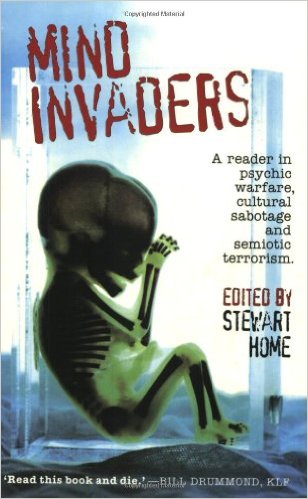


 After the Crash