‘We must distinguish between real change and fictitious change. The change that comes from without, from externally imposed training and discipline, is fictitious…Real change comes from within, by conscious work intentionally performed by the being himself.’ ~J.G. Bennett
It is increasingly difficult in these times to speak of ‘non-verifiable’ or unprovable matters, especially concerns of the spirit-consciousness, for too many people are inculcated with fixed beliefs and thinking patterns. This is itself a sign of social conditioning and of a certain ‘management of mind.’ We should not be surprised that this situation is rife throughout our societies and cultures and is becoming increasingly predominant. Social norms are persuading many people to prefer safety and security rather than the potential discomfort that comes from gaining new realizations and understanding.
An ex-officer of the Soviet secret police who defected to the West (Gregory Klimov), revealed that in the fields of Soviet psychological warfare (and social psychology) they utilized the principles of psychoanalysis. In this, they saw the phenomena of evil as a ‘complicated, complex social illness.’ The psychoanalysts within the KGB equated evil with illness, especially an illness of the human psyche. This perspective places demonic actors and events as ‘objective realities;’ i.e., as various forms of illness of ‘psyche and soul.’ As the Russian anthroposophist G.A. Bondarev writes: ‘The devils represents an involved and complex process of degeneracy or retrogression that in the main consists of three parts: sexual deviation, psychic illnesses and some physical deformities of the organism.
The number of humans already afflicted with this degeneration is legion.’1 Bondarev goes on to say that, based on certain social-psychological testing, the greatest degeneracy exists within the so-called elite of the world (as much as 75%). What this points to, concludes Bondarev, is a drastic decline of the human spirit. What it also tells us is that the phenomenon of ‘evil’ does not necessarily need to be personified or projected into certain personages as it represents an illness of the human psyche. We can recognize its presence operating within psychic imbalance and internal disconnect and detachment. And I would concur with Bondarev’s conclusion in that such psychic dis-ease represents an inner disconnect with the transcendental impulse. This disconnect, or splintering, from a sacred source has now come to signify the nature of the reversal that epitomizes much of contemporary life.
It is within this reversal that we see much of the negating, or counter-evolutionary, forces within humanity. And these forces have been dominating much of our everyday lives and continue to do so. I would suggest that it is our individual responsibility to recognize these forces, attempt to comprehend them, and to transform them into impulses that can work for humankind’s evolvement. In this, we need to come to grips with the presence and activity of those aspects that signify a psychic illness, or dis-ease, within life. Such aspects are a feature of existence as much as positive, developmental forces. They all act within the playground of attraction, repulsion, and the expression of energy. The Rosicrucians recognized these forces when they referred to the Deus Inversus – or the ‘Reversed God.’ This nature of reversal works on humanity through the spheres of imbalance and disharmony to counteract civilizational development. The Austrian mystic Rudolf Steiner was aware of the future impact of such forces when he stated that: ‘It is essential that the forces which manifest as evil if they appear at the wrong place must be taken in hand…in such a way that humanity can achieve something with these forces of evil that will be beneficial for the future of the whole of world evolution.’2 In this regard, it is important that the individual becomes aware of the metaphysical realm that lies beyond the threshold of normal, or every day, consciousness.
If we remain unawares to our own forces of spirit-consciousness, then we are more susceptible to the manipulations of such counter-developmental forces. Those readers familiar with my writings will know that I have attempted to draw attention to certain aspects of our consensus reality in order to gain greater clarity about how we may respond to the situation in a constructive way. I stand by what was written in the Gnostic Gospel of Philip: ‘For so long as the root of wickedness is hidden, it is strong. But when it is recognized, it is dissolved. When it is revealed, it perishes.’ Recognition, through heightened awareness and perception, brings more choice into play. The individual needs to be conscious of certain facts before they can manifest the correct intention and focus of will. What is needed is a culture of revelation – of ‘uncovering’ – rather than of cover up. It is through revelation that insight into the metaphysical foundation of life can be sustained within our increasingly materialistic societies. This access to metaphysical realities can never be wholly eradicated. Yet just a cursory glance at modern life indicates that there are attempts to deepen peoples’ immersion into deteriorating forms of dissonance and distraction. This can be seen as a form of realitydeceit.
Reality Deceit
The great deceit that is coming upon us is the unveiling of a so-called ‘utopia’ based on the isolation of the human spirit-consciousness. This fake promise is wrapped up in tech-salvationist terms, heralding a false ideal future. The real dis-ease of the human condition is to be in a state of estrangement. That is, estranged and alienated from any metaphysical influence or nourishment. It is not that the metaphysical background to life must necessarily be obvious to us, or tangible in our daily lives – only that we are cognizant of its existence and continual influence. Yet once this sense of recognition (the act of aware cognition) is dissolved, a barren soulless life is the result. And yet, in most circumstances, people will not be cognizant of this loss – this lack of the transcendental impulse in their lives – for they will be entrained into a reality consisting of a physical-digital mesh that keeps them attached to their lower nature and desires. This deceit consists of a most heinous form of enslavement, for it shall both be a willing one as well as an ignorant one. The splintering of the human being from its metaphysical connection shall go almost unnoticed, and the transfer into a reality of limited consciousness will have been enacted quite skillfully. This sly route to a human condition of alienation, procured through the guise of technological advancement and progress, will be a coup against the creative spirit. And this shall be the reversal of the human reality – the reality deceit.
The almost imperceptible dangers are that we have been slipping into a reversed reality, constructed through a realm of fantasy and make-believe, which now fuels the crass and superficial culture industries that dominate modern life. Any notion of Higher Reality has been twisted into an artificial lesser reality that attempts to hinder, as far as is possible, the developmental impulse from penetrating. This arrangement has culminated in dissociating humankind not only from its natural, organic, carbon-based environment, but also from an inherent contact with its origin – Source consciousness. This increasing disembodiment is reflected in such forms as the techno-digital ecosystem, extended reality (the Metaverse), computerization (including algorithms), and artificial intelligence. For many people today, their digital devices have become their instruments of salvation. But this salvation, this divine deliverance, belongs to the Deus Inversus – and we should choose our gods carefully. We should be careful too, not to be pulled into the encroaching banalization of life. And we should be on the look-out for signs and signals.
If anyone wishes to see how ‘signals’ can operate within the reality deceit, then watch all the episodes in the recent Westworld TV series (2016-2022). In Season Four, the machinic android ‘hosts’ have taken control of the world using a bioengineered virus that infects humans over the course of a generation, turning them docile and susceptible to AI and ‘host’ control. Storylines and narratives are created in order to give people their roles and characters in life, which they passively follow believing them to be their own life stories. Humankind is managed through these manufactured ‘storylines’ (a.k.a. socio-cultural narratives) that are transmitted directly to the minds and lives of humans through a series of radio-sonic transmission signals via the global technological infrastructure…But then again, this is just a fantasy story after all.
The course of external events that inform our political, economic, and cultural systems are not arbitrary, coincidental or natural. The modern human has been subtly manipulated into disconnecting from, and even shunning, the guidance of higher impulses. We are being told that the human being alone is the sole and dominant driving force for the future. And by this, we are propelled ever further into the personality construct with the human ego at the wheel. We are standing at the threshold of adopting a glorified materialistic view of life and the world. The spell of this disease is working to over-materialize materialism in a very deliberate and nefarious way. There may be some discomfort in the unfoldment of awareness, yet this is part of the transmutation of the dis-ease.
Life ‘in reversal’ is working hard and fast on this intensifying of materialism. This deepening materialism not only denies the expansion of consciousness but is actively working to stagnate it. At the same time, we are moving through an impulse of increasing individual awareness against the backdrop of this over-materialization. Yet it is an awareness through the few, and not the many (yet). By recognizing that certain forces within the world are using processes of mass suggestion to introduce a simplification – or ‘dumbing down’ – of human consciousness, we can gain greater awareness over our condition and predicament. And in this awareness, we can gain a natural resistance and protection, as recognition allows a discernment to be made. It is this discernment to step away from the negating energies and frequencies of toxicity that can help a person to attune to a resonance of perceptive consciousness. By choosing where we place ourselves – our focus and attention – we can either take a step forward or stay where we are and stagnate. As always, the choice remains with us.
On June 30, 1972, 20th Century Fox released the fourth film in the original Planet of the Apes cycle, titled Conquest of the Planet of the Apes. It followed up the previous year’s Escape from the Planet of the Apes, the first of the Apes films to deliberately end with the promise of a sequel. In that film, two intelligent chimps from the future, Cornelius (Roddy McDowall) and Zira (Kim Hunter), traveled back to our time only to be brutally slain by the U.S. government over fears that they would plant the seeds for the apes’ eventual domination of humankind. Their baby, however, secretly survived, hidden away by the circus owner Armando (Ricardo Montalban) and already beginning to form words.
As Conquest of the Planet of the Apes opens, Armando and the child ape, now grown and named Caesar (played by McDowall), arrive at an unnamed North American city. The year is 1991 and the U.S. government has turned totalitarian. A virus from space has destroyed all the world’s cats and dogs, leading humans to turn toward apes as first pets and then slaves. When Caesar expresses outrage at the cruel treatment of an ape by police, he’s forced to flee and hide — since he was officially declared dead 20 years earlier and his very existence is a threat to humanity.
Caesar makes his way to the ape training facilities and assimilates himself there, eventually going up for auction — where he is sold to the city’s ape-hating governor Breck (Don Murray) and placed under the command of Breck’s assistant MacDonald (Hari Rhodes), who is sympathetic to the plight of the apes. But when Armando is killed while in the government’s custody, an enraged Caesar begins to plot a revolution — slowly but surely organizing his fellow apes for a violent uprising that will be the first step toward the downfall of the human race.
By the time that Conquest of the Planet of the Apes was in production, Apes producer Arthur P. Jacobs and his studio partner Fox were in truly uncharted territory. Even though Planet of the Apes (1968) was a critical success and a box office smash, sequels at the time were considered quick, disposable vehicles to milk a few more bucks out of the audience. Instead, what Jacobs did — aided by the inspired efforts of screenwriter Paul Dehn — was create an ongoing sci-fi story and intricate future history over the course of his Apes movies, the likes of which had never been attempted before in the genre.
Jacobs, however, was still up against the studio mindset that sequels had to cost less, so by the time he made Conquest the budget for the film was a third of the price of the original Planet of the Apes. He had a meager $1.7 million to visualize the ape revolution that had been discussed in the previous films, economizing by using the brand new Century City high-rise complex in Los Angeles as the exterior of the city of the future — but also skimping on the makeup budget, resulting in some clearly fake-looking ape masks.
Dehn’s third screenplay for the series, following Beneath the Planet of the Apes (1970) and Escape from the Planet of the Apes, was the most explicitly political of the series. The previous Apes films had commented obliquely on race and other social issues, but against the backdrop of ongoing racial tensions in America, Dehn crafted a story that drew directly upon the 1965 Watts riots in Los Angeles for the imagery of his ape revolution. His screenplay was also the most violent of the franchise, initially ending in a bleak standoff that found Caesar ordering the cold-blooded execution of the sadistic Governor Breck and forecasting the complete subjugation of the human race.
To direct, Jacobs hired J. Lee Thompson (Cape Fear, The Guns of Navarone), who had been approached for Planet of the Apes but had to turn it down due to a previous commitment. Thompson was skilled at handling both large-scale action and low budgets, making him uniquely suited to the twin challenges of Conquest. He embraced the themes of Dehn’s screenplay with relish, giving a documentary quality to the third act’s scenes of revolution that was both realistic and unnerving in its ferocity.
As with all the Apes sequels, Conquest of the Planet of the Apes works on a very simplistic and often slapdash logic, a flaw evident in many key scenes of the film (how does Caesar, for example, know to fake being electrocuted? How does female ape Lisa magically acquire the power of speech?).
At the same time, however, Dehn’s screenplay is bolstered in a huge way by McDowall’s performance, perhaps the finest of his four in the series. His makeup similar to but also different from the appliances he wore as Cornelius, the actor makes Caesar’s transformation from frightened youth to fiery revolutionary leader believable and powerful. His climactic speech, in which he prophesizes that humanity will ultimately turn on itself and allow the apes to ascend in its place, is one of Dehn’s best pieces of writing and a haunting high point for the franchise.
That ending, as first conceived, proved controversial. The pitch-black original climax did not play well with test audiences already disturbed by the movie’s intense violence (which Thompson also trimmed to avoid a series-first R rating). With no time left for reshoots, the use of existing takes and dubbed dialogue by McDowall created a more optimistic ending, in which Caesar halts the murder of Breck and decides that it’s time for the apes to lay down their arms and find a way to live in peace with their former captors. While the idea that Caesar takes his first step toward being a true leader and not just a vengeful warrior is a sound one, the re-edited scene is clumsily handled: the timbre of McDowall’s voice is noticeably different on the new lines, and the scene uses just close-ups of his eyes or wide shots of him from a distance so that we can’t see that his mouth is not actually saying the added dialogue.
Conquest of the Planet of the Apes is a powerful film in either version (the original is available on the Blu-ray edition alongside the theatrical cut) and, despite its shortcomings, remains a riveting and frequently chilling entry. In depicting the events that launch the eventual ascendancy of the apes, it also brings the clever circular structure of the entire series dramatically into focus. The series’ 2011 reboot, Rise of the Planet of the Apes, is a loose remake of Conquest (albeit with many different plot elements) and it’s easy to see why: the ape uprising is narratively and emotionally a strong starting point from which to retell this still unique and even eccentric saga.
A common refrain from people who are critical of alternative economists is that we have been predicting crisis for so long that “eventually we will be right.” These are generally people who don’t understand the nature of economic decline – It’s like an avalanche that builds over time, then breaks and quickly escalates as it flows down the mountain. What they don’t grasp is that they are in the middle of an economic collapse RIGHT NOW, and they just can’t see it because they have been acclimated to the presence of the snow and cold.
Economic decline is a process that takes many years, and while you might get an event like the market crash of 1929 or the crash of 2008, these moments of panic are nothing more than the wreckage left behind by the great wave of tumbling ice that everyone should have seen coming far in advance, but they refused.
In 2022 the job of warning people is far easier than it used to be because we are well past the midpoint of the process of decline. But, believe it or not, I still get people today who claim that we analysts are “doom mongers.” The power of willful ignorance is truly amazing. It’s enough to make a person blind to stagflationary crisis, supply chain disruptions, quickly inflating prices, stock market carnage, bond market instability, record consumer debt, and international conflict.
At this point, I think if a person can’t see the dangers ahead they are probably a waste of time and space and are destined to be buried in the ice; there’s nothing that can be done for them. Yes, there are some people out there that don’t get exposed to the information and we have to take them into account, but my priority will be people that are awake and aware and try to give them a sense of what point in the collapse process we find ourselves.
In the past month there has been a considerable uptick in economic and geopolitical activity that suggests we are entering a new phase, and not surprisingly it’s all accumulating right before we hit October. Here are the events that I find most concerning:
The European Energy Crisis
This is an event that I have been predicting since the Russian invasion of Ukraine and now it is upon us. I wrote about it extensively in my recent article ‘Europe Is Facing Energy Disaster And It’s Going To Bleed Over Into The US’ so I won’t rehash all that information here. What I do want to point out is the complete lack of planning on the part of European officials to deal with the threat. It is as if they WANT a full spectrum disaster.
Russia has now completely cut off natural gas supplies to Europe, which represent around 40% of all EU energy resources. Europe’s benchmark natural gas prices spiked by 28% a week ago, on top of already existing inflation. Oil supplies are also in steep decline for Europe and the EU government has pledged to cut what’s left of Russian oil imports by sea at the end of the year. Sadly, they have offered very little in the way of solutions to the supply-side problem.
There has been talk of increasing imports of alternative resources from other nations, but the EU is already buying up around 75% of all liquid natural gas from the US. OPEC oil producers have indicated they will not be attempting to increase production anytime soon (probably because they can’t due to inflation in operation costs). There is NO backup energy resource for Europe; it doesn’t exist right now. They will try to buy up whatever coal, oil and gas they can find on the market while driving up prices even more for other countries. They will still come up short, which means people are going to freeze this winter.
Best case scenario is that there are mostly mild temps and people barely scrape buy with minimum heating. But EU industry is going to suffer and many manufacturers are going to cut production (which mean more stress on the global supply chain).
The latest CPI print showed an increase to 8.3% and was a shock to markets which universally expected a drop. This is the nature of stagflation – Even with falling demand prices continue to climb or remain high for extended periods. The stagflation event of the 1970s lasted for a decade until the Fed jacked rates to 21% and then employment crumbled in the early 1980s.
This doesn’t mean that rates will go to 21% this time; they don’t need to. All it would take is a Federal Funds Rate of around 4% – 5% to crash our current QE addicted system. A 75 bps rate hike is now widely expected at the next Fed meeting this month, with some predicting a 100 bps hike. This would put us close to crash territory for markets and for employment, though I think we still have well into 2023 before unemployment really starts to spike.
Putin’s Meeting With Xi
As I write this, Vladimir Putin is set to meet with China’s Xi Jinping and the nature of the conference is not clear. There are the obvious points of agreement such as China’s continued purchases of Russian oil and other commodities, as well as the ongoing plan to build a pipeline to China by 2025. There is also strategic cooperation which is evident in the recent naval exercises between the two nations around Japan and Taiwan.
The timing of the meeting is concerning to me, because the prime season for a potential Chinese invasion of Taiwan is fast approaching (October is the best month for naval movements to avoid typhoons). China would not necessarily need to commit to a ground invasion, either. They could simply cut off all import/export trade from any source other than China and starve Taiwan until they accept unification.
There is also the issue of Ukraine and arms sales. With the amount of propaganda coming from Ukrainian Intelligence and NATO, it’s hard to say what is actually happening, but I suspect Russia is changing strategies and repositioning to deploy missile and artillery bombardment of infrastructure, including power grids and water. This is a tactic that Russia has avoided for months (until this week), which is surprising because one of the first measures usually taken by the US during an invasion is to eliminate most key infrastructure (as we did in Iraq). You would think Russia would have done the same, but perhaps they were saving that scenario for winter when it is harder for Ukraine to cope.
This would make Ukraine essentially unlivable in the coming winter for most of the population. Putin may be seeking to ensure China remains a steady economic partner should geopolitical pressures increase. They may even be making a deal of mutual support: China takes Taiwan while Russia makes Ukraine a resource wasteland and they each support the other economically when NATO counties try to impose sanctions on China. We probably won’t know until October, but the timing of the meeting should raise eyebrows.
If the manure is about to hit the fan in Taiwan along with Ukraine, then diplomatic and economic ties will be severed and western access to China’s manufacturing will be cut. This is a problem for China’s economy, certainly, which may be why they have continued their mass covid lockdowns well after every other government has abandoned them. Could this be practice for civil controls in an impending war environment?
China’s global dominance in imports/exports gives them considerable economic leverage in trade, however. Many nations would not support sanctions against them. Also, their vast holdings of US dollars and Treasuries could be used as a weapon to damage or destroy the dollar’s world reserve status. If China invades Taiwan this year, then all bets are off – The economic decline will move swiftly from that point on.
There are many other trends which factor into the crash environment but the above factors are the most recent and hold the biggest potential for causing a domino effect globally. The question that always arises is “what can we do about it?” Not much in terms of prevention. What we can do, though, is prepare locally to weather the storm. This means stocking necessities before they rise even further in price or become non-existent. Become a producer and learn a valuable skill for survival in a depleted economy Organize with people locally who are on the same page to create security and alternative trade opportunities.
Hopefully, the aware citizenry will rise to the challenge and organization will be extensive, because the worst case scenario would be great masses of completely isolated people all vying against each other rather than working towards mutual security. Even in a slow collapse scenario this is a problem in terms of rising crime; so plan on working with others if you want to avoid inevitable third world conditions.
Some things can be horrifying even if unsurprising. One such moment is the opening anecdote in Douglas Rushkoff’s Survival of the Richest: Escape Fantasies of the Tech Billionaires. In 2017, Rushkoff was paid an exorbitant fee to travel to a remote high-end resort where (he thought) he would do his usual thing: Talk about the future to investment bankers looking for a way to game the next trend.
What happened was far stranger. Rather than give a speech, Rushkoff sat at a conference room table with five fantastically rich guys from “the upper echelon of the tech investing and hedge fund world” and tried to answer their questions about how they could survive the impending apocalypse.
The scene is comical, in a Dr. Strangelove way. Assuming the world is racing toward an inevitable societal collapse they called “the Event”, the men thought it best to talk survival tactics with a self-described “Marxist media theorist” and professor at Queens/CUNY. Rather than acting like masters of the universe, they were nervous about being caught out when the Event came. They worried whether New Zealand or Alaska was the right location for their doomsday bunker; could their security guards keep the hungry mobs at bay; if an all-robot staff could be better. Rushkoff explains what seemed to lie behind these unnamed One Percenter preppers’ anxieties:
Taking their cue from Tesla founder Elon Musk colonizing Mars, Palantir’s Peter Thiel reversing the aging process, or artificial intelligence developers Sam Altman and Ray Kurzweil uploading their minds into supercomputers, they were preparing for a digital future that had less to do with making the world a better place than it did with transcending the human condition altogether. Their extreme wealth and privilege served only to make them obsessed with insulating themselves from the very real and present danger of climate change, rising sea levels, mass migrations, global pandemics, nativist panic, and resource depletion. For them, the future of technology is about only one thing: escape from the rest of us.– Douglass Rushkoff
Rushkoff calls this thinking “the Mindset”. He defines it as an “atheistic and materialistic scientism” that launders a desire for control and conquest through quasi-religious adherence to digital code and the power of the market. Expanding on his original article from 2018 (Medium)—which ironically led to his being swamped by requests from disaster-related industries to get in touch with the anonymous five they thought needed their services—Rushkoff spends the rest of Survival of the Richest explaining where the Mindset came from, how dangerous it is, and what he thinks should replace it.
Nothing that Rushkoff writes in this clipped, angry book should surprise most readers. Nobody who has spent any time tracking the pronouncements and feuds of the more futurist-minded tech elites would think many had a high opinion of or interest in improving the daily lot of carbon-based life forms. Though predictable and at times a bit too broadly defined, the depth of anti-humanist sentiment related by Rushkoff is still harrowing and illuminating.
The phenomenon of powerful men thinking themselves separate from the great unwashed and unbound by common morality is as old as human history. Although this of-the-moment book contains little context dating back more than three decades, Rushkoff does not try to claim everything about the Mindset is new. He points instead to how illogical power fantasies have merged with an Ayn Randian cult of the solitary hero and been nurtured by the Web’s seductive capacity for self-aggrandizing mythmaking. Given how much he may have contributed to those seductions, he is the right messenger.
Among the first public intellectuals to grapple seriously with the digital revolution as it washed over society in the 1990s, Rushkoff remains a go-to expert for Internet prognostication. Unlike many tech evangelizers, though, he later had second thoughts. Some of the more revealing sections in Survival of the Richest come from when the author turns his focus on himself.
Readers of a mindset will likely feel a certain wistfulness as Rushkoff writes about the early punk years of cyberspace. Just as underground music was bursting into the mainstream and indie bands were making real money, outlaw hackers were suddenly at the forefront of a technological revolution. In 1994, Rushkoff published two books: The GenX Reader, a heady anthology of alt-cultural tropes (part of the Slacker screenplay, Dan Clowes and Peter Bagge comics) that could already see the commodification of generational rebellion to come; and Cyberia, a quasi-utopian paean about the psychedelia-inspired confluence of programmers, Deadheads, libertarians, Wiccans, and ravers who seemed to be leading the nascent Web towards a consciousness- and freedom-expanding future. The 1996 “Declaration of Independence of Cyberspace,” announced ironically enough at the first ever World Economic Forum in Davos, proclaimed a borderless world where governments had no sovereignty.
Rushkoff looks back now with clearer eyes:
Deregulation sounded good at the time. We were just ravers and cyberpunks, paranoid about the government arresting us for drugs … We didn’t realize that banishing the government from the internet would create a free zone for corporate colonization. We hadn’t yet discovered that government and business balance each other out—a bit like fungus and bacteria. Get rid of one, and the other runs rampant.
In Rushkoff’s cultural history, the experimental tribal ethos of the Web’s heady early days was co-opted by business interests who saw a new frontier to monetize; less Mondo 2000, more AOL CD-ROMs. Online libertarianism seemed to evolve from a confederacy of rule-breaking rebels and pioneers to anger-prone grumps so dissatisfied with their fellow man that they started planning unintentionally funny “seasteading” ocean communities, taking their toys and leaving. Wealthy futurists imagine uploading themselves onto a cloud server, revealing a depressingly simplistic view of human consciousness and a grand view of themselves as transcendent immortals. As technology and behavioral science became more finely tooled at predicting consumer behavior, it also exacerbates hate and loneliness, assisting the all-too-easy COVID-19 pandemic pivot to increasingly tech-mediated relationships.
For the Mindset’s “tech titans and billionaire inventors”, per Rushkoff, there is no problem that technology cannot solve. And the problems are often human in form. Suppose that were true, and the world was spiraling towards a collapse (which the online tools superpowered by elites could be accelerating). In that case, the believers might wonder, why not use technology to scarper off to their Bond villain bunkers?
Rushkoff’s critique expands from what he calls this amoral “sociopathic” attitude toward the state of capitalism. Combining the digital-communitarian ethos of Cory Doctorow with the acerbic skepticism of Naomi Klein, Rushkoff does not trust that a more enlightened kind of capitalism can save the world. His argument against eternal economic growth has merit. But Rushkoff is on firmer ground when defining technological-sociological phenomena like the Mindset. That is not to say there is no case for a more sustainable economy, but Rushkoff breezes too quickly past the challenges resulting from that massive transition. Being necessary does not make a thing easy.
As with many jeremiads of this kind, Survival of the Richest loses some of its impact when delivering suggestions for how to push back (don’t give in to the inevitability of doom, buy local, fight for anti-monopoly laws). That is partly because it is difficult for them to seem equal to the magnitude of the problem. But for Rushkoff, the smallness of the solutions is part of the point: “We can still be individuals; we just need to define our sense of self a bit differently than the algorithms do.”
“The most dangerous man to any government is the man who is able to think things out for himself, without regard to the prevailing superstitions and taboos. Almost inevitably he comes to the conclusion that the government he lives under is dishonest, insane and intolerable.”—H. L. Mencken
The American kleptocracy (a government ruled by thieves) continues to suck the American people down a rabbit hole into a parallel universe in which the Constitution is meaningless, the government is all-powerful, and the citizenry is powerless to defend itself against government agents who steal, spy, lie, plunder, kill, abuse and generally inflict mayhem and sow madness on everyone and everything in their sphere.
Think about it.
Almost every tyranny being perpetrated by the U.S. government against the citizenry—purportedly to keep us safe and the nation secure—has come about as a result of some threat manufactured in one way or another by our own government.
Cyberwarfare. Terrorism. Bio-chemical attacks. The nuclear arms race. Surveillance. The drug wars. Domestic extremism. The COVID-19 pandemic.
In almost every instance, the U.S. government (often spearheaded by the FBI) has in its typical Machiavellian fashion sown the seeds of terror domestically and internationally in order to expand its own totalitarian powers.
Which country has conducted secret experiments on an unsuspecting populace—citizens and noncitizens alike—making healthy people sick by spraying them with chemicals, injecting them with infectious diseases and exposing them to airborne toxins? The U.S. government.
What country has a pattern and practice of entrapment that involves targeting vulnerable individuals, feeding them with the propaganda, know-how and weapons intended to turn them into terrorists, and then arresting them as part of an elaborately orchestrated counterterrorism sting? The U.S. government.
Are you getting the picture yet?
The U.S. government isn’t protecting us from terrorism.
The U.S. government is creating the terror. It is, in fact, the source of the terror.
Consider that this very same government has taken every bit of technology sold to us as being in our best interests—GPS devices, surveillance, nonlethal weapons, etc.—and used it against us, to track, control and trap us.
So why is the government doing this? Money, power and total domination.
We’re not dealing with a government that exists to serve its people, protect their liberties and ensure their happiness. Rather, these are the diabolical machinations of a make-works program carried out on an epic scale whose only purpose is to keep the powers-that-be permanently (and profitably) employed.
Case in point: the FBI.
The government’s henchmen have become the embodiment of how power, once acquired, can be so easily corrupted and abused. Indeed, far from being tough on crime, FBI agents are also among the nation’s most notorious lawbreakers.
Whether the FBI is planting undercover agents in churches, synagogues and mosques; issuing fake emergency letters to gain access to Americans’ phone records; using intimidation tactics to silence Americans who are critical of the government, or persuading impressionable individuals to plot acts of terror and then entrapping them, the overall impression of the nation’s secret police force is that of a well-dressed thug, flexing its muscles and doing the boss’ dirty work.
It’s a diabolical plot with far-reaching consequences for every segment of the population, no matter what one’s political leanings.
As Rozina Ali writes for The New York Times Magazine, “The government’s approach to counterterrorism erodes constitutional protections for everyone, by blurring the lines between speech and action and by broadening the scope of who is classified as a threat.”
This is not an agency that appears to understand, let alone respect, the limits of the Constitution.
For instance, the FBI has been secretly carrying out an entrapment scheme in which it used a front company, ANOM, to sell purportedly hack-proof phones to organized crime syndicates and then used those phones to spy on them as they planned illegal drug shipments, plotted robberies and put out contracts for killings using those boobytrapped phones.
All told, the FBI intercepted 27 million messages over the course of 18 months.
What this means is that the FBI was also illegally spying on individuals using those encrypted phones who may not have been involved in any criminal activity whatsoever.
Even reading a newspaper article is now enough to get you flagged for surveillance by the FBI. The agency served a subpoena on USA Today / Gannett to provide the internet addresses and mobile phone information for everyone who read a news story online on a particular day and time about the deadly shooting of FBI agents.
This is the danger of allowing the government to carry out widespread surveillance, sting and entrapment operations using dubious tactics that sidestep the rule of law: “we the people” become suspects and potential criminals, while government agents, empowered to fight crime using all means at their disposal, become indistinguishable from the corrupt forces they seek to vanquish.
To go after terrorists, they become terrorists. To go after drug smugglers, they become drug smugglers. To go after thieves, they become thieves.
It’s hard to say whether we’re dealing with a kleptocracy (a government ruled by thieves), a kakistocracy (a government run by unprincipled career politicians, corporations and thieves that panders to the worst vices in our nature and has little regard for the rights of American citizens), or if we’ve gone straight to an idiocracy.
This certainly isn’t a constitutional republic, however.
Some days, it feels like the government is running its own crime syndicate complete with mob rule and mafia-style justice.
In addition to creating certain crimes in order to then “solve” them, the FBI—the government’s law enforcement agency—also gives certain informants permission to break the law, “including everything from buying and selling illegal drugs to bribing government officials and plotting robberies,” in exchange for their cooperation on other fronts.
USA Today estimates that government agents have authorized criminals to engage in as many as 15 crimes a day (5600 crimes a year). Some of these informants are getting paid astronomical sums: one particularly unsavory fellow, later arrested for attempting to run over a police officer, was actually paid $85,000 for his help laying the trap for an entrapment scheme.
In addition to procedural misconduct, trespassing, enabling criminal activity, and damaging private property, the FBI’s laundry list of crimes against the American people includes surveillance, disinformation, blackmail, entrapment, intimidation tactics, and harassment.
For example, the Associated Press lodged a complaint with the Dept. of Justice after learning that FBI agents created a fake AP news story and emailed it, along with a clickable link, to a bomb threat suspect in order to implant tracking technology onto his computer and identify his location. Lambasting the agency, AP attorney Karen Kaiser railed, “The FBI may have intended this false story as a trap for only one person. However, the individual could easily have reposted this story to social networks, distributing to thousands of people, under our name, what was essentially a piece of government disinformation.”
Then again, to those familiar with COINTELPRO, an FBI program created to “disrupt, misdirect, discredit, and neutralize” groups and individuals the government considers politically objectionable, it should come as no surprise that the agency has mastered the art of government disinformation.
The FBI has been particularly criticized in the wake of the 9/11 terrorist attacks for targeting vulnerable individuals and not only luring them into fake terror plots but actually equipping them with the organization, money, weapons and motivation to carry out the plots—entrapment—and then jailing them for their so-called terrorist plotting. This is what the FBI characterizes as “forward leaning—preventative—prosecutions.”
Another fallout from 9/11, National Security Letters, one of the many illicit powers authorized by the USA Patriot Act, allows the FBI to secretly demand that banks, phone companies, and other businesses provide them with customer information and not disclose the demands. An internal audit of the agency found that the FBI practice of issuing tens of thousands of NSLs every year for sensitive information such as phone and financial records, often in non-emergency cases, is riddled with widespread violations.
The FBI’s surveillance capabilities, on a par with the National Security Agency, boast a nasty collection of spy tools ranging from Stingray devices that can track the location of cell phones to Triggerfish devices which allow agents to eavesdrop on phone calls.
In fact, the NSA was responsible for the threat posed by the “WannaCry” or “Wanna Decryptor” malware worm which—as a result of hackers accessing the government’s arsenal—hijacked more than 57,000 computers and crippled health care, communications infrastructure, logistics, and government entities in more than 70 countries.
Mind you, the government was repeatedly warned about the dangers of using criminal tactics to wage its own cyberwars. It was warned about the consequences of blowback should its cyberweapons get into the wrong hands.
The government chose to ignore the warnings.
That’s exactly how the 9/11 attacks unfolded.
First, the government helped to create the menace that was al-Qaida and then, when bin Laden had left the nation reeling in shock (despite countless warnings that fell on tone-deaf ears), it demanded—and was given—immense new powers in the form of the USA Patriot Act in order to fight the very danger it had created.
This has become the shadow government’s modus operandi regardless of which party controls the White House: the government creates a menace—knowing full well the ramifications such a danger might pose to the public—then without ever owning up to the part it played in unleashing that particular menace on an unsuspecting populace, it demands additional powers in order to protect “we the people” from the threat.
Yet the powers-that-be don’t really want us to feel safe.
They want us cowering and afraid and willing to relinquish every last one of our freedoms in exchange for their phantom promises of security.
As a result, it’s the American people who pay the price for the government’s insatiable greed and quest for power.
Suffice it to say that when and if a true history of the United States is ever written, it will not only track the rise of the American police state but it will also chart the decline of freedom in America: how a nation that once abided by the rule of law and held the government accountable for its actions has steadily devolved into a police state where justice is one-sided, a corporate elite runs the show, representative government is a mockery, police are extensions of the military, surveillance is rampant, privacy is extinct, and the law is little more than a tool for the government to browbeat the people into compliance.
Somewhere over the course of the past 240-plus years, democracy has given way to kleptocracy, and representative government has been rejected in favor of rule by career politicians, corporations and thieves—individuals and entities with little regard for the rights of American citizens.
This dissolution of that sacred covenant between the citizenry and the government—establishing “we the people” as the masters and the government as the servant—didn’t happen overnight. It didn’t happen because of one particular incident or one particular president. It is a process, one that began long ago and continues in the present day, aided and abetted by politicians who have mastered the polarizing art of how to “divide and conquer.”
It’s time once again to check for Ministry of Propaganda updates, which like Windows and iOS is constantly being updated to counter new threats and enhance the user experience (heh).
Much like the other operating systems that underpin our daily lives, the core functions of the MoP don’t change much. My chart from 2007 remains an instructive summary of MoP operations, with the only changes being Mr. Buffett is now buying oil companies and social media corporations are now major media players.
The core mission of the Ministry of Propaganda isn’t just to push a desirable narrative–it’s to mystify the underlying dynamics of a system that benefits the few at the expense of the many by promoting a self-serving worldview (weltanschauung) that explains how the world works in a way that protects the interests of those in power.
As science fiction author Philip K. Dick explains in the quote below, the MoP narrative isn’t just a cloak thrown over the underlying dynamics, it’s the creation of an entire universe / worldview, including contexts for understanding what’s going on, establishing what’s valuable and what isn’t, and what behaviors enhance status and which ones marginalize us.
The Ministry of Propaganda isn’t monolithic: various factions compete to push their self-serving narratives. As Dick noted, this includes governments, corporations, religious and political groups, each of which understands that once the populace accepts their worldview, their power is cemented in realms far above mere force.
A key mechanism in establishing a dominant worldview is the think-tank or equivalent self-serving body claiming authority over what’s true / false and important / unimportant. This can be authority over the “correct” interpretation of spiritual texts, economic policies, healthcare “standards of care,” geopolitical goals, etc.
Since humans are innately social, status-striving beings, hierarchies of authority and power are the air we breathe. Those who establish themselves as authorities don’t just gain power, they cement their power on the basis of their authority rather than on loyalty or competence.
The enormous powers of social media and traditional media to promote claims of authority have generated a deranging snarl of conflicting agendas and narratives. Various centers of power collaborate on pushing worldviews that benefit their interests, but this isn’t entirely coherent. The one thing all participants in the Ministry of Propaganda agree on is our power is deserved and must be defended against all threats, which includes hostile entities inside and outside the national borders.
This fragmented, constantly shifting cacophony of competing authorities is destabilizing. As the tectonic plates of worldviews collide, the edges crumble and people naturally seek the safety of some core set of beliefs, in effect “circling the wagons” in an attempt to restore some internal stability.
We see this in the intense political polarization of this era (see chart below). To make sense of the competing claims of authority, we reduce the perimeter of what’s defendable, putting more of the world into “outside enemies” (them) and reserving the “safe, trusted place” for fewer of “us.”
With so many competing factions in the Ministry of Propaganda, there’s a proliferation of propaganda such that there is literally nothing left but PR. In a universe constructed of nothing but agit-prop and PR, we all have our favorites examples. James Bond picks up his Nokia phone. Even though nobody’s seen a Nokia phone in ages, if you want to be cool like Bond, go buy a Nokia phone.
Marketing is the MoP’s entire universe. Everybody’s selling something to gain or maintain power, status, mindshare or the ultimate prize, the dominant worldview.
To ease the confusion, please download the latest updates from the Ministry. These updates replace all that misinformation, misdirection, and blatant marketing with the, ahem, facts, or the correct interpretation of the facts. (We had to destroy the village in order to save it. OK, got it.)
While it’s fun to sort all the propaganda into various boxes, we would do well to look for what all the marketers / MoP players seek to mystify. In my analysis, what must be mystified at all costs boils down to the unsustainability of 1) the current consumption of resources, 2) the current method of creating capital so the few can buy up the planet’s most valuable assets, 3) neocolonialism, the modern replacement for the old model of occupation and exploitation by force, and 4) neofeudalism, the economic / social /political arrangement in which the majority of the populace are modern-day serfs with extremely limited agency and power which they are told is limitless.
“You can be anything you choose to be!” Or at least your digital avatar can do so, and that’s practically as good as actually having agency and power in the real world. Or so we’re told, mindlessly, endlessly without pause or respite.
“The whole aim of practical politics is to keep the populace alarmed (and hence clamorous to be led to safety) by an endless series of hobgoblins, most of them imaginary.”—H.L. Mencken
First came 9/11, which the government used to transform itself into a police state.
Then the COVID-19 pandemic hit, which the police state used to test out its lockdown powers.
In light of the government’s tendency to exploit crises (legitimate or manufactured) and capitalize on the nation’s heightened emotions, confusion and fear as a means of extending the reach of the police state, one has to wonder what so-called crisis it will declare next.
It’s a simple enough formula: first, you create fear, then you capitalize on it by seizing power.
Frankly, it doesn’t even matter what the nature of the next national emergency might be (terrorism, civil unrest, economic collapse, a health scare, or the environment) as long as it allows the government to lockdown the nation and justify all manner of tyranny in the so-called name of national security.
As David C. Unger writes for the New York Times: “Life, liberty, and the pursuit of happiness have given way to permanent crisis management: to policing the planet and fighting preventative wars of ideological containment, usually on terrain chosen by, and favorable to, our enemies. Limited government and constitutional accountability have been shouldered aside by the kind of imperial presidency our constitutional system was explicitly designed to prevent.”
Here’s what we know: given the rate at which the government keeps devising new ways to establish itself as the “solution” to all of our worldly problems at taxpayer expense, each subsequent crisis ushers in ever larger expansions of government power and less individual liberty.
This is the slippery slope to outright tyranny.
You see, once the government acquires (and uses) authoritarian powers—to spy on its citizens, to carry out surveillance, to transform its police forces into extensions of the military, to seize taxpayer funds, to wage endless wars, to censor and silence dissidents, to identify potential troublemakers, to detain citizens without due process—it does not voluntarily relinquish them.
The lesson for the ages is this: once any government is allowed to overreach and expand its powers, it’s almost impossible to put the genie back in the bottle. As Harvard constitutional law professor Laurence Tribe recognizes, “The dictatorial hunger for power is insatiable.”
Indeed, the history of the United States is a testament to the old adage that liberty decreases as government (and government bureaucracy) grows. To put it another way, as government expands, liberty contracts.
In this way, every crisis since the nation’s early beginnings has become a make-work opportunity for the government.
Each crisis has also been a test to see how far “we the people” would allow the government to sidestep the Constitution in the so-called name of national security; a test to see how well we have assimilated the government’s lessons in compliance, fear and police state tactics; a test to see how quickly we’ll march in lockstep with the government’s dictates, no questions asked; and a test to see how little resistance we offer up to the government’s power grabs when made in the name of national security.
Most critically of all, it has been a test to see whether the Constitution—and our commitment to the principles enshrined in the Bill of Rights—could survive a national crisis and true state of emergency.
Unfortunately, we’ve been failing this particular test for a long time now.
Indeed, the powers-that-be have been pushing our buttons and herding us along like so much cattle since World War II, at least, starting with the Japanese attacks on Pearl Harbor, which not only propelled the U.S. into World War II but also unified the American people in their opposition to a common enemy.
That fear of attack by foreign threats, conveniently torqued by the growing military industrial complex, in turn gave rise to the Cold War era’s “Red Scare.” Promulgated through government propaganda, paranoia and manipulation, anti-Communist sentiments boiled over into a mass hysteria that viewed anyone and everyone as suspect: your friends, the next-door neighbor, even your family members could be a Communist subversive.
By the time 9/11 rolled around, all George W. Bush had to do was claim the country was being invaded by terrorists, and the government used the USA Patriot Act to claim greater powers to spy, search, detain and arrest American citizens in order to keep America safe.
Despite the fact that the breadth of the military’s power to detain American citizens violates not only U.S. law and the Constitution but also international laws, the government has refused to relinquish its detention powers made possible by the NDAA.
Then Donald Trump took office, claiming the country was being invaded by dangerous immigrants and insisting that the only way to keep America safe was to expand the reach of the border police, empower the military to “assist” with border control, and essentially turn the country into a Constitution-free zone.
That so-called immigration crisis then morphed into multiple crises (domestic extremism, the COVID-19 pandemic, race wars, civil unrest, etc.) that the government has been eager to use in order to expand its powers.
Joe Biden, in turn, has made every effort to expand the reach of the militarized police state, pledging to hire 87,000 more IRS agents and 100,000 police officers. Read between the lines and you’ll find that Biden has all but declared war on the American people.
What the next crisis will be is anyone’s guess, but you can be sure that there will be a next crisis.
So, what should you expect if the government decides to declare another state of emergency and institutes a nationwide lockdown?
You should expect more of the same, only worse.
More compliance, less resistance.
More fear-mongering, mind-control tactics and less tolerance for those who question the government’s propaganda-driven narratives.
There’s every reason to worry about what comes next.
Certainly, the government’s past track record and its long-anticipated plans for instituting martial law (using armed forces to solve domestic political and social problems) in response to a future crisis are cause enough to worry about the government’s handling of the next “crisis.”
Mark my words: if and when another nationwide lockdown finally hits—if and when we are forced to shelter in place— if and when militarized police are patrolling the streets— if and when security checkpoints have been established— if and when the media’s ability to broadcast the news has been curtailed by government censors—if and when public systems of communication (phone lines, internet, text messaging, etc.) have been restricted—if and when those FEMA camps the government has been surreptitiously building finally get used as detention centers for American citizens—if and when military “snatch and grab” teams are deployed on local, state, and federal levels as part of the activated Continuity of Government plans to isolate anyone suspected of being a threat to national security—and if and when martial law is enacted with little real outcry or resistance from the public—then we will truly understand the extent to which the government has fully succeeded in acclimating us to a state of affairs in which the government has all the power and “we the people” have none.
Throughout your lifetime, you or someone you trusted has unwittingly given up many aspects of your biometric and other personal data so that your digital identity can be created. Over time, this digital identity is being progressively defined and is replacing your actual physical, intellectual, emotional and spiritual identity. What you are allowed to do, and not do, will increasingly depend on your technological identity rather than your moral character, intellectual and/or physical abilities, your emotional suitability, religious beliefs and the many other attributes that define your unique personality.
Starting with your birth certificate, which identifies your name, birth date and birth location, as well as parenting, an endless series of details about your personal life has been accumulated and stored, sometimes with your knowledge and consent. Far more often it has been done without either.
Do you remember having your photo taken for a student and/or employee identity card, your vehicle license and/or a passport? Do you remember being finger and/or palm-printed, submitting to an iris scan, agreeing to a recording of your voice, offering data for ‘two-factor’ authentication, and requesting an ancestry search by submitting a sample of your DNA? Most often you had no choice: It was ‘legally required’. Other times, you were probably offered something in return, such as admission to an educational institution, ‘secure’ access to an account or information you wanted. But whatever other price you paid, you also paid an ‘identity cost’.
Moreover, none of that information has ceased to exist and there is a lot more interest in it now than there was when you, or someone, innocently agreed to tender it all those years ago. And it is being added to all of the time with information you have surrendered or that has been obtained about you, up until this morning. In addition, it will be added to by information gathered about you tomorrow.
Your bank account(s), academic and employment records, health records (including vaccination record), legal record (including traffic violations), internet search history, and any other information compiled by or submitted to a government authority, corporation or other entity has been recorded, compiled and systematically stored in data banks of which you have never even heard. And they are being used to generate your ‘social credit score’ which, depending on the country in which you live, is already or will be soon, used to determine what you can, and cannot, do.
In addition, facial recognition technology is vastly expanding the capacity of the surveillance state, and those corporations and entities that work with it, to identify and track you. And it is doing this already in the most obvious places such as on the street and in shopping centres. See, for example, ‘Microsoft partners with banks to introduce facial recognition: More invasive technology’.
Beyond that, of course, existing technologies already enable many aspects of your unique identity to be imitated precisely. Think you voice is unique? Not once they clone it so they can present some technological imitation as your voice. See ‘Voice Cloning for Content Creators’.
And you are no doubt well aware of simple ways that photos of you can be replicated. Or altered by ‘photoshopping’, to put you in an entirely different context or location.
Does this matter?
This has all been done, fundamentally, so that one day soon now you can be locked in the technological prison that is being created around you. This technological prison, being promoted under the guise of ‘smart cities’, is being built around you as cities are converted to ‘smart’ by installing 5G and the other technologies necessary for comprehensive surveillance and control. But the Saudis are building a ‘smart city’ in the desert too. You can watch their promotional video here: Neom.
Despite the positive spin endlessly put on these projects by governments and corporations – see ‘Smart cities: The cities of the future’ – the fundamental outcome is that you will require a digital ID to do those particular things that the elite has decided you will be allowed to do. And you won’t be able to do anything else. This is usually called ‘slavery’ except that, in this new technological world, virtually all of the slaves will be transhuman with no independent will of their own.
How has this happened?
In a report published by the World Economic Forum in 2016, the authors wrote ‘Consistent with the World Economic Forum’s mission of applying a multi‐stakeholder approach to address issues of global impact, the creation of this report involved extensive outreach and dialogue with the financial services community, innovation community, technology community, academia and the public sector…. The mandate of this project was to explore digital identity and understand the role that Financial Institutions should play in building a global standard for digital identity. Identity is a critical topic in Financial Services today. Current identity systems are limiting Fintech innovation (as) well as secure and efficient service delivery in Financial Services and society more broadly. Digital identity is widely recognized as the next step in identity systems. However, while many efforts are underway to solve parts of the identity challenge and create true digital identity, there is a need for a concerted and coordinated effort to build a truly transformational digital identity system.’
By 2018, another report by the World Economic Forum was proclaiming ‘Our identity is, literally, who we are, and as the digital technologies of the Fourth Industrial Revolution advance, our identity is increasingly digital. This digital identity determines what products, services and information we can access – or, conversely, what is closed off to us.’
But one primary motivation for their interest in digital identity was reported in a World Economic Forum article in August 2022. Citing research conducted by the consultancy Cebr – see ‘The digital trust index’ – the World Economic Forum noted that ‘our global digital economy can unleash trillions of dollars of opportunities. But if we don’t know for certain who we are interacting with online, we cannot have trust. Digital identity must therefore be the foundational element to our digital economy….’ Moreover, according to the WEF: ‘Consumers also told us they would trust banks and financial services firms the most to create and maintain an identity system.’
Of course, the World Economic Forum is not the only institution planning our digital identity prison. In a 2019 report, the United Nations stated ‘We recommend that by 2030, every adult should have affordable access to digital networks, as well as digitally-enabled financial and health services, as a means to make a substantial contribution to achieving the Sustainable Development Goals.’
In addition, that long-standing bastion of economic exploitation known as the World Bank has had a long-running involvement in digitizing identity, publishing a report on the subject in 2017 which was updated in 2021 and, unsurprisingly, linked to its notion of ‘sustainable development’: ‘Every person has the right to participate fully in their society and economy and to be recognized as a person before the law. Yet, as many as 1 billion people across the world do not have basic proof of identity, which is essential for protecting their rights and enabling access to services and opportunities.’
This report goes on to outline a set of ten principles – universal access, accuracy, security, privacy… – to guide the nature of digital identity, in various categories, that sound wonderful.
But fundamental issues are left unaddressed.
Why the rights to participation in society and the economy, and recognition before the law, suddenly requires ‘basic proof of identity’ and is ‘essential for protecting their rights and enabling access to services and opportunities’ is not explained. Nor is it explained why those same rights enshrined in the Universal Declaration of Human Rights in 1948 – on which the world has so spectacularly failed to deliver since that time (and particularly for those billions of people marginalized by the global capitalist economy) – will now be magically delivered by a digitized identity.
As is often the case, the delusional rhetoric sounds good despite being a vast distance from the truth.
But the World Bank continues its rhetoric in a more recent report: ‘Vulnerable and marginalized groups are often the least likely to have proof of their identity, but also the most in need of the protection and services linked to identification.’
Moreover, according to the World Bank, experience has supposedly ‘shown that there are key actions countries can take to unlock their own paradigm shift towards building digital ID and G2P [government-to-person] payments ecosystems that empower people and support sustainable development outcomes’.
Of course, the documents go on to outline why identity is important to access certain rights and services – banking, voting, owning property, particular transactions… – but do not specify why a digital version of identity is necessary. A sleight of hand made necessary by the complete absence of any genuine reason for moving beyond long-accepted means of establishing identity, where they are appropriately useful.
Beyond international organizations such as these, major Non-Government Organizations including the Bill and Melinda Gates Foundation and Rockefeller Foundation, as well as corporations, are predictably behind the moves to digitize identity for reasons explained in the ID2020 Manifesto. For example, as Peggy Johnson of Microsoft Corporation noted: ‘… it’s exciting to imagine a world where safe and secure digital identities are possible, providing everyone with an essential building block to every right and opportunity they deserve.’
Again, why rights and opportunities, theoretically long-ago enshrined in a multitude of human rights laws, should now somehow be accessed through a digitized identity is, obviously, not explained.
With such a predatory list of sponsors – the World Economic Forum, World Bank, United Nations, major corporations, particular NGOs – clearly endorsing digital identity and the complete absence from any consultation process of those of us who might identify (not digitally, of course) as ‘ordinary’ people, it is obvious why those who understand the rapidly advancing technocratic agenda have issued a multitude of warnings about participating in the ongoing efforts to digitize your identity.
What, precisely, is at stake?
Your identity itself. Your freedom. Your privacy. Your human rights generally, including the right to choose what you eat and how you obtain it. And everything else that matters to you. Gone forever, if this global push is successful.
And while digitizing your identity in this way might appear to be technologically savvy and even more convenient – after all, opening a door without a key is a pretty slick move hey? – the problem is that once your identity is linked to other more important functions, control of your life is soon easily taken from you.
As John Adams noted in a recent interview by Martin North, once you link a microchipped identity with the soon-to-be-introduced Central Bank Digital Currency (CBDC), the Central Bank can simply reprogram your personal chip (or the chips of millions of people) to prevent you from engaging in a particular type of commerce if you do not comply with whatever mandatory requirements are in force at the time. Beyond this, of course, what else will the chip be used to control? Do you know? Watch ‘Australia’s banks want you MICROCHIPPED!’
And what if, as planned, your identity chip is linked to your driver’s licence and your car? How far do you think you will be able to travel from home? To go shopping for food? To travel to work? Will you be allowed to go on holiday?
Beyond these simple examples, what if your digital identity is linked to your health records (including vaccination status), your legal records, and anything else they decide to add – such as carbon credits – so that you can be given a ‘social credit score’? Perhaps you will be deemed unsuitable to be a parent and have your children taken away.
But the answers to these questions, as well as others, are already known and you can watch a fuller explanation of just how securely you are already locked in this digital ID prison in this video presentation by technology expert Aman Jabbi – see ‘Facial Recognition: Digital ID or Digital Dictatorship?’ – who spells it out in gruesome detail.
By the end of 2022, there will be more than twenty billion data collection (not just simple surveillance) cameras (of many types) in the world keeping track of the nearly eight billion people on Earth. As Jabbi observes: Under the guise of privacy, security and convenience, ‘We are being monitored everywhere and all the time’ by the ‘Internet of Eyes and Ears’ linked to artificial intelligence and a vast array of technological devices, such as smart street poles and lights which gather data via facial recognition cameras and environmental sensors, display digital signage, use speakers to instruct the immediate population how to behave, include ‘drone charging stations’ because drones ‘are going to be the new aerial police’ with everything wirelessly connected to each other and the Internet of Things (IoT). This comprehensive network will be used to collect your data and control your behaviour, including by use of LED (light-emitting diode) incapacitators (which Jabbi calls ‘puke guns’) which emit high-intensity beams of different frequencies that can make you vomit or inflict other forms of behavioural control. In short, behavioural compliance will be enforced not by human guards, but by artificial intelligence and electromagnetic weapons.
The digital identity they say is a new chapter in the social contract. It’s a social contract that nobody signed up for and nobody wants. But they are… going to force this on us.
Every entity, person, device and thing is going to have a digital identity and once you sign on to a digital identity, the only way you can access healthcare or your bank finances, ability to travel, ability to access the internet, to go to social platforms or do anything in your life, to buy food, you need a digital identity. And how will that digital identity be authenticated? Through your face. So your face is the key to unlocking access to life.
And this key is going to be linked to a new type of financial system which is going to be a combination of carbon credits, your social credits or social score… ‘reputation capital’, and then of course your status with respect to vaccines and boosters…. And if you don’t have enough carbon score and you don’t have enough social score or you haven’t taken your latest booster, your face will not be able to unlock your digital identity and therefore you cannot access stuff.
You’ll be locked out of the whole new matrix system. And this is what they call central bank digital currencies (CBDCs)….
This is essentially the key to understanding what sort of a new world that is going to be upon us once the final switches are turned on….
Your digital identity is really a digital prison and your face is used to unlock the digital prison if you behave well….
And how are they going to implement this? There is a new protocol called ‘Zero Trust in Cyber Security’… so by default we are going from a world of implicit ‘allow’ to default ‘deny’.
So as an example, when you log into your computer you type in a password… and you have access to your browser, your files, your applications but now this zero trust is about ‘default deny’ which means ‘we don’t trust you and for everything you need to do you’ll be denied initially until you can prove that you’re trustworthy’ and that trust will come from face recognition and from digital identity. (If you want to read more about ‘digital trust’, here is the Callsign report: ‘The digital trust index’.)
Beyond the above, by using ‘geofencing’ (both digitally and geographically), your access to everything, including who you can contact, how you can travel and how far, what media you can access or book you can read… can be controlled through your digital identity. ‘So the goal is to lockdown humanity in these smart cities and not allow them to move anywhere…. So the digital identity is inside the Trojan horse of security and privacy. I can’t stress this enough…. And this will result in total control of humans because people will comply in order to unlock access to life.’ In addition, ‘they can even be monitoring the emotional state of a child and the algorithms can decide whether child abuse is happening at home and then they can come for the children, which they will.’
Jabbi also points out that in late April 2022, the World Economic Forum and the United Nations took over the internet which means that, soon enough, ‘If you don’t accept a digital ID, you cannot get onto the internet and you cannot open your phone’. And he emphasizes that ‘Banning facial recognition means nothing because neither your government, nor your state or local officials are doing facial recognition so banning it is pointless because facial recognition is going to be done in the cloud on Amazon and Google servers with artificial intelligence algorithms, with cameras installed by private companies on public lands which are now owned by private corporations.’
Apart from Aman Jabbi, other scholars have also thoughtfully researched what is happening regarding digital identity and how it relates to other features of the overall elite plan.
As outlined in this primer, and as many of our partners and colleagues have documented, the World Bank and a wider network of global actors are promoting a specific model of digital ID. This model privileges economic identity, is disconnected from legal status, and steers attention away from civil registration. Contrary to the human rights and inclusive development language used to promote this vision of digital ID, this model threatens a range of fundamental rights, from the right to social security to the right to privacy. The purported benefits remain mostly unsubstantiated in the absence of serious baseline studies, cost-benefit and value for money analyses, and impact assessments. Meanwhile, researching and revealing the impacts of these systems has mostly been outsourced to an already overburdened and under-resourced community of human rights organizations, advocates, scholars, journalists, and other civil society actors.
The report includes three recommendations for addressing concerns about digital ID, given the transformational nature of the change intended: 1. detailed investigation and research, consideration (particularly of possible harms and their mitigation), cost-benefit analysis and impact assessments; 2. thorough discussion in democratic fora based on detailed knowledge of plans, actors involved in the scheme and roles played by foreign governments and international organizations; and 3. engagement of all stakeholders, including us, not just ‘technical experts’ in the deliberations.
Researcher Lynn Corey has also written an insightful four-part series of reports which are published on her website and as a book. In the second report – see ‘The Global Landscape on Vaccine ID Passports Part 2: How Your Digital Identity is Moving to The Blockchain for Full Control Over Humans’ – Corey identifies key players driving the long-term plan that is currently being implemented, particularly noting the importance of central banks but also other key elite agencies such as the World Economic Forum and United Nations. Their aim is to institute ‘complete digital control… over the world and all human beings’ and Corey observes that different agents ‘have their areas of expertise when it comes to building the digital identities, which is the key to making this all happen.’
Investigative journalist Jesse Smith bluntly observes:
With the evidence being provided openly, there is little reason to doubt that humanity is being ushered into a new era of surveillance and control through digital ID systems. This effort is being pushed by governments, banks, multinational corporations, and global governance organizations like the World Health Organization, World Trade Organization, and the United Nations.
But digital IDs only represent one aspect of the digital revolution….
A whole world is being created to enslave us in a perpetual digital panopticon including the metaverse, digital currency (CBDCs), mass surveillance, AI and biometrics, and body implants while blockchain technology records everything we do.
Beyond these scholars and organizations, there are other fine analysts who have explained why digital ID promises to inflict great harm on humanity. You can watch, for example, the excellent video report by James Corbett: ‘The Global Digital ID Prison’ and read the critique by Derrick Broze ‘Exposing The “Digital ID Is A Human Right” Scam’.
In addition, we also have the experience of India to consider, as documented in the report ‘Busting the Dangerous Myths of Big ID Programs: Cautionary Lessons From India’ which offers this summary before going on to expose how India’s digital ID system, introduced some years ago, has spectacularly failed to deliver gains for ‘ordinary’ people in twelve key areas, noting that ‘ID systems often promise a technological solution for a political problem’.
Around the world, the quickly expanding ‘Big ID’ industry has driven the adoption of centralized digital identity programs that severely undermine human rights. Governments, companies, and international agencies sell the idea of implementing a Big ID project as the silver bullet for solving a host of problems…. without ever presenting evidence that these tools will actually be effective at meeting people’s needs.… Aadhaar, India’s flagship Big ID project, is a clear example of this approach. Despite all the positive propaganda in its favor, Aadhaar has had a disastrous impact.
Despite the solidly documented negative experiences in relation to digitized identity and the many expert warnings against it, a range of powerful elite agents has a comprehensive program to impose this technocratic nightmare upon us. Consequently, it will require many people resisting strategically if it is to be defeated.
The bottom line is simple: Every time you submit to participation in some technological convenience, you give up some control over your own life. And there is no easy way to reclaim it, assuming that you even can.
This does not mean that we do not face a profound threat. We do. But it means that we cannot rely on reason or thoughtfulness alone to get us out of this mess: You cannot reason with insanity. And because the Global Elite controls international and national political processes, the global economy and legal systems, efforts to seek redress through those channels must fail.
Moreover, if we are going to defeat this long-planned, complex and multifaceted threat, we must defeat its foundational components, not delude ourselves that we can defeat it one threat at a time or even by choosing those threats we think are the worst and addressing those first.
This is because the elite program, whatever its flaws and inconsistencies, as well as its potential for technological failure at times, is deeply integrated so we must direct our efforts at preventing or halting those foundational components of it that make everything else possible. This is why random acts of resistance will achieve nothing. Effective resistance requires the focused exercise of our power. In simple terms, we must be ‘strategic’.
If you are interested in being strategic in your resistance to the ‘Great Reset’ and its related agendas, you are welcome to participate in the ‘We Are Human, We Are Free’ campaign which identifies a list of 30 strategic goals for doing so.
In addition and more simply, you can download a one-page flyer that identifies a short series of crucial nonviolent actions that anyone can take. This flyer, now available in 20 languages (Chinese, Czech, Danish, Dutch, English, Finnish, French, German, Greek, Hebrew, Hungarian, Italian, Japanese, Polish, Portuguese, Romanian, Russian, Serbian, Spanish & Slovak) with several more languages in the pipeline, can be downloaded from here:
If this strategic resistance to the ‘Great Reset’ (and related agendas) appeals to you, consider joining the ‘We Are Human, We Are Free’ Telegram group (with a link accessible from the website).
And if you want to organize a mass mobilization, such as a rally, at least make sure that one or more of any team of organizers and/or speakers is responsible for inviting people to participate in this campaign and that some people at the event are designated to hand out the one-page flyer about the campaign.
If you like, you can also watch, share and/or organize to show, a short video about the campaign here:
Finally, while the timeframe for this to make any difference is now in doubt, if you want to raise children who are powerfully able to investigate, analyze and act, you are welcome to make
Resisting the digitization of your identity is an important element of effective resistance to the Elite’s ‘Great Reset’ program.
While there are some elements of this that are very difficult to avoid, such as facial recognition cameras that are virtually everywhere, it certainly includes not signing up for a digital identity or participating unthinkingly in those programs, such as using a QR code, getting a ‘vaccine passport’ or willingly submitting to efforts to palm-print or microchip you, that are linked to it.
But, as I have already noted, just resisting digitization of your identity is not enough.
We must strategically resist the foundational components of the Elite program.
The alternatives are death or slavery.
Robert J. Burrowes has a lifetime commitment to understanding and ending human violence. He has done extensive research since 1966 in an effort to understand why human beings are violent and has been a nonviolent activist since 1981. He is the author of ‘Why Violence?’ His email address is flametree@riseup.net and his website is here.


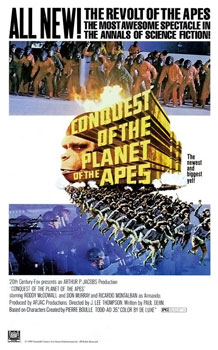


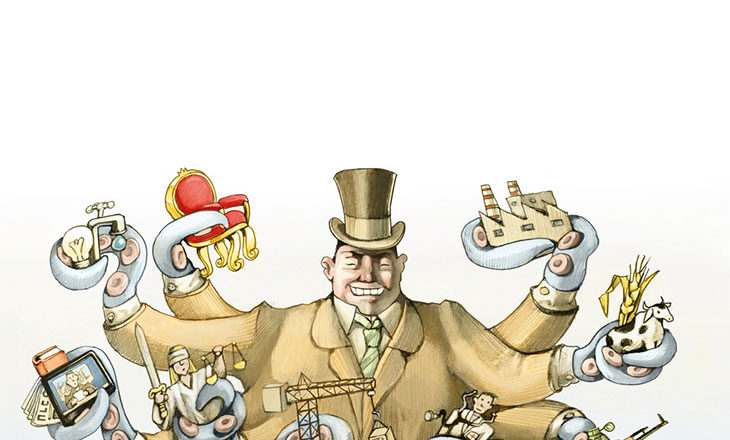
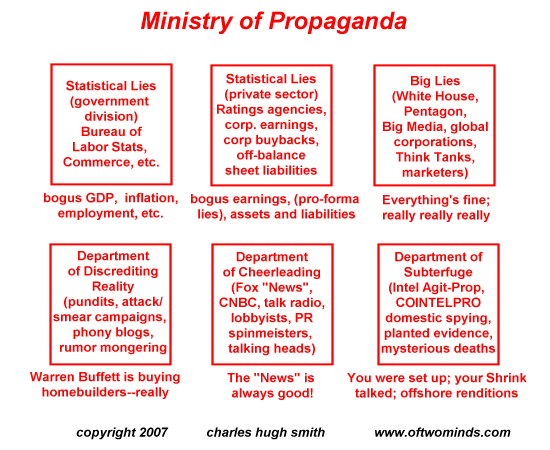
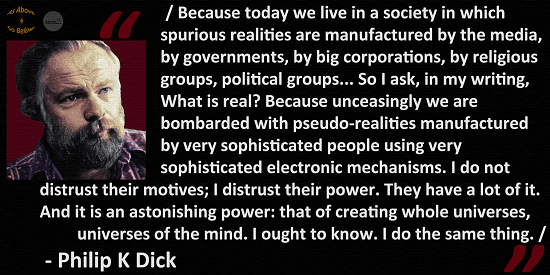
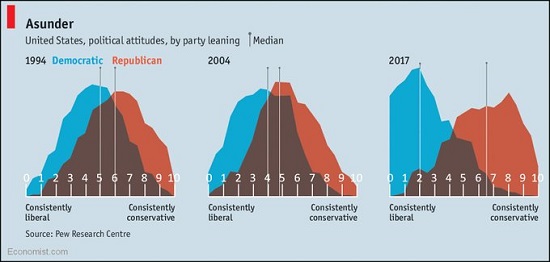


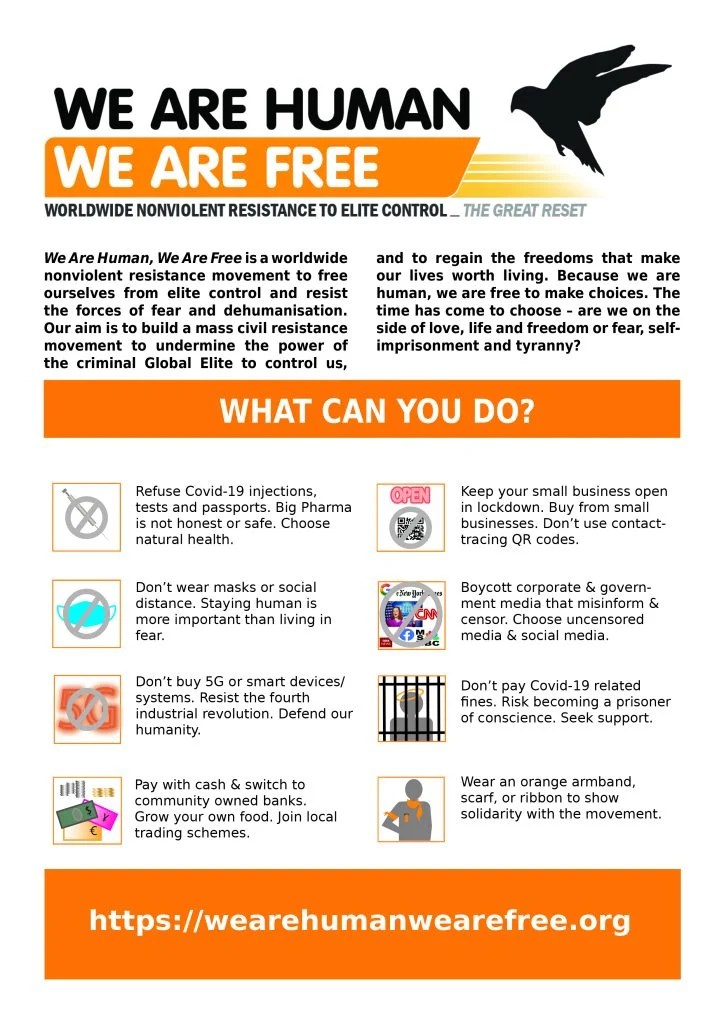
 After the Crash