It’s Just An Illusion – The Management of Perception

By Kingsley L. Dennis

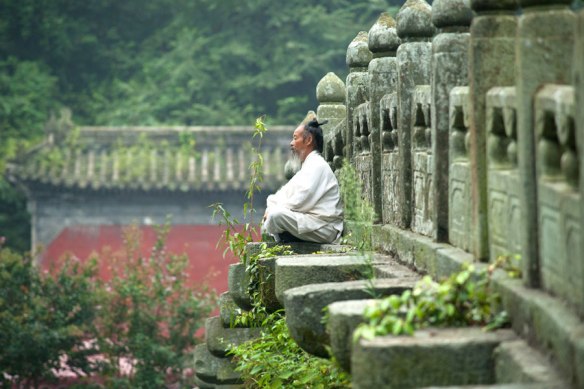
A Taoist Master Explains the Difference Between Religion and Individual Spiritual Cultivation

By Dylan Charles

Source: Waking Times

“The modern world needs true spiritual guidance and development.” ~ Taoist Master Hua Ching Ni

A spiritual war is upon us and the individual is challenged to maintain integrity in a sea of greed, egotism, terror and fear. With no clear path toward spiritual evolution, so many of us floundering and losing ourselves to addiction, despair and self-destruction.

When in the past ordinary religions might have served to offer a pathway toward spiritual awakening based upon the experiences of their ancient sages, today, the best they seem to offer is communal support. Far too often, though, modern religions are mired in greed, scandal, pedophilia and outright terrorism. Religions are failing to provide the help one needs to spiritually thrive in this insane world.

In a reading from the book 8,000 Years of Wisdom, Taoist Master Hua-Ching Ni talks about the state of religions today:

“Spirit can hardly be found in noisy, crowded churches and temples. Even where the teachings of the past sages have been established they have been spoiled by the insensitive trend of the times.

The spirit of the world’s religions died long ago and left most temples and churches merely empty shells.

These places continue as superficial social conventions and can only supply their devotees with shallow activities, psychological games of shadow playing, and hypnosis, all of which have absolutely nothing to do with spiritual reality.

This is the faith of today’s world, and most of their achievements are not the true answer.” ~ Taoist Master Hua Ching Ni

What then, is spiritual reality? And what does it look like in a world governed by fear, distracted by materialism, and kept in conflict by egotism? It’s really quite straightforward, says Master Ni, who refers to it as the “plain, simple truth of your life,’ which is best understood as the profoundly important concept of inner peace.

“The first spiritual goal of Taoism is the restoration and realization of one’s own well-balanced being, and then one’s spiritual evolution.

The highest goal of life is to combine oneself with the spiritual energy of the universe. There is one way to eliminate all wonder, bewilderment and confusion and that is to have inner peace.

The primary method or principle for personal cultivation is to keep peace within oneself and maintain normalcy in one’s environment; thus you can dwell with the spiritual energy and the spiritual energy dwells within you.” ~ Taoist Master Hua Ching Ni

Comparing the teachings of ordinary religions to true personal spiritual cultivation, Master Ni notes that undeveloped human beings follow and devote themselves to belief systems, deities and spiritual figureheads. In contrast, individuals seeking genuine spiritual evolution understand these systems for what they are: illusions and traps.

“People mistake religious emotionalism and hypnosis for spiritual reality.

Often in history religious emotion has been exalted as truth itself. This gave birth to all kinds of religious prejudice and persecution. Religious mobs have carried out the mischief caused by the hot-blooded in the forceful image of a spiritual sovereign. This has not the slightest connection with spiritual reality. It is the manifestation of the impure, heavy, bloody energy of undeveloped human beings before having completed their spiritual evolution.

Many people are fooled by their own ignorance or that of others. And in their ignorance they fool others too. People like this have no hope of reaching the spiritual realm. They will have no chance to touch the real spiritual life. So, before you commit yourself to any religion, you should develop the mental ability to discern what is religious emotion and what is the spiritual truth. One is the right way to follow, and the other is only a psychological pitfall and trap. This is very important for a seeker of truth on the spiritual path.” ~ Taoist Master Hua Ching Ni

Generating this type of spiritual emotionalism has become a profitable art form. Take note of the costumes worn by Catholic Cardinals and deference to the Pope in his symbolic Mitre hat. Islamic fundamentalists and ISIS do the same when they emote fear and terror by parading captives in front of religious soldiers clad in all black robes with faces covered, armed with rifles and sabres. Using symbolic imagery as tools of dominance and control, as Master Ni points out, has absolutely nothing to do with true spiritual reality.

What would the world look like if individuals first placed their own spiritual development ahead of their desire to change the world in accordance with their beliefs about spirituality and feelings religious emotionalism? What if individuals were instead offered a plan of genuine spiritual cultivation, a path that led to actual inner peace?

“The spiritual process itself is a process of the evolution of the human spirit.” ~ Taoist Master Hua Ching Ni

Let us now stop praising famous men (and women)

By David V. Johnson

Source: aeon.com

After the Notre-Dame Cathedral in Paris nearly burned down in April, the French luxury-goods magnate François-Henri Pinault was celebrated for committing €100 million to reconstruct what he called ‘this jewel of our heritage’ and ushering in a flood of donations from other benefactors and companies. Though an impressive figure in the abstract, Pinault’s commitment reflected only 0.3 per cent of his family fortune. If he instead had the average net wealth for a French household and donated 0.3 per cent of his fortune, his commitment would total about €840. Not an insignificant sum for an average Frenchman, but who would refuse to give that sum if it garnered the praise and notoriety that followed Pinault’s donation?

We live in an age of excessive praise for the wealthy and powerful. The upper echelons of society bathe in a sea of honours, awards and celebrity. We see it in the glossy magazines and at the so-called ideas festivals, where billionaires are fawned over for their bons mots. We applaud philanthropists for their largesse, even if their charity will do little ultimate good for society, and even if their conduct in acquiring their fortune was reprehensible. We commend them for dabbling in politics or pushing school reform, before we see any results, and even if we have reason to doubt the good that they will do.

To criticise our praise for the wealthy and powerful as excessive inevitably raises the question of meritocracy. To what extent do we live in a meritocracy, and is that a good or a bad thing? Meritocracy is a form of social organisation that is founded on praise and blame. People signal who deserves power and status by praising them for their character, their talent, their productivity and their actions, and who merits demotion in status and power by blaming them for their vices, their ineptitude and their failings. Insofar as people’s assessments of praise and blame are accurate, they will promote those deemed better up in the hierarchy of power and status, and demote those deemed worse down. Better people will do better things with their superior power and status. When the system works, we have an aristocracy – rule by the finest people. Or so thinkers from Aristotle onward have thought.

This system doesn’t work and can’t work on its own terms. Assessments of praise and blame tend to reflect existing hierarchies of power and status, thereby reifying them. This is because praise and blame have as much to do with the person judging as the person being judged. If everyone in a meritocracy wants to get ahead, assessments of praise and blame will be influenced by whatever helps people to get ahead – namely heaping praise on the powerful and respected, and castigating those without power and status. This is obviously true with meritocracies that most people explicitly reject, such as white supremacy and patriarchy – hierarchies drawn along racial and gender lines. These systems have persisted despite the baseless moral judgments on which they are grounded, because those living within the system are incentivised to see such judgments as legitimate. Meritocracies in general convince those within the system to echo the moral assessments on which they are based as objective and justified, when in fact they are shaped not by objective criteria but by the qualities of the powerful. Praise and blame are ideological blinders that uphold the legitimacy of the meritocratic hierarchy. If we take a more critical look at ourselves and our moral assessments, we will be better able to remove those blinders.

The smog of praise that permeates the upper echelons of society is a product of perverse incentives. As individuals, we tend to praise others and to court praise, because we want to win good will from others and receive confirmation of others’ good will. What’s more, we have an even stronger incentive to praise people who are wealthy and powerful, because winning their goodwill secures their premium support, and the wealthy and powerful are, in turn, more readily able to court praise from others. The more elite someone is, the more likely he is to crowd-surf on the praise of the many lesser folks seeking his favour. And insofar as our age of massive inequality creates people who are wealthier and more powerful, to that extent will the wave of excessive praise swell. We can even anticipate this tendency generating a negative feedback loop: praise of the wealthy and powerful affirms that they are good people deserving their fortune, which can, in turn, augment their wealth and influence, which thereby attracts even more praise.

The effects of excessive praise on conduct are also worth concern. Praising people, even those who deserve praise, can actually have a negative effect on their behaviour. There are many psychological studies demonstrating that people are susceptible to moral compensation. That is, when people feel that they have engaged in good behaviour, they also feel that it gives them licence to act badly in the future. The converse also holds: when people feel that they have engaged in bad behaviour, they also feel that they should make up for it by acting better in the future. If these studies hold up, they appear to upend the social consequences of praise and blame: praising people excessively can lead them to act badly, while blame puts them on notice and reinforces good behaviour. And insofar as this effect is more likely to influence wealthy and powerful people – those who can, thanks to their resources and influence, do more – it magnifies the harm of their bad conduct.

Meritocracies try to establish objective criteria to justify social hierarchies. Nowadays, entry into the elite often has to do with having the right résumé: Oxbridge or Ivy League degrees, a stint at the best consulting firm or investment bank, service in politics or government, writing a book or giving a TED talk about your work. These résumé items are supposed to establish the talent, judgment and character of the people in question. People with such résumés receive respect and esteem – even though their accomplishments are the predictable consequences of being born into the right family, knowing the right people, and swimming with the current. For the ambitious – and meritocracies feed ambition – these résumé items are primarily credentials for acquiring greater power and status. There is no reason for the public to accept such credentials as being an objectively valid base for praise.

If we want to foster a truly democratic society – a society in which we treat each other as equals – we must rein in such excessive praise and the perverse incentives that encourage it. We should aim for the opposite extreme, toward withholding praise and being more circumspect about the wealthy and powerful, to restore balance. As Justice Louis Brandeis, who witnessed our previous Gilded Age, might have said: ‘We may have democracy, or we may have praise showered on the heads of a few, but we can’t have both.’

The Incredible Belief That Corporate Ownership Does Not Influence Media Content

By Alison Rose Levy

Source: FAIR.org

As Sen. Bernie Sanders (CJR8/26/19) has recently noted, corporate ownership of media interferes with the core societal function of the press: reporting and investigating key issues at the intersection of public need and governance. And nowhere is that more critical than when it comes to climate. Due to their corporate conflicts of interest, trusted news authorities have diverted us from our primary responsibility—assuring a viable habitat for our children and grandchildren.

As a journalist who has worked both inside and outside of establishment media, I see influence as embedded in a corporate media culture rather than in isolated cases of CEO dictates. It happens in little ways, such as how an interviewer frames a question, and in big ways, like the decision to exclude a topic, a person or a group of people from the airwaves.

Like most US companies, news organizations are hierarchies, which people who have worked in corporate offices can readily understand. Given that “90% of the United States’ media is controlled by five media conglomerates,” the top executive at many news outfits is likely the CEO of a multinational corporation. The word comes down from the business execs to the company’s division chiefs, as seen in countless movies (like the 1976 classic Network). This was how it was when I worked on primetime national news at CBS in the 1990s.

On the inside, it wasn’t easy to see organizational bias, when job security and team work required overlooking it. The response to the heavily promoted primetime news pairing of two well-known anchors exemplified how news personnel learn to toe the line. The two anchors had zero chemistry, but no one mentioned it, as if an unwritten code had been instantly internalized. This dragged on for two years, pulling down the network’s ratings.

Higher-ups would never offer editorial staff direct input on content. That’s what the executive and middle management were for. Would these managers confide to their staff that the big guns gave them a certain direction? No. Whatever it was, they would present it as their own, and it would be adopted.

Within this culture, controlling the content goes on in whispers, frowns, headshakes and decisions made behind closed doors. If anyone strays into a verboten zone, as I did when I proposed a feature about Native Americans, those in the know privately communicate the ethos that is expected and allowed. “We never put American Indians on air because they talk too slow,” a producer explained.

Despite such experiences, when I left CBS, I respected the many producers with whom I’d worked, many of whom are still employed at the various networks. That work experience honed editorial judgment in ways impossible to measure, for which I am infinitely grateful. It also showed me that organizational agendas and values can trump claims to objectivity.

Reporting from Independent Media

Yet over a decade later, working in progressive online media, I was still astonished that several major stories I covered, were anywhere from underplayed to entirely absent from establishment news.

When I began to cover fracking in New York state in 2009, at first both 60 Minutes (11/14/10) and the New York Times (11/27/0910/29/11) covered it as a Hatfield/McCoy feud between upstate rural neighbors, rather than as an invasive industrial activity with a host of health and environmental repercussions.

During the critical years of the major fracking buildout from 2005 to 2016, the  New York Times gave a prominent environmental platform to self-declared “climate champion” Andrew Revkin, whose reporting FAIR (Extra!2/10) called “a source of some comfort—and crowing—for the climate change denial crowd.” His pro-industry stance on fracking and naysaying on methane impacts condoned an industrial expansion that has produced far-reaching environmental damage.

The Times’ Ian Urbina (6/25/11)  did invaluable reporting on fracking’s faulty economic model. But in 2013, the paper of record closed its environmental desk, even as   Inside Climate News (1/11/13) was reporting that “worldwide coverage of climate change continued a three-year slide.”

MSNBC show hosts like Rachel Maddow and Chris Hayes rarely covered fracking, instead letting gas and oil industry ads reassert claims of safety. Nonprofit environmental groups, leading activists, along with a growing body of independent journalists filled the media void, including my own reporting at Huffington PostAlterNet and EcoWatch.

The TTP

In 2014, I began to report on the Transpacific Partnership (TTP) and other concurrent global trade agreements, which are often characterized as core to President Barack Obama’s “legacy” (e.g., New York Times6/14/15Washington Post6/24/15). The agreement’s full provisions were never revealed to the public prior to the June 2015 vote granting absolute trade authority to Obama—authority that would have passed to Trump if the agreement had been ratified in late 2016, as Obama hoped.

In conducting multiple interviews with trade analysts, as well as following the protests in Europe and the resulting leaks of the contents, I learned from  trade analyst William Waren (Connect the Dots,  1/28/15) that even prior to the TPP’s  passage and ratification, plans were underway for the buildout of  fracking, gas and oil, and coal trade and global export freed by its anticipated passage.

Nothing within the unenforceable Paris Agreement would have prevented it. In fact, the Paris Agreement provisions were nonbinding, while the trade agreements that were being secretly negotiated concurrently, including the Trade in Services Agreement(TiSA), were designed to be binding, to “effectively trump whatever commitment is made in Paris,” Waren revealed on Connect the Dots (12/9/15).

Further, the TPP’s planned instatement of an international corporate tribunal with international legal authority over all nations would have mortally injured global democracies. In 2016, Mark Ruffalo summed up what was at stake in the fight: Expanding the Investor-State Dispute Settlement (ISDS) provisions in NAFTA via TPP

would block worldwide environmental and social progress while empowering corporations to undermine existing climate and environmental policies.

As we witness the Trump administration’s deconstruction of US environmental regulatory infrastructure—appointment by appointment, policy by policy—let’s appreciate that in defeating TPP and associated trade deals (thanks to the work of grassroots organizers and independent media), Americans dodged a bullet.

If the US had passed the TPP as planned during the 2016 lame duck session of Congress, both the US and all co-signers (a total of 12 countries) would have been contractually bound to a wholesale takedown of environmental regulations and economic barriers to fossil fuel development—as well as the loss of any right to challenge corporate rule or prevent health and environmental impacts. The climate impacts of the intended gas and oil buildout would likely have been devastating and decisive.

Nevertheless, the forward drive to pass the TPP occurred in a near void of corporate coverage. What had been negotiated behind closed doors with multinational corporations remained their business secrets. Prior to its authorization in June 2015, no mainstream outlet thoroughly investigated and disclosed the TPP’s provisions. Obama’s most memorable pro-TPP television appearance was singing about it with Jimmy Fallon.  FAIR (6/11/16) called the enthused Vox coverage (6/10/16) of Obama’s performance

a borderline parody of everything wrong with corporate-owned “new media”: What we have here is a Comcast-funded website plugging a Comcast-owned TV show to promote a trade deal aggressively lobbied for by Comcast.

Both the New York Times and its liberal economist columnist, Paul Krugman, covered the TPP infrequently. Krugman (10/6/15) professed he was a “lukewarm opponent” of it, and minimized its importance. “We’re not talking about a world-shaking deal here,” he wrote (3/11/15) three months before the Senate granted Obama the authority to sign the final agreement without further consultation or deliberation.

Prior to the vote, a college friend of the MSNBC host Chris Hayes assured me that Hayes, a former environmental reporter for The Nationwould be deeply concerned about these trade deals. I was dubious, but she was insistent. With the contact she provided, I sent all of my TPP research and sources on to Hayes. I received no response.

Rather than cover the TPP, MSNBC went on to fire Ed Schultz, the sole show host who covered trade agreements. (Sadly, the 64-year-old Schultz died in 2018.) In surveying TPP coverage, Media Matters(2/4/15) found that Schultz was the exception in a near-total blackout by all three major networks. Week after week, Hayes and other MSNBC hosts devoted airtime to meticulously dissecting far more minor concerns.

As in any large organization, the firing and hiring of staff speaks volumes to surviving staff members about the owners’ priorities. The unseen casualties among reporters of integrity, and the disservice to journalism, cannot be overestimated. Those working in corporate media get the message without anyone having to tell them, and highly paid show hosts have the most to lose.

The press’ mission is to inform the citizenry and flag abuses to power, not promote special interests. When citizens blind themselves to a news organization’s corporate entanglements, and trust the outlet to be truthful anyway, it is, to put it mildly, extraordinarily naïve.

It’s not about whether or not the public has access to a private conversation or confidential memo sent to editorial with a corporate dictate. The evidence is what’s given airtime and what isn’t over many years.

Was it just happenstance that MSNBC, for example, failed to cover the TPP after firing Ed Schultz? Comcast, the owner of MSNBC, sat at the table behind closed doors during the five-year long negotiations of the TPP’s specific trade provisions.

Have MSNBC or any of its competitors uncovered Comcast’s agenda for the trade agreements? What if concerns over intellectual property rights, for example, made it a corporate mission to pass a deal that also happened to radically hasten the climate tipping point? Should any company have that much power?

No business, no matter how sizeable, should have the right to subvert the actions and political choices necessary to address climate, as well as the activated movement capable of assuring that at long last we do what needs to be done. The only sane response is to support the movement, and the independent media outlets that provide a platform for ideas, facts, studies, polls, policy initiatives and disclosures outside the corporate media frame—and to overhaul the media to address this unfair use of public airwaves for gain and compromise as the world burns.

The Struggle for Peace in Afghanistan: Is Community Engagement the Key?

By Robert J. Burrowes

I have just read a superb book by Mark Isaacs, an Australian who has documented several years of effort by a group of incredibly committed young people in Afghanistan to build peace in that war-torn country the only way it can be built: by learning, living and sharing peace.

The book, titled The Kabul Peace House: How a Group of Young Afghans are Daring to Dream in a Land of War, records in considerable detail the struggle, both internal and external, to generate a peaceful future in Afghanistan. Some might consider this vision naive, others courageous, but few would doubt the simple reality: it is slow, daunting, incredibly difficult, often saddening, frightening, infuriating or painful, sometimes uplifting or hilarious and, just occasionally, utterly rewarding.

This is a human story written by a person who knows how to listen and to observe. And because the subject is about a group of ordinary Afghans and their mentor doing their best in the struggle to end one of the longest wars in human history, it is a story that is well worth reading.

This story is embedded in a combination of (brief) historical background on Afghanistan’s longstanding and central role in imperial geopolitics (including during ‘The Great Game’ of the 19th century) and more recent history on the progressive modernity of Afghanistan prior to the Soviet invasion in 1979 which was followed by an ongoing and multifaceted war in which the United States has played the most damaging role since its invasion of the country in 2001. But the background also includes a description of the ethnic diversity throughout the country, the role of religion and gender relations (and the challenges these social parameters present), as well as commentary on the social, economic and political regression as a result of the war’s many adverse impacts. So the book weaves a lot of strands into a compelling story of nonviolent resistance and regeneration against almost overwhelming odds.

However, that is not all. Given that all of the Afghans in this visionary community have each been traumatized by their unique experience of war, the book doesn’t shy away from describing the challenges this presents both to them personally and to the community, including its mentor and even some of the community’s many international visitors.

Most of the community members – whether Pashtun, Hazara, Uzbek, Turkmen, Tajik, Sayyid, Pashai… – have suffered serious loss during the war, especially those members who have had family and other relatives killed, or worse. Worse? you might ask. What is worse than death? Well, after reading this book, you will better understand that the context and the manner of death mean a great deal psychologically. None of the victims of this war died peacefully in their sleep after long and meaningful lives and this is just one part of the psychological trauma suffered by so many in this particular community but also in wider Afghan society.

So what does this community in Kabul do? Well, throughout its evolution and many manifestations, the community has done many things including run a variety of projects intended to foster understanding, cooperation and learning: nurture mutual respect among the diversity of people that constitute its membership, teach some of its members to read and write and facilitate learning opportunities in other contexts, teach the meaning and practice of nonviolence, give street kids the chance to learn skills that will make them employable, make duvets to give to people who go cold in Afghanistan’s freezing winters, teach and practice permaculture, organize protests against the war (including by flying kites instead of drones), and generally working to create a world that is green, equal and nonviolent.

If you think this sounds all good and straightforward, given slowly spreading acceptance of such ideas elsewhere (in some circles at least), then you might have underestimated their radical nature in a society in which ideas about nonviolence, equality and sustainability have, for the most part, not been previously encountered and have certainly not taken root. Isaacs records the observations of the group’s mentor on these subjects: ‘Over the years I have seen how the volunteers have changed within their personal lives, even if it means distancing themselves from the traditions of their own family…. But on a public level it’s much slower.’

This is understandable. As Isaacs notes, even in ordinary conversation and group discussions, ‘the weight of resistance, the taboos and the self-censorship’ made an impact on him. In a culture in which, in 2015, a woman in her twenties was stoned, her body run over by a car and then dumped in a river and set on fire because a mullah falsely accused her of burning the Quran, there is a long way to go.

One of the things that I found most compelling about the book is the occasional ‘biography’ of one of the community’s main characters. Given pseudonyms to avoid possible adverse repercussions, these stories provide real insight into the lives of certain community members and their struggle to leave home (in some cases), to join the community, to find their place within it and gain acceptance by the other members.

Some, like Hojar, are more outspoken and this, for a woman, is unusual in itself. Hojar is deeply aware of the gender inequality and violence against women in Afghanistan and will talk about it. This inspires other women, like Tara, who have not experienced this outspokenness before.

But Hojar’s life had started differently, in the mountains where, as a teenager, she was getting up at 3am to start baking bread for her four snoring brothers before milking the goats and sheep. ‘I am not a woman’, she thought, ‘I am a slave’. Fortunately and unusually, Hojar’s parents supported her desire to not marry at 13 or 15, but to continue her education and follow her dreams. It’s a long, painful, terrifying and fascinating journey but Hojar ended up in this novel community experiment in Kabul where her now college-educated talent was highly valued and put to wonderful use. She has my utmost admiration.

Unlike Hojar, other community members, like Horse, originally a shepherd in the mountains, are more circumspect on gender equality and other issues. But this doesn’t mean that Horse is not active, at times playing roles in the networking team, the accounts team and, particularly, as coordinator of the food cooperative which provided monthly gifts of food to the impoverished families of one hundred children who studied at the community’s street kids school. If you think raising donations to pay for this food was easy, particularly given the community decision to avoid the international aid sector to try to encourage Afghans to help their fellow Afghans, when more than half of the population lived below the poverty line and unemployment was at 40%, you will find it compelling to read how the teenaged Horse struggled with the monumental range of challenges he faced in that particular role. He has my admiration too.

Insaan, a doctor who mentors the community, provides a compelling story as well. Originally from another country, in 2002 a consultation with a patient at his successful medical practice inspired him to depart some time later. After spending more than two years in Pakistan, working with refugees from Afghanistan, he went to Afghanistan in 2004 to work for an international NGO in public health education in its central mountainous region.

His ongoing experience in this role, however, taught him that every problem the villagers faced had its origins in the war. And this underpinned his gradual transformation from health professional to peace activist. He discovered Thoreau, Gandhi and King, among others, and ‘became convinced of the power of love’. By 2008, Insaan had initiated his first multi-ethnic live-in community (although he did not live in it himself) in the mountains but in 2011, when his house was deliberately burned down, he departed for Kabul determined to restart the peace work he had begun in the mountains.

Starting with three young people who accompanied him from the mountains, the first manifestation of a live-in peace community in Kabul was soon underway. Endlessly paying attention, trying to provide guidance, reconcile those in conflict, and even withstanding threats of violence, Insaan’s love has undoubtedly been the glue that has held the growing and evolving community together. But not without cost. At times, Insaan has struggled, emotionally and otherwise, to survive in this perpetual war zone as the key figure holding this loving experiment together. He is a truly remarkable human being.

And it is because of the trauma that he and each of the other community members has suffered, that I hope that, in future, they can somehow dedicate time to their own personal, emotional healing. See ‘Putting Feelings First’ and ‘Nisteling: The Art of Deep Listening’. There is no better investment for any human being than to spend time consciously focusing on feeling the fear, pain, anger and sadness that we are taught and terrorized into suppressing during childhood (so that we become the obedient slaves that our society wants). Given the extraordinary violence that the people of Afghanistan have suffered and are still suffering, the value of making this investment would be even greater.

Anyway, if you want to read an account of the deeply personal human costs of war, and what one community is doing about it, read this book. It isn’t all pretty but, somehow, this remarkable community, through all of its manifestations over many years, its successes and failures, manages to inspire one with the sense that while those insane humans who spend their time planning, justifying, fighting and profiting from wars against people in other countries, those people on the receiving end of their violence are capable of visioning a better tomorrow and working to achieve it. No matter how difficult or how long it takes. Moreover, we can help too. See Nonviolent Campaign Strategy.

So allow yourself to be inspired by a group of young people, each of whom has lived their entire life in a country at war both with itself and with foreign countries, but has refused to submit to the predominant delusion that violence is the way out.


Biodata: Robert J. Burrowes has a lifetime commitment to understanding and ending human violence. He has done extensive research since 1966 in an effort to understand why human beings are violent and has been a nonviolent activist since 1981. He is the author of Why Violence? His email address is flametree@riseup.net and his website is here.

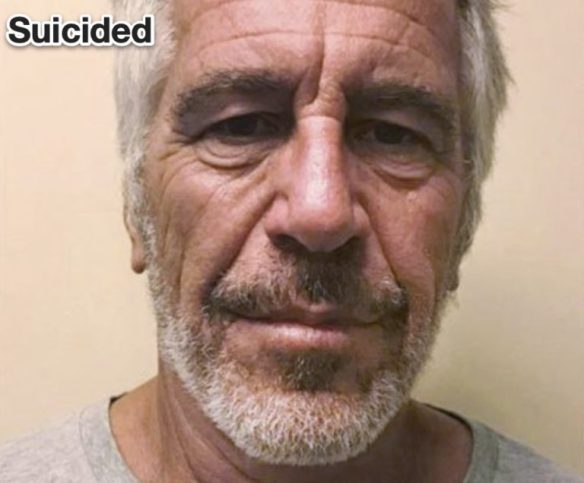
Believing Jeffrey Epstein Committed Suicide is the Real Conspiracy Theory

By Michael Krieger

Source: Liberty Blitzkrieg

Is a murder committed more heinous than a suicide allowed? In its act, sure. In this context? NO.

An “unlucky accident” like this is the ONE THING that a non-corrupt State must prevent. It’s the non-corrupt State’s ONE JOB to keep Epstein alive for trial, and everyone knows that everyone knows this is their ONE JOB.

It is impossible to violate this common knowledge without premeditation and malice, without conspiracy and criminality aforethought. It is impossible to have an “unlucky accident” like this in a non-corrupt State.

– Ben Hunt, I’m a Superstitious Man

It’s entirely fitting that the death of Jeffrey Epstein is as disturbing, shady, bizarre and seemingly inexplicable as the rest of his life. It seems as if one could research this wretched man’s time on earth for years and still come up with more questions than answers. An unfortunate reality complicated by the fact we don’t have a mass media particularly interested in asking any of the big questions, such as:

  • Where is Ghislaine Maxwell? Why isn’t she in custody and was she a Mossad spy like her late father Robert Maxwell?
  • Explain the details of the relationship between Leslie Wexner and Jeffrey Epstein? Why does it seem as if Wexner helped set Epstein up with the appearance of extraordinary wealth, yet no one seems to know how Epstein actually came into all his money?

It appears sexually abusing children and accumulating associated blackmail on the rich and powerful was a full-time job for Epstein, so who was actually bankrolling/overseeing this operation? Was it Wexner, somebody else, or was it an intelligence agency as Alex Acosta claims he was told? Seems kind of important to get to the bottom of this.

I could go on and on, but then this would become a book. Rather, the purpose of this post is to highlight the outlandishness surrounding many of the details (or lack thereof) surrounding Epstein’s death a week ago in a Department of Justice operated New York City prison.

Indeed, what you’d have to believe in order to think this was a simple suicide is the actual conspiracy theory. 

Let’s begin with the initial attack, which happened three weeks before his death.

The Initial Attack
As everybody knows, on July 23, Jeffrey Epstein was found in a fetal position, semi-conscious, on the floor of his cell with neck injuries. His cellmate at the time was Nicholas Tartaglione, a former New York police officer who was arrested in December 2016 on charges of killing four men in a drug distribution conspiracy.

There was a giant haze surrounding this incident up until the moment of Epstein’s death, with everyone unsure whether he was attacked or if it was a suicide attempt. According to a report by NBC News, Tartaglione was subsequently cleared the day before Epstein was found dead. I suppose that means the initial attack was belatedly ruled a suicide attempt, but why did it take so long to figure that out? It took far less time to rule Epstein’s suspicious death a suicide.

Circumstances at the Prison Surrounding the Death
Either the stars all aligned perfectly for the most important prisoner in America to kill himself on that day, or he was somehow murdered to shield an extensive list of some of the most wealthy and powerful people on earth. Decide for yourself.

– One of Epstein’s Guards Was Not a Corrections Officer

The AP reported:

A person familiar with operations at the federal jail where Jeffrey Epstein killed himself says one of the two people guarding him the night he died wasn’t a correctional officer.

The person wasn’t authorized to disclose information about the investigation and spoke on condition of anonymity.

The person said Epstein hanged himself with a bedsheet, days after being taken off a suicide watch.

Federal prisons facing shortages of fully trained guards have resorted to having other types of support staff fill in for correctional officers, including clerical workers and teachers.

– Both of the Guards Fell Asleep at the Exact Same Time Giving Epstein a Chance to Die

Guards were supposed to have checked on Epstein every 30 minutes, but rather both of them fell asleep for 3 hours during the window of Epstein’s death.

Via Business Insider:

The two prison guards assigned to monitor Jeffrey Epstein in a high-security jail fell asleep for three hours, the night he died of an apparent suicide, The New York Times reported on Tuesday, citing unnamed officials…

According to reports, there were multiple breaches in protocol regarding the supervision of Epstein: prison guards were required to check on Epstein every 30 minutes, which they failed to do, officials told The Times, and Epstein was being housed alone after his cellmate was transferred and was not replaced.

– Epstein Guards Suspected of Falsifying Logs

AP reports:

A person familiar with the probe of Jeffrey Epstein’s death at a federal jail says guards are suspected of falsifying log entries to show they were checking on inmates in his unit every half hour, when they actually weren’t.

– Key People at the Prison Are Not Cooperating with the FBI

CNN reports

Even top officials in the department have been frustrated by their inability to get some answers from the prison, in part because initial answers turned out to be inaccurate in some cases…

The FBI probe is complicated by the fact that key people involved aren’t cooperating, people briefed on the matter say.

– Epstein Was Taken off Suicide Watch Less Than a Week After His Initial Suicide Attempt

New York Magazine reports:

Epstein was taken off of suicide watch on July 29 and returned to the MCC’s special housing unit after a psychiatric evaluation determined he was no longer at risk of harming himself. The Wall Street Journal reported that Epstein’s lawyers had requested he be removed from suicide watch.

– Epstein’s Cellmate Was Removed the Day Before Epstein Died

This makes no sense, unless you’re trying to create the perfect conditions for Epstein to die.

Via CNN:

In one instance over the weekend, officials believed the former Epstein cellmate had been released on bail. But it turns out he had been moved to another facility, one person briefed on the matter said. One of the first tasks for FBI agents this week was interviewing that former cellmate, who could provide information on Epstein’s behavior in the days before his suicide.

Who was Epstein’s cellmate before he died? After the first incident, it was revealed almost immediately who his cellmate was, but there’s been little to no details about the second cellmate. Who was he and what does he have to say?

– At Least Eight Jail Officials Knew Jeffrey Epstein Was Not to Be Left Alone in Cell

Just total insanity. The official narrative gets increasingly ridiculous by the day.

Via The Washington Post:

At least eight Bureau of Prisons staffers knew that strict instructions had been given not to leave multimillionaire sex offender Jeffrey Epstein alone in his cell, yet the order was apparently ignored in the 24 hours leading up to his death, according to people familiar with the matter.

The fact that so many prison officials were aware of the directive — not just low-level correctional officers, but supervisors and managers — has alarmed investigators assessing what so far appears to be a stunning failure to follow instructions, these people said. Like others, they spoke on the condition of anonymity to discuss ongoing investigations. They declined to identify the eight…

The Bureau of Prisons declined to comment.

“It’s perplexing,” said Robert Hood, a former warden at the federal Supermax prison in Florence, Colo. “If people were given instructions that Epstein should not be left alone, I don’t understand how they were not followed.”

It’s only perplexing if you go into it thinking it was a suicide.

Details Surrounding the Death Itself

– Epstein Hung Himself from a Bunkbed 

Via The Washington Post:

Epstein, 66, was found in his cell at the Metropolitan Correctional Center in Manhattan on Saturday morning, and an official said he hanged himself with a bedsheet attached to the top of a bunk bed. Epstein was rushed to a nearby hospital, where he was pronounced dead.

The bunkbed was conveniently available due to the fact his cellmate was inexplicably moved a day before.

– Epstein Suffered Multiple Breaks in His Neck Bones, Which Is More Common in Homicides

Also via The Washington Post:

An autopsy found that financier Jeffrey Epstein suffered multiple breaks in his neck bones, according to two people familiar with the findings, deepening the mystery about the circumstances around his death.

Among the bones broken in Epstein’s neck was the hyoid bone, which in men is near the Adam’s apple. Such breaks can occur in those who hang themselves, particularly if they are older, according to forensics experts and studies on the subject. But they are more common in victims of homicide by strangulation, the experts said.

– Little to No Details About Prison Camera Footage 

I assume some narrative will emerge here, but it’s already been too long for my comfort. We had all sorts of details emerge in the days following Epstein’s death, but almost nothing regarding the crucial hallway camera footage in the prison. This is something investigators would likely check immediately so why didn’t they, or if they did, why is it taking so long to inform the public?

Even Epstein’s lawyers seem confused as to whether the video footage exists.

Here is part of a statement from Epstein’s attorneys via NBC News:

“It is indisputable that the authorities violated their own protocols. The defense team fully intends to conduct its own independent and complete investigation into the circumstances and cause of Mr. Epstein’s death including if necessary legal action to view the pivotal videos — if they exist as they should — of the area proximate to Mr. Epstein’s cell during the time period leading to his death.”

Finally, it’s worth pointing out that the NYC Medical Examiners Office, which ruled Epstein’s death a suicide, has a pretty sordid history.

Check out the following from a 2014 New York Post article, Lost Bodies, Wasted Money: Inside NYC’s Medical Examiner’s Office

The city Medical Examiner’s Office is a mess — plagued with errors, including bodies being lostmistakenly cremated or wrongly donated to science — while millions of taxpayer dollars have been spent on plans and equipment useful only in a mass disaster…

Meanwhile, insiders say ME chiefs, caught up in the glamor of disaster, neglect the agency’s primary mission.

“They can’t take care of day-to-day business. They play war games,” one said.

The ME’s Office, with 625 employees and a $63.6 million budget, has a history of criminality, waste and incompetence.

The ME’s former chief of management information systems, Natarajan “Raju” Venkataram, and his co-worker girlfriend, Rosa Abreu, were busted in 2005 for embezzling more than $9 million from a $11.4 million FEMA grant meant to track and identify remains of 9/11 victims.

And bosses take lavish taxpayer-funded trips to conferences and symposiums.

Frank DePaolo, assistant commissioner for emergency management, has traveled to Las Vegas, the Hague, Hong Kong and Israel. Chief of Staff Barbara Butcher has gone to Croatia and Thailand…

The number of investigators, who examine bodies at death scenes, was slashed from about 40 to 20, among other cuts, they said.

“We’re told to do more with less, but the work is suffering,” one said.

Here’s some more while we’re at it:


If after everything I’ve highlighted, you still believe this was a simple suicide that’s fine. Anything is possible, but it really doesn’t matter. Even if it was mere incompetence that allowed a suicide to occur, this still demonstrates without a shadow of a doubt that the federal government is incapable or unwilling to protect the public.

The Epstein case was and remains a matter of extreme public interest since this was a man who systematically sexually abused and trafficked children while closely associating with, and collecting blackmail on, a large slew of the most wealthy and powerful people on the planet. If the government can’t protect you from that, and it most certainly went out of its way to deny justice for this criminal over decades including within prison itself, then you can’t trust the government for anything. As such, whenever the feds claim they’re doing something extreme to protect you, whether it’s mass surveillance or encryption backdoors, you can be 100% sure it is a giant heap of stinking bullshit.

The narrative now being formed is that it was all just a lot of incompetence. That the guards were tired and overworked. We’re also being told that it’s normal for an inmate on suicide watch to come off after a few days, but Jeffrey Epstein was not a normal inmate. Epstein and the people around him belong to a class I refer to as super predators, which are the most dangerous predators in society because their elite connections allow them to get away with anything and everything.

It’s become completely clear that rather than stopping such people and their criminal rings, the U.S. government protects them and ensures no justice is ever served upon them, even up to their last breath.

Our government isn’t there to protect us, save us or dispense any justice. Instead, it seemingly exists to protect, serve and encourage the elite criminal rings operating around us in plain sight, whether it’s bank CEOs or pedophile sex traffickers with apparent intelligence links.

We are truly ruled by gangsters.

Comparative Political Leadership: Gandhi vs. Contemporary Leaders

By Robert J. Burrowes

On 2 October 2019, it will be the 150th anniversary of the birth of Mohandas K. Gandhi in Gujarat, India. I would like to reflect on the visionary leadership that Gandhi offered the world, briefly comparing it with some national leaders of today, and to invite you to emulate Gandhi’s leadership.

While Gandhi is best remembered for being the mastermind and leader of the decades-long nonviolent struggle to liberate colonial India from British occupation, his extraordinary political, economic, social, ecological, religious and moral leadership are virtually unknown, despite the enormous legacy he left subsequent generations who choose to learn from what he taught. This legacy is available online in the 98-volume Collected Works of Mahatma Gandhi.

While touching on Gandhi’s legacy in each of these regards, I would particularly like to highlight Gandhi’s staggering legacy in four of these fields by briefly comparing his approach to politics, economics, society and the environment with the approach of contemporary political leaders such as Jair Bolsonaro (Brazil), Xi Jinping (China), Emmanuel Macron (France), Viktor Orbán (Hungary), Narendra Modi (India), Binjamin Netanyahu (Israel), Shinzo Abe (Japan), Vladimir Putin (Russia), Mohammad bin Salman (Saudi Arabia), Boris Johnson (UK) and Donald Trump (USA).

Before doing so, let me offer a little basic background on Gandhi so that the foundational framework he was using to guide his thinking and behaviour is clear.

Gandhi in Brief

In order to develop his understanding of the human individual and human society, as well as his approach to conflict, Gandhi engaged in ongoing research throughout his life. He read avidly and widely, as well as keenly observing the behaviour of those around him in many social contexts in three different countries (India, England and South Africa). Shaped also by the influence of his mother and his Hindu religion, this led to Gandhi’s unique understanding of the human individual and his approach to the world at large.

For a fuller elaboration of the points about Gandhi discussed below and the precise references, see relevant chapters and sections on Gandhi in The Strategy of Nonviolent Defense: A Gandhian Approach.

Gandhi’s conception of the human individual and human nature

In order to understand Gandhi generally, it is imperative to comprehend his conceptions of the human individual and human nature simply because these are the foundation of his entire philosophy.

Gandhi attached enormous importance to individual responsibility. He also had a very positive view of human nature. Gandhi believed that humans could respond to ‘the call of the spirit’ and rise above selfishness and violence. Moreover, this was necessary in their quest for self-realization. Self-realization, as the Gandhian scholar Professor Arne Naess explains it, ‘involves realizing oneself as an autonomous, fully responsible person’.

In Gandhi’s view, this quest is an individual one that relies on nonviolence, self-reliance, and the search for truth. ‘To find Truth completely is to realize oneself and one’s destiny.’ But what should guide this search? According to Gandhi, it can only be the individual conscience: The ‘inner voice’ must always be ‘the final arbiter when there is a conflict of duty’. And in his view, ‘the voice of God, of Conscience, of Truth or the Inner Voice or “the still small Voice” mean one and the same thing.’

This point is centrally important, because the usual descriptions of Gandhian nonviolence stress its morality, humility and sacrifice while neglecting the fundamental norm ‘that you should follow your inner voice whatever the consequences’ and ‘even at the risk of being misunderstood’.

The point, of course, is that creation of the nonviolent society which Gandhi envisioned required the reconstruction of the personal, social, economic and political life of each individual. ‘We shall get nothing by asking; we shall have to take what we want, and we need the requisite strength for the effort.’ Consequently, the individual required increased power-from-within through the development of personal identity, self-reliance and fearlessness.

So what is fearlessness? For Gandhi, it means freedom from all external fear, including the fear of dispossession, ridicule, disease, bodily injury and death. In his view, progress toward the goal of fearlessness requires ‘determined and constant endeavour’. But why is fearlessness so important? Because a person who is fearless is unbowed by the punitive power of others and that makes them powerful agents of change.

Gandhi’s approach to society and political economy

Gandhi’s conception of society is based on a rejection of both capitalism and socialism.

In relation to capitalism, he rejected the competitive market and private property, with their emphasis on individual competitiveness and material progress and their consequent greed and exploitation of the weak. He also rejected the major institutions of capitalism, including its parliamentary system of democracy (which denied sovereignty to the people), its judicial system (which exacerbated conflict and perpetuated elite power), and its educational system (which divorced education from life and work).

In relation to socialism, he rejected its conception of conflict in terms of class war, its claim that state ownership and centralization are conducive to the common welfare, its emphasis on material progress, and its reliance on violent means.

The Gandhian vision of future society is based on a decentralized network of self-reliant and self-governing communities using property held in trust, with a weak central apparatus to perform residual functions. His vision stresses the importance of individuals being able to satisfy their personal needs through their own efforts – including ‘bread labor’ – in cooperation with others and in harmony with nature.

For Gandhi, this horizontal framework is necessary in order to liberate the exploiter and exploited alike from the shackles of exploitative structures. This is vitally important because, in his view, ‘exploitation is the essence of violence.’ Self-reliance and interdependence must be built into the structure in order to enhance the capacity for self-regeneration and self defense and to eliminate the potential for structural violence inherent in any dependency relationship.

This social vision was clearly evident in Gandhi’s ‘constructive program’, which was intended to restructure the moral, political, social and economic life of those participating in it. The constructive program was designed to satisfy the needs of each individual member of society and was centrally concerned with the needs for self-esteem, security, and justice. The program entailed many elements, some of which are outlined below in order to illustrate this point.

A crucial feature of the constructive program was the campaign for communal unity. This was intended to encourage reciprocal recognition of the identity of Hindus, Muslims, Christians, Jews and those of other religions. According to Gandhi, all people should have the same regard for other faiths as they have for their own.

The campaign to liberate women was intended to secure self esteem, security, and justice for those most systematically oppressed by India’s patriarchal society. ‘Woman has been suppressed under custom and law for which man was responsible… In a plan of life based on nonviolence, woman has as much right to shape her own destiny as man.’

The campaign for the removal of untouchability was meant to restore self-esteem, dignity, and justice to the Harijans (Gandhi’s term for those without caste) in Hindu society. Similarly, the constructive program was concerned with recognizing the needs of indigenous peoples and lepers throughout India. ‘Our country is so vast… one realizes how difficult it is to make good our claim to be one nation, unless every unit has a living consciousness of being one with every other.’

The khadi (handspun/handwoven cloth) and village industries programs were intended to make the villages largely self-reliant and Indians proud of their identity after centuries of oppression and exploitation under British imperial rule. Khadi, Gandhi argued, ‘is the symbol of unity of Indian humanity, of its economic freedom and equality.’ The struggle for economic equality was aimed at securing distributive justice for all. It meant ‘leveling down’ the rich, who owned the bulk of the nation’s wealth, while raising the living standards of ‘the semi-starved’ peasant millions.

Thus, Gandhi stressed the centrality of the individual and the importance of creating a society that satisfied individual human needs. ‘The individual is the one supreme consideration’; individuals are superior to the system they propound. In fact: ‘If the individual ceases to count, what is left of society?… No society can possibly be built on a denial of individual freedom.’

According to Gandhi then, the foundation of this nonviolent society can only be the nonviolent individual: No one need wait for anyone else before adopting the nonviolent way of life. Hesitating to act because the whole vision might not be achieved, or because others do not yet share it, is an attitude that only hinders progress.

So how is this nonviolent society to come into being? For Gandhi, the aim is not to destroy the old society now with the hope of building the new one later. In his view, it requires a complete and ongoing restructuring of the existing social order using nonviolent means. And while it might not be possible to achieve it, ‘we must bear it in mind and work unceasingly to near it’.

The political means for achieving this societal outcome entailed three essential elements: personal nonviolence as a way of life, constructive work to create new sets of political, social, economic and ecological relationships, and nonviolent resistance to direct and structural violence.

Gandhi the nonviolent conflict strategist

So what did nonviolence mean to Gandhi?

According to Gandhi: ‘Ahimsa [nonviolence] means not to hurt any living creature by thought, word or deed.’ The individual, humanity, and other life forms are one: ‘I believe in the essential unity of [humanity] and for that matter of all that lives.’

Given Gandhi’s understanding that conflict is built into structures and not into people, and that violence could not resolve conflict (although it could destroy the people in conflict and/or the issues at stake) his religious/moral belief in the sanctity of all life compelled him to seek a way to address conflict without the use of violence. Moreover, despite his original training as a lawyer in England and his subsequent practice as a lawyer in South Africa, Gandhi soon rejected the law as a means of dealing with conflict too, preferring to mediate between conflicting parties in search of a mutually acceptable outcome.

According to Gandhi, British imperialism and the Indian caste system were both examples of structures that were perpetuated, in large part, as a result of people performing particular roles within them. The essence of Gandhi’s approach was to identify approaches to conflict that preserved the people while systematically demolishing the evil structure. Moreover, because he saw conflict as a perennial condition, his discussions about future society are particularly concerned with how to manage conflict and how to create new social arrangements free of structural violence.

More importantly, according to Gandhi conflict is both positive and desirable. It is an important means to greater human unity. Professor Johan Galtung explains this point: ‘far from separating two parties, a conflict should unite them, precisely because they have their incompatibility in common.’ More fundamentally, Gandhi believed that conflict should remind antagonists of the deeper, perhaps transcendental, unity of life, because in his view humans are related by a bond that is deeper and more profound than the bonds of social relationship.

So how is conflict to be resolved? In essence, the Gandhian approach to conflict recognizes the importance of resolving all three corners of what Galtung calls the ‘conflict triangle’: the attitude, the behavior, and the goal incompatibility itself. The Gandhian method of conflict resolution is called ‘satyagraha’, which means ‘a relentless search for truth and a determination to reach truth’, it is somewhat simplistically but more widely known (and practiced) in English as ‘nonviolent action’ (or equivalent names). While the perpetrator of violence assumes knowledge of the truth and makes a life-or-death judgment on that basis, satyagraha, according to Gandhi, excludes the use of violence precisely because no one is capable of knowing the absolute truth. Satyagraha, then, was Gandhi’s attempt to evolve a theory of politics and conflict resolution that could accommodate his moral system.

It is for this reason then that ‘Satyagraha is not a set of techniques’. This is because the actions cannot be detached from the norms of nonviolence that govern attitudes and behavior. Therefore, an action or campaign that avoids the use of physical violence but that ignores the attitudinal and behavioral norms characteristic of satyagraha cannot be classified as Gandhian nonviolence. Moreover, the lack of success of many actions and campaigns is often directly attributable to a failure to apply these fundamental norms to their practice of ‘nonviolent action’ (by whatever name it is given locally). To reiterate: ‘Satyagraha is not a set of techniques’.

But Gandhi was not just committed to nonviolence; he was committed to strategy as well. Because he was a shrewd political analyst and not naive enough to believe that such qualities as truth, conviction and courage, nor factors such as numbers mobilized, would yield the necessary outcomes in conflict, he knew that strategy, too, was imperative.

Consequently, for example, he set out to develop a framework for applying nonviolence in such a way that desirable outcomes were built into the means of struggle. ‘They say “Means are after all means”. I would say “means are after all everything”. As the means so the end.’

Gandhi the ecologist

According to Karl Marx, the crisis of civilization was created by the production relations of capitalism; for Gandhi, it was created by the process of industrialization itself. This process both stimulated and was fueled by the unrestrained growth of individual wants. The remedy, according to Gandhi, lay in individuals transforming themselves and, through this transformation, founding a just social order.

He argued that social transformation, no matter how profound, would be neither adequate nor lasting if individuals themselves were not transformed. A part of this strategy was ‘the deliberate and voluntary reduction of wants’. Gandhi did not begrudge people a reasonable degree of physical well-being, but he made a clear distinction between needs and wants. ‘Earth provides enough to satisfy every [person’s] need but not for every [person’s] greed.’

But, as with everything else in Gandhi’s worldview, he did not just advocate this simple material lifestyle; he lived it, making and wearing his own khadi, and progressively reducing his personal possessions.

Contemporary Political Leaders

While contemporary national leaders obviously display a wide variety of styles, it is immediately evident that individuals such as Jair Bolsonaro (Brazil), Xi Jinping (China), Emmanuel Macron (France), Viktor Orbán (Hungary), Narendra Modi (India), Binjamin Netanyahu (Israel), Shinzo Abe (Japan), Vladimir Putin (Russia), Mohammad bin Salman (Saudi Arabia), Boris Johnson (UK) and Donald Trump (USA) might be readily identified as representative of virtually all of them.

And whatever one might say about each of these leaders, it is clear from both their words and behaviour that none of them regards the human individual and their conscience as the foundation on which their national societies or even global society should be built. On the contrary, individuals are destroyed, one way or another, so that society is not inconvenienced more than minimally by any semblance of ‘individuality’ or individual conscience.

Moreover, while in some countries there are clearly articulated doctrines about reducing inequality and, in a few cases, some effort to achieve this, there is little or no concerted effort to restructure their national societies and economies so that inequality is eliminated; on the contrary, the wealth of the few is celebrated and defended by law. None of these leaders wears a local equivalent of khadi to express their solidarity with those less privileged and model a lifestyle that all can (sustainably) share.

The oppression of certain social groups, such as women, indigenous peoples, racial and religious minorities, particular castes or classes, those of particular sexual and identity orientations or with disabilities, remains widespread, if not endemic, in each of these societies with considerably less than full effort put into redressing these forms of discrimination.

Not one of these leaders could profess an ecological worldview (and national policies that reflected a deep commitment to environmental sustainability) or the simplicity of material lifestyle that Gandhi lived (and invited others to emulate).

And not one of them could pretend that killing fellow human beings was abhorrent to them with each of these countries and their leaders content to spend vast national resources on military violence rather than even explore the possibility of adopting the strategically superior (when properly understood and implemented) strategy of nonviolent defense that Gandhi advocated. ‘I have always advised and insisted on nonviolent defence. But I recognize that it has to be learnt like violent defence. It requires a different training.’ See The Strategy of Nonviolent Defense: A Gandhian Approach or, more simply, Nonviolent Defense/Liberation Strategy.

For just a taste of the discriminatory, destructive and violent policies of contemporary political leaders, see ‘Equality Reserved: Saudi Arabia and the Convention to End All Discrimination against Women’, ‘156 Fourth World Nations suffered Genocide since 1945: The Indigenous Uyghurs Case’, ‘Weaponizing Space Is the New Bad Idea Coming From Washington D.C.’ and ‘Report Shows Corporations and Bolsonaro Teaming Up to Destroy the Amazon’. But for further evidence of the support of contemporary political leaders for violence and exploitation in all of their forms, just consult any progressive news outlet.

As an aside, it is important to acknowledge that the world has had or still does have some national leaders with at least some of Gandhi’s credentials. It also has many community leaders who display at least some of these credentials too, which is why there are so many social movements working to end violence, inequality, exploitation and ecological destruction in their many forms.

Was Gandhi realistic? Was he right?

But even if you concede that Gandhi was a visionary, you might still ask ‘Was Gandhi realistic?’ Surely it is asking too much for modern political leaders to live simply and nurture ecological sustainability, to work energetically against all forms of inequality and discrimination, and to deal with conflicts without violence, for example. Especially in a world where corporations are so powerful and drive so much of the inequality, violence and ecological destruction that takes place.

Of course, ‘Was Gandhi realistic?’ is the wrong question. With human beings now on the brink of precipitating our own extinction – see ‘Human Extinction by 2026? A Last Ditch Strategy to Fight for Human Survival’ – the more appropriate question is ‘Was Gandhi right?’

And if he was, then we should be attempting to emulate him, however imperfect our attempts may be. Moreover, we should be endeavouring to improve on his efforts because no-one could credibly suggest that Gandhi’s legacy has had the impact that India, or the world, needs.

Can we improve on Gandhi?

Of course we can. As Gandhi himself would want us to do: ‘If we are to make progress, we must not repeat history but make new history. We must add to the inheritance left by our ancestors.’

One key area in which I would improve on Gandhi is an outcome of doing decades of research to understand the fundamental cause of violence in human society: the dysfunctional parenting and teaching models we are using which inflict virtually endless ‘visible’, ‘invisible’ and ‘utterly invisible’ violence on children and adolescents. See Why Violence?’, Fearless Psychology and Fearful Psychology: Principles and Practice and ‘Do We Want School or Education?’

This cause must be addressed if we are to have any chance of eliminating the staggering and unending violence, in all of its forms, from our families, communities and societies while empowering all individuals to deal fearlessly and nonviolently with conflict.

Hence, I would encourage people to consider making ‘My Promise to Children’ which will require them to learn the art of nisteling. See ‘Nisteling: The Art of Deep Listening’.

For those who need to heal emotionally themselves in order to be able to engage with children in this way, see ‘Putting Feelings First’.

There are several vitally important reasons why a radical reorientation of our parenting and teaching models is necessary as part of any strategy to end human violence. One reason is that the emotional damage inflicted on children leaves them unconsciously terrified and virtually powerless to deal with reality; that is, to respond powerfully to (rather than retreat into delusion about) political, military, economic, social and ecological circumstances. As casual observation confirms, most individuals in industrialized societies become little more than mindlessly obedient consumers under the existing parenting and teaching models. See ‘Love Denied: The Psychology of Materialism, Violence and War’. This is as far as it can get from Gandhi’s aspiration to generate individuals who are fearless.

Moreover, at their worst, these parenting and teaching models generate vast numbers of people who are literally insane: an accurate description of most of the political leaders mentioned earlier but particularly those who pull the strings of these leaders. See ‘The Global Elite is Insane Revisited’.

Another reason that a radical reorientation of our parenting and teaching models is necessary is so that we produce a far greater number of people of conscience who can think, plan and act strategically in response to our interrelated existential crises. Too few people have these capacities. See, for example, ‘Why Activists Fail’ and ‘Nonviolent Action: Why and How it Works’. Consequently, most activism, and certainly that activism on issues vital to human survival, lacks the necessary strategic orientation, which is explained in Nonviolent Campaign Strategy.

A fourth reason that transformed parenting and teaching approaches are necessary is that it will open up a corner of the ‘conflict square’ that Gandhi (and Galtung) do not discuss: the feelings, particularly fear, that shape all conflicts (that is, the other three corners of the ‘conflict square’: attitude, behaviour and goal incompatibility) and then hold them in place. Fear and other suppressed feelings are central to any conflict and these must be heard if conflict is to be resolved completely. But, more fundamentally, conflict is much less likely to emerge (and then become ‘frozen’) if fear and other feelings are not present at the beginning. Imagine how much easier it would be to deal with any situation or conflict if the various parties involved just weren’t scared (whether of the process and/or certain possible outcomes). See ‘Challenges for Resolving Complex Conflicts’.

Anyway, separately from the above, if you share Gandhi’s understanding that the Earth cannot sustain the massive overconsumption that is now destroying our biosphere, consider participating in a project that he inspired: The Flame Tree Project to Save Life on Earth.

And consider signing the online pledge of The Peoples Charter to Create a Nonviolent World.

Or, if none of the above options appeal or they seem too complicated, consider committing to:

The Earth Pledge

Out of love for the Earth and all of its creatures, and my respect for their needs, from this day onwards I pledge that:

  1. I will listen deeply to children (see explanation above)
  2. I will not travel by plane
  3. I will not travel by car
  4. I will not eat meat and fish
  5. I will only eat organically/biodynamically grown food
  6. I will minimize the amount of fresh water I use, including by minimizing my ownership and use of electronic devices
  7. I will not buy rainforest timber
  8. I will not buy or use single-use plastic, such as bags, bottles, containers, cups and straws
  9. I will not use banks, superannuation (pension) funds or insurance companies that provide any service to corporations involved in fossil fuels, nuclear power and/or weapons
  10. I will not accept employment from, or invest in, any organization that supports or participates in the exploitation of fellow human beings or profits from killing and/or destruction of the biosphere
  11. I will not get news from the corporate media (mainstream newspapers, television, radio, Google, Facebook, Twitter…)
  12. I will make the effort to learn a skill, such as food gardening or sewing, that makes me more self-reliant
  13. I will gently encourage my family and friends to consider signing this pledge.

Despite the now overwhelming odds against human survival, can we get humanity back on track? Gandhi would still be optimistic: ‘A small body of determined spirits fired by an unquenchable faith in their mission can alter the course of history.’

Are you one of those ‘determined spirits’?


Biodata: Robert J. Burrowes has a lifetime commitment to understanding and ending human violence. He has done extensive research since 1966 in an effort to understand why human beings are violent and has been a nonviolent activist since 1981. He is the author of Why Violence? His email address is flametree@riseup.net and his website is here.

Me, Me, Me – The Neurotic Satisfactions of the Selfie Generation

By Julian Rose

Source: Waking Times

We humans are rather curious creatures, I’ll admit. So many sides to our nature, so many colours to our emotions, so many journeys of our imaginations. But the question must arise, do we learn any more about these traits by making ourselves the perpetual object of our own fascination?

One would certainly assume so based upon the cult of the ‘selfie’ which rages around the world at this particular juncture of human evolution. I am tempted to say ‘devolution’, but going backwards would at least stand the chance of putting us in touch with something tangible, earthy even – whereas to live life as a virtual reality experience with one’s own photographic image as the central point of attraction – fails to provoke my sense of admiration for the human race.

The cult of the selfie has gone so far that reports are now emerging that addicts often put themselves in positions of real danger in order to get the perfect shot. A number have already died as a result of the dare-devil approach to getting the perfect selfie.

If I was to take a relaxed and laid-back view of all this, I might say, “OK, sure, we all need to get our kicks in some form or other, just let it be – let people have fun with their cameras on poles; apart from the excesses we hear about it’s pretty harmless fun isn’t it?”

It would be simple enough to go along with such a prognosis were it not for the fact that the whole thing is surely telling us something more than just what the crazy craze of the moment is. It is telling us something quite profound about an advanced preoccupation with superficiality per se. A kind of ego flattering sport whose popularity has presently reached the point of pandemic.

Is this just a kick-back against a sense of loneliness and sense of insignificance in a world that appears indifferent to the fate of the individual? Is it a wish to be noticed in an age of hyper inflated promotion of the engineered stars of stage, screen, video, social media et al? A range of elevated self-importance that runs from TV chef to porn star to political poser?

Whatever the cause, its ubiquitous nature is undeniable and has added yet more techno baggage to the 21st century tourist’s arsenal of seemingly indispensable smart gizmos. If one isn’t squinting into the illuminated screen of a smart phone while walking through a beautiful landscape, one is posing against the same background smiling cheesily for a selfie. While a discourse with nature herself, the source of all our deepest and most practical needs, is shunned. Left out of the picture, except to the extent that she forms the backdrop to the vanity inflated self.

Here lies a clue to this infliction. Modern day living has contrived to be a virtual reality form of existence, one which has alienated human beings from their roots. The ability to find a deep appreciation for beauty, quiet and the actual power of landscape has been smothered by an electro-smog of self satisfying surface pursuits; the sum total of which have formed a veritable barrier against true instincts, perceptions and genuinely life satisfying experiences.

This is a dangerous state of affairs, because we need these qualities to be at the forefront of our daily lives in order to gain/regain a true sense of equilibrium and balance. To find in ourselves that which gives us the courage and vision we need to negotiate and ultimately to vanquish the miasma of deceptions, twisted truths and outright lies legion at this time.

Those who feel the necessity to surround themselves with stimulants for the nourishment of their superficial selves cannot resist slavery to the controlling powers that be. Cannot resist becoming pawns to the carefully planned sales promotions that make such people feel they ‘must have’ the latest, most advance, most essential addition to the range. It is an addiction which includes uncritical acceptance of the disinformation that forms the great majority of what appears on mainstream television, newspapers, glossy journals and all channels of communication that maintain a wall of conscious-blocking visual and printed fake news and views 24/7.

It’s only a small step from here to open armed acceptance of life in a ‘Smart City’. A life where electromagnetic microwaves come with the very air you breathe. No choice. A place where ‘being monitored’ and ‘monitoring’ form a framework around the chief activities of the day – and no doubt night. A place designed and built for technology addicts, one might surmise. But actually a sinister prison camp for the imposition of a cyborgian programme of control.

It’s a place where no trees will be present because they interrupt the 5G signals which are the controlling motor of everything that happens in this arid world of concrete, glass and microwave radiation. Woe betide you if you should lose your personal chip which gives access to everything you need including your own self autonomous self driving car and the ability to unlock the front door of your home. In a smart city, should you lose or destroy your chip, permission will have to be sought from Big Brother to get back into your house, turn on the lights and open the refrigerator.

The ‘internet of everything’ which is to be the techno-hub of the 5G Smart City, ensures citizens cannot act outside the authority of the centralised computer master control.

Orwellian fantasy? No, already existing reality in its first stages.

But all this will, I presume be a source of frisson to those who willingly accept a fate controlled by anyone other than themselves. Who find such a techno-psychotic existence a direct extension of their fascination with all that comes under the word ‘superficial’. And that brings us full circle back to the exponents of narcissistic selfies, who roam the world camera triggered extension pods so as to photograph themselves against exotic backgrounds and famous works of architecture as though they were just empty cut-outs for a theatre set. After all, for selfie exponents, the only thing of real importance is themselves.

It is a remarkable seductive trait that leads to the entrapment of the spirit and soul of man. The master stroke in all this is that it all appears to be oh so normal – and those who do not conform are regarded with incredulity and relegated to the old pastures rare breeds museum for special research into their strange individualistic traits.

The rare breeds, however, turn out to have strong genes and resistant immune systems. They never abandoned nature in favour of the arid virtual 5G powered smartscape. Instead they organised resistance and were supported by energies that were not recognised or understood by adherents of the smartscape.

They kept alive the torch of justice and truth and they grew in number in spite of the dystopian landscape around them. They retained the collective name ‘humanity’ and the warm feelings that underpin that name – the state we call ‘human’. And in the course of time, they came to nurture back to health the planet that nourished them and to rescue those drowning in the narcissistic electro- magnetic soup of their naive choosing. They heeded the cries of desperation of these prisoners – to find a way back out of their oh so ordinary self-imposed toxic prison. It was only the irredeemable selfie who never made it back to real life. The rest experienced the flowering of a self they never knew existed. An unselfish self.

How successfully this unselfish self had been kept at bay by the distractions and fakery of the now defunct soulless smartscapes of yesteryear. As has been noted many times over the millennia, the only real learning is learning by experience.