
The Global Elite is Insane Revisited

By Robert J. Burrowes

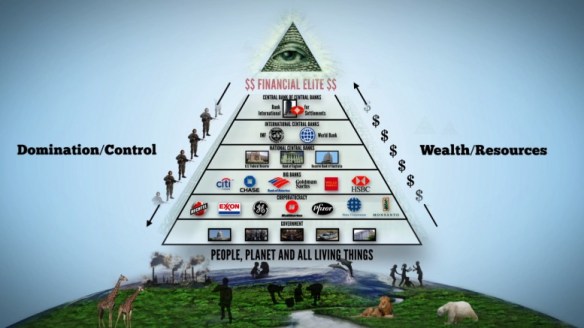
In 2014 I wrote an article titled ‘The Global Elite is Insane’. I want to elaborate what I explained in the earlier article so that people have a clearer sense of what we are up against in our struggle to create a world of peace, justice and ecological sustainability.

Of course, as I explained previously, it is not just the global elite that is insane. All those individuals – politicians, businesspeople, academics, corporate media editors and journalists, judges and lawyers, bureaucrats…. – who serve the elite, including by not exposing and resisting it, are also insane. And it is important to understand this if we are to develop and implement effective strategies to resist elite violence, exploitation and destruction but also avert the now-imminent human extinction driven by their insane desire for endless personal privilege, corporate profit and political control whatever the cost to Earth’s biosphere and lifeforms (human and non-human alike).

But first, who constitutes the global elite? Essentially, it is those extremely wealthy individuals – notably including the Rothschild family, Jeff Bezos, Bill Gates, Warren Buffett, Amancio Ortega, Mark Zuckerberg, Carlos Slim, the Walton family and the Koch brothers – as well as the world’s other billionaires and millionaires. See ‘Bloomberg Billionaires Index’.

Testament to their secretly and long-accumulated wealth and power, a 2012 investigation concluded that rich individuals and their families have as much as $32 trillion of hidden financial assets – which excludes non-financial assets such as real estate, gold, yachts and racehorses – in offshore tax havens. See the Tax Justice Network.

If this sum was devoted to programs of social uplift then starvation, poverty, homelessness and other privations would vanish immediately and environmental restoration projects as well as research, development and implementation of visionary sustainability initiatives would flourish instantly. The idea of an ‘underdeveloped’ or ‘developing’ national economy would vanish from the literature on Africa, Asia and Central/South America.

In addition to these individuals, however, the global elite includes the major multinational corporations, particularly including the following – although, it should be noted, this list simplifies the picture considerably by ignoring the conglomerate nature of many of these corporations and not including many of the (more difficult to identify) private corporations that should be listed in any comprehensive presentation:

* the major weapons manufacturers (such as Lockheed Martin, Boeing, BAE Systems, Raytheon, Northrop Grumman and General Dynamics)

* the major banks (including Industrial & Commercial Bank of China, China Construction Bank, HSBC Holdings, JPMorgan Chase, Mitsubishi UFJ Financial Group and Bank of America) and their ‘industry groups’ like the International Monetary Conference

* the major investment companies (including BlackRock, Capital Group Companies, FMR, AXA, and JP Morgan Chase)

* the major financial services companies (including Berkshire Hathaway, AXA, Allianz and BNP Paribas)

* the major energy corporations including coal companies (such as Coal India, Adani Enterprises, China Shenhua Energy, China Coal Energy, Mechel, Exxaro Resources, Public Power, Glencore and Peabody Energy) as well as the oil and gas corporations (such as Saudi Aramco, Gazprom, Rosneft, PetroChina, ExxonMobil, Lukoil, BP, Royal Dutch Shell, Petrobras, Chevron, Novatek, Total S.A. and Eni)

* the major media corporations (including Alphabet [Google owner], Comcast, Disney, AT&T, News Corporation, Time Warner, Fox, Facebook, Bertelsmann and Baidu)

* the major marketing and public relations corporations (including Edelman, W2O Group, APCO Worldwide, Deksia, BrandTuitive, Fearless Media, and Citizen Group)

* the major agrochemical (pesticides, seeds, fertilizers) giants (including Bayer, Syngenta, Dow, Monsanto and DuPont)

* the major pharmaceutical corporations (including Johnson & Johnson, Roche, Pfizer, Novartis, Sanofi and GlaxoSmithKline)

* the major biotechnology (genetic mutilation) corporations (again including Johnson & Johnson, Roche, Pfizer and Novartis)

* the major mining corporations (including Glencore Xtrata, BHP Billiton, Rio Tinto, Vale, Anglo American, China Shenhua Energy, Freeport McMoRan Copper & Gold, and Barrick Gold)

* the major nuclear power corporations (including Areva, Rosatom, General Electric/Hitachi, Kepco, Mitsubishi, Babcock & Wilcox, BNFL, Duke Energy, McDermott International, Southern, NextEra Energy, American Electric Power, and Westinghouse)

* the major food multinationals (including Cargill, Archer Daniels Midland Company [ADM], Nestlé, PepsiCo, Coca-Cola, Unilever, Danone, General Mills, Kellogg’s, Mars, Associated British Foods and Mondelez)

* the major water corporations (including Veolia, Suez Environnement, ITT Corporation, United Utilities, Severn Trent, Thames Water, American Water Works).

Of course, the global elite also includes elite fora where various combinations of elite individuals from the corporate, political, media and academic worlds gather to plan their continuing violence against, and exploitation of, the Earth and its inhabitants. This is intended to consolidate and extend t heir control over populations, markets and resources to maximize their privilege, profit and power at the expense of the rest of us and life generally. Among intergovernmental organizations, it includes the United Nations, the World Bank and the International Monetary Fund.

A quick perusal of the agenda of such elite gatherings – including the World Economic Forum, the Bilderberg Group and the Trilateral Commission – reveals a comprehensive lack of interest, despite rhetoric and the occasional token mention, of pressing issues ranging from the threat of nuclear war and the climate catastrophe to the many ongoing wars, deepening exploitation within the global economy, extensive range of environmental threats and the refugee crisis, each of which they generated and now continue to deliberately exacerbate. See, for example, the agenda of the recent WEF meeting in Davos.

Primary servants of the global elite include political leaders in major industrialized countries (who legislate to progressively expand elite power, profit and privilege, such as Donald Trump’s recent tax cuts for the wealthy at the expense of social programs), the judges and lawyers (who defend elite power using the elite-designed and manipulated legal system: ever heard of a wealthy individual convicted in court and given any serious punishment or of any major corporation genuinely held to legal account for its exploitation of indigenous peoples or destruction of the natural environment?), as well as corporate media editors and journalists, entertainment industry personnel, academics, industry organizations (such as the European Round Table of Industrialists) that represent the interests of major corporations, so-called ‘think tanks’ (such as the Council on Foreign Relations and the Brookings Institution) and ‘philanthropic trusts’ (such as the Rockefeller, Carnegie and Ford foundations) all of which justify, ignore or divert attention from elite violence and exploitation.

Importantly too, primary servants of the global elite include those who work within elite-directed agencies, notably including those in the so-called ‘intelligence community’ (such as the US CIA, British MI6, Russian SVR RF, Chinese Ministry for State Security and Israeli Mossad), who perform elite functions in relation to spying, surveillance and secret assassinations (particularly of grassroots activists), ostensibly under the direction of national governments. But it also includes many lower-level servants such as those who work as political lobbyists or in the bureaucracy as well as the education, police and prison systems.

So why do I claim that the elite and those who serve them are insane?

Any dictionary will offer a simple definition of ‘sanity’ along the lines of ‘soundness of judgment or reason’ and ‘the ability to think and speak in a reasonable way and to behave normally’.

But if we use this definition of sanity then, obviously, ‘sanity’ must be interpreted to mean that it is ‘sound judgment, reasonable and normal’ to further perpetrate the violence and exploitation that are overwhelmingly characteristic of our world. After all, most people powerlessly accept this incredibly violent state of affairs and, if they discuss it, do so in terms of its merits, politically, economically, morally or otherwise. Few people argue, simply, that violence is just insane.

So I would like to propose a more rigorous definition of sanity: Sanity is the capacity to consider a set of circumstances, to carefully analyze the evidence pertaining to those circumstances, to identify the cause of any conflict or problem, and to respond appropriately, both emotionally and intellectually, to that conflict or problem with the intention of resolving it, preferably at a higher level of need satisfaction for all parties (including those of the Earth and all of its living creatures).

Clearly, my proposed definition of sanity is designed to imply that any conceptions we have of ‘sound judgment’, ‘reasonable’ and ‘normal’ mean that they are qualities we associate with individuals who possess the desirable capacity to improve the overall state of human affairs, whether an interpersonal relationship or geopolitically. This means, as an absolute minimum, the capacity to reduce violence or exploitation in one context or another.

You might, of course, accuse me of writing a definition of ‘sanity’ that serves my agenda to dramatically improve world order in the direction of peace, justice and sustainability. And you are right! But whose interest does it serve to have sanity defined as behavior that involves ‘sound judgment’ and is considered ‘reasonable and normal’ in the context of perpetuating extraordinary violence?

Alternatively, you might argue that my definition of insanity is too broad. Surely, you might say, we can account for many of the behaviors outlined above in terms of different belief systems, ideologies and religions. Doesn’t a person who believes in killing people to win wars (or for other reasons) just have a worldview different from those who believe that people should resolve conflict nonviolently? Doesn’t a capitalist just have a worldview different from those who believe that people should share resources equally? Doesn’t a person who believes in the unlimited accumulation of wealth just have a worldview different from those who believe in ecological sustainability?

But there is a more fundamental issue here. As I explained in my original article, cited at the beginning of this one: Do you really believe that someone who is capable of perpetrating extraordinary violence, inequity and biosphere-threatening behavior – and thus clearly incapable of experiencing and expressing the love, compassion, empathy and sympathy that would drive a nonviolent approach to the world – is sane? Given that emotional qualities such as love, compassion, empathy and sympathy are an evolutionary gift to those not seriously damaged during childhood, what happened to those individuals who do not possess them? See Why Violence?’ and Fearless Psychology and Fearful Psychology: Principles and Practice.

Or, to explain it based on my longer definition of sanity highlighted above: Casual observation of the state of our world, including the primary threat of near-term human extinction through climate catastrophe or nuclear war – see ‘On Track for Extinction: Can Humanity Survive?’ – clearly reveals that none of the elite is paying considered attention to the perilous state of our world, analyzing the evidence in relation to it, identifying the cause(s) driving it or responding powerfully to end it. Why is this?

In essence, it is because one manifestation of their insanity drives them to deny reality to make huge profits from weapons production used to kill people, the burning of climate-destroying fossil fuels, environmental destruction (through, for example, mining and rainforest logging), commercial farming based on the poisoning and genetic mutilation of foods, the mass production and sale of poisoned, processed and nutritionally-depleted foods, the consumption of health-destroying and dependency-creating drugs, and control over the sale of water, once considered a human right. Moreover, insanity makes the elite do everything in its power to maintain this highly profitable state of affairs. See ‘Profit Maximization is Easy: Invest in Violence’.

Moreover, of course, there is no evidence of committed elite engagement in efforts to end the many local wars (from which they make huge profits), end corporate exploitation of human beings (which kills, through starvation alone, 100,000 people every day but from which they make huge profits) and nonhuman beings (which drives 200 species of life to extinction daily but from which they make huge profits) or end local environmental destruction in a myriad ways (from which they make huge profits).

So, in summary, given our ongoing rush to extinction, it is clear that those who exacerbate this threat through failure to consider and act with awareness (as well as encourage aware action by others) fail to satisfy the definition of sanity that I offered above. In short: Gambling on the future of humanity is not sane.

As an aside, it should be noted: Often enough too, the elite can rely on a largely insane population to mindlessly consume the latest consumer product, no matter how unnecessary, or they can rely on their marketing and advertising agents to persuade those of us who show the slightest reluctance to buy the latest inanity.

So with an insane global elite and its many insane servants as well as a largely insane consumer population, what can those of us who have the sanity to respond powerfully to the many threats to our survival do?

Well, if you want a child who is emotionally and intellectually engaged with the world and therefore capable of responding powerfully to their circumstances (which includes being able to resist the lure of serving the elite and being suckered by its marketing), then terrorizing the child into obedience is not the way to go about it. So, you might like to consider making ‘My Promise to Children’.

If you are sane enough to investigate the evidence and to act intelligently and powerfully in response to it, I encourage you to do so. One option you have if you find the evidence in relation to one or more of the threats mentioned above compelling, is to join those participating in ‘The Flame Tree Project to Save Life on Earth’.

If you are self-aware enough to know that you are inclined to avoid ‘difficult issues’ and to take the action that these require, then perhaps you could tackle this problem at its source by ‘Putting Feelings First’. Unfortunately, as mentioned above, few of us had a childhood that nurtured our sanity.

If you want to mobilize people to campaign effectively on the climate, war, rainforest destruction or any other elite-driven violence that threatens our future, consider developing a comprehensive nonviolent strategy to do so. See Nonviolent Campaign Strategy.

And if you want to participate in the worldwide effort to end the insanity we call violence in all of its manifestations, you are welcome to consider signing the online pledge of The Peoples Charter to Create a Nonviolent World.

Elite insanity, if not stopped, will drive us out of existence. If you believe that the elite and their servants will ‘see the light’ before it is too late, I invite you to seek out the evidence to justify your belief. I have found none.

I also see no evidence that individual members of the elite will do the emotional healing necessary to be able to act sanely in response to the extinction-threatening crisis it has generated.

So it is up to those of us who can think and act sanely to stop the rush to extinction before it is too late.

Are you one of those people?


Biodata: Robert J. Burrowes has a lifetime commitment to understanding and ending human violence. He has done extensive research since 1966 in an effort to understand why human beings are violent and has been a nonviolent activist since 1981. He is the author of Why Violence? His email address is flametree@riseup.net and his website is here.

Robert J. Burrowes
P.O. Box 68
Daylesford, Victoria 3460
Australia

Email: flametree@riseup.net

Websites:
Nonviolence Charter
Flame Tree Project to Save Life on Earth
‘Why Violence?’
Feelings First
Nonviolent Campaign Strategy
Nonviolent Defense/Liberation Strategy
Anita: Songs of Nonviolence
Robert Burrowes
Global Nonviolence Network

The Fall of the American Empire

By W.J. Astore

Source: Bracing Views

Why do empires fall?  Sometimes, it’s easy to identify a cause.  Whether led by the Kaiser or by Hitler, Germany’s Second and Third Empires were destroyed by world wars.  Germany’s ambition was simply too great, its militarism too dominant, its policies too harsh to win long-term converts, its leaders too blinded by the pursuit of power, its enemies too many to conquer or otherwise neutralize.

Other imperial falls are more complex.  What caused Rome’s fall?  (Leaving aside the eastern part of the empire, which persisted far longer as the Byzantine Empire.)  Barbarians and their invasions, say some.  The enervating message and spirit of Christianity, said the historian Edward Gibbon.  Rome’s own corruption and tyranny, say others.  Even lead in Roman water pipes has been suggested as a contributing cause to Rome’s decline and fall.  Taking a longer view, some point to the rise of Islam in the 7th century and its rapid expansion into previously Roman territories as the event that administered the final coup de grâce to a dying empire.

America’s empire, it is clear, is now in decline, and a key reason is imperial overstretch as manifested by endless wars and overspending on the military (with literally trillions of dollars being thrown away on fruitless wars).  An especially fine summary is Alfred McCoy’s article at TomDispatch.com.  As McCoy notes:

In effect, the president and his team, distracted by visions of shimmering ships and shiny planes (with their predictable staggering future cost overruns), are ready to ditch the basics of global dominion: the relentless scientific research that has long been the cutting edge of U.S. military supremacy.  And by expanding the Pentagon while slashing the State Department, Trump is also destabilizing that delicate duality of U.S. power by skewing foreign policy ever more toward costly military solutions (that have proved anything but actual solutions) …

In just one extraordinary year, Trump has destabilized the delicate duality that has long been the foundation for U.S. foreign policy: favoring war over diplomacy, the Pentagon over the State Department, and narrow national interest over international leadership. But in a globalizing world interconnected by trade, the Internet, and the rapid proliferation of nuclear-armed missiles, walls won’t work. There can be no Fortress America.

In this passage, McCoy stresses the damage being done by the Trump administration.  But Trump is just the culmination of certain trends, e.g. favoring the Pentagon over the State Department is nothing new, as I wrote about here in 2010.  And America has been in love with shimmering ships and shiny planes for generations, with several administrations supporting the F-35 jet fighter, a program that may end up costing as much as $1.4 trillion.  Plenty of money for weapons that kill; not so much for medicines that cure: that’s imperial America in a nutshell.

I would stress that America’s strength overseas was (and is) always based on its strength at home in areas such as science, education, infrastructure, medicine, manufacturing, and exports.  But what we’ve witnessed over the last 40 years is an immense and wasteful “investment” in wars and weapons even as our country itself has hollowed out. Science is now marked by the denial of facts (such as global warming). Education is all about students as consumers, with an overall decline in standards and performance. Infrastructure is crumbling. Medicine is too expensive and America’s overall health and life expectancy are both in decline. Manufacturing and exports have withered (except for the production and export of weapons, naturally).

As a result of all this, America is running a national debt of roughly 20 trillion dollars.  The future is being sacrificed for the present, a tragic reality reflected in the latest Republican tax cut, which benefits the richest Americans the most, along with big corporations, and which will likely add another trillion to the national debt.

In short, America’s foreign decline is mirrored (and driven) by its domestic decline as reflected by its choices.  Looking at the USA today, you get the sense it’s the best of times for the richest few, and the worst of times for so many Americans struggling with health care debt, student loan debt, and the uncertainty of low-wage jobs that could be outsourced at any moment.  At the same time, the American political scene is driven by fear: of immigrants, of a nuclear war with North Korea, of Russian meddling (real or imagined), of growing Chinese power, and of the perpetually-hyped threat of terrorist attacks on “the Homeland.”

Empires can fall very quickly, as the “thousand-year” Third Reich did, or they can fall ever so slowly, as the Roman Empire did.  But fall they do.  What is in the cards for the United States?


“An Enthusiastic Corporate Citizen”: David Cronenberg and the Dawn of Neoliberalism

(Editor’s note: In commemoration of director David Cronenberg’s 75th birthday we present this compelling and socially relevant analysis of his filmography.)

By Michael Grasso

Source: We Are the Mutants

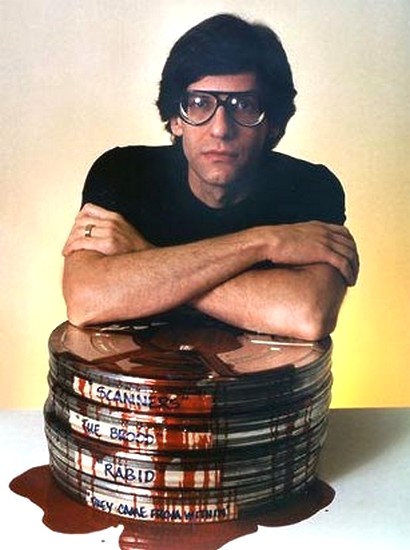
The cinematic corpus of David Cronenberg is probably best known for its expertly uncanny use of body horror, but looming almost as large in the writer-director’s various universes is the presence of faceless, all-powerful organizations. Like his rough contemporary Thomas Pynchon and the conspiracies that litter Pynchon’s early works—V. (1963), The Crying of Lot 49 (1966), and Gravity’s Rainbow (1973)—Cronenberg’s shadowy organizations offer fodder for paranoid conspiracy. These conspiracies operate under the cloak of beneficent academic institutes and, in his later work, corporations. The transition from institutes to corporations occurred during Cronenberg’s late ’70s and early ’80s output, specifically the trio of films The Brood (1979), Scanners (1981), and Videodrome (1983).

It is no coincidence that, at this particular time, international finance and prevailing political winds helped put the corporation in society’s driver’s seat. In Adam Curtis’s recent documentary film HyperNormalisation (2016), he notes how the default of the city of New York in 1975 opened the door for private investment and the finance industry to get their hands on municipal governance on a large scale for the first time, and how this creaked open the door for the Thatcher-Reagan privatization wave in the ’80s. These last few “hinge” years of the 1970s offered the last chance for a real alternative to the coming neoliberal revolution. Soon, all alternatives for governance in the name of the public good were destroyed. Corporatism tightened its grip on the Western polity.

Cronenberg’s early eerie organizations—the “Canadian Academy of Erotic Enquiry” from Stereo (1969) and the panoply of gruesome academic and cosmetic conspiracies in his Crimes of the Future (1970)—eventually yielded to corporations like Scanners‘ ConSec and Videodrome‘s Spectacular Optical. In these early works, Cronenberg’s mysterious organizations are headed by visionary (mad) geniuses. In 1975’s Shivers, experiments by a lone mad scientist infect an entire apartment building with parasites, which awaken dark impulses in the building’s residents and spread themselves through sexual violence. But as the decade went on, Cronenberg slowly backed away from utilizing the character of a singular scientific genius harboring a twisted vision of the future. Now, organizations sought to pull the strings from the shadows. The key transitional work in this chronology is the sometimes-underlooked The Brood from 1979.

In the film, Oliver Reed plays esteemed psychologist Dr. Hal Raglan, who has developed a method of exorcising deep-seated psychological issues using a technique called “psychoplasmics.” In intense one-on-one sessions reminiscent of psychodrama, Raglan is able to physically remove trauma from the human body in the form of ulcers, rashes, and, we eventually discover, cancer. In the ultimate reveal, it’s shown that Raglan has helped traumatized patient Nola Carveth (Samantha Eggar) to birth violent, deformed homunculi who go out into the world, psychically connected to her, in order to resolve her childhood abandonment issues and abuse with bloody murder. Raglan’s foundation, the Somafree Institute of Psychoplasmics (its name simultaneously evocative of Aldous Huxley’s perfect drug soma, and reminiscent of fringe psychological research like Wilhelm Reich’s orgone theory) inhabits a modernist chalet far outside the city of Toronto. Non-resident patients have to be bussed in. Raglan’s public reputation is that of an eccentric, but effective, therapist. At several points in the film we see the covers of Raglan’s presumably best-selling The Shape of Rage. (Curiously, a decade later, in 1990, a documentary titled Child of Rage would be released covering the controversial use of “attachment therapy.”)

As depicted in the film, Somafree is not a corporation. But the thematic threads surrounding Raglan and his Institute are based on real-life trends in the 1970s. In its practices and in the person of Raglan, Somafree resembles psycho-intensive institutes like Esalen, self-improvement organizations like Lifespring, and personalities like Werner Erhard. Erhard’s est movement used primal abuse to ostensibly create psychological breakthroughs, helping the “patient” become more assertive, more powerful, less prone to obeying impulses caused by their early traumas. There is also the real-life analogue to the psychological method that Raglan employs: psychodrama. In the 1970s, new methods of conflict resolution pioneered in places like Esalen were beginning to seep into the mainstream of North American society. These methods soon spread into the corporate world as a purported means of defusing tensions at work and making an office more productive. The “encounter group” soon became a punchline, but the principles behind the Age of Aquarius’s more touchy-feely psychodynamic methods soon became part of the warp and weft of corporate culture in the ’80s and well beyond.

Nola’s estranged husband Frank interviews a former Raglan patient, Jan Hartog, in an attempt to discredit Somafree so Frank can regain custody of his daughter. This patient bears the scars of Raglan’s work on him: a lymphatic cancer sprouting from his neck (an eerie foreshadowing of the coming of another mysterious lymphatic disorder that would soon break out all over North America). Hartog plans to sue; not to achieve victory in a courtroom, but to destroy Raglan’s reputation. It doesn’t matter if they win, Hartog says, because “They’ll just remember the slogan. Psychoplasmics can cause cancer.” The 1970s was full of an increased awareness of the carcinogens that surrounded us in the late-industrial West—cigarettes, sweeteners, food dyes, and pesticides—thanks in large part to the nascent environmental and consumer rights movements, which faced off against corporations using  weapons of negative publicity.

By the time we get to Scanners in 1981, we are fully invested in a world of shadowy corporate overlords. A huge multinational security firm, ConSec, tries to shepherd psychics called “scanners,” ostensibly to help them control their powers, but also to utilize and exploit their paranormal abilities. Protagonist Cameron Vale (Steven Lack) is apprehended off the streets, where, due to his psychic pain, he’s living as a derelict. We learn that scanners don’t “fit in” with society. When Vale is given the inhibitive drug ephemerol by ConSec’s head of scanner research, Dr. Paul Ruth (Patrick McGoohan), he is able to get himself together and is even given a new proto-yuppie wardrobe and mission by ConSec: eliminate rogue scanner Darryl Revok (Michael Ironside). But as Vale accepts his mission and new identity, he finds himself enlisted in ConSec’s private war against renegade scanners. When he runs into an emerging cell of scanners who are forming a powerful “group mind” in a New Age-like encounter session, assassins controlled by Revok murder most of the cell. “Everywhere you go, somebody dies,” one of the hive mind tells Vale, who is complicit with ConSec’s need to exert corporate control over scanners, including the use of violence as part of the corporate mission. Meanwhile, ConSec itself is riddled with moles working with Revok. Indeed, a chemical and pharmaceutical company called “Biocarbon Amalgamate,” founded by Dr. Ruth but now infiltrated by Revok, manufactures ephemerol in massive quantities. Scanners recontexualizes the Cold War espionage “wilderness of mirrors” in terms of corporate espionage for a new age of corporate domination. (It’s no coincidence that Cronenberg cast McGoohan, one of the Cold War’s most famous fictional spies, in the role of Dr. Ruth.)

ConSec’s corporate mission is revealed in a board meeting when the new head of security says, “We’re in the business of international security. We deal in weaponry and private armories.” This head of security also tells Dr. Ruth, “Let us leave the development of dolphins and freaks as weapons of espionage to others.” To the new breed of ConSec executive, fringe ’70s research is a thing of the past, despite its obvious power and relevance. The future is in fighting proxy wars, ensuring private security for the wealthy, and providing mercenary security forces. ConSec in this way is like many other private security firms that first emerged in the 1970s and ’80s. Begun as an outgrowth of post-colonial British military adventurism, the private military company soon became a way for ex-military officers to assure themselves a handsome post-service sinecure in a new era where hot wars were a thing of the past. “Brushfire wars” would continue to ensue, ensuring these companies an expanding portfolio, both in the waning years of the Cold War and in the 1990s and beyond. In fact, it’s interesting to note that many of the real-world military’s supposed psychic assets themselves got into private security after the U.S. Army shut down fringe science projects like Project STARGATE. Art imitates life imitates art.

Videodrome expands Cronenberg’s conspiratorial corporate, military, and espionage worldview into the rapidly exploding world of the media in the early ’80s. Leaps forward in technology, all of which are explicitly called out in Videodrome, litter the film’s visual landscape. Cable television, satellite transmissions (and the attendant hacking thereof), video cassette recorders, the rise of video pornography, virtual reality, postmodern media theory, and violence in entertainment all play essential roles in the film. Max Renn’s (James Woods) tiny Civic TV/Channel 83 (itself based on groundbreaking independent Toronto television station CityTV) is trying to survive as best it can in a world of massive international media players. Ever seeking the latest hit that will tap into the public’s unending hunger for sex and violence, his on-staff “satellite pirate” Harlan delivers the mysterious Videodrome transmission. Harlan is later revealed to be working with the Videodrome conspiracy, having intentionally exposed Max to the signal. In a memorable speech, Harlan nails Max’s amoral desire to sell sex and violence to his viewers: “This cesspool you call a television station, and your people who wallow around in it, and your viewers who watch you do it; you’re rotting us away from the inside.” When Renn is deep into his Videodrome-triggered hallucinations, he is offered corporate “help” much as Cameron Vale was. This time, his “savior” is Barry Convex, a representative of Spectacular Optical. In his video message to Max, he, like the ConSec executive before him, lays out Spectacular Optical’s corporate mission:

I’d like to invite you into the world of Spectacular Optical, an enthusiastic global corporate citizen. We make inexpensive glasses for the Third World… and missile guidance systems for NATO. We also make Videodrome, Max.

The final form of the military-industrial-entertainment complex is laid bare. Videodrome’s intent is to harden and make psychotic a North American television audience who’ve “become soft,” as Harlan puts it. Renn’s hallucinations are recorded, he is literally “reprogrammed” to kill Civic TV’s board (thanks to the memorable hallucinatory image of Convex sticking a VHS tape into Renn’s gut). Renn is then reprogrammed to retaliate and assassinate Convex by the much more ’70s-cult Cathode Ray Mission of “media prophet” Brian O’Blivion, whose postmodern, expressly McLuhanesque view of television’s place in the world allowed Videodrome to come into existence in the first place: “I had a brain tumor and I had visions. I believe the visions caused the tumor and not the reverse… when they removed the tumor, it was called Videodrome.” It’s also worth noting that O’Blivion tells us that Videodrome made him its first victim; postmodern criticism of the medium of television is no match for its violent, cancerous growth.

The deregulation of media in the U.S. in the Reagan years is common knowledge; rules around children’s television were especially eviscerated, which allowed for an explosion in violent, warlike cartoons based on popular toy lines, training a new generation for a lifetime of endless war. Combined with the aforementioned explosion of video technology, the laissez-faire environment shepherded by Reagan’s FCC allowed a new breed of cable television magnates to get rich and created a television and media landscape with a relatively friction-free relationship to government. By the time the first Gulf War broke out in 1991, war provided the cable news networks with surefire ratings and cable news provided the propaganda platform for the war effort, a mutually beneficial (and Cronenberg-esque) symbiosis that’s continued to metastasize through multiple subsequent wars in the Middle East. The world of Videodrome, the one Harlan evokes where America will no longer be soft in a world full of tough hombres, has finally come to fruition thanks in part to all of our enmeshment in the video arena—the video drome.

After Videodrome—in The Fly (1986), Dead Ringers (1988), and Crash (1996)—Cronenberg focuses less on sinister organizations and more on monomaniacal researchers, doctors, and fetishists who pursue their individual idiosyncratic agendas through the director’s trademark twisting mindscapes (and bodyscapes). With the exception of eXistenZ (1999), Cronenberg’s meditation on computer technology and gaming released amidst the first dot-com bubble, and his Occupy-influenced adaptation of Don DeLillo’s 2003 novel Cosmopolis (2012), he has retreated from a more overt suspicion of corporations and shadowy conspiracies. His warning about these invisible masters pulling the strings of society came during the time period when something could have been done about corporate hegemony. But now, the conspiracy operates in the open. We are now all of us the dumb, trusting Cronenberg protagonist, lulled into a false sense of security by a series of “enthusiastic corporate citizens.” Long live the new flesh.

According to the Father of Propaganda an Invisible Government Controls Our Minds with a Thought Prison

By Sigmund Fraud

Source: Waking Times

“Who are the men who without our realizing it, give us our ideas, tell us whom to admire and whom to despise, what to believe about the ownership of public utilities, about the tariff, about the price of rubber, about the Dawes Plan, about immigration; who tell us how our houses should be designed, what furniture we should put in them, what menus we should serve on our table, what kind of shirts we must wear, what sports we should indulge in, what plays we should see, what charities we should support, what pictures we should admire, what slang we should affect, what jokes we should laugh at?” ~ Edward Bernays [b.11/22/1891, d. 3/9/1995]  Propaganda

Authored by Edward Bernays and published in 1928, the book Propaganda still holds its position as the gold standard for influencing and manipulating public behavior. Drawing on his expertise in psychology while using the language of manipulation, Bernays pioneered social engineering via mass media, and his work lives on in the distorted, statist, consumer world we have today.

But who are the ones behind the curtain telling us what to think by directing our attention onto the things which serve interests?

Interestingly, chapter III of Propaganda is titled, ‘The New Propagandists, and is devoted to explaining why the controls for mass manipulation are so closely guarded by a relatively tiny elite who sit in the shadows, out of the public eye, choosing what we are to see and to think, even controlling the politicians we elect to represent us.

If we set out to make a list of the men and women who, because of their position in public life, might fairly be called the molders of public opinion we could quickly arrive at an extended list of persons mentioned in “Who’s Who…”

Such a list would comprise several thousand persons. But it is well known that many of these leaders are themselves led, sometimes by persons whose names are known to few.

Such persons typify in the public mind the type of ruler associated with the phrase invisible government.

An invisible government of corporate titans and behind the scenes influencers who’s mark on culture cannot be understated today. Bernays continues:

The invisible government tends to be concentrated in the hands of the few because of the expense of manipulating the social machinery which controls the opinions and habits of the masses.

The public relations counsel, then, is the agent who, working with modern media communication and the group formation of society, brings an idea to the consciousness of the public. But he is a great deal more than that. He is concerned with courses of action, doctrines, systems and opinions, and the securing of public support for them.

Ultimately, the goal of this type of mass-produced, pop-culture propaganda is to weaken the individual’s ability to think critically, thereby creating an environment where many people look to one another for approval, always second-guessing their own faculties. When this happens, the strength of the collective group begins to take form and multiply, and ideas can be implanted into the popular culture, taking root in the form of widespread conformist behavior.

Thinking critically means making reasoned judgments that are logical and well thought out. It is a way of thinking in which one doesn’t simply accept all arguments and conclusions to which one is exposed without questioning the arguments and conclusions. It requires curiosity, skepticism and humility. People who use critical thinking are the ones who say things such as, “How do you know that?” “Is this conclusion based on evidence or gut feelings?” and “Are there alternative possibilities when given new pieces of information?””  [Source]

Final Thoughts

The takeaway here is that not much has changed in 100 years of corporate/statist American culture, other than the technical capacity to scale this ever upward. Our lives are still heavily influenced by the likes of the described by Bernays. There is one advantage we do have now, however, as technology has given us greater access to the truth and we are now free to split from the matrix psychologically by understanding what it is and how it influences our lives. If we choose to do so, that is, if we choose to take the red pill.

In order to understand your life and your mission here on earth in the short time you have, it is imperative to learn to see the thought prison that has been built around you, and to actively circumnavigate it. Free-thinking is being stamped out by the propagandists, but our human tendency is to crave freedom, and with the aid of truth, we are more powerful than the control matrix and the invisible government.

America’s Painful Self-delusion

By Allen Marshall

Source: Information Clearing House

America is the only nation brought forth by a set of beliefs, and those beliefs, captured so eloquently in our founding documents, are some of the most powerful and inspiring ever conceived. We consider this to be the land of the free, where the individual is supreme and nothing prevents us from going as far as our talents can take us. That image of America – that “brand” – is incredibly strong.

However, there’s a very large gap between that long-held image and the reality of America today. What was once a government built for the people is now a government run for the rich and powerful, one that throws the people under the bus whenever their interests differ from those of the corporate and political leaders who run the show.

And living in one world (the corrupt) while stubbornly believing you live in another (the ideal), despite mounds of evidence, causes a distinct kind of stress, often called cognitive dissonance.

Psychologists suggest that when people are in a state of cognitive dissonance, they’ll search for a way to resolve it, either by rejecting one view or the other as either wrong or unimportant. If you’re a smoker looking at the link between smoking and cancer, for example, you’ll either quit smoking or decide that the research is biased, wrong, or doesn’t apply (in other words, that you’re smart enough to quit before the long-term damage is done).

But what happens if you can’t resolve the two?

For most of us Americans, resolving our cognitive dissonance would mean either accepting that we’re impotent and living futile (and feudal) lives, or rejecting our lifestyles and actively fighting the rot in the system. If we’re not willing to do either of those, the dissonance stays – and eats at us.

People carrying this kind of ongoing, underlying stress find ways of coping with it; in America we’re doing it with self-medication, compulsive behaviors and distractions. Consider the following examples of the way we cope with the ever-present stress in our lives:

  • Drugs – Our country is awash in drugs, both legal and illegal, that keep us numb. In 2014, there were 245 million prescriptions filled for opioid pain relievers. The number of deaths from drug overdoses has risen from around 30,000 in 2005 to 64,000 in 2016. And communities across the country are being devastated by the opioid epidemic, as explained in this in-depth reporting by Cincinnati.com.
  • Drinking – People don’t only use drugs to self-medicate; drinking does the trick as well, and we’re doing a lot more of it than we used to. According to a new study in JAMA Psychiatry, overall drinking in the US increased by 11% between 2002-13, while high-risk and problem drinking rose even higher: high-risk drinking rose by 29.9%, while problem drinking rose by 50%.
  • Mental Illness – In 2015, 17.9% of adults held a diagnosis for a mental disorder, while a 2010 study found that 46.3% of children ages 13-18 had a mental disorder at some point in their young lives, and the majority of those adults and children are given prescriptions. This includes a dramatic increase in ADHD diagnoses for children: According to SharpBrains, “Among children aged 5 to 18, between 1991-92 and 2008-09, rates of ADHD diagnosis increased nearly 4-fold among boys – from 39.5 to 144.6 per 1000 – and nearly 6-fold for girls – from 12.3 and 68.5 per 1000 visits.”
  • Obesity – If drinking and drugs aren’t your thing – or even if they are – more of us are coping with stress by overeating, and it’s showing up on our waistlines. From 1990 to 2016, the average percentage of obese adults increased from 11.1% to 29.8%; when you add in the number of people who are overweight but not obese, it rises to more than two in three adults.
  • Sleeping problems – Sleep has a significant impact on our physical and mental health, and in America we’re not getting enough of it: The CDC states that 50-70 million American adults have a sleep or wakefulness disorder.
  • Media Usage – Is there any better distraction from life’s problems than media? We certainly spend a lot of our time being passively entertained: In 2016, Americans consumed an average of 10 hours of media per day, compared with 7.5 hours per day globally. Nielson reports that lower income adults spend much more time with media than do affluent adults, with adults in households with include under $25,000 watching 211 hours/month of television, versus 113 hours/month for adults in households earning $75,000 or more. (The trend is similar across other media as well.)
  • The Disease of Debt – According to the New York Fed, household debt reached a new peak in the third quarter of 2017, at $12.8 trillion. Part of our debt problem comes from the compulsive shopping we do as a distraction; the other results from denying the reality that our wages aren’t keeping up with the increase in the cost of living, meaning that we use debt to plug the gap rather than reducing our living standards to align with our reality.

We’re collectively doing so much damage to ourselves, solely to protect our psyches from the reality that the America that used to be is no longer the America we have. And who does that help? As you can see from the points above, it doesn’t help us: Instead, it helps the rich and powerful who are subverting the system. They’re corrupting everything this country once was, and by willfully refusing to acknowledge that reality, we’re inadvertently helping them to do it.

The best thing we can do – for our mental and physical health, as well as for our country – is to open our eyes to what America has become, not what we wish it still was. It’s time to face reality and take action.

The Cost of Resistance


(Museum of the Revolution, León, Nicaragua)

By Chris Hedges

Source: TruthDig

Resistance entails suffering. It requires self-sacrifice. It accepts that we may be destroyed. It is not rational. It is not about the pursuit of happiness. It is about the pursuit of freedom. Resistance accepts that even if we fail, there is an inner freedom that comes with defiance, and perhaps this is the only freedom, and true happiness, we will ever know. To resist evil is the highest achievement of human life. It is the supreme act of love. It is to carry the cross, as the theologian James Cone reminds us, and to be acutely aware that what we are carrying is also what we will die upon.

Most of those who resist—Sitting Bull, Emma Goldman, Malcolm X and Martin Luther King Jr.—are defeated, at least in the cold calculation of the powerful. The final, and perhaps most important quality of resistance, as Cone writes, is that it “inverts the world’s value system.” Hope rises up out of defeat. Those who resist stand, regardless of the cost, with the crucified. This is their magnificence and their power.

The seductive inducements to conformity—money, fame, prizes, generous grants, huge book contracts, hefty lecture fees, important academic and political positions and a public platform—are scorned by those who resist. The rebel does not define success the way the elites define success. Those who resist refuse to kneel before the idols of mass culture and the power elites. They are not trying to get rich. They do not want to be part of the inner circle of the powerful. They accept that when you stand with the oppressed you get treated like the oppressed.

The inversion of the world’s value system makes freedom possible. Those who resist are free not because they have attained many things or high positions, but because they have so few needs. They sever the shackles used to keep most people enslaved. And this is why the elites fear them. The elites can crush them physically, but they cannot buy them off.

The power elites attempt to discredit those who resist. They force them to struggle to make an income. They push them to the margins of society. They write them out of the official narrative. They deny them the symbols of status. They use the compliant liberal class to paint them as unreasonable and utopian.

Resistance is not, fundamentally, political. It is cultural. It is about finding meaning and expression in the transcendent and the incongruities of life. Music, poetry, theater and art sustain resistance by giving expression to the nobility of rebellion against the overwhelming forces, what the ancient Greeks called fortuna, which can never ultimately be overcome. Art celebrates the freedom and dignity of those who defy malignant evil. Victory is not inevitable, or at least not victory as defined by the powerful. Yet in every act of rebellion we are free. It was the raw honesty of the blues, spirituals and work chants that made it possible for African-Americans to endure.

Power is a poison. It does not matter who wields it. The rebel, for this reason, is an eternal heretic. He or she will never fit into any system. The rebel stands with the powerless. There will always be powerless people. There will always be injustice. The rebel will always be an outsider.

Resistance requires eternal vigilance. The moment the powerful are no longer frightened, the moment the glare of the people is diverted and movements let down their guard, the moment the ruling elites are able to use propaganda and censorship to hide their aims, the gains made by resisters roll backward. We have been steadily stripped of everything that organized working men and women—who rose up in defiance and were purged, demonized and killed by the capitalist elites—achieved with the New Deal. The victories of African-Americans, who paid with their bodies and blood in making possible the Great Society and ending legal segregation, also have been reversed.

The corporate state makes no pretense of addressing social inequality or white supremacy. It practices only the politics of vengeance. It uses coercion, fear, violence, police terror and mass incarceration as social control. Our cells of resistance have to be rebuilt from scratch.

The corporate state, however, is in trouble. It has no credibility. All the promises of the “free market,” globalization and trickle-down economics have been exposed as a lie, an empty ideology used to satiate greed. The elites have no counterargument to their anti-capitalist and anti-imperialist critics. The attempt to blame the electoral insurgencies in the United States’ two ruling political parties on Russian interference, rather than massive social inequality—the worst in the industrialized world—is a desperate ploy. The courtiers in the corporate press are working feverishly, day and night, to distract us from reality. The moment the elites are forced to acknowledge social inequality as the root of our discontent is the moment they are forced to acknowledge their role in orchestrating this inequality. This terrifies them.

The U.S. government, subservient to corporate power, has become a burlesque. The last vestiges of the rule of law are evaporating. The kleptocrats are pillaging and looting like barbarian hordes. Programs instituted to protect the common good—public education, welfare and environmental regulations—are being dismantled. The bloated military, sucking the marrow out of the nation, is unassailable. Poverty is a nightmare for half the population. Poor people of color are gunned down with impunity in the streets. Our prison system, the world’s largest, is filled with the destitute. And presiding over the chaos and the dysfunction is a political P.T. Barnum, a president who, while we are being fleeced, offers up one bizarre distraction after another, much like Barnum’s Feejee mermaid—the head and torso of a monkey sewed to the back half of a fish.

There is no shortage of artists, intellectuals and writers, from Martin Buber and George Orwell to James Baldwin, who warned us that this dystopian era was fast approaching. But in our Disneyfied world of intoxicating and endless images, cult of the self and willful illiteracy, we did not listen. We will pay for our negligence.

Søren Kierkegaard argued that it was the separation of intellect from emotion, from empathy, that doomed Western civilization. The “soul” has no role in a technocratic society. The communal has been shattered. The concept of the common good has been obliterated. Greed is celebrated. The individual is a god. The celluloid image is reality. The artistic and intellectual forces that make transcendence and the communal possible are belittled or ignored. The basest lusts are celebrated as forms of identity and self-expression. Progress is defined exclusively by technological and material advancement. This creates a collective despair and anxiety that feeds and is fed by glitter, noise and false promises of consumer-culture idols. The despair grows ever-worse, but we never acknowledge our existential dread. As Kierkegaard understood, “the specific character of despair is precisely this: it is unaware of being despair.”

Those who resist are relentlessly self-critical. They ask the hard questions that mass culture, which promises an unachievable eternal youth, fame and financial success, deflects us from asking. What does it mean to be born? What does it mean to live? What does it mean to die? How do we live a life of meaning? What is justice? What is truth? What is beauty? What does our past say about our present? How do we defy radical evil?

We are in the grip of what Kierkegaard called “sickness unto death”—the numbing of the soul by despair that leads to moral and physical debasement. Those who are ruled by rational abstractions and an aloof intellectualism, Kierkegaard argued, are as depraved as those who succumb to hedonism, cravings for power, violence and predatory sexuality. We achieve salvation when we accept the impediments of the body and the soul, the limitations of being human, yet despite these limitations seek to do good. This burning honesty, which means we always exist on the cusp of despair, leaves us, in Kierkegaard’s words, in “fear and trembling.” We struggle not to be brutes while acknowledging we can never be angels. We must act and then ask for forgiveness. We must be able to see our own face in the face of the oppressor.

The theologian Paul Tillich did not use the word “sin” to mean an act of immorality. He, like Kierkegaard, defined sin as estrangement. For Tillich, it was our deepest existential dilemma. Sin was our separation from the forces that give us ultimate meaning and purpose in life. This separation fosters the alienation, anxiety, meaninglessness and despair that are preyed upon by mass culture. As long as we fold ourselves inward, embrace a perverted hyper-individualism that is defined by selfishness and narcissism, we will never overcome this estrangement. We will be separated from ourselves, from others and from the sacred.

Resistance is not only about battling the forces of darkness. It is about becoming a whole and complete human being. It is about overcoming estrangement. It is about the capacity to love. It is about honoring the sacred. It is about dignity. It is about sacrifice. It is about courage. It is about being free. Resistance is the pinnacle of human existence.

How To Create NPR’s Propaganda – As Seen In a Hit Piece Against Me

By Lee Camp

Source: Naked Capitalism

I never thought I’d be the target of an NPR attack piece. Through my twenties I even looked to NPR as an outlet full of good, progressive, thoughtful reporting – You know, the soothing voices occasionally interrupted by music no one really listens to but that sounds good between soft-spoken ivy league journalists over the age of 50.  Everything about NPR subtly reinforced the idea, “Everything is fine. You’re probably a middle to upper class white person or you hope to be one day, and that’s just great. Everything is fine.” They might not SAY that, but they say that. And for a long time, I was cool with that message.

Then I woke up. About the time NPR was avoiding Occupy Wall Street – or when they did cover it, acting like those of us who supported it were brainless hippies without a point or at least none that would fit easily into the lives of suburbanites with two kids, one cat, and a robust retirement account. In hindsight I should’ve woken up sooner. I should’ve seen the truth about the time most NPR shows were pushing for war in Iraq, buying into the WMD lie. Or maybe I should’ve realized the truth when Kevin Klose took over as President of NPR in 1998. Klose came straight from a nice seat as director of the US Information Agency, described as “a United States agency devoted to ‘public diplomacy’ (AKA propaganda).” So when you have one of the top government propagandists as your president, one can assume your reporting is slightly biased.

Anyway, that leads me to today. A couple days after NPR’s Weekend Edition hosted by Scott Simon did a rather awesome attack piece on me and my TV show Redacted Tonight with Lee Camp which airs on RT America. I’d like to walk you through how to write such beautiful propaganda, as I did following the NY Times smear job against me, which sounded shockingly similar (more on that later).

STEP ONE: Create a subconscious association to old Cold War Russian propaganda

Scott Simon opens his show with “Russian programming is no longer breathless proclamations about tractor production or accolades to the Kremlin. Look at a show like Redacted Tonight.” This opening sentence essentially tells the listener that everything they’re about to hear is modern Russian propaganda. Sure, he doesn’t use the word “propaganda” yet, but when you say something was ONCE accolades to the Kremlin and is now Redacted Tonight, you are priming your audience, giving them a subconscious opinion of the target before they even know what it is. This would be like saying “American programming is no longer ads where a little girl with a daisy is killed by a nuclear blast. Now it’s the Daily Show.” If you had never heard of the Daily Show, you would assume it must be a modern version of a girl obliterated by a nuclear bomb.

STEP TWO: Lie by omission

Scott Simon knows the truth, but he’s keeping it from his audience. My show is not Russian propaganda. Simon knows I’m an American in America covering American news for Americans. He does slip in that I’m American in the opening sentences, but not until the end does he reveal to his audience that I have never been told to say anything or not to say anything on RT America. And after he says that, he immediately plays a clip of me joking that my show is written by heavily bearded Russian trolls. He seems to play it as if it reveals the truth, rather than being a joke. Furthermore, assuming Simon did even an ounce of research, he knows that I’ve been doing the same type of material in my stand-up comedy act for decades – long before I was every on RT. Saying my show is Russian propaganda would be to say that all the shows on RT America are Russian propaganda including ones hosted by Larry King, Pulitzer Prize-winner Chris Hedges, Governor Jesse Ventura, Mike Papantonio, and former hosts Thom Hartmann and Abby Martin.

I’ve addressed why I do this show on RT America, and you can watch that here. But for NPR’s listeners who have never heard of me, Simon wants to essentially warn them that they are about to hear nefarious neo-propaganda put forward by dastardly Russians.

STEP THREE: Subtly let your listeners know the target is not one of us

In his second sentence Simon says, “The show is hosted and written by an American comic in black jeans with a hipster beard and long, bobbed hair, Lee Camp.” To begin with, I don’t know what a hipster beard is, but I doubt I have one. I guess Scott Simon thinks any beard is a “hipster beard.” I suppose this means Wolf Blitzer has a hipster beard too. I also don’t know what “long bobbed hair” is other than a way of saying, “He’s a fuckin’ long hair!” This description is all basically Simon’s way of letting his elitist older core audience know, “This guy is NOT one of us. He probably doesn’t even OWN a salmon-colored button-down shirt.”

STEP FOUR: Imply that curse words = enemy of the state

Simon next plays a few sentences from my show, bleeping out the word “fuck.” Then he interrupts and says, “A lot of profanity. In fact ONE profanity over and over…” So Simon’s first sentence about me was to insult my clothing and look. His first sentence about my show was to express near horror at the fact I use the word “fuck”. First of all, I take great exception to the idea I only use ONE profanity. My profanity is varied AND prolific. Name another show where you’ve recently heard Congress described as a “Steaming bucket of mangy dicks.” But again this is designed so Simon can let the nice NPR listeners know, “He’s not one of us. He uses dirty language.” Isn’t it amazing that it’s been a half century since the 1960’s and yet the insults against the “counter culture” are all the same – “He’s a long-hair hipster with a dirty mouth!” As George Carlin said, dirty words can “impact your mind, curve your spine and lose the war for the Allies!” Clearly Scott Simon didn’t get the memo that fearing dirty words is not something most of America is doing anymore. Americans are far more worried about where their next paycheck will come from or how to get healthcare for their sick child. If you look at the situation our country is in and don’t say “FUCK” to yourself, then you aren’t paying attention.

STEP FIVE: Bring in an “Expert” who clarifies how awful the target is

Next, Julia Ioffe is brought on to explain how horrible Redacted Tonight truly is and why your children should be asked to leave the room and cover their ears until the terrifying thought bombs are extinguished. NPR identifies Ioffe as simply someone who writes critically about Russia for the Atlantic and other platforms. What Simon doesn’t want his listeners to know is that Ioffe is a hardcore neocon neo-McCarthyist who spends her days spouting fake news about Russia, such as this lovely piece of fact-free reporting entitled “How Russia Hacked America.” In the credits of that piece she thanks two private intelligence firms for helping her out – Fidelis Cybersecurity and Farsight Security. Fidelis used to be owned by General Dynamics, one of the biggest weapons contractors riding the Russia hysteria to billions of dollars in profits. Julia Ioffe is not even close to an unbiased critic of my show. She’s quite the opposite – a useful idiot for the weapons industry which collects bundles of cash from the deaths of millions.

And those Russian hacking claims? I covered the reality of those claims on my show with former 27-year veteran CIA analyst Ray McGovern.

It’s very telling that while Ioffe and Scott Simon breathlessly attack dissenting voices, they choose NOT to cover how our 2016 election was ACTUALLY rigged as reported on by the nonpartisan Project Censored herehere, and here. I have also covered all of these stories extensively on my show.

Ioffe is not only a pure xenophobe, seemingly trying to angle our country towards nuclear war, but she also is – apparently – an expert on comedy! Her opening lines – “[Redacted Tonight] is very shrill. Lee Camp is very shrill. It looks like the kind of rantings I would engage in when I was an angry 15 year-old.” Apparently when Julia Ioffe was a mere teen, she was angrily spouting about how unfettered vulture capitalism destroyed Puerto Rico even before the hurricane did, or the unlimited war powers that both Democrats and Republicans voted to give Donald Trump, or perhaps the secret family making billions from our opioid crisis. I guess little Julia was once very well informed. But now, as an adult, she has changed her ways – becoming a good shill for the corporate state, toeing the pro-war propaganda line without a second thought.

STEP SIX: Shrug off or ignore any positive attributes

At one point Scott Simon talks about attending a taping of the show where the audience “laughed and cheered when prompted – but sincerely.” In the audio version the words “but sincerely” drip with disgust. This is about as close as Simon can come to admitting Redacted Tonight has very large, active, and excited fanbase of people who see through the ridiculous mainstream media and want something more, something deeper.

Another positive attribute of my show, in my opinion, is the fact that we’re left of the corporate-owned Democrats. Simon mentions that I mock both Republicans and Democrats but that’s where he leaves it. If he watched more than ten minutes, he knows that I don’t simply attack everything for the sake of mockery. I go after our ruling elite who are bought and sold by massive corporations, soulless people who seem fine with a level of inequality that surpasses even ancient Rome just before its collapse. This is the most important thing any viewer should know about my show, but NPR intentionally leaves it out. The reasoning is obvious – because it would attract a lot of viewers. And when you’re busy making new Cold War propaganda, you don’t want such stumbling blocks in your path.

STEP SEVEN: Bring in another “expert” to simply lie

Scott Simon next asks executive producer of Second City, Kelly Leonard, if Redacted Tonight is funny. Leonard response: “It is funny, but there’s a problem. ” Leonard says the real trouble is that I avoid certain subjects – such as hacking of the election. But in fact, I HAVE talked about hacking the election herehereherehereherehere – You get the point. I’ve talked about it FAR more than any other comedy news show Leonard can list. The problem is I don’t talk about it from the false narrative Leonard and Simon WANT me to – the narrative that calls it “hacking the election” even though no one is even accusing Russia of actually hacking voting machines, which is essentially impossible from a foreign country. (Instead voting machine rigging happens right here at home.) The accusations only have to do with hacking emails at the DNC (that showed *REAL* corruption) – and even those accusations have been debunked by experts.

So even if Leonard disagrees with my more truth-based views on the hacking, he still provably lied when he said I don’t talk about election hacking. Either he lied or he’s so woefully unfamiliar with my show that he’s hardly seen any of it. Which is worse? Scott Simon then lets this grand lie go unchecked, or Simon doesn’t know that I’ve covered the hacking extensively. Again, which is worse?

STEP EIGHT: Simply call your target evil

Leonard next says, “I think comedy is a superpower. And a very smart person once said, if it can’t be used for evil, it’s not a superpower. And in this case, that’s kind of what I feel is going on.” Yep, my show is clearly being used for evil. A show which tirelessly fights for a more egalitarian and just society – You could hardly find an episode where I’m not covering those issues and giving solutions for how to get there – Such a TV show is using comedy for evil. …Hence the sinister beard and long hair.

STEP NINE: Refuse to have the target on for a live interview

The number one question I’ve gotten about NPR’s attack piece was about this sentence by Simon, “We asked Lee Camp for an interview but couldn’t agree to his ground rules.” Simon is being intentionally vague here. Saying that we couldn’t agree to ground rules makes the listener think I said, “I’ll do an interview but no questions about Russia, and you have to be dressed as a chicken during the entirety of it!” In fact, what Simon doesn’t reveal to his listeners is that I simply said, “I would love to do a live on-air interview.” That is all I said, and I said it repeatedly over email. NPR cannot have me on for a live on-air interview because that would not allow them to cut out all the things they don’t want viewers to know. It would not allow them to redact certain parts and take things out of context. I was told by the producer of Weekend Edition that they rarely do live interviews – which means they do indeed have the capability. I, myself, have an interview show that is never filmed live because it simply doesn’t air live. So I am not opposed to pre-taped interviews played in their entirety, but NPR is not looking for that. If Simon valued honesty, he should’ve stated, “Lee Camp agreed to a live interview, but we were not willing to do that.”

STEP TEN: Bring back the New Cold Warrior faux expert

Julia Ioffe comes back to call me and my team  “co-conspirators” and “useful idiots.” (Which is it? Are we conspiring or are we idiots??) She says we are not creating the show “…for the rights and the lives of the little man or the little person. It’s for Putin’s power.” And although I find it hilarious to respond to a moral attack coming from someone spouting talking points on behalf of weapons contractors, I’ll do it anyway. Ioffe is perfectly wrong in her assertion. I’ve been doing politically minded stand-up comedy for nearly 20 years. Long before I ever created Redacted Tonight, I was speaking about the same issues – endless war, gut-wrenching inequality, environmental destruction – all the topics I continue to cover on my show. When I decided to work with RT America, it came down to one simple thought – I don’t believe we have a lot of time to waste. Our world is collapsing around us – for example the earth has lost half its wildlife in the past 40 years. We have to talk about all these issues, which are redacted from our corporate media. We have to provide information to people in new and interesting ways, and I’ve been trying to do that for two decades. Julia Ioffe on the other hand wants to create war, death, and continued destruction while tearing down anyone who dissents.

STEP ELEVEN: One last parting lie – “No one’s watching anyway.”

Scott Simon closes by saying fewer than 30,000 people are likely watching RT America. He says, “That’s not far from the average attendance at a Milwaukee Brewers baseball game.” But one can assume Simon knows he’s lying. Even without factoring in television views, the average episode of Redacted Tonight gets over 30,000 views on YouTube alone, which does not count Facebook and other platforms. Clips from each episode add hundreds of thousands of more views on YouTube. I have recent web exclusive videos that have over 150,000 views each on YouTube. Assuming Simon can do a simple search, he knows he’s misleading his listeners as to how many people watch my show. If he can’t do a YouTube search, it might be time for him to throw in the ol’ crusty  “journalism” towel.

If I really wanted to get down in the mud with Simon, I might mention that he has nearly 1.25 Million Twitter followers and yet his tweets – almost without exception – receive between zero and ten retweets. This either means Simon isn’t saying much of value or his 1.25 million followers aren’t listening to him to begin with.

It’s also a bit comical Simon picks Milwaukee as the city to use in his parting jab. Milwaukee also happens to be the home of Pabst Blue Ribbon beer, which helps fund NPR and therefore receives glowing segments like this in what seems to be a pay-to-play scenario. Even when corporations are not influencing NPR’s coverage, they are still benefiting from what NPR proudly calls “the halo effect” simply by being an underwriter. Basically NPR brags that they scrub clean the image some of the worst corporations in the world, making them angelic – corporations like ExxonMobil, Goldman Sachs, and Wells Fargo.

Furthermore Fairness and Accuracy In Reporting did a study (“Some Things Considered Mostly By White Men”) that included Weekend Edition and other NPR shows and found that most of the commentary is by white men and in recent years there is less and less political coverage. The lack of political coverage is actually by design. NPR’s job is to cast reality in a pro-corporate pro-war light via two avenues, one is by straight up propaganda, such as hit pieces against dissenting voices – anything outside the corporate unfettered-capitalist paradigm. (I covered this in a recent web exclusive video.)  Another avenue is to simply fill the airwaves with useless information that makes us feel smart and comfortable but contributes nothing to informing the population about what is REALLY happening. This is why Scott Simon produces pieces like this one about waiting in line. (It has 9 retweets as of this writing.) If you listen to the piece, he actually could have gone deeper and made the segment meaningful. He could have talked about how our system seeks profit over all else, even over the innately fair process of waiting in line. He could’ve discussed how those ideals then become codified in our cultural mindset, creating an immense level of misery and inequality. …But instead he left it as a weak version of Andy Rooney (which is impressive because I thought Andy Rooney was a weak version of Andy Rooney).

When he does cover politics, Simon has proven to be war hungry. Right now he seems to be Cold War hungry – which could lead to nuclear war. In the past he supported the Wars in Afghanistan and Iraq. In case it was never mentioned on NPR, the Iraq War killed over one million people according to Reuters. Even in 2003 he reassured his listeners that not finding weapons of mass destruction (the entire premise for the war) didn’t really matter that much anyway because the greatest threat to Iraqis was the regime that the U.S. had taken down. (One assumes he doesn’t mean the greatest threat to the million who were killed during our obliteration of their country.) Simon helped manufacture the consent for such a horrific bloodbath, and I wonder whether that sits with him at all.

Since Weekend Edition did a poor job of finding guests who could speak intelligibly on the issues at hand, I did it for them. Author Max Blumenthal said of this segment, “NPR only interviewed neo-Cold Warriors, giving figures with no expertise on Russia a platform to hold forth on Russian meddling, and offering figures with no experience in comedy a platform to criticize Redacted Tonight‘s comedic value. NPR interviewed Lee Camp’s fans but no media professionals from the left who could have offered a nuanced perspective on RT. And they deliberately obscured Camp’s principled left-wing positions by claiming that he bashes the GOP and Democrats equally, with the Dems as a stand in for the living, breathing left social movement that Camp is part of. If anyone is looking for slanted propaganda under the guise of news, look no further than this piece by the semi-official radio outlet of the US government.”

And Scott Dikkers, co-founder and longtime head of The Onion publicly stated to Scott Simon, “I was disappointed you thought it necessary to tar [Lee Camp] as little more than a Putin Stooge. He happens to be a talented and hard-working comedian on the populist/left end of the spectrum.”

This is the second major attack piece on me and my comedy show in recent months, one on NPR and one on the cover of the NY Times Arts section. These smear jobs are similar in nature, and I’m far from the only one experiencing such attacks. Many dissenting voices have been attacked, suppressed, and maligned, and it’s up to those of us who value truth and open debate to stand up and demand better. The good news is that corporate media [which does include NPR] and the profit-over-people they uphold are right now fighting for their lives, and the only way of maintaining their power is by drumming out those of us calling attention to the reality.

Seeking Happiness Beyond Neo-Liberal Consumerism

(Photo by Chris Hondros/Getty Images)

By Graham Peebles

Source: Dissident Voice

Irrespective of nationality, religion, race, or gender; whether stinking rich, desperately poor, or somewhere in between, happiness is the one thing everyone is seeking – consciously or not.

The architects of the socio-economic system in which we live have devised a system that promises to satisfy this yearning. But instead of building a society at ease with itself, full of peaceful, happy people, collective discontent is fed, resulting in a range of mental health issues, and in some cases, suicide.

Happiness, according to the duplicitous devotees of Neo-Liberalism, is to be found in the homogenous shopping centers of the world, the sterile holiday resorts and brash casinos. In things, in products and services that stimulate and excite: Happiness in this perverse paradigm has been replaced by pleasure, love exchanged for desire, choice substituted for freedom.

Echoes of happiness

Happiness that lasts is what we yearn for, not a transient state in which one feels the tingle of happiness for a moment or so, only to see it evaporate as the source of our happiness loses its appeal, or is exhausted — the holiday comes to an end, a relationship breaks up, the gamble doesn’t pay off, a new I-Phone or handbag hits the high street making the old one redundant etc., etc. We sense that a state of lasting happiness is possible but know not where it is or how to find it. The mistake commonly made, and one we are constantly encouraged to make, is to search for happiness within the sensory world where all experiences, pleasant or unpleasant, are facile and transient. The inevitable consequence of such shallow encounters with happiness is discontent and frustration.

Despite being repeatedly confronted with disappointment, instead of refraining from this never-ending quest, the searcher becomes increasingly desperate; a new relationship may be sought, a change of job or new home, more shopping outings, dinners planned, alcohol and drugs taken and so on into the darker reaches of sensory satisfaction and hedonistic indulgence.

Of course, it is important to enjoy life, and, yes, something resembling happiness is experienced on these excursions, but it is a happiness dependent on something, other people, and on certain elements being in place: take these away and the “happiness” very quickly evaporates. Such happiness is a mere echo of ‘True Happiness’, and one that carries with it conflict, fear and anxiety; this taste of happiness, functioning via the desire principle and the medium of the senses is relentlessly stoked by the exponents of neo-liberal idealism.

The success of their divisive project; i.e., profitability, growth, development, progress, call it what you will, is totally contingent on consumerism and the act of consuming relies on, and is the result of, perpetual desire. To their utter shame, despite having a responsibility to create the conditions in which ‘True Happiness’, can be experienced, most, if not all governments collude with corporate man/woman to promote the unhealthy, materialistic values that are the source of unhappiness.

Desire is constantly agitated through advertising, television, film and print media; fantastical, sentimental, idealized images, of not just where happiness lies, but what love looks like, are pumped around the world every minute of every day. The aim of this extravagant pantomime is to manipulate people into believing they need the stuff that the corporate-state is selling in order to be happy. But happiness cannot be found within the world of sensations, pleasure yes, but not happiness, and pleasure will never fill the internal void that exists and is perpetuated through this movement into materiality. Pleasure is not happiness, nor does it bring lasting happiness, at best it creates a false sense of relief from unhappiness and inner conflict, a momentary escape before dissatisfaction and desire bubble up again.

Cycles of discontent

Nothing but discontent is to be found within this endless cycle of desire, temporary satisfaction, and continued longing. It is an insatiable, inherently painful pattern that moves the ‘Seeker of Happiness’ further and further away from the treasure he or she is searching for, creating disharmony and conflict, for the individual and society. Add to this polluted landscape competition and inequality and a cocktail of division and chaos emerges: Competition between individuals and nations separates and divides, working against humanity’s natural inclination towards cooperation, sharing and tolerance; qualities that were crucial in the survival of early man.

Competition fosters ideas of superiority and inferiority, and together with conformity, an image of ‘success’ and ‘failure’, of beauty, and what it means to be a man or a woman, particularly a young man or young, is projected and thrust into the minds of everyone from birth. One of the effects of this is the tendency towards comparison, leading to personal dissatisfaction (with myriad symptoms from self-harming to addiction and depression), and the desire, or pressure, to conform to the presented ideal.

At the root of these interconnected patterns of discontent and misery, lies desire. Desire not just for pleasure, but desire for things to be other than they are; it is this constant movement of desire that creates unhappiness and deep dissatisfaction. If desire is the obstacle to happiness, then all desire needs to be negated, including the desire for happiness. Perhaps the question to be addressed then is not what will bring lasting happiness, but how to be free of unhappiness and discontent.

In ancient Greece, where life was hard and happiness was widely believed to be reserved for those rare individuals whom the Gods favoured, Socrates (470 BC – 399 BC) proposed that happiness could be attained by everyone by controlling their hedonistic desires, turning their attention towards the soul and by living a moral life. His view finds its root in the teachings of the Buddha, who, almost 100 years earlier had made clear in the Second Noble Truth, that far from bringing happiness, desire is, in fact, the cause of all suffering, and further, that freedom from suffering and unhappiness is brought about when desire is overcome.

True Happiness is an aspect of our natural self. It will not be found within the world of pleasure and material satisfaction, comfort and indulgence. It is an inherent part of who and what we are, and in principle at least, the possibility of unshakable happiness exists for everyone, everywhere, irrespective of circumstances.