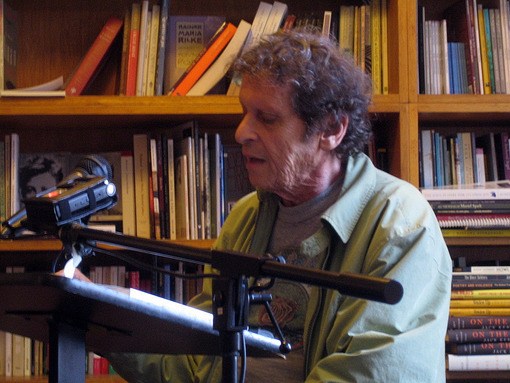
People Who Support Internet Censorship Are Infantile Narcissists

By Caitlin Johnstone

Source: CaitlinJohnstone.com

As of this writing, journalist Ford Fischer is still completely demonetized on YouTube as the result of a new set of rules that were put in place because of some doofy Twitter drama between some unfunny asshole named Steven Crowder and some infantile narcissist who thinks the world revolves around his opinions named Carlos Maza. It remains an unknown if Fischer will ever be restored to an important source of income around which he has built his livelihood.

Fischer often covers white supremacist rallies and counter-protests, and his channel was demonetized within minutes of YouTube’s new rules against hate speech going into effect because some of his content, as you’d expect, includes white supremacists saying and doing white supremacist things. Maza, a Vox reporter who launched a viral Twitter campaign to have Crowder removed from YouTube for making homophobic and bigoted comments about him on his channel, expressed concern over Fischer’s financial censorship.

“What’s happening to Ford is fucking awful,” Maza tweeted yesterday. “He’s a good journalist doing important work. I don’t understand how YouTube is still so bad at this. How can they not differentiate between white supremacist content and good faith reporting on white supremacy?”

https://twitter.com/gaywonk/status/1136425011970019329

I say that Maza is an infantile narcissist who thinks the world revolves around his opinions because it genuinely seems to have surprised him that good people would get harmed in the crossfire of his censorship campaign.

I mean, what did he think was going to happen? Did he think some soulless, multibillion-dollar Silicon Valley corporation was going to display company-wide wisdom and woke insightfulness while implementing his agenda to censor obnoxious voices? Did he imagine that YouTube executives were going to sit down with him over a cup of coffee and go down a list with him to get his personal opinion of who should and should not be censored?

Think about it. How narcissistic do you have to be to assume that a vast corporation is going to use your exact personal perceptual filters while determining who should and should not be censored for oafish behavior? How incapable of understanding the existence of other points of view must you be to believe it’s reasonable to expect that a giant, sweeping censorship campaign will exercise surgical precision which aligns perfectly with your own exact personal values system? How arrogant and self-centered must you be to demand pro-censorship reforms throughout an enormous Google-owned platform, then whine that they’re not implementing your censorship desires correctly?

This is the same staggering degree of cloistered, dim-eyed narcissism that leads people to support Julian Assange’s persecution on the grounds that he’s “not a journalist”. These egocentric dolts sincerely seem to believe that the US government is going to prosecute Assange for unauthorized publications about US war crimes, then when it comes time to imprison the next Assange the US Attorney General is going to show up on their doorstep to ask them for their opinion as to whether the next target is or is not a real journalist. Obviously the power-serving agenda that you are helping to manufacture consent for is not going to be guided by your personal set of opinions, you fucking moron.

The fact that other people aren’t going to see and interpret information the same way as you do is something Carlos Maza and the thousands of people who’ve supported his pro-censorship campaign should have learned as small children. Understanding that the world doesn’t revolve around you and your wants and desires is a basic stage in childhood development. People who believe Silicon Valley tech giants can implement censorship in a way that is wise and beneficent are still basically toddlers in this respect. One wonders if they still interrupt their mother’s important conversations with demands for attention and apple juice.

Ford Fischer was not the first good guy to get caught in the crossfire of internet censorship, and he will not be the last. In addition to the way unexpected interpretations of what constitutes hate speech can lead to important voices losing their platforms or being unable to make a living doing what they do, the new rules appear to contain a troubling new escalation that could see skeptics of legitimate military false flags completely censored.

“Finally, we will remove content denying that well-documented violent events, like the Holocaust or the shooting at Sandy Hook Elementary, took place,” reads a single sentence in the official YouTube blog about its new rules.

The sentence appears almost as an aside, without any elaboration or further information added, and at first glance it reads innocuously enough. No Holocaust deniers or Sandy Hook false flag videos? Okay, got it. I personally am not a denier of either of those events, so this couldn’t possibly affect me personally, right?

Wrong. YouTube does not say that it will just be censoring Holocaust deniers and Sandy Hook shooting deniers, it says it will “remove content denying that well-documented violent events, like the Holocaust or the shooting at Sandy Hook Elementary, took place.”

So what does this mean? Where exactly is the line drawn? If you are not an infantilized narcissist, you will not assume that YouTube intends to implement this guideline in the same way you would. It is very possible that it will include skeptics of violent events which the entire political/media class agrees were perpetrated by enemies of the US-centralized power alliance, which just so happen to manufacture support for increased aggressions against those nations.

Would the new rules end up forbidding, for example, this excellent YouTube video animation explaining how a leaked OPCW report disputes the official narrative about an alleged chemical attack in Douma, Syria last year? If you are not making the assumption that YouTube will be implementing its censorship using your own personal values system, there is no reason to assume it wouldn’t. After all, the official narrative that dozens of civilians were killed by the Assad government dropping chlorine cylinders through rooftops is the mainstream consensus narrative maintained by all respected US officials and “authoritative” news outlets.

This is a perfect example of a very real possibility that could be a disastrous consequence of increased internet censorship. It is a known fact that the US government has an extensive history of using false flags to manufacture consent for war, from the USS Liberty to the Gulf of Tonkin to the false Nayirah testimony about removing babies from incubators to the WMD narrative in Iraq. These new rules could easily serve as a narrative control device preventing critical discussions about suspicious acts of violence which have already happened, and which happen in the future.

Consider the fact that Google, which owns YouTube, has had ties to the CIA and the NSA from its very inception, is known to have a cozy relationship with the NSA, and has served US intelligence community narrative control agendas by tweaking its algorithms to deliberately hide dissenting alternative media outlets. Consider this, then ask yourself this question: do you trust this company to make wise and beneficent distinctions when it comes to censoring public conversations?

In a corporatist system of government which draws no meaningful distinction between corporate power and state power, corporate censorship is state censorship. Only someone who believes that giant Silicon Valley corporations would implement censorship according to their own personal values system could ever support giving these oligarchic establishments that kind of power. And if you believe that, it’s because you never really grew up.

The Omnipresent Surveillance State: Orwell’s 1984 Is No Longer Fiction

By John W. Whitehead

Source: The Rutherford Institute

“You had to live—did live, from habit that became instinct—in the assumption that every sound you made was overheard, and, except in darkness, every movement scrutinized.”—George Orwell, 1984

Tread cautiously: the fiction of George Orwell has become an operation manual for the omnipresent, modern-day surveillance state.

It’s been 70 years since Orwell—dying, beset by fever and bloody coughing fits, and driven to warn against the rise of a society in which rampant abuse of power and mass manipulation are the norm—depicted the ominous rise of ubiquitous technology, fascism and totalitarianism in 1984.

Who could have predicted that 70 years after Orwell typed the final words to his dystopian novel, “He loved Big Brother,” we would fail to heed his warning and come to love Big Brother.

“To the future or to the past, to a time when thought is free, when men are different from one another and do not live alone— to a time when truth exists and what is done cannot be undone: From the age of uniformity, from the age of solitude, from the age of Big Brother, from the age of doublethink — greetings!”—George Orwell

1984 portrays a global society of total control in which people are not allowed to have thoughts that in any way disagree with the corporate state. There is no personal freedom, and advanced technology has become the driving force behind a surveillance-driven society. Snitches and cameras are everywhere. People are subject to the Thought Police, who deal with anyone guilty of thought crimes. The government, or “Party,” is headed by Big Brother who appears on posters everywhere with the words: “Big Brother is watching you.”

We have arrived, way ahead of schedule, into the dystopian future dreamed up by not only Orwell but also such fiction writers as Aldous Huxley, Margaret Atwood and Philip K. Dick.

“If liberty means anything at all, it means the right to tell people what they do not want to hear.”―George Orwell

Much like Orwell’s Big Brother in 1984, the government and its corporate spies now watch our every move. Much like Huxley’s A Brave New World, we are churning out a society of watchers who “have their liberties taken away from them, but … rather enjoy it, because they [are] distracted from any desire to rebel by propaganda or brainwashing.” Much like Atwood’s The Handmaid’s Tale, the populace is now taught to “know their place and their duties, to understand that they have no real rights but will be protected up to a point if they conform, and to think so poorly of themselves that they will accept their assigned fate and not rebel or run away.”

And in keeping with Philip K. Dick’s darkly prophetic vision of a dystopian police state—which became the basis for Steven Spielberg’s futuristic thriller Minority Report—we are now trapped in a world in which the government is all-seeing, all-knowing and all-powerful, and if you dare to step out of line, dark-clad police SWAT teams and pre-crime units will crack a few skulls to bring the populace under control.

What once seemed futuristic no longer occupies the realm of science fiction.

Incredibly, as the various nascent technologies employed and shared by the government and corporations alike—facial recognition, iris scanners, massive databases, behavior prediction software, and so on—are incorporated into a complex, interwoven cyber network aimed at tracking our movements, predicting our thoughts and controlling our behavior, the dystopian visions of past writers is fast becoming our reality.

Our world is characterized by widespread surveillance, behavior prediction technologies, data mining, fusion centers, driverless cars, voice-controlled homes, facial recognition systems, cybugs and drones, and predictive policing (pre-crime) aimed at capturing would-be criminals before they can do any damage.

Surveillance cameras are everywhere. Government agents listen in on our telephone calls and read our emails. Political correctness—a philosophy that discourages diversity—has become a guiding principle of modern society.

“People sleep peaceably in their beds at night only because rough men stand ready to do violence on their behalf.”―George Orwell

The courts have shredded the Fourth Amendment’s protections against unreasonable searches and seizures. In fact, SWAT teams battering down doors without search warrants and FBI agents acting as a secret police that investigate dissenting citizens are common occurrences in contemporary America. And bodily privacy and integrity have been utterly eviscerated by a prevailing view that Americans have no rights over what happens to their bodies during an encounter with government officials, who are allowed to search, seize, strip, scan, spy on, probe, pat down, taser, and arrest any individual at any time and for the slightest provocation.

“The creatures outside looked from pig to man, and from man to pig, and from pig to man again; but already it was impossible to say which was which.”―George Orwell, Animal Farm

We are increasingly ruled by multi-corporations wedded to the police state.

What many fail to realize is that the government is not operating alone. It cannot. The government requires an accomplice. Thus, the increasingly complex security needs of the massive federal government, especially in the areas of defense, surveillance and data management, have been met within the corporate sector, which has shown itself to be a powerful ally that both depends on and feeds the growth of governmental overreach.

In fact, Big Tech wedded to Big Government has become Big Brother, and we are now ruled by the Corporate Elite whose tentacles have spread worldwide. For example, USA Today reports that five years after the 9/11 terrorist attacks, the homeland security business was booming to such an extent that it eclipsed mature enterprises like movie-making and the music industry in annual revenue. This security spending to private corporations such as Google, Amazon, Microsoft and others is forecast to exceed $1 trillion in the near future.

The government now has at its disposal technological arsenals so sophisticated and invasive as to render any constitutional protections null and void. Spearheaded by the NSA, which has shown itself to care little to nothing for constitutional limits or privacy, the “security/industrial complex”—a marriage of government, military and corporate interests aimed at keeping Americans under constant surveillance—has come to dominate the government and our lives. At three times the size of the CIA, constituting one third of the intelligence budget and with its own global spy network to boot, the NSA has a long history of spying on Americans, whether or not it has always had the authorization to do so.

Money, power, control. There is no shortage of motives fueling the convergence of mega-corporations and government. But who is paying the price? The American people, of course.

Orwell understood what many Americans, caught up in their partisan flag-waving, are still struggling to come to terms with: that there is no such thing as a government organized for the good of the people. Even the best intentions among those in government inevitably give way to the desire to maintain power and control over the citizenry at all costs. As Orwell explains:

The Party seeks power entirely for its own sake. We are not interested in the good of others; we are interested solely in power, pure power. What pure power means you will understand presently. We are different from the oligarchies of the past in that we know what we are doing. All the others, even those who resembled ourselves, were cowards and hypocrites. The German Nazis and the Russian Communists came very close to us in their methods, but they never had the courage to recognize their own motives. They pretended, perhaps they even believed, that they had seized power unwillingly and for a limited time, and that just around the corner there lay a paradise where human beings would be free and equal. We are not like that. We know what no one ever seizes power with the intention of relinquishing it. Power is not a means; it is an end. One does not establish a dictatorship in order to safeguard a revolution; one makes the revolution in order to establish the dictatorship. The object of persecution is persecution. The object of torture is torture. The object of power is power. Now you begin to understand me.

“The further a society drifts from truth the more it will hate those who speak it.” ― George Orwell

How do you change the way people think? You start by changing the words they use.

In totalitarian regimes—a.k.a. police states—where conformity and compliance are enforced at the end of a loaded gun, the government dictates what words can and cannot be used. In countries where the police state hides behind a benevolent mask and disguises itself as tolerance, the citizens censor themselves, policing their words and thoughts to conform to the dictates of the mass mind.

Dystopian literature shows what happens when the populace is transformed into mindless automatons. In Ray Bradbury’s Fahrenheit 451, reading is banned and books are burned in order to suppress dissenting ideas, while televised entertainment is used to anesthetize the populace and render them easily pacified, distracted and controlled.

In Huxley’s Brave New World, serious literature, scientific thinking and experimentation are banned as subversive, while critical thinking is discouraged through the use of conditioning, social taboos and inferior education. Likewise, expressions of individuality, independence and morality are viewed as vulgar and abnormal.

And in Orwell’s 1984, Big Brother does away with all undesirable and unnecessary words and meanings, even going so far as to routinely rewrite history and punish “thoughtcrimes.” In this dystopian vision of the future, the Thought Police serve as the eyes and ears of Big Brother, while the Ministry of Peace deals with war and defense, the Ministry of Plenty deals with economic affairs (rationing and starvation), the Ministry of Love deals with law and order (torture and brainwashing), and the Ministry of Truth deals with news, entertainment, education and art (propaganda). The mottos of Oceania: WAR IS PEACE, FREEDOM IS SLAVERY, and IGNORANCE IS STRENGTH.

All three—Bradbury, Huxley and Orwell—had an uncanny knack for realizing the future, yet it is Orwell who best understood the power of language to manipulate the masses. Orwell’s Big Brother relied on Newspeak to eliminate undesirable words, strip such words as remained of unorthodox meanings and make independent, non-government-approved thought altogether unnecessary. To give a single example, as psychologist Erich Fromm illustrates in his afterword to 1984:

The word free still existed in Newspeak, but it could only be used in such statements as “This dog is free from lice” or “This field is free from weeds.” It could not be used in its old sense of “politically free” or “intellectually free,” since political and intellectual freedom no longer existed as concepts….

Where we stand now is at the juncture of OldSpeak (where words have meanings, and ideas can be dangerous) and Newspeak (where only that which is “safe” and “accepted” by the majority is permitted). The power elite has made their intentions clear: they will pursue and prosecute any and all words, thoughts and expressions that challenge their authority.

This is the final link in the police state chain.

“Until they became conscious they will never rebel, and until after they have rebelled they cannot become conscious.”—George Orwell

Americans have been conditioned to accept routine incursions on their privacy rights. In fact, the addiction to screen devices—especially cell phones—has created a hive effect where the populace not only watched but is controlled by AI bots. However, at one time, the idea of a total surveillance state tracking one’s every move would have been abhorrent to most Americans. That all changed with the 9/11 attacks. As professor Jeffrey Rosen observes, “Before Sept. 11, the idea that Americans would voluntarily agree to live their lives under the gaze of a network of biometric surveillance cameras, peering at them in government buildings, shopping malls, subways and stadiums, would have seemed unthinkable, a dystopian fantasy of a society that had surrendered privacy and anonymity.”

Having been reduced to a cowering citizenry—mute in the face of elected officials who refuse to represent us, helpless in the face of police brutality, powerless in the face of militarized tactics and technology that treat us like enemy combatants on a battlefield, and naked in the face of government surveillance that sees and hears all—we have nowhere left to go.

We have, so to speak, gone from being a nation where privacy is king to one where nothing is safe from the prying eyes of government. In search of so-called terrorists and extremists hiding amongst us—the proverbial “needle in a haystack,” as one official termed it—the Corporate State has taken to monitoring all aspects of our lives, from cell phone calls and emails to Internet activity and credit card transactions. Much of this data is being fed through fusion centersacross the country, which work with the Department of Homeland Security to make threat assessments on every citizen, including school children. These are state and regional intelligence centers that collect data on you.

“Big Brother is Watching You.”―George Orwell

Wherever you go and whatever you do, you are now being watched, especially if you leave behind an electronic footprint. When you use your cell phone, you leave a record of when the call was placed, who you called, how long it lasted and even where you were at the time. When you use your ATM card, you leave a record of where and when you used the card. There is even a video camera at most locations equipped with facial recognition software. When you use a cell phone or drive a car enabled with GPS, you can be tracked by satellite. Such information is shared with government agents, including local police. And all of this once-private information about your consumer habits, your whereabouts and your activities is now being fed to the U.S. government.

The government has nearly inexhaustible resources when it comes to tracking our movements, from electronic wiretapping devices, traffic cameras and biometrics to radio-frequency identification cards, satellites and Internet surveillance.

Speech recognition technology now makes it possible for the government to carry out massive eavesdropping by way of sophisticated computer systems. Phone calls can be monitored, the audio converted to text files and stored in computer databases indefinitely. And if any “threatening” words are detected—no matter how inane or silly—the record can be flagged and assigned to a government agent for further investigation. Federal and state governments, again working with private corporations, monitor your Internet content. Users are profiled and tracked in order to identify, target and even prosecute them.

In such a climate, everyone is a suspect. And you’re guilty until you can prove yourself innocent. To underscore this shift in how the government now views its citizens, the FBI uses its wide-ranging authority to investigate individuals or groups, regardless of whether they are suspected of criminal activity.

“Nothing was your own except the few cubic centimetres inside your skull.” ― George Orwell

Here’s what a lot of people fail to understand, however: it’s not just what you say or do that is being monitored, but how you think that is being tracked and targeted. We’ve already seen this play out on the state and federal level with hate crime legislation that cracks down on so-called “hateful” thoughts and expression, encourages self-censoring and reduces free debate on various subject matter.

Say hello to the new Thought Police.

Total Internet surveillance by the Corporate State, as omnipresent as God, is used by the government to predict and, more importantly, control the populace, and it’s not as far-fetched as you might think. For example, the NSA is now designing an artificial intelligence system that is designed to anticipate your every move. In a nutshell, the NSA will feed vast amounts of the information it collects to a computer system known as Aquaint (the acronym stands for Advanced QUestion Answering for INTelligence), which the computer can then use to detect patterns and predict behavior.

No information is sacred or spared.

Everything from cell phone recordings and logs, to emails, to text messages, to personal information posted on social networking sites, to credit card statements, to library circulation records, to credit card histories, etc., is collected by the NSA and shared freely with its agents in crime: the CIA, FBI and DHS. One NSA researcher actually quit the Aquaint program, “citing concerns over the dangers in placing such a powerful weapon in the hands of a top-secret agency with little accountability.”

Thus, what we are witnessing, in the so-called name of security and efficiency, is the creation of a new class system comprised of the watched (average Americans such as you and me) and the watchers (government bureaucrats, technicians and private corporations).

Clearly, the age of privacy in America is at an end.

“If you want a picture of the future, imagine a boot stamping on a human face—for ever.”—Orwell

So where does that leave us?

We now find ourselves in the unenviable position of being monitored, managed and controlled by our technology, which answers not to us but to our government and corporate rulers. This is the fact-is-stranger-than-fiction lesson that is being pounded into us on a daily basis.

It won’t be long before we find ourselves looking back on the past with longing, back to an age where we could speak to whom we wanted, buy what we wanted, think what we wanted without those thoughts, words and activities being tracked, processed and stored by corporate giants such as Google, sold to government agencies such as the NSA and CIA, and used against us by militarized police with their army of futuristic technologies.

To be an individual today, to not conform, to have even a shred of privacy, and to live beyond the reach of the government’s roaming eyes and technological spies, one must not only be a rebel but rebel.

Even when you rebel and take your stand, there is rarely a happy ending awaiting you. You are rendered an outlaw.

So how do you survive in the American surveillance state?

We’re running out of options.

As I make clear in my book Battlefield America: The War on the American People, we’ll soon have to choose between self-indulgence (the bread-and-circus distractions offered up by the news media, politicians, sports conglomerates, entertainment industry, etc.) and self-preservation in the form of renewed vigilance about threats to our freedoms and active engagement in self-governance.

Yet as Aldous Huxley acknowledged in Brave New World Revisited: “Only the vigilant can maintain their liberties, and only those who are constantly and intelligently on the spot can hope to govern themselves effectively by democratic procedures. A society, most of whose members spend a great part of their time, not on the spot, not here and now and in their calculable future, but somewhere else, in the irrelevant other worlds of sport and soap opera, of mythology and metaphysical fantasy, will find it hard to resist the encroachments of those would manipulate and control it.”

The Trust Project: Big Media and Silicon Valley’s Weaponized Algorithms Silence Dissent

Sally Lehrman discusses the Trust Project at 2018 WordCamp For Publishers

Given the Trust Project’s rich-get-richer impact on the online news landscape, it is not surprising to find that it is funded by a confluence of tech oligarchs and powerful forces with a clear stake in controlling the flow of news.

By Whitney Webb

Source: Mintpress News

After the failure of Newsguard — the news rating system backed by a cadre of prominent neoconservative personalities — to gain traction among American tech and social media companies, another organization has quietly stepped in to direct the news algorithms of tech giants such as Google, Facebook, and Microsoft.

Though different from Newsguard, this group, known as “The Trust Project,” has a similar goal of restoring “trust” in corporate, mainstream media outlets, relative to independent alternatives, by applying “trust indicators” to social-media news algorithms in a decidedly untransparent way. The funding of “The Trust Project” — coming largely from big tech companies like Google; government-connected tech oligarchs like Pierre Omidyar; and the Knight Foundation, a key Newsguard investor — suggests that an ulterior motive in its tireless promotion of “traditional” mainstream media outlets is to limit the success of dissenting alternatives.

Of particular importance is the fact that the Trust Project’s “trust indicators” are already being used to control what news is promoted and suppressed by top search engines like Google and Bing and massive social-media networks like Facebook. Though the descriptions of these “trust indicators” — eight of which are currently in use — are publicly available, the way they are being used by major tech and social media companies is not.

The Trust Project’s goal is to increase public trust in the very same traditional media outlets that Newsguard favored and to use HTML-embedded codes in favored news articles to promote their content at the expense of independent alternatives. Even if its effort to promote “trust” in establishment media fail, its embedded-code hidden within participating news sites allow those establishment outlets to skirt the same algorithms currently targeting their independent competition, making such issues of “trust” largely irrelevant as it moves to homogenize the online media landscape in favor of mainstream media.

The Trust Project’s director, Sally Lehrman, made it clear that, in her view, the lack of public trust in mainstream media and its declining readership is the result of unwanted “competition by principle-free enterprises [that] further undermines its [journalism’s] very role and purpose as an engine for democracy.”

Getting to know the Trust Project

The Trust Project describes itself as “a consortium of top news companies” involved in developing “transparency standards that help you easily assess the quality and credibility of journalism.” It has done this by creating what it calls “Trust Indicators,” which the project’s website describes as “a digital standard that meets people’s needs.” However, far from meeting “people’s needs,” the Trust Indicators seem aimed at manipulating search engine and social-media news algorithms to the benefit of the project’s media partners, rather than to the benefit of the general public.

The origins of the Trust Project date back to a 2012 “roundtable” hosted by the Markkula Center for Applied Ethics at Santa Clara University, a center funded by former Apple CEO Mike Markkula. That roundtable became known as the Roundtable on Digital Journalism Ethics and was created by journalist Sally Lehrman, then working at the Markkula Center, in connection with the New Media Executive Roundtable and Online Credibility Watch of the Society of Professional Journalists. Lehrman has explicitly stated that the Trust Project is open only to “news organizations that adhere to traditional standards.”

The specific idea that spurred the creation of the Trust Project itself was born at a 2014 meeting of that roundtable, when Lehrman “asked a specialist in machine learning at Twitter, and Richard Gingras, head of Google News, if algorithms could be used to support ethics instead of hurting them, and they said yes. Gingras agreed to collaborate.” In other words, the idea behind the Trust Project, from the start, was aimed at gaming search-engine and social-media algorithms in collusion with major tech companies like Google and Twitter.

As the Trust Project itself notes, the means of altering algorithms were developed in tandem with tech-giant executives like Gingras and “top editors in the industry from 80 news outlets and institutions,” all of which are corporate, mainstream media outlets. Notably, the Trust Project’s media partners, involved in creating these new “standards” for news algorithms, include major publications owned by wealthy oligarchs: the Washington Post, owned by the world’s richest man, Jeff Bezos; the Economist, directed by the wealthy Rothschild family; and the Globe and Mail, owned by Canada’s richest family, the Thomsons, who also own Thomson Reuters. Other Trust Project partners include The New York Times, Mic, Hearst Television, the BBC and the USA Today network.

Other major outlets are represented on the News Leadership Council of the Markkula Center, including the Financial TimesGizmodo Media, and The Wall Street Journal. That council — which also includes Gingras and Andrew Anker, Facebook’s Director of Product Management — “guides the Trust Project on our Trust Indicators.”

These “Trust Indicators” are the core of the Trust Project’s activities and reveal one of the key mechanisms through which Google, Twitter and Facebook have been altering their algorithms to favor outlets with good “Trust Indicator” scores. Trust Indicators, on their face, are aimed at making news publications “more transparent” as a means of generating increased trust with the public. Though a total of 37 have been developed, it appears only eight of them are currently being used.

These eight indicators are listed and described by the Trust Project as follows:

  • Best Practices: What are the news outlet’s standards? Who funds it? What is the outlet’s mission? Plus commitments to ethics, diverse voices, accuracy, making corrections and other standards.
  • Author/Reporter Expertise: Who made this? Details about the journalist, including their expertise and other stories they have worked on.
  • Type of Work: What is this? Labels to distinguish opinion, analysis and advertiser (or sponsored) content from news reports.
  • Citations and References: What’s the source? For investigative or in-depth stories, access to the sources behind the facts and assertions.
  • Methods: How was it built? Also for in-depth stories, information about why reporters chose to pursue a story and how they went about the process.
  • Locally Sourced? Was the reporting done on the scene, with deep knowledge about the local situation or community? Lets you know when the story has local origin or expertise.
  • Diverse Voices: What are the newsroom’s efforts and commitments to bringing in diverse perspectives? Readers noticed when certain voices, ethnicities, or political persuasions were missing.
  • Actionable Feedback: Can we participate? A newsroom’s efforts to engage the public’s help in setting coverage priorities, contributing to the reporting process, ensuring accuracy and other areas. Readers want to participate and provide feedback that might alter or expand a story.

How the Trust Project makes these indicators available to the public can be seen in its new project, the Newsroom Transparency Tracker, where it provides a table of “transparency” for participating media outlets. Notably, that table conflates actual transparency practices with simply providing the Trust Project with outlet policies and guidelines related to the above indicators.

For example, The Economist gets a perfect transparency “score” for having provided the Trust Project links to its ethics policy, mission statement and other information requested by the project. However, the fact that those policies exist and are provided to the Trust Project does not mean that the publication’s policies are, in fact, transparent or ethical in terms of their content or in practice. The fact that The Economist provided links to its policies does not make the publication more transparent, but — in the context of the Newsroom Transparency Tracker’s table — it provides the appearance of transparency, though such policy disclosures by The Economist are unlikely to translate into any changes to its well-known biases and slanted reporting towards certain issues.

Trust Indicators manipulate big tech algorithms

The true power of the Trust Indicators comes in a form that is not visible to the general public. These Trust Indicators, while occasionally displayed on partner websites, are also coupled with “machine-readable signals” embedded in the HTML code of participating websites and articles used by Facebook, Google, Bing and Twitter. As Lehrman noted in a 2017 article, the Trust Project was then “already working with these four companies, all of which have said they want to use our indicators to prioritize honest, well-reported news over fakery and falsehood.” Gingras of Google News also noted that the Trust Indicators are used by Google as “cues to help search engines better understand and rank results … [and] to help the myriad algorithmic systems that mold our media lives.”

A press release from the Trust Project last year further underscores the importance of the embedded “indicators” to alter social-media and search-engine algorithms:

While each Indicator is visible to users on the pages of the Project’s news partners, it is also embedded in the article and site code for machines to read — providing the first, standardized technical language that offers contextual information about news sites’ commitments to transparency.”

Despite claiming to increase public knowledge of “news sites’ commitments to transparency,” the way that major tech companies like Google and Facebook are using these indicators is anything but transparent. Indeed, it is largely unknown how these indicators are used, though there are a few clues.

For instance, CBS News cited Craig Newmark — the billionaire founder of Craigslist, who provided the Trust Project’s seed funding — as suggesting that “Google’s search algorithm could rank trusted sources above others in search results” by using the project’s Trust Indicators.

Last year, the Trust Project stated that Bing used “the ‘Type of Work’ Trust Indicator to display whether an article is news, opinion or analysis.” It also stated that “when Facebook launched its process to index news Pages, they worked with the Trust Project to make it easy for any publisher to add optional information about their Page.” In Google’s case, Gingras was quoted as saying that Google News uses the indicators “to assess the relative authoritativeness of news organizations and authors. We’re looking forward to developing new ways to use the indicators.”

Notably, the machine-readable version of these Trust Indicators is available only to participating institutions, which are currently corporate, mainstream publications. Though WordPress and Drupal plug-ins are being developed to make those embedded signals to search engines and social media available to smaller publishers, it will be made available only to “qualified publishers,” a determination that will presumably be made by the Trust Project and its associates.

Richard Gingras, in a statement made in 2017, noted that “the indicators can help our algorithms better understand authoritative journalism — and help us to better surface it to consumers.” Thus, it is abundantly clear that these indicators, which are embedded only into “qualified” and “authoritative” news websites, will be used to slant search-engine and social-media news algorithms in favor of establishment news websites.

The bottom line is that these embedded and exclusive indicators allow certain news outlets to avoid the crushing effects of recent algorithm changes that have seen traffic to many news websites, including MintPress, plummet in recent years. This is leading towards a homogenization of the online news landscape by starving independent competitors of web traffic while Trust Project-approved outlets are given an escape valve through algorithm manipulation.

The tech billionaires behind the Trust Project

Given the Trust Project’s rich-get-richer impact on the online news landscape, it is not surprising to find that it is funded by rich and powerfl figures and forces with a clear stake in controlling the flow of news and information online.

According to its website, the Trust Project currently receives funding from Craig Newmark Philanthropies, Google, Facebook, eBay founder Pierre Omidyar’s Democracy Fund, the John S. and James L. Knight Foundation (often abbreviated as the Knight Foundation), and the Markkula Foundation. Its website also states that Google was “an early financial supporter” and that it had originally been funded by Craig Newmark, the founder of Craigslist. As previously mentioned, the Trust Project’s co-founder is Richard Gingras, current Google vice president of News. The Trust Project’s website described Gingras’s current role with the organization as “a powerful evangelist” who “can always be counted upon for expert advice and encouragement.” Newmark’s current role at the Trust Project is described as that of a “funder and valued connector.”

Newmark, through Craig Newmark Philanthropies, who provided the initial funding for the Trust Project, and has also funded other related initiatives like the News Integrity Initiative at the City University of New York, which shares many of the same financiers as the Trust Project, including Facebook, Omidyar’s Democracy Fund, and the Knight Foundation. The Trust Project is listed as a collaborator of the News Integrity Initiative. Newmark is also very active in several news-related NGOs with similar overlap. For instance, he sits on the board of the Electronic Frontier Foundation (EFF), a longtime recipient of massive grants from the Omidyar Network, and Politifact.com, which is funded in part by Omidyar’s Democracy Fund.

Newmark is currently working with Vivian Schiller as his “strategic adviser” in his media investments. Schiller is a member of the Council on Foreign Relations, former head of news at Twitter, and a veteran of well-known mainstream outlets like NPR, CNN, The New York Times and NBC News. She is also a director of the Scott Trust, which owns The Guardian.

The Markkula Foundation, one of the key funders of the Trust Project, exercises considerable influence over the organization through the Markkula Center for Applied Ethics, which originally incubated the organization and whose News Leadership Council plays an important role at the Trust Project. That council’s membership includes representatives of Facebook, The Wall Street Journal, The Washington Post, Financial Times and Google, and “guides the Trust Project on our Trust Indicators and advises on core issues related to information literacy and rebuilding trust in journalism within a fractious, so-called post-fact environment.”

Both the Markkula Foundation and the Markkula Center for Applied Ethics were founded by A. M. “Mike” Markkula, former CEO of Apple. The Markkula Center’s Journalism Ethics program is currently headed by Subramaniam Vincent, a former software engineer and consultant for Intel and Cisco Systems who has worked to bring together big data with local journalism and is an advocate for the use of “ethical-AI [artificial intelligence] to ingest, sort, and classify news.”

The John S. and James L. Knight Foundation is another interesting funder of the Trust Project, given that this same foundation is also a key investor in Newsguard, the controversial, biased news rating system with deep connections to government insiders and self-described government propagandists. There is considerable overlap between Newsguard and the Trust Project, with the latter citing Newsguard as a partner and also stating that Newsguard’s demonstrably biased ratings use the project’s “trust indicators” in its full-length reviews of news websites, which Newsguard calls “nutrition labels.” In addition, becoming a Trust Project participant is a factor that “supports a positive evaluation” from Newsguard, according to a press release from last year.

Notably, Sally Lehrman, who leads the Trust Project, described the project’s trust indicators for news as ”along the lines of a nutrition label on a package of food” when the Trust Project was created nearly a year before Newsguard launched, suggesting some intellectual overlap.

previous MintPress exposé revealed Newsguard’s numerous conflicts of interest and a ratings system strongly biased in favor of well-known, traditional media outlets — even when those outlets have a dubious track record of promoting so-called “fake news.” It should come as no surprise that the Trust Project’s goal is to increase public trust in the very same traditional media outlets that Newsguard favored and to use HTML-embedded codes in news articles to promote their content at the expense of independent alternatives.

A familiar face in the war against independent media

The Democracy Fund, another top funder of the Trust Project and a bipartisan foundation that was established by eBay founder and PayPal owner Omidyar in 2011 “out of deep respect for the U.S. Constitution and our nation’s core democratic values.” It is a spin-off of the Omidyar Network and, after splitting off as an independent company in 2014, became a member of the Omidyar Group. The fund’s National Advisory Committee includes former Bush and Obama administration officials and representatives of Facebook, Microsoft, NBC NewsABC News and Gizmodo Media group.

The Democracy Fund’s involvement in the Trust Project is notable because of the other media projects it funds, such as the new media empire of arch-neoconservative Bill Kristol, who has a long history of creating and disseminating falsehoods that have been used to justify the U.S. war in Iraq and other hawkish foreign policy stances. As a recent MintPress series revealed, Omidyar’s Democracy Fund provides financial support to Kristol’s Defending Democracy Together initiative and also supports Kristol’s Alliance for Securing Democracy, a project of the German Marshall Fund think tank that is best known for its cryptic Hamilton68 “Russian bot” dashboard. Omidyar’s Democracy Fund has also donated to the German Marshall Fund’s Defending Digital Democracy project and directly to the German Marshall Fund itself. In addition, Charles Sykes, a co-founder and editor-at-large of Kristol’s new publication The Bulwark, is on the Democracy Fund’s National Advisory Committee.

An acolyte of Kristol’s who works at the German Marshall Fund, Jamie Fly, stated last Octoberthat the coordinated social-media purges of independent media pages known for their criticisms of U.S. empire and U.S. police violence was “just the beginning” and hinted that the German Marshall Fund had a hand in past social media purges and, presumably, a role in future purges. Thus, the Democracy Fund’s links to neoconservatives who promote the censoring of independent media sites that are critical of militaristic U.S. foreign policy jibe with the fund’s underlying interest in the Trust Project.

Omidyar’s involvement with the Trust Project is interesting for another reason, namely that Omidyar is the main backer behind the efforts of the controversial Anti-Defamation League (ADL) to become a key driver of which outlets are censored by Silicon Valley tech giants. The ADL was initially founded to “stop the defamation of the Jewish people and to secure justice and fair treatment to all” but critics say that over the years it has begun labeling critics of Israel’s government as “anti-Semites.”

For example, content that characterizes Israeli policies towards Palestinians as “racist” or “apartheid-like” is considered “hate speech” by the ADL, as is accusing Israel of war crimes or attempted ethnic cleansing. The ADL has even described explicitly Jewish organizations that are critical of Israel’s government as being “anti-Semitic.”

In March 2017, the Omidyar Network provided the “critical seed capital” need to launch the ADL’s “new Silicon Valley center aimed at tackling this rising wave of intolerance and to collaborate more closely with technology companies to promote democracy and social justice.” That Omidyar-funded ADL center allowed the ADL to team up with Facebook, Twitter, Google and Microsoft — all of whom also collaborate with the Trust Project — to create a Cyberhate Problem-Solving Lab. Since then, these companies and their subsidiaries, including Google’s YouTube, have relied on the ADL to flag “controversial” content.

Given the fact that the Trust Project shares with the ADL a key funder (Pierre Omidyar) and several external tech partners, it remains to be seen whether there is overlap between how major tech companies like Google and Facebook use the Trust Indicators in its algorithms and the influence of the ADL on those very same algorithms.

What is clear however is that there exists an undeniable overlap given the fact that Craig Newmark, who provided the seed funding for the Trust Project and continues to fund it, is also a key donor and advisor to the ADL. In 2017, Newmark gave $100,000 to the ADL’s Incident Response Center and is a member of the group’s tech advisory board.

Outsourcing censorship

Of course, the most interesting and troubling donors of the Trust Project are Google and Facebook, both of which are using the very project they fund as a “third party” to justify their manipulation of newsfeed and search-engine algorithms. Google’s intimate involvement from the very inception of the Trust Project tags it as an extension of Google that has since been marketed as an “independent” organization tasked with justifying algorithm changes that favor certain news outlets over others.

Facebook, similarly, funds the Trust Project and also employs the “trust indicators” it funds to alter its newsfeed algorithm. Facebook’s other partners in altering this algorithm include the Atlantic Council — funded by the U.S. government, NATO, and weapons manufacturers, among others — and Facebook has also directly teamed up with foreign governments, such as the government of Israel, to suppress accurate yet dissenting information that the government in question wanted removed from the social-media platform.

The murkiness between “private” censorship, censorship by tech oligarchs, and censorship by government is particularly marked in the Trust Project. The private financiers of the Trust Project that also use its product to promote certain news content over others — namely Google and Facebook — have ties to the U.S. government, with Google being a government contractorand Facebook sporting a growing body of former-government officials in top company positions, including a co-author of the controversial Patriot Act as the company’s general counsel.

A similar tangle surrounds Pierre Omidyar, funder of the Trust Project through the Democracy Fund, who is extremely well-connected to the U.S. government, especially the military-industrial complex and intelligence communities. And partnering with media outlets like the Washington Post, whose owner is Jeff Bezos, spawns more conflicts of interests, given that Bezos’ company, Amazon, is also a major U.S. government contractor.

This growing nexus binding Silicon Valley companies and oligarchs, mainstream media outlets and the government suggests that these entities have increasingly similar and complementary interests, among which is the censorship of independent watchdog journalists and news outlets that seek to challenge their power and narratives.

The Trust Project was created as a way of outsourcing censorship of independent news sites while attempting to salvage the tattered reputation of mainstream media outlets and return the U.S. and international media landscape to years past when such outlets were able to dominate the narrative.

While it seems unlikely that’s its initiatives will succeed in restoring trust to mainstream media given the many recent and continuing examples of those same “traditional” media outlets circulating fake news and failing to cover crucial aspects of events, the Trust Project’s development of hidden algorithm-altering codes in participating websites shows that its real goal is not about improving public trust but about providing a facade of independence to Silicon Valley censorship of independent media outlets that speak truth to power.


Editor’s note | This article was updated to include Craig Newmark’s connections to the Anti-Defamation League.

The curious case of the tankers

By Nat South

Source: The Saker

I have taken the opportunity to look at the recent incident involving two outbound tankers in the Gulf of Oman. I have got some questions or two, (or three) about certain parts of the incident, from a civilian mariner’s perspective mostly.

There are various conflating aspects to the event, and questions need to be asked, yet journalists do not seemingly wish to ask the awkward but necessary questions these days.

Background

The two tankers identified as the ‘Front Altair’, a Marshall Islands flagged vessel and the ‘Kokuka Courageous’, a Panama-flagged vessel.

Front Altair Kokuka Courageous
Managed by Frontline, (Norway – Bermuda) Managed by Bernhard Schulte Shipmanagement (Singapore/ Japan)
23 crew(11 Russian, 11 Philippine, 1 Georgian) 21 crew (Philippine)
Aframax – 86% loaded Handy – fully loaded
75,000 MT of Naphtha 25,000 MT Methanol
Ruwais, UAE Qatar & KSA
Taiwan Singapore
Hyundai Dubai rescued crew Coastal Ace rescued crew
Transferred by SAR boat to Iranian port Transferred to USS Bainbridge
Radio message: “torpedo attack” Japanese CEO: “flying objects”
Hit on starboard amidships – “in fire’ Hit on starboard Twice over 3-hour period – engine room fire
Stopped at 02:47GMT Stopped at 06:20GMT

Both tankers were outbound (south east) of the Strait of Hormuz. Both suffered from explosion on the starboard side, (the side facing international waters). Past AIS tracks of both vessels shown here. The U.S. Navy reported receiving distress messages at 06:12am and 07:00am.

The activity of the vessels was captured in this past AIS track video. It shows the vessels that went to the tankers, to help the crew of the tankers. The assisting vessels are: Hyundai Dubai, tug ‘E-Two’, the Coastal Ace & ‘Naji 10’.

Contradictions and questions

The US military released a video  claiming to show an Iranian naval boat removing an unexploded limpet mine from the hull of the ‘Kokuka Courageous’ in an apparent attempt to recover evidence of its participation. I will comment more about the video later on, but we have already the ludicrous situation where the information provided by the US contradicts the statement made by the Japanese ship management company, who did not believe the ship was damaged by a mine, but by flying objects. The president of Kokuka Sangyo Marine, (shipowners), Yutaka Katada, said “there is no possibility of mine attack as the attack is well above the waterline.”

https://twitter.com/nhk_news/status/1139114208463872001

Questions, questions: then there is the question of timing of an attack of a Japanese owned tanker at a time when the Japanese PM was in Iran for talks.

To add to the confusion, there were reports that the Dutch crew of the ‘Coastal Ace’ who first noted a suspicious object on the hull of the tanker. This then morphed into reports that the USS Bainbridge seeing a suspect device, as shown in the timeline provided by the US Navy.

Regarding the other tanker, ‘Front Altair’, the ‘Hyundai Dubai’ was the first ship on scene who responded to the distress message and rescued the crew. Subsequently, it seems the master of this vessel gave a report on VHF: video & audio (unconfirmed).

The audio is rather telling & factual (it is a Russian speaker apparently), as he relays information from the ‘Front Altair’, ‘torpedo attack” is mentioned. (I am assuming is it is pan, pan or urgency message; it is not a distress message).

The U.S. by releasing a grainy black & white video segment, accused Iran of removing a mine from the other tanker, ‘Kokuka Courageous’, as apparent evidence of its involvement in the attacks of the two tankers. The video raises more questions than provides answers.

If both the civilian crew of the ‘Coastal Ace’ and the ‘USS Bainbridge’ both saw the ‘mine’, late morning, then why leave the important evidence in place on the hull of the tanker for several hours? For the Iranians to pick it up later?

https://www.cusnc.navy.mil/Media/News/Display/Article/1874301/statement-regarding-shipping-vessels-in-gulf-of-oman/

USS Bainbridge (DDG 96) was operating in the vicinity and provided immediate assistance to the M/V Kokuka Courageous.”

Immediate? Note that assistance didn’t extend to making safe a suspicious device ‘immediately’.

At 11:05 a.m. local time USS Bainbridge approaches the Dutch tug Coastal Ace, which had rescued the crew of twenty-one sailors from the M/T Kokuka Courageous who had abandoned their ship after discovering a probable unexploded limpet mine on their hull following an initial explosion.”

“At 4:10 p.m. local time an IRGC Gashti Class patrol boat approached the M/T Kokuka Courageous and was observed and recorded removing the unexploded limpet mine from the M/T Kokuka Courageous.”

Timings put in bold for emphasis by author.

The poor quality of the video, apparently taken from a P-8 US navy aircraft, is astounding, given that it took place at 16:00, on a sunlit day. Compare the quality and availability of the metrics between what happened during the encounter between the ‘Admiral Vinogradov’ and the ‘USS Chancellorsville, last week:

I know that optical quality is downgraded for security reasons, but this is beyond a joke in the days of HD and high-quality images on mobile phones.

Not exactly covert, to retrieve a ‘mine’ right under the noses of the US Navy? Especially when you can see in the video people on the Iranian boat looking towards a ship (?) and quite possibly the US aircraft as well. Anyway, does it take 10 people all crowded on the bow to remove a ‘mine’? Unusual EOD method there.

Does it occur to anyone that it might be a person releasing something so that the boat can leave the tanker’s side, a mooring line attachment, a magnetic device? There is no proof to suggest it was a limpet mine removed from the tanker.

The other thing that really bugs me as someone with maritime experience, is the fact that the US Navy was quite relaxed about a fully loaded tanker with methanol with an apparent explosive device attached to the hull amidships.

I personally wouldn’t be calm, due to the implication of having a toxic, polluting and highly flammable cargo, possibly seconds from being ignited. I’d be getting an EOD team over quickly to ID it, to make it safe and hand it over as a crucial piece of evidence. Yet, I cannot ascertain that any of that actually happened while the USS Bainbridge was in the vicinity of the tanker. I guess it was better to wait a few hours and let the Iranians do it. Surreal.

Instead, it seems that the US Navy stood by idly for hours, watched and let the Iranians approach the tanker, so as to gather ‘evidence’.

Another thing, this PowerPoint from the US is rather remarkable:

I guess using a telephoto lens wasn’t appropriate, to get a close-up of the darned ‘mine’ thing. Again, compare this with the US naval person on the ‘USS Chancellorsville’, merrily snapping away at the ‘Admiral Vinogradov’.

Just on this point, I like the witticism on social media:

the Pentagon should start using Huawei cameras for better video quality”.

This a good ‘un too:

Breaking: The US Navy has confirmed that there has been a reported attack on US tankers in the Gulf of Oman.” Posted by SkyNews at 12:37 am 13 June

Credibility has gone down the drain, as the tweet is still live as I write this a day later.

I know it seems little silly observations, but some of these observations could have been made by journalists when presented with official statements. Yet the most obvious question is:

Why would Iran attack two tankers near to the Strait of Hormuz, in the vicinity of US naval forces”? Some comments provided by this Military Times article. I’ll leave that for others to comment and analyze.

Five Keys to Inner Strength From Five Years in Prison

By Ross Ulbricht

Source: Bitcoin Magazine

October 1, 2018, marked five years since I was imprisoned. My physical surroundings today are ironically similar to what they were after my arrest back in 2013. I’m in the SHU again (Special Housing Unit, aka “the hole”). It means permanent lockdown, separated from the general prison population, in a small cell. There is a slot in the heavy metal door for food trays, a small steel toilet, a concrete bunk with thick rings at four points (I guess that’s how I’ll get strapped down if I go crazy), chipped paint on the walls and floor with gang names and desperate Bible quotes etched in, and everywhere thick marks counting the days spent here by former inhabitants (some collections are terrifyingly large).

The initial shock of entering the cell — and all it meant for my immediate future — gave way after a few days to a helpless, restless dread and a burning need to get out. This feeling had to be stuffed down to avoid madness, and eventually a numb acceptance took over, but it was a precarious arrangement. Desperate frustration simmered constantly beneath the surface.

When I was first arrested, I was put in the hole against my will at three different prisons as they bounced me across the country from San Francisco where I was arrested to New York where I was prosecuted. The only reason I was given for this was that I was “high profile.” After six weeks, I was let out and never returned … until now. This time, I’m actually glad to be here because the alternative is life-threatening.

I was forced by some other inmates to make a choice: assault someone or be assaulted. Morally I knew I couldn’t initiate violence against another, but if I refused, I would be seriously hurt and would face an uncertain future, not knowing how long I’d be in the hole under protective custody or whether I’d be sent to another prison where I’d meet the same fate.

When the dreadful situation arose, I managed to ask for protective custody before anything happened to me. I was immediately cuffed and escorted to this cell where I’m writing from. I chose the hole rather than hurt another man.

When they dropped me in the SHU after my arrest, I did my best, but it was a tough six weeks, going from a life of freedom straight in. I broke down when I got my first phone call, and, after one week, I completely lost track of time and grounding. It makes me anxious just remembering it.

Maybe after five-plus years I’m used to doing time, but I think it’s how I’ve done my time that has made me mentally tough, that has made the difference between how I handled the hole back then and how I’m handling it now. I want to share this hard-won wisdom with you. Here are the five keys to inner strength I’ve learned from five years in prison.

Patience

My first night locked up was in a San Francisco holding cell: just painted concrete, toilet and sink. There was blood splatter staining the wall. I was so impatient for that night to be over. I almost felt I couldn’t survive it, as if it would never end. Of course it did, but I’ve never felt time move so slowly.

Prison has its own pace. One time, getting two pages of medical records printed took three months. I once had a faucet running day and night for five weeks before it was fixed. A clogged toilet took two months and a complaint to the Office of the Inspector General. Another time, I spotted a letter addressed to me in the corner of a guard’s office. It had been there for four months.

I’ve learned that patience means doing what you can today then letting go. It means settling in to this moment and letting things come in their own time. Impatience and boredom do not bring results faster, but they do rob you of your happiness here and now.

Will to Fight

After a long day of working in the lab as an undergraduate research assistant back in 2005, my mentor asked me if I had ever boxed. I told him no, nor had I been in a real fight. Compared to many, I had a sheltered upbringing in safe schools and neighborhoods. I had no need to fight. He pulled out some 14-ounce gloves and we went a few rounds in the hall outside our office, blowing off steam and having fun. From then on, whenever the stress of work got high, we’d get the gloves out at night before heading home.

When I was arrested and thrown in jail, I faced an opponent in a real fight for the first time in my life. The prosecution wanted to take my life as I knew it. They wanted — and still want to — keep me in a cage forever. I found myself on an alien battlefield and my opponent had every advantage. Being initially locked up in a detention center was like fighting while under water, most of my energy going to day-to-day survival and dealing with prison bureaucracy.

At trial, I stepped into the ring hoping for a chance, for a fair fight. When my lawyer wasn’t allowed to cross-examine the prosecution’s witnesses and I wasn’t allowed to call my own, my hands were tied behind my back. And when the prosecution was allowed to hide corrupt agents from my jury and present unreliable and tainted digital evidence, they were handed a metal bat. It wasn’t a fight. It was a massacre. The defeats kept coming, first at the appellate court, then at the Supreme Court.

I remember one time when I decided to stay out late on the prison yard. The sun was setting, and it was just me and a few others out there. I walked over to a metal picnic table where a man I’ll call Big Mike sat alone. Big Mike was the biggest person I’ve ever met. He weighs twice as much as I do, and his arms are as thick as my legs. He once told me that he doesn’t work out because he gets too big and scares people. We chatted for a while and he told me about the arguments he was preparing for his next motion to the court.

“I need to keep working on my case every single day until I go free,” I said, inspired by his efforts.

His expression became stern. He stared me down then went into a half hour rant that only ended because we were called off the yard for the night. “Yes you do,” he said. “No one is going to fight for your freedom like you. These people got you tied in a knot and you’ll never get out if you don’t struggle and fight. You’re fighting for your life. They took your life from you. Only you can get it back.” He was still going as we walked into the cell block.

Big Mike had fought his entire life. He grew up on the streets of Philly. He fought to survive, and now he was fighting the last shreds of doubt and defeat still left in my heart. He won that night and lit a fire in me that’s been burning ever since.

The will to fight is primal. It’s in all of us. Like me, many of us have never needed it and it lays dormant. Yet you don’t need to wait until you are under attack and your life is in danger to learn to fight. You can fight for who you love, for what matters, for what you believe in, like your life depends on it. And truly it does because a life worth living is worth fighting for.

Forgiveness

A few months after I was sentenced, I lay down on my bunk after the cell door had been locked for the night. As my conscious mind slowed down and sleep approached, the faces of those who put me away for life bubbled up and captured my attention: the judges, prosecutors, politicians and agents, and they were looking down on me with mocking smiles. A cocktail of emotions accompanied these images, including anger, frustration, helplessness, even the beginnings of hate. My heart beat fast and my mind raced until I snapped fully awake and lay there trying to drift off again. After a few cycles of this, I sat up in bed. This wasn’t the first time I couldn’t stop these negative feelings. I had to get a grip.

While I was tossing and turning, those people were probably sleeping, comfortable and sound, in big comfy beds in big comfy houses. Or were they? Maybe they were also sitting up at night tormented by the thought of all the people like me they had condemned. Or maybe they didn’t care and rationalized the pain away. The truth, I realized, was that I had no idea. And further, all my anger wasn’t hurting them one bit. It was all right there with me in that cell. I wasn’t getting back at them by holding a grudge, but I was poisoning my mind.

As revolting as it felt at first, I had to forgive them. I purposely cultivated thoughts like “It wasn’t personal, they don’t even know me” and “Their hearts must be so calloused by what they do, I feel sorry for them.” I focused on feelings of love and kindness and imagined them radiating out and healing those who had hurt me. I don’t know if that had an effect on any of them, but I certainly started sleeping better.

As time went on, I became ruthless with these hateful thoughts whenever they entered my mind and would rewire them immediately as I had that night. I could not indulge in them because I had come to learn this simple truth: hate does not hurt the hated, it hurts the hater. It’s been years since I wasted my energy hating those people and I’m so much better off for having forgiven them.

Faith

Being condemned to grow old and die in prison with two life sentences plus 40 years is like staring into an abyss. My future as I knew it disappeared, replaced by darkness and uncertainty. In the face of this nightmare, faith became a matter of survival.

The day I was sentenced I returned to the detention center and was given hugs, condolences and a hot meal from my fellow prisoners. When I found some time alone that night, I saw two roads before me. One was a downward spiral. I could see that the further I went down, the harder it would be to claw my way back. At the bottom, the demons of despair, hatred and crushing sadness were waiting to devour me. The other path soared upward, but I couldn’t find the steps. There weren’t any. There was no reason to hope that I could hold onto.

In the following months, I had to leap, stumble and scramble toward that upward path. With all evidence to the contrary, I had to have faith that God would see me through whatever was to come. I realized I’m not strong enough on my own to keep from falling into that ever-present abyss. It may be irrational to believe without proof, to have faith, but it’s also irrational to forsake the hope, love and joy that faith brings, because it gives you the strength to fight and ultimately win. In a situation as desperate as mine, keeping faith alive is the difference between freedom and a slow, caged death.

Acceptance and Gratitude

There are endless opportunities for suffering in prison. You can suffer when they lock you in the cell and you feel like you’ll explode if you can’t get out; when your back spasms from the hard bunk; when you’re sick and feel isolated; when you notice the filth; when the door slams and locks behind your loved ones after a visit; when you feel like you’re drowning and just need one last day of freedom to breathe; when you wish you could keep sleeping but you have to get your boots on because what if a riot pops off; when you imagine the shank you saw pierce the last man is piercing your flesh; when you realize you haven’t had a moment of privacy in years and everything around you is cold and hard; when someone dies and you never got to say goodbye to.

I’ve had countless occasions for suffering. In each case the pain is unavoidable. It hits without warning and you feel it, whether you like it or not. And of course, the nature of pain is to not like it. Our natural reaction is to resist it, to fight it, to push it away or down. This aversion to pain is suffering.

To resist what is so and long for something better is to suffer. Pain and suffering seem hopelessly entangled in prison, but I’ve learned that suffering is not the unavoidable consequence of pain.

While pain is inevitable in my circumstances, suffering is entirely optional. Pain, even emotional pain, is just a physical sensation: the knot in my stomach, the ache in my heart and head. It is neither positive nor negative on its own. It just is. Suffering is our negative response to pain which compounds and amplifies it and drags it on and on.

I’ve come to believe that the antidote to suffering, the path out of it, is acceptance and gratitude. Acceptance turns “I can’t take another day in this hell” into “I am where I am, and yes, it hurts.” Gratitude goes a step further: “At least I have clean water and enough food. At least I’m alive and surviving. Thank you.” Suffering always arises in the context of inadequacy because you want what you don’t have. Acceptance and gratitude flip your context to one of abundance because you are focused on what you do have and are thankful for it. It’s the difference between misery and joy and it’s available to each of us every moment of the day.

So here I am in the hole, counting my many blessings and refusing to indulge in suffering. Hopefully, you can benefit from these five keys to inner strength without having to go through what I have. That would be a nice silver lining, to know what’s happened to me can make a difference for you. That is one more thing to be grateful for.

Saturday Matinee: Endangered Species

A Strange Harvest: Alan Rudolph’s ‘Endangered Species’

By Michael Grasso, K.E. Roberts, Richard McKenna

Source: We Are the Mutants

GRASSO: When our esteemed editor-in-chief recommended we look this week at the little-heralded-nor-remembered Endangered Species from 1982, I was cautiously optimistic. A B-movie starring Robert Urich, JoBeth Williams, Paul Dooley, and Hoyt Axton about cattle mutilations, shot on location in Colorado and Wyoming? I consider myself well-versed in movies about UFOs from the late ’70s and early ’80s, and the fact I’d never heard of this one was a real shock. To my further shock, the film was amazing: fascinating as both a time capsule of the early Reagan years and as a piece of weird outsider art/conspiratorial agitprop. In fact, in Mutant Chat this week I called Endangered Species “the last great 1970s political conspiracy thriller”; with a few days to mull over this assessment, I stand by it even more assertively. Endangered Species seamlessly and expertly weaves together all the threads of cattle mutilation lore as they currently stood in 1982, all while engaging the kind of B-plots that are characteristic of similar movies from this time period: a shoehorned (and slightly icky) romance between the two leads, a plucky teenage character for the teens in the audience to identify with, and a good chunk of edgy blood and gore (not just from the aforementioned mutilated cattle).

So I just have to ask before getting into the details and why I loved this trashy piece of late-night ’80s cable fare—Kelly, how in the hell did you find out about this thing?

ROBERTS: I remember this flick from the video store, but I never watched it (not that I remember, anyway) until about a year ago. Conspiracy films became a genre unto themselves after Watergate, as did UFO films after 1977’s Close Encounters. Endangered Species merges both—one of the few examples of such before The X-Files (1980’s Hangar 18, produced by exploitation experts Sunn Classic Pictures, is another). The campy elements are there, for sure, but overall I agree with you, Mike: this is a very interesting portrait of ramped-up paranoia during the high Cold War period that hits a surprising number of now well-known genre staples: “silent” black helicopters, chemical and germ warfare, keeping up with the Russians, moving vans that disguise shadowy government conspirators, references to satanism. Although the script can’t quite live up to the premise, the opening sequence that moves from a herd of cows in rural Colorado to a herd of humans rushing through the streets of NYC makes the point perfectly clear: our government makes no distinction between cows and people; we are all dumb beasts whose purpose is to be sacrificed for the preservation of the bastards in power.

MCKENNA: Jesus but it’s been a while since I last saw a mainstream film that felt as out-of-control as Endangered Species. I had a vague recollection of watching it, but apparently it was one of those false memories engendered by spending too long staring at the VHS covers down the rental shop, hence it was totally new to me. It comes on like an aggressive cross between a self-aware B-movie and an oddball independent cinema artifact, so it’s no surprise that director Alan Rudolph was a protégé of Robert Altman. Prior to Endangered Species, Rudolph had made a string of low-budget, intelligent, critically acclaimed films in a variety of genres. And Endangered Species is fucking great, despite the many odd and sometimes unpleasant things about it, which include what can’t help feeling like a bit of a cavalier attitude to animal welfare and Robert Urich’s awful yet incongruously multifaceted “hero” Ruben Castle. Castle is one of the most irritating and borderline repellent protagonists I can remember seeing posited as a good guy and romantic lead, despite which he’s given to flashes of grace and insight. Given Rudolph’s smarts, it’s intriguing to wonder if the character wasn’t a deliberate piss-take of bullheaded thuggish machismo—in fact, it’s sometimes hard to tell whether Endangered Species is actually stupid or just playing at it.

You mention Close Encounters, Kelly, and in some ways the whole film almost feels like a compelling satire-mashup of Spielbergian motifs, from the casting right down to the Sugarland Express-like motorcade of cars that provides the film with one of its most memorable images, as well as the disguised trucks containing government technology, like the ones used to ferry Francois Truffaut’s benevolent scientific staff across the US, though here ferrying something much less benign.

Rudolph’s direction is lucid and kinetic, the editing surprising, the acting pretty great, and the script off the wall enough to have its moments, but what is perhaps most surprising about it— especially given how early on it’s made clear that the UFOs are a cover for military–industrial complex shenanigans—is that Endangered Species somehow manages to remain oddly frightening (thanks in part to a deeply unsettling score by Gary Wright) and convincingly transfers the eerie atmosphere initially engendered by the non-sequitur aerial shots of rampaging livestock and rumors of heifer-lasering ETs to government conspiracies equally inhuman and incomprehensible.

GRASSO: Kelly, you’re right: this really is a sui generis artifact of ufology at the outset of the ’80s, one that really bridges two distinct eras in the field. As the 1980s progressed, tales of close encounters were rapidly leaving behind encounters of J. Allen Hynek’s third kind (where entities can be sensed or glimpsed) and becoming more and more likely to be abductions where perceptions of the experiencer’s sense of reality were changed: i.e., encounters of Jacques Vallée’s fourth kind. The suspicion that the U.S. government might be in some ways covering up or working in cahoots with the UFOs also dates from the 1980s, as the Majestic-12 hoax documents began circulating a year or two after Endangered Species was released. (One of Majestic-12’s biggest proponents, investigative reporter Linda Moulton Howe, was also one of the earliest journalists to cover the cattle mutilation phenomenon.)

But ultimately I can’t think of another film from this period that is so decidedly Valléean in its almost fractal unfolding of putative UFO phenomena. In his 1979 Messengers of Deception, Vallée spends quite a bit of time looking at cattle mutilations in the American West. At the time, the classic mutilation event was over a decade old: the case of Snippy the Horse in 1967. Vallée examines how the costly mystery of the cattle mutilation phenomenon in the latter half of the ’70s gradually turned these ranchers from initially believing that UFOs were responsible to eventually believing some kind of government conspiracy were behind the mutilations. These streams of anti-government conspiratorial thought obviously flowed together with existing suspicion of government interference in ranching and land management in the West that would feed into the militia movements of the 1990s and beyond. (It’s interesting to note that JoBeth Williams’ Sheriff Harry character deputizes the entire town at the end of the film to confront the shadowy base on the edge of town; the idea of the posse comitatus was hugely inspirational to the anti-government militias forming in the West at this time.)

But let’s concede this much to the ranchers: their cattle were dying, and they had some reason to suspect government experiments. In Endangered Species, the paramilitary forces are abducting and experimenting on cattle to test biological weapons to be used against the Soviets. (This is probably the best place to note that both Peter Coyote’s and Dan Hedaya’s black ops operatives emit real sleazy menace in every scene they’re in; they don’t get much screen time, but for me they were by far the best part of the film.) These mysterious operatives are utterly dedicated to these experiments for “patriotic” reasons. In Coyote’s confrontation with Hoyt Axton’s big-time rancher, it’s obvious that Axton’s character’s patriotism was a big reason for his collaboration with the cattle mutilators (“I’m a patriot, Steele; I’d do anything for my country”), but after the murder of town newspaper editor Paul Dooley to keep the coverup intact, the black ops boys have gone too far for his tastes. “And you’re not in Guatemala takin’ pot-shots at barefoot natives,” Axton says to Coyote, putting the black ops conspirators firmly in the sphere of the CIA. It’s no surprise that Axton eventually dies a gruesome death; after a black-bag team taints his toothbrush with a mysterious agent, his guts literally fall out of him as an out-of-control hemorrhagic illness ravages his system. Obviously, we’re meant to be reminded of the kinds of domestic ops performed by CIA programs like MKUltra here, but it’s also interesting to see a bioweapon on screen in 1982 that is very similar to the Ebola virus (discovered by scientists in 1976). Government conspiracies involving Ebola/Marburg viruses were also au courant in the 1990s, as were beliefs that the U.S. government either had deliberately engineered or released the AIDS virus into the U.S. population at the end of the 1970s.

ROBERTS: I need to mention E.T.: the Extra-Terrestrial here. Released exactly two months before Endangered Species, Spielberg’s film also featured government agents (in this case, the FBI) spying on American citizens and actively seeking to keep the truth from them, prepared to use violence if necessary. Ultimately, the agents are portrayed as benevolent, even paternalistic, their boss (played by Peter Coyote!) revealed to be much like idealistic kid-hero Elliott—as well as a potential father figure to him. Endangered Species does not cop out in such a way (as Spielberg did in 2002 when digitally replacing the FBI’s guns in the chase scene with walkie-talkies, a tragic mistake he later rectified), and is much more disturbing because of it, as you guys mention. While a number of popular ’80s films take on the military-industrial complex and conspiracy, to some degree—The Manhattan Project (1986), The Philadelphia Experiment (1984), WarGames (1983), No Way Out (1987)—only John Carpenter’s They Live (1988) and Endangered Species offer an outright rejection of Reagan’s manipulative idealism.

The film missed an opportunity with JoBeth Willams (who had just starred in 1981’s Poltergeist), whose character we expect to be a man when she’s introduced as newly elected sheriff “Harry.” The camera follows her as she walks to the podium to get sworn in, her long hair tucked up under her hat. For a while, Harry gets to show off her investigatory chops, and even challenges Urich’s claim to hero status, until the predictable “Does she ever wear a dress?” comment gets trotted out, and she takes a backseat to a stock character (the burned-out, drunk NYC cop who’s dictating his first hard-boiled novel into a mini tape recorder).

MCKENNA: It’s true, the very talented JoBeth Willams isn’t used anywhere near as well as she could have been, and the situations the script puts her in range from patronizing to offensive, but despite that she still manages to give a performance that radiates humanity and realness. Playing Urich’s daughter, Marin Kanter (who also appeared in Ladies and Gentlemen, the Fabulous Stains the same year) is great too, as are all the various minor characters who evoke a convincing milieu of dickhead provincial bureaucracy.

In fact, Endangered Species is such a monster that even the poster’s a rocker, bringing together the lights in the sky from the alternate posters for E.T. with a light-grid (which appears in the film as part of the black ops tech used by the baddies) reminiscent of 1981’s Looker, giving it something of the feel of a summa of the zeitgeist. The whole thing quite clearly bears the greasy fingerprints of its executive producer, Zalman King. Better known for his screenplay for 1986 wank-fest 9½ Weeks and the erotic thrillers he subsequently directed, King had given a great performance four years previous to Endangered Species as the protagonist of Jeff Lieberman’s Blue Sunshine—another sort-of-countercultural horror-conspiracy movie—and was one of those people who seemed in some strange way to have the pulse of the unwholesome side of the popular culture, for better or worse. Endangered Species is yet more proof of that odd talent.

Another thing that struck me was the language used by the villains of the piece—a realistic-sounding form of the clinically euphemistic combat talk (which, like the conversations between scientists in 1980’s Altered States, makes you aware you are listening to professionals) that has now become commonplace but that feels surprisingly ahead-of-its-time in the context of the film. It not only gives Endangered Species a sheen of accuracy but also makes you wonder just how much this compellingly detached way of speaking about death and killing—because it is compelling, unfortunately—has contributed to normalizing, to whatever small extent, the kind of thinking that lies behind it.

GRASSO: As I said at the outset, Endangered Species feels a lot more like ’70s thrillers such as The Parallax View or Three Days of the Condor than your typical 1980s VHS fare. Even the ambiguous ending pretty much assures us that greater and more momentous injustices committed by U.S. government-aligned forces will likely continue, long after the credits roll. But it does diverge from those classic 1970s conspiracy thrillers in an important way: instead of the protagonists being crusading journalists (Paul Dooley’s newspaper editor dies about halfway through), the protagonists here are a pair of cops. JoBeth William’s Sheriff Harriet character, as mentioned before, is a woman who can get things done and has the nominal trust of her fellow Coloradans (even if there is the whiff of sexism around the way she is treated at a climactic town meeting). But Robert Urich’s vacationing New York City cop is straight out of street-level 1970s films. While he’s not the same kind of maverick hero as Al Pacino’s Serpico, he’s a salt-of-the-earth schlub, reminiscent of ’70s protagonists such as Walter Matthau in The Taking of Pelham One-Two-Three. But ultimately both protagonists are cops, and I think that’s worth noting as we move from the Nixonian Seventies to the Reaganite Eighties.

To echo what Richard said above, the film certainly is visually interesting for its budget and limitations. The high plains landscapes and slowly decaying small-town streets evoke the period exceptionally well, when America’s small towns were beginning to feel the hollowing out by global capital. The implicit confluence of shadowy government forces with local and international capitalists (in form of Axton’s rancher, the sinister big rigs, and the cattle mutilators’ headquarters, a U.S. missile silo eventually sold into private hands after the first round of U.S.-Soviet arms treaties in the late ’60s) is probably one of the most interesting sub rosa themes in the film. The film’s editing, especially around the repeated ubiquitous cattle abductions by helicopter, is solid as well. And the occasional use of computer graphics eschew the frequent cheesiness inherent in most ’80s films and give us a believable look at what the advanced surveillance and medical systems that the black ops personnel use might look like. Even Gary Wright’s offbeat synth score helps convey a feeling of technological alienation (although I chuckled at the inclusion of a character singing along to “Dream Weaver” on the radio). I maybe wouldn’t go so far to say that Endangered Species is a lost classic, but it’s a fascinating document that tells us more about the state of American conspiracy theorizing in the early 1980s than a lot of bigger, better-known films from the period.

The Limits of American Destructiveness

By Dmitry Orlov

Source: Club Orlov

US foreign policy has always been directed at wrecking anything that wasn’t deemed sufficiently American and replacing it with something more acceptable—especially if that something allowed wealth to flow into the US from the outside. Compromises were reserved for the USSR, but even there the Americans constantly tried to cheat. For everyone else there was just submission, which was usually tactfully disguised as a positive—a seat at the big table which offered better chances for peace, prosperity and economic and social development.

Of course, it was a simple enough matter to pierce this veil of hypocritical politeness and to point out that the US, living far beyond its means, has only managed to survive by looting the rest of the world, but anyone who dared to do so would be ostracized, sanctioned, regime-changed, invaded and destroyed—whatever it took.

The US establishment has lavished its wrath on anyone who dared to oppose it ideologically, but it reserved its most extreme forms of malice for those who dared commit the cardinal sin of attempting to sell oil for anything other than US dollars. Iraq was destroyed for this very reason, then Libya. With Syria the juggernaut bogged down and stalled out; with Iran it is unlikely to ever get started.

Even the spineless European politicians are now forced to admit that US policies are designed to enrich certain American interests at the expense of their constituents; they understand by now that further denial would cause them further harm at the polls. Most insultingly to the American ego, US attempts at making Russia and China submit are being greeted with shrugs, titters and eye rolls. And now anybody who wants to can openly criticize the US and scheme behind its back.

How times have changed! US politicians and officials have abandoned all attempts at maintaining decorum and no longer disguise their rapacious, grasping ways. Instead of veiled threats, they now deploy big lies and fake threats. Focusing on the manufacture and dissemination of fakes, they have been attempting to use them to coerce obedience. There are the fake threats—Russian, Chinese, Iranian, North Korean, Cuban—that are used to call for discipline within NATO and for compliance with US unilateral sanctions.

There are also the fake (or false flag) events—a Boeing shot down over the Ukraine by “pro-Russian rebels”; the Skripal poisoning; fake chemical attacks in Syria preposterously blamed on the government; damaged oil tankers in UAE blamed on Iran. These fakes are being used as an an excuse to wreck everything—international security and trade agreements, the systems for insuring that these agreements are adhered to, and world trade.

Before the Americans would do their best to wreck anything that wasn’t theirs, then work to replace it with something that was theirs; but now they have nothing to offer as a replacement for what they are destroying. The only thing the US can offer China is Chinese victory in the trade war. China does not need the US, and this point is being rather loudly pounded home, not just by the Chinese government but by private companies and individuals as well.

First, there is a flood of countersanctions. In particular, a halt to the export of rare earth minerals will shut down electronics manufacturing and with it the entire US high tech sector. Then there are the bonuses to those who buy Huawei products and punishments for buying anything American, up to and including eating at McDonald’s. iPhones have been all but banned—not by the government but by peer pressure. Taking a trip to the US is now a firing offense. There is now a good chance that, caught up in this patriotic uplift, the Chinese are being prepared to make any sacrifice for the sake of outright victory in their trade war with the US.

But do the Americans still have the power to destroy? When Saddam Hussein decided to start selling oil for euros, the CIA organized a provocation that caused him to invade Kuweit as punishment for stealing Iraqi oil. This allowed the US to organize a gigantic expeditionary force with divisions from a large number of countries, including Syria and Egypt and pretty much all of NATO. After a decade of Hussein festering in place, a somewhat smaller coalition dealt him the coup de grâce, destroying Iraq in the process. The victims of the American invasion and occupation outnumber Saddam Hussein’s victims by orders of magnitude. Later, the same thing was done to Muammar Qaddafi, for similar reasons, and Libya is likely to remain as a ruin. There, some sort of minor coalition was cobbled together.

But now the US finds that it urgently needs to knock out Iran because otherwise it will be too late. It is time to form a new coalition and Mike Pompeo has started racing around Eurasia. First off, he offended the Germans by canceling his state visit with Angela Merkel on a moment’s notice and without offering a reason. Instead, he flew to Baghdad—a perfect location for launching an attack on Iran, except that the Iraqi response was a message of solidarity with Iran, willingness to mediate the US-Iranian dispute, and consideration of a ban on US troops on Iraqi soil.

And so Mike flew to Sochi, where he met with Russian foreign minister Sergei Lavrov and, briefly, with Putin. Most likely, Putin told him where he can stuff his war plans, and so Mike canceled his planned trip to Moscow, to avoid having Sergei Lavrov wipe his feet on him again. And so Mike flew on to Europe, where he got a quick “no” on Iran from EU foreign policy head Federica Mogherini and an outright refusal to meet from the foreign ministers of France, Germany and Great Britain. And so Mike flew back to Washington. You can’t tell anything by looking at his smirking fat mug, but I am sure that he was crying on the inside.

US actions around the world can now be compiled into two lists. The first list is of what the US has succeeded or may yet succeed in wrecking. The second list is of what the US wants to or has been trying to wreck but won’t be able to. There is no third list of what the US has managed to wreck and then make whole again. The challenge for the whole world is to move as many items as possible from the first list to the second list. There are many ways of going about doing this that do have a chance of working and one that doesn’t: negotiating with Americans. Because they lie and cheat and aren’t worth talking to.