What happened to individual empowerment in the internet age?

By Kurt Cobb

Source: Resilience

Apple Computer’s 1984 Superbowl commercial—one of the most iconic television commercials ever made—announced two things: the introduction of the Macintosh computer and that this computer could in some fashion allow each of us to escape a future of tyranny and social control prophesied in George Orwell’s dystopian novel 1984.

The computer age and the coming of the internet have certainly moved more power into the hands of the individual, giving him and her access to social and professional connections around the world, information on every conceivable topic, and awareness of events in real-time or near real-time across the globe. The possibilities of the combined computational power of the modern computer and the connectivity of those computers across the globe are still being explored and expanded every day.

So, how is individual empowerment faring? Not so well. It turns out that practically every device, piece of software and internet platform not only holds the promise of enhancing the individual’s power but also can be weaponized to undermine it.

We somehow forget that for every thing and every person we can look up on the internet, those things and people can look back. Naturally, we can try to protect ourselves with antivirus programs and firewalls. But as with any arms race, there is a never-ending back-and-forth struggle to create better tools and strategies for snooping on and disrupting computers and their networks and simultaneously to build defenses against the newest methods of attack and surveillance.

But I am less concerned with this battle than I am with the voluntary things we do that undermine all the individual empowerment that was supposed to come our way.

The single most important power humans have is their ability to pay attention. It’s our focus that allows us to do not only our daily tasks but also to perform progressively better at tasks we choose. Now the most important thing to know about our attention is that it is a limited resource. There are only so many hours in a day and only so many of those when we are not sleeping and only so many of those when we can pay attention to something outside our basic needs of eating, getting a livelihood, staying safe.

I have noticed a distinct generational divide between those who have grown up with cellphones and computers and those who purchased their first cellphone and personal computer after age 30 when their daily habits and outlook were already well-cemented. Those who joined the computer, internet and cellphone age as adults tend to see these devices and networks as tools for accomplishing certain tasks they had previously accomplished some other way such as keeping a calendar, holding meetings and writing and sharing documents.

Those who grew up in the age of the computer, cellphone and internet view these technologies as portals to experience. The most important things that are happening in their lives, social, cultural, and economic, are happening online and via cellphone. Experiences mediated through electronic means have become primary and more important than direct immediate experience.

I am most struck by this when I walk the streets and see person after person listening to something coming from their cellphones as they walk, run or bicycle. People can listen to whatever they like as far as I’m concerned. But it occurs to me that they cannot simultaneously pay careful attention to the world right in front of them AND to whatever they are listening to.

It reminds me of the quote attributed to then California gubernatorial candidate Ronald Reagan about the cutting of the state’s redwood forest: “If you’ve seen one redwood, you’ve seen them all.” That’s not exactly what he said, but his opponent captured Reagan’s view all too well.

In any case, we now have a segment of the population which apparently believes that there is little to notice in any environment and for whom the physical world is just a concept and not at all the endlessly complex, differentiated, nuanced and ever-changing place that I experience.

Today, we have virtual reality to entertain us, complete with virtual reality goggles. Does it not occur to those putting on the goggles that they are limiting their reality rather than expanding it? That they are limiting it to what the creators of that particular virtual reality wish to convey? And, all this is undertaken when the reality that is right in front of them in their homes, workplaces, and outdoors has barely been explored or understood.

Every modern communications device, cellphone, computer and virtual reality machine gives us a highly edited version of the world, one designed especially to meet the goals of those who created the devices. The primary goals are making money and controlling our behavior in order to get us to pay more attention (so our attention can be sold to advertisers) and/or to get us to make additional purchases.

The addictive quality of these technologies has been well-documented. But it is in the nature of the addict to believe that he or she is being nourished by the very things to which he or she is addicted. And, that is the most devilish trick of modern networks: the idea that our futures and very well-being will be enhanced—when, in fact, our autonomy is simply being dissipated as we give our attention to things which sap our own power and health and enslave us to marketing and programming executives who themselves are caught up in a system that does not value individual autonomy in the least.

There are, of course, the myriad ways in which individual empowerment has backfired and put us into far more danger than ever before. The ability of a small group of hackers to tap into critical networks which service power generating stations and water and sewer plants is a rising concern. Especially concerning are nuclear power plants.

Miniaturization technology is making it possible to put more and more destructive power in smaller and smaller packages. Combine that with the ready availability of drones and you get a lethal combination.

The rise of designer viruses, though not yet open to those without sophisticated laboratories, threatens an unstoppable epidemic.

Empowering the individual sounds great when you say it. But it helps to be specific about what kind of power you want the individual to have and how that power might be used in nefarious ways or simply dissipated by absorbing a person’s attention in ways that undermine that empowerment.

The centers of official power—economic and political elites, corporations, and the government security apparatus of police, intelligence agencies, militaries—are all petrified at the vast destructive power flowing to the hands of individuals and small groups. And, they are equally petrified at the individual economic, political and social empowerment available to the individual through the very technologies these elites have unleashed.

The first threat they use as an excuse for blanket surveillance, preventive detention and secret prisons. The second threat they hope will be dissipated by the myriad distractions that the commercial interests which now largely control the internet provide to the public.

Russiagate as Organized Distraction

By Oliver Boyd-Barrett

Source: Consortium News

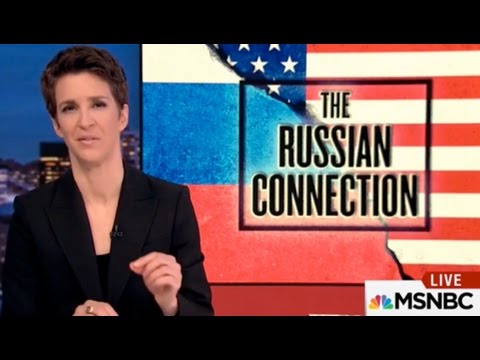
For over two years Russiagate has accounted for a substantial proportion of all mainstream U.S. media political journalism and, because U.S. media have significant agenda-setting propulsion, of global media coverage as well. The timing has been catastrophic. The Trump administration has shredded environmental protections,jettisoned nuclear agreements, exacerbated tensions with U.S. rivals and pandered to the rich.

In place of sustained media attention to the end of the human species from global warming, its even more imminent demise in nuclear warfare, or the further evisceration of democratic discourse in a society riven by historically unprecedented wealth inequalities and unbridled capitalistic greed, corporate media suffocate their publics with a puerile narrative of alleged collusion between the 2016 Trump campaign and Russia.

The Russiagate discourse is profoundly mendacious and hypocritical. It presumes that the U.S. electoral system enjoys a high degree of public trust and security. Nothing could be further from the truth. The U.S. democratic system is deeply entrenched in a dystopian two-party system dominated  by the rich and largely answerable to corporate oligopolies; it is ideologically beholden to the values of extreme capitalism and imperialist domination. Problems with the U.S. electoral system and media are extensive and well documented.

U.S. electoral procedures are profoundly compromised by an Electoral College that detaches votes counted from votes that count. The composition of electoral districts has been gerrymandered to minimize the possibility of electoral surprises. Voting is dependent on easily hackable corporate-manufactured electronic voting systems. Right-wing administrations reach into a tool-box of voter-suppression tactics that run the gamut from minimizing available voting centers and voting machines through to excessive voter identification requirements and the elimination of swathes of the voting lists (e.g. groups such as people who have committed felonies or people whose names are similar to those of felons, or people who have not voted in previous elections). Even the results of campaigns are corrupted when outgoing regimes abuse their remaining weeks in power to push through regulations or legislation that will scuttle the efforts of their successors. Democratic theory presupposes the formal equivalence of voice in the battlefield of ideas. Nothing could be further from the reality of the U.S. “democratic” system in which a small number of powerful interests enjoy ear-splitting megaphonic advantage on the basis of often anonymous “dark” money donations filtered through SuperPacs and their ilk, operating outside the confines of (the somewhat more transparently monitored) electoral campaigns.

Free and Open Exchange of Ideas

Regarding media, democratic theory presupposes a public communications infrastructure that facilitates the free and open exchange of ideas. No such infrastructure exists.  Mainstream media are owned and controlled by a small number of large, multi-media and multi-industrial conglomerates that lie at the very heart of U.S. oligopoly capitalism and much of whose advertising revenue and content is furnished from other conglomerates.

The inability of mainstream media to sustain an information environment that can encompass histories, perspectives and vocabularies that are free of the shackles of U.S. plutocratic self-regard is also well documented. Recent U.S. media coverage of the U.S.-gestated crisis in Venezuela is a case in point.

The much-celebrated revolutionary potential of social media is illusory. The principal suppliers of social media architecture are even more corporatized than their legacy predecessors. They depend not just on corporate advertising but on the sale of big data that they pilfer from users and sell to corporate and political propagandists often for non-transparent AI-assisted micro-targeting during “persuasion” campaigns. Like their legacy counterparts, social media are imbricated within, collaborate with, and are vulnerable to the machinations of the military-industry-surveillance establishment. So-called election meddling across the world has been an outstanding feature of the exploitation of social and legacy media by companies linked to political, defense and intelligence such as – but by no means limited to – the former Cambridge Analytica and its British parent SCL.

Against this backdrop of electoral and media failures, it makes little sense to elevate discussion of and attention to the alleged social media activities of, say, Russia’s Internet Research Agency.

Russian Contacts Deplored

Attention is being directed away from substantial, and substantiated, problems and onto trivial, and unsubstantiated, problems. Moreover, in a climate of manufactured McCarthyite hysteria, Russiagate further presupposes that any communication between a presidential campaign and Russia is in itself deplorable. Even if one were to confine this conversation only to communication between ruling oligarchs of both the U.S. and Russia, however, the opposite would surely be the case. This is not simply because of the benefits that accrue from a broader understanding of the world, identification of shared interests and opportunities, and their promise for peaceful relations. A real politick analysis might advise the insertion of wedges between China and Russia so as to head off the perceived threat to the USA of a hybrid big-power control over a region of the world that has long been considered indispensable for truly global hegemony.

Even if we address Russiagate as a problem worthy of our attention, the evidentiary basis for the major claims is weak.

Former Special Counsel Robert Mueller’s indictments and investigations implicated several individuals for activities that in some cases have no connection whatsoever to the 2016 presidential campaign.  In some other instances they appear to have been more about lies and obstructions to his investigation rather than material illegal acts, or amount to charges that are unlikely ever to be contested in a court of law.

The investigation itself is traceable back to two significant but extremely problematic reports made public in January 2017. One was the “Steele dossier” by former MI6 officer Christopher Steele. This is principally of interest for its largely unsupported allegations that in some sense or another Trump was in cahoots with Russia. Steele’s company, Orbis, was commissioned to write the report by Fusion GPS which in turn was contracted by attorneys working for the Democratic National Campaign. Passage of earlier drafts of the Steele report through sources close to British intelligence, and accounts by Trump adviser George Papadopoulos concerning conversations he had concerning possible Russian possession of Clinton emails with a character who may as likely have been a British as a Russian spy, were instrumental in stimulating FBI interest in and spying on the Trump campaign.

There are indirect links between Steele, another former MI6 agent, Pablo Miller (who also worked for Orbis) and Sergei Skripal, a Russian agent who had been recruited as informer to MI6 by Miller and who was the target of an attempted assassination in 2018. This event has occasioned controversial, not to say highly implausible and mischievous British government claims and accusations against Russia.

The  most significant matter raised by a second report, issued by the Intelligence Community Assessment and representing the conclusions of a small team picked from the Director of Intelligence office, CIA, FBI and NSA, was its claim that Russian intelligence was responsible for the hacking of the computer systems of the DNC and its chairman John Podesta in summer 2016 and that the hacked documents had been passed to Julian Assange and WikiLeaks. No evidence for this was supplied.

Although the hacking allegations have become largely uncontested articles of faith in the RussiaGate discourse they are significantly reliant on the problematic findings of a small private company hired by the DNC. There is also robust evidence that the documents may have been leaked rather than hacked and by U.S.-based sources. The fact that the documents revealed that the DNC, a supposedly neutral agent in the primary campaign, had in fact been biased in favor of the candidacy of Hillary Clinton, and that Clinton’s private statements to industry were not in keeping with her public positions, has long been obscured in media memory in favor a preferred narrative of Russian villainy.

Who Benefits?

Why then does the Russiagate discourse have so much traction? Who benefits?

Russiagate serves the interest of a (No. 1) corrupted Democratic Party, whose biased and arguably incompetent campaign management lost it the 2016 election, in alliance (No. 2) with powerful factions of the U.S. industrial-military-surveillance establishment that for the past 19 years, through NATO and other malleable international agencies, has sought to undermine Russian President Vladimir Putin’s leadership, dismember Russia and the Russian Federation (undoubtedly for the benefit of Western capital) and, more latterly, further contain China in a perpetual and titanic struggle for the heart of EurAsia.

In so far as Trump had indicated (for whatever reasons) in the course of his campaign that he disagreed with at least some aspects of this long-term strategy, he came to be viewed as unreliable by the U.S. security state.

While serving the immediate purpose of containing Trump, U.S. accusations of Russian meddling in U.S. elections were farcical in the context of a well-chronicled history of U.S. “meddling” in the elections and politics of nations for over 100 years. This meddling across all hemispheres has included the staging of coups, invasions and occupations on false pretext in addition to numerous instances of “color revolution” strategies involving the financing of opposition parties and provoking uprisings, frequently coupled with economic warfare (sanctions).

A further beneficiary (No.3) is the sum of all those interests that favor a narrowing of public expression to a framework supportive of neoliberal imperialism. Paradoxically exploiting the moral panic associated with both Trump’s plaintive wailing about “fake news” whenever mainstream media coverage is critical of him, and social media embarrassment over exposure of their big-data sales to powerful corporate customers, these interests have called for more regulation of, as well as self-censorship by, social media.

Social media responses increasingly involve more restrictive algorithms and what are often partisan “fact-checkers” (illustrated by Facebook financial support for and dependence on the pro-NATO “think tank,” the Atlantic Council). The net impact has been devastating for many information organizations in the arena of social media whose only “sin” is analysis and opinion that runs counter to elite neoliberal propaganda.

The standard justification of such attacks on free expression is to insinuate ties to Russia and/or to terrorism. Given these heavy handed and censorious responses by powerful actors, it would appear perhaps that the RussiaGate narrative is increasingly implausible to many and the only hope now for its proponents is to stifle questioning. These are dark days indeed for democracy.


Oliver Boyd-Barrett is professor emeritus at Bowling Green State University. He is author of “RussiaGate and Propaganda: Disinformation in the Age of Social Media” London and New York (Routledge).

Internet Free Speech All But Dead

Unelected, unnamed censors are operating across the Internet to suppress “unapproved” content.

By Philip Giraldi

Source: OpEdNews.com

The Internet was originally promoted as a completely free and uncensored mechanism for people everywhere to exchange views and communicate, but it has been observed by many users that that is not really true anymore. Both governments and the service providers have developed a taste for controlling the product, with President Barack Obama once considering a “kill switch” that would turn off the Internet completely in the event of a “national emergency.”

President Donald Trump has also had a lot to say about fake news and is reported to be supporting limiting protections relating to the Internet. In May, a “net neutrality” bill that would have prevented service providers from manipulating Internet traffic passed in the House of Representatives, but it is reported to be “dead on arrival” in the Senate, so it will never be enacted.

Social networking sites have voluntarily employed technical fixes that restrict some content and have also hired “reviewers” who look for objectionable material and remove it. Pending European legislation, meanwhile, might require Internet search engines to eliminate access to many unacceptable old posts. YouTube has already been engaged in deleting existing old material and is working with biased “partners” like the Anti-Defamation League (ADL) to set up guidelines to restrict future content. Many users of Facebook will have already undoubtedly noted that some contacts have been blocked temporarily (or even permanently) and denied access to the site.

Google now automatically disables or limits searches for material that it deems to be undesirable. If Google does not approve of something it will either not appear in search results or it will be very low on the list. And what does come up will likely favor content that derives from those who pay Google to promote their products or services. Information that originates with competitors will either be very low in the search results or even blocked. Google is consequently hardly an unbiased source of information.

In May 2017 Facebook announced that it would be hiring 3,000 new censors, and my own experience of social networking censorship soon followed. I had posted an article entitled “Charlottesville Requiem” that I had written for a website. At the end of the first day, the site managers noticed that, while the article had clearly attracted a substantial Facebook readership, the “likes” for the piece were not showing up on the screen counter, i.e., were not being tabulated. It was also impossible to share the piece on Facebook, as the button to do so had been removed.

The “likes” on sites like Facebook, Yahoo! news comments, YouTube, and Google are important because they automatically determine how the piece is distributed throughout the site. If there are a lot of likes, the piece goes to the top when a search is made or when someone opens the page. Articles similarly can be sent to Coventry if they receive a lot of dislikes or negative marks, so the approvals or disapprovals can be very important in determining what kind of audience is reached or what a search will reveal.

In my case, after one day my page reverted to normal, the “likes” reappeared, and readers were again able to share the article. But it was clear that someone had been managing what I had posted, apparently because there had been disapproval of my content based on what must have been a political judgment.

A couple of days later, I learned of another example of a similar incident. The Ron Paul Institute (RPI) website posts much of its material on YouTube (owned by Google) on a site where there had been advertising that kicked back to RPI a small percentage of the money earned. Suddenly, without explanation, both the ads and rebate were eliminated after a “manual review” determined the content to be “unsuitable for all advertisers.” This was a judgment rendered apparently due to disapproval of what the institute does and says. The ability to comment on and link from the pieces was also turned off.

Dissident British former diplomat Craig Murray also noted in April 2018 the secretive manipulation of his articles that are posted on Facebook, observing that his “site’s visitor numbers [were] currently around one-third normal levels, stuck at around 20,000 unique visitors per day. The cause [was] not hard to find. Normally over half of our visitors arrive via Facebook. These last few days, virtually nothing has come from Facebook. What is especially pernicious is that Facebook deliberately imposes this censorship in a secretive way.

The primary mechanism when a block is imposed by Facebook is that my posts to Facebook are simply not sent into the timelines of the large majority of people who are friends or who follow. I am left to believe the post has been shared with them, but in fact it has only been shown to a tiny number. Then, if you are one of the few recipients and do see the post and share it, it will show to you on your timeline as shared, but in fact the vast majority of your own friends will also not receive it. Facebook is not doing what it is telling you it is doing — it shows you it is shared — and Facebook is deliberately concealing that fact from you. Twitter has a similar system known as ‘shadow banning.’ Again, it is secretive and the victim is not informed.”

More recently, pressure to censor Internet social networking and information sites has increased, coming both from government and from various interested constituencies. In late May, Facebook founder and CEO Mark Zuckerberg met with French President Emmanuel Macron to discuss how to eliminate “hate speech” on the Internet. The two men agreed that the United States Internet model, in spite of already being heavily manipulated, is too laissez faire, and expressed an interest in exploring the French system where it is considered acceptable to ban unacceptable points of view. Zuckerberg suggested that it might serve as a good model for the entire European Union. France is reportedly considering legislation that establishes a regulator with power to fine Internet companies up to 4% of their global revenue, which can in some cases be an enormous sum, if they do not curb hateful expressions.

So unelected, unnamed censors are operating all around the Internet to control the content, which I suppose should surprise no one, and the interference will only get worse as both governments and service providers are willing to do what it takes to eliminate views that they find unacceptable — which, curiously enough, leads one to consider how “Russia-gate” came about and the current hysteria being generated in the conventional media and also online against both Venezuela and Iran. How much of the anger is essentially fake, being manipulated or even fabricated by large companies that earn mega billions of dollars by offering under false pretenses a heavily managed product that largely does what the government wants? Banning hate speech will be, unfortunately, only the first step in eliminating any and all criticisms of the status quo.

More Than a Threat, America’s Criminal Ways

By Gordon Duff

Source: New Eastern Outlook

It is one thing watching the news, such as it is, a mix of conspiracy theories, flummery and distraction but quite something else watching the United States under its current regime wage war and politics. We haven’t seen this kind of theatre since Goebbels, Himmler and Von Ribbentrop.

How does one describe Secretary of State Pompeo’s trip to Iraq in early May 2019? Do remember that the United States already murdered two million Iraqi civilians, that was done openly and many of those who planned that fake war backed by fake intelligence now advise Trump, names like “John Bolton” for instance.

The blubbering monstrosity Pompeo, reeling from a failed coup attempt in Venezuela, lands in Baghdad to threaten the Iraqis with 4 nuclear armed B 52s and an American aircraft carrier “racing to the scene.”

Why? The answer is simple, and Trump openly admits it, the Israelis told them to do it. Ouch!

How about Israel? Problems there? Didn’t several hundred rockets just land somewhere inside Israel? Didn’t their US financed “Iron Dome” missile defense system utterly fail? More than that, something else far more serious was exposed.

Not one social media post, not one photo, no interviews, not even a phone call to relatives in the United States was made from Israel regarding these attacks. To be clear, the attacks were in retaliation for the killing of Palestinian protesters by not just IDF forces but armed Israeli civilians.

As an aside, the real threat isn’t from inside Israel, a proven total surveillance state capable of unprecedented tyranny, but that Israel’s model is being sold to nations around the world, particularly the United States, where Facebook and Google, two companies controlled by Israeli passport holders, are leading the way to a draconian society with few nations holding the line.

That those nations are either bombed or sanctioned or both by the United States is telling.

Tyranny as Patriotism

The assumptions aren’t just wrong, they are ignorance in its purest form. Hiding behind patriotic songs, pompous rhetoric and always “hugging the flag,” America is a nation run by gangsters. Was it always that way? To an extent, that answer would be yes, but even the criminal elites, the slave traders, opium shippers, land speculators and robber barons of American history would never have imagined what today has brought.

The world is terrified of America. It is one thing for a nuclear superpower to bully the world on behalf of the wealthy elites that own America’s government. When those elites run every government, not just the US, but Europe as well, Africa and Latin America, much of Asia too, and stage fake wars, quite probably fake terror attacks, mass murders, and many suspect so-called “natural disasters,” we are in uncharted waters here.

Every advancement in science and technology is placed into the waiting hands of, well who? We can thank the controlled media, another equally theatrical organization dominated by fake opposing sides tasked with polarizing the public on issues like abortion rights, vaccinations, racial hatred and class envy, with making a Frankensteinian world possible.

The Threat of Science and Technology

Many are aware that, during World War II, science was pushed to new depths. In America it was the Manhattan Project, creating a capability of incinerating entire cities and making much of the earth’s surface uninhabitable.

In Japan, among their efforts was a biological weapons program under “Unit 731.” Headquartered in China, the Japanese developed weaponized forms of the most virulent diseases known to man, tested them on the Chinese along with American prisoners of war, and unleashed them on the world with limited success. Japan even tried spreading the Black Plague to the United States by attaching infected rats to balloons.

Japan also had a nuclear program and built several very large submarines capable of delivering aircraft off the US coast in order to do to America exactly what it did to Japan. There are records, still classified, that show both Japan and Germany exploding nuclear devices during the closing days of World War II.

Anecdotally, uranium oxide from Germany, destined for Japan by submarine in April 1945, to be used against the United States, was diverted to the Manhattan project with the vessel carrying it, the U234, docked at Portsmouth, New Hampshire. There are many such untold stories from World War II, and here is why some of them matter so much.

Let’s look at Unit 731. What happened to the scientists, the war criminals, who unleashed the plague on China’s cities? They came to the US under “Operation Paperclip,” under the auspices of CIA founder Allen Dulles and his assistant, a young Naval officer, Richard Millhouse Nixon. This was the origin of the American biological warfare program that now runs allegedly “peaceful” labs around the world in places like Tbilisi, Georgia.

These facilities are part of the reason so many fear the US. Information on the real research is more than rumors. We know the US has been collecting DNA samples from specific “target” populations, particularly in the Russian Federation, collected and collated by the same organizations that are capable of creating “designer disease.” In fact, this capability comes up in publications, demonstrating the frightening capability of tying genetically modified diseases to racial and/or ethnic markers in human DNA.

An Ethnically Cleansed Planet

Real or not, there are wide perceptions at government level, across Africa for certain but elsewhere as well, that “weaponized medical science” is misusing research into vaccines and studies of genetics to create a world as envisioned by eugenicists in the late 19th and early 20th century.

A movement funded by the wealthiest American families, America began sterilizing its “unfit,” based on race, religion or even social gossip. From Indy Week:

“In Britain, eugenic thought was more of an abstract concept of a utopian society that would prove difficult to put into practice. However, eugenic ideology found fertile ground across the Atlantic in the United States. With the rising influx of immigrants after 1890, increased urbanization and related social ills, people needed a promise of stability and a better future. Eugenics seemed to have the answers. During its heyday, it enjoyed broad support across a variety of social and political spectrums: from social reformers and humanitarians to staunch racists, from strict conservatives to progressives, and from academic and medical communities to religious circles. And it had the financial backing of some of the wealthiest capitalists in the country, including the Kellogg, Carnegie, and Harriman family fortunes.

A national Eugenics Record Office was established in 1910 to collect pedigrees of families suspected of carrying defective genes, and several organizations were formed to promote the study and practice of eugenics. These organizations would sponsor “Better Babies” and “Fitter Families” contests at state fairs across the country. Eugenics exhibits proclaimed “Some people are born to be a burden on the rest, ” with a flashing light going off every 16 seconds to signal the birth of another possibly defective human. Eugenic sermon contests were held across the nation, and biblical passages were quickly reinterpreted to show how eugenics was perfectly compatible with Christian thought. Indeed, advocates claimed, Jesus himself was a eugenicist, according to Christine Rosen’s book, Preaching Eugenics. Scary stories about degenerate family lines sometimes completely fabricated were widely disseminated.

Although eugenics may have started out as a serious science, and elements of it would later shift to the valuable studies of genetics and heredity, the ideology was hijacked by people who knew little about the science and needed a reason to justify their own prejudices. The national Eugenics Record Office would spend years amassing volumes of data on individuals and families, combining “equal portions of gossip, race prejudice, sloppy methods and leaps of logic, all caulked together by elements of actual genetic knowledge to create the glitter of a genuine science,” Edwin Black writes in War Against the Weak.

The goal of the eugenics movement in the United States was to get rid of the “bottom tenth” of society. This, eugenicists hoped to accomplish through restrictive immigration laws, miscegenation laws and forced sterilizations of the unfit. The “fit” of society were imagined as healthy, white, middle-class or higher, educated, English-speaking Protestants bearing a remarkable resemblance to the eugenicists who defined the word “fit.’”

Still the Same Game?

Were one to delve into a darker view of geopolitics than is normally publicly espoused, one where governments, perhaps themselves controlled by what is now termed the Deep State, act in a broadly criminal manner, a pattern emerges. Not all patterns are viable, some if not most are agenda driven and data is always subjective, with fakery and propaganda working its way into the accepted narrative.

One might even go further, that the “accepted narrative” is, in itself, only fakery and propaganda. In fact, stringently focused analytical models reveal exactly this truth.

What is clear is that policies are being enacted that favor lower birth rates in developing nations due to poverty, disease and war.

Moreover, there is a wealth of evidence that scientific research and technological development doesn’t stop at social engineering or even “thought control.” Modeling reveals a broad agenda of capabilities that mirrors the values of those oligarchical elites that so long ago decided a “custom bred” humanity of mindless drones controlled by elites is the only desirable future for mankind.

Thus, when the CIA or USAID builds mysterious laboratories in the dark recesses of the world, Romania, Tbilisi, Georgia, Southern Libya yet no research is published and the only “output” is occasional outbreaks of genetically engineered experimental diseases, fears and suspicions become reality.

One must remember, and this is fact, not conjecture, that the origin of Hitler’s Germany traces to Americans. Hitler’s race laws originated in America and Hitler was long a student of America’s “Black Stork” laws that mandated killing unfit children. From the Guardian:

“Various methods of eugenic euthanasia – including gassing the unwanted in lethal chambers – were a part of everyday American parlance and ethical debate some two decades before Nevada approved the first such chamber for criminal executions in 1921.

Hitler proudly told his comrades how closely he followed American eugenic legislation. ‘Now that we know the laws of heredity,’ he told a fellow Nazi, ‘it is possible to a large extent to prevent unhealthy and severely handicapped beings from coming into the world. I have studied with interest the laws of several American states concerning prevention of reproduction by people whose progeny would, in all probability, be of no value or be injurious to the racial stock.’”

Conclusion

Looking at who overtly rules America today, giving no credence to claims of a Deep State or secret societies, we are still faced with overwhelming proof that the “American democracy” is controlled by oligarchical hereditary elites that favor ethnic cleansing and elimination of those they deem unfit.

Though the seats of government may be held by those with different names, the money behind them, the think tanks, the fake institutes, are all under control by these forces.

The policies? Open ethnic cleansing for sure, overtly through sanctions and war, less openly through supporting clearly fascistic regimes around the world, a policy America adopted long ago. When the reins of control in Washington fall into the hands of right-wing extremists, these policies which are always present go a step further, as is now being seen under the Trump regime.

As Trump will be attending the 75th anniversary of the D Day landings in France, a real examination of that war and Hitler’s truncated rule of Europe, would reveal how not only did Hitler follow policies learned from America but how he was funded by Americans as well, from his earliest career to continued full partnership in war industries right up until the end of the war.

It would not be inaccurate to call Hitler a failed American experiment, one like so many others, Diem in Vietnam, the repressive regimes in South Korea, Chaing in China and ten dozen “tin pot” dictators placed in power by the CIA, with that list growing each day.

The goal? Technology and science wielded to create a world envisioned long ago, one with few people, endless power for the debauched few where the self-anointed “high born” could look down from their lofty heights on humanity as though it were a giant ant farm.


Gordon Duff is a Marine combat veteran of the Vietnam War that has worked on veterans and POW issues for decades and consulted with governments challenged by security issues. He’s a senior editor and chairman of the board of  Veterans Today and the online magazine “New Eastern Outlook.”

How Evil Wins: The Hypocritical Double Standards of Political Outrage

By John W. Whitehead

Source: The Rutherford Institute

“She was asked what she had learned from the Holocaust, and she said that 10 percent of any population is cruel, no matter what, and that 10 percent is merciful, no matter what, and that the remaining 80 percent could be moved in either direction.”—Kurt Vonnegut

Please spare me the media hysterics and the outrage and the hypocritical double standards of those whose moral conscience appears to be largely dictated by their political loyalties.

Anyone who believes that the injustices, cruelties and vicious callousness of the U.S. government are unique to the Trump Administration has not been paying attention.

No matter what the team colors might be at any given moment, the playbook remains the same. The leopard has not changed its spots. Scrape off the surface layers and you will find that the American police state that is continuing to wreak havoc on the rights of the people under the Trump Administration is the same police state that wreaked havoc on the rights of the people under every previous administration.

Brace yourselves.

While we squabble over which side is winning this losing battle, a tsunami approaches.

Case in point: in Charlottesville, Va.—home of Thomas Jefferson, the author of the Declaration of Independence, champion of the Bill of Rights, and the nation’s third president—city councilors in a quest for so-called “equity” have proposed eliminating Jefferson’s birthday as a city holiday (which has been on the books since 1945) and replacing it with a day that commemorates the liberation of area slaves following the arrival of Union troops under Gen. Philip Sheridan.

In this way, while the populace wages war over past injustices, injustice in the here and now continues to trample innocent lives underfoot. In Charlottesville, as in the rest of the country, little is being done to stem the tide of the institutional racism that has resulted in disproportionate numbers of black Americans being stopped, frisked, shot at, arrested and jailed.

Just recently, in fact, Phoenix police drew their guns, shouted profanities, assaulted and threatened to shoot a black couple whose 4-year-old daughter allegedly stole a doll from a dollar store. The footage of the incident—in which the cops threaten to shoot the pregnant, young mother in the head in the presence of the couple’s 1- and 4-year-old daughters—is horrifying in every way.

Tell me again why it’s more important to spend valuable political capital debating the birthdays of dead presidents rather than proactively working to put a stop to a government mindset that teaches cops it’s okay to treat citizens of any color with brutality and a blatant disregard for their rights?

It doesn’t matter that Phoenix and Charlottesville are 2100 miles apart. The lethal practices of the American police state are the same all over.

No amount of dissembling can shield us from the harsh reality that the danger in our midst is posed by an entrenched government bureaucracy that has no regard for the Constitution, Congress, the courts or the citizenry.

We’ve got to get our priorities straight if we are to ever have any hope of maintaining any sense of freedom in America. As long as we allow ourselves to be distracted, diverted, occasionally outraged, always polarized and content to view each other—rather than the government—as the enemy, we’ll never manage to present a unified front against tyranny (or government corruption and ineptitude) in any form.

Mind you, by “government,” I’m not referring to the highly partisan, two-party bureaucracy of the Republicans and Democrats. Rather, I’m referring to “government” with a capital “G,” the entrenched Deep State that is unaffected by elections, unaltered by populist movements, and has set itself beyond the reach of the law.

This is the hidden face of a government that has no respect for the freedoms of its citizenry.

So stop with all of the excuses and the hedging and the finger-pointing and the pissing contests to see which side can out-shout, out-blame and out-spew the other. Enough already with the short- and long-term amnesia that allows political sycophants to conveniently forget the duplicity, complicity and mendacity of their own party while casting blame on everyone else.

This is how evil wins.

This is how freedom falls and tyranny rises.

This is how good, generally decent people—having allowed themselves to be distracted with manufactured crises, polarizing politics, and fighting that divides the populace into warring us vs. them camps—fail to take note of the looming danger that threatens to wipe freedom from the map and place us all in chains.

Anytime you have an entire nation so mesmerized by the antics of the political ruling class that they are oblivious to all else, you’d better beware. Anytime you have a government that operates in the shadows, speaks in a language of force, and rules by fiat, you’d better beware. And anytime you have a government so far removed from its people as to ensure that they are never seen, heard or heeded by those elected to represent them, you’d better beware.

The world has been down this road before.

As historian Milton Mayer recounts in his seminal book on Hitler’s rise to power, They Thought They Were Free:

Most of us did not want to think about fundamental things and never had. There was no need to. Nazism gave us some dreadful, fundamental things to think about—we were decent people‑—and kept us so busy with continuous changes and ‘crises’ and so fascinated, yes, fascinated, by the machinations of the ‘national enemies’, without and within, that we had no time to think about these dreadful things that were growing, little by little, all around us.

We are no longer living the American Dream. We’re living the American Lie.

Indeed, Americans have been lied to so sincerely, so incessantly, and for so long by politicians of all stripes—who lie compulsively and without any seeming remorse—that they’ve almost come to prefer the lies trotted out by those in government over less-palatable truths.

The American people have become compulsive believers: left-leaning Americans are determined to believe that the world has become a far more dangerous place under Trump, while right-leaning Americans are equally convinced that Trump has set us on a path to prosperity and security.

Nothing has changed.

The police state is still winning. We the people are still losing.

In fact, the American police state has continued to advance at the same costly, intrusive, privacy-sapping, Constitution-defying, heartbreaking, soul-scorching, relentless pace under the current Tyrant-in-Chief as it did under those who occupied the White House before him (Obama, Bush, Clinton, etc.).

Police haven’t stopped disregarding the rights of citizens. Having been given the green light to probe, poke, pinch, taser, search, seize, strip, shoot and generally manhandle anyone they see fit in almost any circumstance, all with the general blessing of the courts, America’s law enforcement officials are no longer mere servants of the people entrusted with keeping the peace. Indeed, they continue to keep the masses corralled, under control, and treated like suspects and enemies and slaves rather than citizens.

SWAT teams haven’t stopped crashing through doors and terrorizing families. Nationwide, SWAT teams continue to be employed to address an astonishingly trivial array of criminal activities or mere community nuisances including angry dogs, domestic disputes, improper paperwork filed by an orchid farmer, and misdemeanor marijuana possession. With more than 80,000 SWAT team raids carried out every year on unsuspecting Americans for relatively routine police matters and federal agencies laying claim to their own heavily armed law enforcement divisions, the incidence of botched raids and related casualties continue to rise.

The Pentagon and the Department of Homeland Security haven’t stopped militarizing and federalizing local police. Police forces continue to be transformed into heavily armed extensions of the military, complete with jackboots, helmets, shields, batons, pepper-spray, stun guns, assault rifles, body armor, miniature tanks and weaponized drones. In training police to look and act like the military and use the weapons and tactics of war against American citizens, the government continues to turn the United States into a battlefield and “we the people” into enemy combatants.

Schools haven’t stopped treating young people like hard-core prisoners. School districts continue to team up with law enforcement to create a “schoolhouse to jailhouse track” by imposing a “double dose” of punishment for childish infractions: suspension or expulsion from school, accompanied by an arrest by the police and a trip to juvenile court. In this way, the paradigm of abject compliance to the state continues to be taught by example in the schools, through school lockdowns where police and drug-sniffing dogs enter the classroom, and zero tolerance policies that punish all offenses equally and result in young people being expelled for childish behavior.

For-profit private prisons haven’t stopped locking up Americans and immigrants alike at taxpayer expense. States continue to outsource prison management to private corporations out to make a profit at taxpayer expense. And how do you make a profit in the prison industry? Have the legislatures pass laws that impose harsh penalties for the slightest noncompliance in order keep the prison cells full and corporate investors happy.

Censorship hasn’t stopped. First Amendment activities continue to be pummeled, punched, kicked, choked, chained and generally gagged all across the country. The reasons for such censorship vary widely from political correctness, safety concerns and bullying to national security and hate crimes but the end result remained the same: the complete eradication of what Benjamin Franklin referred to as the “principal pillar of a free government.”

The courts haven’t stopped marching in lockstep with the police state. The courts continue to be dominated by technicians and statists who are deferential to authority, whether government or business. Indeed, the Supreme Court’s decisions in recent years have most often been characterized by an abject deference to government authority, military and corporate interests.

Government bureaucrats haven’t stopped turning American citizens into criminals. The average American now unknowingly commits three felonies a day, thanks to an overabundance of vague laws that render otherwise innocent activity illegal, while reinforcing the power of the police state and its corporate allies.

The surveillance state hasn’t stopped spying on Americans’ communications, transactions or movements. On any given day, whether you’re walking through a store, driving your car, checking email, or talking to friends and family on the phone, you can be sure that some government agency, whether it’s your local police, a fusion center, the National Security Agency or one of the government’s many corporate partners, is still monitoring and tracking your every move.

The TSA hasn’t stopped groping or ogling travelers. Under the pretext of protecting the nation’s infrastructure (roads, mass transit systems, water and power supplies, telecommunications systems and so on) against criminal or terrorist attacks, TSA task forces (comprised of federal air marshals, surface transportation security inspectors, transportation security officers, behavior detection officers and explosive detection canine teams) continue to do random security sweeps of nexuses of transportation, including ports, railway and bus stations, airports, ferries and subways, as well as political conventions, baseball games and music concerts. Sweep tactics include the use of x-ray technology, pat-downs and drug-sniffing dogs, among other things.

Congress hasn’t stopped enacting draconian laws such as the USA Patriot Act and the NDAA. These laws—which completely circumvent the rule of law and the constitutional rights of American citizens, continue to re-orient our legal landscape in such a way as to ensure that martial law, rather than the rule of law, our U.S. Constitution, becomes the map by which we navigate life in the United States.

The Department of Homeland Security hasn’t stopped being a “wasteful, growing, fear-mongering beast.” Indeed, this is the agency that is notorious for militarizing the police and SWAT teams; spying on activists, dissidents and veterans; stockpiling ammunition; distributing license plate readers; contracting to build detention camps; tracking cell-phones with Stingray devices; carrying out military drills and lockdowns in American cities; using the TSA as an advance guard; conducting virtual strip searches with full-body scanners; carrying out soft target checkpoints; directing government workers to spy on Americans; conducting widespread spying networks using fusion centers; carrying out Constitution-free border control searches; funding city-wide surveillance cameras; and utilizing drones and other spybots.

The military industrial complex hasn’t stopped profiting from endless wars abroad. America’s expanding military empire continues to bleed the country dry at a rate of more than $15 billion a month (or $20 million an hour). The Pentagon spends more on war than all 50 states combined spend on health, education, welfare, and safety. Yet what most Americans fail to recognize is that these ongoing wars have little to do with keeping the country safe and everything to do with enriching the military industrial complex at taxpayer expense.

The Deep State’s shadow government hasn’t stopped calling the shots behind the scenes. Comprised of unelected government bureaucrats, corporations, contractors, paper-pushers, and button-pushers who are actually calling the shots behind the scenes, this government within a government continues to be the real reason “we the people” have no real control over our so-called representatives. It’s every facet of a government that is no longer friendly to freedom and is working overtime to trample the Constitution underfoot and render the citizenry powerless in the face of the government’s power grabs, corruption and abusive tactics.

And the American people haven’t stopped acting like gullible sheep. In fact, many Americans have been so carried away by their blind rank-and-file partisan devotion to their respective political gods that they have lost sight of the one thing that has remained constant in recent years: our freedoms are steadily declining. And it doesn’t really matter whether it’s a Democrat or a Republican at the helm, because the bureaucratic mindset on both sides of the aisle now seems to embody the same philosophy of authoritarian government.

So you can try to persuade yourself that you are free, that you still live in a country that values freedom, and that it is not too late to make America great again, but to anyone who has been paying attention to America’s decline over the past 50 years, it will be just another lie.

The German people chose to ignore the truth and believe the lie.

They were not oblivious to the horrors taking place around them. As historian Robert Gellately points out, “[A]nyone in Nazi Germany who wanted to find out about the Gestapo, the concentration camps, and the campaigns of discrimination and persecutions need only read the newspapers.”

The warning signs were definitely there, blinking incessantly like large neon signs.

“Still,” Gellately writes, “the vast majority voted in favor of Nazism, and in spite of what they could read in the press and hear by word of mouth about the secret police, the concentration camps, official anti-Semitism, and so on. . . . [T]here is no getting away from the fact that at that moment, ‘the vast majority of the German people backed him.’”

Half a century later, the wife of a prominent German historian, neither of whom were members of the Nazi party, opined: “[O]n the whole, everyone felt well. . . . And there were certainly eighty percent who lived productively and positively throughout the time. . . . We also had good years. We had wonderful years.”

In other words, as long as their creature comforts remained undiminished, as long as their bank accounts remained flush, as long as they weren’t being discriminated against, persecuted, starved, beaten, shot, stripped, jailed and turned into slave labor, life was good.

Life is good in America, too.

Life is good in America as long as you’re not one of the hundreds of migrant children (including infants, toddlers, preschoolers) being detained in unsanitary conditions by U.S. Border Patrol without proper access to food and water, made to sleep on concrete floors, go without a shower for weeks on end, and only allowed to brush your teeth once every 10 days.

Life is good in America as long as you don’t have to come face to face with a trigger-happy cop hyped up on the power of the badge, trained to shoot first and ask questions later, and disposed to view people of color as a suspect class.

Life is good in America as long as you’re able to keep sleep-walking through life, cocooning yourself in political fantasies that depict a world in which your party is always right and everyone else is wrong, and distracting yourself with bread-and-circus entertainment that bears no resemblance to reality.

Life is good in America as long as you’ve got enough money to spare that you don’t mind being made to pay through the nose for the government’s endless wars, subsidization of foreign nations, military empire, welfare state, roads to nowhere, bloated workforce, secret agencies, fusion centers, private prisons, biometric databases, invasive technologies, arsenal of weapons, and every other budgetary line item that is contributing to the fast-growing wealth of the corporate elite at the expense of those who are barely making ends meet—that is, we the 99%.

Life is good in America for the privileged few, but as I make clear in my book Battlefield America: The War on the American People, it’s getting worse by the day for the rest of us.

THE OMNIPRESENT SURVEILLANCE STATE: ORWELL’S FUTURE IS OUR PRESENT REALITY

By Mac Slavo

Source: SHTFplan.com

The Orwellian dystopia of thought control and an omnipresent surveillance state has become our reality.  George Orwell’s book 1984, although meant as fiction, has turned out to be an incredible prediction of our future.

The “land of the free” hasn’t been free since shortly after the American Revolution and it’s getting more authoritarian by the day. It’s been 70 years since Orwell (dying, beset by fever and bloody coughing fits, and driven to warn against the rise of a society in which rampant abuse of power and mass manipulation are the norm) depicted the ominous rise of ubiquitous technology, fascism, and totalitarianism in 1984.

“You had to live—did live, from habit that became instinct—in the assumption that every sound you made was overheard, and, except in darkness, every movement scrutinized.”—George Orwell, 1984 

Much like Orwell’s Big Brother in 1984, the government and its corporate spies now watch our every move. Much like Huxley’s A Brave New World, we are churning out a society of watchers who “have their liberties taken away from them, but … rather enjoy it, because they [are] distracted from any desire to rebel by propaganda or brainwashing.” Much like Atwood’s The Handmaid’s Tale, the populace is now taught to “know their place and their duties, to understand that they have no real rights but will be protected up to a point if they conform, and to think so poorly of themselves that they will accept their assigned fate and not rebel or run away.” – John W. Whitehead, The Rutherford Institute

This world is truly dystopian, and that doesn’t just go for the United States.  The masters are brainwashing the slaves and the slaves aren’t doing anything about it.  In fact, most want more masters and to be further enslaved.  We are witnessing a wholly disturbing state of humanity right now.

Much like Philip K. Dick’s darkly prophetic vision of a dystopian police state (which became the basis for Steven Spielberg’s futuristic thriller Minority Report) we are now trapped in a world in which the government is all-seeing, all-knowing, and all-powerful, and if you dare to step out of line, dark-clad police SWAT teams and pre-crime units will crack a few skulls to bring the populace under control. Violence and government dominance rule over the masses and they are completely accepting and willing participants in their own enslavement.

What many fail to realize is that the government is not operating alone. It cannot. The government requires an accomplice. Thus, the increasingly complex security needs of the massive federal government, especially in the areas of defense, surveillance and data management, have been met within the corporate sector, which has shown itself to be a powerful ally that both depends on and feeds the growth of governmental overreach.

In fact, Big Tech wedded to Big Government has become Big Brother, and we are now ruled by the Corporate Elite whose tentacles have spread worldwide. For example, USA Today reports that five years after the 9/11 terrorist attacks, the homeland security business was booming to such an extent that it eclipsed mature enterprises like movie-making and the music industry in annual revenue. This security spending to private corporations such as Google, Amazon, Microsoft, and others is forecast to exceed $1 trillion in the near future.

The government now has at its disposal technological arsenals so sophisticated and invasive as to render any constitutional protections null and void. Spearheaded by the NSA, which has shown itself to care little to nothing for constitutional limits or privacy, the “security/industrial complex”—a marriage of government, military and corporate interests aimed at keeping Americans under constant surveillance—has come to dominate the government and our lives. At three times the size of the CIA, constituting one-third of the intelligence budget and with its own global spy network to boot, the NSA has a long history of spying on Americans, whether or not it has always had the authorization to do so. – John W. Whitehead, The Rutherford Institute

Orwell understood what many Americans, caught up in their partisan flag-waving, are still struggling to come to terms with: that there is no such thing as a government organized for the good of the people. Even the best intentions among those in government inevitably give way to the desire to maintain power and control over the citizenry at all costs.

We know what no one ever seizes power with the intention of relinquishing it. Power is not a means; it is an end. One does not establish a dictatorship in order to safeguard a revolution; one makes the revolution in order to establish the dictatorship. The object of persecution is persecution. The object of torture is torture. The object of power is power. Now you begin to understand me. –George Orwell, 1984

We have been reduced to a cowering citizenry which is rendered mute in the face of elected officials who refuse to represent us, helpless in the face of police brutality, powerless in the face of militarized tactics and technology that treat us like enemy combatants on a battlefield, and naked in the face of government surveillance that sees and hears all. We have nowhere left to go.  We have, so to speak, gone from being a nation where privacy is king to one where nothing is safe from the prying eyes of the government.

We are living in Orwell’s dystopian predicted future. John W. Whitehead poses the question: So how do you survive in the American surveillance state?

The truth is that we’re running out of options. As Whitehead makes clear in his book Battlefield America: The War on the American People, that we will all soon have to choose between self-indulgence (the bread-and-circus distractions offered up by the news media, politicians, sports conglomerates, entertainment industry, etc.) and self-preservation in the form of renewed vigilance about threats to our freedoms and active engagement in self-governance.

Orwell’s 1984 no longer reads like fiction. It’s the reality of our times

By Robert Bridge

Source: RT.com

70 years ago, the British writer George Orwell captured the essence of technology in its ability to shape our destinies in his seminal work, 1984. The tragedy of our times is that we have failed to heed his warning.

No matter how many times I read 1984, the feeling of total helplessness and despair that weaves itself throughout Orwell’s masterpiece never fails to take me by surprise. Although usually referred to as a ‘dystopian futuristic novel’, it is actually a horror story on a scale far greater than anything that has emerged from the minds of prolific writers like Stephen King or Dean Koontz. The reason is simple. The nightmare world that the protagonist Winston Smith inhabits, a place called Oceania, is all too easily imaginable. Man, as opposed to some imaginary clown or demon, is the evil monster.

In the very first pages of the book, Orwell demonstrates an uncanny ability to foresee future trends in technology. Describing the protagonist Winston Smith’s frugal London flat, he mentions an instrument called a ‘telescreen’, which sounds strikingly similar to the handheld ‘smartphone’ that is enthusiastically used by billions of people around the world today.

Orwell describes the ubiquitous device as an “oblong metal plaque like a dulled mirror” affixed to the wall that “could be dimmed, but there was no way of shutting it off completely.” Sound familiar? It is through this gadget that the rulers of Oceania are able to monitor the actions of its citizens every minute of every day. At the same time, the denizens of 1984 were never allowed to forget they were living in a totalitarian surveillance state, under the control of the much-feared Thought Police. Massive posters with the slogan ‘Big Brother is Watching You’ were as prevalent as our modern-day advertising billboards. Today, however, such polite warnings about surveillance would seem redundant, as reports of unauthorized spying still gets the occasional lazy nod in the media now and then.

In fact, just in time for 1984’s anniversary, it has been reported that the National Security Agency (NSA) has once again been illicitly collecting records on telephone calls and text messages placed by US citizens. This latest invasion of privacy has been casually dismissed as an “error” after an unnamed telecommunications firm handed over call records the NSA allegedly “hadn’t requested” and “weren’t approved” by the Foreign Intelligence Surveillance Court. In 2013, former CIA employee Edward Snowden blew the whistle on the NSA’s intrusive surveillance operations, yet somehow the government agency is able to continue – with the help of the corporate sector – vacuuming up the private information of regular citizens.

Another method of control alluded to in 1984 fell under a system of speech known as ‘Newspeak’, which attempted to reduce the language to ‘doublethink’, with the ulterior motive of controlling ideas and thoughts. For example, the term ‘joycamp’, a truncated term every bit as euphemistic as the ‘PATRIOT Act’, was used to describe a forced labor camp, whereas a ‘doubleplusgood duckspeaker’ was used to praise an orator who ‘quacked’ correctly with regards to the political situation.

Another Newspeak term, known as ‘facecrime’, provides yet another striking parallel to our modern situation. Defined as “to wear an improper expression on your face (to look incredulous when a victory was announced, for example) was itself a punishable offense.” It would be difficult for the modern reader to hear the term ‘facecrime’ and not connect it with ‘Facebook’, the social media platform that regularly censors content creators for expressing thoughts it finds ‘hateful’ or inappropriate. What social media users need is an Orwellian lesson in ‘crimestop’, which Orwell defined as “the faculty of stopping short, as though by instinct, at the threshold of any dangerous thought.” Those so-called unacceptable ‘dangerous thoughts’ were determined not by the will of the people, of course, but by their rulers.

And yes, it gets worse. Just this week, Mark Zuckerberg’s ‘private company’ agreed to give French authorities the “identification data” of Facebook users suspected of spreading ‘hate speech’ on the platform, in what would be an unprecedented move on the part of Silicon Valley.

‘Hate speech’ is precisely one of those delightfully vague, subjective terms with no real meaning that one would expect to find in the Newspeak style guide. Short of threatening the life of a person or persons, individuals should be free to criticize others without fear of reprisal, least of all from the state, which should be in the business of protecting free speech at all cost.

Another modern phenomenon that would be right at home in Orwell’s Oceania is the obsession with political correctness, which is defined as “the avoidance of forms of expression or action that are perceived to exclude, marginalize, or insult groups of people who are socially disadvantaged or discriminated against.” But since so many people today identify with some marginalized group, this has made the intelligent discussion of controversial ideas – not least of all on US college campuses, of all places – exceedingly difficult, if not downright dangerous. Orwell must be looking down on all of this madness with much surprise, since he provided the world with the best possible warning to prevent it.

For anyone who entertains expectations for a happy ending in 1984, be prepared for serious disappointment (spoiler alert, for the few who have somehow not read this book). Although Winston Smith manages to finally experience love, the brief romance – like a delicate flower that was able to take root amid a field of asphalt – is crushed by the authorities with shocking brutality. Not satisfied with merely destroying the relationship, however, Smith is forced to betray his ‘Julia’ after undergoing the worst imaginable torture at the ‘Ministry of Love’.

The book ends with the words, “He had won the victory over himself. He loved Big Brother.” Will we too declare, like Winston Smith, our love for ‘Big Brother’ above all else, or will we emerge victorious against the forces of a technological tyranny that appears to be just over the horizon? Or is Orwell’s 1984 just really good fiction and not the instruction manual for tyrants many have come to fear it is?

An awful lot is riding on our answers to those questions, and time is running out.

Jeff Bezos’s Corporate Takeover of Our Lives

Illustration by Mike Faille

How Amazon’s relentless pursuit of profit is squeezing us all—and what we can do about it

By David Dayen

Source: In These Times

AMAZON IS AN ONLINE RETAILER. It also runs a marketplace for other online retailers. It’s also a shipper for those sellers, and a lender to them, and a warehouse, an advertiser, a data manager and a search engine. It also runs brick-and-mortar bookstores. And grocery stores.

There are over 100 million Amazon Prime subscribers in the United States—more than half of all U.S. households. Amazon makes 45 percent of all e-commerce sales. Amazon is also a product manufacturer; its Alexa controls two-thirds of the digital assistant market, and the Kindle represents 84 percentof all e-readers. Amazon created its own holiday, Prime Day, and the surge in demand for Prime Day discounts, followed by a drop afterward, skewed the nation’s retail sales figures with a 1.8% bump in July 2017.

Oh, it’s also a major television and film studio. Its CEO owns a national newspaper. And it runs a streaming video game company called Twitch. And its cloud computing business, Amazon Web Services, runs an astonishing portion of the Internet and U.S. financial infrastructure. And it wants to be a logistics company. And a furniture seller. It’s angling to become one of the nation’s largest online fashion designers. It recently picked up an online pharmacy and partnered with JPMorgan Chase CEO Jamie Dimon and Warren Buffett to create a healthcare company. And at the same time, it’s competing with JPMorgan, pushing Amazon Pay as a digital-based alternative to credit cards and Amazon Lending as a source of capital for its small business marketplace partners.

To quote Liberty Media chair John Malone, himself a billionaire titan of industry, Amazon is a “Death Star” moving its super-laser “into striking range of every industry on the planet.” If you are engaging in any economic activity, Amazon wants in, and its position in the market can distort and shape you in vital ways.

Elizabeth Warren’s proposal to break up Amazon, along with the FTC’s new oversight and investigation, has spurred a conversation on the Left about its overwhelming power. No entity has held the potential for this kind of dominance since the railroad tycoons of the first Gilded Age were brought to heel. Whether you share concerns about Amazon’s economic and political power or you just like getting free shipping on cheap toilet paper, you should at least know the implications of living in Amazon’s world—so you can assess whether it’s the world you want, and how it could be different.

BOOKSELLERS WERE THE FIRST TO FIND THEMSELVES AT THE TIP OF AMAZON’S SPEAR, at the company’s founding in 1994. Years of Amazon peddling books below cost shuttered thousands of bookstores. Today, Amazon sells 42 percent of all books in America.

With such a large share of the market, Amazon determines what ideas reach readers. It ruthlessly squeezes publishers on wholesale costs; in 2014, it deliberately slowed down deliveries of books published by Hachette during a pricing dispute. By stocking best-sellers over independents and backlist copies, and giving publishers less money to work with, Amazon homogenizes the market. Publishers can’t afford to take a chance on a book that Amazon won’t keep in its inventory. “The core belief of bookselling is that we need to have the ideas out there so we can discuss them,” says Seattle independent bookseller Robert Sindelar. “You don’t want one company deciding, only based on profitability, what choice we have.”

These issues in just the book sector are a microcosm of Amazon’s effect on commerce.

The term “retail apocalypse” took hold in 2017 amid bankruptcies of established chains like The Limited, RadioShack, Payless ShoeSource and Toys “R” Us. According to frequent Amazon critic Stacy Mitchell, “more people lost jobs in general-merchandise stores than the total number of workers in the coal industry” in 2017.

Amazon isn’t the only cause; private equity looting must share much of the blame, and a shift to e-commerce was always going to hurt brick-and-mortar stores. But Amazon transformed a diverse collection of website sales into one mammoth business with the logistical power to perform rapid delivery of millions of products and a strategy to underprice everyone. That transformation accelerated a decline going back to the Great Recession (and much earlier for booksellers). Analysts at Swiss bank UBS estimate that every percentage point e-commerce takes from brick-and-mortar translates into 8,000 store closures, and right now e-commerce only has a 16 percent market share.

Take Harry Copeland (or, as he calls himself, “Crazy Harry”) of Harry’s Famous Flowers in Orlando, Fla., at one time a 40-employee retail/wholesale business. Revenue at his operation has shrunk by half since 2008, equal to millions of dollars in gross sales. “The internet … killed us,” Harry says. “I was in a Kroger, this guy walks up and says, ‘I want to apologize. It’s so easy to go on the internet.’ I said, ‘I did your wedding, I did flowers for your babies, and you’re buying [flowers] on the internet?’ ” Even Harry’s own employees receive Amazon packages at the shop every day. In January, tired of the fight, Harry sold his shop after 36 years in business.

Amazon was particularly deadly to the original “everything stores,” the department stores like Sears and J.C. Penney that anchor malls. When the anchor stores shut down, foot traffic slows and smaller shops struggle. Retailers are planning to close more than 4,000 stores in 2019; the 41,201 retail job losses in the first two months of this year were the highest since the Great Recession.

Dead malls trigger not only blight but also property tax losses. The broader shift to online shopping also transfers economic activity from local businesses to corporate coffers, like Amazon’s headquarters in Seattle.

Some of these failed retail spaces have been scooped up, ironically, by Amazon’s suite of physical stores, such as Whole Foods. Amazon also skillfully pits cities against one another and wins tax breaks for its warehouse and data center facilities, starving local budgets even more.

Amazon, of course, argues it is the best friend small business ever had. Jeff Bezos’ 2019 annual letter indicated that 58% of all sales on the website are made by over 2 million independent third-party sellers, who are mostly small in size. In this rendering, Amazon is just a mall, opening its doors for the little guy to access billions of potential customers. “Third-party sellers are kicking our first-party butt,” Bezos exclaimed.

It was a line I repeated to several merchants, mostly to snickers. Take Crazy Harry. In late 2017, Amazon reached out with the opportunity for Harry’s Famous Flowers to sell through its website. Sales representatives promised instant success. “We went live in November,” he says. “I made three transactions, [including] one on Valentine’s Day and one on Christmas.” The closest delivery to his shop was 34 miles away. By the time Harry paid his $39.99 monthly subscription fee for selling on Amazon and a 15% cut of sales, his check came to $6.92. “The gas was $50,” he says.

It wasn’t hard to find the source of the trouble: When Harry searched on Amazon under “flowers in Orlando,” his shop didn’t come up. Without including his name in the search, there was no way for customers to find him. Before long, Harry closed his Amazon account.

Crazy Harry’s troubles could be a function of Amazon running a platform that’s too big to manage. Two million Americans, close to 1% of the U.S. population, sell goods on Amazon. “There’s so much at stake for these sellers,” says Chris McCabe, a former Amazon employee who now runs the consulting site eCommerceChris.com. “They’ve left jobs [to sell on Amazon]. They are supporting themselves and their families.”

Third-party sellers have been a great deal for Amazon—unsurprisingly, since Amazon sets the terms. Sellers pay a flat subscription fee and a percentage of sales, and an extra fee for “Fulfillment by Amazon,” for which Amazon handles customer service, storage and shipping through its vast logistics network. Fee revenue grew to nearly $43 billion in 2018, equal to more than one out of every four dollars that third-party sellers earned.

In other words, Amazon is collecting rent on every sale on its website. This strategy increases selection and convenience for customers, but the sellers, who have nowhere else to go, can get squeezed in the process. Once on the website, sellers are at the mercy of Amazon’s algorithmic placement in search results. They must also navigate rivals’ dirty tricks (like fake one-star reviews that sink sellers in search results) and counterfeit products. And if you get past all that, you must fight the boss level: Amazon, which has 138 house brands. Armed with all the data on sellers’ businesses, Amazon can easily figure out what’s hot and what can be cheaply produced, and then out-compete its own sellers with lower prices and prioritized search results.

Any failure to follow Amazon’s always-changing rules of the road can get a seller suspended, and in that case, Amazon not only stops all future sales, but refuses to release funds from prior sales. And all sellers must sign mandatory arbitration agreements that prevent them from suing Amazon. Several consultants I interviewed talked of sellers crying on the phone, finding themselves trapped after upending their lives to sell on Amazon.

WHILE RETAIL WORKERS LOSE JOBS, AMAZON PICKS UP SOME OF THE UNEMPLOYMENT SLACK, hiring personnel to assemble its packages, make its electronics, and deliver its goods, with a U.S. workforce of more than 200,000, and another 100,000 seasonal workers—though 2018 research from the Conference Board confirmed the jobs created by e-commerce companies like Amazon do not make up for the loss of millions of retail jobs.

Plus, the experience of being a cog in Amazon’s great machine is, shall we say, unhealthy. We know much about the horrors of being an Amazon warehouse worker in the United States. These workplaces are aggressively anti-union. Amazon sets quotas for how many orders are fulfilled, monitoring a worker’s every move. Poor performers may be fired, typically over email. The daily monotony and pressure to perform has pushed workers to suicidal despair. A Daily Beast investigation found 189 instances between October 2013 and October 2018 of 911 calls summoning assistance to deal with suicide attempts or other mental-health emergencies at Amazon warehouses. And even these grunt jobs are insecure; Amazon had to reassure people this year that it wouldn’t turn over all warehouse jobs to robots, even as it rolled out machines that box orders.

Amazon’s other jobs, while less scrutinized than the warehouse workers, can be just as brutal. Thousands of delivery drivers wear Amazon uniforms, use Amazon equipment and work out of Amazon facilities. But they are not technically Amazon employees; they work for outside contractors called delivery service partners. These workers do not qualify for the guaranteed $15 minimum wage Bezos announced to much fanfare last year.

Contracting work out lets Amazon dodge liability for poor labor practices, a trick used by many corporations. At one such contractor in the mid-Atlantic, TL Transportation, one former employee (who requested anonymity) described the work as “running, running, running, rushing. There was no break time.” According to pay stubs, TL built two hours of overtime into its base rate, which is illegal under U.S. labor law. Other workers reported they always worked longer than the time on their pay stubs. Driver Tyhee Hickman of Pennsylvania testified to having to urinate into bottles to maintain the schedule.

Amazon runs plenty of air freight these days as well, through an “Amazon Air” fleet of planes branded with the Amazon logo—but these are also contracted out. At Atlas Air, one of three cargo carriers with Amazon business, pilots have been working without a new union contract since 2011. Atlas pays pilots 30% to 60% below the industry standard, according to Captain Daniel Wells, an Atlas Air pilot and president of the Airline Professionals Association Teamsters Local 1224. Planes are understaffed. “We’ve been critically short of crews,” Wells says. “Everyone is scrambling to keep operations going.”

The go-go-go schedule leaves little time for mechanics; planes go out with stickers indicating deferred maintenance. One Atlas Air flight carrying Amazon packages crashed in Texas in February, killing three workers.

EVEN WHILE DRIVING WORKERS AT A FRENETIC PACE, Amazon doesn’t always deliver on its promise of convenience and efficiency. Many products no longer arrive in 48 hours under Prime’s guaranteed two-day shipping. It’s so challenging to reach customer service that Amazon sells a book on its website about how to do that. Whole Foods shoppers who have groceries delivered get bizarre food substitutions without warning.

Even as two-day shipping is creaking, Amazon has announced a move to one-day shipping, which will strain its systems even further while forcing competitors to adjust. Amazon’s one-day shipping announcement alone caused retail stocks to plummet on April 26, before any changes were implemented.

This feedback effect reveals how Amazon is not merely riding the wave of online retail’s convenience; only a company with ambitions as vast as Amazon’s could influence Fortune 500 business models across America.

Some retailers have given in. Walmart quickly announced its own next-day shipping. Kohl’s sells Amazon Echo devices. Target has bought up competitors to compete with Amazon on a larger scale. Call it concentration creep; one giant business triggers the need for others to get big, too. Corporate America is at once terrified of Amazon and reshaping itself to imitate it.

Take Amazon’s ever more sophisticated ploys to modify consumer behavior. With “personalized pricing,” Amazon uses the data of what someone has paid in the past to test what that person is willing to pay. The price of an item featured in the “buy” box on Amazon’s website may change multiple times per day, and can be tailored to individual shoppers. Amazon has charged more for Kindles based on a buyer’s location, and has steered people to higher-priced products where it makes a greater profit, rather than cheaper versions from outside sellers.

Now, even big-box stores have electronic price tags that retailers can “surge price” when demand increases. Amazon’s Whole Foods stores have become a testing ground for advancing this technique. Prices shown on electronic tags are tested, combined with discounts for Prime members, and relentlessly tweaked.

The potential damage to society from personalized pricing is significant, notes Maurice Stucke, a professor at the University of Tennessee. “It’s not just price discrimination, but also behavioral discrimination,” he says. “Getting people to buy things they might not have otherwise purchased, at the highest price they’re willing to pay.”

Amazon has plenty of options for this behavioral nudging, from listing a fake higher price and crossing it out to make it look like the customer is getting a deal, to its work on a facial recognition system using phone or computer cameras to authenticate purchases. With this tool, Amazon could theoretically read faces and increase prices when someone shows excitement about a product. Amazon has already licensed facial recognition software to local police units for criminal investigations, to outcry from privacy groups.

Then there’s Alexa, Amazon’s digital assistant, a powerful tool for manipulation. Alexa was designed to “be like the Star Trek computer,” said Paul Cutsinger, Amazon’s head of voice design education, at a developer conference earlier this year. Users can ask Alexa to play music and podcasts, answer questions, run health and wellness programs, set appointments, make purchases, even raise the temperature in the shower.

Psychologist Robert Epstein, who has pioneered research into search engine manipulation, has done preliminary studies on Alexa. “It looks like you can very easily impact the thinking and decision-making and purchases of people who are undecided,” Epstein says. “That unfortunately gives a small number of companies tremendous power to influence people without them being aware.” For example, Alexa can suggest a wine to go with the pizza you just ordered. It can also encourage you to set up a recurring purchase, the price of which may then go up based on Amazon’s list price.

The influence only increases as Alexa takes in more data. We know that Alexa is constantly watching and listening to users, transcribing what it hears and even transmitting some of that data back to a team of human listeners at Amazon, who “refine” the machine’s comprehension. The surveillance doesn’t only happen on Alexa, but in the smart home devices it integrates with, and on the website where Amazon tracks search and purchase activity. Amazon even has a Ring doorbell and in-home monitor, which sends information back to Amazon. There is no escape. “Devices all around us are watching everything we do, talking to each other, sharing data,” Epstein says. “We’re embedded in a surveillance network.”

EVEN AS IT’S INFLUENCING OUR BEHAVIOR, Amazon is transforming our physical world. José Holguín-Veras, a logistics and urban freight expert at Rensselaer Polytechnic Institute, estimates that in 2009, there was one daily internet-derived delivery for every 25 people. By 2017, he calculates, this had tripled. “The number of deliveries to households is now larger than the number of deliveries to commercial establishments,” Holguín-Veras says. “In skyscrapers in New York City where 5,000 people live, it’s 750 deliveries a day.”

Think of the difference between one trip to the grocery store for the week, and five or ten trips from the warehouse to your house. Our streets are too narrow and our traffic too plentiful to handle that additional traffic without crippling congestion. Plus, every idling car, and every extra delivery truck on the road, spews more carbon into the atmosphere. Our cities are not designed for the level of freight that instant delivery demands.

More deliveries also means more people staying indoors. “One thing I think about is how much we overlook the community and democracy value of running errands,” says Stacy Mitchell of the Institute for Local Self-Reliance. “These exchanges—chatting with someone in line, bumping into a neighbor on the street, talking with the store owner—may not be all that significant personally. But this kind of interaction pays off for us collectively in ways we don’t think about or measure or account for in policy-making.”

In These Times asked Frank McAndrew of Knox College, who has researched social isolation, whether Amazon’s perfect efficiency could be alienating. He wasn’t ready to make a definitive statement but did see some red flags. “I do think we’re sort of wired to interact with real people in face-to-face situations,” McAndrew says. “When most of our interactions take place virtually, or with Alexa, it’s not going to be satisfying.”

FOR MOST OF OUR HISTORY, Americans didn’t require a personal digital assistant to answer our every whim. Why are we now reordering our social and economic lives, so one man can accumulate more money than anyone in the history of the planet?

One answer is that Amazon has paid as much attention to capturing government as it has to captivating customers. Amazon’s lobbying spending is among the highest of any company in America. After winning a nationwide procurement contract, over 1,500 cities and states can buy office items through the Amazon Business portal; a federal procurement platform is on the way. Amazon Web Services has the inside track on a $10 billion cloud contract to manage sensitive data for the Pentagon, something it already does for the CIA. That’s part of the reason why Amazon moved its second headquarters (after an absurd, game show-style bidding war that gave the company access to valuable data on hundreds of cities’ planning decisions) to a suburb of Washington, D.C., the seat of national power.

Making the directors of the regulatory state dependent on your services is a genius move. What political figure would dare crack down on the behavior of a trusted partner like Amazon?

In fact, Amazon has relied on government largesse since day one. No sales taxes for online purchases gave it a pricing advantage over other sellers (while a 2018 Supreme Court ruling changed that, the damage had been done). No carbon taxes helped Amazon build energy-intensive businesses dependent on fossil fuels for transportation and server farms. A lack of antitrust enforcement created a path for Amazon to super-size into an e-commerce monopoly. Weak federal labor rules let Amazon stamp out collective bargaining and rely on independent contractors. Mandatory arbitration locked third-party sellers inside Amazon’s private appeals process. Favorable tax law allowed Amazon to apply annual losses in previous years to its past two tax returns, paying no federal taxes on billions in income.

Of course, these rules helped all corporate giants and made executives filthy rich, often at the expense of workers. But Amazon tests the laissez-faire system in unique ways. In a future where Amazon broadens its control over our lives such that citizens have nowhere else to shop, businesses have nowhere else to sell, workers have nowhere else to toil, and governments have no other way to function, then who actually holds the power in our society? Avoiding that dark future requires leaders with the political will to stop it.

Elizabeth Warren’s plan to break up Amazon would rein in what she sees as unfair competition by preventing Amazon from selling products while hosting a website platform for other sellers. Warren also suggests splitting off Whole Foods and the online retailer Zappos, which Amazon bought in 2017 and 2009, respectively.

Fostering competition is a good start, but regulation must also prevent Amazon from bullying suppliers and partners. Lawmakers must force Amazon to pay for the externalities associated with its carbon-intensive delivery network. The company must pay a living wage to its workers, including its so-called independent contractors. It must be accountable to the legal system rather than a corporate-friendly arbitration process. It must not profit from spying on its customers.

If Amazon has caused this much upheaval today, when online shopping is still only 16 percent of retail sales, the future is limitless and grim. We have time to reverse this transfer of power and make it our world instead of Amazon’s. It’s an opportunity we cannot afford to squander.