A radical change in human behavior away from its patterns of oppression, exploitation, war and ecocide will necessarily involve a drastic transformation in humanity’s relationship with thought. I’ve been saying this over and over again in different ways for a long time now, and yet I still get criticisms saying that I have useful insights but I don’t provide any plan of action.
The transformation in human consciousness is the plan of action. I really don’t know how to say it any clearer than that. And I will go so far as to say that that it is the only plan of action which will pull us out of our destructive patterns and into a healthy state of collaboration with each other and with our ecosystem. Unless we radically change the way we function above the neck, we will keep killing, consuming and destroying like a bunch of mindless automatons until everything is dead. I really don’t see any other way out of this.
I understand the criticism, though. When people read about the problem of capitalist ecocide and oligarchic strangulation, they don’t want to hear a bunch of stuff about mass ego death and spiritual enlightenment, they want to hear about nationwide demonstrations or organizing the working class or forming a new political party or cryptocurrencies or ending the Federal Reserve, or something along those lines depending on where they believe the problem is localized. In general, they want a fairy tale about people coming together to effect drastic, sweeping changes and turn the status quo on its head, which they will do because something something reasons, cough cough.
Seriously, why do people think revolution happens? Why do they believe their ideas have a chance of winning out over the existing paradigm? There are many who espouse dissident opinions more as a sort of ideological fashion statement than because they actually want to change the world, but presumably a lot of the people promoting Marxism, libertarianism, anarchism etc are doing so because they genuinely would like to see a world in which the status quo is overturned and replaced with something more wholesome. But why would that happen? Why would millions or billions of people overturn existing power structures and replace the current system with something drastically different in a world where plutocrats buy up massive amounts of media influence to convince everyone to keep everything the same?
It doesn’t seem like many proponents of revolution and change have really thought about this very much. They have a good idea, and they can envision a world in which that idea is implemented, but getting from the idea to its manifestation seems like it’s often a jumbled mess in a lot of dissidents’ minds, not unlike the “Phase 1: Collect underpants / Phase 2: ??? / Phase 3: Profit” model of the Underpants Gnomes from South Park. Most dissident voices I see are primarily interested in Phase 1, and to a much lesser extent in Phase 3. Phase 2 is what I’m interested in, and in my opinion it necessarily involves a drastic shift in human consciousness.
People are not going to deviate from their patterns and suddenly begin shrugging off ruling power structures for no reason. Revolutions historically happen for one of two reasons: (1) things get sufficiently bad to make people lash out against their government out of sheer desperation, and/or (2) people are manipulated into revolting by other powerful forces. Historically neither of these things ever lead to the creation of a stable, beneficent government that takes good care of its citizens or the world, so neither will be sufficient for creating a world in which humanity takes good care of itself and its environment, and even if that were not the case it’s unlikely that either will ever be allowed to occur by an establishment so powerful and skillful at manipulation as the US-centralized empire.
So if there is to be a people’s revolution which is effective in both (A) removing our oligarchic oppressors from power and (B) leading to the creation of a healthy, harmonious new paradigm, it will necessarily come from a place that is historically unprecedented. It will involve people rising up against existing power structures not because things got so bad they had no choice, nor because they were manipulated into it by other rival power structures, but because people realized collectively that it is in their best interests to do so.
This would require a level of wisdom and insight that the majority of human beings simply do not possess right now. Right now, most people are very easily manipulated into advancing establishment interests by plutocrat-controlled media, and until that changes there will never be an effective and beneficial revolution. For that to change, humanity is going to have to shed its ubiquitous habit of creating mental egoic patterns which make us susceptible to manipulation via fear, greed, and herd mentality.
This doesn’t mean that the existing systems of capitalism and government aren’t going to have to change; of course they’ll have to change. But they’re not going to change unless we find a way to wake up from the deeply conditioned egoic patterns which are the norm in the world we were born into. We’ll keep repeating and repeating the same old patterns in whatever way we’ve been conditioned to until we either go the way of the dinosaur or find a way to transcend our conditioning.
So yes, true revolution means abandoning the insane strategy of endless economic expansion in a world made up of finite space and resources, but it also means seeing through the illusory nature of our sense of self and ceasing to believe the babbling mental narratives which are premised upon it. Yes, true revolution means ceasing the worldwide frantic, futile scramble to do what ever it takes in order to get the right kind of numbers in our bank account so we don’t starve to death in an arbitrary economic system based on imaginary bureaucratic fiat, but it also means bringing our unconscious coping mechanisms into consciousness and healing our childhood traumas. Yes, true revolution means organizing and engaging in politics and creating new systems together, but it also means learning to really love the most tender, guarded parts of ourselves which we used to leave unattended running on autopilot in our subconscious mental processes.
I firmly believe that we are capable of such a collective awakening, and there are experts in the field of inner transformation who claim to have observed signs that such an awakening may be underway. Teachers like Eckhart Tolle, Adyashanti and Jac O’Keefe all say something is very different in their field of work, and individuals are now having an easier time awakening from egoic consciousness than they used to. Spontaneous shifts are becoming commonplace to the point where teachers like Tony Parsons now center their entire body of teaching around the possibility of snapping out of one’s old perceptual frame of reference without engaging in any spiritual practices at all.
How To Wake Up
"I’ve been putting off writing this article all year, but readers keep asking for it, and since I’ve been writing about mass enlightenment a lot lately I figure I might as well slip it in now."#enlightenment#spiritualityhttps://t.co/gmxHh267LX
“I see signs that it is already happening. For the first time there is a large scale awakening on our planet. Why now? Because if there is no change in human consciousness now, we will destroy ourselves and perhaps the planet. The insanity of the collective egoic mind, amplified by science and technology, is rapidly taking our species to the brink of disaster. Evolve or die: that is our only choice now. Without considering the Eastern world, my estimate is that at this time about ten percent of people in North America are already awakening. That makes thirty million Americans alone, and in addition to those people in other North American countries, about ten percent of the population of Western European countries are also awakening. This is probably enough of a critical mass to bring about a new earth. So the transformation of consciousness is truly happening even though they won’t be reporting it on tonight’s news. Is it happening fast enough? I am hopeful about humanity’s future, much more so now than when I wrote The Power of Now. In fact that is why I wrote that book. I really wasn’t sure that humanity was going to survive. Now I feel differently. I see many reasons to be hopeful.”
There aren’t many people who’d be in a position to say if human consciousness has been making a marked shift over the last few years, but Tolle, who interfaces with that information constantly as an essential part of his work as a spiritual teacher, is certainly one of them.
So there are reasons to believe it is possible for us to pull up from our omnicidal, ecocidal, exploitative trajectory and create something new together. We may pass this test yet. But even if I’m wrong about that, what the hell else are we going to do? What better chance do we have, and what more productive way is there to spend one’s time on this earth than coming to a deep and abiding insight into your true nature? From my point of view, the front lines of the revolution are in our own consciousness here and now, not as some intriguing marginal facet of the battle for humanity, but as its source, its heart, and its apex.
Know thyself, oh rebel. Know thyself and save the world.
Jamie Fly, a former high-ranking Bush era neocon, believes you shouldn’t have the right to post on social media.
“Fly went on to complain that ‘all you need is an email’ to set up a Facebook or Twitter account, lamenting the sites’ accessibility to members of the general public. He predicted a long struggle on a global scale to fix the situation, and pointed out that to do so would require constant vigilance,” writeJeb Sprague and Max Blumenthal.
This attitude shouldn’t come as a surprise. Neocons believe they are a special breed, the chosen few of an intellectual crème de la crème, and the rest of us are merely bread and circus spectators on the sidelines as they forge our collective history (and increasingly possible ruin).
Fly is a research associate at the Council on Foreign Relations. He “served” in the National Security Council and the Defense Department during the Bush presidency. He also worked at the Claremont Institute and the American Enterprise Institute. Fly tutored presumptive presidential candidate Marco Rubio on foreign policy and he is the former director of the Foreign Policy Initiative, a staunch neocon advocacy group founded by arch neocons William Kristol, Robert Kagan, and Dan Senor.
He is now a senior fellow and director of the Asia program at the German Marshall Fund, an organization funded by the US government and NATO. The German Marshall Fund organized the Alliance for Securing Democracy and its Hamilton 68 effort to destroy alternative media under the false (and largely debunked) claim it is a cutout for Russia and Vladimir Putin who are, we are reminded daily, dedicated to destroying democracy and taking down the exceptional and indispensable nation.
Jamie Fly and his coconspirators Laura Rosenberger and J.M. Berger know the Russians aren’t responsible for thousands of alternate media websites and social media accounts. They know this phenomenon, which began with the birth of the World Wide Web in the mid-1990s, is homespun and has absolutely nothing to do with Russia. It is their mission to make sure the establishment is free to promulgate its lies and war propaganda without counterbalance and the interruption of truth.
These folks are digital book burners on par with Nazis who burned books in Berlin on the Opernplatz in May of 1933. Like the Nazis, they want to silence those who counter the narrative. For the Nazis, the targets were communists, socialists, anarchists, and all who opposed fascism, while our new book burners—liquidators of heresy against the ruling elite—are focused on groups and individuals challenging the lies and half-truths of the state regardless of ideology.
For the elite, populism and nationalism represent a twin threat to the emerging globalist scheme of a one-world government and currency directed by a cadre of unelected bureaucrats and ideologues.
Donald Trump portrayed himself as a patriot and nationalist—Make America Great Again—however after the election the same old crowd of CFR operatives, Goldman Sachs alumni, and hardcore neocons staffed his administration, thus making the realization of his campaign promises virtually impossible.
The ruling elite, their functionaries and proxies have declared war on “alternative facts,” that is to say information contrary and even hostile to the narrative. While it is true the corporate media has lost some influence, it still projects a powerful influence on public opinion, especially in the current highly polarized political climate.
For instance, it is now assumed a Trump supporter send bombs to Democrats, and this has become a trending topic on social media. There is zero evidence a Trump supporter had anything to do with this incident, and yet the hashtag “MAGABomber” has gone viral on social media, demonstrating how easily it is to sell lies and fabrications to a polarized public.
Fly and his digital book burning associates will not stop until the last vestiges of the alternative media are wiped out. This process is underway now with a number of popular alternative media websites losing significant traffic following removal from social media.
As Mr. Fly says, this is only the beginning. They will not stop until the challenge is defeated and the digital information landscape is once again completely in control of the psychopaths at the top and their well-paid minions pushing the idiotic lie that Putin and the Russians are responsible.
The continuing rise of fascism around the world is drawing increasing attention particularly as it takes firmer grip within national societies long seen to have rejected it.
Some recent studies have reminded us of the characteristics of fascist movements and individuals, particularly as they manifest among politically active fascists. For example, in his recent book How Fascism Works: The Politics of Us And Them Professor Jason Stanley has identified ten characteristics shared by fascists which have been simply presented in the article ‘Prof Sees Fascism Creeping In U.S.’
These characteristics, readily evident in the USA, Europe, Israel, Saudi Arabia, Myanmar and elsewhere today, include belief in a mythic (false) past, propaganda to divert attention and blame from the true source of corruption, anti-intellectualism and a belief in the ‘common man’ while deriding ‘women and racial and sexual minorities who seek basic equality as in fact seeking political and cultural domination’, promotion of elite dogma at the expense of any competing ideas (such as those in relation to freedom and equality), portrayal of the elite and its agents as victims, reliance on delusion rather than fact to justify their pursuit of power, the use of law and order ‘not to punish actual criminals, but to criminalize “out groups” like racial, ethnic, religious and sexual minorities’ which is why we are now ‘seeing criminality being written into immigration status’, and identification of “out groups” as lazy while attacking welfare systems and labor organizers, and promoting the idea that elites and their agents are hard working while exploited groups are lazy and a drain on the state.
In an earlier article ‘Fascism Anyone?’, published in the Spring 2003 issue of Free Inquiry Magazine, Professor Laurence W. Britt identified fourteen shared threads that link fascists. These include powerful and continuing expressions of nationalism, disdain for the importance of human rights, identification of enemies/scapegoats (such as communists, socialists, liberals, ethnic and racial minorities, traditional national enemies, members of other religions, secularists, homosexuals and ‘terrorists’) as a unifying cause, obsession with national security and avid identification with the military, sexism, a controlled/compliant mass media that promotes the elite agenda, a manufactured perception that opposing the power elite is tantamount to an attack on religion, corporate power protected by the political elite while the power of labor is suppressed or eliminated, disdain for intellectuals and the arts, expanded police power and prison populations in response to an obsession with the crime and punishment of ordinary citizens (while elite crimes are protected by a compliant judiciary), rampant cronyism and corruption, and fraudulent elections defended by a judiciary beholden to the power elite.
Offering a more straightforward characterization of fascism in the US context, which also highlights its violence more explicitly than the characterizations above, the eminent Norwegian peace research scholar Professor Johan Galtung explains it thus: ‘US Fascism? Yes, indeed; if by fascism we mean use of massive violence for political goals. US fascism takes three forms: global with bombing, droning and sniping all over; domestic with military weapons used across race and class faultlines; and then NSA-National Security Agency spying on everybody.’ See ‘The Fall of the US Empire – And Then What?’
In any case, for those paying attention to what is happening in places like the United States, Europe, Israel, Saudi Arabia, Myanmar and elsewhere, it is easy to see that the rush to embrace fascism is accelerating.
But why? Surely, in this ‘enlightened’ age, notions such as freedom, democracy, human rights and equality are deeply embedded in our collective psyche, particularly in the West. We believe that elections should be, and are, ‘free and fair’ and not determined by corporate donations; we believe that the judiciary is independent of political and corporate influence. But are they?
Well, in fact, the evidence offered by the casual observation of events in the places mentioned above, as well as elsewhere around the world, tells us that none of this is any longer, if it ever was, the case. Let me explain why.
Fascism is a political label but, like any such label, it has a psychological foundation. That is, the political behavior of those who are fascists can be explained by understanding their psychology. Of course, all behavior can be explained by psychology but I will focus on the psychology of fascist behavior here.
There have been attempts to understand and explain the psychology of fascism, starting with the early work of Wilhelm Reich in The Mass Psychology of Fascism. So what is the psychology of individuals who are fascists?
You might not be surprised to read that the psychology of fascists is complex and is a direct outcome of the nature of the extraordinary violence to which they were subjected as children.
The Psychology of Fascists
Let me briefly identify the psychological profile of fascists and the specific violence (‘visible’, ‘invisible’ and ‘utterly invisible’) that generates a person with this psychology. For a thorough explanation and elaboration of this profile, and explanations of the terms ‘visible’, ‘invisible’ and ‘utterly invisible’ violence, see ‘Why Violence?’ and ‘Fearless Psychology and Fearful Psychology: Principles and Practice’.
First, fascists are terrified and they are particularly terrified of those individuals who perpetrated violence against them when they were a child although this terror remains unconscious to them. Second, this terror is so extreme that fascists are too terrified to consciously identify to themselves their own perpetrator (one or both parents and/or other significant adults who were supposed to love them) and to say that it is this individual or individuals who are violent and wrong.
Third, because they are terrified, they are unable to defend themselves against the original perpetrator(s) but also, as a result, they are unable to defend themselves against other perpetrators who attack them later in life. This lack of capacity to defend themselves leads to the fourth and fifth attributes – a deep sense of powerlessness and a deep sense of self-hatred. However, it is too terrifying and painful for the individual to be consciously aware of any of these feelings/attributes.
Sixth, because they are terrified of identifying that they are the victim of the violence of their own parents (and/or other significant adults from their childhood) and that this violence terrified them, fascists unconsciously delude themselves about the identity of their own perpetrator. They will unconsciously identify their ‘perpetrator’ as one or more individuals of whom they are not actually afraid from an existing ‘legitimized victim’ group such as children or people from a different gender, race, religion or class. This is also because their unconscious terror and self-hatred compels them to project onto people who are ‘controllable’ (because their original perpetrators never were). For this reason, their victims are (unconsciously) carefully chosen and are always relatively powerless by comparison.
This is easy to do because, seventh, children who become fascists have been terrorized into accepting a very narrow-minded and dogmatic belief set that excludes consideration of those in other social (including gender, racial, religious or class) groups. The idea that they might open-mindedly consider other beliefs, or the rights of those not in the ‘in-group’, is (unconsciously) terrifying to them. Moreover, because they have been terrorized into adopting their rigid belief set, fascists develop an intense fear of the truth; hence, fascists are both bigoted and self-righteous. In addition, the belief set of fascists includes a powerful and violently reinforced ‘lesson’: ‘good’ means obedient; it does not mean intrinsically good, loving and caring.
Eighth, and as a result of all of the above, fascists learn to unconsciously project their self-hatred, one outcome of their own victimhood, as hatred for those in the ‘out-groups’. This ‘justifies’ their (violent) behavior and obscures their unconscious motivation: to remain unaware of their own suppressed terror and self-hatred.
Ninth, fascists have a compulsion to be violent; that is, they are addicted to it. Why? Because the act of violence allows them to explosively release the suppressed feelings (usually some combination of fear, terror, pain, anger and powerlessness) so that they experience a brief sensation of delusional ‘relief’. Because the ‘relief’ is both brief and delusional, they are condemned to repeat their violence endlessly.
But the compulsion to be violent is reinforced by another element in their belief set, the tenth characteristic: fascists have a delusional belief in the effectiveness and morality of violence; they have no capacity to perceive its dysfunctionality and immorality.
And eleventh, the extreme social terrorization experience to which fascists have been subjected means that the feelings of love, compassion, empathy and sympathy, as well as the mental function of conscience, are prevented from developing. Devoid of conscience and these feelings, fascists can inflict violence on others, including their own children, without experiencing the feedback that conscience and these feelings would provide.
What Can We Do?
There is no simple formula for healing the badly damaged psychology of a fascist (or those who occupy a proximate ‘political space’ such as conservatives who advocate violence): it takes years of violent parental and adult treatment to create a fascist and so the path to heal one is long and painful, assuming the support for the individual to do so is available. Nevertheless, fascists can heal from the terror and self-hatred that underpin their psychology. See ‘Putting Feelings First’. And they can be assisted to heal by someone who is skilled in the art of deep listening. See ‘Nisteling: The Art of Deep Listening’.
Unfortunately, given their cowardice, fascists are unlikely to have the courage to seek the appropriate emotional support to heal. In the meantime, those of us so inclined must resist their violence and, ideally, this should be done strategically, particularly if we want impact against fascist national leaders. See Nonviolent Campaign Strategy or Nonviolent Defense/Liberation Strategy.
The good news is that we can avoid creating fascists. If you want to nurture a child so that they become compassionate and caring, live by their conscience and act with morality and courage in all circumstances, including when resisting fascists, then consider making ‘My Promise to Children’.
In essence: Fascists are terrified, full of self-hatred and powerless. But, too scared to feel their own terror, self-hatred and powerlessness, they unconsciously project this as fear of, and hatred for, the people in one or more ‘legitimized victim’ groups, including their own children (thus creating the next generation of fascists). They then try to ‘feel powerful’ by seeking violent control over these people themselves or by seeking to have violent control exercised over these people by various ‘authorities’, ranging from school teachers and religious figures to the police, military and various corporate and government agencies.
No matter how much control they have over others, however, it is impossible to control their own terror, self-hatred and powerlessness. So they are unconsciously and endlessly driven to seek (delusional) ‘relief’ by violently controlling those in legitimized victim groups. It is because their own children are the most immediately available ‘uncontrollable’ target that fascism is readily perpetuated.
Biodata: Robert J. Burrowes has a lifetime commitment to understanding and ending human violence. He has done extensive research since 1966 in an effort to understand why human beings are violent and has been a nonviolent activist since 1981. He is the author of ‘Why Violence?’ http://tinyurl.com/whyviolence His email address is flametree@riseup.net and his website is here. http://robertjburrowes.wordpress.com
Robert J. Burrowes
P.O. Box 68
Daylesford, Victoria 3460
Australia
This month, Facebook and Twitter deleted the accounts of hundreds of users, including many alternative media outlets maintained by American users. Among those wiped out in the coordinated purge were popular sites that scrutinized police brutality and U.S. interventionism like The Free Thought Project, Anti-Media, Cop Block and journalists like Rachel Blevins.
Facebook claimed that these sites had “broken our rules against spam and coordinated inauthentic behavior.” However, sites like The Free Thought Project were verified by Facebook and widely recognized as legitimate sources of news and opinion. John Vibes, an independent reporter who contributed to Free Thought, accused Facebook of “favoring mainstream sources and silencing alternative voices.”
In comments published here for the first time, a neoconservative Washington insider has apparently claimed a degree of credit for the recent purge and promised more takedowns in the near future.
“Russia, China, and other foreign states take advantage of our open political system,” remarked Jamie Fly, a senior fellow and director of the Asia program at the German Marshall Fund. “They can invent stories that get repeated and spread through different sites. So we are just starting to push back. Just this last week Facebook began starting to take down sites. So this is just the beginning.”
Fly went on to complain that “all you need is an email” to set up a Facebook or Twitter account, lamenting the sites’ accessibility to members of the general public. He predicted a long struggle on a global scale to fix the situation, and pointed out that to do so would require constant vigilance.
Fly made these stunning comments to Jeb Sprague, who is a visiting faculty in sociology at the University of California-Santa Barbara and co-author of this article. The two spoke during a lunch break at a conference on Asian security organized by the Stiftung Wissenschaft und Politik in Berlin, Germany.
In the tweet below, Fly is the third person from the left who appears seated at the table.
The remarks by Fly — “we are just starting to push back” — seemed to confirm the worst fears of the alternative online media community. If he was to be believed, the latest purge was motivated by politics, not spam prevention, and was driven by powerful interests hostile to dissident views, particularly where American state violence is concerned.
Rise of a neocon cadre
Jamie Fly is an influential foreign policy hardliner who has spent the last year lobbying for the censorship of “fringe views” on social media. Over the years, he has advocated for a military assault on Iran, a regime change war on Syria, and hiking military spending to unprecedented levels. He is the embodiment of a neoconservative cadre.
Like so many second generation neocons, Fly entered government by burrowing into mid-level positions in George W. Bush’s National Security Council and Department of Defense.
In 2009, he was appointed director of the Foreign Policy Initiative (FPI), a rebranded version of Bill Kristol’s Project for a New American Century, or PNAC. The latter outfit was an umbrella group of neoconservative activists that first made the case for an invasion of Iraq as part of a wider project of regime change in countries that resisted Washington’s sphere of influence.
By 2011, Fly was advancing the next phase in PNAC’s blueprint by clamoring for military strikes on Iran. “More diplomacy is not an adequate response,” he argued. A year later, Fly urged the US to “expand its list of targets beyond the [Iranian] nuclear program to key command and control elements of the Republican Guard and the intelligence ministry, and facilities associated with other key government officials.”
Fly soon found his way into the senate office of Marco Rubio, a neoconservative pet project, assuming a role as his top foreign policy advisor. Amongst other interventionist initiatives, Rubio has taken the lead in promoting harsh economic sanctions targeting Venezuela, even advocating for a U.S. military assault on the country. When Rubio’s 2016 presidential campaign floundered amid a mass revolt of the Republican Party’s middle American base against the party establishment, Fly was forced to cast about for new opportunities.
He found them in the paranoid atmosphere of Russiagate that formed soon after Donald Trump’s shock election victory.
PropOrNot sparks the alternative media panic
A journalistic insider’s account of the Hillary Clinton presidential campaign, Shattered, revealed that “in the days after the election, Hillary declined to take responsibility for her own loss.” Her top advisers were summoned the following day, according to the book, “to engineer the case that the election wasn’t entirely on the up-and-up … Already, Russian hacking was the centerpiece of the argument.”
Less than three weeks after Clinton’s defeat, the Washington Post’s Craig Timberg published a dubiously sourced report headlined, “Russian propaganda effort helped spread ‘fake news.’” The article hyped up a McCarthyite effort by a shadowy, anonymously run organization called PropOrNot to blacklist some 200 American media outlets as Russian “online propaganda.”
The alternative media outfits on the PropOrNot blacklist included some of those recently purged by Facebook and Twitter, such as The Free Thought Project and Anti-Media. Among the criteria PropOrNot identified as signs of Russian propaganda were, “Support for policies like Brexit, and the breakup of the EU and Eurozone” and, “Opposition to Ukrainian resistance to Russia and Syrian resistance to Assad.” PropOrNot called for “formal investigations by the U.S. government” into the outlets it had blacklisted.
According to Craig Timberg, the Washington Post correspondent who uncritically promoted the media suppression initiative, Propornot was established by “a nonpartisan collection of researchers with foreign policy, military and technology backgrounds.” Timberg quoted a figure associated with the George Washington University Center for Cyber and Homeland Security, Andrew Weisburd, and cited a report he wrote with his colleague, Clint Watts, on Russian meddling.
Timberg’s piece on was PropOrNot was promoted widely by former top Clinton staffers and celebrated by ex-Obama White House aide Dan Pfeiffer as “the biggest story in the world.” But after a wave of stinging criticism, including in the pages of the New Yorker, the article was amended with an editor’s note stating, “The [Washington] Post… does not itself vouch for the validity of PropOrNot’s findings regarding any individual media outlet.”
PropOrNot had been seemingly exposed as a McCarthyite sham, but the concept behind it — exposing online American media outlets as vehicles for Kremlin “active measures” — continued to flourish.
The birth of the Russian bot tracker
By August, a new, and seemingly related initiative appeared out of the blue, this time with backing from a bipartisan coalition of Democratic foreign policy hands and neocon Never Trumpers in Washington. Called the Alliance for Securing Democracy (ASD), the outfit aimed to expose how supposed Russian Twitter bots were infecting American political discourse with divisive narratives. It featured a daily “Hamilton 68” online dashboard that highlighted the supposed bot activity with easily digestible charts. Conveniently, the site avoided naming any of the digital Kremlin influence accounts it claimed to be tracking.
The initiative was immediately endorsed by John Podesta, the founder of the Democratic Party think tank, Center for American Progress, and former chief of staff of Hillary Clinton’s 2016 presidential campaign. Julia Ioffe, the Atlantic’s chief Russiagate correspondent, promoted the bot tracker as “a very cool tool.”
Unlike PropOrNot, the ASD was sponsored by one of the most respected think tanks in Washington, the German Marshall Fund, which had been founded in 1972 to nurture the special relationship between the US and what was then West Germany.
Though the German Marshall Fund did not name the donors that sponsored the initiative, it hosted a who’s who of bipartisan national security hardliners on the ASD’s advisory council, providing the endeavor with the patina of credibility. They ranged from neocon movement icon Bill Kristol to former Clinton foreign policy advisor Jake Sullivan to ex-CIA director Michael Morrell.
Jamie Fly, a German Marshall Fund fellow and Asia specialist, emerged as one of the most prolific promoters of the new Russian bot tracker in the media. Together with Laura Rosenberger, a former foreign policy aide to Hillary Clinton’s 2016 campaign, Fly appeared in a series of interviews and co-authored several op-eds emphasizing the need for a massive social media crackdown.
During a March 2018 interview on C-Span, Fly complained that “Russian accounts” were “trying to promote certain messages, amplify certain content, raise fringe views, pit Americans against each other, and we need to deal with this ongoing problem and find ways through the government, through tech companies, through broader society to tackle this issue.”
Yet few of the sites on PropOrNot’s blacklist, and none of the alternative sites that were erased in the recent Facebook purge that Fly and his colleagues take apparent credit for, were Russian accounts. Perhaps the only infraction they could have been accused of was publishing views that Fly and his cohorts saw as “fringe.”
What’s more, the ASD has been forced to admit that the mass of Twitter accounts it initially identified as “Russian bots” were not necessarily bots — and may not have been Russian either.
“I’m not convinced on this bot thing”
A November 2017 investigation by Max Blumenthal, a co-author of this article, found that the ASD’s Hamilton 68 dashboard was the creation of “a collection of cranks, counterterror retreads, online harassers and paranoiacs operating with support from some of the most prominent figures operating within the American national security apparatus.”
These figures included the same George Washington University Center for Cyber and Homeland Security fellows — Andrew Weisburd and Clint Watts — that were cited as experts in the Washington Post’s article promoting PropOrNot.
Weisburd, who has been described as one of the brains behind the Hamilton 68 dashboard, once maintained a one-man, anti-Palestinian web monitoring initiative that specialized in doxxing left-wing activists, Muslims and anyone he considered “anti-American.” More recently, he has taken to Twitter to spout off murderous and homophobic fantasies about Glenn Greenwald, the editor of the Intercept — a publication the ASD flagged without explanation as a vehicle for Russian influence operations.
Watts, for his part, has testified before Congress on several occasions to call on the government to “quell information rebellions” with censorious measures including “nutritional labels” for online media. He has received fawning publicity from corporate media and been rewarded with a contributor role for NBC on the basis of his supposed expertise in ferreting out Russian disinformation.
Clint Watts has urged Congress to “quell information rebellions”
However, under questioning during a public event by Grayzone contributor Ilias Stathatos, Watts admitted that substantial parts of his testimony were false, and refused to provide evidence to support some of his most colorful claims about malicious Russian bot activity.
In a separate interview with Buzzfeed, Watts appeared to completely disown the Hamilton 68 bot tracker as a legitimate tool. “I’m not convinced on this bot thing,” Watts confessed. He even called the narrative that he helped manufacture “overdone,” and admitted that the accounts Hamilton 68 tracked were not necessarily directed by Russian intelligence actors.
“We don’t even think they’re all commanded in Russia — at all. We think some of them are legitimately passionate people that are just really into promoting Russia,” Watts conceded.
But these stunning admissions did little to slow the momentum of the coming purge.
Enter the Atlantic Council
In his conversation with Sprague, the German Marshall Fund’s Fly stated that he was working with the Atlantic Council in the campaign to purge alternative media from social media platforms like Facebook.
The Atlantic Council is another Washington-based think tank that serves as a gathering point for neoconservatives and liberal interventionists pushing military aggression around the globe. It is funded by NATO and repressive, US-allied governments including Saudi Arabia, Bahrain and Turkey, as well as by Ukrainian oligarchs like Victor Pynchuk.
This May, Facebook announced a partnership with the Atlantic Council’s Digital Forensic Research Lab (DFRLab) to “identify, expose, and explain disinformation during elections around the world.”
The Atlantic Council’s DFRLab is notorious for its zealous conflation of legitimate online dissent with illicit Russian activity, embracing the same tactics as PropOrNot and the ASD.
Ben Nimmo, a DFRLab fellow who has built his reputation on flushing out online Kremlin influence networks, embarked on an embarrassing witch hunt this year that saw him misidentify several living, breathing individuals as Russian bots or Kremlin “influence accounts.” Nimmo’s victims included Mariam Susli, a well-known Syrian-Australian social media personality, the famed Ukrainian concert pianist Valentina Lisitsa, and a British pensioner named Ian Shilling.
In an interview with Sky News, Shilling delivered a memorable tirade against his accusers. “I have no Kremlin contacts whatsoever; I do not know any Russians, I have no contact with the Russian government or anything to do with them,” he exclaimed. “I am an ordinary British citizen who happens to do research on the current neocon wars which are going on in Syria at this very moment.”
With the latest Facebook and Twitter purges, ordinary citizens like Shilling are being targeted in the open, and without apology. The mass deletions of alternative media accounts illustrate how national security hardliners from the German Marshall Fund and Atlantic Council (and whoever was behind PropOrNot) have instrumentalized the manufactured panic around Russian interference to generate public support for a wider campaign of media censorship.
In his conversation in Berlin with Sprague, Fly noted with apparent approval that, “Trump is now pointing to Chinese interference in the 2018 election.” As the mantra of foreign interference expands to a new adversarial power, the clampdown on voices of dissent in online media is almost certain to intensify.
The corporate media cry crocodile tears over the apparent murder of an elite, CIA-connected “dissident,” while papering over US complicity in Saudi war crimes in Yemen.
“The Saudis may kill 50 Yemeni children on a school bus and get only a few mild rebukes, but killing a prominent man is another story entirely.”
The disappearance and presumed murder of Jamal Khashoggiputs the corrupt relationship between Saudi Arabia and the United States in high relief. The two countries have been partners in crime over many years. Together they used jihadist proxies to make wars in Afghanistan, Libya and Syria that furthered U.S. interests. The brutal Saudi attack on neighboring Yemen could not happen without U.S. diplomatic and logistical support. The Donald Trump presidency has brought the two even closer. The relationship is now a true love affair complete with personal dealings between Saudi royals and the Trumps.
Khashoggi was a member of a prominent Saudi family with strong ties to the royal house. His uncle, Adnan Khashoggi, was an arms dealer involved in the Iran-Contra and BCCI scandals. But Jamal Khashoggi had a parting of the ways with crown prince Mohammed Bin Salman, the de facto ruler, and he left Saudi Arabia in 2017. He was a long time Saudi spokesman, CIA asset and a Washington Post journalist. All of those credentials made him an elite insider in the United States too.
“His uncle, Adnan Khashoggi, was an arms dealer involved in the Iran-Contra and BCCI scandals.”
Khashoggi entered a Saudi consulate in Istanbul, Turkey on October 2ndand was never seen again. According to media reports the Turkish government has audio and video proof that he was murdered and that his body was dismembered and disposed of elsewhere. The Saudis may kill 50 Yemeni children on a school bus and get only a few mild rebukes. But killing a prominent man who has all the right political and intelligence agency connections is another story entirely.
Ordinarily compliant American senators are now going through the motions of asking questions and proposing sanctions or other punishments against the kingdom. Corporate media like the New York Times, Financial Times, CNN and CNBC have dropped out of the Future Investment Initiative meeting which is known as Davos in the desert. The plight of starving Yemenis gets little attention, but a hit job committed openly and without fear of recourse is too much. Liberal sensibilities were offended by the crassness of the act and by the position of the victim.
“The plight of starving Yemenis gets little attention, but a hit job committed openly and without fear of recourse is too much.”
The outrage is coming long after the Saudis began their war crime against Yemen. They have been bombing and starving that country since 2014 and are responsible for an estimated 50,000 deaths. They have blockaded ports and denied access to food and medicine. Yemen is in the midst of a cholera outbreak and millions are displaced refugees.
These atrocities were not enough to put Saudi Arabia on the list of infamy where it belongs. Barack Obama, darling of the liberal imperialists, was only slightly less subservient to the kingdom than Trump is today. The Yemen attack began during his term in office. He continued the tradition of $100 billion defense deals with the feudal monarchy and made the relationship a top priority. He cut short a 2015 visit to India in order to meet the newly crowned King Salman and brought along a who’s who entourageincluding Condi Rice, James Baker, John McCain and Nancy Pelosi. Saudi Arabia was and is a key partner in U.S. imperialism.
Trump differs from Obama and other presidents only in his inability to be diplomatic. When first asked about a possible response to Khashoggi’s disappearance he made it clear that he would do nothing to threaten war contractor profits. In defending the crown prince he mentioned Boeing, Raytheon and Lockheedby name as he dismissed any talk of sanctions.
“Barack Obama was only slightly less subservient to the kingdom than Trump is today.”
Of course Trump style politics provides further complications. Presidential son-in-law Jared Kushner has formed a close friendshipwith Mohammed bin Salman. Kushner’s security clearance gave him access to information which he gave to the crown prince. Kushner is the likely source who turned in Saudi royals, also connected to the CIA, who opposed the de facto ruler. These people were imprisoned, at least one was killed, their assets were seized and many now live under house arrest. Trump publicly supported the move in one of his famous twitter messages.
It is easy to find yet another reason to look askance at Trump and his vulgar and incompetent family but Saudi Arabia will be a U.S. partner in wrong doing no matter who is in the White House. Prince Bandar bin Sultan was known as “Bandar Bush” because of his close relationship with two presidents and their confidantes.
The nuances of keeping friends on a short leash are lost on Trump. Media reports say that the Trump administration was aware that Khashoggi was in danger of being detained but didn’t protect a man who had worked with and for past administrations since the 1990s. The Saudis started a near war with Qatar in 2017 and were supported by Trump in the effort. Qatar is a close ally of Turkey, the country where they chose to disappear Khashoggi. They would not have acted so recklessly unless they were certain of U.S. compliance.
“The Saudis would not have acted so recklessly unless they were certain of U.S. compliance.”
Trump again tears away the veneer of U.S. foreign policy. He is not smart enough to hide the dirty dealings. He doesn’t know when to reign in friends and he encourages rash behavior. But that doesn’t really make him worse than his predecessors. He is just less savvy and incapable of behaving within the norms laid down by tradition.
The hypocrisy doesn’t end with Trump and Kushner. It can be seen in the corporate media who cover for a war crime against Yemen. They are easily bought off by a prince who opens movie theaters and allows women to drive. But they also know who funds the think tanks and who has the connections with their bosses. They may despise Trump but it isn’t for the reasons they ought to dislike him. They are a party to the hypocrisy, as much as the foreign despots or their presidential partners. There are no heroes in this story. There is only a missing man and corruption in high places in two nations.
Margaret Kimberley’s Freedom Rider column appears weekly in BAR, and is widely reprinted elsewhere. She maintains a frequently updated blog as well at http://freedomrider.blogspot.com . Ms. Kimberley lives in New York City, and can be reached via e-Mail at Margaret.Kimberley(at)BlackAgendaReport.com.
Society should not do the wrong thing for the right reason, even though it frequently does the right thing for the wrong reason.
History has shown us what happens when you try to make society too civilized, or do too good a job of eliminating undesirable elements. It also shows the tragic fallacy in the belief that the destruction of democratic institutions will cause better ones to arise in their place.
An obscure Texas political consultant named Bill Miller once said “politics is show business for ugly people”. It’s true for the most part, aside from the consequences. This is because the theatrics of politicians result in policies that affect the lives of others; often against the will of the governed. In books and movies, however, the characters are much ado about nothing. Until, that is, life imitates art.
So it is with the futuristic dystopian story of “A Clockwork Orange”. Both the book, by the author Anthony Burgess, and the film by director Stanley Kubrick, serve as moral dilemmas and cautionary tales plumbing such considerations as free will, the duality of mankind, societal anarchy, and the ascendancy of an all-powerful state.
A 1973 review written in Sight and Sound Magazine, stated: “Kubrick has appropriated theme, character, narrative and dialogue from Anthony Burgess’ novel, but the film is more than a literal translation of a construct of language into dramatic-visual form”. Therefore, for that reason, and for others described later, the film will remain this article’s primary focus.
As any perfunctory internet research will show, Stanley Kubrick is known as a visionary artist and director, but also as the subject of multiple conspiracies. In addition to A Clockwork Orange, Kubrick’s oeuvre includes avant-garde films such as Dr. Strangelove, The Shining, 2001 A Space Odyssey, and Eyes Wide Shut; to name a few. Just as these movies demonstrate the inner workings of mankind operating through the disparate threads which bind reality, so do some claim that a larger picture is presented as well. The big picture, of course, is said to include conspiratorial clues and undertones in Kubrick’s films ranging from Freemasonry, to America’s alleged faked moon landing, to an occultist global financial elite, and the terrorist attacks of 911 being planned as a world transformational event.
There exist multiple published writings, both online and in print, describing the secret meanings hidden in Kubrick’s movies. Furthermore, it has been argued that Kubrick’s “somewhat surreal films” appeal to the viewer’s subconscious and, therefore, “lend themselves to this sort of interpretation”.
That is another reason why Kubrick’s film will remain the focus of this essay, as opposed to the novel: Either these alleged conspiracies are imagined in the minds of the viewers, or Kubrick deliberately inserted these elements into his creations. Given Kubrick’s reputation for perfectionism, one can only conclude the symbolism was specifically placed and for exact reasons.
In his other films, like 2001 A Space Odyssey, it has been argued the strategic placement of the sun, or other circular lights, were utilized by Kubrick as symbolic movie projectors of sorts, whereby time and events unwind before the audience like a clock. Additionally, even in movies not directed by Kubrick, there are those who say mirrors are used to demonstrate mind control. It is a fact both of these visualizations are present in A Clockwork Orange.
Once again, and for all of the reasons delineated heretofore, the following presentation will analyze Kubrick’s film as opposed to the novel from which it derived. The story, and Kubrick’s alchemy, will then be analyzed through the lens of three separate realities followed by some concluding comments at the very end.
THE UNWINDING
In Kubrick’s A Clockwork Orange, the viewers witness the tragic life and circumstances of a teenager named Alex DeLarge navigating a decadent post-modern world. In the film, Alex is played by the actor Malcolm McDowell. The story unfolds against the backdrop of a futuristic dystopian society that has descended into anarchy and violence; especially within the younger generation.
The very first scene focuses on the evil-eyed Alex adorned with a black fedora and sunray eyeliner beneath his right eye. As the camera pulls back, the boy is shown with three of his young friends identified in the narrative as “droogs”. The youths are shown sitting in the Korova Milk Bar where they imbibe “Milk Plus”; or milk laced with recreational drugs of various types.
Upon leaving the bar, the boys come across a drunk lying in an alley and singing what Alex calls the songs of the drunk man’s “fathers”. This implies a line of separation between the previous time and the new; between the old and the young. This separation of time is actually confirmed when the drunk tells the young hooligans he no longer wants to live in this “stinking world” because there’s “no law and order anymore”, where the young “get onto the old”, and “it’s no world for an old man any longer”.
The boys commence to beat the old boozer senseless.
In the next scene, Alex and his droogs come across a group of five other boys who, on an abandoned theatrical stage, are attempting to rape a young woman. Seemingly, the stage implies the violence unfolding as melodrama, causing this viewer to question if the descent into societal violence was staged as well? The boys assaulting the woman were wearing military-style camo clothing and adorned with Nazi accoutrements. Alex taunted them in a near Shakespearean manner, and the rival gangs went to war. The battle also appeared as theatrically choreographed and was set in sync to Giaochino Rossini’s La Gazza Ladra overture.
In the next scene, we see Alex and his gang fleeing to the countryside in a red sports car, looking very much like four demons racing towards hell.
Chaos ensued until Alex eventually ended up in prison and, thus, in possession of the state.
In prison, Alex sat before an open Bible and fantasized he was a Roman soldier whipping the back of Jesus Christ. His voiceover narration said he didn’t like the New Testament’s “preachy talking” as much as the Old Testament’s violence and sex. He furthermore envisioned slicing open the throats of ancient enemies and later eating grapes fed to him by the naked wives and handmaidens of his vanquished foes.
In the privacy of the facility’s library, Alex petitioned the prison chaplain regarding a new treatment that could help him secure his freedom. The chaplain informed Alex the new treatment was called the Ludovico Technique and that it was dangerous. The boy then tells the priest that in spite of any potential danger, he wanted “for the rest of his life to be one act of goodness”.
In response, the chaplain tells Alex that “goodness is chosen” and “when a man cannot choose, he ceases to be a man”.
The next scenes showed a group of prisoners walking outside around a circle on the ground. Before the men are lined up for inspection, a cadre of dignitaries exit from a long hallway, and walk before the prisoners. In so doing, one man tells the others that, soon, the “prisons will be full of political prisoners” and that the “petty criminals need faster reconditioning”. Standing in line, Alex speaks up and the man selects Alex from the group. The viewer later discovers the man was actually the new Minister of the Interior who was visiting the prison that day.
Soon, Alex is admitted into the Ludovico Treatment Center and begins his reconditioning. He is strapped to a chair with brackets forcing both of his eyes open so they can’t be closed. He then watches violent videos of which he greatly enjoys at first. When a man begins to bleed on screen, Alex’s bloodlust is quenched, and speaking in the Nadsat lingo (a combination of Cockney English and Russian), he says: “It’s funny how the colors of the real world only seem really real when you viddy them on a screen”.
After the first video, another film is shown where a woman in a red wig is being gang-raped. Due to the drugs being injected into Alex’s bloodstream, he begins to feel ill, but he can’t avert his gaze due to the brackets on his eyes. Even trying to move his eyes away, he says: “I still could not get out of the line of fire of this picture”.
In another scene, Alex views another session which consists of Nazis marching, paratroopers jumping, bombs falling, and all to the light and airy melody of Beethoven’s “Ninth Symphony, Fourth Movement”. When Alex realizes the soundtrack is Beethoven, he begins to scream pitifully, begging the doctors to stop the treatment; because he once enjoyed that music as a free man.
Certainly one of the most challenging and difficult social problems we face today is, how can the State maintain the necessary degree of control over society without becoming repressive, and how can it achieve this in the face of an increasingly impatient electorate who are beginning to regard legal and political solutions as too slow? The State sees the spectre looming ahead of terrorism and anarchy, and this increases the risk of its over-reaction and a reduction in our freedom. As with everything else in life, it is a matter of groping for the right balance, and a certain amount of luck.
His treatment complete, Alex is then presented to a group of onlookers as the Ministry of Interior addresses the audience. The man tells them his political party promised Law and Order and “to make the streets safe for ordinary peace-loving citizens“.
In a demonstration that ensues on a raised dais, or stage, in front of the group, Alex is verbally and physically bullied while remaining unable to fight back. As the bully exits the stage, an overhead spotlight, appearing very much like a film projector, or the sun, follows the man as he bows and waves to the audience.
Next, Alex was presented with a gorgeous, nicely tanned, platinum blonde who stands topless before him wearing only a pair of cotton panties. As Alex, on his knees, reaches upward to touch her breasts, he becomes sick once again. The blonde then exits the stage similar to the bully, waving and bowing in dramatic fashion.
As the minister touts the new and improved Alex, the boy’s old prison chaplain rises up to challenge him, claiming Alex had been deprived of choice, and that his “reformation is insincere” because his conditioning requires “self-interest merely to avoid pain”. The chaplain then says: “He ceases to be a wrongdoer, he ceases also to be a creature capable of moral choice”.
In response, the Minister exclaims: “We’re not concerned with motives, with the higher ethics; we are concerned only with cutting down on crime and with relieving the ghastly congestions within our prisons”. He then added:
“He will be your true Christian, ready to turn the other cheek. Ready to be crucified rather than crucify. Sick to the very heart at the thought of even killing a fly. Reclamation. Joy before the angels of God! The point is that it works!”
The State had set Alex free. Literally. More chaos ensued; but, this time, it is all directed against the boy. As Alex eventually returns to his old self, and the State even apologizes for not knowing any better, it remains clear the government still views Alex as a political pawn to be played in its next theatrical production.
The viewer is left with the impression of the cycle continuing; or merely more of the same as the sun rises and sets over the spinning world.
Alex is characterised not only by his actions against society, but in the actions of the State against Alex. The two are equated in the film, his charm reproduced in its durance, the principal difference – a perhaps considerable one – in the State’s coarsely institutional and indiscriminately committed immoralities that Alex can only practise on a restricted scale.
[A clockwork orange is] an organic entity, full of juice and sweetness and agreeable odor, being turned into an automaton.
– Burgess, Anthony. 1987 prefatory note to “A Clockwork Orange: A Play With Music”
…the attempt to impose upon man, a creature of growth and capable of sweetness, to ooze juicily at the last round the bearded lips of God, to attempt to impose, I say, laws and conditions appropriate to a mechanical creation, against this, I raise my swordpen–”
– Burgess, Anthony. The character F. Alexander, “A Clockwork Orange”, p. 25
Through the Lens of Psychology and Violence, Chemically Enhanced
When I was a young man at college more than three decades ago, I asked one of my friends what he thought of the film A Clockwork Orange. Now, this guy had a high IQ. When younger, he was identified as a gifted child who then became member of Mensa, and later the dean of the psychology department at a large American university. I’ve never forgotten his answer. He said: “The future is sex and violence”.
Obviously, both he and Kubrick were proven correct.
Over the past four decades, global academia has made ignorant the youth in Western Societies. Whereas emphasis was once placed on critical thinking, logic, classic literature, science, and math, today’s schools now prioritize identity politics while the youth, especially boys, fall through society’s cracks mesmerized by television, violent video games, and drugs; prescribed or otherwise.
In A Clockwork Orange, Alex and his gang of droogs demonstrated awareness and cleverness, but simultaneously lacked compassion and empathy in ways that were near reptilian. Moreover, Alex’s parents were goofy enablers; the mother in particular, who had purple hair and seemed blind to her son’s evil. They were, in fact, perfect representations of the modern real-world parents who go on television, after their child murders and maims, to say: “He seemed like such a nice boy. We never saw it coming”.
This has remained true since the Columbine shooters through the most current of events in even the bucolic U.S. Midwestern state of Iowa, where two separate girls were recently brutally assaulted and murdered in as many months. Both the killers of Mollie Tibbets and Celia Barquin Arozamena were young men in their early twenties. In the latter case, the murderer, Collin Daniel Richards, admitted he had “an urge to rape and kill a woman” and the meme for his Facebook cover page said: “Let’s go commit a murder”.
Obviously, we no longer live in a Norman Rockwell world. Even so, we can’t say we weren’t warned by Kubrick in A Clockwork Orange.
The famous psychologist, Sigmund Freud, presented the idea that humans operate by means of a trinity of cognitive processes as follows: The Id (instincts), Ego (reality) and Superego (morality). Freud furthermore speculated these three systems (i.e. tripartite) developed at different stages of life.
In the case of Alex in Kubrick’s film, he was representative of the Id, acting out of his desire for childish satisfaction. It is therefore possible the Ego in the film was represented by the modifying presence of the prison chaplain, and with the State acting as the Superego taming Alex’s Id by means of chemically conditioned censorshipof action.
The Id, Ego, and Superego could also be perceived as manifested in the body (impulse), mind/soul (cognitive) and spirit (conscious /law).
As both the film, A Clockwork Orange, and present reality indicate: When balance is lacking, chaos follows in the form of hell on earth. But, on the other hand, if proper balance can be restored, then both individuals and society are better off.
But what is the proper balance and who decides? The State? Or, is there another way to unify mankind into peace and harmony?
By definition, a human being is endowed with free will. He can use this to choose between good and evil. If he can only perform good or only perform evil, then he is a clockwork orange–meaning he has the appearance of an organism lovely with colour and juice but is in fact only a clockwork toy to be wound up by God or the Devil or (since this is increasingly replacing both) the Almighty State. It is as inhumane to be totally good as it is to be totally evil. The important thing is moral choice. Evil has to exist along with good, in order that moral choice may operate. Life is sustained by the grinding opposition of moral entities.
– Burgess, Anthony. 1986 introduction to “A Clockwork Orange”
I think this suggests the failure of culture to have any morally refining effect on society. Hitler loved good music and many top Nazis were cultured and sophisticated men but it didn’t do them, or anyone else, much good.
Through the Lens of the Occult, Sun Worship, and Ancient Knowledge
Again, a simple internet search of “Stanley Kubrick occult” will yield a number of online links and even a book on the topic entitled “Kubrick’s Code: An Examination of Illuminati & Occult Symbolism in Stanley Kubrick’s Films”. In A Clockwork Orange, specifically, there are those who contend “subliminals”are present therein, including references to MK Ultra/mind control, Freemasonry, Sun/Solar worship, Templar/Iron Cross, Black Sun, the Eye of Horus, and more.
Having personally seen the movie, and recently, I will say these elements are definitely incorporated into the film. I was intrigued by the “Clockwork Orange as Sun” angle but, upon viewing the movie again, it appeared to me the solar aspect was presented (similar to Kubrick’s other films) as more of a film projector of sorts; whereby the viewers could nearly perceive themselves as projections in the screen, along with the fictional characters, as the story unwound.
A Clockwork Orange. Mechanical. Circles. Time.
It is also said the sun can affect people’s moods; as does film.
In the earliest written creation epic, the “Enuma Elish”, claimed by some scholars to have influenced the Bible’s Book of Genesis, Marduk is the Babylonian god who defeats the female water god, Tiamat. Marduk is then awarded fifty other names. In Mesopotamia and Sumeria, Marduk is known as the sun gods Shamash and Anu (Utu), respectively. In Egypt he was worshipped as Ra.
In the scriptures of Judaism and Christianity, Marduk and Tiamat were first identified as the humans Nimrod (In Genesis, chapter 10, called “a mighty hunter before the Lord”) and his wife Semiramis (later known as the mythological Queen of Heaven).
There are those who say it was Nimrod who established the first state religion by unifying mankind and building a tower in the Tigris/Euphrates region of antiquity. However, after he incorporated, and then diversified, he went public:
Did it all start on the plains of Shinar after a great flood, when the malesun overcame femalewater?
In A Clockwork Orange, Alex and his droogs were certainly warlike and sought to ravage the females in their paths. Moreover, perhaps as another clue, one of the songs on the film’s soundtrack is titled “Overture to the Sun”.
In the scene previously described, when the rival gang was in the act of melodramatically wrestling a woman in order to rape her on a stage, it did appear Kubrick incorporated elements of the “Enuma Elish” into his film: namely the expanse of sky above and a winged sun god overlooking acts of sex and violence (Chaos) below.
Within the occult, there are those identifying the Sun as being a symbol of Lucifer the Light Bringer and with the accompanying “illuminating rays of knowledge”; all supposedly essential to the ancient sun worship cult called “The Illuminati”.
Furthermore, others have connected both Freemasonry and the Illuminati as having originated in ancient Egypt:
Popular history texts and encyclopedias generally paint the Illuminati as having its origins in 1776 Bavaria. However, the origins go back much further. The Illuminati are tied directly through masonry to the sun and Isis cults of ancient Egypt.
In truth, Kubrick’s A Clockwork Orange has more occult symbols than even a U.S. dollar bill; along with specific parallels to Freemasonry. All of these visuals, like the Eye of Horus right on the money, are hidden in plain sight:
The checkered pattern is found in Freemason lodges and is known as “Moses Pavement” which symbolizes the duality of man. Of course, the Eye of Horus, snakes, and phalluses, are all symbols of the occult as well.
Why would Kubrick have included these in A Clockwork Orange and, also, in his other films?
Coincidence? Art? Conspiracy?
Let the readers, and viewers, decide.
Additionally, as addressed before, Kubrick’s film does include some peculiar references to Christianity. Complementing Alex’s aforementioned prison fantasy of being a Roman soldier in the act of whipping Christ, there was an earlier scene in his room where he fondles his pet snake before the snake appeared to act as a phallus between the legs of a naked woman pictured on his wall. The buttocks of the woman looked to have been held up by the raised arms of four naked Jesus Christ figurines; complete with crowns of thorns. Then, as a rapturous Alex enjoyed the music of Beethoven in a near masturbatory manner, he envisioned himself a vampire and saw a woman in a white (wedding?) dress being hung by rope, along with fiery explosions and men being crushed by rocks.
These examples, along with the symbols of Alex’s pet snake and the Eye of Horus on his right sleeve and right eye, leave the viewer with the impression the boy’s worldview was nothing short of Luciferian.
Moreover, just as western holidays like Christmas (Sol) and Easter (Ishtar) have their originations in ancient sun worship and female pagan fertility deities, so too, it seems, does A Clockwork Orange. In another example, one of the droogs in the Korova Milk Bar, with sun/projector overhead, drew milk from the breasts of a replica nymph that he called “Lucy”.
Are all of these occult references designed to point the viewer’s attention towards Lucifer? Was Kubrick trying to warn his audience that the future for both individual and state belonged to Satan? Or, is it possible the director was actually advocating for such?
Through the Lens of the Established State, Modern Politics , Time, and the Circular Cycles of Man
There are those who have tied Donald Trump to Kubrick’s A Clockwork Orange:
And, paradoxically, it now appears the Satanists are even threatened by The Orange Jesus as they seek to convert the younger generation.
Founded in 2012, The Satanic Temple (not to be confused with the Church of Satan) is a non-theistic organization that has gained prominence since President Trump’s election. The group reported it gained “thousands of new members” after Trump won the presidential race.
…Since the election, The Satanic Temple has launched multiple campaigns aimed at challenging Christian influence in the political sphere. One example is their After School Satan Clubs.
Obviously those on the Political Left, and some in the middle, view Trump as similar to the right-wing, authoritarian (law and order) party in Kubrick’s film; who brainwashed naive dupes into supporting misguided policies. Yet, to the other half of the audience watching the political theater on their screens, it appears that Trump is more comparable to Alex; who, after creating carnage in the proverbial political swamp, is now undergoing reeducation by the Established State right before their very eyes.
Could Kubrick have foreseen the inevitability of time’s passage delivering an Orange Reality TV Star to the world stage? It’s doubtful, because he didn’t write the book. Even so, is it still possible that Trump is a clockwork man, arriving right on schedule?
Since the times of the first songs, the elite have cynically oppressed the proles while telling them it’s for their own good; for their safety, or for the good of Mankind overall. That is the commonality of gangsters, thugs, neocons, corrupt politicians, fascists, and tyrannical collectivists. They abrogate timeless moral principles for their own benefit and tell us it’s for ours.
In the narrative of A Clockwork Orange, there is a contrarian to the current government, an author, who played dual roles in the film’s plot. Towards the end, he argues on the telephone with an unseen coconspirator that “the common people must not sell liberty for a quieter life”.
Yet, isn’t that what we’ve done today in the once free nations of the western world?
In many ways, A Clockwork Orange is a mirrored representation of modern America. In the movie, a right-wing party is the established power suppressing the rights of commoners in order to sustain its continuity of control; and the media, and opposition party, were fighting on the side of liberty.
Paradoxically, in the real world currently, the media, the Political Left, and lukewarm conservatives, are in singularity with the Established State; as Trump and his Deplorables wreak havoc before the global towers of power.
Based upon raw intuition, instinct, and Tweets, Trump is the political manifestation of Freud’s Id. Therefore, he and his gang of supporters must be reformed via electronic programming and conditioning (punishment and reward) by the state as it seeks to secure its everlasting continuity.
Play ball and society will experience harmony, but only on the state’s terms. Disobey at your own peril. This is one of the themes in A Clockwork Orange. Other undertones of the film speak to secrecy, smoke, mirrors, and mind control, where the state vanquishes the violent urges of its citizens by creating a new reality via cyclical, or looped, feedback. Consensus will be manufactured and contrarian views need not apply. Not acceptable? No problem. The state has a pill for that.
As humans, we have free will, and that is a right that cannot be denied to us. The Ludovico Technique represents the government’s, or any authority figure’s, interference with our personal liberties, and the dangers of these interferences. The battle of good versus evil is presented an innumerable amount of times in literature and cinema–but A Clockwork Orange puts a twist on this common theme. Which is worse, chosen evil or forced good? According to A Clockwork Orange, chosen evil is the lesser evil, because it demonstrates it allows us a choice. If humans lose moral choice, they become machines. Free will to choose between good and evil is the central theme and message in A Clockwork Orange.
Whether or not Trump is real or just an actor, like in Kubrick’s films, he has revealed certainrealities. The fact remains the state does not now endorse free will and it has, instead, resorted to electronic conditioning to form its new reality.
This will work until it doesn’t. Then the process begins again, just has it always has throughout history; as predictable as seasons, or the sun crossing the sky.
Conclusion
In researching this article, and Stanley Kubrick’s life’s work, I discovered many websites that were a strange combination of profoundly perceptive insights, unique observations, and batshit craziness. But one interesting theme presented in Kubrick’s storytelling is the idea of mankind’s Odyssey: Seeking meaning through faith, action, and fortune, upon the world stage; overcoming base instincts, then rising on a tide of reason and rationality, before the cycle rounds another bend and mankind falls again.
When watching A Clockwork Orange, the viewer is forced to consider the ironies of individual and state. In turn, this blogger now questions if both entities are not merely two parallel paths to hell on earth.
The sun rises and sets on individuals and nations alike. Yet, throughout history, Man’s Id was successfully moderated at times by his Ego and Superego thus allowing, for the most part, periods of equilibrium and justice; even if only for a season.
Fate or free will? That is the question. Given the cycles of history, where does hope now reside? Why would anyone have optimism at all?
In A Clockwork Orange, the Ludovico Technique was meant to fix dystopia’s problems. Today, in the real world, it is media narratives that are meant to address what ails us. Unfortunately, however, these are twin movies unspooling separately and all at once. In turn, it means certain worldviews must be reprogrammed, as it were.
This explains why social media companies are purging “incorrect thinkers” on their respective platforms. They are viewed as subversive moles, and petty criminals, damaging the fertile ground of the new world order.
It’s also why a bogus Russian dossier was utilized to derail the Orange Criminal. One wonders if he was wound up as part of a plan to place asunder the old ways; like the tide rolling out before the dawn of a new day.
The lesson learned from A Clockwork Orange is to beware the algorithmic hammers of conformity; always watching, ever ready, and waiting to shine down from on high; ceaselessly smiling, shaking hands, and kissing babies on the way.
Before new experiments and orthodoxies can be tried, there must be good reasons to do so. For out of chaos comes creation. The circle runs like clockwork and always on time.
The Id of Man will be tempered by a new religion; or perhaps an old one by another name.
In March, the United States Special Operations Command, the section of the Defense Department supervising the US Special Forces, held a conference on the theme of “Sovereignty in the Information Age.” The conference brought together Special Forces officers with domestic police forces, including officials from the New York Police Department, and representatives from technology companies such as Microsoft.
This meeting of top military, police and corporate representatives went unreported and unpublicized at the time. However, the Atlantic Council recently published a 21-page document summarizing the orientation of the proceedings. It is authored by John T. Watts, a former Australian Army officer and consultant to the US Department of Defense and Department of Homeland Security.
The Atlantic Council, a think tank with close ties to the highest levels of the state, has been a key partner in the social media companies’ censorship of left-wing views. Most notably, Facebook acted on a tip from the Atlantic Council when it shut down the official event page for an anti-fascist demonstration in Washington on the anniversary of last year’s neo-Nazi riot in Charlottesville.
Confident that none of the thousands of journalists in Washington will question, or even report, what he writes, Watts lays out, from the standpoint of the repressive apparatus of the state and the financial oligarchy it defends, why censorship is necessary.
The central theme of the report is “sovereignty,” or the state’s ability to impose its will upon the population. This “sovereignty,” Watts writes, faces “greater challenges now than it ever has in the past,” due to the confluence between growing political opposition to the state and the internet’s ability to quickly spread political dissent.
Watts cites the precedent of the invention of the printing press, which helped overthrow the feudal world order. In the Atlantic Council’s estimation, however, this was an overwhelmingly negative development, ushering in “decades, and arguably centuries, of conflict and disruption” and undermining the “sovereignty” of absolutist states. The “invention of the internet is similarly creating conflict and disruption,” Watts writes.
“Trust in Western society,” he warns, “is experiencing a crisis. The 2018 Edelman Trust Barometer has tracked this erosion, showing a 30 percent drop in trust in government over the last year in the United States.”
Watts notes that this collapse in support for the government cannot be explained merely by the rise of social media. This process began in the early 2000s, “at the dawn of the social media age but before it had become mainstream.” Left out are the major reasons for the collapse of popular support for government institutions: the stolen election of 2000, the Bush administration’s lies about weapons of mass destruction, unending war and the impact of the 2008 financial crisis.
However, while it is “hard to argue that the current loss of trust results solely from the emergence of social media,” Watts writes, there “can be little doubt that it acted as a critical amplifier of broader trends.”
He continues: “Technology has democratized the ability for sub-state groups and individuals to broadcast a narrative with limited resources and virtually unlimited scope.” By contrast, “In the past, the general public had limited sources of information, which were managed by professional gatekeepers.”
In other words, the rise of uncensored social media allowed small groups with ideas that correspond to those of the broader population to challenge the political narrative of vested interests on an equal footing, without the “professional gatekeepers” of the mainstream print and broadcast media, which publicizes only a pro-government narrative.
When “radical and extremist views” and “incorrect ideas” are “broadcast over social media, they can even influence the views of people who would not otherwise be sympathetic to that perspective,” Watts warns. “When forwarded by a close friend or relation, false information carries additional legitimacy; once accepted by an individual, this false information can be difficult to correct.”
People must be isolated, in other words, from the “incorrect” ideas of their friends and family, because such ideas are “difficult to correct” by the state once disseminated.
But how is this to be done? The growth of oppositional sentiment cannot be combatted with “facts” or the “truth,” because “facts themselves are not sufficient to combat disinformation.” The “truth” is “too complex, less interesting, and less meaningful to individuals.”
Nor can the growth of political opposition, for the time being, simply be solved by “eliminating” (i.e., killing or jailing) political dissidents, because this only lends legitimacy to the ideas of the victims. “Eliminating those individuals and organizations will not be sufficient to combat the narrative and may in fact help amplify it.” He adds, “This is also the case for censorship as those behind the narrative can use the attempt to repress the message as proof of its truth, importance, or authenticity.”
Enter the social media companies. The best mechanism for suppressing oppositional viewpoints and promoting pro-government narratives is the private sector, in particular “technology giants, including Facebook, Google, YouTube, and Twitter,” which can “determine what people see and do not see.”
Watts adds, “Fortunately, shifts in the policies of social media platforms such as Facebook have had significant impact on the type and quality of the content that is broadcast.”
The private sector, therefore, must do the dirty work of the government, because government propaganda is viewed with suspicion by the population. “Business and the private sector may not naturally understand the role they play in combating disinformation, but theirs is one of the most important…. In the West at least, they have been thrust into a central role due to the general public’s increased trust in them as institutions.”
But this is only the beginning. Online newspapers should “consider disabling commentary systems—the function of allowing the general public to leave comments beneath a particular media item,” while social media companies should “use a grading system akin to that used to rate the cleanliness of restaurants” to rate their users’ political statements.
Strong-arm tactics still have a role, of course. Citing the example of WikiLeaks editor Julian Assange, Watts declares that “governments need to create consequences” for spreading “disinformation” similar to those meted out for “state espionage” – which can carry the death penalty.
What Watts outlines in his document is a vision of a totalitarian social order, where the government, the media, and technology companies are united in suppressing oppositional viewpoints.
The most striking element of the document, however, is that it is not describing the future, but contemporary reality. Everything is in the present tense. The machinery of mass censorship has already been built.
The Atlantic Council report, based on high-level discussions within the military and state, is a confirmation of everything the World Socialist Web Site has said about the purpose of changes in the algorithms of internet and social media companies over the past year-and-a-half.
On August 25, 2017, the WSWS published an open letter to Google alleging that the company is “manipulating its Internet searches to restrict public awareness of and access to socialist, anti-war and left-wing websites.” It added, “Censorship on this scale is political blacklisting.”
Over the subsequent year, key details of the open letter have been indisputably confirmed. At congressional hearings and in other public statements, leading US technology companies have explained that they reduced the propagation of political views and statements targeted by US intelligence agencies, and did so in secret because they feared a public outcry. At the same time, they have explained the technical means by which they promoted pro-government, pro-war news outlets, such as the New York Times and Washington Post.
But the Atlantic Council document presents the most clear, direct and unvarnished explanation of the regime of state censorship.
The struggle against censorship is the spearhead of the defense of all democratic rights. The most urgent task is to unify the working class, which is engaged in a wave of social struggles all over the world, behind the struggle against censorship as a component of the fight for socialism.
In my September 24 column, “Truth Is Evaporating Before Our Eyes,” https://www.paulcraigroberts.org/2018/09/24/truth-is-evaporating-before-our-eyes/ I used the destruction of the CBS news team that broke the Abu Ghraib story and the story of President George W. Bush’s non-performance of his Texas Air Force National Guard duties to demonstrate how accusations alone could destroy a Peabody Award winning, 26 year veteran producer of CBS News, Mary Mapes, and the established news anchor Dan Rather.
I have many times written that it was President Bill Clinton who destroyed the independent US media when he permitted 90 percent of the US media to be concentrated in six mega-corporations that were in the entertainment and other businesses and not in the news business. This unprecedented concentration of media was against all American tradition and destroyed the reliance that our Founding Fathers placed on a free press to keep government accountable to the people.
Until I read Mary Mapes book, Truth and Duty (St. Martin’s Press, 2005), I was unaware of how this monopolization of the media in violation of the Sherman Anti-trust Act and American tradition had proceeded to destroy honest reporting.
Here is what happened. The Texas Air National Guard was a place the elite placed their sons to avoid the Vietnam War draft. Copies of documents written by Lt. Col. Jerry B. Killian describing George W. Bush’s ability to jump the large waiting list hoping to avoid the war, Bush’s non-compliance with National Guard requirements and Bush’s unauthorized departure to another state were given to CBS. The CBS team worked for many months to confirm or discredit the documents. The information in the documents proved to be consistent with the interviews of people acquainted with George W. Bush’s time in the Texas National Guard.
It was a carefully prepared story, not a rushed one, and it fits all the information we now have of Bush’s non-performance.
The problem for the CBS news team, which might not have been realized at the time, was that the documents were copies, not originals that experts could authenicate as real beyond question. Therefore, although the documents were consistent with the testimony of others, no expert could validate the documents as they could originals.
The Republicans seized on this chink in the armor to turn the issue away from the truthfulness of the CBS 60 Minutes report to whether or not the copies were fakes.
CBS had two other problems. One was that Viacom, its owner, was not in the news business, but in the lobbying business in Washington wanting to enrich the company with legislative perks and regulatory permissions. Truthful news from CBS, exposing US torture in the face of the Bush regime’s denials and showing that Bush was too privileged to be held accountable by the Texas National Guard, was damaging Viacom’s highly paid lobbying effort.
When the right-wing bloggers took after CBS, the Viacom executives saw how to get rid of the troublesome CBS news team. Viacom executives refused to support their reporters and convened a kangeroo count consisting of Republicans to “investigate” the 60 Minutes story of Bush’s failure to comply with his obligations to the Texas National Guard.
Viacom wanted to get rid of the independent news constraint on its lobbying success, but Mary Mapes and her lawyers thought truth meant something and would prevail. Therefore, she subjected herself to the destructive process of watching the orchestrated destruction of her career and her integrity.
CBS’ other problem was that, with or without justification, CBS and Dan Rather were regarded in conservative Republican circles as liberal, a designation equivalent to a communist. For millions of Americans the controversy was about liberal CBS trying to harm George W. Bush and leave us exposed to Muslim Terrorism. In right-wing minds, Bush was trying to protect America from Muslim terrorists who blew up the World Trade Center and the Pentagon, and CBS was trying to smear President Bush.
Mary Mapes, Dan Rather, and the CBS news team were too focused on news to take into account the dangerous situation in which they were operating. Therefore, they walked into a trap that served Dick Cheney’s Middle Eastern wars, which served Halliburton and Israel, and into a trap that served conservative hatred of “liberal” news.
Why didn’t the American media defend CBS’ careful reporting? The answer is that this was a time when TV news media was dying. The Internet was taking over. The rest of the media saw in the demise of CBS a chance to gain that market and have a longer life.
So the rest of the media took up the fake news that 60 Minutes had presented a report based on fake documents. The media did not realize that they were signing their own death warants. Neither did the right-wing bloggers that the Republicans had sicced on CBS. Today, these bloggers are themselves shut off from being able to express any truth.
Truth in America is being exterminated, and the destruction of CBS news was the starting point. As Mary Mapes reports in her book, as soon as Viacom was entirely rid of 60 Minutes with the firing of the entire staff, on the very next day Viacom held a triumphant annual investor meeting. Chairman Sumner Redstone was awarded a a $56 million paycheck for 2004. Chief operating officers, Les Moonves and Tom Freston “each pocketed a whoopping fifty-two million for the year.”
And the CBS news team went without mortgage, car, or health insurance payments.
Mapes writes: “Just a few years ago, this kind of corporate executive largesse was unheard of. Now, these media Masters of the Universe have taken over the public airwares and they have one obligation: making a profit.” Ever a larger one, which requires protecting the government and the corporate advertisers from investigative reporting.
The consequence today is that the American media is totally unreliable. No reader can rely on any report, not even on a New York Times obituary.





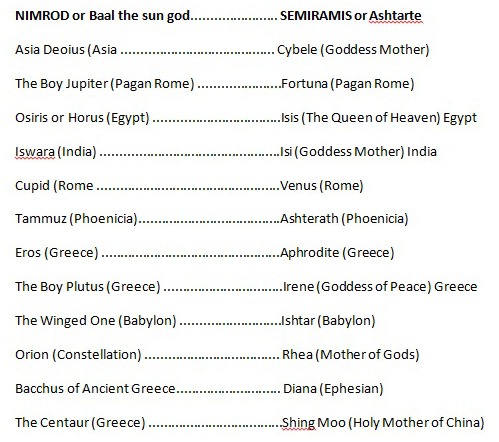


 After the Crash
