Strategy and Conscience: Subverting Elite Power So We End Human Violence

Fragment of “Butcher to the World” by Sue Coe.

By Robert J. Burrowes

Given the overwhelming evidence that activist efforts are failing to halt the accelerating rush to extinction precipitated and maintained by dysfunctional human behavior, it is worth reflecting on why this is happening.

Of course, you might say that the rush to extinction is being slowed. But is it? Even according to BP’s chief economist: ‘despite the extraordinary growth in renewables in recent years, and the huge policy efforts to encourage a shift away from coal into cleaner, lower carbon fuels, there has been almost no improvement in the power sector fuel mix over the past 20 years. The share of coal in the power sector in 1998 was 38% – exactly the same as in 2017…. this is one area where at the global level we haven’t even taken one step forward, we have stood still: perfectly still for the past 20 years.’ See Analysis – Spencer Dale, group chief economist.

And, to choose another measure that highlights our lack of ‘progress’: species extinctions proceed at a rate of 200 each day, which is vastly greater than the long-term background rate, with another 26,000 species already identified as ‘under threat’. See Red list research finds 26,000 global species under extinction threat.

But it wouldn’t matter what measure you analyzed – efforts to prevent cataclysmic nuclear war, to halt the many ongoing wars, to contain and reverse the prevalent and grotesque economic exploitation, to end slavery or the sex trafficking of women and children, to halt or even slow the rampant destruction of the biosphere, including the rainforests and oceans – we are rapidly losing ground (and often despite some apparent gains such as adoption of the ‘Treaty on the Prohibition of Nuclear Weapons’ by many non-nuclear states on 7 July 2017).

Not only are we destroying the rainforests – currently at the rate of 80,000 acres each day: see ‘Measuring the Daily Destruction of the World’s Rainforests’ – and oceans – see The state of our oceans in 2018 (It’s not looking good!)’ – as a fellow long-standing nonviolent activist, Kelvin Davies, recently observed to me: the oceans and remaining rainforests are ‘being emptied of life’ as impoverished people, forced to the economic margin, hunt remaining wildlife, including tropical fish, for food and/or trafficking.

Before we blame impoverished people for their destruction however, it is the consumption by those of us in industrialized countries that is generating the adverse circumstances in which they are forced to survive. For one simple example of this, related to our diet alone, see ‘Emissions impossible: How big meat and dairy are heating up the planet’.

Of course, you might object that it is not activist efforts that are responsible for the failure to halt elite violence and our complicity in it. It is the failure of corporatized society to seriously consider and respond intelligently to the scientific and other evidence in relation to all of the violence in its many manifestations. However, any explanation of this nature fails to understand and appreciate why progressive change has always occurred in the past.

Social progress is the result of people of conscience strategically challenging elite power in such a way that new norms become so widely accepted that elites are compelled to work within them. This has always been essential for the simple reason that elites are insane and have never acted sensibly, whatever the issue. Elites have only ever orchestrated events to maximize their own power, profit and privilege whatever the cost to the rest of us and the Earth itself. Hence, violence, war, grotesque economic exploitation and ecological destruction are rampant across the planet; that is the way elites want it; that is what maximizes elite power, profit and privilege. See ‘The Global Elite is Insane Revisited’.

As an aside: if you aren’t convinced that the global elite is insane, then perhaps you might ponder the possible implications of the recent call by US President Donald Trump, for the creation of a new Space Force as a sixth branch of the U.S. military – ‘We must have American dominance in space’ – in violation of the Outer Space Treaty of 1967. See ‘Trump Orders Establishment of Space Force as Sixth Military Branch’.

While this enterprise, if it gets Congressional approval, would be staggeringly profitable to the global elite while further gutting social and environmental programs to pay for it, the proposal also raises the possibility, as Professor Karl Grossman graphically expressed it (given that there is no way to have the envisaged weapons in space without nuclear power) that ‘the heavens are going to be littered with radioactive debris’ for millennia (but in substantially greater amounts than is already there). See ‘Trump’s Space Force: Military Profiteering’s Final Frontier’ and ‘Star Wars Redux: Trump’s Space Force’.

Of course, if you want even more evidence of elite insanity, then look no further than the current hysteria generated by Donald Trump’s supposed ‘treason’ for having a meeting with Russian president Vladimir Putin in Helsinki with the intention of improving mutual understanding and the prospects of peace between the two countries. For a sample of the literature that discusses this summit intelligently, which you won’t find in the corporate media, see US Media is Losing Its Mind Over Trump-Putin Press Conference, ‘Is President Trump A Traitor Because He Wants Peace With Russia?’, ‘Helsinki Talks – How Trump Tries To Rebalance The Global Triangle’ and Trump, The Manchurian Candidate: “Conspiracy” to Destabilize the Trump Presidency.

Some informed and thoughtful analysts believe this could lead to an elite coup to remove Trump from the US presidency. See Coming Coup Against Trump and The Coming Coup to Overthrow President Trump: Sedition at the Highest Levels.

So, to consolidate the information presented above, let me encapsulate the nature of geopolitics in one paragraph:

The military forces of the United States are not intended to defend the United States against military attack. The military forces of the countries in NATO are not intended to defend the respective member countries against military attack. The military forces of the United States and NATO are controlled by the global elite and used by the global elite to aggressively attack, in violation of all relevant national and international laws, any country that seeks independent control and development of its resources, particularly fossil fuels, strategic minerals and water. The global elite, which is in total control of the global economy and world affairs generally, does this in order to expand its own power, profit and privilege. It does this no matter what the cost to any individual (outside the elite), people, country and the biosphere. Why does the global elite do all of this? The global elite does this because it is completely insane.

Hence, to return to my point about the driver of social progress historically: Did the trans-Atlantic slave trade end because elites decided to halt the practice? Did gains for some women during the 21st century occur because elites committed themselves to ending patriarchal privilege? Did the British walk out of their colony in India because the British elite suddenly perceived the injustice of their violence and exploitation?

Despite the successes of activists of earlier generations, however, those of us who identify as activists of this generation are failing, quite comprehensively, to respond intelligently, powerfully and strategically to the vast challenges posed by an elite that has expanded its capacity to intimidate, outflank and overwhelm us (which is why, incidentally, slavery is now far more widespread than during any earlier period in human history, violence against women still manifests in a grotesque variety of forms all over the planet and even India has strayed monstrously from Gandhi’s vision).

In essence, strategic lessons learned by earlier generations of activists are forgotten or ignored as we stumble powerlessly to the extinction that is shortly to claim us all.

While I could write at some length about our shortcomings as activists in the era of perpetual violence and war, grotesque economic exploitation and pervasive climate and environmental destruction, I would like to focus on what I regard as the two key issues: strategy and conscience.

The global elite is deeply entrenched and manages world affairs, particularly through its capitalist economy. The global elite has developed over hundreds of years during which time it has fully and deeply penetrated all of the major power structures in world society, most of which it created (or moulded during their creation), so that the primary levers of power in the modern world – key financial institutions such as central banks, the major asset management corporations and the giant corporations in key industries (such as, but not limited to, the banking and weapons industries) – as well as the instruments through which its policies are implemented – including governments, military forces (both national and as ‘military contractors’ or mercenaries), key ‘intelligence’ agencies, legal systems and police forces, key nongovernment organizations such as the Vatican, and the academic, educational, media, medical, psychiatric and pharmaceutical industries – are all fully responsive to elite control.

More precisely than this, as explained in his forthcoming book ‘Giants: The Global Power Elite’, Professor Peter Phillips identifies the world’s top seventeen asset management firms, each with more than one trillion dollars of investment capital under management, as the giants of world capitalism. The total capital under management on behalf of all seventeen corporations is in excess of $US41.1 trillion; it represents the wealth invested for profit by thousands of millionaires, billionaires and corporations. These seventeen giants operate in nearly every country in the world and are ‘the central institutions of the financial capital that powers the global economic system’. They invest in anything considered profitable, ranging from ‘agricultural lands on which indigenous farmers are replaced by power elite investors’ to public assets to war.

Phillips goes on to note that the global elite develops and coordinates its policies through a variety of private planning fora such as the Group of Thirty, the Trilateral Commission and the Atlantic Council which determine the policies and issue the instructions for their implementation by transnational governmental institutions like the G7, G20, International Monetary Fund, World Trade Organization and the World Bank. Elite policies are also implemented following instruction of the relevant agent, including governments, in the context. These agents then do as they are instructed.

Or, if they do not, they are overthrown. Just ask any independently-minded government over the past century. For a list of governments overthrown by the global elite using its military and ‘intelligence’ agencies since World War II, see William Blum’s book ‘Killing Hope: U.S. Military and CIA Interventions Since World War II’ or, for just the list, see ‘Overthrowing other people’s governments: The Master List’.

As a result of coordination through the above elite fora, for example, gigantic media, public relations and entertainment corporations are used to reinforce elite dogma promulgated through national educational institutions so that most western humans become powerless consumers of elite product, informational and material, as the elite pursues ever-increasing profit, power and privilege. Oblivious to the way in which they are caught up in the elite drive to make us consume, even most western activists are major consumers, failing to limit their consumption in line with some appreciation of the per capita ecological carrying capacity of the Earth.

Hence, as should be obvious by now, with a deeply entrenched global elite in total control of major economic/financial, political, military, legal and social (including educational and media) power structures, only a comprehensive and sophisticated strategy has any prospect of succeeding, whatever the issue, and certainly the fundamental one: elite power.

In other words, if we want to end war (or even just one war), halt exacerbation of the climate catastrophe (in a region, country or the world), end environmental destruction on a vast range of fronts, terminate economic exploitation including (modern) slavery, end the sex trafficking of women and children, end the military occupation of Palestine, Tibet, West Papua… then we are going to have to think, plan and act strategically, which includes engaging and mobilizing, in a focused way, a significant proportion of the human population. Simply ‘campaigning’ on the basis of a few ideas and tactics that we think worked in the past, is not enough. Campaigning without strategy – and all that strategic thinking, including a penetrating analysis of the very nature of society and its power structure, entails – is a waste of time.

This is why most work of virtually all ‘activist’ NGOs is useless. They work within the elite-designed and managed global power structure, fearfully self-limiting their actions in accordance with elite-approved processes, such as those ‘within the law’ and lobbying elite-controlled governments and institutions, as well as international organizations such as the UN. By participating in elite-controlled processes, our dissent is absorbed and dissipated, as the elite intend.

This is the great achievement, from an elite perspective, of ‘democracy’: to the extent that people can be persuaded to participate in the delusion that democracy exists (anywhere on Earth) and that voting and lobbying changes anything important, they are unwitting victims of elite-manipulated processes and propaganda.

This also explains why virtually all NGOs invariably end up promoting elite-sponsored delusions such as, for example, those in relation to the climate catastrophe which talk of an ‘end of century’ timeframe (about 70 years more than we actually have), staying within 2 (or 3 or 1.5) degrees Celsius above the pre-industrial level (rather than the .5 degrees that is actually necessary) and, the most fundamental delusion of all, that we must substitute renewable energy for fossil fuels (which is certainly necessary), rather than (in addition) profoundly reduce – by at least 80% – consumption generally, involving both energy and resources of every kind – water, household energy, transport fuels, metals, meat, paper and plastic – while dramatically expanding our individual and community self-reliance if all environmental concerns are to be effectively addressed.

But elite-sponsored delusions are widely promulgated by its corporate media on a vast range of issues with only the rarest ‘activist’ NGO, concerned to focus on what it defines as its primary mission, taking a stand on these apparently ‘separate’ issues. So, for example, elite-sponsored delusions that are widely promulgated by its corporate media convince huge numbers of people that US-NATO wars against impoverished and militarily-primitive countries are in ‘self defense’ and that terrorists are a genuine threat to ‘national security’. At a more mundane level, elite-sponsored delusions propagated through its corporate media promote everything from genetically-mutilated, poisoned and junk food to psychiatric drugs. See ‘Defeating the Violence of Psychiatry’. These products are also highly profitable but because their insanity includes lacking any sense of morality, elites are unconcerned about the damage they inflict on us in these regards just as in all others.

Some grassroots activist groups are more politically savvy than NGOs but usually still lack comprehensive and sophisticated strategies. On rare occasions, it should be noted, one of these campaigns or national liberation struggles succeeds, because of such factors as the raw power of nonviolent action (even without strategy) or because they could rely on the NIMBY (Not In My Back Yard) effect to facilitate mobilization of significant numbers of people in a local area.

However, the global elite is unconcerned about the occasional local ‘setback’ which does not adversely impact its global agenda and where minor gains by grassroots activists can, if necessary, be subsequently reversed (including by simply violating the law, as the elite routinely does with impunity). Consider again, the above example of Trump’s call to violate the 1967 Outer Space Treaty or routine violation of legally-declared (and sometimes World Heritage-listed) national parks in Africa, Asia and Central/South America as major corporations seek to exploit oil and mineral wealth. The law is designed to intimidate and impede us; it is rarely used in an attempt to hold elites accountable and has little, if any, impact when it does: a corporation may, occasionally, be fined (an expense against generating monstrous profit). Fundamentally, elites are above the law: they draft it to defend their interests against the rest of us.

But to reiterate the main point: given the sheer number of (sometimes even large-scale) mobilizations on one issue after another around the world that achieve nothing of substance in relation to the issue itself (consider the demonstrations against the imminent war on Iraq, held in over 600 cities around the world and involving as many as 30 million people, on 15 February 2003), it is painfully clear that most grassroots activists have no conception of strategy either, including the appropriate strategic focus for their tactics.

And this applies equally to those national liberation activists in occupied countries such as Palestine, Tibet and West Papua, as well as those activists living in the many countries, such as Cambodia and the Democratic Republic of the Congo, run by dictatorships or where the elected government, such as that of Brazil, has been removed in a coup.

As touched on above, however, lack of sound strategy (including the structural analysis on which it must be based) is not the only shortcoming in our efforts to halt elite (or even our own) violence.

In the past, a primary motivator of activists, and particularly the great ones such as Mohandas K. Gandhi, was their conscience: The ‘inner voice’ that called them to action on both the personal and political levels.

But there is more to conscience than being called to action. So what is so important about conscience? Conscience is the mind function that asks the deeper questions such as ‘What is the right way to go about this?’, ‘How must I behave if I am to model what I ask of others?’ and ‘How will we design this campaign so that its conduct helps to create the world we envision?’ (rather than the simpler question ‘How will we win this campaign?’).

Moreover, living by one’s conscience requires courage: This includes making strategic choices to take significant or, occasionally, even great risks when elite violence threatens to intimidate a struggle into submission and silence.

It was his unyielding conscience, deeply guiding his personal and political behaviour (including his commitment to nonviolence and his extraordinarily austere lifestyle), and his superlative understanding of strategy that made Gandhi the great activist that he was. Why?

Because Gandhi’s nonviolence was based on certain premises derived from his conscience – including the importance of the truth, the sanctity and unity of all life, and the unity of means and end – his strategy was always conducted within the framework of his desired political, social, economic and ecological vision for society as a whole and not limited to the purpose of any immediate campaign.

It is for this reason that Gandhi’s approach to strategy is so important. He is always taking into account the ultimate end of all nonviolent struggle – a just, peaceful and ecologically sustainable society of self-realized human beings – not just the outcome of this campaign. He wants each campaign to contribute to the ultimate aim, not undermine vital elements of the long-term and overarching struggle to create a world without violence.

So what do we do?

If you would like to better understand why so many human beings, including those within the elite, are devoid of anything resembling a conscience, you can do so by reading what happened to them as a child in Why Violence? and Fearless Psychology and Fearful Psychology: Principles and Practice.

If you are interested in acting in ways that maximize the chance that elite opponents and their agents will reflect, deeply, on what they are doing, while fundamentally changing the power relationship between you and your opponents, then you are welcome to consider acting strategically in the way that Gandhi did. Whether you are engaged in a peace, climate, environment or social justice campaign or a national liberation struggle, the 12-point strategic framework and principles are the same. See Nonviolent Campaign Strategy and Nonviolent Defense/Liberation Strategy.

The strategic aims and a core list of strategic goals to end war and to end the climate catastrophe, for example, are identified in Campaign Strategic Aims’ and the strategic aims and a core list of strategic goals to defeat a political or military coup, remove a military occupation, remove a dictatorship or defeat a genocidal assault are identified here: Liberation Strategic Aims’.

If you would like a straightforward explanation of ‘Nonviolent Action: Why and How it Works’ and an introduction to what it means to think strategically, try reading about the difference between ‘The Political Objective and Strategic Goal of Nonviolent Actions’.

If you anticipate violent repression by a ruthless opponent, make sure that you plan and implement any nonviolent action as history has taught us: ‘Nonviolent Action: Minimizing the Risk of Violent Repression’.

If you are interested in nurturing children to live by their conscience and to gain the courage necessary to resist elite violence fearlessly, while living sustainably despite the entreaties of capitalism to over-consume, then you are welcome to make ‘My Promise to Children’. After all, capitalism and other dysfunctional political, economic and social structures only thrive because of our dysfunctional parenting which robs children of their conscience and courage, among many other qualities, while actively teaching them to over-consume as compensation for having vital emotional needs denied. See ‘Love Denied: The Psychology of Materialism, Violence and War’.

Why this emphasis on children you might ask? For good reason. It is dysfunctional human behavior that got us into this civilizational mess and allowed the emergence of exploitative social, political and economic structures. So if we do not emphasize the importance of profoundly changing the way in which we nurture children so that they behave functionally in context, everything else we do to preserve humanity and the biosphere must ultimately fail. The onslaught of our dysfunctional species will simply overwhelm the biosphere, sooner or later, whether it is this generation or the next.

But we don’t have to settle for improving our parenting. We can improve our own functionality and access our conscience and courage too. How? See ‘Putting Feelings First’.

If you are already guided by your conscience to act powerfully in response to elite violence, you might also consider joining those participating in The Flame Tree Project to Save Life on Earth, which outlines a simple plan for people to systematically reduce their consumption while progressively increasing their self-reliance, and consider signing the online pledge of ‘The People’s Charter to Create a Nonviolent World’.

You may believe that you can halt elite violence without engaging your conscience (and the deep internal search that this requires) and without using Gandhian nonviolent strategy. Even if you are right, the key question is then this: Is the world you will get any better than this one?

And don’t forget the timeframe. Major historical struggles, including those noted above, took decades (whatever the merits and shortcomings of their strategies) or, as in most cases, are ongoing. How long do you want to wait before you invest time in learning how to think, plan and act strategically when the future of humanity and the biosphere is now at stake?

So, to conclude: The global elite controls all significant human affairs and even exercises almost total control over the individual lives of human beings. Because the global elite is insane and its psychological (and hence behavioral) dysfunctionality is of a particular kind, it cannot pull back from its existing regime of violence and exploitation, even in response to imperatives from the biosphere.

In this circumstance our choice is simple: near-term human extinction based on our unwitting complicity in elite violence or a conscientious, courageous and strategic response that fundamentally undermines elite power.

This will require a significant number of interrelated nonviolent strategies that each tackle elite violence in one context or another.

You are welcome to consider the options presented just above for your own involvement.


Biodata: Robert J. Burrowes has a lifetime commitment to understanding and ending human violence. He has done extensive research since 1966 in an effort to understand why human beings are violent and has been a nonviolent activist since 1981. He is the author of ‘Why Violence?’ http://tinyurl.com/whyviolence His email address is flametree@riseup.net and his website is here. http://robertjburrowes.wordpress.com

Robert J. Burrowes
P.O. Box 68
Daylesford, Victoria 3460
Australia

Email: flametree@riseup.net

Websites:
Nonviolence Charter
Flame Tree Project to Save Life on Earth
‘Why Violence?’
Feelings First
Nonviolent Campaign Strategy
Nonviolent Defense/Liberation Strategy
Anita: Songs of Nonviolence
Robert Burrowes
Global Nonviolence Network

Western Elites Decrying ‘Populism’ Betrays Fear of Democracy

By Finian Cunningham

Source: Strategic Culture Foundation

A new dreaded word has entered into official Western media speak: “Populism”. Political parties and governments which are deemed to be illegitimate are invariably labeled with the prefix “populist”. There is a vague implication that “populist” parties are imbued with disreputable politics of xenophobia, racism, nationalism and even fascism.

But who is doing the “deeming” here? It is establishment political parties and politicians who have the advantage of establishment news media organizations conveying their words and terminology.

Take French President Emmanuel Macron. He may have coined a new political party, En Marche, but he is nevertheless a politician very much of the prevailing Western establishment. He is pro-European Union as it currently operates, albeit with reforming tweaks; he is pro-NATO, pro-Atlanticist; and pro-neoliberal economic policies.

Recently, Macron decried the rise of “populist” parties across Europe. He compared them to the spread of “leprosy” and claimed they were posing a morbid threat to the conventional order of politics. Macron was referring in particular to the new coalition government in Italy, comprising the anti-establishment Five Star Movement and the League.

The French leader could also have been referring to any number of governments as seen in Austria, Hungary and other Central European states which, like the new Italian government, have challenged the EU’s official stance overEU irregular migration into the bloc.

In this context, the word “populist” as used by Macron and other establishment politicians has the connotation of “racist” or “inhumane” owing to the opposition towards the uncontrolled influx of people from outside Europe.

The “populist” prefix is often used alongside the term “far-right”. Again, the implication is that somehow the largely newcomer parties are something that should be abhorred because they are tarnished with alleged proclivities towards fascism and authoritarianism.

To reinforce that implied demonization, it is often cited by Western establishment politicians and media that the “populist” parties in Europe are aligned with Russian President Vladimir Putin, if not stealthily bankrolled by the Kremlin.

American President Donald Trump also qualifies as “populist” according to the US political and media establishment. Again, the word is loaded to infer a uniquely noxious quality in the Trump presidency and his supporters, in the same way that Democrat presidential rival Hillary Clinton once haughtily denigrated Trump and his voter base as “deplorable”. It’s a way of sanitizing the establishment from any past, and far greater, sins.

The P-word does not always mean “rightwing nationalism”. The recent elected Mexican President, Andrés Manuel Lopez Obrador, has been described in Western media as a “leftwing populist”.

In Italy, the main ruling coalition party, the Five Star Movement, headed by Luigi Di Maio, is associated with leftwing social policy.

Parties and politicians deemed to be “populist” are eclectic and defy an easy categorization, as their detractors would perhaps like to assign them. Certainly, there is a strong common stance of being opposed to uncontrolled immigration. But it is too simplistic to explain such a stance as merely xenophobic or racist.

There are legitimate and reasonable concerns that the issue of large-scale immigration has been exploited by ruling establishments and their ideological backers as a way to undermine national sovereignty and workers’ rights, from the consequent lowering of wages and employment conditions.

There is also the legitimate concern in Europe that the migration phenomenon has been largely created by illegal wars pursued by the US and its European NATO allies. Why should European member states and ordinary taxpayers have to incur financial and cultural integration problems that have been largely manufactured by ruling elites who have never been held to account for their criminal wars?

So-called populist parties are also opposed to the seemingly slavish adherence by the European political establishment to neoliberal capitalism. There is a legitimate popular backlash to economic policies which are oppressive and destructive, and whose sole priority seems to be satisfying the profits of Big Business and transnational capital. Why should European governments be held in hock to fiscal rules and debt limitations set arbitrarily by institutions seemingly under the diktat of private banks?

There are several fundamental issues that form a groundswell of popular opposition towards the conventional ways of governance, both in Europe and the US. The failings of neoliberal capitalism and its rich-get-richer racket is surely top of the grievance list. So too is relentless, irrational militarism by Western governments, unleashing illegal wars and massive refugee problems, as well as stoking unnecessary hostility towards other powers like Russia, China, Iran and North Korea.

The conventional politics, that is, the ruling establishments and their dutiful news media, are increasingly seen as incompetent, if not bankrupt. The establishment across Western countries has lost legitimacy and “moral authority” in the eyes of masses of people. That dwindling authority of the ruling class in Western states is the real, morbid concern.

One factor for this is the growth of global communications and “alternative” media sources, which Western publics are availing of to inform themselves independently from the old information monopolies that served the established order. That is why the “problem” of alleged “Russian influence” has been invented. In a desperate gambit to distract the masses from noticing the real problem, which is the crumbling of legitimacy for the Western establishment and its obedient political parties.

The looming fear among the ruling order is the ever-growing dissent among the populace. It is a fear of their own inherent failing and impending doom in the face of democratic challenge to power.

It is not so much that Trump or the new Italian government or Hungarian leader Viktor Orban, and so on, represent a vanguard for renewed democracy. These changes are merely symptoms of a deeper popular opposition to the established way of conducting politics – the order that has prevailed for most of the seven-decade period following the Second World War.

There has always been a wariness among ruling elites on both sides of the Atlantic towards a genuine democratic order breaking out, as Noam Chomsky discusses in his book ‘Deterring Democracy’. Western elites have typically viewed the masses as “rabble rousers” who are deemed to be “incapable” of governing society in the “proper way” that benefits the elites, protects their profits and property, and safeguards their imperial war-making overseas.

This underlying tension about the control of political power in Western societies encapsulates the present historical juncture where the word “populist” is being increasingly deployed. It is a term of disparagement by a failing Western establishment. What the failed order is trying to do is divert genuine popular challenge by painting it as something uncouth, vulgar, noxious, or manipulated by foreign enemies like Russia.

As American political analyst Randy Martin notes: “Populism is a convenient term for those in power who seek to isolate those who would want to share, or worse, take that power.”

When you think of the original meaning of the word – “the people” – it is starkly revealing what is really at stake for those elites who wield the “populist” term as a disparagement.

This Viral ‘Feel-Good’ Story Is Actually an Indictment of American Labor Hell

By Luke O’Neil

Source: Observer

In what’s quickly become the feel-good story of the week, a young Alabama man named Walter Carr is being lauded across the country for his perseverance and indomitable spirit. It’s the type of story that can instill hope in a divided nation when it’s sorely needed and serve as inspiration for the rest of us that if you work hard enough and keep a positive attitude, good things will come to you. It also happens to be disgusting horse shit and an utter indictment of the brutal, indifferent hell of the nightmare capitalist wasteland we all suffer in. So, a bit of a mixed bag here. 

Carr, a 20-year-old college student, as nearly every news outlet has pointed out in sepia-tinted coverage—from CBS News and USA Today to the BBC—was set to start a new job on Saturday morning with the moving company Bellhops. At the last minute, his car broke down, and he was unable to find a ride from friends to get there. Instead, he decided to walk. He began the trek, which was roughly 20 miles from his home, at midnight, hoping to get there by 8 a.m. the next day to meet the rest of the movers. 

“I didn’t want to defeat myself,” Carr later told ABC News.

Along the way, around 4 a.m. in the morning, Carr, a young person of color, was stopped by local police officers, who, out of the kindness of their hearts, no doubt, asked him where he was headed. When he explained the situation—and after his story checked out—they decided to give him a ride the rest of the way, even going so far as to take him to breakfast.

“He was very polite. It was ‘yes sir’ and ‘no sir,”’ one of the officers later said. I bet he was!

When he arrived at the moving job a few hours later, complete with police escort, they explained the situation to Jenny Lamey, the woman who had hired the movers. Inspired by Carr’s work ethic and apparent decency, she shared the story on Facebook, where it soon went viral. 

The story eventually came to the attention of Bellhops CEO Luke Marklin, who arranged to meet Carr a few days later for a big surprise. 

“This is how you pay it forward… treat your employees with respect and incentivize them and bet you’ll get a much better worker for it,” wrote one commenter on Twitter. “It is awesome to see a young man not make an excuse like it’s too far to go to work, and then see him rewarded for it. Wish the young man and the company all the best in the future,” added another. 

It’s enough to drive you to tears. What kind of tears those are will probably depend on how susceptible you are to the lie at the heart of American capitalism and Horatio Alger nonsense.

Carr who set out the night before with a kitchen knife to protect against stray dogs on the walk, as he explained to The Washington Post, nonetheless floored everyone he encountered along the way. 

“He’s such a humble, kindhearted person,” Lamey said. “He’s really incredible. He said it was the way he was raised.”

“We set a really high bar for heart and grit and… you just blew it away,” Marklin told him, after gifting Carr his 2014 Ford Escape (barely-driven! as alabama.com reported). 

A GoFundMe set up by Lamey to help Carr with his car troubles has since raised almost $40,000. 

“Nothing is impossible unless you say it’s impossible,” she told the Post. 

Nothing except for paying workers an actual salary with benefits, which, you may not be surprised to hear, Bellhops does not do. Essentially Uber for movers, (Marklin came to the company from Uber), Bellhops relies on the labor of young college students, like Carr, who take jobs on a gig-by-gig basis. The company, which operates in dozens of cities around the country, and has raised tens of millions of dollars in rounds of funding since it was founded in 2011, pays movers between $13-16 an hour. 

“It’s a transitional job,” CEO Cameron Doody told BuzzFeed News in a story from 2015. “It’s not a career.”

Alabama, incidentally, is also only one of five states that has traditionally never spent any state money on public transportation. 

Naturally, Bellhops are very proud of themselves, and have been reveling in the attention. You probably didn’t know the company existed before yesterday, and may be thinking about contracting their services in the future now. Win win. 

“I want people to know this—no matter what the challenge is, you can break through the challenge,” Carr, who also wants to become a Marine some day, said of his story. 

“Nothing is impossible unless you make it impossible,” he added. “You can do anything you set your mind to. I’ve got God by my side. I’m really emotional right now trying to hold back the tears.”

It’s a heartwarming reminder that, much like with getting sick or injured in America, which needs to be done in a tragic but endearing enough way to go viral so people will pay your medical bills, all you have to do to make it in this beautiful country is have your life fall apart in such a way that the news wants to write about it, then hope the benign feudal lords will see fit to offer you as an aspirational example to the rest of us so we remain compliant.

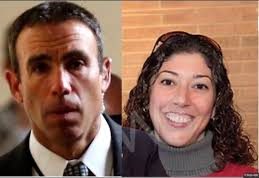
Moon-Strzok No More, Lisa Page Spills the Beans

The meaning of a crucial text message between two FBI officials appears to have been finally explained, and it’s not good news for the Russia-gate faithful, as Ray McGovern explains.

By Ray McGovern

Source: Consortium News

Former FBI attorney Lisa Page has reportedly told a joint committee of the House of Representatives that when FBI counterintelligence official Peter Strzok texted her on May 19, 2017 saying there was “no big there there,” he meant there was no evidence of collusion between the Trump campaign and Russia.

It was clearly a bad-luck day for Strzok, when on Friday the 13th this month Page gave her explanation of the text to the House Judiciary and Oversight/Government Reform Committees and in effect threw her lover, Strzok, under the bus.

Strzok’s apparent admission to Page about there being “no big there there” was reported on Friday by John Solomon in the Opinion section of The Hill based on multiple sources who he said were present during Page’s closed door interview.

Strzok’s text did not come out of the blue. For the previous ten months he and his FBI subordinates had been trying every-which-way to ferret out some “there” — preferably a big “there” — but had failed miserably. If Solomon’s sources are accurate, it is appearing more and more likely that there was nothing left for them to do but to make it up out of whole cloth, with the baton then passed to special counsel Robert Mueller.

The “no there there” text came just two days after former FBI Director James Comey succeeded in getting his friend Mueller appointed to investigate the alleged collusion that Strzok was all but certain wasn’t there.

Robert Parry, the late founder and editor of Consortium News whom Solomon described to me last year as his model for journalistic courage and professionalism, was already able to discern as early as March 2017 the outlines of what is now Deep State-gate, and, typically, was the first to dare report on its implications.

Parry’s article, written two and a half months before Strzok texted the self-incriminating comment to Page on there being “no big there there,” is a case study in professional journalism. His very first sentence entirely anticipated Strzok’s text: “The hysteria over ‘Russia-gate’ continues to grow … but at its core there may be no there there.”(Emphasis added.)

As for “witch-hunts,” Bob and others at Consortiumnews.com, who didn’t succumb to the virulent HWHW (Hillary Would Have Won) virus, and refused to slurp the Kool-Aid offered at the deep Deep State trough, have come close to being burned at the stake — virtually. Typically, Bob stuck to his guns: he ran an organ (now vestigial in most Establishment publications) that sifted through and digested actual evidence and expelled drivel out the other end.

Those of us following the example set by Bob Parry are still taking a lot of incoming fire — including from folks on formerly serious — even progressive — websites. Nor do we expect a cease-fire now, even with Page’s statement (about which, ten days after her interview, the Establishment media keep a timorous silence). Far too much is at stake.

As Mark Twain put it, “It is easier to fool people than to convince them that they have been fooled.” And, as we have seen over the past couple of years, that goes in spades for “Russia-gate.” For many of us who have looked into it objectively and written about it dispassionately, we are aware, that on this issue, we are looked upon as being in sync with President Donald Trump.

Blind hatred for the man seems to thwart any acknowledgment that he could ever be right about something—anything. This brings considerable awkwardness. Chalk it up to the price of pursuing the truth, no matter what bedfellows you end up with.

Courage at The Hill 

Solomon’s article merits a careful read, in toto. Here are the most germane paragraphs:

“It turns out that what Strzok and Lisa Page were really doing that day [May 19, 2017] was debating whether they should stay with the FBI and try to rise through the ranks to the level of an assistant director (AD) or join Mueller’s special counsel team. [Page has since left the FBI.]

“‘Who gives a f*ck, one more AD [Assistant Director] like [redacted] or whoever?’” Strzok wrote, weighing the merits of promotion, before apparently suggesting what would be a more attractive role: ‘An investigation leading to impeachment?’ …

“A few minutes later Strzok texted his own handicap of the Russia evidence: ‘You and I both know the odds are nothing. If I thought it was likely, I’d be there no question. I hesitate in part because of my gut sense and concern there’s no big there there.’

“So the FBI agents who helped drive the Russia collusion narrative — as well as Rosenstein’s decision to appoint Mueller — apparently knew all along that the evidence was going to lead to ‘nothing’ and, yet, they proceeded because they thought there was still a possibility of impeachment.”

Solomon adds: “How concerned you are by this conduct is almost certainly affected by your love or hatred for Trump. But put yourself for a second in the hot seat of an investigation by the same FBI cast of characters: You are under investigation for a crime the agents don’t think occurred, but the investigation still advances because the desired outcome is to get you fired from your job. Is that an FBI you can live with?”

The Timing

As noted, Strzok’s text was written two days after Mueller was appointed on May 17, 2017. The day before, on May 16,The New York Times published a story that Comey leaked to it through an intermediary that was expressly designed (as Comey admitted in Congressional testimony three weeks later) to lead to the appointment of a special prosecutor to investigate collusion between the Trump campaign and Russia. Hmmmmm.

Had Strzok forgotten to tell his boss that after ten months of his best investigative efforts — legal and other—he could find no “there there”?

Comey’s leak, by the way, was about alleged pressure from Trump on Comey to go easy on Gen. Michael Flynn for lying at an impromptu interrogation led by — you guessed it — the ubiquitous, indispensable Peter Strzok.

In any event, the operation worked like a charm — at least at first. And — absent revelation of the Strzok-Page texts — it might well have continued to succeed. After Deputy Attorney General Rod Rosenstein named Mueller, one of Comey’s best buddies, to be special counsel, Mueller, in turn, picked Strzok to lead the Russia-gate team, until the summer, when the Department of Justice Inspector General was given the Strzok-Page texts and refused to sit on them.

A Timeline

Here’s a timeline, which might be helpful:

2017

May 16: Comey leak to NY Times to get a special counsel appointed

May 17: Special counsel appointed — namely, Robert Mueller.

May 19: Strzok confides to girlfriend Page, “No big there there.”

July: Mueller appoints Strzok lead FBI Agent on collusion investigation.

August: Mueller removes Strzok after learning of his anti-Trump texts to Page.

Dec. 12: DOJ IG releases some, but by no means all, relevant Strzok-Page texts to Congress and the media, which firstreports on Strzok’s removal in August.

2018

June 14: DOJ IG Report Published.

June 15; Strzok escorted out of FBI Headquarters.

June 21: Attorney General Jeff Sessions announces Strzok has lost his security clearances.

July 12: Strzok testifies to House committees. Solomon reports he refused to answer question about the “there there” text.

July 13: Lisa Page interviewed by same committees. Answers the question.

Earlier: Bob Parry in Action

On December 12, 2017, as soon as first news broke of the Strzok-Page texts, Bob Parry and I compared notes by phone. We agreed that this was quite big and that, clearly, Russia-gate had begun to morph into something like FBI-gate. It was rare for Bob to call me before he wrote; in retrospect, it seemed to have been merely a sanity check.

The piece Bob posted early the following morning was typical Bob. Many of those who click on the link will be surprised that, last December, he already had pieced together most of the story. Sadly, it turned out to be Bob’s last substantive piece before he fell seriously ill. Earlier last year he had successfully shot downother Russia-gate-related canards on which he found Establishment media sorely lacking — “Facebook-gate,” for example.

Remarkably, it has taken another half-year for Congress and the media to address — haltingly — the significance of Deep State-gate — however easy it has become to dissect the plot, and identify the main plotters. With Bob having prepared the way with his Dec.13 article, I followed up a few weeks later with “The FBI Hand Behind Russia-gate,” in the process winning no friends among those still suffering from the highly resistant HWHW virus.

VIPS

Parry also deserves credit for his recognition and appreciation of the unique expertise and analytical integrity among Veteran Intelligence Professionals for Sanity (VIPS) and giving us a secure, well respected home at Consortium News.

It is almost exactly a year since Bob took a whole lot of flak for publishing what quickly became VIPS’ most controversial, and at the same time perhaps most important, Memorandum For the President; namely, “Intelligence Veterans Challenge ‘Russia Hack’ Evidence.”

Critics have landed no serious blows on the key judgments of that Memorandum, which rely largely on the type of forensic evidence that Comey failed to ensure was done by his FBI because the Bureau never seized the DNC server. Still more forensic evidence has become available over recent months soon to be revealed on Consortium News, confirming our conclusions.

Russiagate is a Ruling Class Diversion

By Glen Ford

Source: Black Agenda Report

“Trump supporters see themselves as a distinct and independent force in the nation — the saviors of America, in their diseased minds — and they now hate the Democratic Party in a far deeper way than before.”

So this is what we can look forward to in the long twilight of a shrinking U.S. empire: the shrieks of a delirious ruling class, concocting endless diversions from the central reality of late-stage capitalism’s inability to offer the people anything but widening wars and deepening austerity. The Lords of Capital have led us to a dark yet insanely cacophonous realm, a throbbing madhouse din. “Traitor!” scream the minions of corporate communications, calling for the blood of the corporate government’s orange-branded CEO — a no longer exceptional spectacle for the self-proclaimed exceptional nation.

Donald Trump is, indeed, a kind of traitor to the Washington Consensus, a hyper-militarized capitalist utopia of corporate dominated global supply chains that doubled the international wage-slave workforce in the last two decades of the 20th century and herded these desperate billions into a race to the bottom. The leadership of both corporate parties conspired to force U.S. workers into the global meat-grinder. Democrat Bill Clinton inflicted NAFTA on his party’s wage-earning base and, two decades later, Democrat Barack Obama tried, but failed, to pass the even more devastating Trans Pacific Partnership corporate trade and governance bill. Donald Trump captured the Republican Party by feeding its base the overt racist rhetoric they crave, rather than the more polite “dog whistle” menu cultivated by White Man’s Party politicians since Richard Nixon. With the indispensable assistance of Democrat-oriented corporate media and the Democratic National Committee — both of which saw Trump as the most easily beatable Republican — Trump trounced the entire GOP presidential wanna-be menagerie to seize the reins of half the electoral duopoly, and carried a majority of white voters – including white women — in the general election.

“Global supply chains doubled the international wage-slave workforce in the last two decades of the 20thcentury and herded these desperate billions into a race to the bottom.”

It was not Trump’s flaming racism that made him a traitor to his class and to the empire. One of the U.S. duopoly parties has always played the role of White Man’s Party, with white supremacy as its organizing principle. Were it not for endemic, fervent, nationwide white racism, the most reactionary wing of the U.S. ruling class would have no effective electoral base. Trump simply serves up a stronger brew of white supremacist elixir for the good ole boys and girls. His heresy – precipitating the crisis in ruling class politics — was to rhetorically oppose “free trade” and U.S. “regime change” policies, and to call for normalizing relations with Russia. “Free trade” — a euphemism for the unfettered ability of the ruling class to move money and jobs wherever it chooses on the planet – and the “exceptional” right of U.S. imperialism to remove and replace sovereign governments at will, are the pillars of the Washington Consensus. Donald Trump became anathema to the Lords of Capital and their servants in the national security “deep state,” who crowded into Hillary Clinton’s Democratic tent, where Russiagate was invented out of whole cloth.

Again, racism was not Trump’s unpardonable sin, although it plays into the strategies of the (financial and high tech) ruling class sectors at the helm of the Democratic Party, whose own electoral organizing principle is an anemic anti-racism, a phony politics of “inclusion” that welcomes representatives of minority populations to help enforce the race-to-the-bottom and to join in the general capitalist plunder. Trump’s howling racism was what made Democrats believe he was the ideal candidate for a trouncing by Hillary Clinton, who could be counted on to escalate Barack Obama’s general military offensive and to aggressively pursue TPP and other corporate governance arrangements. (Only fools believed Clinton’s late switch, opposing TPP.) When Clinton lost, the ruling class panicked and resolved to bring down the Orange Menace no matter the cost to U.S. institutions and to the appearance of stability in the very bosom of the empire. The rolling coup was begun.

“Trump’s heresy – precipitating the crisis in ruling class politics — was to rhetorically oppose ‘free trade’ and U.S. ‘regime change’ policies, and to call for normalizing relations with Russia.”

Black folks think the crisis is about race. It is – and it isn’t. If the ruling class, including those that fund and run the Democratic Party, were really concerned about Black people’s rights, they would have challenged Trump’s election victory based on blatant Black voter suppression in key Midwest states. As Greg Palast pointed out, the Republican “Crosscheck” scheme fraudulently and illegally purged 449,000 disproportionately Black voters from the rolls in Michigan, alone — about 40 times larger than Trump’s 10,700-vote margin of victory. Yet, Hillary Clinton and the Democrats only reluctantly joined in Green Party candidate Jill Stein’s recount action, and the first words out of Black Congressman John Lewis’s mouth when the polls closed in November were “Russia…Russia…Russia.” Republicans have been stealing elections through Black voter suppression in broad daylight since 2000, but only one Democratic senator and one congresswoman — California’s Barbara Boxer and Ohio Rep. Stephanie Tubbs Jones, in 2004 – have in this century challenged the thefts . Black voter suppression has been part of the gentlemen’s agreement between the two corporate parties. Rich white people do not plunge the system into crisis for the sake of Black voting rights, or any Black rights at all, including the right to life. But the Lords of Capital will roll the dice on the fate of all humanity to preserve and expand their global dominion and the military machine that is their only remaining advantage. Their survival as a class is at stake. Trump must go because he cannot be depended on to preserve the Washington Consensus — the imperial project.

Republicans have been stealing elections through Black voter suppression in broad daylight since 2000.”

Trump’s racism did factor into the ruling class decision to oust him from the White House, but not in the way that most people believe. Donald Trump proved that his white base is more enthusiastic to support a candidate that affirms white supremacist “values” (yes, that’s what they value most) than they are about maintaining an aggressive military posture everywhere in the world. They did not blink or budge when Trump denigrated NATO, opposed regime change and U.S. efforts at “nation-building” (a euphemism for prolonged military occupation of other peoples), and called for better relations with Russia. These same voters were presumed to be the most militaristic cohort in the nation, dependable fodder to elect fire-breathing war hawks. But clearly, Trump’s base — composed of a majority of whites – cares more about white supremacy in the U.S. than waging endless wars abroad. And, they either hate “free trade,” or don’t care enough about it either way to abandon their White Man’s President.

The national security state, the military industrial complex and the oligarchs whose interests the empire defends were forced to confront the reality, that their presumed prime constituency was not nearly as gung-ho for war as previously assumed. How, then, to continue the “generational” War on Terror (war of imperial conquest)? Answer: Make Russia a clear and present danger, aided and abetted by “useful idiots” (like BAR), domestically.

Trump still retains the support of his white majority. Most importantly, these white supremacists feel affirmed, as “a people,” by his presence, and what they perceive as Trump’s loyalty to them. They are feeling “Great Again.” And they are reveling in their national strength, as a bloc. That’s why they seem unmovable. This re-energized, aggressively white supremacist, intensely self-aware White Man’s Party will assert its permanent, militant and very large presence in the U.S. political spectrum, no matter what happens to Donald Trump. Other politicians, with billions to spend, will appeal to this majority bloc of whites, after Trump leaves the scene. They see themselves as a distinct and independent force in the nation — the saviors of America, in their diseased minds — and they now hate the Democratic Party in a far deeper way than before, when it was perceived as too concerned with Blacks and other “minorities.” Hillary Clinton turned a new chapter when she called Trump voters “deplorables” — a kind of white trash, but connoting moral degeneracy, transcending financial condition. The “witch-hunt” against Trump is perceived as an elite mob out to lynch the “deplorables” — or, at the least, to decertify them as decent Americans.

“This re-energized, aggressively white supremacist, intensely self-aware White Man’s Party will assert its permanent, militant and very large presence in the U.S. political spectrum, no matter what happens to Donald Trump.”

The Democrats can forget about ever getting back most of these self-aware white supremacist voters, but the establishment corporate Republicans that Trump crushed in winning the GOP nomination will not win back his followers’ allegiance unless they become more like Trump, i.e. more blatantly white supremacist. Which is decidedly not the corporate way, in the 21st century. Thus, corporate America, wedded as it is to a “diversity” doctrine that means little to the masses of Black people but is a red flag to the White Man’s Party “deplorables,” will be forced to identify more publicly with the Democrats, or pretend to be apolitical.

The Trump phenomena — and the resultant ruling class hysteria — has stolen the corporations’ option to pose as “non-partisan” actors in U.S. politics. They are forced deeper into the Democratic camp, creating further contradictions for the “inclusive” party, which must ultimately answer to a more clearly defined — and also more self-aware – constituency of the “left,” most broadly speaking, if it is to preserve the duopoly. This other half of the country, slightly bigger than Trump’s white majority base, is composed of a minority of whites, virtually all Blacks, and large majorities of Latinos and other minorities. It is way to the left of the Democratic Party and roiling with economic demands that the Lords of Capital will not, and cannot, fulfill while keeping on the path of a global race-to-the-bottom and deepening austerity, enforced by endless wars.

“Corporate America, wedded as it is to a ‘diversity’ doctrine that means little to the masses of Black people but is a red flag to the White Man’s Party ‘deplorables,’ will be forced to identify more publicly with the Democrats.”

Therefore, there must be Russiagate hysteria — or some other fictitious obsession — primarily to divert the attentions of the “left” half of the electorate, most of which is broadly social democratic (the Black component is the most left-leaning, and peace-oriented). If the duopoly were to collapse, and the various cohorts of the U.S. political spectrum were reorganized along ideological lines, the two biggest parties would be the Trumpist White Man’s party and a social democratic party with a platform to the left of 2016 Bernie Sanders, with the (rightwing) Democrats and establishment Republicans coming together in an avowedly “centrist” party, the smallest of the three. Space would also be created for more radical and libertarian politics.

The ruling class is determined to prevent such a scenario from occurring, and thus needs a permanent, all-consuming diversion. But the Russiagate hysteria — or something else like it — cannot be maintained indefinitely; U.S. political structures cannot withstand such an institutional assault by the ruling class, itself.

The Lords of Capital are caught in the contradiction. To save the corporate state, they are besieging the corporate state, with no vision or timetable for the outcome.


BAR executive editor Glen Ford can be contacted at Glen.Ford@BlackAgendaReport.com

25 Families Own $1.1 Trillion Between Them as the Global Wealth Inequality Gap Grows

Using data from their list Forbes has produced a list of the top 25 richest families in the world. Together they are worth over $1.1 trillion, or the entire GDP of Indonesia.

By  Rosa Tressell and Dr. Leon Tressell

Source: SouthFront

Once a family-owned business Forbes is well known for producing their annual list of the world’s richest billionaires. Launched in 1982 the original list ranked the top 400 Americans by net worth. Only 13 billionaires were included in that list, and their combined worth was the equivalent of 2.8% of GDP. In an era where “Greed is Good”, the list became wildly popular, by 2000 the combined net worth of the top 400 equated to 12.2% of US GDP. So prestigious became the list that an ex-employee of Forbes has claimed that Donald J Trump inflated his personal wealth to be included.

This year more than 2,200 billionaires made the Forbes list with a combined value of $9.1 trillion, or half the GDP of the US. Amazon CEO, Jeff Bezos, topped the list this year as his fortune rose to £112 billion making him the first centi-billionaire. His wealth is now equal to that of 2.3 million Americans. This has allowed him to dethrone Bill Gates, founder of Microsoft, worth just $90 billion.

Using data from their list Forbes has produced a list of the top 25 richest families in the world. Together they are worth over $1.1 trillion, or the entire GDP of Indonesia. The richest clan is the Walton family who own the ubiquitous Walmart chain in America. They have a total family wealth of £152 billion and several family members are on the list of billionaires as individuals. The Koch Brothers, of Koch Industries, are ranked second with £98.7 billion. The third spot, with $90 billion to their name, is taken by another American family, the Mars family, known for their various sweet treats.

In comparison to the billionaires list this list is a measure of families who have inherited and grown their wealth over generations. The billionaires list is dominated by Americans in certain fields; technology, finance, entertainment and sport. It lauds entrepreneurism and promotes the self-made man (and small handful of women). The family fortunes list on the other hand reveals a more historical route for making money. Whilst Jeff Bezos has shot to the top of the list based largely on the astonishingly over valued share price of Amazon stock, the family fortunes are centered on the production and purveyance of goods.

Many of the families on the list started making their fortunes in the late nineteenth century. These are: Cargill Industries (agricultural conglomerate); Boehringer Ingelhelm (pharmaceuticals); Cox Enterprises (communications); Hyatt Hotels (hotels); SC Johnson (household goods); Roche (pharmaceuticals); and the Hearst Corporation (media). Meanwhile the Van Damme/De Spoelberch/De Mevius family (ranked fourth with a fortune of $54.1 billion) have been brewing quality Belgian beer, like Stella Artois, dating back centuries.

The production and purveyance of quality high end goods as a means to fortune is evident as BMW (the Quandt family), Chanel (the Wertheimer family) and Hermes (the Dumas family) find these families all ranked in the top ten.

Reliance Industries is the fist non-Western entry. A Mumbai-based energy conglomerate, it was founded by Dhirubhai Ambani in 1957 and is now worth $43.4 billion. It was his ambition to be the world’s richest man. However, following his untimely death there was a very public and acrimonious dispute between his two sons revolving around the inheritance. The widow eventually brokered a settlement and the family fortune goes on, but it does show how easily a family fortune can be dissipated.

In addition to Walmart there are two other families that have made their fortunes in retail. The Albrecht Brothers who founded Aldi are ranked 11th with a $38.8 billion fortune followed at twelfth by the Mulliez family who founded Auchan, France’s equivalent of Walmart. At thirteenth spot, with a fortune of £34 billion, is the Kwok family. They started in business as a grocery wholesaler but they really made their money when they moved into Hong Kong real estate in the 1970s. Similarly the Lee family from South Korea began as grocery exporters but have made their fortune as the worlds largest producers of smart phones with their company Samsung.

There is some methodology to the list that requires explanation. Bloomberg’s categorisation of family wealth is based on reliable, sourced documentation. They add up family members assets, including stakes in public and private companies, real estate, art and cash, and takes into account debts. It excludes first-generation fortunes and those in the hands of a single heir. It also excludes those who have derived their fortune from the state. This explains why there are no Chinese families on the list and only three from the Asian region. As newly found wealth is handed down this looks set to change.

The Forbes list also excludes members of royal families and dictators who derive their fortunes entirely as a result of their position of power. Nor do they value those holding fortunes in trust for their nations. So, despite being worth untold billions, families like the royal family of Brunei or the British monarchs are absent. Quantifying this wealth is difficult. For example, Buckingham Palace alone would be valued in excess of $5 billion, however there would certainly be conflict with Parliament if the Queen wanted to sell it!

Many billionaires positively don’t want to be on the list. They don’t want the publicity for their families with the increased risk of kidnapping, being hit up for money, questions from the tax man or even from law enforcement. Kenichi Shinoda, current Kingpin of the Yakuza, is rumoured to be worth billions but is known to keep a low financial profile. There is also plenty of Western media speculation that the President of Russia, Vladimir Putin, is actually the world’s richest man. The Bush family have amassed a vast fortune, and there are allegations that much of it has been amassed behind the political scenes in various CIA backed gun and drug running operations.

Calculations of wealth, for individuals or families, can be obfuscated by the numerous off shore arrangements that exist today. Historically, many of the world’s largest landowners are not officially registered as a result of having held title to the land for centuries. In addition trusts, foundations and “charities” allows for the ownership and management of assets in a more private manner. Wealthy families pay professionals a healthy wage to minimise their exposure to the taxman – especially avoidance of inheritance tax.

Absent from the list are the giant banking families, the Rockefellers, the Morgans and the Rothschilds; famed for being on every conspiracy theory list as powers behind the scene. The report says that their fortunes are too diffuse and diversified to correctly value. Other families suspected of wielding their riches for their own political and social agendas include the DuPonts, the Astors, the Bundys and the Freemans, to name a few. Families that like to keep their immense fortunes and their activities confidential.

To have such wealth is naturally to have much power. Certain families, like the Bushes and the Kennedys used their cash to enter politics. The Koch Brothers have already pledged $400 million to the Republicans for the 2018 mid-term elections and their support was seen as instrumental in securing Donald J Trump’s election victory. The Walmart Family Foundation is one of America’s largest political donors, and is described as a “heavy hitter” from the Centre of Responsive Politics. Economic advantage is translated into legislative favours via lobbying and campaign donations. For example, one Arkansas Congresswoman who supported the repeal of an estate tax received $83,650 from the Walton Family Foundation and  now works for them as a lobbyist. This exemplifies the corrupt relationship between economic and democratic inequality and is indicative of a system where the majority feel their voice is irrelevant.

Capitalism is built on an idea that a rising tide lifts all ships. We are supposed to look up to these rich families as examples of our betters. Underlying the lists that Forbes assembles is a worshiping of the rich. Underpinning the American dream is that its possible for anyone or any family to make it (onto the list). However, even Scrooge McDuck must be envious of the enormous fortunes of these families. As the wealth inequality gap grows within countries, especially the Western nations, there is the risk that the social fabric is coming apart at the seams. When 40% of Americans have less then $500 in savings the material basis for living the Dream is seriously compromised. Indeed, this could all turn just as easily into anger as people see that the six individual Walmart heirs alone have more wealth than the bottom 30% of the US population, and they ask themselves is this fair?

This report confirms accelerating trends towards further wealth disparity. Reports by Oxfam have shown a gaping chasm of global inequality. In 2017 3.7 billion people saw no increase in their wealth, whilst 82% of the wealth created went to the top 1%.

According to the World Inequality Report 2018:

If established trends in wealth inequality were to continue, the top 0.1% alone will own more wealth than the global middle class by 2050.

Donald Trump’s ambition to be included on the list displays his naked ambition for money, power and success. In his school of market economics, of dog eat dog, this trend is only the logic of the market. It is seen as aspirational by those at the top and by magazines like Forbes. However, even the 1% at Davos earlier this year had wealth inequality on the agenda. As the social fabric tears, political and social instability will increase. The Brexit vote, driven by the anger of the dispossessed English working class, for example, has turned the UK’s traditional stability on its head.  Anger is brewing below the surface everywhere and the probability of social and political uprisings throughout the globe are increasing.


Email Hacking Was ‘Pearl Harbor,’ Helsinki Presidency’s ‘New Low’: Welcome to the United States of Amnesia

By Jim Naureckas and Janine Jackson

Source: FAIR 

The media maelstrom around the Helsinki meeting between Donald Trump and Vladimir Putin obscures at least one point of view: that it’s possible to believe that Russia intervened in the 2016 election on behalf of Trump without thinking that this is remotely comparable to Pearl Harbor, as Politico (7/16/18) declared, or “the worst attack on America since 9/11,” as a Washington Postheadline (2/18/18) claimed earlier this year.

Not saying it doesn’t make it less true that both Russia and the United States frequently interfere in other countries’ elections—the US somewhat more frequently, according to a database of electoral interventions maintained by a political scientist at Carnegie Mellon. That’s a lot of Pearl Harbors.

In 1996, Time magazine published a cover story (7/15/96) headlined “Yanks to the Rescue: The Secret Story of How American Advisers Helped Yeltsin Win.” Russian President Boris Yeltsin, you may recall, embraced the idea pushed by Western advisors that what the Russian economy needed was “shock therapy,” a policy that resulted in the country losing about a third of its GDP. Yeltsin also created the model for the authoritarian post-Soviet Russia we have today, notably when he called out the military to shell the Russian parliament—just one of many examples that make clear that the difference between US and Russian electoral interference is not that “we” intervene on the side of democracy.

What justified concern there could be is undermined rather than served by airily ahistorical claims like that of a Washington Post op-ed by Garry Kasparov (7/17/18): “The Helsinki Summit Marks a New Low in the History of the US Presidency.” Suffice to say there are millions who disagree that Trump failing to acknowledge that he had Russian help in getting elected is worse than Bush Jr. invading Iraq, Reagan arming death squads in Central America, worse than Nixon bombing Cambodia, or Truman dropping atomic bombs on civilians, or FDR rounding up Japanese-Americans or, well,  worse than the deliberate separation of children from their families at the southern border. A conversation without that perspective is hardly worth having. Should we talk about electoral interference? Sure. But we don’t have to be led by media who are outraged at Moscow doing things that never bothered them when they were done by Washington—“It’s different cuz it’s us” is not really a moral principle—or whose concern about “foreign” interference in US elections is orders of magnitude greater than that around the interference represented by anti-black and anti-poor voter suppression, inaccessible polling places or partisan gerrymandering.

Unsouling From the Wilderness

By Kingsley L. Dennis

Source: Waking Times

“Crazy Horse dreamed and went into the world where there is nothing but the spirits of all things. That is the real world that is behind this one, and everything we see here is something like a shadow from that one.” ~Black Elk, Black Elk Speaks

“Modern man, I dutifully noted, is in search of a soul, and the age is an age of longing.” ~Theodore Roszak, Where the Wasteland Ends

Perhaps the reason some of us are feeling a sense of loss and longing is that we are, as Black Elk informs us, living in the shadow world. Our reality on this side may only be the fleeting ghosts of a place that is more real somewhere else. On this side we have broken our commitment to the earth and have unsouled ourselves from the wilderness. By the first century CE, the essayist Plutarch was asking, “Why is it that the gods are no longer speaking to us?”

For a long time now, we have been trying to create a new and different image of ourselves. It is an image where modern humanity is placed at the center of its own universe. We learn by observing, probing, experimenting, and finally dissecting and destroying the dynamic world we live within. From this, the modern mind started to develop a new reality for itself.

The collective reality in which we now reside does not take kindly to opposing perspectives. We have inherited an alienated consciousness that views the world as an outside entity – a world of objects that move in mechanical motion. This alienated consciousness has substituted the enchantment and mystery of living within a dynamic and animated world with a dream of the artificial, and ultimately the unreal. The modern landscape is now more scattered with administration than adventure. The central image of our modern age has been that of consumerism: the ability of the average person to buy the material goods they require in order to have a decent standard of living. A standard of living albeit promoted to us through our mainstream media and glamorous propaganda.

Only recently have some of us come to realize that consumerism has now become a contemporary form of crash therapy for unsatisfied people wanting to buy their way into happiness to escape from the very system they are simultaneously supporting. The easy acquisition of things has become more about trying to cover up anxiety as a substitute for contentment. Modern life, especially in the highly-developed West, is now rife with people parading their false selves in place of authenticity.

The modern history of the West has been about the removal of mystery, mind, and magic from the world around us. In the past there were realms of wilderness that existed outside of the social order, and each culture had these ‘wild zones’ where people danced with the little folk in the woods, undertook initiations in caves, circles, and hard-to-find corners. There were pagan rituals, crazy ecstasies, and unknown zones where primal energies were released. These were the places of wilderness, where dreamtime reigned, and clock-time was banned. And now these wild places are fewer and fewer as a new ‘reality order’ becomes the manifesto of the day. Now it is many of us who are feeling haunted. We have lost the presence of the ‘transcendent’ within our modern societies.

We must now recognize that something has happened – a break, a mutation, has occurred that has placed us in an ‘intermediate’ stage between eras. Modern life is being not so much rewritten as reconfigured. We are seeing odd things occurring in relation to time, speed, and distance. It’s as if right now the clock, and our sense of timing, is malfunctioning. This ahistorical period is out of time, until it resets itself. And here, the possibility of transcendence lingers like a phantasma.

We are in a time of carnivalesque distortion where ‘fast food’ is a parody of our normal food preparation and consumption; mediatized sport is a spectacle of its original form; and the music industry is one huge commercial carnival that mocks genuine creativity. In the pop music industry, the spectacle, the live show – the ‘carnival performance’ – is often more important than the actual merit of the song (even when the performer mimes, as they often do). We are in a different world right now – or at least a seemingly different reality.

In this new world of different relations, symbols, and meanings we have become unmoored from our harbors. We are talking about the fractal, the quantum, the molecular, the nano, the bots, artificial intelligence, and the singularity – yet we find we have no soulful connection with any of these terms or their significances. Perhaps we have entered a void-time.

The Sense of the Void

With human life having lost its reference to transcendence and the notion of the sacred, there is the ever-present danger that we may descend to a form of human morality that lacks any real meaning or higher principles. It is not hard to believe that a degree of inertia has crept into our modern societies. The result is that many of us may now be finding ourselves with a hollow space inside. This space becomes the perfect seedbed for the consuming desires, distractions, and attractions of modernity’s excesses. Within such an environment we wonder whether we may find ourselves waking up to a world where the dream is still dreaming itself and we can no longer distinguish what is real.

An age of the quantifiable has been ushered in and everyone, and everything, gets given a mark or a measurement. Ever since the industrial age brought in the points system – the marking scores – into mass education we’ve been carrying numbers around with us. Before then, students were known as apprentices and they spent time embedded in their discipline learning its skills. They either learnt great skills or they didn’t; now they get an 85, a 78, a 66, or a 45. Now all modern institutions think in numbers and our social status is quantified by such numbers, or grades, that allow us into other specialized zones – such as the members clubs, the elite institutions, or even into the ‘good credit’ rating books. The organic nature and capacity of a person has been stripped down to the quantifiable, and this measures the worth of an individual according to such grades. These associated numbers then follow the person around for the rest of their lives, influencing their careers, associations, and social freedoms. Society is now painting-by-numbers.

The mesmerizing void that is modern life tries to appease us with simulated pleasures. Through our unsouling from the greater transcendent wilderness we have become all too easily appeased by seeking inadequate answers to life’s meaning. By not seeking for the essential, we cannot hope to be anything other than temporary. Within the past century millions of people in developed parts of the world have distanced and divorced themselves from nature. We are negotiating how to adapt to a world structured within an increasingly artificial environment. The mutational shift is well underway, and new arrangements will need to be sought.

A potential lack of understanding can disconnect us from a world that is at the same time becoming increasingly connected. For thousands of years our ancestors lived alongside natural forces, learning from environmental cycles, and reading the world around them. This uncoupling from the wilderness is not only in favor of urban settings but eventually artificially constructed settings that will soon be made ‘smart.’ The profusion of what are called ‘mega-cities’ are set to implement ‘smart’ technologies which will be a combination of connected information and communication infrastructures.

A Moment of Reflection

We are, it is said, the most highly-developed and articulate species on planet Earth, and yet we live in a world of reflections. We are doomed never to be able to see directly our own faces. Our face, as well as our ‘true face’ as they say, is non-visible to us; and so we are guided by reflections and their appearances.

There is a short-story from Argentinean writer Jorge Luis Borges entitled ‘Fauna of Mirrors’ that tells of a time during the reign of the Yellow Emperor when the world of mirrors and the world of men were not, like today, cut off from one another.[i] Both kingdoms lived in harmony and each could come and go through the mirrors. Yet one night the mirror people invaded the earth and a mighty battle ensued until finally the magic arts of the Yellow Emperor prevailed. The mirror people were pushed back and imprisoned into their mirrors, and punished by being forced to repeat, as if in a dream, all the actions of the world of men. They were stripped of their power and their forms and reduced to mere reflections. A day will come, however, when the magic spell will be broken and little by little these reflections will awaken and will slowly differ from us. Then they will stop imitating the world of humans and eventually they will break through the glass once again to enter the earth.

They say that life imitates art far more than art imitates life. Upon reflection, every culture and society claim a portion of our private psyche as its own. With the narrowing of our sensibilities comes not only a much-diminished reality but also a contracted perspective whereby this condensed form of perception and visibility becomes as hyperreality to us. If it’s true that modern life has muffled the call of transcendental mystery, then it is equally true that it has made transcendence both a more needed and yet more difficult promise. The cry for the ‘death of the soul’ and the unsouling from the wilderness has helped to pave the slippery path toward a simplified hyperreality that is now stealing the show. Fasten seatbelts…

A Bardo Chat with: Aranyani, Hindu Goddess of the Forests 

Author (A): Hello Aranyani. Are you there?

Aranyani (Ai): (short pause) Hello…hello!

A: Hello Aranyani. How are you today?

Ai: Today? Why today? I don’t have days like you do.

A: Ah yes, sorry. I was thinking in my own terms of time. It’s a frequent trap!

Ai: That’s okay, we understand. Traps are there to break out of. I am good, thank you. I am well.

A: That is good to hear. I am glad to know you are well amidst all this disconnection going on right now.

Ai: Disconnection? I am gently strolling through my forests. There is no disconnection (another short pause). All is well here.

A: Sorry, I should have been more specific. I meant disconnection between us, humans, and the natural world. It seems that we’ve done a terrible job of respecting Nature and our environment.

Ai: Mmm, yes, that is so. I am not fond of strolling too near to your civilizations. But why do you call it a job? You see, already you show a wrong way to look at things. Your way of words shows how your mind thinks. Looking after the natural world, as you put it, is not a ‘job.’ It is a recognition of respect, or mutual interdependence, and of compassion and love.

A: Sorry again. I know that I use my words too loosely. It is the way we use phrases here.

Ai: Yes, I know how your species is. For one thing, you don’t listen at all very well. You consider yourselves as a separate species. My dear, nothing is separate. You see space between bodies and you label this as separation. You think and behave like children, and Nature is your forgiving mother.

A: I know, we’ve got a lot of things back-to-front. Would you care to explain more on this relationship?

Ai: (a soft sigh) Maybe a little. Everything communicates here, it always has. You don’t necessarily need a mouth or words or letters to communicate. It all communicates energetically, and you humans are also attuned to this. Every part was supposed to work together. You are strange in that you forgot how to properly listen. And now you build devices outside of yourselves to wrap around the earth – but you don’t need them. And there will be a time when you shall know this, and learn to communicate correctly, as you were always meant to – and not with your machine things. All of nature is alive, don’t you know that?

A: Yes, some of us do; but not enough, unfortunately.

Ai: You knew better before, a long time ago.

A: Yes, I have a feeling we did. Yet we now need to learn how to know in a different way.

Ai: Well….. (long pause)

A: Hello, are you there Aranyani?

Ai: Oh yes, sorry, I was dancing. I have a tune in my head. It’s been given to me from the trees.

A: Wonderful! I was saying that we need to learn how to know in a different way.

Ai: That’s not really how it is. Learning, knowing, and all these things – it’s all head stuff. You live too much in your heads. You always think you need to grab onto something – to know better, and the like. I would say you have to open up more, and to remember everything that was placed inside you. You are coming to a different place now…

A: Yes, thank you. And what do you mean by ‘coming to a different place’?

Ai: I mean you are not in your little tribal units anymore. You are now all over the earth. You grew and connected as you should, and now you are coming to a time when you can really be of help to the earth.

A: You mean as a global species?

Ai: (laughs) You and your fancy words. Yes, you are connecting more strongly with the body of Gaia now. Soon you will find your minds being changed for you. That should be fun!

A: Ah, and what do you mean by that?

Ai: (hums to herself) I don’t feel I should reveal too much just now. Not too many of you have realized that your minds are attuned to Gaia, your planet consciousness. Consciousness is not only those thoughts in your head, silly! (laughs). This is the true language, the natural language, and it is everywhere. This language flows through the trees, the plants, the animals, and through all of Gaia. There is a language that connects, and the humans are disconnected from this. Yes, that is the true disconnection. You talk about disconnect from Nature, but really it is disconnection from your shared language. You speak in tongues but only babble silly words.

A: Yes, true – we do babble a lot.

Ai: Babble, babble, yes you do! Like that story you tell yourselves. You call it the Tower of Babel, right?

A: Yes, that’s true. And it’s a perfect analogy. We tried to build a tower to our Creator and we ended up being divided in languages through our ignorance.

Ai: Yes, that’s it right there. You were disconnected through your ignorance.

A: Mm…yes (sighs)

Ai: Don’t worry, dear. You still have it all inside of you. Your connection to Origin and the universal language is still there. And you are not disconnected from us either. You are always with us, and you always have been.

A: Okay, sure. And thanks. But by being with you always are we not making the balance of Nature worse?

Ai: Oh, dear ones – it’s always about you, isn’t it!? Let me tell you that Nature is far more capable of taking care of herself than you are. Things change, yes. And you are making a mess and not clearing up your mess, like children. This is true too. Yet so many more things come to pass that are not in your hands – that is Nature. She is so far beyond your comprehension of her. You think of these separate things within Nature, like the trees and the forests, and the rivers. But you cannot yet see them as being all together as a wondrous Being. She is a Being far beyond your little minds. And she cares for you. Little children, wake up!

A: Yes, yes.

Ai: Be more joyful and love the things you have, and which surround you. The disconnection you speak of is less from Nature and more from yourselves (starts to sing)

A: That is so true – thank you.

Ai: I have to go now…byeee (voice fades into distance)

A: Yes, thank you Aranyani – bye!


About the Author

Kingsley L. Dennis is the author of The Phoenix Generation: A New Era of Connection, Compassion, and Consciousnessand The Sacred Revival: Magic, Mind & Meaning in a Technological Age, available at Amazon. Visit him on the web at http://www.kingsleydennis.com/.

References:

[i] See his short-story collection The Book of Imaginary Beings.