8 Signs of a Mind Infected by Political Malware

By Jordan Bates

Source: High Existence

Your mind is similar to a computer.

Your brain is the hardware, your worldview the software.

The operating system you’re running is heavily influenced by your culture, upbringing, education, and many other factors.

Arguably, a well-functioning mind is a mind that can update its operating system.

As new information comes in, a healthy mind will revise its previous conclusions about the world to account for the new data.

The smartest people in the world do this: They’re constantly reading, tinkering, experimenting, and in the process updating their understanding of the world.

After all, the more accurate your models are, the better decisions you’ll make, and the more success you’ll have.

This holds true in virtually every area of life. As the renowned economist John Maynard Keynes put it:

“When my information changes, I alter my conclusions. What do you do, sir?”

Dogma as Malware

Armed with this understanding, we can see that an unhealthy mind is a mind that does not or cannot update itself.

Instead of expanding and revising its models to reflect new information, it will warp and misshape the data to force-fit its existing models.

This problem is captured nicely by a favorite folk saying of the brilliant billionaire investor, Charlie Munger:

“To the man with only a hammer, every problem looks like a nail.”

What causes a mind to misfire in this way?

In a word: dogma: Absolute belief of any kind.

When the mind is convinced that something is incontrovertibly true, it ceases to update its views on that area of reality.

Any dogmatic ideology, then, can be seen as a kind of malware, or virus, attempting to infiltrate our mental computers.

Dogmatic ideologies—religious, political, or otherwise—are essentially trying to convince your mind to freeze into a certain shape and remain that way for the rest of your life.

As previously discussed, to allow one’s mind to freeze is generally disastrous, as a mind incapable of updating itself will tend to adapt very poorly to a complex world.

Unfortunately, certainty feels comfortable to us. It makes us feel like we’re in control, like we’ve got it all figured out. As a result, many minds are frozen by dogmatic malware.

This is an unfortunate state of affairs, as we humans can’t really afford to be non-adaptive at this point in history. We’re facing dire challenges, and we need our collective intelligence and decision-making to be sharp as possible.

8 Symptoms of Political Malware

One way to avoid getting mind-pwnd by dogmatic malware is to learn to recognize the warning signs.

If you can notice other people’s malfunctioning operating systems, you’re much more likely to be able to debug your own.

To hopefully help you do this, I’m going to outline eight telltale symptoms of a brain that’s been compromised by dogmatic political malware.

Political malware is far from the only form of dogma-malware lurking in the world today, but it’s sufficiently common that it should be a useful case to focus on and learn to recognize. And, naturally, many of these points can be extended to other domains.

Here are eight common symptoms of a brain-computer infected by political malware:

1. Inability to explain the arguments or evidence that led to current conclusions.

High-functioning minds don’t just believe things because they feel good or because someone told them to. They require evidence and well-reasoned arguments to support their positions.

If a person is unable to explain the evidence and/or arguments that convinced them of a particular political conclusion, it’s highly likely that they hold that belief simply because their political tribe does.

2. Never says, “I don’t have an opinion on this because I haven’t done enough research and thinking on it.”

Dogmatic, non-adaptive minds tend to have an opinion on everything. Even if they haven’t thought about a given issue for themselves, they just default to whatever opinion is popular with their tribe.

Healthy minds, by contrast, are extremely humble. They realize the world is ridiculously complex and that it’s actually impossible to have an informed opinion on everything. They are honest about what they don’t know, and they realize they should be cautious about forming opinions because humans are so good at deluding themselves and jumping to premature conclusions.

As the genius physicist Richard Feynman put it:

“The first principle is that you must not fool yourself — and you are the easiest person to fool.”

3. Treats affiliation like a badge of honor.

Whatever they happen to be—Republican or Democrat, radical or centrist, libertarian or fascist, conservative or liberal—you know it. Because they advertise it.

They’re proud to be a member of their particular team. But when a person is really proud to be part of something that requires them to hold certain beliefs, what are the chances that they’re going to be able to update those beliefs as they encounter new information? Slim to none. Sharp minds value truth over team and tend not to have strong political affiliations.

4. Views don’t change over time.

Ask a dogmatic person their thoughts on a certain political issue, then ask them again in five years. You’ll almost surely get the same answer. No added nuance, no “Well, I thought about this more and my take is a little bit different now.” Just the same old scripts, repeated ad nauseam.

5. Quickly becomes hostile in political conversations.

The thing about joining a political tribe and thus making your politics a really deep, important part of your identity is that it becomes extremely difficult to have a calm conversation about ideas. 

When you challenge a dogmatic political mind, you’re not just challenging their ideas. You’re challenging their tribe, their identity: the cornerstone of their sense of security in this universe. Naturally, this often doesn’t go over so well.

Healthy minds, by contrast, are interested in the truth, or the best solution, rather than preserving their sense of tribal pride. Therefore they can entertain multiple positions on a single issue without having their feathers ruffled. For them ideas are just ideasand they want to find as many good ideas as possible, let them do battle, and determine which are the best.

6. Absolute faith in the correctness of their own views.

There’s a reason Jordan Greenhall uses the terms “Blue Church” and “Red Religion” to describe the two major political monoliths vying for power in the West.

He’s not the first person to notice that for many people, politics has become a form of religion. With the secularization of the West in recent history, it’s not a surprise that people’s religious drives have been diverted into another dogmatic domain.

Adaptive minds, by contrast, expect to be wrong. The idea that they’ve somehow reached the Final Truth of reality seems ludicrous.

“You should take the approach that you’re wrong. Your goal is to be less wrong.”

― Elon Musk

7. Displays an “If you disagree with me, you must be my enemy” mentality.

For highly dogmatic minds, any disagreement is interpreted as an act of war. If you disagree with them, or even offer an alternate possibility, you must not be on their team, and if you’re not on their team, you must be on an opposing team—an enemy.

This black-and-white thinking is made all the worse when a country has just two major political parties, as in the case of the United States. In a well-functioning bipartisan system, the two parties should at least be able to cooperate, compromise, and realize everyone is ultimately seeking to improve the country, despite disagreeing about how best to do that. Unfortunately, in the profoundly divisive and polarized US political climate of 2018, bipartisan cooperation and understanding has become impossible for many people. This is a grim omen of things to come.

Adaptive minds realize that disagreement is healthy, and that talking through disagreements presents an opportunity to learn and refine one’s views. They furthermore understand that black-and-white thinking fails to account for the complexity of the world. They see that it is unwise to rigidly categorize someone as an enemy or as a member of a certain tribe based on a couple of their positions, considering there are potentially infinite positions one could take on any given issue.

8. All viewpoints are identical to those of a single political camp.

If you can guess a person’s positions on climate change, social welfare, immigration, and gun control, based on their position on some unrelated issue like abortion, you can be fairly certain that they’ve inherited tribal dogmas, rather than forming their own conclusions.

The appeal of subscribing to a dogmatic ideology is that there is an answer for everything. You just repeat the views that are popular with your tribe, and you never have to go to the trouble of analyzing individual issues for yourself.

Active minds, by contrast, hold complex, nuanced, unpredictable views, because they analyze each issue independently. They seek out the best arguments and evidence supporting different positions on the issue, and they form their own conclusions. Or often they’re agnostic on certain issues, because they’ve confronted the true complexity and don’t feel confident enough to favor one compelling view over another.

Conclusion: Activate Your Mind

A healthy mind is a mind that updates itself based on new arguments and evidence.

Cultivating this form of mental health will serve you well in all areas of life. It’s also arguably something that we need more people to do, if we hope to continue to flourish as a species and help other earthly species to flourish.

Humanity currently finds itself in the midst of unprecedented global changes. In such complex and unpredictable times, we surely need to be adaptable and open to good ideas, wherever they may come from. We are gaining the technological power of gods, but without the wisdom and care of gods to accompany this power, we are likely to wield it in disastrous ways.

Gaining the wisdom and care of gods begins with each of us: with our individual decisions to activate our minds—to actively pursue greater knowledge, wisdom, and understanding.

Hopefully this post has offered you some mind-activating inspiration and direction. The need for individuals to take their education and cognitive empowerment into their own hands extends far beyond politics. The degree to which we are collectively successful in this endeavor may well determine whether we create a utopia or an apocalypse in the coming decades and centuries.

All of this is to say that, your mind matters. Take good care of it. Best of luck.
“An Enthusiastic Corporate Citizen”: David Cronenberg and the Dawn of Neoliberalism

(Editor’s note: In commemoration of director David Cronenberg’s 75th birthday we present this compelling and socially relevant analysis of his filmography.)

By Michael Grasso

Source: We Are the Mutants

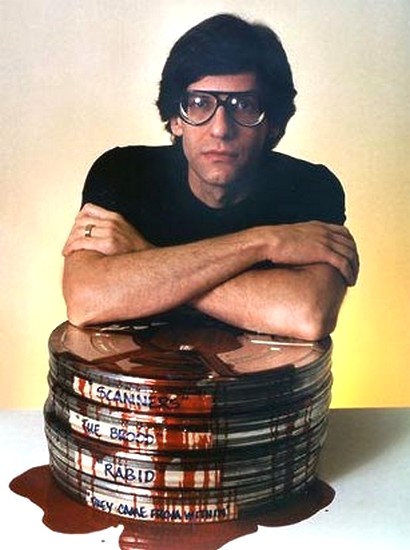
The cinematic corpus of David Cronenberg is probably best known for its expertly uncanny use of body horror, but looming almost as large in the writer-director’s various universes is the presence of faceless, all-powerful organizations. Like his rough contemporary Thomas Pynchon and the conspiracies that litter Pynchon’s early works—V. (1963), The Crying of Lot 49 (1966), and Gravity’s Rainbow (1973)—Cronenberg’s shadowy organizations offer fodder for paranoid conspiracy. These conspiracies operate under the cloak of beneficent academic institutes and, in his later work, corporations. The transition from institutes to corporations occurred during Cronenberg’s late ’70s and early ’80s output, specifically the trio of films The Brood (1979), Scanners (1981), and Videodrome (1983).

It is no coincidence that, at this particular time, international finance and prevailing political winds helped put the corporation in society’s driver’s seat. In Adam Curtis’s recent documentary film HyperNormalisation (2016), he notes how the default of the city of New York in 1975 opened the door for private investment and the finance industry to get their hands on municipal governance on a large scale for the first time, and how this creaked open the door for the Thatcher-Reagan privatization wave in the ’80s. These last few “hinge” years of the 1970s offered the last chance for a real alternative to the coming neoliberal revolution. Soon, all alternatives for governance in the name of the public good were destroyed. Corporatism tightened its grip on the Western polity.

Cronenberg’s early eerie organizations—the “Canadian Academy of Erotic Enquiry” from Stereo (1969) and the panoply of gruesome academic and cosmetic conspiracies in his Crimes of the Future (1970)—eventually yielded to corporations like Scanners‘ ConSec and Videodrome‘s Spectacular Optical. In these early works, Cronenberg’s mysterious organizations are headed by visionary (mad) geniuses. In 1975’s Shivers, experiments by a lone mad scientist infect an entire apartment building with parasites, which awaken dark impulses in the building’s residents and spread themselves through sexual violence. But as the decade went on, Cronenberg slowly backed away from utilizing the character of a singular scientific genius harboring a twisted vision of the future. Now, organizations sought to pull the strings from the shadows. The key transitional work in this chronology is the sometimes-underlooked The Brood from 1979.

In the film, Oliver Reed plays esteemed psychologist Dr. Hal Raglan, who has developed a method of exorcising deep-seated psychological issues using a technique called “psychoplasmics.” In intense one-on-one sessions reminiscent of psychodrama, Raglan is able to physically remove trauma from the human body in the form of ulcers, rashes, and, we eventually discover, cancer. In the ultimate reveal, it’s shown that Raglan has helped traumatized patient Nola Carveth (Samantha Eggar) to birth violent, deformed homunculi who go out into the world, psychically connected to her, in order to resolve her childhood abandonment issues and abuse with bloody murder. Raglan’s foundation, the Somafree Institute of Psychoplasmics (its name simultaneously evocative of Aldous Huxley’s perfect drug soma, and reminiscent of fringe psychological research like Wilhelm Reich’s orgone theory) inhabits a modernist chalet far outside the city of Toronto. Non-resident patients have to be bussed in. Raglan’s public reputation is that of an eccentric, but effective, therapist. At several points in the film we see the covers of Raglan’s presumably best-selling The Shape of Rage. (Curiously, a decade later, in 1990, a documentary titled Child of Rage would be released covering the controversial use of “attachment therapy.”)

As depicted in the film, Somafree is not a corporation. But the thematic threads surrounding Raglan and his Institute are based on real-life trends in the 1970s. In its practices and in the person of Raglan, Somafree resembles psycho-intensive institutes like Esalen, self-improvement organizations like Lifespring, and personalities like Werner Erhard. Erhard’s est movement used primal abuse to ostensibly create psychological breakthroughs, helping the “patient” become more assertive, more powerful, less prone to obeying impulses caused by their early traumas. There is also the real-life analogue to the psychological method that Raglan employs: psychodrama. In the 1970s, new methods of conflict resolution pioneered in places like Esalen were beginning to seep into the mainstream of North American society. These methods soon spread into the corporate world as a purported means of defusing tensions at work and making an office more productive. The “encounter group” soon became a punchline, but the principles behind the Age of Aquarius’s more touchy-feely psychodynamic methods soon became part of the warp and weft of corporate culture in the ’80s and well beyond.

Nola’s estranged husband Frank interviews a former Raglan patient, Jan Hartog, in an attempt to discredit Somafree so Frank can regain custody of his daughter. This patient bears the scars of Raglan’s work on him: a lymphatic cancer sprouting from his neck (an eerie foreshadowing of the coming of another mysterious lymphatic disorder that would soon break out all over North America). Hartog plans to sue; not to achieve victory in a courtroom, but to destroy Raglan’s reputation. It doesn’t matter if they win, Hartog says, because “They’ll just remember the slogan. Psychoplasmics can cause cancer.” The 1970s was full of an increased awareness of the carcinogens that surrounded us in the late-industrial West—cigarettes, sweeteners, food dyes, and pesticides—thanks in large part to the nascent environmental and consumer rights movements, which faced off against corporations using  weapons of negative publicity.

By the time we get to Scanners in 1981, we are fully invested in a world of shadowy corporate overlords. A huge multinational security firm, ConSec, tries to shepherd psychics called “scanners,” ostensibly to help them control their powers, but also to utilize and exploit their paranormal abilities. Protagonist Cameron Vale (Steven Lack) is apprehended off the streets, where, due to his psychic pain, he’s living as a derelict. We learn that scanners don’t “fit in” with society. When Vale is given the inhibitive drug ephemerol by ConSec’s head of scanner research, Dr. Paul Ruth (Patrick McGoohan), he is able to get himself together and is even given a new proto-yuppie wardrobe and mission by ConSec: eliminate rogue scanner Darryl Revok (Michael Ironside). But as Vale accepts his mission and new identity, he finds himself enlisted in ConSec’s private war against renegade scanners. When he runs into an emerging cell of scanners who are forming a powerful “group mind” in a New Age-like encounter session, assassins controlled by Revok murder most of the cell. “Everywhere you go, somebody dies,” one of the hive mind tells Vale, who is complicit with ConSec’s need to exert corporate control over scanners, including the use of violence as part of the corporate mission. Meanwhile, ConSec itself is riddled with moles working with Revok. Indeed, a chemical and pharmaceutical company called “Biocarbon Amalgamate,” founded by Dr. Ruth but now infiltrated by Revok, manufactures ephemerol in massive quantities. Scanners recontexualizes the Cold War espionage “wilderness of mirrors” in terms of corporate espionage for a new age of corporate domination. (It’s no coincidence that Cronenberg cast McGoohan, one of the Cold War’s most famous fictional spies, in the role of Dr. Ruth.)

ConSec’s corporate mission is revealed in a board meeting when the new head of security says, “We’re in the business of international security. We deal in weaponry and private armories.” This head of security also tells Dr. Ruth, “Let us leave the development of dolphins and freaks as weapons of espionage to others.” To the new breed of ConSec executive, fringe ’70s research is a thing of the past, despite its obvious power and relevance. The future is in fighting proxy wars, ensuring private security for the wealthy, and providing mercenary security forces. ConSec in this way is like many other private security firms that first emerged in the 1970s and ’80s. Begun as an outgrowth of post-colonial British military adventurism, the private military company soon became a way for ex-military officers to assure themselves a handsome post-service sinecure in a new era where hot wars were a thing of the past. “Brushfire wars” would continue to ensue, ensuring these companies an expanding portfolio, both in the waning years of the Cold War and in the 1990s and beyond. In fact, it’s interesting to note that many of the real-world military’s supposed psychic assets themselves got into private security after the U.S. Army shut down fringe science projects like Project STARGATE. Art imitates life imitates art.

Videodrome expands Cronenberg’s conspiratorial corporate, military, and espionage worldview into the rapidly exploding world of the media in the early ’80s. Leaps forward in technology, all of which are explicitly called out in Videodrome, litter the film’s visual landscape. Cable television, satellite transmissions (and the attendant hacking thereof), video cassette recorders, the rise of video pornography, virtual reality, postmodern media theory, and violence in entertainment all play essential roles in the film. Max Renn’s (James Woods) tiny Civic TV/Channel 83 (itself based on groundbreaking independent Toronto television station CityTV) is trying to survive as best it can in a world of massive international media players. Ever seeking the latest hit that will tap into the public’s unending hunger for sex and violence, his on-staff “satellite pirate” Harlan delivers the mysterious Videodrome transmission. Harlan is later revealed to be working with the Videodrome conspiracy, having intentionally exposed Max to the signal. In a memorable speech, Harlan nails Max’s amoral desire to sell sex and violence to his viewers: “This cesspool you call a television station, and your people who wallow around in it, and your viewers who watch you do it; you’re rotting us away from the inside.” When Renn is deep into his Videodrome-triggered hallucinations, he is offered corporate “help” much as Cameron Vale was. This time, his “savior” is Barry Convex, a representative of Spectacular Optical. In his video message to Max, he, like the ConSec executive before him, lays out Spectacular Optical’s corporate mission:

I’d like to invite you into the world of Spectacular Optical, an enthusiastic global corporate citizen. We make inexpensive glasses for the Third World… and missile guidance systems for NATO. We also make Videodrome, Max.

The final form of the military-industrial-entertainment complex is laid bare. Videodrome’s intent is to harden and make psychotic a North American television audience who’ve “become soft,” as Harlan puts it. Renn’s hallucinations are recorded, he is literally “reprogrammed” to kill Civic TV’s board (thanks to the memorable hallucinatory image of Convex sticking a VHS tape into Renn’s gut). Renn is then reprogrammed to retaliate and assassinate Convex by the much more ’70s-cult Cathode Ray Mission of “media prophet” Brian O’Blivion, whose postmodern, expressly McLuhanesque view of television’s place in the world allowed Videodrome to come into existence in the first place: “I had a brain tumor and I had visions. I believe the visions caused the tumor and not the reverse… when they removed the tumor, it was called Videodrome.” It’s also worth noting that O’Blivion tells us that Videodrome made him its first victim; postmodern criticism of the medium of television is no match for its violent, cancerous growth.

The deregulation of media in the U.S. in the Reagan years is common knowledge; rules around children’s television were especially eviscerated, which allowed for an explosion in violent, warlike cartoons based on popular toy lines, training a new generation for a lifetime of endless war. Combined with the aforementioned explosion of video technology, the laissez-faire environment shepherded by Reagan’s FCC allowed a new breed of cable television magnates to get rich and created a television and media landscape with a relatively friction-free relationship to government. By the time the first Gulf War broke out in 1991, war provided the cable news networks with surefire ratings and cable news provided the propaganda platform for the war effort, a mutually beneficial (and Cronenberg-esque) symbiosis that’s continued to metastasize through multiple subsequent wars in the Middle East. The world of Videodrome, the one Harlan evokes where America will no longer be soft in a world full of tough hombres, has finally come to fruition thanks in part to all of our enmeshment in the video arena—the video drome.

After Videodrome—in The Fly (1986), Dead Ringers (1988), and Crash (1996)—Cronenberg focuses less on sinister organizations and more on monomaniacal researchers, doctors, and fetishists who pursue their individual idiosyncratic agendas through the director’s trademark twisting mindscapes (and bodyscapes). With the exception of eXistenZ (1999), Cronenberg’s meditation on computer technology and gaming released amidst the first dot-com bubble, and his Occupy-influenced adaptation of Don DeLillo’s 2003 novel Cosmopolis (2012), he has retreated from a more overt suspicion of corporations and shadowy conspiracies. His warning about these invisible masters pulling the strings of society came during the time period when something could have been done about corporate hegemony. But now, the conspiracy operates in the open. We are now all of us the dumb, trusting Cronenberg protagonist, lulled into a false sense of security by a series of “enthusiastic corporate citizens.” Long live the new flesh.

On Track for Extinction: Can Humanity Survive?

By Robert J. Burrowes

Anyone reading the scientific literature (or the progressive news outlets that truthfully report this literature) knows that homo sapiens sapiens is on the fast track to extinction, most likely some time between 2025 and 2040.

For a taste of the evidence in this regard focusing on the climate, see ‘Climate Collapse and Near Term Human Extinction’, ‘What They Won’t Tell You About Climate Catastrophe’, ‘Release of Arctic Methane “May Be Apocalyptic,” Study Warns’ and ‘7,000 underground [methane] gas bubbles poised to “explode” in Arctic’.

Unfortunately, of course, the climate is not the only imminent threat to human survival. With an insane leadership in the White House in the United States – see ‘Resisting Donald Trump’s Violence Strategically’ – we are faced with the prospect of nuclear war. And even if the climate and nuclear threats to our survival are removed, there is still a substantial range of environmental threats – including rainforest destruction, the ongoing dumping of Fukushima radiation into the Pacific Ocean, extensive contamination from military violence… – that need to be addressed too, given the synergistic impacts of these multiple and interrelated threats.

Can these extinction-threatening problems be effectively addressed?

Well the reality is that most (but not all) of them can be tackled effectively if we are courageous enough to make powerful personal and organizational decisions and then implement them. But we are not even close to doing that yet. And time is obviously running out fast.

Given the evidence, scientific and otherwise, documenting the cause and nature of many of these problems and what is required to fix them, why aren’t these strategies to address the problems implemented?

At the political and economic level, it is usually explained structurally – for example, as an outcome of capitalism, patriarchy and/or the states-system – or, more simply, as an outcome of the powerful vested interests that control governments and the corporate imperative to make profits despite exacerbating the current perilous state of the Earth’s biosphere and its many exploited populations (human and otherwise) by doing so.

But the reality is that these political and economic explanations mask the deeper psychological drivers that generate and maintain these dysfunctional structures and behaviours.

Let me explain why and how this happens using the climate catastrophe to illustrate the process.

While scientific concern about the increase in carbon dioxide in the Earth’s atmosphere had been raised more than a century ago – see ‘The Discovery of Global Warming’ – it wasn’t until the 1980s that this concern started to gain significant traction in public awareness. And despite ongoing agitation by some scientists as well as climate and environment groups, corporate-funded climate deniers were able to stall widespread recognition of, and the start of serious official action on, the climate catastrophe for more than two more decades.

However, as the truth of the climate catastrophe was finally being accepted by most people and the climate deniers were finally forced into full-scale retreat on the issue of whether or not the climate catastrophe was, in fact, so serious that it threatened human extinction, the climate deniers implemented their back-up strategy: they used their corporate media to persuade people that action wasn’t necessary ‘until the end of the [21st] century’ and to exaggerate the argument about the ‘acceptable’ increase above the pre-industrial norm – 2 degrees? 3 degrees? 1.5 degrees? – to obscure the truth that 0.5 degrees was, in fact, the climate science consensus back in 2007.

But, you might ask: ‘Why would anyone prefer to ignore the evidence, given the extinction-threatening nature of this problem?’

Or, to put the question more fully: ‘Why would anyone – whether an “ordinary” worker, academic, lawyer, doctor, businessperson, corporate executive, government leader or anyone else – prefer to live in delusion and believe the mainstream narrative about “the end of the century” (or 1.5 degrees) rather than simply consider the evidence and respond powerfully to it?’

And what is so unattractive about the truth that so many people run from it rather than embrace it?

Obviously, these questions go to the heart of the human (psychological) condition so let me explain why most humans now live in a delusional state whether in relation to the climate, environment issues generally, the ongoing wars and other military violence, the highly exploitative global economy or anything else.

People do not choose to live in delusion nor do they choose their delusion consciously. A delusion is generated by a person’s unconscious mind; that is, the part of their own mind of which the individual is normally unaware. So why does a person’s unconscious mind generate a delusion? What is the purpose of it?

A person’s unconscious mind generates a delusion when the individual is simply too terrified to contemplate and grapple with reality. Instead, the person unconsciously generates a delusion and then lives in accord with that delusion for the (obvious) reason that the delusion does not frighten them.

This unconscious delusional state is the fundamental outcome of the socialization, which I call ‘terrorization’, of the typical child during their childhood.

Endlessly and violently coerced (by a variety of threatened and actual punishments) to obey the will of parents, teachers and religious figures in denial of their own self-will, while simultaneously denied the opportunity to feel the fear, anger, sadness and other feelings that this violence causes, the child has no choice but to suppress their awareness of how they feel and the reality that caused these feelings. As a result, this leaves virtually all children feeling terrified, full of self-hatred and powerless. For brief explanations of how this happens, see ‘Understanding Self-Hatred in World Affairs’ and ‘Why Are Most Human Beings So Powerless?’

However, and this point is important, each of these feelings is extraordinarily unpleasant to feel consciously and the child never gets the listening they need to focus on feeling them. See ‘Nisteling: The Art of Deep Listening’.

As a result, these feelings are suppressed below conscious awareness and this fear, self-hatred and powerlessness become the primary but unconscious psychological drivers of their behaviour and, significantly, results in them participating mindlessly in the widespread ‘socially acceptable’ delusions generated by elites and endlessly promulgated through elite channels such as education systems, the corporate media and entertainment industries.

Hence, as a result of being terrorized during childhood, delusion is the most common state of human individuals, irrespective of their role in society. For a full explanation of why this happens, see ‘Why Violence?’ and ‘Fearless Psychology and Fearful Psychology: Principles and Practice’.

And, as one part of their delusional state, most people must engage in the denial of reality whenever reality (unconsciously) frightens them (or threatens to bring their unconscious self-hatred or powerlessness into their awareness). See ‘The Psychology of Denial’. This, of course, means that they are frightened to take action in response to reality but also deny it is even necessary.

So what can we do about all of this? Well, as always, I would tackle the problem at various levels.

If you are one of those rare people who prefers to research the evidence and to act intelligently and powerfully in response to the truth that emerges from this evidence, I encourage you to do so. One option you have if you find the evidence of near-term human extinction compelling in light of the lacklustre official responses so far, is to join those participating in ‘The Flame Tree Project to Save Life on Earth’.

Obviously, tokenism on your part – such as rejecting plastic bags or collecting rubbish from public places – is not enough in the face of the profound changes needed.

Of course, if you are self-aware enough to know that you are inclined to avoid unpleasant realities and to take the action that this requires, then perhaps you could tackle this problem at its source by ‘Putting Feelings First’.

If you want intelligent, compassionate and powerful children who do not grow up living in delusion and denial, consider making ‘My Promise to Children’.

If you want to campaign on the climate, war, rainforest destruction or any other issue that brings us closer to extinction, consider developing a comprehensive nonviolent strategy to do so. See Nonviolent Campaign Strategy.

And if you want to participate in the worldwide effort to end violence in all of its manifestations, you are welcome to consider signing the online pledge of ‘The People’s Charter to Create a Nonviolent World’.

In summary, the primary threat faced by humanity is not the synergistic multitude of complex social, political, economic and technological forces that are precipitating our rush to extinction.

The fundamental threat to our survival is our psychological incapacity (particularly because of our fear, self-hatred and powerlessness) to perceive reality and respond powerfully to it by formulating and implementing appropriate social, political, economic and technological measures that address our multifaceted crisis systematically.

Unless we include addressing this dysfunctional individual and collective psychological state in our strategy to avert human extinction, we will ultimately fail and extinction will indeed be our fate.


Biodata: Robert J. Burrowes has a lifetime commitment to understanding and ending human violence. He has done extensive research since 1966 in an effort to understand why human beings are violent and has been a nonviolent activist since 1981. He is the author of ‘Why Violence?’ His email address is flametree@riseup.net and his website is here.

Robert J. Burrowes
P.O. Box 68
Daylesford, Victoria 3460
Australia

Email: flametree@riseup.net

Websites:
Nonviolence Charter
Flame Tree Project to Save Life on Earth
‘Why Violence?’
Feelings First
Nonviolent Campaign Strategy
Nonviolent Defense/Liberation Strategy
Anita: Songs of Nonviolence
Robert Burrowes
Global Nonviolence Network

3 EXTRAORDINARY PARADOXES OF PERSONAL AWAKENING

By Dylan Charles

Source: Waking Times

How do you reconcile the utter madness of the world with the overwhelming joy of being alive in it?

“Paradox: a situation, person, or thing that combines contradictory features or qualities.”

Without question we live in interesting times. The deception, insanity and turmoil in our world has no end, yet when we tune in very closely to life’s pulse, we find softness and connection open to us at every step. These contradictory features of the human experience point to the dualistic nature of the universe, but ultimately offer a glimpse of a middle way, the center, where harmony resides in a sea of chaos. A seeming, but natural paradox.

“When people find one thing beautiful,
another consequently becomes ugly.
When one man is held up as good,
another is judged deficient.

Similarly, being and nonbeing balance each other;
difficult and easy define each other;
long and short illustrate each other;
high and low rest upon one another;
voice and song meld into harmony;
what is to come follows upon what has been.”

~Tao Te Ching 2

This is what personal awakening means. To create a harmonious relationship with your own life. To solve the paradox. Have you experienced any of these 3 extraordinary paradoxes of personal awakening?

1. The Awakening is Triggered by Fear and Supported by Love

Like an invading virus triggers the immune system, fear triggers the awakening. War, strife, turmoil, conspiracy, control, death, suffering, theft, abuse. This is the world we have created for ourselves. The toll of such heaviness manifests as a dense type of contagious fear, a chronic trigger that perpetuates the fight or flight response, but without an immediate or tangible threat to face directly. But there is nowhere to run or hide from the fear. We can confront it or be consumed by it. Or transmute it.

And what is to found beyond the fear? Love. An endless stream of it. In the stream the fear makes sense as a force which guides us into the stream of love.

2. Healing Hurts

The awakening is ultimately a healing process, but it’s hardly free of pain, because it is in a sense a recovery from injury or illness, like a form of forgetfulness of who you really are. As such, it actually hurts. A lot. And just like the agony of having a broken bone set, or the pain of recovering from a difficult surgery, emotional and spiritual pain is a necessary component of healing.

Letting go into whatever it is, depression, sadness, boredom, or even grief, is how healing begins. There is no out, only through. The remembrance of the pain is there to forever color the outcome of the healing process.

“If you desire healing,
let yourself fall ill
let yourself fall ill.” ~Jalaluddin Mevlana Rumi

3. The Void Has Everything We Need

Counter intuitive it may seem, but stepping out of the cultural and mental clutter and into the void, where being and non-being balance each other, reveals everything we truly need. It turns out that silence is the teacher. In silence the universe comes into focus. Time stops and morphs into timelines. Infinite possibilities all become clear at once. Everything we need to know and feel is in this space, but to get there, everything has to be stripped away.

“In the pursuit of knowledge, every day something is added. In the practice of the Tao, every day something is dropped.” ~Tao Te Ching

Final Thoughts

What lies above lies below. A proper life is about balancing the joy of being alive with the terror of being alive. Ignoring either side of the equation leads to chaos.

“Do you want to improve the world?
I don’t think it can be done.

The world is sacred.
It can’t be improved.
If you tamper with it, you’ll ruin it.
If you treat it like an object, you’ll lose it.

There is a time for being ahead,
a time for being behind;
a time for being in motion,
a time for being at rest;
a time for being vigorous,
a time for being exhausted;
a time for being safe,
a time for being in danger.

The Master sees things as they are,
without trying to control them.
She lets them go their own way,
and resides at the center of the circle.”

~Lao Tzu, Tao Te Ching

According to the Father of Propaganda an Invisible Government Controls Our Minds with a Thought Prison

By Sigmund Fraud

Source: Waking Times

“Who are the men who without our realizing it, give us our ideas, tell us whom to admire and whom to despise, what to believe about the ownership of public utilities, about the tariff, about the price of rubber, about the Dawes Plan, about immigration; who tell us how our houses should be designed, what furniture we should put in them, what menus we should serve on our table, what kind of shirts we must wear, what sports we should indulge in, what plays we should see, what charities we should support, what pictures we should admire, what slang we should affect, what jokes we should laugh at?” ~ Edward Bernays [b.11/22/1891, d. 3/9/1995]  Propaganda

Authored by Edward Bernays and published in 1928, the book Propaganda still holds its position as the gold standard for influencing and manipulating public behavior. Drawing on his expertise in psychology while using the language of manipulation, Bernays pioneered social engineering via mass media, and his work lives on in the distorted, statist, consumer world we have today.

But who are the ones behind the curtain telling us what to think by directing our attention onto the things which serve interests?

Interestingly, chapter III of Propaganda is titled, ‘The New Propagandists, and is devoted to explaining why the controls for mass manipulation are so closely guarded by a relatively tiny elite who sit in the shadows, out of the public eye, choosing what we are to see and to think, even controlling the politicians we elect to represent us.

If we set out to make a list of the men and women who, because of their position in public life, might fairly be called the molders of public opinion we could quickly arrive at an extended list of persons mentioned in “Who’s Who…”

Such a list would comprise several thousand persons. But it is well known that many of these leaders are themselves led, sometimes by persons whose names are known to few.

Such persons typify in the public mind the type of ruler associated with the phrase invisible government.

An invisible government of corporate titans and behind the scenes influencers who’s mark on culture cannot be understated today. Bernays continues:

The invisible government tends to be concentrated in the hands of the few because of the expense of manipulating the social machinery which controls the opinions and habits of the masses.

The public relations counsel, then, is the agent who, working with modern media communication and the group formation of society, brings an idea to the consciousness of the public. But he is a great deal more than that. He is concerned with courses of action, doctrines, systems and opinions, and the securing of public support for them.

Ultimately, the goal of this type of mass-produced, pop-culture propaganda is to weaken the individual’s ability to think critically, thereby creating an environment where many people look to one another for approval, always second-guessing their own faculties. When this happens, the strength of the collective group begins to take form and multiply, and ideas can be implanted into the popular culture, taking root in the form of widespread conformist behavior.

Thinking critically means making reasoned judgments that are logical and well thought out. It is a way of thinking in which one doesn’t simply accept all arguments and conclusions to which one is exposed without questioning the arguments and conclusions. It requires curiosity, skepticism and humility. People who use critical thinking are the ones who say things such as, “How do you know that?” “Is this conclusion based on evidence or gut feelings?” and “Are there alternative possibilities when given new pieces of information?””  [Source]

Final Thoughts

The takeaway here is that not much has changed in 100 years of corporate/statist American culture, other than the technical capacity to scale this ever upward. Our lives are still heavily influenced by the likes of the described by Bernays. There is one advantage we do have now, however, as technology has given us greater access to the truth and we are now free to split from the matrix psychologically by understanding what it is and how it influences our lives. If we choose to do so, that is, if we choose to take the red pill.

In order to understand your life and your mission here on earth in the short time you have, it is imperative to learn to see the thought prison that has been built around you, and to actively circumnavigate it. Free-thinking is being stamped out by the propagandists, but our human tendency is to crave freedom, and with the aid of truth, we are more powerful than the control matrix and the invisible government.

Our Bigoted Brains

Photo credit: Art Killing ApathyBigotry,

By Eleanor Goldfield

Source: Popular Resistance

If you’ve ever moved beyond small talk and vapid pleasantries in conversation then you’ve likely dealt with the infuriating occurrence of trying to convince someone of a fact they just don’t want to accept. Beyond just avoiding the information, they almost seem hardwired to reject your proof in a phenomenon that I like to call “fact fear.” I noticed a sharp rise in fact fear during the 2016 elections and levels continue to hover at disturbing heights today. So, what gives? Are we really in a new era of idiocy or are we just seeing our particularly vapid and anti-intellectual culture ping off the most base and stubborn aspects of the human psyche? Both, I think.

Daniel Patrick Moynihan famously said, “You are entitled to your own opinions but not your own facts.” But in the post-truth, anti-intellectual, “I read it in a blog post so it must be true” era, our opinions and beliefs run the ever-growing risk of being founded on complete bullshit. Filter bubbles (which we covered in Episode 132) and digital spheres protect us from ideas and facts outside our own personal shit heaps and only serve up the information we want to see – which is not always factually accurate. Our culture of quick “news” and a growing lack of intellectual curiosity drive us further into an echo chamber of our own ideas – facts and information be damned. In turn, a false but far from flimsy crust solidifies around our minds –- and the soft light of truth and knowledge can’t get in.

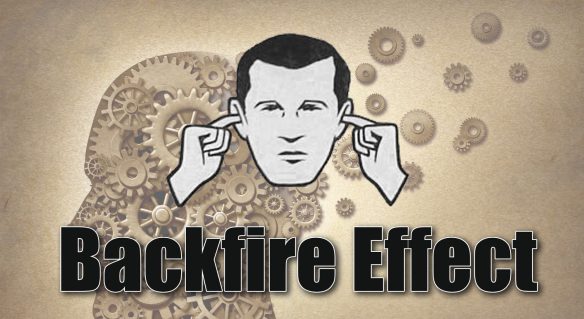
Our brains are wired to find comfort behind that crust. In what’s known as the backfire effect, our minds reject new information that clashes with our belief systems and opinions. As David McRaney, author of the books You Are Not So Smart and You Are Now Less Dumb explains it: “Once something is added to your collection of beliefs, you protect it from harm. You do this instinctively and unconsciously when confronted with attitude-inconsistent information. Just as confirmation bias shields you when you actively seek information, the backfire effect defends you when the information seeks you, when it blindsides you. Coming or going, you stick to your beliefs instead of questioning them. When someone tries to correct you, tries to dilute your misconceptions, it backfires and strengthens those misconceptions instead. Over time, the backfire effect makes you less skeptical of those things that allow you to continue seeing your beliefs and attitudes as true and proper.” In other words, that crust acts as a shield for facts that threaten your beliefs. And you’ve probably seen this in action online. Someone posts something like “climate change isn’t real” so you face palm and proceed to post ample proof that they’re wrong and that in fact, climate change is very real. The problem is that with each fact you post, the crust hardens – for both you AND the other person. Of course, it doesn’t help that you can find just as much if not more bullshit online than you can actual truth but much of it is actually tied to the inherent laziness of our brains. “The more difficult it becomes to process a series of statements, the less credit you give them overall…In experiments where two facts were placed side by side, subjects tended to rate statements as more likely to be true when those statements were presented in simple, legible type than when printed in a weird font with a difficult-to-read color pattern. Similarly, a barrage of counterarguments taking up a full page seems to be less persuasive to a naysayer than a single, simple, powerful statement.”

So does this mean that we should just stop pointing out when someone is wrong? That we should let all kinds of ridiculous notions from lizard people to “homeless people are dangerous” slide? Of course not. Rather, it means that if we want to educate and engage, if we want people to wake the fuck up then we have to consider how the human mind works – and how it doesn’t. Furthermore, our goal shouldn’t be to win an argument as if to suggest that as soon as we win the argument, justice is at hand. Indeed, if your goal is to simply be right, the religious zeal with which you defend your ideas will only turn you into the very monster you are trying to slay. Being right, in other words, is not the point. Progress is not a church. We are not looking for converts. Our aim should always be to engage and empower; to share our knowledge and embrace the knowledge of others. Seek and speak truth – then act on it. And do not think that because you found a nugget of information you hold moral superiority over those who don’t know it. Our minds are just as susceptible to that crust as anyone else’s. We are not special or better. Indeed, we must constantly question our opinions, compare them with facts and new information. By that I mean actual facts, not “alt facts” sourced from a single Google search or indeed even something from a “trusted” publication.

In an interview last March with Robert Scheer of Truthdig, author Joel Whitney discusses the 60 year history of fake news and how it was used in the Cold War era to sew distrust and hatred of all things “commie” and Russian. Major and well-trusted media outlets were a part of the propaganda ring and Whitney notes “that the fearful political atmosphere at the time led to “secrecy being used to preside over and rule over the free press — which we’re supposed to be the champions of.” “They drank the Kool-Aid and thought they were saving freedom,” Scheer agrees. The discussion underscores the need for analysis of Cold War-era media as a way to avoid propagandized journalism today. Scheer says, “I look at the current situation, where we don’t even have a good communist enemy, so we’re inventing Russia as a reborn communist power enemy.” “I call it superpolitics,” Whitney concludes, “where essentially there’s something that’s so evil and so frightening that we have to change how our democratic institutions work.” The latest red scare is but one example of how easy it is to mold minds when you use something like the hatred of Trump as a trigger. Blend some tried and true anti-Russia sentiment in there and you’ve got yourself a brand spanking new enemy – one that allows you to further mold those democratic institutions just as seamlessly as the minds you’ve now crusted and convinced. Russia aside, the same propaganda games go for mass media collusion on everything from fracking to the military industrial complex. For example, leaked email messages show that a writer from the LA times colluded with the CIA not only in terms of getting the CIA’s OK on forthcoming stories but actually offered to write stories for them that would put a positive spin on such issues as drone warfare, saying it would be quote “reassuring to the public” and a “good opportunity” for the CIA. Various other email messages show that the same was true for a list of other media outlets.

All this to say, if I may borrow a phrase: no investigation, no right to speak. Do your own research before you claim to know something. Incidentally this will also help steel you from the rumor mill AND infiltrators. Whether it’s taking someone to task on a rumor or engaging someone in discourse, be vigilant. Be vigilant in your drive, your actions, and be primarily vigilant in your own thinking. Release the flimsy beliefs that would just as soon sink you as keep you afloat. Arm yourself with knowledge and reach out to build and to engage, not to win a Facebook tiff. Consider the goal of engagement and empowerment rather than just being right. Consider the reaction you would have if someone came at you with a barrage of links followed by “read a fucking book, asshole!” You’d more than likely write them off as an unhinged asshole even if their information is solid. Try asking a question or perhaps as Ben Franklin suggested, ask them for a favor, something small that seeds trust, pinging off the human psychology that seeks appreciation and the feel of community. Push past political theory and get down to human connection – to start with. For instance, anarchists in several communities will often engage with would-be white supremacists via the common ground of distrust and disgust in the system. They’ll sit and talk; discuss the pitfalls of a system that’s left them behind and from there grow to a discourse on the roots of their discontent, i.e. not black people. In other words, knock on the door rather than trying to break down the wall. Because that wrought iron shit crust is stronger than steel.

Finally, keep in mind that this won’t always work and nor should it. We have to accept that in our grandiose imaginings of the revolution, many people will either be against us or sitting at home praying we all just shut up. But again, if you’re not looking for converts, if you’re engaging to empower, you’ll not only find more people willing to talk to you, you’ll also more than likely learn something in the process. You might even pick something up that’ll put a dent in your own mental crust.

Saturday Matinee: Stare Into The Lights My Pretties

Source: https://stareintothelightsmypretties.jore.cc/

Logline

A film about screen culture and its implications. While the world burns, where are we?

Introduction

We live in a world of screens. The average adult spends the majority of their waking hours in front of some sort of screen or device. We’re enthralled, we’re addicted to these machines. How did we get here? Who benefits? What are the cumulative impacts on people, society and the environment? What may come next if this culture is left unchecked, to its end trajectory, and is that what we want?

Stare Into The Lights My Pretties investigates these questions with an urge to return to the real physical world, to form a critical view of technological escalation driven by rapacious and pervasive corporate interest. Covering themes of addiction, privacy, surveillance, information manipulation, behaviour modification and social control, the film lays the foundations as to why we may feel like we’re sleeprunning into some dystopian nightmare with the machines at the helm. Because we are, if we don’t seriously avert our eyes to stop this culture from destroying what is left of the real world.

Purpose

This independent film was made with no budget (adding to its authenticity) with no affiliations, is not-for-profit, and is released to the world for free for the purposes of critical discourse, education, and for cultivating radical social and political change.

A False Agenda for Humanity

By Julian Rose

Source: Waking Times

Humanity has, for millennia, been led down the road of an entirely false agenda. So much so, that every aspect of society is almost the precise reverse of what it should be.

Just a glimmer of awareness reveals that the true potential of the majority of mankind remains locked away, unable to exert any influence on the course of events on our planet.

Given the scale of this imprisonment, it becomes apparent that the world has been moving on a trajectory invented and directed by a false intelligence, whose interests are diametrically opposed to the intelligence of natural planetary consciousness.

I use the word ‘intelligence’ because its hard to find the right word to describe that which is very clever, but lacks the ability to feel love or compassion; and is often ruthless without ever showing emotion. Intelligence should have a more human ring to it, but the word has been hijacked by the spying networks: the CIA, FBI, MI5 for example, all call themselves ‘intelligence agencies’. Not exactly warm-blooded institutions!

Within the hierarchies of banks, corporations, the military, governments, the media and various global trading organizations, one will find a plethora of quasi-humans in line to get their hands onto the levers of the central control system. The top-down pyramid which steers the daily agenda for millions of mortals caught-up in the 9 to 5 treadmill. Yet, those climbing the employment ladder within these same institutions, more often than not lack any awareness of what is going on above their heads.

We should consider the following question: at exactly what point within this typical corporate pyramid, does the ordinary mortal metamorphose into the ranks of the subhuman control master? Which floor serves as the subtle switch-point where the 9 to 5 worker ‘just doing a job’ shifts into a dedicated trainee in the art of ‘power over the people’ management?

I am not proposing to answer this, as it is a largely hypothetical question; but I suggest that the process whereby the false agenda for humanity is able to be maintained, year in year out, relies heavily on the unquestioning cooperation of those who, at some point, change their identity – or have their identity changed – from just ordinary workers to corporate clones. In other words those who see the world entirely through the lens of the corporation they work for.

The renowned social psychiatrist/psychologist Dr Erich Fromm, in his last major thesis ‘The Anatomy of Human Destructiveness’ traces the decline of the sentient human at the hands of a ‘corporate intelligence’ which is specifically designed to dehumanize those climbing up its ranks. So that by the time they reach the top, such people have become robotic, in virtually every action they undertake.

Here lies the mechanism whereby the human becomes less than human; the less than human becomes inhuman; and the inhuman becomes a biological robotic clone and proponent of Transhumanist Artificial Intelligence – which takes the false agenda for humanity ever nearer to its ultimate goal.

Perhaps not ultimate, but far enough to ensure that humanity as we know it, is superseded by another form of ‘intelligence’ that has nothing to do with nature or the exigence expressed in natural human emotions of love, joy, pain and sorrow.

Cyborgian artificial intelligence is just that: artificial. Art put in reverse so as to eliminate the godly, the beautiful, the spontaneous – all that which gives expression to what it really means to be human.

But consider the fact that it is people suffering these type of symptoms who are in the driving seat of world affairs; running governments, banks and technocratic institutions like the European Union. The mentality is that of a corporate trained control freak – and the greater the power on hand, the greater the ego fueled top-down control manipulation becomes.

The structural design of the neoliberal/neoconservative capitalist Leviathon is not an accident. It is a deliberate formula for the entrapment of mankind. One which puts into reverse – and thereby completely distorts – the true hierarchical themes of nature and the cosmos. In just the same way as Hitler inverted and reversed the design of the original swastika, an ancient peace symbol from Southern India, into a twisted symbol of war.

The symbols that adorn all top-end corporate chains and industries, follow this same pattern. They are nearly all based upon ancient archetypal forms. Forms that symbolized man’s desire to give expression to the powers of nature, as well as the cosmic influences that were mythologized into gods and pantheistic forces of power and influence. Symbols that expressed higher aspirations of bygone civilisations.

The big-chiefs of corporate globalization adorn their high-rise totems and plush office suites with the very same symbols, but what do they stand for now?

Quite simply, a crassly materialistic paradigm which has usurped the nature gods of old; declaring itself the new ‘supreme force’ to which mankind must go on its knees in unquestionoing obeisance.

And, as we know, the majority of mankind has been complicit in fulfilling this role, ensuring a self-inflicted avenue of slavery and passive acceptance of the role assigned by the prevailing status quo.

Indeed, there appears to be no end to the butchery and bullying in the cause of keeping the Leviathan rolling forward. The US military – backed by its European ‘allies’ – ranges the planet in support of the ceaseless profligate mining of valuable minerals, to make the fuels that fill the tanks of Big Pharma, Big Agro, Big Army and Big Business. While the public, rather than rising up against mammon, appear to be paralyzed by the spectacle, unable to imagine anything less destructively domineering that might take its place.

I used the words “appear to be” because there is, of course, another emergent energy that tells another story. That breaks through the deception that man is nothing more than a psychopathetic instrument in the hands of all dominant, aggressive and less than human oppressors.

It is not just ‘any’ other energy. It is the long-buried – and steadily more volcanic – energy of liberated spirit. A revivified spirit which is finding its way back into the arteries of an ever-growing number of ex hostages of the status quo, as well as new arrivals on this planet.

Everyday this spirit is gaining further momentum and a stronger equilibrium. Cracks in the false agenda are widening; the confidence of its perpetrators is wavering; the old power base is leaking.

Chinks of light glitter amongst the darkness; the sense of an upwardly rising change is in the air, counteracting the stench of stagnation and decline.

What is this?

We ‘the people’ have arrived at a critical point in this apocalyptic epoch, finding out that we are possessed of power we never knew we had; starting to believe in a Self we never knew we cradled; hearing a voice we never could hear before. Finding in each other, sources of mutual support, not just a shackled fellow prisoner.

As this process grows, so the false agenda is further revealed for what it is, and its chief perpetrators are exposed ever more clearly for what they are. The seemingly inexorable drive towards a cybernetic future, or one populated and run by gender-bent, micro-chipped mock-humans, is being infiltrated by warm-blooded, nature loving true humans. Trees are being planted where concrete was once the only landscape.

We are learning that where our thoughts go – energy follows. And that if these thoughts are full of creativity and life, so will our lives also be. We are learning that we can take charge of our destinies after all. That, at any moment, we could dispense with the false reality of the top down centralized command system, and be free to start our own version of reality. One informed by our love of Truth – a determination to act on this truth – and a growing aspiration to Be rather than to have.


Julian Rose is an early pioneer of UK organic farming, a writer, actor and international activist.