
There is something extraordinary happening in the world

flux1-660x375

By Gustavo Tanaka

Source: Medium

A few months ago, I freed myself from society, I’ve released myself from attachments I had and fear that locked me to the system. And since then, I started seeing the world from a different perspective. The perspective that everything is changing and most of us have not even realized that.

Why is the world changing? In this post I’ll list the reasons that take me to believe this.

1 — No one can stand the employment model anymore.

Each one is reaching its own limit. People that work in big corporations can’t handle their jobs. The lack of purpose starts to knock the door of each one as a desperate scream coming from the heart.

People want to escape. They want to leave everything behind. Look how many people trying to become entrepreneurs, how many people going on sabbaticals, how many people depressed in their jobs, how many people in burnout.

2- The entrepreneurship model is also changing

A few years ago, with the explosion of the startups, thousands of entrepreneurs, ran to their garages to create their billion dollar ideas. The glory was to get funded by an investor. Investor’s money in hand was just like winning the World Cup.

But what happens after you get funded?

You become an employee again. You have people that are not aligned with your dream, that don’t give a damn to the purpose and everything turns into money. The financial return starts to be the main driver.

Many people are suffering with this. Brilliant startups start to fall because the model of chasing money never ends.

We need a new model of entrepreneurship.

And there is already many good people doing this.

3- The rise of collaboration

Many people have already realized that makes no sense to go alone. Many people awake to this crazy mentality of “going on your own”.

Stop, take a step back and think. Isn’t it an absurd, we, 7 billion people living in the same planet get so separated from each other? What sense does it make, you and the thousands (or millions) of people living in the same city turn your back to each other? Every time I think of that I get kind of depressed.

But fortunately, things are changing. All the movements of sharing and collaborative economy are pointing towards this direction. The rise of collaboration, sharing, helping, giving a hand, getting united.

It is beautiful. It brings tears to my eyes.

4- We are finally starting to understand what the internet is

Internet is an incredibly spectacular thing and only now, after so many years we are understanding it’s power. With internet, the world opens, the barriers fall, separation ends, union starts, collaboration explodes, help emerges.

Some nations made revolution with the internet, such as the Arab Spring. In Brazil we are just starting to use better this magnificent tool.

Internet is taking down mass control. There is no more television, no more few newspapers showing the news they want us to read. You can go after whatever you want, you relate to whoever you want. You can explore whatever you want, whenever you want.

With internet, the small starts to get a voice. The anonymous become known. The world gets united. And the system may fall.

5- The fall of exaggerated consumption

For many years, we have been manipulated, stimulated to consume as maniacs. To buy everything that was launched in the market. To have the newest car, the latest iphone, the best brands, lots of clothes, lots of shoes, lots of lots, lots of everything.

But many people have already understood that it makes no sense at all. Movements such as the lowsumerism, slow life, slow food, start to show us that we have organized ourselves in the most absurd possible way.

Each time less people using cars, less people buying a lot, each time more people trading clothes, donating, buying old things, sharing goods, sharing cars, apartments, offices.

We need nothing of what they told us we needed.

And this consciousness can break any corporation that depends on exaggerated consumption.

6- Healthy and organic eating

We were so crazy that we accepted eating any kind of garbage. It only needed to taste good, that was ok.

We were so disconnected, that the guys started to add poison in our food and we didn’t say anything.

But then some guys started to wake up and give strength to movements of healthy eating and organic consumption.

And this is going to be huge.

But what does it have to do with economy and work? Everything!

The production of food is the basis of our society. Food industry is one of the most important in the world. If consciousness changes, our eating habits also change, and consumption changes, and then the big corporations must follow these changes.

The small farmer is starting to have strength again. Also people who are planting their own food.

And that changes the whole economy.

7 — The awakening of spirituality

How many friends do you have that practice yoga? What about meditation?

How many used to do it 10 years ago?

Spirituality for many years was a thing of the esoteric people. Of those weird people from mysticism.

But fortunately, this is also changing. We got to the limit of our rationality. We could see that only with the rational mind we cannot understand everything that happens here. There is something more happening and I know you want to understand.

You want to understand how things work in here. How life operates, what happens after death, what is this energy thing that people talk so much, what is quantum physics, how can thoughts become things and create our reality, what are coincidences and synchronicities, why meditation works, how is it possible to cure with the hands and what about these alternative therapies that medicine does not approve, but work?

Companies are promoting meditation to their employees. Schools teaching meditation to kids.

8 — Unschooling movements

Who created this teaching model? Who chose the classes you have to take? Who chose the lessons we learn in history classes? Why didn’t they teach us the truth about other ancient civilizations?

Why should the kids obey rules? Why should they watch everything in silence? Why should they wear uniform?

Take a test to prove that you learned?

We created a model that forms followers of the system. That prepare people to be ordinary human beings.

But fortunately there are many people working to change that. Movements like unschooling, hackschooling, homeschooling.

Maybe you have never thought of this and you are chocked with the points I’m listing here.

But all these things are happening.

Silently, people are awakening and realizing how crazy it is to live in this society.

Look at all these movements and try to think everything is normal.

I don’t think it is.

There is something extraordinary happening.

— — — — — — — — — — — — — — — — — — — — — — — — — — — — —

Gustavo Tanaka — Brazilian author and entrepreneur, trying to create with my friends a new model, a new system and maybe helping to create a new economy.

Glenn Greenwald Stands by the Official Narrative

2014_09_Screen-Shot-2014-09-12-at-12.35.03-PM

By William A. Blunden

Source: Dissident Voice

Glenn Greenwald has written an op-ed piece for the Los Angeles Times. In this editorial he asserts that American spies are motivated primarily by the desire to thwart terrorist plots. Such that their inability to do so (i.e., the attacks in Paris) coupled with the associated embarrassment motivates a public relations campaign against Ed Snowden. Greenwald further concludes that recent events are being opportunistically leveraged by spy masters to pressure tech companies into installing back doors in their products. Over the course of this article what emerges is a worldview which demonstrates a remarkable tendency to accept events at face value, a stance that’s largely at odds with Snowden’s own documents and statements.

For example, Greenwald states that American spies have a single overriding goal, to “find and stop people who are plotting terrorist attacks.” To a degree this concurs with the official posture of the intelligence community. Specifically, the Office of the Director of National Intelligence specifies four topical missions in its National Intelligence Strategy: Cyber Intelligence, Counterterrorism, Counterproliferation, and Counterintelligence.

Yet Snowden himself dispels this notion. In an open letter to Brazil he explained that “these [mass surveillance] programs were never about terrorism: they’re about economic spying, social control, and diplomatic manipulation. They’re about power.”

And the public record tends to support Snowden’s observation. If the NSA is truly focused on combatting terrorism it has an odd habit of spying on oil companies in Brazil and Venezuela. In addition anyone who does their homework understands that the CIA has a long history of overthrowing governments. This has absolutely nothing to do with stopping terrorism and much more to do with catering to powerful business interests in places like Iran (British Petroleum), Guatemala (United Fruit), and Chile (ITT Corporation). The late Michael Ruppert characterized the historical links between spies and the moneyed elite as follows: “The CIA is Wall Street, and Wall Street is the CIA.”1

The fact that Greenwald appears to accept the whole “stopping terrorism” rationale is extraordinary all by itself. But things get even more interesting…

Near the end of his article Greenwald notes that the underlying motivation behind the recent uproar of spy masters “is to depict Silicon Valley as terrorist-helpers for the crime of offering privacy protections to Internet users, in order to force those companies to give the U.S. government ‘backdoor’ access into everyone’s communications.”

But if history shows anything, it’s that the perception of an adversarial relationship between government spies and corporate executives has often concealed secret cooperation. Has Greenwald never heard of Crypto AG, or RSA, or even Google? These are companies who at the time of their complicity marketed themselves as protecting user privacy. In light of these clandestine arrangements Cryptome’s John Young comments that it’s “hard to believe anything crypto advocates have to say due to the far greater number of crypto sleazeball hominids reaping rewards of aiding governments than crypto hominid honorables aiding one another.”

It’s as if Greenwald presumes that the denizens of Silicon Valley, many of whose origins are deeply entrenched in government programs, have magically turned over a new leaf. As though the litany of past betrayals can conveniently be overlooked because things are different. Now tech vendors are here to defend our privacy. Or at least that’s what they’d like us to believe. In the aftermath of the PRISM scandal, which was disclosed by none other than Greenwald and Snowden, the big tech of Silicon Valley is desperate to portray itself as a victim of big government.

You see, the envoys of the Bay Area’s new economy have formulated a convincing argument. That’s what they get paid to do. The representatives of Silicon Valley explain in measured tones that tech companies have stopped working with spies because it’s bad for their bottom line. Thus aligning the interests of private capital with user privacy. But the record shows that spies often serve private capital. To help open up markets and provide access to resources in foreign countries. And make no mistake there’s big money to be made helping spies. Both groups do each other a lot of favors.

And so a question for Glenn Greenwald: what pray tell is there to prevent certain CEOs in Silicon Valley from betraying us yet again, secretly via covert backdoors, while engaged in a reassuring Kabuki Theater with government officials about overt backdoors? Giving voice to public outrage while making deals behind closed doors. It’s not like that hasn’t happened before during an earlier debate about allegedly strong cryptography. Subtle zero-day flaws are, after all, plausibly deniable.

How can the self-professed advocate of adversarial journalism be so credulous? How could a company like Apple, despite its bold public rhetoric, resist overtures from spy masters any more than Mohammad Mosaddegh, Jacobo Árbenz, or Salvador Allende? Doesn’t adversarial journalism mean scrutinizing corporate power as well as government power?

Glenn? Hello?

Methinks Mr. Greenwald has some explaining to do. Whether he actually responds with anything other than casual dismissal has yet to be seen.

  1. Michael C. Ruppert, Crossing the Rubicon: The Decline of the American Empire at the End of the Age of Oil, New Society Publishers, 2004, Chapter 3, page 53.

Bill Blunden is an independent investigator whose current areas of inquiry include information security, anti-forensics, and institutional analysis. He is the author of several books, including The Rootkit Arsenal and Behold a Pale Farce: Cyberwar, Threat Inflation, and the Malware-Industrial Complex. He is the lead investigator at Below Gotham Labs. 

Saturday Matinee: The Internet’s Own Boy

internetsownboyEditor’s Note: Tomorrow marks the birthday of Aaron Swartz. Had the government not driven him to an early death he would have been 29.

Synopsis by TakePart.com

The Internet’s Own Boy follows the story of programming prodigy and information activist Aaron Swartz. From Swartz’s help in the development of the basic internet protocol RSS to his co-founding of Reddit, his fingerprints are all over the internet. But it was Swartz’s groundbreaking work in social justice and political organizing combined with his aggressive approach to information access that ensnared him in a two-year legal nightmare. It was a battle that ended with the taking of his own life at the age of 26. Aaron’s story touched a nerve with people far beyond the online communities in which he was a celebrity. This film is a personal story about what we lose when we are tone deaf about technology and its relationship to our civil liberties.

Cult Movie Inspires Global Protest Against Internet Censorship

anonymous_telecomix_2012_5_31

Anonymous to Commemorate Guy Fawkes Day with Hundreds of Events

By Klaus Marre

Source: WhoWhatWhy.org

Here’s something sure to raise “hackles” in corporate boardrooms everywhere: The hacker collective Anonymous is marching in cities around the world today in the name of a free Internet.

The more than 600 events scheduled coincide with Guy Fawkes Day, an English holiday that animates the plot of the popular anti-tyranny movie V for Vendetta. Guy Fawkes was a notorious rebel who tried to blow up the English Parliament in 1605.

The Free Flow of Information: Unstoppable

“This year you are invited to stand against censorship and tyranny, corruption, war, poverty,” Anonymous said in a video on the Million Mask March website. “Millions will unite around the globe on the 5th of November to make their voices heard and let the various governments of the world know that they’ll never stop the free flow of information.”

Most of the events will be held in the US and Europe. In London protesters will gather outside the Ecuadorian embassy, where Wikileaks founder Julian Assange has found temporary refuge from prosecution. Hacktivists see his prosecution as payback for his making public vast numbers of top-secret files. Another major demonstration is planned for Washington, DC.

Others actions are scheduled for remote areas like Greenland and even, purportedly, scientific stations in Antarctica.

Only a handful of events are planned in countries like Russia and China, which have a history of dealing harshly with protesters.

The Million Mask March website warns marchers to be prepared for government counter-measures.

“Don’t risk your safety. Depending upon your country, if you believe you must go with superhero costumes, flowers, peace signs and pink sunglasses, do it,” the site states. “Go with a buddy. Keep your cameras on, and never surrender your camera.”

“Governments Don’t Work for the Interest of the People”

While advising caution, Anonymous frames the rationale for the Million Mask March in the starkest terms.

“It must be clear by now that governments don’t work for the interest of the people, but for big banks and corporations,” the hacker collective says in the video. “Do you or your children really want to live in a world where the government spies on its own citizens and sees you as a potential terrorist or criminal?”

Anonymous also announced that it would release today the names of KKK members that it gathered from hacked websites and databases. This would be the group’s latest high-profile action.

Anonymous is credited with dozens of “hacktivist” activities — against a wide range of government and private entities that rouse its ire. Previous targets have included the governments of the US and Israel, the Church of Scientology, child pornography sites, major corporations and the rabidly anti-gay Westboro Baptist Church.

The hacker collective sees the Internet as “one of the last truly free vessels that we the citizens have access to” and it has come out against what they view as harmful to that freedom. This includes government initiatives such as the Stop Online Privacy Act, the Cyber Intelligence Sharing and Protection Act, and the Trans-Pacific Partnership.

Headline News: US Congress Member Speaks the Truth on CNN

maxresdefault

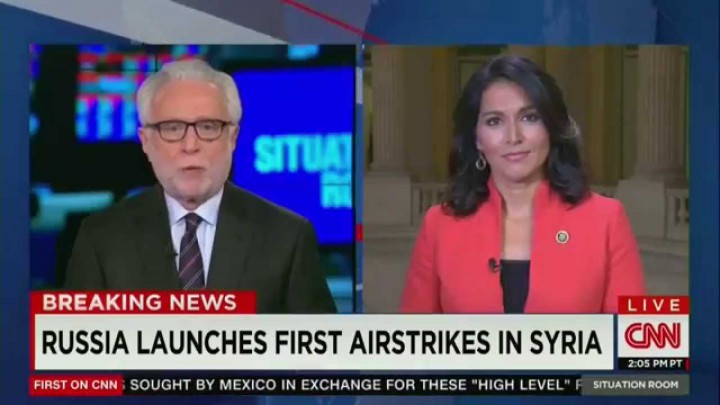
In a time when politicians are expected to lie and corporate news networks more often than not self-censor (if/when covering actual news), it’s indeed a headline story when a member of congress speaks the truth on a corporate cable news program. Not surprisingly for those who’ve followed her career, the refreshingly honest words came from Rep. Tulsi Gabbard.

Gabbard was one of the first female combat veterans and became the youngest woman elected to a U.S. state office (as Representative for for Hawaii’s 42nd House District ) at age 21 in 2002. In 2004, Gabbard deployed with her Hawaii Army National Guard unit for a 12-month tour in Iraq where she served in a field medical unit as a specialist with a 29th Support Battalion medical company. Upon her return from Iraq in 2006 Gabbard served as a legislative aide for U.S. Senator Daniel Akaka in Washington, DC. During this time she attended the Accelerated Officer Candidate School at the Alabama Military Academy and finished as the distinguished honor graduate in March 2007  (a first for a woman in the Academy’s 50-year history). From 2011 and 2012 Gabbard served in the Honolulu City Council and in 2012 became the first American Samoan and Hindu member of the US Congress. On October 12, 2015 Captain Gabbard was promoted to Major at a ceremony at the National Memorial Cemetery of the Pacific, the same day she was disinvited by the DNC from the Democratic presidential debate for publicly stating she wanted to see more debates. Gabbard has been politically outspoken as a pro-choice and same-sex marriage supporter and has advocated for alternative energy, Native Hawaiian rights and a return of the Glass-Steagall Act. She has also opposed the use of drones to kill U.S. citizens.

As cynical as most of us should be about politics and government in this day and age, it’s promising when individuals who seem to have the honesty, intelligence and work ethic to be a true leader rise through the ranks. It’s especially hopeful for those who’d like to see more women in positions of power (other than Hillary, Palin, Fiorina, etc), regardless of whether improved leadership does anything significant to fix the current system.

Statements from Gabbard in the CNN segment that may startle those who habitually get news from corporate media include:

“The U.S. and the CIA are working to overthrow the Syrian government of Assad…

…while Russia, a long-time ally of Assad for decades now, is working to defend or uphold the Syrian government of Assad, and this puts us in a position of a possible direct head-to-head conflict with Russia as long as the U.S. and CIA continue down this path.”

(H/T: Truthstream Media)

The Crisis of the Now: Distracted and Diverted from the Ever-Encroaching Police State

corp_media_500

By John W. Whitehead

Source: The Rutherford Institute

“When a population becomes distracted by trivia, when cultural life is redefined as a perpetual round of entertainments, when serious public conversation becomes a form of baby talk, when, in short, a people become an audience and their public business a vaudeville act, then a nation finds itself at risk: culture-death is a clear possibility.”—Author Neil Postman

Caught up in the spectacle of the forthcoming 2016 presidential elections, Americans (never very good when it comes to long-term memory) have not only largely forgotten last year’s hullabaloo over militarized police, police shootings of unarmed citizens, asset forfeiture schemes, and government surveillance but are also generally foggy about everything that has happened since.

Then again, so much is happening on a daily basis that it’s understandable if the average American has a hard time keeping up with and remembering all of the “events,” manufactured or otherwise, which occur like clockwork and keep us distracted, deluded, amused, and insulated from reality while the government continues to amass more power and authority over the citizenry.

In fact, when we’re being bombarded with wall-to-wall news coverage and news cycles that change every few days, it’s difficult to stay focused on one thing—namely, holding the government accountable to abiding by the rule of law—and the powers-that-be understand this. As investigative journalist Mike Adams points out:

This psychological bombardment is waged primarily via the mainstream media which assaults the viewer by the hour with images of violence, war, emotions and conflict. Because the human nervous system is hard wired to focus on immediate threats accompanied by depictions of violence, mainstream media viewers have their attention and mental resources funneled into the never-ending ‘crisis of the NOW’ from which they can never have the mental breathing room to apply logic, reason or historical context.

Consider if you will the regularly scheduled trivia and/or distractions in the past year alone that have kept us tuned into the various breaking news headlines and entertainment spectacles and tuned out to the government’s steady encroachments on our freedoms:

Americans were riveted when the Republican presidential contenders went head-to-head for the second time in a three-hour debate that put Carly Fiorina in a favored position behind Donald Trump; Hillary Clinton presented the softer side of her campaign image during an appearance on The Tonight Show with Jimmy Fallon; scientists announced the discovery of what they believed to be a new pre-human species, Homo naledi, that existed 2.8 million years ago; an 8.3 magnitude earthquake hit Chile; massive wildfires burned through 73,000 acres in California; a district court judge reversed NFL player Tom Brady’s four-game suspension; tennis superstar Serena Williams lost her chance at a calendar grand slam; and President Obama and Facebook mogul Mark Zuckerberg tweeted their support for a Texas student arrested for bringing a homemade clock to school.

That was preceded by the first round of the Republican presidential debates; an immigration crisis in Europe; the relaxing of Cuba-U.S. relations; the first two women soldiers graduating from Army Ranger course; and three Americans being hailed as heroes for thwarting a train attack in France. Before that, there was the removal of the Confederate flag from the South Carolina statehouse; shootings at a military recruiting center in Tennessee and a movie theater in Louisiana; the Boy Scouts’ decision to end its ban on gay adult leaders; the first images sent by the New Horizons spacecraft of Pluto; and the victory over Japan of the U.S. in the Women’s World Cup soccer finals.

No less traumatic and distracting were the preceding months’ newsworthy events, which included a shooting at a Charleston, S.C., church; the trial and sentencing of Boston Marathon bomber suspect Dzhokhar Tsarnaev; the U.S. Supreme Court’s affirmation of same-sex marriage, Obamacare, lethal injection drugs and government censorship of Confederate flag license plates; and an Amtrak train crash in Philadelphia that left more than 200 injured and eight dead.

Also included in the mix of distressing news coverage was the death of 25-year-old Freddie Gray while in police custody and the subsequent riots in Baltimore and city-wide lockdown; the damning report by the Dept. of Justice into discriminatory and abusive practices by the Ferguson police department; the ongoing saga of Hillary Clinton’s use of a private email account while serving as secretary of state; the apparently deliberate crash by a copilot of a German jetliner in the French Alps, killing all 150 passengers and crew; the New England Patriots’ fourth Super Bowl win; a measles outbreak in Disneyland; the escalating tensions between New York police and Mayor Bill de Blasio over his seeming support for anti-police protesters; and a terror attack at the Paris office of satire magazine Charlie Hebdo.

Rounding out the year’s worth of headline-worthy new stories were protests over grand jury refusals to charge police for the deaths of Eric Garner and Michael Brown; the disappearance of an AirAsia flight over the Java Sea; an Ebola outbreak that results in several victims being transported to the U.S. for treatment; reports of domestic violence among NFL players; a security breach at the White House in which a man managed to jump the fence, cross the lawn and enter the main residence; and the reported beheading of American journalist Steven Sotloff by ISIS.

That doesn’t even begin to touch on the spate of entertainment news that tends to win the battle for Americans’ attention: Bruce Jenner’s transgender transformation to Caitlyn Jenner; the death of Whitney Houston’s daughter Bobbi Kristina Brown; Kim Kardashian’s “break the internet” nude derriere photo; sexual assault allegations against Bill Cosby; the suicide of Robin Williams; the cancellation of the comedy The Interview in movie theaters after alleged terror hack threats; the wedding of George Clooney to Amal Alamuddin; the wedding of Angelina Jolie and Brad Pitt; the ALS ice bucket challenge; and the birth of a baby girl to Prince William and Kate.

As I point out in my book Battlefield America: The War on the American People, these sleight-of-hand distractions, diversions and news spectacles are how the corporate elite controls a population by entrapping them in the “crisis of the NOW,” either inadvertently or intentionally, advancing their agenda without much opposition from the citizenry.

Professor Jacques Ellul studied this phenomenon of overwhelming news, short memories and the use of propaganda to advance hidden agendas. “One thought drives away another; old facts are chased by new ones,” wrote Ellul.

“Under these conditions there can be no thought. And, in fact, modern man does not think about current problems; he feels them. He reacts, but he does not understand them any more than he takes responsibility for them. He is even less capable of spotting any inconsistency between successive facts; man’s capacity to forget is unlimited. This is one of the most important and useful points for the propagandists, who can always be sure that a particular propaganda theme, statement, or event will be forgotten within a few weeks.”

But what exactly has the government (aided and abetted by the mainstream media) been doing while we’ve been so cooperatively fixated on whatever current sensation happens to be monopolizing the so-called “news” shows?

If properly disclosed, consistently reported on and properly digested by the citizenry, the sheer volume of the government’s activities, which undermine the Constitution and in many instances are outright illegal, would inevitably give rise to a sea change in how business is conducted in our seats of power.

Surely Americans would be concerned about the Obama administration’s plans to use behavioral science tactics to “nudge” citizens to comply with the government’s public policy and program initiatives? There would be no end to the uproar if Americans understood the ramifications of the government’s plan to train non-medical personnel—teachers, counselors and other lay people—in “mental first aid” in order to train them to screen, identify and report individuals suspected of suffering from mental illness. The problem, of course, arises when these very same mental health screeners misdiagnose opinions or behavior involving lawful First Amendment activities as a mental illness, resulting in involuntary detentions in psychiatric wards for the unfortunate victims.

Parents would be livid if they had any inkling about the school-to-prison pipeline, namely, how the public schools are being transformed from institutions of learning to prison-like factories, complete with armed police and surveillance cameras, aimed at churning out compliant test-takers rather than independent-minded citizens. And once those same young people reach college, they will be indoctrinated into believing that they have a “right” to be free from acts and expressions of intolerance with which they might disagree.

Concerned citizens should be up in arms over the government’s end-run tactics to avoid abiding by the rule of law, whether by outsourcing illegal surveillance activities to defense contractors, outsourcing inhumane torture to foreign countries, causing American citizens to disappear into secret interrogation facilities, or establishing policies that would allow the military to indefinitely detain any citizen—including journalists—considered a belligerent or enemy.

And one would hope American citizens would be incensed about being treated like prisoners in an electronic concentration camp, their every movement monitored, tracked and recorded by a growing government surveillance network that runs the gamut from traffic cameras and police body cameras to facial recognition software. Or outraged that we will be forced to fund a $93 billion drone industry that will be used to spy on our movements and activities, not to mention the fact that private prisons are getting rich (on our taxpayer dollars) by locking up infants, toddlers, children and pregnant women?

Unfortunately, while 71% of American voters are “dissatisfied” with the way things are going in the United States, that discontent has yet to bring about any significant changes in the government, nor has it caused the citizenry to get any more involved in their government beyond the ritualistic election day vote.

Professor Morris Berman suggests that the problems plaguing us as a nation—particularly as they relate to the government—have less to do with our inattention to corruption than our sanctioning, tacit or not, of such activities. “It seems to me,” writes Berman, “that the people do get the government they deserve, and even beyond that, the government who they are, so to speak.”

In other words, if we end up with a militarized police state, it will largely be because we welcomed it with open arms. In fact, according to a recent poll, almost a third of Americans would support a military coup “to take control from a civilian government which is beginning to violate the constitution.”

So where does that leave us?

As legendary television journalist Edward R. Murrow warned, “Unless we get up off our fat surpluses and recognize that television in the main is being used to distract, delude, amuse, and insulate us, then television and those who finance it, those who look at it, and those who work at it, may see a totally different picture too late.”

Saturday Matinee: Land of the Dead

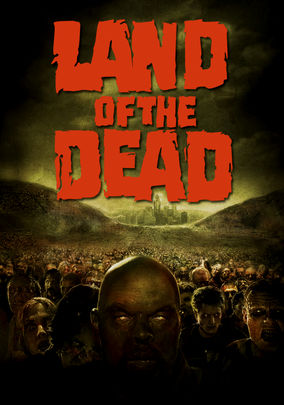
3768363“Land of the Dead” (2005) is writer/director George Romero’s fourth film in his “Night of the Living Dead” series and  is possibly the most underrated installment so far. The film offers a variety of new twists to the series such as the development of basic problem solving skills among zombies and the not-too-subtle symbolism of a walled city ruled by a dictator from the top of a luxury high rise. It continues and heightens the social commentary most apparent in the second film of the series, “Dawn of the Dead” while steering it in surprising directions. While the film is not without it’s share of plot holes, it’s screenplay is satisfying nevertheless, and features good performances from Dennis Hopper, Simon Baker, John Leguizamo, Asia Argento and Eugene Clark (with surprise cameos by Shaun of the Dead’s Simon Pegg and Edgar Wright).

http://www.dailymotion.com/video/x2ja94s

The Role of Dystopian Fiction in a Dystopian World

images

By Luther Blissett and J. F. Sebastian of Arkesoul

A few years ago, Neal Stephenson wrote a widely-shared article called Innovation Starvation for the World Policy Institute. He began the piece lamenting our inability to fulfill the hopes and dreams of mid-20th century mainstream American society. Looking back at the majority of sci-fi visions of the era, it’s clear many thought we’d be living in a utopian golden age and exploring other planets by now. In reality, the speed of technological innovation has seemingly declined compared to the first half of the 20th century which saw the creation of cars, airplanes, electronic computers, etc. Stephenson also mentions the Deepwater Horizon oil spill and Fukushima disasters as examples of how we’ve collectively lost our ability to “execute on the big stuff”.

Stephenson’s explanation for this predicament is two-fold; outdated bureaucratic structures which discourage risk-taking and innovation, and the failure of cultural creatives to provide “big visions” which dispute the notion that we have all the technology we’ll ever need. While there’s much to be said about archaic, inefficient (and corrupt) bureaucracies, there’s also a compelling argument invoked over the cultural importance of storytelling and art and how best to utilize it. One of the solutions offered by Stephenson, in this regard, is Project Hieroglyph which he describes as “an effort to produce an anthology of new SF that will be in some ways a conscious throwback to the practical techno-optimism of the Golden Age.”

While Project Hieroglyph may be a noble endeavor, one could argue that it’s based on a flawed premise. The role of science fiction has never been just about supplying grand visions for a better future, but to make sense of the present. There seems to be an assumption that the optimistic Golden Age had a causal relationship with a perceived technological golden age when it may have simply been a reflection of it— just as dystopian sci-fi reflects and strongly resonates with the world today. Stephenson may be correct in his view that much SF today is written in a “generally darker, more skeptical and ambiguous tone”, but this more nuanced perspective does not necessarily signify the belief that “we have all the technology we’ll ever need”. Rather, it reflects decades of collective experience and knowledge of unforeseen and cumulative effects of technologies. Nor does such fiction focus only on destructive effects of technology, as large a component of the narrative it may be simply because it makes for better drama and the subtext is often intended as a critique rather than celebration. For example, the archetypal hacker protagonists of technocratic cyberpunk dystopias employ technology for more positive ends (though some question whether good SF, as in speculative fiction, needs to involve new technology at all).

A particularly positive function for dystopian sci-fi is its use as rhetorical shorthand. It’s increasingly common in public discourse on major issues of the day to invoke dystopian references. Disastrous social effects of peak oil or post-collapse are often characterized as Mad Max scenarios. Various negative aspects of genetic modification and pharmaceutical development conjure Brave New World. Anxiety over out-of-control AI and resultant devaluing of human life brings to mind films as varied as Blade Runner, The Matrix and Terminator films. The expanding police/surveillance state is reminiscent of 1984 and numerous classics which have followed in its footsteps including V for Vendetta and Brazil. General fears of duplicitous, psychopathic power elites and social manipulation have elevated They Live from relatively obscure b-movie to cult classic. The entry of the term “zombie apocalypse” into the popular lexicon may in part stem from fear (and uncomfortable recognition) of images of viral social disintegration and martial law-enforced containment efforts depicted throughout various media. The burgeoning omnipotence of multinational corporations and hackers in Mr. Robot may have been the stuff of cyberpunk dystopias such as Neuromancer and Max Headroom 30 years ago, yet, it still has much to contribute to the public discourse as contemporary drama. Such visions may not prevent (or have not prevented) the scenarios they warn us of but have provided a vocabulary and framework for understanding such problems, and who’s to say how much worse it could be had such cautionary memes never existed?

The prophetic nature of storytelling, inasmuch as it derives from the minds of authors, artists and commentators that coexist with tensions and contexts particular to their epochs, resonate with the oughts, ifs, and whats inherent to our daily lives. As it were, the cautionary element of narrative is a natural product of the human mind, and the premium of what involves sharing our mental reserves to the world. To creatively dwelve and concoct problems and solutions from experience, is an axiom analogous to that of the categorical imperative—purely, and in abstract terms of what rationality involves. Yet, often times, we find material that is in favor of cultural malaise; of all things pathological in our society, such as censorship, conformity, bureaucracy, authoritarianism, militarism, and capital marketing; things which underpin issues that, if left untouched, can engulf the real brilliance of our spirit.

Stephenson fails to see this point. SF, as any form of intelligent culture, denounces and opposes systems of oppression, and even shows us the how, when, and why—the frameworks, the makings of apparent utopias into dystopias. Dystopian storytelling can serve the efforts of downtrodden creators with utopian ideals as effectively as utopian stories can reframe a societal trajectory led by beneficiaries of real world dystopia (though it may be experienced as utopia for a privileged few). SF does not only conjure visions of better futures. They lend us vocabularies and syntaxes to understand, and impede the fallenness of a confused, and ever increasingly isolated humanity. They are languages that pervade our interiorities, and that allow the exterior to change.

At the core, SF is prophecy through reasoned extrapolation and artistic intuition. This is what SF stands for when properly aligned with the subjectivities of the oppressed, and not with the voices of oppression: true testaments of a space and a time; visions of the future that carefully partake in not committing the mistakes of the past; and tools for our personal and collective flourishing.