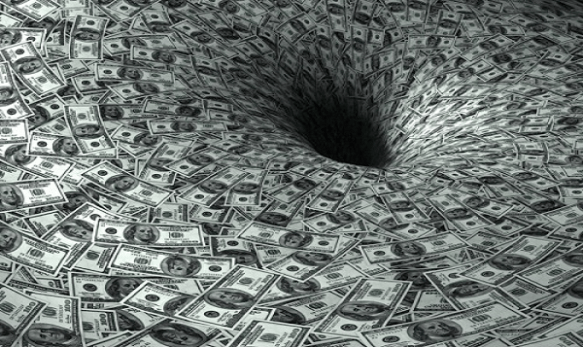
Happy ThanksGetting Day. Poverty and Social Inequality in America

By Philip A Farruggio

Source: Global Research

Yes, we need to finally absolve ourselves, as Amerikans, from the con job concerning Thanksgiving Day. All the ‘pomp and circumstance’ revolving around this holiday is just that, to quote Ebenezer Scrooge (one month early): Humbug!

Of course, even the southern Colonial slaves and Northern ‘indentured servants’ of that era would be thankful to just have a roof over their heads and enough to eat each day. Yet, it was only the slave masters and owners of property and capital who could kneel in their churches or bow in reflected prayer at their lavish dinner tables in true thanksgiving.

Amerika 2018 consists of well over 100 million of our citizens who are lucky just to stay head above water financially… perhaps a few paychecks from being out on the street… literally!

How many families who live next door to me and to YOU (or maybe YOU yourself the reader) who have to have two (or more?)  wage earners full time to just be able to function? How many single parents of even just one child need to live with their parents (if lucky to be able to) in order to function properly?

What about a single mom all on her own? Do the math: How can a single Mom with let us say just one child, who works a blue or even white collar full time job on one salary, be able to stay head above water on let us say the USA median salary for a woman ($ 39,900)? She most likely pays rent, and in my area of North Central Florida even a small two bedroom apt. goes for on average $ 1200 a month in a somewhat ‘safe’ low crime neighborhood.

With her take home pay of $ 725 plus her health insurance contribution (usually 50%) of $ 80 a week, the figure is now $ 645. She would most likely need a car to get around (my area is mostly ‘car driven’ with not the greatest mass transit) and let us say that for even a low end car her payments would be $ 225 monthly for a new car loan, bringing her take home figure to now $ 420. Factor in her car insurance of $ 100 a month, and her take home figure is now $ 320 a week. She and her child need some sort of cable television, and even the low end cable is going to be at least $ 50 a month… and her take home figure is now $ 270 a week. Her phone/internet cost, even at the low end, would have to be at least $ 80 a month, bringing her figure down to $ 190 a week. Then you have food costs for her and her child, clothing costs, gas for her car, and God forbid one of them gets sick, or needs dental work, which is not covered….

The CEOs of all the companies that this single mom pays her hard earned money to earn in excess of a minimum of $ 20 million a year. Some earn double that figure! Within their own companies these CEOs earn in excess of 300 times the pay of their average workers. These folks have lots to be thankful of next Thursday! Mind you: Where is the outrage?

Where is the outcry of millions of working stiffs to say ‘Something is wrong here!?’ This column is just about one tiny example of the unfairness of this current corporate/ capitalist system. Those CEOS and top execs  of Amerikan capitalism, who are even much less than what many label The ONE PERCENT, are paying federal taxes of a top rate of 37%. Now that is before their accountants cut it down to much lower figure than that. Mitt Romney, now a Senator from Utah, admitted a few years ago that he, as a mega mega millionaire, only paid at a rate of perhaps 15%. Please remember that when JFK was president, in 1961, the top tax bracket was at 90%.

Again, with a good accountant, those mega rich may have paid at a rate of maybe 50%. Yet, my late uncle, who was in the 81% bracket then, earning $ 140k a year, still was able to enjoy two brand new twin Cadillacs for he and my aunt, his exclusive country club membership and a new home in the burbs.

Folks, for this Thanksgiving it is time for we hundreds of millions of working stiffs to begin to accept the need for Socialism. It may just be the only way for our great nation to turn the corner economically and morally. Reread some of the scriptures, for all of you who adhere (as this writer does) to the teachings of Jesus, and see what he said about the mega rich: Again I tell you, it is easier for a camel to pass through the eye of a needle than for a rich man to enter the kingdom of God.”

The Wealth Hiding in Your Neighborhood

From country farmland to big city skyscrapers, absentee billionaires may be hiding wealth in your town — and driving up your cost of living.

By Chuck Collins

Source: OtherWords

The rich are hiding trillions in wealth.

You’ve probably heard about their offshore bank accounts, shell corporations, and fancy trusts. But this wealth isn’t all sitting in the Cayman Islands or Panama. Much of it’s hiding in plain view: maybe even in your town.

America’s big cities are increasingly dotted with luxury skyscrapers and mansions. These multi-million dollar condos are wealth storage lockers, with the ownership often obscured by shell companies.

In Boston, where I live, there’s a luxury building boom. According to a study I just co-authored, out of 1,805 luxury units — with an average price of over $3 million — more than two-thirds are owned by people who don’t live here.

One-third are owned by shell companies and trusts that mask their ownership. And of these units, 40 percent are limited liability companies (LLCs) organized in Delaware.

Why Delaware?

Criminals around the world set up their shell companies in Delaware, the premiere secrecy jurisdiction in the United States — where you don’t have to disclose who the real owners are. As a result, human traffickers, drug smugglers, and tax evaders all enjoy the anonymous cover of a Delaware company.

Many of these companies use illicit funds to purchase real estate in North American cities to launder their ill-gotten money.

In New York City, dozens of luxury towers have been connected to global money laundering. In Vancouver, Chinese investors disrupted the city’s housing market so badly that the province of British Columbia established a foreign investor tax and a tax on vacant properties.

With European countries now insisting on more transparency, illicit cash is now cascading into the United States. In fact, the U.S. is now the world’s second-biggest tax haven and secrecy jurisdiction, after Switzerland.

The U.S. Treasury Department’s Financial Crimes Enforcement Network (FinCEN) has increased its scrutiny over real estate markets in Miami, New York, and parts of California, Texas, and Hawaii.

But that just makes the rest of the country more attractive for secret cash — even far from big cities. In a small Vermont town, I met a Russian investor who lives in Dubai. He was buying up thousands of acres of Green Mountain farmland.

Our communities are being fundamentally transformed by land grabs and luxury building booms. These drive up the cost of land in central neighborhoods, with ripple impacts throughout a community. And this worsens the already grotesque inequalities of income, wealth, and opportunity.

Our communities should defend themselves.

Property ownership should have to pass the “fishing license” or “library card” test. In most communities, to get a library card or a fishing license, you need to prove who you are and where you actually live.

In Boston, they’re pretty strict — you need to show a utility bill with your name on it. Cities should require the same for real estate purchases.

At a national level, bi-partisan legislation from Senators Marco Rubio and Sheldon Whitehouse would require real estate owners to be disclosed when buyers use shell corporations and pay millions in cash. That would be a welcome development.

Better still, cities should tax luxury real estate transactions on properties selling for over $2 million to fund local services. Such a tax in San Francisco generated $44 million last year that’s been used to fund free community college and help the city’s neglected trees.

Communities could discourage high-end vacant properties by taxing buildings that sit empty for more than six months a year. Cities like Vancouver have created incentives to house people, not wealth.

We need to defend our communities for the people who live in them, not just store their wealth there.

Reimagining the Middle Class

In her new book, Alissa Quart chronicles what happens when capitalism and families collide

By Ann Neumann

Source: The Baffler

AS THE ECONOMIC STATUS OF MANY in the United States has declined over the past several decades, journalists have often focused on the challenges faced by the working poor. In her new book, Squeezed: Why Our Families Can’t Afford America, Alissa Quart writes about how economic inequality has also drastically changed the middle class, destabilizing what was once considered a secure class and sending families into the tailspin of debt, overwork, underemployment, and precarious financial states. Squeezed demonstrates that inequality is not just a problem of those left behind in the lowest financial brackets, but a feature of our current economic system characterized by working professionals who are unable to pay for child care, declining job salaries, shifting work hours, and unaffordable housing. Families too often wrestle with “penalizing” factors, like women’s depressed salaries and unaffordable health care, making success unattainable for a formerly comfortable, educated, and skilled demographic of society.

The book challenges us to reimagine our prior understanding of what it means to be middle class, even as legislators champion “traditional values” that contradict the needs and responsibilities of families—and erode a safety net that once supported U.S. workers. Some of the factors that have upended the middle class are obvious—declining salaries, for instance—but others remain masked by corporate and social portrayal of them as a benefit to today’s workers. The gig economy, which, we’re told, gives workers young and old more flexibility and independence, turns out to be a contributor to what Quart calls the forever clock, a twenty-four-hour schedule that has usurped family and free time by keeping workers on constant call. Squeezed recounts the lives of the teachers who work second jobs, the professional mothers who struggle to pay for day care, the paralegals and adjuncts who have to moonlight to pay the rent, the well educated who never found a job in their intended profession that provides a livable salary. And the book causes us to ask why so many suffer in isolation, too ashamed to acknowledge their economic plight and too belabored to politically address it.

Quart is executive editor of the Economic Hardship Reporting Project, a nonprofit organization founded by Barbara Ehrenreich (a contributing editor for The Baffler) that supports journalism examining economic inequality, its causes and solutions (EHRP has funded my own work and that of others published at The Baffler). Quart is the author of four previous books: BrandedRepublic of OutsidersHothouse Kids, and the poetry book Monetized. She also co-writes, with Maia Szalavitz, a column for The Guardian titled “Outclassed.”

This month, Quart stopped by The Baffler office to talk to me about Squeezed. We’ve known each other for several years and I read the book in manuscript, so our conversation was casual, touching on individuals in the book, our own squeezed lives, how we can counter economic decline, and a necessary new definition of self-help.

Ann NeumannSqueezed straddles the Trump election and very often people on the left—and the right, to be honest—are using this as a clear demarcation. I think one of the things the book does really well is point out that the mechanisms in place that harm working class families have been long in coming.

Alissa Quart: The reason Sanders and Trump could tap into anger are the numbers of those economically squeezed; it’s what I was seeing anecdotally. And you can feel that. You can feel when you go sit in people’s living rooms, when you talk to them on the phone. I went to a conference called iRelaunch that was all about helping people to start their careers over and the room just rippled with shame and fear. And acidic humor.

AN: How did the election change this book project?

AQ: I think it gave it new urgency for me. Just as it gave urgency to the Economic Hardship Reporting Project, the organization I run. I think everyone in journalism felt like we have to tell these stories. The Trump effect has made me feel like I have to keep a laser focus on the things people are ignoring and try to find a way for readers to pay attention to them. We’re all focusing on Ivanka and whether she’s the c-word or not, which is fine, there are all kinds of things happening around us and in our own lives politically that have nothing directly to do with what Trump is tweeting, but the effects of his administration and long-term trends are real and we just need to keep looking.

We just published an article at EHRP about a journalist who lives in a $17 a night Airbnb, places below what you usually scroll to. But this person was a working journalist who was getting six-figure advances fifteen or twenty years ago. There are all these human examples that constantly show this decline. Fine, maybe the job numbers are up, but how many jobs are people working and are they jobs in the professions? Are they jobs that pay enough for people to live in cities? Or they’re working three different jobs which leads us to things like, as in this book, twenty-four-hour day care.

AN: Day care centers that are open twenty-four hours to accommodate parents with nontraditional work hours or multiple jobs.

AQ: And they are growing in number. I wrote a piece on this; I called it the dystopian social net. I feel like that’s part of my life’s work. I love dystopian fiction and science fiction, probably because it seems a few clicks away from the life we’re leading. It’s a markedly different life and childhood than the one you and I had. It may be horrible, or maybe not, but we’re seeing a palpable transformation in what childhood can be in the course of twenty years.

AN: And that’s really just the decline of income?

AQ: It’s people working different hours, it’s corporations using algorithms to find out what times of day are most profitable—when they’ll have the most foot traffic in retail, for instance—and demanding that employees work those times. It’s increasing nightwork. Nontraditional could mean 11 to 3 or it could mean working in the evening, or working in different jobs, hither and thither. That alone points to a huge transformation in things like time. A lot of the issues I address in the book are really about time, how we spend it. In the twenty-four-hour day care section I use the term the forever clock. But that’s true of the upper middle class too, they feel squeezed because they’re also on a forever clock. They’re working in IT, for instance, and they’re working unusual hours and they have the expectation that they should be better paid for it. 

AN: Your work has been focused on economic inequality for a long time.

AQ: Every single one of my books is in some way about economic inequality. I used to teach at Columbia J-school and I always told my students that every writer has a central question they spend their career trying to answer and your job is to find out what your question is. It’s like a parlor game. So I think mine is: what happens when the family—or childhood—hits capitalism? What are the deformations and the formations? I read so many nineteenth-century novels as a kid that I’m fascinated by that intersection. Naturalism is ascetically but also politically and intellectually appealing to me. I think I just like the texture of family, love, money, and how they all meet.

AN: That comes out in the writing of the book because, I’ll tell you, there are economics books that I have no interest in reading because they’re a slog, a data dump. You also coin terms that give us a way to think about worker’s plights. You just mentioned the forever clock but there’s also the middle precariat.

AQ: I was trying to explain the shift in the middle class as an imaginative category. The middle class used to equal solid, fixed, stable. Temporally it was about gratification later, but your life wasn’t miserable while you were waiting for it. It wasn’t like OK, total slog, but you’re going to get that pension. We have to now think of it as a shaken category, an unstable category, and that’s a big shift. When we visualize the middle class, we’re visualizing the white picket fence, like the blue sky on the cover of the book. But it’s really this truck being squeezed between two houses.

It’s an unsettled identity, and you can fall out of it, you can barely get into it, you certainly can’t rise above it very easily. Guy Standing coined the term precariat in 2011 to describe the proletariat, which is a Marxist way of understanding the working class, crossed with precariousness. And people get that. Every time they ride an Uber or they have a gig economy Task Rabbit person come to their house they’re like, OK, that’s the precariat. But I was seeing the same thing among paralegals or those who have law degrees but were still doing temporary work.

AN: Getting a law degree can be like selling your soul to the banks.

AQ: All these people are in debt. Some of it is because they went to for-profit colleges and those colleges were really expensive and they didn’t have a good rate of placement. Which can be traced to for-profit colleges and grad schools that have very little oversight—and are sometimes indeed federally funded. It can also be traced to fewer law jobs overall and too many people imagining that law is a secure profession. This is about reimagining. Once you can reimagine a profession, even if you choose to do it—you choose to be a journalist, you choose be a lawyer—we should understand that we’re choosing something unstable. Awareness is a huge part of survival and I guess part of what I want with this book is to increase awareness. This is your self-help: Don’t blame yourself. We have to come alive to this recognition. You can still do what you love, so long as you know what it can mean.

This is a personal journey for me too. When I was younger, as a freelancer, I had some recognition that journalism was starting to fragment. It was around 2006 or 2007—but it was before that too, the’90s. The word rates used to be consistent and for freelance writers those rates became lower or stayed the same while inflation rose. I remember talking to someone and they said, “just think about us as post modern.” Now you do lots of things, it’s a hustle here and a hustle there. That person was a boomer who had a steady job, who would get social security. I remember feeling an incredible resentment.

AN: So precarious employment has been described to us as a beautiful thing. We’re not chained to a factory job, we get to think and move around, but it doesn’t pan out.

AQ: I personally came from a middle class background. As I describe in the book, my parents were college professors, originally community college professors, and they could afford to send me to a private school. They didn’t have any inheritance or anything. That’s the sort of the world I thought I’d be living in. All of us, our generation, Generation X, had an idea of the world we thought we’d be living in. The generation after us has come to understand some of these things.

AN: That they’re fucked? So do you think this is a moment in capitalism, as we watch continued market decline over the next years, when we either do something about it or devolve into a disordered society?

AQ: Yes, I think so. But this book isn’t depressing because it points to some solutions—not in a pat way, but things that will work. It’s a way to think about what kind of family safety net, federal and local, we need to make sure people aren’t falling through. For instance, a few of the people I write about in the book are on food stamps and other kinds of support, but many of them are a little above that in terms of earning power and they can’t get help. There’s a labor organizer I spoke with who tries to lower her salary to be able to get some sort of subsidized day care, some sort of health insurance program. It’s that edge: people who are middle class in terms of education, but working class in terms of earning. They’re on the edge of being working poor and not being able to access any of those services. That’s most of the people in this book. Once we understand that they’re precarious we need to find a safety net for them.

AN: What this book does is lay out the many ways that people are hurting at the moment and it kind of gives a blueprint as to how precariousness could be addressed. Subsidized day care, for instance. I had no idea about how expensive child care is.

AQ: Child care can be 30 percent of many salaries. Or more. I think for us it was 30 percent of our take-home pay.

AN: How do people do it? In the book you show us. We spend a lot of time with individuals, we get a look at their lives and there’s a revelation for a reader to think, Oh, it’s not just me. There are things that I go without, there are resources that I don’t have access to, there are crises that I lose sleep over or pray will never come my way. There’s something about this book that brings this issue to light and I wonder if that was what you thought you’d get out of the stories? Is that why you used a storytelling approach?

AQ: That’s the chick lit, soap operatic part of me. And there is something of that in these stories. You think, What’s going to happen next? Sometimes I was surprised because they did have the messy amplitude of ordinary life. The people I write about aren’t just symbolic though. Some of them I followed for years.

AN: I think of the co-parenting section where you spend time with families who are trying to come up with creative solutions. In some cases, over time, things were better; in some cases they were worse. But readers still get the sense that nothing is fixed, no one really knows what’s working.

AQ: Or like the nanny who was separated from her son when I first met her and it was one kind of story. It became a story about them reunited, but then it became a story about school choice, and then it became a story about a mixed outcome at the end. She was actually happy, but I think the reader would want her to have a more middle class life given how hard she’s worked and all the effort she’s made to make the right choices.

AN: The anxiety of her life stayed with me. There are so many things that thwart her from getting ahead. She just needs the smallest break, trying to bring her son here, trying to find an affordable place to live. She’s doing everything right and she doesn’t deserve to go through this. That’s what comes out in the story. So when you were doing this reporting, did you get a sense of relief that we’re all going through this at the same time?

AQ: I definitely did. I felt relief. I say that this book is self-help because it makes you realize that it’s not your fault. And that’s how I see self-help. I see it as awareness, really granularly understanding all the ways that systems have made it impossible for you personally to overcome financial challenges—so that you’re no longer blaming yourself.

AN: Thank God someone’s redefining self-help.

AQ: [Laughs] But that’s it. How do you not feel stigmatized, how do you not feel isolated? So many of my friends feel ashamed that they can’t figure out the school system, can’t figure out how to own their home.

AN: The various penalties—for being a woman, for having children, for having debt—stack up. Shaming has abetted this erosion of rights and financial stability.

AQ: Time, day care scheduling, and other demands mean people can’t organize. They’re ashamed of where they are and so that becomes another debilitating factor. The adjunct in one chapter feels ashamed even though she knows politically she shouldn’t. There are people like the teachers who drive for Uber, who feel ashamed even though they know they shouldn’t. And it goes on and on. I don’t want to put it back on individuals, but the personal thing that people can do is start talking openly about their monetary situation. People are startled when you do that. It can erode social norms in a weird way, but I also think it’s important that people stop fronting with one another.

I write in one chapter about the 1 percent media, about the social media where people pretend to live in more expensive places than they do. I call them wealthies, not selfies. So it’s not your imagination when you’re in any of these circumstances and you see people in a sun dappled villa. People are representing themselves in this inflated way and then you feel terrible and isolated. There are so many ways in which the stigma, the isolation, around your class position gets underlined.

AN: Has it always been shameful to be poor?

AQ: Probably.

AN: It’s not a fair question!

AQ: But let’s be clear. A lot of these people are not poor. Most of the people in this book are earning between $45,000 and $125,000. Working class is $35,000. They’re not at the poverty level.

AN: So the shame then comes from not being able to make ends meet.

AQ: The shame comes from having debt for the education that you got in order to be middle class. The shame comes from not doing as well as your peers. The shame comes from not living up to your potential. The shame comes from not owning your home, defaulting on your mortgage. Not giving your kids as good a life as you had. I’m not writing about the working poor. I’m writing about the middle poor.

AN: We still operate under the myth that as a society we can continue to lift people into middle class and lift middle class into other class brackets. We no longer have any of that upward mobility. We cannot anticipate that our children will be better off.

AQ: No, we cannot anticipate that.

AN: But that’s still the American dream, isn’t it? And that American dream has been tied to, say, home ownership or a vehicle or not having debt.

AQ: In New York it’s like what school your kid goes to. What college your kid goes to.

AN: You use the word reimagining; it’s a word that I don’t hear often enough in politics, particularly not applied to class.

AQ: I mean reimagining what it means to be successful, reimagining what it means to be middle class. In a dream scape kind of way, like, This is what we would like to see in this country. But also reimagining middle class in its truth, what it actually means now? Let’s tear the veil and not just say, Oh, it means stability or security. It doesn’t.

Once We Awaken

By Rudy Avizius

Source: OpEdNews.com

Do you get a sense, that something is wrong
like that dissonance, that does not belong

As we move through the journey of life, many people are experiencing a sense of dis-ease, that something is off-kilter, that the narratives we are receiving do not match the reality we are experiencing. There is great hope in this knowledge because once one recognizes this dissonance the process of awakening begins.

Deep down way inside, you may have suspicions
that much what we’re told, are but veiled omissions

The narratives are controlled by a small handful of people who determine what issues and discussions we should be examining. As we watch the main stream news and follow social media, the news and discussions we see are mostly spectacle designed to boost ratings with little or no coverage of the real issues such as: our wars without end, corporate and big money control of government and media, or anything critical of the powers that be. Most of the journalists we see on the main stream media are basically celebrity faces who no longer practice journalism, but are simply parroting what those in power want them to say with little effort made to investigate and corroborate the stories. There is great hope in recognizing this knowledge, as it allows one to view the narratives more critically and to filter out what does not resonate with them.

Why do we listen, to those who would divide
those who leave us empty, with our humanity denied

  • Both of the main stream political parties support the Military/Industrial/Security Complex.
  • Both of the main stream political parties support the multiple simultaneous wars and occupations of other nations.
  • Both of the main stream political parties support a foreign policy of economic and military sanctions on nations that wish to pursue paths that do not fit interests of the global central banking system.
  • Both of the main stream political parties support their corporate donors over their constituents.
  • Both of the main stream political parties voted to extend the surveillance of citizens.
  • Both of the main stream political parties have made little or no attempt to stop the flood of big money into political campaigns.

However, the powers that be are very successful at projecting that there is a real difference between the two political parties. Both political parties are successful in getting people to fight each other over social issues that in the big picture are really not the key issues. Then, as long as the people are focused on fighting each other, those who orchestrated this fight enjoy the benefits of this effective diversion, keeping people from paying attention to the criminal syndicate that has taken over the government. There is great hope in recognizing this old divide and conquer tactic because once one does recognize it, one can stop fearing or hating “the other” and recognize that we have far more in common than what is dividing us. We can stop with name calling and finger pointing, and instead engage in meaningful conversations.

Why listen to those, with so little to tell
the very same ones who, have so much to sell

So many listen to the main stream media where sensationalism such as murders, car crashes, kidnappings, sex scandals and the like dominate the content. This is the same media where 90% of the media is owned by 6 corporations. One does not need a PhD to understand that this concentration of control over the narrative that people experience is not a positive development. Those that control the news keep the masses living in fear. This fear can take many forms, but often it is physical, economic, or social.

This is the same media that now has 36% of its hourly content filled with commercials. The fact that people are recognizing this is good news because they will become more discerning about who they give their money to. They will start to question whether they really need that product or service, or do they just want it.

Once we will awaken, things won’t be the same
we will manifest, an end to their game

Once we will awaken, the angels will observe
as those with dark souls, we’ll no longer serve

Our current political system has been totally corrupted by those with vast accumulations of money. This cuts across all ideologies and political party lines. This system of legal bribery has even been ratified by the highest court in the land which opened the floodgates to even more money corroding our system. How can someone represent you when they are being paid millions to represent others? What we need now goes beyond simple reforms and enters the realm of transformational change. Many articles and videos (mostly those in the alternative media space) connect these dots so that more and more people are becoming aware. This awareness or awakening is a critical step as it opens up the possibility for transformational change to take place.

The changes we are seeking will not take place from the top down, they will take place from the bottom up. Those who benefit from the current paradigm have little motivation to implement meaningful changes. Once we are ready to accept our own roles in this process, we will realize that what needs to happen is that we have to change ourselves. Once we stop playing their game of competing with each other, we will start cooperating instead. Local, self sufficient, and resilient communities will spring up like wild flowers in a field where they grow much of their own food, start their own currencies, and their citizens will stop buying from the big corporations, instead they will patronize their local businesses.

The current system of how we create and distribute money is at the very heart of most of the problems we face. It is absolutely amazing that people will work a significant portion of their lives away to earn money, and yet have only the most elementary understanding of how our debt based monetary system works. What does debt based monetary system mean? When was the last time your main stream media covered this? When was the last time your school taught you this? Why is this information withheld?

This debt based monetary system perpetuates and amplifies the inequalities of how Earth’s abundant resources are distributed. Our very existence on this planet is being threatened as unlimited economic growth within a finite biosphere remains the current paradigm. Until we move to a totally new monetary system, we are only hacking away at branches, and not getting to the root of the problem. There can be no effective transformation of our societies until this happens.

The models for a new monetary system are already in place. However the private individuals who have been given the monopoly power to create money and are benefiting from the current system will fight to make sure that knowledge of these systems does not spread widely. Those benefiting from the current system will work hard to make sure it stays firmly entrenched. When was the last time you heard a corporate media network discuss monetary reform?

Once we have local control of moneyfood productionenergy generation,and governance, the current paradigm of corporate and big money control of our systems will simply become obsolete. It will simply fade into oblivion as it becomes less and less relevant. There will be no need to confront the system. Once we awaken and change our ways, we will “manifest an end to their game”.

Those who sell their souls, for their daily bread
may not take the time, to think of what’s ahead

There have always been those who would sell their souls and use the excuse “it’s my job” to justify their actions. From those who tortured Jesus to more modern times with concentration camp guards to even more currently the mercenaries who were hired to confront those seeking to protect their water supplies from pipeline companies.

Think about this, these mercenaries are people who left the communities they pledged to “protect and serve” to answer a call to “protect and serve” corporate interests in another community, while these same corporate interests were placing local people’s water supplies at serious risk.

These mercenaries were the tip of the spear, there were many behind the scenes who acted as enablers for their behaviors. There were the corporate executives, prosecutors, judges, minor bureaucrats, and politicians without whose support, such injustices could never take place. Those who served helping these forces have “sold their souls for their daily bread.”

“It was my job” is not an acceptable response when it curtails the access of life sustaining necessities of fellow human beings.

It is very easy to develop an “I see nothing” attitude, or to allow oneself to be silenced by monetary gain by “playing along” with those who control and manipulate the system. It is time to witness, it is time to speak up, it is time to resist when you see injustice taking place.

Those that are insatiable, always seeking moar
ever quite so willing, to send others to war

Why do we accede, to their self served schemes
rather than just simply, following our dreams

Once we awaken we will no longer serve those who think only of themselves and their own self serving schemes. YOU can start making a huge difference by the way you spend YOUR money. Think about this, when you give your money to someone or some corporation, as you are transferring some of your your power to them. Is this really something you wish to do?

Do you shop at a local merchant or do you save that 35 cents by buying from Amazon? Do you give a percentage of every purchase to the big banks by using credit cards or do you pay in cash? Do you buy animal products humanely produced? Do you buy organic food or food produced using chemicals that threaten our ecosystem (and your health?) Do you bank at a “too big to fail bank” or a local community bank or Credit Union? Sometimes the lowest price or convenience is not the best buy and can carry an even higher unseen cost.

As we develop our own resilient local communities and economies, our dependencies on the corporate model will be reduced, weakening their tight grip on us. Mother Teresa once said “I alone cannot change the world, but I can cast a stone across the waters to create many ripples.”

Once we will awaken, we will clearly see
many of the others, who’ve also broken free

This is the best part of the awakening process. It is easy to think that the problems we face are overwhelming and that nothing can be done. The powers that be want us to think that way. Yet as we awaken, it becomes very clear that there are so many more of us that feel this same way than we originally believed. Once we awaken we become aware of others who have broken free. It is very empowering once we realize we are not alone. A critical mass is forming. It turns out that it takes only 10% of a population to bring about real changes.

We live in a world of abundance. There is enough air, water, and food for every person, animal, and plant on the planet. We have the resources and ability to make our existence here a paradise, to continue to develop socially, intellectually, emotionally, and spiritually. It is within our power to create a true golden age on this blue oasis floating through space and attain wondrous levels of development on a personal, family, community, regional, and global level while creating this paradise.

Multi-Billion Dollar Giveaway to Amazon

By Stephen Lendman

Source: StephanLendman.org

Seattle-based Amazon is like corporate predator Walmart, exploiting communities, along with harming local businesses and workers for maximum productivity and profits.

The company’s $100 billion dollar CEO Jeff Bezos didn’t get super-rich by being worker and community friendly – just the opposite, the way all Western corporate giants operate and most others, power, profits, and crushing competition their priorities.

That’s what predatory capitalism is all about – benefitting from harmful practices, polar opposite the way many, maybe most, locally owned and run small enterprises.

A London Guardian investigation revealed “numerous cases of Amazon workers being treated in ways that leave them homeless, unable to work or bereft of income after workplace accidents.”

One worker’s experience is similar to countless others, saying Amazon “cost me my home. They screwed me over and over, and I go days without eating.”

This “case is one of numerous reports from Amazon workers of being improperly treated after an avoidable work injury,” the Guardian explained, adding:

“Amazon’s warehouses were listed on the National Council for Occupational Safety and Health’s ‘dirty dozen’ list of most dangerous places to work in the United States in April 2018.”

“The company made the list due to its pattern of unsafe working conditions and its focus on productivity and efficiency over the safety and livelihood of its employees.”

“Amazon’s emphasis on fulfilling a high demand of orders has resulted in unsafe working conditions for its warehouse employees.”

Numerous workers “succumb to the fatigue and exhaustion of the fulfillment center work environment and quit before getting injured.”

The company lied claiming it prioritizes worker safety, expressing “pr(ide)” in its shameful record, causing enormous harm to countless numbers of workers at its fulfillment centers.

On November 13, Amazon announced two new headquarters locations, besides its current Seattle one.

Additional ones will be in suburban Washington’s Arlington, Virginia’s Crystal City and Queens, NY Long Island City.

An astonishing 238 US cities competed for what the company calls its HQ2. In January, 20 finalists were chosen for its second headquarters –  19 in America, Toronto the only one abroad.

Up for grabs is about 50,000 promised jobs and around a $5 billion investment. Whenever a corporate headquarters is sought,  cities and regions compete by offering companies huge tax breaks and other benefits – at the expense of small local businesses and cuts in public services.

For ordinary people, having major operations like Amazon, Walmart, and other corporate predators in communities is more of a curse than benefit.

Economics Professor Edward Glaeser said the downside of competition for companies like Amazon is it “become(s) a contest for throwing cash at the giant(s).”

The same thing goes on when professional sports teams consider moving to a new city, or the International Federation Association Football (FIFA) World Cup and International Olympic Committee (IOC) select locations for future events.

New stadiums become fields of schemes, not dreams, ordinary people in chosen areas harmed so super-wealthy ones can benefit hugely.

New York City won the bidding for one of two Amazon HQ2 locations by throwing $2.1 in tax incentives at the company – money badly needed for public education, affordable housing, and other vital public services lost to benefit Amazon.

The company’s move to NYC will cost area taxpayers around $61,000 for each of 25,000 promised jobs – double the per capita $32,000 for Virginia residents for the same number of promised jobs, according to Bloomberg, adding:

Amazon’s presence in these cities will likely “exacerbate the already fragile public transportation system and clogged roadways, and raise housing prices.”

Arlington, VA won its bid by offering Amazon $573 million in tax breaks and other benefits.

Locating one of two HQ2 locations there is related to the company’s pursuit of a $10 billion Defense Department cloud-computing contract it’s the front-runner to get.

In summer 2014, it got a $600 million Amazon Web Services cloud-computing contract for the CIA, linking the company and its Washington Post subsidiary to Langley, the broadsheet serving as its mouthpiece.

Bezos has a disturbing history currying favor with national security officials. Winning a major Defense Department contract will assure the company serves its interests along with the US intelligence community’s – at the expense of world peace, stability, and rights of ordinary people everywhere.

City officials betray their residents by throwing enormous amounts of money at deep-pocketed corporate giants to lure them to their areas – well able to defray the cost of expansion and conducting business operations without government handouts.

Yet it’s been the American way for time immemorial – Washington, states and cities financing enterprises from the earliest days of the republic.

The more concentrated business gets, the more power companies have over government – doing their bidding at the expense of ordinary people nationwide.

Amazon’s HQ2 is one of countless other examples of the same dirty business – getting enormous amounts of public money diverted from the general welfare.

CEOs should have been the fall guys; why are they still heroes?

By Carl Rhodes

Source: aeon

On 15 September 2008, the giant financial services firm Lehman Brothers filed for bankruptcy, starting a chain reaction that saw the global economy spiralling toward total collapse. The global financial crisis that ensued revealed just how fragile and unstable the world economic order really was. If there was ever a time that neoliberal capitalism should have faced a legitimation crisis, this was it.

One only needs to think back to December 2008 when the then US president Barack Obama scolded the heads of the largest US auto firms for flying to Washington in private jets to ask for financial bailouts. As one Democratic Party representative added: ‘Couldn’t you all have downgraded to first class or jet-pooled or something to get here? It would have at least sent a message that you do get it.’

For a short time after the crash, those on the top of the corporate ladder seemed as powerless as those on the bottom. The failure demonstrated that neither chief executive officers (CEOs) nor their financial advisors had much of an idea of how the market worked or how to control it. All that was left for modern citizens was to brace themselves as a runaway global free market fell off the proverbial cliff. The CEO suddenly appeared like a fall guy for the crash rather than as a hero.

Fast-forward 10 years, and it’s hard to believe that the economic and political supremacy of the CEO could have even been put into radical question the way it was in 2008. CEOs never really lost their stride and, now more than ever, they are considered to be visionaries and idealised as leaders. Nor did they lose their corporate jets. Other than for a brief symbolic belt-tightening immediately after the crisis, CEOs were soon flying high again on company planes.

Today, business founders such as Elon Musk, Mark Zuckerberg or even Larry Fink epitomise a new class of celebrity CEOs, seen by so many as personal heroes who can save the world, and the same goes for the larger array of employee CEOs such as Jamie Dimon at JPMorgan Chase or Tim Cook at Apple. Yet all the while, CEOs participate in a world economy wracked by increasing inequality, as epitomised by the kind of obscene CEO remuneration that sees the likes of Amazon’s boss Jeff Bezos earning almost a million times that of the workers in his warehouses.

More ominously, millions of Americans voted for an ostentatiously super-rich CEO, electing Donald Trump as their president. In his acceptance speech, Trump praised his own business acumen as being key to his political success: ‘I’ve spent my entire life in business, looking at the untapped potential in projects and in people all over the world. That is now what I want to do for our country.’

The barely interrupted veneration of the CEO as a hero, marked most expressively by the Trump presidency, has brought us to a point today where CEOs are not just valued for their skills in business but have become role models in all walks of life. We now live in what we call a ‘CEO society’: a society where corporate leadership has become the model for transforming not just business, but all human activity, where everyone from politicians to jobseekers to even those seeking love are expected to imitate the qualities of the lionised corporate executive.

The contemporary adulation and admiration of CEOs raises the question of what enabled their continued idolisation, given what could well have been their fall from grace 10 years ago? At the time, many hoped that the sad devastation of the crisis might open the door for an economic and political paradigm shift that would usher in a fairer, more equal and just society. It’s not that this promise of change has not arrived, it’s that it seems farther away than ever.

After 2008, for a brief time, people clamoured for CEOs to be held accountable and be prosecuted. This was, not least, a practical matter. With jobs being lost, shop fronts being boarded up, and politicians crying austerity, what people wanted above all else was economic recovery. Yet with the world’s top executives in disgrace, who could lead such a dramatic economic revival?

What arose from peril was a novel fantasy of executive-led recovery that allowed the shattered reputation of the CEO to stage a prompt, if not miraculous, comeback. This played into an appealing crisis narrative. With such a narrative, all faith must be invested in the recuperation of an imaginary golden past that existed before the upheaval. Most recently, this has manifested in Brexit’s investment in the promise of a renewed British sovereignty, as well as in populist political rallying cries such as ‘Make America Great Again’.

These desires for recovery and return are of course perfectly understandable, and they clearly shed light on why ideologies of free-market heroism thrived again after crisis. But this still only scratches the surface of why CEOs continue to be idolised by so many. Whereas individual executives from Martin Shkreli of Turing Pharmaceuticals to Harvey Weinstein of Miramax might be reviled for their greed, corruption or abuse of power, the CEO – as an ideal – has been reinstated with a solid-gold allure.

The financial crisis pointed to a deep insecurity rested in the fear that it was futile for humans to control the economic world that we had created, and this reverberated with a more general fear that we lack agency more widely. Suddenly, people were pushed into facing the possibility that their lives were lost to the whims and unpredictable fate of a supernatural market. Where since the advent of the 20th century it had been righteously condemned that ‘money is the secular God of the world’, now it was feared that finance had become an even more reckless God, one who cared little for the humans who worshiped at his gilded altar.

The quick rehabilitation of the image of the CEO in the popular imagination was not just a practical matter of wanting to hold on to the material benefits afforded by neoliberal capitalism. It was a psychic measure needed to counteract the fear of dehumanisation at the hands of a runaway Frankenstein economy. In other words, we just wanted to pretend that someone was in control, even if all the facts and evidence were telling us that this wasn’t the case. Everything could be forgiven if hope could be returned.

The retention of the CEO myth was an assertion of the power of individuals to shape events and control their destiny. To achieve this meant holding on to the heroic character of the CEO such that people might regain a sense of control over their own lives too.

Maintaining faith in the CEO was less a matter of empirical fact and more a symptom of a human need to find something to believe in at the end of a hard-earned day; with the reality too hard to bear, the fantasy had to return. Held out was the promise that everyone could receive grace if only he accepted the modern CEO gospel. This is the very same faith that allows people to believe that the business acumen of an impetuous, loud-mouthed, misogynist bully is able to lead America to greatness. When Trump said that he would run the US like a business project, ‘under budget and ahead of schedule’, enough people believed him to pave his way to the White House.

CEOs represent the ability to be in control of a market that appears uncontrollable and uncaring of its profound human costs. This desire for control belies the reality for too many people of being on the wrong side of the rising tide of inequality, and of being subjected to the tyranny of a new singleminded political authoritarian intolerance. Let’s hope that with the next crisis we learn that we need to let go of the fantasy of the CEO.

How Globalists Plan To Use Technology And Poverty To Enslave The Masses

By Brandon Smith

Source: Alt-Market.com

Tyranny is often seen as a sudden and inexplicable development in a society; the product of a singular despot that rockets to power for a limited window of time due to public fear or stupidity. This is one of the great lies of the modern era.

The truth is that for at least the past century almost every historically despised “tyrant” was merely a puppet of a larger managerial cabal, and the construction of each totalitarian state was accomplished slowly and quietly over the course of decades by those same financial elitists. From the Bolsheviks, to Hitler and the Third Reich, to Mao Zedong, to most tin-pot dictators across the Middle East and Africa, there has always been an organized group of money men and think tanks fueling the careers of the worst politicians and military juntas of the epoch.

The rise of a tyrannical system takes extensive time, planning and staging. Human beings do not simply jump right into the arms of a dystopian nightmare regime impulsively at a moment’s notice. We have been told by popular media that this is how it works; that during hard economic or social conditions men with charismatic personalities and evil intentions suddenly rise to the surface and take power by promising a better world in exchange for public fealty. But where did those economic and social crises come from to begin with? Were they a natural consequence of the era, or were they deliberately engineered?

The reality is that people must be psychologically conditioned to trade freedom for the illusion of safety. Sometimes this takes generations.  Every attempt at a totalitarian framework inevitably elicits a rebellion. Therefore, the most successful tyranny would be one that the public DEMANDS. They have to think it is their idea, otherwise they will eventually fight it.

Globalist financiers and power addicts need something more than mere military might or bureaucratic force to obtain their ideal slave society. They need 4th Generation warfare tactics. They need to con the masses into accepting their own servitude.

There are two tools that make this outcome possible: The first is controlled economic decline, the second is the integration of a technological gulag into every aspect of public life.

Economic Weapons Of Mass Distraction

It is no coincidence that dictatorial governments gain prominence as the global economy suffers; it is extremely difficult for people to remain vigilant to tyranny when they are completely distracted by their own survival. This is why my focus as an analyst has always been primarily on economics and solutions to fiscal disaster; it all begins and ends with the economy. If the public can be prepped to develop their own alternative economic systems before a crisis occurs, then they will be less distracted by the chaos and more apt to notice when the globalists offer tyranny as a fix-all.

Without alternative markets at the local level there is no redundancy, no protection from a crash. With most people dependent on the existing system for their livelihoods, the economy becomes a very useful weapon for the globalists.

Holding the economy hostage creates numerous advantages. Through deflationary pressure wages can be kept low while higher paying jobs disappear. Manufacturing can be phased out or outsourced overseas, as in the U.S. Small business ownership becomes difficult as taxes generally rise while financial conditions decline.

Through inflationary or stagflationary pressures, low wages and the inadequate job market are combined with exploding prices. This makes survival for many people untenable without government aid.

In this environment, the working public becomes reliant on the service sector, which provides no useful skill sets. Soon, you have entire generations of people with no production abilities whatsoever. They become drones working in meaningless office and retail jobs squandering away their days knowing that they are accomplishing nothing beyond a meager paycheck.

The lack of a greater purpose or mission in life and the nagging realization that the average person has no productive capacity creates a palpable atmosphere of desperation. They do not own their own work, and they have nothing much to show for their labor; nothing to point at and say, “I built that.” The public gets to the point that they may even welcome an economic collapse simply to escape the drudgery.

This is where movements to support totalitarianism come from — the subset of citizens that are fed up with fighting against the economy and have no sense of independence. These people do not know how to solve their own problems, they are always looking for someone else to do it for them. The globalists are happy to suggest their own predetermined solutions to the public once the financial structure hits a point of maximum pain.

However, after the economy is repaired in exchange for the submission of the citizenry, people might still decide one day that the trade was unfair. Thus, a deterrent is needed to keep them in line.

The Technological Fish Tank

It is important to understand that there is no major country in the western OR eastern world that is not building a digital control grid, and this helps to support my position that eastern nations are just as subservient to globalist demands as western nations. All the geopolitical drama surrounding events like the trade war, the Syrian war or various elections, etc.; none of this matters in the end. When determining if the strings of a particular government are being pulled by the globalist cabal, all you have to do is look at how quickly they are implementing oppressive systems that serve globalist interests.

For example, India’s government has been hitting the news feeds lately as their supreme court recently ruled that the controversial Aadhaar biometric program is legal. In a nation of 1.3 billion people, around 1 billion have already been biometrically profiled in a national database. This data can include fingerprints, iris scans and face scans.

I have heard it argued that India is a rather odd place to experiment with such a database, considering 60% of the population is under the poverty line and most people barely have basic amenities. But I would point out that this is why it is a PERFECT place for the globalists to start cataloging the world population on larger scale.

Again, financial desperation and a lack of productions skills tends to produce subservience. Hundreds of millions of poverty stricken people in India’s sprawling urban sewers are voluntarily giving up their biometric data in exchange for government aid programs.

For the people not anchored down by the poor economy India has instituted other measures, including requiring anyone accessing government services, opening a bank account or signing up for a mobile phone service also give up their biometrics to the government.  In nations not yet impoverished at India’s level, more subversive measures have been instituted for surveillance of the population. Data is simply taken rather than traded.

In Russia, Vladimir Putin has put the Yarovaya laws he signed in 2016 into effect. All digital data from phone conversations to emails is now recorded and stored by telecoms for government access for a minimum of six months, this includes Facebook and Twitter posts. The 2014 bloggers law also requires any blogger with over 3,000 followers be put on government file and they cannot remain anonymous. Any business operating a public Wi-Fi network is required by law to identify users by ID, which is also stored for at least six months.

Russia’s FISA-style surveillance grid is vast, yet, many people in the liberty movement seem to ignore this reality with misplaced Putin-worship. As I have noted in numerous articles, Russia is heavily influenced by international financiers.

Goldman Sachs and JP Morgan are the largest investment banks in the country. Their central bank works closely with the IMF and the BIS. The Kremlin has in the past called for a global currency controlled by the IMF. And Putin even admits in his own biography First Person that he has been friends with New World Order salesman Henry Kissinger since before he became president of Russia. In a latest show of how globalist Russia really is, the Russian Foreign Minister recently criticized the U.S. in a speech to the U.N. general assembly over its “attacks” on the “international order,” including undermining the World Trade Organization and global climate change agreements.

With the above in mind, it should come as no surprise to anyone that Russia is playing right along with globalist efforts to identify and track every single living person. It should also come as no surprise that Donald Trump, surrounded by globalists within his own cabinet, is continuing and expanding FISA surveillance under his administration.

At the beginning of 2018 Trump signed a bill renewing the National Security Agency’s warrantless FISA mass surveillance of the American population. Leading Democrats happily supported the action. Despite all of Trump’s rhetoric against FISA recently, it was Trump that made FISA’s continuation possible.

Major social media companies are cooperating wholeheartedly with mass surveillance efforts as they share personal data with governments around the world regularly.  Facebook alone saw an increase in government requests for data of over 33% in 2017, and the nature of most of this data sharing is not open to public scrutiny.

This is one reason why I’m rather bewildered by the recent conservative fury over social media discrimination – it’s as if personal liberty activists are being tricked with reverse psychology to DEMAND unhindered participation in media sites that spy on them.  Why does anyone still want to sign up for these websites?

But where is this all going? How does the combination of poverty and digital surveillance translate to tyranny? I believe China’s “social credit” program is the answer.  The system is based on the idea of “maintaining trust”, but whose trust?  Well, the government’s trust, of course.  Trust is measured using a social credit score that is tracked over a citizen’s life.  Punished behaviors include anything from smoking in a no smoking area to publishing internet content that the powers-that-be disapprove of.

China is representative of the end game for the globalist ideal for civilization. With mass economic struggle leading to dependency on government welfare programs and employment opportunities, few citizens can afford to be “blacklisted.” China’s social credit system creates an environment in which any and every action on the part of citizens is tracked and then “rated” for acceptance or consequence. This includes how people express attitudes toward the government itself. Obviously, this is the ultimate control mechanism, very similar to the Cheka established by Lenin and Stalin in Russia after the Bolshevik Revolution, but on a massive digital scale.

This is why mass surveillance is evil, regardless of whether someone is breaking the laws or not. It gives government the power to dictate and mold behavior by inspiring self-censorship rather than holding people directly at gun point. It is tyranny enforced in a less obvious way; a prison in which the prisoners maintain the locks and the chains and the bars.  Individuals do not dare do anything outside of collective norms for fear that it could be interpreted as socially negative. Punishment might include loss of access to the economy itself, and when most people are living from paycheck to paycheck, this could mean death.

Conjuring Up the Next Depression

By Chris Hedges

Source: TruthDig

During the financial crisis of 2008, the world’s central banks, including the Federal Reserve, injected trillions of dollars of fabricated money into the global financial system. This fabricated money has created a worldwide debt of $325 trillion, more than three times global GDP. The fabricated money was hoarded by banks and corporations, loaned by banks at predatory interest rates, used to service interest on unpayable debt or spent buying back stock, providing millions in compensation for elites. The fabricated money was not invested in the real economy. Products were not manufactured and sold. Workers were not reinstated into the middle class with sustainable incomes, benefits and pensions. Infrastructure projects were not undertaken. The fabricated money reinflated massive financial bubbles built on debt and papered over a fatally diseased financial system destined for collapse.

What will trigger the next crash? The $13.2 trillion in unsustainable U.S. household debt? The $1.5 trillion in unsustainable student debt? The billions Wall Street has invested in a fracking industry that has spent $280 billion more than it generated from its operations? Who knows. What is certain is that a global financial crash, one that will dwarf the meltdown of 2008, is inevitable. And this time, with interest rates near zero, the elites have no escape plan. The financial structure will disintegrate. The global economy will go into a death spiral. The rage of a betrayed and impoverished population will, I fear, further empower right-wing demagogues who promise vengeance on the global elites, moral renewal, a nativist revival heralding a return to a mythical golden age when immigrants, women and people of color knew their place, and a Christianized fascism.

The 2008 financial crisis, as the economist Nomi Prins points out, “converted central banks into a new class of power brokers.” They looted national treasuries and amassed trillions in wealth to become politically and economically omnipotent. In her book “Collusion: How Central Bankers Rigged the World,” she writes that central bankers and the world’s largest financial institutions fraudulently manipulate global markets and use fabricated, or as she writes, “fake money,” to inflate asset bubbles for short-term profit as they drive us toward “a dangerous financial precipice.”

“Before the crisis, they were just asleep at the wheel, in particular, the Federal Reserve of the United States, which is supposed to be the main regulator of the major banks in the United States,” Prins said when we met in New York. “It did a horrible job of doing that, which is why we had the financial crisis. It became a deregulator instead of a regulator. In the wake of the financial crisis, the solution to fixing the crisis and saving the economy from a great depression or recession, whatever the terminology that was used at any given time, was to fabricate trillions and trillions of dollars out of an electronic ether.”

The Federal Reserve handed over an estimated $29 trillion of this fabricated money to American banks, according to researchers at the University of MissouriTwenty-nine trillion dollars! We could have provided free college tuition to every student or universal health care, repaired our crumbling infrastructure, transitioned to clean energy, forgiven student debt, raised wages, bailed out underwater homeowners, formed public banks to invest at low interest rates in our communities, provided a guaranteed minimum income for everyone and organized a massive jobs program for the unemployed and underemployed. Sixteen million children would not go to bed hungry. The mentally ill and the homeless—an estimated 553,742 Americans are homeless every night—would not be left on the streets or locked away in our prisons. The economy would revive. Instead, $29 trillion in fabricated money was handed to financial gangsters who are about to make most of it evaporate and plunge us into a depression that will rival that of the global crash of 1929.

Kevin Zeese and Margaret Flowers write on the website Popular Resistance, “One-sixth of this could provide a $12,000 annual basic income, which would cost $3.8 trillion annually, doubling Social Security payments to $22,000 annually, which would cost $662 billion, a $10,000 bonus for all U.S. public school teachers, which would cost $11 billion, free college for all high school graduates, which would cost $318 billion, and universal preschool, which would cost $38 billion. National improved Medicare for all would actually save the nation trillions of dollars over a decade.”

An emergency clause in the Federal Reserve Act of 1913 allows the Fed to provide liquidity to a distressed banking system. But the Federal Reserve did not stop with the creation of a few hundred billion dollars. It flooded the financial markets with absurd levels of fabricated money. This had the effect of making the economy appear as if it had revived. And for the oligarchs, who had access to this fabricated money while we did not, it did.

The Fed cut interest rates to near zero. Some central banks in Europe instituted negative interest rates, meaning they would pay borrowers to take loans. The Fed, in a clever bit of accounting, even permitted distressed banks to use these no-interest loans to buy U.S. Treasury bonds. The banks gave the bonds back to the Fed and received a quarter of a percent of interest from the Fed. In short, the banks were loaned money at virtually no interest by the Fed and then were paid interest by the Fed on the money they borrowed. The Fed also bought up worthless mortgage assets and other toxic assets from the banks. Since Fed authorities could fabricate as much money as they wanted, it did not matter how they spent it.

“It’s like going to someone’s old garage sale and saying, ‘I want that bicycle with no wheels. I’ll pay you 100 grand for it. Why? Because it’s not my money,’ ” Prins said.

“These people have rigged the system,” she said of the bankers. “There is money fabricated at the top. It is used to pump up financial assets, including stock. It has to come from somewhere. Because money is cheap there’s more borrowing at the corporate level. There’s more money borrowed at the government level.”

“Where do you go to repay it?” she asked. “You go into the nation. You go into the economy. You extract money from the foundational economy, from social programs. You impose austerity.”

Given the staggering amount of fabricated money that has to be repaid, the banks need to build greater and greater pools of debt. This is why when you are late in paying your credit card the interest rate jumps to 28 percent. This is why if you declare bankruptcy you are still responsible for paying off your student loan, even as 1 million people a year default on student loans, with 40 percent of all borrowers expected to default on student loans by 2023. This is why wages are stagnant or have declined while costs, from health care and pharmaceutical products to bank fees and basic utilities, are skyrocketing. The enforced debt peonage grows to feed the beast until, as with the subprime mortgage crisis, the predatory system fails because of massive defaults. There will come a day, for example, as with all financial bubbles, when the wildly optimistic projected profits of industries such as fracking will no longer be an effective excuse to keep pumping money into failing businesses burdened by debt they cannot repay.

“The 60 biggest exploration and production firms are not generating enough cash from their operations to cover their operating and capital expenses,” Bethany McLean writes of the fracking industry in an articletitled “The Next Financial Crisis Lurks Underground” that appeared in The New York Times. “In aggregate, from mid-2012 to mid-2017, they had negative free cash flow of $9 billion per quarter.”

The global financial system is a ticking time bomb. The question is not if it will explode but when it will explode. And once it does, the inability of the global speculators to use fabricated money with zero interest to paper over the debacle will trigger massive unemployment, high prices for imports and basic services, and a devaluation in which the dollar will become nearly worthless as it is abandoned as the world’s reserve currency. This manufactured financial tsunami will transform the United States, already a failed democracy, into an authoritarian police state. Life will become very cheap, especially for the vulnerable—undocumented workers, Muslims, poor people of color, girls and women, anti-capitalist and anti-imperialist critics branded as agents of  foreign powers—who will be demonized and persecuted for the collapse. The elites, in a desperate bid to cling to their unchecked power and obscene wealth, will disembowel what is left of the United States.