
The Heart of Darkness: The Sexual Predators Within America’s Power Elite

By John W. Whitehead

Source: The Rutherford Institute

“As political and economic freedom diminishes, sexual freedom tends compensating to increase. And the dictator (unless he needs cannon fodder and families with which to colonize empty or conquered territories) will do well to encourage that freedom.”—Aldous Huxley, Brave New World

Power corrupts.

Anyone who believes differently hasn’t been paying attention.

Politics, religion, sports, government, entertainment, business, armed forces: it doesn’t matter what arena you’re talking about, they are all riddled with the kind of seedy, sleazy, decadent, dodgy, depraved, immoral, corrupt behavior that somehow gets a free pass when it involves the wealthy and powerful elite in America.

In this age of partisan politics and a deeply polarized populace, corruption—especially when it involves sexual debauchery, depravity and predatory behavior—has become the great equalizer.

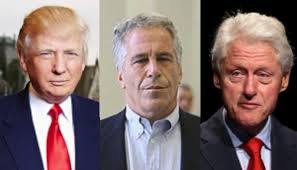
Take Jeffrey Epstein, the hedge fund billionaire / convicted serial pedophile recently arrested on charges of molesting, raping and sex trafficking dozens of young girls.

It is believed that Epstein operated his own personal sex trafficking ring not only for his personal pleasure but also for the pleasure of his friends and business associates. According to The Washington Post, “several of the young women…say they were offered to the rich and famous as sex partners at Epstein’s parties.” At various times, Epstein ferried his friends about on his private plane, nicknamed the “Lolita Express.”

This is part of America’s seedy underbelly.

As I documented in the in-depth piece I wrote earlier this year, child sex trafficking—the buying and selling of women, young girls and boys for sex, some as young as 9 years old—has become big business in America. It is the fastest growing business in organized crime and the second most-lucrative commodity traded illegally after drugs and guns.

Adults purchase children for sex at least 2.5 million times a year in the United States.

It’s not just young girls who are vulnerable to these predators, either.

According to a 2016 investigative report, “boys make up about 36% of children caught up in the U.S. sex industry (about 60% are female and less than 5% are transgender males and females).”

Who buys a child for sex?

Otherwise ordinary men from all walks of life. “They could be your co-worker, doctor, pastor or spouse,” writes journalist Tim Swarens, who spent more than a year investigating the sex trade in America.

Ordinary men, yes.

But then there are the extra-ordinary men, such as Jeffrey Epstein, who belong to a powerful, wealthy, elite segment of society that operates according to their own rules or, rather, who are allowed to sidestep the rules that are used like a bludgeon on the rest of us.

These men skate free of accountability by taking advantage of a criminal justice system that panders to the powerful, the wealthy and the elite.

Over a decade ago, when Epstein was first charged with raping and molesting young girls, he was gifted a secret plea deal with then-U.S. Attorney Alexander Acosta, President Trump’s current Labor Secretary, that allowed him to evade federal charges and be given the equivalent of a slap on the wrist: allowed to “work” at home six days a week before returning to jail to sleep. That secret plea deal has since been ruled illegal by a federal judge.

Yet here’s the thing: Epstein did not act alone.

I refer not only to Epstein’s accomplices, who recruited and groomed the young girls he is accused of raping and molesting, many of them homeless or vulnerable, but his circle of influential friends and colleagues that at one time included Bill Clinton and Donald Trump. Both Clinton and Trump, renowned womanizers who have also been accused of sexual impropriety by a significant number of women, were at one time passengers on the Lolita Express.

As the Associated Press points out, “The arrest of the billionaire financier on child sex trafficking charges is raising questions about how much his high-powered associates knew about the hedge fund manager’s interactions with underage girls, and whether they turned a blind eye to potentially illegal conduct.”

In fact, a recent decision by the Second Circuit Court of Appeals allowing a 2,000-page document linked to the Epstein case to be unsealed references allegations of sexual abuse involving “numerous prominent American politicians, powerful business executives, foreign presidents, a well-known Prime Minister, and other world leaders.”

This is not a minor incident involving minor players.

This is the heart of darkness.

Sex slaves. Sex trafficking. Secret societies. Powerful elites. Government corruption. Judicial cover-ups.

Once again, fact and fiction mirror each other.

Twenty years ago, Stanley Kubrick’s final film Eyes Wide Shut provided viewing audiences with a sordid glimpse into a secret sex society that indulged the basest urges of its affluent members while preying on vulnerable young women. It is not so different from the real world, where powerful men, insulated from accountability, indulge their base urges.

These secret societies flourish, implied Kubrick, because the rest of us are content to navigate life with our eyes wide shut, in denial about the ugly, obvious truths in our midst.

In so doing, we become accomplices to abusive behavior in our midst.

This is how corruption by the power elite flourishes.

For every Epstein who is—finally—called to account for his illegal sexual exploits after years of being given a free pass by those in power, there are hundreds (perhaps thousands) more in the halls of power and wealth whose predation of those most vulnerable among us continues unabated.

While Epstein’s alleged crimes are heinous enough on their own, he is part of a larger narrative of how a culture of entitlement becomes a cesspool and a breeding ground for despots and predators.

Remember the “DC Madam” who was charged with operating a phone-order sex business? Her clients included thousands of White House officials, lobbyists, and Pentagon, FBI, and IRS employees, as well as prominent lawyers, none of whom were ever exposed or held accountable.

Power corrupts.

Worse, as 19th-century historian Lord Acton concluded, absolute power corrupts absolutely.

It doesn’t matter whether you’re talking about a politician, an entertainment mogul, a corporate CEO or a police officer: give any one person (or government agency) too much power and allow him or her or it to believe that they are entitled, untouchable and will not be held accountable for their actions, and those powers will eventually be abused.

We’re seeing this dynamic play out every day in communities across America.

A cop shoots an unarmed citizen for no credible reason and gets away with it. A president employs executive orders to sidestep the Constitution and gets away with it. A government agency spies on its citizens’ communications and gets away with it. An entertainment mogul sexually harasses aspiring actresses and gets away with it. The U.S. military bombs a civilian hospital and gets away with it.

Abuse of power—and the ambition-fueled hypocrisy and deliberate disregard for misconduct that make those abuses possible—works the same whether you’re talking about sex crimes, government corruption, or the rule of law.

It’s the same old story all over again: man rises to power, man abuses power abominably, man intimidates and threatens anyone who challenges him with retaliation or worse, and man gets away with it because of a culture of compliance in which no one speaks up because they don’t want to lose their job or their money or their place among the elite.

It’s not just sexual predators that we have to worry about.

For every Jeffrey Epstein (or Bill Clinton or Harvey Weinstein or Roger Ailes or Bill Cosby or Donald Trump) who eventually gets called out for his sexual misbehavior, there are hundreds—thousands—of others in the American police state who are getting away with murder—in many cases, literally—simply because they can.

The cop who shoots the unarmed citizen first and asks questions later might get put on paid leave for a while or take a job with another police department, but that’s just a slap on the wrist. The shootings and SWAT team raids and excessive use of force will continue, because the police unions and the politicians and the courts won’t do a thing to stop it.

The war hawks who are making a profit by waging endless wars abroad, killing innocent civilians in hospitals and schools, and turning the American homeland into a domestic battlefield will continue to do so because neither the president nor the politicians will dare to challenge the military industrial complex.

The National Security Agency that carries out warrantless surveillance on Americans’ internet and phone communications will continue to do so, because the government doesn’t want to relinquish any of its ill-gotten powers and its total control of the populace.

Unless something changes in the way we deal with these ongoing, egregious abuses of power, the predators of the police state will continue to wreak havoc on our freedoms, our communities, and our lives.

Police officers will continue to shoot and kill unarmed citizens. Government agents—including local police—will continue to dress and act like soldiers on a battlefield. Bloated government agencies will continue to fleece taxpayers while eroding our liberties. Government technicians will continue to spy on our emails and phone calls. Government contractors will continue to make a killing by waging endless wars abroad.

And powerful men (and women) will continue to abuse the powers of their office by treating those around them as underlings and second-class citizens who are unworthy of dignity and respect and undeserving of the legal rights and protections that should be afforded to all Americans.

As Dacher Keltner, professor of psychology at the at the University of California, Berkeley, observed in the Harvard Business Review, “While people usually gain power through traits and actions that advance the interests of others, such as empathy, collaboration, openness, fairness, and sharing; when they start to feel powerful or enjoy a position of privilege, those qualities begin to fade. The powerful are more likely than other people to engage in rude, selfish, and unethical behavior.”

After conducting a series of experiments into the phenomenon of how power corrupts, Keltner concluded: “Just the random assignment of power, and all kinds of mischief ensues, and people will become impulsive. They eat more resources than is their fair share. They take more money. People become more unethical. They think unethical behavior is okay if they engage in it. People are more likely to stereotype. They’re more likely to stop attending to other people carefully.”

Power corrupts.

And absolute power corrupts absolutely.

However, it takes a culture of entitlement and a nation of compliant, willfully ignorant, politically divided citizens to provide the foundations of tyranny.

As researchers Joris Lammers and Adam Galinsky found, those in power not only tend to abuse that power but they also feel entitled to abuse it: “People with power that they think is justified break rules not only because they can get away with it, but also because they feel at some intuitive level that they are entitled to take what they want.”

As I point out in my book Battlefield America: The War on the American People, for too long now, Americans have tolerated an oligarchy in which a powerful, elite group of wealthy donors is calling the shots. They have paid homage to patriotism while allowing the military industrial complex to spread death and destruction abroad. And they have turned a blind eye to all manner of wrongdoing when it was politically expedient.

We need to restore the rule of law for all people, no exceptions.

Here’s what the rule of law means in a nutshell: it means that everyone is treated the same under the law, everyone is held equally accountable to abiding by the law, and no one is given a free pass based on their politics, their connections, their wealth, their status or any other bright line test used to confer special treatment on the elite.

This culture of compliance must stop.

The empowerment of petty tyrants and political gods must end.

The state of denial must cease.

Let’s not allow this Epstein sex scandal to become just another blip in the news cycle that goes away all too soon, only to be forgotten when another titillating news headline takes its place.

Sex trafficking, like so many of the evils in our midst, is a cultural disease that is rooted in the American police state’s heart of darkness. It speaks to a far-reaching corruption that stretches from the highest seats of power down to the most hidden corners and relies on our silence and our complicity to turn a blind eye to wrongdoing.

If we want to put an end to these wrongs, we must keep our eyes wide open.

Jeff Bezos’s Corporate Takeover of Our Lives

Illustration by Mike Faille

How Amazon’s relentless pursuit of profit is squeezing us all—and what we can do about it

By David Dayen

Source: In These Times

AMAZON IS AN ONLINE RETAILER. It also runs a marketplace for other online retailers. It’s also a shipper for those sellers, and a lender to them, and a warehouse, an advertiser, a data manager and a search engine. It also runs brick-and-mortar bookstores. And grocery stores.

There are over 100 million Amazon Prime subscribers in the United States—more than half of all U.S. households. Amazon makes 45 percent of all e-commerce sales. Amazon is also a product manufacturer; its Alexa controls two-thirds of the digital assistant market, and the Kindle represents 84 percentof all e-readers. Amazon created its own holiday, Prime Day, and the surge in demand for Prime Day discounts, followed by a drop afterward, skewed the nation’s retail sales figures with a 1.8% bump in July 2017.

Oh, it’s also a major television and film studio. Its CEO owns a national newspaper. And it runs a streaming video game company called Twitch. And its cloud computing business, Amazon Web Services, runs an astonishing portion of the Internet and U.S. financial infrastructure. And it wants to be a logistics company. And a furniture seller. It’s angling to become one of the nation’s largest online fashion designers. It recently picked up an online pharmacy and partnered with JPMorgan Chase CEO Jamie Dimon and Warren Buffett to create a healthcare company. And at the same time, it’s competing with JPMorgan, pushing Amazon Pay as a digital-based alternative to credit cards and Amazon Lending as a source of capital for its small business marketplace partners.

To quote Liberty Media chair John Malone, himself a billionaire titan of industry, Amazon is a “Death Star” moving its super-laser “into striking range of every industry on the planet.” If you are engaging in any economic activity, Amazon wants in, and its position in the market can distort and shape you in vital ways.

Elizabeth Warren’s proposal to break up Amazon, along with the FTC’s new oversight and investigation, has spurred a conversation on the Left about its overwhelming power. No entity has held the potential for this kind of dominance since the railroad tycoons of the first Gilded Age were brought to heel. Whether you share concerns about Amazon’s economic and political power or you just like getting free shipping on cheap toilet paper, you should at least know the implications of living in Amazon’s world—so you can assess whether it’s the world you want, and how it could be different.

BOOKSELLERS WERE THE FIRST TO FIND THEMSELVES AT THE TIP OF AMAZON’S SPEAR, at the company’s founding in 1994. Years of Amazon peddling books below cost shuttered thousands of bookstores. Today, Amazon sells 42 percent of all books in America.

With such a large share of the market, Amazon determines what ideas reach readers. It ruthlessly squeezes publishers on wholesale costs; in 2014, it deliberately slowed down deliveries of books published by Hachette during a pricing dispute. By stocking best-sellers over independents and backlist copies, and giving publishers less money to work with, Amazon homogenizes the market. Publishers can’t afford to take a chance on a book that Amazon won’t keep in its inventory. “The core belief of bookselling is that we need to have the ideas out there so we can discuss them,” says Seattle independent bookseller Robert Sindelar. “You don’t want one company deciding, only based on profitability, what choice we have.”

These issues in just the book sector are a microcosm of Amazon’s effect on commerce.

The term “retail apocalypse” took hold in 2017 amid bankruptcies of established chains like The Limited, RadioShack, Payless ShoeSource and Toys “R” Us. According to frequent Amazon critic Stacy Mitchell, “more people lost jobs in general-merchandise stores than the total number of workers in the coal industry” in 2017.

Amazon isn’t the only cause; private equity looting must share much of the blame, and a shift to e-commerce was always going to hurt brick-and-mortar stores. But Amazon transformed a diverse collection of website sales into one mammoth business with the logistical power to perform rapid delivery of millions of products and a strategy to underprice everyone. That transformation accelerated a decline going back to the Great Recession (and much earlier for booksellers). Analysts at Swiss bank UBS estimate that every percentage point e-commerce takes from brick-and-mortar translates into 8,000 store closures, and right now e-commerce only has a 16 percent market share.

Take Harry Copeland (or, as he calls himself, “Crazy Harry”) of Harry’s Famous Flowers in Orlando, Fla., at one time a 40-employee retail/wholesale business. Revenue at his operation has shrunk by half since 2008, equal to millions of dollars in gross sales. “The internet … killed us,” Harry says. “I was in a Kroger, this guy walks up and says, ‘I want to apologize. It’s so easy to go on the internet.’ I said, ‘I did your wedding, I did flowers for your babies, and you’re buying [flowers] on the internet?’ ” Even Harry’s own employees receive Amazon packages at the shop every day. In January, tired of the fight, Harry sold his shop after 36 years in business.

Amazon was particularly deadly to the original “everything stores,” the department stores like Sears and J.C. Penney that anchor malls. When the anchor stores shut down, foot traffic slows and smaller shops struggle. Retailers are planning to close more than 4,000 stores in 2019; the 41,201 retail job losses in the first two months of this year were the highest since the Great Recession.

Dead malls trigger not only blight but also property tax losses. The broader shift to online shopping also transfers economic activity from local businesses to corporate coffers, like Amazon’s headquarters in Seattle.

Some of these failed retail spaces have been scooped up, ironically, by Amazon’s suite of physical stores, such as Whole Foods. Amazon also skillfully pits cities against one another and wins tax breaks for its warehouse and data center facilities, starving local budgets even more.

Amazon, of course, argues it is the best friend small business ever had. Jeff Bezos’ 2019 annual letter indicated that 58% of all sales on the website are made by over 2 million independent third-party sellers, who are mostly small in size. In this rendering, Amazon is just a mall, opening its doors for the little guy to access billions of potential customers. “Third-party sellers are kicking our first-party butt,” Bezos exclaimed.

It was a line I repeated to several merchants, mostly to snickers. Take Crazy Harry. In late 2017, Amazon reached out with the opportunity for Harry’s Famous Flowers to sell through its website. Sales representatives promised instant success. “We went live in November,” he says. “I made three transactions, [including] one on Valentine’s Day and one on Christmas.” The closest delivery to his shop was 34 miles away. By the time Harry paid his $39.99 monthly subscription fee for selling on Amazon and a 15% cut of sales, his check came to $6.92. “The gas was $50,” he says.

It wasn’t hard to find the source of the trouble: When Harry searched on Amazon under “flowers in Orlando,” his shop didn’t come up. Without including his name in the search, there was no way for customers to find him. Before long, Harry closed his Amazon account.

Crazy Harry’s troubles could be a function of Amazon running a platform that’s too big to manage. Two million Americans, close to 1% of the U.S. population, sell goods on Amazon. “There’s so much at stake for these sellers,” says Chris McCabe, a former Amazon employee who now runs the consulting site eCommerceChris.com. “They’ve left jobs [to sell on Amazon]. They are supporting themselves and their families.”

Third-party sellers have been a great deal for Amazon—unsurprisingly, since Amazon sets the terms. Sellers pay a flat subscription fee and a percentage of sales, and an extra fee for “Fulfillment by Amazon,” for which Amazon handles customer service, storage and shipping through its vast logistics network. Fee revenue grew to nearly $43 billion in 2018, equal to more than one out of every four dollars that third-party sellers earned.

In other words, Amazon is collecting rent on every sale on its website. This strategy increases selection and convenience for customers, but the sellers, who have nowhere else to go, can get squeezed in the process. Once on the website, sellers are at the mercy of Amazon’s algorithmic placement in search results. They must also navigate rivals’ dirty tricks (like fake one-star reviews that sink sellers in search results) and counterfeit products. And if you get past all that, you must fight the boss level: Amazon, which has 138 house brands. Armed with all the data on sellers’ businesses, Amazon can easily figure out what’s hot and what can be cheaply produced, and then out-compete its own sellers with lower prices and prioritized search results.

Any failure to follow Amazon’s always-changing rules of the road can get a seller suspended, and in that case, Amazon not only stops all future sales, but refuses to release funds from prior sales. And all sellers must sign mandatory arbitration agreements that prevent them from suing Amazon. Several consultants I interviewed talked of sellers crying on the phone, finding themselves trapped after upending their lives to sell on Amazon.

WHILE RETAIL WORKERS LOSE JOBS, AMAZON PICKS UP SOME OF THE UNEMPLOYMENT SLACK, hiring personnel to assemble its packages, make its electronics, and deliver its goods, with a U.S. workforce of more than 200,000, and another 100,000 seasonal workers—though 2018 research from the Conference Board confirmed the jobs created by e-commerce companies like Amazon do not make up for the loss of millions of retail jobs.

Plus, the experience of being a cog in Amazon’s great machine is, shall we say, unhealthy. We know much about the horrors of being an Amazon warehouse worker in the United States. These workplaces are aggressively anti-union. Amazon sets quotas for how many orders are fulfilled, monitoring a worker’s every move. Poor performers may be fired, typically over email. The daily monotony and pressure to perform has pushed workers to suicidal despair. A Daily Beast investigation found 189 instances between October 2013 and October 2018 of 911 calls summoning assistance to deal with suicide attempts or other mental-health emergencies at Amazon warehouses. And even these grunt jobs are insecure; Amazon had to reassure people this year that it wouldn’t turn over all warehouse jobs to robots, even as it rolled out machines that box orders.

Amazon’s other jobs, while less scrutinized than the warehouse workers, can be just as brutal. Thousands of delivery drivers wear Amazon uniforms, use Amazon equipment and work out of Amazon facilities. But they are not technically Amazon employees; they work for outside contractors called delivery service partners. These workers do not qualify for the guaranteed $15 minimum wage Bezos announced to much fanfare last year.

Contracting work out lets Amazon dodge liability for poor labor practices, a trick used by many corporations. At one such contractor in the mid-Atlantic, TL Transportation, one former employee (who requested anonymity) described the work as “running, running, running, rushing. There was no break time.” According to pay stubs, TL built two hours of overtime into its base rate, which is illegal under U.S. labor law. Other workers reported they always worked longer than the time on their pay stubs. Driver Tyhee Hickman of Pennsylvania testified to having to urinate into bottles to maintain the schedule.

Amazon runs plenty of air freight these days as well, through an “Amazon Air” fleet of planes branded with the Amazon logo—but these are also contracted out. At Atlas Air, one of three cargo carriers with Amazon business, pilots have been working without a new union contract since 2011. Atlas pays pilots 30% to 60% below the industry standard, according to Captain Daniel Wells, an Atlas Air pilot and president of the Airline Professionals Association Teamsters Local 1224. Planes are understaffed. “We’ve been critically short of crews,” Wells says. “Everyone is scrambling to keep operations going.”

The go-go-go schedule leaves little time for mechanics; planes go out with stickers indicating deferred maintenance. One Atlas Air flight carrying Amazon packages crashed in Texas in February, killing three workers.

EVEN WHILE DRIVING WORKERS AT A FRENETIC PACE, Amazon doesn’t always deliver on its promise of convenience and efficiency. Many products no longer arrive in 48 hours under Prime’s guaranteed two-day shipping. It’s so challenging to reach customer service that Amazon sells a book on its website about how to do that. Whole Foods shoppers who have groceries delivered get bizarre food substitutions without warning.

Even as two-day shipping is creaking, Amazon has announced a move to one-day shipping, which will strain its systems even further while forcing competitors to adjust. Amazon’s one-day shipping announcement alone caused retail stocks to plummet on April 26, before any changes were implemented.

This feedback effect reveals how Amazon is not merely riding the wave of online retail’s convenience; only a company with ambitions as vast as Amazon’s could influence Fortune 500 business models across America.

Some retailers have given in. Walmart quickly announced its own next-day shipping. Kohl’s sells Amazon Echo devices. Target has bought up competitors to compete with Amazon on a larger scale. Call it concentration creep; one giant business triggers the need for others to get big, too. Corporate America is at once terrified of Amazon and reshaping itself to imitate it.

Take Amazon’s ever more sophisticated ploys to modify consumer behavior. With “personalized pricing,” Amazon uses the data of what someone has paid in the past to test what that person is willing to pay. The price of an item featured in the “buy” box on Amazon’s website may change multiple times per day, and can be tailored to individual shoppers. Amazon has charged more for Kindles based on a buyer’s location, and has steered people to higher-priced products where it makes a greater profit, rather than cheaper versions from outside sellers.

Now, even big-box stores have electronic price tags that retailers can “surge price” when demand increases. Amazon’s Whole Foods stores have become a testing ground for advancing this technique. Prices shown on electronic tags are tested, combined with discounts for Prime members, and relentlessly tweaked.

The potential damage to society from personalized pricing is significant, notes Maurice Stucke, a professor at the University of Tennessee. “It’s not just price discrimination, but also behavioral discrimination,” he says. “Getting people to buy things they might not have otherwise purchased, at the highest price they’re willing to pay.”

Amazon has plenty of options for this behavioral nudging, from listing a fake higher price and crossing it out to make it look like the customer is getting a deal, to its work on a facial recognition system using phone or computer cameras to authenticate purchases. With this tool, Amazon could theoretically read faces and increase prices when someone shows excitement about a product. Amazon has already licensed facial recognition software to local police units for criminal investigations, to outcry from privacy groups.

Then there’s Alexa, Amazon’s digital assistant, a powerful tool for manipulation. Alexa was designed to “be like the Star Trek computer,” said Paul Cutsinger, Amazon’s head of voice design education, at a developer conference earlier this year. Users can ask Alexa to play music and podcasts, answer questions, run health and wellness programs, set appointments, make purchases, even raise the temperature in the shower.

Psychologist Robert Epstein, who has pioneered research into search engine manipulation, has done preliminary studies on Alexa. “It looks like you can very easily impact the thinking and decision-making and purchases of people who are undecided,” Epstein says. “That unfortunately gives a small number of companies tremendous power to influence people without them being aware.” For example, Alexa can suggest a wine to go with the pizza you just ordered. It can also encourage you to set up a recurring purchase, the price of which may then go up based on Amazon’s list price.

The influence only increases as Alexa takes in more data. We know that Alexa is constantly watching and listening to users, transcribing what it hears and even transmitting some of that data back to a team of human listeners at Amazon, who “refine” the machine’s comprehension. The surveillance doesn’t only happen on Alexa, but in the smart home devices it integrates with, and on the website where Amazon tracks search and purchase activity. Amazon even has a Ring doorbell and in-home monitor, which sends information back to Amazon. There is no escape. “Devices all around us are watching everything we do, talking to each other, sharing data,” Epstein says. “We’re embedded in a surveillance network.”

EVEN AS IT’S INFLUENCING OUR BEHAVIOR, Amazon is transforming our physical world. José Holguín-Veras, a logistics and urban freight expert at Rensselaer Polytechnic Institute, estimates that in 2009, there was one daily internet-derived delivery for every 25 people. By 2017, he calculates, this had tripled. “The number of deliveries to households is now larger than the number of deliveries to commercial establishments,” Holguín-Veras says. “In skyscrapers in New York City where 5,000 people live, it’s 750 deliveries a day.”

Think of the difference between one trip to the grocery store for the week, and five or ten trips from the warehouse to your house. Our streets are too narrow and our traffic too plentiful to handle that additional traffic without crippling congestion. Plus, every idling car, and every extra delivery truck on the road, spews more carbon into the atmosphere. Our cities are not designed for the level of freight that instant delivery demands.

More deliveries also means more people staying indoors. “One thing I think about is how much we overlook the community and democracy value of running errands,” says Stacy Mitchell of the Institute for Local Self-Reliance. “These exchanges—chatting with someone in line, bumping into a neighbor on the street, talking with the store owner—may not be all that significant personally. But this kind of interaction pays off for us collectively in ways we don’t think about or measure or account for in policy-making.”

In These Times asked Frank McAndrew of Knox College, who has researched social isolation, whether Amazon’s perfect efficiency could be alienating. He wasn’t ready to make a definitive statement but did see some red flags. “I do think we’re sort of wired to interact with real people in face-to-face situations,” McAndrew says. “When most of our interactions take place virtually, or with Alexa, it’s not going to be satisfying.”

FOR MOST OF OUR HISTORY, Americans didn’t require a personal digital assistant to answer our every whim. Why are we now reordering our social and economic lives, so one man can accumulate more money than anyone in the history of the planet?

One answer is that Amazon has paid as much attention to capturing government as it has to captivating customers. Amazon’s lobbying spending is among the highest of any company in America. After winning a nationwide procurement contract, over 1,500 cities and states can buy office items through the Amazon Business portal; a federal procurement platform is on the way. Amazon Web Services has the inside track on a $10 billion cloud contract to manage sensitive data for the Pentagon, something it already does for the CIA. That’s part of the reason why Amazon moved its second headquarters (after an absurd, game show-style bidding war that gave the company access to valuable data on hundreds of cities’ planning decisions) to a suburb of Washington, D.C., the seat of national power.

Making the directors of the regulatory state dependent on your services is a genius move. What political figure would dare crack down on the behavior of a trusted partner like Amazon?

In fact, Amazon has relied on government largesse since day one. No sales taxes for online purchases gave it a pricing advantage over other sellers (while a 2018 Supreme Court ruling changed that, the damage had been done). No carbon taxes helped Amazon build energy-intensive businesses dependent on fossil fuels for transportation and server farms. A lack of antitrust enforcement created a path for Amazon to super-size into an e-commerce monopoly. Weak federal labor rules let Amazon stamp out collective bargaining and rely on independent contractors. Mandatory arbitration locked third-party sellers inside Amazon’s private appeals process. Favorable tax law allowed Amazon to apply annual losses in previous years to its past two tax returns, paying no federal taxes on billions in income.

Of course, these rules helped all corporate giants and made executives filthy rich, often at the expense of workers. But Amazon tests the laissez-faire system in unique ways. In a future where Amazon broadens its control over our lives such that citizens have nowhere else to shop, businesses have nowhere else to sell, workers have nowhere else to toil, and governments have no other way to function, then who actually holds the power in our society? Avoiding that dark future requires leaders with the political will to stop it.

Elizabeth Warren’s plan to break up Amazon would rein in what she sees as unfair competition by preventing Amazon from selling products while hosting a website platform for other sellers. Warren also suggests splitting off Whole Foods and the online retailer Zappos, which Amazon bought in 2017 and 2009, respectively.

Fostering competition is a good start, but regulation must also prevent Amazon from bullying suppliers and partners. Lawmakers must force Amazon to pay for the externalities associated with its carbon-intensive delivery network. The company must pay a living wage to its workers, including its so-called independent contractors. It must be accountable to the legal system rather than a corporate-friendly arbitration process. It must not profit from spying on its customers.

If Amazon has caused this much upheaval today, when online shopping is still only 16 percent of retail sales, the future is limitless and grim. We have time to reverse this transfer of power and make it our world instead of Amazon’s. It’s an opportunity we cannot afford to squander.

It’s Time to Declare Your Independence from Tyranny, America

Photo by Alla Sokolova

By John W. Whitehead

Source: The Rutherford Institute

“These are the times that try men’s souls. The summer soldier and the sunshine patriot will, in this crisis, shrink from the service of their country; but he that stands it now deserves the love and thanks of man and woman. Tyranny, like hell, is not easily conquered; yet we have this consolation with us, that the harder the conflict, the more glorious the triumph.”—Thomas Paine, December 1776

It’s time to declare your independence from tyranny, America.

For too long now, we have suffered the injustices of a government that has no regard for our rights or our humanity.

Too easily pacified and placated by the pomp and pageantry of manufactured spectacles (fireworks on the Fourth of July, military parades, ritualized elections, etc.) that are a poor substitute for a representative government that respects the rights of its people, the American people have opted, time and again, to overlook the government’s excesses, abuses and power grabs that fly in the face of every principle for which America’s founders risked their lives.

We have done this to ourselves.

Indeed, it is painfully fitting that mere days before the nation prepared to celebrate its freedoms on the anniversary of the Declaration of Independence, the City Council for Charlottesville, Virginia—the home of Thomas Jefferson, author of the Declaration—voted to do away with a holiday to honor Jefferson’s birthday, because Jefferson, like many of his contemporaries, owned slaves. City councilors have opted instead to celebrate “Liberation and Freedom Day” in honor of slaves who were emancipated after the Civil War.

This is what we have been reduced to: bureaucrats dithering over meaningless trivialities while the government goosesteps all over our freedoms.

Too often, we pay lip service to those freedoms, yet they did not come about by happenstance. They were hard won through sheer determination, suffering and sacrifice by thousands of patriotic Americans who not only believed in the cause of freedom but also had the intestinal fortitude to act on that belief. The success of the American revolution owes much to these men and women.

In standing up to the British Empire and speaking out against an oppressive regime, they exemplified courage in the face of what seemed like an overwhelming foe.

Indeed, imagine living in a country where armed soldiers crash through doors to arrest and imprison citizens merely for criticizing government officials.

Imagine that in this very same country, you’re watched all the time, and if you look even a little bit suspicious, the police stop and frisk you or pull you over to search you on the off chance you’re doing something illegal.

Keep in mind that if you have a firearm of any kind (or anything that resembled a firearm) while in this country, it may get you arrested and, in some circumstances, shot by police.

If you’re thinking this sounds like America today, you wouldn’t be far wrong.

However, the scenario described above took place more than 200 years ago, when American colonists suffered under Great Britain’s version of an early police state. It was only when the colonists finally got fed up with being silenced, censored, searched, frisked, threatened, and arrested that they finally revolted against the tyrant’s fetters.

No document better states their grievances than the Declaration of Independence, drafted by Thomas Jefferson.

A document seething with outrage over a government which had betrayed its citizens, the Declaration of Independence was signed on July 4, 1776, by 56 men who laid everything on the line, pledged it all—“our Lives, our Fortunes, and our sacred Honor”—because they believed in a radical idea: that all people are created to be free.

Labeled traitors, these men were charged with treason, a crime punishable by death. For some, their acts of rebellion would cost them their homes and their fortunes. For others, it would be the ultimate price—their lives.

Yet even knowing the heavy price they might have to pay, these men dared to speak up when silence could not be tolerated. Even after they had won their independence from Great Britain, these new Americans worked to ensure that the rights they had risked their lives to secure would remain secure for future generations.

The result: our Bill of Rights, the first ten amendments to the Constitution.

Imagine the shock and outrage these 56 men would feel were they to discover that 243 years later, the government they had risked their lives to create has been transformed into a militaristic police state in which exercising one’s freedoms—at a minimum, merely questioning a government agent—is often viewed as a flagrant act of defiance.

In fact, had the Declaration of Independence been written today, it would have rendered its signers extremists or terrorists, resulting in them being placed on a government watch list, targeted for surveillance of their activities and correspondence, and potentially arrested, held indefinitely, stripped of their rights and labeled enemy combatants.

The danger is real.

We could certainly use some of that revolutionary outrage today.

Certainly, we would do well to reclaim the revolutionary spirit of our ancestors and remember what drove them to such drastic measures in the first place.

Then again, perhaps what we need to do is declare our independence from the tyranny of the American police state.

It’s not a radical idea.

It has been done before.

The Declaration of Independence speaks volumes about the abuses suffered by early Americans at the hands of the British police state.

Read the Declaration of Independence again, and ask yourself if the list of complaints tallied by Jefferson don’t bear a startling resemblance to the abuses “we the people” are suffering at the hands of the American police state.

If you find the purple prose used by the Founders hard to decipher, here’s my translation of what the Declaration of Independence would look and sound like if it were written in the modern vernacular:

There comes a time when a populace must stand united and say “enough is enough” to the government’s abuses, even if it means getting rid of the political parties in power.

Believing that “we the people” have a natural and divine right to direct our own lives, here are truths about the power of the people and how we arrived at the decision to sever our ties to the government:

All people are created equal.

All people possess certain innate rights that no government or agency or individual can take away from them. Among these are the right to Life, Liberty and the pursuit of Happiness.

The government’s job is to protect the people’s innate rights to Life, Liberty and the pursuit of Happiness. The government’s power comes from the will of the people.

Whenever any government abuses its power, it is the right of the people to alter or abolish that government and replace it with a new government that will respect and protect the rights of the people.

It is not wise to get rid of a government for minor transgressions. In fact, as history has shown, people resist change and are inclined to suffer all manner of abuses to which they have become accustomed.

However, when the people have been subjected to repeated abuses and power grabs, carried out with the purpose of establishing a tyrannical government, people have a right and duty to do away with that tyrannical Government and to replace it with a new government that will protect and preserve their innate rights for their future wellbeing.

This is exactly the state of affairs we are under suffering under right now, which is why it is necessary that we change this imperial system of government.

The history of the present Imperial Government is a history of repeated abuses and power grabs, carried out with the intention of establishing absolute Tyranny over the country.

To prove this, consider the following:

The government has, through its own negligence and arrogance, refused to adopt urgent and necessary laws for the good of the people.

The government has threatened to hold up critical laws unless the people agree to relinquish their right to be fully represented in the Legislature.

In order to expand its power and bring about compliance with its dictates, the government has made it nearly impossible for the people to make their views and needs heard by their representatives.

The government has repeatedly suppressed protests arising in response to its actions.

The government has obstructed justice by refusing to appoint judges who respect the Constitution and has instead made the Courts march in lockstep with the government’s dictates.

The government has allowed its agents to harass the people, steal from them, jail them and even execute them.

The government has directed militarized government agents—a.k.a., a standing army—to police domestic affairs in peacetime.

The government has turned the country into a militarized police state.

The government has conspired to undermine the rule of law and the constitution in order to expand its own powers.

The government has allowed its militarized police to invade our homes and inflict violence on homeowners.

The government has failed to hold its agents accountable for wrongdoing and murder under the guise of “qualified immunity.”

The government has jeopardized our international trade agreements.

The government has overtaxed us without our permission.

The government has denied us due process and the right to a fair trial.

The government has engaged in extraordinary rendition.

The government has continued to expand its military empire in collusion with its corporate partners-in-crime and occupy foreign nations.

The government has eroded fundamental legal protections and destabilized the structure of government.

The government has not only declared its federal powers superior to those of the states but has also asserted its sovereign power over the rights of “we the people.”

The government has ceased to protect the people and instead waged domestic war against the people.

The government has plundered our seas, ravaged our Coasts, and destroyed the lives of the people.

The government has employed private contractors and mercenaries to carry out acts of death, desolation and tyranny, totally unworthy of a civilized nation.

The government through its political propaganda has pitted its citizens against each other.

The government has stirred up civil unrest and laid the groundwork for martial law.

Repeatedly, we have asked the government to cease its abuses. Each time, the government has responded with more abuse.

An Imperial Ruler who acts like a tyrant is not fit to govern a free people.

We have repeatedly sounded the alarm to our fellow citizens about the government’s abuses. We have warned them about the government’s power grabs. We have appealed to their sense of justice. We have reminded them of our common bonds.

They have rejected our plea for justice and brotherhood. They are equally at fault for the injustices being carried out by the government.

Thus, for the reasons mentioned above, we the people of the united States of America declare ourselves free from the chains of an abusive government. Relying on God’s protection, we pledge to stand by this Declaration of Independence with our lives, our fortunes and our honor.

That was 243 years ago.

In the years since early Americans first declared and eventually won their independence from Great Britain, we—the descendants of those revolutionary patriots—have through our inaction and complacency somehow managed to work ourselves right back under the tyrant’s thumb.

Only this time, the tyrant is one of our own making: the American Police State.

The abuses meted out by an imperial government and endured by the American people have not ended. They have merely evolved.

“We the people” are still being robbed blind by a government of thieves.

We are still being taken advantage of by a government of scoundrels, idiots and monsters.

We are still being locked up by a government of greedy jailers.

We are still being spied on by a government of Peeping Toms.

We are still being ravaged by a government of ruffians, rapists and killers.

We are still being forced to surrender our freedoms—and those of our children—to a government of extortionists, money launderers and corporate pirates.

And we are still being held at gunpoint by a government of soldiers: a standing army in the form of a militarized police.

Given the fact that we are a relatively young nation, it hasn’t taken very long for an authoritarian regime to creep into power.

Unfortunately, the bipartisan coup that laid siege to our nation did not happen overnight.

It snuck in under our radar, hiding behind the guise of national security, the war on drugs, the war on terror, the war on immigration, political correctness, hate crimes and a host of other official-sounding programs aimed at expanding the government’s power at the expense of individual freedoms.

The building blocks for the bleak future we’re just now getting a foretaste of—police shootings of unarmed citizens, profit-driven prisons, weapons of compliance, a wall-to-wall surveillance state, pre-crime programs, a suspect society, school-to-prison pipelines, militarized police, overcriminalization, SWAT team raids, endless wars, etc.—were put in place by government officials we trusted to look out for our best interests and by American citizens who failed to heed James Madison’s warning to “take alarm at the first experiment on our liberties.”

In so doing, we compromised our principles, negotiated away our rights, and allowed the rule of law to be rendered irrelevant.

There is no knowing how long it will take to undo the damage wrought by government corruption, corporate greed, militarization, and a nation of apathetic, gullible sheep.

The problems we are facing will not be fixed overnight: that is the grim reality with which we must contend.

Frankly, as I make clear in my book Battlefield America: The War on the American People, we may see no relief from the police state in my lifetime or for several generations to come.

That does not mean we should give up or give in or tune out.

Remember, there is always a price to be paid for remaining silent in the face of injustice.

That price is tyranny.

As Edmund Burke, the eighteenth-century British statesman and author who supported the American colonists warned, “The only thing necessary for the triumph of evil is for good men to do nothing.”

The Propaganda Ministry Known as “the Free Press”

By Paul Craig Roberts

Source: PaulCraigRoberts.org

As I have reported on many occasions, the presstitutes constitute not a free press but a Ministry of Propaganda for the government and ruling oligarchic interests. Ben Norton explains that the New York Times gets permission from Washington before it prints a story:

The New York Times has publicly acknowledged that it sends some of its stories to the US government for approval from “national security officials” before publication.

He explains that CIA control and manipulation of the media has a long tradition, a tradition exposed by journalists who know:

Legendary journalist Carl Bernstein, a former Washington Post reporter who helped uncover the Watergate scandal, published a major cover story for Rolling Stone in 1977 titled “The CIA and the Media: How America’s Most Powerful News Media Worked Hand in Glove with the Central Intelligence Agency and Why the Church Committee Covered It Up.”

Bernstein obtained CIA documents that revealed that more than 400 American journalists in the previous 25 years had “secretly carried out assignments for the Central Intelligence Agency.”

Bernstein wrote:

“Some of these journalists’ relationships with the Agency were tacit; some were explicit. There was cooperation, accommodation and overlap. Journalists provided a full range of clandestine services—from simple intelligence gathering to serving as go‑betweens with spies in Communist countries. Reporters shared their notebooks with the CIA. Editors shared their staffs. Some of the journalists were Pulitzer Prize winners, distinguished reporters who considered themselves ambassadors without‑portfolio for their country. Most were less exalted: foreign correspondents who found that their association with the Agency helped their work; stringers and freelancers who were as interested in the derring‑do of the spy business as in filing articles; and, the smallest category, full‑time CIA employees masquerading as journalists abroad. In many instances, CIA documents show, journalists were engaged to perform tasks for the CIA with the consent of the managements of America’s leading news organizations.”

Virtually all major US media outlets cooperated with the CIA, Bernstein revealed, including ABC, NBC, the AP, UPI, Reuters, Newsweek, Hearst newspapers, the Miami Herald, the Saturday Evening Post, and the New York Herald‑Tribune.

However, he added, “By far the most valuable of these associations, according to CIA officials, have been with the New York Times, CBS and Time Inc.”

These layers of state manipulation, censorship, and even direct crafting of the news media show that, as much as they claim to be independent, The New York Times and other outlets effectively serve as de facto spokespeople for the government — or at least for the US national security state.

http://www.informationclearinghouse.info/51828.htm 

Udo Ulfkotte, an editor of the German newspaper, Frankfurter Allgemeine Zeitung, Explained in his book, Gekaufte Journalisten (Bought Journalism), that no significant journalist in Europe is free of CIA influence. The English language edition, Journalists For Hire: How The CIA Buys The News, has been suppressed. A few copies managed to escape destruction.  Two are currently available on Amazon, one for $910.99 and one for $1,994.99.

As I have often reported, in the “Western democracies” truth is suppressed and controlled explanations are put in its place. Western peoples are largely unaware of the agendas of the national security state and ruling elites.  People in all walks of life serve these agendas without knowing it. Those who try to inform them are usually dismissed as “conspiracy theorists.”  Obviously, there can be no democracy when the electorate is kept in the dark.

From Dollar Hegemony to Global Warming

Globalization, Glyphosate and Doctrines of Consent

By Colin Todhunter

Source: Dissident Voice

There has been an on-going tectonic shift in the West since the abandonment of the Bretton Woods agreement in 1971. This accelerated when the USSR ended and has resulted in the ‘neoliberal globalization’ we see today.

At the same time, there has been an unprecedented campaign to re-engineer social consensus in the West. Part of this strategy, involves getting populations in Western countries to fixate on ‘global warming’, ‘gender equity’ and ‘anti-racism’: by focusing on identity politics and climate change, the devastating effects and injustices brought about by globalized capitalism and associated militarism largely remain unchallenged by the masses and stay firmly in the background.

This is the argument presented by Denis Rancourt, researcher at Ontario Civil Liberties Association, in a new report. Rancourt is a former full professor of physics at the University of Ottawa in Canada and author of ‘Geo-economics and geo-politics drive successive eras of predatory globalization and socialengineering: Historical emergence of climate change, gender equity, andanti-racism as state doctrines’ (April 2019).

In the report, Rancourt references Michael Hudson’s 1972 book Super Imperialism: The Economic Strategy of American Empire to help explain the key role of maintaining dollar hegemony and the importance of the petrodollar to US global dominance. Aside from the significance of oil, Rancourt argues that the US has an existential interest to ensure that opioid drugs are traded in US dollars, another major global commodity. This explains the US occupation of Afghanistan. He also pinpoints the importance of US agribusiness and the arms industry in helping to secure US geo-strategic goals.

Since the fall of the USSR in 1991, Rancourt says that US war campaigns have, among other things, protected the US dollar from abandonment, destroyed nations seeking sovereignty from US dominance, secured the opium trade, increased control over oil and have frustrated Eurasian integration. In addition, we have seen certain countries face a bombardment of sanctions and hostility in an attempt to destroy energy-producing centres that the US does not control, not least Russia.

He also outlines the impacts within Western countries too, including: the systematic relative loss of middle-class economic status, the rise of urban homelessness, the decimation of the industrial working class, corporate megamergers, rising inequality, the dismantling of welfare, financial speculation, stagnant wages, debt, deregulation and privatisation. In addition, the increased leniency in food and drug regulation has led to the dramatic increase in the use of the herbicide glyphosate, which has been concurrent with upsurges of many diseases and chronic ailments.

In the face of this devastation, Western nations have had to secure ongoing consent among their own populations. To help explain how this has been achieved, Rancourt focuses on gender equity, anti-racism and global warming as state doctrines that have been used to divert attention from the machinations of US empire (and also to prevent class consciousness taking hold). I recently asked Denis Rancourt about this aspect of his report.

Colin Todhunter:  Can you say a bit about yourself and how you came to produce this report? What is it meant to achieve?

Denis Rancourt:  I’m a former physics professor, environmental scientist and a civil rights advocate. I currently work as a researcher for the Ontario Civil Liberties Association (ocla.ca). During a conversation about civil rights issues I had with the executive director of OCLA, we identified several important societal and economic phenomena that seemed to be related to the early 1990s. So, I eventually settled in to do some ‘heavy lifting’, research wise.

While there is no lack of hired intellectuals and experts to wrongly guide our perception, my research demonstrates a link between surges in large-scale suppression and exploitation of national populations with the acceleration of an aggressive, exploitative globalization.

CT: In your report, you’ve described the consequences of the abandonment of Bretton Woods and the dissolution of the USSR in terms of dollar hegemony, US militarism and the devastating impacts of ‘neoliberal globalisation’ both for nation states and for ordinary people.

DR: There is little doubt that Russian and Chinese analysts have a solid understanding of what I have outlined in my report. For instance, foreshadowing Trump’s trade war, the People’s Liberation Army Major-General Qiao Liang’s April 2015 speech to the Chinese Communist Party’s Central Committee and government office, included the following:

Since that day [dissolution of Bretton Woods], a true financial empire has emerged, the US dollar’s hegemony has been established, and we have entered a true paper currency era. There is no precious metal behind the US dollar. The government’s credit is the sole support for the US dollar. The US makes a profit from the whole world. This means that the Americans can obtain material wealth from the world by printing a piece of green paper. […] If we [now] acknowledge that there is a US dollar index cycle [punctuated by engineered crises, including war] and the Americans use this cycle to harvest from other countries, then we can conclude that it was time for the Americans to harvest China…

CT: You discuss the need for states to ensure consent: the need to pacify, hypnotize and align populations for continued globalization; more precisely, the need to divert attention from the structural violence of economic policies and the actual violence of militarism. Can you say something about how the issue of global warming relates to this?

DR:  Irrespective of whether the so-called ‘climate crisis’ is real, exaggerated or fabricated, it is clear, from the data in my report, that the ethos of global warming was engineered on a global scale and benefits the exploiters of the carbon-economy and, more indirectly, the state.

For example, one of the studies that I review shows that a many-fold increase in mainstream media reporting about global warming suddenly occurred in the mid-2000s, in all the leading news media, at the same time that the financiers and their acolytes such as Al Gore decided to make and manage a global carbon economy. This media campaign has been sustained ever since and the global warming ethos has been institutionalized.

Carbon sequestration schemes have devastated local communities on every occupied continent. If anything, carbon schemes − from wind farms to biofuel harvesting to industrial battery production to solar-cell array installations to mining uranium to mega hydro-dam construction and so on – have accelerated habitat destruction.

Meanwhile, economic and military warfare rages, glyphosate is dumped into the ecosphere at unprecedented rates (poured on GM herbicide-resistant cash crops), active genocides are in progress (Yemen), the US is unilaterally withdrawing from nuclear treaties and forcing an arms race with next generation death machines and US-held extortionary loans are serviced by land-use transformation on the scale of nations; while our educated children have nervous breakdowns trying to get governments to “act” on “climate”.

In the early-1990s, a world conference on climate environmentalism was an express response to the dissolution of the Soviet Union. This was part of a global propaganda project intended to mask the new wave of accelerated predatory globalism that was unleashed now that the USSR was definitively out of the way.

CT: What are your thoughts on Greta Thunberg and the movement surrounding her?

DR:  It is sad and pathetic. The movement is a testament to the success of the global propaganda project that I describe in my report. The movement is also an indicator of the degree to which totalitarianism has taken hold in Western societies; wherein individuals, associations and institutions lose their ability for independent thought to steer society away from the designs of an occupying elite. Individuals (and their parents) become morality police in the service of this ‘environmentalism’.

CT: You also talk about the emergence of gender-equity (third wave feminism) and anti-racism as state doctrines. Can you say something about this?

DR: In my report, I use historical institutional records and societal data to demonstrate that a triad of ‘state religions’ was globally engendered and emerged on cue following the dissolution of the Soviet Union. This triad consists of climate alarmism, exaggerated tunnel-vision focus on gender equity and a campaign of anti-racism focused on engineering thoughts, language and attitudes.

These state ideologies were conceived and propelled by UN efforts and the resulting signed protocols. Western academia enthusiastically took up and institutionalized the program. Mainstream media religiously promoted the newly minted ethos. Political parties largely applied increased quotas of gender and race elected representatives.

These processes and ideas served to sooth, massage and occupy the Western mind, especially among the upper-middle, professional and managerial classes and the elite classes of economically occupied territories but did nothing to alleviate the most violent and globally widespread forms of actual racism and misogyny as a result of predatory globalization and militarism.

Ironically, the global attacks on human dignity, human health and the environment were in proportion to the systematic and sometimes shrill calls for gender equity, anti-racism and climate ‘action’. The entire edifice of these ‘state religions’ leaves no room for required conflicts of class and expressly undermines any questioning of the mechanisms and consequences of globalization.

CT: Can you say something about the Gilets Jaunes (Yellow Vests), Brexit and the Trump electoral phenomenon?

DR: Combine aggressive globalization, constant financial predation, gutting of the Western working and middle classes and a glib discourse of climate change, anti-racism and gender equity and something has to give. French geographer Christophe Guilluy predicted the reactions in some detail, and it is not difficult to understand. It is no accident that the revolting working- and middle-classes are critical of the narratives of climate crisis, anti-racism and gender equity; and that their voices are cast by the mainstream media as racist, misogynist and ignorant of science.

It seems that any class which opposes its own destruction is accused of being populated by racist and ignorant folks that can’t see that salvation lies in a carbon-managed and globalized world. It becomes imperative, therefore, to shut down all the venues where such an ‘ignorant lot’ could communicate their views, attempt to organize and thereby threaten the prevailing social order.

Clinton and Biden in Bizarro World

By Kurt Nimmo

Source: Another Day in the Empire

Let’s get Joe Biden out of the way first. He’s apparently so desperate to be president he’s taken to making an outrageous claim—if elected he will cure cancer.

Obviously, Joe is a blithering idiot, or he thinks you are. Either way, I seriously doubt he will be elected, although establishment Democrats have no other nominee choice.

Now, Clinton. I find this woman to be one of the most disgusting politicians in an expansive rogue’s gallery of reprehensible Democrats. Her particularly odious character came to the forefront recently during a speech delivered at Wesley College. Clinton’s sore loser persona was on full display when she alluded to Trump being the New Hitler that has put America on the path to fascism. 

Hillary Clinton knows better, but she believes Americans are gullible idiots with zero understanding of history and politics. Unfortunately, she is right on that count. 

If she were honest, she’d stop lying and tell the truth—we already live in a fascist country, not the racist Nazi variety, but rather Mussolini’s “public-private” corporatist crony capitalist state. 

Clinton, of course, is merely attempting to scare dumb-ass Democrats into voting for whatever political careerist, sociopath, and narcissist is selected to pretend he or she represents the American people. 

America is a bizarro world where up is down, black is white, and self-serving turnstile “public servants” are politely applauded as they tell easily proven lies. In a normal world, one where people actually care about the truth and seek to know it, this psychopath would be pelted with rotten tomatoes and horse dung. 

The Omnipresent Surveillance State: Orwell’s 1984 Is No Longer Fiction

By John W. Whitehead

Source: The Rutherford Institute

“You had to live—did live, from habit that became instinct—in the assumption that every sound you made was overheard, and, except in darkness, every movement scrutinized.”—George Orwell, 1984

Tread cautiously: the fiction of George Orwell has become an operation manual for the omnipresent, modern-day surveillance state.

It’s been 70 years since Orwell—dying, beset by fever and bloody coughing fits, and driven to warn against the rise of a society in which rampant abuse of power and mass manipulation are the norm—depicted the ominous rise of ubiquitous technology, fascism and totalitarianism in 1984.

Who could have predicted that 70 years after Orwell typed the final words to his dystopian novel, “He loved Big Brother,” we would fail to heed his warning and come to love Big Brother.

“To the future or to the past, to a time when thought is free, when men are different from one another and do not live alone— to a time when truth exists and what is done cannot be undone: From the age of uniformity, from the age of solitude, from the age of Big Brother, from the age of doublethink — greetings!”—George Orwell

1984 portrays a global society of total control in which people are not allowed to have thoughts that in any way disagree with the corporate state. There is no personal freedom, and advanced technology has become the driving force behind a surveillance-driven society. Snitches and cameras are everywhere. People are subject to the Thought Police, who deal with anyone guilty of thought crimes. The government, or “Party,” is headed by Big Brother who appears on posters everywhere with the words: “Big Brother is watching you.”

We have arrived, way ahead of schedule, into the dystopian future dreamed up by not only Orwell but also such fiction writers as Aldous Huxley, Margaret Atwood and Philip K. Dick.

“If liberty means anything at all, it means the right to tell people what they do not want to hear.”―George Orwell

Much like Orwell’s Big Brother in 1984, the government and its corporate spies now watch our every move. Much like Huxley’s A Brave New World, we are churning out a society of watchers who “have their liberties taken away from them, but … rather enjoy it, because they [are] distracted from any desire to rebel by propaganda or brainwashing.” Much like Atwood’s The Handmaid’s Tale, the populace is now taught to “know their place and their duties, to understand that they have no real rights but will be protected up to a point if they conform, and to think so poorly of themselves that they will accept their assigned fate and not rebel or run away.”

And in keeping with Philip K. Dick’s darkly prophetic vision of a dystopian police state—which became the basis for Steven Spielberg’s futuristic thriller Minority Report—we are now trapped in a world in which the government is all-seeing, all-knowing and all-powerful, and if you dare to step out of line, dark-clad police SWAT teams and pre-crime units will crack a few skulls to bring the populace under control.

What once seemed futuristic no longer occupies the realm of science fiction.

Incredibly, as the various nascent technologies employed and shared by the government and corporations alike—facial recognition, iris scanners, massive databases, behavior prediction software, and so on—are incorporated into a complex, interwoven cyber network aimed at tracking our movements, predicting our thoughts and controlling our behavior, the dystopian visions of past writers is fast becoming our reality.

Our world is characterized by widespread surveillance, behavior prediction technologies, data mining, fusion centers, driverless cars, voice-controlled homes, facial recognition systems, cybugs and drones, and predictive policing (pre-crime) aimed at capturing would-be criminals before they can do any damage.

Surveillance cameras are everywhere. Government agents listen in on our telephone calls and read our emails. Political correctness—a philosophy that discourages diversity—has become a guiding principle of modern society.

“People sleep peaceably in their beds at night only because rough men stand ready to do violence on their behalf.”―George Orwell

The courts have shredded the Fourth Amendment’s protections against unreasonable searches and seizures. In fact, SWAT teams battering down doors without search warrants and FBI agents acting as a secret police that investigate dissenting citizens are common occurrences in contemporary America. And bodily privacy and integrity have been utterly eviscerated by a prevailing view that Americans have no rights over what happens to their bodies during an encounter with government officials, who are allowed to search, seize, strip, scan, spy on, probe, pat down, taser, and arrest any individual at any time and for the slightest provocation.

“The creatures outside looked from pig to man, and from man to pig, and from pig to man again; but already it was impossible to say which was which.”―George Orwell, Animal Farm

We are increasingly ruled by multi-corporations wedded to the police state.

What many fail to realize is that the government is not operating alone. It cannot. The government requires an accomplice. Thus, the increasingly complex security needs of the massive federal government, especially in the areas of defense, surveillance and data management, have been met within the corporate sector, which has shown itself to be a powerful ally that both depends on and feeds the growth of governmental overreach.

In fact, Big Tech wedded to Big Government has become Big Brother, and we are now ruled by the Corporate Elite whose tentacles have spread worldwide. For example, USA Today reports that five years after the 9/11 terrorist attacks, the homeland security business was booming to such an extent that it eclipsed mature enterprises like movie-making and the music industry in annual revenue. This security spending to private corporations such as Google, Amazon, Microsoft and others is forecast to exceed $1 trillion in the near future.

The government now has at its disposal technological arsenals so sophisticated and invasive as to render any constitutional protections null and void. Spearheaded by the NSA, which has shown itself to care little to nothing for constitutional limits or privacy, the “security/industrial complex”—a marriage of government, military and corporate interests aimed at keeping Americans under constant surveillance—has come to dominate the government and our lives. At three times the size of the CIA, constituting one third of the intelligence budget and with its own global spy network to boot, the NSA has a long history of spying on Americans, whether or not it has always had the authorization to do so.

Money, power, control. There is no shortage of motives fueling the convergence of mega-corporations and government. But who is paying the price? The American people, of course.

Orwell understood what many Americans, caught up in their partisan flag-waving, are still struggling to come to terms with: that there is no such thing as a government organized for the good of the people. Even the best intentions among those in government inevitably give way to the desire to maintain power and control over the citizenry at all costs. As Orwell explains:

The Party seeks power entirely for its own sake. We are not interested in the good of others; we are interested solely in power, pure power. What pure power means you will understand presently. We are different from the oligarchies of the past in that we know what we are doing. All the others, even those who resembled ourselves, were cowards and hypocrites. The German Nazis and the Russian Communists came very close to us in their methods, but they never had the courage to recognize their own motives. They pretended, perhaps they even believed, that they had seized power unwillingly and for a limited time, and that just around the corner there lay a paradise where human beings would be free and equal. We are not like that. We know what no one ever seizes power with the intention of relinquishing it. Power is not a means; it is an end. One does not establish a dictatorship in order to safeguard a revolution; one makes the revolution in order to establish the dictatorship. The object of persecution is persecution. The object of torture is torture. The object of power is power. Now you begin to understand me.

“The further a society drifts from truth the more it will hate those who speak it.” ― George Orwell

How do you change the way people think? You start by changing the words they use.

In totalitarian regimes—a.k.a. police states—where conformity and compliance are enforced at the end of a loaded gun, the government dictates what words can and cannot be used. In countries where the police state hides behind a benevolent mask and disguises itself as tolerance, the citizens censor themselves, policing their words and thoughts to conform to the dictates of the mass mind.

Dystopian literature shows what happens when the populace is transformed into mindless automatons. In Ray Bradbury’s Fahrenheit 451, reading is banned and books are burned in order to suppress dissenting ideas, while televised entertainment is used to anesthetize the populace and render them easily pacified, distracted and controlled.

In Huxley’s Brave New World, serious literature, scientific thinking and experimentation are banned as subversive, while critical thinking is discouraged through the use of conditioning, social taboos and inferior education. Likewise, expressions of individuality, independence and morality are viewed as vulgar and abnormal.

And in Orwell’s 1984, Big Brother does away with all undesirable and unnecessary words and meanings, even going so far as to routinely rewrite history and punish “thoughtcrimes.” In this dystopian vision of the future, the Thought Police serve as the eyes and ears of Big Brother, while the Ministry of Peace deals with war and defense, the Ministry of Plenty deals with economic affairs (rationing and starvation), the Ministry of Love deals with law and order (torture and brainwashing), and the Ministry of Truth deals with news, entertainment, education and art (propaganda). The mottos of Oceania: WAR IS PEACE, FREEDOM IS SLAVERY, and IGNORANCE IS STRENGTH.

All three—Bradbury, Huxley and Orwell—had an uncanny knack for realizing the future, yet it is Orwell who best understood the power of language to manipulate the masses. Orwell’s Big Brother relied on Newspeak to eliminate undesirable words, strip such words as remained of unorthodox meanings and make independent, non-government-approved thought altogether unnecessary. To give a single example, as psychologist Erich Fromm illustrates in his afterword to 1984:

The word free still existed in Newspeak, but it could only be used in such statements as “This dog is free from lice” or “This field is free from weeds.” It could not be used in its old sense of “politically free” or “intellectually free,” since political and intellectual freedom no longer existed as concepts….

Where we stand now is at the juncture of OldSpeak (where words have meanings, and ideas can be dangerous) and Newspeak (where only that which is “safe” and “accepted” by the majority is permitted). The power elite has made their intentions clear: they will pursue and prosecute any and all words, thoughts and expressions that challenge their authority.

This is the final link in the police state chain.

“Until they became conscious they will never rebel, and until after they have rebelled they cannot become conscious.”—George Orwell

Americans have been conditioned to accept routine incursions on their privacy rights. In fact, the addiction to screen devices—especially cell phones—has created a hive effect where the populace not only watched but is controlled by AI bots. However, at one time, the idea of a total surveillance state tracking one’s every move would have been abhorrent to most Americans. That all changed with the 9/11 attacks. As professor Jeffrey Rosen observes, “Before Sept. 11, the idea that Americans would voluntarily agree to live their lives under the gaze of a network of biometric surveillance cameras, peering at them in government buildings, shopping malls, subways and stadiums, would have seemed unthinkable, a dystopian fantasy of a society that had surrendered privacy and anonymity.”

Having been reduced to a cowering citizenry—mute in the face of elected officials who refuse to represent us, helpless in the face of police brutality, powerless in the face of militarized tactics and technology that treat us like enemy combatants on a battlefield, and naked in the face of government surveillance that sees and hears all—we have nowhere left to go.

We have, so to speak, gone from being a nation where privacy is king to one where nothing is safe from the prying eyes of government. In search of so-called terrorists and extremists hiding amongst us—the proverbial “needle in a haystack,” as one official termed it—the Corporate State has taken to monitoring all aspects of our lives, from cell phone calls and emails to Internet activity and credit card transactions. Much of this data is being fed through fusion centersacross the country, which work with the Department of Homeland Security to make threat assessments on every citizen, including school children. These are state and regional intelligence centers that collect data on you.

“Big Brother is Watching You.”―George Orwell

Wherever you go and whatever you do, you are now being watched, especially if you leave behind an electronic footprint. When you use your cell phone, you leave a record of when the call was placed, who you called, how long it lasted and even where you were at the time. When you use your ATM card, you leave a record of where and when you used the card. There is even a video camera at most locations equipped with facial recognition software. When you use a cell phone or drive a car enabled with GPS, you can be tracked by satellite. Such information is shared with government agents, including local police. And all of this once-private information about your consumer habits, your whereabouts and your activities is now being fed to the U.S. government.

The government has nearly inexhaustible resources when it comes to tracking our movements, from electronic wiretapping devices, traffic cameras and biometrics to radio-frequency identification cards, satellites and Internet surveillance.

Speech recognition technology now makes it possible for the government to carry out massive eavesdropping by way of sophisticated computer systems. Phone calls can be monitored, the audio converted to text files and stored in computer databases indefinitely. And if any “threatening” words are detected—no matter how inane or silly—the record can be flagged and assigned to a government agent for further investigation. Federal and state governments, again working with private corporations, monitor your Internet content. Users are profiled and tracked in order to identify, target and even prosecute them.

In such a climate, everyone is a suspect. And you’re guilty until you can prove yourself innocent. To underscore this shift in how the government now views its citizens, the FBI uses its wide-ranging authority to investigate individuals or groups, regardless of whether they are suspected of criminal activity.

“Nothing was your own except the few cubic centimetres inside your skull.” ― George Orwell

Here’s what a lot of people fail to understand, however: it’s not just what you say or do that is being monitored, but how you think that is being tracked and targeted. We’ve already seen this play out on the state and federal level with hate crime legislation that cracks down on so-called “hateful” thoughts and expression, encourages self-censoring and reduces free debate on various subject matter.

Say hello to the new Thought Police.

Total Internet surveillance by the Corporate State, as omnipresent as God, is used by the government to predict and, more importantly, control the populace, and it’s not as far-fetched as you might think. For example, the NSA is now designing an artificial intelligence system that is designed to anticipate your every move. In a nutshell, the NSA will feed vast amounts of the information it collects to a computer system known as Aquaint (the acronym stands for Advanced QUestion Answering for INTelligence), which the computer can then use to detect patterns and predict behavior.

No information is sacred or spared.

Everything from cell phone recordings and logs, to emails, to text messages, to personal information posted on social networking sites, to credit card statements, to library circulation records, to credit card histories, etc., is collected by the NSA and shared freely with its agents in crime: the CIA, FBI and DHS. One NSA researcher actually quit the Aquaint program, “citing concerns over the dangers in placing such a powerful weapon in the hands of a top-secret agency with little accountability.”

Thus, what we are witnessing, in the so-called name of security and efficiency, is the creation of a new class system comprised of the watched (average Americans such as you and me) and the watchers (government bureaucrats, technicians and private corporations).

Clearly, the age of privacy in America is at an end.

“If you want a picture of the future, imagine a boot stamping on a human face—for ever.”—Orwell

So where does that leave us?

We now find ourselves in the unenviable position of being monitored, managed and controlled by our technology, which answers not to us but to our government and corporate rulers. This is the fact-is-stranger-than-fiction lesson that is being pounded into us on a daily basis.

It won’t be long before we find ourselves looking back on the past with longing, back to an age where we could speak to whom we wanted, buy what we wanted, think what we wanted without those thoughts, words and activities being tracked, processed and stored by corporate giants such as Google, sold to government agencies such as the NSA and CIA, and used against us by militarized police with their army of futuristic technologies.

To be an individual today, to not conform, to have even a shred of privacy, and to live beyond the reach of the government’s roaming eyes and technological spies, one must not only be a rebel but rebel.

Even when you rebel and take your stand, there is rarely a happy ending awaiting you. You are rendered an outlaw.

So how do you survive in the American surveillance state?

We’re running out of options.

As I make clear in my book Battlefield America: The War on the American People, we’ll soon have to choose between self-indulgence (the bread-and-circus distractions offered up by the news media, politicians, sports conglomerates, entertainment industry, etc.) and self-preservation in the form of renewed vigilance about threats to our freedoms and active engagement in self-governance.

Yet as Aldous Huxley acknowledged in Brave New World Revisited: “Only the vigilant can maintain their liberties, and only those who are constantly and intelligently on the spot can hope to govern themselves effectively by democratic procedures. A society, most of whose members spend a great part of their time, not on the spot, not here and now and in their calculable future, but somewhere else, in the irrelevant other worlds of sport and soap opera, of mythology and metaphysical fantasy, will find it hard to resist the encroachments of those would manipulate and control it.”

The Trust Project: Big Media and Silicon Valley’s Weaponized Algorithms Silence Dissent

Sally Lehrman discusses the Trust Project at 2018 WordCamp For Publishers

Given the Trust Project’s rich-get-richer impact on the online news landscape, it is not surprising to find that it is funded by a confluence of tech oligarchs and powerful forces with a clear stake in controlling the flow of news.

By Whitney Webb

Source: Mintpress News

After the failure of Newsguard — the news rating system backed by a cadre of prominent neoconservative personalities — to gain traction among American tech and social media companies, another organization has quietly stepped in to direct the news algorithms of tech giants such as Google, Facebook, and Microsoft.

Though different from Newsguard, this group, known as “The Trust Project,” has a similar goal of restoring “trust” in corporate, mainstream media outlets, relative to independent alternatives, by applying “trust indicators” to social-media news algorithms in a decidedly untransparent way. The funding of “The Trust Project” — coming largely from big tech companies like Google; government-connected tech oligarchs like Pierre Omidyar; and the Knight Foundation, a key Newsguard investor — suggests that an ulterior motive in its tireless promotion of “traditional” mainstream media outlets is to limit the success of dissenting alternatives.

Of particular importance is the fact that the Trust Project’s “trust indicators” are already being used to control what news is promoted and suppressed by top search engines like Google and Bing and massive social-media networks like Facebook. Though the descriptions of these “trust indicators” — eight of which are currently in use — are publicly available, the way they are being used by major tech and social media companies is not.

The Trust Project’s goal is to increase public trust in the very same traditional media outlets that Newsguard favored and to use HTML-embedded codes in favored news articles to promote their content at the expense of independent alternatives. Even if its effort to promote “trust” in establishment media fail, its embedded-code hidden within participating news sites allow those establishment outlets to skirt the same algorithms currently targeting their independent competition, making such issues of “trust” largely irrelevant as it moves to homogenize the online media landscape in favor of mainstream media.

The Trust Project’s director, Sally Lehrman, made it clear that, in her view, the lack of public trust in mainstream media and its declining readership is the result of unwanted “competition by principle-free enterprises [that] further undermines its [journalism’s] very role and purpose as an engine for democracy.”

Getting to know the Trust Project

The Trust Project describes itself as “a consortium of top news companies” involved in developing “transparency standards that help you easily assess the quality and credibility of journalism.” It has done this by creating what it calls “Trust Indicators,” which the project’s website describes as “a digital standard that meets people’s needs.” However, far from meeting “people’s needs,” the Trust Indicators seem aimed at manipulating search engine and social-media news algorithms to the benefit of the project’s media partners, rather than to the benefit of the general public.

The origins of the Trust Project date back to a 2012 “roundtable” hosted by the Markkula Center for Applied Ethics at Santa Clara University, a center funded by former Apple CEO Mike Markkula. That roundtable became known as the Roundtable on Digital Journalism Ethics and was created by journalist Sally Lehrman, then working at the Markkula Center, in connection with the New Media Executive Roundtable and Online Credibility Watch of the Society of Professional Journalists. Lehrman has explicitly stated that the Trust Project is open only to “news organizations that adhere to traditional standards.”

The specific idea that spurred the creation of the Trust Project itself was born at a 2014 meeting of that roundtable, when Lehrman “asked a specialist in machine learning at Twitter, and Richard Gingras, head of Google News, if algorithms could be used to support ethics instead of hurting them, and they said yes. Gingras agreed to collaborate.” In other words, the idea behind the Trust Project, from the start, was aimed at gaming search-engine and social-media algorithms in collusion with major tech companies like Google and Twitter.

As the Trust Project itself notes, the means of altering algorithms were developed in tandem with tech-giant executives like Gingras and “top editors in the industry from 80 news outlets and institutions,” all of which are corporate, mainstream media outlets. Notably, the Trust Project’s media partners, involved in creating these new “standards” for news algorithms, include major publications owned by wealthy oligarchs: the Washington Post, owned by the world’s richest man, Jeff Bezos; the Economist, directed by the wealthy Rothschild family; and the Globe and Mail, owned by Canada’s richest family, the Thomsons, who also own Thomson Reuters. Other Trust Project partners include The New York Times, Mic, Hearst Television, the BBC and the USA Today network.

Other major outlets are represented on the News Leadership Council of the Markkula Center, including the Financial TimesGizmodo Media, and The Wall Street Journal. That council — which also includes Gingras and Andrew Anker, Facebook’s Director of Product Management — “guides the Trust Project on our Trust Indicators.”

These “Trust Indicators” are the core of the Trust Project’s activities and reveal one of the key mechanisms through which Google, Twitter and Facebook have been altering their algorithms to favor outlets with good “Trust Indicator” scores. Trust Indicators, on their face, are aimed at making news publications “more transparent” as a means of generating increased trust with the public. Though a total of 37 have been developed, it appears only eight of them are currently being used.

These eight indicators are listed and described by the Trust Project as follows:

  • Best Practices: What are the news outlet’s standards? Who funds it? What is the outlet’s mission? Plus commitments to ethics, diverse voices, accuracy, making corrections and other standards.
  • Author/Reporter Expertise: Who made this? Details about the journalist, including their expertise and other stories they have worked on.
  • Type of Work: What is this? Labels to distinguish opinion, analysis and advertiser (or sponsored) content from news reports.
  • Citations and References: What’s the source? For investigative or in-depth stories, access to the sources behind the facts and assertions.
  • Methods: How was it built? Also for in-depth stories, information about why reporters chose to pursue a story and how they went about the process.
  • Locally Sourced? Was the reporting done on the scene, with deep knowledge about the local situation or community? Lets you know when the story has local origin or expertise.
  • Diverse Voices: What are the newsroom’s efforts and commitments to bringing in diverse perspectives? Readers noticed when certain voices, ethnicities, or political persuasions were missing.
  • Actionable Feedback: Can we participate? A newsroom’s efforts to engage the public’s help in setting coverage priorities, contributing to the reporting process, ensuring accuracy and other areas. Readers want to participate and provide feedback that might alter or expand a story.

How the Trust Project makes these indicators available to the public can be seen in its new project, the Newsroom Transparency Tracker, where it provides a table of “transparency” for participating media outlets. Notably, that table conflates actual transparency practices with simply providing the Trust Project with outlet policies and guidelines related to the above indicators.

For example, The Economist gets a perfect transparency “score” for having provided the Trust Project links to its ethics policy, mission statement and other information requested by the project. However, the fact that those policies exist and are provided to the Trust Project does not mean that the publication’s policies are, in fact, transparent or ethical in terms of their content or in practice. The fact that The Economist provided links to its policies does not make the publication more transparent, but — in the context of the Newsroom Transparency Tracker’s table — it provides the appearance of transparency, though such policy disclosures by The Economist are unlikely to translate into any changes to its well-known biases and slanted reporting towards certain issues.

Trust Indicators manipulate big tech algorithms

The true power of the Trust Indicators comes in a form that is not visible to the general public. These Trust Indicators, while occasionally displayed on partner websites, are also coupled with “machine-readable signals” embedded in the HTML code of participating websites and articles used by Facebook, Google, Bing and Twitter. As Lehrman noted in a 2017 article, the Trust Project was then “already working with these four companies, all of which have said they want to use our indicators to prioritize honest, well-reported news over fakery and falsehood.” Gingras of Google News also noted that the Trust Indicators are used by Google as “cues to help search engines better understand and rank results … [and] to help the myriad algorithmic systems that mold our media lives.”

A press release from the Trust Project last year further underscores the importance of the embedded “indicators” to alter social-media and search-engine algorithms:

While each Indicator is visible to users on the pages of the Project’s news partners, it is also embedded in the article and site code for machines to read — providing the first, standardized technical language that offers contextual information about news sites’ commitments to transparency.”

Despite claiming to increase public knowledge of “news sites’ commitments to transparency,” the way that major tech companies like Google and Facebook are using these indicators is anything but transparent. Indeed, it is largely unknown how these indicators are used, though there are a few clues.

For instance, CBS News cited Craig Newmark — the billionaire founder of Craigslist, who provided the Trust Project’s seed funding — as suggesting that “Google’s search algorithm could rank trusted sources above others in search results” by using the project’s Trust Indicators.

Last year, the Trust Project stated that Bing used “the ‘Type of Work’ Trust Indicator to display whether an article is news, opinion or analysis.” It also stated that “when Facebook launched its process to index news Pages, they worked with the Trust Project to make it easy for any publisher to add optional information about their Page.” In Google’s case, Gingras was quoted as saying that Google News uses the indicators “to assess the relative authoritativeness of news organizations and authors. We’re looking forward to developing new ways to use the indicators.”

Notably, the machine-readable version of these Trust Indicators is available only to participating institutions, which are currently corporate, mainstream publications. Though WordPress and Drupal plug-ins are being developed to make those embedded signals to search engines and social media available to smaller publishers, it will be made available only to “qualified publishers,” a determination that will presumably be made by the Trust Project and its associates.

Richard Gingras, in a statement made in 2017, noted that “the indicators can help our algorithms better understand authoritative journalism — and help us to better surface it to consumers.” Thus, it is abundantly clear that these indicators, which are embedded only into “qualified” and “authoritative” news websites, will be used to slant search-engine and social-media news algorithms in favor of establishment news websites.

The bottom line is that these embedded and exclusive indicators allow certain news outlets to avoid the crushing effects of recent algorithm changes that have seen traffic to many news websites, including MintPress, plummet in recent years. This is leading towards a homogenization of the online news landscape by starving independent competitors of web traffic while Trust Project-approved outlets are given an escape valve through algorithm manipulation.

The tech billionaires behind the Trust Project

Given the Trust Project’s rich-get-richer impact on the online news landscape, it is not surprising to find that it is funded by rich and powerfl figures and forces with a clear stake in controlling the flow of news and information online.

According to its website, the Trust Project currently receives funding from Craig Newmark Philanthropies, Google, Facebook, eBay founder Pierre Omidyar’s Democracy Fund, the John S. and James L. Knight Foundation (often abbreviated as the Knight Foundation), and the Markkula Foundation. Its website also states that Google was “an early financial supporter” and that it had originally been funded by Craig Newmark, the founder of Craigslist. As previously mentioned, the Trust Project’s co-founder is Richard Gingras, current Google vice president of News. The Trust Project’s website described Gingras’s current role with the organization as “a powerful evangelist” who “can always be counted upon for expert advice and encouragement.” Newmark’s current role at the Trust Project is described as that of a “funder and valued connector.”

Newmark, through Craig Newmark Philanthropies, who provided the initial funding for the Trust Project, and has also funded other related initiatives like the News Integrity Initiative at the City University of New York, which shares many of the same financiers as the Trust Project, including Facebook, Omidyar’s Democracy Fund, and the Knight Foundation. The Trust Project is listed as a collaborator of the News Integrity Initiative. Newmark is also very active in several news-related NGOs with similar overlap. For instance, he sits on the board of the Electronic Frontier Foundation (EFF), a longtime recipient of massive grants from the Omidyar Network, and Politifact.com, which is funded in part by Omidyar’s Democracy Fund.

Newmark is currently working with Vivian Schiller as his “strategic adviser” in his media investments. Schiller is a member of the Council on Foreign Relations, former head of news at Twitter, and a veteran of well-known mainstream outlets like NPR, CNN, The New York Times and NBC News. She is also a director of the Scott Trust, which owns The Guardian.

The Markkula Foundation, one of the key funders of the Trust Project, exercises considerable influence over the organization through the Markkula Center for Applied Ethics, which originally incubated the organization and whose News Leadership Council plays an important role at the Trust Project. That council’s membership includes representatives of Facebook, The Wall Street Journal, The Washington Post, Financial Times and Google, and “guides the Trust Project on our Trust Indicators and advises on core issues related to information literacy and rebuilding trust in journalism within a fractious, so-called post-fact environment.”

Both the Markkula Foundation and the Markkula Center for Applied Ethics were founded by A. M. “Mike” Markkula, former CEO of Apple. The Markkula Center’s Journalism Ethics program is currently headed by Subramaniam Vincent, a former software engineer and consultant for Intel and Cisco Systems who has worked to bring together big data with local journalism and is an advocate for the use of “ethical-AI [artificial intelligence] to ingest, sort, and classify news.”

The John S. and James L. Knight Foundation is another interesting funder of the Trust Project, given that this same foundation is also a key investor in Newsguard, the controversial, biased news rating system with deep connections to government insiders and self-described government propagandists. There is considerable overlap between Newsguard and the Trust Project, with the latter citing Newsguard as a partner and also stating that Newsguard’s demonstrably biased ratings use the project’s “trust indicators” in its full-length reviews of news websites, which Newsguard calls “nutrition labels.” In addition, becoming a Trust Project participant is a factor that “supports a positive evaluation” from Newsguard, according to a press release from last year.

Notably, Sally Lehrman, who leads the Trust Project, described the project’s trust indicators for news as ”along the lines of a nutrition label on a package of food” when the Trust Project was created nearly a year before Newsguard launched, suggesting some intellectual overlap.

previous MintPress exposé revealed Newsguard’s numerous conflicts of interest and a ratings system strongly biased in favor of well-known, traditional media outlets — even when those outlets have a dubious track record of promoting so-called “fake news.” It should come as no surprise that the Trust Project’s goal is to increase public trust in the very same traditional media outlets that Newsguard favored and to use HTML-embedded codes in news articles to promote their content at the expense of independent alternatives.

A familiar face in the war against independent media

The Democracy Fund, another top funder of the Trust Project and a bipartisan foundation that was established by eBay founder and PayPal owner Omidyar in 2011 “out of deep respect for the U.S. Constitution and our nation’s core democratic values.” It is a spin-off of the Omidyar Network and, after splitting off as an independent company in 2014, became a member of the Omidyar Group. The fund’s National Advisory Committee includes former Bush and Obama administration officials and representatives of Facebook, Microsoft, NBC NewsABC News and Gizmodo Media group.

The Democracy Fund’s involvement in the Trust Project is notable because of the other media projects it funds, such as the new media empire of arch-neoconservative Bill Kristol, who has a long history of creating and disseminating falsehoods that have been used to justify the U.S. war in Iraq and other hawkish foreign policy stances. As a recent MintPress series revealed, Omidyar’s Democracy Fund provides financial support to Kristol’s Defending Democracy Together initiative and also supports Kristol’s Alliance for Securing Democracy, a project of the German Marshall Fund think tank that is best known for its cryptic Hamilton68 “Russian bot” dashboard. Omidyar’s Democracy Fund has also donated to the German Marshall Fund’s Defending Digital Democracy project and directly to the German Marshall Fund itself. In addition, Charles Sykes, a co-founder and editor-at-large of Kristol’s new publication The Bulwark, is on the Democracy Fund’s National Advisory Committee.

An acolyte of Kristol’s who works at the German Marshall Fund, Jamie Fly, stated last Octoberthat the coordinated social-media purges of independent media pages known for their criticisms of U.S. empire and U.S. police violence was “just the beginning” and hinted that the German Marshall Fund had a hand in past social media purges and, presumably, a role in future purges. Thus, the Democracy Fund’s links to neoconservatives who promote the censoring of independent media sites that are critical of militaristic U.S. foreign policy jibe with the fund’s underlying interest in the Trust Project.

Omidyar’s involvement with the Trust Project is interesting for another reason, namely that Omidyar is the main backer behind the efforts of the controversial Anti-Defamation League (ADL) to become a key driver of which outlets are censored by Silicon Valley tech giants. The ADL was initially founded to “stop the defamation of the Jewish people and to secure justice and fair treatment to all” but critics say that over the years it has begun labeling critics of Israel’s government as “anti-Semites.”

For example, content that characterizes Israeli policies towards Palestinians as “racist” or “apartheid-like” is considered “hate speech” by the ADL, as is accusing Israel of war crimes or attempted ethnic cleansing. The ADL has even described explicitly Jewish organizations that are critical of Israel’s government as being “anti-Semitic.”

In March 2017, the Omidyar Network provided the “critical seed capital” need to launch the ADL’s “new Silicon Valley center aimed at tackling this rising wave of intolerance and to collaborate more closely with technology companies to promote democracy and social justice.” That Omidyar-funded ADL center allowed the ADL to team up with Facebook, Twitter, Google and Microsoft — all of whom also collaborate with the Trust Project — to create a Cyberhate Problem-Solving Lab. Since then, these companies and their subsidiaries, including Google’s YouTube, have relied on the ADL to flag “controversial” content.

Given the fact that the Trust Project shares with the ADL a key funder (Pierre Omidyar) and several external tech partners, it remains to be seen whether there is overlap between how major tech companies like Google and Facebook use the Trust Indicators in its algorithms and the influence of the ADL on those very same algorithms.

What is clear however is that there exists an undeniable overlap given the fact that Craig Newmark, who provided the seed funding for the Trust Project and continues to fund it, is also a key donor and advisor to the ADL. In 2017, Newmark gave $100,000 to the ADL’s Incident Response Center and is a member of the group’s tech advisory board.

Outsourcing censorship

Of course, the most interesting and troubling donors of the Trust Project are Google and Facebook, both of which are using the very project they fund as a “third party” to justify their manipulation of newsfeed and search-engine algorithms. Google’s intimate involvement from the very inception of the Trust Project tags it as an extension of Google that has since been marketed as an “independent” organization tasked with justifying algorithm changes that favor certain news outlets over others.

Facebook, similarly, funds the Trust Project and also employs the “trust indicators” it funds to alter its newsfeed algorithm. Facebook’s other partners in altering this algorithm include the Atlantic Council — funded by the U.S. government, NATO, and weapons manufacturers, among others — and Facebook has also directly teamed up with foreign governments, such as the government of Israel, to suppress accurate yet dissenting information that the government in question wanted removed from the social-media platform.

The murkiness between “private” censorship, censorship by tech oligarchs, and censorship by government is particularly marked in the Trust Project. The private financiers of the Trust Project that also use its product to promote certain news content over others — namely Google and Facebook — have ties to the U.S. government, with Google being a government contractorand Facebook sporting a growing body of former-government officials in top company positions, including a co-author of the controversial Patriot Act as the company’s general counsel.

A similar tangle surrounds Pierre Omidyar, funder of the Trust Project through the Democracy Fund, who is extremely well-connected to the U.S. government, especially the military-industrial complex and intelligence communities. And partnering with media outlets like the Washington Post, whose owner is Jeff Bezos, spawns more conflicts of interests, given that Bezos’ company, Amazon, is also a major U.S. government contractor.

This growing nexus binding Silicon Valley companies and oligarchs, mainstream media outlets and the government suggests that these entities have increasingly similar and complementary interests, among which is the censorship of independent watchdog journalists and news outlets that seek to challenge their power and narratives.

The Trust Project was created as a way of outsourcing censorship of independent news sites while attempting to salvage the tattered reputation of mainstream media outlets and return the U.S. and international media landscape to years past when such outlets were able to dominate the narrative.

While it seems unlikely that’s its initiatives will succeed in restoring trust to mainstream media given the many recent and continuing examples of those same “traditional” media outlets circulating fake news and failing to cover crucial aspects of events, the Trust Project’s development of hidden algorithm-altering codes in participating websites shows that its real goal is not about improving public trust but about providing a facade of independence to Silicon Valley censorship of independent media outlets that speak truth to power.


Editor’s note | This article was updated to include Craig Newmark’s connections to the Anti-Defamation League.