“How does it become a man to behave toward the American government today? I answer, that he cannot without disgrace be associated with it. I cannot for an instant recognize that political organization as my government which is the slave’s government also.” ~Henry David Thoreau
Here’s the thing: starting a revolution is a daunting task. Being a revolution, really living it, is still challenging, but it’s considerably less daunting. Raging against the machine has its place, and it can be fun as hell pissing in the Cocoa Puffs of the powers-that-be, but when it comes down to it, rebellious antics against the murderous man-machine are a flash in the pan compared to living the revolution day-in and day-out.
Don’t get me wrong, defending ourselves against machine-men with machine-hearts is a vital aspect of living the revolution, but it isn’t primary. What is primary is being the change we seek, and not allowing ourselves the easy path toward becoming machines ourselves. Whether it’s downsizing our carbon footprint or rebuilding our community blueprint, living the revolution is less about directly fighting the system and more about building a healthier one. Like Buckminster Fuller advised, “You never change things by fighting the existing reality. To change something, build a new model that makes the existing model obsolete.”
Which I only half agree with. Truly living the revolution is doing both: fighting the existing system while also building a new one. With this in mind, the following three tactics are primary actions we all must take in order to overcome the unhealthy, unsustainable, and violent man-machine of the all-too-cliché Matrix.
1. Overcome the Appropriation of Your Freedom
“To put it still more plainly: the desire for security and the feeling of insecurity are the same thing. To hold your breath is to lose your breath. A society based on the quest for security is nothing but a breath-retention contest in which everyone is as taut as a drum and as purple as a beet.” ~Alan Watts
Don’t give into the hype of state-driven human governance. The hype is diabolically hyperreal, an abstraction of an abstraction, and it’s preventing you from being authentically free. Stop drinking the Kool-Aid the system has been trying to pour down your throat your entire life. Flip over the punchbowl instead. It’s distracting you from the following three truths: everything is connected; you are the world and the world is you; and you are independent because you are interdependent upon a healthy environment. Otherwise your independence is nothing more than a tool of your ego and your ego is nothing more than a pawn for the unhealthy system.
Overcoming the appropriation of your freedom is first realizing that everything is connected. The system doesn’t want you to understand this, because then the jig is up. The system wants you to believe that you need it in order to survive. But all you actually need is food, water, shelter, and healthy human companionship in a clean environment. As it stands, the system locks up your food, it unsustainably bottles your water, it brainwashes you into believing that’s all okay, while devastating entire ecosystems behind the scenes and calling it “progress.” Exactly the opposite of what we need as a healthy species.
If, as Albert Camus said, “In order to understand the world, one has to turn away from it on occasion,” then it behooves us to turn away from the Matrix and face the Desert of the Real so that we can get the horse of progressive, sustainable evolution back in front of the cart of outdated, unsustainable “progress.” In order to understand the world as it really is, we must be able to turn away from anyone or any system that undermines the health of the world as an interconnected organism. It begins by looking into the mirror and changing your worldview from “you versus the world” to “you are the world.”
2. Overcome the Hijacking of Your Imagination
“The best use of imagination is creativity. The worst use of imagination is anxiety.” ~Deepak Chopra
Choose acceptance over anxiety. Use your imagination to flip the script. There’s more ways to be in this world than the way you’ve been spoon-fed into believing. Understand that the system is designed to keep you indebted to it, then turn the tables by realizing that debt is ultimately an illusion, a cartoon in your head, a hyperreal abstraction that has your brain tied up in knots. Accept that you’ve been swallowing the blue pill of deceit your entire life, and then have the courage to swallow the red pill of truth instead.
As Chuck Palanuik warns, “Big Brother is making sure your imagination withers. Until it’s as useful as your appendix. He’s making sure your attention is always filled. With the system always filling you, no one has to worry about what’s in your mind. With everyone’s imagination atrophied, no one will ever be a threat to the system.”
As it stands, inside the system, you’ve been tranquilized by the trivial. Your creativity has been syphoned into mindless jobs and fed back to you as colorful placation. Devoid of imagination, you live in a sea of hyper-realities that have dulled your senses to what it truly means to be free. Break the cycle. Don’t allow the conquer-control-consume-destroy-repeat, knee-jerk reaction of culture to destroy your imagination. Don’t allow your life to be turned into a commodity. Be creative despite the crippling status anxiety of the system.
Take back the airplane of your imagination. You are the pilot, not them. So the system hijacked your imagination? Hijack it right back. The only “war” you need to worry about is going on in your head. As Diane Di Prima said, “The only war that matters is the war against imagination. All other wars are subsumed by it.” Indeed, seek that sacred space where imagination reimagines itself.
3. Overcome the Suppressing of Your Spirituality
“Which is more likely — that the whole natural order is to be suspended, or that a Jewish minx should tell a lie?” ~David Hume
You have to choke on the finite God that’s been shoved down your throat before you can digest the infinite God that wakes you up. The finite God is religion. The infinite God is spirituality. The suppression of our spirituality by both the church and the state is a tough one to overcome. After all, it is human nature to cling to beliefs, no matter how absurd. But overcome it we must if we are to evolve as a healthy species, let alone to thrive despite the unhealthy system surrounding us. Religion is rigid, dogmatic, and divisive, and when taken too seriously, it’s violent. Spirituality is flexible, open-minded, harmonious, holistic, and antithetical to violence. Religion is based upon politics and belief. Spirituality is based upon mystery and awe. Spirituality is everything religion claims to be, but isn’t. Religion assumes. Spirituality subsumes. The system (church and state) wants you to assume that it has your best interest at heart, when really it relies upon you being ignorant and apathetic. Spirituality is antithetical to the system precisely because it encourages awareness and empathy. Spirituality attempts to rejuvenate sacred and moral traditions that have disintegrated because of the divisiveness of the church and state; a divisiveness that has caused worldwide disorientation and dissociation.
At the end of the day, being the revolution isn’t a fad, it’s a lifestyle. This isn’t a diet that you go on for a week and then go back to your old, rigid, destructive, consumerist ways devoid of any deep, spiritual meaning. No. This is a life-link. This is interdependent freedom. This is reimagining imagination. This is reconnecting the spiritual disconnect between nature and the human soul. It will be the brave and audacious minority –who dare to live the revolution despite the cow-eyed majority that are codependent on an unhealthy system –who will change the world.
“Fortunately, some are born with spiritual immune systems that sooner or later give rejection to the illusory worldview grafted upon them from birth through social conditioning. They begin sensing that something is amiss, and start looking for answers. Inner knowledge and anomalous outer experiences show them a side of reality others are oblivious to, and so begins their journey of awakening. Each step of the journey is made by following the heart instead of following the crowd and by choosing knowledge over the veils of ignorance.”
About the Author
Gary ‘Z’ McGee, a former Navy Intelligence Specialist turned philosopher, is the author of Birthday Suit of God and The Looking Glass Man. His works are inspired by the great philosophers of the ages and his wide awake view of the modern world.
The loss of life for any reason is always to be commiserated with and in instances of collective horror such as the terrorist attacks that have recently beset the West, the heart of oceanic humanity breaks a bit more.
With that said, our social media feeds become filled with national colors and heartful memes in solidarity with members of the human family hit by unthinkable tragedy. It is right to do so. But it is also right to understand that tragedies are occurring all around us, in our own nations as well as others, every single day. Middle-aged whites in the US are killing themselves with drugs and alcohol and poor eating habits at a rate never seen before. They are hopeless and despairing as the American dream fades. Blacks remain mired in the same hopelessness caused by the same reasons, economic and social, with the added addition of racism and eugenic tactics centuries in the formation. Native Americans on Reservations continue to experience the effects of genocide, a program running in the collective American consciousness since this nation’s inception. The deaths add up and fade into consciousness as the background cries of the disillusioned and dehumanized.
Inhumanity reigns and the statistics state that people have been growing less and less compassionate toward each other for decades in this nation. These computers and smart phones draw us together but also tear us apart, the virtual world is as real as the real one. People spend hours per day jacked into the matrix, seamlessly moving between one and the other. Death by texting is on the rise, porn increases objectification and consumer culture further consolidates the banality of social interaction and heart-based intimacy.
These realities indicate a crisis of the soul. Of the heart. When we are upset and outraged about one group of people but care nothing for others, something is very wrong. When there is compassion for those whom we might share something in common with and lack of compassion for those with whom we do not, there is a division of the heart, a dehumanization that speaks to the pervasivity of mainstream media programming of the mind.
Perhaps those who say humanity cannot change are right. Perhaps this is the best we can do. But perhaps it is also true that by consciously examining the memes and events and seeking to understand the issues at levels beyond those trumpeted in the mainstream we will come to realize that we have more in common with the Oppressed everywhere than the privileged so many of us wish to join in their glass mansions and private retreats. It is in the experience of self as seen through the eyes of others and experienced in the visceral engagement of souls on an eternal journey that true empathy and compassion are known.
When life ends, all that matters is the love. The love we give and the love we receive. The divisions dissipate. Living as if each one of us was from Beirut, or Paris, or Chicago, or Kenyan, every, single, day, and sharing our portion of love is how the dogs of war are banished. How the flames of hate are extinguished. The source is never what we are told and the cause goes back so far in the past that the effect is shrouded in mystery.
Share this outpouring of love with the world. Feel the pain of all those sacrificed on the alters of political and economic gain. Those next door, down the street, in the next city and state, and even across the nation. We must stand in solidarity with those who’ve made the ultimate sacrifice, but the war is not just between nations and ideologies. The war is within each of us. Every, single day.
Had Sun Tsu co-authored a treatise on the art of sports with Capt. Obvious, a quote from that seminal work would probably read as follows:
If your team keeps playing an offensive game and keeps losing, eventually it will end up playing a defensive game, and will lose that too.
Stands to reason, doesn’t it? The team I have in mind is the neocon-infested Washington régime, which is by now almost universally hated, both within the US and outside of its borders, and the offensive game is the game that has been played by the Color Revolution Syndicate, with George Soros writing the checks and calling the shots. Having lost ground around the world, it is now turning its attention to trying to hold on to its home turf, which is the US.
Behind the Washington régime stands a group of transnational oligarchs, including many of the richest people in the world, and the game they play is as follows:
1. Saddle countries around the world with unrepayable levels of debt, most of which is stolen as soon as it is disbursed, leaving a population perpetually saddled with onerous repayment terms. This used to be done by the US to countries around the world, and has most recently been done to the US itself.
2. This game often results in rebellion, and the well-bribed national leaders in the rebellious countries are expected to put down the rebellion using any means necessary. But if they fail to suppress the rebellion, or if they side with the rebels, then they need to be regime-changed and replaced with a more subservient leadership, and the Color Revolution Syndicate swings into action.
3. The first ploy is to organize young people into a “nonviolent” protest movement (“nonviolent” is in quotes because mobbing the streets, shutting down commerce and blocking access to public buildings are all acts of violence). Their goal is to erode the boundaries of what’s allowed, until law and order break down and chaos and mayhem take over. At that point, the leadership that is to be regime-changed is supposed to jump on a plane never to be heard from again. But if they fail to do so, the next step in the program is…
4. Mass murder. Snipers are flown in and kill lots of people indiscriminately, while Western media blames the deaths on the soon-to-be-overthrown government. At this point most national leaders, sensing that their lives are at risk, choose to flee. This is what happened with the Ukraine’s Yanukovich. But sometimes, as happened with Egypt’s Hosni Mubarak, they simply retreat to a well-defended residence outside the capital and wait things out. And then a magic thing happens: the revolution chokes on itself. Local self-defense units form to protect neighborhoods; out of them emerges a partisan movement to thwart attempts by foreigners to further destabilize the country; and, after much bloodshed, law and order and a legitimate government return. This could have happened in Egypt, if it weren’t for the efforts of traitors within Mubarak’s own government. But then there is always…
5. Political assassination. If mass murder doesn’t work, it’s time to send in the assassins and physically eliminate the leadership. This has happened in Libya. As Hillary Clinton put it, paraphrasing Julius Caesar, “We came, we saw, he died!” Beware the Ides of March, Hillary!
By this time, it generally has to be conceded that the Color Revolution did not go according to plan, and the Washington régime starts doing its best to pretend that the sad country in question doesn’t exist. If someone manages to make it past face control and has the temerity to point out that it does exist, then the point is made doesn’t matter because it isn’t a vital interest. As Obama just pointed out [paraphrased by Jeffrey Goldberg writing for The Atlantic]: “Ukraine is a core Russian interest but not an American one.” This caused one Zbigniew Brzezinski to spit up all over his shirt. To be sure, there is fine comedy to be had when things don’t go according to plan for the Washington régime.
Recently, things have only been going downhill for the Color Revolution Syndicate. George Soros’s NGOs, which have been used to organize Color Revolutions, have been kicked out of both Russia and China; the silly “Umbrella Revolution” in Hong-Kong went nowhere slowly; Russia used its military training budget to rescue the government in Syria and to thrash ISIS and friends, and then moved on to negotiating a political settlement. And when Soros, in a fit of pique, tried to attack the Chinese currency, the Chinese laughed in his face and beat him about the head and shoulders with a printing press until he retreated.
Not only that, but things haven’t been going so well for the Washington régime either. The fake Democrat/Republican duopoly, which it has been using to simulate democracy and to disguise the fact that it’s all made to order for the same bunch of transnational oligarchs, is in trouble: a barbarian is at the gates. His name is Donald Trump, and he’s had the régime in his sights for many years. And now he is moving in for the kill.
Trump isn’t even that good at it, but this is a super-easy job. As I said, the Washington régime is just as hated within the US as it is around the world, if not more. Trump’s slogan of “Make America great again!” may sound overly ambitious, but what if his promise is to make America great again at exactly one thing—throwing members of the Washington régime on the ground and stomping on their heads until they pop? I am pretty sure that he can get this done.
Moreover, Trump doesn’t even try to be that good, although he is certainly very good at causing people to lose their minds. I came across one commentator who bounced off Carl Jung’s proto-new-age woo-woo on Hitler being a reincarnation of the Norse god Wotan and went on to claim that Trump is a reincarnation of Wotan’s brother Loki the Trickster. But here is a much simpler idea: Trump is an epitome of Trump. He enjoys being himself, and the unwashed multitudes find this aspirational because they are sick and tired of being told how they should think and behave by a bunch of clueless puppets.
Lastly, Trump gets a lot of help—from his enemies. All they have to do for him to prevail is to carry on being themselves—saying politically and perhaps even factually correct things, toeing the party line, carefully distancing themselves from Trump, repeating the talking points fed to them by Washington think tanks and generally being as useless and boring as possible. Then all Trump has to do to win is to distinguish himself from them by being rude, crude, vulgar, crass, obnoxious and raucously fun. Can you figure out on your own which one the people will pick—useless and boring or raucously fun—or will I need to summon Capt. Obvious again?
The Washington régime, and the oligarchs that back it and profit from it, have finally groked all of this, which is why they have been huddling and trying to organize a Color Counterrevolution that can stop Trump in his tracks. Soros and the ‘garchs started throwing around big bags of cash to get the counterrevolution on even before the actual Trump revolution happens. They were initially successful, shutting down a venue in Chicago with the help of Soros-owned Moveon.org. But it seems doubtful that they will prevail in the end. Instead, it seems more likely that they will give rise to a partisan movement.
You see, in the US hatred of the Washington régime runs very deep, with millions of people sick and tired of being swindled by various hated bureaucracies—in government, law, medicine, education, the military, banking… They hate those who took away their jobs and gave them to foreigners and immigrants. They hate those who stole their retirement savings and ruined their children’s futures. They hate the smug university types who keep telling them what to think and how to speak, making them feel inadequate simply for being who they are—salt of the earth Americans, racist, bigoted, small-minded, parochial, willfully ignorant, armed to the teeth and proud of it. There is very little that the régime can ask of these people, because the response to every possible ask is “no, because we hate you.”
And when these people, who are already seething with hatred, look at the political landscape, what do they see? They see the Democrats pushing the candidacy of the banker-crony-crook Clinton, and the only alternative is the full-socialistard “I am from the US government and I am here to help” Sanders who seems to be stuck in some sort of Great Society time warp. (There may be governments that get socialism right; the US government will never be one of them.)
They also see that the Republican establishment, previously so full of pseudorevolutionary puffery, is now so afraid of Trump that it would rather throw the election to the Democrats than support their own candidate, and this fills them with anger and disgust. Take all that seething hatred, mix in lots of anger and disgust, knead it, let it rise, and now you can bake a popular insurgency.
And a popular insurgency, or a partisan movement, is exactly what it takes to defeat the Color Revolution Syndicate. You see, the official authorities, be they the police, the army, the secret service or private security, are limited in the things they can do. In some ways, their hands are tied: if they violate law and order in order to defend law and order, they become mired in self-contradiction, and that just makes it more difficult for them to defend it the next time around.
But the partisans can do anything they want. They can infiltrate the protest movement and commit acts of violence in order to provoke the authorities into taking perfectly justifiable action. They can act to misdirect, demoralize and splinter protest groups. They can use social media to “out” the Color Revolution’s leaders and those who finance them (who, to remain effective, must hide in the shadows). They can liaise with the official authorities and trade favors for information.
If the Color Revolution shows signs of proceeding to the point where the tactics of Massacre and Political Assassination are about to be tried, they can form commando units, to make sure that these tactics lead to some massive unintended consequences, preventing their productive use. And if all else fails, they can form a guerrilla movement which, in order to win, simply has to not lose.
If all goes well then, starting next year, tens of thousands of Washington operatives, along with their friends in various politically connected industries, such as banking, defense, medicine and education, will evacuate to a variety of nonextradition countries (which will no doubt respond by raising the prices of their passports) while thousands more will begin their lengthy sojourns at federal penitentiaries. And thus the crisis will be defused.
And if it doesn’t go well, then we’ll probably be looking at a “deteriorating security environment.” How far it will deteriorate is anyone’s guess, but if you are one of the Washington régime’s stooges then you may want to get yourself a second passport before the prices go up and get out ahead of time.
The way the masses view the world is a farce. Every single mainstream perspective is either purposely deceptive, or completely misses the point. Even the people in places of influence who we’re meant to trust have either sold out, or are just plain ignorant to the facts. There’s no need to have a heavy heart though; the matrix of control is crashing because the truth-seekers are dealing heavy blows to the false narratives that have for too long shaped the collective mindset of humanity.
Of course the internet can be celebrated for being the primary mechanism which has amplified the sharing of information across location, race, culture and belief systems. In retrospect, the powers-that-will-no-longer-bewould be kicking themselves for not trying harder to institute their insidious plan for humanity prior to the birth and growth of the world-wide-web.
Make no mistake though; they have been very successful on many fronts. For example, try to imagine a world where:
most journalists don’t report the real news;
the majority of doctors don’t truly understand the causes of poor health and how to legitimately resolve it;
a high proportion of politicians don’t know how the money supply works and what the agenda is of those who control it;
many so-called expert scientists ‘believe’ in a discredited philosophy which resembles a dogmatic religion;
the majority of teachers don’t realize they’re teaching a system of indoctrination that nowhere near gets close to the information and critical thinking that should be afforded our kids; and
the masses are not only ill-informed, divided and feverishly fighting against each other over small and irrelevant topics, but they’re also sleepwalking through one of the most majestic and reverent realities that could have ever been conceptualized.
Well, welcome to our world.
As we begin what we call the 21st Century, every system that should be designed to facilitate the health and vitality of the people has been hacked with lies, deception, dysfunction and disharmony. It’s easy to think that this is an embarrassment for our species because it’s beneath our intelligence and ethical capacity, yet there’s no need to lose faith in the inevitable betterment of humanity, including the way in which we organize and economize our societies.
Why? Because all of this dysfunction has been an effective driver of the collective awakening that is rising in the hearts and minds of humanity.
The inspiring fact is that more and more people are slowly waking up and realizing we all have the opportunity to come to our own, informed opinion on the truth, pertaining to both the spiritual and systemic realities. So many more people now understand the mainstream news is not to be taken seriously as its not where we can find information which is aligned with the deeper truths. They’re also acknowledging that we have the choice on what we decide to personally stand and fight for, as well as the legacy we leave for our children and our future generations.
Beware though; once we exit the matrix of control we’re faced with some serious challenges. We have a lot of inner work to do, such as designing a philosophy that ensures we’re at peace, as well as exercising patience in the quest to take back our liberties and design a legitimate and honorable future for humanity.
That’s why we’ve got to feel for those who have been long aware of the many dysfunctions of our world, especially those who have not learned peace and patience. Slowly they’ve watched:
the military-industrial-media-politico-banking complex increase their power and continue their pillage across the world;
pharmaceutical monopolies amplifying the drugging of society, as well as keeping many of us sick so that they maximize their profits;
movements rise up only to be vilified and disassembled, such as the Occupy Movement;
science turned into a corporate institution, as well as further hijacked by an inaccurate and small-minded philosophy of reality;
wars purposely created with millions of people dying for the whims of the shadow empire;
radical extremists massaged into proxy armies to do dirty work for the collapsing power structure;
air, medicine, food and water becoming purposely more toxic;
governmental policy increasingly being determined by corporate/elite interests;
police being militarized all around the globe;
the education model struggling to become less of an indoctrination system; and
the agenda of global governance becoming closer to fruition.
Some people have known about much of this for decades, so we should commend them for continuing to fight the good fight. They might have witnessed some disheartening developments, yet as much as all this sounds dire, they’ve also seen millions of people disengage from the propaganda narratives and align themselves with the systemic and spiritual pathways that will be the next stage of our evolution.
The point is that even though we need to be patient and persevere, we should recognize and celebrate the achievements that have been made so far. As I discussed in a previous article called “Whilst the Old System Crashes a New One is Being Built”, there are:
economists who want to transform the Keynesian model to legitimate alternatives;
teachers who understand the massive holes in the indoctrination system called public education;
scientists who want to evolve the way energy is created and shared;
health practitioners who see the limits of mechanistic and pharmacological medicine and the need for the reintroduction of natural and plant-based therapies;
journalists who demand that the media monopolies need to be disassembled;
environmentalists who want to transition the way food is grown and distributed;
community leaders who aim to reintegrate them to better support its members;
politicians who understand the democratic system has been hijacked by big money;
activists who campaign for revolutions in our value systems; and
futurists who want to change the systemic template for our societal health and well-being.
There are many beautiful souls who are leading the charge by attempting to redesign our society back into alignment with the natural laws of our universe. We should be one of them, regardless of which way we personally decide to contribute.
To do that, we all need to be super clear within ourselves what we believe and what we want to change. There are many ways to do it too, so finding our passions and strengths is critical to playing our own small part in the shift.
It is simply no longer acceptable to keep our heads in the sand; either we’re a minion of the system or we’re not. Of course its difficult to completely disconnect from the way resources flow through the control channels, yet that needn’t stop us from talking about it, sharing information online and somehow contributing, no matter how small, to local and global movements which aim to transition humanity into the new paradigm of abundance.
After all, the truth is what it is, and it is exposing itself to the world by powerfully flowing through all of us.
Ultimately, we needn’t wait for the zombie apocalypse because its already arrived. Most people are good people, yet the masses have been brainwashed into thinking in ways that are absolutely nowhere near aligned to the truth. They might be sleepwalking through a time where the tipping point for the conscious society builds, but that doesn’t mean they’re not salvageable. That’s why we all have a responsibility to help facilitate waking up the collective so that together we’re more empowered and informed to really bring about a future of justice and honor that we can all be proud of.
To do so, let me give you some advice. Don’t get frustrated, don’t be rude, don’t belittle, don’t condemn. We all had to wake up at one stage so its hypocritical if we are. Instead, be calm, be cool, be real, be articulate. Know the information that you advocate like the back of your hand. If we want to be successful in helping others to face the delusions then we need to ensure their defense mechanisms aren’t raised so they’re more likely to be open and receptive to embrace the truth.
And one more thing; hang in there guys and be patient, we’ve still got a long, arduous way to go but we know all the effort will be worth every second.
ABOUT THE AUTHOR
Phillip J. Wattlives in Australia. His written work deals with topics from ideology to society, as well as self-development. Follow him on Facebookor visit his website.
Editor’s note: Today marks the birthday of artist Mark Lombardi (born in 1951) and is also the day after the 16th anniversary of his suicide or murder. To learn more about Lombardi’s life, art and the suspicious circumstances surrounding his death, please take a moment to listen to the Radio WhoWhatWhy podcast and/or read the transcript.
A story of banking, organized crime, intelligence, petrodollars and politics…all seen through the lens of innovative Art.
Patricia Goldstone’s INTERLOCKis the first biography to explore the life and suspicious death of Mark Lombardi, a controversial artist whose drawings walked the line between art and information — and revealed the incestous connections between banking, organized crime, politicians, the FBI and the CIA.
His work highlighted such subjects as the Bank of Credit and Commerce International (BCCI), the Iran-Contra affair, the World Finance Corporation, and the relationship between George W. Bush and Harken Energy Corporation. The mystery of Lombardi’s alleged suicide has yet to be resolved. On March 22, 2000, he was found hanged. Friends find it suspicious because Lombardi was on the the cusp of achieving the recognition that would crown his career.
Goldstone talks to WhoWhatWhy’s Jeff Schechtman about the full scope of Lombardi’s life and work.
For a look at some of Lombardi’s dangerously revealing and possibly fatal work, go here, and here.
JEFF SCHECHTMAN: Welcome back to radio who-what-why. I’m Jeff Schechtman. In March of 2000 the acclaimed conceptual artist, Mark Lombardi, was found hanged in his New York apartment. It was ruled a suicide but Mark Lombardi was no ordinary artist. His work, ‘Interlocks’ as they were called, art was also information shining light on the Vatican, the Mafia, the Bushes, international financiers, and the CIA. In the words of his biographer Patricia Goldstone, his death transformed itself into the ultimate piece of conceptual art. In fact, after his death, Lombardi’s work drew the attention of the most influential art museums in the world as well as the FBI and the CIA. Patricia Goldstone has been a reporter for the Los Angeles Times and a bureau chief for Cablevision. She has written for the Washington Post, Maclean’s and The Economist Intelligence Unit. She’s an award-winning playwright and she’s just completed Interlock: Art, Conspiracy, and the Shadow Worlds of Mark Lombardi. It is my pleasure to welcome Patricia Goldstone here to radio who-what-why.
PATRICIA GOLDSTONE: Thank you for having me on the show.
JEFF S.: Great to have you here. First of all, who was Mark Lombardi? It’s not a name that a lot of people instantly recognize.
PATRICIA G.: That’s quite true. Mark was a conceptual artist, as you said, which means he essentially drew ideas and not water lilies. Some people considered him to be the first great artist of the 21st century. He is unique in the art world because he used interlocks to create his art. Now interlocks are basically a form of flowchart tracing overly cozy relationships between boards of directors. And they’re common in accounting and in some forms of litigation, but they’re very, very unusual in the art world. Mark used interlocks to draw what amounts to a continual visual history of the interconnections between intelligence and organized crime and corporations and governments in the shadow banking industry that we’ve heard so much about since 2007. He was particularly fascinated in tracing things like money laundering and tax evasion. He was actually way ahead of Edward Snowden and Julian Assange in releasing a very wide swath of extremely uncomfortable information to the public. What he created was a form of visual wiki-leaks. His own life is actually the missing strand and several of the shadowy visual narratives that make up his work. He died, as you said, a very mysterious death.
JEFF S.: Talk little bit about how Mark first got interested in the shadowy world that he would come to depict in all of these interlocks.
PATRICIA G.: Well, Mark’s research skills were well known in the Houston art world which was very progressive in its politics, at least at that time, through major patrons like the de Menils, who were the heirs to the Schlumberger fortune and the owners of the world-famous de Menil collection and the Rothko Chapel where Mark was married. Sissy Farenthold, a very prominent Texas politician who once ran for president of the United States, was on the board of the Rothko Chapel and she met Mark at a gathering around 1986. Farenthold introduced Mark to an informal investigative salon of young people, in her words, who included a number of lawyers and investigative journalists and prosecutors etc. She also introduced him to Bill White who was changing our Bath former business partner. White was engaged in a long-running series of lawsuits at the time so that the group was digging into interconnections of the Texas Savings and Loan scandals and the Iran Contra funding network. So Mark was tasked to draw out these interconnections in a readable way.
JEFF S.: To what extent was Lombardi simply creating this conceptual art, creating these interlocks from what was the assumed knowledge of the time, as opposed to doing additional work, additional research, to try and find connections that didn’t exist out there, in the popular press for example?
PATRICIA G.: That’s a very good question. Mark was actually very methodical and systematic. He worked very much like the way a historian works. He learned about the flow of hot money largely through published material by well-respected academics and journals. His library, which I ran through in the course of researching the book, consisted of hundreds of books on the financial debacle he drew, which he rigorously boiled down to bullet points of essentially academically and dictated information which he compiled in thousands of 3 x 5 index cards. He would arrange these in a narrative design on the floor next to the drawing he was composing, much like a film director uses a storyboard. But as I explained in the book, at that time he was given a very large stash of internal memos and other primary documents by one of the participants in the scandals. These are documents that were never previously published and would be a prize of any serious historian. At the time I discovered that he was taught how to do interlocks by the lawyer who deposed Richard Shelby who was one of the major middlemen in the Iran Contra scandal and in DCI. So his research was quite professionally grounded,
JEFF S.: Who was it that originally recruited Mark to really start doing this political work in Houston?
PATRICIA G.: Well, I would say it was Farenthold. And you know, he was already rather motivated personally to do it according to a note I found in his files which was apparently written by him. He had a personal run in with the Bushes and it was hard to put this story together because nobody really wanted to talk about it, not even Mark. But according to what I pieced together, Mark moved down to Houston straight out of Syracuse University to work as a curator at the Contemporary Art Museum of Houston, which was a very important job for such a young man. He was hired to do that by Jim Harithas who was the director of the museum and Mark’s college teacher and mentor. And from what I understood from a number of sources under pressure from the board, Harithas terminated him after a famous impromtu bread fight at a major art opening which turned into a major brawl when certain of the eminent guests, who were perhaps inflamed by alcohol, the naughty nature of the proceedings started ripping apart the installation and throwing it around. And a couple of unidentified artists sailed into the melee and started punching up the guests. Now Mark never spoke about this incident again and in fact his ex-wife told me that as the reason for his firing was introduced into a conversation he would actually get up and leave the room. But in his personal files I found this note which looks like it was written by him and it reads “In the late 1970s,” – which is when this incident occurred – “I was working as an organizer of art exhibitions in the Houston area. First International Bank, which was George HW Bush’s bank, barged into the scene at about this time effectively vetoing my participation in a large number of projects.” And Mark said in this note, which is an addendum to the journalism that he was attempting, that he embarked on his research as a form of revenge.
JEFF S.: Was there anybody specifically, a specific individual that he had had a run-in with from the Bush family that really precipitated this?
PATRICIA G.: No, again, this is shared conjecture on my part. From the way the note is put together, from the sounds of this, the Bushes might’ve been present at this gathering.
JEFF S.: What happened to all of Mark’s file cards after his death?
PATRICIA G.: Well, all of them is kind of a subjective number. Because I was told by one major collector of his work that there were as many as 40,000 file cards. And this collector had access to his studio. But what is archived at the Museum of Modern Art in Long Island, the number is about 14,000 cards, a considerably smaller number and when I went to use the cards, all but four on the financial activities of the Bushes, on whom he focused much of his attention, were missing. That really did strike me as extremely odd. I asked the chief archivist if they had archived the Bush material elsewhere, if I had missed it, and she couldn’t answer the question. She referred me to the security department instead.
JEFF S.: To what extent was his interest in these things driven by a desire to continue to uncover new stuff or really to continue to uncover new areas to expand his art and create more interesting interlocks essentially?
PATRICIA G.: I think that Mark was primarily an artist. I think in many ways he can be considered the heir to Marcel Duchamp who was the founder of Dada, one of the most important of the early 20th century art movements. Now Duchamp created his revolutionary art out of ordinary objects like the famous Urinal. Mark took another kind of ordinary object, the interlock, and he used it to pursue that to produce his main track of thought: how the political influence that he was essentially tracing took shape in flows of hot money. And those flows continually expanded and pooled together over the period of years that he was tracing them. So yes, he was constantly expanding his artwork. In fact, he linked all of his drawings together to form one continual drawing he called ‘the one continual drawing in my head’.
JEFF S.: To what degree did accuracy matter to Mark?
PATRICIA G.: A great deal. A great deal, as I said. He worked like a historian and the file cards are amazing because they are very much like what an academic would use in compiling the bibliography and index of a 600- page work. So I think he was very, very scrupulous in his research and he relied on primarily unpublished material but by academics and journalists.
JEFF S.: How was he seen in the art world, his early work, and as his work progressed?
PATRICIA G: He was a late bloomer. He turned out his initial body of work at white-hot speed in the mid 1990s when he was already in his 40s. And he garnered quite a bit of attention with this one body of drawings. He had a solo exhibit in Houston. And the amazing thing about these drawings was that they answered a lot of the questions that John Kerry’s Senate Investigating Committee on BCCI which was winding down at about the same time that Mark was turning out his work, he answered questions that if you read the Kerry committee report they said they didn’t have the time or the resources to pursue. And he was this artist sitting on the floor of a tiny studio in Houston pursuing them.
JEFF S.: How did the subjects of these pieces of art, those that he really reflected in this interlocking aspect of crime and as you say, ‘hot money’, how did they react to what he was doing?
PATRICIA G.: Well, with some discomfort, as you might expect. I was told a story by one of my interviews that one of Neil Bush’s friends came to Mark’s first solo show in Houston and he was looking at a painting on the wall. It was the Silverado painting in which Neil figures and he remarked to someone “Well, I’m going to have to tell Neil that he is represented here.”
JEFF S.: Talk a little bit about the evolution of his work. How did it progress? How were some his later works and later interlocks different from the early ones?
PATRICIA G.: Well, the work became much more complex as he progressed because it all interconnected. So the genesis of his work really was a huge bank called BCCI that some people may not remember. It was a bank that billed itself as Bank of America for the Third World but in fact it was the CIA’s first global money laundry and BCCI was very connected to the subprime crises of the 1970s and 1980s and it was officially closed down in the 1990s. But Mark really developed all of his drawings from his initial two boxes of research into BCCI and ended up in this immense continuum of drawings that makes up his work tracing the genesis of BCCI all the way back to a trove of stolen World War II plunder.
JEFF S.: Talk about the FBI and the CIA and their interest in Mark’s work.
PATRICIA G.: Well, the FBI, the CIA, the Department of Defense and the Office of Naval Research actually all had to study Mark’s work in the wake of 9/11 which wasn’t really made public until my book came out. They were looking for clues for two terrorist social networks. That’s a subject Mark covered in some of his drawings and also for traffic analysis tools which is kind of a funny story because although the NSA, which also studied Mark’s work, may be very good at collecting data on all of us but are not terrific in analyzing it. And when they feed it into a main computer, the visualization tends to come out looking like what they call ‘house of spagetti’. But Mark’s work is actually used in the computer science world to study traffic analysis because he spaced his players in a particular way that makes them very easy to read and sort of aesthetically pleasing and directs the eye in certain ways.
JEFF S.: Tell us a little bit about Mark’s personality . What was he like?
PATRICIA G.: He was a fascinating person. He was a workingclass guy from Syracuse, New York, who had nothing more than a bachelors in fine arts. And he was intensely ambitious, untrained in finance or anything like that but very, very quick intuitively. And his talent as an artist was to be able to apprehend a lot of visual information all at once and to get at the big picture that lies below the surface of things. I suppose many people would call him obsessive. People have tended to use Aspergers as an explanation for his ability to focus very intensely for a very long period of time. I don’t think that that is quite fair or true. Mark was very charming, very funny, exuberant, impish, intensely attractive to women, and very good socially when he wanted to be. And very good verbally. He was a shrewd communicator and a cunning player of the art game who never quite revealed what he was really up to. I mean nobody in the art world, for example, had a clue that he had actually created his work out of interlocks.
JEFF S.: Talk about what happened in March of 2000.
PATRICIA G.: Mark was in the process of opening a very important show at one of the iconic exhibition spaces in New York and everything seemed to be going beautifully for him. He was getting attention, he was getting a great deal of critical acclaim that people were lining up to buy his work, he was making money which had always been an issue for him. His personal life was a bit rocky but that was not unusual. He had recently broken up with a girlfriend depending on whom you talk to and I heard many, many different renditions of this story and in the course of interviewing over 80 people who knew him for over a 50 year period. Depending on whom you talk to he was either happy about that or unhappy about that but he was certainly seeing other women at the time. So he had had a suspicious flood in his studio about three weeks before the show opened. His masterwork, which was the third version of his BCCI series, was very badly water damaged, and this drawing is remarkable because he actually strung all of his previous drawings together on a series of timelines so that you can see exactly how all the scandals from the 1970s onwards sort of add up to this one huge scandal which is BCCI. That painting was almost, almost destroyed but it does remain readable today. So Mark re-created it in a mad workspace. He reconstructed the whole drawing in the space of about four days and some people say that the strain of doing that drove him into a suicidal depression. I don’t quite buy that because he did open the show very successfully with the drawing that he had re-created and people told me that he was quite happy with that drawing. Regardless, about three weeks later he was found hanged in his studio. And the police reports which I got hold of in the beginning of my research, were rather sketchy. A lot of things didn’t ring true. The time of death was never established, for one. Establishing death by hanging is a controversial area of forensic pathology, and the police based their very hasty verdict of death by suicide on the testimony of one witness who appeared increasingly unreliable during the interview process. I actually did track down the two cops who found him , one of whom was a rookie at the time, still very disturbed by the experience. He was a policeman who actually pushed open the transom which is how they got into Mark’s studio and there was Mark staring him straight in the face because he didn’t hang from a sprinkler pipe and he had an open bottle of champagne suspended beside him. Till today I have never really seen anyone take a drink on the way out.
JEFF S.: Talk about the flood. What is it that made it suspicious? What do we know about that?
PATRICIA G.: Well, it was a sprinkler flood. And a lot of rumor and conjecture exist in the art world about Mark’s suicide/death/murder. But one artist told me what sounded like a rather implausible story that he had tried to hang himself earlier, at the time of this flood from one of the sprinkler pipes, and that his weight is what broke the pipe and that’s what caused the flood. That’s actually very difficult for that kind of a factor to trigger a flood. I mean sprinkler pipes go off because of fire or they can go off because of a sharp blow applied to a pipe from an upstairs apartment to the gage, to the gage on the pipe line or to apply heat to that gage, that can trigger a flood in the downstairs apartment but someone hanging himself, no, not very likely.
JEFF S.: Talk a little bit about whether or not there was any history of depression or mental illness or anything else with respect to him.
PATRICIA G.: No, there was no critical history of depression. In retrospect certain members of Mark’s family told me that they felt he was depressed. However, his mother, who was really the closest person to call me before she died – she died in 2012 – she told me that she had talked to him a couple of days before he was found and he said he was absolutely jubilant at the success his work had brought him and at the prospect of moving in with his girlfriend. So, you know, a lot of this doesn’t compute.
JEFF S.: The police report after his death, and all the investigation was, as you talk about it, a bit sketchy. Talk about that and was that normal at the time in terms of police procedure or was that unusual?
PATRICIA G.: Well, the circumstances surrounding his death were really quite strange. He had no clinical history of depression and his mother to whom he was closest and to whom he spoke almost daily, told me that he had told her that he was actually very happy a couple of weeks, a couple of days rather, before he died. And I believe that because Mark was quite single-mindedly ambitious and he was getting the success that he had worked for, for decades by this time, to achieve. He may have been unhappy at the breakup of a relationship but he was extremely attractive to women and extremely attracted to women, and in fact he was seeing somebody else at the time. So I actually began my research by getting hold of the police report through a friend of mine in the homicide division in New York, and there were a lot of things that didn’t ring quite true. A time of death was never established for one thing and that’s very important in this kind of investigation and standard procedure and establishing death by hanging is a controversial area in forensic pathology. That and the fact that the police based their very hasty verdict of death by suicide to close the case today on the testimony of one witness who appeared increasingly unreliable during the interview process. I actually ended up tracking down the two cops who found him. One of them who was a rooky at the time and showed signs of doubt; that and the other pillar, that there are other pillars of evidence which was the absence of signs of struggle and the fact that the door was securely locked from the inside are also questionable as I explained in my book. But the exact nature of what’s in the drawing which can cause any number of people to want him dead.
JEFF S.: Is there anything in the drawings, all of them, that was what we would classify, I suppose, is original material? One of the things you’ve talked about is that in many ways he worked based upon academic reports, in journalism, and in all the material that he could get his hands on, and he was graded at bringing all of this together in these interlocks. But was there anything in this material that was revealing of anything that hadn’t been revealed anywhere else?
PATRICIA G.: Well, I did find in his files a large cache of internal memos and other primary documents from James R Bath Company Highway and some of these connections come up in in the George W. Bush Harken Energy Jackson Stevens drawing which was of interest to the FBI after Mark’s death.
JEFF S.: Did the FBI ever do anything with any of that to your knowledge?
PATRICIA G.: Well, it might be known that the FBI went to the Whitney after Mark died to look at one of his big BCCI drawings but the FBI was really interested in the relationship between how bin Mahfouz was anchored to the Saudi Royals and certain Islamic charities in Virginia that were allegedly funding Al Qaeda and that the FBI ended up raiding in 2002. And there are some clues to those interconnections in the Lombardi and the George W. Bush Harken Energy Jackson Stephens drawing which focuses on Bush’s oil companies. Now bin Mahfouz allegedly bankrolled Arbusto which was one of George W. Bush’s companies through James Bath who represented Saudi business interests in America; and one of the documents I did find in Mark’s files was a copy of the 1976 trust agreement between James Bath and Salem bin Laden who was Osama’s older brother and died in a crash a few years later. bin Mahfouz was also allegedly the real owner of that aircraft leasing company Skyways. Now interestingly, bin Mahfouz himself doesn’t actually appear in this drawing. However, Salem bin Laden and also Abdullah Taka Bakhsh who was a major Harken shareholder and CEO of a Halliburton subsidiary who had close ties to bin Mahfouz does appear as a central hub or connection along with James Bath and so does Fox’s representative on the Harken board, an influential business name, who opened the 2000 Republican national convention with the Muslim benediction on Bush’s behalf and later successfully protested the FBI raid on the Virginia charities in a private meeting with Bush’s treasury secretary, Paul O’Neill.
JEFF S.: If not suicide, where does your speculation, or where can speculation lead in terms of the cause of Mark’s death?
PATRICIA G.: Well, I have to point out that Mark was actually pretty equal opportunity in his finger-pointing. He did focus a lot of attention on the Bushes for the reasons I go into in the book and he did die during the presidential election in which at least one of his drawings might have had an impact. That he did a number of important drawings that focused attention on the Clintons and knowing a little group of Indonesians and the Riady family who were the sources of Chinese influence peddling during the Clinton administration. Also Mark Rich who is famously connected to the Clintons was one of the key middlemen that hooked Mark’s drawings together as is Jackson Stephens who funded both the Bush and the Clinton campaign, so you know overall Mark was really more like a social scientist and political partisan and that I believed his overwhelming interest was in getting this whole financial system done on paper for everyone to see. And in fact, he had reportedly been threatened in the late 1990s. He got a call from someone telling him to back off investigating the five major New York Times families who were the subject of a preparatory sketch he had been working on. He mentioned it to a Williamsburg publication and it was repeated after his death by a German freelance journalist. So there are a lot of names in these drawings. One of them told me that he wouldn’t know a Lombardi drawing from a Mona Lisa.
JEFF S.: In the material that you’ve uncovered since in your investigation and your work on this, does it lead anyplace in particular?
PATRICIA G.: Well, you know I have to be careful to point out that I don’t have anything like the smoking gun, that I don’t have the power to pin people and I have many, many different stories from almost everyone I talked to on this subject. But the heft of circumstantial evidence makes me feel that at the minimum a lot more questions should have been asked at the time of his death.
JEFF S.: And is your conclusion that didn’t really suicide just seem the most unlikely scenario?
PATRICIA G.: Well, it’s not my impression of Mark as a human being. He was tremendously vital and totally committed to his work. They said he was getting where he wanted to go and he was quite ebullient really, as a person, very high energy. Now of course, you know, I didn’t know the man and it’s always possible for certain personality types to be very volatile and from what people told me he was particularly, when he had been drinking, but no, it doesn’t stack up with where he was going in his life at the time. Because he was really on the verge of very major success.
JEFF S.: Is there any evidence that he was on to something or that he had made a connection, or that his research had taken him somewhere that was new and heretofore undiscovered?
PATRICIA G.: Well, that’s an interesting question. One of his drawings, one of his late drawings is called George
Bush Harken Energy Jackson Stephens and the drawing focuses on relationships that apparently – my source for this was a rather particular intelligence newsletter that came out in March of 2000 - said that the Bush campaign might run into trouble over the Bush relationship with Khaled bin Mahfouz who was anchored to the Saudi royals and very much a presence in Houston. This drawing that Mark had done focused on that relationship.
JEFF S.: What was the interest like in his work after his death?
PATRICIA G.: Well, his prices took off, certainly. One of his larger drawings recently went up for sale at one of the most prominent art galleries in the country priced at $450,000. He’s been quite avidly collected. The Whitney has a major holding of his works, the Museum of Modern Art has a major holding of his work. A number of eminent computer scientists collect his works. There’s Robert in Germany who I think owns four of the drawings. Robert, whom I interviewed, is engaged in trying to convert Mark’s drawings into hypertext, stringtext, which means you click on the name and it pulls up the whole history. Through the drawings of the problems he told me he had had in completing this, was that some of the drawings are not available to view because they are in private collections.
JEFF S.: is there any work that disappeared after his death that anybody is aware of?
PATRICIA G.: The George Bush Harken Energy drawing did migrate to Germany for quite a number of years but it’s back in the United States now. Some people that I interviewed said they felt that drawings had disappeared from his studio but his studio was not actually very well secured. But it’s after his death and impossible to substantiate that.
JEFF S.: Patricia Goldstone: the book is Interlock: Art,Conspiracy, and the Shadow Worlds of Mark Lombardi. Patricia, thanks so much for spending time with us here on radio who-what-why.
PATRICIA: Oh, thank you for having me on the show.
JEFF S.: Thank you. And thank you for listening and joining us here on radio who-what-why. I hope you’ll join us next week for another radio who-what-why podcast. I’m Jeff Schechtman. If you like this podcast, please feel free to share it and help other people find it by rating and reviewing it on iTunes. You can also support this podcast and all the work we do by going to who-what-why.org/donate
The more we challenge the status quo, the more those with power attack us. Fortunately, social change is not a popularity contest.
Activism is a path to healing from trauma. It’s taking back our power to protect ourselves and our future.
From a spoken-word presentation in Victoria BC, 2009
Thank you for the opportunity to launch my speaking career. Some of you may know me as a writer and an advocate for social and environmental justice. Others may know me as a cat-sitter, odd-jobber, and temp slave. (Laughter)
I knew when I started out as an activist that I would never be a millionaire and I was right. But I have a certain freedom and flexibility that your average millionaire might envy.
The market demand for social justice advocates is huge right now. It’s a growth industry. And the job security is fantastic – there is no shortage of urgent issues demanding our attention. Experience is not necessary, people come to activism at every age and stage in their lives. It’s that easy!
OK, it’s not actually that easy. (Laughter) But it is a fascinating time to be a “radical.”
There is a great tradition of courage and action here on Vancouver Island. There is potential for even greater future action, so we are doing everything we can to nurture that potential. Building community, linking up networks, teaching, learning, coming together, healing – this is all part of the movement.
For most of my adult life, I suffered from social phobia. I was afraid of authority, filled with self-doubt, paralyzed by anxiety. Getting interviewed live on national TV doesn’t make that go away. But hiding under the covers doesn’t cure it either. So my insecurities and I just have to get out there and do our best.
What compels me is the knowledge that we’re rewriting the script – the one that says, “You don’t make a difference. It is what it is, you can’t fight city hall, the big guys always win.” We can remember that we are not powerless. And when we choose to stand up, it is a huge adrenaline rush – bigger than national TV or swinging from a tree top. That’s the reward – that flood of excitement that comes from taking back our power and using it effectively, for the collective good.
It helps to get love letters from friends and strangers who want to thank me for standing up for what’s important, and who get inspired to take action themselves.
But it’s not all warm fuzzies and celebratory toasts. We face backlash and punishment and threats to our lives and safety.
I led a workshop for new activists this year, and I asked them, “Who are your heroes?”
They named a dozen. Gandhi. Martin Luther King. Tommy Douglas. Rosa Parks. These folks led amazing, heroic movements, but our discussion focused on the ferocious backlash they faced. British media reports on Gandhi when he was challenging the monarchy had the same tone as white Southerners responding to Rosa Parks refusing to give up her seat on the bus. It was vicious. “Uppity and no-good” were some of the polite terms. They were targeted with hate speech and death threats. We hear the same now about whistleblowers. And feminists and environmentalists. It can be terrifying.
The more we challenge the status quo, the more the entrenched powers attack us. The more effective we are, the more they attack us. As Gandhi said: “First the ignore you, then they ridicule you, then they fight you, then you win.”
The fight for justice and liberation won’t be won by popularity contests.
Every campaigner finds their own way of dealing with the counter-attacks. Some laugh it off. Some pray, some cry on their friends’ shoulders. Some go on the counter-offensive, some compose songs, some write long academic papers deconstructing their opponents’ logic. The important thing is, they deal with it, and they don’t give up.
We take care of each other as a community. Because we are all so fragile. Because there is so much trauma and despair everywhere and it affects everyone. But inside that despair, in all of us, there is a solid core of love for the earth and the knowledge that we can act in self-defense. That’s where we find strength.
It’s humbling to note that the economic downturn has done more to preserve habitat and stop climate change than all of our conservation efforts of the past years combined. We take responsibility for recycling and turning down the thermostat, but who is responsible for the scale of destruction from the Tar Sands? That project is the equivalent of burning all of Vancouver Island to the ground. It negates everything we could hope to do as individuals to fight climate change.
How do we deal with that horrible reality? I couldn’t, for the first year of the campaign. I didn’t want to look at the pictures and hear the news stories about the water and air pollution and the rates of illness among the Lubicon Cree people. The scale and the horror of it were too great.
I’ve worked on toxics campaigns and I dread them. Old-growth campaigns are inspiring, because where the action is, the forest is still standing – it’s beautiful and magical and we’re defending nature’s cathedral from the bulldozers and chainsaws. The good earth is here, and the evil destructive forces are over there. It’s clearcut, so to speak. But when a toxics campaign is underway, the damage has been done. The landscape is poisoned and people have cancer and spontaneous abortions, and the birds, the fish, the animals, are dead and dying. It is a scene of despair.
If it sounds traumatizing, it is. And we are all traumatized.
Look at this landscape – concrete, pavement, bricks and mortar, toxic chemicals, but underneath, the earth is still there. We have whole ecosystems slashed and burned without so much as a by-your-leave. We’ve lost whole communities of spruce, marmots, murrelets, arbutus, sea otters, and geoducks. These are terrible losses.
And we humans suffer on every level. Is there anyone here who doesn’t know someone who’s had cancer? Who hasn’t seen the damage caused by diseases of civilization? Who here hasn’t been forced to do without for lack of money? Are there any women here who have never been sexually harassed or raped or assaulted?
(Silence)
Something fundamental has been taken from us here. How do we deal with these losses?
I consider myself fortunate because after a lifetime of abuse from my family and male partners, I participated in six months of Trauma Recovery and Empowerment at the Battered Women’s Support Centre in Vancouver.
And I got to know the stages of trauma recovery:
Acknowledge the loss, understand the loss, grieve the loss.
And the stages of grief:
Denial, anger, bargaining, depression, and acceptance.
These steps are a natural and necessary response to the loss of a loved one, and also to the loss of our humanity and the places we love.
There are people living in national sacrifice zones, people who burn with determination to make change. They are angry, and they have a right to be. I am angry because I’m not dead inside, in spite of all they’ve done to me. Anger is part of the process of grief, and it’s useful. It grabs us by the heart when people are hurting the ones we love.
For me, part of the process is taking action – rejecting helplessness and taking back power. Stopping the bleeding and comforting the wounded.
I fall in love with places and I want to protect them. I fell in love with the Elaho Valley and some of the world’s biggest Douglas Firs in 1997. That forest campaign was a pitched battle, far from the urban centers, against one of the biggest logging companies on the coast at that time.
In the third year of the campaign, I walked into my favourite campsite shaded by majestic cedars. I saw the flagging tape and the clearcut boundaries laid out, and I realized it was all doomed. I could see the end result in my mind’s eye: stumps and slash piles as far as the eye could see, muddy wrecked creeks, a smoldering ruin.
I realized no one was going to come and save this place – not Greenpeace or the Sierra Club, no MP’s private member’s bill, or whatever petition or rally was being planned back in the city. It was as good as gone. All we had to do was stand aside and do nothing, and this incredible, irreplaceable forest would be just a sad memory.
But after that realization, and after the despair that followed, I had a profound sense of liberation. If it is all doomed, then anything we do to resist is positive, right? Anything that stops the logging, even for a minute, or slows it down, or costs the company money, or exposes it to public embarrassment and hurts its market share, is positive – it keeps the future alive for that one more minute, one more hour, one more day. It was a revelation.
Acceptance, for me, meant being able to act to defend the place I loved. It meant standing up to the bullies and refusing to let them take anything more from me.
In the third year of the Elaho campaign, it was just a handful of people rebuilding the blockades, defying the court orders and continuing the resistance. We didn’t quit when the police came, or when we were called “terrorists” and “enemies of BC.” We didn’t quit even after 100 loggers came and burned our camp to the ground and put three people in the hospital.
The attack was a horror show. People were in shock. But a crew was back with a new camp five days later. By then, the raid was national news. And our enemies had nothing left to throw at us. The loggers didn’t know what to do next. Short of killing us, what more could they do?
We had called their bluff.
We didn’t know about the negotiations going on behind the scenes. We didn’t realize that we had already cost the loggers more than they could hope to recoup by logging the entire rest of the valley. (They were operating on very slim profit margins.) We found out when the announcement came that the logging would stop. And it never started again. We won. Now the Elaho Valley is protected by the Squamish Nation — and by provincial legislation — as a Wild Spirit Place.
The violence of the mob showed the level of fear and desperation of the losing side. It was their weapon of last resort and it didn’t work. And they lost.
In the fourth year of the stand for SPAET – the campaign to stop the development and protect the caves, the garry oaks, and the wetlands on Skirt Mountain – we faced the same tactics. We were called “terrorists,” and in 2007, the developers sent 100 goons to rough up people at a small rally. And again, most of our comrades are still in shock. There’s only a handful of us still bashing away at the next phase of development.
We are winning. The other side has thrown everything they have at us and they have nothing left.
There are still sacred sites on SPAET. The cave is still there, buried under concrete.
Meanwhile, the developer’s little empire fell apart, either because of our boycott campaign, bad karma, or because it was operating on the slimmest of shady margins. We took the next phase of development to court. Our campaign, and the economic downturn, turned out to be enough to scare off investors and cancel the project, at least for now.
This work is difficult, painful, and traumatic. So the first step to courage is to acknowledge that pain and loss. We need to name what has been taken from us. Then we can cry, and rage, and grieve. We can name the ones who are doing the damage. We can reach down inside and find our core strength and our truth, and use it. That’s where courage comes from.
Martin Luther King said, “Justice shall roll down like waters, righteousness like a mighty stream.” But I’m impatient. I want to see that mighty stream now – what’s the hold-up? What’s holding us back, when there’s so much to do?
We’re not heroes, actually – none of us is smart enough, or tough enough, or connected enough, to take this on alone. We don’t have superpowers. We are only human, we struggle and suffer and sometimes, we win.
Some folks assume I have some vision, some over-arching game plan, some magic power that gives me an edge. Nope. Most of the time I am just flailing around on the political landscape, taking potshots when I see an opening. Sometimes it’s intuition, and it pays off. When we are right, it is amazing. When we win, it sets a precedent for the future.
In order for evil to prevail, all that’s required is for good people to do nothing. Don’t be one of those good people.
Activism is part of the healing. It’s taking action to protect ourselves and our future.
Thank you for the opportunity to tell these stories today.
The Hemp Revolution (1995) covers the history, cultivation and usage of hemp including food, fuel, building material and medicine. It also explores some of the factors behind the prohibition of hemp production in the U.S. in 1938 (including pressure from the petro-chemical industry). The impressive roster of interview subjects featured in the film includes such notable figures as Dr. Andrew Weil, Dr. Lester Grinspoon, Terence McKenna, Peter Dale Scott, and Prof. Sheri Tonn among many others.
The Emperor of Hemp (1999) documents the life of Jack Herer, his struggle for the decriminalization of cannabis and hemp and his legacy. It’s also an overview of his seminal book The Emperor Wears No Clothes: The Official Hemp Bible including the history and many utilizations of hemp, the conspiracy against it, and a rallying cry to end its prohibition.
On February 28, Hillary Clinton told an audience from the pulpit of a Memphis church: ‘we need more love and kindness in America’. This was something she felt ‘from the bottom of my heart’.
These benevolent sentiments recalled the national ‘purpose’ identified by President George H.W. Bush in 1989, shortly before he flattened Iraq. It was, he said, ‘to make kinder the face of the nation and gentler the face of the world’.
Clinton, of course, meant North America, specifically the United States. But other places in America are short on love and kindness, too. Consider Honduras, for example.
On June 28, 2009, the Honduran President Manuel Zelaya was kidnapped at gunpoint by masked soldiers and forced into exile. Since the ousting, the country ‘has been descending deeper into a human rights and security abyss’ as the military coup ‘threw open the doors to a huge increase in drug trafficking and violence, and… unleashed a continuing wave of state-sponsored repression’. In 2012, Honduras had a murder rate of 90.4 per 100,000 population, then the highest rate in the world. In 2006, three years before the coup, the murder rate had stood at 46.2 per 100,000.
The years since 2009 have seen ‘an explosive growth in environmentally destructive megaprojects that would displace indigenous communities. Almost 30 percent of the country’s land was earmarked for mining concessions, creating a demand for cheap energy to power future mining operations. To meet this need, the government approved hundreds of dam projects around the country, privatizing rivers, land, and uprooting communities.’ In 2015, Global Witness reported that Honduras was ‘the most dangerous country to be an environmental defender’.COPINH
Berta Cáceres, a mother of four children, was co-founder and general coordinator of the COPINH (Consejo Cívico de Organizaciones Populares e Indígenas de Honduras) group opposing this state-corporate exploitation. Last year, Cáceres was awarded the Goldman Environmental Prize, the world’s leading award recognising grassroots environmental activists, for her work opposing a major dam project. Many of COPINH’s leaders have been murdered in recent years. In 2013, Cáceres said:
The army has an assassination list of 18 wanted human rights fighters with my name at the top. I want to live, there are many things I still want to do in this world. I take precautions, but in the end, in this country where there is total impunity I am vulnerable. When they want to kill me, they will do it.
Last week, on the night of March 3, armed men burst through the back door of Cáceres’s house and shot her four times, killing her in her bed. US media watch site Fairness and Accuracy in Reporting (FAIR) commented:
There was widespread outcry and grief over her death, and the story was covered by major media in the United States. But there was a glaring problem with the coverage: Almost none of it mentioned that the brutal regime that likely killed Cáceres came to power in a 2009 coup d’état supported by the United States, under President Barack Obama and then-Secretary of State Hillary.
Confidential – The Embassy Perspective
Following the 2009 coup, the United Nations, the Organization of American States (OAS) and the European Union all condemned Zelaya’s removal as a military coup. A confidential US Embassy cable, later published by Wikileaks, commented:
The Embassy perspective is that there is no doubt that the military, Supreme Court and National Congress conspired on June 28 in what constituted an illegal and unconstitutional coup against the Executive Branch… There is equally no doubt from our perspective that Roberto Micheletti’s assumption of power was illegitimate.
That was behind closed doors. In public, fifteen US House Democrats urged the US regime to ‘fully acknowledge that a military coup has taken place and… follow through with the total suspension of non-humanitarian aid, as required by law’. Writing for the Common Dreams website, Alexander Main supplied some detail:
Ann-Marie Slaughter, then director of Policy Planning at the State Department, sent an email to [Secretary of State] Clinton on August 16 [2009] strongly urging her to “take bold action” and to “find that [the] coup was a ‘military coup’ under U.S. law,” a move that would have immediately triggered the suspension of all non-humanitarian U.S. assistance to Honduras.
This, Hillary Clinton’s State Department refused to do, thus implicitly recognising the military takeover. As FAIR noted, Clinton makes clear in her memoirs that she had no intention of restoring President Zelaya to power:
In the subsequent days [after the coup] I spoke with my counterparts around the hemisphere, including Secretary Espinosa in Mexico. We strategized on a plan to restore order in Honduras and ensure that free and fair elections could be held quickly and legitimately, which would render the question of Zelaya moot.
In September 2009, US State Department officials blocked the OAS from adopting a resolution that would have rejected the legitimacy of Honduran elections carried out under the dictatorship, thus giving the coup the final US seal of approval.
Ousted former president, Manuel Zelaya, said last year:
Secretary Clinton had many contacts with us. She is a very capable woman, intelligent, but she is very weak in the face of pressures from groups that hold power in the United States, the most extremist right-wing sectors of the U.S. government, known as the hawks of Washington. She bowed to those pressures. And that led U.S. policy to Honduras to be ambiguous and mistaken.
Zelaya added:
President Obama has not wanted to hear our peoples. He has turned a deaf ear on the cry of the people. First we protested in the opposition. A few months ago, they physically removed me from the Congress, the National Congress, because our party mounted a peaceful protest. The military removed us, using tear gas in the Congress. They expelled us, beating us with batons, beating us into the street. This is the government that President Obama supports, a government that is repressive, a government that violates human rights, as has been shown by the very Inter-American Commission on Human Rights of the Organization of American States. It has shown this to be the case.
Alexander Main concluded:
A careful reading of the Clinton emails and Wikileaked U.S. diplomatic cables from the beginning of her tenure, expose a Latin America policy that is often guided by efforts to isolate and remove left-wing governments in the region.
An assertion supported by the increase in US military assistance to Honduras even as state-corporate violence has massively escalated. Noam Chomsky explained the logic:
Zelaya was moving somewhat tentatively towards the kinds of social reforms that the United States has always opposed and will try to stop if it can.
A Local Matter – The Media Response
Corporate politics and media, of course, never tire of proclaiming the West’s ‘responsibility to protect’ in places like Iraq, Libya and Syria. So how did these same humanitarians respond to the murder of a compassionate, respected and awesomely courageous activist in Honduras? FAIR commented on the overwhelming evidence of US support for the coup:
One wouldn’t know any of this reading US reports of Cáceres’ death. The coup, and its subsequent purging of environmental, LGBT and indigenous activists, is treated as an entirely local matter… The Washington Post, Guardian, NBC, CNN and NPR didn’t mention the 2009 coup that brought to power Cáceres’ likely murderers, let alone the US’s tacit involvement in the coup.
On the same day FAIR’s report was published, the first and only reference to these hidden truths in the UK press recorded by the Nexis media database was supplied by Jonathan Watts in the Guardian:
But Washington’s role is also controversial because the US backed the current government, which took power after a 2009 coup that ousted the democratically elected president Manuel Zelaya. The US is now providing fund [sic] for the Honduran police force.
Watts quoted International Rivers, an NGO that worked with Cáceres:
We must note that during the 2009 military coup in Honduras, the US government, with Hillary Clinton as secretary of state, worked behind the scenes to keep Honduras’ elected government from being reinstated. Additionally, the US government continues to fund the Honduran military, despite the sharp rise in the homicide rate, political repression, and the murders of political opposition and peasant activists.
While hardly exhaustive, this is the only mention of these issues we have found in the UK corporate press. A more recent piece by the Guardian’s Washington correspondent, David Smith, mentioned the coup but not US involvement. With touching naivety, Smith observed that ‘the US, determined to stop the flow of illegal immigrants from Central America, has been pouring money into Honduras’s security apparatus’.
The Times – so vocal in promoting Western ‘intervention’ to ‘protect’ human rights from Official Enemies – printed 68 words on the killing penned by the Associated Press. The Telegraph gave the story a single mention. In the Independent, Phil Davison wrote of Cáceres:
As if anyone needed reminding, her murder brought back to Honduras the dark days of the 1980s Central American guerrilla wars, in which they and their neighbours fought to rid themselves of dictators backed by the US.
But in stark contrast to the courage of Cáceres and so many others in Honduras, Davison was not able to bring himself to mention that the tyranny in Honduras is today being backed by the region’s great superpower. Also in the Independent, Caroline Mortimer made no mention of US complicity in the coup. Nor, unsurprisingly, did the BBC in two pieces here and here on the killing.
As ever, ‘mainstream’ ‘compassion’ turns out to be rooted in rather more ‘pragmatic’ concerns. If an Official Enemy had been responsible for Cáceres’s death, the cries of outrage, horror and denunciation would have blazed from our corporate front pages and TV screens. Action would have been demanded, perhaps even ‘intervention’. But when the horror is committed by a faithfully corrupt and brutal servant of Empire aided and abetted by the ‘Leader of the Free World’, none of the buttons on the vast, high-tech propaganda machine are pressed and the story is quickly buried along with the victim.
Needless to say, awareness of the kind offered here threatens to jam a spanner in the conditionally ‘compassionate’ propaganda waterworks and must be scrupulously ignored or, at best, ridiculed.





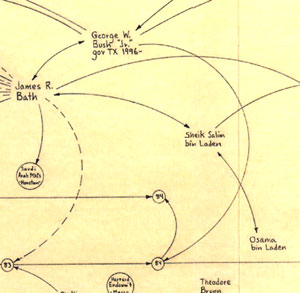


 The Hemp Revolution (1995) covers the history, cultivation and usage of hemp including food, fuel, building material and medicine. It also explores some of the factors behind the prohibition of hemp production in the U.S. in 1938 (including pressure from the petro-chemical industry). The impressive roster of interview subjects featured in the film includes such notable figures as Dr. Andrew Weil, Dr. Lester Grinspoon, Terence McKenna, Peter Dale Scott, and Prof. Sheri Tonn among many others.

