Decoding a Fake Reality

By Rosanne Lindsay

Source: Waking Times

Reality is a program of beliefs we decode:

Disease equals Health
Fake news equals Truth
Wars equal Peace
Uniformity equals Unity
State-granted rights equal human rights
Slavery equals Freedom.

All is illusion.

As our world unfolds in multiple dimensions, we are focused in a time-space continuum (linear construct) with limited perception. Our “perception deception” in this reality timeline means that no matter what happened in the past, or what might happen in the future, we are always pondering it and creating it in the Now.

The power to restructure reality is only possible with the clarity of the cosmic mind. Unfortunately, as humans, we are easily programmed to believe that what we see, feel, taste, hear, and smell is all there is.

“The outer world is a reflection of the inner world. Other people’s perception of you is a reflection of them; your response to them is an awareness of you.” ~Roy T. Bennett, The Light in the Heart

Our beliefs guide our perception about who we are and what we can create. Believe we are sick and tired and we are. The body responds to core beliefs. The cells hear what we say, they hear limitations and feel fear. If we love our cells, the body will support our beliefs. What we do in our bodies is pivotal to our multidimensional selves, as well as to other timelines.

The Structure of Reality

Reality is constructed in time and space in this Third Dimension. Time and space are frequencies which cycle in a looped timeline, which our brains decode so that we can experience life as humans. Everything cycles, from the seasons to the economy, just as history tends to repeat itself.

We live in a Matrix system that can be described as a grid, a hologram, or a game composed of electromagnetic (EM) frequencies. The hologram is information as light that is distributed non-locally. Our brains decode this information based on perception; how things appear to us. And as we know, appearances can be deceiving.

Indeed, all is not as it seems. We create a collective reality with electromagnetic frequencies where everyone and everything is connected, in similar fashion to how the internet works. However, in the space we occupy we see only a small visible light spectrum, a narrow band of information that represents only 0.0001% of the whole electromagnetic spectrum.

Spirit First

We perceive that the brain is the central processing unit of the body, the body is a computer, and our DNA is nature’s hard drive. Yet we must also accept that we are receivers and transmitters of information – we are also the energy that runs the body. We are Spirit first. We are consciousness having a physical experience in a holographic constructed reality for our soul’s growth and evolution. Consciousness creates reality.

“You are a creator. You of humanity… Science has a fixation on knowledge, particularly that which is compatible with sense perception. Despite instruments which far exceed man’s sensory capacity, all knowledge gained in translated back to a sense perception before it can be coded as information. If it cannot be seen, heard, touched, smelled or tasted, it is not received by physical man. The five senses of man. The four walls and the lid of your prison. Discard them. Touch will not determine subtle shapes. Eye will not perceive reality. Ears do not hear the song of the universe. You cannot taste the food of angels or smell the fragrance of a higher truth. We rejoice as you begin to unshackle the self-imposed chains of limitation. Use your physical senses, enjoy them, but never for one moment believe in them as complete reality. Your heart knows – experience. Believe. Believe. Whatever you believe is so.” ―  Jade Plant, Talking with Nature by Michael J. Roads

If we understand the construction of an atom, then we appreciate that we are not solid at all. We are pure awareness in a cosmos we cannot measure. We are not our bodies or our names. We are not our emotions. We are limitless. Through our limited perception and core beliefs this may sound impossible.

However, we are not impossible but everything that is possible. All possibility means we are everything and no-thing. We are matter and energy, sound and silence. Life is a continuum, between physical and non-physical. Without beginning and without end.

In this game of illusion, we are a projection of our True Selves. In this reality, we are a hologram in a holographic universe. A hologram: a three-dimensional projection written on a two dimensional surface (i.e., piece of paper).

We are here to remember that we are more than words on paper just as we are more than base pairs of our DNA. Our DNA is a projection of a greater force. We are wave and particle at the same time. We are not complex. We are multiplex.

In this game of illusion, humans are caught in a time loop distortion where we have lost our power to those who control the program in the hologram. Not only are minds controlled (via social engineering and frequencies), but human genetics have been manipulated to perceive through five physical senses, resulting in the suppression of our true selves and our true potential.

The Freedom To Choose

In navigating All That We Are, we have a choice. We can choose to become bees in a Hive Mind on a colony of control and draconian laws, or we can choose freedom.

“Liberty lies in the hearts of men and women. When it dies there, no constitution, no law and no court, can save it.” ― Judge Learned Hand

When we talk about freedom, we perceive only a fraction of what is possible based on what we have been programmed and conditioned to believe through the limits of the five senses. The moment we perceive differently to use all of our senses, and to embody freedom, we reclaim our freedom. We no longer have to conform to colony control.

Decoding a Fake Reality

The mind controls beliefs in a reality that conforms to core beliefs. When we do not see beyond the page and open to all that is possible, we decode a fake reality and perpetuate it. We become distracted by the limitations set up to suppress our inherent power instead of creating the reality that best serves all of humanity and the planet.

“Morpheus: The Matrix is everywhere. It is all around us. Even now, in this very room. You can see it when you look out your window or when you turn on your television. You can feel it when you go to work… when you go to church… when you pay your taxes. It is the world that has been pulled over your eyes to blind you from the truth.


Neo: What truth?


Morpheus: That you are a slave, Neo. Like everyone else you were born into bondage. Into a prison that you cannot taste or see or touch. A prison for your mind.” ~The Matrix

The Matrix is a system into which humans incarnate and reincarnate for the purpose of soul evolution, and to wake up. While this construct may not be able to be “fixed” it can be conditioned by the way we respond to it.

A Reality of Now in Three Steps

Step 1: Free the mind from the program of beliefs.

Unlearn Core Beliefs:
Schools are there to enlighten us to the truth of the world.
Governments grant rights to protect us.
Big Pharma cures us.
The mainstream media tells the truth about what is happening in the world.
Politicians stand for hope and change.
Terrorists (false flag events) necessitate less freedom though more controls and surveillance.
GMO foods feed the world.
RFID microchips make life more convenient and efficient.
Chemtrails and geoengineering control “global warming” to protect the planet.

Step 2: Expand what we think is possible. Choose to become conscious of the Matrix system or to choose to remain unconscious. If we are in denial we cannot change anything. Accept what is so that we can change what is.

Step 3: Move from thinking and talking about it to doing something about it. Start with the body. Change emotions to lighten the body burden. Love the Self. See the body respond and heal and watch it ripple out to change reality.

You Want a Picture of the Future? Imagine a Boot Stamping on Your Face

By John W. Whitehead

Source: The Rutherford Institute

“The Internet is watching us now. If they want to. They can see what sites you visit. In the future, television will be watching us, and customizing itself to what it knows about us. The thrilling thing is, that will make us feel we’re part of the medium. The scary thing is, we’ll lose our right to privacy. An ad will appear in the air around us, talking directly to us.”—Director Steven Spielberg, Minority Report

We have arrived, way ahead of schedule, into the dystopian future dreamed up by such science fiction writers as George Orwell, Aldous Huxley, Margaret Atwood and Philip K. Dick.

Much like Orwell’s Big Brother in 1984, the government and its corporate spies now watch our every move.

Much like Huxley’s A Brave New World, we are churning out a society of watchers who “have their liberties taken away from them, but … rather enjoy it, because they [are] distracted from any desire to rebel by propaganda or brainwashing.”

Much like Atwood’s The Handmaid’s Tale, the populace is now taught to “know their place and their duties, to understand that they have no real rights but will be protected up to a point if they conform, and to think so poorly of themselves that they will accept their assigned fate and not rebel or run away.”

And in keeping with Philip K. Dick’s darkly prophetic vision of a dystopian police state—which became the basis for Steven Spielberg’s futuristic thriller Minority Report which was released 15 years ago—we are now trapped into a world in which the government is all-seeing, all-knowing and all-powerful, and if you dare to step out of line, dark-clad police SWAT teams and pre-crime units will crack a few skulls to bring the populace under control.

Minority Report is set in the year 2054, but it could just as well have taken place in 2017.

Seemingly taking its cue from science fiction, technology has moved so fast in the short time since Minority Report premiered in 2002 that what once seemed futuristic no longer occupies the realm of science fiction.

Incredibly, as the various nascent technologies employed and shared by the government and corporations alike—facial recognition, iris scanners, massive databases, behavior prediction software, and so on—are incorporated into a complex, interwoven cyber network aimed at tracking our movements, predicting our thoughts and controlling our behavior, Spielberg’s unnerving vision of the future is fast becoming our reality.

Both worlds—our present-day reality and Spielberg’s celluloid vision of the future—are characterized by widespread surveillance, behavior prediction technologies, data mining, fusion centers, driverless cars, voice-controlled homes, facial recognition systems, cybugs and drones, and predictive policing (pre-crime) aimed at capturing would-be criminals before they can do any damage.

Surveillance cameras are everywhere. Government agents listen in on our telephone calls and read our emails. Political correctness—a philosophy that discourages diversity—has become a guiding principle of modern society.

The courts have shredded the Fourth Amendment’s protections against unreasonable searches and seizures. In fact, SWAT teams battering down doors without search warrants and FBI agents acting as a secret police that investigate dissenting citizens are common occurrences in contemporary America.

We are increasingly ruled by multi-corporations wedded to the police state. Much of the population is either hooked on illegal drugs or ones prescribed by doctors. And bodily privacy and integrity has been utterly eviscerated by a prevailing view that Americans have no rights over what happens to their bodies during an encounter with government officials, who are allowed to search, seize, strip, scan, spy on, probe, pat down, taser, and arrest any individual at any time and for the slightest provocation.

All of this has come about with little more than a whimper from a clueless American populace largely comprised of nonreaders and television and internet zombies. But we have been warned about such an ominous future in novels and movies for years.

The following 15 films may be the best representation of what we now face as a society.

Fahrenheit 451 (1966). Adapted from Ray Bradbury’s novel and directed by Francois Truffaut, this film depicts a futuristic society in which books are banned, and firemen ironically are called on to burn contraband books—451 Fahrenheit being the temperature at which books burn. Montag is a fireman who develops a conscience and begins to question his book burning. This film is an adept metaphor for our obsessively politically correct society where virtually everyone now pre-censors speech. Here, a brainwashed people addicted to television and drugs do little to resist governmental oppressors.

2001: A Space Odyssey (1968). The plot of Stanley Kubrick’s masterpiece, as based on an Arthur C. Clarke short story, revolves around a space voyage to Jupiter. The astronauts soon learn, however, that the fully automated ship is orchestrated by a computer system—known as HAL 9000—which has become an autonomous thinking being that will even murder to retain control. The idea is that at some point in human evolution, technology in the form of artificial intelligence will become autonomous and that human beings will become mere appendages of technology. In fact, at present, we are seeing this development with massive databases generated and controlled by the government that are administered by such secretive agencies as the National Security Agency and sweep all websites and other information devices collecting information on average citizens. We are being watched from cradle to grave.

Planet of the Apes (1968). Based on Pierre Boulle’s novel, astronauts crash on a planet where apes are the masters and humans are treated as brutes and slaves. While fleeing from gorillas on horseback, astronaut Taylor is shot in the throat, captured and housed in a cage. From there, Taylor begins a journey wherein the truth revealed is that the planet was once controlled by technologically advanced humans who destroyed civilization. Taylor’s trek to the ominous Forbidden Zone reveals the startling fact that he was on planet earth all along. Descending into a fit of rage at what he sees in the final scene, Taylor screams: “We finally really did it. You maniacs! You blew it up! Damn you.” The lesson is obvious here, but will we listen? The script, although rewritten, was initially drafted by Rod Serling and retains Serling’s Twilight Zone-ish ending.

THX 1138 (1970). George Lucas’ directorial debut, this is a somber view of a dehumanized society totally controlled by a police state. The people are force-fed drugs to keep them passive, and they no longer have names but only letter/number combinations such as THX 1138. Any citizen who steps out of line is quickly brought into compliance by robotic police equipped with “pain prods”—electro-shock batons. Sound like tasers?

A Clockwork Orange (1971). Director Stanley Kubrick presents a future ruled by sadistic punk gangs and a chaotic government that cracks down on its citizens sporadically. Alex is a violent punk who finds himself in the grinding, crushing wheels of injustice. This film may accurately portray the future of western society that grinds to a halt as oil supplies diminish, environmental crises increase, chaos rules, and the only thing left is brute force.

Soylent Green (1973). Set in a futuristic overpopulated New York City, the people depend on synthetic foods manufactured by the Soylent Corporation. A policeman investigating a murder discovers the grisly truth about what soylent green is really made of. The theme is chaos where the world is ruled by ruthless corporations whose only goal is greed and profit. Sound familiar?

Blade Runner (1982). In a 21st century Los Angeles, a world-weary cop tracks down a handful of renegade “replicants” (synthetically produced human slaves). Life is now dominated by mega-corporations, and people sleepwalk along rain-drenched streets. This is a world where human life is cheap, and where anyone can be exterminated at will by the police (or blade runners). Based upon a Philip K. Dick novel, this exquisite Ridley Scott film questions what it means to be human in an inhuman world.

Nineteen Eighty-Four (1984). The best adaptation of Orwell’s dark tale, this film visualizes the total loss of freedom in a world dominated by technology and its misuse, and the crushing inhumanity of an omniscient state. The government controls the masses by controlling their thoughts, altering history and changing the meaning of words. Winston Smith is a doubter who turns to self-expression through his diary and then begins questioning the ways and methods of Big Brother before being re-educated in a most brutal fashion.

Brazil (1985). Sharing a similar vision of the near future as 1984 and Franz Kafka’s novel The Trial, this is arguably director Terry Gilliam’s best work, one replete with a merging of the fantastic and stark reality. Here, a mother-dominated, hapless clerk takes refuge in flights of fantasy to escape the ordinary drabness of life. Caught within the chaotic tentacles of a police state, the longing for more innocent, free times lies behind the vicious surface of this film.

They Live (1988). John Carpenter’s bizarre sci-fi social satire action film assumes the future has already arrived. John Nada is a homeless person who stumbles across a resistance movement and finds a pair of sunglasses that enables him to see the real world around him. What he discovers is a world controlled by ominous beings who bombard the citizens with subliminal messages such as “obey” and “conform.” Carpenter manages to make an effective political point about the underclass—that is, everyone except those in power. The point: we, the prisoners of our devices, are too busy sucking up the entertainment trivia beamed into our brains and attacking each other up to start an effective resistance movement.

The Matrix (1999). The story centers on a computer programmer Thomas A. Anderson, secretly a hacker known by the alias “Neo,” who begins a relentless quest to learn the meaning of “The Matrix”—cryptic references that appear on his computer. Neo’s search leads him to Morpheus who reveals the truth that the present reality is not what it seems and that Anderson is actually living in the future—2199. Humanity is at war against technology which has taken the form of intelligent beings, and Neo is actually living in The Matrix, an illusionary world that appears to be set in the present in order to keep the humans docile and under control. Neo soon joins Morpheus and his cohorts in a rebellion against the machines that use SWAT team tactics to keep things under control.

Minority Report (2002). Based on a short story by Philip K. Dick and directed by Steven Spielberg, the setting is 2054 where PreCrime, a specialized police unit, apprehends criminals before they can commit the crime. Captain Anderton is the chief of the Washington, DC, PreCrime force which uses future visions generated by “pre-cogs” (mutated humans with precognitive abilities) to stop murders. Soon Anderton becomes the focus of an investigation when the precogs predict he will commit a murder. But the system can be manipulated. This film raises the issue of the danger of technology operating autonomously—which will happen eventually if it has not already occurred. To a hammer, all the world looks like a nail. In the same way, to a police state computer, we all look like suspects. In fact, before long, we all may be mere extensions or appendages of the police state—all suspects in a world commandeered by machines.

V for Vendetta (2006). This film depicts a society ruled by a corrupt and totalitarian government where everything is run by an abusive secret police. A vigilante named V dons a mask and leads a rebellion against the state. The subtext here is that authoritarian regimes through repression create their own enemies—that is, terrorists—forcing government agents and terrorists into a recurring cycle of violence. And who is caught in the middle? The citizens, of course. This film has a cult following among various underground political groups such as Anonymous, whose members wear the same Guy Fawkes mask as that worn by V.

Children of Men (2006). This film portrays a futuristic world without hope since humankind has lost its ability to procreate. Civilization has descended into chaos and is held together by a military state and a government that attempts to keep its totalitarian stronghold on the population. Most governments have collapsed, leaving Great Britain as one of the few remaining intact societies. As a result, millions of refugees seek asylum only to be rounded up and detained by the police. Suicide is a viable option as a suicide kit called Quietus is promoted on billboards and on television and newspapers. But hope for a new day comes when a woman becomes inexplicably pregnant.

Land of the Blind (2006). This dark political satire is based on several historical incidents in which tyrannical rulers were overthrown by new leaders who proved just as evil as their predecessors. Maximilian II is a demented fascist ruler of a troubled land named Everycountry who has two main interests: tormenting his underlings and running his country’s movie industry. Citizens who are perceived as questioning the state are sent to “re-education camps” where the state’s concept of reality is drummed into their heads. Joe, a prison guard, is emotionally moved by the prisoner and renowned author Thorne and eventually joins a coup to remove the sadistic Maximilian, replacing him with Thorne. But soon Joe finds himself the target of the new government.

All of these films—and the writers who inspired them—understood what many Americans, caught up in their partisan, flag-waving, zombified states, are still struggling to come to terms with: that there is no such thing as a government organized for the good of the people. Even the best intentions among those in government inevitably give way to the desire to maintain power and control at all costs.

Eventually, as I point out in my book Battlefield America: The War on the American People, even the sleepwalking masses (who remain convinced that all of the bad things happening in the police state—the police shootings, the police beatings, the raids, the roadside strip searches—are happening to other people) will have to wake up.

Sooner or later, the things happening to other people will start happening to us and our loved ones.

When that painful reality sinks in, it will hit with the force of a SWAT team crashing through your door, a taser being aimed at your stomach, and a gun pointed at your head. And there will be no channel to change, no reality to alter, and no manufactured farce to hide behind.

As George Orwell warned, “If you want a picture of the future, imagine a boot stamping on a human face forever.”

Resistance is Fertile: The Art of Having No Masters

518d2cb7d767433a327846150d5be280

By Gary ‘Z’ McGee

Source: Waking Times

“You don’t become completely free by just avoiding being a slave; you also need to avoid becoming a master.” ~Naseem Nicholas Taleb

In the midst of a hyper-violent culture blinded by the statist agenda of control, militarized cops brainwashed by the statist notion of law and order, and a bloated military with the monopoly on power through tyranny, it’s difficult for the would-be-resister to live with any confidence that their freedom will not be compromised by the violent thugs in power or by the indoctrinated statists that represent the majority.

Difficult time to be free. Made even more difficult because of the level of psychosocial statist programming causing the majority to believe that everything is okay as long as they keep voting. Caught up in their hyper-realities, going through the motions of being an abstraction of an abstraction, the ignorant statists are convinced that everything is just fine, that the authority of the state is necessary, that the militarization of the police will help keep them protected, that an obese, money-sucking, terrorist-generating military will somehow make them more secure. What is this, 1984? What’s next? War is peace? Freedom is slavery? Ignorance is strength? Sadly, in some ways, we’re already there.

The problem with statism is that everything seems okay inside the bubble, but the bubble is always about to burst. Statism is slavery by consent. It hoodwinks people into enjoying their servitude. It (brain)washes out logic and reasoning through nationalism and patriotism, thus scrambling the ignorant statist’s brain into exploitable soup. Bombarded by state-engineered symbols that the statist marries their fragile ego to, statism is by far the most dangerous religion. Made all the more dangerous because people are born and bred into being statists and cannot even imagine thinking outside its box.

But resistance is not futile. It only seems that way because we are surrounded by the Goliath that is the state. No, on a long enough timeline, resistance is fruitful. Resistance always has, and always will, lead to human flourishing. It might not always be pretty, but resistance to any and all standing orders (manmade laws), is the key to a healthy, sustainable, and progressive evolution for our species.

The art of having no masters is perfecting the science of resistance. But resistance isn’t fairytale romantic. It’s not pretend confliction. It takes effort. It takes perseverance. It takes counterintuitive ruthless compassion, usually in the face of those you care about. Definitely not for the faint of heart. But, then again, having a faint heart is for statists who imagine they need a master, not for anarchists who know they need only master themselves. Yes, resistance is fertile but, more than anything, it’s courageous, uncomfortable, and dangerous.

Let’s break it down…

Resistance is Courageous

“I’d rather attempt to do something great and fail than to attempt to do nothing and succeed.” ~Robert H. Schuller

The art of having no masters cannot be rationalized until one has the audacity to question things as they are. As Chomsky famously stated, “The general population doesn’t even know what’s happening, and it doesn’t even know that it doesn’t know.” Indeed. Until the individual stands up and dares to jut his/her head above the sea of status quo conformity, they will continue to be ruled. But being ruled, or not, is always a state of mind. Until the individual has the audacity to change their state of mind to self-rule despite those who seek to rule them, their “soft slavery” will continue.

Statism is the epitome of soft slavery. Statists are like house slaves. There just happen to be a lot more of them, and the “house” is the state. As long as the house slave (statist) doesn’t disobey the house master (the state), they live relatively comfortable and secure lives. All their needs are met. Except, of course, the need for freedom and self-ownership.

Thus, it takes a particular flavor of courage to rise above the comfort and security in order to actualize self-mastery. The statist who merely goes along with the state’s agenda, attempts nothing great, and succeeds. The anarchist who rises above the washed-out conformity of it all, attempts something great and, though he may fail, he at least gains self-authority and takes his first steps toward self-mastery and perfecting the art of having no masters.

Resistance is Uncomfortable

“To live by the dice or accept death with confidence requires a consummate self-possession, which is the essence of character. No one becomes a hero staying at home, going to the office, or attending church.” ~Michael Dirda

The art of having no masters is not a pleasant art. It is in all ways disruptive. It is completely unsettling. Much cognitive dissonance must be successfully navigated. And there are always setbacks. Because the art of having no masters means having the courage to (at least attempt to) master the individual self, despite those who seek to rule the individual’s self, it is never comfortable. Though one can glean much comfort out of owning oneself, it’s never easy. Especially in a world that thinks everything should be owned.

One is constantly outnumbered. Whether it’s the giant goliath of the state itself or the tiny goliath of the inured statist, it can be painfully and awkwardly uncomfortable. But resisting those who would rule you was never meant to be comfortable. As Brene’ Brown stated, “You can have courage or you can have comfort, but you can’t have both.”

Indeed. Those seeking to perfect the art of having no masters must embrace the discomfort that comes with rocking the boat. It’s a double-edged sword, for sure. On the one side is sweet freedom, but on the other side is taking the painful responsibility for that freedom. But the genuinely autonomous, the authentic seekers of freedom, the true anarchists, will always choose to stab themselves with that double-edged sword, no matter how uncomfortable or painful it might be. Thereby taking the next step toward self-mastery and further perfecting the art of having no masters.

Resistance is Dangerous

“The Matrix is a system, Neo. That system is our enemy. But when you’re inside, you look around, what do you see? Businessmen, teachers, lawyers, and carpenters; the very minds of the people we are trying to save. You have to understand, most of these people are not ready to be unplugged. And many of them are so inured, so hopelessly dependent upon the system, they will fight to protect it.” ~Morpheus, The Matrix

If resistance is dangerous, then the art of having no masters is doubly dangerous. Especially in a world where the majority of the people are dead-set on having masters. In a world where the majority are convinced they need a queen, or a king, or a president, it makes it problematic for those who are seeking to take responsibility for their own power and who are teaching self-leadership. It’s dangerous because people are afraid of what they don’t understand. And the majority of people simply cannot understand a world without rulers and masters. Talk about not being able to think outside the box, let alone the Matrix.

Everyone wants to give their power to an authority, never stopping to think that authority should be themselves. Everyone wants to be Neo, but nobody wants to take responsibility for their own power. Sure, give credit where credit is due (as Neo did with Morpheus), for true leadership is an honorable thing indeed, but not to the extent that your freedom is discredited and your power is taken away. Self-empowerment is the key to unlocking the door of having no masters. And it leads to authentic leadership.

With all these people giving up their power, in Stockholm-syndrome-esque proportions, it makes it difficult for the would-be self-master to work on his/her self-mastery. But work on it they should. We need more leaders who are able to resist. We need more courageous individuals who are not afraid of getting uncomfortable or facing the danger of being right when the majority of people are wrong. We need more self-empowered individuals seeking to empower others, despite a world that’s attempting to take that power away. We need more trailblazers who are not afraid to spearhead self-authority straight through the heart of state-authority. We need leaders who have the audacity to teach self-leadership and self-rule through self-empowerment, despite the state which only seeks to rule by the illusion of authority through the overreach of violent power.

In short: we need more people who care about life to resist those who do not, because life is freedom and freedom is life. That is the heart and soul of the art of having no masters. As Derrick Jensen said, “We are the governors as well as the governed. This means that all of us who care about life need to force accountability onto those who do not.”

Fellow Americans, Wake Up & Escape The Matrix

MatrixBluePillRedPill-1024x534

Where Do Matters Stand?

On the eve of World War II the United States was still mired in the Great Depression and found itself facing war on two fronts with Japan and Germany. However bleak the outlook, it was nothing compared to the outlook today.

By Paul Craig Roberts

Source: Covert Geopolitics

Has anyone in Washington, the presstitute Western media, the EU, or NATO ever considered the consequences of constant military and propaganda provocations against Russia? Is there anyone in any responsible position anywhere in the Western world who has enough sense to ask: “What if the Russians believe us? What if we convince Russia that we are going to attack her?”

The same can be asked about China.

The recklessness of the White House Fool and the media whores has gone far beyond mere danger. What do the Russians think when they see that the Democratic Party intends to elect Hillary Clinton president of the US? Hillary is a person so crazed that she declared the president of Russia to be “the new Hitler” and organized through her underling, neocon monster Victoria Nuland, the overthrow of the democratically elected government of Ukraine. Nuland installed Washington’s puppet government in a former Russian province that until about 20 years ago was part of Russia for centuries.

I would bet that this tells even the naive pro-western part of the Russian government and population that the United States intends war with Russia.

Ever since Russia stood up to Obama over Syria, the Russians have been experiencing hostile propaganda and military operations on their borders. These provocations are justified by Washington and its NATO vassals as a response to “Russian aggression.” Russian aggression consists of nothing but obviously false assertions that Russia is about to invade the Baltics, Poland, and Romania and recreate the Soviet Empire, the Eastern European part of which, together with the former Russian provinces of Georgia and Ukraine, now belong to the American Empire.

The Russians know that the propaganda about “Russian aggression” is a lie. What is the purpose of the lie other than to prepare the Western peoples for war with Russia?

There is no other explanation.

Even morons such as Obama, Merkel, Hollande, and Cameron should be capable of understanding that it is extremely dangerous to convince a major military power that you are going to attack. To simultaneously also convince China doubles the danger.

Clearly, the West is incapable of producing leadership capable of preserving life on earth.

What can be done when the entire West demonstrates a death wish for Planet Earth?

Until the criminal regimes of Clinton, George W. Bush, and Obama, American presidents from John F. Kennedy forward worked to reduce tensions with the Soviets. Kennedy worked with Khrushchev to reduce tensions caused by US missiles in Turkey and Soviet missiles in Cuba. President Nixon negotiated SALT I (the Strategic Arms Limitation Treaty) and the Anti-Ballistic Missile Treaty. President Carter negotiated SALT II, which was never ratified by the US Senate but was observed by the executive branch. President Reagan negotiated with Soviet leader Gorbachev the end of the Cold War. President George H.W. Bush in exchange for Gorbachev’s agreement to the reunification of Germany promised that NATO would not move one inch to the East.

All of these achievements were thrown away by the neoconized Clinton, George W. Bush, and Obama regimes, each a criminal regime on par with Nazi Germany.

Today life on Planet Earth is far less secure than during the darkest days of the Cold War. Whatever threat global warming poses, it is miniscule compared to the threat of nuclear winter. If the evil that is concentrated in Washington and its vassals perpetrates nuclear war, cockroaches will inherit the earth.

I have been warning about the growing danger of a nuclear war resulting from the arrogance, hubris, ignorance, and evil personified by Washington. Recently, four knowledgable Russian-Americans spelled out the likely consequences of trying to drive Russia to submission with war threats: http://www.paulcraigroberts.org/2016/06/03/41522/

See also: http://www.paulcraigroberts.org/2016/05/28/as-our-past-wars-are-glorified-this-memorial-day-weekend-give-some-thought-to-our-prospects-against-the-russians-and-chinese-in-world-war-iii/

Don’t expect the brainwashed American population to have the moral conscience and fortitude to prevent nuclear war or even the intelligence to prevent their own vaporization. In a recent article in the Wall Street Journal Scott Sagan and Benjamin Valentino report that 59% of the US population support attacking Iran with nuclear weapons in the event that Iran sank one US Navy ship: http://www.wsj.com/articles/would-the-u-s-drop-the-bomb-again-1463682867

Republicans were much more likely than Democrats to approve attacking Iran with nuclear weapons with 81% of Republicans approving nuclear war compared to 47% of Democrats. Yet, the Democrats are behind Hillary who would be the first to use nuclear weapons. After all, a feminized woman has to prove how tough she is, just as Margaret Thatcher was “the Iron Lady.”

Before it is too late for Americans and all of humanity, arrogant Americans need to recall that “those who live by the sword, die by the sword.”

The economic picture is equally dismal and unpromising. The latest payroll jobs report was even more awful than reported. Hardly any new jobs were created, but what largely escaped reporting is the fact that the economy actually lost 59,000 full-time jobs.

Increasingly the US economy consists of part-time jobs that cannot support an independent existence. Thus, more Americans age 19-34 live at home with parents than independently with spouses or partners. Fully half of 25-year old Americans live in their childhood rooms in their parents’ homes.

This is the “New Economy” that the filthy lying neoliberal economists promised would be reward for the American work force giving up their manufacturing and professional skill jobs to foreigners. What a monstrous lie the neoliberal economists told so that corporate executives and shareholders could put into their own pockets the living wage of the American work force. These neoliberal economists, and, alas, libertarian “free market” ones, have not been held accountable for their impoverishment of the American work force deeply buried in debt with no future prospects.

Those few Americans who have any awareness are beginning to realize that the One Percent and the western governments that serve them are re-establishing feudalism. The brilliant and learned economist, Michael Hudson, has labeled our era the era of neo-feudalism.

He is correct. The majority of young Americans come out of university heavily indebted, primed for debtor prison. When half of 25-year olds cannot marry and form households, how can anyone believe that housing sales and prices are rising except as a result of speculative investors banking on rental income from a population that cannot even pay its student loans.

The United States is the sickest place on earth. There is no public or political discussion of any important issue or of the multiple crises that confront America or the crises that America brings to the world.

The American people are so stupid and unaware that they are capable of electing a criminal and a warmonger like Hillary president of the United States and be proud of it.

These “tough” Americans are so frightened of hoax dangers, such as “Muslim terrorists” and “Russian aggression” that they willingly sacrificed their depleted pocketbooks, the Constitution of the United States—an act of treason on the part of the American people who utterly failed their responsibility to protect the Constitution—and their own liberty to a universal police state that has all power over them.

It is extraordinary that once-proud, once-great European peoples look for leadership from a country of moronic non-entities who have pissed away the liberty, security, and prosperity that their Founding Fathers gave to them.

Fellow Americans, if you care to avoid vaporization and, assuming we do avoid it, live a life other than serfdom, you must wake up and realize that your most deadly enemy is Washington, not the hoax of “Russian aggression,” not the hoax of “Muslim terrorism,” not the hoax of “domestic extremism,” not the hoax of welfare bankrupting America, not the hoax of democracy voting away your wealth, which Wall Street and the corporations have already stolen and stuck in their pockets.

If you cannot wake up and escape The Matrix, your doom will bring the doom of the planet.

How The Deep State’s Two-Dimensional Engineered Reality Actually Works

deep_state_2_0

By Bernie Suarez

Source: Waking Times

It is refreshing to see more and more of humanity wake up to the functional real-time political reality of the world we now live in. There are many human beings throughout the planet who now understand that corruption has taken over. They understand that criminals run the world. They understand that in America a powerful ruling elite bought out politicians and corporations to get what they want. They understand that the ruling elite operate in networks that transcend the boundaries of nation states in an agenda intended to lead to global domination using their military might.

People are understanding that government propaganda is real, and that the U.S. government has gotten away with one false flag attack on its own people after another; 9/11 being just one of them, all for the purposes of justifying endless war. People also understand that the war on terror, which was ushered in by 9/11, is a lie and that because of this phony war on terror the Pentagon and U.S. military is swimming in billions of dollars of free money to do whatever they want. But what does all of this mean? Do we really understand how they’ve done it and how all of this works?

In 1999 Directors Andy and Lana Wachowski brought us an interesting film called The Matrix which nicely depicts how two alternate realities simultaneously exist: one in which the people in it have no clue what is real and what is not because the sum of the two-dimensional parts they are exposed to seems real, even though it’s not, and another reality where you are irreversibly awakened from that fictional reality.

Over the past 17+ years since the release of The Matrix film many people have awakened to the political reality we live in. For many people it is not difficult to see the parallels between the world we live in and the world depicted in The Matrix. We can see that there is an artificial reality in play that looks and feels real, but it is not. It’s a system designed to keep you enslaved, keep you disempowered, keep you in fear and keep you dependent on big government for survival. Most importantly it’s a system designed to keep itself in power and to preserve whatever agenda it has. Ultimately, this artificial reality is tending towards a global order where the ruling elite hope to absolutely control humanity forever in a way that is absolutely and uncompromisingly in line with their wishes.

The question we should be asking is, How does this matrix work and how does it relate to the three-dimensional physical reality we live in? To answer that, the concept of the “Deep State” was originally proposed to describe the political corruption in Turkey as a secret state acting within a state.

Though we had been warned about these ruling elite, banksters and shadow government by previous presidents going back 200+ years, following the post 9/11 period more and more people began wrapping this concept around their heads. To many, the idea of a group of elite running the world, deemed for years by the U.S. mainstream media and propaganda machine as lunatic “conspiracy theories”, suddenly didn’t seem so crazy after all. Today the concept of a “Deep State,” perhaps because of its roots in Turkey, is much more believable and is seen as more plausible.

In an interview for his book The Road to 9/11, author Peter Dale Scott describes the “Deep State” saying:

It refers to a parallel secret government, organized by the intelligence and security apparatus, financed by drugs, and engaging in illicit violence, to protect the status and interests of the military against threats from intellectuals, religious groups, and occasionally the constitutional government. In this book, I adapt the term somewhat to refer to the wider interface in America between the public, the constitutionally established state, and the deep forces behind it of wealth, power, and violence outside the government. You might call it the back door of the Public state, giving access to dark forces outside the law.

Since the publishing of Scott’s book, the term “Deep State” has gained increased attention and now serves as a practical model to describe how the shadow government operates.

And as humanity continues to awaken to the political reality that surrounds us, the concept of the Deep State becomes more a reality and much less fictional than the idea of the “matrix”, though these two are very intricately related as we’ll see.

The Matrix refers to the illusory engineered pseudo-reality that many people live in. The Deep State is the apparatus that allows that engineered and artificial two-dimension reality to be put out by the control system for daily consumption by the masses.

In order to appreciate this relationship consider the quote from former CIA director William Casey in 1981 when he said that:

We’ll know our disinformation program is complete when everything the American public believes is false.

This is an example of how the Deep State, which is led by Intelligence and their control and manipulation of news, is at the root of the creation of the false engineered world of lies that many people live in. As we can see by the Casey comment, the goal is not to tell a few lies but to actually create an entire reality based on those lies (think Sandy Hook, Bin Laden death hoax, etc).

Manufacturing the 2-Dimensional Reality

What many people don’t realize is that this false world of lies and deceit which is presented to the masses as “reality” is nothing more than a series of two-dimensional items strung together by the controlled media to create an artificial reality. Like the individual frames in a movie reel, each frame seems insignificant until you look at all the frames in a timed sequence. The sequential frames then present an artificial perceived reality.

This is the reason why every time the controllers pull off a staged crisis actor event or a false flag attack like 9/11, those defending the event including the media never seem to think it’s important to provide actual evidence for their claims. That’s because the three-dimensional evidence that truth seekers ask for always conflicts with the two-dimensional presentation they are putting out. The organic presentation of the truth itself, however, is never two-dimensional. It is actual, concrete, multi-dimensional truth which can be reasonably, logically and scientifically verified in real-time on multiple levels and reproduced endlessly without government interference due to its realistic and often simplistic nature.

This is why the demand for “proof” of government and mainstream media claims surrounding false flags and staged events always tends to become the thing that gets truth seekers demonized, attacked, accused, and even profiled as a “harassers” and criminals.

I recently wrote about the attack on Truth that we are seeing today and how it’s not just Truth that is under attack but the very search for Truth. That’s because today, searching for truth is a direct threat to the Deep State, it’s hypnotic control of the masses and its web of lies that make up the matrix, which in turn is keeping people enslaved.

The last thing the ruling oligarchs want is for people to wake up from the matrix of lies which the Deep State has put in place. Thus identifying the Deep State then logically becomes the first step in all of this. Most people in the U.S. don’t realize the degree to which the CIA and the Pentagon are secretly controlling the illusion of government. Even in an election year like 2016, Americans continue to believe the illusion of choice and Democracy which is actually one of the most important features to the operation of the Deep State.

As I’ve written about recently, in 2016 too many Americans are going in circles, like Groundhog Day, believing the same exact lies and promises told to them by the puppet politicians who are running for president, not realizing that this is precisely how the Deep State works. They put out their puppets and pseudo-promises, they ratchet up the campaign hoopla, and they have the candidates tell you anything you want to hear before they select their next puppet president mouthpiece.

Though most Americans know full well that to repeatedly do the same thing over and over again while expecting different results constitutes insanity, they do this very thing each time a presidential election year comes around. These same Americans witness this process with their own eyes every 4 years; another election, another president, the same results.

The result every time is more war, billions of dollars to the Pentagon slush fund, more false flags to justify more wars, more corruption and less accountability from government officials who get caught lying and committing crimes, more lies and propaganda sold to us by CIA’s mainstream media, more police state and tyranny against the people, less freedoms, more staged mass shootings, more globalization and illegal trade agreements, more medical and scientific fraud and false claims to feed the pockets of the pharmaceutical industries and vaccine industries, and, among other things, bigger steps to get us closer and closer to the permanent establishment of a new world order to be sold as United Nations’ “sustainable” living and “global peace and prosperity.”

It is incredible to think that at the smallest level, all of this is possible because unaware and naive Americans continue to believe the phony, artificial and engineered two-dimensional reality presented to them every day by mainstream media and Hollywood. They continue to misconstrue fiction for reality.

That simple inability to discern two-dimensional proof of a claim (a picture, a video, an empty claim by mainstream media or politicians) from three-dimensional proof (all the factors that make a story true including the full collection of physical, and scientific easily reproducible proof, real non-crisis actor eyewitnesses, real blood, real logical spontaneously captured sequences of events, open investigations, etc.) now threatens the survival of the human race and is dooming humanity to a potentially very dark future. This is a future which only those who are awakened to the difference between the presented two-dimensional reality and the actual three-dimensional reality, can potentially save humanity from.

Because this is so, those who realize the reality of the Deep State are therefore the greatest threat to the plans of the ruling elite who run the Deep State. This is why so many online trolls and shills are actually paid to spread State propaganda, lies, create division, insert doubt about topics and post State-sponsored “rebuttals” to key arguments on blog sites and social media. This is why they are fighting so hard to control the Internet, to criminalize activists, and to profile them as “domestic extremists”. This is also why sports fans are mesmerized with pro-military propaganda commercials and fake military worship pre-game ceremonies. This is why so many video games have pro-military and pro-war components to them. This is also why America is always told to “honor” the military. That’s because the military and the Intelligence is the enforcement arm of this evil Deep State. But they do know that as long as they deliver you entertainment, laughter and fun times, you’ll never question what or who the Deep State is. To the blind sheep it’s not something worth interrupting their life to believe, to try to recognize or to find answers for.

In the end, you can call it whatever you want but it’s still the matrix of lies we live in. It operates simultaneously with reality. It looks, feels and tastes real even though it is not. Can you taste it? Can you feel it? It’s all around us as we speak, but whether you see it for what it is, is entirely up to you.

The Control-Matrix is Crashing because the Truth-Seekers are Winning

36da1558948450f9941d79cffcde69e0

By Phillip J. Watt

Source: The Mind Unleashed

The way the masses view the world is a farce. Every single mainstream perspective is either purposely deceptive, or completely misses the point. Even the people in places of influence who we’re meant to trust have either sold out, or are just plain ignorant to the facts. There’s no need to have a heavy heart though; the matrix of control is crashing because the truth-seekers are dealing heavy blows to the false narratives that have for too long shaped the collective mindset of humanity.

Of course the internet can be celebrated for being the primary mechanism which has amplified the sharing of information across location, race, culture and belief systems. In retrospect, the powers-that-will-no-longer-be would be kicking themselves for not trying harder to institute their insidious plan for humanity prior to the birth and growth of the world-wide-web.

Make no mistake though; they have been very successful on many fronts. For example, try to imagine a world where:

      • most journalists don’t report the real news;
      • the majority of doctors don’t truly understand the causes of poor health and how to legitimately resolve it;
      • a high proportion of politicians don’t know how the money supply works and what the agenda is of those who control it;
      • many so-called expert scientists ‘believe’ in a discredited philosophy which resembles a dogmatic religion;
      • the majority of teachers don’t realize they’re teaching a system of indoctrination that nowhere near gets close to the information and critical thinking that should be afforded our kids; and

the masses are not only ill-informed, divided and feverishly fighting against each other over small and irrelevant topics, but they’re also sleepwalking through one of the most majestic and reverent realities that could have ever been conceptualized.

Well, welcome to our world.

As we begin what we call the 21st Century, every system that should be designed to facilitate the health and vitality of the people has been hacked with lies, deception, dysfunction and disharmony. It’s easy to think that this is an embarrassment for our species because it’s beneath our intelligence and ethical capacity, yet there’s no need to lose faith in the inevitable betterment of humanity, including the way in which we organize and economize our societies.

Why? Because all of this dysfunction has been an effective driver of the collective awakening that is rising in the hearts and minds of humanity.

The inspiring fact is that more and more people are slowly waking up and realizing we all have the opportunity to come to our own, informed opinion on the truth, pertaining to both the spiritual and systemic realities. So many more people now understand the mainstream news is not to be taken seriously as its not where we can find information which is aligned with the deeper truths. They’re also acknowledging that we have the choice on what we decide to personally stand and fight for, as well as the legacy we leave for our children and our future generations.

Beware though; once we exit the matrix of control we’re faced with some serious challenges. We have a lot of inner work to do, such as designing a philosophy that ensures we’re at peace, as well as exercising patience in the quest to take back our liberties and design a legitimate and honorable future for humanity.

That’s why we’ve got to feel for those who have been long aware of the many dysfunctions of our world, especially those who have not learned peace and patience. Slowly they’ve watched:

    • the military-industrial-media-politico-banking complex increase their power and continue their pillage across the world;
    • pharmaceutical monopolies amplifying the drugging of society, as well as keeping many of us sick so that they maximize their profits;
    • movements rise up only to be vilified and disassembled, such as the Occupy Movement;
    • science turned into a corporate institution, as well as further hijacked by an inaccurate and small-minded philosophy of reality;
    • wars purposely created with millions of people dying for the whims of the shadow empire;
    • radical extremists massaged into proxy armies to do dirty work for the collapsing power structure;
    • air, medicine, food and water becoming purposely more toxic;
    • governmental policy increasingly being determined by corporate/elite interests;
    • police being militarized all around the globe;
    • the education model struggling to become less of an indoctrination system; and
    • the agenda of global governance becoming closer to fruition.

Some people have known about much of this for decades, so we should commend them for continuing to fight the good fight. They might have witnessed some disheartening developments, yet as much as all this sounds dire, they’ve also seen millions of people disengage from the propaganda narratives and align themselves with the systemic and spiritual pathways that will be the next stage of our evolution.

The point is that even though we need to be patient and persevere, we should recognize and celebrate the achievements that have been made so far. As I discussed in a previous article called “Whilst the Old System Crashes a New One is Being Built”, there are:

    • economists who want to transform the Keynesian model to legitimate alternatives;
    • teachers who understand the massive holes in the indoctrination system called public education;
    • scientists who want to evolve the way energy is created and shared;
    • health practitioners who see the limits of mechanistic and pharmacological medicine and the need for the reintroduction of natural and plant-based therapies;
    • journalists who demand that the media monopolies need to be disassembled;
    • environmentalists who want to transition the way food is grown and distributed;
    • community leaders who aim to reintegrate them to better support its members;
    • politicians who understand the democratic system has been hijacked by big money;
    • activists who campaign for revolutions in our value systems; and
    • futurists who want to change the systemic template for our societal health and well-being.

There are many beautiful souls who are leading the charge by attempting to redesign our society back into alignment with the natural laws of our universe. We should be one of them, regardless of which way we personally decide to contribute.

To do that, we all need to be super clear within ourselves what we believe and what we want to change. There are many ways to do it too, so finding our passions and strengths is critical to playing our own small part in the shift.

It is simply no longer acceptable to keep our heads in the sand; either we’re a minion of the system or we’re not. Of course its difficult to completely disconnect from the way resources flow through the control channels, yet that needn’t stop us from talking about it, sharing information online and somehow contributing, no matter how small, to local and global movements which aim to transition humanity into the new paradigm of abundance.

After all, the truth is what it is, and it is exposing itself to the world by powerfully flowing through all of us.

Ultimately, we needn’t wait for the zombie apocalypse because its already arrived. Most people are good people, yet the masses have been brainwashed into thinking in ways that are absolutely nowhere near aligned to the truth. They might be sleepwalking through a time where the tipping point for the conscious society builds, but that doesn’t mean they’re not salvageable. That’s why we all have a responsibility to help facilitate waking up the collective so that together we’re more empowered and informed to really bring about a future of justice and honor that we can all be proud of.

To do so, let me give you some advice. Don’t get frustrated, don’t be rude, don’t belittle, don’t condemn. We all had to wake up at one stage so its hypocritical if we are. Instead, be calm, be cool, be real, be articulate. Know the information that you advocate like the back of your hand. If we want to be successful in helping others to face the delusions then we need to ensure their defense mechanisms aren’t raised so they’re more likely to be open and receptive to embrace the truth.

And one more thing; hang in there guys and be patient, we’ve still got a long, arduous way to go but we know all the effort will be worth every second.

ABOUT THE AUTHOR
Phillip J. Watt lives in Australia. His written work deals with topics from ideology to society, as well as self-development. Follow him on Facebook or visit his website.

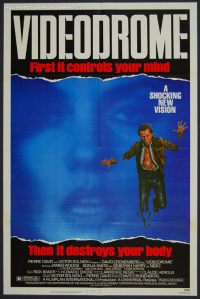
David Cronenberg’s Videodrome Was a Technology Prophecy

videodrome_one_sheet_movie_poster_l

Editor’s note: Since today marks director David Cronenberg’s 73rd birthday, it’s a good time to appreciate one of his greatest and most notorious works. Though my favorite of his remains the distinctly PKD-like eXistenZ, a close runner up is the cult classic Videodrome, which the following analysis reappraises in the context of contemporary social media-fixated culture.

By Nathan Jurgenson

Source: Omni Reboot

David Cronenberg’s vision of technology as the “new flesh” in Videodrome isn’t so shocking anymore.

Videodrome is the best movie ever made about Facebook.

What felt “vaguely futuristic” about it in 1983 is prescient today: technology and media are ever more intimate, personal, embodied, an interpenetration that David Cronenberg’s film graphically explores.
Videodrome offers a long-needed correction to how we collectively view and talk about technology. As the anti-Matrix, Videodrome understood that media is not some separate space, but something which burrows into mind and flesh. The present has a funny habit of catching up with David Cronenberg.
Still, Videodrome is deeply of its time and place. It’s set in Toronto, where Cronenberg was born and studied at the same time as University of Toronto superstar media theorist Marshall McLuhan, who coined the phrase “the medium is the message.” Beyond McLuhan’s reputation, Toronto was also known as a wired city; among other things, it was an early adopter of cable television.
In suit, Videodrome follows a Toronto cable television president, Max Renn (James Woods). He becomes involved with a radio psychiatrist named Nikki Brand (Debbie Harry, of Blondie fame), who reminds us of popular criticisms of television culture: we want to be stimulated until we’re desensitized, becoming (at best) apolitical zombies and (at worst) amoral monsters. Television signal saturates this film. The satellite dishes, screens, playback devices, and general aesthetics of analogue video are on glorious, geeked-out display. Although Videodrome’s operating metaphor is television, this film can be understood as being a fable about media in general. And what seemed possible with television in 1983 seems obvious today with social media.
Over the course of the film, Max comes to know a “media prophet” named Professor Brian O’Blivion—an obvious homage to Marshall McLuhan. O’Blivion builds a “Cathode Ray Mission,” named after the television set component which shoots electrons and creates images. The Cathode Ray Mission gives the destitute a chance to watch television in order to “patch them back into the world’s mixing board,” akin to McLuhan’s notion of media creating a “global village,” premised on the idea that media and technology, together, form the social fabric. O’Blivion goes on to monologue, “The television screen is the retina of the mind’s eye. Therefore, the television screen is part of the physical structure of the brain. Therefore, whatever appears on the television screen appears as raw experience for those who watch it. Therefore, television is reality; and reality is less than television.”
This is Videodrome’s philosophy. It’s the opposite of The Matrix’s reading of Baudrillard’s theories of simulation, and it goes completely against the common understanding of the Web as “virtual,” of the so-called “offline” as “real.” O’blivion would agree when I claim that “it is wrong to say ‘IRL’ to mean offline: Facebook is real life.”
This logic—that the Web is some other place we visit, a “cyber” space, something “virtual” and hence unreal—is what I call “digital dualism” and I think it’s dead wrong. Instead, we need a far more synthetic understanding of technology and society, media and bodies, physicality and information as perpetually enmeshed and co-determining. If The Matrix is the film of digital dualism, Videodrome is its synthetic and augmented opponent.
As P.J. Rey illustrates, fictional Web-spatiality is the favorite digital dualist plot device. Yet more than fiction books and films, what has come to dominate much of our cultural mythology around the Web is the idea that we are trading “real” communication for something simply mechanical: that real friendship, sex, thinking, and whatever else lazy op-ed writers can imagine are being replaced by merely simulated experiences. The non-coincidental byproduct of inventing the notion of a “cyber” space is the simultaneous invention of “the real,” the “IRL,” the offline space that is more human, deep, and true. Where The Matrix’s green lines of code or Neal Stephenson’s 3D Metaverse may have been the sci-fi milieu of the 1990s, the idea of a natural “offline” world is today’s preferred fiction.
Alternatively, what makes Videodrome, and Cronenberg’s oeuvre in general, so useful for understanding social media is their fundamental assumption that there is nothing “natural” about the body. Cronenberg’s trademark flavor of body-horror is highly posthuman: boundaries are pushed and queered, first through medical technologies in Shivers , Rabid , The Brood , and Scanners , then through media technology in Videodrome  and eXistenZ , then, most notoriously, in The Fly, where the human and animal merge. If The Matrix is René Descartes, Videodrome is Donna Haraway.
Cronenberg’s characters are consistent with Haraway’s theory of the cyborg: not the half-robot with the shifty laser eye, but you and me. In the film, the goal is never to remove the videodrome signal that is augmenting the body, but to reprogram it. To direct it. As Haraway famously wrote, “I’d rather be a cyborg than a goddess.” “Natural” was never a real option anyways.
Max Renn is especially good at finding the real in the so-called “virtual” because he is equally good at seeing virtuality in the “real.” From the beginning, he understands that much of everyday life is a massive media event devoid of meaning. The old flesh is tired, used up, and toxic. The world is filled with a suffering assuaged only by glowing television screens. As the film progresses, the real and unreal blur, making each seem hyperbolic: hallucinations become tangible, while the tangible drips with a surrealism that’s gritty, jumpy, dirty, erotic, and violent—closer to Spring Breakers than The Wizard of Oz. As such, Cronenberg’s universe is always a little sticky: an unease which begs the nightmares to come true, so that we at least know what’s real.
Videodrome’s depiction of techno-body synthesis is, to be sure, intense; Cronenberg has the unusual talent of making violent, disgusting, and erotic things seem even more so. The technology is veiny and lubed. It breaths and moans; after watching the film, I want to cut my phone open just to see if it will bleed. Fittingly, the film was originally titled “Network of Blood,” which is precisely how we should understand social media, as a technology not just of wires and circuits, but of bodies and politics. There’s nothing anti-human about technology: the smartphone that you rub and take to bed is a technology of flesh. Information penetrates the body in increasingly more intimate ways.
This synthesis of the physical and the digital is mirrored in the film’s soundtrack, too. In his book on Videodrome’s production, Tim Lucas calls Howard Shore’s score “bio-electronic” because it was written, programmed into a synthesizer, and played back on a computer in a recording studio while live strings played along. Early in the film, the score is mostly those strings, but as time passes the electronic synthesizers creep up in the mix, forming the bio-electronic synthesis.
The most fitting example of techno-human union in Videodrome is the famous scene of Max inserting his head into a breathing, moaning, begging video screen; somewhere between erotic and hilarious, media and humanity coalesce. There isn’t a person and then an avatar, a real world and then an Internet. They’re merged. As theorists like Katherine Hayles have long taught, technology, society, and the self have always been intertwined. Videodrome knows this, and it shows us with that headfirst dive into the screen—to say nothing of media being inserted directly into a vaginal opening in Max’s stomach, or the gun growing into his hand.

Thirty years after its release, Videodrome remains the most powerful fictional representation of technology-self synthesis. This merger wasn’t invented with the Internet, or even television. Humans and technology have always been co-implicated. We often forget this when talking about the Web, selling ourselves instead a naive picture of defined “virtual” spaces which somehow lack the components of “real” reality. This is why The Matrix and “cyberspace” have long outworn their welcome as a frame for understanding the Internet. It should be of no surprise that body horror is as useful for understanding social media as cyberpunk.

Counterculture: The Rebel Commodity

Screen-Shot-2013-09-23-at-2.48.39-PM

By James Curcio

Source: Rebel News

Let’s talk about being a rebel.

Everyone seems to want to be one. But it’s not entirely clear what it means. Does it take camo- pants? A Che T-shirt? A guitar? Is it just doing the opposite of whatever your parents did? “Be an individual, a rebel, innovate,” so many advertisements whisper. They’d have us believe that True Revolutionaries think different. They use Apple, or drink Coke. We signal our dissent to one another with the music we listen to and the cars we drive.

There’s something very peculiar going on here, something elusive and deeply contentious.

In the 1997 book, Commodify Your Dissent, Thomas Frank laid out a thesis that may appear common sense to those that have watched or lived in the commodified subcultures of the 90s, 00s, and beyond. A New York Times review comments,

… business culture and the counterculture today are essentially one and the same thing. Corporations cleverly employ the slogans and imagery of rebellion to market their products, thereby (a) seizing a language that ever connotes “new” and “different,” two key words in marketing, and (b) coaxing the young effortlessly into the capitalist order, where they will be so content with the stylishly packaged and annually updated goods signifying nonconformity they’ll never so much as consider real dissent — dissent against what Frank sees as the concentrated economic power of the “Culture Trust,” those telecommunications and entertainment giants who, he believes, “fabricate the materials with which the world thinks.” To have suffered the calculated pseudo-transgressions of Madonna or Calvin Klein, to have winced at the Nike commercial in which the Beatles’ “Revolution” serves as a jingle, is to sense Frank is on to something. (After reading Frank, in fact, you’ll have a hard time using words like “revolution” or “rebel” ever again, at least without quotation marks.)

The urge to rebel fuels the same system they ostensibly oppose. Whether it’s in arms trade, or far less ominously, manners of dress and behavior, there are dollars to be made fighting “The Man.” And maybe making money isn’t always an altogether bad thing. But it is certainly a complication, especially for those espousing neo-Marxists ideals.

As Guy Debord observed, “revolutionary theory is now the enemy of all revolutionary ideology and knows it.” Rebel movements are a counterculture, regardless of what they call themselves.

Rebellion is Cool

We’ll begin with a quintessential icon of the branded, shiny counterculture. The Matrix. We’ve probably all seen it. Even as an example it’s a cliché, and that’s part of the point. Here’s a framed sketch of the first movie, for those that haven’t: when it first ran, it was a slick take on the alienation most suburban American youth feel, packaged within the context of the epistemological skepticism Descartes wrestled with in the 17th century. Taken out of the cubicle and into the underworld, we witness the protagonist “keeping it real” by eating mush, donning co-opted fetish fashion, and fighting an army of identical men in business suits in slow motion. The movie superimposes the oligarchic and imperialist powers-that-be atop Neo’s quest of adolescent self-mastery. A successful piece of marketing — you can be sure no one collecting profits or licensing deals let their misgivings about “the Man” keep them from paying the rent.

This is not to point an accusatory finger, but rather to show the essential dependence of the counterculture upon the mainstream, because counter-cultures are not self-sustaining, and every culture produces a counter-culture in its shadow, just as every self produces an other. Any counterculture. Punk, mod, beatnik, romantic, hippy, psychedelic, straight edge, or occult. Even the early adopters of Internet culture started a group of outsiders that shared a collective vision,

The computer enthusiasts who could only dream of an open, global network in 1990 would go on to staff the dot-coms of the next decade. The closed networks that once guarded forbidden knowledge quickly fell by the wayside, and curiosity about computers could no longer be imagined a crime.

Our cyberspace today has its share of problems, but it is no dystopia — and for that, we must acknowledge the key part played by the messy collision of table-top games, computer hacking, law enforcement overreach and cyberpunk science fiction in 1990.

This article explores the strange history of Peter Jackson games, TSR, and the FBI. But it wasn’t the only one. Shadow Run, another popular cyberpunk RPGs of the 1990s, presented one of the more seemingly-improbable of cyberpunk futures, where you could play a freelancing mutant scrambling to survive in an ecosystem of headless corporations connected through cyberspace. Sound familiar? The Matrix just represented the final translation of these and similar fringe narratives into the mainstream.

Future vision has some effect on future reality, both in the identities we imagine for ourselves and the technologies we choose to explore. They almost always have unexpected consequences. Now we carry the networked planet in our palms, granting near instant communication with anyone, anywhere and anytime, and your intended subject isn’t always the only one listening.

We shouldn’t be surprised by this feedback loop. Without laying the material, mythic, and social groundwork for a new society, counterculture cannot be a bridge; it almost invariably leads back to the mainstream, though not necessarily without first making its mark and pushing some new envelope.

This even presents something of a false dichotomy — that old models of business can’t themselves be co-opted by countercultural myths. Yesterday’s counterculture is today’s mainstream. What better way to understand the so-called revolution of iPads or social media?

Our cultural symbols and signifiers are never static. Psychedelic and straight edge can share the same rack in a store if the store owner can co-brand the fashions, and people can brand themselves “green” through their purchasing power without ever leaving those boxes or worrying about the big picture. AdBuster’s Buy Nothing Day still capitalizes on the “rebel dollar.”

Rebellion is cool.  “Cool” is what customers pay a premium for, along with the comfort of a world with easy definitions and pre-packaged cultural rebellions. This process itself isn’t new. The rebel or nonconformist is probably a constitutive feature of the American imagination: original colonies were religious non-conformist, the country was founded by rebellion, the frontier, the civil war, the swinging 20s, Jazz, James Dean, John Wayne, Elvis, the list goes on. The non-conformist imagination is as paradoxically and problematically American as cowboys and indians, apple pie and racism.

The territory between aesthetic, ideals, and social movement is blurry at best. But the most well-known expression of this trend in recent history is the now somewhat idealized 1960s, a clear view of which has been obscured through a haze of pot-smoke and partisan politics. Though this revolution certainly didn’t start in the 1960s, there we have one of the clearest instances of what good bed-fellows mass advertising and manufacturing make when branded under the zeitgeist of the counterculture.

When people bought those hip clothes to make a statement, whose pockets were they lining? It’s a revolving door of product tie-ins, and it all feeds on the needs of the individual, embodied in a sub-culture. The moment that psychedelic culture gained a certain momentum, Madison Avenue chewed it up and spit it back out in 7up ads. That interpretation of what it meant to be a hippie, a revolutionary, became an influence on the next generation. The rise of Rolling Stone magazine could also be seen as an example of this — a counterculture upstart turned mainstream institution.

While advertising and counterculture get along just fine, authenticity and profit often make strange bedfellows. But they aren’t necessarily diametric opposites, either. As movements gain momentum, they present a market, and markets are essentially agnostic when it comes to ideals.

There are many examples of how troubled that relationship can be. The Grunge movement in the 90s, before it was discovered, was just a bunch of poor ass kids playing broken ass instruments in the Pacific Northwest. This was the very reason it struck disenfranchised youth — the relationship between those acts and the aging record industry in many ways seemed to reflect the relationship of adolescent Gen Xers with their Boomer parents. They retained the desire to “drop out,” as Timothy Leary had preached to the previous counterculture generation of Laguna Beach and Haight Ashbury, but without the mystical optimism of “tuning in.” Hunter S Thompson maybe presaged this transition in the quotation from Fear and Loathing In Las Vegas that’s now rendered famous to the kids of 90s thanks to Terry Gilliam’s film adaptation,

We are all wired into a survival trip now. No more of the speed that fueled that 60’s. That was the fatal flaw in Tim Leary’s trip. He crashed around America selling “consciousness expansion” without ever giving a thought to the grim meat-hook realities that were lying in wait for all the people who took him seriously… All those pathetically eager acid freaks who thought they could buy Peace and Understanding for three bucks a hit. But their loss and failure is ours too. What Leary took down with him was the central illusion of a whole life-style that he helped create… a generation of permanent cripples, failed seekers, who never understood the essential old-mystic fallacy of the Acid Culture: the desperate assumption that somebody… or at least some force – is tending the light at the end of the tunnel.

I don’t think it’s a great stretch to imagine the suddenly-famous bands of the Grunge era as a part of this same legacy. Alice In Chains or Nirvana songs about dying drugged out and alone weren’t oracular prophecy, they were journal entry. And it became part of the allure, because it too was “authentic.” The greatest irony of all was that the tragic meltdowns and burn outs that followed on fame’s heels became part of the commodity. (Not that this vulture economy is new to tabloids).

Our narratives about authentic moments of aesthetic expression or innovation often depict them like volcanic eruptions: they build up and acquire force in subterranean and occluded environments, before erupting in a momentary and spectacular public display of creativity. It is telling that this quote from On The Road has become so popular, very likely cited in the papers and journals of more rebellion-minded American teens than any other from that book, “… The only people for me are the mad ones, the ones who are mad to live, mad to talk, mad to be saved, desirous of everything at the same time, the ones who never yawn or say a commonplace thing, but burn, burn, burn like fabulous yellow roman candles exploding like spiders across the stars.”

Hendrix, Joplin, Morrison, Cobain… the 27 Club is big. And quite a few more could be added if it was “the 20-something club.” Are the public self destructions of so many young, creative minds informed by this myth, or do they create it?

Maybe a bit of both. The Spectacle, in the sense Guy Debord uses it, disseminates its sensibilities, styles — a version of the truth. The particular moves ever toward the general, as facts gradually turn to legend and, eventually, myth. Mainstream appropriation is the process in which aesthetic movements affect broader society and culture. The ideals need a pulpit to reach the people, even if invariably it is fitted with guillotines for the early adopters once that message has been heard.

YOUR FATASS DIRTY DOLLAR

A message is a commodity, or it is obscure. Capitalism survives so well, in part, because it adapts to any message. If we instead think counterculture is an ideal that exists somehow apart from plebeian needs like making money, then countercultures will forever hobble itself. It doesn’t matter that these ideologies have little in common. It is the fashion or mystique that gets sold. Anti-corporate ideology sells as well as pro-. When all an ideology really boils down to is an easy to replicate aesthetic, how could they not?

Where do we draw the line between idealism and profit? The question is how individuals utilize or leverage the potential energy represented by that currency, and what ends it is applied to. Hard nosed books on business by the old guard, such as Drucker’s Management: Tasks, Responsibilities, Practices say exactly the same thing, in a less epigrammatic, Yoda-like way: profit is not a motive, it is a means. This much, at least, doesn’t change with the changing of the (sub)cultural tides. Within our present economic paradigm, without profit, nothing happens. Game over.

Those who position themselves as extreme radicals within the counterculture framework just  disenfranchise themselves through an act of inept transference, finding anything with a dollar sign on it questionable. To this view, anyone that’s made a red cent off of their work is somehow morally bankrupt. This mentality generally ends one way: howling after the piece of meat on the end of someone else’s string, working by day for a major corporation, covering their self-loathing at night in tattoos, and body-modifications they can hide. That is, unless they lock themselves in a cave or try to start an agrarian commune. None of this posturing is in any way necessary, since business rhetoric itself has long since co-opted the countercultural message. For instance, this passage from Commodify your Dissent,

Dropping Naked Lunch and picking up Thriving on Chaos, the groundbreaking 1987 management text by Tom Peters, the most popular business writer of the past decade, one finds more philosophical similarities than one would expect from two manifestos of, respectively, dissident culture and business culture. If anything, Peters’ celebration of disorder is, by virtue of its hard statistics, bleaker and more nightmarish than Burroughs’. For this popular lecturer on such once-blithe topics as competitiveness and pop psychology there is nothing, absolutely nothing, that is certain. His world is one in which the corporate wisdom of the past is meaningless, established customs are ridiculous, and “rules” are some sort of curse, a remnant of the foolish fifties that exist to be defied, not obeyed. We live in what Peters calls “A World Turned Upside Down,” in which whirl is king and, in order to survive, businesses must eventually embrace Peters’ universal solution: “Revolution!”

“To meet the demands of the fast-changing competitive scene,” he counsels, “we must simply learn to love change as much as we have hated it in the past.” He advises businessmen to become Robespierres of routine, to demand of their underlings, “‘What have you changed lately?’ ‘How fast are you changing?’ and ‘Are you pursuing bold enough change goals?’” “Revolution,” of course, means for Peters the same thing it did to Burroughs and Ginsberg, Presley and the Stones in their heyday: breaking rules, pissing off the suits, shocking the bean-counters: “Actively and publicly hail defiance of the rules, many of which you doubtless labored mightily to construct in the first place.”

Growth on its own is never a clear indicator that the underlying ideals of a movement will remain preserved. If history has shown anything, it is that successful movements spread until core message becomes an empty, parroted aesthetic, as with most musical scenes and their transition from content to fashion; or that core is otherwise so emphasized that the meaning within is lost through literalism, as we can see in the history of the world’s major religions. One version of early Christian Gnostic history — of “love thy neighbor,” “all is one,” and scurrilous rumors of agape orgies — were replaced by the Roman Orthodoxy and the authority provided through the ultimate union of State and Religion. The hippies traded in their sandals and beat up VWs for SUVs and overpriced Birkenstocks. The relationship between ideology and act is far to complicated to enter into here, but the counter-history of Communism when viewed against the backdrop of Marxist ideals is perhaps equally insightful.

Enantiodromia, the tendency of things to turn into their opposites, is as much social observation as psychological. It oftentimes seems that succeeding too well can be the greatest curse to befall a movement. When the pendulum swings far in one direction, it often turns into its opposite without having the common decency to wait to swing back the other way.

As we’ve seen, this was part of the supposed downfall of counterculture in capitalism: “suits” decided they could deconstruct an organic process and manufacture it. They could own it from the ground up.

But this isn’t necessarily so. The branding of Cirque Du Soleil points toward a third option — arts movements will be dissected in the jargon of marketing, and they must succeed on those grounds to be taken seriously or accomplish anything.

Burning Man isn’t suddenly opening its gates to the wealthy. Yacht Communism has been a part of that movement ever since it gained some mainstream appeal, likely before. Seen as an arts and cultural movement, it has been vastly successful. Seen as an example of how to create a true egalitarian society, it would be an utter failure. But that was never the point.

Two weeks at Burning Man might be fun, even transformative, but spend two years there and you’d find out what hell is like.