On a video podcast the other day, I made reference to the lockdown orders of March 2020. The host turned off the recording. He said it was fine to talk about this subject but from now on please refer to “the events of March 2020” with no specifics.
Otherwise, it will be taken down by YouTube and Facebook. He needs those platforms for reach, and reach is necessary for his business model.
I complied, but I was spooked. Are we really now in the position that talking about what happened to us is verboten on mainstream venues? Sadly, that seems to be where we headed. In big and small ways, and throughout the culture and the whole world, we are bit by bit being trained to forget and hence not learn and thus repeat the whole thing.
This makes no sense since nearly every public issue in play today traces to those fateful days and the fallout thereof, including censorship, the entrenchment of industry-government oligarchs, the corruption of media and tech, the educational upheaval, the abuse of courts and law, and the developing financial and banking crisis.
And yet hardly anyone wants to speak about the topic frankly. It is too upsetting. There is too much at stake. We cannot risk being canceled, the single greatest fear of every aspirational professional in today’s world. Plus too many powerful people were in on it and don’t want to admit it. It would appear that the whole subject is being memoryholed in ways of which they all approve.
For nearly two years, or longer, respectable intellectuals knew not to dissent from the prevailing norms and challenge the whole machinery. This was true of Washington think tanks, which went on their merry way from March 2020 either celebrating the “public health response” or just remaining quiet. The same was true of the leadership of major political parties and third parties.
Most religious leaders stayed quiet too, even as their doors were padlocked for as long as 2 holiday seasons. Civic organizations played along. If you thought that the job of the ACLU was to defend civil liberties, you were wrong: they one day decided that lockdowns, mandatory masks, and forced shots were essential to their mission.
So many were compromised over 3 years. These same people now just want the whole subject to go away. We find ourselves in an odd position, having experienced the biggest trauma in our lives and in many generations and yet there is precious little open talk about it. Brownstone was established to fill this void but we’ve become a target as a result.
The search engines have been gamed for the better part of 3 years to keep the science channeled in only one direction. If web platforms step out of line, it is easy enough for search engines and social-media companies to tag them as problematic and thus throttle their reach. But for Substackers – and they are being targeted now too – it would be hard to find out anything other than what the oligarchs want you to believe.
This silent treatment is filtering down to every aspect of our lives and becoming entrenched in the political culture too. Here is an example from this week.
When Donald Trump returned from his theatrical and ridiculous indictment on nothing in New York, he flew immediately back to Mar-a-Lago where he told his story to people gathered in a pastiche-baroque ballroom. He told of the fake news, the attempted impeachments for Russia and Ukraine, the plots and schemes, and onward to the fake ballots and the FBI raid on his home, and now this preposterous new thing.
It was a solid narrative overall. But his story left out a hugely important detail. He said not one word about Covid lockdowns and Operation Warp Speed that was supposed to be the great fix for the virus but flopped. This was a rather important detail to leave out since it wrecked the economy, the Bill of Rights, education, and led to a massive demographic upheaval in addition to the continuing fallout in terms of culture, economics, and everything else.
It also caused him to lose the presidency, whether because the shock resulted in mass demoralization (this was certainly not a path to making America great again) or because of the mail-in ballots made possible by Covid restrictions, or probably both. However you look at it, it was the most disastrous decision of his presidency or possibly any presidency in history.
How in the world are we just supposed to pretend that this did not happen? And yet he is playing along simply because he does not want to admit error. He thinks it makes him appear weak. Nor does he still slam the successor presidency for mask and shot mandates even though hundreds of millions were affected by them. He would rather not bring up the topic at all, lest doing so raises questions about his own judgment in those fateful days of March 2020.
Meanwhile, the DNC does not want to admit that it celebrated and built on Trump’s biggest disaster while the RNC does not want to discuss that the policies they decry from the DNC actually began under the RNC. And so you have a kind of “mutually assured destruction” pact between them that needs no plot or contract. In silencing all talk about this, each party is only doing what is in its interest.
We can fully expect that these issues will be locked out of the campaign narratives in 2024 just as they were in 2020 and 2022. Everyone seems to agree: the less said the better. And this is precisely why the announced candidacy of Robert Kennedy, Jr., has triggered the usual and expected gaslighting from the mainstream media. The plan is to flog him into marginalization. And if that doesn’t work, they will flog and flog again.
We are seeing a real-time example of how history is really written. The narrative is more self-serving than we knew. If all the power centers in society get something tremendously wrong, an informal conspiracy of silence develops around it, with the hope of just wiping it from the history books.
As Michael Senger has written, “Lockdowns met little resistance in part because they reinforced existing power structures. The rich got richer, the Zoom class got a vacation, workers got stimulus, while some business owners, their employees, and the most vulnerable had to sacrifice everything for this fantasy.”
And we can add to that: government gained vastly more power. In fact, Covid became the template for the biggest expansion of government power over the population in world history, more effective than ancient myths about god-like rulers, heresy trials and witch burnings of the Middle Ages, sedition purges of the 18th and 19th centuries, red scares of the 20th centuries, the Cold War, or even the wars on terror. Fear of infectious disease was more effective than all of them for ratcheting up despotism.
When something works this well for the most powerful people in society, why not just keep quiet about it?
The tellers of tales can write stories but they cannot invent their own realities. There will be no restoration of liberty, rights, and truth until we come to terms with what happened, why, and how to prevent it in the future. Playing along with this conspiracy of silence surrounding a policy that effectively blotted out every advance in human rights since the Magna Carta is a disastrous error that could lead to the entrenchment of a new dark age.
As technology has disrupted key elements of society, Technocrats have taken advantage of the chaos to not only implement their own agenda but also to erect barriers to competition or resistance. If this had been recognized early enough, it could have been easily blocked. Now, the mere barriers have hardened into fortresses.⁃ TN Editor
The First Amendment is at a critical juncture. Recent congressional hearings on the Twitter Files brought the matter into full public view. Freedom of speech and of the press are hanging by a precarious thread. Do we want a future in which information flows freely, or one in which an information elite controls those flows “for our own good?” The choices we make over the next few years will determine which of those futures we get.
It’s tragic that we have let the problem reach this dangerous state. What heightens the tragedy, however, is that the war against America’s most cherished freedoms was predictable and preventable. If those of us who value freedom want to win, we’re going to need a strategy grounded in a clear understanding of what’s happening and why.
The Twitter Files story is shocking. Allegations that big tech and social media manipulate information have been around for as long as we’ve had tech and social media companies. Allegations of bias among the mainstream media are even older. In recent years, however, both the allegations and the supporting evidence have ratcheted upward to unprecedented levels.
When Elon Musk acquired Twitter, he opened his company’s internal archives to scrutiny. He assembled a team of journalists with a curious pedigree: registered Democrats with a distaste for Donald Trump and his supporters, whose track records skewed considerably left of center, and whose recent work has demonstrated deep concern about the politicization of journalism.
Musk gave them unfettered access. They found a deep, broad, and disturbing pattern of collaboration between big government and big tech designed to promote “official stories” on multiple issues, throttle competing theories and arguments, and sanction those who dared to question government propaganda.
When two of those journalists – Matt Taibbi and Michael Shellenberger – testified before Congress, their Democratic inquisitors sought to belittle their credentials, question their motives, and tar them as part of some Republican-funded, far-right conspiracy. The still-left-leaning journalists are trying to absorb their shock at the depths to which the formerly civil-libertarian left has fallen.
Far from shocking, however, that fall was predictable – and predicted. In 2001, amidst the public disgust with tech companies following the collapse of the dotcom bubble, I set out to make sense of life during the transition from the late industrial age to the early information age. I analyzed what I called the first four front-page stories of the information age: the dotcom bubble, the Microsoft antitrust trial, the rise of open-source software, and the Napster-driven wars over digital music. Contrary to popular opinion of the time, I believed that these stories were far from distinct. I saw them as four manifestations of a single underlying phenomenon. My goal was to understand that phenomenon.
I found it. It appeared most clearly in the digital music arena, but it ran through all four stories – and through much that has happened since. It appears just as clearly in today’s war on free speech. It involves an entirely predictable pattern of opportunity, action, and reaction.
The starting point is digitization and quantification. The Internet changed the economics of information. Throughout human history, information was scarce, hard to acquire, and expensive to process. Skilled professionals – spies, scholars, lawyers, accountants, clerics, doctors – could command a premium for their knowledge. When the Internet went public, anything that could be digitized and quantified suddenly flowed freely. Information was there for the asking. The premium shifted to filtering – the ability to discard unwanted information and arrange what remained.
Economic shifts generate massive opportunities for creative, entrepreneurial people and bring glorious benefits to millions of consumers. The Internet was no exception in this regard, and neither was the predictable backlash against it. Anything that benefits new businesses and empowers consumers is a warning shot across the bow of powerful incumbents who’d grown accustomed to serving those consumers in a predictable, profitable, manner.
In the music industry, anything that let individual consumers share digital music files reduced the revenues, profits, power, and control of record labels. Pre-digitization, these powerful incumbents determined what music got recorded and how it was packaged, distributed, presented, and priced. It was a comfortable business model that gave us the music industry “as we knew it.” The Internet undermined it entirely.
Powerful incumbents never fade quietly into the night when challenged. They fight, using whatever weapons they can muster. In our society, the most effective ways to undermine new technological and economic opportunities tend to lie in law, regulation, and public policy. The record labels fought – largely successfully – to apply and reinterpret existing laws and to change laws in ways favorable to their interests.
There’s the pattern: Technology creates opportunities. New businesses exploit those opportunities. Consumers benefit. Powerful incumbents fear their loss of control. Threatened incumbents seek allies in government. Government changes laws and regulations to protect incumbent interests. Media campaigns “educate” the public on the merits of the new policies. The new laws ensure that the next wave of technological change runs largely through the powerful incumbents, rather than against them.
By 2003, I had distilled this pattern, showed numerous ways that it had already unfolded, predicted that it would soon hit parts of our economy and our lives far more significant than the music industry, and suggested some ways that we might prepare ourselves for the coming battles.
It took another two years to get my analysis published. It went largely unnoticed. Twelve years later, then-Senator Ben Sasse described the ways that this pattern had forever disrupted the dynamics of employment. This, too, went largely unnoticed.
Today, we see that disruptive pattern threatening the most basic of our civil liberties. Its manifestation in the arenas of speech, propaganda, and censorship is clear. Consider how each step in the process I identified above has played out here:
Technology creates opportunities. The Internet opened entirely new vistas for the creation and exchange of ideas, information, theories, opinions, propaganda, and outright lies.
New businesses exploit those opportunities. The companies founded since 1995 that created and control the world’s most important conduits for information have joined the ranks of history’s most powerful entities.
Consumers benefit. The centrality of these communication systems to our lives (for better or for worse) proves that they confer real value.
Powerful incumbents fear their loss of control. The twin political shocks of 2016 – Brexit and Donald Trump – highlighted the extent to which official channels had lost control of the narrative. With the entirety of elite media, government, big business, and the intelligentsia aligned behind Remain and Hillary, the newly empowered masses understood – for the first time – that there were viable alternatives to the official story.
Threatened incumbents seek allies in government. A coalition of elite forces assembled quickly, laser-focused on stomping out the populist threat. Masses empowered to conduct their own analyses, draw their own conclusions, and share their opinions among themselves threatened the stability of the power structure “as we know it.”
Government changes laws and regulations to protect incumbent interests. Prior to Musk’s Twitter, the entirety of Silicon Valley committed itself to “protecting” the public from “disinformation,” roughly defined as anything that threatened to undermine an official, sanctioned narrative. Allies throughout the administrative state, Congress, and the Biden White House are working to embed those “protections” in law.
Media campaigns “educate” the public on the merits of the new policies. The same mainstream media that vilified Napster, Grokster, and Peer-to-Peer (P2P) file sharing is now working to turn public opinion against the evil purveyors of alleged “disinformation.”
Will the information age be an era of informed, empowered citizens – or an era of a dominant, information-controlling elite? Stay tuned. That’s the question we need to answer.
When I was in secondary school, a teacher showed me an animated optical illusion in which a dancer appears to be spinning in one direction. I was adamant that the dancer was spinning clockwise, while my teacher insisted it was spinning counterclockwise. She then told me that you could change the direction of the dancer by focusing on the feet. I gazed with meditative fixation, and suddenly, to my amazement, the dancer started spinning counterclockwise! My teacher explained that since there are no visual cues for three-dimensional depth, your mind can determine what direction the dancer spins.
At that moment, I realised that reality is a construct of the mind, and we all potentially see the same world differently. I may have put it in less eloquent terms than that (considering I was only a teenager), but there was a fundamental shift in my understanding. The illusion made me realise that the notion of ‘objective truth’ was essentially arbitrary since our subjective beliefs mediate sensory experience.
My teacher and I could have argued for hours, days or weeks as to which direction the dancer was spinning; science couldn’t have proven either of us correct since it was a matter of perception rather than ‘truth’. In ‘reality’, the dancer was spinning in both directions, but since the brain has a natural tendency to classify, categorise and catalogue information in binary terms (up/down, left/right, black/white, clockwise/counterclockwise), the animated optical illusion appears monodirectional.
There are numerous examples of this in our day-to-day lives, like when we fail to appreciate other people’s viewpoints because we perceive the world differently. We believe we are right despite the multiple (if not infinite) interpretations about the nature of reality.
What are Reality Tunnels?
The countercultural guru Timothy Leary coined the term ‘reality-tunnel’ to describe our filtered perceptions of the world. Robert Anton Wilson later developed the concept to describe “pre-composed patterns of thinking which limit and distort the perception of reality by reducing complexity and options.”1 According to Wilson, reality-tunnels shape our phenomenological sense of self, editing out experiences that do not support our beliefs while focusing on those which do.2
An advocate for capitalism, for example, will gather facts to support the view that capitalism is the most effective socioeconomic model, discarding any information that runs contrary to this viewpoint. Similarly, a Marxist will construct arguments based on select information to support the view that communism is the best system, often neglecting evidence that contradicts their position.
As the psychedelic scholar Ido Hartogsohn states, “all of us harbour established ideas about minorities, religions, nationalities, the sexes, the right ways to think, act, feel govern, eat, drink, and what not. Reality tunnels act to help us fortify these ideas against challenging information.”3 In this sense, there is a crossover between the concept of reality-tunnels and confirmation bias, the latter described as the “human tendency to notice and assign significance to observations that confirm existing beliefs while filtering out or rationalising away observations that do not fit with prior beliefs and expectations.”4 The phenomenon of confirmation bias helps explain why people who ascribe to a reality-tunnel are oblivious. Most people believe their worldview corresponds to the “one true objective reality,” however, Wilson emphasises that many reality tunnels are artistic creations, a culmination of biological, cultural and environmental inputs.5
The notion that reality is shaped by the conditions of the human mind is not new. The 18th-century German philosopher Immanuel Kant proposed in his Critique of Pure Reason that experience is based “on the perception of external objects and a priori knowledge.”6 We receive information about the external world through our five senses, which is then processed by the brain, allowing us to conceptualise its contents. When I look at an object, such as a chair or a table, I have no understanding of its external nature. The qualities that enable me to denote the meaning of the object, such as shape, colour, size etc., have no objective existence; they are merely by-products of the brain.
The French psychoanalyst and psychiatrist Jacques Lacan proposed his theory distinguishing between ‘The Real’ and the ‘Symbolic’. Lacan argued that ‘The Real’ is the “imminent unified reality which is mediated through symbols that allow it to be parsed into intelligible and differentiated segments.”7 However, the ‘Symbolic’, which is primarily subconscious, is “further abstracted into the imaginary (our actual beliefs and understandings of reality). These two orders ultimately shape how we come to understand reality.”8
The Harvard sociologist, Talcott Parsons, uses the word gloss to describe how our minds come to perceive reality. According to Parsons, we are taught how to “put the world” together by others who subscribe to a consensus reality based on shared beliefs, norms and associations.9 A gloss constitutes a total system of language and/or perception. For example, the word ‘house’ is a gloss since we lump together a series of isolated phenomena – floor, ceiling, window, lights, rugs, etc. – and turn it into a totality of meaning.
The author and anthropologist Carlos Castaneda commented on this notion, stating, “we have to be taught to put the world together in this way. A child reconnoitres the world with few preconceptions until he is taught to see things in a way that corresponds to the descriptions everybody agrees on. The world is an agreement. The system of glossing seems to be somewhat like walking… we learn we are subject to the syntax of language and the mode of perception it contains.”10
The French philosopher Jacques Derrida stated that our understanding of objects (and the words which denote them) are only understood in relation to how they are contextually related to other objects (and denotive words).11
We can break free from prescribed reality-tunnels by using objects and language in unusual or disjointed ways, thereby creating new discursive meanings, associations and connotations. This was the aim and outcome of certain art movements such as Dadaism and Surrealism, as well as Brion Gysin and William Burroughs’ cut-up method.12
The famous ethnobotanist and psychonaut, Terence McKenna, argued that ideology and culture are tools “which give other people control over one’s experience and identity since they lead individuals to shape their identity according to pre-conceived forms. If a person identifies with commercial brands or with popular ideas of what is beautiful, true or important, they give away their power to other people.”13 McKenna once said that you should not see “culture and ideology as your friends,” implying that you should understand reality on your own terms rather than buying into “pre-packaged ideological and cultural ideals” such as communism, capitalism, democracy or some form of totalitarianism.14 Belief in itself, argued McKenna, was “limiting to the individual, because every time you believe in something you are automatically precluded from believing its opposite. By believing something, you are virtually shutting yourself from all contradictory information, thus once again performing the sin of imposing a rigid simplified structure upon an infinitely complex reality.”15
Much like McKenna, Wilson recommends that a “fully functioning human ought to be aware of their reality tunnel and be able to keep it flexible enough to accommodate and, to some degree, empathise with different ‘game rules’, different cultures.”16 According to Wilson, constructivist thinking, which considers how social and cultural processes determine our perception of the world, constitutes an exercise in metacognition, enabling us to become aware of how reality tunnels are never truly objective, thereby decreasing the “chance that we will confuse our map of the world with the actual world.”17
How Your Reality Tunnel Is Formed
The constraints of human biology partially limit our models of reality. As Wilson states, our DNA “evolved from standard primate DNA and still has a 98% similarity to chimpanzee (and 85% similarity to the DNA of the South American Spider Monkey). We have the same gross anatomy as other primates, the same nervous system and the same sense organs. While our highly developed pre-frontal cortex enables us to perform ‘higher’, more complex mental tasks than other primates, our perceptions remain largely within the primate norm.”18
The neural apparatus produced by our genetic coding helps create what ethologists call the umwelt, or “world-field.” Birds, reptiles and insects occupy a separate umwelt or reality-tunnel to primates (ourselves, included). For example, bees are able to perceive floral patterns in ultraviolet light, which we cannot (unless certain technologies are utilised). Canine, feline and primate reality-tunnels remain similar enough that friendship and communication can occur between these different species, however, a snake (for example) occupies such a different reality tunnel that their behaviour appears entirely alien.
As Wilson argues, the belief that human umwelt reveals “reality” or “deep-reality” is as “naïve as the notion that a yardstick shows more reality than a voltmeter or that ‘my religion is better than your religion’. Neurogenetic chauvinism has no more scientific justification than national or sexual chauvinisms.”19 He goes so far as to suggest that “no animal, including the domesticated primate, can smugly assume the world created by its senses and brain equal in all respects the ‘real world’ or the ‘only real world’.”20
Reality-tunnels are also influenced by “imprint vulnerability,” periods in our lives when early childhood/adolescent experiences “bond neurons into reflex networks which remain for life.”21 The psychological researchers, Lorenz and Tinbergen, won a Nobel Prize in 1973 for their research into imprinting, which demonstrated that “the statistically normal snow-goose imprints its mother, as distinct from any other goose, shortly after birth. This imprint creates a ‘bond’ and the gosling attaches itself to the mother in every possible way.”22 These imprints can be imposed onto literally anything. Lorenz observed a case in which a gosling, in the absence of its mother, imprinted a ping-pong ball. It followed the ping-pong ball around and, on reaching adulthood, “attempted to mount the ball sexually.”23
Wilson estimates that the age at which we are imprinted with language determines lifelong programs of “cleverness” (verbal intelligence) and “dumbness” (verbal unintelligence), since linguistic models enable us to articulate mental processing, evaluate complex ideas and communicate with those around us.24 Furthermore, how and when our first sexual experiences are imprinted can “determine lifelong programs of heterosexuality, brash promiscuity or monogamy etc.”25 In more obscure imprints, such as celibacy, foot-fetishism and sadomasochism, the “bounded brain circuitry seems quite as mechanical as the imprint which bounded the gosling to the ping-pong ball.”26
These examples suggest that experiences during childhood, when the brain exhibits optimal ‘neuroplasticity’ (a term used to refer to malleability of neural networks in the brain), can shape our reality tunnels far into adulthood. As Sigmund Freud proposed, many “rational” thoughts and behaviours are typically the result of “repressed” memories, impulses and desires, which dwell in the murky depths of the unconscious mind.27
Furthermore, reality-tunnels are shaped by social conditioning, the “sociological process of training in a society to respond in a manner generally approved by the society in general and peer groups within society.”28 Manifestations of social conditioning are multifarious but include nationalism, education, employment, entertainment, popular culture, spirituality and family life. Unlike imprinting, which usually requires only one powerful experience to set permanently into the neural networks of the brain, conditioning requires “many repetitions of the same experience and does not set permanently.”29
The processes of social conditioning vary greatly, depending on the cultural environment to which one is exposed. For example, an individual born in a Muslim country (such as Saudi Arabia) will likely believe in the teachings of the Quran and adhere to certain religious norms, customs and traditions. However, individuals born in a Western capitalist/consumerist country, or an Eastern country with Hindu or Buddhist traditions, will adhere to different cultural and behavioural codes.
Reality-tunnels are also formed through the process of learning. Much like conditioning, learning requires repetition, but it also requires motivation. Therefore, it plays “less of a role in human perception and belief than genetics and imprinting and even less than conditioning does.”30 Learning marks a major difference between how mammals, reptiles, insects and birds perceive the world. For example, snakes share the same reality tunnel since they merely act on biologically determined reflexes, with only minor imprinted differences. Mammals show “more conditioned and learned differences in their reality tunnels.”31
Humans demonstrate a higher aptitude for learning due to our highly developed cortex and frontal lobes as well as our prolonged infancy. This variability functions as “the greatest evolutionary strength of the human race” since it enables us to pass down knowledge from one generation to the next. But it also means that we can become brainwashed and label other people who do not share our beliefs as “mad,” “anti-social,” or “blasphemous.” In fact, it could be said that the majority of all wars are the result of two (or more) opposing reality tunnels fighting for supremacy. This is particularly evident in the case of religious conflict, where people kill each other in the name of “God.”
Tunnel Vision: The Politicisation of Reality
The rise of “identity politics” in the 21st century perfectly demonstrates how reality-tunnels prevent us from considering alternative perspectives and viewpoints. During the last decade, the political domain has become increasingly polarised as the left and right engage in a battle for cultural supremacy. Such polarisation was apparent in the Brexit referendum of 2016, in which 51.9% of the British public voted to leave the European Union while 48.1% voted to remain.32 The marginal success of the ‘leave’ campaign highlighted the strong division between both sides of the political spectrum. The former stressed the importance of the Union in promoting social and economic stability, while the latter emphasised the importance of national identity, sovereignty and independence.
The rhetoric employed by both the ‘leave’ and ‘remain’ campaign was so binary in its articulation that neither side engaged in meaningful dialogue; instead, the referendum became a series of baseless slogans, mottos and catchphrases – an advertising campaign designed to appeal to target demographics. The referendum was more about two separate reality-tunnels competing for ideological supremacy than a balanced analysis of benefits and risks.
The US presidential election of 2016 was a similar drama of competing reality-tunnels, shaped by masterful spin doctors and hidden persuaders who exploited modern advertising techniques to capture specific demographics based on class, age, sex, religion, geographical location and other criteria.
Donald Trump was well-known for his campaign slogan ‘Make America Great Again’ and other catchphrases that employed a lexicon of patriotism, populism and protectionism to appeal to those on the right. On the other hand, Hillary Clinton used the slogan ‘Stronger Together’ to evoke feelings of unity, compassion, and solidarity. The election became a battle between two contrasting reality-tunnels, grounded in meaningless rhetoric and hyperbole.
Another example of politicisation is the Covid-19 crisis, with the public divided into two camps – those who supported measures such as lockdowns versus the other side that rejected many of these same measures. Political polarisation demolished a sane balanced approach to the crisis, exacerbated and intensified by the ongoing political divide across the media landscape.
‘Echo Chambers’ & Identity Politics
Social media has fuelled identity politics by enabling groups and movements to generate an online presence and have real-world impacts. According to independent scholar and author Ilaria Bifarini, this results in the emergence of ‘echo chambers’ in which internet users “find information that validates their pre-existing opinions and activates confirmation bias.”33 This mechanism, says Bifarini, “strengthens one’s beliefs and radicalises them, without adding anything to information and knowledge. The result is the ideological extremism that we are observing today and in which we are taking part, where political debates have been replaced by supporters and verbal violence.”34
Another way this happens, for example, is how Google’s online video sharing and social media platform YouTube utilises algorithmic data to show users similar content to their prior engagements – content they are likely to engage with in the future, thus creating a feedback loop in which they are exposed to media reinforcing their political preferences.35 As media scholars Brooke E. Auxier and Jessica Vitak state, “many social media platforms structure their content-feeds based on what an algorithm determines to be the ‘top’ or most ‘relevant’ stories. While these tools may help users control their information and news environments – making consumption more manageable and mitigating information overload – it is possible that these tailoring tools will expose users to redundant information and singular viewpoints.”36
Both sides of the political spectrum fail to engage in meaningful discussion when they are entrapped in a single reality-tunnel, the stability of which is threatened by competing narratives. Instead, political dialogue becomes characterised by inflammatory insults, name-calling and defamation.
Loaded language – such as ‘virtue signallers’, ‘snowflakes’, ‘racist’, ‘transphobic’, ‘Islamophobic’, ‘hetero-normative’, ‘privileged’ – enables identity groups to protect the integrity of their reality-tunnel by excluding those who hold a different opinion. In the same way that religious cult leaders isolate their members from the outside world, so too do identity groups orientate themselves around a closed belief system, which is immune to criticism, contention or challenge.
In order to facilitate a more meaningful discussion, it is important that both sides learn to break free from the constraints of their reality-tunnel.
Rising Above the Fray
In his book Prometheus Rising, Robert Anton Wilson provides various techniques for challenging dominant reality tunnels. Writing in the early 1980s, Wilson suggested that “if you are a liberal, subscribe to the [conservative magazine] National Review… Each month try to enter their reality-tunnel for a few hours while reading their articles. If you are a conservative, subscribe to New York Review of Books for a year and try to get into their headspace for a few hours a month. If you are a rationalist, subscribe to Fate Magazine for a year. If you are an occultist, join the Committee for the Scientific Investigation of Claims of the Paranormal and read their journal, The Sceptical Inquirer, for a year.”37
To put a modern ‘spin’ on this exercise, if you follow conservative thinkers online such as Jordan Peterson or Ben Shapiro, expose yourself to leftist thinkers such as Slavoj Zizek or Noam Chomsky, and do the opposite if you are on the left. Subscribe to internet channels that do not align with your reality-tunnel. By performing this exercise, you will find that you can think about political issues in a more balanced, neutral and multidimensional way, free from the constraints of ideological dogma.
You can use the same technique with religion. In one exercise, Wilson says, “become a pious Roman Catholic. Explain in three pages why the Church is still infallible and holy despite Popes like Alexander VI (the Borgia Pope), Pious XII (ally of Hitler), etc.”38 Then explain why the Church is an immoral and outdated institution; also write three pages detailing why you believe this to be the case. If you have the time, you can perform the same exercise with other religions such as Hinduism, Buddhism, and even Satanism. Explain why these religions hold the key to the ‘true’ nature of ‘reality’ and then refute yourself by providing a counterargument.
You can use the same technique to become more conspiratorial in your thinking. In one exercise, Wilson says, “start collecting evidence that your phone is bugged. Everyone gets a letter occasionally that is slightly damaged. Assume that somebody is opening your mail and clumsily revealing it. Look around for evidence that your co-workers or neighbours think you’re a bit queer and are planning to have you committed to a mental hospital.”39 Observe how these assumptions influence your perception of other people and their behaviour – it won’t be long before you find evidence to support your paranoid thinking!
Once you have sufficiently experimented with this reality-tunnel, “try living a whole week with the program, ‘Everybody likes me and tries to help me achieve all of my goals’.”40 Then try living a whole month with the program, “I have chosen to be aware of this particular reality.”41 Then try living a day with the program, “I am God playing at being a human being. I created every reality I notice.”42 Then try living forever with the metaprogram, “Everything works out more perfectly than I plan it.”43 By adopting these different reality-tunnels, you will notice how malleable your perceptual faculties really are – the world can become a place of conspiracy and collusion or a place of benevolence and positivity, depending on how you view it.
Wilson provides another interesting exercise to expand the boundaries of consciousness, in which you “list at least 15 similarities between New York (or any large city) and an insect colony, such as a bee-hive or termite hill. Contemplate the information in the DNA loop, which created both of these enclaves of high coherence and organisation, in primate and insect societies.”44 Then, “Read the Upanishads and every time you see the word ‘Atman’ or ‘World Soul’, translate it as DNA blueprint. See if it makes sense to you that way.”45 According to Wilson, “Contemplating these issues usually triggers Jungian synchronicities. See how long after reading this chapter you encounter an amazing coincidence – e.g., seeing DNA on a license plate, having a copy of the Upanishads given to you unexpectedly…”46
Experimenting with different reality tunnels is a necessary practice if one wishes to challenge dominant narratives, perspectives and viewpoints and expand the boundaries of human consciousness. As we find ourselves in a post-modern ‘information age’, where an increasing number of political factions compete for informational authority, we are exposed to the hidden forces of propaganda more than ever before.
Every time we log into Facebook, Twitter, Instagram and YouTube, we allow ourselves to be manipulated by a complex system of algorithms that generates content based on our likes, dislikes, and even our differences. In order to escape the trappings of ideological dogma, we must become conscious of our biological, social and environmental conditioning and adopt a more multidimensional way of thinking.
Understanding about ‘reality-tunnels’ becomes instrumental in achieving true inner liberation since it enables us to think about the mind as a form of technological software that can be continually updated and reorganised. We achieve a state of metacognition, an awareness of one’s thought processes and an understanding of the patterns behind them. It is what the pioneering mind explorer John Lilly called our capacity for “metaprogramming,” the creation, revision, and reorganisation of mental programs.47
Although we are constrained by the limitations of biological programming (to a certain extent), the creativity of human consciousness is infinite, a maze of endless possibilities and potentialities waiting to be explored. As the Buddha said, “All that we are is the result of all that we have thought. It is founded on thought. It is based on thought.”48
Footnotes
1. Hartogsohn, I. (2015). The Psychedelic Society Revisited: On Reducing Valves, Reality Tunnels and the Question of Psychedelic Culture, Psychedelic Press, 3
36. Auxier, B. and Vitak (2019). Factors Motivating Customization and Echo Chamber Creation Within Digital News Environments. Social Media and Society, April-June 2019
37. Prometheus Rising, 83
38. Ibid, 159
39. Ibid, 241
40-43. Ibid, 242
44-46. Ibid, 190
47. Lilly, John C. Programming & Metaprogramming in the Human Biocomputer, New York: The Julian Press, Inc., 1967
“If all that Americans want is security, they can go to prison. They’ll have enough to eat, a bed and a roof over their heads. But if an American wants to preserve his dignity and his equality as a human being, he must not bow his neck to any dictatorial government.”— President Dwight D. Eisenhower
The government wants us to bow down to its dictates.
It wants us to buy into the fantasy that we are living the dream, when in fact, we are trapped in an endless nightmare of servitude and oppression.
Indeed, with every passing day, life in the American Police State increasingly resembles life in the dystopian television series The Prisoner.
First broadcast 55 years ago in the U.S., The Prisoner—described as “James Bond meets George Orwell filtered through Franz Kafka”—confronted societal themes that are still relevant today: the rise of a police state, the loss of freedom, round-the-clock surveillance, the corruption of government, totalitarianism, weaponization, group think, mass marketing, and the tendency of human beings to meekly accept their lot in life as prisoners in a prison of their own making.
Perhaps the best visual debate ever on individuality and freedom, The Prisoner centers around a British secret agent who abruptly resigns only to find himself imprisoned in a virtual prison disguised as a seaside paradise with parks and green fields, recreational activities and even a butler.
While luxurious, the Village’s inhabitants have no true freedom, they cannot leave the Village, they are under constant surveillance, all of their movements tracked by militarized drones, and stripped of their individuality so that they are identified only by numbers.
“I am not a number. I am a free man,” is the mantra chanted in each episode of The Prisoner, which was largely written and directed by Patrick McGoohan, who also played the title role of Number Six, the imprisoned government agent.
Throughout the series, Number Six is subjected to interrogation tactics, torture, hallucinogenic drugs, identity theft, mind control, dream manipulation, and various forms of social indoctrination and physical coercion in order to “persuade” him to comply, give up, give in and subjugate himself to the will of the powers-that-be.
Number Six refuses to comply.
In every episode, Number Six resists the Village’s indoctrination methods, struggles to maintain his own identity, and attempts to escape his captors. “I will not make any deals with you,” he pointedly remarks to Number Two, the Village administrator a.k.a. prison warden. “I’ve resigned. I will not be pushed, filed, stamped, indexed, debriefed or numbered. My life is my own.”
Yet no matter how far Number Six manages to get in his efforts to escape, it’s never far enough.
Watched by surveillance cameras and other devices, Number Six’s attempts to escape are continuously thwarted by ominous white balloon-like spheres known as “rovers.”
Still, he refuses to give up.
“Unlike me,” he says to his fellow prisoners, “many of you have accepted the situation of your imprisonment, and will die here like rotten cabbages.”
Number Six’s escapes become a surreal exercise in futility, each episode an unfunny, unsettling Groundhog’s Day that builds to the same frustrating denouement: there is no escape.
As journalist Scott Thill concludes for Wired, “Rebellion always comes at a price. During the acclaimed run of The Prisoner, Number Six is tortured, battered and even body-snatched: In the episode ‘Do Not Forsake Me Oh My Darling,’ his mind is transplanted to another man’s body. Number Six repeatedly escapes The Village only to be returned to it in the end, trapped like an animal, overcome by a restless energy he cannot expend, and betrayed by nearly everyone around him.”
The series is a chilling lesson about how difficult it is to gain one’s freedom in a society in which prison walls are disguised within the seemingly benevolent trappings of technological and scientific progress, national security and the need to guard against terrorists, pandemics, civil unrest, etc.
As Thill noted, “The Prisoner was an allegory of the individual, aiming to find peace and freedom in a dystopia masquerading as a utopia.”
The Prisoner’s Village is also an apt allegory for the American Police State, which is rapidly transitioning into a full-fledged Surveillance State: it gives the illusion of freedom while functioning all the while like a prison: controlled, watchful, inflexible, punitive, deadly and inescapable.
The American Surveillance State, much like The Prisoner’s Village, is a metaphorical panopticon, a circular prison in which the inmates are monitored by a single watchman situated in a central tower. Because the inmates cannot see the watchman, they are unable to tell whether or not they are being watched at any given time and must proceed under the assumption that they are always being watched.
Eighteenth century social theorist Jeremy Bentham envisioned the panopticon prison to be a cheaper and more effective means of “obtaining power of mind over mind, in a quantity hitherto without example.”
Bentham’s panopticon, in which the prisoners are used as a source of cheap, menial labor, has become a model for the modern surveillance state in which the populace is constantly being watched, controlled and managed by the powers-that-be while funding its existence.
Nowhere to run and nowhere to hide: this is the mantra of the architects of the Surveillance State and their corporate collaborators.
Government eyes are watching you.
They see your every move: what you read, how much you spend, where you go, with whom you interact, when you wake up in the morning, what you’re watching on television and reading on the internet.
Every move you make is being monitored, mined for data, crunched, and tabulated in order to amass a profile of who you are, what makes you tick, and how best to control you when and if it becomes necessary to bring you in line.
When the government sees all and knows all and has an abundance of laws to render even the most seemingly upstanding citizen a criminal and lawbreaker, then the old adage that you’ve got nothing to worry about if you’ve got nothing to hide no longer applies.
Apart from the obvious dangers posed by a government that feels justified and empowered to spy on its people and use its ever-expanding arsenal of weapons and technology to monitor and control them, we’re approaching a time in which we will be forced to choose between bowing down in obedience to the dictates of the government—i.e., the law, or whatever a government official deems the law to be—and maintaining our individuality, integrity and independence.
When people talk about privacy, they mistakenly assume it protects only that which is hidden behind a wall or under one’s clothing. The courts have fostered this misunderstanding with their constantly shifting delineation of what constitutes an “expectation of privacy.” And technology has furthered muddied the waters.
However, privacy is so much more than what you do or say behind locked doors. It is a way of living one’s life firm in the belief that you are the master of your life, and barring any immediate danger to another person (which is far different from the carefully crafted threats to national security the government uses to justify its actions), it’s no one’s business what you read, what you say, where you go, whom you spend your time with, and how you spend your money.
Unfortunately, George Orwell’s 1984—where “you had to live—did live, from habit that became instinct—in the assumption that every sound you made was overheard, and, except in darkness, every movement scrutinized”—has now become our reality.
A byproduct of this new age in which we live, whether you’re walking through a store, driving your car, checking email, or talking to friends and family on the phone, you can be sure that some government agency is listening in and tracking your behavior.
This doesn’t even begin to touch on the corporate trackers that monitor your purchases, web browsing, Facebook posts and other activities taking place in the cyber sphere.
Stingray devices mounted on police cars to warrantlessly track cell phones, Doppler radar devices that can detect human breathing and movement within in a home, license plate readers that can record up to 1800 license plates per minute, sidewalk and “public space” cameras coupled with facial recognition and behavior-sensing technology that lay the groundwork for police “pre-crime” programs, police body cameras that turn police officers into roving surveillance cameras, the internet of things: all of these technologies (and more) add up to a society in which there’s little room for indiscretions, imperfections, or acts of independence—especially not when the government can listen in on your phone calls, read your emails, monitor your driving habits, track your movements, scrutinize your purchases and peer through the walls of your home.
This is the electronic concentration camp—the panopticon prison—the Village—in which we are now caged.
It is a prison from which there will be no escape. Certainly not if the government and its corporate allies have anything to say about it.
As Glenn Greenwald notes:
“The way things are supposed to work is that we’re supposed to know virtually everything about what [government officials] do: that’s why they’re called public servants. They’re supposed to know virtually nothing about what we do: that’s why we’re called private individuals. This dynamic – the hallmark of a healthy and free society – has been radically reversed. Now, they know everything about what we do, and are constantly building systems to know more. Meanwhile, we know less and less about what they do, as they build walls of secrecy behind which they function. That’s the imbalance that needs to come to an end. No democracy can be healthy and functional if the most consequential acts of those who wield political power are completely unknown to those to whom they are supposed to be accountable.”
None of this will change, no matter which party controls Congress or the White House, because despite all of the work being done to help us buy into the fantasy that things will change if we just elect the right candidate, we’ll still be prisoners of the Village.
So how do you escape? For starters, resist the urge to conform to a group mind and the tyranny of mob-think as controlled by the Deep State.
Think for yourself. Be an individual.
As McGoohan commented in 1968, “At this moment individuals are being drained of their personalities and being brainwashed into slaves… As long as people feel something, that’s the great thing. It’s when they are walking around not thinking and not feeling, that’s tough. When you get a mob like that, you can turn them into the sort of gang that Hitler had.”
You want to be free? Remove the blindfold that blinds you to the Deep State’s con game, stop doping yourself with government propaganda, and break free of the political chokehold that has got you marching in lockstep with tyrants and dictators.
A falling tree makes more noise than a growing forest A Tibetan proverb Let’s hope the silently growing forest represents a mass-awakening. —-
From the looks and evidence – ever more visible to even the ignorant – we are living in a Death Cult – a Cabal-driven Death Cult, with a key objective to do away with – eliminate – a large segment, if not the majority of the world population.
Who is executing this Death Cult? And on behalf of whom? Three entities come to mind.
The World Economic Forum (WEF), is a Cologny (lush suburb of Geneva, Switzerland)-registered NGO; a never-voted-for “influencer” organization, that has amassed power and money in the hundreds of millions of dollars, like no other NGO around the word. Its founder and eternal Chairman, Klaus Schwab (84), is an engineer cum economist, with origins linked to the former Third Reich Nazi-leadership.By the way – the WEF is holding their annual Davos conference from 16-20 January 2023. The pathology of this outfit and of those elitist billionaires and corporate honchos attending, is reflected in this year even more dystopian agenda. Have a look at the official program https://www.weforum.org/events/world-economic-forum-annual-meeting-2023/about/meeting-overview?gclid=CjwKCAiA8OmdBhAgEiwAShr402rG_ShAgll-Pwx4MjDBTbmhgZDg29ii18ztf-yKlsvgQqdSrVerIBoCCvIQAvD_BwE
This is only the visible agenda. None of us, the commons, know what’s going on behind closed doors in special secretive sessions. We feed on leakages, and as Globalism is fading, they become ever more abundant.
The World Health Organization – WHO – goes as a specialized UN Agency – which in reality it isn’t. It was founded in 1948 by Rockefeller, a eugenist and obsessed globalist, who was (and still is) aiming at controlling the world population through health (and death), and who is hellbent to make the Mother Earth a better place through a One World Order. WHO was then “bought” into the UN system.
At that time, Rockefeller with Standard Oil, had also a monopoly on petrol. He decided that pharmaceuticals, up to the 1950’s, mostly based on plants and plant chemistry – could be made from petro-chemicals.
WHO, according to its bylaws, a disease-preventive health organization, became, thus, largely a curative pharma-based and pharma-pushing organization.
While the bulk of the budget from other UN agencies stems from member countries’ contribution, WHO is funded at least to two thirds or more by the private sector, mostly the pharma industry, as well as the Bill Gates Foundation.
A conflict of interest is more than evident. WHO should not be a UN agency.
WHO – against its scientific staff’s better knowledge, has declared Covid as a deadly pandemic, spreading fear, imposing lockdowns, face masks, social distancing – and more human-denigrating measures.
Eventually, WHO, strongly nudged by the WEF (and the powers behind the WEF), was coercing governments to “vaccinate” their populations with never-before tested genetically modifying mRNA injections, of which nobody but the producing pharma-industry knows the composition – contents that has turned out deadly for tens of millions of people – and mounting.
By the end of 2022, excess mortality in western countries amounts to between 15% and 25% – in some countries even higher.
All of the western used so-called vaccines are, in fact, bioweapons.
This horrendous Vaxx-fraud was also a multi-billion, if not trillion, bonanza for the pharmaceuticals.
The covid jabs also contain sterilization agents for both men and women, resulting already by now in drastically falling birth rates in western countries.
The term “Western Countries” means all of Europe and the worldwide Anglosaxonia. So far, all fits well within the Rockefeller, Gates, Soros et al – eugenist agenda.
WHO is truth censuring through social platforms – NewsGuard, an organization of “True Journalism”, tracking credibility of news and information websites and online misinformation, provides WHO regularly with lists of the most important “influencers” of “misinformation” in matters of health, alias conspiracy theorists; people who do not conform with the official narrative.
WHO forwards this list to the different Social Media Platforms, requesting them to block the accounts of the “perpetrators”, or to clandestinely hide or limit their social media inputs. This is called “shadow banning”.
WHO works closely with the International Fact Checking Network (IFCN) at the Poynter Institute for Media Studies, a non-profit journalism school and research organization in St. Petersburg, Florida. The IFCN has a databank with more than 10,000 “fact-checked false information”, most of them related to WHO dictates.
IFCN is mainly funded by the US State Department, the National Endowment for Democracy (NED), the Bill and Melinda Gates Foundation, Soros Open Society Foundation, Google and Facebook. Coincidentally, the Gates Foundation and the US Government are also the biggest donors of WHO.
To top it all off, WHO is currently preparing a so-called Pandemic Treaty. Under this Treaty, if approved, WHO’s DG would have the power to declare worldwide pandemics as he, alias the ruling class, sees fit to control the masses.
Compulsory vaccinations could be military enforced. This would be an authority above each of the member countries’ National Constitution. So far trial votations have not succeeded, as several country blocks, for example, in Africa, do not agree.
But the beat goes on with coercing and potentially bribing of country delegates. A final vote should take place in the course of 2023. If approved, the lawless Pandemic Treaty rule should enter into effect at the beginning of 2024.
If so, this is a call on each WHO member to leave WHO.
NATO – the North Atlantic Treaty Organization – has long ceased being a defense alliance of North Atlantic countries. It has become a worldwide war machine with access and use of some 850 US military bases around the world.
NATO is not only a multi-billion-dollar income generator largely for the US Military Industrial Complex (MIC), but it is also an important US GDP engine, contributing an estimated 30% of the US GDP, counting all NATO-related and dependent industries and services.
NATO is the provoker, funder and main executer of the Ukraine-Russia war – the US – Russia proxy-war. Its expansionism has become a monster octopus, stretching its tentacles completely and all-controlling around Mother Earth.
Other than non-stop provoking Russia, NATO also fulfills a role in the Great Reset / UN Agenda 2030 eugenist agenda, as killing is one of its chief purposes.
NATO enters any territory where the “conventional” media lie-machine, and social engineering are failing or not completing their people-ordaining goals fast enough.
Russia, by far the largest and resources-richest country of our planet, was in the US hegemon’s cross-hairs for over a century. The 2014 Maidan Coup, engineered by EU / NATO, was a planned prelude to a war with Russia.
The without scruples NATO war machine would not shy from a hot WWIII – which could easily turn nuclear, all-destructive – and – all-killing.
Playing with Russian ethics, knowing that President Putin has no intention to annihilate a country that up to recently and for over 300 years in the past was an integral part of the Russian Empire, then the Soviet Union. Ukraine is inherently, and historically a part of Russia, even as an ally after it became independent in 1991.
Ukraine was forcefully and viciously detached from Russia by western aggression for greed and pathological grandeur.
Now western aggressions may backfire, as President Putin may soon have no other choice than to obliterate what’s left of Ukraine, to finally stop the war – and the senseless killing, the misery of the hapless and suffering population.
Be aware, NATO is ready for weaponized interference wherever a “human-conflict” cannot be resolved by the WEF / WHO oppressive tyrannical means.
——- We, the People, of the world have largely only little or no saying in how our world, our countries, even our communities are run. And this already for
In the last three years the common People’s exclusion form what is still sold as a democratic process, has reached a pinnacle. With the onset of a fake plandemic at the beginning of 2020 – the beginning of an agenda long ago planned – the UN Agenda 2030 – the beginning of the larger Agenda 21 (all of the 21st Century), officially decided at the UN Environment Conference in Rio in June 1992 – the so-called United Nations Conference on Environment and Development (UNCED), also known as the ‘Earth Summit‘.
The long-haul precursor to his was the 1968 Rockefeller founded Club of Rome’s book “Limits to Growth” (LTG) of 1972. The concepts and principles of this book, LTG, are the blueprint for what is currently – and probably at least for the coming ten to fifty years – being implemented.
LTG is the basis for the Great Reset, the 4th Industrial Revolution — and the UN Agenda 2030, also called WHO’s Decade of Vaccination. Following are the main life-curtailing threats we are facing today – listed not necessarily in order of priority. Remember, they are all inter-linked and inter-acting.
Population reduction, a massive genocide, through fake covid “vaxxes” – that are carefully engineered as gene-modifying mRNA killer-injections.
The US / EU / NATO provoked war between Russia and Ukraine; a US – Russia proxy-war, pumped up to the tune of about 155 billion dollars-worth of western weaponry and “budget-support” money in less than a year – more than Ukraine’s entire GDP for 2020 ($151 billion). Some US$112 billion from the US, the rest from Europe and other western countries.
Manipulated energy shortages, a proven combined manipulation of “sanctions” on Russia, and the worst western government sponsored terror sabotage act in recent history, the torpedoed Nord Stream 1 and 2 gas pipelines under the Baltic Sea from Russia to Germany. Russian hydrocarbons, mostly gas, provided at least 40% of all of Europe’s energy uses.
Compromised banker’s engineered hyper-inflation, leading more rapidly to poverty; crisis after crisis caused demolition of the western economy, bankruptcies, unemployment, poverty, unaffordable food and / or housing, disease and death – genocidal death.
Worldwide network of 5G microwaves – and would you believe, and soon to come all-controlling, potentially deadly Sixth Generation – 6G, whose target date is coverage of the entire planet by 2030.
Digitization of money – may result in turn-on, turn-off money, expiring money, blocked or canceled money for misbehavior, potentially resulting in lack of sustenance for non-behaviors, no food, no energy, no housing – disease – death
Universal Basic Income – (UBI) – can be controlled and is slated to become “You own nothing but are happy” – Klaus Schwab’s glorious ending of the Great Reset, and finally
A WHO / pharma controlled worldwide tyrannical “health system” (sic), through a so-called Pandemic Treatywhich – if approved by the World Health Assembly – would overreach every UN / WHO member country’s Constitution, putting the Director General of WHO in charge of health (and death) issues worldwide, in each country. It might amount to compulsory vaccination, enforced by the military, for whatever WHO decides is or might be a worldwide threat to health. Even the common flu.
If approved in 2023, the Pandemic Treaty would become effective at the beginning of 2024.
This would be an absolutely lawless rule against the will of ALL PEOPLE OF THE WORLD.
If the Pandemic Treaty is approved – and even if it is not approved – this is a call on all nations to EXIT WHO,which has become a biased pharma-led eugenist-funded terror organization.
The world is faced with a multi-disaster scenario caused by ultra-rich neo-Nazi multi-billionaire elitists and the international data / IT and finance system that controls some 25 to 30 trillion-dollar equivalent of the world’s assets, maybe more – and can leverage every country of this planet to do their bidding.
These are the dark Cult Masters, acting from the shadows of supra-governments, like the US and the European Union, mainly via their well-funded executive, or implementing, instruments – WEF, WHO, NATO.
Indeed, in unison, all 193 UN member countries (194 WHO members) – their corrupted leaders and media blasted the same fear-imposing message – lockdown, obligatory people-demeaning face masks, social distancing, working from home – so you would lose personal contact with your friends and colleagues.
Today, all these above-mentioned Limits to Growth measures are wrapped in a constant and permanent fear campaign, to demoralize and subjugate people into submission. A fear campaign carried out by mainstream media, all owned by 13 media conglomerates who own 90% of the media worldwide.
These corrupt media moguls are paid billions of dollars to comply with the power-money psychopaths’ request, to spread the world with lies – with deadly lies. They are party to the mass-murderers, as they know what they are doing. Their management must face the laws of justice.
Just as a parenthesis, looking at what these US Treasury generated dollars really are: They are worthless, unbacked money – dollars that are simple debt for the US Treasury; debt that is never paid back.
Therefore, money dished out to corrupt organization is worthless for the “spender”- the creator of the money, the US of A, but they buy the world for the recipients.
We are living in the midst of a Cabal-directed Death Cult.
The majority of the people haven’t noticed yet.
But the awakening has begun.
Remember the Tibetan Proverb of the silently growing forest. And as trees connect with each other, so do humans by their spirituality – not transhumans, but humans what we still are.
And let us never an abject power-hungry non-elected criminal like Klaus Schwab, with his roots in the Third Reich, and his by nobody desired NGO, the World Economic Forum – WEF – dominate humanity.
May the forest grow to a critical mass – that can by its sheer solidarity, togetherness of thought and will power overcome the pathological objectives of the psychopaths wish for power and money dominance.
Peter Koenig is a geopolitical analyst and a former Senior Economist at the World Bank and the World Health Organization (WHO), where he worked for over 30 years around the world. He lectures at universities in the US, Europe and South America. He writes regularly for online journals and is the author of Implosion – An Economic Thriller about War, Environmental Destruction and Corporate Greed; and co-author of Cynthia McKinney’s book “When China Sneezes: From the Coronavirus Lockdown to the Global Politico-Economic Crisis” (Clarity Press – November 1, 2020) Peter is a Research Associate of the Centre for Research on Globalization (CRG). He is also is a non-resident Senior Fellow of the Chongyang Institute of Renmin University, Beijing.
Convenience isn’t just about small appliances. It’s also about ruling nations. Let’s start with the semantics of ruling nations. Some labels might be viewed as somewhat inflammatory (Kleptocracy, anyone?), so let’s stick with the neutral Ruling Order.
Some things have been extraordinarily convenient for the Ruling Order. Take the life and death of one Jeffrey Epstein, an intel “asset” who assembled a veritable goldmine of dirt on an astounding collection of bigwigs, and then became, well, inconvenient.
Very conveniently, the security camera in his cell failed, the guards dozed off and he hung himself in this fortuitous interlude. This was the acme of convenience.
Extending the Surveillance State into Big Tech’s planetary-wide social media networks was also convenient, and a bargain to boot. Instead of all that expensive stuff the Communist State in China had to pay for, America’s Ruling Order just put the squeeze on Big Tech and saved a bundle.
The Surveillance State assumes that any revolt / revolution can either be nipped in the bud by identifying foreign influences / domestic extremists, or crushed by foreknowledge of the storming of the barricades.
In conventional times, these are pretty safe assumptions. But the times are no longer conventional, and so the Ruling Order is in effect investing its treasure and confidence in fighting the last war.
It’s convenient if rebelling citizens organize themselves in visible networks and concentrate into groups that can be crushed by force. It’s inconvenient if the revolution is not neatly organized and crushable but an invisible revolution of not showing up.
In other words, a revolution of getting fed up and opting out, of finding some other way to live rather than spending 10 years paying down the student loans and another 30 years paying down the mortgage and the last few years of one’s life watching the tides of financial excess erode the sand castles of pensions and retirement.
There’s a consequential asymmetry to the inconvenience caused by people getting fed up and opting out. The average worker not showing up is consequential but not catastrophic. But when the managerial class thins out, and those doing the dirty work thin out, there are no replacements, and the system breaks down.
Few are willing to make the beds, empty the bedpans and work in slaughterhouses. When those willing to do the work nobody else wants to do quit, the system collapses. Those with higher expectations will not volunteer to do the dirty work, and many are unable to do the work even if they are willing. It’s too hard and too physically punishing. (Says a guy who’s carried stupid amounts of lumber up hillsides where no forklift could go.)
Despite what many of us may think, the majority of workers lack the experience and tools to manage complex operations. (Those of us who try soon reach our limits.) Many lack a deep enough knowledge to fix major breakdowns. When the critical operational and managerial people retire, quit, or find some other way to live, the system breaks down.
All the surveillance and all the force that the Ruling Order depends on to maintain its dominance is useless when people get fed up and quit supporting the system with their labor and their borrowing / spending. All the surveillance and facial recognition software is worthless, all the monitoring of kitten and puppy photos on social media, all the tracking of foreign influence–none of it matters any more.
It’s inconvenient when those whose sacrifices are essential to the system get fed up and find some other way to live. Yet this is the inevitable consequence of a system hopelessly corrupted by fraud, inequality and unfairness, a system rigged to benefit the few at the expense of the many. People eventually get fed up and opt out.
They don’t throw themselves on the gears of an odious system, they simply stop greasing the gears with their time, effort, experience, debt and money. It doesn’t take many opting out to trigger decay and collapse. The Pareto Distribution applies. The system can adjust to the first 4% opting out, but those consequential few trigger the decay of the commitment of the next 20%, and the system cannot survive when the 20% find some other way to live. The 80% can still be willing to grease the gears but that’s no longer enough to maintain the coherence of the system.
The asymmetry of decay and collapse is inconvenient.
More than two years since Big Tech made the historic decision to limit access to the New York Post’s story about President Joe Biden’s son Hunter, users are getting a glimpse into how Twitter came to that decision. However, delusional legacy and social media outlets are doing everything they can to misrepresent and bury the consequential details of the process.
An October 2020 New York Post story titled “Smoking-gun email reveals how Hunter Biden introduced Ukrainian businessman to VP dad” offered sensationalistic photos and details of Hunter’s addiction issues coupled with damning emails indicating that Hunter utilized his connection with his father to curry favor and economic opportunity in foreign countries. At the time, intelligence officials told members of the press that the story was Russian propaganda aimed at influencing that year’s election. As a result, Big Tech platforms limited access to the story including in direct messages which is usually done only in extreme cases such as child pornography.
On Friday, December 2, 2022, Elon Musk promised to release files related to the matter. Soon afterward, journalist Matt Taibbi published a report based on thousands of internal Twitter documents. Taibbi demonstrated that Twitter’s decision to remove the Hunter Biden story was influenced in part by Biden’s campaign. Indeed, as Taibbi described, Twitter’s staff regularly fields phone calls from powerful people in government and acts upon their requests to moderate content. And it’s is not just Twitter. During a 2022 interview with Joe Rogan, co-founder, chairman, and CEO of Meta (formerly Facebook) Mark Zuckerberg admitted that his company’s decision to moderate content – including the 2020 Hunter story – is sometimes based on recommendations from the intelligence community. Similarly, The Intercept reported in 2022 that the Department of Homeland Security regularly informs Big Tech’s content moderation practices.
In any other country, the revelation that government and Big Tech collude to shape public discourse and democratic participation would make Americans irate, but the story has received little coverage. The coverage received by legacy media has been dismissive. CNN reduced the files as simply showing “how employees debated how to handle 2020 New York Post Hunter Biden story.” Variety echoed the same sentiments. Meanwhile, giving readers less than 24-hours to process what Taibbi reported, WAPO declared that Musk’s Twitter Files “haven’t changed minds.”
The lack of substantive coverage of the Twitter Files is rooted in the legacy media’s fears over the broader implications of the story. Since 2015, legacy media have been fostering a moral panic over fake news and blamed their competition – digital media – for its spread. They have practically begged Big Tech overlords to fix the country and restore faith in journalism by censoringproblematiccontent, which they often refer to as misinformation or disinformation. Taibbi’s reporting demonstrates that the news media’s framing of Big Tech content moderation as a solution to anti-democratic practices, actually functioned as an anti-democratic position that enables the elite political class to shape public dialogue and manufacture consent of the electorate.
Adding to the news media’s inability to cover the story is their business model which depends on framing every story as an issue of left versus right, blue versus red, Democrat versus Republican. Indeed, whether it is cable news audiences or legacy newspaper subscribers, news outlets cater to audiences’ confirmation biases by villainizing a caricature of the “otherside.” This has reduced every story to a partisan issue, and fostered such high levels of hyper-partisanship vitriol that half of Americans cite “other Americans” as their number one fear, while 40% contend that a civil war will occur in their lifetime.
Although they still try, the legacy media has found it impossible to frame the Twitter Files as a hyper-partisan story because the political duopoly, not one party, utilizes Big Tech to manufacture the consent of the people. For example, Big Tech’s content moderation of was influenced by Biden’s Campaign in 2020 and leading Democrats after January 6th. Similarly, Donald Trump’s campaign spent $100 million to work with Facebook staff to amplify their campaign messages, and Trump met personally with Zuckerberg in secretmeetings throughout his presidency. Furthermore, legacy news media outlets cannot villainize the “other side” for censorship when loyalists for both parties are complicit. Indeed, the feckless liberals who begged Big Tech overlords to censor content about elections and Covid-19 are equally complicit as the neocons who championed censorship of the press and individuals, and organizations during the War on Terror and Trump supporters who lauded his attacks on the freepress and whistleblowers such as JulianAssange.
Anyone can, and will, argue that Hunter’s photos are not newsworthy, but that is for the citizens to decide when they encounter the story. That is how a free press in a democratic republic works. A democracy does not depend on Big Tech overlords acting at the behest of the political class to determine what content the public should see. The notion that censorship will erode hate, correct falsehoods, or solve national problems is a fallacy of utmost proportions. The contemporary censorious crowd seems to be in such a state of delusion that they have come to believe that World War II and the Holocaust could have been avoided if Twitter was around to censor Nazis. It is ludicrous and the establishment news media deserve part of the blame for perpetuating this lunacy.
A truly independent press would privilege narratives that expose Silicon Valley propaganda, which has led users of all political ideologies to a delusional state of Stockholm Syndrome, where Big Tech exploits their labor, erodes their privacy, and manufactures their consent for the duopoly, but users still laud and entrust the industry with their democracy. To be clear, Big Tech commercialized tools that were developed by the military industrial complex during the Cold War (which was not so cold in much of the world) to surveil and exploit users. They advertised their platforms as transformative tools that strengthen democracy and inclusion. As whistleblower after whistleblower remind us, this is all nonsense: Big Tech’s oligarchs are rapacious capitalists who time and time again put profits over people. No entity should be moderating information in a democracy, and as the Twitter Files reveal, the unaccountable profiteers in Big Tech are no exception.
In Brave New World, author Aldous Huxley wrote that the slaves of the future are happy. Drugged and genetically modified, their personalities are blunted and their bodies and minds configured by a technocracy whose scientists design humans to maximise their outputs for the benefit of the ruling classes.
Outside the world of fiction, the World Economic Forum (WEF) is an umbrella of multibillion-dollar, mostly US-based corporations and billionaires; a think tank in which the rulers of the world meet to discuss and try to shape the general direction of the global order. With permanent strikers in the US, for instance, refusing to work in what the late anthropologist David Graeber eloquently called “bullshit jobs,” the WEF’s academics and researchers understand that they could lose their grip on power. Global financial inequalities are widening as anti-democratic sentiments grow within “democratic” societies, whose populations realise that they have no control over their lives.
Rather than risk revolutions in numerous countries from strikers – now called The Great Resignation – the WEF seeks to ideologically capture potential revolutionary leaders and re-programme them to favour the WEF system (e.g., Greta Thunberg’s platform at the annual conference). The businesses that fund and join WEF’s Davos meetings recognise that real estate remains the physical basis on which profitable assets are constructed. Under slogans like the Great Reset, the Fourth Industrial Revolution, and Build Back Better, WEF elites want to cement their new world order.
But what will that new order look like for non-elites? Unlike the present global malaise, the “new normal” – or “next normal” as WEF elites are calling it – aims to use hi-technology and data collection to tailor environments to the needs and wishes of the public who will be expected to participate in “sustainable” infrastructure and be data points for constant public health monitoring.
Like the hapless victims of Huxley’s dystopia, tomorrow’s society will be happily enslaved, at least in the minds of WEF planners. Workspaces will blur the lines between personalisation and professionalism, feelings of being cheated by the system will be reconceived as consuming less to help the environment, and the pains of reality will be soothed with immersion into joyous, incessant virtual reality like Facebook’s new Meta concepts.
Build Back Better
Mega-wealth in the global economy is a house of cards: it consists of digits on bank account computer screens that increase when the rich buy and sell repackaged debts to each other. When the gravy train derails every decade or so, the public bails out the perpetrators. Yet, the three main bases on which the intangible economy is constructed are tangible: precious metals, hydrocarbons, and real estate.
The new rulers of the world are the asset managers who hold the stocks, shares, bonds, and portfolios of the banks, hedge funds, insurers, pension companies, and real estate holdings. They include BlackRock, State Street, UBS, and Vanguard. Their fake wealth would not exist without the physical ownership of land. Real estate is the skin of the balloon in which they blow the hot air of money markets.
The WEF corporations understand the importance of real estate in relation to wealth inequality and uber-profits. They also understand that the younger generations are getting more and more desperate. In terms of size, housing quality is leading to mental health issues as younger people live and work in increasingly crowded and expensive cities. Not only is property ownership a dream for the majority of young westerners, renting is becoming harder as owners are reluctant to let their property to people in the insecure work of the expanding gig economy.
WEF corporations fear a brain and labour drain from cities as work-from-home youngsters flee to the countryside where dwellings are bigger and cheaper. The WEF notes that cities generate 80 per cent of global GDP, yet their revenues (e.g., from local taxes and property sales) are expected to fall as fewer people use public transport and reduced council budgets lead to disinvestment from public services. Asset companies want to keep workers locked into cities and are looking to redesign urban hellholes to make them more appealing: eco-friendly, health conscious, and tailored to the psychology of the individual.1
WEF authors say that the new agenda will take place via “an increase in public-private cooperation,” meaning the taxpayer foots the bill, as usual. New urban slums will be greenwashed and prettied via the harnessing of personalised big tech data collection for “customisation.” While the rich continue to plunder, the working classes will have to get used to “adaptive reuse”; an eco-friendly normalisation of second-hand products; or “pre-loved” as they now call them. The WEF says that, “The private sector can also play an instrumental role in helping the public sector craft legislation that is viable for business.” What could possibly go wrong?
WEF emphasises that a whole tenth of global GDP is concentrated in a single sector: real estate. Commenting on the above, Christian Ulbrich, Global Chief Executive Officer and President of the real estate services company JLL, confirms: “The world will look different in the coming years; our cities and urban centres especially so.”2
On greenwashing in response to public pressure, Ahmed Galal Ismail, Chief Executive Officer of the holding company Majid Al Futtaim Properties, says “global investors, pension funds and financial institutions are demanding that their investee companies incorporate, track and report ESG [environmental, social and governance] performance into the risk-adjusted returns that they deliver.”3
As we shall examine in more detail, artificial intelligence and the instantaneous advertising and automated services markets are exploding. In so-called smart homes, the wishes and intentions of the occupant will be sales opportunities for programmed machines, from fridges to heating systems, as the very biology of the tenant is tracked and analysed under the PR-friendly cover of public health monitoring.
Under counter-Covid biosurveillance, prospective AI in smart homes might also be tailored to provide commercial services. AI could, for instance, offer to adjust the solar-controlled room temperature if in-home cameras sense that the occupant might be too hot or cold. “Autonomous buildings autotune, adapting to dynamic indoor and outdoor conditions, create optimal working conditions.” Through bastardised communitarianism designed by WEF to prevent the poor from ever attaining wealth under the slogan of “equity,” the buildings will be designed with “cost-sharing mechanisms.”
Existing examples, not yet fully authoritarian like the above, include the hub at Causeway, Boston, Massachusetts: a mixed-use revitalisation project that includes heat-regulating glass, airflow-supported balconies, and local food production. Another is Hong Kong’s Taikoo Place: an interconnected business hub. Citing patents per head of population, the WEF notes that increased population density – i.e., big cities – is linked to increased creativity and productivity. But the people who do the hard work don’t share in the patent wealth. Taxpayers, for instance, funded the vaccines that low-paid nurses administer, yet big pharma reaps the rewards.
In other words, they want people crammed into cities to boost innovation, but they also want to polish the turd of urbanisation by making dystopian dives look like efficient, modern pockets of eco-friendly mingling.
For instance, knowing that most people prefer the more relaxed atmosphere of villages to crowded and impersonal cities, the government of Victoria, Australia supports the 20 Minute City concept in which the village – grocer, butcher, baker, pharmacy, health clinic, bus stop – is integrated into the city.4
“Sustainable McDonald’s” is an oxymoron, yet Australia once again serves as a testbed for the Fourth Industrial Revolution (4IR) with “sustainable” fast-food outlets that allegedly cut CO2 emissions by a third. The solar-powered “smartly” ventilated takeaway/restaurant in Melton South is a prototype for other sites. Through Podium, Australia is also pioneering the end-to-end digitisation of real estate: from design, purchase, lease, and construction, to repurchase, letting, contract, and the new age of tailored living. This will create a new blockchain for real estate markets.
In this part of the new world order, constant labour is normalised. “From focus zones to work cafes, the space integrates ‘external’ elements such as coworking and the home office.” Happy slaves must also be healthy slaves. Design concepts include an “ergonomically supportive home office with limited distractions.” There will be a “blend of social spaces with productivity enablers,” such as colleagues who give unconscious prompts to others to work harder. This will be achieved through the design of the building itself. For instance, computers on which people work might be strategically placed near the coffee machine so that the idler sees their colleagues labouring and is prompted to return to work. Exercise machines might be placed near the snack bar so that workers tempted by candy are also guilted into doing a few minutes’ exercise before returning to their toil.
The Fourth Industrial Revolution
Covid has given WEF corporations the chance to integrate public health concepts via constant social biosurveillance in their existing 4IR agenda. Over the last few decades, the phrase “new normal” became normal as politicians, intellectuals, and the media sought to brainwash us into believing that terrorism would make total surveillance and travel restrictions a new normal, as would limitations on freedom and growth caused by anthropogenic climate change.
Since Covid, the WEF asks: “What will the ‘next normal’ look like?” (Emphasis added). WEF’s message is confused. On the one hand, its authors lessen mental health concerns by promoting community, but on the other, they note that the structure of the socioeconomic order will increase isolation. Facebook is notorious for keeping people isolated in echo chambers, but the new Meta rebranding, as we shall see, will blend isolation and community in augmented, virtual reality (VR) settings. The happy slave will be alone in their tiny, greenwashed hovel but feel emotionally connected with friends in a VR universe.
When it comes to online shopping, there will be less “face-to-face interaction.” The last-minute deliveries spurred by Covid “will persist beyond the pandemic”5 and be delivered by the kinds of people whom the WEF envisages occupying the above properties. Jab mandates for working people are part of the “next normal,” and patents on the vaccines are of primary interest to the mega-rich. But the WEF is less interested in ensuring the safety and efficacy of Covid vaccines and more concerned with bolstering “vaccine confidence.” Even though the jab appears to be effective only in reducing hospitalisations, the WEF was quick to ask how its thought leaders could work to promote “trust” in big pharma’s rushed products.6
It is important to distinguish between words and actions. Sometimes, WEF founder and chairman Klaus Schwab speaks truth and horrifies those familiar with his words. Examples include references to microchipping the population and replacing humans with robots.7 At other times, Schwab seems to say the opposite, acknowledging that what is erroneously called “capitalism” – which actually means state-backed monopoly corporatism – has damaged the younger generations, stagnated the middle classes, and fuelled the climate crisis. In order to look good and paint the global elite’s WEF as some kind of progressive or “woke” (as the right-wing say) face of “capitalism,” Schwab points out that which is wrong with the “capitalist” order.
The reality is that pretty words and agreement with those injured by profit-driven corporatism is a cover. It is as if an abuser consoles their victim while continuing to abuse them. In his introduction to the WEF’s report on youth, Schwab plays this game, writing things many of us would agree with: that long-term planning is better than short-term profit and that intergenerational parity is better than growing inequality.8
As part of its pyramid structure, the WEF claims that its global reach on this issue was over two million people, the vast majority of whom were journalists, intellectuals, businesspeople, and community leaders; in other words, rungs on the ladder of hierarchy, not ordinary people. These so-called cultural leaders will shape the doctrines for those below them through entertainment, education, media, and the workplace.
The report pays lip service to getting corporations to disinvest from fossil fuels and working with Generation Z’s thought leaders to create a new agenda for sustainability. In reality, it is the same old monopoly corporatism in which ordinary people are the flotsam and jetsam in the plans of those higher than them in the social order. For example, one Lab held in Luxembourg concluded that the WEF should decide what is or is not ethical consumption: “It would be unfair and naïve to put all the burden on consumers having to educate themselves in order to avoid greenwashing.”9
If, for instance, someone decides not to buy the latest Apple gadget because ‘child mining’ in Congo extracted the device’s coltan, ‘forced labour’ in China created the product, ‘air miles’ brought the item to the West, and ‘tax avoidance’ enables the company to be a monopoly, a WEF messaging campaign might greenwash and claim that the gadget’s production was ethical and its carbon footprint neutral.
Another event in Australia concluded that the WEF should harness the wisdom of indigenous people when promoting the new agenda so that people resonate with ancient ways of living whilst continuing to work for corporate overlords.
This is a form of mind control in which the labouring masses have internal freedom and believe they participate in a spiritual society, when in fact the limits of their reality are set by superiors who pretend to consult with and gain the approval of those they are controlling. The Davos Lab’s Millennium Manifesto is jam-packed with empty verbiage such as, “We will ask big questions to advance bold solutions.”10
The Great Reset
Another aspect of the WEF agenda is what Schwab calls the Great Reset: a professed plan to promote economic and social equity while cementing the structures that guarantee worsening inequality. In addition to trapping working people in properties designed to enhance their productivity and monetise their idiosyncrasies (like the AI temperature control example above), the revolutionary potential of the exploited classes as well as their dissatisfaction will, if the WEF planners get their way, be quelled by the promotion of transhumanism and virtual reality, in which humanity is “reset” to begin anew with biological and digital enhancements.
One of the methods of control is trapping people in social media bubbles. After US President Donald Trump came to power (2017–21) and threatened the neoliberal agenda, ideological managers such as mainstream media, think tanks, and political unions, took action against what they call “fake news.” Fact-check organisations have morphed into the guardians of neoliberal elites. Often “populists” like Trump and his supporters lie, misreport, and publish fake news. Fact-checkers expose those lies, but they have a deeper agenda.
In most cases, so-called fact-checkers simply argue over interpretations of truth, which the fact-checkers then use to delegitimise real populism. The ideological basis from which they operate promotes the agenda of the World Economic Forum and others. But who fact checks the fact-checkers? Researchers have uncovered their connections to the political, corporate, and media establishment. In this revolving door system, former mainstream corporate media editors and journalists take up new roles as self-professed fact-checkers whose targets are those opposed to the neoliberal order.
In addition, social media have, for years, been on a deplatforming crusade as part of “woke washing” (while keeping oppressive and prejudicial structures in place) and under the influence of the intelligence services. In their evidence to US Congress after the 6 January Capitol insurrection, both Facebook co-founder Mark Zuckerberg and Twitter co-founder Jack Dorsey confirmed that because of “security” concerns, domestic US intelligence agencies advised (i.e., leaned on) them to deplatform accounts, including the President’s.
All of the above serves to blandify social media content and constrain users to the boundaries of what is acceptable within neoliberal culture. Anything too progressive (e.g., the World Socialist Web Site) or regressive (e.g., Breitbart News) is censored, pushing the entire user base of hundreds of millions of people into a giant corporate-approved echo chamber (e.g., CNN, New York Times).
This process is called “digital literacy” by the WEF and others. Without “digital literacy,” people might fall for dangerous “fake news” (i.e., news not approved by WEF corporations). But people might also create and share real news and real information that does not fall within the bounds of accepted neoliberal ideology, such as questioning the efficacy of big pharma-produced vaccines or pointing out the serious problems with the corporate-political elite. In making the world “digitally literate,” the WEF employs doublethink: “Steps must be taken to prevent abuse and harm while maintaining the freedom to openly exchange ideas.”11
Slaving for the ultra-rich in personally-tailored smart cities, the younger generations censored into the neoliberal sheep pen by social media will, according to the WEF model, augment their capacities with technology. The transhumanist agenda is specifically harnessed for the older, infirm generations who have gone from being useless eaters – from the WEF perspective – to potential data points for augmentative technologies. As part of the WEF propaganda campaign, the organisation is preparing to “Articulate the potential benefits of artificial intelligence,” particularly for the older generations.12
For “older” people, which we assume means the over-60s, WEF suggests placing representatives in the design process, the reasoning being that over-60s tend to have different aesthetic tastes, practical preferences, and physical and cognitive requirements to young people. The young are born into the new technological changes, and those changes become part of their environment. In contrast, the over-60s must adapt. Pursuing profit, companies are using the WEF as a vehicle to help turn the over-60s into transhumanist augmentation technology consumers: home-help robots, implants for better eyesight, time-released painkillers, etc. The WEF does not seek solutions for ending the collection and selling of personal data but rather for more transparency. This way companies can cheat consumers whilst being honest that they are cheating them. The aim is to make consumers feel less angry because they appreciate the honesty.
WEF suggests that companies “Disclose the data being collected.” They hope that older people will thus be more willing to have their information sold. The WEF also wants to “Obtain meaningful consent.” The clue is in the word “meaningful,” suggesting that up until now, consent has not been meaningful. One of the more insidious agendas is to “Design for appropriate trust.” Just as they seek to make the younger generations “digitally literate,” i.e., keep them in a mental prison, WEF corporations aim to protect the elderly from “deception,”13 but not the deceptions on which their system is built.
The WEF is aware that the general public might, if left on their own, form groups, communities, parties, and movements that spread an anti-“capitalist” message and develop new social models. If such a long-term grassroots revolution succeeded, it would not only hurt the profits of the owner-classes but threaten the system they spent so long developing. Repackaging profit-driven agendas as some form of third position between capitalism and socialism is achieved, in part, by rhetorically emphasising “corporate responsibility.”14
The WEF also seeks to capture potential revolutionaries by appealing to “social justice.” The WEF intellectuals are aware that young people tend to be driven more than old people by outrage. The right-wing dismisses these young, conscious activists as “social justice warriors.” Instead of encouraging people to change the system in their own image, WEF intellectuals want to make people feel like they have – without actually having – input into their conditions. “[R]ecognising, co-designing, partnering and learning with impacted stakeholders… must be at the centre of any corporate action on equity and social justice in our unequal world.”15
Another factor profitable to the corporate class is social impact bonds. Historically, the underclasses – those below the working classes – were a financial negative. They claimed benefits, needed free healthcare, public housing, etc. The working classes laboured, the middle classes paid the most relative taxes, and the rich lived off the labour of the poor, profits generated by the consuming middle classes, and hording through tax avoidance.
But over the last decades, banks figured out ways of profiting from the underclasses: social impact bonds. Under such systems, government cuts back on social welfare and relies instead on charities to keep offenders out of prison and reach homelessness reduction targets, etc. The banks that fund the charities are then reimbursed by government, and the loans of the banks are serviced by taxpayers. This social impact bond system creates an incentive to have a permanent underclass and champion the alleged virtues of “charity” instead of systemic change that brings genuine inclusivity and democratic empowerment.16 Gerbrand Haverkamp, Executive Director of the World Benchmarking Alliance, is quoted as saying: “[W]e need businesses that can profitably solve societal problems, without profiting from societal harms.”17 This model incentivises the creation of a permanent underclass.
Engineered ‘Life’ In Fake Worlds
There is a sinister, occultic element to the WEF’s agenda. Certain members who currently practice what they believe to be online “meme magic(k)” are also involved in the development of Facebook’s VR world: the Metaverse.
A near-billionaire developer and Trump supporter, Palmer Luckey, used social media to boost Trump’s profile and deflate his rival Hillary Clinton in the run-up to the 2016 US presidential election. Luckey made his fortune selling the Oculus VR headset to Zuckerberg. Luckey’s benefactor, a lobby called Nimble America, believed that “meme magic is real.” The Millennial generation started to use images with text circulated online to boost their agendas and attack their enemies (memes). One famous meme was Pepe the Frog, an innocent cartoon hijacked by racists and right-wingers (usually both) to signal their political allegiances. The cultists behind the spread of such memes believed that they could invoke spiritual power (“meme magic(k)” to vanquish enemies. Pepe, to give one of many examples, is drawn with light reflecting in both eyes in the shape of a Freemasonic dot-triangle.
Regardless of his involvement or lack of involvement in such practices, the executive director of Oculus, Jason Rubin, sent his 50-page report on the Metaverse to Zuckerberg. Just as US military planners devised a “shock and awe” terror campaign to inflict on the Iraqi people in 2003, Rubin said that “shock and awe” tactics would condition the user to accept their new digital life in the Metaverse. CNBC has seen leaked policy documents: “It imagined users floating through a digital universe of virtual ads, filled with virtual goods that people buy.”18
Chillingly (no pun intended), FB Oculus’s Michael Abrash says: “It all started with Snow Crash,” the futuristic ‘90s novel written by Neal Stephenson. The Guardian, which picked up the Abrash quote, conveniently omits a crucial detail about the novel: that the fictional online world on which the new scheme is based contains a mind virus that can infect users as they merely look at the screen. Likening it to Snow Crash, though providing no evidence, certain individuals claim that the Pepe meme that evolved into something else has, for many years, contained a hidden mind virus.
Whether the mind virus is real or not is beside the point. Certain online occultists, including Luckey, are using the fear of mind control, coupled with what Rubin calls “shock and awe,” to get users to submit to the dialectic: a “progressive” Zuckerberg world order of Joe “Build Back Better” Biden in a virtual reality, or a more overtly fascistic world order of “meme magic(k)” and mind warfare using Trump as a frontman.
Part of the Trump meme war and the fake news hysteria surrounding the President had the effect of making ‘truth’ a vague and flexible concept. As the concept of truth becomes fuzzy, that which is real is set to become fuzzier. WEF says of Meta: “This could manifest itself in several ways, but many experts believe that ‘extended reality’ (XR) – the combination of augmented, virtual and mixed reality – will play an important role.”19 The WEF hopes that once we have been bombarded into the new system, we will all be Huxleyan happy slaves in their Brave New World, playing with intangible VR toys and mingling with avatars of our loved ones.
About the Author
Dr T.J. Coles is an associate researcher at the Organisation for Propaganda Studies, a columnist with Axis of Logic, a contributor to numerous publications (including CounterPunch and Truthout) and the author of several books including Manufacturing Terrorism (Clairview Books), Human Wrongs (iff Books) and Privatized Planet (New Internationalist).
12. WEF,” Insight Report, August 2021, www3.weforum.org/docs/WEF_ Designing_Artificial_Intelligence_Technologies_for_Older_Adults_2021.pdf
13. Ibid.
14. WEF, Business for Social Responsibility and Laudes Foundation, Insight Report, September 2021, www3.weforum.org/docs/WEF_Lighthouse_ Action_Social_Justice_Stakeholder_Inclusion_2021.pdf

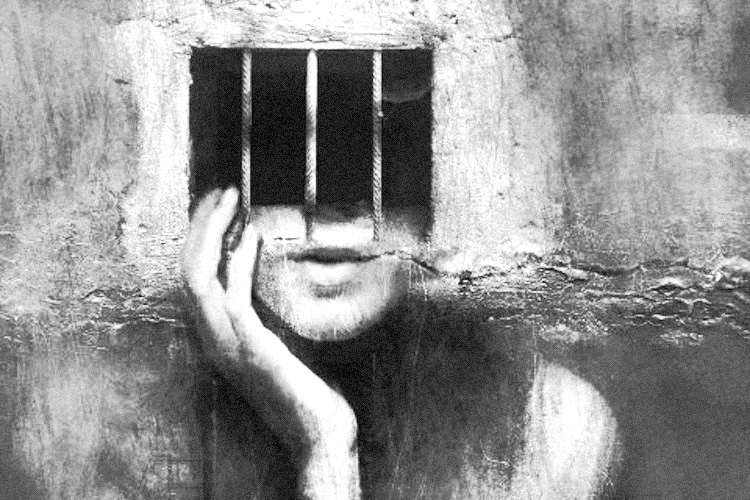
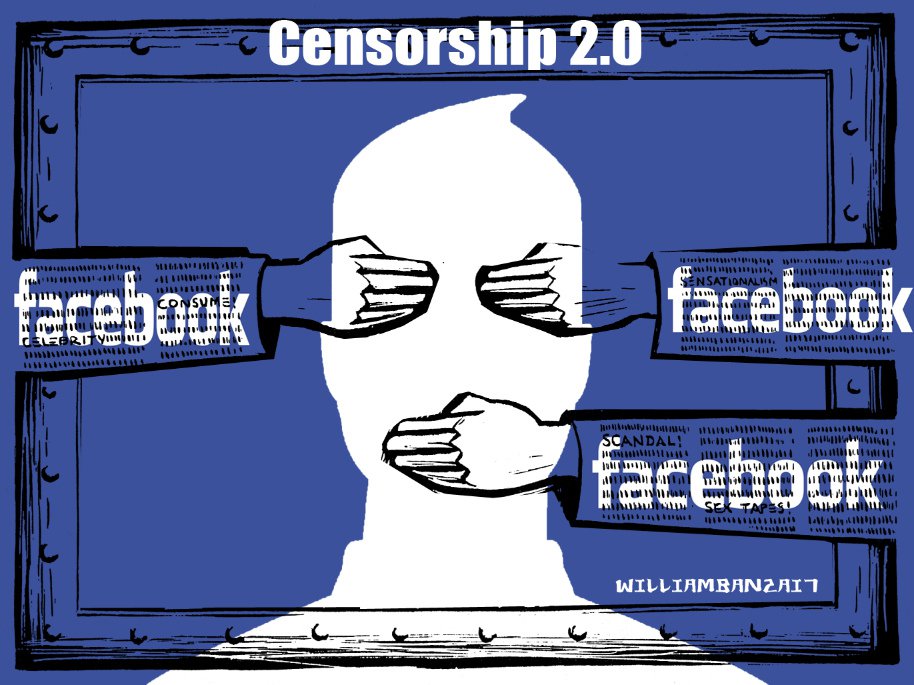

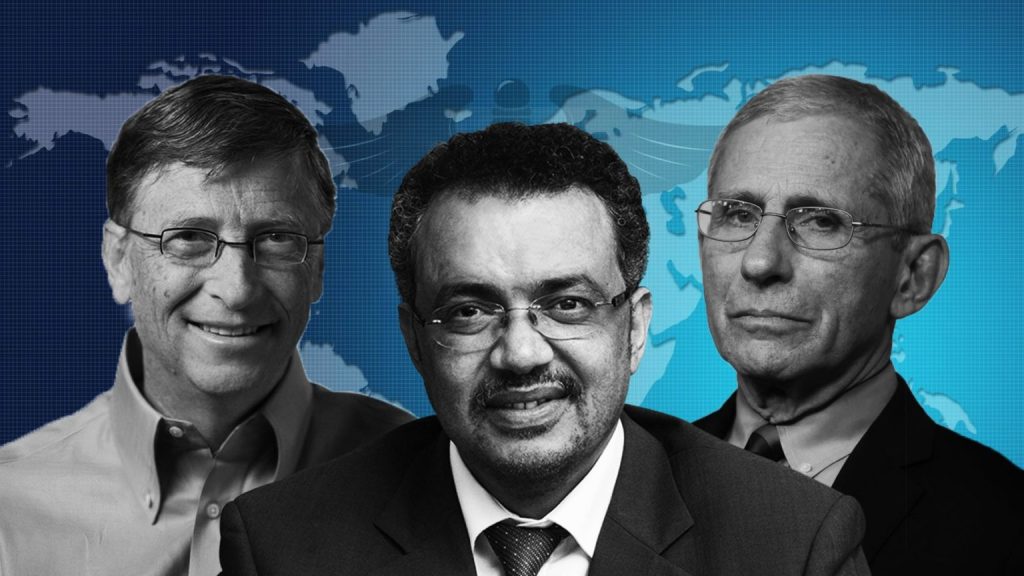


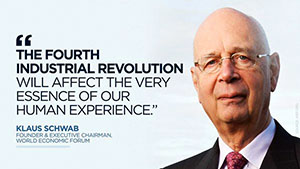
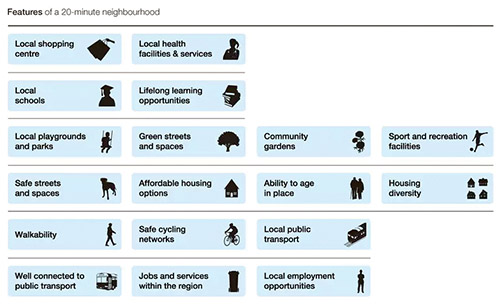
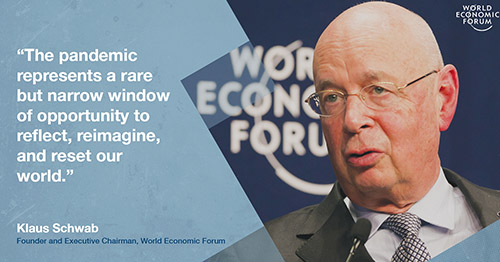
 After the Crash