“An Enthusiastic Corporate Citizen”: David Cronenberg and the Dawn of Neoliberalism

(Editor’s note: In commemoration of director David Cronenberg’s 75th birthday we present this compelling and socially relevant analysis of his filmography.)

By Michael Grasso

Source: We Are the Mutants

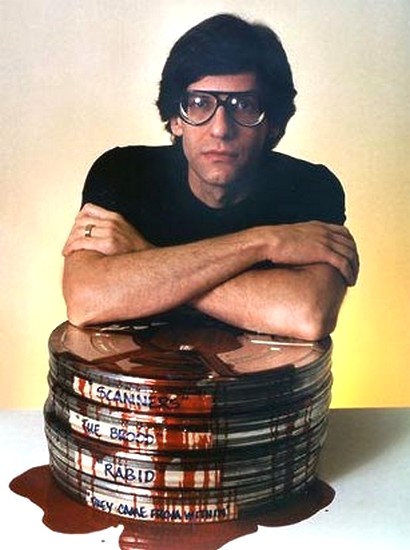
The cinematic corpus of David Cronenberg is probably best known for its expertly uncanny use of body horror, but looming almost as large in the writer-director’s various universes is the presence of faceless, all-powerful organizations. Like his rough contemporary Thomas Pynchon and the conspiracies that litter Pynchon’s early works—V. (1963), The Crying of Lot 49 (1966), and Gravity’s Rainbow (1973)—Cronenberg’s shadowy organizations offer fodder for paranoid conspiracy. These conspiracies operate under the cloak of beneficent academic institutes and, in his later work, corporations. The transition from institutes to corporations occurred during Cronenberg’s late ’70s and early ’80s output, specifically the trio of films The Brood (1979), Scanners (1981), and Videodrome (1983).

It is no coincidence that, at this particular time, international finance and prevailing political winds helped put the corporation in society’s driver’s seat. In Adam Curtis’s recent documentary film HyperNormalisation (2016), he notes how the default of the city of New York in 1975 opened the door for private investment and the finance industry to get their hands on municipal governance on a large scale for the first time, and how this creaked open the door for the Thatcher-Reagan privatization wave in the ’80s. These last few “hinge” years of the 1970s offered the last chance for a real alternative to the coming neoliberal revolution. Soon, all alternatives for governance in the name of the public good were destroyed. Corporatism tightened its grip on the Western polity.

Cronenberg’s early eerie organizations—the “Canadian Academy of Erotic Enquiry” from Stereo (1969) and the panoply of gruesome academic and cosmetic conspiracies in his Crimes of the Future (1970)—eventually yielded to corporations like Scanners‘ ConSec and Videodrome‘s Spectacular Optical. In these early works, Cronenberg’s mysterious organizations are headed by visionary (mad) geniuses. In 1975’s Shivers, experiments by a lone mad scientist infect an entire apartment building with parasites, which awaken dark impulses in the building’s residents and spread themselves through sexual violence. But as the decade went on, Cronenberg slowly backed away from utilizing the character of a singular scientific genius harboring a twisted vision of the future. Now, organizations sought to pull the strings from the shadows. The key transitional work in this chronology is the sometimes-underlooked The Brood from 1979.

In the film, Oliver Reed plays esteemed psychologist Dr. Hal Raglan, who has developed a method of exorcising deep-seated psychological issues using a technique called “psychoplasmics.” In intense one-on-one sessions reminiscent of psychodrama, Raglan is able to physically remove trauma from the human body in the form of ulcers, rashes, and, we eventually discover, cancer. In the ultimate reveal, it’s shown that Raglan has helped traumatized patient Nola Carveth (Samantha Eggar) to birth violent, deformed homunculi who go out into the world, psychically connected to her, in order to resolve her childhood abandonment issues and abuse with bloody murder. Raglan’s foundation, the Somafree Institute of Psychoplasmics (its name simultaneously evocative of Aldous Huxley’s perfect drug soma, and reminiscent of fringe psychological research like Wilhelm Reich’s orgone theory) inhabits a modernist chalet far outside the city of Toronto. Non-resident patients have to be bussed in. Raglan’s public reputation is that of an eccentric, but effective, therapist. At several points in the film we see the covers of Raglan’s presumably best-selling The Shape of Rage. (Curiously, a decade later, in 1990, a documentary titled Child of Rage would be released covering the controversial use of “attachment therapy.”)

As depicted in the film, Somafree is not a corporation. But the thematic threads surrounding Raglan and his Institute are based on real-life trends in the 1970s. In its practices and in the person of Raglan, Somafree resembles psycho-intensive institutes like Esalen, self-improvement organizations like Lifespring, and personalities like Werner Erhard. Erhard’s est movement used primal abuse to ostensibly create psychological breakthroughs, helping the “patient” become more assertive, more powerful, less prone to obeying impulses caused by their early traumas. There is also the real-life analogue to the psychological method that Raglan employs: psychodrama. In the 1970s, new methods of conflict resolution pioneered in places like Esalen were beginning to seep into the mainstream of North American society. These methods soon spread into the corporate world as a purported means of defusing tensions at work and making an office more productive. The “encounter group” soon became a punchline, but the principles behind the Age of Aquarius’s more touchy-feely psychodynamic methods soon became part of the warp and weft of corporate culture in the ’80s and well beyond.

Nola’s estranged husband Frank interviews a former Raglan patient, Jan Hartog, in an attempt to discredit Somafree so Frank can regain custody of his daughter. This patient bears the scars of Raglan’s work on him: a lymphatic cancer sprouting from his neck (an eerie foreshadowing of the coming of another mysterious lymphatic disorder that would soon break out all over North America). Hartog plans to sue; not to achieve victory in a courtroom, but to destroy Raglan’s reputation. It doesn’t matter if they win, Hartog says, because “They’ll just remember the slogan. Psychoplasmics can cause cancer.” The 1970s was full of an increased awareness of the carcinogens that surrounded us in the late-industrial West—cigarettes, sweeteners, food dyes, and pesticides—thanks in large part to the nascent environmental and consumer rights movements, which faced off against corporations using  weapons of negative publicity.

By the time we get to Scanners in 1981, we are fully invested in a world of shadowy corporate overlords. A huge multinational security firm, ConSec, tries to shepherd psychics called “scanners,” ostensibly to help them control their powers, but also to utilize and exploit their paranormal abilities. Protagonist Cameron Vale (Steven Lack) is apprehended off the streets, where, due to his psychic pain, he’s living as a derelict. We learn that scanners don’t “fit in” with society. When Vale is given the inhibitive drug ephemerol by ConSec’s head of scanner research, Dr. Paul Ruth (Patrick McGoohan), he is able to get himself together and is even given a new proto-yuppie wardrobe and mission by ConSec: eliminate rogue scanner Darryl Revok (Michael Ironside). But as Vale accepts his mission and new identity, he finds himself enlisted in ConSec’s private war against renegade scanners. When he runs into an emerging cell of scanners who are forming a powerful “group mind” in a New Age-like encounter session, assassins controlled by Revok murder most of the cell. “Everywhere you go, somebody dies,” one of the hive mind tells Vale, who is complicit with ConSec’s need to exert corporate control over scanners, including the use of violence as part of the corporate mission. Meanwhile, ConSec itself is riddled with moles working with Revok. Indeed, a chemical and pharmaceutical company called “Biocarbon Amalgamate,” founded by Dr. Ruth but now infiltrated by Revok, manufactures ephemerol in massive quantities. Scanners recontexualizes the Cold War espionage “wilderness of mirrors” in terms of corporate espionage for a new age of corporate domination. (It’s no coincidence that Cronenberg cast McGoohan, one of the Cold War’s most famous fictional spies, in the role of Dr. Ruth.)

ConSec’s corporate mission is revealed in a board meeting when the new head of security says, “We’re in the business of international security. We deal in weaponry and private armories.” This head of security also tells Dr. Ruth, “Let us leave the development of dolphins and freaks as weapons of espionage to others.” To the new breed of ConSec executive, fringe ’70s research is a thing of the past, despite its obvious power and relevance. The future is in fighting proxy wars, ensuring private security for the wealthy, and providing mercenary security forces. ConSec in this way is like many other private security firms that first emerged in the 1970s and ’80s. Begun as an outgrowth of post-colonial British military adventurism, the private military company soon became a way for ex-military officers to assure themselves a handsome post-service sinecure in a new era where hot wars were a thing of the past. “Brushfire wars” would continue to ensue, ensuring these companies an expanding portfolio, both in the waning years of the Cold War and in the 1990s and beyond. In fact, it’s interesting to note that many of the real-world military’s supposed psychic assets themselves got into private security after the U.S. Army shut down fringe science projects like Project STARGATE. Art imitates life imitates art.

Videodrome expands Cronenberg’s conspiratorial corporate, military, and espionage worldview into the rapidly exploding world of the media in the early ’80s. Leaps forward in technology, all of which are explicitly called out in Videodrome, litter the film’s visual landscape. Cable television, satellite transmissions (and the attendant hacking thereof), video cassette recorders, the rise of video pornography, virtual reality, postmodern media theory, and violence in entertainment all play essential roles in the film. Max Renn’s (James Woods) tiny Civic TV/Channel 83 (itself based on groundbreaking independent Toronto television station CityTV) is trying to survive as best it can in a world of massive international media players. Ever seeking the latest hit that will tap into the public’s unending hunger for sex and violence, his on-staff “satellite pirate” Harlan delivers the mysterious Videodrome transmission. Harlan is later revealed to be working with the Videodrome conspiracy, having intentionally exposed Max to the signal. In a memorable speech, Harlan nails Max’s amoral desire to sell sex and violence to his viewers: “This cesspool you call a television station, and your people who wallow around in it, and your viewers who watch you do it; you’re rotting us away from the inside.” When Renn is deep into his Videodrome-triggered hallucinations, he is offered corporate “help” much as Cameron Vale was. This time, his “savior” is Barry Convex, a representative of Spectacular Optical. In his video message to Max, he, like the ConSec executive before him, lays out Spectacular Optical’s corporate mission:

I’d like to invite you into the world of Spectacular Optical, an enthusiastic global corporate citizen. We make inexpensive glasses for the Third World… and missile guidance systems for NATO. We also make Videodrome, Max.

The final form of the military-industrial-entertainment complex is laid bare. Videodrome’s intent is to harden and make psychotic a North American television audience who’ve “become soft,” as Harlan puts it. Renn’s hallucinations are recorded, he is literally “reprogrammed” to kill Civic TV’s board (thanks to the memorable hallucinatory image of Convex sticking a VHS tape into Renn’s gut). Renn is then reprogrammed to retaliate and assassinate Convex by the much more ’70s-cult Cathode Ray Mission of “media prophet” Brian O’Blivion, whose postmodern, expressly McLuhanesque view of television’s place in the world allowed Videodrome to come into existence in the first place: “I had a brain tumor and I had visions. I believe the visions caused the tumor and not the reverse… when they removed the tumor, it was called Videodrome.” It’s also worth noting that O’Blivion tells us that Videodrome made him its first victim; postmodern criticism of the medium of television is no match for its violent, cancerous growth.

The deregulation of media in the U.S. in the Reagan years is common knowledge; rules around children’s television were especially eviscerated, which allowed for an explosion in violent, warlike cartoons based on popular toy lines, training a new generation for a lifetime of endless war. Combined with the aforementioned explosion of video technology, the laissez-faire environment shepherded by Reagan’s FCC allowed a new breed of cable television magnates to get rich and created a television and media landscape with a relatively friction-free relationship to government. By the time the first Gulf War broke out in 1991, war provided the cable news networks with surefire ratings and cable news provided the propaganda platform for the war effort, a mutually beneficial (and Cronenberg-esque) symbiosis that’s continued to metastasize through multiple subsequent wars in the Middle East. The world of Videodrome, the one Harlan evokes where America will no longer be soft in a world full of tough hombres, has finally come to fruition thanks in part to all of our enmeshment in the video arena—the video drome.

After Videodrome—in The Fly (1986), Dead Ringers (1988), and Crash (1996)—Cronenberg focuses less on sinister organizations and more on monomaniacal researchers, doctors, and fetishists who pursue their individual idiosyncratic agendas through the director’s trademark twisting mindscapes (and bodyscapes). With the exception of eXistenZ (1999), Cronenberg’s meditation on computer technology and gaming released amidst the first dot-com bubble, and his Occupy-influenced adaptation of Don DeLillo’s 2003 novel Cosmopolis (2012), he has retreated from a more overt suspicion of corporations and shadowy conspiracies. His warning about these invisible masters pulling the strings of society came during the time period when something could have been done about corporate hegemony. But now, the conspiracy operates in the open. We are now all of us the dumb, trusting Cronenberg protagonist, lulled into a false sense of security by a series of “enthusiastic corporate citizens.” Long live the new flesh.

On Track for Extinction: Can Humanity Survive?

By Robert J. Burrowes

Anyone reading the scientific literature (or the progressive news outlets that truthfully report this literature) knows that homo sapiens sapiens is on the fast track to extinction, most likely some time between 2025 and 2040.

For a taste of the evidence in this regard focusing on the climate, see ‘Climate Collapse and Near Term Human Extinction’, ‘What They Won’t Tell You About Climate Catastrophe’, ‘Release of Arctic Methane “May Be Apocalyptic,” Study Warns’ and ‘7,000 underground [methane] gas bubbles poised to “explode” in Arctic’.

Unfortunately, of course, the climate is not the only imminent threat to human survival. With an insane leadership in the White House in the United States – see ‘Resisting Donald Trump’s Violence Strategically’ – we are faced with the prospect of nuclear war. And even if the climate and nuclear threats to our survival are removed, there is still a substantial range of environmental threats – including rainforest destruction, the ongoing dumping of Fukushima radiation into the Pacific Ocean, extensive contamination from military violence… – that need to be addressed too, given the synergistic impacts of these multiple and interrelated threats.

Can these extinction-threatening problems be effectively addressed?

Well the reality is that most (but not all) of them can be tackled effectively if we are courageous enough to make powerful personal and organizational decisions and then implement them. But we are not even close to doing that yet. And time is obviously running out fast.

Given the evidence, scientific and otherwise, documenting the cause and nature of many of these problems and what is required to fix them, why aren’t these strategies to address the problems implemented?

At the political and economic level, it is usually explained structurally – for example, as an outcome of capitalism, patriarchy and/or the states-system – or, more simply, as an outcome of the powerful vested interests that control governments and the corporate imperative to make profits despite exacerbating the current perilous state of the Earth’s biosphere and its many exploited populations (human and otherwise) by doing so.

But the reality is that these political and economic explanations mask the deeper psychological drivers that generate and maintain these dysfunctional structures and behaviours.

Let me explain why and how this happens using the climate catastrophe to illustrate the process.

While scientific concern about the increase in carbon dioxide in the Earth’s atmosphere had been raised more than a century ago – see ‘The Discovery of Global Warming’ – it wasn’t until the 1980s that this concern started to gain significant traction in public awareness. And despite ongoing agitation by some scientists as well as climate and environment groups, corporate-funded climate deniers were able to stall widespread recognition of, and the start of serious official action on, the climate catastrophe for more than two more decades.

However, as the truth of the climate catastrophe was finally being accepted by most people and the climate deniers were finally forced into full-scale retreat on the issue of whether or not the climate catastrophe was, in fact, so serious that it threatened human extinction, the climate deniers implemented their back-up strategy: they used their corporate media to persuade people that action wasn’t necessary ‘until the end of the [21st] century’ and to exaggerate the argument about the ‘acceptable’ increase above the pre-industrial norm – 2 degrees? 3 degrees? 1.5 degrees? – to obscure the truth that 0.5 degrees was, in fact, the climate science consensus back in 2007.

But, you might ask: ‘Why would anyone prefer to ignore the evidence, given the extinction-threatening nature of this problem?’

Or, to put the question more fully: ‘Why would anyone – whether an “ordinary” worker, academic, lawyer, doctor, businessperson, corporate executive, government leader or anyone else – prefer to live in delusion and believe the mainstream narrative about “the end of the century” (or 1.5 degrees) rather than simply consider the evidence and respond powerfully to it?’

And what is so unattractive about the truth that so many people run from it rather than embrace it?

Obviously, these questions go to the heart of the human (psychological) condition so let me explain why most humans now live in a delusional state whether in relation to the climate, environment issues generally, the ongoing wars and other military violence, the highly exploitative global economy or anything else.

People do not choose to live in delusion nor do they choose their delusion consciously. A delusion is generated by a person’s unconscious mind; that is, the part of their own mind of which the individual is normally unaware. So why does a person’s unconscious mind generate a delusion? What is the purpose of it?

A person’s unconscious mind generates a delusion when the individual is simply too terrified to contemplate and grapple with reality. Instead, the person unconsciously generates a delusion and then lives in accord with that delusion for the (obvious) reason that the delusion does not frighten them.

This unconscious delusional state is the fundamental outcome of the socialization, which I call ‘terrorization’, of the typical child during their childhood.

Endlessly and violently coerced (by a variety of threatened and actual punishments) to obey the will of parents, teachers and religious figures in denial of their own self-will, while simultaneously denied the opportunity to feel the fear, anger, sadness and other feelings that this violence causes, the child has no choice but to suppress their awareness of how they feel and the reality that caused these feelings. As a result, this leaves virtually all children feeling terrified, full of self-hatred and powerless. For brief explanations of how this happens, see ‘Understanding Self-Hatred in World Affairs’ and ‘Why Are Most Human Beings So Powerless?’

However, and this point is important, each of these feelings is extraordinarily unpleasant to feel consciously and the child never gets the listening they need to focus on feeling them. See ‘Nisteling: The Art of Deep Listening’.

As a result, these feelings are suppressed below conscious awareness and this fear, self-hatred and powerlessness become the primary but unconscious psychological drivers of their behaviour and, significantly, results in them participating mindlessly in the widespread ‘socially acceptable’ delusions generated by elites and endlessly promulgated through elite channels such as education systems, the corporate media and entertainment industries.

Hence, as a result of being terrorized during childhood, delusion is the most common state of human individuals, irrespective of their role in society. For a full explanation of why this happens, see ‘Why Violence?’ and ‘Fearless Psychology and Fearful Psychology: Principles and Practice’.

And, as one part of their delusional state, most people must engage in the denial of reality whenever reality (unconsciously) frightens them (or threatens to bring their unconscious self-hatred or powerlessness into their awareness). See ‘The Psychology of Denial’. This, of course, means that they are frightened to take action in response to reality but also deny it is even necessary.

So what can we do about all of this? Well, as always, I would tackle the problem at various levels.

If you are one of those rare people who prefers to research the evidence and to act intelligently and powerfully in response to the truth that emerges from this evidence, I encourage you to do so. One option you have if you find the evidence of near-term human extinction compelling in light of the lacklustre official responses so far, is to join those participating in ‘The Flame Tree Project to Save Life on Earth’.

Obviously, tokenism on your part – such as rejecting plastic bags or collecting rubbish from public places – is not enough in the face of the profound changes needed.

Of course, if you are self-aware enough to know that you are inclined to avoid unpleasant realities and to take the action that this requires, then perhaps you could tackle this problem at its source by ‘Putting Feelings First’.

If you want intelligent, compassionate and powerful children who do not grow up living in delusion and denial, consider making ‘My Promise to Children’.

If you want to campaign on the climate, war, rainforest destruction or any other issue that brings us closer to extinction, consider developing a comprehensive nonviolent strategy to do so. See Nonviolent Campaign Strategy.

And if you want to participate in the worldwide effort to end violence in all of its manifestations, you are welcome to consider signing the online pledge of ‘The People’s Charter to Create a Nonviolent World’.

In summary, the primary threat faced by humanity is not the synergistic multitude of complex social, political, economic and technological forces that are precipitating our rush to extinction.

The fundamental threat to our survival is our psychological incapacity (particularly because of our fear, self-hatred and powerlessness) to perceive reality and respond powerfully to it by formulating and implementing appropriate social, political, economic and technological measures that address our multifaceted crisis systematically.

Unless we include addressing this dysfunctional individual and collective psychological state in our strategy to avert human extinction, we will ultimately fail and extinction will indeed be our fate.


Biodata: Robert J. Burrowes has a lifetime commitment to understanding and ending human violence. He has done extensive research since 1966 in an effort to understand why human beings are violent and has been a nonviolent activist since 1981. He is the author of ‘Why Violence?’ His email address is flametree@riseup.net and his website is here.

Robert J. Burrowes
P.O. Box 68
Daylesford, Victoria 3460
Australia

Email: flametree@riseup.net

Websites:
Nonviolence Charter
Flame Tree Project to Save Life on Earth
‘Why Violence?’
Feelings First
Nonviolent Campaign Strategy
Nonviolent Defense/Liberation Strategy
Anita: Songs of Nonviolence
Robert Burrowes
Global Nonviolence Network

3 EXTRAORDINARY PARADOXES OF PERSONAL AWAKENING

By Dylan Charles

Source: Waking Times

How do you reconcile the utter madness of the world with the overwhelming joy of being alive in it?

“Paradox: a situation, person, or thing that combines contradictory features or qualities.”

Without question we live in interesting times. The deception, insanity and turmoil in our world has no end, yet when we tune in very closely to life’s pulse, we find softness and connection open to us at every step. These contradictory features of the human experience point to the dualistic nature of the universe, but ultimately offer a glimpse of a middle way, the center, where harmony resides in a sea of chaos. A seeming, but natural paradox.

“When people find one thing beautiful,
another consequently becomes ugly.
When one man is held up as good,
another is judged deficient.

Similarly, being and nonbeing balance each other;
difficult and easy define each other;
long and short illustrate each other;
high and low rest upon one another;
voice and song meld into harmony;
what is to come follows upon what has been.”

~Tao Te Ching 2

This is what personal awakening means. To create a harmonious relationship with your own life. To solve the paradox. Have you experienced any of these 3 extraordinary paradoxes of personal awakening?

1. The Awakening is Triggered by Fear and Supported by Love

Like an invading virus triggers the immune system, fear triggers the awakening. War, strife, turmoil, conspiracy, control, death, suffering, theft, abuse. This is the world we have created for ourselves. The toll of such heaviness manifests as a dense type of contagious fear, a chronic trigger that perpetuates the fight or flight response, but without an immediate or tangible threat to face directly. But there is nowhere to run or hide from the fear. We can confront it or be consumed by it. Or transmute it.

And what is to found beyond the fear? Love. An endless stream of it. In the stream the fear makes sense as a force which guides us into the stream of love.

2. Healing Hurts

The awakening is ultimately a healing process, but it’s hardly free of pain, because it is in a sense a recovery from injury or illness, like a form of forgetfulness of who you really are. As such, it actually hurts. A lot. And just like the agony of having a broken bone set, or the pain of recovering from a difficult surgery, emotional and spiritual pain is a necessary component of healing.

Letting go into whatever it is, depression, sadness, boredom, or even grief, is how healing begins. There is no out, only through. The remembrance of the pain is there to forever color the outcome of the healing process.

“If you desire healing,
let yourself fall ill
let yourself fall ill.” ~Jalaluddin Mevlana Rumi

3. The Void Has Everything We Need

Counter intuitive it may seem, but stepping out of the cultural and mental clutter and into the void, where being and non-being balance each other, reveals everything we truly need. It turns out that silence is the teacher. In silence the universe comes into focus. Time stops and morphs into timelines. Infinite possibilities all become clear at once. Everything we need to know and feel is in this space, but to get there, everything has to be stripped away.

“In the pursuit of knowledge, every day something is added. In the practice of the Tao, every day something is dropped.” ~Tao Te Ching

Final Thoughts

What lies above lies below. A proper life is about balancing the joy of being alive with the terror of being alive. Ignoring either side of the equation leads to chaos.

“Do you want to improve the world?
I don’t think it can be done.

The world is sacred.
It can’t be improved.
If you tamper with it, you’ll ruin it.
If you treat it like an object, you’ll lose it.

There is a time for being ahead,
a time for being behind;
a time for being in motion,
a time for being at rest;
a time for being vigorous,
a time for being exhausted;
a time for being safe,
a time for being in danger.

The Master sees things as they are,
without trying to control them.
She lets them go their own way,
and resides at the center of the circle.”

~Lao Tzu, Tao Te Ching

Love and Let Love: Overcoming Egocentric Love

By Gary Z. McGee

Source: The Mind Unleashed

“Love could be labeled poison and we’d drink it anyway.” ~Atticus

Love is a tricky subject. It’s multifaceted, both subjectively and objectively. It’s both lost and found within the complex folds of our unique mind-body-spirit dynamic. It’s both a spiraling in and a spiral out. We all know the “feeling” of love, but we can’t seem to describe it to each other. But boy do we try: in poetry, in song, in dance, in bed. Even in art.

Unfortunately, the predominant love paradigm in our culture is egocentric, ownership-based love. We live in a world where relationships are mostly based upon materialism, ownership and immediate gratification. It’s almost like we’re conditioned to consume to the point that we “consume” each other. Even the words we use toward each other imply ownership.

It’s sad. But no condition is insurmountable. We can recondition ourselves to form healthy relationships based upon respect, honesty, and trust. We can update the love paradigm into one of soul-centric, relationship-based love. But first we need to recognize each other as opposite sides of the same being. Our yin-yang dynamic is more dynamic than we tend to allow it to be.

The thing is, our language is dreadfully inadequate to do the concept of love any justice. There are over seven-billion people on the planet and we each have a different psycho-physiological reaction to any given stimuli, however minute that difference. And with abstract stimuli such as Love, Consciousness, and God, that difference is magnified.

The fact is: we each have our own definition for the concept of love (ego), but that definition is written in a language older than words (soul). So how do we understand this language? Simply put: mindfulness. More complexly put: we must become aware of what our mind-body-spirit is telling us, and then be honest about that information regarding our relationships. And poetically put: “You only have to let the soft animal of your body love what it loves.” ~Mary Oliver

The ability to love (vulnerability):

“Vulnerability is not knowing victory or defeat, it’s understanding the necessity of both; it’s engaging. It’s being all in.” ~Brene Brown

Our ability to love another person is predetermined by our ability to love ourselves. Similar to the airplane-crash-landing analogy, “Always put the mask on yourself before assisting someone who may be less capable,” we must put the Mask of Love on ourselves before loving someone who may or may not be capable of authentic love.

The irony is that we must first learn self-love to understand that egocentric love isn’t the healthiest way to love. We must first love our ego in order to transform it into an ego that isn’t just in love with itself. An ego that isn’t loved tends to become self-serving and egocentric (codependent or merely independent), but an ego that is loved tends to become self-actualized and soul-centric (interdependent).

An ego that has learned interdependence through self-love is more likely to love authentically. It is more likely to be vulnerable with another ego. And vulnerability is the key to loving greatly. It’s the secret of deep authenticity. A crucial aspect of self-actualized love, as opposed to egocentric love, is to allow ourselves to be vulnerable so that we may be astonished by love, taken aback by it, in awe of it. As the great Rumi once said, “Close your eyes. Fall in love. Stay there.”

The ability to let others love (freedom):

“The only way of loving a person is to love them without hope.” ~Walter Benjamin

Have you ever caught yourself saying this, regarding love and relationships? “I just don’t want to get hurt.” Or heard someone else say it? We hear people say this, and we nod in empathy, followed by an understanding pat on the back, or a sympathetic hug.

But, wait a minute! Who ever said getting hurt wasn’t a part of love? Are not pain and love two sides of the same coin? If we love something deeply enough, does it not hurt when we lose it? The thing is, the ability to love another person takes an enormous act of courage. And if we are genuinely allowing ourselves to love another person, then we must open ourselves up to the possibility of being hurt. This is what it means to be vulnerable. If we’re not “all in,” then what’s the point of trying?

Pain should not be avoided at the expense of love. Love should be embraced at the risk of pain. Indeed.

If we’ve already learned to love ourselves, which we should have taken care of before attempting to love another person anyway, then insecurities be damned! It’s time to go for it. It’s time to move all in. Rejection happens. But if we don’t at least give it a shot, and that means getting vulnerable and laying our insecurities out on the table like a bad hand of poker, then we’ll never know if it could have been something magical or not.

A relationship is actually two uniquely different people who have gone from being independent dancers to becoming an interdependent dance. This is the beauty of romantic, soul-centric love. It becomes a dance. But, and here’s the rub, the dance can only be enjoyable if both parties are free to dance… or not.

This is where it gets difficult: allowing our partner to love the way they need to love. This sounds simple enough, but it is deceivingly simple. Because we might not like the way they love. It requires good communication skills, brutal honesty, and an exemplary trust in the other dancer.

One of the biggest assumptions we make about love is imagining that the other person loves the same way that we do. In other words, we assume that what the other person means by love means the same thing that we mean by it. But this simply cannot be true if we are genuinely allowing the other person to be an individual with their own unique tastes and opinions.

Letting our lover love the way they need to love is just as much a part of the dance as our unique way of loving is. But we must be honest, first with ourselves and then with our partners. Sometimes this honesty will hurt, but pain is necessary for growth. And if a relationship is what we’re trying to grow, then pain is par for the course.

If the way another person loves doesn’t jive with the way that you love, then the dance either needs to end or it needs to take on a new form. If this sounds counter-intuitive, that’s because it is. As the great Victor Hugo cryptically stated, “Love is never stronger than when it is completely unreasonable.”

The ability to let love go (compersion):

Everything we love is well-arranged dust.” ~Atticus

The ability to let love go is our ability to let go of our ego’s attachment to it.

Falling in love is both very easy and very difficult. It is easy when we are coming from a place of non-attachment and interdependence; when we’re allowing all things to mysteriously and majestically flow. But it is difficult when we are coming from a place of attachment and codependence, and we’re rigidly trying to control everything. It’s the difference between being Love, and vainly trying to pigeonhole love into the box of our expectation.

As Stephen Levine profoundly stated, “True love has no object. Many speak of their unconditional love for another. Unconditional love is the experience of being. You cannot unconditionally love someone. You can only be unconditional love. It is not a dualistic emotion. It is a sense of oneness with all that is. The experience of love arises when we surrender our separateness into the universal. It is a feeling of unity. You don’t love another, you are another.”

When we let love go, we’re not letting go of Love itself –not at all. We are letting go of the ego aspect of love. We’re letting go of the attachment, the need to cling. It’s not like we let go of love and then forget about it. No, it’s more like we are saying goodbye. Like proud parents who are sad that their child has left home, but are happy for their growth and open to the possibility of their return.

Love itself is never abandoned, nor is it forgotten. Only the needy, codependent, ego side of love that’s filled with unhealthy expectations and cultural predispositions about the way love should be is abandoned. Authentic love lasts forever, despite us, and even in spite of our egos. The more we let love go, the more we realize that we never owned it in the first place. It was never a thing that could be owned. It could only ever have been free, or it was never really love at all.

So, let’s learn to be Love in the face of expectation. Let’s be Love despite the love that thinks it needs validation. Let’s be Love even when others cannot. That is the heart of both compersion and forgiveness… Love, let others love, and then let go of your ego’s attachment to love. Do this, again and again, in a kind of loving life-death-rebirth process, and the ability of soul-centric, self-actualized love will not elude you.

The Fear Driving US Nuclear Strategy

By Robert J. Burrowes

The United States Department of Defense released its latest ‘Nuclear Posture Review 2018’ (NPR) on 2 February, updating the last one issued in 2010 during the previous administration. See ‘Nuclear Posture Review 2018’.

The Executive Summary of the NPR is also available, if you prefer. See ‘Nuclear Posture Review 2018 Executive Summary’.

Several authors have already thoughtfully exposed a phenomenal variety of obvious lies, invented threats, strategic misconceptions and flaws – such as the fallacious thinking behind ‘deterrence’ and significantly increased risk of nuclear war given the delusional ‘thinking’ in the document – as well as the political fear-mongering in the NPR. For example, eminent scholar Professor Paul Rogers has pointed out: ‘The risk now is that we are on a slippery slope towards “small nuclear wars in far-off places”, which themselves could either escalate or at the very least break the 70+ year taboo on treating nuclear weapons as useable.’ See ‘Nuclear Posture Review: Sliding Towards Nuclear War?’

Stephen Lendman has reminded us that US ‘defense spending far exceeds what Russia, China, Iran and other independent countries spend combined’ and that the US ‘nuclear arsenal and delivery systems can destroy planet earth multiple times over’ with the document suggesting ‘preparation for nuclear war’. Moreover, the NPR ‘falsely claims the nation must address “an unprecedented range and mix of threats” posed by Russia, China, North Korea, Iran and other countries’ and this despite the incontrovertible fact that no nation has threatened US security since World War II and none threatens it now.

He further points out that the NPR’s claim that there is ‘an unprecedented range and mix of threats, including major conventional, chemical, biological, nuclear, space, and cyber threats, and violent nonstate actors’ is ‘utter rubbish’ and that ‘America’s rage for endless wars of aggression, along with its rogue allies, poses the only serious threat to world peace and stability.’ See ‘Trump’s Nuclear Posture Review’.

Even Andrew C. Weber, an assistant defense secretary during the Obama administration, has warned that

‘Almost everything about this radical new policy will blur the line between nuclear and conventional’ and ‘will make nuclear war a lot more likely.’ See ‘Pentagon Suggests Countering Devastating Cyberattacks With Nuclear Arms’.

Despite the obvious belligerence in the document, we are supposed to believe, according to words in the NPR, that ‘The United States remains committed to its efforts in support of the ultimate global elimination of nuclear, biological, and chemical weapons’ despite the US denunciation of the ‘UN Treaty on the Prohibition of Nuclear Weapons’ negotiated by 122 countries just a few months ago in mid-2017. See ‘U.S., UK and France Denounce Nuclear Ban Treaty’.

Presumably, we are supposed to have shorter memories than members of the US administration or to be even more terrified and unintelligent than are they. This would be difficult.

Rather than further critique the document, which several authors have done admirably, I would like to explain my observation immediately above.

Let me start by explaining why those who formulated the current US nuclear strategy, wrote the Nuclear Posture Review, now promote it and are responsible for implementing it, are utterly terrified and quite delusional, and constitute a threat to human civilization.

The NPR is full of language such as this: ‘There now exists an unprecedented range and mix of threats, including major conventional, chemical, biological, nuclear, space, and cyber threats, and violent nonstate actors. These developments have produced increased uncertainty and risk.’

Are these individuals, notably including Donald Trump, Secretary of Defense General Jim ‘Mad Dog’ Mattis, Chief of Staff Marine General John Kelly and National Security Adviser General H. R. McMaster, really frightened of countries such as Iran (with its non-existent nuclear arsenal) or North Korea (with its handful of ‘primitive’ nuclear weapons and inadequate delivery systems)? Or are they really frightened of countries such as Russia and China, whose nuclear arsenals pale in comparison to that of the United States and whose strategic posture in any case is decidedly non-aggressive (particularly towards the United States) despite its ongoing provocations of them?

Are US government leaders really so terrified of possible conventional, chemical, biological, space and cyber attacks that they need to threaten nuclear annihilation should it occur?

Well, the answer to each of these questions is that Trump, Mattis, Kelly, McMaster and other US political and military leaders are, indeed, terrified.

However, they are projecting their obvious terror away from its original source and onto a ‘safe’ and ‘approved’ target so that they can behave in accordance with their terror. They do this because the original cause of their terror – their parents and/or other significant adults in their childhood – never allowed them to feel their terror and to direct and express it safely and appropriately. For a full explanation of why this happens, see Why Violence?’ and Fearless Psychology and Fearful Psychology: Principles and Practice.

Unfortunately, and in this case potentially catastrophically, this dysfunctional behavioural response to deeply suppressed terror cannot ‘work’ either personally or politically for the individuals concerned. Let me explain why.

Evolution devised an extraordinarily powerful response to threats: it gave many organisms, including human beings, the emotion of fear to detect threats as well as other tools that can be used in conjunction with fear to respond powerfully to threats. Hence, in response to a threat, humans are meant to feel their fear and, while doing so, engage other feelings, conscience and intelligence so that the source of the threat can be accurately identified and the most powerful and effective behavioural response to that threat can be devised and implemented. In simple language: We need our fear to tell us we are under threat and to play a part in defending ourselves. In evolutionary terms, this was highly functional.

If, however, during childhood, the fear is suppressed because the individual is too frightened to feel it (usually because their parents deny them a safe opportunity to do so), then they will be unconsciously compelled to project their fear onto those who pose no threat (precisely because these people do not immobilize them with terror) and to endlessly seek to control these people (during childhood this usually means their younger siblings and/or friends, and during adulthood it usually means people of another sex, race, class, religion or nation) so that they can gain relief from experiencing their suppressed (childhood) fear.

The relief, of course, is delusionary. But once someone is terrified, it is not possible for them to behave functionally or powerfully. They will live in a world of delusion and projection, endlessly blaming those who they (unconsciously) project to be a threat precisely because these people are not frightening and not a threat and seem more likely to be able to be ‘controlled’.

This projection and behaviour happen all of the time, both in personal interactions and geopolitically, but it doesn’t usually threaten imminent annihilation, even if, to choose another example, it endlessly and perhaps disastrously impedes efforts to tackle the environmental and other assaults on our biosphere.

It is because parents are frightened to feel and experience their own fear that they also fear their child’s fear and they act (consciously or unconsciously, depending on the context) to prevent the child from feeling this fear, perhaps by doing something as simple as reassuring them.

However, parents also use a variety of methods to distract their child from feeling their feelings. They might offer the child a toy or food to distract them. But another important way in which fear is suppressed is by teaching children to use play as a distraction from having their feelings. This fear might then remanifest in the form of the child wanting others to play with them but particularly by doing so in a game of their choosing and over which they have control (so that they can ensure that their fear is not raised).

Once the child has learned to use gaining control over play to distract themselves from their terror, it might well become a lifetime addiction, subsequently manifesting as a dysfunctional desire for control within a family or perhaps even economically, politically or militarily.

Unfortunately, as some of these children grow up and the nature of their ‘game’ changes, the outcome can have deadly consequences. This is simply because there is never any guarantee that others will submit willingly to control by others. And, if they do not, this can trigger the original person’s (unconscious) terror ‘necessitating’ action – a higher-risk strategy in an attempt to secure this higher degree of control over others – to resuppress their terror.

However, for example, even if the terrified person ends up owning a major corporation and exercising a great degree of control over employees, markets and possibly countries, the terror driving their delusional need for control can never be satisfied. See ‘Love Denied: The Psychology of Materialism, Violence and War’. But the same principle applies in other domains as well, including the political and military.

And in the most dangerous collective manifestation of this major psychological disorder, the current US political/military leadership, which has been effectively merged by Trump’s appointment of military generals to his political staff, we now have the situation where a collection of individuals who are terrified and also project their dysfunctional desire for control onto other nations, are willing to threaten (and use) nuclear weapons in a delusionary attempt to feel (personally) ‘in control’.

It is little wonder that the Bulletin of the Atomic Scientists has moved the Doomsday Clock to two minutes to midnight! See It is now two minutes to midnight: 2018 Doomsday Clock Statement.

So what can we do?

Well, I would tackle the problem at several levels and I invite you to consider participating in one or more of these.

To help prevent this problem from emerging at its source, you are welcome to consider making ‘My Promise to Children’. This will play a vital role in ensuring that children do not grow up suppressing their fear.

Given the extraordinary emotional and other damage inflicted by school, you might consider educational opportunities for your child(ren) outside that framework. See ‘Do We Want School or Education?’

If you suspect that you are not as powerful as you would like, you might consider ‘Putting Feelings First’ so that you can learn to behave with awareness – a synthesis of all of the feedback that your various mental functions give you and the judgments that arise, in an integrated way, from this feedback. This will enable you to love yourself truly and always courageously act out your own self-will, whatever the consequences.

If you wish to work against the many threats, including military threats, to our environment simultaneously, you are welcome to join those participating in ‘The Flame Tree Project to Save Life on Earth’.

And if you wish to be part of efforts to end violence and war, including the threat of nuclear annihilation, you are welcome to consider signing the online pledge of ‘The People’s Charter to Create a Nonviolent World’ and/or using sound nonviolent strategy for your campaign or liberation struggle. See Nonviolent Campaign Strategy or Nonviolent Defense/Liberation Strategy.

Our world is poised perilously on the brink of catastrophic nuclear war. This has happened because we have given responsibility for holding the nuclear trigger to a handful of men who, emotionally speaking, are terrified little boys cowering from the imaginary threat of the bogeyman under their bed.

There is no easy way back from this brink. But you can help, both now and in the future, by doing one or more of the suggestions above.

Biodata: Robert J. Burrowes has a lifetime commitment to understanding and ending human violence. He has done extensive research since 1966 in an effort to understand why human beings are violent and has been a nonviolent activist since 1981. He is the author of Why Violence? His email address is flametree@riseup.net and his website is here.


Robert J. Burrowes
P.O. Box 68
Daylesford
Victoria 3460
Australia
Email: flametree@riseup.net

Websites:
Nonviolence Charter
Flame Tree Project to Save Life on Earth
‘Why Violence?’
Feelings First
Nonviolent Campaign Strategy
Nonviolent Defense/Liberation Strategy
Anita: Songs of Nonviolence
Robert Burrowes
Global Nonviolence Network

Sacred Agency

By Kingsley L. Dennis

Source: Reality Sandwich

The following essay was originally published on KingsleyDennis.com


Transcendence is the only real alternative to extinction.

—Václav Havel, Independence Hall, Philadelphia, July 4, 1994

We are cosmologizing the human.

—Henryk Skolimowski, The Participatory Mind


Human consciousness has been on a long journey. Our awareness has shifted from the earlier archaic, animistic mode; to the religious and scientific; and then later to an industrial, mechanistic consciousness. Our ancestors did not live in the same world as we live in now, nor would they have exhibited the same kind of consciousness as we currently do. Consciousness is not a fixed phenomenon or static expression—it changes alongside the flows and fluxes of history, time, and environment.

An integral mode of consciousness began to emerge after the successive industrial revolutions that adapted a “machine style” perspective of control, power, and efficiency; and which eventually propelled global society toward excessive consumption and accelerated growth. This integral consciousness emerged parallel to a new era of technological innovation. That is, a consciousness that reflects dynamics of connection and communication across condensed time and space.

It can be said that we have gone from worshipping faith, then objective knowledge, to finally arriving at an understanding that everything depends upon the subjective self. Throughout this whole journey, like the hero that traverses through the underworld, we have ventured far in search of a mode of being – a state of consciousness and awareness – that can benefit us. A place of conscious self-awareness, which may be termed as sacred, has been present within humanity from the very beginning. It never went away – only we went away. This situation is similar to the behavior of individuals as observed by psychologist Abraham Maslow. Maslow noted how people step back from doing something important, believing others will do it instead. Somewhere along the way we made an internal agreement to stay back and not to overestimate our abilities. It appears that too many of us for too long have avoided being ‘fully human’ and content to remain as ‘only human.’

Regardless of how we may articulate it, the sacred presence within humanity cannot be denied as it is an expression of the evolutionary impulse. As such, it does not stop at transitional stages but is compelled to push toward ever higher states and degrees of consciousness. We are in the hands of a force that we can barely recognize. Throughout the long journey of our development human beings have been deeply involved in this sacred unfolding (for want of a better expression). What this means is that the transcendental yearning to go beyond one’s present state persists in each of us. All of this, our very humanism, should be an inherent part of our cultural mythology. Or at least should influence how we understand and perceive our reality.

Our experience of reality is never pure, but always mediated through consciousness in its various states of reception. The myths we hold as an individual, a culture, and as a collective species reflects our own state of mind. Unfortunately, humanity has for far too long considered itself separate from the cosmos. We feel as if exiled upon a dead planet somewhere upon the fringes of our galaxy. If we do not fully know ourselves it may be because our cultural myths (our narratives) place us within a cosmically isolated reality. To be truly integrated we must recognize that we participate not only upon the planet but also within a grander mythology. In other words, we should accept our responsibility as having sacred agency. After all, the history of human civilization is the history of ourselves as change agents.


Sacred Agency

The philosopher Karl Jaspers referred to the period from 800–200 BCE as the Axial Age. It was a time that, according to Jaspers, similar expressions of new thinking appeared in Persia, India, China, and the Western world. He indicated also that the Axial Age represented an in-between period, where old certainties had lost their validity and new ones were yet to emerge. The new religions that arose in this time—Hinduism, Buddhism, Confucianism, Taoism, and monotheism—influenced new thinking in terms of individuality, identity, and the human condition. These new emerging religions helped to catalyze new forms of thinking and expressions of human consciousness. And yet, over time, we have seen how they were not wholly successful in establishing permanent developmental change.

Social thinker Duane Elgin has referred to our present time as the Second Axial Age in that religions of separation are being replaced by a new spirit of communion. Elgin says that the world is moving into a spiritual communion and empathic connection with a living cosmos. Maybe we are in need of being reminded that there is nowhere else to go when the cosmos already exists within us. This empathic consciousness that Elgin speaks of can be related to the emerging integral consciousness that reflects our increased interconnectivity through our global networks. This connects with our innate, fundamental drive to seek out communion and coherence. A mode of human consciousness that seeks coherence is itself a reflection of a universal natural order. In other words, it is a self-referencing feedback loop. And so now allow me to speculate.

My suggestion is that a purpose for sentient human life upon this planet is as a driver toward establishing a coherent planetary consciousness. In other words, to act as a channel to ‘bring in’ – i.e., receive consciousness – from the consciousness field and to manifest it specifically (that is, to project it) within our earthly reality. There is a correlation here with Aurobindo’s concept of the Supermind/Overmind, in that a form of higher consciousness can be made immanent upon the material plane. Aurobindo referred to this as human evolution moving towards a suprarational or spiritual age that exhibits an intuitive or Gnostic mode of consciousness.

The finer channeling of the consciousness field would require the adequate preparation of human receptivity. That is, our minds and even perhaps our nervous system would need to be sufficiently prepared in order to successfully actualize this potential. By raising localized aspects of human consciousness through individual perceptions and awareness we may better increase the coherence of consciousness amongst the whole—a form of collective transcendence through species consciousness. And this can be made tangible by local agents – i.e., each one of us – becoming aware and conscious in everyday acts of right thinking, right behavior, and right being. It is a mode of sensitive and balanced consciousness that comes only with considerable effort and discipline. This discipline forms part of the developmental awakening within each individual, and which then influences our perceptions and life experiences.

As such, we can come to recognize that we are no longer either isolated individuals or an inarticulate mass. We are localized consciousness acting through aware individuals who consciously seek to connect, collaborate, and care about the future. Each one of us, as localized consciousness, is a reflection of the grander nonlocal consciousness. And in this way each one of us is also a reflection of the other. No individual lives within a shell separated from everybody else, but each is connected to all through our conscious humanity.

What we are seeing emerge across the world is the early stirrings of a planetary civilization; one that is driving toward diversity and coherence. And as we connect and share our thoughts, ideas, and visions we will be helping to strengthen the signal or reception of consciousness and thus the bringing in of the grander cosmic consciousness. A planetary consciousness spread across the Earth may not only be a real possibility, it may very well be a fundamental cosmic purpose.


Human Purpose in the Sacred Order

Recent scientific discoveries indicate that our reality is coded from beyond cosmic space-time; and as such our reality behaves in a way consistent with what we know as a holographic projection. That is, the totality of our reality is in-formed from a deep consciousness beyond it. The known cosmos thus acts as a nonlocal consciousness field, of which sentient life forms as localized manifestations. It has been inferred through various religious and sacred texts, and various wisdom traditions, that the universe (material reality) came into being as a way for its source to ‘know itself.’ This is reminiscent of ‘know thyself,’ the famous maxim from the Oracle of Delphi. Or, in modern language, we can say that we are the eyes through which the cosmos contemplates itself.

Self-consciousness is generally attributed to those sentient organisms at a high peak of mental development. Self-reflection is one of the prized attributes of self-consciousness. Furthermore, self-realization is something we credit to each attained individual consciousness. A realization of the self is part of the path of human actualization. It is a path in which purpose and meaning are core drivers and potentials. Human beings – or we could say human becomings – are naturally driven by a longing, a purpose, and this signifies a connection with a sacred impulse. In our times human civilization has shifted into an unprecedented era of self-actualization. The psychologist Abraham Maslow, who originated a scale of self-actualization, recognized that one of the characteristics of self-actualizers is that they have far less doubt about what is right and wrong than normal people do, and they act upon this inner knowing.

As we further speculate, what would self-realization upon a greater scale be like? That is, self-realization as a planetary consciousness? Or as a galactic consciousness? What would a fully realized and self-conscious cosmic consciousness operating through all of its localized manifestations be like? This would constitute a state of coherent self-aware consciousness beyond our imagination. We can only speculate, or internally gaze upon the possibility.

As a recap then, human consciousness is a localized expression of the greater nonlocal consciousness field. As sentient beings we receive aspects of this consciousness that pervades our space-time. We are animated by it, and we then manifest this through our own minds and human cultures. Our individual expressions of consciousness also reflect back into the greater nonlocal consciousness field. The greater our individual perceptions and conscious realization, the greater the total realization of the entire holographic field consciousness (as if in a feedback loop). To put it another way, cosmic consciousness is ‘in-formed’ through the emerging awareness of each of its conscious subparts, or components. The art of the sacred then is that we each have a role in bringing the unfinished world into existence through conscious participation.

As each one of us wakes up (to use a common metaphor) the cosmic net shines that little bit brighter. If enough individual consciousnesses awake upon this planet we may catalyze a localized planetary field into collective conscious awareness. In this case, we are each a conscious agent of cosmic realization and immanence. We each have an obligation in our existence on this planet to raise our individual, localized expressions of consciousness. In doing so, we both infect and inspire others in our lives to raise theirs, as well as reflecting back our conscious contribution into the cosmic consciousness. In this way, we can act as both citizens of the cosmos as well as caretakers for the sacred order.

We have now arrived at a place where we can recognize and accept that our reality is not a static affair but an active, fluid realm that makes demands upon us. And in knowing this we are compelled to embrace the obligations and responsibilities that come with this role. We are on a path of completion – of conscious completion and communion – which is the eternal path of the sacred. Through this sacred journey of completion we connect and commune with everything else in our reality, and beyond. As human beings we have been tasked with this sacred endeavor. We can become aware of our creative contribution to reality and this can give us meaning and purpose. Perhaps this will finally provide us with our place in the cosmos. And how can we walk this path?

We can take this journey through our small acts of conscious awareness – our thoughts, attitudes, behavior, and our everyday actions. Upon the next level, our social changes and emerging technologies may form part of this process, establishing an extended mind and empathic embrace across the face of the earth. Magic is alive; magic never died. Everything is ultimately a technology of the soul; and all magic, all science, and all human expression is a part of this soulful technology. And with each step forward we move closer to soulful communion with a grand conscious and sacred order.

The sacred impulse animates the expression of consciousness at the individual, collective, and planetary level. And one day we may witness a grand awakening, unprecedented upon this planet, and this may very well be the purpose for sentient life, as conscious agents of the sacred order. This is likely to be more reality than fantasy. The hidden treasure that is at the very core of our existence wishes to be known – for us to know ourselves – by our individual journeys of self-realization.  We are not alone. A great planetary future awaits us, as a great treasure that wishes for communion. Welcome to the new story.


Truth has to appear only once, in a single mind, for it to be impossible for anything ever to prevent it from spreading universally and setting everything ablaze.

—Teilhard de Chardin, The Heart of Matter

Why Fear and Self-hatred Destroy Human Sharing and Solidarity

Photo by Adam Dean

By Robert J. Burrowes

As our world spirals deeper into an abyss from which it is becoming increasingly difficult to extricate ourselves, some very prominent activists have lamented the lack of human solidarity in the face of the ongoing genocide of the Rohingya. See ‘The Rohingya tragedy shows human solidarity is a lie’ and ‘Wrongs of rights activism around Rohingyas’.

While I share the genuine concern of the Yemeni Nobel peace laureate Tawakkol Karman and Burmese dissident and scholar Dr Maung Zarni, and have offered my own way forward for responding powerfully to the ongoing genocide of the Rohingya – see ‘A Nonviolent Strategy to Defeat Genocide’ – in my view the lack of solidarity they mention is utterly pervasive and readily evident in our lacklustre official and personal responses to the many ongoing crises in which humanity finds itself.

To mention just the most obvious: Every day governments spend $US2 billion on weapons and warfare while a billion people lack the basic resources to live a decent life (and more than 100,000 of these people starve to death). Every day millions of people live under dictatorship, occupation or suffer the impacts of military invasion. Every day another 28,800 people are forcibly displaced from their home. Every day another 200 species of life are driven to extinction. And every day our biosphere is driven one step closer to making human life (and perhaps all life) on Earth impossible. See ‘Killing the Biosphere to Fast-track Human Extinction’.

It is not as if any of this information is unavailable. Just as many people and major international organizations are well aware of the plight of the Rohingya, it is also the case that many people and these organizations are well aware of the state of our world in other respects. And still virtually nothing meaningful happens (although there are tokenistic responses to some of these crises).

Hence, it is a straightforward observation that human solidarity is notably absent in virtually any attempt to tackle the major issues of our time. And the Rohingya are just one manifestation of this problem.

Given that I have long observed this phenomenon both personally and politically, and it concerns me as well, I would like to explain psychologically why the lack of sharing and solidarity is such a pervasive problem and suggest what we can do about it.

In order to feel concern for those who are suffering, and to want to act in solidarity to alleviate their suffering, it is necessary to experience certain feelings such as sympathy, empathy, compassion, love and (personal) power. Moreover, it is necessary that these feelings are not suppressed or overwhelmed by fear and, equally importantly, not overwhelmed by a feeling of (unconscious) self-hatred. If someone is scared and full of unconscious self-hatred, then they can have little interest in sharing their own resources or acting in solidarity with those who need help. And this applies whether the adversely impacted individual is a close relative or friend, or someone on the other side of the world.

So why is fear in this context so important? Simply because fear grotesquely distorts perception and behaviour. Let me explain why and how.

If an individual is (consciously or unconsciously) frightened that one or more of their vital needs will not be met, they will be unable to share resources or to act in solidarity with others, whatever the circumstances. In virtually all cases where an individual experiences this fear, the needs that the individual fears will not be met are emotional ones (including the needs for listening, understanding and love). However, the fearful individual is never aware of these deep emotional needs and of the functional ways of having these needs met which, admittedly, is not easy to do given that listening, understanding and love are not readily available from others who have themselves been denied these needs.

Moreover, because the emotional needs are ‘hidden’ from the individual, the individual (particularly one who lives in a materialist culture) often projects that the need they want met is, in fact, a material need.

This projection occurs because children who are crying, angry or frightened are often scared into not expressing their feelings and offered material items – such as a toy or food – to distract them instead. The distractive items become addictive drugs. This is why most violence is overtly directed at gaining control of material, rather than emotional, resources. The material resource becomes a dysfunctional and quite inadequate replacement for satisfaction of the emotional need. And, because the material resource cannot ‘work’ to meet an emotional need, the individual is most likely to keep using direct and/or structural violence to gain control of more material resources in an unconscious and utterly futile attempt to meet unidentified emotional needs.

This is the reason why people such as the Rothschild family, Jeff Bezos, Bill Gates, Warren Buffett, Amancio Ortega, Mark Zuckerberg, Carlos Slim, the Walton family and the Koch brothers as well as the world’s other billionaires and millionaires seek material wealth, and are willing to do so by taking advantage of structures of exploitation held in place by the US military. They are certainly wealthy in the material sense; unfortunately, they are utterly terrified (and full of self-hatred) and each of them justly deserves the appellation ‘poor little rich boy’ (or girl).

If this was not the case, their conscience, their compassion, their empathy, their sympathy and, indeed, their love would compel them to use or disperse their wealth in ways that would alleviate world poverty and nurture restoration of the ancient, just and ecologically sustainable economy: local self-reliance. See ‘The Flame Tree Project to Save Life on Earth’.

Of course, it is not just the billionaires and millionaires of the corporate elite who have suffered this fate.

Those intellectuals in universities and think tanks who accept payment to ‘justify’ (or simply participate in without question) the worldwide system of violence and exploitation, those politicians, bureaucrats and ordinary businesspeople who accept payment to manage it, those judges and lawyers who accept payment to act as its legal (but immoral) guardians, those media editors and journalists who accept payment to obscure the truth, as well as the many middle and working class people who accept payment to perform other roles to defend it (such as those in the military, police, prison and education systems), are either emotionally void or just too frightened to resist violence and exploitation, in one or more of its many manifestations.

Moreover, governments that use military violence to gain control of material resources are simply governments composed of many individuals with this dysfunctionality, which is very common in industrialized countries that promote materialism. Thus, cultures that unconsciously allow and encourage this dysfunctional projection (that an emotional need is met by material acquisition) are the most violent both domestically and internationally. This also explains why industrialized (material) countries use military violence to maintain political and economic structures that allow ongoing exploitation of non-industrialized countries in Africa, Asia and Central/South America.

But, equally importantly, many ‘ordinary’ people are just too scared to share (more than a token of) what they have and to act in solidarity with those who suffer whether through military or other violence, exploitation, persecution, oppression or occupation. Of course, it takes courage to resist this violent world order. But underlying courage is a sense of responsibility towards one’s fellow beings (human and otherwise) and the future.

As noted above, however, fear is not the only problem. Two primary outcomes of fear are self-hatred and powerlessness. Here is how it happens.

When each of us is a child, if our parents, teachers and/or the other adults around us are frightened by a feeling – such as sadness, anger or fear – that we are expressing, then they will use a variety of techniques to stop us expressing this feeling. They might, for example, comfort us to stop us crying, scare us out of expressing our anger (particularly at them) and reassure us so that we do not feel afraid.

Tragically, however, responses such as these have the outcome of scaring us into unconsciously suppressing our awareness of how we feel when, of course, evolutionary pressures generated emotional responses (some pleasant, some less so) to events in our life in order to help guide us into behaving appropriately at any given moment. And this suppression of how we feel is disastrous if we want children to grow up behaving functionally. This is more fully explained in Why Violence?’ and Fearless Psychology and Fearful Psychology: Principles and Practice.

So where does self-hatred fit into all of this? Well, if a child is angry in response to some violence to which they are being subjected (usually, of course, in an attempt to control their behavior), then they will attempt to defend themselves against this violence in an effort to persevere with their original intention.

However, if the child is then terrorized into submission by a parent or other adult (by being threatened with or experiencing some form of violence, often given the inaccurate label of ‘punishment’) the child will be compelled to unconsciously suppress their awareness of the original feelings, including anger, that were generating their behavior.

Unfortunately, there is a heavy cost to this suppression because each child is genetically programmed to follow their own self-will (manifesting through such mental functions as thoughts, feelings and conscience) rather than to obey the will of another (whether it be parent, teacher, religious figure or anyone else).

Hence, if a child is successfully terrorized into not behaving in accordance with their own self-will, they will experience a strong feeling of self-hatred precisely because they have submitted, out of fear, to the will of another.

Conscious self-hatred is an intensely unpleasant feeling to experience, however, and because the child is systematically terrorized out of expressing and acting on most of their feelings (which is why 100% of children go to school wherever school is available and compulsory: children are not given freedom of choice) the feeling of self-hatred is suppressed along with these many other feelings. Having learned to do this, subsequent opportunities for this self-hatred to be felt are progressively more easily suppressed.

An unconscious feeling does not ‘go away’ however; it is unconsciously projected elsewhere. Suppressed self-hatred is always unconsciously projected as hatred of someone else, some other group (usually of another sex, race, religion or class) and/or something else, often in imitation of the violent parent/adult (because imitation will be given ‘permission’ by the violent parent/adult). And this inevitably leads to destructive behaviors towards that individual, group and/or the ‘something else’ (including the Earth’s environment).

But, and this is important to recognize, this destructive behaviour might simply manifest as inaction: doing nothing in response to someone else’s (or the Earth’s) obvious need.

So the unconscious fear and self-hatred are projected as fear of and hatred for living beings as well as the Earth, and manifests as behavior that is destructive, often by inaction, of themselves, others and the planet.

The tragic reality is that it takes very little violence to terrorize a child and this is why a substantial proportion of the human population is consumed by their own fear and self-hatred, and feels powerless as a result. Consider the people immediately around you: many spend most of their time, consciously or unconsciously, abusing themselves, others and/or the environment, and doing nothing in response to the plight of our world.

So what can we do?

Given existing parenting practice, fear and self-hatred are not easily avoided although they are not necessarily all-consuming. But to be free of them completely requires just one thing: the fearlessness to love oneself truly. What does this mean?

To love yourself truly, you must always courageously act out your own self-will, whatever the consequences. This requires you to feel all of your emotional responses – fear, sadness, anger, pain, joy, love … – to events, including impediments, in your life. See ‘Feelings First’. It is only when you do this that you can behave with awareness: a synthesis of all of the feedback that your various mental functions give you and the judgments that arise, in an integrated way, from this feedback. See ‘Human Intelligence or Human Awareness?’

At first glance loving yourself and acting out your own self-will might sound selfish. But it is not. Self-love is true love. The individual who does not truly love themself cannot love another. Nor will they feel such emotional responses as compassion, empathy and sympathy. Hence, this individual will not seek mutually beneficial outcomes in tackling conflict, will not seek distributive justice in resource allocation, will not value ecological sustainability and will not act in solidarity with those who are suffering. It is this individual, who is terrified, self-hating and powerless, who will act selfishly.

In addition to courageously acting out your own self-will, you might also consider making ‘My Promise to Children’.

And if you love yourself enough to be part of the struggle to end the violence and exploitation of those who are full of fear and self-hatred, you might like to consider signing the online pledge of ‘The People’s Charter to Create a Nonviolent World’ and/or using sound nonviolent strategy for your campaign or liberation struggle. See Nonviolent Campaign Strategy or Nonviolent Defense/Liberation Strategy.

Those who are terrified and self-hating never will.


Biodata: Robert J. Burrowes has a lifetime commitment to understanding and ending human violence. He has done extensive research since 1966 in an effort to understand why human beings are violent and has been a nonviolent activist since 1981. He is the author of ‘Why Violence?’ His email address is flametree@riseup.net and his website is here.

Websites:
Nonviolence Charter
Flame Tree Project to Save Life on Earth
‘Why Violence?’
Feelings First
Nonviolent Campaign Strategy
Nonviolent Defense/Liberation Strategy
Anita: Songs of Nonviolence
Robert Burrowes
Global Nonviolence Network

Seeking Happiness Beyond Neo-Liberal Consumerism

(Photo by Chris Hondros/Getty Images)

By Graham Peebles

Source: Dissident Voice

Irrespective of nationality, religion, race, or gender; whether stinking rich, desperately poor, or somewhere in between, happiness is the one thing everyone is seeking – consciously or not.

The architects of the socio-economic system in which we live have devised a system that promises to satisfy this yearning. But instead of building a society at ease with itself, full of peaceful, happy people, collective discontent is fed, resulting in a range of mental health issues, and in some cases, suicide.

Happiness, according to the duplicitous devotees of Neo-Liberalism, is to be found in the homogenous shopping centers of the world, the sterile holiday resorts and brash casinos. In things, in products and services that stimulate and excite: Happiness in this perverse paradigm has been replaced by pleasure, love exchanged for desire, choice substituted for freedom.

Echoes of happiness

Happiness that lasts is what we yearn for, not a transient state in which one feels the tingle of happiness for a moment or so, only to see it evaporate as the source of our happiness loses its appeal, or is exhausted — the holiday comes to an end, a relationship breaks up, the gamble doesn’t pay off, a new I-Phone or handbag hits the high street making the old one redundant etc., etc. We sense that a state of lasting happiness is possible but know not where it is or how to find it. The mistake commonly made, and one we are constantly encouraged to make, is to search for happiness within the sensory world where all experiences, pleasant or unpleasant, are facile and transient. The inevitable consequence of such shallow encounters with happiness is discontent and frustration.

Despite being repeatedly confronted with disappointment, instead of refraining from this never-ending quest, the searcher becomes increasingly desperate; a new relationship may be sought, a change of job or new home, more shopping outings, dinners planned, alcohol and drugs taken and so on into the darker reaches of sensory satisfaction and hedonistic indulgence.

Of course, it is important to enjoy life, and, yes, something resembling happiness is experienced on these excursions, but it is a happiness dependent on something, other people, and on certain elements being in place: take these away and the “happiness” very quickly evaporates. Such happiness is a mere echo of ‘True Happiness’, and one that carries with it conflict, fear and anxiety; this taste of happiness, functioning via the desire principle and the medium of the senses is relentlessly stoked by the exponents of neo-liberal idealism.

The success of their divisive project; i.e., profitability, growth, development, progress, call it what you will, is totally contingent on consumerism and the act of consuming relies on, and is the result of, perpetual desire. To their utter shame, despite having a responsibility to create the conditions in which ‘True Happiness’, can be experienced, most, if not all governments collude with corporate man/woman to promote the unhealthy, materialistic values that are the source of unhappiness.

Desire is constantly agitated through advertising, television, film and print media; fantastical, sentimental, idealized images, of not just where happiness lies, but what love looks like, are pumped around the world every minute of every day. The aim of this extravagant pantomime is to manipulate people into believing they need the stuff that the corporate-state is selling in order to be happy. But happiness cannot be found within the world of sensations, pleasure yes, but not happiness, and pleasure will never fill the internal void that exists and is perpetuated through this movement into materiality. Pleasure is not happiness, nor does it bring lasting happiness, at best it creates a false sense of relief from unhappiness and inner conflict, a momentary escape before dissatisfaction and desire bubble up again.

Cycles of discontent

Nothing but discontent is to be found within this endless cycle of desire, temporary satisfaction, and continued longing. It is an insatiable, inherently painful pattern that moves the ‘Seeker of Happiness’ further and further away from the treasure he or she is searching for, creating disharmony and conflict, for the individual and society. Add to this polluted landscape competition and inequality and a cocktail of division and chaos emerges: Competition between individuals and nations separates and divides, working against humanity’s natural inclination towards cooperation, sharing and tolerance; qualities that were crucial in the survival of early man.

Competition fosters ideas of superiority and inferiority, and together with conformity, an image of ‘success’ and ‘failure’, of beauty, and what it means to be a man or a woman, particularly a young man or young, is projected and thrust into the minds of everyone from birth. One of the effects of this is the tendency towards comparison, leading to personal dissatisfaction (with myriad symptoms from self-harming to addiction and depression), and the desire, or pressure, to conform to the presented ideal.

At the root of these interconnected patterns of discontent and misery, lies desire. Desire not just for pleasure, but desire for things to be other than they are; it is this constant movement of desire that creates unhappiness and deep dissatisfaction. If desire is the obstacle to happiness, then all desire needs to be negated, including the desire for happiness. Perhaps the question to be addressed then is not what will bring lasting happiness, but how to be free of unhappiness and discontent.

In ancient Greece, where life was hard and happiness was widely believed to be reserved for those rare individuals whom the Gods favoured, Socrates (470 BC – 399 BC) proposed that happiness could be attained by everyone by controlling their hedonistic desires, turning their attention towards the soul and by living a moral life. His view finds its root in the teachings of the Buddha, who, almost 100 years earlier had made clear in the Second Noble Truth, that far from bringing happiness, desire is, in fact, the cause of all suffering, and further, that freedom from suffering and unhappiness is brought about when desire is overcome.

True Happiness is an aspect of our natural self. It will not be found within the world of pleasure and material satisfaction, comfort and indulgence. It is an inherent part of who and what we are, and in principle at least, the possibility of unshakable happiness exists for everyone, everywhere, irrespective of circumstances.