Flattening the curve or flattening the global poor? How Covid lockdowns obliterate human rights and crush the most vulnerable

By Stavroula Pabst and Max Blumenthal

Source: The Grayzone

Marketed as life-saving public health measures, lockdowns triggered death and economic devastation on a global scale while doing little to slow the spread of Covid-19. Now, they’re back with a vengeance.

In October 2021, it seemed as though the lockdowns that still paralyzed societies from Australia to New Zealand and Singapore were coming to an end, as these countries threw in the “Zero-COVID” towel following a year and a half of rolling restrictions and closures.

But with COVID-19 cases rising in Europe, several countries are implementing lockdowns all over again, often with clearly punitive motivations. 

This November, Austria’s government announced that police would enforce a lockdown exclusively against unvaccinated citizens. Following days of massive protests, the policy was extended to everyone, with steep fines and even prison sentences to be imposed on those who refuse to comply, and a compulsory vaccination requirement tacked on for good measure.

Next door in Germany, where a new lockdown was announced this December for unvaccinated people, barring them from almost all public places except for pharmacies and supermarkets, Berlin is also weighing a vaccination mandate for all. One German constitutional lawyer has even proposed that refusers of the jab “be brought before the vaccinator by the police.”

Though statewide lockdowns have eased in Australia, the country is constructing internment camps for those who test positive for Covid, along with their Covid-negative “close contacts.” Harley Hodgson, an Australian held for 14 days in one such camp despite repeatedly testing negative for Covid, said of her experience: “You feel like you’re in prison. You feel like you’ve done something wrong. It’s inhumane what they’re doing.”

Initially marketed to the public as a means to “flatten the curve” and “slow the spread,” lockdowns now represent one of the most draconian aspects of the perverse New Normal that has metastasized amid an atmosphere of seemingly endless emergency. 

While much of the public accepted such restrictions during the early days of the pandemic, they are now met with increasing resistance by citizens around the world who have suffered from economic devastation, homelessness, suicidal ideation, social isolation, domestic violence, addiction and the cancellation of routine medical procedures as a result of lockdowns.  

The public health justification for these non-pharmaceutical interventions has not only been discredited in the eyes of millions across the globe, but by an array of scientific studies and data demonstrating that they likely caused more deaths than they prevented.

The lethal impact of lockdowns was particularly pernicious in the Global South, where hundreds of millions of the world’s most vulnerable people were driven into a cascading humanitarian crisis. As the World Food Program warned in 2020, “135 million people on earth are marching towards the brink of starvation” as a result of their economies shutting down to supposedly inhibit the spread of COVID-19.

In his book, The Covid Consensus, professor of African history at King’s College Toby Green chronicled the misery, migration outflow and mass death spawned by lockdowns imposed on populations from Africa to Latin America.

“Lockdowns were not a policy that made any sense in societies where many people live largely outside, and SARS-CoV-2 is a virus that circulates inside,” Green told The Grayzone. “Moreover, they made no sense in regions such as Africa where the population is much younger than in rich countries – they merely saw a massive shift of health burden from the global rich to the global young and poor.”

For most people on the planet, the economic and psychological harm experienced during the past 19 months was not the result of the pandemic per se, but of emergency-order restrictions governments imposed on them and justified as public health measures. In the Global North, such costly efforts did little more than delay the inevitable spread of COVID-19 while transferring wealth into the hands of Big Tech oligarchs who constitute the pandemic’s real “winners.” 

Though public health scholars and some officials warned that lockdowns would do possibly irreparable damage to the global economy while only deepening the public health crisis, the politics of the Trump era enabled supporters of harsh restrictions to caricature critics as dangerous right-wing extremists.

“Discussion of the inevitable harm of lockdowns has been almost totally forbidden by most of the mainstream media and academia, while the left followed the lead of the Democratic Party, doing all it could to marginalize any discussion of the collateral damage of these measures,” Christian Parenti, professor of economics at the City University of New York and author of several books about policing and mass surveillance, commented to The Grayzone. “Any questioning of lockdown measures was cast as right wing, even fascist. But mostly the left just ignored the emerging facts, particularly regarding the carnage caused in the Global South.”

One of the most outspoken among the public health scholars sounding the alarm about the social cost of sweeping restrictions was Dr. Jay Bhattacharya, a professor of medicine at  Stanford University. As a co-author of the Great Barrington Declaration, which advocated a strategy of focused protection instead of hard lockdown, Bhattacharya and his colleagues were subjected to social media censorship and mainstream media attacks.

“Lockdowns provided the illusion of control over a virus that was present in parts of the world and spreading far earlier than most officials believed,” Bhattacharya told The Grayzone. He added, “Much of the evidence that people have developed to argue that lockdowns work come from modelling studies that have proved incredibly inaccurate.” 

Indeed, the initial inspiration for locking down the UK and parts of the US derived from a bunk model of projected fatalities that has since been discredited. 

Lockdowns were inspired by bogus modelling by unqualified academics

On March 16, 2020, as the global consensus formed around implementing restrictions in some form, a professor from London’s Imperial College delivered a presentation to the British government that would prove pivotal. That academic, Neil Ferguson, introduced a model asserting that if the UK did not impose a harsh lockdown, 500,000 citizens would die of Covid-19 that year; and if it took only moderate steps to restrict public life, as Prime Minister Boris Johnson planned, 260,000 would die. 

In either case, Ferguson insisted, the national healthcare system would be overwhelmed and the economy irreparably damaged. Within a week, Johnson’s government accepted Ferguson’s fatalistic model and locked down hard. 

Around the same time, the Trump White House received a paper from Ferguson that envisioned a catastrophic death toll. His model predicted fatalities at a 25% higher rate than the CDC’s already stark projection: 2.2 million dead in the first year unless the US instituted lockdowns. 

“What had the biggest impact in the model is social distancing, small groups, not going in public in large groups,” Dr. Deborah Birx, a leader of Trump’s coronavirus task force, referring to the Imperial College projection. The New York Times reported on March 16, the day the Trump administration received Ferguson’s paper: “White House Takes New Line After Dire Report On Death Toll.”

While Ferguson’s modelling succeeded in inspiring harsh lockdowns, it ultimately brought him public embarrassment. First, the professor was caught breaking the quarantine he personally inspired to enjoy a tryst with his lover – a married woman who complained that the lockdown “strained” her relationship with the professor. Then, as time went on, it became clear that Ferguson’s models had exaggerated the Covid-19 fatality rate by a factor of at least four. 

“Yes, my prediction was off,” he admitted to the Times of London in August 2021. But by then, the damage was done.

This was not the first time Ferguson’s numbers had proven to be wildly off the mark. Back in 2001, Ferguson projected that as many as 50,000 could die from Mad Cow Disease. After a panicked government slaughter of some 6.5 million cattle, the mass death failed to come to fruition. (Only about 2,800 have died from Mad Cow in three decades). 

In 2005, Ferguson was at it again, predicting up to 200 million global deaths from the bird flu. In the end, only a few hundred people died. Then in 2009, Ferguson warned that 65,000 could die from the swine flu in the UK alone. But when the dust cleared, he and his team were off by a factor of over 1000

So why did governments across the Atlantic trust a serial exaggerator who appeared to have no formal training in epidemiology or computer modelling, and whose codes were buggier than a locust infestation

Before briefings from Ferguson, leaders from Whitehall to Washington were already in a panic over the onset of the novel coronavirus. A haze of reporting in early 2020 made the coronavirus appear more deadly than it turned out to be, with some reports suggesting the fatality rate could rise to as high as seven percent

Although it is now known that COVID-19 does not kill the vast majority of people it infects, with Infection Fatality Rates (IFR) of .15 percent overall and .05 percent for persons under 70, the confusion and uncertainty led many public health officials to act quickly. In reality, the coronavirus is a less lethal disease that spreads easily, making it harder to contain with human interventions.

Further, according to Toby Green of King’s College in London, British public health officials were easily seduced by the tech-centric presentation of academics like Ferguson.

“Let’s remember that in the UK, where Ferguson’s model first had its influence, Dominic Cummings, Boris Johnson’s advisor on Covid-19, had already written about the importance of a data-driven approach to policy,” Green explained. “Matt Hancock, the health minister, was also highly integrated into the tech sector through his family, which runs a tech business. So a computer-driven model [like Ferguson’s] was appealing.” 

Somehow, the technocrats placed in charge of Covid-19 policy across the Atlantic demonstrated little concern for how the lockdowns they suddenly imposed would impact the economic and social wellbeing of the citizens they were supposed to protect.

A bonanza for tech oligarchs, “the equivalent of smoking 15 cigarettes a day” for the less fortunate

In the United States, lockdowns and various rolling restrictions triggered an economic catastrophe for working and poor people across the country, pushing those already on the financial precipice over the brink.

In the US in 2020, 40 percent of people making under $40,000 annually lost work, and almost three million women were driven out of the workforce due to an inability to balance work and caregiving and virtual learning obligations for children who could no longer attend in-person school or daycare. Dozens of airlines failed, and at least 200,000 small-businesses were shuttered

Increased unemployment benefits and stimulus checks had a salutary effect on the economic well-being of average Americans, seeing personal savings rise 8 percent between 2019 and summer of 2021. But even if American poverty did not immediately surge, it may yet do so, now that stimulus checks, generous unemployment benefits, and the eviction moratorium have all been terminated by the administration of President Joe Biden. 

As lockdowns drove inequality in the US, millions skipped routine medical care such as childhood vaccinations and cancer screenings, because the Centers for Disease Control (CDC) recommended that hospitals suspend non-essential and elective procedures. In May 2021, almost ten million routine screenings were missed in the United States, while other preventative health visits declined on a mass scale due to elective procedure suspensions, which may also lead to worsening public health problems in the long-term.

Due to the CDC’s recommendations, 1.4 million medical workers lost their jobs in April 2020. One medical record company estimated that screening for breast, colorectal, and cervical cancers dropped by 80% to 90% during March and April of 2020 compared to the same months in 2019. Now, the US is struggling with a surge of cancers and other ailments that went undetected because of overzealous and overly broad lockdowns. 

While average Americans paid a heavy price for the restrictions, Big Tech oligarchs quickly emerged as the pandemic’s winners. In 2020, billionaires increased their wealth by 54 percent. In fact, the top 1% of U.S. households now officially control more money than the entire middle class, or the middle 60 percent of households by income, in the US. 

While the pandemic response has adversely affected working people and small businesses worldwide, lifting restrictions is in fact against major corporate interests: Amazon’s stock even fell seven percent in July as re-openings stalled pandemic-related online buying. 

As lockdowns took their psychological toll on the US population, opioid-related deaths surged to record levels – up 30% from the previous year across the country and up 40% in 10 states. The sharpest rise in deaths occurred in Black Americans, along with those aged 35 to 44. 

Lockdowns and excessive closures have also contributed to an international rise in domestic violence

Despair rose in a significant way with the crisis: according to the CDC, 25.5 percent of survey respondents aged 18-24 reported seriously considering suicide within the previous 30 days by the end of June 2020. The same study indicated adults were more than twice as likely to report considering suicide when compared to those surveyed before the onset of coronavirus.

Professor Stephen Reicher, a behavioral scientist who advised the UK government on Covid policy, commented: “The problem with lockdown is isolation; being cut off from people is bad for you psychologically and physically. It is the equivalent of smoking 15 cigarettes a day.”

The impact of restrictions on young people, adolescents and babies who are at very little risk of illness with serious COVID-19, with a one in 50,000 chance of hospitalization and a two in one million chance of death for children, cannot be overstated. Babies and young infants, after all, require regular socialization and interaction for healthy development. Many of them, however, were only able to visit their closest family members over the past year and a half. Ultimately, extended periods of social isolation or loneliness can negatively impact a young individual’s health even decades later.

The overall outlook for young people, as suggested by the 2020 CDC study referenced above, is and remains grim. In Las Vegas, Nevada, schools opened in December of 2020 after an unprecedented 18 adolescent suicides were recorded in the district since March of the same year. And in the state of Victoria, Australia, about 340 teenagers each week were hospitalized due to mental health emergencies as of August 2021.

For many among the urban laptop class, including a large swath of the hyper-online Western left which still clamors for national school closures and demands lockdowns in the face of a handful of new cases (while crudely painting critics of official Covid policy as Nazis), quarantine orders merely enforced an already sedentary lifestyle that revolves around Zoom meetings, ordered food and Amazon deliveries. The restrictions further eliminated tedious commutes to work while providing those able to work remotely with the satisfying sense that staying home was a bold act of social solidarity.  

Under this spectacular arrangement, which assumed individual behavior could slow down or contribute to the spread of a virus, isolation was framed as a moral choice that led many of those willingly confined to their homes to fear or vilify a working class that frequently provided them with vital services. And while non-pharmaceutical interventions have generally proven futile against COVID-19, the stentorian demands to socially distance and attendant shaming of those who fail to obey has done little more than generate hostility between friends, families, and communities.

“Lockdowns are a luxury of the rich,” Bhattacharya said, “and affect a certain class of people at the expense of others. A lockdown doesn’t mean all of society stops and we all sit in cages alone while we wait for the fires to go away. The poor and working class, many of them vulnerable and older, are asked to risk themselves, while another class of people stays at home protected.”

This was particularly true in the Global South, where class divisions are clearly drawn and most people live dangerously close to the poverty line.

Lockdowns drive debt, dependency and death across the Global South

The legacy of colonialism and imperialism has split the world economy into a “core” of wealthy economies and a periphery of poor economies that are largely dependent on exporting cheap raw materials and low-value added manufactured goods. When the wealthy core economies locked down in 2020, international trade contracted, triggering a violent economic whiplash in developing countries as their earnings from exports and tourism suddenly collapsed. 

As a result, developing country debt has risen from an average of about 40 percent of overall GDP to over 60 percent. Throughout 2020, developing economies were forced to pay out 194 billion to their creditors, even as their economies contracted dramatically. This forced poor countries to cut deeply into social spending to maintain debt servicing from institutions like the International Monetary Fund (IMF). 

Since the COVID-19 pandemic was declared, the IMF has doled out “Covid funds” to 85 countries around the world. An analysis by Oxfam found that 85% of the 107 loans provided to these countries require them to impose austerity until well into the future to pay them back. Now, devastating impacts on future health and social spending in poor countries is practically inevitable.

With surging unemployment, reduced incomes, and fewer social services, the populations of poor countries in the Global South have experienced massive increases in hunger.

As early as July 2020, the Associated Press reported that an additional 10,000 children were dying of hunger every month “due to the virus.” In fact, the deaths were the result of governments’ choice to lock down. Indeed, the coronavirus has had very little effect on the health of children, except indirectly through bad policy. Thus, millions of children across the Global South who were not hungry in 2019 are hungry today because of the lockdowns.

In all, about 2.37 billion people – or about 30 percent of the world population and 320 million more people than in the previous year – did not have access to adequate food at some point during 2020. 

As Nash Landesman reported for The Grayzone, extensive lockdowns with little social support by the US-backed government of Colombia led to mass unemployment, evictions, and widespread hunger throughout 2020, especially in working class neighborhoods of Bogotá, where residents placed red flags outside their homes to signal their sense of despair. 

Mexicans similarly protested lockdown measures, with one vendor affixing a sign to her stall reading: “Mexico is NOT Europe. If you don’t work, you don’t eat.”

And in Honduras, which has been ruled for over a decade by a corrupt US-backed government installed through a military coup, citizens facing food and water shortages due to lockdown took to the streets in protest in March 2020, encountering heavy police repression. The protests continued into September, with drivers blocking roads to demand compensation for wages lost during the forced quarantine. 

In India, meanwhile, where GDP shrank a record 7.3 percent from March 2020 to March 2021, a study of Uttar Pradesh state households found incomes contracting about 75 percent. Anthropologist Dr. Chandana Mathur of Maynooth University reported that the strict, yet poorly planned lockdowns in India kept millions of migrant workers away from income sources, forcing them into homes that were thousands of kilometers away from work or simply non-existent

Just two days before the March 2020 lockdown, many transportation services in India ground to a halt, stranding and starving thousands of people at a time when strict stay-at-home rules were declared. To enforce the orders, police brutally beat those considered insufficiently compliant. One estimate found that about 1,000 people died from March to July 2020 due to the displacement.

In fact, mass suffering was anticipated by some governments and experts when the restrictions began. In March 2020, a cost-benefit analysis by the Dutch government’s Ministry of Economic Affairs and Climate Policy concluded health damage from lockdown would be six times greater than the benefit. Similarly, a 2020 Actuarial Society of South Africa model posited that a lockdown in the country may lead to 29 times more deaths than the restrictions can prevent

And indeed, when lockdowns and other stringent interventions were applied in South Africa, many suffered enormously. Researchers estimate that 47 percent of South Africans ran out of money for food in April 2020. While rates of deprivation have decreased, estimates of hunger in the country remained steady at 17 percent of households throughout April and May 2021. 

South Africans also faced a decrease in overall life expectancy due to other restriction-perpetuated factors, such as an increase in HIV and tuberculosis related health issues thanks to treatment stoppages, outbreaks of other infectious diseases especially associated with malnutrition, poverty and suspension of relevant vaccination programs, and interruptions in maternal and infant care.

Despite such excessive restrictions in the country, which previously included a curfew, a ban on gatherings and even on alcohol sales, some estimates found that 80 percent of South Africans were still infected with COVID-19

A recently published study by researchers at the University of Johannesburg and the University of the Free State, COVID-19 in South Africa, found that “no changes in the shape of the [epidemiological] curve can be attributed to the introduction or easing of any regulation at [the current time].”

Instead of flattening the proverbial curve, restrictions induced economic and social deterioration which killed millions in the name of public health, while depriving an entire generation of the global poor of the right to education.

Lockdowns brutalized the world’s poor while depriving generations of education

For governments across the world, Covid provided an opportunity to pummel their most vulnerable residents, as well as those who dissented from the official order. As Amnesty International’s European bureau stated in a detailed but under-acknowledged June 2020 report, “The police enforcement of lockdowns disproportionately impacted poorer areas, which often have a higher proportion of residents from minority ethnic groups.” 

Among Amnesty’s most disturbing findings was that police searches of Black Britons rose by a full third in the first month of the pandemic; Roma populations across Eastern Europe were placed under militarized quarantines and cut off from food supplies, causing deprivation on a mass scale; homelessness surged across the continent, and refugees and minority residents were subjected to police brutality on a regular basis. 

Throughout 2020 in New York City, Black and Latino residents received a whopping 80% of police summonses for supposedly violating social distancing measures, leading civil rights groups including a local chapter of Black Lives Matter to complain that Covid restrictions were being exploited to bring back dreaded “stop and frisk” policies.

In Greece, such measures have been exploited to target refugees, migrants, and others living on the margins of society. Greek authorities have even fined refugees arriving by boat to Chios island 5000 euros each for not providing proof of negative coronavirus tests in late August 2021.

Many refugees that I, Stavroula, am personally acquainted with in Greece avoided spending time outside during the country’s six month lockdown from November 2020 to May 2021 out of fear of arrest and deportation. The lockdowns, which often confined people to a few miles from their home, and which imposed curfews as early as 6pm, required everyone to possess a government-issued identification and a text message or written note explaining their reason for being in public. 

Penalties for violating the restrictions could mean fines of 300 euros, about half a monthly salary in the country, which could financially ruin many Greeks. For those in the country without papers, not having the required documentation during an encounter with police could even lead to deportation. 

Across the globe, tens of thousands of people, mostly poor and working class, have been arrested for violating quarantine and been locked up in crowded unsanitary jails where Covid infections run rampant. 

In Washington DC’s municipal jail, 1500 inmates were held in de facto solitary confinement for over 400 days without basic services throughout 2020 and early 2021. Though most inmates had already contracted COVID-19, developing durable natural immunity to the virus, the lockdown was justified on the grounds of “slowing the spread.” 

“An overwhelming majority of the jail’s inmates are Black, and many have not yet been found guilty of the crimes for which they were arrested,” the Washington Post noted.

Similarly, St Louis city jail was the site of four prisoner uprisings since December 2020, with inmates forced into de facto solitary confinement for over a year with no trials. “People currently incarcerated…are tired of living in fear of COVID-19 and not being brought to trial,” one prisoner stated.

School-aged children and students around the world also suffered enormously under the weight of closures, particularly those in impoverished communities. In Uganda, citizens have spent large parts of the past two year under various forms of lockdown, with schools and recreation centers closed under orders of the US-backed leader Gen. Yoweri Museveni. 

“An entire generation of our children is being plunged into the bottomless abyss of illiteracy and ignorance. I saw a docile wasted generation of young defenseless victims of Gen. Museveni’s warped COVID-19 directives loitering about and dwindling in hopelessness,” wrote dissident Kakwenza Bashaija after a visit to eastern Uganda.

The New York Times reported this November that Uganda’s ongoing school closures have consigned the county’s youth to possibly lifelong poverty. With educational institutions still off limits, the Times wrote, “young women, abandoning hopes of going to school, are getting married and starting families instead. School buildings are being converted into businesses or health clinics. Teachers are quitting, and disillusioned students are taking menial jobs like selling fruit or mining for gold.”

Poor and working class youth across the United States experienced similar educational setbacks as closures forced them out of the classroom. In the state of Virginia, for example, math achievement scores in 2021 were down by over 40% for eighth graders in comparison to 2018-19. Less than half of Black students from third to sixth grade were able to pass reading tests, while the math scores of disabled youth declined precipitously. 

Glen Youngkin, a Republican who ran for governor in Virginia this year, highlighted these dismaying figures and slammed school closures in his closing campaign message. By capitalizing on the pent-up anger of parents in the state’s swing districts, Youngkin scored a surprise victory against a seasoned and well-funded opponent in a heavily Democratic state. 

Meanwhile, in the Democratic bastion of New Jersey, incumbent Governor Phil Murphy nearly lost to a lesser known Republican challenger who hammered him over his support for some of the most stringent lockdown measures in the country. Murphy was walloped in Atlantic County, home of the Atlantic City resort and casino city where lockdowns pushed one third of small businesses into permanent collapse. 

As the Biden administration considers new restrictions for US travelers, including placing the unvaccinated on a domestic no-fly list, the impact of lockdown policies has helped disrupt the international supply chain, driving inflation and shortages in suppliesgasoline, and even certain food items

With the US government collaborating desperately with major corporations and retailers to repair the existing supply bottlenecks, some in the media class have urged convenience-accustomed Americans to simply lower their expectations.

While these lockdowns were implemented to supposedly blunt the impact of a public health danger, mainstream media have generally avoided a discussion of how well they mitigated the perceived crisis or of the severe social and economic harm they did to working people. 

Despite the mass job loss, economic destruction, and increased hunger that non-pharmaceutical interventions have inflicted on the global population, the effectiveness of efforts such as lockdownscurfewsschool closures, and the constant PCR testing of healthy people are dubious at best.

Unpacking the misconception lockdowns work against COVID-19

Many credited lockdowns in ChinaGreeceVietnam, and Australia with early COVID successes, contributing to a widespread perception that lockdowns are vital to saving lives, and, therefore, a compassionate choice. Such reasoning has led governments internationally to proceed with lengthy closures of daily life.

According to Dr. Bhattacharya, these policies might be appropriate to halt the spread of a given virus depending on its profile and status. “There are diseases that are incredibly deadly, but not particularly infectious, where quarantining and sharp lockdowns locally can be quite effective,” Bhattacharya explained. “For instance, we limited the Ebola [virus] outbreaks in this way.”

Could COVID-19 have been addressed through sharp interventions as Ebola was? The answer depends in part on the properties of the virus, such as how deadly it is and how and how easily it spreads. Oftentimes, more lethal diseases spread less easily than their weaker counterparts, and that’s because the host will either die or know what they have and isolate themselves accordingly, thus halting transmission. Despite significantly higher fatality rates (25-90%, depending on the outbreak) in relation to COVID-19, Ebola is less infectious than other diseases and does not spread through the air: in fact, it typically dies within thirty seconds outside bodily fluids. 

In contrast, COVID-19 is a respiratory virus that likely spreads through aerosol transmission. Echoing the now-discredited modelling from the Imperial College of London, media coverage from early 2020 made the coronavirus appear more deadly than it turned out to be, with some reports suggesting the fatality rate could rise to as high as seven percent. In reality, the coronavirus is a less lethal disease that spreads easily, making it harder to contain with human interventions.

Because COVID-19 is a seasonal virus that tends to flourish in winter, much like the flu, early COVID “victors” like New Zealand and Australia were fortunate to get hit with it during their respective summers. They also are geographically isolated. The rest of the world was not so lucky.  

Drawing on studies of virus prevalence in California urban areas in March 2020, for example, Bhattacharya concluded it was “too late” for the coronavirus measures that state officials issued to help eliminate the virus, with about 3-4% of survey respondents reporting they already had COVID-19 antibodies.

Such numbers suggest that the virus was present much earlier in many parts of the world than originally believed, rendering subsequent preventive pandemic measures futile in eliminating or slowing the virus despite their stringency. In other words, based on the nature of its spread and its widespread establishment in many communities, the virus had already taken root in an irreversible way.

“You don’t get up to 2 to 4 percent disease spread [of COVID-19] unless you’ve had it spreading for a while,” Bhattacharya said in reference to the California seroprevalence study. “That means 96 percent of the population [at the time was] still susceptible to the virus, and far from endemic. But way too far gone to actually have hope that any lockdowns will stop the disease.”

Despite the tendency to resort to them when cases rise, the evidence of lockdowns’ effectiveness in inhibiting the spread of coronavirus is threadbare. 

Peru, which boasts the world’s highest COVID-19 death rate despite imposing hard lockdowns, was a case in point. Meanwhile, Greece locked down in November 2020 at around 2,500-3,000 cases daily, only to open again for tourism six months later with similar case numbers. Then there was Belarus, a country of over 9 million which did not lock down or introduce a mask mandate, and boasted one of Europe’s lowest COVID death rates all the way up to the Delta surge in Eastern Europe. 

The International Monetary Fund, or IMF, reportedly offered Belarusian President Aleksandr Lukashenko $940 million in COVID assistance on the condition that he imposed harsh pandemic restrictions. Lukashenko said he refused, proclaiming, “the IMF continues to demand from us quarantine measures, isolation, and a curfew. This is nonsense. We will not dance to anyone’s tune.”

By June 2021, only a minority of Belarusian citizens told pollsters they favored more COVID-19 restrictions.

Despite their widespread utilization as a non-pharmaceutical intervention against COVID-19, the shaky evidence for lockdowns does not end with anecdotes and country-specific strategies: dozens of academic and scientific studies call into question their efficacy or otherwise argue that the social, economic, and health related harms they pose significantly outweigh the risks. Their conclusions include the following (thread compiled by twitter user @the_brumby):

  • In Did Lockdown Work? An Economist’s Cross-Country Comparison, Aarhus University Economics Professor Christian Bjørnskov writes that after “[u]sing two indices from the Blavatnik Centre’s Covid 19 policy measures and comparing weekly mortality rates from 24 European countries in the first halves of 2017-2020, and addressing policy endogeneity in two different ways, I find no clear association between lockdown policies and mortality development.”
  • Medical researchers and doctors Rabail Chaudhry, MD, Justyna Bartoszko, MD and Sheila Riazi, MD (University of Toronto Department of Anesthesiology and Pain Medicine), George Dranitsaris, MD (University of Ioannina Department of Hematology) and Talha Mubashir, MD (previously University of Toronto Department of Anesthesiology and Pain Medicine, now at the University of Texas McGovern Medical School Department of Anesthesiology) write in A country level analysis measuring the impact of government actions, country preparedness and socioeconomic factors on COVID-19 mortality and related health outcomes that “government actions such as border closures, full lockdowns, and a high rate of COVID-19 testing were not associated with statistically significant reductions in the number of critical cases or overall mortality.”
  • In Stay-at-home policy is a case of exception fallacy: an internet-based ecological study, academics and researchers at Brazil-based institutions, including the Federal University of Rio Grande do Sul, R. F. Savaris, G. Pumi, J. Dalzochio & R. Kunst address early data favoring lockdowns and stay-at-home policies through an analysis of mathematical models and data from 87 regions worldwide. In “yielding 3,741 pairwise comparisons for linear regression analysis[they] were not able to explain if COVID-19 mortality is reduced by staying at home in ~ 98% of the comparisons.”
  • In Covid-19 Mortality: A Matter of Vulnerability Among Nations Facing Limited Margins of Adaptation, French medical researchers Quentin De Larochelambert, Andy Marc, Juliana Antero, Eric Le Bourg and University of Paris Professor of Physiology Jean-François Toussaint write that the “[s]tringency of the measures settled to fight pandemia, including lockdown, did not appear to be linked with death rate.” Instead, they conclude that nations with stagnating life expectancies and high rates of income and non-communicable disease —in other words, existing characteristics of a nation’s demographics— faced higher mortality rates regardless of government interventions.
  • And in Government mandated lockdowns do not reduce Covid-19 deaths: implications for evaluating the stringent New Zealand response, University of Waikato Economics Professor John Gibson concludes that “Lockdowns do not reduce Covid-19 deaths…[t]he apparent ineffectiveness of lockdowns suggests that New Zealand suffered large economic costs for little benefit in terms of lives saved.”

These dozens of studies are consistent with pre-COVID-19 pandemic literature emphasizing the ineffectiveness of non-pharmaceutical interventions like lockdowns. 

“Almost all [pre-pandemic planning guides before the coronavirus] emphasized respect for civil rights, disrupting societies as little as possible, protecting the vulnerable, and not spreading panic,” said Dr. Bhattacharya. “The lockdowns and the media narrative and the public health narrative of March 2020 violated all those principles.”

In a 2006 paper, Disease Mitigation Measures in the Control of Pandemic Influenza, academics at the Center for Biosecurity of the University of Pittsburgh Medical Center (now known as the John Hopkins Center for Health Security) in Baltimore, Maryland, wrote: “Experience has shown that communities faced with epidemics or other adverse events respond best and with the least anxiety when the normal social functioning of the community is least disrupted.”

Documents as recent as the 2019 World Health Organization (WHO) guide, Non-pharmaceutical public health measures for mitigating the risk and impact of epidemic and pandemic influenza, furthermore, state that the “evidence base on the effectiveness of [Non-Pharmaceutical Interventions] in community settings is limited, and the overall quality of evidence was very low for most interventions.”

While already-existing pandemic literature naturally could not make COVID-19 specific recommendations, a well-established understanding of the general ineffectiveness of non-pharmaceutical interventions for respiratory viruses largely went unheeded as media and government-driven fear gripped the population in early 2020. Everyday people paid and continue to pay the price.

“Making poor people a lot poorer” and shortening life spans

While they may not be effective at limiting the spread of coronavirus, lockdowns are effective at destroying the economy, people’s livelihoods, and perhaps the social fabric itself as individuals grow used to remaining distant from friends, coworkers, family and community.

And while income and education losses, extensive isolation, and other COVID-related disruptions are devastating in the short-term, they also can inflict long-term adverse impacts on the length and quality of life, even decades later. 

Childhood years are vital to shaping an adult’s overall well being, and adverse events that elicit extended stress responses throughout one’s youth can have significant impacts on lifespan, and risk of mental health issues and chronic physical health issues in the long term. 

Long-term unemployment, a common phenomenon during COVID-19, can also shorten life expectancy, with Daniel Sullivan and Till von Wachter concluding in 2009 that mortality rates are 50 to 100 percent higher for individuals the year after involuntary income loss, and 10 to 15 percent higher overall for the next 20 years of life. 

Consistent stress itself, certainly exacerbated by ongoing coronavirus restrictions, can also trigger or exacerbate long-term health problems. Highlighting such issues in detail in COVID-19: Rethinking the Lockdown Groupthink, University of Alberta Clinical Professor in the Department of Pediatrics Dr. Ari Joffe concluded that aggressive interventions such as lockdowns will cost society far more WELLBY, or Well-Being-Years, than foregoing them over time.

Generally, extreme restrictions hit marginalized populations and working class people the hardest, especially in places where many were employed informally, and must therefore leave their homes illegally to work during stay-at-home orders. Fines for breaking restrictions and curfews are often prohibitive, moreover, and fail to address that many people are inadequately housed and cannot consistently follow such rules. 

Even the WHO has appealed against lockdowns, acknowledging the strain lockdowns place on the disadvantaged. “We really do appeal to all world leaders, stop using lockdown as your primary method of control,” WHO COVID-19 envoy Dr. David Nabarro told British broadcaster Andrew Neil. “Lockdowns have just one consequence that you must never ever belittle, and that is making poor people an awful lot poorer.”

As the logic behind “stopping the spread” through indefinite lockdowns is questioned even by top public health authorities, the policy has reappeared with a vengeance in Europe, where it has been weaponized against non-compliant populations and to intimidate citizens into line with government policy. A winter of lockdowns, coercion and threats begins

The government of Austria triggered waves of national protest this November when it became the first in the world to announce a lockdown exclusively imposed on unvaccinated people. Just days before resigning, then-Austrian Chancellor Alexander Schallenberg said he aimed to establish a “threatening backdrop” for those who refused to take the jab, promising that “Christmas will be uncomfortable” for them.

Days later, Schallenberg extended the lockdown to all citizens, imposing fines of up to $1660 for anyone who violates the restriction, per violation, and announced a policy of compulsory vaccination for all. For those unable to pay fines for remaining unvaccinated, their refusal “can be converted into a prison sentence,” as The Guardian reported. Those who did not take the jab by December 12 would remain under lockdown, underscoring the punitive agenda behind the policy.

Slovakia followed Austria’s lead, imposing a lockdown on unvaccinated citizens on November 18 before it expanded the policy to the entire population. The next country to impose an unvaccinated-only lockdown is Germany, where public health officials blame a “pandemic of the unvaccinated” for the fourth wave of COVID-19 cases. “Probably by the end of this winter, as is sometimes cynically said, pretty much everyone in Germany will be vaccinated, cured or dead,” remarked German Minister of Health Jens Spahn.

However, in Portugal, which has run out of people to vaccinate due to the country’s near-total uptake, infections are also surging, prompting the government to declare a state of emergency and impose a new bevy of restrictions. And in Gibraltar, officially the most jabbed place on the planet, with a 99% vaccination rate, authorities cancelled official Christmas festivities following a surge of COVID-19 cases. The news confirmed a November 2021 study from the US CDC that found that vaccinated people are “no less infectious” than those who are unvaccinated.

Just as the failure of vaccines to prevent the spread of COVID-19 became apparent, international media began filling up with panicked headlines about a terrifying new variant. Labeled “Omicron” by the World Health Organization on November 26, 2021, the variant reportedly originated in southern Africa. The doctor who discovered the variant has said all cases tend to be mild so far. According to the government of Botswana, it arrived thanks to four fully vaccinated travelers

Among the first prominent public health pundits to hype the supposed danger of Omicron was Tom Peacock, a virologist from the Imperial College of London’s department of infectious diseases – a wing of the same Bill Gates-sponsored institution responsible for the discredited models that influenced the UK and US government’s first lockdowns by grossly overestimating the death toll from COVID-19.

Even before the threat from the so-called Omicron variant is known, the US and EU have enacted new restrictions which are certain to ravage the already weathered economies of southern Africa. On November 26, the Biden administration issued a ban on flights from South Africa, Botswana, Zimbabwe, Namibia, Lesotho, Eswatini, Mozambique, and Malawi. (At the time of publication, several of these countries have yet to register a single Omicron case).

“We are now entering a world where borders close for every variant,” Toby Green, author of The Covid Consensus, commented to The Grayzone. “It’s quite clear that Western governments and media don’t care at all about lives and livelihoods in poor countries. Tour guides, hotel porters, restaurateurs, those who depend on international conferences and study abroad visits – a large proportion of service industries in the Global South – will be devastated. And who benefits? Service industries in rich countries, where the profiteering of the last 20 months will get spent.”

For millions at the mercy of the new wave of restrictions, a dark winter has just begun.
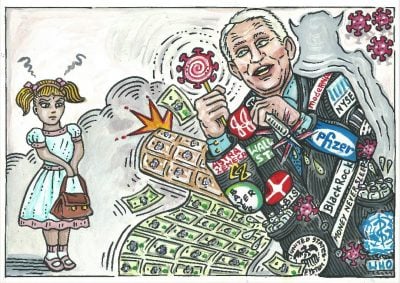
The Fear Pandemic and the Crisis of Capitalism. Sleepwalking Towards A Global Economic Crisis?

By Colin Todhunter

Source: Global Research

In October 2019, in a speech at an International Monetary Fund conference, former Bank of England governor Mervyn King warned that the world was sleepwalking towards a fresh economic and financial crisis that would have devastating consequences for what he called the “democratic market system”.

According to King, the global economy was stuck in a low growth trap and recovery from the crisis of 2008 was weaker than that after the Great Depression. He concluded that it was time for the Federal Reserve and other central banks to begin talks behind closed doors with politicians.

In the repurchase agreement (repo) market, interest rates soared on 16 September. The Federal Reserve stepped in by intervening to the tune of $75 billion per day over four days, a sum not seen since the 2008 crisis.

At that time, according to Fabio Vighi, professor of critical theory at Cardiff University, the Fed began an emergency monetary programme that saw hundreds of billions of dollars per week pumped into Wall Street.

Over the last 18 months or so, under the guise of a ‘pandemic’, we have seen economies closed down, small businesses being crushed, workers being made unemployed and people’s rights being destroyed. Lockdowns and restrictions have facilitated this process. The purpose of these so-called ‘public health measures’ has little to do with public health and much to do with managing a crisis of capitalism and ultimately the restructuring of the economy.

Neoliberalism has squeezed workers income and benefits, offshored key sectors of economies and has used every tool at its disposal to maintain demand and create financial Ponzi schemes in which the rich can still invest in and profit from. The bailouts to the banking sector following the 2008 crash provided only temporary respite. The crash returned with a much bigger bang pre-Covid along with multi-billion-dollar bailouts.

The dystopian ‘great reset’ that we are currently witnessing is a response to this crisis. This reset envisages a transformation of capitalism.

Fabio Vighi sheds light on the role of the ‘pandemic’ in all of this:

“… some may have started wondering why the usually unscrupulous ruling elites decided to freeze the global profit-making machine in the face of a pathogen that targets almost exclusively the unproductive (over 80s).”

Vighi describes how, in pre-Covid times, the world economy was on the verge of another colossal meltdown and chronicles how the Swiss Bank of International Settlements, BlackRock (the world’s most powerful investment fund), G7 central bankers and others worked to avert a massive impending financial meltdown.

The world economy was suffocating under an unsustainable mountain of debt. Many companies could not generate enough profit to cover interest payments on their own debts and were staying afloat only by taking on new loans. Falling turnover, squeezed margins, limited cashflows and highly leveraged balance sheets were rising everywhere.

Lockdowns and the global suspension of economic transactions were intended to allow the Fed to flood the ailing financial markets (under the guise of COVID) with freshly printed money while shutting down the real economy to avoid hyperinflation.

Vighi says:

“… the stock market did not collapse (in March 2020) because lockdowns had to be imposed; rather, lockdowns had to be imposed because financial markets were collapsing. With lockdowns came the suspension of business transactions, which drained the demand for credit and stopped the contagion. In other words, restructuring the financial architecture through extraordinary monetary policy was contingent on the economy’s engine being turned off.”

It all amounted to a multi-trillion bailout for Wall Street under the guise of COVID ‘relief’ followed by an ongoing plan to fundamentally restructure capitalism that involves smaller enterprises being driven to bankruptcy or bought up by monopolies and global chains, thereby ensuring continued viable profits for these predatory corporations, and the eradication of millions of jobs resulting from lockdowns and accelerated automation.

Author and journalist Matt Taibbi noted in 2020:

“It retains all the cruelties of the free market for those who live and work in the real world, but turns the paper economy into a state protectorate, surrounded by a kind of Trumpian Money Wall that is designed to keep the investor class safe from fear of loss. This financial economy is a fantasy casino, where the winnings are real but free chips cover the losses. For a rarefied segment of society, failure is being written out of the capitalist bargain.”

The World Economic Forum says that by 2030 the public will ‘rent’ everything they require. This means undermining the right of ownership (or possibly seizing personal assets) and restricting consumer choice underpinned by the rhetoric of reducing public debt or ‘sustainable consumption’, which will be used to legitimise impending austerity as a result of the economic meltdown. Ordinary people will foot the bill for the ‘COVID relief’ packages.

If the financial bailouts do not go according to plan, we could see further lockdowns imposed, perhaps justified under the pretext of  ‘the virus’ but also ‘climate emergency’.

It is not only Big Finance that has been saved. A previously ailing pharmaceuticals industry has also received a massive bailout (public funds to develop and purchase the vaccines) and lifeline thanks to the money-making COVID jabs.

The lockdowns and restrictions we have seen since March 2020 have helped boost the bottom line of global chains and the e-commerce giants as well and have cemented their dominance. At the same time, fundamental rights have been eradicated under COVID government measures.

Capitalism and labour

Essential to this ‘new normal’ is the compulsion to remove individual liberties and personal freedoms. A significant part of the working class has long been deemed ‘surplus to requirements’ – such people were sacrificed on the altar of neo-liberalism. They lost their jobs due to automation and offshoring. Since then, this section of the population has had to rely on meagre state welfare and run-down public services or, if ‘lucky’, insecure low-paid service sector jobs.

What we saw following the 2008 crash was ordinary people being pushed further to the edge. After a decade of ‘austerity’ in the UK – a neoliberal assault on the living conditions of ordinary people carried out under the guise of reining in public debt following the bank bail outs – a leading UN poverty expert compared Conservative welfare policies to the creation of 19th-century workhouses and warned that, unless austerity is ended, the UK’s poorest people face lives that are “solitary, poor, nasty, brutish, and short”.

Philip Alston, the UN rapporteur on extreme poverty, accused ministers of being in a state of denial about the impact of policies. He accused them of the “systematic immiseration of a significant part of the British population”.

In another 2019 report, the Institute for Public Policy Research think tank laid the blame for more than 130,000 deaths in the UK since 2012 at the door of government policies. It claimed that these deaths could have been prevented if improvements in public health policy had not stalled as a direct result of austerity cuts.

Over the past 10 years in the UK, according to the Trussell Group, there has been rising food poverty and increasing reliance on food banks.

And in a damning report on poverty in the UK by Professor David Gordon of the University of Bristol, it was found that almost 18 million cannot afford adequate housing conditions, 12 million are too poor to engage in common social activities, one in three cannot afford to heat their homes adequately in winter and four million children and adults are not properly fed (Britain’s population is estimated at around 66 million).

Moreover, a 2015 report by the New Policy Institute noted that the total number of people in poverty in the UK had increased by 800,000, from 13.2 to 14.0 million in just two to three years.

Meanwhile, The Equality Trust in 2018 reported that the ‘austerity’ years were anything but austere for the richest 1,000 people in the UK. They had increased their wealth by £66 billion in one year alone (2017-2018), by £274 billion in five years (2013-2018) and had increased their total wealth to £724 billion – significantly more than the poorest 40% of households combined (£567 billion).

Just some of the cruelties of the ‘free market’ for those who live and work in the real world. And all of this hardship prior to lockdowns that have subsequently devastated lives, livelihoods and health, with cancer diagnoses and treatments and other conditions having been neglected due to the shutdown of health services.

During the current economic crisis, what we are seeing is many millions around the world being robbed of their livelihoods. With AI and advanced automation of production, distribution and service provision on the immediate horizon, a mass labour force will no longer be required.

It raises fundamental questions about the need for and the future of mass education, welfare and healthcare provision and systems that have traditionally served to reproduce and maintain labour that capitalist economic activity has required.

As the economic is restructured, labour’s relationship to capital is being transformed. If work is a condition of the existence of the labouring classes, then, in the eyes of capitalists, why maintain a pool of (surplus) labour that is no longer needed?

A concentration of wealth power and ownership is taking place as a result of COVID-related policies: according to research by Oxfam, the world’s billionaires gained $3.9 trillion while working people lost $3.7 trillion in 2020. At the same time, as large sections of the population head into a state of permanent unemployment, the rulers are weary of mass dissent and resistance. We are witnessing an emerging biosecurity surveillance state designed to curtail liberties ranging from freedom of movement and assembly to political protest and free speech.

The global implications are immense too. Barely a month into the COVID agenda, the IMF and World Bank were already facing a deluge of aid requests from developing countries that were asking for bailouts and loans. Ideal cover for rebooting the global economy via a massive debt crisis and the subsequent privatisation of national assets.

In 2020, World Bank Group President David Malpass stated that poorer countries will be ‘helped’ to get back on their feet after the various lockdowns but such ‘help’ would be on condition that neoliberal reforms become further embedded. In other words, the de facto privatisation of states (affecting all nations, rich and poor alike), the (complete) erosion of national sovereignty and dollar-denominated debt leading to a further strengthening of US leverage and power.

In a system of top-down surveillance capitalism with an increasing section of the population deemed ‘unproductive’ and ‘useless eaters’, notions of individualism, liberal democracy and the ideology of free choice and consumerism are regarded by the elite as ‘unnecessary luxuries’ along with political and civil rights and freedoms.

We need only look at the ongoing tyranny in Australia to see where other countries could be heading. How quickly Australia was transformed from a ‘liberal democracy’ to a brutal totalitarian police state of endless lockdowns where gathering and protests are not to be tolerated.

Being beaten and thrown to the ground and fired at with rubber bullets in the name of protecting health makes as much sense as devastating entire societies through socially and economically destructive lockdowns to ‘save lives’.

It makes as much sense as mask-wearing and social-distancing mandates unsupported by science, misused and flawed PCR tests, perfectly healthy people being labelled as ‘cases’, deliberately inflated COVID death figures, pushing dangerous experimental vaccines in the name of health, ramping up fear, relying on Neil Ferguson’s bogus modelling, censoring debate about any of this and the WHO declaring a worldwide ‘pandemic’ based on a very low number of global ‘cases’ back in early 2020 (44,279 ‘cases’ and 1,440 supposed COVID deaths outside China out of a population of 6.4 billion).

There is little if any logic to this. But of course, If we view what is happening in terms of a crisis of capitalism, it might begin to make a lot more sense.

The austerity measures that followed the 2008 crash were bad enough for ordinary people who were still reeling from the impacts when the first lockdown was imposed.

The authorities are aware that deeper, harsher impacts as well as much more wide-ranging changes will be experienced this time around and seem adamant that the masses must become more tightly controlled and conditioned to their coming servitude.

Viral Inequality: From Jeff Bezos to the struggle of Indian Farmers

Billionaires have profited enormously from lockdown, whilst mega corporations are buying out and shutting down independent stores and farms.

By Colin Todhunter

Source: OffGuardian

According to a new report by Oxfam, ‘The Inequality Virus’, the wealth of the world’s billionaires increased by $3.9tn (trillion) between 18 March and 31 December 2020. Their total wealth now stands at $11.95tn.

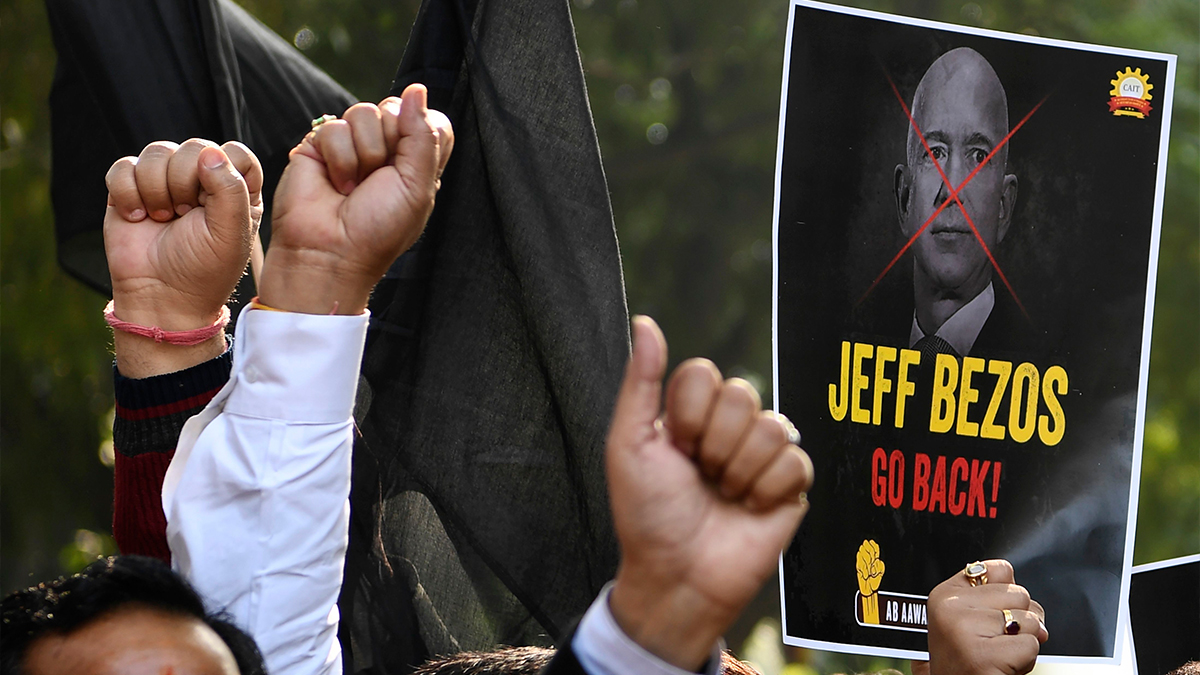
The world’s 10 richest billionaires have collectively seen their wealth increase by $540bn over this period. In September 2020, Jeff Bezos could have paid all 876,000 Amazon employees a $105,000 bonus and still be as wealthy as he was before COVID.

At the same time, hundreds of millions of people will lose (have lost) their jobs and face destitution and hunger. It is estimated that the total number of people living in poverty could have increased by between 200 million and 500 million in 2020. The number of people living in poverty might not return even to its pre-crisis level for over a decade.

Mukesh Ambani, India’s richest man and head of Reliance Industries, which specialises in petrol, retail and telecommunications, doubled his wealth between March and October 2020. He now has $78.3bn. The average increase in Ambani’s wealth in just over four days represented more than the combined annual wages of all of Reliance Industries’ 195,000 employees.

The Oxfam report states that lockdown in India resulted in the country’s billionaires increasing their wealth by around 35 per cent. At the same time, 84 per cent of households suffered varying degrees of income loss. Some 170,000 people lost their jobs every hour in April 2020 alone.

The authors also noted that income increases for India’s top 100 billionaires since March 2020 was enough to give each of the 138 million poorest people a cheque for 94,045 rupees.

The report went on to state:

…it would take an unskilled worker 10,000 years to make what Ambani made in an hour during the pandemic…and three years to make what Ambani made in a second.”

During lockdown and after, hundreds of thousands of migrant workers in the cities (who had no option but to escape the country’s avoidable but deepening agrarian crisis) were left without jobs, money, food or shelter.

It is clear that COVID has been used as cover for consolidating the power of the unimaginably rich. But plans for boosting their power and wealth will not stop there. One of the most lucrative sectors for these people is agrifood.

More than 60 per cent of India’s almost 1.4 billion population rely (directly or indirectly) on agriculture for their livelihood. Aside from foreign interests, Mukesh Ambani and fellow billionaire Gautam Adani (India’s second richest person with major agribusiness interests) are set to benefit most from the recently passed farm bills that will lead to the wholesale corporatisation of the agrifood sector.

CORPORATE CONSOLIDATION

A recent article on the grain.org website, ‘Digital control: how big tech moves into food and farming (and what it means)’, describes how Amazon, Google, Microsoft, Facebook and others are closing in on the global agrifood sector while the likes of Bayer, Syngenta, Corteva and Cargill are cementing their stranglehold.

The tech giants entry into the sector will increasingly lead to a mutually beneficial integration between the companies that supply products to farmers (pesticides, seeds, fertilisers, tractors, drones, etc) and those that control the flow of data and have access to digital (cloud) infrastructure and food consumers. This system is based on corporate centralisation and concentration (monopolisation).

Grain notes that in India global corporations are also colonising the retail space through e-commerce. Walmart entered into India in 2016 by a US$3.3 billion take-over of the online retail start-up Jet.com which, in 2018, was followed by a US$16 billion take-over of India’s largest online retail platform Flipkart. Today, Walmart and Amazon now control almost two-thirds of India’s digital retail sector.

Amazon and Walmart are using predatory pricing, deep discounts and other unfair business practices to lure customers towards their online platforms. According to Grain, when the two companies generated sales of over US$3 billion in just six days during a Diwali festival sales blitz, India’s small retailers called out in desperation for a boycott of online shopping.

In 2020, Facebook and the US-based private equity concern KKR committed over US$7 billion to Reliance Jio, the digital store of one of India’s biggest retail chains. Customers will soon be able to shop at Reliance Jio through Facebook’s chat application, WhatsApp.

The plan for retail is clear: the eradication of millions of small traders and retailers and neighbourhood mom and pop shops. It is similar in agriculture.

The aim is to buy up rural land, amalgamate it and roll out a system of chemically-drenched farmerless farms owned or controlled by financial speculators, the high-tech giants and traditional agribusiness concerns. The end-game is a system of contract farming that serves the interests of big tech, big agribusiness and big retail. Smallholder peasant agriculture is regarded as an impediment to be replaced by large industrial-scale farms.

This model will be based on driverless tractors, drones, genetically engineered/lab-produced food and all data pertaining to land, water, weather, seeds and soils patented and often pirated from peasant farmers.

Farmers possess centuries of accumulated knowledge that once gone will never be got back. Corporatisation of the sector has already destroyed or undermined functioning agrarian ecosystems that draw on centuries of traditional knowledge and are increasingly recognised as valid approaches to secure food security.

And what of the hundreds of millions to be displaced in order to fill the pockets of the billionaire owners of these corporations? Driven to cities to face a future of joblessness: mere ‘collateral damage’ resulting from a short-sighted system of dispossessive predatory capitalism that destroys the link between humans, ecology and nature to boost the bottom line of the immensely rich.

IMPERIAL INTENT

India’s agrifood sector has been on the radar of global corporations for decades. With deep market penetration and near saturation having been achieved by agribusiness in the US and elsewhere, India represents an opportunity for expansion and maintaining business viability and all-important profit growth. And by teaming up with the high-tech players in Silicon Valley, multi-billion dollar data management markets are being created. From data and knowledge to land, weather and seeds, capitalism is compelled to eventually commodify (patent and own) all aspects of life and nature.

Foreign agricapital is applying enormous pressure on India to scrap its meagre (in comparison to the richer nations) agricultural subsidies. The public distribution system and publicly held buffer stocks constitute an obstacle to the profit-driven requirements of global agribusiness interests.

Such interests require India to become dependent on imports (alleviating the overproduction problem of Western agricapital – the vast stocks of grains that it already dumps on the Global South) and to restructure its own agriculture for growing crops (fruit, vegetables) that consumers in the richer countries demand. Instead of holding physical buffer stocks for its own use, India would hold foreign exchange reserves and purchase food stocks from global traders.

Successive administrations have made the country dependent on volatile flows of foreign capital via foreign direct investment (and loans). The fear of capital flight is ever present. Policies are often governed by the drive to attract and retain these inflows. This financialisation of agriculture serves to undermine the nation’s food security, placing it at the mercy of unforeseen global events (conflict, oil prices, public health crises) international commodity speculators and unstable foreign investment.

Current agricultural ‘reforms’ are part of a broader process of imperialism’s increasing capture of the Indian economy, which has led to its recolonization by foreign corporations as a result of neoliberalisation which began in 1991. By reducing public sector buffer stocks and introducing corporate-dictated contract farming and full-scale neoliberal marketisation for the sale and procurement of produce, India will be sacrificing its farmers and its own food security for the benefit of a handful of unscrupulous billionaires.

As independent cultivators are bankrupted, the aim is that land will eventually be amalgamated to facilitate large-scale industrial cultivation. Indeed, a recent piece on the Research Unit for Political Economy site, ‘The Kisans Are Right: Their Land Is At Stake‘, describes how the Indian government is ascertaining which land is owned by whom with the ultimate aim of making it easier to eventually sell it off (to foreign investors and agribusiness). Other developments are also part of the plan (such as the Karnataka Land Reform Act), which will make it easier for business to purchase agricultural land.

India could eventually see institutional investors with no connection to farming (pension funds, sovereign wealth funds, endowment funds and investments from governments, banks, insurance companies and high net worth individuals) purchasing land. This is an increasing trend globally and, again, India represents a huge potential market. The funds have no connection to farming, have no interest in food security and are involved just to make profit from land.

The recent farm bills – if not repealed – will impose the neoliberal shock therapy of dispossession and dependency, finally clearing the way to restructure the agri-food sector. The massive inequalities and injustices that have resulted from the COVID-related lockdowns are a mere taste of what is to come.

The hundreds of thousands of farmers who have been on the streets protesting against these bills are at the vanguard of the pushback – they cannot afford to fail. There is too much at stake.

America Condemns One Violent Mob While Celebrating Another

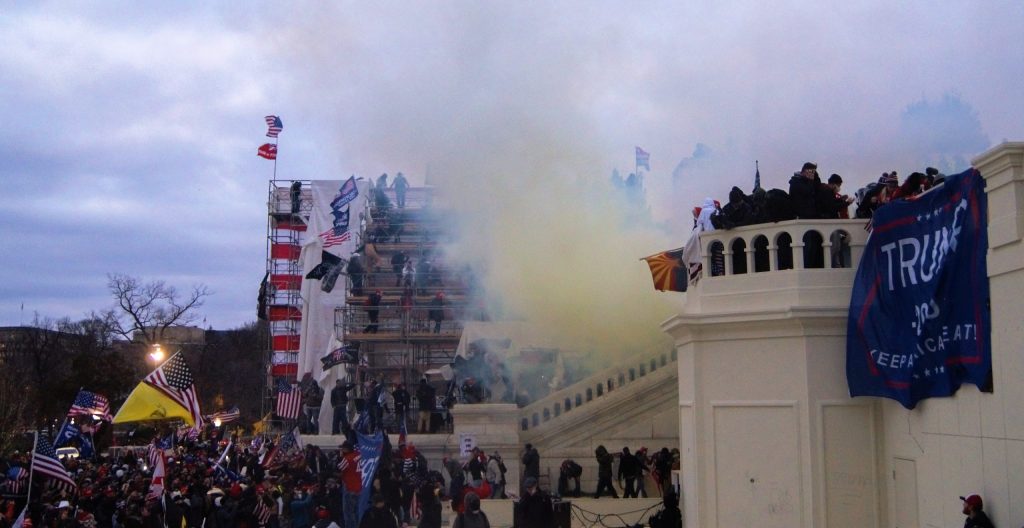
Tear gas being deployed outside the Capitol on January 6 as Trump supporters stormed the building. [Tyler Merbler / CC BY 2.0]

Where is the corporate media’s disgust for the courtesans of corporate destruction that wreak violence on Americans daily?

By Lee Camp

Source: ScheerPost.com

Most rational Americans have correctly criticized and denounced the violent insurrection in the Capitol last week. Those moments of attack by a racist, disgusting mob have not lacked for condemnation and denunciation. They were violent. They were reprehensible. They called for the killing of lawmakers, demanded the hanging of Congress members. The liberal media and even most of Fox News have not held their tongues when it comes to excoriating the morally bankrupt people who took part. And I agree with those thoughts.

BUT – why don’t we see an equal amount of disgust and condemnation for the violence done by our ruling class, the courtesans of corporate destruction?

Is allowing people to die or fall ill due to lead pipes in Flint, Chicago, Pittsburgh, and hundreds of other cities not violence?

Is allowing citizens to lose their lives to cancer from Teflon™ chemicals dumped in their water or preventable oil spills not violence?

Is allowing tens of thousands to die of preventable illnesses from our garbage healthcare system not violence?

Is allowing 15 million to lose their healthcare during a pandemic and therefore fear going to the hospital when they get sick not violence?

Is imprisoning millions of people for years for non-violent crimes not violence?

Is locking up political prisoners like Steven DonzigerMumia Abu-JamalReverend Pinkney, Julian Assange, Chelsea Manning, Leonard Peltier not violence??

Is dropping a bomb every 12 minutes on innocent people in countries thousands of miles away not violence??

Is allowing millions in this country to go hungry while we throw out 40% of all food not violence?

Is arresting people who try to feed those who are starving not violence?

Is allowing hundreds of thousands to go homeless, living under bridges or on benches or squatting in collapsing structures while this country has trillions of dollars and millions of empty houses —is that not violence?

Is arresting, beating, and persecuting those who try to give those people houses not violence? And bulldozing the homes — is that not violence?

Is causing the sixth great extinction, the mass death of half the world’s wildlife, in pursuit of corporate profit not violence?

Is causing the deaths of tens of thousands of Venezuelans via economic warfare not violence?

Is creating an opioid epidemic by pushing pills on desperate people, ultimately leading to the deaths of hundreds of thousands not violence?

And then arresting those who stand up and fight back against the pollutionagainst the pipelinesagainst the factory farmingagainst the war industry —IS—THAT—NOT—VIOLENCE?

Of course it is.

It’s violence on a breathtaking scale, far greater than what was done at the Capitol and far greater than any of us will witness in person. And yet large scale corporate-endorsed violence, death and destruction is not only allowable, it’s celebrated, it’s furthered, and promoted. Oil company documents show that they tell cities that oil spills are good for the economy. Other documents show that fossil fuel companies have known about the harm climate change would do since the 1970’s, but they simply saw it as the price of doing business. Corporate sacrifice zones like “Cancer Alley” in Louisiana are well known to be deadly to those who live there, yet it doesn’t matter to the corporations because their money will be green nonetheless. It doesn’t matter to the politicians because the poor who live in these sacrifice zones have no political power. The 40% of food that’s thrown out is not a secret. The subsidies paid to factory farms encourage them to produce heaping mountains of food and dairy and meat even if they can’t sell it all in our market economy. So they throw it out or bury it. Giving it to those in need would take too much time and effort.

Should the racist violent insurrectionists at the Capitol be punished? Absolutely. But so too should the bought-off politicians who do the bidding of our morally bankrupt corporate America. These politicians and the CEOs they serve are purveyors of violence. They trade in, produce, and reap violence. They sit on hordes of money—the obscene profit from feeding American lives into the death cult of unfettered capitalism.

Our mainstream media are blanketing the airwaves with talk of how the violent insurrectionists must be punished, and while they are not wrong, the criminal behavior those same talking heads and “reporters” ignore speaks volumes. All violence is not equal. Some of it is profitable and protected. Some of it is the American way.

Global billionaire wealth tops $10 trillion as COVID-19 deaths mount

By Jacob Crosse

Source: WSWS.org

The collective wealth of the world’s 2,189 billionaires has risen to $10.2 trillion, an increase of nearly $1.3 trillion in the past three years, according to a new report by the Swiss bank UBS and PricewaterhouseCoopers. The unprecedented surge in wealth takes place amidst a global pandemic that has killed more than one million people worldwide, including more than 215,000 in the United States alone.

The report, “Riding the Storm,” is based on data from 43 markets, including interviews with 60 billionaires, accounting for around 98 percent of global billionaire wealth. It sums up the results: “Most of the decade was a time of exceptional prosperity for billionaires regardless of sector…”

The US continues to have the largest concentration of billionaire wealth, accounting for 36 percent of the world’s total, or $3.6 trillion. China ranked second with $1.6 trillion and saw the largest growth over the decade, by 1,146 percent.

Third was Germany, where billionaire wealth totaled $594.9 billion, an increase of 175 percent from 2009’s $216.1 billion. While fourth in terms of billionaire wealth at $467.6 billion, Russia saw the smallest growth by percentage, 80 percent, from $260.2 billion in 2009 to $467.6 billion in 2020.

The $10.2 trillion amassed by less than .0003 percent of the global population is more than the estimated 2020 Gross Domestic Product of every country on the planet except for the US and China. The staggering total hoarded by less than 2,200 people, or about the number of COVID-19 deaths in the US within the last 72 hours, surpasses the previous high of $8.9 trillion recorded in 2017.

For a household earning the average US median income, it would take over 16 million years to accumulate $1 trillion, not even enough to cover what has been collectively usurped from global society in less than three years. Joel Berg, CEO of Hunger Free America, has calculated the cost of ending hunger in the US at $25 billion, which could be done 400 times over with $1 trillion.

The billionaires who have increased their wealth the most, according to the authors, are in the “technology, healthcare and industrial sectors,” including Amazon CEO Jeff Bezos, Tesla CEO Elon Musk, and Facebook CEO Mark Zuckerberg. The report states: “During 2018, 2019 and the first seven months of 2020, technology billionaires’ total wealth rose by 42.5% to USD 1.8 trillion, supported by the surge in tech shares.”

The surge in technology and medical shares was buoyed by unlimited cash from the Federal Reserve, included as part of the $2.2 trillion CARES Act passed at the end of March in a near-unanimous vote by both Democrats and Republicans.

This financial bailout made a “big difference” in the fortunes of billionaires, with the authors writing: “Billionaire wealth is loosely correlated with equity markets, due to holdings in listed companies, and a few weeks makes a big difference. From the end of March, governments’ huge fiscal and quantitative easing packages drove a recovery in financial markets. By the end of July 2020, billionaire wealth was back above its 2019 level.”

Particularly obscene is the surge in wealth of billionaires in the health care industry, in the midst of a deadly global pandemic. The authors write, “Healthcare billionaires’ total wealth increased by 50.3% to $658.6 billion, boosted by a new age of drug discovery and innovations in diagnostics and medical technology, as well as latterly COVID-19 treatments and equipment.”

The report adds: “The number of tech billionaires grew from 68 in 2009 to 234 in 2020, while the number of healthcare billionaires grew from 48 to 167. Tech and healthcare billionaires’ total wealth both multiplied by four times – from $321.3 billion to $1.3 trillion for tech and from $120.8 billion to $482.9 billion for healthcare.”

And what are these “pandemic profiteers” spending their fortunes on? To get some idea, Christie’s auction house in New York held its latest online auction, “20th Century Evening Sale” live-streamed from the Rockefeller Center in New York on October 6. In one night, the world’s wealthiest spent over $340 million on 59 different 20th and 21st century art pieces. The auction also featured the most expensive dinosaur skeleton ever sold, a fossilized Tyrannosaurus rex, for $27.5 million.

The massive concentration of wealth is a decades’ long and bipartisan policy of redistribution to the rich. The Institute for Policy Studies measured the tax obligations of America’s billionaires as a percentage of their wealth between 1980 and 2018 and found that it had decreased 79 percent. Over the last 20 years, the growth in US billionaire wealth has been 200 times greater than the growth in median wealth.

While the billionaires are richer than ever, the response of the ruling class to the pandemic has produced a massive social catastrophe for the working class. In the United States, tens of millions are unemployed and being cut off of all benefits, facing poverty, homelessness and hunger.

Earlier reports found that the 643 wealthiest Americans increased their wealth by a staggering $845 billion between March 18 and September 15. During that same time, over 62 million people in the US applied for unemployment benefits. An estimated 10.5 million jobs were eliminated, with major companies such as Disney, United Airlines, and Cineworld announcing tens of thousands additional layoffs in the last week.

Stories Of Economic Despair From America’s Worst Economic Downturn Since The Great Depression Of The 1930s

By Michael Snyder

Source: End of the American Dream

The economic pain that we are witnessing right now is far greater than anything that we witnessed during the last recession.  U.S. GDP declined by 32.9 percent on an annualized basis last quarter, more than 100,000 businesses have permanently shut down since the COVID-19 pandemic first hit the United States, and more than 54 million Americans have filed new claims for unemployment benefits over the last 19 weeks.  Up until just recently, a $600 weekly unemployment “supplement” and a federal moratorium that prevented many evictions had helped to ease the suffering for millions of American families, but both of those measures have now expired.  As a result, a tremendous amount of economic pain which had previously been deferred will now come rushing back with a vengeance.  Millions of American families are no longer going to be able to pay their bills, and experts are warning that we could soon see an “eviction crisis” that is absolutely unprecedented in American history.

48-year-old Thomas Darnell of West Point, Mississippi never thought that he would be in this position.  He had been a factory worker for over 20 years until he lost his job in May, and since then he hasn’t been able to find another.  And then on top of everything else, everyone in his house caught COVID-19…

First, he was furloughed for three weeks in April and then laid off in May. Then things got worse: His entire household of seven, including himself, his wife, three kids and daughter-in-law, along with his baby grandson, contracted coronavirus after they saw their immediate family over the Independence Day weekend.

“I’m tired and shaky. Even after a few weeks, I’m still trying to recover,” Darnell says, who has since been cleared of the virus but still has lingering symptoms.

He is concerned that employers will be scared away by his recent illness, and he is becoming desperate because he is running out of money.

With no health insurance and no paychecks coming in, Darnell and his wife have gotten to the point where they have to make a choice between buying insulin or buying groceries

He can’t afford health insurance, which has added to his anxiety because he and his wife are both diabetic, he says. Like Bolei, Darnell and his wife have been forced to make a grueling decision between either paying for their medications or keeping food on the table.

“Do we buy insulin or groceries? It’s a hard juggle,” Darnell says. “I’m willing to make less money and start working again to get health insurance, but no one is hiring.”

The weekly $600 unemployment supplements from the federal government had helped to keep them going for a while, but now those payments have ended, and the immediate future is looking quite bleak.

In Richmond, Virginia, a mother of eight named Shamika Rollins wasn’t sure how she was going to make it when her hours as a home health aid were reduced.  Unpaid bills started piling up, and then she got an eviction notice a few weeks ago.  The following comes from CBS News

Shamika Rollins’ eight children share two bedrooms in Richmond, Virginia. But she’s worried about losing their home after she says she received an eviction notice in June.

“First thing, I panic, and then next thing, I look, and I’m like, I got my kids. And it’s like, okay, now you gotta figure this out,” she told CBS News correspondent Adriana Diaz.

If a miracle does not happen, Rollins and her eight children will soon be out in the street, and this is causing her to have “a lot of sleepless nights”

“I have a lot of sleepless nights,” Rollins said. “My mind is constantly racing, you know, what’s your next move?”

Sadly, there are millions of other Americans in the exact same position.

In fact, experts are projecting that up to 40 million Americans could be evicted from their homes during this pandemic.

Many small business owners are also facing heartbreaking choices during this downturn.  A restaurant owner in Delaware named Alex Heidenberger “hasn’t paid the mortgage on his home the past four months” as he desperately tries to keep his once profitable restaurants alive…

Heidenberger, who typically draws about $20,000 a month in profit from the restaurant, now receives nothing. He says he hasn’t paid the mortgage on his home the past four months. He served lifeguard duty for a couple of weeks, mostly to help a beach crew depleted by COVID-19 quarantines but also to make some cash.

“I’m working harder than I have ever worked in my life,” he says, adding that he puts in about 80 hours a week at the two restaurants. Yet, “I have no money… This is all I think about. I don’t sleep.”

The COVID-19 pandemic has hit the restaurant industry particularly hard.  Americans are not eating out as regularly as they once did because of the virus, and it is probably going to remain that way for the foreseeable future.

In Massachusetts, a restaurant owner named John Pepper once had eight thriving locations, but at this point only two of them remain open

John Pepper used a PPP loan to pay employees and reopen four of his eight Boloco restaurants when Massachusetts lifted its shutdown order in early May. But with the money spent and business at the restaurants down as much as 70%, Pepper had to again close two locations. The staff of 125 he had before the virus outbreak is down to 50.

“A lot of this is out of our hands at this point,” Pepper says. “At this moment, I don’t see getting my full payroll back.”

Overall, we are facing a “restaurant apocalypse” in the U.S. that is unprecedented in size and scope.

According to one estimate, we could lose more than a third of all of our restaurants by the end of this calendar year

As many as 231,000 of the nation’s roughly 660,000 eateries will likely shut down this year, according to an estimate from restaurant consultancy Aaron Allen & Associates provided to Bloomberg News. This will bring the industry’s steady growth to a halt and mark the first time in two decades that U.S. restaurant counts don’t climb. Restaurants have already shed millions of jobs this year, economic data show.

What we are watching is truly horrifying.  So many hopes and dreams went into each one of those restaurants that are shutting down, and countless restaurant owners are going to be completely financially ruined by all of this.

For other Americans, this economic downturn has put their very lives at risk.  In Colorado, 70-year-old Catherine Azar was already dealing with heart problems and diabetes, and now she is in danger of being thrown out into the street

“It’s hard for me to conceive of someone being willing to put another person out in the street in the middle of a deadly pandemic, and I’m high risk. I’m 70. I have heart issues and I’m diabetic,” Azar said.

Rollins and Azar are just two of the 43 million Americans at risk of eviction in the coming months. For context, about 1 million Americans were evicted in 2010, the year after the Great Recession.

How long do you think that a 70-year-old woman with heart problems and diabetes would last on the street or in a shelter?

And as millions upon millions of Americans get evicted during the months ahead, the shelters are all going to fill up really fast.

America simply was not prepared for an economic downturn of this nature, and the truth is that much bigger challenges are still ahead.

So please do not look down on anyone that needs help right now, because soon you may find yourself in the exact same position.

COVID-19 Does Not Exist: The Global Elite’s Campaign of Terror Against Humanity

By Robert J. Burrowes

There is no COVID-19 virus. It does not exist. If you ask any doctor or scientist in the world to show you a scientifically-verified proof that it does exist, they will not be able to show you one.

Given that it has not been scientifically established that the COVID-19 virus exists, it is therefore clear that everything being done supposedly in the effort to tackle the ‘virus’ is being done for another purpose and COVID-19 is being used to conceal this fact.

However, with the elite-driven narrative being endlessly promoted by the World Health Organisation, governments, the medical and pharmaceutical industries, along with the corporate media, the truth is being obliterated.

And the reason for this is obvious: Any serious consideration of the underlying evidence, as I have documented previously, clearly indicates that the global elite is conducting a coup against humanity and using the fear it generates around COVID-19 to distract people from paying attention to what is happening in the background. For this reason, the coup continues to gain pace with only an insignificant number of people yet aware of the coup and its ongoing and increasingly devastating impacts.

‘How is the elite doing this?’ you might ask. Far too easily, unfortunately.

In essence, key individuals in the World Health Organisation (WHO), governments, the medical and pharmaceutical industries, as well as the corporate media are lying to you about this. They are lying to you, consciously or unconsciously, for essentially one of three reasons (essentially determined by where the individual fits in relation to the elite’s ongoing execution of its coup):

1. they are lying as an outcome of their complicity in the coup (given the perceived benefits to them personally, at least in the short term),

2. they are lying as an outcome of their ignorance (by not investigating and considering the evidence for themself and submissively accepting the elite narrative), or

3. they are lying as an outcome of their fear (of the adverse personal repercussions they would expect for resisting the elite narrative that there is indeed a virus).

And, so far, the elite is successfully executing its coup because the many voices contradicting its narrative – such as those individual doctors powerful enough to present the truth about the so-called ‘virus’ – are being denied a forum in any elite-controlled outlet such as the corporate media or they are being censored (including removed from accessible sites on the internet).

If what I have written above sounds incredible given the worldwide response supposedly to tackle the ‘virus’, the evidence presented below, together with the references to further documentation, will give you plenty to consider (provided your own fear will allow you to do so).

But before presenting this evidence, it is worth being aware of some of the existing adverse impacts of the coup:

1. The sudden destruction of the global economy has impoverished tens of millions of people in industrialized societies through unemployment, making them even more vulnerable to homelessness and other misery, as well as precipitating the death of millions of people projected to die of starvation in Africa, Asia and elsewhere because of the disruption of global food production and supply. See ‘WFP chief warns of “hunger pandemic” as Global Food Crises Report launched’ and ‘COVID-19 could kill more people through hunger than the disease itself, warns Oxfam’.

2. There has been a dramatic increase in violence against children and women all over the world and particularly in some contexts with a recent United Nations Population Fund report highlighting that an ‘additional 5.6 million child marriages can be expected because of the coronavirus pandemic, which resulted in a short-term increase in poverty and the shutdown of schools’. In addition, the ‘current pandemic is also expected to have a massive impact on the projected growth of harmful practices on women’s bodies’ including female genital mutilation (FGM). See ‘Child Marriage, FGM and Harmful Practices on Women’s Bodies to Increase Because of COVID-19’.

3. The lockdowns have imprisoned people in their homes (with its seriously adverse psychological, social and physical repercussions) and laws have been introduced regarding ‘social distancing’ and other measures (including mask-wearing which I will discuss below) that have eviscerated rights and freedoms it took centuries to win. For the details, see ‘The Elite’s COVID-19 Coup against a Terrified Humanity: Resisting Powerfully’.

In response to growing concerns on a number of points, 600 doctors signed a letter to US President Donald Trump to end the ‘lockdown’ – see ‘“Mass casualty incident”: 600 doctors sign letter to Trump calling for end to lockdowns over health concerns’ – which has since been signed by thousands. See ‘Literally Thousands of Doctors and Scientists Have Come Out Against Fauci’s Lockdowns Including a Nobel Prize-Winning Biophysicist. The Media Just Doesn’t Want You to Know’.

4. Despite the ‘diagnostic’ tests for COVID-19 being ‘scientifically meaningless’ – see COVID19 PCR Tests are Scientifically Meaningless’ – (how can they not be when there is no virus?) compulsory vaccination (again, against a non-existent virus) is being threatened – see 120 Covid-19 Vaccine Projects are Underway – in direct violation of Article 6 of the ‘Universal Declaration on Bioethics and Human Rights’ despite the extensively documented record of vaccines causing devastating harms including massive lethality. For a taste of the vast literature on this point, see ‘Gates’ Globalist Vaccine Agenda: A Win-Win for Pharma and Mandatory Vaccination’.

As Dr Stefan Lanka has explained about vaccines generally:

Only ignorant people who blindly trust in the state authorities who are ‘testing’ and approving the vaccines can regard vaccination as a ‘small harmless prick’. The verifiable facts demonstrate the danger and negligence of these scientists and politicians, who claim that vaccines are safe, have little or no side-effects and would protect from a disease. None of these claims is true and scientific. See ‘The Misconception Called “Virus”: Measles as an example’.

Moreover, this vaccination will be used to dramatically expand surveillance both via biometric ID and ‘immunity passes’. See ‘ID2020 and partners launch program to provide digital ID with vaccines’ and ‘Mass-Tracking COVI-PASS Immunity Passports Slated to Roll Out in 15 Countries’.

  1. Other measures to expand surveillance (apart from through vaccination) are being introduced. These include ‘contact tracing’ despite the fact that even ‘A WHO study on influenza pandemics in 2019 came to the conclusion that contact tracing is not useful from an epidemiological point of view and “is not recommended in any circumstances”.’ See ‘Facts about COVID-19’. But that is precisely the point: Contact tracing is not about epidemiological usefulness; it is about surveillance.
  2. Critically, several measures necessary to implement the so-called fourth industrial revolution, including the deployment of 5G, which will reduce human individuals to digitized identities without effective rights and freedoms, are being accelerated. See Techno-Tyranny: How The US National Security State Is Using Coronavirus To Fulfill An Orwellian Vision.
  3. While much human activity has been brought to a standstill, this has not included any of the violence which has not only continued unchecked but has expanded. Apart from the dramatic increase in violence against children and women all over the world noted above, wars, threats of war, sanctions, the military violence of occupations in places such as Palestine, Tibet and West Papua, the structural violence that systematically exploits (that is, loots) countries in Africa, Asia and Central/South America, the ecological violence that destroys lands, oceans and atmosphere have all proceeded as usual with the caveat that there has been a reduction in the emissions of some industrial and other waste products although this is hugely problematic in one critical sense. See ‘Will COVID-19 Trigger Extinction of All Life on Earth?’
  4. And four distinct paths to human extinction – nuclear war, the climate catastrophe, the deployment of 5G and biodiversity collapse – have been accelerated, inadvertently or otherwise, by the coup. See ‘The Elite’s COVID-19 Coup to Destroy Humanity that is also Fast-Tracking Four Paths to Human Extinction’.

COVID-19 Does Not Exist

Despite these and many other adverse impacts already happening in response to the COVID-19 crisis, as noted at the beginning, it has never been scientifically established that the COVID-19 virus actually exists. More fundamentally, according to Dr Stefan Lanka: ‘Contrary to what most people believe, there are no pathogenic viruses.… All claims about viruses as pathogens are wrong and are based on easily recognisable, understandable and verifiable misinterpretations…. A real and complete virus does not exist anywhere in the entire “scientific” literature.’ See ‘The Misconception Called “Virus”: Measles as an example’.

To reiterate in the words of two other authors: ‘there is no original scientific evidence that definitively demonstrates that any virus is the cause of any disease’. See What Really Makes You Ill? Why everything you thought you knew about disease is wrong. But you can read more in ‘Dismantling the Virus Theory – The “measles virus” as an example’ and watch the video interview The Real Science of Germs: Do Viruses Cause Disease?

In addition, and specifically in relation to COVID-19, according to Dr Andrew Kaufman, ‘there is no evidence of anyone dying from any novel illness’. See ‘Unmasking the Lies Around COVID-19: Facts vs Fiction of the Coronavirus Pandemic’. So what has happened?

As Dr Kaufman explains: Early scientific papers on the subject suggested an association (not causation) between a novel coronavirus ‘with human to human transmission and severe human infection’ whereas a subsequent key ‘scientific’ paper that made a claim which helped drive the global response to COVID-19 ‘flat out lied’ about their results: ‘Following the first outbreaks of unexplained pneumonia in Wuhan, China, in late 2019, a new coronavirus was identified as the causative agent in January 2020.’ See ‘Identification of Coronavirus Isolated from a Patient in Korea with COVID-19’. In fact, Dr Kaufman points out: ‘they cannot reference any science to back that up whatsoever’.

Moreover, subsequently to this paper, another article – see ‘I study viruses: How our team isolated the new coronavirus to fight the global pandemic’ – declared ‘The emergence of a new coronavirus in a market in Wuhan, China, in December 2019 set in motion the pandemic we are now witnessing in 160 countries around the world’. But again, Dr Kaufman counters, ‘no evidence was provided at all’ to support this claim: ‘just flat out lies’. For the details and citation of all the scientific sources for this explanation of how the COVID-19 ‘rumour mill’ got started, see ‘The Rooster in the River of Rats’ or ‘Koch’s Postulates: Have They Been Proven for Viruses?’

Finally on this point, pathologist Dr Stoian Alexov, President of the Bulgarian Pathology Association, has stated that he and his colleagues across Europe:

have not found any evidence of any deaths from the novel coronavirus on that continent.

Dr. Stoian Alexov called the World Health Organization (WHO) a ‘criminal medical organization’ for creating worldwide fear and chaos without providing objectively verifiable proof of a pandemic.

See ‘“No one has died from the coronavirus”: Important revelations shared by Dr Stoian Alexov, President of the Bulgarian Pathology Association’.

Fortunately, as awareness of the fact that the COVID-19 virus does not exist gradually spreads, more people are challenging the official response to the engineered crisis on that basis. For example, one group of doctors has written to the British Prime Minister Boris Johnson challenging Public Health England to ‘show proof’ that a virus exists. See Challenge to Public Health England that they must show Proof that a Virus Exists which Causes COVID-19 or Declare there is No Virus and end the Vax and Trax Programmes.

But it is clear that the engineered crisis and the measures supposedly being taken to combat the non-existent ‘virus’ are being used to mask the truth, including the elite coup, and so actions aimed at elite agents, such as governments, must inevitably fail.

Unscientific Responses to the Non-existent Virus

The unscientific nature of the supposed threat posed by the ‘virus’ is, of course, matched by the unscientific response with countries imposing lockdowns suffering far worse outcomes – measured psychologically, socially, economically and otherwise – than countries, such as Japan, South Korea, Belarus and Sweden which did not follow this course. In any case, countries that did impose lockdowns could only use lies and statistical manipulation to make it appear that COVID-19 has been the cause of death among some of those who are recently deceased. For a taste of the extensive documentation, see ‘Facts about COVID-19: July 2020 Update’ and ‘COVID 19 Is A Statistical Nonsense’.

Given that the negative impacts of the lockdown are extensively documented, there have been many attempts (of many different kinds) occurring all over the world to end them already. See, for example, ‘“Mass casualty incident”: 600 doctors sign letter to Trump calling for end to lockdowns over health concerns’, ‘Vaccine Group Sues Trudeau Government for “Draconian and Unjustifiable” Response to COVID-19’ and ‘Popular Uprising against 2nd Covid Lockdown. Belgrade Liberated! The Govt Backs Down’.

But another way in which this unscientific response to the non-existent ‘virus’ is manifesting is immediately obvious if one examines the scientific evidence in relation to the effectiveness of masks in preventing cross infection. As it turns out, as explained in a long series of documented scientific studies, as distinct from the inaccurate claims promulgated by elite agents,

the research demonstrates that masks are at best ineffective, and at worst horribly counterproductive; that is, masks cannot achieve the purpose for which they are, supposedly, intended but they can achieve some very unhealthy outcomes.

But who among the general population is seeking out and considering this evidence (which the WHO, governments, the medical and pharmaceutical industries, the education systems and the corporate media are not going to present)?

For just a sample of the evidence about the ineffectiveness and dangers of wearing a mask, see the following:

‘Nevertheless, the question of the effectiveness of masks can be asked. In the case of influenza epidemics, the answer is already clear from a scientific point of view: masks in everyday life have no or very little effect. If used improperly, they can even increase the risk of infection.’ See ‘Facts about COVID-19: July 2020 Update’.

In a recent study published in The New England Journal of Medicine, the five co-authors stated ‘We know that wearing a mask outside health care facilities offers little, if any, protection from infection.’ See ‘Universal Masking in Hospitals in the Covid-19 Era’.

In his recent article ‘Masks Don’t Work: A Review of Science Relevant to COVID-19 Social Policy’ documenting the results of his research, physics professor Dr Denis G. Rancourt concludes:

No RCT [randomized controlled trial] study with verified outcome shows a benefit for HCW [health care workers] or community members in households to wearing a mask or respirator. There is no such study. There are no exceptions.

Likewise, no study exists that shows a benefit from a broad policy to wear masks in public.

Furthermore, if there were any benefit to wearing a mask, because of the blocking power against droplets and aerosol particles, then there should be more benefit from wearing a respirator (N95) compared to a surgical mask, yet several large meta-analyses, and all the RCT, prove that there is no such relative benefit.

Masks and respirators do not work.

By making mask-wearing recommendations and policies for the general public, or by expressly condoning the practice, governments have both ignored the scientific evidence and done the opposite of following the precautionary principle.

After reviewing more than 50 articles on masks in the medical literature and documenting her case, Dr Sherri Tenpenny concludes as follows:

There are NO randomized, controlled trials (RCT) with verified outcomes that show a benefit to healthcare workers or community members for wearing a mask or a respirator. There is no such definitive study. Likewise, no study exists that shows a benefit from a broad policy to wear masks in public. See ‘Coronavirus Pt 4: Masks Don’t Protect’ and, for your convenience, Tenpenny has cited the relevant passage from 35 of the articles she researched in this document: ‘Conclusion Regarding Masks: They Do Not Work’.

But if you want to read more, you can access each of the 50 articles Tenpenny cited or check out these as well: ‘Coronavirus: Face masks could increase risk of infection, medical chief warns’ and ‘Coronavirus Fact-Check #6: Does wearing a mask do anything?’

Or watch this video presentation: ‘Why Face Masks Don’t Work, According to Science’.

So if there is no virus and face masks do not work to prevent infection anyway, why are we being told to wear them and, increasingly, being terrorized into wearing them under threat of punishment if we do not? For just two of many examples, see ‘Soon, You Will Need to Wear a Mask to Enter Virtually Every Major Retail Store in America’ and ‘Total Masking: Victoria’s Coronavirus Response’.

Because the face masks, like other elements of the supposed strategy to tackle COVID-19, are simply being used to terrorize us into not resisting the ongoing elite coup. See ‘The Mask as a Symbol of Subjugation’, ‘The New (Pathologized) Totalitarianism’ and ‘The Hidden Agendas of Masks, Distancing, and Tracing’.

And it is largely working with most people projecting their fear onto the non-existent ‘virus’ and then ignorantly endeavouring to ‘protect’ themselves from it by wearing a mask (or going along with other measures supposedly intended to ‘prevent infection’).

So if you are wondering why virtually everyone is being caught up in this, there are very good psychological reasons. One of them is that virtually all humans are terrorized into obedience as children. Consequently, resisting orders from those considered to be ‘in authority’ is virtually unthinkable. I have explained this submissive obedience in the article ‘Contemplating Human Extinction Terrifies Most People: A Strategy for Survival’.

But there is another, more subtle, reason too.

COVID-19 and the Psychology of Projection

For the vast bulk of the human population, considering the fundamental evidence of what is taking place – and acknowledging that the global elite is conducting a coup against us with all that this entails – is truly terrifying. Moreover, recognizing that if we are to resist this coup, we will need to make a courageous and strategically-focused stand to defend ourselves is frightening for most people as well.

And the global elite knows this. It is for this reason that they are terrorizing us in the first place. The elite does not want people resisting the coup and it certainly does not want them resisting the coup effectively.

Hence, the global elite is exploiting our fear – by projecting it onto COVID-19 – so that we submissively go along with its coup. How is the elite doing this? Let me explain the psychology of projection, very simply.

If, when you are a child, you are scared of something but that ‘something’ is truly terrifying and inescapable – that is, you are denied any safe opportunity to feel your terror and to take action in response to it so that you can make yourself safe – your mind will precipitate one response and, if necessary, a second response to defend you in the short term.

The first response will be to significantly dampen (and possibly completely suppress) your awareness of just how terrifying the ‘something’ that is scaring you actually is so that you are not overwhelmed to such an extent that you become incapacitated. This response is intended to enable you to act powerfully to get yourself out of the terrifying situation and into a context in which you feel safe.

Ideally, following any such incident when you again feel safe, you need time to recover emotionally. Fundamentally, this means that you need time to focus on feeling the terror and other feelings that were raised during the incident so that these feelings are fully felt and expressed, rather than suppressed more deeply into your unconscious.

If, however, there is no opportunity for this emotional recovery, your mind will have no choice but to more deeply suppress your awareness of these feelings so that you can resume functioning more or less as previously. I say ‘more or less’ because you won’t be functioning precisely as previously because the unconscious terror will now be playing a part in your emotional life and, therefore, playing a part in shaping your behaviour.

However, your unconscious mind – which is enormously powerful – has not given up on enabling you to heal from the terrifying incident and, therefore, its second response is to later trick you into believing that something else, that is far less frightening, is what is really scaring you so that you can safely access and feel your terror in relation to the original incident. Your mind does this so that the terror that was initially suppressed, in order to allow you to devise and implement a strategy for immediate survival, can now be released.

By using these two responses, your mind enables you to survive in a terrifying environment so that, hopefully at some point soon, you can devise and implement a strategy to escape that environment. But also by allowing you to subsequently believe that something that is actually quite safe by comparison is what was really scaring you in the first place, it gives you the opportunity to feel your fear and act it out without (or with profoundly reduced) fear of the consequences.

In the short term, this pair of responses by your mind can enable you to survive something truly terrifying: it minimizes the risk that you will be immobilized (frozen) in terror and thus unable to survive a dangerous situation. In essence, in evolutionary terms, these responses have tremendous survival value in the short term.

If, however, you are not able to escape the truly terrifying situation in the short term and you remain trapped in the situation indefinitely, your unconscious mind will continue to both suppress awareness of the terror and ‘trick’ you into subsequently believing that it is something else that is frightening you.

Unfortunately, beyond the very short term, this mental trick is highly dysfunctional. It leads the individual to eventually ‘forget’ (deeply suppress their awareness of) the original and true source of what is terrifying them and to believe that the safe ‘target’ they unconsciously chose subsequently is actually the genuine threat.

In the jargon of psychology, this is called ‘projection’ or ‘transference’ because the victim is now blaming something other than the true cause of their terror.

This has profound societal consequences too for the simple reason that an elite can effectively nominate the ‘something’ onto which our terror is projected. And it can do this very easily by simply parading a target or ‘legitimized victim’ as terrifying which, in effect, gives ‘permission’ for us to feel scared of the target it has nominated. But in directing our fear in a certain direction, they are also invariably intent on manipulating our behaviour in response.

Historically, this has been demonstrated rather endlessly with the manipulation of our fear crucial to the achievement of certain elite ends, politically and otherwise. For example, racism (fear of other far less frightening Africans) exploded to justify the slave trade, Nazism exploited fears to mobilize Germans against far less frightening Jews (among others), Israeli leaders project the fear of Israelis to exploit far less frightening Palestinians and the entire US ‘war on terror’ has been conducted on the basis of projecting people’s unconscious terror at far less frightening Muslims. As I mentioned, however, the list of possible examples is virtually endless.

In each and every case, however, the terror exploited had its origin in something much earlier in the life of these individuals than the current circumstance exploited by elites. It had its origin during early childhood.

And this origin can be traced directly back to the parenting and teaching models virtually universally used by human beings. As I have explained many times previously, but to briefly reiterate here: virtually all human beings are terrified for the same reason: the child-raising process that sociologists like to label ‘socialization’ should be more accurately labeled ‘terrorization’. This is because from the moment of a child’s birth, parents, teachers, religious leaders and adults generally regard themselves as responsible for terrorizing the child into obedience of the commands, rules, conventions and laws that define the nature of permissible behaviour in their society.

But because evolutionary pressures do not predispose any individual to obey the will of another – for the simple reason that obedience has no evolutionary functionality – it takes enormous terrorization during childhood to ensure that the child surrenders their Self-will at the alter of obedience. To achieve this outcome and largely unknowingly, parents, teachers, religious leaders and other adults in the child’s life use a large range of behaviours from the three categories of violence that I have labeled ‘visible’ violence, ‘invisible’ violence and ‘utterly invisible’ violence. See Why Violence? and Fearless Psychology and Fearful Psychology: Principles and Practice.

At its most obvious, all children are routinely threatened with violence and actually punished with violence (usually in each of its three forms: ‘visible’, ‘invisible’ and ‘utterly invisible’) for ‘disobedience’ (that is, for following their own Self-will rather than obeying orders to submit). See ‘Punishment is Violent and Counterproductive’.

And, as preposterous as I know this sounds to those reading it for the first time: The fundamental outcome of this process is that all children end up utterly but unconsciously terrified of their parents, teachers, religious figures and other significant adults in their life.

But never given adequate safe opportunities to feel this terror, each child ends up projecting it onto something or a series of targets including those ‘legitimized victims’ approved by an elite, local or otherwise.

Hence, in the current world context, this results in the bulk of the human population submitting to direction by the global elite to project their fear onto COVID-19 and then behave as ordered, rather than pay attention to the elite coup and resist it. For summaries and documentation of the evidence in relation to each of these points, see ‘The Elite’s COVID-19 Coup: Fighting for Our Humanity, Our Liberty and Our Future’ and ‘The Elite’s COVID-19 Coup to Destroy Humanity that is also Fast-Tracking Four Paths to Human Extinction’.

The elite does this by triggering our unconscious fear through endless reporting of the ‘threat’ posed by COVID-19, issuing warnings, announcing deaths supposedly caused by the ‘virus’ (and concealing that the death rates are not even comparable to deaths caused by a serious influenza), and placing increasingly onerous limits on our rights and freedoms (through such measures as lockdowns and mask-wearing). And because virtually everyone has so much suppressed terror and needs outlets onto which this can be projected, the coup is being conducted virtually without resistance.

As I have explained before, just because the global elite is able to do this does not mean that it is sane. In fact, it is completely insane and that is precisely why it is conducting this coup but unable to see its catastrophic outcome for the elite as well. See ‘The Global Elite is Insane Revisited’.

So what can we do?

Well, if we are to effectively resist the elite coup and fight for human survival, it would be useful to start by giving yourself time to focus on feeling your emotional responses – fear, anger, sadness, pain, dread…. – to whatever is generating an emotional reaction: COVID-19, the elite coup, the imminent threats of extinction or anything else. See ‘Putting Feelings First’.

This is necessary so that you can engage meaningfully and strategically in the effort, whatever issue you choose to fight.

So once you have a clearer sense of your emotional reactions to this knowledge and have allowed yourself time to focus on feeling these feelings, you will be in a far more powerful position to consider your response to the situation. And, depending on your interests and circumstances, there is a range of possible responses that will each make an important difference.

Fundamentally, you might consider making ‘My Promise to Children’ which will include considering what an education for your children means to you, particularly if you want powerful individuals – not ones who are submissively obedient and project their terror – who can perceive reality and resist violence. See ‘Do We Want School or Education?’

You might consider supporting others to become more powerful. See ‘Nisteling: The Art of Deep Listening’.

If you wish to strategically resist the elite coup against humanity, you can read about nonviolent strategy, including strategic goals for doing so, from here: Coup Strategic Aims.

Remaining pages on this website fully explain the twelve components of the strategy, as illustrated by the Nonviolent Strategy Wheel, as well as articles and videos explaining all of the vital points of strategy and tactics, such as those to help you understand ‘Nonviolent Action: Why and How it Works’.

Given the complexity of the configuration of this conflict, however, which involves the need to fight simultaneously to retain our essential humanity, defeat the elite coup and avert near-term human extinction, it is important that our tactical choices are strategically-oriented (as are those listed at the Strategic Aims page nominated above). Hence, three further considerations assume importance.

First, choose/design tactics that have strategic impact, that is, they fundamentally and permanently alter, in our favor, the power relationship between the elite and us.

Second, when tactical choices are made, focus them on undermining the elite coup, not just features of it, such as ‘social distancing’ or the lockdowns. At its most basic, this can be achieved by using tactical choices that mobilize people to act initially, as is happening, but then inviting them to consider taking further, more focused, action as well (such as those nominated in the strategic goals referenced above). This is important because existing actions will have little impact on key underlying measures, such as those being taken by the elite to advance the fourth industrial revolution.

Third, choose/design tactics that also have strategic impact on the greatest threats to human survival, including the collapsing biodiversity on Earth, the threat of nuclear war, the climate catastrophe and the deployment of 5G. Given the incredibly short timeframe in which we are now working to avert human extinction, while people are mobilizing it is important to use this opportunity to give them the chance to perceive the ‘big picture’ of what is taking place – beyond lockdowns and other measures supposedly being used to tackle COVID-19 – and to act powerfully in response.

Fortunately, as more people become aware of the deeper strands of what is taking place, the energy to break the lockdowns, resist other limitations on our rights and freedoms (such as contact tracing, COVID-19 testing/temperature checks, mask-wearing and vaccinations) as well as resist the coup itself will gather pace. As I have previously outlined, using a locally relevant focus, or perhaps several, for which many people would traditionally be together – a cultural, religious or sporting event, a nonviolent action, a community activity such as working to establish a community garden to increase local self-reliance, a celebration and/or a return to work – we can mobilize people to collectively resist.

If you wish to focus on powerfully resisting one of the primary threats to human existence – nuclear war, the deployment of 5G, the collapse of biodiversity and/or the climate catastrophe – you can read about nonviolent strategy, including strategic goals to focus your campaigns, from here: Campaign Strategic Aims.

You might also consider joining those who are powerful enough to recognize the critical importance of reduced consumption and greater self-reliance as essential elements of these strategies by participating in The Flame Tree Project to Save Life on Earth. While you over-consume or are dependent on the elite for your survival, in any way, you are vulnerable.

In addition, you are welcome to consider signing the online pledge of The Peoples Charter to Create a Nonviolent World.

Or, if you want something simpler, consider committing to:

The Earth Pledge

Out of love for the Earth and all of its creatures, and my respect for their needs, from this day onwards I pledge that:

  1. I will listen deeply to children. See ‘Nisteling: The Art of Deep Listening’.
  2. I will not travel by plane
  3. I will not travel by car
  4. I will not eat meat and fish
  5. I will only eat organically/biodynamically grown food
  6. I will minimize the amount of fresh water I use, including by minimizing my ownership and use of electronic devices
  7. I will not own or use a mobile (cell) phone
  8. I will not buy rainforest timber
  9. I will not buy or use single-use plastic, such as bags, bottles, containers, cups and straws
  10. I will not use banks, superannuation (pension) funds or insurance companies that provide any service to corporations involved in fossil fuels, nuclear power and/or weapons
  11. I will not accept employment from, or invest in, any organization that supports or participates in the exploitation of fellow human beings or profits from killing and/or destruction of the biosphere
  12. I will not get news from the corporate media (mainstream newspapers, television, radio, Google, Facebook, Twitter…)
  13. I will make the effort to learn a skill, such as food gardening or sewing, that makes me more self-reliant
  14. I will gently encourage my family and friends to consider signing this pledge.

Conclusion

Under cover of a ‘virus’ that does not exist, the global elite is social engineering a massive restructuring of world society to suit their own ends. If they achieve their aim, your existence as any sort of individual with meaningful rights and freedoms will have been terminated.

Apart from these ongoing disastrous outcomes, the elite coup is also unwittingly accelerating four paths to human extinction: nuclear war, the climate catastrophe, the deployment of 5G and biodiversity collapse.

To have any chance of defeating the elite coup and fighting effectively to avert our own extinction, we must fight strategically.

Fundamentally, this means recognizing that lobbying (that is, begging) elite agents, such as governments, simply reinforces the power of the elite to control us. It is only when we take action ourselves to both build our own power (which includes that of our children and those with whom we work) while campaigning strategically to undermine the power of the global elite itself that we take crucial steps to liberate ourselves from its violence, in all of the forms that this violence takes.

Given that the elite coup is jeopardizing our individuality, our liberty and our future, it is time for us to decide whether we are human beings or a planet of sheep.

Biodata: Robert J. Burrowes has a lifetime commitment to understanding and ending human violence. He has done extensive research since 1966 in an effort to understand why human beings are violent and has been a nonviolent activist since 1981. He is the author of ‘Why Violence?’ His email address is flametree@riseup.net and his website is here.

Billionaire Fears The Poor RIsing Up Against The Rich

.

Source: Popular Resistance

A billionaire finally had a epiphany and told all his wealthy friends about it.

Johann Rupert is the filthy rich owner of Richemont, a luxury goods company that serves as parent company to jeweler Cartier. His net worth tops out at nearly $8 billion making him part of the 1% of wealthy people who are greedily taking control of most of the world’s wealth to the detriment of poor people and the middle class.

According to Oxfam, an organization that fights poverty, the richest one percent are on pace to control more global wealth than the rest of the 99 percent combined by 2016. And it doesn’t show any signs of stopping.

Unsurprisingly, most of the billionaires in the world live in the United States, where they hire armies of lobbyists to influence the passage of government policies that help them keep their vast wealth and keep it growing. Meanwhile, other nations, despite having a few billionaires, have more regulations designed to narrow the income inequality gap.

Nevertheless, the system that allows the rich to keep getting richer isn’t doing anything for the rest of humanity as most people around the world continue to struggle to make ends meet. While the wealthy continue to make more money, everyone else is making less, which is starting to cause social unrest and upheaval that worries Johann Rupert.

Rupert now fears that the greed of the 1 percent has gone too far, and the thought that one day the rest of the world will grab their pitchforks and torches makes sleeping more difficult for him.

How is society going to cope with structural unemployment and the envy, hatred and the social warfare? We are destroying the middle classes at this stage and it will affect us. It’s unfair. So that’s what keeps me awake at night.

Rupert revealed his terror at the Financial Times Business of Luxury Summit in Monaco, and frankly, he is right to fear this scenario.

There are 7 billion people in this world and only a few hundred grotesquely wealthy people. As people become more desperate to care for themselves and their struggling families in a world where rich people are making more money they don’t need off the backs of the working poor, it won’t be long before people get so fed up that they literally band together to bring down the greedy assholes who care more about owning the world than they do about everyone who lives in it.

That especially applies here in America as income inequality has cast millions of Americans into a never-ending cycle of poverty that becomes harder to escape year after year while the super-wealthy continually try to roll back policies such as minimum wage laws and other benefits in order to engineer a cheaper workforce through legislation. In other words, wealthy businessmen are treating the rest of the world as nothing more than slave labor put on this Earth to keep themselves rich.

Eventually, people will get sick and tired of the game that rich people are playing. They will rise up like Rupert fears and come for them. And then they will wish they had shared the wealth instead of hoarding it all for themselves.