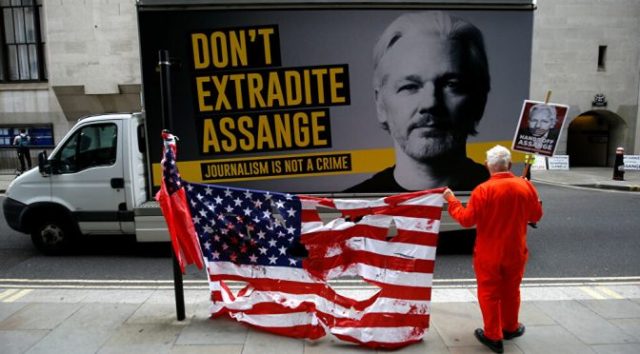
Reporters Claim Facebook is Censoring Information on Julian Assange Case


“90% of my traffic has just been cut off by what seems to be a general algorithm command of some kind to downplay Assange.” “I think it is as simple as that.”

By Alan Macleod

Source: Mint Press News

Craig Murray, the former British ambassador to Uzbekistan and longtime confidant of Julian Assange, has been fastidiously reporting on the Australian publisher’s extradition hearing to the United States. Yet few people have been reading it. This, according to Murray, is because of a deliberate decision by online media giants to downplay or suppress discussion of the case. On his blog, Murray wrote that he usually receives around 50 percent of his readers from Twitter and 40 percent from Facebook links, but that has dropped to 3 percent and 9 percent, respectively during the hearing. While the February hearings sent around 200,000 readers to his site daily, now that figure is only 3,000.

To be plain that is very much less than my normal daily traffic from them just in ordinary times. It is the insidious nature of this censorship that is especially sinister – people believe they have successfully shared my articles on Twitter and Facebook, while those corporations hide from them that in fact it went into nobody’s timeline,” he added.

Asked about the situation by former New York Times reporter Chris Hedges, Murray explained that

Anybody who is at all radical or takes any view of anything that is outwith the official establishment view gets used to occasional shadow banning, but I have never seen anything on this scale before.”

“90% of my traffic has just been cut off by what seems to be a general algorithm command of some kind to downplay Assange,” he added. “I think it is as simple as that.”

There has been considerable public interest in the court proceedings, but very little mainstream attention given to them. To be fair, British authorities have made it inordinately difficult to cover the case, allowing only a small handful of journalists into the Old Bailey court system, where they can watch a live television link up but cannot bring in recording devices. An online stream can only be watched if one registers and signs in between exactly 9:30 and 9:40 a.m., and if they suffer even a momentary lapse in wifi connection, they are shut out of the session. The court system has also blocked human rights groups, including Amnesty International, from monitoring proceedings.

Still, considering the implications for the future of journalism, the lack of coverage might surprise some. The New York Times, the flagship outlet of American print media (and a Wikileaks partner) printed only two articles on the subject and has not mentioned Assange in over two weeks. Its broadcast journalism equivalent CNN, meanwhile, has not touched the issue at all.

Online media creators have, for many years, lived with the threat of algorithmic suppression or demonetization of content on sensitive or controversial issues. YouTube regularly cuts all advertising on videos on the Syrian Civil War, fracking, or other topics on which advertisers might not wish to promote scrutiny. Even airsoft and paintball enthusiasts have learned not to use words like “shoot” and “gun” in their titles, lest the platform demonetizes their content.

Perhaps more alarmingly, however, Silicon Valley tech giants are becoming increasingly closely intertwined with the state department, to the point where it is often difficult to tell where one ends, and another begins. “What Lockheed Martin was to the twentieth century…technology and cyber-security companies [like Google] will be to the twenty-first,” wrote Google executives Eric Schmidt and Jared Cohen in their book, “The New Digital Age: Reshaping the Future of People, Nations and Business.” For example, Facebook is now in a close partnership with the Atlantic Council, who essentially decides for them what content to promote in people’s news feeds and what content is discarded as fake news, misinformation, or low quality. The problem is that the Atlantic Council is a NATO cutout, and a government-funded organization whose board of directors is a who’s who of deep state officials, including virtually every living ex-C.I.A. director, Bush-era cabinet members like Condoleezza Rice and Colin Powell, and military generals like Wesley Clark and David Petraeus. Thus, an organization like this deciding what the world sees on their screens is barely one step removed from total government control of the flow of information.

The U.S. government also frequently directly interferes with content appearing on prominent social media. Earlier this year, Facebook announced that it would remove all comments or posts in praise of recently-slain Iranian General Qassem Soleimani from all its platforms. This was done to comply with the Trump administration’s designation of the Iranian Revolutionary Guard Corps (which Soleimani led) as a terrorist organization. The problem is that Soleimani was Iran’s most popular political figure, with an over 80 percent approval rating, and that Instagram is used by around one-third of the entire Iranian population. Thus, Iranians speaking in their local language were barred from sharing a majority opinion with their country folk because of a decision by Donald Trump.

The Middle East is a particularly contentious area of the world. Yet when news broke that the British Army’s online psychological operations brigade had managed to become a senior Twitter executive, responsible for Middle Eastern content, media largely ignored it, raising even more questions. Algorithm changes have also hammered independent alternative media outlets — often precisely the ones most likely to cover the Assange case — drastically reducing their search engine traffic flow.

Former C.I.A. chief Leon Panetta (an honorary director of the Atlantic Council) recently admitted that Assange is being prosecuted as a warning to journalists. “All you can do is hope that you can ultimately take action against those that were involved in revealing that information so you can send a message to others not to do the same thing,” he told a German documentary crew. While the message is being heard loud and clear by journalists, the public is far less aware that anything is going on, thanks, in part, to online suppression of news about the case. Judge Vanessa Baraitser is scheduled to pronounce judgment on the media “trial of the century” on January 4, after the U.S. presidential election. Murray will doubtless be there. But will anyone read what he has to say?

Eyewitness to the Agony of Julian Assange

By Timothy Erik Strom and John Pilger

Source: CounterPunch

John Pilger has watched Julian Assange’s extradition trial from the public gallery at London’s Old Bailey. He spoke with Timothy Erik Ström of Arena, Australia:

Q:  Having watched Julian Assange’s trial firsthand, can you describe the prevailing atmosphere in the court?

The prevailing atmosphere has been shocking. I say that without hesitation; I have sat in many courts and seldom known such a corruption of due process; this is due revenge. Putting aside the ritual associated with ‘British justice’, at times it has been evocative of a Stalinist show trial. One difference is that in the show trials, the defendant stood in the court proper. In the Assange trial, the defendant was caged behind thick glass, and had to crawl on his knees to a slit in the glass, overseen by his guard, to make contact with his lawyers. His message, whispered barely audibly through face masks, WAS then passed by post-it the length of the court to where his barristers were arguing the case against his extradition to an American hellhole.

Consider this daily routine of Julian Assange, an Australian on trial for truth-telling journalism. He was woken at five o’clock in his cell at Belmarsh prison in the bleak southern sprawl of London. The first time I saw Julian in Belmarsh, having passed through half an hour of ‘security’ checks, including a dog’s snout in my rear, I found a painfully thin figure sitting alone wearing a yellow armband. He had lost more than 10 kilos in a matter of months; his arms had no muscle. His first words were: ‘I think I am losing my mind’.

I tried to assure him he wasn’t. His resilience and courage are formidable, but there is a limit. That was more than a year ago. In the past three weeks, in the pre-dawn, he was strip-searched, shackled, and prepared for transport to the Central Criminal Court, the Old Bailey, in a truck that his partner, Stella Moris, described as an upended coffin. It  had one small window; he had to stand precariously to look out. The truck and its guards were operated by Serco, one of many politically connected companies that run much of Boris Johnson’s Britain.

The journey to the Old Bailey took at least an hour and a half. That’s a minimum of three hours being jolted through snail-like traffic every day. He was led into his narrow cage at the back of the court, then look up, blinking, trying to make out faces in the public gallery through the reflection of the glass. He saw the courtly figure of his dad, John Shipton, and me, and our fists went up. Through the glass, he reached out to touch fingers with Stella, who is a lawyer and seated in the body of the court.

We were here for the ultimate of what the philosopher Guy Debord called The Society of the Spectacle: a man fighting for his life. Yet his crime is to have performed an epic public service: revealing that which we have a right to know: the lies of our governments and the crimes they commit in our name. His creation of WikiLeaks and its failsafe protection of sources revolutionised journalism, restoring it to the vision of its idealists. Edmund Burke’s notion of free journalism as a fourth estate is now a fifth estate that shines a light on those who diminish the very meaning of democracy with their criminal secrecy. That’s why his punishment is so extreme.

The sheer bias in the courts I have sat in this year and last year, with Julian in the dock, blight any notion of British justice. When thuggish police dragged him from his asylum in the Ecuadorean embassy—look closely at the photo and you’ll see he is clutching a Gore Vidal book; Assange has a political humour similar to Vidal’s—a judge gave him an outrageous 50-week sentence in a maximum-security prison for mere bail infringement.

For months, he was denied exercise and held in solitary confinement disguised as ‘heath care’. He once told me he strode the length of his cell, back and forth, back and forth, for his own half-marathon. In the next cell, the occupant screamed through the night. At first he was denied his reading glasses, left behind in the embassy brutality. He was denied the legal documents with which to prepare his case, and access to the prison library and the use of a basic laptop. Books sent to him by a friend, the journalist Charles Glass, himself a survivor of hostage-taking in Beirut, were returned. He could not call his American lawyers. He has been constantly medicated by the prison authorities. When I asked him what they were giving him, he couldn’t say. The governor of Belmarsh has been awarded the Order of the British Empire.

At the Old Bailey, one of the expert medical witnesses, Dr Kate Humphrey, a clinical neuropsychologist at Imperial College, London, described the damage: Julian’s intellect had gone from ‘in the superior, or more likely very superior range’ to ‘significantly below’ this optimal level, to the point where he was struggling to absorb information and ‘perform in the low average range’.

This is what the United Nations Special Rapporteur on Torture, Professor Nils Melzer, calls ‘psychological torture’, the result of a gang-like ‘mobbing’ by governments and their media shills. Some of the expert medical evidence is so shocking I have no intention of repeating it here. Suffice to say that Assange is diagnosed with autism and Asperger’s syndrome and, according to Professor Michael Kopelman, one of the world’s leading neuropsychiatrists, he suffers from ‘suicidal preoccupations’ and is likely to find a way to take his life if he is extradited to America.

James Lewis QC, America’s British prosecutor, spent the best part of his cross-examination of Professor Kopelman dismissing mental illness and its dangers as ‘malingering’. I have never heard in a modern setting such a primitive view of human frailty and vulnerability.

My own view is that if Assange is freed, he is likely to recover a substantial part of his life. He has a loving partner, devoted friends and allies and the innate strength of a principled political prisoner. He also has a wicked sense of humour.

But that is a long way off. The moments of collusion between the judge— a Gothic-looking magistrate called Vanessa Baraitser, about whom little is known—and the prosecution acting for the Trump regime have been brazen. Until the last few days, defence arguments have been routinely dismissed. The lead prosecutor, James Lewis QC, ex SAS and currently Chief Justice of the Falklands, by and large gets what he wants, notably up to four hours to denigrate expert witnesses, while the defence’s examination is guillotined at half an hour. I have no doubt, had there been a jury, his freedom would be assured.

The dissident artist Ai Weiwei came to join us one morning in the public gallery. He noted that in China the judge’s decision would already have been made. This caused some dark ironic amusement. My companion in the gallery, the astute diarist and former British ambassador Craig Murray wrote:

I fear that all over London a very hard rain is now falling on those who for a lifetime have worked within institutions of liberal democracy that at least broadly and usually used to operate within the governance of their own professed principles. It has been clear to me from Day 1 that I am watching a charade unfold. It is not in the least a shock to me that Baraitser does not think anything beyond the written opening arguments has any effect. I have again and again reported to you that, where rulings have to be made, she has brought them into court pre-written, before hearing the arguments before her.

I strongly expect the final decision was made in this case even before opening arguments were received.

The plan of the US Government throughout has been to limit the information available to the public and limit the effective access to a wider public of what information is available. Thus we have seen the extreme restrictions on both physical and video access. A complicit mainstream media has ensured those of us who know what is happening are very few in the wider population.

There are few records of the proceedings. They are: Craig Murray’s personal blog, Binoy Kampmark on CounterPunch, Joe Lauria’s live reporting on Consortium News and the World Socialist Website. American journalist Kevin Gosztola’s blog, Shadowproof, funded mostly by himself, has reported more of the trial than the major US press and TV, including CNN, combined.

In Australia, Assange’s homeland, the ‘coverage’ follows a familiar formula set overseas. The London correspondent of the Sydney Morning Herald, Latika Bourke, wrote this recently:

The court heard Assange became depressed during the seven years he spent in the Ecuadorian embassy where he sought political asylum to escape extradition to Sweden to answer rape and sexual assault charges.

There were no ‘rape and sexual assault charges’ in Sweden. Bourke’s lazy falsehood is not uncommon. If the Assange trial is the political trial of the century, as I believe it is, its outcome will not only seal the fate of a journalist for doing his job but intimidate the very principles of free journalism and free speech. The absence of serious mainstream reporting of the proceedings is, at the very least, self-destructive. Journalists should ask: who is next?

How shaming it all is. A decade ago, the Guardian exploited Assange’s work, claimed its profit and prizes as well as a lucrative Hollywood deal, then turned on him with venom. Throughout the Old Bailey trial, two names have been cited by the prosecution, the Guardian’s David Leigh, now retired as ‘investigations editor’ and Luke Harding, the Russiaphobe and author of a fictional Guardian ‘scoop’ that claimed Trump adviser Paul Manafort and a group of Russians visited Assange in the Ecuadorean embassy. This never happened, and the Guardian has yet to apologise. The Harding and Leigh book on Assange—written behind their subject’s back—disclosed a secret password to a WikiLeaks file that Assange had entrusted to Leigh during the Guardian’s ‘partnership’. Why the defence has not called this pair is difficult to understand.

Assange is quoted in their book declaring during a dinner at a London restaurant that he didn’t care if informants named in the leaks were harmed. Neither Harding nor Leigh was at the dinner. John Goetz, an investigations reporter with Der Spiegel, was at the dinner and testified that Assange said nothing of the kind. Incredibly, Judge Baraitser stopped Goetz actually saying this in court.

However, the defence has succeeded in demonstrating the extent to which Assange sought to protect and redact names in the files released by WikiLeaks and that no credible evidence existed of individuals harmed by the leaks. The great whistle-blower Daniel Ellsberg said that Assange had personally redacted 15,000 files. The renowned New Zealand investigative journalist Nicky Hager, who worked with Assange on the Afghanistan and Iraq war leaks, described how Assange took ‘extraordinary precautions in redacting names of informants’.

Q: What are the implications of this trial’s verdict for journalism more broadly—is it an omen of things to come?

The ‘Assange effect’ is already being felt across the world. If they displease the regime in Washington, investigative journalists are liable to prosecution under the 1917 US Espionage Act; the precedent is stark. It doesn’t matter where you are. For Washington, other people’s nationality and sovereignty rarely mattered; now it does not exist. Britain has effectively surrendered its jurisdiction to Trump’s corrupt Department of Justice. In Australia, a National Security Information Act promises Kafkaesque trials for transgressors. The Australian Broadcasting Corporation has been raided by police and journalists’ computers taken away. The government has given unprecedented powers to intelligence officials, making journalistic whistle-blowing almost impossible. Prime Minister Scott Morrison says Assange ‘must face the music’. The perfidious cruelty of his statement is reinforced by its banality.

‘Evil’, wrote Hannah Arendt, ‘comes from a failure to think. It defies thought for as soon as thought tries to engage itself with evil and examine the premises and principles from which it originates, it is frustrated because it finds nothing there. That is the banality of evil’.

Q: Having followed the story of WikiLeaks closely for a decade, how has this eyewitness experience shifted your understanding of what’s at stake with Assange’s trial?

I have long been a critic of journalism as an echo of unaccountable power and a champion of those who are beacons. So, for me, the arrival of WikiLeaks was exciting; I admired the way Assange regarded the public with respect, that he was prepared to share his work with the ‘mainstream’ but not join their collusive club. This, and naked jealousy, made him enemies among the overpaid and undertalented, insecure in their pretensions of independence and impartiality.

I admired the moral dimension to WikiLeaks. Assange was rarely asked about this, yet much of his remarkable energy comes from a powerful moral sense that governments and other vested interests should not operate behind walls of secrecy. He is a democrat. He explained this in one of our first interviews at my home in 2010.

What is at stake for the rest of us has long been at stake: freedom to call authority to account, freedom to challenge, to call out hypocrisy, to dissent. The difference today is that the world’s imperial power, the United States, has never been as unsure of its metastatic authority as it is today. Like a flailing rogue, it is spinning us towards a world war if we allow it. Little of this menace is reflected in the media.

WikiLeaks, on the other hand, has allowed us to glimpse a rampant imperial march through whole societies—think of the carnage in Iraq, Afghanistan, Libya, Syria, Yemen, to name a few, the dispossession of 37 million people and the deaths of 12 million men, women and children in the ‘war on terror’—most of it behind a façade of deception.

Julian Assange is a threat to these recurring horrors—that’s why he is being persecuted, why a court of law has become an instrument of oppression, why he ought to be our collective conscience: why we all should be the threat.

The judge’s decision will be known on the 4th of January.

The Death of Andre Vltchek, A Passionate Warrior for Truth

By Edward Curtin

Source: Behind the Curtin

“If the world is upside down the way it is now, wouldn’t we have to turn it over to get it to stand up straight?” – Eduardo Galeano, Upside Down, 1998

For decades, Andre Vltchek, an old-school journalist and artist (but a young man) who traveled the world in search of truth and who always stood up straight, tried to revolve the world and encourage people to revolt against injustice. In this age of arm-chair reporters, he stood out for his boldness and indefatigable courage. He told it straight. This irritated certain people and some pseudo-left publications, who sensed in him a no bullshit fierceness and nose for hypocrisy that frightened them, so they stopped publishing his writing. He went where so many others  feared to tread, and he talked to people in places that were often the victims of Western imperialistic violence. He defended the defenseless and encouraged their defense.

Now he is dead.  He died in the back seat of a chauffeur driven rental car on an overnight drive to Istanbul, Turkey. He was sleeping, and when his wife attempted to wake him upon arrival at their hotel, she couldn’t.  He was 57-years-old.

Let him sleep in peace, but let his words ring out, his passionate cries for justice and peace in a world of violent predators.

Those who knew him and his work feel a great, great loss. His friend and colleague Peter Koenig wrote this touching goodbye.

As Koenig says, Vltchek was always defending those around the world who are considered disposable non-people, the Others, the non- whites, victims of Western wars, both military and economic, in places such as West Papua, Iraq, Syria, Africa, etc. He had a chip on his shoulder, a well justified chip, against the one-sided Western media and its elites that were always lecturing the rest of the world about their realities.

He was recently in the United States, and here is what he wrote:

But notice one thing: it is them, telling us, again, telling the world what it is and what it is not! You would never hear such statements in Africa, the Middle East, or Asia. There, people know perfectly well what it really is all about, whether it is about race or not!

I have just spent two weeks in the United States, analyzing the profound crises of U.S. society. I visited Washington, D.C., Minneapolis, New York, and Boston. I spoke to many people in all those places. What I witnessed was confusion and total ignorance about the rest of the world. The United States, a country which has been brutalizing our Planet for decades, is absolutely unable to see itself in the context of the entire world. People, including those from the media, are outrageously ignorant and provincial.

And they are selfish.

I asked many times: “Do black lives matter all over the world? Do they matter in the Democratic Republic of Congo, and do they matter in West Papua?” I swear, I received no coherent answer.

Somebody has to tell them… Somebody has to force them to open their eyes.

A few years ago, I was invited to Southern California to show my documentary work from Africa (my feature documentary film Rwanda Gambit, about West-triggered genocides in both Rwanda and later in the Democratic Republic of Congo), where millions of black people are dying, in order for the vast majority of the U.S. whites to live in piggish opulence.

But before I was allowed to present, I was warned: ‘Remember, people here are sensitive. Do not show too much of brutal reality, as it could disturb them.’

Hearing that, I almost left the event. Only my respect for the organizer made me stay.

Now I am convinced: it is time to force them to watch; to see rivers of blood, which their laziness, selfishness, and greed have triggered. It is time to force them to hear shouts of the agony of the others.

But as everyone knows, it is nearly impossible to force people to open their eyes and ears when they are dead set against doing so.  Andre tried so hard to do that, and his frustration grew apace with those efforts that seemed to fall on deaf ears.

He was a relentless fighter, but he was a lover, too.  His love for the people and cultures of the world was profound.  Like Albert Camus, he tried to serve both beauty and suffering, the noblest of vocations. A lover of literature and culture, the best art and beauty ever produced, he was appalled at the way so many in the West had fallen into the pit of ignorance, illiteracy, and the grip of propaganda so tight that “what is missing is life. Euphoria, warmth, poetry and yes – love – are all in extremely short supply there.”

He sensed, and said it, that nihilism rules in the United States beneath the compulsive consumerism and the denial of the violence that the U.S. inflicts on people across the world. It was selfishness run amok. Me me me. It was, he felt, soul death, the opposite of all the ostensible religiousness that is a cover story for despair. He wrote:

It has to be stopped. I say it because I do love this life, the life, which still exists outside the Western realm; I’m intoxicated with it, obsessed with it. I live it to the fullest, with great delight, enjoying every moment of it.

Poetry, music, great literature, these he loved as he fought on the barricades for peace.

I urge you to read his article, Love, Western Nihilism and Revolutionary Optimism.

He was a rare and courageous man.  Let us ring bells in his honor.

Here’s a Kenneth Rexroth poem for Andre, the fighter with the poet’s heart:

No Word

The trees hang silent

In the heat….

Undo your heart

Tell me your thoughts

What you were

And what you are….

Like the bells no one

Has ever rung

How Corporate Tyranny Works

By Chris Hedges

Source: OpEdNews.com

Those, like environmental lawyer Steven Donziger, who fight the corporate control of our society on behalf of the vulnerable find the institutions of power unite to crucify them.

The persecution of the attorney Steven Donziger is a grim illustration of what happens when we confront the real centers of power, masked and unacknowledged by the divisive cant from the Trump White House or the sentimental drivel of the Democratic Party. Those, like Donziger, who name and fight the corporate control of our society on behalf of the vulnerable see the judiciary, the press and the institutions of government unite to crucify them.

“It’s been a long battle, 27 years,” Donziger said when I reached him by phone in his apartment in Manhattan.

Donziger, who has been fighting polluting American oil companies for nearly three decades on behalf of indigenous communities and peasant farmers in Ecuador, has been under house arrest in Manhattan for a year. He will go to trial in federal court in New York on September 9 on contempt of court charges, which could see him jailed for six months. Ever since he won a multibillion-dollar judgment in 2011 against the oil giant Chevron, the multinational has come after him personally through litigation that threatens to destroy him economically, professionally and personally.

“Our L-T [long-term] strategy is to demonize Donziger,” Chevron wrote in an internal memo in 2009, as reviewed by Courthouse News.

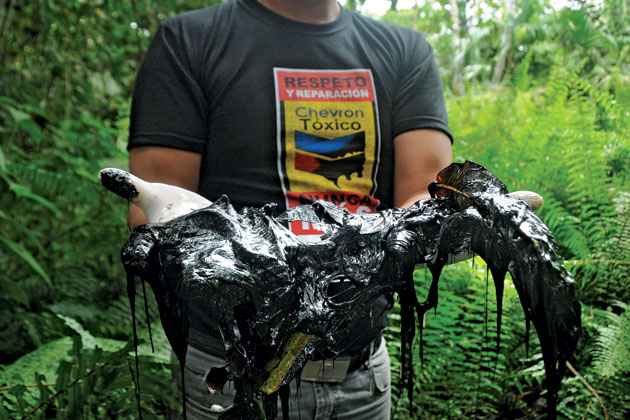
It started when Texaco went into Ecuador in the Amazon in the 1960s and cut a sweetheart deal with the military government then ruling Ecuador,” Donziger told me. “Over the next 25 years, Texaco was the exclusive operator of a very large area of the Amazon that had several oil fields within this area, 1500 square miles. They drilled hundreds of wells. They created thousands of open-air, unlined toxic waste pits where they dumped the heavy metals and toxins that came up from the ground when they drilled. They ran pipes from the pits into rivers and streams that local people relied on for their drinking water, their fishing and their sustenance. They poisoned this pristine ecosystem, in which lived five indigenous peoples, as well as a lot of other non-indigenous rural communities. There was a mass industrial poisoning.”

“By the time I went down there in the early 1990s, many people had died, cancer rates were skyrocketing according to several independent health evaluations, people were really hurting. There was zero regard for the lives of the local people by Texaco. I was a very young lawyer back in 1993 when I first went to Ecuador. It was like looking at an apocalyptic scene. There was oil on the roads. People were living in abject poverty. They had no shoes. They would get oil on their feet when they walked along the roads. The oil pollution had permeated every aspect of daily life. It was in the food supply. It was in the water supply. It was in the air. The average person there would get exposed multiple times a day to very harmful, cancer-causing toxins, with foreseeable results.”

“I, with other lawyers, filed a lawsuit in New York against Texaco. The reason we filed in New York was because Texaco’s headquarters were in New York in 1993. The decisions to pollute in Ecuador, to play God to the people of Ecuador, were made in New York. We sued in New York. Texaco tried to get the case back to Ecuador where they had never been held accountable, where they knew the indigenous peoples had no money or resources to find lawyers.”

“They thought it would just go away,” said Donziger. “Over a 10-year period, we battled to get a jury trial in the United States. Ultimately, they won that part of the battle. It went down to Ecuador.”

“We started working with a team of Ecuadoran lawyers in the early 2000s. We went forward with the lawsuit. We produced voluminous scientific and testimonial evidence, showing that they caused probably the world’s worst oil pollution. It was called the ‘Amazon Chernobyl’ by locals and experts. They dumped 16 billion gallons of toxic waste. They did it deliberately to save money. This was unlike the BP spill in the Gulf of Mexico, which was a terrible accident, even though it was a product of horrendous negligence by BP. This was done by design to pollute, knowing that people would die, and that indigenous groups would be decimated, and that this beautiful part of the Amazon would be destroyed.”

The refusal to abide by even minimal environmental regulations saved Texaco an estimated $3 on every barrel of oil produced over 26 years (1964-1992), according to Amazon Watch, or an estimated extra $5 billion in revenue. The hundreds of waste pits the company eventually abandoned in Ecuador, on average, contain 200 times the contamination allowed by typical global standards.

“They tried to grind us down using classic corporate defense tactics,” Donziger said of the legal war. “They filed thousands of motions. We stood strong. We had a great legal team of Ecuadorian lawyers.”

In the end, they won a stunning victory, a rare moment of accountability for first-world conglomerates who rape the environment of developing nations by exploiting weak, corrupt governments.

“The verdict came down, about $18 billion in favor of the affected communities, which is what it would take at a minimum to clean up the actual damage and compensate the people for some of their injuries. That eventually got reduced on appeal in Ecuador to $9.5 billion, but it was affirmed by three appellate courts, including the highest court of Ecuador. It was affirmed by the Canadian Supreme Court, where the Ecuadorians went to enforce their judgment in a unanimous opinion in 2015.”

Chevron, as the evidence mounted against it, sold their assets in Ecuador and left the country. The corporation threatened the plaintiffs with a “lifetime of litigation” if they attempted to collect, and, according to internal Chevron memos, launched a legal and media campaign that has cost an estimated $2 billion to prevent payment of the settlement and to demonize and destroy Donziger.

Donziger came to his epic battle against Chevron through journalism. “I was a journalist on my college newspaper,” he said of his time as a history major at American University. “My first job out of college was as a journalist with [United Press International]. I worked for UPI in Washington. They were strong in Latin America. I traveled to Managua in 1983 or 1984, I don’t remember exactly, and found work in the UPI bureau. I was 23 years old. I worked in the UPI bureau in Managua during the Sandinista era.”

He left UPI after a year in Managua but stayed on in Nicaragua to work as a freelance journalist for newspapers such as The Fort Lauderdale News, The Toronto Star and The Atlanta Constitution. He spent about three years as a reporter before going to Harvard Law School. When he graduated from Harvard Law School in 1991, he worked as a public defender in Washington, D.C. He documented Iraqi civilian casualties in Iraq following the first Gulf War that became a report adopted by the United Nations.

A classmate at law school was from Ecuador. His classmate’s father organized a trip in April 1993 for lawyers and medical professionals to look at the contamination caused by the oil extraction in the Amazon. That trip, which Donziger joined, spawned the suit against Texaco. He would make more than 250 trips to Ecuador over the next two decades.

“Journalism significantly shaped my views and skill set,” he said. “It was vital to allowing my work to be successful. From the beginning this was a unique litigation, for many reasons, but one of the reasons was we, as a team, decided to work across multiple platforms. If we only saw this case as a lawsuit we would never win.”

“Chevron controlled the legal system in Ecuador with their influence. We needed to operate across different platforms, including engaging with the media and carrying out significant public education. Most Ecuadorians, other than those who lived in the region, knew nothing about the pollution that had been happening in their country. We carried out zealous advocacy in the public arena. We realized that the indigenous people would never get a fair trial in Ecuador if they did not illuminate what had happened to them and get public support.”

“The fact that I am detained shows how far we’ve come and how much risk Chevron feels. It’s not a sign we lost. It’s the opposite.”

Steven Donziger

Both the judge who oversaw its lawsuit against Donziger for “racketeering” and Chevron itself “claim that this type of activity is wrong,” he said. “The irony is that what we were doing is what the big oil companies have always done. They always operate in the public relations domain, lobbying Congress to pass legislation to extinguish various legal claims, meeting political leaders behind the scenes. They operate across every platform they can find to exercise their power. We were smart enough to meet them toe-to-toe wherever they were operating and neutralize their ability to undermine the fairness of the trial. That’s how they operate. They try to control court systems.”

“My journalism [experience] sensitized me to injustice. It allowed me to understand the media. I knew how to write press releases, which matters when you do a public case like this. I knew how to work across different platforms to mobilize positive energy around the case. Human rights work involves, first and foremost, justice for victims. But equally important is accountability for the perpetrators. The fact that I am detained shows how far we’ve come and how much risk Chevron feels. It’s not a sign we lost. It’s the opposite.”

Chevron, which had left Ecuador, went back to the New York court, where Donziger had originally filed the lawsuit before Chevron got a change of venue to Ecuador, and sued him, using a civil courts portion of the federal law famous for breaking the New York Mafia in the 1970s, the Racketeer Influenced and Corrupt Organizations Act.

In effect, “They sued me as a civil racketeer, under a civil RICO statute for $60 billion,” he said. “That was the largest amount of money an American individual ever had been sued for. This began a 10-year campaign to demonize me by Chevron and by its judicial allies.”

Chevron, which has more than $260 billion in assets, has hired an estimated 2,000 lawyers from 60 law firms to carry out its campaign, according to court documents. The oil giant dropped its demand for financial damages weeks before the RICO trial, which would have necessitated a jury trial. Judge Lewis A. Kaplan, a former lawyer for the tobacco industry who had undisclosed investments in funds with Chevron holdings, according to his public financial disclosure statement, decided the RICO case alone. He found credible a witness named Alberto Guerra, relocated to the US by Chevron at a cost of some $2 million, who claimed the verdict in Ecuador was the product of a bribe. Kaplan used Guerra’s testimony as primary evidence for the racketeering charge, although Guerra, a former judge, later admitted to an international tribunal that he had falsified his testimony.

“[Kaplan] wouldn’t allow me to bring in any environmental evidence that the Ecuadorian courts had used to find Chevron liable,” Donziger said. “He wouldn’t let me testify on my own behalf on direct. He allowed Chevron to use secret witnesses whose identities he wouldn’t reveal to me. He tried to treat it like a national-security kind of case to try to demonize me. Because Chevron’s whole strategy is to demonize [me] as a way to distract attention from its environmental crimes in Ecuador. And Judge Kaplan, who knows all the tricks in the books because he used to work for [tobacco company] Brown & Williamson, when he was [an attorney with the law firm of] Paul, Weiss. He knows the tobacco industry playbook that they used for years and years and continue to use. And he worked with the Chevron lawyers at Gibson, Dunn & Crutcher to implement them against me without a jury. And there was nothing I could do about it.”

(Paul, Weiss is a large law firm that currently advises Chevron on its $13 billion purchase of another energy company.)

John Keker, one of Donziger’s lawyers on that case, said he was up against 160 lawyers for Chevron and during the trial he felt “like a goat tethered to a stake.” He called the court proceedings under Kaplan “a Dickensian farce” and a “show trial.” In the end, Kaplan ruled that the judgment in the Ecuadorean court against Chevron was the result of fraud.

He also ordered Donziger to turn over decades of all client communication to Chevron, in effect eradicating attorney-client privilege, a backbone of the Anglo-American legal system with roots dating to ancient Rome. Donziger appealed what was, according to legal experts following the case, an unprecedented and illegal order. While Donziger’s appeal was pending, Kaplan charged him with criminal contempt for this principled stance, as well as his refusal to turn over his passport, his personal electronics and to refrain from seeking the collection of the original award against Chevron.

When his criminal contempt charges against the environmental lawyer were ignored by the U.S. attorney’s office for over five years, Judge Kaplan, using an exceedingly rare judicial maneuver, appointed the private law firm of Seward & Kissel, to act in the name of the government to prosecute Donziger. Neither the judge nor the law firm disclosed that Chevron has been a client of Seward & Kissel.

Kaplan also violated the established random case assignment protocol to personally assign Loretta Preska, a member of the right-wing Federalist Society, to hear the case. Chevron is a major donor to the Federalist Society. Preska, in a show of bias, already has said the charges against Donziger appear to be “very strong,” according to Courthouse News. In May, she disallowed him from having his charges heard by a jury.

“The last thing any of them wants is for a group of ordinary citizens to see what has happened to Steven Donziger,” Rick Friedman, one of Donziger’s attorneys, said of Chevron.

“The last thing any of them wants is for a group of ordinary citizens to see what has happened to Steven Donziger.”

Rick Friedman, attorney

Preska’s fealty to corporate power was previously on public display in 2013 when she imposed a 10-year sentence, the maximum allowed under a plea deal, on Jeremy Hammond, the activist who hacked into Stratfor, a private security firm. Hammond made public a barrage of damning internal emails and exposed the email address and password of an account used for business by Preska’s husband, Thomas Kavaler, a partner at the law firm Cahill Gordon & Reindel. Preska, despite the conflict of interest, refused to recuse herself. The 10-year sentence was one of the longest in U.S. history for hacking.

Kaplan had Preska demand Donziger post an $800,000 bond on a misdemeanor charge. Preska placed him under house arrest and confiscated his passport which he has used to meet with attorneys around the world attempting to enforce the judgment against Chevron. Kaplan managed to have Donziger disbarred. He allowed Chevron to freeze Donziger’s bank accounts, slapped Donziger with millions in fines without allowing him a jury, forced him to wear an ankle monitor 24 hours a day and effectively shut down his ability to earn a living. Kaplan allowed Chevron to impose a lien on Donziger’s apartment in Manhattan where he lives with his wife and teenage son.

Donziger is scheduled to go to trial without a jury on September 9 in New York City for contempt. Preska will preside over the trial. There has not been a criminal trial in Manhattan federal court since March because of the pandemic. Donziger’s trial would be the first, although hundreds of other defendants facing far more serious felony charges are waiting in jails, infested with COVID-19, for a trial date. Donziger’s four pro bono lawyers said they do not want to risk their lives by traveling to New York during the pandemic for what is a misdemeanor offense.

“The judgment against Chevron Corporation in Ecuador was the product of fraud, bribery and corruption,” Sean Comey, Senior Advisor – External Affairs Chevron Corporation said when I asked the corporation to comment on the case. “Steven Donziger is a proven liar and an adjudicated racketeer. He committed criminal acts in the U.S. and abroad in pursuit of his extortion scheme in the Ecuadorian courts. Donziger’s continuing lawlessness is now a matter for prosecutors and the U.S. courts to decide. Chevron is not involved in Donziger’s criminal prosecution.”

The flagrant corruption and misuse of the legal system to abjectly serve corporate interests in the Donziger case illustrates the deep decay within our judiciary and democratic institutions, one that was abetted by Democratic administrations that stacked the courts with corporate lawyers — Kaplan was appointed by Bill Clinton — and Donald Trump, who has elevated ideologues selected by the Federalist Society to the federal bench. Ruling after ruling in Donziger’s case has ignored or grossly distorted the law on behalf of Chevron to ensure that Donziger will be prosecuted, sent to prison and remain in debt for life — all while the $9.5 billion settlement is never paid to aid the people harmed in Ecuador.

The International Association of Democratic Lawyers and the international committee of the National Lawyers Guild issued a letter signed by more than 70 organizations calling the persecution of Donziger an “attack on the rule of law.” The letter said his house arrest was “unprecedented” and charged that he was being targeted for what it called “one of the most important corporate accountability and human rights cases of our time.” The letter accused Kaplan of “violating basic notions of fairness in the judicial process that lie at the core of the rule of law.”

“We cannot allow the rule of law to be upended by corporate interests and a highly biased federal judge seeking to destroy the willpower of one lawyer who has already withstood decades of brutal litigation and scathing personal and professional attacks,” the letter read.

Chevron has also used its clout and advertising dollars to keep the story from being reported in numerous media outlets.

“Based on where this story is trending, we have launched a full offensive to kill it or redirect it,” an August 10, 2010 internal memo from Chevron reads concerning a potential report — on the case being done by the Fox News bureau in Miami.

“In addition to working through the Miami bureau, we have reached out to more senior news folks at Fox News, both in NY (through Dana) and in WDC (through Greg Mueller). So, we are trying to attack this story on multiple fronts. To this end, Kent is set to talk to John Stack and Sean Smith who both reside at Fox News in NY at 1:30 today. Finally, if need be, I think we may need to pull the JSW card with Roger Ailes. We have checked John’s availability to place a call to Roger, but his first availability is tomorrow afternoon.”

From 2010 to 2018, John S. Watson was the CEO and chairman of the Chevron Corporation.

The story was killed.

Another internal memo lays out the steps, also ultimately successful, to prevent a similar story from appearing in GQ magazine. The memo suggests that Chevron work …with the Columbia Journalism Review (that ran the rebuke of 60 minutes) and the Media Research Center to expose any degree of bias by GQ and raise alerts about the reporting techniques prior to the story’s publication.”

The memo recommends letting the magazine know that it will face legal action if the story runs and calls on Chevron investigators to “conduct further due diligence on reporter.” Chevron has also hired reporters to produce fake pieces of journalism that peddle the corporation’s propaganda on fake news sites it runs.

The New York Times magazine earlier this year considered a story about Donziger and then dropped it. The newspaper runs its own ad agency called T Brand Studio. Chevron is a major client, meaning The New York Times, through T Brand Studio, produces ads for Chevron.

Jake Silverstein, editor of the magazine, when asked to comment said by email: “It was one of several stories William [Langewiesche] considered writing for us in the past year, one that ultimately we decided not to assign. Many factors go into our decisions about what to assign, and none of them ever include who is or is not a client of T Brand Studio or any other part of the paper’s advertising business.”

Dean Baquet, the newspaper’s executive editor, said, when I reached him by email, that the idea that the magazine piece on Donziger was killed because Chevron is a major advertiser is “a ridiculous claim.” He added, “I didn’t even know Chevron worked with T Brand [Studio].”

But that Chevron has invested tremendous resources to kill stories about this case is indisputable given the detailed campaigns to block coverage outlined in its own internal memos.

“I’ve experienced this multiple times with media over the past 10 to 15 years,” Donziger said. “An entity will start writing the story, spend a lot of time on it, then the reporter disappears. The story doesn’t run.”

While The NationThe Intercept and Courthouse News Service have reported on Donziger’s current legal battle, no major mainstream publication has touched it.

“Corporate influence over our federal judiciary has increased dramatically in recent years,” Donziger said. “This firm [Chevron] has captured an element of power from the government and deployed it against a human rights activist.”

Front Line Defenders issued a report in 2019 that found that 300 human rights activists had been murdered in 31 countries, more than two-thirds in Latin America. Of those killed, 40 percent fought for land rights, indigenous peoples and environmental justice.

“What’s shocking to a lot of people is that this is now happening in the United States,” Donziger said. “I don’t mean murder, but death by a thousand cuts. Chevron does not want me to be a lawyer anymore, at a minimum. They don’t want me advocating even as a non-lawyer. They want to silence me. They want to kill every story they can. They’d rather have no story about this case than even a positive story about their side. They don’t want people to know about it. They want to erase it from people’s thought process.

“I cannot get a fair trial with a judge appointed by Judge Kaplan rather than through the random assignment process,” he lamented. “I cannot get a fair trial with a prosecutor whose law firm [has worked] for Chevron. These are egregious conflicts of interest. Its misconduct on a grand scale. I’ve been locked up four times as long as the longest sentence ever imposed on a lawyer for criminal contempt in New York. Anyone who cares about the rule of law should be appalled.”

Assange Rips the Matrix

By Finian Cunningham

Source: Information Clearing House

The persecution of Julian Assange is one of those breakthrough moments when suddenly people realise that almost everything they have been told to believe is not true.

This week the Australian-born journalist and publisher has been subjected to a show trial in a British court with the threat of extradition to the United States looming. If he is extradited, the 48-year old is facing 175 years – a death sentence – in prison on wholly contrived espionage charges.

Assange is being persecuted for the sole and simple reason that he exposed war crimes and systematic corruption by the US government and its Western allies. His years of arbitrary detention and the torture endured over the past year while in solitary confinement in a British dungeon are a grim warning to all citizens. The warning is that their supposed democratic rights are non-existent as far as the powers in Washington and London are concerned. If you dare speak truth to power, then this fate will also be yours.

Thus, when it gets down to it, the harsh reality is that there is no such thing as democracy in the US or Britain. Elections and media are but window-dressing to hide the brutal truth that fundamental, basic democratic rights of free speech and due legal process are not inalienable principles, but rather are dispensable privileges whenever the powers-that-be ordain so.

Julian Assange’s incarceration and pillorying is like an inquisition from medieval times happening in the year 2020. He dared expose the rampant, systematic crimes of so-called authorities through his Wikileaks site. His blasphemy was to expose the charlatans and mass-killers who masquerade as pious leaders.

Those revelations showed the public that the pretensions of democracy and rule of law by the American and British governments are nothing but hypocritical, empty posturing. Assange’s courageous publishing work demonstrated how those governments have waged criminal wars and committed genocidal crimes; how they have made a mockery of international law and democratic rights. And for that heroic service to public truth and empowerment with the truth, Assange is being pilloried like a rebellious serf by overlords posing as “governments” and “judges”.

Assange’s show trial is also powerfully revealing of the real nature of Western so-called news media. Not one of the major US or British news outlets have given any coverage, let alone comment, regarding his week-long extradition trial.

A journalist and publisher is being whipsawed in the court as if he is a dangerous terrorist. He is denied elementary due process by being confined to a glass-cage dock, not able to communicate with his defence lawyers, unable to even hear what his accusers are claiming.

His extradition, to be determined at a future court hearing, seems like a foregone conclusion, such is the bias and hostility towards Assange from the presiding British judge, Vanessa Baraitser.

Given the international outcry from hundreds of doctors and UN representatives over Assange’s torture endured while in British custody, and given the grotesque abuse of legal process by the American and British so-called authorities, the case should be thrown out immediately – if there were any modicum of justice.

The vendetta against Assange tells us what kind of societies citizens (or rather subjects) are living under in the US and Britain. These states are oligarchies where “democratic rights” are strictly conditional on subjects not stepping out of line, such as criticising war crimes or illegal global spying.

Julian Assange has torn through the largely invisible matrix of propaganda and power that people really live under. The saccharin myths of “democracy” and “free speech” are shown for the ugly, putrid reality that they are. And the Western corporate-controlled media in their silence about what is going on are also condemned for the lying servile machines that they are.

We must not accept the fate being prepared for Assange as if it is inevitable or as if we are powerless to overthrow it. The first step towards freedom is truth, and thanks to Julian Assange, we have the power to be free. We know the tyrannical nature of the governments that presume to rule over us in our names. There must be a popular uprising in defence of Assange. Because no-one is free until he is.

A final note by way of testimony: anyone who has been enlightened by Wikileaks’ revelations over the past decade will know that the current escalation of conflict in Syria’s Idlib is due to NATO powers illegally occupying that country. They will know that NATO powers have for years covertly sponsored terror groups to carry out a criminal regime-change war. By contrast, anyone who relies on Western governments and mainstream media for “information” will have no idea whatsoever about what is really going in Syria. A wider war could erupt any day and those who are brainwashed by Western regimes and their media are impotent to stop it. The empowerment of citizens by Julian Assange and Wikileaks over the years is the difference between ending wars or fueling them.

The vendetta against Assange tells us what kind of societies citizens (or rather subjects) are living under in the US and Britain. These states are oligarchies where “democratic rights” are strictly conditional on subjects not stepping out of line, such as criticising war crimes or illegal global spying.

Julian Assange has torn through the largely invisible matrix of propaganda and power that people really live under. The saccharin myths of “democracy” and “free speech” are shown for the ugly, putrid reality that they are. And the Western corporate-controlled media in their silence about what is going on are also condemned for the lying servile machines that they are.

We must not accept the fate being prepared for Assange as if it is inevitable or as if we are powerless to overthrow it. The first step towards freedom is truth, and thanks to Julian Assange, we have the power to be free. We know the tyrannical nature of the governments that presume to rule over us in our names. There must be a popular uprising in defence of Assange. Because no-one is free until he is.

A final note by way of testimony: anyone who has been enlightened by Wikileaks’ revelations over the past decade will know that the current escalation of conflict in Syria’s Idlib is due to NATO powers illegally occupying that country. They will know that NATO powers have for years covertly sponsored terror groups to carry out a criminal regime-change war. By contrast, anyone who relies on Western governments and mainstream media for “information” will have no idea whatsoever about what is really going in Syria. A wider war could erupt any day and those who are brainwashed by Western regimes and their media are impotent to stop it. The empowerment of citizens by Julian Assange and Wikileaks over the years is the difference between ending wars or fueling them.

Inside the Submissive Void

Propaganda, Censorship, Power, & Control

By Greg Maybury

Source: OffGuardian

Nothing appears more surprising to those who consider human affairs with a philosophical eye, than the easiness with which the many are governed by the few; and the implicit submission, with which men resign their own sentiments and passions to those of their rulers.
David Hume, “Of the First Principles of Government”, 1768

The use of propaganda and censorship is more frequently associated with totalitarian, corrupt and/or despotic regimes, not our purported democracies in the West. Yet the history of how western governments and their ever-vigilant overlords in the media, financial and business spheres have controlled the political narrative of the time via these means is a long, storied and ruinous one, going back well before 1914.

Along with serving the contemporaneous political objectives of its perpetrators as contrived, such activities often continue to inform our understanding, and cement our interpretation, of history.

If as the saying goes, “history repeats itself”, we need look no further as to the main reason why. In this wide ranging ‘safari’ into the disinformation, myth-making, fake news wilderness—aka The Big Shill—Greg Maybury concludes that “It’s the narrative, stupid!”

Controlling the Proles

The following yarn may be apocryphal, but either way the ‘moral of the fable’ should serve our narrative well. The story goes like this: sometime during the height of the Cold War a group of American journalists were hosting a visit to the U.S. of some of their Soviet counterparts.

After allowing their visitors some time to soak up the media zeitgeist stateside, most of the Americans expected their guests to express unbridled envy at the professional liberties they enjoyed in the Land of the Free Press.

One of the Russian scribes was indeed compelled to express his unabashed ‘admiration’ to his hosts…in particular, for the “far superior quality” of American “propaganda”. Now it’s fair to say his hosts were taken aback by what was at best a backhanded compliment.

After some collegial ‘piss-taking’ about the stereotypes associated with Western “press freedom” versus those of the controlled media in the Soviet system, one of the Americans called on their Russian colleague to explain what he meant. In fractured English, he replied with the following:

It’s very simple. In Soviet Union, we don’t believe our propaganda. In America, you actually believe yours!”

As highly amusing as this anecdote is, it masks a disturbing reality — the Russian journo’s jibe doesn’t simply remain true now; that ‘belief’ has become even more delusional, farcical, and above all, dangerous.

One suspects that Russian journos today would think much the same.

And in few cases has the “delusional”, “farcical”, and “dangerous” nature of this conviction been more evident than with the West’s continued provocations of Russia, with “Skripalgate” in Old Blighty (see here, and here), and “Russia-Gate” stateside (see here, here, and here) being prime, though far from the only, exemplars we might point to.

Of course just recently we were all subjected to the ludicrous dog n’ pony show that was the much-touted London “media freedom” conference, organised under the auspices of the so-called Media Freedom Coalition (MFC), a UK/Canadian ‘initiative’.

As the name suggested, this was the establishment’s lip-service effort to be seen to be supporting or ‘defending’ media freedom, and initiating strategies and frameworks for the ‘protection’ of journalists. Lofty stuff to be sure. For my part I can’t recall another recent event that so unabashedly embraced the Orwellian playbook, absent any hint of irony or embarrassment from the parties involved.

To illustrate, after noting that ‘the world is becoming a more hostile place’ for journalists, the MFC website then righteously intones: [they] face dangers beyond warzones and extremism, including increasing intolerance to independent reporting, populism, rampant corruption, crime, and the breakdown of law and order…’

The cynic might be tempted to add: ‘And that’s just in our Western democracies!’

And who can forget the fatuous “integrity initiative” that preceded it, whose lofty ambitions aimed to ‘defend democracy against disinformation’? This is elite code for limiting free speech, already happening at a rate of knots, with the powers that be ‘setting up new perimeters’ online and offline.

The prevailing efforts by a range of people to make it a crime to criticise Israel or boycott the country is arguably the most insidious, egregious example. As well, the attempts by the MSM to designate genuine, independent analysis by alternative media as “fake news” is another one.

Such is the sophistication and ubiquity of the narrative control techniques used today—afforded increasingly by ‘computational propaganda’ via automated scripts, hacking, botnets, troll farms, and algorithms and the like, along with the barely veiled censorship and information gatekeeping practised by Google and Facebook and other tech behemoths — it’s become one of the most troubling aspects of the technological/social media revolution. (See also here, here, here, and here.)

Notably, the MFC conference came and went after organisers saw fit to exclude legitimate Russian news outlets RT and Sputnik, an ideological ‘fashion statement’ thoroughly at odds with the purported premise upon which it was instigated.

Moreover, there was little mention of the ‘elephant in the room’ Julian Assange—the person who embodies foremost the disconnect between the practice and the preaching of Western media freedom, to say little of underscoring the irony, self-serving opportunism, and double standards that frequently attend any mainstream debate about what it actually means.

Put bluntly, “media freedom” in the West is, increasingly, ‘more honoured in the breach than in the observance’, with the London confab all about keeping up appearances to the contrary. This was an event conceived of by soulless, demented, establishment shills, ‘…full of sound and fury, signifying nothing’.

The surreal spectacle though must have induced cognitive dissonance even amongst the pundits, and many head-shaking moments for Assange supporters and genuine truth-seekers alike.

As for Wikileaks and Assange himself, it’s worth noting the attitude of the national security state toward him. After accusing Assange of being a “narcissist”, “fraud”, and “a coward”, and labelling WikiLeaks a “hostile intelligence service”, Secretary of State Mike Pompeo declared he [Assange] was “>eager to do the bidding of Russia and other American adversaries.”

Either way, his comments can be taken as more or less representative of Beltway and broader Western opinion, including in my own country Australia. Along with noting that official Washington’s hatred of Assange ‘borders on rabid’, Ted Carpenter offered the following:

[Assange] symbolises a crucial fight over freedom of the press and the ability of journalists to expose government misconduct without fear of prosecution. Unfortunately, a disturbing number of “establishment” journalists in the United States seem willing—indeed, eager—to throw him to the government wolves.’

Lapdogs for the Government

Here was, of course, another surreal spectacle, this time courtesy of one of the Deep State’s most dangerous, reviled, and divisive figures, a notable protagonist in the Russia-Gate conspiracy, and America’s most senior diplomat no less.

Not only is it difficult to accept that the former CIA Director actually believes what he is saying, well might we ask, “Who can believe Mike Pompeo?”

And here’s also someone whose manifest cynicism, hypocrisy, and chutzpah would embarrass the much-derided scribes and Pharisees of Biblical days.

We have Pompeo on record recently in a rare moment of honesty admitting – whilst laughing his ample ass off, as if recalling some “Boy’s Own Adventure” from his misspent youth with a bunch of his mates down at the local pub – that under his watch as CIA Director:

…We lied, cheated, we stole…we had entire training courses.’

It may have been one of the few times in his wretched existence that Pompeo didn’t speak with a forked tongue.

At all events, his candour aside, we can assume safely that this reactionary, monomaniacal, Christian Zionist ‘end-timer’ passed all the Company’s “training courses” with flying colours.

According to Matthew Rosenberg of the New York Times, all this did not stop Pompeo however from name-checking Wikileaks when it served his own interests. Back in 2016 at the height of the election campaign, he had ‘no compunction…about pointing people toward emails stolen* by Russian hackers from the Democratic National Committee and then posted by WikiLeaks.”

[NOTE: Rosenberg’s omission of the word “allegedly”—as in “emails allegedly stolen”—is a dead giveaway of bias on his part (a journalistic Freudian slip perhaps?), with his employer being one of those MSM marques leading the charge with the “Russian Collusion” ‘story’. For a more insightful view of the source of these emails and the skullduggery and thuggery that attended Russia-Gate, readers are encouraged to check this out.]

And this is of course The Company we’re talking about, whose past and present relationship with the media might be summed up in two words: Operation Mockingbird (OpMock). Anyone vaguely familiar with the well-documented Grand Deception that was OpMock, arguably the CIA’s most enduring, insidious, and successful psy-ops gambit, will know what we’re talking about. (See here, here, here, and here.) At its most basic, this operation was all about propaganda and censorship, usually operating in tandem to ensure all the bases are covered.

After opining that the MSM is ‘totally infiltrated’ by the CIA and various other agencies, for his part former NSA whistleblower William Binney recently added, ‘When it comes to national security, the media only talk about what the administration wants you to hear, and basically suppress any other statements about what’s going on that the administration does not want get public. The media is basically the lapdogs for the government.’

Even the redoubtable William Casey, Ronald Reagan’s CIA Director back in the day was reported to have said something along the following lines:

We know our disinformation program is complete when almost everything the American public believes is false.’

In order to provide a broader and deeper perspective, we should now consider the views of a few others on the subjects at hand, along with some history. In a 2013 piece musing on the modern significance of the practice, my compatriot John Pilger ecalled a time when he met Leni Riefenstahl back in 70s and asked her about her films that ‘glorified the Nazis’.

Using groundbreaking camera and lighting techniques, Riefenstahl produced a documentary that mesmerized Germans; as Pilger noted, her Triumph of the Will ‘cast Adolf Hitler’s spell’. She told the veteran Aussie journalist the “messages” of her films were dependent not on “orders from above”, but on the “submissive void” of the public.

All in all, Riefenstahl produced arguably for the rest of the world the most compelling historical footage of mass hysteria, blind obedience, nationalistic fervour, and existential menace, all key ingredients in anyone’s totalitarian nightmare. That it also impressed a lot of very powerful, high profile people in the West on both sides of the pond is also axiomatic: These included bankers, financiers, industrialists, and sundry business elites without whose support Hitler might’ve at best ended up a footnote in the historical record after the ill-fated beer-hall putsch. (See here, and here.)

Triumph” apparently still resonates today. To the surprise of few one imagines, such was the impact of the filmas casually revealed in the excellent 2018 Alexis Bloom documentary Divide and Conquer: The Story of Roger Ailesit elicited no small amount of admiration from arguably the single most influential propagandist of recent times.

[Readers might wish to check out Russell Crowe’s recent portrayal of Ailes in Stan’s mini-series The Loudest Voice, in my view one the best performances of the man’s career.]

In a recent piece unambiguously titled “Propaganda Is The Root Of All Our Problems”, my other compatriot Caitlin Johnstone also had a few things to say about the subject, echoing Orwell when she observed it was all about “controlling the narrative”.

Though I’d suggest the greater “root” problem is our easy propensity to ignore this reality, pretend it doesn’t or won’t affect us, or reject it as conspiratorial nonsense, in this, of course, she’s correct. As she cogently observes,

I write about this stuff for a living, and even I don’t have the time or energy to write…about every single narrative control tool that the US-centralised empire has been implementing into its arsenal. There are too damn many of them emerging too damn fast, because they’re just that damn crucial for maintaining existing power structures.’

The Discreet Use of Censorship and Uniformed Men

It is hardly surprising that those who hold power should seek to control the words and language people use’ said Canadian author John Ralston Saul in his 1993 book Voltaire’s Bastards–the Dictatorship of Reason in the West.

Fittingly, in a discussion encompassing amongst other things history, language, power, and dissent, he opined, ‘Determining how individuals communicate is’…an objective which represents for the power elites ‘the best chance’ [they] have to control what people think. This translates as: The more control ‘we’ have over what the proles think, the more ‘we’ can reduce the inherent risk for elites in democracy.

Clumsy men’, Saul went on to say, ‘try to do this through power and fear. Heavy-handed men running heavy-handed systems attempt the same thing through police-enforced censorship. The more sophisticated the elites, the more they concentrate on creating intellectual systems which control expression through the communications structures. These systems require only the discreet use of censorship and uniformed men.’

In other words, along with assuming it is their right to take it in the first place, ‘those who take power will always try to change the established language’, presumably to better facilitate their hold on it and/or legitimise their claim to it.

For Oliver Boyd-Barrett, democratic theory presupposes a public communications infrastructure that facilitates the free and open exchange of ideas.’ Yet for the author of the recently published RussiaGate and Propaganda: Disinformation in the Age of Social Media, ‘No such infrastructure exists.’

The mainstream media he says, is ‘owned and controlled by a small number of large, multi-media and multi-industrial conglomerates’ that lie at the very heart of US oligopoly capitalism and much of whose advertising revenue and content is furnished from other conglomerates:

The inability of mainstream media to sustain an information environment that can encompass histories, perspectives and vocabularies that are free of the shackles of US plutocratic self-regard is also well documented.’

Of course the word “inability” suggests the MSM view themselves as having some responsibility for maintaining such an egalitarian news and information environment. They don’t of course, and in truth, probably never really have! A better word would be “unwilling”, or even “refusal”. The corporate media all but epitomise the “plutocratic self-regard” that is characteristic of “oligopoly capitalism”.

Indeed, the MSM collectively functions as advertising, public relations/lobbying entities for Big Corp, in addition to acting as its Praetorian bodyguard, protecting their secrets, crimes, and lies from exposure. Like all other companies they are beholden to their shareholders (profits before truth and people), most of whom it can safely be assumed are no strangers to “self-regard”, and could care less about “histories, perspectives and vocabularies” that run counter to their own interests.

It was Aussie social scientist Alex Carey who pioneered the study of nationalism, corporatism, and moreso for our purposes herein, the management (read: manipulation) of public opinion, though all three have important links (a story for another time). For Carey, the following conclusion was inescapable: ‘It is arguable that the success of business propaganda in persuading us, for so long, that we are free from propaganda is one of the most significant propaganda achievements of the twentieth century.’ This former farmer from Western Australia became one of the world’s acknowledged experts on propaganda and the manipulation of the truth.

Prior to embarking on his academic career, Carey was a successful sheep grazier. By all accounts, he was a first-class judge of the animal from which he made his early living, leaving one to ponder if this expertise gave him a unique insight into his main area of research!

In any event, Carey in time sold the farm and travelled to the U.K. to study psychology, apparently a long-time ambition. From the late fifties until his death in 1988, he was a senior lecturer in psychology and industrial relations at the Sydney-based University of New South Wales, with his research being lauded by such luminaries as Noam Chomsky and John Pilger, both of whom have had a thing or three to say over the years about The Big Shill. In fact such was his admiration, Pilger described him as “a second Orwell”, which in anyone’s lingo is a big call.

Carey unfortunately died in 1988, interestingly the year that his more famous contemporaries Edward Herman and Chomsky’s book Manufacturing Consent: The Political Economy of the Mass Media was published, the authors notably dedicating their book to him.

Though much of his work remained unpublished at the time of his death, a book of Carey’s essays – Taking the Risk Out of Democracy: Corporate Propaganda Versus Freedom and Liberty — was published posthumously in 1997. It remains a seminal work.

In fact, for anyone with an interest in how public opinion is moulded and our perceptions are managed and manipulated, in whose interests they are done so and to what end, it is as essential reading as any of the work of other more famous names. This tome came complete with a foreword by Chomsky, so enamoured was the latter of Carey’s work.

For Carey, the three “most significant developments” in the political economy of the twentieth century were:

  1. the growth of democracy
  2. the growth of corporate power; and
  3. the growth of propaganda as a means of protecting corporate power against democracy.

Carey’s main focus was on the following:

  1. advertising and publicity devoted to the creation of artificial wants;
  2. the public relations and propaganda industry whose principal goal is the diversion to meaningless pursuits and control of the public mind; and
  3. the degree to which academia and the professions are under assault from private power determined to narrow the spectrum of thinkable (sic) thought.

For Carey, it is an axiom of conventional wisdom that the use of propaganda as a means of social and ideological control is ‘distinctive’ of totalitarian regimes. Yet as he stresses: the most minimal exercise of common sense would suggest a different view: that propaganda is likely to play at least as important a part in democratic societies (where the existing distribution of power and privilege is vulnerable to quite limited changes in popular opinion) as in authoritarian societies (where it is not).’ In this context, ‘conventional wisdom” becomes conventional ignorance; as for “common sense”, maybe not so much.

The purpose of this propaganda barrage, as Sharon Bader has noted, has been to convince as many people as possible that it is in their interests to relinquish their own power as workers, consumers, and citizens, and forego their democratic right to restrain and regulate business activity. As a result the political agenda is now…confined to policies aimed at furthering business interests.’ 

An extreme example of this view playing itself right under our noses and over decades was the cruel fiction of the “trickle down effect” (TDE)—aka the ‘rising tide that would lift all yachts’—of Reaganomics. One of several mantras that defined Reagan’s overarching political shtick, the TDE was by any measure, decidedly more a torrent than a trickle, and said “torrent” was going up not down. This reality as we now know was not in Reagan’s glossy economic brochure to be sure, and it may have been because the Gipper confused his prepositions and verbs.

Yet as the GFC of 2008 amply demonstrated, it culminated in a free-for all, dog eat dog, anything goes, everyman for himself form of cannibal (or anarcho) capitalism — an updated, much improved version of the no-holds-barred mercenary mercantilism much reminiscent of the Gilded Age and the Robber Barons who ‘infested’ it, only one that doesn’t just eat its young, it eats itself!

Making the World Safe for Plutocracy

In the increasingly dysfunctional, one-sided political economy we inhabit then, whether it’s widgets or wars or anything in between, few people realise the degree to which our opinions, perceptions, emotions, and views are shaped and manipulated by propaganda (and its similarly ‘evil twin’ censorship,) its most adept practitioners, and those elite, institutional, political, and corporate entities that seek out their expertise.

It is now just over a hundred years since the practice of propaganda took a giant leap forward, then in the service of persuading palpably reluctant Americans that the war raging in Europe at the time was their war as well.

This was at a time when Americans had just voted their then-president Woodrow Wilson back into office for a second term, a victory largely achieved on the back of the promise he’d “keep us out of the War.” Americans were very much in what was one of their most isolationist phases, and so Wilson’s promise resonated with them.

But over time they were convinced of the need to become involved by a distinctly different appeal to their political sensibilities. This “appeal” also dampened the isolationist mood, one which it has to be said was not embraced by most of the political, banking, and business elites of the time, most of whom stood to lose big-time if the Germans won, and/or who were already profiting or benefitting from the business of war.

For a president who “kept us out of the war”, this wasn’t going to be an easy ‘pitch’. In order to sell the war the president established the Committee on Public Information (aka the Creel Committee) for the purposes of publicising the rationale for the war and from there, garnering support for it from the general public.

Enter Edward Bernays, the nephew of Sigmund Freud, who’s generally considered to be the father of modern public relations. In his film Rule from the Shadows: The Psychology of Power, Aaron Hawkins says Bernays was influenced by people such as Gustave le Bon, Walter Lippman, and Wilfred Trotter, as much, if not moreso, than his famous uncle.

Either way, Bernays ‘combined their perspectives and synthesised them into an applied science’, which he then ‘branded’ “public relations”.

For its part the Creel committee struggled with its brief from the off; but Bernays worked with them to persuade Americans their involvement in the war was justified—indeed necessary—and to that end he devised the brilliantly inane slogan, “making the world safe for democracy”.

Thus was born arguably the first great propaganda catch-phrases of the modern era, and certainly one of the most portentous. The following sums up Bernays’s unabashed mindset:

The conscious, intelligent manipulation of the organised habits and opinions of the masses is an important element in democratic society. Those who manipulate this unseen mechanism of society constitute an invisible government which is the true ruling power of our country.’

The rest is history (sort of), with Americans becoming more willing to not just support the war effort but encouraged to view the Germans and their allies as evil brutes threatening democracy and freedom and the ‘American way of life’, however that might’ve been viewed then. From a geopolitical and historical perspective, it was an asinine premise of course, but nonetheless an extraordinary example of how a few well chosen words tapped into the collective psyche of a country that was decidedly opposed to any U.S involvement in the war and turned that mindset completely on its head.

[S]aving the world for democracy’ (or some ‘cover version’ thereof) has since become America’s positioning statement, ‘patriotic’ rallying cry, and the “Get-out-of-Jail Free” card for its war and its white collar criminal clique.

At all events it was by any measure, a stroke of genius on Bernays’s part; by appealing to people’s basic fears and desires, he could engineer consent on a mass scale. It goes without saying it changed the course of history in more ways than one. That the U.S. is to this day still using a not dissimilar meme to justify its “foreign entanglements” is testament to both its utility and durability.

The reality as we now know was markedly different of course. They have almost always been about power, empire, control, hegemony, resources, wealth, opportunity, profit, dispossession, keeping existing capitalist structures intact and well-defended, and crushing dissent and opposition.

The Bewildered Herd

It is instructive to note that the template for ‘manufacturing consent’ for war had already been forged by the British. And the Europeans did not ‘sleepwalk’ like some “bewildered herd’ into this conflagration.

For twenty years prior to the outbreak of the war in 1914, the then stewards of the British Empire had been diligently preparing the ground for what they viewed as a preordained clash with their rivals for empire the Germans.

To begin with, contrary to the opinion of the general populace over one hundred years later, it was not the much touted German aggression and militarism, nor their undoubted imperial ambitions, which precipitated its outbreak. The stewards of the British Empire were not about to let the Teutonic upstarts chow down on their imperial lunch as it were, and set about unilaterally and preemptively crushing Germany and with it any ambitions it had for creating its own imperial domain in competition with the Empire upon which Ol’ Sol never set.

The “Great War” is worth noting here for other reasons. As documented so by Jim Macgregor and Gerry Docherty in their two books covering the period from 1890-1920, we learn much about propaganda, which attest to its extraordinary power, in particular its power to distort reality en masse in enduring and subversive ways.

In reality, the only thing “great” about World War One was the degree to which the masses fighting for Britain were conned via propaganda and censorship into believing this war was necessary, and the way the official narrative of the war was sustained for posterity via the very same means.  “Great” maybe, but not in a good way!

In these seminal tomes—World War One Hidden History: The Secret Origins of the First World War and its follow-up Prolonging the Agony: How the Anglo-American Establishment Deliberately Extended WWI by Three-And-A-Half YearsMacgregor and Docherty provide a masterclass for us all of the power of propaganda in the service of firstly inciting, then deliberately sustaining a major war.

The horrendous carnage and destruction that resulted from it was of course unprecedented, the global effects of which linger on now well over one hundred years later.

Such was the enduring power of the propaganda that today most folks would have great difficulty in accepting the following; this is a short summary of historical realities revealed by Macgregor and Docherty that are at complete odds with the official narrative, the political discourse, and the school textbooks:

  1. It was Great Britain (supported by France and Russia) and not Germany who was the principal aggressor in the events and actions that let to the outbreak of war;
  2. The British had for twenty years prior to 1914 viewed Germany as its most dangerous economic and imperial rival, and fully anticipated that a war was inevitable;
  3. In the U.K. and the U.S., various factions worked feverishly to ensure the war went on for as long as possible, and scuttled peacemaking efforts from the off;
  4. key truths about this most consequential of geopolitical conflicts have been concealed for well over one hundred years, with no sign the official record will change;
  5. very powerful forces (incl. a future US president) amongst U.S. political, media, and economic elites conspired to eventually convince an otherwise unwilling populace in America that U.S. entry onto the war was necessary;
  6. those same forces and many similar groups in the U.K. and Europe engaged in everything from war profiteering, destruction/forging of war records, false-flag ops, treason, conspiracy to wage aggressive war, and direct efforts to prolong the war by any means necessary, many of which will rock folks to their very core.

But peace was not on the agenda. When, by 1916, the military failures were so embarrassing and costly, some key players in the British government were willing to talk about peace. This could not be tolerated. The potential peacemakers had to be thrown under the bus. The unelected European leaders had one common bond: They would fight Germany until she was crushed.

Prolonging the Agony details how this secret cabal organised to this end the change of government without a single vote being cast. David Lloyd George was promoted to prime minister in Britain and Georges Clemenceau made prime minister in France. A new government, an inner-elite war cabinet thrust the Secret Elite leader, Lord Alfred Milner into power at the very inner-core of the decision-makers in British politics.

Democracy? They had no truck with democracy. The voting public had no say. The men entrusted with the task would keep going till the end and their place-men were backed by the media and the money-power, in Britain, France and America.

Propaganda Always Wins

But just as the pioneering adherents of propaganda back in the day might never have dreamt how sophisticated and all-encompassing the practice would become, nor would the citizenry at large have anticipated the extent to which the industry has facilitated an entrenched, rapacious plutocracy at the expense of our economic opportunity, our financial and material security, our physical, social and cultural environment, our values and attitudes, and increasingly, our basic democratic rights and freedoms.

We now live in the Age of the Big Shill—cocooned in a submissive void no less—an era where nothing can be taken on face value yet where time and attention constraints (to name just a few) force us to do so; [where] few people in public life can be taken at their word; where unchallenged perceptions become accepted reality; where ‘open-book’ history is now incontrovertible not-negotiable, upon pain of imprisonment fact; where education is about uniformity, function, form and conformity, all in the service of imposed neo-liberal ideologies embracing then prioritising individual—albeit dubious—freedoms.

More broadly, it’s the “Roger Ailes” of this world—acting on behalf of the power elites who after all are their paymasters—who create the intellectual systems which control expression through the communications structures, whilst ensuring…these systems require only ‘the discreet use of censorship and uniformed men.’

They are the shapers and moulders of the discourse that passes for the accepted lingua franca of the increasingly globalised, interconnected, corporatised political economy of the planet. Throughout this process they ‘will always try to change the established language.’

And we can no longer rely on our elected representatives to honestly represent us and our interests. Whether this decision making is taking place inside or outside the legislative process, these processes are well and truly in the grip of the banks and financial institutions and transnational organisations. In whose interests are they going to be more concerned with?

We saw this all just after the Global Financial Crisis (GFC) when the very people who brought the system to the brink, made billions off the dodge for their banks and millions for themselves, bankrupted hundreds of thousands of American families, were called upon by the U.S. government to fix up the mess, and to all intents given a blank cheque to so do.

That the U.S. is at even greater risk now of economic implosion is something few serious pundits would dispute, and a testament to the effectiveness of the snow-job perpetrated upon Americans regarding the causes, the impact, and the implications of the 2008 meltdown going forward.

In most cases, one accepts almost by definition such disconnects (read: hidden agendas) are the rule rather than the exception, hence the multi-billion foundation—and global reach and impact—of the propaganda business. This in itself is a key indicator as to why organisations place so much importance on this aspect of managing their affairs.

At the very least, once corporations saw how the psychology of persuasion could be leveraged to manipulate consumers and politicians saw the same with the citizenry and even its own workers, the growth of the industry was assured.

As Riefenstahl noted during her chinwag with Pilger after he asked if those embracing the “submissive void” included the liberal, educated bourgeoisie? “Everyone,” she said.

By way of underscoring her point, she added enigmatically: ‘Propaganda always wins…if you allow it’.

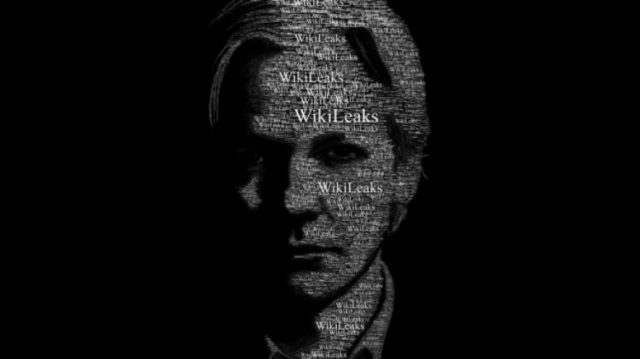
Can the Progressive-“Conspiracy” Divide be Bridged?

By John Kirby

Source: Off Guardian

People from a variety of advocacy communities who tackle issues ranging from the assassinations of the 1960’s to vaccine safety are rightly upset by a recent NBC News.com op-ed authored by Lynn Parramore, a progressive journalist known for her insightful pieces for Alternet and other outlets.

In the article, Parramore argues that those who espouse “conspiracy theories” might be displaying “narcissistic personality traits,” suffer from “low self-esteem,” and share a “negative view of humanity.” Various studies are cited in support of this claim.

As a filmmaker acquainted both with the author of the op-ed as well as a number of people from the communities under fire, I hope it’s possible to dispel some of the misconceptions on all sides and even find some common ground.

At the outset, it should be acknowledged that Parramore’s piece is an uncharacteristically harsh ad hominem smear, taking its place in a long line of similar attacks on people who have dared question—sometimes at great personal cost—a whole range of suspect official narratives over many years.

But Parramore and many journalists like her are neither assets of an intelligence service nor unthinking tools of big media; she is fully conscious of the ways in which power and wealth can be used collusively (one might even say conspiratorially) to deceive and abuse the public.

So what accounts for a piece like this one?  Why does it rankle a progressive like Parramore so intensely when she hears someone mention that the U.S. military-industrial complex had the most to gain from the September 11th attacks, or that Big Pharma may be applying the same racketeering techniques to the ever-expanding vaccination schedule she discovered at play in the opioid crisis?

Those of us who have labored long to publicize state crimes against democracy have our own list of the psychological, political, and economic factors that may be preventing smart people from seeing evidence that we regard as overwhelming.

The primary difficulty may lie in just how smart and thoroughly educated many of these writers are: no one who has spent a lifetime looking into the way the world works wants to think they might have missed something big.

And as Noam Chomsky has pointed out, the more educated we are, the more we are a target for state-corporate propaganda. Even journalists outside the mainstream may internalize establishment values and prejudices.

Which brings us to Parramore’s embrace of the term “conspiracy theory.”   Once a neutral and little-used phrase, “conspiracy theory” was infamously weaponized in 1967 by a memo from the CIA to its station chiefs worldwide.

Troubled by growing mass disbelief in the “lone nut” theory of President Kennedy’s assassination, and concerned that “[c]onspiracy theories have frequently thrown suspicion on our organization,” the agency directed its officers to “discuss the publicity problem with friendly and elite contacts (especially politicians and editors)” and to “employ propaganda assets to answer and refute the attacks of the critics. Book reviews and feature articles are particularly appropriate for this purpose.”

As Kevin Ryan writes, and various analyses have shown:

In the 45 years before the CIA memo came out, the phrase ‘conspiracy theory’ appeared in the Washington Post and New York Times only 50 times, or about once per year. In the 45 years after the CIA memo, the phrase appeared 2,630 times, or about once per week.”

While it turns out that Parramore knows something about this hugely successful propaganda drive, she chose in her NBC piece to deploy the phrase as the government has come to define it, i.e., as “something that requires no consideration because it is obviously not true.”  This embeds a fallacy in her argument which only spreads as she goes on.

Likewise, the authors of the studies she cites, who attempt to connect belief in “conspiracy theories” to “narcissistic personality traits,” are not immune to efforts to manipulate the wider culture. Studies are only as good as the assumptions from which they proceed; in this case, the assumption was provided by an interested Federal agency.

And what of their suggested diagnosis?

The DSM-5’s criteria for narcissism include “a pervasive pattern of grandiosity…a need for admiration and lack of empathy.”  My experience in talking to writers and advocates who—to mention a few of the subjects Parramore cites—seek justice in the cases of the political murders of the Sixties, have profound concerns about vaccine safetyor reject the official conspiracy theory of 9/11, does not align with that characterization.

On the contrary, most of the people I know who hold these varied (and not always shared) views are deeply empathic, courageously humble, and resigned to a life on the margins of official discourse, even as they doggedly seek to publicize what they have learned.

A number of them have arrived at their views through painful, direct experience, like the loss of a friend or the illness of a child, but far from having a “negative view of humanity,” as Parramore writes, most hold a deep and abiding faith in the power of regular people to see injustice and peacefully oppose it.

In that regard, they share a great deal in common with writers like Parramore: ultimately, we all want what’s best for our children, and none of us want a world ruled by unaccountable political-economic interests.

If we want to achieve that world, then we should work together to promote speech that is free from personal attacks on all sides. Even more importantly, we should all be troubled by efforts to shut down content and discussions labeled “false and misleading” on major social media platforms.

Who will decide what is false and what is true?

In the case of vaccines, there is actually no scientific consensus that they are safe—only a state-media consensus, emanating from groups like the CDC, which act as sales agents for Big Pharma.

A terrible precedent is being set, and both unfettered scientific inquiry and free speech are suffering greatly. Today it is vaccines and “conspiracy theories” that are being banned and labeled “dangerous” by the FBI. What will we be prevented, scared, or shamed away from discussing tomorrow?

President Kennedy said:

a nation that is afraid to let its people judge the truth and falsehood in an open market is a nation that is afraid of its people.”

Perhaps we should take a closer look at ideas that so frighten the powers-that-be. Far from inviting our ridicule, the people who insist that we look in these forbidden places may one day deserve our thanks.


John Kirby is a documentary filmmaker. His latest project, Four Died Trying, examines what John Kennedy, Malcolm X, Martin Luther King and Robert Kennedy were doing in the last years of their lives which may have led to their deaths.

Media Just Can’t Stop Presenting Horrifying Stories as ‘Uplifting’ Perseverance Porn

By Alan Macleod

Source: FAIR.org

“THIS IS AWESOME!” That’s how Fox 5 DC described its story (5/28/19) about Logan Moore of Cedartown, GA, a disabled two-year-old whose parents were unable to afford to buy him a walker, so employees at Home Depot fashioned one together themselves for him.

“No… it’s not awesome at all. It’s a painful indictment of the state of healthcare in America,” reads the first comment under this tweet by Fox 5 DC (5/28/19).

The story closely resembles another recent CNN report (4/1/19): “A Two-Year-Old Couldn’t Walk on His Own. So a High School Robotics Team Built Him a Customized Toy Car.” That piece noted how Minnesotan toddler Cillian Jackson couldn’t walk due to a genetic condition, and how his parents couldn’t afford treatment. It described the ingenuity of the school children who built him a car, and Cillian’s new found freedom, but did not explore why a baby with a disability had been abandoned by US society.

The clear implication in these stories was that those children would have been left permanently unable to move if not for the help of underpaid employees or the kindness of other children. How many disabled American children with poor parents were not so lucky? The articles did not ask. Instead, they were presented as “uplifting” human interest pieces.

Cillian’s story is part of CNN’s Good Stuff series, which asks its readers:

Want more inspiring, positive news? Sign up for The Good Stuff, a newsletter for the good in life. It will brighten your inbox every Saturday morning.

Unfortunately, these stories are part of a popular trend of unintentionally horrifying “uplifting” news, which we at FAIR have catalogued before (FAIR.org, 8/3/17; 3/25/19), where out-of-touch corporate media give us supposedly charming, wholesome and positive news that actually, upon even minimal retrospection, reveals the dire conditions of late capitalism so many Americans now live under, and makes you feel worse after reading it.

A lot of these stories involve mothers and the extremely difficult circumstances of raising children in the US while poor. CNN’s “feel good” story (8/24/18) about a teacher sitting in a car with her student’s baby so the new mom could attend a job fair raised far more questions than it asked (which was zero). Why is there so little public childcare in the US? Should a new mother really need to immediately find a job so badly? Is this good for infants’ development?

On a similar subject, Good Morning America (7/17/18) describes the “trendy” new baby-shower gift of donating your pregnant co-worker your days off to give her maternity leave. Every country in the world except the US and Papua New Guinea guarantees paid maternity leave, meaning the trend is unlikely to catch on abroad.

Donated maternity leave is a “trendy” gift you don’t need—unless you live in the United States or Papua New Guinea (Good Morning America, 7/17/18).

Many outlets (CBS, 5/20/16; Huffington Post, 8/6/16; People, 4/11/16) cheerfully reported on how one man did at least 15 years of backbreaking labor as a night shift janitor at Boston College so his children could attend for free. But none even mentioned that if he lived in nearly any country in Western Europe, this wouldn’t have been necessary, as university there is free or virtually free to attend.

In fact, rather than discussing ballooning tuition costs, Yahoo! (11/15/17) used the story to take jabs at disloyal millennials:

Millennials move from job to job in order to climb the ladder…. For baby boomers and other generations…loyalty and dedication to a single company or career drove, and still drives, much of their working lives.

Any of these stories could have been used to explore the pressing social and economic realities of being poor in the United States, and having to work for things considered fundamental rights in other countries. But instead they are presented as uplifting features, something only possible if we unquestionably accept the political and economic system.

Kids Do the Darndest Things

Many of what Think Progress (8/2/18) labels “feel-good feel-bad stories” involve children doing things they wouldn’t have to in any reasonable society. CBS invites us to enjoy an account of a boy selling his Xbox computer to help his (single) mom (4/2/19), and another repairing his town’s ravaged roads himself (4/12/19). The Hill (6/10/19), meanwhile, describes a nine-year-old saving his pocket money to pay off his school friends’ “lunch debts.”

“Hardships were never an excuse for Moseley,” CNN (5/22/19) reports—as they are, implicitly, for homeless teens who aren’t offered millions in scholarships.

NBC (5/22/19) likewise shared the story of homeless Tennessee teen Tupac Moseley graduating high school as a valedictorian and earning many college scholarships, something that was widely reported (BBC, 5/22/19; Newsweek, 5/21/19; Business Insider, 5/21/19). NBC matter-of-factly noted that after his father died, Moseley’s family’s home was foreclosed and they were on the streets, accepting this situation without comment. This was still among the most critical of the reports, however, as many did not even describe why a child in the richest society in history became homeless. CNN’s report (5/22/19), for example, did not explain the background circumstances, let alone comment on them, and frames the story with the sentence, “Hardships were never an excuse for Moseley.”

This sentence is telling: To corporate media, even the trauma of losing a parent and being forced onto the streets is merely an excuse, not a cause for poor grades. The implication is that poor housing, a lack of an adequate safety net, underfunded schools and a decimated public education system are simply excuses from bellyaching lazy people as to why they did not attend the private Boston University (at over $54,000 per year tuition), like the article’s author did.

“No excuses” is a common phrase in “perseverance porn” stories. For example, Today (2/20/17) used it in the headline of a story about a Texas man who is forced to walk 15 miles to work every day. It reveals the ultimate bootstrap ideology of the media, where societal factors are irrelevant and everyone is where they are on merit.

Thus Moseley’s story is effectively weaponized by CNN against anyone who would question the system. Terrible work conditions? No excuses! Homeless? Stop complaining!

In case you thought homeless children were something of an aberration in America, CNN (7/2/19) also recently ran a story about how over 100 homeless children graduated high school in New York City this year alone—again without comment on what this says about US society.

Another reprehensible story treated as heroic by media was that of a Michigan mother who had to quit her job to look after her terminally ill son, who died of leukemia. She could not afford a headstone, so his best friend, 12-year-old Kaleb Klakulak, worked many jobs to attempt to pay for one. Many media outlets (e.g., Associated Press, 12/8/18; Fox News, 12/9/18; NBC Chicago, 12/12/18) celebrated Kaleb’s spirit, but none asked why children are  performing hard, outdoor labor through a Michigan winter so other children can have adequate burials. Such reporting implicitly normalizes this situation, and the system that allows it to happen.

“Sweet” Stories

A common media trope is presenting kids selling lemonade as cute,  sweet stories, no matter how horrifying or depressing the reason, including to pay off school lunch debts (Yahoo! News, 5/21/19; MSN, 5/22/19), or to raise money for their baby brother’s medical treatment (New York Post, 5/28/18; CBS, 5/29/18) or their mother’s chemotherapy (KTSM El Paso, 8/4/18).

Such stories (CBS, 5/29/18) rarely if ever ask why a baby with a life-threatening illness is forced to rely on his nine-year-old brother’s selling lemonade to pay for treatment.

Or how about the story of a New Mexico girl selling lemonade trying to fund her mother’s kidney transplant? People magazine (5/9/18) applauded her resolve, and local radio described it as “heartwarming” that she had raised over $1,000. The massive problem is a kidney transplant in America can cost over $400,000. To anyone with a heart, what this story actually represents is the desperate struggle of a child trying in vain to save her dying mother. Worse still is the fact that if she lived in Sweden, Spain or Saskatchewan, she would be given a kidney free of charge and without question.

Any of the numerous other outlets (ABC, 4/30/18; Good Morning America, 5/1/18; Albuquerque Journal, 4/30/18) that picked it up could have used the story to discuss the dysfunctional healthcare system that is the leading cause of bankruptcy in the country, while producing some of the worst health outcomes in the developed world, or to scrutinize how corporate healthcare gouges the sickest and most vulnerable Americans, including children. Surely the most basic function of government should be to prevent its citizens from needlessly dying? Not if you wholly accept the tenets of neoliberalism, where education, housing and healthcare are not basic, inalienable human rights, but commodities to be bought and sold and bargained for on the market.

To be clear, while we can admire the never-say-die attitude of those in tough conditions, this is no substitute for guaranteed public programs to help those in dire need. The problem with perseverance porn is not the brave subjects of the articles, but the lack of any journalistic scrutiny examining the failings of society that placed them in such desperate circumstances to begin with.

What these articles highlight so clearly is not only the grim, inhuman and unnecessary conditions so many Americans are forced to live under, but the degree to which mainstream corporate journalists have completely internalized them as unremarkable, inevitable facts of life, rather than the consequences of decades of neoliberal policies that have robbed Americans of dignity and basic human rights. Because corporate media wholly accept and promote neoliberal, free-market doctrine, they are unable to see how what they see as “awesome” is actually a manifestation of late-capitalist dystopia.