After the Crash

Dispatches From a Long Recovery (Est. 10/2024)

After the Crash

3 Questions You’re Never Supposed to Ask After a Terrorist Attack

By Isaac Davis

Source: Waking Times

In a world where defense budgets are astronomical and wars of occupation and destabilization never end, political leaders in the UK and in Europe want you accept street level terror as the new everyday normal. The attacks are unstoppable, they say, and the world must embrace this hopelessness with faith that the government is doing all it can to create a better, safer world. Run, hide, and call the authorities, for you are helpless in this reality, so they say. But who creates and sustains this reality?

Terrorism is defined as the use of violence in the pursuit of political aims, and as politicians respond to terrorism by holding news conferences, posing, grandstanding, eulogizing, weeping for the cameras, applauding first responders and proposing legislation, so many of the important questions which can help guide us out of such a gloomy future are going unasked and unanswered. And these questions are always the same for any of these attacks, be it the London attacks, Manchester, Orlando, the Boston marathon, 7/7 or 9/11.

Here are three things we should be always ask about when Islamic terror , all of which are fair questions for any of the major terror attacks happening in Western nations.

1. In what ways do Western governments contribute to the problem of Islamic terror?

The media wants you to believe that this type of terror is unrelated to government policies and actions, thus attempting to divorce them from the greater context of geopolitics and the decades long push toward globalist world government. But how do Western governments contribute to the problem of terrorism?

Do never-ending occupations of Middle Eastern conditions and the wrecking of stable nations contribute to terrorism? Does supplying arms and financial support to known terrorist organizations make attacks in Western nations more likely? Does bombing infrastructure, hospitals and civilians in foreign nations play a role? Does promoting and supporting the massive influx of Middle Eastern and African migrants into Western nations have an effect? Does permitting known radicals and others on terror watch lists to operate freely in the West make it more likely that events like the London Bridge attack will occur? Does preventing and punishing people for speaking out in defense of their own nations and customs contribute to the situation?

2. How does government benefit from the reaction to the problem?

Terror creates fear, insecurity, panic, uncertainty, chaos, anger, hate and irrationality, and none are more easily lorded over than those living in terror. Historically, governments make exceptional gains in power and authority when their citizens are psychologically abused.

3. What is the pre-packaged government solution to the problem?

In the case of the London Bridge attacks, the very next day, UK Prime Minister Theresa May called for government regulation of the internet, a demand which is now being echoed by wise politicians and pundits. But this measure was already being floated, it just a dramatic push for it to gain popularity.

Whether it is the Patriot Act, the pre-planned invasion of Afghanistan, calls to restrict the 2nd Amendment, greater government surveillance, increased spending on war and police state security measures, the detainment of innocent people or torture of detainees, the government always has a solution in place before an attack happens.

Final Thoughts

Accepting terror as the norm is absolutely unacceptable and must be totally rejected by people who wish to live in peace and prosperity, which will forever remain impossible while government is allowed to contribute and benefit from terror.

The Government Is Still the Enemy of Freedom

By John W. Whitehead

Source: The Rutherford Institute

“Rights aren’t rights if someone can take them away. They’re privileges. That’s all we’ve ever had in this country, is a bill of temporary privileges. And if you read the news even badly, you know that every year the list gets shorter and shorter. Sooner or later, the people in this country are gonna realize the government … doesn’t care about you, or your children, or your rights, or your welfare or your safety… It’s interested in its own power. That’s the only thing. Keeping it and expanding it wherever possible.”— George Carlin

My friends, we’re being played for fools.

On paper, we may be technically free.

In reality, however, we are only as free as a government official may allow.

We only think we live in a constitutional republic, governed by just laws created for our benefit.

Truth be told, we live in a dictatorship disguised as a democracy where all that we own, all that we earn, all that we say and do—our very lives—depends on the benevolence of government agents and corporate shareholders for whom profit and power will always trump principle. And now the government is litigating and legislating its way into a new framework where the dictates of petty bureaucrats carry greater weight than the inalienable rights of the citizenry.

We’re in trouble, folks.

Freedom no longer means what it once did.

This holds true whether you’re talking about the right to criticize the government in word or deed, the right to be free from government surveillance, the right to not have your person or your property subjected to warrantless searches by government agents, the right to due process, the right to be safe from soldiers invading your home, the right to be innocent until proven guilty and every other right that once reinforced the founders’ belief that this would be “a government of the people, by the people and for the people.”

Not only do we no longer have dominion over our bodies, our families, our property and our lives, but the government continues to chip away at what few rights we still have to speak freely and think for ourselves.

If the government can control speech, it can control thought and, in turn, it can control the minds of the citizenry.

The unspoken freedom enshrined in the First Amendment is the right to think freely and openly debate issues without being muzzled or treated like a criminal.

In other words, if we no longer have the right to tell a Census Worker to get off our property, if we no longer have the right to tell a police officer to get a search warrant before they dare to walk through our door, if we no longer have the right to stand in front of the Supreme Court wearing a protest sign or approach an elected representative to share our views, if we no longer have the right to protest unjust laws by voicing our opinions in public or on our clothing or before a legislative body—no matter how misogynistic, hateful, prejudiced, intolerant, misguided or politically incorrect they might be—then we do not have free speech.

What we have instead is regulated, controlled speech, and that’s a whole other ballgame.

Protest laws, free speech zones, bubble zones, trespass zones, anti-bullying legislation, zero tolerance policies, hate crime laws and a host of other legalistic maladies dreamed up by politicians and prosecutors are conspiring to corrode our core freedoms purportedly for our own good.

For instance, the protest laws being introduced across the country—in 18 states so far—are supposedly in the name of “public safety and limiting economic damage.”

Don’t fall for it.

No matter how you package these laws, no matter how well-meaning they may sound, no matter how much you may disagree with the protesters or sympathize with the objects of the protest, these proposed laws are aimed at one thing only: discouraging dissent.

In Arizona, police would be permitted to seize the assets of anyone involved in a protest that at some point becomes violent.

In Minnesota, protesters would be forced to pay for the cost of having police on hand to “police” demonstrations.

Oregon lawmakers want to “require public community colleges and universities to expel any student convicted of participating in a violent riot.”

A proposed North Dakota law would give drivers the green light to “accidentally” run over protesters who are blocking a public roadway. Florida and Tennessee are entertaining similar laws.

Pushing back against what it refers to as “economic terrorism,” Washington wants to increase penalties for protesters who block access to highways and railways.

Anticipating protests over the Keystone Pipeline, South Dakota wants to apply the governor’s emergency response authority to potentially destructive protests, create new trespassing penalties and make it a crime to obstruct highways.

In Iowa, protesters who block highways with speeds posted above 55 mph could spend five years in prison, plus a fine of up to $7,500. Obstruct traffic in Mississippi and you could be facing a $10,000 fine and a five-year prison sentence.

A North Carolina law would make it a crime to heckle state officials. Under this law, shouting at a former governor would constitute a crime.

Indiana lawmakers wanted to authorize police to use “any means necessary” to breakup mass gatherings that block traffic. That legislation has since been amended to merely empower police to issue fines for such behavior.

Georgia is proposing harsh penalties and mandatory sentencing laws for those who obstruct public passages or throw bodily fluids on “public safety officers.”

Virginia wants to subject protesters who engage in an “unlawful assembly” after “having been lawfully warned to disperse” with up to a year of jail time and a fine of up to $2,500.

Missouri wants to make it illegal for anyone participating in an “unlawful assembly” to intentionally conceal “his or her identity by the means of a robe, mask, or other disguise.”

Colorado wants to lock up protesters for up to 18 months who obstruct or tamper with oil and gas equipment and charge them with up to $100,000 in fines.

Oklahoma wants to create a sliding scale for protesters whose actions impact or impede critical infrastructure. The penalties would range from $1,000 and six months in a county jail to $100,000 and up to 10 years in prison. And if you’re part of an organization, that fine goes as high as $1,000,000.

Michigan hopes to make it easier for courts to shut down “mass picketing” demonstrations and fine protesters who block entrances to businesses, private residences or roadways up to $1,000 a day. That fine jumps to $10,000 a day for unions or other organizing groups.

Ask yourself: if there are already laws on the books in all of the states that address criminal or illegal behavior such as blocking public roadways or trespassing on private property—because such laws are already on the books—then why does the government need to pass laws criminalizing activities that are already outlawed?

What’s really going on here?

No matter what the politicians might say, the government doesn’t care about our rights, our welfare or our safety.

How many times will we keep falling for the same tricks?

Every despotic measure used to control us and make us cower and fear and comply with the government’s dictates has been packaged as being for our benefit, while in truth benefiting only those who stand to profit, financially or otherwise, from the government’s transformation of the citizenry into a criminal class.

Remember, the Patriot Act didn’t make us safer. It simply turned American citizens into suspects and, in the process, gave rise to an entire industry—private and governmental—whose profit depends on its ability to undermine our Fourth Amendment rights.

Placing TSA agents in our nation’s airports didn’t make us safer. It simply subjected Americans to invasive groping, ogling and bodily searches by government agents. Now the TSA plans to subject travelers to even more “comprehensive” patdowns.

So, too, these protest laws are not about protecting the economy or private property or public roads. Rather, they are intended to muzzle discontent and discourage anyone from challenging government authority.

These laws are the shot across the bow.

They’re intended to send a strong message that in the American police state, you’re either a patriot who marches in lockstep with the government’s dictates or you’re a pariah, a suspect, a criminal, a troublemaker, a terrorist, a radical, a revolutionary.

Yet by muzzling the citizenry, by removing the constitutional steam valves that allow people to speak their minds, air their grievances and contribute to a larger dialogue that hopefully results in a more just world, the government is deliberately stirring the pot, creating a climate in which violence becomes inevitable.

When there is no steam valve—when there is no one to hear what the people have to say, because government representatives have removed themselves so far from their constituents—then frustration builds, anger grows and people become more volatile and desperate to force a conversation.

Then again, perhaps that was the government’s plan all along.

As John F. Kennedy warned in March 1962, “Those who make peaceful revolution impossible will make violent revolution inevitable.”

The government is making violent revolution inevitable.

How do you lock down a nation?

You sow discontent and fear among the populace. You terrorize the people into believing that radicalized foreigners are preparing to invade. You teach them to be non-thinkers who passively accept whatever is told them, whether it’s delivered by way of the corporate media or a government handler. You brainwash them into believing that everything the government does is for their good and anyone who opposes the government is an enemy. You acclimate them to a state of martial law, carried out by soldiers disguised as police officers but bearing the weapons of war. You polarize them so that they can never unite and stand united against the government. You create a climate in which silence is golden and those who speak up are shouted down. You spread propaganda and lies. You package the police state in the rhetoric of politicians.

And then, when and if the people finally wake up to the fact that the government is not and has never been their friend, when it’s too late for peaceful protests and violence is all that remains to them as a recourse against tyranny, you use all of the tools you’ve been so carefully amassing—the criminal databases and surveillance and identification systems and private prisons and protest laws—and you shut them down for good.

As I make clear in my book Battlefield America: The War on the American People, once a government assumes power—unconstitutional or not—it does not relinquish it. The militarized police are not going to stand down. The NSA will continue to collect electronic files on everything we do. More and more Americans are going to face jail time for offenses that prior generations did not concern themselves with.

The government—at all levels—could crack down on virtually anyone at any time.

Martin Luther King saw it coming: both the “spontaneous explosion of anger by various citizen groups” and the ensuing crackdown by the government.

“Police, national guard and other armed bodies are feverously preparing for repression,” King wrote shortly before he was assassinated. “They can be curbed not by unorganized resort to force…but only by a massive wave of militant nonviolence….It also may be the instrument of our national salvation.”

Militant nonviolent resistance.

“A nationwide nonviolent movement is very important,” King wrote. “We know from past experience that Congress and the President won’t do anything until you develop a movement around which people of goodwill can find a way to put pressure on them… This means making the movement powerful enough, dramatic enough, morally appealing enough, so that people of goodwill, the churches, laborers, liberals, intellectuals, students, poor people themselves begin to put pressure on congressmen to the point that they can no longer elude our demands.

“It must be militant, massive nonviolence,” King emphasized.

In other words, besides marches and protests, there would have to be civil disobedience. Civil disobedience forces the government to expend energy in many directions, especially if it is nonviolent, organized and is conducted on a massive scale. This is, as King knew, the only way to move the beast. It is the way to effect change without resorting to violence. And it is exactly what these protest laws are attempting to discourage

We are coming to a crossroads. Either we gather together now and attempt to restore freedom or all will be lost. As King cautioned, “everywhere, ‘time is winding up,’ in the words of one of our spirituals, corruption in the land, people take your stand; time is winding up.”


ABOUT JOHN W. WHITEHEAD

Constitutional attorney and author John W. Whitehead is founder and president of The Rutherford Institute. His new book Battlefield America: The War on the American People (SelectBooks, 2015) is available online at http://www.amazon.com. Whitehead can be contacted at johnw@rutherford.org.


The United States of Work

Employers exercise vast control over our lives, even when we’re not on the job. How did our bosses gain power that the government itself doesn’t hold?

By Miya Tokumitsu

Source: New Republic

Work no longer works. “You need to acquire more skills,” we tell young job seekers whose résumés at 22 are already longer than their parents’ were at 32. “Work will give you meaning,” we encourage people to tell themselves, so that they put in 60 hours or more per week on the job, removing them from other sources of meaning, such as daydreaming or social life. “Work will give you satisfaction,” we insist, even though it requires abiding by employers’ rules, and the unwritten rules of the market, for most of our waking hours. At the very least, work is supposed to be a means to earning an income. But if it’s possible to work full time and still live in poverty, what’s the point?

Even before the global financial crisis of 2008, it had become clear that if waged work is supposed to provide a measure of well-being and social structure, it has failed on its own terms. Real household wages in the United States have remained stagnant since the 1970s, even as the costs of university degrees and other credentials rise. Young people find an employment landscape defined by unpaid internships, temporary work, and low pay. The glut of degree-holding young workers has pushed many of them into the semi- or unskilled labor force, making prospects even narrower for non–degree holders. Entry-level wages for high school graduates have in fact fallen. According to a study by the Federal Reserve Bank of New York, these lost earnings will depress this generation’s wages for their entire working lives. Meanwhile, those at the very top—many of whom derive their wealth not from work, but from returns on capital—vacuum up an ever-greater share of prosperity.

Against this bleak landscape, a growing body of scholarship aims to overturn our culture’s deepest assumptions about how work confers wealth, meaning, and care throughout society. In Private Government: How Employers Rule Our Lives (and Why We Don’t Talk About It), Elizabeth Anderson, a professor of philosophy at the University of Michigan, explores how the discipline of work has itself become a form of tyranny, documenting the expansive power that firms now wield over their employees in everything from how they dress to what they tweet. James Livingston, a historian at Rutgers, goes one step further in No More Work: Why Full Employment Is a Bad Idea. Instead of insisting on jobs for all or proposing that we hold employers to higher standards, Livingston argues, we should just scrap work altogether.

Livingston’s vision is the more radical of the two; his book is a wide-ranging polemic that frequently delivers the refrain “Fuck work.” But in original ways, both books make a powerful claim: that our lives today are ruled, above all, by work. We can try to convince ourselves that we are free, but as long as we must submit to the increasing authority of our employers and the labor market, we are not. We therefore fancy that we want to work, that work grounds our character, that markets encompass the possible. We are unable to imagine what a full life could be, much less to live one. Even more radically, both books highlight the dramatic and alarming changes that work has undergone over the past century—insisting that, in often unseen ways, the changing nature of work threatens the fundamental ideals of democracy: equality and freedom.

Anderson’s most provocative argument is that large companies, the institutions that employ most workers, amount to a de facto form of government, exerting massive and intrusive power in our daily lives. Unlike the state, these private governments are able to wield power with little oversight, because the executives and boards of directors that rule them are accountable to no one but themselves. Although they exercise their power to varying degrees and through both direct and “soft” means, employers can dictate how we dress and style our hair, when we eat, when (and if) we may use the toilet, with whom we may partner and under what arrangements. Employers may subject our bodies to drug tests; monitor our speech both on and off the job; require us to answer questionnaires about our exercise habits, off-hours alcohol consumption, and childbearing intentions; and rifle through our belongings. If the state held such sweeping powers, Anderson argues, we would probably not consider ourselves free men and women.

Employees, meanwhile, have few ways to fight back. Yes, they may leave the company, but doing so usually necessitates being unemployed or migrating to another company and working under similar rules. Workers may organize, but unions have been so decimated in recent years that their clout is greatly diminished. What’s more, employers are swift to fire anyone they suspect of speaking to their colleagues about organizing, and most workers lack the time and resources to mount a legal challenge to wrongful termination.

It wasn’t supposed to be this way. As corporations have worked methodically to amass sweeping powers over their employees, they have held aloft the beguiling principle of individual freedom, claiming that only unregulated markets can guarantee personal liberty. Instead, operating under relatively few regulations themselves, these companies have succeeded at imposing all manner of regulation on their employees. That is to say, they use the language of individual liberty to claim that corporations require freedom to treat workers as they like.

Anderson sets out to discredit such arguments by tracing them back to their historical origins. The notion that personal freedom is rooted in free markets, for instance, originated with the Levellers in seventeenth-century England, when working conditions differed substantially from today’s. The Levellers believed that a market society was essential to liberate individuals from the remnants of feudal hierarchies; their vision of utopia was a world in which men could meet and interact on terms of equality and dignity. Their ideas echoed through the writing and politics of later figures like John Locke, Adam Smith, Thomas Paine, and Abraham Lincoln, all of whom believed that open markets could provide the essential infrastructure for individuals to shape their own destiny.

An anti-statist streak runs through several of these thinkers, particularly the Levellers and Paine, who viewed markets as the bulwark against state oppression. Paine and Smith, however, would hardly qualify as hard-line contemporary libertarians. Smith believed that public education was essential to a fair market society, and Paine proposed a system of social insurance that included old-age pensions as well as survivor and disability benefits. Their hope was not for a world of win-or-die competition, but one in which open markets would allow individuals to make the fullest use of their talents, free from state monopolies and meddlesome bosses.

For Anderson, the latter point is essential; the notion of lifelong employment under a boss was anathema to these earlier visions of personal freedom. Writing in the 1770s, Smith assumes that independent actors in his market society will be self-employed, and uses butchers and bakers as his exemplars; his “pin factory,” meant to illustrate division of labor, employs only ten people. These thinkers could not envision a world in which most workers spend most of their lives performing wage labor under a single employer. In an address before the Wisconsin State Agricultural Society in 1859, Lincoln stated, “The prudent, penniless beginner in the world labors for wages awhile, saves a surplus with which to buy tools or land for himself, then labors on his own account another while, and at length hires another new beginner to help him.” In other words, even well into the nineteenth century, defenders of an unregulated market society viewed wage labor as a temporary stage on the way to becoming a proprietor.

Lincoln’s scenario does not reflect the way most people work today. Yet the “small business owner” endures as an American stock character, conjured by politicians to push through deregulatory measures that benefit large corporations. In reality, thanks to a lack of guaranteed, nationalized health care and threadbare welfare benefits, setting up a small business is simply too risky a venture for many Americans, who must rely on their employers for health insurance and income. These conditions render long-term employment more palatable than a precarious existence of freelance gigs, which further gives companies license to oppress their employees.

The modern relationship between employer and employee began with the rise of large-scale companies in the nineteenth century. Although employment contracts date back to the Middle Ages, preindustrial arrangements bore little resemblance to the documents we know today. Like modern employees, journeymen and apprentices often served their employers for years, but masters performed the same or similar work in proximity to their subordinates. As a result, Anderson points out, working conditions—the speed required of workers and the hazards to which they might be exposed—were kept in check by what the masters were willing to tolerate for themselves.

The Industrial Revolution brought radical changes, as companies grew ever larger and management structures more complex. “Employers no longer did the same kind of work as employees, if they worked at all,” Anderson observes. “Mental labor was separated from manual labor, which was radically deskilled.” Companies multiplied rapidly in size. Labor contracts now bonded workers to massive organizations in which discipline, briefs, and decrees flowed downward, but whose leaders were unreachable by ordinary workers. Today, fast food workers or bank tellers would be hard-pressed to petition their CEOs at McDonald’s or Wells Fargo in person.

Despite this, we often speak of employment contracts as agreements between equals, as if we are living in Adam Smith’s eighteenth-century dream world. In a still-influential paper from 1937 titled “The Nature of the Firm,” the economist and Nobel laureate Ronald Coase established himself as an early observer and theorist of corporate concerns. He described the employment contract not as a document that handed the employer unaccountable powers, but as one that circumscribed those powers. In signing a contract, the employee “agrees to obey the directions of an entrepreneur within certain limits,” he emphasized. But such characterizations, as Anderson notes, do not reflect reality; most workers agree to employment without any negotiation or even communication about their employer’s power or its limits. The exceptions to this rule are few and notable: top professional athletes, celebrity entertainers, superstar academics, and the (increasingly small) groups of workers who are able to bargain collectively.

Yet because employment contracts create the illusion that workers and companies have arrived at a mutually satisfying agreement, the increasingly onerous restrictions placed on modern employees are often presented as “best practices” and “industry standards,” framing all sorts of behaviors and outcomes as things that ought to be intrinsically desired by workers themselves. Who, after all, would not want to work on something in the “best” way? Beyond employment contracts, companies also rely on social pressure to foster obedience: If everyone in the office regularly stays until seven o’clock every night, who would risk departing at five, even if it’s technically allowed? Such social prods exist alongside more rigid behavioral codes that dictate everything from how visible an employee’s tattoo can be to when and how long workers can break for lunch.

Many workers, in fact, have little sense of the legal scope of their employer’s power. Most would be shocked to discover that they could be fired for being too attractive, declining to attend a political rally favored by their employer, or finding out that their daughter was raped by a friend of the boss—all real-life examples cited by Anderson. Indeed, it is only after dismissal for such reasons that many workers learn of the sweeping breadth of at-will employment, the contractual norm that allows American employers to fire workers without warning and without cause, except for reasons explicitly deemed illegal.

In reality, the employment landscape is even more dire than Anderson outlines. The rise of staffing or “temp” agencies, for example, undercuts the very idea of a direct relationship between worker and employer. In The Temp Economy: From Kelly Girls to Permatemps in Postwar America, sociologist Erin Hatton notes that millions of workers now labor under subcontracting arrangements, which give employers even greater latitude to abuse employees. For years, Walmart—America’s largest retailer—used a subcontracting firm to hire hundreds of cleaners, many from Eastern Europe, who worked for months on end without overtime pay or a single day off. After federal agents raided dozens of Walmarts and arrested the cleaners as illegal immigrants, company executives used the subcontracting agreement to shirk responsibility for their exploitation of the cleaners, claiming they had no knowledge of their immigration status or conditions.

By any reasonable standard, much “temp” work is not even temporary. Employees sometimes work for years in a single workplace, even through promotions, without ever being granted official status as an employee. Similarly, “gig economy” platforms like Uber designate their workers as contractors rather than employees, a distinction that exempts the company from paying them minimum wage and overtime. Many “permatemps” and contractors perform the same work as employees, yet lack even the paltry protections and benefits awarded to full-time workers.

A weak job market, paired with the increasing precarity of work, means that more and more workers are forced to make their living by stringing together freelance assignments or winning fixed-term contracts, subjecting those workers to even more rules and restrictions. On top of their actual jobs, contractors and temp workers must do the additional work of appearing affable and employable not just on the job, but during their ongoing efforts to secure their next gig. Constantly pitching, writing up applications, and personal branding on social media requires a level of self-censorship, lest a controversial tweet or compromising Facebook photo sink their job prospects. Forced to anticipate the wishes not of a specific employer, but of all potential future employers, many opt out of participating in social media or practicing politics in any visible capacity. Their public personas are shaped not by their own beliefs and desires, but by the demands of the labor market.


For Livingston, it’s not just employers but work itself that is the problem. We toil because we must, but also because our culture has trained us to see work as the greatest enactment of our dignity and personal character. Livingston challenges us to turn away from such outmoded ideas, rooted in Protestant ideals. Like Anderson, he sweeps through centuries of labor theory with impressive efficiency, from Marx and Hegel to Freud and Lincoln, whose 1859 speech he also quotes. Livingston centers on these thinkers because they all found the connection between work and virtue troubling. Hegel believed that work causes individuals to defer their desires, nurturing a “slave morality.” Marx proposed that “real freedom came after work.” And Freud understood the Protestant work ethic as “the symptom of repression, perhaps even regression.”

Nor is it practical, Livingston argues, to exalt work: There are simply not enough jobs to keep most adults employed at a living wage, given the rise of automation and increases in productivity. Besides, the relation between income and work is arbitrary. Cooking dinner for your family is unpaid work, while cooking dinner for strangers usually comes with a paycheck. There’s nothing inherently different in the labor involved—only in the compensation. Anderson argues that work impedes individual freedom; Livingston points out that it rarely pays enough. As technological advances continue to weaken the demand for human labor, wages will inevitably be driven down even further. Instead of idealizing work and making it the linchpin of social organization, Livingston suggests, why not just get rid of it?

Livingston belongs to a cadre of thinkers, including Kathi Weeks, Nick Srnicek, and Alex Williams, who believe that we should strive for a “postwork” society in one form or another. Strands of this idea go back at least as far as Keynes’s 1930 essay on “Economic Possibilities for our Grandchildren.” Not only would work be eliminated or vastly reduced by technology, Keynes predicted, but we would also be unburdened spiritually. Devotion to work was, he deemed, one of many “pseudo-moral principles” that “exalted some of the most distasteful of human qualities into the position of the highest virtues.”

Since people in this new world would no longer have to earn a salary, they would, Livingston envisions, receive some kind of universal basic income. UBI is a slippery concept, adaptable to both the socialist left and libertarian right, but it essentially entails distributing a living wage to every member of society. In most conceptualizations, the income is indeed basic—no cases of Dom Pérignon—and would cover the essentials like rent and groceries. Individuals would then be free to choose whether and how much they want to work to supplement the UBI. Leftist proponents tend to advocate pairing UBI with a strong welfare state to provide nationalized health care, tuition-free education, and other services. Some libertarians view UBI as a way to pare down the welfare state, arguing that it’s better simply to give people money to buy food and health care directly, rather than forcing them to engage with food stamp and Medicaid bureaucracies.

According to Livingston, we are finally on the verge of this postwork society because of automation. Robots are now advanced enough to take over complex jobs in areas like agriculture and mining, eliminating the need for humans to perform dangerous or tedious tasks. In practice, however, automation is a double-edged sword, with the capacity to oppress as well as unburden. Machines often accelerate the rate at which humans can work, taxing rather than liberating them. Conveyor belts eliminated the need for workers to pass unfinished products along to their colleagues—but as Charlie Chaplin and Lucille Ball so hilariously demonstrated, the belts also increased the pace at which those same workers needed to turn wrenches and wrap chocolates. In retail and customer service, a main function of automation has been not to eliminate work, but to eliminate waged work, transferring much of the labor onto consumers, who must now weigh and code their own vegetables at the supermarket, check out their own library books, and tag their own luggage at the airport.

At the same time, it may be harder to automate some jobs that require a human touch, such as floristry or hairstyling. The same goes for the delicate work of caring for the young, sick, elderly, or otherwise vulnerable. In today’s economy, the demand for such labor is rising rapidly: “Nine of the twelve fastest-growing fields,” The New York Times reported earlier this year, “are different ways of saying ‘nurse.’” These jobs also happen to be low-paying, emotionally and physically grueling, dirty, hazardous, and shouldered largely by women and immigrants. Regardless of whether employment is virtuous or not, our immediate goal should perhaps be to distribute the burdens of caregiving, since such work is essential to the functioning of society and benefits us all.


A truly work-free world is one that would entail a revolution from our present social organizations. We could no longer conceive of welfare as a last resort—as the “safety net” metaphor implies—but would be forced to treat it as an unremarkable and universal fact of life. This alone would require us to support a massive redistribution of wealth, and to reclaim our political institutions from the big-money interests that are allergic to such changes. Tall orders indeed—but as Srnicek and Williams remind us in their book, Inventing the Future: Postcapitalism and a World Without Work, neoliberals pulled off just such a revolution in the postwar years. Thanks to their efforts, free-market liberalism replaced Keynesianism as the political and economic common sense all around the world.

Another possible solution to the current miseries of unemployment and worker exploitation is the one Livingston rejects in his title: full employment. For anti-work partisans, full employment takes us in the wrong direction, and UBI corrects the course. But the two are not mutually exclusive. In fact, rather than creating new jobs, full employment could require us to reduce our work hours drastically and spread them throughout the workforce—a scheme that could radically de-center waged work in our lives. A dual strategy of pursuing full employment while also demanding universal benefits—including health care, childcare, and affordable housing—would maximize workers’ bargaining power to ensure that they, and not just owners of capital, actually get to enjoy the bounty of labor-saving technology.

Nevertheless, Livingston’s critiques of full employment are worth heeding. As with automation, it can all go wrong if we use the banner of full employment to create pointless roles—what David Graeber has termed “bullshit jobs,” in which workers sit in some soul-sucking basement office for eight hours a day—or harmful jobs, like building nuclear weapons. If we do not have a deliberate politics rooted in universal social justice, then full employment, a basic income, and automation will not liberate us from the degradations of work.

Both Livingston and Anderson reveal how much of our own power we’ve already ceded in making waged work the conduit for our ideals of liberty and morality. The scale and coordination of the institutions we’re up against in the fight for our emancipation is, as Anderson demonstrates, staggering. Employers hold the means to our well-being, and they have the law on their side. Individual efforts to achieve a better “work-life balance” for ourselves and our families miss the wider issue we face as waged employees. Livingston demonstrates the scale at which we should be thinking: Our demands should be revolutionary, our imaginations wide. Standing amid the wreckage of last year’s presidential election, what other choice do we have?


Miya Tokumitsu is a lecturer of art history at the University of Melbourne and a contributing editor at Jacobin. She is the author of Do What You Love.  And Other Lies about Success and Happiness.

We’ve Been Sold a Lie – Time to Stop Watching the Show

platonic_cave

By Julian Rose

Source: Waking Times

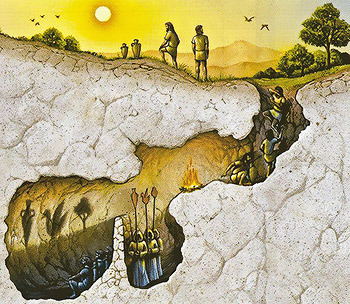
‘The show must go on’ as they say in the theatre. And indeed, so it would appear. Only this particular show seems to have no beginning or end. The curtain never comes down; there isn’t even an interval in which to draw breath and stretch one’s legs.

It’s a 24/7 bonanza, and the cost of a seat is almost certain to put you out-of-pocket. In spite of which, the auditorium is full of expectant faces staring up at the unfolding scenes and drinking in the drama being staged for their consumption.

So few actors, so many spectators. Yet the actors hold the attention and the spectators soon forget that they are in a theatre and have paid for their seats.

We are all at this performance. Its setting is planet Earth. The actors strut around feigning importance, playing the role ascribed to them by the writer of the script and the director of ‘the show’. You know who they are – you see them everyday on TV screens and newspapers. A few are quite convincing, and like most actors they feign true sincerity and then pause for the applause.

The director remains largely invisible, but in the background he has fixed the agenda and set the scene. The script writer also remains largely incognito. However, his words on the page provide the narrative without which the actors would not be able to perform their predesignated roles.

The cast of todays crowd pulling drama have names like May, Merkel and Trump. The play in which they are currently performing is entitled ‘If I Ruled the World’, and there are many other roles for aspiring lesser performers and even for some retired leading-lights of yesteryear.

New scripts continuously emerge so as ‘to keep the show on the road’. A recent hit, for example, was ‘Brexit’, a play in four acts, featuring a strong line-up of music hall performers as well as some fine orators, one of whom cut his teeth in the great performing venues of Continental Europe.

But look, these marionettes of the political charade called ‘democracy’ can only be where they are, and do what they do, because we give them centre stage. We let ourselves become embroiled in their show and convince ourselves that it’s the only show in town. But it’s not, and in spite of being big and noisy, it’s actually a facade designed and orchestrated by the hidden hands who pull the strings that tweak the marionettes into action. Very occasionally a true leader emerges. An individual who stands out for their empathy with a struggling humanity.

But for decades now, it is ‘the show’ that has contrived to dominate. A show kept in place by stage managers who ensure all the rules, regulations and disciplines are operating as they should. But it is we the people who elect the cast of this play. A cast who promise to reflect and represent our needs on the national stage. To bring change where change is needed and to stand firm in the role that they are given.

So you see, we are complicit in the maintenance of ‘the rules of the game’ that keep the control system under which we suffer, alive and well.

Those who we elect mostly fall at the first hurdle – and all their promises go with them. ‘The system’ is in charge, after all, and our elected representatives quickly fall under the spell of its mechanics and become victims of its sinister agenda. An agenda played-out on the global stage with the help of powerful centralized banks, mega corporations and a heavily funded military. Yes, this is the show we have paid to bring to town.

But we have been sold a lie. We have bought into a chimera, a charade, and the biggest part of the problem is that we fail to recognize this fact. We actually believe it is a bona fide happening, without which we would all be thrown into chaos and despair.

So it is that we cling on to this outworn model of ‘democracy’, fearful of what might happen if it were dismantled and consigned it to history. Fearful maybe, of what might emerge in its place.

But that’s no good, and you know it. Because what stands in front of us is a choice; to remain a slave to a system which cannot survive without slaves – or to break free and give form to something altogether different.

Are you ready to take such a step?

So what might bringing about something altogether different actually involve? We must have a go at answering this, because it is the most critical question of this era, one we all face today – whether we realize it or not.

What we are talking about is taking back control of our destinies, not giving responsibility for them to someone else. Try to conceive what this might be like.. Well, for a start, out goes ‘the politician’ and with him/her the central control system called ‘parliament’. By the way, parliament did once represent the venue for an ideal in the making. An aspiration to give voice to those who never had a voice and to introduce collective justice where only the will of a monarch had previously prevailed.

But such a situation has long been redundant, because parliament was hijacked decades ago by the hidden hand of centralised control, and the politician became a stooge for the banking, military and corporate power cartels seemingly beyond his control. That is why this ‘corrupted beyond repair’ model has to go.

There’s a new lightness in the air at the sheer mention of such an action! What is mainstream media going to talk about without the mock democracy to fill its airwaves? Where will attention be turned once the charade of politics is removed from its pompous pedestal? What would we like to see fill the vacant place?

Think about it, because almost nobody is, and that is in large part the reason why it hasn’t yet happened.

It is at around this point that something valuable starts stirring within, and the seeds of a fresh vision put forth their first shoots. The low vibratory rate of energy to which we have adapted, shifts upward a gear. The fog starts to clear. We can see more clearly what we couldn’t see at all before we dared dispense with the old lie.

The new perception looks and feels something like this: we are here on this world having something called ‘a life’. It might last seven or eight decades, or more, or less; but as far as we know, it’s the only one we’ve got. How did we acquire this special gift? What are we going to do with it? Since it’s special and quite unique – isn’t it logical that we would want to do something special and unique with it?

Once we see we’ve been sold a lie, our next logical realization is to recognize that it’s a massive waste of this one life we have, to pretend we can ignore reality. It is then that the possibility of something altogether different entering the arena, makes its unexpected debut.

“My God” it says “I want to live!” “I want to confront this lie head-on and cease running away from it!” And that is a truly revolutionary happening; one which can – in an instant – change our entire outlook on life. For although it’s only a beginning, it’s a real beginning, one full of promise for what might follow.

Looking back at the crazed and confused scenes taking place on the world stage, shifting like tides between high melodrama and low bestiality, we can now see that it is no use trying to paper-over the cracks and pretend that we can go on living life ‘as usual’. The cracks are the dominant factor and what lies in between is so insubstantial as to be of no practical use.

Our only way forward is to invent a new future. Open a fresh page in the book of life. Not ignoring the past, but getting to grips with understanding it – and then bringing it with us on the great new journey upon which one has embarked. Let a new found passion lead the way. Let intuition be your guide. Let awareness be your tool box.

If you had identified yourself with any facet of the crumbling status quo, you will soon find yourself untethered, because there is nothing left able to hold a stake to which you can attach yourself.

There is nowhere left to turn except into your own inner resources. For it is from this region that the new vision emerges. That place where truth still resides, untrammelled by the ways of the world.

And then, on peering ever deeper within, one can begin to see the emerging presence of another world altogether. A world awaiting birth. Longing for birth. Waiting to be born. A world shimmering with expectation and excitement. A world lit-up by luminous energies.

Men and women alike give birth to this great entity. It does not require a womb or a phallus, although it’s composition embraces the essence of female and male, finally liberated to give full focus to the building of the new society which it is our imperative to create.

Now is the time to set aside all that would try to close the window on our true destinies.

Here is where we will find the footings, the solid ground, from which we can start building the World to Come. A place to carry us through the storm which cannot be by-passed. That is our true work from now on.

The mad actors who strut the world stage today do not realize that they are playing-out the final scene of an apocalyptic epic. A drama devised and directed by the architects of control. Criminals, whose full exposure is ever closer at hand.

We are moving into an auspicious time. A time in which mankind frees itself from the prison that has for so long-held it hostage. An event which will break the cords of fear-induced captivity and finally bring down the curtain on this devious age of deception.

Anarchy vs. Statism: Uncontrolled Order Over Controlled Chaos

23b9159be655ca9b54290bca42db5736

By Gary ‘Z’ McGee

Source: Waking Times

“Knowledge makes a man unfit to be a slave.” ~Frederick Douglas

Caught up, as we are, in the politics of statism, it is often extremely difficult to see the forest for the trees. We’re often so busy pretending to think outside the box that we lose track of what’s “the box” and what’s not. We’re so inured by this system of exploitation that it’s often too easy to kiss each other with lies rather than smack each other with the truth.

Meanwhile, complacency sets in and inertia takes hold. Apathy takes root and ignorance becomes “bliss.” Our lives go on and we placate each other with such cowardly platitudes as, “It’s just the way things are,” or “Why fight it? There’s nothing we can do.” Bullshit!

This is not the way things are. This unhealthy system (statism) has separated you from the way things are (natural anarchy). Why fight? Derrick Jensen said it best, “We are the governors as well as the governed. This means that all of us who care about life need to force accountability onto those who do not.” You think there’s nothing you can do about it? Well, you could begin by educating yourself on what the difference between statism and anarchy really is.

Statism is controlled chaos under the illusion of order. Anarchy is uncontrolled chaos under the delusion of chaos. That’s the difference in a nutshell. But if the nutshell doesn’t suffice, please read on.

Controlled Chaos Under the Illusion of Order (Statism)

“Chaos is what we’ve lost touch with. This is why it is given a bad name. It is feared by the dominant archetype of our world, which is Ego, which clenches because its existence is defined in terms of control.” ~Terence McKenna

Statism is bureaucratic order. When order becomes bureaucratic it becomes an abstraction of an abstraction. It loses the essence of real order because it is in the throes of an “order” pigeonholed by fallible men claiming to hold infallible truths that become ill-conceived laws that generally don’t coincide with cosmic laws. Deception becomes rampant in such an illusory state. And the innocent people who are conditioned, brainwashed, and propagandized to no-end by such an illusory bamboozlement become easily manipulated into believing that man-made laws must be followed. Sometimes even at the expense of cosmic laws that should not be avoided.

Statism is the result of an obsolete idea (that has somehow (stupidly) withstood the test of time) held by a group with outdated notions of power lording such power over an ignorant majority. The small group of individuals harboring outdated notions of power want to remain in power –no matter how misguided, immoral, or downright stupid their notion of power is. And so they manipulate the hierarchical nature of statist dogma to keep themselves entrenched in their parochial seats of power, usually at great expense (exploitation, structural violence, violent expropriation, debt slavery, andenvironmental rape) to others.

Under their deceptive controlled chaos and unhealthy illusion of order, all healthy order falls in polluted disarray. Unnecessary poverty is rampant. Avoidable wars are waged. Needless divisive racism and xenophobic jingoism is rife. Preventable pollutants destroy the land, poison the air, and toxify the oceans. All because of the idiotic statist notion of order, which is nothing more than controlled chaos, which is nothing more than an unhealthy hierarchy high on its own ignorant understanding of power, which leaves the world bleeding and dying at its feet.

It matters not the state; any state pushing its statist dogma onto otherwise free human beings is fundamentally unhealthy and is the opposite of liberty. In fact, it is disguised tyranny. Which is ten-times worse than naked tyranny, because naked tyranny is easily thwarted and thus easily denied by the majority. But the disguised tyranny of the state is not so easily thwarted, for it becomes diabolically entrenched in the mind of the majority of conditioned men, deceiving them into believing the Great Lie, as Nietzsche wisely put it, “State is the name of the coldest of all cold monsters. Coldly it lies; and this lie slips from its mouth: ‘I, the state, am the people.’” Indeed. Such a lie is not easily untold. Much cognitive dissonance must be navigated in order to dissolve it. Cognitive dissonance can cripple even the most intelligent and most open-minded of men.

If the State is the name of the coldest of all cold monsters, then Anarchy is the name of the freest of all free liberators. Anarchy slays the beast that is the state by “being so absolutely free that its very existence is an act of rebellion (Albert Camus).” Anarchy is the only way to deal with the “unfree world” erected by the disguised tyranny of the state.

Uncontrolled Order Under the Illusion of Chaos (Anarchy)

“The multitudes have a tendency to accept whoever is master. Their very mass weighs them down with apathy. A mob easily adds up to obedience. You have to stir them up, push them, treat the men rough using the very advantage of their deliverance, hurt their eyes with the truth, throw light at them in terrible handfuls.” ~Victor Hugo

Anarchy is cosmic order. When order is uncontrolled and allowed to flow, then a healthy equilibrium becomes manifests. It only seems chaotic because the majority of us have been conditioned by statism to think that a world without man-made laws is a world in chaos. Nothing could be further from the truth. On a long enough timeline most man-made laws become irrelevant. Unless they coincide with cosmic laws. As James Russell Lowell surmised, “Time makes ancient good uncouth.” This means that what once seemed right and just and lawful eventually goes out of date, and if we cannot let go of it, if we cannot update our outdated values, we become uncouth, immoral, or even downright stupid for withholding them.

Such is our plight against the heavy shadow of the state. The state is without a doubt an “ancient good” deemed uncouth by the passage of time. And it is on us as rational, healthy, and free human beings, who are attempting to progressively evolve on an ever-changing planet, to discard such parochial values. Indeed, as Eliezer Yudkowsky proclaimed, “You are personally responsible for becoming more ethical than the society you grew up in.”

As it stands, becoming more ethical than the society we grew up in means shedding the too-heavy, overreaching, unhealthy, unsustainable armor of the state and donning the anarchist cape of vulnerable courage. It means adapting to, and overcoming, a world that must continue to change in order to remain healthy. It means embracing the flexible courage of anarchy in the face of the inflexible cowardice of the state. In short, it means becoming healthier than the society we grew up in. Which is easy, really. Because the society we grew up in is fundamentally unhealthy. It means being proactive about finding a cure for the sickness within society. The sickness is statism. The cure is anarchy. It means undeceiving ourselves. It means holding those accountable who deceive, and who are still deceived. It means getting power over power by using our updated understanding of prestigious power to trump their outdated understanding of violent and exploitative power.

There is a way to have our progressive evolution and our freedom as well. It’s not a “you can’t have your cake and eat it too” situation. It’s a freedom begets freedom situation. It’s a situation of ‘I want to be free so that I have a better chance of helping others be free.’ Because with enough people free, who also honor the freedom of others, the less likely the chances are that tyranny and slavery become a problem. Alas, as Voltaire quipped, “It is difficult to free fools from the chains they revere.”

But the problem is the way power is perceived. Statism has conditioned us to think that power means having money, stockpiling possessions and gaining wealth through the violent exploitation of others in a vicious cycle of one-upmanship. Statism preaches the use of exploitative and violent power as its unhealthy dogma. Anarchy advocates the use of cooperative nonviolent power through reciprocity. Because power can be healthy. Power balanced with humility and humor is healthy. Healthy power is moral. Healthy power is prestigious. It is nonviolent. It balances itself out in healthy accord with the natural order of things. It is harmonious with Cosmic Law, The Golden Rule, The Golden Mean, The Golden Ratio, The Nonaggression Principle, and Ubuntu. Indeed. Healthy power is naturally anarchic and egalitarian.

The conclusion? The uncontrolled order of anarchy is healthier than the controlled chaos of statism. It’s healthier not only because its eco-centric freedom trumps the statist’s egocentric tyranny, but also because it frees the independent individual into a deeper freedom, into realizing his/her own interdependent nature, despite a codependent state. Interdependence is what we’ve lost touch with. Anarchy is given a bad name because of this, because interdependence is antithetical (even deemed chaotic) to the codependency of the state (which is nothing more than controlled chaos). But anarchy bridges the gap between nature and the human soul, and thus connects thesis to antithesis, which then becomes the synthesis of interdependence.

In the end, the uncontrolled order (cosmic law) will win out, whether or not our species is still around to experience it. However, if we continue to kowtow to the controlled chaos of unhealthy states, then we will not survive. But if we can learn to embrace anarchy, we will give both ourselves, and the environment that sustain us, a fighting chance at survival. Just remember, as Marcus Aurelius said, “The best revenge is not to be like your enemy.” Have no illusions. The enemy is the state.


The Titanic Sails at Dawn: Warning Signs Point to Danger Ahead in 2017

rearrange-deckchairs-and-ignore-sinking-1

By John W. Whitehead

Source: A Government of Wolves

“When did the future switch from being a promise to being a threat?” ― Chuck Palahniuk, Invisible Monsters

Despite our best efforts, we in the American police state seem to be stuck on repeat, reliving the same set of circumstances over and over and over again: egregious surveillance, strip searches, police shootings of unarmed citizens, government spying, censorship, retaliatory arrests, the criminalization of lawful activities, warmongering, indefinite detentions, SWAT team raids, asset forfeiture, etc.

Unfortunately, as a nation we’ve become so desensitized to the government’s acts of violence, so accustomed to reports of government corruption, and so anesthetized to the sights and sounds of Corporate America marching in lockstep with the police state that few seem to pay heed to the warning signs blaring out the message: Danger Ahead.

Remember, the Titanic received at least four warnings from other ships about the presence of icebergs in its path, with the last warning issued an hour before disaster struck. All four warnings were ignored.

Like the Titanic, we’re plowing full steam ahead into a future riddled with hidden and not-so-hidden dangers. We too have been given ample warnings, only to have them drowned out by a carefully choreographed cacophony of political noise, cultural distractions and entertainment news—what the Romans termed “bread and circuses”—aimed at keeping the American people polarized, pacified and easily manipulated.

However, there is still danger ahead. The peril to our republic remains the same.

As long as a permanent, unelected bureaucracy—a.k.a. the shadow government— continues to call the shots in the halls of power and the reach of the police state continues to expand, the crisis has not been averted.

Here’s a glimpse of some of the nefarious government programs we’ll be encountering on our journey through the treacherous waters of 2017.

Mandatory quarantines without due process or informed consent: Under a new rule proposed by the Centers for Disease Control and Prevention, government agents will be empowered to indefinitely detain any traveler they suspect of posing a medical risk to others without providing an explanation, subject them to medical tests without their consent, and carry out such detentions and quarantines without any kind of due process or judicial review.

Mental health assessments by non-medical personnel: As a result of a nationwide push to train a broad spectrum of so-called gatekeepers such as pastors, teachers, hair stylists, bartenders, police officers and EMTs in mental health first-aid training, more Americans are going to run the risk of being reported by non-medical personnel and detained for having mental health issues.

Tracking chips for citizens: Momentum is building for the government to be able to track citizens, whether through the use of RFID chips embedded in a national ID card or through microscopic chips embedded in one’s skin. In December 2016, the House of Representatives overwhelmingly approved legislation allowing police to track individuals suffering from some form of mental disability such as Alzheimer’s or autism by way of implanted chips.

Military training to deal with anti-establishment movements in megacities: The future, according to a Pentagon training video, will be militaristic, dystopian and far from friendly to freedom. Indeed, if this government propaganda-piece that is being used to train special forces is to be believed, the only thing that can save the world from outright anarchy—in the eyes of the government, at least—is the military working in conjunction with local police. The video confirms what I’ve been warning about for so long: in the eyes of the U.S. government and its henchmen, the battlefield of the future is the American home front.

Government censorship of anything it classifies as disinformation: This year’s National Defense Authorization Act, which allocates $619 billion for war and military spending, not only allows the military to indefinitely detain American citizens by placing them beyond the reach of the Constitution, but it also directs the State Department to establish a national anti-propaganda center to “counter disinformation and propaganda.” Translation: the government plans to crack down on anyone attempting to exercise their First Amendment rights by exposing government wrongdoing, while persisting in peddling its own brand of fake news.

Threat assessments: Government agents—with the help of automated eyes and ears, a growing arsenal of high-tech software, hardware and techniques, government propaganda urging Americans to turn into spies and snitches, as well as social media and behavior sensing software—are spinning a sticky spider-web of threat assessments, behavioral sensing warnings, flagged “words,” and “suspicious” activity reports aimed at snaring potential enemies of the state. It’s the American police state rolled up into one oppressive pre-crime and pre-thought crime package.

War on cash: The government and its corporate partners are engaged in a concerted campaign to do away with large bills such as $20s, $50s, $100s and shift consumers towards a digital mode of commerce that can easily be monitored, tracked, tabulated, mined for data, hacked, hijacked and confiscated when convenient. As economist Steve Forbes concludes, “The real reason for this war on cash—start with the big bills and then work your way down—is an ugly power grab by Big Government. People will have less privacy: Electronic commerce makes it easier for Big Brother to see what we’re doing, thereby making it simpler to bar activities it doesn’t like, such as purchasing salt, sugar, big bottles of soda and Big Macs.”

Expansive surveillance: Whether you’re walking through a store, driving your car, checking email, or talking to friends and family on the phone, you can be sure that some government agency, whether the NSA or some other entity, will still be listening in and tracking your behavior. This doesn’t even begin to touch on the corporate trackers who work with the government to monitor your purchases, web browsing, Facebook posts and other activities taking place in the cyber sphere. In such an environment, we are all suspects to be spied on, searched, scanned, frisked, monitored, tracked and treated as if we’re potentially guilty of some wrongdoing or other.

Militarized police: Americans are finding their once-peaceful communities transformed into military outposts, complete with tanks, weaponry, and other equipment designed for the battlefield. Now, the Department of Homeland Security, the Justice Department and the FBI are preparing to turn the nation’s police officers into techno-warriors, complete with iris scanners, body scanners, thermal imaging Doppler radar devices, facial recognition programs, license plate readers, cell phone extraction software, Stingray devices and so much more.

Police shootings of unarmed citizens: Owing in large part to the militarization of local law enforcement agencies, not a week goes by without more reports of hair-raising incidents by police imbued with a take-no-prisoners attitude and a battlefield approach to the communities in which they serve. Indeed, as a special report by The Washington Post reveals, despite heightened awareness of police misconduct, the number of fatal shootings by officers in 2016 remained virtually unchanged from the year before.

False flags and terrorist attacks: Despite the government’s endless propaganda about the threat of terrorism, statistics show that you are 17,600 times more likely to die from heart disease than from a terrorist attack. You are 11,000 times more likely to die from an airplane accident than from a terrorist plot involving an airplane. You are 1,048 times more likely to die from a car accident than a terrorist attack. You are 404 times more likely to die in a fall than from a terrorist attack. And you are 8 times more likely to be killed by a police officer than by a terrorist.

Endless wars to keep America’s military’s empire employed: The military industrial complex that has advocated that the U.S. remain at war, year after year, is the very entity that will continue to profit the most from America’s expanding military empire. The U.S. Department of Defense is the world’s largest employer, with more than 3.2 million employees. Thus far, the U.S. taxpayer has been made to shell out more than $1.6 trillion to wage wars in Afghanistan and Iraq. When you add in military efforts in Pakistan, as well as the lifetime price of health care for disabled veterans and interest on the national debt, that cost rises to $4.4 trillion.

Attempts by the government to identify, target and punish so-called domestic “extremists”: The government’s anti-extremism program will, in many cases, be utilized to render otherwise lawful, nonviolent activities as potentially extremist. To this end, police will identify, monitor and deter individuals who exhibit, express or engage in anything that could be construed as extremist before they can become actual threats. This is pre-crime on an ideological scale.

SWAT team raids: More than 80% of American communities have their own SWAT teams, with more than 80,000 of these paramilitary raids are carried out every year. That translates to more than 200 SWAT team raids every day in which police crash through doors, damage private property, kill citizens, terrorize adults and children alike, kill family pets, assault or shoot anyone that is perceived as threatening—and most often in the pursuit of someone merely suspected of a crime, usually some small amount of drugs.

Erosions of private property: Private property means little at a time when SWAT teams and other government agents can invade your home, break down your doors, kill your dog, wound or kill you, damage your furnishings and terrorize your family. Likewise, if government officials can fine and arrest you for growing vegetables in your front yard, praying with friends in your living room, installing solar panels on your roof, and raising chickens in your backyard, you’re no longer the owner of your property.

Overcriminalization: The government’s tendency towards militarization and overcriminalization, in which routine, everyday behaviors become targets of regulation and prohibition, has resulted in Americans getting arrested for making and selling unpasteurized goat cheese, cultivating certain types of orchids, feeding a whale, holding Bible studies in their homes, and picking their kids up from school.

Strip searches and the denigration of bodily integrity: Court rulings undermining the Fourth Amendment and justifying invasive strip searches have left us powerless against police empowered to forcefully draw our blood, forcibly take our DNA, strip search us, and probe us intimately. Accounts are on the rise of individuals—men and women alike—being subjected to what is essentially government-sanctioned rape by police in the course of “routine” traffic stops.

Drones: As corporations and government agencies alike prepare for their part in the coming drone invasion—it is expected that at least 30,000 drones will occupy U.S. airspace by 2020, ushering in a $30 billion per year industry—it won’t be long before American citizens find themselves to be the target of these devices. Drones—unmanned aerial vehicles—will come in all shapes and sizes, from nano-sized drones as small as a grain of sand that can do everything from conducting surveillance to detonating explosive charges, to middle-sized copter drones that can deliver pizzas to massive “hunter/killer” Predator warships that unleash firepower from on high.

Prisons: America’s prisons, housing the largest number of inmates in the world and still growing, have become money-making enterprises for private corporations that manage the prisons in exchange for the states agreeing to maintain a 90% occupancy rate for at least 20 years. And how do you keep the prisons full? By passing laws aimed at increasing the prison population, including the imposition of life sentences on people who commit minor or nonviolent crimes such as siphoning gasoline.

Censorship: First Amendment activities are being pummeled, punched, kicked, choked, chained and generally gagged all across the country. Free speech zones, bubble zones, trespass zones, anti-bullying legislation, zero tolerance policies, hate crime laws and a host of other legalistic maladies dreamed up by politicians and prosecutors have conspired to corrode our core freedoms. The reasons for such censorship vary widely from political correctness, safety concerns and bullying to national security and hate crimes but the end result remains the same: the complete eradication of what Benjamin Franklin referred to as the “principal pillar of a free government.”

Fascism: As a Princeton University survey indicates, our elected officials, especially those in the nation’s capital, represent the interests of the rich and powerful rather than the average citizen. We are no longer a representative republic. With Big Business and Big Government having fused into a corporate state, the president and his state counterparts—the governors—have become little more than CEOs of the Corporate State, which day by day is assuming more government control over our lives. Never before have average Americans had so little say in the workings of their government and even less access to their so-called representatives.

James Madison, the father of the Constitution, put it best when he warned: “Take alarm at the first experiment with liberties.” Anyone with even a casual knowledge about current events knows that the first experiment on our freedoms happened long ago.

We are fast moving past the point of no return when it comes to restoring our freedoms. Worse, as I make clear in my book Battlefield America: The War on the American People, we can barely see the old America with its revolutionary principles and value for independence in the rear view mirror. The only reality emerging generations will know is the one constructed for them by the powers-that-be, and you can rest assured that it will not be a reality that favors individuality, liberty or anything or anyone who challenges the status quo.

As a senior advisor to George W. Bush observed, “We’re an empire now, and when we act, we create our own reality. And while you’re studying that reality—judiciously, as you will—we’ll act again, creating other new realities, which you can study too, and that’s how things will sort out. We’re history’s actors . . . and you, all of you, will be left to just study what we do.”

In other words, the government has been operating ten steps ahead for quite some time now, and we have yet to catch up, let alone catch our breath as the tides of change swirl around us.

You’d better tighten your seatbelts, folks, because we could be in for a rough ride in 2017.


ABOUT JOHN W. WHITEHEAD

Constitutional attorney and author John W. Whitehead is founder and president of The Rutherford Institute. His new book Battlefield America: The War on the American People (SelectBooks, 2015) is available online at http://www.amazon.com. Whitehead can be contacted at johnw@rutherford.org.

We Don’t Need A Government, We Need A Purpose

psychedelic-trippy-abstract-art-poster-soul-universe-time-cameron-gray-font-b-spiritual-b-font-art

By Lance Schuttler

Source: The Mind Unleashed

What truly motivates a person? Years ago I would have answered, “well, money of course. Money helps to to be able to pay for our food, shelter, some entertainment and allows us to (sometimes) further our education.”

While that answer is true in ways, today I would take it further and say that a purpose is what motivates us. It is not that money itself it motivating for us, but it is the security money can provide by allowing us to pay for our basic needs like food, shelter and clothing.

From our childhood, we have been conditioned to believe that it is necessary to have money and the institutions that direct the flow of money to the greater populace. However, if we analyze that deep enough, we see that it is a fact that such a means of rationing resources (which money does) and the institutions that control the rationing are not necessary, but are by choice.

Sure, in some ways government has served it’s purpose. It has allowed us to build an infrastructure on this planet where we can travel pretty much wherever we would like. It has also built schools, hospitals and allowed for the creation of all sorts of public services as well as public entertainment. However, what is important to remember is that it wasn’t governments who built these things. It was people. People made the choice each and every morning to wake up and go to their job to help create whatever it was they were working on.

Though money was almost certainly and incentive for many of these people, I believe that we human beings have an innate desire to help serve a greater cause. Perhaps for many of these people, an additional incentive for doing their work was that they knew on a deeper level, that this was in some way, big or small, to allow our civilization to develop and grow in a positive direction.

In today’s world, with the internet, 3-D printing and the ability to harness unlimited energy for the entire world in the forms of solar, wind, tidal and geothermal, not to mention the numerous patented “free energy” devices which are currently suppressed, the need for money and government has passed us. We no longer need money as a way to ration resources when we have the technology to create unlimited abundance for everyone on the planet. With no longer needing money, we no longer need a system such as governance who acts as the hub of rationing these resources through the means of money. 

While I do not think that immediately stopping the usage of money and governance simultaneously around the world would be a wise or even positive decision in the short-term, I do believe that we could easily begin the process of scaling these back tremendously with the intention of completely ridding them of our reality. 

It is no secret that many people today do not like their jobs or the work they do. However, people realize that the money that is paid to them allows them to pay for a place to live and for food to eat, which in turn allows them to continue their life. In a very real way, many people are working a job they couldn’t care less about, just in order to stay alive. Some say, “well, that’s life. Get used to it.” Or, “You have to work. Stop complaining.”

I say, “with the technology we have today that could easily provide abundance in all forms for every person on this planet, it is counter-productive to use our time doing things we do not enjoy doing.” If you knew that if we as a planet really want to, we can cleanly power the entire world, which will allow us to grow the food and resources needed to feed, house and clothe everyone. This in turn will allow the basic needs of everyone to be met. From there, we will stop doing the work we’ve been doing to earn the money, which in turns allows us to pay for our basic needs.

At that point, we will start doing things that are passionate about. We will move away from the need of a government and move into finding what is of purpose for us. Perhaps at that point we can move from competition to cooperation. We can begin to heal ourselves, our family and friends. We can then begin to heal our pets, the water and land of the Earth. We can create a truly peaceful paradise.

For those arguing, “this sounds like communism,” I say, “this has nothing to do with politics or money and is several levels evolved past such barbaric methods.” Remember, communism is a political system who also has been enslaved via the monetary system, just as every other political system has been, whether that is capitalism, feudalism, communism or fascism.

Again, powering, feeding, clothing and housing the entire world has nothing to do with politics. It does, however, have everything to do with the human spirit and the deservability that each person naturally has. Remember, we are human beings living on a planet that is flying through our solar system, who receives it’s warmth from a massive ball of gas known as the Sun. We are human beings. We are each a miracle. This planet’s existence is a miracle. We needn’t do a thing but simply exist to deserve the abundance this Earth can and one day will easily provide to all of us.

With that, I ask you: What is it that you can do, whether as a “job” or as a hobby that allows you feel a sense of purpose? What do you get passionate about? Maybe you are already in your purpose.

I do believe strongly that with the advancements we have made and continue to make technologically, but most importantly emotionally/spiritually, we are beginning the transition away from a monetary world and into a world where abundance, peace and purpose are the norm. What can you do to help add to this momentum?

The Party’s Over: Beyond Politics, Beyond Democracy

illusionofvote

Source: CrimethInc.

Nowadays, democracy rules the world. Communism is long dead, elections are taking place even in Afghanistan and Iraq, and world leaders are meeting to plan the “global community” we hear so much about. So why isn’t everybody happy, finally? For that matter-why do so few of the eligible voters in the United States, the world’s flagship democracy, even bother to vote?

Could it be that democracy, long the catchword of every revolution and rebellion, is simply not democratic enough? What could be the problem?
Every little child can grow up to be President

No, they can’t. Being President means occupying a position of hierarchical power, just like being a billionaire: for every person who is President, there have to be millions who are not. It’s no coincidence that billionaires and Presidents tend to rub shoulders; both exist in a privileged world off limits to the rest of us. Speaking of billionaires, our economy isn’t exactly democratic-capitalism distributes resources in absurdly unequal proportions, and you have to start with resources if you’re ever going to get elected.

Even if it was true that anyone could grow up to be President, that wouldn’t help the millions who inevitably don’t, who must still live in the shadow of that power. This imbalance is intrinsic to the structure of representative democracy, at the local level as much as at the top. The professional politicians of a town council discuss municipal affairs and pass ordinances all day without consulting the citizens of the town, who have to be at work; when one of those ordinances displeases citizens, they have to use what little leisure time they have to contest it, and then they’re back at work again the next time the town council meets. In theory, the citizens could elect a different town council from the available pool of politicians and would-be politicians, but the interests of politicians as a class always remain essentially at odds with their own-besides, voting fraud, gerrymandering, and inane party loyalty usually prevent them from going that far. Even in the unlikely scenario that a whole new government was elected consisting of firebrands intent on undoing the imbalance of power between politicians and citizens, they would inevitably perpetuate it simply by accepting roles in the system-for the political apparatus itself is the foundation of that imbalance. To succeed in their objective, they would have to dissolve the government and join the rest of the populace in restructuring society from the roots up.

But even if there were no Presidents or town councils, democracy as we know it would still be an impediment to freedom. Corruption, privilege, and hierarchy aside, majority rule is not only inherently oppressive but also paradoxically divisive and homogenizing at the same time.
The Tyranny of the Majority

If you ever found yourself in a vastly outnumbered minority, and the majority voted that you had to give up something as necessary to your life as water and air, would you comply? When it comes down to it, does anyone really believe it makes sense to accept the authority of a group simply on the grounds that they outnumber everyone else? We accept majority rule because we do not believe it will threaten us-and those it does threaten are already silenced before anyone can hear their misgivings.

The average self-professed law-abiding citizen does not consider himself threatened by majority rule because, consciously or not, he conceives of himself as having the power and moral authority of the majority: if not in fact, by virtue of his being politically and socially “moderate,” then in theory, because he believes everyone would be convinced by his arguments if only he had the opportunity to present them. Majority-rule democracy has always rested on the conviction that if all the facts were known, everyone could be made to see that there is only one right course of action-without this belief, it amounts to nothing more than the dictatorship of the herd. But even if “the” facts could be made equally clear to everyone, assuming such a thing were possible, people still would have their individual perspectives and motivations and needs. We need social and political structures that take this into account, in which we are free from the mob rule of the majority as well as the ascendancy of the privileged class.

Living under democratic rule teaches people to think in terms of quantity, to focus more on public opinion than on what their consciences tell them, to see themselves as powerless unless they are immersed in a mass. The root of majority-rule democracy is competition: competition to persuade everyone else to your position whether or not it is in their best interest, competition to constitute a majority to wield power before others outmaneuver you to do the same-and the losers (that is to say, the minorities) be damned. At the same time, majority rule forces those who wish for power to appeal to the lowest common denominator, precipitating a race to the bottom that rewards the most bland, superficial, and demagogic; under democracy, power itself comes to be associated with conformity rather than individuality. And the more power is concentrated in the hands of the majority, the less any individual can do on her own, whether she is inside or outside that majority.

In purporting to give everyone an opportunity to participate, majority-rule democracy offers a perfect justification for repressing those who don’t abide by its dictates: if they don’t like the government, why don’t they go into politics themselves? And if they don’t win at the game of building up a majority to wield power, didn’t they get their chance? This is the same blame-the-victim reasoning used to justify capitalism: if the dishwasher isn’t happy with his salary, he should work harder so he too can own a restaurant chain. Sure, everyone gets a chance to compete, however unequal-but what about those of us who don’t want to compete, who never wanted power to be centralized in the hands of a government in the first place? What if we don’t care to rule or be ruled?

That’s what police are for-and courts and judges and prisons.
The Rule of Law

Even if you don’t believe their purpose is to grind out nonconformity wherever it appears, you have to acknowledge that legal institutions are no substitute for fairness, mutual respect, and good will. The rule of “just and equal law,” as fetishized by the stockholders and landlords whose interests it protects, offers no guarantees against injustice; it simply creates another arena of specialization, in which power and responsibility are ceded to expensive lawyers and pompous judges. Rather than serving to protect our communities and work out conflicts, this arrangement ensures that our communities’ skills for conflict resolution and self-defense atrophy-and that those whose profession it supposedly is to discourage crime have a stake in it proliferating, since their careers depend upon it.

Ironically, we are told that we need these institutions to protect the rights of minorities-even though the implicit function of the courts is, at best, to impose the legislation of the majority on the minority. In actuality, a person is only able to use the courts to defend his rights when he can bring sufficient force to bear upon them in a currency they recognize; thanks to capitalism, only a minority can do this, so in a roundabout way it turns out that, indeed, the courts exist to protect the rights of at least a certain minority.

Justice cannot be established through the mere drawing up and enforcement of laws; such laws can only institutionalize what is already the rule in a society. Common sense and compassion are always preferable to the enforcement of strict, impersonal regulations. Where the law is the private province of an elite invested in its own perpetuation, the sensible and compassionate are bound to end up as defendants; we need a social system that fosters and rewards those qualities rather than blind obedience and impassivity.
Who Loses?

In contrast to forms of decision-making in which everyone’s needs matter, the disempowerment of losers and out-groups is central to democracy. It is well known that in ancient Athens, the “cradle of democracy,” scarcely an eighth of the population was permitted to vote, as women, foreigners, slaves, and others were excluded from citizenship. This is generally regarded as an early kink that time has ironed out, but one could also conclude that exclusion itself is the most essential and abiding characteristic of democracy: millions who live in the United States today are not permitted to vote either, and the distinctions between citizen and non-citizen have not eroded significantly in 2500 years. Every bourgeois property owner can come up with a thousand reasons why it isn’t practical to allow everyone who is affected to share in decision making, just as no boss or bureaucrat would dream of giving his employees an equal say in their workplace, but that doesn’t make it any less exclusive. What if democracy arose in Greece not as a step in Man’s Progress Towards Freedom, but as a way of keeping power out of certain hands?

Democracy is the most sustainable way to maintain the division between powerful and powerless because it gives the greatest possible number of people incentive to defend that division.

That’s why the high-water mark of democracy-its current ascendancy around the globe-corresponds with unprecedented inequalities in the distribution of resources and power. Dictatorships are inherently unstable: you can slaughter, imprison, and brainwash entire generations and their children will invent the struggle for freedom anew. But promise every man the opportunity to be a dictator, to be able to force the “will of the majority” upon his fellows rather than work through disagreements like a mature adult, and you can build a common front of destructive self-interest against the cooperation and collectivity that make individual freedom possible. All the better if there are even more repressive dictatorships around to point to as “the” alternative, so you can glorify all this in the rhetoric of liberty.
Capitalism and Democracy

Now let’s suspend our misgivings about democracy long enough to consider whether, if it were an effective means for people to share power over their lives, it could be compatible with capitalism. In a democracy, informed citizens are supposed to vote according to their enlightened self-interest-but who controls the flow of information, if not wealthy executives? They can’t help but skew their coverage according to their class interests, and you can hardly blame them-the newspapers and networks that didn’t flinch at alienating corporate advertisers were run out of business long ago by competitors with fewer scruples.

Likewise, voting means choosing between options, according to which possibilities seem most desirable-but who sets the options, who establishes what is considered possible, who constructs desire itself but the wealthy patriarchs of the political establishment, and their nephews in advertising and public relations firms? In the United States, the two-party system has reduced politics to choosing the lesser of two identical evils, both of which answer to their funders before anyone else. Sure, the parties differ over exactly how much to repress personal freedoms or spend on bombs-but do we ever get to vote on who controls “public” spaces such as shopping malls, or whether workers are entitled to the full product of their labor, or any other question that could seriously change the way we live? In such a state of affairs, the essential function of the democratic process is to limit the appearance of what is possible to the narrow spectrum debated by candidates for office. This demoralizes dissidents and contributes to the general impression that they are impotent utopians-when nothing is more utopian than trusting representatives from the owning class to solve the problems caused by their own dominance, and nothing more impotent than accepting their political system as the only possible system.

Ultimately, the most transparent democratic political process will always be trumped by economic matters such as property ownership. Even if we could convene everyone, capitalists and convicts alike, in one vast general assembly, what would prevent the same dynamics that rule the marketplace from spilling over into that space? So long as resources are unevenly distributed, the rich can always buy others’ votes: either literally, or by promising them a piece of the pie, or else by means of propaganda and intimidation. Intimidation may be oblique-“Those radicals want to take away your hard-earned property”-or as overt as the bloody gang wars that accompanied electoral campaigns in nineteenth century America.

Thus, even at best, democracy can only serve its purported purpose if it occurs among those who explicitly oppose capitalism and foreswear its prizes-and in those circles, there are alternatives that make a lot more sense than majority rule.
It’s no coincidence freedom is not on the ballot

Freedom is a quality of activity, not a condition that exists in a vacuum: it is a prize to be won daily, not a possession that can be kept in the basement and taken out and polished up for parades. Freedom cannot be given-the most you can hope is to free others from the forces that prevent them from finding it themselves. Real freedom has nothing to do with voting; being free doesn’t mean simply being able to choose between options, but actively participating in establishing the options in the first place.

If the freedom for which so many generations have fought and died is best exemplified by a man in a voting booth checking a box on a ballot before returning to work in an environment no more under his control than it was before, then the heritage our emancipating forefathers and suffragette grandmothers have left us is nothing but a sham substitute for the liberty they sought.

For a better illustration of real freedom in action, look at the musician in the act of improvising with her companions: in joyous, seemingly effortless cooperation, they create a sonic and emotional environment, transforming the world that in turn transforms them. Take this model and extend it to every one of our interactions with each other and you would have something qualitatively different from our present system-a harmony in human relationships and activity. To get there from here, we have to dispense with voting as the archetypal expression of freedom and participation.

Representative democracy is a contradiction.

No one can represent your power and interests for you-you can only have power by wielding it, you can only learn what your interests are by getting involved. Politicians make careers out of claiming to represent others, as if freedom and political power could be held by proxy; in fact, they are a priest class that answers only to itself, and their very existence is proof of our disenfranchisement.

Voting in elections is an expression of our powerlessness: it is an admission that we can only approach the resources and capabilities of our own society through the mediation of that priest caste. When we let them prefabricate our options for us, we relinquish control of our communities to these politicians in the same way that we have ceded technology to engineers, health care to doctors, and control of our living environments to city planners and private real estate developers. We end up living in a world that is alien to us, even though our labor has built it, for we have acted like sleepwalkers hypnotized by the monopoly our leaders and specialists hold on setting the possibilities.

But we don’t have to simply choose between presidential candidates, soft drink brands, television shows, and political ideologies. We can make our own decisions as individuals and communities, we can make our own delicious beverages and social structures and power, we can establish a new society on the basis of freedom and cooperation.

Sometimes a candidate appears who says everything people have been saying to each other for a long time-he seems to have appeared from outside the world of politics, to really be one of us. By persuasively critiquing the system within its own logic, he subtly persuades people that the system can be reformed-that it could work, if only the right people were in power. Thus a lot of energy that would have gone into challenging the system itself is redirected into backing yet another candidate for office, who inevitably fails to deliver.

But where do these candidates-and more importantly, their ideas and momentum-come from? How do they rise into the spotlight? They only receive so much attention because they are drawing on popular sentiments; often, they are explicitly trying to divert energy from existing grass-roots movements. So should we put our energy into supporting them, or into building on the momentum that forced them to take radical stances in the first place?

More frequently, we are terrorized into focusing on the electoral spectacle by the prospect of being ruled by the worst possible candidates. “What if he gets into power?” To think that things could get even worse!

But the problem is that the government has so much power in the first place-otherwise, it wouldn’t matter as much who held the reigns. So long as this is the case, there will always be tyrants. This is why it is all the more important that we put our energy into the lasting solution of opposing the power of the state.
But what are the alternatives to democracy?
Consensus

Consensus-based decision-making is already practiced around the globe, from indigenous communities in Latin America and direct action groups in Europe to organic farming cooperatives in Australia. In contrast to representative democracy, the participants take part in the decision-making process on an ongoing basis and exercise real control over their daily lives. Unlike majority-rule democracy, consensus process values the needs and concerns of each individual equally; if one person is unhappy with a resolution, it is everyone’s responsibility to find a new solution that is acceptable to all. Consensus-based decision-making does not demand that any person accept others’ power over her, though it does require that everybody consider everyone else’s needs; what it loses in efficiency it makes up tenfold in freedom and accountability. Instead of asking that people accept leaders or find common cause by homogenizing themselves, proper consensus process integrates everyone into a working whole while allowing each to retain his or her own autonomy.
Autonomy

To be free, you must have control over your immediate surroundings and the basic matters of your life. No one is more qualified than you are to decide how you live; no one should be able to vote on what you do with your time and your potential unless you invite them to. To claim these privileges for yourself and respect them in others is to cultivate autonomy.

Autonomy is not to be confused with so-called independence: in actuality, no one is independent, since our lives all depend on each other. The glamorization of self-sufficiency in competitive society is an underhanded way to accuse those who will not exploit others of being responsible for their own poverty; as such, it is one of the most significant obstacles to building community.

In contrast to this Western mirage, autonomy offers a free interdependence between people who share consensus.

Autonomy is the antithesis of bureaucracy. There is nothing more efficient than people acting on their own initiative as they see fit, and nothing more inefficient than attempting to dictate everyone’s actions from above-that is, unless your fundamental goal is to control other people. Top-down coordination is only necessary when people must be made to do something they would never do of their own accord; likewise, obligatory uniformity, however horizontally it is imposed, can only empower a group by disempowering the individuals who comprise it. Consensus can be as repressive as democracy unless the participants retain their autonomy.

Autonomous individuals can cooperate without agreeing on a shared agenda, so long as everyone benefits from everyone else’s participation. Groups that cooperate thus can contain conflicts and contradictions, just as each of us does individually, and still empower the participants. Let’s leave marching under a single flag to the military.

Finally, autonomy entails self-defense. Autonomous groups have a stake in defending themselves against the encroachments of those who do not recognize their right to self-determination, and in expanding the territory of autonomy and consensus by doing everything in their power to destroy coercive structures.
Topless Federations

Independent autonomous groups can work together in federations without any of them wielding authority. Such a structure sounds utopian, but it can actually be quite practical and efficient. International mail delivery and railway travel both work on this system, to name two examples: while individual postal and transportation systems are internally hierarchical, they all cooperate together to get mail or rail passengers from one nation to another without an ultimate authority being necessary at any point in the process. Similarly, individuals who cannot agree enough to work together within one collective can still coexist in separate groups. For this to work in the long run, of course, we need to instill values of cooperation, consideration, and tolerance in the coming generations-but that’s exactly what we are proposing, and we can hardly do worse at this task than the partisans of capitalism and hierarchy have.
Direct Action

Autonomy necessitates that you act for yourself: that rather than waiting for requests to pass through the established channels only to bog down in paperwork and endless negotiations, establish your own channels instead. This is called direct action. If you want hungry people to have food to eat, don’t just give money to a bureaucratic charity organization-find out where food is going to waste, collect it, and share. If you want affordable housing, don’t try to get the town council to pass a bill-that will take years, while people sleep outside every night; take over abandoned buildings, open them up to the public, and organize groups to defend them when the thugs of the absentee landlords show up. If you want corporations to have less power, don’t petition the politicians they bought to put limits on their own masters-take that power from them yourself. Don’t buy their products, don’t work for them, sabotage their billboards and offices, prevent their meetings from taking place and their merchandise from being delivered. They use similar tactics to exert their power over you, too-it only looks valid because they bought up the laws and values of your society long before you were born.

Don’t wait for permission or leadership from some outside authority, don’t beg some higher power to organize your life for you. Take the initiative!
How to Solve Disagreements without Calling the Authorities

In a social arrangement that is truly in the best interest of each participating individual, the threat of exclusion should be enough to discourage most destructive or disrespectful behavior. Even when it is impossible to avoid, exclusion is certainly a more humanitarian approach than prisons and executions, which corrupt police and judges as much as they embitter criminals. Those who refuse to respect others’ needs, who will not integrate themselves into any community, may find themselves banished from social life-but that is still better than exile in the mental ward or on death row, two of the possibilities awaiting such people today. Violence should only be used by communities in self-defense, not with the smug sense of entitlement with which it is applied by our present injustice system. Unfortunately, in a world governed by force, autonomous consensus-based groups are likely to find themselves at odds with those who do not abide by cooperative or tolerant values; they must be careful not to lose those values themselves in the process of defending them.

Serious disagreements within communities can be solved in many cases by reorganizing or subdividing groups. Often individuals who can’t get along in one social configuration have more success cooperating in another setting or as members of parallel communities. If consensus cannot be reached within a group, that group can split into smaller groups that can achieve it internally-such a thing may be inconvenient and frustrating, but it is better than group decisions ultimately being made by force by those who have the most power. As with individuals and society, so with different collectives: if the benefits of working together outweigh the frustrations, that should be incentive enough for people to sort out their differences. Even drastically dissimilar communities still have it in their best interest to coexist peacefully, and must somehow negotiate ways to achieve this…
Living Without Permission

…that’s the most difficult part, of course. But we’re not talking about just another social system here, we’re talking about a total transformation of human relations-for it will take nothing less to solve the problems our species faces today. Let’s not kid ourselves-until we can achieve this, the violence and strife inherent in conflict-based relations will continue to intensify, and no law or system will be able to protect us. In consensus-based structures, there are no fake solutions, no ways to suppress conflict without resolving it; those who participate in them must learn to coexist without coercion and submission.

The first precious grains of this new world can be found in your friendships and love affairs whenever they are free from power dynamics, whenever cooperation occurs naturally. Imagine those moments expanded to the scale of our entire society-that’s the life that waits beyond democracy.

It may feel like we are separated from that world by an uncrossable chasm, but the wonderful thing about consensus and autonomy is that you don’t have to wait for the government to vote for them-you can practice them right now with the people around you. Put into practice, the virtues of this way of living are clear. Form your own autonomous group, answering to no power but your own, and chase down freedom for yourselves, if your representatives will not do it for you-since they cannot do it for you.
Appendix: A Fable

Three wolves and six goats are discussing what to have for dinner. One courageous goat makes an impassioned case: “We should put it to a vote!” The other goats fear for his life, but surprisingly, the wolves acquiesce. But when everyone is preparing to vote, the wolves take three of the goats aside.

“Vote with us to make the other three goats dinner,” they threaten. “Otherwise, vote or no vote, we’ll eat you.”

The other three goats are shocked by the outcome of the election: a majority, including their comrades, has voted for them to be killed and eaten. They protest in outrage and terror, but the goat who first suggested the vote rebukes them: “Be thankful you live in a democracy! At least we got to have a say in this!”

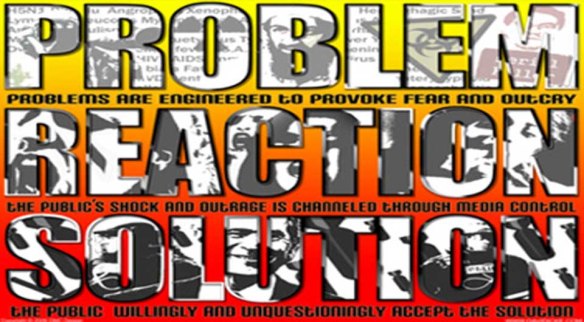
Lara Trace Hentz

INDIAN COUNTRY NEWS

In Saner Thought

"It is the duty of every man, as far as his ability extends, to detect and expose delusion and error"..Thomas Paine

ZEDJournAI

Human in Algorithms

Rooster Crows

From the Roof Top

Aisle C

I See This

The Free

blog of the post capitalist transition.. Read or download the novel here + latest relevant posts

अध्ययन-अनुसन्धान(Essential Knowledge of the Overall Subject)

अध्ययन-अनुसन्धानको सार