Lament for Humanity: A 50 Year Reflection

Beryl & James Burrowes 1942 & 2016

Beryl & James Burrowes 1942 & 2016

By Robert J. Burrowes

Source: RINF

Deeply affected by the death of my two uncles in World War II, on 1 July 1966, the 24th anniversary of the USS Sturgeon sinking of the Japanese prisoner-of-war ship Montevideo Maru which killed the man after whom I am named, I decided that I would devote my life to working out why human beings are violent and then developing a strategy to end it.

The good news about this commitment was that it was made when I was nearly 14 so, it seemed, anything was possible. Now I am not so sure.

Here is my report on 50 years of concerted effort to understand and end human violence.

In 1966 one of my immediate preoccupations was war. The US genocidal war on Vietnam was raging and, as a sycophantic ally of the United States, Australia had been drawn into it some years previously. Trying to understand what this war was really about was challenging, particularly given the limited (mainstream) sources of information available to me at the time.

But I was deeply troubled by another problem too. I had seen a photo of a starving African child in the newspaper when I was ten and I found this most disturbing. Why did adults let children starve? I wondered. And trying to make sense of this by reading newspaper reports or asking those around me was utterly unenlightening.

By the early 1970s the environmental crisis was starting to impact on my awareness too, including through environmental campaigns I heard about and the ‘limits to growth’ literature published by the Club of Rome, which I read at University.

So where are we today?

Well, the most casual perusal of the state of our world reveals the ongoing (and recently heightened) threat of nuclear war and obliteration (on top of the ongoing and rapidly spreading radioactive contamination generated by Fukushima and the use of Depleted Uranium weapons), ongoing phenomenal levels of military spending and the endless push from corporate and other elite interests for more wars. Hence, we are witness to and, through our taxes, active supporters of an endless sequence of wars, military invasions, occupations and coups, virtually all of them instigated by the US elite and its allies, as well as a sequence of ‘local’ wars, also instigated by western elites and supplied with weapons by western corporations.

The global economy teeters on the brink of collapse and, of course, from the viewpoint of those 100,000 people in Africa, Asia and Central/South America who starve to death each day or those one billion people who live in a state of semi-starvation and abject poverty in many parts of the world, it has already ‘collapsed’. This all happens at the instigation of insane elites who continue to accumulate and hoard their wealth, much of it in illegal offshore tax havens. Given the enormous psychological damage that individual members of the elite have suffered, millions or even billions can never be enough.

And the environmental crisis has only become vastly worse with the synergistic impact of our combined assaults on the environment causing human extinction-threatening strain on the biosphere. These devastating assaults include those inflicted by military violence (often leaving vast areas uninhabitable), the emission of vast quantities of carbon dioxide, methane and nitrous oxide into the atmosphere, rainforest destruction, industrial farming, mining, commercial fishing and spreading radioactive contamination.

We are also systematically destroying the limited supply of fresh water on the planet and inducing the collapse of hydrological systems. Human activity drives 200 species of life (birds, animals, fish, insects, reptiles, amphibians, plants) to extinction each day and 80% of the world’s forests and over 90% of the large fish in the ocean are already gone.

Despite this readily available information, governments continue to prioritize spending $US2,000,000,000 each day on military violence, the sole purpose of which is to terrorize and kill fellow human beings, now or in the future.

In addition, you might have noticed the ongoing attacks on everything from our civil liberties and right to privacy to our right to eat healthy food that has not been poisoned and/or genetically mutilated.

So why does all of this happen? Well, 50 years of research and decades of nonviolent activism have had some rewards and particularly the research that Anita McKone and I conducted during our 14 years in seclusion (1996-2010) which fully explained why human beings are violent. In essence, it is an outcome of the visible, ‘invisible’ and ‘utterly invisible’ violence inflicted by adults on children. See ‘Why Violence?’ and ‘Fearless Psychology and Fearful Psychology: Principles and Practice’.

Moreover, this research also gave us enormous insight into the insanity of the global elite and those who serve them in order to maintain this worldwide system of violence and exploitation that is killing us all while destroying the biosphere. Whether it be the politicians who implement elite policies, the academics who ‘justify’ or remain silent about this violence and exploitation, the business people who manage it, the judges, magistrates, lawyers and prosecutors who defend and ultimately enforce it, the teachers and media personnel who teach and promote (or distract us from) it, or the soldiers, private military contractors, police and prison officers who inflict its most direct violence, the global elite is served by a ready stream of witting or unwitting people, many of whom are paid by your taxes to do its bidding. See ‘The Global Elite is Insane’.

And just to ensure that you are endlessly frightened into accepting this worldwide system of violence and exploitation, and to support its further encroachment into your life, the global elite conducts an ongoing terrorist campaign against you. See ‘Terrorism: Ultimate Weapon of the Global Elite’ and ‘Why Elites Love Drones’.

But there is another huge problem too: Lack of solidarity.

Elites know that they can divide us and that enables them to conquer us. Despite our efforts to build solidarity over recent decades, elites keep finding new ways to emphasize our ‘differences’. We need to start thinking of our selves as ‘We are all each other’. Does it matter if the ‘big’ difference between us is our gender, our race, our class, our religion, our nationality or something else (or even all of these)?

While elites can easily manipulate us, especially via education systems and the corporate media, into projecting our fear and self-hatred onto others who are ‘different’ and then inflicting violence on, or even killing, each other because, in effect, ‘I am an adult and you are a child’, ‘I am a man and you are a woman’, ‘I am non-indigenous and you are indigenous’, ‘I am a Christian/Jew/Hindu/Buddhist and you are a Muslim’, ‘I am working class and you are middle class’, ‘I am white and you are not’, ‘I am straight and you are LGBTQIA’, ‘I am one nationality and you are another’, ‘I am a feminist and you are a socialist’, or even ‘I am human and you are a bird/animal/fish/insect/reptile/amphibian/plant’ then we haven’t even begun to realize that the real issue is that we are all living beings and this insane elite is willing to do anything they can to exploit and, if necessary, kill us all.

Isn’t it time we started to see what makes us the same – victims of violence and exploitation – rather than focusing on what, after all, are the rather less significant differences in our bodily characteristics, in our beliefs or even the causes of our exploitation (which is not meant to diminish the significance of the outcomes of direct and structural violence which undoubtedly have variable impact)? Fear divides us.

One interesting personal outcome of this lifetime of effort, apart from the many arrests, terms of imprisonment (including once in a psychiatric ward where I was forcibly injected with ‘antipsychotic’ drugs), bankruptcy and seizure of my passport that have been direct results of my nonviolent activism, is that Anita and I have been homeless since 1999: conscience has its costs. Moreover, a worldwide search has failed to identify more than a handful of individuals (but pre-eminently my parents, James and Beryl, both veterans of World War II and now 93) or an organization of any kind that is willing to fund our research or our work to end human violence. Of course, there is a psychological explanation for this as well. See ‘Why Don’t We Try to Understand and End Human Violence?’

So what of human prospects? Not good. With an insane elite controlling the US (and other) military/nuclear arsenals and the highly exploitative global economy (with the secret corporate governance deals, such as the Trans-Pacific Partnership and the Transatlantic Trade and Investment Partnership, designed to further consolidate corporate control of our world), as well as the dominant discourse via the education systems and corporate media, very few people have the emotional and intellectual capacities to critique this world order and then strategically and nonviolently resist the rush to extinction in which we now find ourselves. In short, most human beings are utterly (unconsciously) terrified and remain politically inert despite time and opportunities slipping rapidly away.

And those who do courageously resist this violent world order face a phalanx of violent institutions, ranging from psychiatry – see ‘Defeating the Violence of Psychiatry’ – and the pharmaceutical – see ‘Bad Pharma: How Drug Companies Mislead Doctors and Harm Patients’ – and agribusiness – see ‘Monsanto, America’s Monster’ – industries to the corporate media – see ‘Propaganda & Engineering Consent for Empire’ – and the police, legal and prison systems – see ‘The Rule of Law: Unjust and Violent’ – designed to neutralize or stop us, one way or another.

So what do I suggest? Well, with the scientific evidence now indicating that near term human extinction is the most likely outcome – see ‘Why is Near Term Human Extinction Inevitable?’ – it is increasingly clear that if we are to end human violence in all of its many and complex manifestations, and prevent human extinction, then we need an integrated and comprehensive strategy for doing so that also provides many meaningful avenues for involvement by individuals and organizations who wish to respond powerfully: token gestures have no value. Over many years I have endeavoured to create this overarching strategy and I invite you to participate in it by doing one or more of the following.

If you are an adult, you might consider dramatically modifying your treatment of children in accordance with ‘My Promise to Children’. You might also find this article useful in better understanding how to do so: ‘Nisteling: The Art of Deep Listening’.

If these suggestions seem beyond you, then perhaps your own emotional healing should be your priority. Despite its title, this article explains what you need to do: ‘An Open Letter to Soldiers with “Mental Health” Issues’. And remember this: if you don’t believe that you are ‘important’ enough to spend time learning to know yourself more deeply, I disagree. You are important.

Separately from the above, you might like to join those participating in ‘The Flame Tree Project to Save Life on Earth’. You might also consider signing the online pledge of ‘The People’s Charter to Create a Nonviolent World’.

And if you would like to learn how to make your nonviolent action campaign for a peace, environmental or social justice outcome more strategically effective, you can do so here: ‘Nonviolent Campaign Strategy’. To nonviolently defend against coups and invasions, remove a dictatorship or conduct a liberation struggle, check out ‘Nonviolent Defense/Liberation Strategy’.

I am not going to get another 50 years to try to create the world of peace, justice and sustainability for which many of us strive but I am going to use every single moment of the time I have left.

Why? Because I love the Earth and everything on it. And you?


Robert J. Burrowes has a lifetime commitment to understanding and ending human violence. He has done extensive research since 1966 in an effort to understand why human beings are violent and has been a nonviolent activist since 1981. He is the author of ‘Why Violence?’ His email address is flametree@riseup.net and his website is here.


The 1% Versus the 99%: Realignment, Repression or Revolution

640px-Standard_oil_octopus_loc_color

Wealth Inequality Is Putting the US on Course for a Showdown

By Klaus Marre

Source: WhoWhatWhy.org

The richest 20 Americans now own as much wealth as the country’s poorest 152 million people combined.

That is just one of the findings of noted inequality scholar and author Chuck Collins’s most recent report, “Billionaire Bonanza, The Forbes 400 and the Rest of Us.”

In a wide-ranging interview, which will be available in its entirety as a podcast tomorrow, Collins likened the current situation to the “Gilded Age,” the time just before the turn of the 20th century, when there was a similar accumulation of wealth at the top and political power was concentrated in the hands of a few rich men.

And Americans are slowly realizing that the extreme accumulation of wealth at the very top is hurting their own prospects.  But grassroots efforts to redress economic inequality must contend with the political power that comes with great wealth.

This is an unstable situation. With pressure building for change but potent forces stacked against it, there are only three options, Collins told WhoWhatWhy: “Realignment, revolution or repression.”

Rules Rigged, and the Rich Get Richer

Back in the Gilded Age, the country managed to convert the pressure that was building from the bottom up into meaningful changes that resulted in a realignment of political power and the rise of the middle class. Those gains, however, are now being reversed. In fact, a new report found that, for the first time in decades, the middle class no longer constitutes the economic majority in the United States.

The shift toward increasing inequality began in the 1970s. At that time, Collins says (and research shows), “we stopped being an economy in which most people grew together” and instead became a “society that is dramatically pulled apart.”

Wages have now been stagnant for three decades and the median wealth of Americans has actually declined since 1990. At the same time, the rich have gotten richer. A lot richer.

Like the Great Depression in the early 1930s, the economic crisis of 2008 has been a wake-up call for the country. Polls historically have shown that people are indifferent to great wealth as long as they feel the rules are fair and that they at least have the option of moving up the ladder. But for many, the latest crash is changing that perception.

“In the economic meltdown of 2008, people realized the rules are rigged, that the big financial industry people … are tipping the scale in their favor,” Collins said. This has led to a perception that upward mobility in America is stalled — a perception supported by statistical data.

Collins believes that this sentiment has helped boost the candidacies of presidential hopefuls as diverse as Donald Trump and Bernie Sanders.

The collapsing middle class, including groups like recent college students whose prospects are blighted by crushing debt burdens, represents an “angry and mobilized constituency.” These are the people whose dissatisfactions are articulated by populists like Trump.

At the other end of the spectrum, the success of self-avowed “democratic socialist” Sanders shows how fluid the situation is. Collins pointed out that the Vermont senator has been saying the same things for 30 years — but only now are they resonating with a larger proportion of the electorate.

Collins pointed out that Sanders is the only major candidate who does not need a billionaire bankrolling his primary campaign to do well in the polls.

One bloc of voters who can cause a tectonic shift in the near future are millennials, many of whom are resentful of the obstacles they face in pursuing the American dream while paying off their college loans. With 40 million households shouldering a burden of $1.2 trillion in college debt, Collins believes that if this segment of the population were to organize, they could force significant change.

“Otherwise, the machinery of inequality will just keep chugging along as it currently is and it will get more concentrated,” Collins said. In any case, all of the ingredients are there for a major political realignment.

“We’re headed for a showdown.”

[audio http://www.whowhatwhy.org/files/Chuck%20Collins%20WWW%20Final.mp3 ]

http://www.whowhatwhy.org/files/Chuck%20Collins%20WWW%20Final.mp3

From Shanghai to San Francisco, the rent is too damn high

homeless-read-tweets

By Jerome Roos

Source: RoarMag.org

Capitalism is a strange beast. Though incredibly resilient in the face of systemic crises and remarkably adaptive to ever-changing conditions, it never truly overcomes its structural contradictions. As the Marxist geographer David Harvey often points out, it merely displaces them in space and time.

The global financial crisis of 2008-’09 has been no exception in this regard. In fact, the very response to that calamity has already laid the foundations for the next big crisis. And just like its immediate predecessor, it looks like this one will be centered, at least in part, on a massive speculative housing bubble.

Officials and investors may still be turning a blind eye, but the warning signs are flashing red everywhere. From Shanghai to San Francisco, from London to L.A., a wave of real-estate speculation is washing over the world, gentrifying popular neighborhoods, pushing housing prices and rents to historically unprecedented highs, and forcing low-income tenants out of their increasingly unaffordable homes. The result is widespread social displacement and deepening discontent.

Unlike the subprime mortgage crisis of 2007-’08, which was centered on the complex packaging of risky loans to low-income households across the U.S., the new housing crisis is a product of real-estate speculation in the world’s major metropolitan areas. Take London, which according to the Financial Times finds itself confronted with “its biggest housing challenge since the Victorian era.” Residential property prices in the British capital have risen 44 percent since 2008, and are now well above their pre-crisis highs.

According to an analysis by the UK charity Shelter, there are currently only 43 homes in Greater London that could still be considered affordable to the average first-time buyer, pushing everyone but the richest of the rich into the rental market, where landlords are known to exact more than a pound of flesh in return for a roof and running water. In the majority of London boroughs, the median rent for a one-bedroom apartment is now over £1,000 per month. On average, Londoners spend about 60 percent of their income on rent.

A similar picture has emerged in New York, where property prices — in the words of the BBC — “have gone turbo-ballistic, as global capital in search of a safe haven has rocketed in.” The average monthly rent in Manhattan now exceeds $3,800, even as half of New York’s urban population lives near or below the poverty line. As a gubernatorial candidate for New York once aptly pointed out, “the rent is too damn high.”

Again, the unsurprising result has been widespread social displacement. Al Jazeera recently reported that “evictions [in New York] have reached epidemic proportions and created a new homeless crisis born out of an affordable housing shortage.” Other major cities like Boston and Los Angeles are not doing much better, as gentrification proceeds apace from coast to coast. Today, even the downtown area of derelict Detroit is rapidly gentrifying, while much of the city still languishes in a state of post-industrial decline.

It is San Francisco, however, that has emerged in recent years as the most paradigmatic case of unbridled gentrification. With median monthly rent hitting $3,530, the city has become the most expensive in the U.S. Desperate to get rid of old tenants who still enjoy rent controls and attract high-income professionals from the tech industry in their place, landlords have gone on an eviction spree: in the past five years, the eviction rate has soared more than 50 percent. Immigrant and working class neighborhoods like the Mission have been reduced to multi-million dollar playgrounds for the “bohemian bourgeois”, complete with snazzy coffee places and expensive vegan restaurants.

The urban sociologist Saskia Sassen has encapsulated the nature of this violent process in strikingly succinct terms: the social reality of financialized capitalism, she argues in her book Expulsions, is all about “systemic complexity producing simple brutality.” And as usual, those feeling the brunt of this brutality are the urban poor and marginalized communities, especially immigrants and people of color, who — along with artists and precarious youths — are increasingly being displaced from city centers towards the periphery.

It is not just cities in the advanced capitalist countries that have been undergoing this turbulent process of urban stratification: the major metropolitan areas of the Global South are firing on all cylinders as well — with the notable difference being that the bubble in emerging markets already appears to be in the process of popping, raising fears of a new international financial crisis centered on China, Brazil and Turkey, among others.

In China’s biggest cities, property prices shot up 60 percent between 2008 and 2014, with residential prices in Shanghai and Beijing rapidly closing in on those of London, Paris and New York. According the consultancy firm McKinsey, some$9 trillion — almost half of China’s total debt, excluding financial sector debt — “is directly or indirectly tied to real estate.” Price increases have exceeded the rise in income by 30 percent in Shanghai and by 80 percent in Beijing.

Other major cities that have been experiencing similar real-estate booms include São Paulo and Rio de Janeiro in Brazil, where residential property prices in the most-desired neighborhoods doubled between 2008 and 2013, and Istanbul, along with the other big cities of Turkey, where a credit-fueled construction boom has accounted for 30 percent of GDP in the period since Erdogan’s AKP came to power on the heels of a previous financial crisis in 2002. Since 2007, property prices in Turkey have shot up 36 percent.

To be sure, the local specificities vary from place to place. In London, the housing crisis has been fueled at least in part by massive capital inflows from wealthy elites in countries like China, Saudi Arabia and the Gulf States, as well as the municipality’s failure to build adequate housing for the large influx of new inhabitants. In Barcelona, by contrast, it has been driven primarily by the tourism industry, while in San Francisco it is largely driven by the tech industry. In Rio, the process has been intensified by preparations for the FIFA World Cup and the Olympic Games, while widespread cronyism and corruption have been an important catalyst for the construction boom in Istanbul.

Yet for all differences between them, the gentrification processes and housing crises in each of these global cities share two crucial commonalities: first in their causes, and second in their consequences.

In terms of the underlying causes, the new housing crisis should be seen as a direct outcome of the response to the previous crisis, which was based on massive bank bailouts and central banks opening the floodgates of cheap credit. With the notable exception of the ECB, which only embarked on quantitative easing earlier this year, the world’s largest central banks dropped interest rates to historic lows, kept them there for years on end, and pumped trillions of dollars of fresh liquidity into the global financial system, effectively subsidizing private investors out of bankruptcy.

This unlimited flow of free money (for the 1% only, of course) produced a tide of surplus capital that had to be absorbed somewhere. With “secular stagnation” taking hold across the developed world, investors were still wary to direct this surplus towards the productive economy, where profit margins remained relatively low. And so, in their insatiable quest for yield, they turned to speculative investment in various asset classes instead: stocks, bonds — and, once again, real-estate. The profits were phenomenal. By 2012-’13, the resulting speculative boom had led U.S. corporate profits back to a new all-time high.

But now that the first signs of overheating have become apparent, we can already begin to identify the second crucial commonality between today’s urban housing crises; a commonality that sets the current crisis apart from the last one: in almost all of the major world cities today, ordinary citizens are already actively mobilizing and fighting back against processes of gentrification, dispossession and displacement, building innovative social movements and powerful political platforms in the process.

From urban insurrections to defend the last-remaining green space of Istanbul or the favelas and public transport system of Rio, to the local direct action of anti-gentrification activists targeting Google buses in the San Francisco Bay Area and reclaiming housing projects in London, it is already clear that the next major crisis, unlike the last one, will not go uncontested.

Of all the urban struggles that have ignited across the globe in recent years, the radically democratic municipal platforms of Spain are undoubtedly among the most advanced and the most promising. With the left-wing anti-eviction activist Ada Colau now holding the mayoralty of Barcelona, an important sign is being sent to the landlords, gentrifiers and real-estate speculators of the world: even in the deepest crises, there will be a limit to your capacity to evict us from our homes and destroy our cities — and that limit, ultimately, is us.

Jerome Roos is a PhD researcher in International Political Economy at the European University Institute, and founding editor of ROAR Magazine. Follow him on Twitter at @JeromeRoos.

Should Taxpayers Be Subsidizing Obscene Salaries?

72efdbfbf79eafb3db4fe161bf2fcc7c

By Adnan Al-Daini

Source: Dissident Voice

An article in the Guardian on bosses’ pay by the director of the High Pay Centre, Deborah Hargreaves, presents the disparity between bosses’ pay and the average wage in the UK thus:

“Chief executives in the FTSE 100 companies took home £4.96m in 2014 compared with average wages of £27,645. And, if anything, the pay gap is getting wider. A typical incentive award for a top boss increased by 50% of salary compared with the previous year, while workforce wages were up by £445. Bosses’ remuneration has risen from around 47 times average wages in the 1990s to around 180 times today.”

The pay gap shown by the above figures will be even wider if the salaries of bosses are expressed as a multiple of the median wage instead of the average wage. The average wage is skewed towards the top, thus most workers will earn below the average. The median wage is a better measure as it means half of the workers will earn below it and the other half above it.

Free-market ideologues would argue that salaries are fixed by market forces, and questioning such a disparity in income is tantamount to the politics of envy and interference in the freedom of markets. Such an argument is not really sustainable.

A company is a joint enterprise, and for it to be successful all its employees need to feel valued and justly rewarded. Such a disparity in income sends the wrong message to the many people who are working hard to make the company successful. It will lead to dissatisfaction and low morale amongst the workforce, and will eventually negatively impact the success of the company. A good boss will not accept such an obscene disparity in income between himself and his employees. Such salaries have become a virility symbol for bosses to compete with each other. It shouts – I am more important than you; just look at the size of my package!

If the wages paid by a company to its poorest employees are so low that it requires the state to top up their wages to provide them with the basics of life, then inflated salaries paid to the bosses are effectively being subsidized by the taxes we pay. It is a transfer of wealth from the many to the very few at the top. How can that be right? Where is the free-market in such practices?

If the income distribution is more equitable, the subsidy by the state to the low paid will be reduced, leaving more money for the government to spend on the NHS, infrastructure, police etc., things that are necessary for a civilized, functioning society.

Surely, then, that gives our elected government the right to enact laws and regulations to fix maximum salaries of bosses as a multiple of the lowest wage in that particular company. This will incentivize the bosses to increase the pay of their poorest employees to increase their own pay. The multiple should be certainly much lower than the figures quoted above.

Our taxation system needs to be overhauled to reflect the huge disparity in incomes; it is too narrowly set. Currently, we have a tax-free allowance of £10,600 and then a jump to 20% up to £42,385 then 40% up to income of £150,000, and a tax rate of 45% on income above £150,000.

A more progressive taxation system would start at a much lower rate and continue to rise incrementally well beyond the 45%. I am not a tax expert, so I leave it to those with the expertise to set the rates in such a way that we as a society ensure that the wealth of the nation is more equitably distributed.

Fairness and justice are the pillars on which successful, happy societies are built. The present system that siphons so much wealth to the top 1% to the impoverishment of the rest is neither fair, nor just. Failure to take action will result in the whole of society becoming the poorer; we will all suffer rich and poor.


Adnan Al-Daini (PhD, Birmingham University, UK) is a retired University Engineering lecturer. He is a British citizen born in Iraq. He writes regularly on issues of social justice and the Middle East. Read other articles by Adnan.


Is This China & USA’s “Thelma & Louise” Moment?

thelma-and-louise

By James Howard Kunstler

Source: Zero Hedge

Why would anybody suppose that the Peoples Bank of China might want to tell the truth about anything that was within their power to lie about? Especially the soundness of any loan portfolio vested unto the grasp of its tentacles? Of course, most of what China has done in speeding toward the wall of financial crack-up, it learned from watching US bankers slime their way into Too Big To Fail nirvana — most particularly the array of swindles, dodges, and frauds constructed in the half-light of shadow banking to hedge the sudden, catastrophic appearance of reality-based price discovery.

When so many loans end up networked as collateral in some kind of bet against previous bets against other previous bets, you can be sure that cascading contagion will follow. And so that is exactly what’s happening as China’s rocket ride into Modernity falls back to earth. Like most historical fiascos, it seemed like a good idea at the time: take a nation of about a billion people living in the equivalent of the Twelfth Century, introduce the magic of money printing, spend a gazillion of it on CAT and Kubota earth-moving machines, build the biggest cement industry the world has ever seen, purchase whole factory set-ups, and flood the rest of the world with stuff. Then the trouble starts when you try to defeat the business cycles associated with over-production and saturated markets.

Poor China and poor us. Escape velocity has failed. Which raises the question: escape from what, exactly? Answer: the implacable limits of life on earth. The metaphor for all this, of course, is the old journey-into-space idea, which still persists in the salesmanship of Elon Musk, the ragged remnants of NASA, and even the nightmares of Stephen Hawking. Get off this messed-up home planet and light out of the territories, say Mars. Of course, this is a vain and stupid idea, since we already have a planet engineered to perfection for all the life systems associated with the human project. We just can’t respect its limits.

So now, that dynamic duo, Nature and Reality, the actual owners of the planet, have showed up to read the riot act to the renters throwing a wild party. The fourth and perhaps ultimate financial crisis of the last twenty years begins to express itself in terms that only the raptors and vultures can see from on high. George Soros, Kyle Bass, and the other flocking shadow banking scavengers prepare to short the living shit out of the old Middle Kingdom. The immortal words of G.W. Bush ring in their ears: This sucker is going down,” and they are sure to win big by betting on the obvious. Trouble is, this sucker could go down so much further than they imagined, that whatever fortunes they gain from its descent will be foiled by the destruction of the very economic system needed for them to enjoy their gains.

For instance, when banking systems go down, governments usually follow, and when governments go down, societies often unravel. It doesn’t take a great effort of imagination to see China’s one party politburo leadership machine lose the respect of its governed masses, and then its control of events, followed by a Great Struggle among the regions and factions to restore some kind of order. And when the smoke clears there will a whole lot of nearly worthless concrete and steel, and a vast loss of notional wealth, and China will be lucky to land back in some approximation of the Twelfth Century.

It must be interesting for China to watch the horrifying disintegration of America’s political party structure currently on view, with the mad bull called Trump rampaging across the land and the designated inevitable Mz It’s-My-Turn hijacking her collective for the greater glory of Goldman Sachs. The last time China got the vapors politically — the so-called Cultural Revolution of the 1960s — the country went batshit crazy. Surely some of the ruling party remembers that with requisite terror.

Or maybe this is China and the USA’s Thelma and Louise moment. Pedal to the metal, they drive into the abyss of history holding hands. Remember, audiences loved that!

The lottery and social despair in America

1fab0b8ba5546a67810419e62958f0cc

By Andre Damon

Source: WSWS.org

This mania, so generally condemned, has never been properly studied. No one has realized that it is the opium of the poor. Did not the lottery, the mightiest fairy in the world, work up magical hopes? The roll of the roulette wheel that made the gamblers glimpse masses of gold and delights did not last longer than a lightning flash; whereas the lottery spread the magnificent blaze of lightning over five whole days. Where is the social force today that, for forty sous, can make you happy for five days and bestow on you—at least in fancy—all the delights that civilization holds?

Balzac, La Rabouilleuse, 1842

The jackpot in the US Powerball lottery has hit $800 million, since there were no winners in Wednesday’s drawing. In the current round, which began on December 2, over 431 million tickets have been sold, a figure substantially larger than America’s population.

Go into any corner store in America and you will see workers of every age and race waiting in line to buy lottery tickets. With the current round, the lines are longer than ever. Americans spend over $70 billion on lottery tickets each year. In West Virginia, America’s second-poorest state, the average person spent $658.46 on lottery tickets last year.

Powerball players pick six random numbers when they purchase their tickets, with a certain percentage of sales going to the jackpot. If no winning ticket is sold, the jackpot rolls over to the next round.

The totals for the Mega Millions and Powerball national lotteries have been growing every year. This year’s jackpot has eclipsed 2012’s record of $656.5 million, the $390 million payout in 2007 and the $363 million prize in 2000. The jackpots have grown in direct proportion to ticket sales.

State-run gambling programs such as Powerball have been promoted by Democrats and Republicans alike as a solution to state budget shortfalls, even as the politicians slash taxes on corporations and wealthy individuals and gut social programs. From the standpoint of government revenue, lotteries and casinos are nothing more than a back-door regressive tax, soaking up money from the poor in proportion to the growth of social misery.

The boom in lotteries is global. Lottery sales grew 9.9 percent worldwide in 2014, after growing 4.9 percent in 2013.

Psychology Professor Kate Sweeny has noted that lottery sales grow when people feel a lack of control over their lives, particularly over their economic condition. “That feeling of self-control is very important to psychological well-being,” Sweeny says.

There is ample reason for American workers to feel they have no control over their lives. According a recent survey by Bankrate.com, more than half of Americans do not have enough cash to cover an unexpected expense of $500 or more—roughly the price of four name-brand tires.

Some 62 percent of Americans have savings of less than $1,000, and 21 percent do not have any savings at all. Most Americans are one medical emergency or one spell of unemployment from financial ruin.

For all the talk about “economic recovery” by the White House, the real financial state of most American households is far worse than before the 2008 financial crisis and recession. As of 2013, Americans were almost 40 percent poorer than they were in 2007, according to a recent survey by the Pew Research Center. While a large portion of the decline in household wealth is attributable to the collapse of the housing bubble, falling wages and chronic mass unemployment have played major roles.

The yearly income of a typical US household dropped by a massive 12 percent, or $6,400, in the six years between 2007 and 2013, according to the Federal Reserve’s latest survey of consumer finances. A large share of this decline has taken place during the so-called recovery presided over by the Obama administration.

In addition to becoming poorer, America has become much more economically polarized. According to a separate Pew survey, for the first time in more than four decades “middle-income households” no longer constitute the majority of American society. Instead, the majority of households are either low- or high-income. Pew called its findings “a demographic shift that could signal a tipping point” in American society.

“Is the lottery the new American dream?” asked USA Today, commenting on this month’s Powerball jackpot. The observation is truer than the authors intended. For American workers, achieving the “American Dream” of a stable job and one’s own home is becoming increasingly unrealizable.

Following more than 10 million foreclosures during the financial crisis, America’s home ownership rate has hit the lowest level in two decades, and for young households, the rate of home ownership is the lowest it has been since the 1960s.

For the tens of millions of America’s poor, and the more than 100 million on the threshold of poverty, the dream of winning the lottery has replaced the “American Dream” of living a decent life. A lottery ticket is a chance to escape to a fantasy world where money is not a constant, nagging worry, where one is not insulted and bullied at a low-wage job by bosses whose pay is matched only by their incompetence. The lottery is, as Balzac aptly described it, the “opium of the poor.”

Using the same phrase to describe religion, Marx noted that the “illusory happiness of the people” provided by the solace of religion is, in fact, a silent protest and distorted “demand for their real happiness.” It is the intolerable social conditions that compel masses of people to seek consolation in a lottery ticket that will propel them into revolutionary struggles.

Breaking the chains: precarity in the Age of Anxiety

breaking-the-chainsBy Joseph Todd

Source: RoarMag.org

In our Age of Anxiety, society assaults us from every possible angle with an avalanche of uncertainty. How do we fight back under conditions of precarity?

­An Age of Anxiety is upon us, one where society assaults us from every possible angle with an avalanche of uncertainty, fear and alienation. We live with neither liberty nor security but instead precariousness. Our housing, our income and our play are temporary and contingent, forever at the whim of the landlord, policeman, bureaucrat or market. The only constant is that of insecurity itself. We are gifted the guarantee of perpetual flux, the knowledge that we will forever be flailing from one abyss to another, that true relaxation is a bourgeois luxury beyond our means.

Our very beings come to absorb this anxiety. We internalize society’s cruelty and contradiction and transform them into a problem of brain chemistry, one that is diagnosed and medicated away instead of being obliterated at root. All hope is blotted out. Authentic experience, unmediated conversation, distraction-free affection and truly relaxed association feel like relics of a bygone era, a sepia dream that perhaps never existed.

Instead we have the frenetic social arenas of late capitalism: the commodified hedonism of clubs and festivals, express lunches, binge culture and the escapist, dislocating experience of online video games, all underlined by either our desperate need to numb our anxieties or to create effective, time-efficient units of fun so we are available for work and worry.

This is assuming we have work, of course. Many of us are unemployed, or are instead held in constant precarity. Stuck on zero-hour contracts or wading through as jobbing freelancers in industries that used to employ but don’t anymore, we are unable to plan our lives any further than next week’s rota, unable to ever switch off as the search for work is sprawling and continuous.

And if we do have traditional employment, what then? We are imprisoned and surveilled in the office, coffee shop or back room, subject to constant assessment, re-assessment and self-assessment, tracked, monitored and looped in a perpetual performance review, one which even our managers think is worthless, but has to be done anyway because, hey, company policy.

Continuous is the effective probationary period and we are forever teetering on the edge of unemployment. We internalize the implications of our constant assessment, the knowledge that we’re always potentially being surveilled. We censor ourselves. We second-guess ourselves. We quash ourselves.

And thanks to the effective abolition of the traditional working day, work becomes unbearable and endless. The security of having delineated time — at work and then at play — has been eradicated. Often this is because individuals have to supplement their atrocious wages with work on the side. But it is also because traditional 9-to-5 jobs have suffered a continuous extension of working hours into out-of-office time, enabled and mediated by our laptops and smartphones. These gadgets demand immediacy and, when coupled with the knowledge that you are always reachable and thus available, they instill in us a frantic need to forever reply in the now.

And with this expectation comes obligation. Hyper-networked technologies gift our bosses the ability to demand action from us at any moment. Things that had to wait before become doable — and thus are done — in the now. If you are unwilling, then someone is ready to take your place. You must always be at their beck and call. From this, our only refuge is sleep, perhaps the last bastion of delineated time against frenetic capitalism, and one that is being gradually eroded and replaced.

For those that are out of work the situation is no better. They face the cruel bureaucracy of the Job Centre or the Atos assessment, institutions that have no interest in linking up job seekers with fulfilling employment but instead attempt only to lower the benefits bill through punitive, arbitrary sanctions and forcing the sick back to work. Insider accounts of these programs betray the mix of anxiety inducing micro-assessment and surveillance they employ.

Disabled claimants — always claimants, never patients, insists Atos — are assessed from the moment they enter the waiting room, noted as to whether they arrive alone, whether they can stand unassisted and whether they can hear their name when called. Compounding this is the hegemonic demonization of those that society has failed: if you are out of work, you are a scrounger, a benefit cheat and a liar. Utterly guilty of your failure, a situation individualized in its totality and attributable to no system, institution or individual but yourself.

We are surveilled, monitored and assessed from cradle to grave, fashioned by the demand that we must be empirical, computable and trackable, our souls transformed into a series of ones and zeros. This happens in the workplace, on the street and in various government institutions. But its ideological groundwork is laid in the nursery and the school.

These institutions bracket our imaginations while still in formation, normalizing a regime of continuous surveillance and assessment that is to last for the rest of our lives. Staff are increasingly taken away from educating and nurturing and instead are made to roam nurseries taking pictures and recording quotes, all to be computed and amalgamated so authorities can track, assess and predict a child’s trajectory.

It is true that this does not trouble the child in the same way traditional high intensity rote examination does. But what it instead achieves is the internalization of the surveillance/assessment nexus in our minds; laying the groundwork for an acquiescence to panoptical monitoring, a resignation to a private-less life and a buckling to regimes of continuous assessment.

Britain is particularly bad in this respect. Not only does our government have a fetish for closed-circuit television like no other, but also, GCHQ was at the heart of the Snowden revelations. Revelation, however, is slightly misleading — as what was most telling about the leaks wasn’t the brazen overstep by government institutions, but that few people were surprised. Although we didn’t know the details, we suspected such activity was going on. We acted as if we were being watched, tracked and monitored anyhow.

In this we see the paranoid fugitive of countless films, books and television dramas extrapolated to society writ large. We are all, to some extent, that person. Our growing distrust of governments, the knowledge that our technologically-integrated lives leave a heavy trace and the collection of “big” data for both commercial and authoritarian purposes contributes to our destabilized, anxious existence. An existence that impels us towards self-policing and control. One where we do the authority’s job for them.

Many individuals offer the amount of choice we have, or the amount of knowledge we can access at the click of a button, as the glorious consequences of late capitalist society. But our rampant choice society, one where we have to make an overwhelming number of choices — about the cereal we eat, the beer we drink, or the clothes we wear — is entirely one sided. While we have an incredible amount of choice over issues of little importance, we are utterly excluded from any choice about the things that matter; what we do with the majority of our time, how we relate to others or how society functions as a whole. Nearly always these choices are constricted by the market, the necessity of work, cultures of overwork and neoliberal ideology.

Again we find this ideology laid down in primary education. Over the years more and more “continuous” learning has been introduced whereby children, over a two week period or so, have to complete a set of tasks for which they can choose the order. This is an almost perfect example of how choice functions in our society, ubiquitous when insignificant but absent when important. The children can choose when they do an activity, which matters little as they will have to do it at some point anyway, but cannot choose not to do it, or to substitute one kind of activity with another.

Why does this matter? Because meaningful choices about our lives give us a sense of certainty and control. Avalanches of bullshit choices that still have to be made, as study after study has shown, make us incredibly anxious. Each of them takes mental effort. Each contains, implicitly, the multitude of choices that we didn’t make; all those denied experiences for every actual experience. This is fine if there are only one or two. But if there are hundreds, every act is riddled with disappointment, every decision shot with anxiety.

Compounding this orgy of choice, and in itself another root cause of anxiety, is the staggering amount of information that assaults us every day. Social media, 24-hour news, the encroachment of advertising into every crack — both spatially and temporally — and our cultures of efficiency that advocate consuming or working at every possible moment all combine to cause intense sensory overload. This world, for many, is just too much.

Although we’ve talked mostly about work, surveillance, assessment and choice, there are a multitude of factors one could add. The desolation of community due to the geographical dislocation of work, the increased transiency of populations and the growing privatization of previously public acts — drinking, eating and consuming entertainment are increasingly consigned to the home — shrinks our world to just our immediate families.

Camaraderie, extended community and solidarity are eroded in favor of mistrust, suspicion and competition. Outside of work our lives become little more than a series of privatized moments, tending to our property and ourselves rather than each other, flitting between the television shows, video games, home DIY and an incredible fetish for gardening with no hint towards the thought that perhaps these experiences would be better if they were held in common, if they appealed to the social and looked outward rather than in.

In the same way we could mention the ubiquity of debt — be it the mortgage, the credit card or the student loans — and the implicit moral judgment suffered by the debtor coupled with the anxiety-inducing knowledge that they could lose everything at any moment. Or we could consider the near-existential crises humanity faces, be it climate change, ISIS or the death throes of capitalism; all too abstract and total to comprehend, all contributing to a sense that there is no future, only a grainy, distant image of lawless brutality, flickering resolutely in our heads.

But the crux, and the reason anxiety could become a revolutionary battleground, is that neoliberal ideology has individualized our suffering, attributing it to imbalances in our brain chemistry, constructing it as a problem of the self, rather than an understandable human reaction to a myriad of cruel systemic causes. Instead of changing society the problem is medicalized and we change ourselves, popping pills to mold our subjectivities to late-capitalist structures, accepting the primacy of capitalism over humanity.

This is why “We Are All Very Anxious”, a pamphlet released by the Institute of Precarious Consciousness, is so explosively brilliant. Not only does it narrate the systemic causes of anxiety, but it situates the struggle within a revolutionary strategy, constructing a theory that is at once broad and personal, incorporating one’s own subjective experience into an explanatory framework, positing anxiety as a novel, contemporary revolutionary battleground, ripe for occupation.

It is, they claim, one of three eras spanning the last two-hundred years where we have progressed between different dominant societal affects. Until the postwar settlement we suffered from misery. The dominant narrative was that capitalism benefited everybody; while at the same time overcrowding, malnourishment and slum dwelling were rife. In response to this appropriate tactics such as strikes, mutual aid, cooperatives and formal political organization were adopted.

After the postwar settlement, until around the 1980s, a period of Fordist boredom ensued. Compared to the last era, most people had stable jobs, guaranteed welfare and access to mass consumerism and culture. But much of the work was boring, simple and repetitive. Life in the suburbs was beige and predictable. Capitalism, as they put it, “gave everything needed for survival, but no opportunities for life.” Again movements arose in opposition, positioned specifically against the boredom of the age. The Situationists and radical feminism can be mentioned, but also the counter-culture surrounding the anti-war movement in America and the flourishing DIY punk scene in the UK.

This period is now finished. Capitalism has co-opted the demand for excitement and stimulation both by appropriating formerly subversive avenues of entertainment — the festival, club and rave — while dramatically increasing both the amount and intensity of distractions and amusements.

In one sense we live in an age of sprawling consumerism that avoids superficial conformity by allowing you to ornament and construct your identity via hyper-customized, but still mass-produced products. But technological development also mean that entertainment is now more total, immersive and interactive; be it the video game or the full-color film watched on a widescreen, high-definition television.

Key to this linear conception is the idea of the public secret, the notion that anxiety, misery or boredom in these periods are ubiquitous but also hidden, excluded from public discourse, individualized and transformed into something unmentionable, a condition believed to be isolated and few because nobody really talked about it. Thus to even broach the subject in a public, systematic manner becomes not just an individual revelation but also a collective revolutionary act.

I’ve seen this first-hand when running workshops on the topic. Sessions, which were often argumentative and confrontational, became, when the subject was capitalism and anxiety, genuinely inquisitive and exploratory. Groups endeavored to broaden their knowledge of the subject, make theoretical links and root out its kernel rather than manning their usual academic ramparts and launching argument after rebuttal back and forth across the battlefield.

But more than this, there was a distinct edge of excitement, the feeling that we were onto something, a theory ripe with explosive newness, one that managed to combine our subjective experiences and situate them in a coherent theoretical framework.

However, we must be critical. To posit anxiety as a specifically modern affect, unique to our age, is contentious. What about the 1950s housewife, someone mentioned in one of the sessions, with her subjectivity rigidly dictated by the misogyny and overbearing cultural norms of the time? Didn’t this make her feel anxious?

Well, perhaps. But if we take anxiety to mean a general feeling of nervousness or unease about an uncertain outcome — with chronic anxiety being an actively debilitating form — then we can draw distinct differences. Although the housewife was oppressed, her oppression was codified and linear, her life depressingly mapped out with little room for choice or maneuver. Similarly with the slave — surely the universal symbol of oppression — hierarchies aren’t nebulous but explicit, domination is ensured by the whip and the gun, the master individualized and present.

This is in stark contrast to the current moment. While it is obvious that oppressions are distinct and incomparable, we can nevertheless see that the fug of the 21st century youth is of a different nature. Our only certainty is that of uncertainty. Our oppressor is not an individual but a diffuse and multiplicitous network of bureaucrats, institutions and global capital, hidden in its omnipotence and impossible to grasp.

We aren’t depressed by the inevitability of our oppression, but instead are baffled by its apparent (but unreal) absence, forever teetering on the brink, not knowing why, nor knowing who we should blame.

Similarly it is bold to claim that anxiety is the dominant affect of Western capitalism, tantamount to pitching it as the revolutionary issue of our age. Yet if we analyze the popular struggles of our time — housing, wages, work/life balance and welfare — they are often geared, in one way or another, towards promoting security over anxiety.

Housing for many is not about having a roof over their heads, but about security of tenure, be it via longer fixed-term tenancies or the guarantee that they won’t be priced out by rent rises that their precarious employment can’t possibly cover. In the same way struggles over welfare are often about material conditions, but what particularly strikes a chord is the cruel insecurity of a life on benefits, forever at the whim of sanction-wielding bureaucrats who are mandated to use any possible excuse to remove your only means of support.

Anxiety is also a struggle that unites diverse social strata, emanating from institutions such as the job center, loan shark, university, job market, landlord and mortgage lender, affecting the unemployed, precariously employed, office worker, indebted student and even the comparatively well-off. Again we find this unification in the near-universal adoption of the smartphone and other hyper-networked technologies. All of us, and especially our children, are beholden to a myriad of glowing screens, flitting between one identity and another, alienated and disconnected from our surroundings and each other.

This is not to say a movement against anxiety itself will ever arise. Such a rallying cry would be too abstract and fail to inspire. Instead, anxiety must be conceptualized both as an affect which underlies various different struggles, and a schema within which they can be assembled into a revolutionary strategy.

So, what is our tangible aim here? In part it must be to reduce the level of general anxiety so as to increase quality of life. Yet if we are to take a revolutionary rather than a mere humanitarian approach, this drop in anxiety must in some way translate into a rise in revolutionary disposition. In certain ways it obviously will. If there is a public realization that large swathes of the mentally ill are not as such because of their unfortunate brain chemistry but instead because of a misconfiguration of society, people are already thinking on an inherently challenging, systemic level.

Similarly, conflict with the state or capital — be it on the street, in the workplace or inside one’s own head — tends to be high-impact and anxiety-inducing. A drop in general anxiety will make it more likely that individuals will engage in such moments of conflict and, crucially, experience the intense radicalization and realization of hegemonic power that can only be achieved through such visceral moments. But a second part to this, hinted at already and integral to giving the struggle a revolutionary edge, is to emphasize that there is a public secret to be aired. As well as combating the sources of anxiety, we must say we are doing so; we must situate these struggles within larger frameworks and provide education on its systemic nature.

Thus, any strategy would need to be both abstract and practical. On one hand we must explode the public secret by raising consciousness. This would require a general onslaught of education, including, but not limited to, consciousness-raising sessions, participatory workshops, articles, books, pamphlets, leaflets, posters, YouTube videos and “subvertised” adverts. The emphasis would be to educate but also to listen, to intermingle theoretical understanding with subjective experience.

The second part would be to strategically support campaigns and make demands of politicians that specifically combat anxiety in its various different guises. When it comes to work, the abolition of zero-hour contracts, the raising of the minimum wage in line with the actual cost of living, and the tightening of laws on overwork as part of a broader campaign to assert the primacy of life over work, of love over pay, would be a good start.

For those out of work, underpaid or precarious, the introduction of a basic citizen’s income would represent a revolutionizing of the job market. In one move it would alleviate the cultural and practical anxieties of worklessness — ending the bureaucratic cruelty of the job center while removing the anxiety-inducing stigma associated with claiming benefits — while simultaneously allowing individuals to pursue culturally important and revolutionary activities such as art, music, writing or (dare I say it?) activism, without the crushing impossibility of trying to make them pay. When we look to housing obvious solutions include mandatory, secured five-year tenancies, capped rent increases and a guarantee of stable, suitable social housing for those who need it.

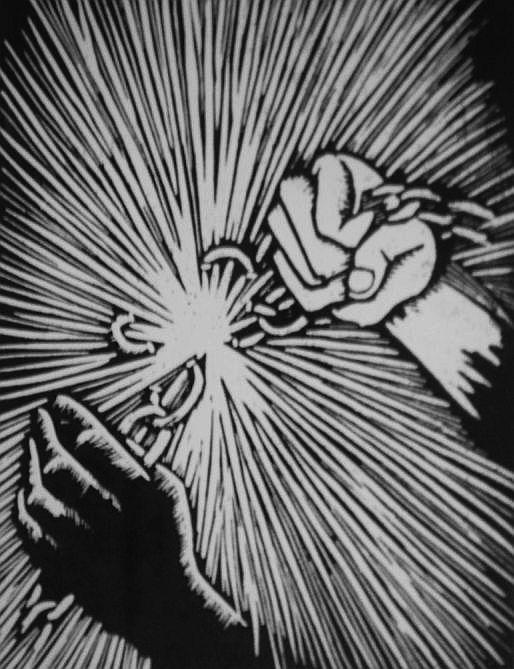
There are many more reforms I could list. You will notice, however, that these are indeed reforms; bread and butter social democracy. Does that mean such a program is counter-revolutionary? A mere placatory settlement between capital and the working class? No, it does not. Revolution does not emerge from the systematic subjection of individuals to increased misery, anxiety and hardship as accelerationist logic demands. Instead it flourishes when populations become aware of their chains, are given radical visions for the future and the means to achieve them. It is when leftists critique but also offer hope. It is when the population writ large are included in and are masters of their own liberation; not when they are viewed as a lumpen, otherly mass, of only instrumental importance in achieving the glorious revolution.

Look at the practicalities and this becomes obvious. How can we expect individuals to launch themselves into high-tension anxiety-inducing conflicts if the mere thought of such a situation causes them to have a panic attack? How can individuals, in the face of near panoptical surveillance and monitoring, combat the overwhelming desire to conform if they aren’t awarded some freedom from the practical anxieties of life? How are we to think and act in a revolutionary, and often abstract, manner if the very real and immediate anxieties of work, home and play fog our minds so totally?

This is not to say freedom will be given to us. It must always be taken, and we must not rely on electoral politics to hand us the revolution down from above. Nor will true struggle ever be an anxiety-free leisure pursuit. Genuine conflict with the state and capital will always entail danger, stress and the possibility of intensified precariousness.

Nevertheless, the dismissal of electoral politics in its totality represents abysmal revolutionary theory. The pursuit of reforms by progressive governments being bitten at the heels by sharp, vibrant social movements can produce real, tangible change.

It was what should have happened with Syriza, and it is what will hopefully happen with the new Labour leadership in the UK. And if, as individuals and communities, we are to puncture the distress, precariousness and general sense of cruel unknowing so particular to the moment in which we live, if we are to overcome the avalanche of bullshit and reclaim our confidence, if we to construct and disseminate a distinctly communal, hopeful revolutionary fervor, such changes are imminently needed.


Joseph Todd is a writer and an activist. Find more of his writings here or follow him on twitter.

Revolution is On Doorstep in the US

poverty_line_america

By Valery Kulikov

President Obama just like any other US politician is particularly keen on criticizing human rights situations in other countries, while glorifying the ideals of “American-style democracy.” Moreover, these topics are not simply the prime topic of his speeches, but the basis for meddling in other countries’ affairs under the guise of “promoting democracy”. To carry out these operations the US has been heavily funding a countless number of NGOs and when those fail to stage a coup d’etat – usually a military intervention follows. This was the case in Iraq, Libya, Afghanistan, Syria and a number of other states.