American society spawns trauma and this trauma expresses itself in a variety of self-destructive pathologies, including the erosion of democracy and rise of neo-fascism.
Corporate capitalism, defined by the cult of the self and the ruthless exploitation of the natural world and all forms of life for profit, thrives on the fostering of chronic psychological and physical disorders. The diseases and pathologies of despair — alienation, high blood pressure, diabetes, anxiety, depression, morbid obesity, mass shootings (now almost two per day on average), domestic and sexual violence, drug overdoses (over 100,000 per year) and suicide (49,000 deaths in 2022) — are the consequences of a deeply traumatized society.
The core traits of psychopaths — superficial charm, grandiosity and self-importance, a need for constant stimulation, a penchant for lying, deception, manipulation and the inability to feel remorse or guilt — are celebrated. The virtues of empathy, compassion and self-sacrifice, are belittled, neglected and crushed. The professions that sustain community, such as teaching, manual labor, the arts, journalism and nursing, are underpaid and overworked. The professions that exploit, such as those in high finance, Big Pharma, Big Oil and information technology, are lavished with prestige, money and power.
“The fact that millions of people share the same vices does not make these vices virtues, the fact that they share so many errors does not make the errors to be truths, and the fact that millions of people share the same forms of mental pathology does not make these people sane,” Eric Fromm writes in The Sane Society.
The classic works on trauma by Dr. Bessel van der Kolk, Dr. Gabor Maté and Dr. Judith Herman state bluntly that what is accepted as normal behavior in a corporate society is at war with basic human needs and our psychological and physical health. Huge segments of the American public, especially the tens of millions of people who have been discarded and marginalized, endure chronic trauma. Barbara Ehrenreich in “Nickel and Dimed: On (Not) Getting By in America” describes the life of the working poor as one long “emergency.” This trauma is as destructive to us personally as it is socially and politically. It leaves us in a state of dysphoria where confusion, agitation, emptiness and loneliness define our lives. Whole segments of American society, especially the poor, have been rendered superfluous and invisible. As Dr. van der Kolk writes, “trauma is when we are not seen and known.”
“Our culture teaches us to focus on our personal uniqueness, but at a deeper level we barely exist as individual organisms,” Dr. van der Kolk notes.
Trauma numbs our capacity to feel. It fractures our self. It disconnects us from our bodies. It keeps us in a state of hyperarousal. It makes us confuse our desires, often artificially implanted by the consumer society, with our needs. Traumatized people view the world around them as hostile and dangerous. They lack a positive image of themselves and lose the capacity to trust. Many replace intimacy and love with sexual sadism, which is how we became a pornified culture. Trauma creates what the psychiatrist Robert Jay Lifton calls a “counterfeit” world defined by phantom enemies, lies and dark conspiracies. It negates a sense of purpose and a life of meaning.
Trauma, Dr. Herman writes, “impels people both to withdraw from close relationships and to seek them desperately.” It induces feelings of shame, guilt, and inferiority, she writes, “as well as the need to avoid reminders of the trauma that occurs in daily life. Trauma severely compromises the capacity for intimacy. Trauma can dramatically reduce focus to extremely limited goals, often a matter of hours or days.”
“If trauma entails a disconnection from the self, then it makes sense to say that we are being collectively flooded with influences that both exploit and reinforce trauma,” Dr. Maté writes. “Work pressures, multitasking, social media, news updates, multiplicities of entertainment sources — these all induce us to become lost in thoughts, frantic activities, gadgets, meaningless conversations. We are caught up in pursuits of all kinds that draw us on, not because they are necessary or inspiring or uplifting, or because they enrich or add meaning to our lives, but simply because they obliterate the present.”
Trauma also drives many to flee into the arms of those who are orchestrating the abuse.
Systematic and repetitive trauma, whether by a single abuser or a political system, destroys personal autonomy. The perpetrator becomes omnipotent. Resistance is accepted as futile. “The goal of the perpetrator is to instill in his victim not only fear of death but also gratitude for being allowed to live,” Dr. Herman writes. This trauma lays the foundation for the most insidious characteristic of all tyrannies, large and small. Total control. Prolonged trauma reduces its victims to a state of psychological infantilism. It conditions them to plead for their own enslavement.
“We are not content with negative obedience, not even with the most abject submission,” George Orwell wrote of the ruling “Inner Party” in his novel “1984.” “When finally you surrender to us, it must be of your own free will. We do not destroy the heretic because he resists us; so long as he resists us we never destroy him. We convert him, we capture his inner mind, we reshape him. We burn all evil and all illusion out of him; we bring him over to our side, not in appearance, but genuinely, heart and soul.”
Christian fascism, the subject of my book “American Fascists: The Christian Right and the War on America,” preys on this trauma. It replicates systems of control common to all tyrannies, including cults. Christian fascists skillfully break down adherents, severing them from their families and communities. They manipulate their shame, despair, feelings of worthlessness and guilt – the byproducts of their trauma – to demand total obedience to the church leadership, who are almost always white and male. These leaders, supposedly spokespeople for God, cannot be questioned or criticized. The connecting tissue among the disparate militia groups, QAnon conspiracy theorists, anti-abortion activists, right-wing patriot organizations, Second Amendment advocates, neo-Confederates and Trump supporters that stormed the Capitol on Jan. 6 is not only this Christian fascism but trauma.
“Totalitarian governments demand confession and political conversion of their victims,” Dr. Herman writes. “Slaveholders demand gratitude from their slaves. Religious cults demand ritualized sacrifices as a sign of submission to the divine will of the leader. Perpetrators of domestic battery demand that their victims prove complete obedience and loyalty by sacrificing all other relationships. Sex offenders demand that their victims find sexual fulfillment in submission. Total control over another person is the power dynamic at the heart of pornography. The erotic appeal of this fantasy to millions of terrifyingly normal men fosters an immense industry in which women and children are abused, not in fantasy but in reality.”
Donald Trump is a perpetrator and savior. He personifies the callous indifference of patriarchy, wealth, privilege and power towards the vulnerable, as well as the promise that once his cultish followers surrender to him they will be protected. He inspires in equal measure fear and solace.
“People who embrace the small tyrannies are much more susceptible to embracing the large ones,” Dr. Herman told me. “When you have a political party that embraces the subordination of women, the subordination of people of color, the subordination of gender non-conforming people, and the subordination of non-Christians, then it’s not a party that embraces democracy. It’s a party that is looking for a fascist leader and is going to find one.”
In Dr. van der Kolk’s “The Body Keeps Score: Brain, Mind, and Body in the Healing of Trauma,” he opens with stark statistics compiled by the Centers for Disease Control and Prevention showing that “one in five Americans was sexually molested as a child; one in four was beaten by a parent to the point of a mark being left on their body; and one in three couples engages in physical violence. A quarter of us grew up with alcoholic relatives, and one out of eight witnessed their mother being beaten or hit.”
The endemic trauma in American society, which is getting worse under the onslaught of the gig economy, pronounced social inequality, indiscriminate police violence, the climate crisis and the seizure of the political process and most institutions by corporations and the ruling oligarchs, is our most serious public health crisis. It has grave individual, social and political consequences.
“If trauma is truly a social problem,” Dr. Herman in “Truth and Repair: How Trauma Survivors Envision Justice” writes, “then recovery cannot simply be a private individual matter. The wounds of trauma are not merely those caused by the perception of violence and exploitation. The actions or inactions of bystanders, all those who are complicit in or who prefer not to know about the abuse or who blame the victims, often cause deeper wounds.” “Full healing,” she adds, “because it originates in a fundamental injustice, requires a full hearing within the community to repair through some measure of justice the trauma survivors have endured.”
You can see my recent two-part interview with Dr. Herman here and here.You can see my interview with Dr. Maté here.
“Recovery has to take place in relationships,” Dr. Herman said in my interview. “When people feel reconnected to their communities and re-accepted in their communities, then the shame is relieved and the isolation is relieved, and that really creates the platform for healing.”
The key is community. Not virtual communities. But communities where we can reconnect and see in our wounds the wounds of others. It requires access, without onerous medical bills, to mental health professionals. It requires dismantling the corporate structures of oppression. It demands a new ethic, one that values empathy and self-sacrifice. We must reject the cynicism, indifference and cult of the self that all tyrannies inculcate in those they dominate to keep them passive. We must reach out to our neighbors, especially those in distress and those who are demonized. We must uncouple from consumer society and turn away from the allure of our cultural narcissism.
The moral philosopher Bernard Williams argues that resentment and indignation are as important as empathy and connection to solidify social bonds. It is not only our own dignity we must protect, but the dignity of others. These “shared sentiments” he writes “bind people together in a community of feeling.” Acts of resistance around these “shared sentiments,” this “community of feeling,” establish ourselves as distinct, autonomous beings. We may not defeat these tyrannies, but by battling against them we free ourselves from the grip of the small and large tyrannies that deform American society.
Part 1 of this study introduced the subject and discussed the psychological and political methods used to control our minds. Part 2 will consider the medical and technological methods used and explain what is necessary to win this war.
MedicalMind Control
Mind control methods extend far beyond childhood terrorization reinforced by other psychological as well as political methods in their various forms.
Most notoriously, no doubt, among his other ‘experiments’, Dr. Josef Mengele supposedly studied mind-control at Auschwitz, with these ‘medical’ experiments sometimes leading to the death of his subjects.
A Freedom of Information document in 2010 exposed the ongoing, if relabeled, work of MK-Ultra – the illegal human experimentation program initiated by the U.S. Central Intelligence Agency (CIA) during the 1950s which employed many former Nazi and (Italian) fascist scientists (discussed further below) – including some of its less savoury elements such as its torture of children ostensibly in its conduct of ‘mind control’ experiments. See ‘MK-ULTRA: CIA Mind Control, Sleeper Cells and Child Kidnappings’.
Other research has documented how much of MK-Ultra’s ‘medical torture’ was conducted within and beyond US borders, secretly and without the consent of those impacted, including on indigenous children and black prisoners. One Canadian victim testified in court that she had been held against her will and that her torturers ‘drugged her with LSD and other substances, subjected her to electroshock treatments, and exposed her to auditory indoctrination’ as part of their attacks on her mind. See ‘New Docs Link CIA to Medical Torture of Indigenous Children and Black Prisoners’.
But for a reasonably comprehensive and horrific overview of the US government’s longstanding and ongoing efforts to subvert the autonomy, including mental autonomy, of its citizenry – including identification and description of key programs beyond MK-Ultra, such as ‘Cointelpro’ (‘a series of secret projects conducted by the FBI between 1956 and 1971 aimed at “neutralizing political dissidents”… [by] “making them incapable of engaging in political activity by whatever means.”’) – see ‘U.S. Government Projects & Programs That Have Included Criminal and Unethical Actions Against Civilians’.
This account documents many US government programs, such as that labeled ‘Project Bluebird’ (later relabeled ‘Project Artichoke’), which was designed to deliberately create dissociative identity disorder (multiple personalities) ‘using trauma and inhumane practices for the purposes of mind control’, and ‘Northwoods’, designed ‘to trick the American public and international community into supporting a war by attacking and killing innocent U.S. citizens and blaming it on terrorism’. See ‘Trauma-Based Victimization & Mind Control – Overview’. But there are many other examples carefully described, documented and illustrated on this website.
These projects, like others, were not the work of some fringe agency but again used Nazi scientists as well as a long list of prestigious US institutions, corporations and military bases as locations for the experimentation. See ‘Project Monarch: Nazi Mind Control’.
But medical mind control is not limited to secretive work by government agencies, corporations and ‘research’ institutions. Many versions of it are imposed openly on society with devastating consequences.
Most notably, since early in his now very long career, ‘the conscience of psychiatry’ Dr Peter Breggin has ‘continued to develop the brain-disabling principle of psychiatric treatment. It states that all physical treatments in psychiatry – drugs, electroshock and psychosurgery – disable the brain and that none improve brain function.’ See ‘The Brain-Disabling Principle of Psychiatric Treatment’ in ‘Psychiatric Reform Accomplishments’.
In his extensive body of work – elaborated in The Conscience of Psychiatry: The Reform Work of Peter R. Breggin, MD – Breggin has exposed and often effectively campaigned to halt a long series of invasive psychiatric interventions against those people unfortunately targeted by ‘organized psychiatry, drug companies, and government agencies’. The book also offers ‘a probing critique of the psychopharmaceutical complex.’ If you prefer to read a summary (up to 2008) of Dr Breggin’s work to defend the human mind, you can do so at ‘Psychiatric Reform Accomplishments of Peter Breggin, M.D., 1954 to the Present’.
But Dr Breggin, with the support of his wife Ginger, is still campaigning to defend your mind, most recently against the threats posed by the Covid-19 ‘vaccine’ with its mind- and life-destroying ingredients including nanotechnology (which is discussed further in the section headed ‘Technological Mind Control’ below). See ‘Blurring Lines: Nanotechnology, Vaccines, and Control’.
Beyond these measures, however, the public has long suffered the deliberate release into communities of both ‘approved’ pharmaceutical drugs and ‘illegal’ drugs which are designed to control the mind of those impacted, even if it is just done by making people mentally and, hence, socially dysfunctional.
Of course, medical mind control is also deployed as one of the weapons used to control victims of torture in which psychiatrists have also long been willingly complicit. See ‘Defeating the Violence of Psychiatry’.
Technological Mind Control
Unfortunately, however, as horrifically effective as long-standing psychological, political and medical mind control measures have been already, there are many new weapons in the arsenals of those intent on controlling our minds. These mind control weapons are technological and, with most of the research driven by the intelligence and military communities within national governments, these efforts have been well funded and made steady progress during the C20th and advanced rapidly after World War II.
Hence, a human future worth living – which presumably includes a mind capable of conceiving and manifesting individual identity, freedom and free will – now hangs by a thread.
So this means that, in addition to the four points explained in the ‘Rage Against the War Machine’ article cited above, the traditional focus by antiwar activists on the threat posed by wars generally and the threat posed by nuclear weapons particularly is failing to take into account two vital elements of the overall threat: the ancient war on the mind that is now being enhanced by a wide range of technocratic control weapons and, as an extension of this, the manner in which war-fighting is being technocratized to remove humans from the picture altogether.
The latter development which, to reiterate, is an extension ofthe rapidly advancing mind control, means that we are almost at the point when a transhuman individual suitably placed in the chain of command could be ‘ordered’ by an artificial intelligence (AI) program to launch full-scale nuclear war.
Which means that the challenges for both freedom activists and anti-war activists, as well as any ‘ordinary’ human being, are far greater in this rapidly advancing technocratic age than at any previous time in human history.
Building on long-standing techniques to manipulate previously terrorized people into feeling, thinking and doing what they are told, particularly since World War II the Elite has sought technological means of mind control as well.
At its simplest, this has included the use of television as a weapon for mass mind control, which was already happening extensively by the 1960s. In a documentary demonstrating this, the presenters illustrate how a variety of techniques are used to manipulate viewers into holding the views endorsed by those intent on controlling the narrative. How this is done varies and, for example, ranges from the messaging itself – which might be overt or be concealed in such a way that it is only perceived unconsciously – to the rate of flicker which can alter the state of consciousness to make one more receptive to some form of programming. Watch ‘Ultimate TV Mind Control Documentary’.
Beyond this, however, enormous effort has gone into much more technologically direct forms of mind control.
Nevertheless, and despite the physically invasive nature of his earlier work, Delgado’s later work was done wirelessly, ‘with his most advanced efforts developed without electrode implants used at all’. That is, ‘he achieved the brain manipulating effects at a distance, without any physical contact or devices attached to the living creature being manipulated’. By changing the frequency and waveform on an experimental subject, ‘he could completely change their thinking and emotional state’. See Angels Don’t Play This HAARP pp.140-141.
Consequently, since the 1950s, a long series of technologies has been or is being developed which enhance the Elite capacity to control our minds in an enormous variety of ways, compromise our health, disable us, alter us genetically or kill us, as they choose. Needless to say, in the United States such efforts have garnered significant CIA and Defense Department support. Here is a sample of more of these technologies.
Among its other weapons possibilities, researchers Dr Nick Begich and Jeane Manning have explained how the High Frequency Active Auroral Research Program – known as HAARP, a joint project of the United States Air Force and Navy based in Alaska and designed to study the ionosphere in order to develop new weapons technology – ‘could be used against humanity in a way that would change what people think, believe and feel.’ See Angels Don’t Play This HAARP p.8.
Citing Michael Hutchison’s 1990 book – see Mega Brain, New Tools and Techniques for Brain growth and Mind Expansion – which described how new technologies were being used to improve learning and memory but also for human behavior modification, Begwich and Manning noted that ‘External stimulation of the brain by electromagnetic means can cause the brain to be entrained or locked into phase with an external signal generator… overriding the normal frequencies causing changes in the brain waves; which then cause changes in brain chemistry; which then cause changes in brain outputs in the form of thoughts, emotions or physical condition…. brain manipulation can be either beneficial or detrimental to the individual being impacted.’
Writing in 2001, Begich and Manning go on to note that ‘The work in this area is advancing at a very rapid rate with new discoveries being made regularly…. Radio frequency radiation, acting as a carrier for extremely low frequencies (ELF), can be used to wirelessly entrain brain waves…. The power level needed to achieve a measure of control over brain activity is very small – from 5 to 200 microamperes – which is thousands of times less than the power needed to run a 60 watt light bulb…. The new tools include electrical cranial stimulation devices, sound systems, light pulse systems and a large variety of other brain entrainment and feedback devices.’ See Angels Don’t Play This HAARP pp.134-135.
Commenting on Hutchison’s 1994 sequel – see Mega Brain Power: Transform Your Life with Mind Machines and Brain Nutrients – which also highlighted the rapidity of developments in the field, Begich and Manning note that Hutchison was using his periodical Megabrain Report: The Psychotechnology Newsletter to discuss ‘technologies for healing nervous system disorders, correcting attention deficit and hyperactive disorders in children and curing drug and alcohol dependencies among other things.’ However, while they claimed that ‘Electromedicine of this type is emerging as one of the most exciting areas of medical research’, they lamented that ‘military research continues to look at these technologies as weapon systems rather than as human potential enhancing tools.’ The book devotes considerable attention to military research in the field that is not classified. See Angels Don’t Play This HAARP p.135.
In their detailed investigation of the mind control issue, Begich and Manning drew attention to the work of Dr. Patrick Flanagan, ‘one of America’s most gifted inventors’, who was ‘recognized for inventing what was the most advanced brain entrainment device, and possibly human-to-computer interface, on the planet – the Neurophone.’ That was in 1962. Years later, Flanagan noted that the HAARP project could be ‘the biggest brainentrainment device ever conceived’. According to HAARP records, at full power the device can send VLF and ELF waves using many wave forms at energy levels sufficient to affect entire regional populations. See Angels Don’t Play This HAARP p.136.
But why impact only ‘entire regional populations’?
Building on earlier work he had done investigating the psychophysiological impacts of ELF (extremely low frequency) field waves on living organisms – see ‘Psychophysiological Effects of Extremely Low Frequency Electromagnetic Fields: A Review’ – in a 1995 paper published in Perceptual and Motor Skills, Professor Michael A. Persinger concluded that ‘Within the last two decades… a potential has emerged which was improbable but which is now marginally feasible. This potential is the technical capability to influence directly the major portion of the approximately six billion brains of the human species through classical sensory modalities by generating neural information within a physical medium within which all members of the species are immersed.’ See ‘On the Possibility of Directly Accessing Every Human Brain by Electromagnetic Induction of Fundamental Algorithms’. And, of course, all human beings are immersed within the medium known as Earth’s atmosphere.
Begich and Manning discuss a range of mind control technologies including ‘brain biofeedback’ – which enables a person to learn how to manipulate their own brain waves, using a computer initially, in profound ways – thus offering the opportunity ‘to take greater control of ourselves through better control of our minds’. At its most benign, this technology has assisted people to reach higher meditative states, helped children suffering from attention deficit disorders and enabled adults to break drug and alcohol dependencies. Unfortunately: ‘It is disturbing to realize that governments are interested in these technologies, not for beneficial individual uses but in order to gain increased control over populations they view as dangerous. These technologies offer both great promise and a high potential for abuse.’ See Angels Don’t Play This HAARP p.138.
If you would like to watch an articulate, straightforward account of the development of some of the early technological methods of mind control, Dr Nick Begwich offers one in about eleven minutes from the 12:45 mark of this video: ‘NWO – The Battle For Your Mind & Body’. But an internet search will reveal a wide range of videos in which Begwich presents his research findings as well as his concerns.
Of course, this concern about how the technology could be deployed is shared by others.
One clear consequence of the continuation of the apparent politics of secrecy surrounding technologies enabling remote control of the human brain is that the governments, who own such technologies, could use them without having to consult public opinion. Needless to say, any meaningful democracy in today’s world could be disrupted, through secret and covert operations. It is not inconceivable that in the future, entire population groups subjected to mind control technologies, could be living in a ‘fake democracy’ where their own government or a foreign power could broadly shape their political opinions by means of mind control technologies. See ‘Electromagnetic and Informational Weapons: The Remote Manipulation of the Human Brain’.
And in 2018, Professor Antoine Jérusalem explained progress made in using sound waves to control the human mind. Describing ‘non-invasive neuromodulation – changing brain activity without the use of surgery’ Jérusalem explains it thus: ‘the principle of non-invasive neuromodulation is to focus ultrasound waves into a region in the brain so that they all gather in a small spot. Then hopefully, given the right set of parameters, this can change the activity of the neurons.’ The aim is to control the neuronal activity without damaging the brain tissue. While keen to acknowledge potential benefits, Jérusalem concedes inherent problems. How dystopian could it get? ‘I can see the day coming where a scientist will be able to control what a person sees in their mind’s eye, by sending the right waves to the right place in their brain.’ He advocates regulation. See ‘Mind control using sound waves? We ask a scientist how it works’.
Of course, research in the field of technological manipulation of the mind is not confined to the West with countries like China doing considerable research in the field as well. The People’s Liberation Army is considering a variety of psychological warfare technologies ‘that it envisions leveraging for future operations. These include advanced computing, especially big data and information processing; brain science, especially brain imaging; and legacy proposals that remain of interest, including sonic weapons, laser weapons, subliminal messaging, and holograms.’ See ‘Chinese Next-Generation Psychological Warfare: The Military Applications of Emerging Technologies and Implications for the United States’.
As you might have expected, the most recent efforts at technological mind control have included research into the use of nanotechnology. In their research on the subject, Prithiv K. R. Kumar & Albert Alukal explained, with a sequence of images, how nanotechnology could be delivered into a specific part of the brain and what constituents would be required to achieve particular outcomes, including in relation to brain damage repair. See ‘Control of Mind using Nanotechnology’.
And Tyler Nguyen and colleagues wrote another paper that cites shortcomings in some approaches to ‘brain stimulation’ and goes on to discuss the possibility of using ‘magnetoelectric nanoparticles’ (MENs) which was originally proposed in 2012 but later demonstrated. ‘The nanoparticles can be injected into a vein or via intranasal administration, forced to cross the blood–brain barrier (BBB) and consequently localized to a target region by applying a magnetic field gradient…. The unique properties of MENs, due to their small size (~ 30 nm)… may provide significant improvements over currently used techniques in efficacy and tissue penetration for noninvasive brain stimulation.’ See ‘In Vivo Wireless Brain Stimulation via Non-invasive and Targeted Delivery of Magnetoelectric Nanoparticles’.
But as Ana Maria Mihalcea MD, PhD elaborates her own research in this field, she highlights ‘the capability of the Nanotechnology in the C19 injections as well as the Nanotechnology we inhale via geoengineering chemtrails and food supply to control the human mind.’ She goes on to write: ‘All aspects of human functioning can be altered in the brain without the recipient of the technology knowing it…. Quantum Dots, Carbon Nanotubes (Graphene) and Lipid Nanoparticles creating Hydrogel are all components discussed previously in my posts.’ See the following article and earlier ones accessible below it: ‘“Control of Mind Using Nanotechnology” – 2020 Scientific Paper Explains Complete Thought and Brain Control through Nanotechnology’.
And lest you think that geoengineering nanoparticles can’t be a serious problem, Dane Wigington’s recent interview of an anonymous whistleblowing scientist working in the agricultural sector in the U.S. reveals a program that sprays 40 million tons of nanoparticles onto the Earth’s surface annually. Of course, given the range of functions that nanoparticles can be designed to perform, we can only speculate on the proportion of these nanoparticles sprayed that might be devoted to mind control. Watch ‘Nanoparticle Contamination Cover-up: Answers from a Scientist’.
And in the last of her trilogy of books on geoengineering, Geoengineered Transhumanism: How the Environment Has Been Weaponized by Chemicals, Electromagnetism & Nanotechnology for Synthetic Biology Elana Freeland notes that ‘Millions of “neurograins” collecting and communicating data to remote hubs are now in all human brains…. “Absolute limits” are now about tininess, the micro, nano, pico, and femto of particles whose extraordinary power is disguised as insignificant but actually hands over the keys to the kingdom of remote control over bodies and brains to those who control technology proximate to the subatomic quantum threshold.’
In an interview on the subject, Freeland simply observes: ‘They prepped us for 20 years with what we breathed in [the nanoparticles – mainly metals such as Barium, Strontium, Aluminum (the worst for humans), Chromium, Lithium… – they dropped on us] and now one of the things that’s going in through the jab [Covid-19 injection] is software and hardware, microprocessors, so that the 5G, 6G systems – and notice I am including 6G I want to make that clear: There is 6G out as well. It’s just that they have not announced it but it’s up and running – … this nanotechnology that I am talking about can run our behaviour, our thoughts, our feelings and our emotions. And I am not talking about the future.’ Watch ‘Slobodni podcast #27 Elana Freeland’.
As much as I appreciate Babáček’s long-standing efforts, there is no prospect of this happening given Elite plans to control the mind of every individual living.
Hence, we must resist it ourselves.
Strategically Resisting Efforts to Control Our Minds
Elite efforts to control our minds are long-standing, multifaceted and sophisticated although most trigger people’s (unconscious) fear as a basic component of their efforts.
Terrorized during childhood into submissive obedience to authority, bamboozled by a staggering array of mind control techniques and technologies of which there is almost zero public awareness, entranced by the latest technological gadget while reassured by the delusional promise of greater ‘privacy, security and convenience’, only a rare human is perceiving how these individual components are just parts in an overarching program that is progressively drawing us into a trap which will render those of us left alive into transhuman slaves within the technocratic walls of the Elite’s ‘smart’ cities.
Thus, for example, the vast number of people who accept payment to do Elite bidding – including those working in the public relations, propaganda, censorship and technological mind control industries – have clearly been terrorized out of their moral autonomy and, hence, are incapable of perceiving and acting in concert with the general human interest.
But most people are already so entrapped by a combination of Elite measures that there is no realistic prospect, in the timeframe available, of helping them to escape Elite influence sufficiently to survive the current range of threats to their identity, privacy, security, freedom and life by resisting these threats effectively.
Unfortunately, this includes most people who were able to perceive the delusions presented to us in relation to the ‘virus’, injectables and the various mandates.
Thus, the number of people capable of resisting effectively (that is, strategically) the foundational components of the Elite program is relatively few.
But if you regard yourself as one of these individuals, then here are the key things you need to be doing to maximize the prospects of your children having minds of their own and to defend a future worth living.
Tragically, we are at a point in human history when the obstacles to retaining autonomy over one’s mind are enormous. But how a child is parented is the most crucial variable in the ultimate outcome for the individual.
And if you have retained sufficient control over you own mind, then you will know, intuitively if not intellectually, that resisting the Elite’s complex and sophisticated program is going to require considerable effort both by you as an individual and by those we can mobilize to respond powerfully too. And this will not include lobbying or petitioning Elite agents. See ‘The Elite Coup to Kill or Enslave Us: Why Can’t Governments, Legal Actions and Protests Stop Them?’
In essence, this means that your resistance to the Elite program must be strategic. If it is not, Elite insanity will ensure that sufficient and, if necessary, overwhelming violence will be inflicted on us to compel compliance with their will. See ‘The Global Elite is Insane Revisited’.
So if you are committed to being strategic in your resistance to the ‘Great Reset’ and its related agendas, you are welcome to participate in the ‘We Are Human, We Are Free’ campaign which identifies a list of 30 strategic goals for doing so.
More simply, and as a minimum, you can download the ‘We Are Human, We Are Free’ one-page flyer that identifies a short series of crucial nonviolent actions that anyone can take. This flyer, now available in 23 languages (Chinese, Croatian, Czech, Danish, Dutch, English, Finnish, French, German, Greek, Hebrew, Hungarian, Italian, Japanese, Malay, Polish, Portuguese, Romanian, Russian, Serbian, Spanish, Slovak and Turkish) with more languages in the pipeline, can be downloaded from here: ‘One-page Flyer’.
And you might also consider organizing or participating in a local strategy to halt the deployment of 5G, given its crucial role in making the Elite’s ‘smart city’ technocratic prisons function. See ‘Halting the Deployment of 5G’.
If you like, you can also watch, share and/or organize to show, a short video about the campaign here: ‘We Are Human, We Are Free’ video.
Moreover, if this strategic resistance to the ‘Great Reset’ (and related agendas) appeals to you, consider joining the ‘We Are Human, We Are Free’ Telegram or Signal groups (with links accessible from the website).
Conclusion
Most humans laud the idea of ‘a free society’ and’ freedom of the individual’ but don’t even realise that what we most need is freedom of the mind. We pay lip service to the rights to freedom of thought, expression and conscience but lack the powerful mind necessary to meaningfully exercise these rights, often settling for superficial symbols of ‘freedom’ such as the right to choose the form of our exploitation employment, how we spend our spare time, the sporting team we support, and the style and color of our hair and clothing.
The reality is that we are terrorized throughout childhood into submissive obedience to authority leaving us highly vulnerable to the comprehensive range of psychological, political, medical and technological weapons directed against our minds. In this circumstance, identifying the truth about what is really happening in the world is a challenge far too great for most people.
Moreover, in the situation we now face, even among those who have been able to perceive the most obvious delusions being presented to them, the bulk of these individuals have proven incapable of doing little more than complaining powerlessly, begging an Elite agent to ‘go easy’ on them (by lobbying or petitioning a government or international organization such as the World Health Organization), cross-posting the latest irrelevant post from one social media platform to another, possibly advocating unspecified ‘resistance’ (or strategically irrelevant action), or attending a protest demonstration.
Seeking out and applying strategic means of resistance to the overall Elite program – the World Economic Forum’s ‘Great Reset’ with its fourth industrial revolution (technocratic), eugenicist and transhumanist components – or recognizing it when offered, has remained beyond them.
Hence, any candid assessment of the evidence presented above leads to one conclusion: The Elite war on human minds is now so advanced and effective that death or transhuman slavery for everyone on Planet Earth is virtually inevitable.
As Steve Biko noted all those years ago: ‘The most potent weapon of the oppressor is the mind of the oppressed.’
Biodata: Robert J. Burrowes has a lifetime commitment to understanding and ending human violence. He has done extensive research since 1966 in an effort to understand why human beings are violent and has been a nonviolent activist since 1981. He is the author of ‘Why Violence?’ His email address is flametree@riseup.net and his website is here.
“The whole aim of practical politics is to keep the populace alarmed (and hence clamorous to be led to safety) by an endless series of hobgoblins, most of them imaginary.”—H.L. Mencken
First came 9/11, which the government used to transform itself into a police state.
Then the COVID-19 pandemic hit, which the police state used to test out its lockdown powers.
In light of the government’s tendency to exploit crises (legitimate or manufactured) and capitalize on the nation’s heightened emotions, confusion and fear as a means of extending the reach of the police state, one has to wonder what so-called crisis it will declare next.
It’s a simple enough formula: first, you create fear, then you capitalize on it by seizing power.
Frankly, it doesn’t even matter what the nature of the next national emergency might be (terrorism, civil unrest, economic collapse, a health scare, or the environment) as long as it allows the government to lockdown the nation and justify all manner of tyranny in the so-called name of national security.
As David C. Unger writes for the New York Times: “Life, liberty, and the pursuit of happiness have given way to permanent crisis management: to policing the planet and fighting preventative wars of ideological containment, usually on terrain chosen by, and favorable to, our enemies. Limited government and constitutional accountability have been shouldered aside by the kind of imperial presidency our constitutional system was explicitly designed to prevent.”
Here’s what we know: given the rate at which the government keeps devising new ways to establish itself as the “solution” to all of our worldly problems at taxpayer expense, each subsequent crisis ushers in ever larger expansions of government power and less individual liberty.
This is the slippery slope to outright tyranny.
You see, once the government acquires (and uses) authoritarian powers—to spy on its citizens, to carry out surveillance, to transform its police forces into extensions of the military, to seize taxpayer funds, to wage endless wars, to censor and silence dissidents, to identify potential troublemakers, to detain citizens without due process—it does not voluntarily relinquish them.
The lesson for the ages is this: once any government is allowed to overreach and expand its powers, it’s almost impossible to put the genie back in the bottle. As Harvard constitutional law professor Laurence Tribe recognizes, “The dictatorial hunger for power is insatiable.”
Indeed, the history of the United States is a testament to the old adage that liberty decreases as government (and government bureaucracy) grows. To put it another way, as government expands, liberty contracts.
In this way, every crisis since the nation’s early beginnings has become a make-work opportunity for the government.
Each crisis has also been a test to see how far “we the people” would allow the government to sidestep the Constitution in the so-called name of national security; a test to see how well we have assimilated the government’s lessons in compliance, fear and police state tactics; a test to see how quickly we’ll march in lockstep with the government’s dictates, no questions asked; and a test to see how little resistance we offer up to the government’s power grabs when made in the name of national security.
Most critically of all, it has been a test to see whether the Constitution—and our commitment to the principles enshrined in the Bill of Rights—could survive a national crisis and true state of emergency.
Unfortunately, we’ve been failing this particular test for a long time now.
Indeed, the powers-that-be have been pushing our buttons and herding us along like so much cattle since World War II, at least, starting with the Japanese attacks on Pearl Harbor, which not only propelled the U.S. into World War II but also unified the American people in their opposition to a common enemy.
That fear of attack by foreign threats, conveniently torqued by the growing military industrial complex, in turn gave rise to the Cold War era’s “Red Scare.” Promulgated through government propaganda, paranoia and manipulation, anti-Communist sentiments boiled over into a mass hysteria that viewed anyone and everyone as suspect: your friends, the next-door neighbor, even your family members could be a Communist subversive.
By the time 9/11 rolled around, all George W. Bush had to do was claim the country was being invaded by terrorists, and the government used the USA Patriot Act to claim greater powers to spy, search, detain and arrest American citizens in order to keep America safe.
Despite the fact that the breadth of the military’s power to detain American citizens violates not only U.S. law and the Constitution but also international laws, the government has refused to relinquish its detention powers made possible by the NDAA.
Then Donald Trump took office, claiming the country was being invaded by dangerous immigrants and insisting that the only way to keep America safe was to expand the reach of the border police, empower the military to “assist” with border control, and essentially turn the country into a Constitution-free zone.
That so-called immigration crisis then morphed into multiple crises (domestic extremism, the COVID-19 pandemic, race wars, civil unrest, etc.) that the government has been eager to use in order to expand its powers.
Joe Biden, in turn, has made every effort to expand the reach of the militarized police state, pledging to hire 87,000 more IRS agents and 100,000 police officers, and allowing the FBI to operate as standing army.
What the next crisis will be is anyone’s guess, but you can be sure that there will be a next crisis.
So, what should you expect if the government decides to declare another state of emergency and institutes a nationwide lockdown?
You should expect more of the same, only worse.
More compliance, less resistance.
More fear-mongering, mind-control tactics and less tolerance for those who question the government’s propaganda-driven narratives.
Most of all, you should expect more tyranny and less freedom.
Given the government’s past track record and its long-anticipated plans for using armed forces to solve domestic political and social problems in response to a future crisis, there’s every reason to worry about what comes next.
Mark my words: as I make clear in my book Battlefield America: The War on the American People and in its fictional counterpart The Erik Blair Diaries, if and when another crisis arises—if and when a nationwide lockdown finally hits—if and when martial law is enacted with little real outcry or resistance from the public— then we will truly understand the extent to which the powers-that-be have fully succeeded in acclimating us to a state of affairs in which the government has all the power and “we the people” have none.
In the meantime, if all we do to reclaim our freedoms and regain control over our runaway government is vote for yet another puppet of the Deep State, by the time the next crisis arises, it may well be too late.
Infinite Jest is frequently attention-repellent. David Foster Wallace’s brick-sized novel is physically challenging, an 800g book that forces you to flick back and forth to the errata. This is not optional. Major plot points hinge on throwaway glosses.
I was a bratty, bookish 15-year-old when it was published in 1996. A 1,000-page-plus novel bloated with endnotes that have their own footnotes was an irresistible challenge. David Foster Wallace was not an obscurantist in his own literary taste — he taught Stephen King and Thomas Harris at Illinois state university — but Infinite Jest is a book at bloody-minded war with its own bookness. With its maddening excess of information that you must hold in your hand as best you can, it feels more like the internet.
As well as being attention-repellent, it is also sometimes just repellent. There are scenes of comedically extreme horror: a woman dying after the handbag that holds her artificial heart is snatched from her, a man dying in his own filth while obsessively watching reruns of M*A*S*H, a dog dragged behind a car until all that’s left is a leash, a collar and a “nubbin”. Before livestreamed mass shootings and animal cruelty for clicks, Wallace knew that the grisly and grotesque was what the public wanted.
He did not see the future. But he saw the forces shaping the future, and understood the ways they would deform people in turn.
In an aside, Wallace writes about how, with the introduction of the “Teleputer” (what we would call a laptop), video calls enjoyed huge popularity, followed by dramatic decline. Users quickly discover that being seen is enormously anxiety-inducing, partly because it means you must visibly be paying attention to the other party at all times, partly because you must also pay attention to how you look when making a call.
The answer to this anxiety is, first, “high definition masking” — a flattering composite of the user’s face digitally overlaid on the screen. Then comes actual masking — hyperreal rubber versions of the user’s face that can be quickly strapped on for calls. Eventually, in response to this “stressfully vain repulsion at their own videophonic appearance”, consumers revert to audio-only, which is now “culturally approved as a kind of chic integrity”.
This divide between the real and the represented has been borne out by our experience of Zoom, Instagram and TikTok: filters are now so advanced that they can be applied to moving images, and you can digitally beautify yourself while livestreaming. Only instead of resorting to rubber masks, we remodel the flesh itself: “filter face” tweakments, intended to bring the human closer to the digital ideal, are on the rise. Wallace was right about the way pervasive exposure to our own image would break us. It’s just that the way we’ve responded is, somehow, even more dystopian than he imagined.
Infinite Jest’s near future is now our near past, and in 2008, Wallace killed himself after suffering decades of profound depression. By the middle of the next decade, his greatest novel had been recast as a byword for tedious white masculinity, the author himself cancelled. This was, at least in the biographical sense, deserved. In 1990, Wallace had met the poet Mary Karr. He was a resident in a halfway house, she was a volunteer, and he became obsessed with her. They dated, they broke up, then he assaulted and stalked her. In 2018, Karr tweeted that he had “tried to buy a gun. kicked me. climbed up the side of my house at night. followed my son age 5 home from school. had to change my number twice, and he still got it. months and months it went on.”
The novel includes multiple men in recovery steeping in the shame of their past violence, and it would be nice to imagine that this was Wallace examining his own conscience. On the other hand, it also includes a reciprocated love story between the large, lunkish, David-Foster-Wallace-ish character Don Gately, and the beautiful, idealised, Mary-Karr-ish Joelle van Dyne. Infinite Jest was, arguably, an implement of his ongoing harassment and should not be dishonestly mined for signs of redemption.
Still, it is a very contemporary thing to demand moral purity in artists: the kind of impulse that, perhaps, comes from seeking simplicity when far too much knowing is possible. “What do we do with the art of monstrous men?” asked Claire Dederer, as though to be an audience is inevitably to be an accomplice. Good art can be made by people who’ve done bad things, and perhaps only a monstrous man can faithfully portray the outlines of his own monstrosity. Reading is not an act of worship, although one of the problems for Infinite Jest is that certain male readers have treated it as such.
And so, Infinite Jest has plummeted from literary touchstone to confirmed red flag. In a viral tweet from 2020 listing “Top 7 Warning Signs In a Man’s Bookshelf”, the first item was “A dog-eared copy of Infinite Jest”. The “dog-eared” was important: it was the act of having read it, rather than posing as someone who might read it, that sounded the klaxon.
But unread copies could be equally alarming: when the actor Jason Segal bought Infinite Jest in preparation for playing Wallace in a film, he recalled that the female bookseller rolled her eyes and said: “Every guy I’ve ever dated has an unread copy on his bookshelf.” Nicole Cliffe made it number four on her catalogue of “Books that Literally All White Men Own”.
I have never run into a “DFW guy” — they’re probably more of an American campus thing. But I ran into the “Philip Roth guy” at university and recognise the type: clammy, proprietorial, forcing his literary taste on girls in lieu of forcing himself. That I had read Infinite Jest felt vaguely embarrassing. All that effort, and it turned out the most high-status option would have been to not read it and then be glibly dismissive.
It’s perversely appropriate that Infinite Jest ended up holding such a key place in the vocabulary of this irony-bound strand of performative feminism, because irony was one of the things that Wallace was both appalled and fascinated by. In a 1993 essay, he writes that “irony and ridicule are entertaining and effective, and that at the same time they are agents of a great despair and stasis in US culture.”
Infinite Jest isn’t above irony, but it often pits itself against irony. “It’s like there’s some rule that real stuff can only get mentioned if everybody rolls their eyes or laughs in a way that isn’t happy,” thinks one character. Another feels an “aftertaste of shame after revealing passion of any belief and type when with Americans, as if he had made flatulence instead of had revealed belief” (the weird syntax is because this character is Quebecois). When sincerity is untenable, it becomes easier to engage with symbols than things.
Over and again in the novel, the “real” gets displaced by the representation, like the rubber faces that can replace flesh ones on video calls. One of the centrepiece scenes of Infinite Jest features a geopolitical strategy game called Eschaton — a kind of Risk, but played by teenagers with balls and rackets to stand for missiles. The game comes violently undone when the players start hitting each other and the referee can’t work out how to distinguish between the territory and the map. As for the M*A*S*H-obsessive, “crucial distinctions had collapsed” between the fiction and the real.
And maybe this is connected to the novel’s weirdly well-informed interest in transsexuality. The gender ideology that makes front-page news now was a niche interest in the Nineties, confined mostly to academic papers and message boards for transitioners. Wallace’s inclusion of a young, effeminate, gay, “gender-dysphoric” character and a middle-aged, masculine, straight crossdresser suggests a hefty familiarity with the sexology literature long before any of this had crossed into the mainstream — it’s effectively a thumbnail sketch of the influential theory, developed by Ray Blanchard in the Eighties and Nineties, that male transsexuality divides into “two types”, the autogynephiliac and the homosexual.
But it also fits with the vision of an America where the signifiers that stand for “woman” hold more weight than the physical fact of femaleness. Gender as we experience it now — the idea of an “essence” or “true self” that renders the material body irrelevant — couldn’t have come to exist without the internet. Only when technology allowed people to present themselves as pure language, signifier unmoored from signified, did it become possible to believe that sex was malleable or unreal. Maybe transsexuality fascinated Wallace because he saw it as another way that humans confuse the symbol with the thing itself, the feminine with the female.
This summer, I started rereading Infinite Jest, mostly out of curiosity. It is, still, a very annoying book. But there’s something I didn’t understand about it in 1996 that I do now I’m older than Wallace was when he wrote it. He saw American culture as an exhausted force, trapped smirking in a hall of mirrors. And he saw that getting worse as screens extended their influence.
One of Wallace’s influences, Thomas Pynchon, wrote stories about the technology that made America possible: geographical surveys (Mason Dixon), the postal service (The Crying of Lot 49). Infinite Jest is about the technology that could undo a state: a kind of entertainment so compelling that it turns consumers utterly away from reality. It asks whether the real, or something like it, might be worth recovering.
It is, still, a difficult book — and difficult in new ways. The wheedling presence of my phone is competition that Infinite Jest never had to contend with the first time around. The disturbing fact of Wallace’s own bad acts, too, was not available to me in the Nineties, and even if it had been it probably wouldn’t have struck me as a problem for the novel. But the difficulty is, and always has been, the point. Of course Infinite Jest could be shorter, lighter, less infuriating. But if it’s heavy, it’s because it’s weighing you back down in the physical world.
Credits go to cameraman Hamdani Milas. Christina Wesemann for creation and direction of the film and also to Hugo Portisch for production.
Milas was one of the people that helped filmed this 1989 documentary about the city. I spoke with him recently and he said that he is interested in a follow up video of some sort so we may expect something new on the way.
He mentioned how it was an incredibly tough shoot. They were a five person crew; himself as cinematographer, a camera assistant, focus-puller, sound recordist, a researcher, production assistant and the director, and a very nice Austrian lady who was most willing to collaborate and listen to crew suggestions.
They shot for 6 days continuously, 10-12 hours a day, at the height of the summer of 1987. He mentioned how it smelled very bad inside from the open drainage, the heat was stifling at plus 32ºC with little to no air circulation, also not knowing whether it was sewage or clean water dripping on their heads occasionally, they regularly had to wipe the camera and lens dry.
The claustrophobia- you could hardly turn around in some places with a 7kg Betacam SP camcorder on your shoulder. They had a tripod with them but hardly used it inside because there was nowhere to position it without blocking the narrow passageways.
They also frequently got lost and had to ask the locals for directions. Lunch was much-anticipated each day when they could take a break outside in the fresh air. After a day’s shoot they were absolutely dripping with sweat and the first thing they’d do after getting home was to put all their clothes straight in the wash and have a long shower. Working in those conditions was an immense challenge technically and physically but, as is often the case, none of that shows in the resulting footage.
Here we have a very interesting first hand account of what Hamdani Milas experienced in the walled city itself when he was filming this video. So by what he’s told me we can understand just how much of an incredible risk it was to film inside this city, even though it was near to when the city was demolished and the place was seen as safer it was still a high risk no go area.
I took it upon myself to re-sub the video as best as possible, the 4 part version is hard-subbed on a version of this film with very poor quality, the subs are also worded incorrectly in some places. So all I’ve done is re-subbed the whole thing and put it onto a better quality video clip.
Note: about the section of this video where Jackie Pullinger is speaking, I’m sure anyone can see the subtitles are a transcript of Jackie Pullingers actual words in English and not the narrators. I’ve noticed a comment mentioning how the subs are way off in that part. While subbing this video I realised the narrator wasn’t giving an exact translation so took it upon myself to decipher what she was actually saying over his voice. Sorry I just couldn’t help it but it was out of boredom 😉
Orwell, again. 1984 was prescient on so many concepts that it seems it was written for the Biden era. Underlying it all is the concept of disinformation, the root of propaganda and mind control. So it is in 2023. Just ask FBI Director Chris Wray. Or Facebook.
George Orwell’s novel explores the concept of disinformation and its role in controlling and manipulating society. Orwell presents a dystopian future where a totalitarian regime, led by the Party and its figurehead Big Brother, exerts complete control over its citizens’ lives, including their thinking. The Party employs a variety of techniques to disseminate disinformation and maintain its power. One of the most prominent examples is the concept of “Newspeak,” a language designed to restrict and manipulate thought by reducing the range of expressible ideas. Newspeak aims to replace words and concepts that could challenge or criticize the Party’s ideology, effectively controlling the way people think and communicate (unhomed, misspoke, LGBQTIAXYZ+, nati0nalist, terrorist.)
Orwell also introduces the concept of doublethink, which refers to the ability to hold two contradictory beliefs simultaneously and accept them both as true. This psychological manipulation technique allows the Party to control the minds of its citizens and make them believe in false information or embrace contradictory ideas without questioning (masks which do not prevent disease transmission are still mandatory.) The Party in 1984 alters historical records and disseminates false information through the Ministry of Truth. This manipulation of historical events and facts aims to control the collective memory of the society in a post-truth era, ensuring that the Party’s version of reality remains unquestioned (war in Ukraine, Iraq, El Salvador, Vietnam, all to protect our freedom at home.)
Through these portrayals, Orwell highlights the dangers of disinformation and its potential to distort truth, manipulate public opinion, and maintain oppressive systems of power. The novel serves as a warning about the importance of critical thinking, independent thought, and the preservation of objective truth in the face of disinformation and propaganda.
Disinformation is bad. But replacing disinformation with censorship and/or replacement with other disinformation is worse. 1984 closed down the marketplace of ideas. So for 2023.
In 2023 America the medium is social media and the Ministry of Truth is the Executive Branch, primarily the FBI. Topics the FBI at one point labeled disinformation and sought to censor in the name of protecting Americans from disinformation include but are not limited to the contents of Hunter Biden’s laptop, the Covid lab leak theory, the efficiency and value to society of masks, lockdowns, and vaccines, speech about election integrity and the 2020 presidential election, the security of voting by mail, even parody accounts mocking the president (about Finnegan Biden, Hunter Biden’s daughter.)
When asked before Congress to define disinformation, FBI Director Christopher Wray could not do it, even though it is the basis for the FBI’s campaign to censor Americans. It’s a made up term with no fixed meaning. That gives it its power, like “terrorism” was used a decade or so earlier. Remember “domestic terrorism”? That stretched to cover everything from white power advocates to J6 marchers to BLM protestors to Moms for Liberty. It just can’t be all those things all the time but it can be all those things at different times, as needed. The term “hate speech” is another flexible tool of enforcement and is why efforts to codify banning hate speech under the First Amendment must be resisted so strongly. Same for QAnon. We’ve heard about QAnon for years now but still can’t figure out if it even exists. To read the MSM, you would think it is the most powerful and sinister thing one can imagine yet seems to be imaginary, another Cthulhu. Do they have an office, an email address, a lair somewhere?
In simple words: the government is using social media companies as proxies to censor the contrary thoughts of Americans, all under the guise of correcting misinformation and in direct contrivance of the First Amendment.
How bad does it get? As part of its 2023 investigation into the federal government’s role in censoring lawful speech on social media platforms, the House Committee on the Judiciary issued a subpoena to Meta, the parent company of Facebook and Instagram, and Alphabet, the parent of Google and YouTube. Documents obtained revealed the FBI, on behalf of a compromised Ukrainian intelligence service, requested and, in some cases, directed, the world’s largest social media platforms to censor Americans engaging in constitutionally protected speech online about the war in Ukraine.
Another tool of thought control is the Foreign Intelligence Surveillance Act (FISA), which was supposed to be used to spy on foreigners but has been improperly used against thousands of Americans. Over 100,000 Americans were spied on in 2022, down from three million in 2021.
Does it sound familiar? An amorphous threat is pounded into the heads of Americans (Communism and Red Scares, Covid, terrorism, disinformation) and in its name nearly anything is justified, including in the most recent battle for freedom, censorship. The wrapper is that it is all for our own protection (Biden himself accused social-media companies of “killing people,” the more modern version of the terrorism-era’s “blood on their hands”) with the government assuming the role of knowing what is right and correct for Americans to know. The target in name is always some Ruskie-type foreigner, but in reality morphs to be censorship of our citizens ourselves (stained as “pro-Putin.”) Yet Meta CEO Mark Zuckerberg admitted the government asked Facebook to suppress true information. He said during the Covid era the scientific establishment within the government asked “for a bunch of things to be censored that, in retrospect, ended up being more debatable or true.”
Under President Joe Biden, the government has undertaken “the most massive attack against free speech in United States history.” That was the extraordinary conclusion reached by a federal judge in Missouri v. Biden. The case exposed the incredible lengths to which the Biden White House and its federal agencies have gone to bully social-media platforms into removing political views they dislike. The White House is appealing and attained a stay, hoping to retain this powerful tool of thought control right out of 1984. A victory for censorship of Americans and their thoughts could be the greatest threat to free speech in American history.
Because there is so much personal anguish, unhappiness, and human mental and physical suffering in the world, many people often wonder how they might personally change to find happiness, contentment, or some elusive something. Or even how to change other people, as if that arrogant illusion could ever work.
This question of significant personal change is usually couched within the context of narrow psychological analyses. This is very common and is a habit of mind that grows stronger over the years. People are reduced to their family upbringings and their personal relationships, while the social history they have lived through is dismissed as irrelevant.
The United States is very much a psychological society. Sociological and historical analyses are considered insignificant to people’s identities. It’s as if economics, politics, culture, and propaganda are beside the point.
Yes, it is often admitted that circumstances, such as illness, death, divorce, unemployment, etc. affect people, but such circumstances are not considered central to who people are and whom they become. These matters are rarely seen contextually, nor are connections made. They are considered inessentials despite the fact that they are always connected to larger social issues – that biography and history are intertwined.
In writing about what he termed the sociological imagination, C. Wright Mills put it clearly when he described it as “the idea that the individual can understand his own experience and gauge his own fate only by locating himself within his period, that he can know his own chances in life only by becoming aware of those of all individuals in his circumstances. In many ways it is a terrible lesson; in many ways a magnificent one.”
Without learning it, one cannot know who one is or whom one might become if one chose to change and were not just blown by the winds of fate.
We now live in a digital world where the uncanny nature of information pick up sticks is the big game. Uncanny because most people cannot grasp its mysterious power over their minds.
What was true in 1953 when Ray Bradbury penned the following words in Fahrenheit 451, is exponentially truer today:
Cram them full of non-combustible data, chock them so damn full of ‘facts’ that they feel stuffed, but absolutely ‘brilliant’ with information. Then they’ll feel they’re thinking, they’ll get a sense of motion without moving. . . . Don’t give them any slippery stuff like philosophy or sociology to tie things up with. That way lies melancholy.
That it is all noise, all signal – no silence. That it prevents deep reflection but creates the habit of mental befuddlement that is consonant with the mental derangement of the mainstream media’s 24/7 news reports.
When almost everything you hear is a lie of one sort or another, it becomes barely possible to keep your wits about you.
These bits of bait are scattered all over the mind’s floor, tossed by an unknown player, the unnameable one who comes in the night to play with us. Their colors flood the mind, dazzle and razzle the eye. It is screen time in fantasy-land.
This summer’s two hit movies – “Oppenheimer” and “Barbie” – while seemingly opposites, are two sides of this same counterfeit coin. Spectacles in The Society of the Spectacle as Guy Debord put it:
The spectacle is a social relation between people that is mediated by an accumulation of images that serve to alienate us from a genuinely lived life. The image is thus an historical mutation of the form of commodity fetishism.
“Oppenheimer,” while concentrating on the man J. Robert Oppenheimer who is called “the father of the atomic bomb,” omits the diabolic bombings of Hiroshima and Nagasaki as if there were no innocent victims, while “Barbie” plays the coy game of satirizing the doll that celebrates women as sex objects while advertising its same sex doll status. It’s just great “fun.” Colorful salt water taffy for a summer hoot. “Little Boy” meets sexy sister in the land of dreams where existential crises lead to expanded consciousness. Yes, Hollywood is the Dream Factory.
There is so much to attend to, multi-colored tidbits begging to be touched carefully, to grab our full consideration as we delicately lift them into the air of our minds. So many flavors. Call it mass attention disorder order or paranoia (beside the mind) or digital dementia. The names don’t matter, for it is a real condition and it is widespread and spreading madly. Everyone knows it but represses the truth that the country has become a comic book travesty sliding into quicksand while bringing the world down with it.
“Oppenheimer” plays while a mumbling and bumbling U.S. President Biden pushes the world toward nuclear annihilation with Russia over Ukraine.
“Barbie” struts on her stilettos while men receive guidance from the CDC on “chest feeding” and millions of young people are not sure what sex they are.
What’s up?
It’s all noise, all signal – no silence.
The instinct of self-defense has disappeared. “Not to see many things, not to hear many things, not to permit many things to come close,” this, Nietzsche told us, is the instinct of self-defense. But we have let all our defenses down because of the Internet, cell phones, and the digital revolution. We have turned on, tuned in, and dropped into computerized cells whose flickering bars note signal strength but not mental bondage. Not the long loneliness of distant signals barely heard, but “Cause” what Rodriquez sings for us:
Cause my heart’s become a crooked hotel full of rumours But it’s I who pays the rent for these fingered-face out-of-tuners and I make 16 solid half hour friendships every evening
It’s all noise, all signal – no silence.
I recently had the arduous task of reviewing nearly fifty years of a writer’s personal journals. The thing that stood out to me was the repetitive nature of his comments and analyses of people he knew and the relationships he had. His political, literary, and historical comments were insightful, and his keen observations into the decades long diminution of the belief in existential freedom captured well the growing domination of today’s deterministic ethos with its biological emphasis and its underlying hopeless nihilism. But it was also very clear that the people he wrote about were little different after forty to fifty years. Their situations changed but they did not – fundamentally. They were encased in long-standing carapaces that protected them from change and choices that would force them to metamorphosize or undergo profound metanoias. Most of them saw no connection between their personal lives and world events, nor did they seem to grasp what William James, in writing about habits, said, “if we suffer the wandering of our attention, presently it will wander all the time. Attention and effort are … but two names for the same psychic fact.”
The notebooks, of course, were one man’s observations. But they seemed to me to capture something about people generally. In the notes I took, I summarized this by the words “social addiction,” a habit of living and thinking that has resulted in vast numbers of people locked in their cells, confused, totally bamboozled, and in despair. This condition is now widely recognized, even by the most unreflective people, for it is felt in the gut as a dazed death-in-life, a treading of water waiting for the next disaster, the next bad joke passing for serious attention. It is impossible to fail to recognize, if not admit, that the United States has become a crazy country, mad and deluded in the worst ways and leading the world to perdition on a fool’s dream of dominance and delusions.
The psychoanalyst Allen Wheelis, an intriguing writer who questioned his own profession, put it well in his 1973 book How People Change:
Often we do not choose, but drift into those modes which eventually define us. Circumstances push and we yield. We did not choose to be what we have become, but gradually, imperceptibly, became what we are by drifting into the doing of those things we now characteristically do. Freedom is not an objective attribute of life; alternatives without awareness yield no leeway… Nothing guarantees freedom. It may never be achieved, or having been achieved, may be lost. Alternatives go unnoticed; foreseeable consequences are not foreseen; we may not know what we have been, what we are, or what we are becoming. We are the bearers of consciousness but of not very much, may proceed through a whole life without awareness of that which would have meant the most, the freedom which has to be noticed to be real. Freedom is the awareness of alternatives and of the ability to choose. It is contingent upon consciousness, and so may be gained or lost, extended or diminished.
He correctly warned that insight does not necessarily lead to change. It may help initiate it, but in the end the belief in freedom and the power of the will is necessary. This has become harder in a society that has embraced biological determinism as a result of decades of propaganda. Freedom has become a slogan only. We have generally become determined to be determined.
To realize that one has choices is necessary and that not to decide is to decide. Decisions (from Latin de = off and caedere = to cut) are hard, for they involve deaths, the elimination of alternatives, the facing of one own’s death(s) with courage and hope. The loss of illusions. This too has become more difficult in a country that has jettisoned so much of the deep human spirituality that still animates many people around the world whom the U.S. government considers enemies.
Such decisions also involve the intellectual honesty to seek out alternative voices to one’s fixed opinions on a host of public issues that affect everyone’s lives.
To recognize that who we are and who we become intersect with world events, war, politics, the foreign policies of one’s country, economics, culture, etc.; that they cannot be divorced from the people we say we are. That none of us are islands but part of the main, but when that main becomes corporate dominated mainstream news pumped into our eyes and ears day and night from little machines, we are in big trouble.
To not turn away from what the former CIA analyst Ray McGovern calls this propaganda machine – the Military-Industrial-Congressional-Intelligence-Media-Academic-Think Tank Complex (MICIMATT) – is a choice by default and one of bad faith in which one hides the truth from oneself while knowing one is doing so.
To not seek truth outside this complex is to deny one’s freedom and to determine not to change even when it is apodictic that things are falling apart and all innocence is being drowned in a sea of lies.
It’s all noise, all signal – no silence.
Change begins with desire, at the personal and public level. It takes courage to face the ways we have all been wrong, missed opportunities, shrunk back, lied, refused to consider alternatives. Everyone senses that the U.S. is proceeding down a perilous road now. Everything is out of joint, the country heading for hell.
I recently read an article by Timothy Denevi about the late writer Joan Didion who, together with her husband John Gregory Dunne, was at the Royal Hawaiian Hotel in Honolulu in June 1968 when Senator Robert F. Kennedy, who was assassinated in Los Angeles a few days previously, had died. The thing that struck me in the article was what Didion described as the sickening indifference of so many vacationers to the news about RFK’s death and funeral. Because television reception was sketchy in Hawaii, Didion and Dunne, not Kennedy supporters, were only able to watch a three-hour ABC taped special on June 8 that covered the assassination, funeral, and train ride of the body to Arlington Cemetery as millions of regular people kept vigil along the tracks. A television had been set up on a large veranda where guests could watch this taped show. But few vacationers were interested; the opposite, actually. It angered them that this terrible national tragedy was intruding into their vacations. They walked away. It seemed to Didion and Dunne that something deep and dark was symbolized by their selfish indifference. As a result, Didion suffered an attack of vertigo and nausea and was prescribed antidepressants after psychiatric evaluation. She felt the 1960s “snapping” as she too snapped.
I think those feelings of vertigo and nausea are felt by many people today. Rightly so. The U.S.A. is snapping. It is no longer possible to remain a normal person in dark times like these, no matter how powerfully that urge tempts us. Things have gone too far on so many fronts from the Covid scam with all its attendantdeaths and injuries to the U.S. war against Russia with its increasing nuclear risks, to name only two of scores of disasters. One could say Didion was a bit late, that the snapping began in Dallas, Texas on November 22, 1963 when President Kennedy was assassinated by the CIA. As Billie Joel sings, “J.F.K. blown away, what more do I have to say?” And why was he assassinated? Because he changed dramatically in the last year of his life to embrace the role of peacemaker despite knowing that by doing so he was accepting the real risk that he would be killed. He was courage and will personified, an exceptional example of radical change for the sake of the world.
So I come back to my ostensible subject: Do people change?
The short answer is: Rarely. Many play at it while playing dumb.
Yet is does happen, but only by some mixture of miracle and freedom, in an instant or with the passing of time where meaning and mystery can only exist. Where we exist. “If there is a plurality of times, or if time is cyclic,” the English writer John Berger muses, “then prophecy and destiny can coexist with freedom of choice.” Time always tells.
The last entry in the writer’s notebooks that I reviewed was this:
I read that Kris Kristofferson, whose music I love, has said that he would like the first three lines of Leonard Cohen’s “Bird on a Wire” on his tombstone:
Like a bird on the wire Like a drunk in a midnight choir I have tried in my way to be free
“When players are piled on top of each other after a mad scramble for a loose ball, it’s a free-for-all. There are no rules. Anything goes. That’s because there’s nobody in the pile to monitor what’s going on.”—Mike Thomas, sports editor
What is playing out before our eyes right now should be familiar to any fan of football: it’s called the pile on, a brutal, frenzied, desperate play to seize control and gain power while crushing the opposition.
In this particular analogy, “we the people” are trapped at the bottom of that pile, buried under a mountain of bread-and-circus distractions, economic worries, environmental disasters, power plays, power grabs, police raids, indictments and circus politics.
The Maui wildfires. The Trump indictments. Hunter Biden’s legal troubles. The looming 2024 presidential election. The Ukraine-Russia conflict.
In the midst of this pile on of woes, worries and semi-manufactured crises falling with sledgehammer-like frequency, monopolizing the media narrative and eclipsing all other news, it’s difficult to stay focused on what’s really going on, and yet something is brewing.
Pay attention.
Caught up in the partisan boxing match that is politics today, it’s easy to lose sight of what’s real.
The indictments against Trump, the investigation of Hunter Biden, and the chatter of the political classes aren’t real; they are more sound and fury, signifying nothing in the end.
As Aldous Huxley observed in Brave New World Revisited:
“Non-stop distractions of the most fascinating nature are deliberately used as instruments of policy, for the purpose of preventing people from paying too much attention to the realities of the social and political situation… Only the vigilant can maintain their liberties, and only those who are constantly and intelligently on the spot can hope to govern themselves effectively by democratic procedures.”
So what is real?
What’s real is the $5,000 fine and five-year jail sentence that could be levied against anyone found driving an illegal immigrant in their car in the state of Florida.
What’s real is what happened in Marion, Kansas, on Fri., Aug. 11, 2023, when police raided the office of the Marion County Record, blowing past the constitutional safeguards intended to safeguard the freedom of the press.
Are you starting to get the picture yet?
The manufactured media spectacles, piled on one after another, have a very real purpose, which is to distract us from the government’s constant encroachments on our freedoms.
In the larger scheme of things, these individual incidents—the police raid of a small-town newspaper, a state ban on who gets to be inside your car, an outrageous fine for feeding the destitute, a politician’s use of an enemies list to silence critics—might easily go unremarked, yet they are all part of the police state’s tendency to pile on: pile on the distractions, pile on the retribution, pile on the show of force in order to completely eviscerate anything that even remotely resembles opposition.
The police state has embarked on a ruthless, take-no-prisoners, all-out assault on anyone who even questions its authority, let alone challenges its chokehold on power.
“We the people”—the proverbial nails to the police state’s heavy-handed tactics—will be hammered into compliance, intimidated into subservience, and terrorized into silence.
It doesn’t matter which party dominates in Congress or the White House: all of us are in danger from these fear-inducing, mind-altering, soul-destroying, smash-your-face-in tactics.
In this way, anarchy is being loosed upon the nation.
Day after day, the government’s crimes against the citizenry grow more egregious, more treacherous and more tragic. And day after day, the prison walls holding the American people captive become ever more inescapable.
The upcoming election and its aftermath will undoubtedly keep the citizenry divided and at each other’s throats, so busy fighting each other that they never manage to present a unified front against tyranny in any form.
Yet the winner has already been decided.
As American satirist H.L. Mencken predicted almost a century ago:
You cannot have a republican form of government—nor a democratic one, for that matter—when the government views itself as superior to the citizenry, when it no longer operates for the benefit of the people, when the people are no longer able to peacefully reform their government, when government officials cease to act like public servants, when elected officials no longer represent the will of the people, when the government routinely violates the rights of the people and perpetrates more violence against the citizenry than the criminal class, when government spending is unaccountable and unaccounted for, when the judiciary act as courts of order rather than justice, and when the government is no longer bound by the laws of the Constitution.







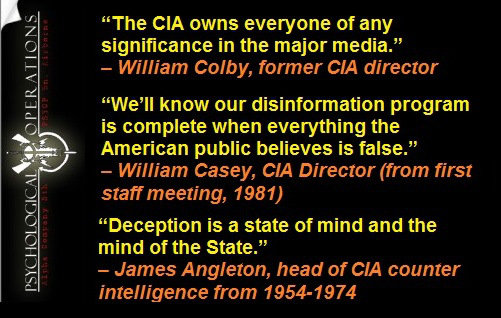


 After the Crash