
It’s better to focus on where you are going than how you are feeling

By Christian Jarrett

Source: aeon

The notion that emotional pain and suffering reflect a deviation from a default happy baseline has been referred to as the ‘assumption of healthy normality’. But it’s a mistaken assumption. Estimates of the lifetime prevalence of psychiatric disorders indicate that around one in two adults will meet the criteria for a mental-health condition at some point in their lives. Given that psychological pain is so ubiquitous, we should focus less on what might make us happy, and more on achieving a sense of meaning, regardless of how we’re feeling. Psychotherapy should help people manage effective functioning while they are distressed, above and beyond aiming to reduce symptoms such as difficult thoughts, emotions and sensations. Acceptance and commitment therapy (ACT) takes this approach, using mindfulness, acceptance and other behavioural strategies to promote more flexible and value-driven behaviours. The goals in ACT are not necessarily to change or reduce one’s problematic thoughts or emotions, but to foster meaningful and effective behaviours regardless of mood, motivation or thinking. In other words, the primary goal is to promote what therapists call ‘valued living’.

Think of valued living as going about your daily life in the service of values that you find important, whereby engaging in these actions creates a sense of meaning and purpose. From an ACT perspective, symptoms of psychiatric disorders, and psychological suffering more broadly, are problematic when they are linked to rigid behaviours that pull us away from valued living. We might not have any control over the pain we experience – in fact, our emotional pain is profoundly human – but one area where we can exert some control is what we do in response to that suffering. Many common responses to difficult thoughts and emotions – such as avoidance, substance abuse, withdrawal and aggression – can alleviate distress in the short term, but also lead to long-term damage in our relationships, our jobs, our freedom and our personal growth – the very areas that provide that sense of meaning and purpose. By letting go of an agenda guided by minimising pain, and recalibrating toward a more value-driven agenda, our choices can be based on who we want to be, rather than how we want to feel.

In their 2013 study, the psychologists Todd Kashdan and Patrick McKnight of George Mason University in Virginia examined the day-to-day relationships between valued living and wellbeing in a sample of individuals with social anxiety disorder. This is a common but debilitating condition that’s marked by intense fear of social situations that might involve being negatively judged by others. People with social anxiety disorder often want and value positive relationships but considerable distress makes them avoid social interactions, so this is an excellent group in which to examine values and meaning.

In the study, participants began by identifying their central aim or purpose in life (eg, ‘trying to be a good role model to others’). Then, each day over the next two weeks, they rated their daily efforts and progress toward this goal, and provided daily ratings of their self-esteem, meaning in life, and experience of positive and negative emotions. On days when they reported investing greater effort toward their main life goal, they also tended to enjoy greater wellbeing: they said their life had more meaning, and they scored higher on self-esteem and the experience of positive emotions. Importantly, support was not found for the reverse path – greater wellbeing did not predict greater effort or progress toward strivings. This study highlights that sometimes we need to make the value-guided choice, regardless of how we feel.

If only it were so easy, though. For this reason, in ACT-based treatments, there is substantial focus on skills and techniques that can assist one in cultivating a more aware, willing and tolerant stance toward difficult feelings and other internal experiences. This stands in explicit contrast to a ‘do X and your distress will alleviate’ approach. The ACT techniques are not in the service of changing emotional states – they are in the service of facilitating valued action.

The effectiveness of ACT across different diagnoses and problem areas shows that committing to the benefits of valued living transcends traditional diagnostic categories. In addition to anxiety disorders, in studies of post-traumatic stress disorderdepression and resiliencechronic painsuicidal ideation and many more, engaging in behaviours consistent with personally held values has been linked to a range of positive outcomes.

Which brings me back to my work as a therapist. While the breadth of exercises and techniques employed in ACT is beyond the scope of this article, there is one exercise I’d like to share that has helped some of my clients see the inextricable link between valued living and painful experiences. In this activity (of which there are different variations), the therapist first asks the client to write on an index card some of the internal experiences they are struggling with most – difficult thoughts and judgments, emotions, memories.

I ask them, what do you notice when you read that index card? I feel awful, I don’t want this. What do you want to do with the card? I want to throw it in the trash. Then the client flips the card over, and I ask them to write out some of the things that are most important, most meaningful to them – being a parent, caring and supporting others, learning, growing, etc. What do you notice when you read this side? Warmth, it feels right, this is who I want to be. Where is the pain, where is the other stuff? Still here, on the other side of the card. What happens if you push that pain away, escape or avoid it? I push the meaningful stuff away too. In your heart of hearts, what does your experience tell you right now? If I’m going to do the things that are important to me, be the person that I want to be, I also have to make room for the painful stuff.

In my experience, this is both an emotionally difficult exercise and also one that helps a person grasp that it’s impossible to disentangle pain and valued living. Sometimes it is hard to engage with those struggles in session, but we regularly return to the rationale of the approach – that maybe a different stance toward pain is necessary. And that is the crux of the work in ACT – opening up to the demons, judgments and suffering that lie underneath, all for the purpose of moving toward that which is meaningful.

The valued path is not necessarily the happy path. Social connectedness sometimes brings us in contact with memories of abuse and trauma. Being a parent stirs up doubts, uncertainty and feelings of anxiety, fear, anger and shame. Advocating for social justice requires repeated exposure to the inequities in our societies and the feelings of helplessness that can come from fighting for an equality that might not exist until after you’re gone. But a growing body of psychological research suggests that the valued path is the more workable one, whereas the happy path can be more of an illusion.

For readers who would like to find out more, I recommend the book Get Out of Your Mind and Into Your Life (2005) co-authored by the founder of ACT, Steven Hayes, and also Things Might Go Terribly, Horribly Wrong (2010) co-authored by another ACT pioneer, Kelly Wilson. And here is the international directory of ACT therapists, maintained by the Association for Contextual Behavioral Science.

Omens, Portents, Karma and the Mandate of Heaven

By Charles Hugh Smith

Source: Of Two Minds

The question of legitimacy isn’t limited to China.

what makes humans unique among social mammals? Some say humor, I would nominate superstition: regardless of how hard we promote our rationality and logic, humanity continues to sense portents and omens in events and feel the intangible tug of karma: the consequences of past actions that we arrogantly thought we’d escaped forever.

Michael Snyder recently compiled a list of peculiarities that are raising eyebrows around the globe: One, sure, two, not that unusual, three, well things happen in threes, but ten disturbances and we’re only six weeks into 2020? 10 ‘Plagues’ That Are Hitting Our Planet Simultaneously (Zero Hedge)

As the saying has it, Nature Bats Last, and maybe arrogant, destructive humanity’s war on Nature is about to get its comeuppance. Maybe overdosing hundreds of millions of chickens and pigs to knock down bacteria in overcrowded conditions has finally generated a karmic blowback via bird and swine viruses.

As for karma in human society: maybe the disruption of the supply chain in China is a karmic response to offshoring production to fatten Corporate America’s profits at the expense of all else in America’s society and economy.

Then there’s the celestial right to rule, a.k.a. The Mandate of Heaven, the concept rooted in Chinese culture that political leadership which fails the people invites divine retribution in the form of withdrawing the support of Heaven. This withdrawal of support manifests in the tangible world as natural disasters: earthquakes, floods, droughts, plagues, etc.

Though it’s not politically correct to discuss The Mandate of Heaven in any serious way, the reading of omens goes back in Chinese history to oracle bones, the process of heating bones until they crack and then interpreting the patterns as portents to the future.

With human and domestic animal epidemics devastating China in a novel cluster of natural disasters, The Mandate of Heaven is in play even if no one dares speak of it openly. The regime is well aware that these parallel plagues are understood as manifestations that question the legitimacy of the current regime.

The question of legitimacy isn’t limited to China. Soaring wealth inequality, the dependence on debt to fund “growth” and the political disenfranchisement of the masses are global manifestations of political-financial systems that invite divine retribution for their excesses of corruption, self-aggrandizement, and exploitation of the planet and its human workforce.

The Power of Vulnerability

By Milan Karmeli

Source: Collective Evolution

Vulnerability is about being honest, and this includes embracing our dark side. No matter whether we find ourselves on the conservative spectrum or liberal, we often abuse morals and ideals in order to avoid our own shadow. In this turbulent ‘Trump era,’  where values fly high for all sides, vulnerability could become the currency that returns our sanity. My intention here is not political, but recent events coinciding with personal ones have created some urgency around the issue.

In the name of righteousness and higher ideals — personal, social, or political — we often establish a perimeter of comforting beliefs around us. This way we don’t need to face our own fear and insecurity. Instead of taking responsibility for our insufficiencies, we respond with judgment and morality. Fearing to face our simplicity and delicate humanity, we try proving our sophistication through how good, spiritual, or moral we are. Survival at any cost justifies the means to an end, but is basic survival what we really want?

If you’re interested in understanding how comfortable you are with your own vulnerability, take a moment to sense how you respond to abandonment, rejection, judgment, or betrayal. 

Vulnerability Wasn’t Top Priority Growing Up

For most of us, childhood experiences left lasting imprints. When we got out of line, according to the values and needs of others, judgment or ridicule often followed. It became unsafe to express feelings and fears. Almost as a natural consequence, we began pretending that we don’t need anything and can do it ourselves. Hiding our true needs became the best strategy and we embarked on a journey of manipulating our way through life. To say the least, we became creative in coming up with ways to keep our true needs hidden — even from ourselves. 

We learned to trust that suffering shown through sadness, crying, or pain point to or represent our vulnerability, though even these seemingly obvious markers may not really be signs of such at all. Often they are more representative of (un)conscious of manipulation of our partners. It’s safer to express needs through suffering. Not from bad intentions, but because it’s not as exposing.

What we call a ‘need’ easily turns into ‘demand.’ And what we often call ‘vulnerability’ becomes our personal way of blackmail and punishment. Even waiting silently and lonely for a response after an argument can ‘look and feel’ vulnerable. However, deep down hides a righteous expectation to be seen or heard. If we look close, we can discover pain buried beneath.

Practicing Vulnerability With Those Close to Us Makes Us More Human

When we’re truly vulnerable, we don’t use morality as a weapon in judging who’s right or wrong. What we do is recognize and acknowledge our feelings, fears, and needs. We do not generalize or base our arguments on past events, but respond to the feelings stirred through a specific event. We take off our masks and become available to ourselves and others. In many ways, we actually choose to become choice-less.

Betrayal, sacrifice, and other patterns that result in disappointment become central themes in our close relationships, but this is mainly because we enter those connections protected and guarded in the first place. Sacrifice, for example, is a tricky form of manipulation. We feel pain and righteousness at the same time. Sacrifice always leaves us with anger in our belly and the sense of missed opportunities.

I remember the deep pain I felt when my partner rejected my attempts to ‘help’ her time and time again. My response was to shut down and give her the silent treatment, while at times also throwing some moral judgment her way, such as “I give you everything I have, and what about you?”. But was I open when I gave so much, or rather feeling morally superior by loving ‘more’? I placed myself in an untouchable place and at the same time lost my vulnerability.

In relationships with those close to us we have a rare opportunity to exit the spiral of survival that gives us the illusion of staying on top of our game. That place which makes us believe we’re protected by high ideals, values, and other virtues — and sometimes also by self-judgment that we’re evil beyond repair. 

Search for truth is a delicate process and doesn’t follow any defined path other than facing the complexity of our human existence as honestly, responsibly, and sincerely as we can. So long as we choose our personal safety and false importance, we prevent the power of vulnerability to guide us back to our hearts.

Vulnerability Can Be One of Our Greatest Teachers

There’s a big difference between saying and feeling things, and so a sentence like “I don’t need anything and can do it alone” can easily slip off our tongue. Nevertheless, the pain of loneliness and abandonment remains. There is no doubt that we can and could do many things by ourselves, like raising children, being without close friends, a lover, touch, recognition and the list goes on. 

But what we really want is to learn to express our fears, and needs. Our demand for acknowledgment, the requirement to have our needs satisfied, or maintaining moral high ground, all leave us in a state of fight, in which receiving becomes impossible. Vulnerability forms the basis for our receptivity.

In expressing true vulnerability we hold the ground for our feelings and needs. We sense it as a state of integrity in which we accept the totality and complexity of our human imperfection. It’s a place of power, in which we accept that we need and thereby acknowledge our dependency on each other. It’s empowering when we connect with our humility and simplicity.

Where to begin being vulnerable?

Vulnerability is best expressed in the “I” form. We take responsibility for our own state of mind and feelings, and don’t hold our partners prisoners to our moral standards and ideals. We don’t use sacrifice, guilt, shame, or judgment to drive our point across.

It’s challenging, since it leaves us with little or no protection other than the acceptance of who we are. The “I” form takes the guessing game out of the relationship, where we expect our partners to ‘know’ what we fear, feel, or need. 

This way those close to us can decide to satisfy our needs or not. Everything else turns into an expectations game in which there are no winners, and this triggers resistance. They feel manipulated. And for us, vulnerability holds the key to accepting more parts in ourselves, which forms the basis of coming out of hiding and denial, and into our light.

The Primary Mechanism Of Your Oppression Is Not Hidden At All

By Caitlin Johnstone

Source: CaitlinJohnstone.com

I write a lot about government secrecy and the importance of whistleblowers, leakers and leak publishers, and for good reason: governments which can hide their wicked deeds from public accountability will do so whenever possible. It’s impossible for the public to use democracy for ensuring their government behaves in the way they desire if they aren’t allowed to be informed about what that behavior even is.

These things get lots of attention in conspiracy circles and dissident political factions. Quite a few eyes are fixed on the veil of government opacity and the persecution of those brave souls who try to shed light on what’s going on behind it. Not enough eyes, but quite a few.

What gets less attention, much to our detriment, is the fact that the primary mechanism of our oppression and exploitation is happening right out in front of our faces.

The nonstop campaign by bought politicians, owned news outlets, and manipulated social media platforms to control the dominant narratives about what’s going on in the world contribute vastly more to the sickness of our society than government secrecy does. We know this from experience: any time a whistleblower exposes secret information about the malfeasance of powerful governments like NSA surveillance or Collateral Murder, we see not public accountability, nor demands for sweeping systemic changes to prevent such malfeasance from reoccurring, but a bunch of narrative management from the political/media class.

This narrative management is used to shift attention away from the information that was revealed and onto the fact that the person who revealed it broke the law or misbehaved in some way. It’s used to convince people that the revelations aren’t actually a big deal, or that it was already basically public knowledge anyway. And it’s used to manipulate public attention on to the next hot story of the day and memory hole it underneath the white noise of the media news churn. And nothing changes.

We’ve seen it happening over and over and over again. The narrative management machine has gotten so effective and efficient that it’s been able to completely ignore the recent revelation that the US, UK and France almost certainly bombed Syria in 2018 for a completely false reason. A few half-assed Bellingcat spin jobs and an otherwise total media blackout, and it’s like the whole thing never happened.

What this tells us is that our first and foremost problem is not the fact that conspiracies are happening behind a curtain of government secrecy, but that the way people think, act and vote is being actively manipulated right out in the open. Government secrecy is indeed one aspect of establishment narrative control, but controlling the public’s access to information is only one aspect. The bigger part of it is controlling how the public thinks about information.

The reason people never use the power of their superior numbers to force real change, even though they’re being exploited and oppressed in myriad ways by the ruling class, is because they’ve been propagandized into accepting the status quo as desirable (or at least normal). The propaganda of the political/media class is therefore the establishment’s front line of defense. Its most powerful, and essential, weapon.

This is important for dissidents of all stripes to understand, because it means we’re not just passively waiting around for another Manning or Snowden or an Ian Henderson to give us information which we can use to fight the oppression machine. Those individuals have done a great public service, but the battle to awaken human consciousness to what’s really going on in our world is in no way limited to leakers and whistleblowers. It is not at the mercy of government secrecy.

If you are engaged in any type of media, you are engaging the narrative matrix which keeps the public asleep and complacent. It doesn’t matter if you have a Twitter account, a Youtube account, some flyers or a can of spray paint: if you are capable of getting any kind of message out there, you are able to directly influence the mechanism of your oppression. You are able to inform people that they are being lied to, you are able to explain why, and you are able to point them to where they can find more information.

This is extremely empowering. You do not need to wait around hoping that some bombshell piece of information makes it past all the various security checks and spinmeisters and triggers a real social awakening. You can be that information. You can become a catalyst for that awakening.

The key to turning this ship around does not lie hidden somewhere behind a veil of government opacity. It lies in you. It lies in all of us. We can begin awakening our fellow humans right now by attacking the narrative management of the propaganda machine that sits right in front of us, unarmored and unhidden.

Saturday Matinee: First Reformed

Synopsis by A24

Reverend Ernst Toller (Ethan Hawke) is a solitary, middle-aged parish pastor at a small Dutch Reform church in upstate New York on the cusp of celebrating its 250th anniversary. Once a stop on the Underground Railroad, the church is now a tourist attraction catering to a dwindling congregation, eclipsed by its nearby parent church, Abundant Life, with its state-of-the-art facilities and 5,000-strong flock. When a pregnant parishioner (Amanda Seyfried) asks Reverend Toller to counsel her husband, a radical environmentalist, the clergyman finds himself plunged into his own tormented past, and equally despairing future, until he finds redemption in an act of grandiose violence. From writer-director Paul Schrader (Taxi Driver; American Gigolo; Affliction) comes a gripping thriller about a crisis of faith that is at once personal, political, and planetary.

Watch the full film on Kanopy.

A Metaphysical Malaise?

By Kingsley L. Dennis

Source: Waking Times

‘The real tragedy of our time lies not so much in the unprecedented external events themselves as in the unprecedented ethical destitution and spiritual infirmity which they glaringly reveal.’

Paul Brunton

There is little doubt that we are living in an age of extreme contradictions where opposing trends appear to exist side by side. It is a time when individuals take greater care of their bodies and are obsessed by diet and health fads, while obesity is an epidemic. We live amidst a paradoxical combination of playfulness and fear, of fun and anxiety, of euphoria and unease. It has been said that ‘When a materialistic civilization becomes outwardly impressive but remains inwardly impoverished, when political relations become an elaborate façade for hiding the spiritually empty rooms behind them, menacing problems are sure to appear on every side.’This quote adequately describes our current situation and yet the author, Paul Brunton, published this in 1952.  However, it remains as starkly correct in its analysis for today as it was for his own time.

The current situation is that ‘menacing problems’ are indeed appearing on every side: political corruption and ineptitude; economic manipulations; national aggression and politically-motivated warfare; refugee crises; human torture and suffering; capitalist greed; corporate corruption; aggravated social unrest; religious and moral intolerance; increased displays of psychopathic behaviour (private individuals and authority figures); blatant propaganda; environmental degradation; ecological ignorance; spiritual destitution, and the rest.

The result is that many people have become ‘spiritually numbed’ by what they see occurring in the world, and feel that only a similar harsh, physical response can be effective. The words ‘mystical’ and ‘spiritual’ remain vague and ethereal. People have always depended on language to bring guidance and nourishment. Yet in this mental environment, words are but skeletal traces of the real flesh. The crisis of our times has clarified little and succeeds in confusing almost everything for the rest of us. There is nowhere to turn in public for finding the truth – seemingly little to believe in for the present and too much uncertainty for the future. The result of this is that many people have doubts that they don’t know how to deal with, and these are building up within their minds like a pathological infection.

An Absence of Meaning

In these current times there is a sense, a feeling, of something lacking or missing within many people’s lives. Unfortunately, this need has been met by the consumerist marketplace. There is a great deal of compensation for this lack through ‘quick fix’ guruism; that is, costly paid retreats, so-called spiritual counselling, and ‘life coaching’ mentorship. Yet these are like fast-food remedies for a deeper hunger. The real struggle today is rather between the material perspective on life and that of the inner, developmental state. Many of the events occurring in the world are manifestations of issues existing within ourselves. The anger and negativity we see so much of in the world is a projection from the collective interior state of humanity. We can manifest both the dream or the nightmare, and we share in its waking state. Being physically mature is not enough; we also need to be emotionally, intellectually, and inwardly mature.

Our cultures and societies are in disequilibrium because they seek to be governed by artificial laws that ignore the timeless wisdom that corresponds to human development. It is a dominant mentality that promotes a short-sighted, myopic worldview that is largely concerned only with physical gains and material power. It is a mentality that promotes fear, defence and attack – rather than a welcoming, embracing vision.

Our societies do not consider human purpose and the deeper meaning of human existence. They drive us to live by working; to enjoy through distractions; and to eventually die with debt and taxes. The world is governed not by fairness or equity, but by a lopsided arrangement of elite power. Conferences of peace are based on compromise and not compassion. Trade is based on strength rather than collaboration. Power and politics are at war with the world and do so beyond the reach of accountability. There is a resurgence of the illegitimate, surging through black markets, offshores, and dark networks. Dark pathways will always emerge and grow in the places where the light is flickering without focus or intent.

Today’s so-called modern cultures are increasingly fragmented, or like liquid streams, that can no longer be accurately identified or navigated by the old signs, symbols, and meanings. Modern life has, to some degree, started to dissolve in order to re-assemble. This may indeed be a part of the needed cathartic process that humanity has to pass through before circumstances will improve. A feature of the current times is that new ways of thinking and behaviour have not yet fully materialized into the present order of things. That which now constitutes ‘daily life’ is void of the questions of metaphysical meaning. Any notion of the developmental, or the metaphysical, is deemed outside of daily life, and people are continually programmed against such deeper truths. In other words, we should not let anything that is ‘other’ – otherworldly or transcendental – replace the responsibility of our social daily grind.

Human societies often make political declarations to promote what they decide to be ‘social happiness.’ Yet political institutions have no genuine models for this, for the dominant political mindset is overruled by a form of psychosis. Social ‘happiness’ is whatever fits into the particular dominant belief system of the age. And as can be seen, this dominant belief, or narrative, has been hijacked by a collective psychosis that I have termed the wounded mind. It appears that as a collective society we have no lasting image of happiness. As a consequence, personal lives are in danger of becoming now less about actual experience and more about the data trails left behind. We have entered another struggle – another social fray – where the battle is between the transparency of our private, inner lives and our public identity.

Identity & Self

These days people are being encouraged to expose their inner demons onto the public stage, especially online. The human shadow is wanting to come out and be revealed. According to Jung, the psychological ‘shadow’ is the underdeveloped and undesirable aspects of ourselves that we try to keep hidden away. And yet there are times when we are unable to hold it at bay, or unconsciously wish for it to manifest. Humanity possesses a tremendous imagination for doing good as well as evil, and this can be a finer line than is realized. As the aphorism states, the road to hell is paved with good intentions. Each person needs to exercise the capacity to detect and acknowledge those unconscious desires, feelings, and thoughts that exist within. American psychologist Rollo May once wrote – ‘Our age is one of transition, in which the normal channels for utilizing the daemonic are denied; and such ages tend to be times when the daemonic is expressed in its most destructive form’2

In short, we need to be extremely mindful in these times about what’s inside of us. Our minds – our thinking and consciousness – is a target and has been for a long time. In the last century this has become more evident, more public. We have become increasingly stuck in modern times within our stories around psychological need and a ‘loss of self.’ Perhaps what is needed is to acknowledge that some people are suffering from what is termed as ‘soul loss.’

People who experience ‘soul loss’ frequently have the feeling of being fragmented, not whole or completely ‘in’ themselves. They feel as if an essential part of them is missing. They may clinically be diagnosed as ‘dissociated.’ Depression is another symptom of soul loss. Soul loss can be associated with the traumas of modern life – fear, terror (warfare), incest or rape, domestic abuse. These are all the external stresses that modern life creates. Counselor and educator John Bradshaw uses the term toxic shame which he sees as a form of alienation from the self, causing it to be ‘otherated.’ In response, people may turn to external sources to fill this internal void.

Carl Jung also made a reference to soul loss in his psychological work. According to psychotherapist Robert Francis Johnson,

‘This loss of soul Jung speaks of is manifested in our culture by the crises we are all facing (increased drug use, violence, moral and emotional numbness) and our attempt to solve moral and spiritual questions by electing wounded leaders who promise economic answers.’3

It is interesting that Johnson refers to ‘wounded leaders’ here who seek our compliance through the language of greed (‘economic answers’). Similarly, prominent Jungian analyst Marie von Franz writes that

‘Soul loss can be observed today as a psychological phenomenon in the everyday lives of the human beings around us. Loss of soul appears in the form of a sudden onset of apathy and listlessness; the joy has gone out of life, initiative is crippled, one feels empty, everything seems pointless.’4

Is this not a description of what faces many people today? Apathy, listlessness, a feeling of a pointless, joyless life? There is clearly a toxic social problem, and we are clearly in need of a metaphysical response.

Where is the Metaphysical?

Any society or civilization that does not recognize the human as a developmental being will fall short in its accomplishments. We simply cannot allow ourselves to fall short – not in the long run, at least. Yet recognition of the human as a developmental being will not come from the world first; and definitely not from social-cultural-political institutions. It will first only come from the individual. And it is from here that genuine change must be nurtured. Now is a crucial time for managing our psychological, emotional, and physical states. We may be uncertain about the future, yet we have the technologies to radically transform our age into something unprecedented. We have both external technologies as well as what may be called ‘technologies of the soul.’ What we are, we transmit to others. We are compelled not only to be mindful, but crucially to be both sensible and soul-ful.

On a practical level, the number of people around the world who have been awoken by the current crises to seek greater inner development is not in the majority. It can be said that at present there exists a metaphysical malaise. Those people who aspire for inner self-development are still all too few. However, a majority was never needed. There is enough.

Humanity is now engaged in a profound moment along its species path. Whether it is recognized or not, we are each living and participating in a reality that exists upon profound metaphysical principles. That’s the bottom line. We can choose to participate in this metaphysical reality, consciously and willingly, or to drift through our lives unbeknown to the forces that impel us. Right now, it is about recognizing this choice, and whether to act upon it. It will not be easy, for all the obstacles that the psychosis-ridden governing systems will throw at us. And yet it must be a force of unwavering inner commitment and genuine self-trust. Each person must choose their freedom from within. The real site of freedom can only be within the inner self – and it is to this we must place our trust.

Snakes In Suits: Are Psychopaths Running The World?

By Alanna Ketler

Source: Collective Evolution

Often when we think of the word psychopath, we think of deranged serial killers that are hopefully locked up in prison for life. While there are many psychopaths who kill for reasons that are unfathomable to most of us and who are indeed in prison, there is an even greater number roaming free in our society and often using their condition to their advantage in any way possible. In fact, it is very likely that you know some–they might even be your colleagues.

Most of us do not know or work with any serial killers, at least not that we are aware of. So, what exactly is a psychopath and how can we define them? The dictionary definition is as follows:

“A person suffering from a chronic mental disorder with abnormal or violent social behavior.”

As you can probably tell, a lot more than just serial killers will fit into this broad definition. In fact, according to Canadian psychologist Dr. Robert Hare, a world-renowned expert on psychopathy, an estimated 1% of the Earth’s population is psychopathic and around 25% of the population of male inmates at federal correctional facilities are psychopathic.

Psychopathic Traits

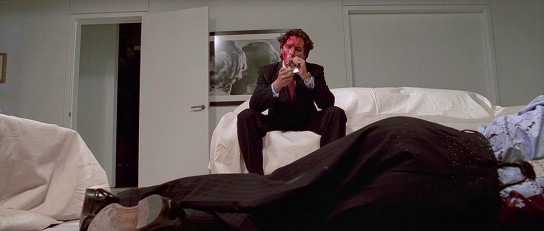
It is important to note that, in contrast with the popular image of the ‘deranged psycho,’ psychopaths tend to be very well composed, take good care of their appearance and are very charming (think of Christian Bale as Patrick Bateman in American Psycho). Because of this you may have a difficult time spotting them out, as they are masters of deception and are able to fake a lot of the qualities that define regular people. Some other psychopathic traits, according to Hare’s Psychopathy Checklist, are as follows:

  • Glib and superficial charm
  • Grandiose estimation of self
  • Need for stimulation
  • Manipulative and cunning
  • Complete lack of remorse or guilt
  • Pathological lying
  • Have a parasitic lifestyle, often latching onto and taking from others
  • Have a history of early behavioral problems
  • Overly impulsive
  • Are very irresponsible
  • Unable to accept responsibility for actions
  • Unable to commit to long-term relationships
  • History of juvenile delinquency
  • Display criminal versatility
  • Experienced a “revocation of conditional release”
  • Lacks realistic long term goals
  • History of promiscuous sexual behavior
  • Have poor behavioral controls
  • Are callous and lack empathy
  • Have a “shallow affect” (psychopaths show a lack of emotion when an emotional reaction is appropriate.)

You can actually rate yourself to find out if you are psychopath. On each criterion, the subject is ranked on a 3-point scale: (0 = item does not apply, 1 = item applies somewhat, 2 = item definitely applies). The scores are summed to create a rank of zero to 40. Anyone who scores 30 and above is most likely a psychopath. Hare has used this test and checklist to detect which inmates are psychopaths.

Snakes In Suits

What many of us may not realize is that psychopaths actually thrive in the corporate world. Hare has actually co-authored a book with Dr. Paul Babiak on this topic entitled, Snakes In Suits: Understanding and Surviving the Psychopaths in Your Office. Psychopaths manipulate others to accrue power, sometimes pitting them against each other in an attempt to divide and conquer. They are often attracted to bigger, dynamic corporations with very little structure or supervision. They generally don’t work well in teams because they don’t like to share information or skills and it brings them joy to watch others fail. They are addicted to power, status and money. Sound familiar?

The corporate world is set up to favor psychopathic traits such as fearlessness, dominant behavior and immunity to stress. Because of this, psychopaths often find themselves in these types of positions, and then have an easier time climbing the corporate ladder and obtaining positions of great power. This is where they can do real damage to society as we see it today.

Are Psychopaths Running The World?

Not only as corporate heads do psychopaths find success in our modern-day society, but also within our governments and political system — often as front-line politicians. This may come as a shock to you, but when you really look at some of the atrocities that are taking place on our planet, and if you’ve ever wondered how things that are so inhumane could actually be happening, well, therein lies part of your answer.

When you consider the war, genocide, senseless murder of civilians, treatment of the indigenous cultures of the world, chemicals in our food, air and water supply, acts of “terrorism”, war crimes and so many other unjust and cruel actions which are often instigated by our political leaders, it becomes easy to see how psychopaths actually fit the requirements for these types of roles quite well. As mentioned before they are masters of deception, pathological liars and often quite charming.

Many soldiers go to war and because they are conditioned to believe that they are fighting an enemy in the name of peace. They do as they are told and commit these heinous acts against other human beings. The reason why so many soldiers suffer from post-traumatic stress disorder is because it is not within human nature to murder other humans, and especially innocent civilians.

We already know how many politicians are crooked, but perhaps its time to start looking at them with the psychopath checklist in mind so that we can be better equipped to protect not only ourselves but our society from their malicious acts.

But Can’t We Help Them?

It is natural for anyone who is involved in spiritual work to have compassion for these individuals and feel compelled to help them overcome their psychopathic behavior. However, most research has pointed towards the understanding that psychopaths are born, not made and therefore cannot be cured. This is one of the main differences that separates sociopaths from psychopaths. Another is that sociopaths have a conscience, albeit a weak one, and will often justify something they know to be wrong. By contrast, psychopaths will believe that their actions are justified and feel no remorse for any harm done. Sociopaths are made, and have a higher likelihood of overcoming their current condition. However, many of those with sociopathic behavior will find themselves in similar corporate positions.

Hare’s research discovered that by attempting to heal or help a psychopath, you might actually be strengthening their cunning abilities, as they will find a way to manipulate you into believing that they are remorseful and understand how their actions were wrong.

Lucid Living

By Caitlin Johnstone

Source: CaitlinJohnstone.com

Beneath all our evolutionary conditioning, beneath all our cultural mind viruses and power-serving, power-promulgated belief systems, beneath the chaos and confusion of life in an insane society, there is a deep stillness.

We all know deep down in our guts that that stillness is there, and that it is our natural condition. That’s why we all spend our lives trying out different strategies for coming to inner tranquility. Most of those strategies are unhealthy and doomed to fail, but that inner stillness at the root of our being is what we’re always reaching to experience.

Beneath all the warmongering, conflict and violence in our species, there is a bottomless foundation of pure peace. We all know deep in our guts that it’s there; that’s why we all secretly long for peace, even if most of us are confused about how to get there.

Beneath all the division, drama and us-versus-them othering, there is an underlying perception in each of us which sees only oneness. We all know deep in our guts that this perception is there, which is why, even though we get mixed up about how best to achieve it, we’re always reaching in some way toward unity.

Beneath all human hate, rejection, bigotry and prejudice, there is a profound love for all that arises. We all intuitively sense this love below our own surface-level awareness, which is why we all, in our own clumsy ways, seek love.

We all know this, on some level. We all know that everything we really want is already our own true nature. That’s why all of us, in our own convoluted, delusional, map-upside-down-and-compass-near-a-magnet ways, seek truth.

That’s all we’re ever really dealing with here, those of us who value peace, truth and justice. All we’re ever really dealing with (in ourselves and in others) is humankind’s built-in impulse to come home, and its flailing, awkward attempts to manifest that impulse.

Peace is your true nature. Oneness is your true nature. Love is your true nature.

I am not here saying that there is some aspect of you that is these things, some small part of you which you can find by rummaging around in your mind and possibly locating underneath your id to the east of your latent oedipal complex or whatever. I’m saying that is you. It’s what you really are, beneath everyone’s mental stories about what you really are.

Day after day from the moment this planet births our body, we experience a field of consciousness containing sensory input, thoughts and feelings. That field of consciousness is all any of us ever experience from cradle to grave, yet it almost never occurs to anyone to pop the hood and directly investigate what makes it tick.

What intense investigation will show you is that all any of us are actually experiencing in any waking moment is this singular, unified field of consciousness being perceived by something that is utterly free from it, in the same way lucid investigation into a dream will reveal a singular, unified dream being perceived by a dreamer who has no stake in what happens to any of the dream characters.

And, just as in the experience of lucid dreaming, when the dreamer realizes the truth of what’s really happening, the experience suddenly becomes a lot more fun. You realize that you, the dreamer are not actually being chased by pirates or whatever, and that you’re actually free from the drama and entanglements in the dream which until that moment seemed perilously threatening. From that free perspective, the dream is delightful. The dream is beloved.

An ineffable something is perceiving the mysterious field of consciousness which has been arising every day since your physical form first showed up here. That ineffable something is your true nature. And it is everything you’ve ever sought in this strange dream world. The only thing keeping your from recognizing this has been your fixation on the drama of the dream.

Lucid living means the dreamer of this waking life, the witness of this beautiful, dancing, ever-changing field of consciousness, is seen clearly to be what you really are.

And the good news is that you are already what it is you’ve been seeking. You just have to perceive this with lucidity. Your innate love of truth is already calling you home. Just follow it.