
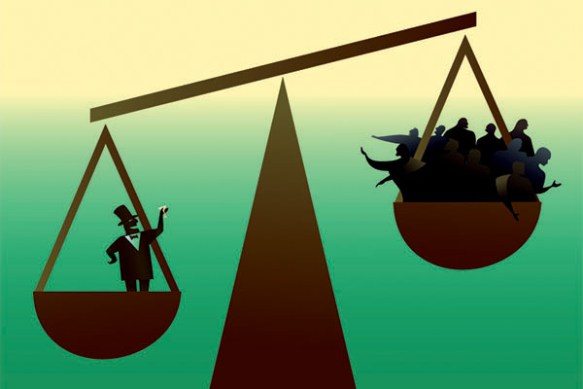
Wall Street, Banks, and Angry Citizens

The Inequality Gap on a Planet Growing More Extreme

By Nomi Prins

Source: TomDispatch.com

As we head into 2019, leaving the chaos of this year behind, a major question remains unanswered when it comes to the state of Main Street, not just here but across the planet. If the global economy really is booming, as many politicians claim, why are leaders and their parties around the world continuing to get booted out of office in such a sweeping fashion?

One obvious answer: the post-Great Recession economic “recovery” was largely reserved for the few who could participate in the rising financial markets of those years, not the majority who continued to work longer hours, sometimes at multiple jobs, to stay afloat. In other words, the good times have left out so many people, like those struggling to keep even a few hundred dollars in their bank accounts to cover an emergency or the 80% of American workers who live paycheck to paycheck.

In today’s global economy, financial security is increasingly the property of the 1%. No surprise, then, that, as a sense of economic instability continued to grow over the past decade, angst turned to anger, a transition that — from the U.S. to the Philippines, Hungary to Brazil, Poland to Mexico — has provoked a plethora of voter upheavals. In the process, a 1930s-style brew of rising nationalism and blaming the “other” — whether that other was an immigrant, a religious group, a country, or the rest of the world — emerged.

This phenomenon offered a series of Trumpian figures, including of course The Donald himself, an opening to ride a wave of “populism” to the heights of the political system. That the backgrounds and records of none of them — whether you’re talking about Donald Trump, Viktor Orbán, Rodrigo Duterte, or Jair Bolsonaro (among others) — reflected the daily concerns of the “common people,” as the classic definition of populism might have it, hardly mattered. Even a billionaire could, it turned out, exploit economic insecurity effectively and use it to rise to ultimate power.

Ironically, as that American master at evoking the fears of apprentices everywhere showed, to assume the highest office in the land was only to begin a process of creating yet more fear and insecurity. Trump’s trade wars, for instance, have typically infused the world with increased anxiety and distrust toward the U.S., even as they thwarted the ability of domestic business leaders and ordinary people to plan for the future. Meanwhile, just under the surface of the reputed good times, the damage to that future only intensified. In other words, the groundwork has already been laid for what could be a frightening transformation, both domestically and globally.

That Old Financial Crisis

To understand how we got here, let’s take a step back. Only a decade ago, the world experienced a genuine global financial crisis, a meltdown of the first order. Economic growth ended; shrinking economies threatened to collapse; countless jobs were cut; homes were foreclosed upon and lives wrecked. For regular people, access to credit suddenly disappeared. No wonder fears rose. No wonder for so many a brighter tomorrow ceased to exist.

The details of just why the Great Recession happened have since been glossed over by time and partisan spin. This September, when the 10th anniversary of the collapse of the global financial services firm Lehman Brothers came around, major business news channels considered whether the world might be at risk of another such crisis. However, coverage of such fears, like so many other topics, was quickly tossed aside in favor of paying yet more attention to Donald Trump’s latest tweets, complaints, insults, and lies. Why? Because such a crisis was so 2008 in a year in which, it was claimed, we were enjoying a first class economic high and edging toward the longest bull-market in Wall Street history. When it came to “boom versus gloom,” boom won hands down.

None of that changed one thing, though: most people still feel left behind both in the U.S. and globally. Thanks to the massive accumulation of wealth by a 1% skilled at gaming the system, the roots of a crisis that didn’t end with the end of the Great Recession have spread across the planet, while the dividing line between the “have-nots” and the “have-a-lots” only sharpened and widened.

Though the media hasn’t been paying much attention to the resulting inequality, the statistics (when you see them) on that ever-widening wealth gap are mind-boggling. According to Inequality.org, for instance, those with at least $30 million in wealth globally had the fastest growth rate of any group between 2016 and 2017. The size of that club rose by 25.5% during those years, to 174,800 members. Or if you really want to grasp what’s been happening, consider that, between 2009 and 2017, the number of billionaires whose combined wealth was greater than that of the world’s poorest 50% fell from 380 to just eight. And by the way, despite claims by the president that every other country is screwing America, the U.S. leads the pack when it comes to the growth of inequality. As Inequality.org notes, it has “much greater shares of national wealth and income going to the richest 1% than any other country.”

That, in part, is due to an institution many in the U.S. normally pay little attention to: the U.S. central bank, the Federal Reserve. It helped spark that increase in wealth disparity domestically and globally by adopting a post-crisis monetary policy in which electronically fabricated money (via a program called quantitative easing, or QE) was offered to banks and corporations at significantly cheaper rates than to ordinary Americans.

Pumped into financial markets, that money sent stock prices soaring, which naturally ballooned the wealth of the small percentage of the population that actually owned stocks. According to economist Stephen Roach, considering the Fed’s Survey of Consumer Finances, “It is hardly a stretch to conclude that QE exacerbated America’s already severe income disparities.”

Wall Street, Central Banks, and Everyday People

What has since taken place around the world seems right out of the 1930s. At that time, as the world was emerging from the Great Depression, a sense of broad economic security was slow to return. Instead, fascism and other forms of nationalism only gained steam as people turned on the usual cast of politicians, on other countries, and on each other. (If that sounds faintly Trumpian to you, it should.)

In our post-2008 era, people have witnessed trillions of dollars flowing into bank bailouts and other financial subsidies, not just from governments but from the world’s major central banks. Theoretically, private banks, as a result, would have more money and pay less interest to get it. They would then lend that money to Main Street. Businesses, big and small, would tap into those funds and, in turn, produce real economic growth through expansion, hiring sprees, and wage increases. People would then have more dollars in their pockets and, feeling more financially secure, would spend that money driving the economy to new heights — and all, of course, would then be well.

That fairy tale was pitched around the globe. In fact, cheap money also pushed debt to epic levels, while the share prices of banks rose, as did those of all sorts of other firms, to record-shattering heights.

Even in the U.S., however, where a magnificent recovery was supposed to have been in place for years, actual economic growth simply didn’t materialize at the levels promised. At 2% per year, the average growth of the American gross domestic product over the past decade, for instance, has been half the average of 4% before the 2008 crisis. Similar numbers were repeated throughout the developed world and most emerging markets. In the meantime, total global debt hit $247 trillion in the first quarter of 2018. As the Institute of International Finance found, countries were, on average, borrowing about three dollars for every dollar of goods or services created.

Global Consequences

What the Fed (along with central banks from Europe to Japan) ignited, in fact, was a disproportionate rise in the stock and bond markets with the money they created. That capital sought higher and faster returns than could be achieved in crucial infrastructure or social strengthening projects like building roads, high-speed railways, hospitals, or schools.

What followed was anything but fair. As former Federal Reserve Chair Janet Yellen noted four years ago, “It is no secret that the past few decades of widening inequality can be summed up as significant income and wealth gains for those at the very top and stagnant living standards for the majority.” And, of course, continuing to pour money into the highest levels of the private banking system was anything but a formula for walking that back.

Instead, as more citizens fell behind, a sense of disenfranchisement and bitterness with existing governments only grew. In the U.S., that meant Donald Trump. In the United Kingdom, similar discontent was reflected in the June 2016 Brexit vote to leave the European Union (EU), which those who felt economically squeezed to death clearly meant as a slap at both the establishment domestically and EU leaders abroad.

Since then, multiple governments in the European Union, too, have shifted toward the populist right. In Germany, recent elections swung both right and left just six years after, in July 2012, European Central Bank (ECB) head Mario Draghi exuded optimism over the ability of such banks to protect the financial system, the Euro, and generally hold things together.

Like the Fed in the U.S., the ECB went on to manufacture money, adding another $3 trillion to its books that would be deployed to buy bonds from favored countries and companies. That artificial stimulus, too, only increased inequality within and between countries in Europe. Meanwhile, Brexit negotiations remain ruinously divisive, threatening to rip Great Britain apart.

Nor was such a story the captive of the North Atlantic. In Brazil, where left-wing president Dilma Rouseff was ousted from power in 2016, her successor Michel Temer oversaw plummeting economic growth and escalating unemployment. That, in turn, led to the election of that country’s own Donald Trump, nationalistic far-right candidate Jair Bolsonaro who won a striking 55.2% of the vote against a backdrop of popular discontent. In true Trumpian style, he is disposed against both the very idea of climate change and multilateral trade agreements.

In Mexico, dissatisfied voters similarly rejected the political known, but by swinging left for the first time in 70 years. New president Andrés Manuel López Obrador, popularly known by his initials AMLO, promised to put the needs of ordinary Mexicans first. However, he has the U.S. — and the whims of Donald Trump and his “great wall” — to contend with, which could hamper those efforts.

As AMLO took office on December 1st, the G20 summit of world leaders was unfolding in Argentina. There, amid a glittering backdrop of power and influence, the trade war between the U.S. and the world’s rising superpower, China, came even more clearly into focus. While its president, Xi Jinping, having fully consolidated power amid a wave of Chinese nationalism, could become his country’s longest serving leader, he faces an international landscape that would have amazed and befuddled Mao Zedong.

Though Trump declared his meeting with Xi a success because the two sides agreed on a 90-day tariff truce, his prompt appointment of an anti-Chinese hardliner, Robert Lighthizer, to head negotiations, a tweet in which he referred to himself in superhero fashion as a “Tariff Man,” and news that the U.S. had requested that Canada arrest and extradite an executive of a key Chinese tech company, caused the Dow to take its fourth largest plunge in history and then fluctuate wildly as economic fears of a future “Great Something” rose. More uncertainty and distrust were the true product of that meeting.

In fact, we are now in a world whose key leaders, especially the president of the United States, remain willfully oblivious to its long-term problems, putting policies like deregulation, fake nationalist solutions, and profits for the already grotesquely wealthy ahead of the future lives of the mass of citizens. Consider the yellow-vest protests that have broken out in France, where protestors identifying with left and right political parties are calling for the resignation of neoliberal French President Emmanuel Macron. Many of them, from financially starved provincial towns, are angry that their purchasing power has dropped so low they can barely make ends meet.

Ultimately, what transcends geography and geopolitics is an underlying level of economic discontent sparked by twenty-first-century economics and a resulting Grand Canyon-sized global inequality gap that is still widening. Whether the protests go left or right, what continues to lie at the heart of the matter is the way failed policies and stop-gap measures put in place around the world are no longer working, not when it comes to the non-1% anyway. People from Washington to Paris, London to Beijing, increasingly grasp that their economic circumstances are not getting better and are not likely to in any presently imaginable future, given those now in power.

A Dangerous Recipe

The financial crisis of 2008 initially fostered a policy of bailing out banks with cheap money that went not into Main Street economies but into markets enriching the few. As a result, large numbers of people increasingly felt that they were being left behind and so turned against their leaders and sometimes each other as well.

This situation was then exploited by a set of self-appointed politicians of the people, including a billionaire TV personality who capitalized on an increasingly widespread fear of a future at risk. Their promises of economic prosperity were wrapped in populist platitudes, normally (but not always) of a right-wing sort. Lost in this shift away from previously dominant political parties and the systems that went with them was a true form of populism, which would genuinely put the needs of the majority of people over the elite few, build real things including infrastructure, foster organic wealth distribution, and stabilize economies above financial markets.

In the meantime, what we have is, of course, a recipe for an increasingly unstable and vicious world.


The Psychological Warfare Behind Economic Collapse

By Brandon Smith

Source: Alt-Market.com

The concept of using the economy as a weapon is not an alien one to most people. Generally, we understand the nature of feudalism and how various groups can be herded onto centralized plantations to be exploited for their labor. Some people see this as a consequence of “capitalism,” and others see it as an extension of socialism/communism. Sadly, many people wrongly assume that one is a solution to the other — meaning they think that crony capitalism is a solution to communist centralization or that communism is a solution to the corruption of crony capitalism. The reality is that this is just another false paradigm.

What is most disturbing is that the majority of the public have no grasp whatsoever of the true solution to the problem of corrupt or totalitarian economies: free markets.

Free markets have not existed within the global economy on a large scale for at least the past 100 years. The rise of central banking has eroded all vestiges of freedom in production and trade. Crony capitalism with its focus on corporate power and monopoly has nothing to do with free markets, despite the arguments of rather naive socialists who blame “free markets” for the problems of the world. If you ever hear anyone making this claim, I suggest you remind them that corporations and their advantages are a creation of governments.

The protections of corporate personhood, limited liability, unfair taxation of small business competition and legislation shielding corporations from civil lawsuits are all generated by government. Therefore, corporations and crony capitalism are much more a product of socialist-style systems, not free markets. In a true free market devoid of constant government interference and favoritism, corporations could not exist and would be obliterated over time by the competitive environment. And without limited liability, business moguls that violate the rule of law and harm others would be subject to personal prosecution and jail time instead of simply paying a fine. The cost/benefit ratio for corrupt business would disappear and thus corrupt businesses would flounder.

At the very core of the combination of corporate power and government protection (what some might say is the classical definition of fascism), rest the central banks, globalist institutions and the banking elites behind them. Central banks are the stewards of the various plantations (nations) and oversee the exploitation of these societies and their labor. Major globalist constructs like the IMF or the Bank for International Settlements are the policy makers for the national central banks. They hand down the strategy, and the central banks implement that strategy in concert. At the top of the pyramid sit the round table groups and the international bankers themselves, reaping the rewards of the cycle of theft.

As noted scholar, globalist insider and mentor to Bill Clinton, Carroll Quigley wrote in his book Tragedy And Hope:

“The powers of financial capitalism had another far-reaching aim, nothing less than to create a world system of financial control in private hands able to dominate the political system of each country and the economy of the world as a whole. This system was to be controlled in a feudalist fashion by the central banks of the world acting in concert, by secret agreements arrived at in frequent private meetings and conferences. The apex of the system was to be the Bank for International Settlements in Basel, Switzerland, a private bank owned and controlled by the world’s central banks which were themselves private corporations. Each central bank … sought to dominate its government by its ability to control Treasury loans, to manipulate foreign exchanges, to influence the level of economic activity in the country, and to influence cooperative politicians by subsequent economic rewards in the business world.”

This is an easy notion to understand, I think. That is to say, the idea of oligarchs, the 1% if you will, controlling the other 99% through economic leverage is something that most people can agree exists, whether they identify with the political Right or the political Left. They may only have a vague notion of the facts behind this conspiracy, but they have seen it in action in their daily lives and they know it is real. Here is where most of them start to lose sight of the bigger picture, though…

Many see the conspiracy as merely a product of profit motive. That is to say, they don’t see it as a conscious and organized effort so much as unconsciously motivated greed. This reminds me of the most famous line from the movie The Usual Suspects:

“The greatest trick the devil ever pulled was to convince the world he didn’t exist.”

All the evidence overwhelmingly assures us that the conspiracy is fully conscious, organized and deliberate. It is not an ugly or random byproduct of “profit motive.” This is absurd when you consider the amount of coordination that is required or the number of think tanks and secretive conferences that occur yearly, from the Council on Foreign Relations, to Tavistock, to the Trilateral Commission, to the Brookings Institute, to Davos, to Bilderberg and to even weirder circles like Bohemian Grove. These are very real centers of power that can have far reaching influence in our daily lives.

To ignore this and reduce it all down to a “natural” extension of greed is to stupidly rest one’s soft spongy head in the jaws of organized evil while pretending you can’t smell the stench of its gingivitis.

The control mechanisms of the globalists are far more complex though than simply exploiting the flow of money or the accumulation of debt. Numerous liberty activists that have accepted the reality of institutionalized control of the economy still refuse to acknowledge another very real control mechanism — the use of economic collapse. I’m not sure why this idea is taken as farfetched by people who are already versed in the facts behind globalism. Their biases just won’t allow them to look at the environment objectively and see the usefulness of collapse as a tactic to gain more leverage and influence.

I believe the key to understanding economics and the world at large is to embrace the truth that almost everything that is done in the world of politics and finance is done to manipulate public psychology toward certain ends.  That is to say, the true battlefield is the human mind; everything else is secondary.

But what ends am I referring to? To be more specific, the masses are constantly being pressured into more dependency, more fear, less self-sufficiency and less awareness of the grand scheme. We are encouraged to box with our own shadows, to produce for the system but not for ourselves, to struggle for minimal gains spent haphazardly on meaningless objectives, to fight with each other for scraps while remaining blind to the enormous parasites attached to our backs, to affiliate with pointless causes led by puppet politicians and controlled opposition, to never build anything ourselves, always waiting for some hero on a white horse to come and save us.

In essence, we are consistently being distracted or admonished from our natural inclination to establish free markets – free markets in thought, in trade, in information, in government, etc.  The globalists are even willing to collapse entire economic systems to prevent this outcome and to keep us trapped in centralization.  This prison is a mental one, for the most part.  At any time, we could walk away from the totalitarian model and build our own free market systems.  Getting to this point psychologically, getting people to take the first steps, is the hard part, however.

Economics as the globalists implement it is not about profit. It is sometimes about milking the population for labor or hard assets, but this is a side benefit. What economics is really about is molding minds; it is about changing the psychology of millions of people. It is about erasing inborn conscience and moral compass. It is about destroying long held societal principles and heritage. And sometimes, it is about erasing history altogether, killing most of a generation, and then writing a new history that is more suitable to the globalist ideal, which is much easier when there are so few people who remember the truth left to argue about it.

Globalists exhibit most, if not all, the traits of narcissistic sociopaths, who sometimes organize into cooperative groups as long as there is a promise of mutual gain and a structure of top down dominance. Narcissistic sociopaths are notorious for using crisis as a means to keep the people around them off balance and serving their interests. Their ultimate goal is rarely profit. Instead, they seek power; power over every aspect of every life of every person around them. A modicum of power is not enough. They want total control, and they will use any means to get it, including engineering threats and disasters to elicit compliance or to paint themselves as a necessary hero or “protector.”

A sociopath is not content to control people through fear or violence alone. They want their victims to love them; to view them as saviors instead of tyrants.

To reiterate, the goal of economic subversion is to break down the human mind and change it into something else; something less human or, at the very least, something less rebellious. One can only control people through debt and false rewards for so long before they start to recoil and revolt. Economic collapse, on the other hand, can change people fundamentally through persistent terror and through tragedy. Through trauma, the globalists hope to make men into monsters or robots.

The current system was never built to last. Our economy is designed to fail, yet few people seem to question why that is? They tell themselves that this is because greed has led the money elite to self-sabotage, but this is a fantasy. It is not just that the system is designed to fail, but that it is designed to fail according to an organized timetable.

The globalist magazine The Economist announced in 1988 the coming of a one-world currency system, one that would be launched in 2018 and that would require the decline of the U.S. economy and the dollar to open the door to the reset. It is no coincidence that we are now witnessing the beginning of a major financial crash in the last quarter of 2018. This crash was engineered starting in 2008 by central banks first through the inflation of a historic bubble encompassing almost all asset classes using stimulus measures and near zero interest rates, and it is being imploded today by the same central banks using tightening measures into economic weakness.

It is also no coincidence that the globalists have announced in 2018 that their intention is to adapt to a digital monetary system using blockchain technology and cryptocurrency. That is to say, the one world currency system predicted in The Economist is already here. They are only waiting for a crisis large enough to pressure society to accept total global centralization as a solution.

Forcing the public to embrace worldwide centralization would require several measures. First, the current system, which as stated is designed to fail, would have to be allowed to crash. Second, the crash would have to be blamed on someone other than the globalists and their ideology of globalism. Third, philosophical opponents of globalism (i.e., conservatives, nationalists and decentralization activists) would have to be demonized or eliminated so that the globalists can build their new world order without opposition. Fourth, the population would need to be sufficiently traumatized to the point of psychological submission and desperation, so that when the new system is introduced, they will be grateful for it, thus preventing future rebellion by making the public a willing cooperator in their own enslavement.

The success of such a plan is not guaranteed. In fact, I believe the globalists will ultimately fail in their endeavor as I have outlined in past articles. This does not mean though that they aren’t going to try. Liberty activists must accept the fact that the plan of the globalists involves the deliberate destruction of our current economy. Those who refuse will find themselves bewildered by the outcome of future financial developments, instead of being prepared. They will find themselves easily subdued, instead of ready to rebel. And they will wonder after it’s all over why they didn’t see it coming when the end game was so obvious.

Reflections on 2018, Forecasting 2019

By Robert J. Burrowes

In many ways it is painful to reflect on the year 2018; a year of vital opportunities lost when so much is at stake.

Whether politically, militarily, socially, economically, financially or ecologically, humanity took some giant strides backwards while passing up endless opportunities to make a positive difference in our world.

Let me, very briefly, identify some of the more crucial backward steps, starting with the recognition by the Bulletin of the Atomic Scientists in January that the year had already started badly when they moved the Doomsday Clock to two minutes to midnight, the closest it has ever been to ‘doomsday’ (and equal to 1953 when the Soviet Union first exploded a thermonuclear weapon matching the US capacity). See ‘It is now two minutes to midnight’.

This change reflected the perilous state of our world, particularly given the renewed threat of nuclear war and the ongoing climate catastrophe. It didn’t even mention the massive and unrelenting assault on the biosphere (apart from the climate) nor, of course, the ongoing monumental atrocities against fellow human beings.

Some Lowlights of 2018

  1. The global elite, using key elite fora such as the Group of 30, the Trilateral Commission, the Bilderberg Group and the World Economic Forum, continued to plan, generate and exacerbate the many ongoing wars, deepening exploitation within the global economy, climate and environmental destruction, and the refugee crisis, among many other violent impacts, in pursuit of greater elite power, profit and privilege.
  1. International organizations (such as the United Nations, the World Bank and International Monetary Fund) and national governments used military forces, legal systems, police forces and prison systems around the world to serve the global elite by defending its interests against the bulk of the human population, including those individuals and organizations audacious enough to challenge elite power, profit and privilege.
  1. $US1.7 trillion was officially spent worldwide on military weapons to kill fellow human beings and other lifeforms, and to destroy the biosphere. See ‘Global military spending remains high at $1.7 trillion’.

However, so out-of-control is this spending that the United States has now spent $US21trillion on its military in the past 20 years for which it cannot even account! That’s right, $US1trillion each year, including 2018, above the official US national budget for killing is ‘lost’. See Army General Fund Adjustments Not Adequately Documented or Supported, ‘Has Our Government Spent $21 Trillion Of Our Money Without Telling Us?’ and ‘The Pentagon Can’t Account for $21 Trillion (That’s Not a Typo)’.

  1. War and other military violence continued to rage across the planet wreaking devastation on many countries and regions, particularly in the Middle East and Africa. If you missed this, read what is happening to Yemen, described as ‘ the world’s worst [humanitarian] crisis in decades’ with ‘three quarters of the entire Yemeni population – 22 million women, children and men – dependent on some form of humanitarian assistance to survive.’ See ‘Yemen: UN chief hails “signs of hope” in world’s worst man-made humanitarian disaster’.
  1. Not content with the nature and extent of the military violence they are inflicting already, during 2018 elites continued to plan how to do it more effectively in future with research and development of artificial intelligence just one manifestation of this: ‘an “arms race in AI” is now underway, with the U.S., China, Russia, and other nations (including Britain, Israel, and South Korea) seeking to gain a critical advantage in the weaponization of artificial intelligence and robotics’ so that ‘artificial intelligence will be applied to every aspect of warfare, from logistics and surveillance to target identification and battle management’. See ‘“Alexa, Launch Our Nukes!” Artificial Intelligence and the Future of War’.
  1. The United States government unilaterally withdrew from the Intermediate Nuclear Forces (INF) Treaty (which limits the deployment of intermediate range nuclear weapons).
  1. Another significant proportion of global private financial wealth – conservatively estimated by the Tax Justice Network in 2010 to already total between $US21 and $US32 trillion – has been invested virtually tax-free through the world’s still-expanding black hole of more than 80 ‘offshore’ tax havens (such as the City of London Corporation, Jersey, Guernsey, the Isle of Man, Bermuda, the Cayman Islands, Hong Kong, Nauru, St. Kitts, Antigua, Tortola, Switzerland, the Channel Islands, Monaco, Cyprus, Gibraltar and Liechtenstein). This is just financial wealth. ‘A big share of the real estate, yachts, racehorses, gold bricks – and many other things that count as non-financial wealth – are also owned via offshore structures where it is impossible to identify the owners.’ See Tax Justice Network.

Controlled by the global elite, Wall Street and other major banks manage this monstrous diversion of wealth under Government protection. ‘Their business is fraud and grand theft.’ Tax haven locations offer more than tax avoidance. ‘Almost anything goes on.’ It includes ‘bribery, illegal gambling, money laundering, human and sex trafficking, arms dealing, toxic waste dumping, conflict diamonds and endangered species trafficking, bootlegged software, and endless other lawless practices.’ See ‘Trillions Stashed in Offshore Tax Havens’.

  1. The world’s major corporations continued to inflict enormous ongoing violence (in a myriad of ways) in their pursuit of endless profit at the expense of living beings (human and otherwise) and Earth’s biosphere by producing and marketing a wide range of life-destroying products ranging from nuclear weapons and nuclear power to junk food, pharmaceutical drugs, synthetic poisons and genetically mutilated organisms (GMOs). These corporations include those involved in the following industries: weapons manufacturers, major banks and their ‘industry groups’ like the International Monetary Conference, asset management firms, investment companies, financial services companies, fossil fuel (coal, oil and gas) corporations, technology corporations, media corporations, major marketing and public relations corporations, agrochemical (pesticides, seeds, fertilizers) giants, pharmaceutical corporations, biotechnology (genetic mutilation) corporations, mining corporations, nuclear power corporations, food multinationals and water corporations. You can see a list of the major corporations in this article: ‘The Global Elite is Insane Revisited’.
  1. More than a billion people continued to live under occupation, dictatorship or threat of genocidal assault. See, for example, ‘500 Years is Long Enough! Human Depravity in the Congo’.
  1. 36,500,000 human beings (mainly in Africa, Asia and Central/South America) were starved to death.
  1. 18,250,000 children were killed by adults in wars, by starving them to death, and in a large variety of other ways.
  1. 8,000,000 children were trafficked into sexual slavery; executed in sacrificial killings after being kidnapped; bred to be sold as a ‘cash crop’ for sexual violation, to produce child pornography (‘kiddie porn’) and ‘snuff’ movies (in which children are killed during the filming); ritually tortured and murdered as well as raped by dogs trained for the purpose. See ‘Humanity’s “Dirty Little Secret”: Starving, Enslaving, Raping, Torturing and Killing our Children’.
  1. Hundreds of thousands of individuals were kidnapped or tricked into slavery, which now denies 46,000,000 human beings the right to live the life of their choice, condemning many individuals – especially women and children – to lives of sexual slavery, forced labor or as child soldiers. See The Global Slavery Index’ and 46 million people living as slaves, latest global index reveals’.
  1. Well over 100,000 people (particularly Falun Gong practitioners) in China, where an extensive state-controlled program is conducted, were subjected to forced organ removal for the trade in human organs. See Bloody Harvest and The Slaughter.
  1. 15,750,000 people were displaced by war, persecution or famine. There are now 68,500,000 people, more that half of whom are children and 10,000,000 of whom are stateless, who have been forcibly displaced worldwide and remain precariously unsettled, usually in adverse circumstances. One person in the world is forcibly displaced every two seconds. See ‘Figures at a Glance’.
  1. Millions of people were made homeless in their own country as a result of war, persecution, ‘natural’ disasters, internal conflict, poverty or as a result of elite-driven national economic policy. The last time a global survey was attempted – by the United Nations back in 2005 – an estimated 100 million people were homeless worldwide. As many as 1.6 billion people lack adequate housing (living in slums, for example). See ‘Global Homelessness Statistics’.
  1. 73,000 species of life (plants, birds, animals, fish, amphibians, insects and reptiles) on Earth were driven to extinction with the worldwide loss of insects, including vital pollinators such as bees, now between 75% and 90%, depending on the species. See ‘Insect Decimation Upstages Global Warming’. Have you seen a butterfly recently?
  1. Separately from global species extinctions, Earth continued to experience ‘a huge episode of population declines and extirpations, which will have negative cascading consequences on ecosystem functioning and services vital to sustaining civilization. We describe this as a “biological annihilation” to highlight the current magnitude of Earth’s ongoing sixth major extinction event.’ Moreover, local population extinctions ‘are orders of magnitude more frequent than species extinctions. Population extinctions, however, are a prelude to species extinctions, so Earth’s sixth mass extinction episode has proceeded further than most assume.’ See ‘Biological annihilation via the ongoing sixth mass extinction signaled by vertebrate population losses and declines’ and ‘Biological Annihilation on Earth Accelerating’.
  1. Wildlife trafficking, worth up to $20 billion in 2018, is pushing many endangered species to the brink of extinction. Illegal wildlife products include jewelry, traditional medicine, clothing, furniture, and souvenirs, as well as some exotic pets, most of which are sold to unaware/unconcerned consumers in the West. See, for example, Stop Wildlife Trafficking.
  1. 16,000,000 acres of pristine rainforest were destroyed (with more than 40,000 tropical tree species now threatened with extinction). See ‘Measuring the Daily Destruction of the World’s Rainforests’, ‘Estimating the global conservation status of more than 15,000 Amazonian tree species’ and ‘Half of Amazon Tree Species Face Extinction’.
  1. Vast quantities of soil were washed away as we destroyed the rainforests, and enormous quantities of both inorganic constituents (such as heavy metals like cadmium, chromium, lead, mercury, nickel and zinc) and organic pollutants (particularly synthetic chemicals in the form of fertilizers, pesticides and herbicides) were dumped into the soil as well, thus reducing its nutrients and killing the microbes within it. We also contaminated enormous quantities of soil with radioactive waste. See Soil-net, ‘Glyphosate effects on soil rhizosphere-associated bacterial communities’ and ‘Disposing of Nuclear Waste is a Challenge for Humanity’.
  1. The TEPCO nuclear power plant in Fukushima, Japan discharged 109,000 tons of radioactive waste into the Pacific Ocean killing an incalculable number of fish and other marine organisms and indefinitely contaminating expanding areas of that ocean. See ‘Fukushima: A Nuclear War without a War: The Unspoken Crisis of Worldwide Nuclear Radiation’.
  1. Human use of fossil fuels to power aircraft, shipping and vehicles (among other purposes) released 10 billion metric tons (gigatons) of carbon dioxide into Earth’s atmosphere, a 2.7% increase over 2017. See ‘Global Carbon Budget 2018’ and ‘Carbon dioxide emissions will hit a record high globally in 2018’. As a measure of their concern elite-controlled governments and corporations around the world are currently planning or have under construction 1,380 new coal plants? That’s right. 1,380 new coal plants. In 59 countries. See ‘NGOs Release List of World’s Top Coal Plant Developers’ and ‘2018 Coal Plant Developers List’.
  1. 90 billion land animals and 60 billion marine animals were killed for human consumption, more than 100 million animals were killed for laboratory purposes in the United States alone and there were other animal deaths in shelters, zoos and in blood sports. See ‘How Many Animals Are Killed Each Year?’

In addition, 40 million animals were killed for their fur. Approximately 30 million of these animals were raised on fur farms and killed, about 10 million wild animals were trapped and killed, and hundreds of thousands of seals were killed for their fur. See ‘How Many Animals are Killed Each Year?’

  1. Farming of animals for human consumption released 7,100,000,000 tonnes of CO2-equivalent into Earth’s atmosphere. About 44% of livestock emissions were in the form of methane (which was 44% of anthropogenic CH4 emissions), 29% as Nitrous Oxide (which was 53% of anthropogenic N2O emissions) and 27% as Carbon Dioxide (which was 5% of anthropogenic CO2 emissions). See ‘GHG Emissions by Livestock’.
  1. Human use of fossil fuels and farming of animals released 3.2 million metric tons of (CO2 equivalent) nitrous oxide (N2O) into Earth’s atmosphere. See ‘Nitrous oxide emissions’.
  1. As a result of previous greenhouse gas (GHG) emissions and the consequent rise of about one degree celsius in the global temperature, causing the melting of Arctic permafrost and undersea methane ice clathrates, an incalculable quantity of methane was uncontrollably released into the atmosphere during 2018 (with the quantity being released getting ever closer to ‘exploding’). See ‘7,000 underground gas bubbles poised to “explode” in Arctic’ and ‘Release of Arctic Methane “May Be Apocalyptic,” Study Warns’.
  1. Ice in the Antarctic is melting at a record-breaking rate, losing 219 billion tonnes of ice in 2018 at a rate that has accelerated threefold in the last five years. See ‘Antarctic ice melting faster than ever, studies show’.
  1. An incalculable amount of agricultural poisons, fossil fuels and other wastes was discharged into the ocean, adversely impacting life at all ocean depths – see ‘Staggering level of toxic chemicals found in creatures at the bottom of the sea, scientists say’ – and generating ocean ‘dead zones’: regions that have too little oxygen to support marine organisms. See ‘Our Planet Is Exploding With Marine “Dead Zones”’.
  1. At least 8 million metric tons of plastic, of which 236,000 tons were microplastics, was discharged into the ocean. See ‘Plastic waste inputs from land into the ocean’ and ‘Plastics in the Ocean’.
  1. Earth’s fresh water and ground water was further depleted and contaminated. These contaminants included bacteria, viruses and household chemicals from faulty septic systems; hazardous wastes from abandoned and uncontrolled hazardous waste sites (of which there are over 20,000 in the USA alone); leaks from landfill items such as car battery acid, paint and household cleaners; the pesticides, herbicides and other poisons used on farms and home gardens; radioactive waste from nuclear tests; and the chemical contamination caused by hydraulic fracturing (fracking) in search of shale gas, for which about 750 chemicals and components, some extremely toxic and carcinogenic like lead and benzene, have been used. See ‘Groundwater contamination’, ‘Groundwater drunk by BILLIONS of people may be contaminated by radioactive material spread across the world by nuclear testing in the 1950s’ and ‘Fracking chemicals’.
  1. The longstanding covert military use of geoengineering – spraying tens of millions of tons of highly toxic metals (including aluminium, barium and strontium) and toxic coal fly ash nanoparticulates (containing arsenic, chromium, thallium, chlorine, bromine, fluorine, iodine, mercury and radioactive elements) into the atmosphere from jet aircraft to weaponize the atmosphere and weather – in order to enhance elite control of human populations, continued unchecked. Geoengneering is systematically destroying Earth’s ozone layer – which blocks the deadly portion of solar radiation, UV-C and most UV-B, from reaching Earth’s surface – as well as adversely altering Earth’s weather patterns and polluting its air, water and soil at incredible cost to the health and well-being of living organisms and the biosphere. See ‘Geoengineering Watch’.
  1. As one outcome of our dysfunctional parenting model and political systems, fascism continued to rise around the world. See ‘The Psychology of Fascism’.
  1. Despite the belief that we have ‘the right to privacy’, privacy (in any sense of the word) was ongoingly eroded in 2018 and is now effectively non-existent, particularly thanks to Alphabet (owner of Google). Taken together, ‘Uber, Amazon, Facebook, eBay, Tinder, Apple, Lyft, Foursquare, Airbnb, Spotify, Instagram, Twitter, Angry Birds… have turned our computers and phones into bugs that are plugged in to a vast corporate-owned surveillance network. Where we go, what we do, what we talk about, who we talk to, and who we see – everything is recorded and, at some point, leveraged for value.’ Moreover, given Google’s integrated relationship with the US government, the US military, the CIA, and major US weapons manufacturers, there isn’t really anything you can do that isn’t known by those who want to know it. In essence, Google is ‘a powerful global corporation with its own political agenda and a mission to maximise profits for shareholders’ and it partly achieves this by expanding the surveillance programs of the national security state at the direction of the global elite. See ‘Google’s Earth: How the Tech Giant Is Helping the State Spy on Us’ and the documentary ‘The Modern Surveillance State’.
  1. The right to free speech was ongoingly eroded in 2018. For just a couple of examples in the United States alone, see ‘Marc Lamont Hill On Getting Fired From CNN, His Remarks On Palestine + More’ and ‘A Texas Elementary School Speech Pathologist Refused to Sign a Pro-Israel Oath, Now Mandatory in Many States – so She Lost Her Job’.
  1. Believing that we know better than evolution, humans created the first gene-edited baby in 2018. See ‘Why we are not ready for genetically designed babies’ and China’s Golem Babies: There is Another Agenda’.
  1. An incalculable amount of junk was added to the 100 trillion items of junk already in Space. See ‘Space Junk: Tracking & Removing Orbital Debris’.
  1. Incalculable amounts of antibiotic waste, nuclear waste, nanowaste and genetically engineered organisms were released into Earth’s biosphere. See ‘Junk Planet: Is Earth the Largest Garbage Dump in the Universe?’
  1. Ongoing violence against children – see Why Violence? and Fearless Psychology and Fearful Psychology: Principles and Practice – ensured that more people will grow up accepting (and quite powerless to challenge) our dysfunctional and violent world, as described above.
  1. The corporate media, education and entertainment industries continued to distract us from reality ensuring that most people remain oblivious to our predicament and their own role in it, let alone what they can do to respond powerfully.

While the above list of the setbacks humanity and the Earth suffered in 2018 is very incomplete, it still provides clear evidence that humanity is rapidly entering a dystopian future far more horrific than the worst novel or film in the genre. The good news is that, at the current rate, this dystopian world will be shortlived as humans drive themselves over the edge of extinction. See ‘Human Extinction by 2026? A Last Ditch Strategy to Fight for Human Survival’.

But so that the picture is clear and ‘balanced’: were there any gains made against this onslaught?

Of course, it goes without saying that the global elite, international organizations (such as the United Nations), governments, corporations and other elite agents continued to live in delusion/denial endlessly blocking any initiative requiring serious action that would cut into corporate profits, or arguing over tangential issues of insignificant consequence to humanity’s future.

In short, I could find no record of official efforts during the year to plan for the development and implementation of a comprehensive, just and sustainable peace, but perhaps I missed it.

Separately from this, there have been some minor activist gains: for example, some western banks and insurance companies are no longer financially supporting the expansion of the western weapons industry and the western coal industry, some rainforest groups have managed to save portions of Earth’s rainforest heritage, and activist groups continue to work on a variety of issues sometimes making modest gains.

In essence however, as you probably realize, many of the issues above are not even being tackled and, even when they are, activist efforts have been hampered by inadequate analysis of the forces driving conflicts and problems, limited vision (particularly unambitious aims such as those in relation to ending war and the climate catastrophe), unsophisticated strategy (necessary to have profound impact against a deeply entrenched, highly organized and well-resourced opponent, with the endless lobbying of elite institutions, such as governments and corporations, despite this effort simply absorbing and dissipating our dissent, as is intended – as Mark Twain once noted: ‘If voting made a difference, they wouldn’t let us do it.’) and failure to make the difficult decisions to promote necessary solutions that are ‘unpopular’.

Fundamentally, these ‘difficult decisions’ include the vital need to campaign for the human population, particularly in the West, to substantially reduce their consumption – by 80% – involving both energy and resources of every kind as the central feature of any strategy to curtail destruction of the environment and climate, to undermine capitalism and to eliminate the primary driver of war: violent resource acquisition from Middle Eastern and developing nations for the production of consumer goods and services for western consumers.

While we live in the delusion that we can simply substitute renewable energy for fossil fuels and nuclear power (or believe such delusions that a 1.5 degrees celsius increase above the preindustrial temperature is acceptable or that we have an ‘end of century’ timeframe to solve the climate crisis), we ignore the fundamental reality that Earth’s biosphere is under siege on many fronts as a result of our endless extraction of its natural resources – such as fresh water, minerals, timber and, again, fossil fuels – for consumer production and the provision of services that go well beyond energy.

In short, for example, we will not save the world’s rainforests because we switch to renewable energy. We must reduce demand for the consumer products that require rainforest inputs. We must stop mining the Earth for minerals that end up in our mobile phones, computers, vehicles, ships and aircraft by not using the products and services these minerals make possible. We must stop eating meat and other animal products. And so the list goes on.

Forecasting 2019

In many ways it is painful to forecast what will happen in 2019 mainly because of the absurd simplicity of doing so: It will be another year when vital opportunities will be lost when so much is at stake.

Given the insanity of the global elite – see ‘The Global Elite is Insane Revisited’ – which will continue to drive the dynamics producing the lowlights mentioned above with the active complicity of their agents in governments and corporations coupled with a human population that is largely terrified, self-hating and powerless to resist – see ‘In Defense of the Human Individual’ – it is a straightforward task to forecast what will happen in 2019.

So let me forecast 40 lowlights for 2019:

  1. See list above.
  2. See list above.
  3. See list above.

.
.

  1. See list above.

So unless you play your part, 2019 and the few years thereafter will simply be increasingly worse versions of 2018 and it will all be over by 2026. See ‘Human Extinction by 2026? A Last Ditch Strategy to Fight for Human Survival’ which cites a wide range of scientific and other evidence which you are welcome to consider for yourself if this date seems premature.

Responding Powerfully

If you already feel able to act powerfully in response to this multifaceted crisis, in a way that will have strategic impact, you are invited to consider joining those participating in The Flame Tree Project to Save Life on Earth, which outlines a simple plan for you to systematically reduce your consumption, by at least 80%, involving both energy and resources of every kind – water, household energy, transport fuels, metals, meat, paper and plastic – while dramatically expanding your individual and community self-reliance in 16 areas, so that all environmental and climate concerns are effectively addressed.

If you are also interested in conducting or participating in a campaign to systematically address one of the issues identified above, you are welcome to consider acting strategically in the way that Mohandas K. Gandhi did. Whether you are engaged in a peace, climate, environment or social justice campaign, the 12-point strategic framework and principles are the same. See Nonviolent Campaign Strategy. And, for example, you can see a basic list of the strategic goals necessary to end war and halt the climate catastrophe. See ‘Strategic Aims’.

If you want to know how to nonviolently defend against a foreign invading power or a political/military coup, to liberate your country from a dictatorship or a foreign occupation, or to defeat a genocidal assault, you will learn how to do so in Nonviolent Defense/Liberation Strategy.

If you are interested in nurturing children to live by their conscience and to gain the courage necessary to resist elite violence fearlessly, while living sustainably despite the entreaties of capitalism to over-consume, then you are welcome to make ‘My Promise to Children’.

To reiterate: capitalism, war and destruction of the environment and climate are outcomes of our dysfunctional parenting of children which distorts their intellectual and emotional capacities, destroys their conscience and courage, and actively teaches them to over-consume as compensation for having vital emotional needs denied. See ‘Love Denied: The Psychology of Materialism, Violence and War’.

If your own intellectual and/or emotional functionality is the issue and you have the self-awareness to perceive that, and wish to access the conscience and courage that would enable you to act powerfully, try ‘Putting Feelings First’.

And if you want to be part of the worldwide movement committed to ending all of the violence identified above, consider signing the online pledge of ‘The People’s Charter to Create a Nonviolent World’.

In summary: if we do not rapidly, systematically and substantially reduce our consumption in several key areas and radically alter our parenting model, while resisting elite violence strategically on several fronts, homo sapiens will enter Earth’s fossil record within a few years. Given the fear, self-hatred and powerlessness that paralyses most humans, your choices in these regards are even more vital than you realize.


Biodata: Robert J. Burrowes has a lifetime commitment to understanding and ending human violence. He has done extensive research since 1966 in an effort to understand why human beings are violent and has been a nonviolent activist since 1981. He is the author of Why Violence? His email address is flametree@riseup.net and his website is here.

Robert J. Burrowes
P.O. Box 68
Daylesford, Victoria 3460
Australia

Email: flametree@riseup.net

Websites:
Nonviolence Charter
Flame Tree Project to Save Life on Earth
‘Why Violence?’
Feelings First
Nonviolent Campaign Strategy
Nonviolent Defense/Liberation Strategy
Anita: Songs of Nonviolence
Robert Burrowes
Global Nonviolence Network

Time to Wake Up: the Neoliberal Order is Dying

By Jonathan Cook

Source: CounterPunch

In my recent essay, I argued that power in our societies resides in structure, ideology and narratives – supporting what we might loosely term our current “neoliberal order” – rather than in individuals. Significantly, our political and media classes, who are of course deeply embedded in this neoliberal structure, are key promoters of the very opposite idea: that individuals or like-minded groups of people hold power; that they should, at least in theory, be held accountable for the use and misuse of that power; and that meaningful change involves replacing these individuals rather than fundamentally altering the power-structure they operate within.

In other words, our political and media debates reduce to who should be held to account for problems in the economy, the health and education systems, or the conduct of a war. What is never discussed is whether flawed policies are the fleeting responsibility of individuals and political parties or symptoms of the current neoliberal malaise – manifestations of an ideology that necessarily has goals, such as the pursuit of maximised profit and endless economic growth, that are indifferent to other considerations, such as the damage being done to life on our planet.

The focus on individuals happens for a reason. It is designed to ensure that the structure and ideological foundations of our societies remain invisible to us, the public. The neoliberal order goes unquestioned – presumed, against the evidence of history, to be permanent, fixed, unchallengeable.

So deep is this misdirection that even efforts to talk about real power become treacherous. My words above and below might suggest that power is rather like a person, that it has intention and will, that maybe it likes to deceive or play tricks. But none of that is true either.

Big and little power

My difficulty conveying precisely what I mean, my need to resort to metaphor, reveals the limitations of language and the necessarily narrow ideological horizons it imposes on anyone who uses it. Intelligible language is not designed adequately to describe structure or power. It prefers to particularise, to humanise, to specify, to individualise in ways that make thinking in bigger, more critical ways near-impossible.

Language is on the side of those, like politicians and corporate journalists, who conceal structure, who deal in narratives of the small-power of individuals rather than of the big-power of structure and ideology. In what passes for news, the media offer a large stage for powerful individuals to fight elections, pass legislation, take over businesses, start wars, and a small stage for these same individuals to get their come-uppance, caught committing crimes, lying, having affairs, getting drunk, and more generally embarrassing themselves.

These minor narratives conceal the fact that such individuals are groomed before they ever gain access to power. Business leaders, senior politicians and agenda-setting journalists reach their positions after proving themselves over and over again – not consciously but through their unthinking compliance to the power-structure of our societies. They are selected through their performances in exams at school and university, through training programmes and indentures. They rise to the top because they are the most talented examples of those who are blind or submissive to power, those who can think most cleverly without thinking critically. Those who reliably deploy their skills where they are directed to do so.

Their large and small dramas constitute what we call public life, whether politics, world affairs or entertainment. To suggest that there are deeper processes at work, that the largest of these dramas is not really large enough for us to gain insight into how power operates, is to instantly be dismissed as paranoid, a fantasist, and – most damningly of all – a conspiracy theorist.

These terms also serve the deception. They are intended to stop all thought about real power. They are scare words used to prevent us, in a metaphor used in my previous post, from stepping back from the screen. They are there to force us to stand so close we see only the pixels, not the bigger picture.

Media makeover

The story of Britain’s Labour party is a case in point, and was illustrated even before Jeremy Corbyn became leader. Back in the 1990s Tony Blair reinvented the party as New Labour, jettisoning ideas of socialism and class war, and inventing instead a “Third Way”.

The idea that gained him access to power – personified in the media narrative of the time as his meeting with Rupert Murdoch on the mogul’s Hayman Island – was that New Labour would triangulate, find a middle way between the 1 per cent and the 99 per cent. The fact that the meeting took place with Murdoch rather than anyone else signalled something significant: that the power-structure needed a media makeover. It needed to be dressed in new garb.

In reality, Blair made Labour useful to power by re-styling the turbo-charged neoliberalism Margaret Thatcher’s Conservative party of the rich had unleashed. He made it look compatible with social democracy. Blair put a gentler, kinder mask on neoliberalism’s aggressive pursuit of planet-destroying power – much as Barack Obama would do in the United States a decade later, after the horrors of the Iraq invasion. Neither Blair nor Obama changed the substance of our economic and political systems, but they did make them look deceptively attractive by tinkering with social policy.

Were the neoliberal order laid bare – were the emperor to allow himself to be stripped of his clothes – no one apart from a small psychopathic elite would vote for neoliberalism’s maintenance. So power is forced to repeatedly reinvent itself. It is like the shape-shifting Mystique of the X-Men films, constantly altering its appearance to lull us into a false sense of security. Power’s goal is to keep looking like it has become something new, something innovative. Because the power-structure does not want change, it has to find front-men and women who can personify a transformation that is, in truth, entirely hollow.

Power can perform this stunt, as Blair did, by repackaging the same product – neoliberalism – in prettier ideological wrapping. Or it can, as has happened in the US of late, try a baser approach by adding a dash of identity politics. A black presidential candidate (Obama) can offer hope, and a woman candidate (Hillary Clinton) can cast herself as mother-saviour.

With this model in place, elections become an illusory contest between more transparent and more opaque iterations of neoliberal power. In failing the 99 per cent, Obama so woefully voided this strategy that large sections of voters turned their back on his intended successor, the new makeover candidate Hillary Clinton. They saw through the role-playing. They preferred, even if only reluctantly, the honest vulgarity of naked power represented by Trump over the pretensions of Clinton’s fakely compassionate politics.

Unstable politics

Despite its best efforts, neoliberalism is increasingly discredited in the eyes of large sections of the electorate in the US and UK. Its attempts at concealment have grown jaded, its strategy exhausted. It has reached the end-game, and that is why politics now looks so unstable. “Insurgency” candidates in different guises are prospering.

Neoliberal power is distinctive because it seeks absolute power, and can achieve that end only through global domination. Globalisation, the world as a plaything for a tiny elite to asset-strip, is both its means and its end. Insurgents are therefore those who seek to reverse the trend towards globalisation – or at least claim to. There are insurgents on both the left and right.

If neoliberalism has to choose, it typically prefers an insurgent on the right to the left. A Trump figure can usefully serve power too, because he dons the clothes of an insurgent while doing little to actually change the structure.

Nonetheless, Trump is a potential problem for the neoliberal order for two reasons.

First, unlike an Obama or a Clinton, he too clearly illuminates what is really at stake for power – wealth maximisation at any cost – and thereby risks unmasking the deception. And second, he is a retrograde step for the globalising power-structure.

Neoliberalism has dragged capitalism out its nineteenth-century dependency on nation-states into a twenty-first ideology that demands a global reach. Trump and other nativist leaders seek a return to a supposed golden era of state-based capitalism, one that prefers to send our children up chimneys if it prevents children from far-off lands arriving on our shores to do the same.

The neoliberal order prefers a Trump to a Bernie Sanders because the nativist insurgents are so much easier to tame. A Trump can be allowed to strut on his Twitter stage while the global power-structure constrains and undermines any promised moves that might threaten it. Trump the candidate was indifferent to Israel and wanted the US out of Syria. Trump the president has become Israel’s biggest cheerleader and has launched US missiles at Syria.

Faustian pacts

The current power-structure is much more frightened of a left insurgency of the kind represented by Corbyn in the UK. He and his supporters are trying to reverse the accommodations with power made by Blair. And that is why he finds himself relentlessly assaulted from every direction – from his political opponents; from his supposed political allies, including most of his own parliamentary party; and most especially from the state-corporate media, including its bogus left-liberal elements like the Guardian and the BBC.

The past three years of attacks on Corbyn are how power manifests itself, shows its hand, when it is losing. It is a strategy of last resort. A Blair or an Obama arrive in power having already made so many compromises behind the scenes that their original policies are largely toothless. They have made Faustian pacts as a condition for being granted access to power. This is variously described as pragmatism, moderation, realism. More accurately, it should be characterised as betrayal.

It does not stop when they reach high office. Obama made a series of early errors, thinking he would have room to manoeuvre in the Middle East. He made a speech in Cairo about a “New Beginning” for the region. A short time later he would help to snuff out the Egyptian Arab Spring that erupted close by, in Tahrir Square. Egypt’s military, long subsidised by Washington, were allowed to take back power.

Obama won the 2009 Nobel peace prize, before he had time to do anything, for his international diplomacy. And yet he stepped up the war on terror, oversaw the rapid expansion of a policy of extrajudicial assassinations by drone, and presided over the extension of the Iraq regime-change operation to Libya and Syria.

And he threatened penalties for Israel over its illegal settlements policy – a five-decade war crime that has gone completely unpunished by the international community. But in practice his inaction allowed Israel to entrench its settlements to the point where annexation of parts of the West Bank is now imminent.

Tame or destroy

Neoliberalism is now so entrenched, so rapacious that even a moderate socialist like Corbyn is seen as a major threat. And unlike a Blair, Obama or Trump, Corbyn is much harder to tame because he has a grassroots movement behind him and to which he is ultimately accountable.

In the US, the neoliberal wing of the Democratic party prevented the left-insurgent candidate, Bernie Sanders, from contesting the presidency by rigging the system to keep him off the ballot paper. In the UK, Corbyn got past those structural defences by accident. He scraped into the leadership race as the token “loony-left” candidate, indulged by the Labour party bureaucracy as a way to demonstrate that the election was inclusive and fair. He was never expected to win.

Once he was installed as leader, the power-structure had two choices: to tame him like Blair, or destroy him before he stood a chance of reaching high office. For those with short memories, it is worth recalling how those alternatives were weighed in Corbyn’s first months.

On the one hand, he was derided across the media for being shabbily dressed, for being unpatriotic, for threatening national security, for being sexist. This was the campaign to tame him. On the other, the Murdoch-owned Times newspaper, the house journal of the neoliberal elite, gave a platform to an anonymous army general to warn that the British military would never allow Corbyn to reach office. There would be an army-led coup before he ever got near 10 Downing Street.

In a sign of how ineffectual these power-structures now are, none of this made much difference to Corbyn’s fortunes with the public. A truly insurgent candidate cannot be damaged by attacks from the power-elite. That’s why he is where he is, after all.

So those wedded to the power-structure among his own MPs tried to wage a second leadership contest to unseat him. As a wave of new members signed up to bolster his ranks of supporters, and thereby turned the party into the largest in Europe, Labour party bureaucrats stripped as many as possible of their right to vote in the hope Corbyn could be made to lose. They failed again. He won with an even bigger majority.

Redefining words

It was in this context that the neoliberal order has had to play its most high-stakes card of all. It has accused Corbyn, a lifelong anti-racism activist, of being an anti-semite for supporting the Palestinian cause, for preferring Palestinian rights over brutal Israeli occupation. To make this charge plausible, words have had to be redefined: “anti-semitism” no longer means simply a hatred of Jews, but includes criticism of Israel; “Zionist” no longer refers to a political movement that prioritises the rights of Jews over the native Palestinian population, but supposedly stands as sinister code for all Jews. Corbyn’s own party has been forced under relentless pressure to adopt these malicious reformulations of meaning.

How anti-semitism is being weaponised, not to protect Jews but to protect the neoliberal order, was made starkly clear this week when Corbyn criticised the financial elite that brought the west to the brink of economic ruin a decade ago, and will soon do so again unless stringent new regulations are introduced. Useful idiots like Stephen Pollard, editor of the rightwing Jewish Chronicle, saw a chance to revive the anti-semitism canard once again, accusing Corbyn of secretly meaning “Jews” when he actually spoke of bankers. It is a logic intended to make the neoliberal elite untouchable, cloaking them in a security blanket relying on the anti-semitism taboo.

Almost the entire Westminister political class and the entire corporate media class, including the most prominent journalists in the left-liberal media, have reached the same preposterous conclusion about Corbyn. Whatever the evidence in front of their and our eyes, he is now roundly declared an anti-semite. Up is now down, and day is night.

High-stakes strategy

This strategy is high stakes and dangerous for two reasons.

First, it risks creating the very problem it claims to be defending against. By crying wolf continuously about Corbyn’s supposed anti-semitism without any tangible evidence for it, and by making an unfounded charge of anti-semitism the yardstick for judging Corbyn’s competence for office rather than any of his stated policies, the real anti-semite’s argument begins to sound more plausible.

In what could become self-fulfilling prophecy, the anti-semitic right’s long-standing ideas about Jewish cabals controlling the media and pulling levers behind the scenes could start to resonate with an increasingly disillusioned and frustrated public. The weaponising of anti-semitism by the neoliberal order to protect its power risks turning Jews into collateral damage. It makes them another small or bigger drama in the increasingly desperate attempt to create a narrative that deflects attention from the real power-structure.

And second, the effort to stitch together a narrative of Corbyn’s anti-semitism out of non-existent cloth is likely to encourage more and more people to take a step back from the screen so that those unintelligible pixels can more easily be discerned as a smoking gun. The very preposterousness of the allegations, and the fact that they are taken so seriously by a political and media class selected for their submissiveness to the neoliberal order, accelerates the process by which these opinion-formers discredit themselves. Their authority wanes by the day, and as a result their usefulness to the power-structure rapidly diminishes.

This is where we are now: in the final stages of a busted system that is clinging on to credibility by its fingernails. Sooner or later, its grip will be lost and it will plunge into the abyss. We will wonder how we ever fell for any of its deceptions.

In the meantime, we must get on with the urgent task of liberating our minds, of undoing the toxic mental and emotional training we were subjected to, of critiquing and deriding those whose job is to enforce the corrupt orthodoxy, and of replotting a course towards a future that saves the human species from impending extinction.

A New World Order: Brought to you by the Global-Industrial Deep State

By John W. Whitehead

Source: Intrepid Report

“There are no nations. There are no peoples . . . There is only IBM and ITT and AT&T, and DuPont, Dow, Union Carbide and Exxon. Those are the nations of the world today. The world is a collage of corporations, inexorably determined by the immutable by-laws of business.”—Network (1976)

There are those who will tell you that any mention of a New World Order government—a power elite conspiring to rule the world—is the stuff of conspiracy theories.

I am not one of those skeptics.

What’s more, I wholeheartedly believe that one should always mistrust those in power, take alarm at the first encroachment on one’s liberties, and establish powerful constitutional checks against government mischief and abuse.

I can also attest to the fact that power corrupts, and absolute power corrupts absolutely.

I have studied enough of this country’s history—and world history—to know that governments (the U.S. government being no exception) are at times indistinguishable Civilfrom the evil they claim to be fighting, whether that evil takes the form of terrorism, torture, drug traffickingsex trafficking, murder, violence, theft, pornography, scientific experimentations or some other diabolical means of inflicting pain, suffering and servitude on humanity.

And I have lived long enough to see many so-called conspiracy theories turn into cold, hard fact.

Remember, people used to scoff at the notion of a Deep State (a.k.a. Shadow Government), doubt that fascism could ever take hold in America, and sneer at any suggestion that the United States was starting to resemble Nazi Germany in the years leading up to Hitler’s rise to power.

We’re beginning to know better, aren’t we?

The Deep State (“a national-security apparatus that holds sway even over the elected leaders notionally in charge of it”) is real.

We are already experiencing fascism, American-style.

Not with jackboots and salutes, as Robert Kagan of the Brookings Institution notes, “but with a television huckster, a phony billionaire, a textbook egomaniac ‘tapping into’ popular resentments and insecurities, and with an entire national political party—out of ambition or blind party loyalty, or simply out of fear—falling into line behind him.”

And the United States is increasingly following in Nazi Germany’s footsteps, at least in the years leading up to Hitler’s rise to power.

Given all that we know about the U.S. government—that it treats its citizens like faceless statistics and economic units to be bought, sold, bartered, traded, and tracked; that it repeatedly lies, cheats, steals, spies, kills, maims, enslaves, breaks the laws, overreaches its authority, and abuses its power at almost every turn; and that it wages wars for profit, jails its own people for profit, and has no qualms about spreading its reign of terror abroad—it is not a stretch to suggest that the government has been overtaken by global industrialists, a new world order, that do not have our best interests at heart.

Indeed, to anyone who’s been paying attention to the goings-on in the world, it is increasingly obvious that we’re already under a new world order, and it is being brought to you by the Global-Industrial Deep State, a powerful cabal made up of international government agencies and corporations.

It is as yet unclear whether the American Police State answers to the Global-Industrial Deep State, or whether the Global-Industrial Deep State merely empowers the American Police State. However, there is no denying the extent to which they are intricately and symbiotically enmeshed and interlocked.

This marriage of governmental and corporate interests is the very definition of fascism.

Where we go wrong is in underestimating the threat of fascism: it is no longer a national threat but has instead become a global menace.

Consider the extent to which our lives and liberties are impacted by this international convergence of governmental and profit-driven interests in the surveillance state, the military industrial complex, the private prison industry, the intelligence sector, the technology sector, the telecommunications sector, the transportation sector, and the pharmaceutical industry.

All of these sectors are dominated by mega-corporations operating on a global scale and working through government channels to increase their profit margins: Walmart, Alphabet (formerly Google), AT&T, Toyota, Apple, Exxon Mobil, Facebook, Lockheed Martin, Berkshire Hathaway, UnitedHealth Group, Samsung, Amazon, Verizon, Nissan, Boeing, Microsoft, Northrop Grumman, Citigroup . . . these are just a few of the global corporate giants whose profit-driven policies influence everything from legislative policies to economics to environmental issues to medical care.

The U.S. government’s deep-seated and, in many cases, top secret alliances with foreign nations and global corporations are redrawing the boundaries of our world (and our freedoms) and altering the playing field faster than we can keep up.

Global surveillance

Spearheaded by the National Security Agency (NSA), which has shown itself to care little for constitutional limits or privacy, the surveillance state has come to dominate our government and our lives.

Yet the government does not operate alone.

It cannot.

It requires an accomplice.

Thus, the increasingly complex security needs of our massive federal government, especially in the areas of defense, surveillance and data management, have been met within the corporate sector, which has shown itself to be a powerful ally that both depends on and feeds the growth of governmental bureaucracy.

Take AT&T, for instance. Through its vast telecommunications network that crisscrosses the globe, AT&T provides the U.S. government with the complex infrastructure it needs for its mass surveillance programs. According to The Intercept, “The NSA considers AT&T to be one of its most trusted partners and has lauded the company’s ‘extreme willingness to help.’ It is a collaboration that dates back decades. Little known, however, is that its scope is not restricted to AT&T’s customers. According to the NSA’s documents, it values AT&T not only because it ‘has access to information that transits the nation,’ but also because it maintains unique relationships with other phone and internet providers. The NSA exploits these relationships for surveillance purposes, commandeering AT&T’s massive infrastructure and using it as a platform to covertly tap into communications processed by other companies.”

Now magnify what the U.S. government is doing through AT&T on a global scale, and you have the “14 Eyes Program,” also referred to as the “SIGINT Seniors.” This global spy agency is made up of members from around the world (United States, United Kingdom, Australia, Canada, New Zealand, Denmark, France, Netherlands, Norway, Germany, Belgium, Italy, Sweden, Spain, Israel, Singapore, South Korea, Japan, India and all British Overseas Territories).

Surveillance is just the tip of the iceberg when it comes to these global alliances, however.

Global war profiteering

War has become a huge money-making venture, and America, with its vast military empire and its incestuous relationship with a host of international defense contractors, is one of its best buyers and sellers. In fact, as Reuters reports, “[President] Trump has gone further than any of his predecessors to act as a salesman for the U.S. defense industry.”

The American military-industrial complex has erected an empire unsurpassed in history in its breadth and scope, one dedicated to conducting perpetual warfare throughout the earth. For example, while erecting a security surveillance state in the U.S., the military-industrial complex has perpetuated a worldwide military empire with American troops stationed in 177 countries (over 70% of the countries worldwide).

Although the federal government obscures so much about its defense spending that accurate figures are difficult to procure, we do know that since 2001, the U.S. government has spent more than $1.8 trillion in the wars in Afghanistan and Iraq (that’s $8.3 million per hour). That doesn’t include wars and military exercises waged around the globe, which are expected to push the total bill upwards of $12 trillion by 2053.

The illicit merger of the global armaments industry and the Pentagon that President Dwight D. Eisenhower warned us against more than 50 years ago has come to represent perhaps the greatest threat to the nation’s fragile infrastructure today. America’s expanding military empire is bleeding the country dry at a rate of more than $15 billion a month (or $20 million an hour)—and that’s just what the government spends on foreign wars. That does not include the cost of maintaining and staffing the 1,000-plus U.S. military bases spread around the globe.

Incredibly, although the U.S. constitutes only 5% of the world’s population, America boasts almost 50% of the world’s total military expenditure,spending more on the military than the next 19 biggest spending nations combined. In fact, the Pentagon spends more on war than all 50 states combined spend on health, education, welfare, and safety. There’s a good reason why “bloated,” “corrupt” and “inefficient” are among the words most commonly applied to the government, especially the Department of Defense and its contractors. Price gouging has become an accepted form of corruption within the American military empire.

It’s not just the American economy that is being gouged, unfortunately.

Driven by a greedy defense sector, the American homeland has been transformed into a battlefield with militarized police and weapons better suited to a war zone. Trump, no different from his predecessors, has continued to expand America’s military empire abroad and domestically, calling on Congress to approve billions more to hire cops, build more prisons and wage more profit-driven war-on-drugs/war-on-terrorism/war-on-crime programs that pander to the powerful money interests (military, corporate and security) that run the Deep State and hold the government in its clutches.

Global policing

Glance at pictures of international police forces and you will have a hard time distinguishing between American police and those belonging to other nations. There’s a reason they all look alike, garbed in the militarized, weaponized uniform of a standing army.

There’s a reason why they act alike, too, and speak a common language of force.

For example, Israel—one of America’s closest international allies and one of the primary yearly recipients of more than $3 billion in U.S. foreign military aid—has been at the forefront of a little-publicized exchange program aimed at training American police to act as occupying forces in their communities. As The Intercept sums it up, American police are “essentially taking lessons from agencies that enforce military rule rather than civil law.”

Then you have the Strong Cities Network programFunded by the State Department, the U.S. government has partnered with the United Nations to fight violent extremism “in all of its forms and manifestations” in cities and communities across the world. Working with the UN, the federal government rolled out programs to train local police agencies across America in how to identify, fight and prevent extremism, as well as address intolerance within their communities, using all of the resources at their disposal. The cities included in the global network include New York City, Atlanta, Denver, Minneapolis, Paris, London, Montreal, Beirut and Oslo.

What this program is really all about, however, is community policing on a global scale.

Community policing, which relies on a “broken windows” theory of policing, calls for police to engage with the community in order to prevent local crime by interrupting or preventing minor offenses before they could snowball into bigger, more serious and perhaps violent crime.

It sounds like a good idea on paper, but the problem with the broken windows approach is that it has led to zero tolerance policing and stop-and-frisk practices among other harsh police tactics.

When applied to the Strong Cities Network program, the objective is ostensibly to prevent violent extremism by targeting its source: racism, bigotry, hatred, intolerance, etc. In other words, police—acting ostensibly as extensions of the United Nations—will identify, monitor and deter individuals who exhibit, express or engage in anything that could be construed as extremist.

Of course, the concern with the government’s anti-extremism program is that it will, in many cases, be utilized to render otherwise lawful, nonviolent activities as potentially extremist. Keep in mind that the government agencies involved in ferreting out American “extremists” will carry out their objectives—to identify and deter potential extremists—in concert with fusion centers (of which there are 78 nationwide, with partners in the private sector and globally), data collection agencies, behavioral scientists, corporations, social media, and community organizers and by relying on cutting-edge technology for surveillance, facial recognition, predictive policing, biometrics, and behavioral epigenetics (in which life experiences alter one’s genetic makeup).

This is pre-crime on an ideological scale and it’s been a long time coming.

Are you starting to get the picture now?

We’re the sitting ducks in the government’s crosshairs.

On almost every front, whether it’s the war on drugs, or the sale of weapons, or regulating immigration, or establishing prisons, or advancing technology, if there is a profit to be made and power to be amassed, you can bet that the government and its global partners have already struck a deal that puts the American people on the losing end of the bargain.

Unless we can put the brakes on this dramatic expansion, globalization and merger of governmental and corporate powers, we’re not going to recognize this country 20 years from now.

It’s taken less than a generation for our freedoms to be eroded and the police state structure to be erected, expanded and entrenched.

Rest assured that the U.S. government will not save us from the chains of the global police state.

The current or future occupant of the White House will not save us.

For that matter, anarchy, violence and incivility will not save us.

Unfortunately, the government’s divide and conquer tactics are working like a charm.

Despite the laundry list of grievances that should unite “we the people” in common cause against the government, the nation is more divided than ever by politics, by socio-economics, by race, by religion, and by every other distinction that serves to highlight our differences.

The real and manufactured events of recent years—the invasive surveillance, the extremism reports, the civil unrest, the protests, the shootings, the bombings, the military exercises and active shooter drills, the color-coded alerts and threat assessments, the fusion centers, the transformation of local police into extensions of the military, the distribution of military equipment and weapons to local police forces, the government databases containing the names of dissidents and potential troublemakers—have all conjoined to create an environment in which “we the people” are more divided, more distrustful, and fearful of each other.

What we have failed to realize is that in the eyes of the government, we’re all the same.

In other words, when it’s time for the government to crack down—and that time is coming—it won’t matter whether we voted Republican or Democrat, whether we marched on Washington or stayed home, or whether we spoke out against government misconduct and injustice or remained silent.

When the government and its Global-Industrial Deep State partners in the New World Order crack down, we’ll all suffer.

If there is to be any hope of freeing ourselves, it rests—as it always has—at the local level, with you and your fellow citizens taking part in grassroots activism, which takes a trickle-up approach to governmental reform by implementing change at the local level.

One of the most important contributions an individual citizen can make is to become actively involved in local community affairs, politics and legal battles. As the adage goes, “Think globally, act locally.”

America was meant to be primarily a system of local governments, which is a far cry from the colossal federal bureaucracy we have today. Yet if our freedoms are to be restored, understanding what is transpiring practically in your own backyard—in one’s home, neighborhood, school district, town council—and taking action at that local level must be the starting point.

Responding to unmet local needs and reacting to injustices is what grassroots activism is all about. Attend local city council meetings, speak up at town hall meetings, organize protests and letter-writing campaigns, employ “militant nonviolent resistance” and civil disobedience, which Martin Luther King Jr. used to great effect through the use of sit-ins, boycotts and marches.

And then, as I make clear in my book A Government of Wolves: The Emerging American Police State, if there is any means left to us for thwarting the government in its relentless march towards outright dictatorship, it may rest with the power of communities and local governments to invalidate governmental laws, tactics and policies that are illegitimate, egregious or blatantly unconstitutional.

Nullification works.

Nullify the court cases. Nullify the laws. Nullify everything the government does that flies in the face of the principles on which this nation was founded.

We could transform this nation if only Americans would work together to harness the power of their discontent.


Constitutional attorney and author John W. Whitehead is founder and president of The Rutherford Institute. His book A Government of Wolves: The Emerging American Police State is available online at www.amazon.com. Whitehead can be contacted at johnw@rutherford.org. Information about The Rutherford Institute is available at www.rutherford.org.

Exposing the Giants: The Global Power Elite

Diego Rivera, Man at the Crossroads/Man, Controller of the Universe, 1933

By Robert J. Burrowes

Developing the tradition charted by C. Wright Mills in his 1956 classic The Power Elite, in his latest book, Professor Peter Phillips starts by reviewing the transition from the nation state power elites described by authors such as Mills to a transnational power elite centralized on the control of global capital.

Thus, in his just-released study Giants: The Global Power Elite, Phillips, a professor of political sociology at Sonoma State University in the USA, identifies the world’s top seventeen asset management firms, such as BlackRock and J.P Morgan Chase, each with more than one trillion dollars of investment capital under management, as the ‘Giants’ of world capitalism. The seventeen firms collectively manage more than $US41.1 trillion in a self-invested network of interlocking capital that spans the globe.

This $41 trillion represents the wealth invested for profit by thousands of millionaires, billionaires and corporations. The seventeen Giants operate in nearly every country in the world and are ‘the central institutions of the financial capital that powers the global economic system’. They invest in anything considered profitable, ranging from ‘agricultural lands on which indigenous farmers are replaced by power elite investors’ to public assets (such as energy and water utilities) to war.

In addition, Phillips identifies the most important networks of the Global Power Elite and the individuals therein. He names 389 individuals (a small number of whom are women and a token number of whom are from countries other than the United States and the wealthier countries of Western Europe) at the core of the policy planning nongovernmental networks that manage, facilitate and defend the continued concentration of global capital. The Global Power Elite perform two key uniting functions, he argues: they provide ideological justifications for their shared interests (promulgated through their corporate media), and define the parameters of action for transnational governmental organizations and capitalist nation-states.

More precisely, Phillips identifies the 199 directors of the seventeen global financial Giants and offers short biographies and public information on their individual net wealth. These individuals are closely interconnected through numerous networks of association including the World Economic Forum, the International Monetary Conference, university affiliations, various policy councils, social clubs, and cultural enterprises. For a taste of one of these clubs, see this account of The Links in New York. As Phillips observes: ‘It is certainly safe to conclude they all know each other personally or know of each other in the shared context of their positions of power.’

The Giants, Phillips documents, invest in each other but also in many hundreds of investment management firms, many of which are near-Giants. This results in tens of trillions of dollars coordinated in a single vast network of global capital controlled by a very small number of people. ‘Their constant objective is to find enough safe investment opportunities for a return on capital that allows for continued growth. Inadequate capital-placement opportunities lead to dangerous speculative investments, buying up of public assets, and permanent war spending.’

Because the directors of these seventeen asset management firms represent the central core of international capital, ‘Individuals can retire or pass away, and other similar people will move into their place, making the overall structure a self-perpetuating network of global capital control. As such, these 199 people share a common goal of maximum return on investments for themselves and their clients, and they may seek to achieve returns by any means necessary – legal or not…. the institutional and structural arrangements within the money management systems of global capital relentlessly seek ways to achieve maximum return on investment, and … the conditions for manipulations – legal or not – are always present.’

Like some researchers before him, Phillips identifies the importance of those transnational institutions that serve a unifying function. The World Bank, International Monetary Fund, G20, G7, World Trade Organization (WTO), World Economic Forum (WEF), Trilateral Commission, Bilderberg Group, Bank for International Settlements, Group of 30 (G30), the Council on Foreign Relations and the International Monetary Conference serve as institutional mechanisms for consensus building within the transnational capitalist class, and power elite policy formulation and implementation. ‘These international institutions serve the interests of the global financial Giants by supporting policies and regulations that seek to protect the free, unrestricted flow of capital and debt collection worldwide.’

But within this network of transnational institutions, Phillips identifies two very important global elite policy-planning organizations: the Group of Thirty (which has 32 members) and the extended executive committee of the Trilateral Commission (which has 55 members). These nonprofit corporations, which each have a research and support staff, formulate elite policy and issue instructions for their implementation by the transnational governmental institutions like the G7, G20, IMF, WTO, and World Bank. Elite policies are also implemented following instruction of the relevant agent, including governments, in the context. These agents then do as they are instructed. Thus, these 85 members (because two overlap) of the Group of Thirty and the Trilateral Commission comprise a central group of facilitators of global capitalism, ensuring that ‘global capital remains safe, secure, and growing’.

So, while many of the major international institutions are controlled by nation-state representatives and central bankers (with proportional power exercised by dominant financial supporters such as the United States and European Union countries), Phillips is more concerned with the transnational policy groups that are nongovernmental because these organizations ‘help to unite TCC power elites as a class’ and the individuals involved in these organizations facilitate world capitalism. ‘They serve as policy elites who seek the continued growth of capital in the world.’

Developing this list of 199 directors of the largest money management firms in the world, Phillips argues, is an important step toward understanding how capitalism works globally today. These global power elite directors make the decisions regarding the investment of trillions of dollars. Supposedly in competition, the concentrated wealth they share requires them to cooperate for their greater good by identifying investment opportunities and shared risk agreements, and working collectively for political arrangements that create advantages for their profit-generating system as a whole.

Their fundamental priority is to secure an average return on investment of 3 to 10 percent, or even more. The nature of any investment is less important than what it yields: continuous returns that support growth in the overall market. Hence, capital investment in tobacco products, weapons of war, toxic chemicals, pollution, and other socially destructive goods and services are judged purely by their profitability. Concern for the social and environmental costs of the investment are non-existent. In other words, inflicting death and destruction are fine because they are profitable.

So what is the global elite’s purpose? In a few sentences Phillips characterizes it thus: The elite is largely united in support of the US/NATO military empire that prosecutes a repressive war against resisting groups – typically labeled ‘terrorists’ – around the world. The real purpose of ‘the war on terror’ is defense of transnational globalization, the unimpeded flow of financial capital around the world, dollar hegemony and access to oil; it has nothing to do with repressing terrorism which it generates, perpetuates and finances to provide cover for its real agenda. This is why the United States has a long history of CIA and military interventions around the world ostensibly in defense of ‘national interests’.


Wealth and Power

An interesting point that emerges for me from reading Phillips thoughtful analysis is that there is a clear distinction between those individuals and families who have wealth and those individuals who have (sometimes significantly) less wealth (which, nevertheless, is still considerable) but, through their positions and connections, wield a great deal of power. As Phillips explains this distinction, ‘the sociology of elites is more important than particular elite individuals and their families’. Just 199 individuals decide how more than $40 trillion will be invested. And this is his central point. Let me briefly elaborate.

There are some really wealthy families in the world, notably including the families Rothschild (France and the United Kingdom), Rockefeller (USA), Goldman-Sachs (USA), Warburgs (Germany), Lehmann (USA), Lazards (France), Kuhn Loebs (USA), Israel Moses Seifs (Italy), Al-Saud (Saudi Arabia), Walton (USA), Koch (USA), Mars (USA), Cargill-MacMillan (USA) and Cox (USA). However, not all of these families overtly seek power to shape the world as they wish.

Similarly, the world’s extremely wealthy individuals such as Jeff Bezos (USA), Bill Gates (USA), Warren Buffett (USA), Bernard Arnault (France), Carlos Slim Helu (Mexico) and Francoise Bettencourt Meyers (France) are not necessarily connected in such a way that they exercise enormous power. In fact, they may have little interest in power as such, despite their obvious interest in wealth.

In essence, some individuals and families are content to simply take advantage of how capitalism and its ancilliary governmental and transnational instruments function while others are more politically engaged in seeking to manipulate major institutions to achieve outcomes that not only maximize their own profit and hence wealth but also shape the world itself.

So if you look at the list of 199 individuals that Phillips identifies at the centre of global capital, it does not include names such as Bezos, Gates, Buffett, Koch, Walton or even Rothschild, Rockefeller or Windsor (the Queen of England) despite their well-known and extraordinary wealth. As an aside, many of these names are also missing from the lists compiled by groups such as Forbes and Bloomberg, but their absence from these lists is for a very different reason given the penchant for many really wealthy individuals and families to avoid certain types of publicity and their power to ensure that they do.

In contrast to the names just listed, in Phillips’ analysis names like Laurence (Larry) Fink (Chairman and CEO of BlackRock), James (Jamie) Dimon (Chairman and CEO of JPMorgan Chase) and John McFarlane (Chairman of Barclays Bank), while not as wealthy as those listed immediately above, wield far more power because of their positions and connections within the global elite network of 199 individuals.

Predictably then, Phillips observes, these three individuals have similar lifestyles and ideological orientations. They believe capitalism is beneficial for the world and while inequality and poverty are important issues, they believe that capital growth will eventually solve these problems. They are relatively non-expressive about environmental issues, but recognize that investment opportunities may change in response to climate ‘modifications’. As millionaires they own multiple homes. They attended elite universities and rose quickly in international finance to reach their current status as giants of the global power elite. ‘The institutions they manage have been shown to engage in illegal collusions with others, but the regulatory fines by governments are essentially seen as just part of doing business.’

In short, as I would characterize this description: They are devoid of a legal or moral framework to guide their actions, whether in relation to business, fellow human beings, war or the environment and climate. They are obviously typical of the elite.

Any apparent concern for people, such as that expressed by Fink and Dimon in response to the racist violence in Charlottesville, USA in August 2017, is simply designed to promote ‘stability’ or more precisely, a stable (that is, profitable) investment and consumer climate.

The lack of concern for people and issues that might concern many of us is also evident from a consideration of the agenda at elite gatherings. Consider the International Monetary Conference. Founded in 1956, it is a private yearly meeting of the top few hundred bankers in the world. The American Bankers Association (ABA) serves as the secretariat for the conference. But, as Phillips notes: ‘Nothing on the agenda seems to address the socioeconomic consequences of investments to determine the impacts on people and the environment.’ A casual perusal of the agenda at any elite gathering reveals that this comment applies equally to any elite forum. See, for example, the agenda of the recent WEF meeting in Davos. Any talk of ‘concern’ is misleading rhetoric.

Hence, in the words of Phillips: The 199 directors of the global Giants are ‘a very select set of people. They all know each other personally or know of each other. At least 69 have attended the annual World Economic Forum, where they often serve on panels or give public presentations. They mostly attended the same elite universities, and interact in upperclass social setting[s] in the major cities of the world. They all are wealthy and have significant stock holdings in one or more of the financial Giants. They are all deeply invested in the importance of maintaining capital growth in the world. Some are sensitive to environmental and social justice issues, but they seem to be unable to link these issues to global capital concentration.’

Of course, the global elite cannot manage the world system alone: the elite requires agents to perform many of the functions necessary to control national societies and the individuals within them. ‘The interests of the Global Power Elite and the TCC are fully recognized by major institutions in society. Governments, intelligence services, policymakers, universities, police forces, military, and corporate media all work in support of their vital interests.’

In other words, to elaborate Phillips’ point and extend it a little, through their economic power, the Giants control all of the instruments through which their policies are implemented. Whether it be governments, national military forces, ‘military contractors’ or mercenaries (with at least $200 billion spent on private security globally, the industry currently employs some fifteen million people worldwide) used both in ‘foreign’ wars but also likely deployed in future for domestic control, key ‘intelligence’ agencies, legal systems and police forces, major nongovernment organizations, or the academic, educational, ‘public relations propaganda’, corporate media, medical, psychiatric and pharmaceutical industries, all instruments are fully responsive to elite control and are designed to misinform, deceive, disempower, intimidate, repress, imprison (in a jail or psychiatric ward), exploit and/or kill (depending on the constituency) the rest of us, as is readily evident.


Defending Elite Power

Phillips observes that the power elite continually worries about rebellion by the ‘unruly exploited masses’ against their structure of concentrated wealth. This is why the US military empire has long played the role of defender of global capitalism. As a result, the United States has more than 800 military bases (with some scholars suggesting 1,000) in 70 countries and territories. In comparison, the United Kingdom, France, and Russia have about 30 foreign bases. In addition, US military forces are now deployed in 70 percent of the world’s nations with US Special Operations Command (SOCOM) having troops in 147 countries, an increase of 80 percent since 2010. These forces conduct counterterrorism strikes regularly, including drone assassinations and kill/capture raids.

‘The US military empire stands on hundreds of years of colonial exploitation and continues to support repressive, exploitative governments that cooperate with global capital’s imperial agenda. Governments that accept external capital investment, whereby a small segment of a country’s elite benefits, do so knowing that capital inevitably requires a return on investment that entails using up resources and people for economic gain. The whole system continues wealth concentration for elites and expanded wretched inequality for the masses….

‘Understanding permanent war as an economic relief valve for surplus capital is a vital part of comprehending capitalism in the world today. War provides investment opportunity for the Giants and TCC elites and a guaranteed return on capital. War also serves a repressive function of keeping the suffering masses of humanity afraid and compliant.’

As Phillips elaborates: This is why defense of global capital is the prime reason that NATO countries now account for 85 percent of the world’s military spending; the United States spends more on the military than the rest of the world combined.

In essence, ‘the Global Power Elite uses NATO and the US military empire for its worldwide security. This is part of an expanding strategy of US military domination around the world, whereby the US/ NATO military empire, advised by the power elite’s Atlantic Council, operates in service to the Transnational Corporate Class for the protection of international capital everywhere in the world’.

This entails ‘further pauperization of the bottom half of the world’s population and an unrelenting downward spiral of wages for 80 percent of the world. The world is facing economic crisis, and the neoliberal solution is to spend less on human needs and more on security. It is a world of financial institutions run amok, where the answer to economic collapse is to print more money through quantitative easing, flooding the population with trillions of new inflation-producing dollars. It is a world of permanent war, whereby spending for destruction requires further spending to rebuild, a cycle that profits the Giants and global networks of economic power. It is a world of drone killings, extrajudicial assassinations, death, and destruction, at home and abroad.’


Where is this all heading?

So what are the implications of this state of affairs? Phillips responds unequivocally: ‘This concentration of protected wealth leads to a crisis of humanity, whereby poverty, war, starvation, mass alienation, media propaganda, and environmental devastation are reaching a species-level threat. We realize that humankind is in danger of possible extinction’.

He goes on to state that the Global Power Elite is probably the only entity ‘capable of correcting this condition without major civil unrest, war, and chaos’ and elaborates an important aim of his book: to raise awareness of the importance of systemic change and the redistribution of wealth among both the book’s general readers but also the elite, ‘in the hope that they can begin the process of saving humanity.’ The book’s postscript is a ‘A Letter to the Global Power Elite’, co-signed by Phillips and 90 others, beseeching the elite to act accordingly.

‘It is no longer acceptable for you to believe that you can manage capitalism to grow its way out of the gross inequalities we all now face. The environment cannot accept more pollution and waste, and civil unrest is everywhere inevitable at some point. Humanity needs you to step up and insure that trickle-down becomes a river of resources that reaches every child, every family, and all human beings. We urge you to use your power and make the needed changes for humanity’s survival.’

But he also emphasizes that nonviolent social movements, using the Universal Declaration of Human Rights as a moral code, can accelerate the process of redistributing wealth by pressuring the elite into action.


Conclusion

Peter Phillips has written an important book. For those of us interested in understanding elite control of the world, this book is a vital addition to the bookshelf. And like any good book, as you will see from my comments both above and below, it raised more questions for me even while it answered many.

As I read Phillips’ insightful and candid account of elite behavior in this regard, I am reminded, yet again, that the global power elite is extraordinarily violent and utterly insane: content to kill people in vast numbers (whether through starvation or military violence) and destroy the biosphere for profit, with zero sense of humanity’s now limited future. See ‘The Global Elite is Insane Revisited’ and ‘Human Extinction by 2026? A Last Ditch Strategy to Fight for Human Survival’ with more detailed explanations for the violence and insanity here: Why Violence? and Fearless Psychology and Fearful Psychology: Principles and Practice.

For this reason I do not share his faith in moral appeals to the elite, as articulated in the letter in his postscript. It is fine to make the appeal but history offers no evidence to suggest that there will be any significant response. The death and destruction inflicted by elites is highly profitable, centuries-old and ongoing. It will take powerful, strategically-focused nonviolent campaigns (or societal collapse) to compel the necessary changes in elite behavior. Hence, I fully endorse his call for nonviolent social movements to compel elite action where we cannot make the necessary changes without their involvement. See ‘A Nonviolent Strategy to End Violence and Avert Human Extinction’ and Nonviolent Campaign Strategy.

I would also encourage independent action, in one or more of several ways, by those individuals and communities powerful enough to do so. This includes nurturing more powerful individuals by making ‘My Promise to Children’, participating in ‘The Flame Tree Project to Save Life on Earth’ and signing the online pledge of ‘The People’s Charter to Create a Nonviolent World’.

Fundamentally, Giants: The Global Power Elite is a call to action. Professor Peter Phillips is highly aware of our predicament – politically, socially, economically, environmentally and climatically – and the critical role played by the global power elite in generating that predicament.

If we cannot persuade the global power elite to respond sensibly to that predicament, or nonviolently compel it to do so, humanity’s time on Earth is indeed limited.


Biodata: Robert J. Burrowes has a lifetime commitment to understanding and ending human violence. He has done extensive research since 1966 in an effort to understand why human beings are violent and has been a nonviolent activist since 1981. He is the author of ‘Why Violence?’ http://tinyurl.com/whyviolence His email address is flametree@riseup.net and his website is here. http://robertjburrowes.wordpress.com

Robert J. Burrowes
P.O. Box 68
Daylesford, Victoria 3460
Australia

Email: flametree@riseup.net

Websites:
Nonviolence Charter
Flame Tree Project to Save Life on Earth
‘Why Violence?’
Feelings First
Nonviolent Campaign Strategy
Nonviolent Defense/Liberation Strategy
Anita: Songs of Nonviolence
Robert Burrowes
Global Nonviolence Network

Five Ways to Curb the Power of Corporations and Billionaires

These six men own as much wealth as half the world’s population

By Jeremy Lent

Source: Patterns of Meaning

We need to rein in the destructive power of corporations and billionaires before it’s too late. These five ideas would do that, while leaving global capitalism intact. Ultimately, only a complete transformation of our economic system will save our future, but these proposals could set changes in motion that might eventually take us there.

Transnational corporations have become the dominant force directing our world. Humanity is accelerating toward a precipice of overconsumption, and the large transnationals are the primary agents driving us there. We’re rapidly losing the earth’s forestsanimalsinsectsfish, even the topsoil we require to grow our crops. The earth is becoming denuded of its bounty as every living system ­is ransacked for resources—not to mention the looming emergency of climate breakdown. As a result, twenty thousand scientists have recently issued a public warning to humanity, while prominent academics consider the collapse of civilization this century to be a serious threat.

Changes in our personal consumption patterns are important, but are ultimately inconsequential compared with the impact of the transnationals that have come to dominate our global economic and political system. Of the world’s hundred largest economies, sixty-nine are now corporations. Political parties in many of our so-called democracies are funded in large part by billionaires, while government cabinet positions are staffed by corporate executives. International bodies setting global policy are infiltrated by corporate agents so successful at entrenching corporate power that even those governments that still prioritize their people’s needs can no longer make autonomous decisions without risking crippling lawsuits from the transnationals whose interests they threaten. Meanwhile, countries and cities compete with each other to beg their corporate overlords for investment dollars, even it means undermining public services and legal protections for their own populations.

Environmental groups, recognizing where ultimate power resides, try to pressure corporations to improve practices through the threat of public shaming, with some appreciable results. However, these attempts are necessarily constrained by the very structure of big corporations, which exist to enrich their shareholders regardless of the consequences. The common goal of corporations around the world is to monetize human activity and what’s left of nature’s abundance as rapidly and efficiently as possible. The overriding purpose of the world’s powerful institutional force is thus directly at odds with a flourishing earth or a viable future for humanity.

Having spent the first part of my career in the heart of the capitalist system, consulting to major international banks and corporations, I developed a sense of the underlying forces that direct the centers of financial power. These ideas are my distillation of what I believe could be effective levers for humanity to take back some control from the increasing hegemony of corporations and billionaires.

If we are to avoid disaster, our global economic system with its gaping inequities and deranged consumption will eventually need to dismantled and replaced by one based on life-affirming principles rather than wealth maximization. These suggestions, even in aggregate, wouldn’t do that. They represent mere tweaks in a system that ultimately needs to be completely transformed. But like a modest trim tab that helps redirect an ocean liner, perhaps they could begin to curb the destructive force of transnationals and redirect their enormous power toward a more sustainable path.

1. Triple bottom line required for corporate charters

A fundamental reason for the rapacious behavior of transnational corporations is their drive to maximize shareholder value above anything else. While there is no explicit requirement for this in the standard corporate charter, a century of case law has entrenched this principle into the behavior of large corporations to the point that is has become the de facto standard of operation. As a result, if corporations were people, they would be considered psychopaths, utterly devoid of any caring for the harm they cause in the pursuit of their goals.

It is easier, however, to change a corporation’s values than those of a human psychopath. All you need to do is change the legal basis of their charter. Instead of pursuing shareholder interests alone, they could be re-chartered with the explicit purpose of achieving a triple bottom line of social and environmental outcomes as well as financial—sometimes known as the “triple Ps” of people, planet, and profit.

This alternative corporate value system is already available through chartering as a benefit corporation or certifying as a B-Corp, and has been adopted by over 2,000 corporations in over fifty countries around the world—including several multibillion-dollar transnationals.  My proposal is that, instead of being a voluntary step taken by a select few, this would be a requirement for all corporations above a certain size.

Overnight, the intrinsic character of the corporation would be transformed. Currently, CEOs and corporate boards are faced with continual pressure to grow their earnings at all cost. If they chose to make a humane decision, such as not to exploit a copper mine because of the consequent pollution, they could expect to be sued by shareholders, and possibly acquired by a more ruthless competitor. However, if they were legally required to achieve a triple bottom line, they would weigh up decisions in a more balanced way, as a rational person might. With the board responsible for all three bottom lines, they would have to consider the risk of being sued if they caused excessive pollution, or if they were callous to the needs of the communities where their plants were located.

Currently, large corporations boast of their corporate social responsibility departments that are supposed to care about issues such as employment practices of their suppliers, sustainability of their raw materials, environmental impact of their packaging, gender balance and ethnic diversity in the workplace, and investments in local communities. Suddenly, they would have to stop paying mere lip service to these issues and take them as seriously as marketing costs, revenue growth and distribution channels—the things that CEOs actually worry about when they go home at night.

2. Charter renewal required every five years

Changing the corporate charter requirement might not, however, be enough by itself to halt the relentless pursuit of profits by large transnationals. After all, executive pay packages consist of dollars rather than goodwill, and those dollars are linked directly to the share price, which is driven by shareholders’ expectation of financial returns. If they could get away with it, they might continue their rapacious practices, while trying harder to look like they’re meeting the other two bottom lines.

That’s the reason for my second proposal, which is to require that corporations, which currently enjoy what’s known legally as a “perpetual existence,” get their charters renewed every five years. If they failed to meet pre-established criteria on their two non-financial bottom lines, they would not be permitted to continue in business. Currently, if a company can’t meet its financial obligations, it’s forced into Chapter 11 bankruptcy proceedings and the value of its stock generally tanks to zero. Under my proposal, executives would also have to consider the risk of declaring “social bankruptcy” or “environmental bankruptcy” as they made their business decisions.

As in currently regulated industries such as banking, the final step of losing their charter would not have to be immediate. If a corporation failed to meet its basic parameters, it could be given a warning, with a time period set to fix things. However, the mere threat of this happening would lead corporate executives to make sure they were well above the criteria required to keep their charter.

Corporations are, of course, highly adept at using their financial resources to influence regulatory bodies through bribes and other mechanisms. To avoid this, panel members responsible to renew the charter would be representatives of the communities and ecosystems covered in the company’s scope of operations. Their task would be to weigh up the findings of experienced independent auditors on the company’s performance. To minimize corruption, the panel could be chosen by a process of random selection called sortition, just a like a trial jury is chosen in our legal system.

3. Tax stock trades based on the length of the holding period

Powerful as they are, even corporations have their masters: their shareholders. But don’t think of the typical shareholder as a Warren Buffet type, sitting back in his leather armchair perusing his holdings. Instead, corporate stocks are subject to the frenetic activity of financial markets, where split-second computer algorithms govern much of the trading. Investment firms spend hundreds of millions of dollars enhancing their computing networks to shave as little as three milliseconds off the timing of their trades. The hyper liquidity of global markets means that investors are obsessed with short-term market trends, which leads corporate CEOs, forever anxious about their stock price, to focus their time horizon on the next quarterly earnings report. Financial valuations apply discount rates to future earnings, which means that an investment paying off thirty years in the future can be worth as little as five percent of its future payoff in the present. Under these conditions, why would any CEO care about the state of the planet—or even their company—thirty years from now?

During the 2016 US election campaign, Bernie Sanders proposed a Financial Transaction Tax to pay for free college tuition, setting the rate at 0.1% of the transaction. In Europe, discussions are under way to apply a similar EU-wide tax. My proposal increases the tax rate by orders of magnitude, and differentiates based on the length of the stock holding. For example, the tax rate might look like this:

  • 10% if the stock is held less than a day
  • 5% if less than a year
  • 3% if less than 10 years
  • 1% if less than 20 years
  • Zero if more than 20 years

The effects of this single step would be enormous. The financial services industry would be transformed overnight. High frequency stock trading and same-day traders would disappear. The short-term orientation of the stock market would be replaced by carefully considered long-term investment decisions. A typical mutual fund, which in the US currently turns over its portfolio at the rate of 130% a year, could no longer afford to do so, and would have to change its investment decision-making based on sustainable returns. The tax could be waived for individuals experiencing a life-changing event or for simple hedging techniques where, for example, farmers need to lock in the price of their produce at a future time.

The result would be a massive shift away from destructive extractive industries and toward sustainable businesses. For example, the fossil fuel industry is recognized to be vastly overvalued as a result of its “unburnable carbon”: the amount of fossil fuels in the ground that can never be burned if the world is to keep climate change below the 2° rise agreed at COP21 in Paris. A recent study estimates the overvaluation as high as $4 trillion. Investors, however, play a game of musical chairs, hoping they won’t be the ones left holding the stranded assets. This proposed transaction fee would incent them to dump fossil fuel investments immediately for opportunities in renewable energy with longer-term payoffs.

4. Cap on billionaire’s assets over $5 billion

As corporations have taken increasing control of the global system, they have catapulted founding shareholders and their heirs to previously unimaginable pinnacles of wealth.  The combined wealth of the world’s 2,754 billionaires is now $9.2 trillion, an amount that has doubled in the past six years, and increased tenfold since the beginning of this century. The magnitude of this wealth is difficult to conceive. The top six billionaires own as much as the lower half of the entire world’s population. Taken together, the world’s billionaires would represent the third largest economy in the world, behind only China and the United States, with wealth equivalent to the GDP of Germany and Japan combined.

There is no legitimate rationale for this outrageous concentration of such wealth in a few individuals. The argument that the founders of Microsoft, Amazon, or Facebook deserve such excessive wealth is no more valid than the belief of the ancient Egyptians in the divinity of their Pharaoh, or the Medieval notion of the divine right of kings. Mark Zuckerberg, aged 33, currently owns over $70 billion. If someone had singlehandedly miniaturized the transistor, developed the logic for computer code, invented the PC, and come up with the internet, then maybe they’d deserve having close to that amount as a reward for the value they created. But all Zuckerberg did was figure out a way to connect people up in a network that became a bit more popular than other networks, and because of the internet’s scale effects, he was the lucky one who hit the jackpot. Zuckerberg merely took advantage of all the other infrastructure work that led to the internet, painstakingly pieced together by millions of people over decades, which has been the real value creator for the world.

In response to this excess, my proposal is to cap billionaires’ wealth at, say, $5 billion. It’s an arbitrary amount, still obscenely high and presumably more than enough for those who argue that people should receive ample financial rewards for success. Beyond a certain level of wealth, however, what drives these people is power and prestige. This could be tapped by requiring them to donate their excess wealth to a trust over which they could retain some influence.

Such a trust, however, would need to have some strict criteria. While the billionaire could influence the trust’s priorities, he would not have control over its activities. The current Bill and Melinda Gates Foundation, for example, while a step in the right direction, is under the total control of the Gateses and Warren Buffet. The foundation set up with much fanfare by Mark Zuckerberg is viewed by experts as little more than a fancy tax dodge.

Each trust would need to avoid interference in a country’s political system and be dedicated to life-affirming activities, the scope of which could be based, for example, on the principles of the Earth Charter, a framework for building a just, sustainable and peaceful global society endorsed by over 6,000 organizations.

The positive impact that these trillions of dollars could have on human and natural welfare would be prodigious. Imagine a country the size of Germany and Japan combined dedicated entirely to serving human and natural flourishing. It would have the resources to end extreme poverty, increase regenerative agriculture to over a billion acres worldwide, educate hundreds of millions of girlsthrough the Global South, disseminate up to a billion clean cookstoves, and much, much more.

The billionaires of the world, meanwhile, would continue to enjoy enormous wealth, and when they jet to Davos to hobnob with other luminaries for the annual World Economic Forum, they could finally have something worthwhile to boast about.

5. Declare a crime of ecocide at the International Criminal Court

Even with all these constraints, the powers of transnational corporations would remain enormous, and there would still be times when, through willful negligence or intentional bad faith, corporate action causes massive environmental damage. A UN study, which remained unpublished, found that the world’s largest companies had caused over $2 trillion of environmental damage, which would cost a third of their overall profits if they were forced to pay for it. Because of their extensive political influence, even their most damaging activities go unpunished. This leads to my final proposal: to declare a crime of ecocide at the International Criminal Court (ICC).

The ICC is an independent judicial body set up by international treaty, the Rome Statute, in 2002 to prosecute war crimes, genocides, and crimes against humanity. While it continues to face serious challenges to its enforcement powers, it has had the effect of putting tyrants everywhere on notice that they can no longer act with impunity. If ecocide—the loss, destruction, or severe damage of an ecosystem—were declared a crime by the ICC, this could have a similarly daunting effect on those corporate tyrants who currently know they can get away with devastating the world’s “sacrifice zones” where they are pillaging the earth’s resources for profit.

There is a campaign, Eradicating Ecocide, already under way to make this happen. A model law has been drafted, and an Earth Protectors Trust Fund has been set up to permit common people everywhere to become legal Earth protectors. If a two-thirds majority of the Rome Statute signatories were to approve this as an amendment, it would become enforceable globally. Suddenly, corporate boards and CEOs everywhere would realize they are no longer above the law.

*                                   *                                   *                                   *                                    *

There is a strange paradox to consider about these proposals.  One the one hand, notice how limited they are in scope. Even if they were all implemented overnight, the global system would not be overturned. People would still go to work and get paid, food would still be on the shelves of the grocery store, the same governments would still be in power, and the internet would still work. The gaping structural inequities of our current world order would continue unabated, and we’d still be consuming far more than our planet can sustain. Ultimately, we need a complete transformation of our global system if our civilization is to survive intact through this century.

On the other hand, it doesn’t take a political genius to realize that these ideas are so far from mainstream thinking that they have virtually no chance to be adopted any time soon. They would be considered too radical for even the most progressive mainstream politician to endorse. What does this tell us about our current political dialogue? To me, it suggests that our conversations are too severely constrained by what we’re “allowed” to think in terms of how our system works. We need to cast our gaze outside the norms that our billionaire-controlled mainstream media permits us to consider.

Imagine a world where these ideas (or others like them) began to be seriously entertained. How would they even be enforced? The only way corporations could be brought to heel, or billionaires compelled to give up their excess billions, would be a concerted effort led by the United States in conjunction with the European Union, and joined by the preponderance of other countries.

This, of course, could only happen if grassroots demand for these ideas spread so powerfully that politicians had to take notice. This is not such an unrealistic scenario, given the worldwide disavowal of the dominant capitalist model: most Europeans have a higher opinion of socialism than capitalism, and even in the US, the overwhelming majority see big business as unethical and unfair.

Then, there is the potential “trim tab” effect of adopting these ideas. Even though these proposals alone wouldn’t fundamentally transform our system in the way that’s needed, they might set changes in motion that could eventually take us there. There may be other ideas more effective than these, and of course each proposal contains within it complications that would need to be worked out carefully. However, my hope is that these ideas invite a new mode of political dialogue, along with a recognition that even in the darkest times, realistic pathways exist toward a thriving future for humanity and the natural world.

When the Occupy movement failed to achieve its initial promise, many people pointed to its lack of specific demands as a reason for its demise. If and when the next radical grassroots movement emerges, which may be sooner than you expect, let’s make sure they have an array of ideas such as these in their quiver to focus public opinion on actual political deliverables.

There are very few people who really want to see our civilization collapse. If these proposals eventually did get implemented, perhaps even the executives of the transnational corporations might sleep better at night, knowing that they can become part of the solution rather than a force of destruction.


Jeremy Lent is author of The Patterning Instinct: A Cultural History of Humanity’s Search for Meaning, which investigates how different cultures have made sense of the universe and how their underlying values have changed the course of history. He is founder of the nonprofit Liology Institute, dedicated to fostering a sustainable worldview. For more information visit jeremylent.com.

Strategy and Conscience: Subverting Elite Power So We End Human Violence

Fragment of “Butcher to the World” by Sue Coe.

By Robert J. Burrowes

Given the overwhelming evidence that activist efforts are failing to halt the accelerating rush to extinction precipitated and maintained by dysfunctional human behavior, it is worth reflecting on why this is happening.

Of course, you might say that the rush to extinction is being slowed. But is it? Even according to BP’s chief economist: ‘despite the extraordinary growth in renewables in recent years, and the huge policy efforts to encourage a shift away from coal into cleaner, lower carbon fuels, there has been almost no improvement in the power sector fuel mix over the past 20 years. The share of coal in the power sector in 1998 was 38% – exactly the same as in 2017…. this is one area where at the global level we haven’t even taken one step forward, we have stood still: perfectly still for the past 20 years.’ See Analysis – Spencer Dale, group chief economist.

And, to choose another measure that highlights our lack of ‘progress’: species extinctions proceed at a rate of 200 each day, which is vastly greater than the long-term background rate, with another 26,000 species already identified as ‘under threat’. See Red list research finds 26,000 global species under extinction threat.

But it wouldn’t matter what measure you analyzed – efforts to prevent cataclysmic nuclear war, to halt the many ongoing wars, to contain and reverse the prevalent and grotesque economic exploitation, to end slavery or the sex trafficking of women and children, to halt or even slow the rampant destruction of the biosphere, including the rainforests and oceans – we are rapidly losing ground (and often despite some apparent gains such as adoption of the ‘Treaty on the Prohibition of Nuclear Weapons’ by many non-nuclear states on 7 July 2017).

Not only are we destroying the rainforests – currently at the rate of 80,000 acres each day: see ‘Measuring the Daily Destruction of the World’s Rainforests’ – and oceans – see The state of our oceans in 2018 (It’s not looking good!)’ – as a fellow long-standing nonviolent activist, Kelvin Davies, recently observed to me: the oceans and remaining rainforests are ‘being emptied of life’ as impoverished people, forced to the economic margin, hunt remaining wildlife, including tropical fish, for food and/or trafficking.

Before we blame impoverished people for their destruction however, it is the consumption by those of us in industrialized countries that is generating the adverse circumstances in which they are forced to survive. For one simple example of this, related to our diet alone, see ‘Emissions impossible: How big meat and dairy are heating up the planet’.

Of course, you might object that it is not activist efforts that are responsible for the failure to halt elite violence and our complicity in it. It is the failure of corporatized society to seriously consider and respond intelligently to the scientific and other evidence in relation to all of the violence in its many manifestations. However, any explanation of this nature fails to understand and appreciate why progressive change has always occurred in the past.

Social progress is the result of people of conscience strategically challenging elite power in such a way that new norms become so widely accepted that elites are compelled to work within them. This has always been essential for the simple reason that elites are insane and have never acted sensibly, whatever the issue. Elites have only ever orchestrated events to maximize their own power, profit and privilege whatever the cost to the rest of us and the Earth itself. Hence, violence, war, grotesque economic exploitation and ecological destruction are rampant across the planet; that is the way elites want it; that is what maximizes elite power, profit and privilege. See ‘The Global Elite is Insane Revisited’.

As an aside: if you aren’t convinced that the global elite is insane, then perhaps you might ponder the possible implications of the recent call by US President Donald Trump, for the creation of a new Space Force as a sixth branch of the U.S. military – ‘We must have American dominance in space’ – in violation of the Outer Space Treaty of 1967. See ‘Trump Orders Establishment of Space Force as Sixth Military Branch’.

While this enterprise, if it gets Congressional approval, would be staggeringly profitable to the global elite while further gutting social and environmental programs to pay for it, the proposal also raises the possibility, as Professor Karl Grossman graphically expressed it (given that there is no way to have the envisaged weapons in space without nuclear power) that ‘the heavens are going to be littered with radioactive debris’ for millennia (but in substantially greater amounts than is already there). See ‘Trump’s Space Force: Military Profiteering’s Final Frontier’ and ‘Star Wars Redux: Trump’s Space Force’.

Of course, if you want even more evidence of elite insanity, then look no further than the current hysteria generated by Donald Trump’s supposed ‘treason’ for having a meeting with Russian president Vladimir Putin in Helsinki with the intention of improving mutual understanding and the prospects of peace between the two countries. For a sample of the literature that discusses this summit intelligently, which you won’t find in the corporate media, see US Media is Losing Its Mind Over Trump-Putin Press Conference, ‘Is President Trump A Traitor Because He Wants Peace With Russia?’, ‘Helsinki Talks – How Trump Tries To Rebalance The Global Triangle’ and Trump, The Manchurian Candidate: “Conspiracy” to Destabilize the Trump Presidency.

Some informed and thoughtful analysts believe this could lead to an elite coup to remove Trump from the US presidency. See Coming Coup Against Trump and The Coming Coup to Overthrow President Trump: Sedition at the Highest Levels.

So, to consolidate the information presented above, let me encapsulate the nature of geopolitics in one paragraph:

The military forces of the United States are not intended to defend the United States against military attack. The military forces of the countries in NATO are not intended to defend the respective member countries against military attack. The military forces of the United States and NATO are controlled by the global elite and used by the global elite to aggressively attack, in violation of all relevant national and international laws, any country that seeks independent control and development of its resources, particularly fossil fuels, strategic minerals and water. The global elite, which is in total control of the global economy and world affairs generally, does this in order to expand its own power, profit and privilege. It does this no matter what the cost to any individual (outside the elite), people, country and the biosphere. Why does the global elite do all of this? The global elite does this because it is completely insane.

Hence, to return to my point about the driver of social progress historically: Did the trans-Atlantic slave trade end because elites decided to halt the practice? Did gains for some women during the 21st century occur because elites committed themselves to ending patriarchal privilege? Did the British walk out of their colony in India because the British elite suddenly perceived the injustice of their violence and exploitation?

Despite the successes of activists of earlier generations, however, those of us who identify as activists of this generation are failing, quite comprehensively, to respond intelligently, powerfully and strategically to the vast challenges posed by an elite that has expanded its capacity to intimidate, outflank and overwhelm us (which is why, incidentally, slavery is now far more widespread than during any earlier period in human history, violence against women still manifests in a grotesque variety of forms all over the planet and even India has strayed monstrously from Gandhi’s vision).

In essence, strategic lessons learned by earlier generations of activists are forgotten or ignored as we stumble powerlessly to the extinction that is shortly to claim us all.

While I could write at some length about our shortcomings as activists in the era of perpetual violence and war, grotesque economic exploitation and pervasive climate and environmental destruction, I would like to focus on what I regard as the two key issues: strategy and conscience.

The global elite is deeply entrenched and manages world affairs, particularly through its capitalist economy. The global elite has developed over hundreds of years during which time it has fully and deeply penetrated all of the major power structures in world society, most of which it created (or moulded during their creation), so that the primary levers of power in the modern world – key financial institutions such as central banks, the major asset management corporations and the giant corporations in key industries (such as, but not limited to, the banking and weapons industries) – as well as the instruments through which its policies are implemented – including governments, military forces (both national and as ‘military contractors’ or mercenaries), key ‘intelligence’ agencies, legal systems and police forces, key nongovernment organizations such as the Vatican, and the academic, educational, media, medical, psychiatric and pharmaceutical industries – are all fully responsive to elite control.

More precisely than this, as explained in his forthcoming book ‘Giants: The Global Power Elite’, Professor Peter Phillips identifies the world’s top seventeen asset management firms, each with more than one trillion dollars of investment capital under management, as the giants of world capitalism. The total capital under management on behalf of all seventeen corporations is in excess of $US41.1 trillion; it represents the wealth invested for profit by thousands of millionaires, billionaires and corporations. These seventeen giants operate in nearly every country in the world and are ‘the central institutions of the financial capital that powers the global economic system’. They invest in anything considered profitable, ranging from ‘agricultural lands on which indigenous farmers are replaced by power elite investors’ to public assets to war.

Phillips goes on to note that the global elite develops and coordinates its policies through a variety of private planning fora such as the Group of Thirty, the Trilateral Commission and the Atlantic Council which determine the policies and issue the instructions for their implementation by transnational governmental institutions like the G7, G20, International Monetary Fund, World Trade Organization and the World Bank. Elite policies are also implemented following instruction of the relevant agent, including governments, in the context. These agents then do as they are instructed.

Or, if they do not, they are overthrown. Just ask any independently-minded government over the past century. For a list of governments overthrown by the global elite using its military and ‘intelligence’ agencies since World War II, see William Blum’s book ‘Killing Hope: U.S. Military and CIA Interventions Since World War II’ or, for just the list, see ‘Overthrowing other people’s governments: The Master List’.

As a result of coordination through the above elite fora, for example, gigantic media, public relations and entertainment corporations are used to reinforce elite dogma promulgated through national educational institutions so that most western humans become powerless consumers of elite product, informational and material, as the elite pursues ever-increasing profit, power and privilege. Oblivious to the way in which they are caught up in the elite drive to make us consume, even most western activists are major consumers, failing to limit their consumption in line with some appreciation of the per capita ecological carrying capacity of the Earth.

Hence, as should be obvious by now, with a deeply entrenched global elite in total control of major economic/financial, political, military, legal and social (including educational and media) power structures, only a comprehensive and sophisticated strategy has any prospect of succeeding, whatever the issue, and certainly the fundamental one: elite power.

In other words, if we want to end war (or even just one war), halt exacerbation of the climate catastrophe (in a region, country or the world), end environmental destruction on a vast range of fronts, terminate economic exploitation including (modern) slavery, end the sex trafficking of women and children, end the military occupation of Palestine, Tibet, West Papua… then we are going to have to think, plan and act strategically, which includes engaging and mobilizing, in a focused way, a significant proportion of the human population. Simply ‘campaigning’ on the basis of a few ideas and tactics that we think worked in the past, is not enough. Campaigning without strategy – and all that strategic thinking, including a penetrating analysis of the very nature of society and its power structure, entails – is a waste of time.

This is why most work of virtually all ‘activist’ NGOs is useless. They work within the elite-designed and managed global power structure, fearfully self-limiting their actions in accordance with elite-approved processes, such as those ‘within the law’ and lobbying elite-controlled governments and institutions, as well as international organizations such as the UN. By participating in elite-controlled processes, our dissent is absorbed and dissipated, as the elite intend.

This is the great achievement, from an elite perspective, of ‘democracy’: to the extent that people can be persuaded to participate in the delusion that democracy exists (anywhere on Earth) and that voting and lobbying changes anything important, they are unwitting victims of elite-manipulated processes and propaganda.

This also explains why virtually all NGOs invariably end up promoting elite-sponsored delusions such as, for example, those in relation to the climate catastrophe which talk of an ‘end of century’ timeframe (about 70 years more than we actually have), staying within 2 (or 3 or 1.5) degrees Celsius above the pre-industrial level (rather than the .5 degrees that is actually necessary) and, the most fundamental delusion of all, that we must substitute renewable energy for fossil fuels (which is certainly necessary), rather than (in addition) profoundly reduce – by at least 80% – consumption generally, involving both energy and resources of every kind – water, household energy, transport fuels, metals, meat, paper and plastic – while dramatically expanding our individual and community self-reliance if all environmental concerns are to be effectively addressed.

But elite-sponsored delusions are widely promulgated by its corporate media on a vast range of issues with only the rarest ‘activist’ NGO, concerned to focus on what it defines as its primary mission, taking a stand on these apparently ‘separate’ issues. So, for example, elite-sponsored delusions that are widely promulgated by its corporate media convince huge numbers of people that US-NATO wars against impoverished and militarily-primitive countries are in ‘self defense’ and that terrorists are a genuine threat to ‘national security’. At a more mundane level, elite-sponsored delusions propagated through its corporate media promote everything from genetically-mutilated, poisoned and junk food to psychiatric drugs. See ‘Defeating the Violence of Psychiatry’. These products are also highly profitable but because their insanity includes lacking any sense of morality, elites are unconcerned about the damage they inflict on us in these regards just as in all others.

Some grassroots activist groups are more politically savvy than NGOs but usually still lack comprehensive and sophisticated strategies. On rare occasions, it should be noted, one of these campaigns or national liberation struggles succeeds, because of such factors as the raw power of nonviolent action (even without strategy) or because they could rely on the NIMBY (Not In My Back Yard) effect to facilitate mobilization of significant numbers of people in a local area.

However, the global elite is unconcerned about the occasional local ‘setback’ which does not adversely impact its global agenda and where minor gains by grassroots activists can, if necessary, be subsequently reversed (including by simply violating the law, as the elite routinely does with impunity). Consider again, the above example of Trump’s call to violate the 1967 Outer Space Treaty or routine violation of legally-declared (and sometimes World Heritage-listed) national parks in Africa, Asia and Central/South America as major corporations seek to exploit oil and mineral wealth. The law is designed to intimidate and impede us; it is rarely used in an attempt to hold elites accountable and has little, if any, impact when it does: a corporation may, occasionally, be fined (an expense against generating monstrous profit). Fundamentally, elites are above the law: they draft it to defend their interests against the rest of us.

But to reiterate the main point: given the sheer number of (sometimes even large-scale) mobilizations on one issue after another around the world that achieve nothing of substance in relation to the issue itself (consider the demonstrations against the imminent war on Iraq, held in over 600 cities around the world and involving as many as 30 million people, on 15 February 2003), it is painfully clear that most grassroots activists have no conception of strategy either, including the appropriate strategic focus for their tactics.

And this applies equally to those national liberation activists in occupied countries such as Palestine, Tibet and West Papua, as well as those activists living in the many countries, such as Cambodia and the Democratic Republic of the Congo, run by dictatorships or where the elected government, such as that of Brazil, has been removed in a coup.

As touched on above, however, lack of sound strategy (including the structural analysis on which it must be based) is not the only shortcoming in our efforts to halt elite (or even our own) violence.

In the past, a primary motivator of activists, and particularly the great ones such as Mohandas K. Gandhi, was their conscience: The ‘inner voice’ that called them to action on both the personal and political levels.

But there is more to conscience than being called to action. So what is so important about conscience? Conscience is the mind function that asks the deeper questions such as ‘What is the right way to go about this?’, ‘How must I behave if I am to model what I ask of others?’ and ‘How will we design this campaign so that its conduct helps to create the world we envision?’ (rather than the simpler question ‘How will we win this campaign?’).

Moreover, living by one’s conscience requires courage: This includes making strategic choices to take significant or, occasionally, even great risks when elite violence threatens to intimidate a struggle into submission and silence.

It was his unyielding conscience, deeply guiding his personal and political behaviour (including his commitment to nonviolence and his extraordinarily austere lifestyle), and his superlative understanding of strategy that made Gandhi the great activist that he was. Why?

Because Gandhi’s nonviolence was based on certain premises derived from his conscience – including the importance of the truth, the sanctity and unity of all life, and the unity of means and end – his strategy was always conducted within the framework of his desired political, social, economic and ecological vision for society as a whole and not limited to the purpose of any immediate campaign.

It is for this reason that Gandhi’s approach to strategy is so important. He is always taking into account the ultimate end of all nonviolent struggle – a just, peaceful and ecologically sustainable society of self-realized human beings – not just the outcome of this campaign. He wants each campaign to contribute to the ultimate aim, not undermine vital elements of the long-term and overarching struggle to create a world without violence.

So what do we do?

If you would like to better understand why so many human beings, including those within the elite, are devoid of anything resembling a conscience, you can do so by reading what happened to them as a child in Why Violence? and Fearless Psychology and Fearful Psychology: Principles and Practice.

If you are interested in acting in ways that maximize the chance that elite opponents and their agents will reflect, deeply, on what they are doing, while fundamentally changing the power relationship between you and your opponents, then you are welcome to consider acting strategically in the way that Gandhi did. Whether you are engaged in a peace, climate, environment or social justice campaign or a national liberation struggle, the 12-point strategic framework and principles are the same. See Nonviolent Campaign Strategy and Nonviolent Defense/Liberation Strategy.

The strategic aims and a core list of strategic goals to end war and to end the climate catastrophe, for example, are identified in Campaign Strategic Aims’ and the strategic aims and a core list of strategic goals to defeat a political or military coup, remove a military occupation, remove a dictatorship or defeat a genocidal assault are identified here: Liberation Strategic Aims’.

If you would like a straightforward explanation of ‘Nonviolent Action: Why and How it Works’ and an introduction to what it means to think strategically, try reading about the difference between ‘The Political Objective and Strategic Goal of Nonviolent Actions’.

If you anticipate violent repression by a ruthless opponent, make sure that you plan and implement any nonviolent action as history has taught us: ‘Nonviolent Action: Minimizing the Risk of Violent Repression’.

If you are interested in nurturing children to live by their conscience and to gain the courage necessary to resist elite violence fearlessly, while living sustainably despite the entreaties of capitalism to over-consume, then you are welcome to make ‘My Promise to Children’. After all, capitalism and other dysfunctional political, economic and social structures only thrive because of our dysfunctional parenting which robs children of their conscience and courage, among many other qualities, while actively teaching them to over-consume as compensation for having vital emotional needs denied. See ‘Love Denied: The Psychology of Materialism, Violence and War’.

Why this emphasis on children you might ask? For good reason. It is dysfunctional human behavior that got us into this civilizational mess and allowed the emergence of exploitative social, political and economic structures. So if we do not emphasize the importance of profoundly changing the way in which we nurture children so that they behave functionally in context, everything else we do to preserve humanity and the biosphere must ultimately fail. The onslaught of our dysfunctional species will simply overwhelm the biosphere, sooner or later, whether it is this generation or the next.

But we don’t have to settle for improving our parenting. We can improve our own functionality and access our conscience and courage too. How? See ‘Putting Feelings First’.

If you are already guided by your conscience to act powerfully in response to elite violence, you might also consider joining those participating in The Flame Tree Project to Save Life on Earth, which outlines a simple plan for people to systematically reduce their consumption while progressively increasing their self-reliance, and consider signing the online pledge of ‘The People’s Charter to Create a Nonviolent World’.

You may believe that you can halt elite violence without engaging your conscience (and the deep internal search that this requires) and without using Gandhian nonviolent strategy. Even if you are right, the key question is then this: Is the world you will get any better than this one?

And don’t forget the timeframe. Major historical struggles, including those noted above, took decades (whatever the merits and shortcomings of their strategies) or, as in most cases, are ongoing. How long do you want to wait before you invest time in learning how to think, plan and act strategically when the future of humanity and the biosphere is now at stake?

So, to conclude: The global elite controls all significant human affairs and even exercises almost total control over the individual lives of human beings. Because the global elite is insane and its psychological (and hence behavioral) dysfunctionality is of a particular kind, it cannot pull back from its existing regime of violence and exploitation, even in response to imperatives from the biosphere.

In this circumstance our choice is simple: near-term human extinction based on our unwitting complicity in elite violence or a conscientious, courageous and strategic response that fundamentally undermines elite power.

This will require a significant number of interrelated nonviolent strategies that each tackle elite violence in one context or another.

You are welcome to consider the options presented just above for your own involvement.


Biodata: Robert J. Burrowes has a lifetime commitment to understanding and ending human violence. He has done extensive research since 1966 in an effort to understand why human beings are violent and has been a nonviolent activist since 1981. He is the author of ‘Why Violence?’ http://tinyurl.com/whyviolence His email address is flametree@riseup.net and his website is here. http://robertjburrowes.wordpress.com

Robert J. Burrowes
P.O. Box 68
Daylesford, Victoria 3460
Australia

Email: flametree@riseup.net

Websites:
Nonviolence Charter
Flame Tree Project to Save Life on Earth
‘Why Violence?’
Feelings First
Nonviolent Campaign Strategy
Nonviolent Defense/Liberation Strategy
Anita: Songs of Nonviolence
Robert Burrowes
Global Nonviolence Network