
Destroying The Web Of Life: The Destruction Of Earth’s Biodiversity Is Accelerating

By Robert J. Burrowes

In August 2010, the secretary-general of the UN Convention on Biological Diversity, Ahmed Djoghlaf, warned that ‘We are losing biodiversity at an unprecedented rate.’ According to the UN Environment Program, ‘the Earth is in the midst of a mass extinction of life’ with scientists estimating that ‘150-200 species of plant, insect, bird and mammal become extinct every 24 hours’ which is nearly 1,000 times the ‘natural’ or ‘background’ rate. Moreover, it ‘is greater than anything the world has experienced since the vanishing of the dinosaurs nearly 65m years ago.’ See ‘Protect nature for world economic security, warns UN biodiversity chief’.

Two months later, at the tenth meeting of the Conference of the Parties to the Convention on Biological Diversity, held from 18 to 29 October 2010, in Nagoya, Aichi Prefecture in Japan, a revised and updated Strategic Plan for Biodiversity, including the Aichi Biodiversity Targets, for the 2011-2020 period was adopted. See ‘Strategic Plan for Biodiversity 2011-2020, including Aichi Biodiversity Targets’.

You can read the 20 Aichi Biodiversity Targets on the Convention’s website. They were ambitious but represented a realistic assessment of what needed to be achieved by 2020 if national governments were to achieve the longer term goal of ‘Living in Harmony with Nature’ by 2050. The 2050 Vision for Biodiversity required ‘a significant shift away from “business as usual” across a broad range of human activities.’ See ‘Global Biodiversity Outlook 5’.

So how have we done in the past ten years?

In 2015, distinguished conservationists Professor Gerardo Ceballos, Anne H. Ehrlich and Professor Paul R. Ehrlich published their book titled The Annihilation of Nature: Human Extinction of Birds and Mammals which tells the story of humanity’s ‘massive and escalating assault on all living things on this planet’ precipitating what is now Earth’s sixth great mass extinction: ‘a time of darkness for our planet’s birds and mammals’.

Noting that the roots of this destruction ‘run deep through time’ with human hunting and other activities responsible for pushing populations of animals to extinction long before the agricultural revolution (which began about 10,000 years ago), they observe that the current collective assault on animals, plants and microbes has reached a level so horrendous that ‘any alarm call we might sound will be too faint to match the tragedy that is unfolding’. But while the decimation of life that is currently underway is being caused by Homo sapiens, the consequences of this decimation will also have impact on humanity itself because the life-forms being annihilated are ‘working parts of life-support systems on which civilization depends’.

Despite the impressive statistics that record the demise of life on Earth and the fundamental threat this extinction crisis poses, Cebellos and the Ehrlichs are well aware that the public and politicians generally are not reacting emotionally to this crisis as do those who are ‘deeply familiar with the impoverishment of nature’. They hope we can relate to the fate of the last Spix’s macaw, a male that searched fruitlessly for a mate until it disappeared from the savannah of northeastern Brazil in 2000.

And did you know that even the iconic African lion may be facing extinction in the wild? In 2015, as a result of decades of hunting, disease and habitat loss, only 23,000 lions remained in Africa’s vast savannahs: less than 10% of what roamed there in 1950. There are fewer lions today.

But separately from species extinctions, Earth continues to experience ‘a huge episode of population declines and extirpations, which will have negative cascading consequences on ecosystem functioning and services vital to sustaining civilization’. In a 2017 report, Professor Ceballos and his coauthors describe what they label ‘a “biological annihilation” to highlight the current magnitude of Earth’s ongoing sixth major extinction event.’ Moreover, local population extinctions ‘are orders of magnitude more frequent than species extinctions. Population extinctions, however, are a prelude to species extinctions, so Earth’s sixth mass extinction episode has proceeded further than most assume.’ See ‘Biological annihilation via the ongoing sixth mass extinction signaled by vertebrate population losses and declines’.

Beyond even this, however, many additional species are now trapped in a feedback loop that will inevitably precipitate their extinction as well because of the way in which ‘co-extinctions’, ‘localized extinctions’ and ‘extinction cascades’ work once initiated and as has already occurred in almost all ecosystem contexts. See the (so far) six-part series ‘Our Vanishing World’.

Have you seen a flock of birds of any size recently? A butterfly?

What Is Driving the Sixth Mass Extinction?

Homo sapiens. And the key tool is always destruction of habitat, whether on land or in the ocean.

Of course, particular human behaviours have a huge impact. Fighting wars (or even just wasting resources to manufacture weapons and other military infrastructure) is one (particularly given that the perpetual war in which the US is engaged is to secure resources and markets), destroying the climate is another and deploying 5G is yet another. But there are many other destructive human behaviours too.

Consider the forests. Just last year, 6.5 million hectares of pristine forest were cut or burnt down for purposes such as clearing land to establish cattle farms so that many people can eat cheap hamburgers, mining (much of it illegal) for a variety of minerals (such as gold, silver, copper, coltan, cassiterite and diamonds) and logging to produce woodchips so that some people can buy cheap paper (including cheap toilet paper). See ‘Our Vanishing World: Rainforests’.

One outcome of this destruction is that 40,000 tropical tree species are now threatened with extinction. In addition, rainforest destruction is also the primary cause of species extinctions globally given the number of species that live in rainforests. See ‘Global Assessment Report on Biodiversity and Ecosystem Services’.

Another outcome is that ‘the precious Amazon is teetering on the edge of functional destruction and, with it, so are we’. See ‘Amazon Tipping Point: Last Chance for Action’.

And in relation to another major habitat that is being destroyed, consider the world’s oceans. In summary, the oceans are warming, acidifying and deoxygenating; being contaminated with nuclear radiation, by offshore oil and gas drilling as well as oil spills; being damaged by deep sea mining; being polluted by industrial (including chemical) and farming wastes while being damaged in a myriad other ways and being overfished.

In short: the oceans are under siege on a vast range of fronts and are effectively ‘dying’. For a comprehensive 18-point summary, see ‘Our Vanishing World: Oceans’.

If you like, you can read comprehensive summaries of the fate of Earth’s birds and insects too. See ‘Our Vanishing World: Birds’ and ‘Our Vanishing World: Insects’.

What Is the State of Play in Early 2021?

In a report published by the Intergovernmental Science-Policy Platform on Biodiversity and Ecosystem Services (IPBES) in May 2020, the authors observe that ‘Nature is declining globally at rates unprecedented in human history – and the rate of species extinctions is accelerating, with grave impacts on people around the world now likely.’ With a total estimated number of animal and plant species on Earth of 8 million (of which 5.5 million are insect species), an accelerating daily extinction rate combined with an ongoing decline in ecosystem health, the report concludes that 1,000,000 species of life on Earth are threatened with extinction. See ‘Nature’s Dangerous Decline “Unprecedented”; Species Extinction Rates “Accelerating”’ and ‘A million threatened species? Thirteen questions and answers’.

And the latest edition of the Convention on Biological Diversity’s flagship publication ‘Global Biodiversity Outlook 5’ was published on 18 August 2020. It reports that ‘Humanity stands at a crossroads with regard to the legacy it leaves to future generations. Biodiversity is declining at an unprecedented rate, and the pressures driving this decline are intensifying. None of the Aichi Biodiversity Targets will be fully met.’

But this is an understatement, to put it politely.

In their commentary on this predicament in November 2020, scholars Ruchi Shroff and Carla Ramos Cortés note that ‘Despite wide-spread international calls to curb the sixth mass extinction, no single goal of the Convention of Biological Diversity’s Aichi Biodiversity Targets, for the second consecutive decade, have been met. In some cases, biodiversity loss has been made worse as no action has been taken to curb pesticide use, pollution, fossil fuels and plastics.’ See ‘The Biodiversity Paradigm: Building Resilience for Human and Environmental Health’.

But the destruction is far worse than suggested by this. Given, as already noted above, the ongoing destruction of rainforests and oceans, not to mention other habitats ranging from wetlands to deserts, the annihilation of life on Earth continues to accelerate with no indicators signaling that this destruction is being slowed in any way.

Therefore, destruction of biodiversity remains one of the four primary paths to human extinction (along with nuclear war, the deployment of 5G and the climate catastrophe).

Is It too Late to Do Anything?

It might be. As mentioned above: Because many species are now trapped in a feedback loop that will inevitably precipitate their extinction because of the way in which ‘co-extinctions’, ‘localized extinctions’ and ‘extinction cascades’ work once initiated, many further extinctions are now inevitable.

However, we can take action to save those individuals and species not yet trapped in a feedback loop and that might yet be saved. But if you wait for governments or corporations to act responsibly, you will wait in vain as the last 20 years has demonstrated.

So you have some powerful options to consider. The first, and most important, is to consider the ways in which you can reduce your own consumption. The planetary environment is only being destroyed so that governments and corporations can respond to consumer demand. Everything from military spending and war to the extraction and burning of fossil fuels are fundamentally driven by what you buy. And each and every item that you buy has a negative environmental impact. There are no exceptions.

If you reduce your own consumption and increase your self-reliance, you will reduce the burden that extraction, transport, manufacture and distribution of resources imposes on the natural environment resulting in the destruction of habitat and the annihilation of biodiversity.

One option to consider is ‘The Flame Tree Project to Save Life on Earth’ which outlines a graduated series of steps for reducing consumption and increasing self-reliance.

If you want to better understand why so many human beings are addicted to endless consumption, see ‘Love Denied: The Psychology of Materialism, Violence and War’. There is more detail on the origins of this behaviour in ‘Why Violence?’ and ‘Fearless Psychology and Fearful Psychology: Principles and Practice’.

If you are inclined to campaign to defend biodiversity in one context or another, whether by campaigning to end war, halt the climate catastrophe, stop the deployment of 5G or end wildlife trafficking for example, consider doing so strategically. See ‘Nonviolent Campaign Strategy’.

You might also consider signing the online pledge of ‘The People’s Charter to Create a Nonviolent World’.

Or, if the options above seem too complicated, consider committing to:

The Earth Pledge

Out of love for the Earth and all of its creatures, and my respect for their needs, from this day onwards I pledge that:

  1. I will listen deeply to children. See ‘Nisteling: The Art of Deep Listening’.
  2. I will not travel by plane
  3. I will not travel by car
  4. I will not eat meat and fish
  5. I will only eat organically/biodynamically grown food
  6. I will minimize the amount of fresh water I use, including by minimizing my ownership and use of electronic devices
  7. I will not own or use a mobile (cell) phone
  8. I will not buy rainforest timber
  9. I will not buy or use single-use plastic, such as bags, bottles, containers, cups and straws
  10. I will not use banks, superannuation (pension) funds or insurance companies that provide any service to corporations involved in fossil fuels, nuclear power and/or weapons
  11. I will not accept employment from, or invest in, any organization that supports or participates in the exploitation of fellow human beings or profits from killing and/or destruction of the biosphere
  12. I will not get news from the corporate media (mainstream newspapers, television, radio, Google, Facebook, Twitter…)
  13. I will make the effort to learn a skill, such as food gardening or sewing, that makes me more self-reliant
  14. I will gently encourage my family and friends to consider signing this pledge.

Conclusion

One species – Homo sapiens – is annihilating life on Earth, driving at least 200 species to extinction each day. In the time it took you to read this article, another species of life on Earth vanished into the fossil record.

This annihilation of life is driven by our over-consumption. As Mahatma Gandhi, already wearing his own homespun cloth, noted more than 100 years ago: ‘Earth provides enough for every person’s need but not for every person’s greed.’

Of course, many people around the world are not responsible for over-consuming; they live life on its margins, with barely enough to eat let alone thrive. And this reflects inequities built into a global economic system that prioritizes profit for the few, not resources for living for all.

So that means that the burden for reducing consumption must fall on those in industrialized societies who benefit from the maldistribution of planetary resources.

Ralph Waldo Emerson once noted that ‘The end of the human race will be that it will eventually die of civilization.’

If we are to prove him wrong, we do not have much time left.

This is because Homo Sapiens is a part of the web of life. And we are ruthlessly destroying that web.


Biodata: Robert J. Burrowes has a lifetime commitment to understanding and ending human violence. He has done extensive research since 1966 in an effort to understand why human beings are violent and has been a nonviolent activist since 1981. He is the author of ‘Why Violence?’ His email address is flametree@riseup.net and his website is here.

Big Tech, Nostalgia, and Control: Grafton Tanner’s ‘The Circle of the Snake’

By Michael Grasso

Source: We Are the Mutants

The Circle of the Snake: Nostalgia and Utopia in the Age of Big Tech
By Grafton Tanner
Zero Books, 2020

I’m sure many members of Generation X have taken a moment to look around the pop culture landscape over the past decade and a half and had a sudden moment of realization: there are certainly a whole lot of people trying to sell me things using the media of my youth. Ultimately, this is nothing new. I remember when every pop culture moment, from sitcoms to TV commercials, seemed to be using the Baby Boomers’ favorite songs to sell them cars and sneakers. But in 2020, the dominance of these re-treaded properties is even more nakedly cynical, whether its the endless sequels of the Star Wars and Marvel cinematic universes, or the easy-to-consume, signifier-filled pastiches of the worlds of Stranger Things and Ready Player One. The cultural marketplace, as dominated by bloated media and tech empires, no longer sees any need to admit the novel, the fresh, the unusual.

Both the “why” and the “how” of this cultural and technological tendency are explored by author Grafton Tanner in his new book, The Circle of the Snake: Nostalgia and Utopia in the Age of Big Tech. (Disclosure: Tanner is an occasional contributor to We Are The Mutants.) Tanner explores not only the pop culture properties that utilize nostalgia in an effort to assuage the anxieties of contemporary life in the aftermath of the 2008 financial rupture; he also explains how tech companies use the feedback from algorithmic analysis to keep consumers locked into a never-ending cycle—an ouroboros—of digital satisfaction of their subconscious desires for an older, more secure time. This nostalgic digital utopia, in turn, keeps consumers constantly “on,” working through endless “quests” that approximate proactivity but in the end keep people locked into pointless and unproductive cycles of feedback, emotional satisfaction, and control. “Recommender systems and predictive analytics—the very tools that allow our contemporary media to function—zero in on quick reactions, such as a flash of anger or a swell of nostalgia,” says Tanner in his Introduction. “These reactions are noted by algorithms, which then make recommendations based on them… The result is a nostalgic feedback loop wherein old ideas travel round.”

Tanner examines how the Big Tech tendency towards technolibertarianism and monopoly over the past 20 years has created the material conditions for this self-reinforcing system of psychic feedback. With an increasing belief in culture as disposable and “just for fun,” the material and political implications of this system of control are obfuscated. The way that these cultural narratives award Big Tech further and deeper power over all of us is merely part of the game. And we are enlisted as active players, not merely passive viewers, as in the era of television’s height. The online world, Tanner notes, demands a keen eye for analysis and a deep capacity for paying attention. The technolibertarian and neoliberal alike view our tech-suffused world—everyone is plugged in, 24/7—as a kind of utopia-in-waiting, or indeed a permanent utopia, where the idealized past can be endlessly revisited and basked in, while the present never changes from its current state of cultural and political stasis. This virtual plaza of commerce, emotional satisfaction, the illusion of proactivity, and control and surveillance describe the boundaries of Big Tech’s dominance of both our material and psychic space at the beginning of the 2020s.

The interview below was conducted in November and December 2020 via email and has been lightly edited for clarity.

***

GRASSO: Given the topic of your first book for Zero, Babbling Corpse: Vaporwave and the Commodification of Ghosts, the topic for The Circle of the Snake seems like a natural outgrowth. But from reading the book it also seems like there were a lot of specific events and observations about the world of Online and Big Tech over the past few years that led to the book’s development. What are the origins of The Circle of the Snake, and what kinds of specific cultural developments led you to propose and write the book?

TANNER: I can pinpoint the exact moment I knew I was going to write a book on Big Tech. I was living in a kind of exile in 2016, in this small town in Georgia, trying to piece my life back together after a series of false starts after college. I was sitting in a Barnes & Noble reading the 2016 Tech Issue of The Atlantic, and there was a story by Bianca Bosker about former Google employee Tristan Harris, who left the Valley and started an advocacy group called Time Well Spent because he thought Big Tech was eroding mental health. He was on a mission to fix Big Tech by making it work for us, not against us. But the piece didn’t make me feel better about tech. In fact, it was terrifying: here is an ex-Valley technocrat, mournful that he had invented habit-forming technology with severe public side effects, asking us to not only forgive him, but believe in him to create newer, better tech. I was incensed.

Shortly thereafter, we learned that Cambridge Analytica sharpened their psychographic modeling techniques by harvesting Facebook data from millions of users without their permission, all to aid in the election of Donald Trump. There was suddenly this huge backlash against Big Tech. I was supportive of it, but I also understood it came a little too late. Tech critics had been sounding the alarm for years and years. It took the election of a fascist for the left to wake up to the tech nightmare, only to realize the ones promising to end the nightmare were former technocrats themselves.

And yet, as many were loudly critiquing Big Tech for its role in throwing elections, spreading fascism, and worsening mental health, the culture industry was churning out politically retrograde nostalgia-bait. Was it really that the techlash had made everyone even more nostalgic for the pre-digital past? Or was there some kind of connection between nostalgia and Big Tech? These were the questions I had in mind when I started writing.

GRASSO: I think one of the things I like best about the book is your fusion of theory, philosophy, and epistemology with the material and economic realities of 21st century Big Tech and Big Media. Throughout the book you explore concepts such as surveillance, sublimity, nostalgia (of course), and virtuality with concrete examples from the online plaza. Essentially, if I’m not mistaken, you’re saying that the people who created the feedback loops that keep us hooked on technology and the internet and mine our data for still more ways to sell to us have themselves studied their philosophy, economic history, and techniques of mass psychology and persuasion with great attention?

TANNER: Persuasion techniques, yes, but I wouldn’t go so far as to say the technocrats have studied much else beyond their limited worldview, which is scientistic. Yes, technocrats like James Williams and Tristan Harris like to cite philosophers, but they usually do it to support their self-help solutions to the attention economy. Wake up with a little philosophy, they say, because reading Socrates is better for the mind than scrolling through Twitter. It’s a very neckbeard way of thinking about cultural consumption.

Make no mistake: these technocrats are uninterested in anything other than making a lot of money. If that means learning psychological techniques of persuasion with Stanford psychologist B.J. Fogg, then so be it. They weren’t and aren’t trying to make the world a better place or something. Like the banks before the Great Recession, the technocrats are out to make a quick buck by any means necessary, and they would have kept on doing what they were doing if the bubble hadn’t burst. People were disgruntled with Facebook for years before Cambridge Analytica, and tech critique was already a robust genre by 2016. But it took a kind of implosion, a Great Recession-style reckoning with Big Tech, to change the public opinion. Honestly, the technocrats would probably benefit from studying a little history and philosophy, instead of cloistering themselves in the ideological fortress of STEM.

GRASSO: I think one of the “oh shit” moments in the text for me was finding out that the Black Mirror special choose-your-own-adventure episode “Bandersnatch,” which I quite liked mostly for its material and inspirational signifiers (early ’80s computing, references to Philip K. Dick) was also used to mine viewers’ data in a delightfully dark real-life Dickean stroke. It’s not merely that nostalgia offers us a safe place from the dangerous present, but that those who create these nostalgic visions are working hand-in-hand with the very media empires that make us crave the past: another ouroboros.

TANNER: “Bandersnatch” not only exploits viewers’ nostalgia for its own gain, but it further normalizes the feeling of being controlled. Everyone today knows we’re being controlled from afar: by Twitter, Instagram, Amazon, insurance companies, think tanks, banks, and so forth. We are part of this giant social experiment called consumer capitalism. The purpose is to find out what we’ll buy. But we aren’t being controlled by future gamers or, as much as Elon Musk would like to believe, programmers in this computer simulation we call life. “Bandersnatch” is a work of fiction masquerading a horrible fact—that Netflix is the one controlling us, that we are not as in control as we think. The irony, of course, is that we relinquish our control via the technology we use every day, but we ultimately have very little choice in the matter. Students use devices at school, and jobs often require employees to have smartphones. We aren’t puppets, but we’re by no means totally free either.

GRASSO: So that leads me to asking you about your critique of specific media franchises: Stranger Things and the endless array of sequels and especially reboots we’ve seen since the end of the aughts. You very cannily explore Stranger Things‘ reliance on physical signifiers of commodities and objects that are no longer extant but remind us of the shackles of our technology-laden present (the old landline telephone, the shopping mall) as a key to its appeal to both Gen-Xers who were there and Zoomers who weren’t. Likewise the cinematic reboot is a way to cheaply create product and content that will connect with multiple generations. This element of “spot the Easter egg, aren’t you smart?” for older generations melds with the offer of a trip to a now-alien time for younger generations. These franchises seem to simultaneously reward passive immersion in nostalgia with an illusion of proactivity.

TANNER: Well, the spot-the-Easter-egg activities are very often nostalgic exercises themselves. Viewers are invited to find the nostalgic signifiers, even if they don’t know what they are. That’s the brilliance of Easter egg marketing for advertisers: you might not know what the hidden clue means, but you know it’s a clue and so you make note of it. Of course, the “real” fans will be able to cite all the references, but regular viewers can sometimes recognize a clue, like a corded phone or a VCR or a reference to an older movie, when they see it.

Easter egg marketing is the advertising tactic of choice in the prosumer age. It turns watching into a game. And it’s very heuristic. The films with the most Easter eggs inspire the most “count them all” YouTube videos or Buzzfeed listicles. The problem here isn’t that movies and series reference a bunch of older media; the problem is that Easter eggs reference certain things and leave others out, thus establishing these unnecessary pop culture canons. I don’t care that the Halloween franchise makes reference to itself. It’s an extended universe at this point—of course it’s going to do that. What I find questionable is its constant updating in an attempt to recapture the magic of the original film. I’m always signaling my love of Halloween III: Season of the Witch, but that film is too wacky to be included in the Halloween universe, because the franchise is desperately trying to give us the original again, as if it were the first time, without all the messy parts of the sequels. The Halloween filmmakers want to keep the bloodline of the first film pure, which means anything standing in the way must be excised.

GRASSO: You mark the period between 9/11 and the financial crisis of 2008 (and its aftermath) as the final foreclosure of any alternative to our current future and one of the dividing lines between an idealized past depicted in our nostalgic media and the forever Now. Unsurprisingly, so many of the elements of online life we now recognize as irredeemably toxic (social media, ranking and rating apps, tentpole cinematic universes full of identical sequels) began around the end of the Bush years as well.

TANNER: One of these days, I’m going to write a history-critique of the 2000s. I find the decade fascinating. It was probably the nadir of contemporary culture. Mark Fisher called it “the worst period for (popular) culture since the 1950s.”

It’s true: there was no breaking point at which contemporary nostalgia ramped up. It was a gradual shift between 9/11 and the Great Recession. Directly after 9/11, the U.S. was reeling from shock. Before nostalgia set in later in the decade, there was a feeling of futurelessness, as Robert Jay Lifton wrote—a feeling that there can be no future after 9/11, that the fear of another terrorist attack foreclosed the future altogether, that if people could fly planes into buildings on a regular weekday morning, then anything horrific is possible. During these years, we saw the birth of cinematic universes with the Star Wars prequels and the first megabudget superhero films. Of course, there were Batman, Superman, and Star Wars films before the twenty-first century, but it was after 9/11 that we saw the avalanche of these movies, several of which could not have been made without post-9/11 Pentagon support, with its bloated influence and near-endless supply of capital. You cannot downplay the reach these films have. They’re seen all over the world. And they aren’t just pro-military propaganda, they are engines of nostalgia.

After the Great Recession, nostalgia calcified. People were moving back in with their parents, revisiting old memories to soothe the anxiety of joblessness. Financial recessions are progressive only for the bankers, if they’re bailed out. For workers, they’re regressive. They set people back and invite the sufferers to hide away from it all. There is nothing wrong with this reaction. We cannot blame people who were hit by the Recession for their nostalgia. But we can blame the ones who caused it. And austerity measures only increase the desire to escape into nostalgic feelings. In short, financial meltdowns are crises that affect the future because they erase the plausibility of surviving the present.

GRASSO: You state that nostalgia is not only an emotion used to track us and to trigger specific emotional responses (which themselves are often assuaged by consumption), but also, possibly most importantly, to control us. And that control is not only physical/material but also social/aesthetic, limiting our options to wander away from the digital plaza. How do nostalgia and nostalgic media help this attempt by the market to quantify, objectify, and commodify us, the consumer?

TANNER: Content creators—a sickening term that reduces art and culture to commodities—understand the value of nostalgia. Consumer scientists have known for years that nostalgia sells. If anger draws your attention to the screen, then nostalgia triggers you to buy what will soothe the anger. That’s the cycle we’re dealing with in the present century.

And the worse things get, the more that nostalgia will naturally rise to the surface for many people. It’s not that media companies force-feed nostalgia to us. Many people are already feeling the emotion. It’s inescapable because nostalgia is a modern condition. Corporations merely go the extra mile by locking nostalgia into these feedback loops. The more you feed nostalgia into the cultural industry, the more of it you will consume because entire companies depend on you to want it. We live in a world of disruption, and every modern displacement is accompanied by nostalgia. Corporate capital knows this and depends on it.

GRASSO: Two of the specific technologies you talk about, Instagram and virtual reality, have undergone mutations in their appeals to our desire to escape the modern world. Instagram started off as a fairly disposable nostalgic evocation of the Polaroid camera aesthetic and has become a playground for big-money influencers and exhibitionists; virtual reality has evolved into just another facet of the internet’s control apparatus, despite its conceptual origins in early ’80s cyberpunk and its promised potential to give people the ability to create their own worlds. Why do these technologies seem to always mutate in the direction of greater commercialization and/or control, despite their initial apparent harmlessness or revolutionary promise?

TANNER: In the case of Instagram, its nostalgia factor was mainly due to the horrible photo quality of early smartphone cameras. With some Wi-Fi, a phone, and an app, you could take photos anywhere and upload them on the spot, which was enticing enough for many people to do just that, but you couldn’t deny the photo quality was very poor. So one way to deal with this poor quality was to saturate photos in a kind of analog haze, which could be done by applying one of several different stock filters. I can’t emphasize this enough: so much of our nostalgic appetite in the early 2010s was whetted by the inability to take and post a decent looking digital photo.

Whether it’s Instagram or virtual reality, digital technology is never totally harmless. It’s like when Tristan Harris and the Center for Humane Tech guys tell us we can have our digital cake and eat it too. You can’t have “humane tech” because tech is driven by the profit motive, which itself is often powered by another force: the military. Have you seen this new recruiting ad for the Marine Corps? It’s basically telling young people that joining the military will be an escape from the overwhelming anxieties of the digital age. The scariest thing about the ad is that it conceals the long relationship between tech and the military. Which is to say, the “tech” presented in the ad couldn’t exist without the military-industrial complex. At this point, any new, possibly revolutionary digital technology will either be bought out by a Big Tech monopoly or put to use on the battlefield.

GRASSO: As far as solutions and escapes from this predicament go, you talk a little bit about the ineffectual attempts of former technocrats to try to ameliorate our enslavement to the internet and social media with apps that limit time on websites or “safety labels,” and find them all wholly wanting. Likewise, you mention attempts to make nostalgia something constructive, playful, reflective (in the schema of Svetlana Boym). And yet the very structure of the internet and Big Media as it stands now denies all alternatives to the current control stasis. What does a constructivist nostalgia look like? Where could it exist in the cracks of the current marketplace? Is there a place for nostalgia as a political instrument of the left outside of the usual avenue of Left Melancholy?

TANNER: I’m currently writing a history of nostalgia, out fall 2021 with Repeater Books, called The Hours Have Lost Their Clock: A Recent History of Nostalgia. In it, I put forth a theory of radical nostalgia, drawing on the work of Alastair Bonnett and Svetlana Boym. Radical nostalgia is the third “R” beyond reflective and restorative nostalgia, which Boym coined. She was right about nostalgia, but over the first two decades of the present century, restorative nostalgia ballooned while the reflective strains were edged to the margins. But there needs to be this third form, radical nostalgia, because the melancholic disposition of reflective nostalgia just hasn’t been working for the left and the restorative tint has proven to be destructive.

Radical nostalgia is the act of looking back to those moments when collective action stood up to capital. It yearns for the social movements of the past. It aches for them. It isn’t interested in “getting back there,” in restoring what’s been lost, but in learning from those who came before: the struggle for indigenous rights, the staunch anti-capitalism of Martin Luther King Jr., Stonewall, the Battle of Seattle. When Richard Branson signals his support for LGBTQ+ communities, that isn’t radical nostalgia. There’s nothing radical about it; it’s mere nostalgia. Radical nostalgia looks to these and other movements to continue the fight for a more egalitarian future. It is inherently anti-fascist.

Radical nostalgia takes the action step of restorative and the aching heart of reflective nostalgia and fuses them together. It knows that the past isn’t perfect, which means what we yearn for shouldn’t be either. Restorative nostalgia is too clean, too high-definition. Reflective nostalgia kicks the can around, although reflectors might recognize the problems of the past long before the restorers do. But radical nostalgia knows that everything is imbued with horror, the past especially. Many revolutionary movements of the past suffered from machismo and intolerance, even in their own collectives. Radical nostalgia knows this and endeavors to leave it in the past. Some things must remain buried.

And radical nostalgia is one perspective we can take to resist the utopian thinking of tech. At this point, Big Tech is about the only entity that circulates visions of the future, but those visions are falling out of favor thanks to the techlash. Get ready, because they will absolutely be replaced with a different utopian vision: the humane tech movement. We’re going to be dealing with the technocrats for years. It’s going to seem like we should trust Tristan Harris and the Center for Humane Tech guys. They’re going to be pushing their vision of the future for years to come. But they are the new boss, same as the old. Only collective action, informed by the decolonial and anti-fascist movements of history, can resist what’s coming in the next decade and beyond.

Generation Numb: How Losing My Phone Exposed Me to the Pain of My Peers

This terrible void of which everyone stays pleasantly unobservant is the unofficial sickness of Gen Z.

By Ben Scheer

Source: ScheerPost

I hadn’t planned to give up my smartphone. After all, I was starting my sophomore year of college and I had not met a single adult who lives without one and definitely no other 19-year-old. If you haven’t noticed, it is part of the culture. A few weeks into the semester, I forgot my phone (a Google Pixel 2, for all you phone nerds) in the backseat of an Uber on my way back from shopping off campus. This would lead to an opening to consider a break from the phone and everything that comes with it.

I remember feeling frustrated at myself for being so absentminded and immediately rushed to track it down, anxiously calling the driver from a friend’s phone. While I listened to the open ringing on the line I began to think about this one technology’s central role in my life.

That gateway to other worlds.

Over the next few days I continued to hope my phone would come back to me and also thought further into its role in my relationships. I felt how hindering it was in communicating with the people I love.

How it had required me to be always ready to pluck it from my pocket, pull my focus and as a result, never be truly present. I saw in that reflection the possibility for healthier relationships, less dependent on constant digital connection.

More free, less reliant.

Sure, there were a thousand things that would be made more challenging and tedious, but it would be worth it if I could be more present for my own life.

Days later, after I had given up hope of seeing it again, I used a friend’s phone to call my dad to tell him.

“I will get you another one, what kind do you want?” was the first thing he said.

“Actually I think I’m good,” I responded, to his surprise. “I can write you and my mom by email. If we want to talk, I can call you from my computer.”

Quickly, I started to feel the change. My mood and habits became clearer; I felt happier, more grounded, less looming anxiety, feeling more alone and with myself, more conscious of my space and those in it.

Being alone led to more opportunities for reflection and boredom. I felt calmer, and my walking and pace of day actually slowed down. It is hard to describe how it changed the patterns in my brain but I could feel it readjusting, as it does if you spend a week in the woods or on a beach. One thing I felt was that my days were longer and more connected from one moment to the next.

I also became more aware of the moods and feelings of others around me and was suddenly terrified to see how dependent my peers were on all their screens, and, looking back just a bit, how consumed I, too, had been.

Something else bubbled up from my unconscious: My expectations of college differed from what I was seeing. Between talking to older relatives and seeing college life on TV and in the movies, I was expecting a . . . BIT MORE JOY! Young souls, free minds, positive energy, community. I was seeking some bright spark in the people around me, yet all too often what I saw was dull, void, distractible, unthinking, unfeeling people enveloped in the world of their screens instead of being in community and conversing with the people around them.

Yes, that is harsh. It is also what I see.

So much lost human potential.

I want something or someone to blame, but maybe what I should really be blaming is myself for expecting something else. The truth is, though, I feel right in blaming the phones.

It has been over a year since I gave up my smartphone, but I remember vividly when looking at my phone for hours a day seemed normal to me. I was content to stare at the screen for hours, doing the same thing: Watching mildly entertaining videos or mashing game buttons, swiping on Tinder, scrolling on IG, surfing memes and YouTube videos. In many ways, it’s a drug too good to give up, seemingly a harmless drug, but no. We have opened Pandora’s box of marvels and there is no way to close it now.

We are continually wanting what we do not yet have, an innate motivation amplified and rerouted by capitalism’s hyperdrive marketing engines. A good fix for this constant yearning, or any discomfort is to drown it out with distractions. Feeling an uncontrollable emotion? Existential itch? Low-grade anxiety? No problem: Try scrolling on the social of your choice for a bit, trust me, it takes the edge off.

Trauma or poverty, pain or loneliness, all manner of worry, we have a cure! Or at least the emotional response can be staved off long enough for you to find the next thing to click.

This terrible void of which  everyone stays pleasantly unobservant is a part of me as well, the unofficial sickness of my generation. (COVID-19 will be the official one, memorialized in our virtual yearbooks.) This hole, this pit, that is created from not knowing one’s self, not trusting one’s self, or not allowing feelings. So distracted that these insecurities that we act on every day are a mystery. That you cannot see how fundamentally OK everything actually is because you have music constantly in your ear and a fear that, in silence, your own thoughts would be too scary. The sickening thought that your true feelings for someone were no more than an act of comfort-seeking desperation and that “love” is a lifesaver from yourself.

I can’t blame anyone though. The distractions surround us, they surround the people we are with. The collective unfeeling is so great, so vast, it cracked me open, actually made me cry often once I allowed myself to experience it. I felt like I was losing my footing in the world in which I had grown up. Disconnected from my past and unsure of where we were going.

(Side note: If you haven’t yet watched The Social Dilemma, go do that, it’s worth it.)

Walking into a small college class to see no one looking at each other or chatting, the blank vacant stares. The soft glow. It felt … confusing? Why were so many interesting young people ignoring one another? What was a classroom like before these tools were available and allowed everywhere? Why were the screens so celebrated?

Then my confusion grew, and from it rage and pain. These emotions danced together, fueled me and crushed me. I saw, for the first time, the real power that the phones held. Yes, a power we had given them, but a power nonetheless. The power to keep people who were 500 miles apart tethered to one another, or keep people sitting right next to each other brutally apart.

Who can I blame? It is just the world I have been born into, and the technology- and profit-driven changes are coming faster every year. We live in the future with brain equivalents in our pockets and a web that contains all of our collective knowledge but reveals the worst of what we are and so little of the love we contain and of which we are capable.

Is the internet a good idea? Are phones good for humans? These are not questions we have answered or even barely thought to ask in the mainstream of our culture. Of course they are, what else could they be? Progress! Faster communication! More knowledge! More speed! More fun! We will all be more efficient and entertained, and from that we will live better lives.

NO! Stop, slow down. Please. These gadgets, these everywhere-anytime screens, are ruining the minds of the people who have been mesmerized since they were only little children.

To clarify: not ruining, in that people are made stupid (although it definitely does not help develop our attention span), but rather ruining our emotional capacity and spiritual selves. And these limits fetter us as we are already so strained by the pain we are able to see through our little windows; we don’t have a moment to feel, to feel our own pain, or that of our friends.

Or, for that matter, the pain of the world, or the impact of our constant consumption, or where all this STUFF comes from and where it ends up, or the pain of our history and centuries of exploitation of other humans and nature from which all this wealth originally was derived.

Being human is objectively great. We can use language and words to describe how we feel. We can feel the sun on our face and take in the taste of a thousand foods, dance to every song. Feel great pain and great happiness. Yet, all the time I see this discomfort, unrest and fear in my most distracted friends. It is coming from the disconnection from what they are feeling, a disconnection from being.

This is the worst theft of modern-day, first-world life: the theft of being present.

The phones and distractions and speed create this disconnection from the simple fact that you are actually OK, better then OK — you are alive and can feel and that is a gift to cherish.

Worse than the days of sadness are the days of not feeling anything. Some people are depressed not because anything is wrong but because they are numb to their feelings, too distracted and avoidant to feel them; avoidant, and scared of what might happen if they let themselves feel.

Try this: Really study those you love, let their face become new to you, again, and become fascinated in the way they move. Feel the wonder of being with another human.

After more than a year without a smartphone, I am more hopeful than I was in those first few months. Not to say that everything is all right, far from it. Here in the United States our technology has allowed for multiple realities to coexist alongside one another and I don’t see a clear path out of that problem. Distraction and narrow self-interest prevent us from seeing and grappling with the apocalyptic future climate change can bring in a much shorter time frame than even most globally aware people are willing to accept.

However, I do know that change is a constant and I am healed by looking past my own lifetime and by all the simple beauties of life and living. In the end, these technologies do NOT define us. We can work together to change how we coexist.


Postscript: For those who are interested in also letting go of your smartphone, I would recommend downgrading to a flip-phone or phone of a similar level. I now walk around the world with a thick, red brick through which I can communicate with my work and family in case of emergencies. 

THE RISE OF THE CYBORGIAN CONSUMER

By Elva Thompson

Source: Waking Times

“You don’t take over the world with gaudy displays of violence. Real control is surgical, and invisible.” ~ John Greer – Person of Interest, Season 4, Episode: YHVH

The Posthuman (or Transhuman) Movement was formally established in California in the early 1980s. A central figure within the movement, Nick Bostrom, declared that Posthumanism holds to the belief that human nature is an improvable structure, and all its capacities can be enhanced through the use of ‘applied science’. The proposition is that human beings should use technology to transcend the limits of body and mind. Posthumanists do not see humanity as isolated physical entities but as distributed processes within a system. ‘THE BODY IS OBSOLETE’ is their battle cry, but the Posthuman seems to be defined by a lack of definition.

Stephen Brown, the doyen of marketing and interpretive consumer research, introduced the term apophasis. This is a curious choice of word, as it is a theological term which refers to knowing God through negation, or what God is not. Apophasis is from the ancient Greek, meaning to deny or negate. The problem seems to be that we can happily describe what a human being does or performs, but there is a difficulty when it comes to describing what a human being is. This lays bare the profound incapacity of language to penetrate into the very essence of things. In other words, to fully express Being, (I bet humpback whales don’t have this problem).

I Consume, Therefore I Am

To the Posthumanist technocrats, ‘natural man’ is a failed project that desperately needs to be improved upon. But before this can happen radical changes need to be made to our current conceptions of what it means to be human. Traditional accounts of the state of being human are based upon Cartesian worldviews, which regard external reality as objectively recordable and expressed primarily through mathematical laws.

People, as physically isolated thinking mammals, are viewed as necessary consumers within a society that is imagined to be ever abundant and fruitful. This is the Gaia of Classical thought, an ever-producing cornucopia of unquenchable life. Consuming this bounty is our essential function, and God-given right. Not only that, but the mind, or disembodied consciousness, is now theorized to be nothing more than an information processor. This data collecting ‘machine’, being rational and scientific, is external to the fixed social reality which it continually observes and records.

Posthumanism, conversely, puts the emphasis on socio-cultural and technological contexts, and the individual consciousnesses are but processes within this contextual framework. These are socially constructed “hybrid marketplace matrices” using a variety of social, economic and technological systems to control and manoeuvre the population through their insatiable desire to consume. The boundary between the individual and society is seen as being porous and amorphous. Reality becomes protean, as nothing is stable, and it becomes difficult to draw a clear line between the human, the animal and the machine. This is viewed as a natural societal progression, the next phase of an ever-evolving humanity.

“I would rather be a cyborg than a goddess.” ~ Donna J. Haraway

The rational consumer is now replaced by a bio-technological symbiont, or cyborg. As the “proto-typical posthumanist consumer”, the cyborg is seen as the most popular manifestation of the posthuman. This image contains a dichotomy, though, as it is both liberatory and oppressive. The hope is that it can liberate mankind from organic failures, such as ageing and disease, yet contains the fear of a powerful hierarchical elite of technologized bio-machines lording it over the general unmodified masses.

Yet, the cyborg is a hybrid, a bio-technological chimera, and cannot exist without social, economic and technological systems. It is fundamentally a process (or even a product) rather than a Being, a verb rather than a noun. It has lost its essential individuality and become subsumed in the process itself. A cyborg is a Golem by any other name. The Golem is one of the oldest legends of artificial creation, barring Hermetic tales of Egyptian magic instilling stone statues with the consciousness of their gods or neters.

Similarly, through the power of Jewish cabbalism, a model of stone or metal could be infused with life (the root of the word golem is golmi, meaning ‘unformed limbs’). The modern attempt to create consciousness within digital constructs is no different.

Ironically, Descartes himself was fascinated by the automaton, comparing it favourably with the human body. In the late 1980s Hans Moravec, a faculty member of the Robotics Institute of Carnegie Mellon University, proposed that human identity is essentially an informational pattern. He suggested that this proposition can be demonstrated by downloading human consciousness into a computer, thus proving that machines can become human. He believed that robots will evolve into a new series of artificial species, starting around 2030 – 2040.

Almost 30 years later, a large percent of human communication is mediated by a technology that has become so entwined with the creation of identity that it can no longer be meaningfully separated from the human subject. In other words, we are in the initial stages of becoming cyborgs. We may not be physically augmented by technology, but we are beginning to think in the same manner as machines, or the algorithms that run them. The more we use computers, and spend our valuable time prowling around the internet, the more we embody becoming Posthuman. We are already well on the way to becoming cyborg.

“Beam me up, Scotty.” Captain James T. Kirk, any original Star Trek episode.

In 1948, the mathematician Norbert Weiner published a book entitled ‘Cybernetics: control and communication in the animal and machine’. Here he proposed it was possible to telegraph a human being, imagining that the body can be dematerialised into an informational pattern and rematerialised at a different location. More recently, molecular biology treats information as the essential code the body expresses, what we know as DNA. This is termed the ‘impossible inversion’, where information becomes primary and materiality secondary.

During our present cultural moment the belief is that information can circulate unchanged among different material substrates. “Beam me up, Scotty” has become a cultural icon for the global information age. Information has now come to be conceptualised as an entity in itself, existing separately from the material forms in which it is thought to be embedded.

As such, information can be considered the thoughts of the machine and a biological body is seen as an accident of history rather than an inevitable consequence of material life. In his book ‘The Order of Things’ (1973), the philosopher Michel Foucault suggested that “man” is no more than a historical construct whose era is about to end. The Posthuman view considers consciousness as an epiphenomenon, an evolutionary by-product or secondary effect. The physical body is considered as the original prosthesis we, as a species, learned to manipulate.

Extending or replacing the biological body with artificial prostheses is therefore a continuation of an evolutionary process. This view, in turn, configures the human being to be seamlessly articulated with intelligent machines. In the Posthuman world there is no essential demarcation between bodily existence and computer simulation, cybernetic mechanism and biological organism.

Posthumanism does away with the ‘natural self’, rejecting the arguments that the social philosophers Hobbes and Locke constructed about humans being originally in a ‘state of nature’, and therefore owing nothing to society, as that was an after-effect. Instead, the Posthuman is an amalgamation of diverse components, a material-information entity whose boundaries undergo continuous construction and reconstruction.

Chaos out of Order?

Indeed, the situation just described seems to contradict the oft touted phrase of the elite: Ordo Ab Chao, or order out of chaos. The beliefs of the Posthumanists appear to reverse the above declaration. Instead of an ordered reality complete with clearly defined boundaries and roles for the inhabitants of society, they appear to offer an amalgamated mass of ever-changing variables that resemble the protean, but infinitely fecund, primal Chaos that preceded the manifestation of this physical universe. Is it the intentional creation of a universal Chaos (alchemically merging mineral with vegetable, namely silicon with carbon) from which a new level of Order can be produced?

Addendum: it struck me that posthuman is nearly posthumous, and thus denoting the death-knell of the natural human being.

The “New Normal” Is De-Normalization

By Charles Hugh Smith

Source: Of Two Minds

Here’s what denormalization means: there was no “New Normal” for the dinosaurs.

Everyone talks about the “New Normal,” as if there’s a guarantee that life will return to normal. But the “New Normal” is De-Normalization, which I define as everything that was normal is gone and will not be replaced with some new normal. In other words, normal is gone, done, over: old normal, new normal, doesn’t matter: normal is history.

Denormalization is currently used to describe a database optimization process, but it’s too valuable a concept to be limited to a narrow geekspeak term.

What I mean by Denormalization is the complete dismantling of what was taken for granted as normal and the loss of any future version of normal. Consider sports as an example. We all know the Old Normal that millions hope will magically return: $100 million player contracts, millions in TV ad revenues, pro franchises worth billions of dollars, NCAA playoffs, etc.: a dominant kingdom in the nation’s media and mindshare.

The dirty little secret that troubled the kingdom long before Covid-19 was a steady erosion in attendance at live games and in the viewing audience. Younger generations have relatively little interest in all the trappings and habits of Boomer sports manias. They’d rather watch the 3-minute highlight video on their phones than blow half a day watching games that are generally lacking in drama and are largely replaceable with some other game.

What few seem to notice is that the Old Normal had become insanely expensive, irksome and boring, activities that were habits coasting on momentum. Those embedded in the Old Normal acclimatized to the absurdly overpriced seats, snacks, beer, parking, etc. of live events and the insanely long commutes required to get to the venue and then back home, as their happy memories of $5 seats decades ago is the anchor of their lifelong devotion and habits.

The old fans coasting on ritual habituated to the cookie-cutter nature of the games, while those who never acquired the habit look with amazement at the seemingly endless dull progression of hundreds of interchangeable sporting events.

Advertisers will eventually notice that younger generations never acquired the habit of worshipping sports and so there is nothing to stem the collapse of the Old Normal but older fans, some percentage of whom will find they don’t miss it once they fall out of the habit.

Some other percentage will find they can no longer afford to attend live games, or they’ll realize they no longer feel it’s worth it to grind through traffic or public transit just to sit for additional hours and then repeat the entire slog back home.

Another percentage will suddenly awaken to the artifice of the whole thing; they will simply lose interest. Others will finally realize the corporate machine (which includes college sports) has long since lost any connection to the era that they remember so fondly.

This same Denormalization will dismantle fast food, dining out, air travel, healthcare, higher education and innumerable other iterations of normal that have become unaffordable even as the returns on the lavish investments of time and money required diminish sharply.

How many of you deeply miss air travel? You’re joking, right? Only certifiably insane people would miss the irksome hassle and discomfort, from the endless delays due to mechanical problems (don’t you people keep any spare parts, or is it all just in time like every other broken system in America?), the seats that keep getting smaller as the passengers keep getting larger, the fetid terminals, and so on.

Like all the other iterations of normal, the entire experience has been going downhill for decades, but we all habituated to the decline because we were stuck with it.

What few seem to understand is all the Old Normal systems can’t restabilize at some modestly lower level of diminishing returns; their only possible future is collapse. Just as fine-dining restaurants cannot survive at 50% capacity because their cost structure is so astronomical, the same is true of sports, airports, airlines, cruise lines, fast food, movie theaters, healthcare, higher education, local government services and all the rest of the incredibly fragile and unaffordable Old Normal.

None of these systems can operate at anything less than about 80% of full capacity and customers paying 80% of full pop, i.e. full retail. Since their fixed cost structures are so high, and their buffers so thin, there’s nothing below the 80% level but air, i.e. a quick plummet to extinction.

Here’s what denormalization means: there was no New Normal for the dinosaurs. A few winged species survived and evolved into the birds of today, but that is by no stretch of the imagination a New Normal that included all the other dinosaur species. For them, denormalization meant extinction.

De-Normalizationeverything that was normal is gone and will not be replaced with some new normal. Normal is gone, done, over: goodbye to all that.


This Is a Financial Extinction Event

By Charles Hugh Smith

Source: Of Two Minds

The lower reaches of the financial food chain are already dying, and every entity that depended on that layer is doomed.

Though under pressure from climate change, the dinosaurs were still dominant 65 million year ago–until the meteor struck, creating a global “nuclear winter” that darkened the atmosphere for months, killing off most of the food chain that the dinosaurs depended on. (See chart below.)

The ancestors of modern birds were one of the few dinosaur species to survive the extinction event, which took months to play out.

It wasn’t the impact and shock wave that killed off dinosaurs globally–it was the “nuclear winter” that doomed them to extinction. As plants withered, the plant-eating dinosaurs expired, depriving the predator dinosaurs of their food supply.

This is a precise analogy for the global economy, which is entering a financial “nuclear winter” extinction event. As I’ve been discussing for the past few months, costs are sticky but revenues and profits are on a slippery slope.

Businesses still have all the high fixed costs of 2019 but their revenues are sliding as the “nuclear winter” weakens consumer spending, investment in new capacity, etc.

Despite all the hoopla about a potential vaccine, no vaccine can change four realities: one, consumer sentiment has shifted from confidence to caution and from spending freely to saving. This is the financial equivalent of “nuclear winter”: there is no way to return to the pre-impact environment.

Two, uncertainty cannot be dissipated, either. There are no guarantees a vaccine will be 99% effective, that it will last more than a few months, that it won’t have side-effects, etc. There are also no guarantees that consumers will resume their care-free spending ways as credit tightens, incomes decline, risks emerge and the need for savings becomes more compelling.

Three, consumer behavior and uncertainty have already changed, and so businesses that cannot survive on much lower revenues won’t last long enough to emerge from the “nuclear winter” of uncertainty and a shift in sentiment.

Four, assets based on 2019 revenues, profits and demand are now horrendously overvalued, and the repricing of all assets will bring down the predators, i.e. the banks.

As I’ve noted here before, the top 10% of households account for almost 50% of consumer spending. These households are older, and own the majority of assets –between 80% and 90% of stocks, bonds, business equity, rental real estate, etc. This is the demographic with the most to lose in returning to care-free air travel, jamming into crowded venues and cafes, etc.

This demographic has “been there, done that” and foregoing fine dining, sports events, concerts, cruises, etc. is not much a burden and may actually be a relief.

Meanwhile, the entire food chain of landlords, banks, local government, employees, etc. depends on enterprises returning to 100% of 2019 revenues. As tenants stop paying rent, landlords default on mortgages, sending banks into insolvency, leaving local government with less tax revenues and employees with fewer job prospects.

To a degree few appreciate, the “recovery” since 2009 has been dependent on over-spending, over-borrowing and over-speculating: as spending, borrowing and speculation all pull back to what would have been “normal” levels two generations ago, the economy collapses because it’s become completely dependent on over-spending, over-borrowing and over-speculating.

As consumers and businesses retrench, borrowing declines while defaults and bankruptcies eviscerate bank profits and balance sheets. As spending declines, businesses with high fixed costs and pre-pandemic business models (crowding people together in close quarters, etc.) cannot generate enough revenues to survive. As the collateral of commercial real estate and profit streams collapse, assets are repriced all down the food chain, reversing the wealth effect: as people feel poorer, they borrow and spend less, creating a feedback loop of lower valuations, lower spending, lower profits, lower borrowing all of which feed back into each other, pushing everything lower.

The lower reaches of the financial food chain are already dying, and every entity that depended on that layer is doomed: the small business die-off will bring down distributors, banks, landlords, and employment, and as the this layer collapses then the top predators will starve to death as well: Big Tech, healthcare, higher education, tourism, local tax revenues, etc.

The clouds are spreading and thickening, and the dawn sky is tinted an ominous red. This is a financial extinction event, and the Fed’s pathetic shamans can’t reverse history.

Contemplating Human Extinction Terrifies Most People: A Strategy for Survival

By Robert J. Burrowes

Any serious study of the relevant scholarly literature reveals at least four possible paths to imminent human extinction, that is, human extinction within five years: nuclear war, the climate catastrophe, the deployment of 5G and biodiversity collapse.

Moreover, as I have documented previously, under cover of the non-existent ‘virus’ labeled COVID-19, the global elite is conducting a coup against humanity. That is, by bombarding us with fear-mongering propaganda to focus our attention on the ‘virus’, the capacity of virtually all people, including activists, to devote attention to the coup, and to resist it, has been effectively eliminated. See ‘The Elite’s COVID-19 Coup: Fighting for Our Humanity, Our Liberty and Our Future’.

Unfortunately, it has also meant that, despite the extensively documented evidence of the four paths to imminent human extinction, it is even more difficult than usual to get people to focus on this point. This means that engaging people to consider the evidence for themselves is extremely difficult: it is easier to live in delusion, reassured by elite-driven narratives promulgated through education systems and the corporate media which effectively convey the message that there is either no serious cause for concern (yet) or, perhaps, that the timeframe allows for an adequate official response in due course. In either case we, as individuals or groups, do not really need to do anything differently; going along with the elite-driven narrative, including timeframe, will ensure our survival.

Of course, as those paying attention to the evidence already know, being obedient to the elite-driven narrative is a recipe for extinction. We have already exceeded 2°C above the pre-industrial temperature, the ongoing and rapid deployment of 5G will be catastrophic, biodiversity is already collapsing (and will be seriously accelerated by the rising temperature and deployment of 5G) – for just the latest in the ongoing stream of disasters, see ‘Calls for swift action as hundreds of elephants die in Botswana’s Okavango Delta’ – and, according to the Bulletin of the Atomic Scientists, nuclear war is now a greater possibility that at any previous time in human history. For summaries of the evidence and further documentation in each case, see ‘The Elite’s COVID-19 Coup to Destroy Humanity that is also Fast-Tracking Four Paths to Human Extinction’.

In this article I would like to explain why people are so terrified of the truth and what we can do about it so that an effective response to each of these threats can be implemented (assuming, problematically, that there is enough time).

Why are Most Human Beings so Terrified?

Virtually all human beings are terrified and they are terrified for the same reason: the child-raising process that sociologists like to label ‘socialization’ should be more accurately labeled ‘terrorization’. Why? Because from the moment of a child’s birth, parents, teachers, religious leaders and adults generally regard themselves as responsible for terrorizing the child into obedience of the commands, rules, conventions and laws that define the nature of permissible behaviour in their society.

This means that provided the child responds obediently to parental (or other adult) commands, obeys any rules imposed (by the parents, teachers and religious figures in the child’s life), learns all relevant social conventions for their society and, ultimately, obeys the law, they are allowed to live, recognized as compliant citizens, in their society.

Unfortunately, from society’s viewpoint, evolutionary pressures over vast time scales have led to each human individual being given Self-will to seek out and fulfill their own unique destiny: evolutionary pressures do not predispose any individual to obey the will of another for the simple reason that obedience has no evolutionary functionality.

Consequently, it takes enormous terrorization during childhood to ensure that the child surrenders their Self-will at the alter of obedience. To achieve this outcome and largely unknowingly, parents use a large range of behaviours from the three categories of violence that I have labeled ‘visible’ violence, ‘invisible’ violence and ‘utterly invisible’ violence. See ‘Why Violence?’ and ‘Fearless Psychology and Fearful Psychology: Principles and Practice’.

A common element of this terrorization is that the child is frequently threatened with, and/or actually suffers, violence for being ‘disobedient’. Of course, this violence, assuming it is even recognized as such (given that ‘invisible’ and ‘utterly invisible’ violence are just that to virtually everyone), is invariably labeled ‘punishment’ so that we can delude ourselves that our violence is not harmful. See ‘Punishment is Violent and Counterproductive’.

This means that virtually every single individual has been successfully terrorized into being submissively obedient. And, fundamentally, this obedience includes accepting the elite-driven narrative delivered by education systems and the corporate media in relation to issues crucial to human survival.

So despite our preference for believing otherwise, those individuals in our societies who survive the education system capable of thinking for themselves, or even of ‘clear thinking’, are rare. And then they must also survive (preferably by refusing to access it) the propaganda (that is, lies) presented as ‘news’ by the corporate media. Given that another outcome of being terrorized throughout childhood means that most people are very gullible, perceiving lies is a huge challenge in itself. See ‘Why do People Lie? And Why do other People Believe them?

Of course, this powerless imperative to believe the lies we are told and to behave obediently in response is always reinforced by the fear of violence (‘punishment’), including the fear of social ostracism for resisting elite narratives, but it is also reinforced by other fears: for example, the fear that makes people feel powerless to respond in any meaningful way, the fear of changing their behaviour, and the fear of feeling out of control of their own destiny. After all, if extinction is imminent and we are to avert it, we will need to do some fundamental things – including thinking and behaving – very differently. But we are not allowed to think or behave differently, are we? That would be disobedient.

This can be readily illustrated. When a young child does not get what they need, the child will have an emotional reaction. This will always include fear, it will probably include anger and it will probably include sadness, among other feelings. However, almost invariably, parents behave in a manner intended to prevent the child from having their emotional response (and using this information in formulating the appropriate behavioural response in the circumstance). They do not listen to the child while they express their feelings. Instead, they act to make the child suppress awareness of their feelings.

At its simplest and apparently most benign, the parent might comfort the child in the misguided belief that this is helpful. But it is not, unless you want a submissively obedient child. See ‘Comforting a Baby is Violent’.

Another simple and common way in which we suppress the emotional awareness and, hence, capacity for emotional expression of a child is by giving them food or a toy to distract them from how they feel. The fundamental outcome of this act is that we unconsciously ‘teach’ the child to seek food and/or material items as substitutes for feeling and acting on how they feel. But this is absolutely disastrous.

The net result of this behaviour is that virtually all people in industrialized societies have become addicted to material consumption, and the direct (including military), structural and ecological violence that makes excessive consumption in these societies possible. All so that we can suppress how we really feel. See ‘Love Denied: The Psychology of Materialism, Violence and War’.

And, therefore, the very notion of substantially reducing consumption – a central part of any strategy for human survival by reducing greenhouse gas emissions from industrial production and transport, checking the collapse of biodiversity by halting the destruction of habitat such as rainforests, denying financial incentive to deploy technology for 5G, ending wars (and the threat of nuclear war) for resources – becomes ‘unthinkable’.

Because the fundamental imperative of materialist societies is ‘Consume!’ (so that corporations can profit). And we do not have the emotional power to disobey that imperative because deep in our unconscious remains the childhood terror of resisting the offered food or toy and insisting on expressing how we feel and behaving powerfully in accord with that. It is far simpler to just put something more in our mouth or use one of our ‘toys’. Who wants to feel scared, sad or angry instead?

In essence, the individual who has been terrorized into obedience is no longer capable of thinking for themself and then behaving in accord with their own Self-will. This means that imperatives of the global elite – mediated through its agents such as governments, education systems and the corporate media and enforced by legal systems, the police and prison cells (see ‘The Rule of Law: Unjust and Violent’) – are readily obeyed by the vast bulk of the human population.

And because the global elite is insane – see ‘The Global Elite is Insane Revisited’ – this obedience means that we are submitting to the elite coup and complying with its imperatives that are fast-tracking humanity to extinction on four separate paths, as noted above.

To reiterate: At this most critical moment in human history, when a coup is being conducted against us and four separate threats to human existence and all life on Earth require our engaged attention and powerful response, it is almost impossible to get people to even acknowledge these threats, let alone to consider the evidence and act strategically in response.

Which means that profoundly altering our approaches to parenting and education, so that we produce powerful individuals, is critical to any strategy to fight for human survival.

So what can we do?

Well, if you would like to fight for human survival, it would be useful to start by giving yourself time to focus on feeling your emotional responses – fear, anger, sadness, dread…. – to the elite coup and the four most imminent threats. See ‘Putting Feelings First’.

If you do not do this, you are unlikely to be able to engage meaningfully and strategically in the effort. You will, most likely and unconsciously, simply put your attention elsewhere and go back to what you were doing. See ‘The Disintegrated Mind: The Greatest Threat to Human Survival on Earth’.

So once you have a clearer sense of your emotional reactions to this knowledge and have allowed yourself time to focus on feeling these feelings, you will be in a far more powerful position to consider your response to the situation. And, depending on your interests and circumstances, there is a range of possible responses that will each make an important difference.

Fundamentally, you might consider making ‘My Promise to Children’ which will include considering what an education for your children means to you, particularly if you want powerful individuals who can resist violence. See ‘Do We Want School or Education?

You might consider supporting others to become more powerful. See ‘Nisteling: The Art of Deep Listening’.

If you wish to strategically resist the elite coup against humanity, you can read about nonviolent strategy, including strategic goals for doing so, from here: Strategic Aims.

If you wish to powerfully resist the primary threats to human existence – nuclear war, the deployment of 5G, the collapse of biodiversity and/or the climate catastrophe – you can read about nonviolent strategy, including strategic goals to focus your campaigns, from here: Strategic Aims.

You might also consider joining those who are powerful enough to recognize the critical importance of reduced consumption and greater self-reliance as essential elements of these strategies by participating in ‘The Flame Tree Project to Save Life on Earth’.

In addition, you are welcome to consider signing the online pledge of ‘The People’s Charter to Create a Nonviolent World’.

Or, if you want something simpler, consider committing to:

The Earth Pledge

Out of love for the Earth and all of its creatures, and my respect for their needs, from this day onwards I pledge that:

1. I will listen deeply to children. See ‘Nisteling: The Art of Deep Listening’.
2. I will not travel by plane
3. I will not travel by car
4. I will not eat meat and fish
5. I will only eat organically/biodynamically grown food
6. I will minimize the amount of fresh water I use, including by minimizing my ownership and use of electronic devices
7. I will not own or use a mobile (cell) phone
8. I will not buy rainforest timber
9. I will not buy or use single-use plastic, such as bags, bottles, containers, cups and straws
10. I will not use banks, superannuation (pension) funds or insurance companies that provide any service to corporations involved in fossil fuels, nuclear power and/or weapons
11. I will not accept employment from, or invest in, any organization that supports or participates in the exploitation of fellow human beings or profits from killing and/or destruction of the biosphere
12. I will not get news from the corporate media (mainstream newspapers, television, radio, Google, Facebook, Twitter…)
13. I will make the effort to learn a skill, such as food gardening or sewing, that makes me more self-reliant
14. I will gently encourage my family and friends to consider signing this pledge.

Conclusion

Given that submissive obedience is the primary behavioural characteristic of all ‘good citizens’, it is going to take a monumental effort to defeat the elite coup and avert the now imminent extinction of Homo Sapiens. This is because most common human behaviours – from parenting to consumption habits – have been shaped to serve elite interests, and it is these behaviours that must change.

Of course, this is also why lobbying elite agents – such as governments and corporations – cannot work. Apart from the fact that they exist to serve elite interests and obey elite directives accordingly (rather than respond to grassroots pressure which they function superbly to dissipate), governments and corporations cannot meaningfully impact the crises that confront us.

That power is ours but we must use it, and deploy it strategically.

Biodata: Robert J. Burrowes has a lifetime commitment to understanding and ending human violence. He has done extensive research since 1966 in an effort to understand why human beings are violent and has been a nonviolent activist since 1981. He is the author of ‘Why Violence?’ His email address is flametree@riseup.net and his website is here.
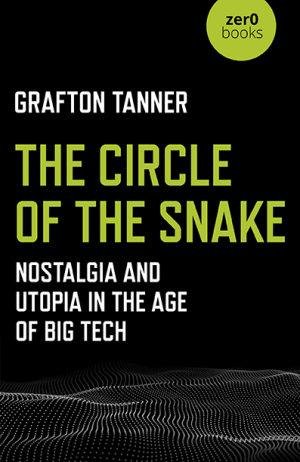
A Metaphysical Malaise?

By Kingsley L. Dennis

Source: Waking Times

‘The real tragedy of our time lies not so much in the unprecedented external events themselves as in the unprecedented ethical destitution and spiritual infirmity which they glaringly reveal.’

Paul Brunton

There is little doubt that we are living in an age of extreme contradictions where opposing trends appear to exist side by side. It is a time when individuals take greater care of their bodies and are obsessed by diet and health fads, while obesity is an epidemic. We live amidst a paradoxical combination of playfulness and fear, of fun and anxiety, of euphoria and unease. It has been said that ‘When a materialistic civilization becomes outwardly impressive but remains inwardly impoverished, when political relations become an elaborate façade for hiding the spiritually empty rooms behind them, menacing problems are sure to appear on every side.’This quote adequately describes our current situation and yet the author, Paul Brunton, published this in 1952.  However, it remains as starkly correct in its analysis for today as it was for his own time.

The current situation is that ‘menacing problems’ are indeed appearing on every side: political corruption and ineptitude; economic manipulations; national aggression and politically-motivated warfare; refugee crises; human torture and suffering; capitalist greed; corporate corruption; aggravated social unrest; religious and moral intolerance; increased displays of psychopathic behaviour (private individuals and authority figures); blatant propaganda; environmental degradation; ecological ignorance; spiritual destitution, and the rest.

The result is that many people have become ‘spiritually numbed’ by what they see occurring in the world, and feel that only a similar harsh, physical response can be effective. The words ‘mystical’ and ‘spiritual’ remain vague and ethereal. People have always depended on language to bring guidance and nourishment. Yet in this mental environment, words are but skeletal traces of the real flesh. The crisis of our times has clarified little and succeeds in confusing almost everything for the rest of us. There is nowhere to turn in public for finding the truth – seemingly little to believe in for the present and too much uncertainty for the future. The result of this is that many people have doubts that they don’t know how to deal with, and these are building up within their minds like a pathological infection.

An Absence of Meaning

In these current times there is a sense, a feeling, of something lacking or missing within many people’s lives. Unfortunately, this need has been met by the consumerist marketplace. There is a great deal of compensation for this lack through ‘quick fix’ guruism; that is, costly paid retreats, so-called spiritual counselling, and ‘life coaching’ mentorship. Yet these are like fast-food remedies for a deeper hunger. The real struggle today is rather between the material perspective on life and that of the inner, developmental state. Many of the events occurring in the world are manifestations of issues existing within ourselves. The anger and negativity we see so much of in the world is a projection from the collective interior state of humanity. We can manifest both the dream or the nightmare, and we share in its waking state. Being physically mature is not enough; we also need to be emotionally, intellectually, and inwardly mature.

Our cultures and societies are in disequilibrium because they seek to be governed by artificial laws that ignore the timeless wisdom that corresponds to human development. It is a dominant mentality that promotes a short-sighted, myopic worldview that is largely concerned only with physical gains and material power. It is a mentality that promotes fear, defence and attack – rather than a welcoming, embracing vision.

Our societies do not consider human purpose and the deeper meaning of human existence. They drive us to live by working; to enjoy through distractions; and to eventually die with debt and taxes. The world is governed not by fairness or equity, but by a lopsided arrangement of elite power. Conferences of peace are based on compromise and not compassion. Trade is based on strength rather than collaboration. Power and politics are at war with the world and do so beyond the reach of accountability. There is a resurgence of the illegitimate, surging through black markets, offshores, and dark networks. Dark pathways will always emerge and grow in the places where the light is flickering without focus or intent.

Today’s so-called modern cultures are increasingly fragmented, or like liquid streams, that can no longer be accurately identified or navigated by the old signs, symbols, and meanings. Modern life has, to some degree, started to dissolve in order to re-assemble. This may indeed be a part of the needed cathartic process that humanity has to pass through before circumstances will improve. A feature of the current times is that new ways of thinking and behaviour have not yet fully materialized into the present order of things. That which now constitutes ‘daily life’ is void of the questions of metaphysical meaning. Any notion of the developmental, or the metaphysical, is deemed outside of daily life, and people are continually programmed against such deeper truths. In other words, we should not let anything that is ‘other’ – otherworldly or transcendental – replace the responsibility of our social daily grind.

Human societies often make political declarations to promote what they decide to be ‘social happiness.’ Yet political institutions have no genuine models for this, for the dominant political mindset is overruled by a form of psychosis. Social ‘happiness’ is whatever fits into the particular dominant belief system of the age. And as can be seen, this dominant belief, or narrative, has been hijacked by a collective psychosis that I have termed the wounded mind. It appears that as a collective society we have no lasting image of happiness. As a consequence, personal lives are in danger of becoming now less about actual experience and more about the data trails left behind. We have entered another struggle – another social fray – where the battle is between the transparency of our private, inner lives and our public identity.

Identity & Self

These days people are being encouraged to expose their inner demons onto the public stage, especially online. The human shadow is wanting to come out and be revealed. According to Jung, the psychological ‘shadow’ is the underdeveloped and undesirable aspects of ourselves that we try to keep hidden away. And yet there are times when we are unable to hold it at bay, or unconsciously wish for it to manifest. Humanity possesses a tremendous imagination for doing good as well as evil, and this can be a finer line than is realized. As the aphorism states, the road to hell is paved with good intentions. Each person needs to exercise the capacity to detect and acknowledge those unconscious desires, feelings, and thoughts that exist within. American psychologist Rollo May once wrote – ‘Our age is one of transition, in which the normal channels for utilizing the daemonic are denied; and such ages tend to be times when the daemonic is expressed in its most destructive form’2

In short, we need to be extremely mindful in these times about what’s inside of us. Our minds – our thinking and consciousness – is a target and has been for a long time. In the last century this has become more evident, more public. We have become increasingly stuck in modern times within our stories around psychological need and a ‘loss of self.’ Perhaps what is needed is to acknowledge that some people are suffering from what is termed as ‘soul loss.’

People who experience ‘soul loss’ frequently have the feeling of being fragmented, not whole or completely ‘in’ themselves. They feel as if an essential part of them is missing. They may clinically be diagnosed as ‘dissociated.’ Depression is another symptom of soul loss. Soul loss can be associated with the traumas of modern life – fear, terror (warfare), incest or rape, domestic abuse. These are all the external stresses that modern life creates. Counselor and educator John Bradshaw uses the term toxic shame which he sees as a form of alienation from the self, causing it to be ‘otherated.’ In response, people may turn to external sources to fill this internal void.

Carl Jung also made a reference to soul loss in his psychological work. According to psychotherapist Robert Francis Johnson,

‘This loss of soul Jung speaks of is manifested in our culture by the crises we are all facing (increased drug use, violence, moral and emotional numbness) and our attempt to solve moral and spiritual questions by electing wounded leaders who promise economic answers.’3

It is interesting that Johnson refers to ‘wounded leaders’ here who seek our compliance through the language of greed (‘economic answers’). Similarly, prominent Jungian analyst Marie von Franz writes that

‘Soul loss can be observed today as a psychological phenomenon in the everyday lives of the human beings around us. Loss of soul appears in the form of a sudden onset of apathy and listlessness; the joy has gone out of life, initiative is crippled, one feels empty, everything seems pointless.’4

Is this not a description of what faces many people today? Apathy, listlessness, a feeling of a pointless, joyless life? There is clearly a toxic social problem, and we are clearly in need of a metaphysical response.

Where is the Metaphysical?

Any society or civilization that does not recognize the human as a developmental being will fall short in its accomplishments. We simply cannot allow ourselves to fall short – not in the long run, at least. Yet recognition of the human as a developmental being will not come from the world first; and definitely not from social-cultural-political institutions. It will first only come from the individual. And it is from here that genuine change must be nurtured. Now is a crucial time for managing our psychological, emotional, and physical states. We may be uncertain about the future, yet we have the technologies to radically transform our age into something unprecedented. We have both external technologies as well as what may be called ‘technologies of the soul.’ What we are, we transmit to others. We are compelled not only to be mindful, but crucially to be both sensible and soul-ful.

On a practical level, the number of people around the world who have been awoken by the current crises to seek greater inner development is not in the majority. It can be said that at present there exists a metaphysical malaise. Those people who aspire for inner self-development are still all too few. However, a majority was never needed. There is enough.

Humanity is now engaged in a profound moment along its species path. Whether it is recognized or not, we are each living and participating in a reality that exists upon profound metaphysical principles. That’s the bottom line. We can choose to participate in this metaphysical reality, consciously and willingly, or to drift through our lives unbeknown to the forces that impel us. Right now, it is about recognizing this choice, and whether to act upon it. It will not be easy, for all the obstacles that the psychosis-ridden governing systems will throw at us. And yet it must be a force of unwavering inner commitment and genuine self-trust. Each person must choose their freedom from within. The real site of freedom can only be within the inner self – and it is to this we must place our trust.