Military Escalation in the Middle East: Is Israel Planning a Multi-Front War against Its Arab Neighbors?

Top US and Israeli Military Officials Meet Unannounced in Southern Israel

By Timothy Alexander Guzman

Source: Silent Crow News

If you watch the US mainstream media’s 24 hour news coverage on recent events around the world no matter what time of the day it is, Covid-19 and China dominate the headlines while ignoring recent escalations in the Middle East involving Israel and its Arab neighbors as they come closer to another war in an already devastated region.  The Times of Israel reported that the Israeli government “sent a message to Hezbollah warning the Lebanese terror group against any retaliatory action in response to the killing of one of the organization’s fighters in an airstrike in Syria on Monday night, which was attributed to Israel.”  According to various reports, Israel has killed one of Hezbollah’s fighters Ali Kamel Mohsen Jawad in another cross-border attack in Syria last week and now fears that Hezbollah will retaliate, but Israel’s military and intelligence community has issued a statement aimed at Hezbollah, Lebanon and Syria warning them not to retaliate considering that Israel would most likely launch a multi-front attack on all entities involved.  The report said that “the airstrike attributed to Israel on Monday night hit weapons depots and military positions belonging to Syrian regime forces and Iran-backed militia fighters, according to the Syrian Observatory for Human Rights.”  For the record, The Syrian Observatory for Human Rights (SOHR) is a UK government funded pro-opposition group to the Assad Government.  In a statement by the Israeli army, “The IDF holds the Syrian regime responsible for the fire against Israel earlier today” and that “the IDF will continue operating with determination and will respond to any violation of Israeli sovereignty.”  What was revealing was an unannounced meeting between the US Chairman of the Joint Chiefs of Staff General Mark Milley and Israel’s top military leaders including Defense Minister Benny Gantz:

US Chairman of the Joint Chiefs of Staff Gen. Mark Milley, made an unannounced visit to Israel, meeting with Defense Minister Benny Gantz, IDF chief Lt. Gen. Aviv Kohavi and Mossad director Yossi Cohen, along with other top brass. 

Israeli television commentators speculated on the possible significance of the visit, particularly regarding the threat posed by Iran and its Lebanese ally Hezbollah. “In light of a situational assessment in the IDF and in accordance with the Northern Command’s defense plan, the IDF’s deployment will change in both the military and civilian arena. with the goal of strengthening defenses along the northern border,” the IDF said in the statement. In a tacit threat, the IDF preemptively warned Beirut that it sees the state of Lebanon as “responsible for all actions emanating from Lebanon”

Something big is about to take place as the IDF “cleared some troops out of positions directly along the border, moving them deeper into Israel, so that they would not represent a clear target for Hezbollah, while still allowing them to defend the frontier” according to the report.  However, Milley’s visit at the Nevatim Air Base in southern Israel is significant according to another report by the Times of Israel ‘US military chief visits Israel to talk regional threats, amid tensions in north’ stating that “the visit came at a time of heightened tensions with Iran and its allies across the Middle East.” General Milley was briefed by Israel’s Intelligence agencies including Mossad and Israel’s military intelligence unit, Aman on the threat they face from Iran and its allies.  After the briefing, Gantz declared that “the need to continue the pressure on Iran and its proxies that threaten regional and global stability” signaling to it’s neighboring enemies “not” to test Israel.

Lebanon has two major problems to deal with besides another catastrophic war, for starters it has a severe economic crisis with a collapsing currency.  The other problem is their newly discovered offshore oil and gas reserves which the US and Israel would love to get their hands on.  Lebanon’s offshore oil reserves is estimated to be at 865 million barrels and has gas reserves that range from 25 trillion cubic feet (an estimate published in 2018 by the Chatham House which is part of the Royal Institute of International Affairs, a think tank based in London) to 96 trillion cubic feet in 2013, an estimate claimed by the Lebanese Energy Minister at the time, Gebran Bassil.  Either way, Lebanon hosts Hezbollah on its territory and has discovered an abundance of natural resources in its offshore territories, its a prime target for Israel and the US.

War Will Begin in the Middle East, Not Asia?

The recent incident involving Iran’s Mahan air passenger plane traveling from Tehran to Beirut over Syria and a US F-14 fighter jet who apparently came dangerously close to the plane according to Iranian media is a sign of aggression that sends a message to Iran and its allies including Hezbollah that the US and Israel is prepared for war.  Israel does not want Washington to focus on China since the upcoming US elections are months away and Israel is not sure what is going to happen come this November with Trump and his pro-Israel administration.  Israel cannot afford to have Washington start a new war with China so for the time being tensions between the US and China will lead to a new Cold War 2.0.  The Middle East is an important region that remains a strategic part of the world’s economy with its valuable natural resources, a fact too important to ignore for western Big Oil interests and Israel.  The meeting between US and Israeli military officials is significant and should be taken seriously, but the world is consumed with news on Covid-19 and China. Another Middle East war can happen either before or after the November elections and that depends on how desperate Israel becomes.  Israel can pull Washington’s strings and ignite a war between the US and Iran before the situation intensifies in the South China Sea.

War is inevitable and it will begin in the Middle East and end on the US mainland with an already declining economy and a society that is falling apart.  Non-stop protests continue to destroy many US cities with the possibility of more riots to to come if the never-Trump crowd or the Democrats lose the elections in November.  However, while the world is occupied by a virus and the tensions in the South China Sea continue between the US and China and an upcoming Presidential election, a new conflict between Israel and its Arab neighbors is a real possibility, making it one of the most dangerous periods in human history.

Why Freedom Is Ending

By Eric Zuesse

Source: The Duran

First, the force that is ending freedom will be identified and described; and, then, the force that they fear and hate the most (and are trying to destroy) will be identified and described.

THE FORCE THAT IS ENDING FREEDOM

The force that is ending freedom is empire.

Every empire is a dictatorship. No nation can be a democracy that’s either heading an empire, or a vassal-state of one. Obviously, in order to be a vassal-state within an empire, that nation is dictated-to by the nation of which it is a colony. However, even the domestic inhabitants of the colonizing nation cannot be free and living in a democracy, because their services are needed abroad in order to impose the occupying force upon the colony or vassal-nation. This is an important burden upon the ‘citizens’ or actually the subjects of the imperial nation. Furthermore, they need to finance, via their taxes, this occupying force abroad, to a sufficient extent so as to subdue any resistance by the residents in any colony.

Every empire is imposed, none is really voluntary. Conquest creates an empire, and the constant application of force maintains it. Every empire is a dictatorship, not only upon its foreign populations (which goes without saying, because otherwise there can’t be any empire), but upon its domestic ones too, upon its own subjects.

Any empire needs weapons-makers, who sell to the government and whose only markets are the imperial government and its vassal-nations or ‘allies’. By contrast, ‘enemy’ nations are ones that the imperial power has placed onto its priority-list of nations that are yet to become conquered.

There are two main reasons to conquer a nation:

One is in order to be enabled to extract, from the colony, oil, or gold, or some other valuable commodity.

The other is in order to control it so as to be enabled to use that land as a passageway for exporting, from a vassal-nation, to other nations, that vassal-nation’s products.

International trade is the basis for any empire, and the billionaires who own controlling blocs of stock in a nation’s international corporations are the actual rulers of it, the beneficiaries of empire, the recipients of the wealth that is being extracted from the colonies and from the domestic subjects. 

The idea of an empire is that the imperial nation’s rulers, its aristocracy, extract from the colonies their products, and they impose upon their domestic subjects the financial and military burdens of imposing their international dictatorship upon the foreign subjects.

Some authors say that there is a “Deep State” and that it consists of (some undefined elements within) the intelligence services, and of the military, and of the diplomatic corps, of any given dictatorship; but, actually, those employees of the State are merely employees, not the actual governing power, over that dictatorship.

The actual Deep State are always the aristocrats, themselves, the people who run the revolving door between ‘the private sector’ (the aristocracy’s corporations) and the government.

In former times, many of the aristocrats were themselves governing officials (the titled ‘nobility’), but this is no longer common. Nowadays, the aristocracy are the individuals who own controlling blocs of stock in international corporations (especially weapons-making firms such as Lockheed Martin and BAE, because the only markets for those corporations are the corporation’s own government and its vassal states or ‘allies’); and such individuals are usually the nation’s billionaires, and, perhaps, a few of the mere centi-millionaires. A small number, typically less than 100, of these extremely wealthy individuals, are the biggest donors to politicians, and to think tanks, and to other non-profits (these latter being also tax-write-offs to their donors, and so are tax-drains siphoning money away from the general public and paying the actual benefits, such as PR and increased control over the Government, to the billionaires) that are involved in the formation of the national government’s policies; and, of course, these billionaires also are owners of and/or advertisers in the propaganda-media, which sell the aristocracy’s core or most-essential viewpoints to the nation’s subjects, in order to persuade those voters to vote only for the aristocracy’s selected candidates, and not for any who oppose the aristocracy. These few, mainly but not exclusively billionaires, are the actual Deep State — the bosses over the dictatorship, the ultimate beneficiaries in any empire.

In order to maintain this system, of international dictatorship or empire, the most essential tool is deceit, of the electorate, by the aristocracy.   

The method of control is: the bought agents of the Deep State (including the major ‘news’-media, etc.) lie to the public about what their polices will be if they win, in order to be able to win power; and, then, once they have won power, they do the opposite, which is what they have always been paid by the Deep State (the aristocracy) to do. Thereby, elections aren’t “democratic” but instead ‘democratic’: they are mere formalities of democracy, without the substance of democracy, because there can be no democracy where truth is suppressed and lies are spread instead. All of the well-financed candidates for the top offices are actually the Deep State’s representatives, and virtually none are the representatives of the public, because the voters have been deceived, and were given (by the DNC and RNC) choices between two or more candidates, none of whom will represent the public, if and when elected. Individuals who want to represent the public instead of the aristocracy get drowned by the aristocracy’s campaign-money.

Here are some recent examples of this system — the imperial system, international dictatorship, in action — as shown by its results:

During Donald Trump’s Presidential campaign, he said, “The approach of fighting Assad and ISIS simultaneously was madness, and idiocy. They’re fighting each other and yet we’re fighting both of them. You know, we were fighting both of them. I think that our far bigger problem than Assad is ISIS, I’ve always felt that. Assad is, you know I’m not saying Assad is a good man, ’cause he’s not, but our far greater problem is not Assad, it’s ISIS. … I think, you can’t be fighting two people that are fighting each other, and fighting them together. You have to pick one or the other.” Assad is allied with Russia against the Sauds (who are the chief ally of the U.S. aristocracy), so the U.S. (in accord with a policy that George Herbert Walker Bush had initiated on 24 February 1990 and which has been carried out by all subsequent U.S. Presidents) was determined to overthrow Assad, but Trump said that he was strongly opposed to that policy.

Months before that, Trump had said“I think Assad is a bad guy, a very bad guy, all right? Lots of people killed. I think we are backing people we have no idea who they are. The rebels, we call them the rebels, the patriotic rebels. We have no idea. A lot of people think, Hugh, that they are ISIS. We have to do one thing at a time. We can’t be fighting ISIS and fighting Assad. Assad is fighting ISIS. He is fighting ISIS. Russia is fighting now ISIS. And Iran is fighting ISIS. We have to do one thing at a time. We can’t go — and I watched Lindsey Graham, he said, I have been here for 10 years fighting. Well, he will be there with that thinking for another 50 years. He won’t be able to solve the problem. We have to get rid of ISIS first. After we get rid of ISIS, we’ll start thinking about it. But we can’t be fighting Assad. And when you’re fighting Assad, you are fighting Russia, you’re fighting — you’re fighting a lot of different groups. But we can’t be fighting everybody at one time.”

In that same debate (15 December 2015) he also said: “In my opinion, we’ve spent $4 trillion trying to topple various people that frankly, if they were there and if we could’ve spent that $4 trillion in the United States to fix our roads, our bridges, and all of the other problems; our airports and all of the other problems we’ve had, we would’ve been a lot better off. I can tell you that right now. We have done a tremendous disservice, not only to Middle East, we’ve done a tremendous disservice to humanity. The people that have been killed, the people that have wiped away, and for what? It’s not like we had victory. It’s a mess. The Middle East is totally destabilized. A total and complete mess. I wish we had the $4 trillion or $5 trillion. I wish it were spent right here in the United States, on our schools, hospitals, roads, airports, and everything else that are all falling apart.”

Did he do that? No. Did he instead intensify what Obama had been trying to do in Syria — overthrow Assad — yes. As the U.S. President, after having won the 2016 Presidential campaign, has Trump followed through on his criticism there, against the super-hawk, neoconservative, Republican U.S. Senator Lindsey Graham? No. Did he instead encircle himself with precisely such super-hawks, such neoconservatives? Yes. Did he intensify the overthrow-Assad effort, as Graham and those others had advocated? Yes. Did America’s war against Syria succeed? Not yet. Did he constantly lie to the voters? Yes, without a doubt. Should that be grounds for impeaching him? A prior question to that one is actually: Would a President Mike Pence be any different or maybe even worse than Trump? If yes, then what would be achieved by removing Trump from office? Maybe it would actually make things a lot worse. But how likely would the U.S. Senate be to remove Trump from office if the House did impeach Trump? Two-thirds of the U.S. Senate would need to vote to remove the President in order for a President to be removed after being impeached by the House. A majority of U.S. Senators, 53 of them, were Republicans. If just 33 of them voted not to convict the President, then Trump wouldn’t be removed, and he wasn’t. In order to remove him, not only would all 47 of the Democrats and Independents have had to vote to convict, but 20 of the 53 Republicans would have needed to join them. That’s nearly 40% of the Republican Senators. How likely was that? Almost impossible. What would their voters who had elected them back home think of their having done such a thing? How likely would such Senators have then faced successful re-election challenges that would have removed those Senators from office? Would 20 of the 53 have been likely to take that personal risk? Why, then, were so many Democrats in the House pressing for Trump’s impeachment, since Trump’s being forced out of the White House this way was practically impossible and would only have installed a President Pence, even if it could have succeeded? Was that Democratic Party initiative anything else than insincere political theater, lying to their own gullible voters, Democratic Party voters, just being phonies who manipulated voters to vote for them, instead of who were actually serving them? Is that what democracy is, now: such insincere political theater? Is that “democracy”? America’s voters are trapped, by liars, so it’s instead mere ‘democracy’. It’s the new form of dictatorship. But it’s actually as ancient as is any empire. There’s nothing new about this — except for one thing: the U.S. regime is aiming to be the ultimate, the last, the final, empire, the ruler over the entire planet; so, it is trying especially hard, ‘to defend freedom, democracy and human rights throughout the world’, as Big Brother might say.

Trump’s Democratic predecessor, Barack Obama, was just as evil, and just as insincere, as Trump, but a far more skillful liar, who deceived his voters to think that he would fight corruptionwork to improve relations with Russia, provide a public option in his health-insurance plan, and otherwise work to reduce economic inequality, to improve the economic situation for disadvantaged Americans, and to prosecute banksters. He abandoned each one of those stated objectives as soon as he won against John McCain, on 4 November 2008, and then yet more when he defeated Mitt Romney in 2012. And aren’t some of those promises the same ones that candidate Trump had also advocated and then abandoned as soon as he too was s‘elected’?

THE THREAT TO THE EMPIRE

Empire always depends upon lies; it is always built upon lies; and, so, the biggest threat to it is the truth, and especially the champions of truth, who are the whistleblowers. The whistleblowers are up against two enemies: the aristocracy, and the aristocrats’ agents who censor-out truth and leave only lies which the aristocracy’s agents spread to the public. Censorship always serves liars, because it is imposed from above and serves the aristocracy, against the public. Every dictatorship needs censorship. No democracy does.

The heroic fighters for the freedom of everyone in the world are the whistleblowers, who report to the public the corruption and evil that they see perpetrated by their superiors, their bosses, and perpetrated by people who are on the public payroll or otherwise obtaining increased income by virtue of being selected by the government to become government contractors to serve an allegedly public function. All liars with power hate whistleblowers, and want to make special examples of any part of the press that publishes their truths, their facts, their stolen documents. These documents are stolen because that’s the only way for them to become public and thereby known to the voters so that the voters can vote on the basis of truths as in a democracy, instead of to be deceived as in a dictatorship. Even if the truth is stolen from the liars, instead of being kept private (“Confidential”) for them, are the whistleblowers doing wrong to steal the truth from the liars? Or, instead, are the whistleblowers heroes: are they the authentic guardians of democracy, and the precariously thin wall that separates democracy from dictatorship? They are the latter: they are the true heroes. Unfortunately, the vast majority of such heroes are also martyrs — martyrs for truth, against lies. Every dictatorship seeks to destroy its whistleblowers. That’s because any whistleblower constitutes a threat to The System — the system of aristocratic control.

In all of U.S. history, the two Presidents who pursued whistleblowers and their publishers the most relentlessly have been Trump and Obama. The public are fooled to think that this is being done for ‘national security’ reasons instead of to hide the government’s crimes and criminality. However, not a single one of the Democratic Party’s many U.S. Presidential candidates is bringing this issue, of the U.S. government’s many crimes and constant lying, forward as being the central thing that must be criminalized above all else, as constituting “treason.” None of them is proposing legislation saying that it is treason, against the public — against the nation. Against the public.

Every aristocracy tries to deceive its public, in order to control its public; and every aristocracy uses divide-and-rule in order to do this; but it’s not only to divide the public against each other (such as between Republicans versus Democrats, both of which are actually controlled by the aristocracy), but also to divide between nations, such as between ‘allies’ versus ‘enemies’ — even when a given ‘enemy’ (such as Iraq in 2003) has never threatened, far less invaded, the United States (or whatever the given imperial ‘us’ may happen to be), and thus clearly this was aggressive war, and an international war-crime, though unpunished as such, because it was done by the empire. The public need to fear and hate some ‘enemy’ which is the ‘other’ or ‘alien’, in order not  to fear and loathe the aristocracy itself — the actual source of (and winner from) the systemic exploitation, of the public, by the aristocracy. It’s distract, and divide, and rule.

The pinnacle of the U.S. regime’s totalitarianism is its ceaseless assault against Julian Assange, who is the über-whistleblower, the strongest protector for whistleblowers, the safest publisher for the evidence that they steal from their employers and from their employers’ government. He hides the identity of the whistleblowers, even at the risk of his own continued existence. Right now, the U.S. regime is raising to a fever-pitch and twisting beyond recognition not only U.S. laws but the U.S. Constitution, so as to impose its will against him. President Trump is supported in this effort by the corrupt U.S. Congress, to either end Assange’s life, or else lock him up for the rest of his heroic life in a dungeon having no communication with the world outside, until he does finally die, in isolation, punishment for his heroic last-ditch fight for the public’s freedom and for democracy — his fight, actually, against our 1984 regime. What Jesus of Nazareth was locally to the Roman regime in his region, Assange is to the U.S. regime throughout the world: an example to terrify anyone else who might come forth effectively to challenge the Emperor’s authority.

A key country in this operation is Ecuador, which is ruled by the dictator Lenin Moreno, who stole office by lying to the public and pretending to be a progressive who backed his democratically elected predecessor, Rafael Correa, but then as soon as he won power, he reversed Correa’s progressive initiatives, including, above all, his protection of Assange, who had sought refuge in the Ecuadoran Embassy in London.

On 11 April 2019, RT headlined “Who is Lenin Moreno and why did he hand Assange over to British police?” and reported that:

Following his 2017 election, Moreno quickly moved away from his election platform after taking office. He reversed several key pieces of legislation passed under his predecessor which targeted the wealthy and the banks. He also reversed a referendum decision on indefinite re-election while simultaneously blocking any potential for Correa to return.

He effectively purged many of Correa’s appointments to key positions in Ecuador’s judiciary and National Electoral Council via the CPCCS-T council which boasts supra-constitutional powers.

Moreno has also cozied up to the US, with whom Ecuador had a strained relationship under Correa. Following a visit from Vice President Mike Pence in June 2018, Ecuador bolstered its security cooperation with the US, including major arms deals, training exercises and intelligence sharing.

Following Assange’s arrest Correa, who granted Assange asylum in the first place, described Moreno as the “greatest traitor in Ecuadorian and Latin American history” saying he was guilty of a “crime that humanity will never forget.”

Despite his overwhelming power and influence, however, Moreno and his family are the subject of a sweeping corruption probe in the country, as he faces down accusations of money laundering in offshore accounts and shell companies in Panama, including the INA Investment Corp, which is owned by Moreno’s brother. 

Damning images, purportedly hacked from Moreno’s phone, have irreparably damaged both his attempts at establishing himself as an anti-corruption champion as well as his relationship with Assange, whom he accused of coordinating the hacking efforts.

On 14 April 2019, Denis Rogatyuk at The Gray Zone headlined “Sell Out: How Corruption, Voter Fraud and a Neoliberal Turn Led Ecuador’s Lenin to Give Up Assange

Desperate to ingratiate his government with Washington and distract the public from his mounting scandals, Ecuadorian President Lenin Moreno has sacrificed Julian Assange – and his country’s independence”, and he described some of the documentation for the accusations that Moreno is corrupt. 

On 12 April 2019, Zero Hedge headlined “Facebook Removes Page Of Ecuador’s Former President On Same Day As Assange’s Arrest”, and opened: “Facebook has unpublished the page of Ecuador’s former president, Rafael Correa, the social media giant confirmed on Thursday, claiming that the popular leftist leader violated the company’s security policies.”

On 16 April 2019, Jonathan Turley bannered “‘He Is Our Property’: The D.C. Establishment Awaits Assange With A Glee And Grudge”, and opened:

They will punish Assange for their sins

The key to prosecuting Assange has always been to punish him without again embarrassing the powerful figures made mockeries by his disclosures. That means to keep him from discussing how the U.S. government concealed alleged war crimes and huge civilian losses, the type of disclosures that were made in the famous Pentagon Papers case. He cannot discuss how Democratic and Republican members either were complicit or incompetent in their oversight. He cannot discuss how the public was lied to about the program.

A glimpse of that artificial scope was seen within minutes of the arrest. CNN brought on its national security analyst, James Clapper, former director of national intelligence. CNN never mentioned that Clapper was accused of perjury in denying the existence of the National Security Agency surveillance program and was personally implicated in the scandal that WikiLeaks triggered.

Clapper was asked directly before Congress, “Does the NSA collect any type of data at all on millions or hundreds of millions of Americans?”

Clapper responded, “No, sir. … Not wittingly.” Later, Clapper said his testimony was “the least untruthful” statement he could make.

That would still make it a lie, of course, but this is Washington and people like Clapper are untouchable. In the view of the establishment, Assange is the problem.

On 11 April 2019, the YouGov polling organization headlined “53% of Americans say Julian Assange should be extradited to America”.

On 13 April 2019, I headlined “What Public Opinion on Assange Tells Us About the US Government Direction”, and reported the only international poll that had ever been done of opinions about Assange. Its findings demonstrated that, out of the 23 nations which were surveyed, U.S. was the only one where the public were anti-Assange, and that the difference between the U.S. and all of the others was enormous and stark. The report opened:

The only extensive poll of public opinion regarding Julian Assange or Wikileaks was Reuters/Ipsos on 26 April 2011, “WikiLeaks’ Julian Assange is not a criminal: global poll”, and it sampled around a thousand individuals in each of 23 countries — a total of 18,829 respondents. The Reuters news-report was vague, and not linked to any detailed presentation of the poll-findings, but it did say that “U.S. respondents had a far more critical view” against Wikileaks than in any other country, and that the view by Americans was 69% “believing Assange should be charged and 61 percent opposing WikiLeaks’ mission.” Buried elsewhere on the Web was this detailed presentation of Ipsos’s findings in that poll. Here are what those findings were:

https://www.slideshare.net/mediapiac/julian-assange-and-wiki-leaks

Oppose Wikileaks:

61% U.S.

38% UK

33% Canada

32% Poland

32% Belgium

31% Saudi Arabia

30% Japan

30% France

27% Indonesia

26% Italy

25% Germany

24% Sweden

24% Australia

22% Hungary

22% Brazil

21% Turkey

21% S. Korea

16% Mexico

16% Argentina

15% Spain

15% Russia

15% India

12% S. Africa

Is the U.S. a democracy if the regime is so effective in gripping the minds of its public, as to make them hostile to the strongest fighter for their freedom and democracy?

On 13 April 2019, washingtonsblog headlined “4 Myths About Julian Assange DEBUNKED”, and here was one of them:

Myth #2: Assange Will Get a Fair Trial In the U.S.

14-year CIA officer John Kiriakou notes:

Assange has been charged in the Eastern District of Virginia — the so-called “Espionage Court.” That is just what many of us have feared. Remember, no national security defendant has ever been found not guilty in the Eastern District of Virginia. The Eastern District is also known as the “rocket docket” for the swiftness with which cases are heard and decided. Not ready to mount a defense? Need more time? Haven’t received all of your discovery? Tough luck. See you in court.

… I have long predicted that Assange would face Judge Leonie Brinkema were he to be charged in the Eastern District. Brinkema handled my case, as well as CIA whistleblower Jeffrey Sterling’s. She also has reserved the Ed Snowden case for herself. Brinkema is a hanging judge.

On 20 May 2019, former British Ambassador Craig Murray (who had quit so that he could blow the whistle) headlined “The Missing Step” and argued that the only chance that Assange now has is if Sweden refuses to extradite Assange to the U.S. in the event that Britain honors the Swedish request to extradite him to Sweden instead of to the U.S. (Sweden, however, subsequently dropped its charge against Assange, and so now only Donald Trump and Boris Johnson are keeping him imprisoned until he will die.)

How can it reasonably be denied that the U.S. is, in fact (though not nominally) a dictatorship? All of its allies are thus vassal-nations in its empire. This means acquiescence (if not joining) in some of the U.S. regime’s frequent foreign coups and invasions; and this means their assisting in the spread of the U.S. regime’s control beyond themselves, to include additional other countries. It reduces the freedom, and the democracy, throughout the world; it spreads the U.S. dictatorship internationally. That is what is evil about what in America is called “neoconservatism” and in other countries is called simply “imperialism.” Under American reign, it is now a spreading curse, a political plague, to peoples throughout the world. Even an American whistleblower about Ukraine who lives in the former Ukraine is being targeted by the U.S. regime.

This is how the freedom of everyone is severely threatened, by the U.S. empire — the most deceitful empire that the world has ever experienced. The martyrs to its lies are the canaries in its coal mine. They are the first to be eliminated.

Looking again at the top of that rank-ordered list of 23 countries, one sees the U.S. and eight of its main allies (or vassal-nations), in order: U.S., UK, Canada, Poland, Belgium, Saudi Arabia, Japan, France, Indonesia. These are countries whose subjects (‘citizens’) are already well-controlled by the empire. They already are vassals, and so these nations are ordained (accepted by America’s aristocracy) as being ‘allies’.

At the opposite end (as of 2011, when that poll was taken), starting with the most anti-U.S-regime, were: S. Africa, India, Russia, Spain, Argentina, Mexico, S. Korea, Turkey. These were countries where the subjects were not yet well-controlled by the empire, even though the current government in some of them is trying to change its subjects’ minds so that the country will accept U.S. rule. Wherever the subjects reject U.S. rule, there exists a strong possibility that the nation will become placed on the U.S. regime’s list of ‘enemies’ and be subjected to at least attempts at “regime-change.” Consequently, wherever the residents are the most opposed to U.S. rule, the likelihood of an American coup or invasion is real. The first step toward a coup or invasion is the imposition of sanctions against the nation. Any such nation that is already subject to them is therefore already in severe danger. Any such nation that refuses to cooperate with the U.S. regime’s existing sanctions — such as against trading with Russia, China, Iran, or Venezuela — is in danger of becoming itself a U.S.-sanctioned nation, and therefore officially an ‘enemy’ of today’s version of nazism (as Nuremberg defined it: imperialistic fascism).

And this is why freedom and democracy are ending.

Unless and until the U.S. regime itself becomes conquered — either domestically by a second successful American Revolution (this one to eliminate the domestic aristocracy instead of to eliminate a foreign one), or else by a World War III in which the U.S. regime becomes destroyed even worse than the opposing alliance will — the existing insatiable empire will continue to be on the war-path to impose its dictatorship to everyone on this planet.

The force that is ending freedom is empire, and it’s now being wielded by the U.S.A. Like all empires, it thrives on lies, and therefore its biggest enemies are whistleblowers.

How Washington “Liberates” Free Countries

By Andre Vltchek

Source: OffGuardian

There are obviously some serious linguistic issues and disagreements between the West and the rest of the world. Essential terms like “freedom”, “democracy”, “liberation”, even “terrorism”, are all mixed up and confused; they mean something absolutely different in New York, London, Berlin, and in the rest of the world.

Before we begin analyzing, let us recall that countries such as the United Kingdom, France, Germany and the United States, as well as other Western nations, have been spreading colonialist terror to basically all corners of the world.

And in the process, they developed effective terminology and propaganda, which has been justifying, even glorifying acts such as looting, torture, rape and genocides. Basically, first Europe, and later North America literally “got away with everything, including mass murder”.

The native people of Americas, Africa and Asia have been massacred, their voices silenced. Slaves were imported from Africa. Great Asian nations, such as China, what is now “India” and Indonesia, got occupied, divided and thoroughly plundered.

And all was done in the name of spreading religion, “liberating” people from themselves, as well as “civilizing them”.

Nothing has really changed.

To date, people of great nations with thousands of years of culture, are treated like infants; humiliated, and as if they were still in kindergarten, told how to behave, and how to think.

Sometimes if they “misbehave”, they get slapped. Periodically they get slapped so hard, that it takes them decades, even centuries, to get back to their feet. It took China decades to recover from the period of “humiliation”. India and Indonesia are presently trying to recuperate, from the colonial barbarity, and from, in the case of Indonesia, the 1965 U.S.-administered fascist coup.

But if you go back to the archives in London, Brussels or Berlin, all the monstrous acts of colonialism, are justified by lofty terms. Western powers are always “fighting for justice”; they are “enlightening” and “liberating”. No regrets, no shame and no second thoughts. They are always correct!

Like now; precisely as it is these days.

Presently, the West is trying to overthrow governments in several independent countries, on different continents. From Bolivia (the country has been already destroyed) to Venezuela, from Iraq to Iran, to China and Russia. The more successful these countries get, the better they serve their people, the more vicious the attacks from abroad are, the tougher the embargos and sanctions imposed on them are. The happier the citizens are, the more grotesque the propaganda disseminated from the West gets.

In Hong Kong, some young people, out of financial interest, or out of ignorance, keep shouting: “President Trump, Please Liberate Us!” Or similar, but equally treasonous slogans. They are waving U.S., U.K. and German flags. They beat up people who try to argue with them, including their own Police Force.

So, let us see, how the United States really “liberates” countries, in various pockets of the world.

Let us visit Iran, a country which (you’d never guess it if consuming only Western mass media) is, despite the vicious embargos and sanctions, on the verge of the “highest human development index bracket” (UNDP). How is it possible? Simple. Because Iran is a socialist country (socialism with the Iranian characteristics). It is also an internationalist nation which is fighting against Western imperialism. It helps many occupied and attacked states on our planet, including Venezuela, Cuba, Bolivia (before), Syria, Yemen, Palestine, Lebanon, Afghanistan and Iraq, to name just a few.

So, what is the West doing? It is trying to ruin it, by all means; ruin all good will and progress. It is starving Iran through sanctions, it finances and encourages its “opposition”, as it does in China, Russia and Latin America. It is trying to destroy it.

Then, it just bombs their convoy in neighboring Iraq, killing its brave commander, General Soleimani. And, as if it was not horrid enough, it turns the tables around, and starts threatening Teheran with more sanctions, more attacks, and even with the destruction of its cultural sites.

Iran, under attack, confused, shot down, by mistake, a Ukrainian passenger jet. It immediately apologized, in horror, offering compensation. The U.S. straightway began digging into the wound. It started to provoke (like in Hong Kong) young people. The British ambassador, too, got involved!

As if Iran and the rest of the world should suddenly forget that during its attack on Iraq, more than 3 decades ago, Washington actually shot down an Iranian wide-body passenger plane (Iran Air flight 655, an Airbus-300), on a routine flight from Bandar Abbas to Dubai. In an “accident”, 290 people, among them 66 children, lost their lives. That was considered “war collateral”.

Iranian leaders then did not demand “regime change” in Washington. They were not paying for riots in New York or Chicago.

As China is not doing anything of that nature, now.

The “Liberation” of Iraq (in fact, brutal sanctions, bombing, invasion and occupation) took more than a million Iraqi lives, most of them, those of women and children. Presently, Iraq has been plundered, broken into pieces, and on its knees.

Is this the kind of “liberation” that some of the Hong Kong youngsters really want?

No? But if not, is there any other performed by the West, in modern history?

Washington is getting more and more aggressive, in all parts of the world.

It also pays more and more for collaboration.

And it is not shy to inject terrorist tactics into allied troops, organizations and non-governmental organizations. Hong Kong is no exception.

Iran, Iraq, Syria, Russia, China, Venezuela, but also many other countries, should be carefully watching and analyzing each and every move made by the United States. The West is perfecting tactics on how to liquidate all opposition to its dictates.

It is not called a “war”, yet. But it is. People are dying. The lives of millions are being ruined.

Understanding NATO, Ending War

By Robert J. Burrowes

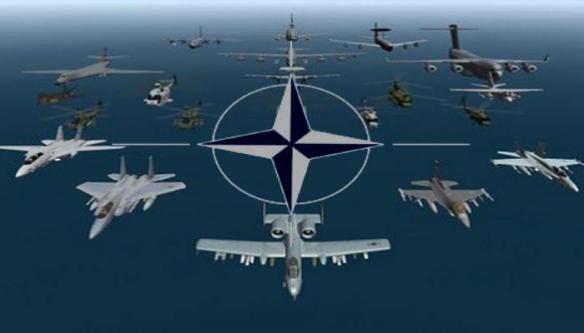
On 4 April 2019, the North Atlantic Treaty Organization, better known as NATO, marked the 70th anniversary of its existence with a conference attended by the foreign ministers of member nations in Washington DC. This will be complemented by a meeting of the heads of state of member nations in London next December.

Coinciding with the anniversary event on 4 April, peace activists and concerned scholars in several countries conducted a variety of events to draw attention to, and further document, the many war crimes and other atrocities committed by NATO (sometimes by deploying its associate and crony terrorist armies – ISIS, Al Qaeda, Al Nusra – recruited and trained by the CIA and funded by Saudi Arabia, other Gulf countries and the US directly or through one or other of its many agencies: see ‘NATO – No Need – NATO-EXIT: The Florence Declaration’), the threat that NATO poses to global peace and security as an appendage of the US military, and to consider ways that NATO might be terminated.

These protests and related activities included several outlined in ‘No To NATO: Time To End Aggressive Militarism’ which also explains how NATO ‘provides a veneer of legality’ when ‘the US is unable to get the United Nations Security Council to approve military action’ and ‘Congress will not grant authority for US military action’ and despite the clearcut fact that NATO has no ‘international legal authority to go to war’, the grounds for which are clearly defined in the Charter of the United Nations and are limited to just two: authorization by the UN Security Council and a response in self-defense to a military attack.

The most significant gathering of concerned scholars was undoubtedly the ‘Exit NATO!’ conference in Florence, Italy, which culminated in the Florence Declaration calling for an end to NATO. See ‘The Florence Declaration: An International Front Calling for NATO-Exit’.

If NATO’s record of military destruction is so comprehensive – in the last 20 years virtually destroying Yugoslavia (balkanized into various successor states), Iraq and Libya, while inflicting enormous damage on many others, particularly Afghanistan and Syria – how did it come into existence and why does it exist now?

The Origin and Functions of NATO

Different authors offer a variety of reasons for the establishment of NATO. For example, Yves Engler argues that two of the factors driving the creation of NATO were ‘to blunt the European Left’ and ‘a desire to bolster colonial authority and bring the world under a US geopolitical umbrella’. See ‘On NATO’s 70th anniversary important to remember its anti-democratic roots’ and ‘Defense of European empires was original NATO goal’.

But few would disagree with Professor Jan Oberg’s brief statement on the origin of NATO: ‘Its raison d’etre… had always and unambiguously been the very existence of the Soviet Union… and its socialist/communist ideology.’ See ‘NATO at 70: An unlawful organisation with serious psychological problems’.

In other words, NATO was established as one response to the deep fear the United States government harbored in relation to the Soviet Union which, despite western propaganda to the contrary and at staggering cost to its population and industrial infrastructure, had led the defeat of Nazi Germany in World War II.

As Professor Michel Chossudovsky elaborates this point: The NATO ‘alliance’ of 29 member states (with Israel also a de facto member), most with US military bases, US military (and sometimes nuclear) weapons and significant or substantial deployments of US troops on their territory, was designed to sustain ‘the de facto “military occupation” of Western Europe’ and to confront the Soviet Union as the US administration orchestrated the Cold War to justify its imperial agenda – global domination guaranteed by massive US military expansion – in service of elite interests (including the profit maximization of the military industrial complex, its fossil fuel and banking corporations, and its media and information technology giants).

While NATO has the appearance of a multinational military alliance, the US controls NATO command structures with the Pentagon dominating NATO decision-making. NATO’s Supreme Allied Commander Europe (SACEUR) and Supreme Allied Commander Atlantic (SACLANT) are Americans appointed by Washington with the NATO Secretary General Jens Stoltenberg performing merely bureaucratic functions.

In light of the above, Chossudovsky observes: ‘Under the terms of the military alliance, NATO member states are harnessed into endorsing Washington’s imperial design of World conquest under the doctrine of collective security.’ Even worse, he argues, given the lies and fabrications that permeate US-NATO military doctrine, key decision-makers believe their own propaganda. ‘Immediately after the Cold War, a new nuclear doctrine was formulated, focused on the preemptive use of nuclear weapons, meaning a nuclear first strike as a means of self-defense.’ More recently: ‘Not only do they believe that tactical nuclear weapons are peace-making bombs, they are now putting forth the concept of a “Winnable Third World War”. Taking out China and Russia is on the drawing board of the Pentagon.’ See ‘NATO-Exit: Dismantle NATO, Close Down 800 US Military Bases, Prosecute the War Criminals’ and ‘NATO Spending Pushes Europe from Welfare to Warfare’.

So, given the ongoing military threats – with an expanding range of horrific weapons (including, to nominate just two, ‘more usable’ low yield nuclear weapons and technologies on ‘weather warfare’ offered by the military/nuclear corporate war planners) that threaten previously unimagined outcomes – and interventions by a US-led NATO, with Venezuela and now Iran the latest countries to be directly threatened – see ‘“Dangerous game”: US, Europe and the “betrayal” of Iran’ – as well as a gathering consensus among peace activists and scholars of the importance of stopping NATO (particularly given the many opportunities, beginning with aborting its origin, that have been missed already as explained by Professor Peter Kuznick: see ‘“Obscene” Bipartisan Applause for NATO in Congress’) how do we actually stop NATO?

While several authors, including those with articles cited above, offer ideas on what should be done about ending NATO, Chossudovsky offers the most comprehensive list of ideas in this regard well aware that stopping NATO is intimately connected to the struggle to end war and globalization. Chossudovsky’s ideas range from organizational suggestions such as integrating anti-war protest with the campaign against the gamut of neoliberal economic ‘reforms’ and the development of a broad based grassroots network independent of NGOs funded by Wall Street, objectives such as dismantling the propaganda apparatus which sustains the legitimacy of war and neoliberalism, challenging the corporate media (including by using alternative media outlets on the Internet), providing encouragement (including information about the illegality of their orders) for military personnel to refuse to fight (perhaps like the GI coffeehouse movement during the US war on Vietnam: see ‘The story of the GI coffeehouses’), working to close down weapons assembly plants and many other suggestions. See Towards a World War III Scenario: The Dangers of Nuclear War and ‘NATO-Exit: Dismantle NATO, Close Down 800 US Military Bases, Prosecute the War Criminals’.

Given my own deep interest in this subject of US/NATO wars and in developing and implementing a strategy that ends their war-making, let me elaborate Chossudovsky’s explanation of NATO’s function in the world today by introducing a book by Professor Peter Phillips.

In his book Giants: The Global Power Elite, Phillips observes that the power elite continually worries about rebellion by the ‘unruly exploited masses’ against their structure of concentrated wealth. This is why the US military empire has long played the role of defender of global capitalism. As a result, the United States has more than 800 military bases (with some scholars suggesting 1,000) in 70 countries and territories. In comparison, the United Kingdom, France, and Russia have about 30 foreign bases. In addition, US military forces are now deployed in 70 percent of the world’s nations with US Special Operations Command (SOCOM) having troops in 147 countries, an increase of 80 percent since 2010. These forces conduct counterterrorism strikes regularly, including drone assassinations and kill/capture raids.

‘The US military empire stands on hundreds of years of colonial exploitation and continues to support repressive, exploitative governments that cooperate with global capital’s imperial agenda. Governments that accept external capital investment, whereby a small segment of a country’s elite benefits, do so knowing that capital inevitably requires a return on investment that entails using up resources and people for economic gain. The whole system continues wealth concentration for elites and expanded wretched inequality for the masses….

‘Understanding permanent war as an economic relief valve for surplus capital is a vital part of comprehending capitalism in the world today. War provides investment opportunity for the Giants and TCC elites and a guaranteed return on capital. War also serves a repressive function of keeping the suffering masses of humanity afraid and compliant.’

As Phillips elaborates: This is why defense of global capital is the prime reason that NATO countries now account for 85 percent of the world’s military spending; the United States spends more on the military than the rest of the world combined.

In essence, ‘the Global Power Elite uses NATO and the US military empire for its worldwide security. This is part of an expanding strategy of US military domination around the world, whereby the US/ NATO military empire, advised by the power elite’s Atlantic Council, operates in service to the Transnational Corporate Class for the protection of international capital everywhere in the world’.

In short, ending NATO requires recognition of its fundamental role in preserving the US empire (at the expense of national sovereignty) and maintaining geopolitical control to defend the global elite’s capital interests – reflected in the capitalist agenda to endlessly expand economic growth – and particularly the profits the elite makes by inciting, supplying and justifying the massively profitable wars that the US/NATO conduct on its behalf.

So if you thought that wars were fought for reasons other than profit (like defense, a ‘just cause’ or ‘humanitarian’ motives) you have missed the essential function of US/NATO wars. And while these wars might be promoted by the corporate media as conflicts over geostrategic considerations (like ‘keeping open the Straits of Hormuz’), access to resources (‘war for oil’) or even markets (so that we can have US junk-food chains in every country on Earth), these explanations are all merely more palatable versions of the word ‘profit’ and are designed to obscure the truth.

And this raises another question worth pondering. Given that wars are the highly organized industrial-scale killing of fellow human beings (for profit) as well as the primary means of expanding the number of fellow human beings who are drawn into the global capitalist economy to be exploited (for profit) and the primary method used for destroying Earth’s climate and environment (for profit), you might wander if those who conduct wars are sane. Well, as even posing the question suggests, the global elite – which drives wars, the highly exploitative capitalist economy and destruction of the biosphere – is quite insane. And there is a brief explanation of this insanity and how it is caused in the article ‘The Global Elite is Insane Revisited’.

Stopping NATO

So if war is precipitated and now maintained perpetually by an insane elite that controls and utilizes the US and NATO military forces to secure profits by killing and exploiting fellow human beings while destroying the climate and environment, how can we stop it? Clearly, not without a sophisticated strategy that addresses each dimension of the conflict.

Hence, my own suggestion is that we do three things simultaneously:

  1. Invite participation in a comprehensive strategy to end war, of which NATO is a symptom
  2. Invite participation in one or another program to substantially reduce consumption to systematically reduce the vital driver of ‘wars for resources’ (which will also reduce the gross exploitation of fellow human beings and humanity’s adverse impact on the biosphere), and
  3. Invite participation in programs to increase human emotional functionality so that an increasing proportion of the human population is empowered to actively engage in struggles for peace, justice and sustainability and to perceive the propaganda of elites and their agents, including NATO functionaries and corporate media outlets, without being deceived by it.

There is a comprehensive strategy to end war explained on this website – Nonviolent Campaign Strategy – which includes identification of the two strategic aims and a basic list of 37 strategic goals to end war. See ‘Strategic Aims’.

There is a strategy for people to systematically reduce their consumption and increase their self-reliance mapped out in ‘The Flame Tree Project to Save Life on Earth’. But if you want a simpler 12-point list which still has strategic impact, see ‘The Earth Pledge’ included in ‘Why Activists Fail’. If you want to better understand why people over-consume, you can find out here: ‘Love Denied: The Psychology of Materialism, Violence and War’.

There is a process for improving your own emotional functionality (which will develop your conscience, courage and capacity to think strategically) described in the article ‘Putting Feelings First’. If you would like to assist children to grow up without emotional dysfunctionalities, consider making ‘My Promise to Children’. If you want to read the foundation behind these two suggestions, see Why Violence? and Fearless Psychology and Fearful Psychology: Principles and Practice.

Complementary to these suggestions, you might like to sign the online pledge of The Peoples Charter to Create a Nonviolent World which links people working to end violence in all contexts.

There is one question that remains unaddressed by the suggestions above: How do we mobilize sufficient people (both anti-war activists and others) and organizations (including anti-war groups and others) to participate in the effort to end elite-sponsored war, including its organizational structures such as NATO?

Given the notorious difficulty of mobilizing activists to act strategically in any context (a much more complex version of the basic problem of mobilizing people), my primary suggestion is that individuals within the anti-war movement invite other individuals and activist groups to choose and campaign on one or more of the strategic goals necessary to end war listed in ‘Strategic Aims’. While some activist groups are already working to achieve one or more of these strategic goals, we clearly need to engage more groups to work on the many other goals so that each of these goals is being addressed. War will not be ended otherwise.

One thing that a section of the climate movement does well is to research and report on those banks, superannuation funds and insurance companies that provide financial services, loans, investment capital and insurance cover to fossil fuel corporations and to then invite concerned people to sign standard letters sent to these organizations requesting them to cease their support of fossil fuels. The anti-war movement could usefully emulate this tactic (on a far wider scale than has existed previously) in relation to weapons corporations and to invite individuals and organizations everywhere to boycott banks, superannuation funds and insurance companies with any involvement in the weapons industry.

But this is just one simple tactic (involving no risk and little effort) on a small but important range of ‘targets’ in the anti-war struggle. Unfortunately, there are plenty more targets that need our attention and that will require more commitment than signing a letter given that, for example, essential funding for the weapons industry is supplied by government procurement programs using your taxes.

Similarly, we need individuals and groups working to mobilize people to substantially reduce their consumption, and individuals and groups working to mobilize people to prioritize their emotional well-being (the foundation of their courage to act conscientiously and strategically in resisting war, exploitation and destruction of the biosphere generally). If we do not undertake these complementary but essential programs, our efforts to end war will be endlessly undermined by our own fear and over-consumption.

Because, in the final analysis, it is our fearfully surrendered tax dollars and our dollars spent consuming the resources seized in wars that will ensure that elite-driven wars for profit by the US and NATO will be financially sustained, whatever words we utter and actions we take.

So our strategy must address this fear and over-consumption too if it is to have the sophistication and comprehensiveness necessary to shut down NATO and end war.


Biodata: Robert J. Burrowes has a lifetime commitment to understanding and ending human violence. He has done extensive research since 1966 in an effort to understand why human beings are violent and has been a nonviolent activist since 1981. He is the author of Why Violence? His email address is flametree@riseup.net and his website is here.

Degrowth: closing the global wealth divide

Contradicting the dominant paradigm that economic growth equals development, degrowth theorists argue that serious cutbacks are crucial to protect life on our planet.

By Riccardo Mastini

Source: ROAR

Today, some 4.3 billion people — more than 60 percent of the world’s population — live in debilitating poverty, struggling to survive on less than the equivalent of $5 per day (which is the mean average of all the national poverty lines in the Global South). Half do not have access to enough food. And these numbers have been growing steadily over the past few decades.

With these data, Jason Hickel, an anthropology professor and global development expert, starts his controversial book, The Divide: A Brief Guide to Global Inequality and Its Solutions, in which he meticulously and convincingly debunks the narrative told by the UN and the likes of Bill Gates and Steven Pinker. In fact, while the good-news story leads us to believe that poverty has been decreasing around the world, in reality the only places this holds true are in China and East Asia. And these are some of the only places in the world where free-market capitalism was not forcibly imposed by the World Bank and the IMF, allowing these governments to pursue state-led development policies and gradually liberalize their economies on their own terms.

Development agencies, NGOs and the world’s most powerful governments explain that the plight of poor countries is a technical problem — one that can be solved by adopting the right institutions and the right economic policies, by working hard and accepting a bit of help. As Hickel writes: “It is a familiar story, and a comforting one. It is one that we have all, at one time or another, believed and supported. It maintains an industry worth billions of dollars and an army of NGOs, charities and foundations seeking to end poverty through aid and charity.” But it’s against this narrative that Hickel takes aim.

ECONOMIC UNEQUAL EXCHANGE OVER THE CENTURIES

The main argument presented in the book is that the discourse of aid distracts us from seeing the broader picture. It hides the patterns of extraction that are actively causing the impoverishment of the Global South today and actively impeding meaningful development. “The charity paradigm obscures the real issues at stake: it makes it seem as though the West is ‘developing’ the Global South, when in reality the opposite is true. Rich countries aren’t developing poor countries; poor countries are effectively developing rich countries — and they have been since the late 15th century,” argues Hickel.

In the book it is laid bare for all to see that underdevelopment in the Global South is not a natural condition, but a consequence of the way Western powers have organized the world economic system.

It’s not that the $128 billion in aid disbursements that the West gives to the Global South every year doesn’t exist — it does. But if we broaden our view and look at it in context, we see that it is vastly outstripped by the financial resources that flow in the opposite direction.

If all of the financial resources that get transferred between rich and poor countries each year are tallied up, we find that in 2012, the last year of recorded data, developing countries received a little over $2 trillion, including all aid, investment and income from abroad. But more than twice that amount, some $5 trillion, flowed out of them in the same year. In other words, developing countries “sent” $3 trillion more to the rest of the world than they received.

What do these large outflows from the Global South consist of? “Well, some of it is payments on debt. Today, poor countries pay over $200 billion each year in interest alone to foreign creditors, much of it on old loans that have already been paid off many times over, and some of it on loans accumulated by greedy dictators,” states Hickel. Another major contributor is the income that foreigners make on their investments in developing countries and then repatriate. Think of all the profits that Shell extracts from Nigeria’s oil reserves, for example, or that Anglo American pulls out of South Africa’s gold mines.

But by far the biggest chunk of outflows has to do with capital flight. A big proportion of this takes place through “leakages” in the balance of payments between countries. Another takes place through an illegal practice known as “trade misinvoicing.” Basically, corporations report false prices on their trade invoices in order to spirit money out of developing countries directly into tax havens and secrecy jurisdictions. A similarly large amount flows out annually through “abusive transfer pricing”, a mechanism that multinational companies use to steal money from developing countries by shifting profits illegally between their own subsidiaries in different countries. But perhaps the most significant loss has to do with exploitation through trade.

Hickel explains that “from the onset of colonialism through to globalization, the main objective of the North has been to force down the cost of labor and goods bought from the South. In the past, colonial powers were able to dictate terms directly to their colonies. Today, while trade is technically “free,” rich countries are able to get their way because they have much greater bargaining power.” On top of this, trade agreements often prevent poor countries from protecting their workers in ways that rich countries do. And because multinational corporations now have the ability to scour the planet in search of the cheapest labor and goods, poor countries are forced to compete to drive costs down. As a result of all this, there is a yawning gap between the “real value” of the labor and goods that poor countries sell and the prices they are actually paid for them. This is what economists call “unequal exchange.”

Since the 1980s, countries of the West have been using their power as creditors to dictate economic and trade policies to indebted countries in the South, effectively governing them by remote control, without the need for bloody interventions. “Leveraging debt,” argues Hickel, “they imposed “structural adjustment programs” that reversed all the economic reforms that Global South countries had painstakingly enacted in the previous two decades. In the process, the West went so far as to ban the very protectionist and Keynesian policies that it had used for its own development, effectively kicking away the ladder to success.”

DEGROWTH FOR SUSTAINABLE AND FAIR LIVELIHOODS

Hickel then ponders over how — if these unfair trade and business practices were amended — poor countries could actually go about developing their economies following the same path as the one embraced by the Global North over the past two centuries. He references a study by the economist David Woodward in which the latter shows that given our existing economic model, poverty eradication can’t happen. Not that it probably won’t happen, but that it physically can’t. It is a structural impossibility.

He explains that:

Right now, the main strategy for eliminating poverty is to increase global GDP growth. The idea is that the yields of growth will gradually trickle down to improve the lives of the world’s poorest people. But all the data we have shows quite clearly that GDP growth doesn’t really benefit the poor. While global GDP per capita has grown by 65 percent since 1990, the number of people living on less than $5 a day has increased by more than 370 million. Why does growth not help reduce poverty? Because the yields of growth are very unevenly distributed. The poorest 60 percent of humanity receive only 5 percent of all new income generated by global growth. The other 95 percent of the new income goes to the richest 40 percent of people. And that’s under best-case-scenario conditions.

Given this distribution ratio, Woodward calculates that it will take more than 100 years to eradicate absolute poverty at $1.25 a day. At the more accurate level of $5 a day, eradicating poverty will take 207 years. To eradicate poverty at $5 a day, global GDP would have to increase to 175 times its present size. In other words, we need to extract, produce and consume 175 times more commodities than we presently do. It is worth pausing for a second to think about what this means. Even if such outlandish growth were possible, the consequences would be disastrous. We would quickly chew through our planet’s ecosystems, destroying the forests, the soils and, most importantly, the climate.

According to data compiled by researchers at the Global Footprint Network in Oakland, our planet only has enough ecological capacity for each of us to consume 1.8 “global hectares” annually — a standardized unit that accounts for resource use, waste, pollution and emissions. Anything over this means a degree of resource consumption that the Earth cannot replenish, or waste that it cannot absorb; in other words, it locks us into a pathway of progressive degradation. The figure of 1.8 global hectares is roughly what the average person in Ghana or Guatemala consumes.

By contrast, Europeans consume 4.7 global hectares per person, while in the US and Canada the average person consumes 8 — many times their fair share. To get a sense of how extreme this overconsumption is: if we were all to live like the average citizen of the average high-income country, we would require the ecological capacity equivalent to 3.4 Earths. Hickel elaborates:

Scientists tell us that even at existing levels of aggregate global consumption we are already overshooting our planet’s ecological capacity by about 60 percent each year. And all of this is just at our existing levels of aggregate economic activity — with the existing levels of consumption in rich and poor countries. If poor countries increase their consumption, which they will have to do to some extent in order to eradicate poverty, they will only tip us further towards disaster. Unless, that is, rich countries begin to consume less.

If we want to have a chance of keeping within the 2°C threshold — which the Paris Agreement on climate change sets as an absolute cap — we can emit no more than another 805 gigatons of CO2 at the global level. Now, let’s accept that poor countries will need to use a portion of this carbon budget in order to grow their incomes enough to eradicate poverty; after all, we know that for poor countries human development requires an increase in emissions, at least up to a relatively lowish point. This principle is already widely accepted in international agreements, which recognize that all countries have a “common but differentiated responsibility” to reduce emissions. Because poor countries did not contribute much to historical emissions, they have a right to use more of the carbon budget than rich countries do — at least enough to fulfill basic development goals (as I also argue in this article). This means that rich countries have to figure out how to make do with the remaining portion of the budget.

Professor Kevin Anderson, one of Britain’s leading climate scientists, has been devising potential scenarios for how to make this work. If we want to have a 50 percent chance of staying under 2°C, there’s basically only one feasible way to do it — assuming, of course, that negative emissions technologies is not a real option. In this scenario, poor countries can continue to grow their economies at the present rate until 2025, using up a disproportionate share of the global carbon budget. That’s not a very long time, so this strategy will only work to eradicate poverty if the gains from growth are distributed with a heavy bias towards the poor.

As Hickel writes: “The only way for rich countries to keep within what’s left of the carbon budget is to cut emissions aggressively, by about 10 percent per year. Efficiency improvements and clean energy technologies will contribute to reducing emissions by at most 4 percent per year, which gets them part of the way there. But to bridge the rest of the gap, rich countries are going to have to downscale production and consumption by around 6 percent each year. And poor countries are going to have to follow suit after 2025, downscaling economic activity by about 3 percent per year.” This strategy of downscaling the production and consumption of a country is called “degrowth.”

Hickel describes this visionary idea as follows: “All it means is easing the intensity of our economy, cutting the excesses of the very richest, sharing what we have instead of plundering the Earth for more, and liberating ourselves from the frenetic consumerism that we all know does nothing to improve our wellbeing or happiness.” And since the book first came out in 2017, Hickel has been developing an increasingly clearer position on how we can go about making such changes happen.

His thinking on degrowth was recently encapsulated in a captivating blog exchange he had with Branko Milanović, another global development expert. But Milanović still maintains that economic growth should be at the core of poverty relief. Paraphrasing a passage from Kate Raworth’s Doughnut Economics, we could summarize Milanović’s position as “economic growth is still necessary, and so it must be possible,” while Hickel argues that “economic growth is no longer possible, and so it cannot be necessary.” I side with the latter, simply because the laws of physics trump the laws of economics.

In light of this, perhaps we should regard countries like Costa Rica not as underdeveloped, but rather as appropriately developed. We should look at societies where people live long and happy lives at low levels of income and consumption not as backwaters that need to be developed according to Western models, but as exemplars of efficient living — and begin to call on rich countries to cut their excess consumption.

Neo-Liberalism and the Retreat of Democracy

By David Schultz

Source: CounterPunch

Democracy across the world is under siege. This according to the latest Freedom House report documenting that for 2017, “democracy faced its most serous crisis in decades” as seventy-one countries experienced declines in freedom or fair government, including the United States, and only thirty-five an improvement. This was the twelfth consecutive year of decline in democracy world-wide.

The question is why? Why has confidence in democracy retreated? Freedom House does not provide an answer, but there is a reason. It is democracy’s marriage to neo-liberal capitalism has fostered the conditions leading to its own undoing, similar to the way Karl Marx once described in the Communist Manifesto the “gravedigger thesis” (What the Bourgeoisie therefore produces, above all, are its own grave diggers”) where capitalism would produce the conditions that would undermine its own existence.

From the 1960s until the early 1990s democracy was in the upswing internationally. African de-colonization produced initially popularly elected governments. In South America the demise of strongmen led to a wave of democratic regimes. And the fall of the Berlin Wall in 1989 and the break up of the USSR in 1991 produced the dismantling of communist authoritarian or totalitarian governments that made it possible for Francis Fukuyama to proclaim that democracy had won and emerged as the last grand global political meta-narrative.

Yet several problems upset this rosy picture. Most prominently, it was the marriage of these new emerging democracies with free market capitalism and the victory of neo-liberalism. Internationally as post-colonial and post-communist countries emerged, international organizations such as the World Bank and the IMF forced them to adopt market reforms, often pushing them into what was then called “shock therapy.” Shock therapy involved rapid privatization of state owned enterprises and rapid dismantling of welfare states. This shock therapy was often accompanied by significant corruption as a few rich oligarchs emerged who came to own these newly privatized state enterprises.

Simultaneously, emerging democracies were rapidly pushed into what sociologist Immanuel Wallerstein would call the world-capitalist system. This system turned politically to right in the 1970s and 1980s as Margaret Thatcher in the United Kingdom and Ronald Reagan in the United States pushed neo-liberalism or market fundamentalism as an alternative to the Keynesian welfare state that had dominated the west since the 1930s. It was adopted both for ideological reasons and because of what political economist James O’Connor would call the fiscal crisis of the state tht affect economics across the world in the 1970s. This was a crisis of declining profit among private businesses and therefore declining revenue for states to fund welfare programs. Something had to give, and it was the welfare state.

Neo-liberalism is a political economic theory of the state committed to the laissez-faire market fundamentalism ideology that traces back to Adam Smith and David Ricardo. It includes a belief in comparative advantage, a minimalist state, and market freedom, and is, as articulated in the 1990s and 2000s, driven by finance capital. At the state level, neo-liberalism defines a theory of public administration. If neo-liberalism includes a commitment to market fundamentalism, then that also means that it is dedicated to a politics of limited government. This includes privatization, deregulation, and a scaling back of many traditional functions that capitalist and communist states had performed since at least World War II. But neo-liberalism as a theory transcends the state, providing also an international economic theory committed to free trade and globalism.

This emergence of neo-liberalism in the 1970s and its linkage to democracy is central to the crisis affecting the latter. As neo-liberalism retrenched the welfare state and pushed globalism it was accompanied by a dramatic increase in economic inequality in the world, as Thomas Piketty has pointed out. This occurred in the US and much of the western world. But it also impacted newly emerging democracies in Africa, Eastern Europe, and South America. Pressures for shock therapy market reforms, austerity, and open borders meant export of jobs to other countries, dismantling of social safety nets, and other economic pressures placed on governments and ruling parties.

Politically voters turned on globalism and free trade. This happened here with Trump voters in 2016, but also in Brexit in the UK. But many voters also blamed immigrants for the loss of jobs or social unrest in places ranging from France, to Italy, to Hungary. The increasing economic gap between rich and poor and, more importantly, the erosion of the economic conditions of the working class soured them on democracy. This paved the way for the emergence of strongmen as political leaders, the rise of far-right nationalist parties, and disenchantment with democracy and democratic structures to deliver the economic goods.

What we see today then in terms of the decline in support for democracy across the world is a product of its marriage to neo-liberalism. Capitalism and democracy always had an uneasy co-existence, but the neo-liberal democracy variant demonstrates the powerful contradictions in them. Either their linkage is producing outright rejection of democracy or a populist, rightist version that is merely democracy in form but not in substance.

America’s ‘Unlimited Imperialists’


By Francis Boyle

Source: Consortium News

Historically the latest eruption of American militarism in the 21st Century is akin to that of America opening the 20th Century by means of the U.S.-instigated Spanish-American War in 1898.

The then Republican administration of President William McKinley grabbed their colonial empire from Spain in Cuba, Puerto Rico, Guam, and the Philippines; inflicted a near genocidal war against the Filipino people; while at the same time illegally annexing the Kingdom of Hawaii and subjecting the Native Hawaiian people (who call themselves the Kanaka Maoli) to genocidal conditions.

Additionally, McKinley’s military and colonial expansion into the Pacific was also designed to secure America’s economic exploitation of China pursuant to the euphemistic rubric of the “open door” policy.   But over the next four decades America’s aggressive presence, policies, and practices in the so-called “Pacific” Ocean would ineluctably pave the way for Japan’s attack at Pearl Harbor on Dec. 7, 1941, and thus America’s precipitation into the ongoing Second World War.

Today a century later, the serial imperial aggressions launched, waged, and menaced by the neoconservative Republican Bush Junior administration, then the neoliberal Democratic Obama administration and now the reactionary Trump administration threaten to set off World War III.

This Time the Stakes are Higher

By shamelessly exploiting the terrible tragedy of September 11, the Bush Junior administration set forth to steal a hydrocarbon empire from the Muslim states and peoples of color living in Central Asia, the Middle East and Africa under the bogus pretexts of (a) fighting a war against “international terrorism” or “Islamic fundamentalism”; and/or (b) eliminating weapons of mass destruction; and/or (c) promoting democracy; and/or (d) self-styled humanitarian intervention and its avatar “responsibility to protect” (R2P).

Only this time the geopolitical stakes are infinitely greater than they were a century ago:  control and domination of the world’s hydrocarbon resources and thus the very fundaments and energizers of the global economic system – oil and gas.

The Bush Junior and Obama administrations targeted the remaining hydrocarbon reserves of Africa, Latin America (e.g., the Pentagon’s reactivating the Fourth Fleet in 2008), and Southeast Asia for further conquest and domination, together with the strategic choke-points at sea and on land required for their transportation (e.g., Syria, Yemen, Somalia, Djibouti).  Today the U.S. Fourth Fleet threatens oil-rich Venezuela and Ecuador, along with Cuba.

Toward accomplishing that first objective, in 2007, the neoconservative Bush Junior administration announced the establishment of the U.S. Pentagon’s Africa Command (AFRICOM) in order to better control, dominate, steal, and exploit both the natural resources and the variegated peoples of the continent of Africa, the very cradle of our human species.

In 2011 Libya and the Libyans proved to be the first victims to succumb to AFRICOM under the neoliberal Obama administration, thus demonstrating the truly bi-partisan and non-partisan nature of U.S. imperial foreign policy decision-making. Let us put aside as beyond the scope of this article, the American conquest, extermination, and ethnic cleansing of the Native Americans from the face of the continent.

Since America’s instigation of the Spanish-American War in 1898, U.S. foreign policy decision-making has been alternatively conducted by reactionary imperialists, conservative imperialists, and liberal imperialists for the past 120 years and counting.

Trump is just another representative for U.S. imperialism and neoliberal capitalism. He forthrightly and proudly admitted that the United States is in the Middle East in order to steal their oil. At least he was honest about it. Unlike his predecessors who lied about the matter going back to President George Bush Sr. with his War for Persian Gulf oil against Iraq in 1991. Just recently, Trump publicly threatened illegal U.S. military intervention against oil-rich Venezuela and now he’s poised to strike Syria.

It’s About Power, Not Just Resources

But oil and other resources are not the only U.S. motive. Enforcing its global power and undermining or removing leaders who defy it are also at play.

As my teacher, mentor, and friend, the late, great Professor Hans Morgenthau, who coined the term “unlimited imperialism” in his seminal 1948 critique of U.S. foreign policy, Politics Among Nations, said:

          “The outstanding historic examples of unlimited imperialism are the expansionist policies of Alexander the Great, Rome, the Arabs in the seventh and eighth centuries, Napoleon I, and Hitler. They all have in common an urge toward expansion which knows no rational limits, feeds on its own successes and, if not stopped by a superior force, will go on to the confines of the political world. This urge will not be satisfied so long as there remains anywhere a possible object of domination–a politically organized group of men which by its very independence challenges the conqueror’s lust for power. It is, as we shall see, exactly the lack of moderation, the aspiration to conquer all that lends itself to conquest, characteristic of unlimited imperialism, which in the past has been the undoing of the imperialistic policies of this kind…”

Since September 11, 2001, it is the Unlimited Imperialists along the lines of Alexander, Rome, Napoleon, and Hitler who have been in charge of conducting American foreign policy decision-making.  The factual circumstances surrounding the outbreaks of both the First World War and the Second World War currently hover like twin Swords of Damocles over the heads of all humanity.


Francis Boyle is a professor of international law at the University of Illinois Urbana-Champaign. Among his many books is “Destroying World Order.”

Are Facebook and Google the New Colonial Powers?

By Charles Hugh Smith

Source: Of Two Minds

To qualify as colonial powers, Facebook and Google must effectively limit the choices and power of users, and punish or coerce those who question or resist their power.

I was struck by a phrase from a recent essay on advertising and social media, You Are the Product: As Taplin points out, that remark ‘unwittingly revealed a previously unspoken truth: Facebook and Google are the new colonial powers.’

As you’ve no doubt noticed, the dominance of Facebook and Google in online advertising is now “in the news” for a variety of reasons: the possibility that agents of other governments influenced U.S. elections with media buys on Facebook; anti-trust concerns; the potential for these advert-tech giants to effectively silence legitimate online voices under the guise of limiting “fake news”, and of course, the ongoing issues of click fraud and the underperformance of digital ads.

The phrase that captures this broad narrative is: When an online service is free, you’re not the customer. You’re the product.

In other words, if you’re not paying for the service or content, then your information (harvested by Google, Facebook, et al.), your time online (i.e. your attention, a.k.a. eyeballs) and the content you create and post for free (videos of your cute cat, etc.) are the products being sold to advertisers at a premium.

The characterization of the two dominant digital-advert giants as new colonial powers is interesting on a number of fronts. To get a handle on a few of the issues, I recommend reading these two essays:

A Serf on Google’s Farm

Lost Context: How Did We End Up Here?

And watching this video on the archiving of digital information on individuals–including meta-data, that is, data about your behaviors, transactions, posts, etc. that have been scrubbed of your identity markers (name, account numbers, etc.)

Haunted by Data – Maciej Ceglowski (via GFB)

The key dynamics of colonialism for the residents are 1) a lack of choice and 2) a lack of power: the colonial power imposes a regime, either formally or informally, that limits the choices enjoyed by residents and limits their power to bypass or replace the colonial regime.

In the classic Plantation Economy of overt colonialism–a topic I’ve discussed numerous times here–residents are stripped of any options other than working on the plantation and buying their goods at the plantation store. This coercion need not be direct; the colonial regime can strip residents of choice and power by making it impossible to live without cash, for example, and then providing one source of paid work: the plantation.

Once cash is necessary to live, then credit is introduced–but only if you buy at the company store.

I’ve also written extensively about the Neo-Colonial Model in which corporations and banks bring the colonial model of exploitation to the home country, stripmining the domestic populace via dependence on credit.

Welcome to Neocolonialism, Exploited Peasants! (October 21, 2016)

Greece and the Endgame of the Neocolonial Model of Exploitation (February 19, 2015)

The E.U., Neofeudalism and the Neocolonial-Financialization Model (May 24, 2012)

This model is also used in the developing world, where it has replaced the old overt form of Colonialism with the new and improved credit-based version.

To qualify as colonial powers, Facebook and Google must effectively limit the choices and power of users, and punish or coerce those who question or resist their power. As the dominant corporations in search, social media and digital advertising, Facebook and Google limit the options of users simply by being essential due to their dominance.

As for punishing users–the potential to do so is what’s worrying observers. The cover for silencing or banning critics is opaque: non-compliance with guidelines. So who’s to say that users who criticized or questioned the policies of Facebook and Google aren’t silenced along with click-fraudsters, “fake news” purveyors, etc.? Who gets silenced is completely up to the companies, and there is no recourse to the corporation’s opaque judgment.

The Orwellian possibilities are real enough.

Here’s a look at the digital advert market:

And the dominance of Google/Facebook: