7 REASONS WHY DOUBT IS THE ORIGIN OF WISDOM

By Gary ‘Z’ McGee

Source: Waking Times

“Doubt is the origin of wisdom.” ~Rene Descartes

1.) Doubt transforms answers into questions:

“Doubt is essential. It is the vehicle that transports us from one certainty to another.” ~Eric Weiner

The right question is always more important than the right answer. Why? Because there is a higher probability of getting lost in answers. Also, there is a higher probability of discovering something beyond the “answers” by questioning them.

Answers are more likely to become golden idols. Questions are more likely to melt those golden idols into something more malleable, more open, and more adaptable to change.

As Ken Kesey said, “The need for mystery is greater than the need for an answer.”

Accepting answers without questioning them is a problem of certainty. You might think that you want to be certain, but certainty is almost always a hangup. The cure for certainty is curiosity. Don’t believe what you think; be curious about why you think it instead.

2.) Doubt teaches you how to recondition cultural conditioning:

“Only once he has endured the necessary doubt and despair within himself can the individual play an exemplary role in standing firm amidst the world’s pandemonium.” ~Stefan Zweig

Doubt makes you vulnerable, open, and honest with being a fallible creature. It forces you to confront the raw reality that we’re all just imperfect mammals vainly attempting to pigeonhole godhood into wormwood.

As Ernest Becker said, “The essence of normality is the refusal of reality.”

This is the comfortable burden forced upon you by Mother Culture. But you cannot afford to refuse reality. You must embrace it. Refuse the cultural illusion instead. Doubt the comfort zone.

Employ your mind as a mirror. Reflect the illusion. Receive but do not keep. Absorb but do not cling. Learn but do not dwell. Question but remember to never settle on an answer. Settling for an answer is giving up on your goal of knowing something that has never been known before. Never settle. Even if the answer seems convincing. Question it. Always question it. Especially if it is presented by culture as something you must believe in.

Asking difficult questions and challenging culture will always be more important than receiving simple answers and accepting culture.

3.) Doubt plants mind-opening seeds in the hard ground of blind belief:

“Trust those who seek the truth. Doubt those who find it.” ~Andre Gide

Doubt teaches you how to, as Aristotle advised, “entertain a thought without accepting it.”

Blind belief is the epitome of accepting a thought without entertaining it. Whether due to cultural conditioning, religious indoctrination, or political programming, blind belief leads to willful ignorance. And the only remedy for willful ignorance is doubt.

The willful ignorance inherent in blind belief is the bane of any Truth Quest. Doubt reprograms the Truth Quest. And once the Truth Quest is reprogrammed, you are liberated. You are free to always question, to always be open, to always be flexible, and to never again fall into the trap of blind belief.

As the Buddha said, “Doubt everything. Find your own light.”

Doubt keeps all things in perspective. And especially this: The Truth Quest must go on for the sake of Truth itself. Indeed. It is the hallmark of doubt to always keep the Truth Quest ahead of the “truth.”

4.) Doubt expands the self:

“If you would be a real seeker of truth, it is necessary that at least once in your life you doubt, as far as possible, all things.” ~Descartes

Doubt teaches clarity through iteration. The self is an endless ocean. The more you know yourself, the more you realize how much you don’t know. But a clarity comes from this. The waters are still endlessly deep, but you gain better visibility.

You realize that self-knowledge has no end. You realize that it’s not about coming to an identity, or ending up with a personality, or forming an opinion, or coming to a conclusion, or ending up with a belief. Not at all.

It’s about swimming into deeper clarity. You swim through identity, through personality, through opinion, through belief. You do so because the alternative is becoming stuck. The alternative is becoming fixed and conditioned, placated and trapped, bamboozled and brainwashed.

Doubt teaches you how to iterate through the self like a snake sheds its skin. Always moving forward. Always adapting. Always overcoming.

Growth, expansion, and greater clarity are always in the depths of a greater ocean. Swim!

5.) Doubt keeps you ahead of the curve:

“To be aware of limitations is already to be beyond them.” ~Georg Wilhelm Friedrich Hegel

Doubt teaches uncertainty and uncertainty teaches aplomb.

Aplomb drops a bomb in the bomb shelter of your certainty. It sees the way out of the trap of certainty from the inside out. It’s embracing the fact that doubt is a crashing wave, but rather than fight against it, you act with aplomb and surf it out.

Acting with aplomb is being proactive despite self-doubt. It’s honoring doubt, detaching from it, and then focusing on what makes you curious and inspired instead. Acting with aplomb takes nerve, nonchalance, and self-confidence. It’s realizing that the ends don’t have to justify the means.

So, the universe is fundamentally uncertain? So be it. Might as well join forces with it. Might as well take that uncertainty and transform it into astonishment and awe. Might as well stay ahead of the curve by not clinging to any aspect of the curve. Let the chips fall where they may.

Stepping into the unknown can be harrowing. Self-doubt is a given. Acting with aplomb is simply accepting it as a gift that keeps on giving you the power to consistently flatten the box, turn the tables, flip the script, and push the envelope of certainty that threatens to envelope you in one-dimensional thinking.

6.) Doubt transforms hubris into humor:

“Humor is not a mood but a way of looking at the world.” ~Ludwig Wittgenstein

There is nothing more powerful than a good sense of humor, not even power. In the throes of good humor, the entire universe is inside you, vibrating through you, howling at all moons, singing a language older than words, and most importantly reminding you that although you are but a speck in the cosmos you are also the entire cosmos within a speck.

When you’re in the throes of good humor, you are in tune with higher frequencies. You’re a fountainhead tapped into the higher order of disordered order. You’re a beacon of hope in a field of despair. You’re a beacon of darkness in the blinding light of cultural conditioning. You’re a devil-may-care cosmonaut in the whirlwind slipping all knots.

Cultivated humor is an inverted mirror that flips the universe. It puts seriousness and pettiness into perspective. It keeps humor ahead of hubris, laughter ahead of longing, Amor Fati ahead of Fate. It puts the ego on a leash.

As Camus said, “The greatness of man lies in his decision to be stronger than his condition.”

In order to build new knowledge, you must first be able to destroy untruth and stop taking yourself too seriously. Take a leap of courage out of belief and into faith. Be curious, not certain. Be creative, not convinced. Be eccentric, not conformist. Be humorous, not full of hubris.

Doubt! Free yourself to unlearn what you have been deceived into learning.

7.) Doubt teaches you the power of the Middle Way:

“The middle path does not go from here to there. It goes from there to here.” ~Jack Kornfield

Doubt keeps you in alignment with the Great Mystery; what some call God. The more aligned you are with this Mystery, the more disciplined your imagination will be. The more likely you will act with awe and transcendence rather than belief and closemindedness.

You can’t know the future. You can’t control how things will turn out. You can only control how you react to how things turn out. Even then, it’s not about control. It’s about being adaptable. It’s about being flexible and resilient. It’s about being prepared for the worst, even as you hope for the best. It’s about pulling your fragile past toward your antifragile future.

In that speck of hope is all the courage you’ll ever need. A dash of courage trumps an ocean of doubt. Use that courage like a sword. Or, even better, a scythe. Cut through the storm of the unknown. Shred the shroud of not knowing. Slice and dice the thickness of uncertainty. Not for the goal of invulnerability but for the transcendence of absolute vulnerability.

The Middle Way is where absolute vulnerability comes to fruition. The Middle Way is the sword of truth splitting all “truths”. The Middle Way is the scythe of justice breaking all “crowns”.

Cut with your soul. Meet the danger on the road to adventure. Greet Glory in the field. Confront the albatross on the path. Encounter the Minotaur in the labyrinth. Cut! Cut the obstacle until it becomes the path.

And if “God Himself” should stand in your way, cut that bastard down and become one with all things.
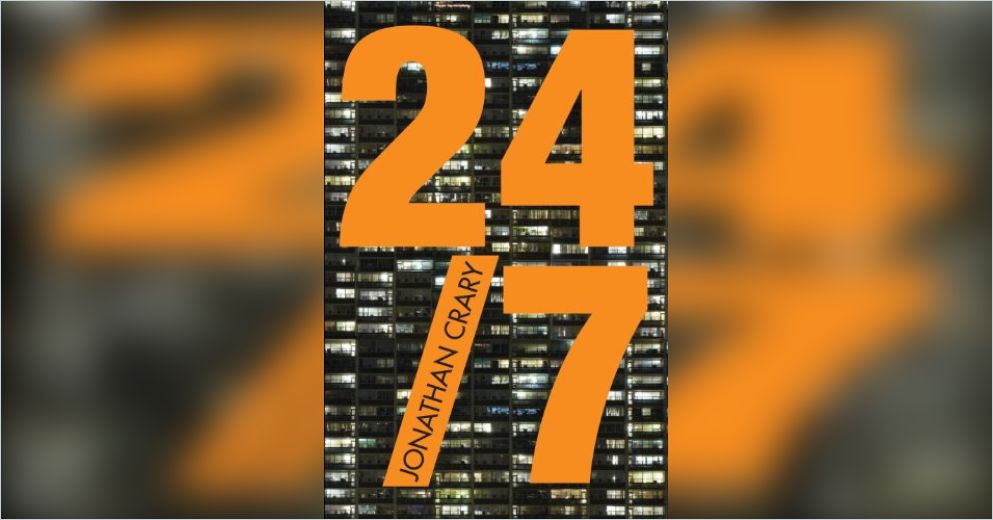

Daydreaming While Reading Jonathan Crary’s 24/7: Late Capitalism and the Ends of Sleep

By Edward Curtin

Source: Behind the Curtain

“Sleep that knits up the raveled sleave of care, The death of each day’s life, sore labor’s bath, Balm of hurt minds, great nature’s second course, Chief nourisher in life’s feast.”   – Shakespeare, Macbeth

People often laugh when I tell them that I go to sleep at 8:15 P.M.  They laugh harder when I say it’s been a lifetime habit, with unavoidable exceptions of course.  And that I wake up long before dawn.  Not because I am a dairy farmer or a baker, but because I love to sleep and all the best things I have written have been written in my dreams and refined during reveries while walking or in the early morning when all is silent still and I am alone with my musings.  I have always felt that sleeping and being awake were a seamless whole, contrary to the go-getters’ attitude that sleep and dreams are a waste of time, and I have been blessed with the ability to fall asleep as soon as I crawl into my crib and usually to remember my dreams in detail when I wake.

Jonathan Crary, the Meyer Schapiro Professor of Modern Art and Theory at Columbia University, agrees that sleep is profoundly important and under assault today.  To enter his book, 24/7, Late Capitalism and the Ends of Sleep, (which was first published in 2014) is for me to discover a kindred spirit, but also to enter a mind so capacious and profound that I wish to share his insights while I dream in words.

If what William Wordsworth (what a name!) wrote in 1802 was true then,

The world is too much with us; late and soon,
Getting and spending, we lay waste our powers;—
Little we see in Nature that is ours;
We have given our hearts away, a sordid boon!

what possibly could one say about today?  That shopping or thinking about shopping – things or propaganda or the latest useless buzz – is all we know?  That we have become completely insane, bamboozled by a capitalist techno-electronic madness that has not only seized our hearts but convinced our minds that it is good to spend our lives – our sleep and dreams and time and praxis – in tending to machines that destroy our souls night and day without interruption.

When fifty plus years ago the monk Thomas Merton wrote that “someday they will sell us the rain,” he could today add that the hard rain that Dylan sung of then has already fallen and they now need not sell us anything because we have eaten the bitter fruit of our own corruption.  People say they want peace while they fill their nights and days with digital dreams, eliminating what Crary calls “fugitive anonymity” for the bait of 24/7 capitalist drug addiction and being “with it.”  All the clichés have it that peace begins with “you,” yet you has become them or it, the tech-life 24/7.  I hear Sinatra singing Cole Porter’s lyrics today as

Night and day, you are the one
Only you ‘neath the moon or under the sun
Whether near to me or far
It’s no matter, cell phone, where you are
I think of you day and night

And such love is reciprocated, of course, as the electronic machines help so many distracted and restless souls make it through the night.  Sort of.  Not the kind of help Kris Kristofferson sang about, but a fleshless flashing gizmo colder than a frozen heart.

It is well known that sleep disorders are widespread today with technologically produced sleep drugs (and now marijuana) used by vast numbers of people. Such drug-induced sleep, the flip side of the frenetic passivity that precedes and follows it, occurs within a larger 24/7 sleepless framework that Crary accurately notes happens “ . . . within the globalist neoliberal paradigm, [for] sleeping is for losers.”   Yet what’s to be won is never enunciated because the winners’ faces are always well-hidden as they execute the prodigious capitalist machine of control that creates docility and separation in people who find the machine life irresistible – even as it drains them of easy-going vitality and the joy of dawdling, even for an idle while.  Doing nothing has become a crime.

Last night I stepped outside an hour after sunset and was startled by a massive full moon eyeing me as it rose over the eastern hills.  Here where I dwell there are no city or factory lights to block the moon and stars as they illuminate our nights.  But most people are not so lucky, for what our ancestors once took for granted – that we are part of nature, part of the Tao – has been lost for so many as artificial lights, urbanization, and a 24/7 linguistic mind-control ideology block the thrill of being transfixed by the moon’s loving gaze, an invitation to taste the sweetness of the north wind’s cookie.  Maybe the sight of her face might rattle the televised images lodged in people’s “memories” of mechanical misbegotten men in ghost suits trampling her peaceful countenance.

The 24/7 digital life, essential to neo-liberal financialized capitalism with its day and night markets and infrastructure that allow for continuous consumption and work – total availability – is the culmination of a long process that began with the invention of artificial lighting that allowed the English cotton mills to run 24/7.  Crary brilliantly illustrates this point through the 1782 painting, Arkwright’s Cotton Mills by Night, by the British artist James Derby.  This painting shows the windows of the massive mills lit like pin-points in the rural night, watched over by a full moon that illuminates the sky.  Incongruous time indeed!  He writes, “The artificial lighting of the factories announces the rationalized deployment of an abstract relation between time and work, severed from the cyclical temporalities of lunar and solar movements.”  This radical break from the traditional relation between time and work and the earth was later noted by Karl Marx as essential to the advance of capitalism since it disconnected the laboring individual from all interdependent connections to family, community, etc. while reorienting people’s feelings for time.  The English art critic John Berger, who knew that time with its corollary to place was a key to understanding so much history, put it this way: “Every ruling minority needs to numb and, if possible, to kill the time-sense of those it exploits.  This is the authoritarian secret of all methods of imprisonment.”

Dreaming of imprisonment, I just remembered that although it seems like a delusion from so far away and long ago, I once worked in a factory by day with its huge blast furnaces, in a NYC Police precinct jail on the 4-12 P.M. shift, and all-night as a nightwatchman.   All good lessons in how American society works, although I hated them all and labored simply for the pay.  But each in its own way taught me about imprisonment, especially the watchman’s job, since it involved a jolting sense of time and staying awake all night and sleeping by day.  I was always exhausted and felt I was violating my deepest nature.

Sleep deprivation is a central component of the torturers’ methods, as so many victims of the U.S. war machine have learned.  And the Pentagon (DARPA) has spent vast sums trying to create a sleepless soldier who can go at least seven days without sleep.  As Crary notes: “ . . . scientists in various labs are conducting experimental trials of sleeplessness techniques, including neurochemicals, gene therapy, and transcranial magnetic stimulation.”   The war against sleep is being waged on many fronts by well-armed maniacs intent on controlling human beings for nefarious ends.  To control sleep is to control time is to confound minds, which is the goal.

Ovid, the most sensual of Roman poets, would be shocked, I imagine, to learn that Morpheus, the god of sleep and dreams from his Metamorphoses, would be attacked so relentlessly by today’s madmen who never heard of his poetry.  My mind drifts to my college days translating Ovid under a weeping willow.  “My cause is better: no-one can claim that I ever took up arms against you,” he wrote and I read.  These words come back to me as I muse on the arms taken today against sleep, but I’m not sure if it’s Ovid or Bob Dylan’s lyrics in his song Workingman’s Blues #2 (from the album Modern Times) that fly to mind, for Dylan also sings “No-one can ever claim/ That I took up arms against you.”

Poor Morpheus, so many people in these modern times yearn for your arms but instead of that balm, they toss and turn in a time out of mind and out of sleep.

Crary tells us that the amount of sleep the average North American adult gets has gone from ten hours in the early twentieth century to eight hours a generation ago to six-and-a-half today.  And although people will always have to sleep, I think we can expect further reductions.  To say it is a form of torture is probably an exaggeration, but not by much.  He writes:

Behind the vacuity of the catchphrase, 24/7 is a static redundancy that disavows its relation to the rhythmic and periodic textures of human life. . . . A 24/7 environment has the semblance of a social world, but it is actually a non-social model of machinic performance and a suspension of living that does not disclose the human cost required to sustain its effectiveness. . . . 24/7 is a time of indifference, against which the fragility of human life is increasingly inadequate and within which sleep has no necessity or inevitability.  In relation to labor, it renders plausible, even normal, the idea of working without pause, without limits.  It is aligned with what is inanimate, inert, or unageing.  As an advertising exhortation it decrees the absoluteness of availability, and hence the ceaselessness of needs and their incitement, but also their perpetual non-fulfillment.

In other words, 24/7 is a form of linguistic mind control tied to cell phones, computers, and the digital life of the Internet whose purpose is to convince people that sleep and the human body is somehow unnatural and the future lies with people accepting their marriage to machines in a disenchanted and transhuman world.  It is a lie, of course, for if that is a future people accept, there will be no future, just a desert.  “Deleuze and Guattari went to the point of comparing the order-word [24/7] to a ‘death sentence,’” writes Crary. Such an order-word or imperative is similar in this respect to the term “9/11” which was coined to send an instant message that emergencies will now be endless so we will have to monitor you forevermore.  Keep your cell phone ready.  Be on your toes, stay alert, the terrorists come at all hours – keep awake!

Crary makes a profoundly important point at a time when there is much justifiable focus on propaganda and the lies of governments and the media.  This is the power of habit involved in the acceptance of the naturalness of various devices – today, electronic screens that are omnipresent – that we semi-automatically accept as normal.  He says, “In this sense, they are part of larger strategies of power in which the aim is not mass-deception, but rather states of neutralization and inactivation, in which one is dispossessed of time.  But even within habitual repetitions there remains a thread of hope – a knowingly false hope – that one more click or touch might open onto something to redeem the overwhelming monotony in which one is immersed.  One of the forms of disempowerment within 24/7 environments is the incapacitation of daydream or any mode of absent-minded introspection that would otherwise occur in intervals of slow or vacant time.”

This is part of a modern process of psychological reductionism and a changed understanding of the nature of wishes that have excluded dreaming and daydreaming from any connection to a traditional magico-theological framework.  Science and especially the neuro-sciences have reduced all life to what is empirically provable, attenuating life and the creation of art in the service of human life.  Crary uses Jean Paul Satre’s inelegant but insightful neologism, “practico-inert,” to explain people’s inability to see the nature of the social worlds they are part of with any clarity.  “The practico-inert was thus Sartre’s way [in Critique of Dialectical Reason] of designating the sedimented, institutional everyday world constituted out of human energy but manifested as the immense accumulation of routine passive activity.”

To repeat, this frenetic passivity serves to obscure the negative historical reality of life in a 24/7 electronic spectacle that is advertised as amazingly empowering but is the reverse.

For direct experience has fallen on hard times as life today has come to be mediated through electronic gadgets.  Surprises must be googled in advance or photographed to prove their reality.  Living is never easy, not in the summertime or any other season. Tension, inattention, exhaustion, and constant busyness are the order of the day.  This should be self-evident but isn’t.  People feel it but can’t see it.

Commenting on the dying art of storytelling, Walter Benjamin, in an essay called “The Storyteller,” said the following about people’s ability to listen and remember stories that they can integrate into their own experience so they can pass them on:

This process of assimilation, which takes place in depth, requires a state of relaxation, which is becoming rarer and rarer [written in 1936].  If sleep is the apogee of physical relaxation, boredom is the apogee of mental relaxation.  Boredom is the dream bird that hatches the egg of experience.  A rustling in the leaves drives him away.  His nesting places – the activities that are intimately associated with boredom – are already extinct in the cities and are declining in the country as well.  With this the gift of listening is lost and the community of listeners disappears.  [my emphasis]

We have gone beyond rustling in the bushes to a cacophonous electronic world that makes one deaf to all else.  That it will come crashing down around our ears is hard to imagine, but it will.  It already has in the damage that it’s done.

Once upon a time . . . well, I will spare you.  It might just seem like the dream of a ridiculous man, or something Dostoevsky would write, not your normal story or even daydream.

So read Jonathan Crary’s brilliant, 24/7: Late Capitalism and the Ends of Sleep and its sequel, Scorched Earth: Beyond the Digital Age to a Post-Capitalist World.  They will get you to think about your sleep habits and whether or not you are ever turned off and tuned out but just sometimes only in “sleep mode.”

Born in a Police State: The Deep State’s Persecution of Its Most Vulnerable Citizens

By John & Nisha Whitehead

Source: The Rutherford Institute

“When the song of the angels is stilled, when the star in the sky is gone, when the kings and princes are home, when the shepherds are back with their flocks, the work of Christmas begins: to find the lost, to heal the broken, to feed the hungry, to release the prisoner, to rebuild the nations, to bring peace among the people, to make music in the heart.”—Howard Thurman, theologian and civil rights activist

The Christmas story of a baby born in a manger is a familiar one.

The Roman Empire, a police state in its own right, had ordered that a census be conducted. Joseph and his pregnant wife Mary traveled to the little town of Bethlehem so that they could be counted. There being no room for the couple at any of the inns, they stayed in a stable (a barn), where Mary gave birth to a baby boy, Jesus. Warned that the government planned to kill the baby, Jesus’ family fled with him to Egypt until it was safe to return to their native land.

Yet what if Jesus had been born 2,000 years later?

What if, instead of being born into the Roman police state, Jesus had been born at this moment in time? What kind of reception would Jesus and his family be given? Would we recognize the Christ child’s humanity, let alone his divinity? Would we treat him any differently than he was treated by the Roman Empire? If his family were forced to flee violence in their native country and sought refuge and asylum within our borders, what sanctuary would we offer them?

A singular number of churches across the country have asked those very questions in recent years, and their conclusions were depicted with unnerving accuracy by nativity scenes in which Jesus and his family are separated, segregated and caged in individual chain-link pens, topped by barbed wire fencing.

Those nativity scenes were a pointed attempt to remind the modern world that the narrative about the birth of Jesus is one that speaks on multiple fronts to a world that has allowed the life, teachings and crucifixion of Jesus to be drowned out by partisan politics, secularism, materialism and war, all driven by a manipulative shadow government called the Deep State.

The modern-day church has largely shied away from applying Jesus’ teachings to modern problems such as war, poverty, immigration, etc., but thankfully there have been individuals throughout history who ask themselves and the world: what would Jesus do?

What would Jesus—the baby born in Bethlehem who grew into an itinerant preacher and revolutionary activist, who not only died challenging the police state of his day (namely, the Roman Empire) but spent his adult life speaking truth to power, challenging the status quo of his day, and pushing back against the abuses of the Roman Empire—do about the injustices of our  modern age?

Dietrich Bonhoeffer asked himself what Jesus would have done about the horrors perpetrated by Hitler and his assassins. The answer: Bonhoeffer was executed by Hitler for attempting to undermine the tyranny at the heart of Nazi Germany.

Aleksandr Solzhenitsyn asked himself what Jesus would have done about the soul-destroying gulags and labor camps of the Soviet Union. The answer: Solzhenitsyn found his voice and used it to speak out about government oppression and brutality.

Martin Luther King Jr. asked himself what Jesus would have done about America’s warmongering. The answer: declaring “my conscience leaves me no other choice,” King risked widespread condemnation as well as his life when he publicly opposed the Vietnam War on moral and economic grounds.

Even now, despite the popularity of the phrase “What Would Jesus Do?” (WWJD) in Christian circles, there remains a disconnect in the modern church between the teachings of Christ and the suffering of what Jesus in Matthew 25 refers to as the “least of these.”

Yet this is not a theological gray area: Jesus was unequivocal about his views on many things, not the least of which was charity, compassion, war, tyranny and love.

After all, Jesus—the revered preacher, teacher, radical and prophet—was born into a police state not unlike the growing menace of the American police state. When he grew up, he had powerful, profound things to say, things that would change how we view people, alter government policies and change the world. “Blessed are the merciful,” “Blessed are the peacemakers,” and “Love your enemies” are just a few examples of his most profound and revolutionary teachings.

When confronted by those in authority, Jesus did not shy away from speaking truth to power. Indeed, his teachings undermined the political and religious establishment of his day. It cost him his life. He was eventually crucified as a warning to others not to challenge the powers-that-be.

Can you imagine what Jesus’ life would have been like if, instead of being born into the Roman police state, he had been born and raised in the American police state?

Consider the following if you will.

Had Jesus been born in the era of the America police state, rather than traveling to Bethlehem for a census, Jesus’ parents would have been mailed a 28-page American Community Survey, a mandatory government questionnaire documenting their habits, household inhabitants, work schedule, how many toilets are in your home, etc. The penalty for not responding to this invasive survey can go as high as $5,000.

Instead of being born in a manger, Jesus might have been born at home. Rather than wise men and shepherds bringing gifts, however, the baby’s parents might have been forced to ward off visits from state social workers intent on prosecuting them for the home birth. One couple in Washington had all three of their children removed after social services objected to the two youngest being birthed in an unassisted home delivery.

Had Jesus been born in a hospital, his blood and DNA would have been taken without his parents’ knowledge or consent and entered into a government biobank. While most states require newborn screening, a growing number are holding onto that genetic material long-term for research, analysis and purposes yet to be disclosed.

Then again, had Jesus’ parents been undocumented immigrants, they and the newborn baby might have been shuffled to a profit-driven, private prison for illegals where they first would have been separated from each other, the children detained in make-shift cages, and the parents eventually turned into cheap, forced laborers for corporations such as Starbucks, Microsoft, Walmart, and Victoria’s Secret. There’s quite a lot of money to be made from imprisoning immigrants, especially when taxpayers are footing the bill.

From the time he was old enough to attend school, Jesus would have been drilled in lessons of compliance and obedience to government authorities, while learning little about his own rights. Had he been daring enough to speak out against injustice while still in school, he might have found himself tasered or beaten by a school resource officer, or at the very least suspended under a school zero tolerance policy that punishes minor infractions as harshly as more serious offenses.

Had Jesus disappeared for a few hours let alone days as a 12-year-old, his parents would have been handcuffed, arrested and jailed for parental negligence. Parents across the country have been arrested for far less “offenses” such as allowing their children to walk to the park unaccompanied and play in their front yard alone.

Rather than disappearing from the history books from his early teenaged years to adulthood, Jesus’ movements and personal data—including his biometrics—would have been documented, tracked, monitored and filed by governmental agencies and corporations such as Google and Microsoft. Incredibly, 95 percent of school districts share their student records with outside companies that are contracted to manage data, which they then use to market products to us.

From the moment Jesus made contact with an “extremist” such as John the Baptist, he would have been flagged for surveillance because of his association with a prominent activist, peaceful or otherwise. Since 9/11, the FBI has actively carried out surveillance and intelligence-gathering operations on a broad range of activist groups, from animal rights groups to poverty relief, anti-war groups and other such “extremist” organizations.

Jesus’ anti-government views would certainly have resulted in him being labeled a domestic extremist. Law enforcement agencies are being trained to recognize signs of anti-government extremism during interactions with potential extremists who share a “belief in the approaching collapse of government and the economy.”

While traveling from community to community, Jesus might have been reported to government officials as “suspicious” under the Department of Homeland Security’s “See Something, Say Something” programs. Many states, including New York, are providing individuals with phone apps that allow them to take photos of suspicious activity and report them to their state Intelligence Center, where they are reviewed and forwarded to law-enforcement agencies.

Rather than being permitted to live as an itinerant preacher, Jesus might have found himself threatened with arrest for daring to live off the grid or sleeping outside. In fact, the number of cities that have resorted to criminalizing homelessness by enacting bans on camping, sleeping in vehicles, loitering and begging in public has doubled.

Viewed by the government as a dissident and a potential threat to its power, Jesus might have had government spies planted among his followers to monitor his activities, report on his movements, and entrap him into breaking the law. Such Judases today—called informants—often receive hefty paychecks from the government for their treachery.

Had Jesus used the internet to spread his radical message of peace and love, he might have found his blog posts infiltrated by government spies attempting to undermine his integrity, discredit him or plant incriminating information online about him. At the very least, he would have had his website hacked and his email monitored.

Had Jesus attempted to feed large crowds of people, he would have been threatened with arrest for violating various ordinances prohibiting the distribution of food without a permit. Florida officials arrested a 90-year-old man for feeding the homeless on a public beach.

Had Jesus spoken publicly about his 40 days in the desert and his conversations with the devil, he might have been labeled mentally ill and detained in a psych ward against his will for a mandatory involuntary psychiatric hold with no access to family or friends. One Virginia man was arrested, strip searched, handcuffed to a table, diagnosed as having “mental health issues,” and locked up for five days in a mental health facility against his will apparently because of his slurred speech and unsteady gait.

Without a doubt, had Jesus attempted to overturn tables in a Jewish temple and rage against the materialism of religious institutions, he would have been charged with a hate crime. More than 45 states and the federal government have hate crime laws on the books.

Had anyone reported Jesus to the police as being potentially dangerous, he might have found himself confronted—and killed—by police officers for whom any perceived act of non-compliance (a twitch, a question, a frown) can result in them shooting first and asking questions later.

Rather than having armed guards capture Jesus in a public place, government officials would have ordered that a SWAT team carry out a raid on Jesus and his followers, complete with flash-bang grenades and military equipment. There are upwards of 80,000 such SWAT team raids carried out every year, many on unsuspecting Americans who have no defense against such government invaders, even when such raids are done in error.

Instead of being detained by Roman guards, Jesus might have been made to “disappear” into a secret government detention center where he would have been interrogated, tortured and subjected to all manner of abuses. Chicago police have “disappeared” more than 7,000 people into a secret, off-the-books interrogation warehouse at Homan Square.

Charged with treason and labeled a domestic terrorist, Jesus might have been sentenced to a life-term in a private prison where he would have been forced to provide slave labor for corporations or put to death by way of the electric chair or a lethal mixture of drugs.

Indeed, as I make clear in my book Battlefield America: The War on the American People and in its fictional counterpart The Erik Blair Diaries, given the nature of government then and now, it is painfully evident that whether Jesus had been born in our modern age or his own, he still would have died at the hands of a police state.

Thus, as we draw near to Christmas with its celebration of miracles and promise of salvation, we would do well to remember that what happened in that manger on that starry night in Bethlehem is only the beginning of the story. That baby born in a police state grew up to be a man who did not turn away from the evils of his age but rather spoke out against it.

We must do no less.

Israel’s Savagery Is So Shocking It’s Sometimes Hard To Take In

By Caitlin Johnstone

Source: CaitlinJohnstone.com.au

Sometimes Israel’s crimes are so horrific that at first you don’t even understand what you’re looking at. You just stare at it trying to make sense of what you’re seeing for a bit, like you would if you suddenly saw a space alien or a leprechaun or something.

It happened to me yesterday when I was watching a Sky News report about a teenage boy who was shot by Israeli forces in Jerusalem for celebrating the release of Palestinian prisoners in the hostage negotiations with Hamas. I was watching it thinking to myself, I must be misunderstanding what I’m looking at. I know that Israel does gross things, but surely the story here isn’t that they shot a kid for being happy about something.

Then, as has happened so many times over the last two months, I kept watching and learned that yes, that is indeed what happened. The deputy mayor of Jerusalem Fleur Hassan-Nahoum is seen defending the shooting by saying “part of the deal is that there would be no celebrations for the release of attempted murderers” (this was actually not a part of the deal, it was just a decree issued by Israel’s national security minister) and claiming dishonestly that “we’re talking about the release of attempted murderers” (the vast majority have not been convicted of any crime and have been denied any due process for the accusations against them).

The band Eve6 nicely summed up what it felt like watching the clip of the deputy mayor’s comments, tweeting, “The remarkable thing about this clip is her self assurance. Like she’s supremely confident that ‘we shot the teenager because he was celebrating’ is a thing that people will find reasonable.”

I had the same experience reading about the five premature babies who were left to die after the IDF raided al-Nasr Pediatric Hospital in Gaza earlier this month, their decomposing bodies only discovered when the temporary ceasefire allowed access to the hospital. It’s just too insane to believe — they attacked a pediatric hospital? And then they left the babies there to die? What??

The only reason we’re learning about this now is because the pause in fighting allowed journalists to get cameras into the building and show the dead infants to the world. This calls to mind the Politico report immediately prior to the ceasefire which said that the White House was worried “an unintended consequence of the pause” would be “that it would allow journalists broader access to Gaza and the opportunity to further illuminate the devastation there and turn public opinion on Israel.”

Indeed, since the pause in fighting began the world has been receiving drone footage from mainstream platforms like Reuters and The Washington Post revealing vast expanses of urban terrain completely destroyed by a blanket of Israeli military explosives spanning from city block to city block. Looking at the blatantly indiscriminate devastation that’s been caused by Israel’s assault on Gaza since October 7 makes it clear that the IDF are not targeting Hamas but Gaza itself.

I’ve been amazed at how much I’ve been sleeping since the ceasefire started; that’s why I haven’t been writing as much. I guess spending weeks staring at unbelievable horrors unfolding on your screen can be pretty hard on your system if you’re sensitive to that sort of thing, so my body’s been resting up as much as it can while there’s an opportunity. 

And I’m just here watching this all unfold safely from my home in Melbourne. I cannot imagine what it’s like to be living in the midst of this horror for the last two months, trying to figure out the best way to survive while also grieving the family, friends and neighbors you’re losing along the way. These people have all been deeply traumatized in ways that will haunt them for the rest of their lives, if they survive the violence, disease and deprivation that’s to come.

This thing is so astonishingly ugly, and it could get a whole lot uglier after the ceasefire ends. If there’s anything positive to be found in this living nightmare, it’s that it’s so earth-shakingly ugly that it just might shake the world awake.

Rebalancing The Masculine & The Feminine For A New Paradigm

In a time of collapse, witnessing the consciousness and paradigm driving our current moment is paramount. A rebalancing of consciousness may be a solution.

By Anne Baring

Source: The Pulse

When the masculine and the feminine are in balance, there is fluidity, relationship, a flow of energy, unity, totality. This fluidity and balance is perhaps best illustrated by the Taoist image of the indissoluble relationship and complementarity of Yin and Yang.

In the broadest terms, the feminine is a containing pattern of energy: receptive, connecting, holding things in relationship to each other; the masculine is an expanding pattern of energy: seeking extension, expansion towards what is beyond.

More specifically, the feminine reflects the instinctual matrix and the feeling (heart) values of consciousness; the masculine reflects the questing, goal-defining, ordering, and discriminating qualities of consciousness, generally associated with the mind or intellect.

For millennia women have lived closer to the first pattern; men to the second. But now, there is a deep impulse to balance these within ourselves and in our culture. There is an urgent need to temper the present over-emphasis on masculine value with a conscious effort to integrate the feminine one.

In the ancient world the feminine principle in the image of the goddess stood for relationship – the hidden connection of all things to each other. Secondly, it stood for justice, wisdom and compassion. Thirdly, and most importantly, it was identified with the unseen dimension beyond the known world – a dimension that may be imagined as a matrix connecting invisible spirit with visible nature.

The word used then to name this matrix was goddess; later it was soul. The feminine principle offered an image of the oneness, sacredness and inviolability of all life; the phenomenal world (nature, matter, body) was regarded as sacred because it was a theopany or manifestation of invisible spirit.

The greatest flaw in civilisation has been the over-emphasis on the masculine archetype (identified with spirit) and the devaluation of the feminine one (identified with nature). This has been reflected in the fact that the god-head has no feminine dimension.

The history of the last 4000 years has been forged by masculine traits – principally the goals of conquest and control. (this is in no sense intended as a criticism; in the context of prevailing belief systems and general level of consciousness, things could not have been different).

However, religion and science – all our cultural ideas and patterns of behaviour – have developed from this unbalanced foundation. Throughout this time, everything designated as “feminine” (nature, body, woman) was devalued and repressed, including the rich diversity of the Pagan legacy of the ancient world.

In the domain of religion, heretics were eliminated; diverse ways of relating directly to the transcendent were lost. Naturally, this has created a deep imbalance in the culture and in the human psyche. It has led finally to the tyrannies of this century where the lives of some 200 million people have been sacrificed to totalitarian regimes.

The modern tyrant is the extreme reflection of a deeply-rooted pathology derived from a long-standing cultural imbalance between the masculine and feminine archetypes.

Where there is no relationship and balance between the masculine and feminine principles, the masculine principle becomes pathologically exaggerated, inflated; the feminine pathologically diminished, inarticulate, ineffective. The symptoms of a pathological masculine are rigidity, dogmatic inflexibility, omnipotence, and an obsession with or addiction to power and control.

There will be a clear definition of goals but no receptivity to ideas and values that conflict with these goals. The horizon of the human imagination will be restricted by an overt or subtle censorship. We can see this pathology reflected today in the ruthless values that govern the media, politics, and the technological drive of the modern world.

We can see the predatory impulse to acquire or to conquer new territory in the drive for global control of world markets, in the ideology of growth, in new technologies such as the genetic modification of food. We see exaggerated competitiveness – the drive to go further, grow faster, achieve more, acquire more, elevated to the status of a cult.

There is contempt for the feeling values grounded in the experience of relationship with others and with the environment. There is a predatory and compulsive sexuality in both men and women who increasingly lose the capacity for relationship. There is continuous expansion in a linear sense but no expansion in depth, in insight. The pressure of things to do constantly accelerates.

What is the result? Exhaustion, anxiety, depression, illness which afflict more and more people.

There is no time or place for human relationships. Above all, there is no time for relationship with the dimension of spirit. The water of life no longer flows. Men and women and, above all, children, become the victims of this harsh, competitive, uncaring ethos: women, in their disorientation, and because the feminine value has no clear definition or recognition in our culture, are drawn to copy the pathological image of the masculine which itself incorporates fear of the feminine.

Because to a large extent, this whole situation arises unconsciously, not much can be done about it until catastrophe intervenes.

Evolutionary Pressure Emerges

I feel we are living in a time of kairos – a mythic time of choice – a time of stupendous scientific discoveries which are enlarging our vision of the universe, shattering the vessel of our old concepts about the nature of reality.

Yet the delicate organism of life on our planet and the survival of our species are threatened as never before by technologies driven by an ethos of the conquest and control of nature, technologies which are applied with an utter disregard for the perils of our interference with the complex web of relationships upon which the life of our planet depends.

The choice is between clinging to an outworn and unbalanced ethos and maturing beyond it towards a more responsible and sensitive capacity for relationship. If we are unable to develop this empathic capacity to relate, we will surely destroy ourselves and the environment that sustains our life.

Bringing Balance

So how could we help to redress the balance between the masculine and feminine in ourselves and in our culture?

First of all, where are we, as individuals out of balance? Where are we driven by the unbalanced cultural ethos of achieving power and control, ignoring our feelings of depression, anxiety or symptoms of the body’s distress?

Are we allowing ourselves enough time for reflection, for relationships, for connection with a deeper dimension of reality?

The priority as I see it is to make the fact of this pathology a matter of public discussion. Shift the emphasis from achieving power to achieving balance.

Secondly, here are some suggestions for strengthening the feminine principle in our society.

  • Free the Imagination from the stranglehold exercised by a controlling minority which excludes the non-rational from inclusion in our understanding of life.
  • Formulate a new image of spirit as the totality of all that is – both seen and unseen. Recover the lost and devalued feminine aspects of spirit: restore nature, matter and the physical body (including sexuality) to the realm of the sacred.
  • Imagine the Soul as a cosmic internet. We belong to an immense field or matrix of relationships. We could imagine the soul in this new way as something we belong to and can develop a relationship with.
  • Religion – Relinquish the dogmatic formulations of the past: Monotheism as Mytheism. (Ravi Ravindra) Recognise the negative effects of deeply rooted beliefs – such as the belief in original sin – on our interpretation of life and its meaning. Welcome the idea of direct individual experience of the sacred and the numinous.
  • Science – Integrate the principle of empathic relationship with what is studied in scientific teaching and practice. In education give children an empathic understanding of their own bodies and of nature rather than the image of the body and the universe as a machine. Help them to become aware of their environment as a great chain of relationships in which their lives are embedded. Nourish their sense of wonder.
  • The psyche: Heal the split between mind and soul. Recognise that feeling is a valid mode of perceiving reality and must be integrated with thinking. The main problem in our society is emotional immaturity.
  • Politics: develop a forum beyond national and international politics where the true problems of the planet can be articulated and addressed. Recognise grandiosity, standardisation, the drive for control, the proliferation of bureaucracy as symptoms of the pathology of an inflated and unrelated masculine principle.
  • Medicine: integrate alternative (complementary) methods of healing with orthodox ones as a deliberate policy. Focus on preventive medicine. The modern GP has no time for an empathic relationship with his or her patient. The pressure of numbers is simply too great. However, in some surgeries and hospitals alternative practises are being integrated with orthodox ones. This integration could be expanded.
  • Agriculture: Focus on increasing the production of organic food. Removal of pesticides, antibiotics and toxins from our food and water.
  • Care of Children: A much higher level of prenatal care. Compared with the rest of Europe, we are way behind (Sweden is the most advanced). Attention to quality of children’s diet and to nourishing the imagination as well as the intellect.
  • Educate Women to be aware of their own specific value and the importance of their contribution to the culture. Articulating feeling values without fear or shame.
  • Educate Adolescents in awareness of the responsibilities of relationships and of the parent towards the child. Teach them the psychology of the child; its dependency; its sensitivity, its potential for emotional growth. Teach them about the complexities of neuroscience so they understand how their emotions affect their bodies and vice-versa. Ask them to invent ways of caring for the environment.
  • Teaching Methods: integrate right-hemispheric consciousness with the linear consciousness of the left hemisphere – opening to the creative power of the image. Balance in the curriculum between developing the capacity for logical thought and creative imagining and participation. This poem by a 12 year old boy at school in Southampton shows how a teacher can provide the environment in which a child can dare to express his true feelings:

I hear my inner voice talking to me,
Explaining, encouraging,
Opening the part of me that I thought was lost.
In this world of cruelty and fear little lights are burning.
Everyone has a flame inside their hearts,
If only they had the courage to find it.
The light can trickle out through a hole in your mind.
When the inside is out
You are transformed and revealed.
There is no need to be afraid,
But be curious
As you will probably never know
where the force is coming from.
 – Daniel Webster

Each of us is called to focus on rebalancing the masculine and feminine in ourselves and in our culture. This could affect a profound alchemy in our lives. Women and men could both participate in a process of transformation which could bring into being a new cultural focus whose emphasis is no longer on power and control but on relationship, balance and connectedness.

The phrase “the conquest of nature” could be replaced by the awareness that humanity and nature participate in a deeper and still unknown reality that embraces them both.

Millions of people have no choice. Those of us who do have a measure of choice could rise to the immense challenge of defining and living a new and responsible role in relation to each other and our planetary home.

The Roots of Radicalism and the Structure of Evil

By Edward Curtin

Source: Behind the Curtain

My title is redundant for a reason, since the root of the word radical is the Latin word, radix, meaning root.  For I mean to show how the use and misuse of language, its history or etymology, and ours as etymological animals as the Spanish philosopher José Ortega y Gassett called us, is crucial for understanding our world, a world once again teetering on the edge of a world war that will almost inexorably turn nuclear as events are proceeding.  If our language is corrupted, as it surely is, and political propaganda flourishes as a result, the correct use of our language and the meaning of words becomes an obligation of anyone who uses them – that is, everyone, especially writers.

The United States government exists to wage war.  In its present form, it would crumble without it; and in its present form, it will crumble with it.  Only a radical structural change will prevent this.  For war-making is at the core of its budget, its raison d’être – 816.7 billion for the Fiscal 2023 National Defense Authorization Act alone – a deficit-financed sum that tells only part of the story.  This amount that finances the military-industrial complex and its blood money is for a country that has never been invaded, is bordered by friendly neighbors, and is oceans away from the multitude of countries its leaders attack and call our enemies.  The U.S. wages wars around the world because killing is its lifeblood, its structural essence.

In writing of the misuse of language, George Orwell wrote, “It becomes ugly and inaccurate because our thoughts are foolish, but the slovenliness of our language makes it easier for us to have foolish thoughts.”  So with these words Orwell slyly places us within the enigma of the chicken and the egg, a conundrum or paradox that relates to my theme in a weird way, but which I will directly ignore.

By radical I do not mean the widespread political usage as in radical-right or radical-left or radical meaning one who plays the role through dress or demeanor.  I am using the word in its primary meaning – a radical is one who is rooted in the earth, which means everyone.  Everyone therefore is mortal, human not a god, and comes from the earth and returns to it.  Everyone is radical in this sense, although they may try to deny it.  And the more one feels alive the more one senses one will die and doesn’t like the thought, therefore many tamp down their aliveness in order to reduce their fear of death.  The best way to do this is to disappear into the crowd, to become a conventional person.  To act as if one didn’t know that one’s political leaders were in love with death and killing and were not obedient cogs in a vast systemic killing machine.  Maybe the unconscious assumption is that these “leaders” can kill death for you by killing vast numbers of people and make you feel someone has control of this thing called death.

Rabbi Abraham Joshua Heschel, who stood strongly against the Vietnam War and marched with Dr. Martin Luther King, Jr., put the basic sense of radical well when he said:

Our goal should be to live life in radical amazement. . . . get up in the morning and look at the world in a way that takes nothing for granted. Everything is phenomenal; everything is incredible; never treat life casually. To be spiritual is to be amazed.

To be radically amazed that we exist is to be equally amazed that we will die.  And there’s the rub.

Yesterday I got in our car and drove away to meet a journalist friend.  It was evening and my wife had previously used the car.  I had just spent time following all the dreadful news about the massive slaughter by Israel of Palestinians in Gaza, including the death of more than 3,000 children whose numbers are climbing fast.  Visions of those children and babies played havoc with my spirits, and I kept thinking of my own children and the love and tenderness that comes with being a  parent.  A musical cd that my wife had been listening to started playing.  The case was on the console.  It was Sacred Arias by Andrea Bocelli.  He of the majestic voice was singing Silent Night.  I was overwhelmed with tears by his passionate words:

Silent night! Holy night!
All is calm, all is bright
round yon Virgin Mother and Child,
Holy infant so tender and mild,
sleep in Heavenly peace!

I saw nights in Gaza as Israeli bombs burst and shattered everyone and everything to bits, all the holy infants, the children and adults.

I felt beside myself with grief, a U.S. citizen driving down a safe country road contemplating the savagery of my nation and its support for the Israeli government’s brutality and mass killings of Palestinians for all the world to see on screens everywhere.

I felt ashamed to live in a land where justice is a game reserved for rhetoric alone as it joins in the massacre of the innocent, as it always has, now together with the apartheid Israeli regime.

I thought of all the compromised politicians who pledge their allegiance to the killers, Biden and all his presidential predecessors, now including the aspirant Robert F. Kennedy, Jr., a man with a conscience on many important issues whom I have supported in his quest for the presidency, but a man whose conscience has abandoned him when it comes to the Palestinians, as Scott Ritter has recently documented.  I have privately urged Kennedy to reconsider his “unwavering, resolute, and practical” support for the Israeli government following the Gaza breakout of October 7, but to no avail.  In fact, I have been trying to get him to withdraw his unconditional support for Israel since the summer when he withdrew his support for Roger Waters, marched with Rabbi Shmuley Boteach in the Israel parade in NYC, and allowed Boteach to say that Sirhan Sirhan had killed his father without correcting him since he knew it was an egregious lie.  My failure in this regard deeply saddens me.

I felt betrayed again – perhaps you will call me naïve – as when I was young and last put my trust in voting for a US presidential candidate in 1972.  I thought I had learned to radically grasp the systematically corrupt nature of the U.S. warfare state.  Now more than three weeks have passed and Bobby Kennedy has remained silent, only to ask for our prayers for the victims of the mass shooting in Maine.  For the Palestinians, not a word. Although he considers the Israeli-Palestinian situation complicated, there is nothing complicated about genocide; it doesn’t necessitate long analyses and discussions with advisers.  The facts of the Israeli slaughter of Palestinians in Gaza are evident for all to see, if they wish.  Bobby Kennedy has turned away.  And I have now sadly turned away from him.

I remembered the Gospel words I heard long ago about the fulfillment of the words of the prophet Jeremiah: “A voice was heard in Ramah, sobbing and loudly lamenting: it was Rachel weeping for her children, refusing to be comforted because they were no more.”  But this time it is not the Jewish Rachel, for Herod has assumed the name Netanyahu and his U.S. allies, and the weeping ones are Palestinian mothers and fathers.  Nothing can justify such slaughter, not the terrible killings of innocent Israelis on October 7 that I denounce; not the fear that the birth of messengers of peace might strike into Herod/Netanyahu’s heart – nothing!  Seventy-five years of ethnic cleansing of Palestinians continues apace. The Jewish child Jesus, the radical preacher of love and peace for all people, didn’t die on a private cross, nor do the Palestinians.  So it goes.

I thought of the indescribable sweet wonder of holding your baby in your arms while realizing how many Palestinian parents have been holding their dead children in theirs.  Rage welled up in me at the obscenity of those who support this and those who shut their eyes to it and those who remain silent.

I realized that as a Christian I am baptized into the human family, not some special in-group, which is the opposite of Jesus’s message.  Every child is holy and innocent and to massacre them is evil.  And to remain silent as it happens is to be complicit in evil.

I remembered how these many ongoing weeks of terror started and thought of a poem that is succinctly apposite: Harlem by Langston Hughes:

What happens to a dream deferred?

Does it dry up
like a raisin in the sun?
Or fester like a sore-
and then run?
Does it stink like rotten meat?
Or crust and sugar over-
like a syrupy sweet?

Maybe it just sags
like a heavy load.

Or does it explode?

And I thought that he could have omitted that final question mark because we have our answer, then and now.

Then the music stopped and I arrived at my destination to meet my friend.

Yes, to be radical is to be rooted in the earth and to realize all people are part of the human family, each of us made of flesh and blood and therefore sisters and brothers deserving of justice, peace, and dignity.  But this is just a first step in the grasping of the full dimension of the radical vision.  It can end in fluff if a second step is not taken: to use our freedom to uproot ourselves from the conventional government and mass media propaganda and mind control that clouds our understanding of how the world works. This takes study and work and an understanding of the historical and systemic roots of all the alleged “unprovoked” violence that ravages our world.

Thus the existential and socio-historical merge in the radical vision that allows us to grasp the structures of evil and our personal responsibility.

Today that obligation is clear: To oppose the Israeli genocide of the Palestinians.

Otherwise we are guilty bystanders.

Chance Encounters as the Walls Close In

By Edward Curtin

Source: Behind the Curtain

“A treasure stumbled upon, suddenly; not gradually accumulated, by adding one to one. The accumulation of learning, ‘adding to the sum-total of human knowledge’; lay that burden down, that baggage, that impediment. Take nothing for your journey; travel light.”   – Norman O. Brown, Love’s Body

These are “heavy” times, colloquially speaking.  Forebodings everywhere.  Everything broken.  People on edge, nervous, filled with anxiety about they know not what since it seems to be everything. The economy, politics, elections, endless propaganda, the war in Ukraine, censorship, the environment, nuclear war, Covid/vaccines, a massive world-wide collapse, the death of democratic possibilities, the loss of all innocence as a very weird and dangerous future creeps upon us, etc. Only the most anesthetized don’t feel it.

The anxiety has increased even as access to staggering amounts of knowledge – and falsehoods – has become available with the click of a button into the digital encyclopedia.  The CIA’s MK-Ultra mind control program has gone digital.  The more information, the more insubstantial the world seems, but it is not an insubstantiality that connects to hope or faith but to despair.  Across the world people are holding their breath.  What’s next?

Roberto Calasso, the late great Italian writer, wrote that we live in “the unnamable present,” which seems accurate.  Information technology, with its easily available marriage of accurate and fraudulent information, affects people at the fathomless depths of the mind and spirit.  Yet it is taken-for-granted that the more such technological information there is available, as well as the ease with which one can add one’s two-cents to it, is a good thing, even as those powerful deep-state forces that control the Internet pump out an endless stream of purposely dissembling and contradictory messages.  Delusions of omnipotence and chaos everywhere, but not in the service of humanity.  Such chaos plays in chords D and C – Depressing and Controlling.

In the midst of this unnamable present, all of us need to dream of beauty and liberation even as we temporarily rely on digital technology for news of the wider world.  For the local news we can step outside and walk and talk to people, but we can’t endlessly travel everywhere, so we rely on the Internet for reports from elsewhere.  Even as we exercise great effort to discern facts from fictions through digital’s magic emanations, we hunger for some deeper experiences than the ephemerality of this unnamable world.  Without it we are lost in a forest of abstractions.

While recently dawdling on a walk, I stopped to browse through tables of free books on the lawn of my local library.  I was looking for nothing but found something that startled me: a few descriptive words of a child’s experience.  I chanced to pick up an old (1942), small autobiography by the English historian, A. L. Rowse – A Cornish Childhood.  The flyleaf informed me that it was the story of his pre-World War I childhood in a little Cornish village in southwestern England.  The son of a china-clay worker and mother of very modest means, Rowse later went on to study at Oxford and became a well-known scholar and author of about a hundred books.  In other words, a man whose capacious mind was encyclopedic long before the Internet offered its wares of information about everything from A to Z.

Since my grandfather, the son of an Irish immigrant father and English mother, had spent his early years working in a bobbin factory in Bradford, England, a polluted mill town in the north, before sailing at age 11 from Liverpool to New York City aboard the Celtic with his four younger siblings sans parents, I had an interest in what life was like for poor children in England during that era.  How circumstances influenced them: two working-class boys, one who became an Oxford graduate and well-known author; the other who became a NYC policeman known only to family and friends.  The words Rowse wrote and I read echoed experiences that I had had when young; I wondered if my grandfather had experienced something similar.  Rowse writes this on pages 16-17 where I randomly opened the book:

A little group of thatched cottages in the middle of the village had a small orchard attached; and I remember well the peculiar purity of the blue sky seen through the white clusters of apple-blossom in spring. I remember being moon-struck looking at it one morning early on my way to school. It meant something for me; what I couldn’t say. It gave me an unease at heart, some reaching outwards toward perfection such as impels men into religion, some sense of the transcendence of things, of the fragility of our hold upon life . . . . I could not know then that it was an early taste of aesthetic sensation, a kind of revelation which has since become a secret touchstone of experience for me, an inner resource and consolation. . . . In time it became my creed – if that word can be used of a religion which has no dogma, no need of dogma; for which this ultimate aesthetic experience, this apprehension of the world and life as having value essentially in the moment of being apprehended qua beauty, I had no need of religion. . . . in that very moment it seemed that time stood still, that for a moment time was held up and one saw experience as through a rift across the flow of it, a shaft into the universe. But what gave such poignancy to the experience was that, in the very same moment that one felt time standing still, one knew at the back of the mind, or with another part of it, that it was moving inexorably on, carrying oneself and life with it. So that the acuity of the experience, the reason why it moved one so profoundly, was that at bottom it was a protest of the personality against the realization of its final extinction. Perhaps, therefore, it was bound up with, a reflex action from, the struggle for survival. I could get no further than that; and in fact have remained content with that.

I quote so many of Rowse’s words because they seem to contain two revelations that pertain to our current predicament. One a revelation that opens onto hope; the other a revelation of hopelessness. On the one hand, Rowse writes beautifully about how a patch of blue sky through apple blossoms (and his reading Wordsworth’s Intimations of Immortality) could open his heart and soul to deep aesthetic consolation.  Calasso, in discussing “absolute literature” and the Bhagavad Gita in Literature and the Gods, refers to this experience with the word ramaharsa or horripilation, the happiness of the hairs.  It is that feeling one has when one experiences a thrill so profound that a shiver goes down one’s spine and one experiences an epiphany.  Your hairs and other body parts stand up, whether it’s from a patch of blue, a certain spiritual or erotic/love encounter, or a line of poetry that takes your breath away.  Such a thrill often happens through a serendipitous stumbling.

For Rowse, the epiphany was bounded, like a beautiful bird with its wings clipped; it was an “aesthetic experience” that seemed to exclude something genuinely transcendent in the experiential and theological sense. Maybe it was more than that when he was young, but when this scholar described it in his 39th year, this intellectual could only say it was aesthetic.

C. S. Lewis, in the opening pages of The Abolition of Man, echoing Coleridge’s comment about two tourists at a waterfall, one who calls the waterfall pretty and the other who calls it sublime (Coleridge endorsing the later and dismissing the former with disgust), writes, “The feelings which make a man call an object sublime are not sublime feelings but feelings of veneration.” In other words, the sublime nature of a patch of blue sky through apple blossoms in the early morn cannot be reduced to a person’s subjective feelings but is objectively true and a crack into the mystery of transcendence. To see it as a protest against one’s personal extinction and to be content to “get no further than that” is to foreclose the possibility that what the boy felt was not what the man thought; or to quote Wordsworth about what seems to have happened to Rowse: “Shades of the prison house begin to close/Upon the growing boy,” and that is that.

But we are even a longer way gone from when Rowse wrote his remembrances.  In our secular Internet age, first society and now its technology, not aesthetics or the religion of art, have replaced God for many people, who, like Rowse, have lost the ability to experience the divine.  It embarrasses them.  Something – an addiction to pseudo-knowledge? – blocks their willingness to be open to surpassing the reasoning mind.  We think we are too sophisticated to bend that low even when looking up. “The pseudomorphism between religion and society” has passed unobserved, as Calasso puts it:

It all came together not so much in Durkheim’s [French sociologist 1858-1917] claim that “the religious is the social,’ but in the fact that suddenly such a claim sounded natural. What was left in the end was naked society, but invested now with all the powers inherited, or rather burgled, from religion. The twentieth century would see its triumph. The theology of society severed every tie, renounced all dependence, and flaunted the distinguishing feature: the tautological, the self-advertising. The power and impact of totalitarian regimes cannot be explained unless we accept that the very notion of society has appropriated an unprecedented power, one previously the preserve of religion. . . . Being anti-social would become the equivalent of sinning against the Holy Ghost. . . . Society became the subject above all subjects, for whose sake everything is justified.

For someone like Rowse, the Oxford scholar and bibliophile, writing in the midst of WW II about his childhood before WW I, an exquisite aesthetic explanation suffices to explain his experience, one that he concludes was perhaps part of an evolutionary reflex action connected to the struggle for survival.  Thus this epiphany of beauty is immured in sadness rather than opening out into possible hope.  Lovely as his description is, it is caged in inevitability, as if to say: Here is your bit of beauty on your way to dusty death.  It is a denial of freedom, of spiritual reality, of what Lewis refers to for brevity’s sake as ‘the Tao,’ what the Chinese have long meant as the great thing, the correspondence between the outer and the inner, a reality beyond causality and the controlling mind.

Now even beauty has been banned behind machine experiences.  But the question of beauty is secondary to the nature of reality and our connection to it.  The fate of the world depends upon it.  When the world is too much with us and doom and gloom are everywhere, where can we turn to find a way forward to find a place to stand to fight the evils of nuclear weapons, poverty, endless propaganda, and all the other assorted demons marauding through our world?

It will not be to machines or more information, for they are the essence of too-muchness.  It will not come from concepts or knowledge, which Nietzsche said made it possible to avoid pain.  I believe it will only come from what he suggested: “To make an experiment of one’s very life – this alone is freedom of the spirit, this then became for me my philosophy.”  And before you might think, “Look where it got him, stark raving mad,” let me briefly explain.  Nietzsche may seem like an odd choice to suggest as insightful when it comes to openness to a spiritual dimension to experience since he is usually but erroneously seen as someone who “killed God.”  Someone like Gandhi might seem more appropriate with his “experiments with truth.”  And of course Gandhi is very appropriate.  But so too are Emerson, Thoreau, Jung, and many others, at least in my limited sense of what I mean by experiment.  I mean experimenting-experiencing (both derived from the same Latin word, expereri, to try or test) by assuming through an act of faith or suspension of disbelief that if we stop trying to control everything and open ourselves to serendipitous stumbling, what may seem like simply beautiful aesthetic experiences may be apertures into a spiritual energy we were unaware of.  James W. Douglass explores this possibility in his tantalizing book, Lightning East to West: Jesus, Gandhi, and the Nuclear Age, when he asks and then explores this question: “Is there a spiritual reality, inconceivable to us today, which corresponds in history to the physical reality which Einstein discovered and which led to the atomic bomb?”

I like to think that my grandfather, although a man not very keen on things spiritual, might have, in his young years amidst the grime and fetid air of Bradford, chanced to look up and saw a patch of blue sky through the rising smoke and felt the “happiness of the hairs” that opened a crack in his reality to let the light in.

Roberto Calasso quotes this from Nietzsche:

That huge scaffolding and structure of concepts to which the man who must clings in order to save himself in the course of life, for the liberated intellect is merely a support and a toy for his daring devices. And should he break it, he shuffles it around and ironically reassembles it once more, connecting what is least related and separating what is closest. By doing so he shows that those needful ploys are of no use to him and that he is no longer guided by concepts but by intuitions.

I have an intuition that there are hierophanies everywhere, treasures to be stumbled upon – by chance.  If we let them be.

My eyes already touch the sunny hill,
going far ahead of the road I have begun.
So we are grasped by what we cannot grasp;
It has its inner light, even from a distance –

And changes us, even if we do not reach it,
Into something else, which, hardly sensing it, we already are;
A gesture waves us on, answering our own wave. . .
But what we feel is the wind in our faces.

– Rainer Maria Rilke, “A Walk”

THE INVERSION: HOW WE HAVE BEEN TRICKED INTO PERCEIVING A FALSE REALITY

By Kingsley L. Dennis

Source: Waking Times

Let us begin with a story …

Human life is a story. And yet it is not one single story. It is an open book full of rich, amazing, powerful, and sometimes dangerous, stories. Humanity is quite literally living its own 1001 Nights yet across millennia. And just like that book of masterful storytelling, there have been incredible stories that filled the minds, and hearts, of many millions of people throughout the ages. We live upon and within a story each second of our lives. Some of these stories are greater than others – more epic, more powerful, and more influential. Others are daily stories that fill our pockets and arrange our hours. Yet over and above our stories there has always been a grand narrative. It is this grand, sweeping story that narrates, and influences, the general direction in which humanity moves.  And this grand narrative is often so compelling, so full of persuasive detail, that we believe in it wholeheartedly. Like an amazing tale told to a child before bedtime, this tale then becomes woven into that night’s dream. Upon waking, the dream feels so real that it lingers far long into the day and until it is replenished once again before bedtime. And yet sometimes, within special circumstances, the dream is so captivating and convincing that it causes the dreamer never to awaken. The dreamer continues to dream the dream that they were told before sleeping.

Human history is like a dream within a dream – an inversion within an illusion. And as many dreamers know, there are levels within dreams. Like a Russian Matryoshka doll, there are nesting layers of stories that all combine to create an overarching narrative body or realm. And many people, like good dreamers, find themselves caught up within one of the layers. And it can be almost impossible to get out. Even though we are technically awake, we are also dreaming. Why? Because we are living through particular stories and narratives that have been sown, implanted, or entwined in our heads. They get into our subconscious and from that privileged position they begin to influence our behaviour and thinking from behind the scenes. Even when we think we are awake, we are never free from those stories, narratives, and constructs that manage our perceptions and create the arc of our dreaming lives. To truly be awake, a person would need to know how to drop all these stories and step out of the construct; that is, to turn ourselves the right way up within the inversion. This may actually have been achieved by a few people, yet it has always been considered something odd, esoteric, or mystical to do so. Because to the dreamers, anyone who steps out of the dream must be some weird eccentric, must they not? Or that is perhaps just how the main story goes.

‘We are dreaming the wrong dreams.” ~Anon

The mainstream story doesn’t like very much when dreamers – sorry, people – try to leave. Why would people want to leave when the story is so compelling? Overall, however, this is rarely a problem as so few people ever realize that it is all a dream within a dream, so the issue hardly ever comes up. So, shall we get back to our story?

… Things in life are not as they seem… Human life is lived as a normalization of this inverted reality construct. That is why life is filled with so many irregularities, oddities, and downright madness. We all know, or instinctively feel, that something has gone astray.

We now believe in anything because nothing seemingly has any truth to it. We’ve become lost within the reflections of our own mirror world. Seeing our reflections smile back at us, we are content with the distraction. Everything must be okay, we tell our reflections – the governments wouldn’t lie to us, would they? We’re protected by benevolent authoritative structures that care for us like our mothers. Oh dear. Topsy-Turvey.

To let you in on a little secret… it’s been like this for a long time. Only that until recently, the waking dream of the Inversion was good at keeping everyone asleep (except the rare few) because the trickle of consciousness within the reality construct was low. But something has been happening – if you haven’t noticed? There’s been cracks in the veil; and more consciousness has been seeping through. And it’s been getting into our heads, even if we hadn’t noticed. Gradually, people have been gaining more and more awareness over this thing they call the ‘human condition.’ There have been a few exceptional individuals within each generation that spoke about these things, or even wrote about them; but few people listened and fewer still read any of their writings (because they had been kept illiterate). But still, the gradual seeping of consciousness into this reality construct continued. And the insights kept coming. Some people were inspired; others gained revelations. But the numbers remained small. The Inversion continued to impose itself; to keep the blinders on the dreamers whilst turning up the music. Greater distractions were offered; a glittering array of entertainment sprang up. And incentives were given to those people who began to open just one of their eyes. Those few who suspected something were spotted early on and fast-tracked up the hierarchy of the ‘people pyramid’ so that they benefited most from the pleasures and gains of the Inversion. Then these higher ups would want to invest in keeping the system exactly how it was – a protection of self-interests. The masses of dreamers – the sleeping mob as they were called – remained swaying to the lullaby. But slowly, the frequency of the lullaby was being changed. A new vibration was being added. I think you get the gist of where this is going.

And it arrives to here: where you are sitting right now.

So – what are you going to do about it…?