If war is politics by other means, Washington’s ongoing wars in the Middle East and Eastern Europe are meant to buttress its global influence on the one hand and undermine its competitors on the other. But the question is: how is this politics by other means working out for Washington? Not so good. Russia’s recent military victories in Ukraine and China’s expansive inroads into the Middle East alongside the growing anti-Americanism in the region (due to Washington’s support for Israel and its inability to prevent a genocide of the Palestinians) indicate an overall American inability to shape global geopolitics in unilateral ways to the exclusive advantage of Washington and its allies in Europe and elsewhere.
Russia’s recent military gains in Ukraine, for example, have very clearly established its military credentials as a power that has been able to withstand the combined military strength of the US and its European allies assembled in the North Atlantic Treaty Organization (NATO). What does this mean for Washington’s policies in Central Asia? Most certainly, Washington cannot simply present Russia as a ‘weak’ military power that can be simply ‘isolated’. But more than that, Russia is utilising its victories over NATO in various ways.
For instance, when the NATO-backed Russia-Ukraine military conflict began, most reports in the mainstream US media began to spread false messaging about Central Asia potentially moving itself out of the so-called ‘Russian clout’. The US saw in it an opportunity to push itself into the region. But this has turned out to be a fiasco. When the US imposed sanctions on Russia, many Russian companies began to relocate their businesses to Central Asia, directly contributing to Central Asia’s impressive 4.8 percent growth rate in 2023. According to the findings of the European Bank for Reconstruction and Development, the region is forecast to register an even more impressive level of growth at almost 5.7 percent in 2024-25.
In other words, thanks to Washington’s sanctions, the Russian political economy is now more deeply connected with Central Asia than it was before February 2021, which is also strengthening the Eurasian Economic Union. Now that this integration is working for the advantage of Central Asia means that the latter have little to no incentive to pay too much attention to Washington and/or the imperatives of moving decisively to Washington. It means that not only has the Biden administration’s policy of NATO expansion via Ukraine failed so far in Ukraine itself, but the ‘new’ Central Asia policy it inaugurated in the wake of the Russia-Ukraine conflict has also failed to make any impact on the ground. Russia defeated US design also by approaching relations with the Central Asian States in ways that gave them enough space to stay neutral in the conflict. While the West saw this neutrality as a sign of Russian weakness in the region and the Central Asian States’ growing assertiveness, it failed to read how this was part of Russia’s strategy to cultivate its ties in a more balanced way. This balance is also pretty evident in the ways Russia has not objected to, or even resisted, China’s growing footprint in the region, although reports in the Western media often see China’s role in Central Asia at the expense of Russia. But the West seems to have been misreading this region.
As far as Washington’s war in the Middle East is concerned, its military support for Israel plus its inability to stop genocide has eroded its credibility. Suppose Washington has been supporting Israel to maintain its dominance in the Middle East. In that case, Washington’s excessive support is now derailing its objectives, since the Middle East is now exercising a lot more strategic autonomy vis-à-vis Washington than was the case until a few years ago.
In the past few months, a flurry of Chinese activity indicates it much more clearly than anything else. China has convened leadership summits, met with Arab delegates, supported their stance vis-à-vis Israel, and held joint military exercises with one of the US’ most important allies in the region (Saudi Arabia). The UAE, otherwise a close US ally and one of the first states to sign the Abraham Accords to recognise Israel and establish diplomatic ties with it, actually withdrew from the US-led naval task force in May 2023, indicating policy and interest-based differences.
The UAE is also a country in the Middle East that has over 100,000 Chinese living there and involved in many businesses. But when it comes to the Middle East itself, and the fact that many countries in the region are involved in China’s Belt & Road Initiative (BRI), we see the region’s trade with China registering an overall growth of almost 45 percent in 2021 and 27 percent in 2022.
Given the economic integration, the Middle East is turning out to be a region where Washington’s clout is receding fast, without any signs of recovery in the immediate future at least. Although US strikes in the Red Sea on the Houthis are meant to indicate Washington’s willingness to offer a security umbrella to the Gulf states (against Iran-backed groups), the region appears to be past the point where it must have the US on its side to ensure security. Gulf states’ perceptions of Iran as an enemy are changing, thanks to Beijing’s mediation.
As far as Washington’s support for Israel is concerned and as far as the threat of a wider war in the region it is posing, Gulf states are on the edge of a conflict that might directly undermine their modernization programmes – development projects that mainly involve China in various capacities.
Therefore, if Washington’s involvement in the Israel war was meant to bring back the era of US dominance, the exact opposite is happening, both in the Middle East and Central Asia, which happen to be two of the world’s most energy-rich regions.
Humanity doesn’t just need to escape from the mental prison of imperial indoctrination. It needs to escape from the heart prison as well.
I’m always talking here about the need to fight empire propaganda to help the public awaken to the fact that everything we’ve been trained to believe about the world is a lie, because that insight taking root in sufficient numbers would be the first step toward the revolutionary changes our world so desperately needs.
But large numbers of people opening their eyes to the reality of mass-scale psychological manipulation by the powerful would by itself be insufficient, because people need not only to see the truth — they also need to care.
Realizing the depravity and immense human suffering the US-centralized empire is responsible for creates an opportunity to respond to this insight with horror and begin resisting it — but it is only an opportunity. At that juncture it’s still possible for someone to realize that we’re not being told the truth about what’s happening in the world, but decide to play along with the lies anyway, either because the existing world order has made them wealthy, or because they are too indoctrinated with support for western power structures, or because they ideologically support Israel, or because they’re afraid of the changes and upheaval that would come with an overturning of the status quo, or because they are intellectually and morally lazy, or some other selfish reason.
Realizing that you’ve been indoctrinated into accepting a pernicious status quo unlocks an important door within yourself, but just because that door is opened doesn’t mean you have to walk through it. Walking through it requires another kind of awakening — an awakening of the heart.
Really no amount of knowledge or intellectual insight will ever set us free as a species in and of itself. You could upload the sum total of human knowledge into the brain of everyone on earth — including even government secrets that aren’t public knowledge — but unless this is accompanied by a collective opening of the heart, it wouldn’t make any difference. Unless people can find it within themselves to care deeply about the horrific things our rulers have been doing to our fellow human beings, no amount of knowledge about those things will catalyze real change.
And there are plenty of people who know but don’t care. The most powerful government agencies in the world are run by people who know terrible secrets about our ruling power structures that we ordinary members of the public are not allowed to know, but because their loyalty is to the empire and not to humanity, they don’t care about the moral implications of what they know or the human suffering the empire is responsible for.
So the demand of this moment in history is not just to understand, but to care. Not just to know what’s wrong with the world, but to feel it. Not just to awaken on the level of the head, but to awaken on the level of the heart as well. Not just to value our own personal understanding, but to value humanity as a whole.
Knowledge of the truth can lead to a profound compassion for the victims of the globe-spanning power structure which rules over us and a determination to oppose its cruelty — that’s why said power structure pours so much energy into keeping everyone propagandized. But it doesn’t necessarily need to lead to such compassion. The light of truth can stop its expansion at the gates of the heart, unless there’s some willingness from somewhere deep inside us to throw those gates open.
Ultimately humanity just needs to wake up, on every level. We need to liberate ourselves from the shackles of propaganda. We need to liberate ourselves from the shackles on our hearts. We need to liberate ourselves from the shackles of the ego. We need to liberate ourselves from the shackles of the dualistic perspective which obfuscates the oneness of all of reality from our vision.
That’s what’s being asked of us at this juncture. To wake all the way up and become a conscious species. That’s the only way we’ll ever be able to move about on this planet in a healthy and harmonious way.
And we’ll either rise to the occasion or we won’t. We’ll either wake up, or we’ll destroy ourselves. I believe we have the freedom as a species to go either way.
Besides the Israeli military’s mass murder of Palestinians in Gaza (the West Bank as well), there have been repressive measures by Israel to silence the dissent of pro-Palestinian voices. In a sane world, Israel would be sanctioned and deprived of U.S. military aid. Its right-wing leaders would be charged by the International Court of Justice (ICJ). Unfortunately, the world has been insane at this time in human history.
The Israeli-Palestinian war is something unlike other wars in recent history. (Although the 2003 Iraq War is a close example.) The military actions of Israel in Gaza have ironically been, in intent, similar to Nazi Germany’s herding of Jews into the Warsaw ghetto and attempt to starve them. They haven’t yet tried to totally wipe them out because have killed over 30,000 and displaced tens of thousands more while subjecting them to humiliating and brutal living conditions for many years.
Worldwide, there have been the obvious protests against and condemnations of Israel. Voices emphasizing the need for a permanent cease-fire have been loud. But Israel, and its main accomplice, the United States, have not really been listening, or simply don’t care. There have been warnings from the Biden administration for Israel to be more careful, but the United States continues to supply Israel with weapons to use against Palestinians. Thus, Israel is merely getting a soft slap on the wrist in the face of its war crimes.
Among the voices of dissent, the Middle East Studies Association wrote a letter for Israel’s Prime Minister, Benjamin Netanyahu, Police Commissioner, Yaacov Shavtai and various ministers and university rectors. The letter condemned Israel’s repression against Palestinian students in Israeli universities. This is censorship run amok.
The letter begins as follows:
“We write to you on behalf of the Committee on Academic Freedom of the Middle East Studies Association of North America (MESA) to express our deep and growing concern regarding the ongoing attacks against and restrictions on Palestinian citizens of Israel who are students at Israeli institutions. We call upon you in the strongest terms to put an end to what appears to be a targeted repression of freedom of expression and uphold your responsibility to ensure academic freedom.”
The letter further states that MESA previously contacted Israel about “aggressions against Palestinian students” after the October 7, 2023, Hamas attacks. There is a statement that students have been the targets of intimidation and surveillance. Most importantly, MESA writes that these methods of repression have been going on since before October 7, in fact, for about seven decades. Censorship targets Palestinian students and professors for their criticism of Israel’s actions against Gaza and “their solidarity with the innocent people there.”
MESA cites a survey conducted by the Arab Student Movements Union, which represents Palestinian citizens of Israel who attend colleges and universities. The survey found that 85% of the students polled believed that their security was being threatened. Some 71% said that they are experiencing economic hardship because of the war. Because of this hardship, nearly half of the students considered dropping out of schools they attend and/or considered leaving Israel to pursue education elsewhere.
Further, the survey reveals that, after October 7, 2023, about 160 students have been disciplined for being supposed suspects supporting “terrorism.” Nineteen students have been arrested by the Israeli police because of being so-called terrorists and/or supporting a terrorist organization. But, “Typically, these students were expressing their solidarity with fellow Palestinians and with the children, women, and civilians in the Gaza Strip.”
Also, after October 7, “nine Palestinian students at the University of Haifa were suspended without a disciplinary hearing by the university’s rector, Gur Alroey, for sharing posts and stories on social media.” Alroey’s excuse was that they could cause “extreme situations” at the university. But the university reversed its position and agreed to mediation “with the students’ legal representation.”
Jewish-Israeli students, however, ignored the ruling and called for the suspension of the nine students without due process. Going further, they protested against the nine students. The National Union of Israeli Students (NUIS) kept the harassment going, launching a campaign to “eradicate the support of terrorism on campuses.” NUIS, then, did not really use its influence to help provide security for all students. As a result, Palestinians were looked at as outcasts.
In an act of paranoia, universities published guides on how to use firearms. This resulted in a rise in the carrying of guns and rifles at universities. MESA’s letter asserted that “Academic institutions are expected to ensure that the campus climate is not hostile, that public discourse remains respectful, and that all students feel safe. Guns do not belong on university campuses.”
The letter added: “We condemn the circumvention of due process, as well as the prejudicial treatment of and broad incitement against Palestinians students,” portraying all of them as terrorists.
In conclusion, “We therefore call upon you to cease these targeted attacks on the higher education sector and ensure that Israeli campuses are safe for all their students and faculty, including those calling for an end to the war.”
Journalists have also been targets of Israeli aggression, but in a more direct fashion. The Israel Defense Forces (IDF) have gunned down journalists who have been reporting on the front lines of the war. According to Mohamed Mandour, writing for the Committee to Protect Journalists (CPJ), “Since the Israel-Gaza war began on October 7, journalists and media across the region have faced a hostile environment that has made reporting on the war exceptionally challenging.” Mandour writes that 25 journalists have been arrested, with the use of “numerous assaults, threats, cyberattacks, and censorship.” He adds that 19 of the journalists were still in prison according to the CPJ’s records as of February 14, 2024.
Photojournalist Yasser Qudih suffered the loss of eight family members when four missiles struck their house on November 13, 2023. The CPJ got this information from Reuters and The Guardian. The odds are certain that it was an attack by the IDF. But the group HonestReporting, which monitors the news for supposed anti-Israel bias, inaccuracy and other breaches of journalistic standards, raised questions that Qudih and his family members knew of the October 7 Hamas attack beforehand. This unsubstantiated accusation was rejected and HonestReporting withdrew it the next day.
But the word was out and Netanyahu took advantage of the falsehood. His office tweeted that photographers were complicit in committing “crimes against humanity.” Despite this falsehood, “Israeli war cabinet member Benny Gantz [said] they should be treated as terrorists. Qudih survived the attack.”
Of course, other attacks occurred, no doubt spurred on by Gantz’s ridiculous claim. Other journalists were either killed or survived attacks; sometimes their family members were killed.
Mandour writes, “CPJ is investigating reports that more than 50 offices in Gaza were damaged, leaving many journalists with no safe place to do their jobs, as they also contend with extensive power and communication outages, food and water shortages, and sometimes have to flee with their families.”
The high risks are obvious as journalists cover the war. The IDF and Israeli police have been barbaric in their treatment of them as they uncover truths and facts for world consumption, contrary to Israel’s attempts to hide truths and facts with bizarre and insane propaganda.
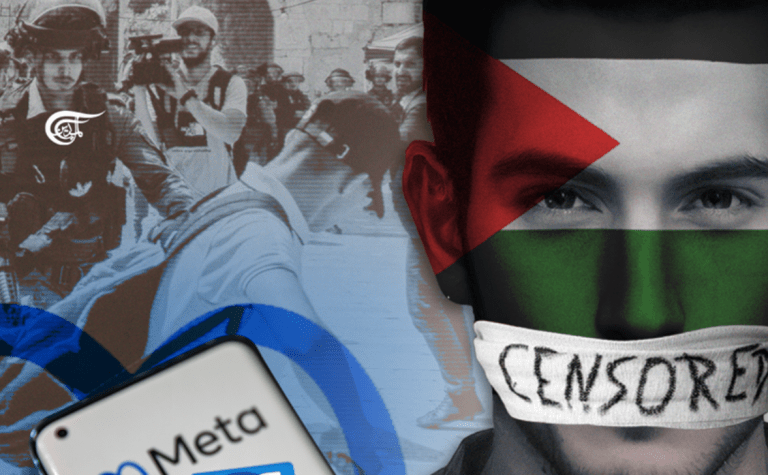
Israel is not the only entity trying to hide the realities of the war. As of this writing, Meta, the parent company of Facebook, has been considering adopting what amounts to censorship rules on the subjects of Israel and the war. While it has been gathering feedback on the move, there are doubts that Meta will change its mind.
There is a manufactured controversy on the use of the word, “Zionist.” Meta may have the intent to censor the word, along with other terminology that puts Israel in a bad light. Writing forThe Intercept, Sam Biddle quotes Dani Noble, who is part of Jewish Voice for Peace:
“As an anti-Zionist Jewish organization for Palestinian freedom, we are horrified to learn that Meta is considering expanding when they treat ‘Zionism’—a political ideology—as the same as ‘Jew/Jewish’—an ethno-religious identity.” Further, Noble said that such a policy shift “will result in shielding the Israeli government from accountability for its policies and actions that violate Palestinian human rights.”
Previously, the word Zionist was allowed as long as it was not associated with the words Jew and Jewish. Now, Meta moderators can be more stringent in deciding whether Zionist is allowed or if it is used to promote anti-Semitism. Thus, Meta has a long reach in deciding which comments are allowed when posting the “offending” word.
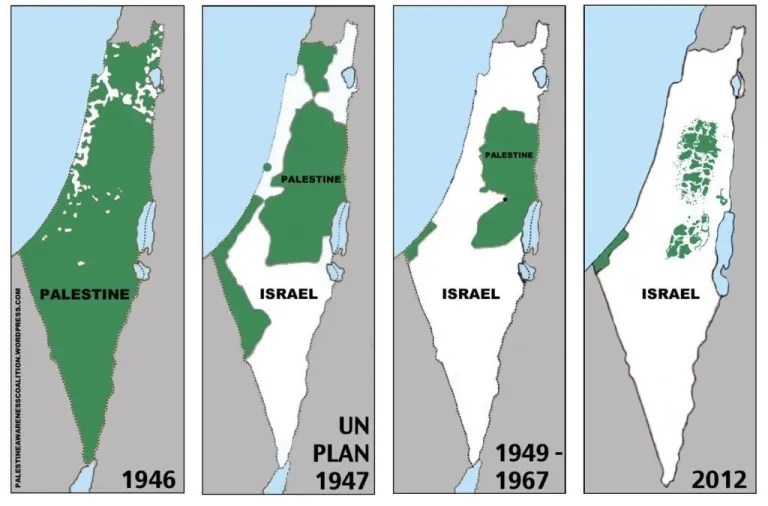
The moderating (or censoring) of the word Zionist is par for the course for hard-line Israel supporters. While there is an attempt to equate it with anti-Semitism, it really symbolizes a religious form of ultra-nationalism, as evidenced by the right-wing Israeli government’s use of it, along with the right-wing settlers as they attempt to steal more Palestinian land. And one of the objectives on the part of Israeli fascists is to take more land to establish a “Greater Israel.” Thus, the attempt by the IDF to drive Palestinians out of Gaza, and the West Bank.
But there is a major irony here. Biddle writes, “much of the fiercest political activism against Israel’s war in Gaza has been organized by anti-Zionist Jews, while American evangelical Christian Zionists are some of Israel’s most hardcore supporters.” So, there are Jews who are not only anti-Zionist, but side with the Palestinians.
Biddle provides examples of hypothetical posts in quotes that could be censored by Meta: “Zionists are war criminals, just look at what’s happening in Gaza.” “I don’t like Zionists.” “No Zionists allowed at tonight’s meeting of the Progressive Student Association.”
Meta spokesperson Corey Chambliss tried to justify the change in his company’s rules. Biddle quotes him as saying, “We don’t allow people to attack others based on their protected characteristics, such as their nationality or religion. Enforcing this policy requires an understanding of how people use language to reference those characteristics. While the term Zionist refers to a person’s ideology, which is not a protected characteristic, it can also be used to refer to Jewish or Israeli people.”
Chambliss goes on to imply that the new rules are necessary because of tensions relating to the Middle East. But he admitted that the word Zionist is an ideology, not a religion. Besides, tensions are high already, with Israel’s military aggression in Gaza. It seems like Meta is harping on the word while there are more important things to attend to, like opposing the war, and coming to grips with about 29,000 Palestinian deaths. (And, yes, the 1,200 Israeli deaths need attention even though 55% of those killed were members of the IDF.)
Meta did contact 10 Arab, Muslim and pro-Palestinian organizations about the use of the word Zionist and how it could be used in a “dehumanizing way or violent way” if referring to Jews or Israelis, according to Guardian writers Johana Bhuiyan and Kari Paul.
But Linda Sarsour, “the executive director of Muslim advocacy organization MPower Change, said Meta’s director of content policy stakeholder engagement, Peter Stern, provided few details about why the company was revisiting the policy now and how it would be implemented or enforced in a way that doesn’t stifle political expression.” Bhuiyan and Paul quoted Sarsour’s response: “If you already have a policy that’s addressing Zionism as a proxy, then why are we having this conversation? Why is there further consideration to expand this policy?”
Expanding the policy could censor those who post pro-Palestinian comments, as well as facts, in the guise of preventing anti-Semitism. Meta, however, has had a policy that allowed the word Zionist to be used as long there wasn’t an association with the words Jew and Jewish. As Sarsour asks, “Why is there further consideration to expand this policy?”
Censorship, threats, intimidation and even murder cannot stop the tidal wave of opposition worldwide to Israel’s war. In Israel itself, more people are speaking out and opposing the Netanyahu government. And events may lead to the downfall of the Israeli fascists.
Tyrants don’t like people who speak truth to power.
Cue the rise of protest laws, which take the government’s intolerance for free speech to a whole new level and send the resounding message that resistance is futile.
Weaponized by police, prosecutors, courts and legislatures, these protest laws, along with free speech zones, bubble zones, trespass zones, anti-bullying legislation, zero tolerance policies, hate crime laws, and a host of other legalistic maladies have become a convenient means by which to punish individuals who refuse to be muzzled.
In Florida, for instance, legislators passed a “no-go” zone law making it punishable by up to 60 days in jail to remain within 25 feet of working police and other first responders after a warning.
Yet while the growing numbers of protest laws cropping up across the country are sold to the public as necessary to protect private property, public roads or national security, they are a wolf in sheep’s clothing, a thinly disguised plot to discourage anyone from challenging government authority at the expense of our First Amendment rights.
It doesn’t matter what the source of that discontent might be (police brutality, election outcomes, COVID-19 mandates, the environment, etc.): protest laws, free speech zones, no-go zones, bubble zones, trespass zones, anti-bullying legislation, zero tolerance policies, hate crime laws, etc., aim to muzzle every last one of us.
No matter how you package these laws, no matter how well-meaning they may sound, no matter how much you may disagree with the protesters or sympathize with the objects of the protest, these proposed laws are aimed at one thing only: discouraging dissent.
This is the painful lesson being imparted with every incident in which someone gets arrested and charged with any of the growing number of contempt charges (ranging from resisting arrest and interference to disorderly conduct, obstruction, and failure to obey a police order) that get trotted out anytime a citizen voices discontent with the government or challenges or even questions the authority of the powers-that-be.
These assaults on free speech are nothing new.
As Human Rights Watch points out, “Various states have long-tried to curtail the right to protest. They do so by legislating wide definitions of what constitutes an ‘unlawful assembly’ or a ‘riot’ as well as increasing punishments. They also allow police to use catch-all public offenses, such as trespassing, obstructing traffic, or disrupting the peace, as a pretext for ordering dispersals, using force, and making arrests. Finally, they make it easier for corporations and others to bring lawsuits against protest organizers.”
Journalists have come under particular fire for exercising their right to freedom of the press.
According to U.S. Press Freedom Tracker, the criminalization of routine journalism has become a means by which the government chills lawful First Amendment activity.
Journalists have been arrested or faced dubious charges for “publishing,” asking too many questions of public officials, being “rude” for reporting during a press conference, and being in the vicinity of public protests and demonstrations.
It’s gotten so bad that merely daring to question, challenge or hesitate when a cop issues an order can get you charged with resisting arrest or disorderly conduct.
Philadelphia lawyer Rebecca Musarra was arrested for exercising her right to remain silent and refusing to answer questions posed by a police officer during a routine traffic stop. (Note: she cooperated in every other way by providing license and registration, etc.)
These incidents reflect a growing awareness about the state of free speech in America: you may have distinct, protected rights on paper, but dare to exercise those rights, and you risk fines, arrests, injuries and even death.
Unfortunately, we have been circling this particular drain hole for some time now.
More than 50 years ago, U.S. Supreme Court Justice William O. Douglas took issue with the idea that merely speaking to a government representative (a right enshrined in the First Amendment) could be perceived as unlawfully inconveniencing and annoying the police.
In a passionate defense of free speech, Douglas declared:
Since when have we Americans been expected to bow submissively to authority and speak with awe and reverence to those who represent us? The constitutional theory is that we the people are the sovereigns, the state and federal officials only our agents. We who have the final word can speak softly or angrily. We can seek to challenge and annoy, as we need not stay docile and quiet. The situation might have indicated that Colten’s techniques were ill-suited to the mission he was on, that diplomacy would have been more effective. But at the constitutional level speech need not be a sedative; it can be disruptive.
It’s a power-packed paragraph full of important truths that the powers-that-be would prefer we quickly forget: We the people are the sovereigns. We have the final word. We can speak softly or angrily. We can seek to challenge and annoy. We need not stay docile and quiet. Our speech can be disruptive. It can invite dispute. It can be provocative and challenging. We do not have to bow submissively to authority or speak with reverence to government officials.
In theory, Douglas was right: “we the people” do have a constitutional right to talk back to the government.
In practice, however, we live in an age in which “we the people” are at the mercy of militarized, weaponized, immunized cops who have almost absolute discretion to decide who is a threat, what constitutes resistance, and how harshly they can deal with the citizens they were appointed to “serve and protect.”
As such, those who seek to exercise their First Amendment rights during encounters with the police are increasingly finding that there is no such thing as freedom of speech.
Case in point: Tony Rupp, a lawyer in Buffalo, NY, found himself arrested and charged with violating the city’s noise ordinance after cursing at an SUV bearing down on pedestrians on a busy street at night with its lights off. Because that unmarked car was driven by a police officer, that’s all it took for Rupp to find himself subjected to malicious prosecution, First Amendment retaliation and wrongful arrest.
The case, as Jesse McKinley writes in The New York Times, is part of a growing debate over “how citizens can criticize public officials at a time of widespread reevaluation of the lengths and limits of free speech. That debate has raged everywhere from online forums and college campuses to protests over racial bias in law enforcement and the Israel-Hamas war. Book bans and other acts of government censorship have troubled some First Amendment experts. Last week, the Supreme Court heard arguments about a pair of laws — in Florida and Texas — limiting the ability of social media companies such as Facebook to ban certain content from their platforms.”
Bottom line: what the architects of the police state want are submissive, compliant, cooperative, obedient, meek citizens who don’t talk back, don’t challenge government authority, don’t speak out against government misconduct, and don’t resist.
What the First Amendment protects—and a healthy constitutional republic requires—are citizens who routinely exercise their right to speak truth to power.
Yet there can be no free speech for the citizenry when the government speaks in a language of force.
What is this language of force?
Militarized police. Riot squads. Camouflage gear. Black uniforms. Armored vehicles. Mass arrests. Pepper spray. Tear gas. Batons. Strip searches. Surveillance cameras. Kevlar vests. Drones. Lethal weapons.Less-than-lethal weapons unleashed with deadly force. Rubber bullets. Water cannons. Stun grenades. Arrests of journalists. Crowd control tactics. Intimidation tactics. Brutality. Contempt of cop charges.
This is not the language of freedom. This is not even the language of law and order.
Unfortunately, this is how the government at all levels—federal, state and local—now responds to those who choose to exercise their First Amendment right to speak freely.
If we no longer have the right to tell a Census Worker to get off our property, if we no longer have the right to tell a police officer to get a search warrant before they dare to walk through our door, if we no longer have the right to stand in front of the Supreme Court wearing a protest sign or approach an elected representative to share our views, if we no longer have the right to protest unjust laws by voicing our opinions in public or on our clothing or before a legislative body, then we do not have free speech.
What we have instead is regulated, controlled, censored speech, and that’s a whole other ballgame.
Remember, the unspoken freedom enshrined in the First Amendment is the right to challenge government agents, think freely and openly debate issues without being muzzled or treated like a criminal.
Americans are being brainwashed into believing that anyone who wears a government uniform—soldier, police officer, prison guard—must be obeyed without question.
Of course, the Constitution takes a far different position, but does anyone in the government even read, let alone abide by, the Constitution anymore?
The government does not want us to remember that we have rights, let alone attempting to exercise those rights peaceably and lawfully. And it definitely does not want us to engage in First Amendment activities that challenge the government’s power, reveal the government’s corruption, expose the government’s lies, and encourage the citizenry to push back against the government’s many injustices.
Yet by muzzling the citizenry, by removing the constitutional steam valves that allow people to speak their minds, air their grievances and contribute to a larger dialogue that hopefully results in a more just world, the government is creating a climate in which violence becomes inevitable.
When there is no First Amendment steam valve, then frustration builds, anger grows and people become more volatile and desperate to force a conversation.
As John F. Kennedy warned, “Those who make peaceful revolution impossible will make violent revolution inevitable.”
Looking back to what I wrote in 2012, in the midst of the so-called Arab Spring and its aftermath, it is striking just how much the Region has shifted. It is now almost 180° re-orientated. Then, I argued,
“That the Arab Spring “Awakening” is taking a turn, very different to the excitement and promise with which it was hailed at the outset. Sired from an initial, broad popular impulse, it is becoming increasingly understood, and feared, as a nascent counter-revolutionary “cultural revolution” – a re-culturation of the region in the direction of a prescriptive canon that is emptying out those early high expectations …
“That popular impulse associated with the ‘awakening’ has now been subsumed and absorbed into three major political projects associated with this push to reassert [Sunni primacy]: a Muslim Brotherhood project, a Saudi-Qatari-Salafist project, and a [radical jihadi] project.
“No one really knows the nature of the [first project] the Brotherhood project – whether it is that of a sect; or if it is truly mainstream … What is clear, however, is that the Brotherhood tone everywhere is increasingly one of militant sectarian grievance. The joint Saudi-Salafist project was conceived as a direct counter to the Brotherhood project – and [the third] was the uncompromising Sunni radicalism [Wahhabism], funded and armed by Saudi Arabia and Qatar, that aims, not to contain, but rather, to displace traditional Sunnism with the culture of Salafism. i.e. It sought the ‘Salifisation’ of traditional Sunni Islam.
“All these projects, whilst they may overlap in some parts, are in a fundamental way competitors with each other. And [were] being fired-up in Yemen, Iraq, Syria, Lebanon, Egypt, north Africa, the Sahel, Nigeria, and the horn of Africa.
[Not surprisingly] …“Iranians increasingly interpret Saudi Arabia’s mood as a hungering for war, and Gulf statements do often have that edge of hysteria and aggression: a recent editorial in the Saudi-owned al-Hayat stated: “The climate in the GCC [Gulf Cooperation Council] indicates that matters are heading towards a GCC-Iranian-Russian confrontation on Syrian soil, similar to what took place in Afghanistan during the Cold War. To be sure, the decision has been taken to overthrow the Syrian regime, seeing as it is vital to the regional influence and hegemony of the Islamic Republic of Iran”.
Well, that was then. How different the landscape is today: The Muslim Brotherhood largely is a ‘broken reed’, compared to what it was; Saudi Arabia has effectively ‘switched off the lights’ on Salafist jihadism, and is focussed more on courting tourism, and the Kingdom now has a peace accord with Iran (brokered by China).
“The cultural shift toward re-imagining a wider Sunni Muslim polity”, as I wrote in 2012, always was an American dream, dating back to Richard Perle’s ‘Clean Break’ Policy Paper of 1996 (a report that had been commissioned by Israel’s then-PM, Netanyahu). Its roots lay with the British post-war II policy of transplanting the stalwart family notables of the Ottoman era into the Gulf as an Anglophile ruling strata catering to western oil interests.
But look what has happened —
A mini revolution: Iran has, in the interim, ‘come in from the cold’ and is firmly anchored as ‘a regional power’. It is now the strategic partner to Russia and China. And Gulf States today are more preoccupied with ‘business’ and Tech than Islamic jurisprudence. Syria, targeted by the West, and an outcast in the region, has been welcomed back into the Arab League’s Arab sphere with high ceremony, and Syria is on its way to assuming again its former standing within the Middle East.
What is interesting is that even then, hints of the coming conflict between Israel and the Palestinians were apparent; as I wrote in 2012:
“Over recent years we have heard the Israelis emphasise their demand for recognition of a specifically Jewish nation-state, rather than for an Israeli State, per se. A Jewish state that in principle, would remain open to any Jew seeking to return: the creation of a ‘Jewish umma’, as it were.
“Now, it seems we have, in the western half of the Middle East, at least, a mirror trend, asking for the reinstatement of a wider Sunni nation – representing the ‘undoing’ of the last remnants of the colonial era. Will we see the struggle increasing epitomised as a primordial struggle between Jewish and Islamic religious symbols – between al-Aqsa and the Temple Mount?
“It seems that both Israel and its surrounding terrain are marching in step toward language which takes them far away from the underlying, largely secular concepts by which this conflict traditionally has been conceptualised. What will be the consequence as the conflict, by its own logic, becomes a clash of religious poles?”
What has driven this 180° turn? One factor, assuredly, was Russia’s limited intervention into Syria to prevent a jihadi sweep. The second has been China’s appearance on the scene as a truly gargantuan business partner – and putative mediator too – precisely at a time when the U.S. had begun its withdrawal from the region (at least in terms of the attention it pays to it, if not (yet) reflected in any substantive physical departure).
The latter – U.S. military withdrawal (Iraq and Syria) – however, seems more a question of ‘when’, rather than if. All expect it.
Put plainly, we have experienced a Mackinder-style ‘pivot of history’: Russia and China – and Iran – are slowly taking control of the Asian heartland (both institutionally and economically), as the pendulum of the West swings away.
The Sunni world – ineluctably and warily – marches towards the BRICS. Effectively, the Gulf finds itself badly wrong-footed by the so-called ‘Abraham Accords’ that tied them to Israeli Tech (which, in turn, was channelling considerable Wall Street venture ‘free money’ their way). Israel’s ‘suspect genocide’ (ICJ language) in Gaza is slowly driving a stake into the heart of the Gulf ‘business model’.
But another key factor has been the smart diplomacy pursued by Iran. It is easy for western Iran-hawks to decry Iran’s politicking and influencing across the region – the Islamic Republic is after all, unrepentantly ‘non-compliant’ with the U.S. aims and pro-Israeli ambitions in the Region. What else, other than pushback, might you expect when all the encircling western ‘fire’ was so concentrated on the Islamic Republic?
Yet, Iran has pursued an astute path. It has NOT gone to war against Sunni Arab states in Syria, as was mooted in 2012. Rather, it quietly has pursued a strategy of diplomacy and joint Gulf security and trade with Gulf States. Iran too, has partly succeeded in shaking itself free from much of the effects of western sanctions. It has joined both BRICS and the SCO and has acquired a new economic and political ‘spatial depth’.
Whether the U.S. and Europe likes it or not, Iran is a major regional political player, and it sits atop, with others, the coalition of Resistance Movements and Fronts that have been woven together through shrewd diplomacy to work in close conjunction with each other.
This development has become a key strategic ‘project’: Sunni (Hamas) and Shi’i (Hizbullah) are joined with other ‘fronts’ in an anti-colonial struggle for liberation under the non-sectarian symbol of Al-Aqsa (which is neither Sunni, nor Shi’a, nor Muslim Brotherhood, nor Salafist or Wahhabi). It represents, rather, the storied tale of Islamic civilisation. Yes, it is, in its way, eschatological too.
This latter achievement has done much to limit the threat of all-out war from engulfing the region (fingers-crossed though …). The Iranian and Resistance Axis’ interest is twofold: First, to retain power to carefully calibrate the intensity of conflict – upping and lowering as appropriate; and secondly, to keep escalatory dominance as much as possible in their hands.
The second aspect encompasses strategic patience. The Resistance Movements well understand the Israeli psyche – therefore, NO Pavlovian reflexes to Israeli provocations are accepted. But rather, to wait and rely on Israel to provide the pretext to any further step up the escalatory ladder. Israel must be seen to be the instigator for escalation – and the resistance merely the responder. The ‘eye’ must be on the Washington political psyche.
Thirdly, Iran draws confidence to pursue its ‘forwardness’ by having innovated a tectonic shift in asymmetric warfare, and in deterrence against Israel and the West. The U.S. might huff and puff, but Iran felt assured throughout this period that the U.S. well knows the risks associated with trying ‘blow the house down’.
Realists in the West tend to believe that ‘power’ is a simple function of national population size and GDP. So that, given the disparity in air and firepower, no way, as an example, can Hizbullah expect to ‘come out quits’ against Israel – a much richer and more populated entity.
This blindspot is the Resistance’s silent ‘ally’. It prevents the West (mostly) from understanding this pivot in military thinking.
Iran and its allies take a different view: They regard a state’s power to rest on intangibles, rather than literal tangibles: strategic patience; ideology; discipline; innovation and the concept of military leadership defined as the ability to cast a ‘magic’ spell over men so that they would follow their commander, even unto death.
The West has (or had) airpower and unchallenged air superiority, but the Resistance Fronts have their two-stage solution. They manufacture their own AI-assisted swarm drones and smart earth-hugging missiles. This is their Air Force.
The second stage naturally would be to evolve a layered air defence system (Russian-style). Does the Resistance possess such? Like Brer Rabbit, they stay mum.
The Resistance’s underlying strategy is clear: the West is over-invested in its air dominance and in its overwhelming fire-power. It prioritises quick shock and awe thrusts, but usually quickly exhausts itself early in the encounter. They rarely can sustain such high-intensity assault for long.
In Lebanon in 2006, Hizbullah remained deep underground whilst the Israeli air assault swept overhead. The physical surface damage was huge, yet their forces were unaffected and emerged only afterwards. Then came the 33 days of Hizbullah’s missile barrage – until Israel called it quits. This patience represents the first pillar of strategy.
The second therefore, is that whereas the West has short endurance, the opposition is trained and prepared for long attritional conflict – missile and rocket barrage to the point that civil society can sustain the impact no longer. War’s aim not necessarily has killing the enemy soldiers as a prime objective; rather it is exhaustion and inculcating a sense of defeat.
And what of the opposing project?
In 2012, I wrote:
“It seems that both Israel and [the Islamic world] are marching in step toward [eschatological narratives] which is taking them far away from the underlying, largely secular concepts by which this conflict traditionally has been conceptualised. What will be the consequence as the conflict, by its own logic, becomes a clash of religious poles? ” [– Al-Aqsa versus the Temple Mount].
Well, the West remains stuck with trying to manage and contain the conflict, using precisely those ‘largely secular concepts’ by which this conflict has been conceptualised and managed (or non-managed, I would say). In so doing, and through the West’s (secular) support for one particular eschatological vision (which happens to overlap with its own) over another, it inadvertently fuels the conflict.
Too late to return to secular modes of management; the genie is out.
The sole remaining reservoirs of trust in American life are personal networks, local enterprises and local institutions.
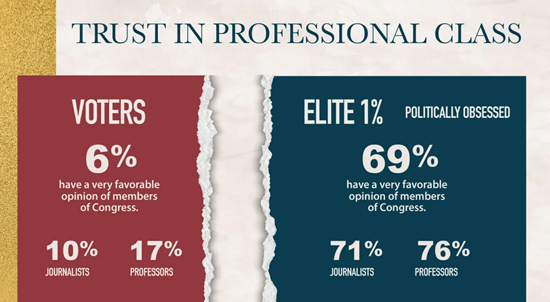
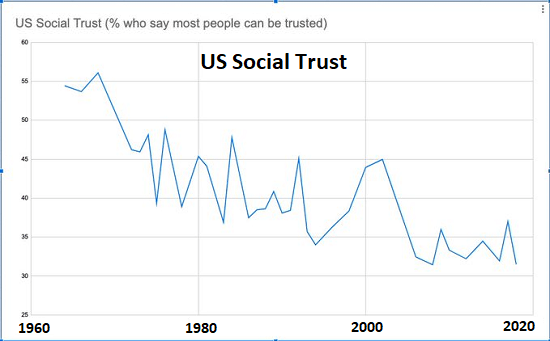
It’s not exactly news that social trust has declined significantly in the United States. Surveys find that public trust in institutions and the professional classes that dominate those institutions has cratered. (see chart below) Social trust–our confidence that other people are trustworthy–has also fallen to multi-decade lows.
This was not the case in decades past. Americans maintained high levels of trust in their institutions, government and fellow citizens. The decline in social trust is across the entire spectrum: our trust in institutions, professional elites and our fellow Americans has declined precipitously.
The causes of this decay of social trust can be debated endlessly, but several factors are obvious:
1. Institutions forfeited the trust of the citizenry by withholding / editing realities to serve the interests of hidden agendas and insiders’ careers. The Vietnam War was pursued on fabrications, as was the second Gulf War to topple Saddam. Watergate eroded trust on multiple levels, as did the Church Committee’s investigation of America’s security agencies’ domestic spying / over-reach.
2. The managerial / professional elites at the top of the nation’s institutions no longer put the citizenry’s interests above their own. The public’s trust has eroded as institutions are primarily viewed as vehicles for self-enrichment and career advancement: healthcare CEOs pay themselves millions, higher education is bloated with layers of non-teaching administration, defense contractors and the Pentagon have greased the revolving door to the benefit of incumbents and insiders, and so on, in an endless parade of self-serving cloaked with smirking PR claims of “serving the public.”
The shift from a high-trust society to a low-trust society is consequential economically, politically and socially. Low-trust societies have stagnant economies, as nobody trusts anyone they don’t know personally or through personally trusted networks, and nobody trust institutions to function effectively or fulfill their stated mission to serve the public good.
Faced with incompetent, unaccountable, corrupt bureaucracies and a culture overflowing with scams, frauds, imposters and get-rich-quick schemes, people give up and drop out. Rather than start a business and accept all the risks just to get dumped on or ripped off, they don’t even try to start a business. Given the financial insecurity that is now the norm, they decide not to get married or have children.
The vast trading networks of the Roman Empire were based on personal trusted networks and trust in Rome’s functionaries / institutions. The owners of trading ships dealt with trusted captains and merchants, who then paid duties to Roman functionaries in Alexandria and other major trading ports.
In other words, tightly bound personal trusted networks work well as long as the state institutions that bind the entire economy are trusted as fair and reliable–not perfect, of course, but efficient and “good enough.”
But when public institutions are viewed as unfair, unreliable, corrupt or incompetent, the entire economy decays. Even personal trusted networks cannot survive in an economy of unfair, unreliable, corrupt or incompetent state bureaucracies and private institutions.
The American economy is now dominated by enormous privately owned and managed monopolies and cartels that are the private-sector equivalent of self-serving state bureaucracies. Big Tech, Big Pharma, Big Healthcare, Big Ag, Big Finance, etc., are even worse than state bureaucracies because there are no legal requirements for transparency or recourse. Try getting a response from a Big Tech corporation when you’ve been shadow-banned or sent to Digital Siberia.
The sole remaining reservoirs of trust in American life are personal networks, local enterprises and local institutions. These are not guaranteed, of course; in many locales, even these reservoirs have been drained. But in other locales, enterprises and institutions such as the county water utility, the local newspaper, the local community college, etc. continue to earn the trust of the public by performing the services they exist to provide effectively and at a reasonable cost.
The larger the institution and the greater its wealth and power, the lower the social trust–for good reasons. The greater the influence of the managerial elites, the greater the disconnect from the everyday experiences of the citizenry and customers, and the more extreme the self-serving PR.
Sure, I trust Big Tech, Big Pharma, Big Healthcare, Big Finance–to rip me off, profiteer, send me obfuscating bills, jack up junk fees, make it impossible to contact them, and send me to Digital Siberia if I complain.
The divide between the elites and the commoners should prompt us to examine the low-trust path we’re sliding down:
In a society in which everything is phony, low quality or fraudulent, you’re taking a chance trusting anyone you don’t know personally–and even that can be risky now that self-aggrandizing flim-flam is the last remaining path to financial security for non-elites.
A low-trust society is an impoverished society, economically stagnant and socially threadbare. That’s where we are now, and the more fragmented, greedy, self-serving, desperate and deranged we become, the lower the odds that we’ll find the means to rebuild trust.
Sadly, we already know that anyone claiming to “rebuild trust” is spouting PR designed to mask self-enrichment. We also know that the vast army of well-paid flacks, factotums, enforcers, happy-story apologists, lackeys, toadies and sell-out minions are declaring “everything’s great!”
Just mumble, “Uh, sure” and continue to Tune in (to degrowth), drop out (of hyper-consumerism and debt-serfdom) and turn on (to self-reliance and relocalizing capital and agency).
When exposing a crime is treated as committing a crime, you are being ruled by criminals.
In the current governmental climate, obeying one’s conscience and speaking truth to the power of the police state can easily render you an “enemy of the state.”
The government’s list of so-called “enemies of the state” is growing by the day.
Wikileaks founder Julian Assange is merely one of the most visible victims of the police state’s war on dissidents and whistleblowers.
Five years ago, on April 11, 2019, police arrested Assange for daring to access and disclose military documents that portray the U.S. government and its endless wars abroad as reckless, irresponsible, immoral and responsible for thousands of civilian deaths.
Included among the leaked materials was gunsight video footage from two U.S. AH-64 Apache helicopters engaged in a series of air-to-ground attacks while American air crew laughed at some of the casualties. Among the casualties were two Reuters correspondents who were gunned down after their cameras were mistaken for weapons and a driver who stopped to help one of the journalists. The driver’s two children, who happened to be in the van at the time it was fired upon by U.S. forces, suffered serious injuries.
There is nothing defensible about crimes such as these perpetrated by the government.
When any government becomes almost indistinguishable from the evil it claims to be fighting—whether that evil takes the form of war, terrorism, torture, drug trafficking, sex trafficking, murder, violence, theft, pornography, scientific experimentations or some other diabolical means of inflicting pain, suffering and servitude on humanity—that government has lost its claim to legitimacy.
These are hard words, but hard times require straight-talking.
It is easy to remain silent in the face of evil.
What is harder—what we lack today and so desperately need—are those with moral courage who will risk their freedoms and lives in order to speak out against evil in its many forms.
Throughout history, individuals or groups of individuals have risen up to challenge the injustices of their age. Nazi Germany had its Dietrich Bonhoeffer. The gulags of the Soviet Union were challenged by Aleksandr Solzhenitsyn. America had its color-coded system of racial segregation and warmongering called out for what it was, blatant discrimination and profiteering, by Martin Luther King Jr.
And then there was Jesus Christ, an itinerant preacher and revolutionary activist, who not only died challenging the police state of his day—namely, the Roman Empire—but provided a blueprint for civil disobedience that would be followed by those, religious and otherwise, who came after him.
Indeed, it is fitting that we remember that Jesus Christ—the religious figure worshipped by Christians for his death on the cross and subsequent resurrection—paid the ultimate price for speaking out against the police state of his day.
A radical nonconformist who challenged authority at every turn, Jesus was a far cry from the watered-down, corporatized, simplified, gentrified, sissified vision of a meek creature holding a lamb that most modern churches peddle. In fact, he spent his adult life speaking truth to power, challenging the status quo of his day, and pushing back against the abuses of the Roman Empire.
Much like the American Empire today, the Roman Empire of Jesus’ day had all of the characteristics of a police state: secrecy, surveillance, a widespread police presence, a citizenry treated like suspects with little recourse against the police state, perpetual wars, a military empire, martial law, and political retribution against those who dared to challenge the power of the state.
For all the accolades poured out upon Jesus, little is said about the harsh realities of the police state in which he lived and its similarities to modern-day America, and yet they are striking.
Secrecy, surveillance and rule by the elite. As the chasm between the wealthy and poor grew wider in the Roman Empire, the ruling class and the wealthy class became synonymous, while the lower classes, increasingly deprived of their political freedoms, grew disinterested in the government and easily distracted by “bread and circuses.” Much like America today, with its lack of government transparency, overt domestic surveillance, and rule by the rich, the inner workings of the Roman Empire were shrouded in secrecy, while its leaders were constantly on the watch for any potential threats to its power. The resulting state-wide surveillance was primarily carried out by the military, which acted as investigators, enforcers, torturers, policemen, executioners and jailers. Today that role is fulfilled by the NSA, the FBI, the Department of Homeland Security and the increasingly militarized police forces across the country.
Widespread police presence. The Roman Empire used its military forces to maintain the “peace,” thereby establishing a police state that reached into all aspects of a citizen’s life. In this way, these military officers, used to address a broad range of routine problems and conflicts, enforced the will of the state. Today SWAT teams, comprised of local police and federal agents, are employed to carry out routine search warrants for minor crimes such as marijuana possession and credit card fraud.
Citizenry with little recourse against the police state. As the Roman Empire expanded, personal freedom and independence nearly vanished, as did any real sense of local governance and national consciousness. Similarly, in America today, citizens largely feel powerless, voiceless and unrepresented in the face of a power-hungry federal government. As states and localities are brought under direct control by federal agencies and regulations, a sense of learned helplessness grips the nation.
Martial law. Eventually, Rome established a permanent military dictatorship that left the citizens at the mercy of an unreachable and oppressive totalitarian regime. In the absence of resources to establish civic police forces, the Romans relied increasingly on the military to intervene in all matters of conflict or upheaval in provinces, from small-scale scuffles to large-scale revolts. Not unlike police forces today, with their martial law training drills on American soil, militarized weapons and “shoot first, ask questions later” mindset, the Roman soldier had “the exercise of lethal force at his fingertips” with the potential of wreaking havoc on normal citizens’ lives.
Acts of civil disobedience by insurrectionists. Much like the Roman Empire, the American Empire has exhibited zero tolerance for dissidents such as Julian Assange, Edward Snowden and Chelsea Manning who exposed the police state’s seedy underbelly. Jesus was also branded a political revolutionary starting with his attack on the money chargers and traders at the Jewish temple, an act of civil disobedience at the site of the administrative headquarters of the Sanhedrin, the supreme Jewish council.
Military-style arrests in the dead of night. Jesus’ arrest account testifies to the fact that the Romans perceived Him as a revolutionary. Eerily similar to today’s SWAT team raids, Jesus was arrested in the middle of the night, in secret, by a large, heavily armed fleet of soldiers. Rather than merely asking for Jesus when they came to arrest him, his pursuers collaborated beforehand with Judas. Acting as a government informant, Judas concocted a kiss as a secret identification marker, hinting that a level of deception and trickery must be used to obtain this seemingly “dangerous revolutionist’s” cooperation.
Torture and capital punishment. In Jesus’ day, religious preachers, self-proclaimed prophets and nonviolent protesters were not summarily arrested and executed. Indeed, the high priests and Roman governors normally allowed a protest, particularly a small-scale one, to run its course. However, government authorities were quick to dispose of leaders and movements that appeared to threaten the Roman Empire. The charges leveled against Jesus—that he was a threat to the stability of the nation, opposed paying Roman taxes and claimed to be the rightful King—were purely political, not religious. To the Romans, any one of these charges was enough to merit death by crucifixion, which was usually reserved for slaves, non-Romans, radicals, revolutionaries and the worst criminals.
Jesus was presented to Pontius Pilate “as a disturber of the political peace,” a leader of a rebellion, a political threat, and most gravely—a claimant to kingship, a “king of the revolutionary type.” After Jesus is formally condemned by Pilate, he is sentenced to death by crucifixion, “the Roman means of executing criminals convicted of high treason.” The purpose of crucifixion was not so much to kill the criminal, as it was an immensely public statement intended to visually warn all those who would challenge the power of the Roman Empire. Hence, it was reserved solely for the most extreme political crimes: treason, rebellion, sedition, and banditry. After being ruthlessly whipped and mocked, Jesus was nailed to a cross.
Jesus—the revolutionary, the political dissident, and the nonviolent activist—lived and died in a police state. Any reflection on Jesus’ life and death within a police state must take into account several factors: Jesus spoke out strongly against such things as empires, controlling people, state violence and power politics. Jesus challenged the political and religious belief systems of his day. And worldly powers feared Jesus, not because he challenged them for control of thrones or government but because he undercut their claims of supremacy, and he dared to speak truth to power in a time when doing so could—and often did—cost a person his life.
Unfortunately, the radical Jesus, the political dissident who took aim at injustice and oppression, has been largely forgotten today, replaced by a congenial, smiling Jesus trotted out for religious holidays but otherwise rendered mute when it comes to matters of war, power and politics.
Yet for those who truly study the life and teachings of Jesus, the resounding theme is one of outright resistance to war, materialism and empire.
What a marked contrast to the advice being given to Americans by church leaders to “submit to your leaders and those in authority,” which in the American police state translates to complying, conforming, submitting, obeying orders, deferring to authority and generally doing whatever a government official tells you to do.
Will we follow the path of least resistance—turning a blind eye to the evils of our age and marching in lockstep with the police state—or will we be transformed nonconformists “dedicated to justice, peace, and brotherhood”?
As Martin Luther King Jr. reminds us in a powerful sermon delivered 70 years ago, “This command not to conform comes … [from] Jesus Christ, the world’s most dedicated nonconformist, whose ethical nonconformity still challenges the conscience of mankind.”
Ultimately, as I make clear in my book Battlefield America: The War on the American People and in its fictional counterpart The Erik Blair Diaries, this is the contradiction that must be resolved if the radical Jesus—the one who stood up to the Roman Empire and was crucified as a warning to others not to challenge the powers-that-be—is to be an example for our modern age.
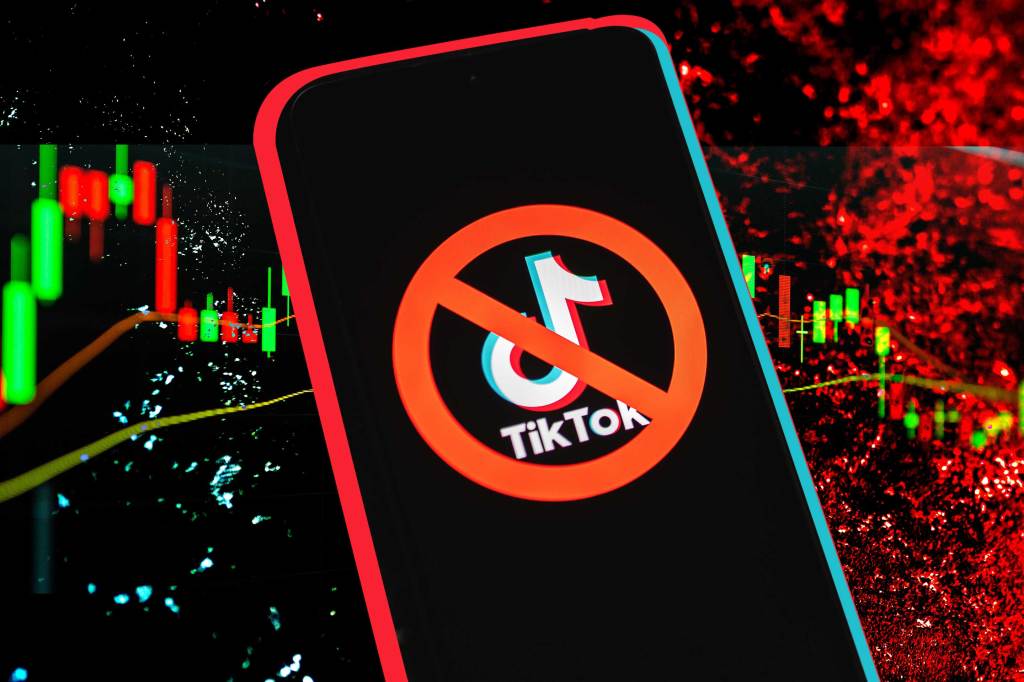
The US government claims that TikTok is a national security threat because China can collect data on its users for “intelligence gathering.” Give me a break! The House of Representatives passed a bill to ban TikTok unless Byte Dance, the Chinese parent company “divests” from the app within six months or so, in other words, they are forcing Byte Dance to sell TikTok within a certain time period in order for it to operate in the US. Former Treasury Secretary, Steven Mnuchin said on CNBC’s “Squawk Box” that he is putting together an investor group to supposedly buy TikTok.
The reality is that they are not going after TikTok because of China’s “intelligence gathering” on US citizens, it is because Western governments, Israel and their mainstream media networks are being exposed for their lies and propaganda more than ever before by various alternative media websites, blogs, social media, and video-sharing platforms such as TikTok.
China’s “Intelligence Gathering” vs. Israel’s War Crimes
It is most likely that the US congress is scapegoating China mainly to protect Israel’s reputation in the last bastion of its supporters in the United States were there are more than 170 million TikTok users. In one way or another Israel’s war crimes in Gaza and beyond has been exposed on TikTok and it does not look good for the self-described “Jewish State.”
Last January, the US-based TIME magazine reported on the reality of how the world views Israel and its actions in the Middle East, “New data shared with TIME magazine business intelligence company Morning Consult shows that support for Israel around the world has dropped significantly since the war in Gaza began.” Morning Consult found that Israel’s standing in world opinion has dropped dramatically, “Net favorability—the percentage of people viewing Israel positively after subtracting the percentage viewing it negatively—dropped globally by an average of 18.5 percentage points between September and December, decreasing in 42 out of the 43 countries polled.”
From China to South Korea, even in the UK and several countries in Latin America all had a somewhat positive view of Israel, but when the war on Gaza began, opinion polls on Israel’s favorability status collapsed:
China, South Africa, Brazil, and several other countries in Latin America all went from viewing Israel positively to negatively. And many rich countries that already had net negative views of Israel—including Japan, South Korea, and the U.K.—saw steep declines. Net favorability in Japan went from -39.9 to -62.0; in South Korea from-5.5 to -47.8; and in the U.K. from -17.1 to -29.8
Sonnet Frisbie, the deputy head of political intelligence at Morning Consult said that “the data shows just how tough of a road Israel has right now in the international community.” Of course, the US population still holds a favorable opinion of Israel, “The U.S. remains the only rich country that still had net positive views of Israel. Net favorability dropped just 2.2 percentage points, from a net favorability of 18.2 to a net favorability of 16 from September to December” the report said.
Al Jazeera, ‘Israel has lost the war of public opinion,’ by Imam Omar Suleiman published last year said that “In a new media landscape dominated not by Western media giants but by Instagram reels, TikTok videos and YouTube shorts, Israel’s ongoing war on the besieged Gaza Strip is more than televised.”
Israel’s crimes have been exposed due to the internet including alternative media networks and various social media platforms since the Zionist controlled mainstream media failed to do its job which should not be a surprise to anyone.
Platforms such as TikTok has more than 170 million users in the US which is a concern for both the US and Israeli governments who propagandize the US population on a daily basis on the situation of Palestine through their control of the mainstream media and Hollywood:
Audiences across the world, and especially young people, have been watching the devastation caused by Israel’s indiscriminate bombardment of the Palestinian enclave on their preferred social media platforms, in real-time, for over a month. Anyone with internet access has seen countless videos of babies torn apart by bombs, women crushed under tonnes of concrete and mothers cradling the dead bodies of their children
Suleiman said that “Israel, of course, still continues with its usual efforts – and more – to control the narrative about its bloody wars and decades-old occupation.” He pinpoints how Israel is losing the information war:
Yet, despite all these efforts, thanks largely to social media, Israel is no longer able to conceal the truth about its conduct in Palestine. It can no longer control the narratives and the public opinion on Palestine. As mainstream media loses its ability to single-handedly decide what Western and, to a certain extent, global audiences get to witness about the situation in Palestine, the brutality of Israel’s occupation has been laid out in the open for everyone to see
The Times of Israel published an article based on Israel’s obvious concerns regarding TikTok, ‘Major US Jewish group backs bipartisan bill that could see TikTok banned’ said that “One of the most prominent Jewish groups in the country has thrown its support behind a fast-advancing bill that could lead to the massively popular video app TikTok being banned in the United States.”
The world knows that both Democrats and Republicans in the US Capital are in the pockets of Jewish lobbying groups are moving forward in efforts to ban TikTok because its a “Chinese owned app” and it is collecting data on American citizens.
In my opinion, why would China spy on US citizens since most people in the US are in debt or are too busy watching reality TV, celebrity news or sports, in fact, many could not even find China or any other Asian country on a map. It’s a harsh statement, but it’s a fact. Besides there are companies(some are based in the US including Amazon) who have been selling your data for some time now. It’s no secret.
The article states that “Politicians backing the bill, who include leaders from both parties, have centered their criticism of TikTok on national security concerns related to the app’s Chinese ownership and data collection practices.” Representative Cathy McMorris Rodgers, a Republican from Washington said that “It is very important that it is targeted and specific to the national security threat” and that “This is not related to content. This is about the threat because of the data that has been collected.” So, the ban on TikTok is not related to the content? That’s pure nonsense. The Times of Israel at least stated the facts on why the US and Israel is really interested in banning the platform:
Jewish Federations of North America, representing hundreds of organized Jewish communities, said its support for the bill is rooted in concerns about antisemitism on the platform. The Jewish Federations and the Anti-Defamation League have accused TikTok of allowing antisemitism and anti-Israel sentiment to run rampant
The Jewish Federations of North America (JFNA) wrote a letter to the US Congress claiming that “The single most important issue to our Jewish communities today is the dramatic rise in antisemitism” and that “Our community understands that social media is a major driver of the drive-in antisemitism and that TikTok is the worst offender by far.”
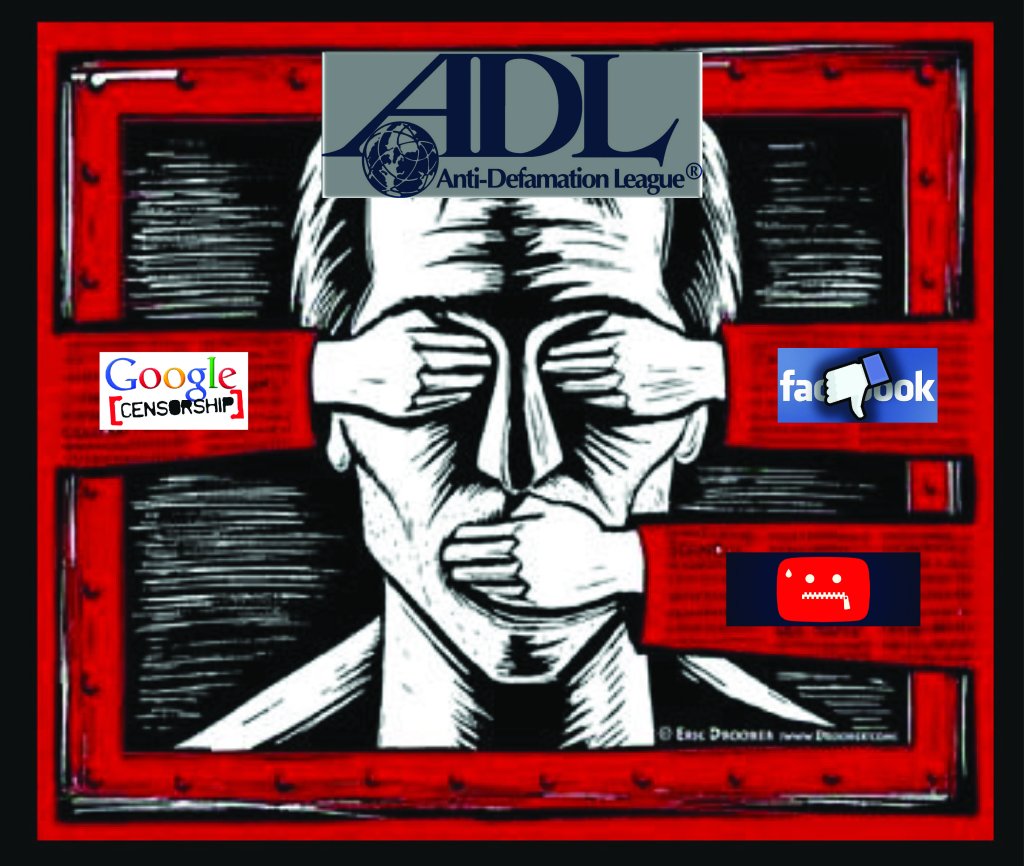
Banning TikTok is about censorship. It is a fact that Israel’s war crimes and the destructive nature of the US war machine is getting exposed more than ever before. US lawmakers are giving Byte Dance which is managed by Shou Zi Chew, a Singaporean citizen, about six months to divest US assets from the app, or they will face a ban. If the ban of TikTok moves forward, then free speech in the US is completely dead. But that does not mean all social media platforms or even websites will be in danger for the foreseeable future because there will be other apps and platforms that the US, EU, and Israeli political establishment won’t be able to control.
Banning TikTok will Only Motivate Us to Create Other Platforms
Social Media platforms such as YouTube, Facebook, and Twitter (although owned by Elon Musk) have been completely hijacked by the government censorship regime. The Western political establishment, Globalist bankers, Zionists, Multi-national corporations such as Big Oil and Big Pharma and others around the world are facing an information war that they are clearly losing.
The internet has given us the tools to fight the mainstream media and their lies. Several social media platforms have grown to be a vital tool to challenge government and corporate propaganda such as TikTok, but there are also other various types of online-video platforms such as Rumble, Bit Chute, Odysee(part of LBRY, a blockchain based file-sharing and payment network) and we must include instant messaging services such as Telegram and VKwhere you can post articles and videos as well.
The point here is that regardless of how certain governments such as the US and the European Union who have banned foreign media companies such as Russia’s RT News and Iran’s Press TV, they also have plans to ban social media platforms, but it won’t work.
They believe that banning TikTok will prevent people from getting the truth especially to what is happening in Palestine, but they are wrong, it will only help motivate people to create new platforms and other ideas, they will create new channels of information that would get out to the public. Whether they ban TikTok or not, the genie is out of the bottle, the truth can never be suppressed.



 After the Crash