The Pandemic Is Accelerating Trends That Are Disrupting the Foundations of the Economy

By Charles Hugh Smith

Source: Of Two Minds

The problem is the economy that’s left has no means of creating tens of millions of jobs to replace those lost as the 1959 economic model collapses.

Fundamentally, the economy of 2019 was not very different from the economy of 1959: people went shopping at retail stores, were educated at sprawling college campuses, went to work downtown, drove to the doctor’s office or hospital, caught a flight at the airport, and so on.

The daily routine of the vast majority of the workforce was no different from 1959. In 2019, the commutes were longer, white-collar workers stared at screens rather than typewriters, factory workers tended robots and so on, but the fundamentals of everyday life and the nature of work were pretty much the same.

Beneath the surface, the fundamental change in the economy was financialization, the commodification of everything into a financial asset or income stream that could then be leveraged, bundled and sold globally at an immense profit by Wall Street financiers.

This layer of speculative asset-income mining had no relation to the actual work being done; it existed in its own derealized realm.

For decades, these two realmsthe structure of everyday life (to borrow Braudel’s apt term) and the abstract, derealized but oh so profitable realm of financialization–co-existed in an uneasy state of loosely bound systems.

If you squinted hard enough and repeated the mantras often enough, you could persuade yourself there was still some connection between the everyday-life economy and the realm of financialization.

The two realms have now disconnected, and the real-world economy has been ripped from its moorings, as patterns of work and every-day life that stretch back 70 years to the emergence of the postwar era unravel and dissolve.

The trends that are currently fatally disrupting retail, education, office work and healthcare have been in place for years. When I wrote my 2013 book about the digitized future of higher education in a low-cost union of high-touch and low-touch learning, The Nearly Free University, all these trends were already clearly visible to those willing to look beyond the models embedded in the economy for decades or even centuries.

Visionaries like Peter Drucker foresaw the complete disruption of the education and healthcare sectors as far back as 1994. Post-Capitalist Society.

The problem with this disruption is it eliminates tens of millions of jobs–not just the low-paying jobs in retail and dining-out, but high-paying jobs in university administration, healthcare, and other core service sectors.

The last real-world connection between everyday life and financialization was the over-supply of everything that could be financialized: the way to reap the big profits was expand whatever could be leveraged and sold. So retail and commercial space ballooned, colleges proliferated, cafes sprang up on every corner, etc.

Meanwhile, financialization’s unquenchable thirst for higher profits stripped everything of the redundancy and buffers required to stabilize the system in times of crisis. So hospitals no longer kept inventory because by the logic of financialization, all that mattered was maximizing the return on capital–nothing else could possibly matter in the derealized realm of speculative profiteering.

Now healthcare finds itself trapped between the pincers of financialization’s stripmining and the collapse of retail in-person demand–the financial foundation of the entire system. Under the relentless pressure of financialization’s stripmining and profteering, healthcare only survives if it can bill somebody somewhere a staggering amount for everything from office visits to procedures to hospital stays to medications.

Once that avalanche of billing dries up, the entire sector implodes: a sector that accounts for almost 20% of the U.S. economy.

Higher education is also imploding, and for the same reason: its output no longer justified its enormous cost structure. The same can be said of overbuilt retail and commercial space: the financial justification for sky-high rents have imploded and will never come back. The over-supply is so monumental and the collapse of demand so permanent, the gigantic pyramid of debt and speculative excess piled on all these excesses is collapsing.

A bailout by the Federal Reserve won’t change the fundamentals of the collapse of financialization; all the Fed can do is reserve scarce lifeboat seats for its billionaire banker-financier pals. (Warren, you know Bill, have you met Jamie, Jeff, Tim and the rest of the Zillionaire Rat-Pack?)

Despite the record highs in the stock market–the ultimate expression of financialization disconnected from the real-world economy–financialization is also imploding. Financialization still claimed a connection to the real world of income streams and the value of the collateral underlying all the speculative profiteering: the high rents paid by the restaurants on the ground floor and the businesses for office space above justified the high value of the collateral, the commercial building.

Foundational swaths of the real-world economy have been swept away, and so the collateral is largely worthless. Lots of people want their employer to start paying for business-class airline seats again so they can jet around the country on somebody else’s dime, staying in pricey hotels and attending conferences, but these activities no longer have any financial justification.

The economy of 1959 is finally expiring. The enormous time and money sinks of transporting humans hither and yon no longer have any financial justification.

The problem is the economy that’s left has no means of creating tens of millions of jobs to replace those lost as the 1959 economic model collapses. We all know that automation is replacing human labor, but the real change is the collapse of the financial justification for the enormously costly systems we now depend on to generate jobs: healthcare, retail, tourism, dining out, education, working downtown, and all the professions dependent on managing all this complexity.

While the elimination of low-skill jobs–a longstanding trend–is attracting attention, the implosion of the 1959 economic model and financialization will soon sweep away millions of high-paying professional jobs that no longer have any financial justification.

As the 1959 economy implodes, so does the tax system based on payroll taxes and property taxes. This article sketches out the perverse incentives for employers to invest in automation rather than hire workers: Covid-19 Is Dividing the American Worker (WSJ.com)

There are alternatives, but they require accepting the implosion of both the 1959 economic model and its evil offspring, financialization.

I sketched out an alternative way of organizing work, everyday life and finance in my book A Radically Beneficial World. There are alternative ways of organizing civilization other than the insanely wasteful and exploitive system we now inhabit.

The Fatal Attraction of Techo-Fascism

Art work source: audioxide.com

By Mark Petrakis

Source: Off-Guardian

Those who are serious in ridiculous matters will be ridiculous in serious matters.”
Cato the Elder

The enduring beauty of fascism is that it requires so little from us… so little independent thought; just our basic belief and adherence to a limited set of popularly-shared directives and narratives that once fully accepted, relieve us of the need to address stubborn questions or to fret over subtle differences of opinion and feeling.

Propaganda reassures us that we are complete, that we know all there is to know, that we are rational, pragmatic and pure, that the science has been settled and that we are a part of something special.

Such a surrender to reductionist narratives cuts across all classes and income brackets. Neither the most educated nor the least uneducated retain any special advantage in the face of powerful consensus-shaping propaganda.

PROPAGANDA is, of course, the life-blood of fascist control. Maintaining the economic, governmental and scientific frameworks of a technocratic-fascist “operating system” is unthinkable without propaganda and disinformation. When truth is seen as a liability to power, it must always be disallowed, and all instances of it effectively penalized.

Radio and television and their constant enabler, popular “science” – operate today as their own religions, reliant for their success upon the devotion of the masses. As McLuhan told us, the experience of electronic media is always more powerful than the specific messaging it contains.

The currency that we use to pay for the electronic spectacle is our attention, and in such hyper-mediated times as these, the charges mount up exponentially, until we find ourselves saddled with soul-crushing denial and disconnection.

Three defining historical moments (among many) have defined the confluence of fascism, propaganda and technology.

  1. The fundamental principles of propaganda were first defined 100 years ago by Edward Bernays, often referred to as the father of public relations.
  2. Joseph Goebbels served as Reich Minister of Propaganda of Nazi Germany from 1933 to 1945. The stunning successful lessons of his Nazi propaganda programs were not lost on the world’s political and economic leaders in the post-war era, and in the time since then.
  3. The Central Intelligence Agency (CIA) was founded in 1947, for the expressed purpose of conducting secret intelligence operations that could serve political aims at the same time they generated huge and untraceable profits. The extent of the CIA’s illegal enterprises necessitated the creation and maintenance of a permanent ministry of disinformation, managed by our own taxpayer-funded “Shadow Government” and “Deep State.”

In retrospect then, it is clear that these propaganda campaigns have proven SO successful, that even today, few of us ever realize how ongoing, vast and wide-spread they are.

Propaganda’s efficacy is so indisputable, that it is commonly the case that those who are the most certain that they are NOT among the propagandized, are in fact its most overt victims.

Corporate media focuses on those stories they are paid to propagate, i.e., those which support the financial and ideological
agendas of their owners, who themselves are all, without exception, central parts of the larger global ruling oligarchy.

A key part of the propagandist’s handbook is to simply leave unexplored stories that they are NOT given approval to manage and control; stories which, we might assume, do not generate sufficient advantage for the owners. Such calculated sins of omission are essential to keeping the mass of believers unperturbed by the vagaries of complexity in the delivery of their daily dogmas.

If an individual were to insist upon learning more about any of these less-discussed stories, they would soon arrive at the realization that while an abundance of relevant facts can easily be found, and often hidden in plain sight, the truth is that most people simply do not WANT to know, think or talk about any such truths that differ from those accepted by their peers, for whom cognitive dissonance causes such literal pain and disorientation, as to keep them docile and compliant to the dictates of the media.

As McLuhan said:

Only the small secrets need to be protected. The large ones are kept secret by public incredulity.”

Perhaps, the grandest illusion of all, and which must be maintained at all costs, is that both the world and the stories we tell of it, must be made to appear as though they are generated randomly. It must always appear that the media’s coverage and the comments of experts are entirely free from any preconceived manipulation.

In the terminology of the media, news must always be “Breaking!” – even though in reality, we know the news more closely resembles a cooking show, where ingredients are chopped and sliced before-hand, after which they are mixed and served up live on camera in ways that keep the public hooked on happy hash-slinging and enticingly-scripted recipes.

Technocratic-Fascism, the advanced fusion of the multinational technology-dominated corporatocracy with the authoritarian global and surveillance state, allows its initiates to believe they are a part of something bigger than themselves. Witness the magical left’s lockstep belief in the pure villainy of Donald Trump, or the magical right’s equally lockstep belief in Trump as a self-sacrificing national hero.

Clearly both parties to the constant heist of human freedom need each other to better manage their greed for consumer profit and civilian control. Such mental assaults secondarily require that all truthful motives remain hidden and obfuscated in a fog of weaponized storytelling.

This accounts of course for the abiding value of bullshit, does it not? Bullshit effectively misleads without upsetting the natural order of things, without irreversibly tearing apart the fabric of credibility. Nothing can stand in the way of the constant flow of messaging, profit and growth, which are after all, the primary justifications for all this deceptive disorder.

This is another aspect of what makes technocratic-fascism so irresistible; in realizing how effective it is at knowing us better than we know ourselves. The assumption is that if we were to know ourselves better than the stories we are told, we would not be seduced by such obvious lies. Since we don’t, our “betters” are left with no choice but to keep up the constant barrage of lies, at least until our thinking eventually locks up and we capitulate and collapse, like a stack of wooden blocks.

If for example, we did not always obey or give our attention to propaganda, we would soon grow alarmed by the many contradictions that we are told exist, say between the Covid monster and the daily vaporous disease statistics, or between maskers and non-maskers, between vaxxers and anti-vaxxers, between crushing economic destruction and the mewling need for safety, between the lunatic left and the lunatic right, between black and whites, between males and females… between one piece of orthogonal bullshit and another equally opposing piece of bullshit.

ALL of these dichotomies, of course, are at some fundamental level FALSE… every last one of them, each constructed by skilled media professionals and put in place to overwhelm our critical thinking and that of millions of others from seeing what’s really going on in the limitless background.

In this remarkably cost-efficient way, human energy and intelligence are siphoned off, and directed towards the task of turning us into helplessly confused and easily-controllable “lab rats,” forcibly cut off from each other, lest we experience ourselves as intelligent and sovereign beings. If something like that were to happen, the driving agendas of big business and global governance to keep us marching in lockstep towards a more divided and disempowered fate, would soon disintegrate.

It is in such a state of debilitating surrender that we are divided one subset “targeted” demographic against another; all herded into a wicked mental trap with one side thinking one thing, while the other side thinks something else – such that half of us hate the other and the other half hate the other right back.

At this point, and after so many years of unqualified victories for the industries supported by the propaganda industry, the pathetic truth is that propaganda doesn’t even NEED to be that entertaining anymore. Knowing they have the situation in tow, the purveyors of propaganda can save a ton of money by just being sensational, confrontational and redundant in their narratives.

Recall this quote from the singular Frank Zappa:

The illusion of freedom will continue as long as it’s profitable to continue the illusion. At the point where the illusion becomes too expensive to maintain, they will just take down the scenery, they will pull back the curtains, they will move the tables and chairs out of the way and you will see the brick wall at the back of the theater.”

Once we have learned to carry on absent the need for verifiable truth, or without the need to discern authentic and honest voices from deceitful and manipulative ones, we gradually lose our interest in so-called “truth,” preferring instead to keep splashing about in unsubstantiated speculation, pompous judgments and opinionated fluff.

Let’s be honest…the only people who might actually CARE what any of us think about the blaring big topics of the day (masks or vaccines or climate change or Black Lives Matter, etc.) are other equally thin-skinned victims of propaganda, who much like the majority of us, still believe that the government cares about them and that the mainstream media is telling them the truth.

That is why a growing number of people have given up on the media’s crudely fictional depiction of reality, and are instead trying to figure out how to thrive and to reconnect energetically with others – and with truths that can only exist OUTSIDE the reach of the propaganda ‘spectacle.”

The media, of course, with their sophisticated surveillance tracking tools knows full well when there is an uptick in negative reactions to their toxic narratives, but since it is also aware that it is after all pushing nothing but sugar water bullshit, it is left with little choice but to double-down and turn the levels up even higher… thus ramming even more bullshit at us.

Whacky Joe Biden, Greedy Green Greta, Covid, Aunt Jemima Race Wars and endless offenses… all come at us so fast and so hard as to leave us bent and broke under the weight of it all, as we stumble around like headless chickens desperately trying to win the approval of our friends by looking like we are at least doing the only “acceptable” thing.

Arriving at his frenzied point of screwball hyper-polarization, is the essential endgame of Propaganda… locking us into its agenda, at the same time it demands that we think we are making these choices of our own FREE WILL!

To get us to that point though, they must keep us constantly preoccupied; agitated, offended, attacking each other and defending ourselves against all threats, both real and imagined. The more they can get us ensnared in mind-numbing opinions and outrages, the less energy and attention will be left to notice the deeper more manipulative agendas of techno-fascism.

Mid 20th Century fascism was woefully limited in its capacities and in what it could extract from its victims… and yet still it worked! The new technocratic-fascism is here to mine the population for all the bio-capital commodification it can. Those who can invent the most efficient and ingenious means of converting human confusion, poverty, crime and illness into impact markets will quickly take their place among the prior generations’ titans of technology.

Once you step back far enough though to experience the sheer SCALE of this ongoing and unlimited propaganda WAR on us, it grows a bit easier to see why so few are able to escape the media’s influence. Oh, for a while perhaps, you can rise above it… but eventually, you will get pulled back down into the muck. Even if you kill your TV, unplug yourself from your media feeds, and turn off the Wi-Fi, each of us, at some point, will relapse and fall off the wagon.

This is because propaganda is not just about what’s in the news or in the media. It’s even more importantly about the broadly consensual layers of social hallucination that are created and shared across all of society, which make it difficult for any of us to function socially, absent those commonly shared reference points and signals that we have convinced ourselves are required in order to allay our anxiety, confusion and isolation… all of which are primary raisons d’etres for propaganda in the first place.

I wish there was one simple way to break propaganda’s voodoo spell. There isn’t. I’m not even sure how to do that for myself, or how I can avoid falling prey to it again, just as I and most of us have done for the great majority of our lives.

What seems obvious to me now is that propaganda in the service of a transhumanist-centered technology has become so pervasive and insidiously forceful, that in many ways, our thinking has ceased to be entirely our own, and that the portion of our soul that remains recognizable as uniquely us, is shrinking fast.

The effect of all this leaves our spirits infected, and easily convertible into compliant puppets under the top-down control of truly diabolically puppet masters, who in order to keep us subservient to their untruths, and to doing whatever we are told, have become masterful at pretending to be something they are not.

This is perfectly exemplified in the character of Bill Gates, who working with his Bain and Co. handlers and account managers, (who previously managed the Iraq War for Dick Cheney) have constructed these elaborate biopharma/ biocapital/ vaccine public health/fear narratives and investment pyramids that are then fed to the media and Wall Street, who reheat and serve them to the public, generating criminal profits while making such that Mr. Gates is always portrayed as an altruistic philanthropist and protector of the public… when any fool can see he is nothing of the sort.

NOT seeing just how obvious and laughable propaganda campaigns have become in this one-size fits all era, leaves us painfully vulnerable and ready to be further subsumed by more of the same.

The complexity of today’s master plans for disinformation are unparalleled compared to the past. Looking back to the 1950’s and 60’s, when all the above long-term plans for centralized and technocratic control were slowly being tested, being part of America’s growing middle-class was actually a pretty sweet deal. It is in a return to more bucolic and “normal” times as these that we pin our nostalgic hopes, by the media but especially by politicians.

Desperation is the raw material of drastic change. Only those who can leave behind everything they have ever believed in, can hope to escape.”
William S. Burroughs

Looking at our world, we can see that the reach and authority of the transnational global capitalists who run the world’s nation-sized casinos has been cemented. All systems are now in place, up and running LIVE on that criminal syndicate’s vast web of networks. Each one of us has by now been targeted by them for some form of surveillance and financialization – just as “nature” has, just as “disease” has, just as “social justice” has, just as everything will eventually.

The “A.I. control grids” are all active and expanding. The technocratic agendas are now fully ready for prime-time. We have been gradually “shepherded” by propaganda and psychological torture techniques, just as we have also been physically compromised by toxins in the geo-engineered air and water, by disruptive electromagnetic frequency radiation, by weaponized technologies that include the release of nano-particulates inside our bodies (either by way of inhalation or injection) which are then governed by oxygen-absorbing 5G which at the higher millimeter wave frequency, will bring remote alteration of our very DNA under the “persistent” control of A.I., which will guide the process of transmuting us into commodities, into plunderable assets, into digitally-regulated and genetically modified “livestock.”

Sadly, this is where decades of constant acquiescence to propaganda and institutional hypnosis has brought us…bent over, staring at our shoes and bracing for the “BIG ONE.”

I remember in my own youth, being convinced that the evil genius of Hitler and Nazism had somehow transformed the mass of decent German people into BEASTS, possessed by demons, as if in a dark fairy tale… into something less than human.

We know that once we begin to regard others as LESS than us…as something OTHER than us, it is only a short step to unleashing our hate upon them, even to the point of becoming violent and criminal.

Needless to say, these very same psychological imperatives are everywhere apparent today; in how we are instructed by propaganda to regard the Chinese, Russians, Muslims, white supremacist Trumpers, deluded depraved liberals, defective racists, misogynist sexists and quivering face-ists (with their acute disdain for anyone who questions the dogma of e-mask-ulation.)

Same as it ever was, you might say, but as we approach the much-touted singularity with its accompanying convergence of man and machine, how will the media respond in the face of that Huxleyan “solution?” In that light, how might propaganda shift its focus?

I expect it will change-up the pitch and tell us that THIS time, things will be different. This time won’t be like last time. No, this time, things will have changed, so that we will no longer be “brainwashed” by the media as we were before. No, when the coming big change happens to us, it will not be like that. We will rather be transformed into advanced independent humans augmented by perfectly blended combinations of technology, science and engineering.

Our DNA will be carefully crafted by brilliant doctors and scientists to enhance only the “preferred” qualities in their human subjects, and under their wise direction, we will gladly do as we are told. For so great a future, we will willingly offer our support and so grow accustomed to our new life, lest we become like those poor unfortunate souls, so lost in their unreason, that they cannot fully appreciate the wisdom that derives from enthusiastically embracing PROGRESS.

In our leaders inspired and time-tested plans, we will of course have every convenience at our fingertips, such that doors will magically open when we approach. We will be able to download all manner of rich media and data with the blink of an eye. We will be as supermen.

Our definitions of what is valuable and what is not, will fluidly shift to suit changing circumstances. We will see ourselves as the very picture of modernity, and the envy of the world…just as we have always been. We will be as American as our multi-racial forefathers, even though they lived in unenlightened times…long before today’s great social justice transformation allowed us, their proud descendants, to wake each day into this glistening new world.

In such a world, when we ask ourselves what we might be grateful for, we will no longer need to struggle for an answer. We will know exactly what is good, true and beautiful and we will commit ourselves to those lofty ideals each and every day.

Therein too, and most mercilessly, resides the fatal beauty of technocratic-fascism.

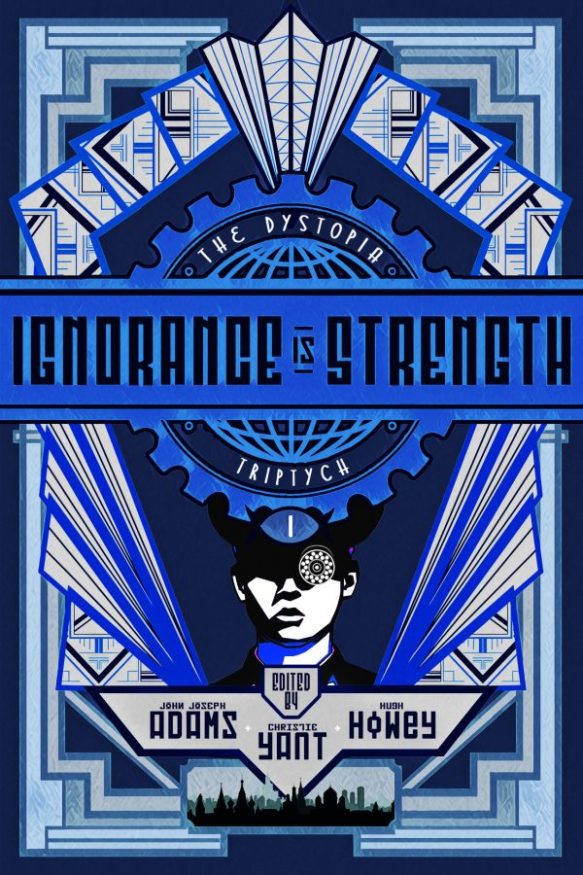
Dystopia Isn’t Sci-Fi—for Me, It’s the American Reality

Cadwell Turnbull is a contributing author of The Dystopia Triptych. Photograph: Broad Reach Publishing

By Cadwell Turnbull

Source: Wired

Imagine a city where a group of people have managed against all odds to carve out prosperity for themselves, at least for a little while. These people used to be owned by other people. Now, they are permitted freedom, but only so much, subject to the whims of the once-masters.

Prosperity is a dangerous thing for the oppressed. It is a dry hot day in a forest bound to catch fire. And so, eventually, there is spark. A teenage boy assaults a teenage girl of the once-master class in an elevator, or so the story is told. Truth doesn’t matter here. A story is enough. The once-masters want justice, which means all the once-slaves must be punished. Men, women, and children are dragged from their homes and shot, their stores and houses bombed or burned. The exact number of dead will remain uncertain, the story buried for so long that people will watch it in a television show almost a century later and mistake the dramatization of the event for pure fiction.

Imagine another city where the once-slaves are told they are getting treatment for a devastating illness, when they are in fact receiving a placebo. Imagine four decades of this lie, the originally infected passing on this disease to their spouses, their children, so that the once-masters can study the long-term effects of the disease on people they don’t consider fully human.

Imagine these cities are part of a great nation. The once-slaves are tired of their second-class citizenship so they begin a movement for justice and equity. This movement is met with a violent backlash. The once-slaves are attacked by dogs, blasted by hoses. Their churches are burned, their institutions subject to random acts of retaliation by the once-masters. Their activists are monitored. Their leaders are jailed or assassinated. There are victories, but even after the successes, once-slaves are shot down in the street for minor offenses or looking “suspicious.” Their neighborhoods are over-policed. Their children are denied quality education. Many of them are sent to prison, where they work for pennies or for nothing. But it isn’t called slavery. It is treated as coincidence that this forced labor disproportionately affects the oppressed class, the once-slaves.

These are the makings of dystopian fictions, and yet many in America don’t need to imagine them. It is their reality. However, most Americans would not call America a dystopia.

If the edges are filed off, the names of places and events changed, a few injustices amplified, Americans can pretend the sorts of things that happen in dystopias don’t happen in their backyards. They can call it fiction, create enough distance to make themselves comfortable with their country’s own sins. But this doesn’t change the fact that the American experience is dystopian for many marginalized people. And like in any dystopia, real or imagined, it is up to all Americans to recognize this storyline, imagine a better society outside of the current reality, and then work toward it. Otherwise, America consents to a normal that is grotesque.

I read my first dystopia in high school. As a teenager, 1984 terrified the hell out of me. I didn’t read it as a warning, but as a mirror to my own experience. I identified with the protagonist Winston Smith’s feeling that something was deeply wrong with his society and the overwhelming sense of helplessness that followed. In college, I read my first utopia. The Dispossessed, by Ursula K. Le Guin, in every sense, was an antidote to that despair I felt when reading 1984.

And then, many years later, I read “The Day Before the Revolution,” the prequel short story to The Dispossessed, and found in it the practical application of the novel’s revolutionary ideas. The story is beautifully quiet. It follows Odo, the founder of the radical movement at the heart of The Dispossessed, as she goes through her day and remembers important moments in her political and personal journey. Le Guin prefaced “The Day Before the Revolution” with a brief definition of the Odonian belief system: “Odonianism is anarchism … its principal and moral-practical theme is cooperation (solidarity, mutual aid). It is the most idealistic, and to me the most interesting, of all political theories.”

To be clear, the Odonians are not perfect. They are resistant to change and have allowed other forms of institutional privilege to develop and calcify in their society. But, because they believe in their utopia and have lived their lives in accordance with that belief, they’ve managed to build a reasonably just and equitable society

And this is where, in life just as in science fiction, a distinction must be made. A just and equitable society is not the same as a perfect one. I’d argue that everyone would benefit if we defined utopia as a move toward justice and equity, and not just the state of perfection. But in America, especially in discussions about social justice, “just” and “perfect” are treated as synonymous objectives. And because perfect is never attainable, justice, too, becomes out of reach. Under this framing, injustice becomes normal, oppression is realistic, and any move towards justice and equity must come from struggle. A disturbing unspoken belief is born from this framing, that marginalized people will never receive full humanity because a just society is not possible. By failing to recognize the dystopia, and dismissing the possibility of a utopia, America has resigned itself to its current, dark narrative.

As a result, in America, universal social welfare is too costly and politically unfeasible, while trillion-dollar corporate bailouts and endless wars go unquestioned. Police and prison reform are aimed towards harm reduction for marginalized communities, instead of daring to imagine a society where these institutions are mostly unnecessary. In American discourse, a society can’t take care of all its citizens or remedy the causes of crime.

In a society where injustice is normalized, justice becomes a goal that can only be achieved through sacrifice—tragedy becomes currency, a thing to be used, not prevented. It takes decades of confirmed police brutality before America considers even the most minor reforms. This is not by accident. Black and brown bodies have been the fuel used to drive this society towards slightly lesser states of injustice since the very beginning. The oppressed have always paid the price for progress.

And yet, Americans have never shown this kind of defeatism when it comes to technological advancements. When this nation decided to go to the moon, it was framed in terms of “How do we get there?” not “Is this possible?” And no one ever said, “This rocket may only get half-way to the moon, but first many must die.”

Americans once oblivious to the dystopia are waking up. That’s good. But the price of waking up should be considered, and the lives sacrificed to incrementalism must be mourned. It is easy for a pragmatist to ask for incremental change when the current reality favors them. But pragmatism hits differently when it is forced at gunpoint. Every loss on the way to justice is a collective sin, because it was decided that the road must be long and the oppressed must struggle for every inch.

Do not normalize the losses happening right now because of the gains. Assume where America has always been is a tragedy. What is done in hell isn’t romantic; sacrificing bodies to dystopia isn’t beautiful. As I write this, people protesting brutality are dying at the hands of law enforcement. No one should pay for progress with their life. And it isn’t naive to believe every member of society should have a healthy, empowering, and fulfilling time on earth. The ones that have suffered deserve nothing less than faith in that possibility. This moment may provide a way out of dystopia, but there has to be a collective reckoning with the dystopian aspects of American society as well as the cruel price of progress repeatedly placed on the backs of the oppressed. Through solidarity there is a way out of these bitter realities, but the way there must be just if the destination is to be just.

In science fiction there is a notion that the universe is filled with possible worlds just waiting for humanity to come settle. It has some of its more troubling roots in manifest destiny, but also in hope, and the idea that better worlds are possible. But what if this corner of Earth could be that imagined place? Imagine a better world right here, instead of elsewhere. The price is in going all the way, doing all the work, believing all the work can be done. That’s the only way to get to the moon. Human beings have to believe it exists.

How Corporate Tyranny Works

By Chris Hedges

Source: OpEdNews.com

Those, like environmental lawyer Steven Donziger, who fight the corporate control of our society on behalf of the vulnerable find the institutions of power unite to crucify them.

The persecution of the attorney Steven Donziger is a grim illustration of what happens when we confront the real centers of power, masked and unacknowledged by the divisive cant from the Trump White House or the sentimental drivel of the Democratic Party. Those, like Donziger, who name and fight the corporate control of our society on behalf of the vulnerable see the judiciary, the press and the institutions of government unite to crucify them.

“It’s been a long battle, 27 years,” Donziger said when I reached him by phone in his apartment in Manhattan.

Donziger, who has been fighting polluting American oil companies for nearly three decades on behalf of indigenous communities and peasant farmers in Ecuador, has been under house arrest in Manhattan for a year. He will go to trial in federal court in New York on September 9 on contempt of court charges, which could see him jailed for six months. Ever since he won a multibillion-dollar judgment in 2011 against the oil giant Chevron, the multinational has come after him personally through litigation that threatens to destroy him economically, professionally and personally.

“Our L-T [long-term] strategy is to demonize Donziger,” Chevron wrote in an internal memo in 2009, as reviewed by Courthouse News.

It started when Texaco went into Ecuador in the Amazon in the 1960s and cut a sweetheart deal with the military government then ruling Ecuador,” Donziger told me. “Over the next 25 years, Texaco was the exclusive operator of a very large area of the Amazon that had several oil fields within this area, 1500 square miles. They drilled hundreds of wells. They created thousands of open-air, unlined toxic waste pits where they dumped the heavy metals and toxins that came up from the ground when they drilled. They ran pipes from the pits into rivers and streams that local people relied on for their drinking water, their fishing and their sustenance. They poisoned this pristine ecosystem, in which lived five indigenous peoples, as well as a lot of other non-indigenous rural communities. There was a mass industrial poisoning.”

“By the time I went down there in the early 1990s, many people had died, cancer rates were skyrocketing according to several independent health evaluations, people were really hurting. There was zero regard for the lives of the local people by Texaco. I was a very young lawyer back in 1993 when I first went to Ecuador. It was like looking at an apocalyptic scene. There was oil on the roads. People were living in abject poverty. They had no shoes. They would get oil on their feet when they walked along the roads. The oil pollution had permeated every aspect of daily life. It was in the food supply. It was in the water supply. It was in the air. The average person there would get exposed multiple times a day to very harmful, cancer-causing toxins, with foreseeable results.”

“I, with other lawyers, filed a lawsuit in New York against Texaco. The reason we filed in New York was because Texaco’s headquarters were in New York in 1993. The decisions to pollute in Ecuador, to play God to the people of Ecuador, were made in New York. We sued in New York. Texaco tried to get the case back to Ecuador where they had never been held accountable, where they knew the indigenous peoples had no money or resources to find lawyers.”

“They thought it would just go away,” said Donziger. “Over a 10-year period, we battled to get a jury trial in the United States. Ultimately, they won that part of the battle. It went down to Ecuador.”

“We started working with a team of Ecuadoran lawyers in the early 2000s. We went forward with the lawsuit. We produced voluminous scientific and testimonial evidence, showing that they caused probably the world’s worst oil pollution. It was called the ‘Amazon Chernobyl’ by locals and experts. They dumped 16 billion gallons of toxic waste. They did it deliberately to save money. This was unlike the BP spill in the Gulf of Mexico, which was a terrible accident, even though it was a product of horrendous negligence by BP. This was done by design to pollute, knowing that people would die, and that indigenous groups would be decimated, and that this beautiful part of the Amazon would be destroyed.”

The refusal to abide by even minimal environmental regulations saved Texaco an estimated $3 on every barrel of oil produced over 26 years (1964-1992), according to Amazon Watch, or an estimated extra $5 billion in revenue. The hundreds of waste pits the company eventually abandoned in Ecuador, on average, contain 200 times the contamination allowed by typical global standards.

“They tried to grind us down using classic corporate defense tactics,” Donziger said of the legal war. “They filed thousands of motions. We stood strong. We had a great legal team of Ecuadorian lawyers.”

In the end, they won a stunning victory, a rare moment of accountability for first-world conglomerates who rape the environment of developing nations by exploiting weak, corrupt governments.

“The verdict came down, about $18 billion in favor of the affected communities, which is what it would take at a minimum to clean up the actual damage and compensate the people for some of their injuries. That eventually got reduced on appeal in Ecuador to $9.5 billion, but it was affirmed by three appellate courts, including the highest court of Ecuador. It was affirmed by the Canadian Supreme Court, where the Ecuadorians went to enforce their judgment in a unanimous opinion in 2015.”

Chevron, as the evidence mounted against it, sold their assets in Ecuador and left the country. The corporation threatened the plaintiffs with a “lifetime of litigation” if they attempted to collect, and, according to internal Chevron memos, launched a legal and media campaign that has cost an estimated $2 billion to prevent payment of the settlement and to demonize and destroy Donziger.

Donziger came to his epic battle against Chevron through journalism. “I was a journalist on my college newspaper,” he said of his time as a history major at American University. “My first job out of college was as a journalist with [United Press International]. I worked for UPI in Washington. They were strong in Latin America. I traveled to Managua in 1983 or 1984, I don’t remember exactly, and found work in the UPI bureau. I was 23 years old. I worked in the UPI bureau in Managua during the Sandinista era.”

He left UPI after a year in Managua but stayed on in Nicaragua to work as a freelance journalist for newspapers such as The Fort Lauderdale News, The Toronto Star and The Atlanta Constitution. He spent about three years as a reporter before going to Harvard Law School. When he graduated from Harvard Law School in 1991, he worked as a public defender in Washington, D.C. He documented Iraqi civilian casualties in Iraq following the first Gulf War that became a report adopted by the United Nations.

A classmate at law school was from Ecuador. His classmate’s father organized a trip in April 1993 for lawyers and medical professionals to look at the contamination caused by the oil extraction in the Amazon. That trip, which Donziger joined, spawned the suit against Texaco. He would make more than 250 trips to Ecuador over the next two decades.

“Journalism significantly shaped my views and skill set,” he said. “It was vital to allowing my work to be successful. From the beginning this was a unique litigation, for many reasons, but one of the reasons was we, as a team, decided to work across multiple platforms. If we only saw this case as a lawsuit we would never win.”

“Chevron controlled the legal system in Ecuador with their influence. We needed to operate across different platforms, including engaging with the media and carrying out significant public education. Most Ecuadorians, other than those who lived in the region, knew nothing about the pollution that had been happening in their country. We carried out zealous advocacy in the public arena. We realized that the indigenous people would never get a fair trial in Ecuador if they did not illuminate what had happened to them and get public support.”

“The fact that I am detained shows how far we’ve come and how much risk Chevron feels. It’s not a sign we lost. It’s the opposite.”

Steven Donziger

Both the judge who oversaw its lawsuit against Donziger for “racketeering” and Chevron itself “claim that this type of activity is wrong,” he said. “The irony is that what we were doing is what the big oil companies have always done. They always operate in the public relations domain, lobbying Congress to pass legislation to extinguish various legal claims, meeting political leaders behind the scenes. They operate across every platform they can find to exercise their power. We were smart enough to meet them toe-to-toe wherever they were operating and neutralize their ability to undermine the fairness of the trial. That’s how they operate. They try to control court systems.”

“My journalism [experience] sensitized me to injustice. It allowed me to understand the media. I knew how to write press releases, which matters when you do a public case like this. I knew how to work across different platforms to mobilize positive energy around the case. Human rights work involves, first and foremost, justice for victims. But equally important is accountability for the perpetrators. The fact that I am detained shows how far we’ve come and how much risk Chevron feels. It’s not a sign we lost. It’s the opposite.”

Chevron, which had left Ecuador, went back to the New York court, where Donziger had originally filed the lawsuit before Chevron got a change of venue to Ecuador, and sued him, using a civil courts portion of the federal law famous for breaking the New York Mafia in the 1970s, the Racketeer Influenced and Corrupt Organizations Act.

In effect, “They sued me as a civil racketeer, under a civil RICO statute for $60 billion,” he said. “That was the largest amount of money an American individual ever had been sued for. This began a 10-year campaign to demonize me by Chevron and by its judicial allies.”

Chevron, which has more than $260 billion in assets, has hired an estimated 2,000 lawyers from 60 law firms to carry out its campaign, according to court documents. The oil giant dropped its demand for financial damages weeks before the RICO trial, which would have necessitated a jury trial. Judge Lewis A. Kaplan, a former lawyer for the tobacco industry who had undisclosed investments in funds with Chevron holdings, according to his public financial disclosure statement, decided the RICO case alone. He found credible a witness named Alberto Guerra, relocated to the US by Chevron at a cost of some $2 million, who claimed the verdict in Ecuador was the product of a bribe. Kaplan used Guerra’s testimony as primary evidence for the racketeering charge, although Guerra, a former judge, later admitted to an international tribunal that he had falsified his testimony.

“[Kaplan] wouldn’t allow me to bring in any environmental evidence that the Ecuadorian courts had used to find Chevron liable,” Donziger said. “He wouldn’t let me testify on my own behalf on direct. He allowed Chevron to use secret witnesses whose identities he wouldn’t reveal to me. He tried to treat it like a national-security kind of case to try to demonize me. Because Chevron’s whole strategy is to demonize [me] as a way to distract attention from its environmental crimes in Ecuador. And Judge Kaplan, who knows all the tricks in the books because he used to work for [tobacco company] Brown & Williamson, when he was [an attorney with the law firm of] Paul, Weiss. He knows the tobacco industry playbook that they used for years and years and continue to use. And he worked with the Chevron lawyers at Gibson, Dunn & Crutcher to implement them against me without a jury. And there was nothing I could do about it.”

(Paul, Weiss is a large law firm that currently advises Chevron on its $13 billion purchase of another energy company.)

John Keker, one of Donziger’s lawyers on that case, said he was up against 160 lawyers for Chevron and during the trial he felt “like a goat tethered to a stake.” He called the court proceedings under Kaplan “a Dickensian farce” and a “show trial.” In the end, Kaplan ruled that the judgment in the Ecuadorean court against Chevron was the result of fraud.

He also ordered Donziger to turn over decades of all client communication to Chevron, in effect eradicating attorney-client privilege, a backbone of the Anglo-American legal system with roots dating to ancient Rome. Donziger appealed what was, according to legal experts following the case, an unprecedented and illegal order. While Donziger’s appeal was pending, Kaplan charged him with criminal contempt for this principled stance, as well as his refusal to turn over his passport, his personal electronics and to refrain from seeking the collection of the original award against Chevron.

When his criminal contempt charges against the environmental lawyer were ignored by the U.S. attorney’s office for over five years, Judge Kaplan, using an exceedingly rare judicial maneuver, appointed the private law firm of Seward & Kissel, to act in the name of the government to prosecute Donziger. Neither the judge nor the law firm disclosed that Chevron has been a client of Seward & Kissel.

Kaplan also violated the established random case assignment protocol to personally assign Loretta Preska, a member of the right-wing Federalist Society, to hear the case. Chevron is a major donor to the Federalist Society. Preska, in a show of bias, already has said the charges against Donziger appear to be “very strong,” according to Courthouse News. In May, she disallowed him from having his charges heard by a jury.

“The last thing any of them wants is for a group of ordinary citizens to see what has happened to Steven Donziger,” Rick Friedman, one of Donziger’s attorneys, said of Chevron.

“The last thing any of them wants is for a group of ordinary citizens to see what has happened to Steven Donziger.”

Rick Friedman, attorney

Preska’s fealty to corporate power was previously on public display in 2013 when she imposed a 10-year sentence, the maximum allowed under a plea deal, on Jeremy Hammond, the activist who hacked into Stratfor, a private security firm. Hammond made public a barrage of damning internal emails and exposed the email address and password of an account used for business by Preska’s husband, Thomas Kavaler, a partner at the law firm Cahill Gordon & Reindel. Preska, despite the conflict of interest, refused to recuse herself. The 10-year sentence was one of the longest in U.S. history for hacking.

Kaplan had Preska demand Donziger post an $800,000 bond on a misdemeanor charge. Preska placed him under house arrest and confiscated his passport which he has used to meet with attorneys around the world attempting to enforce the judgment against Chevron. Kaplan managed to have Donziger disbarred. He allowed Chevron to freeze Donziger’s bank accounts, slapped Donziger with millions in fines without allowing him a jury, forced him to wear an ankle monitor 24 hours a day and effectively shut down his ability to earn a living. Kaplan allowed Chevron to impose a lien on Donziger’s apartment in Manhattan where he lives with his wife and teenage son.

Donziger is scheduled to go to trial without a jury on September 9 in New York City for contempt. Preska will preside over the trial. There has not been a criminal trial in Manhattan federal court since March because of the pandemic. Donziger’s trial would be the first, although hundreds of other defendants facing far more serious felony charges are waiting in jails, infested with COVID-19, for a trial date. Donziger’s four pro bono lawyers said they do not want to risk their lives by traveling to New York during the pandemic for what is a misdemeanor offense.

“The judgment against Chevron Corporation in Ecuador was the product of fraud, bribery and corruption,” Sean Comey, Senior Advisor – External Affairs Chevron Corporation said when I asked the corporation to comment on the case. “Steven Donziger is a proven liar and an adjudicated racketeer. He committed criminal acts in the U.S. and abroad in pursuit of his extortion scheme in the Ecuadorian courts. Donziger’s continuing lawlessness is now a matter for prosecutors and the U.S. courts to decide. Chevron is not involved in Donziger’s criminal prosecution.”

The flagrant corruption and misuse of the legal system to abjectly serve corporate interests in the Donziger case illustrates the deep decay within our judiciary and democratic institutions, one that was abetted by Democratic administrations that stacked the courts with corporate lawyers — Kaplan was appointed by Bill Clinton — and Donald Trump, who has elevated ideologues selected by the Federalist Society to the federal bench. Ruling after ruling in Donziger’s case has ignored or grossly distorted the law on behalf of Chevron to ensure that Donziger will be prosecuted, sent to prison and remain in debt for life — all while the $9.5 billion settlement is never paid to aid the people harmed in Ecuador.

The International Association of Democratic Lawyers and the international committee of the National Lawyers Guild issued a letter signed by more than 70 organizations calling the persecution of Donziger an “attack on the rule of law.” The letter said his house arrest was “unprecedented” and charged that he was being targeted for what it called “one of the most important corporate accountability and human rights cases of our time.” The letter accused Kaplan of “violating basic notions of fairness in the judicial process that lie at the core of the rule of law.”

“We cannot allow the rule of law to be upended by corporate interests and a highly biased federal judge seeking to destroy the willpower of one lawyer who has already withstood decades of brutal litigation and scathing personal and professional attacks,” the letter read.

Chevron has also used its clout and advertising dollars to keep the story from being reported in numerous media outlets.

“Based on where this story is trending, we have launched a full offensive to kill it or redirect it,” an August 10, 2010 internal memo from Chevron reads concerning a potential report — on the case being done by the Fox News bureau in Miami.

“In addition to working through the Miami bureau, we have reached out to more senior news folks at Fox News, both in NY (through Dana) and in WDC (through Greg Mueller). So, we are trying to attack this story on multiple fronts. To this end, Kent is set to talk to John Stack and Sean Smith who both reside at Fox News in NY at 1:30 today. Finally, if need be, I think we may need to pull the JSW card with Roger Ailes. We have checked John’s availability to place a call to Roger, but his first availability is tomorrow afternoon.”

From 2010 to 2018, John S. Watson was the CEO and chairman of the Chevron Corporation.

The story was killed.

Another internal memo lays out the steps, also ultimately successful, to prevent a similar story from appearing in GQ magazine. The memo suggests that Chevron work …with the Columbia Journalism Review (that ran the rebuke of 60 minutes) and the Media Research Center to expose any degree of bias by GQ and raise alerts about the reporting techniques prior to the story’s publication.”

The memo recommends letting the magazine know that it will face legal action if the story runs and calls on Chevron investigators to “conduct further due diligence on reporter.” Chevron has also hired reporters to produce fake pieces of journalism that peddle the corporation’s propaganda on fake news sites it runs.

The New York Times magazine earlier this year considered a story about Donziger and then dropped it. The newspaper runs its own ad agency called T Brand Studio. Chevron is a major client, meaning The New York Times, through T Brand Studio, produces ads for Chevron.

Jake Silverstein, editor of the magazine, when asked to comment said by email: “It was one of several stories William [Langewiesche] considered writing for us in the past year, one that ultimately we decided not to assign. Many factors go into our decisions about what to assign, and none of them ever include who is or is not a client of T Brand Studio or any other part of the paper’s advertising business.”

Dean Baquet, the newspaper’s executive editor, said, when I reached him by email, that the idea that the magazine piece on Donziger was killed because Chevron is a major advertiser is “a ridiculous claim.” He added, “I didn’t even know Chevron worked with T Brand [Studio].”

But that Chevron has invested tremendous resources to kill stories about this case is indisputable given the detailed campaigns to block coverage outlined in its own internal memos.

“I’ve experienced this multiple times with media over the past 10 to 15 years,” Donziger said. “An entity will start writing the story, spend a lot of time on it, then the reporter disappears. The story doesn’t run.”

While The NationThe Intercept and Courthouse News Service have reported on Donziger’s current legal battle, no major mainstream publication has touched it.

“Corporate influence over our federal judiciary has increased dramatically in recent years,” Donziger said. “This firm [Chevron] has captured an element of power from the government and deployed it against a human rights activist.”

Front Line Defenders issued a report in 2019 that found that 300 human rights activists had been murdered in 31 countries, more than two-thirds in Latin America. Of those killed, 40 percent fought for land rights, indigenous peoples and environmental justice.

“What’s shocking to a lot of people is that this is now happening in the United States,” Donziger said. “I don’t mean murder, but death by a thousand cuts. Chevron does not want me to be a lawyer anymore, at a minimum. They don’t want me advocating even as a non-lawyer. They want to silence me. They want to kill every story they can. They’d rather have no story about this case than even a positive story about their side. They don’t want people to know about it. They want to erase it from people’s thought process.

“I cannot get a fair trial with a judge appointed by Judge Kaplan rather than through the random assignment process,” he lamented. “I cannot get a fair trial with a prosecutor whose law firm [has worked] for Chevron. These are egregious conflicts of interest. Its misconduct on a grand scale. I’ve been locked up four times as long as the longest sentence ever imposed on a lawyer for criminal contempt in New York. Anyone who cares about the rule of law should be appalled.”

Questioning Covid19: Why I Will Never Trust the Medical Establishment about Respiratory Disease. A Case History

By  Anita McKone

If you are interested in finding out the truth about the Covid19 scare, you can look for information in many areas. Understanding the corporate (profit-driven) and petrochemical-based history of the medical establishment helps. Being aware of the lack of scientific empirical and laboratory evidence for microbes, and microscopic particles such as viruses, causing disease helps. Being aware of other proven or highly probable causes of respiratory disease helps. It also helps to understand the emotionally discomforting truth that terrified people who claim to be both authorities and sane will knowingly or unknowingly lie to you in order to try to get you (and their own terror) under control.

In my case, whenever I am confused or unsure about the details of information I receive from the variety of sources I investigate, I am ‘lucky’ to have a fallback position that is unequivocally clear and trustworthy. This knowledge is based on my own experience of suffering acute and chronic respiratory disease, and the outcomes I experienced while spending the first 25 years of my life following the advice of the medical establishment, and the second 25 years of my life totally rejecting ‘assistance’ from the medical establishment and following a variety of natural healing/health maintenance modalities instead. Without having to understand or argue the merits of any particular detail of the science of corporate medicine or natural biological health and healing, I have seen their results.

In brief: I suffered for the first 25 years of my life from chronic respiratory disease, including being hospitalised twice with pneumonia. My chronic bronchitis was first diagnosed as caused by bacterial infection, and later diagnosed as caused by a virus. When I stopped taking the advice of the medical establishment and my parents, who told me that I would die if I did not take antibiotics and that I could never be genuinely well, and switched to a variety of natural healing modalities, my life transformed radically. These modalities included listening to my physical feelings and emotions, changing my diet, understanding my breathing process, and bodywork to release muscle tension.

26 years later, at the age of 51, I use no pharmaceutical drugs or vaccines and experience the health and fitness that was denied me as a child and young person. I have not had bronchitis for 5 years, and have had only two mild colds in the past 3 years (despite the reported increase in the numbers of people suffering ‘seasonal influenza’ and the increasing severity of their symptoms). Other health problems I had when I was younger, including heart dysfunction related to bronchitis, have also been resolved. My experience has taught me that fear of my illness was the most important element keeping me sick, and that the medical establishment had no capacity to accurately diagnose the causes of my illness, nor treat it effectively.

I cannot say what precise factors have led to the development of acute respiratory disease in each individual who is currently suffering or dying from it. However, my experience leads me to believe that it is likely to be a combination of factors, including fear and emotional suppression from living in unsafe social circumstances, toxicity from airborne pollutants and poisonous substances that have been ingested or injected into the body, and lack of complex nutritional elements that allow the body to function optimally and recover from emotional stress and toxic damage.

I therefore make the following suggestions for you to consider if you are experiencing symptoms of respiratory disease in the current social climate of crisis, panic and control.

If you have a choice:

1) Do not get tested for Covid19 – being categorised as having Covid19 will increase both your fear and the fear of others and may limit your options for taking safe and sensible action to support your healing.

2) Do not allow yourself to be hospitalised – you will be isolated from anyone who personally cares about you, in the presence of scared (if well-meaning) hospital staff, and removed from the possibility of any treatment other than toxic drugs and invasive procedures, which will add to your level of stress and fear, and decrease the likelihood of your survival.

3) Understand that your state of health is not dependant on whether or not you are ‘infected with a virus’. Even if pathogenic viruses existed (and there are a number of critiques showing the logical faults and lack of proper scientific process in virology theory and experiments respectively: see, for example, What Really Makes You Ill? Why everything you thought you knew about disease is wrong. But you can read more in ‘Dismantling the Virus Theory – The “measles virus” as an example’ and watch the video interview ‘The Real Science of Germs: Do Viruses Cause Disease?’ ), my experience shows that it is other elements that determine health. You are therefore not responsible for the health of anyone else – you are not a dangerous plague carrier who should feel guilty for harming others if you do not accept the label ‘infected with Covid19’.

4) Consider the four basic principles of health and healing at the end of this article.

A case history of my acute and chronic respiratory disease and healing

I was born in 1969 in New South Wales, Australia, and grew up in Canberra in the Australian Capital Territory. I was injected with a number of vaccines containing toxic substances as a baby, which may have been a contributing factor in my developing pneumonia at the age of 18 months. I was hospitalised at this time, and again at the age of three years. I was treated with antibiotics in hospital and put in an oxygen tent to help me breathe. I was told by my mother that when I was in the oxygen tent when I was a baby, she climbed in with me against the wishes of the nurses. Far from reassuring me, this would have increased my level of fear, as my mother is an extremely anxious and explosively violent person, and she was only holding me to try to relieve herself of her anxiety, not because she was in a state to calmly relieve mine. My fear of being killed by my mother when she violently exploded and the fear generated by her general state of anxiety (caused by her own extremely violent and emotionally deprived upbringing) was a major factor in the disturbances to my breathing and lung function throughout my younger years.

My memory of the hospital when I was three is traumatic – I remember feeling extremely isolated. Visiting hours were limited and strictly upheld, which meant that my father, who I did find reassuring, could not spend significant time with me. Also (bizarre but true) my teddy bear was stolen by another family with a sick child and as any parent knows, familiar soft toys do provide significant reassurance to children, even if artificially so. I survived both hospitalisations, and was told that I would have died without the antibiotics. The doctors and my parents believed that there was no other way of helping me through these crises – it was ‘hospital and drugs’ or ‘nothing’.

As a result of the pneumonia, one small area in my left lung was permanently damaged (at least, it has not healed up to this point) although I did not discover the damage until I was 26 when a naturopath/homeopath asked me if there was any difference in how my left and right lungs felt. This was the first time anyone had asked me to focus on my lungs in detail in order to learn something about them, and I discovered that my left lung was permanently painful, particularly when I coughed for any reason, while my right lung was not.

As a result of the natural healing I have undertaken since, this pain has reduced to one patch about 2 centimetres in diameter. I have heard the medical establishment’s opinion in recent years that lungs don’t have nerves and therefore it is not possible to feel pain in them. This directly contradicts my actual experience of being able to feel a variety of feelings (e.g. tickling caused by breathing something in accidentally, pressure in my right lung when I cough, pain in my left lung when I cough, and the tightening of my airways when asthmatic). When ‘medical science’ contradicts my experience of reality, obviously I question the validity of the theory, not my experience.

I suffered an extreme asthma attack when I was four, when I couldn’t breathe at all for a short amount of time, but after this I had frequent non-acute asthmatic reactions only, mainly when I tried to exercise or when I had bronchitis, which I suffered 3 or 4 times per year up until I was 19. At that time, I left home and the incidence dropped to twice a year. My bouts of bronchitis would last for about 14 days each time and I would not go to school/university for about 10 days because I felt too sick in my body to do so. Among other symptoms, my throat and lungs would become ‘cold’, tense and aggravated, causing me to swallow repeatedly for about 24 hours (with virtually no sleep), before developing an extremely painful, hacking cough and coughing up heaps of green phlegm. The bronchitis was less extreme than my original pneumonia, but ongoingly debilitating, as if my body had worked out a way of managing my symptoms that didn’t risk killing me but instead put me into a ‘holding pattern’ that was endlessly repeated.

I breathed in a powdered drug when I was ill with bronchitis as a child, and then switched at some point to using Ventolin, until the age of 14 when I accidentally overdosed myself, suffering extreme fear and visual distortion brought on by the drug’s artificial stimulation of adrenalin. I was very angry that I had never been warned of the danger and I refused to use Ventolin after this time.

I also took Brondicon, a cough syrup full of alcohol and sugar. I was given antibiotics every time I was sick and I have a lot of memories of waiting in doctors’ surgeries reading children’s books while waiting for my 10 minute appointment (which generally ran along the lines of ‘I’ve got bronchitis again’… ‘Right, here’s a prescription for antibiotics’.) When I was sick I also went to a physiotherapist who would thump my back and encourage me to cough, even when the phlegm was not in a sufficiently fluid state to be coughed up. The theory behind this treatment was that I was clearing my lungs of ‘harmful bacteria’. I later discovered that this deliberate coughing increased the damage and irritability in my left lung and made it more susceptible to aggravation and illness.

Influenced by my parents’ and the doctors’ fears and their incapacity to listen to how I felt and what I needed, I never expected to be well and being sick became a key part of my identity. I lived in dread of my next bout of illness. Since I had never experienced being well, my general state of ill health was utterly normal to me, and I had no idea just how sick I was. I later discovered that my entire oxygenation system, including my heart, was not functioning properly. I therefore found any aerobic exercise both painful and extremely uncomfortable in my body due to the effort of exerting myself without adequate oxygen reaching my cells. Climbing a steep hill, for example, was very difficult for me.

My posture was off kilter because of constant muscle tension caused by the pain in my lung, and this tension and imbalance eventually led to me suffering cartilage, tendon and ligament injuries. Additional illnesses I suffered that were undetected by doctors were low blood sugar (diet related), chronic constipation (caused by diet and by stress) and extreme cramping and blood loss during menstruation (caused by lack of magnesium).

One factor that I believe was important in remaining sick with respiratory disease was the toxic nature of the cleaning fluids used in my childhood home, particularly furniture polish that was sprayed every week as part of the housecleaning routine.

Most important though, was the constant emotional and physical tension I experienced as a result of living with my anxious and violent mother. Her emotional state and behaviour continually triggered me into fear and anger, but I was not allowed to consciously feel or express these things. These feelings became wrapped up, in complex and contradictory ways, with my experience of being physically ill.

The most obvious connection between my emotional state and the state of my lungs is that when I feel afraid that I am going to be attacked, unreasonably controlled or prevented from telling the truth about how I feel and what I need, I have an immediate, strong asthmatic reaction.

The last time I took antibiotics for bronchitis was when I was about 22 and living in Melbourne. The next time I had bronchitis I visited a different doctor than usual and I was told that my symptoms were caused by a virus (‘influenza’) not a bacterial infection, so antibiotics were not appropriate. I imagine this doctor was moving with the tendency to claim that all sorts of previously ‘non-viral’ diseases were now caused by viruses, as the medical establishment began its push towards inventing and selling greater and greater numbers of vaccines. (Vaccines are, obviously, more profitable for corporations than antibiotics because they are recommended for or forced upon everyone as a preventative measure, rather than being used by only those who are showing symptoms of disease.)

I was annoyed that I couldn’t have my ‘reassuring’ antibiotics, and that I was being told that the same symptoms I had been experiencing my whole life were some other disease (‘flu’, not ‘bronchitis’). I don’t know if I was told I should have a flu vaccine, or whether they were available in the early 1990s, but I certainly had no faith in the ‘new’ diagnosis. I had never been treated as if my bronchitis was infectious, as influenza is supposed to be, and I have no memory of my mother, father, sister or (later) boyfriend being ill with respiratory symptoms at the same time as I was when I lived with them.

Ironically, however, this shift in medical establishment diagnostic fashion led to a good outcome for me: the fear that I had had all my life that I would ‘die’ without antibiotics was proven untrue. Without antibiotics, my bronchitis followed exactly the same pattern that it always had – no better, no worse. Although I didn’t think about it then, this proved that however many bacteria may have been in my lungs, breaking down the dead substances, they were not attacking my lungs and ‘causing’ my disease.

Having had my fill of doctor’s surgeries, I never again bothered to visit one when I was sick with respiratory disease.

So, I had stopped poisoning my system unnecessarily with antibiotics, and I was living at a physical distance from my mother, but at this stage I was not actively healing emotionally or physically from all the damage that had been done and I was still very unfit, got bronchitis twice a year and suffered occasionally from candida, as I had done since my late teens.

That changed when I got together with my husband, Robert, when I was 25. As part of his research, he was aware of critiques of the medical establishment, had changed his diet to improve some of his own health problems, and was using a number of natural health approaches. He also, most importantly, listened to me without fear when I expressed how I felt emotionally and physically, and supported me to follow my own feelings. In other words, he allowed me to exist, without interference and without trying to control me, because fundamentally he trusted me to be guided by my own internal communications towards a more whole state of being. He told me, in effect, that I existed, that I mattered and that he trusted me to be sensible, intelligent and capable of learning from my own experiences, including failures and successes.

I was quite stunned to find that Robert was not afraid of my illness. It seemed illogical to me at first simply because a fearful reaction to illness was the only thing I had ever known. The first time I was sick after we were together, he held me for four hours while I could barely breathe because my lungs were so badly clogged and asthmatic. This was a more extreme event than usual, similar to my original pneumonia, but it was a ‘healing crisis’ that marked the beginning of the change in my symptom patterns which has led to my current healthy state. Being held with love and reassured that I wasn’t going to die, I could allow my body to do what it wanted to rebalance itself. Robert’s trust in me allowed me to trust myself, and that trust made all the difference.

Over the next 26 years, my emotional and physical health improved dramatically as I allowed myself to become consciously aware of and physically feel all of my emotions (mostly fear, sadness and anger) related to my mother and other conflicts in my life, as well as feeling the physical pain and asthmatic reactions associated with the damage in my left lung. I stopped trying to make these emotional and physical reactions ‘go away’ and instead experienced them without fear until they went away of their own accord.

I also changed my diet to one of organic, vegetarian wholefood, with no salt, sugar, white flour, caffeine or alcohol. I stopped cooking food in oil or microwaving it. I had never been a recreational drug user, since smoking was impossible with my damaged lung, and my Ventolin experience put me off trying to artificially stimulate my mind and emotions with chemicals. The diet I chose was based on principles explained by Paavo Airola in his book Hypoglycemia: A Better Approach. I also take care not to use or inhale toxic substances wherever possible, including deodorants and perfumes, as well as cleaning fluids, paint fumes, incense, ‘passive’ cigarette smoke and wood smoke. (For those wishing to avoid lung cancer, I have noticed that my damaged lung reacts far more painfully and asthmatically to fragrances – perfume, deodorant, aftershave and incense – than to cigarette smoke.)

I have investigated and found useful many natural healing modalities, which have assisted with my emotional healing, my nutrition and my muscle tension.

These include:

‘Feelings First’ emotional feeling and integration, developed over 14 years by me and my husband Robert J. Burrowes. See ‘Fearless Psychology and Fearful Psychology: Principles and Practice’ and Feelings First.

Gerson Therapy, which involves drinking fresh vegetable juices (for vitamins, minerals, antioxidants and enzymes) and doing coffee enemas (to assist with liver detoxification), among other elements. I have undertaken a scaled-down version of the intensive therapy on a number of occasions and I still drink two juices per day whenever possible and do regular coffee enemas, which are also good for body awareness and ‘meditative’ time. See Healing the Gerson Way: Defeating Cancer and Other Chronic Diseases.

Buteyko breathing method, which explained to me the importance of nose breathing to protect the damaged part of my lung and to maintain the correct balance of CO2 and oxygen in my blood stream to allow effective oxygenation of my cells. It also explained the natural functions of asthmatic reaction in counteracting fear-based hyperventilation and in limiting exposure to toxic substances.

Naturopathy, for a variety of nutritional elements that I have not been able to account for sufficiently in my consumption of fresh food/juices (owing to my living circumstances and the generally decreasing mineral content of even organically grown food). Supplements I take include iron, magnesium and CoQ10 and I am careful to take varieties that my body easily absorbs. Taking CoQ10 fixed my heart dysfunction, iron helps with my energy levels, and magnesium fixed my menstruation cramps and over-bleeding.

Osteopathy, for regular muscle release and manipulations to adjust my spine and limbs.

Rolfing (also known as Structural Integration) to work on the loosening of muscle fascia to allow my muscles to relax and return to balanced positions in my body’s overall structure.

Feldenkrais method (also known as Functional Integration or Awareness Through Movement) to reintegrate the nervous elements of physical movements that have become uncoordinated as a result of injury and fear.

Myotherapy, including dry needling, to release extreme tension in certain muscles and tendons that had not responded to other forms of bodywork.

Deep Recovery massage balls, with the ‘track’ necessary to hold balls in place so that I can regularly do my own muscle/fascia release on any area of my body without having to continually pay for Myotherapy or Rolfing sessions.

Yoga for assistance in stretching, strengthening and coordinating muscles and realigning my spine.

Non-manipulative Chiropractic method for an understanding of subtle whole body communication.

Gym work, to strengthen and reintegrate muscle action around knee and shoulder injuries arising from distorted posture.

I have found all the natural health modalities I have tried to be genuinely complementary (in a way that the medical establishment’s regime is definitely not). That is, there is always something to be learned and integrated from every natural modality into a more complete understanding of the way I function and dysfunction. Obviously, not all practitioners are equally capable, and it is important to find practitioners whose work you trust.

While I recognise that people who are seriously impoverished will have limits on their access to good natural health care, I have done all of the above on an extremely limited budget, having lived below the Australian taxable limit since 1997. I have had no assistance from government Medicare (which does not cover natural healing modalities) or private health insurance.

You may notice that none of the modalities I have mentioned lend themselves to corporate profit. In particular, eating fresh organically grown food works against three corporate industries that are linked by their dependence on the parent industry of artificial chemistry, which developed out of the petrochemical industry. Industrial agriculture relies on artificial fertilizers, pesticides and herbicides; the processed food industry employs chemists to come up with endless varieties of false smells and tastes to cover the fact that processed food that has a long shelf life is tasteless and nutritionless; and the pharmaceutical industry uses artificial chemistry to create toxic drugs, following the age old superstition that by poisoning the body we can control and ‘fix’ it. Many of the products from these industries are easy for corporations to patent, monopolise and sell as long as they can convince people they ‘need’ them. So when the medical establishment screams that natural solutions are not proven to work, are a waste of money, and may be dangerous, one might consider that the threat the establishment is feeling is to its bank balance, rather than to anyone’s actual biological health.

The result of 26 years of taking responsibility for my own health (with the crucial support of people who love me) is that, at the age of 51, I am fit and healthy in a way I never was as a child and teenager or in my early twenties. My oxygenation and posture have dramatically improved and, although I still have some weaknesses in my joints, I am able to work vigorously for some hours at a time in a garden on a steep hillside. I am able to continue working when hungry, showing that my blood sugar levels are significantly improved. I have not had candida since my late 20’s. And, despite the one patch of lung damage which has not yet been resolved (which I protect in the ways mentioned above), I have not had bronchitis in the last 5 years, and indeed have only suffered two colds with mild respiratory and bodily symptoms that lasted 3 days each in the last three years.

Hence, even if I believed that a pathogenic virus labelled Covid19 was genuinely attacking people, I would not be concerned for my own health or theirs on its account. If the four principles of health and healing below are abided by, a physical individual is naturally strong and functional at any age, and does not need the artificial intervention of toxic medicines and vaccines to ‘survive’. The medical establishment’s approach is to ignore and deny all the things that a person needs, biologically and emotionally, and then try to suppress the symptoms of disease that result from this denial. At best, a toxic medicine will shock the body into behaving differently in the short term, while adding to the overall burden of toxicity and ill health of all the body’s systems over time. At worst, your body will not survive the toxic attack and you will be severely incapacitated or killed (as hundreds of thousands of people are by ‘proper’ use of pharmaceuticals each year: see, for example, ‘100,000 deaths per year in the U.S. caused by prescription drugs’ or ‘Table Of Iatrogenic Deaths In The United States’. For an extremely relevant and well researched exposé of the corrupt and toxic nature of the corporate medical industry, read AIDS Inc. by investigative reporter Jon Rappoport.)

If you are currently dependent on pharmaceuticals (for physical or psychological illnesses) you can consult an experienced natural health practitioner to work out how to safely come off the drugs and replace them with the nutrition and other naturally supportive healthcare you really need.

Of course, if at any time the natural healthcare that I need is denied me by forces beyond my control, it is likely that I will suffer further respiratory disease, because of the damage still existing in my lung. However, I will not blame any virus for my illness – the fault will lie with the fear of those humans who cannot see what is needed for genuine health and safety, and whose behaviour is therefore biologically self-destructive.

Four Principles of Health and Healing

Principle 1: Listen to yourself (how you feel emotionally and physically). Remember that you are a complex biological individual in a process of healing and existing, not a simple predictable robot, the same as all the other robots, whose behaviour can (or should) be controlled by a drug.

Principle 2: Give yourself what you need nutritionally to function properly. Keep working on it until you have found a range of things that work for you. Whatever you experiment with and choose (vegan, vegetarian, meat inclusive, supplement inclusive) trust organic/biodynamic, fresh, unrefined foods as the basis for your nutritional health.

Principle 3: Don’t poison yourself (with processed and adulterated ‘food products’ made in factories; with recreational or pharmaceutical drugs and vaccines; with cleaning and personal care products containing toxins; also, limit your exposure to electromagnetic radiation where possible, particularly if you are highly sensitive).

Principle 4: Investigate other healing modalities that encourage you to be aware of how you function physically, and as a whole, integrated organism. (Try anything that sounds reasonable to you, but be honest about whether or not you are experiencing the gains you hoped, and keep experimenting if necessary.)

Finally, although I am aware that as a physical entity I can never be invulnerable, I take responsibility for my own ultimate existence by trusting in myself, despite all attempts to make me afraid that I am undeserving or incapable of full, unified existence, or that existence is not my genuine, true state of being.


Biodata: Anita McKone researches truth and delusion, fearlessness and fear, sanity and insanity, self-awareness and self-destruction, and nonviolence and violence as these exist at the human and universal levels. Her articles can be read on her website.

The Real Reason Why Blackstone Is Courting The Pentagon

Photo credit: Financial Times / Flickr (CC BY 2.0) .

The sudden push by Wall Street’s largest private equity firm to heavily lobby the Pentagon and State Department for largely unspecified reasons is part of an increasingly visible conflict within the U.S. establishment regarding how to handle the Artificial Intelligence “arms race.”

By Whitney Webb

Source: Unlimited Hangout

One of Wall Street’s largest private equity firms, the Blackstone Group, has been making a series of moves that have left mainstream analysts puzzled, with the most recent being Blackstone’s hire of David Urban, a Washington lobbyist with close ties to the Trump administration.

Blackstone’s courting of a Trump ally was not surprising given that the firm’s CEO, Steven Schwarzman, recently donated $3 million to Trump’s re-election efforts and had previously chaired the President’s now-defunct Strategic and Policy Forum of “business leaders” and advisors. The close ties that have developed between Schwarzman and Trump following the latter’s election in late 2016 have led mainstream media to describe Schwarzman as a confidant of the President.

However, what was odd about Blackstone’s hiring of David Urban was its murky reason for doing so, as the firm plans to task Urban with lobbying the Pentagon and State Department on “issues related to military preparedness and training.” This is odd, as CNBC noted, because Blackstone “doesn’t have any publicly listed government contracts, and its known investments don’t appear to have direct links to the defense industry.” However, Urban has extensive experience in dealing with both Departments in addition to his close ties to the current administration and the fundraising apparatus of the Republican Party.

While media reports on Blackstone’s recent hire of Urban were unable to elucidate the motive behind Blackstone’s sudden desire to court the Pentagon and State Department, they did note that Blackstone’s previous hire of a Trump-connected fundraiser lobbyist, Jeff Miller, had been remarkably successful earlier this year, with Miller lobbying Congress specifically on coronavirus relief legislation like the CARES Act. The CARES Act ultimately allowed private equity giants like Blackstone to access funds designated for coronavirus relief, likely thanks to the efforts of Miller and other lobbyists hired by Blackstone as well as other private equity giants like the Carlyle Group.

Though CNBC was left looking for answers as to Blackstone’s sudden interest in aiding the Pentagon with “military preparedness” and wooing the State Department, the likely motive may be related to other recent moves made by the company, such as the hire of former Amazon and Microsoft executive Christine Feng. Feng, who was hired by Blackstone on August 3, previously led data and analytics mergers and acquisitions at Amazon Web Services (AWS), which is a contractor to the U.S. intelligence community and other U.S. federal agencies. Previously, Feng was a senior member of Microsoft’s Corporate Development team. Microsoft recently won lucrative contracts for information technology (IT) services and cloud computing for the State Department and Pentagon, respectively.

According to Blackstone executives, the decision to hire Feng was made due to her “deep relationships in Silicon Valley” and “her experience working at Amazon and Microsoft.” They also added that her hire was motivated by Blackstone’s push to “identify new opportunities to invest and partner with innovative companies reshaping the world” and Blackstone’s recent effort to “double down” on tech sector investments. Notably, Feng’s hire came just a few months after Blackstone had hired Vincent Letteri, another tech-focused investor experienced with growth-stage tech companies, and amid a series of recent investments by Blackstone in tech firms, including HealthEdge software and Chinese data center provider 21Vianet, among others.

Schwarzman’s Push for “Common Governance”

It strongly appears that Blackstone’s recent moves, including Urban’s hire, are part of the firm’s bid to become one of the top “innovative companies reshaping the world” as the Artificial Intelligence (AI) arms race becomes a key driver in the “reshaping” of the global economy. Blackstone’s Steven Schwarzman is a key part of the relatively tight-knit group of billionaires and influential political figures, like Henry Kissinger and Eric Schmidt, that are working to create a “global compact on the research, introduction, and deployment of AI,” and Schwarzman has heralded the coming age of AI as representing a “fourth revolution” for humanity.

Schwarzman argued for greater global collaboration on AI-driven technologies, particularly between the U.S. and China, in a July 2020 Op-Ed for Yahoo! Finance where he wrote that the establishment of “common governance structures” for the research, introduction and deployment of AI is necessary if “we are to avoid the negative consequences of AI,” ultimately comparing the current pace of development of AI to that of past arms races, such as those involving nuclear and biological weapons. Per Schwarzman, these “common governance structures” would produce “explicit global commitments, agreements, and eventually international laws with consequences for violation” that relate directly to AI and its use.

Blackstone’s head is convinced that these “common governance structures” should be built between the U.S. and China, hence his heavy investment in universities and artificial intelligence education in both countries. For instance, Schwarzman created the Schwarzman Scholars program in 2016 where around 100-200 students from around the world pursue a Master’s Degree in Global Affairs at Tsinghua University in Beijing annually. The official goal of the program, which was modeled after the Rhodes Scholars program, is to “create a growing network of global leaders that will build strong ties between China and the rest of the world.” The program’s advisors include former Secretary of States Henry Kissinger, Condoleezza Rice and Colin Powell and former UK Prime Minister Tony Blair as well as former World Bank President James Wolfensohn and former U.S. Secretary of the Treasury and Goldman Sachs executive Henry Paulson. Schwarzman has also donated hundreds of millions of dollars to create an AI-focused institute at Oxford University.

Then, in the U.S., Schwarzman gave $350 million to MIT, prompting the school to create the Schwarzman College of Computing, which aims to specifically “address the global opportunities and challenges presented by the ubiquity of computing — across industries and academic disciplines — and by the rise of artificial intelligence.” MIT News later noted that “the impulse behind the founding of the college came from trips he [Schwarzman] had taken to China, where he observed intensified Chinese investment in artificial intelligence, and wanted to make sure the U.S. was also on the leading edge of A.I.” The college’s inauguration also featured Henry Kissinger as a speaker, where Kissinger mulled the potential impacts of AI and stated that “AI makes it technically possible, easier, to control your population.”

Eric Schmidt, the former CEO of Google, credits Schwarzman’s lead to invest in AI education in the U.S. and abroad as determining “the future of American philanthropy.” “Steve’s donation triggered an arms race among all the universities to match him. This is the next trend in philanthropy, in my view,” Schmidt told Axios regarding Schwarzman’s MIT donation last May. Schmidt also stated that his own investment in Princeton University’s Computer Science department had been prompted by Schwarzman’s previous acts of “AI philanthropy.”

Last May, a federal commission that Schmidt chairs, called the National Security Commission on AI (NSCAI), produced a document that was obtained by a FOIA request earlier this year. One particularly important page made a point that was essentially repeated in Schwarzman’s July Op-Ed regarding a “global AI compact.” Titled “The Importance of a US/China AI Cooperation,” it begins with a quote from Kissinger, a key advisor to and “great friend” of Schmidt, about the need for “arms control negotiation” for AI and then states that “the future of [AI] will be decided at the intersection of private enterprise and policy leaders between China and the US.” In other words, the Schmidt-chaired NSCAI argues that the future of AI will be determined by the political leaders and business leaders of China and the U.S. The page also adds that “we [The United States] risk being left out of the discussions where norms around AI are set for the rest of our lifetimes. Apple, Amazon, Alibaba, and Microsoft will not be.”

This is particularly significant given the NSCAI is tasked with making recommendations to the federal government regarding how to move forward with AI regulations within the context of “national security” and its members include key members of the Pentagon, U.S. intelligence community and Silicon Valley behemoths that double as contractors to the U.S. military, U.S. intelligence or both. One of the NSCAI’s interests, per the FOIA-obtained document, is the use of “AI in diplomacy,” suggesting that it also seeks to explore potential State Department uses for AI. Notably, earlier this year, and a year after the aforementioned NSCAI document was written, the State Department saw key aspects of its IT infrastructure privatized and given over to NSCAI-linked companies like Microsoft.

The Establishment Divide over AI

Given Schwarzman’s views on AI, his AI-focused “philanthropy,” and Blackstone’s recent pivot towards technology, it becomes easier to understand why Blackstone has recently hired David Urban to lobby the Department of Defense and the State Department. Over the last few years, Schwarzman ally Eric Schmidt has “reinvented himself as the prime liaison between Silicon Valley and the national security community” through his chairing of the NSCAI and other positions and has been lobbying “to revamp America’s defense forces with more engineers, more software and more A.I.” Blackstone’s plans to use David Urban to woo the Pentagon are likely directly related to these efforts to speed up and determine not just when but how the U.S. military adopts A.I-driven technologies, particularly regarding the degree of collaboration with China.

Schwarzman, Schmidt, Kissinger and their allies, as pointed out above, appear to favor direct collaboration with China regarding A.I., seeing it as better for business and the best way to avert “catastrophe.” This is particularly true for Schwarzman who has close business ties to China and has been described as “Trump’s China whisperer” by mainstream media. Indeed, Schwarzman and Blackstone have completed numerous, multi-billion dollar deals in China, with a Hong Kong-based publication even claiming that “Schwarzman has become the go-to man for Chinese buyers.” In addition, Schwarzman has a strong personal relationship with Chinese leader Xi Jinping and is credited with softening Trump’s rhetoric and stance on certain issues related to China since 2017. Part of the reason for this, per Henry Kissinger, owes to Schwarzman’s “unique standing” in China where Schwarzman has “done so many useful things.”

Despite his close ties to Schwarzman, Trump has sent mixed signals regarding how much of Schwarzman’s advice regarding China he will take. Trump’s tendency, in public anyway, has been to bolster the nationalist rhetoric of the cadre of neoconservatives and other figures who compose the Committee on the Present Danger, China (CPDC), chief among them former Trump strategist Steve Bannon.

Bannon and other CPDC figures have described Schwarzman as a “rival,” with Bannon specifically singling Schwarzman out, asserting that the Blackstone founder threatened to “undo his efforts” at guiding the President towards more nationalist policies popular with his base, such as fighting an “economic war” with China. Bannon’s concerns are also echoed by some hardliners in the Trump administration and the Pentagon who, like Bannon, view China as an existential threat to U.S. hegemony and, therefore, “national security.”

Ultimately, with David Urban’s hire, Schwarzman and Blackstone appear to be taking their efforts to shape AI’s future by lobbying the Pentagon and State Department directly in the event that Trump’s nationalistic tendencies threaten their vision of U.S.-China collaboration in AI in the post-Coronavirus world.

From Lockdown to Police State: The “Great Reset” Rolls Out

By Ellen Brown

Source: EllenBrown.com

Mayhem in Melbourne

On August 2, lockdown measures were implemented in Melbourne, Australia, that were so draconian that Australian news commentator Alan Jones said on Sky News: “People are entitled to think there is an ‘agenda to destroy western society.’”

The gist of an August 13th article on the Melbourne lockdown is captured in the title: “Australian Police Go FULL NAZI, Smashing in Windows of Civilian Cars Just Because Passengers Wouldn’t Give Details About Where They Were Going.”

Another article with an arresting title was by Guy Burchell in the August 7th Australian National Review: “Melbourne Cops May Now Enter Homes Without a Warrant, After 11 People Die of COVID — Australia, This Is Madness, Not Democracy.” Burchell wrote that only 147 people had lost their lives to coronavirus in Victoria (the Australian state of which Melbourne is the capital), a very low death rate compared to other countries. The ramped up lockdown measures were triggered by an uptick in cases due to ramped up testing and 11 additional deaths, all of them in nursing homes (where lockdown measures would actually have little effect). The new rules include a six week curfew from 8 PM to 5 AM, with residents allowed to leave home outside those curfew hours only to shop for food and essential items (one household member only), and for caregiving, work and exercise (limited to one hour).

“But the piece de resistance,” writes Burchell, “has to be that now police officers can enter homes with neither a warrant nor permission. This is an astonishing violation of civil liberties…. Deaths of this kind are not normally cause for government action, let alone the effective house arrest of an entire city.” He quoted Victoria Premier Daniel Andrews, who told Victorians, “there is literally no reason for you to leave your home and if you were to leave your home and not be found there, you will have a very difficult time convincing Victoria police that you have a lawful reason.” Burchell commented:

[U]nder this new regime you can’t even remain in your house unmolested by the cops, they can just pop ‘round anytime to make sure you haven’t had Bruce and Sheila from next door round for a couple of drinks. All over a disease that is simply not that fatal….

Last year more than 310,000 Australians were hospitalised with flu and over 900 died. By all metrics that makes flu a worse threat than COVID-19 but police weren’t granted Stasi-like powers during the flu season. Millions of people weren’t confined to their homes and threatened with AUS$5,000 fines for not having a good reason for being out of their homes.

At an August 19th press conference, Australia’s second most senior medical officer said the government would be discussing measures such as banning restaurants, international travel, public transport, and withholding government programs through “No Jab No Pay” in order to coerce vaccine resisters.

An August 13 article on LifeSiteNews quoted Father Glen Tattersall, a Catholic parish priest in Melbourne, who said the draconian provisions “simply cannot be justified on a scientific basis”:

We have a curfew from 8 pm to 5 am, rigorously enforced including by the use of police helicopters and search lights. Is the virus a vampire that just comes out at night? Or the wearing of masks: they must be worn everywhere outside, even in a park where you are nowhere near any other person. Why? Does the virus leap hundreds of metres through the air? This is all about inducing mass fear, and humiliating the populace by demanding external compliance.

Why the strict curfew? Curfews have been implemented recently in the US to deter violence during protests, but no violence of that sort was reported in Melbourne. What was reported, at least on social media, were planes landing in the night from ‎the Chinese province of Guandong carrying equipment related to 5G and the Chinese biometric social credit system, which was reportedly being installed under a blanket of secrecy.

Angelo Codevilla, professor emeritus at Boston University, concluded in an August 13th article, “We are living through a coup d’état based on the oldest of ploys: declaring emergencies, suspending law and rights, and issuing arbitrary rules of behavior to excuse taking ‘full powers’.”

Questioning the Narrative

Melbourne has gone to extremes with its lockdown measures, but it could portend things to come globally. Lockdowns were originally sold to the public as being necessary just for a couple of weeks to “flatten the curve,” to prevent hospital overcrowding from COVID-19 cases. It has now been over five months, with self-appointed vaccine czar Bill Gates intoning that we will not be able to return to “normal” until the entire global population of 7 billion people has been vaccinated. He has since backed off on the numbers, but commentators everywhere are reiterating that lockdowns are the “new normal,” which could last for years.

All this is such a radical curtailment of our civil liberties that we need to look closely at the evidence justifying it; and when we do, that evidence is weak. The isolation policies were triggered by estimates from the Imperial College London of 510,000 UK deaths and 2.2 million US deaths, more than 10 times the actual death rate from COVID-19. A Stanford University antibody study estimated that the fatality rate if infected was only about 0.1 to 0.2 percent; and in an August 4th blog post, Bill Gates himself acknowledged that the death rate was only 0.14 percent, not much higher than for the flu. But restrictive measures have gotten more onerous rather than less as the mortality figures have been revised downward.

A July 2020 UK study from Loughborough and Sheffield Universities found that government policy over the lockdown period has actually increased mortality rather than reducing it, after factoring in collateral damage including deaths from cancers and other serious diseases that are being left untreated, a dramatic increase in suicides and drug overdose, and poverty and malnourishment due to unemployment. Globally, according to UNICEF, 1.2 million child deaths are expected as a direct result of the lockdowns. A data analyst in South Africa asserts that the consequences of the country’s lockdown will lead to 29 times more deaths than from the coronavirus itself.

Countries and states that did very little to restrict their populations, including Sweden and South Dakota, have fared as well as or better overall than locked down US states. In an August 12th article in The UK Telegraph titled “Sweden’s Success Shows the True Cost of Our Arrogant, Failed Establishment,” Allister Heath writes:

Sweden got it largely right, and the British establishment catastrophically wrong. Anders Tegnell, Stockholm’s epidemiologist-​king, has pulled off a remarkable triple whammy: far fewer deaths per capita than Britain, a maintenance of basic freedoms and opportunities, including schooling, and, most strikingly, a recession less than half as severe as our own.

Not restraining the populace has allowed Sweden’s curve to taper off naturally through “herd immunity,” with daily deaths down to single digits for the last month. (See chart.)

The Pandemic That Wasn’t?

Also bringing the official narrative into question is the unreliability of the tests on which the lockdowns have been based. In a Wired interview, even Bill Gates acknowledged that most US test results are “garbage.” The Polymerase Chain Reaction (PCR) technology used in the nasal swab test is considered the “gold standard” for COVID-19 detection; yet the PCR test was regarded by its own inventor, Nobel prize winner Kary Mullis, as inappropriate to detect viral infection. In a detailed June 27th analysis titled “COVID-19 PCR Tests Are Scientifically Meaningless,” Torsten Engelbrecht and Konstantin Demeter conclude:

Without doubt eventual excess mortality rates are caused by the therapy and by the lockdown measures, while the “COVID-19” death statistics comprise also patients who died of a variety of diseases, redefined as COVID-19 only because of a “positive” test result whose value could not be more doubtful.

The authors discussed a January 2007 New York Times article titled “Faith in Quick Test Leads to Epidemic That Wasn’t,” describing an apparent whooping cough epidemic in a New Hampshire hospital. The epidemic was verified by preliminary PCR tests given to nearly 1,000 healthcare workers, who were subsequently furloughed. Eight months later, the “epidemic” was found to be a false alarm. Not a single case of whooping cough was confirmed by the “gold standard” test – growing pertussis bacteria in the laboratory. All of the cases found through the PCR test were false positives.

Yet “test, test, test” was the message proclaimed for all countries by WHO Director General Tedros Adhanom at a media briefing on March 16, 2020, five days after WHO officially declared COVID-19; and the test recommended as the gold standard was the PCR. Why, when it had already been demonstrated to be unreliable, creating false positives that gave the appearance of an epidemic when there was none? Or was that the goal – to create the appearance of a pandemic, one so vast that the global economy had to be brought to a standstill until a vaccine could be found? Recall Prof. Codevilla’s conclusion: “We are living through a coup d’état based on the oldest of ploys: declaring emergencies, suspending law and rights, and issuing arbitrary rules of behavior to excuse taking ‘full powers’.”

People desperate to get back to work will not only submit to a largely untested vaccine but will agree to surveillance measures that would have been considered a flagrant violation of their civil rights if those rights had not been overridden by a “national emergency” justifying preemption by the police powers of the state. They will agree to get “immunity passports” in order to travel and participate in group activities, and they will submit to quarantines, curfews, contact tracings, social credit scores and informing on the neighbors. The emergency must be kept going to justify these unprecedented violations of their liberties, in which decision-making is removed from elected representatives and handed to unelected bureaucrats and technocrats.

A national health crisis also a necessary prerequisite for relief from liability for personal injuries from the drugs and other products deployed in response to the crisis. Under the 2005 Public Readiness and Emergency Preparedness Act (PREPA), in the event of a declared public health emergency, manufacturers are shielded from tort liability for injuries both from the vaccines and from invalid or invasive tests. Compensation for personal injuries is a massive expense for drug companies, and the potential profits from a product free of that downside are a gold mine for pharmaceutical companies and investors. The liabilities will be borne by the taxpayers and the victims.

All this, however, presupposes both an existing public health emergency and no effective treatment to defuse it. That helps explain the otherwise inexplicable war on hydroxychloroquine, a safe drug that has been in use and available over the counter for 65 years and has been shown to be effective in multiple studies when used early in combination with zinc and an antibiotic. A table prepared by the American Association of Physicians and Surgeons (below) found that the US has nearly 30 times as many deaths per capita as countries making early and prophylactic use of hydroxychloroquine.

The latest international testing of hydroxychloroquine treatment of coronavirus shows countries that had early use of the drug had a 79% lower mortality rate than countries that banned the use of the safe malaria drug. Lowering the US mortality rate by 79% could have saved over 100,000 lives. But an effective, inexpensive COVID-19 treatment would mean the end of the alleged pandemic and the vaccine bonanza it purports to justify.

The need to maintain the appearance of a pandemic also explains the inflated reports of cases and deaths. Hospitals have been rewarded with increased fees for reclassifying cases as COVID-19. As deaths declined in the US, the numbers of cases reported by the Centers for Disease Control were also gamed to make it appear that America was in a “second wave” of a pandemic. The reporting criterion was changed on May 18 from people who tested positive for the virus only to people who tested positive for either the virus or its antibodies. The exploding numbers thus include people who have recovered from COVID-19 as well as false positives. The Loughborough and Sheffield researchers found that when controlling for other factors affecting mortality, actual deaths due to COVID-19 are 54% to 63% lower than implied by the standard excess deaths measure.

Ushering in “The Great Reset”

Forcing compliance with global vaccine mandates is one obvious motive for maintaining the appearance of an ongoing pandemic, but what would be the motive for destroying the global economy with forced lockdowns? What is behind the “agenda to destroy Western society” suspected by Australian commentator Alan Jones?

Evidently it is this: destroying the old is necessary to usher in the new. Global economic destruction paves the way for the “Great Reset” now being promoted by the World Economic Forum, the Bill and Melinda Gates Foundation, the International Monetary Fund and other big global players.

Although cast as arising from the pandemic, the “global economic reset” is a concept that was floated as early as 2014 by Christine Lagarde, then head of the IMF, and is said to be a recharacterization of the “New World Order” discussed long before that. It was promoted as a solution to the ongoing economic crisis triggered in 2008.

The World Economic Forum – that elite group of businessmen, politicians and academics that meets in Davos, Switzerland, every January – announced in June that the Great Reset would be the theme of its 2021 Summit. Klaus Schwab, founder of the Forum, admonished:

The world must act jointly and swiftly to revamp all aspects of our societies and economies, from education to social contracts and working conditions. Every country, from the United States to China, must participate, and every industry, from oil and gas to tech, must be transformed.

No country will be allowed to opt out because it would be endangering the rest, just as no person will be allowed to escape the COVID-19 vaccine for the same reason.

Who is behind the Great Reset and what it really entails are major questions that need their own article, but suffice it to say here that to escape the trap of the globalist agenda, we need a mass awakening to what is really going on and collective resistance to it while there is still time. There are hopeful signs that this is happening, including massive protests against economic shutdowns and restrictions, particularly in Europe; a rash of lawsuits challenging the constitutionality of the lockdowns and of police power overreach; and a flood of alternative media exposés despite widespread censorship.

Life as we know it will change. We need to ensure that it changes in ways that serve the people and the productive economy, while preserving our national sovereignty and hard-won personal freedoms.

_______________

Ellen Brown is an attorney, chair of the Public Banking Institute and author of thirteen books, including her latest, Banking on the People: Democratizing Money in the Digital Age.  She also co-hosts a radio program on PRN.FM called “It’s Our Money.” Her 300+ blog articles are posted at EllenBrown.com.


The Political Value of Psychedelics

By Dr. James Cooke

Source: Reality Sandwich

Psychedelics and Politics

Psychedelics are political.  Their use in the 1960s had a political impact that is still being felt today, and their widespread banning was driven by political motives.  But how can a class of chemicals consistently impact our opinions of how we organize and relate to each other?  Psychedelics can affect the brains of individuals in ways that produce consistent insights.  These insights have direct relevance for our individual and collective wellbeing, and can point the way towards political change that would benefit us all.

The 1960s

The LSD-fuelled hippie movement was instrumental in the origins of the modern ecological awareness in politics that is so widespread today.  It helped birth modern anti-war peace movements and the practice of living in sustainable, eco-friendly communes.  What is it about the time we live in and the effects of psychedelic substances that result in their producing this kind of change in political thinking?  To understand this, we have to not only consider how psychedelics act in the brain, but we also have to understand both the unusual situation humans have found themselves in since the advent of civilization and the psychology that gave rise to it.

The Human Animal

We live in an unusual time.  For approximately 97% of human existence our species lived close to nature in small social groups.  Like other animals, evolution programmed us with a survival instinct and fear of death.  This fear incentivized us to control the world around us in order to make us feel safe.  Unlike other animals, however, we succeeded in dominating nature.  Thanks to our capacity for language and our dexterous hands that were freed up by our walking upright, it became possible for us to create culture and technology.  The preservation of knowledge from generation to generation that comes with language allowed for greater and greater control of the world around us.  Eventually we found ourselves in complex civilizations, a very long way from home.

The Price of Progress

This way of being that led to the relentless growth of civilizations is characterized by a particular kind of psychology, one that is governed by fear.  Sacrificing one’s happiness today in order to prepare for tomorrow can often make sense, but being consistently emotionally hijacked by fear without realising it can lead to a lot of unnecessary suffering.  This is true for individuals suffering with trauma and it’s true for our species as a whole.  In such a situation, there is the loss of the ability to find peace and wellbeing in the present.  We desperately look towards the future in the hope that if we just keep pushing forwards we will find a way out of our situation, not realizing that this way of being in itself is the problem.  The result is that, while we may no longer be routinely at risk of being eaten by predators, we are suffering from an epidemic of disorders of alienation, such as addiction, anxiety and depression.

The Fear Trap

Why do we continue to do this?  One reason is that we are naturally fearful creatures.  It makes sense that we would have evolved to sacrifice our wellbeing today in order to ensure our survival tomorrow.  Evolution is about staying alive, it’s not about being happy.  Another reason is that evolution has endowed us with incredible coping mechanisms.  We can be living in agony but, if we see now no other option, our capacity for language allows us to tell ourselves a story about why our situation is actually fine.  It is by taking these stories to be more real than our felt conscious experiences that we manage to repress our anguish.

Civilization and Control

Beyond the individual, there are other dynamics that keep us trapped in the game of “progress” at the expense of our wellbeing.  Once agriculture had been invented it became possible to generate surplus food, paving the way for a minority of individuals to hoard resources.  This made it possible for wealthy individuals to coerce the majority into doing their bidding as they had something that they needed for their very survival.  The ability of humans to live in stories has also been crucial in perpetuating this control.  Our ability to rationalize and normalize our experiences made it possible for each generation to grow up believing that this situation was correct or right in some way, instead of seeing how they are being exploited.

Deep Ecology

It wasn’t always this way.  Prior to the hierarchical arrangements of control that define civilization, humans throughout the world routinely explored their being part of the natural world through religious and spiritual practices.  Psychedelic plant medicines were widely used in order to explore our interconnectedness with the natural world.  The Norwegian philosopher Arne Næss coined the term “deep ecology” to refer to the non-hierarchical principles of interdependence and interconnectedness that are deeper than a superficial concern for the environment.  Ecology in this sense can apply equally to the natural world, to social arrangements or even to the contents of your own mind.

Ecology vs. Hierarchy

While the systems of control that define “civilized” states typically separate and atomize people so they can be used to generate wealth for others, human communities centred around ecological and spiritual principles are based on collaboration and the valuing of individual and collective wellbeing.  Psychedelics promote these ecological and spiritual perspectives, making them a threat to dominating systems of control.

Psychedelics and the Wisdom of Ecology

How do psychedelics promote ecological thinking?  In the brain of the individual, psychedelics can temporarily topple the hierarchical, control-based modes of thought that usually dominate our minds.  As is well attested to in Buddhist philosophy, it is these modes of thought that are responsible for the majority of our suffering.  With these structures of control dissolved, what’s revealed is a sense of interconnection and a more harmonious way of being.  This experience can produce insight into the wisdom of ecological principles such as openness, collaboration and naturalness as opposed to the controlling, atomizing and artificial arrangements that currently dominate society.  As our well-being as social primates depends on the community as a whole, it only follows that their relevance of these insights would extend beyond the individual to those who have an impact on us in society.

Hippies, Peace, Communes and the Environment

LSD use in the 60s pushed the brains of a generation in the direction of ecological thinking.  Many young people who might otherwise have unquestioningly fought in the Vietnam war suddenly saw their situation afresh, the propaganda of their home country replaced with a vision of a world of collective collaboration rather than one of conflict and domination.  The suicidal logic of ecological destruction was also laid bare, the narrative of progress through the domination of nature seemingly nothing more than an excuse for the powerful to line their pockets, a project that would soon take the earth and all of us with it.  A critical mass of young people came to similar conclusions and the hippie movement was born.

Science and Psychedelic Personality Change

Modern science is now mapping how psychedelics change people’s political opinions.  A study published in 2017 found that the number of times people use a psychedelic and the strength of their most powerful ego-dissolving experience correlate with increased nature relatedness, openness and reduced authoritarian thinking [1].  These aspects of the personality all reflect this movement towards greater ecological thinking.

The Psychology of Control

Without the benefit of psychedelics to help us travel in the direction of ecological thinking and greater wellbeing, many get trapped in coping mechanisms of control.  The traumatic nature of existence pushes some to move in the opposite direction, disowning their capacity for empathy and connection and reaffirming their sense of separation.  This process can result in disorders of the ego such as narcissism, sociopathy and psychopathy, all characterized by a lack of empathy and a delusionally high opinion of oneself.  We currently live in a system crafted to suit such personality types.  The coping mechanisms emerge in response to severe trauma early in life, when the child is learning how to connect with the world around them.  Investment in the ego and lack of concern for others is a pathology that can help such people cope with this powerful trauma.  It also represents the psychological dynamic that keeps society sick and blocks collective healing through the widespread adoption of the ecological perspective.

The Key Roadblock to Change

Society only consists of individuals interacting.  As a result, our political crises largely originate in the internal crises of individuals.  The collective trauma carried by the human race is passed on generation after generation.  A critical amount of narcissistic behaviour results in a society based around the separation and atomization of individuals, as well as around domination and control, of the environment and each other.  The extent to which our fellow humans are unconsciously trapped in narcissistic coping mechanisms is the extent to which our species will be trapped in its current mode of domination, control and suffering.

Psychedelic Medicine and the Healing of Collective Trauma

Psychedelic medicine holds the promise of moving culture in the direction of trauma healing and deep ecological thinking that is necessary to save our species and the planet from ecological destruction.  The main challenge will be how we engage with those at the other end of the spectrum, the narcissists and psychopaths so affected by trauma that they will defend their protective systems of domination at all costs. Psychedelic medicine may be able to reach some but perhaps the single greatest impact of psychedelics in years to come will be moving the public conversation toward a greater awareness of how the dynamics of trauma have deranged our world.  The creation of a global ecological culture that centers around trauma healing, emotional wellbeing and an awareness of the psychology of narcissism is the only hope our species and planet has for survival, and psychedelics are perhaps the most powerful tool we have in making this culture a reality.


References:

Nour MM, Evans L, Carhart-Harris RL. Psychedelics, Personality and Political Perspectives. J Psychoactive Drugs. 2017;49(3):182-191. doi:10.1080/02791072.2017.1312643