Beware the Transhumanists: How ‘Being Human’ is being Re-engineered by the Elite’s Covid-19 Coup

By Robert J. Burrowes

“If you tell a lie, tell a big one.”
“If you tell a lie long enough, it becomes the truth.”
“Propaganda works best when those who are being manipulated are confident they are acting on their own free will.”
— Joseph Goebbels, Nazi Minister of Propaganda, 1933 to 1945

Transhumanism is a set of beliefs based on the premise that human beings can be improved by genetic manipulation and/or implanting technologies into the brain and body to achieve enhanced capacities. Transhumanism has a long history as an idea but since 1990 it has attracted serious attention from an increasing number of technology-lovers and early advocates are readily identified. See ‘What is Transhumanism?’

As part of his research as an investigative reporter throughout his life, which included writing a comprehensive exposé of how the AIDS hoax was perpetrated in the 1980s, in 2001 Jon Rappoport interviewed a Cold War-era propagandist-turned-anonymous-whistleblower who had spent decades working for the medical and other cartels to promote their agendas to gain increasing control over the human population. Here, in part, is what the propagandist told Rappoport:

Look at the medical cartel. Do they ever declare victory? From now until the end of time they’ll be planting stories in the press about the latest medical advance that will make life better for every person in the world. Most of it is a lie, but that doesn’t stop them. Until the planet is depopulated down to under a billion people and every one left is a robot, these cartels [elsewhere identified as energy, 
government, intelligence, media,
 medical, military,
 money] are not going to quit. And even then, with a lobotomized world, they’ll still push their propaganda. This IS 1984, and people better realize it… The medical cartel. They’re planning to take over the mind… after which PR won’t really matter.… [pp.61-62 & 87.]

The
 cartels 
were
 using 
and 
creating
 and
 bolstering 
the 
Cold 
War 
as 
a
 means 
to
 an
 end.

 Making
 what
 you
 could
 call 
the 
enemy‐game 
a
 part 
of 
the 
human 
psyche
 at
 such
 a
 level 
that 
it 
would 
maintain itself 
as 
a 
living 
myth
 that
 could
 be 
tapped 
into
 at
 any
 time
 with 
any 
enemies 
inserted 
into 
the 
line‐up.

 The 
enemies‐game 
is 
as 
old 
as
 time
 itself. 

But 
this 
was 
the 
version 
of 
the 
moment.

 To 
install
 a 
rigid 
sense 
of
 national 
security 
as 
the 
overriding 
fact or 
that 
would 
damn 
well justify
 the 
deflating
 of 
individual 
freedom 
on 
many 
fronts. 

Make
 national
 security
 the
 thing 
you
 couldn’t
 refuse….
 [p.70.]

A: 


Once
 you 
fatigue
 people
 enough 
with 
the
 strategies 
of 
1984, 
they 
are 
set 
up 
for
 the
 medicalization 
of 
society. 

Which 
is 
the 
brain 
stuff. 

The 
altering 
of 
the 
human
 brain
 with
 drugs 
and
 other 
approaches. 

Genes, 
perhaps. 

A 
brain‐machine
 linkup.

 Creating 
a 
different
 perception 
of 
reality. 

Externally 
applied
 electromagnetic 
fields.

 In 
which
 people
 will 
feel 
happy 
even
 though 
they 
are 
slaves.

 You
 see, 
in 
1984 
it’s really 
all 
about 
hysteria. 

The 
people 
are 
being
 driven
 into 
the 
wall 
with
 lies 
about
 wars 
and 
lies
 about 
enemies 
and 
lies 
about 
political 
structure, 
and
 the 
control 
over
 individuals 
is 
very 
harsh, 
and 
the 
leaders
 are
 not
 looking 
to 
create 
real 
happiness,
 not 
the 
fluffy 
stuff.

 Redemption,
 yes. 

Forgiveness, 
perhaps. 

The 
people 
are
 being
 fed 
pain 
and 
big 
brother 
is 
commanding
 them 
like 
a 
drill 
sergeant
 through 
their 
TV
 sets. But
 after 
that,
 after 
people 
sink 
into
 an
 acceptance 
of
 the 
delusions 
that
 are
 being 
foisted 
on 
them, 
then 
comes 
the 
science. 

The
 making
 of 
some
 kind 
of 
replica
  of
 happiness.

 The 
old
 order 
is
 1984. 

You
 can 
call 
that 
the
 Plan 
from
 the 
dawn
 of
 time
 to 
about 
1945. 

After 
that 
is 
the 
transition
 to 
Brave 
New
 World.

Q: 


And
 that’s 
why 
the 
medical 
cartel 
is 
the 
prince 
of 
the 
cartels.

A: 


The
 prince, 
the 
king.

Q:


 1984…

A: 


Leaves 
people 
with 
no 
moral
 conviction. 

It 
runs
 over
 that
 like 
a 
freight‐train.

 1984
 is 
dark. 

Brave 
New 
World 
is
 sunny 
and
 light 
and 
the 
control 
is
 applied
 so
 that
 the 
interior
 life 
changes.

Q: 


So
 you 
worked 
on 
medical 
stories.

A:


 Yes. 

Making 
the 
medical 
cartel
 look
 good, 
look
 humane,
 look 
rational, 
look
 like
 excellent 
science 
that 
works. 

Especially 
psychiatry
 and
 neurology.

 And
  pharmacology.

 That 
became 
a 
major 
job 
for 
me. Because…they’re 
experimenting
 on
 the 
human 
race, 
and 
they 
want
 their 
horrible 
mistakes 
which
 are
 legion,
 to
 look
 like
 advances
 and 
good
 science
 at 
every 
step
 until 
they
 get 
it 
right,
 until 
they
 have 
your
 brain 
in 
their 
hands 
from
 cradle 
to 
grave. [p.71.]

As noted earlier, the words above were penned in 2001. If you would like to read the full transcript of the interview, which offers a reasonably accurate explanation of what is happening around the world at the moment, you can do so in ‘The Matrix Revealed Volume 1, Jon Rappoport Interviews Ellis Medavoy (Part 1 of 3)’.

And if you would like to read about the AIDS hoax (‘caused’ by the non-existent HIV) and how it was done, using much of the same formula being used to perpetrate the elite’s Covid-19 hoax (‘caused’ by the non-existent SARS-CoV-2), you can do so in AIDS Inc.: Scandal of the Century.

Unfortunately, the Covid-19 hoax is being played for stakes that are infinitely higher than they were during the AIDS hoax.

After 200,000 years of Homo Sapiens, the species is about to ‘evolve’ rapidly and profoundly. But it won’t be a natural evolution. And it won’t be an improvement unless you don’t like the many qualities that make humans human, biologically and socially.

If the transhumanists have their way, individual human identity will vanish along with human volition. Homo Sapiens will be superseded by ‘Homo Cyborg’.

If this all sounds like science fiction or just plain ridiculous, let me invite you to consider the evidence below.

As ‘warned’ by scientist Andrew Herr in an article – see ‘This Scientist Wants Tomorrow’s Troops to Be Mutant-Powered’ – published in 2012:

Greater strength and endurance. Enhanced thinking. Better teamwork. New classes of genetic weaponry, able to subvert DNA. Not long from now, the technology could exist to routinely enhance – and undermine – people’s minds and bodies using a wide range of chemical, neurological, genetic and behavioral techniques.

It’s warfare waged at the evolutionary level. And it’s coming sooner than many people think.

Well, that time has arrived. The thin edge of the wedge, if we keep allowing it to happen, is the various restrictions and technologies being introduced under cover of Covid-19 which are supposedly being used to tackle the ‘virus’.

However, just as in the ‘AIDS epidemic’ when no (HIV) virus was ever scientifically demonstrated to exist, there is zero science to prove the existence of the ‘virus’ labeled SARS-CoV-2. Instead, this elite coup is designed and being conducted to achieve a profound transformation in the nature of the human individual and human society, including a substantial ‘depopulation’. Moreover, it is proceeding rapidly because it entails a complexity and depth that is not easy to comprehend but also because it seems so preposterous that few people are inclined to contemplate the possibility objectively. Joseph Goebbels knew why. For some of the detail of essential elements of this coup, see ‘Covid-19 Does Not Exist: The Global Elite’s Campaign of Terror Against Humanity’ and ‘Halting our Descent into Tyranny: Defeating the Global Elite’s Covid-19 Coup’.

But for another recent comprehensive history and critique of the coup being conducted by the ‘billionaire’s club’, see Dr. Jacob Nordangård’s insightful article ‘Analysis: Globalists’ reboot of the world and their plans for us’ which opens with the following words:

The Corona crisis is the trigger for a global coup d’état of monumental dimensions. It is the beginning of a new era, with a new international economic order that risks completely destroying human freedoms. Tyrants have now taken over to forcibly steer us into a ‘climate smart’ and ‘healthy’ world through the World Economic Forum’s new techno-totalitarian roadmap – ‘The Great Reset’.

In this article, however, I want to focus on the agenda of the transhumanists under cover of this coup and what this would mean for Homo Sapiens unless it is stopped.

Technotyranny

In one of his videos about the Covid-19 coup – watch ‘This Couldn’t Possibly Happen. Could it?’ the transcript for which can be accessed by clicking the ‘Health’ tab after entering his website – the UK’s Dr Vernon Coleman explains the sinister agenda of the technological control sought by the transhumanists:

If you were a mad doctor and you wanted to control an individual it would be a doddle.
You’d just tell them you were giving them an injection to protect them against the flu or something like that and in the syringe there would be a little receiver. And then you’d stick a transmitter on the roof of the house across the road from where they lived.

And then you could send messages to make them do whatever you wanted them to do. You could make them sad or angry or happy or contented. You could make them run or fight or just spend all day in bed.

Remember, that’s what Dr Delgado was doing over half a century ago. It’s nothing new.

Of course, if you wanted to do the same thing for lots of people you’d need a whole lot of people to help you….

And you’d need something to inject into people. A medicine of some kind for example.

And then you’d need someone good at software to help with all the transmitting and the receiving and you’d need people with access to lots of tall poles or roofs where they could put the transmitter things.

But none of that would be any good unless you had a reason for injecting people. You can’t just go around injecting millions of people for no reason.

Ideally, you’d need them all to be frightened of something so that they were keen to let you inject them. And then you could put your tiny receivers into the stuff that was being injected. Or squirted up their noses or whatever.

Introducing her own careful explanation of the agenda of the transhumanists, in her video Dr. Carrie Madej opens with the following words:

So what do you think about going from human 1.0 to human 2.0?… Transhumanism… is about taking humans, as we know ourselves, and melding with artificial intelligence…. That might seem kinda cool to you, we might have some superhuman abilities… that’s the idea, that’s what you see in sci-fi movies… Thinking about this topic… I [had thought that it was] many years in the future.

However, this question, this idea is now right in this moment. We need to make a decision… because I investigated the proposed Covid-19 vaccine and this is my alarm call to the world. I looked at the pros and cons and it frightens me.

And I want you to know about this, you need to be very well informed because this new vaccine is not like your normal flu vaccine. This is something very different, this is something brand new, something completely experimental on the human race. And it’s not just about being a different vaccine. There are technologies that are being introduced with this vaccine that can change the way we live, who we are and what we are. And very quickly….

Some people… like Elon Musk, who is the founder of SpaceX and Tesla Automotive, as well as Ray Kurzweil, who is one of the bigwigs of Google, … are self-proclaimed ‘transhumanists’. They believe that we should go to human 2.0 and they are very big proponents of this. There’s a lot of other people… involved with this…. I think the easiest way to explain this to you is to go with one of the frontrunners for the vaccine and go into a little bit of the history and tell you how they want to make the vaccine and I think that will speak volumes. So, for instance, Moderna is one of the frontrunners for the Covid-19 vaccine…. Watch ‘Human 2.0 – Transhumanist Vaccine – A Wake Up Call to the World’.

If you doubt the capacity of ‘medicine’ to achieve this level of human transformation, in this video produced in August 2020, transhumanist Elon Musk explains how his Neuralink microchip will be surgically implanted into the human brain, as has already been done with animals. While he specifically mentions the chip’s capacity to monitor certain health parameters and to play you music, he does not mention its intended uses for digitization of your identity, recording of your personal data such as medical and bank records, any of its surveillance functions or its capacity for emotional, thought and behavioural control. Watch ‘This Is How Elon Musk’s Neuralink Microchip Will Be Put In Your Brain’.

As Raul Diego explains in his own article on this subject:

The most significant scientific discovery since gravity has been hiding in plain sight for nearly a decade and its destructive potential to humanity is so enormous that the biggest war machine on the planet immediately deployed its vast resources to possess and control it, financing its research and development through agencies like the National Institutes of Health (NIH), the Defense Advanced Research Projects Agency (DARPA) and HHS’ Biomedical Advanced Research and Development Authority (BARDA).

The revolutionary breakthrough… [involved devising] a way to ‘reprogram’ the molecules that carry the genetic instructions for cell development in the human body, not to mention all biological lifeforms.

These molecules are called ‘messenger ribonucleic acid’ or mRNA and the newfound ability to rewrite those instructions to produce any kind of cell within a biological organism has radically changed the course of Western medicine and science, even if no one has really noticed yet. As [inventor, Professor Derek] Rossi, himself, puts it: ‘The real important discovery here was you could now use mRNA, and if you got it into the cells, then you could get the mRNA to express any protein in the cells, and this was the big thing.’ See ‘A Transhumanist Dream: A DARPA-Funded Implantable Biochip to Detect COVID-19 Could Hit Markets by 2021’.

Moreover, as Patrick Wood, who has intensively studied and reported the efforts of the transhumanists for decades, explains in a recent article – ‘The Siamese Twins of Technocracy and Transhumanism’ – and discusses in a related video – ‘Humans 2.0: GMO Vaccinations and Transhumanism’ – that draws out some of the more nuanced elements of their agenda:

Technocracy and Transhumanism have always been joined at the hip. Technocracy uses its ‘science of social engineering’ to merge technology and society. Transhumanism uses its field of NBIC to merge technology directly into humans. To put it another way, Technocracy is to society what Transhumanism is to the humans that live in it….

NBIC stands for Nano (nano-technology), Bio (bio-technology), Info (information technology) and Cogno (cognitive sciences). These four scientific disciplines remained separate avenues of study in Universities around the world until the early 1970s. Today, NBIC has become an established discipline of its own in most major universities with personnel contributed from each separate department….

All together, NBIC offers a scientific cauldron to Transhumans in their quest to create Humans 2.0….

It’s also no wonder that the upcoming vaccine for COVID-19 being produced by Moderna is also using NBIC science to accomplish a merging of the human body with advanced technology. The Trump Administration has contracted with Moderna – see ‘Trump Administration collaborates with Moderna to produce 100 million doses of COVID-19 investigational vaccine’ – to deliver 100 million doses of its investigational vaccine, ostensibly to be kitted and transported to the nation by the U.S. Military….

[Technocracy and Transhumanism are both] extremely dangerous for all of humankind and must be rejected before it is too late to stop them.

And Whitney Webb provides further insight into the elite intention in this regard. In one of her meticulously-researched articles – ‘Coronavirus Gives a Dangerous Boost to DARPA’s Darkest Agenda’ – she outlines the hidden technological agenda behind the Covid-19 coup that might well be delivered as part of any vaccination program by the Pentagon’s Defense Advanced Research Projects Agency (DARPA). After carefully outlining the history and ‘logic’ of what is taking place – such as the development of ‘cyborg “super soldiers”’ and ‘injectable Brain Machine Interfaces (BMIs) with the capability to control one’s thoughts’ – she concludes with the chilling words:

Technology developed by the Pentagon’s controversial research branch is getting a huge boost amid the current coronavirus crisis, with little attention going to the agency’s ulterior motives for developing said technologies, their potential for weaponization or their unintended consequences.…

Those who are fearful and desperate will not care that the vaccine may include nanotechnology or have the potential to genetically modify and re-program their very being, as they will only want the current crisis that has upended the world to stop.

In this context, the current coronavirus crisis appears to be the perfect storm that will allow DARPA’s dystopian vision to take hold and burst forth from the darkest recesses of the Pentagon into full public view. DARPA’s transhumanist vision for the military and for humanity presents an unprecedented threat, not just to human freedom, but an existential threat to human existence and the building blocks of biology itself.

Of course, if you want to read how involved corporations, DARPA and other elite agencies explain it, you can do so. But unless you dig beneath the surface you will only get their sanitized accounts which, just like Elon Musk, focus on seemingly benign elements like ‘digitized identity’ and health reporting while not mentioning the technology’s capacities and intended uses for the invasion of your privacy, the recording of your personal data such as medical and bank records, any of its surveillance functions or its capacity for emotional, thought and behavioural control. See, for example, ‘Moderna’s mRNA Technology’, ‘Profusa is pioneering tissue-integrating biosensors for continuous monitoring of body chemistries’, ‘A Military-Funded Biosensor Could Be the Future of Pandemic Detection’ (which discusses the role of ‘hydrogel’) and DARPA’S ‘Developing novel, safe and efficacious treatments for COVID-19’ following its much earlier ‘In Vivo Nanoplatforms (IVN)’. For two elite presentations of the importance of your ‘digital identity’, see ‘The Need for Good Digital ID is Universal’ and ‘ID2020 and partners launch program to provide digital ID with vaccines’.

What is at Stake?

As discussed above, the technology now available after decades of effort enables receiver nanochips to be sprayed, injected or otherwise implanted into human bodies. With the ongoing deployment of 5G (which includes extensive space and ground-based technologies: see ‘Deadly Rainbow: Will 5G Precipitate the Extinction of All Life on Earth?’), just one outcome of these combined technologies is that it will be possible to direct the individual behaviour of each person so implanted. Given that the control technology will be owned by corporate executives, here is a list of examples of how the elite might direct that it be used (more or less as a ‘drone pilot’ sitting in the United States controls a drone flying in the Middle East that fires weapons on local people):

  1. The official chain of command to launch nuclear weapons can be subverted by using remote control to direct the chosen individual in a particular chain of command to order (or execute) the launch of one or more nuclear weapons at the target(s) nominated at the time(s) specified. Subordinates can be directed to follow orders they might otherwise question.
  2. ‘Cyborg soldiers’ (either as mercenaries or as members of national military forces) in groups or as individuals can be deployed anywhere to fight as ordered by those in charge of their remote controls.
  3. ‘Cyborg workers’ can be directed to work in dangerous conditions for extended periods and simply be replaced as required. Someone else nearby will have been vaccinated too and can be directed to take their place.
  4. ‘Cyborg consumers’ can be directed to purchase a particular product, irrespective of its functionality, including health or otherwise, for the person so directed. That is assuming that money is not just taken directly from their bank account, given that it will no longer be under their exclusive control.
  5. ‘Cyborg activists’ on any issue can simply to be directed to refrain from further involvement in their campaign. Or to actively take the opposite position to the one they had previously.

What can we do to halt this transhumanist agenda and the elite coup itself?

Fortunately, we can do a great deal.

For a detailed series of options on how to have strategic impact, see the end of the article ‘“Ye are Many, They are Few”: Nonviolent Resistance to the Elite’s Covid-19 Coup’.

Importantly, however, if you would like to be part of the campaign to defeat the elite coup and prevent implementation of the transhumanist agenda, see the list of strategic goals necessary to achieve these outcomes here: Coup Strategic Aims.

If you wish to nurture children to be far more able to critique society and elite propaganda, rather than be easily duped, see ‘My Promise to Children’.

If you wish to reduce your vulnerability to elite control, consider joining those who recognize the critical importance of reduced consumption and greater self-reliance by participating in ‘The Flame Tree Project to Save Life on Earth’. In addition, you are welcome to consider signing the online pledge of ‘The People’s Charter to Create a Nonviolent World’.

Finally, if you want a better fundamental understanding of how we reached this point, see ‘Why Violence?’, ‘Fearless Psychology and Fearful Psychology: Principles and Practice’ and ‘The Global Elite is Insane Revisited’.

Conclusion

In the elegant words of South African liberation activist Steve Biko:

The most potent weapon of the oppressor is the mind of the oppressed.

When he uttered these words before being tortured to death in an Apartheid prison, Biko presumably did not realize the profound meaning they would acquire in 2020.

The transhuman mind will be owned and controlled by the oppressor.

If we are to avert this fate, we must struggle with clarity and purpose.


Biodata: Robert J. Burrowes has a lifetime commitment to understanding and ending human violence. He has done extensive research since 1966 in an effort to understand why human beings are violent and has been a nonviolent activist since 1981. He is the author of Why Violence? His email address is flametree@riseup.net and his website is here.

37 Tips For Navigating A Society That Is Full Of Propaganda And Manipulation

By Caitlin Johnstone

Source: Axis of Logic

For as long as there has been human language, humans have been using it to manipulate one another. The fact that it is possible to skillfully weave a collection of symbolic mouth noises together in such a way as to extract favors, concessions, votes and consent from other humans has made manipulation so common that it now pervades our society from top to bottom, from personal relationships between two people to international relationships between government agencies and the public.

This has made it very difficult to figure out what’s going on, both in our lives and in the world. Here are some tips for navigating this complex manipulation-laden landscape, whether that be the manipulations you may encounter in your small-scale personal interactions or the large-scale manipulations which impact the entire world:

1 — Understand the fact that humans are storytelling animals, and that whoever controls the stories controls the humans. Mental narrative dominates human consciousness; thought is essentially one continuous, churning monologue about the self and what it reckons is going on in its world, and that monologue is composed entirely of mental stories. These stories can and will be manipulated, on an individual scale by people we encounter and on a mass scale by skillful propagandists. We base our actions on our mental assessments of what’s going on in the world, and those mental assessments can be manipulated by narrative control.

2 — Be humble and open enough to know that you can be fooled. Your cognitive wiring is susceptible to the same hacks as everyone else, and manipulators of all sorts are always looking to exploit those vulnerabilities. It’s not shameful to be deceived, it’s shameful to deceive people. Don’t let shame and cognitive dissonance keep you compartmentalized away from considering the possibility that you’ve been duped in some way.

3 — Watch people’s behavior and ignore the stories they tell about their behavior. This applies to people in your life, to politicians, and to governments. Narratives can be easily manipulated and distorted in many different ways, while behavior itself, when examined with as much objectivity as possible, cannot be. Pay attention to behavior in this way and eventually you’ll start noticing a large gap between what some people’s actions say and what their words say. Those people are the manipulators. Distrust them.

4 — Be suspicious of people who keep telling you what they are and how they are, because they’re trying to manipulate your narrative about them. Be doubly suspicious of people who keep telling you what you are and how you are, because they’re trying to manipulate your narrative about you.

5 — Learn to see how trust and sympathy are used by manipulators to trick people into subscribing to their narratives about what’s going on. Every manipulator uses trust and/or sympathy as a primer for their manipulations, because if you don’t have trust or sympathy for them, you’re not going to mentally subscribe to their stories. This is true of mass media outlets, it’s true of State Department press releases which implore you to have sympathy for the people of Nation X, and it’s true of family members and coworkers. Once you’ve spotted a manipulator, your task is to kill off all of your sympathy for them and your trust in them, no matter how hard they start playing the victim to suck you back in.

6 — Be suspicious of anyone who refuses to articulate themselves clearly. Word salading is a tactic notoriously used by abusive narcissists, because it keeps the victim confused and unable to figure out what’s going on. If they can’t get a clear handle on what the manipulative abuser is saying, they can’t form their own solid position in relation to it, and the abuser knows this. Insist on lucid communication, and if it’s refused to you, remove trust and sympathy. Apply this to people in your life, to government officials, and to 8chan propaganda constructs.

7 — Familiarize yourself with cognitive biases, the glitches in human cognition which cause us to perceive things in a way that is not rational. Pay special attention to confirmation bias, the backfire effect, and the illusory truth effect. Humans have an annoying tendency to seek out cognitive ease in their information-gathering and avoid cognitive dissonance, rather than seeking out what’s true regardless of whether it brings us cognitive ease or dissonance. This means we tend to choose what we believe based on whether believing it is psychologically comfortable, rather than whether it’s solidly backed by facts and evidence. This is a weakness in our cognitive wiring, and manipulators can and do exploit it constantly. And, again, be humble enough to know that this means you.

8 — Trust your own understanding above anyone else’s. It might not be perfect, but it’s a damn sight better than letting your understanding be controlled by narrative managers and dopey partisan groupthink, or by literally anyone else in a narrative landscape that is saturated with propaganda and manipulation. You won’t get everything right, but betting on your own understanding is the very safest bet on the table. It can be intimidating to stand alone and sort out the true from the false by yourself on an instance-by-instance basis, but the alternative is giving someone else authority over your understanding of the world. Abdicating your responsibility to come to a clear understanding of what’s going on in your world is a shameful, cowardly thing to do. Be brave enough to insist that you are right until such time as you yourself come to your own understanding that you were wrong.

9 — Understand that propaganda is the single most overlooked and under-appreciated aspect of our society. Everyone’s constantly talking about what’s wrong with the world, but hardly any of those discussions are centered around the fact that the public been manipulated into supporting the creation and continuation of those problems by mass media propaganda. The fact that powerful people are constantly manipulating the way we think, act and vote should be at the forefront of everyone’s awareness, not relegated to occasional discussions in fringe circles.

10 — Respect the fact that the science of modern propaganda has been in research and development for over a century. Think of all the military advancements that have been made in the last century to get an idea of how sophisticated this science must now be. They are far, far ahead of us in terms of research and understanding of the methods of manipulating the human psyche toward ends which benefit the powerful. If you ever doubt that the narrative managers could be advanced and cunning enough to pull off a given manipulation, you can lay that particular doubt to rest. Don’t underestimate them.

11 — Understand that western mass media propaganda rarely consists of full, outright lies. At most, such outlets will credulously publish the things that are told to them by government agencies which lie all the time. More often, the deception comes in the form of distortions, half-truths, and omissions. Pay more attention to discrepancies in things that are covered versus things that aren’t, and to what they’re not saying.

12 — Put effort into developing a good news-sense, a sense for what’s newsworthy and what’s not. This takes time and practice, but it lets you see which newsworthy stories are going unreported by the mass media and which non-stories are being overblown to shape an establishment-friendly narrative. When you’ve got that nailed down, you’ll notice “Why are they acting like this is a news story?” and “Why is nobody reporting this??” stories all the time.

13 — Be patient and compassionate with yourself when it comes to developing your narrative navigating skills. Like literally any skill set, you’ll suck at it for a while. If you learn you’ve been wrong about something, just take in the new information, adjust appropriately, and keep plugging away. Don’t expect to have mastered this thing before you’ve had time to master it. Like anything else, if you put in the hours you’ll get good at it.

14 — Find reliable news reporters who have a good sense for navigating the narrative matrix, and keep track of them to orient yourself and stay on top of what’s going on. Use individual reporters, not outlets; no outlet is 100 percent solid, but some reporters are pretty close on some specific subjects. Click this hyperlink for an article on one way to do build a customized and reliable news stream. Click this hyperlink for a list of all my favorite news reporters on Twitter right now.

15 — Don’t let paranoia be your primary or only tool for navigating the narrative matrix. Some people’s only means of understanding the world is to become intensely suspicious of everything and everyone, which is about as useful as a compass which tells you that every direction is north. Spend time in conspiracy and media criticism circles and you’ll run into many such people. Rejecting everything as false leaves you with nothing as true. Find positive tools for learning what’s true.

16 — Hold your worldview loosely enough that you can change it at any time in the light of new information, but not so loosely that it can be slapped out of your head by someone telling you what to think in a confident, authoritative tone. As Carl Sagan once said, “It pays to keep an open mind, but not so open your brains fall out.”

17 — Speaking of confident, authoritative tones, be suspicious of confident, authoritative tones. It’s amazing how much traction people can get with a narrative just by posturing as though they know that what they’re saying is true, whether they’re an MSNBC pundit or a popular conspiracy Youtuber. So many people are just plain faking it, because it works. You run into this all the time in debates on online political forums; people come at you with a supremely confident posture, but if you push them to present their knowledge on the subject and the strength of their arguments, there’s not actually anything there. They’re just accustomed to people assuming they know what they’re talking about and leaving their claims unchallenged, and it completely throws them off when someone doesn’t buy their feigned confidence shtick.

18 — Be aware that sociopaths exist. There are people who, to varying degrees, do not care what happens to others, and these are the types of people who will use manipulation to get their way whenever it serves them. If you don’t care about truth or other people beyond the extent to which you can use them, then there’s no disincentive to manipulating.

19 — Be aware of projection, and be aware of the fact that it cuts both ways: unhealthy people tend to project their wickedness onto others, while healthy people tend to project their goodness. Don’t let your goodness trick you into thinking there aren’t monsters who will deceive and manipulate you, and don’t let sociopaths project their own sinister motives onto you by telling you how rotten you are. This mixes a lot of good people up, especially in their personal lives. Not everyone is good, and not everyone is truthful. See this clearly.

20 — Be suspicious of those who excessively advocate civility, rules and politeness. Manipulators thrive on rules and civility, because they know how to manipulate them. Someone who’s willing to color outside the lines and get angry at someone noxious even when they’re acting within the rules makes a manipulator very uncomfortable. Often times those telling you to calm down and behave yourself when you are rightfully upset are manipulators who have a vested interest in getting you to adhere to the rules set they’ve learned to operate within.

21 — Meditation, mindfulness, self-inquiry and other practices are powerful tools which can help you understand your own inner processes, which in turn helps you understand how manipulators can manipulate you, and how they manipulate others. Just be sure that you are using them for this purpose, not for escapism as most “spiritual” types do. You’re trying to become fully aware of what makes you tick mentally, emotionally and energetically; you’re not trying to become some vapid spiritual bliss bunny. The goal isn’t to feel better, the goal is to get better at feeling. Better at consciously experiencing your own inner world.

22 — Be relentlessly honest with yourself about your own inner narratives and the various ways you engage in manipulation. You can’t navigate your way through the narrative control matrix if you aren’t clear on your own role in it. Look inside and consciously take an inventory.

23 — Understand that truth doesn’t generally move in a way that is pleasing to the ego, i.e. in a way Hollywood scripts are written to appeal to. Any narrative that points to a Hollywood ending where the bad guy gets karate kicked into lava and the hero gets the girl is manufactured. Russiagate and QAnon are both perfect examples of an egoically pleasing narrative with the promise of a Hollywood ending, either by Trump and his cohorts being dragged off in chains or by the “white hats” overcoming the Deep State and throwing all the Democrats and Never-Trumpers in prison for pedophilia. Ain’t gonna happen, folks.

24 — Try to view the world with fresh eyes rather than with your tired old grown-up eyes which have taught you to see all this as normal. Hold an image in your mind of what a perfectly healthy and harmonious world would look like; the sharp contrast between this image and the world we have now allows you see through the campaign of the propagandists to normalize things like war, poverty, ecocide, and impotent electoral systems which keep seeing the same government behavior regardless of who people vote for. None of this is normal.

25 — Know that the truth has no political party, and neither do the social engineers. All political parties are used to manipulate the masses in various ways, and nuggets of truth can and do emerge from any of them. Thinking along partisan lines is guaranteed to give you a distorted view. Ignore the imaginary lines between the parties. You may be certain that your rulers do.

26 — Remain always aware of this simple dynamic: the people who become billionaires are generally the ones who are sociopathic enough to do whatever it takes to get ahead. This class has been able to buy up near-total narrative control via media ownership/influence, corporate lobbying, think tank funding, and campaign finance, and are thus able to manipulate the public into consenting to agendas which benefit nobody but plutocrats and their lackeys. This explains pretty much every major problem that we are facing right now.

27 — Understand that nations are pure narrative constructs; they only exist to the extent that people agree to pretend that they do. The narrative managers know this, and they exploit the fact that most of us don’t. Take Julian Assange, perfect example: he was pried out of the embassy and imprisoned by an extremely obvious collaboration between the US, UK, Sweden, Ecuador, and Australia, yet they each pretended that they were acting as separate, sovereign nations completely independently of one another. Sweden pretended it was deeply concerned about rape allegations, the UK pretended it was deeply concerned about a bail violation, Ecuador pretended it was deeply concerned about skateboarding and embassy cat hygiene, the US pretended it was deeply concerned about the particulars of the way Assange helped Chelsea Manning cover her tracks, Australia pretended it was too deeply concerned about honoring the sovereign affairs of these other countries to intervene on behalf of its citizen, and it all converged in a way that just so happened to look exactly the same as imprisoning a journalist for publishing facts. You see this same dynamic constantly, whether it’s with military interventions, trade deals, or narrative-shaping campaigns against non-aligned governments.

28 — Understand that war is the glue which holds the US-centralized empire together. Without the carrot of military/economic alliance and the stick of military/economic violence, the US-centralized empire would cease to exist. This is why war propaganda is constant and sometimes so forced that glaring plot holes become exposed; it’s so important that they need to force it through, even if they can’t get the narrative matrix around it constructed just right. If they ceased manufacturing consent for the empire’s relentless warmongering, people would lose all trust in government and media institutions, and those institutions would lose the ability to propagandize the public effectively. Without the ability to propagandize the public effectively, our rulers cannot rule.

29 — Remember that when it comes to foreign policy, the neocons are always wrong. They’ve been so remarkably consistent in this for so long that whenever there’s a question about any narrative involving hostilities between the US-centralized power alliance and any other nation, you can just look at what Bill Kristol, Max Boot and John Bolton are saying about it and believe the exact opposite. They’re actually a very helpful navigation tool in this way.

30 — Notice how the manipulators like to split the population in two and then get them arguing over how they should serve the establishment. Arguing over whether it’s better to vote Democrat or Republican, arguing over whether it’s better to increase hostilities with Iran and Venezuela or with Syria and Russia, over whether you should support the US president or the FBI, arguing over how internet censorship should happen and whom should be censored rather than if censorship should happen in the first place. The longer they can keep us arguing over the best way to lick the imperial boot, the longer they keep us from talking about whether we want to lick it at all.

31 — Watch out for appeals to emotion. It’s much easier to manipulate someone by appealing to their feely bits rather than their capacity for rational analysis, which is why any time they want to manufacture support for military interventionism you see pictures of dead children on news screens everywhere rather than a logical argument for the advantages of using military violence based on a thorough presentation of facts and evidence. You see the same strategy used in the guilt trips they lay on third-party voters; it’s all emotional hyperbole that crumbles under any fact-based analysis, but they use it because it works. They go after your heart strings to
circumvent your head.

32 — Pay attention to how much propaganda goes into maintaining the propaganda machine itself. This is done this because propaganda is just that central to the maintenance of dominant power structures. Much effort is spent building trust in establishment narrative management outlets while sowing distrust in sources of dissent. You’ll see entire propaganda campaigns built around accomplishing solely this.

33 — Make a practice of asking “Who benefits from this narrative I’m being sold?” and “Who benefits from this belief I have?” Who benefits from your hating China or the Latest Official Bad Guy? Who benefits from the belief that the status quo is acceptable? Keep asking this about the narratives coming to you, and about the beliefs you already hold in your head.

34 — Learn the art of perceiving life without the perceptual filter of narrative. Mentally “mute” the narrative soundtrack and watch where all the resources are going, where the weapons are moving to and coming from, who’s being killed and imprisoned etc, to get a clear picture of what’s going on in the world.

35 — Whenever the mass media begin declaring that some dastardly deed has been committed which requires immediate military action, your default assumption should be that they’re lying, because they’ve got an extensively documented history of doing so. After lying so consistently about such things so many times, the burden of proof is always on the western power structures who are making the claim, and that burden requires mountains of independently verifiable evidence to be met.

36 — Dismiss all Latest Official Bad Guy narratives. The only ones who benefit from you hating a foreign government are the powerful people who are targeting that government and seeking to manufacture support for future actions against it. Don’t be a pro bono CIA propagandist.

37 — Be acutely aware that the only reason the status quo is accepted as “normal”, and its defenders regarded as “moderate”, is because vast fortunes are poured into making it seem that way. If we could see the status quo of this world with fresh eyes, we’d scream in horror.


THE SEVEN REASONS WE OBEY AUTHORITY

By Phillip Schneider

Source: Waking Times

Rebels are a very important part of society, but they rarely get the recognition they deserve. They help us break through old norms and keep us from falling into groupthink. However, human nature urges most of us to remain in our comfort zone even when it means less freedom or more difficult problems down the road.

Why is it the case that so many people ignore the outside world or pass it off as somebody else’s problem until it reaches their own doorstep? In a recent video, Brittany Sellner (Brittany Pettibone before she married) describes the seven reasons men obey authority, even when it is against their best interest.

#1 Habit

“As everybody knows, habits are extremely difficult to break and even if we have gripes about the state of things, accepting our imperfect reality seems better to us than taking on the daunting prospect of change. Conversely… habit ceases to be a reason for obedience in times of political crisis; kind of similar to what we are experiencing now as a consequence of Covid. Despite many of us not wanting to alter our habits, our habits were forcibly altered for us.”

#2 Moral Obligation

“The second reason for obedience is moral obligation which is obviously a motive that is very often found in religion, but politically speaking… some see it as a moral obligation to ‘1) obey for the good of society,’ 2) ‘due to the ruler having superhuman factors such as being a supernatural being or a deity,’ which isn’t something that I think applies to too many Americans… 3) People see it as a moral obligation to obey because they ‘perceive the command as being legitimate, owing to its source an issuer’. For example, a mayor or a police officer [would be considered under this reason], and 4) People see it as a moral obligation to obey due to ‘conformity of commands to accepted norms.’ For example, most people believe that a command such as not committing murder is a moral command and therefore, they obey it.”

#3 Self-Interest

“The third reason for obedience is self-interest and this is perhaps one of the more common motives nowadays. For example, most big corporations are immoral and seek to piggy-back off of current social and political trends in order to gain money, status, and approval. Just look at all the corporations that suddenly became ‘champions of social justice’ after the death of George Floyd; none of them gave a crap about police brutality and Black Lives Matter until it became in their interest to care.

This self-interest can of course also extend to individuals. Famous and non-famous people have a lot to gain by falling in line, or… there is also a negative self-interest wherein the person doesn’t obey simply because they’re going to gain something but so they won’t lose everything: their reputations, jobs, social standing and future career prospects.”

#4 Psychological Identification with the Ruler

“The fourth reason for obedience is psychological identification with the ruler, meaning that people have a close emotional connection with the ruler, regime, or the system. I imagine you would have encountered a lot of this in, for example, Communist Russia or Nazi Germany.”

#5 Zones of Indifference

“The fifth reason for obedience is an extremely common one today and that is ‘zones of indifference,’ meaning that even if people are not fully satisfied with the state of things, they have a margin of indifference or a margin of tolerance for the negative aspects of their society and government.”

#6 Fear of Sanctions

“The sixth reason for obedience is the most obvious reason… and that is ‘fear of sanctions,’ which generally involve the threat or the use of some form of physical violence against the disobedient subject and induce obedience by power merely coercive, a power really operating on people simply through their fears.”

#7 Absence of Self Confidence

“Lastly, the seventh and final reason for obedience is the absence of self confidence among subjects, meaning that many people simply don’t have sufficient confidence in themselves, their judgement, and their capacities to make themselves capable of disobedience and resistance.

Thanks to the internet, I observe this motive quite often. Thousands of people decry on the daily that they’re miserable with the state of things and yet they do nothing because they have no confidence in their personal ability to lead, to organize a peaceful protest, to start a movement and so on.”

Although authority can be legitimate and meaningful, resistance to unnecessary acts of violence or draconian government injustice is often better for the individual and his society and shows greater character than inaction. Although this is certainly not a comprehensive list, perhaps it will help you to better understand your own role in life and greater society.

Watch Brittany Sellner’s analysis on BitChute

‘Ye are Many, They are Few’: Nonviolent Resistance to the Elite’s Covid-19 Coup

By Robert J. Burrowes

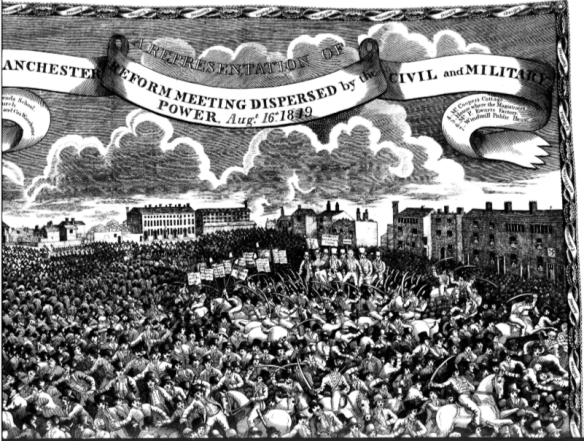
On 16 August 1819, an estimated 60,000 pro-democracy and anti-poverty activists were peacefully protesting the utterly corrupt nature of the Parliament in Westminster and demanding the reform of parliamentary representation (which afforded less than 2% of people the right to vote). The gathering took place in St Peter’s Field, Manchester in England.

The protest was precipitated by the acute economic slump, including chronic unemployment and harvest failure, following the conclusion of the Napoleonic Wars as well as by enforcement of the Corn Laws which kept the price of bread high, by blocking (or imposing tariffs on) the import of cheap grains, at the expense of ordinary people.

After arresting some key figures on the speaker’s cart at the gathering, the cavalry was ordered to disperse the crowd. Charging with sabres drawn, approximately eighteen people were killed and nearly 700 seriously injured, with the event dubbed the ‘Peterloo massacre’ by radical media in a bitterly ironic reference to the bloody Battle of Waterloo some four years earlier. See ‘The Peterloo Memorial Campaign’.

In his evocative tribute to those peaceful activists gathered at St Peter’s Field, Percy Shelley penned what might be considered the first modern words to capture a sense of nonviolent resistance in his poem ‘The Masque of Anarchy’. The poem’s 38th verse, repeated in the 91st (and final) one, is as follows:

Rise like Lions after slumber
In unvanquishable number,
Shake your chains to earth like dew
Which in sleep had fallen on you —
Ye are many — they are few.

The history of much of human existence since the Neolithic Revolution 12,000 years ago can be written simply: the endless struggle by those who are oppressed and enslaved against the insane elite that oppresses, enslaves and kills them. For brief explanations, see ‘Why Activists Fail’ and ‘The Global Elite is Insane Revisited’. For insight into the terrified psychology that traps members of the elite, and their agents, in an endless cycle of profit-making and wealth accumulation at the expense of the rest of us, see ‘Love Denied: The Psychology of Materialism, Violence and War’.

Of course, nothing has changed although four important points have given the latest manifestation of this perpetual struggle a profound importance that far exceeds earlier (and other ongoing) versions.

  1. The elite coup currently being conducted is taking place under cover of a non-existent ‘virus’ that has been labeled SARS-CoV-2.

If the evidence that the virus does not exist, such as that cited in ‘Halting Our Descent into Tyranny: Defeating the Global Elite’s Covid-19 Coup’, has not persuaded you so far, you are invited to consider the further evidence by watching ‘Do Germs Actually Make You Sick?’ or reading ‘Flaws in Coronavirus Pandemic Theory’.

As David Crowe writes in the article just cited: ‘What is being published in medical journals is not science, every paper has the goal of enhancing the panic by interpreting the data only in ways that benefit the viral theory, even when the data is confusing or contradictory. In other words, the medical papers are propaganda.’

Another option you have if you are seriously interested in the truth is to spend the time to seek out the documented scientific proof that the ‘virus’ labeled SARS-CoV-2 has been isolated, purified and proven to cause a consistent set of disease symptoms among those it ‘infects’, which is then labeled Covid-19. So far, the many of us who have searched for this document – including some of the world’s leading virologists – have not found it.

  1. This coup involves all of humanity, not just a local, provincial or national population.

For just two of the many detailed exposés of the coup and what it portends, see the report written by the Association of French Reserve Army Officers ‘Investigative Report on the COVID-19 Pandemic and its Relationship to SARS-COV-2 and other Factors’ and the video ‘Plandemic II’.

As Pepe Escobar characterizes this coup in his article ‘From 9/11 to the Great Reset’:

A drive by design towards ironclad concentration of power and geoeconomic diktats was first conceptualized – under the deceptive cover of “sustainable development” – already in 2015 at the UN (here it is, in detail).

Now, this new operating system – or technocratic digital dystopia – is finally being codified, packaged and “sold” since mid summer via a lavish, concerted propaganda campaign.

The whole Planet Lockdown hysteria that elevated Covid-19 to post-modern Black Plague proportions has been consistently debunked…

The de facto controlled demolition of large swathes of the global economy allowed corporate and vulture capitalism, world wide, to rake untold profits out of the destruction of collapsed businesses.

And all that proceeded with widespread public acceptance – an astonishing process of voluntary servitude.

  1. Unless we succeed completely in defeating this coup the very essence of what it means to be human will be taken from us.

Introducing her careful explanation of the agenda of the transhumanists, in her video Dr. Carrie Madej opens with the following words:

So what do you think about going from human 1.0 to human 2.0?… Transhumanism… is about taking humans, as we know ourselves, and melding with artificial intelligence…. That might seem kinda cool to you, we might have some superhuman abilities… that’s the idea, that’s what you see in sci-fi movies… Thinking about this topic… I [had thought that it was] many years in the future.

However, this question, this idea is now right in this moment. We need to make a decision… because I investigated the proposed Covid-19 vaccine and this is my alarm call to the world. I looked at the pros and cons and it frightens me.

And I want you to know about this, you need to be very well informed because this new vaccine is not like your normal flu vaccine. This is something very different, this is something brand new, something completely experimental on the human race. And it’s not just about being a different vaccine. There are technologies that are being introduced with this vaccine that can change the way we live, who we are and what we are. And very quickly….

Some people… like Elon Musk, who is the founder of SpaceX and Tesla Automotive, as well as Ray Kurzweil, who is one of the bigwigs of Google, … are self-proclaimed ‘transhumanists’. They believe that we should go to human 2.0 and they are very big proponents of this. There’s a lot of other people… involved with this…. I think the easiest way to explain this to you is to go with one of the frontrunners for the vaccine and go into a little bit of the history and tell you how they want to make the vaccine and I think that will speak volumes. So, for instance, Moderna is one of the frontrunners for the Covid-19 vaccine…. Watch the video ‘Human 2.0 – Transhumanist Vaccine – A Wake Up Call to the World’:

https://www.youtube.com/watch?v=i7J2SPl3-O4

Whitney Webb provides further insight into the elite intention in this regard. In one of her meticulously-researched articles – ‘Coronavirus Gives a Dangerous Boost to DARPA’s Darkest Agenda’ – she outlines the hidden technological agenda behind the Covid-19 coup that might well be delivered as part of any vaccination program by the Pentagon’s Defense Advanced Research Projects Agency (DARPA). After carefully outlining the history and ‘logic’ of what is taking place – such as the development of ‘cyborg “super soldiers”’ and ‘injectable Brain Machine Interfaces (BMIs) with the capability to control one’s thoughts’ – she concludes with the chilling words:

Technology developed by the Pentagon’s controversial research branch is getting a huge boost amid the current coronavirus crisis, with little attention going to the agency’s ulterior motives for developing said technologies, their potential for weaponization or their unintended consequences.…

Those who are fearful and desperate will not care that the vaccine may include nanotechnology or have the potential to genetically modify and re-program their very being, as they will only want the current crisis that has upended the world to stop.

In this context, the current coronavirus crisis appears to be the perfect storm that will allow DARPA’s dystopian vision to take hold and burst forth from the darkest recesses of the Pentagon into full public view. DARPA’s transhumanist vision for the military and for humanity presents an unprecedented threat, not just to human freedom, but an existential threat to human existence and the building blocks of biology itself.

  1. And one consequence of this coup will be human extinction in the near term, by one or more of four possible paths: nuclear war, the collapse of biodiversity, the deployment of 5G, the climate catastrophe.

For fuller explanations of each of these four points, together with the evidence for the paths to extinction, see ‘Halting Our Descent into Tyranny: Defeating the Global Elite’s Covid-19 Coup’.

But to highlight just one symptom of the accelerating climate crisis, for example, you can read the daily update on the 100 or so extreme wildfires in the western United States (including Alaska) on the National Interagency Fire Center website. Importantly, however, you can also read or watch Dane Wigington’s accounts of the role of climate engineering in precipitating these catastrophic fires to destroy forests on GeoEngineering Watch.

And for a taste of the accelerating collapse of Earth’s biodiversity, this article briefly explains some lowlights of the latest Living Planet Report: Bending the Curve of Biodiversity Loss – see ‘Humans behind 70% fall in world’s wildlife over last 50 years’ – while this brief report highlights another of the largely ignored risks to biodiversity and life itself. See ‘Sellafield nearly goes bang, and The Guardian totally misses story’.

So why is this being allowed to happen?

Unfortunately, despite the enormous gravity of the situation in which we find ourselves, most people remain too frightened to seriously investigate and consider the evidence regarding what is taking place and to respond powerfully. Why? Because our parenting and education models mass-produce unconsciously terrified and submissively obedient individuals. See ‘Why Violence?’ and ‘Fearless Psychology and Fearful Psychology: Principles and Practice’.

For these individuals, it is far less frightening to simply accept the elite-driven narrative, promulgated by the World Health Organization, the medical industry, governments and the corporate media, and to submissively accept the savage curtailment of our rights and freedoms. And to powerlessly hope that this assault on our identity, liberty and future will all go away ‘once we have the “virus” under control’.

But as anyone who understands political history or has even the vaguest genuine understanding of modern geopolitics well knows, this will not happen. If we do not struggle, it will be our own obedience, our own cooperation that will condemn us all to the fate being orchestrated by the global elite.

Moreover, given the depth, complexity and multifaceted nature of the threats we now face, unless we struggle strategically there is no real prospect of succeeding.

Resisting the Elite Coup so Far

Fortunately, courageous individuals all around the world are doing what they can to inform and mobilize people before it is too late. These range from individuals writing articles or producing videos to expose the simple fact that the virus known as SARS-CoV-2 does not exist and the non-existent disease labeled Covid-19 is being used to ‘cover’ the elite coup, it involves individuals working to defend our hard-won rights and freedom by using legal challenges to the Covid-19 lockdown measures and, vitally, it involves those people taking nonviolent action to defeat the coup or aspects of it.

And, of course, these measures are having impact as evidenced by the actions being taken by elite agents to suppress awareness of this effort and to thwart it. These actions range from censorship of resistance documents and videos, public disparagement of those resisting (perhaps by being labeled ‘conspiracy theorists’ or ‘anti-vaxxers’), the corporate media ignoring or misrepresenting those protesting, and sham scholarship purporting to describe those resisting as psychologically disordered – see ‘Psychopathic traits linked to non-compliance with social distancing guidelines amid the coronavirus pandemic’ and ‘Adaptive and maladaptive behavior during the COVID-19 pandemic: The roles of Dark Triad traits, collective narcissism, and health beliefs’ – to police harassment, intimidation and arrest of those who take action to resist the coup or one of its features.

But for a taste of the most recent mobilizations, here are some examples.

At the rally in Berlin on 29 August 2020, Robert F. Kennedy Jr. spoke the following words:

The pandemic is a crisis of convenience for the elite who are dictating these policies. It gives them the ability to obliterate the middle class, to destroy the institutions of democracy, to shift all of our wealth to a handful of billionaires [while] impoverishing the rest of us. And the only thing between them and our children is this crowd that has come to Berlin…. Thank you all very much for fighting. See ‘Robert F. Kennedy Jr. Speaks at Berlin Rally for Freedom and Peace’.

You can see a compelling photo of police at the Berlin rally removing their helmets in solidarity with the people at ‘Peaceful Rallies Around the World to Champion Freedom’.

At the Unite for Freedom Rally in Trafalgar Square, London, also on 29 August, David Icke spoke as follows:

We gather here today because a dangerous disease, a deadly disease is sweeping across this land and across this world and it’s not Covid-19, it is fascism…. This world is controlled by a tiny few people because of a simple sequence of imposition and acquiescence. All the way down the pyramid: imposition-acquiescence…. How do we break that sequence? We stop acquiescing! Human race get off your knees!… Stay in your home? No! Wear a mask? No! Let your kids be psychologically dismantled? No!

It is well past the time when we learn the lessons of history. The entirety of human history is one of the few controlling the many because the many acquiesce to the few. Enough!… And I say to the police opposite: ‘You have children, you have grandchildren. And you are enforcing the fascism which your own children and grandchildren will have to live with. Join us, for goodness sake and stop serving the psychopaths.’ There are billions of us and the core of the core of these psychopathic wimps…. I think I can see a way out of this. Come on people of the world. Let’s go! See ‘David Icke’s Speech at the Unite for Freedom Rally’.

But apart from earlier gatherings of large numbers of people to protest the coup that I have previously reported – see, for example, ‘Halting Our Descent into Tyranny: Defeating the Global Elite’s Covid-19 Coup’ – you can read a report of the demonstration in Ottawa on 29 August 2020 here: ‘Parliament Hill protestors denounce “tyranny,” demand end to COVID-19 restrictions’.

There was also an ‘Anti-mask and anti-vaccination demonstration in Zurich’ on 29 August 2020.

And you can see a selection of videos from around the world here: ‘People of the World Do not Consent to Tyranny’.

Meanwhile, the government of the state of Victoria (in south-eastern mainland Australia) continues to cling tenaciously to its record as the most repressive police state on Earth, even arresting people for encouraging others to attend protest rallies. See ‘Victorian woman charged over alleged anti-lockdown protest plans’ and ‘Australian Woman Arrested For Making A Facebook Post About A COVID Protest’.

This is occurring despite the obvious illegality of federal and state government actions in Australia (and Victoria particularly) which have been carefully detailed, for example, by Victorian lawyer Serene Teffaha who explains the substantial range of laws that are being violated by the government of Victoria (including sections 60, 61, 88, 90, 91, 92 and 95 of the Australian ‘Biosecurity Act 2015’ which takes precedence over its Victorian equivalent, the Public Health and Mental Well-being Act 2008) in her video ‘Lawyer Serene Teffaha explains the Law re: Bio-security act – forced medical measures & procedures’.

If you thought that the rule of law would protect you from government overreach, it might be a good time to review your belief. The law is simply another tool in the elite’s armory against you and it is being used with devastating impact right now. See ‘The Rule of Law: Unjust and Violent’.

In his 77-minute recorded statement to police after his own arrest – ‘The accused at Greater Melbourne between the 16th of August 2020 and the 27th of August 2020 did incite another person/persons to pursue a course of conduct that involved the commission of an offence by promoting a planned protest with the intention to incite person/persons to contravene namely s 203 (1) of the Public Health and Wellbeing Act 2008 by encouraging them to not wear masks and also to leave their residence without a specified reason as provided by the stay at home directions’: see ‘Solihin Millin Interview with Victorian Police After Arrest’ – 76 year old scientist Solihin Millin stated the following:

We live in a supposedly free society, surely we can debate…. Then we use our intellect and our ability to choose. It is stifled, it is censored everywhere by the Australian government, by the Victorian government, by unfortunately the police, who in my words are supporting extortion because [Victorian premier Daniel Andrews] knows that the way to people’s hearts is through their pockets and so he is extorting money from us to make us do his will and, of course, everyone is filled with fear. This is not an epidemic of a virus, it is an epidemic of fear….

I follow the value of truth, I follow the value of unconditional love, I follow the value [of] virtue… (‘help ever, hurt never’), [I follow] the value of peace and the value of nonviolence…. Our behaviour has to be Godly, it has to be pure, it has to be peaceful. However, the sword that we hold in our hand is the sword of truth…. And that is what’s not being allowed. And you will find that I have been arrested because I have a particular point of view which is against these dictates of the health minister…. So I have been arrested.

And within two seconds I can… prove to you there is no pandemic. Just some simple arithmetic: How many people have died [in Australia]? Three, four hundred? How many Australians are there? 26,000,000. How long has this nonsense been going? Seven months. This is rubbish! And they are stealing – and this is absolutely guaranteed scientifically – they are stealing old-age deaths, with comorbidity features – cancer, heart attacks, pneumonia, diabetes – and they are assigning those old-age deaths to Covid-19. And you know if you look on the Australia Bureau of Statistics website all they have to do is assume Covid-19. They don’t even have to test for it! Watch ‘Solihin Millin Interview with Victorian Police After Arrest’.

Resisting the Elite Coup Strategically

So while there is considerable ongoing resistance to this coup, given the extraordinary nature of what is at stake, my own preoccupation is to encourage and facilitate a strategically-focused resistance to it so that we have the impact we need in each of the dimensions – including those threatening human extinction – necessary for us to be successful.

Hence, if you already understand what is at stake – or you are willing to consider the evidence more carefully – but you are not yet ready to act powerfully in response, I invite you to focus more intently on how you feel in response to the threats posed and to give yourself adequate time to do so. By gaining a clearer sense of your emotional response – fear, anger, despair, frustration… – you will be better able to utilize this, along with other mental faculties such as your intellect, conscience and intuition, to craft an integrated and powerful way forward. See ‘Putting Feelings First’.

And, depending on your interests and circumstances, there is a range of possible responses that will each make an important difference (with many entailing no risk whatsoever).

Fundamentally, you might consider making ‘My Promise to Children’ which will include considering what an education for your children means to you, particularly if you want powerful individuals – not ones who are submissively obedient to elite directives and project their fear onto others – who can perceive reality and resist violence. See ‘Do We Want School or Education?’

You might consider supporting others to become more powerful. See ‘Nisteling: The Art of Deep Listening’.

You might also consider how your diet and healthcare could usefully be revised to empower you to resist medical propaganda, particularly given the extensively documented death-dealing for which corporate medicine is responsible. See, for example, ‘Pharma Death Clock’.

If you wish to strategically resist the elite coup, you can read about nonviolent strategy, including strategic goals for doing so, from here: Coup Strategic Aims.

Remaining pages on this website fully explain the twelve components of the strategy, as illustrated by the Nonviolent Strategy Wheel, as well as articles and videos explaining all of the vital points of strategy and tactics, such as those to help you understand ‘Nonviolent Action: Why and How it Works’ and ‘Nonviolent Action: Minimizing the Risk of Violent Repression’.

Given the complexity of the configuration of this conflict, however, which involves the need to fight simultaneously to retain our essential humanity, defeat the elite coup and avert near-term human extinction, it is important that our tactical choices are strategically-oriented (as are those listed on the Strategic Aims page nominated above). Hence, three further considerations assume importance.

  • First, choose/design tactics that have strategic impact, that is, they fundamentally and permanently alter, in our favor, the power relationship between the elite and us.
  • Second, when tactical choices are made, focus them on undermining the elite coup, not just features of it, such as ‘social distancing’ or the lockdowns. At its most basic, this can be achieved by using tactical choices that mobilize people to act initially, as is happening, but then inviting them to consider taking further, more focused, action as well (such as those nominated in the strategic goals referenced above). This is important if our actions are to have impact on key underlying measures, such as those being taken by the elite to advance the fourth industrial revolution, including the robotization of humans for work and war-fighting.
  • Third, choose/design tactics that also have strategic impact on the greatest threats to human survival, including the collapsing biodiversity on Earth, the threat of nuclear war, the climate catastrophe and the deployment of 5G. Given the incredibly short timeframe in which we are now working to avert human extinction, while people are mobilizing it is important to use this opportunity to give them the chance to perceive the ‘big picture’ of what is taking place – beyond lockdowns and other measures supposedly being used to tackle Covid-19 – and to act powerfully in response.

Fortunately, as more people become aware of the deeper strands of what is taking place, the energy to break the lockdowns, resist other limitations on our rights and freedoms (such as contact tracing, Covid-19 testing/temperature checks, mask-wearing and vaccinations) as well as resist the coup itself will gather pace. As I have previously outlined, using a locally relevant focus, or perhaps several, for which many people would traditionally be together – a cultural, religious or sporting event, a nonviolent action, a community activity such as working to establish a community garden to increase local self-reliance, a celebration and/or a return to work – we can mobilize people to collectively resist. As has been happening.

If you wish to focus on powerfully resisting one of the primary threats to human existence – nuclear war, the deployment of 5G, the collapse of biodiversity and/or the climate catastrophe – you can read about nonviolent strategy, including strategic goals to focus your campaigns, from here: Campaign Strategic Aims.

You might also consider joining those who are powerful enough to recognize the critical importance of reduced consumption and greater self-reliance as essential elements of these strategies by participating in ‘The Flame Tree Project to Save Life on Earth’. While you over-consume or are dependent on the elite for your survival, in any way, you are vulnerable.

In addition, you are welcome to consider signing the online pledge of ‘The People’s Charter to Create a Nonviolent World’.

Or, if you want something simpler, consider committing to:

The Earth Pledge

Out of love for the Earth and all of its creatures, and my respect for their needs, from this day onwards I pledge that:

  1. I will listen deeply to children. See ‘Nisteling: The Art of Deep Listening’.
  2. I will not travel by plane
  3. I will not travel by car
  4. I will not eat meat and fish
  5. I will only eat organically/biodynamically grown food
  6. I will minimize the amount of fresh water I use, including by minimizing my ownership and use of electronic devices
  7. I will not own or use a mobile (cell) phone
  8. I will not buy rainforest timber
  9. I will not buy or use single-use plastic, such as bags, bottles, containers, cups and straws
  10. I will not use banks, superannuation (pension) funds or insurance companies that provide any service to corporations involved in fossil fuels, nuclear power and/or weapons
  11. I will not accept employment from, or invest in, any organization that supports or participates in the exploitation of fellow human beings or profits from killing and/or destruction of the biosphere
  12. I will not get news from the corporate media (mainstream newspapers, television, radio, Google, Facebook, Twitter…)
  13. I will make the effort to learn a skill, such as food gardening or sewing, that makes me more self-reliant
  14. I will gently encourage my family and friends to consider signing this pledge.

Conclusion

There is no SARS-CoV-2 virus. There is no Covid-19 disease. Therefore, you cannot be tested for it, you cannot ‘prevent’ infection by social distancing, wearing a mask, vaccination or being under house arrest. You cannot ‘catch’ a virus that does not exist.

However, under cover of this manufactured ‘health crisis’ the global elite is fundamentally reshaping global society to serve its own purpose with millions (in industrialized countries) being marginalized and millions (in countries throughout Africa and Asia particularly, where disruption of food distribution systems has hit hardest) being killed in the process. See WFP chief warns of “hunger pandemic” as Global Food Crises Report launched’ and ‘COVID-19 could kill more people through hunger than the disease itself, warns Oxfam’.

Fortunately, awareness of what is at stake is now steadily rising. And so is the resistance. But we are a long way from dealing effectively with either the coup – and all that this portends – or the primary paths to imminent human extinction.

In the words of David Icke: ‘Human race get off your knees!’

The semi-satisfied life

Renowned for his pessimism, Arthur Schopenhauer was nonetheless a conoisseur of very distinctive kinds of happiness

By David Bather Woods

Source: aeon

On 13 December 1807, in fashionable Weimar, Johanna Schopenhauer picked up her pen and wrote to her 19-year-old son Arthur: ‘It is necessary for my happiness to know that you are happy, but not to be a witness to it.’

Two years earlier, in Hamburg, Johanna’s husband Heinrich Floris had been discovered dead in the canal behind their family compound. It is possible that he slipped and fell, but Arthur suspected that his father jumped out of the warehouse loft into the icy waters below. Johanna did not disagree. Four months after the suicide, she had sold the house, soon to leave for Weimar where a successful career as a writer and saloniste awaited her. Arthur stayed behind with the intention of completing the merchant apprenticeship his father had arranged shortly before his death. It wasn’t long, however, before Arthur wanted out too.

In an exchange of letters throughout 1807, mother and son entered tense negotiations over the terms of Arthur’s release. Johanna would be supportive of Arthur’s decision to leave Hamburg in search of an intellectually fulfilling life – how could she not? – including using her connections to help pave the way for his university education. But on one condition: he must leave her alone. Certainly, he must not move to be near her in Weimar, and under no circumstances would she let him stay with her.

What her line of 13 December doesn’t reveal is that Johanna simply couldn’t tolerate Arthur: ‘All your good qualities,’ she wrote on 6 November, ‘become obscured by your super-cleverness and are made useless to the world merely because of your rage at wanting to know everything better than others … If you were less like you, you would only be ridiculous, but thus as you are, you are highly annoying.’ He was, in short, a boorish and tiresome know-it-all.

If people found Arthur Schopenhauer’s company intolerable, the feeling was mutual. He spent long depressive periods in self-imposed isolation, including the first two months of 1832 in his new rooms in Frankfurt, the city that became his adoptive home after a stint in Berlin. He defended himself against loneliness with the belief that solitude is the only fitting condition for a philosopher: ‘Were I a King,’ he said, ‘my prime command would be – Leave me alone.’ The subject of happiness, then, is not normally associated with Schopenhauer, neither as a person nor as a philosopher. Quite the opposite: he is normally associated with the deepest pessimism in the history of European philosophy.

Schopenhauer’s pessimism is based on two kinds of observation. The first is an inward-looking observation that we aren’t simply rational beings who seek to know and understand the world, but also desiring beings who strive to obtain things from the world. Behind every striving is a painful lack of something, Schopenhauer claims, yet obtaining this thing rarely makes us happy. For, even if we do manage to satisfy one desire, there are always several more unsatisfied ones ready to take its place. Or else we become bored, aware that a life with nothing to desire is dull and empty. If we are lucky enough to satisfy our basic needs, such as hunger and thirst, then in order to escape boredom we develop new needs for luxury items, such as alcohol, tobacco or fashionable clothing. At no point, Schopenhauer says, do we arrive at final and lasting satisfaction. Hence one of his well-known lines: ‘life swings back and forth like a pendulum between pain and boredom’.

Schopenhauer knew from his extensive studies of classical Indian philosophy that he wasn’t the first to observe that suffering is essential to life. The Buddhists have a word for this suffering, dukkha, which is acknowledged in the first of its Four Noble Truths. The fourth and final of these truths, magga, or the Noble Eightfold Path that leads to the cessation of dukkha, would also inspire large parts of his moral philosophy.

The second kind of observation is outward-looking. According to Schopenhauer, a glance at the world around us disproves the defining thesis of Gottfried Leibniz’s optimism that ours is the best of all possible worlds. On the contrary, Schopenhauer claims, if our world is ordered in any way, it is ordered to maximise pain and suffering. He gives the example of predatory animals that cannot but devour other animals in order to survive and so become ‘the living grave of thousands of others’. Nature as a whole is ‘red in tooth and claw’, as Alfred, Lord Tennyson later put it, pitting one creature against another, either as the devourer or the devoured, in a deadly fight for survival.

Civilisation doesn’t help much either. It adds so many sites of human suffering. In The World as Will and Representation (1818), Schopenhauer wrote:

if you led the most unrepentant optimist through the hospitals, military wards, and surgical theatres, through the prisons, torture chambers and slave stalls, through battlefields and places of judgment, and then open for him all the dark dwellings of misery that hide from cold curiosity, then he too would surely come to see the nature of this best of all possible worlds.

If you had to guess the world’s purpose just by looking at the results it achieves, you could only think it was a place of punishment.

These observations, the first on human nature and the second on nature itself, support Schopenhauer’s pessimistic claims that life is not worth living and the world should not exist. We are never given in advance the choice whether to exist or not but, if we were, it would be irrational to choose to exist in a world where we can’t profit from life but only lose. Or as Schopenhauer puts it in another key line: ‘life is a business that does not cover its costs’.

Is there a place for happiness in all this? There certainly should be. It can’t be ignored that happiness exists; too many people have experienced happiness for themselves and seen it in others. But once Schopenhauer admits that happiness exists, there is a risk that his pessimism will start to unravel. Even if it’s true that every living thing must encounter suffering, this suffering might be offset by finding some amount of happiness too. Some suffering might be the means to a happiness worth having or even a part of such happiness. If this is so, then Schopenhauer hasn’t yet given us a good reason not to want to exist. Happiness might make life worth living after all.

Schopenhauer doesn’t deny that happiness exists. He does, however, think that we are generally mistaken about what happiness is. According to him, happiness is no more than the absence of pain and suffering; the moment of relief occasionally felt between the fulfilment of one desire and the pursuit of the next. For example, imagine the satisfaction of buying your first home. What makes us happy here, Schopenhauer would say, is not the positive state of being a homeowner, but the negative state of relief from the worries that come with not owning your own home (as well as relief from the notoriously stressful process of buying property itself). This happiness, Schopenhauer would be quick to point out, is likely to be short-lived, as a host of new worries and stresses emerge, such as paying down the mortgage, or doing up the bathroom.

He reinforces his stance on the negative nature of happiness with some astute psychological observations. All of them highlight the difficulty of achieving and appreciating happiness. For example, we tend not to notice all the things that are going well for us, but instead we focus on the bad things, or as Schopenhauer puts it with his keen eye for an analogy: ‘we do not feel the health of our entire body but only the small place where the shoe pinches’. If we do manage to resolve whatever is bothering us, we tend quickly to take it for granted and shift our focus to the next problem: ‘it is like a bite of food we have enjoyed, which stops existing for our feeling the moment it is swallowed.’ Moreover, however small the next problem, we tend to magnify it to match the previous one: ‘it still knows how to puff itself up so that it seems to equal it in size, and so it can fill the whole throne as the main worry of the day.’ Consequently, we rarely feel the benefit of the things we have while we still have them: ‘We do not become aware of the three greatest goods in life as such – that is, health, youth and freedom – so long as we possess them, but only after we have lost them.’ Or as later immortalised in lyrics by Joni Mitchell: ‘You don’t know what you’ve got ’til it’s gone.’

None of this is to say that no one ever feels happy. Again, this would fly in the face of the personal experience of countless people who have felt happy at some point in their lives. It does tell us, however, that happiness differs from pain and suffering in the way that it’s felt. Pain and suffering announce themselves whether we like it or not. They highlight that something is wrong and needs fixing. However small and trivial the problem might be, pain and suffering will make it our number-one priority. Happy feelings, on the other hand, don’t always announce themselves. We can have all the things that should make us feel happy and yet fail to feel happy. It could be because pain and suffering are tirelessly flagging up things not to feel happy about, but it could just be that – like the mouthful of food after it’s swallowed – we have forgotten all the things that are doing us good.

For this reason, Schopenhauer emphasises the essential role of recollection and reflection in generating feelings of happiness: ‘Our cognition of satisfaction and pleasure is only indirect, when we remember the sufferings and privations that preceded them and ceased when they appeared.’ To appreciate the benefit of having things, in other words, we must recall what it was like not to have them. The fact that this happiness is based on the cessation of previous suffering is not incompatible with intense feelings of pleasure. The intensity of the pleasure is proportionate to the intensity of the suffering that preceded it. Although far from happiness, Primo Levi gives a powerful example of the possibilities of profound relief in his book If This Is a Man (1947), his account of imprisonment at Auschwitz, when he reports on the brief moments between the labour tasks he was forced to complete: ‘When we reach the cylinder, we unload the tie on the ground, and I stand stiffly, my eyes vacant, mouth open, and arms dangling, sunk in the ephemeral and negative ecstasy of the cessation of pain.’

In fact, recalling our own actual suffering from the past is not our only option for feeling good about the present. We can instead reflect on all the suffering that was merely possible for us. This kind of reflection might be just as effective in generating feelings of relief, only about the limitless bad things that could have happened to us but fortunately never did. We might even reflect on the bad things that are happening or have happened to other people. In this respect, Levi’s painful recollections offer us another service: it is impossible for observers to read If This Is a Man without feeling extremely fortunate never to have encountered the scarcely imaginable hardships and indignities that Levi describes.

On the pleasure of avoiding another’s misfortune, Schopenhauer quotes Lucretius:

It is a joy to stand at the sea, when it is lashed by stormy winds,
To stand at the shore and to see the skipper in distress,
Not that we like to see another person in pain,
But because it pleases us to know that we are free of this evil.

Schopenhauer wisely cautions us about this kind of pleasure because it ‘lies very near the source of true and positive malice’. He might have in mind its proximity to – or identity with – Schadenfreude, the attitude of taking joy in the suffering of others. Lucretius identifies the thin line that separates Schadenfreude from sadism: it is not that we enjoy someone else’s misfortune, but that their misfortune acts as a reminder of how fortunate we are, and enables us to feel pleased about it.

Sometimes, however, Schopenhauer condemns Schadenfreude in the strongest terms: ‘the worst trait in human nature is Schadenfreude’. The difference between Schadenfreude and cruelty, he says, is merely the difference between attitude and action: ‘As Schadenfreude is simply theoretical cruelty, so cruelty is simply practical Schadenfreude.’ While attitudes such as envy – wanting someone else’s success for yourself – are flawed but merely human and therefore excusable, Schadenfreude is positively ‘devilish’.

On Schopenhauer’s understanding of things, then, in order to be happy, we must aim to eliminate pain and suffering from our lives, and in order to feel happy, we must also take the time to reflect on their absence. In search of an ethical system based on similar insights, Schopenhauer turned not to the moral philosophers of his own day but instead to ancient Greek schools of thought. Of all of these schools, he suggests, his own views on happiness have the closest affinity with Stoicism: like him, he claims, the Stoic philosophers such as Stobaeus, Epictetus and Seneca identified a happy life with a painless existence.

In general, ancient Greece is a good place to start the search for a philosophy of happiness because, according to Schopenhauer, the Greeks agreed on one thing: the task of practical reason is to figure out the best kind of life and how it can be achieved. Furthermore, Schopenhauer says, with the exception of Plato, they all equated this task with providing a guide to a happy life. They cared only about how virtue can improve our earthly lives, and thought little about how it might relate to any life after death or otherworldly realm.

Thinking of happiness as the avoidance of suffering is the view that distinguishes Stoicism from other schools, according to Schopenhauer, as well as the one he shares with it. He identifies two functions of practical reason that the Stoics used in their quest for a painless existence. There is the indirect function, on the one hand, where careful planning and forethought allow the Stoic to pick out and follow the least painful path through life. On the other, there is the direct function, where instead of removing or avoiding obstacles in life’s path, the Stoic reconsiders these obstacles in a way that changes his feelings towards them. One is a change in practice, while the other a change in thinking.

Stoicism’s distinctive contribution to ethics lies in the nature of the change in thinking it recommends, according to Schopenhauer. First, the Stoic observes that painful feelings of privation ‘do not follow immediately and necessarily from not-having, but rather from wanting-to-have and yet not having’. It then becomes obvious that to avoid these painful feelings altogether, we must eliminate the wanting-to-have part. Furthermore, the bigger our ambitions about what we want to have and the higher our hopes of achieving them, the sharper the pain when we fail. If we cannot help wanting to have some things, then we should at least keep those wants within realistic and achievable proportions. Perhaps lapsing back into his own pessimism, Schopenhauer adds that we should become suspicious of ourselves if we begin to expect a great amount of happiness waiting for us in the future; we are almost certainly being unrealistic. ‘Every lively pleasure,’ he says, ‘is a delusion.’

Thus the Stoic aims for ataraxia, a state of inner calmness and serenity however turbulent the world outside might be. Schopenhauer believes his observations about the inevitability of suffering can help to achieve this aim if taken on as convictions. Pain and suffering sting all the more if we think they are accidental and could have been avoided. While it might be true of any particular suffering that it could have been avoided, suffering in general is unavoidable and universal. If we manage to take this on board, Schopenhauer thinks, we might worry less about encountering suffering, or at least worry about it in the way that we worry about other things we can’t avoid, such as old age (for most of us) and death.

The last thing we should do is believe the opposite: that we are destined to find happiness in life rather than encounter suffering. If we believe the world owes us happiness, we are bound to be sorely disappointed, not least because, when we do achieve whatever we think will make us happy, we will have new unfulfilled desires that will supersede the old ones. We are also bound to feel resentment towards the obstacles that stand between us and the happiness we feel entitled to. Some people, Schopenhauer observes, concentrate and externalise this resentment by setting a goal for a happy life that on some level they know is unachievable. Then, when it never materialises, they always have something other than themselves to point to and blame for why they aren’t happy. ‘In this respect,’ Schopenhauer says, ‘the external motive for sadness plays the same role that a blister remedy does on the body, drawing together all the bad humours that would have otherwise been scattered.’

While Schopenhauer does feel an affinity for the Stoic way of thinking, he doesn’t see eye to eye with Stoicism on every issue. In fact, he rejects the basic premise common to all the ancient Greek schools; a happy life is not even possible, according to Schopenhauer, because, remember, all life is suffering. Devising systems of morals to act as a guide to a happy life is, as far as Schopenhauer is concerned, a fool’s errand. The logical end of Stoicism is especially sticky, according to Schopenhauer, because it conceives the goal of happiness as the task of eliminating pain. If he is right that all life is suffering, then the only way really to eliminate suffering is to eliminate life itself. The ultimate end of Stoicism, then, would be suicide.

Instead, Schopenhauer gives us a different picture of a happy life, one that is not total happiness. While suffering can’t be excluded from life altogether, it can be reduced by making sure no kind of suffering goes on for too long. Going back to Schopenhauer’s image of the pendulum, a happy life would include enough success in fulfilling our desires that we are never in too much pain, but also enough failure to ensure that we are never too bored. It would be a ‘game of constantly passing from desire to satisfaction and from this to a new desire, a game whose rapid course is called happiness and slow course is called suffering.’ A well-paced oscillation between wish and fulfilment, which is at most a semi-satisfied life, is the best we can hope for as far as happiness is concerned.

If a good life, conceived as a happy life, is a futile aim for ethics, this raises the question of what the real aim of ethics should be. The background of Schopenhauer’s pessimism is never far away from this question. It’s not obvious to Schopenhauer that the semi-satisfied life presented above is better than nonexistence. Such a life would still contain a preponderance of suffering, even if no kind of suffering would go on for too long.

Rather than trying to make the world into a happy home, then, Schopenhauer opts for an ethics that might save us from the world altogether. He endorses asceticism, the practice of severe self-denial exemplified in the saints and mystics of many world religions, over Stoicism:

How completely different they seem, next to the Stoic sage, those who the wisdom of India sets before us and has actually brought forth, those voluntary penitents who overcome the world; or even the Christian saviour … who, with perfect virtue, holiness and sublimity, nevertheless stands before us in a state of the utmost suffering.

Note that Schopenhauer’s otherworldly ascetics are not happy. They have entirely given up the game of a semi-satisfied life. Instead, they accept, and come to symbolise, the universality and inevitability of suffering, in order to transcend it. In relation to the ascetic, Schopenhauer is more likely to use words such as composure and peace than happiness and pleasure.

To say that Schopenhauer endorsed asceticism might appear to suggest that he practised it himself. Far from it. The most ascetic part of his daily routine in Frankfurt was the cold sponge bath he took between seven and eight every morning. After that, he made his own coffee and settled down to write for a few hours before receiving selected visitors, until his housekeeper appeared at noon, cuing them to leave. He played flute for half an hour each day – an activity that, according to Friedrich Nietzsche, belied the sincerity of his pessimism – and then made his way to his favourite spot to eat, the Hôtel d’Angleterre, for a hearty afternoon meal. After this he might make himself another coffee, take an hour’s nap, then read a little light literature before walking his dog, a white poodle called Atma, while smoking a cigar, all before settling in for his typical nine-hour sleep. The life of the Buddha it was not.

Schopenhauer’s endorsement of asceticism is more admiration than aspiration, then. In his defence, and again unlike the ancient Greeks, Schopenhauer thought that the theoretical study of ethics had little to do with living an ethical life, or vice versa: ‘it is just as unnecessary for the saint to be a philosopher as it is for a philosopher to be a saint,’ he wrote, ‘just as it is completely unnecessary for a perfectly beautiful person to be a great sculptor or a great sculptor to be beautiful.’ Only a small number of exceptional individuals achieve the ascetic life in which true salvation consists, he said. The rest of us have to make do with a semi-satisfied life at best. But if Schopenhauer’s way of living constitutes an example of such a life, it might not seem so bad after all.

Slavery of Fear

By Gilbert Mercier

Source: News Junkie Post

Flee, fight or freeze

In the natural world, there are two kinds of responses to imminent threats: either flee or fight. Most of the time, in order to maximize chances of survival, the decision has to be made by individuals or groups in less than a split second. On one hand, the option to flee is motivated by this immediate assessment. It has, of course, an important fear factor. On the other hand, the option to fight seems brave on the surface, but intense momentary fear perhaps had to be overcome by a massive adrenaline rush. Fear is a primal and powerful emotion that is essential for survival, but it can also be used as a tool to control people through mental, emotional and even physical paralysis.

There is a third behavioral option when fear completely paralyzes the individual or a group: it is the freeze option, similar to the imaginary sense of the impossibility to act or react for someone going through a deep clinical depression. As a collective or a nation, this freeze or depressed state when facing danger is also possible. Eighty years ago, with the exception of General Charles de Gaulle and a few men who decided to flee to carry on the fight, France capitulated to the German enemy. France froze and became trapped in the ignominy of a collective depression that was the collaboration by the Vichy government.

In human society, during the barbaric lunacy that has been called the art of war, many substances have been used in history to make soldiers less fearful before combat. Drinking alcohol is an obvious one in Europe; chewing coca leaves for South American native tribes; smoking or eating hashish in the Middle-East and Asia — this concentrated form of cannabis is the etymological origin of the word assassin; more recently, during World War II’s spectacular German Blietzkrieg 1940 attack on France, German troops were given the powerful methamphetamine Pervitin. Naturally, the notion of the fearless master-race Nazi soldiers was nothing but a mythology! The intrepid soldiers of the Reich and their beloved Furher, Adolf Hitler, had the fearlessness of crystal-meth addicts. Pervitin kept Nazi troops awake and fighting for days and nights, and increased their aggressive behavior.

Of course, one cannot reduce the apparent fearless madness of the entire German nation during World War II to the massive consumption of Pervitin. What was probably the most sophisticated propaganda machine of the time had been put together by the Nazis; it had been brainwashing the minds of Germans, young and old, for almost a decade. Hitler and co. spent about 10 years molding a sophisticated and cultured society into their ideological monstrosity with the mythology of the purity of blood, master race, and crucially the invention of Jews as evil, depraved and subhuman personified. If this was possible in an advanced society like Germany circa 1930, one must consider that such a gruesome turn of events is possible anywhere at any time, as madness can be a contagious disease.

Fear of other cultures is a crucial component of racial hatred. Once a group of people like the Jews in Nazi Germany or the Africans during the slave trade to the Americas have been thoroughly dehumanized, it becomes easy, almost trivial, to torture and kill them. All propagandists are psychologists. Therefore they understand that their manipulation of fear gives birth to powerful dark impulses. A fear of abandonment as a child can later bring about morbid jealousy and various sociopathic behaviors. A fear of destitution drives the compulsion to greed. Collectively, fear can be a giant web of invisible chains that enslave a society in a psychological straight jacket. In this regard, September 11, 2001 and its aftermath was a turning point, and to some extent the Western world has been conditioned to live in fear ever since.

The war of terror

Putting aside the inside-job narrative, what matters is how crises are used. The net benefit of 9/11 for some was to create a constant sense of uncertainty for the population, and cynically a jackpot for the military-industrial complex. It was the notion that the enemy could be lurking anywhere. The war on terror was, and still is, a conceptual war: an absurd Orwellian war without end because it is supposed to fight diffuse groups of people called terrorists whose only common ground is the use of fear as a weapon. Because fear breeds more fear, the 20-year conceptual war made people, almost worldwide, believe security was more important than personal liberty. The war on terror made people slaves of fear, and they were told it was for their own good.

Do not blame only Donald Trump for the current authoritarian police state in the US. The Department of Homeland Security was a fascist invention of George W. Bush, using 9/11 as a pretext, and it was maintained by Barack Obama, every time with the complicity of Congress. On one hand, the war on terror wrecked several countries: killed or displaced millions at a cost of several trillion dollars. Everyone knew it was not winnable. On the other hand, what worked for the US and its Western allies was the almost 20-year old war of terror that slowly victimized their own populations with the jackboot of a police-military apparatus constantly on their throats. When fear overcomes an entire society it can be beaten to submission. Where fear rules, servitude becomes acceptable.

Strategy of fear and the COVID-19 pandemic

The COVID-19 pandemic has given an entirely new dimension to the slavery of fear initiated on 9/11. There have been almost two decades, which is one generation, of a war of terror on the collective psyche. There could not have been a better introduction to the global fear of a pandemic. A diffuse Muslim fundamentalist enemy who could be anywhere has morphed to an invisible virus that is everywhere. The quantum leap was easily made, because it is intrinsically the same mechanism. It went a lot further than 9/11, because governments managed to convince their populations to submit themselves to various level of lockdown. Imagine this! Almost all complied worldwide, with little resistance and absolutely no organized rebellion.

Just like the post 9/11 world infringed on human rights and privacy with various invasive policies, the post COVID-19 world has adopted its own arbitrary rules. They have in common that they fuel a fear of everyone and everything and engender agoraphobia, obsessive-compulsive disorders, Stockholm syndrome, and depression. The panoply of mandatory social distancing measures and mask wearing decrees have made people hostile, fearful, and paranoid. Authorities worldwide have been on a joy killing mission. Populations have been successfully infantilized and traumatized by forbidding the most essential human behaviors: the joy to see a smile or the surprise of a flaring nostril; the smell of a ripe fruit at a market; the fortitude of what seems to be a time gone when you could dance with a stranger and perhaps steal a kiss.

More than two hundred years ago, Haitian slaves managed to free themselves, and in the process they defeated the world’s three largest empires: respectively, the French, British, and Spanish. Have we all become such pathetic shadows of our former selves? Are we so weak and cowardly today that we cannot free ourselves from the billionaire class and the fear it is imposing on us?

Questioning Covid19: Why I Will Never Trust the Medical Establishment about Respiratory Disease. A Case History

By  Anita McKone

If you are interested in finding out the truth about the Covid19 scare, you can look for information in many areas. Understanding the corporate (profit-driven) and petrochemical-based history of the medical establishment helps. Being aware of the lack of scientific empirical and laboratory evidence for microbes, and microscopic particles such as viruses, causing disease helps. Being aware of other proven or highly probable causes of respiratory disease helps. It also helps to understand the emotionally discomforting truth that terrified people who claim to be both authorities and sane will knowingly or unknowingly lie to you in order to try to get you (and their own terror) under control.

In my case, whenever I am confused or unsure about the details of information I receive from the variety of sources I investigate, I am ‘lucky’ to have a fallback position that is unequivocally clear and trustworthy. This knowledge is based on my own experience of suffering acute and chronic respiratory disease, and the outcomes I experienced while spending the first 25 years of my life following the advice of the medical establishment, and the second 25 years of my life totally rejecting ‘assistance’ from the medical establishment and following a variety of natural healing/health maintenance modalities instead. Without having to understand or argue the merits of any particular detail of the science of corporate medicine or natural biological health and healing, I have seen their results.

In brief: I suffered for the first 25 years of my life from chronic respiratory disease, including being hospitalised twice with pneumonia. My chronic bronchitis was first diagnosed as caused by bacterial infection, and later diagnosed as caused by a virus. When I stopped taking the advice of the medical establishment and my parents, who told me that I would die if I did not take antibiotics and that I could never be genuinely well, and switched to a variety of natural healing modalities, my life transformed radically. These modalities included listening to my physical feelings and emotions, changing my diet, understanding my breathing process, and bodywork to release muscle tension.

26 years later, at the age of 51, I use no pharmaceutical drugs or vaccines and experience the health and fitness that was denied me as a child and young person. I have not had bronchitis for 5 years, and have had only two mild colds in the past 3 years (despite the reported increase in the numbers of people suffering ‘seasonal influenza’ and the increasing severity of their symptoms). Other health problems I had when I was younger, including heart dysfunction related to bronchitis, have also been resolved. My experience has taught me that fear of my illness was the most important element keeping me sick, and that the medical establishment had no capacity to accurately diagnose the causes of my illness, nor treat it effectively.

I cannot say what precise factors have led to the development of acute respiratory disease in each individual who is currently suffering or dying from it. However, my experience leads me to believe that it is likely to be a combination of factors, including fear and emotional suppression from living in unsafe social circumstances, toxicity from airborne pollutants and poisonous substances that have been ingested or injected into the body, and lack of complex nutritional elements that allow the body to function optimally and recover from emotional stress and toxic damage.

I therefore make the following suggestions for you to consider if you are experiencing symptoms of respiratory disease in the current social climate of crisis, panic and control.

If you have a choice:

1) Do not get tested for Covid19 – being categorised as having Covid19 will increase both your fear and the fear of others and may limit your options for taking safe and sensible action to support your healing.

2) Do not allow yourself to be hospitalised – you will be isolated from anyone who personally cares about you, in the presence of scared (if well-meaning) hospital staff, and removed from the possibility of any treatment other than toxic drugs and invasive procedures, which will add to your level of stress and fear, and decrease the likelihood of your survival.

3) Understand that your state of health is not dependant on whether or not you are ‘infected with a virus’. Even if pathogenic viruses existed (and there are a number of critiques showing the logical faults and lack of proper scientific process in virology theory and experiments respectively: see, for example, What Really Makes You Ill? Why everything you thought you knew about disease is wrong. But you can read more in ‘Dismantling the Virus Theory – The “measles virus” as an example’ and watch the video interview ‘The Real Science of Germs: Do Viruses Cause Disease?’ ), my experience shows that it is other elements that determine health. You are therefore not responsible for the health of anyone else – you are not a dangerous plague carrier who should feel guilty for harming others if you do not accept the label ‘infected with Covid19’.

4) Consider the four basic principles of health and healing at the end of this article.

A case history of my acute and chronic respiratory disease and healing

I was born in 1969 in New South Wales, Australia, and grew up in Canberra in the Australian Capital Territory. I was injected with a number of vaccines containing toxic substances as a baby, which may have been a contributing factor in my developing pneumonia at the age of 18 months. I was hospitalised at this time, and again at the age of three years. I was treated with antibiotics in hospital and put in an oxygen tent to help me breathe. I was told by my mother that when I was in the oxygen tent when I was a baby, she climbed in with me against the wishes of the nurses. Far from reassuring me, this would have increased my level of fear, as my mother is an extremely anxious and explosively violent person, and she was only holding me to try to relieve herself of her anxiety, not because she was in a state to calmly relieve mine. My fear of being killed by my mother when she violently exploded and the fear generated by her general state of anxiety (caused by her own extremely violent and emotionally deprived upbringing) was a major factor in the disturbances to my breathing and lung function throughout my younger years.

My memory of the hospital when I was three is traumatic – I remember feeling extremely isolated. Visiting hours were limited and strictly upheld, which meant that my father, who I did find reassuring, could not spend significant time with me. Also (bizarre but true) my teddy bear was stolen by another family with a sick child and as any parent knows, familiar soft toys do provide significant reassurance to children, even if artificially so. I survived both hospitalisations, and was told that I would have died without the antibiotics. The doctors and my parents believed that there was no other way of helping me through these crises – it was ‘hospital and drugs’ or ‘nothing’.

As a result of the pneumonia, one small area in my left lung was permanently damaged (at least, it has not healed up to this point) although I did not discover the damage until I was 26 when a naturopath/homeopath asked me if there was any difference in how my left and right lungs felt. This was the first time anyone had asked me to focus on my lungs in detail in order to learn something about them, and I discovered that my left lung was permanently painful, particularly when I coughed for any reason, while my right lung was not.

As a result of the natural healing I have undertaken since, this pain has reduced to one patch about 2 centimetres in diameter. I have heard the medical establishment’s opinion in recent years that lungs don’t have nerves and therefore it is not possible to feel pain in them. This directly contradicts my actual experience of being able to feel a variety of feelings (e.g. tickling caused by breathing something in accidentally, pressure in my right lung when I cough, pain in my left lung when I cough, and the tightening of my airways when asthmatic). When ‘medical science’ contradicts my experience of reality, obviously I question the validity of the theory, not my experience.

I suffered an extreme asthma attack when I was four, when I couldn’t breathe at all for a short amount of time, but after this I had frequent non-acute asthmatic reactions only, mainly when I tried to exercise or when I had bronchitis, which I suffered 3 or 4 times per year up until I was 19. At that time, I left home and the incidence dropped to twice a year. My bouts of bronchitis would last for about 14 days each time and I would not go to school/university for about 10 days because I felt too sick in my body to do so. Among other symptoms, my throat and lungs would become ‘cold’, tense and aggravated, causing me to swallow repeatedly for about 24 hours (with virtually no sleep), before developing an extremely painful, hacking cough and coughing up heaps of green phlegm. The bronchitis was less extreme than my original pneumonia, but ongoingly debilitating, as if my body had worked out a way of managing my symptoms that didn’t risk killing me but instead put me into a ‘holding pattern’ that was endlessly repeated.

I breathed in a powdered drug when I was ill with bronchitis as a child, and then switched at some point to using Ventolin, until the age of 14 when I accidentally overdosed myself, suffering extreme fear and visual distortion brought on by the drug’s artificial stimulation of adrenalin. I was very angry that I had never been warned of the danger and I refused to use Ventolin after this time.

I also took Brondicon, a cough syrup full of alcohol and sugar. I was given antibiotics every time I was sick and I have a lot of memories of waiting in doctors’ surgeries reading children’s books while waiting for my 10 minute appointment (which generally ran along the lines of ‘I’ve got bronchitis again’… ‘Right, here’s a prescription for antibiotics’.) When I was sick I also went to a physiotherapist who would thump my back and encourage me to cough, even when the phlegm was not in a sufficiently fluid state to be coughed up. The theory behind this treatment was that I was clearing my lungs of ‘harmful bacteria’. I later discovered that this deliberate coughing increased the damage and irritability in my left lung and made it more susceptible to aggravation and illness.

Influenced by my parents’ and the doctors’ fears and their incapacity to listen to how I felt and what I needed, I never expected to be well and being sick became a key part of my identity. I lived in dread of my next bout of illness. Since I had never experienced being well, my general state of ill health was utterly normal to me, and I had no idea just how sick I was. I later discovered that my entire oxygenation system, including my heart, was not functioning properly. I therefore found any aerobic exercise both painful and extremely uncomfortable in my body due to the effort of exerting myself without adequate oxygen reaching my cells. Climbing a steep hill, for example, was very difficult for me.

My posture was off kilter because of constant muscle tension caused by the pain in my lung, and this tension and imbalance eventually led to me suffering cartilage, tendon and ligament injuries. Additional illnesses I suffered that were undetected by doctors were low blood sugar (diet related), chronic constipation (caused by diet and by stress) and extreme cramping and blood loss during menstruation (caused by lack of magnesium).

One factor that I believe was important in remaining sick with respiratory disease was the toxic nature of the cleaning fluids used in my childhood home, particularly furniture polish that was sprayed every week as part of the housecleaning routine.

Most important though, was the constant emotional and physical tension I experienced as a result of living with my anxious and violent mother. Her emotional state and behaviour continually triggered me into fear and anger, but I was not allowed to consciously feel or express these things. These feelings became wrapped up, in complex and contradictory ways, with my experience of being physically ill.

The most obvious connection between my emotional state and the state of my lungs is that when I feel afraid that I am going to be attacked, unreasonably controlled or prevented from telling the truth about how I feel and what I need, I have an immediate, strong asthmatic reaction.

The last time I took antibiotics for bronchitis was when I was about 22 and living in Melbourne. The next time I had bronchitis I visited a different doctor than usual and I was told that my symptoms were caused by a virus (‘influenza’) not a bacterial infection, so antibiotics were not appropriate. I imagine this doctor was moving with the tendency to claim that all sorts of previously ‘non-viral’ diseases were now caused by viruses, as the medical establishment began its push towards inventing and selling greater and greater numbers of vaccines. (Vaccines are, obviously, more profitable for corporations than antibiotics because they are recommended for or forced upon everyone as a preventative measure, rather than being used by only those who are showing symptoms of disease.)

I was annoyed that I couldn’t have my ‘reassuring’ antibiotics, and that I was being told that the same symptoms I had been experiencing my whole life were some other disease (‘flu’, not ‘bronchitis’). I don’t know if I was told I should have a flu vaccine, or whether they were available in the early 1990s, but I certainly had no faith in the ‘new’ diagnosis. I had never been treated as if my bronchitis was infectious, as influenza is supposed to be, and I have no memory of my mother, father, sister or (later) boyfriend being ill with respiratory symptoms at the same time as I was when I lived with them.

Ironically, however, this shift in medical establishment diagnostic fashion led to a good outcome for me: the fear that I had had all my life that I would ‘die’ without antibiotics was proven untrue. Without antibiotics, my bronchitis followed exactly the same pattern that it always had – no better, no worse. Although I didn’t think about it then, this proved that however many bacteria may have been in my lungs, breaking down the dead substances, they were not attacking my lungs and ‘causing’ my disease.

Having had my fill of doctor’s surgeries, I never again bothered to visit one when I was sick with respiratory disease.

So, I had stopped poisoning my system unnecessarily with antibiotics, and I was living at a physical distance from my mother, but at this stage I was not actively healing emotionally or physically from all the damage that had been done and I was still very unfit, got bronchitis twice a year and suffered occasionally from candida, as I had done since my late teens.

That changed when I got together with my husband, Robert, when I was 25. As part of his research, he was aware of critiques of the medical establishment, had changed his diet to improve some of his own health problems, and was using a number of natural health approaches. He also, most importantly, listened to me without fear when I expressed how I felt emotionally and physically, and supported me to follow my own feelings. In other words, he allowed me to exist, without interference and without trying to control me, because fundamentally he trusted me to be guided by my own internal communications towards a more whole state of being. He told me, in effect, that I existed, that I mattered and that he trusted me to be sensible, intelligent and capable of learning from my own experiences, including failures and successes.

I was quite stunned to find that Robert was not afraid of my illness. It seemed illogical to me at first simply because a fearful reaction to illness was the only thing I had ever known. The first time I was sick after we were together, he held me for four hours while I could barely breathe because my lungs were so badly clogged and asthmatic. This was a more extreme event than usual, similar to my original pneumonia, but it was a ‘healing crisis’ that marked the beginning of the change in my symptom patterns which has led to my current healthy state. Being held with love and reassured that I wasn’t going to die, I could allow my body to do what it wanted to rebalance itself. Robert’s trust in me allowed me to trust myself, and that trust made all the difference.

Over the next 26 years, my emotional and physical health improved dramatically as I allowed myself to become consciously aware of and physically feel all of my emotions (mostly fear, sadness and anger) related to my mother and other conflicts in my life, as well as feeling the physical pain and asthmatic reactions associated with the damage in my left lung. I stopped trying to make these emotional and physical reactions ‘go away’ and instead experienced them without fear until they went away of their own accord.

I also changed my diet to one of organic, vegetarian wholefood, with no salt, sugar, white flour, caffeine or alcohol. I stopped cooking food in oil or microwaving it. I had never been a recreational drug user, since smoking was impossible with my damaged lung, and my Ventolin experience put me off trying to artificially stimulate my mind and emotions with chemicals. The diet I chose was based on principles explained by Paavo Airola in his book Hypoglycemia: A Better Approach. I also take care not to use or inhale toxic substances wherever possible, including deodorants and perfumes, as well as cleaning fluids, paint fumes, incense, ‘passive’ cigarette smoke and wood smoke. (For those wishing to avoid lung cancer, I have noticed that my damaged lung reacts far more painfully and asthmatically to fragrances – perfume, deodorant, aftershave and incense – than to cigarette smoke.)

I have investigated and found useful many natural healing modalities, which have assisted with my emotional healing, my nutrition and my muscle tension.

These include:

‘Feelings First’ emotional feeling and integration, developed over 14 years by me and my husband Robert J. Burrowes. See ‘Fearless Psychology and Fearful Psychology: Principles and Practice’ and Feelings First.

Gerson Therapy, which involves drinking fresh vegetable juices (for vitamins, minerals, antioxidants and enzymes) and doing coffee enemas (to assist with liver detoxification), among other elements. I have undertaken a scaled-down version of the intensive therapy on a number of occasions and I still drink two juices per day whenever possible and do regular coffee enemas, which are also good for body awareness and ‘meditative’ time. See Healing the Gerson Way: Defeating Cancer and Other Chronic Diseases.

Buteyko breathing method, which explained to me the importance of nose breathing to protect the damaged part of my lung and to maintain the correct balance of CO2 and oxygen in my blood stream to allow effective oxygenation of my cells. It also explained the natural functions of asthmatic reaction in counteracting fear-based hyperventilation and in limiting exposure to toxic substances.

Naturopathy, for a variety of nutritional elements that I have not been able to account for sufficiently in my consumption of fresh food/juices (owing to my living circumstances and the generally decreasing mineral content of even organically grown food). Supplements I take include iron, magnesium and CoQ10 and I am careful to take varieties that my body easily absorbs. Taking CoQ10 fixed my heart dysfunction, iron helps with my energy levels, and magnesium fixed my menstruation cramps and over-bleeding.

Osteopathy, for regular muscle release and manipulations to adjust my spine and limbs.

Rolfing (also known as Structural Integration) to work on the loosening of muscle fascia to allow my muscles to relax and return to balanced positions in my body’s overall structure.

Feldenkrais method (also known as Functional Integration or Awareness Through Movement) to reintegrate the nervous elements of physical movements that have become uncoordinated as a result of injury and fear.

Myotherapy, including dry needling, to release extreme tension in certain muscles and tendons that had not responded to other forms of bodywork.

Deep Recovery massage balls, with the ‘track’ necessary to hold balls in place so that I can regularly do my own muscle/fascia release on any area of my body without having to continually pay for Myotherapy or Rolfing sessions.

Yoga for assistance in stretching, strengthening and coordinating muscles and realigning my spine.

Non-manipulative Chiropractic method for an understanding of subtle whole body communication.

Gym work, to strengthen and reintegrate muscle action around knee and shoulder injuries arising from distorted posture.

I have found all the natural health modalities I have tried to be genuinely complementary (in a way that the medical establishment’s regime is definitely not). That is, there is always something to be learned and integrated from every natural modality into a more complete understanding of the way I function and dysfunction. Obviously, not all practitioners are equally capable, and it is important to find practitioners whose work you trust.

While I recognise that people who are seriously impoverished will have limits on their access to good natural health care, I have done all of the above on an extremely limited budget, having lived below the Australian taxable limit since 1997. I have had no assistance from government Medicare (which does not cover natural healing modalities) or private health insurance.

You may notice that none of the modalities I have mentioned lend themselves to corporate profit. In particular, eating fresh organically grown food works against three corporate industries that are linked by their dependence on the parent industry of artificial chemistry, which developed out of the petrochemical industry. Industrial agriculture relies on artificial fertilizers, pesticides and herbicides; the processed food industry employs chemists to come up with endless varieties of false smells and tastes to cover the fact that processed food that has a long shelf life is tasteless and nutritionless; and the pharmaceutical industry uses artificial chemistry to create toxic drugs, following the age old superstition that by poisoning the body we can control and ‘fix’ it. Many of the products from these industries are easy for corporations to patent, monopolise and sell as long as they can convince people they ‘need’ them. So when the medical establishment screams that natural solutions are not proven to work, are a waste of money, and may be dangerous, one might consider that the threat the establishment is feeling is to its bank balance, rather than to anyone’s actual biological health.

The result of 26 years of taking responsibility for my own health (with the crucial support of people who love me) is that, at the age of 51, I am fit and healthy in a way I never was as a child and teenager or in my early twenties. My oxygenation and posture have dramatically improved and, although I still have some weaknesses in my joints, I am able to work vigorously for some hours at a time in a garden on a steep hillside. I am able to continue working when hungry, showing that my blood sugar levels are significantly improved. I have not had candida since my late 20’s. And, despite the one patch of lung damage which has not yet been resolved (which I protect in the ways mentioned above), I have not had bronchitis in the last 5 years, and indeed have only suffered two colds with mild respiratory and bodily symptoms that lasted 3 days each in the last three years.

Hence, even if I believed that a pathogenic virus labelled Covid19 was genuinely attacking people, I would not be concerned for my own health or theirs on its account. If the four principles of health and healing below are abided by, a physical individual is naturally strong and functional at any age, and does not need the artificial intervention of toxic medicines and vaccines to ‘survive’. The medical establishment’s approach is to ignore and deny all the things that a person needs, biologically and emotionally, and then try to suppress the symptoms of disease that result from this denial. At best, a toxic medicine will shock the body into behaving differently in the short term, while adding to the overall burden of toxicity and ill health of all the body’s systems over time. At worst, your body will not survive the toxic attack and you will be severely incapacitated or killed (as hundreds of thousands of people are by ‘proper’ use of pharmaceuticals each year: see, for example, ‘100,000 deaths per year in the U.S. caused by prescription drugs’ or ‘Table Of Iatrogenic Deaths In The United States’. For an extremely relevant and well researched exposé of the corrupt and toxic nature of the corporate medical industry, read AIDS Inc. by investigative reporter Jon Rappoport.)

If you are currently dependent on pharmaceuticals (for physical or psychological illnesses) you can consult an experienced natural health practitioner to work out how to safely come off the drugs and replace them with the nutrition and other naturally supportive healthcare you really need.

Of course, if at any time the natural healthcare that I need is denied me by forces beyond my control, it is likely that I will suffer further respiratory disease, because of the damage still existing in my lung. However, I will not blame any virus for my illness – the fault will lie with the fear of those humans who cannot see what is needed for genuine health and safety, and whose behaviour is therefore biologically self-destructive.

Four Principles of Health and Healing

Principle 1: Listen to yourself (how you feel emotionally and physically). Remember that you are a complex biological individual in a process of healing and existing, not a simple predictable robot, the same as all the other robots, whose behaviour can (or should) be controlled by a drug.

Principle 2: Give yourself what you need nutritionally to function properly. Keep working on it until you have found a range of things that work for you. Whatever you experiment with and choose (vegan, vegetarian, meat inclusive, supplement inclusive) trust organic/biodynamic, fresh, unrefined foods as the basis for your nutritional health.

Principle 3: Don’t poison yourself (with processed and adulterated ‘food products’ made in factories; with recreational or pharmaceutical drugs and vaccines; with cleaning and personal care products containing toxins; also, limit your exposure to electromagnetic radiation where possible, particularly if you are highly sensitive).

Principle 4: Investigate other healing modalities that encourage you to be aware of how you function physically, and as a whole, integrated organism. (Try anything that sounds reasonable to you, but be honest about whether or not you are experiencing the gains you hoped, and keep experimenting if necessary.)

Finally, although I am aware that as a physical entity I can never be invulnerable, I take responsibility for my own ultimate existence by trusting in myself, despite all attempts to make me afraid that I am undeserving or incapable of full, unified existence, or that existence is not my genuine, true state of being.


Biodata: Anita McKone researches truth and delusion, fearlessness and fear, sanity and insanity, self-awareness and self-destruction, and nonviolence and violence as these exist at the human and universal levels. Her articles can be read on her website.

The Political Value of Psychedelics

By Dr. James Cooke

Source: Reality Sandwich

Psychedelics and Politics

Psychedelics are political.  Their use in the 1960s had a political impact that is still being felt today, and their widespread banning was driven by political motives.  But how can a class of chemicals consistently impact our opinions of how we organize and relate to each other?  Psychedelics can affect the brains of individuals in ways that produce consistent insights.  These insights have direct relevance for our individual and collective wellbeing, and can point the way towards political change that would benefit us all.

The 1960s

The LSD-fuelled hippie movement was instrumental in the origins of the modern ecological awareness in politics that is so widespread today.  It helped birth modern anti-war peace movements and the practice of living in sustainable, eco-friendly communes.  What is it about the time we live in and the effects of psychedelic substances that result in their producing this kind of change in political thinking?  To understand this, we have to not only consider how psychedelics act in the brain, but we also have to understand both the unusual situation humans have found themselves in since the advent of civilization and the psychology that gave rise to it.

The Human Animal

We live in an unusual time.  For approximately 97% of human existence our species lived close to nature in small social groups.  Like other animals, evolution programmed us with a survival instinct and fear of death.  This fear incentivized us to control the world around us in order to make us feel safe.  Unlike other animals, however, we succeeded in dominating nature.  Thanks to our capacity for language and our dexterous hands that were freed up by our walking upright, it became possible for us to create culture and technology.  The preservation of knowledge from generation to generation that comes with language allowed for greater and greater control of the world around us.  Eventually we found ourselves in complex civilizations, a very long way from home.

The Price of Progress

This way of being that led to the relentless growth of civilizations is characterized by a particular kind of psychology, one that is governed by fear.  Sacrificing one’s happiness today in order to prepare for tomorrow can often make sense, but being consistently emotionally hijacked by fear without realising it can lead to a lot of unnecessary suffering.  This is true for individuals suffering with trauma and it’s true for our species as a whole.  In such a situation, there is the loss of the ability to find peace and wellbeing in the present.  We desperately look towards the future in the hope that if we just keep pushing forwards we will find a way out of our situation, not realizing that this way of being in itself is the problem.  The result is that, while we may no longer be routinely at risk of being eaten by predators, we are suffering from an epidemic of disorders of alienation, such as addiction, anxiety and depression.

The Fear Trap

Why do we continue to do this?  One reason is that we are naturally fearful creatures.  It makes sense that we would have evolved to sacrifice our wellbeing today in order to ensure our survival tomorrow.  Evolution is about staying alive, it’s not about being happy.  Another reason is that evolution has endowed us with incredible coping mechanisms.  We can be living in agony but, if we see now no other option, our capacity for language allows us to tell ourselves a story about why our situation is actually fine.  It is by taking these stories to be more real than our felt conscious experiences that we manage to repress our anguish.

Civilization and Control

Beyond the individual, there are other dynamics that keep us trapped in the game of “progress” at the expense of our wellbeing.  Once agriculture had been invented it became possible to generate surplus food, paving the way for a minority of individuals to hoard resources.  This made it possible for wealthy individuals to coerce the majority into doing their bidding as they had something that they needed for their very survival.  The ability of humans to live in stories has also been crucial in perpetuating this control.  Our ability to rationalize and normalize our experiences made it possible for each generation to grow up believing that this situation was correct or right in some way, instead of seeing how they are being exploited.

Deep Ecology

It wasn’t always this way.  Prior to the hierarchical arrangements of control that define civilization, humans throughout the world routinely explored their being part of the natural world through religious and spiritual practices.  Psychedelic plant medicines were widely used in order to explore our interconnectedness with the natural world.  The Norwegian philosopher Arne Næss coined the term “deep ecology” to refer to the non-hierarchical principles of interdependence and interconnectedness that are deeper than a superficial concern for the environment.  Ecology in this sense can apply equally to the natural world, to social arrangements or even to the contents of your own mind.

Ecology vs. Hierarchy

While the systems of control that define “civilized” states typically separate and atomize people so they can be used to generate wealth for others, human communities centred around ecological and spiritual principles are based on collaboration and the valuing of individual and collective wellbeing.  Psychedelics promote these ecological and spiritual perspectives, making them a threat to dominating systems of control.

Psychedelics and the Wisdom of Ecology

How do psychedelics promote ecological thinking?  In the brain of the individual, psychedelics can temporarily topple the hierarchical, control-based modes of thought that usually dominate our minds.  As is well attested to in Buddhist philosophy, it is these modes of thought that are responsible for the majority of our suffering.  With these structures of control dissolved, what’s revealed is a sense of interconnection and a more harmonious way of being.  This experience can produce insight into the wisdom of ecological principles such as openness, collaboration and naturalness as opposed to the controlling, atomizing and artificial arrangements that currently dominate society.  As our well-being as social primates depends on the community as a whole, it only follows that their relevance of these insights would extend beyond the individual to those who have an impact on us in society.

Hippies, Peace, Communes and the Environment

LSD use in the 60s pushed the brains of a generation in the direction of ecological thinking.  Many young people who might otherwise have unquestioningly fought in the Vietnam war suddenly saw their situation afresh, the propaganda of their home country replaced with a vision of a world of collective collaboration rather than one of conflict and domination.  The suicidal logic of ecological destruction was also laid bare, the narrative of progress through the domination of nature seemingly nothing more than an excuse for the powerful to line their pockets, a project that would soon take the earth and all of us with it.  A critical mass of young people came to similar conclusions and the hippie movement was born.

Science and Psychedelic Personality Change

Modern science is now mapping how psychedelics change people’s political opinions.  A study published in 2017 found that the number of times people use a psychedelic and the strength of their most powerful ego-dissolving experience correlate with increased nature relatedness, openness and reduced authoritarian thinking [1].  These aspects of the personality all reflect this movement towards greater ecological thinking.

The Psychology of Control

Without the benefit of psychedelics to help us travel in the direction of ecological thinking and greater wellbeing, many get trapped in coping mechanisms of control.  The traumatic nature of existence pushes some to move in the opposite direction, disowning their capacity for empathy and connection and reaffirming their sense of separation.  This process can result in disorders of the ego such as narcissism, sociopathy and psychopathy, all characterized by a lack of empathy and a delusionally high opinion of oneself.  We currently live in a system crafted to suit such personality types.  The coping mechanisms emerge in response to severe trauma early in life, when the child is learning how to connect with the world around them.  Investment in the ego and lack of concern for others is a pathology that can help such people cope with this powerful trauma.  It also represents the psychological dynamic that keeps society sick and blocks collective healing through the widespread adoption of the ecological perspective.

The Key Roadblock to Change

Society only consists of individuals interacting.  As a result, our political crises largely originate in the internal crises of individuals.  The collective trauma carried by the human race is passed on generation after generation.  A critical amount of narcissistic behaviour results in a society based around the separation and atomization of individuals, as well as around domination and control, of the environment and each other.  The extent to which our fellow humans are unconsciously trapped in narcissistic coping mechanisms is the extent to which our species will be trapped in its current mode of domination, control and suffering.

Psychedelic Medicine and the Healing of Collective Trauma

Psychedelic medicine holds the promise of moving culture in the direction of trauma healing and deep ecological thinking that is necessary to save our species and the planet from ecological destruction.  The main challenge will be how we engage with those at the other end of the spectrum, the narcissists and psychopaths so affected by trauma that they will defend their protective systems of domination at all costs. Psychedelic medicine may be able to reach some but perhaps the single greatest impact of psychedelics in years to come will be moving the public conversation toward a greater awareness of how the dynamics of trauma have deranged our world.  The creation of a global ecological culture that centers around trauma healing, emotional wellbeing and an awareness of the psychology of narcissism is the only hope our species and planet has for survival, and psychedelics are perhaps the most powerful tool we have in making this culture a reality.


References:

Nour MM, Evans L, Carhart-Harris RL. Psychedelics, Personality and Political Perspectives. J Psychoactive Drugs. 2017;49(3):182-191. doi:10.1080/02791072.2017.1312643