Disarming the Weapons of Mass Distraction

By Madeleine Bunting

Source: Rise Up Times

“Are you paying attention?” The phrase still resonates with a particular sharpness in my mind. It takes me straight back to my boarding school, aged thirteen, when my eyes would drift out the window to the woods beyond the classroom. The voice was that of the math teacher, the very dedicated but dull Miss Ploughman, whose furrowed grimace I can still picture.

We’re taught early that attention is a currency—we “pay” attention—and much of the discipline of the classroom is aimed at marshaling the attention of children, with very mixed results. We all have a history here, of how we did or did not learn to pay attention and all the praise or blame that came with that. It used to be that such patterns of childhood experience faded into irrelevance. As we reached adulthood, how we paid attention, and to what, was a personal matter and akin to breathing—as if it were automatic.

Today, though, as we grapple with a pervasive new digital culture, attention has become an issue of pressing social concern. Technology provides us with new tools to grab people’s attention. These innovations are dismantling traditional boundaries of private and public, home and office, work and leisure. Emails and tweets can reach us almost anywhere, anytime. There are no cracks left in which the mind can idle, rest, and recuperate. A taxi ad offers free wifi so that you can remain “productive” on a cab journey.

Even those spare moments of time in our day—waiting for a bus, standing in a queue at the supermarket—can now be “harvested,” says the writer Tim Wu in his book The Attention Merchants. In this quest to pursue “those slivers of our unharvested awareness,” digital technology has provided consumer capitalism with its most powerful tools yet. And our attention fuels it. As Matthew Crawford notes in The World Beyond Your Head, “when some people treat the minds of other people as a resource, this is not ‘creating wealth,’ it is transferring it.”

There’s a whiff of panic around the subject: the story that our attention spans are now shorter than a goldfish’s attracted millions of readers on the web; it’s still frequently cited, despite its questionable veracity. Rates of diagnosis attention deficit hyperactivity disorder in children have soared, creating an $11 billion global market for pharmaceutical companies. Every glance of our eyes is now tracked for commercial gain as ever more ingenious ways are devised to capture our attention, if only momentarily. Our eyeballs are now described as capitalism’s most valuable real estate. Both our attention and its deficits are turned into lucrative markets.

There is also a domestic economy of attention; within every family, some get it and some give it. We’re all born needing the attention of others—our parents’, especially—and from the outset, our social skills are honed to attract the attention we need for our care. Attention is woven into all forms of human encounter from the most brief and transitory to the most intimate. It also becomes deeply political: who pays attention to whom?

Social psychologists have researched how the powerful tend to tune out the less powerful. One study with college students showed that even in five minutes of friendly chat, wealthier students showed fewer signs of engagement when in conversation with their less wealthy counterparts: less eye contact, fewer nods, and more checking the time, doodling, and fidgeting. Discrimination of race and gender, too, plays out through attention. Anyone who’s spent any time in an organization will be aware of how attention is at the heart of office politics. A suggestion is ignored in a meeting, but is then seized upon as a brilliant solution when repeated by another person.

What is political is also ethical. Matthew Crawford argues that this is the essential characteristic of urban living: a basic recognition of others.

And then there’s an even more fundamental dimension to the politics of attention. At a primary level, all interactions in public space require a very minimal form of attention, an awareness of the presence and movement of others. Without it, we would bump into each other, frequently.

I had a vivid demonstration of this point on a recent commute: I live in East London and regularly use the narrow canal paths for cycling. It was the canal rush hour—lots of walkers with dogs, families with children, joggers as well as cyclists heading home. We were all sharing the towpath with the usual mixture of give and take, slowing to allow passing, swerving around and between each other. Only this time, a woman was walking down the center of the path with her eyes glued to her phone, impervious to all around her. This went well beyond a moment of distraction. Everyone had to duck and weave to avoid her. She’d abandoned the unspoken contract that avoiding collision is a mutual obligation.

This scene is now a daily occurrence for many of us, in shopping centers, station concourses, or on busy streets. Attention is the essential lubricant of urban life, and without it, we’re denying our co-existence in that moment and place. The novelist and philosopher, Iris Murdoch, writes that the most basic requirement for being good is that a person “must know certain things about his surroundings, most obviously the existence of other people and their claims.”

Attention is what draws us out of ourselves to experience and engage in the world. The word is often accompanied by a verb—attention needs to be grabbed, captured, mobilized, attracted, or galvanized. Reflected in such language is an acknowledgement of how attention is the essential precursor to action. The founding father of psychology William James provided what is still one of the best working definitions:

It is the taking possession by the mind, in clear and vivid form, of one out of what seem several simultaneously possible objects or trains of thought. Focalization, concentration, of consciousness are of its essence. It implies withdrawal from some things in order to deal effectively with others.

Attention is a limited resource and has to be allocated: to pay attention to one thing requires us to withdraw it from others. There are two well-known dimensions to attention, explains Willem Kuyken, a professor of psychology at Oxford. The first is “alerting”— an automatic form of attention, hardwired into our brains, that warns us of threats to our survival. Think of when you’re driving a car in a busy city: you’re aware of the movement of other cars, pedestrians, cyclists, and road signs, while advertising tries to grab any spare morsel of your attention. Notice how quickly you can swerve or brake when you spot a car suddenly emerging from a side street. There’s no time for a complicated cognitive process of decision making. This attention is beyond voluntary control.

The second form of attention is known as “executive”—the process by which our brain selects what to foreground and focus on, so that there can be other information in the background—such as music when you’re cooking—but one can still accomplish a complex task. Crucially, our capacity for executive attention is limited. Contrary to what some people claim, none of us can multitask complex activities effectively. The next time you write an email while talking on the phone, notice how many typing mistakes you make or how much you remember from the call. Executive attention can be trained, and needs to be for any complex activity. This was the point James made when he wrote: “there is no such thing as voluntary attention sustained for more than a few seconds at a time… what is called sustained voluntary attention is a repetition of successive efforts which bring back the topic to the mind.”

Attention is a complex interaction between memory and perception, in which we continually select what to notice, thus finding the material which correlates in some way with past experience. In this way, patterns develop in the mind. We are always making meaning from the overwhelming raw data. As James put it, “my experience is what I agree to attend to. Only those items which I notice shape my mind—without selective interest, experience is an utter chaos.”

And we are constantly engaged in organizing that chaos, as we interpret our experience. This is clear in the famous Gorilla Experiment in which viewers were told to watch a video of two teams of students passing a ball between them. They had to count the number of passes made by the team in white shirts and ignore those of the team in black shirts. The experiment is deceptively complex because it involves three forms of attention: first, scanning the whole group; second, ignoring the black T-shirt team to keep focus on the white T-shirt team (a form of inhibiting attention); and third, remembering to count. In the middle of the experiment, someone in a gorilla suit ambles through the group. Afterward, half the viewers when asked hadn’t spotted the gorilla and couldn’t even believe it had been there. We can be blind not only to the obvious, but to our blindness.

There is another point in this experiment which is less often emphasized. Ignoring something—such as the black T-shirt team in this experiment—requires a form of attention. It costs us attention to ignore something. Many of us live and work in environments that require us to ignore a huge amount of information—that flashing advert, a bouncing icon or pop-up.

In another famous psychology experiment, Walter Mischel’s Marshmallow Test, four-year-olds had a choice of eating a marshmallow immediately or two in fifteen minutes. While filmed, each child was put in a room alone in front of the plate with a marshmallow. They squirmed and fidgeted, poked the marshmallow and stared at the ceiling. A third of the children couldn’t resist the marshmallow and gobbled it up, a third nibbled cautiously, but the last third figured out how to distract themselves. They looked under the table, sang… did anything but look at the sweet. It’s a demonstration of the capacity to reallocate attention. In a follow-up study some years later, those who’d been able to wait for the second marshmallow had better life outcomes, such as academic achievement and health. One New Zealand study of 1,000 children found that this form of self-regulation was a more reliable predictor of future success and wellbeing than even a good IQ or comfortable economic status.

What, then, are the implications of how digital technologies are transforming our patterns of attention? In the current political anxiety about social mobility and inequality, more weight needs to be put on this most crucial and basic skill: sustaining attention.

*

I learned to concentrate as a child. Being a bookworm helped. I’d be completely absorbed in my reading as the noise of my busy family swirled around me. It was good training for working in newsrooms; when I started as a journalist, they were very noisy places with the clatter of keyboards, telephones ringing and fascinating conversations on every side. What has proved much harder to block out is email and text messages.

The digital tech companies know a lot about this widespread habit; many of them have built a business model around it. They’ve drawn on the work of the psychologist B.F. Skinner who identified back in the Thirties how, in animal behavior, an action can be encouraged with a positive consequence and discouraged by a negative one. In one experiment, he gave a pigeon a food pellet whenever it pecked at a button and the result, as predicted, was that the pigeon kept pecking. Subsequent research established that the most effective way to keep the pigeon pecking was “variable-ratio reinforcement.” Give the pigeon a food pellet sometimes, and you have it well and truly hooked.

We’re just like the pigeon pecking at the button when we check our email or phone. It’s a humiliating thought. Variable reinforcement ensures that the customer will keep coming back. It’s the principle behind one of the most lucrative US industries: slot machines, which generate more profit than baseball, films, and theme parks combined. Gambling was once tightly restricted for its addictive potential, but most of us now have the attentional equivalent of a slot machine in our pocket, beside our plate at mealtimes, and by our pillow at night. Even during a meal out, a play at the theater, a film, or a tennis match. Almost nothing is now experienced uninterrupted.

Anxiety about the exponential rise of our gadget addiction and how it is fragmenting our attention is sometimes dismissed as a Luddite reaction to a technological revolution. But that misses the point. The problem is not the technology per se, but the commercial imperatives that drive the new technologies and, unrestrained, colonize our attention by fundamentally changing our experience of time and space, saturating both in information.

In much public space, wherever your eye lands—from the back of the toilet door, to the handrail on the escalator, or the hotel key card—an ad is trying to grab your attention, and does so by triggering the oldest instincts of the human mind: fear, sex, and food. Public places become dominated by people trying to sell you something. In his tirade against this commercialization, Crawford cites advertisements on the backs of school report cards and on debit machines where you swipe your card. Before you enter your PIN, that gap of a few seconds is now used to show adverts. He describes silence and ad-free experience as “luxury goods” that only the wealthy can afford. Crawford has invented the concept of the “attentional commons,” free public spaces that allow us to choose where to place our attention. He draws the analogy with environmental goods that belong to all of us, such as clean air or clean water.

Some legal theorists are beginning to conceive of our own attention as a human right. One former Google employee warned that “there are a thousand people on the other side of the screen whose job it is to break down the self-regulation you have.” They use the insights into human behavior derived from social psychology—the need for approval, the need to reciprocate others’ gestures, the fear of missing out. Your attention ceases to be your own, pulled and pushed by algorithms. Attention is referred to as the real currency of the future.

*

In 2013, I embarked on a risky experiment in attention: I left my job. In the previous two years, it had crept up on me. I could no longer read beyond a few paragraphs. My eyes would glaze over and, even more disastrously for someone who had spent their career writing, I seemed unable to string together my thoughts, let alone write anything longer than a few sentences. When I try to explain the impact, I can only offer a metaphor: it felt like my imagination and use of language were vacuum packed, like a slab of meat coated in plastic. I had lost the ability to turn ideas around, see them from different perspectives. I could no longer draw connections between disparate ideas.

At the time, I was working in media strategy. It was a culture of back-to-back meetings from 8:30 AM to 6 PM, and there were plenty of advantages to be gained from continuing late into the evening if you had the stamina. Commitment was measured by emails with a pertinent weblink. Meetings were sometimes as brief as thirty minutes and frequently ran through lunch. Meanwhile, everyone was sneaking time to battle with the constant emails, eyes flickering to their phone screens in every conversation. The result was a kind of crazy fog, a mishmash of inconclusive discussions.

At first, it was exhilarating, like being on those crazy rides in a theme park. By the end, the effect was disastrous. I was almost continuously ill, battling migraines and unidentifiable viruses. When I finally made the drastic decision to leave, my income collapsed to a fraction of its previous level and my family’s lifestyle had to change accordingly. I had no idea what I was going to do; I had lost all faith in my ability to write. I told friends I would have to return the advance I’d received to write a book. I had to try to get back to the skills of reflection and focus that had once been ingrained in me.

The first step was to teach myself to read again. I sometimes went to a café, leaving my phone and computer behind. I had to slow down the racing incoherence of my mind so that it could settle on the text and its gradual development of an argument or narrative thread. The turning point in my recovery was a five weeks’ research trip to the Scottish Outer Hebrides. On the journey north of Glasgow, my mobile phone lost its Internet connection. I had cut myself loose with only the occasional text or call to family back home. Somewhere on the long Atlantic beaches of these wild and dramatic islands, I rediscovered my ability to write.

I attribute that in part to a stunning exhibition I came across in the small harbor town of Lochboisdale, on the island of South Uist. Vija Celmins is an acclaimed Latvian-American artist whose work is famous for its astonishing patience. She can take a year or more to make a woodcut that portrays in minute detail the surface of the sea. A postcard of her work now sits above my desk, a reminder of the power of slow thinking.

Just as we’ve had a slow eating movement, we need a slow thinking campaign. Its manifesto could be the German poet Rainer Maria Rilke’s beautiful “Letters to a Young Poet”:

To let every impression and the germ of every feeling come to completion inside, in the dark, in the unsayable, the unconscious, in what is unattainable to one’s own intellect, and to wait with deep humility and patience for the hour when a new clarity is delivered.

Many great thinkers attest that they have their best insights in moments of relaxation, the proverbial brainwave in the bath. We actually need what we most fear: boredom.

When I left my job (and I was lucky that I could), friends and colleagues were bewildered. Why give up a good job? But I felt that here was an experiment worth trying. Crawford frames it well as “intellectual biodiversity.” At a time of crisis, we need people thinking in different ways. If we all jump to the tune of Facebook or Instagram and allow ourselves to be primed by Twitter, the danger is that we lose the “trained powers of concentration” that allow us, in Crawford’s words, “to recognize that independence of thought and feeling is a fragile thing, and requires certain conditions.”

I also took to heart the insights of the historian Timothy Snyder, who concluded from his studies of twentieth-century European totalitarianism that the way to fend off tyranny is to read books, make an effort to separate yourself from the Internet, and “be kind to our language… Think up your own way of speaking.” Dropping out and going offline enabled me to get back to reading, voraciously, and to writing; beyond that, it’s too early to announce the results of my experiment with attention. As Rilke said, “These things cannot be measured by time, a year has no meaning, and ten years are nothing.”

*

A recent column in The New Yorker cheekily suggests that all the fuss about the impact of digital technologies on our attention is nothing more than writers’ worrying about their own working habits. Is all this anxiety about our fragmenting minds a moral panic akin to those that swept Victorian Britain about sexual behavior? Patterns of attention are changing, but perhaps it doesn’t much matter?

My teenage children read much less than I did. One son used to play chess online with a friend, text on his phone, and do his homework all at the same time. I was horrified, but he got a place at Oxford. At his interview, he met a third-year history undergraduate who told him he hadn’t yet read any books in his time at university. But my kids are considerably more knowledgeable about a vast range of subjects than I was at their age. There’s a small voice suggesting that the forms of attention I was brought up with could be a thing of the past; the sustained concentration required to read a whole book will become an obscure niche hobby.

And yet, I’m haunted by a reflection: the magnificent illuminations of the eighth-century Book of Kells has intricate patterning that no one has ever been able to copy, such is the fineness of the tight spirals. Lines are a millimeter apart. They indicate a steadiness of hand and mind—a capability most of us have long since lost. Could we be trading in capacities for focus in exchange for a breadth of reference? Some might argue that’s not a bad trade. But we would lose depth: artist Paul Klee wrote that he would spend a day in silent contemplation of something before he painted it. Paul Cézanne was similarly known for his trance like attention on his subject. Madame Cézanne recollected how her husband would gaze at the landscape, and told her, “The landscape thinks itself in me, and I am its consciousness.” The philosopher Maurice Merleau-Ponty describes a contemplative attention in which one steps outside of oneself and immerses oneself in the object of attention.

It’s not just artists who require such depth of attention. Nearly two decades ago, a doctor teaching medical students at Yale was frustrated at their inability to distinguish between types of skin lesions. Their gaze seemed restless and careless. He took his students to an art gallery and told them to look at a picture for fifteen minutes. The program is now used in dozens of US medical schools.

Some argue that losing the capacity for deep attention presages catastrophe. It is the building block of “intimacy, wisdom, and cultural progress,” argues Maggie Jackson in her book Distracted, in which she warns that “as our attentional skills are squandered, we are plunging into a culture of mistrust, skimming, and a dehumanizing merging between man and machine.” Significantly, her research began with a curiosity about why so many Americans were deeply dissatisfied with life. She argues that losing the capacity for deep attention makes it harder to make sense of experience and to find meaning—from which comes wonder and fulfillment. She fears a new “dark age” in which we forget what makes us truly happy.

Strikingly, the epicenter of this wave of anxiety over our attention is the US. All the authors I’ve cited are American. It’s been argued that this debate represents an existential crisis for America because it exposes the flawed nature of its greatest ideal, individual freedom. The commonly accepted notion is that to be free is to make choices, and no one can challenge that expression of autonomy. But if our choices are actually engineered by thousands of very clever, well-paid digital developers, are we free? The former Google employee Tristan Harris confessed in an article in 2016 that technology “gives people the illusion of free choice while architecting the menu so that [tech giants] win, no matter what you choose.”

Despite my children’s multitasking, I maintain that vital human capacities—depth of insight, emotional connection, and creativity—are at risk. I’m intrigued as to what the resistance might look like. There are stirrings of protest with the recent establishment of initiatives such as the Time Well Spent movement, founded by tech industry insiders who have become alarmed at the efforts invested in keeping people hooked. But collective action is elusive; the emphasis is repeatedly on the individual to develop the necessary self-regulation, but if that is precisely what is being eroded, we could be caught in a self-reinforcing loop.

One of the most interesting responses to our distraction epidemic is mindfulness. Its popularity is evidence that people are trying to find a way to protect and nourish their minds. Jon Kabat-Zinn, who pioneered the development of secular mindfulness, draws an analogy with jogging: just as keeping your body fit is now well understood, people will come to realize the importance of looking after their minds.

I’ve meditated regularly for twenty years, but curious as to how this is becoming mainstream, I went to an event in the heart of high-tech Shoreditch in London. In a hipster workspaces with funky architecture, excellent coffee, and an impressive range of beards, a soft-spoken retired Oxford professor of psychology, Mark Williams, was talking about how multitasking has a switching cost in focus and concentration. Our unique human ability to remember the past and to think ahead brings a cost; we lose the present. To counter this, he advocated a daily practice of mindfulness: bringing attention back to the body—the physical sensations of the breath, the hands, the feet. Williams explained how fear and anxiety inhibit creativity. In time, the practice of mindfulness enables you to acknowledge fear calmly and even to investigate it with curiosity. You learn to place your attention in the moment, noticing details such as the sunlight or the taste of the coffee.

On a recent retreat, I was beside a river early one morning and a rower passed. I watched the boat slip by and enjoyed the beauty in a radically new way. The moment was sufficient; there was nothing I wanted to add or take away—no thought of how I wanted to do this every day, or how I wanted to learn to row, or how I wished I was in the boat. Nothing but the pleasure of witnessing it. The busy-ness of the mind had stilled. Mindfulness can be a remarkable bid to reclaim our attention and to claim real freedom, the freedom from our habitual reactivity that makes us easy prey for manipulation.

But I worry that the integrity of mindfulness is fragile, vulnerable both to commercialization by employers who see it as a form of mental performance enhancement and to consumer commodification, rather than contributing to the formation of ethical character. Mindfulness as a meditation practice originates in Buddhism, and without that tradition’s ethics, there is a high risk of it being hijacked and misrepresented.

Back in the Sixties, the countercultural psychologist Timothy Leary rebelled against the conformity of the new mass media age and called for, in Crawford’s words, an “attentional revolution.” Leary urged people to take control of the media they consumed as a crucial act of self-determination; pay attention to where you place your attention, he declared. The social critic Herbert Marcuse believed Leary was fighting the struggle for the ultimate form of freedom, which Marcuse defined as the ability “to live without anxiety.” These were radical prophets whose words have an uncanny resonance today. Distraction has become a commercial and political strategy, and it amounts to a form of emotional violence that cripples people, leaving them unable to gather their thoughts and overwhelmed by a sense of inadequacy. It’s a powerful form of oppression dressed up in the language of individual choice.

The stakes could hardly be higher, as William James knew a century ago: “The faculty of voluntarily bringing back a wandering attention, over and over again, is the very root of judgment, character, and will.” And what are we humans without these three?

How To Recognize When Your Society Is Suffering A Dramatic Decline


By Brandon Smith

Source: Alt-Market.com

When historians and analysts look at the factors surrounding the collapse of a society, they often focus on the larger events and indicators — the moments of infamy. However, I think it’s important to consider the reality that large scale societal decline is built upon a mixture of elements, prominent as well as small. Collapse is a process, not a singular event. It happens over time, not overnight. It is a spectrum of moments and terrible choices, set in motion in most cases by people in positions of power, but helped along by useful idiots among the masses. The decline of a nation or civilization requires the complicity of a host of saboteurs.

So, instead of focusing on the top down approach, which is rather common, let’s start from the foundations of our culture to better understand why there is clear and definable destabilization.

Declining Moral Compass

There is always a conflict between personal gain and personal conscience — this is the nature of being human. But in a stable society, these two things tend to balance out. Not so during societal decline, as personal gain (and even personal comfort and gratification) tends to greatly outweigh the checks and balances of moral principles.

People often mistake the term “morality” to be a religious creation, but this is not what I am necessarily referring to. The concepts of “good” and “evil” are archetypal — that is to say they are psychologically inherent in most human beings from the moment of birth. This is not a matter of faith, but a matter of fact, observed by those in the field of psychology and anthropology over the course of a century of study.  How we relate to these concepts can be affected by our environment and upbringing, but for the most part, our moral compass is psychologically ingrained. It is up to us to either follow it or not follow it.

Watching how people handle this choice is a bit of hobby of mine, and I do take notes. You can learn a lot about the state of your environment by observing what people around you tend to do when faced with the conflict of personal gain versus personal conscience. It is saddening to admit that even though I live in rural America, where you are more likely to find self-reliance and cultural stability, I can still see a faltering nation bleeding through.

I have seen supposedly good people act dishonestly in business agreements. I have seen local institutions scam hardworking citizens. I have seen a court system rife with bias and a “good old boy” attitude of favoritism. I have seen local companies pretend to be benevolent contributors to the community while at the same time running constant frauds and rackets. I have even seen a few people within the liberty movement itself put the movement at risk with their own avarice, gluttony, narcissism and sociopathy.

Again, it is important to make a note of such people and institutions, for as the system continues its downward spiral it is these people that will present the greatest threat to the innocent.

As Carl Jung notes in his book The Undiscovered Self, there is always a contingent of latent sociopaths and psychopaths within any culture; usually about 10% of the population. In normal times, they, at least most of them, are forced into moral acclimation by the rest of the populace. But in times of decline, they seem to leak out of the woodwork like a slimy fungus. During heightened collapse, they no longer have to pretend to be upstanding and they show their true colors.

Most dangerous is when latent sociopaths or full blown sociopaths assume roles of leadership or power during the worst of times. With everyone distracted by their own plight, these people can become a cancer, infecting everything with their narcissistic pursuits and causing destruction in their wake.

Disinterest In Rewarding Conscience

During wider cultural collapse, it can become “fashionable” to see acts of principle as something to be scoffed at or ridiculed or to even see them as threats to the status quo. The concept of “going along to get along” takes precedence over doing what is right even when it is hard; this attitude is not relegated to the less honest people within society.

As a system collapses, a fog of apathy can result. Good people can become passive, scrambling to their individual corner of the world and hoping evil times will simply pass them by. The phrase “I just want to put all this behind me” is spoken regularly; but as we ignore the trespasses of terrible men and women, we also enable them. How? Because by doing nothing we allow them to continue their criminality, and we subject future persons and generations to victimization.

When doing the right thing is treated as laughable or “crazy” by what seems like a majority in the midst of widespread corruption, you are truly in the middle of a great decline.

In Christian circles, the idea of “the remnant” is sometimes spoken of. In Christian terms, this usually represents a minority of true believers surviving a tumultuous and immoral era. I see “the remnant” not so much as a contingent of Christians alone, but as a contingent of people that continue to maintain their principles and conscience when faced with unprecedented adversity. In the worst of times, these people remain stalwart, even if they are ridiculed for it.

Disinterest In Independent Effort

It is said that in this world there are two kinds of people — leaders and followers.  I’m not so sure about that, but I can see why this philosophy is promoted; it helps evil people in power stay in power by encouraging passive acceptance.

I would say that there are in fact two kinds of people in this world — people who want to control others and the people that just want to be left alone. In life sometimes we are both leaders and followers; we just have to be sure that when we lead we lead by example and not by force, and when we follow, we follow someone worth a damn.

In any case, passivity is not a solution to determining our roles in society. In most situations, independent action is required by every person to make the world a better place. Yet, in an era of systemic crisis, it is usually independent effort that is the first thing to go out the window. Millions upon millions of people wait around for someone, anyone, to tell them what they should be doing and how they should be doing it. In this way, society finds itself in stasis, frozen in a position of inaction.  Poisonous collectivism wins through mass aggression, but also through mass passivity.

In fact, when individualists do take action they can be admonished for it during times of societal breakdown, even if their actions have the potential to solve a problem. The idea that one man or woman (or a small group of people) could do anything about anything is sneered at as “fantasy” or “delusion.”  But mass movements of citizens working towards a practical goal are rare, and even more rare is when these movements are not controlled or manipulated to benefit the established order. It is not mass movements that change the world for the better, but individual people and small organizations of the dedicated, acting without permission and without administration.

It is these individuals and small groups that, over time and through relentless effort, inspire a majority to do what is necessary and right. It is these people that inspire others to finally take leadership in their own lives.

Individual Self-Isolation

I write often on the plight of the individual and individual rights within society, and I continue to see the factor of the individual as the most important element in any culture. A culture based on protecting and nurturing individualism and voluntarism is the only culture, in my view, that will ever be successful at avoiding full spectrum collapse. That said, the downside to overt individualism is the danger of self isolation. That is to say, when true individuals only concern themselves with their personal circumstances and ignore the circumstances of the rest of the world, they eventually set themselves up to be crushed by that world.

Organization on a voluntary basis is not only healthy but vital in the longevity of a society. The more people turn in on themselves and only care about their own general conditions, the easier it is for evil people to do evil things unnoticed. Also, self isolation in the wake of collapse sets individuals up for failure, as no one is capable of surviving without at least some help from a wider pool of knowledge and talents.

In a system based on corruption, the establishment will encourage self isolation as a means to control the populace. Or, they will offer a false choice, between self isolation versus mindless collectivism. The truth is there is always a middle ground. Voluntary organization and individualism are not mutually exclusive. I call this the “difference between community and collectivism.” A community does not supplant the individual, while a collective requires the complete erasure of individual pursuits and thought.

If you find yourself surrounded by people who refuse any organization, even practical and voluntary organization in the face of instability, then your society may be in the latter stages of a collapse.

Disaster Denial

Even as a crisis or collapse unfolds, if a society actually reels or reacts to it and takes note of the problem, there is hope for that society. If, however, that society willfully ignores the danger and denies it exists when presented with overwhelming evidence, then that society will likely suffer complete disintegration and will probably have to start all over from scratch — hopefully with a set of principles and ideals based on conscience and honor.

The strength of a culture can be measured by its willingness to self reflect. Its survival can be determined by its willingness to accept its flaws when they arise and its willingness to repair the damage done. Self-aware societies are difficult to corrupt or control. Only in denial can people be easily manipulated and enslaved.

If you cannot accept the reality of the abyss, you cannot move to avoid it or prepare yourself to survive the fall. I see this issue as perhaps the single most important element in the fight to save the portions of our society worth saving. Educating people on the blatant facts behind our own national decline can dissolve the wall of denial, and perhaps we will find when disaster strikes that there are far more awake and aware individuals ready to act than we originally thought.

MySpace Tom beat Facebook in the long run

Wouldn’t you rather be a rich nobody than whatever Mark Zuckerberg is?

By Jeremy Gordon

Source: The Outline

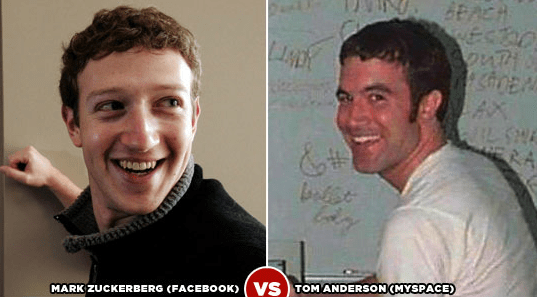
My MySpace profile was abandoned when, at the ripe age of 18, I decided it was just a little too juvenile — the glittering GIFs affixed to every page, the garish customized designs, the pressure on maintaining your top 8. By 2006, Facebook offered a cleaner social experience; by 2009, Twitter offered a more casual one. MySpace was a complete relic by this point, even though only a few years had passed since its launch.

Back in 2005, though, long before MySpace burned out, its founder, Tom Anderson — whose grinning face greeted every new user as their first “friend” — sold the site for $580 million to Rupert Murdoch’s News Corporation. While his site was becoming a punchline during the rise of Facebook, Twitter, Instagram, and the other social media networks we now use everyday, Anderson disappeared entirely from the tech scene. Now, he travels the world, documenting his visits to exotic locations.

Contrast that with what’s currently happening to Facebook’s Mark Zuckerberg, who’s on day two of being grilled by a Senate committee for Facebook’s role in haphazardly collecting all of our personal data, and possibly swinging the 2016 presidential election toward Donald Trump. What was supposed to be a basic networking tool has now become one of the chief mediators of how people interact with each other and the world around them, and how information is absorbed and disseminated on the internet. It’s now apparent that Facebook and Zuckerberg didn’t really consider any of this when aggressively pursuing growth, and now we’re all screwed as we try to untangle the consequences.

MySpace Tom? His most recent Instagram post from seven days ago is a giveaway for a stay at an Iceland hotel. He doesn’t have to issue any terse statements about his company’s commitment to fostering a healthy society; he doesn’t have to sit on a booster seat for seven hours and take dipshit questions from a procession of Senate ghouls. He isn’t worth as much money as Zuckerberg, of course, but unless you’re an oil baron, $580 million is enough to tide you over for the length of your lifetime, and your children’s lifetime, and your children’s children’s lifetime, and so on. (Even after taxes!) And yes, yes, being that rich is good for nobody, but without getting into an argument about the perils of capitalism, we can agree that personally speaking, Anderson is having a much better go of things.

It puts MySpace’s failure to evolve in a new light, as perhaps the healthy thing is for a platform to die and for everyone to move on. Its aesthetic and form, back when everyone had emo bangs and listened to Hawthorne Heights, couldn’t change without altering the meaning of the site altogether, and by that time, everyone was gone. Had Facebook not gotten too good at inserting itself between human users, there’s no way it would’ve run into their current problems at such a wide scope. The suspicious CEO is not the one who cashes out; it’s the one who sticks around and creates a behemoth.

Zuckerberg could have sold off his share and avoided becoming literally one of the most disliked people in the present moment. I never thought we’d declare MySpace the winner over Facebook, but then again, I never thought a lot of things about the moment we’re in.


Challenges for Resolving Complex Conflicts

By Robert J. Burrowes

While conflict theories and resolution processes advanced dramatically during the second half of the 20th century, particularly thanks to the important work of several key scholars such as Professor Johan Galtung – see ‘Conflict Transformation by Peaceful Means (the Transcend Method)’ – significant gaps remain in the conflict literature on how to deal with particular conflict configurations. Notably, these include the following four.

First, existing conflict theory does not adequately explain, emphasize and teach how to respond in those circumstances in which parties cannot be brought to the table to deeply consider a conflict and the measures necessary to resolve it. This particularly applies in cases where one or more parties is violently defending (often using a combination of direct and structural violence) substantial interrelated (material and non-material) interests. The conflict between China and Tibet over the Chinese-occupied Tibetan plateau, the many conflicts between western corporations and indigenous peoples over exploitation of the natural environment, and the conflict between the global elite and ‘ordinary’ people over resource allocation in the global economy are obvious examples of a vast number of conflicts in this category. As one of the rare conflict theorists who addresses this question, Galtung notes that structural violence ‘is not only evil, it is obstinate and must be fought’, and his preferred strategy is nonviolent revolution. See The True Worlds: A Transnational Perspective p. 140. But how?

Second, existing conflict theory does not explain how to respond in those circumstances in which one or more parties to the conflict are insane. The conflict between Israel and Palestine over Israeli-occupied Palestine classically illustrates this problem, particularly notable in the insanity of Israeli Prime Minister Binjamin Netanyahu, Defense Minister Avigdor Lieberman and Justice Minister Ayelet Shaked. But it is also readily illustrated by the insanity of the current political/military leadership in the USA and the insanity of the political, military and Buddhist leaders in Myanmar engaged in a genocidal assault on the Rohingya. For a brief discussion of the meaning and cause of this insanity see ‘The Global Elite is Insane Revisited’.

As an aside, there is little point deluding ourselves that insanity is not a problem or even ‘diplomatically’ not mentioning the insanity (if this is indeed the case) of certain parties in particular conflicts. The truth enables us to fully understand a conflict so that we can develop and implement a strategy to deal with all aspects of that truth. Any conflict strategy that fails to accurately identify and address all key aspects of the conflict, including the insanity of any of the parties, will virtually certainly fail.

Third, and more fundamentally, existing conflict theory does not take adequate account of the critical role that several unconscious emotions play in driving conflict in virtually all contexts, often preventing its resolution. This particularly applies in the case of (but is not limited to) suppressed terror, self-hatred and anger which are often unconsciously projected as fear of, hatred for and anger at an opponent or even an innocent third-party (essentially because this individual/group feels ‘safe’ to the person who is projecting). See ‘The Psychology of Projection in Conflict’.

While any significant ongoing conflict would illustrate this point adequately, the incredibly complex and interrelated conflicts being conducted in the Middle East, the prevalent Islamophobia in some western countries, and the conflicts over governance and exploitation of resources in the Democratic Republic of Congo are superlative examples. Ignoring suppressed (and projected) emotions can stymie conflict resolution in any context, interpersonally and geopolitically, and it does so frequently.

Fourth, existing conflict theory pays little attention to the extinction-causing conflict being ongoingly generated by human over-consumption in the finite planetary biosphere (and currently resulting in 200 species extinctions daily) which is sometimes inadequately identified as a conflict caused by capitalism’s drive for unending economic growth in a finite environment.

So what can we do?

Well, to begin, in all four categories of cases mentioned above, I would use Gandhian nonviolent strategy to compel violent opponents to participate in a conflict transformation process such as Galtung’s. Why nonviolent and why Gandhian? Nonviolent because our intention is to process the conflict to achieve a higher level of need satisfaction for all parties and violence against any or all participants is inconsistent with that intention. But Gandhian nonviolence because only Gandhi’s version of nonviolence has this conflict intention built into it. See ‘Conception of Nonviolence’.

‘But isn’t this nonviolent strategy simply coercion by another name?’ you might ask. Well, according to the Norwegian philosopher, Professor Arne Naess, it is not. In his view, if a change of will follows the scrutiny of norms in the context of new information while one is ‘in a state of full mental and bodily powers’, this is an act of personal freedom under optimal conditions. Naess highlights this point with the following example: Suppose that one person carries another against their will into the streets where there is a riot and, as a result of what they see, the carried person changes some of their attitudes and opinions. Was the change coerced? According to Naess, while the person was coerced into seeing something that caused the change, the change itself was not coerced. The distinction is important, Naess argues, because satyagraha (Gandhian nonviolent struggle) is incompatible with changes of attitudes or opinions that are coerced. See Gandhi and Group Conflict: An Exploration of Satyagraha pp. 91-92.

To elaborate this point: Unlike other conceptions of nonviolence, Gandhi’s nonviolence is based on certain premises, including the importance of the truth, the sanctity and unity of all life, and the unity of means and end, so his strategy is always conducted within the framework of his desired political, social, economic and ecological vision for society as a whole and not limited to the purpose of any immediate campaign. It is for this reason that Gandhi’s approach to strategy is so important. He is always taking into account the ultimate end of all nonviolent struggle – a just, peaceful and ecologically sustainable society of self-realized human beings – not just the outcome of this campaign. He wants each campaign to contribute to the ultimate aim, not undermine vital elements of the long-term and overarching struggle to create a world without violence.

Consequently, given his conception of nonviolence, Gandhi’s intention is to reach a conflict outcome that recognizes the sanctity and unity of all life which, obviously, includes the lives (but also the physical and emotional well-being) of his opponents. His nonviolent strategy is designed to compel participation in a conflict process but not to impose his preferred outcome unilaterally. See Nonviolent Campaign Strategy and Nonviolent Defense/Liberation Strategy.

This can apply in the geopolitical context or in relation to ordinary individuals ‘merely’ participating in the violence of overconsumption. Using nonviolent strategy to campaign on the climate catastrophe or other environmental issues can include mobilizing individuals and communities to emulate Gandhi’s asceticism in a modest way by participating in the fifteen-year strategy outlined in The Flame Tree Project to Save Life on Earth which he inspired.

But even if we can use nonviolent strategy effectively to get the conflicting parties together, the reality is that suppressed and projected emotions – particularly fear, self-hatred and anger as mentioned above – or even outright insanity on the part of one or more parties may still make efforts to effectively transform the conflict impossible. So for conflict resolution to occur, we need individuals who are willing and able to participate with at least minimal goodwill in designing a superior conflict outcome beneficial to everyone concerned.

Hence, I would do one more thing in connection with this process. Prior to, and then also in parallel with, the ‘formal’ conflict process, I would provide opportunities for all individuals engaged in the process (or otherwise critical to it because of their ‘background’ role, perhaps as a leader not personally present at the formal conflict process) to explore in a private setting with a skilled ‘nisteler’ (who is outside the conflict process), the unconscious emotions that are driving their particular approach to the conflict. See ‘Nisteling: The Art of Deep Listening’. The purpose of this nisteling is to allow each participant in the conflict process to bring a higher level of self-awareness to it. See ‘Human Intelligence or Human Awareness?’

I am not going to pretend that this would necessarily be possible, quick, easy or even work in every context. Insane individuals are obviously the last to know they have a psychological problem and the least likely to participate in a process designed to uncover and remove the roots of their insanity. However, those who are trapped in a dysfunctional psychological state short of insanity may be willing to avail themselves of the opportunity. In time, the value of this aspect of the conflict resolution process should become apparent, particularly because delusions and projections are exposed by the person themself (as an outcome of the expertise of the person nisteling).

Obviously, I am emphasizing the psychological aspects of the conflict process because my own considerable experience as a nonviolent activist together with my research convinces me that understanding violence requires an understanding of the psychology that drives it. If you are interested, you can read about the psychology of violence, including the 23 psychological characteristics in the emotional profile of archetype perpetrators of violence, in the documents Why Violence? and Fearless Psychology and Fearful Psychology: Principles and Practice.

Ideally, I would like to see the concept of nistelers operating prior to, and then parallel with, focused attention on the conflict itself normalized as an inherent part of the conflict resolution process. Clearly, we need teams of people equipped to perform this service, a challenge in itself in the short-term.

If, however, conflicting parties cannot be convinced to participate in this process with reasonable goodwill, we can always revert to using nonviolent strategy to compel them to do so. And, if all attempts to conduct a reasonable conflict process fail (particularly in a circumstance in which insanity is the cause of this failure), to impose a nonviolent solution which nevertheless takes account of the insane’s party’s legitimate needs. (Yes, on just that one detail, I diverge from Gandhi.)

Having stated that, however, I acknowledge that only a rare individual has the capacity to think, plan and act strategically in tackling a violent conflict nonviolently, so considerable education in nonviolent strategy will be necessary and is a priority.

Given what is at stake, however – a superior strategy for tackling and resolving violent geopolitical conflicts including those (such as the threat of nuclear war, the climate catastrophe and decimation of the biosphere) that threaten human extinction – any resources devoted to improving our capacity to deliver this outcome would be well spent.

Provided, of course, that reducing (and ultimately eliminating) violence and resolving conflict is your aim.

In addition to the above, I would do something else more generally (that is, outside the conflict process).

Given that dysfunctional parenting is ultimately responsible for the behaviour of those individuals who generate and perpetuate violent conflicts, I would encourage all parents to consider making ‘My Promise to Children’ so that we start to produce a higher proportion of functional individuals who know how to powerfully resolve conflicts in their lives without resort to violence. If any parent feels unable to make this promise, then they have the option of tackling this problem at its source by ‘Putting Feelings First’.

If we do not dramatically and quickly improve our individual and collective capacity to resolve conflicts nonviolently, including when we are dealing with individuals who are insane, then one day relatively soon we will share the fate of those 200 species of life we drove to extinction today.


Biodata: Robert J. Burrowes has a lifetime commitment to understanding and ending human violence. He has done extensive research since 1966 in an effort to understand why human beings are violent and has been a nonviolent activist since 1981. He is the author of Why Violence? His email address is flametree@riseup.net and his website is here.

Robert J. Burrowes
P.O. Box 68
Daylesford, Victoria 3460
Australia

Email: flametree@riseup.net

Websites:
Nonviolence Charter
Flame Tree Project to Save Life on Earth
‘Why Violence?’
Feelings First
Nonviolent Campaign Strategy
Nonviolent Defense/Liberation Strategy
Anita: Songs of Nonviolence
Robert Burrowes
Global Nonviolence Network

Zig Zag Zen: An Interview with Author Allan Badiner

The Intersection of Psychedelic Spirituality and Buddhist Practice

By Jennifer Bleyer

Source: MAPS

Buddhism and psychedelic use have been linked since at least the 1950s, when influential thinkers and writers such as Allen Ginsberg, Jack Kerouac, and Alan Watts experimented with both as avenues toward understanding the mind. The tacitly acknowledged connection took a leap forward in 2002 with the publication of Zig Zag Zen: Buddhism and Psychedelics, a collection of essays, interviews, articles edited by Allan Badiner, which examines the two realms and their similarities and differences. A new edition of Zig Zag Zen was published in 2015. Badiner, a contributing editor of Tricycle, is a longtime supporter of MAPS.—Jennifer Bleyer


How did you become involved in Buddhism?

I’d never had any interest or belief in any religion, but when I was in my early 30s, I spent a year traveling in India, and right before returning home I took some advice to enroll in a Buddhist meditation retreat in Sri Lanka. I hated it. My bones ached, the only food was stewed greens, the venue was overrun with bugs, and the bed was a blanket over wood boards. Suddenly, when the ten-day retreat was almost over, I felt free of any pain and almost ecstatic— and not just because I was leaving. The bugs were my relatives. I slept like a baby. I was overtaken by a subtle but persistent wave of ecstasy, and felt a diminished sense of separation from others.

And how were you exposed to psychedelics?

After that I trip I returned to California, and the meditative glow eventually faded. But I had been “bitten” by the Buddhist bug. I took classes with a senior Buddhist monk, studied Pali, the original language of the Buddha, and earned a Masters degree at the College of Buddhist Studies, a small Theraveda university in Los Angeles—all because I was trying to understand how to return to the blissful state I had experienced on the retreat. I was writing a column called “Mind and Spirit” for the LA Weekly while working on my Buddhist studies, and had a plan to interview Terence McKenna. He accused me of being an “armchair Buddhist” and challenged me to try sacred plants, such as psilocybin mushrooms. We became friends, and I visited him at his home in Hawaii where he treated me to yagé, or ayahuasca, the so-called vine of the soul. Sometime later, I experienced MDMA and got to know Alexander Shulgin. I regularly enjoyed Friday night dinners at the Shulgin home, where the Bay Area psychedelic community gathered. So, indeed, I became formally and viscerally connected to both Buddhism and psychedelics.

How do you describe the relationship between Buddhism and psychedelics?

Both share an interest in the primacy of mind and present moment awareness, and while they are very different in character, the 1950s Beat Generation and the 1960s cultural revolution were both heavily influenced by Eastern wisdom traditions, including Buddhism, as well as LSD, psilocybin, and peyote. I think their relationship manifests in the human pursuit of evolution. Many people seek the compassionate wisdom of the Buddhist philosophy, also known as the Dharma, as well as the psychic reset and transformational power that certain plant substances offer. A kind of practical magic results when the “Zig” zags into Zen—when a time-tested philosophy and ethical system meets plant-assisted changes in consciousness.

Your book identified the complementary natures of Buddhism and psychedelics as facilitators of the “liberation of the mind.” How has it been received in the Buddhist community?

It was fascinating to me that, with only one exception, every American Buddhist teacher I interviewed had personally experienced psychedelics prior to getting into Buddhism. One of the most revered and respected teachers, Jack Kornfield, went so far as to say that were it not for LSD, he would never have been able to grasp the Dharma. It should be noted that Zig Zag Zen also presents the thinking of teachers who are clearly not fans of psychedelics. I was secretly hoping for Zig Zag Zen to ruffle a lot of Buddhist feathers, envisioning that the controversy would drive sales. When the book was released, the Buddhist community in general was like, “Buddhism, psychedelics, ok…so?” The anti-Zig Zag Zen rallies and Buddhist book boycotts I was imagining never materialized. (laughs)

You said in a recent interview with Tricycle that “psychedelic use is an issue for many contemporary Buddhists.” Why is that?

Anyone who becomes seriously focused on spiritual development has to at least consider the issue of psychedelic use. Everyone knows someone who, after taking acid or magic mushrooms, or attending a peyote sweat lodge, experienced themselves as changed forever for the better. In the mid-20th century, famous Buddhist writers like Alan Watts and Ram Dass popularized psychedelics, even as Buddhist centers were filled with young people who had experienced psychedelics and were eager to find more practical and gentle routes to the same “destination.” Added to the question of psychedelic use is the realization that we live in a critical time ecologically. The sixth great extinction is underway. Who would have thought that we would live to see the extinction of elephants, or tigers, or orangutans? Coastal cities are experiencing unremitting flooding, and the end of ice caps is a planetary inevitability. Recognizing the interbeing of people and planet is the fundamental awakening of our time. Buddhists are enlightened by the extent of their compassion—for themselves, for other people, for all living beings, and for the planet itself.

Isn’t there a Buddhist rule about not using intoxicants?

Buddhist precepts are not hard rules or commandments but guiding principles meant to facilitate progress on the path. Buddhists refrain from killing, taking what is not given, sexual misconduct, and incorrect speech. According to Robert Thurman, the chair of Buddhist studies at Columbia University, the Buddhist fifth precept, which is interpreted by some as prohibiting all substance use, specifically refers to grain alcohol, which was a problem even in the Buddha’s day as it’s likely to lead to carelessness, and to the user violating the other four precepts. Obviously, one can misuse many substances to the point of intoxication, but it is not correct to say generally that psychedelics are intoxicants.

How did you get involved with MAPS?

I met Rick Doblin through mutual friends when he was a college student, and he had just attended a psychedelic conference at Esalen Institute, my neighbor in Big Sur. He was very excited about the emergence of a psychedelic culture consisting of scientists, physicians, caregivers, and psychiatrists. He had personally experienced the healing power of psychedelics and told me that he was dedicating his life to making these materials legal and respected for their helpful effects. I promptly told him he was hallucinating, so to speak, and that he should get a job, maybe in academia. These were the Reagan years. Attitudes about cannabis and psychedelics in the ’80s were harshly negative. It is a profound testament to the power of psychedelics and of Rick’s formidable persistence that now the government is approving clinical testing of psychedelic drugs for medical use. Rick’s dream is coming true. The physical, mental, and emotional healing possible with psychedelics makes this pursuit a moral imperative. Rick does not consider himself a Buddhist, but he is definitely in the business of relieving suffering—and that is the primary goal of Buddhism.

Why are you so passionate about MAPS’ work?

Well, having entered on the ground floor, I’ve watched MAPS grow from the moment Rick spoke about his vision in my driveway, to its emergence as an amazing organization making epic and sorely needed change. It is poised to open the first non-profit pharmaceutical company, turning psychedelics and cannabis into prescription medicines; educating therapists in to practice psychedelic-assisted therapy; building a network of clinics, and educating the public about the risks and benefits of these substances. As the psychologist, Ralph Metzner, a contributor to Zig Zag Zen, points out: “Two of the most beneficent potential areas for application of psychedelic technologies are in the treatment of addictions and in the psycho-spiritual preparation for the final transition.” I feel totally aligned with this vision.

Ultimately, what do you hope to achieve through your support of MAPS?

I hope to play a role in helping MAPS raise the funds required for the Phase 3 trials of MDMA as a treatment for PTSD—the critical step to becoming a prescription medicine. Like everyone, I see so many people suffering around me. I have confidence that psychedelics can be a serious medicine, as well as a powerful tool for personal self-development. The Anthropocene—the age of human-driven change to the Earth’s natural systems—has ushered in a new urgency for shamanic and psychedelic tools. The clock is ticking. We need all the help available to foment an evolution in our relationships with our neighbors, neighboring nations, and the planet.

Why We’re Underestimating American Collapse

The Strange New Pathologies of the World’s First Rich Failed State

By Umair Haque

Source: Information Clearing House

You might say, having read some of my recent essays, “Umair! Don’t worry! Everything will be fine! It’s not that bad!” I would look at you politely, and then say gently, “To tell you the truth, I don’t think we’re taking collapse nearly seriously enough.”

Why? When we take a hard look at US collapse, we see a number of social pathologies on the rise. Not just any kind. Not even troubling, worrying, and dangerous ones. But strange and bizarre ones. Unique ones. Singular and gruesomely weird ones I’ve never really seen before, and outside of a dystopia written by Dickens and Orwell, nor have you, and neither has history. They suggest that whatever “numbers” we use to represent decline — shrinking real incomes, inequality, and so on —we are in fact grossly underestimating what pundits call the “human toll”, but which sensible human beings like you and I should simply think of as the overwhelming despair, rage, and anxiety of living in a collapsing society.

Let me give you just five examples of what I’ll call the social pathologies of collapse — strange, weird, and gruesome new diseases, not just ones we don’t usually see in healthy societies, but ones that we have never really seen before in any modern society.

America has had 11 school shootings in the last 23 days. That’s one every other day, more or less. That statistic is alarming enough — but it is just a number. Perspective asks us for comparison. So let me put that another way. America has had 11 school shootings in the last 23 days, which is more than anywhere else in the world, even Afghanistan or Iraq. In fact, the phenomenon of regular school shootings appears to be a unique feature of American collapse — it just doesn’t happen in any other country — and that is what I mean by “social pathologies of collapse”: a new, bizarre, terrible disease striking society.

Why are American kids killing each other? Why doesn’t their society care enough to intervene? Well, probably because those kids have given up on life — and their elders have given up on them. Or maybe you’re right — and it’s not that simple. Still, what do the kids who aren’t killing each other do? Well, a lot of them are busy killing themselves.

So there is of course also an “opioid epidemic”. We use that phrase too casually, but it much more troubling than it appears on first glance. Here is what is really curious about it. In many countries in the world — most of Asia and Africa — one can buy all the opioids one wants from any local pharmacy, without a prescription. You might suppose then that opioid abuse as a mass epidemic would be a global phenomenon. Yet we don’t see opioid epidemics anywhere but America — especially not ones so vicious and widespread they shrink life expectancy. So the “opioid epidemic” — mass self-medication with the hardest of hard drugs — is again a social pathology of collapse: unique to American life. It is not quite captured in the numbers, but only through comparison — and when we see it in global perspective, we get a sense of just how singularly troubled American life really is.

Why would people abuse opioids en masse unlike anywhere else in the world? They must be living genuinely traumatic and desperate lives, in which there is little healthcare, so they have to self-medicate the terror away. But what is so desperate about them? Well, consider another example: the “nomadic retirees”. They live in their cars. They go from place to place, season after season, chasing whatever low-wage work they can find — spring, an Amazon warehouse, Christmas, Walmart.

Now, you might say — “well, poor people have always chased seasonal work!” But that is not really the point: absolute powerlessness and complete indignity is. In no other country I can see do retirees who should have been able to save up enough to live on now living in their cars in order to find work just to go on eating before they die — not even in desperately poor ones, where at least families live together, share resources, and care for one another. This is another pathology of collapse that is unique to America — utter powerlessness to live with dignity. Numbers don’t capture it — but comparisons paint a bleak picture.

How did America’s elderly end up cheated of dignity? After all, even desperately poor countries have “informal social support systems” — otherwise known as families and communities. But in America, there is the catastrophic collapse of social bonds. Extreme capitalism has blown apart American society so totally that people cannot even care for one another as much as they do in places like Pakistan and Nigeria. Social bonds, relationships themselves, have become unaffordable luxuries, more so than even in poor countries: this is yet another social pathology unique to American collapse.

Yet those once poor countries are making great strides. Costa Ricans now have higher life expectancy than Americans — because they have public healthcare. American life expectancy is falling, unlike nearly anywhere else in the world, save the UK — because it doesn’t.

And that is my last pathology: it is one of the soul, not one of the limbs, like the others above. Americans appear to be quite happy simply watching one another die, in all the ways above. They just don’t appear to be too disturbed, moved, or even affected by the four pathologies above: their kids killing each other, their social bonds collapsing, being powerless to live with dignity,or having to numb the pain of it all away.

If these pathologies happened in any other rich country — even in most poor ones — people would be aghast, shocked, and stunned, and certainly moved to make them not happen. But in America, they are, well, not even resigned. They are indifferent, mostly.

So my last pathology is a predatory society. A predatory society doesn’t just mean oligarchs ripping people off financially. In a truer way, it means people nodding and smiling and going about their everyday business as their neighbours, friends, and colleagues die early deaths in shallow graves. The predator in American society isn’t just its super-rich — but an invisible and insatiable force: the normalization of what in the rest of the world would be seen as shameful, historic, generational moral failures, if not crimes, becoming mere mundane everyday affairs not to be too worried by or troubled about.

Perhaps that sounds strong to you. Is it?

Now that I’ve given you a few examples — there are many more — of the social pathologies of collapse, let me share with you the three points that they raise for me.

These social pathologies are something like strange and gruesome new strains of disease infecting the body social. America has always been a pioneer — only today, it is host not just to problems not just rarely seen in healthy societies — it is pioneering novel social pathologies have never been seen in the modern world outside present-day America, period. What does that tell us?

American collapse is much more severe than we suppose it is. We are underestimating its magnitude, not overestimating it. American intellectuals, media, and thought doesn’t put any of its problems in global or historical perspective — but when they are seen that way, America’s problems are revealed to be not just the everyday nuisances of a declining nation, but something more like a body suddenly attacked by unimagined diseases.

Seen accurately. American collapse is a catastrophe of human possibility without modern parallel . And because the mess that America has made of itself, then, is so especially unique, so singular, so perversely special — the treatment will have to be novel, too. The uniqueness of these social pathologies tell us that American collapse is not like a reversion to any mean, or the downswing of a trend. It is something outside the norm. Something beyond the data. Past the statistics. It is like the meteor that hit the dinosaurs: an outlier beyond outliers, an event at the extreme of the extremes. That is why our narratives, frames, and theories cannot really capture it — much less explain it. We need a whole new language — and a new way of seeing — to even begin to make sense of it.

But that is America’s task, not the world’s. The world’s task is this. Should the world follow the American model — extreme capitalism, no public investment, cruelty as a way of life, the perversion of everyday virtue — then these new social pathologies will follow, too. They are new diseases of the body social that have emerged from the diet of junk food — junk media, junk science, junk culture, junk punditry, junk economics, people treating one another and their society like junk — that America has fed upon for too long.

Thinking Beyond Exceptionalism

By David Swanson

Source: Let’s Try Democracy

Excepted from Curing Exceptionalism: What’s wrong with how we think about the United States? What can we do about it? (April, 2018).

Try this experiment: Imagine that space aliens really come to earth and really have, as I think is very unlikely, developed the ability to travel to earth while simultaneously remaining so primitive as to violently attack the places they visit. In contrast to the space aliens, could you identify as an earthling to such an extent as to diminish your other senses of identity? “Earthlings — F— Yeah!” “We’re Number 1!” “Greatest Earthlings on Earth!” And can you hold that thought, in the absence of the space aliens, and rid yourself of any notion of opposing any other or foreign group, while still holding that earthling thought? Alternatively, can you cast climate change and environmental collapse in the role of the evil alien Hollywood monster against whom humanity must unite?

Or try this one: Imagine that various species of humans survived to the current day, so that we Sapiens share the earth with the Neanderthals, the Erectus, the tiny little Floresiensis, etc.[i] Could you form your identity in your mind as a Sapiens? And then, can you hold that thought while either imagining the other species back out of existence or imagining learning to be as respectful and kind to the other species of humans as we should perhaps actually be attempting to be to other types of living human and non-human earthlings right now?

Perhaps the most powerful tool for altering habits of thought about groups of people is role reversal. Let’s imagine that for whatever reasons, beginning some seventy years ago North Korea drew a line through the United States, from sea to shining sea, and divided it, and educated and trained and armed a brutal dictator in the South United States, and destroyed 80 percent of the cities in the North United States, and killed millions of North USians. Then North Korea refused to allow any U.S. reunification or official end to the war, maintained wartime control of the South United States military, built major North Korean military bases in the South United States, placed missiles just south of the U.S. demilitarized zone that ran through the middle of the country, and imposed brutal economic sanctions on the North United States for decades. As a resident of the North United States, what might you think when the president of North Korea threatened your country with “fire and fury”?[ii] Your own government might have gazillions of current and historical crimes and shortcomings to its credit, but what would you think of threats coming from the country that killed your grandparents and walled you off from your cousins? Or would you be too scared to think rationally?

This experiment is possible in hundreds of variations, and I recommend trying it repeatedly in your own mind and in groups, so that people’s creativity can feed into the imagination of others. Imagine that you’re from the Marshall Islands seeking restitution for nuclear testing and/or the rising seas.[iii] Imagine you’re from Niger and less than amused that Americans first hear about your country when their government pretends that Iraq purchased uranium in your country, and that Americans only learn about their own military’s actions in your country when the U.S. president is rude to the mother of a deceased U.S. soldier.[iv] Imagine you’re my friends from Vicenza, Italy, who found local and national majority support for blocking the proposed construction of a U.S. Army base but couldn’t stop it — or similar people in Okinawa or Jeju Island or elsewhere around the globe.

And don’t just imagine you’re the other people. Learn and then re-tell the stories with all the details inverted. It’s not Okinawa. It’s Alabama. Japan is filling Alabama with Japanese military bases. The towns and state are opposed, but craven politicians in Washington, D.C., are going along. The military airplane crashes happen in Alabama. The spread of prostitution and drugs happens in Alabama. The local girls raped and murdered are Alabaman. The Japanese troops say it’s for your own good whether you think so or not, and they don’t really care what you think. You get the idea. This can be done with wealth distribution, with environmental impact, with militarism, with any issue under the sun. The danger of over-simplification should be resisted. The idea is not to stupidly convince yourself that all Americans are 100% evil while all Japanese are some sort of angels. The idea is to reverse some key facts and see whether anything happens to your attitudes. If not, then perhaps your attitudes were fair and respectful to begin with.

Another nominee for most powerful tool for altering habits of thought about groups of people is what goes by the very odd name “humanization.” This is the process wherein you supposedly take a human being or group of human beings, and by learning their names and facial expressions and little idiosyncrasies, you “humanize” them, and you come to the conclusion that these humans are . . . wait for it . . . wait for it . . . humans. Now, I’m 100 percent in favor of this to whatever extent it is needed and works. I think Americans (and probably most people) should read more foreign books, learn more foreign languages, watch more foreign films, and travel more in ways that truly involve them in foreign cultures. I think students should be required to spend a year as exchange students in foreign families and schools. I think a key test of childhood education in the United States should be: What have these children learned about all of humanity, including the 96% outside the United States?

I am hopeful that at some point we can jump the humanization and arrive squarely on the understanding that, in fact, humans are all humans, whether we know anything about them or not! It might help to pretend that all Hollywood movies have been made about and starring Syrians (or any other nationality). If that were so, if every favorite character from every film and TV show were Syrian, would anyone in the world have any doubt that Syrians were human beings? And what effect would that have on our perception of the reported Israeli government position, seemingly abetted by U.S. government policy, that the best outcome in Syria is for nobody to win but the war to continue forever?[v]

David Swanson’s forthcoming book from which this is excerpted is called Curing Exceptionalism: What’s wrong with how we think about the United States? What can we do about it? (April, 2018).


[i] This scenarios was suggested to me by this book: Yuval Noah Harari, Sapiens: A Brief History of Humankind Paperback (Harper Perennial, 2018).

[ii] https://www.nytimes.com/2017/08/08/world/asia/north-korea-un-sanctions-nuclear-missile-united-nations.html (January 16, 2018).

[iii] Marlise Simons, “Marshall Islands Can’t Sue the World’s Nuclear Powers, U.N. Court Rules,” New York Times, https://www.nytimes.com/2016/10/06/world/asia/marshall-islands-un-court-nuclear-disarmament.html (October 5, 2016).

[iv] David Caplan, Katherine Faulders, “Trump denies telling widow of fallen soldier, ‘He knew what he signed up for’,” ABC News, http://abcnews.go.com/Politics/trump-denies-telling-widow-fallen-soldier-knew-signed/story?id=50549664 (October 18, 2017).

[v] Jodi Rudoren, “Israel Backs Limited Strike Against Syria,” New York Times, http://www.nytimes.com/2013/09/06/world/middleeast/israel-backs-limited-strike-against-syria.html?pagewanted=all (September 5, 2013).

The Global Elite is Insane Revisited

By Robert J. Burrowes

In 2014 I wrote an article titled ‘The Global Elite is Insane’. I want to elaborate what I explained in the earlier article so that people have a clearer sense of what we are up against in our struggle to create a world of peace, justice and ecological sustainability.

Of course, as I explained previously, it is not just the global elite that is insane. All those individuals – politicians, businesspeople, academics, corporate media editors and journalists, judges and lawyers, bureaucrats…. – who serve the elite, including by not exposing and resisting it, are also insane. And it is important to understand this if we are to develop and implement effective strategies to resist elite violence, exploitation and destruction but also avert the now-imminent human extinction driven by their insane desire for endless personal privilege, corporate profit and political control whatever the cost to Earth’s biosphere and lifeforms (human and non-human alike).

But first, who constitutes the global elite? Essentially, it is those extremely wealthy individuals – notably including the Rothschild family, Jeff Bezos, Bill Gates, Warren Buffett, Amancio Ortega, Mark Zuckerberg, Carlos Slim, the Walton family and the Koch brothers – as well as the world’s other billionaires and millionaires. See ‘Bloomberg Billionaires Index’.

Testament to their secretly and long-accumulated wealth and power, a 2012 investigation concluded that rich individuals and their families have as much as $32 trillion of hidden financial assets – which excludes non-financial assets such as real estate, gold, yachts and racehorses – in offshore tax havens. See the Tax Justice Network.

If this sum was devoted to programs of social uplift then starvation, poverty, homelessness and other privations would vanish immediately and environmental restoration projects as well as research, development and implementation of visionary sustainability initiatives would flourish instantly. The idea of an ‘underdeveloped’ or ‘developing’ national economy would vanish from the literature on Africa, Asia and Central/South America.

In addition to these individuals, however, the global elite includes the major multinational corporations, particularly including the following – although, it should be noted, this list simplifies the picture considerably by ignoring the conglomerate nature of many of these corporations and not including many of the (more difficult to identify) private corporations that should be listed in any comprehensive presentation:

* the major weapons manufacturers (such as Lockheed Martin, Boeing, BAE Systems, Raytheon, Northrop Grumman and General Dynamics)

* the major banks (including Industrial & Commercial Bank of China, China Construction Bank, HSBC Holdings, JPMorgan Chase, Mitsubishi UFJ Financial Group and Bank of America) and their ‘industry groups’ like the International Monetary Conference

* the major investment companies (including BlackRock, Capital Group Companies, FMR, AXA, and JP Morgan Chase)

* the major financial services companies (including Berkshire Hathaway, AXA, Allianz and BNP Paribas)

* the major energy corporations including coal companies (such as Coal India, Adani Enterprises, China Shenhua Energy, China Coal Energy, Mechel, Exxaro Resources, Public Power, Glencore and Peabody Energy) as well as the oil and gas corporations (such as Saudi Aramco, Gazprom, Rosneft, PetroChina, ExxonMobil, Lukoil, BP, Royal Dutch Shell, Petrobras, Chevron, Novatek, Total S.A. and Eni)

* the major media corporations (including Alphabet [Google owner], Comcast, Disney, AT&T, News Corporation, Time Warner, Fox, Facebook, Bertelsmann and Baidu)

* the major marketing and public relations corporations (including Edelman, W2O Group, APCO Worldwide, Deksia, BrandTuitive, Fearless Media, and Citizen Group)

* the major agrochemical (pesticides, seeds, fertilizers) giants (including Bayer, Syngenta, Dow, Monsanto and DuPont)

* the major pharmaceutical corporations (including Johnson & Johnson, Roche, Pfizer, Novartis, Sanofi and GlaxoSmithKline)

* the major biotechnology (genetic mutilation) corporations (again including Johnson & Johnson, Roche, Pfizer and Novartis)

* the major mining corporations (including Glencore Xtrata, BHP Billiton, Rio Tinto, Vale, Anglo American, China Shenhua Energy, Freeport McMoRan Copper & Gold, and Barrick Gold)

* the major nuclear power corporations (including Areva, Rosatom, General Electric/Hitachi, Kepco, Mitsubishi, Babcock & Wilcox, BNFL, Duke Energy, McDermott International, Southern, NextEra Energy, American Electric Power, and Westinghouse)

* the major food multinationals (including Cargill, Archer Daniels Midland Company [ADM], Nestlé, PepsiCo, Coca-Cola, Unilever, Danone, General Mills, Kellogg’s, Mars, Associated British Foods and Mondelez)

* the major water corporations (including Veolia, Suez Environnement, ITT Corporation, United Utilities, Severn Trent, Thames Water, American Water Works).

Of course, the global elite also includes elite fora where various combinations of elite individuals from the corporate, political, media and academic worlds gather to plan their continuing violence against, and exploitation of, the Earth and its inhabitants. This is intended to consolidate and extend t heir control over populations, markets and resources to maximize their privilege, profit and power at the expense of the rest of us and life generally. Among intergovernmental organizations, it includes the United Nations, the World Bank and the International Monetary Fund.

A quick perusal of the agenda of such elite gatherings – including the World Economic Forum, the Bilderberg Group and the Trilateral Commission – reveals a comprehensive lack of interest, despite rhetoric and the occasional token mention, of pressing issues ranging from the threat of nuclear war and the climate catastrophe to the many ongoing wars, deepening exploitation within the global economy, extensive range of environmental threats and the refugee crisis, each of which they generated and now continue to deliberately exacerbate. See, for example, the agenda of the recent WEF meeting in Davos.

Primary servants of the global elite include political leaders in major industrialized countries (who legislate to progressively expand elite power, profit and privilege, such as Donald Trump’s recent tax cuts for the wealthy at the expense of social programs), the judges and lawyers (who defend elite power using the elite-designed and manipulated legal system: ever heard of a wealthy individual convicted in court and given any serious punishment or of any major corporation genuinely held to legal account for its exploitation of indigenous peoples or destruction of the natural environment?), as well as corporate media editors and journalists, entertainment industry personnel, academics, industry organizations (such as the European Round Table of Industrialists) that represent the interests of major corporations, so-called ‘think tanks’ (such as the Council on Foreign Relations and the Brookings Institution) and ‘philanthropic trusts’ (such as the Rockefeller, Carnegie and Ford foundations) all of which justify, ignore or divert attention from elite violence and exploitation.

Importantly too, primary servants of the global elite include those who work within elite-directed agencies, notably including those in the so-called ‘intelligence community’ (such as the US CIA, British MI6, Russian SVR RF, Chinese Ministry for State Security and Israeli Mossad), who perform elite functions in relation to spying, surveillance and secret assassinations (particularly of grassroots activists), ostensibly under the direction of national governments. But it also includes many lower-level servants such as those who work as political lobbyists or in the bureaucracy as well as the education, police and prison systems.

So why do I claim that the elite and those who serve them are insane?

Any dictionary will offer a simple definition of ‘sanity’ along the lines of ‘soundness of judgment or reason’ and ‘the ability to think and speak in a reasonable way and to behave normally’.

But if we use this definition of sanity then, obviously, ‘sanity’ must be interpreted to mean that it is ‘sound judgment, reasonable and normal’ to further perpetrate the violence and exploitation that are overwhelmingly characteristic of our world. After all, most people powerlessly accept this incredibly violent state of affairs and, if they discuss it, do so in terms of its merits, politically, economically, morally or otherwise. Few people argue, simply, that violence is just insane.

So I would like to propose a more rigorous definition of sanity: Sanity is the capacity to consider a set of circumstances, to carefully analyze the evidence pertaining to those circumstances, to identify the cause of any conflict or problem, and to respond appropriately, both emotionally and intellectually, to that conflict or problem with the intention of resolving it, preferably at a higher level of need satisfaction for all parties (including those of the Earth and all of its living creatures).

Clearly, my proposed definition of sanity is designed to imply that any conceptions we have of ‘sound judgment’, ‘reasonable’ and ‘normal’ mean that they are qualities we associate with individuals who possess the desirable capacity to improve the overall state of human affairs, whether an interpersonal relationship or geopolitically. This means, as an absolute minimum, the capacity to reduce violence or exploitation in one context or another.

You might, of course, accuse me of writing a definition of ‘sanity’ that serves my agenda to dramatically improve world order in the direction of peace, justice and sustainability. And you are right! But whose interest does it serve to have sanity defined as behavior that involves ‘sound judgment’ and is considered ‘reasonable and normal’ in the context of perpetuating extraordinary violence?

Alternatively, you might argue that my definition of insanity is too broad. Surely, you might say, we can account for many of the behaviors outlined above in terms of different belief systems, ideologies and religions. Doesn’t a person who believes in killing people to win wars (or for other reasons) just have a worldview different from those who believe that people should resolve conflict nonviolently? Doesn’t a capitalist just have a worldview different from those who believe that people should share resources equally? Doesn’t a person who believes in the unlimited accumulation of wealth just have a worldview different from those who believe in ecological sustainability?

But there is a more fundamental issue here. As I explained in my original article, cited at the beginning of this one: Do you really believe that someone who is capable of perpetrating extraordinary violence, inequity and biosphere-threatening behavior – and thus clearly incapable of experiencing and expressing the love, compassion, empathy and sympathy that would drive a nonviolent approach to the world – is sane? Given that emotional qualities such as love, compassion, empathy and sympathy are an evolutionary gift to those not seriously damaged during childhood, what happened to those individuals who do not possess them? See Why Violence?’ and Fearless Psychology and Fearful Psychology: Principles and Practice.

Or, to explain it based on my longer definition of sanity highlighted above: Casual observation of the state of our world, including the primary threat of near-term human extinction through climate catastrophe or nuclear war – see ‘On Track for Extinction: Can Humanity Survive?’ – clearly reveals that none of the elite is paying considered attention to the perilous state of our world, analyzing the evidence in relation to it, identifying the cause(s) driving it or responding powerfully to end it. Why is this?

In essence, it is because one manifestation of their insanity drives them to deny reality to make huge profits from weapons production used to kill people, the burning of climate-destroying fossil fuels, environmental destruction (through, for example, mining and rainforest logging), commercial farming based on the poisoning and genetic mutilation of foods, the mass production and sale of poisoned, processed and nutritionally-depleted foods, the consumption of health-destroying and dependency-creating drugs, and control over the sale of water, once considered a human right. Moreover, insanity makes the elite do everything in its power to maintain this highly profitable state of affairs. See ‘Profit Maximization is Easy: Invest in Violence’.

Moreover, of course, there is no evidence of committed elite engagement in efforts to end the many local wars (from which they make huge profits), end corporate exploitation of human beings (which kills, through starvation alone, 100,000 people every day but from which they make huge profits) and nonhuman beings (which drives 200 species of life to extinction daily but from which they make huge profits) or end local environmental destruction in a myriad ways (from which they make huge profits).

So, in summary, given our ongoing rush to extinction, it is clear that those who exacerbate this threat through failure to consider and act with awareness (as well as encourage aware action by others) fail to satisfy the definition of sanity that I offered above. In short: Gambling on the future of humanity is not sane.

As an aside, it should be noted: Often enough too, the elite can rely on a largely insane population to mindlessly consume the latest consumer product, no matter how unnecessary, or they can rely on their marketing and advertising agents to persuade those of us who show the slightest reluctance to buy the latest inanity.

So with an insane global elite and its many insane servants as well as a largely insane consumer population, what can those of us who have the sanity to respond powerfully to the many threats to our survival do?

Well, if you want a child who is emotionally and intellectually engaged with the world and therefore capable of responding powerfully to their circumstances (which includes being able to resist the lure of serving the elite and being suckered by its marketing), then terrorizing the child into obedience is not the way to go about it. So, you might like to consider making ‘My Promise to Children’.

If you are sane enough to investigate the evidence and to act intelligently and powerfully in response to it, I encourage you to do so. One option you have if you find the evidence in relation to one or more of the threats mentioned above compelling, is to join those participating in ‘The Flame Tree Project to Save Life on Earth’.

If you are self-aware enough to know that you are inclined to avoid ‘difficult issues’ and to take the action that these require, then perhaps you could tackle this problem at its source by ‘Putting Feelings First’. Unfortunately, as mentioned above, few of us had a childhood that nurtured our sanity.

If you want to mobilize people to campaign effectively on the climate, war, rainforest destruction or any other elite-driven violence that threatens our future, consider developing a comprehensive nonviolent strategy to do so. See Nonviolent Campaign Strategy.

And if you want to participate in the worldwide effort to end the insanity we call violence in all of its manifestations, you are welcome to consider signing the online pledge of The Peoples Charter to Create a Nonviolent World.

Elite insanity, if not stopped, will drive us out of existence. If you believe that the elite and their servants will ‘see the light’ before it is too late, I invite you to seek out the evidence to justify your belief. I have found none.

I also see no evidence that individual members of the elite will do the emotional healing necessary to be able to act sanely in response to the extinction-threatening crisis it has generated.

So it is up to those of us who can think and act sanely to stop the rush to extinction before it is too late.

Are you one of those people?


Biodata: Robert J. Burrowes has a lifetime commitment to understanding and ending human violence. He has done extensive research since 1966 in an effort to understand why human beings are violent and has been a nonviolent activist since 1981. He is the author of Why Violence? His email address is flametree@riseup.net and his website is here.

Robert J. Burrowes
P.O. Box 68
Daylesford, Victoria 3460
Australia

Email: flametree@riseup.net

Websites:
Nonviolence Charter
Flame Tree Project to Save Life on Earth
‘Why Violence?’
Feelings First
Nonviolent Campaign Strategy
Nonviolent Defense/Liberation Strategy
Anita: Songs of Nonviolence
Robert Burrowes
Global Nonviolence Network