Media’s Grim Addiction to Perseverance Porn

By Adam Johnson

Source: FAIR

You’ve seen or heard or read the personal interest story a thousand times: An enterprising seven-year-old collects cans to save for college (ABC72/8/17), a man with unmatched moxie walks 15 miles to his job (Today2/20/17), a low-wage worker buys shoes for a kid whose mother can’t afford them (Fox512/14/16), an “inspiring teen” goes right back to work after being injured in a car accident (CBS News12/16/16). All heartwarming tales of perseverance in the face of impossible odds—and all ideological agitprop meant to obscure and decontextualize the harsh reality of dog-eat-dog capitalism.

Man walks eight miles in the snow to get to work every day (ABC 273/14/17). Or was it a teen walking 10 miles in freezing weather to a job interview (New York Daily News2/26/13)? Or was it 10 miles to work every day (Times Herald Record3/17/17)? Or was it 12 (ABC News2/22/17) or 15 (Today2/20/17) or 18 (Evening Standard, 2/9/09) or 21 (Detroit Free Press1/20/15)? Who cares—their humanity is irrelevant. They’re clickbait, stand-in bootstrap archetypes meant to validate the bourgeois morality of click-happy media consumers.

These stories are typically shared for the purposes of poor-shaming, typically under the guise of inspirational life advice. “This man is proof we all just need to keep walking, no matter what life throws at us,” insisted Denver ABC7 anchor Anne Trujillo, after sharing one of those stories of a poor person forced to walk thousands of miles a year to survive.

A healthy press would take these anecdotes of “can do” spirit and ask bigger questions, like why are these people forced into such absurd hardship? Who benefits from skyrocketing college costs? Why does the public transit in this person’s city not have subsidies for the poor? Why aren’t employers forced to offer time off for catastrophic accidents? But time and again, the media mindlessly tells the bootstrap human interest story, never questioning the underlying system at work.

One particularly vulgar example was CBS News(12/16/16) referring to an “inspiring” African-American kid who had to work at his fast food job with an arm sling and a neck brace after a car accident. To compound the perseverance porn, he was, at least in part, doing so to help donate to a local homeless charity. Here we have a story highlighting how society has colossally failed its most vulnerable populations—the poor, ethnic minorities, children and the homeless—and the take-home point is, “Ah gee, look at that scrappy kid.”

Journalism is as much—if not more—about what isn’t reported as what is. Here a local reporter is faced with a cruel example of people falling through the cracks of the richest country on Earth, and their only contribution is to cherry-pick one guy who managed—just barely—to cling on to the edge.

Perseverance porn goes hand in hand with the rise of a GoFundMe economy that relies on personal narrative over collective policy, emotional appeals over baseline human rights. $930 million out of the $2 billion raised on GoFundMe since its inception in 2010 was for healthcare expenses, while an estimated 45,000 people a year die a year due to a lack of medical treatment. Meanwhile, anchors across cable news insist that single-payer healthcare is “unaffordable,” browbeating guests who support it, while populating their broadcasts with these one-off tales of people heroically scraping by.

It’s part of a broader media culture of anecdotes in lieu of the macro, moralizing “success” rather than questioning systemic problems. Perseverance porn may seem harmless, but in highlighting handpicked cases of people overcoming hardship without showing the thousands that didn’t—much less asking broader questions as to what created these conditions—the media traffics in decidedly right-wing tropes. After all, if they can do it, so can you—right?

The futility and corruption of the drug war

By Jacob Hornberger

Source: Intrepid Report

I just finished watching the much-acclaimed series “Narcos” on Netflix. What a fantastic program. And what an excellent depiction of the futility and corruption of the war on drugs.

The series is a true-life account of Pablo Escobar, a Colombian drug lord who headed up the Medellin drug cartel, a black-market drug group that smuggled hundreds of tons of cocaine into the United States in the 1970s and 1980s. Smuggling an estimated 80 percent of the cocaine into the United States, Escobar became known as called the “King of Cocaine,” attaining in the process a net worth of $30 billion by the early 1990s. According to Wikipedia, Escobar was the wealthiest criminal in history.

Amidst much acclaim and publicity, the U.S. government and the Colombian government, working together, targeted Escobar with arrest or killing. Escobar retaliated by effectively declaring war on the government, a war that consisted of assassinations and bombings. Every time the DEA (which was operating in Colombia, along with the U.S. military and the CIA) and Colombian officials tightened the noose on Escobar’s operation, Escobar responded with bullets and bombs, killing a multitude of government officials and private citizens.

The logic of the drug-war crackdown was clear: By eradicating Escobar, officials thought they would be eradicating 80 percent of the cocaine being shipped into the United States. So, all the death and destruction resulting from the crackdown on Escobar was considered worth it in the long run.

But that’s not what happened. The more they tightened the noose around Escobar, the more his cocaine competitors—that is, the ones who were supplying the 20 percent, expanded their operations, gaining them a larger market share. Among the principal beneficiaries of the crackdown on Escobar was the Cali Cartel, which, not surprisingly, became the next big target of the U.S. and Colombian drug warriors, with similar results—the more they cracked down on the Cali Cartel, the more their competitors stepped into the breach and gained a larger market share.

In 1993, they finally caught up to Escobar and killed him in a shootout. You can imagine how U.S. and Colombian officials trumpeted that drug-war victory. Another “milestone” in the war on drugs, the term they have used for decades whenever they kill or capture some big drug lord.

But of course it was all to no avail. Even though they killed Escobar and ultimately smashed the Medellin and Cali cartels, amidst great fanfare and publicity, other suppliers quickly took their places and continued providing cocaine users in the United States with their drug.

In other words, all those people who lost their lives in the drug war on Escobar died for nothing. Absolutely nothing.

There is something else to consider: what the drug war against Escobar did to law-enforcement agents, both American and Colombian. It corrupted them to the core. Frustrated over all the death and destruction that Escobar was wreaking across the country and over their inability to apprehend him, officials began employing brutal and illegal tactics in return, such as torturing prisoners for information and then murdering them so that they couldn’t talk about what the officials had done to them.

Of course, there was also widespread bribery that was taking place within the Colombian police. In fact, that was one of the reasons they had such a hard time catching up to Escobar—his informants within the police and Colombian military would alert him to whatever was going on.

The pathetic thing about all this death, destruction, mayhem, and corruption is that there was a much simpler way to have put Escobar, the Cali Cartel, and all the other black-market drug suppliers out of business, a way that would not have involved assassinations, bombings, torture, and corruption. All that the U.S. and Colombian governments had to do was legalize drugs.

If they had done that, Escobar and the rest of the black-market suppliers would have been put out of business instantaneously. That’s because of the difference between legal markets and black markets.

In legal markets, suppliers compete against each other by providing better goods and services to their customers. Think CVS, Walgreen, and other pharmacies. Notice that they are not out bombing and assassinating each other and other people.

It’s totally different in black or illegal markets. Competitors in these markets deal with each other through violent turf wars that involve murder, kidnapping, bombing, and mayhem. While people like Escobar are able to thrive in a black market, they inevitably go out of business in a legal market because they lack the skills that are necessary in legal markets.

A good example of this phenomenon is alcohol. We don’t see alcohol dealers killing each other to get a larger share of the market. That’s because booze is legal.

But it wasn’t that way when booze was illegal. During Prohibition, there were people like Al Capone involved in the sale and distribution of alcohol, along with killing, mayhem, and corruption.

This same principle, of course, applies today. Notwithstanding all the hoopla to which all of us are subjected when the feds or state drug warriors make a drug bust, the result is no different than it was 20–30 years ago with Escobar. The minute they make the bust, the supplier is replaced by someone else.

There is only one way to eradicate drug lords and illicit drug dealers, along with all the death, destruction, and corruption that comes with them: End the war on drugs by legalizing drugs.


Jacob G. Hornberger is founder and president of The Future of Freedom Foundation.

Hurricane Harvey: An Epic Disaster, An Environmental Nightmare

By Stephen Lendman

Source: StephenLendman.org

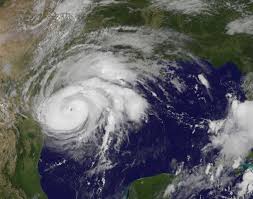
Natural disasters like Hurricane Harvey are greatly exacerbated by America’s neglected infrastructure nationwide – a deplorable situation unaddressed by Republicans and undemocratic Democrats alike for decades.

Poor maintenance, aging pipe networks installed up to a century ago, and lack of proper drainage facilities in flood-prone cities like Houston, New Orleans, and Chicago’s downtown Loop, along with poor communities in these and other cities left especially vulnerable, make disasters like Katrina and Harvey far worse than otherwise if proper protections were in place.

They’re not nationwide. America’s neglected infrastructure bears much of the blame for Houston’s epic disaster – worsening as rain keeps falling, making landfall a second time west of Cameron, LA, heavy rain hitting the state’s coastal areas.

The National Weather Service issued a flash flood emergency, its severest flood alert. Millions of Texas and Louisiana residents vulnerable. Rainfall in Houston already exceeds 50 inches.

By Tuesday afternoon, an estimated 444 square miles were flooded, an area six times the size of Washington, DC. Shocking, and things keep worsening as rain keeps falling – lightly in Houston, not torrentially like earlier, but floodwaters are still rising.

According to Rice University Environmental Engineering Professor Phil Bedient, “Houston is the most flood-prone city in the United States. No one is even a close second – not even New Orleans, because at least they have pumps there.”

Rice University Environmental Law Professor Jim Blackburn said Houston’s system is designed to drain only up to 12 or 13 inches of rain per 24-hour period. It’s “so obsolete it’s just unbelievable,” he stressed.

Houston’s Harris County has the nation’s least-regulated drainage policy, according to Bedient. Reservoirs overflowed. Water pressing against 70-year-old dams was released, worsening downstream flooding.

Houston’s storm drain and pipe system is minimal compared to other cities. Overdevelopment eliminating green space exacerbated what’s ongoing.

Chairman of Residents Against Flooding Ed Browne said area politicians bend to the will of developers. Whatever they want they get.

According to Bedient, the way Houston is governed created “a perfect mix for the perfect storm. And that’s why we flood so often” – though never before like now.

The calamity is hugely aggravated by damaged oil refineries and fuel facilities along the Texas Gulf coast – releasing millions of pounds of toxic chemicals into the air and water, creating a serious health hazard for area residents.

Releases include carcinogenic benzene and nitrogen oxide. Texas environment director Luke Metzger warned that “(i)t’s adding to the cancer risk to the community and well as respiratory problems.”

Area refineries and plants account for about 25% of America’s refining capacity, over 40% of its ethylene production, and more than half of its jet fuel.

The Gulf Coast is home to around half of the nation’s chemical manufacturing facilities. Hazardous gases were emitted during plant shutdowns.

The effects on human health won’t be known for some time. Exposure to toxins causes cancer and other diseases.

It’s just a matter of how many local residents will be harmed – besides damage or loss of homes and personal possessions.

One nation under plutocracy

By Jack Balkwill

Source: Intrepid Report

Americans are brought up believing a fairy tale in which there is somehow democracy in their governance. But the late, great, Leonard Cohen exposed the system’s dirty little secret, “Everybody knows that the dice are loaded, everybody rolls with their fingers crossed.”

Even at the start of the nation, the first Chief Justice John Jay admitted the “democracy” hoax upon which the Supreme Court is built when he conceded, “The people who own the country ought to govern it.” Justices have ruled that way throughout the centuries following, with government serving a privileged ruling class.

The United States has the largest number of billionaires of any country, with 536. They live here because it is the best place to live for a greedy bastard. It was billionaire Leona Helmsley who let the cat out of the bag that “Only the little people pay taxes.”

Grand Prince Billy Gates has his “Foundation,” to ensure that he not even think about paying taxes. What inconvenience if he were to contribute anything for the massive government services he uses to increase his fortune.

It takes oceans of sweat and rivers of blood to make a billionaire. This is the dark secret of the pyramid scheme known as capitalism. Those “little people” who do the sweating and bleeding are not full partners in the sharing of the wealth they produce.

Many of us work from the time we are born to the time we die in order to satisfy the few who control nearly all of the capital.

Increasingly, everything we do benefits the super rich. If our child gets sick or injured, the wealthy may benefit from investments in health insurance, Big Pharma, and private hospitals. If we go to prison, they get paid for it, as many prisons are now privatized. If we die, they increasingly own the funeral parlors (although their corporations often retain the old family names).

The rich profit when we eat, clothe ourselves, enjoy shelter, pay taxes, watch a movie or work (taking the lion’s share of what we produce). They seem to know how far they can push us—that to charge us for breathing might encourage the erection of guillotines (but they have considered buying up all the drinking water).

Michael Parenti once pointed out that the top one-fourth of one percent own more than the entire bottom 99% in the USA.

An old friend once remarked to me “I can’t understand why they don’t have it all.” Well, of course they are not trying to take it all. The more lucid of them are aware they must leave a few crumbs to placate the riffraff.

The biggest scam within this biggest scam is that which euphemistically passes as “national defense.” It does not defend 99% of us, most of us would prefer not to have the wars or 800+ military bases located abroad. We are, however, required to pay for it all, since we are the “little people” so scorned by the likes of Mrs. Helmsley.

Stealth bombers, Minuteman missiles, and Trident submarines are not made for defense, they are made to profit wealthy investors. Most of the profit goes to the wealthiest investors. CEOs of the corporations that make them get 7-figure salaries at the taxpayer’s expense. These weapons are made to deliver nuclear warheads, and the current national push for war with Russia and China is to “justify” making similar profit machines. Americans are told nuclear weapons have something to do with “defense,” but when I asked retired Admiral Gene LaRocque if we had enough nuclear weapons for our defense he replied “You cannot defend someone with a nuclear weapon.”

LaRocque told me he entered the Navy in the 1930s and in those days sailors made much of their own equipment, including weapons. Since nobody profited, they didn’t make weapons they didn’t need. That system, of course, would be called “socialism” today and is no longer allowed. “Defense” is now for the purpose of enriching the rich as priority one.

And the troops are deployed around the world to protect the interests of the billionaires, including foreign billionaires who own stock in the corporations that finance our elections, and therefore have far more political sway in the USA than do average citizens. Our government works for transnational billionaires, not the American people.

The most important part of the scam of capitalism is absolute control of the mass media. No hole may be left unplugged. Every one of the corporate-paid journalists is kept on their knees, a tight liplock on the derrieres of the elite at all times, slobbering and smooching. Not one of the bastards so much as tugs at their leash for fear of a pink slip.

I cringe whenever I hear a corporate media talking head speak of “American democracy.” It is a propaganda term. Often, I am “corrected” by someone when I say this, told that, “No, we don’t have a democracy, we have a republic.”

But a republic is a form of government in which the population is represented, and the American people, aside from the very rich, are not represented, hence, we have a plutocracy.

It should be obvious to the public, who only need open their eyes. We must maintain the largest prison system on earth for American capitalism to function, even as we call it “The Land of the Free.” We are the only industrialized nation on earth where thousands die each year for a lack of medical care, because we don’t have a medical care system, but a system that rewards the rich when people get sick or injured.

Those who are both poor and mentally ill are often left to sleep in our streets, eating out of garbage cans similarly to a third-world existence in the richest nation on earth.

I have often called the system “plutocratic oligarchy,” because the plutocrats don’t usually run the government (President Trump, however, has pretty much set it up that way for his administration with a cabinet filled with fellow billionaires).

Normally, transnational corporations rent the Members of Congress and presidents by financing their election campaigns. These CEOs then, with allegiance to nothing beyond greed, decide who will run the country. But the CEOs in turn work for the wealthy, who own the lion’s share of the investments, so in a back-handed way the rich do always run things, however remotely.

Members of Congress, some of the most corrupt people on the planet, then line up with the corporate media talking heads and begin kissing butt for the money they will need to stay in office. Most of their time in office is spent begging for money, there is little time for much else. The servile bastards soon find out that the best way to do this is to sell out the American people, and those who best sell out the people get buried in campaign money.

Oxfam earlier this year pointed out eight billionaires own as much as the bottom half of humanity, that being 3.75 billion people. Because we have billionaires, we have millions starving to death unnecessarily. There is enough food in the world to feed everyone, but a lot of it rots in warehouses while seeking a price that would please the billionaires.

The super rich want more money, at any cost, and obviously don’t care how many die from unsafe workplaces, unsafe products or a poisoned environment.

It was one of our wealthy slave-owning founders who described the elites who rule today. Thomas Jefferson said “Merchants have no country. The mere spot they stand on does not constitute so strong an attachment as that from which they draw their gains.”

Jefferson always struck me as being the maverick among the ruling class who formed our plutocracy. He told a truth we don’t see in the mainstream press today, where all of this is covered up like the location of President Kennedy’s brain.


Jack Balkwill has been published from the little read Rectangle, magazine of the English Honor Society, to the (then) millions of readers USA Today and many progressive publications/web sites such as Z Magazine, In These Times, Counterpunch, This Can’t Be Happening, Intrepid Report, and Dissident Voice. He is author of “An Attack on the National Security State,” about peace activists in prison.

Sweat Shops, GMOs and Neoliberal Fundamentalism: The Agroecological Alternative to Global Capitalism

By Colin Todhunter

Source: Global Research

Much of the argument in favour of GM agriculture involves little more than misrepresentations and un scrupulous attacks on those who express concerns about the technology and its impacts. These attacks are in part designed to whip up populist sentiment and denigrate critics so that corporate interests can secure further control over agriculture. They also serve to divert attention from the underlying issues pertaining to hunger and poverty and genuine solutions, as well as the self-interest of the pro-GMO lobby itself.

The very foundation of the GMO agritech sector is based on a fraud. The sector and the wider transnational agribusiness cartel to which it belongs have also successfully captured for their own interests many international and national bodies and policies, including the WTO, various trade deals, governments institutions and regulators. From fraud to duplicity, little wonder then the sector is ridden with fear and paranoia.

“They are scared to death,” says Marion Nestle, professor of nutrition, food studies, and public health at New York University and author of several books on food policy. She adds: “They have an industry to defend and are attacking in the hope that they’ll neutralize critics … It’s a paranoid industry and has been from the beginning.”

War against reason

Global corporations like Monsanto are waging an ideological war against not only critics but the public too. For instance, consider that the majority of the British public and the Canadian public have valid concerns about GM food and do not want them. However, the British government was found to have been secretly colluding with the industry and the Canadian government is attempting to soften up the public to try to get people to change their opinions.

Instead of respecting public opinion and serving the public interest by holding powerful corporations to account, officials seem more inclined to serve the interests of the sector, regardless of genuine concerns about GM that, despite what the industry would like to have believe, are grounded in facts and involve rational discourse.

Whether via the roll-out of GMOs or an associated chemical-intensive industrialised monocrop system of agriculture, the agritech/agribusiness sector wants to further expand its influence throughout the globe. Beneath the superficial façade of working in the interest of humanity, however, the sector is driven by a neoliberal fundamentalism which demands the entrenchment of capitalist agriculture via deregulation and the corporate control of seeds, land, fertilisers, water, pesticides and food processing.

If anything matters to the corporate agribusiness/agritech industry, contrary to the public image it tries to convey, it clearly has little to do with ‘choice’, ‘democracy’ or objective science. It has more to do with undermining and debasing these concepts and displacing existing systems of production: economies are “opened up through the concurrent displacement of a pre-existing productive system. Small and medium-sized enterprises are pushed into bankruptcy or obliged to produce for a global distributor, state enterprises are privatised or closed down, independent agricultural producers are impoverished” (Michel Chossudovsky in The Globalization of Poverty, p16).

Critics are highlighting not only how the industry has subverted and debased science and has infiltrated key public institutions and regulatory bodies, but they are also showing how trade and aid is used to subjugate regions and the most productive components of global agriculture – the small/peasant farmer – to the needs of powerful commercial entities.

Critics stab at the heart of neoliberalism

By doing this, critics stab hard at the heart such corporate interests and their neoliberal agenda.

According to Eric Holt-Giménez:

“The World Bank, the World Trade Organization, the World Food Program, the Millennium Challenge, The Alliance for a Green Revolution in Africa, the U.S. Department of Agriculture, and industrial giants like Yara Fertilizer, Cargill, Archer Daniels Midland, Syngenta, DuPont, and Monsanto, carefully avoid addressing the root causes of the food crisis. The ‘solutions’ they prescribe are rooted in the same policies and technologies that created the problem in the first place: increased food aid, de-regulated global trade in agricultural commodities, and more technological and genetic fixes. These measures only strengthen the corporate status quo controlling the world’s food… The future of our food-and fuel-systems are being decided de facto by unregulated global markets, financial speculators, and global monopolies.”

The geopolitics of food and agriculture has played a significant role in creating food-deficit regions. For instance, African agriculture has been reshaped on behalf of the interests described in the above extract. The Gates Foundation is currently spearheading the ambitions of corporate America and the scramble for Africa by global agribusiness. And in India, there has been an ongoing attempt to do the same: a project that is now reaching a critical phase as the motives of the state acting on behalf of private (foreign) capital are laid bare and the devastating effects on health, environment and social conditions are clear for all to see.

Any serious commitment to feeding the world sustainably and equitably must work to challenge a globalised system of capitalism that has produced structural inequality and poverty; a system which fuels the marginalisation of small-scale farms and their vitally important cropping systems and is responsible for the devastating impacts of food commodity speculationland takeoversrigged trade and an industrial system of agriculture.

And embedded within the system is a certain mentality. Whether it is the likes of Monsanto’s High GrantRobb Fraley or Bill Gates, highly paid (multi-millionaire) white men with an ideological commitment to corporate power are trying to force a profitable but bogus model of food production on the world.

They do so while conveniently ignoring the effects of a system of capitalism that they so clearly promote and have financially profited from.

It is a capitalism and a system of agriculture propped up by the blood money of militarism (Ukraine and Iraq), ‘structural adjustment’ and strings-attached loans (Africa) or slanted trade deals (India) whereby transnational agribusiness drives a global agenda to suit its interests and eradicate impediments to profit. And it doesn’t matter how much devastation ensues or how unsustainable their model is, ‘crisis management’ and ‘innovation’ fuel the corporate-controlled treadmill they seek to impose.

Genuine solutions: agroecology, decentralisation and localism

However, what really irks the corporate interests which fuel the current GMO/chemical-intensive industrialised model of agriculture is that critics are offering genuine alternatives and solutions. They advocate a shift towards more organic-based systems of agriculture, which includes providing support to small farms and an agroecology movement that is empowering to people politically, socially and economically.

This represents a challenge to all good neoliberal evangelists (and outright hypocrites) with a stake in corporate agriculture who rely on smears to attack those who advocate for such things.

To understand what agroecology involves, let us turn to Raj Patel:

“To understand what agro-ecology is, it helps first to understand why today’s agriculture is called “industrial.” Modern farming turns fields into factories. Inorganic fertilizer adds nitrogen, potassium, and phosphorous to the soil; pesticides kill anything that crawls; herbicides nuke anything green and unwanted—all to create an assembly line that spits out a single crop… Agro-ecology uses nature’s far more complex systems to do the same thing more efficiently and without the chemistry set. Nitrogen-fixing beans are grown instead of inorganic fertilizer; flowers are used to attract beneficial insects to manage pests; weeds are crowded out with more intensive planting. The result is a sophisticated polyculture—that is, it produces many crops simultaneously, instead of just one.”

And it works. Look no further than what Cuba has achieved and the successes outlined in this article. Indeed, much has been written about agroecology and its potential for radical social change, its successes and the challenges it faces (see thisthis and this). And now there a major new book from Food First and Groundswell International: Fertile Ground: Scaling agroecology from the ground up.

Executive Director of Food First Eric Holtz-Gimenez argues that agroecology offers concrete, practical solutions to many of the world’s problems that move beyond (but which are linked to) agriculture. In doing so, it challenges – and offers alternatives to – the prevailing moribund doctrinaire economics of a neoliberalism that drives a failing system (also see this and this) of GM/chemical-intensive industrial agriculture.

He adds that the scaling up of agroecology can tackle hunger, malnutrition, environmental degradation and climate change. By creating securely paid labour-intensive agricultural work, it can also address the interrelated links between labour offshoring by rich countries and the removal of rural populations elsewhere who end up in sweat shops to carry out the outsourced jobs: the two-pronged process of neoliberal globalisation that has devastated the economies of the US and UK and which is displacing existing indigenous food production systems and undermining the rural infrastructure in places like India to produce a reserve army of cheap labour.

When you fail to understand capitalism and the central importance of agriculture, you fail to grasp many of the issues currently affecting humanity. At the same time, when you are part of the problem and fuel and benefit from it, you will do your best to attack and denigrate anything or anyone that challenges your interests.

Biological Annihilation on Earth Accelerating

By Robert J. Burrowes

Human beings are now waging war against life itself as we continue to destroy not just individual lives, local populations and entire species in vast numbers but also destroy the ecological systems that make life on Earth possible.

By doing this we are now accelerating the sixth mass extinction event in Earth’s history and virtually eliminating any prospect of human survival.

In a recently published scientific study ‘Biological annihilation via the ongoing sixth mass extinction signaled by vertebrate population losses and declines‘ the authors Gerardo Ceballos, Paul R. Ehrlich and Rodolfo Dirzo document the accelerating nature of this problem.

‘Earth’s sixth mass extinction is more severe than perceived when looking exclusively at species extinctions…. That conclusion is based on analyses of the numbers and degrees of range contraction … using a sample of 27,600 vertebrate species, and on a more detailed analysis documenting the population extinctions between 1900 and 2015 in 177 mammal species.’ Their research found that the rate of population loss in terrestrial vertebrates is ‘extremely high’ – even in ‘species of low concern’.

In their sample, comprising nearly half of known vertebrate species, 32% (8,851 out of 27,600) are decreasing; that is, they have decreased in population size and range. In the 177 mammals for which they had detailed data, all had lost 30% or more of their geographic ranges and more than 40% of the species had experienced severe population declines. Their data revealed that ‘beyond global species extinctions Earth is experiencing a huge episode of population declines and extirpations, which will have negative cascading consequences on ecosystem functioning and services vital to sustaining civilization. We describe this as a “biological annihilation” to highlight the current magnitude of Earth’s ongoing sixth major extinction event.’

Illustrating the damage done by dramatically reducing the historic geographic range of a species, consider the lion. Panthera leo ‘was historically distributed over most of Africa, southern Europe, and the Middle East, all the way to northwestern India. It is now confined to scattered populations in sub-Saharan Africa and a remnant population in the Gir forest of India. The vast majority of lion populations are gone.’

Why is this happening? Ceballos, Ehrlich and Dirzo tell us: ‘In the last few decades, habitat loss, overexploitation, invasive organisms, pollution, toxification, and more recently climate disruption, as well as the interactions among these factors, have led to the catastrophic declines in both the numbers and sizes of populations of both common and rare vertebrate species.’

Further, however, the authors warn ‘But the true extent of this mass extinction has been underestimated, because of the emphasis on species extinction.’ This underestimate can be traced to overlooking the accelerating extinction of local populations of a species.

‘Population extinctions today are orders of magnitude more frequent than species extinctions. Population extinctions, however, are a prelude to species extinctions, so Earth’s sixth mass extinction episode has proceeded further than most assume.’ Moreover, and importantly from a narrow human perspective, the massive loss of local populations is already damaging the services ecosystems provide to civilization (which, of course, are given no value by government and corporate economists).

As Ceballos, Ehrlich and Dirzo remind us: ‘When considering this frightening assault on the foundations of human civilization, one must never forget that Earth’s capacity to support life, including human life, has been shaped by life itself.’ When public mention is made of the extinction crisis, it usually focuses on a few (probably iconic) animal species known to have gone extinct, while projecting many more in future. However, a glance at their maps presents a much more realistic picture: as much as 50% of the number of animal individuals that once shared Earth with us are already gone, as are billions of populations.

Furthermore, they claim that their analysis is conservative given the increasing trajectories of those factors that drive extinction together with their synergistic impacts. ‘Future losses easily may amount to a further rapid defaunation of the globe and comparable losses in the diversity of plants, including the local (and eventually global) defaunation-driven coextinction of plants.’

They conclude with the chilling observation: ‘Thus, we emphasize that the sixth mass extinction is already here and the window for effective action is very short.’

Of course, it is too late for those species of plants, birds, animals, fish, amphibians, insects and reptiles that humans have already driven to extinction or will yet drive to extinction in the future. 200 species yesterday. 200 species today. 200 species tomorrow. 200 species the day after…. And, as Ceballos, Ehrlich and Dirzo emphasize, the ongoing daily extinctions of a myriad local populations.

If you think that the above information is bad enough in assessing the prospects for human survival, you will not be encouraged by awareness or deeper consideration of even some of the many variables adversely impacting our prospects that were beyond the scope of the above study.

While Ceballos, Ehrlich and Dirzo, in addition to the problems they noted which are cited above, also identified the problems of human overpopulation and continued population growth, as well as overconsumption (based on ‘the fiction that perpetual growth can occur on a finite planet’) and even the risks posed by nuclear war, there were many variables that were beyond the scope of their research.

For example, in a recent discussion of that branch of ecological science known as ‘Planetary Boundary Science’, Dr Glen Barry identified ‘at least ten global ecological catastrophes which threaten to destroy the global ecological system and portend an end to human beings, and perhaps all life. Ranging from nitrogen deposition to ocean acidification, and including such basics as soil, water, and air; virtually every ecological system upon which life depends is failing’. See ‘The End of Being: Abrupt Climate Change One of Many Ecological Crises Threatening to Collapse the Biosphere‘.

Moreover, apart from the ongoing human death tolls caused by the endless wars and other military violence being conducted across the planet – see, for example, ‘Yemen cholera worst on record & numbers still rising‘ – there is catastrophic environmental damage caused too. For some insight, see The Toxic Remnants of War Project.

In addition, the out-of-control methane releases into the atmosphere that are now occurring – see ‘7,000 underground gas bubbles poised to “explode” in Arctic‘ and ‘Release of Arctic Methane “May Be Apocalyptic,” Study Warns‘ – and the release, each and every day, of 300 tons of radioactive waste from Fukushima into the Pacific Ocean – see ‘Fukushima Radiation Has Contaminated The Entire Pacific Ocean – And It’s Going To Get Worse‘ – are having disastrous consequences that will negatively impact life on Earth indefinitely. And they cannot be reversed in any timeframe that is meaningful for human prospects.

Apart from the above, there is a host of other critical issues – such as destruction of the Earth’s rainforests, destruction of waterways and the ocean habitat and the devastating impact of animal agriculture for meat consumption – that international governmental organizations such as the UN, national governments and multinational corporations will continue to refuse to decisively act upon because they are controlled by the insane global elite. See ‘The Global Elite is Insane‘ with more fully elaborated explanations in ‘Why Violence?‘ and ‘Fearless Psychology and Fearful Psychology: Principles and Practice‘.

So time may be short, the number of issues utterly daunting and the prospects for life grim. But if, like me, you are inclined to fight to the last breath, I invite you to consider making a deliberate choice to take powerful personal action in the fight for our survival.

If you do nothing else, consider participating in the fifteen-year strategy of ‘The Flame Tree Project to Save Life on Earth‘. You can do this as an individual, with family and friends or as a neighbourhood.

If you are involved in (or considering becoming involved in) a local campaign to address a climate issue, end some manifestation of war (or even all war), or to halt any other threat to our environment, I encourage you to consider doing this on a strategic basis. See Nonviolent Campaign Strategy.

And if you would like to join the worldwide movement to end violence in all of its forms, environmental and otherwise, you are also welcome to consider signing the online pledge of ‘The People’s Charter to Create a Nonviolent World‘.

We might be annihilating life on Earth but this is not something about which we have no choice.

In fact, each and every one of us has a choice: we can choose to do nothing, we can wait for (or even lobby) others to act, or we can take powerful action ourselves. But unless you search your heart and make a conscious and deliberate choice to commit yourself to act powerfully, your unconscious choice will effectively be the first one (including that you might take some token measures and delude yourself that these make a difference). And the annihilation of life on Earth will continue, with your complicity.

Extinction beckons. Will you choose powerfully?


Biodata: Robert J. Burrowes has a lifetime commitment to understanding
and ending human violence. He has done extensive research since 1966 in
an effort to understand why human beings are violent and has been a
nonviolent activist since 1981. He is the author of ‘Why Violence?
His email address is flametree@riseup.net
and his website is at http://robertjburrowes.wordpress.com


Robert J. Burrowes
P.O. Box 68
Daylesford
Victoria 3460
Australia
Email: flametree@riseup.net

Websites:
Nonviolence Charter
Flame Tree Project to Save Life on Earth
‘Why Violence?’
Nonviolent Campaign Strategy
Nonviolent Defense/Liberation Strategy
Anita: Songs of Nonviolence
Robert Burrowes
Global Nonviolence Network

3 Questions You’re Not Supposed to Ask About Life in a Sick Society

By Sigmund Fraud

Source: Waking Times

“It is no measure of health to be well adjusted to a profoundly sick society.” ~J. Krishnamurti

Society is directed by a never-ending mainstream narrative which is always evolving, and always reaching new dramatic peaks in sensationalism and hype. They fill your mind with topics they select, they keep your attention on these topics, and they invite and encourage you to argue amongst each other about these topics. In this way our collective attention is permanently commandeered, preventing us from diving too deeply into matters which have more than a superficial impact on day-today life.

Free-thinking is the ability and willingness to explore of ideas and areas of the mind which are yet undiscovered or are off-limits. It is a vanishing art that is deliberately being stamped out by a control system which demands conformity, acquiescence and obedience of body, mind, and spirit.

For your consideration, here are three questions you’re not supposed to ask about life in our profoundly sick society.

1. Who owns the money supply, and the world’s debt?

Pretty much the entire world is in financial debt, an insidious form of slavery which enables the exploitation of human beings and of all things in nature. It’s maddening when you think about it. The United States alone supposedly owes some $20 trillion, while the world at large owes a shocking $215 trillion?

But to whom, precisely?

Money is just a medium of exchange which facilitates transactions between people. In and of itself it has no intrinsic value as we could just as easily use sea shells instead of dollar bills and still be able to get things done. But today’s money is the property of private third-parties who rent it out to national governments, who then use the labor of their citizens as collateral against these loans. This is a highly refined form of slavery, which has already put future unborn generations of human beings in debt.

But who, exactly does the human race owe? Who are our debt-slave masters?

2. Who owns your body?

Ownership means having the explicit right to use, control and dispose of something in the manner of your choosing. The one thing you are born with that you take with you to your death is your own body, but do you own it? If not you, then who does own your body?

If this question were already settled in our society then there wouldn’t be ever-increasing pressure on those who choose to refuse vaccines. Children battling cancer and other serious illnesses wouldn’t be forced to take chemo and radiation under penalty of law and under threat of being taken from their parents. Water wouldn’t be fluoridated without our consent. Natural medicines wouldn’t be outlawed under threat of fines and prison time.

We are rapidly approaching a time when people will be required by law to take psychotropic medications as citizens were in Aldous Huxley’s dystopian classic, Brave New World.

Do you own your body, or does it belong to the state?


It Is Bettter to Light One Candle than to Curse the Darkness

hqdefault

By Harvey Lothian

Source: Dissident Voice

The world is in bad shape. Every reasonably intelligent, aware, objective person in the world knows, if only intuitively, that something is very, very wrong. There should not be this many armed conflicts, this much anger, this much violence, this much unemployment and underemployment, this much debt, this much homelessness, hunger, poverty, this ever widening gap between the income and wealth of the super rich and everyone else, and this much distrust in government and politicians. The future does not look good; a financial crisis and a socioeconomic collapse are just around the corner. Another World War or innumerable smaller wars seem almost certain.

Things are dark everywhere in the world, except in the offices and homes of the wealthy and highly connected people of the world. They control the world. There are no genuine democracies in the world, only oligarchies and dictatorships. The wealthy classes have never had it better. Never in recorded history has this class had higher income and wealth compared to the average working family. Oxfam reported that the richest 50% of the people own over 99% of the world’s wealth, the richest 1% of the world’s population hold over 50% of the world’s wealth, and the richest 62 people in the world has as much wealth as the poorest half of the global population, about 3.6 billion people.

Rich people’s insatiable greed has brought the world to this lamentable state. Make no mistake about it, the greed of the wealthy classes and their flunkies are responsible for the wretched state of the world today. We, the masses of the world, believed their lies because we are decent trusting people. We did not believe anyone would tell us such monstrous lies. The wealthy classes did, then they had us go to war against other innocent trusting people around the world while they looted the assets of our countries and stole our future. They have left us nothing but our confusion as to why our lives are going down the drain when we believed and tried our best to be patriotic citizens of our country. Our confusion is rapidly turning to anger as we learn more details about how the wealthy classes and leaders have deceived us, betrayed us, and ruined our lives. They have used us in the most despicable of ways; they used our trust, and naivety to rob and violate us to our very core, by destroying our lives and our hope and dreams for a better future for ourselves and our children.

To put this insanity in clear perspective, consider the following. Reliable U.N. agencies estimate that 32,000 children die around the world every day from hunger and hunger related diseases. They die because their parents do not have enough money to feed them a nourishing diet. Billions of people around the world live on one to three dollars a day, so we can safely say that if these 32,000 children’s parents earned $3 a day these children would not die. A tiny $96,000 a day given to these children’s parents, in wages for work performed, would save these children from what is apparently a painful death. That is $35,040,000 per year to save 32,000 innocent children, or, $1,095 per year to save one child. According to Forbes magazine there are 1,810 billionaires in the world worth a total of $6.5 trillion. Why do 32,000 children die every day from hunger and hunger related diseases, 224,000 every week, 11,648,000 every year when there is enough food to feed them and enough money to buy that food? Because we live in a totally insane world where accumulating wealth is more important to some that feeding hungry children.

There is no way out of the insane economic house of cards the rich have built except total collapse. The rich made that inevitable when they relentlessly incurred ever increasing amounts of federal debt, in our name, as they continually sent our well paying jobs to low wage countries making it impossible for us to reduce that debt through our taxes. They got super rich, we lost our good jobs and had enormous amounts of new debt piled on to us. This is not sustainable, the house of cards must eventually collapse. Or, our insane leaders will try to turn the world into one huge war zone.

We, the decent, sane people of the world now have an important decision to make; we can continue to curse the darkness the insane wealthy people of the world have created with their insane endless pursuit of more wealth, or, we can begin lighting candles by seeking and employing methods of solidly uniting us so we can defeat our common enemy and move us to a better way of living together. If we do not have a clear picture in our minds of how we want to live together in peace and harmony chaos will occur when the socio economic system collapses. We have to know where we are going, or we are lost.

Where do we want to go? The answer is obvious; we are all human beings, we all sprang from the same source, we are all brothers and sisters and all have exactly the same innate needs for food, water, shelter, warmth, sleep, social order, safety, security, stability, employment, a sense of belonging and love, and the opportunity to develop to our fullest potential. Simply put. we want and need to live in a world where countries are at peace with each other while we live in peace and harmony with each other in our country and we have the opportunity to lead decent normal lives while developing to our fullest potential.

The only way out of the horrendous mess of the collapsing house cards the greedy people have erected is if a vast majority of people around the world solidly unite as brothers and sisters under the motto, “All for one, one for all.” After the collapse occurs no one must be left without the necessities of life. Brothers and sisters take care of each other.

No kind of violence can be tolerated after the house of cards collapses. Violence breeds violence and solves no important long term problems. Brothers and sisters are not violent with each other.

Can we, the people of the world, do this? Can we solidly unite, watch out for each other, protect each other and help those in need? The alternative is too awful to think about. So, we must try. If we try we may succeed. It would be a wonderful world if we cared about others as much as we cared about ourselves; if we were all brothers and sisters. It is time to start lighting candles and stop cursing the darkness. Love thy neighbour as thyself. Or, at least try to do it.


Harvey Lothian is a 79-year-old and living on the Sunshine Coast of BC, Canada. His passions since a teenager have been history, politics, economics, sociology, social psychology, learning, traveling and reading. In recent years he has come to understand what Plato meant when he said all dogs have the soul of a philosopher.