This will not be a popular post, simply because of the cult of personality of mythical dimensions built around the figure of Professor Noam Chomsky, regardless, I am posting at the insistence of a friend of mine who encouraged me to publish my critiques highlighting some of the most problematic inconsistencies of Chomksy that ironically enough, have served to “manufacture consent” for the corrupt and criminal establishment that he claims to oppose.
I admit it, for years I admired Professor Chomsky’s work, in spite of his tedious monotone, he comes across as most clever and articulate, yet there is much more to this controversial character that many of his loyal followers perceive as a guru or cult figure and his critics as a faux progressive or a gatekeeper at best and a collaborator at worst.
Here are some of the inconsistencies that I have observed (and documented) during the last few years:
• In spite of the occasional criticism towards Israeli leadership, Chomsky ultimately supports the existence of the belligerent apartheid state of Israel.
• Chomsky opposes the Boycott, Divestment and Sanctions (BDS) Movement, a global non-violent campaign that uses economic and political pressure on Israel to end of Israeli occupation and colonization of Palestinian land, full equality for Arab-Palestinian citizens of Israel, respect for the right of return of Palestinian refugees and recognize the Palestinian people’s inalienable right to self-determination.
• Chomsky was a propagandist of the US/NATO aggression against the former Yugoslav Federation, enabling the criminal policy that broke the Yugoslav Federation into six unstable, impoverished micro-states after carrying out a 78-day bombing campaign in which US/NATO dropped over 3,000 bombs killing thousands of civilians.
• Chomsky said that the Western military intervention was the only way to prevent genocide in Libya, advocated for the ‘no fly zone’ and subsequent destruction of Libya. Every word he uttered turned out to be completely false. The allegations of abuses by the Libyan government were total war propaganda fabrications and look what happened to Libya, once the most prosperous nation in the African continent under Qaddafi who offered, public housing, free healthcare, free education, and many other public benefits to Libyans is now a failed state, a territory disputed by al-Qaeda, Daesh and other Wahhabi takfiri groups rival groups, where organ trafficking is prevalent, where, thousands of refugees drowning in the Mediterranean after paying human traffickers to take them to Europe in tiny, overloaded boats, where sub-Saharan Africans are openly sold as slaves for as little as $200 and where human life is worth not more than infected yeast.
What is Chomsky saying about Libya these days?
Has he assumed any responsibility for his role in manufacturing consent?
No, not at all, Professor Chomsky remains invested in openly advocating for regime change in Syria.
"The Syrian army appears to be pursuing Assad’s own objectives, fighting #ISIS being a secondary concern on the ground. Assad’s own objectives are to stay in power no matter how many Syrians he kills and how much damage he does to the country"
• Chomsky routinely parrots the corporate media lines by referring to Bashar Al Assad an autocrat who needs to be forcibly removed and seems to justify with the continuous bombing of the great Syrian nation to achieve regime change. As of today, he remains a strong advocate for the U.S. occupation forces to remain illegally occupying Syrian territory.
"The Syrian army appears to be pursuing Assad’s own objectives, fighting #ISIS being a secondary concern on the ground. Assad’s own objectives are to stay in power no matter how many Syrians he kills and how much damage he does to the country"
• Chomsky supported the U.S. led coup in Ukraine which successfully installed Europe’s first Nazi government since Adolph Hitler and his Third Reich.• Chomsky acknowledges the one-party corporate oligarchy, and then urges everyone to vote for the “lesser evil”. He did in 2008, 2012, 2016, 2020, He publicly supported the candidacy of war criminals, Barak Obama in 2008, Hillary Clinton “Butcher of Libya, Syria and Honduras” in 2016 and Crime Bill’s author, Joe Biden in 2020 just to maintain the status quo and hence a system of injustice that he claims to oppose.
• Chomsky is perfectly kosher with W Bush government’s official narrative of 9/11 – he went as far as to say, “who cares?” about who might be the real culprits of this historical event.
• Chomsky was academically formed by and works for MIT, an elitist university with close ties with the Military Industrial Complex and the CIA.
• Chomsky defines himself as an “anarcho-syndicalist” yet he defends the existence of the Federal Reserve – while Chomsky bemoans the widespread poverty in America and the Third World, he has never spoken publicly on the role of the Federal Reserve. Therefore, most leftist activists influenced by Chomsky remain unaware of the role played by this privately owned banking cartel which basically prints worthless flat currency out of thin air.
• Chomsky opposes the Right of Return of the Palestinian diaspora – which in essence is opposing international law, since the Right of Return is an inalienable and basic human right.
Noam Chomsky says the "right response" to the unvaccinated is "to insist that they be isolated" from society.
As a lifelong old school left-winger, I am really struggling with the mentality from so many on the left right now. This is another example.
• These days, Chomsky has turned full-blown fascist as he called for the isolation of the unvaccinated from society even if that means their starvation. Chomsky’s most inflammatory comment came when he was asked how this isolated class he is proposing would receive food. He remarked that this was a problem for the unvaccinated. The solution then, according to Chomsky, is to appeal to moral capacity and then claim that those who do not understand should live in an isolated existence with food uncertainty. Please keep in mind that in his authoritarian views, Chomsky is oblivious to clinical data that shows that Covid vaccines do not prevent neither infection nor transmission, in fact, early data shows that the variant, Omicron is infecting those who are “fully vaccinated” at a much higher rate than the unvaccinated and American authorities also revealed the 79% of the country’s infection cases were vaccinated.
• In addition, Chomsky belittles the importance of Medicare for All in the midst of a global pandemic and cynically refers to it as “candy” to be pursued, but never achieved.In essence, Chomsky has made a career talking from both sides of his mouth while perfecting the art of manufacturing consent.
Chomsky talks like an anarchist during off years, then tucks tail and comes slinking back to the establishment during election years – that is why many refer to him as “controlled opposition” or “left gatekeeper”, this is why I have no use for Chomsky, and why it baffles me when people speak of him in tones of reverence and awe.
Imagine a town of 1,000 adults and their dependents in which one person holds the vast majority of wealth and political influence. Would that qualify as a democracy? Now imagine that 100 of the 1,000 adults own 90% of all the wealth, collect 97% of all the income from capital and have virtually all the political power. How can a society in which 90% of the populace is decapitalized, disenfranchised and demoralized by political powerlessness be a democracy?
This is America: a kleptocratic autocracy that serves the few at the expense of the many, stripmining the bottom 90% under the guise of a fraudulent “democracy” in which only the few wield real power. Recall Smith’s Neofeudalism Principle #1: If the citizenry cannot replace a kleptocratic government and/or limit the power of the financial Aristocracy at the ballot box, the nation is a democracy in name only.
It’s also a fact that the top 10% get virtually all the gains from the nation’s capital, and this wealth is concentrated in the top 0.1%:Monopoly Versus Democracy: How to End a Gilded Age Ten percent of Americans now control 97 percent of all capital income in the country. Nearly half of the new income generated since the global financial crisis of 2008 has gone to the wealthiest one percent of U.S. citizens. The richest three Americans collectively have more wealth than the poorest 160 million Americans.
Exactly how can a system of governance that is nothing but an invitation-only auction of political favors in which the top 0.1% own more than the bottom 80% be a functional democracy? The answer is it cannot. Politics and government have been reduced to protecting and enriching a neofeudal autocracy while claiming to serve the stripmined public.
This extreme concentration of wealth and power is not accidental; the government’s policies have generated this concentration of wealth which has hollowed out democracy. The super-wealthy didn’t siphon $50 trillion from those earning their living from labor on their own; government policies aided and abetted this vast transfer of wealth.
Trends in Income From 1975 to 2018: $50 trillion in earnings has been transferred to the Financial Aristocracy from the bottom 90% of American households over the past 45 years.
The catastrophic consequences of this systemic concentration of wealth and power are also well documented. For example, Human and nature dynamics (HANDY): Modeling inequality and use of resources in the collapse or sustainability of societies. Extreme inequality brings down societies, and America is now a society dominated by extreme inequality.
America is nothing but a vast moral cesspool that the public is told is a pristine pond of “democracy”. Self-enrichment is cloaked as “doing God’s work,” profiteering is sold as “value,” fraud is packaged as “finance” and rapacious monopolies are marketed as “enterprise.”
Institutions have become little more than rackets enriching insiders and the wealthiest few; they have lost moral legitimacy which is the fundamental foundation of democracy and a market-based economy.
It wasn’t just bad luck that financialization and globalization hollowed out America’s economy and democracy and turned the bottom 90% into debt-serfs and tax donkeys; it was government policies implemented by elected officials and the appointed handmaidens of the super-wealthy. Virtually every major policy implemented by either party served the interests of the super-wealthy and corporations: tax cuts had trivial impacts on the bottom 90% while vastly increasing the wealth of the super-wealthy; the Supreme Court’s rulings in favor of corporate “personhood” and “free speech” (a.k.a. the best government we can buy), and the evisceration of the rule of law for corporate fraud, collusion and embezzlement (“too big to fail, too big to jail”).
The Federal Reserve’s free money for financiers distributes gains on the order of 20-to-1 in favor of the super-wealthy: $2 trillion in gains for the bottom 90%, $40 trillion for the top tier.
The list is long and painful proof that the elected government of the United States serves the interests of the top few–a reality masked by expert PR and partisanship.
Partisanship reflects a core structural dynamic: America is now a two-tier society and economy. If you’re an executive at a big Wall Street investment bank, you can rig markets and embezzle billions and you’ll never face any personal legal consequences such as being indicted, convicted and imprisoned. (Bernie Madoff’s conviction was a classic Soviet-style show trial to mask the fact that thousands of other white-collar criminals kept their ill-gotten gains and faced no consequences.)
But try being an employee at a local credit union and embezzle $5,000–a prison sentence is very predictable.
If a spoiled-rotten rich kid gets caught with drugs, Mommy and Daddy’s lawyer kicks into gear and gets a suspended sentence plea bargain. The kid from the bottom 90% gets a tenner in the Drug War Gulag. And so on.
America is also a regional two-tier economy/society. When a society kneels down and worships financialization and globalization, it gives all the political and financial power to the already-super-wealthy and corporations who get 97% of the gains from financialization and globalization.
Since the majority of already-super-wealthy and corporate managers reside in coastal metropolitan areas, the tide of new wealth flooding into the hands of the few boosts the economies of these select regions. The Brookings chart below may look like a chart of political polarization, and superficially that’s obvious: the 500 counties Biden won hold 70% of the nation’s GDP while the 2,500 counties Trump won hold 30% of the nation’s GDP.
The real polarization is economic-financial: there are two economies in America and there’s very little commonality in the two economies. One benefited greatly from financialization and globalization, and the other was hollowed out and brought to its knees by financialization and globalization.
Since income and political power flow to capital, the disparity / inequality far exceed the 70/30 split depicted in this chart. The chart showing the soaring wealth of billionaires is a more accurate reflection of inequality in America.
What’s missing from the 70/30 map is the staggering percentage of residents in the wealthiest 500 counties who are precariats living paycheck to paycheck, the ALICE Americans: Asset Limited, Income Constrained, Employed.
Is there any wonder that stripmined Americans who sense their powerlessness are attracted to virulent partisanship? The more extreme the pendulum swing of wealth-power inequality, the more extreme the political blowback.
America’s political class has no plan to reverse this destructive tide. Our leadership’s “plan” is something they know well first-hand: bribery and complicity: just send a monthly stipend of bread and circuses to all the disempowered, decapitalized households, urban and rural, so they can stay out of trouble and not bother the elites’ profitable pillaging of America and the planet.
The insurrection and coup happened long ago, when financialization and globalization hollowed out the real economy and disempowered the bottom 90%. When the whole rotten palace of corruption collapses in a putrid heap, look no further for the cause than the extremes of wealth-power inequality that rendered “democracy” a convenient facade for the stripmining of the bottom 90%.
Try to find a developing-world kleptocracy in which the top few collect more than 97% of the income from capital. There aren’t any that top the USA, the world’s most extreme kleptocracy. We’re Number 1.
The past few days, even weeks, have seen a definite alteration in the media’s attitude to the Covid “pandemic”.
There have been numerous examples of what, if the media were not so tightly controlled, might be referred to as “dissent”. But, since the media is tightly controlled, we must call it an apparent change in the message.
Famously, Dr Steve James, a consultant anaesthetist, confronted UK Health Secretary Sajid Javid over the weakness of the science supporting vaccine mandates. Note this was actually aired on Sky News:
"The science isn't strong enough".
Watch the moment an unvaccinated hospital consultant challenges Health Secretary Sajid Javid over the government's policy of compulsory COVID jabs for NHS staff.https://t.co/IvbdwQbF0N
A few days ago Dr Rochelle Walensky, the director of the CDC, went on Good Morning America to discuss the “Omicron” wave, and ended up pointing out that most “omicron deaths” have multiple co-morbidities.
In another interview, with Fox News, Dr Walenksy said the CDC was going to publish data on how many people had died of Covid, and how many died with it.
This begs a series of important questions.
Why is the director of the CDC (seemingly) engaging with these Covid skeptic arguments after two years of pretending they don’t exist?
Why would Sky News air, and then tweet out, the video clip of a doctor challenging the health secretary?
Why Endemic Covid-19 Will Be Cause For Celebration
An article which argued, among other things, that “Endemic Covid-19 will be no worse than seasonal flu”. This sentiment has been repeated ad nauseum across multiple outlets.
The messaging isn’t just media-based, either. Reports are coming out that “living with Covid” is going to be the UK government’s strategy moving into 2022, with an official publication on this topic expected “within weeks”.
So, “living with the virus” is going to be added to the Covid phrasebook alongside “flatten the curve” and “the new normal”. But what does it actually entail?
When they say “living with Covid”, what do they really mean?
Well, firstly, let’s not make the mistake of trusting any government, media, or “expert”, just because they start telling 20% of the truth.
They are liars, they have an agenda, this is always true, you should always be aware of it, even when – or especially when – they are suddenly telling you what you want to hear.
They have not seen the light, they are not correcting their mistakes, they not finally seeing sense, and they are not switching sides.
There have been no Damascene conversions. There is no wave of guilty consciences sweeping through the elite.
They have an agenda. They always have an agenda.
You should also dispel all notions of “getting back to normal” from your mind. That isn’t happening.
How do we know? Because they said so.
Half the articles talking about “living with Covid” go into detail about how things won’t really change. Take this one, from the Guardian yesterday:
‘Living with Covid’ does not have to mean ditching all protective measures
It outlines that Covid could become endemic soon, that the mass testing of asymptomatic people may be counter-productive and possibly should stop, but it doesn’t reverse course on masks or vaccines and leaves the door wide open for a new “variant” to jump-start more lockdowns in the future:
“Living with Covid” does not have to mean reversing every protective measure. If better ventilation and face masks reduce the impact of winter respiratory illnesses, that is a positive, even if the NHS is no longer under imminent threat of being overwhelmed. We will also need to remain vigilant about the threat from new variants, which could still cause big setbacks. There is no guarantee that another variant, more infectious and more virulent than Omicron, could emerge in the future. Scientists say that supporting global vaccination efforts will be crucial to securing the path to normality.
Masks, working from home, and social distancing in crowded settings could all be “sticking around”, according to one of the above CNBC articles. And “Covid Boosters could become like annual flu shots”.
Meanwhile, “experts” are warning that even once Covid is endemic we should prepare for “surges” every three or four months.
It seems “living with the virus” means maintaining the status quo, loosening a few restrictions, but leaving the path clear for new waves of fear porn should the need arise.
But why? Why are they doing this now?
It could be that there are splits and factions, fractures along the floors of the corridors of power. Perhaps some members of the great big club want to halt the Pandemic where it is, afraid that any more progress along the “Great Reset” path may imperil their own position or their own wealth.
Maybe.
What I see as more likely is that they sense they have over-extended themselves already, and that stretching further could break their entire story to pieces.
To use an apt metaphor, imagine the “Great Reset” agenda as an invading army, marching through town after town, winning battle after battle and burning as they go.
There comes a point where you have to stop. Your supply lines are pulled taut, your men are tired and numbers dwindling, and the occupied citizens are putting up more and more resistance. Push on now, and your entire campaign could crumble.
What you do in that situation is withdraw to a defensible position and fortify it. You don’t give back the land you’ve taken, or not much of it at least, but you stop pushing forward.
The people whose land you have invaded will be so glad the war is over, so tired of fighting, they’ll be so relieved by the respite before realising how much of their land you’ve taken away. They may even say “let them keep it, as long as they stop attacking us”.
That’s how conquest works, from the days of ancient Rome and beyond. A cycle of aggression followed by fortification.
When we switch from “pandemic” to “endemic”, we won’t be getting our rights back, the vaccine passes and surveillance and the culture of paranoia and fear will remain, but people will be so relieved at the pause in the campaign of fear and propaganda they will stop resisting.
They won’t push back, and the “New Normal” will literally become just that, normal.
Hell, they’ll probably greenlight funding for anything Bill Gates wants to do make sure “Covid is the last pandemic”.
And then, one day when people are nice and docile again, a new variant will come back, or we’ll need a “climate lockdown”, and the push for control of every aspect of our lives will start up again in earnest.
The best thing we can do is not fall into the trap.
The press politicians and Big Pharma didn’t all just realise the truth, they’re just using some small parts of truth they’ve been ignoring for two years to fortify their position.
But that doesn’t make it a bad thing.
The very fact they feel the need to do so shows that the resistance is building, and that they’re are trying to lull us into relaxing.
It’s been a year since I’ve written anything for this blog. The reason, frankly, is that I have been at a loss for words. What has happened to human society in the last two years has been, for anyone with an understanding of history, beyond belief.
Of course, it should not be beyond belief because we know history repeats itself. And in the last two years it has been repeating with a vengeance.
I spent 18 years working to understand, and help others understand, the crimes of September 11, 2001. Those crimes were never honestly investigated apart from the work of independent researchers. The official accounts are widely known to be false and those who have taken the time to look deeper have found that there are good reasons to believe that people within government and major corporations were involved in planning and executing the attacks.
September 11th was a deception used by rich and powerful people to steal resources, consolidate power, and control the masses. It was just one example of such a mass deception. Others include the following.
The CIA’s assassination of JFK
The false Gulf of Tonkin incident that escalated the CIA’s war in Vietnam
The deceptions used to justify the 1991 Gulf War
The government-sponsored 2001 anthrax attacks
Claims of weapons of mass destruction used to justify the second invasion of Iraq
Previously hyped pandemics, including the 2005 “Bird Flu” and 2009 “Swine Flu” that were grossly exaggerated by the World Health Organization for the benefit of big pharma companies
Along with these conveniently over-looked crimes, the last 18 months have shown that the 9/11 lie was not taken seriously. Anyone who still believes that governments and media care about our health has forgotten that deep state actors murdered thousands of citizens on 9/11. The corporate media and corporate-owned governments then covered it up so that a million more could be murdered to steal resources and control people.
Historical illiteracy is largely to blame for the Covid scare although much of that illiteracy is by choice, through willful ignorance of events that cause cognitive dissonance. The examples cited above are but a few in the long history of deceptions used by governments to drive the agendas of the powerful few. People who ignore these historical facts not only turn a bind eye to history, they ignore painfully obvious features of current affairs including that “terrorism” has mysteriously disappeared.
People don’t want to acknowledge the fact that we do not live in democratic societies any longer. Yet today the world is fully run by an oligarchy and that oligarchy wants us to be diverted and outraged about superficial things while staying ignorant or silent on issues important to us like the following.
Indefinite detention without charges at Guantanamo Bay
Unwarranted mass surveillance
Voting machine hacking and election theft
Failure to prosecute the crimes of previous administrations (e.g. drone killings targeting weddings and funerals, torture at CIA black sites)
The increasing totalitarian censorship of dissenting views
Some people have accepted or ignored the poverty and famine being driven by the reckless response to Covid. And they have also ignored that the people driving the Covid scare have a history of crimes against humanity. Not the least of these are Bill Gates, who has monopolized healthcare and has tried to buy off the media, and Anthony Fauci, who is known for having killed nearly 200,000 HIV patients with the toxic drug AZT.
How has the public’s willful ignorance been established so easily? The Covid crimes were carefully practiced beforehand through a series of exercises conducted by governments and corporations since 9/11. And the operation builds upon elements utilized in all the previous government crimes against humanity. Here are three primary components.
As has been demonstrated through all of history, the most effective way to dumb down a population is through fear. Communism, terrorism, WMDs, virus… it all works the same way. This basic feature of the Covid scare is one of many features and outcomes that it shares with previous psychological operations.
Censorship is another hallmark of authoritarian tyranny and we are seeing it raised to a new level in the media today. Any doctor or scientist who has spoken out about the obvious lack of scientific scrutiny applied to the Covid scare has been blocked on social media and ignored or smeared on television, radio, and in print.
In America the most useful tool driving willful ignorance has been the narrative behind the phony 2-party system in politics. The Covid scare works in part because many Americans are easily controlled through the farcical theater of “right-left” identity politics. Today if you want “the left” to take a position, all that is needed is to frame it as opposition to Trump. Control of “the right” is just as easy. This works despite the fact that we are ruled by an oligarchy that does the same things no matter who is in office.
Added to this formula of fear, censorship, and cartoonish politics has been the complete abandonment of science. Scientific illiteracy is known to be quite high in America, but that has become the case for many nations and today anyone with a lab coat and a pointer promoted by the media is accepted as a scientific authority. What people often forget is that it was doctors, not soldiers, who committed the worst crimes in Nazi Germany. These days it is just as easy to buy a doctor or a scientist as it is to buy a politician.
Scientific literacy in America took a giant leap downward after 9/11. The absurd anti-scientific approach taken by the government for the destruction of the Word Trade Center buildings was either accepted or left unquestioned by many Americans. No doubt the death of science with respect to 9/11 was a key step in enabling the Covid scam.
Here are a few examples of how people around the world abandoned science when it came to Covid.
The PCR test for Covid infection in the U.S., which was used in many other countries as well, did not identify a unique coronavirus. In other words, the test had a high rate of false positives. Still, people accepted the narrative of “cases” that drove the fear.
The policy endorsed by the WHO and the CDC that attributed Covid as a cause of death for anyone who tested positive using the false PCR test, no matter what their actual cause of death was, dramatically inflated the number of deaths attributed to Covid.
Both the word vaccine and the word pandemic were redefined by agencies like the WHO to enable the Covid scare.
The “vaccines” are experimental gene therapies that are making people sick and killing them. Those bought into the vaccine narrative responded to this fact with the diversionary claim that the Covid drugs do not change your DNA. But most gene therapies do not change your DNA. Instead, they provide a functioning gene in addition to your DNA. More importantly, all the Covid “vaccines” provide genetic material that drives the production of toxic spike proteins that cause blood clotting, endothelial tissue damage, antibody dependent enhancement, and death.
The Emergency Use Authorizations under which these Covid drugs were granted temporary approvals were based on fraudulent attacks against long-established, effective treatments like Ivermectin and Hydroxychloroquine. The suppression of these effective drugs is responsible for the deaths of the patients who did die from Covid (instead of just with Covid).
How do we go forward realizing that many of our friends, family, and coworkers have decided to remain willfully ignorant of history and science and the facts about the Covid psychological operation?
It is a difficult question but one that has a few clear answers. First, we must stop parroting the absurd official narrative regarding Covid. It is an illness that has a 99.7% survival rate for the elderly and higher for everyone else. And it is very obviously a tool of propaganda in a psychological operation that exhibits all the features and outcomes of previous psychological operations. So, the first step is to not accept or repeat the nonsense narrative.
Secondly, since social media and other corporate media are completely compromised and engage in censorship of any facts related to Covid, we must reach people directly. This means speaking out locally, and contacting your city, county, and state government representatives to oppose the Covid agenda.
There are creative ways to resist as well. For example, if you are forced to wear a mask in public areas in order to conduct your life, put a message on the mask that lets like minded people see you. Something like “Mind Control” or “You stay safe, I’ll stay free” would work.
Finally, realizing that this will all get much worse before it gets better, plan to reduce your dependence on goods and services controlled by the oligarchy. If you can, get off the grid. In other words, find alternative sources of power, food, water, and the other necessities of life before the ultimate tool of control—the vaccine passport—limits your access.
The psychological operations of the media and political establishment are ramping up. They’re targeting every weakness of the gullible public, from its scientific and historical illiteracy to its most banal prejudices, in order to inflame superficial separations from the farcical left/right division to racial tensions. They know us better than we know ourselves.
Let’s resist these provocations and see if we can establish control groups within this corrupt system that can survive and educate future generations.
Kevin Ryan is a chemist, former laboratory director, and prominent voice in the 9/11 Truth movement. You can read more his work at his blog. You can also watch his testimony to the Toronto Hearings on 9/11 here, his video on the parallels between 9/11 and Covid here and his interview as part of our Covid19/11 series here.
When “taking the vax” became a means to signal ones virtue as part of the moral high ground, the right side of history, etc. many people were indulging themselves by taking the vaxx. It became not just an act of personal health or even collective health but a signal, a ritual of their faith in something much bigger and much more sinister.
The origin of that faith and purpose of that ritual should not be ignored. Especially given how by nature of the vaxx being a moral position many of those people entered into that contract full knowing that those of us who refused would be indicted by that same moral position.
Those who can make you believe absurdities, can make you commit atrocities.
― Voltaire
Where there is no vision, the people perish…
– Proverbs 29:18
I read an opinion column early in the new year written by a local woman scolding The Unvaccinated in my area. Ironically, she addressed her article to the “my body, my choice” crowd and argued those who don’t get vaccinated should have their health insurance capped. She claimed taxpayers should not be burdened by those too selfish to care about overwhelmed health care systems or for those who are oppressing future generations.
Where does one even start?
The Irish author and satirist, Jonathan Swift, once wrote: “Reasoning will never make a man correct an ill opinion, which by reasoning he never acquired”. Obviously, that particular maxim applies to the fairer sex as well.
People act upon what they believe and this is, in fact, the very definition of “faith”. For even the Bible says faith (i.e. belief) without works (i.e. action) is dead. It means the woman’s article was written and published as the result of her faith in the Covid narrative; and reason be damned.
Certainly, the Covid Deceived have been made to fear. And they were tricked by the most powerful people and organizations on the planet. But their faith is more akin to superstition – cult-like and hypnotic; the end result of media-induced propagandaprogramming psychosis.
It’s been said that neurotics build castles in the air and psychotics live in them. Except a majority today reside in mental castles that were, in fact, constructed by psychotics. Yet the masses have entered those castles on their own volition and it means Voltaire was right: Those who can make you believe absurdities, can make you commit atrocities.
Hasn’t this been the story of mankind since time immemorial?
In the middle of December 2021, blogger Jim Quinn (TheBurningPlatform.com) posted an article entitled “They Needed the Omicron Variant” and included a total of 37 bullet-points…“mile-markers”, if you will, on the road to The Great Reset – and concluded with these words:
As Euripides warned centuries ago, when the mob is persuaded by the honeyed words of evil men, great woes befall the state. Gates, Soros, Schwab, Fauci and Biden are evil men attempting to remake the world in a way that benefits them and their Davos co-conspirators. We will not comply. We will not obey. We will not give up our freedoms and liberties without a fight to the finish.
Irrespective of the financial elite’s motivations, the simple truth is this: They have successfully pulled it off. As of this writing, the U.S. Supreme Court has yet not decided on the Biden/OSHA-mandated Covid vaccinations but these will either be upheld or not.
If the mandates were upheld prior to this article’s post, then it would have been titled: “Let Our Vision Overcome False Narratives & Unjust Laws”.
But, even if the OSHA mandates are struck down by the Supreme Court, or get overridden by state lawmakers with common sense, be assured those administering The Great Reset have more tricks up their sleeves. Just this week, Dr. Robert Malone, an early pioneer of mRNA technology, has warned of an “Ebola-Like Hemorrhagic Fever Virus Now Spreading In China”.
So, bearing all that in mind, I believe it would be dangerous to underestimate those administering the New World Order… or to overestimate the wisdom and intestinal fortitude of a majority of Americans; and, by extension, the entire global citizenry.
To the financial elite, the masses are viewed as a means to an end. Their end, that is. Or, stated another way, the plebeians are viewed as base material – simple resources to get the “elite” where they are going.
On the popular entertainment streaming service, Netflix, the elitist worldview is revealed in the “Squid Game” series. The show is rife with symbols and messages that are, perhaps, most aptly deciphered at The Vigilant Citizen.com:
The outline of this game is also the main logo of the series. The reason: It perfectly illustrates the core philosophy of Squid Game and, by extension, the elite. The rectangle represents the masses. The circle at the bottom of it represents those who are poor and heavily in debt. The triangle above the rectangle represents the elite ruling over the masses. The upper circle represents the all-powerful occult elite that controls the world.
Appropriately enough, the narrator explains that the children who play Squid Game must make their way to the upper circle to win.
Win or lose. Zero sum gain. Rich versus poor. Us against them. Polemics. Dialectics: A life and death game where the winners win the world.
In the end, though, the game is about survival. Both the financial elite and the masses have near-reptilian instincts to survive. The innate survival mechanisms range from cold calculation to obvious ignorance dependent upon one’s position in the pyramid; as the masses are kept constantly confused, in the dark, and at each other’s throats. Until, that is, mission accomplished. Game over.
Belief materializes through perspective and perspective derives from context and context is defined by narrative. Surely, it all distills down to the stories in people’s heads. In fact, that is exactly how shit happens.
On January 6, 2022 one of my liberal acquaintances, an enthusiastic reader of the New York Times, expressed to me his gratitude that our “democracy survived”.
I calmly showed him how our democracy has NOT actually survived and he hasn’t broached the topic with me since. In any event, the keys of truth were given and he will either escape the imaginary castle in his head, or simply build a bigger moat.
What this guy will likely never understand, however, is that his insanities and absurdities were generated on purpose – the result of carefully crafted, and, quite often, chaotically circulated, narratives. Irrationality has become the essence of madness as logic, truth, and reality have been upended into Clown World.
So how do we fight back? And how do we win?
In the thread of a previous blog post, a commenter by the name of “Stucky” had this to say:
Hope works remarkably well when it is part of one’s Belief System.
….But, hope sucks when it’s a strategy
I agree. Hope alone cannot restore the Old Normal. In fact, nothing will at this point. But be assured of this: If we don’t resist, we are guaranteed to lose our liberties initially, and, later, our very lives.
One simple offensive strategy might be to generate different stories, fresh metaphors, and new allegories, to replace the elite-constructed narratives that have become the castles, fortresses, and high towers, in people’s heads. An example could be to challenge Big Pharma’s financial mining of the human immune system through endless Covid booster “subscriptions” with a metaphor describing mandatory organ donation by the state and in the service of The Collective.
Another method could involve sharing these websites (below) that give voice to the Covid vaccine-injured:
In my own locality, I have been hammering away at the foundational premises and assumptions underlying the Covid Agenda as follows:
– If the vaccines don’t stop infection or transmission, then what/who is behind the apparent agenda for vaccine passports?
– And, if the shots work, then why are boosters needed?
By so doing, I would like to express my gratitude to those who have become the tip of the spear, so to speak, in the War Against Covid Propaganda: Brave souls like Robert F. Kennedy, Dr. Peter McCullough, Professor John Ioannidis, Dr. Christina Parks, Dr. Judy Mikovits, Catherine Austin Fitts, Joseph Mercola, and the entire “Disinformation Dozen”, as well as ALL of the writers, bloggers, and commenters posting here on the alternative internet.
Robert F. Kennedy’s book, “The Real Anthony Fauci: Bill Gates, Big Pharma, and the Global War on Democracy and Public Health”, could be an effective weapon in converting progressives in the propaganda war because Kennedy is RFK’s son and JFK’S nephew. He has, additionally, been a champion of liberal causes including environmentalism.
The enemy of my enemy is my friend, so it was gratifying to see Kennedy’s take-down of the global medical cabal become a well-reviewed best seller this past Christmas season.
Not merely the validity of experience, but the very existence of external reality was tacitly denied by their philosophy. The heresy of heresies was common sense.” George Orwell, 1984
The “Covid pandemic” narrative is insane. That is long-established at this point, we don’t really need to go into how or why here. Read our back catalogue.
The rules are meaningless and arbitrary, the messaging contradictory, the very premise nonsensical.
Every day some new insanity is launched out into the world, and while many of us roll our eyes, raise our voices, or just laugh…many more accept it, believe it, allow it to continue.
Whether or not you believe the test means anything, they notionally do. In the reality they try to sell us every day, testing positive means you are carrying a dangerous disease.
So they are requesting people allegedly carrying a “deadly virus” work, rather than letting perfectly healthy unvaccinated people simply have their jobs back.
This is insanity.
But could anything more perfectly illustrate the priorities of those running the game?
We already know it’s not about a virus, it’s not about protecting the health service and it’s not about saving lives. Every day the people running the “pandemic” admit as much by their actions, and even their words.
Rather, it seems to be about enforcing rules that make little to no sense, requiring conformity at the price of reason, drawing arbitrary lines in the sand and demanding people respect them, making people believe “facts” that are provably untrue.
But why? Why is the story of Covid irrational and contradictory? Why are we told on the one hand to be afraid, and on the other that there is nothing to be afraid of?
Why is the “pandemic” so completely insane?
You could argue that it’s simple happenstance. The by-product of a multi-focused evolving narrative, a story being told by a thousand authors all at once, each concerned with covering their own little patch of agenda. A car with multiple drivers fighting over a single steering wheel.
There’s probably some truth to that.
But it’s also true that control, true control, can only be achieved with a lie.
In clinical psychology one of the diagnostic signs of the psychopath is that they tell elaborate lies, compulsively. Many times they will tell a lie even if the truth would be more beneficial.
Nobody knows why they do this, but I have a theory, and it applies to the swarming groups of little rat minds running the sewers of power as much as it does any individual monstrosity.
If you want to control people, you need to lie to them, that’s the only way to guarantee you have power.
If you are standing in the road, and I yell “look out, there’s a car a coming”, and you move just as a car whips past, I will never know if you moved because I said so, or because there actually was a car.
If my interest is in making sure you don’t get hurt, this would not matter to me either way.
But, what if my only true aim is the gratification of watching you do what I say, simply because I said it?
…well, then I need to scream out a warning of a car that does not exist, and watch you dodge an imaginary threat. Or, indeed, tell you there is no car, and watch you get run over.
Only by doing this can I see my words mean more to you than perceivable reality, and only then do I know I’m truly in control.
You can never control people with the truth, because the truth has an existence outside yourself that cannot be altered or directed. It may be the truth itself that controls people, not you.
You can never force people to obey rules that make sense, because they may be obeying reason, not your force.
True power lies in making people afraid of something that does not exist, and making them abandon reason in the name of protecting themselves from the invented threat.
To guarantee you have control, you must make people see things that are not there, make people live in a reality you build around them, and force people to follow arbitrary, contradictory rules that change day by day.
To truly test their loyalty, their hypnosis, you could even tell them there’s nothing to be afraid of anymore, but they need to follow the rules anyway.
Maybe that’s the point. Maybe the story isn’t supposed to be believable. Maybe the rules aren’t meant to make sense, they are meant to be obeyed.
Maybe the more contradictory & illogical the regulations become, the more your compliance is valued.
Maybe if you can force a person to abandon their judgment in favour of your own, you have total control over their reality.
We started with an Orwell quote, so let’s end with one too:
Power is in tearing human minds to pieces and putting them together again in new shapes of your own choosing.”
Isn’t that what we’re seeing now? What we’ve been seeing since the beginning?
People being mind broken into being afraid of something they are told isn’t frightening, following rules they are told are not necessary, taking “medicine” they are told does not work.
Maybe forcing people to believe your lies, even as you admit you are lying, is the purest expression of power.
That’s the buzz phrase that has rocked the internet the past two days. This comes about after the inventor of mRNA vaccine technology, Dr. Robert Malone, used the phrase to describe the current state of society on Joe Rogan’s podcast.
Immediately, search engines began to alter their algorithms so that only those narratives which fit the great MSM, Silicon Valley, globalist/communist narrative were shown.
But let’s take a step back from the scientific jargon for a moment, if you will. Because the fact of the matter is that you’ve already a fundamental and inherent understanding of what mass formation psychosis is.
Daisy wrote about this when she described the “othering” taking place within society.
Americans can feel it. There’s no denying that there has been active discrimination, violence, in many cases “lawful” against the Americans who are pro-freedom/pro-Constitution/pro-human dignity. But perhaps I’m being redundant here, for a true American is all of those things.
And it’s getting worse.
You can feel it. Think about this. Have you ended up in an altercation with somebody over masks throughout the past two years? Or, have you been denied entry to a building because of your jab status or refusal to mask? Did cops use “trespassing” as the limp excuse for discriminating against you when you weren’t willing to wear the yellow star?
That’s what mass formation psychosis is. It’s a society-wide brainwashing.
Dr. Robert Malone actually says that this is what has been used against the global population throughout the past two years.
How do you end up with a “civilized” nation such as Germany turning into a state-run murder machine? Furthermore, how does a nation filled with the likes of Goethe, Mozart, and Bach turn into a world where those with wheelchairs are pushed out of third-story windows, where babies are swung by the feet to crack against the trees? How do the people who are renown for precision machinery turn to using that ability to hunt down women and pump Zyklon B into their lungs?
At what point do the doctors decide that sewing twins together is ok?
You use mass formation psychosis.
According to Dr. Malone, this is exactly what happened in Germany. And if we look at other genocides throughout history, we’ll likely see the same.
Just what is necessary for mass formation psychosis to take place though? Four separate variables which combine to create a monster. They are:
The lack of a social bond.
Free-floating anxiety
A feeling of not having any purpose
People who are confused and can’t make sense of anything around them [source]
To be clear, the theory of mass formation psychosis was developed by Dr. Matias Desmet, a professor, psychologist, and statistician, at the University of Ghent in Belgium. [source]
Dr. Desmet has been shouting for the past two years that this is what he’s currently seeing (particularly on Daily Expose, which you should be reading), but it appears as if this recent podcast is what has served as the springboard for his theory becoming a part of the common vernacular.
But what do the four aspects of mass formation psychosis mean?
Returning to the four aspects though, each of them requires a sizeable segment of society. If only a small percentage of a population experiences these factors, mass formation cannot take place by definition. From Desmet’s research, it appears as if 30% is the magic number.
Once 30% of a nation’s population has fallen into the four factors of mass formation psychosis, very troubling times are on the horizon.
The lack of a social bond is one of the first factors which must be met. Individuals need to be severely isolated from one another, creating a feeling of loneliness. It appears that solitary confinement isn’t as healthy for people as one may initially think, huh?
Perhaps by robbing people of their faces, this isolation can even be forced upon one when they’re out in public. Why have so many ancient warriors utilized covering the face when they went into combat? Because it takes away the human aspect of the person right in front of one. Instead of a man – who could be killed – now standing in front of you with katana raised high, it was a bizarre looking monster.
Dehumanization bred fear. It was a form of psychological warfare.
The free-floating anxiety revolves around generating massive amounts of panic and fear over something that people really have a hard time of putting their finger on. Sure, people may be afraid of the typhus which are alleged to carry (as propaganda stated throughout 1930s Germany), but there’s something even deeper than that as well.
It’s the constant state of being unsure. Of not knowing when one is going to be potentially harmed. In the Cold War this would have been the daily pressure of a nuclear attack. Children are taught to shelter under their desk, bomb shelters are being built in the city hall, and the news is telling about some type of missile crisis out in Cuba.
In modern day, it’s the fear that walking down the grocery store is what’s going to be the death of you. You just touched a door. Was it clean? Have you touched your face lately? Did you hear about Sally? She tested positive. So-and-so is in the hospital.
All of this has created two solid years of mass panic as people have become afraid of the world around them.
The third variable is the need for 30% of the population to feel as if what they’re doing has no purpose or meaning. People are upset that what they’re doing doesn’t even seem to matter. There’s got to be more out there – a bigger purpose -but nobody can really figure out just what.
And this brings us to the fourth point. People aren’t able to make sense of anything in the world around them. Perhaps their government leaders have consistently flip-flopped on telling them what they are or are not to do. One day it’s perfectly safe to stand beside your neighbor. Now, you must stand six feet away. Tomorrow, you better avoid them completely because they haven’t taken their morning anal swab yet.
For starters, those affected by the variables start to join together. They begin to feel as if they need to strive together to reach this common goal, of defeating that which is filling them with angst, and many times this pushes them against another sizeable segment of the population.
During the Holocaust, it was the need to create the “superman”, to rid the world of genetic disease, to get rid of the infirm and crippled which led to the extermination of millions at the likes of Dauchau, Auschwitz, and more.
Media can then be used to push this agenda even further
It can continue to fan the flames of fear while telling the affected what it is they need to do – who they need to push back against. The leaders of this movement “become revered – unable to do wrong.”
As Malone states, “one of the aspects of that phenomenon [mass formation psychosis] is that the people that they identify as their leaders, the ones typically that come in and say you have this pain and I can solve it for you. I and I alone….Then they will follow that person. It doesn’t matter whether they lied to them or whatever. The data is irrelevant.”
Anybody that speaks against Dear Leader is fought back against in unison by the affected. They are silenced, stripped of their jobs, or even acted against with violence.
This all takes place as those affected become almost hypnotized, in a sense. People will outright refuse any logic presented them. It doesn’t matter if the facts just don’t line up. Anything which counters the narrative which they’ve been hypnotized by is automatically rejected.
And when this happens, the seeds of totalitarianism, are sown. A despot can now spring forth, giving the brainwashed all the “righteous indignation” they need to commit atrocities they wouldn’t have even dreamed of participating in just years prior.
(To learn how to become better prepared for this type of society, check out our free QUICKSTART Guide.)
But it’s not hopeless.
The interesting thing about this research is that Dr. Malone points out mass formation psychosis follows a general distribution. This means that 30% of a nation will be brainwashed. Approximately, 40% will be those who ride the fence – unable to really make up their minds as to what they want to do, or those who are too afraid to voice their opinions.
And then there are those who refuse to bow to evil. That is the remaining 30%.
As Dr. Mattias Desmet points out, this sane 30% is that which can turn the tide for good. By speaking out, they can embolden more of the 40% of the fence riders to find the courage to speak out against evil.
But this only happens when one uses their voice.
“Continue to speak out. If other voices are available in the public space, then the mass hypnosis will be disturbed.” – Professor Doctor Mattias Desmet. [source]
A global network of stakeholder capitalist partners are collaborating to usher in what they claim to be a new model of enhanced democratic accountability that includes “civil society”. However, beneath their deceptive use of the term civil society lies an ideology which offers this network an unprecedented degree of political control that threatens to extinguish representative democracy entirely.
Representative democracy is quietly being phased out to be replaced with a “new normal.” This “new normal” is a nascent form of governance being referred to as “civil society.” It is founded upon the principles of communitarianism and it is being offered to us as an illusory replacement for representative democracy.
The Global Public-Private Partnership (G3P), who set the worldwide policy agenda, have long-seen the manipulation of the concept of civil society as a means to achieve their ambitions. This is at odds with how many emergent “civil society” groups understand their allocated roll.
Set against the background of a corporate, global state, in this article, we will explore the exploitation of communitarian civil society and consider the evidence that, despite possibly good intentions, civil society is very far from the system of increased democratic accountability that communitarians had hoped for. In the hands of the G3P, what they refer to as “civil society” is a tyranny.
Shaping the Global Public-Private Partnership
Speaking at the World Economic Forum (WEF) annual Davos meeting in 1998, then United Nations (UN) Secretary General Kofi Annan, described the transformation of the United Nations. He signalled the transition to the G3P model of global governance:
“The United Nations has been transformed since we last met here in Davos. The Organization has undergone a complete overhaul that I have described as a ‘quiet revolution’ […] A fundamental shift has occurred. The United Nations once dealt only with governments. By now we know that peace and prosperity cannot be achieved without partnerships involving governments, international organizations, the business community and civil society […] The business of the United Nations involves the businesses of the world.”
The WEF describes itself as the “International Organization for Public-Private Cooperation.” It represents the interests of more than 1000 global corporations and, in June 2019, it signed a Strategic Partnership Framework agreement with the United Nations. The WEF and the UN agreed to work together to “accelerate implementation of the 2030 Agenda for Sustainable Development.”
Agenda 2030 establishes the initial waypoints along the path to completion of the plan for the 21st century, also known as Agenda 21. The policies required to achieve these goals will be developed by the multi-stakeholder partnership. The UN explain how this is envisaged to operate:
“Cross sectorial and innovative multi-stakeholder partnerships will play a crucial role for getting us to where we need by the year 2030. Partnerships for sustainable development are multi-stakeholder initiatives voluntarily undertaken by Governments, intergovernmental organizations, major groups and others stakeholders, which efforts are contributing to the implementation of inter-governmentally agreed development goals and commitments, as included in Agenda 21.”
For its part, the UN describes itself as the “place where the world’s nations can gather together, discuss common problems and find shared solutions.” Currently 193 sovereign states are signed up to the UN Charter.
National governments commit to abide by the principles of the Charter and the ruling arbitration of the International Court of Justice. While UN General Assembly recommendations are non-binding on member states, the UN provides a mechanism by which governments can take collective action.
With the Strategic Partnership in place, the WEF and the corporations they represent are now engaged in “effective collaboration” with the 193 national governments represented at the UN. They are directly partnering with government in the development of global policy agendas.
The partnership will guide the formation of policies and regulations related to international finance and the global financial system; the transition to a new, low carbon global economy; international public health policy, disaster preparedness and global health security; the technological development deemed necessary to bring about the Fourth Industrial Revolution; policies on diversity, inclusion and equality; oversight of the global education systems and more.
In an attempt to add a veneer of democratic accountability to this Strategic Partnership Framework, as the world uniformly moves towards Agenda 2030 Sustainable Development Goals (SDGs), the UN strongly advocates collaboration with “civil society.” Indeed, SDG 17 specifically refers to this arrangement: “Goal 17 further seek to encourage and promote effective public, public-private and civil society partnerships”
Civil society will be engaged by utilising the WEF concept of the “multistakeholder platform.” This is a core element of the WEF’s definition of stakeholder capitalism.
The communitarian model of civil society is based upon a triumvirate power sharing structure between state (public sector), market (private sector) and community (social or third sector.) However, the WEF’s interpretation of stakeholder capitalism assumes that the public-private partnership stakeholders (state-market) select the civil society communities (social or third sector) they wish to engage with.
Selection bias is a concern, as it obviously excludes the communities the public-private partnership does not wish to engage with. In part, this contradicts the communitarian view of civil society.
The WEF’s multistakeholder platform appears to exploit, rather than embrace, communitarian civil society. Understandably, the WEF’s partnership with the UN drew strong criticism from many civil society groups. The Transnational Institute (TNI) encapsulated their concerns as follows:
“This public-private partnership will permanently associate the UN with transnational corporations […] This is a form of corporate capture […] The provisions of the strategic partnership effectively provide that corporate leaders will become ‘whisper advisors’ to the heads of UN system departments, using their private access to advocate market-based profit-making ‘solutions’ to global problems while undermining real solutions […] The UN’s acceptance of this partnership agreement moves the world toward WEF’s aspirations for multistakeholderism becoming the effective replacement of multilateralism […] The goal was to weaken the role of states in global decision-making and to elevate the role of a new set of ‘stakeholders’, turning our multilateral system into a multistakeholder system, in which companies are part of the governing mechanisms. This would bring transnational corporations, selected civil society representatives, states and other non-state actors together to make global decisions, discarding or ignoring critical concerns around conflicts of interest, accountability and democracy.”
Less than six months after the Strategic Partnership Framework was signed the pseudopandemic allegedly began in Wuhan, China. Resulting world events have somewhat obscured the corporate capture of global governance from public attention, but it remains in place.
The Civil Society Tradition
Representative democracies have a long tradition of civil society. Between 1835 and 1840 the French aristocrat, Alexis de Tocqueville, wrote and published two volumes of “Democracy in America.” He noted that, for the representative democracy of the “new world,” the voluntary institutions of civil society promoted active engagement in decision making and acted as a bulwark against the excesses of centralised, governmental authority:
“Americans of all ages, all conditions, and all dispositions, constantly form associations. They have not only commercial and manufacturing companies, in which all take part, but associations of a thousand other kinds -religious, moral, serious, futile, extensive, or restricted, enormous or diminutive. The Americans make associations to give entertainments, to found establishments for education, to build inns, to construct churches, to diffuse books […] and in this manner they found hospitals, prisons, and schools […] they form a society.”
While he found that American civil society empowered the citizenry, de Tocqueville also identified some of the apparent risks:
“When several members of an aristocracy agree to combine, they easily succeed in doing so; as each of them brings great strength to the partnership, the number of its members may be very limited; and when the members of an association are limited in number, they may easily become mutually acquainted, understand each other, and establish fixed regulations. The same opportunities do not occur amongst democratic nations, where the associated members must always be very numerous for their association to have any power.”
There is nothing intrinsically wrong with concept of civil society, but even in the 19th century the potential for it to be exploited by powerful interest groups was apparent.
Today, civil society is sold to us as a way to fix what many people see as the “democratic deficit”. First coined in the late 70’s by the Congress of Young European Federalists (JEF), the “deficit” was conceived to explain the observed failings in representative democracy.
The JEF held that the ponderous, centralised bureaucracy of national government was unable to adapt to rapidly changing economic and social conditions. Further, that the interdependent, international nature of modern, technologically advanced industrial societies created conditions that no single nation could address in isolation.
This left the electorate unable to affect the policy changes they needed, as government became unresponsive to social and economic realities. Civil society was suggested as a way to bridge the gap between governance, government and community. Unfortunately, the inherent credulity of the communitarian theory driving it rendered civil society vulnerable to manipulation by more Machiavellian global forces.
Communitarian Civil Society Model
In 1848, Karl Marx and Frederick Engels published the first edition of the Communist Manifesto. In it they criticised their intellectual forebears, Henri de Saint-Simon, Charles Fourier and others, for their utopian naivety. In particular they decried the “utopian socialist” rejection of the class struggle, pointing out that, in their opinion, the proletariat needed an independent political movement in order to overturn the rule of the bourgeoisie.
In 1841, John Goodwyn Barmby coined the term “communitarian.” He was among those who Marx would subsequently label as utopian socialists. Communitarianism elucidated their theory that individual identity was a product of familial, social and community interactions. Communitarianism wasn’t widely referenced until, in 1996, the Canadian philosopher Charles Taylor highlighted that a new form of political communitarianism was building in the US:
“The term has been taken up by a group under the leadership of Amitai Etzioni in the US. This group has a political agenda. One might say that they are concerned social democrats who are worried about the way that various forms of individualism are undermining the welfare state. They see the need for solidarity, and hence for ‘community’ on a number of levels, from the family to the state.”
Amitai Etzioni, an Israeli-American dual citizen, is the director of the Center for Communitarian Policy Studies at George Washington University. A former advisor to the Carter administration, he formed an association of like minded sociologists and other scholars called the Communitarian Network.
In 1991, the Network produced its manifesto in the form of the Responsive Communitarian Platform. Etzioni et al. defined civil society as the moral and political space between community and state. They suggested that global problems could only be tackled with the participation of civil society:
“A communitarian perspective must be brought to bear on the great moral, legal and social issues of our time […] Moral voices achieve their effect mainly through education and persuasion, rather than through coercion […] they exhort, admonish, and appeal to what Lincoln called the better angels of our nature […] this important moral realm, which is neither one of random individual choice nor of government control, has been much neglected […] we see an urgent need for a communitarian social movement to accord these voices their essential place […] civil society is a constant, ongoing enterprise.”
Communitarianism is opposed to authoritarian control. It specifies “community” as representative of the people. Accordingly, in order for government to be genuinely responsive to the changing needs of the electorate, it must engage with communities:
“We seek to find ways to accord citizens more information, and more say, more often. We seek to curb the role of private money, special interests, and corruption in government. Similarly, we ask how ‘private governments,’ whether corporations, labor unions, or voluntary associations, can become more responsive to their members and to the needs of the community.”
Etzioni and other communitarians, like the utopian socialists before them, believe that the community represents the individual. Therefore, the community can speak for the individual. Further, they believe that governments and “private governments” can engage with the people via consultation with the communities. In combination, these communities form civil society.
Communitarian Assumptions
In his 2000 commissioned treatise for the UK-based, privately funded think tank DEMOS, titled The Third Way To A Good Society, Etzioni argued that civil society could remedy public disillusionment in democratic institutions. He noted the dwindling public trust in government and increasing sense of disenfranchisement. The remedy he proposed for this democratic deficit has since proven disastrous:
“We aspire to a society that is not merely civil but is good […] When we bond with family, friends or community members we live up to the basic principle of the good society […] The good society is one that balances three often partially incompatible elements: the state, the market and the community. […] Communities, in my understanding, are based on two foundations […] First, communities provide bonds of affection that turn groups of people into social entities resembling extended families. Second, they transmit a shared moral culture (a set of shared social meanings and values that characterise what the community considers virtuous verses unacceptable behaviour) […] These traits differentiate communities from other social groups […] Contemporary communities evolve among members of one profession working for the same institution […] members of an ethnic or racial group even if dispersed among others; people who share a sexual orientation; or intellectuals of the same political or cultural feather […]Groups that merely share specific interests – to prevent the Internet from being taxed or to reduce the costs of postage – are solely an interest group or lobby. They lack the affective bonds and shared culture that make communities.”
For communitarians shared morality defines the “good society” which manifests in the exercise of power sharing between “the state, the market and the community.” Communities, as defined, stand apart from mere “interest groups” because they have “affective bonds” whereas interest groups don’t, in the communitarian’s view.
Community is, according to the communitarians, held together because people have affection for each other. They suggest that interest groups lack cohesion by comparison.
Community is “good” and therefore the power-sharing triangle is “good” for society. Certainly the vast majority of us want to live in a peaceful society, where families of every shape and size can thrive, where children have the opportunity to reach their full potential and conflict is resolved without resorting to violence. Nonetheless, communitarianism poses some questions.
Absent a shared “specific interest,” it is not easy to define community. Which “communities” will be chosen to form civil society, how is this decision made and who makes it? Who represents the local community? Is it the church, if so which church? Is it a local charity or an environmentalist group? Does the local cyclist community represent the interests of the local road hauliers community? What “good” values do these selected communities promote, who among us agree with them and how many of us share their aims and objectives?
Who is selected from each alleged community to represent the opinions of all of its constituent members? Do the community members share the views of their representatives? Are they happy for these community leaders to speak for them?
In the multistakeholder platform-based model of civil society it appears that these judgments fall to the public-private partnership. How confident can the rest of us be in their rationale? Even the notion of the local community is a nebulous concept. Where are the boundaries of local? Is it our street, our town, city or nation state? Does everyone who lives in whatever is prescribed as the local community agree? Do we all share the same opinions, do we even want to be part of a community?
Communitarians offer few, if any, answers to these questions. It is an implicit assumption of communitarianism that this thing they call community is capable of acting as a voice for the individual. This is not evident.
Communitarian “New Normal” Intolerance
An oft quoted sound-bite during the 2020 iteration of the pseudopandemic was the phrase the “new normal.” Many of us probably believed that the prospect of a new normal referred to little more than the introduction of stringent public health measures following an unprecedented global pandemic. However, this is not what “new normal” means.
While he was far from the first to use it, the “new normal” was a phrase offered by Amitai Etzioni in his 2011 book of the same name. He accompanied his book with an essay, titled The New Normal, also written in 2011. In both the book and the essay, Etzioni explored the communitarian view on the new, post global economic collapse world. The “new normal” was the name Etzioni gave to a society of “diminished economic condition.”
He suggested that people must accept that continual growth was unlikely and should, in any case, eschew consumerism as a measure of success. He welcomed this envisaged change to a society that valued relationships as well as emotional, intellectual and spiritual growth beyond material acquisition. He claimed that a reduction in consumption was required to save the planet. We all needed to reduce our carbon footprints, he asserted.
As people have come to question the often dispiriting pursuit of modern materialism, Etzioni’s perspective was welcome perhaps. However, it is in Etzioni’s exploration of the balance between individual rights and the “common good” where doubts arise. Etzioni, alongside most communitarians, considers that balance to be fluid. Neither individual rights nor the common good take precedent in a sociological concept Etzioni called “libertarian communitarianism.”
As new situations arise and technologies emerge, what is good for the community today may not be good for the community tomorrow. Therefore, the point at which the common good does override individual rights—as it must—is constantly shifting, according to libertarian communitarianism.
However, one value which communitarianism does not espouse is diversity of opinion. In the communitarian model, the power to define the common good is absolute. The traditional democratic values of freedom of speech and expression are distinctly unwelcome in communitarian philosophy. This is not admitted, but it is implicit to their theory. For communitarians, dissent from the community or disagreement with the stated “common good” is not tolerated.
“We should not hesitate to speak up and express our moral concerns to others when it comes to issues we care about deeply […] Those who neglect these duties, should be explicitly considered poor members of the community […] A good citizen is involved in a community or communities. We know that enduring responsive communities cannot be created through fiat or coercion, but only through genuine public conviction […] Although it may seem utopian, we believe that in the multiplication of strongly democratic communities around the world lies our best hope for the emergence of a global community that can deal concertedly with matters of general concern to our species as a whole.”
Communitarians are ambitious. They see their civil society as a global project where everyone involved has a “genuine public conviction” to communitarian principles. This ambition is shared by the G3P, but for very different reasons.
What if we are not convinced? What if we believe individual sovereignty is sacrosanct and that freedom of speech and expression, of organic public protest and freedom of choice are more important than a commitment to any prescribed community or the community’s authorised version of the common good?
According to communitarians, like Etzioni, this makes us poor members of the community. We are not “good citizens” and they suggest how we should be dealt with:
“Responsibilities are anchored in community […] communities define what is expected of people; they educate their members to accept these values; and they praise them when they do and frown upon them when they do not […] Whenever individuals or members of a group are harassed, many non-legal measures are appropriate to express disapproval of hateful expressions and to promote tolerance among the members of the polity.”
This is community as a control mechanism, not as an extension of any egalitarian meritocracy where individuals can flourish. The community will define our responsibilities and spell out what is expected of us. The community will instill its values and we must agree with them. If we don’t, we will be “educated” to accept them.
If we strongly express disagreement with community values this could constitute “hate” and “harassment” of community members. Those of us outside of the community, for any reason, will be receive its disapproval and efforts will be made to make us more tolerant of the community’s beliefs. Whatever they may be.
Therefore, uniformity of opinion within these communities is enforced. Debate will be welcome as long as it doesn’t challenge the community’s precepts. These are off limits. Members will probably have to leave independent thought at the door before entering the community and certainly before being accepted by it.
There is a significant risk that groupthink will develop. The roots of communitarianism are in the utopian socialist view that identity is formed by the community. In turn, this also suggests that community identity becomes individual identity.
An individual suffering from groupthink possesses unquestioned certainty, intolerance for any opposing views and an inability to engage in logical discourse. Their critical thinking skills are impaired, because to question the community is to question their own identity.
Those who do not share the ordained group ethos, or those who question the evidence base underpinning the group’s certainty, are not part of the community. They are “other.”
Etzioni describes anyone who doesn’t embrace vaccine passports as Individual Rights Luddites. Having thought about vaccine passports, he concluded:
“These passports could enable scores of millions of people to leave their depressing quarantines, to go to work, to attend school, and to be socially active again, all of which would help revive the economy and reduce social tensions.”
He accepts that lockdowns and the closure of the global economy was an unavoidable response to a global pandemic and not a policy choice. He believes that school closures make sense and that the economy will be revived once the vaccine passport system is established. He believes that the mRNA and viral vector injections are vaccines and that they work as described by the manufacturers.
In other words Etzioni accepts a whole raft of assumptions. Based upon them, he insists that denying access to society to those who don’t want to be injected is not “discrimination” but rather “differentiation.” Applying his communitarian principles he wrote:
“Differentiation will exert some pressure on those who refuse to be vaccinated, as they will be unable to reap the benefits of the passports unless they reconsider their position.”
Etzioni has defined the common good. Or rather, he accepts the common good as defined for him. Freedom of choice or principles such as bodily autonomy are overridden by the “common good.”
Etzioni disagrees with the philosopher Giorgio Agamben who pointed out the horrific ramifications of a biosecurity state. This is fine, disagreement and debate are welcome in any free society.
Unfortunately, unlike Agamben, Etzioni doesn’t advocate a free society. He suggests a communitarian civil society based upon the consensus view of what does or does not constitute the common good. As did Hitler’s National Socialists in 1930s Germany, a society from which Etzioni fled as a child to what is now the state of Israel.
Communitarians oppose the abuse of power and it is unfair to describe them as fascists. Nonetheless, it is entirely reasonable to point out the parallels. Both political ideologies accept authoritarian diktat. That is what enforcement of the “common good” is.
However, this is not the most worrying aspect of the communitarianism. It is communitarians’ naive grasp of the global realpolitik, which renders communitarian civil society the perfect policy vehicle for the G3P. This is what should concern us most. Unlike communitarians, the G3P definitely wants to enforce dictatorial control.
The Political Class Embraces Communitarian Civil Society
In one sense, the global political class’ apparent enthusiasm for communitarian civil society seems surprising. It is unusual for them to seek ways to increase public scrutiny of state and corporate power or public involvement in their policy development.
While public consultation is nothing new, policy is typically designed via internal party political processes, set at party conferences and so-forth. The parties then produce manifestos that the people are invited to select in elections, once every 4 or 5 years.
Civil society, as envisioned by communitarians, suggests a permanent power sharing structure that affords individual voters “more say, more often” in an effort to “curb the role of private money, special interests, and corruption in government.” It is rare that governments, and the political parties that form them, willingly diminish their own power and authority.
That this seeming diminution of party political power should be embraced both simultaneously and globally is unprecedented. Yet, that is what we have seen, as Western representative democracies have advocated, what appears to be, increasing political power for civil society groups.
The recent COP26 summit, which established the basis for action for the new global economy, invited representatives from “governments, businesses, NGOs, and civil society groups.” The US State Department brought together “leaders from government, civil society, and the private sector” for their Summit For Democracy to deliberate on US foreign policy.
The German government has appointed a National Civil Society Body to monitor the site selection for potential nuclear waste storage facilities. The UK government has created the Office for Civil Society within the Department for Digital, Culture, Media & Sport. On the surface, it seems democracy is exploding everywhere.
Communitarian Civil Society Is A G3P Project
The Communitarian Network’s ideas certainly enthralled the western political class. During the 1990s, US president Clinton and then UK Prime Minister Tony Blair, with German Chancellor Gerhard Schröder leading the mainland European charge, embraced what they called “the Third Way.”
“Elements of both stakeholding and communitarianism can be found in the Third Way […] communitarian ideas have undoubtedly influenced New Labour [..] Outputs and not ideology are driving the new agenda of governance under New Labour. This is seen to have its roots in the new ways of working the party has embraced in local governance, where public–private partnerships have become the norm and a new ethos of public service has emerged.”
This transformation in governance was not solely a political shift of the “progressive left.” Following the demise of the UK Labour government, the Conservative-led coalition, under David Cameron, advocated the “Big Society.” Today, under another Conservative government, virtually no UK policy initiative or announcement is complete unless it speaks of engagement with “civil society.”
“Public-private partnerships” became prevalent in UK local government decision-making during the 1980s & 90s. This was an aspect of the forerunner of the Third Way, named by the UK Labour party as the “stakeholder society.”
The idea of the stakeholder society owed much to the reforms introduced by former UK Conservative Prime Minster, Margaret Thatcher. Under her leadership in the 1980s the pursuit of “Reagonomics” led the introduction of compulsory competitive tendering (CCT) for all local authority contracts.
Hitherto, standard local government practice had been to allocate infrastructure projects to private contractors while the regional government provided many local services. With CCT, all contracts were opened up to the private sector. This meant that multinational corporations had access to new taxpayer-funded markets.
“The key idea behind one nation socialism is the stakeholder society, a society in which all individuals and interests have a stake through democratic representation, and through the adoption by political parties like the Labour Party of a conception of the public interest.”
However, the stakeholder society redefined who would determine the public interest? Traditionally, this had primarily been an undertaking for elected governments. They could be kicked out of office if the public disagreed with their policies. However, the stakeholder society gave a formal policymaking role to both the third (social) and the private sector. No one voted for them, nor could they be removed through any electoral process.
Nor was the Third Way simply a European project. In the US, the Third Way policy think tank was formed in Washington in 2005. Supposedly a think tank of the “progressive left”, the Third Way was heavily backed by global corporations and lobbied Congress intensively to adopt multinational trade deals, such as the Trans-Pacific Partnership (TPP).
Initially, it seems difficult to understand why global corporations and governments would be eager to promote an idea like the Third Way or civil society. For global corporations, the ability to focus their lobbying efforts on a handful of elected officials would appear preferable, and easier, than trying to influence the communities forming civil society. Centralised authority benefits them, so why would they seek to to dilute it?
The “key idea” of the stakeholder society did not originate in centre-left think tanks like the Resolution Foundation or the Third Way. It sprang from the heart of the global capitalist network forming the Global Public Private Partnership (G3P).
Stakeholder capitalism is supposedly a new model of so-called responsible capitalism which the founder and current executive chairman of the World Economic Forum (WEF), Klaus Schwab, pioneered in the 1970s. The G3P he represents claims the right to act as trustees of society. In December 2019, Schwab wrote “What Kind of Capitalism Do We Want”, where he outlined the stakeholder capitalism concept:
“Stakeholder capitalism, a model I first proposed a half-century ago, positions private corporations as trustees of society, and is clearly the best response to today’s social and environmental challenges.”
“The person appointed, or required by law, to execute a trust; one in whom an estate, interest, or power is vested, under an express or implied agreement to administer or exercise it for the benefit or to the use of another.”
The referenced “other” is us, the population. We all apparently agree that private corporations should be invested with the power to administer the global estate. Or at least that is the assumption at the heart of stakeholder capitalism.
Communitarianism and stakeholder capitalism merge to form what is now being referred to as “civil society.” This then is the proposed model of representative democracy that will ostensibly enable us to have a say in the policy formation process. If we examine this claim, however, it is resoundingly hollow.
In the hands of the global stakeholder capitalists, with the connivance of a power hungry “progressive” left, Etzioni’s dream of a communitarian civil society has metastasised into a global control mechanism for the G3P. Civil society, as the term is now being used, is a threat to every democratic principle we value.
The Tyranny of the New Normal Communitarian Civil Society
Etzioni, Michael Sandel, Charles Taylor and other proponents of communitarianism, who advocate local and national governance via civil society, offer a model ripe for exploitation. Governments across the world have enthusiastically seized the opportunity presented by this rendering of civil society, typically in the form of people’s or citizen’s assemblies.
Many assemblies have formed their consultative community through the drawing of lots. So-called sortition is a governance model that invites members of the local community to deliberate on important policy issues. For example, the UK Government commissioned the Climate Assembly to look at policy enabling the UK to achieve “net zero” carbon emissions by 2050.
Selected delegates were able to debate what the net zero policy priorities should be. They considered how fast net zero policies should be implemented and looked at how net zero policies could impact their communities, considering what mitigation measures may be required. What they could not do is question net zero policy nor the underlying assumptions it is based upon.
“Civil society actors from a wide range of fields come together to collaborate with government and business leaders on finding and advocating solutions to global challenges. They also focus on how to best leverage the transformation brought by the Fourth Industrial Revolution and partner with industry, philanthropy, government and academia to take action and engage in the development, deployment, use and governance of technology. Non-governmental organizations (NGOs), labour and religious leaders, faith-based organizations and other civil society stakeholders are key members of the World Economic Forum’s multistakeholder platform.”
There is no questioning of either government or business. No opportunity is provided for the people, the subjects of the policy agenda under debate, to explore alternatives.
The necessity for the WEF model of the Fourth Industrial Revolution is assumed, as is the partnership with industry to achieve it. The problems are predetermined and the “solutions” have already been decided before civil society has the opportunity to “collaborate with government and business.”
The civil society stakeholders are chosen. Representatives from NGOs, religious communities, unions and philanthropic foundations are the selected stakeholders whose only role is to agree with the policies placed on the table by the public-private partnership. Their consent is deemed to be public consent.
As previously stated, the communitarian civil society creates a power sharing structure between state (public sector), market (private sector) and community (social or third sector.) It assumes that all three sectors are independent of each other and therefore governance, the setting of policy agendas, is achieved through equal compromise of all three parties.
This fatal naivety effectively extinguishes, rather than enhances, democratic accountability. In truth, the public and private sector are not independent of each other. They are working as equals in partnership.
Between them, they have all the money, all the legal authority, all the resources. Via the public sector (government), they also possess a monopoly on the use of force to compel communities to comply.
On the other side of the civil society equation sits some abstract form of “community” that is invited by the public-private partnership to collaborate. The public-private partnership selects the community or communities they want to rubber stamp their policies. The community has neither power, nor access to resources. Unlike their civil society “partners”, the community can’t force anyone to do anything.
The parameters of the alleged debate are set before the community joins and it will only be allowed to select from whatever “solutions” are put in front of it. All of this fulfills the immediate objectives of the G3P.
At the same time, this allows the G3P to address an issue that has plagued it for years: the democratic deficit or the public’s loss of trust in the institutions of government.
Within the G3P, governments don’t necessarily devise policy. Instead, their primary role is to market the policy and then enforce it.
Governments also provide the enabling environment for G3P policy agendas. They provide this environment both in terms of investment, via the taxpayer, and perhaps more importantly because the population is more likely to accept the rule of an allegedly democratic government rather than a dictatorship composed of a network of global corporations, NGOs and philanthropic foundations.
Consequently, a democratic deficit that erodes that trust is a problem. If you want to convert your policy agenda into legislation and regulation that impacts people’s lives, then you need to make them believe they still have some way of holding decision makers to account. Otherwise, they might resist your undemocratic rule.
The communitarian model of civil society is a gift for the G3P. Not only can they use it to continue maintaining the illusion of democracy, they can exploit claimed engagement with the community and build trust. Building trust is a current, major goal fo the G3P. For example, a “Crucial Year to Rebuild Trust” was the central theme of the 2021 Davos summit, hosted largely virtually by the WEF, and their planned theme for 2022 is “Working Together, Restoring Trust.”
Our continued “trust” in their institutions is vital for the G3P and the stability of their rule. The constant reference to civil society is intended to convince us that we too are stakeholders in the G3P’s multistakeholder platform. In reality, we aren’t. This is a deceit.
Instead, we are the subjects of the predetermined policy agendas that civil society will be invited to approve on our behalf. If we question the selected representative civil society groups, their communitarian beliefs or their assumed right to speak for us, we will be castigated as “bad citizens.”
Being in a community of like-minded souls, with whom we feel a bond, is nice but such a community has no chance against against a committed “interest group.” Such groups have a shared goal and often the will and the resources to attain it. Throughout history, communities have been ruthlessly oppressed by such “interest groups.”
Interest groups’ big advantage is that their members don’t have to feel any affection for each other or even agree on anything other than their objective. Its constituent members simply need to settle their purpose and they do so because each recognises how it benefits them. They are committed to the cause, not to each other.
In the case of the G3P, their cause is the creation and control of new markets and, in doing so, the establishment of a new global economic model. Civil society has helped to set this process in motion.
One of the G3P objectives is the global roll-out of Central Bank Digital Currencies (CBDCs). This offers the G3P the ability to individually monitor and control every financial transaction on Earth. We have every reason to fiercely oppose its introduction. It represents nothing less than absolute economic enslavement.
Yet, the civil society deception is being used to convince us that we are somehow stakeholders in its development. This will undoubtedly be exploited to persuade us to accept its imminent introduction.
The Bank of England (BoE), who claim they have yet to make a decisions on CBDC, has committed its CBDC Taskforce to “engage widely with stakeholders on the benefits, risks and practicalities.”
To this end, they have set up the CBDC Engagement Forum (EF). The BoE states that the EF will:
“Provide a forum to engage senior stakeholders and gather strategic input on all non-technology aspects of CBDC from a diverse cross-section of expertise and perspectives […] The EF will inform the Bank’s further exploration of the challenges and opportunities of potentially implementing CBDC […] Participation in the EF is at the invitation of the Bank and HMT (Her Majesty’s Treasury.) Members will be drawn from the relevant range of CBDC stakeholders: from financial institutions, to civil society groups, to merchants, business users and consumers.”
Given that the introduction of CBDC will radically transform all our lives, it would be good to know who the civil society groups are that will supposedly be representing the public interest. The BoE explains that representatives will be invited to join, following their application, from any of the following organisations:
“Organisation active in retail or the digital economy, a university, a trade or consumer representative body, a think-tank, a registered charity or non-government organisation.”
It is not clear how any of these hand-picked delegates will actually advocate in the public’s interest. However, the BoE assures us that they will:
“On an individual level, the EF will be representative of the gender and ethnic diversity of the UK population, and seek to incorporate members of different backgrounds to support diversity of thought.”
This is what the BoE call engaging widely with stakeholders. In many respects, it is the epitome of communitarian ideology.
The community (in this case, the British public) will be represented because the EF will reflect the right gender and ethnic balance. This is appropriate, but it is missing one vital aspect of diversity: Class.
Just like the utopian socialists who inspired Etzioni and other communitarian thinkers, the BoE does not think that economic power matters when it comes to defining civil society. As long as they tick the right diversity boxes, class is not an issue. However, when they decide to introduce CBDC, it is the working and middle class who will suffer most as a result.
This may not be the model of civil society that the communitarians intended, but it is the model that the rest of us are going to get. A powerful interest group, the G3P, has seized upon the opportunity of communitarianism to construct a form of fake democratic accountability that consolidates their power and authority.
In one sense, it does fix the democratic deficit. By cutting out the electorate, the “new normal” communitarian civil society effectively ends representative democracy.

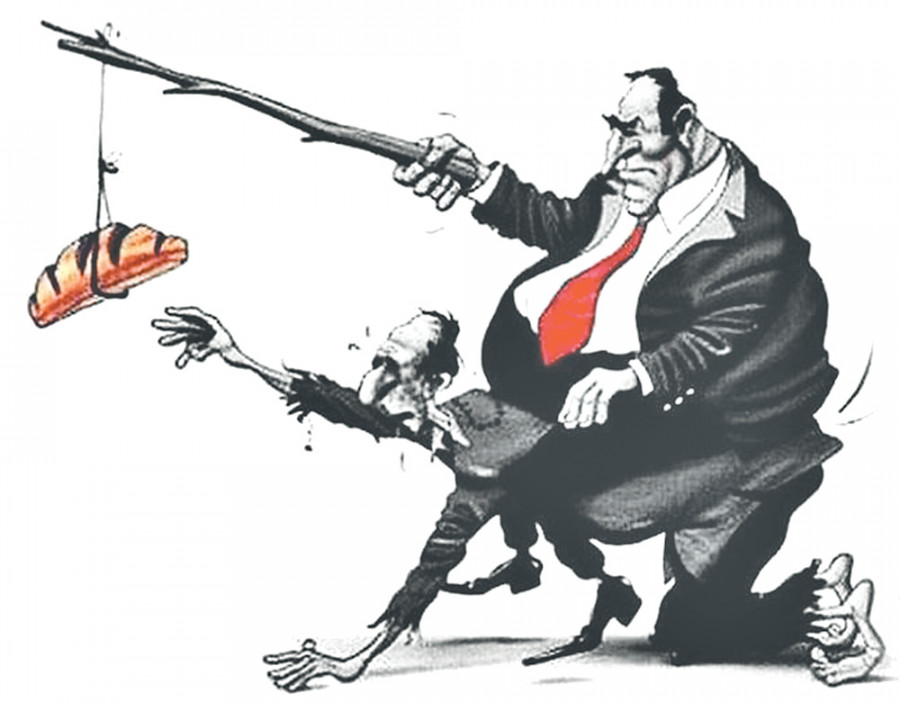
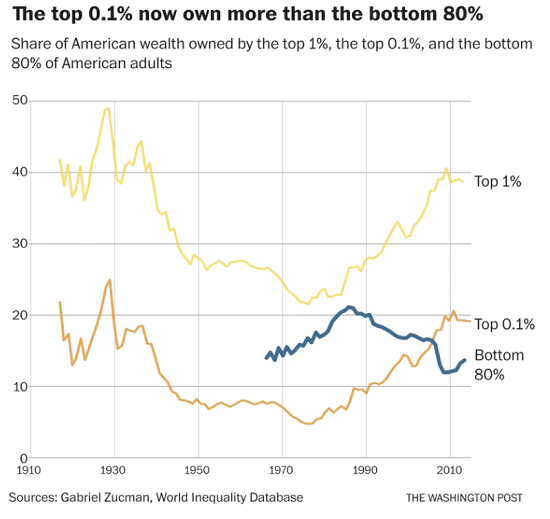
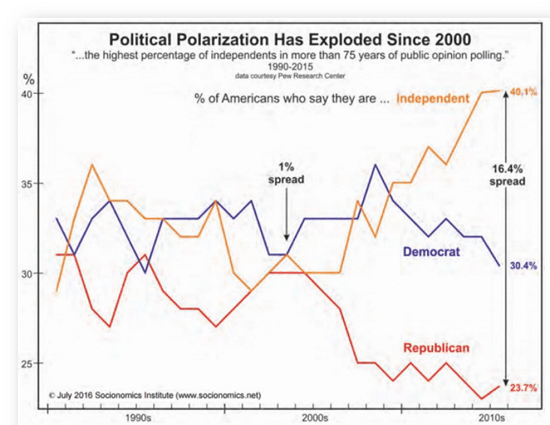
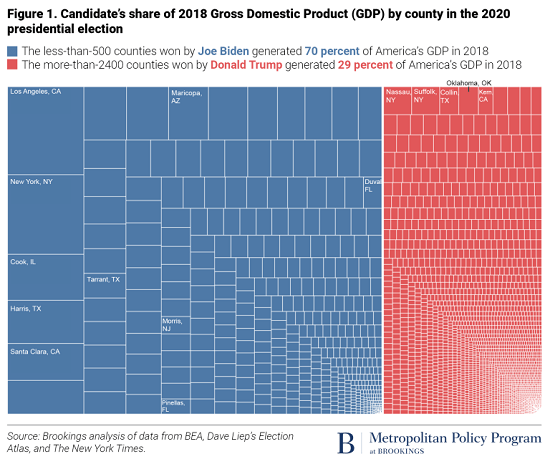
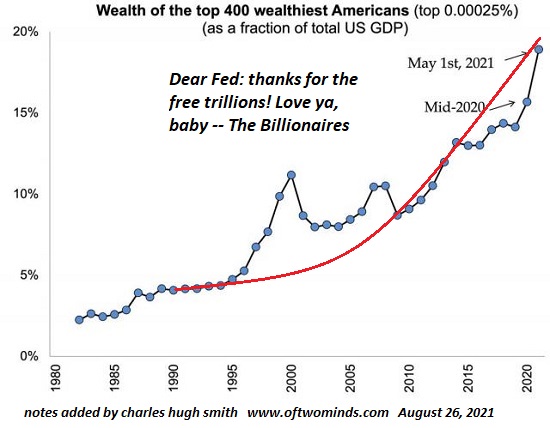
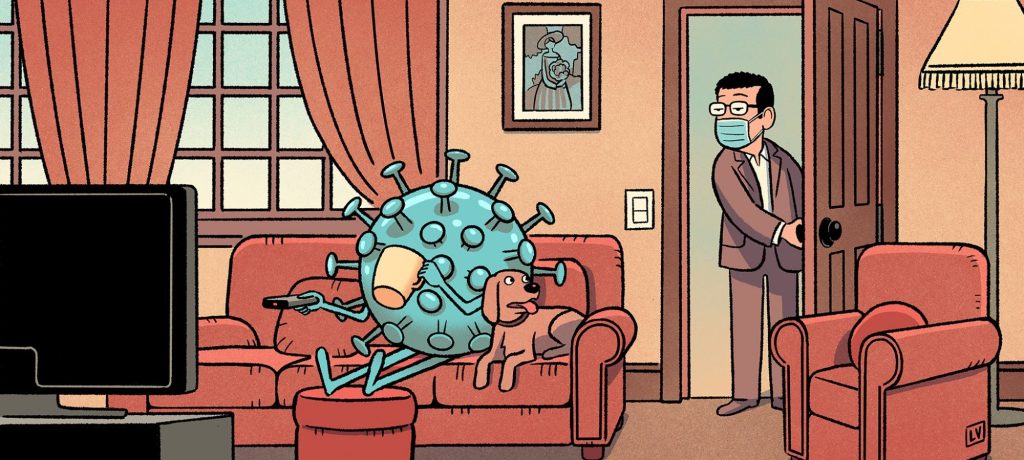


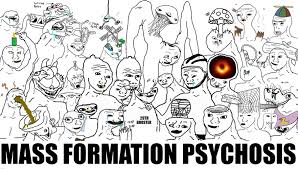


 After the Crash