This year I have started to explore a more cultural take on my favorite genre by experiencing China’s take on science fiction. Cixin Liu wrote a phenomenal trilogy, The Three-Body Problem, which will be adapted by David Benioff and DB Weis for Netflix in 2023. RF Kuang’s The Poppy War is a scary exploration of the Poppy Wars and the Boxer Rebellion. And now I’m here to tell you about director Neysan Sobhani’s wondrous Guidance. Set in the late 21st century, ten years after the ‘Great War,’ the film, written by Sobhani, Anders R. Fransson, and Wang Pei Yu, explores the sloppy, dishonest interpersonal relationships of people and how technology can throw a monkey wrench into an otherwise good relationship.
Three months after a bomb scare at the lab Su Jie (Francisco Chen) works, Mai Xi Zuan (Harry Song) is taking his girlfriend, Han Miao (Jia Sun), on an extended weekend to the heritage resort/museum. During the bomb scare, Han Miao was stuck in Su Jie’s safe room for six hours. What we see transpire during those six hours is Su Jie’s attempts to seduce Han Miao. She has purposefully left Mai Xi Zuan in the dark about it, but the secret is slowly creating a rift between these two young people.
“Containing a built-in lie detector, the app prevents both of them from being less than fully honest.”
And then they take the pill for NIS, an AI interface Su Jie has been developing. Eventually, NIS will permit humans to have all manner of apps, but for the first few weeks, they start with an app Su Jie’s departed father was working on during the Great War. This app, Guidance, is intended to improve people and help them develop into more empathic, honest human beings. Or at least that’s the sales pitch. As we learn through a cross-cutting interview with Su Jie, itmay have been initially intended as a weapon used to dig secrets out of captives.
Guidance explores all these topics through the weekend getaway of Mai Xi Zuan and Han Miao. Containing a built-in lie detector, the app prevents both of them from being less than fully honest. This scenario presents so many questions about the direction of Artificial Intelligence. Can a weapon be rehabilitated? How does complete honesty impact a relationship? Given the human impulse to subvert such candor and honesty, it should come as no surprise both main characters attempt to alter the app’s parameters.
While a slow and atmospheric exploration of Han Miao and Mai Xi Zuan’s relationship, Sobhani’s film does what great science fiction always does: deepen our understanding of each other through science and technology. Guidance is a stellar production, and I encourage you to seek it out if you wish to dip your proverbial toe into another culture’s sci-fi offerings. This is a fascinating extrapolation of China’s current endeavor to lead the world in Artificial Intelligence research. Equal parts relationship drama, science fiction, and mystery, the filmleaves you stunned by its conclusion. This is a once-in-a-lifetime, truly great film, and I’m very interested to know what the filmmakers will do next.
It’s certainly possible to be disgusted, but being disabused of the fantasy that the system is self-correcting is the healthier perspective.
I used to be disgusted, now I’m disabused: beneath all the self-serving narratives, fad-memes and over-simplifications regurgitated as serious analysis, these are the core dynamics I see:
1. Imperial corruption of democracy and open markets. I described this in Regardless of Who’s Elected, Imperial Corruption Rules the Nation: the dynamic adaptive churn of unfettered representative democracy and open markets are anathema to insiders, vested interests and elites, each of which has gained asymmetric power by subverting democracy and markets to serve their private interests rather than the public interest / common good–phrases that are meaningless to insiders, vested interests and elites except as simulacra used for PR.
2. The Deep State, the unelected and unaccountable Administrative State. I’ve been discussing the Deep State before it entered common use–for example:
The Administrative State has existed in some form in every nation-state / empire, but the U.S. Deep State only gained its vast global powers in World War II and the Cold War, where the lesson learned was the public may choose unwisely (for example, choosing appeasement over preparation) and so the really important decisions needed to preserve the nation cannot be left to parochial politicos in elected office–those decisions must be in the hands of those who know what has to be done.
Democracy is the rubber stamp for doing what’s necessary. Beyond that, it’s a potentially fatal hindrance. That’s the mindset of the Deep State, and if you and I were in upper-echelon positions in the Administrative State, we’d agree with this mindset when things get serious.
This mindset is a self-reinforcing group-think feedback loop: those who believe the public should set policy are weeded out, either by self-selection or via being sent to bureaucratic Siberia.
We’re protecting you. That’s all you need to know.
This opens the door to functionaries who came to do good but stayed to do well, i.e. those with the right credentials and connections to enter the Power Circle to “serve the public” but soon become insiders maximizing their own private gains. That’s the problem with the Administrative State: it’s ultimately unaccountable, not just to the public or elected officials but to itself.
3. Vested interests block adaptions that threaten their share of the spoils. Any advance that increases efficiency and productivity and furthers the public good is squelched, suppressed or co-opted by vested interests who rightly fear their share of the spoils might be diminished by advances that obsolete their particular cartel, monopoly or other embedded skim, scam, fraud, embezzlement or simply unproductive dead weight.
The status quo is thus locked into a death spiral as gatekeepers, insiders, vested interests and sold to the highest bidder politicos will protect vested interests even as the engines flood and the ship begins its long descent into the void.
How do otherwise smart people become so blind to what’s going on? They believe the status quo is so wealthy, so powerful, so clever, etc., that it will overcome any obstacles or crises because it’s always done so in the past, and so it is permanent, immutable, forever, and our supping at the trough of free money couldn’t possibly weaken such an enduring Leviathan.
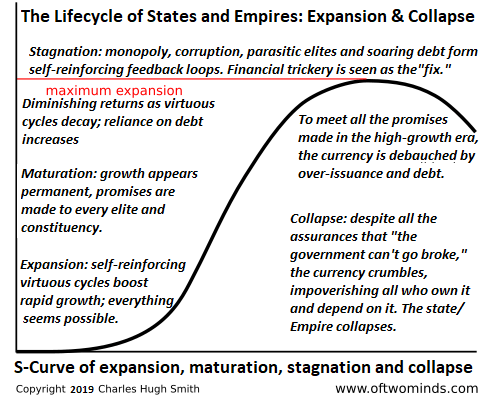
This is the fatal fantasy of every empire. We’re too successful to fail and collapse. But oddly enough, faith in the permanence of success leads to the very collapse that’s deemed “impossible.”
4. Concentrations of wealth, power, capital and production fatally distort the economy and the social order. When “competition” has been reduced to two telecoms, two healthcare insurers, two pork processors, etc., the system has been stripped of adaptability and resilience.
When 10,000 small farmers each have 100 chickens, the stock of 1 million chickens is spread over a wide geography and entrepreneurial network of suppliers, wholesalers, etc. Bird flu may spread widely but it’s far more difficult to wipe out 10,000 small farms’ poultry compared to the ease of bird flu spreading in one giant factory that concentrates 1 million chickens in one facility. Supply chains stripped of network resilience are equally fragile and prone to disruption and collapse.
Concentrating any form of capital, production and power renders the system vulnerable to collapse due to the inherent weaknesses generated by replacing complex networks with vertical-integration under the control of a few cartels, monopolies, autocrats, gatekeepers or regulators–the latter two being easily influenced by political pressure and/or private gain.
It’s certainly possible to be disgusted, but being disabused of the fantasy that the system is self-correcting is the healthier perspective. Everything is forever until systemic weaknesses reveal themselves, typically at the most inopportune junctures.
So it turns out the US intelligence cartel has been working intimately with online platforms to regulate the “cognitive infrastructure” of the population. This is according to a new investigative report by The Intercept, based on documents obtained through leaks and an ongoing lawsuit, on the “retooling” of the Department of Homeland Security from an agency focused on counterterrorism to one increasingly focused on fighting “misinformation, disinformation, and malinformation” online.
While the DHS’s hotly controversial “Disinformation Governance Board” was shut down in response to public outcry, the Intercept report reveals what authors Lee Fang and Ken Klippenstein describe as “an expansive effort by the agency to influence tech platforms” in order to “curb speech it considers dangerous”:
According to a draft copy of DHS’s Quadrennial Homeland Security Review, DHS’s capstone report outlining the department’s strategy and priorities in the coming years, the department plans to target “inaccurate information” on a wide range of topics, including “the origins of the COVID-19 pandemic and the efficacy of COVID-19 vaccines, racial justice, U.S. withdrawal from Afghanistan, and the nature of U.S. support to Ukraine.”
Docs show Facebook and Twitter closely collaborating w/ Dept of Homeland Security, FBI to police “disinfo.” Plans to expand censorship on topics like withdrawal from Afghanistan, origins of COVID, info that undermines trust in financial institutions. https://t.co/Zb3zmI1dQF
The report reveals pervasive efforts on the part of the DHS and its Cybersecurity and Infrastructure Security Agency (CISA), along with the FBI, to push massive online platforms like Facebook, Instagram and Twitter to censor content in order to suppress “threats” as broad as fomenting distrust in the US government and US financial institutions.
“There is also a formalized process for government officials to directly flag content on Facebook or Instagram and request that it be throttled or suppressed through a special Facebook portal that requires a government or law enforcement email to use,” The Intercept reports.
“Emails between DHS officials, Twitter, and the Center for Internet Security outline the process for such takedown requests during the period leading up to November 2020,” says The Intercept. “Meeting notes show that the tech platforms would be called upon to ‘process reports and provide timely responses, to include the removal of reported misinformation from the platform where possible.’”
While these government agencies contend that they are not technically forcing these tech platforms to remove content, The Intercept argues that its investigation shows “CISA’s goal is to make platforms more responsive to their suggestions,” while critics argue that “suggestions” from immensely powerful institutions will never be taken as mere suggestions.
“When the government suggests things, it’s not too hard to pull off the velvet glove, and you get the mail fist,” Michigan State University’s Adam Candeub tells The Intercept. “And I would consider such actions, especially when it’s bureaucratized, as essentially state action and government collusion with the platforms.”
This is absolutely wild. The government is secretly transforming "national security" agencies into a new Narrative Police.
“If a foreign government sent these messages,” said the former ACLU president, “there is no doubt we would call it censorship.”
The current CISA chief is seen justifying this aggressive government thought policing by creepily referring to the means people use to gather information and form thoughts about the world as “our cognitive infrastructure”:
Jen Easterly, Biden’s appointed director of CISA, swiftly made it clear that she would continue to shift resources in the agency to combat the spread of dangerous forms of information on social media. “One could argue we’re in the business of critical infrastructure, and the most critical infrastructure is our cognitive infrastructure, so building that resilience to misinformation and disinformation, I think, is incredibly important,” said Easterly, speaking at a conference in November 2021.
Another CISA official is seen suggesting the agency launder its manipulations through third party nonprofits “to avoid the appearance of government propaganda”:
To accomplish these broad goals, the report said, CISA should invest in external research to evaluate the “efficacy of interventions,” specifically with research looking at how alleged disinformation can be countered and how quickly messages spread. Geoff Hale, the director of the Election Security Initiative at CISA, recommended the use of third-party information-sharing nonprofits as a “clearing house for trust information to avoid the appearance of government propaganda.”
But as a former ACLU president tells The Intercept, if this were happening in any government the US doesn’t like there’d be no qualms about calling it what it is:
“If a foreign authoritarian government sent these messages,” noted Nadine Strossen, the former president of the American Civil Liberties Union, “there is no doubt we would call it censorship.”
Indeed, this report is just another example of the way western powers are behaving more and more like the autocracies they claim to despise, all in the name of preserving the values the west purports to uphold. As The Intercept reminds us, this business of the US government assigning itself the responsibility of regulating America’s “cognitive infrastructure” originated with the “allegation that Russian agents had seeded disinformation on Facebook that tipped the 2016 election toward Donald Trump.” To this day that agenda continues to expand into things like plots to censor speech about the war in Ukraine.
[Thread]
Hundreds of former agents of a notorious Israeli spying organization are now working in key positions at the world’s biggest tech/comms corporations, including Google, Facebook and Microsoft.
Other examples of this trend coming out at the same time include Alan MacLeod’s new report with Mintpress News that hundreds of former agents from the notorious Israeli spying organization Unit 8200 are now working in positions of influence at major tech companies like Google, Facebook, Microsoft and Amazon (just the latest in MacLeod’s ongoing documentation of the way intelligence insiders have been increasingly populating the ranks of Silicon Valley platforms), and the revelation that The Grayzone’s Max Blumenthal and Aaron Maté were barred from participating in a Web Summit conference due to pressure from the Ukrainian government.
We’re told we need to defeat Russia in Ukraine in order to preserve western values of freedom and democracy, and in order to facilitate that aim we’re getting less and less free speech. Less and less free thought. Less and less free press. Less and less democracy.
I keep thinking of the (fictional) story where during World War II Winston Churchill is advised to cut funding for the arts to boost military funding, and he responds, “Then what are we fighting for?” If we need to sacrifice everything we claim to value in order to fight for those values, what are we fighting for?
Dissent is becoming less and less tolerated. Public discourse is being more and more aggressively disrupted by the powerful. We’re being shaped into the exact sort of homogeneous, power-serving, tyrannized, propagandized population that our leaders criticize other nations for having.
Any journalists or press freedom advocates out there care about a US gov’t ally, Ukraine, pressuring a media conference to cancel two journalists? https://t.co/sPwaQAIiTV
If the powerful are becoming more tyrannical in order to fight tyranny, what’s probably actually happening is that they are just tyrants making up excuses to do the thing they’ve always wanted to do.
As westerners in “liberal democracies” we are told that our society holds free speech, free thought and accountability for the powerful as sacrosanct.
Our leaders are showing us that this is a lie.
The problem with “western values” is that the west doesn’t value them.
In reality, those who best exemplify “western values” as advertised are the ones who are being most aggressively silenced and marginalized by western powers. The real journalists. The dissidents. The skeptics. The free thinkers. The peace activists. Those who refuse to bow down to their rulers.
Our ongoing descent into tyranny in the name of opposing tyrants calls forth a very simple question: if defeating autocracy requires becoming an autocracy, what’s the point of defeating autocracy?
By now, everybody and his uncle has seen Emily Oster’s plea for “pandemic amnesty” in The Atlantic magazine, a house organ of the people in America who know better than you do about… really… everything. Emily’s wazoo is so stuffed with gold-plated credentials (BA, PhD, Harvard; economics prof at Brown U) it’s a wonder that she could sit down long enough to peck out her lame argument that “we need to forgive one another for what we did and said when we were in the dark about COVID.”
Emily wasn’t “in the dark.” She had access to the same information as the Americans who recognized that everything the public health authorities, the medical establishment, and many elected officials shoveled out about Covid and its putative remedies and preventatives was untrue, with a patina of bad faith and malice — especially when it was used to persecute their political adversaries.
These dissenters turned out to be “right for the wrong reasons,” she declared, the main reason being that they were not aligned in good-think with the Woke-Jacobinism of her fellow “progressives” at Brown U, and academics all across the land, who were righteously busy destroying the intellectual life of the nation, making it impossible for the thinking class to think.
Let’s face it: every society actually needs a thinking class, a cohort able to frame important issues-of-the-moment that require argument in the public arena to align our collective thoughts and deeds with reality. America used to have a pretty good thinking class, with a pretty good free press and many other platforms for opinion — all animated by respect for the first amendment to the Constitution.
The thinking class destroyed that by vigorously promoting a new censorship regime in every American institution, shutting down free speech and, more crucially, the necessary debate for aligning our politics with reality. Hence, America’s thinking class became the torchbearers of unreality, in step with the Party of Chaos which held the levers of power. This included the powers of life and death in the matter of Covid-19.
These were the people who militated against effective early treatment protocols (to cynically preserve the drug companies’ emergency use authorization (EUA) and thus their liability shields); the people who enforced the deadly remdesivir-and-ventilator combo in hospital treatment; the people who rolled out the harmful and ineffective “vaccines”; who fired and vilified doctors who disagreed with all that; and who engineered a long list of abusive policies that destroyed businesses, livelihoods, households, reputations, and futures.
How did it happen that the thinking class destroyed thinking and betrayed itself? Because the status competition for moral righteousness in the sick milieu of the campus became more important to them than the truth. In places like Brown U, what you saw was an escalating contest for status brownie-points, which is what virtue-signaling is all about. And the highest virtue was going along with whatever experts and people-in-authority said — the pathetic virtue of submission. Anything that got in the way of going along — such as differences of opinion — had to be crushed, stamped out, and with a vicious edge to teach the dissenters a lesson: dissent will not be tolerated!
Some thinking class. The case of Emily Oster should be particularly and painfully disturbing, since she affects to specialize, as an economist, on “pregnancy and parenting” (her own website declares), while the Covid regime of public health officialdom she supported instigated a horrendous pediatric health crisis that is ongoing — it was only days ago that the CDC added the harmful mRNA “vaccines” to its childhood immunization schedule for the purpose of conferring permanent legal immunity for the drug companies after the EUA ends, a dastardly act. Where’s Ms. Oster’s plea to the CDC to cease and desist trying to vaccinate kids with mRNA products?
The CDC is still running TV commercials (during World Series ballgames!) touting its “booster” shots when only weeks ago a top Pfizer executive, Janine Small (“Regional President for Vaccines of International Developed Markets”), revealed in testimony to the European Union Parliament that her company never tested its “vaccine” for preventing transmission of SARS CoV-2. The CDC under Director Rochelle Walensky is still extra-super-busy concealing or fudging its statistical data to obfuscate the emerging picture that MRNA “vaccines” are responsible for the shocking rise of “all-causes deaths” in the most heavily-vaxxed nations. In short, the authorities are to this minute still running their whole malign operation.
Notably, Ms. Oster’s plea for amnesty and forgiveness, showcased in The Atlantic, omits any discussion of accountability for what amounts to serious crimes against the public. A whole lot of people deserve to be indicted for killing and injuring millions of people. At the heart of her plea is the excuse that “we didn’t know” official Covid policy was so misguided. That’s just not true, of course, and is simply evidence of the thinking class’s recently-acquired allergy to truth. The part she left out of her petition for pandemic amnesty is: we were only following orders.
“In the beginner’s mind there are many possibilities. In the expert’s, there are few.”1
Has there ever been a more urgent time to embrace many possibilities? This age of pervasive uncertainty and division may well be very fertile ground for questioning our assumptions and interrogating our beliefs. In fact, we just might be living in the ideal time to accept that there are limitless ways to perceive even the most contentious issues.
Expert vs. Beginner
The expert’s mind is over-secure in its prowess. Such a mentality may promote shortsighted habits like confirmation bias. Many “authorities” will only seek out (read: cherry-pick) information that validates and justifies their behavior because expertise — real or imagined — causes us to grow less curious.
If we already feel well-versed in a topic, we tend to pay less attention to it. We ask fewer questions. This is a stifling choice even if we know 95 percent of what there is to know about a particular subject. Ideally, this is when we should be paying more attention to it in order to discern the nuances that remain to be learned.
Conversely, the beginner’s mind is ever-hungry for input — regardless of its source or its tendency to reinforce existing beliefs. In the beginner’s mind, there are fewer limits and fewer expectations. There is much more room for revelation and awe. Nothing is taken for granted and even the tiniest detail has the potential to inspire reverence.
The beginner’s mind is basically the polar opposite of today’s social media algorithms, mainstream news headlines, and popular political discourse.
3 (of the many) Benefits of a Beginner’s Mind
Creativity
Habits and structure can be incredibly useful. They can also become an obstacle to innovation. A beginner’s mind encourages us to approach familiar problems with a fresh perspective. This mindset often results in the exploration of avenues that an expert would casually dismiss as “been there, done that.”
Gratitude
A beginner’s mind awakens each morning, ready to wipe the slate clean and start anew. From this fresh perspective, it feels more natural to identify and appreciate your blessings.
Mindfulness
Seeing the world like a beginner prevents you from “going through the motions.” There is a clearer understanding that the present is all you have. The past is where guilt and regret dwell. In the future may lie apprehension and anxiety. Right here, right now, the moment is enough.
How to Rediscover a Beginner’s Mind
By its very definition, there are an infinite number of ways to occupy a beginner’s mind. To follow are some basic guidelines but think of them like Bruce Lee’s finger pointing a way to the moon. As Lee urged, “Don’t concentrate on the finger or you’ll miss all that heavenly glory.”2
1. Reject your ego’s need to be an expert
Eavesdrop on a conversation at the local supermarket. Even better, scroll (without reacting) through most threads on social media. You’ll see and hear so many people pretending they know“what’s really happening” and “what’s gonna happen.” Your ego craves the status of being right. The beginner in you would rather open-mindedly look for reality than be deemed an expert at anything.
2. Slow down
As touched on above, we must avoid going through the motions. Whenever possible, slow down to question and explore. Take your time to learn — even from the most unlikely of sources.
3. Channel your inner child
Re-introduce yourself to some of your closest childhood friends: wonder, mischief, and playfulness. Reject the cynical adult premise of “same shit, different day.”
4. See with new eyes
In the words of Marcel Proust: “The real voyage of discovery consists not in seeking new landscapes, but in having new eyes.”3 Practically speaking, your quest for new eyes can begin with simple exercises like treating your hometown as if you were a tourist and seeing what you can discover.
5. Embrace nonsense
As Gary Zukav, author of Dancing Wu Li Masters: An Overview of the New Physics, (1979), posits: “Nonsense is nonsense only when we have not yet found that point of view from which it makes sense.”
6. Meditation
Perhaps the most time-worn path to a beginner’s mind is the practice of mindful meditation. Whether you choose a spiritual or secular approach, even ten minutes a day of meditation will expand your consciousness.
“The child is in me still and sometimes not so still.”4
There is no one right way to inhabit a beginner’s mind. After all, it is not a destination. It’s all about the process, the learning, and those moments of epiphany made possible by not closing off your options… so re-activate your inner child.
Keep re-evaluating what you believe before your perceptions can grow ossified. Don’t limit your explorations by choosing in advance what it is you wish to find. Turn your truth over and over, again and again. Avoid accumulating old answers. Instead, dedicate far more of your time to conjuring up new questions. Through it all, let compassion serve as your compass.
The experts [sic] have gotten us into this mess.
It’s time to give beginners their opportunity to shine.
Shunryu Suzuki, Prologue Zen Mind, Beginner’s Mind, (1973). []
Bruce Lee, Enter the Dragon, 1973. []
The Captive. (La Prisonnière, the fifth volume of Remembrance of Things Past), 1923. []
Fred Rogers, (2003). The World According to Mister Rogers: Important Things to Remember, p. 45, Hachette UK. []
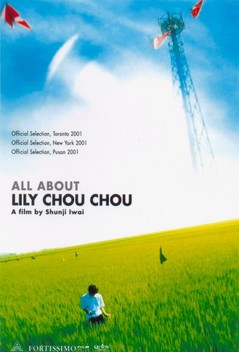
Released in 2001, writer and director Shunji Iwai’s “All About Lily Chou-Chou” 「リリイ• シュシュのすべて」is a masterclass in complex and powerful storytelling, cinematography, and meta-textual messaging that puts on display the formative, introspective, and oftentimes malicious enigma that is the life of youth in Japan.
Set in the town of Ashikaga, the story centers around the relationship of two young boys, Shusuke Hoshino and Yuichi Hasumi, as they progress through junior high school. Hoshino is known to be one of the top students in their school and is harassed and ostracized by his classmates as a result, a commonplace occurrence for those caught outside the boundaries of conformity while growing up in Japan. Yuichi, in contrast, is shy and submissive to the societal structures that surround him, only paying attention and devoting all his personal time to the singer and songwriter Lily Chou-Chou.
In his free time, Yuichi manages an online BBS chatroom titled “Lilyholic,” which is completely dedicated to Lily and her music, and the messages sent between users of this website overlay much of the film. The mystery surrounding this chatroom and the messages between its users acts as a crucial plot point that slowly unravels in conjunction with the film’s events.
At one point, Yuichi, Hoshino, and their friends manage to secure a trip to Okinawa, during which Hoshino has a near-death experience that serves as the foundation for the cruel and unusual monster that he becomes, changing his and Yuichi’s relationship forever as he usurps his way into being the school’s bully the following school year. Despite the title, this is not simply a story about a fictional songwriter and her music, but the disturbing and oftentimes glossed-over ways in which modern society corrupts the minds of youth, and the various ways those children attempt to cope against such odds.
Yuichi’s love and devotion for Lily Chou-Chou is the emotional epicenter of this film, as it displays the profound ability for music to save and give meaning to young people’s lives, especially when surrounded by ignorant adults and inhumane peers. While the musician herself is fictional, Lily Chou-Chou’s mythical music expands over the course of the film, overlaying its imagery of lonesomeness, isolation, and absurdity with luscious, calming, and poignant bits of melancholic bliss; a reflection of Yuichi’s character and perspective on the world around him.
Users of the chatroom “Lilyholic” continuously exclaim their love for Lily and her ability to channel the “Ether,” an invisible yet omni-present force that connects all fans of Lily Chou-Chou together in their existence through Lily’s music. The “Ether” is an intrinsic aspect of the power her music has on those who listen to her, serving as the connective thread that weaves its way through the fabric of a fragile reality, allowing those lost in the tribulations of life to hold onto something organic, warm, and personal, an oasis among a desert of expectations, conformity, and isolation.
It goes without saying that the music on display in this film is truly special and should be experienced firsthand, with the soundtrack growing organically as the audience learns more about Lily, her music, and the different characters in the film who become impacted by her compositions [for better or for worse].
Throughout the film, there are multiple references to the classical French composer Claude Debussy, whom users of Lilyholic cite as being one of Lily’s musical inspirations, as he was able to produce the “Ether” through his compositions. For example, the song that accompanies the opening scene of the film, titled 「アラベスク」[“Arabesuku”] is based off of Debussy’s “Arabesque No. 1.” Lily’s shrill yet comforting voice glides over synthesized piano chords, distanced hints of strained guitar, and a lo-fi drum beat that subjects the 19th-century classical work to a cybernetic restructuring – all of which results in one of the most captivating opening experiences in film.
Arranged and produced by Takeshi Kobayashi, the music of “All About Lily Chou-Chou” is a kaleidoscope of sonic captivity, melting between Lily’s somber yet grungy aesthetic as well as moments of clarity through the use of classical composers like Debussy, combining to create less of a soundtrack and more of an experience that will cling to you long after the credits have finished rolling.
The narrative direction and cinematography of “All About Lily Chou-Chou” are also aspects that cannot be ignored. The narrative’s timeline is fractured, starting chronologically from the middle of the story, eventually flashing back to the canonical beginning, and finally returning to the present to finish out the film. The script is adapted from an online novel that was written by director Shunji Iwai himself in the chatroom of a real-life version of the “Lilyholic” website, in which the director plays out the story of “All About Lily Chou-Chou” through the chat exchanges of two site users. A version of this website can still be accessed online today, and its existence is only the tip of the iceberg for the extensive material surrounding this film beyond its screen time. The narrative, in this sense, is multi-layered and meta-textual – an interactive and organic experience that not only goes beyond the medium of film but places a sense of participation and influence in the viewer, only to be powerless against the fierce, apathetic, and surreal scenes we witness.
The cinematography by Noboru Shinoda [“Hana and Alice,” “Love Letter”] is just as varied and complex as the film’s narrative, as it switches between ethereal, lush views of rice fields and angelic classroom settings in one shot, to the jarring use of hand-held cameras and disorienting angles in the next. Shinoda and Iwai were the first Japanese filmmakers to use the now discontinued Sony HDW-F900 digital video camera which was designed to reflect the look of 35mm film, further emphasizing the thematic imagery of nostalgia and dream-like isolation.
The camera work almost seems to be shot by a child at times, such as an unseen member of Yuichi’s friend group or class as they youthfully document the strange and disturbing events occurring in front of them, only focusing on the power a digital camera has without considering what they are actually recording. Or rather, Iwai may be intending for us, the viewer, to put ourselves behind the lens, acting as a silent observer to the events that unfold without the voice or power to do anything about it, which is strikingly similar to Yuichi’s character in the film itself. The combination of a fractal narrative structure and an abrasive yet realistic use of the camera encapsulates so much of the themes and messaging this film has to offer – mainly that being the confusing, frustrating, and unapologetic nature of growing up surrounded by unforgiving societal structures, while at the same time blindly attempting to hold onto and bask in the naiveté of youth.
The subject of youth is the eye of Iwai’s proverbial hurricane of emotion and turmoil that is “All About Lily Chou-Chou.” Made in 2001, this film was produced at a time in Japan that saw a sharp increase in teenage crime and suicide following the economic collapse of 1991. In a country so wrought with societal and familial expectations, the bursting of their economic bubble proved disastrous for Japan’s teenage and young-adult population, as they were now tasked with bearing said expectations and cultural conformity against a historically low employment rate.
Commonly referred to as the “Lost Decade,” the 1990s in Japan was filled with headlines detailing the effect of the recession on the country’s young population, as teenage crime doubled in frequency, and reports of bullying and assault within schools skyrocketed. The rise in crime and disillusionment among the country’s youth resulted in many Japanese filmmakers attempting to grasp this idea of “teenage rage” through their films in the late 90s and early 2000s, such as in Takashi Miike’s “Fudoh: The New Generation” [1996] and Kinji Fukasaku’s “Battle Royale” [2000]. While these films painted a more dystopian and fantastical perspective of the violent phenomenon, Shunji Iwai wanted to represent this general angst and discontent in a more realistic manner that would directly connect with the audience it sought to portray. In one interview from 1995, Iwai reflects on his perspective towards the children who will be watching his stories: “We have to make movies that appeal to them and reflect the world they live in.”
The characters within “All About Lily Chou-Chou” represent the cruel realities of the “Lost Decade.” They don’t conduct acts of headline-defining mass crime or comical absurdity, but instead are portrayed as unheard, misguided, and tragic children who are following in the steps of complicit adults as they attempt to find answers in a confusing world that they have no power in controlling. As shown in the film, some of these characters choose to find those answers in disturbing cruelty or abusive domination over their peers, while others try to be as passive or silent as humanly possible just to survive. And yet, while each character within this film leads a complex and difficult life that sometimes results in catastrophe, all of them are connected through the “Ether,” endlessly searching for a sense of comfort, acceptance, and understanding through the soundscape of Lily Chou-Chou. It could be said that the characters within this film are all living in, as Yuichi states in one monologue, “the age of Gray,” a liminal space of reality that seems to place their lives in a state of constant immobility and pain. Life is made void of color by the brutal violence and betrayal that these children either commit or fall victim to, and for some, Lily provides safety and guidance in that darkness, while she may also fuel the angry, merciless fire burning inside others.
“All About Lily Chou-Chou” is dark, disturbing, and cruel in its presentation, but manages to be something so much more intimate, profound, and human in its substance. It discusses themes surrounding the troubles of youth in Japan, who are constantly cornered by cultural and familial expectations, conformity, and a social hierarchy that can be detrimental to those caught in its jaws. It portrays the fragility of youth, how easily corruptible a young mind can be, and how one source of bliss can be enough to hold onto the hope of a better tomorrow. Today, in a world dominated by online interactions, superficial connections, and an uncertain future, this film is more relevant than ever before – a true cyber hymn that anyone and everyone can find meaning within.
We have attached the album that was released under the name “Lily Chou-Chou” after the movie was released so that you can get a better feel for the movie and the artist that is the titular character of the entire film. It features all of Lily’s music that is present in the film, and is titled “Kokyu” [or “Breathe” in English], which is in reference to the project that she released during the movie itself.
The entire thing can also be streamed on Spotify. In particular, the following songs are absolutely stunning and very representative of the movie itself:
The mafia in Washington, London, Brussels and Tel Aviv would do anything to keep their “Unipolar World Order” project in place, in fact, there are getting desperate to hold on to whatever remaining powers they have left even if it means collaborating with its worst enemies. There is a well-known ancient proverb “The enemy of my enemy is my friend” that rings true today especially since Washington, the CIA, the Military-Industrial Complex, along with Mossad and NATO have supported well-known terrorists including the Islamic State (ISIS), Al Qaeda, and other groups to overthrow governments they don’t approve of especially in the Middle East. However, their support of terrorists who were their enemies at one time or another did not start with their regime change wars against Syria or Libya, the idea of supporting its enemies began during and after World War II when the US government recruited Ukrainian Nazis to counter their new enemy, the Soviet Union. What a strange turn of events knowing that the Soviets who fought the Nazis with their American and European allies during the war were seen as a new threat. Washington and the rest of their mafia cohorts used the Nazis back then as they are now using jihadi terrorists today in their war for world domination no matter what the costs are in the long-term.
So who were the Nazis and why was Washington interested in recruiting them in the first place? For starters, the Nazis had members involved in several scientific and technological disciplines that the US government was interested in and would later utilize them to produce all sorts of weapons of war and psychological operations for its future military operations, but we will get into further details shortly. However, the Nazis did follow a far-right fascist ideology that was authoritarian that coincided with ultranationalist principals that rejected anarchy, communism, democracy, republicanism, socialism and other forms of government that was seen as a threat to their rising power. And as insane as this sounds, the Nazis also used scientific racism, or what we can call eugenics to manipulate human gene pools by separating certain groups of people between those who are considered inferior to advancing those who were deemed superior. Then there is the element of antisemitism that was prevalent within the Third Reich. Nazism has led to genocide, torture, forced sterilizations, imprisonment of its opposition, deportations and other atrocities among those who did not fit the profile of being an ultra-nationalist especially if you did not have the racial qualities that they demanded for their movement.
If we look back into the history of fascism, its roots were based in Europe as historians have claimed that Louis-Napoléon Bonaparte ‘aka’ Napoleon III who ruled France with an iron fist from 1848 to 1852 had the elements of a fascist/Nazi state.
America’s Extermination of Red Savages was Adolf Hitler’s Inspiration
Adolf Hitler, Germany’s new chancellor took the lead in imposing fascist policies in his country when he came to power. Hitler’s allies also known as the Axis Alliance, Benito Mussolini of Italy and Hirohito of Imperial Japan had similar policies.
So, what inspired this sort of ideology? Where did the Nazis get their inspiration from? It’s a known fact that Adolf Hitler admired America’s ways of dealing with certain groups in their short history from the Jim Crow laws against African Americans to the indigenous populations who were sent to prison camps during the American Indian wars. John Toland’s ‘Adolf Hitler: The Definitive Biography’ states that “Hitler’s concept of concentration camps as well as the practicality of genocide owed much, so he claimed, to his studies of English and United States history,” and that “He admired the camps for Boer prisoners in South Africa and for the Indians in the wild west; and often praised to his inner circle the efficiency of America’s extermination—by starvation and uneven combat—of the red savages who could not be tamed by captivity.” So, when did the idea of a ‘concentration camp’ came into effect? It was under US President and Democrat, Andrew Jackson who introduced “emigration depots” as part of his Indian Removal Act of 1830 where tens of thousands of Indigenous peoples who were forced into what was called ‘prison camps’ and they included the Seminoles, Cherokee, Choctaw, Muscogee, and other tribal nations mainly in the Southern part of the United States and that included Alabama and Tennessee.
In the opening minutes, Justice Minister Gurtner presented a memo on American race law, which had been carefully prepared by officials of the ministry for purposes of the gathering; and the participants returned repeatedly to the American models of racist legislation in the course of their discussions. It is particularly startling to discover that the most radical Nazis present were the most ardent champions of the lessons that American approaches held for Germany. Not, as we shall see, in this transcript the only record of Nazi engagement with American race law. In the late 1920’s and early 1930’s many Nazis, not least Hitler himself, took a serious in the racist legislation of the United States. Indeed in Mein Kampf Hitler praised America as nothing less than “the one state” that had made progress toward the creation of a healthy racist order of the kind the Nuremberg Laws were intended to establish.
My purpose is to chronicle this neglected history of Nazi efforts to mine American race law for inspiration during the making of the Nuremberg Laws, and to ask what it tells us about Nazi Germany, about the modern history of racism, and especially about America
The Nazis saw US race laws as a suitable policy that they can implement on various groups such as the Jews who were a wealthy and powerful class of people which many Germans despised at the time, became non-citizens. Native Americans, Filipinos, African Americans, and others were also considered non-citizens even if they lived in the US or its colonized territories. But there was one aspect of US race laws that interested the Nazis and that was the anti-miscegenation laws that prohibited interracial marriages in about 30 US states where those who broke the law in the US received a severe criminal punishment. US-inspired race laws were imposed on German society with the establishment of the Nuremberg laws that was passed on September 15th, 1935.
Operation Paperclip: Why the US Government Recruited Nazis After WWII
The rumor of a nuclear war is more prevalent today more than ever before since Russia’s invasion of Ukraine has taken place. Ukraine’s actor, oh, excuse me, I meant President, Volodymyr Zelensky has called for “preventive strikes” to deter Russia from using nuclear weapons although he backtracked the claims shortly after, but he did call for for the West to hit Russia with nuclear weapons for preventative measures which was extremely dangerous rhetoric coming out of his mouth. Speaking of nuclear weapons, do you know who originally proposed the idea of placing nuclear bombs on ballistic missiles in the first place? It was an idea that was derived from Nazi rocket scientists who was hired by the US government during World War II. The original program was called Uranprojekt or the “Uranium Project” for the purpose of developing nuclear technology to build weapons and reactors.
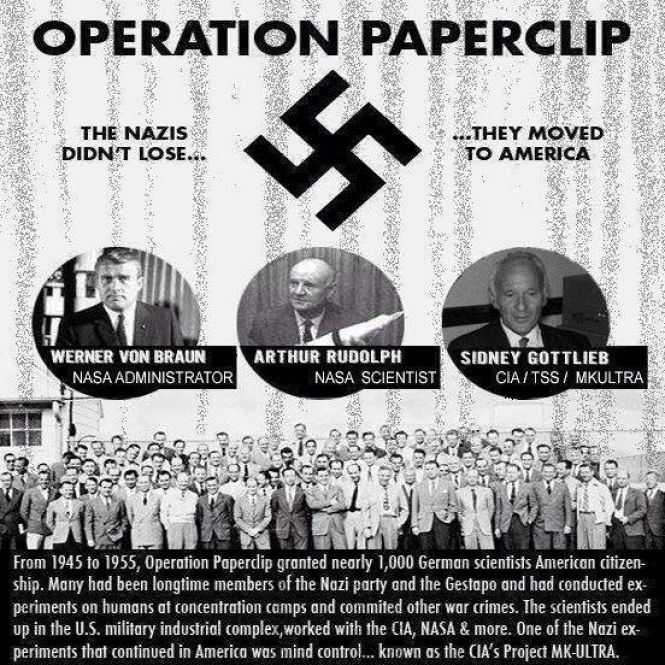
In the last years of World War II, US intelligence agencies and the Military-Industrial Complex secretly transferred more than 1,600 Nazi scientists and their families from Germany who were experts in various fields that included rocket science, aerodynamics, chemical weapons, and medicine in what was called Operation Paperclip. There were Nazis working for the US military who also prepared intelligence briefs creating fear and panic that the Soviets were going to take over the world which was over-exaggerated. But what the US government feared most was that the Soviet Union under Operation Osoaviakhim with more than 2,500 former Nazi scientists and engineers who were recruited in the Soviet occupation zone of Germany (SBZ) and the Soviet sector of Berlin would be one step ahead of the US government in weapons development and other areas.
One important historical fact about America’s Nazi Scientists was the recruitment of Wernher von Braun or known by his full name as Wernher Magnus Maximilian Freiherr von Braun who was a member of the Nazi Party and the Allgemeine SS or the “General SS” which was a major branch of Nazi Germany’s paramilitary forces. Wernher von Braun was also the head of developing rocket technology who is considered the pioneer of rocket and space technology in the US. He was also the chief architect of the Saturn V super heavy-lift launch vehicle that allegedly helped launch the Apollo spacecraft to the Moon.
Nazi scientists also helped the US government and the CIA develop chemical and biological weapons programs that included the use of sarin gas and other dangerous weapons of war including VX (nerve agent) and of course, the most used biological weapon during the Vietnam war, Agent Orange. So, in other words, the US government hired Nazi scientists for their knowledge of creating weapons of mass destruction that has inflicted damage on various populations around the world since then. During the Vietnam war, the US military unleashed Agent Orange on the Vietnamese population causing more than 3 million people to develop birth defects and other health related problems to this day. The Nazi scientists were indeed evil geniuses when it came to developing advanced weapons of war and that was something that the US military and the intelligence community were solely interested in and that was and still is a scary thought.
America’s Frankenstein: The Neo-Nazis of Ukraine
As we know from the valuable lessons of history that the US government and the CIA had supported and trained Ukrainian Nazis since 1946. The CIA had organized “Stay Behind” operations with the OUN-B (neo-Nazi Organization of Ukrainian Nationalists) in Eastern Europe and other areas to assist Ukrainian nationalist who were sent to destabilize Soviet Ukraine with covert operations such as using commandos to assassinate Soviet officials, to sabotage infrastructure and to commit acts of terrorism.
The history of the US government and its CIA operatives shows that it supported Ukrainian war criminal Stephan Bandera to advance the Ukrainian underground movement to destabilize Soviet Ukraine, so the CIA and their Office of Policy Coordination (OPC) and the Office of Special Operations (OSO) planned covert operations with the OUN-B and provided support to the anti-Soviet Ukraine Insurgent Army (UPA) for psychological warfare within the Soviet sphere of influence. The CIA declassified their historical account of their association with Ukrainian Nationalists who collaborated with the Nazis during the Cold War in ‘Cold War Allies: The Origins of CIA’s Relationship with Ukrainian Nationalists’by Kevin C Ruffner detailed how the “CIA reestablished and expanded its contacts with the Ukrainians and others for covert action against the Communists and as wartime assets to be used behind Red Army lines as guerrillas, saboteurs, and resistance leaders.” The historical account went further and stated that “The sometimes brutal war record of many emigre groups became blurred as they became more critical to the CIA.”
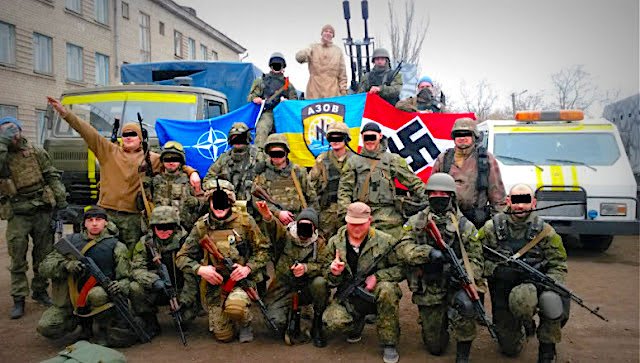
Fast forward to November 2013 were there were large-scale protests which was known as the Euromaidan against the policies of President Victor Yanukovych who made the decision to have closer ties with Russia and the Eurasian Economic Union instead of proceeding with the idea of having a political and economic relationship with the European Union by rejecting their free-trade agreement. Then in February 2014, what is known as the Maidan Revolution took place that ended up in violent clashes between the protesters and the government’s security forces in the Ukrainian capital, Kyiv which led to a coup against the democratically elected president, Viktor Yanukovych. Soon after, the Russo-Ukrainian war began and the birth of the Neo-Nazi inspired Azov Battalion was established as they became the resistance against basically, anything Russian.
While the covert program, run by paramilitaries working for the CIA’s Ground Branch — now officially known as Ground Department — was established by the Obama administration after Russia’s invasion and annexation of Crimea in 2014, and expanded under the Trump administration, the Biden administration has further augmented it, said a former senior intelligence official in touch with colleagues in government
According to Yahoo News, an unnamed former senior intelligence official said that “If the Russians invade, those [graduates of the CIA programs] are going to be your militia, your insurgent leaders,” and that “we’ve been training these guys now for eight years. They’re really good fighters. That’s where the agency’s program could have a serious impact.” One must wonder how many were actually radicalized neo-Nazis.
In 2018, Reuters published a commentary by Josh Cohen ‘Ukraine’s neo-Nazi problem’ that explains Ukraine’s problem with the Nazis filling the ranks of its National Militia. Cohen said that in “a January 28 demonstration, in Kiev, by 600 members of the so-called “National Militia,” a newly-formed ultranationalist group that vows “to use force to establish order,” illustrates this threat.” Cohen added that the National Militia has recruited members from the Nazi-affiliated Azov Battalion:
Many of the National Militia’s members come from the Azov movement, one of the 30-odd privately-funded “volunteer battalions” that, in the early days of the war, helped the regular army to defend Ukrainian territory against Russia’s separatist proxies. Although Azov uses Nazi-era symbolism and recruits neo-Nazis into its ranks, a recent article in Foreign Affairs downplayed any risks the group might pose, pointing out that, like other volunteer militias, Azov has been “reined in” through its integration into Ukraine’s armed forces. While it’s true that private militias no longer rule the battlefront, it’s the home front that Kiev needs to worry about now
Cohen obviously is following the mainstream media narrative when he said that Putin seized Crimea which in fact, it was the Russian-speaking Crimean people who voted in a referendum to reunite with the Russian federation. But to his credit, Cohen does mention the fact that the Azov Battalion and the Right Sector are held in high-regards since they fought Russian-backed separatists. Cohen also mentioned the Azov battalion’s children’s training camps:
When Russian President Vladimir Putin’s seizure of Crimea four years ago first exposed the decrepit condition of Ukraine’s armed forces, right-wing militias such as Azov and Right Sector stepped into the breach, fending off the Russian-backed separatists while Ukraine’s regular military regrouped. Though, as a result, many Ukrainians continue to regard the militias with gratitude and admiration, the more extreme among these groups promote an intolerant and illiberal ideology that will endanger Ukraine in the long term. Since the Crimean crisis, the militias have been formally integrated into Ukraine’s armed forces, but some have resisted full integration: Azov, for example, runs its own children’s training camp, and the careers section instructs recruits who wish to transfer to Azov from a regular military unit
Although Cohen’s claims expose Ukraine’s Neo-Nazis, he also follows the Western establishment and the mainstream media’s narrative that “the Kremlin’s claims that Ukraine is a hornets’ nest of fascists are false: far-right parties performed poorly in Ukraine’s last parliamentary elections, and Ukrainians reacted with alarm to the National Militia’s demonstration in Kiev” which are all lies. Cohen’s statement is false, in fact, it’s a contradiction when he wrote at the beginning of his article that the “National Militia’s members were recruited from the Azov movement” but not to worry because “Azov has been “reined in” through its integration into Ukraine’s armed forces” at least according to Cohen who sourced his misinformation from Foreign Affairs magazine which is a publication owned by the Council of Foreign Relations, a favorite of of the US political establishment.
So, does the US government, the Military-Industrial Complex, and the CIA support Ukrainian Neo-Nazis in their ongoing war efforts against Russia today? Well, the answer to that question should be obvious by now.